
Articles | Volume 23, issue 3
https://doi.org/10.5194/bg-23-867-2026
© Author(s) 2026. This work is distributed under
the Creative Commons Attribution 4.0 License.
the Creative Commons Attribution 4.0 License.
https://doi.org/10.5194/bg-23-867-2026
© Author(s) 2026. This work is distributed under
the Creative Commons Attribution 4.0 License.
the Creative Commons Attribution 4.0 License.
Research article
| 
02 Feb 2026
Research article |
| 02 Feb 2026
| 02 Feb 2026
Seasonality of the North Pacific Oligotrophic Gyre area in the past two decades and a modelling perspective for the 21st century
Siyu Meng
Frontiers Science Center for Deep Ocean Multispheres and Earth System, and Key Laboratory of Marine Environment and Ecology, Ministry of Education of China, Ocean University of China, Qingdao, China
Laboratory for Marine Ecology and Environmental Sciences, Qingdao Marine Science and Technology Center, Qingdao, China
Climatic Research Unit, School of Environmental Sciences, University of East Anglia, Norwich, United Kingdom
Xun Gong
CORRESPONDING AUTHOR

State Key Laboratory of Physical Oceanography, Institute of Oceanographic Instrumentation, Shandong Academy of Sciences, Jinan, China
Qilu University of Technology (Shandong Academy of Sciences), Jinan, China
Benjamin G. M. Webber
Climatic Research Unit, School of Environmental Sciences, University of East Anglia, Norwich, United Kingdom
Manoj Joshi
Climatic Research Unit, School of Environmental Sciences, University of East Anglia, Norwich, United Kingdom
Xiaokun Ding
School of Ocean, Yantai University, Yantai, China
Xiang Gong
School of Mathematics and Physics, Qingdao University of Science and Technology, Qingdao, China
Qingdao Innovation Center of Artificial Intelligence Ocean Technology, Qingdao, China
Mingliang Gu
Frontiers Science Center for Deep Ocean Multispheres and Earth System, and Key Laboratory of Marine Environment and Ecology, Ministry of Education of China, Ocean University of China, Qingdao, China
Laboratory for Marine Ecology and Environmental Sciences, Qingdao Marine Science and Technology Center, Qingdao, China
Frontiers Science Center for Deep Ocean Multispheres and Earth System, and Key Laboratory of Marine Environment and Ecology, Ministry of Education of China, Ocean University of China, Qingdao, China
Laboratory for Marine Ecology and Environmental Sciences, Qingdao Marine Science and Technology Center, Qingdao, China
Related authors
No articles found.
Chao Yu, Lin Zheng, Yujue Wang, Meijing Guo, Xu Yu, Yuqi Guo, Sisi Song, Kyoung-Soon Jang, Xiaohong Yao, Jian Zhen Yu, and Huiwang Gao
Atmos. Chem. Phys., 26, 13175–13188, https://doi.org/10.5194/acp-26-13175-2026, https://doi.org/10.5194/acp-26-13175-2026, 2026
Short summary
Short summary
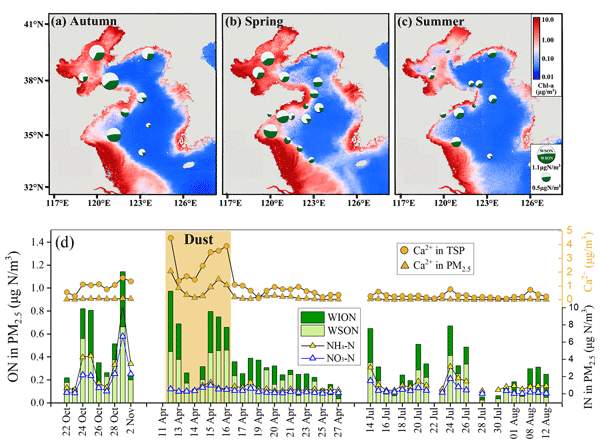
Atmospheric organic nitrogen is an important fraction in marine aerosols, and plays vital roles in organic aerosol absorption and maintaining primary productivity in the open ocean. However, abundance or sources of aerosol organic nitrogen remain unclear in the marine boundary layer. Here, we found that anthropogenic secondary pollutants and dust drove the organic nitrogen formation and the light absorption by organic aerosols over East Asian marginal seas.
Zhaosen Wu, Xinyu Guo, Jie Shi, Xiaokun Ding, Masatoshi Nakakuni, and Kuninao Tada
Biogeosciences, 23, 6053–6072, https://doi.org/10.5194/bg-23-6053-2026, https://doi.org/10.5194/bg-23-6053-2026, 2026
Short summary
Short summary
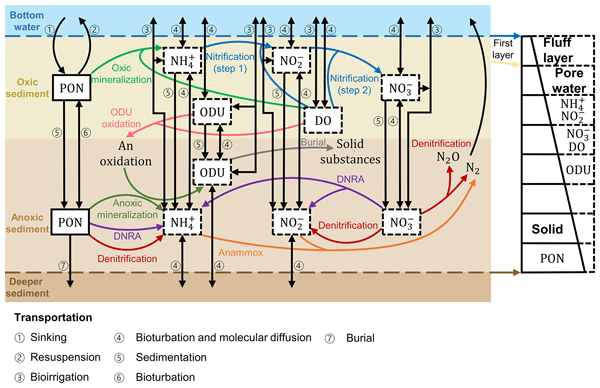
Using observations and a numerical model from a semi-enclosed coastal sea in Japan, we found that seasonal nitrogen release from sediments cannot be explained by organic matter input alone. Instead, nitrogen cycling is regulated by the interaction of organic matter supply, oxygen conditions, and nutrient concentrations in the overlying water. This framework helps explain differences among coastal seas and may improve predictions of environmental change.
Feifei Luo, Manoj Joshi, Bjørn H. Samset, Laura J. Wilcox, Camilla W. Stjern, Robert J. Allen, Yan-Ning Kuo, Wei Hua, and Shuanglin Li
EGUsphere, https://doi.org/10.5194/egusphere-2026-3301, https://doi.org/10.5194/egusphere-2026-3301, 2026
Short summary
Short summary
This study examines if this impact changes in a warmer world. Using a climate model, we compare identical Asian emissions under cooler and 1 K warmer climates. Aerosols reduce extreme rainfall in both, but more strongly over northern India in the warmer climate. A warmer, stabler atmosphere weakens circulation that partly offsets aerosol drying in cooler conditions. Continued warming may strengthen this drying over parts of Asia, while future pollution cuts could amplify heavy rainfall.
Yujue Wang, Yizhe Yi, Wei Xu, Yiwen Zhang, Shubin Li, Hong-Hai Zhang, Mingliang Gu, Shibo Yan, Jialei Zhu, Chao Zhang, Jinhui Shi, Yang Gao, Xiaohong Yao, and Huiwang Gao
Biogeosciences, 23, 77–93, https://doi.org/10.5194/bg-23-77-2026, https://doi.org/10.5194/bg-23-77-2026, 2026
Short summary
Short summary
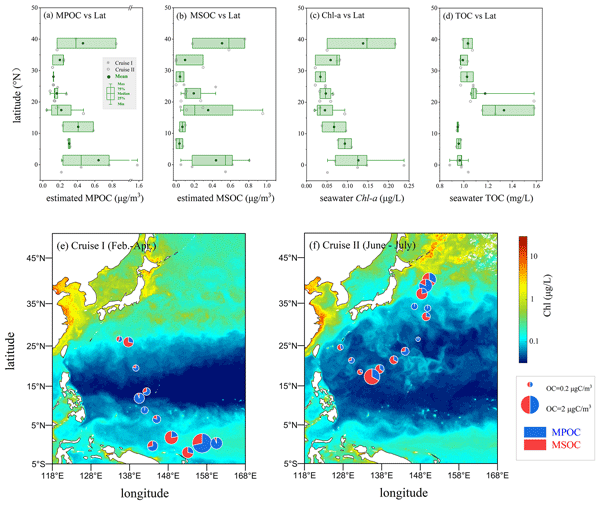
Marine organic aerosols remain poorly quantified, which limits our understanding on the climate regulation of marine aerosols. Based on shipboard cruises over the Pacific Ocean, we proposed an observation-based parameterization approach to estimate the primary and secondary marine organic aerosols using sea surface chlorophyll a and sea salts in marine aerosols. The results highlight that the spatial distribution of marine organic aerosols was driven by the marine biological activities.
Daisy D. Pickup, Dorothee C. E. Bakker, Karen J. Heywood, Francis Glassup, Emily M. Hammermeister, Sharon E. Stammerjohn, Gareth A. Lee, Socratis Loucaides, Bastien Y. Queste, Benjamin G. M. Webber, and Patricia L. Yager
Ocean Sci., 21, 2727–2741, https://doi.org/10.5194/os-21-2727-2025, https://doi.org/10.5194/os-21-2727-2025, 2025
Short summary
Short summary
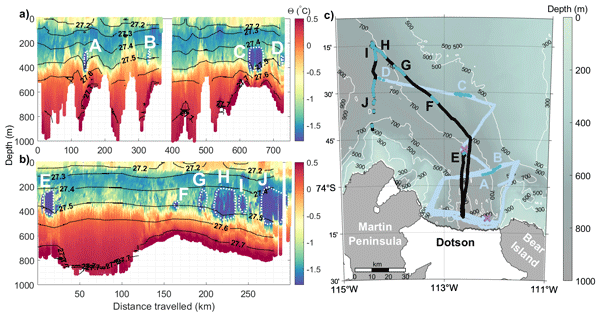
Autonomous platforms in the Amundsen Sea have allowed for detection of isolated water masses that are colder, saltier and denser than overlying water. They are also associated with a higher dissolved inorganic carbon concentration and lower pH. The water masses, referred to as lenses, could have implications for the transfer of heat and storage of carbon in the region. We hypothesise that they form in surrounding areas that experience intense cooling and sea ice formation in autumn/winter.
Shubin Li, Yujue Wang, Yiwen Zhang, Yizhe Yi, Yuchen Wang, Yuqi Guo, Chao Yu, Yue Jiang, Jinhui Shi, Chao Zhang, Jialei Zhu, Wei Hu, Jianzhen Yu, Xiaohong Yao, Huiwang Gao, and Min Hu
Atmos. Chem. Phys., 25, 12585–12598, https://doi.org/10.5194/acp-25-12585-2025, https://doi.org/10.5194/acp-25-12585-2025, 2025
Short summary
Short summary
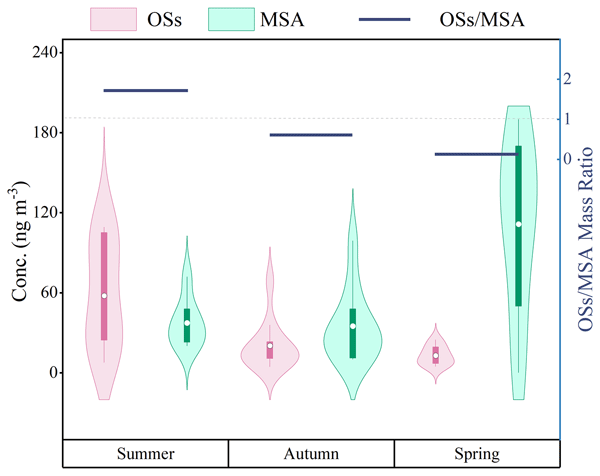
Organosulfates (OSs) are an unrecognized and potentially important component in marine organic aerosols. In this study, we quantified and characterized the OSs over East Asian marginal seas. The chemical nature and spatiotemporal distribution of OSs were modified by the joint influence of marine emissions and transported terrestrial pollutants. The results highlight the vital roles of OSs in shaping organic aerosol formation and sulfur cycle during summer in the marine boundary layer.
Peter M. F. Sheehan, Benjamin G. M. Webber, Alejandra Sanchez-Franks, and Bastien Y. Queste
Ocean Sci., 21, 1575–1588, https://doi.org/10.5194/os-21-1575-2025, https://doi.org/10.5194/os-21-1575-2025, 2025
Short summary
Short summary
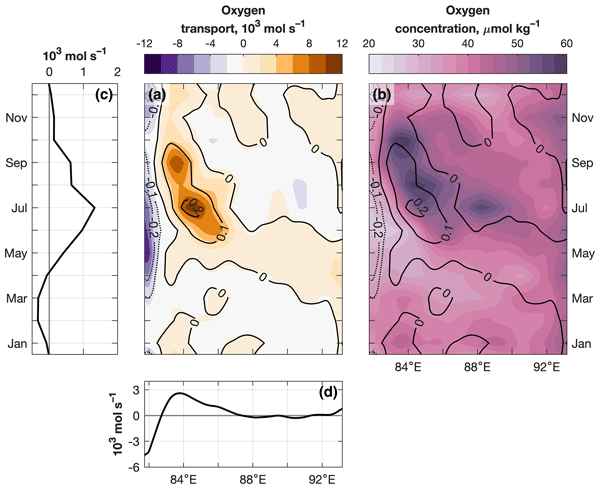
Using measurements and computer models, we identify a large flux of oxygen within the Southwest Monsoon Current, which flows north into the Bay of Bengal between June and September each year. Oxygen levels in the bay are very low, but they are not quite low enough for key nutrient cycles to be as dramatically altered as in other low-oxygen regions. We suggest that the flux which we identify contributes to keeping oxygen levels in the bay above the threshold below which dramatic changes would occur.
Feifei Luo, Bjørn H. Samset, Camilla W. Stjern, Manoj Joshi, Laura J. Wilcox, Robert J. Allen, Wei Hua, and Shuanglin Li
Atmos. Chem. Phys., 25, 7647–7667, https://doi.org/10.5194/acp-25-7647-2025, https://doi.org/10.5194/acp-25-7647-2025, 2025
Short summary
Short summary
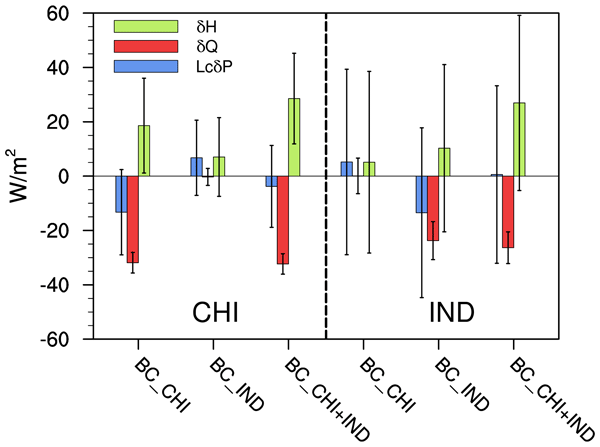
Black carbon (BC) aerosol is emitted from the incomplete combustion of biomass and fossil fuels. We found that Asian BC leads to strong local cooling and drying. Reductions in precipitation primarily depend on the thermodynamic effects due to solar radiation absorption by BC. The combined thermodynamic and dynamic effects shape the spatial pattern of precipitation responses to Asian BC. These results help us further understand the impact of emissions of anthropogenic aerosols on Asian climate.
Duncan Watson-Parris, Laura J. Wilcox, Camilla W. Stjern, Robert J. Allen, Geeta Persad, Massimo A. Bollasina, Annica M. L. Ekman, Carley E. Iles, Manoj Joshi, Marianne T. Lund, Daniel McCoy, Daniel M. Westervelt, Andrew I. L. Williams, and Bjørn H. Samset
Atmos. Chem. Phys., 25, 4443–4454, https://doi.org/10.5194/acp-25-4443-2025, https://doi.org/10.5194/acp-25-4443-2025, 2025
Short summary
Short summary
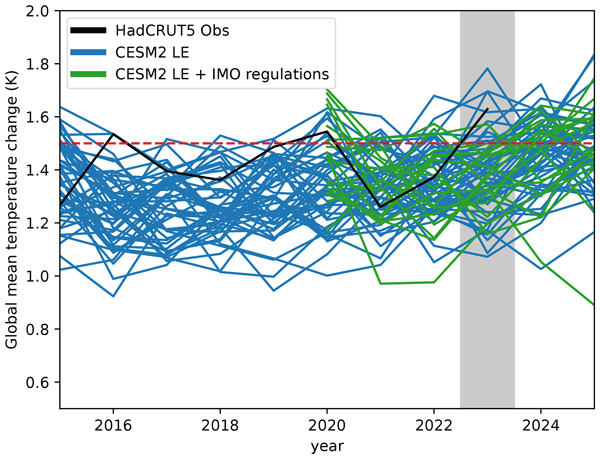
In 2020, regulations by the International Maritime Organization aimed to reduce aerosol emissions from ships. These aerosols previously had a cooling effect, which the regulations might reduce, revealing more greenhouse gas warming. Here we find that, while there is regional warming, the global 2020–2040 temperature rise is only +0.03 °C. This small change is difficult to distinguish from natural climate variability, indicating the regulations have had a limited effect on observed warming to date.
Wenbin Kou, Yang Gao, Dan Tong, Xiaojie Guo, Xiadong An, Wenyu Liu, Mengshi Cui, Xiuwen Guo, Shaoqing Zhang, Huiwang Gao, and Lixin Wu
Atmos. Chem. Phys., 25, 3029–3048, https://doi.org/10.5194/acp-25-3029-2025, https://doi.org/10.5194/acp-25-3029-2025, 2025
Short summary
Short summary
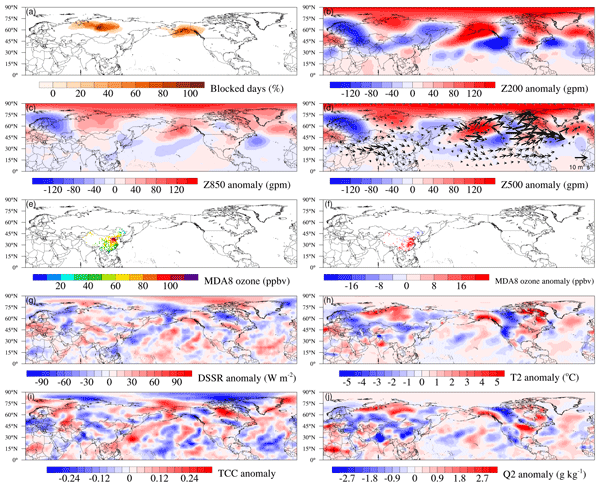
Unlike traditional numerical studies, we apply a high-resolution Earth system model, improving simulations of surface ozone and large-scale circulations such as atmospheric blocking. Besides local heat waves, we quantify the impact of atmospheric blocking on downstream ozone concentrations, which is closely associated with the blocking position. We identify three major pathways of Rossby wave propagation, stressing the critical role of large-scale circulation in regional air quality.
Ming Chu, Xing Wei, Shangfei Hai, Yang Gao, Huiwang Gao, Yujiao Zhu, Biwu Chu, Nan Ma, Juan Hong, Yele Sun, and Xiaohong Yao
Atmos. Chem. Phys., 24, 6769–6786, https://doi.org/10.5194/acp-24-6769-2024, https://doi.org/10.5194/acp-24-6769-2024, 2024
Short summary
Short summary
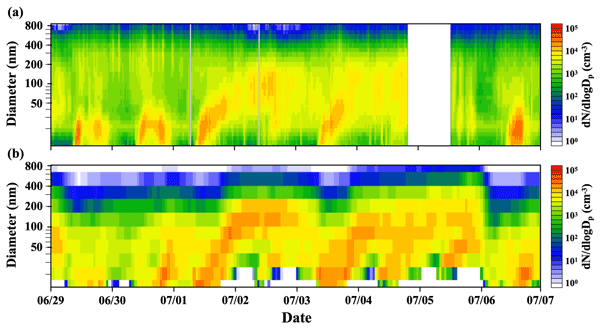
We used a 20-bin WRF-Chem model to simulate NPF events in the NCP during a three-week observational period in the summer of 2019. The model was able to reproduce the observations during June 29–July 6, which was characterized by a high frequency of NPF occurrence.
William J. Dow, Christine M. McKenna, Manoj M. Joshi, Adam T. Blaker, Richard Rigby, and Amanda C. Maycock
Weather Clim. Dynam., 5, 357–367, https://doi.org/10.5194/wcd-5-357-2024, https://doi.org/10.5194/wcd-5-357-2024, 2024
Short summary
Short summary
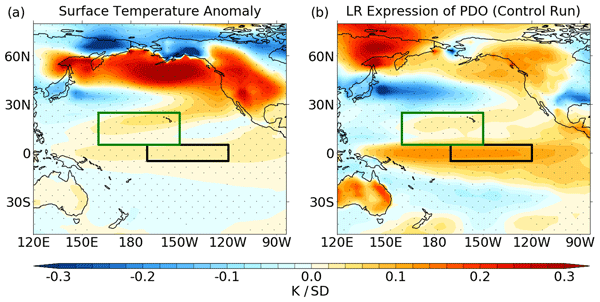
Changes to sea surface temperatures in the extratropical North Pacific are driven partly by patterns of local atmospheric circulation, such as the Aleutian Low. We show that an intensification of the Aleutian Low could contribute to small changes in temperatures across the equatorial Pacific via the initiation of two mechanisms. The effect, although significant, is unlikely to explain fully the recently observed multi-year shift of a pattern of climate variability across the wider Pacific.
Feifan Yan, Hang Su, Yafang Cheng, Rujin Huang, Hong Liao, Ting Yang, Yuanyuan Zhu, Shaoqing Zhang, Lifang Sheng, Wenbin Kou, Xinran Zeng, Shengnan Xiang, Xiaohong Yao, Huiwang Gao, and Yang Gao
Atmos. Chem. Phys., 24, 2365–2376, https://doi.org/10.5194/acp-24-2365-2024, https://doi.org/10.5194/acp-24-2365-2024, 2024
Short summary
Short summary
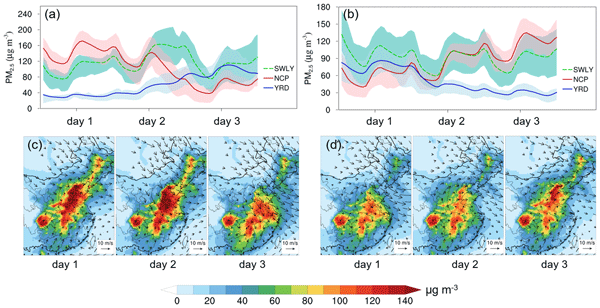
PM2.5 pollution is a major air quality issue deteriorating human health, and previous studies mostly focus on regions like the North China Plain and Yangtze River Delta. However, the characteristics of PM2.5 concentrations between these two regions are studied less often. Focusing on the transport corridor region, we identify an interesting seesaw transport phenomenon with stagnant weather conditions, conducive to PM2.5 accumulation over this region, resulting in large health effects.
Xing Wei, Yanjie Shen, Xiao-Ying Yu, Yang Gao, Huiwang Gao, Ming Chu, Yujiao Zhu, and Xiaohong Yao
Atmos. Chem. Phys., 23, 15325–15350, https://doi.org/10.5194/acp-23-15325-2023, https://doi.org/10.5194/acp-23-15325-2023, 2023
Short summary
Short summary
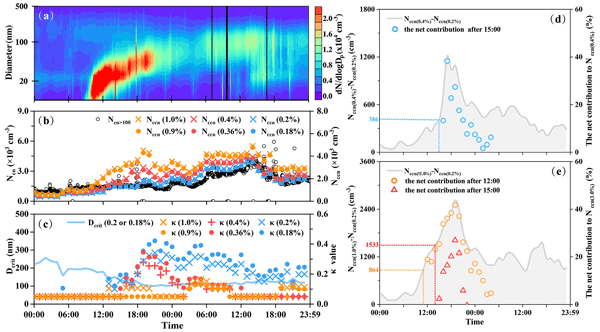
We investigate the contribution of grown new particles to Nccn at a rural mountain site in the North China Plain. The total particle number concentrations (Ncn) observed on 8 new particle formation (NPF) days were higher compared to non-NPF days. The Nccn at 0.2 % supersaturation (SS) and 0.4 % SS on the NPF days was significantly lower than on non-NPF days. Only one of eight NPF events had detectable net contributions to Nccn at 0.4 % SS and 1.0 % SS with increased κ values.
Thomas Wilder, Xiaoming Zhai, David Munday, and Manoj Joshi
Ocean Sci., 19, 1669–1686, https://doi.org/10.5194/os-19-1669-2023, https://doi.org/10.5194/os-19-1669-2023, 2023
Short summary
Short summary
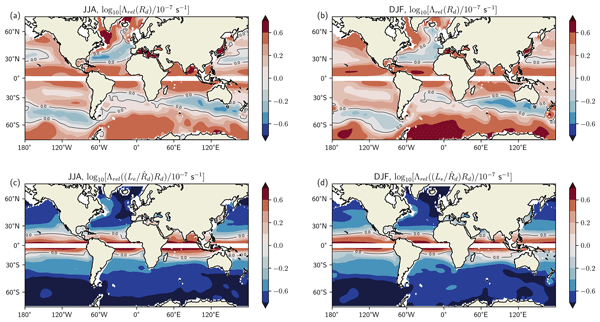
The dissipation rate of eddy energy in current energy budget-based eddy parameterisations is still relatively unconstrained, leading to uncertainties in ocean transport and ocean heat uptake. Here, we derive a dissipation rate due to the interaction of surface winds and eddy currents, a process known to significantly damp ocean eddies. The dissipation rate is quantified using seasonal climatology and displays wide spatial variability, with some of the largest values found in the Southern Ocean.
Chupeng Zhang, Shangfei Hai, Yang Gao, Yuhang Wang, Shaoqing Zhang, Lifang Sheng, Bin Zhao, Shuxiao Wang, Jingkun Jiang, Xin Huang, Xiaojing Shen, Junying Sun, Aura Lupascu, Manish Shrivastava, Jerome D. Fast, Wenxuan Cheng, Xiuwen Guo, Ming Chu, Nan Ma, Juan Hong, Qiaoqiao Wang, Xiaohong Yao, and Huiwang Gao
Atmos. Chem. Phys., 23, 10713–10730, https://doi.org/10.5194/acp-23-10713-2023, https://doi.org/10.5194/acp-23-10713-2023, 2023
Short summary
Short summary
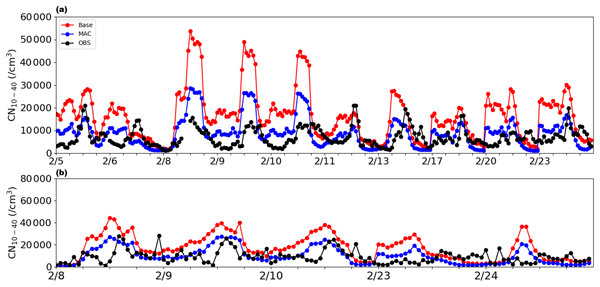
New particle formation is an important source of atmospheric particles, exerting critical influences on global climate. Numerical models are vital tools to understanding atmospheric particle evolution, which, however, suffer from large biases in simulating particle numbers. Here we improve the model chemical processes governing particle sizes and compositions. The improved model reveals substantial contributions of newly formed particles to climate through effects on cloud condensation nuclei.
Qi Yuan, Yuanyuan Wang, Yixin Chen, Siyao Yue, Jian Zhang, Yinxiao Zhang, Liang Xu, Wei Hu, Dantong Liu, Pingqing Fu, Huiwang Gao, and Weijun Li
Atmos. Chem. Phys., 23, 9385–9399, https://doi.org/10.5194/acp-23-9385-2023, https://doi.org/10.5194/acp-23-9385-2023, 2023
Short summary
Short summary
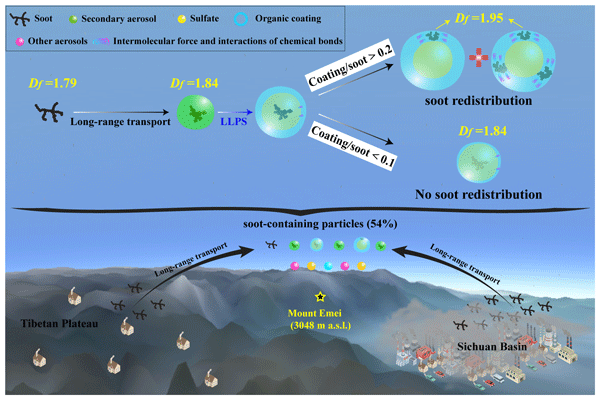
This study for the first time found large amounts of liquid–liquid phase separation particles with soot redistributing in organic coatings instead of sulfate cores in the eastern Tibetan Plateau atmosphere. The particle size and the ratio of the organic matter coating thickness to soot size are two of the major possible factors that likely affect the soot redistribution process. The soot redistribution process promoted the morphological compaction of soot particles.
Manoj Joshi, Robert A. Hall, David P. Stevens, and Ed Hawkins
Earth Syst. Dynam., 14, 443–455, https://doi.org/10.5194/esd-14-443-2023, https://doi.org/10.5194/esd-14-443-2023, 2023
Short summary
Short summary
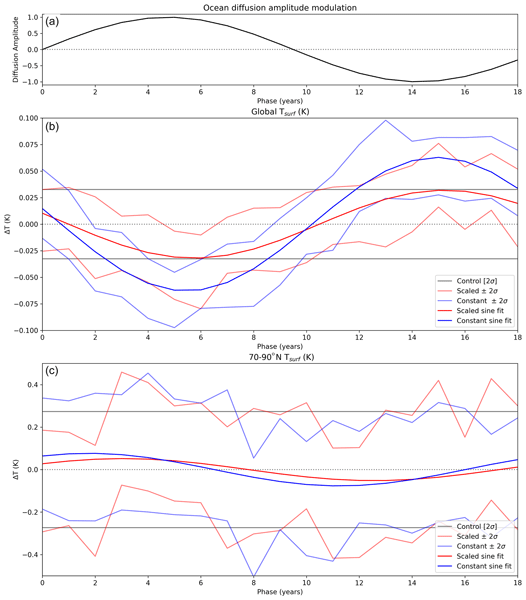
The 18.6-year lunar nodal cycle arises from variations in the angle of the Moon's orbital plane and affects ocean tides. In this work we use a climate model to examine the effect of this cycle on the ocean, surface, and atmosphere. The timing of anomalies is consistent with the so-called slowdown in global warming and has implications for when global temperatures will exceed 1.5 ℃ above pre-industrial levels. Regional anomalies have implications for seasonal climate areas such as Europe.
Yu Lin, Leiming Zhang, Qinchu Fan, He Meng, Yang Gao, Huiwang Gao, and Xiaohong Yao
Atmos. Chem. Phys., 22, 16073–16090, https://doi.org/10.5194/acp-22-16073-2022, https://doi.org/10.5194/acp-22-16073-2022, 2022
Short summary
Short summary
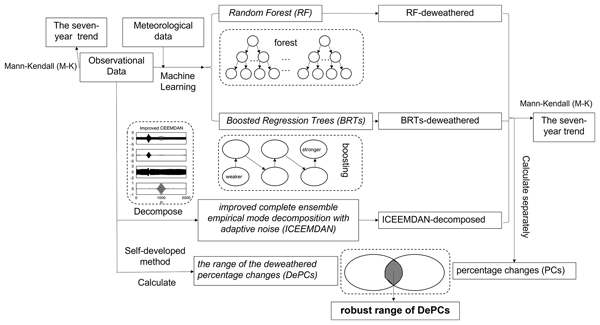
In this study, we analyzed 7-year (from May 2014 to April 2021) concentration data of six criteria air pollutants (PM2.5, PM10, O3, NO2, CO and SO2) as well as the sum of NO2 and O3 in six cities in South China. Three different analysis methods were used to identify emission-driven interannual variations and perturbations from varying weather conditions. In addition, a self-developed method was further introduced to constrain analysis uncertainties.
Yixi Zheng, David P. Stevens, Karen J. Heywood, Benjamin G. M. Webber, and Bastien Y. Queste
The Cryosphere, 16, 3005–3019, https://doi.org/10.5194/tc-16-3005-2022, https://doi.org/10.5194/tc-16-3005-2022, 2022
Short summary
Short summary
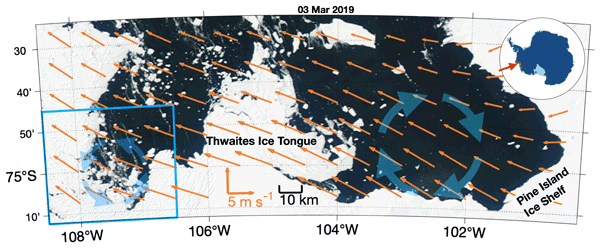
New observations reveal the Thwaites gyre in a habitually ice-covered region in the Amundsen Sea for the first time. This gyre rotates anticlockwise, despite the wind here favouring clockwise gyres like the Pine Island Bay gyre – the only other ocean gyre reported in the Amundsen Sea. We use an ocean model to suggest that sea ice alters the wind stress felt by the ocean and hence determines the gyre direction and strength. These processes may also be applied to other gyres in polar oceans.
Yating Gao, Dihui Chen, Yanjie Shen, Yang Gao, Huiwang Gao, and Xiaohong Yao
Atmos. Chem. Phys., 22, 1515–1528, https://doi.org/10.5194/acp-22-1515-2022, https://doi.org/10.5194/acp-22-1515-2022, 2022
Short summary
Short summary
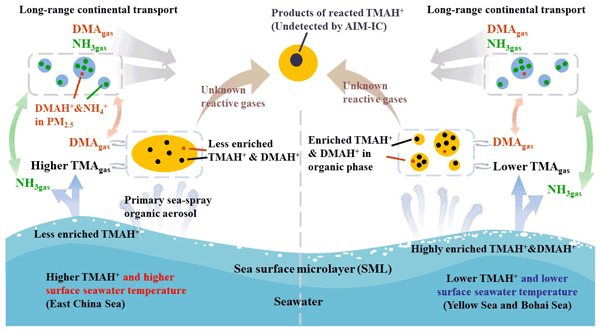
This study focuses on spatiotemporal heterogeneity of observed gaseous amines, NH3, their particulate counterparts in PM2.5 over different sea zones, and the disproportional release of alkaline gases and corresponding particulate counterparts from seawater in the sea zones in terms of different extents of enrichment of TMAH+ and DMAH+ in the sea surface microlayer (SML). A novel hypothesis is delivered.
Liang Xu, Xiaohuan Liu, Huiwang Gao, Xiaohong Yao, Daizhou Zhang, Lei Bi, Lei Liu, Jian Zhang, Yinxiao Zhang, Yuanyuan Wang, Qi Yuan, and Weijun Li
Atmos. Chem. Phys., 21, 17715–17726, https://doi.org/10.5194/acp-21-17715-2021, https://doi.org/10.5194/acp-21-17715-2021, 2021
Short summary
Short summary
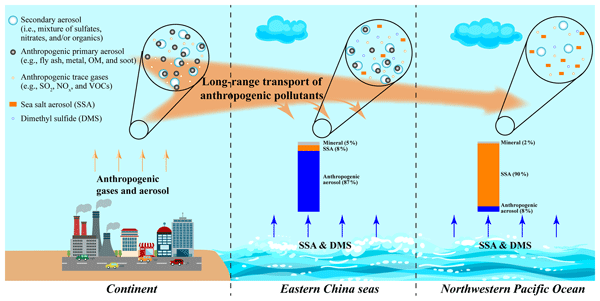
We quantified different types of marine aerosols and explored the Cl depletion of sea salt aerosol (SSA) in the eastern China seas and the northwestern Pacific Ocean. We found that anthropogenic acidic gases in the troposphere were transported longer distances compared to the anthropogenic aerosols and could significantly impact remote marine aerosols. Meanwhile, variations of chloride depletion in SSA can serve as a potential indicator for anthropogenic gaseous pollutants in remote marine air.
Helen E. Phillips, Amit Tandon, Ryo Furue, Raleigh Hood, Caroline C. Ummenhofer, Jessica A. Benthuysen, Viviane Menezes, Shijian Hu, Ben Webber, Alejandra Sanchez-Franks, Deepak Cherian, Emily Shroyer, Ming Feng, Hemantha Wijesekera, Abhisek Chatterjee, Lisan Yu, Juliet Hermes, Raghu Murtugudde, Tomoki Tozuka, Danielle Su, Arvind Singh, Luca Centurioni, Satya Prakash, and Jerry Wiggert
Ocean Sci., 17, 1677–1751, https://doi.org/10.5194/os-17-1677-2021, https://doi.org/10.5194/os-17-1677-2021, 2021
Short summary
Short summary
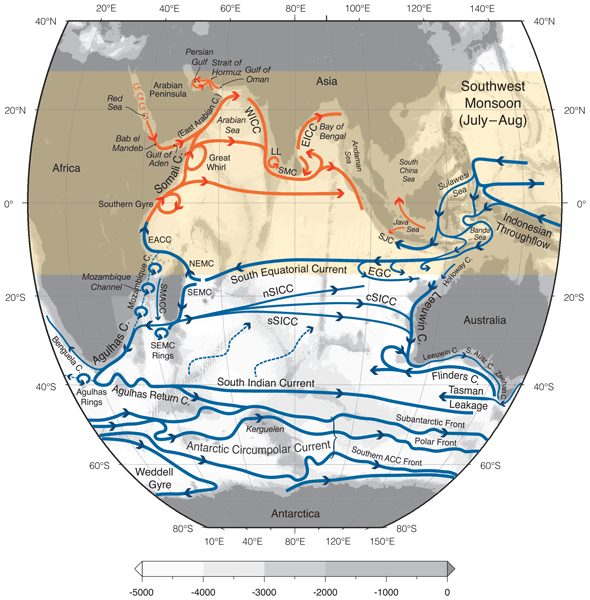
Over the past decade, understanding of the Indian Ocean has progressed through new observations and advances in theory and models of the oceanic and atmospheric circulation. This review brings together new understanding of the ocean–atmosphere system in the Indian Ocean, describing Indian Ocean circulation patterns, air–sea interactions, climate variability, and the critical role of the Indian Ocean as a clearing house for anthropogenic heat.

Dihui Chen, Yanjie Shen, Juntao Wang, Yang Gao, Huiwang Gao, and Xiaohong Yao
Atmos. Chem. Phys., 21, 16413–16425, https://doi.org/10.5194/acp-21-16413-2021, https://doi.org/10.5194/acp-21-16413-2021, 2021
Short summary
Short summary
The study provides solid evidence to demonstrate that atmospheric trimethylamine (TMAgas) and particulate trimethylaminium in PM2.5 (TMAH+) observed in marine atmospheres were uniquely derived from seawater emissions. As sea-derived TMAgas correlated significantly with DMAgas and NH3gas, sea-derived DMAgas and NH3gas can be estimated and can quantify the contribution to the observed species in the marine atmosphere. Similarly, the contributions of primary DMAH+ have also been estimated.
Cited articles
An, S. I. and Wang, B.: Mechanisms of locking of the El Niño and La Niña mature phases to boreal winter, J. Clim., 14, 2164–2176, https://doi.org/10.1175/1520-0442(2001)014<2164:MOLOTE>2.0.CO;2, 2001.
Barber, R. T. and Chavez, F. P.: Biological consequences of El Niño, Science (1979), 222, 1203–1210, https://doi.org/10.1126/science.222.4629.1203, 1983.
Behrenfeld, M. J., Boss, E., Siegel, D. A., and Shea, D. M.: Carbon-based ocean productivity and phytoplankton physiology from space, Global Biogeochem Cycles, 19, 1–14, https://doi.org/10.1029/2004GB002299, 2005.
Behrenfeld, M. J., O'Malley, R. T., Siegel, D. A., McClain, C. R., Sarmiento, J. L., Feldman, G. C., Milligan, A. J., Falkowski, P. G., Letelier, R. M., and Boss, E. S.: Climate-driven trends in contemporary ocean productivity, Nature, 444, 752–755, https://doi.org/10.1038/nature05317, 2006.
Behrenfeld, M. J., O'Malley, R. T., Boss, E. S., Westberry, T. K., Graff, J. R., Halsey, K. H., Milligan, A. J., Siegel, D. A., and Brown, M. B.: Revaluating ocean warming impacts on global phytoplankton, Nat. Clim. Chang., 6, 323–330, https://doi.org/10.1038/NCLIMATE2838, 2016.
Bellenger, H., Guilyardi, E., Leloup, J., Lengaigne, M., and Vialard, J.: ENSO representation in climate models: from CMIP3 to CMIP5, Clim. Dyn., 42, 1999–2018, https://doi.org/10.1007/s00382-013-1783-z, 2014.
Bidigare, R. R., Chai, F., Landry, M. R., Lukas, R., Hannides, C. C. S., Christensen, S. J., Karl, D. M., Shi, L., and Chao, Y.: Subtropical ocean ecosystem structure changes forced by North Pacific climate variations, J. Plankton. Res., 31, 1131–1139, https://doi.org/10.1093/plankt/fbp064, 2009.
Boyce, D. G., Dowd, M., Lewis, M. R., and Worm, B.: Estimating global chlorophyll changes over the past century, Prog. Oceanogr., 122, 163–173, https://doi.org/10.1016/j.pocean.2014.01.004, 2014.
Carton, J. A., Chepurin, G. A., and Chen, L.: SODA3: A new ocean climate reanalysis, J. Clim., 31, 6967–6983, https://doi.org/10.1175/JCLI-D-18-0149.1, 2018.
Chow, C. H., Cheah, W., Tai, J. H., and Liu, S. F.: Anomalous wind triggered the largest phytoplankton bloom in the oligotrophic North Pacific Subtropical Gyre, Sci. Rep., 9, 15550, https://doi.org/10.1038/s41598-019-51989-x, 2019.
Cole, H., Henson, S., Martin, A., and Yool, A.: Mind the gap: The impact of missing data on the calculation of phytoplankton phenology metrics, J. Geophys. Res. Oceans, 117, C8030, https://doi.org/10.1029/2012JC008249, 2012.
Di Lorenzo, E., Schneider, N., Cobb, K. M., Franks, P. J. S., Chhak, K., Miller, A. J., McWilliams, J. C., Bograd, S. J., Arango, H., Curchitser, E., Powell, T. M., and Rivière, P.: North Pacific Gyre Oscillation links ocean climate and ecosystem change, Geophys. Res. Lett., 35, 2007GL032838, https://doi.org/10.1029/2007GL032838, 2008.
Elman, J. L.: Finding structure in time, Cogn. Sci., 14, 179–211, https://doi.org/10.1207/s15516709cog1402_1, 1990.
Feng, Y., Chen, X., and Tung, K.-K.: ENSO diversity and the recent appearance of Central Pacific ENSO, Clim. Dyn., 54, 413–433, https://doi.org/10.1007/s00382-019-05005-7, 2020.
Freilich, M., Mignot, A., Flierl, G., and Ferrari, R.: Grazing behavior and winter phytoplankton accumulation, Biogeosciences, 18, 5595–5607, https://doi.org/10.5194/bg-18-5595-2021, 2021.
Fu, W., Moore, J. K., Primeau, F., Collier, N, Ogunro, O. O., Hoffman, F. M., and Randerson, J. T.: Evaluation of ocean biogeochemistry and carbon cycling in CMIP Earth System Models with the International Ocean Model Benchmarking (IOMB) software system, J. Geophys. Res. Oceans, 127, e2022JC018965, https://doi.org/10.1029/2022JC018965, 2022.
Gregg, W. W. and Rousseaux, C. S.: Decadal trends in global pelagic ocean chlorophyll: A new assessment integrating multiple satellites, in situ data, and models, J. Geophys. Res. Oceans, 119, 5921–5933, https://doi.org/10.1002/2014JC010158, 2014.
Henson, S., Cole, H., Beaulieu, C., and Yool, A.: The impact of global warming on seasonality of ocean primary production, Biogeosciences, 10, 4357–4369, https://doi.org/10.5194/bg-10-4357-2013, 2013.
Henson, S. A., Sarmiento, J. L., Dunne, J. P., Bopp, L., Lima, I., Doney, S. C., John, J., and Beaulieu, C.: Detection of anthropogenic climate change in satellite records of ocean chlorophyll and productivity, Biogeosciences, 7, 621–640, https://doi.org/10.5194/bg-7-621-2010, 2010.
Hersbach, H., Bell, B., Berrisford, P., Biavati, G., Horányi, A., Muñoz Sabater, J., Nicolas, J., Peubey, C., Radu, R., Rozum, I., Schepers, D., Simmons, A., Soci, C., Dee, D., and Thépaut, J.-N.: ERA5 monthly averaged data on pressure levels from 1940 to present, Copernicus Climate Change Service (C3S) Climate Data Store (CDS) [data set], https://doi.org/10.24381/cds.6860a573, 2023.
Irwin, A. J. and Oliver, M. J.: Are ocean deserts getting larger?, Geophys. Res. Lett., 36, 2009GL039883, https://doi.org/10.1029/2009GL039883, 2009.
Itoh, S., Yasuda, I., Saito, H., Tsuda, A., and Komatsu, K.: Mixed layer depth and chlorophyll a: Profiling float observations in the Kuroshio-Oyashio Extension region, Journal of Marine Systems, 151, 1–14, https://doi.org/10.1016/j.jmarsys.2015.06.004, 2015.
Jacox, M. G., Fiechter, J., Moore, A. M., and Edwards, C. A.: ENSO and the California current coastal upwelling response, J. Geophys. Res. Oceans, 120, 1691–1702, https://doi.org/10.1002/2014JC010650, 2015.
Jena, B., Sahu, S., Avinash, K., and Swain, D.: Observation of oligotrophic gyre variability in the south Indian Ocean: Environmental forcing and biological response, Deep Sea Res. I: Oceanogr. Res. Pap., 80, 1–10, https://doi.org/10.1016/j.dsr.2013.06.002, 2013.
Kwiatkowski, L., Bopp, L., Aumont, O., Ciais, P., Cox, P. M., Laufkotter, C., Li, Y., and Seferian, R.: Emergent constraints on projections of declining primary production in the tropical oceans, Nat. Clim. Chang., 7, 355–358, https://doi.org/10.1038/NCLIMATE3265, 2017.
Large, W. G., Mcwilliams, J. C., and Doney, S. C.: Oceanic vertical mixing: A review and a model with a nonlocal boundary layer parameterization, Reviews of Geophysics, 32, 363–403, https://doi.org/10.1029/94RG01872, 1994.
Laws, E. A.: Evaluation of in situ phytoplankton growth rates: A synthesis of data from varied approaches, Ann. Rev. Mar. Sci., 5, 247–268, https://doi.org/10.1146/annurev-marine-121211-172258, 2013.
Leonelli, F. E., Bellacicco, M., Pitarch, J., Organelli, E., Nardelli, B. B., de Toma, V., Cammarota, C., and Marullo, S., and Santoleri, R.: Ultra-oligotrophic waters expansion in the North Atlantic Subtropical Gyre revealed by 21 Years of satellite observations, Geophys. Res. Lett., 49, 2021GL096965, https://doi.org/10.1029/2021GL096965, 2022.
Levitus, S. and U.S. National Oceanographic Data Center: World Ocean Atlas 2005 (4 disc set), NOAA National Centers for Environmental Information [data set], https://www.ncei.noaa.gov/archive/accession/0097967 (last access: May 2023), 2013.
Lewandowska, A. M., Boyce, D. G., Hofmann, M., and Matthiessen, B., Sommer, U., and Worm, B.: Effects of sea surface warming on marine plankton, Ecol. Lett., 17, 614–623, https://doi.org/10.1111/ele.12265, 2014.
Lin, P., Chai, F., Xue, H., and Xiu, P.: Modulation of decadal oscillation on surface chlorophyll in the Kuroshio Extension, J. Geophys. Res. Oceans, 119, 187–199, https://doi.org/10.1002/2013JC009359, 2014.
Lozier, M. S., Dave, A. C., Palter, J. B., Gerber, L. M., and Barber, R. T.: On the relationship between stratification and primary productivity in the North Atlantic, Geophys. Res. Lett., 38, 2011GL049414, https://doi.org/10.1029/2011GL049414, 2011.
Lutz, M. J., Caldeira, K., Dunbar, R. B., and Behrenfeld, M. J.: Seasonal rhythms of net primary production and particulate organic carbon flux to depth describe the efficiency of biological pump in the global ocean, J. Geophys. Res. Oceans, 112, https://doi.org/10.1029/2006JC003706, 2007.
Manizza, M., Le Quéré, C., Watson, A. J., and Buitenhuis, E. T.: Bio-optical feedbacks among phytoplankton, upper ocean physics and sea-ice in a global model, Geophys. Res. Lett., 32, L05603, https://doi.org/10.1029/2004GL020778, 2005.
Mao, Z., Jamet, C., Linderman, M., Wang, Y., and Chen, X.: Seasonal cycles of phytoplankton expressed by sine equations using the daily climatology from satellite-retrieved chlorophyll-a concentration (1997–2019) over global ocean, Remote Sens. (Basel), 12, 2662, https://doi.org/10.3390/rs12162662, 2020.
McClain, C. R., Signorini, S. R., and Christian, J. R.: Subtropical gyre variability observed by ocean-color satellites, Deep Sea Res. II: Top. Stud. Oceanogr., 51, 281–301, https://doi.org/10.1016/j.dsr2.2003.08.002, 2004.
Meng, S.: Data for “Seasonality of the North Pacific Ocean Desert area in the past two decades and a modelling perspective for the 21st century”, Zenodo [code and data set], https://doi.org/10.5281/zenodo.17675565, 2025.
Meng, S., Gong, X., Yu, Y., Yao, X., Gong, X., Lu, K., Zhang, C., Shi, J., Yu, X., and Gao, H.: Strengthened ocean-desert process in the North Pacific over the past two decades, Environmental Research Letters, 16, 24–34, https://doi.org/10.1088/1748-9326/abd96f, 2021.
Meng, S., Webber, B. G. M., Stevens, D. P., Joshi, M., Palmieri, J., and Yool, A.: Diverse Responses of Upper Ocean Temperatures to Chlorophyll-Induced Solar Absorption Across Different Coastal Upwelling Regions, Geophys. Res. Lett., 51, e2024GL109714, https://doi.org/10.1029/2024GL109714, 2024.
Moss, R. H., Edmonds, J. A., Hibbard, K. A., Manning, M. R., Rose, S. K., van Vuuren, D. P., Carter, T. R., Emori, S., Kainuma, M., Kram, T., Meehl, G. A., Mitchell, J. F. B., Nakicenovic, N., Riahi, K., Smith, S. J., Stouffer, R. J., Thomson, A. M., Weyant, J. P., and Wilbanks, T. J.: The next generation of scenarios for climate change research and assessment, Nature, 463, 747–756, https://doi.org/10.1038/nature08823, 2010.
Muñiz, C., McQuaid, C. D., and Weidberg, N.: Seasonality of primary productivity affects coastal species more than its magnitude, Science of the Total Environment, 757, https://doi.org/10.1016/j.scitotenv.2020.143740, 2021.
NASA Ocean Biology Processing Group (OBPG): Aqua MODIS level-3 global mapped chlorophyll data, version 2022.0, NASA Ocean Biology Distributed Active Archive Center (OB.DAAC) [data set], https://doi.org/10.5067/AQUA/MODIS/L3M/CHL/2022.0, 2022.
Pennington, J. T., Mahoney, K. L., Kuwahara, V. S., Kolber, D. D., Calienes, R., and Chavez, F. P.: Primary production in the eastern tropical Pacific: A review, Prog. Oceanogr., 69, 285–317, https://doi.org/10.1016/j.pocean.2006.03.012, 2006.
Polovina, J. J., Howell, E. A., and Abecassis, M.: Ocean's least productive waters are expanding, Geophys. Res. Lett., 35, 2007GL0317455, https://doi.org/10.1029/2007GL031745, 2008.
Racault, M.-F., Sathyendranath, S., Brewin Robert, J. W., and Raitsos, D. E., Jackson, T., and Platt, T.: Impact of El Niño variability on oceanic phytoplankton, Front. Mar. Sci., 4, 133, https://doi.org/10.3389/fmars.2017.00133, 2017.
Raes, E. J., Hörstmann, C., Landry, M. R., Beckley, L. E., Marin, M., Thompson, P., Antoine, D., Focardi, A., O'Brien, J., Ostrowski, M., and Waite, A. M.: Dynamic change in an ocean desert: Microbial diversity and trophic transfer along the 110° E meridional in the Indian Ocean, Deep Sea Res. II: Top. Stud. Oceanogr., 201, 105097, https://doi.org/10.1016/j.dsr2.2022.105097, 2022.
Rayner, N. A., Parker, D. E., Horton, E. B., Folland, C. K., Alexander, L., Rowell, D. P., Kent, E. C., and Kaplan, A.: Global analyses of sea surface temperature, sea ice, and night marine air temperature since the late nineteenth century, Journal of Geophysical Research-Atmospheres, 108, https://doi.org/10.1029/2002JD002670, 2003.
Reynolds, R. W.: A real-time global sea surface temperature analysis, J. Clim., 1, 75–86, https://doi.org/10.1175/1520-0442(1988)001<0075:ARTGSS>2.0.CO;2, 1988.
Schwalm, C. R., Glendon, S., and Duffy, P. B.: RCP8.5 tracks cumulative CO2 emissions, Proc. Natl. Acad. Sci. USA, 117, 19656–19657, https://doi.org/10.1073/pnas.2007117117, 2020.
Séférian, R., Bopp, L., Gehlen, M., Orr, J. C., Ethé, C., Cadule, P., Aumont, O., Salas y Mélia, D., Voldoire, A., and Madec, G.: Skill assessment of three earth system models with common marine biogeochemistry, Clim. Dyn., 40, 2549–2573, https://doi.org/10.1007/s00382-012-1362-8, 2013.
Signorini, S. R. and McClain, C. R.: Subtropical gyre variability as seen from satellites, Remote Sensing Letters, 3, https://doi.org/10.1080/01431161.2011.625053, 2012.
Signorini, S. R., Franz, B. A., and McClain, C. R.: Chlorophyll variability in the oligotrophic gyres: Mechanisms, seasonality and trends, Front. Mar. Sci., 2, https://doi.org/10.3389/fmars.2015.00001, 2015.
Stock, A., Crowder, L. B., Halpern, B. S., and Micheli, F.: Uncertainty analysis and robust areas of high and low modeled human impact on the global oceans, Conservation Biology, 32, 1368–1379, https://doi.org/10.1111/cobi.13141, 2018.
Stoer, A. C. and Fennel, K.: Carbon-centric dynamics of Earth's marine phytoplankton, Proc. Natl. Acad. Sci. USA, 121, e2405354121, https://doi.org/10.1073/pnas.2405354121, 2024.
Taylor, K. E., Stouffer, R. J., and Meehl, G. A.: An overview of CMIP5 and the experiment design, Bull. Am. Meteorol. Soc., 93, 485–498, https://doi.org/10.1175/BAMS-D-11-00094.1, 2012.
Tian, F. and Zhang, R. H.: Emerging hotspots of surface chlorophyll trend in the Tropical Oceans, J. Geophys. Res. Oceans, 129, 2023JC020681, https://doi.org/10.1029/2023JC020681, 2024.
Toyoda, T. and Okamoto, S.: Physical forcing of late summer chlorophyll a blooms in the oligotrophic eastern North Pacific, J. Geophys. Res. Oceans, 122, 1849–1861, https://doi.org/10.1002/2016JC012423, 2017.
Villareal, T. A., Adornato, L., Wilson, C., and Schoenbaechler, C. A.: Summer blooms of diatom-diazotroph assemblages and surface chlorophyll in the North Pacific gyre: A disconnect, J. Geophys. Res. Oceans, 116, 2010JC006268, https://doi.org/10.1029/2010JC006268, 2011.
Villareal, T. A., Brown, C. G., Brzezinski, M. A., Krause, J. W., and Wilson, C.: Summer diatom blooms in the north Pacific subtropical gyre: 2008–2009, PLoS One, 7, e33109, https://doi.org/10.1371/journal.pone.0033109, 2012.
Wilson, C. and Qiu, X.: Global distribution of summer chlorophyll blooms in the oligotrophic gyres, Prog. Oceanogr., 78, 107–134, https://doi.org/10.1016/j.pocean.2008.05.002, 2008.
Wilson, C., Villareal, T. A., Brzezinski, M. A., Krause, J. W., and Shcherbina, A. Y.: Chlorophyll bloom development and the subtropical front in the North Pacific, J. Geophys. Res. Oceans, 118, 1473–1488, https://doi.org/10.1002/jgrc.20143, 2013.
Wu, R. G. and Kirtman, B. P.: Near-annual SST variability in the Equatorial Pacific in a coupled general circulation model, J. Clim., 18, 4454–4473, https://doi.org/10.1175/JCLI3536.1, 2005.
Yamaguchi, R. and Suga, T.: Trend and variability in global upper-ocean stratification since the 1960s, J. Geophys. Res. Oceans, 124, 8933–8948, https://doi.org/10.1029/2019JC015439, 2019.
Yoo, S., Batchelder, H. P., Peterson, W. T., and Sydeman, W. J.: Seasonal, interannual and event scale variation in North Pacific ecosystems, Prog. Oceanogr., 77, 155–181, https://doi.org/10.1016/j.pocean.2008.03.013, 2008.
Zuo, H., Balmaseda, M. A., Tietsche, S., Mogensen, K., and Mayer, M.: The ECMWF operational ensemble reanalysis–analysis system for ocean and sea ice: a description of the system and assessment, Ocean Sci., 15, 779–808, https://doi.org/10.5194/os-15-779-2019, 2019.
Short summary
The North Pacific oligotrophic ocean gyre (NPOG), with low phytoplankton biomass, covers about 40 % of the North Pacific. The variations in NPOG seasonal cycle, which have a greater impact than its annual mean changes, are influenced by the El Niño-Southern Oscillation from 1998 to 2021. However, from 2021 to 2100, a weakened NPOG seasonal cycle is expected due to climate change. These changes in NPOG seasonal cycle could affect fisheries and marine ecosystems.
The North Pacific oligotrophic ocean gyre (NPOG), with low phytoplankton biomass, covers about...


Altmetrics
Final-revised paper
Preprint