
Articles | Volume 23, issue 3
https://doi.org/10.5194/bg-23-939-2026
© Author(s) 2026. This work is distributed under
the Creative Commons Attribution 4.0 License.
the Creative Commons Attribution 4.0 License.
https://doi.org/10.5194/bg-23-939-2026
© Author(s) 2026. This work is distributed under
the Creative Commons Attribution 4.0 License.
the Creative Commons Attribution 4.0 License.
Research article
| 
03 Feb 2026
Research article |
| 03 Feb 2026
| 03 Feb 2026
Effects of fire and grazing on biogeochemical cycles in Brazilian pastures using LPJmL5-Pasture-Burning

Potsdam Institute for Climate Impact Research (PIK), Member of the Leibniz Association, P.O. Box 601203, 14412 Potsdam, Germany
Department of Life Sciences, Humboldt University (HU), Invalidenstraße 42, 10115 Berlin, Germany
Stephen B. Wirth
Potsdam Institute for Climate Impact Research (PIK), Member of the Leibniz Association, P.O. Box 601203, 14412 Potsdam, Germany
Institute of Crop Science and Plant Breeding, Grass and Forage Science/Organic Agriculture, Kiel University Hermann-Rodewald-Str. 9, 24118, Kiel, Germany
Markus Drüke
Potsdam Institute for Climate Impact Research (PIK), Member of the Leibniz Association, P.O. Box 601203, 14412 Potsdam, Germany
Deutscher Wetterdienst, Hydrometeorologie, Frankfurter Str. 135, 63067 Offenbach, Germany
Kirsten Thonicke
Potsdam Institute for Climate Impact Research (PIK), Member of the Leibniz Association, P.O. Box 601203, 14412 Potsdam, Germany
Henrique Barbosa
Department of Physics, University of Maryland, Baltimore County, Baltimore, MD, USA
Jens Heinke
Potsdam Institute for Climate Impact Research (PIK), Member of the Leibniz Association, P.O. Box 601203, 14412 Potsdam, Germany
Susanne Rolinski
Potsdam Institute for Climate Impact Research (PIK), Member of the Leibniz Association, P.O. Box 601203, 14412 Potsdam, Germany
Related authors
No articles found.
Jens Heinke, Sibyll Schaphoff, Stephen Björn Wirth, and Christoph Müller
EGUsphere, https://doi.org/10.5194/egusphere-2026-4549, https://doi.org/10.5194/egusphere-2026-4549, 2026
This preprint is open for discussion and under review for Geoscientific Model Development (GMD).
Short summary
Short summary
Nitrogen is essential for plant growth, and vegetation models must capture how its availability limits it. We found a long-standing error in one such model, LPJmL, that had overestimated plants' nitrogen needs by about a factor of two. Correcting it removed this limit almost entirely, which required further adjustments to how the model handles nitrogen uptake, recycling, and plant leaf timing, to restore a realistic level of nitrogen limitation and overall model behavior.
Markus Drüke, Alice Künzel, Uwe Böhm, Fabiana Castino, Thomas Deutschländer, Anett Fiedler, Ines Höschel, Grit Machui-Schwanitz, Monika Rauthe, Gerold Schneider, and Bodo Wichura
EGUsphere, https://doi.org/10.5194/egusphere-2026-5507, https://doi.org/10.5194/egusphere-2026-5507, 2026
This preprint is open for discussion and under review for Hydrology and Earth System Sciences (HESS).
Short summary
Short summary
Snow cover is changing across Germany, but not everywhere at the same pace. We created the first detailed nationwide record of daily snow depth at a 1 × 1 km resolution from 1950 to 2026. Applying an optimal interpolation scheme on station data, we found strong declines in snow cover indices, especially in lowland and mid-elevation areas. The dataset can help assess the impacts of changing snow cover on water availability, ecosystems, winter tourism, and the likelihood of a White Christmas.
Jannes Breier, Luana Schwarz, Hannah Prawitz, Werner von Bloh, Christoph Müller, Stephen Björn Wirth, Max Bechthold, Dieter Gerten, and Jonathan F. Donges
Geosci. Model Dev., 19, 6829–6855, https://doi.org/10.5194/gmd-19-6829-2026, https://doi.org/10.5194/gmd-19-6829-2026, 2026
Short summary
Short summary
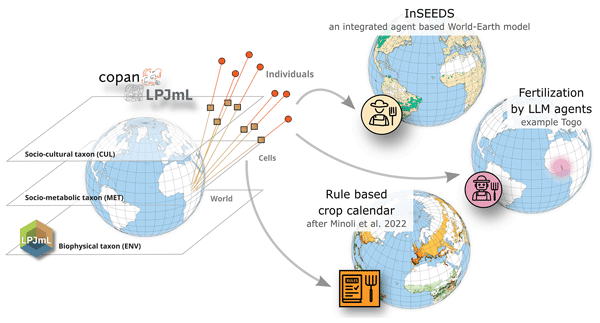
We present a new modelling framework that combines simulations of environmental change and human decision-making in an integrated approach. It allows researchers to explore how farming decisions affect land, water, and climate, and how these environmental changes influence future decisions. By connecting people and nature, it helps investigate food security, climate adaptation, and sustainability challenges, and supports the development of more realistic scenarios of future environmental change.
Andreia F. S. Ribeiro, Maik Biling, Kirsten Thonicke, Werner von Bloh, Jakob Wessel, Sabine Undorf, Matthias Forkel, and Jakob Zscheischler
EGUsphere, https://doi.org/10.5194/egusphere-2026-2952, https://doi.org/10.5194/egusphere-2026-2952, 2026
Short summary
Short summary
Wildfires are becoming more extreme, yet our state-of-the-art tools fail to capture the full risk. We simulate a large ensemble of wildfire simulations capturing a broader range of physically plausible extreme wildfire events beyond what observations alone can reveal. Extreme fire danger alone does not explain the worst impacts: ignitions, fuel and vegetation-fire feedback need to be incorporated. This modelling framework is transferable to other climate-impact sectors beyond wildfires.
Marie Hemmen, Heidi Webber, Werner von Bloh, Jens Heinke, and Christoph Müller
EGUsphere, https://doi.org/10.5194/egusphere-2026-1898, https://doi.org/10.5194/egusphere-2026-1898, 2026
Short summary
Short summary
In this study we present a lightweight approach to compute crop canopy temperatures in computationally expensive models, which we apply in the global Lund-Potsdam-Jena managed Land model. The evaluation reveals that the developed approach reproduces cooling and heating effects of the canopy for daily maximum temperatures and suggests that replacement of standard 2 m air temperature input by simulated canopy temperatures improves the skill to model high temperature impacts on crop growth.
Pierre Friedlingstein, Michael O'Sullivan, Matthew W. Jones, Robbie M. Andrew, Dorothee C. E. Bakker, Judith Hauck, Peter Landschützer, Corinne Le Quéré, Hongmei Li, Ingrid T. Luijkx, Glen P. Peters, Wouter Peters, Julia Pongratz, Clemens Schwingshackl, Stephen Sitch, Josep G. Canadell, Philippe Ciais, Kjetil Aas, Simone R. Alin, Peter Anthoni, Leticia Barbero, Nicholas R. Bates, Nicolas Bellouin, Alice Benoit-Cattin, Carla F. Berghoff, Raffaele Bernardello, Laurent Bopp, Ida Bagus Mandhara Brasika, Matthew A. Chamberlain, Naveen Chandra, Frédéric Chevallier, Louise P. Chini, Nathan O. Collier, Thomas H. Colligan, Margot Cronin, Laique M. Djeutchouang, Xinyu Dou, Matt P. Enright, Kazutaka Enyo, Michael Erb, Wiley Evans, Richard A. Feely, Liang Feng, Daniel J. Ford, Adrianna Foster, Filippa Fransner, Thomas Gasser, Marion Gehlen, Thanos Gkritzalis, Jefferson Goncalves De Souza, Giacomo Grassi, Luke Gregor, Nicolas Gruber, Bertrand Guenet, Özgür Gürses, Kirsty Harrington, Ian Harris, Jens Heinke, George C. Hurtt, Yosuke Iida, Tatiana Ilyina, Akihiko Ito, Andrew R. Jacobson, Atul K. Jain, Tereza Jarníková, Annika Jersild, Fei Jiang, Steve D. Jones, Etsushi Kato, Ralph F. Keeling, Kees Klein Goldewijk, Jürgen Knauer, Yawen Kong, Jan Ivar Korsbakken, Charles Koven, Taro Kunimitsu, Xin Lan, Junjie Liu, Zhiqiang Liu, Zhu Liu, Claire Lo Monaco, Lei Ma, Gregg Marland, Patrick C. McGuire, Galen A. McKinley, Joe R. Melton, Natalie Monacci, Erwan Monier, Eric J. Morgan, David R. Munro, Jens D. Müller, Shin-Ichiro Nakaoka, Lorna R. Nayagam, Yosuke Niwa, Tobias Nutzel, Are Olsen, Abdirahman M. Omar, Naiqing Pan, Sudhanshu Pandey, Denis Pierrot, Zhangcai Qin, Pierre Regnier, Gregor Rehder, Laure Resplandy, Alizée Roobaert, Thais M. Rosan, Christian Rödenbeck, Jörg Schwinger, Ingunn Skjelvan, T. Luke Smallman, Victoria Spada, Mohanan G. Sreeush, Qing Sun, Adrienne J. Sutton, Colm Sweeney, Didier Swingedouw, Roland Séférian, Shintaro Takao, Hiroaki Tatebe, Hanqin Tian, Xiangjun Tian, Bronte Tilbrook, Hiroyuki Tsujino, Francesco Tubiello, Erik van Ooijen, Guido R. van der Werf, Sebastiaan J. van de Velde, Anthony P. Walker, Rik Wanninkhof, Xiaojuan Yang, Wenping Yuan, Xu Yue, and Jiye Zeng
Earth Syst. Sci. Data, 18, 3211–3288, https://doi.org/10.5194/essd-18-3211-2026, https://doi.org/10.5194/essd-18-3211-2026, 2026
Short summary
Short summary
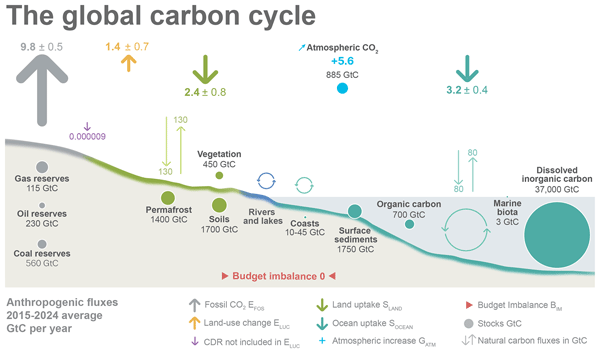
The Global Carbon Budget 2025 describes the methodology, main results, and datasets used to quantify the anthropogenic emissions of carbon dioxide (CO2) and their partitioning among the atmosphere, land ecosystems, and the ocean over the historical period (1750–2025). These living datasets are updated every year to provide the highest transparency and traceability in the reporting of CO2, the key driver of climate change.
Susanne Rolinski, Jens Heinke, Stephen B. Wirth, and Christoph Müller
EGUsphere, https://doi.org/10.5194/egusphere-2026-1529, https://doi.org/10.5194/egusphere-2026-1529, 2026
Short summary
Short summary
Livestock rearing in semi-arid steppe regions is traditionally extensive but under pressure both from increasing demand and by climate change. We demonstrate by applying a vegetation model that increasing management intensity by increasing fertilization and animal densities result in increasing livestock productivity but also environmental impacts in a nonlinear way. That allows to find management combinations with low environmental impacts without jeopardizing livestock productivity.
Jéssica Schüler, Sarah Bereswill, Werner von Bloh, Maik Billing, Boris Sakschewski, Luke Oberhagemann, Kirsten Thonicke, and Mercedes M. C. Bustamante
Biogeosciences, 23, 95–113, https://doi.org/10.5194/bg-23-95-2026, https://doi.org/10.5194/bg-23-95-2026, 2026
Short summary
Short summary
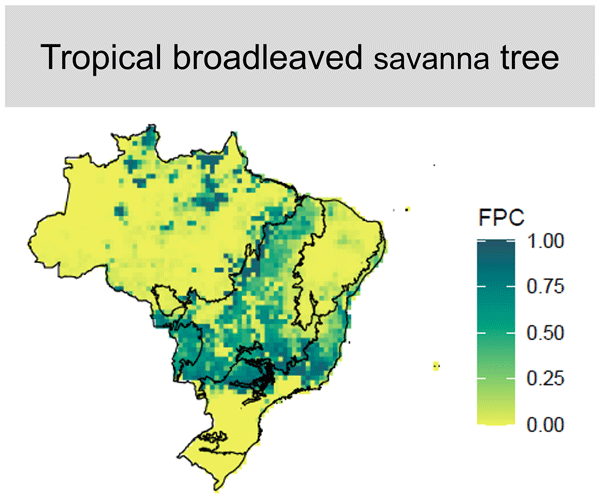
We introduced a new plant type into a global vegetation model to better represent the ecology of the Cerrado, South America's second largest biome. This improved the model’s ability to simulate vegetation structure, root systems, and fire dynamics, aligning more closely with observations. Our results enhance understanding of tropical savannas and provide a stronger basis for studying their responses to fire and climate change at regional and global scales.
Friedrich J. Bohn, Giles B. Sioen, Ana Bastos, Yolandi Ernst, Marcin P. Jarzebski, Niak S. Koh, Romina Martin, Anja Rammig, Alex Godoy-Faúndez, Alexandros Gasparatos, Alvaro G. Gutiérrez, Amanda J. Aceituno, Andra-Ioana Horcea-Milcu, Andrea Marais-Potgieter, Ayyoob Sharifi, Caroline Howe, Cornelia B. Krug, Eduardo E. Acosta, Emmanuel F. Nzunda, Erik Andersson, Hans-Otto Pörtner, Helen Sooväli-Sepping, Ishihara Hiroe, Ivan Palmegiani, Kaera Coetzer, Kirsten Thonike, Krizler Tanalgo, Lisa Biber-Freudenberger, Nicholas O. Oguge, Mi S. Park, Milena Gross, Pablo De La Cruz, Paula R. Prist, Peng Bi, Rivera Diego, Roman Isaac, Rosemary McFarlane, Sinikka J. Paulus, Stefanie Burkhart, Sung-Ching Lee, Susanne Müller, Uchi D. Terhile, Wan-Yu Shih, William K. Smith, Viola Hakkarainen, Virginia Murray, Yuki Yoshida, Yohannes T. Damtew, and Zeenat Niazi
EGUsphere, https://doi.org/10.5194/egusphere-2025-3619, https://doi.org/10.5194/egusphere-2025-3619, 2025
Short summary
Short summary
The aim of this series is to provide decision-makers with valuable insights into the current state of biosphere research. Firstly, it is intended to ensure the flow of information between the comprehensive assessment reports of the IPCC and IPBES. On the other hand, it is intended to support economic and political decisions closely related to the biosphere with scientifically sound findings – including uncertainties – and comprehensive polysolutions, helping to solve the earth system polycrisis.
Jamir Priesner, Boris Sakschewski, Maik Billing, Werner von Bloh, Sebastian Fiedler, Sarah Bereswill, Kirsten Thonicke, and Britta Tietjen
Nat. Hazards Earth Syst. Sci., 25, 3309–3331, https://doi.org/10.5194/nhess-25-3309-2025, https://doi.org/10.5194/nhess-25-3309-2025, 2025
Short summary
Short summary
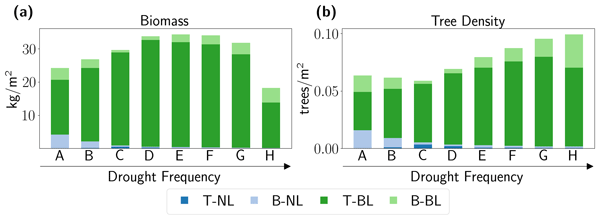
In our simulations increased drought frequencies lead to a drastic reduction in biomass in temperate pine monoculture and mixed forests. Mixed forests eventually recovered as long as drought frequency was not too high. The higher resilience of mixed forests was due to higher adaptive capacity. After adaptation mixed forests were mainly composed of smaller, broadleaved trees with higher wood density and slower growth. This would have strong implications for forestry and other ecosystem services.
Ricarda Winkelmann, Donovan P. Dennis, Jonathan F. Donges, Sina Loriani, Ann Kristin Klose, Jesse F. Abrams, Jorge Alvarez-Solas, Torsten Albrecht, David Armstrong McKay, Sebastian Bathiany, Javier Blasco Navarro, Victor Brovkin, Eleanor Burke, Gokhan Danabasoglu, Reik V. Donner, Markus Drüke, Goran Georgievski, Heiko Goelzer, Anna B. Harper, Gabriele Hegerl, Marina Hirota, Aixue Hu, Laura C. Jackson, Colin Jones, Hyungjun Kim, Torben Koenigk, Peter Lawrence, Timothy M. Lenton, Hannah Liddy, José Licón-Saláiz, Maxence Menthon, Marisa Montoya, Jan Nitzbon, Sophie Nowicki, Bette Otto-Bliesner, Francesco Pausata, Stefan Rahmstorf, Karoline Ramin, Alexander Robinson, Johan Rockström, Anastasia Romanou, Boris Sakschewski, Christina Schädel, Steven Sherwood, Robin S. Smith, Norman J. Steinert, Didier Swingedouw, Matteo Willeit, Wilbert Weijer, Richard Wood, Klaus Wyser, and Shuting Yang
EGUsphere, https://doi.org/10.5194/egusphere-2025-1899, https://doi.org/10.5194/egusphere-2025-1899, 2025
Short summary
Short summary
The Tipping Points Modelling Intercomparison Project (TIPMIP) is an international collaborative effort to systematically assess tipping point risks in the Earth system using state-of-the-art coupled and stand-alone domain models. TIPMIP will provide a first global atlas of potential tipping dynamics, respective critical thresholds and key uncertainties, generating an important building block towards a comprehensive scientific basis for policy- and decision-making.
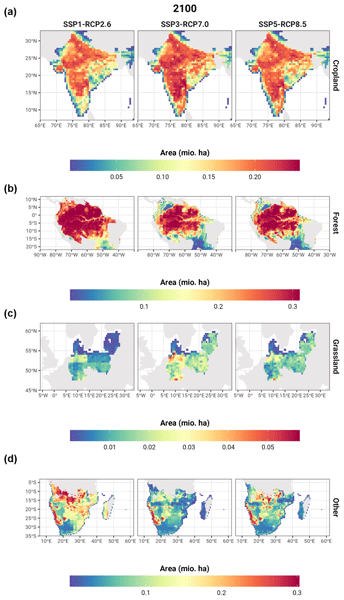
Edna Johanna Molina Bacca, Miodrag Stevanović, Benjamin Leon Bodirsky, Jonathan Cornelis Doelman, Louise Parsons Chini, Jan Volkholz, Katja Frieler, Christopher Paul Oliver Reyer, George Hurtt, Florian Humpenöder, Kristine Karstens, Jens Heinke, Christoph Müller, Jan Philipp Dietrich, Hermann Lotze-Campen, Elke Stehfest, and Alexander Popp
Earth Syst. Dynam., 16, 753–801, https://doi.org/10.5194/esd-16-753-2025, https://doi.org/10.5194/esd-16-753-2025, 2025
Short summary
Short summary
Land-use change projections are vital for impact studies. This study compares updated land-use model projections, including CO2 fertilization among other upgrades, from the MAgPIE and IMAGE models under three scenarios, highlighting differences, uncertainty hotspots, and harmonization effects. Key findings include reduced bioenergy crop demand projections and differences in grassland area allocation and sizes, with socioeconomic–climate scenarios' largest effect on variance starting in 2030.
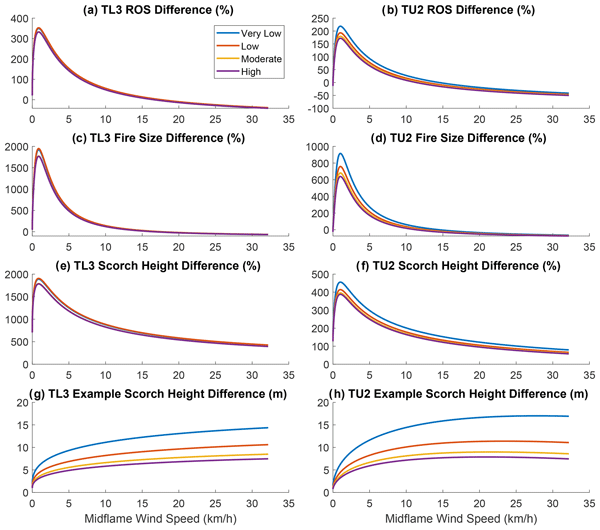
Luke Oberhagemann, Maik Billing, Werner von Bloh, Markus Drüke, Matthew Forrest, Simon P. K. Bowring, Jessica Hetzer, Jaime Ribalaygua Batalla, and Kirsten Thonicke
Geosci. Model Dev., 18, 2021–2050, https://doi.org/10.5194/gmd-18-2021-2025, https://doi.org/10.5194/gmd-18-2021-2025, 2025
Short summary
Short summary
Under climate change, the conditions necessary for wildfires to form are occurring more frequently in many parts of the world. To help predict how wildfires will change in future, global fire models are being developed. We analyze and further develop one such model, SPITFIRE. Our work identifies and corrects sources of substantial bias in the model that are important to the global fire modelling field. With this analysis and these developments, we help to provide a basis for future improvements.
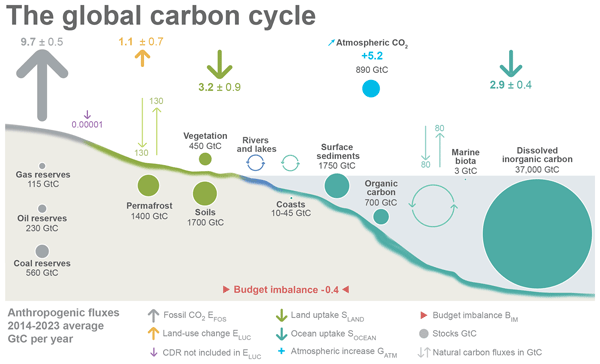
Pierre Friedlingstein, Michael O'Sullivan, Matthew W. Jones, Robbie M. Andrew, Judith Hauck, Peter Landschützer, Corinne Le Quéré, Hongmei Li, Ingrid T. Luijkx, Are Olsen, Glen P. Peters, Wouter Peters, Julia Pongratz, Clemens Schwingshackl, Stephen Sitch, Josep G. Canadell, Philippe Ciais, Robert B. Jackson, Simone R. Alin, Almut Arneth, Vivek Arora, Nicholas R. Bates, Meike Becker, Nicolas Bellouin, Carla F. Berghoff, Henry C. Bittig, Laurent Bopp, Patricia Cadule, Katie Campbell, Matthew A. Chamberlain, Naveen Chandra, Frédéric Chevallier, Louise P. Chini, Thomas Colligan, Jeanne Decayeux, Laique M. Djeutchouang, Xinyu Dou, Carolina Duran Rojas, Kazutaka Enyo, Wiley Evans, Amanda R. Fay, Richard A. Feely, Daniel J. Ford, Adrianna Foster, Thomas Gasser, Marion Gehlen, Thanos Gkritzalis, Giacomo Grassi, Luke Gregor, Nicolas Gruber, Özgür Gürses, Ian Harris, Matthew Hefner, Jens Heinke, George C. Hurtt, Yosuke Iida, Tatiana Ilyina, Andrew R. Jacobson, Atul K. Jain, Tereza Jarníková, Annika Jersild, Fei Jiang, Zhe Jin, Etsushi Kato, Ralph F. Keeling, Kees Klein Goldewijk, Jürgen Knauer, Jan Ivar Korsbakken, Xin Lan, Siv K. Lauvset, Nathalie Lefèvre, Zhu Liu, Junjie Liu, Lei Ma, Shamil Maksyutov, Gregg Marland, Nicolas Mayot, Patrick C. McGuire, Nicolas Metzl, Natalie M. Monacci, Eric J. Morgan, Shin-Ichiro Nakaoka, Craig Neill, Yosuke Niwa, Tobias Nützel, Lea Olivier, Tsuneo Ono, Paul I. Palmer, Denis Pierrot, Zhangcai Qin, Laure Resplandy, Alizée Roobaert, Thais M. Rosan, Christian Rödenbeck, Jörg Schwinger, T. Luke Smallman, Stephen M. Smith, Reinel Sospedra-Alfonso, Tobias Steinhoff, Qing Sun, Adrienne J. Sutton, Roland Séférian, Shintaro Takao, Hiroaki Tatebe, Hanqin Tian, Bronte Tilbrook, Olivier Torres, Etienne Tourigny, Hiroyuki Tsujino, Francesco Tubiello, Guido van der Werf, Rik Wanninkhof, Xuhui Wang, Dongxu Yang, Xiaojuan Yang, Zhen Yu, Wenping Yuan, Xu Yue, Sönke Zaehle, Ning Zeng, and Jiye Zeng
Earth Syst. Sci. Data, 17, 965–1039, https://doi.org/10.5194/essd-17-965-2025, https://doi.org/10.5194/essd-17-965-2025, 2025
Short summary
Short summary
The Global Carbon Budget 2024 describes the methodology, main results, and datasets used to quantify the anthropogenic emissions of carbon dioxide (CO2) and their partitioning among the atmosphere, land ecosystems, and the ocean over the historical period (1750–2024). These living datasets are updated every year to provide the highest transparency and traceability in the reporting of CO2, the key driver of climate change.
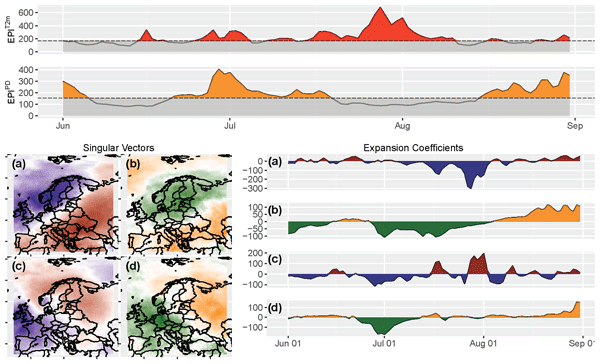
Elena Xoplaki, Florian Ellsäßer, Jens Grieger, Katrin M. Nissen, Joaquim G. Pinto, Markus Augenstein, Ting-Chen Chen, Hendrik Feldmann, Petra Friederichs, Daniel Gliksman, Laura Goulier, Karsten Haustein, Jens Heinke, Lisa Jach, Florian Knutzen, Stefan Kollet, Jürg Luterbacher, Niklas Luther, Susanna Mohr, Christoph Mudersbach, Christoph Müller, Efi Rousi, Felix Simon, Laura Suarez-Gutierrez, Svenja Szemkus, Sara M. Vallejo-Bernal, Odysseas Vlachopoulos, and Frederik Wolf
Nat. Hazards Earth Syst. Sci., 25, 541–564, https://doi.org/10.5194/nhess-25-541-2025, https://doi.org/10.5194/nhess-25-541-2025, 2025
Short summary
Short summary
Europe frequently experiences compound events, with major impacts. We investigate these events’ interactions, characteristics, and changes over time, focusing on socio-economic impacts in Germany and central Europe. Highlighting 2018’s extreme events, this study reveals impacts on water, agriculture, and forests and stresses the need for impact-focused definitions and better future risk quantification to support adaptation planning.
Matthew Forrest, Jessica Hetzer, Maik Billing, Simon P. K. Bowring, Eric Kosczor, Luke Oberhagemann, Oliver Perkins, Dan Warren, Fátima Arrogante-Funes, Kirsten Thonicke, and Thomas Hickler
Biogeosciences, 21, 5539–5560, https://doi.org/10.5194/bg-21-5539-2024, https://doi.org/10.5194/bg-21-5539-2024, 2024
Short summary
Short summary
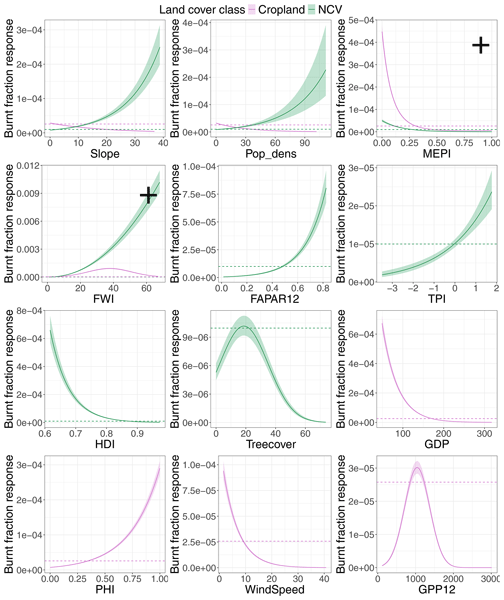
Climate change is causing an increase in extreme wildfires in Europe, but drivers of fire are not well understood, especially across different land cover types. We used statistical models with satellite data, climate data, and socioeconomic data to determine what affects burning in cropland and non-cropland areas of Europe. We found different drivers of burning in cropland burning vs. non-cropland to the point that some variables, e.g. population density, had the complete opposite effects.
Stephen Björn Wirth, Johanna Braun, Jens Heinke, Sebastian Ostberg, Susanne Rolinski, Sibyll Schaphoff, Fabian Stenzel, Werner von Bloh, Friedhelm Taube, and Christoph Müller
Geosci. Model Dev., 17, 7889–7914, https://doi.org/10.5194/gmd-17-7889-2024, https://doi.org/10.5194/gmd-17-7889-2024, 2024
Short summary
Short summary
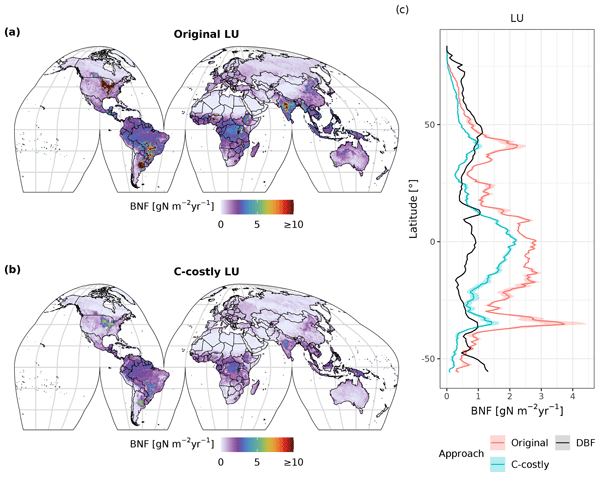
We present a new approach to modelling biological nitrogen fixation (BNF) in the Lund–Potsdam–Jena managed Land dynamic global vegetation model. While in the original approach BNF depended on actual evapotranspiration, the new approach considers soil water content and temperature, vertical root distribution, the nitrogen (N) deficit and carbon (C) costs. The new approach improved simulated BNF compared to the scientific literature and the model ability to project future C and N cycle dynamics.
Brent A. McBride, J. Vanderlei Martins, J. Dominik Cieslak, Roberto Fernandez-Borda, Anin Puthukkudy, Xiaoguang Xu, Noah Sienkiewicz, Brian Cairns, and Henrique M. J. Barbosa
Atmos. Meas. Tech., 17, 5709–5729, https://doi.org/10.5194/amt-17-5709-2024, https://doi.org/10.5194/amt-17-5709-2024, 2024
Short summary
Short summary
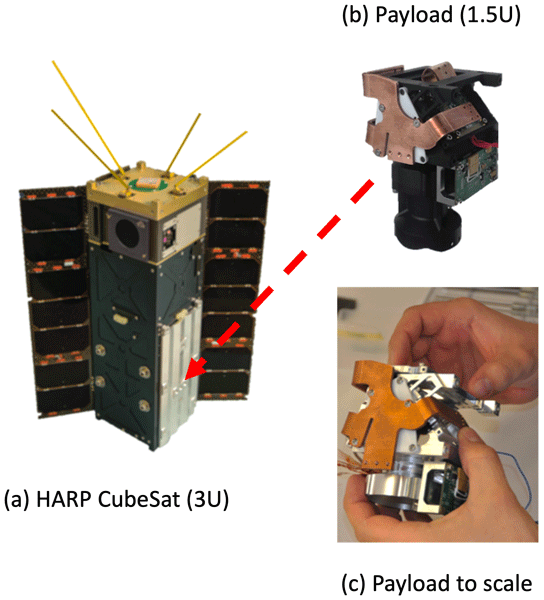
The Airborne Hyper-Angular Rainbow Polarimeter (AirHARP) is a new Earth-observing instrument that provides highly accurate measurements of the atmosphere and surface. Using a physics-based calibration technique, we show that AirHARP achieves high measurement accuracy in laboratory and field environments and exceeds a benchmark accuracy requirement for modern aerosol and cloud climate observations. Therefore, the HARP design is highly attractive for upcoming NASA climate missions.
Leandro Alex Moreira Viscardi, Giuseppe Torri, David K. Adams, and Henrique de Melo Jorge Barbosa
Atmos. Chem. Phys., 24, 8529–8548, https://doi.org/10.5194/acp-24-8529-2024, https://doi.org/10.5194/acp-24-8529-2024, 2024
Short summary
Short summary
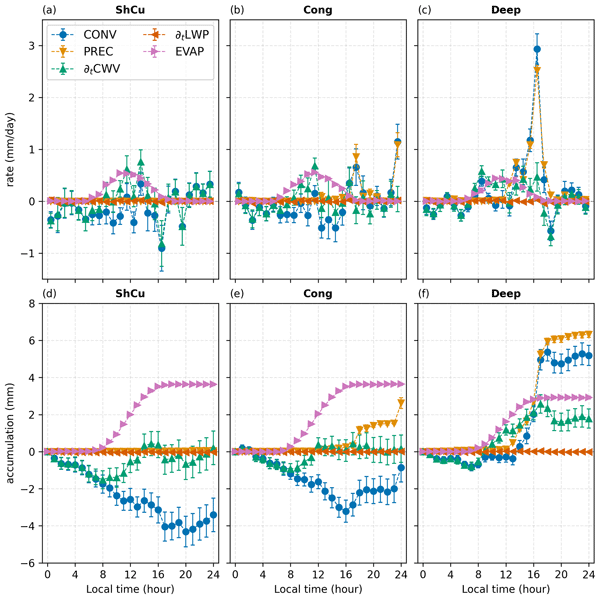
We evaluate the environmental conditions that control how clouds grow from fair weather cumulus into severe thunderstorms during the Amazonian wet season. Days with rain clouds begin with more moisture in the air and have strong convergence in the afternoon, while precipitation intensity increases with large-scale vertical velocity, moisture, and low-level wind. These results contribute to understanding how clouds form over the rainforest.
Fabian Stenzel, Johanna Braun, Jannes Breier, Karlheinz Erb, Dieter Gerten, Jens Heinke, Sarah Matej, Sebastian Ostberg, Sibyll Schaphoff, and Wolfgang Lucht
Geosci. Model Dev., 17, 3235–3258, https://doi.org/10.5194/gmd-17-3235-2024, https://doi.org/10.5194/gmd-17-3235-2024, 2024
Short summary
Short summary
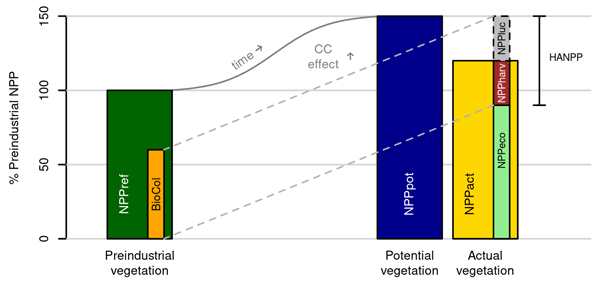
We provide an R package to compute two biosphere integrity metrics that can be applied to simulations of vegetation growth from the dynamic global vegetation model LPJmL. The pressure metric BioCol indicates that we humans modify and extract > 20 % of the potential preindustrial natural biomass production. The ecosystems state metric EcoRisk shows a high risk of ecosystem destabilization in many regions as a result of climate change and land, water, and fertilizer use.
Markus Drüke, Wolfgang Lucht, Werner von Bloh, Stefan Petri, Boris Sakschewski, Arne Tobian, Sina Loriani, Sibyll Schaphoff, Georg Feulner, and Kirsten Thonicke
Earth Syst. Dynam., 15, 467–483, https://doi.org/10.5194/esd-15-467-2024, https://doi.org/10.5194/esd-15-467-2024, 2024
Short summary
Short summary
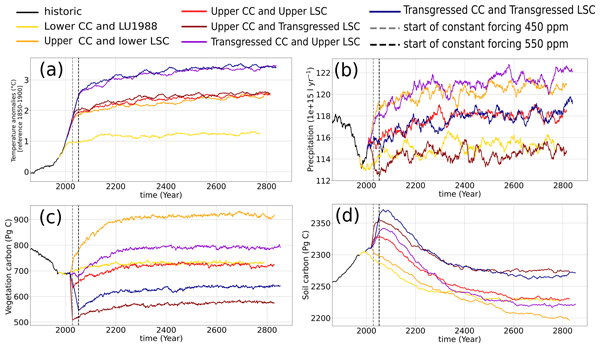
The planetary boundary framework characterizes major risks of destabilization of the Earth system. We use the comprehensive Earth system model POEM to study the impact of the interacting boundaries for climate change and land system change. Our study shows the importance of long-term effects on carbon dynamics and climate, as well as the need to investigate both boundaries simultaneously and to generally keep both boundaries within acceptable ranges to avoid a catastrophic scenario for humanity.
Stephen Björn Wirth, Arne Poyda, Friedhelm Taube, Britta Tietjen, Christoph Müller, Kirsten Thonicke, Anja Linstädter, Kai Behn, Sibyll Schaphoff, Werner von Bloh, and Susanne Rolinski
Biogeosciences, 21, 381–410, https://doi.org/10.5194/bg-21-381-2024, https://doi.org/10.5194/bg-21-381-2024, 2024
Short summary
Short summary
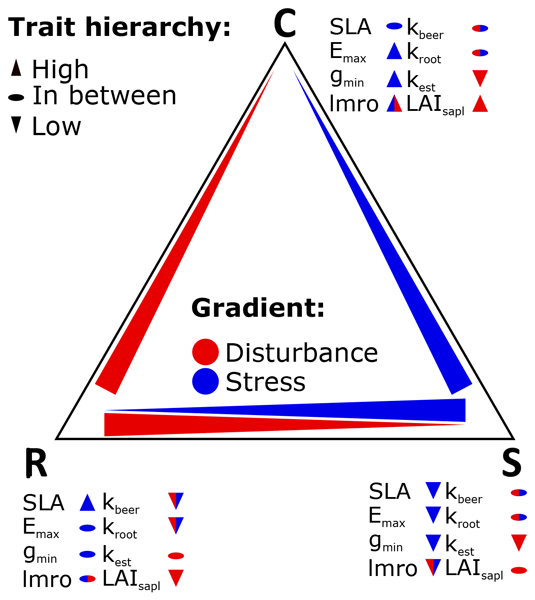
In dynamic global vegetation models (DGVMs), the role of functional diversity in forage supply and soil organic carbon storage of grasslands is not explicitly taken into account. We introduced functional diversity into the Lund Potsdam Jena managed Land (LPJmL) DGVM using CSR theory. The new model reproduced well-known trade-offs between plant traits and can be used to quantify the role of functional diversity in climate change mitigation using different functional diversity scenarios.
Pierre Friedlingstein, Michael O'Sullivan, Matthew W. Jones, Robbie M. Andrew, Dorothee C. E. Bakker, Judith Hauck, Peter Landschützer, Corinne Le Quéré, Ingrid T. Luijkx, Glen P. Peters, Wouter Peters, Julia Pongratz, Clemens Schwingshackl, Stephen Sitch, Josep G. Canadell, Philippe Ciais, Robert B. Jackson, Simone R. Alin, Peter Anthoni, Leticia Barbero, Nicholas R. Bates, Meike Becker, Nicolas Bellouin, Bertrand Decharme, Laurent Bopp, Ida Bagus Mandhara Brasika, Patricia Cadule, Matthew A. Chamberlain, Naveen Chandra, Thi-Tuyet-Trang Chau, Frédéric Chevallier, Louise P. Chini, Margot Cronin, Xinyu Dou, Kazutaka Enyo, Wiley Evans, Stefanie Falk, Richard A. Feely, Liang Feng, Daniel J. Ford, Thomas Gasser, Josefine Ghattas, Thanos Gkritzalis, Giacomo Grassi, Luke Gregor, Nicolas Gruber, Özgür Gürses, Ian Harris, Matthew Hefner, Jens Heinke, Richard A. Houghton, George C. Hurtt, Yosuke Iida, Tatiana Ilyina, Andrew R. Jacobson, Atul Jain, Tereza Jarníková, Annika Jersild, Fei Jiang, Zhe Jin, Fortunat Joos, Etsushi Kato, Ralph F. Keeling, Daniel Kennedy, Kees Klein Goldewijk, Jürgen Knauer, Jan Ivar Korsbakken, Arne Körtzinger, Xin Lan, Nathalie Lefèvre, Hongmei Li, Junjie Liu, Zhiqiang Liu, Lei Ma, Greg Marland, Nicolas Mayot, Patrick C. McGuire, Galen A. McKinley, Gesa Meyer, Eric J. Morgan, David R. Munro, Shin-Ichiro Nakaoka, Yosuke Niwa, Kevin M. O'Brien, Are Olsen, Abdirahman M. Omar, Tsuneo Ono, Melf Paulsen, Denis Pierrot, Katie Pocock, Benjamin Poulter, Carter M. Powis, Gregor Rehder, Laure Resplandy, Eddy Robertson, Christian Rödenbeck, Thais M. Rosan, Jörg Schwinger, Roland Séférian, T. Luke Smallman, Stephen M. Smith, Reinel Sospedra-Alfonso, Qing Sun, Adrienne J. Sutton, Colm Sweeney, Shintaro Takao, Pieter P. Tans, Hanqin Tian, Bronte Tilbrook, Hiroyuki Tsujino, Francesco Tubiello, Guido R. van der Werf, Erik van Ooijen, Rik Wanninkhof, Michio Watanabe, Cathy Wimart-Rousseau, Dongxu Yang, Xiaojuan Yang, Wenping Yuan, Xu Yue, Sönke Zaehle, Jiye Zeng, and Bo Zheng
Earth Syst. Sci. Data, 15, 5301–5369, https://doi.org/10.5194/essd-15-5301-2023, https://doi.org/10.5194/essd-15-5301-2023, 2023
Short summary
Short summary
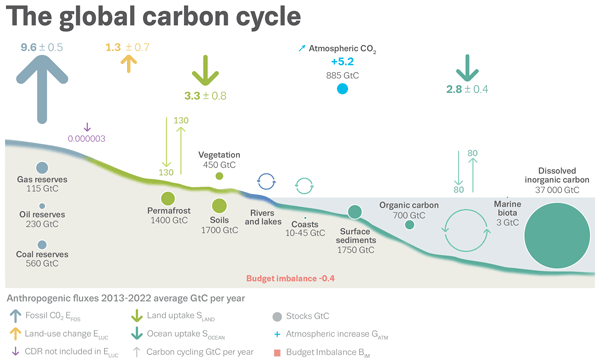
The Global Carbon Budget 2023 describes the methodology, main results, and data sets used to quantify the anthropogenic emissions of carbon dioxide (CO2) and their partitioning among the atmosphere, land ecosystems, and the ocean over the historical period (1750–2023). These living datasets are updated every year to provide the highest transparency and traceability in the reporting of CO2, the key driver of climate change.
Juan Vicente Pallotta, Silvânia Alves de Carvalho, Fabio Juliano da Silva Lopes, Alexandre Cacheffo, Eduardo Landulfo, and Henrique Melo Jorge Barbosa
Geosci. Instrum. Method. Data Syst., 12, 171–185, https://doi.org/10.5194/gi-12-171-2023, https://doi.org/10.5194/gi-12-171-2023, 2023
Short summary
Short summary
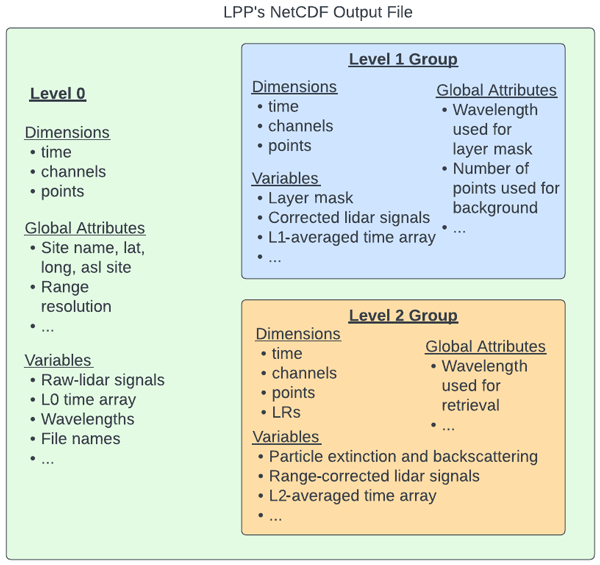
Lidar networks coordinate efforts of different groups, providing guidelines to homogenize retrievals from different instruments. We describe an ongoing effort to develop the Lidar Processing Pipeline (LPP) collaboratively, a collection of tools developed in C/C++ to handle all the steps of a typical lidar analysis. Analysis of simulations and real lidar data showcases the LPP’s features. From this exercise, we draw a roadmap to guide future development, accommodating the needs of our community.
Sebastian Ostberg, Christoph Müller, Jens Heinke, and Sibyll Schaphoff
Geosci. Model Dev., 16, 3375–3406, https://doi.org/10.5194/gmd-16-3375-2023, https://doi.org/10.5194/gmd-16-3375-2023, 2023
Short summary
Short summary
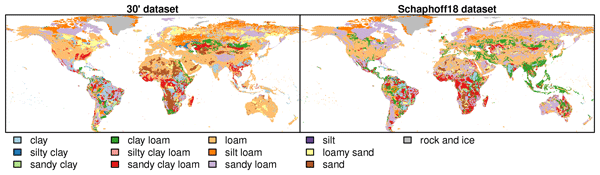
We present a new toolbox for generating input datasets for terrestrial ecosystem models from diverse and partially conflicting data sources. The toolbox documents the sources and processing of data and is designed to make inconsistencies between source datasets transparent so that users can make their own decisions on how to resolve these should they not be content with our default assumptions. As an example, we use the toolbox to create input datasets at two different spatial resolutions.
Jens Heinke, Susanne Rolinski, and Christoph Müller
Geosci. Model Dev., 16, 2455–2475, https://doi.org/10.5194/gmd-16-2455-2023, https://doi.org/10.5194/gmd-16-2455-2023, 2023
Short summary
Short summary
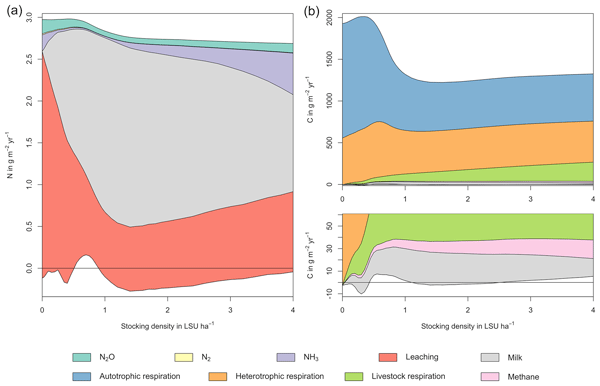
We develop a livestock module for the global vegetation model LPJmL5.0 to simulate the impact of grazing dairy cattle on carbon and nitrogen cycles in grasslands. A novelty of the approach is that it accounts for the effect of feed quality on feed uptake and feed utilization by animals. The portioning of dietary nitrogen into milk, feces, and urine shows very good agreement with estimates obtained from animal trials.
Efi Rousi, Andreas H. Fink, Lauren S. Andersen, Florian N. Becker, Goratz Beobide-Arsuaga, Marcus Breil, Giacomo Cozzi, Jens Heinke, Lisa Jach, Deborah Niermann, Dragan Petrovic, Andy Richling, Johannes Riebold, Stella Steidl, Laura Suarez-Gutierrez, Jordis S. Tradowsky, Dim Coumou, André Düsterhus, Florian Ellsäßer, Georgios Fragkoulidis, Daniel Gliksman, Dörthe Handorf, Karsten Haustein, Kai Kornhuber, Harald Kunstmann, Joaquim G. Pinto, Kirsten Warrach-Sagi, and Elena Xoplaki
Nat. Hazards Earth Syst. Sci., 23, 1699–1718, https://doi.org/10.5194/nhess-23-1699-2023, https://doi.org/10.5194/nhess-23-1699-2023, 2023
Short summary
Short summary
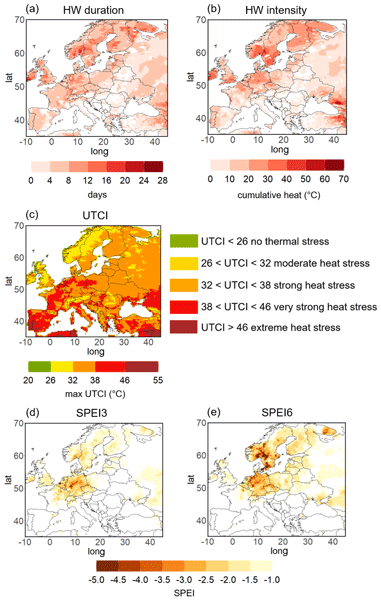
The objective of this study was to perform a comprehensive, multi-faceted analysis of the 2018 extreme summer in terms of heat and drought in central and northern Europe, with a particular focus on Germany. A combination of favorable large-scale conditions and locally dry soils were related with the intensity and persistence of the events. We also showed that such extremes have become more likely due to anthropogenic climate change and might occur almost every year under +2 °C of global warming.
Elion Daniel Hack, Theotonio Pauliquevis, Henrique Melo Jorge Barbosa, Marcia Akemi Yamasoe, Dimitri Klebe, and Alexandre Lima Correia
Atmos. Meas. Tech., 16, 1263–1278, https://doi.org/10.5194/amt-16-1263-2023, https://doi.org/10.5194/amt-16-1263-2023, 2023
Short summary
Short summary
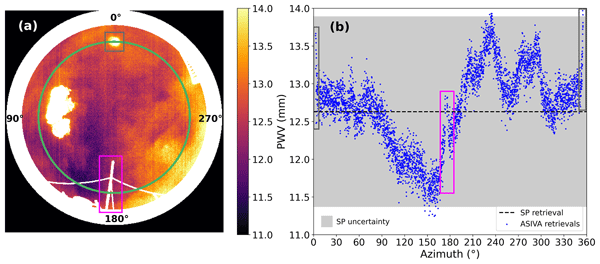
Water vapor is a key factor when seeking to understand fast-changing processes when clouds and storms form and develop. We show here how images from a calibrated infrared camera can be used to derive how much water vapor there is in the atmosphere at a given time. Comparing our results to an established technique, for a case of stable atmospheric conditions, we found an agreement within 2.8 %. Water vapor sky maps can be retrieved every few minutes, day or night, under partly cloudy skies.
Jenny Niebsch, Werner von Bloh, Kirsten Thonicke, and Ronny Ramlau
Geosci. Model Dev., 16, 17–33, https://doi.org/10.5194/gmd-16-17-2023, https://doi.org/10.5194/gmd-16-17-2023, 2023
Short summary
Short summary
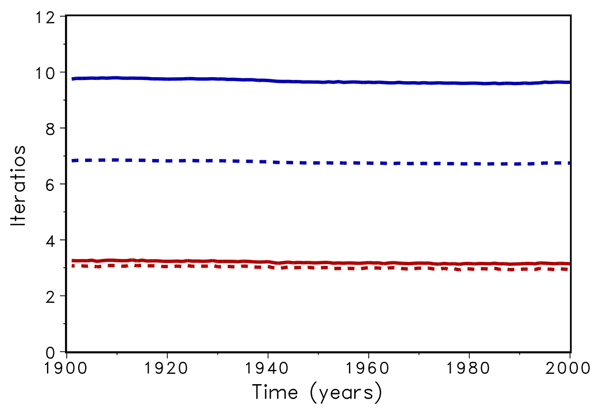
The impacts of climate change require strategies for climate adaptation. Dynamic global vegetation models (DGVMs) are used to study the effects of multiple processes in the biosphere under climate change. There is a demand for a better computational performance of the models. In this paper, the photosynthesis model in the Lund–Potsdam–Jena managed Land DGVM (4.0.002) was examined. We found a better numerical solution of a nonlinear equation. A significant run time reduction was possible.
Kristine Karstens, Benjamin Leon Bodirsky, Jan Philipp Dietrich, Marta Dondini, Jens Heinke, Matthias Kuhnert, Christoph Müller, Susanne Rolinski, Pete Smith, Isabelle Weindl, Hermann Lotze-Campen, and Alexander Popp
Biogeosciences, 19, 5125–5149, https://doi.org/10.5194/bg-19-5125-2022, https://doi.org/10.5194/bg-19-5125-2022, 2022
Short summary
Short summary
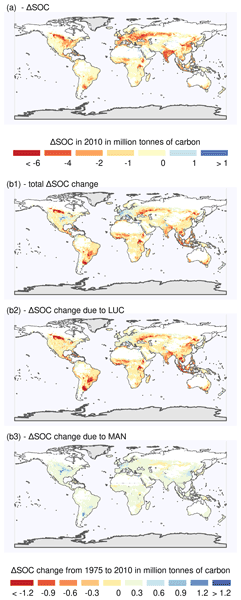
Soil organic carbon (SOC) has been depleted by anthropogenic land cover change and agricultural management. While SOC models often simulate detailed biochemical processes, the management decisions are still little investigated at the global scale. We estimate that soils have lost around 26 GtC relative to a counterfactual natural state in 1975. Yet, since 1975, SOC has been increasing again by 4 GtC due to a higher productivity, recycling of crop residues and manure, and no-tillage practices.
Phillip Papastefanou, Christian S. Zang, Zlatan Angelov, Aline Anderson de Castro, Juan Carlos Jimenez, Luiz Felipe Campos De Rezende, Romina C. Ruscica, Boris Sakschewski, Anna A. Sörensson, Kirsten Thonicke, Carolina Vera, Nicolas Viovy, Celso Von Randow, and Anja Rammig
Biogeosciences, 19, 3843–3861, https://doi.org/10.5194/bg-19-3843-2022, https://doi.org/10.5194/bg-19-3843-2022, 2022
Short summary
Short summary
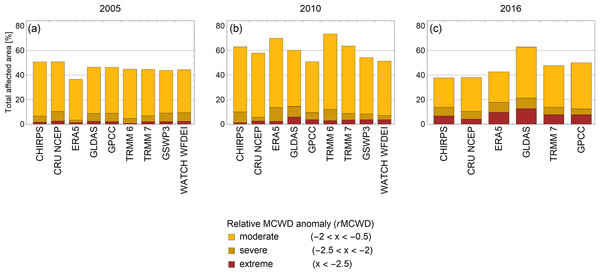
The Amazon rainforest has been hit by multiple severe drought events. In this study, we assess the severity and spatial extent of the extreme drought years 2005, 2010 and 2015/16 in the Amazon. Using nine different precipitation datasets and three drought indicators we find large differences in drought stress across the Amazon region. We conclude that future studies should use multiple rainfall datasets and drought indicators when estimating the impact of drought stress in the Amazon region.
Marco A. Franco, Florian Ditas, Leslie A. Kremper, Luiz A. T. Machado, Meinrat O. Andreae, Alessandro Araújo, Henrique M. J. Barbosa, Joel F. de Brito, Samara Carbone, Bruna A. Holanda, Fernando G. Morais, Janaína P. Nascimento, Mira L. Pöhlker, Luciana V. Rizzo, Marta Sá, Jorge Saturno, David Walter, Stefan Wolff, Ulrich Pöschl, Paulo Artaxo, and Christopher Pöhlker
Atmos. Chem. Phys., 22, 3469–3492, https://doi.org/10.5194/acp-22-3469-2022, https://doi.org/10.5194/acp-22-3469-2022, 2022
Short summary
Short summary
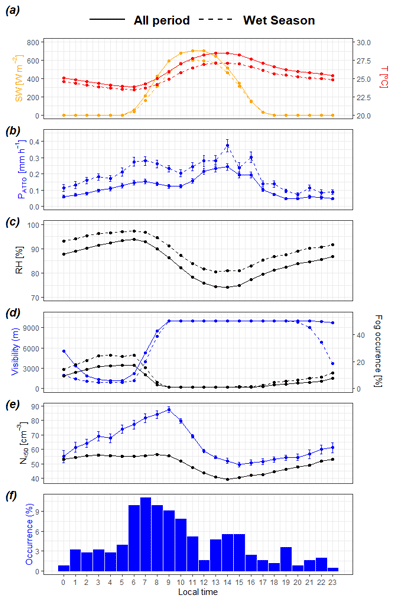
In Central Amazonia, new particle formation in the planetary boundary layer is rare. Instead, there is the appearance of sub-50 nm aerosols with diameters larger than about 20 nm that eventually grow to cloud condensation nuclei size range. Here, 254 growth events were characterized which have higher predominance in the wet season. About 70 % of them showed direct relation to convective downdrafts, while 30 % occurred partly under clear-sky conditions, evidencing still unknown particle sources.
Vera Porwollik, Susanne Rolinski, Jens Heinke, Werner von Bloh, Sibyll Schaphoff, and Christoph Müller
Biogeosciences, 19, 957–977, https://doi.org/10.5194/bg-19-957-2022, https://doi.org/10.5194/bg-19-957-2022, 2022
Short summary
Short summary
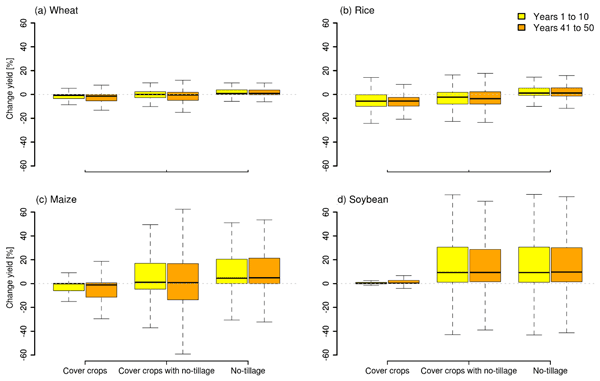
The study assesses impacts of grass cover crop cultivation on cropland during main-crop off-season periods applying the global vegetation model LPJmL (V.5.0-tillage-cc). Compared to simulated bare-soil fallowing practices, cover crops led to increased soil carbon content and reduced nitrogen leaching rates on the majority of global cropland. Yield responses of main crops following cover crops vary with location, duration of altered management, crop type, water regime, and tillage practice.
Tobias Herzfeld, Jens Heinke, Susanne Rolinski, and Christoph Müller
Earth Syst. Dynam., 12, 1037–1055, https://doi.org/10.5194/esd-12-1037-2021, https://doi.org/10.5194/esd-12-1037-2021, 2021
Short summary
Short summary
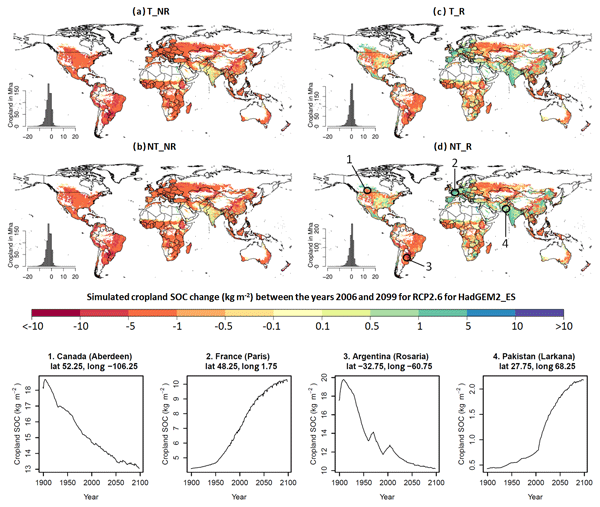
Soil organic carbon sequestration on cropland has been proposed as a climate change mitigation strategy. We simulate different agricultural management practices under climate change scenarios using a global biophysical model. We find that at the global aggregated level, agricultural management practices are not capable of enhancing total carbon storage in the soil, yet for some climate regions, we find that there is potential to enhance the carbon content in cropland soils.
Cited articles
Achard, F., Eva, H. D., Stibig, H.-J., Mayaux, P., Gallego, J., Richards, T., and Malingreau, J.-P.: Determination of Deforestation Rates of the World's Humid Tropical Forests, Science, 297, 999–1002, https://doi.org/10.1126/science.1070656, 2002. a
Alencar, A., Asner, G. P., Knapp, D., and Zarin, D.: Temporal variability of forest fires in eastern Amazonia, Ecological Applications, 21, 2397–2412, https://doi.org/10.1890/10-1168.1, 2011. a
Barlow, J., Berenguer, E., Carmenta, R., and França, F.: Clarifying Amazonia's burning crisis, Global Change Biology, 26, 319–321, https://doi.org/10.1111/gcb.14872, 2020. a, b, c
Bonaudo, T., Bendahan, A. B., Sabatier, R., Ryschawy, J., Bellon, S., Leger, F., Magda, D., and Tichit, M.: Agroecological principles for the redesign of integrated crop-livestock systems, European Journal of Agronomy, 57, 43–51, https://doi.org/10.1016/j.eja.2013.09.010, 2014. a
Bondeau, A., Smith, P. C., Zaehle, S., Schaphoff, S., Lucht, W., Cramer, W., Gerten, D., Lotze-Campen, H., Müller, C., Reichstein, M., and Smith, B.: Modelling the role of agriculture for the 20th century global terrestrial carbon balance, Global Change Biology, 13, 679–706, https://doi.org/10.1111/j.1365-2486.2006.01305.x, 2007. a, b
Brando, P., Macedo, M., Silvério, D., Rattis, L., Paolucci, L., Alencar, A., Coe, M., and Amorim, C.: Amazon wildfires: Scenes from a foreseeable disaster, Flora, 268, 151609, https://doi.org/10.1016/j.flora.2020.151609, 2020. a
Brunel, M.: LPJmL5-Pasture-Burning: Effects of fire and grazing on biogeochemical cycles in Brazilian pastures, Zenodo [code, data set], https://doi.org/10.5281/zenodo.14926359, 2025. a
Brunel, M., Rammig, A., Furquim, F., Overbeck, G., Barbosa, H. M. J., Thonicke, K., and Rolinski, S.: When do Farmers Burn Pasture in Brazil: A Model-Based Approach to Determine Burning Date, Rangeland Ecology & Management, 79, 110–125, https://doi.org/10.1016/j.rama.2021.08.003, 2021. a, b, c, d, e, f, g, h, i, j
Cano-Crespo, A., Oliveira, P. J. C., Boit, A., Cardoso, M., and Thonicke, K.: Forest edge burning in the Brazilian Amazon promoted by escaping fires from managed pastures, Journal of Geophysical Research-Biogeosciences, 120, 2095–2107, https://doi.org/10.1002/2015JG002914, 2015. a
Cleveland, C. C., Townsend, A. R., Schimel, D. S., Fisher, H., Howarth, R. W., Hedin, L. O., Perakis, S. S., Latty, E. F., Von Fischer, J. C., Elseroad, A., and Wasson, M. F.: Global patterns of terrestrial biological nitrogen (N2) fixation in natural ecosystems, Global Biogeochemical Cycles, 13, 623–645, https://doi.org/10.1029/1999GB900014, 1999. a, b, c
Cochrane, M. and Laurance, W.: Fire as a Large-Scale Edge Effect in Amazonian Forests, Journal of Tropical Ecology, 18, 311–325, https://doi.org/10.1017/S0266467402002237, 2002. a
Cochrane, M. A.: Fire, land use, land cover dynamics, and climate change in the Brazilian Amazon, in: Tropical Fire Ecology: Climate Change, Land Use, and Ecosystem Dynamics, edited by: Cochrane, M. A., Springer Praxis Books, 389–426, Springer, ISBN 978-3-540-77381-8, https://doi.org/10.1007/978-3-540-77381-8_14, 2009. a
Collatz, G. J., Ball, J. T., Grivet, C., and Berry, J. A.: Physiological and environmental regulation of stomatal conductance, photosynthesis and transpiration: a model that includes a laminar boundary layer, Agricultural and Forest Meteorology, 54, 107–136, https://doi.org/10.1016/0168-1923(91)90002-8, 1991. a
Collatz, G. J., Ribas-Carbo, M., and Berry, J. A.: Coupled Photosynthesis-Stomatal Conductance Model for Leaves of C4 Plants, Functional Plant Biology, 19, 519–538, https://doi.org/10.1071/pp9920519, 1992. a
Csiszar, I. A., Justice, C. O., McGuire, A. D., Cochrane, M. A., Roy, D. P., Brown, F., Conard, S. G., Frost, P. G. H., Giglio, L., Elvidge, C. D., Flannigan, M. D., Kasischke, E. S., McRae, D. J., Rupp, T. S., Stocks, B. J., and Verbyla, D. L.: Land Use and Fires, in: Land Change Science. Remote Sensing and Digital Image Processing, edited by: Gutman, G., Janetos, A. C., Justice, C. O., Moran, E. F., Mustard, J. F., Rindfuss, R. R., Skole, D., TurnerII, B. L., and Cochrane, M. A., 6, 329–350, Springer, Dordrecht, https://doi.org/10.1007/978-1-4020-2562-4_19, 2012. a
Drüke, M., Forkel, M., von Bloh, W., Sakschewski, B., Cardoso, M., Bustamante, M., Kurths, J., and Thonicke, K.: Improving the LPJmL4-SPITFIRE vegetation–fire model for South America using satellite data, Geosci. Model Dev., 12, 5029–5054, https://doi.org/10.5194/gmd-12-5029-2019, 2019. a, b
Farquhar, G. D., von Caemmerer, S., and Berry, J. A.: A biochemical model of photosynthetic CO2 assimilation in leaves of C3 species, Planta, 149, 78–90, https://doi.org/10.1007/BF00386231, 1980. a
Fischer, G., Nachtergaele, F., Prieler, S., Teixeira, E., Toth, G., Velthuizen, H., Verelst, L., and Wiberg, D.: Global Agro‐Ecological Zones (GAEZ v3.0) – Model Documentation, IIASA/FAO, https://www.gaez.iiasa.ac.at/docs/GAEZ_Model_Documentation.pdf (last access: 13 January 2026), 2012. a
Freitas, S. R., Longo, K. M., Silva Dias, M. A. F., Silva Dias, P. L., Chatfield, R., Prins, E., Artaxo, P., Grell, G. A., and Recuero, F. S.: Monitoring the transport of biomass burning emissions in South America, Environmental Fluid Mechanics, 5, 135–167, https://doi.org/10.1007/s10652-005-0243-7, 2005. a
Fronza, E. E., Caten, A. t., Bittencourt, F., Zambiazi, D. C., Schmitt Filho, A. L., Seó, H. L. S., and Loss, A.: Carbon sequestration potential of pastures in Southern Brazil: A systematic review, Revista Brasileira de Ciência do Solo, 48, e0230121, https://doi.org/10.36783/18069657rbcs20230121, 2024. a
Gerber, S., Hedin, L. O., Oppenheimer, M., Pacala, S. W., and Shevliakova, E.: Nitrogen cycling and feedbacks in a global dynamic land model, Global Biogeochemical Cycles, 24, https://doi.org/10.1029/2008GB003336, 2010. a
Ignotti, E., Valente, J. G., Longo, K. M., Freitas, S. R., Hacon, S. d. S., and Netto, P. A.: Impact on human health of particulate matter emitted from burnings in the Brazilian Amazon region, Revista De Saude Publica, 44, 121–130, https://doi.org/10.1590/s0034-89102010000100013, 2010. a
Instituto Brasileiro de Geografia e Estatística: IBGE – Instituto Brasileiro de Geografia e Estatística, https://www.ibge.gov.br/ (last access: 9 février 2025), 2025. a
Jägermeyr, J., Gerten, D., Heinke, J., Schaphoff, S., Kummu, M., and Lucht, W.: Water savings potentials of irrigation systems: global simulation of processes and linkages, Hydrol. Earth Syst. Sci., 19, 3073–3091, https://doi.org/10.5194/hess-19-3073-2015, 2015. a
Le Quéré, C., Moriarty, R., Andrew, R. M., Canadell, J. G., Sitch, S., Korsbakken, J. I., Friedlingstein, P., Peters, G. P., Andres, R. J., Boden, T. A., Houghton, R. A., House, J. I., Keeling, R. F., Tans, P., Arneth, A., Bakker, D. C. E., Barbero, L., Bopp, L., Chang, J., Chevallier, F., Chini, L. P., Ciais, P., Fader, M., Feely, R. A., Gkritzalis, T., Harris, I., Hauck, J., Ilyina, T., Jain, A. K., Kato, E., Kitidis, V., Klein Goldewijk, K., Koven, C., Landschützer, P., Lauvset, S. K., Lefèvre, N., Lenton, A., Lima, I. D., Metzl, N., Millero, F., Munro, D. R., Murata, A., Nabel, J. E. M. S., Nakaoka, S., Nojiri, Y., O'Brien, K., Olsen, A., Ono, T., Pérez, F. F., Pfeil, B., Pierrot, D., Poulter, B., Rehder, G., Rödenbeck, C., Saito, S., Schuster, U., Schwinger, J., Séférian, R., Steinhoff, T., Stocker, B. D., Sutton, A. J., Takahashi, T., Tilbrook, B., van der Laan-Luijkx, I. T., van der Werf, G. R., van Heuven, S., Vandemark, D., Viovy, N., Wiltshire, A., Zaehle, S., and Zeng, N.: Global Carbon Budget 2015, Earth Syst. Sci. Data, 7, 349–396, https://doi.org/10.5194/essd-7-349-2015, 2015. a
Lutz, F., Herzfeld, T., Heinke, J., Rolinski, S., Schaphoff, S., von Bloh, W., Stoorvogel, J. J., and Müller, C.: Simulating the effect of tillage practices with the global ecosystem model LPJmL (version 5.0-tillage), Geosci. Model Dev., 12, 2419–2440, https://doi.org/10.5194/gmd-12-2419-2019, 2019. a
López-Mársico, L., Farías-Moreira, L., Lezama, F., Altesor, A., and Rodríguez, C.: Light intensity triggers different germination responses to fire-related cues in temperate grassland species, Folia Geobotanica, 54, 53–63, https://doi.org/10.1007/s12224-019-09336-5, 2019. a, b
MapBiomas: Collection 6 of Brazilian Land Cover & Use Map Series, http://mapbiomas.org/ (last access: 23 March 2024), 2021. a
Mapiye, C., Chikumba, N., Chimonyo, M., and Mwale, M.: Fire as a rangeland management tool in the savannas of southern Africa: A review, Tropical and Subtropical Agroecosystems, 8, 115–124, 2008. a
Müller, C. and Robertson, R.: Projecting future crop productivity for global economic modeling, Agricultural Economics, 45, https://doi.org/10.1111/agec.12088, 2013. a
NASA: Global Land Data Assimilation System, https://ldas.gsfc.nasa.gov/ (last access: 15 June 2020), 2015. a
Nawaz, M. O. and Henze, D. K.: Premature Deaths in Brazil Associated With Long-Term Exposure to PM2.5 From Amazon Fires Between 2016 and 2019, GeoHealth, 4, e2020GH000268, https://doi.org/10.1029/2020GH000268, 2020. a
Neary, D. and Leonard, J.: Effects of Fire on Grassland Soils and Water: A Review, in: Grasses and grassland aspects, Kindomihou, Valentin Missiako, ISBN 978-1-78984-949-3, https://doi.org/10.5772/intechopen.90747, 2020. a
Nepstad, D. C., Stickler, C. M., Soares-Filho, B., and Merry, F.: Interactions among Amazon land use, forests and climate: prospects for a near-term forest tipping point, Philosophical Transactions of the Royal Society B-Biological Sciences, 363, 1737–1746, https://doi.org/10.1098/rstb.2007.0036, 2008. a
Nesterov, V.: Combustibility of the Forest and Methods for Its Determination, USSR State Industry Press, 1949 (in Russian). a
Ojima, D., Schimel, D., Parton, W., and Owensby, C.: Long- and Short-Term Effects of Fire on Nitrogen Cycling in Tall Grass Prairie, Biogeochemistry, 24, 67–84, https://doi.org/10.1007/BF02390180, 1994. a, b, c
Overbeck, G., Vélez-Martin, E., Scarano, F., Lewinsohn, T., Fonseca, C., Meyer, S., Müller, S., Ceotto, P., Dadalt, L., Durigan, G., Ganade, G., Gossner, M., Guadagnin, D., Lorenzen, K., Jacobi, C., Weisser, W., and Pillar, V.: Conservation in Brazil needs to include non-forest ecosystems, Divers. Distrib., 21, 1455–1460, https://doi.org/10.1111/ddi.12380, 2015. a
Overbeck, G. E., Pillar, V. D. P., Müller, S. C., and Bencke, G. A. (Eds.): South Brazilian Grasslands: Ecology and Conservation of the Campos Sulinos, Springer International Publishing, ISBN 978-3-031-42579-0 978-3-031-42580-6, https://doi.org/10.1007/978-3-031-42580-6, 2024. a
Peterson, D. and Ryan, K.: Modeling postfire conifer mortality for long-range planning, Environmental Management, 10, 797–808, https://doi.org/10.1007/BF01867732, 1986. a
Pillar, V. and de Quadros, F. L. F.: Grassland-forest boundaries in Southern Brazil, Coenoses, 12, 119–126, https://www.jstor.org/stable/43461200, 1997. a
Pivello, V. R.: The Use of Fire in the Cerrado and Amazonian Rainforests of Brazil: Past and Present, Fire Ecology, 7, 24–39, https://doi.org/10.4996/fireecology.0701024, 2011. a, b
Pivello, V. R., Vieira, I., Christianini, A. V., Ribeiro, D. B., da Silva Menezes, L., Berlinck, C. N., Melo, F. P. L., Marengo, J. A., Tornquist, C. G., Tomas, W. M., and Overbeck, G. E.: Understanding Brazil’s catastrophic fires: Causes, consequences and policy needed to prevent future tragedies, Perspectives in Ecology and Conservation, 19, 233–255, https://doi.org/10.1016/j.pecon.2021.06.005, 2021. a, b, c, d
Rabin, S. S., Magi, B. I., Shevliakova, E., and Pacala, S. W.: Quantifying regional, time-varying effects of cropland and pasture on vegetation fire, Biogeosciences, 12, 6591–6604, https://doi.org/10.5194/bg-12-6591-2015, 2015. a
Rabin, S. S., Ward, D. S., Malyshev, S. L., Magi, B. I., Shevliakova, E., and Pacala, S. W.: A fire model with distinct crop, pasture, and non-agricultural burning: use of new data and a model-fitting algorithm for FINAL.1, Geosci. Model Dev., 11, 815–842, https://doi.org/10.5194/gmd-11-815-2018, 2018. a
Rodell, M., Houser, P. R., Jambor, U., Gottschalck, J., Mitchell, K., Meng, C.-J., Arsenault, K., Cosgrove, B., Radakovich, J., Bosilovich, M., Entin, J. K., Walker, J. P., Lohmann, D., and Toll, D.: The Global Land Data Assimilation System, Bulletin of the American Meteorological Society, 85, 381–394, https://doi.org/10.1175/BAMS-85-3-381, 2004. a
Rolinski, S., Müller, C., Heinke, J., Weindl, I., Biewald, A., Bodirsky, B. L., Bondeau, A., Boons-Prins, E. R., Bouwman, A. F., Leffelaar, P. A., te Roller, J. A., Schaphoff, S., and Thonicke, K.: Modeling vegetation and carbon dynamics of managed grasslands at the global scale with LPJmL 3.6, Geosci. Model Dev., 11, 429–451, https://doi.org/10.5194/gmd-11-429-2018, 2018. a, b, c, d
Rost, S., Gerten, D., Bondeau, A., Lucht, W., Rohwer, J., and Schaphoff, S.: Agricultural green and blue water consumption and its influence on the global water system, Water Resources Research, 44, https://doi.org/10.1029/2007WR006331, 2008. a
Rothermel, R. C.: A mathematical model for predicting fire spread in wildland fuels, Res. Pap. INT-115. Ogden, UT: U.S. Department of Agriculture, Intermountain Forest and Range Experiment Station. 40 p., 115, http://www.fs.usda.gov/treesearch/pubs/32533 (last access: 13 December 2024), 1972. a
Santos, C. O. D., Pinto, A. D. S., Silva, J. R. D., Parente, L. L., Mesquita, V. V., Santos, M. P. D., and Ferreira, L. G.: Monitoring of Carbon Stocks in Pastures in the Savannas of Brazil through Ecosystem Modeling on a Regional Scale, Land, 12, 60, https://doi.org/10.3390/land12010060, 2023. a, b
Schaphoff, S., von Bloh, W., Rammig, A., Thonicke, K., Biemans, H., Forkel, M., Gerten, D., Heinke, J., Jägermeyr, J., Knauer, J., Langerwisch, F., Lucht, W., Müller, C., Rolinski, S., and Waha, K.: LPJmL4 – a dynamic global vegetation model with managed land – Part 1: Model description, Geosci. Model Dev., 11, 1343–1375, https://doi.org/10.5194/gmd-11-1343-2018, 2018a. a, b, c
Schaphoff, S., Forkel, M., Müller, C., Knauer, J., von Bloh, W., Gerten, D., Jägermeyr, J., Lucht, W., Rammig, A., Thonicke, K., and Waha, K.: LPJmL4 – a dynamic global vegetation model with managed land – Part 2: Model evaluation, Geosci. Model Dev., 11, 1377–1403, https://doi.org/10.5194/gmd-11-1377-2018, 2018b. a, b
Schulzweida, U.: CDO User Guide, Zenodo, https://doi.org/10.5281/zenodo.3539275, 2019. a
Selbie, D. R., Buckthought, L. E., and Shepherd, M. A.: Chapter Four – The Challenge of the Urine Patch for Managing Nitrogen in Grazed Pasture Systems, in: Advances in Agronomy, edited by: Sparks, D. L., 129, 229–292, Academic Press, https://doi.org/10.1016/bs.agron.2014.09.004, 2015. a
Sorrensen, C. L.: Linking smallholder land use and fire activity: examining biomass burning in the Brazilian Lower Amazon, Forest Ecology and Management, 128, 11–25, https://doi.org/10.1016/S0378-1127(99)00283-2, 2000. a
Thonicke, K., Spessa, A., Prentice, I. C., Harrison, S. P., Dong, L., and Carmona-Moreno, C.: The influence of vegetation, fire spread and fire behaviour on biomass burning and trace gas emissions: results from a process-based model, Biogeosciences, 7, 1991–2011, https://doi.org/10.5194/bg-7-1991-2010, 2010. a, b, c, d, e, f, g
Tian, H., Yang, J., Lu, C., Xu, R., Canadell, J. G., Jackson, R. B., Arneth, A., Chang, J., Chen, G., Ciais, P., Gerber, S., Ito, A., Huang, Y., Joos, F., Lienert, S., Messina, P., Olin, S., Pan, S., Peng, C., Saikawa, E., Thompson, R. L., Vuichard, N., Winiwarter, W., Zaehle, S., Zhang, B., Zhang, K., and Zhu, Q.: The Global N2O Model Intercomparison Project, Bulletin of the American Meteorological Society, 99, 1231–1251, https://doi.org/10.1175/BAMS-D-17-0212.1, 2018. a
van der Werf, G. R., Randerson, J. T., Giglio, L., Gobron, N., and Dolman, A. J.: Climate controls on the variability of fires in the tropics and subtropics, Global Biogeochemical Cycles, https://doi.org/10.1029/2007GB003122, 2008. a, b, c, d
von Bloh, W., Schaphoff, S., Müller, C., Rolinski, S., Waha, K., and Zaehle, S.: Implementing the nitrogen cycle into the dynamic global vegetation, hydrology, and crop growth model LPJmL (version 5.0), Geosci. Model Dev., 11, 2789–2812, https://doi.org/10.5194/gmd-11-2789-2018, 2018a. a, b, c, d, e, f, g
von Bloh, W., Schaphoff, S., Müller, C., Rolinski, S., Waha, K., and Zaehle, S.: Implementing the nitrogen cycle into the dynamic global vegetation, hydrology, and crop growth model LPJmL (version 5.0), Geosci. Model Dev., 11, 2789–2812, https://doi.org/10.5194/gmd-11-2789-2018, 2018b. a
Waha, K., van Bussel, L. G. J., Müller, C., and Bondeau, A.: Climate-driven simulation of global crop sowing dates, Global Ecology and Biogeography, 21, 247–259, https://doi.org/10.1111/j.1466-8238.2011.00678.x, 2012. a, b, c, d
Short summary
Farmers often use fire to clear dead pasture biomass, impacting vegetation and soil nutrients. This study integrates fire management into a Dynamic Global Vegetation Model (DGVM) to assess its effects, focusing on Brazil. The results show that combining grazing and fire management reduces vegetation carbon and soil nitrogen over time. The research highlights the need to include these practices in models to improve pasture management assessments and calls for better data on fire usage and its long-term effects.
Farmers often use fire to clear dead pasture biomass, impacting vegetation and soil nutrients....


Altmetrics
Final-revised paper
Preprint