
Articles | Volume 23, issue 1
https://doi.org/10.5194/bg-23-95-2026
© Author(s) 2026. This work is distributed under
the Creative Commons Attribution 4.0 License.
the Creative Commons Attribution 4.0 License.
https://doi.org/10.5194/bg-23-95-2026
© Author(s) 2026. This work is distributed under
the Creative Commons Attribution 4.0 License.
the Creative Commons Attribution 4.0 License.
Research article
| 
06 Jan 2026
Research article |
| 06 Jan 2026
| 06 Jan 2026
A new tropical savanna PFT, variable root growth and fire improve Cerrado vegetation dynamics simulations in a Dynamic Global Vegetation Model

Department of Ecology, University of Brasília, Campus Universitário Darcy Ribeiro, 70910-900, Brasília, Brazil
Potsdam Institute for Climate Impact Research, Telegrafenberg A 31, 14473 Potsdam, Germany
Sarah Bereswill
Potsdam Institute for Climate Impact Research, Telegrafenberg A 31, 14473 Potsdam, Germany
Werner von Bloh
Potsdam Institute for Climate Impact Research, Telegrafenberg A 31, 14473 Potsdam, Germany
Maik Billing
Potsdam Institute for Climate Impact Research, Telegrafenberg A 31, 14473 Potsdam, Germany
Boris Sakschewski
Potsdam Institute for Climate Impact Research, Telegrafenberg A 31, 14473 Potsdam, Germany
Luke Oberhagemann
Potsdam Institute for Climate Impact Research, Telegrafenberg A 31, 14473 Potsdam, Germany
Institute of Environmental Science and Geography, University of Potsdam, Karl-Liebknecht Str. 24/25, Potsdam, Germany
Kirsten Thonicke
Potsdam Institute for Climate Impact Research, Telegrafenberg A 31, 14473 Potsdam, Germany
Mercedes M. C. Bustamante
Department of Ecology, University of Brasília, Campus Universitário Darcy Ribeiro, 70910-900, Brasília, Brazil
Related authors
No articles found.
Sibyll Schaphoff, David Hötten, Christoph Müller, Dieter Gerten, Sebastian Ostberg, and Werner von Bloh
Geosci. Model Dev., 19, 7615–7651, https://doi.org/10.5194/gmd-19-7615-2026, https://doi.org/10.5194/gmd-19-7615-2026, 2026
Short summary
Short summary
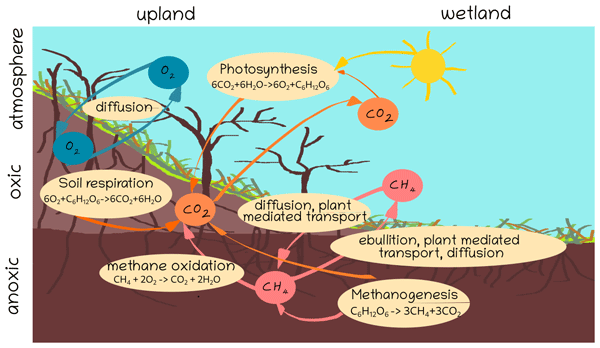
Methane is a powerful driver of climate change, yet emissions from wetlands and farming remain uncertain. We improved a global vegetation model that links water, plants and soils to methane production and release. The model now captures waterlogged areas, methane creation and escape, and flood-tolerant plants. It reproduces global wetland patterns and emissions more realistically, helping assess how climate and land-use change may affect future methane release and improve climate projections.
Jannes Breier, Luana Schwarz, Hannah Prawitz, Werner von Bloh, Christoph Müller, Stephen Björn Wirth, Max Bechthold, Dieter Gerten, and Jonathan F. Donges
Geosci. Model Dev., 19, 6829–6855, https://doi.org/10.5194/gmd-19-6829-2026, https://doi.org/10.5194/gmd-19-6829-2026, 2026
Short summary
Short summary
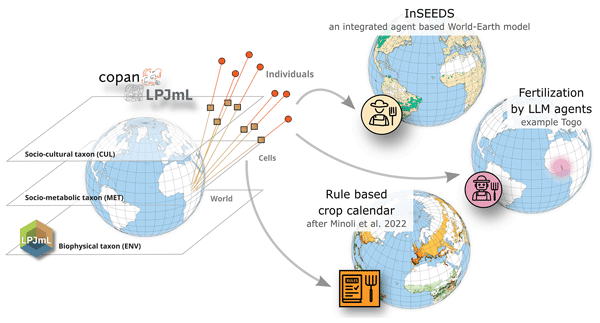
We present a new modelling framework that combines simulations of environmental change and human decision-making in an integrated approach. It allows researchers to explore how farming decisions affect land, water, and climate, and how these environmental changes influence future decisions. By connecting people and nature, it helps investigate food security, climate adaptation, and sustainability challenges, and supports the development of more realistic scenarios of future environmental change.
Wolfgang Lucht, Katherine Richardson, Jørgen Bendtsen, Boris Sakschewski, and Johan Rockström
EGUsphere, https://doi.org/10.5194/egusphere-2026-3870, https://doi.org/10.5194/egusphere-2026-3870, 2026
This preprint is open for discussion and under review for Earth System Dynamics (ESD).
Short summary
Short summary
A century ago, scientists suggested that life is more than just a passenger on Earth. It benefits, they argued, from influencing the conditions on Earth, co-shaping its own habitat. This idea is now widely accepted, but our review shows we still lack a comprehensive theory of the biosphere’s role in the Earth system. Science-based Earth stewardship calls for collaboration of fields such as evolutionary theory, ecological thermodynamics, ecosystems modelling, biogeochemistry and land use science.
Andreia F. S. Ribeiro, Maik Biling, Kirsten Thonicke, Werner von Bloh, Jakob Wessel, Sabine Undorf, Matthias Forkel, and Jakob Zscheischler
EGUsphere, https://doi.org/10.5194/egusphere-2026-2952, https://doi.org/10.5194/egusphere-2026-2952, 2026
Short summary
Short summary
Wildfires are becoming more extreme, yet our state-of-the-art tools fail to capture the full risk. We simulate a large ensemble of wildfire simulations capturing a broader range of physically plausible extreme wildfire events beyond what observations alone can reveal. Extreme fire danger alone does not explain the worst impacts: ignitions, fuel and vegetation-fire feedback need to be incorporated. This modelling framework is transferable to other climate-impact sectors beyond wildfires.
Marie Hemmen, Heidi Webber, Werner von Bloh, Jens Heinke, and Christoph Müller
EGUsphere, https://doi.org/10.5194/egusphere-2026-1898, https://doi.org/10.5194/egusphere-2026-1898, 2026
Short summary
Short summary
In this study we present a lightweight approach to compute crop canopy temperatures in computationally expensive models, which we apply in the global Lund-Potsdam-Jena managed Land model. The evaluation reveals that the developed approach reproduces cooling and heating effects of the canopy for daily maximum temperatures and suggests that replacement of standard 2 m air temperature input by simulated canopy temperatures improves the skill to model high temperature impacts on crop growth.
Marie Brunel, Stephen B. Wirth, Markus Drüke, Kirsten Thonicke, Henrique Barbosa, Jens Heinke, and Susanne Rolinski
Biogeosciences, 23, 939–965, https://doi.org/10.5194/bg-23-939-2026, https://doi.org/10.5194/bg-23-939-2026, 2026
Short summary
Short summary
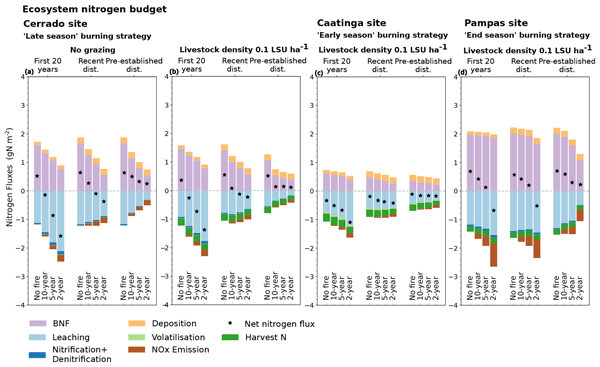
Farmers often use fire to clear dead pasture biomass, impacting vegetation and soil nutrients. This study integrates fire management into a Dynamic Global Vegetation Model (DGVM) to assess its effects, focusing on Brazil. The results show that combining grazing and fire management reduces vegetation carbon and soil nitrogen over time. The research highlights the need to include these practices in models to improve pasture management assessments and calls for better data on fire usage and its long-term effects.
Jakob Harteg, Lukas Röhrich, Kobe De Maeyer, Julius Garbe, Boris Sakschewski, Ann Kristin Klose, Jonathan F. Donges, Ricarda Winkelmann, and Sina Loriani
EGUsphere, https://doi.org/10.5194/egusphere-2026-356, https://doi.org/10.5194/egusphere-2026-356, 2026
Short summary
Short summary
Climate systems can undergo abrupt, potentially irreversible changes with major impacts on ecosystems and societies, yet consistent tools to detect these transitions across different models are lacking. We present an open-source software package for systematically detecting where and when such changes occur in climate simulations and quantifying variation in transition timing. This enables robust comparison of abrupt changes across models and contributes to assessing climate-tipping risks.
Luana Schwarz, Jannes Breier, Hannah Prawitz, Max Bechthold, Werner von Bloh, Sara M. Constantino, Dieter Gerten, Jobst Heitzig, Ronja Hotz, Leander John, Christoph Müller, Johan Rockström, and Jonathan F. Donges
EGUsphere, https://doi.org/10.5194/egusphere-2025-4079, https://doi.org/10.5194/egusphere-2025-4079, 2025
Short summary
Short summary
We present a novel global model that links farmer decisions with ecological processes to explore how agricultural systems co-evolve. Unlike previous tools, it captures feedbacks between society and nature at up-to planetary scale. We find that conservation practices can restore soil health and support stable harvests. Adoption spreads through learning and norms, showing how regeneration at the farm scale can ripple outward, contributing to global sustainability and Earth system resilience.
Friedrich J. Bohn, Giles B. Sioen, Ana Bastos, Yolandi Ernst, Marcin P. Jarzebski, Niak S. Koh, Romina Martin, Anja Rammig, Alex Godoy-Faúndez, Alexandros Gasparatos, Alvaro G. Gutiérrez, Amanda J. Aceituno, Andra-Ioana Horcea-Milcu, Andrea Marais-Potgieter, Ayyoob Sharifi, Caroline Howe, Cornelia B. Krug, Eduardo E. Acosta, Emmanuel F. Nzunda, Erik Andersson, Hans-Otto Pörtner, Helen Sooväli-Sepping, Ishihara Hiroe, Ivan Palmegiani, Kaera Coetzer, Kirsten Thonike, Krizler Tanalgo, Lisa Biber-Freudenberger, Nicholas O. Oguge, Mi S. Park, Milena Gross, Pablo De La Cruz, Paula R. Prist, Peng Bi, Rivera Diego, Roman Isaac, Rosemary McFarlane, Sinikka J. Paulus, Stefanie Burkhart, Sung-Ching Lee, Susanne Müller, Uchi D. Terhile, Wan-Yu Shih, William K. Smith, Viola Hakkarainen, Virginia Murray, Yuki Yoshida, Yohannes T. Damtew, and Zeenat Niazi
EGUsphere, https://doi.org/10.5194/egusphere-2025-3619, https://doi.org/10.5194/egusphere-2025-3619, 2025
Short summary
Short summary
The aim of this series is to provide decision-makers with valuable insights into the current state of biosphere research. Firstly, it is intended to ensure the flow of information between the comprehensive assessment reports of the IPCC and IPBES. On the other hand, it is intended to support economic and political decisions closely related to the biosphere with scientifically sound findings – including uncertainties – and comprehensive polysolutions, helping to solve the earth system polycrisis.
Jamir Priesner, Boris Sakschewski, Maik Billing, Werner von Bloh, Sebastian Fiedler, Sarah Bereswill, Kirsten Thonicke, and Britta Tietjen
Nat. Hazards Earth Syst. Sci., 25, 3309–3331, https://doi.org/10.5194/nhess-25-3309-2025, https://doi.org/10.5194/nhess-25-3309-2025, 2025
Short summary
Short summary
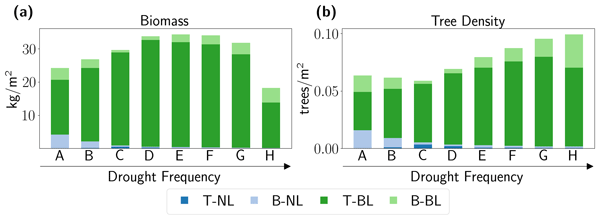
In our simulations increased drought frequencies lead to a drastic reduction in biomass in temperate pine monoculture and mixed forests. Mixed forests eventually recovered as long as drought frequency was not too high. The higher resilience of mixed forests was due to higher adaptive capacity. After adaptation mixed forests were mainly composed of smaller, broadleaved trees with higher wood density and slower growth. This would have strong implications for forestry and other ecosystem services.
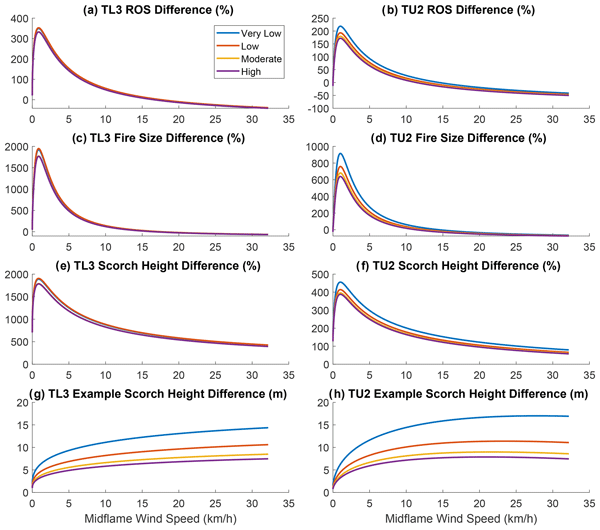
Luke Oberhagemann, Maik Billing, Werner von Bloh, Markus Drüke, Matthew Forrest, Simon P. K. Bowring, Jessica Hetzer, Jaime Ribalaygua Batalla, and Kirsten Thonicke
Geosci. Model Dev., 18, 2021–2050, https://doi.org/10.5194/gmd-18-2021-2025, https://doi.org/10.5194/gmd-18-2021-2025, 2025
Short summary
Short summary
Under climate change, the conditions necessary for wildfires to form are occurring more frequently in many parts of the world. To help predict how wildfires will change in future, global fire models are being developed. We analyze and further develop one such model, SPITFIRE. Our work identifies and corrects sources of substantial bias in the model that are important to the global fire modelling field. With this analysis and these developments, we help to provide a basis for future improvements.
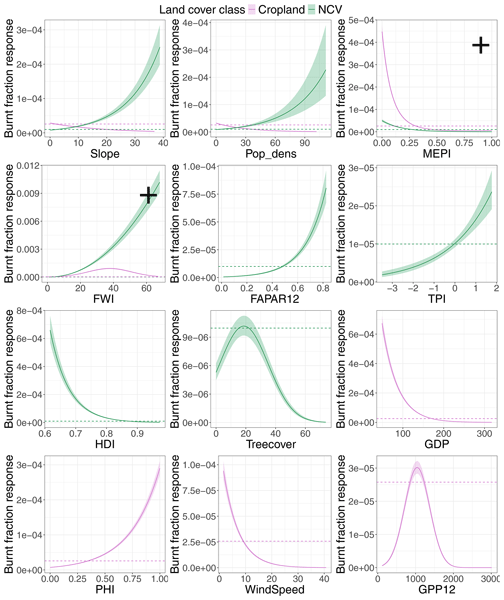
Matthew Forrest, Jessica Hetzer, Maik Billing, Simon P. K. Bowring, Eric Kosczor, Luke Oberhagemann, Oliver Perkins, Dan Warren, Fátima Arrogante-Funes, Kirsten Thonicke, and Thomas Hickler
Biogeosciences, 21, 5539–5560, https://doi.org/10.5194/bg-21-5539-2024, https://doi.org/10.5194/bg-21-5539-2024, 2024
Short summary
Short summary
Climate change is causing an increase in extreme wildfires in Europe, but drivers of fire are not well understood, especially across different land cover types. We used statistical models with satellite data, climate data, and socioeconomic data to determine what affects burning in cropland and non-cropland areas of Europe. We found different drivers of burning in cropland burning vs. non-cropland to the point that some variables, e.g. population density, had the complete opposite effects.
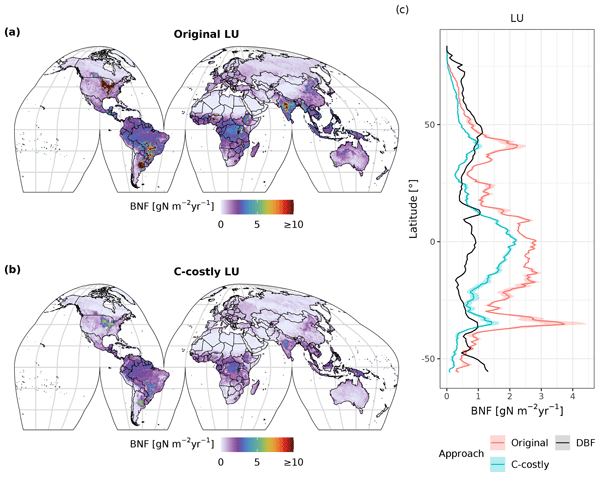
Stephen Björn Wirth, Johanna Braun, Jens Heinke, Sebastian Ostberg, Susanne Rolinski, Sibyll Schaphoff, Fabian Stenzel, Werner von Bloh, Friedhelm Taube, and Christoph Müller
Geosci. Model Dev., 17, 7889–7914, https://doi.org/10.5194/gmd-17-7889-2024, https://doi.org/10.5194/gmd-17-7889-2024, 2024
Short summary
Short summary
We present a new approach to modelling biological nitrogen fixation (BNF) in the Lund–Potsdam–Jena managed Land dynamic global vegetation model. While in the original approach BNF depended on actual evapotranspiration, the new approach considers soil water content and temperature, vertical root distribution, the nitrogen (N) deficit and carbon (C) costs. The new approach improved simulated BNF compared to the scientific literature and the model ability to project future C and N cycle dynamics.
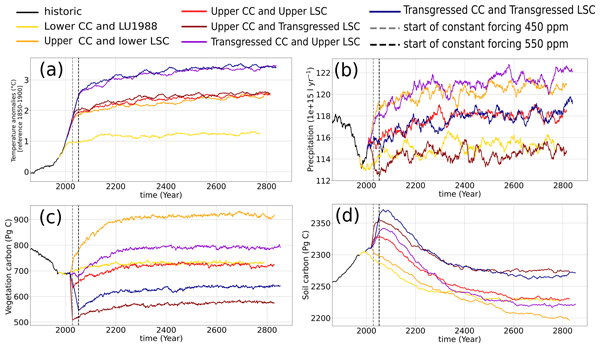
Markus Drüke, Wolfgang Lucht, Werner von Bloh, Stefan Petri, Boris Sakschewski, Arne Tobian, Sina Loriani, Sibyll Schaphoff, Georg Feulner, and Kirsten Thonicke
Earth Syst. Dynam., 15, 467–483, https://doi.org/10.5194/esd-15-467-2024, https://doi.org/10.5194/esd-15-467-2024, 2024
Short summary
Short summary
The planetary boundary framework characterizes major risks of destabilization of the Earth system. We use the comprehensive Earth system model POEM to study the impact of the interacting boundaries for climate change and land system change. Our study shows the importance of long-term effects on carbon dynamics and climate, as well as the need to investigate both boundaries simultaneously and to generally keep both boundaries within acceptable ranges to avoid a catastrophic scenario for humanity.
Stephen Björn Wirth, Arne Poyda, Friedhelm Taube, Britta Tietjen, Christoph Müller, Kirsten Thonicke, Anja Linstädter, Kai Behn, Sibyll Schaphoff, Werner von Bloh, and Susanne Rolinski
Biogeosciences, 21, 381–410, https://doi.org/10.5194/bg-21-381-2024, https://doi.org/10.5194/bg-21-381-2024, 2024
Short summary
Short summary
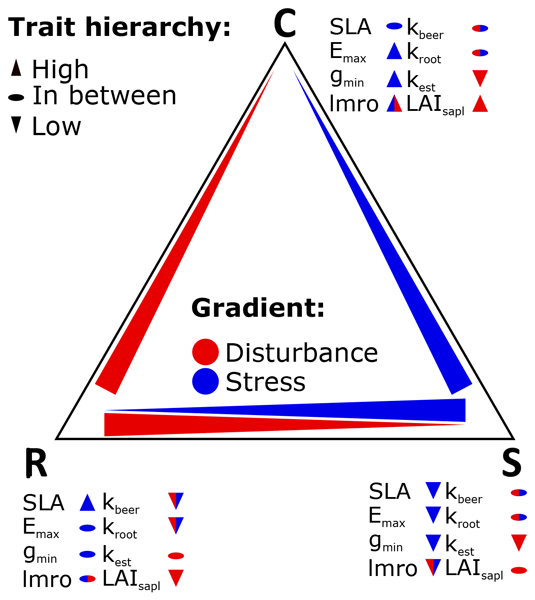
In dynamic global vegetation models (DGVMs), the role of functional diversity in forage supply and soil organic carbon storage of grasslands is not explicitly taken into account. We introduced functional diversity into the Lund Potsdam Jena managed Land (LPJmL) DGVM using CSR theory. The new model reproduced well-known trade-offs between plant traits and can be used to quantify the role of functional diversity in climate change mitigation using different functional diversity scenarios.
Jenny Niebsch, Werner von Bloh, Kirsten Thonicke, and Ronny Ramlau
Geosci. Model Dev., 16, 17–33, https://doi.org/10.5194/gmd-16-17-2023, https://doi.org/10.5194/gmd-16-17-2023, 2023
Short summary
Short summary
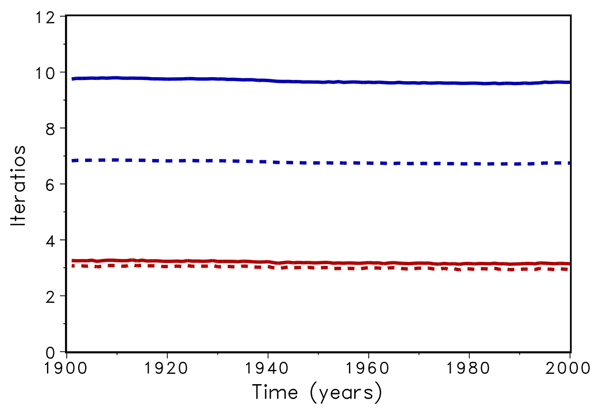
The impacts of climate change require strategies for climate adaptation. Dynamic global vegetation models (DGVMs) are used to study the effects of multiple processes in the biosphere under climate change. There is a demand for a better computational performance of the models. In this paper, the photosynthesis model in the Lund–Potsdam–Jena managed Land DGVM (4.0.002) was examined. We found a better numerical solution of a nonlinear equation. A significant run time reduction was possible.
Phillip Papastefanou, Christian S. Zang, Zlatan Angelov, Aline Anderson de Castro, Juan Carlos Jimenez, Luiz Felipe Campos De Rezende, Romina C. Ruscica, Boris Sakschewski, Anna A. Sörensson, Kirsten Thonicke, Carolina Vera, Nicolas Viovy, Celso Von Randow, and Anja Rammig
Biogeosciences, 19, 3843–3861, https://doi.org/10.5194/bg-19-3843-2022, https://doi.org/10.5194/bg-19-3843-2022, 2022
Short summary
Short summary
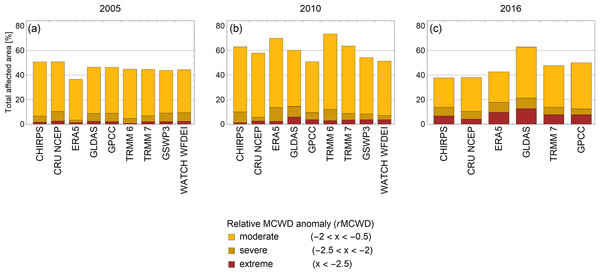
The Amazon rainforest has been hit by multiple severe drought events. In this study, we assess the severity and spatial extent of the extreme drought years 2005, 2010 and 2015/16 in the Amazon. Using nine different precipitation datasets and three drought indicators we find large differences in drought stress across the Amazon region. We conclude that future studies should use multiple rainfall datasets and drought indicators when estimating the impact of drought stress in the Amazon region.
Vera Porwollik, Susanne Rolinski, Jens Heinke, Werner von Bloh, Sibyll Schaphoff, and Christoph Müller
Biogeosciences, 19, 957–977, https://doi.org/10.5194/bg-19-957-2022, https://doi.org/10.5194/bg-19-957-2022, 2022
Short summary
Short summary
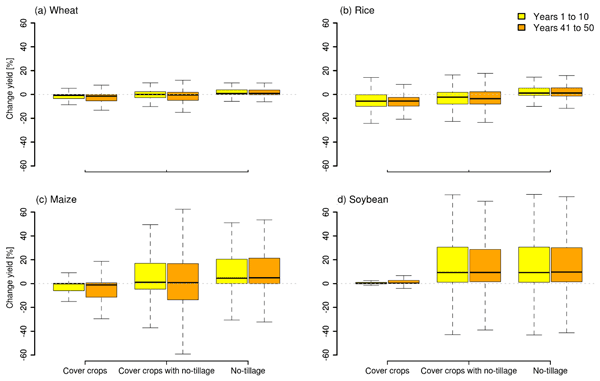
The study assesses impacts of grass cover crop cultivation on cropland during main-crop off-season periods applying the global vegetation model LPJmL (V.5.0-tillage-cc). Compared to simulated bare-soil fallowing practices, cover crops led to increased soil carbon content and reduced nitrogen leaching rates on the majority of global cropland. Yield responses of main crops following cover crops vary with location, duration of altered management, crop type, water regime, and tillage practice.
Cited articles
Baudena, M., Dekker, S. C., van Bodegom, P. M., Cuesta, B., Higgins, S. I., Lehsten, V., Reick, C. H., Rietkerk, M., Scheiter, S., Yin, Z., Zavala, M. A., and Brovkin, V.: Forests, savannas, and grasslands: bridging the knowledge gap between ecology and Dynamic Global Vegetation Models, Biogeosciences, 12, 1833–1848, https://doi.org/10.5194/bg-12-1833-2015, 2015.
Büchner, M. and Reyer, C. P. O.: ISIMIP3a atmospheric composition input data (v1.2), ISIMIP Repository, https://doi.org/10.48364/ISIMIP.664235.2, 2022.
Bustamante, M., Medina, E., Asner, G., Nardoto, G., and Garcia-Montiel, D.: Nitrogen cycling in tropical and temperate savannas, Biogeochemistry, 79, 209–237, https://doi.org/10.1007/s10533-006-9006-x, 2006.
Bustamante, M. M. C., Nardoto, G. B., Pinto, A. S., Resende, J. C. F., Takahashi, F. S. C., and Vieira, L. C. G.: Potential impacts of climate change on biogeochemical functioning of Cerrado ecosystems, Braz. J. Biol., 72, 655–671, https://doi.org/10.1590/S1519-69842012000400005, 2012.
Bustamante, M. M. C., Silva, J. S., Scariot, A., Sampaio, A. B., Mascia, D. L., Garcia, E., Sano, E., Fernandes, G. W., Durigan, G., Roitman, I., Figueiredo, I., Rodrigues, R. R., Pillar, V. D., de Oliveira, A. O., Malhado, A. C., Alencar, A., Vendramini, A., Padovezi, A., Carrascosa, H., Freitas, J., Siqueira, J. A., Shimbo, J., Generoso, L. G., Tabarelli, M., Biderman, R., de Paiva Salomão, R., Valle, R., Junior, B., and Nobre, C.: Ecological restoration as a strategy for mitigating and adapting to climate change: Lessons and challenges from Brazil, Mitig. Adapt. Strat. Gl., 24, 1249–1270, https://doi.org/10.1007/s11027-018-9837-5, 2019.
Cano-Crespo, A., Oliveira, P. J. C., Boit, A., Cardoso, M., and Thonicke, K.: Forest edge burning in the Brazilian Amazon promoted by escaping fires from managed pastures, J. Geophys. Res.-Biogeo., 120, 2095–2107, https://doi.org/10.1002/2015JG002914, 2015.
Carvalhais, N., Forkel, M., Khomik, M., Bellarby, J., Jung, M., Migliavacca, M., Mu, M., Saatchi, S., Santoro, M., Thurner, M., Weber, U., Ahrens, B., Beer, C., Cescatti, A., Randerson, J. T., and Reichstein, M.: Global covariation of carbon turnover times with climate in terrestrial ecosystems, Nature, 51, 213–217, https://doi.org/10.1038/nature13731, 2014.
Cattelan, L. G., Mattos, C. R. C., Pamplona, M. B., and Hirota, M.: Mapping Climatic Regions of the Cerrado: General Patterns and Future Change, International Journal of Climatology, 44, 5857–5872, https://doi.org/10.1002/joc.8670, 2024.
Christian, H. J., Blakeslee, R. J., Boccippio, D. J., Boeck, W. L., Buechler, D. E., Driscoll, K. T., Goodman, S. J., Hall, J. M., Koshak, W. J., Mach, D. M., and Stewart, M. F.: Global frequency and distribution of lightning as observed from space by the Optical Transient Detector, J. Geophys. Res.-Atmos., 108, ACL 4-1–ACL 4-15, https://doi.org/10.1029/2002JD002347, 2003.
Cianciaruso, M. V., Silva, I. A., Manica, L. T., and Souza, J. P.: Leaf habit does not predict leaf functional traits in cerrado woody species, Basic and Applied Ecology, 14, 404–412, https://doi.org/10.1016/j.baae.2013.05.002, 2013.
Clark, D. B., Mercado, L. M., Sitch, S., Jones, C. D., Gedney, N., Best, M. J., Pryor, M., Rooney, G. G., Essery, R. L. H., Blyth, E., Boucher, O., Harding, R. J., Huntingford, C., and Cox, P. M.: The Joint UK Land Environment Simulator (JULES), model description – Part 2: Carbon fluxes and vegetation dynamics, Geoscientific Model Development, 4, 701–722, https://doi.org/10.5194/gmd-4-701-2011, 2011.
Cramer, W., Bondeau, A., Woodward, F. I., Prentice, I. C., Betts, R. A., Brovkin, V., Cox, P. M., Fisher, V., Foley, J. A., Friend, A. D., Kucharik, C., Lomas, M. R., Ramankutty, N., Sitch, S., Smith, B., White, A., and Young-Molling, C.: Global response of terrestrial ecosystem structure and function to CO2 and climate change: Results from six dynamic global vegetation models, Glob. Change Biol., 7, 357–373, https://doi.org/10.1046/j.1365-2486.2001.00383.x, 2001.
da Silva Arruda, V. L., Alencar, A. A. C., de Carvalho Júnior, O. A., de Figueiredo Ribeiro, F., de Arruda, F. V., Conciani, D. E., da Silva, W. V., and Shimbo, J. Z.: Assessing four decades of fire behavior dynamics in the Cerrado biome (1985 to 2022), fire ecol, 20, 64, https://doi.org/10.1186/s42408-024-00298-4, 2024.
de Camargo, M. G. G., de Carvalho, G. H., Alberton, B. D. C., Reys, P., and Morellato, L. P. C.: Leafing patterns and leaf exchange strategies of a cerrado woody community, Biotropica, 50, 442–454, https://doi.org/10.1111/btp.12552, 2018.
de Queiroz, L. P., Cardoso, D., Fernandes, M. F., and Moro, M. F: Diversity and Evolution of Flowering Plants of the Caatinga Domain, in: Caatinga, edited by: Silva, J. M. C., Leal, I. R., and Tabarelli, M., Springer-Cham, https://doi.org/10.1007/978-3-319-68339-3_2, 2017.
D'Onofrio, D., Baudena, M., Lasslop, G., Nieradzik, L. P., Wårlind, D., and von Hardenberg, J.: Linking vegetation-climate-fire relationships in Sub-Saharan Africa to key ecological processes in two dynamic global vegetation models, Fr. Environ. Sci., 8, https://doi.org/10.3389/fenvs.2020.00136, 2020.
dos Santos, L. O. F., Machado, N. G., Biudes, M. S., Geli, H. M. E., Querino, C. A. S., Ruhoff, A. L., Ivo, I. O., and Lotufo Neto, N.: Trends in Precipitation and Air Temperature Extremes and Their Relationship with Sea Surface Temperature in the Brazilian Midwest, Atmosphere, 14, 426, https://doi.org/10.3390/atmos14030426, 2023.
Drüke, M., Forkel, M., von Bloh, W., Sakschewski, B., Cardoso, M., Bustamante, M., Kurths, J., and Thonicke, K.: Improving the LPJmL4-SPITFIRE vegetation–fire model for South America using satellite data, Geosci. Model Dev., 12, 5029–5054, https://doi.org/10.5194/gmd-12-5029-2019, 2019.
Feron, S., Cordero, R. R., Damiani, A., MacDonell, S., Pizarro, J., Goubanova, K., Valenzuela, R., Wang, C., Rester, L., and Beaulieu, A.: South America is becoming warmer, drier, and more flammable, Commun. Earth Environ., 5, 501, https://doi.org/10.1038/s43247-024-01654-7, 2024.
Foley, J. A., Prentice, I. C., Ramankutty, N., Levis, S., Pollard, D., Sitch, S., and Haxeltine, A.: An integrated biosphere model of land surface processes, terrestrial carbon balance, and vegetation dynamics, Global Biogeochemical Cycles, 10, 603–628, https://doi.org/10.1029/96GB02692, 1996.
Forkel, M., Carvalhais, N., Schaphoff, S., v. Bloh, W., Migliavacca, M., Thurner, M., and Thonicke, K.: Identifying environmental controls on vegetation greenness phenology through model–data integration, Biogeosciences, 11, 7025–7050, https://doi.org/10.5194/bg-11-7025-2014, 2014.
Gomes, L., Miranda, H. S., and Bustamante, M. M. C.: How can we advance the knowledge on the behavior and effects of fire in the Cerrado biome?, Forest Ecol. Manag., 417, 281–290, https://doi.org/10.1016/j.foreco.2018.02.032, 2018.
Gomes, L., Miranda, H. S., Silvério, D. V., and Bustamante, M. M. C.: Effects and behaviour of experimental fires in grasslands, savannas, and forests of the Brazilian Cerrado, Forest Ecol. Manag., 458, 117804, https://doi.org/10.1016/j.foreco.2019.117804, 2020a.
Gomes, L., Miranda, H. S., Soares-Filho, B., Rodrigues, L., Oliveira, U., and Bustamante, M. M. C.: Responses of plant biomass in the Brazilian savanna to frequent fires, Front. Forest Glob. Change, 3, 507710, https://doi.org/10.3389/ffgc.2020.507710, 2020b.
Grimm, A. M., Vera, C. S., and Mechoso, C. R.: The South American monsoon system, in: The Global Monsoon System: Research and Forecast, WMO/TD 1266, TMRP Rep. 70, 219–238, https://core.ac.uk/download/pdf/36730348.pdf (last access: 14 February 2025), 2005.
Guglielmo, M., Tang, F. H. M., Pasut, C., and Maggi, F.: SOIL-WATERGRIDS, mapping dynamic changes in soil moisture and depth of water table from 1970 to 2014, Sci. Data, 8, 263, https://doi.org/10.1038/s41597-021-01032-4, 2021.
Hengl, T., Walsh, M. G., Sanderman, J., Wheeler, I., Harrison, S. P., and Prentice, I. C.: Global mapping of potential natural vegetation: An assessment of machine learning algorithms for estimating land potential, PeerJ, 6, e5457, https://doi.org/10.7717/peerj.5457, 2018.
Hersbach, H., Bell, B., Berrisford, P., Hirahara, S., Horányi, A., Muñoz-Sabater, J., Nicolas, J., Peubey, C., Radu, R., Schepers, D., Simmons, A., Soci, C., Abdalla, S., Abellan, X., Balsamo, G., Bechtold, P., Biavati, G., Bidlot, J., Bonavita, M., De Chiara, G., Dahlgren, P., Dee, D., Diamantakis, M., Dragani, R., Flemming, J., Forbes, R., Fuentes, M., Geer, A., Haimberger, L., Healy, S., Hogan, R. J., Hólm, E., Janisková, M., Keeley, S., Laloyaux, P., Lopez, P., Lupu, C., Radnoti, G., de Rosnay, P., Rozum, I., Vamborg, F., Villaume, S., and Thépaut, J. N.: The ERA5 global reanalysis, Quarterly Journal of the Royal Meteorological Society, 146, 1999–2049, https://doi.org/10.1002/qj.3803, 2020.
Hoffmann, W. A., Orthen, B., and Franco, A. C.: Constraints to seedling success of savanna and forest trees across the savanna-forest boundary, Oecologia, 140, 252–260, https://doi.org/10.1007/s00442-004-1595-2, 2004.
Hoffmann, W. A., da Silva, E. R., Machado, G. C., Bucci, S. J., Scholz, F. G., Goldstein, G., and Meinzer, F. C.: Seasonal leaf dynamics across a tree density gradient in a Brazilian savanna, Oecologia, 145, 306–315, https://doi.org/10.1007/s00442-005-0129-x, 2005.
Hoffmann, W. A., Adasme, R., Haridasan, M., T. De Carvalho, M., Geiger, E. L., Pereira, M. A. B., Gotsch, S. G., and Franco, A. C.: Tree topkill, not mortality, governs the dynamics of savanna–forest boundaries under frequent fire in central Brazil, Ecology, 90, 1326–1337, https://doi.org/10.1890/08-0741.1, 2009.
Hofmann, G., Cardoso, M., Alves, R., Weber, E., Barbosa, A., De Toledo, P., Pontual, F., Salles, L., Hasenack, H., Passos Cordeiro, J. L., Aquino, F., and Oliveira, L.: The Brazilian Cerrado is becoming hotter and drier, Glob. Change Biol., 27, https://doi.org/10.1111/gcb.15712, 2021.
Hughes, J. K., Valdes, P. J., and Betts, R.: Dynamics of a global-scale vegetation model, Ecological Modelling, 198, 452–462, https://doi.org/10.1016/j.ecolmodel.2006.05.020, 2006.
IBGE: Brazilian Vegetation, https://www.ibge.gov.br/en/geosciences/maps/state-maps/19470-brazilian-vegetation.html?=&t=downloads (last access: 7 November 2024), 2017.
IBGE: Biomas e Sistema Costeiro-Marinho do Brasil – PGI, https://www.ibge.gov.br/apps/biomas/#/home (last access: 11 December 2024), 2024.
Jackson, R. B., Canadell, J., Ehleringer, J. R., Mooney, H. A., Sala, O. E., and Schulze, E. D.: A global analysis of root distributions for terrestrial biomes, Oecologia, 108, 389–411, https://doi.org/10.1007/BF00333714, 1996.
Klein Goldewijk, K., Beusen, A., Drecht, G., and Vos, M.: The HYDE 3.1 spatially explicit database of human-induced global land-use change over the past 12,000 years, Global Ecol Biogeogr., 20, 73–86, https://doi.org/10.1111/j.1466-8238.2010.00587.x, 2011.
Langan, L., Higgins, S. I., and Scheiter, S.: Climate-biomes, pedo-biomes or pyro-biomes: which world view explains the tropical forest–savanna boundary in South America?, J. Biogeogr., 44, 2319–2330, https://doi.org/10.1111/jbi.13018, 2017.
Lehmann, C. E. R., Anderson, T. M., Sankaran, M., Higgins, S. I., Archibald, S., Hoffmann, W. A., Hanan, N. P., Williams, R. J., Fensham, R. J., Felfili, J., Hutley, L. B., Ratnam, J., San Jose, J., Montes, R., Franklin, D., Russell-Smith, J., Ryan, C. M., Durigan, G., Hiernaux, P., Haidar, R., Bowman, D. M. J. S., and Bond, W. J.: Savanna vegetation-fire-climate relationships differ among continents, Science, 343, 548–552, https://doi.org/10.1126/science.1247355, 2014.
Lemos-Filho, J. P., Barros, C. F. A., Dantas, G. P. M., Dias, L. G., and Mendes, R. S.: Spatial and temporal variability of canopy cover and understory light in a Cerrado of Southern Brazil, Braz. J. Biol., 70, 19–24, https://doi.org/10.1590/S1519-69842010000100005, 2010.
Malhi, Y., Aragão, L. E. O. C., Galbraith, D., Huntingford, C., Fisher, R., Zelazowski, P., Sitch, S., McSweeney, C., and Meir, P.:Exploring the likelihood and mechanism of a climate-change-induced dieback of the Amazon rainforest, P. Natl. Acad. Sci. USA, 106, 20610–20615, https://doi.org/10.1073/pnas.0804619106, 2009.
MapBiomas 9.0: MapBiomas Uso e Cobertura 9.0, https://brasil.mapbiomas.org/colecoes-mapbiomas/ (last access: 23 January 2025), 2024.
MapBiomas Fogo: MapBiomas Fogo 3.0, https://mapbiomasfogocol3v1.netlify.app/index.html (last access: 11 December 2024), 2024.
MapBiomas Fogo: MapBiomas Fogo 4.0, https://brasil.mapbiomas.org/wp-content/uploads/sites/4/2025/06/Fact_Fogo_colecao4.pdf (last access: 20 October 2025), 2025.
Martens, C., Hickler, T., Davis-Reddy, C., Engelbrecht, F., Higgins, S. I., Von Maltitz, G. P., Midgley, G. F., Pfeiffer, M., and Scheiter, S.: Large uncertainties in future biome changes in Africa call for flexible climate adaptation strategies, Glob. Change Biol., 27, 340–358, https://doi.org/10.1111/gcb.15390, 2021.
MCTI: Quarto inventário nacional de emissões e remoções antrópicas de gases de efeito estufa setor uso da terra, mudança do uso da terra e florestas, https://repositorio.mcti.gov.br/handle/mctic/4782 (last access: 26 November 2024), 2020.
MCTI: First biennial transparency report of Brazil to the United Nations Framework Convention on Climate Change, https://www.gov.br/mcti/pt-br/acompanhe-o-mcti/sirene/publicacoes/relatorios-bienais-de-transparencia-btrs (last access: 15 January 2025), 2024.
Moncrieff, G. R., Scheiter, S., Langan, L., Trabucco, A., and Higgins, S. I.: The future distribution of the savannah biome: model-based and biogeographic contingency, Philos. T. R. Soc. B., 371, 20150311, https://doi.org/10.1098/rstb.2015.0311, 2016.
Myers, N., Mittermeier, R. A., Mittermeier, C. G., da Fonseca, G. A. B., and Kent, J.: Biodiversity hotspots for conservation priorities, Nature, 403, 853–858, https://doi.org/10.1038/35002501, 2000.
Neilson, R. P.: The Making of a Dynamic General Vegetation Model, MC1, in: Global Vegetation Dynamics, American Geophysical Union (AGU), 41–57, https://doi.org/10.1002/9781119011705.ch4, 2015.
Oberhagemann, L., Billing, M., von Bloh, W., Drüke, M., Forrest, M., Bowring, S. P. K., Hetzer, J., Ribalaygua Batalla, J., and Thonicke, K.: Sources of uncertainty in the SPITFIRE global fire model: development of LPJmL-SPITFIRE1.9 and directions for future improvements, Geosci. Model Dev., 18, 2021–2050, https://doi.org/10.5194/gmd-18-2021-2025, 2025.
Oliveira, R. S., Bezerra, L., Davidson, E. A., Pinto, F., Klink, C. A., Nepstad, D. C., and Moreira, A.: Deep root function in soil water dynamics in cerrado savannas of central Brazil, Funct. Ecol., 19, 574–581, https://doi.org/10.1111/j.1365-2435.2005.01003.x, 2005.
Oliveira, U., Soares-Filho, B., de Souza Costa, W. L., Gomes, L., Bustamante, M., and Miranda, H.: Modeling fuel loads dynamics and fire spread probability in the Brazilian Cerrado, Forest Ecol. Manag., 482, 118889, https://doi.org/10.1016/j.foreco.2020.118889, 2021.
Oliver, T. H., Heard, M. S., Isaac, N. J. B., Roy, D. B., Procter, D., Eigenbrod, F., Freckleton, R., Hector, A., Orme, C. D. L., Petchey, O. L., Proença, V., Raffaelli, D., Suttle, K. B., Mace, G. M., Martín-López, B., Woodcock, B. A., and Bullock, J. M: Biodiversity and resilience of ecosystem functions, Trends Ecol. Evol., 30, 673–684, https://doi.org/10.1016/j.tree.2015.08.009, 2015.
Peel, M. C., Finlayson, B. L., and McMahon, T. A.: Updated world map of the Köppen-Geiger climate classification, Hydrol. Earth Syst. Sci., 11, 1633–1644, https://doi.org/10.5194/hess-11-1633-2007, 2007.
Perkins, O., Kasoar, M., Voulgarakis, A., Smith, C., Mistry, J., and Millington, J. D. A.: A global behavioural model of human fire use and management: WHAM! v1.0, Geosci. Model Dev., 17, 3993–4016, https://doi.org/10.5194/gmd-17-3993-2024, 2024.
Ratnam, J., Bond, W. J., Fensham, R. J., Hoffmann, W. A., Archibald, S., Lehmann, C. E. R., Anderson, M. T., Higgins, S. I., and Sankaran, M.: When is a `forest' a savanna, and why does it matter?, Global Ecol. Biogeogr., 20, 653–660, https://doi.org/10.1111/j.1466-8238.2010.00634.x, 2011.
Ribeiro, J. and Walter, B.: As principais fitofisionomias do bioma Cerrado, in: Cerrado Ecologia e Flora, edited by: Sano, S. M., Almeida, S. P., and Ribeiro, J. F., Brasília, 152–212, http://www.infoteca.cnptia.embrapa.br/infoteca/handle/doc/570911 (last access: 26 November 2024), 2008.
Rodrigues, A. A., Macedo, M. N., Silvério, D. V., Maracahipes, L., Coe, M. T., Brando, P. M., Shimbo, J. Z., Rajão, R., Soares-Filho, B., and Bustamante, M. M. C.: Cerrado deforestation threatens regional climate and water availability for agriculture and ecosystems, Glob. Change Biol., 28, 6807–6822, https://doi.org/10.1111/gcb.16386, 2022.
Ronquim, C. C., Prado, C. H. B. de A., and de Paula, N. F.: Growth and photosynthetic capacity in two woody species of cerrado vegetation under different radiation availability, Braz. Arch. Biol. Techn., 46, 243–252, https://doi.org/10.1590/S1516-89132003000200016, 2003.
Saboya, P. and Borghetti, F.: Germination, initial growth, and biomass allocation in three native Cerrado species, Braz. J. Bot., 35, 129–135, https://www.scielo.br/j/rbb/a/8dprpjrPHKPHpytdVCBrVQw/?lang=en (last access: 23 January 2025), 2012.
Sakschewski, B., von Bloh, W., Boit, A., Rammig, A., Kattge, J., Poorter, L., Peñuelas, J., and Thonicke, K.: Leaf and stem economics spectra drive diversity of functional plant traits in a dynamic global vegetation model, Glob. Change Biol., 21, 2711–2725, https://doi.org/10.1111/gcb.12870, 2015.
Sakschewski, B., von Bloh, W., Drüke, M., Sörensson, A. A., Ruscica, R., Langerwisch, F., Billing, M., Bereswill, S., Hirota, M., Oliveira, R. S., Heinke, J., and Thonicke, K.: Variable tree rooting strategies are key for modelling the distribution, productivity and evapotranspiration of tropical evergreen forests, Biogeosciences, 18, 4091–4116, https://doi.org/10.5194/bg-18-4091-2021, 2021.
Salazar, A., Katzfey, J., Thatcher, M., Syktus, J., Wong, K., and McAlpine, C.: Deforestation changes land–atmosphere interactions across South American biomes, Global Planet. Change, 139, 97–108, https://doi.org/10.1016/j.gloplacha.2016.01.004, 2016.
Sano, E. E., Rodrigues, A. A., Martins, E. S., Bettiol, G. M., Bustamante, M. M. C., Bezerra, A. S., Couto, A. F., Vasconcelos, V., Schüler, J., and Bolfe, E. L.: Cerrado ecoregions: A spatial framework to assess and prioritize Brazilian savanna environmental diversity for conservation, J. Environ. Manage., 232, 818–828, https://doi.org/10.1016/j.jenvman.2018.11.108, 2019.
Schaphoff, S., von Bloh, W., Rammig, A., Thonicke, K., Biemans, H., Forkel, M., Gerten, D., Heinke, J., Jägermeyr, J., Knauer, J., Langerwisch, F., Lucht, W., Müller, C., Rolinski, S., and Waha, K.: LPJmL4 – a dynamic global vegetation model with managed land – Part 1: Model description, Geosci. Model Dev., 11, 1343–1375, https://doi.org/10.5194/gmd-11-1343-2018, 2018.
Scholz, F. G., Bucci, S. J., Goldstein, G., Meinzer, F. C., Franco, A. C., and Salazar, A.: Plant- and stand-level variation in biophysical and physiological traits along tree density gradients in the Cerrado, Braz. J. Plant Physiol., 20, 217–232, https://doi.org/10.1590/S1677-04202008000300006, 2008.
Schüler, J. and Bustamante, M. M. C.: Spatial planning for restoration in Cerrado: Balancing the trade-offs between conservation and agriculture, J. Appl. Ecol., 59, 2616–2626, https://doi.org/10.1111/1365-2664.14262, 2022.
Schüler, J., Bereswill, S., von Bloh, W., Billing, M., Sakschewski, B., Oberhagemann, L., Thonicke, K., and Bustamante, M. M. C.: Model code for LPJmL-5.8.16-VR-SPITFIRE, Zenodo [code], https://doi.org/10.5281/zenodo.16965740, 2025.
Schumacher, V., Setzer, A., Saba, M. M. F., Naccarato, K. P., Mattos, E., and Justino, F.: Characteristics of lightning-caused wildfires in central Brazil in relation to cloud-ground and dry lightning, Agr. Forest Meteorol., 312, 108723, https://doi.org/10.1016/j.agrformet.2021.108723, 2022.
Shinozaki, K., Yoda, K., Hozumi, K., and Kira, T.: A quantitative analysis of plant form-the Pipe Model Theory: II. Further evidence of the theory and its application in forest ecology, Jpn. J. Ecol., 14, 133–139, https://doi.org/10.18960/seitai.14.4_133, 1964.
Simon, M. F., Grether, R., de Queiroz, L. P., Skema, C., Pennington, R. T., and Hughes, C. E.: Recent assembly of the Cerrado, a neotropical plant diversity hotspot, by in situ evolution of adaptations to fire, Proceedings of the National Academy of Sciences, 106, 20359–20364, https://doi.org/10.1073/pnas.0903410106, 2009.
Simon, M. F. and Pennington, T.: Evidence for adaptation to fire regimes in the tropical savannas of the Brazilian Cerrado, Int. J. Plant Sci., 173, 711–723, https://doi.org/10.1086/665973, 2012.
Solbrig, O. T., Medina, E., and Silva, J. F.: Biodiversity and savanna ecosystem processes: A global perspective, vol. 121, Heldmaier, G., Lange, O. L., Mooney, H. A., and Sommer, U. (Eds.), Springer, https://doi.org/10.1007/978-3-642-78969-4, 1996.
Souchie, F. F., Pinto, J. R. R., Lenza, E., Gomes, L., Maracahipes-Santos, L., and Silvério, D. V.: Post-fire resprouting strategies of woody vegetation in the Brazilian savanna, Acta Bot. Bras., 31, 260–266, https://doi.org/10.1590/0102-33062016abb0376, 2017.
Souza, C. R. D., Coelho De Souza, F., Françoso, R. D., Maia, V. A., Pinto, J. R. R., Higuchi, P., Silva, A. C., Prado Júnior, J. A. D., Farrapo, C. L., Lenza, E., Mews, H., Rocha, H. L. L., Mota, S. ílvia L., Rodrigues, A. L. ívia D. C., Silva-Sene, A. M. D., Moura, D. M., Araújo, F. D. C., Oliveira, F. D., Gianasi, F. M., Silva, L. C. A. D., Ferreira, L. A. S., Alves, L. ívia L. B., Santos, L. R., Reis, M. G., Pereira, R. T., Bila, S. érgio A., Souza, T. A., Meireles, T. M., Fontes, M. A. L., and Santos, R. M. D.: Functional and structural attributes of Brazilian tropical and subtropical forests and savannas, Forest Ecol. Manag., 558, 121811, https://doi.org/10.1016/j.foreco.2024.121811, 2024.
Souza, J.: Ecological significance of leaf longevity of cerrado woody species, in: Evergreens: Types, Ecology and Conservation, Adriano D. Bezerra and Tadeu S. Ferreira, UK, 149–160, https://www.researchgate.net/publication/286803742_Ecological_significance_of_leaf_longevity_of_cerrado_woody_species#fullTextFileContent (last access: 7 April 2025), 2012.
Strassburg, B. B. N., Brooks, T., Feltran-Barbieri, R., Iribarrem, A., Crouzeilles, R., Loyola, R., Latawiec, A. E., Oliveira Filho, F. J. B., Scaramuzza, C. A. de M., Scarano, F. R., Soares-Filho, B., and Balmford, A.: Moment of truth for the Cerrado hotspot, Nat. Ecol. Evol., 1, 1–3, https://doi.org/10.1038/s41559-017-0099, 2017.
Swann, A. L. S., Longo, M., Knox, R. G., Lee, E., and Moorcroft, P. R.: Future deforestation in the Amazon and consequences for South American climate, Agr. Forest Meteorol., 214–215, 12–24, https://doi.org/10.1016/j.agrformet.2015.07.006, 2015.
Syktus, J. I. and McAlpine, C. A.: More than carbon sequestration: Biophysical climate benefits of restored savanna woodlands, Sci. Rep-UK, 6, 29194, https://doi.org/10.1038/srep29194, 2016.
Terra, M. C. N. S., Nunes, M. H., Souza, C. R., Ferreira, G. W. D., Prado-Junior, J. A. do, Rezende, V. L., Maciel, R., Mantovani, V., Rodrigues, A., Morais, V. A., Scolforo, J. R. S., and Mello, J. M.: The inverted forest: Aboveground and notably large belowground carbon stocks and their drivers in Brazilian savannas, Sci. Total Environ., 867, 161320, https://doi.org/10.1016/j.scitotenv.2022.161320, 2023.
Terra, M. D. C. N. S., Santos, R. M. D., Prado Júnior, J. A. D., De Mello, J. M., Scolforo, J. R. S., Fontes, M. A. L., Schiavini, I., Dos Reis, A. A., Bueno, I. T., Magnago, L. F. S., and Ter Steege, H.: Water availability drives gradients of tree diversity, structure and functional traits in the Atlantic–Cerrado–Caatinga transition, Brazil, J. Plant Ecol., 11, 803–814, https://doi.org/10.1093/jpe/rty017, 2018.
Thonicke, K., Spessa, A., Prentice, I. C., Harrison, S. P., Dong, L., and Carmona-Moreno, C.: The influence of vegetation, fire spread and fire behaviour on biomass burning and trace gas emissions: results from a process-based model, Biogeosciences, 7, 1991–2011, https://doi.org/10.5194/bg-7-1991-2010, 2010.
Thonicke, K., Billing, M., von Bloh, W., Sakschewski, B., Niinemets, Ü., Peñuelas, J., Cornelissen, J. H. C., Onoda, Y., van Bodegom, P., Schaepman, M. E., Schneider, F. D., and Walz, A.: Simulating functional diversity of European natural forests along climatic gradients, J Biogeogr., 47, 1069–1085, https://doi.org/10.1111/jbi.13809, 2020.
Tumber-Dávila, S. J., Schenk, H. J., Du, E., and Jackson, R. B.: Plant sizes and shapes above and belowground and their interactions with climate, New Phytol., 235, 1032–1056, https://doi.org/10.1111/nph.18031, 2022.
van der Werf, G. R., Randerson, J. T., Giglio, L., van Leeuwen, T. T., Chen, Y., Rogers, B. M., Mu, M., van Marle, M. J. E., Morton, D. C., Collatz, G. J., Yokelson, R. J., and Kasibhatla, P. S.: Global fire emissions estimates during 1997–2016, Earth Syst. Sci. Data, 9, 697–720, https://doi.org/10.5194/essd-9-697-2017, 2017.
von Bloh, W., Schaphoff, S., Müller, C., Rolinski, S., Waha, K., and Zaehle, S.: Implementing the nitrogen cycle into the dynamic global vegetation, hydrology, and crop growth model LPJmL (version 5.0), Geosci. Model Dev., 11, 2789–2812, https://doi.org/10.5194/gmd-11-2789-2018, 2018.
Whitley, R., Beringer, J., Hutley, L. B., Abramowitz, G., De Kauwe, M. G., Evans, B., Haverd, V., Li, L., Moore, C., Ryu, Y., Scheiter, S., Schymanski, S. J., Smith, B., Wang, Y.-P., Williams, M., and Yu, Q.: Challenges and opportunities in land surface modelling of savanna ecosystems, Biogeosciences, 14, 4711–4732, https://doi.org/10.5194/bg-14-4711-2017, 2017.
Wirth, S. B., Braun, J., Heinke, J., Ostberg, S., Rolinski, S., Schaphoff, S., Stenzel, F., von Bloh, W., Taube, F., and Müller, C.: Biological nitrogen fixation of natural and agricultural vegetation simulated with LPJmL 5.7.9, Geosci. Model Dev., 17, 7889–7914, https://doi.org/10.5194/gmd-17-7889-2024, 2024.
Wullschleger, S. D., Epstein, H. E., Box, E. O., Euskirchen, E. S., Goswami, S., Iversen, C. M., Kattge, J., Norby, R. J., van Bodegom, P. M., and Xu, X.: Plant functional types in Earth system models: Past experiences and future directions for application of dynamic vegetation models in high-latitude ecosystems, Ann. Bot-London, 114, 1–16, https://doi.org/10.1093/aob/mcu077, 2014.
Short summary
We introduced a new plant type into a global vegetation model to better represent the ecology of the Cerrado, South America's second largest biome. This improved the model’s ability to simulate vegetation structure, root systems, and fire dynamics, aligning more closely with observations. Our results enhance understanding of tropical savannas and provide a stronger basis for studying their responses to fire and climate change at regional and global scales.
We introduced a new plant type into a global vegetation model to better represent the ecology of...


Altmetrics
Final-revised paper
Preprint