
Articles | Volume 23, issue 7
https://doi.org/10.5194/bg-23-2601-2026
© Author(s) 2026. This work is distributed under
the Creative Commons Attribution 4.0 License.
the Creative Commons Attribution 4.0 License.
https://doi.org/10.5194/bg-23-2601-2026
© Author(s) 2026. This work is distributed under
the Creative Commons Attribution 4.0 License.
the Creative Commons Attribution 4.0 License.
Research article
| 
17 Apr 2026
Research article |
| 17 Apr 2026
| 17 Apr 2026
Forecasting seasonal global sea surface chlorophyll a with a lightweight data-driven approach
Gabriela Martinez Balbontin
CORRESPONDING AUTHOR

Mercator Océan International, Toulouse, France
Julien Jouanno
Laboratoire d'Etudes en Géophysique et Océanographie Spatiales, Toulouse, France
Institut de Recherche pour le Développement, Toulouse, France
Rachid Benshila
Laboratoire d'Etudes en Géophysique et Océanographie Spatiales, Toulouse, France
Julien Lamouroux
Mercator Océan International, Toulouse, France
Coralie Perruche
Mercator Océan International, Toulouse, France
Stefano Ciavatta
Mercator Océan International, Toulouse, France
Related authors
No articles found.
Alexandre Mignot, Nina Bednaršek, Sarah Albernhe, Stefano Ciavatta, Patrick Lehodey, and Jules Lehodey
State Planet Discuss., https://doi.org/10.5194/sp-2026-21, https://doi.org/10.5194/sp-2026-21, 2026
Preprint under review for SP
Short summary
Short summary
Tiny sea snails called pteropods build delicate shells that dissolve as the ocean absorbs carbon dioxide, while warming shrinks the areas where they can live. Using satellite-based ocean data from 1995 to 2025, we built two indicators that track, worldwide, how much shell damage occurs and how much suitable habitat remains. Over three decades, shell damage rose and suitable habitat shrank, confirming that both acidification and warming are reshaping where these animals can survive.
Clovis Thouvenin-Masson and Julien Jouanno
Ocean Sci., 22, 2835–2862, https://doi.org/10.5194/os-22-2835-2026, https://doi.org/10.5194/os-22-2835-2026, 2026
Short summary
Short summary
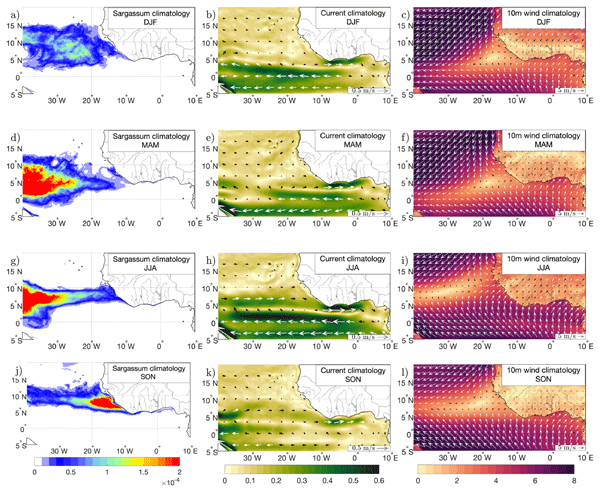
We studied why floating Sargassum seaweed repeatedly reaches the northern Gulf of Guinea, where it affects coastal activities such as fishing. By combining satellite observations with computer simulations, we found two main arrival seasons, in spring and autumn. Most events are driven by seaweed transported from the eastern tropical Atlantic, while winds push it toward the coast and beaching limits how long it persists. Year-to-year changes are linked to shifts in Atlantic climate.
Gaël Many, Julien Jouanno, Marc Lucas, Audrey Hasson, Jean-Michel Lellouche, and Yann Drillet
State Planet Discuss., https://doi.org/10.5194/sp-2026-30, https://doi.org/10.5194/sp-2026-30, 2026
Preprint under review for SP
Short summary
Short summary
Large Sargassum blooms have become a recurring feature of the Tropical Atlantic, affecting coastal areas and ecosystems. We studied satellite observations from 2002 to 2025 to understand how bloom size and severity vary through time and across regions. We developed two simple indicators to compare years and areas. The results reveal strong regional differences and show that 2025 was an exceptional basin-wide bloom, highlighting the value of consistent monitoring for tracking future events.
Elodie Gutknecht, Bruno Levier, Romain Escudier, Guillaume Reffray, Sylvain Cailleau, Stefano Ciavatta, Muriel Lux, Michelle Devlin, Lisette Enserink, Naomi Greenwood, and Hjalte Parner
State Planet Discuss., https://doi.org/10.5194/sp-2026-8, https://doi.org/10.5194/sp-2026-8, 2026
Preprint under review for SP
Short summary
Short summary
Declining oxygen levels near the seafloor can harm marine ecosystems. We investigated oxygen conditions across the North-East Atlantic shelf seas using ocean modelling. We found that low oxygen affects around one quarter of the shelf, with some areas experiencing severe oxygen loss, and that oxygen levels have decreased in recent decades beyond currently recognized vulnerable zones. These results highlight the need for continued monitoring and improved protection of marine environments.
Quentin Hyvernat, Alexandre Mignot, Elodie Gutknecht, Giovanni Ruggiero, Coralie Perruche, Guillaume Samson, Raphaëlle Sauzède, Olivier Aumont, Hervé Claustre, and Fabrizio D'Ortenzio
Biogeosciences, 23, 4967–4998, https://doi.org/10.5194/bg-23-4967-2026, https://doi.org/10.5194/bg-23-4967-2026, 2026
Short summary
Short summary
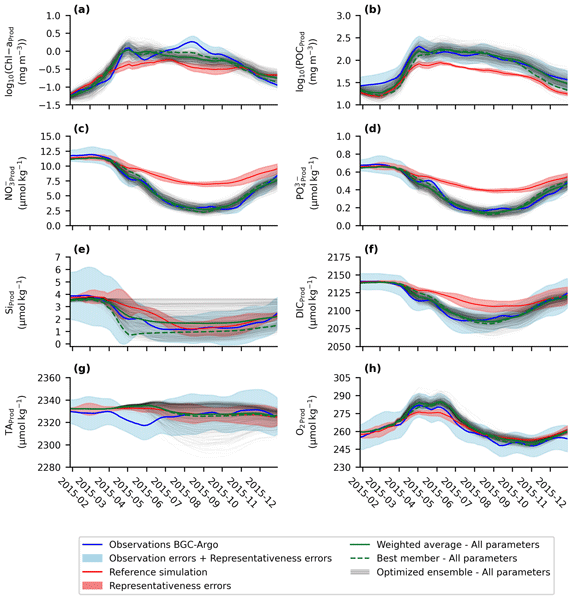
We introduce an iterative Importance Sampling framework to optimize the Pelagic Interaction Scheme for Carbon and Ecosystem Studies (PISCES) model using 20 metrics from Biogeochemical-Argo data. Three strategies are compared: 29 main-effect, 66 including interaction effects, and all 95 parameters. All yield statistically indistinguishable skill gains, reducing error by 54–56 %. Optimizing all 95 parameters is recommended for comprehensive uncertainty quantification. The optimized set also improves skill in a three-dimensional regional simulation.
Marc Kakante Mendy, Florent Gasparin, Manon Gévaudan, Moussa Diakhaté, Issa Sakho, and Julien Jouanno
Ocean Sci., 22, 1745–1762, https://doi.org/10.5194/os-22-1745-2026, https://doi.org/10.5194/os-22-1745-2026, 2026
Short summary
Short summary
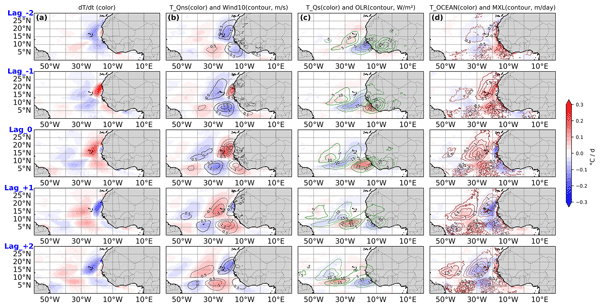
The North Tropical Atlantic plays an important role in shaping climate in the region. In our study we examined how African Easterly Waves influence the ocean surface. Using numerical modelling and buoy records, we found that these waves can warm or cool the sea by more than half a degree. The faster waves have the strongest impact. Because sea temperature affects rainfall and storms, understanding these waves can help improve weather and climate forecasts.
Jozef Skákala, Shubha Sathyendranath, Yuri Artioli, Deep S. Banerjee, Heather Bouman, Robert J. W. Brewin, Momme Butenschön, Stefano Ciavatta, Stephanie Dutkiewicz, Yanna Fidai, David Ford, Grinson George, Karen Guihou, Bror Jönsson, Marija Bačeković Koloper, Žarko Kovač, Lekshmi Krishnakumary, Gemma Kulk, Charlotte Laufkötter, Gennadi Lessin, Jann Paul Mattern, Angélique Melet, Alexandre Mignot, David Moffat, Fanny Monteiro, Mayra Rodriguez Bennadji, Cécile S. Rousseaux, Ranjini Swaminathan, Osvaldo Ulloa, and Jerry Tjiputra
Ocean Sci., 22, 1457–1481, https://doi.org/10.5194/os-22-1457-2026, https://doi.org/10.5194/os-22-1457-2026, 2026
Short summary
Short summary
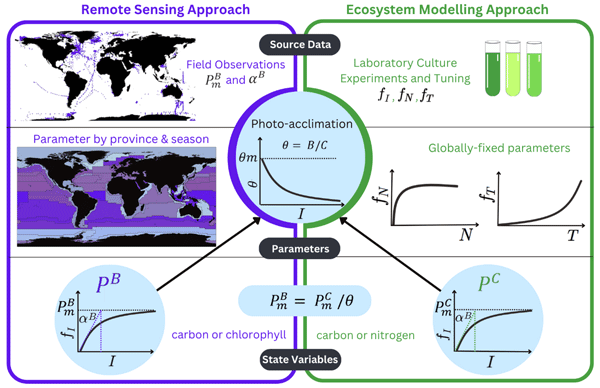
Marine primary production (PP) is a key component of the Earth's climate system, but its current estimates and future projections are highly uncertain. We review the PP uncertainties and discuss their sources both across the ecosystem and satellite models. We propose to reduce the PP uncertainties by better addressing the PP model structures and parametrizations. We also argue that for many models it is desirable to consider spatial and temporal variability in the model parameter values.
Marilaure Grégoire, Gianpiero Cossarini, Corinne Derval, Elodie Gutknecht, Susan Kay, Julien Lamouroux, Helen Morrison, Coralie Perruche, Annette Samuelsen, Lena Spruch, Anna Teruzzi, Luc Vandenbulcke, Karina Von Schuckmann, and Tsuyoshi Wakamatsu
EGUsphere, https://doi.org/10.5194/egusphere-2026-813, https://doi.org/10.5194/egusphere-2026-813, 2026
Short summary
Short summary
We review the advancements in our capabilities to predict the green ocean in the frame of the European Copernicus Marine Service since its start in 2015 and for the five European seas, the Arctic and Global oceans. The evolutions of the prediction systems, delivered products and computing resources requirements are reviewed. Recommendations for future developments are proposed based on a SWOT analysis of current CMEMS green ocean prediction systems and products.
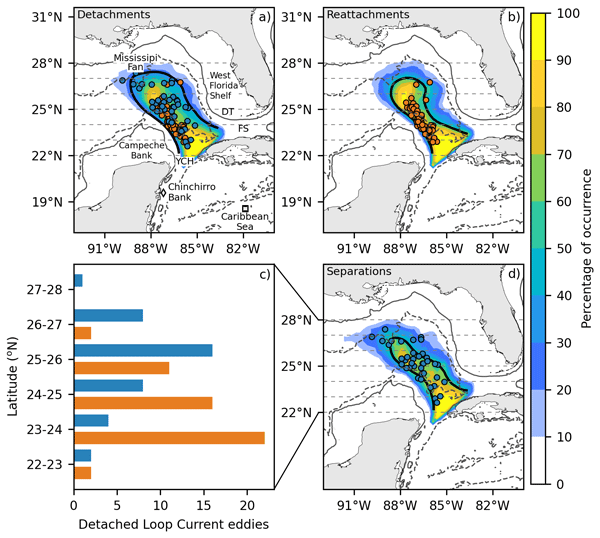
Marco Larrañaga, Julien Jouanno, Eric P. Chassignet, Giovanni Durante, Ilkyeong Ma, Julio Sheinbaum, and Lionel Renault
Ocean Sci., 22, 821–841, https://doi.org/10.5194/os-22-821-2026, https://doi.org/10.5194/os-22-821-2026, 2026
Short summary
Short summary
We analyze 29 years of satellite altimetry to investigate the detachment of Loop Current Eddies in the Gulf of Mexico. Over half of the Loop Current eddies reattach within a month, while 42 % separate and drift westward. Detachment requires the Loop Current to reach the Mississippi Fan and is strongly influenced by cyclonic eddies, whose configuration determines whether an eddy separates or reattaches to the Loop Current.

Ieuan Higgs, Ross Bannister, Jozef Skákala, Alberto Carrassi, and Stefano Ciavatta
Biogeosciences, 23, 315–344, https://doi.org/10.5194/bg-23-315-2026, https://doi.org/10.5194/bg-23-315-2026, 2026
Short summary
Short summary
We explored how machine learning can improve computer models that simulate ocean ecosystems. These models help us understand how the ocean works, but they often struggle due to limited observations and complex processes. Our approach uses machine learning to better connect the parts of the system we can observe with those we cannot. This leads to more accurate and efficient predictions, offering a promising way to improve future ocean monitoring and forecasting tools.
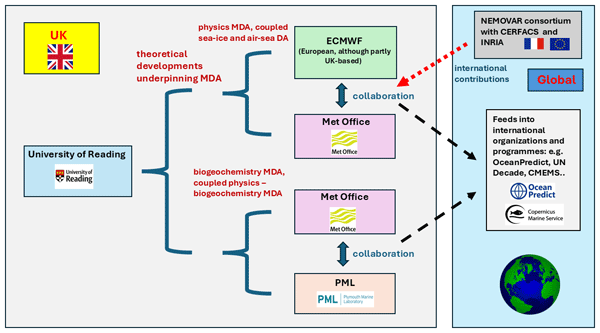
Jozef Skákala, David Ford, Keith Haines, Amos Lawless, Matthew J. Martin, Philip Browne, Marcin Chrust, Stefano Ciavatta, Alison Fowler, Daniel Lea, Matthew Palmer, Andrea Rochner, Jennifer Waters, Hao Zuo, Deep S. Banerjee, Mike Bell, Davi M. Carneiro, Yumeng Chen, Susan Kay, Dale Partridge, Martin Price, Richard Renshaw, Georgy Shapiro, and James While
Ocean Sci., 21, 1709–1734, https://doi.org/10.5194/os-21-1709-2025, https://doi.org/10.5194/os-21-1709-2025, 2025
Short summary
Short summary
UK marine data assimilation (MDA) involves a closely collaborating research community. In this paper, we offer both an overview of the state of the art and a vision for the future across all of the main areas of UK MDA, ranging from physics to biogeochemistry to coupled DA. We discuss the current UK MDA stakeholder applications, highlight theoretical developments needed to advance our systems, and reflect upon upcoming opportunities with respect to hardware and observational missions.
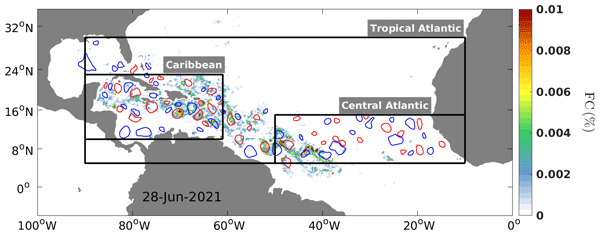
Rosmery Sosa-Gutierrez, Julien Jouanno, and Leo Berline
Ocean Sci., 21, 1505–1514, https://doi.org/10.5194/os-21-1505-2025, https://doi.org/10.5194/os-21-1505-2025, 2025
Short summary
Short summary
Since 2010, pelagic Sargassum spp. blooms have increased in several tropical Atlantic regions, causing socioeconomic and ecosystem impacts. Offshore structuration of Sargassum by mesoscale dynamics may influence transport and growth. Sargassum stays afloat, constantly interacting with currents, waves, winds, and mesoscale eddies. We find that anticyclones and cyclones effectively trap Sargassum throughout its propagation, with a greater tendency for cyclones to accumulate Sargassum.

Gianpiero Cossarini, Andrew Moore, Stefano Ciavatta, and Katja Fennel
State Planet, 5-opsr, 12, https://doi.org/10.5194/sp-5-opsr-12-2025, https://doi.org/10.5194/sp-5-opsr-12-2025, 2025
Short summary
Short summary
Marine biogeochemistry refers to the cycling of chemical elements resulting from physical transport, chemical reaction, uptake, and processing by living organisms. Biogeochemical models can have a wide range of complexity, from a single nutrient to fully explicit representations of multiple nutrients, trophic levels, and functional groups. Uncertainty sources are the lack of knowledge about the parameterizations, the initial and boundary conditions, and the lack of observations.
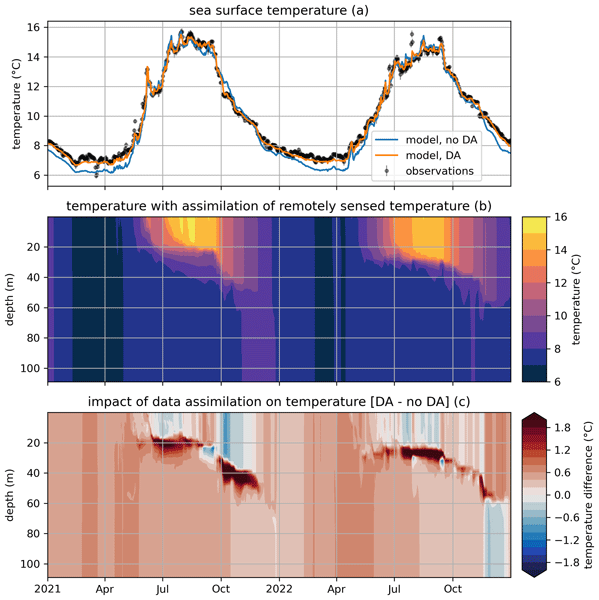
Jorn Bruggeman, Karsten Bolding, Lars Nerger, Anna Teruzzi, Simone Spada, Jozef Skákala, and Stefano Ciavatta
Geosci. Model Dev., 17, 5619–5639, https://doi.org/10.5194/gmd-17-5619-2024, https://doi.org/10.5194/gmd-17-5619-2024, 2024
Short summary
Short summary
To understand and predict the ocean’s capacity for carbon sequestration, its ability to supply food, and its response to climate change, we need the best possible estimate of its physical and biogeochemical properties. This is obtained through data assimilation which blends numerical models and observations. We present the Ensemble and Assimilation Tool (EAT), a flexible and efficient test bed that allows any scientist to explore and further develop the state of the art in data assimilation.
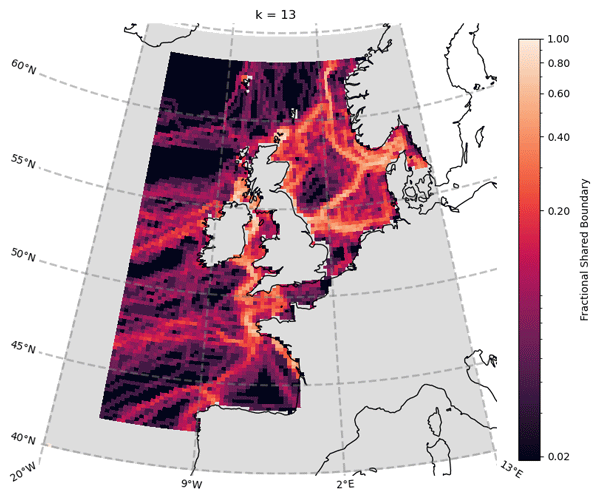
Ieuan Higgs, Jozef Skákala, Ross Bannister, Alberto Carrassi, and Stefano Ciavatta
Biogeosciences, 21, 731–746, https://doi.org/10.5194/bg-21-731-2024, https://doi.org/10.5194/bg-21-731-2024, 2024
Short summary
Short summary
A complex network is a way of representing which parts of a system are connected to other parts. We have constructed a complex network based on an ecosystem–ocean model. From this, we can identify patterns in the structure and areas of similar behaviour. This can help to understand how natural, or human-made, changes will affect the shelf sea ecosystem, and it can be used in multiple future applications such as improving modelling, data assimilation, or machine learning.
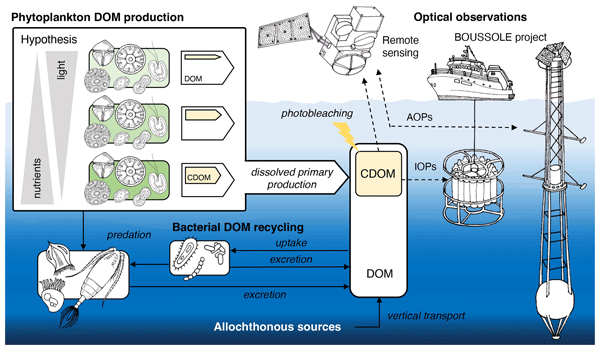
Eva Álvarez, Gianpiero Cossarini, Anna Teruzzi, Jorn Bruggeman, Karsten Bolding, Stefano Ciavatta, Vincenzo Vellucci, Fabrizio D'Ortenzio, David Antoine, and Paolo Lazzari
Biogeosciences, 20, 4591–4624, https://doi.org/10.5194/bg-20-4591-2023, https://doi.org/10.5194/bg-20-4591-2023, 2023
Short summary
Short summary
Chromophoric dissolved organic matter (CDOM) interacts with the ambient light and gives the waters of the Mediterranean Sea their colour. We propose a novel parameterization of the CDOM cycle, whose parameter values have been optimized by using the data of the monitoring site BOUSSOLE. Nutrient and light limitations for locally produced CDOM caused aCDOM(λ) to covary with chlorophyll, while the above-average CDOM concentrations observed at this site were maintained by allochthonous sources.
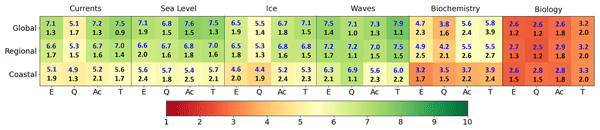
Stefania A. Ciliberti, Enrique Alvarez Fanjul, Jay Pearlman, Kirsten Wilmer-Becker, Pierre Bahurel, Fabrice Ardhuin, Alain Arnaud, Mike Bell, Segolene Berthou, Laurent Bertino, Arthur Capet, Eric Chassignet, Stefano Ciavatta, Mauro Cirano, Emanuela Clementi, Gianpiero Cossarini, Gianpaolo Coro, Stuart Corney, Fraser Davidson, Marie Drevillon, Yann Drillet, Renaud Dussurget, Ghada El Serafy, Katja Fennel, Marcos Garcia Sotillo, Patrick Heimbach, Fabrice Hernandez, Patrick Hogan, Ibrahim Hoteit, Sudheer Joseph, Simon Josey, Pierre-Yves Le Traon, Simone Libralato, Marco Mancini, Pascal Matte, Angelique Melet, Yasumasa Miyazawa, Andrew M. Moore, Antonio Novellino, Andrew Porter, Heather Regan, Laia Romero, Andreas Schiller, John Siddorn, Joanna Staneva, Cecile Thomas-Courcoux, Marina Tonani, Jose Maria Garcia-Valdecasas, Jennifer Veitch, Karina von Schuckmann, Liying Wan, John Wilkin, and Romane Zufic
State Planet, 1-osr7, 2, https://doi.org/10.5194/sp-1-osr7-2-2023, https://doi.org/10.5194/sp-1-osr7-2-2023, 2023
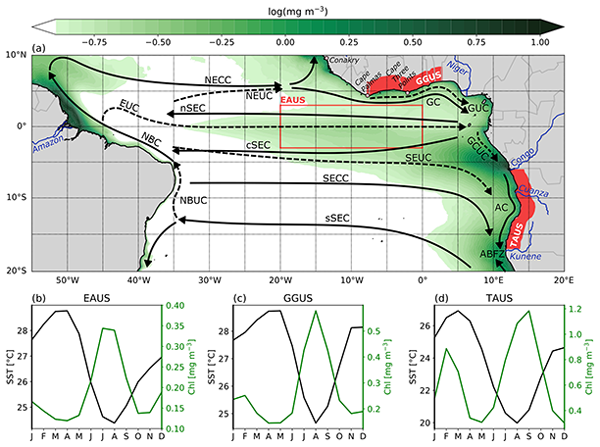
Peter Brandt, Gaël Alory, Founi Mesmin Awo, Marcus Dengler, Sandrine Djakouré, Rodrigue Anicet Imbol Koungue, Julien Jouanno, Mareike Körner, Marisa Roch, and Mathieu Rouault
Ocean Sci., 19, 581–601, https://doi.org/10.5194/os-19-581-2023, https://doi.org/10.5194/os-19-581-2023, 2023
Short summary
Short summary
Tropical upwelling systems are among the most productive ecosystems globally. The tropical Atlantic upwelling undergoes a strong seasonal cycle that is forced by the wind. Local wind-driven upwelling and remote effects, particularly via the propagation of equatorial and coastal trapped waves, lead to an upward and downward movement of the nitracline. Turbulent mixing results in upward supply of nutrients. Here, we review the different physical processes responsible for biological productivity.
Roy Dorgeless Ngakala, Gaël Alory, Casimir Yélognissè Da-Allada, Olivia Estelle Kom, Julien Jouanno, Willi Rath, and Ezinvi Baloïtcha
Ocean Sci., 19, 535–558, https://doi.org/10.5194/os-19-535-2023, https://doi.org/10.5194/os-19-535-2023, 2023
Short summary
Short summary
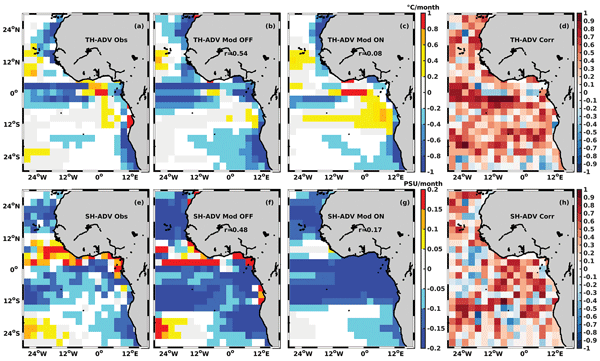
Surface heat flux is the main driver of the heat budget in the Senegal, Angola, and Benguela regions but not in the equatorial region. In the Senegal and Benguela regions, freshwater flux governs the salt budget, while in equatorial and Angola regions, oceanic processes are the main drivers. Results from numerical simulation show the important role of mesoscale advection for temperature and salinity variations in the mixed layer. Nonlinear processes unresolved by observations play a key role.
Alexandre Mignot, Hervé Claustre, Gianpiero Cossarini, Fabrizio D'Ortenzio, Elodie Gutknecht, Julien Lamouroux, Paolo Lazzari, Coralie Perruche, Stefano Salon, Raphaëlle Sauzède, Vincent Taillandier, and Anna Teruzzi
Biogeosciences, 20, 1405–1422, https://doi.org/10.5194/bg-20-1405-2023, https://doi.org/10.5194/bg-20-1405-2023, 2023
Short summary
Short summary
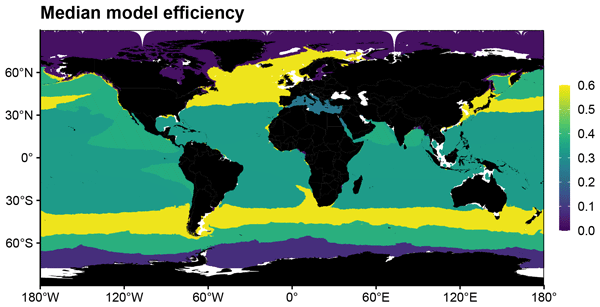
Numerical models of ocean biogeochemistry are becoming a major tool to detect and predict the impact of climate change on marine resources and monitor ocean health. Here, we demonstrate the use of the global array of BGC-Argo floats for the assessment of biogeochemical models. We first detail the handling of the BGC-Argo data set for model assessment purposes. We then present 23 assessment metrics to quantify the consistency of BGC model simulations with respect to BGC-Argo data.
Sarah Berthet, Julien Jouanno, Roland Séférian, Marion Gehlen, and William Llovel
Earth Syst. Dynam., 14, 399–412, https://doi.org/10.5194/esd-14-399-2023, https://doi.org/10.5194/esd-14-399-2023, 2023
Short summary
Short summary
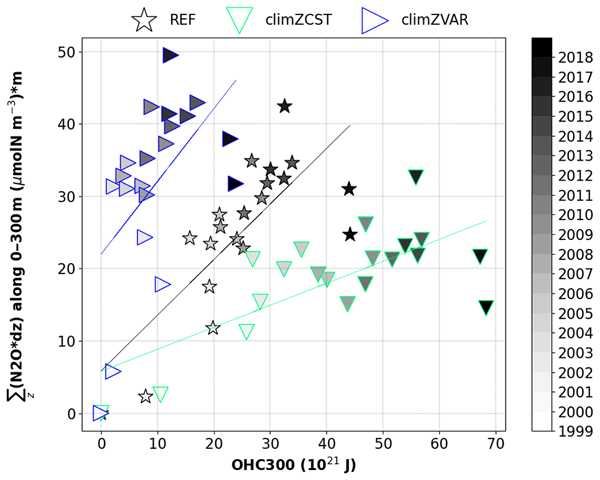
Phytoplankton absorbs the solar radiation entering the ocean surface and contributes to keeping the associated energy in surface waters. This natural effect is either not represented in the ocean component of climate models or its representation is simplified. An incomplete representation of this biophysical interaction affects the way climate models simulate ocean warming, which leads to uncertainties in projections of oceanic emissions of an important greenhouse gas (nitrous oxide).
Michel Tchilibou, Ariane Koch-Larrouy, Simon Barbot, Florent Lyard, Yves Morel, Julien Jouanno, and Rosemary Morrow
Ocean Sci., 18, 1591–1618, https://doi.org/10.5194/os-18-1591-2022, https://doi.org/10.5194/os-18-1591-2022, 2022
Short summary
Short summary
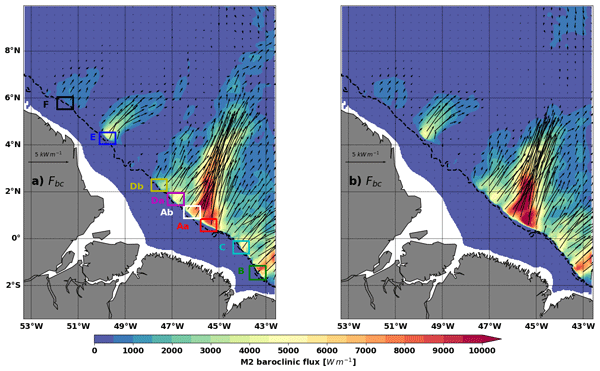
This high-resolution model-based study investigates the variability in the generation, propagation, and sea height signature (SSH) of the internal tide off the Amazon shelf during two contrasted seasons. ITs propagate further north during the season characterized by weak currents and mesoscale eddies and a shallow and strong pycnocline. IT imprints on SSH dominate those of the geostrophic motion for horizontal scales below 200 km; moreover, the SSH is mainly incoherent below 70 km.
Cited articles
Achterberg, E. P.: Grand challenges in marine biogeochemistry, Front. Marine Sci., 1, https://doi.org/10.3389/fmars.2014.00007, 2014. a, b, c
Agrawal, S., Barrington, L., Bromberg, C., Burge, J., Gazen, C., and Hickey, J.: Machine Learning for Precipitation Nowcasting from Radar Images, arXiv [preprint], https://doi.org/10.48550/arXiv.1912.12132, 2019. a
Aumont, O., Ethé, C., Tagliabue, A., Bopp, L., and Gehlen, M.: PISCES-v2: an ocean biogeochemical model for carbon and ecosystem studies, Geosci. Model Dev., 8, 2465–2513, https://doi.org/10.5194/gmd-8-2465-2015, 2015. a, b
Barone, B., Coenen, A., Beckett, S., McGillicuddy, D., Weitz, J., and Karl, D.: The ecological and biogeochemical state of the North Pacifi c Subtropical Gyre is linked to sea surface height, J. Mar. Res., 77, 215–245, 2019. a
Berardi, D.: 21st-century biogeochemical modeling: Challenges for Century-based models and where do we go from here?, GCB Bioenergy, 12, 774–788, https://doi.org/10.1111/gcbb.12730, 2020. a, b
Bopp, L., Resplandy, L., Orr, J. C., Doney, S. C., Dunne, J. P., Gehlen, M., Halloran, P., Heinze, C., Ilyina, T., Séférian, R., Tjiputra, J., and Vichi, M.: Multiple stressors of ocean ecosystems in the 21st century: projections with CMIP5 models, Biogeosciences, 10, 6225–6245, https://doi.org/10.5194/bg-10-6225-2013, 2013. a, b
Browning, T. J. and Moore, C. M.: Global analysis of ocean phytoplankton nutrient limitation reveals high prevalence of co-limitation, Nat. Commun., 14, 5014, https://doi.org/10.1038/s41467-023-40774-0, 2023. a
Cao, Z., Ma, R., Duan, H., Pahlevan, N., Melack, J., Shen, M., and Xue, K.: A machine learning approach to estimate chlorophyll a from Landsat-8 measurements in inland lakes, Remote Sens. Environ., 248, 111974, https://doi.org/10.1016/j.rse.2020.111974, 2020. a
Chen, C., Chen, Q., Yao, S., He, M., Zhang, J., Li, G., and Lin, Y.: Combining physical-based model and machine learning to forecast chlorophyll a concentration in freshwater lakes, Sci. Total Environ., 907, 168097, https://doi.org/10.1016/j.scitotenv.2023.168097, 2024. a, b, c
Chenillat, F., Illig, S., Jouanno, J., Awo, F. M., Alory, G., and Brehmer, P.: How do Climate Modes Shape the Chlorophyll a Interannual Variability in the Tropical Atlantic?, Geophys. Res. Lett., 48, e2021GL093769, https://doi.org/10.1029/2021GL093769, 2021. a
Copernicus Climate Change Service, Climate Data Store: Seasonal forecast monthly averages of ocean variables, https://doi.org/10.24381/cds.2f9be611, 2018a. a
Copernicus Climate Change Service, Climate Data Store: Seasonal forecast monthly statistics on single levels, https://doi.org/10.24381/cds.68dd14c3, 2018b. a
Copernicus Climate Change Service: Seasonal monthly ocean data, Copernicus Climate Data Store [data set], https://doi.org/10.24381/cds.2f9be611, 2023. a
Copernicus Marine Environment Monitoring Service: Ocean Colour (GlobColour) L4 (OCEANCOLOUR_GLO_BGC_L4_MY_009_104), Copernicus Marine Service [data set], https://doi.org/10.48670/moi-00281, 2023. a
Copernicus Marine Environment Monitoring Service: Global Ocean Physics Reanalysis (GLOBAL_MULTIYEAR_PHY_001_030), Copernicus Marine Service [data set], https://doi.org/10.48670/moi-00021, 2024a. a
Copernicus Marine Environment Monitoring Service: Global Ocean Biogeochemistry Analysis and Forecast (GLOBAL_ANALYSISFORECAST_BGC_001_028), Copernicus Marine Service [data set], https://doi.org/10.48670/moi-00015, 2024b. a
Copernicus Marine Service, Marine Data Store: Global Ocean Biogeochemistry Analysis and Forecast, https://doi.org/10.48670/moi-00015, 2023. a
Copernicus Marine Service, Marine Data Store: Global Ocean Physics Reanalysis (GLORYS12), https://doi.org/10.48670/moi-00021, 2024. a
Dugas, C., Bengio, Y., Bélisle, F., Nadeau, C., and Garcia, R.: Incorporating Second-Order Functional Knowledge for Better Option Pricing, https://dl.acm.org/doi/10.5555/3008751.3008817 (last access: 17 March 2025), 2000. a
Fennel, K., Mattern, J. P., Doney, S. C., Bopp, L., Moore, A. M., Wang, B., and Yu, L.: Ocean biogeochemical modelling, Nature Reviews Methods Primers, 2, 1–21, https://doi.org/10.1038/s43586-022-00154-2, 2022. a, b
Fernandez-Gonzalez, C., Tarran, G. A., Schuback, N., Woodward, E. M. S., Aristegui, J., and Maranon, E.: Phytoplankton responses to changing temperature and nutrient availability are consistent across the tropical and subtropical Atlantic, Communications Biology, 5, 1035, https://doi.org/10.1038/s42003-022-03971-z, 2022. a
Frölicher, T. L., Ramseyer, L., Raible, C. C., Rodgers, K. B., and Dunne, J.: Potential predictability of marine ecosystem drivers, Biogeosciences, 17, 2061–2083, https://doi.org/10.5194/bg-17-2061-2020, 2020. a
Garnesson, P., Mangin, A., Fanton d'Andon, O., Demaria, J., and Bretagnon, M.: The CMEMS GlobColour chlorophyll a product based on satellite observation: multi-sensor merging and flagging strategies, Ocean Sci., 15, 819–830, https://doi.org/10.5194/os-15-819-2019, 2019. a, b
Gehlen, M., Barciela, R., Bertino, L., Brasseur, P., Butenschön, M., Chai, F., Crise, A., Drillet, Y., Ford, D., Lavoie, D., Lehodey, P., Perruche, C., Samuelsen, A., and Simon, E.: Building the capacity for forecasting marine biogeochemistry and ecosystems: recent advances and future developments, J. Oper. Oceanogr., 8, s168–s187, https://doi.org/10.1080/1755876X.2015.1022350, 2015. a, b
Groom, S., Sathyendranath, S., Ban, Y., Bernard, S., Brewin, R., Brotas, V., Brockmann, C., Chauhan, P., Choi, J.-k., Chuprin, A., Ciavatta, S., Cipollini, P., Donlon, C., Franz, B., He, X., Hirata, T., Jackson, T., Kampel, M., Krasemann, H., Lavender, S., Pardo-Martinez, S., Mélin, F., Platt, T., Santoleri, R., Skakala, J., Schaeffer, B., Smith, M., Steinmetz, F., Valente, A., and Wang, M.: Satellite Ocean Colour: Current Status and Future Perspective, Front. Marine Sci., 6, https://doi.org/10.3389/fmars.2019.00485, 2019. a
Ham, Y.-G., Joo, Y.-S., and Park, J.-Y.: Mechanism of skillful seasonal surface chlorophyll prediction over the southern Pacific using a global earth system model, Clim. Dynam., 56, 45–64, https://doi.org/10.1007/s00382-020-05403-2, 2021. a
Hu, C., Feng, L., and Guan, Q.: A Machine Learning Approach to Estimate Surface Chlorophyll a Concentrations in Global Oceans From Satellite Measurements, IEEE T. Geosci. Remote, 59, 4590–4607, https://doi.org/10.1109/TGRS.2020.3016473, 2021. a
Johnson, S. J., Stockdale, T. N., Ferranti, L., Balmaseda, M. A., Molteni, F., Magnusson, L., Tietsche, S., Decremer, D., Weisheimer, A., Balsamo, G., Keeley, S. P. E., Mogensen, K., Zuo, H., and Monge-Sanz, B. M.: SEAS5: the new ECMWF seasonal forecast system, Geosci. Model Dev., 12, 1087–1117, https://doi.org/10.5194/gmd-12-1087-2019, 2019. a, b
Keiner, L. E.: Estimating oceanic chlorophyll concentrations with neural networks, Int. J. Remote Sens., 20, 189–194, https://doi.org/10.1080/014311699213695, 1999. a
Kingma, D. P. and Ba, J.: Adam: A Method for Stochastic Optimization, arXiv [preprint], https://doi.org/10.48550/arXiv.1412.6980, 2017. a
Kolluru, S. and Tiwari, S. P.: Modeling ocean surface chlorophyll a concentration from ocean color remote sensing reflectance in global waters using machine learning, Sci. Total Environ., 844, 157191, https://doi.org/10.1016/j.scitotenv.2022.157191, 2022. a
Lamouroux, J., Perruche, C., Mignot, A., Paul, J., Szczypta, C., and Gutknecht, E.: Global Ocean Biogeochemistry Analysis and Forecast, Quality Information Document, https://doi.org/10.48670/moi-00015, 2023. a
Lamouroux, J., Perruche, C., Mignot, A., Paul, J., and Szczypta, C.: Global Production Center GLOBAL_ANALYSISFORECAST_BGC_001_028 Quality Information Document, Copernicus Marine Service, https://doi.org/10.48670/moi-00015, 2024. a
Lellouche, J.-M., Greiner, E., Bourdallé-Badie, R., Garric, G., Melet, A., Drévillon, M., Bricaud, C., Hamon, M., Le Galloudec, O., Regnier, C., Candela, T., Testut, C.-E., Gasparin, F., Ruggiero, G., Benkiran, M., Drillet, Y., and Le Traon, P.-Y.: The Copernicus Global
Lin, J., Miller, P. I., Jönsson, B. F., and Bedington, M.: Early Warning of Harmful Algal Bloom Risk Using Satellite Ocean Color and Lagrangian Particle Trajectories, Front. Marine Sci., 8, https://doi.org/10.3389/fmars.2021.736262, 2021. a
Ly, Q. V., Nguyen, X. C., Lê, N. C., Truong, T.-D., Hoang, T.-H. T., Park, T. J., Maqbool, T., Pyo, J., Cho, K. H., Lee, K.-S., and Hur, J.: Application of Machine Learning for eutrophication analysis and algal bloom prediction in an urban river: A 10 year study of the Han River, South Korea, Sci. Total Environ., 797, 149040, https://doi.org/10.1016/j.scitotenv.2021.149040, 2021. a
Maritorena, S., d'Andon, O. H. F., Mangin, A., and Siegel, D. A.: Merged satellite ocean color data products using a bio-optical model: Characteristics, benefits and issues, Remote Sens. Environ., 114, 1791–1804, https://doi.org/10.1016/j.rse.2010.04.002, 2010. a
Martinez, E., Gorgues, T., Lengaigne, M., Fontana, C., Sauzède, R., Menkes, C., Uitz, J., Di Lorenzo, E., and Fablet, R.: Reconstructing Global Chlorophyll a Variations Using a Non-linear Statistical Approach, Front. Marine Sci., 7, https://doi.org/10.3389/fmars.2020.00464, 2020. a, b, c
Orr, J. C., Fabry, V. J., Aumont, O., Bopp, L., Doney, S. C., Feely, R. A., Gnanadesikan, A., Gruber, N., Ishida, A., Joos, F., Key, R. M., Lindsay, K., Maier-Reimer, E., Matear, R., Monfray, P., Mouchet, A., Najjar, R. G., Plattner, G.-K., Rodgers, K. B., Sabine, C. L., Sarmiento, J. L., Schlitzer, R., Slater, R. D., Totterdell, I. J., Weirig, M.-F., Yamanaka, Y., and Yool, A.: Anthropogenic ocean acidification over the twenty-first century and its impact on calcifying organisms, Nature, 437, 681–686, https://doi.org/10.1038/nature04095, 2005. a
Palacios, D. M., Hazen, E. L., Schroeder, I. D., and Bograd, S. J.: Modeling the temperature-nitrate relationship in the coastal upwelling domain of the California Current, J. Geophys. Res.-Oceans, 118, 3223–3239, https://doi.org/10.1002/jgrc.20216, 2013. a
Park, J., Kim, J.-H., Kim, H.-c., Kim, B.-K., Bae, D., Jo, Y.-H., Jo, N., and Lee, S. H.: Reconstruction of Ocean Color Data Using Machine Learning Techniques in Polar Regions: Focusing on Off Cape Hallett, Ross Sea, Remote Sens.-Basel, 11, 1366, https://doi.org/10.3390/rs11111366, 2019a. a
Park, Y., Cho, K. H., Park, J., Cha, S. M., and Kim, J. H.: Development of early-warning protocol for predicting chlorophyll a concentration using machine learning models in freshwater and estuarine reservoirs, Korea, Sci. Total Environ., 502, 31–41, https://doi.org/10.1016/j.scitotenv.2014.09.005, 2015. a
Polovina, J. J., Dunne, J. P., Woodworth, P. A., and Howell, E. A.: Projected expansion of the subtropical biome and contraction of the temperate and equatorial upwelling biomes in the North Pacific under global warming, ICES J. Mar. Sci., 68, 986–995, https://doi.org/10.1093/icesjms/fsq198, 2011. a
Ronneberger, O., Fischer, P., and Brox, T.: U-Net: Convolutional Networks for Biomedical Image Segmentation, arXiv [preprint], https://doi.org/10.48550/arXiv.1505.04597, 2015. a
Rousseaux, C. S., Gregg, W. W., and Ott, L.: Assessing the Skills of a Seasonal Forecast of Chlorophyll in the Global Pelagic Oceans, Remote Sens.-Basel, 13, 1051, https://doi.org/10.3390/rs13061051, 2021. a, b, c
Roussillon, J., Fablet, R., Gorgues, T., Drumetz, L., Littaye, J., and Martinez, E.: A Multi-Mode Convolutional Neural Network to reconstruct satellite-derived chlorophyll a time series in the global ocean from physical drivers, Front. Marine Sci., 10, https://doi.org/10.3389/fmars.2023.1077623, 2023. a, b, c
Sadaiappan, B., Balakrishnan, P., C. R., V., Vijayan, N. T., Subramanian, M., and Gauns, M. U.: Applications of Machine Learning in Chemical and Biological Oceanography, ACS Omega, 8, 15831–15853, https://doi.org/10.1021/acsomega.2c06441, 2023. a
Sauzède, R., Bittig, H. C., Claustre, H., Pasqueron de Fommervault, O., Gattuso, J.-P., Legendre, L., and Johnson, K. S.: Estimates of Water-Column Nutrient Concentrations and Carbonate System Parameters in the Global Ocean: A Novel Approach Based on Neural Networks, Front. Marine Sci., 4, https://doi.org/10.3389/fmars.2017.00128, 2017. a, b
Schneider, B., Bopp, L., Gehlen, M., Segschneider, J., Frölicher, T. L., Cadule, P., Friedlingstein, P., Doney, S. C., Behrenfeld, M. J., and Joos, F.: Climate-induced interannual variability of marine primary and export production in three global coupled climate carbon cycle models, Biogeosciences, 5, 597–614, https://doi.org/10.5194/bg-5-597-2008, 2008. a
Séférian, R., Bopp, L., Gehlen, M., Swingedouw, D., Mignot, J., Guilyardi, E., and Servonnat, J.: Multiyear predictability of tropical marine productivity, P. Natl. Acad. Sci. USA, 111, 11646–11651, https://doi.org/10.1073/pnas.1315855111, 2014. a
Sønderby, C. K., Espeholt, L., Heek, J., Dehghani, M., Oliver, A., Salimans, T., Agrawal, S., Hickey, J., and Kalchbrenner, N.: MetNet: A Neural Weather Model for Precipitation Forecasting, arXiv [preprint], https://doi.org/10.48550/arXiv.2003.12140, 2020. a
Tran, D., Bourdev, L., Fergus, R., Torresani, L., and Paluri, M.: Learning Spatiotemporal Features with 3D Convolutional Networks, in: 2015 IEEE International Conference on Computer Vision (ICCV), IEEE, Santiago, Chile, 4489–4497, https://doi.org/10.1109/ICCV.2015.510, 2015. a
Uz, B. M., Yoder, J. A., and Osychny, V.: Pumping of nutrients to ocean surface waters by the action of propagating planetary waves, Nature, 409, 597–600, https://doi.org/10.1038/35054527, 2001. a
Wang, H., Zhu, R., Zhang, J., Ni, L., Shen, H., and Xie, P.: A Novel and Convenient Method for Early Warning of Algal Cell Density by Chlorophyll Fluorescence Parameters and Its Application in a Highland Lake, Front. Plant Sci., 9, https://doi.org/10.3389/fpls.2018.00869, 2018. a
Wenxiang, D., Caiyun, Z., Shaoping, S., and Xueding, L.: Optimization of deep learning model for coastal chlorophyll a dynamic forecast, Ecol. Model., 467, 109913, https://doi.org/10.1016/j.ecolmodel.2022.109913, 2022. a
Weyn, J. A., Durran, D. R., and Caruana, R.: Can Machines Learn to Predict Weather? Using Deep Learning to Predict Gridded 500-hPa Geopotential Height From Historical Weather Data, J. Adv. Model. Earth Sy., 11, 2680–2693, https://doi.org/10.1029/2019MS001705, 2019. a
Weyn, J. A., Durran, D. R., Caruana, R., and Cresswell-Clay, N.: Sub-Seasonal Forecasting With a Large Ensemble of Deep-Learning Weather Prediction Models, J. Adv. Model. Earth Sy., 13, e2021MS002502, https://doi.org/10.1029/2021MS002502, 2021. a
Xu, D., Wang, T., Xing, X., and Bian, C.: The Relationship Between Nitrate and Potential Density in the Ocean South of 30° S, J. Geophys. Res.-Oceans, 127, e2022JC018948, https://doi.org/10.1029/2022JC018948, 2022. a
Ying, C., Xiao, L., Xueliang, Z., Wenyang, S., and Chongxuan, X.: Marine chlorophyll a prediction based on deep auto-encoded temporal convolutional network model, Ocean Model., 186, 102263, https://doi.org/10.1016/j.ocemod.2023.102263, 2023. a
Zhu, X., Guo, H., Huang, J. J., Tian, S., and Zhang, Z.: A hybrid decomposition and Machine learning model for forecasting Chlorophyll a and total nitrogen concentration in coastal waters, J. Hydrol., 619, 129207, https://doi.org/10.1016/j.jhydrol.2023.129207, 2023. a
Short summary
This study uses machine learning to predict global sea surface chlorophyll a, which is important for monitoring marine ecosystems and the carbon cycle. Using forecasts of sea surface temperature, salinity, height, and mixed layer depth, we generate global predictions up to six months ahead in just minutes. Our approach matches state-of-the-art numerical methods while being faster and more resource-efficient.
This study uses machine learning to predict global sea surface chlorophyll a, which is important...


Altmetrics
Final-revised paper
Preprint