
Articles | Volume 23, issue 1
https://doi.org/10.5194/bg-23-283-2026
© Author(s) 2026. This work is distributed under
the Creative Commons Attribution 4.0 License.
the Creative Commons Attribution 4.0 License.
https://doi.org/10.5194/bg-23-283-2026
© Author(s) 2026. This work is distributed under
the Creative Commons Attribution 4.0 License.
the Creative Commons Attribution 4.0 License.
Research article
| 
09 Jan 2026
Research article |
| 09 Jan 2026
| 09 Jan 2026
A comprehensive porewater isotope model for simulating benthic nitrogen cycling: description, application to lake sediments, and uncertainty analysis
Alessandra Mazzoli
CORRESPONDING AUTHOR

Department of Environmental Sciences, University of Basel, Basel, 4056, Switzerland
Peter Reichert
Eawag, Swiss Federal Institute of Aquatic Science and Technology, Dübendorf, 8600, Switzerland
retired
Claudia Frey
Department of Environmental Sciences, University of Basel, Basel, 4056, Switzerland
Cameron M. Callbeck
Department of Environmental Sciences, University of Basel, Basel, 4056, Switzerland
Tim J. Paulus
Department of Environmental Sciences, University of Basel, Basel, 4056, Switzerland
Jakob Zopfi
Department of Environmental Sciences, University of Basel, Basel, 4056, Switzerland
Moritz F. Lehmann
Department of Environmental Sciences, University of Basel, Basel, 4056, Switzerland
Related authors
No articles found.
Noémy Chénier, Paul M. Magyar, Jakob Zopfi, Claudia Frey, Thomas Kuhn, Moritz F. Lehmann, and Joachim Mohn
Biogeosciences, 23, 6705–6724, https://doi.org/10.5194/bg-23-6705-2026, https://doi.org/10.5194/bg-23-6705-2026, 2026
Short summary
Short summary
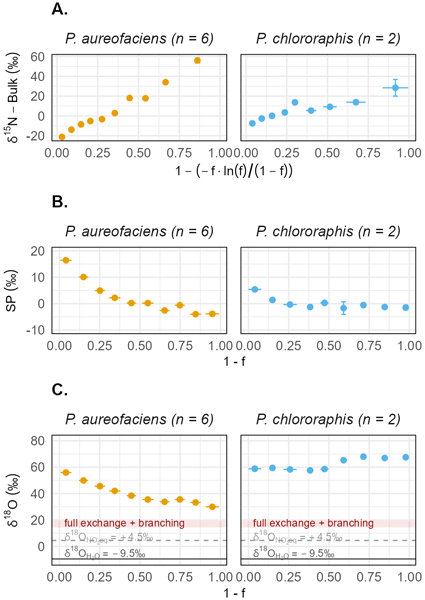
N₂O is a greenhouse gas produced by microbes during nitrogen cycling. We studied two bacterial species and found that the isotope signatures of the N₂O they produced changed strongly depending on growth conditions and cell activity. Early during growth, the distribution of N isotopes within the N₂O molecule also changed unexpectedly. These results show that N₂O isotope signatures are more variable than previously assumed and depend strongly on physiology.
Elizabeth Leon-Palmero, Claudia Frey, Bess B. Ward, Rafael Morales-Baquero, and Isabel Reche
Biogeosciences, 23, 3887–3905, https://doi.org/10.5194/bg-23-3887-2026, https://doi.org/10.5194/bg-23-3887-2026, 2026
Short summary
Short summary
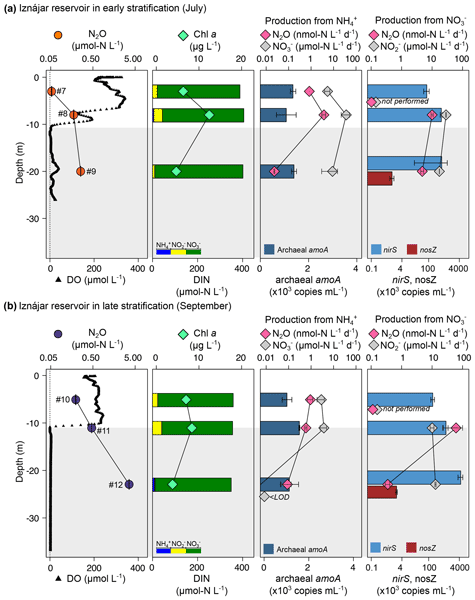
Reservoirs act as nitrogen sinks and emit nitrous oxide, a potent greenhouse gas and major ozone-depleting substance. We studied two reservoirs and found that nitrification and denitrification produce nitrous oxide in the water column, but denitrification is the main source, fueled by fresh organic matter from phytoplankton. Our results also suggest that nitrous oxide is actively consumed. This study highlights the need to include reservoirs in global nitrous oxide budgets.
Pratirupa Bardhan, Claudia Frey, Gregor Rehder, and Hermann W. Bange
Biogeosciences, 23, 1987–2002, https://doi.org/10.5194/bg-23-1987-2026, https://doi.org/10.5194/bg-23-1987-2026, 2026
Short summary
Short summary
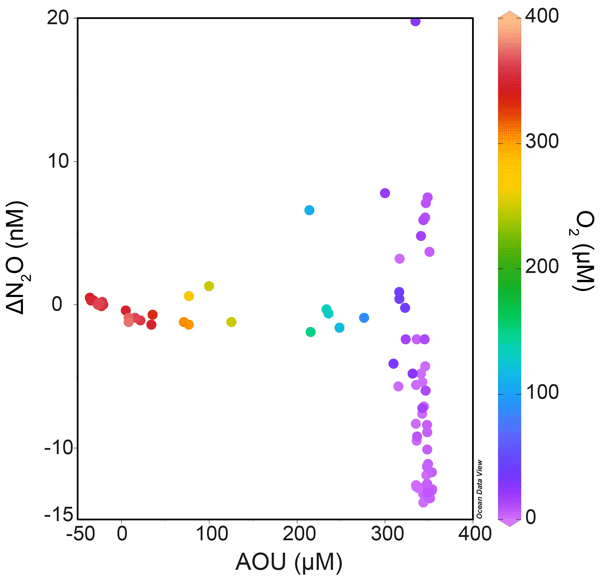
Nitrous oxide (N2O), a potent greenhouse gas, is released from coastal seas & estuaries, yet we don't fully understand how it is formed and consumed. In this study we collected water from several sites in the central Baltic Sea. N2O came from ammonia in oxic waters. Deep waters with low to no oxygen noted more active N2O cycling. The seafloor was a source in some areas. Typically N2O is produced by bacteria, but our results indicate possibility of other players like fungi or chemical reactions.
Carolina F. M. de Carvalho, Moritz F. Lehmann, and Sarah G. Pati
Biogeosciences, 22, 4579–4600, https://doi.org/10.5194/bg-22-4579-2025, https://doi.org/10.5194/bg-22-4579-2025, 2025
Short summary
Short summary
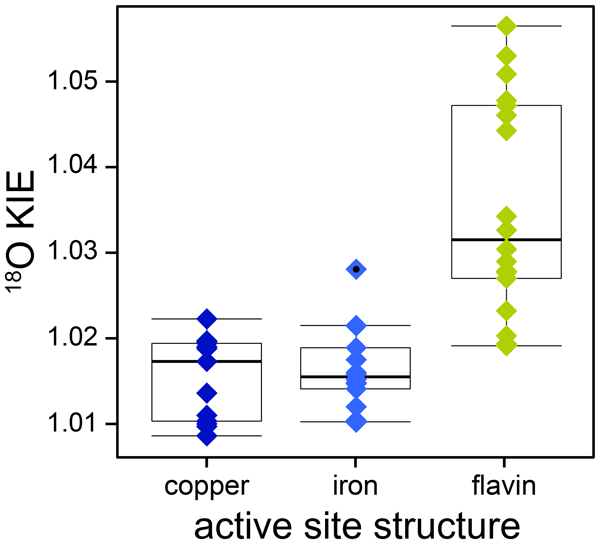
Using O2 stable isotope analysis, we determined the isotopic fractionation of biological O2 consumption by 10 flavin-dependent enzymes and 6 metalloenzymes. Metalloenzymes displayed a narrower range and lower values of isotopic fractionation than flavin-dependent enzymes. This work expands our understanding of the variability of oxygen isotopic fractionation at the enzyme level, improving the ability to study O2 dynamics from molecular to ecosystem scales.
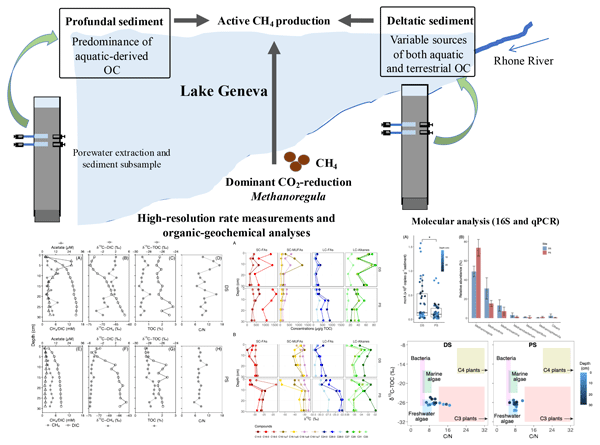
Guangyi Su, Julie Tolu, Clemens Glombitza, Jakob Zopfi, Moritz F. Lehmann, Mark A. Lever, and Carsten J. Schubert
Biogeosciences, 22, 4449–4466, https://doi.org/10.5194/bg-22-4449-2025, https://doi.org/10.5194/bg-22-4449-2025, 2025
Short summary
Short summary
In Lake Geneva, we studied how different types of organic matter affect methane production. Despite varying sources, like algae and land-based materials, both deep and delta areas are significant methane sources, and methane was mainly produced through CO2 reduction. Surprisingly, the origin of organic matter did not strongly influence methane production rates or pathways. Our findings highlight the need to better understand microbial processes to predict methane emissions from lakes.
Colette L. Kelly, Nicole M. Travis, Pascale Anabelle Baya, Claudia Frey, Xin Sun, Bess B. Ward, and Karen L. Casciotti
Biogeosciences, 21, 3215–3238, https://doi.org/10.5194/bg-21-3215-2024, https://doi.org/10.5194/bg-21-3215-2024, 2024
Short summary
Short summary
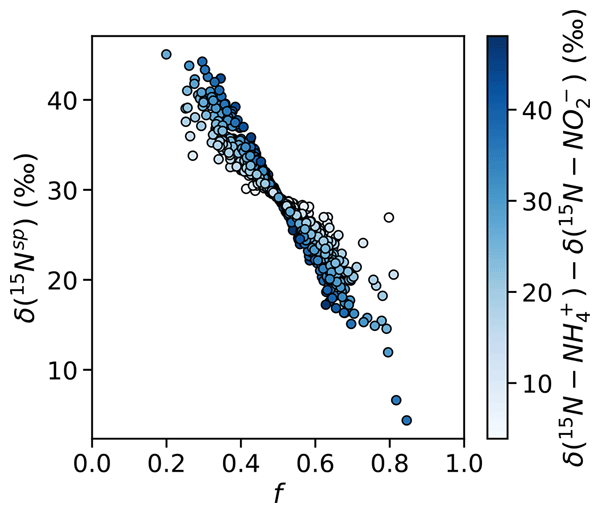
Nitrous oxide, a potent greenhouse gas, accumulates in regions of the ocean that are low in dissolved oxygen. We used a novel combination of chemical tracers to determine how nitrous oxide is produced in one of these regions, the eastern tropical North Pacific Ocean. Our experiments showed that the two most important sources of nitrous oxide under low-oxygen conditions are denitrification, an anaerobic process, and a novel “hybrid” process performed by ammonia-oxidizing archaea.
Peter Reichert, Kai Ma, Marvin Höge, Fabrizio Fenicia, Marco Baity-Jesi, Dapeng Feng, and Chaopeng Shen
Hydrol. Earth Syst. Sci., 28, 2505–2529, https://doi.org/10.5194/hess-28-2505-2024, https://doi.org/10.5194/hess-28-2505-2024, 2024
Short summary
Short summary
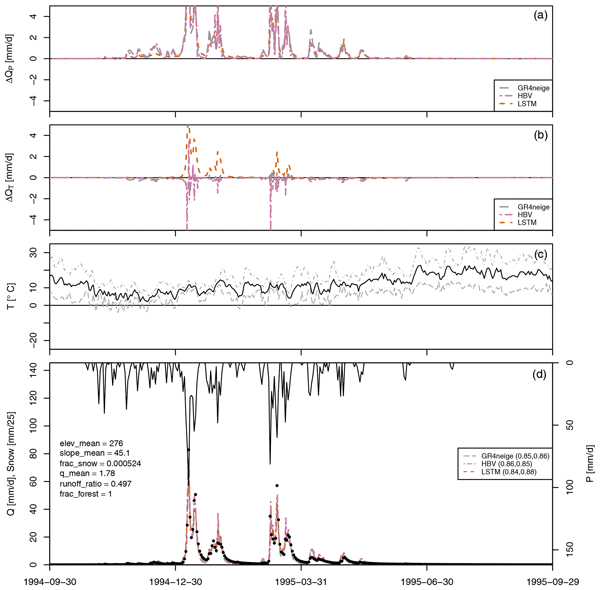
We compared the predicted change in catchment outlet discharge to precipitation and temperature change for conceptual and machine learning hydrological models. We found that machine learning models, despite providing excellent fit and prediction capabilities, can be unreliable regarding the prediction of the effect of temperature change for low-elevation catchments. This indicates the need for caution when applying them for the prediction of the effect of climate change.
Weiyi Tang, Bess B. Ward, Michael Beman, Laura Bristow, Darren Clark, Sarah Fawcett, Claudia Frey, François Fripiat, Gerhard J. Herndl, Mhlangabezi Mdutyana, Fabien Paulot, Xuefeng Peng, Alyson E. Santoro, Takuhei Shiozaki, Eva Sintes, Charles Stock, Xin Sun, Xianhui S. Wan, Min N. Xu, and Yao Zhang
Earth Syst. Sci. Data, 15, 5039–5077, https://doi.org/10.5194/essd-15-5039-2023, https://doi.org/10.5194/essd-15-5039-2023, 2023
Short summary
Short summary
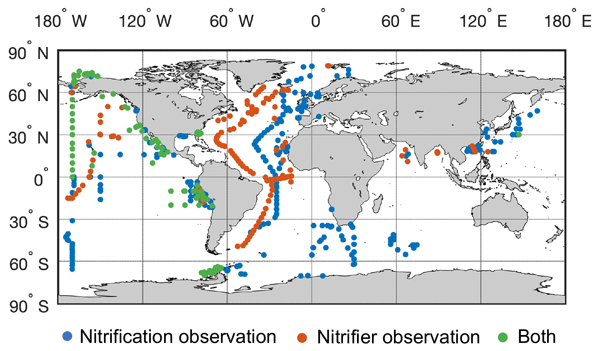
Nitrification and nitrifiers play an important role in marine nitrogen and carbon cycles by converting ammonium to nitrite and nitrate. Nitrification could affect microbial community structure, marine productivity, and the production of nitrous oxide – a powerful greenhouse gas. We introduce the newly constructed database of nitrification and nitrifiers in the marine water column and guide future research efforts in field observations and model development of nitrification.
John C. Tracey, Andrew R. Babbin, Elizabeth Wallace, Xin Sun, Katherine L. DuRussel, Claudia Frey, Donald E. Martocello III, Tyler Tamasi, Sergey Oleynik, and Bess B. Ward
Biogeosciences, 20, 2499–2523, https://doi.org/10.5194/bg-20-2499-2023, https://doi.org/10.5194/bg-20-2499-2023, 2023
Short summary
Short summary
Nitrogen (N) is essential for life; thus, its availability plays a key role in determining marine productivity. Using incubations of seawater spiked with a rare form of N measurable on a mass spectrometer, we quantified microbial pathways that determine marine N availability. The results show that pathways that recycle N have higher rates than those that result in its loss from biomass and present new evidence for anaerobic nitrite oxidation, a process long thought to be strictly aerobic.
Cited articles
Andrieu, C., De Freitas, N., Doucet, A., and Jordan, M. I.: An introduction to MCMC for Machine Learning, Mach. Learn., 50, 5–43, https://doi.org/10.1023/A:1020281327116, 2003.
Baumann, K. B. L., Mazzoli, A., Salazar, G., Ruscheweyh, H.-J., Müller, B., Niederdorfer, R., Sunagawa, S., Lever, M. A., Lehmann, M. F., and Bürgmann, H.: Metagenomic and -transcriptomic analyses of microbial nitrogen transformation potential, and gene expression in Swiss lake sediments, ISME Communications, 4, ycae110, https://doi.org/10.1093/ismeco/ycae110, 2024.
Bender, M., Martin, W., Hess, J., Sayles, R., Ball, L., and Lambert, C.: A whole-core squeezer for interfacial pore-water sampling, Limnol. Oceanogr., 32, 1214–1225, https://doi.org/10.4319/lo.1987.32.6.1214, 1987.
Bernardo, J. M. and Smith, A. F. M.: Bayesian Theory, John Wiley & Sons, New York, https://doi.org/10.1002/9780470316870, 1994.
Betancourt, M.: A conceptual introduction to Hamiltonian Monte Carlo, arXiv: Statistics, Methodology, arXiv [preprint], https://doi.org/10.48550/arXiv.1701.02434, 2017.
Bezanson, J., Edelman, A., Karpinski, S., and Shah, V. B.: Julia: A fresh approach to numerical computing, SIAM Review, 59, 65–98, https://doi.org/10.1137/141000671, 2017.
Brunner, B., Contreras, S., Lehmann, M. F., Matantseva, O., Rollog, M., Kalvelage, T., Klockgether, G., Lavik, G., Jetten, M. S. M., Kartal, B., and Kuypers, M. M. M.: Nitrogen isotope effects induced by anammox bacteria, Proc. Natl. Acad. Sci. USA, 110, 18994–18999, https://doi.org/10.1073/pnas.1310488110, 2013.
Buchwald, C., Homola, K., Spivack, A. J., Estes, E. R., Murray, R. W., and Wankel, S. D.: Isotopic constraints on nitrogen transformation rates in the deep sedimentary marine biosphere, Global Biogeochem. Cycles, 32, 1688–1702, https://doi.org/10.1029/2018GB005948, 2018.
Burdige, D. J.: Chapter 6: Models of sediment diagenesis, in: Geochemistry of Marine Sediments, Princeton, 72–96, https://doi.org/10.1515/9780691216096-008, 2007.
Casciotti, K. L.: Inverse kinetic isotope fractionation during bacterial nitrite oxidation, Geochim. Cosmochim. Acta, 73, 2061–2076, https://doi.org/10.1016/j.gca.2008.12.022, 2009.
Casciotti, K. L., Sigman, D. M., Hastings, M. G., Böhlke, J. K., and Hilkert, A.: Measurement of the oxygen isotopic composition of nitrate in seawater and freshwater using the denitrifier method, Anal. Chem., 74, 4905–4912, https://doi.org/10.1021/ac020113w, 2002.
Crowe, S. A., Treusch, A. H., Forth, M., Li, J., Magen, C., Canfield, D. E., Thamdrup, B., and Katsev, S.: Novel anammox bacteria and nitrogen loss from Lake Superior, Sci. Rep., 7, 13757, https://doi.org/10.1038/s41598-017-12270-1, 2017.
Dale, A. W., Bourbonnais, A., Altabet, M., Wallmann, K., and Sommer, S.: Isotopic fingerprints of benthic nitrogen cycling in the Peruvian oxygen minimum zone, Geochim. Cosmochim. Acta, 245, 406–425, https://doi.org/10.1016/j.gca.2018.10.025, 2019.
Dale, A. W., Clemens, D., Dähnke, K., Korth, F., Wankel, S. D., Schroller-Lomnitz, U., Wallmann, K., and Sommer, S.: Nitrogen cycling in sediments on the NW African margin inferred from N and O isotopes in benthic chambers, Front. Mar. Sci., 9, 902062, https://doi.org/10.3389/fmars.2022.902062, 2022.
Denk, T. R. A., Mohn, J., Decock, C., Lewicka-Szczebak, D., Harris, E., Butterbach-Bahl, K., Kiese, R., and Wolf, B.: The nitrogen cycle: A review of isotope effects and isotope modeling approaches, Soil Biol. Biochem., 105, 121–137, https://doi.org/10.1016/j.soilbio.2016.11.015, 2017.
Drury, C. F., Tel, D. A., and Beauchamp, E. G.: 15N analysis of highly enriched samples of a mass spectrometer, Can. J. Soil Sci., 67, 779–785, https://doi.org/10.4141/cjss87-075, 1987.
Frey, C., Dippner, J. W., and Voss, M.: Close coupling of N-cycling processes expressed in stable isotope data at the redoxcline of the Baltic Sea, Global Biogeochem. Cycles, 28, 974–991, https://doi.org/10.1002/2013GB004642, 2014.
Gelman, A., Carlin, J. B., Stern, H. S., Dunson, D. B., Vehtari, A., and Rubin, D. B.: Bayesian Data Analysis, 2nd edn., Chapman and Hall/CRC, https://doi.org/10.1201/b16018, 2013.
Granger, J. and Wankel, S. D.: Isotopic overprinting of nitrification on denitrification as a ubiquitous and unifying feature of environmental nitrogen cycling, Proc. Natl. Acad. Sci. USA, 113, E6391–E6400, https://doi.org/10.1073/pnas.1601383113, 2016.
Guillaume, J. H. A., Jakeman, J. D., Marsili-Libelli, S., Asher, M., Brunner, P., Croke, B., Hill, M. C., Jakeman, A. J., Keesman, K. J., Razavi, S., and Stigter, J. D.: Introductory overview of identifiability analysis: A guide to evaluating whether you have the right type of data for your modeling purpose, Environmental Modelling and Software, 119, 418–432, https://doi.org/10.1016/j.envsoft.2019.07.007, 2019.
Hines, D. E., Lisa, J. A., Song, B., Tobias, C. R., and Borrett, S. R.: A network model shows the importance of coupled processes in the microbial N cycle in the Cape Fear River Estuary, Estuar. Coast Shelf. Sci., 106, 45–57, https://doi.org/10.1016/j.ecss.2012.04.018, 2012.
Holtappels, M., Lavik, G., Jensen, M. M., and Kuypers, M. M. M.: 15N-labeling experiments to dissect the contributions of heterotrophic denitrification and anammox to nitrogen removal in the OMZ waters of the ocean, Methods in Enzymology, 486, 223–251, https://doi.org/10.1016/B978-0-12-381294-0.00010-9, 2011.
Ibánhez, J. S. P. and Rocha, C.: Kinetics of inorganic nitrogen turnover in a sandy seepage face on a subterranean estuary, Appl. Geochem., 87, 108–121, https://doi.org/10.1016/j.apgeochem.2017.10.015, 2017.
Jensen, M. M., Lam, P., Revsbech, N. P., Nagel, B., Gaye, B., Jetten, M. S., and Kuypers, M. M.: Intensive nitrogen loss over the Omani Shelf due to anammox coupled with dissimilatory nitrite reduction to ammonium, ISME J., 5, 1660–1670, https://doi.org/10.1038/ismej.2011.44, 2011.
Ji, Q., Buitenhuis, E., Suntharalingam, P., Sarmiento, J. L., and Ward, B. B.: Global nitrous oxide production determined by oxygen sensitivity of nitrification and denitrification, Global Biogeochem. Cycles, 32, 1790–1802, https://doi.org/10.1029/2018GB005887, 2018.
Kalvelage, T., Jensen, M. M., Contreras, S., Revsbech, N. P., Lam, P., Günter, M., LaRoche, J., Lavik, G., and Kuypers, M. M. M.: Oxygen sensitivity of anammox and coupled N-cycle processes in oxygen minimum zones, PLoS One, 6, e29299, https://doi.org/10.1371/journal.pone.0029299, 2011.
Kampschreur, M. J., Kleerebezem, R., Picioreanu, C., Bakken, L., Bergaust, L., de Vries, S., Jetten, M. S. M., and van Loosdrecht, M. C. M.: Metabolic modeling of denitrification in Agrobacterium tumefaciens: A tool to study inhibiting and activating compounds for the denitrification pathway, Front. Microbiol., 3, 370, https://doi.org/10.3389/fmicb.2012.00370, 2012.
Kessler, A. J., Bristow, L. A., Cardenas, M. B., Glud, R. N., Thamdrup, B., and Cook, P. L. M.: The isotope effect of denitrification in permeable sediments, Geochim. Cosmochim. Acta, 133, 156–167, https://doi.org/10.1016/j.gca.2014.02.029, 2014.
Kraft, B., Strous, M., and Tegetmeyer, H. E.: Microbial nitrate respiration – Genes, enzymes and environmental distribution, J. Biotechnol., 155, 104–117, https://doi.org/10.1016/j.jbiotec.2010.12.025, 2011.
Lehmann, M. F., Reichert, P., Bernasconi, S. M., Barbieri, A., and McKenzie, J. A.: Modelling nitrogen and oxygen isotope fractionation during denitrification in a lacustrine redox-transition zone, Geochim. Cosmochim. Acta, 67, 2529–2542, https://doi.org/10.1016/S0016-7037(03)00085-1, 2003.
Lehmann, M. F., Sigman, D. M., and Berelson, W. M.: Coupling the
Lehmann, M. F., Sigman, D. M., McCorkle, D. C., Brunelle, B. G., Hoffmann, S., Kienast, M., Cane, G., and Clement, J.: Origin of the deep Bering Sea nitrate deficit: Constraints from the nitrogen and oxygen isotopic composition of water column nitrate and benthic nitrate fluxes, Global Biogeochem. Cycles, 19, GB4005, https://doi.org/10.1029/2005GB002508, 2005.
Lehmann, M. F., Sigman, D. M., McCorkle, D. C., Granger, J., Hoffmann, S., Cane, G., and Brunelle, B. G.: The distribution of nitrate
Magyar, P. M., Hausherr, D., Niederdorfer, R., Stöcklin, N., Wei, J., Mohn, J., Bürgmann, H., Joss, A., and Lehmann, M. F.: Nitrogen isotope effects can be used to diagnose N transformations in wastewater anammox systems, Sci. Rep., 11, 7850, https://doi.org/10.1038/s41598-021-87184-0, 2021.
Martin, T. S., Primeau, F., and Casciotti, K. L.: Modeling oceanic nitrate and nitrite concentrations and isotopes using a 3-D inverse N cycle model, Biogeosciences, 16, 347–367, https://doi.org/10.5194/bg-16-347-2019, 2019.
Mazzoli, A., Reichert, P., Frey, C., Callbeck, C. M., Paulus, T., Zopfi, J., and Lehmann, M. F.: A comprehensive porewater isotope model for simulating benthic nitrogen cycling: Description, application to lake sediments, and uncertainty analysis, Zenodo [data set], https://doi.org/10.5281/zenodo.14913873, 2025.
McIlvin, M. R. and Casciotti, K. L.: Fully automated system for stable isotopic analyses of dissolved nitrous oxide at natural abundance levels, Limnol. Oceanogr. Methods, 8, 54–66, https://doi.org/10.4319/lom.2010.8.54, 2010.
Neal, R. M.: MCMC using Hamiltonian dynamics, Chapman and Hall/CRC, https://doi.org/10.1201/b10905-6, 2011.
Ni, B. J., Ruscalleda, M., Pellicer-Nàcher, C., and Smets, B. F.: Modeling nitrous oxide production during biological nitrogen removal via nitrification and denitrification: Extensions to the general ASM models, Environ. Sci. Technol., 45, 7768–7776, https://doi.org/10.1021/es201489n, 2011.
Paraska, D., Hipsey, M. R., and Salmon, S. U.: Comparison of organic matter oxidation approaches in sediment diagenesis models, in: 19th International Congress on Modelling and Simulation, https://doi.org/10.36334/modsim.2011.I7.paraska, 3754–3760, 2011.
Pätsch, J. and Kühn, W.: Nitrogen and carbon cycling in the North Sea and exchange with the North Atlantic-A model study. Part I. Nitrogen budget and fluxes, Cont. Shelf Res., 28, 767–787, https://doi.org/10.1016/j.csr.2007.12.013, 2008.
Rackauckas, C. and Nie, Q.: DifferentialEquations.jl – A Performant and Feature-Rich Ecosystem for Solving Differential Equations in Julia, J. Open Res. Softw., 5, 15, https://doi.org/10.5334/jors.151, 2017.
Revels, J., Lubin, M., and Papamarkou, T.: Forward-Mode automatic differentiation in Julia, arXiv [preprint], https://doi.org/10.48550/arXiv.1607.07892, 2016.
Richards, C. M. and Pallud, C.: Kinetics of sulfate reduction and sulfide precipitation rates in sediments of a bar-built estuary (Pescadero, California), Water Res., 94, 86–102, https://doi.org/10.1016/j.watres.2016.01.044, 2016.
Risgaard-Petersen, N., Nielsen, L. P., Rysgaard, S., Dalsgaard, T., and Meyer, R. L.: Application of the isotope pairing technique in sediments where anammox and denitrification coexist, Limnol. Oceanogr. Methods, 1, 63–73, https://doi.org/10.4319/lom.2003.1.63, 2003.
Robert, C. P.: The Bayesian choice – From decision-theoretic foundations to computational implementation, 2nd edn., Springer, New York, ISBN 978-0-387-71598-8, 2007.
Rooze, J. and Meile, C.: The effect of redox conditions and bioirrigation on nitrogen isotope fractionation in marine sediments, Geochim. Cosmochim. Acta, 184, 227–239, https://doi.org/10.1016/j.gca.2016.04.040, 2016.
Sigman, D. M. and Fripiat, F.: Nitrogen isotopes in the ocean, in: Encyclopedia of Ocean Sciences, 3rd edn., Elsevier, 1–5, https://doi.org/10.1016/B978-0-12-409548-9.11605-7, 2019.
Sigman, D. M., Casciotti, K. L., Andreani, M., Barford, C., Galanter, M., and Böhlke, J. K.: A bacterial method for the nitrogen isotopic analysis of nitrate in seawater and freshwater, Anal. Chem., 73, 4145–4153, https://doi.org/10.1021/ac010088e, 2001.
Steinsberger, T., Schwefel, R., Wüest, A., and Müller, B.: Hypolimnetic oxygen depletion rates in deep lakes: Effects of trophic state and organic matter accumulation, Limnol. Oceanogr., 65, 3128–3138, https://doi.org/10.1002/lno.11578, 2020.
Strous, M., Gijs Kuenen, J., and Jetten, M. S. M.: Key physiology of anaerobic ammonium oxidation, Appl. Environ. Microbiol., 65, 3248–3250, https://doi.org/10.1128/AEM.65.7.3248-3250.1999, 1999.
Su, X., Zhu, X., Li, J., Wu, L., Li, X., Zhang, Q., and Peng, Y.: Determination of partial denitrification kinetic model parameters based on batch tests and metagenomic sequencing, Bioresour. Technol., 379, 128977, https://doi.org/10.1016/j.biortech.2023.128977, 2023.
Suenaga, T., Aoyagi, R., Sakamoto, N., Riya, S., Ohashi, H., Hosomi, M., Tokuyama, H., and Terada, A.: Immobilization of Azospira sp. strain I13 by gel entrapment for mitigation of N2O from biological wastewater treatment plants: Biokinetic characterization and modeling, J. Biosci. Bioeng., 126, 213–219, https://doi.org/10.1016/j.jbiosc.2018.02.014, 2018.
Sun, X., Buchanan, P., Zhang, I. H., Roman, M. S., Babbin, A. R., and Zakem, E.: Ecological dynamics explain modular denitrification in the ocean, Proc. Natl. Acad. Sci. USA, 121, e2417421121, https://doi.org/10.1073/pnas.2417421121, 2024.
Thunell, R. C., Sigman, D. M., Muller-Karger, F., Astor, Y., and Varela, R.: Nitrogen isotope dynamics of the Cariaco Basin, Venezuela, Global Biogeochem. Cycles, 18, GB3001, https://doi.org/10.1029/2003GB002185, 2004.
Vihola, M.: Robust adaptive Metropolis algorithm with coerced acceptance rate, Stat. Comput., 22, 997–1008, https://doi.org/10.1007/s11222-011-9269-5, 2012.
Vihola, M.: Ergonomic and reliable Bayesian inference with adaptive Markov Chain Monte Carlo, in: Wiley StatsRef: Statistics Reference Online, Wiley, 1–12, https://doi.org/10.1002/9781118445112.stat08286, 2020.
Wang, S., Pi, Y., Song, Y., Jiang, Y., Zhou, L., Liu, W., and Zhu, G.: Hotspot of dissimilatory nitrate reduction to ammonium (DNRA) process in freshwater sediments of riparian zones, Water Res., 173, 115539, https://doi.org/10.1016/j.watres.2020.115539, 2020.
Wankel, S. D., Buchwald, C., Ziebis, W., Wenk, C. B., and Lehmann, M. F.: Nitrogen cycling in the deep sedimentary biosphere: nitrate isotopes in porewaters underlying the oligotrophic North Atlantic, Biogeosciences, 12, 7483–7502, https://doi.org/10.5194/bg-12-7483-2015, 2015.
Wenk, C. B., Zopfi, J., Blees, J., Veronesi, M., Niemann, H., and Lehmann, M. F.: Community N and O isotope fractionation by sulfide-dependent denitrification and anammox in a stratified lacustrine water column, Geochim. Cosmochim. Acta, 125, 551–563, https://doi.org/10.1016/j.gca.2013.10.034, 2014.
Wenk, C. B., Frame, C. H., Koba, K., Casciotti, K. L., Veronesi, M., Niemann, H., Schubert, C. J., Yoshida, N., Toyoda, S., Makabe, A., Zopfi, J., and Lehmann, M. F.: Differential N2O dynamics in two oxygen-deficient lake basins revealed by stable isotope and isotopomer distributions, Limnol. Oceanogr., 61, 1735–1749, https://doi.org/10.1002/lno.10329, 2016.
Wunderlin, P., Mohn, J., Joss, A., Emmenegger, L., and Siegrist, H.: Mechanisms of N2O production in biological wastewater treatment under nitrifying and denitrifying conditions, Water Res., 46, 1027–1037, https://doi.org/10.1016/j.watres.2011.11.080, 2012.
Wyffels, S., Van Hulle, S. W. H., Boeckx, P., Volcke, E. I. P., Van Cleemput, O., Vanrolleghem, P. A., and Verstraete, W.: Modeling and simulation of oxygen-limited partial nitritation in a membrane-assisted bioreactor (MBR), Biotechnol. Bioeng., 86, 531–542, https://doi.org/10.1002/bit.20008, 2004.
Xu, H., Song, G., Yang, S., Zhu, R., Zhang, G., and Liu, S.: Benthic nitrogen cycling in the deep ocean of the Kuroshio Extension region, Front. Mar. Sci., 9, 997810, https://doi.org/10.3389/fmars.2022.997810, 2022.
Xu, K., Ge, H., Tebbutt, W., Tarek, M., Trapp, M., and Ghahramani, Z.: AdvancedHMC.jl: A robust, modular and efficient implementation of advanced HMC algorithms, 2nd Symposium on Advances in Approximate Bayesian Inference, Proceedings of Machine Learning Research, 118, 1–10, 2020.
Yuan, B., Guo, M., Zhou, X., Li, M., and Xie, S.: Defining the sources and the fate of nitrate by using dual isotopes and a Bayesian isotope mixing model: Water–nitrate management in cascade dams of Lancang river, Sci. Total Environ., 886, 163995, https://doi.org/10.1016/j.scitotenv.2023.163995, 2023.
Zhang, L., Altabet, M. A., Wu, T., and Hadas, O.: Sensitive measurement of
Short summary
Nitrogen (re-)cycling in sediments plays a key role in aquatic environments, but involves many overlapping biogeochemical processes that are hard to separate. We developed a new comprehensive sedimentary nitrogen isotope model to disentangle these reactions. Using field data from a Swiss lake and statistical tools, we demonstrated the robustness and validity of our modelling framework for a broad range of applications.
Nitrogen (re-)cycling in sediments plays a key role in aquatic environments, but involves many...


Altmetrics
Final-revised paper
Preprint