
Articles | Volume 23, issue 1
https://doi.org/10.5194/bg-23-363-2026
© Author(s) 2026. This work is distributed under
the Creative Commons Attribution 4.0 License.
the Creative Commons Attribution 4.0 License.
https://doi.org/10.5194/bg-23-363-2026
© Author(s) 2026. This work is distributed under
the Creative Commons Attribution 4.0 License.
the Creative Commons Attribution 4.0 License.
Research article
| 
13 Jan 2026
Research article |
| 13 Jan 2026
| 13 Jan 2026
The North Balearic Front as an ecological boundary: zooplankton fine-scale distribution patterns in late spring
Maxime Duranson
CORRESPONDING AUTHOR

Université Aix Marseille, Université de Toulon, CNRS, IRD, MIO, Marseille, France
Thünen Institute of Sea Fisheries, Bremerhaven, Germany
Léo Berline
Université Aix Marseille, Université de Toulon, CNRS, IRD, MIO, Marseille, France
Loïc Guilloux
Université Aix Marseille, Université de Toulon, CNRS, IRD, MIO, Marseille, France
CNRS,Univ Brest, IRD, IFREMER, LEMAR, IUEM, 29280 Plouzané, France
Alice Della Penna
Institute of Marine Science, University of Auckland, New Zealand
School of Biological Sciences, University of Auckland, New Zealand
Mark D. Ohman
Integrative Oceanography Division, Scripps Institution of Oceanography, La Jolla, California, USA
Sven Gastauer
Thünen Institute of Sea Fisheries, Bremerhaven, Germany
Cédric Cotte
Sorbonne Université, CNRS, IRD, MNHN, Laboratoire d'Océanographie et du Climat: Expérimentations et Approches Numériques (LOCEAN-IPSL), Paris, France
Daniela Bănaru
Université Aix Marseille, Université de Toulon, CNRS, IRD, MIO, Marseille, France
Théo Garcia
Aix Marseille University CNRS, Centrale Marseille, I2M, Marseille, France
Maristella Berta
Istituto di Scienze Marine- Consiglio Nazionale delle Ricerche (ISMAR-CNR), Sede Secondaria di Lerici, 19032 La Spezia, Italy
Andrea Doglioli
Université Aix Marseille, Université de Toulon, CNRS, IRD, MIO, Marseille, France
Gérald Gregori
Université Aix Marseille, Université de Toulon, CNRS, IRD, MIO, Marseille, France
Francesco D'Ovidio
Sorbonne Université, CNRS, IRD, MNHN, Laboratoire d'Océanographie et du Climat: Expérimentations et Approches Numériques (LOCEAN-IPSL), Paris, France
François Carlotti
CORRESPONDING AUTHOR
Université Aix Marseille, Université de Toulon, CNRS, IRD, MIO, Marseille, France
Related authors
No articles found.
Laurent Coppola, Anthony Bosse, Thibaut Wagener, Dominique Lefevre, Magali Lescot, François Carlotti, Fabien Lombard, Lionel Guidi, Fabrice Not, Xavier Durrieu de Madron, Pascal Conan, Mireille Pujo-Pay, Caroline Ulses, Samuel Somot, Claude Estournel, Emilie Diamond Riquier, Céline Laus, Nathalie Leblond, Matthieu Labaste, Patrice Bretel, Melek Golbol, Stephane Kunesch, Jennifer Sola, Laure Chirurgien, Sandra Nunige, Sarah Romac, and Pierre Testor
Earth Syst. Sci. Data, 18, 5303–5327, https://doi.org/10.5194/essd-18-5303-2026, https://doi.org/10.5194/essd-18-5303-2026, 2026
Short summary
Short summary
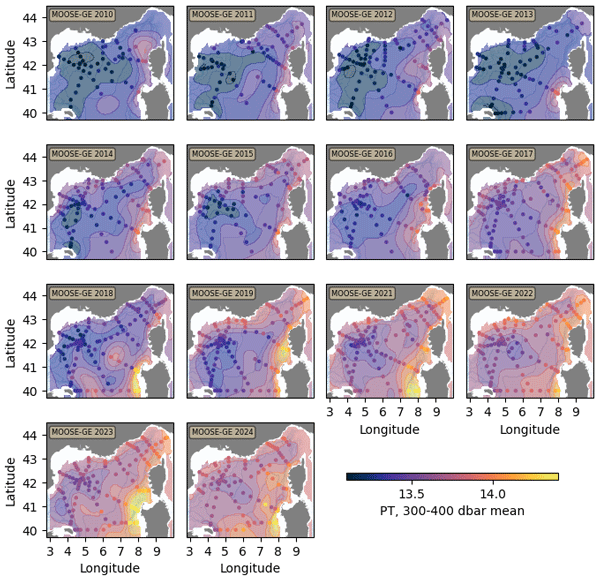
The Mediterranean Ocean Observing System for the Environment program investigated the fast-changing northwestern Mediterranean through annual cruises from 2010 to 2024. Using consistent surface-to-seafloor measurements, checked against fixed and autonomous platforms, we find intermediate and deep waters warming and getting saltier, oxygen declining and dissolved carbon rising, indicating progressing acidification. These trends can reshape ecosystems and stress the need for sustained monitoring.
Mathilde Couteyen Carpaye, David Nerini, Fabrice Garcia, Véronique Lagadec, Sandra Nunige, David Pecqueur, Christophe Salmeron, Léa Buniak, Morgane Didry, Jean-Marc Feuerstein, and Gérald Grégori
EGUsphere, https://doi.org/10.5194/egusphere-2026-3454, https://doi.org/10.5194/egusphere-2026-3454, 2026
Short summary
Short summary
Monitoring of phytoplankton over long periods and at high frequency is challenging. Yet, it is essential because these organisms form the base of marine food webs, and changes in their communities can affect higher trophic levels. Here, we address the challenge of missing biological data by using vertical profiles of temperature and salinity as proxies for environmental conditions influencing nutrient availability and shaping pico- and nanophytoplankton communities at a coastal site.
Manuel Vargas-Yáñez, Orens Pasqueron de Fommervault, Emanuela Clementi, Christian Ferrarin, Svitlana Liubertseva, Diego Álvarez-Berastegui, Baptiste Mourre, Salvatore Aronica, Rosa Balbin, Joaquín Ballabrera-Poy, Sana Ben Ismail, Nathaniel Benssousan, Ismail Bessa, Alicia Blanco, Anthony Bosse, Evi Bourma, François Bourrin, Carlo Brandini, Fulvio Capodici, Clara Casals-Baixas, Branko Cermelj, Giuseppe Ciraolo, Pascal Conan, Laurent Coppola, Lorenzo Corgnati, Joaquín del Río, Emilie Diamond Riquier, Lara Diaz-Barroso, Bartolomeo Doronzo, Xavier Durrieu de Madron, Milad Fakhri, Costantine Frangoulis, Claudia Fratianni, Emilio García-Ladona, Jesus García-Lafuente, M. Carmen García-Martínez, Joaquín Garrabou, Josep Gasol, Adam Gauci, Frédéric Gazeau, Gerard Gregory, Abed El Raman Hassoun, Jordi Isern-Fontanet, Dominique Lefevre, Nadia Lo Bue, Guiomar López, Pablo Lorente, Deny Malengros, Ramon Massana, Sinan Mavruk, Stefano Miserocchi, Behzad Mostajir, Laure Mousseau, Francina Moya, Antonio Novellino, Arianna Orasi, Emanuele Organelli, Vicent Ouisse, Tal Ozer, Begoña Pérez-Gómez, Susana Pérez-Rubio, Leonidas Perivoliotis, Georges Petihakis, Anne Petrenko, Sebastien Pinel, Xavier Pitarch, Angela Pomaro, Lucía Quirós-Collazos, Emma Reyes, Simone Sammartino, Anna Sánchez-Vidal, Katrin Schroeder, Stefano Taddei, Elena Tel, Pierre Testor, Marco Torri, Daniela Turk, Laura Ursella, Dimitris Velaoras, Francesca Vidussi, Ivica Vilivić, Enrico Zambiachi, D. Nikolaos Zarokanellos, George Zodiatis, and Vanessa Cardin
EGUsphere, https://doi.org/10.5194/egusphere-2026-2632, https://doi.org/10.5194/egusphere-2026-2632, 2026
Short summary
Short summary
This work compiles current marine observation capabilities in the Mediterranean Sea, making this information accessible to scientists, organizations, stakeholders, and environmental policymakers. It supports initiatives such as Copernicus Marine Service, EMODNet, the European Ocean Pact, and EU directives. It is intended as a living resource to be updated, identifying strengths and gaps in Mediterranean observation systems.
Théo Garcia, Laurina Oms, Xavier Milhaud, Andrea M. Doglioli, Monique Messié, Pierre Vandekerkhove, Claire Lacour, Gérald Grégori, and Denys Pommeret
Adv. Stat. Clim. Meteorol. Oceanogr., 12, 21–41, https://doi.org/10.5194/ascmo-12-21-2026, https://doi.org/10.5194/ascmo-12-21-2026, 2026
Short summary
Short summary
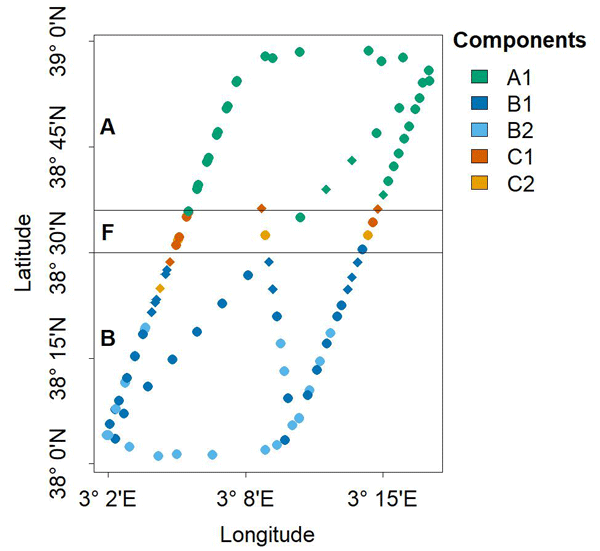
We studied how small, short-lived ocean features in the Mediterranean Sea affect microscopic plant communities that support ocean life. Using a new statistical approach, we found strong evidence that these features can host unique communities not found in surrounding waters. This discovery helps us better understand the role of ocean dynamics in shaping marine ecosystems, even when data are limited and conditions vary widely.
Alex Nalivaev, Francesco d'Ovidio, Laurent Bopp, Maristella Berta, Louise Rousselet, Clara Azarian, and Stéphane Blain
Biogeosciences, 23, 639–663, https://doi.org/10.5194/bg-23-639-2026, https://doi.org/10.5194/bg-23-639-2026, 2026
Short summary
Short summary
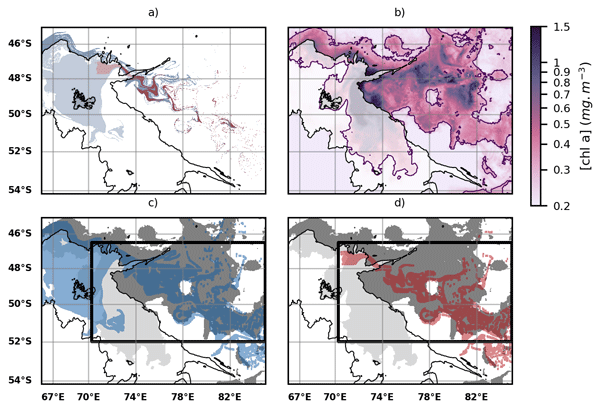
The Kerguelen region hosts a phytoplankton bloom influenced by several iron sources. In particular, glaciers supply iron to the coastal waters. However, the importance of glacial iron for the bloom is not known. Here we calculate iron transport pathways from glaciers to the open ocean using in situ and satellite data, showing that one third of the offshore bloom is reached by glacial iron. These results are important in the context of the melting of the Kerguelen ice cap under climate change.
Sebastien Donnet, Helga S. Huntley, Maristella Berta, Luca Centurioni, Leo Middleton, Tamay Özgökmen, Pierre-Marie Poulain, Alex Kinsella, and Annalisa Griffa
Ocean Sci., 21, 3221–3240, https://doi.org/10.5194/os-21-3221-2025, https://doi.org/10.5194/os-21-3221-2025, 2025
Short summary
Short summary
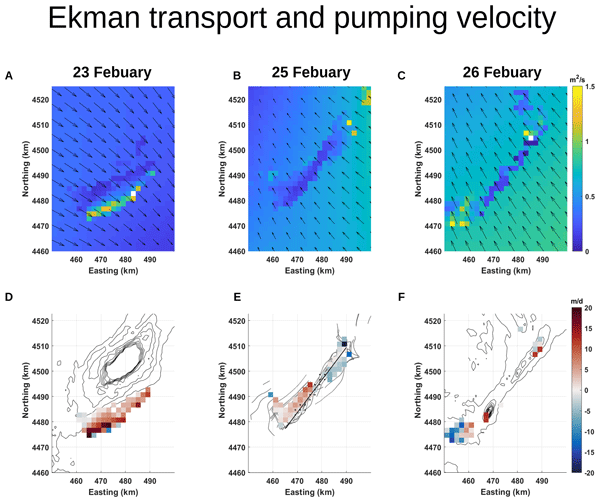
Oceanographic and atmospheric data is used to study the properties and evolution of an eddy in the Balearic Sea. During the period of observation, this eddy elongates and splits. The unusually dense set of observations from satellites, drifters, and ship-mounted instruments provide insight into this splitting process. In particular, the contribution from the wind is assessed. These mechanisms are known to impact the vertical exchanges of oxygen, carbon dioxide, nutrients, and pollutants.
Rosmery Sosa-Gutierrez, Julien Jouanno, and Leo Berline
Ocean Sci., 21, 1505–1514, https://doi.org/10.5194/os-21-1505-2025, https://doi.org/10.5194/os-21-1505-2025, 2025
Short summary
Short summary
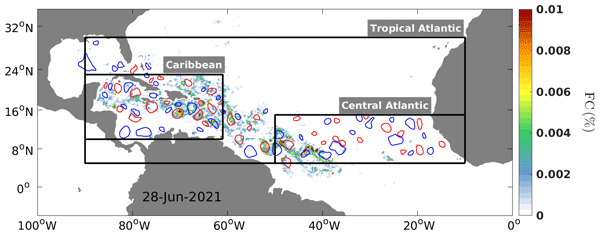
Since 2010, pelagic Sargassum spp. blooms have increased in several tropical Atlantic regions, causing socioeconomic and ecosystem impacts. Offshore structuration of Sargassum by mesoscale dynamics may influence transport and growth. Sargassum stays afloat, constantly interacting with currents, waves, winds, and mesoscale eddies. We find that anticyclones and cyclones effectively trap Sargassum throughout its propagation, with a greater tendency for cyclones to accumulate Sargassum.
Marine Di Stefano, David Nerini, Itziar Alvarez, Giandomenico Ardizzone, Patrick Astruch, Gotzon Basterretxea, Aurélie Blanfuné, Denis Bonhomme, Antonio Calò, Ignacio Catalan, Carlo Cattano, Adrien Cheminée, Romain Crec'hriou, Amalia Cuadros, Antonio Di Franco, Carlos Diaz-Gil, Tristan Estaque, Robin Faillettaz, Fabiana C. Félix-Hackradt, José Antonio Garcia-Charton, Paolo Guidetti, Loïc Guilloux, Jean-Georges Harmelin, Mireille Harmelin-Vivien, Manuel Hidalgo, Hilmar Hinz, Jean-Olivier Irisson, Gabriele La Mesa, Laurence Le Diréach, Philippe Lenfant, Enrique Macpherson, Sanja Matić-Skoko, Manon Mercader, Marco Milazzo, Tiffany Monfort, Joan Moranta, Manuel Muntoni, Matteo Murenu, Lucie Nunez, M. Pilar Olivar, Jérémy Pastor, Ángel Pérez-Ruzafa, Serge Planes, Nuria Raventos, Justine Richaume, Elodie Rouanet, Erwan Roussel, Sandrine Ruitton, Ana Sabatés, Thierry Thibaut, Daniele Ventura, Laurent Vigliola, Dario Vrdoljak, and Vincent Rossi
Earth Syst. Sci. Data, 16, 3851–3871, https://doi.org/10.5194/essd-16-3851-2024, https://doi.org/10.5194/essd-16-3851-2024, 2024
Short summary
Short summary
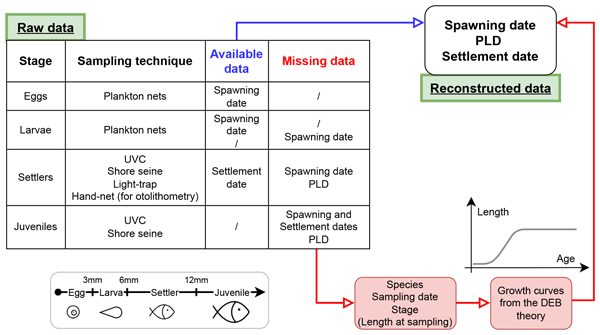
We build a compilation of early-life dispersal traits for coastal fish species. The database contains over 110 000 entries collected from 1993 to 2021 in the western Mediterranean. All observations are harmonized to provide information on dates and locations of spawning and settlement, along with pelagic larval durations. When applicable, missing data are reconstructed from dynamic energy budget theory. Statistical analyses reveal sampling biases across taxa, space and time.
Mathilde Dugenne, Marco Corrales-Ugalde, Jessica Y. Luo, Rainer Kiko, Todd D. O'Brien, Jean-Olivier Irisson, Fabien Lombard, Lars Stemmann, Charles Stock, Clarissa R. Anderson, Marcel Babin, Nagib Bhairy, Sophie Bonnet, Francois Carlotti, Astrid Cornils, E. Taylor Crockford, Patrick Daniel, Corinne Desnos, Laetitia Drago, Amanda Elineau, Alexis Fischer, Nina Grandrémy, Pierre-Luc Grondin, Lionel Guidi, Cecile Guieu, Helena Hauss, Kendra Hayashi, Jenny A. Huggett, Laetitia Jalabert, Lee Karp-Boss, Kasia M. Kenitz, Raphael M. Kudela, Magali Lescot, Claudie Marec, Andrew McDonnell, Zoe Mériguet, Barbara Niehoff, Margaux Noyon, Thelma Panaïotis, Emily Peacock, Marc Picheral, Emilie Riquier, Collin Roesler, Jean-Baptiste Romagnan, Heidi M. Sosik, Gretchen Spencer, Jan Taucher, Chloé Tilliette, and Marion Vilain
Earth Syst. Sci. Data, 16, 2971–2999, https://doi.org/10.5194/essd-16-2971-2024, https://doi.org/10.5194/essd-16-2971-2024, 2024
Short summary
Short summary
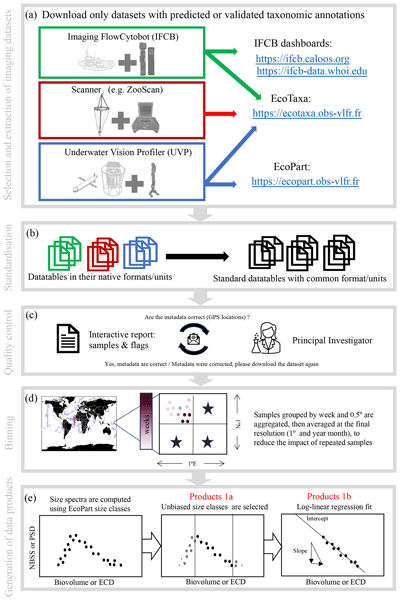
Plankton and particles influence carbon cycling and energy flow in marine ecosystems. We used three types of novel plankton imaging systems to obtain size measurements from a range of plankton and particle sizes and across all major oceans. Data were compiled and cross-calibrated from many thousands of images, showing seasonal and spatial changes in particle size structure in different ocean basins. These datasets form the first release of the Pelagic Size Structure database (PSSdb).
Sylvain Cailleau, Laurent Bessières, Léonel Chiendje, Flavie Dubost, Guillaume Reffray, Jean-Michel Lellouche, Simon van Gennip, Charly Régnier, Marie Drevillon, Marc Tressol, Matthieu Clavier, Julien Temple-Boyer, and Léo Berline
Geosci. Model Dev., 17, 3157–3173, https://doi.org/10.5194/gmd-17-3157-2024, https://doi.org/10.5194/gmd-17-3157-2024, 2024
Short summary
Short summary
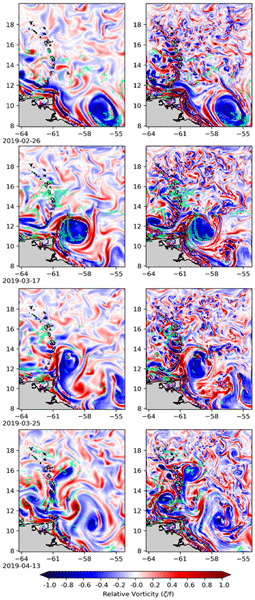
In order to improve Sargassum drift forecasting in the Caribbean area, drift models can be forced by higher-resolution ocean currents. To this goal a 3 km resolution regional ocean model has been developed. Its assessment is presented with a particular focus on the reproduction of fine structures representing key features of the Caribbean region dynamics and Sargassum transport. The simulated propagation of a North Brazil Current eddy and its dissipation was found to be quite realistic.
Pierre-Marie Poulain, Luca Centurioni, Carlo Brandini, Stefano Taddei, Maristella Berta, and Milena Menna
Ocean Sci., 19, 1617–1631, https://doi.org/10.5194/os-19-1617-2023, https://doi.org/10.5194/os-19-1617-2023, 2023
Short summary
Short summary
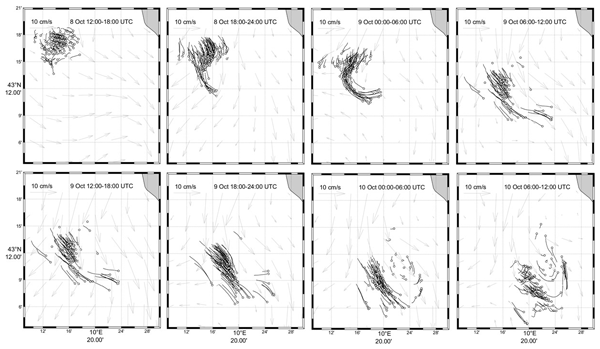
Drifters and a profiling float were deployed in the coastal waters of the southeastern Ligurian Sea to characterize the near-surface circulation at a scale of ~10 km. The drifters were trapped in an offshore-flowing filament and a cyclonic eddy that developed at the southwestern extremity of the filament. Drifter velocities are used to estimate differential kinematic properties and relative dispersion statistics of the surface currents.
Roxane Tzortzis, Andrea M. Doglioli, Monique Messié, Stéphanie Barrillon, Anne A. Petrenko, Lloyd Izard, Yuan Zhao, Francesco d'Ovidio, Franck Dumas, and Gérald Gregori
Biogeosciences, 20, 3491–3508, https://doi.org/10.5194/bg-20-3491-2023, https://doi.org/10.5194/bg-20-3491-2023, 2023
Short summary
Short summary
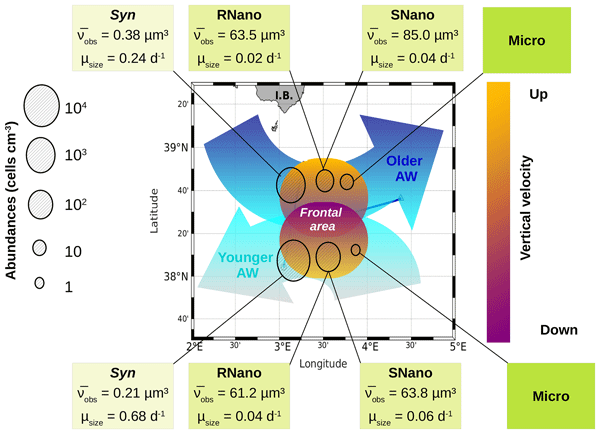
We studied a finescale frontal structure in order to highlight its influence on the dynamics and distribution of phytoplankton communities. We computed the growth rates of several phytoplankton groups identified by flow cytometry in two water masses separated by the front. We found contrasted phytoplankton dynamics on the two sides of the front, consistent with the distribution of their abundances. Our study gives new insights into the physical and biological coupling on a finescale front.
Inès Mangolte, Marina Lévy, Clément Haëck, and Mark D. Ohman
Biogeosciences, 20, 3273–3299, https://doi.org/10.5194/bg-20-3273-2023, https://doi.org/10.5194/bg-20-3273-2023, 2023
Short summary
Short summary
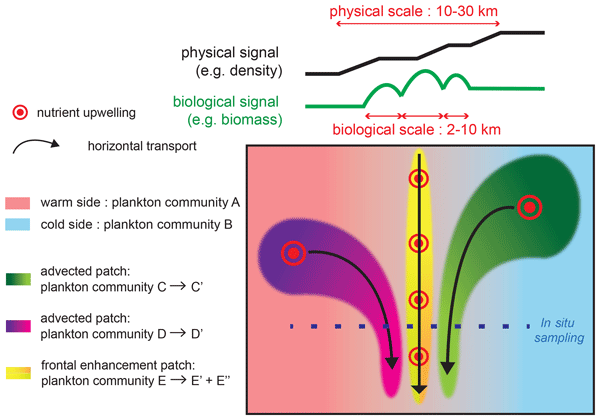
Ocean fronts are ecological hotspots, associated with higher diversity and biomass for many marine organisms, from bacteria to whales. Using in situ data from the California Current Ecosystem, we show that far from being limited to the production of diatom blooms, fronts are the scene of complex biophysical couplings between biotic interactions (growth, competition, and predation) and transport by currents that generate planktonic communities with an original taxonomic and spatial structure.
Tiziana Ciuffardi, Zoi Kokkini, Maristella Berta, Marina Locritani, Andrea Bordone, Ivana Delbono, Mireno Borghini, Maurizio Demarte, Roberta Ivaldi, Federica Pannacciulli, Anna Vetrano, Davide Marini, and Giovanni Caprino
Earth Syst. Sci. Data, 15, 1933–1946, https://doi.org/10.5194/essd-15-1933-2023, https://doi.org/10.5194/essd-15-1933-2023, 2023
Short summary
Short summary
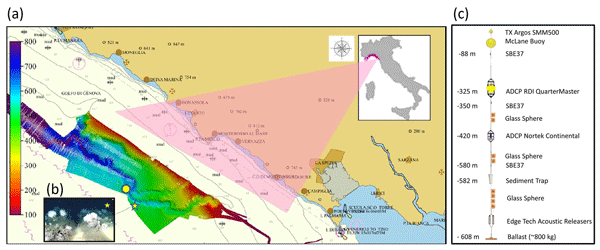
This paper presents the results of the first 2 years of the Levante Canyon Mooring, a mooring line placed since 2020 in the eastern Ligurian Sea, to study a canyon area at about 600 m depth characterized by the presence of cold-water living corals. It provides hydrodynamic and thermohaline measurements along the water column, describing a water-mass distribution coherent with previous evidence in the Ligurian Sea. The data also show a Northern Current episodic and local reversal during summer.
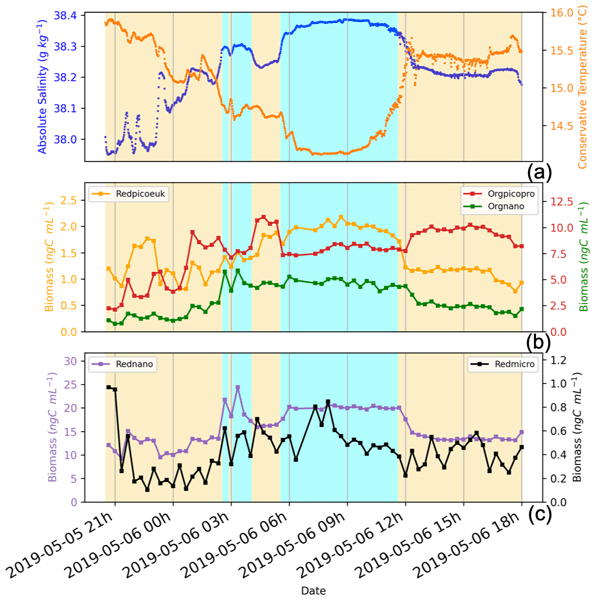
Stéphanie Barrillon, Robin Fuchs, Anne A. Petrenko, Caroline Comby, Anthony Bosse, Christophe Yohia, Jean-Luc Fuda, Nagib Bhairy, Frédéric Cyr, Andrea M. Doglioli, Gérald Grégori, Roxane Tzortzis, Francesco d'Ovidio, and Melilotus Thyssen
Biogeosciences, 20, 141–161, https://doi.org/10.5194/bg-20-141-2023, https://doi.org/10.5194/bg-20-141-2023, 2023
Short summary
Short summary
Extreme weather events can have a major impact on ocean physics and biogeochemistry, but their study is challenging. In May 2019, an intense storm occurred in the north-western Mediterranean Sea, during which in situ multi-platform measurements were performed. The results show a strong impact on the surface phytoplankton, highlighting the need for high-resolution measurements coupling physics and biology during these violent events that may become more common in the context of global change.
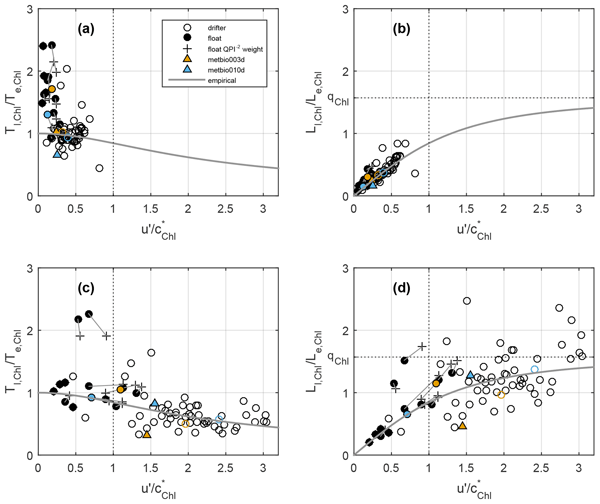
Darren C. McKee, Scott C. Doney, Alice Della Penna, Emmanuel S. Boss, Peter Gaube, Michael J. Behrenfeld, and David M. Glover
Biogeosciences, 19, 5927–5952, https://doi.org/10.5194/bg-19-5927-2022, https://doi.org/10.5194/bg-19-5927-2022, 2022
Short summary
Short summary
As phytoplankton (small, drifting photosynthetic organisms) drift with ocean currents, biomass accumulation rates should be evaluated in a Lagrangian (observer moves with a fluid parcel) as opposed to an Eulerian (observer is stationary) framework. Here, we use profiling floats and surface drifters combined with satellite data to analyse time and length scales of chlorophyll concentrations (a proxy for biomass) and of velocity to quantify how phytoplankton variability is related to water motion.
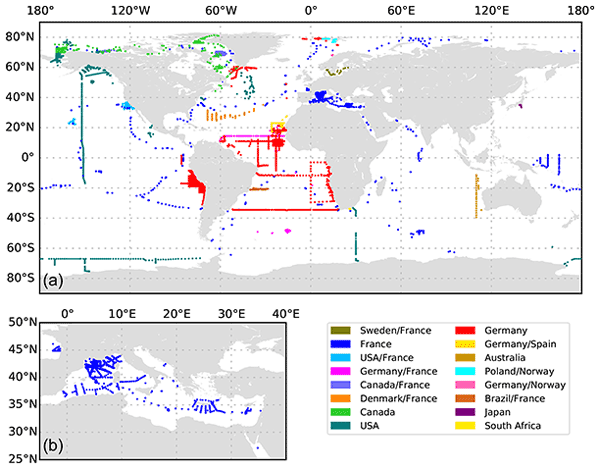
Rainer Kiko, Marc Picheral, David Antoine, Marcel Babin, Léo Berline, Tristan Biard, Emmanuel Boss, Peter Brandt, Francois Carlotti, Svenja Christiansen, Laurent Coppola, Leandro de la Cruz, Emilie Diamond-Riquier, Xavier Durrieu de Madron, Amanda Elineau, Gabriel Gorsky, Lionel Guidi, Helena Hauss, Jean-Olivier Irisson, Lee Karp-Boss, Johannes Karstensen, Dong-gyun Kim, Rachel M. Lekanoff, Fabien Lombard, Rubens M. Lopes, Claudie Marec, Andrew M. P. McDonnell, Daniela Niemeyer, Margaux Noyon, Stephanie H. O'Daly, Mark D. Ohman, Jessica L. Pretty, Andreas Rogge, Sarah Searson, Masashi Shibata, Yuji Tanaka, Toste Tanhua, Jan Taucher, Emilia Trudnowska, Jessica S. Turner, Anya Waite, and Lars Stemmann
Earth Syst. Sci. Data, 14, 4315–4337, https://doi.org/10.5194/essd-14-4315-2022, https://doi.org/10.5194/essd-14-4315-2022, 2022
Short summary
Short summary
The term
marine particlescomprises detrital aggregates; fecal pellets; bacterioplankton, phytoplankton and zooplankton; and even fish. Here, we present a global dataset that contains 8805 vertical particle size distribution profiles obtained with Underwater Vision Profiler 5 (UVP5) camera systems. These data are valuable to the scientific community, as they can be used to constrain important biogeochemical processes in the ocean, such as the flux of carbon to the deep sea.
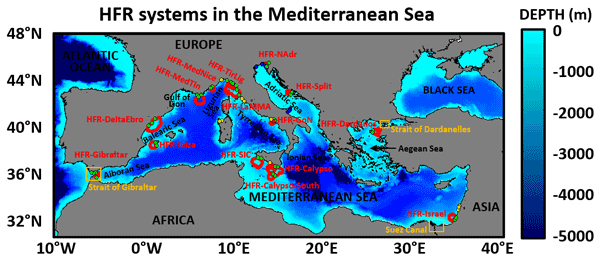
Pablo Lorente, Eva Aguiar, Michele Bendoni, Maristella Berta, Carlo Brandini, Alejandro Cáceres-Euse, Fulvio Capodici, Daniela Cianelli, Giuseppe Ciraolo, Lorenzo Corgnati, Vlado Dadić, Bartolomeo Doronzo, Aldo Drago, Dylan Dumas, Pierpaolo Falco, Maria Fattorini, Adam Gauci, Roberto Gómez, Annalisa Griffa, Charles-Antoine Guérin, Ismael Hernández-Carrasco, Jaime Hernández-Lasheras, Matjaž Ličer, Marcello G. Magaldi, Carlo Mantovani, Hrvoje Mihanović, Anne Molcard, Baptiste Mourre, Alejandro Orfila, Adèle Révelard, Emma Reyes, Jorge Sánchez, Simona Saviano, Roberta Sciascia, Stefano Taddei, Joaquín Tintoré, Yaron Toledo, Laura Ursella, Marco Uttieri, Ivica Vilibić, Enrico Zambianchi, and Vanessa Cardin
Ocean Sci., 18, 761–795, https://doi.org/10.5194/os-18-761-2022, https://doi.org/10.5194/os-18-761-2022, 2022
Short summary
Short summary
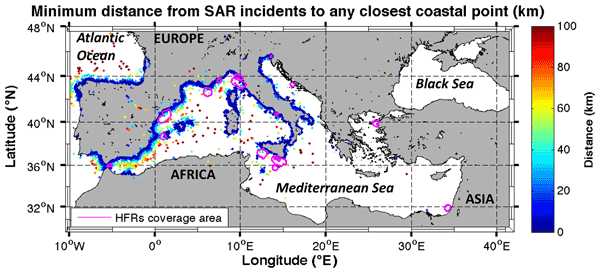
High-frequency radar (HFR) is a land-based remote sensing technology that can provide maps of the surface circulation over broad coastal areas, along with wave and wind information. The main goal of this work is to showcase the current status of the Mediterranean HFR network as well as present and future applications of this sensor for societal benefit such as search and rescue operations, safe vessel navigation, tracking of marine pollutants, and the monitoring of extreme events.
Emma Reyes, Eva Aguiar, Michele Bendoni, Maristella Berta, Carlo Brandini, Alejandro Cáceres-Euse, Fulvio Capodici, Vanessa Cardin, Daniela Cianelli, Giuseppe Ciraolo, Lorenzo Corgnati, Vlado Dadić, Bartolomeo Doronzo, Aldo Drago, Dylan Dumas, Pierpaolo Falco, Maria Fattorini, Maria J. Fernandes, Adam Gauci, Roberto Gómez, Annalisa Griffa, Charles-Antoine Guérin, Ismael Hernández-Carrasco, Jaime Hernández-Lasheras, Matjaž Ličer, Pablo Lorente, Marcello G. Magaldi, Carlo Mantovani, Hrvoje Mihanović, Anne Molcard, Baptiste Mourre, Adèle Révelard, Catalina Reyes-Suárez, Simona Saviano, Roberta Sciascia, Stefano Taddei, Joaquín Tintoré, Yaron Toledo, Marco Uttieri, Ivica Vilibić, Enrico Zambianchi, and Alejandro Orfila
Ocean Sci., 18, 797–837, https://doi.org/10.5194/os-18-797-2022, https://doi.org/10.5194/os-18-797-2022, 2022
Short summary
Short summary
This work reviews the existing advanced and emerging scientific and societal applications using HFR data, developed to address the major challenges identified in Mediterranean coastal waters organized around three main topics: maritime safety, extreme hazards and environmental transport processes. It also includes a discussion and preliminary assessment of the capabilities of existing HFR applications, finally providing a set of recommendations towards setting out future prospects.

Roxane Tzortzis, Andrea M. Doglioli, Stéphanie Barrillon, Anne A. Petrenko, Francesco d'Ovidio, Lloyd Izard, Melilotus Thyssen, Ananda Pascual, Bàrbara Barceló-Llull, Frédéric Cyr, Marc Tedetti, Nagib Bhairy, Pierre Garreau, Franck Dumas, and Gérald Gregori
Biogeosciences, 18, 6455–6477, https://doi.org/10.5194/bg-18-6455-2021, https://doi.org/10.5194/bg-18-6455-2021, 2021
Short summary
Short summary
This work analyzes an original high-resolution data set collected in the Mediterranean Sea. The major result is the impact of a fine-scale frontal structure on the distribution of phytoplankton groups, in an area of moderate energy with oligotrophic conditions. Our results provide an in situ confirmation of the findings obtained by previous modeling studies and remote sensing about the structuring effect of the fine-scale ocean dynamics on the structure of the phytoplankton community.
Léo Berline, Andrea Michelangelo Doglioli, Anne Petrenko, Stéphanie Barrillon, Boris Espinasse, Frederic A. C. Le Moigne, François Simon-Bot, Melilotus Thyssen, and François Carlotti
Biogeosciences, 18, 6377–6392, https://doi.org/10.5194/bg-18-6377-2021, https://doi.org/10.5194/bg-18-6377-2021, 2021
Short summary
Short summary
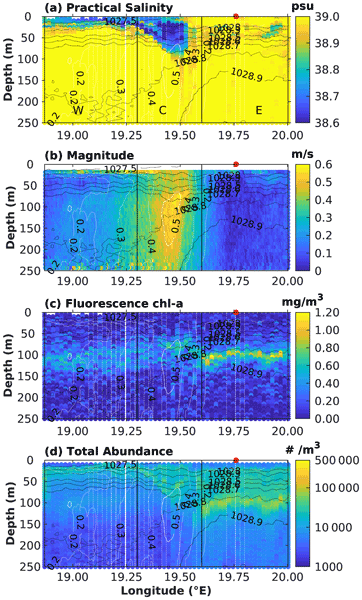
While the Ionian Sea is considered a nutrient-depleted and low-phytoplankton biomass area, it is a crossroad for water mass circulation. In the central Ionian Sea, we observed a strong contrast in particle distribution across a ~100 km long transect. Using remote sensing and Lagrangian simulations, we suggest that this contrast finds its origin in the long-distance transport of particles from the north, west and east of the Ionian Sea, where phytoplankton production was more intense.
Elvira Pulido-Villena, Karine Desboeufs, Kahina Djaoudi, France Van Wambeke, Stéphanie Barrillon, Andrea Doglioli, Anne Petrenko, Vincent Taillandier, Franck Fu, Tiphanie Gaillard, Sophie Guasco, Sandra Nunige, Sylvain Triquet, and Cécile Guieu
Biogeosciences, 18, 5871–5889, https://doi.org/10.5194/bg-18-5871-2021, https://doi.org/10.5194/bg-18-5871-2021, 2021
Short summary
Short summary
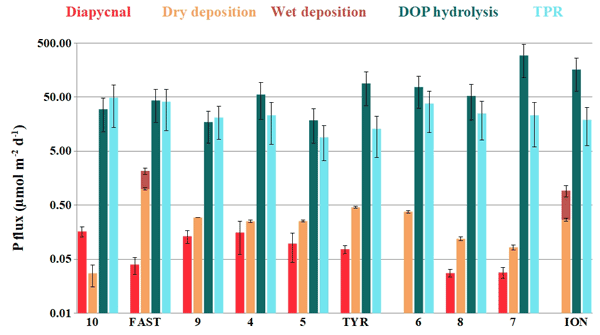
We report on phosphorus dynamics in the surface layer of the Mediterranean Sea. Highly sensitive phosphate measurements revealed vertical gradients above the phosphacline. The relative contribution of diapycnal fluxes to total external supply of phosphate to the mixed layer decreased towards the east, where atmospheric deposition dominated. Taken together, external sources of phosphate contributed little to total supply, which was mainly sustained by enzymatic hydrolysis of organic phosphorus.
Cited articles
Alcaraz, M., Estrada, M., and Marrasé, C.: Interaction between turbulence and zooplankton in laboratory microcosms, in: Proceedings of the 21st European Marine Biology Symposium, edited by: Klekowski, R. Z., Styczynska-Jurewicz, E., and Falkowski, L., Polish Academy of Sciences-Institute of Oceanology, Ossolineum, Gdansk, 191–204, http://hdl.handle.net/10261/197207 (last access: 8 January 2026), 1989.
Alcaraz, M., Calbet, A., Estrada, M., Marrasé, C., Saiz, E., and Trepat, I.: Physical control of zooplankton communities in the Catalan Sea, Prog. Oceanogr., 74, 294–312, https://doi.org/10.1016/j.pocean.2007.04.003, 2007.
Andersen, V. and Sardou, J.: The diel migrations and vertical distributions of zooplankton and micronekton in the Northwestern Mediterranean Sea, 1. Euphausiids, mysids, decapods and fishes, J. Plankton Res., 14, 1129–1154, https://doi.org/10.1093/plankt/14.8.1129, 1992.
Andersen, V., Nival, P., Caparroy, P., and Gubanova, A.: Zooplankton community during the transition from spring bloom to oligotrophy in the open NW Mediterranean and effects of wind events, 1. Abundance and specific composition, J. Plankton Res., 23, 227–242, https://doi.org/10.1093/plankt/23.3.227, 2001a.
Andersen, V., Gubanova, A., Nival, P., and Ruellet, T.: Zooplankton community during the transition from spring bloom to oligotrophy in the open NW Mediterranean and effects of wind events, 2. Vertical distributions and migrations, J. Plankton Res., 23, 243–261, https://doi.org/10.1093/plankt/23.3.243, 2001b.
Ashjian, C. J., Davis, C. S., Gallager, S. M., and Alatalo, P.: Distribution of plankton, particles, and hydrographic features across Georges Bank described using the Video Plankton Recorder, Deep-Sea Res. Pt. II, 48, 245–282, https://doi.org/10.1016/S0967-0645(00)00121-1, 2001.
Barral, Q.-B.: Caractérisation du front Nord-Baléares: Variabilité et rôle de la circulation des masses d’eau en Méditerranée Occidentale, Ph.D. thesis, Université de Toulon, https://archimer.ifremer.fr/doc/00807/91922/ (last access: 8 January 2026), 2022.
Barral, Q.-B., Zakardjian, B., Dumas, F., Garreau, P., Testor, P., and Beuvier, J.: Characterization of fronts in the Western Mediterranean with a special focus on the North Balearic Front, Prog. Oceanogr., 197, 102636, https://doi.org/10.1016/j.pocean.2021.102636, 2021.
Barrillon, S., Fuchs, R., Petrenko, A. A., Comby, C., Bosse, A., Yohia, C., Fuda, J. L., Bhairy, N., Cyr, F., Doglioli, A. M., Grégori, G., Tzortzis, R., d'Ovidio, F., and Thyssen, M.: Phytoplankton reaction to an intense storm in the north-western Mediterranean Sea, Biogeosciences, 20, 141–161, https://doi.org/10.5194/bg-20-141-2023, 2023.
Belkin, I. M. and Helber, R. W.: Physical oceanography of fronts: an editorial, Deep-Sea Res. Pt. II, 119, 1–2, 2015.
Belkin, I. M., Cornillon, P. C., and Sherman, K.: Fronts in large marine ecosystems, Prog. Oceanogr., 81, 223–236, https://doi.org/10.1016/j.pocean.2009.04.015, 2009.
Caliński, T. and Harabasz, J.: A dendrite method for cluster analysis, Commun. Stat., 3, 1–27, https://doi.org/10.1080/03610927408827101, 1974.
Caparroy, P., Pérez, M. T., and Carlotti, F.: Feeding behavior of Centropages typicus in calm and turbulent conditions, Mar. Ecol. Prog. Ser., 168, 109–118, https://doi.org/10.3354/meps168109, 1998.
Chiba, S., Ishimaru, T., Hosie, G. W., and Fukuchi, M.: Spatio-temporal variability of zooplankton community structure off east Antarctica (90 to 160° E), Mar. Ecol. Prog. Ser., 216, 95–108, https://doi.org/10.3354/meps216095, 2001.
Conan, P., Testor, P., Estournel, C., D'Ortenzio, F., Pujo-Pay, M., and Durrieu de Madron, X.: Preface to the Special Section: Dense water formations in the northwestern Mediterranean: From the physical forcings to the biogeochemical consequences, J. Geophys. Res.-Ocean., 123, 6983–6995, https://doi.org/10.1029/2018JC014301, 2018.
Cotté, C., Guinet, C., Taupier-Letage, I., Mate, B., and Petiau, E.: Scale-dependent habitat use by a large free-ranging predator, the Mediterranean fin whale, Deep-Sea Res. Pt. I, 56, 801–811, https://doi.org/10.1016/j.dsr.2008.12.008, 2009.
Cotté, C., d'Ovidio, F., Chaigneau, A., Lévy, M., Taupier-Letage, I., Mate, B., and Guinet, C.: Scale-dependent interactions of Mediterranean whales with marine dynamics, Limnol. Oceanogr., 56, 219–232, https://doi.org/10.4319/lo.2011.56.1.0219, 2011.
Demol, M., Berta, M., Gomez Navarro, L., Izard, L., Ardhuin, F., Bellacicco, M., Centurioni, L., d'Ovidio, F., Diaz-Barroso, L., Doglioli, A., Dumas, F., Garreau, P., Joël, A., Lizaran, I., Menna, M., Mironov, A., Mourre, B., Pacciaroni, M., Pascual, A., Ponte, A., Reyes, E., Rousselet, L., Tarry, D. R., and Verger-Miralles, E.: A drifter dataset for the Western Mediterranean Sea collected during the SWOT mission calibration and validation phase, SEANOE [data set], https://doi.org/10.17882/100828, 2023.
Derisio, C., Alemany, D., Acha, E. M., and Mianzan, H.: Influence of a tidal front on zooplankton abundance, assemblages and life histories in Península Valdés, Argentina, J. Mar. Syst., 139, 475–482, https://doi.org/10.1016/j.jmarsys.2014.08.019, 2014.
Di Sciara, G. N., Castellote, M., Druon, J.-N., and Panigada, S.: Fin whales, Balaenoptera physalus: At home in a changing Mediterranean Sea?, Adv. Mar. Biol., 75, 75–101, https://doi.org/10.1016/bs.amb.2016.08.002, 2016.
Doglioli, A. M., Grégori, G., d'Ovidio, F., Bosse, A., Pulido, E., Carlotti, F., Lescot, M., Barani, A., Barrillon, S., Berline, L., Berta, M., Bouruet-Aubertot, P., Chirurgien, L., Comby, C., Cornet, V., Cotté, C., Della Penna, A., Didry, M., Duhamel, S., Fuda, J.-L., Gastauer, S., Guilloux, L., Lefèvre, D., Le Merle, E., Martin, A., McCann, D., Menna, M., Nunige, S., Oms, L., Pacciaroni, M., Petrenko, A., Rolland, A., Rousselet, L., and Waggonet, E. M.: BioSWOT Med. Biological applications of the satellite Surface Water and Ocean Topography in the Mediterranean. Ref. Rapport de campagne, Université Aix-Marseille, https://doi.org/10.13155/100060, 2024.
Donoso, K., Carlotti, F., Pagano, M., Hunt, B. P. V., Escribano, R., and Berline, L.: Zooplankton community response to the winter 2013 deep convection process in the NW Mediterranean Sea, J. Geophys. Res.-Ocean., 122, 2319–2338, https://doi.org/10.1002/2016JC012176, 2017.
D'Ortenzio, F. and Ribera d'Alcalà, M.: On the trophic regimes of the Mediterranean Sea: a satellite analysis, Biogeosciences, 6, 139–148, https://doi.org/10.5194/bg-6-139-2009, 2009.
Druon, J. N., Hélaouët, P., Beaugrand, G., Fromentin, J. M., Palialexis, A., and Hoepffner, N.: Satellite-based indicator of zooplankton distribution for global monitoring, Sci. Rep., 9, 4732, https://doi.org/10.1038/s41598-019-41212-2, 2019.
Durski, S. M. and Allen, J. S.: Finite-amplitude evolution of instabilities associated with the coastal upwelling front, J. Phys. Oceanogr., 35, 1606–1628, https://doi.org/10.1175/JPO2762.1, 2005.
Errhif, A., Razouls, C., and Mayzaud, P.: Composition and community structure of pelagic copepods in the Indian sector of the Antarctic Ocean during the end of the austral summer, Polar Biol., 17, 418–430, https://doi.org/10.1007/s003000050136, 1997.
Estrada, M. and Berdalet, E.: Phytoplankton in a turbulent world, Scientia Marina, 61, 125–140, 1997.
Fernández, E., Cabal, J., Acuña, J., Bode, A., Botas, A., and García-Soto, C.: Plankton distribution across a slope current-induced front in the southern Bay of Biscay, J. Plankton Res., 15, 619–641, https://doi.org/10.1093/plankt/15.6.619, 1993.
Fernández de Puelles, M. L., Valencia, J., and Vicente, L.: Zooplankton variability and climatic anomalies from 1994 to 2001 in the Balearic Sea (Western Mediterranean), ICES J. Mar. Sci., 61, 492–500, https://doi.org/10.1016/j.icesjms.2004.03.026, 2004.
Fox, J. and Weisberg, S.: An R Companion to Applied Regression, Sage, Thousand Oaks, CA, 3rd Edn., ISBN: 1544336470, 978-1544336473, 2019.
Font, J., Salat, J., and Tintoré, J.: Permanent features of the circulation in the Catalan Sea, Oceanol. Acta, 9, 51–57, 1988.
Gastauer, S. and Ohman, M. D.: Resolving abrupt frontal gradients in zooplankton community composition and marine snow fields with an autonomous Zooglider, Limnol. Oceanogr., 70, S102–S120, https://doi.org/10.1002/lno.12642, 2024.
Gorsky, G., Ohman, M. D., Picheral, M., Gasparini, S., Stemmann, L., Romagnan, J. B., Cawood, A., Pesant, S., García-Comas, C., and Prejger, F.: Digital zooplankton image analysis using the ZooScan integrated system, J. Plankton Res., 32, 285–303, https://doi.org/10.1093/plankt/fbp124, 2010.
Guerra, D., Schroeder, K., Borghini, M., Camatti, E., Pansera, M., Schroeder, A., Sparnocchia, S., and Chiggiato, J.: Zooplankton diel vertical migration in the Corsica Channel (north-western Mediterranean Sea) detected by a moored acoustic Doppler current profiler, Ocean Sci., 15, 631–649, https://doi.org/10.5194/os-15-631-2019, 2019.
Herron, R. C., Leming, T. D., and Li, J.: Satellite-detected fronts and butterfish aggregations in the northeastern Gulf of Mexico, Cont. Shelf Res., 9, 569–588, https://doi.org/10.1016/0278-4343(89)90022-8, 1989.
Hoskins, B. J.: The Mathematical Theory of Frontogenesis, Annu. Rev. Fluid Mech., 14, 131–151, https://doi.org/10.1146/annurev.fl.14.010182.001023, 1982.
Hunt, B. P. V., Carlotti, F., Donoso, K., Pagano, M., D'Ortenzio, F., Taillandier, V., and Conan, P.: Trophic pathways of phytoplankton size classes through the zooplankton food web over the spring transition period in the north-west Mediterranean Sea, J. Geophys. Res.-Ocean., 122, 6309–6324, https://doi.org/10.1002/2016JC012658, 2017.
Isla, A., Scharek, R., and Latasa, M.: Zooplankton diel vertical migration and contribution to deep active carbon flux in the NW Mediterranean, J. Marine Syst., 143, 86–97, https://doi.org/10.1016/j.jmarsys.2014.10.017, 2015.
Joel, A., Doglioli, A., Bosse, A., Bouruet-Aubertot, P., Buniak, L., Capet, X., D'Ovidio, F., Gregori, G., Martellucci, R., Mauri, E., Menna, M., Moutin, T., Nunige, S., Pacciaroni, M., Rolland, R., and Pulido-Villena, E.: Ocean circulation modulating the nutricline at regional and fine scales: a case study in the Northwestern Mediterranean Sea, Geophysical Research Letters, [preprint], https://doi.org/10.22541/au.176463275.55019718/v1, 2025.
Joyce, T. M.: Varieties of ocean fronts. In: Stern ME, Mellor FK (eds) Baroclinic instability and ocean fronts, Technical Report No. 83-41, Woods Hole Oceanographic Institution, Woods Hole, MA, [technical report], 1983.
Kiørboe, T.: Turbulence, phytoplankton cell size, and the structure of pelagic food webs, Adv. Mar. Biol., 29, 1–72, https://doi.org/10.1016/S0065-2881(08)60129-7, 1993.
Lavigne, H., D'Ortenzio, F., Ribera D'Alcalà, M., Claustre, H., Sauzède, R., and Gacic, M.: On the vertical distribution of the chlorophyll a concentration in the Mediterranean Sea: a basin-scale and seasonal approach, Biogeosciences, 12, 5021–5039, https://doi.org/10.5194/bg-12-5021-2015, 2015.
Le Fèvre, J.: Aspects of the biology of frontal systems, Adv. Mar. Biol., 23, 163–299, https://doi.org/10.1016/S0065-2881(08)60109-1, 1987.
Legendre, P. and Gallagher, E.: Ecologically meaningful transformations for ordination of species data, Oecologia, 129, 271–280, https://doi.org/10.1007/s004420100716, 2001.
Legendre, P. and Legendre, P.: Numerical ecology, Elsevier, Developments in Environmental Modelling, 24, ISBN: 0444538690, 9780444538697, 2012.
Liu, G. M., Sun, S., Wang, H., Zhang, Y., Yang, B., and Ji, P.: Abundance of “Calanus sinicus” across the tidal front in the Yellow Sea, China, Fish. Oceanogr., 12, 291–298, https://doi.org/10.1046/j.1365-2419.2003.00253.x, 2003.
López García, M. J., Millot, C., Font, J., and García-Ladona, E.: Surface circulation variability in the Balearic Basin, J. Geophys. Res., 99, 3285–3296, https://doi.org/10.1029/93JC02114, 1994.
Lévy, M., Franks, P. J., and Smith, K. S.: The role of submesoscale currents in structuring marine ecosystems, Nat. Commun., 9, 4758, https://doi.org/10.1038/s41467-018-07059-3, 2018.
Lê, S., Josse, J., and Husson, F.: FactoMineR: an R package for multivariate analysis, J. Stat. Softw., 25, 1–18, https://doi.org/10.18637/jss.v025.i01, 2008.
Mangolte, I., Lévy, M., Haëck, C., and Ohman, M. D.: Sub-frontal niches of plankton communities driven by transport and trophic interactions at ocean fronts, Biogeosciences, 20, 3273–3299, https://doi.org/10.5194/bg-20-3273-2023, 2023.
Mayot, N., D'Ortenzio, F., Taillandier, V., Prieur, L., de Fommervault, O. P., Claustre, H., Bosse, A., Testor, P., and Conan, P.: Physical and biogeochemical controls of the phytoplankton blooms in North Western Mediterranean Sea: A multiplatform approach over a complete annual cycle (2012–2013 DEWEX experiment), J. Geophys. Res.-Ocean., 122, 9999–10 019, https://doi.org/10.1002/2016JC012052, 2017.
Mańko, M. K., Merchel, M., Kwasniewski, S., and Weydmann-Zwolicka, A.: Oceanic fronts shape biodiversity of gelatinous zooplankton in the European Arctic, Frontiers in Marine Science, 9, 941025, https://doi.org/10.3389/fmars.2022.941025, 2022.
McWilliams, J. C.: Submesoscale currents in the ocean, P. R. Soc. A, 472, 20160117, https://doi.org/10.1098/rspa.2016.0117, 2016.
Millot, C.: Circulation in the western Mediterranean Sea, Oceanol. Acta, 10, 143–149, 1987.
Millot, C.: Circulation in the western Mediterranean Sea, J. Mar. Syst., 20, 423–442, https://doi.org/10.1016/S0924-7963(98)00078-5, 1999.
Molinero, J. C., Ibanez, F., Souissi, S., Bosc, E., and Nival, P.: Surface patterns of zooplankton spatial variability detected by high-frequency sampling in the NW Mediterranean. Role of density fronts, J. Mar. Syst., 69, 271–282, https://doi.org/10.1016/j.jmarsys.2005.11.023, 2008.
Motoda, S.: Devices of simple plankton apparatus, Memoirs of the Faculty of Fisheries Hokkaido University, 7, 73–94, 1959.
Munk, P., Hansen, B. W., Nielsen, T. G., and Thomsen, H. A.: Changes in plankton and fish larvae communities across hydrographic fronts off West Greenland, J. Plankton Res., 25, 815–830, https://doi.org/10.1093/plankt/25.7.815, 2003.
Ohman, M. D., Powell, J. R., Picheral, M., and Jensen, D. W.: Mesozooplankton and particulate matter responses to a deep-water frontal system in the southern California Current System, J. Plankton Res., 34, 815–827, https://doi.org/10.1093/plankt/fbs028, 2012.
Olson, D. B., Hitchcock, G. L., Mariano, A. J., Ashjan, C. J., Peng, G., Nero, R. W., and Podesta, G. P.: Life on the edge: marine life and fronts, Oceanography, 7, 52–60, 1994.
Owen, R. W.: Fronts and eddies in the sea: mechanisms, interactions, and biological effects, in: Analysis of Marine Ecosystems, 197–233, ISBN: 1287051324, 978-1287051329, 1981.
Pakhomov, E. A. and Froneman, P. W.: Composition and spatial variability of macroplankton and micronekton within the Antarctic Polar Frontal Zone of the Indian Ocean during austral autumn 1997, Polar Biol., 23, 410–419, https://doi.org/10.1007/s003000050462, 2000.
Panaïotis, T., Poteau, A., Riquier, E. D., Catalano, C., Courchet, L., Motreuil, S., Coppola, L., Picheral, M., and Irisson, J. O.: Temporal evolution of plankton and particles distribution across a mesoscale front during the spring bloom, Limnol. Oceanogr., 9999, 1–15, https://doi.org/10.1002/lno.12566, 2024.
Petrenko, A. A., Arnaud, M., Barrillon, S., Comby, C., Fuda, J.-L., Berline, L., Bosse, A., Rousselet, L., Rolland, R., Bouruet-Aubertot, P., Oms, L., Demol, M., Didry, M., Gastauer, S., Pacciaroni, M., Berta, M., d'Ovidio, F., Gregori, G., and Doglioli, A.: Complex 3-D oceanic velocities at SWOT scales exhibited during the spring 2023 BioSWOTMed cruise, EGU General Assembly 2024, Vienna, Austria, 14–19 Apr 2024, EGU24-17343, https://doi.org/10.5194/egusphere-egu24-17343, 2024.
Pinardi, N. and Masetti, E.: Variability of the large scale general circulation of the Mediterranean Sea from observations and modelling: a review, Palaeogeogr. Palaeoclimatol. Palaeoecol., 158, 153–173, https://doi.org/10.1016/S0031-0182(00)00048-1, 2000.
Pinca, S. and Dallot, S.: Meso- and macrozooplankton composition patterns related to hydrodynamic structures in the Ligurian Sea (Trophos- 2 experiment, April-June 1986), Mar. Ecol. Prog. Ser., 126, 49–65, https://doi.org/10.3354/meps126049, 1995.
Platt, T. and Denman, K.: Organisation in the pelagic ecosystem, Helgol. Wiss. Meeresunters., 30, 575–581, https://doi.org/10.1007/BF02207862, 1977.
Pollard, R. T. and Regier, L. A.: Vorticity and vertical circulation at an ocean front, J. Phys. Oceanogr., 22, 609–625, 1992.
Powell, J. R. and Ohman, M. D.: Covariability of zooplankton gradients with glider-detected density fronts in the Southern California Current System, Deep-Sea Res. Pt. II, 112, 79–90, https://doi.org/10.1016/j.dsr2.2014.04.002, 2015a.
Powell, J. R. and Ohman, M. D.: Changes in zooplankton habitat, behavior, and acoustic scattering characteristics across glider-resolved fronts in the Southern California Current System, Prog. Oceanogr., 134, 77–92, https://doi.org/10.1016/j.pocean.2014.12.011, 2015b.
Prentice, I. C.: Multidimensional scaling as a research tool in quaternary palynology: A review of theory and methods, Rev. Palaeobot. Palyno., 31, 71–104, https://doi.org/10.1016/0034-6667(80)90023-8, 1980.
Prieur, L. and Sournia, A.: “Almofront-1” (April-May 1991): an interdisciplinary study of the Almeria-Oran geostrophic front, SW Mediterranean, J. Mar. Syst., 5, 187–204, https://doi.org/10.1016/0924-7963(94)90046-9, 1994.
Prieur, L., Bethoux, J., Bong, J., and Tailliez, D.: Particularités hydrologiques et formation d'eau profonde dans le bassin Liguro-Provencal en 1981–1982, Rapp. Comm. Int. Mer Méditerr., 28, 51–53, 1983.
Queiroz, N., Humphries, N., Noble, L., Santos, A., and Sims, D.: Spatial dynamics and expanded vertical niche of blue sharks in oceanographic fronts reveal habitat targets for conservation, PLoS ONE, 7, e32374, https://doi.org/10.1371/journal.pone.0032374, 2012.
Rao, C.: A review of canonical coordinates and an alternative to correspondence analysis using Hellinger distance, Qüestiió, 19, 1–3, 1995.
Rasband, W.: ImageJ (Version 1.46r), U.S. National Institutes of Health, Bethesda, Maryland, USA, https://imagej.net/ij/ (last access: 8 January 2026), [software] 2011.
Roberts, D.: labdsv: Ordination and Multivariate Analysis for Ecology, https://CRAN.R-project.org/package=labdsv (last access: 8 January 2026), r package version 2.1-0, [package], 2023.
Rothschild, B. and Osborn, T.: Small-scale turbulence and plankton contact rates, J. Plankton Res., 10, 465–474, https://doi.org/10.1093/plankt/10.3.465, 1988.
Rousselet, L., d'Ovidio, F., Izard, L., Della Penna, A., Petrenko, A., Barrillon, S., Nencioli, F., and Doglioli, A.: A Software Package for an Adaptive Satellite-based Sampling for Oceanographic cruises (SPASSOv2.0): tracking fine scale features for physical and biogeochemical studies, J. Atmos. Ocean. Technol., 42, https://doi.org/10.1175/JTECH-D-24-0071.1, 2025.
Royer, F., Fromentin, J., and Gaspar, P.: Association between bluefin tuna schools and oceanic features in the western Mediterranean, Mar. Ecol. Prog. Ser., 269, 249–263, https://doi.org/10.3354/meps269249, 2004.
Russell, R., Harrison, N., and Hunt Jr., G.: Foraging at a front: hydrography, zooplankton, and avian planktivory in the northern Bering Sea, Mar. Ecol. Prog. Ser., 182, 77–93, https://doi.org/10.3354/meps182077, 1999.
Sabatés, A., Olivar, M., Salat, J., Palomera, I., and Alemany, F.: Physical and biological processes controlling the distribution of fish larvae in the NW Mediterranean, Prog. Oceanogr., 74, 355–376, https://doi.org/10.1016/j.pocean.2007.04.017, 2007.
Saiz, E., Alcaraz, M., and Paffenhöfer, G.: Effects of small-scale turbulence on feeding rate and gross-growth efficiency of three Acartia species (Copepoda: Calanoida), J. Plankton Res., 14, 1085–1097, https://doi.org/10.1093/plankt/14.8.1085, 1992.
Saiz, E., Sabatés, A., and Gili, J.-M.: The Zooplankton, in: The Mediterranean Sea: Its History and Present Challenges, edited by: Goffredo, S. and Dubinsky, Z., Springer Science, 183–212, https://doi.org/10.1007/978-94-007-6704-1_11, 2014.
Salat, J.: Interaction entre le courant Catalan et celui des Baléares dans le sud de la mer Catalane, Oceanol. Acta, 18, 227–234, 1995.
Scotto di Carlo, B., Ianora, A., Fresi, E., and Hure, J.: Vertical zonation patterns for Mediterranean copepods from the surface to 3000 m at a fixed station in the Tyrrhenian Sea, J. Plankton Res., 6, 1031–1056, https://doi.org/10.1093/plankt/6.6.1031, 1984.
Severin, T., Kessouri, F., Rembauville, M., Sánchez-Pérez, E., Oriol, L., Caparros, J., Pujo-Pay, M., Ghiglione, J.-F., D'Ortenzio, F., Taillandier, V., Mayot, N., Durrieu De Madron, X., Ulses, C., Estournel, C., and Conan, P.: Open-ocean convection process: A driver of the winter nutrient supply and the spring phytoplankton distribution in the Northwestern Mediterranean Sea, J. Geophys. Res.-Ocean., 122, 4587–4601, https://doi.org/10.1002/2016JC012664, 2017.
Seyfried, L., Estournel, C., Marsaleix, P., and Richard, E.: Dynamics of the North Balearic Front during an autumn tramontane and mistral storm: air–sea coupling processes and stratification budget diagnostic, Ocean Sci., 15, 179–198, https://doi.org/10.5194/os-15-179-2019, 2019.
Stemmann, L., Prieur, L., Legendre, L., Taupier-Letage, I., Picheral, M., Guidi, L., and Gorsky, G.: Effects of frontal processes on marine aggregate dynamics and fluxes: An interannual study in a permanent geostrophic front (NW Mediterranean), J. Mar. Syst., 70, 1–20, https://doi.org/10.1016/j.jmarsys.2007.02.014, 2008.
Team, R. C.: R: A language and environment for statistical computing, R Foundation for Statistical Computing, Vienna, Austria, https://www.R-project.org/ (last access: 8 January 2026), 2025.
Thibault, D., Gaudy, R., and Le Fèvre, J.: Zooplankton biomass, feeding and metabolism in a geostrophic frontal area (Almeria-Oran Front, western Mediterranean), Significance to pelagic food webs, J. Mar. Syst., 5, 297–311, https://doi.org/10.1016/0924-7963(94)90052-3, 1994.
Vandromme, P., Stemmann, L., García-Comas, C., Berline, L., Sun, X., and Gorsky, G.: Assessing biases in computing size spectra of automatically classified zooplankton from imaging systems: A case study with the ZooScan integrated system, Methods Oceanogr., 1/2, 3–21, https://doi.org/10.1016/j.mio.2012.06.001, 2012.
Short summary
The zooplankton community was investigated using net sampling across the North Balearic Front at fine resolution. The front mostly acts as a zonal boundary between communities with a copepod dominated community to the north and a more diversified community to the south. The front itself exhibited lower zooplankton concentrations. The main community difference occurred in the 0–100 m layer, while deeper layers were more homogeneous.
The zooplankton community was investigated using net sampling across the North Balearic Front at...


Altmetrics
Final-revised paper
Preprint