
Articles | Volume 23, issue 11
https://doi.org/10.5194/bg-23-3755-2026
© Author(s) 2026. This work is distributed under
the Creative Commons Attribution 4.0 License.
the Creative Commons Attribution 4.0 License.
https://doi.org/10.5194/bg-23-3755-2026
© Author(s) 2026. This work is distributed under
the Creative Commons Attribution 4.0 License.
the Creative Commons Attribution 4.0 License.
Ideas and perspectives
| 
08 Jun 2026
Ideas and perspectives |
| 08 Jun 2026
| 08 Jun 2026
Ideas and perspectives: Max MACS – constraining the potential global scale of Marine Anoxic Carbon Storage for CO2 removal

Marine Science Institute, University of California Santa Barbara, Santa Barbara, California, USA
Earth Science Department, University of California Santa Barbara, Santa Barbara, California, USA
Nitai Amiel
Rewind Earth LTD, Tel Aviv, Israel
Dror L. Angel
Rewind Earth LTD, Tel Aviv, Israel
Department of Maritime Civilizations, University of Haifa, Haifa, Israel
James P. Barry
Monterey Bay Aquarium Research Institute (MBARI), Moss Landing, California, USA
Thomas M. Blattmann
Asian School of the Environment, Nanyang Technological University, Singapore
Laura Boicenco
National Institute for Marine Research and Development “Grigore Antipa” (NIMRD), Constanta, Romania
Antoine Crémière
Geo-Ocean, Univ. Brest, CNRS, Ifremer, UMR6538, 29280 Plouzané, France
Natalya Evans
Marine Science Institute, University of California Santa Barbara, Santa Barbara, California, USA
Department of Oceanography, Dalhousie University, Halifax, Nova Scotia, Canada
Nora Gallarotti
Department of Earth and Planetary Sciences, Swiss Federal Institute of Technology (ETH), Zurich, Switzerland
Sebastian Haas
Puro.earth, Tammasaarenkatu 1, 00180 Helsinki, Finland
Jan-Hendrik Hehemann
MARUM, University of Bremen, Bremen, Germany
Peter Krost
Coastal Research and Management, Kiel, Germany
Pranay Lal
Deep Carbon, C-4a Qutub Industrial Area, New Delhi 110016, India
David Lordkipanidze
Georgian National Museum, 0105 Tbilisi, Georgia
Georgian State University, 0105 Tbilisi, Georgia
Tiia Luostarinen
Puro.earth, Tammasaarenkatu 1, 00180 Helsinki, Finland
Aaron M. Martinez
Marine Science Institute, University of California Santa Barbara, Santa Barbara, California, USA
Allison J. Matzelle
Carboniferous Inc., Houston, Texas, USA
Selma Menabit
Romanian Natl. Institute of Marine Geology and Geoecology – GeoEcoMar, Str. Dimitrie Onciul 23-25, Bucharest, Romania
Mihaela Muresan
Romanian Natl. Institute of Marine Geology and Geoecology – GeoEcoMar, Str. Dimitrie Onciul 23-25, Bucharest, Romania
Andreas Neumann
Institute of Carbon Cycles, Helmholtz-Zentrum HEREON, Geesthacht, Germany
Jean-Daniel Paris
Laboratoire des Sciences du Climat et de l'Environnement, Université Paris-Saclay, Gif-sur-Yvette, France
Climate and Atmosphere Research Centre (CARE-C), The Cyprus Institute, Nicosia, 2121, Cyprus
Christopher R. Pearce
National Oceanography Centre, Southampton, UK
Nick Reynard
Department of Earth Science, University of Cambridge, Cambridge, England
Daniel L. Sanchez
Department of Environmental Science, Policy, and Mgmt., University of California Berkeley, Berkeley, California, USA
Carbon Direct LLC, New York, New York, USA
Florence Schubotz
MARUM, University of Bremen, Bremen, Germany
Violeta Slabakova
Institute of Oceanology, Bulgarian Academy of Sciences, Varna, Bulgaria
Adrian Stanica
Romanian Natl. Institute of Marine Geology and Geoecology – GeoEcoMar, Str. Dimitrie Onciul 23-25, Bucharest, Romania
Elena Stoica
National Institute for Marine Research and Development “Grigore Antipa” (NIMRD), Constanta, Romania
Andrew K. Sweetman
Scottish Association for Marine Science, Oban, Argyll, Scotland
Tina Treude
Department of Earth, Planetary, and Space Sciences, University of California Los Angeles, Los Angeles, California, USA
Yoana G. Voynova
Institute of Carbon Cycles, Helmholtz-Zentrum HEREON, Geesthacht, Germany
Nikolaos D. Zarokanellos
SOCIB- Balearic Islands Coastal Ocean Observing and Forecasting System, Palma de Mallorca, Spain
Related authors
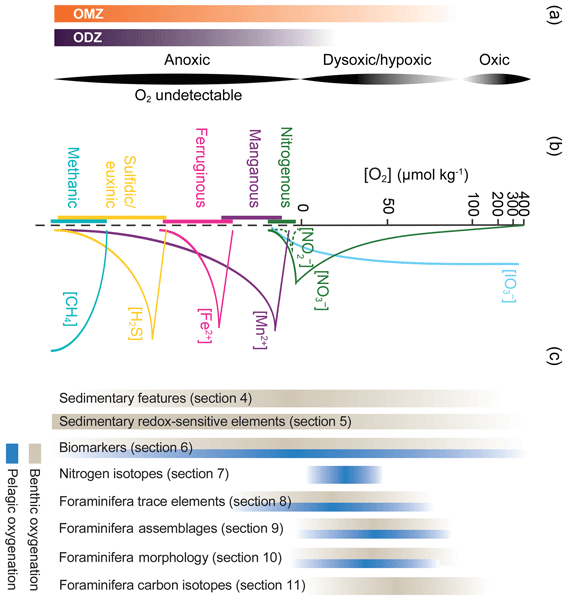
Babette A.A. Hoogakker, Catherine Davis, Yi Wang, Stephanie Kusch, Katrina Nilsson-Kerr, Dalton S. Hardisty, Allison Jacobel, Dharma Reyes Macaya, Nicolaas Glock, Sha Ni, Julio Sepúlveda, Abby Ren, Alexandra Auderset, Anya V. Hess, Katrin J. Meissner, Jorge Cardich, Robert Anderson, Christine Barras, Chandranath Basak, Harold J. Bradbury, Inda Brinkmann, Alexis Castillo, Madelyn Cook, Kassandra Costa, Constance Choquel, Paula Diz, Jonas Donnenfield, Felix J. Elling, Zeynep Erdem, Helena L. Filipsson, Sebastián Garrido, Julia Gottschalk, Anjaly Govindankutty Menon, Jeroen Groeneveld, Christian Hallmann, Ingrid Hendy, Rick Hennekam, Wanyi Lu, Jean Lynch-Stieglitz, Lélia Matos, Alfredo Martínez-García, Giulia Molina, Práxedes Muñoz, Simone Moretti, Jennifer Morford, Sophie Nuber, Svetlana Radionovskaya, Morgan Reed Raven, Christopher J. Somes, Anja S. Studer, Kazuyo Tachikawa, Raúl Tapia, Martin Tetard, Tyler Vollmer, Xingchen Wang, Shuzhuang Wu, Yan Zhang, Xin-Yuan Zheng, and Yuxin Zhou
Biogeosciences, 22, 863–957, https://doi.org/10.5194/bg-22-863-2025, https://doi.org/10.5194/bg-22-863-2025, 2025
Short summary
Short summary
Paleo-oxygen proxies can extend current records, constrain pre-anthropogenic baselines, provide datasets necessary to test climate models under different boundary conditions, and ultimately understand how ocean oxygenation responds on longer timescales. Here we summarize current proxies used for the reconstruction of Cenozoic seawater oxygen levels. This includes an overview of the proxy's history, how it works, resources required, limitations, and future recommendations.
Emily Klonicki-Ference, Daniel R. Utter, Kira Homola, John S. Magyar, Victoria J. Orphan, David W. Caress, Jennifer B. Paduan, Lisa Levin, and Tina Treude
EGUsphere, https://doi.org/10.5194/egusphere-2026-4409, https://doi.org/10.5194/egusphere-2026-4409, 2026
This preprint is open for discussion and under review for Biogeosciences (BG).
Short summary
Short summary
Methane released from the seafloor can affect the ocean far beyond active seep sites. We studied three methane seeps off Southern California and found that microbes consuming methane remain active hundreds of metres from the source because methane and microbial cells are carried by water movement. These findings show that methane influences larger areas of the deep ocean than previously recognized and plays a broader role in marine carbon cycling.
Aman Akeerath Mundanatt, Silvia Vidal-Melgosa, Leonard Rößler, Kevin W. Becker, Juliane Müller, and Jan-Hendrik Hehemann
EGUsphere, https://doi.org/10.5194/egusphere-2026-4401, https://doi.org/10.5194/egusphere-2026-4401, 2026
Short summary
Short summary
Marine algae convert carbon dioxide to sugars by photosynthesis in the ocean. Some complex sugars like fucoidans produced by brown algae, and diatoms, form particles and are transported to the seafloor. In this study, we were able to isolate and quantify fucoidans using a combination of various analytical methods. This approach revealed to us that fucoidans are preserved in the Bransfield Strait sediments, thereby removing carbon for 11800 years.
Audrey McManemin, Catherine Juéry, Vincent Blandin, Matthew Baker, Stéphane Bauguitte, Dominik Brunner, Philippine Burdeau, James Lawrence France, Anders M. Fredenslund, Andreas Hueni, Gerrit Kuhlmann, Patryk Łakomiec, Sando Meier, Roberto Paglini, Roubina Papaconstantinou, Jean-Daniel Paris, Pierre-Yves Quehe, Thomas Röckmann, Charlotte Scheutz, Martina Schmidt, Marius Vögtli, Julia B. Wietzel, and Adam R. Brandt
EGUsphere, https://doi.org/10.5194/egusphere-2026-1744, https://doi.org/10.5194/egusphere-2026-1744, 2026
Short summary
Short summary
Researchers tested five university-led systems to measure methane leaks at a facility in France. By releasing known amounts of gas, researchers checked if mobile tools on vehicles and planes could accurately detect and quantify emissions. Most sensors were excellent at finding leaks, but their accuracy in measuring the exact emission rate varied. Weather, especially low wind, significantly impacted results. These findings help improve how we track greenhouse gases to meet climate goals.
Tom Avikasis Cohen, Dror Angel, and Anna Brook
ISPRS Ann. Photogramm. Remote Sens. Spatial Inf. Sci., XI-3-2026, 865–870, https://doi.org/10.5194/isprs-annals-XI-3-2026-865-2026, https://doi.org/10.5194/isprs-annals-XI-3-2026-865-2026, 2026
Haitham Ezzy, Dror Angel, and Anna Brook
ISPRS Ann. Photogramm. Remote Sens. Spatial Inf. Sci., XI-2-2026, 577–583, https://doi.org/10.5194/isprs-annals-XI-2-2026-577-2026, https://doi.org/10.5194/isprs-annals-XI-2-2026-577-2026, 2026
Manuel Vargas-Yáñez, Orens Pasqueron de Fommervault, Emanuela Clementi, Christian Ferrarin, Svitlana Liubertseva, Diego Álvarez-Berastegui, Baptiste Mourre, Salvatore Aronica, Rosa Balbin, Joaquín Ballabrera-Poy, Sana Ben Ismail, Nathaniel Benssousan, Ismail Bessa, Alicia Blanco, Anthony Bosse, Evi Bourma, François Bourrin, Carlo Brandini, Fulvio Capodici, Clara Casals-Baixas, Branko Cermelj, Giuseppe Ciraolo, Pascal Conan, Laurent Coppola, Lorenzo Corgnati, Joaquín del Río, Emilie Diamond Riquier, Lara Diaz-Barroso, Bartolomeo Doronzo, Xavier Durrieu de Madron, Milad Fakhri, Costantine Frangoulis, Claudia Fratianni, Emilio García-Ladona, Jesus García-Lafuente, M. Carmen García-Martínez, Joaquín Garrabou, Josep Gasol, Adam Gauci, Frédéric Gazeau, Gerard Gregory, Abed El Raman Hassoun, Jordi Isern-Fontanet, Dominique Lefevre, Nadia Lo Bue, Guiomar López, Pablo Lorente, Deny Malengros, Ramon Massana, Sinan Mavruk, Stefano Miserocchi, Behzad Mostajir, Laure Mousseau, Francina Moya, Antonio Novellino, Arianna Orasi, Emanuele Organelli, Vicent Ouisse, Tal Ozer, Begoña Pérez-Gómez, Susana Pérez-Rubio, Leonidas Perivoliotis, Georges Petihakis, Anne Petrenko, Sebastien Pinel, Xavier Pitarch, Angela Pomaro, Lucía Quirós-Collazos, Emma Reyes, Simone Sammartino, Anna Sánchez-Vidal, Katrin Schroeder, Stefano Taddei, Elena Tel, Pierre Testor, Marco Torri, Daniela Turk, Laura Ursella, Dimitris Velaoras, Francesca Vidussi, Ivica Vilivić, Enrico Zambiachi, D. Nikolaos Zarokanellos, George Zodiatis, and Vanessa Cardin
EGUsphere, https://doi.org/10.5194/egusphere-2026-2632, https://doi.org/10.5194/egusphere-2026-2632, 2026
Short summary
Short summary
This work compiles current marine observation capabilities in the Mediterranean Sea, making this information accessible to scientists, organizations, stakeholders, and environmental policymakers. It supports initiatives such as Copernicus Marine Service, EMODNet, the European Ocean Pact, and EU directives. It is intended as a living resource to be updated, identifying strengths and gaps in Mediterranean observation systems.
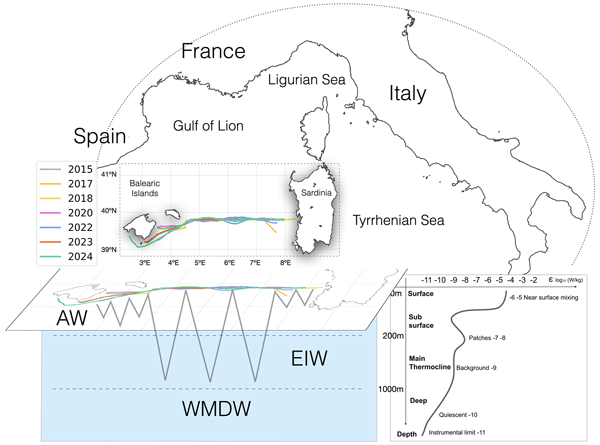
Florian Volmer Martin Kokoszka, Mireno Borghini, Katrin Schroeder, Jacopo Chiggiato, Joaquín Tintoré, Nikolaos Dimitrios Zarokanellos, Albert Miralles, Patricia Rivera Rodríguez, Manuel Rubio, Miguel Charcos, Benjamín Casas, and Anneke ten Doeschate
Earth Syst. Sci. Data, 18, 2203–2226, https://doi.org/10.5194/essd-18-2203-2026, https://doi.org/10.5194/essd-18-2203-2026, 2026
Short summary
Short summary
We present a unique dataset of underwater measurements collected by an autonomous glider in the western Mediterranean Sea. It reveals how ocean layers mix over seasons and years. Using sensors to detect small scale water movements, we estimated how mechanical energy and heat are transferred in the ocean. These data help scientists better understand ocean circulation and climate effects. All files and methods are openly shared to support future research.

Andreas Neumann, Justus E. E. van Beusekom, Alexander Bratek, Jana Friedrich, Jürgen Möbius, Tina Sanders, Hendrik Wolschke, and Kirstin Dähnke
Biogeosciences, 23, 1103–1116, https://doi.org/10.5194/bg-23-1103-2026, https://doi.org/10.5194/bg-23-1103-2026, 2026
Short summary
Short summary
The North-Western shelf of the Black Sea is substantially influenced by the discharge of nutrients from River Danube. We have sampled the sediment there and measured particulate carbon and nitrogen to reconstruct the variability of nitrogen sources to the NW shelf. Our results demonstrate that the balance of riverine nitrogen input and marine nitrogen fixation is sensitive to climate changes. Nitrogen from human activities is detectable in NW shelf sediment since the 12th century.
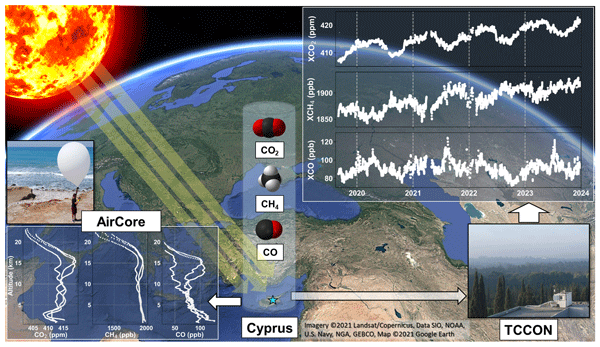
Constantina Rousogenous, Christof Petri, Pierre-Yves Quéhé, Thomas Laemmel, Joshua L. Laughner, Maximilien Desservettaz, Michael Pikridas, Michel Ramonet, Efstratios Bourtsoukidis, Matthias Buschmann, Justus Notholt, Thorsten Warneke, Jean-Daniel Paris, Jean Sciare, and Mihalis Vrekoussis
Atmos. Meas. Tech., 19, 565–581, https://doi.org/10.5194/amt-19-565-2026, https://doi.org/10.5194/amt-19-565-2026, 2026
Short summary
Short summary
The Eastern Mediterranean and Middle East is a greenhouse gas emission hotspot but lacks atmospheric monitoring. Our study introduces the first Total Carbon Column Observing Network site in this region, in Cyprus, providing high-precision columnar measurement of key greenhouse gases. This new dataset enhances global climate monitoring efforts, supports the validation of satellites, will help assess regional emission trends, filling a critical observational gap in this climate-sensitive region.
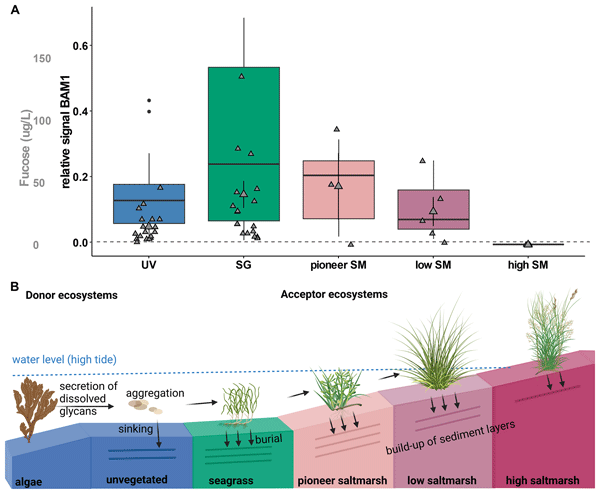
Inga Hellige, Aman Akeerath Mundanatt, Jana C. Massing, and Jan-Hendrik Hehemann
Biogeosciences, 23, 387–398, https://doi.org/10.5194/bg-23-387-2026, https://doi.org/10.5194/bg-23-387-2026, 2026
Short summary
Short summary
Coastal plant habitats such as mangroves, seagrass meadows and saltmarshes store carbon. While these plants absorb carbon dioxide and trap carbon in sediments via their roots, we also discovered that carbon from algae is transported into these systems and preserved in the soil. By analyzing sugars from plants and algae, we show that restoring these ecosystems helps lock away both local and distant carbon, offering powerful benefits for climate and biodiversity.
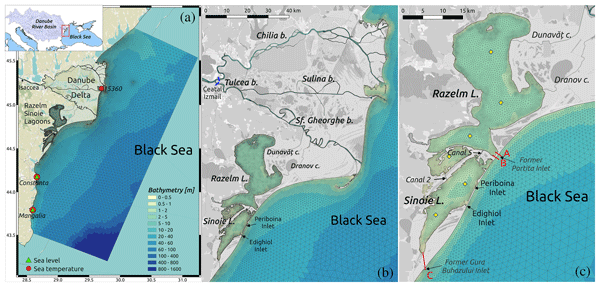
Christian Ferrarin, Debora Bellafiore, Alejandro Paladio Hernandez, Irina Dinu, and Adrian Stanica
Ocean Sci., 21, 3291–3310, https://doi.org/10.5194/os-21-3291-2025, https://doi.org/10.5194/os-21-3291-2025, 2025
Short summary
Short summary
This paper investigates the hydrodynamic processes among the interconnected water bodies (river branches, lagoons, and the coastal sea) that together form the Danube Delta river-sea continuum. To achieve this, we implemented the SHYFEM (System of HydrodYnamic Finite Element Modules) model across the entire Danube Delta. The model was applied to investigate the distribution of water among river branches, coastal dynamics in front of the delta, the renewal capacity of the lagoons, and the potential impacts of lagoon-sea reconnection solutions.
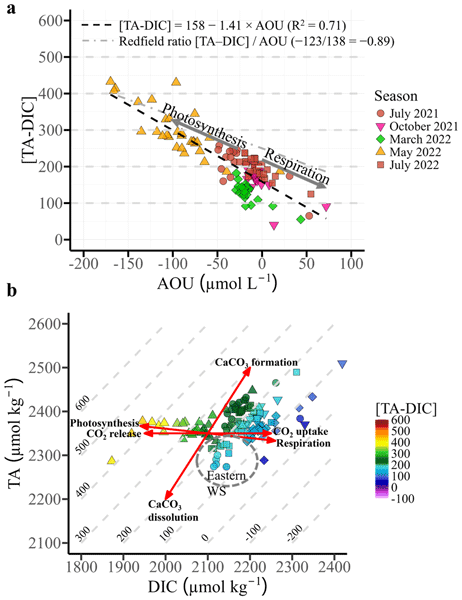
Julia Meyer, Yoana G. Voynova, Bryce Van Dam, Lara Luitjens, Dagmar Daehne, and Helmuth Thomas
Biogeosciences, 22, 6255–6273, https://doi.org/10.5194/bg-22-6255-2025, https://doi.org/10.5194/bg-22-6255-2025, 2025
Short summary
Short summary
The study highlights the inter-seasonal variability of the carbonate dynamics of the East Frisian Wadden Sea, the world's largest intertidal area. During spring, increased biological activity leads to lower CO2 and nitrate levels, while total alkalinity (TA) rises slightly. In summer, TA increases, enhancing the ocean's ability to absorb CO2. Our research emphasizes the vital role of these intertidal regions in regulating carbon, contributing to a better understanding of carbon storage.
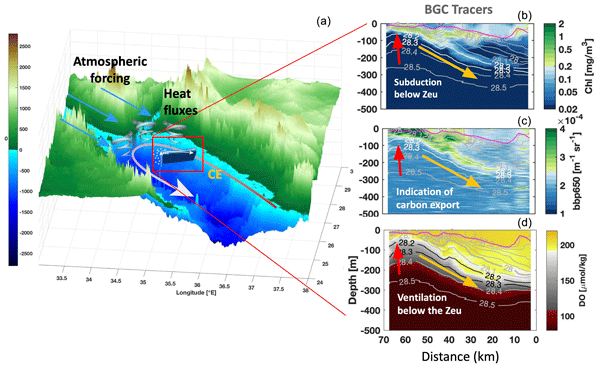
Lina Eyouni, Zoi Kokkini, Nikolaos D. Zarokanellos, and Burton H. Jones
Ocean Sci., 21, 2345–2366, https://doi.org/10.5194/os-21-2345-2025, https://doi.org/10.5194/os-21-2345-2025, 2025
Short summary
Short summary
This study examines how multiple processes in the northern Red Sea form Red Sea Outflow Water and affect biogeochemical fluxes. Using glider data, wind and air–sea flux reanalysis, and satellite observations, it highlights seasonal evolution. Eddy-driven upwelling exposes cool water to heat loss and evaporation, fueling primary productivity. Circulation patterns block inflows, extend cooling, and subduct water into the ocean interior, influencing regional dynamics.
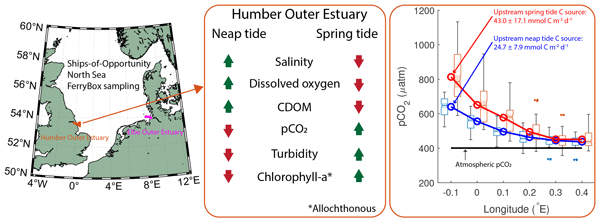
Vlad A. Macovei, Louise C. V. Rewrie, Rüdiger Röttgers, and Yoana G. Voynova
Biogeosciences, 22, 3375–3396, https://doi.org/10.5194/bg-22-3375-2025, https://doi.org/10.5194/bg-22-3375-2025, 2025
Short summary
Short summary
We found that biogeochemical variability at the land–sea interface (LSI) in two major temperate estuaries is modulated by the 14 d spring–neap tidal cycle, with large effects on dissolved inorganic and organic carbon concentrations and distribution. As this effect increases the strength of the carbon source to the atmosphere by up to 74 % during spring tide, it should be accounted for in regional models, which aim to resolve biogeochemical processing at the LSI.
Tom Avikasis Cohen, Dror Angel, and Anna Brook
Int. Arch. Photogramm. Remote Sens. Spatial Inf. Sci., XLVIII-M-7-2025, 305–310, https://doi.org/10.5194/isprs-archives-XLVIII-M-7-2025-305-2025, https://doi.org/10.5194/isprs-archives-XLVIII-M-7-2025-305-2025, 2025
Babette A.A. Hoogakker, Catherine Davis, Yi Wang, Stephanie Kusch, Katrina Nilsson-Kerr, Dalton S. Hardisty, Allison Jacobel, Dharma Reyes Macaya, Nicolaas Glock, Sha Ni, Julio Sepúlveda, Abby Ren, Alexandra Auderset, Anya V. Hess, Katrin J. Meissner, Jorge Cardich, Robert Anderson, Christine Barras, Chandranath Basak, Harold J. Bradbury, Inda Brinkmann, Alexis Castillo, Madelyn Cook, Kassandra Costa, Constance Choquel, Paula Diz, Jonas Donnenfield, Felix J. Elling, Zeynep Erdem, Helena L. Filipsson, Sebastián Garrido, Julia Gottschalk, Anjaly Govindankutty Menon, Jeroen Groeneveld, Christian Hallmann, Ingrid Hendy, Rick Hennekam, Wanyi Lu, Jean Lynch-Stieglitz, Lélia Matos, Alfredo Martínez-García, Giulia Molina, Práxedes Muñoz, Simone Moretti, Jennifer Morford, Sophie Nuber, Svetlana Radionovskaya, Morgan Reed Raven, Christopher J. Somes, Anja S. Studer, Kazuyo Tachikawa, Raúl Tapia, Martin Tetard, Tyler Vollmer, Xingchen Wang, Shuzhuang Wu, Yan Zhang, Xin-Yuan Zheng, and Yuxin Zhou
Biogeosciences, 22, 863–957, https://doi.org/10.5194/bg-22-863-2025, https://doi.org/10.5194/bg-22-863-2025, 2025
Short summary
Short summary
Paleo-oxygen proxies can extend current records, constrain pre-anthropogenic baselines, provide datasets necessary to test climate models under different boundary conditions, and ultimately understand how ocean oxygenation responds on longer timescales. Here we summarize current proxies used for the reconstruction of Cenozoic seawater oxygen levels. This includes an overview of the proxy's history, how it works, resources required, limitations, and future recommendations.
Xuefeng Peng, David J. Yousavich, Annie Bourbonnais, Frank Wenzhöfer, Felix Janssen, Tina Treude, and David L. Valentine
Biogeosciences, 21, 3041–3052, https://doi.org/10.5194/bg-21-3041-2024, https://doi.org/10.5194/bg-21-3041-2024, 2024
Short summary
Short summary
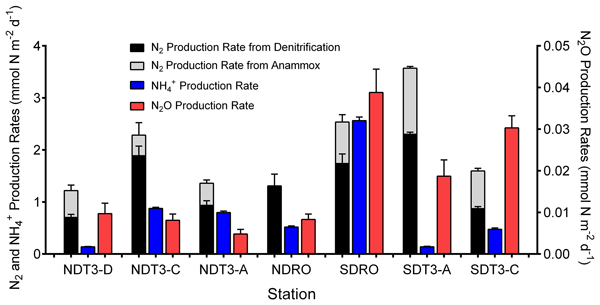
Biologically available (fixed) nitrogen (N) is a limiting nutrient for life in the ocean. Under low-oxygen conditions, fixed N is either removed via denitrification or retained via dissimilatory nitrate reduction to ammonia (DNRA). Using in situ incubations in the Santa Barbara Basin, which undergoes seasonal anoxia, we found that benthic denitrification was the dominant nitrate reduction process, while nitrate availability and organic carbon content control the relative importance of DNRA.
Sophie Wittig, Antoine Berchet, Isabelle Pison, Marielle Saunois, and Jean-Daniel Paris
Atmos. Chem. Phys., 24, 6359–6373, https://doi.org/10.5194/acp-24-6359-2024, https://doi.org/10.5194/acp-24-6359-2024, 2024
Short summary
Short summary
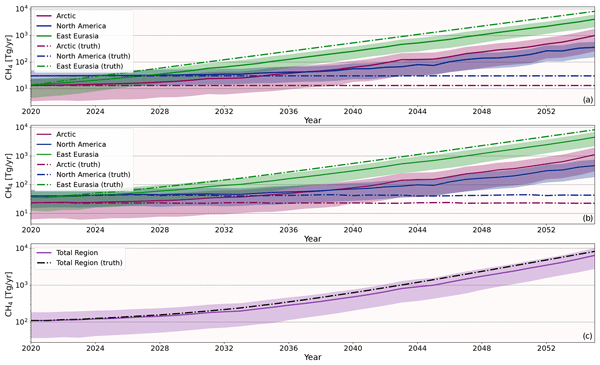
The aim of this work is to analyse how accurately a methane bomb event could be detected with the current and a hypothetically extended stationary observation network in the Arctic. For this, we incorporate synthetically modelled possible future CH4 concentrations based on plausible emission scenarios into an inverse modelling framework. We analyse how well the increase is detected in different Arctic regions and evaluate the impact of additional observation sites in this respect.
Yunsong Liu, Jean-Daniel Paris, Gregoire Broquet, Violeta Bescós Roy, Tania Meixus Fernandez, Rasmus Andersen, Andrés Russu Berlanga, Emil Christensen, Yann Courtois, Sebastian Dominok, Corentin Dussenne, Travis Eckert, Andrew Finlayson, Aurora Fernández de la Fuente, Catlin Gunn, Ram Hashmonay, Juliano Grigoleto Hayashi, Jonathan Helmore, Soeren Honsel, Fabrizio Innocenti, Matti Irjala, Torgrim Log, Cristina Lopez, Francisco Cortés Martínez, Jonathan Martinez, Adrien Massardier, Helle Gottschalk Nygaard, Paula Agregan Reboredo, Elodie Rousset, Axel Scherello, Matthias Ulbricht, Damien Weidmann, Oliver Williams, Nigel Yarrow, Murès Zarea, Robert Ziegler, Jean Sciare, Mihalis Vrekoussis, and Philippe Bousquet
Atmos. Meas. Tech., 17, 1633–1649, https://doi.org/10.5194/amt-17-1633-2024, https://doi.org/10.5194/amt-17-1633-2024, 2024
Short summary
Short summary
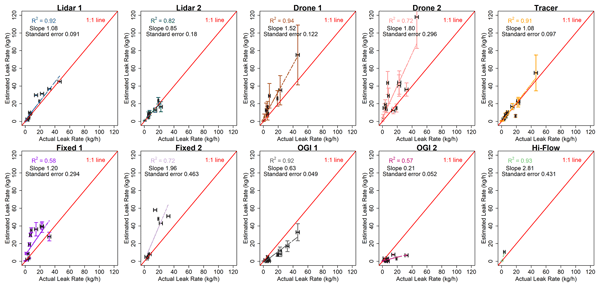
We investigated the performance of 10 methane emission quantification techniques in a blind controlled-release experiment at an inerted natural gas compressor station. We reported their respective strengths, weaknesses, and potential complementarity depending on the emission rates and atmospheric conditions. Additionally, we assess the dependence of emission quantification performance on key parameters such as wind speed, deployment constraints, and measurement duration.
Pramod Kumar, Christopher Caldow, Grégoire Broquet, Adil Shah, Olivier Laurent, Camille Yver-Kwok, Sebastien Ars, Sara Defratyka, Susan Warao Gichuki, Luc Lienhardt, Mathis Lozano, Jean-Daniel Paris, Felix Vogel, Caroline Bouchet, Elisa Allegrini, Robert Kelly, Catherine Juery, and Philippe Ciais
Atmos. Meas. Tech., 17, 1229–1250, https://doi.org/10.5194/amt-17-1229-2024, https://doi.org/10.5194/amt-17-1229-2024, 2024
Short summary
Short summary
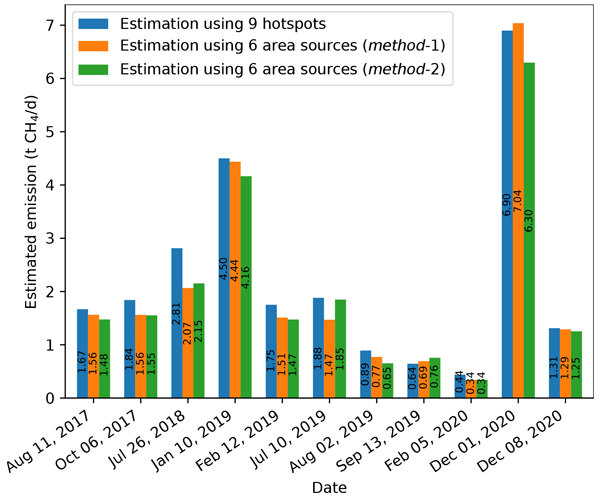
This study presents a series of mobile measurement campaigns to monitor the CH4 emissions from an active landfill. These measurements are processed using a Gaussian plume model and atmospheric inversion techniques to quantify the landfill CH4 emissions. The methane emission estimates range between ~0.4 and ~7 t CH4 per day, and their variations are analyzed. The robustness of the estimates is assessed depending on the distance of the measurements from the potential sources in the landfill.
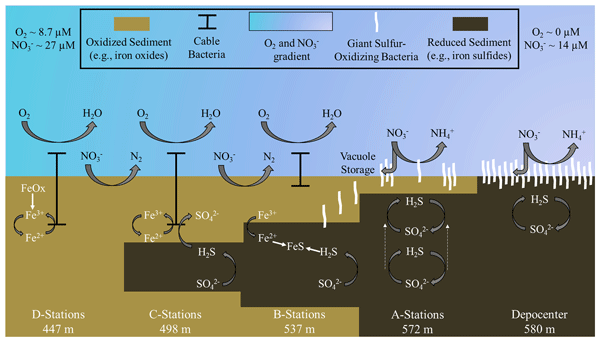
David J. Yousavich, De'Marcus Robinson, Xuefeng Peng, Sebastian J. E. Krause, Frank Wenzhöfer, Felix Janssen, Na Liu, Jonathan Tarn, Franklin Kinnaman, David L. Valentine, and Tina Treude
Biogeosciences, 21, 789–809, https://doi.org/10.5194/bg-21-789-2024, https://doi.org/10.5194/bg-21-789-2024, 2024
Short summary
Short summary
Declining oxygen (O2) concentrations in coastal oceans can threaten people’s ways of life and food supplies. Here, we investigate how mats of bacteria that proliferate on the seafloor of the Santa Barbara Basin sustain and potentially worsen these O2 depletion events through their unique chemoautotrophic metabolism. Our study shows how changes in seafloor microbiology and geochemistry brought on by declining O2 concentrations can help these mats grow as well as how that growth affects the basin.
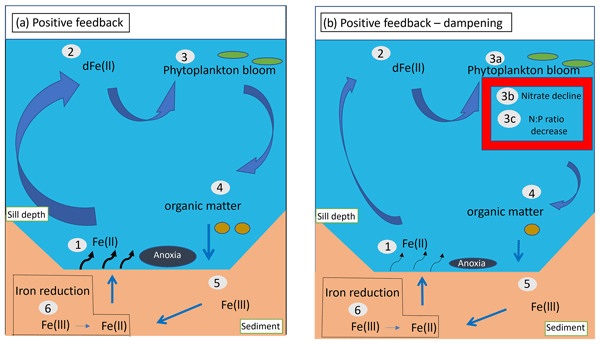
De'Marcus Robinson, Anh L. D. Pham, David J. Yousavich, Felix Janssen, Frank Wenzhöfer, Eleanor C. Arrington, Kelsey M. Gosselin, Marco Sandoval-Belmar, Matthew Mar, David L. Valentine, Daniele Bianchi, and Tina Treude
Biogeosciences, 21, 773–788, https://doi.org/10.5194/bg-21-773-2024, https://doi.org/10.5194/bg-21-773-2024, 2024
Short summary
Short summary
The present study suggests that high release of ferrous iron from the seafloor of the oxygen-deficient Santa Barabara Basin (California) supports surface primary productivity, creating positive feedback on seafloor iron release by enhancing low-oxygen conditions in the basin.
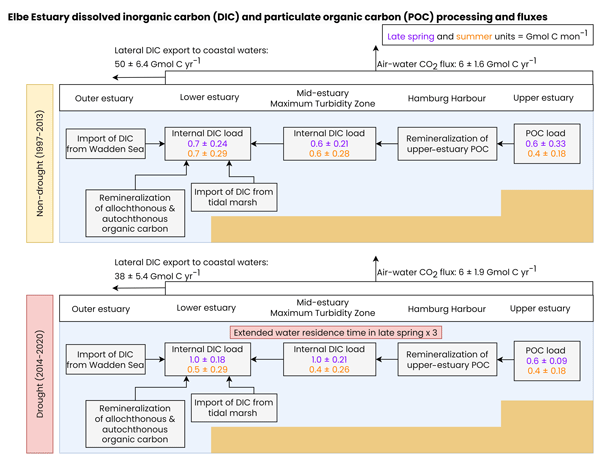
Louise C. V. Rewrie, Burkard Baschek, Justus E. E. van Beusekom, Arne Körtzinger, Gregor Ollesch, and Yoana G. Voynova
Biogeosciences, 20, 4931–4947, https://doi.org/10.5194/bg-20-4931-2023, https://doi.org/10.5194/bg-20-4931-2023, 2023
Short summary
Short summary
After heavy pollution in the 1980s, a long-term inorganic carbon increase in the Elbe Estuary (1997–2020) was fueled by phytoplankton and organic carbon production in the upper estuary, associated with improved water quality. A recent drought (2014–2020) modulated the trend, extending the water residence time and the dry summer season into May. The drought enhanced production of inorganic carbon in the estuary but significantly decreased the annual inorganic carbon export to coastal waters.
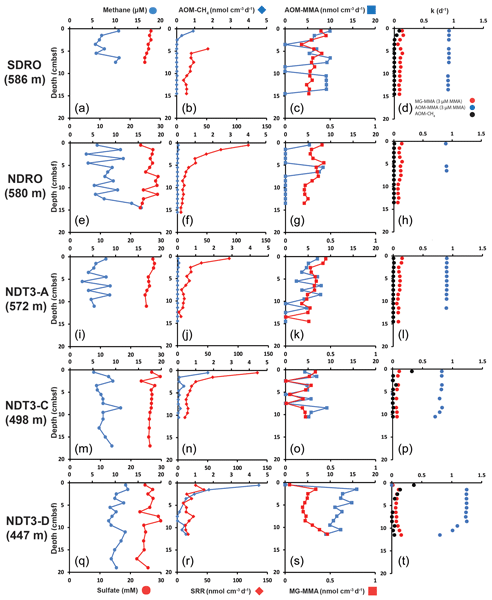
Sebastian J. E. Krause, Jiarui Liu, David J. Yousavich, DeMarcus Robinson, David W. Hoyt, Qianhui Qin, Frank Wenzhöfer, Felix Janssen, David L. Valentine, and Tina Treude
Biogeosciences, 20, 4377–4390, https://doi.org/10.5194/bg-20-4377-2023, https://doi.org/10.5194/bg-20-4377-2023, 2023
Short summary
Short summary
Methane is a potent greenhouse gas, and hence it is important to understand its sources and sinks in the environment. Here we present new data from organic-rich surface sediments below an oxygen minimum zone off the coast of California (Santa Barbara Basin) demonstrating the simultaneous microbial production and consumption of methane, which appears to be an important process preventing the build-up of methane in these sediments and the emission into the water column and atmosphere.
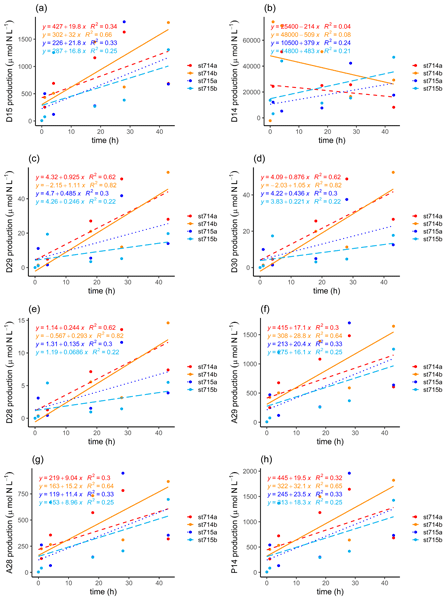
Mona Norbisrath, Andreas Neumann, Kirstin Dähnke, Tina Sanders, Andreas Schöl, Justus E. E. van Beusekom, and Helmuth Thomas
Biogeosciences, 20, 4307–4321, https://doi.org/10.5194/bg-20-4307-2023, https://doi.org/10.5194/bg-20-4307-2023, 2023
Short summary
Short summary
Total alkalinity (TA) is the oceanic capacity to store CO2. Estuaries can be a TA source. Anaerobic metabolic pathways like denitrification (reduction of NO3− to N2) generate TA and are a major nitrogen (N) sink. Another important N sink is anammox that transforms NH4+ with NO2− into N2 without TA generation. By combining TA and N2 production, we identified a TA source, denitrification, occurring in the water column and suggest anammox as the dominant N2 producer in the bottom layer of the Ems.
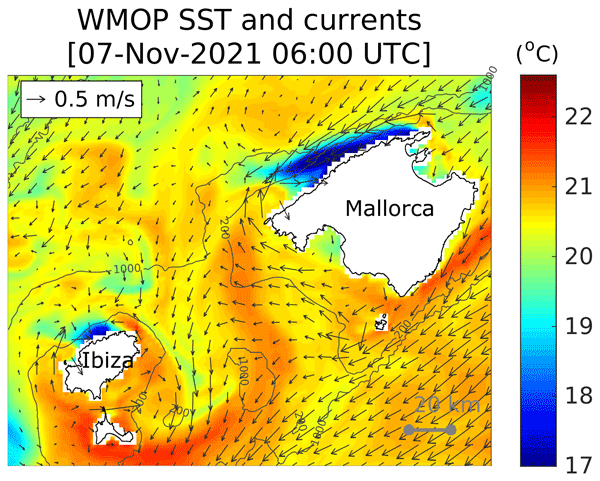
Baptiste Mourre, Emma Reyes, Pablo Lorente, Alex Santana, Jaime Hernández-Lasheras, Ismael Hernández-Carrasco, Maximo García-Jove, and Nikolaos D. Zarokanellos
State Planet, 1-osr7, 15, https://doi.org/10.5194/sp-1-osr7-15-2023, https://doi.org/10.5194/sp-1-osr7-15-2023, 2023
Short summary
Short summary
We characterize the signature of an intense storm-induced coastal upwelling along the north-western coast of the Balearic Islands in 2021 using a high-resolution operational prediction model. The upwelling, with a duration of 3 d and a spatial offshore extension of 20 km, led to cross-shore surface temperature differences of up to 6 °C. It was the most intense event of the past 9 years in terms of the impact on temperature and the second-most intense event in terms of cross-shore transports.
Sara M. Defratyka, James L. France, Rebecca E. Fisher, Dave Lowry, Julianne M. Fernandez, Semra Bakkaloglu, Camille Yver-Kwok, Jean-Daniel Paris, Philippe Bousquet, Tim Arnold, Chris Rennick, Jon Helmore, Nigel Yarrow, and Euan G. Nisbet
EGUsphere, https://doi.org/10.5194/egusphere-2023-1490, https://doi.org/10.5194/egusphere-2023-1490, 2023
Preprint archived
Short summary
Short summary
We are focused on verification of δ13CH4 measurements in near-source conditions and we have provided an insight into the impact of chosen calculation methods for determined isotopic signatures. Our study offers a step forward for establishing an unified, robust, and reliable analytical technique to determine δ13CH4 of methane sources. Our recommended analytical approach reduces biases and uncertainties coming from measurement conditions, data clustering and various available fitting methods.
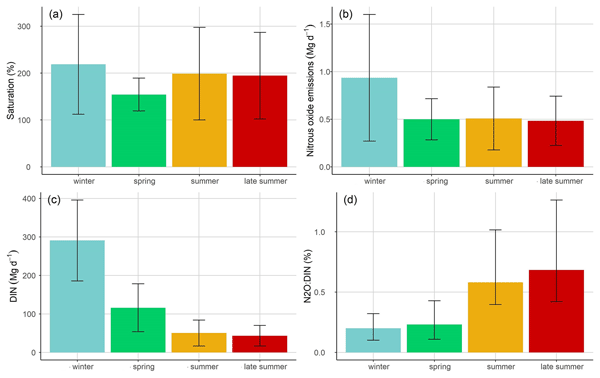
Gesa Schulz, Tina Sanders, Yoana G. Voynova, Hermann W. Bange, and Kirstin Dähnke
Biogeosciences, 20, 3229–3247, https://doi.org/10.5194/bg-20-3229-2023, https://doi.org/10.5194/bg-20-3229-2023, 2023
Short summary
Short summary
Nitrous oxide (N2O) is an important greenhouse gas. However, N2O emissions from estuaries underlie significant uncertainties due to limited data availability and high spatiotemporal variability. We found the Elbe Estuary (Germany) to be a year-round source of N2O, with the highest emissions in winter along with high nitrogen loads. However, in spring and summer, N2O emissions did not decrease alongside lower nitrogen loads because organic matter fueled in situ N2O production along the estuary.
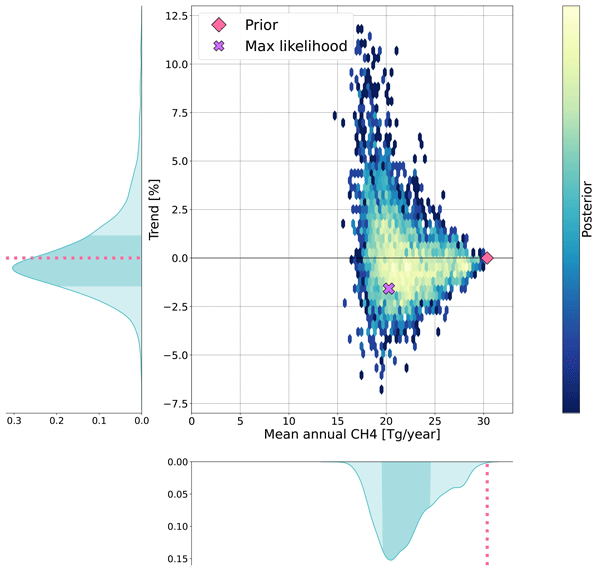
Sophie Wittig, Antoine Berchet, Isabelle Pison, Marielle Saunois, Joël Thanwerdas, Adrien Martinez, Jean-Daniel Paris, Toshinobu Machida, Motoki Sasakawa, Douglas E. J. Worthy, Xin Lan, Rona L. Thompson, Espen Sollum, and Mikhail Arshinov
Atmos. Chem. Phys., 23, 6457–6485, https://doi.org/10.5194/acp-23-6457-2023, https://doi.org/10.5194/acp-23-6457-2023, 2023
Short summary
Short summary
Here, an inverse modelling approach is applied to estimate CH4 sources and sinks in the Arctic from 2008 to 2019. We study the magnitude, seasonal patterns and trends from different sources during recent years. We also assess how the current observation network helps to constrain fluxes. We find that constraints are only significant for North America and, to a lesser extent, West Siberia, where the observation network is relatively dense. We find no clear trend over the period of inversion.
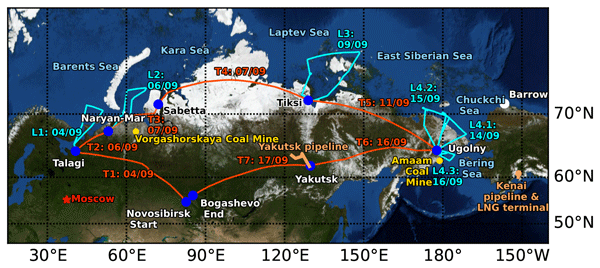
Clément Narbaud, Jean-Daniel Paris, Sophie Wittig, Antoine Berchet, Marielle Saunois, Philippe Nédélec, Boris D. Belan, Mikhail Y. Arshinov, Sergei B. Belan, Denis Davydov, Alexander Fofonov, and Artem Kozlov
Atmos. Chem. Phys., 23, 2293–2314, https://doi.org/10.5194/acp-23-2293-2023, https://doi.org/10.5194/acp-23-2293-2023, 2023
Short summary
Short summary
We measured CH4 and CO2 from aircraft over the Russian Arctic. Analyzing our data with the Lagrangian model FLEXPART, we find a sharp east–west gradient in atmospheric composition. Western Siberia is influenced by strong wetland CH4 emissions, deep CO2 gradient from biospheric uptake, and long-range transport from Europe and North America. Eastern flights document less variability. Over the Arctic Ocean, we find a small influence from marine CH4 emissions compatible with reasonable inventories.
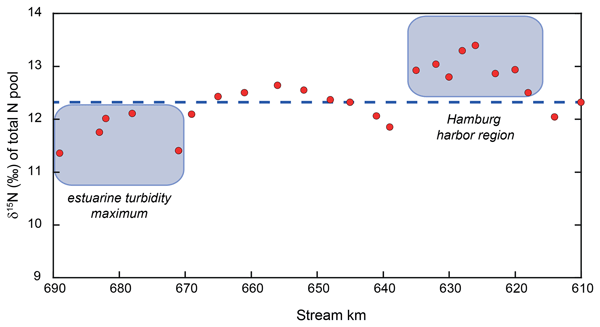
Kirstin Dähnke, Tina Sanders, Yoana Voynova, and Scott D. Wankel
Biogeosciences, 19, 5879–5891, https://doi.org/10.5194/bg-19-5879-2022, https://doi.org/10.5194/bg-19-5879-2022, 2022
Short summary
Short summary
Nitrogen is an important macronutrient that fuels algal production in rivers and coastal regions. We investigated the production and removal of nitrogen-bearing compounds in the freshwater section of the tidal Elbe Estuary and found that particles in the water column are key for the production and removal of water column nitrate. Using a stable isotope approach, we pinpointed regions where additional removal of nitrate or input from sediments plays an important role in estuarine biogeochemistry.
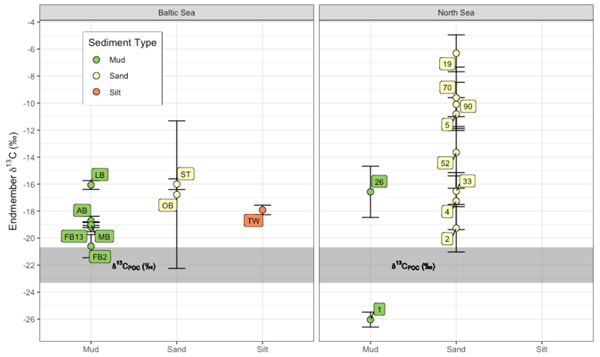
Bryce Van Dam, Nele Lehmann, Mary A. Zeller, Andreas Neumann, Daniel Pröfrock, Marko Lipka, Helmuth Thomas, and Michael Ernst Böttcher
Biogeosciences, 19, 3775–3789, https://doi.org/10.5194/bg-19-3775-2022, https://doi.org/10.5194/bg-19-3775-2022, 2022
Short summary
Short summary
We quantified sediment–water exchange at shallow sites in the North and Baltic seas. We found that porewater irrigation rates in the former were approximately twice as high as previously estimated, likely driven by relatively high bioirrigative activity. In contrast, we found small net fluxes of alkalinity, ranging from −35 µmol m−2 h−1 (uptake) to 53 µmol m−2 h−1 (release). We attribute this to low net denitrification, carbonate mineral (re-)precipitation, and sulfide (re-)oxidation.
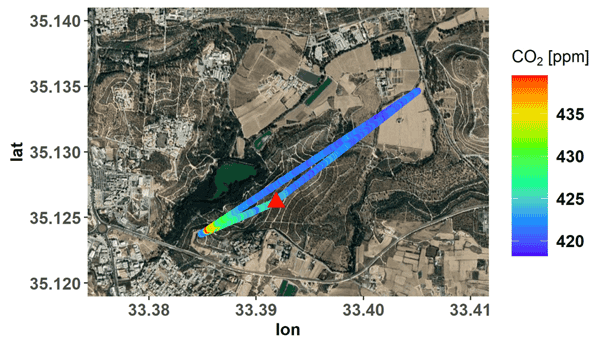
Yunsong Liu, Jean-Daniel Paris, Mihalis Vrekoussis, Panayiota Antoniou, Christos Constantinides, Maximilien Desservettaz, Christos Keleshis, Olivier Laurent, Andreas Leonidou, Carole Philippon, Panagiotis Vouterakos, Pierre-Yves Quéhé, Philippe Bousquet, and Jean Sciare
Atmos. Meas. Tech., 15, 4431–4442, https://doi.org/10.5194/amt-15-4431-2022, https://doi.org/10.5194/amt-15-4431-2022, 2022
Short summary
Short summary
This paper details laboratory-based and field developments of a cost-effective and compacted UAV CO2 sensor system to address the challenge of measuring CO2 with sufficient precision and acquisition frequency. We assess its performance extensively through laboratory and field tests and provide a case study in an urban area (Nicosia, Cyprus). We therefore expect that this portable system will be widely used for measuring CO2 emission and distribution in natural or urban environments.
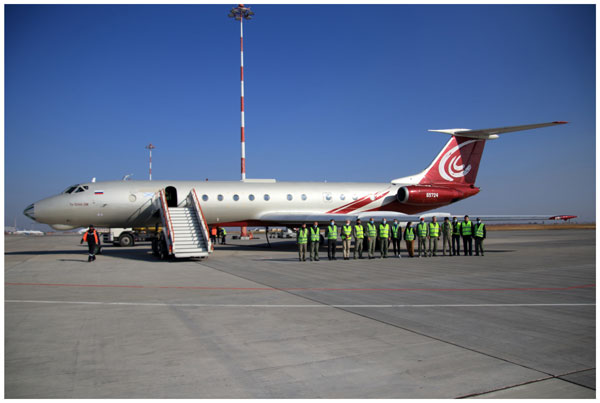
Boris D. Belan, Gerard Ancellet, Irina S. Andreeva, Pavel N. Antokhin, Viktoria G. Arshinova, Mikhail Y. Arshinov, Yurii S. Balin, Vladimir E. Barsuk, Sergei B. Belan, Dmitry G. Chernov, Denis K. Davydov, Alexander V. Fofonov, Georgii A. Ivlev, Sergei N. Kotel'nikov, Alexander S. Kozlov, Artem V. Kozlov, Katharine Law, Andrey V. Mikhal'chishin, Igor A. Moseikin, Sergei V. Nasonov, Philippe Nédélec, Olesya V. Okhlopkova, Sergei E. Ol'kin, Mikhail V. Panchenko, Jean-Daniel Paris, Iogannes E. Penner, Igor V. Ptashnik, Tatyana M. Rasskazchikova, Irina K. Reznikova, Oleg A. Romanovskii, Alexander S. Safatov, Denis E. Savkin, Denis V. Simonenkov, Tatyana K. Sklyadneva, Gennadii N. Tolmachev, Semyon V. Yakovlev, and Polina N. Zenkova
Atmos. Meas. Tech., 15, 3941–3967, https://doi.org/10.5194/amt-15-3941-2022, https://doi.org/10.5194/amt-15-3941-2022, 2022
Short summary
Short summary
The change of the global climate is most pronounced in the Arctic, where the air temperature increases faster than the global average. This is associated with an increase in the concentration of greenhouse gases in the atmosphere. It is important to study how the air composition in the Arctic changes in the changing climate. Thus this integrated experiment was carried out to measure the composition of the troposphere in the Russian sector of the Arctic from on board the aircraft laboratory.
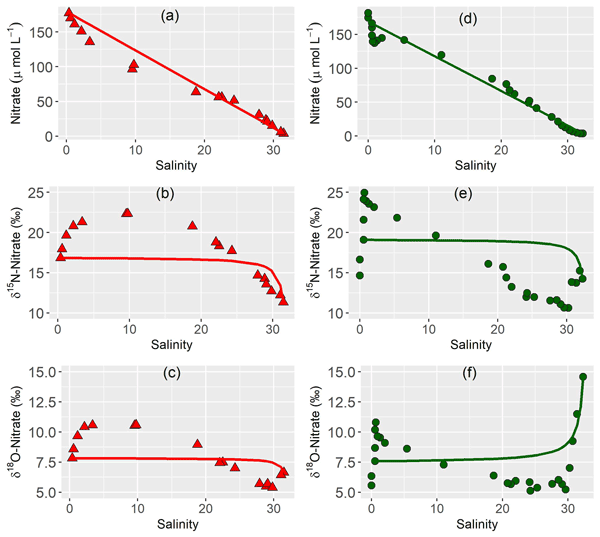
Gesa Schulz, Tina Sanders, Justus E. E. van Beusekom, Yoana G. Voynova, Andreas Schöl, and Kirstin Dähnke
Biogeosciences, 19, 2007–2024, https://doi.org/10.5194/bg-19-2007-2022, https://doi.org/10.5194/bg-19-2007-2022, 2022
Short summary
Short summary
Estuaries can significantly alter nutrient loads before reaching coastal waters. Our study of the heavily managed Ems estuary (Northern Germany) reveals three zones of nitrogen turnover along the estuary with water-column denitrification in the most upstream hyper-turbid part, nitrate production in the middle reaches and mixing/nitrate uptake in the North Sea. Suspended particulate matter was the overarching control on nitrogen cycling in the hyper-turbid estuary.
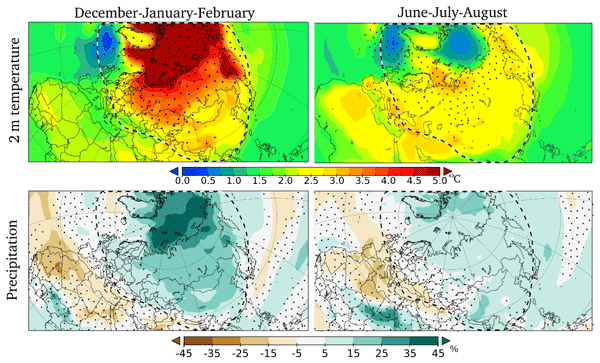
Hanna K. Lappalainen, Tuukka Petäjä, Timo Vihma, Jouni Räisänen, Alexander Baklanov, Sergey Chalov, Igor Esau, Ekaterina Ezhova, Matti Leppäranta, Dmitry Pozdnyakov, Jukka Pumpanen, Meinrat O. Andreae, Mikhail Arshinov, Eija Asmi, Jianhui Bai, Igor Bashmachnikov, Boris Belan, Federico Bianchi, Boris Biskaborn, Michael Boy, Jaana Bäck, Bin Cheng, Natalia Chubarova, Jonathan Duplissy, Egor Dyukarev, Konstantinos Eleftheriadis, Martin Forsius, Martin Heimann, Sirkku Juhola, Vladimir Konovalov, Igor Konovalov, Pavel Konstantinov, Kajar Köster, Elena Lapshina, Anna Lintunen, Alexander Mahura, Risto Makkonen, Svetlana Malkhazova, Ivan Mammarella, Stefano Mammola, Stephany Buenrostro Mazon, Outi Meinander, Eugene Mikhailov, Victoria Miles, Stanislav Myslenkov, Dmitry Orlov, Jean-Daniel Paris, Roberta Pirazzini, Olga Popovicheva, Jouni Pulliainen, Kimmo Rautiainen, Torsten Sachs, Vladimir Shevchenko, Andrey Skorokhod, Andreas Stohl, Elli Suhonen, Erik S. Thomson, Marina Tsidilina, Veli-Pekka Tynkkynen, Petteri Uotila, Aki Virkkula, Nadezhda Voropay, Tobias Wolf, Sayaka Yasunaka, Jiahua Zhang, Yubao Qiu, Aijun Ding, Huadong Guo, Valery Bondur, Nikolay Kasimov, Sergej Zilitinkevich, Veli-Matti Kerminen, and Markku Kulmala
Atmos. Chem. Phys., 22, 4413–4469, https://doi.org/10.5194/acp-22-4413-2022, https://doi.org/10.5194/acp-22-4413-2022, 2022
Short summary
Short summary
We summarize results during the last 5 years in the northern Eurasian region, especially from Russia, and introduce recent observations of the air quality in the urban environments in China. Although the scientific knowledge in these regions has increased, there are still gaps in our understanding of large-scale climate–Earth surface interactions and feedbacks. This arises from limitations in research infrastructures and integrative data analyses, hindering a comprehensive system analysis.
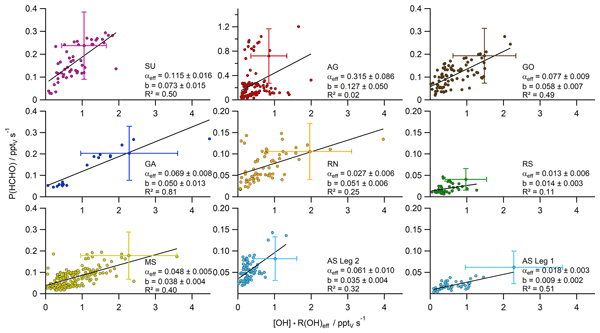
Dirk Dienhart, John N. Crowley, Efstratios Bourtsoukidis, Achim Edtbauer, Philipp G. Eger, Lisa Ernle, Hartwig Harder, Bettina Hottmann, Monica Martinez, Uwe Parchatka, Jean-Daniel Paris, Eva Y. Pfannerstill, Roland Rohloff, Jan Schuladen, Christof Stönner, Ivan Tadic, Sebastian Tauer, Nijing Wang, Jonathan Williams, Jos Lelieveld, and Horst Fischer
Atmos. Chem. Phys., 21, 17373–17388, https://doi.org/10.5194/acp-21-17373-2021, https://doi.org/10.5194/acp-21-17373-2021, 2021
Short summary
Short summary
We present the first ship-based in situ measurements of formaldehyde (HCHO), hydroxyl radicals (OH) and the OH reactivity around the Arabian Peninsula. Regression analysis of the HCHO production rate and the related OH chemistry revealed the regional HCHO yield αeff, which represents the different chemical regimes encountered. Highest values were found for the Arabian Gulf (also known as the Persian Gulf), which highlights this region as a hotspot of photochemical air pollution.
Cited articles
Addy, S. K. and Behrens, E. W.: Time of accumulation of hypersaline anoxic brine in Orca basin (Gulf of Mexico), Mar. Geol., 37, 241–252, https://doi.org/10.1016/0025-3227(80)90104-8, 1980.
Adepoju, L. A., McKaig, J. M., Salcedo, R. S. R., Martinez, A., Buessecker, S., Skoog, E. J., Elbon, C. E., Paris, E. R., Desmarais, M., Sephus, C. D., Pozarycki, C., Hegelein, V., Quartini, E. S., Schartup, A. T., Doran, P. T., Carr, C. E., Ingall, E. D., Bartlett, D. H., Murali, R., Raven, M. R., Dekas, A. E., Bowman, J. S., Schmidt, B. E., and Glass, J. B.: Anaerobic methane oxidation by ANME-2a at two molar chloride in Orca Basin, bioRxiv [preprint], https://doi.org/10.64898/2026.02.09.704686, 2026.
Aller, R. C., Blair N. E., and Brunskill G. J.: Early diagenetic cycling, incineration, and burial of sedimentary organic carbon in the central Gulf of Papua (Papua New Guinea), J. Geophys. Res., 113, F01S09, https://doi.org/10.1029/2006JF000689, 2008.
American Geophysical Union: Ethical Framework Principles for Climate Intervention Research, ESS Open Archive, https://doi.org/10.22541/essoar.172917365.53105072/v1, 2024.
Armstrong McKay, D. I., Staal, A., Abrams, J. F., Winkelmann, R., Sakschewski, B., Loriani, S., Fetzer, I., Cornell, S. E., Rockström, J., and Lenton, T. M.: Exceeding 1.5 °C global warming could trigger multiple climate tipping points, Science, 377, eabn7950, https://doi.org/10.1126/science.abn7950, 2022.
Arndt, S., Jørgensen, B. B., LaRowe, D. E., Middelburg, J. J., Pancost, R. D., and Regnier, P.: Quantifying the degradation of organic matter in marine sediments: A review and synthesis, Earth-Sci. Rev., 123, 53–86, https://doi.org/10.1016/j.earscirev.2013.02.008, 2013.
Baker, M. L., Hage, S., Talling, P. J., Acikalin, S., Hilton, R. G., Haghipour, N., Ruffell, S. C., Pope, E. L., Jacinto, R. S., Clare, M. A., and Sahin, S.: Globally significant mass of terrestrial organic carbon efficiently transported by canyon-flushing turbidity currents, Geology, 52, 631–636, https://doi.org/10.1130/G51976.1, 2024.
Ballantyne, A. P., Alden, C. B., Miller, J. B., Tans, P. P., and White, J. W. C.: Increase in observed net carbon dioxide uptake by land and oceans during the past 50 years, Nature, 488, 70–72, https://doi.org/10.1038/nature11299, 2012.
Bar-On, Y. M., Li, X., O'Sullivan, M., Wigneron, J.-P., Sitch, S., Ciais, P., Frankenberg, C., and Fischer, W. W.: Recent gains in global terrestrial carbon stocks are mostly stored in nonliving pools, Science, 387, 1291–1295, https://doi.org/10.1126/science.adk1637, 2025.
Battin, T. J., Lauerwald, R., Bernhardt, E. S., Bertuzzo, E., Gener, L. G., Hall, R. O., Hotchkiss, E. R., Maavara, T., Pavelsky, T. M., Ran, L., Raymond, P., Rosentreter, J. A., and Regnier, P.: River ecosystem metabolism and carbon biogeochemistry in a changing world, Nature, 613, 449–459, https://doi.org/10.1038/s41586-022-05500-8, 2023.
Berger, M., Kwiatkowski, L., Ho, D. T., and Bopp, L.: Ocean dynamics and biological feedbacks limit the potential of macroalgae carbon dioxide removal, Environ. Res. Lett., 18, 024039, https://doi.org/10.1088/1748-9326/acb06e, 2023.
Bianchi, T. S.: The Role of Terrestrially Derived Organic Carbon in the Coastal Ocean: A Changing Paradigm and the Priming Effect, P. Natl. Acad. Sci., 108, 19473–19481, https://doi.org/10.1073/pnas.1017982108, 2011.
Blair, N. E. and Aller, R. C.: The Fate of Terrestrial Organic Carbon in the Marine Environment, Annu. Rev. Mar. Sci., 4, 401–423, https://doi.org/10.1146/annurev-marine-120709-142717, 2012.
Brewer, P. G. and Murray, J. W.: Carbon, nitrogen and phosphorus in the black sea, Deep Sea Research and Oceanographic Abstracts, 20, 803–818, https://doi.org/10.1016/0011-7471(73)90003-X, 1973.
Buchanan, P. J., Sun, X., Weissman, J., McCoy, D., Bianchi, D., and Zakem, E. J.: Oxygen intrusions sustain aerobic nitrite-oxidizing bacteria in anoxic marine zones, 388, 1069–1074, bioRxiv [preprint], https://doi.org/10.1101/2023.02.22.529547, 2023.
Buck-Wiese, H., Andskog, M. A., Nguyen, N. P., Bligh, M., Asmala, E., Vidal-Melgosa, S., Liebeke, M., Gustafsson, C., and Hehemann, J.-H.: Fucoid brown algae inject fucoidan carbon into the ocean, P. Natl. Acad. Sci. USA, 120, e2210561119, https://doi.org/10.1073/pnas.2210561119, 2023.
Burdige, D. J.: Burial of terrestrial organic matter in marine sediments: A re-assessment, Global Biogeochem. Cy., 19, 2004GB002368, https://doi.org/10.1029/2004GB002368, 2005.
Capet, A., Beckers, J.-M., and Grégoire, M.: Drivers, mechanisms and long-term variability of seasonal hypoxia on the Black Sea northwestern shelf – is there any recovery after eutrophication?, Biogeosciences, 10, 3943–3962, https://doi.org/10.5194/bg-10-3943-2013, 2013.
Capet, A., Stanev, E. V., Beckers, J.-M., Murray, J. W., and Grégoire, M.: Decline of the Black Sea oxygen inventory, Biogeosciences, 13, 1287–1297, https://doi.org/10.5194/bg-13-1287-2016, 2016.
Carlson, C. A. and Hansell, D. A.: DOM Sources, Sinks, Reactivity, and Budgets, in: Biogeochemistry of Marine Dissolved Organic Matter, Elsevier, 65–126, https://doi.org/10.1016/B978-0-12-405940-5.00003-0, 2015.
Cohen, Y. and Gordon, L. I.: Nitrous oxide in the oxygen minimum of the eastern tropical North Pacific: evidence for its consumption during denitrification and possible mechanisms for its production, Deep-Sea Res., 25, 509–524, https://doi.org/10.1016/0146-6291(78)90640-9, 1978.
Contreras-Rosales, L. A., Schefuß, E., Meyer, V., Palamenghi, L., Lückge, A., and Jennerjahn, T. C.: Origin and fate of sedimentary organic matter in the northern Bay of Bengal during the last 18 ka, Global Planet. Change, 146, 53–66, https://doi.org/10.1016/j.gloplacha.2016.09.008, 2016.
Cooley, S. R., Klinsky, S., Morrow, D. R., and Satterfield, T.: Sociotechnical Considerations About Ocean Carbon Dioxide Removal, Annu. Rev. Mar. Sci., 15, 41–66, https://doi.org/10.1146/annurev-marine-032122-113850, 2023.
Cowling E. B. and Merrill W., Nitrogen in Wood and Its Role in Wood Deterioration, Can. J. Botany, 44, 1539–1554, https://doi.org/10.1139/b66-167, 1966.
Curray, J. R., Emmel, F. J., and Moore, D. G.: The Bengal Fan: morphology, geometry, stratigraphy, history and processes, Mar. Petrol. Geol., 19, 1191–1223, https://doi.org/10.1016/S0264-8172(03)00035-7, 2002.
Damien, P., Sheinbaum, J., Pasqueron de Fommervault, O., Jouanno, J., Linacre, L., and Duteil, O.: Do Loop Current eddies stimulate productivity in the Gulf of Mexico?, Biogeosciences, 18, 4281–4303, https://doi.org/10.5194/bg-18-4281-2021, 2021.
Demidov, A. B.: Seasonal dynamics and estimation of the annual primary production of phytoplankton in the Black Sea, Oceanology, 48, 664–678, https://doi.org/10.1134/S0001437008050068, 2008.
Deutsch, C., Penn, J. L., and Lucey, N.: Climate, Oxygen, and the Future of Marine Biodiversity, Annu. Rev. Mar. Sci., 16, 217–245, https://doi.org/10.1146/annurev-marine-040323-095231, 2024.
Doney, S. C.: The Growing Human Footprint on Coastal and Open-Ocean Biogeochemistry, Science, 328, 1512–1516, https://doi.org/10.1126/science.1185198, 2010.
Dorofeev, V. L. and Sukhikh, L. I.: Estimation of Carbon Dioxide Fluxes through the Surface of the Black Sea from the Numerical Simulation Results, Ecological Safety of Coastal and Shelf Zones of Sea, 3, 36–48, 2024.
Drijfhout, S., Angevaare, J. R., Mecking, J., Van Westen, R. M., and Rahmstorf, S.: Shutdown of northern Atlantic overturning after 2100 following deep mixing collapse in CMIP6 projections, Environ. Res. Lett., 20, 094062, https://doi.org/10.1088/1748-9326/adfa3b, 2025.
Dunne, J. P., Sarmiento, J. L., and Gnanadesikan, A.: A synthesis of global particle export from the surface ocean and cycling through the ocean interior and on the seafloor: Global particle export and cycling, Global Biogeochem. Cy., 21, 1–16, https://doi.org/10.1029/2006GB002907, 2007.
Dyrssen, D. and Kremling, K.: Increasing hydrogen sulfide concentration and trace metal behavior in the anoxic Baltic waters, Mar. Chem., 30, 193–204, https://doi.org/10.1016/0304-4203(90)90070-S, 1990.
France-Lanord, C. and Derry, L. A.: Organic carbon burial forcing of the carbon cycle from Himalayan erosion, Nature, 390, 65–67, https://doi.org/10.1038/36324, 1997.
Galy, V., France-Lanord, C., Beyssac, O., Faure, P., Kudrass, H., and Palhol, F.: Efficient organic carbon burial in the Bengal fan sustained by the Himalayan erosional system, Nature, 450, 407–410, https://doi.org/10.1038/nature06273, 2007.
Galy, V., Peucker-Ehrenbrink, B., and Eglinton, T.: Global carbon export from the terrestrial biosphere controlled by erosion, Nature, 521, 204–207, https://doi.org/10.1038/nature14400, 2015.
Ganti, G., Gasser, T., Bui, M., Geden, O., Lamb, W. F., Minx, J. C., Schleussner, C.-F., and Gidden, M. J.: Evaluating the near- and long-term role of carbon dioxide removal in meeting global climate objectives, Commun. Earth Environ., 5, 377, https://doi.org/10.1038/s43247-024-01527-z, 2024.
Georgiou, K., Jackson, R. B., Vindušková, O., Abramoff, R. Z., Ahlström, A., Feng, W., Harden, J. W., Pellegrini, A. F. A., Polley, H. W., Soong, J. L., Riley, W. J., and Torn, M. S.: Global stocks and capacity of mineral-associated soil organic carbon, Nat. Commun., 13, 3797, https://doi.org/10.1038/s41467-022-31540-9, 2022.
GESAMP: The State of the Science for Marine Carbon Dioxide Removal (mCDR) – A Scientific Summary for Policy-Makers, UNESCO-IOC, Paris, Zenodo, https://doi.org/10.5281/zenodo.15490407, 2025.
Gilly, W. F., Beman, J. M., Litvin, S. Y., and Robison, B. H.: Oceanographic and Biological Effects of Shoaling of the Oxygen Minimum Zone, Annu. Rev. Mar. Sci., 5, 393–420, https://doi.org/10.1146/annurev-marine-120710-100849, 2013.
Grilli, R., Birot, D., Schumacher, M., Paris, J.-D., Blouzon, C., Donval, J. P., Guyader, V., Leau, H., Giunta, T., Delmotte, M., Radulescu, V., Balan, S., Greinert, J., and Ruffine, L.: Inter-Comparison of the Spatial Distribution of Methane in the Water Column From Seafloor Emissions at Two Sites in the Western Black Sea Using a Multi-Technique Approach, Front. Earth Sci., 9, 626372, https://doi.org/10.3389/feart.2021.626372, 2021.
Haas, S.: Biogeochemical transformations under contrasting mixing regimes in two coastal water columns, PhD thesis, Dalhousie University, Department of Oceanography, https://dalspace.library.dal.ca/items/e35a644c-8f52-4e9f-8bf8-e541c3451618 (last access: 5 January 2026), 2020.
Haeckel, M., Bialas, J., Klaucke, I., Wallmann, K., Bohrmann, G., and Schwalenberg, K.: Gas hydrate occurrences in the Black sea – new observations from the German SUGAR Project, Fire in the Ice: Methane Hydrate Newsletter, 6–9, 2015.
Hage, S., Galy, V. V., Cartigny, M. J. B., Acikalin, S., Clare, M. A., Gröcke, D. R., Hilton, R. G., Hunt, J. E., Lintern, D. G., McGhee, C. A., Parsons, D. R., Stacey, C. D., Sumner, E. J., and Talling, P. J.: Efficient preservation of young terrestrial organic carbon in sandy turbidity-current deposits, Geology, 48, 882–887, https://doi.org/10.1130/G47320.1, 2020.
Hage, S., Baker, M. L., Babonneau, N., Soulet, G., Dennielou, B., Silva Jacinto, R., Hilton, R. G., Galy, V., Baudin, F., Rabouille, C., Vic, C., Sahin, S., Açikalin, S., and Talling, P. J.: How is particulate organic carbon transported through the river-fed submarine Congo Canyon to the deep sea?, Biogeosciences, 21, 4251–4272, https://doi.org/10.5194/bg-21-4251-2024, 2024.
Harvey, H. R. and Kennicutt, M. C.: Selective alteration of Sargassum lipids in anoxic sediments of the Orca Basin, Org. Geochem., 18, 181–187, https://doi.org/10.1016/0146-6380(92)90128-K, 1992.
Hebbeln, D., Wienberg, C., Dullo, W.-C., Freiwald, A., Mienis, F., Orejas, C., and Titschack, J.: Cold-water coral reefs thriving under hypoxia, Coral Reefs, 39, 853–859, https://doi.org/10.1007/s00338-020-01934-6, 2020.
Hemingway J. D., Rothman, D. H., Grant, K. E., Rosengard, S. Z., Eglinton, T. I., Derry, L. A., and Galy, V. V.: Mineral Protection Regulates Long-Term Global Preservation of Natural Organic Carbon, Nature 570, 228–231, https://doi.org/10.1038/s41586-019-1280-6, 2019.
Hinrichs, K.-U. and Boetius, A.: The Anaerobic Oxidation of Methane: New Insights in Microbial Ecology and Biogeochemistry, in: Ocean Margin Systems, edited by: Wefer, G., Billett, D., Hebbeln, D., Jørgensen, B. B., Schlüter, M., and Van Weering, T. C. E., Springer Berlin Heidelberg, Berlin, Heidelberg, 457–477, https://doi.org/10.1007/978-3-662-05127-6_28, 2002.
Hiscock, W. T. and Millero, F. J.: Alkalinity of the anoxic waters in the Western Black Sea, Deep-Sea Res. Pt. II, 53, 1787–1801, https://doi.org/10.1016/j.dsr2.2006.05.020, 2006.
Huang, Y., Freeman, K. H., Wilkin, R. T., Arthur, M. A., and Jones, A. D.: Black Sea chemocline oscillations during the Holocene: molecular and isotopic studies of marginal sediments, Org. Geochem., 31, 1525–1531, https://doi.org/10.1016/S0146-6380(00)00090-5, 2000.
Huntington, T., Scown, C., Breunig, H., Kavvada, O., Cui, X., Hendrickson, T., Nordahl, S., Baral, N. R., Yang, M., and Moore, M.: BioSiting Tool (BioSiting) v2, US DOE, https://doi.org/10.11578/DC.20240815.9, 2024.
Hurtgen, M. T., Lyons, T., Ingall, E., and Cruse, A.: Anomalous enrichments of iron monosulfide in euxinic marine sediments and the role of H 2 S in iron sulfide transformations; examples from Effingham Inlet, Orca Basin, and the Black Sea, Am. J. Sci., 299, 556–588, https://doi.org/10.2475/ajs.299.7-9.556, 1999.
Inglis, G., Hemingway, J., Stockey, R., Hollingsworth, E., Valdes, P., Farnsworth, A., Elling, F., Badger, M., Pancost, R., Pearson, A., Gernon, T., and Hilton, R.: Marine burial of terrestrial organic carbon modulates past warm climates, Research Square, https://doi.org/10.21203/rs.3.rs-7272686/v1, 2025.
IPCC AR6: Intergovernmental Panel on Climate Change, Working Group II, Sixth Assessment Report: Technical Summary, https://www.ipcc.ch/report/ar6/wg2/chapter/technical-summary/ (last access: 5 January 2026), 2021.
Jarvis, I., Lignum, J. S., Gröcke, D. R., Jenkyns, H. C., and Pearce, M. A.: Black shale deposition, atmospheric CO2 drawdown, and cooling during the Cenomanian-Turonian Oceanic Anoxic Event: CO2 drawdown and cooling during OAE2, Paleoceanography, 26, https://doi.org/10.1029/2010PA002081, 2011.
Keil, R. G. and Mayer, L. M.: Mineral matrices and organic matter, Treatise on Geochemistry, 12, 337–359, Elsevier, https://doi.org/10.1016/B978-0-08-095975-7.01024-X, 2014.
Keil, R. G., Nuwer, J. M., and Strand, S. E.: Burial of agricultural byproducts in the deep sea as a form of carbon sequestration: A preliminary experiment, Mar. Chem., 122, 91–95, https://doi.org/10.1016/j.marchem.2010.07.007, 2010.
Kennett, J. P. and Penrose, N. L.: Fossil Holocene seaweed and attached calcareous polychaetes in an anoxic basin, Gulf of Mexico, Nature, 276, 172–173, https://doi.org/10.1038/276172a0, 1978.
Kessler, J. D., Reeburgh, W. S., Southon, J., Seifert, R., Michaelis, W., and Tyler, S. C.: Basin-wide estimates of the input of methane from seeps and clathrates to the Black Sea, Earth Planet. Sc. Lett., 243, 366–375, https://doi.org/10.1016/j.epsl.2006.01.006, 2006.
Kessler, J. D., Valentine, D. L., Redmond, M. C., Du, M., Chan, E. W., Mendes, S. D., Quiroz, E. W., Villanueva, C. J., Shusta, S. S., Werra, L. M., Yvon-Lewis, S. A., and Weber, T. C.: A Persistent Oxygen Anomaly Reveals the Fate of Spilled Methane in the Deep Gulf of Mexico, Science, 331, 312–315, https://doi.org/10.1126/science.1199697, 2011.
Kim, K.-R. and Craig, H.: Two-isotope characterization of N20 in the Pacific Ocean and constraints on its origin in deep water, Nature, 347, 58–61, https://doi.org/10.1038/347058a0, 1990.
Köhn, E. E., Münnich, M., Vogt, M., Desmet, F., and Gruber, N.: Strong Habitat Compression by Extreme Shoaling Events of Hypoxic Waters in the Eastern Pacific, J. Geophys. Res.-Oceans, 127, e2022JC018429, https://doi.org/10.1029/2022JC018429, 2022.
Konovalov, S. K. and Murray, J. W.: Variations in the chemistry of the Black Sea on a time scale of decades (1960–1995), J. Marine Syst., 31, 217–243, 2001.
Konovalov, S. K., Murray, J. W., Luther, G. W., and Tebo, B. M.: Processes controlling the redox budget for the oxic/anoxic water column of the Black Sea, Deep-Sea Res. Pt. II, 53, 1817–1841, https://doi.org/10.1016/j.dsr2.2006.03.013, 2006.
Kopytina, N. I.: Fungi of the Black Sea basin: Directions and perspectives of research, mbj, 4, 15–33, https://doi.org/10.21072/mbj.2019.04.4.02, 2019.
Kroiss, H., Zessner, M., and Lampert, C.: daNUbs: Lessons learned for nutrient management in the Danube Basin and its relation to Black Sea euthrophication, Chem. Ecol., 22, 347–357, https://doi.org/10.1080/02757540600917518, 2006.
Kubryakov, A. A., Stanichny, S. V., Zatsepin, A. G., and Kremenetskiy, V. V.: Long-term variations of the Black Sea dynamics and their impact on the marine ecosystem, J. Marine Syst., 163, 80–94, https://doi.org/10.1016/j.jmarsys.2016.06.006, 2016.
Lal, R.: World crop residues production and implications of its use as a biofuel, Environ. Int., 31, 575–584, 2005.
Lalonde, K., Mucci, A., Ouellet, A., and Gélinas, Y.: Preservation of organic matter in sediments promoted by iron, Nature, 483, 198–200, https://doi.org/10.1038/nature10855, 2012.
Langholtz, M. H.: Chapter 1: Background and Introduction, in: 2023 Billion-Ton Report: An Assessment of U.S. Renewable Carbon Resources, Oak Ridge National Laboratory (ORNL), Oak Ridge, TN, United States, https://doi.org/10.23720/BT2023/2316165, 2024.
Lee, B.-S., Bullister, J. L., Murray, J. W., and Sonnerup, R. E.: Anthropogenic chlorofluorocarbons in the Black Sea and the Sea of Marmara, Deep-Sea Res. Pt. I, 49, 895–913, https://doi.org/10.1016/S0967-0637(02)00005-5, 2002.
Li, W., Chen, J., Feng, Y., Li, X., and Gao, G.: Production and ecological function of fucoidans from marine algae in a changing ocean, Int. J. Biol. Macromol., 283, 137944, https://doi.org/10.1016/j.ijbiomac.2024.137944, 2024.
Ludwig, W., Dumont, E., Meybeck, M., and Heussner, S.: River discharges of water and nutrients to the Mediterranean and Black Sea: Major drivers for ecosystem changes during past and future decades?, Prog. Oceanogr., 80, 199–217, https://doi.org/10.1016/j.pocean.2009.02.001, 2009.
Martinez, A., Evans, N., and Raven, M. R.: Biomass Breakdown Rates Under Anoxic and Hypersaline Conditions: Implications for mCDR, AGU Fall Meeting Abstracts, ADS Bibcode: 2024AGUFMGC31B..04M, GC31B-04, American Geophysical Union, https://ui.adsabs.harvard.edu/abs/2024AGUFMGC31B..04M/abstract (last access: 1 May 2026), 2024.
Masson, D. G., Huvenne, V. A. I., De Stigter, H. C., Wolff, G. A., Kiriakoulakis, K., Arzola, R. G., and Blackbird, S.: Efficient burial of carbon in a submarine canyon, Geology, 38, 831–834, https://doi.org/10.1130/G30895.1, 2010.
McGinnis, D. F., Greinert, J., Artemov, Y., Beaubien, S. E., and Wüest, A.: Fate of rising methane bubbles in stratified waters: How much methane reaches the atmosphere?, J. Geophys. Res., 111, 2005JC003183, https://doi.org/10.1029/2005JC003183, 2006.
Middelburg, J. J., Soetaert, K., and Hagens, M.: Ocean Alkalinity, Buffering and Biogeochemical Processes, Rev. Geophys., 58, https://doi.org/10.1029/2019RG000681, 2020.
Mikaelyan, A. S., Zatsepin, A. G., and Chasovnikov, V. K.: Long-term changes in nutrient supply of phytoplankton growth in the Black Sea, J. Marine Syst., 117–118, 53–64, https://doi.org/10.1016/j.jmarsys.2013.02.012, 2013.
Müller, B., Meyer, J. S., and Gächter, R.: Alkalinity regulation in calcium carbonate-buffered lakes: Alkalinity regulation in calcium carbonate-buffered lakes, Limnol. Oceanogr., 61, 341–352, https://doi.org/10.1002/lno.10213, 2016.
Müller, C., Cramer, W., Hare, W. L., and Lotze-Campen, H.: Climate change risks for African agriculture, P. Natl. Acad. Sci. USA, 108, 4313–4315, https://doi.org/10.1073/pnas.1015078108, 2011.
Murray, J. W., Top, Z., and Özsoy, E.: Hydrographic properties and ventilation of the Black Sea, Deep-Sea Res. Pt. A, 38, S663–S689, https://doi.org/10.1016/S0198-0149(10)80003-2, 1991.
Nabeh, N., Brokaw, C., and Picard, A.: Quantification of Organic Carbon Sequestered by Biogenic Iron Sulfide Minerals in Long-Term Anoxic Laboratory Incubations, Front. Microbiol., 13, 662219, https://doi.org/10.3389/fmicb.2022.662219, 2022.
NASEM (National Academies of Sciences, Engineering, and Medicine): Committee on A Research Strategy for Ocean-based Carbon Dioxide Removal and Sequestration, Ocean Studies Board, and Division on Earth and Life Studies: A Research Strategy for Ocean-based Carbon Dioxide Removal and Sequestration, National Academies Press, Washington, D.C., https://doi.org/10.17226/26278, 2022.
Nawaz, S., Peterson St-Laurent, G., and Satterfield, T.: Public evaluations of four approaches to ocean-based carbon dioxide removal, Clim. Policy, 23, 379–394, https://doi.org/10.1080/14693062.2023.2179589, 2023.
Nigro, L. M., Elling, F. J., Hinrichs, K.-U., Joye, S. B., and Teske, A.: Microbial ecology and biogeochemistry of hypersaline sediments in Orca Basin, PLoS ONE, 15, e0231676, https://doi.org/10.1371/journal.pone.0231676, 2020.
Oguz, T. and Gilbert, D.: Abrupt transitions of the top-down controlled Black Sea pelagic ecosystem during 1960–2000: Evidence for regime-shifts under strong fishery exploitation and nutrient enrichment modulated by climate-induced variations, Deep-Sea Res. Pt. I, 54, 220–242, https://doi.org/10.1016/j.dsr.2006.09.010, 2007.
Owens, J. D., Lyons, T. W., and Lowery, C. M.: Quantifying the missing sink for global organic carbon burial during a Cretaceous oceanic anoxic event, Earth Planet. Sc. Lett., 499, 83–94, https://doi.org/10.1016/j.epsl.2018.07.021, 2018.
Oyedeji, O. A., Moore, A. M., Kamath, D., Busch, I. K., Curran, S. J., Henriksen, M., Jamieson, M., Fout, T. E., Webb, E. G., Langholtz, M. H., and Theiss, T. J.: Economic and environmental performance of biomass gasification for renewable natural gas production in the context of the U.S. natural gas supply, Biomass and Bioenergy, 197, 107670, https://doi.org/10.1016/j.biombioe.2025.107670, 2025.
Pacheco-Ruiz, R., Adams, J., Pedrotti, F., Grant, M., Holmlund, J., and Bailey, C.: Deep sea archaeological survey in the Black Sea – Robotic documentation of 2,500 years of human seafaring, Deep-Sea Res. Pt. I, 152, 103087, https://doi.org/10.1016/j.dsr.2019.103087, 2019.
Pakhomova, S., Vinogradova, E., Yakushev, E., Zatsepin, A., Shtereva, G., Chasovnikov, V., and Podymov, O.: Interannual variability of the Black Sea Proper oxygen and nutrients regime: The role of climatic and anthropogenic forcing, Estuar. Coast. Shelf S., 140, 134–145, https://doi.org/10.1016/j.ecss.2013.10.006, 2014.
Papadomanolaki, N. M., Lenstra, W. K., Wolthers, M., and Slomp, C. P.: Enhanced phosphorus recycling during past oceanic anoxia amplified by low rates of apatite authigenesis, Sci. Adv., 8, eabn2370, https://doi.org/10.1126/sciadv.abn2370, 2022.
Pett-Ridge, J., Kuebbing, S., Mayer, A., Hovorka, S., Pilorgé, H., Baker, S., Pang, S., Scown, C., Mayfield, K., Wong, A., Aines, R., Ammar, H., Aui, A., Ashton, M., Basso, B., Bradford, M., Bump, A., Busch, I., Calzado, E., Chirigotis, J., Clauser, N., Crotty, S., Dahl, N., Dai, T., Ducey, M., Dumortier, J., Ellebracht, N., Egui, R., Fowler, A., Georgiou, K., Giannopoulos, D., Goldstein, H., Harris, T., Hayes, D., Hellwinckel, C., Ho, A., Hong, M., Hunter-Sellars, E., Kirkendall, W., Langholtz, M., Layer, M., Lee, I., Lewis, R., Li, W., Liu, W., Lozano, J., Lunstrum, A., McNeil, W., Nico, P., O'Rourke, A., Paustian, K., Peridas, G., Pisciotta, M., Price, L., Psarras, P., Robertson, G., Sagues, W., Sanchez, D., Schmidt, B., Slessarev, E., Sokol, N., Stanley, A., Swan, A., Toureene, C., Wright, M., Yao, Y., Zhang, B., and Zhang, Y.: Roads to Removal: Options for Carbon Dioxide Removal in the United States, US office of Science and Technical Information (OSTI), https://doi.org/10.2172/2301853, 2023.
Puro.earth: Biomass Sourcing Criteria v1.2, https://7518557.fs1.hubspotusercontent (last access: 5 January 2026), 2025a.
Puro.Earth: Marine Anoxic Carbon Storage: Methodology for CO2 removal, https://puro.earth/methodologies/marine-anoxic-carbon-storage/ (last access: 1 May 2026), 2025b.
Rao, C. K., Naqvi, S. W. A., Kumar, M. D., Varaprasad, S. J. D., Jayakumar, D. A., George, M. D., and Singbal, S. Y. S.: Hydrochemistry of the Bay of Bengal: possible reasons for a different water-column cycling of carbon and nitrogen from the Arabian Sea, Mar. Chem., 47, 279–290, https://doi.org/10.1016/0304-4203(94)90026-4, 1994.
Raven, M. R., Crotteau, M. A., Evans, N., Girard, Z. C., Martinez, A. M., Young, I., and Valentine, D. L.: Biomass Storage in Anoxic Marine Basins: Initial Estimates of Geochemical Impacts and CO2 Sequestration Capacity, AGU Advances, 5, e2023AV000950, https://doi.org/10.1029/2023AV000950, 2024.
Raven, M. R., Evans, N., Martinez, A. M., and Phillips, A. A.: Big decisions from small experiments: observational strategies for biomass-based marine carbon storage, Environ. Res. Lett., 20, 051001, https://doi.org/10.1088/1748-9326/adc28d, 2025.
Raymond, P. A., Saiers, J. E., and Sobczak, W. V.: Hydrological and biogeochemical controls on watershed dissolved organic matter transport: pulse-shunt concept, Ecology, 97, 5–16, https://doi.org/10.1890/14-1684.1, 2016.
Reeburgh, W. S., Ward, B. B., Whalen, S. C., Sandbeck, K. A., Kilpatrickt, K. A., and Kerkhof, L. J.: Black Sea methane geochemistry, Deep-Sea Res. Pt. A, 38, S1189–S1210, https://doi.org/10.1016/S0198-0149(10)80030-5, 1991.
Roberts, K. E., Rohr, T. W., Raven, M. R., Diamond, M. S., Visioni, D., Heneghan, R., Bianchi, D., Ortega-Cisneros, K., Morrison, M. A., Heerden, V. V., Wiseman, N., Anil, G., Cannizzo, Z. J., Coll, M., Coupe, J., Freedman, R. M., Kravitz, B., Krumhardt, K. M., Kwiatkowski, L., Lovenduski, N. S., Luo, J. Y., Olivarez, H. C., Petrik, C. M., Robock, A., Steenbeek, J. G., and Harrison, C. S.: Potential impacts of climate interventions on marine ecosystems, ESS Open Archive, https://doi.org/10.22541/essoar.173482381.11257447/v1, 2025.
Rosa, L., Sanchez, D. L., and Mazzotti, M.: Assessment of carbon dioxide removal potential via BECCS in a carbon-neutral Europe, Energy Environ. Sci., 14, 3086–3097, https://doi.org/10.1039/D1EE00642H, 2021.
Saager, P. M., Schijf, J., and De Baar, H. J. W.: Trace-metal distributions in seawater and anoxic brines in the eastern Mediterranean Sea, Geochim. Cosmochim. Ac., 57, 1419–1432, https://doi.org/10.1016/0016-7037(93)90003-F, 1993.
Sackett, W. M., Brooks, J. M., Bernard, B. B., Schwab, C. R., Chung, H., and Parker, R. A.: A carbon inventory for Orca Basin brines and sediments, Earth Planet. Sc. Lett., 44, 73–81, https://doi.org/10.1016/0012-821X(79)90009-8, 1979.
Sanchez, D. L., Psarras, P., Murnen, H. K., and Rogers, B.: Carbon removal efficiency and energy requirement of engineered carbon removal technologies, RSC Sustain., https://doi.org/10.1039/D4SU00552J, 2025.
Sawyer, D. E., Mason, R. A., Cook, A. E., and Portnov, A.: Submarine Landslides Induce Massive Waves in Subsea Brine Pools, Sci. Rep. 9, 128, https://doi.org/10.1038/s41598-018-36781-7, 2019.
Schmale, O., Haeckel, M., and McGinnis, D. F.: Response of the Black Sea methane budget to massive short-term submarine inputs of methane, Biogeosciences, 8, 911–918, https://doi.org/10.5194/bg-8-911-2011, 2011.
Schunck, H., Lavik, G., Desai, D. K., Großkopf, T., Kalvelage, T., Löscher, C. R., Paulmier, A., Contreras, S., Siegel, H., Holtappels, M., Rosenstiel, P., Schilhabel, M. B., Graco, M., Schmitz, R. A., Kuypers, M. M. M., and LaRoche, J.: Giant Hydrogen Sulfide Plume in the Oxygen Minimum Zone off Peru Supports Chemolithoautotrophy, PLoS ONE, 8, e68661, https://doi.org/10.1371/journal.pone.0068661, 2013.
Sergeev, D. A., Troitskaya, Y. I., Ermakova, O. S., and Orekhova, N. A.: Investigation of the Relationship between Partial Pressure of Carbon Dioxide and Sea Surface Temperature in the Cyclic Seasonal Variations in the Black Sea, Morskoy Gidrofizicheskiy Zhurnal, 40, 805–820, https://doi.org/10.2172/10107773, 2024.
Shah, S. R., Joye, S. B., Brandes, J. A., and McNichol, A. P.: Carbon isotopic evidence for microbial control of carbon supply to Orca Basin at the seawater–brine interface, Biogeosciences, 10, 3175–3183, https://doi.org/10.5194/bg-10-3175-2013, 2013.
Shokes, R. F., Trabant, P. K., Presley, B. J., and Reid, D. F.: Anoxic, Hypersaline Basin in the Northern Gulf of Mexico, Science, 196, 1443–1446, https://doi.org/10.1126/science.196.4297.1443, 1977.
Silverman-Roati, K. and Webb, R. M.: International Legal Guidelines for Marine Carbon Dioxide Removal Governance under the London Convention and London Protocol, Sabin Center for Climate Change Law, https://scholarship.law.columbia.edu/sabin_climate_change/255 (last access: 5 January 2026), 2025.
Snyder, B. F.: Biomass slurry fracture injection as a potential low-cost negative emissions technology, Environ. Res. Lett., 17, 024013, https://doi.org/10.1088/1748-9326/ac4c5c, 2022.
Stanev, E. V., Wahle, K., and Staneva, J.: The Synergy of Data From Profiling Floats, Machine Learning and Numerical Modeling: Case of the Black Sea Euphotic Zone, J. Geophys. Res.-Oceans, 127, https://doi.org/10.1029/2021JC018012, 2022.
Starostenko, V. I., Rusakov, O. M., Shnyukov, E. F., Kobolev, V. P., and Kutas, R. I.: Methane in the northern Black Sea: characterization of its geomorphological and geological environments, Geological Society of London, 340, 57–75, https://doi.org/10.1144/SP340.5, 2010.
Strand, S. E. and Benford, G.: Ocean Sequestration of Crop Residue Carbon: Recycling Fossil Fuel Carbon Back to Deep Sediments, Environ. Sci. Technol., 43, 1000–1007, https://doi.org/10.1021/es8015556, 2009.
Tagliabue, A., Twining, B. S., Barrier, N., Maury, O., Berger, M., and Bopp, L.: Ocean iron fertilization may amplify climate change pressures on marine animal biomass for limited climate benefit, Glob. Change Biol., gcb.16854, https://doi.org/10.1111/gcb.16854, 2023.
Talling, P. J., Baker, M. L., Pope, E. L., Ruffell, S. C., Jacinto, R. S., Heijnen, M. S., Hage, S., Simmons, S. M., Hasenhündl, M., Heerema, C. J., McGhee, C., Apprioual, R., Ferrant, A., Cartigny, M. J. B., Parsons, D. R., Clare, M. A., Tshimanga, R. M., Trigg, M. A., Cula, C. A., Faria, R., Gaillot, A., Bola, G., Wallance, D., Griffiths, A., Nunny, R., Urlaub, M., Peirce, C., Burnett, R., Neasham, J., and Hilton, R. J.: Longest sediment flows yet measured show how major rivers connect efficiently to deep sea, Nat. Commun., 13, 4193, https://doi.org/10.1038/s41467-022-31689-3, 2022.
Talling, P. J., Hage, S., Baker, M. L., Bianchi, T. S., Hilton, R. G., and Maier, K. L.: The Global Turbidity Current Pump and Its Implications for Organic Carbon Cycling, Annu. Rev. Mar. Sci., 16, 105–133, https://doi.org/10.1146/annurev-marine-032223-103626, 2024.
Tiano, L., Garcia-Robledo, E., Dalsgaard, T., Devol, A. H., Ward, B. B., Ulloa, O., Canfield, D. E., and Peter Revsbech, N.: Oxygen distribution and aerobic respiration in the north and south eastern tropical Pacific oxygen minimum zones, Deep-Sea Res. Pt. I, 94, 173–183, https://doi.org/10.1016/j.dsr.2014.10.001, 2014.
UNEP: Global Waste Management Outlook 2024: Beyond an Age of Waste – Turning Rubbish into a Resource, https://doi.org/10.59117/20.500.11822/44939, 2024.
US DOE: 2023 Billion-Ton Report: An Assessment of U.S. Renewable Carbon Resources, https://www.energy.gov/eere/bioenergy/2023-billion-ton-report (last access: 5 January 2026), 2024.
US EIA: Petroleum and other liquids, US EIA [data set], https://www.eia.gov/international/data/world/petroleum-and-other-liquids (last access: 5 January 2026), 2023.
USGS: Mineral Commodity Summaries 2024, USGS, https://pubs.usgs.gov/periodicals/mcs2024/mcs2024-cement.pdf (last access: 5 January 2026), 2024.
Van Cappellen, P., Viollier, E., Roychoudhury, A., Clark, L., Ingall, E., Lowe, K., and Dichristina, T.: Biogeochemical Cycles of Manganese and Iron at the Oxic-Anoxic Transition of a Stratified Marine Basin (Orca Basin, Gulf of Mexico), Environ. Sci. Technol., 32, 2931–2939, https://doi.org/10.1021/es980307m, 1998.
Vaquer-Sunyer, R. and Duarte, C. M.: Thresholds of hypoxia for marine biodiversity, P. Natl. Acad. Sci. USA, 105, 15452–15457, https://doi.org/10.1073/pnas.0803833105, 2008.
Vaughan, N., Fuss, S., Buck, H., Schenuit, F., Pongratz, J., Schulte, I., Lamb, W. F., Probst, B., Edwards, M., Nemet, G. F., Cox, E., Smith, S., Injy Johnstone, Geden, O., Burke, J., Gidden, M., Roe, S., Müller-Hansen, F., and Minx, J.: The State of Carbon Dioxide Removal – 2nd Edition, https://doi.org/10.17605/OSF.IO/F85QJ, 2024.
Voynova, Y., Slabakova, V., Macovei, V.-A., Drumeva, N., Neumann, A., Gramcianinov, C., and Staneva, J.: Extreme storms impact on coastal sea-air CO2 fluxes: Black Sea shelf dynamics, EGU General Assembly 2026, Vienna, Austria, 3–8 May 2026, EGU26-15009, https://doi.org/10.5194/egusphere-egu26-15009, 2026.
Wanninkhof, R., Lewis, E., Feely, R. A., and Millero, F. J.: The optimal carbonate dissociation constants for determining surface water pCO2 from alkalinity and total inorganic carbon, Mar. Chem., 65, 291–301, https://doi.org/10.1016/S0304-4203(99)00021-3, 1999.
Wenk, C. B., Frame, C. H., Koba, K., Casciotti, K. L., Veronesi, M., Niemann, H., Schubert, C. J., Yoshida, N., Toyoda, S., Makabe, A., Zopfi, J., and Lehmann, M. F.: Differential N2 O dynamics in two oxygen-deficient lake basins revealed by stable isotope and isotopomer distributions: Differential N2 O Dynamics in Two Lake Basins, Limnol. Oceanogr., 61, 1735–1749, https://doi.org/10.1002/lno.10329, 2016.
Westley, M. B., Yamagishi, H., Popp, B. N., and Yoshida, N.: Nitrous oxide cycling in the Black Sea inferred from stable isotope and isotopomer distributions, Deep-Sea Res. Pt. II, 53, 1802–1816, https://doi.org/10.1016/j.dsr2.2006.03.012, 2006.
Westrich, J. T. and Berner, R. A.: The Role of Sedimentary Organic Matter in Bacterial Sulfate Reduction: The G Model Tested, Limnol. Oceanogr., 29, 236–249, 1984.
Wiesenburg, D. A., Brooks, J. M., and Bernard, B. B.: Biogenic hydrocarbon gases and sulfate reduction in the Orca Basin brine, Geochim. Cosmochim. Ac., 49, 2069–2080, https://doi.org/10.1016/0016-7037(85)90064-X, 1985.
Zeng, N., Zhao, X., Poisson, G., Clifford, B., Liu, Y., Liu, H., Meng, T., Picard, L., Zeng-Mariotti, E., Zaitchik, B., and Hu, L.: 3775-year-old wood burial supports “wood vaulting” as a durable carbon removal method, Science, 385, 1454–1459, https://doi.org/10.1126/science.adm8133, 2024.
Zhang, J.-Z. and Millero, F. J.: The chemistry of the anoxic waters in the Cariaco Trench, Deep-Sea Res. Pt. I, 40, 1023–1041, https://doi.org/10.1016/0967-0637(93)90088-K, 1993.
Zhang, Y., Li, W., Sun, G., Mao, J., Dannenberg, M., Xiao, J., Li, Z., Zhao, H., Zhang, Q., Hu, S., Song, C., and Cassar, N.: Contrasting biological production trends over land and ocean, Nat. Clim. Change, 15, 880–888, https://doi.org/10.1038/s41558-025-02375-1, 2025.
Zhuang, G.-C., Elling, F. J., Nigro, L. M., Samarkin, V., Joye, S. B., Teske, A., and Hinrichs, K.-U.: Multiple evidence for methylotrophic methanogenesis as the dominant methanogenic pathway in hypersaline sediments from the Orca Basin, Gulf of Mexico, Geochim. Cosmochim. Ac., 187, 1–20, https://doi.org/10.1016/j.gca.2016.05.005, 2016.
Short summary
In addition to reducing emissions, vast quantities of CO2 will need to be removed from the atmosphere to meet climate goals. One strategy known as Marine Anoxic Carbon Storage (MACS) would bury plant carbon for thousands of years in parts in the ocean that lack oxygen, where carbon preservation can be highly efficient. We evaluate the environmental and other impacts of hypothetical large-scale MACS deployment from an interdisciplinary, international perspective and present a research roadmap.
In addition to reducing emissions, vast quantities of CO2 will need to be removed from the...


Altmetrics
Final-revised paper
Preprint