
Articles | Volume 23, issue 11
https://doi.org/10.5194/bg-23-3907-2026
© Author(s) 2026. This work is distributed under
the Creative Commons Attribution 4.0 License.
the Creative Commons Attribution 4.0 License.
https://doi.org/10.5194/bg-23-3907-2026
© Author(s) 2026. This work is distributed under
the Creative Commons Attribution 4.0 License.
the Creative Commons Attribution 4.0 License.
Research article
| Highlight paper
| 
15 Jun 2026
Research article | Highlight paper |
| 15 Jun 2026
| 15 Jun 2026
Rapid soil degradation following deforestation in Eastern Africa
Laura Summerauer
CORRESPONDING AUTHOR

Department of Environmental Systems Science, ETH Zurich, Zurich, Switzerland
Department of Soil Sciences, Research Institute of Organic Agriculture, Frick, Switzerland
Fernando Bamba
Faculty of Agronomy, Université Catholique de Bukavu, Bukavu, Democratic Republic of Congo
Bendicto Akoraebirungi
Faculty of Agriculture and Environmental sciences, Mountains of the Moon University, Fort Portal, Uganda
Ahurra Wobusobozi
Faculty of Agriculture and Environmental sciences, Mountains of the Moon University, Fort Portal, Uganda
Marijn Bauters
Q-ForestLab, Department of Environment, Ghent University, Ghent, Belgium
Travis William Drake
Department of Environmental Systems Science, ETH Zurich, Zurich, Switzerland
Negar Haghipour
Department of Earth Sciences, ETH Zurich, Zurich, Switzerland
Laboratory of Ion Beam Physics, ETH Zurich, Zurich, Switzerland
Clovis Kabaseke
Faculty of Agriculture and Environmental sciences, Mountains of the Moon University, Fort Portal, Uganda
Daniel Muhindo
Faculty of Agronomy, Université Catholique de Bukavu, Bukavu, Democratic Republic of Congo
Landry Cizungu Ntaboba
Faculty of Agronomy, Université Catholique de Bukavu, Bukavu, Democratic Republic of Congo
Leonardo Ramirez-Lopez
Data Science Department, BUCHI Labortechnik AG, Flawil, Switzerland
Imperial College London, Imperial Business School, London, United Kingdom
Johan Six
Department of Environmental Systems Science, ETH Zurich, Zurich, Switzerland
Daniel Wasner
Department of Environmental Systems Science, ETH Zurich, Zurich, Switzerland
Sebastian Doetterl
Department of Environmental Systems Science, ETH Zurich, Zurich, Switzerland
Related authors
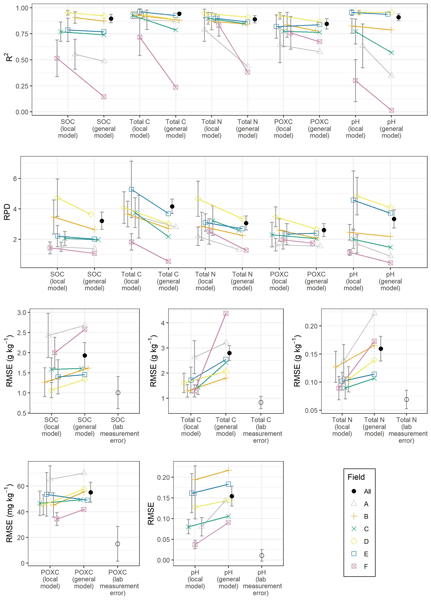
Simon Oberholzer, Laura Summerauer, Markus Steffens, and Chinwe Ifejika Speranza
SOIL, 10, 231–249, https://doi.org/10.5194/soil-10-231-2024, https://doi.org/10.5194/soil-10-231-2024, 2024
Short summary
Short summary
This study investigated the performance of visual and near-infrared spectroscopy in six fields in Switzerland. Spectral models showed a good performance for soil properties related to organic matter at the field scale. However, spectral models performed best in fields with low mean carbonate content because high carbonate content masks spectral features for organic carbon. These findings help facilitate the establishment and implementation of new local soil spectroscopy projects.
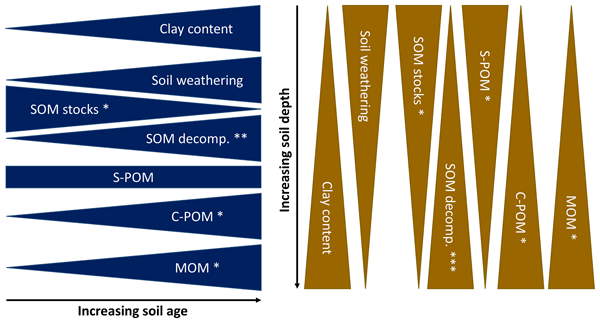
Moritz Mainka, Laura Summerauer, Daniel Wasner, Gina Garland, Marco Griepentrog, Asmeret Asefaw Berhe, and Sebastian Doetterl
Biogeosciences, 19, 1675–1689, https://doi.org/10.5194/bg-19-1675-2022, https://doi.org/10.5194/bg-19-1675-2022, 2022
Short summary
Short summary
The largest share of terrestrial carbon is stored in soils, making them highly relevant as regards global change. Yet, the mechanisms governing soil carbon stabilization are not well understood. The present study contributes to a better understanding of these processes. We show that qualitative changes in soil organic matter (SOM) co-vary with alterations of the soil matrix following soil weathering. Hence, the type of SOM that is stabilized in soils might change as soils develop.
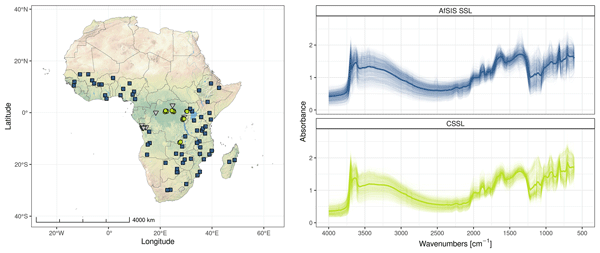
Laura Summerauer, Philipp Baumann, Leonardo Ramirez-Lopez, Matti Barthel, Marijn Bauters, Benjamin Bukombe, Mario Reichenbach, Pascal Boeckx, Elizabeth Kearsley, Kristof Van Oost, Bernard Vanlauwe, Dieudonné Chiragaga, Aimé Bisimwa Heri-Kazi, Pieter Moonen, Andrew Sila, Keith Shepherd, Basile Bazirake Mujinya, Eric Van Ranst, Geert Baert, Sebastian Doetterl, and Johan Six
SOIL, 7, 693–715, https://doi.org/10.5194/soil-7-693-2021, https://doi.org/10.5194/soil-7-693-2021, 2021
Short summary
Short summary
We present a soil mid-infrared library with over 1800 samples from central Africa in order to facilitate soil analyses of this highly understudied yet critical area. Together with an existing continental library, we demonstrate a regional analysis and geographical extrapolation to predict total carbon and nitrogen. Our results show accurate predictions and highlight the value that the data contribute to existing libraries. Our library is openly available for public use and for expansion.
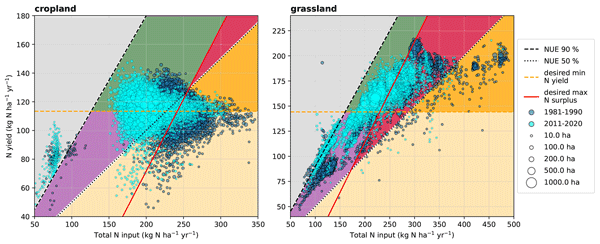
Jize Jiang, Lenny H. E. Winkel, Chloé Wüst-Galley, Daniel Bretscher, Magdalena Necpalova, Andrea Stenke, and Johan Six
Biogeosciences, 23, 6741–6761, https://doi.org/10.5194/bg-23-6741-2026, https://doi.org/10.5194/bg-23-6741-2026, 2026
Short summary
Short summary
We studied nitrogen use in Swiss agriculture for four decades using detailed data and modelling. We found that nitrogen use efficiency improved, while nitrogen losses decreased. Yet, modelling results suggested that cropland soils may lose nitrogen. The results show that policies implementation benefited productivity and reduced pollution. On the other hand, soil nitrogen balance should also be monitored, underscoring the need for integrated nitrogen management.
Marijn Van de Broek and Johan Six
Geosci. Model Dev., 19, 8651–8672, https://doi.org/10.5194/gmd-19-8651-2026, https://doi.org/10.5194/gmd-19-8651-2026, 2026
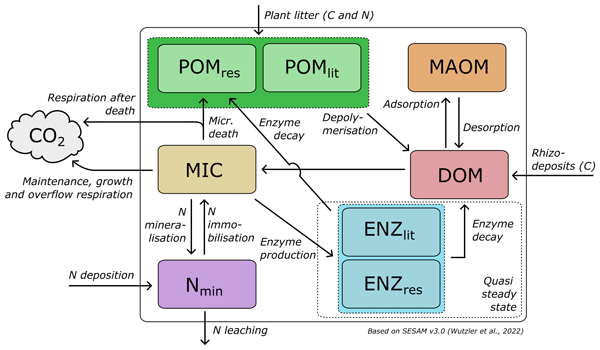
Short summary
Short summary
Soil organic matter models are characterised by equifinality, the phenomenon whereby multiple parameter sets yield similar results. This study shows that the number of identifiable parameters that can be optimised together is limited, even under data-rich conditions. As a result, overparameterised models show a large variability when simulating future changes. Optimising only identifiable model parameters is therefore necessary to avoid this hidden uncertainty in soil organic matter models.
Thomas Laemmel, Dylan Geissbühler, Stephan Henne, Ryo Fujita, Heather Graven, Christophe Espic, Matthias Bantle, Negar Haghipour, Franz Conen, Dominik Brunner, Martin Steinbacher, Giulia Zazzeri, Samuel Hammer, Markus Leuenberger, and Sönke Szidat
Atmos. Chem. Phys., 26, 12019–12036, https://doi.org/10.5194/acp-26-12019-2026, https://doi.org/10.5194/acp-26-12019-2026, 2026
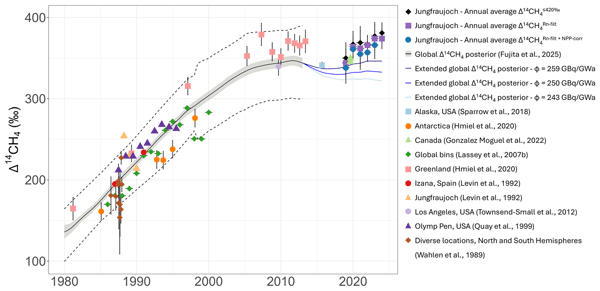
Short summary
Short summary
Carbon dioxide and methane are the two main anthropogenic greenhouse gases responsible for current climate change. Beside the measurement of their atmospheric concentration, the analysis of the abundance of their isotope carbon-14 (14C) gives hints about their origin, either biogenic or fossil. Here we present six years of atmospheric 14CH4 and 14CO2 measurements at a high-elevation alpine site in Switzerland (Jungfraujoch) and discuss the observed trends in both local and global views.
Jize Jiang, Lenny H. E. Winkel, Andrea Stenke, Magdalena Necpalova, Moritz Laub, Iris Feigenwinter, Nina Buchmann, and Johan Six
EGUsphere, https://doi.org/10.5194/egusphere-2026-4445, https://doi.org/10.5194/egusphere-2026-4445, 2026
Short summary
Short summary
We studied how fertiliser management and a warming climate affect nitrous oxide emissions from agricultural soils in Switzerland over the past fourty years. Using computer simulations and nationwide data, we found that lower fertiliser use reduced emissions, but rising temperatures cancelled part of these mitigations. The results show a trade-off between mitigation actions and environmental-driven feedback, highlighting future efforts must also account for the effects of a changing climate.
Sophie F. von Fromm, R. Scott Winton, Derrick R. Vaughn, Jennifer C. Bowen, Susan Trumbore, Kateřina Jandová, Julie Shahan, Olga Vindušková, Shane W. Stoner, Maedeh Chitsaz, Avni Malhotra, Adrian A. Wackett, Alison M. Hoyt, Katherine Heckman, Katerina Georgiou, Daniel Wasner, Luisa Isabell Minich, Katherine E. Grant, Caitlin E. Hicks Pries, Karis J. McFarlane, Anna Abramova, Corey Lawrence, and Jeffrey Beem-Miller
Earth Syst. Sci. Data, 18, 5793–5815, https://doi.org/10.5194/essd-18-5793-2026, https://doi.org/10.5194/essd-18-5793-2026, 2026
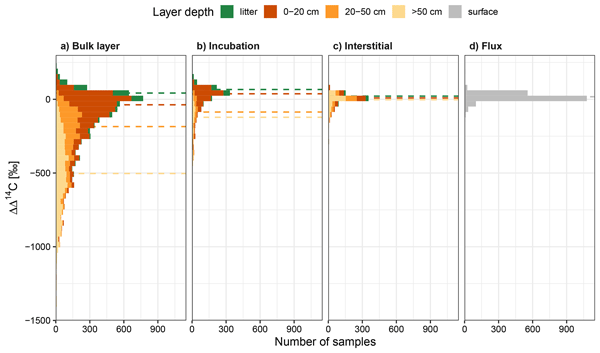
Short summary
Short summary
Here we present the updated International Soil Radiocarbon Database version 2, which compiles radiocarbon data from over 500 studies at 1700 locations worldwide. The database provides various soil radiocarbon measurements to improve our understanding of factors that influence the age distributions of carbon in soils. While we have made progress expanding the database and improving its structure, important gaps remain in tropical regions, deep soils, and certain measurement types.
Mosisa Tujuba Wakjira, Renske Hijbeek, Joost van Heerwaarden, John Koestel, Sara Bonetti, Johan Six, and Katrien Descheemaeker
EGUsphere, https://doi.org/10.5194/egusphere-2026-2816, https://doi.org/10.5194/egusphere-2026-2816, 2026
Short summary
Short summary
Nowadays, minimizing agricultural soil tillage is widely promoted but often leads to lower crop yields. This study combines experimental evidence globally to identify soil-related causes of these yield declines. Results show that minimized tillage, especially without leaving crop residues on the field, can cause soil compaction, limiting root growth and the movement of air and water needed by crops. This suggests that conservation agriculture should only be applied where suitable.
Naoto F. Ishikawa, Hisami Suga, Tessa S. van der Voort, Reto Nyffeler, Nanako O. Ogawa, Negar Haghipour, Lukas Wacker, Timothy I. Eglinton, and Naohiko Ohkouchi
Biogeosciences, 23, 3855–3869, https://doi.org/10.5194/bg-23-3855-2026, https://doi.org/10.5194/bg-23-3855-2026, 2026
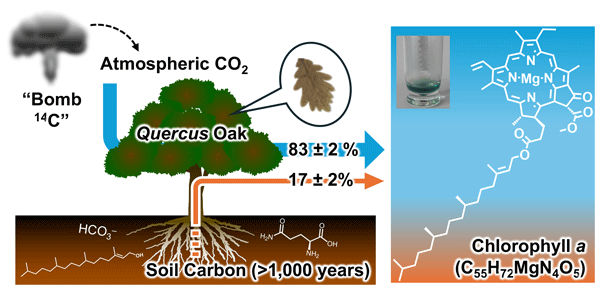
Short summary
Short summary
The main finding of this work is that chlorophyll a in plant leaves is made from atmospheric CO2 (83 ± 2 %) as well as soil carbon (17 ± 2 %), the latter of which is older than 1000 years. The results suggest that radiocarbon age and provenance within a single tree are more diverse than previously thought.
Ankita Mitra, Nancy Harris, Javier G. P. Gamarra, Meredith L. Bastian, Thomas W. Crowther, Nicolas Picard, Martin Herold, Cang Hui, Sergio de-Miguel, W. Gabe Powell, Nathan R. Beane, John R. Shallock, Fons van der Plas, Michael J. Lawes, Mo Zhou, Mohammad Jahanshahi, Nadezhda M. Tchebakova, Elena I. Parfenova, Peter Reich, Cesar Ivan Alvarez, Daniel M. Griffith, Oliver L. Phillips, Ariane Mirabel, Marieke Sandker, WookJin Choi, Akane O. Abbasi, Giorgio Alberti, Jan Altman, Luciana F. Alves, Bienvenu H. K. Amani, Christian Amani, Christian Ammer, Valerio Avitabile, Gerardo A. Aymard C., Akomian F. Azihou, Timothy R. Baker, Radomir Balazy, Jorcely G. Barroso, Jean-François Bastin, Marijn Bauters, Mahmoud Bayat, Hans Beeckman, Eduardo van den Berg, Jahangeer A. Bhat, Anupam Bhatt, Angoboy Ilondea Bhely, Luca Birigazzi, Philippe Birnbaum, Robert Bitariho, Pascal Boeckx, Jan Bogaert, Alexander Bondarev, Frans Bongers, Elise Bouchard, Nils Bourland, Pedro H. S. Brancalion, Francis Q. Brearley, Jennifer L. Bufford, José Javier Corral-Rivas, Jaime Briseno-Reyes, Eben North Broadbent, David F. R. P. Burslem, Plinio Barbosa de Camargo, Goran D. Češljar, Ravi K. Chaturvedi, Han Y. H. Chen, Jiaxin Chen, Francesco Chianucci, George Chuyong, Emil Cienciala, Zorayda Restrepo Correa, Antonio Lola da Costa, Anibal Cuchietti, Javid Ahmad Dar, Selvadurai Dayanandan, Mathieu Decuyper, Tran Van Do, Jiri Dolezal, Ilija Đorđević, Donald R. Drake, Giselda Durigan, Guy-Michel A. Elogne, Tsutomu Enoki, Javier Silva Espejo, Tom Maurice Fayle, Rinaldo Luiz Caraciolo Ferreira, Paul F. Foster, Lorenzo Frizzera, Orou G. Gaoue, Roberto Cazzolla Gatti, Damiano Gianelle, Mario Guevara, Jesús Aguirre Gutiérrez, Richard Habonayo, David J. Harris, Billy C. H. Hau, Bruno Hérault, Wannes Hubau, Nobuo Imai, Andrzej M. Jagodzinski, Štěpán Janeček, Patrick A. Jansen, Bogdan Jaroszewicz, Vivian Kvist Johannsen, Carlos A. Joly, Daniel J. Johnson, Tommaso Jucker, Ben Hur Marimon Junior, Raimundo Cosme de Oliveira Junior, Goytom A. Kahsay, Victor Karminov, Elizabeth Kearsley, Deborah K. Kennard, Sebastian Kepfer-Rojas, Gunnar Keppel, Mohammed Latif Khan, John N. Kigomo, Hyun Seok Kim, Sukyung Kim, Carine Klauberg, Henn Korjus, Subashree Kothandaraman, Florian Kraxner, Leonid Krivobokov, Amit Kumar, Gajendra Kumar, Anna E. Kvashnina, Diana Laarmann, Felix Laurent, Gaia Vaglio Laurin, Rodrigo Vieira Leite, Bas Lerink, Simon L. Lewis, Moses B. Libalah, Weiguo Liu, Jon Lovett, Huicui Lu, Maria de los Angeles Soriano-Luna, Anne Mette Lykke, Emma Jane Mackintosh, Jean-Remy Makana, Andrew R. Marshall, Emanuel H. Martin, Radim Matula, Musingo Mbuvi, Sandra Liliana Medina, Vincent P. Medjibe, Desmond Mensah, Sylvanus Mensah, Thiago Metzker, Stanisław Miścicki, Liudmila Mukhortova, Sharif A. Mukul, Agustinus Murdjoko, Gert-Jan Nabuurs, Anny Estelle N'Guessan, Michael R. Ngugi, Alain Senghor K. Ngute, Thomas Nord-Larsen, Thomas O. Ochuodho, Friday N. Ogana, Luzmila Arroyo Padilla, Nazir A. Pala, Alain Paquette, Pablo L. Peri, Sebastian Pfautsch, Maria Teresa F. Piedade, Daniel Piotto, John James Pipoly III, Nigel C. A. Pitman, John R. Poulsen, Akhilesh Raghubanshi, Dipika Rana, Mirco Rodeghiero, Samir Rolim, Purabi Saikia, Peter Schall, Dmitry Schepaschenko, Jochen Schöngart, Vladimír Šebeň, Giacomo Sellan, Carlos Alberto Silva, Marcos Silveira, Jamuna Singh, Ferry Slik, Jarosław Socha, José Daniel Soto, Alexandre F. Souza, Prashant K. Srivastava, Hans ter Steege, Krzysztof Stereńczak, Somaiah Sundarapandian, Martin Svátek, Jens-Christian Svenning, Xiaolu Tang, Raquel S. Thomas, Antonio Tomao, Liam A. Trethowan, Robert Tropek, Kalidas Upadhyaya, Renato Valencia, Rodolfo Vásquez, Daniel Jose Vega-Nieva, Hans Verbeeck, Helder F. Viana, Alexander Christian Vibrans, Simone A. Vieira, Barbara Vinceti, Jason Vleminckx, Vincent Antoine Vos, Anna S. Vozmishcheva, Foma Vozmitel, Hayden Wagia, Hua-Feng Wang, Eric K. Wasingya, Edward L. Webb, Chemuku Wekesa, Verginia Wortel, Emmanuel Kasongo Yakusu, Zhen Yu, Angelica M. Almeyda Zambrano, Irié Casimir Zo-Bi, and Jingjing Liang
Earth Syst. Sci. Data Discuss., https://doi.org/10.5194/essd-2026-226, https://doi.org/10.5194/essd-2026-226, 2026
Preprint under review for ESSD
Short summary
Short summary
This study introduces the first global, spatially explicit dataset of tree diameter structure, capturing key aspects of forest organization, including average tree size, large-tree dominance, and within-stand variability. Built from over one million ground-based field plots combined with more than 50 satellite and environmental layers using machine learning, it provides a consistent representation of forest structure and supports ecosystem research, climate modeling, and forest management.
Eric Rahn, Mirjam Pulleman, Gabriel Y. K. Moinet, Rémi Cardinael, Dick Brus, Stefan Hauser, Johan Six, José Francisco Valle Pilia, Estephania Nieto, and Isabela Otero
EGUsphere, https://doi.org/10.5194/egusphere-2026-1479, https://doi.org/10.5194/egusphere-2026-1479, 2026
This preprint is open for discussion and under review for SOIL (SOIL).
Short summary
Short summary
To improve understanding of how coffee farming affects soil carbon storage, we reviewed 80 studies and found large differences in methods and reporting. Based on this evidence, we propose clear guidance for future research, including better study design, deeper soil sampling, careful measurement of soil density, and transparent reporting. Stronger and more consistent methods are needed so that research can produce reliable evidence to guide climate policy and sustainable coffee management.
Marijn Van de Broek, Fiona Stewart-Smith, Moritz Laub, Marc Corbeels, Monicah Wanjiku Mucheru-Muna, Daniel Mugendi, Wycliffe Waswa, Bernard Vanlauwe, and Johan Six
SOIL, 12, 187–204, https://doi.org/10.5194/soil-12-187-2026, https://doi.org/10.5194/soil-12-187-2026, 2026
Short summary
Short summary
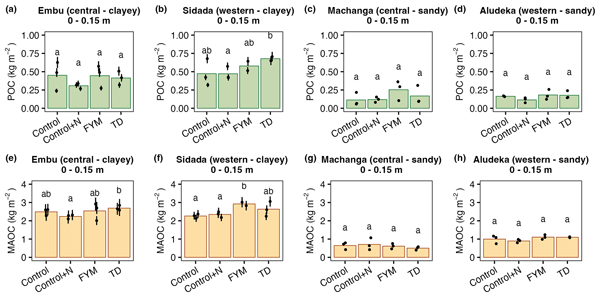
To improve soil health and increase crop yields, organic matter is commenly added to arable soils. Studying the effect of different organic resources on soil organic carbon sequestration in four long-term field trials in Kenya, we found that only a small portion (< 7 %) of added organic carbon was stabilised, which was only observed in the top 15 cm of the soil. These results underline the challenges associated with increasing the organic carbon content of tropical arable soils.
Nathan Carlier, Matti Barthel, Antoine de Clippele, Lissie Willemijn de Groot, Travis William Drake, Jordon Dennis Hemingway, Yi Hou, José Nlandu Wabakanghanzi, Joseph Zambo Mandea, Pengzhi Zhao, Johan Six, and Kristof Van Oost
EGUsphere, https://doi.org/10.5194/egusphere-2026-247, https://doi.org/10.5194/egusphere-2026-247, 2026
Short summary
Short summary
The Congo River Basin, a region of global significance, is undergoing a strong increase in population, which will in turn increase soil erosion, impacting soil fertility and the carbon cycle. We examined river sediment (eroded soil) transport, whereby we provided information on the main contributors of sediment to the Congo River. We also highlighted the role of a swampy region which removes large amounts of sediment from the water, acting as a regulator sediment transport to the Congo River.
Johanne Lebrun Thauront, Philippa Ascough, Sebastian Doetterl, Negar Haghipour, Pierre Barré, Christian Walter, and Samuel Abiven
Biogeosciences, 23, 155–179, https://doi.org/10.5194/bg-23-155-2026, https://doi.org/10.5194/bg-23-155-2026, 2026
Short summary
Short summary
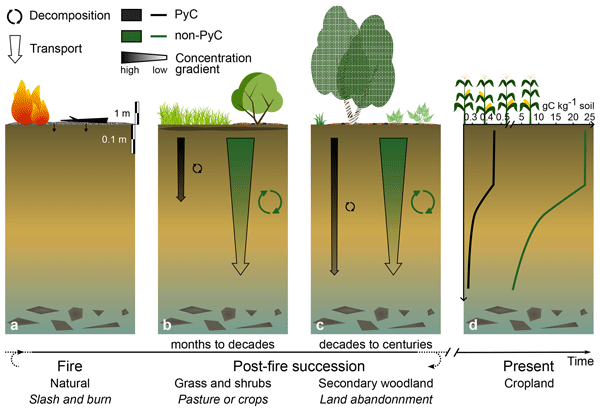
Fire-derived carbon is a form of organic carbon that has a long persistence in soils. However, its persistence at the landscape scale may be underestimated due to lateral and vertical redistribution. We measured fire-derived carbon in soils of a hilly agricultural watershed to identify the result of transport processes on the centennial time-scale. We show that the subsoil stores a large amount of fire-derived carbon and that erosion can redistribute it to localized accumulation zones.
Annina Maier, Maria E. Macfarlane, Marco Griepentrog, and Sebastian Doetterl
Biogeosciences, 22, 7337–7361, https://doi.org/10.5194/bg-22-7337-2025, https://doi.org/10.5194/bg-22-7337-2025, 2025
Short summary
Short summary
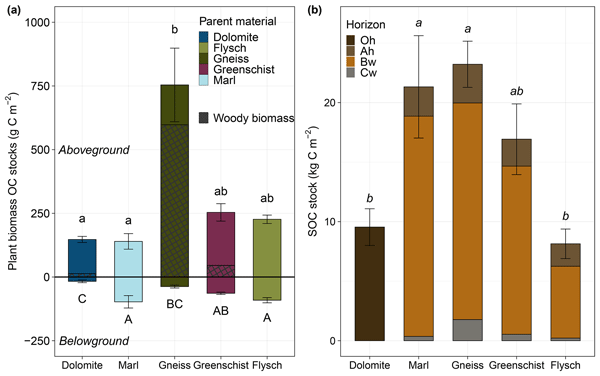
A systematic analysis of the interaction between pedo- and biosphere in shaping alpine soil organic carbon (SOC) stocks remains missing. Our regional-scale study of alpine SOC stocks across five parent materials shows that plant biomass stock is not a strong control of SOC stocks. Rather, the greatest SOC stocks are linked to more weathered soil profiles with higher Fe and Al pedogenic oxide content, showing the importance of parent material weatherability and geochemistry for SOC stabilization.
Inês Vieira, Félicien Meunier, Maria Carolina Duran Rojas, Stephen Sitch, Flossie Brown, Giacomo Gerosa, Silvano Fares, Pascal Boeckx, Marijn Bauters, and Hans Verbeeck
Biogeosciences, 22, 6205–6223, https://doi.org/10.5194/bg-22-6205-2025, https://doi.org/10.5194/bg-22-6205-2025, 2025
Short summary
Short summary
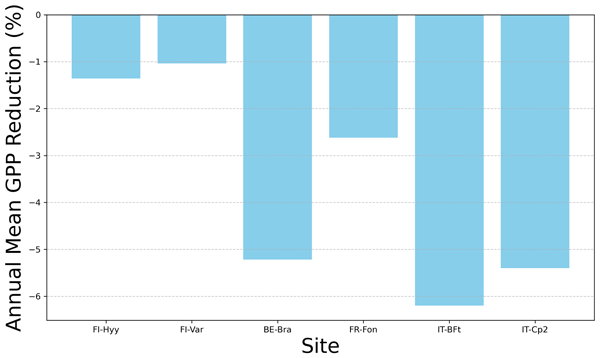
We used a computer model to study how ozone pollution reduces plant growth in six European forests, from Finland to Italy. Combining field data and simulations, we found that ozone can lower carbon uptake by up to 6 % each year, especially in Mediterranean areas. Our study shows that local climate and forest type influence ozone damage and highlights the need to include ozone effects in forest and climate models.
Antoine de Clippele, Astrid C. H. Jaeger, Simon Baumgartner, Marijn Bauters, Pascal Boeckx, Clement Botefa, Glenn Bush, Jessica Carilli, Travis W. Drake, Christian Ekamba, Gode Lompoko, Nivens Bey Mukwiele, Kristof Van Oost, Roland A. Werner, Joseph Zambo, Johan Six, and Matti Barthel
Biogeosciences, 22, 3011–3027, https://doi.org/10.5194/bg-22-3011-2025, https://doi.org/10.5194/bg-22-3011-2025, 2025
Short summary
Short summary
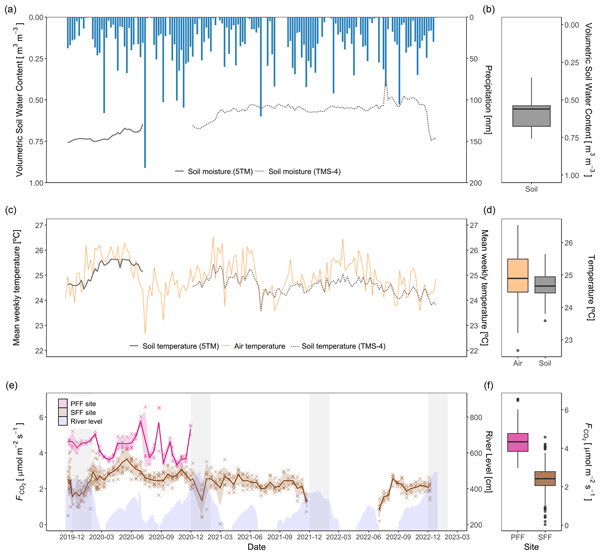
Tropical forest soils as a large terrestrial source of carbon dioxide (CO2) contribute to the global greenhouse gas budget. Despite this, carbon flux data from forested wetlands are scarce in tropical Africa. The study presents 3 years of semi-continuous measurements of surface CO2 fluxes within the Congo Basin. Although no seasonal patterns were evident, our results show a positive effect of soil temperature and moisture, while a quadratic relationship was observed with the water table.
Claude Raoul Müller, Johan Six, Daniel Mugendi Njiru, Bernard Vanlauwe, and Marijn Van de Broek
Biogeosciences, 22, 2733–2747, https://doi.org/10.5194/bg-22-2733-2025, https://doi.org/10.5194/bg-22-2733-2025, 2025
Short summary
Short summary
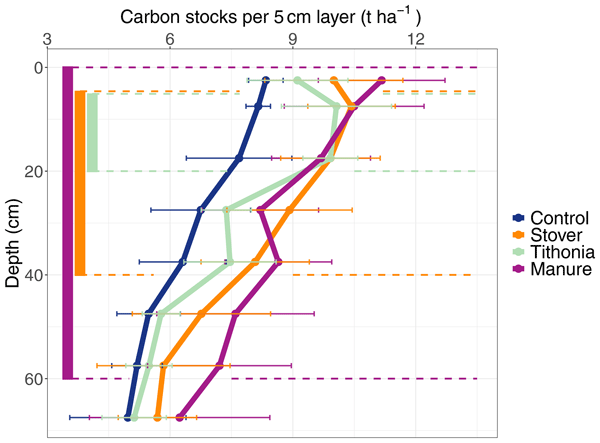
We studied how different organic and inorganic nutrient inputs affect soil organic carbon (SOC) down to 70 cm in Kenya. After 19 years, all organic treatments increased SOC stocks compared with the control, but mineral nitrogen had no significant effect. Manure was the organic treatment that significantly increased SOC at the deepest soil depths, as its effect could be observed down to 60 cm. Manure was the best strategy to limit SOC loss in croplands and maintain soil quality after deforestation.
Lei Zhang, Lin Yang, Thomas W. Crowther, Constantin M. Zohner, Sebastian Doetterl, Gerard B. M. Heuvelink, Alexandre M. J.-C. Wadoux, A.-Xing Zhu, Yue Pu, Feixue Shen, Haozhi Ma, Yibiao Zou, and Chenghu Zhou
Earth Syst. Sci. Data, 17, 2605–2623, https://doi.org/10.5194/essd-17-2605-2025, https://doi.org/10.5194/essd-17-2605-2025, 2025
Short summary
Short summary
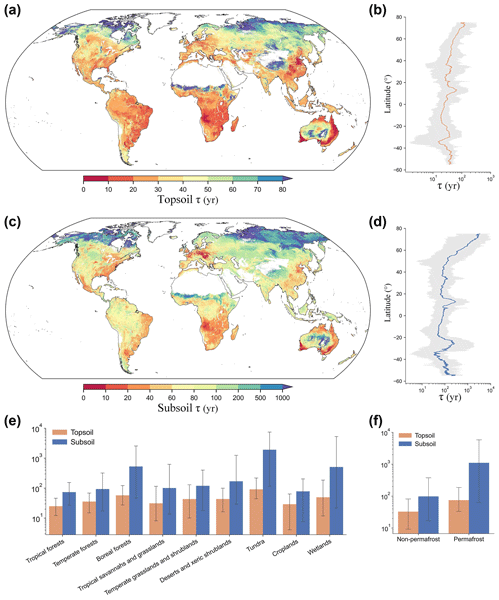
Current understandings of depth-dependent variations and controls of soil organic carbon turnover time (τ) at global, biome, and local scales remain incomplete. We used the state-of-the-art soil and root profile databases and satellite observations to generate new spatially explicit global maps of topsoil and subsoil τ, with quantified uncertainties for better user applications. The new insights from the resulting maps will facilitate efforts to model the carbon cycle and will support effective carbon management.
Szabina Karancz, Lennart J. de Nooijer, Bas van der Wagt, Marcel T. J. van der Meer, Sambuddha Misra, Rick Hennekam, Zeynep Erdem, Julie Lattaud, Negar Haghipour, Stefan Schouten, and Gert-Jan Reichart
Clim. Past, 21, 679–704, https://doi.org/10.5194/cp-21-679-2025, https://doi.org/10.5194/cp-21-679-2025, 2025
Short summary
Short summary
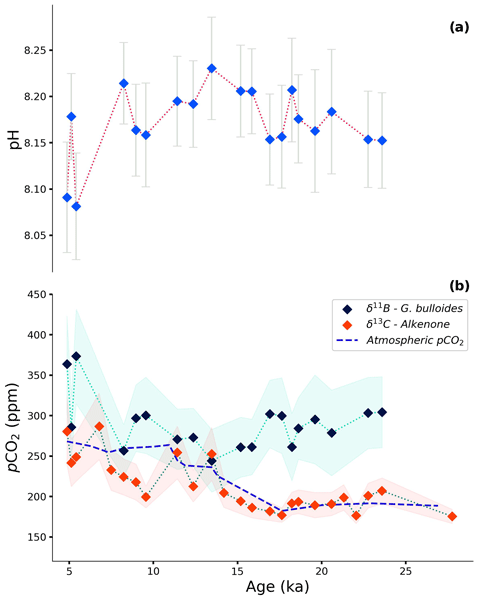
Changes in upwelling intensity of the Benguela upwelling region during the last glacial motivated us to investigate the local CO2 history during the last glacial-to-interglacial transition. Using various geochemical tracers on archives from both subsurface and surface waters reveals enhanced storage of carbon at depth during the Last Glacial Maximum. An efficient biological pump likely prevented outgassing of CO2 from intermediate depth to the atmosphere.
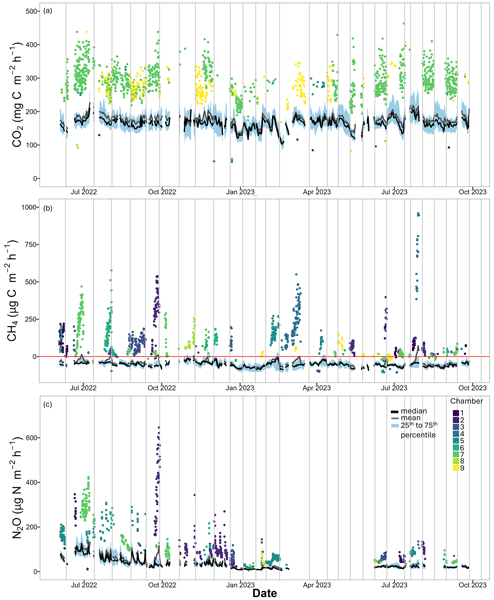
Roxanne Daelman, Marijn Bauters, Matti Barthel, Emmanuel Bulonza, Lodewijk Lefevre, José Mbifo, Johan Six, Klaus Butterbach-Bahl, Benjamin Wolf, Ralf Kiese, and Pascal Boeckx
Biogeosciences, 22, 1529–1542, https://doi.org/10.5194/bg-22-1529-2025, https://doi.org/10.5194/bg-22-1529-2025, 2025
Short summary
Short summary
The increase in atmospheric concentrations of several greenhouse gases (GHGs) since 1750 is attributed to human activity. However, natural ecosystems, such as tropical forests, also contribute to GHG budgets. The Congo Basin hosts the second largest tropical forest and is understudied. In this study, measurements of soil GHG exchange were carried out during 16 months in a tropical forest in the Congo Basin. Overall, the soil acted as a major source of CO2 and N2O and a minor sink of CH4.
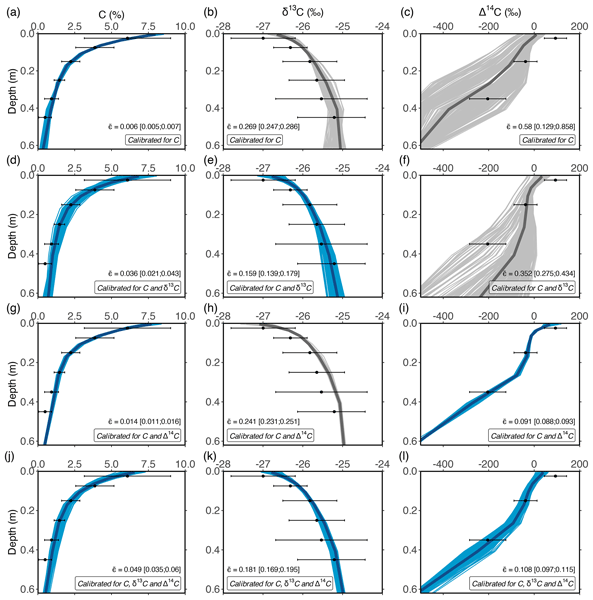
Marijn Van de Broek, Gerard Govers, Marion Schrumpf, and Johan Six
Biogeosciences, 22, 1427–1446, https://doi.org/10.5194/bg-22-1427-2025, https://doi.org/10.5194/bg-22-1427-2025, 2025
Short summary
Short summary
Soil organic carbon models are used to predict how soils affect the concentration of CO2 in the atmosphere. We show that equifinality – the phenomenon that different parameter values lead to correct overall model outputs, albeit with a different model behaviour – is an important source of model uncertainty. Our results imply that adding more complexity to soil organic carbon models is unlikely to lead to better predictions as long as more data to constrain model parameters are not available.
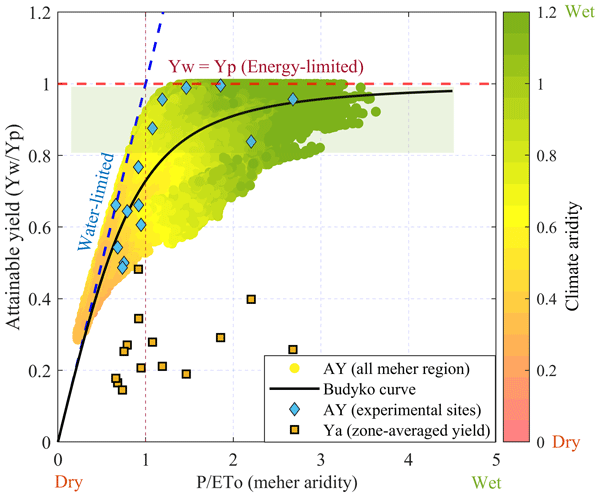
Mosisa Tujuba Wakjira, Nadav Peleg, Johan Six, and Peter Molnar
Hydrol. Earth Syst. Sci., 29, 863–886, https://doi.org/10.5194/hess-29-863-2025, https://doi.org/10.5194/hess-29-863-2025, 2025
Short summary
Short summary
In this study, we implement a climate, water, and crop interaction model to evaluate current conditions and project future changes in rainwater availability and its yield potential, with the goal of informing adaptation policies and strategies in Ethiopia. Although climate change is likely to increase rainfall in Ethiopia, our findings suggest that water-scarce croplands in Ethiopia are expected to face reduced crop yields during the main growing season due to increases in temperature.
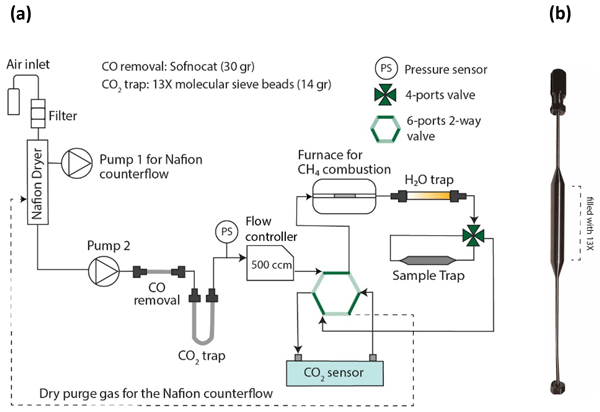
Giulia Zazzeri, Lukas Wacker, Negar Haghipour, Philip Gautschi, Thomas Laemmel, Sönke Szidat, and Heather Graven
Atmos. Meas. Tech., 18, 319–325, https://doi.org/10.5194/amt-18-319-2025, https://doi.org/10.5194/amt-18-319-2025, 2025
Short summary
Short summary
Radiocarbon (14C) is an optimal tracer of methane (CH4) emissions, as 14C measurements enable distinguishing between fossil methane and biogenic methane. However, these measurements are particularly challenging, mainly due to technical difficulties in the sampling procedure. We made the sample extraction much simpler and time efficient, providing a new technology that can be used by any research group, with the goal of expanding 14C measurements for an improved understanding of methane sources.
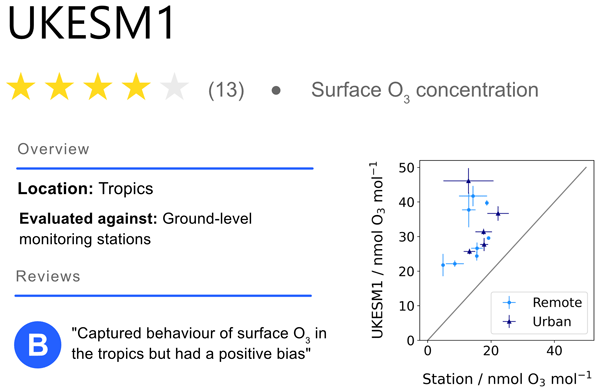
Flossie Brown, Gerd Folberth, Stephen Sitch, Paulo Artaxo, Marijn Bauters, Pascal Boeckx, Alexander W. Cheesman, Matteo Detto, Ninong Komala, Luciana Rizzo, Nestor Rojas, Ines dos Santos Vieira, Steven Turnock, Hans Verbeeck, and Alfonso Zambrano
Atmos. Chem. Phys., 24, 12537–12555, https://doi.org/10.5194/acp-24-12537-2024, https://doi.org/10.5194/acp-24-12537-2024, 2024
Short summary
Short summary
Ozone is a pollutant that is detrimental to human and plant health. Ozone monitoring sites in the tropics are limited, so models are often used to understand ozone exposure. We use measurements from the tropics to evaluate ozone from the UK Earth system model, UKESM1. UKESM1 is able to capture the pattern of ozone in the tropics, except in southeast Asia, although it systematically overestimates it at all sites. This work highlights that UKESM1 can capture seasonal and hourly variability.
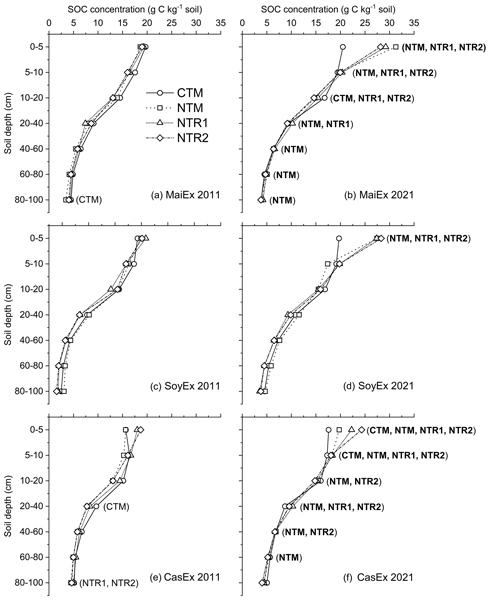
Vira Leng, Rémi Cardinael, Florent Tivet, Vang Seng, Phearum Mark, Pascal Lienhard, Titouan Filloux, Johan Six, Lyda Hok, Stéphane Boulakia, Clever Briedis, João Carlos de Moraes Sá, and Laurent Thuriès
SOIL, 10, 699–725, https://doi.org/10.5194/soil-10-699-2024, https://doi.org/10.5194/soil-10-699-2024, 2024
Short summary
Short summary
We assessed the long-term impacts of no-till cropping systems on soil organic carbon and nitrogen dynamics down to 1 m depth under the annual upland crop productions (cassava, maize, and soybean) in the tropical climate of Cambodia. We showed that no-till systems combined with rotations and cover crops could store large amounts of carbon in the top and subsoil in both the mineral organic matter and particulate organic matter fractions. We also question nitrogen management in these systems.
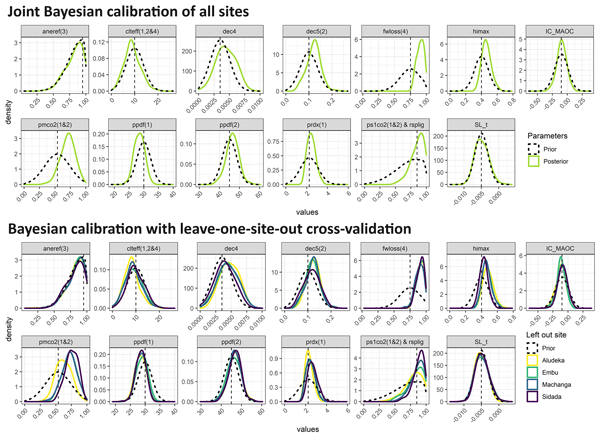
Moritz Laub, Magdalena Necpalova, Marijn Van de Broek, Marc Corbeels, Samuel Mathu Ndungu, Monicah Wanjiku Mucheru-Muna, Daniel Mugendi, Rebecca Yegon, Wycliffe Waswa, Bernard Vanlauwe, and Johan Six
Biogeosciences, 21, 3691–3716, https://doi.org/10.5194/bg-21-3691-2024, https://doi.org/10.5194/bg-21-3691-2024, 2024
Short summary
Short summary
We used the DayCent model to assess the potential impact of integrated soil fertility management (ISFM) on maize production, soil fertility, and greenhouse gas emission in Kenya. After adjustments, DayCent represented measured mean yields and soil carbon stock changes well and N2O emissions acceptably. Our results showed that soil fertility losses could be reduced but not completely eliminated with ISFM and that, while N2O emissions increased with ISFM, emissions per kilogram yield decreased.
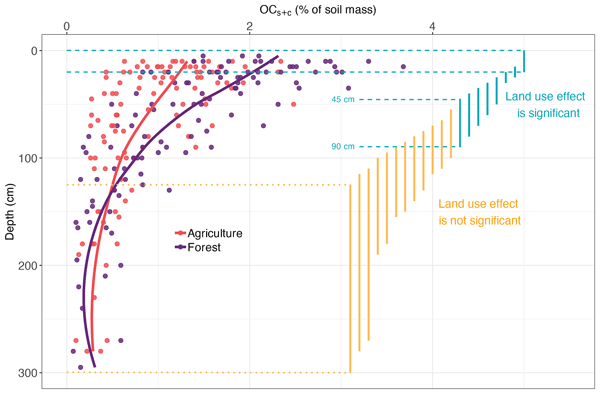
Claude Raoul Müller, Johan Six, Liesa Brosens, Philipp Baumann, Jean Paolo Gomes Minella, Gerard Govers, and Marijn Van de Broek
SOIL, 10, 349–365, https://doi.org/10.5194/soil-10-349-2024, https://doi.org/10.5194/soil-10-349-2024, 2024
Short summary
Short summary
Subsoils in the tropics are not as extensively studied as those in temperate regions. In this study, the conversion of forest to agriculture in a subtropical region affected the concentration of stabilized organic carbon (OC) down to 90 cm depth, while no significant differences between 90 cm and 300 cm were detected. Our results suggest that subsoils below 90 cm are unlikely to accumulate additional stabilized OC through reforestation over decadal periods due to declining OC input with depth.
Johan Six, Sebastian Doetterl, Moritz Laub, Claude R. Müller, and Marijn Van de Broek
SOIL, 10, 275–279, https://doi.org/10.5194/soil-10-275-2024, https://doi.org/10.5194/soil-10-275-2024, 2024
Short summary
Short summary
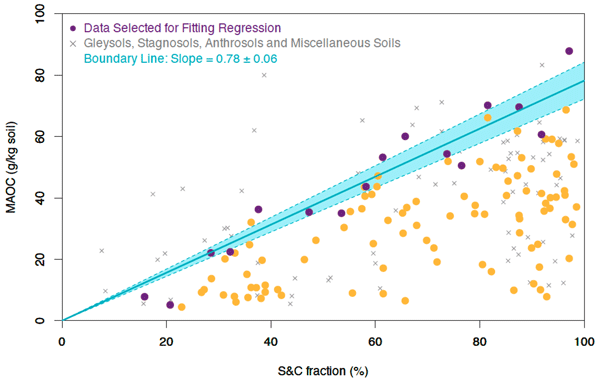
Soil C saturation has been tested in several recent studies and led to a debate about its existence. We argue that, to test C saturation, one should pay attention to six fundamental principles: the right measures, the right units, the right dispersive energy and application, the right soil type, the right clay type, and the right saturation level. Once we take care of those six rights across studies, we find support for a maximum of C stabilized by minerals and thus soil C saturation.
Simon Oberholzer, Laura Summerauer, Markus Steffens, and Chinwe Ifejika Speranza
SOIL, 10, 231–249, https://doi.org/10.5194/soil-10-231-2024, https://doi.org/10.5194/soil-10-231-2024, 2024
Short summary
Short summary
This study investigated the performance of visual and near-infrared spectroscopy in six fields in Switzerland. Spectral models showed a good performance for soil properties related to organic matter at the field scale. However, spectral models performed best in fields with low mean carbonate content because high carbonate content masks spectral features for organic carbon. These findings help facilitate the establishment and implementation of new local soil spectroscopy projects.
Miguel Bartolomé, Ana Moreno, Carlos Sancho, Isabel Cacho, Heather Stoll, Negar Haghipour, Ánchel Belmonte, Christoph Spötl, John Hellstrom, R. Lawrence Edwards, and Hai Cheng
Clim. Past, 20, 467–494, https://doi.org/10.5194/cp-20-467-2024, https://doi.org/10.5194/cp-20-467-2024, 2024
Short summary
Short summary
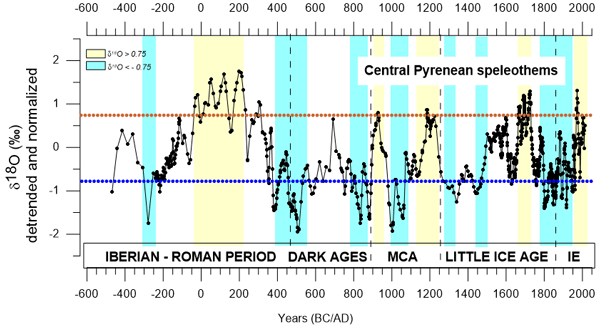
Reconstructing past temperatures at regional scales during the Common Era is necessary to place the current warming in the context of natural climate variability. We present a climate reconstruction based on eight stalagmites from four caves in the Pyrenees, NE Spain. These stalagmites were dated precisely and analysed for their oxygen isotopes, which appear dominated by temperature changes. Solar variability and major volcanic eruptions are the two main drivers of observed climate variability.
Armwell Shumba, Regis Chikowo, Christian Thierfelder, Marc Corbeels, Johan Six, and Rémi Cardinael
SOIL, 10, 151–165, https://doi.org/10.5194/soil-10-151-2024, https://doi.org/10.5194/soil-10-151-2024, 2024
Short summary
Short summary
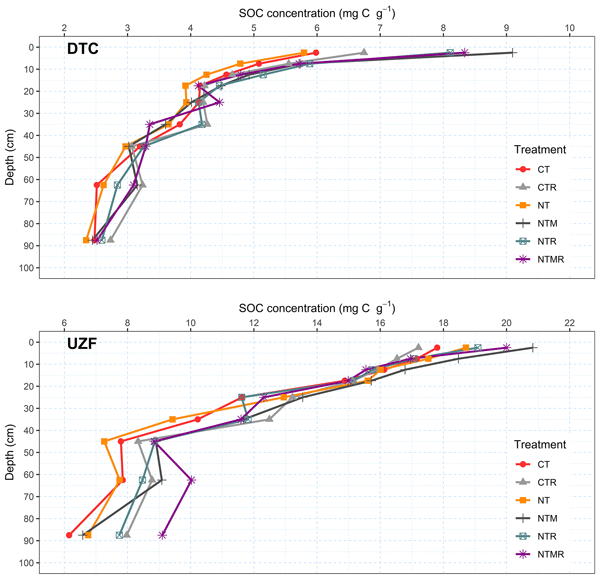
Conservation agriculture (CA), combining reduced or no tillage, permanent soil cover, and improved rotations, is often promoted as a climate-smart practice. However, our knowledge of the impact of CA on top- and subsoil soil organic carbon (SOC) stocks in the low-input cropping systems of sub-Saharan Africa is rather limited. Using two long-term experimental sites with different soil types, we found that mulch could increase top SOC stocks, but no tillage alone had a slightly negative impact.
Moritz Laub, Sergey Blagodatsky, Marijn Van de Broek, Samuel Schlichenmaier, Benjapon Kunlanit, Johan Six, Patma Vityakon, and Georg Cadisch
Geosci. Model Dev., 17, 931–956, https://doi.org/10.5194/gmd-17-931-2024, https://doi.org/10.5194/gmd-17-931-2024, 2024
Short summary
Short summary
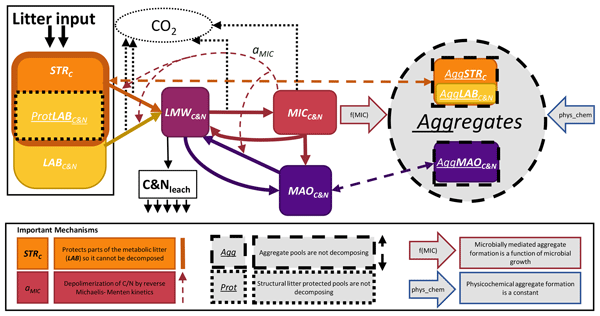
To manage soil organic matter (SOM) sustainably, we need a better understanding of the role that soil microbes play in aggregate protection. Here, we propose the SAMM model, which connects soil aggregate formation to microbial growth. We tested it against data from a tropical long-term experiment and show that SAMM effectively represents the microbial growth, SOM, and aggregate dynamics and that it can be used to explore the importance of aggregate formation in SOM stabilization.
Kirsi H. Keskitalo, Lisa Bröder, Tommaso Tesi, Paul J. Mann, Dirk J. Jong, Sergio Bulte Garcia, Anna Davydova, Sergei Davydov, Nikita Zimov, Negar Haghipour, Timothy I. Eglinton, and Jorien E. Vonk
Biogeosciences, 21, 357–379, https://doi.org/10.5194/bg-21-357-2024, https://doi.org/10.5194/bg-21-357-2024, 2024
Short summary
Short summary
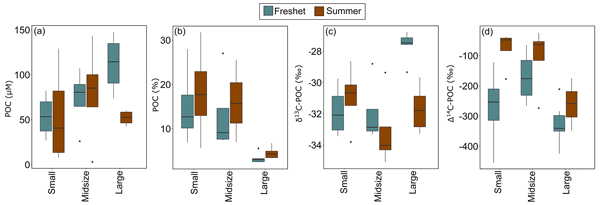
Permafrost thaw releases organic carbon into waterways. Decomposition of this carbon pool emits greenhouse gases into the atmosphere, enhancing climate warming. We show that Arctic river carbon and water chemistry are different between the spring ice breakup and summer and that primary production is initiated in small Arctic rivers right after ice breakup, in contrast to in large rivers. This may have implications for fluvial carbon dynamics and greenhouse gas uptake and emission balance.
Gina Garland, John Koestel, Alice Johannes, Olivier Heller, Sebastian Doetterl, Dani Or, and Thomas Keller
SOIL, 10, 23–31, https://doi.org/10.5194/soil-10-23-2024, https://doi.org/10.5194/soil-10-23-2024, 2024
Short summary
Short summary
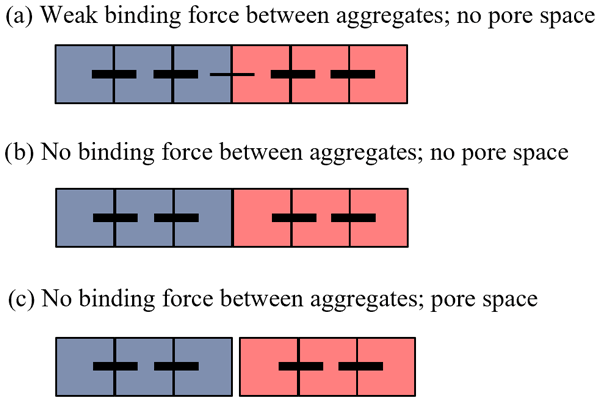
The concept of soil aggregates is hotly debated, leading to confusion about their function or relevancy to soil processes. We propose that the use of conceptual figures showing detached and isolated aggregates can be misleading and has contributed to this skepticism. Here, we conceptually illustrate how aggregates can form and dissipate within the context of undisturbed soils, highlighting the fact that aggregates do not necessarily need to have distinct physical boundaries.
Shane W. Stoner, Marion Schrumpf, Alison Hoyt, Carlos A. Sierra, Sebastian Doetterl, Valier Galy, and Susan Trumbore
Biogeosciences, 20, 3151–3163, https://doi.org/10.5194/bg-20-3151-2023, https://doi.org/10.5194/bg-20-3151-2023, 2023
Short summary
Short summary
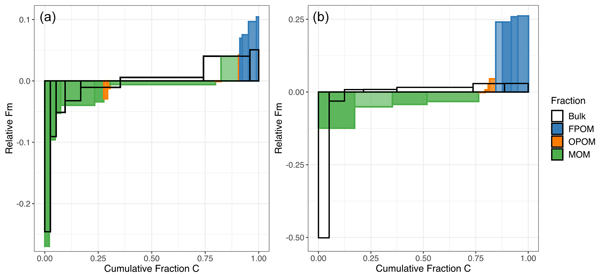
Soils store more carbon (C) than any other terrestrial C reservoir, but the processes that control how much C stays in soil, and for how long, are very complex. Here, we used a recent method that involves heating soil in the lab to measure the range of C ages in soil. We found that most C in soil is decades to centuries old, while some stays for much shorter times (days to months), and some is thousands of years old. Such detail helps us to estimate how soil C may react to changing climate.
Oliver Kost, Saúl González-Lemos, Laura Rodríguez-Rodríguez, Jakub Sliwinski, Laura Endres, Negar Haghipour, and Heather Stoll
Hydrol. Earth Syst. Sci., 27, 2227–2255, https://doi.org/10.5194/hess-27-2227-2023, https://doi.org/10.5194/hess-27-2227-2023, 2023
Short summary
Short summary
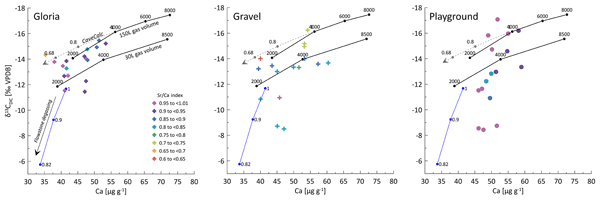
Cave monitoring studies including cave drip water are unique opportunities to sample water which has percolated through the soil and rock. The change in drip water chemistry is resolved over the course of 16 months, inferring seasonal and hydrological variations in soil and karst processes at the water–air and water–rock interface. Such data sets improve the understanding of hydrological and hydrochemical processes and ultimately advance the interpretation of geochemical stalagmite records.

Moritz Laub, Marc Corbeels, Antoine Couëdel, Samuel Mathu Ndungu, Monicah Wanjiku Mucheru-Muna, Daniel Mugendi, Magdalena Necpalova, Wycliffe Waswa, Marijn Van de Broek, Bernard Vanlauwe, and Johan Six
SOIL, 9, 301–323, https://doi.org/10.5194/soil-9-301-2023, https://doi.org/10.5194/soil-9-301-2023, 2023
Short summary
Short summary
In sub-Saharan Africa, long-term low-input maize cropping threatens soil fertility. We studied how different quality organic inputs combined with mineral N fertilizer could counteract this. Farmyard manure was the best input to counteract soil carbon loss; mineral N fertilizer had no effect on carbon. Yet, the rates needed to offset soil carbon losses are unrealistic for farmers (>10 t of dry matter per hectare and year). Additional agronomic measures may be needed.
Thibauld M. Béjard, Andrés S. Rigual-Hernández, José A. Flores, Javier P. Tarruella, Xavier Durrieu de Madron, Isabel Cacho, Neghar Haghipour, Aidan Hunter, and Francisco J. Sierro
Biogeosciences, 20, 1505–1528, https://doi.org/10.5194/bg-20-1505-2023, https://doi.org/10.5194/bg-20-1505-2023, 2023
Short summary
Short summary
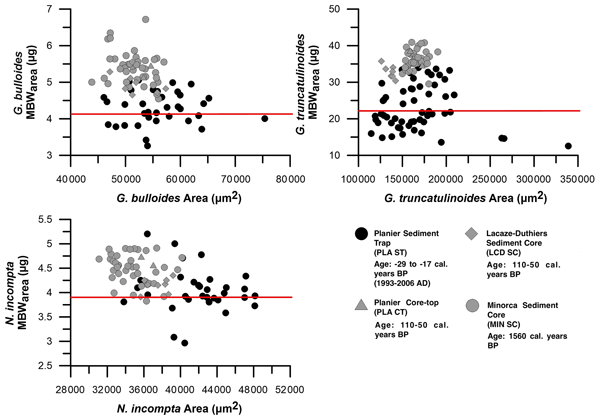
The Mediterranean Sea is undergoing a rapid and unprecedented environmental change. Planktic foraminifera calcification is affected on different timescales. On seasonal and interannual scales, calcification trends differ according to the species and are linked mainly to sea surface temperatures and carbonate system parameters, while comparison with pre/post-industrial assemblages shows that all three species have reduced their calcification between 10 % to 35 % according to the species.
Kristof Van Oost and Johan Six
Biogeosciences, 20, 635–646, https://doi.org/10.5194/bg-20-635-2023, https://doi.org/10.5194/bg-20-635-2023, 2023
Short summary
Short summary
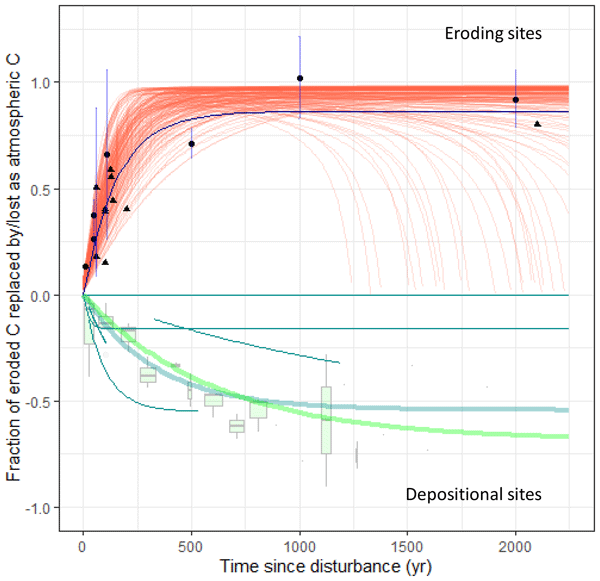
The direction and magnitude of the net erosion-induced land–atmosphere C exchange have been the topic of a big scientific debate for more than a decade now. Many have assumed that erosion leads to a loss of soil carbon to the atmosphere, whereas others have shown that erosion ultimately leads to a carbon sink. Here, we show that the soil carbon erosion source–sink paradox is reconciled when the broad range of temporal and spatial scales at which the underlying processes operate are considered.

Joseph Okello, Marijn Bauters, Hans Verbeeck, Samuel Bodé, John Kasenene, Astrid Françoys, Till Engelhardt, Klaus Butterbach-Bahl, Ralf Kiese, and Pascal Boeckx
Biogeosciences, 20, 719–735, https://doi.org/10.5194/bg-20-719-2023, https://doi.org/10.5194/bg-20-719-2023, 2023
Short summary
Short summary
The increase in global and regional temperatures has the potential to drive accelerated soil organic carbon losses in tropical forests. We simulated climate warming by translocating intact soil cores from higher to lower elevations. The results revealed increasing temperature sensitivity and decreasing losses of soil organic carbon with increasing elevation. Our results suggest that climate warming may trigger enhanced losses of soil organic carbon from tropical montane forests.
Dirk Jong, Lisa Bröder, Tommaso Tesi, Kirsi H. Keskitalo, Nikita Zimov, Anna Davydova, Philip Pika, Negar Haghipour, Timothy I. Eglinton, and Jorien E. Vonk
Biogeosciences, 20, 271–294, https://doi.org/10.5194/bg-20-271-2023, https://doi.org/10.5194/bg-20-271-2023, 2023
Short summary
Short summary
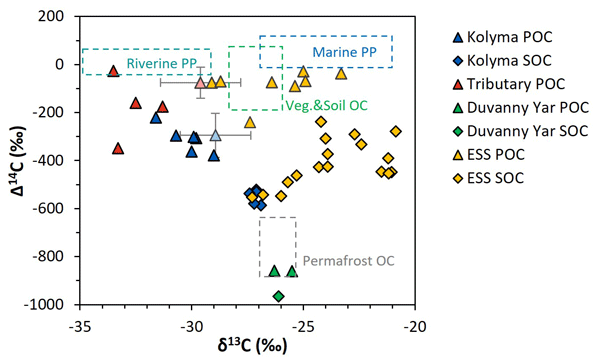
With this study, we want to highlight the importance of studying both land and ocean together, and water and sediment together, as these systems function as a continuum, and determine how organic carbon derived from permafrost is broken down and its effect on global warming. Although on the one hand it appears that organic carbon is removed from sediments along the pathway of transport from river to ocean, it also appears to remain relatively ‘fresh’, despite this removal and its very old age.

Melissa Sophia Schwab, Hannah Gies, Chantal Valérie Freymond, Maarten Lupker, Negar Haghipour, and Timothy Ian Eglinton
Biogeosciences, 19, 5591–5616, https://doi.org/10.5194/bg-19-5591-2022, https://doi.org/10.5194/bg-19-5591-2022, 2022
Short summary
Short summary
The majority of river studies focus on headwater or floodplain systems, while often neglecting intermediate river segments. Our study on the subalpine Sihl River bridges the gap between streams and lowlands and demonstrates that moderately steep river segments are areas of significant instream alterations, modulating the export of organic carbon over short distances.
Charlotte Decock, Juhwan Lee, Matti Barthel, Elizabeth Verhoeven, Franz Conen, and Johan Six
Biogeosciences Discuss., https://doi.org/10.5194/bg-2022-221, https://doi.org/10.5194/bg-2022-221, 2022
Preprint withdrawn
Short summary
Short summary
One of the least well understood processes in the nitrogen (N) cycle is the loss of nitrogen gas (N2), referred to as total denitrification. This is mainly due to the difficulty of quantifying total denitrification in situ. In this study, we developed and tested a novel modeling approach to estimate total denitrification over the depth profile, based on concentrations and isotope values of N2O. Our method will help close N budgets and identify management strategies that reduce N pollution.
Flossie Brown, Gerd A. Folberth, Stephen Sitch, Susanne Bauer, Marijn Bauters, Pascal Boeckx, Alexander W. Cheesman, Makoto Deushi, Inês Dos Santos Vieira, Corinne Galy-Lacaux, James Haywood, James Keeble, Lina M. Mercado, Fiona M. O'Connor, Naga Oshima, Kostas Tsigaridis, and Hans Verbeeck
Atmos. Chem. Phys., 22, 12331–12352, https://doi.org/10.5194/acp-22-12331-2022, https://doi.org/10.5194/acp-22-12331-2022, 2022
Short summary
Short summary
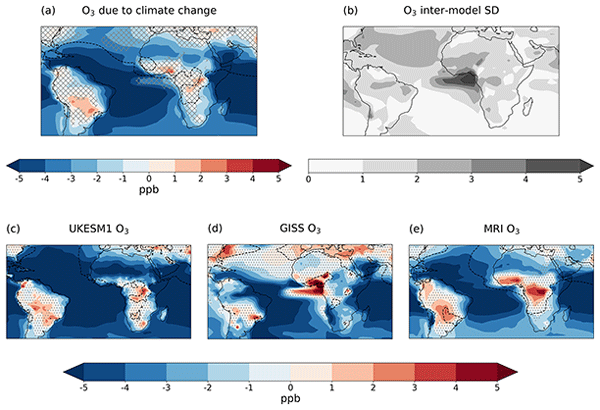
Surface ozone can decrease plant productivity and impair human health. In this study, we evaluate the change in surface ozone due to climate change over South America and Africa using Earth system models. We find that if the climate were to change according to the worst-case scenario used here, models predict that forested areas in biomass burning locations and urban populations will be at increasing risk of ozone exposure, but other areas will experience a climate benefit.
Tegawende Léa Jeanne Ilboudo, Lucien NGuessan Diby, Delwendé Innocent Kiba, Tor Gunnar Vågen, Leigh Ann Winowiecki, Hassan Bismarck Nacro, Johan Six, and Emmanuel Frossard
EGUsphere, https://doi.org/10.5194/egusphere-2022-209, https://doi.org/10.5194/egusphere-2022-209, 2022
Preprint withdrawn
Short summary
Short summary
Our results showed that at landscape level SOC stock variability was mainly explained by clay content. We found significant linear positive relationships between VC and SOC stocks for the land uses annual croplands, perennial croplands, grasslands and bushlands without soil depth restrictions until 110 cm. We concluded that in the forest-savanna transition zone, soil properties and topography determine land use, which in turn affects the stocks of SOC and TN and to some extent the VC stocks.
Moritz Mainka, Laura Summerauer, Daniel Wasner, Gina Garland, Marco Griepentrog, Asmeret Asefaw Berhe, and Sebastian Doetterl
Biogeosciences, 19, 1675–1689, https://doi.org/10.5194/bg-19-1675-2022, https://doi.org/10.5194/bg-19-1675-2022, 2022
Short summary
Short summary
The largest share of terrestrial carbon is stored in soils, making them highly relevant as regards global change. Yet, the mechanisms governing soil carbon stabilization are not well understood. The present study contributes to a better understanding of these processes. We show that qualitative changes in soil organic matter (SOM) co-vary with alterations of the soil matrix following soil weathering. Hence, the type of SOM that is stabilized in soils might change as soils develop.
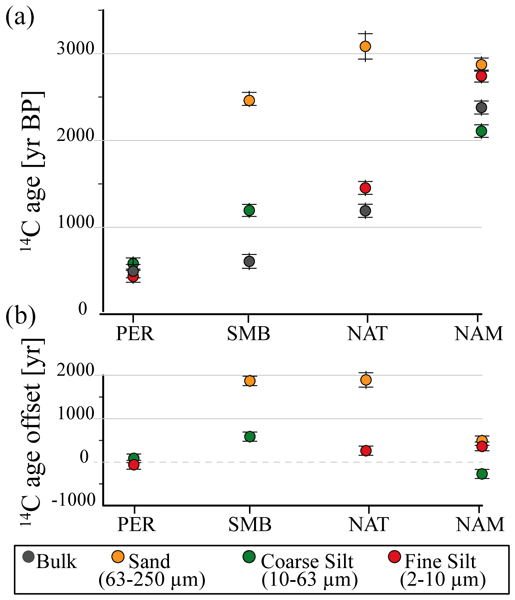
Blanca Ausín, Negar Haghipour, Elena Bruni, and Timothy Eglinton
Biogeosciences, 19, 613–627, https://doi.org/10.5194/bg-19-613-2022, https://doi.org/10.5194/bg-19-613-2022, 2022
Short summary
Short summary
The preservation and distribution of alkenones – organic molecules produced by marine algae – in marine sediments allows us to reconstruct past variations in sea surface temperature, primary productivity and CO2. Here, we explore the impact of remobilization and lateral transport of sedimentary alkenones on their fate in marine sediments. We demonstrate the pervasive influence of these processes on alkenone-derived environmental signals, compromising the reliability of related paleorecords.
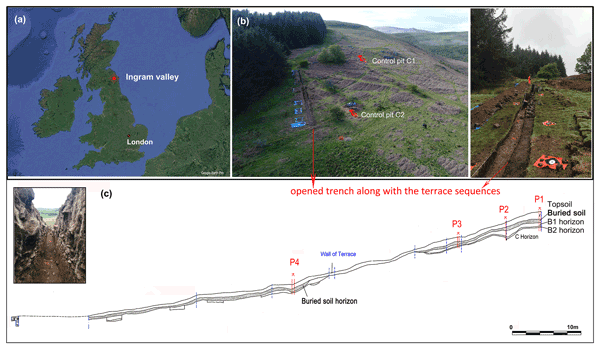
Pengzhi Zhao, Daniel Joseph Fallu, Sara Cucchiaro, Paolo Tarolli, Clive Waddington, David Cockcroft, Lisa Snape, Andreas Lang, Sebastian Doetterl, Antony G. Brown, and Kristof Van Oost
Biogeosciences, 18, 6301–6312, https://doi.org/10.5194/bg-18-6301-2021, https://doi.org/10.5194/bg-18-6301-2021, 2021
Short summary
Short summary
We investigate the factors controlling the soil organic carbon (SOC) stability and temperature sensitivity of abandoned prehistoric agricultural terrace soils. Results suggest that the burial of former topsoil due to terracing provided an SOC stabilization mechanism. Both the soil C : N ratio and SOC mineral protection regulate soil SOC temperature sensitivity. However, which mechanism predominantly controls SOC temperature sensitivity depends on the age of the buried terrace soils.
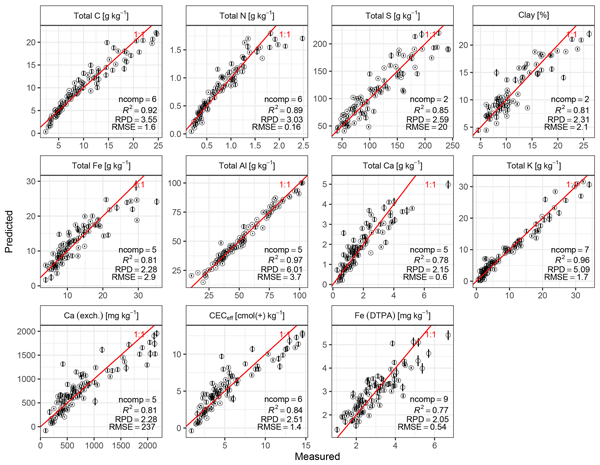
Philipp Baumann, Juhwan Lee, Emmanuel Frossard, Laurie Paule Schönholzer, Lucien Diby, Valérie Kouamé Hgaza, Delwende Innocent Kiba, Andrew Sila, Keith Sheperd, and Johan Six
SOIL, 7, 717–731, https://doi.org/10.5194/soil-7-717-2021, https://doi.org/10.5194/soil-7-717-2021, 2021
Short summary
Short summary
This work delivers openly accessible and validated calibrations for diagnosing 26 soil properties based on mid-infrared spectroscopy. These were developed for four regions in Burkina Faso and Côte d'Ivoire, including 80 fields of smallholder farmers. The models can help to site-specifically and cost-efficiently monitor soil quality and fertility constraints to ameliorate soils and yields of yam or other staple crops in the four regions between the humid forest and the northern Guinean savanna.
Laura Summerauer, Philipp Baumann, Leonardo Ramirez-Lopez, Matti Barthel, Marijn Bauters, Benjamin Bukombe, Mario Reichenbach, Pascal Boeckx, Elizabeth Kearsley, Kristof Van Oost, Bernard Vanlauwe, Dieudonné Chiragaga, Aimé Bisimwa Heri-Kazi, Pieter Moonen, Andrew Sila, Keith Shepherd, Basile Bazirake Mujinya, Eric Van Ranst, Geert Baert, Sebastian Doetterl, and Johan Six
SOIL, 7, 693–715, https://doi.org/10.5194/soil-7-693-2021, https://doi.org/10.5194/soil-7-693-2021, 2021
Short summary
Short summary
We present a soil mid-infrared library with over 1800 samples from central Africa in order to facilitate soil analyses of this highly understudied yet critical area. Together with an existing continental library, we demonstrate a regional analysis and geographical extrapolation to predict total carbon and nitrogen. Our results show accurate predictions and highlight the value that the data contribute to existing libraries. Our library is openly available for public use and for expansion.
Cited articles
Amundson, R., Berhe, A. A., Hopmans, J. W., Olson, C., Sztein, A. E., and Sparks, D. L.: Soil and Human Security in the 21st Century, Science, 348, 1261071, https://doi.org/10.1126/science.1261071, 2015. a
Angst, G., Messinger, J., Greiner, M., Häusler, W., Hertel, D., Kirfel, K., Kögel-Knabner, I., Leuschner, C., Rethemeyer, J., and Mueller, C. W.: Soil Organic Carbon Stocks in Topsoil and Subsoil Controlled by Parent Material, Carbon Input in the Rhizosphere, and Microbial-Derived Compounds, Soil Biol. Biochem., 122, 19–30, https://doi.org/10.1016/j.soilbio.2018.03.026, 2018. a
Araujo, M. A., Zinn, Y. L., and Lal, R.: Soil Parent Material, Texture and Oxide Contents Have Little Effect on Soil Organic Carbon Retention in Tropical Highlands, Geoderma, 300, 1–10, https://doi.org/10.1016/j.geoderma.2017.04.006, 2017. a
Augusto, L., Achat, D. L., Jonard, M., Vidal, D., and Ringeval, B.: Soil Parent Material – A Major Driver of Plant Nutrient Limitations in Terrestrial Ecosystems, Glob. Change Biol., 23, 3808–3824, https://doi.org/10.1111/gcb.13691, 2017. a
Bailey, K., Lloyd, F., Kearns, S., Stoppa, F., Eby, N., and Woolley, A.: Melilitite at Fort Portal, Uganda: Another Dimension to the Carbonate Volcanism, Lithos, 85, 15–25, https://doi.org/10.1016/j.lithos.2005.03.019, 2005. a, b
Bamwesigye, D., Chipfakacha, R., and Yeboah, E.: Forest and Land Rights at a Time of Deforestation and Climate Change: Land and Resource Use Crisis in Uganda, Land, 11, 2092, https://doi.org/10.3390/land11112092, 2022. a
Barker, D. S. and Nixon, P. H.: High-Ca, Low-Alkali Carbonatite Volcanism at Fort Portal, Uganda, Contrib. Mineral. Petr., 103, 166–177, https://doi.org/10.1007/BF00378502, 1989. a, b
Bascomb, C. L.: Distribution of Pyrophosphate-Extractable Iron and Organic Carbon in Soils of Various Groups, J. Soil Sci., 19, 251–268, https://doi.org/10.1111/j.1365-2389.1968.tb01538.x, 1968. a
Baumann, P., Knecht, T., and Roudier, P.: Opusreader2: Read Spectroscopic Data from Bruker OPUS Binary Files. R Package Version 0.6.2.9000, https://github.com/spectral-cockpit/opusreader2, last access: 3 April 2024. a
Bauters, M., Drake, T. W., Verbeeck, H., Bodé, S., Hervé-Fernández, P., Zito, P., Podgorski, D. C., Boyemba, F., Makelele, I., Cizungu Ntaboba, L., Spencer, R. G. M., and Boeckx, P.: High Fire-Derived Nitrogen Deposition on Central African Forests, P. Natl. Acad. Sci. USA, 115, 549–554, https://doi.org/10.1073/pnas.1714597115, 2018. a
Bauters, M., Drake, T. W., Wagner, S., Baumgartner, S., Makelele, I. A., Bodé, S., Verheyen, K., Verbeeck, H., Ewango, C., Cizungu, L., Van Oost, K., and Boeckx, P.: Fire-Derived Phosphorus Fertilization of African Tropical Forests, Nat. Commun., 12, 5129, https://doi.org/10.1038/s41467-021-25428-3, 2021. a
Bauters, M., Janssens, I. A., Wasner, D., Doetterl, S., Vermeir, P., Griepentrog, M., Drake, T. W., Six, J., Barthel, M., Baumgartner, S., Van Oost, K., Makelele, I. A., Ewango, C., Verheyen, K., and Boeckx, P.: Increasing Calcium Scarcity along Afrotropical Forest Succession, Nature Ecology & Evolution, 6, 1122–1131, https://doi.org/10.1038/s41559-022-01810-2, 2022. a
Beretta, A. N., Silbermann, A. V., Paladino, L., Torres, D., Bassahun, D., Musselli, R., and García-Lamohte, A.: Soil Texture Analyses Using a Hydrometer: Modification of the Bouyoucos Method, Cienc. Investig. Agrar., 41, 263–271, https://doi.org/10.4067/S0718-16202014000200013, 2014. a
Berhe, A. A., Harte, J., Harden, J. W., and Torn, M. S.: The Significance of the Erosion-induced Terrestrial Carbon Sink, BioScience, 57, 337–346, https://doi.org/10.1641/B570408, 2007. a
Bertrand, I., Viaud, V., Daufresne, T., Pellerin, S., and Recous, S.: Stoichiometry Constraints Challenge the Potential of Agroecological Practices for the Soil C Storage. A Review, Agron. Sustain. Dev., 39, 54, https://doi.org/10.1007/s13593-019-0599-6, 2019. a
Blume, H.-P., Brümmer, G. W., Fleige, H., Horn, R., Kandeler, E., Kögel-Knabner, I., Kretzschmar, R., Stahr, K., and Wilke, B.-M.: Inorganic Soil Components – Minerals and Rocks, in: Scheffer/Schachtschabel Soil Science, edited by: Blume, H.-P., Brümmer, G. W., Fleige, H., Horn, R., Kandeler, E., Kögel-Knabner, I., Kretzschmar, R., Stahr, K., and Wilke, B.-M., Springer, 7–53, ISBN 978-3-642-30942-7, https://doi.org/10.1007/978-3-642-30942-7_2, 2016. a
Bouillet, J.-P., Laclau, J.-P., Gonçalves, J. L. d. M., Voigtlaender, M., Gava, J. L., Leite, F. P., Hakamada, R., Mareschal, L., Mabiala, A., Tardy, F., Levillain, J., Deleporte, P., Epron, D., and Nouvellon, Y.: Eucalyptus and Acacia Tree Growth over Entire Rotation in Single- and Mixed-Species Plantations across Five Sites in Brazil and Congo, Forest Ecol. Manag., 301, 89–101, https://doi.org/10.1016/j.foreco.2012.09.019, 2013. a
Bouyoucos, G. J.: Hydrometer Method Improved for Making Particle Size Analyses of Soils1, Agron. J., 54, 464–465, https://doi.org/10.2134/agronj1962.00021962005400050028x, 1962. a
Brancalion, P. H. S., Amazonas, N. T., Chazdon, R. L., van Melis, J., Rodrigues, R. R., Silva, C. C., Sorrini, T. B., and Holl, K. D.: Exotic Eucalypts: From Demonized Trees to Allies of Tropical Forest Restoration?, J. Appl. Ecol., 57, 55–66, https://doi.org/10.1111/1365-2664.13513, 2020. a
Bristow, C. S., Hudson-Edwards, K. A., and Chappell, A.: Fertilizing the Amazon and Equatorial Atlantic with West African Dust, Geophys. Res. Lett., 37, https://doi.org/10.1029/2010GL043486, 2010. a
Bruun, T. B., Elberling, B., and Christensen, B. T.: Lability of Soil Organic Carbon in Tropical Soils with Different Clay Minerals, Soil Biol. Biochem., 42, 888–895, https://doi.org/10.1016/j.soilbio.2010.01.009, 2010. a
Bukombe, B., Bauters, M., Boeckx, P., Cizungu, L. N., Cooper, M., Fiener, P., Kidinda, L. K., Makelele, I., Muhindo, D. I., Rewald, B., Verheyen, K., and Doetterl, S.: Soil Geochemistry – and Not Topography – as a Major Driver of Carbon Allocation, Stocks, and Dynamics in Forests and Soils of African Tropical Montane Ecosystems, New Phytol., 236, 1676–1690, https://doi.org/10.1111/nph.18469, 2022. a, b
Chadwick, K. D. and Asner, G. P.: Tropical Soil Nutrient Distributions Determined by Biotic and Hillslope Processes, Biogeochemistry, 127, 273–289, https://doi.org/10.1007/s10533-015-0179-z, 2016. a
Coleman, K. and Jenkinson, D. S.: RothC-26.3 - A Model for the Turnover of Carbon in Soil, in: Evaluation of Soil Organic Matter Models, edited by Powlson, D. S., Smith, P., and Smith, J. U., NATO ASI Series, Springer, 237–246, ISBN 978-3-642-61094-3, https://doi.org/10.1007/978-3-642-61094-3_17, 1996. a
Cook, R. L., Binkley, D., and Stape, J. L.: Eucalyptus Plantation Effects on Soil Carbon after 20years and Three Rotations in Brazil, Forest Ecol. Manag., 359, 92–98, https://doi.org/10.1016/j.foreco.2015.09.035, 2016. a
Cox, T. P.: Farming the Battlefield: The Meanings of War, Cattle and Soil in South Kivu, Democratic Republic of the Congo, Disasters, 36, 233–248, https://doi.org/10.1111/j.1467-7717.2011.01257.x, 2012. a
Dahlgren, R. A.: Quantification of Allophane and Imogolite, in: Quantitative Methods in Soil Mineralogy, pp. 430–451, John Wiley & Sons, Ltd, ISBN 978-0-89118-884-1, https://doi.org/10.2136/1994.quantitativemethods.c14, 1994. a
D'Angelo, E., Crutchfield, J., and Vandiviere, M.: Rapid, Sensitive, Microscale Determination of Phosphate in Water and Soil, J. Environ. Qual., 30, 2206–2209, https://doi.org/10.2134/jeq2001.2206, 2001. a
Davidson, E. A. and Ackerman, I. L.: Changes in Soil Carbon Inventories Following Cultivation of Previously Untilled Soils, Biogeochemistry, 20, 161–193, https://doi.org/10.1007/BF00000786, 1993. a
Dechert, G., Veldkamp, E., and Anas, I.: Is Soil Degradation Unrelated to Deforestation? Examining Soil Parameters of Land Use Systems in Upland Central Sulawesi, Indonesia, Plant Soil, 265, 197–209, https://doi.org/10.1007/s11104-005-0885-8, 2004. a
Delcamp, A., Mossoux, S., Belkus, H., Tweheyo, C., Mattsson, H., and Kervyn, M.: Control of the Stress Field and Rift Structures on the Distribution and Morphology of Explosive Volcanic Craters in the Manyara and Albertine Rifts, J. Afr. Earth Sci., 150, 566–583, https://doi.org/10.1016/j.jafrearsci.2018.09.012, 2019. a, b
Depicker, A., Jacobs, L., Delvaux, D., Havenith, H.-B., Maki Mateso, J.-C., Govers, G., and Dewitte, O.: The Added Value of a Regional Landslide Susceptibility Assessment: The Western Branch of the East African Rift, Geomorphology, 353, 106886, https://doi.org/10.1016/j.geomorph.2019.106886, 2020. a
Depicker, A., Jacobs, L., Mboga, N., Smets, B., Van Rompaey, A., Lennert, M., Wolff, E., Kervyn, F., Michellier, C., Dewitte, O., and Govers, G.: Historical Dynamics of Landslide Risk from Population and Forest-Cover Changes in the Kivu Rift, Nature Sustainability, 4, 965–974, https://doi.org/10.1038/s41893-021-00757-9, 2021. a, b
Detwiler, R. P.: Land Use Change and the Global Carbon Cycle: The Role of Tropical Soils, Biogeochemistry, 2, 67–93, https://doi.org/10.1007/BF02186966, 1986. a
Dick, D. P., Nunes Gonçalves, C., Dalmolin, R. S. D., Knicker, H., Klamt, E., Kögel-Knabner, I., Simões, M. L., and Martin-Neto, L.: Characteristics of Soil Organic Matter of Different Brazilian Ferralsols under Native Vegetation as a Function of Soil Depth, Geoderma, 124, 319–333, https://doi.org/10.1016/j.geoderma.2004.05.008, 2005. a
Doetterl, S., Cornelis, J.-T., Six, J., Bodé, S., Opfergelt, S., Boeckx, P., and Van Oost, K.: Soil redistribution and weathering controlling the fate of geochemical and physical carbon stabilization mechanisms in soils of an eroding landscape, Biogeosciences, 12, 1357–1371, https://doi.org/10.5194/bg-12-1357-2015, 2015. a
Doetterl, S., Berhe, A. A., Arnold, C., Bodé, S., Fiener, P., Finke, P., Fuchslueger, L., Griepentrog, M., Harden, J. W., Nadeu, E., Schnecker, J., Six, J., Trumbore, S., Van Oost, K., Vogel, C., and Boeckx, P.: Links among Warming, Carbon and Microbial Dynamics Mediated by Soil Mineral Weathering, 11, Nat. Geosci., 589–593, https://doi.org/10.1038/s41561-018-0168-7, 2018. a
Doetterl, S., Asifiwe, R. K., Baert, G., Bamba, F., Bauters, M., Boeckx, P., Bukombe, B., Cadisch, G., Cooper, M., Cizungu, L. N., Hoyt, A., Kabaseke, C., Kalbitz, K., Kidinda, L., Maier, A., Mainka, M., Mayrock, J., Muhindo, D., Mujinya, B. B., Mukotanyi, S. M., Nabahungu, L., Reichenbach, M., Rewald, B., Six, J., Stegmann, A., Summerauer, L., Unseld, R., Vanlauwe, B., Van Oost, K., Verheyen, K., Vogel, C., Wilken, F., and Fiener, P.: Organic matter cycling along geochemical, geomorphic, and disturbance gradients in forest and cropland of the African Tropics – project TropSOC database version 1.0, Earth Syst. Sci. Data, 13, 4133–4153, https://doi.org/10.5194/essd-13-4133-2021, 2021a. a, b, c, d, e, f, g, h, i, j, k, l, m, n, o
Don, A., Schumacher, J., and Freibauer, A.: Impact of Tropical Land-Use Change on Soil Organic Carbon Stocks – a Meta-Analysis, Glob. Change Biol., 17, 1658–1670, https://doi.org/10.1111/j.1365-2486.2010.02336.x, 2011. a, b
Drake, T. W., Van Oost, K., Barthel, M., Bauters, M., Hoyt, A. M., Podgorski, D. C., Six, J., Boeckx, P., Trumbore, S. E., Ntaboba, L. C., and Spencer, R. G. M.: Mobilization of Aged and Biolabile Soil Carbon by Tropical Deforestation, Nat. Geosci., 12, 541–546, https://doi.org/10.1038/s41561-019-0384-9, 2019. a
Duncan, A. J., Bachewe, F., Mekonnen, K., Valbuena, D., Rachier, G., Lule, D., Bahta, M., and Erenstein, O.: Crop Residue Allocation to Livestock Feed, Soil Improvement and Other Uses along a Productivity Gradient in Eastern Africa, Ecosystems & Environment, 228, 101–110, https://doi.org/10.1016/j.agee.2016.05.011, 2016. a
Eufrade Junior, H. J., de Melo, R. X., Sartori, M. M. P., Guerra, S. P. S., and Ballarin, A. W.: Sustainable Use of Eucalypt Biomass Grown on Short Rotation Coppice for Bioenergy, Biomass Bioenerg., 90, 15–21, https://doi.org/10.1016/j.biombioe.2016.03.037, 2016. a
Fialho, R. C. and Zinn, Y. L.: Changes in Soil Organic Carbon Under Eucalyptus Plantations in Brazil: A Comparative Analysis, Land Degrad. Dev., 25, 428–437, https://doi.org/10.1002/ldr.2158, 2014. a
Fiantis, D., Ginting, F. I., Gusnidar, Nelson, M., and Minasny, B.: Volcanic Ash, Insecurity for the People but Securing Fertile Soil for the Future, Sustainability, 11, 3072, https://doi.org/10.3390/su11113072, 2019. a
Fick, S. E. and Hijmans, R. J.: WorldClim 2: New 1‐km Spatial Resolution Climate Surfaces for Global Land Areas, Int. J. Climatol., 37, 4302–4315, https://doi.org/10.1002/joc.5086, 2017. a
Gachuruzi, S. B.: The Impact of Refugees on the Environment: The Case of Rwandan Refugees in Kivu, Zaïre, 15, 24–26, https://www.jstor.org/stable/45411513 (last access: 20 June 2024), 1996. a
Giller, K. E., Witter, E., Corbeels, M., and Tittonell, P.: Conservation Agriculture and Smallholder Farming in Africa: The Heretics' View, Field Crop. Res., 114, 23–34, https://doi.org/10.1016/j.fcr.2009.06.017, 2009. a
Guedes, B. S., Olsson, B. A., and Karltun, E.: Effects of 34-Year-Old Pinus Taeda and Eucalyptus Grandis Plantations on Soil Carbon and Nutrient Status in Former Miombo Forest Soils, Global Ecology and Conservation, 8, 190–202, https://doi.org/10.1016/j.gecco.2016.09.005, 2016. a
Guo, L. B. and Gifford, R. M.: Soil Carbon Stocks and Land Use Change: A Meta Analysis, Glob. Change Biol., 8, 345–360, https://doi.org/10.1046/j.1354-1013.2002.00486.x, 2002. a
Hall, S. J. and Thompson, A.: What Do Relationships between Extractable Metals and Soil Organic Carbon Concentrations Mean?, Soil Sci. Soc. Am. J., 86, 195–208, https://doi.org/10.1002/saj2.20343, 2022. a
Hansen, M. C., Potapov, P. V., Moore, R., Hancher, M., Turubanova, S. A., Tyukavina, A., Thau, D., Stehman, S. V., Goetz, S. J., Loveland, T. R., Kommareddy, A., Egorov, A., Chini, L., Justice, C. O., and Townshend, J. R. G.: High-Resolution Global Maps of 21st-Century Forest Cover Change, Science, 342, 850–853, https://doi.org/10.1126/science.1244693, 2013. a
Harper, R. J., Okom, A. E. A., Stilwell, A. T., Tibbett, M., Dean, C., George, S. J., Sochacki, S. J., Mitchell, C. D., Mann, S. S., and Dods, K.: Reforesting Degraded Agricultural Landscapes with Eucalypts: Effects on Carbon Storage and Soil Fertility after 26 Years, Agriculture, Ecosystems & Environment, 163, 3–13, https://doi.org/10.1016/j.agee.2012.03.013, 2012. a
Hedin, L. O., Vitousek, P. M., and Matson, P. A.: Nutrient Losses Over Four Million Years of Tropical Forest Development, Ecology, 84, 2231–2255, https://doi.org/10.1890/02-4066, 2003. a
Hedley, M. J., Stewart, J. W. B., and Chauhan, B. S.: Changes in Inorganic and Organic Soil Phosphorus Fractions Induced by Cultivation Practices and by Laboratory Incubations, Soil Sci. Soc. Am. J., 46, 970–976, https://doi.org/10.2136/sssaj1982.03615995004600050017x, 1982. a
Hendershot, W. H. and Duquette, M.: A Simple Barium Chloride Method for Determining Cation Exchange Capacity and Exchangeable Cations, Soil Sci. Soc. Am. J., 50, 605–608, https://doi.org/10.2136/sssaj1986.03615995005000030013x, 1986. a
Heri-Kazi, A. B. and Bielders, C. L.: Cropland Characteristics and Extent of Soil Loss by Rill and Gully Erosion in Smallholder Farms in the KIVU Highlands, D.R. Congo, Geoderma Regional, 26, e00404, https://doi.org/10.1016/j.geodrs.2021.e00404, 2021. a, b, c
Hijmans, R. J.: Terra: Spatial Data Analysis, R Package Version 1.7-74, https://rspatial.github.io/terra/ (last access: 10 May 2026), 2024. a
Hijmans, R. J., Barbosa, M., Ghosh, A., and Mandel, A.: Geodata: Download Geographic Data. R Package Version 0.5-9, CRAN [code], https://CRAN.R-project.org/package=geodata (last access: 10 May 2026), 2024. a
Hombegowda, H. C., van Straaten, O., Köhler, M., and Hölscher, D.: On the rebound: soil organic carbon stocks can bounce back to near forest levels when agroforests replace agriculture in southern India, SOIL, 2, 13–23, https://doi.org/10.5194/soil-2-13-2016, 2016. a
Jacobs, L., Dewitte, O., Poesen, J., Maes, J., Mertens, K., Sekajugo, J., and Kervyn, M.: Landslide Characteristics and Spatial Distribution in the Rwenzori Mountains, Uganda, J. Afr. Earth Sci., 134, 917–930, https://doi.org/10.1016/j.jafrearsci.2016.05.013, 2017. a
Jagadamma, S., Lal, R., Ussiri, D. A. N., Trumbore, S. E., and Mestelan, S.: Evaluation of Structural Chemistry and Isotopic Signatures of Refractory Soil Organic Carbon Fraction Isolated by Wet Oxidation Methods, Biogeochemistry, 98, 29–44, https://doi.org/10.1007/s10533-009-9374-0, 2010. a
Jagger, P. and Pender, J.: The Role of Trees for Sustainable Management of Less-Favored Lands: The Case of Eucalyptus in Ethiopia, Forest Policy Econ., 5, 83–95, https://doi.org/10.1016/S1389-9341(01)00078-8, 2003. a
Jenny, H.: Factors of Soil Formation: A System of Quantitative Pedology, Dover Books on Earth Sciences, Dover Publ, unabridged, unaltered republ., new foreword edn., ISBN 978-0-486-68128-3, 1994. a
Jobbágy, E. G. and Jackson, R. B.: Patterns and Mechanisms of Soil Acidification in the Conversion of Grasslands to Forests, Biogeochemistry, 64, 205–229, https://doi.org/10.1023/A:1024985629259, 2003. a
Jones, A., Breuning-Madsen, H., Brossard, M., Dampha, A., Deckers, J., Dewitte, O., Hallett, S., Jones, R., Kilasara, M., Le Roux, P., Micheli, E., Montanarella, L., Spaargaren, O., Tahar, G., Thiombiano, L., Van Ranst, E., Yemefack, M., and Zougmore, R.: Soil Atlas of Africa, European Commission, Publication Office of the European Union, ISBN 978-92-79-26715-4, https://doi.org/10.2788/52319, 2013. a
Kallenbach, C. M., Frey, S. D., and Grandy, A. S.: Direct Evidence for Microbial-Derived Soil Organic Matter Formation and Its Ecophysiological Controls, Nat. Commun., 7, 13 630, https://doi.org/10.1038/ncomms13630, 2016. a
Kampunzu, A. B., Bonhomme, M. G., and Kanika, M.: Geochronology of Volcanic Rocks and Evolution of the Cenozoic Western Branch of the East African Rift System, J. Afr. Earth Sci., 26, 441–461, https://doi.org/10.1016/S0899-5362(98)00025-6, 1998. a
Kangela Matazi, A., Kany Luganda, E., and Mugisho Mukotanyi, S.: Does Eucalyptus Determine Agricultural Soil Quality?, Cogent Food & Agriculture, 9, 2157115, https://doi.org/10.1080/23311932.2022.2157115, 2023. a, b
Karamage, F., Shao, H., Chen, X., Ndayisaba, F., Nahayo, L., Kayiranga, A., Omifolaji, J. K., Liu, T., and Zhang, C.: Deforestation Effects on Soil Erosion in the Lake Kivu Basin, D.R. Congo-Rwanda, Forests, 7, 281, https://doi.org/10.3390/f7110281, 2016. a
Karamage, F., Zhang, C., Liu, T., Maganda, A., and Isabwe, A.: Soil Erosion Risk Assessment in Uganda, Forests, 8, 52, https://doi.org/10.3390/f8020052, 2017. a, b
Kennard, R. W. and Stone, L. A.: Computer Aided Design of Experiments, Technometrics, 11, 137–148, https://doi.org/10.1080/00401706.1969.10490666, 1969. a
Kirsten, M., Mikutta, R., Vogel, C., Thompson, A., Mueller, C. W., Kimaro, D. N., Bergsma, H. L. T., Feger, K.-H., and Kalbitz, K.: Iron Oxides and Aluminous Clays Selectively Control Soil Carbon Storage and Stability in the Humid Tropics, Scientific Reports, 11, 5076, https://doi.org/10.1038/s41598-021-84777-7, 2021. a
Klinge, R., Araujo Martins, A., Mackensen, J., and Fölster, H.: Element Loss on Rain Forest Conversion in East Amazonia: Comparison of Balances of Stores and Fluxes, Biogeochemistry, 69, 63–82, https://doi.org/10.1023/B:BIOG.0000031040.38388.9b, 2004. a
Kögel-Knabner, I., Guggenberger, G., Kleber, M., Kandeler, E., Kalbitz, K., Scheu, S., Eusterhues, K., and Leinweber, P.: Organo-Mineral Associations in Temperate Soils: Integrating Biology, Mineralogy, and Organic Matter Chemistry, J. Plant Nutr. Soil Sc., 171, 61–82, https://doi.org/10.1002/jpln.200700048, 2008. a, b
Komada, T., Anderson, M. R., and Dorfmeier, C. L.: Carbonate Removal from Coastal Sediments for the Determination of Organic Carbon and Its Isotopic Signatures, δ13C and Δ14C: Comparison of Fumigation and Direct Acidification by Hydrochloric Acid, Limnol. Oceanogr.-Meth., 6, 254–262, https://doi.org/10.4319/lom.2008.6.254, 2008. a
Korchagin, J., Bortoluzzi, E. C., Moterle, D. F., Petry, C., and Caner, L.: Evidences of Soil Geochemistry and Mineralogy Changes Caused by Eucalyptus Rhizosphere, CATENA, 175, 132–143, https://doi.org/10.1016/j.catena.2018.12.001, 2019. a
Kulimushi, L. C., Choudhari, P., Mubalama, L. K., and Banswe, G. T.: GIS and Remote Sensing-Based Assessment of Soil Erosion Risk Using RUSLE Model in South-Kivu Province, Eastern, Democratic Republic of Congo, Natural Hazards and Risk, 12, 961–987, https://doi.org/10.1080/19475705.2021.1906759, 2021. a, b, c
Kurniawan, S., Corre, M. D., Matson, A. L., Schulte-Bisping, H., Utami, S. R., van Straaten, O., and Veldkamp, E.: Conversion of tropical forests to smallholder rubber and oil palm plantations impacts nutrient leaching losses and nutrient retention efficiency in highly weathered soils, Biogeosciences, 15, 5131–5154, https://doi.org/10.5194/bg-15-5131-2018, 2018. a
Laclau, J.-P., Ranger, J., Nzila, J. d. D., Bouillet, J.-P., and Deleporte, P.: Nutrient Cycling in a Clonal Stand of Eucalyptus and an Adjacent Savanna Ecosystem in Congo: 2. Chemical Composition of Soil Solutions, Forest Ecol. Manag., 180, 527–544, https://doi.org/10.1016/S0378-1127(02)00645-X, 2003. a, b
Laclau, J.-P., Ranger, J., Deleporte, P., Nouvellon, Y., Saint-André, L., Marlet, S., and Bouillet, J.-P.: Nutrient Cycling in a Clonal Stand of Eucalyptus and an Adjacent Savanna Ecosystem in Congo: 3. Input–Output Budgets and Consequences for the Sustainability of the Plantations, Forest Ecol. Manag., 210, 375–391, https://doi.org/10.1016/j.foreco.2005.02.028, 2005. a
Laganière, J., Angers, D. A., and Paré, D.: Carbon Accumulation in Agricultural Soils after Afforestation: A Meta-Analysis, Glob. Change Biol., 16, 439–453, https://doi.org/10.1111/j.1365-2486.2009.01930.x, 2010. a
Laghmouch, M., Kalikone, C., Ilombe Mawe, G., Ganza, G., Safari, E., Bachinyaga, J., Mugisho, E., Wazi, N. R., Nzolang, C., Delvaux, D., Dewaele, S., Fernandez, M., Mees, F., Nimpagaritse, G., Tack, L., and Kervyn, F.: Carte Géologique Du Kivu Au 1/500 000 (RD. CONGO), Musée Royal de l’Afrique Centrale, ISBN 978-94-92669-43-8, 2018. a
Lal, R.: Restoring Soil Quality to Mitigate Soil Degradation, Sustainability, 7, 5875–5895, https://doi.org/10.3390/su7055875, 2015. a
Lambin, E. F., Turner, B. L., Geist, H. J., Agbola, S. B., Angelsen, A., Bruce, J. W., Coomes, O. T., Dirzo, R., Fischer, G., Folke, C., George, P. S., Homewood, K., Imbernon, J., Leemans, R., Li, X., Moran, E. F., Mortimore, M., Ramakrishnan, P. S., Richards, J. F., Skånes, H., Steffen, W., Stone, G. D., Svedin, U., Veldkamp, T. A., Vogel, C., and Xu, J.: The Causes of Land-Use and Land-Cover Change: Moving beyond the Myths, Global Environ. Change, 11, 261–269, https://doi.org/10.1016/S0959-3780(01)00007-3, 2001. a
Lavallee, J. M., Soong, J. L., and Cotrufo, M. F.: Conceptualizing Soil Organic Matter into Particulate and Mineral-Associated Forms to Address Global Change in the 21st Century, Glob. Change Biol., 26, 261–273, https://doi.org/10.1111/gcb.14859, 2020. a
Lee, S. H., Dahali, R., Nik Hashim, N. H., Kusin, M., Mahmud, S. Z., Kamarudin, N., Abdul Jalil, A. M., and Lubis, M. A. R.: Eucalyptus Plantation Worldwide, Its Hybridization and Cloning Development, in: Eucalyptus: Engineered Wood Products and Other Applications, edited by Lee, S. H., Lum, W. C., Antov, P., Kristak, L., Rahandi Lubis, M. A., and Fatriasari, W., Springer Nature, 1–15, ISBN 978-981-99-7919-6, https://doi.org/10.1007/978-981-99-7919-6_1, 2024. a
Leite, F. P., Silva, I. R., Novais, R. F., de Barros, N. F., and Neves, J. C. L.: Alterations of Soil Chemical Properties by Eucalyptus Cultivation in Five Regions in the Rio Doce Valley, Rev. Bras. Ciênc. Solo, 34, 821–831, https://doi.org/10.1590/S0100-06832010000300024, 2010. a
Lejeune, G., Ansay, F., Van Geit, M., and Lusenge, T.: ECOmakala: Répondre à La Demande Énergétique Pour Protéger Les Forêts Du Parc National Des Virunga Au Nord-Kivu (RDC) et Lutter Contre La Pauvreté, Tech. rep., World Wide Fund for Nature, Bruxelles, Belgium, https://wwfafrica.awsassets.panda.org/downloads/brochure_wwf_ecomakala_fr2.pdf?25762/ECOmakala (last access: 20 June 2024), 2013. a
Lemenih, M., Olsson, M., and Karltun, E.: Comparison of Soil Attributes under Cupressus lusitanica and Eucalyptus saligna Established on Abandoned Farmlands with Continuously Cropped Farmlands and Natural Forest in Ethiopia, Forest Ecol. Manag., 195, 57–67, https://doi.org/10.1016/j.foreco.2004.02.055, 2004. a
Lewis, L. A. and Nyamulinda, V.: The Critical Role of Human Activities in Land Degradation in Rwanda, Land Degrad. Dev., 7, 47–55, https://doi.org/10.1002/(SICI)1099-145X(199603)7:1<47::AID-LDR213>3.0.CO;2-M, 1996. a
Lima, A. M. N., Silva, I. R., Neves, J. C. L., Novais, R. F., Barros, N. F., Mendonça, E. S., Smyth, T. J., Moreira, M. S., and Leite, F. P.: Soil Organic Carbon Dynamics Following Afforestation of Degraded Pastures with Eucalyptus in Southeastern Brazil, Forest Ecol. Manag., 235, 219–231, https://doi.org/10.1016/j.foreco.2006.08.331, 2006. a, b
Link, K., Koehn, D., Barth, M. G., Tiberindwa, J. V., Barifaijo, E., Aanyu, K., and Foley, S. F.: Continuous Cratonic Crust between the Congo and Tanzania Blocks in Western Uganda, Int. J. Earth Sci., 99, 1559–1573, https://doi.org/10.1007/s00531-010-0548-8, 2010. a
Majaliwa, J. G. M., Twongyirwe, R., Nyenje, R., Oluka, M., Ongom, B., Sirike, J., Mfitumukiza, D., Azanga, E., Natumanya, R., Mwerera, R., and Barasa, B.: The Effect of Land Cover Change on Soil Properties around Kibale National Park in South Western Uganda, Applied and Environmental Soil Science, 2010, e185689, https://doi.org/10.1155/2010/185689, 2010. a
Maki Mateso, J.-C., Bielders, C. L., Monsieurs, E., Depicker, A., Smets, B., Tambala, T., Bagalwa Mateso, L., and Dewitte, O.: Characteristics and causes of natural and human-induced landslides in a tropical mountainous region: the rift flank west of Lake Kivu (Democratic Republic of the Congo), Nat. Hazards Earth Syst. Sci., 23, 643–666, https://doi.org/10.5194/nhess-23-643-2023, 2023. a
Mallen-Cooper, M., Atkinson, J., Xirocostas, Z. A., Wijas, B., Chiarenza, G. M., Dadzie, F. A., and Eldridge, D. J.: Global Synthesis Reveals Strong Multifaceted Effects of Eucalypts on Soils, Global Ecol. Biogeogr., 31, 1667–1678, https://doi.org/10.1111/geb.13522, 2022. a
Markewitz, D., Davidson, E., Moutinho, P., and Nepstad, D.: Nutrient Loss and Redistribution After Forest Clearing on a Highly Weathered Soil in Amazonia, Ecol. Appl., 14, 177–199, https://doi.org/10.1890/01-6016, 2004. a
Marín-Spiotta, E. and Sharma, S.: Carbon Storage in Successional and Plantation Forest Soils: A Tropical Analysis, Global Ecol. Biogeogr., 22, 105–117, https://doi.org/10.1111/j.1466-8238.2012.00788.x, 2013. a
May-Tobin, C., Boucher, D., Elias, P., Lininger, K., Roquemore, S., and Saxon, E.: Wood for Fuel, Tech. rep., Union of Concerned Scientists, https://www.jstor.org/stable/resrep00075.14 (last access: 20 June 2024), 2011. a
McLean, E. O.: Aluminum, in: Methods of Soil Analysis, pp. 978–998, John Wiley & Sons, Ltd, ISBN 978-0-89118-204-7, https://doi.org/10.2134/agronmonogr9.2.c16, 1965. a
Melkebeke, S. V.: Dissimilar Coffee Frontiers: Mobilizing Labor and Land in the Lake Kivu Region, Congo and Rwanda (1918-1960/62), African History ; 9, BRILL, ISBN 90-04-42849-6, 2020. a
Mikutta, R. and Kaiser, K.: Organic Matter Bound to Mineral Surfaces: Resistance to Chemical and Biological Oxidation, Soil Biol. Biochem., 43, 1738–1741, https://doi.org/10.1016/j.soilbio.2011.04.012, 2011. a
Moebius-Clune, B. N., van Es, H. M., Idowu, O. J., Schindelbeck, R. R., Kimetu, J. M., Ngoze, S., Lehmann, J., and Kinyangi, J. M.: Long-Term Soil Quality Degradation along a Cultivation Chronosequence in Western Kenya, Ecosystems & Environment, 141, 86–99, https://doi.org/10.1016/j.agee.2011.02.018, 2011. a
Muchena, F. N., Onduru, D. D., Gachini, G. N., and de Jager, A.: Turning the Tides of Soil Degradation in Africa: Capturing the Reality and Exploring Opportunities, Land Use Policy, 22, 23–31, https://doi.org/10.1016/j.landusepol.2003.07.001, 2005. a
Mutegeza Mushitwala, D.: Rapport Bi-Annuel 2018–2019, Tech. rep., Inspection Provinciale De l’agriculture du Sud-Kivu, South Kivu, Democratic Republic of Congo, 2020. a
Namirembe, S., Piikki, K., Sommer, R., Söderström, M., Tessema, B., and Nyawira, S.: Soil Organic Carbon in Agricultural Systems of Six Countries in East Africa – a Literature Review of Status and Carbon Sequestration Potential, South African Journal of Plant and Soil, 37, 35–49, https://doi.org/10.1080/02571862.2019.1640296, 2020. a, b
Nepstad, D. C., de Carvalho, C. R., Davidson, E. A., Jipp, P. H., Lefebvre, P. A., Negreiros, G. H., da Silva, E. D., Stone, T. A., Trumbore, S. E., and Vieira, S.: The Role of Deep Roots in the Hydrological and Carbon Cycles of Amazonian Forests and Pastures, Nature, 372, 666–669, https://doi.org/10.1038/372666a0, 1994. a
Newbury, D. S.: Kings and Clans: Ijwi Island and the Lake Kivu Rift, 1780–1840, in: Kings and Clans Ijwi Island and the Lake Kivu Rift, 1780–1840, WISEdition, University of Wisconsin Press, ISBN 0-299-12894-6, 2010. a
Ng, W., Minasny, B., Jeon, S. H., and McBratney, A.: Mid-Infrared Spectroscopy for Accurate Measurement of an Extensive Set of Soil Properties for Assessing Soil Functions, Soil Security, 6, 100043, https://doi.org/10.1016/j.soisec.2022.100043, 2022. a
Ngoze, S., Riha, S., Lehmann, J., Verchot, L., Kinyangi, J., Mbugua, D., and Pell, A.: Nutrient Constraints to Tropical Agroecosystem Productivity in Long-Term Degrading Soils, Glob. Change Biol., 14, 2810–2822, https://doi.org/10.1111/j.1365-2486.2008.01698.x, 2008. a
Nye, P. H. and Greenland, D. J.: Changes in the Soil after Clearing Tropical Forest, Plant Soil, 21, 101–112, https://doi.org/10.1007/BF01373877, 1964. a
Odeh, I. O. A., Todd, A. J., and Triantafilis, J.: Spatial Prediction of Soil Particle-size Fractions as Compositional Data, Soil Sci., 168, 501, https://doi.org/10.1097/01.ss.0000080335.10341.23, 2003. a
Paul, S., Flessa, H., Veldkamp, E., and López-Ulloa, M.: Stabilization of Recent Soil Carbon in the Humid Tropics Following Land Use Changes: Evidence from Aggregate Fractionation and Stable Isotope Analyses, Biogeochemistry, 87, 247–263, https://doi.org/10.1007/s10533-008-9182-y, 2008. a
Pauwels, J. M., Van Ranst, E., and Verloo, M.: Manuel de Laboratoire de Pédologie: Méthodes d'analyse de Sols et de Plantes, Équipement, Gestion de Stocks de Verrerie et de Produits Chimiques, no. 28 in AGCD. Publications Agricoles, Centre universitaire de Dschang. Département des sciences du sol, http://hdl.handle.net/1854/LU-223183 (last access: 20 June 2024), 1992. a
Posit team: RStudio: Integrated Development Environment for R, R, Tech. rep., Posit Software, PBC, http://www.posit.co/ (last access: 10 May 2026), 2023. a
Pouclet, A. and Bram, K.: Nyiragongo and Nyamuragira: A Review of Volcanic Activity in the Kivu Rift, Western Branch of the East African Rift System, B. Volcanol., 83, 10, https://doi.org/10.1007/s00445-021-01435-6, 2021. a
Pouclet, A., Bellon, H., and Bram, K.: The Cenozoic Volcanism in the Kivu Rift: Assessment of the Tectonic Setting, Geochemistry, and Geochronology of the Volcanic Activity in the South-Kivu and Virunga Regions, J. Afr. Earth Sci., 121, 219–246, https://doi.org/10.1016/j.jafrearsci.2016.05.026, 2016. a
Powers, J. S., Corre, M. D., Twine, T. E., and Veldkamp, E.: Geographic Bias of Field Observations of Soil Carbon Stocks with Tropical Land-Use Changes Precludes Spatial Extrapolation, P. Natl. Acad. Sci. USA, 108, 6318–6322, https://doi.org/10.1073/pnas.1016774108, 2011. a, b
Prosser, I. P., Hailes, K. J., Melville, M. D., Avery, R. P., and Slade, C. J.: A Comparison of Soil Acidification and Aluminum under Eucalyptus Forest and Unimproved Pasture, Soil Res., 31, 245–254, https://doi.org/10.1071/sr9930245, 1993. a
Quesada, C. A., Paz, C., Oblitas Mendoza, E., Phillips, O. L., Saiz, G., and Lloyd, J.: Variations in soil chemical and physical properties explain basin-wide Amazon forest soil carbon concentrations, SOIL, 6, 53–88, https://doi.org/10.5194/soil-6-53-2020, 2020. a
R Core Team: R: A Language and Environment for Statistical Computing, https://www.R-project.org/ (last access: 10 May 2026), 2023. a
Ramirez‐Lopez, L., Wadoux, A. M. J., Franceschini, M. H. D., Terra, F. S., Marques, K. P. P., Sayão, V. M., and Demattê, J. A. M.: Robust Soil Mapping at the Farm Scale with Vis–NIR Spectroscopy, 70, 378–393, https://doi.org/10.1111/ejss.12752, 2019. a
Ramirez-Lopez, L., Stevens, A., Orellano, C., Viscarra Rossel, R., Shen, Z., Wadoux, A., and Breure, T.: Resemble: Regression and Similarity Evaluation for Memory-Based Learning in Spectral Chemometrics, R Package Version 2.2.3, https://CRAN.R-project.org/package=resemble, last access: 3 April 2024. a, b, c
Rasmussen, C., Heckman, K., Wieder, W. R., Keiluweit, M., Lawrence, C. R., Berhe, A. A., Blankinship, J. C., Crow, S. E., Druhan, J. L., Hicks Pries, C. E., Marin-Spiotta, E., Plante, A. F., Schädel, C., Schimel, J. P., Sierra, C. A., Thompson, A., and Wagai, R.: Beyond Clay: Towards an Improved Set of Variables for Predicting Soil Organic Matter Content, Biogeochemistry, 137, 297–306, https://doi.org/10.1007/s10533-018-0424-3, 2018. a
Reichenbach, M., Fiener, P., Garland, G., Griepentrog, M., Six, J., and Doetterl, S.: The role of geochemistry in organic carbon stabilization against microbial decomposition in tropical rainforest soils, SOIL, 7, 453–475, https://doi.org/10.5194/soil-7-453-2021, 2021. a, b
Reichenbach, M., Fiener, P., Hoyt, A., Trumbore, S., Six, J., and Doetterl, S.: Soil Carbon Stocks in Stable Tropical Landforms Are Dominated by Geochemical Controls and Not by Land Use, Glob. Change Biol., 29, 2591–2607, https://doi.org/10.1111/gcb.16622, 2023. a, b, c, d
Roose, E. and Barthès, B.: Organic Matter Management for Soil Conservation and Productivity Restoration in Africa: A Contribution from Francophone Research, Nutr. Cycl. Agroecosys., 61, 159–170, https://doi.org/10.1023/A:1013349731671, 2001. a
Rudel, T. K., Defries, R., Asner, G. P., and Laurance, W. F.: Changing Drivers of Deforestation and New Opportunities for Conservation, Conserv. Biol., 23, 1396–1405, https://doi.org/10.1111/j.1523-1739.2009.01332.x, 2009. a
Ruff, M., Wacker, L., Gäggeler, H. W., Suter, M., Synal, H.-A., and Szidat, S.: A Gas Ion Source for Radiocarbon Measurements at 200 kV, Radiocarbon, 49, 307–314, https://doi.org/10.1017/S0033822200042235, 2007. a
Sanchez, P. A. and Logan, T. J.: Myths and Science about the Chemistry and Fertility of Soils in the Tropics, in: Myths and Science of Soils of the Tropics, John Wiley & Sons, Ltd, 35–46, ISBN 978-0-89118-924-4, https://doi.org/10.2136/sssaspecpub29.c3, 1992. a, b
Sanderman, J., Savage, K., and Dangal, S. R.: Mid‐infrared Spectroscopy for Prediction of Soil Health Indicators in the United States, Soil Sci. Soc. Am. J., 84, 251–261, https://doi.org/10.1002/saj2.20009, 2020. a
Six, J., Feller, C., Denef, K., Ogle, S. M., De Moraes, J. C., and Albrecht, A.: Soil Organic Matter, Biota and Aggregation in Temperateand Tropical Soils – Effects of No-Tillage, Agronomie, 22, 755–775, https://doi.org/10.1051/agro:2002043, 2002. a
Soares, M. R. and Alleoni, L. R. F.: Contribution of Soil Organic Carbon to the Ion Exchange Capacity of Tropical Soils, J. Sustain. Agr., 32, 439–462, https://doi.org/10.1080/10440040802257348, 2008. a
Souza, I. F., Almeida, L. F. J., Jesus, G. L., Kleber, M., and Silva, I. R.: The Mechanisms of Organic Carbon Protection and Dynamics of C-saturation in Oxisols Vary with Particle-Size Distribution, Eur. J. Soil Sci., 68, 726–739, https://doi.org/10.1111/ejss.12463, 2017. a
Sparks, D. L., Singh, B., and Siebecker, M. G.: Environmental Soil Chemistry, Elsevier, ISBN 978-0-443-14035-8, 2022. a
Stallard, R. F.: Terrestrial Sedimentation and the Carbon Cycle: Coupling Weathering and Erosion to Carbon Burial, Glob. Biogeochemical Cy., 12, 231–257, https://doi.org/10.1029/98GB00741, 1998. a, b
Stevens, A. and Ramirez-Lopez, L.: An Introduction to the Prospectr Package. R Package Version 0.2.7, GitHub [code], https://github.com/l-ramirez-lopez/prospectr, last access: 3 April 2024. a
Stoner, S., Trumbore, S. E., González-Pérez, J. A., Schrumpf, M., Sierra, C. A., Hoyt, A. M., Chadwick, O., and Doetterl, S.: Relating Mineral–Organic Matter Stabilization Mechanisms to Carbon Quality and Age Distributions Using Ramped Thermal Analysis, Philos. T. R. Soc. A, 381, 20230139, https://doi.org/10.1098/rsta.2023.0139, 2023. a
Stucki, J. W., Goodman, B. A., and Schwertmann, U., eds.: Iron in Soils and Clay Minerals, Springer Netherlands, ISBN 978-94-010-8278-5 978-94-009-4007-9, https://doi.org/10.1007/978-94-009-4007-9, 1987. a
Stuiver, M. and Polach, H. A.: Discussion Reporting of 14C Data, Radiocarbon, 19, 355–363, https://doi.org/10.1017/S0033822200003672, 1977. a
Summerauer, L.: laura-summerauer/soildeg-easternafrica-publication: final submission (v.1), Zenodo [code and data set], https://doi.org/10.5281/zenodo.20326820, 2026. a
Summerauer, L., Baumann, P., Ramirez-Lopez, L., Barthel, M., Bauters, M., Bukombe, B., Reichenbach, M., Boeckx, P., Kearsley, E., Van Oost, K., Vanlauwe, B., Chiragaga, D., Heri-Kazi, A. B., Moonen, P., Sila, A., Shepherd, K., Bazirake Mujinya, B., Van Ranst, E., Baert, G., Doetterl, S., and Six, J.: The central African soil spectral library: a new soil infrared repository and a geographical prediction analysis, SOIL, 7, 693–715, https://doi.org/10.5194/soil-7-693-2021, 2021. a, b, c, d
Tererai, F., Gaertner, M., Jacobs, S. M., and Richardson, D. M.: Eucalyptus Camaldulensis Invasion in Riparian Zones Reveals Few Significant Effects on Soil Physico-Chemical Properties, River Res. Appl., 31, 590–601, https://doi.org/10.1002/rra.2762, 2015. a
Tisdall, J. M. and Oades, J. M.: Organic Matter and Water-Stable Aggregates in Soils, J. Soil Sci., 33, 141–163, https://doi.org/10.1111/j.1365-2389.1982.tb01755.x, 1982. a
Tugel, A. J., Herrick, J. E., Brown, J. R., Mausbach, M. J., Puckett, W., and Hipple, K.: Soil Change, Soil Survey, and Natural Resources Decision Making, Soil Sci. Soc. Am. J., 69, 738–747, https://doi.org/10.2136/sssaj2004.0163, 2005. a
Tully, K., Sullivan, C., Weil, R., and Sanchez, P.: The State of Soil Degradation in Sub-Saharan Africa: Baselines, Trajectories, and Solutions, Sustainability, 7, 6523–6552, https://doi.org/10.3390/su7066523, 2015. a
Tyukavina, A., Hansen, M. C., Potapov, P., Parker, D., Okpa, C., Stehman, S. V., Kommareddy, I., and Turubanova, S.: Congo Basin Forest Loss Dominated by Increasing Smallholder Clearing, Science Advances, 4, 1–12, https://doi.org/10.1126/sciadv.aat2993, 2018. a
Uganda Investment Authority: Agriculture Sector Investment Profile: Rwenzori Region, Tech. rep., Uganda Investment Authority, https://ugandainvest.go.ug/wp-content/uploads/2020/11/Agriculture-Sector-Investment-Profile-Rwenzori-Region.pdf (last access: 20 June 2024), 2020. a
Vågen, T.-G., Winowiecki, L. A., Desta, L., Tondoh, E. J., Weullow, E., Shepherd, K., and Sila, A.: Mid-Infrared Spectra (MIRS) from ICRAF Soil and Plant Spectroscopy Laboratory: Africa Soil Information Service (AfSIS) Phase I 2009–2013, World Agroforestry – Research Data Repository [data set], https://doi.org/10.34725/DVN/QXCWP1, 2020. a
Vågen, T.-G., Winowiecki, L. A., Desta, L., Tondoh, J., Weullow, E., Shepherd, K., Sila, A., Dunham, S. J., Hernández-Allica, J., Carter, J., and McGrath, S. P.: Wet Chemistry Data for a Subset of AfSIS: Phase I Archived Soil Samples, World Agroforestry [data set], https://doi.org/10.34725/DVN/66BFOB, 2022. a
Van Oost, K. and Six, J.: Reconciling the paradox of soil organic carbon erosion by water, Biogeosciences, 20, 635–646, https://doi.org/10.5194/bg-20-635-2023, 2023. a
Van Oost, K., Verstraeten, G., Doetterl, S., Notebaert, B., Wiaux, F., Broothaerts, N., and Six, J.: Legacy of Human-Induced C Erosion and Burial on Soil–Atmosphere C Exchange, P. Natl. Acad. Sci. USA, 109, 19492–19497, https://doi.org/10.1073/pnas.1211162109, 2012. a
Vanacker, V., Ameijeiras-Mariño, Y., Schoonejans, J., Cornélis, J.-T., Minella, J. P. G., Lamouline, F., Vermeire, M.-L., Campforts, B., Robinet, J., Van de Broek, M., Delmelle, P., and Opfergelt, S.: Land Use Impacts on Soil Erosion and Rejuvenation in Southern Brazil, CATENA, 178, 256–266, https://doi.org/10.1016/j.catena.2019.03.024, 2019. a
van Straaten, O., Corre, M. D., Wolf, K., Tchienkoua, M., Cuellar, E., Matthews, R. B., and Veldkamp, E.: Conversion of Lowland Tropical Forests to Tree Cash Crop Plantations Loses up to One-Half of Stored Soil Organic Carbon, P. Natl. Acad. Sci. USA, 112, 9956–9960, https://doi.org/10.1073/pnas.1504628112, 2015. a
Veldkamp, E., Schmidt, M., Powers, J. S., and Corre, M. D.: Deforestation and Reforestation Impacts on Soils in the Tropics, Nature Reviews Earth & Environment, 1, 590–605, https://doi.org/10.1038/s43017-020-0091-5, 2020. a, b, c
Vinogradov, V. I.:
Vitousek, P., Chadwick, O., Matson, P., Allison, S., Derry, L., Kettley, L., Luers, A., Mecking, E., Monastra, V., and Porder, S.: Erosion and the Rejuvenation of Weathering-derived Nutrient Supply in an Old Tropical Landscape, Ecosystems, 6, 762–772, https://doi.org/10.1007/s10021-003-0199-8, 2003. a
Vollset, S. E., Goren, E., Yuan, C.-W., Cao, J., Smith, A. E., Hsiao, T., Bisignano, C., Azhar, G. S., Castro, E., Chalek, J., Dolgert, A. J., Frank, T., Fukutaki, K., Hay, S. I., Lozano, R., Mokdad, A. H., Nandakumar, V., Pierce, M., Pletcher, M., Robalik, T., Steuben, K. M., Wunrow, H. Y., Zlavog, B. S., and Murray, C. J. L.: Fertility, Mortality, Migration, and Population Scenarios for 195 Countries and Territories from 2017 to 2100: A Forecasting Analysis for the Global Burden of Disease Study, The Lancet, 396, 1285–1306, https://doi.org/10.1016/S0140-6736(20)30677-2, 2020. a
Wambede, N. M., Joyfred, A., and Remigio, T.: Soil Loss under Different Cropping Systems in Highlands of Uganda, Universal Journal of Agricultural Research, 4, 217–229, https://doi.org/10.13189/ujar.2016.040601, 2016. a, b
Wasige, J. E., Groen, T. A., Rwamukwaya, B. M., Tumwesigye, W., Smaling, E. M. A., and Jetten, V.: Contemporary Land Use/Land Cover Types Determine Soil Organic Carbon Stocks in South-West Rwanda, Nutr. Cycl. Agroecosys., 100, 19–33, https://doi.org/10.1007/s10705-014-9623-z, 2014. a
Wells, J. J., Stringer, L. C., Woodhead, A. J., and Wandrag, E. M.: Towards a Holistic Understanding of Non-Native Tree Impacts on Ecosystem Services: A Review of Acacia, Eucalyptus and Pinus in Africa, Ecosyst. Serv., 60, 101511, https://doi.org/10.1016/j.ecoser.2023.101511, 2023. a
Wickham, H.: Ggplot2: Elegant Graphics for Data Analysis, https://ggplot2.tidyverse.org (last access: 10 May 2026), 2016. a
Wieder, W. R., Grandy, A. S., Kallenbach, C. M., Taylor, P. G., and Bonan, G. B.: Representing life in the Earth system with soil microbial functional traits in the MIMICS model, Geosci. Model Dev., 8, 1789–1808, https://doi.org/10.5194/gmd-8-1789-2015, 2015. a
Wilken, F., Fiener, P., Ketterer, M., Meusburger, K., Muhindo, D. I., van Oost, K., and Doetterl, S.: Assessing soil redistribution of forest and cropland sites in wet tropical Africa using 239+240Pu fallout radionuclides, SOIL, 7, 399–414, https://doi.org/10.5194/soil-7-399-2021, 2021. a, b
WorldPop: The Spatial Distribution of Population Density in 2020, Democratic Republic of Congo, WorldPop Hub [data set], https://doi.org/10.5258/SOTON/WP00674, 2020. a
Wu, S., Konhauser, K. O., Chen, B., and Huang, L.: “Reactive Mineral Sink” Drives Soil Organic Matter Dynamics and Stabilization, npj Materials Sustainability, 1, 3, https://doi.org/10.1038/s44296-023-00003-7, 2023. a
Xiong, M., Sun, R., and Chen, L.: A Global Comparison of Soil Erosion Associated with Land Use and Climate Type, Geoderma, 343, 31–39, https://doi.org/10.1016/j.geoderma.2019.02.013, 2019. a
Yavitt, J. B.: Nutrient Dynamics of Soil Derived from Different Parent Material on Barro Colorado Island, Panama1, Biotropica, 32, 198–207, https://doi.org/10.1111/j.1744-7429.2000.tb00462.x, 2000. a
Zhang, D., Zhang, J., Yang, W., and Wu, F.: Effects of Afforestation with Eucalyptus Grandis on Soil Physicochemical and Microbiological Properties, Soil Res., 50, 167, https://doi.org/10.1071/SR11104, 2012. a
Editorial statement
This study reveals rapid and severe soil degradation following deforestation in the Eastern African Rift, with cropland soils on mafic parent material losing up to 69% of their soil organic carbon. At the same time, reactive metal phases were found to stabilize soil organic carbon in highly degraded mafic soils despite strongly reduced fertility indicators. These findings suggest that soil organic carbon content may not always reflect soil fertility in degraded tropical soils. These results provide important insights for sustainable land management and food security in tropical Africa.
This study reveals rapid and severe soil degradation following deforestation in the Eastern...
Short summary
Deforestation for croplands on tropical hillslopes causes severe soil degradation and loss of fertile topsoil. We found that this leads to a steep decline in soil fertility, including organic carbon, nitrogen, and phosphorus. This makes the land unproductive, often leading farmers to abandon it. Replanting with Eucalyptus trees doesn't restore fertility. This degradation leads to cropland lifespans of only 145±56 years and poses a serious threat to future food production.
Deforestation for croplands on tropical hillslopes causes severe soil degradation and loss of...


Altmetrics
Final-revised paper
Preprint