
Articles | Volume 23, issue 13
https://doi.org/10.5194/bg-23-4379-2026
© Author(s) 2026. This work is distributed under
the Creative Commons Attribution 4.0 License.
the Creative Commons Attribution 4.0 License.
https://doi.org/10.5194/bg-23-4379-2026
© Author(s) 2026. This work is distributed under
the Creative Commons Attribution 4.0 License.
the Creative Commons Attribution 4.0 License.
Research article
| 
03 Jul 2026
Research article |
| 03 Jul 2026
| 03 Jul 2026
A cross-site comparison of ecosystem- and plot-scale methane fluxes across multiple timescales

Department of Geography, Faculty of Science, University of Zürich, Winterthurerstrasse 190, 8057 Zürich, Switzerland
Ankur R. Desai
Atmospheric and Oceanic Sciences, University of Wisconsin-Madison, Madison, WI 53706, USA
Masahito Ueyama
Graduate School of Agriculture, Osaka Metropolitan University, Sakai, 599-8531, Japan
Rodrigo Vargas
School of Life Sciences, Arizona State University, Tempe, AZ 85287, USA
Eric J. Ward
University of Maryland, Earth System Science Interdisciplinary Center, College Park, MD, USA
NASA Goddard Space Flight Center, Biospheric Sciences Laboratory, Greenbelt, MD, USA
Zhen Zhang
National Tibetan Plateau Data Center (TPDC), State Key Laboratory of Tibetan Plateau Earth System, Environment and Resource (TPESER), Institute of Tibetan Plateau Research, Chinese Academy of Sciences, Beijing, 100101, China
Gil Bohrer
Department of Civil, Environmental & Geodetic Engineering, The Ohio State University, Columbus, OH 43210, USA
Kyle Delwiche
Department of Environmental Science, Policy & Management, UC Berkeley, Berkeley, CA, USA
Etienne Fluet-Chouinard
Earth System Sciences Division, Pacific Northwest National Laboratory, Richland, WA, USA
Järvi Järveoja
Department of Forest Ecology and Management, Swedish University of Agricultural Sciences, Umeå, Sweden
Sara H. Knox
Department of Geography, McGill University, Montreal, Canada
Lulie Melling
UN Sustainable Development Solutions Network, Asia Headquarters, Sunway University, 47500 Bandar Sunway, Selangor, Malaysia
Mats B. Nilsson
Department of Forest Ecology and Management, Swedish University of Agricultural Sciences, Umeå, Sweden
Matthias Peichl
Department of Forest Ecology and Management, Swedish University of Agricultural Sciences, Umeå, Sweden
Angela Che Ing Tang
Department of Environmental Sciences, University of Toledo, Toledo, OH, USA
Eeva-Stiina Tuittila
School of Forest Sciences, Joensuu campus, University of Eastern Finland, Joensuu, Finland
Jinsong Wang
Key Laboratory of Ecosystem Network Observation and Modeling, Institute of Geographic Sciences and Natural Resources Research, Chinese Academy of Sciences, Beijing, 100101, China
Sheel Bansal
U.S. Geological Survey, Northern Prairie Wildlife Research Center, Jamestown, ND, USA
Sarah Feron
University of Groningen, Leeuwarden, the Netherlands
Manuel Helbig
GFZ Helmholtz Centre for Geosciences, Potsdam, Germany
Department of Physics and Atmospheric Science, Dalhousie University, Halifax, Canada
Aino Korrensalo
Department of Environmental and Biological Sciences, University of Eastern Finland, Kuopio, Finland
Natural Resources Institute Finland, Joensuu, Finland
Ken W. Krauss
Louisiana Universities Marine Consortium (LUMCON), Chauvin, LA 70344, USA
Gavin McNicol
Department of Earth and Environmental Sciences, University of Illinois Chicago, Chicago, IL, USA
Shuli Niu
Key Laboratory of Ecosystem Network Observation and Modeling, Institute of Geographic Sciences and Natural Resources Research, Chinese Academy of Sciences, Beijing, 100101, China
Zutao Ouyang
College of Forestry, Wildlife and Environment, Auburn University, Auburn, AL, USA
Kathleen Savage
Woodwell Climate Research Center, Falmouth, USA
Oliver Sonnentag
Université de Montréal, Département de géographie, Montréal, QC, Canada
Robert Jackson
Department of Earth System Science, Stanford University, Stanford, 94305, USA
Woods Institute for the Environment and Precourt Institute for Energy, Stanford University, Stanford, 94305, USA
Avni Malhotra
Department of Geography, Faculty of Science, University of Zürich, Winterthurerstrasse 190, 8057 Zürich, Switzerland
Biological Sciences Division, Pacific Northwest National Laboratory, 902 Battelle Boulevard, Richland, WA, USA
Related authors
Tiia Määttä, Samantha Bosman, Jeffrey Chanton, Patrick Crill, Suzanne Hodgkins, Jalisha Theanutti Kallingal, Rachel Wilson, Ruth Varner, and Avni Malhotra
EGUsphere, https://doi.org/10.5194/egusphere-2026-467, https://doi.org/10.5194/egusphere-2026-467, 2026
Short summary
Short summary
Permafrost thaw can lead to vegetation shifts and higher methane (CH4) emissions in peatlands. However, plant belowground controls of these emissions are uncertain. We investigated how plant roots and rhizomes contribute to CH4 emissions along a peatland permafrost thaw gradient. We found that low herbaceous plant root tissue density and high rhizome surface area were associated with higher CH4 emissions. This indicated increased plant-mediated CH4 transport with thaw.

Mika Korkiakoski, Tiia Määttä, Krista Peltoniemi, Timo Penttilä, and Annalea Lohila
Biogeosciences, 19, 2025–2041, https://doi.org/10.5194/bg-19-2025-2022, https://doi.org/10.5194/bg-19-2025-2022, 2022
Short summary
Short summary
We measured CH4 fluxes and production and oxidation potentials from irrigated and non-irrigated podzolic soil in a boreal forest. CH4 sink was smaller at the irrigated site but did not cause CH4 emission, with one exception. We also showed that under laboratory conditions, not only wet conditions, but also fresh carbon, are needed to make podzolic soil into a CH4 source. Our study provides important data for improving the process models describing the upland soil CH4 dynamics.
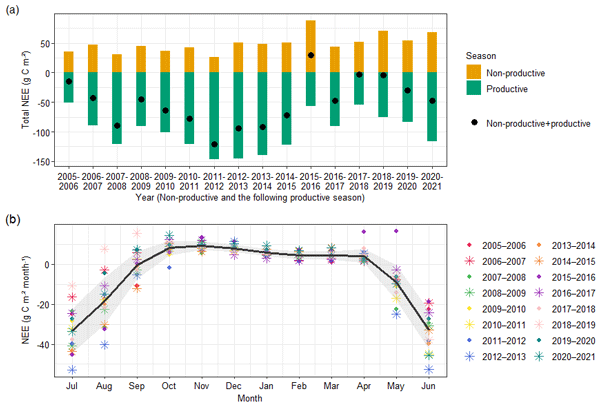
Karoliina Särkelä, Timo Vesala, Torben R. Christensen, Juval Cohen, Angelika Kübert, Xuefei Li, Hannu Marttila, Jouni Pulliainen, Eeva-Stiina Tuittila, and Efrén López-Blanco
Biogeosciences, 23, 6037–6052, https://doi.org/10.5194/bg-23-6037-2026, https://doi.org/10.5194/bg-23-6037-2026, 2026
Short summary
Short summary
Using a 17-year record of year-round peatland carbon exchange, we found that over half of the carbon sequestrated during summer was released during winter. In one year, CO₂ emissions during snow melt and soil thaw in spring were large enough to shift the peatland from a net carbon sink to a source. These findings demonstrate that winter and early-spring processes have a strong impact over the annual carbon balance of northern peatlands.
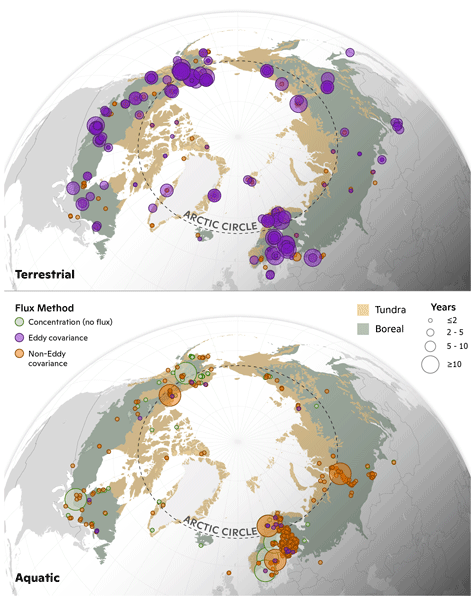
Anna-Maria Virkkala, Isabel Wargowsky, Judith Vogt, Simran Madaan, Tiffany Windholz, Kyle A. Arndt, Gerard Rocher-Ros, Mathias Göckede, David Olefeldt, Edward A. G. Schuur, David Bastviken, Richard O'Keefe, McKenzie A. Kuhn, Brendan M. Rogers, Jennifer D. Watts, Kelcy Kent, Kristoffer Aalstad, Kelly Aho, Joonatan Ala-Könni, Haley Alcock, Inge Althuizen, Christopher D. Arp, Jun Asanuma, Mika Aurela, Sivakiruthika Balathandayuthabani, Katrin Attermeyer, Alan Barr, Maialen Barret, Ochirbat Batkhishig, Christina Biasi, Mats P. Björkman, Andrew Black, Elena Blanc-Betes, Pascal Bodmer, Julia Boike, Abdullah Bolek, Frédéric Bouchard, Ingeborg Bussmann, Lea Cabrol, Eleonora Canfora, Sean Carey, Karel Castro-Morales, Namyi Chae, Andreas Christen, Torben R. Christensen, Casper T. Christiansen, Housen Chu, Graham Clark, Francois Clayer, Patrick Crill, Christopher Cunada, Scott J. Davidson, Joshua F. Dean, Sigrid Dengel, Matteo Detto, Catherine Dieleman, Florent Domine, Egor Dyukarev, Colin Edgar, Bo Elberling, Craig A. Emmerton, Eugenie Euskirchen, Grant Falvo, Thomas Friborg, Michelle Garneau, Mariasilvia Giamberini, Mikhail V. Glagolev, Miquel A. Gonzalez-Meler, Gustaf Granath, Jón Guðmundsson, Konsta Happonen, Yoshinobu Harazono, Lorna Harris, Josh Hashemi, Nicholas Hasson, Janna Heerah, Liam Heffernan, Manuel Helbig, Warren Helgason, Michal Heliasz, Greg Henry, Geert Hensgens, Tetsuya Hiyama, Beth Holmes, Macall Hock, David Holl, Jutta Holst, Thomas Holst, Gabriel Hould-Gosselin, Elyn Humphreys, Jacqueline Hung, Jussi Huotari, Hiroki Ikawa, Danil V. Ilyasov, Mamoru Ishikawa, Go Iwahana, Hiroki Iwata, Marcin Antoni Jackowicz-Korczynski, Joachim Jansen, Järvi Järveoja, Vincent E. J. Jassey, Rasmus Jensen, Katharina Jentzsch, Robert G. Jespersen, Carl-Fredrik Johannesson, Cheristy P. Jones, Anders Jonsson, Ji Young Jung, Sari Juutinen, Evan Kane, Jan Karlsson, Sergey Karsanaev, Kuno Kasak, Julia Kelly, Kasha Kempton, Marcus Klaus, George W. Kling, Natascha Kljun, Jacqueline Knutson, Hideki Kobayashi, John Kochendorfer, Kukka-Maaria Kohonen, Pasi Kolari, Mika Korkiakoski, Aino Korrensalo, Pirkko Kortelainen, Egle Koster, Kajar Koster, Ayumi Kotani, Praveena Krishnan, Juliya Kurbatova, Lars Kutzbach, Min Jung Kwon, Ethan D. Kyzivat, Jessica Lagroix, Theodore Langhorst, Elena Lapshina, Tuula Larmola, Klaus S. Larsen, Isabelle Laurion, Justin Ledman, Hanna Lee, A. Joshua Leffler, Lance Lesack, Anders Lindroth, David Lipson, Annalea Lohila, Efrén López-Blanco, Vincent L. St. Louis, Erik Lundin, Miska Luoto, Takashi Machimura, Marta Magnani, Avni Malhotra, Marja Maljanen, Ivan Mammarella, Elisa Männistö, Luca Belelli Marchesini, Phil Marsh, Pertti J. Martkainen, Maija E. Marushchak, Mikhail Mastepanov, Alex Mavrovic, Trofim Maximov, Christina Minions, Daniel F. Nadeau, Marco Montemayor, Tomoaki Morishita, Patrick Murphy, Erin Nicholls, Mats B. Nilsson, Anastasia Niyazova, Jenni Nordén, Koffi Dodji Noumonvi, Hannu Nykanen, Walter Oechel, Anne Ojala, Tomohiro Okadera, Sujan Pal, Alexey V. Panov, Tim Papakyriakou, Dario Papale, Sang-Jong Park, Frans-Jan W. Parmentier, Gilberto Pastorello, Mike Peacock, Matthias Peichl, Roman Petrov, Kyra St. Pierre, Norbert Pirk, Jessica Plein, Vilmantas Preskienis, Anatoly Prokushkin, Jukka Pumpanen, Hilary A. Rains, Niklas Rakos, Aleksi Räsänen, Helena Rautakoski, Riikka Rinnan, Janne Rinne, Adrian Rocha, Nigel Roulet, Alexandre Roy, Anna Rutgersson, Aleksandr F. Sabrekov, Torsten Sachs, Erik Sahlée, Alejandro Salazar, Henrique Oliveira Sawakuchi, Christopher Schulze, Roger Seco, Armando Sepulveda-Jauregui, Svetlana Serikova, Abbey Serrone, Hanna M. Silvennoinen, Sofie Sjogersten, June Skeeter, Jo Snöälv, Sebastian Sobek, Oliver Sonnentag, Emily H. Stanley, Maria Strack, Lena Strom, Patrick Sullivan, Ryan Sullivan, Anna Sytiuk, Torbern Tagesson, Pierre Taillardat, Julie Talbot, Suzanne E. Tank, Mario Tenuta, Irina Terenteva, Frederic Thalasso, Antoine Thiboult, Halldor Thorgeirsson, Fenix Garcia Tigreros, Margaret Torn, Amy Townsend-Small, Claire Treat, Alain Tremblay, Carlo Trotta, Eeva-Stiina Tuittila, Merritt Turetsky, Masahito Ueyama, Muhammad Umair, Aki Vähä, Lona van Delden, Maarten van Hardenbroek, Andrej Varlagin, Ruth K. Varner, Tarmo Virtanen, Elena Veretennikova, Timo Vesala, Carolina Voigt, Jorien E. Vonk, Robert Wagner, Katey Walter Anthony, Qinxue Wang, Masataka Watanabe, Hailey Webb, Jeffrey M. Welker, Andreas Westergaard-Nielsen, Sebastian Westermann, Jeffrey R. White, Christian Wille, Scott N. Williamson, Scott Zolkos, Donatella Zona, and Susan M. Natali
Earth Syst. Sci. Data, 18, 6357–6409, https://doi.org/10.5194/essd-18-6357-2026, https://doi.org/10.5194/essd-18-6357-2026, 2026
Short summary
Short summary
This dataset includes monthly measurements of carbon dioxide and methane exchange between land, water, and the atmosphere from over 1000 sites in Arctic and boreal regions. It combines measurements from a variety of ecosystems, including wetlands, forests, tundra, lakes, and rivers, gathered by over 260 researchers from 1984–2024. This dataset can be used to improve and reduce uncertainty in carbon budgets in order to strengthen our understanding of climate feedbacks in a warming world.
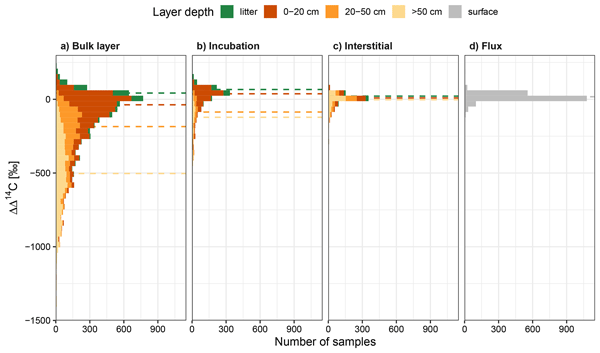
Sophie F. von Fromm, R. Scott Winton, Derrick R. Vaughn, Jennifer C. Bowen, Susan Trumbore, Kateřina Jandová, Julie Shahan, Olga Vindušková, Shane W. Stoner, Maedeh Chitsaz, Avni Malhotra, Adrian A. Wackett, Alison M. Hoyt, Katherine Heckman, Katerina Georgiou, Daniel Wasner, Luisa Isabell Minich, Katherine E. Grant, Caitlin E. Hicks Pries, Karis J. McFarlane, Anna Abramova, Corey Lawrence, and Jeffrey Beem-Miller
Earth Syst. Sci. Data, 18, 5793–5815, https://doi.org/10.5194/essd-18-5793-2026, https://doi.org/10.5194/essd-18-5793-2026, 2026
Short summary
Short summary
Here we present the updated International Soil Radiocarbon Database version 2, which compiles radiocarbon data from over 500 studies at 1700 locations worldwide. The database provides various soil radiocarbon measurements to improve our understanding of factors that influence the age distributions of carbon in soils. While we have made progress expanding the database and improving its structure, important gaps remain in tropical regions, deep soils, and certain measurement types.
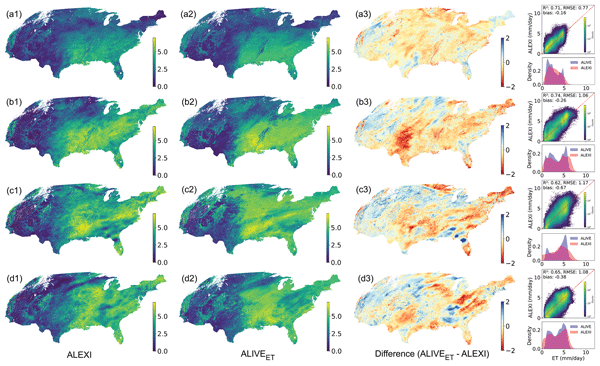
Sadegh Ranjbar, Danielle Losos, Sophie Hoffman, Yafang Zhong, Jason A. Otkin, Ankur R. Desai, Martha C. Anderson, Christopher R. Hain, and Paul C. Stoy
Hydrol. Earth Syst. Sci., 30, 4927–4955, https://doi.org/10.5194/hess-30-4927-2026, https://doi.org/10.5194/hess-30-4927-2026, 2026
Short summary
Short summary
Water moves from land to air in a process called evapotranspiration, which affects weather, crops, and water supply. Using satellites and AI, we created a system that tracks this water movement every five minutes, day and night, even through clouds. This provides continuous insights that can help manage water, predict weather, and better understand the water cycle.
Sparkle L. Malone, Jaclyn H. Matthes, Cove S. Sturtevant, Angel Chen, Roisin Commane, Kyle B. Delwiche, Ankur R. Desai, Christopher R. Florian, Jonathan D. Gewirtzman, Samuel A. Jurado, David E. Reed, Jinshu Chi, Hiroki Iwata, Erik J. Lundin, Ivan Mammarella, Matthias Peichl, Masahito Ueyama, and Camilo Rey-Sanchez
Earth Syst. Sci. Data Discuss., https://doi.org/10.5194/essd-2026-413, https://doi.org/10.5194/essd-2026-413, 2026
Preprint under review for ESSD
Short summary
Short summary
We created the first continent-wide dataset to test the gradient flux method, which estimates how gases move between ecosystems and the atmosphere. This approach can provide reliable results when sensors are placed under favorable conditions, especially for shorter, less complex vegetation. The dataset will help improve future monitoring and support a better understanding of ecosystem responses to environmental change.
Amy E. Goldman, James C. Stegen, Elizabeth T. Borer, Robert Hensley, Allison Myers-Pigg, Mikayla A. Borton, Paytsar Muradyan, Nicholas D. Ward, Jean M. Andino, Andrew D. Richardson, Alexandro B. Leverkus, Christopher S. Lowry, Nate G. McDowell, Kaizad F. Patel, Scott J. Davidson, Brieanne Forbes, Martha R. Downs, W. Robert Bolton, Timothy D. Scheibe, and Avni Malhotra
EGUsphere, https://doi.org/10.5194/egusphere-2026-3537, https://doi.org/10.5194/egusphere-2026-3537, 2026
This preprint is open for discussion and under review for Biogeosciences (BG).
Short summary
Short summary
Distributed data generation, or data collected from multiple sources and locations using standardized approaches and coordination among researchers, is powerful for scalable environmental knowledge. This paper helps readers understand options for distributed data generation, offers practical guidance for outreach, operations, and sharing outcomes, and explores how artificial intelligence can help address longstanding challenges.
Nikola Besic, Philippe Ciais, Fa Li, Robert Jackson, Kunxiaojia Yuan, Shushi Peng, Benjamin Poulter, Zhen Zhang, and Qing Zhu
EGUsphere, https://doi.org/10.5194/egusphere-2026-2604, https://doi.org/10.5194/egusphere-2026-2604, 2026
This preprint is open for discussion and under review for Geoscientific Model Development (GMD).
Short summary
Short summary
Wetlands are the largest natural source of methane, an important greenhouse gas, but current estimates of their emissions remain highly uncertain because models often disagree. We combined field measurements from wetlands around the world with advanced statistical methods to identify where different models perform best. Our results show that accounting for regional differences in model skill can substantially change local methane estimates and potentially improve future climate assessments.
Eyrún Gyða Gunnlaugsdóttir, Angelika Kübert, Xuefei Li, Timo Vesala, Aino Korrensalo, Elisa Männistö, Eeva-Stiina Tuittila, Pavel Alekseychik, and Ivan Mammarella
EGUsphere, https://doi.org/10.5194/egusphere-2026-3323, https://doi.org/10.5194/egusphere-2026-3323, 2026
This preprint is open for discussion and under review for Biogeosciences (BG).
Short summary
Short summary
We studied how two nearby peatland types exchange carbon with the atmosphere using long-term field measurements. We found that the fen absorbed more carbon dioxide but also released more methane than the bog, mainly due to differences in vegetation rather than climate. This suggests that plant communities strongly influence how peatlands affect climate and should be considered in future predictions, especially under changing environmental conditions and ecosystem shifts.
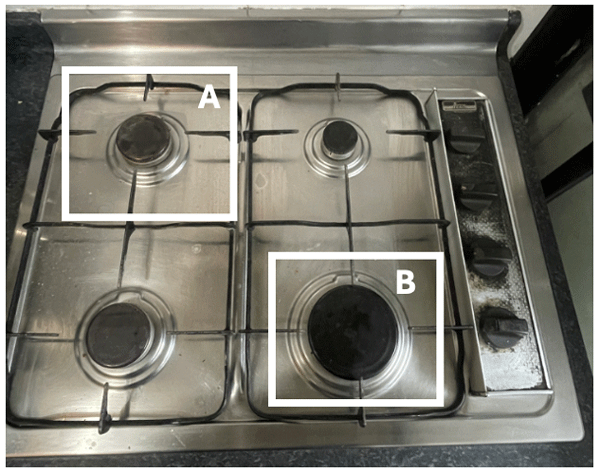
Ricardo Morales-Betancourt, Cristóbal J. Galbán-Malagón, Thalia Montejo-Barato, Estela Blanco, Paula Tapia-Pino, Rosario Vargas, Cynthia Cordova, Colin Finnegan, Abenezer Shankute, Nicolas Huneeus, J. Sebastian Hernandez-Suarez, Paola Valencia, Marcelo Mena-Carrasco, and Robert B. Jackson
Atmos. Chem. Phys., 26, 8355–8365, https://doi.org/10.5194/acp-26-8355-2026, https://doi.org/10.5194/acp-26-8355-2026, 2026
Short summary
Short summary
We measured measured CH₄, CO₂, CO, and NOx emissions from household gas stoves in Chile and Colombia. We found that emissions are much higher than official estimates, mainly due to small leaks and ignition. These hidden emissions contribute to climate change and air pollution. Our work shows the need for better measurement, reporting, and appliance standards to reduce environmental impacts from everyday cooking.
Judith Vogt, Tarek S. El-Madany, Christian Burgold, Abdullah Bolek, Elliot Pratt, Torsten Sachs, Christian Wille, Manuel Helbig, Maximilian P. Lau, Sebastian Zug, Jörg Matschullat, and Mathias Göckede
EGUsphere, https://doi.org/10.5194/egusphere-2026-2262, https://doi.org/10.5194/egusphere-2026-2262, 2026
This preprint is open for discussion and under review for Atmospheric Measurement Techniques (AMT).
Short summary
Short summary
We developed BlueMinerva, an integrated autonomous platform designed to monitor carbon exchange between water and air, water temperature, chemistry, depth, and weather conditions with high spatial coverage. The platform was tested at two lakes and yielded reliable high-quality data on carbon dynamics, demonstrating its potential for widespread use and adaptation by scientists and stakeholders.
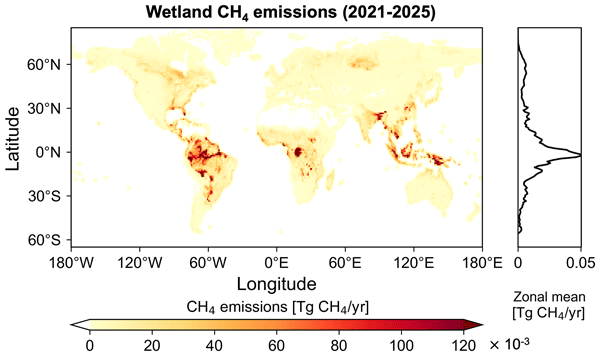
Mengze Li, Robert B. Jackson, Marielle Saunois, Philippe Ciais, Ben Poulter, Josep G. Canadell, Prabir K. Patra, Hanqin Tian, Zhen Zhang, Etienne Fluet-Chouinard, Zutao Ouyang, Ting Zhang, David J. Beerling, Dmitry A. Belikov, Philippe Bousquet, Danilo Custodio, Naveen Chandra, Xinyu Dou, Nicola Gedney, Peter O. Hopcroft, Alison M. Hoyt, Kazuhito Ichii, Akihito Ito, Atul K. Jain, Katherine Jensen, Fortunat Joos, Thomas Kleinen, Masayuki Kondo, Fa Li, Tingting Li, Xiangyu Liu, Shamil Maksyutov, Avni Malhotra, Adrien Martinez, Kyle McDonald, Joe R. Melton, Jurek Müller, Yosuke Niwa, Shufen Pan, Shushi Peng, Changhui Peng, Zhangcai Qin, Peter Raymond, William Riley, Arjo Segers, Rona L. Thompson, Aki Tsuruta, Yi Xi, Kunxiaojia Yuan, Wenxin Zhang, Bo Zheng, Qing Zhu, Qiuan Zhu, and Qianlai Zhuang
Earth Syst. Sci. Data, 18, 3507–3524, https://doi.org/10.5194/essd-18-3507-2026, https://doi.org/10.5194/essd-18-3507-2026, 2026
Short summary
Short summary
We proposed a framework that combines machine-learning and climate data to predict global natural vegetated wetland methane emissions for 2000–2025. We found that although total global emissions remained stable in the post-2020s, Northern Hemisphere emissions surged whilst tropical emissions fell. This approach allows us to rapidly monitor emissions and provides early warnings for climate impacts.
Liang Chen, Matthias Peichl, Yunpeng Luo, Peng Zhao, Alisa Krasnova, and Frank Berninger
EGUsphere, https://doi.org/10.5194/egusphere-2026-1940, https://doi.org/10.5194/egusphere-2026-1940, 2026
Short summary
Short summary
We conducted a 15-year study of a pine forest to check how nitrogen fertilization affacts forest photosynthsis under dry conditions. We compared two nearby sites by analyzing long-term measurements of carbon exchange. Our results showed that fertilization increased photosynthesis even during summer droughts. However, it also made the forest more sensitive to both dry air and dry soil conditions. Our study suggesuts that the benefits of fertilization may be offset by drought.
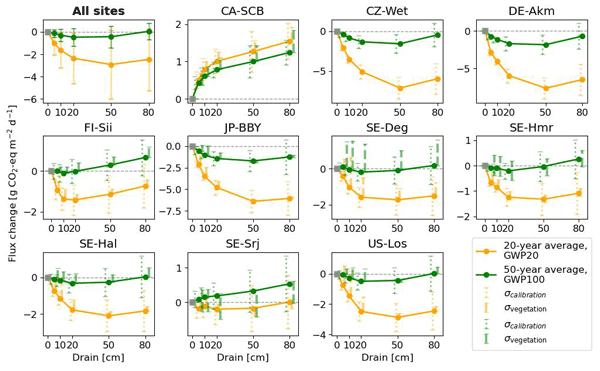
Liyang Liu, Philippe Ciais, Thu Hang Nguyen, Yi Xi, Chunjing Qiu, Elodie Salmon, Aram Kalhori, Christophe Guimbaud, Matthias Peichl, Joshua L. Ratcliffe, Koffi Dodji Noumonvi, and Xuefei Li
Biogeosciences, 23, 2277–2308, https://doi.org/10.5194/bg-23-2277-2026, https://doi.org/10.5194/bg-23-2277-2026, 2026
Short summary
Short summary
We simulate virtual idealized drainage at 10 pristine peatland sites. Over time, the emission factors of CO2 flux decrease and the reduction of CH4 emissions is amplified. The sensitivities of flux changes to drainage are primarily controlled by initial CO2 and CH4 fluxes, initial soil carbon content, peat vegetation community, air temperature and initial water table depth. Using GWP100 (100-year Global Warming Potential), our simulation suggested only very small net GHG (greenhouse gas) emission changes when peatland is drained for 50 years.
Tamara Emmerichs, Fabrice Lacroix, Victor Brovkin, Sönke Zaehle, Cheng Gong, Yu Zhu, Sofie Sjogersten, Carolina Voigt, Klaus Steenberg Larsen, and Eeva-Stiina Tuitila
EGUsphere, https://doi.org/10.5194/egusphere-2026-1514, https://doi.org/10.5194/egusphere-2026-1514, 2026
Short summary
Short summary
Shrubs use water and carbon differently and are expanding in warming tundra and grasslands, yet global models lack accuracy. We added two shrub types to a vegetation model including soil nutrients and carbon exchange. Half of the modeled shrubs showed good performance whereas their growth is 40 % higher as at grasses. Deciduous shrubs reduce nitrogen more than evergreens. Including shrubs improves Arctic carbon cycle predictions, revealing nitrogen limits cause underestimation in global models.
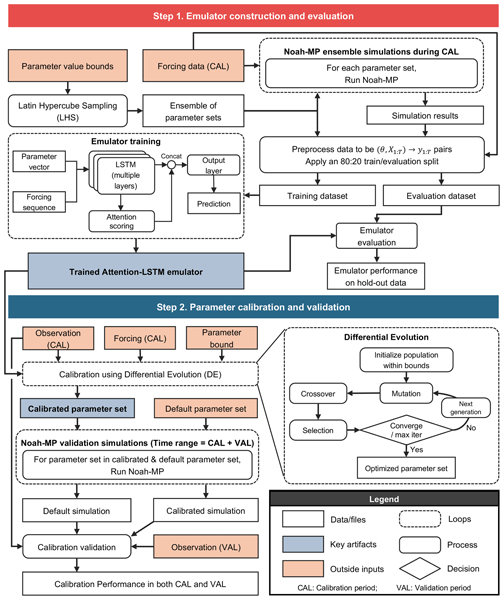
Yanyan Cheng, Yaomin Wang, Kalli Furtado, Cenlin He, Fei Chen, Alan D. Ziegler, Song Chen, Matteo Detto, Yuna Mao, Baoxiang Pan, Yoshiko Kosugi, Marryanna Lion, Shoji Noguchi, Satoru Takanashi, Lulie Melling, and Baoqing Zhang
Geosci. Model Dev., 19, 2197–2217, https://doi.org/10.5194/gmd-19-2197-2026, https://doi.org/10.5194/gmd-19-2197-2026, 2026
Short summary
Short summary
Tropical land surface processes shape the Earth's climate, but models often lack accuracy in the tropics due to limited data for validation. We improved the Noah with Multi-Parameterizations (Noah-MP) land surface model for the tropics using data from forests in Panama and Malaysia. Calibration enhanced simulations of energy and water fluxes, and revealed key vegetation and soil parameters, as well as future directions for model improvement in tropical regions.
Robert B. Jackson, Jeremy A. Irvin, Neel Ramachandran, Chenghao Wang, Zutao Ouyang, Paul A. Tulloch, Frankie Y. Liu, and Andrew Y. Ng
Earth Syst. Sci. Data Discuss., https://doi.org/10.5194/essd-2026-124, https://doi.org/10.5194/essd-2026-124, 2026
Revised manuscript under review for ESSD
Short summary
Short summary
The MEthane Tracking Emissions Reference (METER) database hosts 12 million potential methane-emitting sources globally from 200+ countries. It includes oil and gas facilities, coal mines, and other sources. We used machine-learning and satellite data to map the first global landfill dataset (~13,000 landfills >2.5-ha in size). METER should improve inventories of methane emissions by enhancing infrastructure counts and provides locations for tasking satellite detections.
Jeffrey Beem-Miller, William J. Riley, Peter B. Reich, Michael W. I. Schmidt, Yuxuan Bai, Raimundo Bermudez Villanueva, Zach Brown, Abad Chabbi, Susan E. Crow, Wenxu Dong, Serita D. Frey, Paul J. Hanson, Kai Jensen, Melissa A. Knorr, Emma Lathrop, Avni Malhotra, Patrick Megonigal, Adrienne Nicotra, Andrew Nottingham, Genevieve L. Noyce, Roy L. Rich, Heidi Rodenhizer, Agustín Sarquis, Andreas Schindlbacher, Edward A. G. Schuur, Zheng Shi, Artur Stefanski, Viktoria Unger, Tana E. Wood, Yuanhe Yang, Zhijie Yang, Jizhong Zhou, Biao Zhu, and Margaret S. Torn
Earth Syst. Sci. Data Discuss., https://doi.org/10.5194/essd-2026-23, https://doi.org/10.5194/essd-2026-23, 2026
Revised manuscript accepted for ESSD
Short summary
Short summary
The Soil Warming to Depth Data Integration Effort (SWEDDIE) synthesizes data from deep soil warming experiments around the world (n = 23), offering new insight into warming responses of both surface and subsoils. We demonstrate that variation in soil warming with depth is driven largely by warming methodology, while soil moisture changes due to warming differ by ecosystem. This work serves a foundation for future syntheses with SWEDDIE.
Rémi Madelon, K. Arthur Endsley, John S. Kimball, Gabriëlle J. M. De Lannoy, Oliver Sonnentag, Haley Alcock, Alex Mavrovic, Scott N. Williamson, Vincent Maire, Arnaud Mialon, and Alexandre Roy
EGUsphere, https://doi.org/10.5194/egusphere-2026-720, https://doi.org/10.5194/egusphere-2026-720, 2026
Short summary
Short summary
This study aims to improve estimates of carbon dioxide release and uptake in the North American Arctic and subarctic regions. Several modeling approaches were tested, showing that a better representation of sunlight and temperature effects on ecosystems leads to improved estimates. This work provides new perspectives to better assess whether these regions act as sources or sinks of greenhouse gases and how they may influence the climate system by amplifying or slowing global warming.
Beatriz P. Cazorla, Ana Meijide, Javier Cabello, Julio Peñas, Javier Martínez-López, Rodrigo Vargas, Leonardo Montagnani, Alexander Knohl, Lukas Siebicke, Benimiano Gioli, Jiří Dušek, Ladislav Šigut, Andreas Ibrom, Georg Wohlfahrt, Eugénie Paul-Limoges, Kathrin Fuchs, Antonio Manco, Marian Pavelka, Lutz Merbold, Lukas Hörtnagl, Pierpaolo Duce, Ignacio Goded, Kim Pilegaard, and Domingo Alcaraz-Segura
Biogeosciences, 23, 1223–1243, https://doi.org/10.5194/bg-23-1223-2026, https://doi.org/10.5194/bg-23-1223-2026, 2026
Short summary
Short summary
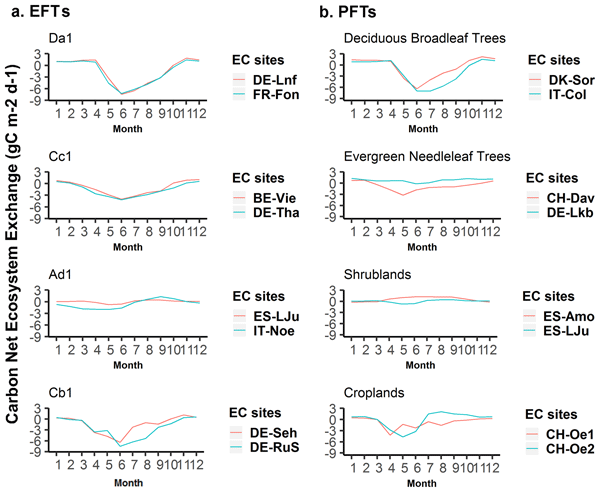
We assess whether satellite-derived Ecosystem Functional Types (EFTs) reflect spatial heterogeneity in carbon fluxes across Europe. Using Eddy Covariance data from 50 sites, we show that EFTs capture distinct Net Ecosystem Exchange dynamics and perform slightly better than Plant Functional Types (PFTs). EFTs offer a scalable, annually updatable approach to monitor ecosystem functioning and its interannual variability.
Daju Wang, Ruowen Yang, Lei Cai, Pierre Gentine, César Terrer, Shuli Niu, Mirco Migliavacca, Wenping Yuan, Ryunosuke Tateno, Junlan Xiao, Josep Peñuelas, Caixian Tang, Yongshuo H. Fu, and Weiyu Shi
EGUsphere, https://doi.org/10.5194/egusphere-2026-296, https://doi.org/10.5194/egusphere-2026-296, 2026
This preprint is open for discussion and under review for Biogeosciences (BG).
Short summary
Short summary
Soil respiration is a major CO2 source, yet its response to vary nitrogen addition levels remains unclear. Using global data from 226 sites, we found moderate N addition has negligible or slightly positive effects, whereas high N addition consistently suppresses total and microbial respiration. These findings were incorporated into the CLM5 model, improving predictions of soil respiration and carbon storage. Our work elucidates how N deposition alters soil carbon processes and climate feedbacks.
Tiia Määttä, Samantha Bosman, Jeffrey Chanton, Patrick Crill, Suzanne Hodgkins, Jalisha Theanutti Kallingal, Rachel Wilson, Ruth Varner, and Avni Malhotra
EGUsphere, https://doi.org/10.5194/egusphere-2026-467, https://doi.org/10.5194/egusphere-2026-467, 2026
Short summary
Short summary
Permafrost thaw can lead to vegetation shifts and higher methane (CH4) emissions in peatlands. However, plant belowground controls of these emissions are uncertain. We investigated how plant roots and rhizomes contribute to CH4 emissions along a peatland permafrost thaw gradient. We found that low herbaceous plant root tissue density and high rhizome surface area were associated with higher CH4 emissions. This indicated increased plant-mediated CH4 transport with thaw.
Miranda L. Hunter, Ian B. Strachan, Paul Moore, Sara Knox, and Maria Strack
Biogeosciences, 23, 793–810, https://doi.org/10.5194/bg-23-793-2026, https://doi.org/10.5194/bg-23-793-2026, 2026
Short summary
Short summary
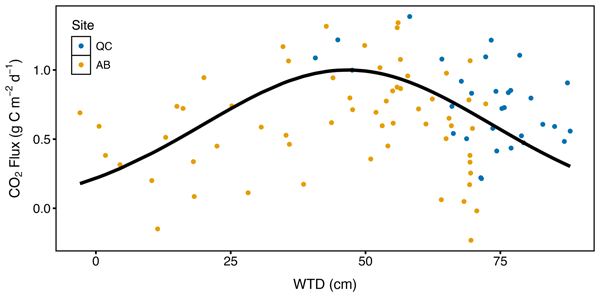
Peatlands are a globally important land cover due to their role as a carbon sink, though peat extraction for horticultural use converts them to net sources. Through ecosystem scale measurements at peat extraction sites, this study found that carbon dioxide interannual variability is driven by water table position.
Kseniia Ivanova, Anna-Maria Virkkala, Victor Brovkin, Tobias Stacke, Barbara Widhalm, Annett Bartsch, Carolina Voigt, Oliver Sonnentag, and Mathias Göckede
Biogeosciences, 23, 233–262, https://doi.org/10.5194/bg-23-233-2026, https://doi.org/10.5194/bg-23-233-2026, 2026
Short summary
Short summary
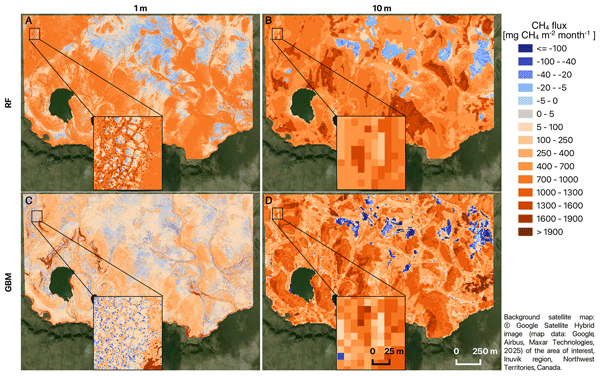
We measured over 13,000 methane fluxes at a site in the Canadian Arctic and linked them with drone and free satellite images. We tested four machine-learning methods and two map scales. Metre-scale maps captured small wet and dry features that strongly affect methane release, while coarser maps blurred them. Different models shifted the monthly methane estimate. This helps choose the right data and tools to map methane, design monitoring networks, and check climate models.
Laëtitia M. Bréchet, Mercedes Ibáñez, Robert B. Jackson, Benoît Burban, Clément Stahl, Damien Bonal, and Ivan A. Janssens
Biogeosciences, 22, 8031–8046, https://doi.org/10.5194/bg-22-8031-2025, https://doi.org/10.5194/bg-22-8031-2025, 2025
Short summary
Short summary
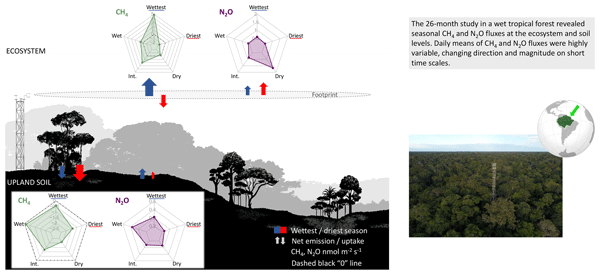
Net ecosystem and soil fluxes of the greenhouse gases methane (CH4) and nitrous oxide (N2O) were measured in a wet tropical forest. The measurements covered a 26-month period including contrasting seasons. The forest absorbed CH4 during the driest season, and emitted it during the wettest season, while consistently emitting N2O. The studied upland soils consistently absorb CH4 but emit N2O. Statistical models identified soil water content as one of the key drivers of these greenhouse gas fluxes.
Christian Hettwer, Kathleen Savage, Andrew Ouimette, Jay Wason, Roel Ruzol, and Shawn Fraver
Biogeosciences, 22, 7819–7828, https://doi.org/10.5194/bg-22-7819-2025, https://doi.org/10.5194/bg-22-7819-2025, 2025
Short summary
Short summary
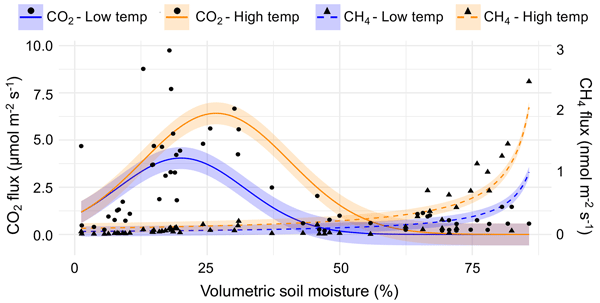
We measured fluxes of CO2 and CH4 from snags in a Maine forest. CO2 flux peaked at intermediate soil moisture and high temperatures, while CH4 flux peaked under wet conditions and high temperature. CH4 increased most when both temperature and soil moisture were high. As CH4 emissions rose, CO2 emissions dropped along the moisture gradient, reflecting changes in microbial activity in wetter conditions. Our study adds to growing evidence that snags are active participants in forest carbon cycling.
Taku Umezawa, Yukio Terao, Masahito Ueyama, Satoshi Kameyama, Mark Lunt, and James Lawrence France
Atmos. Chem. Phys., 25, 18015–18029, https://doi.org/10.5194/acp-25-18015-2025, https://doi.org/10.5194/acp-25-18015-2025, 2025
Short summary
Short summary
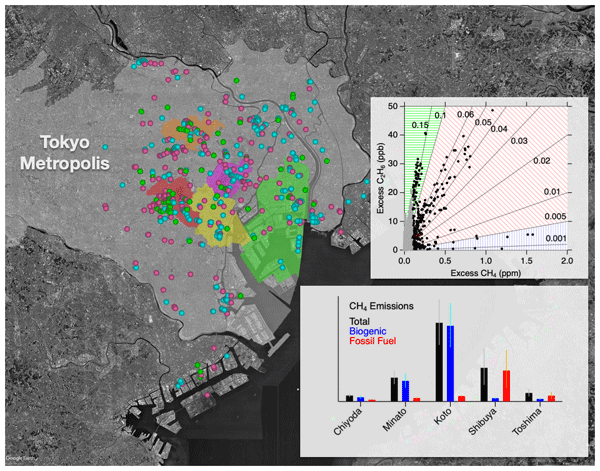
Effective mitigation actions require accurate understanding of methane emission characteristics in cities. We conducted atmospheric methane and ethane measurements using a vehicle in the world’s largest megacity, Tokyo, to identify locations and types of emissions and to examine preliminary estimates of their magnitudes. Waste sectors and fugitive natural gas emissions were found to be the major urban sources, and our data suggested need of improved accounting of natural gas related emissions.
Gabriel Hould Gosselin, Nick Rutter, Paul Mann, Philip Marsh, and Oliver Sonnentag
EGUsphere, https://doi.org/10.5194/egusphere-2025-5637, https://doi.org/10.5194/egusphere-2025-5637, 2025
Short summary
Short summary
We studied how Arctic tundra soils exchange carbon dioxide and methane with the atmosphere during winter in the western Canadian Arctic. Using gas concentration profiles through the snow, we quantified greenhouse gas fluxes and their spatial variability across vegetation and terrain types. Carbon dioxide emissions increased with deeper snow and warmer soils, while some areas absorbed methane. These findings provide key data to improve upscaling of winter carbon fluxes across Arctic landscapes.
Masahito Ueyama, Taku Umezawa, Yukio Terao, Mark Lunt, and James Lawrence France
Atmos. Chem. Phys., 25, 12513–12534, https://doi.org/10.5194/acp-25-12513-2025, https://doi.org/10.5194/acp-25-12513-2025, 2025
Short summary
Short summary
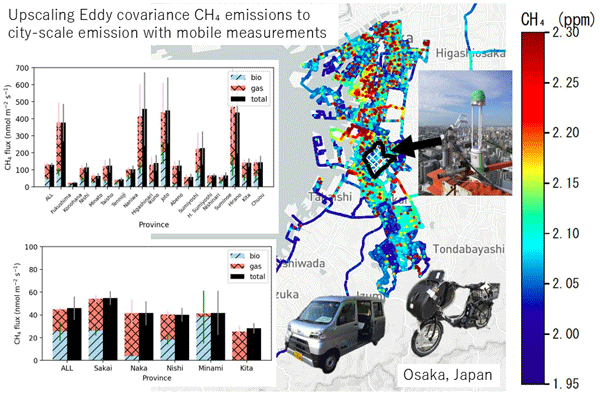
Methane (CH4) emissions were measured in the megacity of Osaka, Japan, using mobile and eddy covariance methods. The CH4 emissions were much higher than those reported in local inventories, with natural gas contributing up to 74 % of the emissions. Several CH4 sources not accounted for in current inventories were identified. These results emphasize the need for more comprehensive emissions tracking in urban areas to enhance climate change mitigation efforts.
Alexandre Lhosmot, Gabriel Hould Gosselin, Manuel Helbig, Julien Fouché, Youngryel Ryu, Matteo Detto, Ryan Connon, William Quinton, Tim Moore, and Oliver Sonnentag
Hydrol. Earth Syst. Sci., 29, 4871–4892, https://doi.org/10.5194/hess-29-4871-2025, https://doi.org/10.5194/hess-29-4871-2025, 2025
Short summary
Short summary
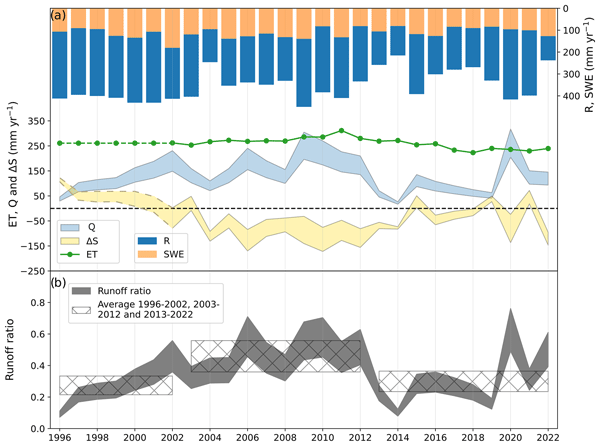
Thawing permafrost changes how water is stored and moves across landscapes. We measured water inputs and outputs in a basin with thawing peatland complexes and three sub-basins. In addition to yearly changes in precipitation and evapotranspiration, we found that hydrological responses are shaped by thaw-driven landscape connectivity. These findings highlight the need for long-term monitoring of ecosystem service shifts.
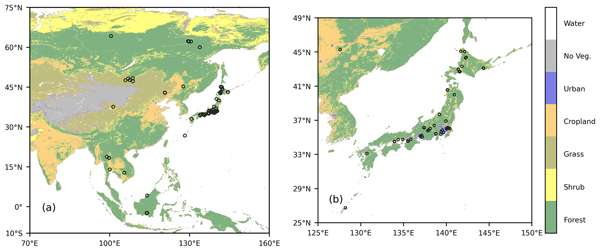
Masahito Ueyama, Yuta Takao, Hiromi Yazawa, Makiko Tanaka, Hironori Yabuki, Tomo'omi Kumagai, Hiroki Iwata, Md. Abdul Awal, Mingyuan Du, Yoshinobu Harazono, Yoshiaki Hata, Takashi Hirano, Tsutom Hiura, Reiko Ide, Sachinobu Ishida, Mamoru Ishikawa, Kenzo Kitamura, Yuji Kominami, Shujiro Komiya, Ayumi Kotani, Yuta Inoue, Takashi Machimura, Kazuho Matsumoto, Yojiro Matsuura, Yasuko Mizoguchi, Shohei Murayama, Hirohiko Nagano, Taro Nakai, Tatsuro Nakaji, Ko Nakaya, Shinjiro Ohkubo, Takeshi Ohta, Keisuke Ono, Taku M. Saitoh, Ayaka Sakabe, Takanori Shimizu, Seiji Shimoda, Michiaki Sugita, Kentaro Takagi, Yoshiyuki Takahashi, Naoya Takamura, Satoru Takanashi, Takahiro Takimoto, Yukio Yasuda, Qinxue Wang, Jun Asanuma, Hideo Hasegawa, Tetsuya Hiyama, Yoshihiro Iijima, Shigeyuki Ishidoya, Masayuki Itoh, Tomomichi Kato, Hiroaki Kondo, Yoshiko Kosugi, Tomonori Kume, Takahisa Maeda, Shoji Matsuura, Trofim Maximov, Takafumi Miyama, Ryo Moriwaki, Hiroyuki Muraoka, Roman Petrov, Jun Suzuki, Shingo Taniguchi, and Kazuhito Ichii
Earth Syst. Sci. Data, 17, 3807–3833, https://doi.org/10.5194/essd-17-3807-2025, https://doi.org/10.5194/essd-17-3807-2025, 2025
Short summary
Short summary
The JapanFlux2024 dataset, created through collaboration across Japan and East Asia, includes eddy covariance data from 83 sites spanning 683 site-years (1990–2023). This comprehensive dataset offers valuable insights into energy, water, and CO2 fluxes, supporting research on land–atmosphere interactions and process models; fosters global collaboration; and advances research in environmental science and regional climate dynamics.
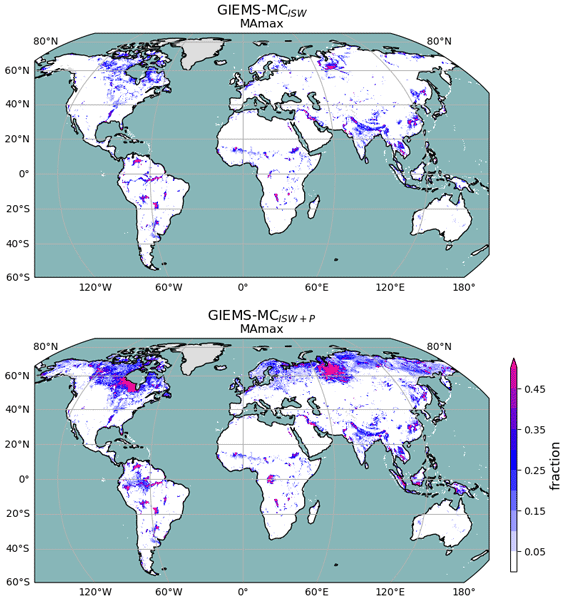
Juliette Bernard, Catherine Prigent, Carlos Jimenez, Etienne Fluet-Chouinard, Bernhard Lehner, Elodie Salmon, Philippe Ciais, Zhen Zhang, Shushi Peng, and Marielle Saunois
Earth Syst. Sci. Data, 17, 2985–3008, https://doi.org/10.5194/essd-17-2985-2025, https://doi.org/10.5194/essd-17-2985-2025, 2025
Short summary
Short summary
Wetlands are responsible for about a third of global emissions of methane, a potent greenhouse gas. We have developed the Global Inundation Extent from Multi-Satellites-MethaneCentric (GIEMS-MC) dataset to represent the dynamics of wetland extent on a global scale (0.25° × 0.25° resolution, monthly time step). This updated resource combines satellite data and existing wetland databases, covering 1992 to 2020. Consistent maps of other methane-emitting surface waters (lakes, rivers, reservoirs, rice paddies) are also provided.
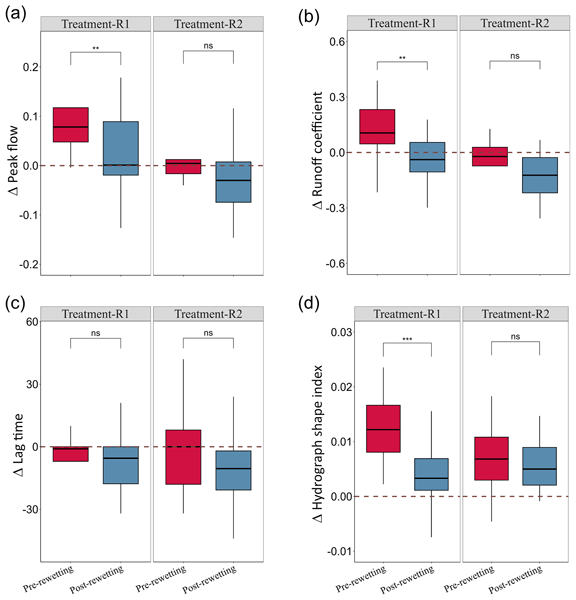
Shirin Karimi, Virginia Mosquera, Eliza Maher Hasselquist, Järvi Järveoja, and Hjalmar Laudon
Hydrol. Earth Syst. Sci., 29, 2599–2614, https://doi.org/10.5194/hess-29-2599-2025, https://doi.org/10.5194/hess-29-2599-2025, 2025
Short summary
Short summary
There is an increasing interest in rewetting drained peatlands to regain their important ecosystem functions. However, as peatland rewetting is a relatively new strategy, the scientific foundation for this approach is not solid. Therefore, we investigated the impact of rewetting on flood mitigation using high-resolution hydrological field observations. Our results showed that peatland rewetting significantly reduced peak flow and runoff coefficient and mitigated flashy hydrograph responses.
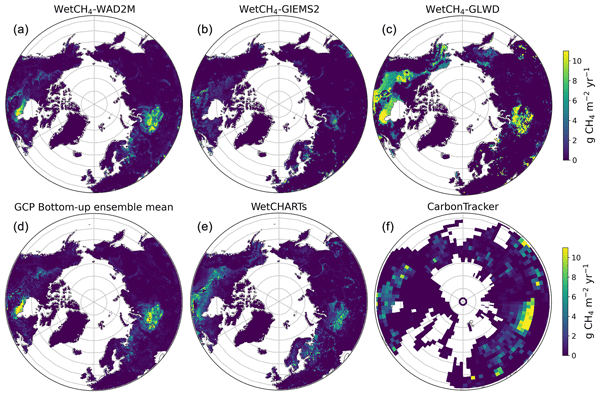
Qing Ying, Benjamin Poulter, Jennifer D. Watts, Kyle A. Arndt, Anna-Maria Virkkala, Lori Bruhwiler, Youmi Oh, Brendan M. Rogers, Susan M. Natali, Hilary Sullivan, Amanda Armstrong, Eric J. Ward, Luke D. Schiferl, Clayton D. Elder, Olli Peltola, Annett Bartsch, Ankur R. Desai, Eugénie Euskirchen, Mathias Göckede, Bernhard Lehner, Mats B. Nilsson, Matthias Peichl, Oliver Sonnentag, Eeva-Stiina Tuittila, Torsten Sachs, Aram Kalhori, Masahito Ueyama, and Zhen Zhang
Earth Syst. Sci. Data, 17, 2507–2534, https://doi.org/10.5194/essd-17-2507-2025, https://doi.org/10.5194/essd-17-2507-2025, 2025
Short summary
Short summary
We present daily methane (CH4) fluxes of northern wetlands at 10 km resolution during 2016–2022 (WetCH4) derived from a novel machine learning framework. We estimated an average annual CH4 emission of 22.8 ± 2.4 Tg CH4 yr−1 (15.7–51.6 Tg CH4 yr−1). Emissions were intensified in 2016, 2020, and 2022, with the largest interannual variation coming from Western Siberia. Continued, all-season tower observations and improved soil moisture products are needed for future improvement of CH4 upscaling.
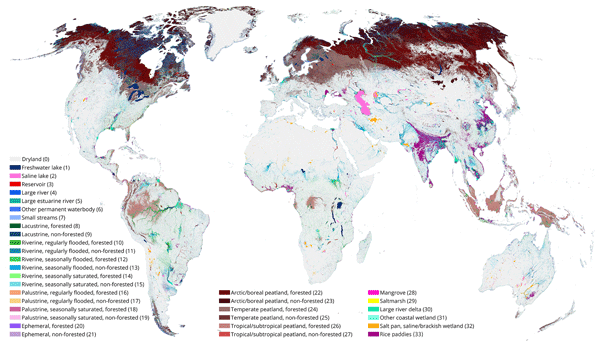
Bernhard Lehner, Mira Anand, Etienne Fluet-Chouinard, Florence Tan, Filipe Aires, George H. Allen, Philippe Bousquet, Josep G. Canadell, Nick Davidson, Meng Ding, C. Max Finlayson, Thomas Gumbricht, Lammert Hilarides, Gustaf Hugelius, Robert B. Jackson, Maartje C. Korver, Liangyun Liu, Peter B. McIntyre, Szabolcs Nagy, David Olefeldt, Tamlin M. Pavelsky, Jean-Francois Pekel, Benjamin Poulter, Catherine Prigent, Jida Wang, Thomas A. Worthington, Dai Yamazaki, Xiao Zhang, and Michele Thieme
Earth Syst. Sci. Data, 17, 2277–2329, https://doi.org/10.5194/essd-17-2277-2025, https://doi.org/10.5194/essd-17-2277-2025, 2025
Short summary
Short summary
The Global Lakes and Wetlands Database (GLWD) version 2 distinguishes a total of 33 non-overlapping wetland classes, providing a static map of the world’s inland surface waters. It contains cell fractions of wetland extents per class at a grid cell resolution of ~500 m. The total combined extent of all classes including all inland and coastal waterbodies and wetlands of all inundation frequencies – that is, the maximum extent – covers 18.2 × 10⁶ km2, equivalent to 13.4 % of total global land area.
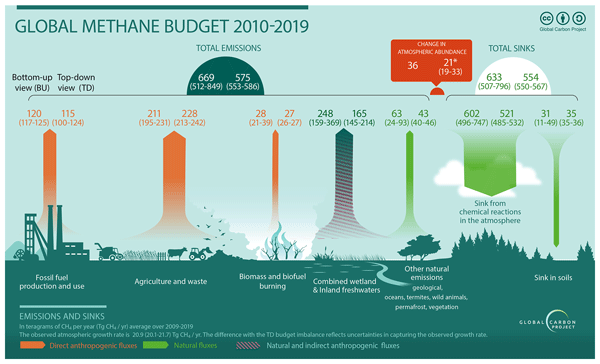
Marielle Saunois, Adrien Martinez, Benjamin Poulter, Zhen Zhang, Peter A. Raymond, Pierre Regnier, Josep G. Canadell, Robert B. Jackson, Prabir K. Patra, Philippe Bousquet, Philippe Ciais, Edward J. Dlugokencky, Xin Lan, George H. Allen, David Bastviken, David J. Beerling, Dmitry A. Belikov, Donald R. Blake, Simona Castaldi, Monica Crippa, Bridget R. Deemer, Fraser Dennison, Giuseppe Etiope, Nicola Gedney, Lena Höglund-Isaksson, Meredith A. Holgerson, Peter O. Hopcroft, Gustaf Hugelius, Akihiko Ito, Atul K. Jain, Rajesh Janardanan, Matthew S. Johnson, Thomas Kleinen, Paul B. Krummel, Ronny Lauerwald, Tingting Li, Xiangyu Liu, Kyle C. McDonald, Joe R. Melton, Jens Mühle, Jurek Müller, Fabiola Murguia-Flores, Yosuke Niwa, Sergio Noce, Shufen Pan, Robert J. Parker, Changhui Peng, Michel Ramonet, William J. Riley, Gerard Rocher-Ros, Judith A. Rosentreter, Motoki Sasakawa, Arjo Segers, Steven J. Smith, Emily H. Stanley, Joël Thanwerdas, Hanqin Tian, Aki Tsuruta, Francesco N. Tubiello, Thomas S. Weber, Guido R. van der Werf, Douglas E. J. Worthy, Yi Xi, Yukio Yoshida, Wenxin Zhang, Bo Zheng, Qing Zhu, Qiuan Zhu, and Qianlai Zhuang
Earth Syst. Sci. Data, 17, 1873–1958, https://doi.org/10.5194/essd-17-1873-2025, https://doi.org/10.5194/essd-17-1873-2025, 2025
Short summary
Short summary
Methane (CH4) is the second most important human-influenced greenhouse gas in terms of climate forcing after carbon dioxide (CO2). A consortium of multi-disciplinary scientists synthesise and update the budget of the sources and sinks of CH4. This edition benefits from important progress in estimating emissions from lakes and ponds, reservoirs, and streams and rivers. For the 2010s decade, global CH4 emissions are estimated at 575 Tg CH4 yr-1, including ~65 % from anthropogenic sources.
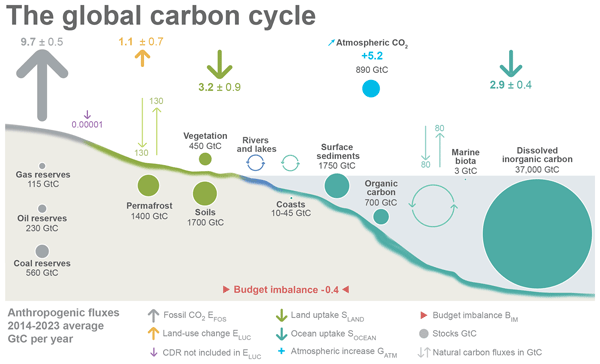
Pierre Friedlingstein, Michael O'Sullivan, Matthew W. Jones, Robbie M. Andrew, Judith Hauck, Peter Landschützer, Corinne Le Quéré, Hongmei Li, Ingrid T. Luijkx, Are Olsen, Glen P. Peters, Wouter Peters, Julia Pongratz, Clemens Schwingshackl, Stephen Sitch, Josep G. Canadell, Philippe Ciais, Robert B. Jackson, Simone R. Alin, Almut Arneth, Vivek Arora, Nicholas R. Bates, Meike Becker, Nicolas Bellouin, Carla F. Berghoff, Henry C. Bittig, Laurent Bopp, Patricia Cadule, Katie Campbell, Matthew A. Chamberlain, Naveen Chandra, Frédéric Chevallier, Louise P. Chini, Thomas Colligan, Jeanne Decayeux, Laique M. Djeutchouang, Xinyu Dou, Carolina Duran Rojas, Kazutaka Enyo, Wiley Evans, Amanda R. Fay, Richard A. Feely, Daniel J. Ford, Adrianna Foster, Thomas Gasser, Marion Gehlen, Thanos Gkritzalis, Giacomo Grassi, Luke Gregor, Nicolas Gruber, Özgür Gürses, Ian Harris, Matthew Hefner, Jens Heinke, George C. Hurtt, Yosuke Iida, Tatiana Ilyina, Andrew R. Jacobson, Atul K. Jain, Tereza Jarníková, Annika Jersild, Fei Jiang, Zhe Jin, Etsushi Kato, Ralph F. Keeling, Kees Klein Goldewijk, Jürgen Knauer, Jan Ivar Korsbakken, Xin Lan, Siv K. Lauvset, Nathalie Lefèvre, Zhu Liu, Junjie Liu, Lei Ma, Shamil Maksyutov, Gregg Marland, Nicolas Mayot, Patrick C. McGuire, Nicolas Metzl, Natalie M. Monacci, Eric J. Morgan, Shin-Ichiro Nakaoka, Craig Neill, Yosuke Niwa, Tobias Nützel, Lea Olivier, Tsuneo Ono, Paul I. Palmer, Denis Pierrot, Zhangcai Qin, Laure Resplandy, Alizée Roobaert, Thais M. Rosan, Christian Rödenbeck, Jörg Schwinger, T. Luke Smallman, Stephen M. Smith, Reinel Sospedra-Alfonso, Tobias Steinhoff, Qing Sun, Adrienne J. Sutton, Roland Séférian, Shintaro Takao, Hiroaki Tatebe, Hanqin Tian, Bronte Tilbrook, Olivier Torres, Etienne Tourigny, Hiroyuki Tsujino, Francesco Tubiello, Guido van der Werf, Rik Wanninkhof, Xuhui Wang, Dongxu Yang, Xiaojuan Yang, Zhen Yu, Wenping Yuan, Xu Yue, Sönke Zaehle, Ning Zeng, and Jiye Zeng
Earth Syst. Sci. Data, 17, 965–1039, https://doi.org/10.5194/essd-17-965-2025, https://doi.org/10.5194/essd-17-965-2025, 2025
Short summary
Short summary
The Global Carbon Budget 2024 describes the methodology, main results, and datasets used to quantify the anthropogenic emissions of carbon dioxide (CO2) and their partitioning among the atmosphere, land ecosystems, and the ocean over the historical period (1750–2024). These living datasets are updated every year to provide the highest transparency and traceability in the reporting of CO2, the key driver of climate change.
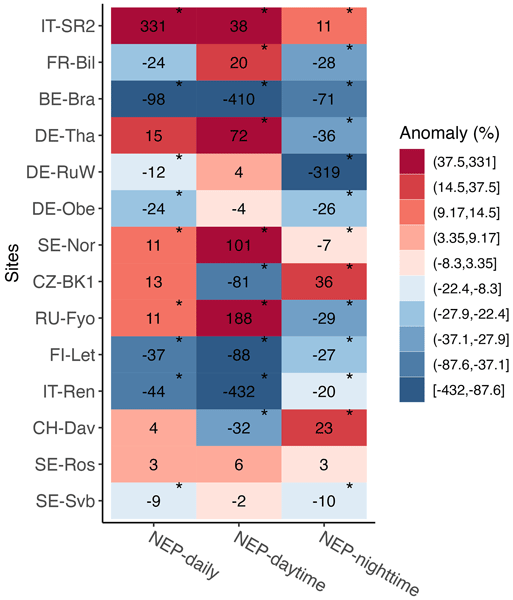
Mana Gharun, Ankit Shekhar, Lukas Hörtnagl, Luana Krebs, Nicola Arriga, Mirco Migliavacca, Marilyn Roland, Bert Gielen, Leonardo Montagnani, Enrico Tomelleri, Ladislav Šigut, Matthias Peichl, Peng Zhao, Marius Schmidt, Thomas Grünwald, Mika Korkiakoski, Annalea Lohila, and Nina Buchmann
Biogeosciences, 22, 1393–1411, https://doi.org/10.5194/bg-22-1393-2025, https://doi.org/10.5194/bg-22-1393-2025, 2025
Short summary
Short summary
The effect of winter warming on forest CO2 fluxes has rarely been investigated. We tested the effect of the warm winter of 2020 on the forest CO2 fluxes across 14 sites in Europe and found that the net ecosystem productivity (NEP) across most sites declined during the warm winter due to increased respiration fluxes.
Nithin D. Pillai, Christian Wille, Felix Nieberding, Manuel Helbig, and Torsten Sachs
EGUsphere, https://doi.org/10.5194/egusphere-2025-530, https://doi.org/10.5194/egusphere-2025-530, 2025
Preprint archived
Short summary
Short summary
The Tibetan Plateau is warming rapidly, affecting carbon cycles in its ecosystems. Using two measurement heights (3 m and 19 m) in an alpine steppe near Nam Co, we explored how spatial scale impacts CO2 fluxes. CO2 fluxes varied with spatial scale due to landscape heterogeneity. This variability shows that the measurement scale can shift the ecosystem's carbon balance from CO2 sink to either carbon neutral or CO2 source, highlighting the importance of considering spatial scale in carbon studies.

James Stegen, Amy J. Burgin, Michelle H. Busch, Joshua B. Fisher, Joshua Ladau, Jenna Abrahamson, Lauren Kinsman-Costello, Li Li, Xingyuan Chen, Thibault Datry, Nate McDowell, Corianne Tatariw, Anna Braswell, Jillian M. Deines, Julia A. Guimond, Peter Regier, Kenton Rod, Edward K. P. Bam, Etienne Fluet-Chouinard, Inke Forbrich, Kristin L. Jaeger, Teri O'Meara, Tim Scheibe, Erin Seybold, Jon N. Sweetman, Jianqiu Zheng, Daniel C. Allen, Elizabeth Herndon, Beth A. Middleton, Scott Painter, Kevin Roche, Julianne Scamardo, Ross Vander Vorste, Kristin Boye, Ellen Wohl, Margaret Zimmer, Kelly Hondula, Maggi Laan, Anna Marshall, and Kaizad F. Patel
Biogeosciences, 22, 995–1034, https://doi.org/10.5194/bg-22-995-2025, https://doi.org/10.5194/bg-22-995-2025, 2025
Short summary
Short summary
The loss and gain of surface water (variable inundation) are common processes across Earth. Global change shifts variable inundation dynamics, highlighting a need for unified understanding that transcends individual variably inundated ecosystems (VIEs). We review the literature, highlight challenges, and emphasize opportunities to generate transferable knowledge by viewing VIEs through a common lens. We aim to inspire the emergence of a cross-VIE community based on a proposed continuum approach.
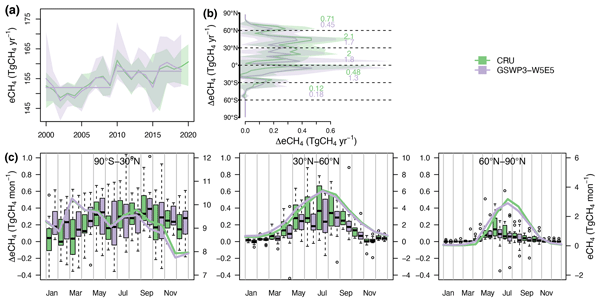
Zhen Zhang, Benjamin Poulter, Joe R. Melton, William J. Riley, George H. Allen, David J. Beerling, Philippe Bousquet, Josep G. Canadell, Etienne Fluet-Chouinard, Philippe Ciais, Nicola Gedney, Peter O. Hopcroft, Akihiko Ito, Robert B. Jackson, Atul K. Jain, Katherine Jensen, Fortunat Joos, Thomas Kleinen, Sara H. Knox, Tingting Li, Xin Li, Xiangyu Liu, Kyle McDonald, Gavin McNicol, Paul A. Miller, Jurek Müller, Prabir K. Patra, Changhui Peng, Shushi Peng, Zhangcai Qin, Ryan M. Riggs, Marielle Saunois, Qing Sun, Hanqin Tian, Xiaoming Xu, Yuanzhi Yao, Yi Xi, Wenxin Zhang, Qing Zhu, Qiuan Zhu, and Qianlai Zhuang
Biogeosciences, 22, 305–321, https://doi.org/10.5194/bg-22-305-2025, https://doi.org/10.5194/bg-22-305-2025, 2025
Short summary
Short summary
This study assesses global methane emissions from wetlands between 2000 and 2020 using multiple models. We found that wetland emissions increased by 6–7 Tg CH4 yr-1 in the 2010s compared to the 2000s. Rising temperatures primarily drove this increase, while changes in precipitation and CO2 levels also played roles. Our findings highlight the importance of wetlands in the global methane budget and the need for continuous monitoring to understand their impact on climate change.
Amey Tilak, Alina Premrov, Ruchita Ingle, Nigel Roulet, Benjamin R. K. Runkle, Matthew Saunders, Avni Malhotra, and Kenneth Byrne
EGUsphere, https://doi.org/10.5194/egusphere-2024-3852, https://doi.org/10.5194/egusphere-2024-3852, 2024
Preprint archived
Short summary
Short summary
For the future model users, 16 peatland and wetland models reviewed to identify individual model operational scale (spatial and temporal), stabilization timeframes of different carbon pools, model specific advantages and limitations, common and specific model driving inputs, critical inputs of individual models impacting CH4 plant mediated, CH4 diffusion and CH4 ebullition. Finally, we qualitatively ranked the process representations in each model for CH4 production, oxidation and transport.
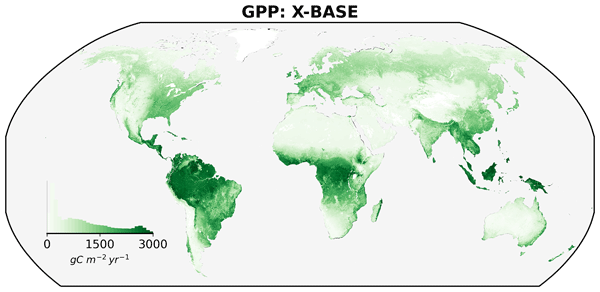
Jacob A. Nelson, Sophia Walther, Fabian Gans, Basil Kraft, Ulrich Weber, Kimberly Novick, Nina Buchmann, Mirco Migliavacca, Georg Wohlfahrt, Ladislav Šigut, Andreas Ibrom, Dario Papale, Mathias Göckede, Gregory Duveiller, Alexander Knohl, Lukas Hörtnagl, Russell L. Scott, Jiří Dušek, Weijie Zhang, Zayd Mahmoud Hamdi, Markus Reichstein, Sergio Aranda-Barranco, Jonas Ardö, Maarten Op de Beeck, Dave Billesbach, David Bowling, Rosvel Bracho, Christian Brümmer, Gustau Camps-Valls, Shiping Chen, Jamie Rose Cleverly, Ankur Desai, Gang Dong, Tarek S. El-Madany, Eugenie Susanne Euskirchen, Iris Feigenwinter, Marta Galvagno, Giacomo A. Gerosa, Bert Gielen, Ignacio Goded, Sarah Goslee, Christopher Michael Gough, Bernard Heinesch, Kazuhito Ichii, Marcin Antoni Jackowicz-Korczynski, Anne Klosterhalfen, Sara Knox, Hideki Kobayashi, Kukka-Maaria Kohonen, Mika Korkiakoski, Ivan Mammarella, Mana Gharun, Riccardo Marzuoli, Roser Matamala, Stefan Metzger, Leonardo Montagnani, Giacomo Nicolini, Thomas O'Halloran, Jean-Marc Ourcival, Matthias Peichl, Elise Pendall, Borja Ruiz Reverter, Marilyn Roland, Simone Sabbatini, Torsten Sachs, Marius Schmidt, Christopher R. Schwalm, Ankit Shekhar, Richard Silberstein, Maria Lucia Silveira, Donatella Spano, Torbern Tagesson, Gianluca Tramontana, Carlo Trotta, Fabio Turco, Timo Vesala, Caroline Vincke, Domenico Vitale, Enrique R. Vivoni, Yi Wang, William Woodgate, Enrico A. Yepez, Junhui Zhang, Donatella Zona, and Martin Jung
Biogeosciences, 21, 5079–5115, https://doi.org/10.5194/bg-21-5079-2024, https://doi.org/10.5194/bg-21-5079-2024, 2024
Short summary
Short summary
The movement of water, carbon, and energy from the Earth's surface to the atmosphere, or flux, is an important process to understand because it impacts our lives. Here, we outline a method called FLUXCOM-X to estimate global water and CO2 fluxes based on direct measurements from sites around the world. We go on to demonstrate how these new estimates of net CO2 uptake/loss, gross CO2 uptake, total water evaporation, and transpiration from plants compare to previous and independent estimates.
Pilar Durante, Juan Miguel Requena-Mullor, Rodrigo Vargas, Mario Guevara, Domingo Alcaraz-Segura, and Cecilio Oyonarte
Earth Syst. Sci. Data Discuss., https://doi.org/10.5194/essd-2024-431, https://doi.org/10.5194/essd-2024-431, 2024
Manuscript not accepted for further review
Short summary
Short summary
Human activities have disrupted the global carbon cycle, increasing CO2 levels. Soils are the largest carbon stores on land, making it essential to understand how much carbon they hold to fight climate change. Our study improved estimates of soil carbon in peninsular Spain by integrating historical soil data and using machine-learning methods to create detailed maps of carbon content. These maps will help manage soil carbon better and support efforts to track carbon emissions globally.
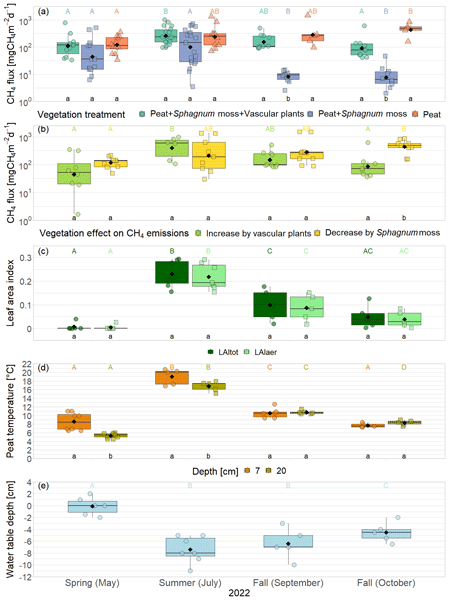
Katharina Jentzsch, Elisa Männistö, Maija E. Marushchak, Aino Korrensalo, Lona van Delden, Eeva-Stiina Tuittila, Christian Knoblauch, and Claire C. Treat
Biogeosciences, 21, 3761–3788, https://doi.org/10.5194/bg-21-3761-2024, https://doi.org/10.5194/bg-21-3761-2024, 2024
Short summary
Short summary
During cold seasons, methane release from northern wetlands is important but often underestimated. We studied a boreal bog to understand methane emissions in spring and fall. At cold temperatures, methane release decreases due to lower production rates, but efficient methane transport through plant structures, decaying plants, and the release of methane stored in the pore water keep emissions ongoing. Understanding these seasonal processes can improve models for methane release in cold climates.
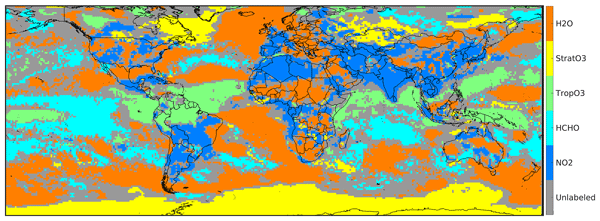
Amir H. Souri, Bryan N. Duncan, Sarah A. Strode, Daniel C. Anderson, Michael E. Manyin, Junhua Liu, Luke D. Oman, Zhen Zhang, and Brad Weir
Atmos. Chem. Phys., 24, 8677–8701, https://doi.org/10.5194/acp-24-8677-2024, https://doi.org/10.5194/acp-24-8677-2024, 2024
Short summary
Short summary
We explore a new method of using the wealth of information obtained from satellite observations of Aura OMI NO2, HCHO, and MERRA-2 reanalysis in NASA’s GEOS model equipped with an efficient tropospheric OH (TOH) estimator to enhance the representation of TOH spatial distribution and its long-term trends. This new framework helps us pinpoint regional inaccuracies in TOH and differentiate between established prior knowledge and newly acquired information from satellites on TOH trends.

Hanqin Tian, Naiqing Pan, Rona L. Thompson, Josep G. Canadell, Parvadha Suntharalingam, Pierre Regnier, Eric A. Davidson, Michael Prather, Philippe Ciais, Marilena Muntean, Shufen Pan, Wilfried Winiwarter, Sönke Zaehle, Feng Zhou, Robert B. Jackson, Hermann W. Bange, Sarah Berthet, Zihao Bian, Daniele Bianchi, Alexander F. Bouwman, Erik T. Buitenhuis, Geoffrey Dutton, Minpeng Hu, Akihiko Ito, Atul K. Jain, Aurich Jeltsch-Thömmes, Fortunat Joos, Sian Kou-Giesbrecht, Paul B. Krummel, Xin Lan, Angela Landolfi, Ronny Lauerwald, Ya Li, Chaoqun Lu, Taylor Maavara, Manfredi Manizza, Dylan B. Millet, Jens Mühle, Prabir K. Patra, Glen P. Peters, Xiaoyu Qin, Peter Raymond, Laure Resplandy, Judith A. Rosentreter, Hao Shi, Qing Sun, Daniele Tonina, Francesco N. Tubiello, Guido R. van der Werf, Nicolas Vuichard, Junjie Wang, Kelley C. Wells, Luke M. Western, Chris Wilson, Jia Yang, Yuanzhi Yao, Yongfa You, and Qing Zhu
Earth Syst. Sci. Data, 16, 2543–2604, https://doi.org/10.5194/essd-16-2543-2024, https://doi.org/10.5194/essd-16-2543-2024, 2024
Short summary
Short summary
Atmospheric concentrations of nitrous oxide (N2O), a greenhouse gas 273 times more potent than carbon dioxide, have increased by 25 % since the preindustrial period, with the highest observed growth rate in 2020 and 2021. This rapid growth rate has primarily been due to a 40 % increase in anthropogenic emissions since 1980. Observed atmospheric N2O concentrations in recent years have exceeded the worst-case climate scenario, underscoring the importance of reducing anthropogenic N2O emissions.
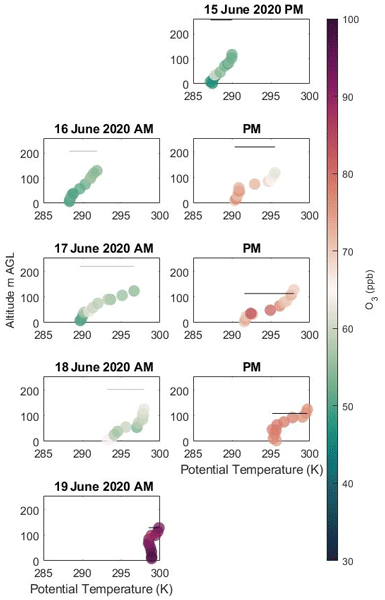
Josie K. Radtke, Benjamin N. Kies, Whitney A. Mottishaw, Sydney M. Zeuli, Aidan T. H. Voon, Kelly L. Koerber, Grant W. Petty, Michael P. Vermeuel, Timothy H. Bertram, Ankur R. Desai, Joseph P. Hupy, R. Bradley Pierce, Timothy J. Wagner, and Patricia A. Cleary
Atmos. Meas. Tech., 17, 2833–2847, https://doi.org/10.5194/amt-17-2833-2024, https://doi.org/10.5194/amt-17-2833-2024, 2024
Short summary
Short summary
The use of uncrewed aircraft systems (UASs) to conduct a vertical profiling of ozone and meteorological variables was evaluated using comparisons between tower or ground observations and UAS-based measurements. Changes to the UAS profiler showed an improvement in performance. The profiler was used to see the impact of Chicago pollution plumes on a shoreline area near Lake Michigan.
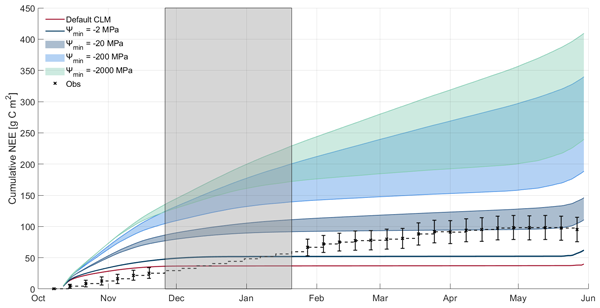
Victoria R. Dutch, Nick Rutter, Leanne Wake, Oliver Sonnentag, Gabriel Hould Gosselin, Melody Sandells, Chris Derksen, Branden Walker, Gesa Meyer, Richard Essery, Richard Kelly, Phillip Marsh, Julia Boike, and Matteo Detto
Biogeosciences, 21, 825–841, https://doi.org/10.5194/bg-21-825-2024, https://doi.org/10.5194/bg-21-825-2024, 2024
Short summary
Short summary
We undertake a sensitivity study of three different parameters on the simulation of net ecosystem exchange (NEE) during the snow-covered non-growing season at an Arctic tundra site. Simulations are compared to eddy covariance measurements, with near-zero NEE simulated despite observed CO2 release. We then consider how to parameterise the model better in Arctic tundra environments on both sub-seasonal timescales and cumulatively throughout the snow-covered non-growing season.
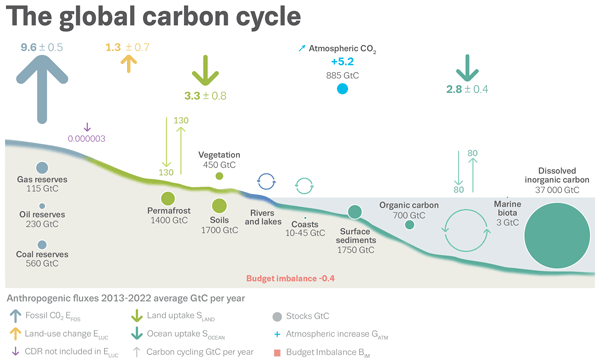
Pierre Friedlingstein, Michael O'Sullivan, Matthew W. Jones, Robbie M. Andrew, Dorothee C. E. Bakker, Judith Hauck, Peter Landschützer, Corinne Le Quéré, Ingrid T. Luijkx, Glen P. Peters, Wouter Peters, Julia Pongratz, Clemens Schwingshackl, Stephen Sitch, Josep G. Canadell, Philippe Ciais, Robert B. Jackson, Simone R. Alin, Peter Anthoni, Leticia Barbero, Nicholas R. Bates, Meike Becker, Nicolas Bellouin, Bertrand Decharme, Laurent Bopp, Ida Bagus Mandhara Brasika, Patricia Cadule, Matthew A. Chamberlain, Naveen Chandra, Thi-Tuyet-Trang Chau, Frédéric Chevallier, Louise P. Chini, Margot Cronin, Xinyu Dou, Kazutaka Enyo, Wiley Evans, Stefanie Falk, Richard A. Feely, Liang Feng, Daniel J. Ford, Thomas Gasser, Josefine Ghattas, Thanos Gkritzalis, Giacomo Grassi, Luke Gregor, Nicolas Gruber, Özgür Gürses, Ian Harris, Matthew Hefner, Jens Heinke, Richard A. Houghton, George C. Hurtt, Yosuke Iida, Tatiana Ilyina, Andrew R. Jacobson, Atul Jain, Tereza Jarníková, Annika Jersild, Fei Jiang, Zhe Jin, Fortunat Joos, Etsushi Kato, Ralph F. Keeling, Daniel Kennedy, Kees Klein Goldewijk, Jürgen Knauer, Jan Ivar Korsbakken, Arne Körtzinger, Xin Lan, Nathalie Lefèvre, Hongmei Li, Junjie Liu, Zhiqiang Liu, Lei Ma, Greg Marland, Nicolas Mayot, Patrick C. McGuire, Galen A. McKinley, Gesa Meyer, Eric J. Morgan, David R. Munro, Shin-Ichiro Nakaoka, Yosuke Niwa, Kevin M. O'Brien, Are Olsen, Abdirahman M. Omar, Tsuneo Ono, Melf Paulsen, Denis Pierrot, Katie Pocock, Benjamin Poulter, Carter M. Powis, Gregor Rehder, Laure Resplandy, Eddy Robertson, Christian Rödenbeck, Thais M. Rosan, Jörg Schwinger, Roland Séférian, T. Luke Smallman, Stephen M. Smith, Reinel Sospedra-Alfonso, Qing Sun, Adrienne J. Sutton, Colm Sweeney, Shintaro Takao, Pieter P. Tans, Hanqin Tian, Bronte Tilbrook, Hiroyuki Tsujino, Francesco Tubiello, Guido R. van der Werf, Erik van Ooijen, Rik Wanninkhof, Michio Watanabe, Cathy Wimart-Rousseau, Dongxu Yang, Xiaojuan Yang, Wenping Yuan, Xu Yue, Sönke Zaehle, Jiye Zeng, and Bo Zheng
Earth Syst. Sci. Data, 15, 5301–5369, https://doi.org/10.5194/essd-15-5301-2023, https://doi.org/10.5194/essd-15-5301-2023, 2023
Short summary
Short summary
The Global Carbon Budget 2023 describes the methodology, main results, and data sets used to quantify the anthropogenic emissions of carbon dioxide (CO2) and their partitioning among the atmosphere, land ecosystems, and the ocean over the historical period (1750–2023). These living datasets are updated every year to provide the highest transparency and traceability in the reporting of CO2, the key driver of climate change.
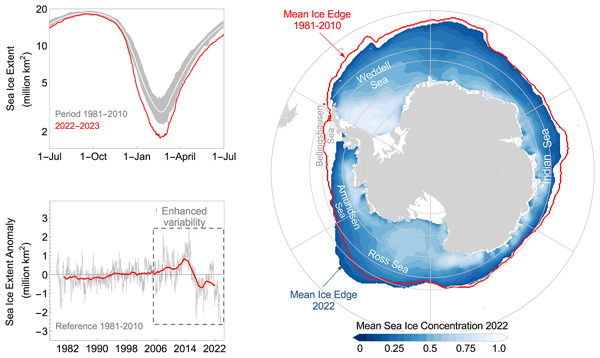
Raúl R. Cordero, Sarah Feron, Alessandro Damiani, Pedro J. Llanillo, Jorge Carrasco, Alia L. Khan, Richard Bintanja, Zutao Ouyang, and Gino Casassa
The Cryosphere, 17, 4995–5006, https://doi.org/10.5194/tc-17-4995-2023, https://doi.org/10.5194/tc-17-4995-2023, 2023
Short summary
Short summary
We investigate the response of Antarctic sea ice to year-to-year changes in the tropospheric–stratospheric dynamics. Our findings suggest that, by affecting the tropospheric westerlies, the strength of the stratospheric polar vortex has played a major role in recent record-breaking anomalies in Antarctic sea ice.
Sreenath Paleri, Luise Wanner, Matthias Sühring, Ankur Desai, and Matthias Mauder
EGUsphere, https://doi.org/10.5194/egusphere-2023-1721, https://doi.org/10.5194/egusphere-2023-1721, 2023
Preprint archived
Short summary
Short summary
We present a description and evaluation of numerical simulations of field experiment days during the CHEESEHEAD19 field campaign, conducted over a heterogeneous forested domain in Northern Wisconsin, USA. Diurnal simulations, informed and constrained by field measurements for two days during the summer and autumn were performed. The model could simulate near surface time series and profiles of atmospheric state variables and fluxes that matched relatively well with observations.
Josué Delgado-Balbuena, Henry W. Loescher, Carlos A. Aguirre-Gutiérrez, Teresa Alfaro-Reyna, Luis F. Pineda-Martínez, Rodrigo Vargas, and Tulio Arredondo
Biogeosciences, 20, 2369–2385, https://doi.org/10.5194/bg-20-2369-2023, https://doi.org/10.5194/bg-20-2369-2023, 2023
Short summary
Short summary
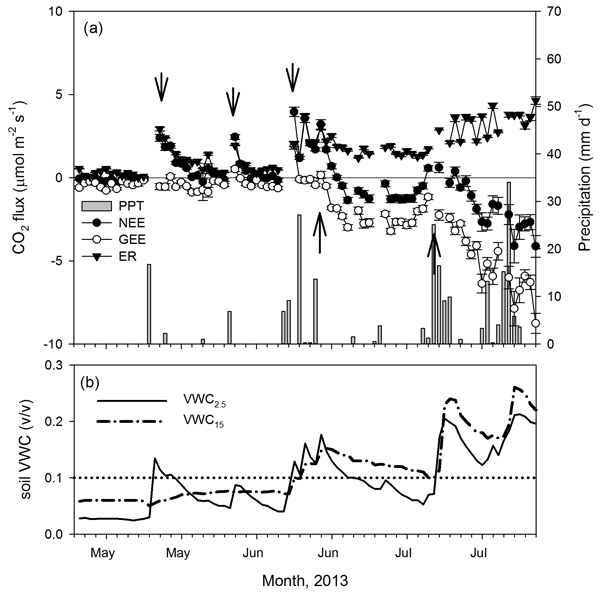
In the semiarid grassland, an increase in soil moisture at shallow depths instantly enhances carbon release through respiration. In contrast, deeper soil water controls plant carbon uptake but with a delay of several days. Previous soil conditions, biological activity, and the size and timing of precipitation are factors that determine the amount of carbon released into the atmosphere. Thus, future changes in precipitation patterns could convert ecosystems from carbon sinks to carbon sources.
Michael P. Vermeuel, Gordon A. Novak, Delaney B. Kilgour, Megan S. Claflin, Brian M. Lerner, Amy M. Trowbridge, Jonathan Thom, Patricia A. Cleary, Ankur R. Desai, and Timothy H. Bertram
Atmos. Chem. Phys., 23, 4123–4148, https://doi.org/10.5194/acp-23-4123-2023, https://doi.org/10.5194/acp-23-4123-2023, 2023
Short summary
Short summary
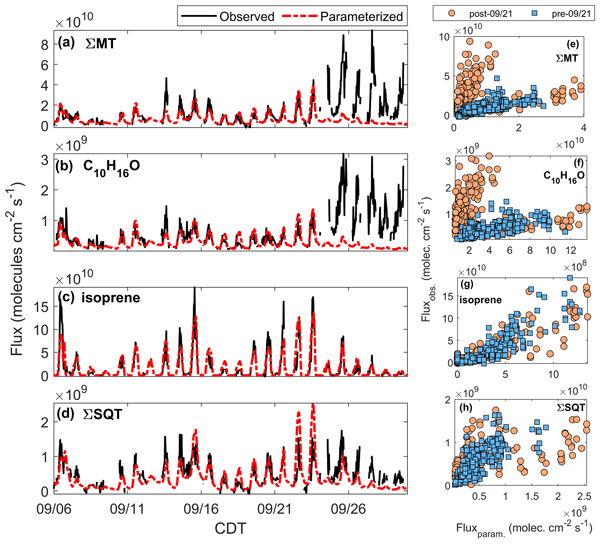
Reactive carbon species emitted from natural sources such as forests play an important role in the chemistry of the atmosphere. Predictions of these emissions are based on plant responses during the growing season and do not consider potential effects from seasonal changes. To address this, we made measurements of reactive carbon over a forest during the summer to autumn transition. We learned that observed concentrations and emissions for some key species are larger than model predictions.
Song Wang, Carlos Sierra, Yiqi Luo, Jinsong Wang, Weinan Chen, Yahai Zhang, Aizhong Ye, and Shuli Niu
Biogeosciences Discuss., https://doi.org/10.5194/bg-2023-33, https://doi.org/10.5194/bg-2023-33, 2023
Manuscript not accepted for further review
Short summary
Short summary
Nitrogen is important for plant growth and carbon uptake, which is uaually limited in nature and can constrain carbon storage and impact efforts to combat climate change. We developed a new method of combining data and models to determine if and how much an ecosystem is nitrogen limited. This new method can help determine if and to what extent an ecosystem is nitrogen-limited, providing insight into nutrient limitations on a global scale and guiding ecosystem management decisions.
Lejish Vettikkat, Pasi Miettinen, Angela Buchholz, Pekka Rantala, Hao Yu, Simon Schallhart, Tuukka Petäjä, Roger Seco, Elisa Männistö, Markku Kulmala, Eeva-Stiina Tuittila, Alex B. Guenther, and Siegfried Schobesberger
Atmos. Chem. Phys., 23, 2683–2698, https://doi.org/10.5194/acp-23-2683-2023, https://doi.org/10.5194/acp-23-2683-2023, 2023
Short summary
Short summary
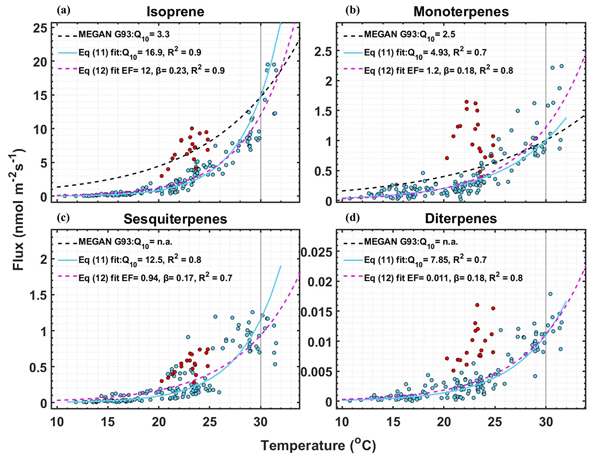
Wetlands cover a substantial fraction of the land mass in the northern latitudes, from northern Europe to Siberia and Canada. Yet, their isoprene and terpene emissions remain understudied. Here, we used a state-of-the-art measurement technique to quantify ecosystem-scale emissions from a boreal wetland during an unusually warm spring/summer. We found that the emissions from this wetland were (a) higher and (b) even more strongly dependent on temperature than commonly thought.
Daphne Armas, Mario Guevara, Fernando Bezares, Rodrigo Vargas, Pilar Durante, Víctor Osorio, Wilmer Jiménez, and Cecilio Oyonarte
Earth Syst. Sci. Data, 15, 431–445, https://doi.org/10.5194/essd-15-431-2023, https://doi.org/10.5194/essd-15-431-2023, 2023
Short summary
Short summary
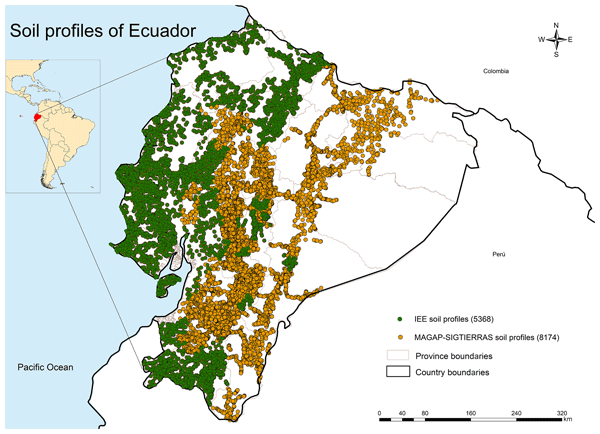
The global need for updated soil datasets has increased. Our main objective was to synthesize and harmonize soil profile information collected by two different projects in Ecuador between 2009 and 2015.The main result was the development of the Harmonized Soil Database of Ecuador (HESD) that includes information from 13 542 soil profiles with over 51 713 measured soil horizons, including 92 different edaphic variables, and follows international standards for archiving and sharing soil data.
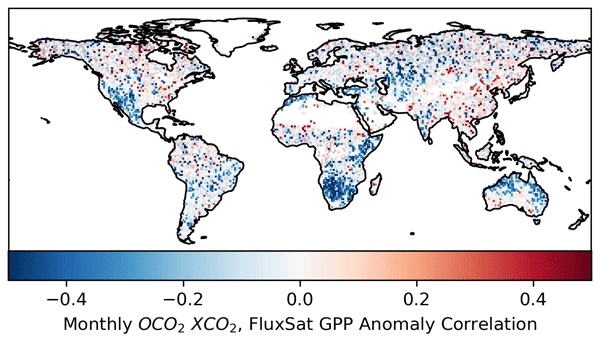
Andrew F. Feldman, Zhen Zhang, Yasuko Yoshida, Abhishek Chatterjee, and Benjamin Poulter
Atmos. Chem. Phys., 23, 1545–1563, https://doi.org/10.5194/acp-23-1545-2023, https://doi.org/10.5194/acp-23-1545-2023, 2023
Short summary
Short summary
We investigate the conditions under which satellite-retrieved column carbon dioxide concentrations directly hold information about surface carbon dioxide fluxes, without the use of inversion models. We show that OCO-2 column carbon dioxide retrievals, available at 1–3 month latency, can be used to directly detect and roughly estimate extreme biospheric CO2 fluxes. As such, these OCO-2 retrievals have value for rapidly monitoring extreme conditions in the terrestrial biosphere.

Yuanhong Zhao, Marielle Saunois, Philippe Bousquet, Xin Lin, Michaela I. Hegglin, Josep G. Canadell, Robert B. Jackson, and Bo Zheng
Atmos. Chem. Phys., 23, 789–807, https://doi.org/10.5194/acp-23-789-2023, https://doi.org/10.5194/acp-23-789-2023, 2023
Short summary
Short summary
The large uncertainties in OH simulated by atmospheric chemistry models hinder accurate estimates of CH4 chemical loss through the bottom-up method. This study presents a new approach based on OH precursor observations and a chemical box model to improve the tropospheric OH distributions simulated by atmospheric chemistry models. Through this approach, both the global OH burden and the corresponding methane chemical loss reach consistency with the top-down method based on MCF inversions.
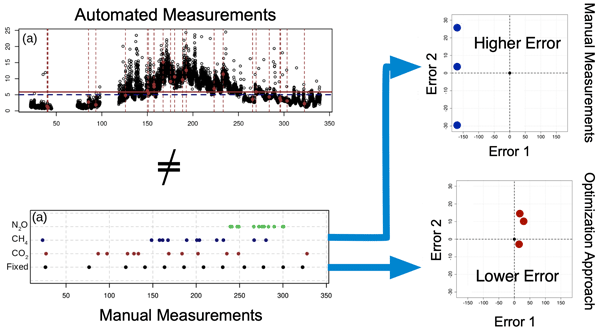
Rodrigo Vargas and Van Huong Le
Biogeosciences, 20, 15–26, https://doi.org/10.5194/bg-20-15-2023, https://doi.org/10.5194/bg-20-15-2023, 2023
Short summary
Short summary
Quantifying the role of soils in nature-based solutions requires accurate estimates of soil greenhouse gas (GHG) fluxes. We suggest that multiple GHG fluxes should not be simultaneously measured at a few fixed time intervals, but an optimized sampling approach can reduce bias and uncertainty. Our results have implications for assessing GHG fluxes from soils and a better understanding of the role of soils in nature-based solutions.
Yao Gao, Eleanor J. Burke, Sarah E. Chadburn, Maarit Raivonen, Mika Aurela, Lawrence B. Flanagan, Krzysztof Fortuniak, Elyn Humphreys, Annalea Lohila, Tingting Li, Tiina Markkanen, Olli Nevalainen, Mats B. Nilsson, Włodzimierz Pawlak, Aki Tsuruta, Huiyi Yang, and Tuula Aalto
Biogeosciences Discuss., https://doi.org/10.5194/bg-2022-229, https://doi.org/10.5194/bg-2022-229, 2022
Manuscript not accepted for further review
Short summary
Short summary
We coupled a process-based peatland CH4 emission model HIMMELI with a state-of-art land surface model JULES. The performance of the coupled model was evaluated at six northern wetland sites. The coupled model is considered to be more appropriate in simulating wetland CH4 emission. In order to improve the simulated CH4 emission, the model requires better representation of the peat soil carbon and hydrologic processes in JULES and the methane production and transportation processes in HIMMELI.
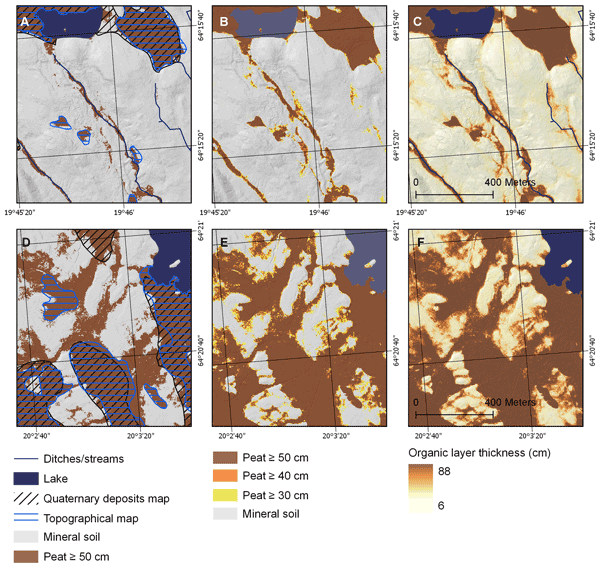
Anneli M. Ågren, Eliza Maher Hasselquist, Johan Stendahl, Mats B. Nilsson, and Siddhartho S. Paul
SOIL, 8, 733–749, https://doi.org/10.5194/soil-8-733-2022, https://doi.org/10.5194/soil-8-733-2022, 2022
Short summary
Short summary
Historically, many peatlands in the boreal region have been drained for timber production. Given the prospects of a drier future due to climate change, wetland restorations are now increasing. Better maps hold the key to insights into restoration targets and land-use management policies, and maps are often the number one decision-support tool. We use an AI-developed soil moisture map based on laser scanning data to illustrate how the mapping of peatlands can be improved across an entire nation.
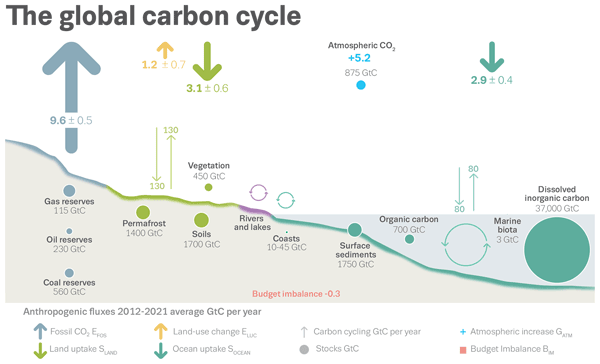
Pierre Friedlingstein, Michael O'Sullivan, Matthew W. Jones, Robbie M. Andrew, Luke Gregor, Judith Hauck, Corinne Le Quéré, Ingrid T. Luijkx, Are Olsen, Glen P. Peters, Wouter Peters, Julia Pongratz, Clemens Schwingshackl, Stephen Sitch, Josep G. Canadell, Philippe Ciais, Robert B. Jackson, Simone R. Alin, Ramdane Alkama, Almut Arneth, Vivek K. Arora, Nicholas R. Bates, Meike Becker, Nicolas Bellouin, Henry C. Bittig, Laurent Bopp, Frédéric Chevallier, Louise P. Chini, Margot Cronin, Wiley Evans, Stefanie Falk, Richard A. Feely, Thomas Gasser, Marion Gehlen, Thanos Gkritzalis, Lucas Gloege, Giacomo Grassi, Nicolas Gruber, Özgür Gürses, Ian Harris, Matthew Hefner, Richard A. Houghton, George C. Hurtt, Yosuke Iida, Tatiana Ilyina, Atul K. Jain, Annika Jersild, Koji Kadono, Etsushi Kato, Daniel Kennedy, Kees Klein Goldewijk, Jürgen Knauer, Jan Ivar Korsbakken, Peter Landschützer, Nathalie Lefèvre, Keith Lindsay, Junjie Liu, Zhu Liu, Gregg Marland, Nicolas Mayot, Matthew J. McGrath, Nicolas Metzl, Natalie M. Monacci, David R. Munro, Shin-Ichiro Nakaoka, Yosuke Niwa, Kevin O'Brien, Tsuneo Ono, Paul I. Palmer, Naiqing Pan, Denis Pierrot, Katie Pocock, Benjamin Poulter, Laure Resplandy, Eddy Robertson, Christian Rödenbeck, Carmen Rodriguez, Thais M. Rosan, Jörg Schwinger, Roland Séférian, Jamie D. Shutler, Ingunn Skjelvan, Tobias Steinhoff, Qing Sun, Adrienne J. Sutton, Colm Sweeney, Shintaro Takao, Toste Tanhua, Pieter P. Tans, Xiangjun Tian, Hanqin Tian, Bronte Tilbrook, Hiroyuki Tsujino, Francesco Tubiello, Guido R. van der Werf, Anthony P. Walker, Rik Wanninkhof, Chris Whitehead, Anna Willstrand Wranne, Rebecca Wright, Wenping Yuan, Chao Yue, Xu Yue, Sönke Zaehle, Jiye Zeng, and Bo Zheng
Earth Syst. Sci. Data, 14, 4811–4900, https://doi.org/10.5194/essd-14-4811-2022, https://doi.org/10.5194/essd-14-4811-2022, 2022
Short summary
Short summary
The Global Carbon Budget 2022 describes the datasets and methodology used to quantify the anthropogenic emissions of carbon dioxide (CO2) and their partitioning among the atmosphere, the land ecosystems, and the ocean. These living datasets are updated every year to provide the highest transparency and traceability in the reporting of CO2, the key driver of climate change.
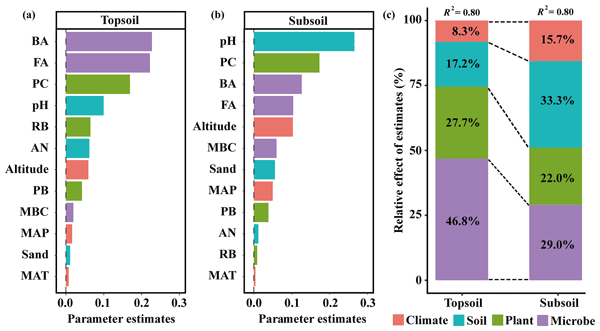
Junxiao Pan, Jinsong Wang, Dashuan Tian, Ruiyang Zhang, Yang Li, Lei Song, Jiaming Yang, Chunxue Wei, and Shuli Niu
SOIL, 8, 687–698, https://doi.org/10.5194/soil-8-687-2022, https://doi.org/10.5194/soil-8-687-2022, 2022
Short summary
Short summary
We found that climatic, edaphic, plant and microbial variables jointly affect soil inorganic carbon (SIC) stock in Tibetan grasslands, and biotic factors have a larger contribution than abiotic factors to the variation in SIC stock. The effects of microbial and plant variables on SIC stock weakened with soil depth, while the effects of edaphic variables strengthened. The contrasting responses and drivers of SIC stock highlight differential mechanisms underlying SIC preservation with soil depth.
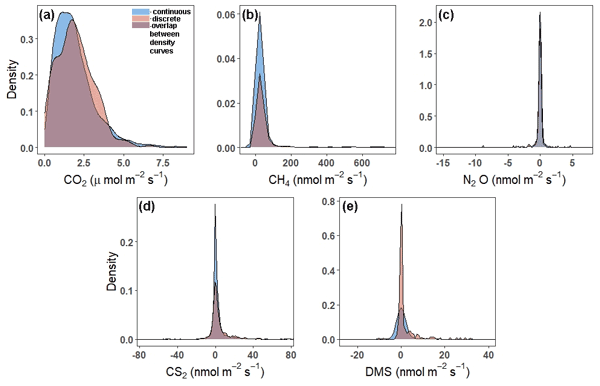
Margaret Capooci and Rodrigo Vargas
Biogeosciences, 19, 4655–4670, https://doi.org/10.5194/bg-19-4655-2022, https://doi.org/10.5194/bg-19-4655-2022, 2022
Short summary
Short summary
Tidal salt marsh soil emits greenhouse gases, as well as sulfur-based gases, which play roles in global climate but are not well studied as they are difficult to measure. Traditional methods of measuring these gases worked relatively well for carbon dioxide, but less so for methane, nitrous oxide, carbon disulfide, and dimethylsulfide. High variability of trace gases complicates the ability to accurately calculate gas budgets and new approaches are needed for monitoring protocols.
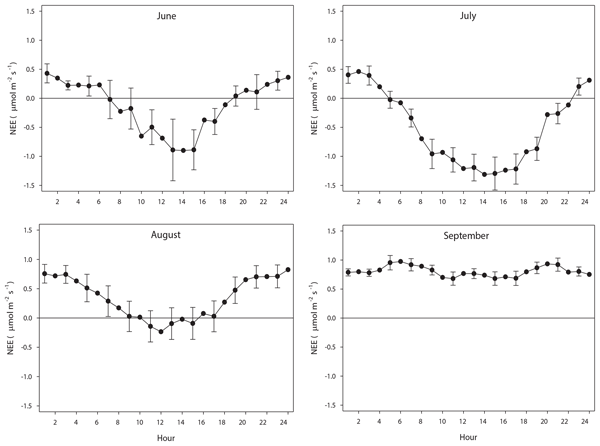
Anders Lindroth, Norbert Pirk, Ingibjörg S. Jónsdóttir, Christian Stiegler, Leif Klemedtsson, and Mats B. Nilsson
Biogeosciences, 19, 3921–3934, https://doi.org/10.5194/bg-19-3921-2022, https://doi.org/10.5194/bg-19-3921-2022, 2022
Short summary
Short summary
We measured the fluxes of carbon dioxide and methane between a moist moss tundra and the atmosphere on Svalbard in order to better understand how such ecosystems are affecting the climate and vice versa. We found that the system was a small sink of carbon dioxide and a small source of methane. These fluxes are small in comparison with other tundra ecosystems in the high Arctic. Analysis of temperature sensitivity showed that respiration was more sensitive than photosynthesis above about 6 ℃.
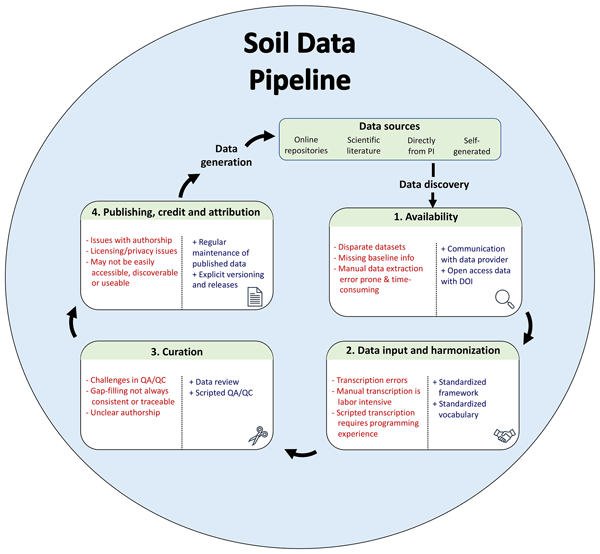
Katherine E. O. Todd-Brown, Rose Z. Abramoff, Jeffrey Beem-Miller, Hava K. Blair, Stevan Earl, Kristen J. Frederick, Daniel R. Fuka, Mario Guevara Santamaria, Jennifer W. Harden, Katherine Heckman, Lillian J. Heran, James R. Holmquist, Alison M. Hoyt, David H. Klinges, David S. LeBauer, Avni Malhotra, Shelby C. McClelland, Lucas E. Nave, Katherine S. Rocci, Sean M. Schaeffer, Shane Stoner, Natasja van Gestel, Sophie F. von Fromm, and Marisa L. Younger
Biogeosciences, 19, 3505–3522, https://doi.org/10.5194/bg-19-3505-2022, https://doi.org/10.5194/bg-19-3505-2022, 2022
Short summary
Short summary
Research data are becoming increasingly available online with tantalizing possibilities for reanalysis. However harmonizing data from different sources remains challenging. Using the soils community as an example, we walked through the various strategies that researchers currently use to integrate datasets for reanalysis. We find that manual data transcription is still extremely common and that there is a critical need for community-supported informatics tools like vocabularies and ontologies.
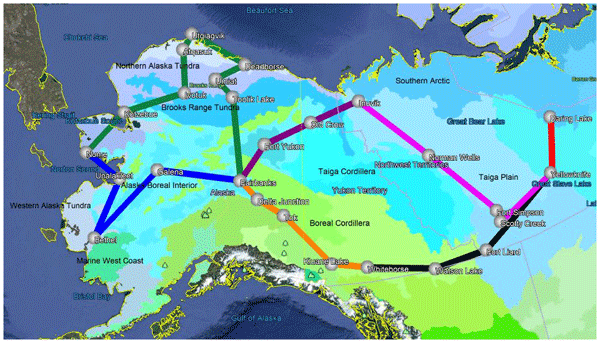
Colm Sweeney, Abhishek Chatterjee, Sonja Wolter, Kathryn McKain, Robert Bogue, Stephen Conley, Tim Newberger, Lei Hu, Lesley Ott, Benjamin Poulter, Luke Schiferl, Brad Weir, Zhen Zhang, and Charles E. Miller
Atmos. Chem. Phys., 22, 6347–6364, https://doi.org/10.5194/acp-22-6347-2022, https://doi.org/10.5194/acp-22-6347-2022, 2022
Short summary
Short summary
The Arctic Carbon Atmospheric Profiles (Arctic-CAP) project demonstrates the utility of aircraft profiles for independent evaluation of model-derived emissions and uptake of atmospheric CO2, CH4, and CO from land and ocean. Comparison with the Goddard Earth Observing System (GEOS) modeling system suggests that fluxes of CO2 are very consistent with observations, while those of CH4 have some regional and seasonal biases, and that CO comparison is complicated by transport errors.
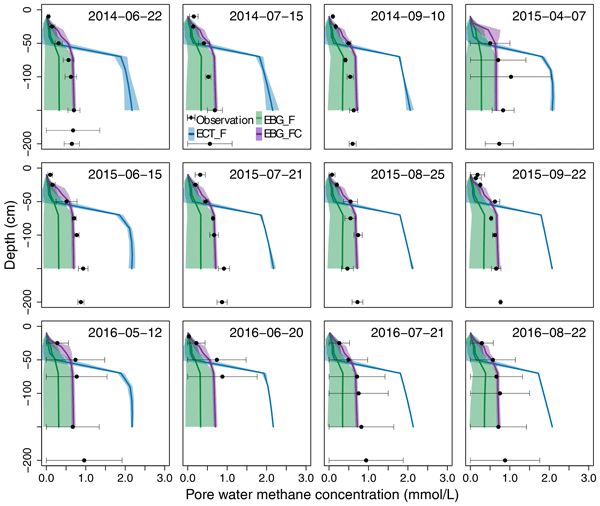
Shuang Ma, Lifen Jiang, Rachel M. Wilson, Jeff P. Chanton, Scott Bridgham, Shuli Niu, Colleen M. Iversen, Avni Malhotra, Jiang Jiang, Xingjie Lu, Yuanyuan Huang, Jason Keller, Xiaofeng Xu, Daniel M. Ricciuto, Paul J. Hanson, and Yiqi Luo
Biogeosciences, 19, 2245–2262, https://doi.org/10.5194/bg-19-2245-2022, https://doi.org/10.5194/bg-19-2245-2022, 2022
Short summary
Short summary
The relative ratio of wetland methane (CH4) emission pathways determines how much CH4 is oxidized before leaving the soil. We found an ebullition modeling approach that has a better performance in deep layer pore water CH4 concentration. We suggest using this approach in land surface models to accurately represent CH4 emission dynamics and response to climate change. Our results also highlight that both CH4 flux and belowground concentration data are important to constrain model parameters.
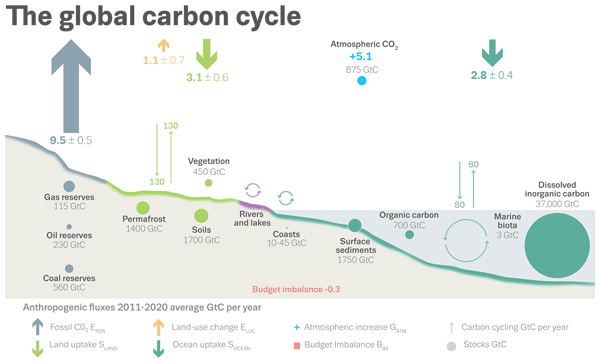
Pierre Friedlingstein, Matthew W. Jones, Michael O'Sullivan, Robbie M. Andrew, Dorothee C. E. Bakker, Judith Hauck, Corinne Le Quéré, Glen P. Peters, Wouter Peters, Julia Pongratz, Stephen Sitch, Josep G. Canadell, Philippe Ciais, Rob B. Jackson, Simone R. Alin, Peter Anthoni, Nicholas R. Bates, Meike Becker, Nicolas Bellouin, Laurent Bopp, Thi Tuyet Trang Chau, Frédéric Chevallier, Louise P. Chini, Margot Cronin, Kim I. Currie, Bertrand Decharme, Laique M. Djeutchouang, Xinyu Dou, Wiley Evans, Richard A. Feely, Liang Feng, Thomas Gasser, Dennis Gilfillan, Thanos Gkritzalis, Giacomo Grassi, Luke Gregor, Nicolas Gruber, Özgür Gürses, Ian Harris, Richard A. Houghton, George C. Hurtt, Yosuke Iida, Tatiana Ilyina, Ingrid T. Luijkx, Atul Jain, Steve D. Jones, Etsushi Kato, Daniel Kennedy, Kees Klein Goldewijk, Jürgen Knauer, Jan Ivar Korsbakken, Arne Körtzinger, Peter Landschützer, Siv K. Lauvset, Nathalie Lefèvre, Sebastian Lienert, Junjie Liu, Gregg Marland, Patrick C. McGuire, Joe R. Melton, David R. Munro, Julia E. M. S. Nabel, Shin-Ichiro Nakaoka, Yosuke Niwa, Tsuneo Ono, Denis Pierrot, Benjamin Poulter, Gregor Rehder, Laure Resplandy, Eddy Robertson, Christian Rödenbeck, Thais M. Rosan, Jörg Schwinger, Clemens Schwingshackl, Roland Séférian, Adrienne J. Sutton, Colm Sweeney, Toste Tanhua, Pieter P. Tans, Hanqin Tian, Bronte Tilbrook, Francesco Tubiello, Guido R. van der Werf, Nicolas Vuichard, Chisato Wada, Rik Wanninkhof, Andrew J. Watson, David Willis, Andrew J. Wiltshire, Wenping Yuan, Chao Yue, Xu Yue, Sönke Zaehle, and Jiye Zeng
Earth Syst. Sci. Data, 14, 1917–2005, https://doi.org/10.5194/essd-14-1917-2022, https://doi.org/10.5194/essd-14-1917-2022, 2022
Short summary
Short summary
The Global Carbon Budget 2021 describes the data sets and methodology used to quantify the emissions of carbon dioxide and their partitioning among the atmosphere, land, and ocean. These living data are updated every year to provide the highest transparency and traceability in the reporting of CO2, the key driver of climate change.
Mika Korkiakoski, Tiia Määttä, Krista Peltoniemi, Timo Penttilä, and Annalea Lohila
Biogeosciences, 19, 2025–2041, https://doi.org/10.5194/bg-19-2025-2022, https://doi.org/10.5194/bg-19-2025-2022, 2022
Short summary
Short summary
We measured CH4 fluxes and production and oxidation potentials from irrigated and non-irrigated podzolic soil in a boreal forest. CH4 sink was smaller at the irrigated site but did not cause CH4 emission, with one exception. We also showed that under laboratory conditions, not only wet conditions, but also fresh carbon, are needed to make podzolic soil into a CH4 source. Our study provides important data for improving the process models describing the upland soil CH4 dynamics.
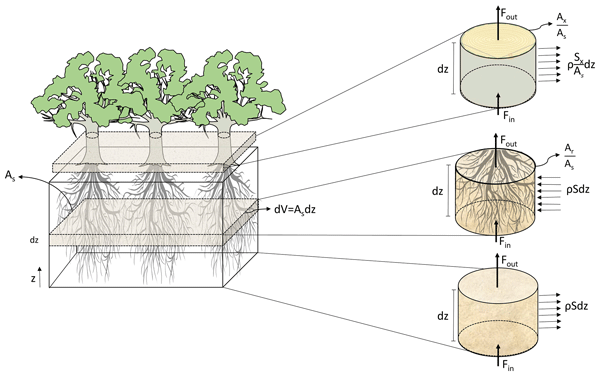
Marcela Silva, Ashley M. Matheny, Valentijn R. N. Pauwels, Dimetre Triadis, Justine E. Missik, Gil Bohrer, and Edoardo Daly
Geosci. Model Dev., 15, 2619–2634, https://doi.org/10.5194/gmd-15-2619-2022, https://doi.org/10.5194/gmd-15-2619-2022, 2022
Short summary
Short summary
Our study introduces FETCH3, a ready-to-use, open-access model that simulates the water fluxes across the soil, roots, and stem. To test the model capabilities, we tested it against exact solutions and a case study. The model presented considerably small errors when compared to the exact solutions and was able to correctly represent transpiration patterns when compared to experimental data. The results show that FETCH3 can correctly simulate above- and below-ground water transport.
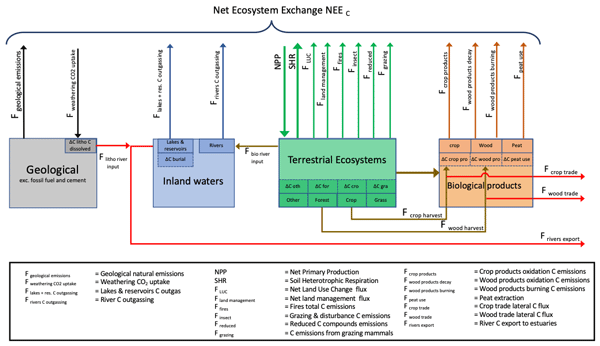
Philippe Ciais, Ana Bastos, Frédéric Chevallier, Ronny Lauerwald, Ben Poulter, Josep G. Canadell, Gustaf Hugelius, Robert B. Jackson, Atul Jain, Matthew Jones, Masayuki Kondo, Ingrid T. Luijkx, Prabir K. Patra, Wouter Peters, Julia Pongratz, Ana Maria Roxana Petrescu, Shilong Piao, Chunjing Qiu, Celso Von Randow, Pierre Regnier, Marielle Saunois, Robert Scholes, Anatoly Shvidenko, Hanqin Tian, Hui Yang, Xuhui Wang, and Bo Zheng
Geosci. Model Dev., 15, 1289–1316, https://doi.org/10.5194/gmd-15-1289-2022, https://doi.org/10.5194/gmd-15-1289-2022, 2022
Short summary
Short summary
The second phase of the Regional Carbon Cycle Assessment and Processes (RECCAP) will provide updated quantification and process understanding of CO2, CH4, and N2O emissions and sinks for ten regions of the globe. In this paper, we give definitions, review different methods, and make recommendations for estimating different components of the total land–atmosphere carbon exchange for each region in a consistent and complete approach.
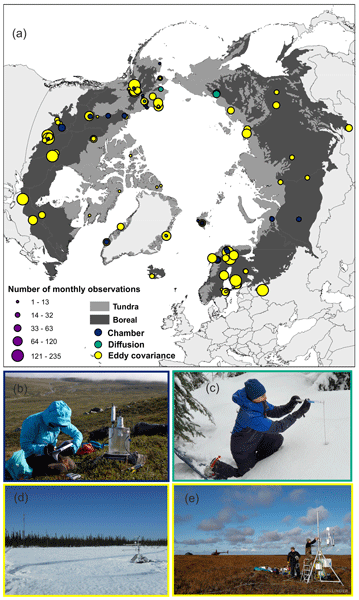
Anna-Maria Virkkala, Susan M. Natali, Brendan M. Rogers, Jennifer D. Watts, Kathleen Savage, Sara June Connon, Marguerite Mauritz, Edward A. G. Schuur, Darcy Peter, Christina Minions, Julia Nojeim, Roisin Commane, Craig A. Emmerton, Mathias Goeckede, Manuel Helbig, David Holl, Hiroki Iwata, Hideki Kobayashi, Pasi Kolari, Efrén López-Blanco, Maija E. Marushchak, Mikhail Mastepanov, Lutz Merbold, Frans-Jan W. Parmentier, Matthias Peichl, Torsten Sachs, Oliver Sonnentag, Masahito Ueyama, Carolina Voigt, Mika Aurela, Julia Boike, Gerardo Celis, Namyi Chae, Torben R. Christensen, M. Syndonia Bret-Harte, Sigrid Dengel, Han Dolman, Colin W. Edgar, Bo Elberling, Eugenie Euskirchen, Achim Grelle, Juha Hatakka, Elyn Humphreys, Järvi Järveoja, Ayumi Kotani, Lars Kutzbach, Tuomas Laurila, Annalea Lohila, Ivan Mammarella, Yojiro Matsuura, Gesa Meyer, Mats B. Nilsson, Steven F. Oberbauer, Sang-Jong Park, Roman Petrov, Anatoly S. Prokushkin, Christopher Schulze, Vincent L. St. Louis, Eeva-Stiina Tuittila, Juha-Pekka Tuovinen, William Quinton, Andrej Varlagin, Donatella Zona, and Viacheslav I. Zyryanov
Earth Syst. Sci. Data, 14, 179–208, https://doi.org/10.5194/essd-14-179-2022, https://doi.org/10.5194/essd-14-179-2022, 2022
Short summary
Short summary
The effects of climate warming on carbon cycling across the Arctic–boreal zone (ABZ) remain poorly understood due to the relatively limited distribution of ABZ flux sites. Fortunately, this flux network is constantly increasing, but new measurements are published in various platforms, making it challenging to understand the ABZ carbon cycle as a whole. Here, we compiled a new database of Arctic–boreal CO2 fluxes to help facilitate large-scale assessments of the ABZ carbon cycle.
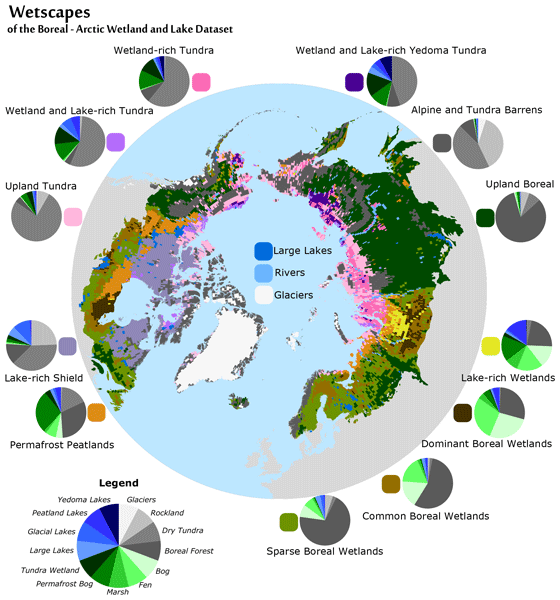
David Olefeldt, Mikael Hovemyr, McKenzie A. Kuhn, David Bastviken, Theodore J. Bohn, John Connolly, Patrick Crill, Eugénie S. Euskirchen, Sarah A. Finkelstein, Hélène Genet, Guido Grosse, Lorna I. Harris, Liam Heffernan, Manuel Helbig, Gustaf Hugelius, Ryan Hutchins, Sari Juutinen, Mark J. Lara, Avni Malhotra, Kristen Manies, A. David McGuire, Susan M. Natali, Jonathan A. O'Donnell, Frans-Jan W. Parmentier, Aleksi Räsänen, Christina Schädel, Oliver Sonnentag, Maria Strack, Suzanne E. Tank, Claire Treat, Ruth K. Varner, Tarmo Virtanen, Rebecca K. Warren, and Jennifer D. Watts
Earth Syst. Sci. Data, 13, 5127–5149, https://doi.org/10.5194/essd-13-5127-2021, https://doi.org/10.5194/essd-13-5127-2021, 2021
Short summary
Short summary
Wetlands, lakes, and rivers are important sources of the greenhouse gas methane to the atmosphere. To understand current and future methane emissions from northern regions, we need maps that show the extent and distribution of specific types of wetlands, lakes, and rivers. The Boreal–Arctic Wetland and Lake Dataset (BAWLD) provides maps of five wetland types, seven lake types, and three river types for northern regions and will improve our ability to predict future methane emissions.

Stefan Metzger, David Durden, Sreenath Paleri, Matthias Sühring, Brian J. Butterworth, Christopher Florian, Matthias Mauder, David M. Plummer, Luise Wanner, Ke Xu, and Ankur R. Desai
Atmos. Meas. Tech., 14, 6929–6954, https://doi.org/10.5194/amt-14-6929-2021, https://doi.org/10.5194/amt-14-6929-2021, 2021
Short summary
Short summary
The key points are the following. (i) Integrative observing system design can multiply the information gain of surface–atmosphere field measurements. (ii) Catalyzing numerical simulations and first-principles machine learning open up observing system simulation experiments to novel applications. (iii) Use cases include natural climate solutions, emission inventory validation, urban air quality, and industry leak detection.
Cited articles
Alduchov, O. A. and Eskridge, R.: Improved Magnus form approximation of saturation vapor pressure, J. Appl. Meteorol., 35, 601–609, https://doi.org/10.1175/1520-0450(1996)035<0601:IMFAOS>2.0.CO;2, 1996.
Alekseychik, P., Korrensalo, A., Mammarella, I., Launiainen, S., Tuittila, E.-S., Korpela, I., and Vesala, T.: Carbon balance of a Finnish bog: temporal variability and limiting factors based on 6 years of eddy-covariance data, Biogeosciences, 18, 4681–4704, https://doi.org/10.5194/bg-18-4681-2021, 2021.
Anthony, T. L. and Silver, W. L.: Hot moments drive extreme nitrous oxide and methane emissions from agricultural peatlands, Glob. Chang. Biol., 27, 5141–5153, https://doi.org/10.1111/gcb.15802, 2021.
Anthony, T. L. and Silver, W. L.: Hot spots and hot moments of greenhouse gas emissions in agricultural peatlands, Biogeochemistry, 167, 461–477, https://doi.org/10.1007/s10533-023-01095-y, 2023.
Aubinet, M.: Eddy covariance CO2 flux measurements in nocturnal conditions: an analysis of the problem, Ecol. Appl., 18, 1368–1378, https://doi.org/10.1890/06-1336.1, 2008.
Aubinet, M., Vesala, T., and Papale, D.: Eddy Covariance: A Practical Guide to Measurement and Data Analysis, Springer Science & Business Media, 438 pp., https://doi.org/10.1007/978-94-007-2351-1, 2012.
Baldocchi, D.: Assessing the eddy covariance technique for evaluating carbon dioxide exchange rates of ecosystems: past, present and future: carbon balance and eddy covariance, Glob. Chang. Biol., 9, 479–492, https://doi.org/10.1046/j.1365-2486.2003.00629.x, 2003.
Baldocchi, D., Detto, M., Sonnentag, O., Verfaillie, J., Teh, Y. A., Silver, W., and Kelly, N. M.: The challenges of measuring methane fluxes and concentrations over a peatland pasture, Agric. For. Meteorol., 153, 177–187, https://doi.org/10.1016/j.agrformet.2011.04.013, 2012.
Bansal, S., Post van der Burg, M., Fern, R. R., Jones, J. W., Lo, R., McKenna, O. P., Tangen, B. A., Zhang, Z., and Gleason, R. A.: Large increases in methane emissions expected from North America's largest wetland complex, Sci. Adv., 9, eade1112, https://doi.org/10.1126/sciadv.ade1112, 2023a.
Bansal, S., Creed, I. F., Tangen, B. A., Bridgham, S. D., Desai, A. R., Krauss, K. W., Neubauer, S. C., Noe, G. B., Rosenberry, D. O., Trettin, C., Wickland, K. P., Allen, S. T., Arias-Ortiz, A., Armitage, A. R., Baldocchi, D., Banerjee, K., Bastviken, D., Berg, P., Bogard, M. J., Chow, A. T., Conner, W. H., Craft, C., Creamer, C., DelSontro, T., Duberstein, J. A., Eagle, M., Fennessy, M. S., Finkelstein, S. A., Göckede, M., Grunwald, S., Halabisky, M., Herbert, E., Jahangir, M. M. R., Johnson, O. F., Jones, M. C., Kelleway, J. J., Knox, S., Kroeger, K. D., Kuehn, K. A., Lobb, D., Loder, A. L., Ma, S., Maher, D. T., McNicol, G., Meier, J., Middleton, B. A., Mills, C., Mistry, P., Mitra, A., Mobilian, C., Nahlik, A. M., Newman, S., O'Connell, J. L., Oikawa, P., van der Burg, M. P., Schutte, C. A., Song, C., Stagg, C. L., Turner, J., Vargas, R., Waldrop, M. P., Wallin, M. B., Wang, Z. A., Ward, E. J., Willard, D. A., Yarwood, S., and Zhu, X.: Practical guide to measuring wetland carbon pools and fluxes, Wetlands (Wilmington), 43, 105, https://doi.org/10.1007/s13157-023-01722-2, 2023b.
Barba, J., Cueva, A., Bahn, M., Barron-Gafford, G. A., Bond-Lamberty, B., Hanson, P. J., Jaimes, A., Kulmala, L., Pumpanen, J., Scott, R. L., Wohlfahrt, G., and Vargas, R.: Comparing ecosystem and soil respiration: Review and key challenges of tower-based and soil measurements, Agric. For. Meteorol., 249, 434–443, https://doi.org/10.1016/j.agrformet.2017.10.028, 2018.
Bartoń, K.: MuMIn: Multi-Model Inference, https://doi.org/10.32614/CRAN.package.MuMIn, 2024.
Becker, R. A., Wilks, A. R., Brownrigg, R., Minka, T. P., and Deckmyn, A.: maps: Draw Geographical Maps, CRAN, https://doi.org/10.32614/CRAN.package.maps, 2023.
Bohrer, G., Ju, Y., Arend, K., Morin, T., Rey-Sanchez, C., Wrighton, K., and Villa, J.: Methane and CO2 chamber fluxes and porewater concentrations US-OWC Ameriflux wetland site, 2015–2018, AmeriFlux Management Project, ESS-DIVE repository, https://doi.org/10.15485/1568865, 2019.
Bohrer, G., Kerns, J., Morin, T., Rey-Sanchez, A., Villa, J., and Ju, Y.: FLUXNET-CH4 US-OWC Old Woman Creek, FLUXNET [data set], https://doi.org/10.18140/FLX/1669690, 2020.
Bond-Lamberty, B., Christianson, D. S., Malhotra, A., Pennington, S. C., Sihi, D., AghaKouchak, A., Anjileli, H., Altaf Arain, M., Armesto, J. J., Ashraf, S., Ataka, M., Baldocchi, D., Andrew Black, T., Buchmann, N., Carbone, M. S., Chang, S.-C., Crill, P., Curtis, P. S., Davidson, E. A., Desai, A. R., Drake, J. E., El-Madany, T. S., Gavazzi, M., Görres, C.-M., Gough, C. M., Goulden, M., Gregg, J., Gutiérrez Del Arroyo, O., He, J.-S., Hirano, T., Hopple, A., Hughes, H., Järveoja, J., Jassal, R., Jian, J., Kan, H., Kaye, J., Kominami, Y., Liang, N., Lipson, D., Macdonald, C. A., Maseyk, K., Mathes, K., Mauritz, M., Mayes, M. A., McNulty, S., Miao, G., Migliavacca, M., Miller, S., Miniat, C. F., Nietz, J. G., Nilsson, M. B., Noormets, A., Norouzi, H., O'Connell, C. S., Osborne, B., Oyonarte, C., Pang, Z., Peichl, M., Pendall, E., Perez-Quezada, J. F., Phillips, C. L., Phillips, R. P., Raich, J. W., Renchon, A. A., Ruehr, N. K., Sánchez-Cañete, E. P., Saunders, M., Savage, K. E., Schrumpf, M., Scott, R. L., Seibt, U., Silver, W. L., Sun, W., Szutu, D., Takagi, K., Takagi, M., Teramoto, M., Tjoelker, M. G., Trumbore, S., Ueyama, M., Vargas, R., Varner, R. K., Verfaillie, J., Vogel, C., Wang, J., Winston, G., Wood, T. E., Wu, J., Wutzler, T., Zeng, J., Zha, T., Zhang, Q., and Zou, J.: COSORE: A community database for continuous soil respiration and other soil-atmosphere greenhouse gas flux data, Glob. Chang. Biol., 26, 7268–7283, https://doi.org/10.1111/gcb.15353, 2020.
Bubier, J., Costello, A., Moore, T. R., Roulet, N. T., and Savage, K.: Microtopography and methane flux in boreal peatlands, northern Ontario, Canada, Can. J. Bot., 71, 1056–1063, https://doi.org/10.1139/b93-122, 1993.
Bubier, J. L.: The relationship of vegetation to methane emission and hydrochemical gradients in northern peatlands, J. Ecol., 83, 403–420, https://doi.org/10.2307/2261594, 1995.
Budishchev, A., Mi, Y., van Huissteden, J., Belelli-Marchesini, L., Schaepman-Strub, G., Parmentier, F. J. W., Fratini, G., Gallagher, A., Maximov, T. C., and Dolman, A. J.: Evaluation of a plot-scale methane emission model using eddy covariance observations and footprint modelling, Biogeosciences, 11, 4651–4664, https://doi.org/10.5194/bg-11-4651-2014, 2014.
Cernusak, L. A., Ubierna, N., Jenkins, M. W., Garrity, S. R., Rahn, T., Powers, H. H., Hanson, D. T., Sevanto, S., Wong, S. C., McDowell, N. G., and Farquhar, G. D.: Unsaturation of vapour pressure inside leaves of two conifer species, Sci. Rep., 8, 7667, https://doi.org/10.1038/s41598-018-25838-2, 2018.
Chaichana, N., Bellingrath-Kimura, S. D., Komiya, S., Fujii, Y., Noborio, K., Dietrich, O., and Pakoktom, T.: Comparison of Closed Chamber and Eddy Covariance Methods to Improve the Understanding of Methane Fluxes from Rice Paddy Fields in Japan, Atmosphere, 9, 356, https://doi.org/10.3390/atmos9090356, 2018.
Chamberlain, S. D., Verfaillie, J., Eichelmann, E., Hemes, K. S., and Baldocchi, D. D.: Evaluation of density corrections to methane fluxes measured by open-path eddy covariance over contrasting landscapes, Bound.-Lay. Meteorol., 165, 197–210, https://doi.org/10.1007/s10546-017-0275-9, 2017.
Chen, W., Zhang, F., Wang, B., Wang, J., Tian, D., Han, G., Wen, X., Yu, G., and Niu, S.: Diel and seasonal dynamics of ecosystem-scale methane flux and their determinants in an alpine meadow, J. Geophys. Res.-Biogeo., 124, 1731–1745, https://doi.org/10.1029/2019jg005011, 2019.
Chen, W., Wang, B., Zhang, F., Li, Z., Wang, J., Yu, G., Wen, X., and Niu, S.: Hysteretic relationship between plant productivity and methane uptake in an alpine meadow, Agric. For. Meteorol., 288–289, 107982, https://doi.org/10.1016/j.agrformet.2020.107982, 2020.
Cho, R., Schroth, M. H., and Zeyer, J.: Circadian methane oxidation in the root zone of rice plants, Biogeochemistry, 111, 317–330, https://doi.org/10.1007/s10533-011-9651-6, 2012.
Christiansen, J. R., Outhwaite, J., and Smukler, S. M.: Comparison of CO2, CH4 and N2O soil-atmosphere exchange measured in static chambers with cavity ring-down spectroscopy and gas chromatography, Agric. For. Meteorol., 211–212, 48–57, https://doi.org/10.1016/j.agrformet.2015.06.004, 2015.
Chu, H., Luo, X., Ouyang, Z., Chan, W. S., Dengel, S., Biraud, S. C., Torn, M. S., Metzger, S., Kumar, J., Arain, M. A., Arkebauer, T. J., Baldocchi, D., Bernacchi, C., Billesbach, D., Black, T. A., Blanken, P. D., Bohrer, G., Bracho, R., Brown, S., Brunsell, N. A., Chen, J., Chen, X., Clark, K., Desai, A. R., Duman, T., Durden, D., Fares, S., Forbrich, I., Gamon, J. A., Gough, C. M., Griffis, T., Helbig, M., Hollinger, D., Humphreys, E., Ikawa, H., Iwata, H., Ju, Y., Knowles, J. F., Knox, S. H., Kobayashi, H., Kolb, T., Law, B., Lee, X., Litvak, M., Liu, H., Munger, J. W., Noormets, A., Novick, K., Oberbauer, S. F., Oechel, W., Oikawa, P., Papuga, S. A., Pendall, E., Prajapati, P., Prueger, J., Quinton, W. L., Richardson, A. D., Russell, E. S., Scott, R. L., Starr, G., Staebler, R., Stoy, P. C., Stuart-Haëntjens, E., Sonnentag, O., Sullivan, R. C., Suyker, A., Ueyama, M., Vargas, R., Wood, J. D., and Zona, D.: Representativeness of Eddy-Covariance flux footprints for areas surrounding AmeriFlux sites, Agric. For. Meteorol., 301–302, 108350, https://doi.org/10.1016/j.agrformet.2021.108350, 2021.
Chu, H., Christianson, D. S., Cheah, Y.-W., Pastorello, G., O'Brien, F., Geden, J., Ngo, S.-T., Hollowgrass, R., Leibowitz, K., Beekwilder, N. F., Sandesh, M., Dengel, S., Chan, S. W., Santos, A., Delwiche, K., Yi, K., Buechner, C., Baldocchi, D., Papale, D., Keenan, T. F., Biraud, S. C., Agarwal, D. A., and Torn, M. S.: AmeriFlux BASE data pipeline to support network growth and data sharing, Sci. Data, 10, 614, https://doi.org/10.1038/s41597-023-02531-2, 2023.
Clark, W. A. and Avery, K. L.: The effects of data aggregation in statistical analysis, Geogr. Anal., 8, 428–438, https://doi.org/10.1111/j.1538-4632.1976.tb00549.x, 1976.
Clement, R. J., Verma, S. B., and Verry, E. S.: Relating chamber measurements to eddy correlation measurements of methane flux, J. Geophys. Res.-Atmos., 100, 21047–21056, https://doi.org/10.1029/95JD02196, 1995.
Davidson, E. A., Savage, K., Verchot, L. V., and Navarro, R.: Minimizing artifacts and biases in chamber-based measurements of soil respiration, Agric. For. Meteorol., 113, 21–37, https://doi.org/10.1016/s0168-1923(02)00100-4, 2002.
Davidson, S. J., Santos, M. J., Sloan, V. L., Reuss-Schmidt, K., Phoenix, G. K., Oechel, W. C., and Zona, D.: Upscaling CH4 Fluxes Using High-Resolution Imagery in Arctic Tundra Ecosystems, Remote Sens.-Basel, 9, 1227, https://doi.org/10.3390/rs9121227, 2017.
Delwiche, K. B., Knox, S. H., Malhotra, A., Fluet-Chouinard, E., McNicol, G., Feron, S., Ouyang, Z., Papale, D., Trotta, C., Canfora, E., Cheah, Y.-W., Christianson, D., Alberto, Ma. C. R., Alekseychik, P., Aurela, M., Baldocchi, D., Bansal, S., Billesbach, D. P., Bohrer, G., Bracho, R., Buchmann, N., Campbell, D. I., Celis, G., Chen, J., Chen, W., Chu, H., Dalmagro, H. J., Dengel, S., Desai, A. R., Detto, M., Dolman, H., Eichelmann, E., Euskirchen, E., Famulari, D., Fuchs, K., Goeckede, M., Gogo, S., Gondwe, M. J., Goodrich, J. P., Gottschalk, P., Graham, S. L., Heimann, M., Helbig, M., Helfter, C., Hemes, K. S., Hirano, T., Hollinger, D., Hörtnagl, L., Iwata, H., Jacotot, A., Jurasinski, G., Kang, M., Kasak, K., King, J., Klatt, J., Koebsch, F., Krauss, K. W., Lai, D. Y. F., Lohila, A., Mammarella, I., Belelli Marchesini, L., Manca, G., Matthes, J. H., Maximov, T., Merbold, L., Mitra, B., Morin, T. H., Nemitz, E., Nilsson, M. B., Niu, S., Oechel, W. C., Oikawa, P. Y., Ono, K., Peichl, M., Peltola, O., Reba, M. L., Richardson, A. D., Riley, W., Runkle, B. R. K., Ryu, Y., Sachs, T., Sakabe, A., Sanchez, C. R., Schuur, E. A., Schäfer, K. V. R., Sonnentag, O., Sparks, J. P., Stuart-Haëntjens, E., Sturtevant, C., Sullivan, R. C., Szutu, D. J., Thom, J. E., Torn, M. S., Tuittila, E.-S., Turner, J., Ueyama, M., Valach, A. C., Vargas, R., Varlagin, A., Vazquez-Lule, A., Verfaillie, J. G., Vesala, T., Vourlitis, G. L., Ward, E. J., Wille, C., Wohlfahrt, G., Wong, G. X., Zhang, Z., Zona, D., Windham-Myers, L., Poulter, B., and Jackson, R. B.: FLUXNET-CH4: a global, multi-ecosystem dataset and analysis of methane seasonality from freshwater wetlands , Earth Syst. Sci. Data, 13, 3607–3689, https://doi.org/10.5194/essd-13-3607-2021, 2021.
Desai, A. R.: AmeriFlux BASE US-Los Lost Creek, Ver. 33–5, AmeriFlux AMP [data set], https://doi.org/10.17190/AMF/1246071, 2025a.
Desai, A. R.: In Situ Carbon Dioxide and Methane Flux Measurements Using Opaque Chambers in a Sedge Fen Wetland (US-Los Lost Creek AmeriFlux Site, Wisconsin, Summer 2015) ver 1, Environmental Data Initiative [data set], https://doi.org/10.6073/pasta/fc48a416ab7c580f2fd0d5450668a23a, 2025b.
Desai, A. R. and Thom, J.: FLUXNET-CH4 US-Los Lost Creek, FLUXNET [data set], https://doi.org/10.18140/FLX/1669682, 2020.
Desai, A. R., Xu, K., Tian, H., Weishampel, P., Thom, J., Baumann, D., Andrews, A. E., Cook, B. D., King, J. Y., and Kolka, R.: Landscape-level terrestrial methane flux observed from a very tall tower, Agric. For. Meteorol., 201, 61–75, https://doi.org/10.1016/j.agrformet.2014.10.017, 2015.
Detto, M., Verfaillie, J., Anderson, F., Xu, L., and Baldocchi, D.: Comparing laser-based open- and closed-path gas analyzers to measure methane fluxes using the eddy covariance method, Agric. For. Meteorol., 151, 1312–1324, https://doi.org/10.1016/j.agrformet.2011.05.014, 2011.
Deventer, M. J., Griffis, T. J., Roman, D. T., Kolka, R. K., Wood, J. D., Erickson, M., Baker, J. M., and Millet, D. B.: Error characterization of methane fluxes and budgets derived from a long-term comparison of open- and closed-path eddy covariance systems, Agric. For. Meteorol., 278, 107638, https://doi.org/10.1016/j.agrformet.2019.107638, 2019.
Dinno, A.: conover.test: Conover-Iman Test of Multiple Comparisons Using Rank Sums, CRAN [code], https://doi.org/10.32614/CRAN.package.conover.test, 2024.
Erkkilä, K.-M., Ojala, A., Bastviken, D., Biermann, T., Heiskanen, J. J., Lindroth, A., Peltola, O., Rantakari, M., Vesala, T., and Mammarella, I.: Methane and carbon dioxide fluxes over a lake: comparison between eddy covariance, floating chambers and boundary layer method, Biogeosciences, 15, 429–445, https://doi.org/10.5194/bg-15-429-2018, 2018.
Forbrich, I., Kutzbach, L., Hormann, A., and Wilmking, M.: A comparison of linear and exponential regression for estimating diffusive CH4 fluxes by closed-chambers in peatlands, Soil Biol. Biochem., 42, 507–515, https://doi.org/10.1016/j.soilbio.2009.12.004, 2010.
Forbrich, I., Kutzbach, L., Wille, C., Becker, T., Wu, J., and Wilmking, M.: Cross-evaluation of measurements of peatland methane emissions on microform and ecosystem scales using high-resolution landcover classification and source weight modelling, Agric. For. Meteorol., 151, 864–874, https://doi.org/10.1016/j.agrformet.2011.02.006, 2011.
Fox, J. and Weisberg, S.: An R companion to applied regression, 3rd edn., SAGE Publications, Thousand Oaks, CA, 608 pp., https://www.john-fox.ca/Companion/ (last access: 15 February 2026), 2018.
Griebel, A., Bennett, L. T., Metzen, D., Cleverly, J., Burba, G., and Arndt, S. K.: Effects of inhomogeneities within the flux footprint on the interpretation of seasonal, annual, and interannual ecosystem carbon exchange, Agric. For. Meteorol., 221, 50–60, https://doi.org/10.1016/j.agrformet.2016.02.002, 2016.
Grossiord, C., Buckley, T. N., Cernusak, L. A., Novick, K. A., Poulter, B., Siegwolf, R. T. W., Sperry, J. S., and McDowell, N. G.: Plant responses to rising vapor pressure deficit, New Phytol., 226, 1550–1566, https://doi.org/10.1111/nph.16485, 2020.
Hargreaves, K. J., Fowler, D., Pitcairn, C. E. R., and Aurela, M.: Annual methane emission from Finnish mires estimated from eddy covariance campaign measurements, Theor. Appl. Climatol., 70, 203–213, https://doi.org/10.1007/s007040170015, 2001.
Hartley, I. P., Hill, T. C., Wade, T. J., Clement, R. J., Moncrieff, J. B., Prieto-Blanco, A., Disney, M. I., Huntley, B., Williams, M., Howden, N. J. K., Wookey, P. A., and Baxter, R.: Quantifying landscape-level methane fluxes in subarctic Finland using a multiscale approach, Glob. Chang. Biol., 21, 3712–3725, https://doi.org/10.1111/gcb.12975, 2015.
Heusinkveld, B. G., Jacobs, A. F. G., and Holtslag, A. A. M.: Effect of open-path gas analyzer wetness on eddy covariance flux measurements: A proposed solution, Agric. For. Meteorol., 148, 1563–1573, https://doi.org/10.1016/j.agrformet.2008.05.010, 2008.
Hill, A. C. and Vargas, R.: Carbon dioxide and methane chamber flux data from temperate S. alterniflora salt-marsh, Figshare [data set], https://doi.org/10.6084/M9.FIGSHARE.20099321.V1, 2022a.
Hill, A. C. and Vargas, R.: Methane and carbon dioxide fluxes in a temperate tidal salt marsh: Comparisons between plot and ecosystem measurements, J. Geophys. Res.-Biogeo., 127, https://doi.org/10.1029/2022jg006943, 2022b.
Hollinger, D. Y. and Richardson, A. D.: Uncertainty in eddy covariance measurements and its application to physiological models, Tree Physiol., 25, 873–885, https://doi.org/10.1093/treephys/25.7.873, 2005.
Holm, G., Perez, B., McWhorter, D., Krauss, K., Raynie, R., and Killebrew, C.: FLUXNET-CH4 US-LA1 Pointe-aux-Chenes Brackish Marsh, FLUXNET [data set], https://doi.org/10.18140/FLX/1669680, 2020a.
Holm, G., Perez, B., McWhorter, D., Krauss, K., Raynie, R., and Killebrew, C.: FLUXNET-CH4 US-LA2 Salvador WMA Freshwater Marsh, FLUXNET [data set], https://doi.org/10.18140/FLX/1669681, 2020b.
Intergovernmental Panel on Climate Change (IPCC): Climate Change 2021 – the physical science basis, Cambridge University Press, https://doi.org/10.1017/9781009157896, 2023.
Irvin, J., Zhou, S., McNicol, G., Lu, F., Liu, V., Fluet-Chouinard, E., Ouyang, Z., Knox, S. H., Lucas-Moffat, A., Trotta, C., Papale, D., Vitale, D., Mammarella, I., Alekseychik, P., Aurela, M., Avati, A., Baldocchi, D., Bansal, S., Bohrer, G., Campbell, D. I., Chen, J., Chu, H., Dalmagro, H. J., Delwiche, K. B., Desai, A. R., Euskirchen, E., Feron, S., Goeckede, M., Heimann, M., Helbig, M., Helfter, C., Hemes, K. S., Hirano, T., Iwata, H., Jurasinski, G., Kalhori, A., Kondrich, A., Lai, D. Y. F., Lohila, A., Malhotra, A., Merbold, L., Mitra, B., Ng, A., Nilsson, M. B., Noormets, A., Peichl, M., Rey-Sanchez, A. C., Richardson, A. D., Runkle, B. R. K., Schäfer, K. V. R., Sonnentag, O., Stuart-Haëntjens, E., Sturtevant, C., Ueyama, M., Valach, A. C., Vargas, R., Vourlitis, G. L., Ward, E. J., Wong, G. X., Zona, D., Alberto, M. C. R., Billesbach, D. P., Celis, G., Dolman, H., Friborg, T., Fuchs, K., Gogo, S., Gondwe, M. J., Goodrich, J. P., Gottschalk, P., Hörtnagl, L., Jacotot, A., Koebsch, F., Kasak, K., Maier, R., Morin, T. H., Nemitz, E., Oechel, W. C., Oikawa, P. Y., Ono, K., Sachs, T., Sakabe, A., Schuur, E. A., Shortt, R., Sullivan, R. C., Szutu, D. J., Tuittila, E.-S., Varlagin, A., Verfaillie, J. G., Wille, C., Windham-Myers, L., Poulter, B., and Jackson, R. B.: Gap-filling eddy covariance methane fluxes: Comparison of machine learning model predictions and uncertainties at FLUXNET-CH4 wetlands, Agric. For. Meteorol., 308–309, 108528, https://doi.org/10.1016/j.agrformet.2021.108528, 2021.
Iwata, H., Kosugi, Y., Ono, K., Mano, M., Sakabe, A., Miyata, A., and Takahashi, K.: Cross-validation of open-path and closed-path eddy-covariance techniques for observing methane fluxes, Bound.-Lay. Meteorol., 151, 95–118, https://doi.org/10.1007/s10546-013-9890-2, 2014.
Iwata, H., Ueyama, M., and Harazono, Y.: FLUXNET-CH4 US-Uaf University of Alaska, Fairbanks, FLUXNET [data set], https://doi.org/10.18140/FLX/1669701, 2020.
Järveoja, J., Nilsson, M. B., Gažovič, M., Crill, P. M., and Peichl, M.: Partitioning of the net CO2 exchange using an automated chamber system reveals plant phenology as key control of production and respiration fluxes in a boreal peatland, Glob. Chang. Biol., 24, 3436–3451, https://doi.org/10.1111/gcb.14292, 2018.
Jentzsch, K., van Delden, L., Fuchs, M., and Treat, C. C.: An expert survey on chamber measurement techniques and data handling procedures for methane fluxes, Earth Syst. Sci. Data, 17, 2331–2372, https://doi.org/10.5194/essd-17-2331-2025, 2025.
Juselius-Rajamäki, T., Piilo, S., Salminen-Paatero, S., Tuomaala, E., Virtanen, T., Korhola, A., Autio, A., Marttila, H., Ala-Aho, P., Lohila, A., and Väliranta, M.: External and internal drivers behind the formation, vegetation succession, and carbon balance of a subarctic fen margin, Biogeosciences, 22, 3047–3071, https://doi.org/10.5194/bg-22-3047-2025, 2025.
Knapp, A. K. and Yavitt, J. B.: Evaluation of a closed-chamber method for estimating methane emissions from aquatic plants, Tellus B, 44, 63–71, https://doi.org/10.1034/j.1600-0889.1992.00006.x, 1992.
Knox, S. H., Matthes, J. H., Sturtevant, C., Oikawa, P. Y., Verfaillie, J., and Baldocchi, D.: Biophysical controls on interannual variability in ecosystem-scale CO2 and CH4 exchange in a California rice paddy: Interannual variability rice CH4 fluxes, J. Geophys. Res.-Biogeo., 121, 978–1001, https://doi.org/10.1002/2015jg003247, 2016.
Knox, S. H., Jackson, R. B., Poulter, B., McNicol, G., Fluet-Chouinard, E., Zhang, Z., Hugelius, G., Bousquet, P., Canadell, J. G., Saunois, M., Papale, D., Chu, H., Keenan, T. F., Baldocchi, D., Torn, M. S., Mammarella, I., Trotta, C., Aurela, M., Bohrer, G., Campbell, D. I., Cescatti, A., Chamberlain, S., Chen, J., Chen, W., Dengel, S., Desai, A. R., Euskirchen, E., Friborg, T., Gasbarra, D., Goded, I., Goeckede, M., Heimann, M., Helbig, M., Hirano, T., Hollinger, D. Y., Iwata, H., Kang, M., Klatt, J., Krauss, K. W., Kutzbach, L., Lohila, A., Mitra, B., Morin, T. H., Nilsson, M. B., Niu, S., Noormets, A., Oechel, W. C., Peichl, M., Peltola, O., Reba, M. L., Richardson, A. D., Runkle, B. R. K., Ryu, Y., Sachs, T., Schäfer, K. V. R., Schmid, H. P., Shurpali, N., Sonnentag, O., Tang, A. C. I., Ueyama, M., Vargas, R., Vesala, T., Ward, E. J., Windham-Myers, L., Wohlfahrt, G., and Zona, D.: FLUXNET-CH4 Synthesis Activity: Objectives, Observations, and Future Directions, Bull. Am. Meteorol. Soc., 100, 2607–2632, https://doi.org/10.1175/BAMS-D-18-0268.1, 2019.
Knox, S. H., Bansal, S., McNicol, G., Schafer, K., Sturtevant, C., Ueyama, M., Valach, A. C., Baldocchi, D., Delwiche, K., Desai, A. R., Euskirchen, E., Liu, J., Lohila, A., Malhotra, A., Melling, L., Riley, W., Runkle, B. R. K., Turner, J., Vargas, R., Zhu, Q., Alto, T., Fluet-Chouinard, E., Goeckede, M., Melton, J. R., Sonnentag, O., Vesala, T., Ward, E., Zhang, Z., Feron, S., Ouyang, Z., Alekseychik, P., Aurela, M., Bohrer, G., Campbell, D. I., Chen, J., Chu, H., Dalmagro, H. J., Goodrich, J. P., Gottschalk, P., Hirano, T., Iwata, H., Jurasinski, G., Kang, M., Koebsch, F., Mammarella, I., Nilsson, M. B., Ono, K., Peichl, M., Peltola, O., Ryu, Y., Sachs, T., Sakabe, A., Sparks, J. P., Tuittila, E.-S., Vourlitis, G. L., Wong, G. X., Windham-Myers, L., Poulter, B., and Jackson, R. B.: Identifying dominant environmental predictors of freshwater wetland methane fluxes across diurnal to seasonal time scales, Glob. Chang. Biol., 27, 3582–3604, https://doi.org/10.1111/gcb.15661, 2021.
Koebsch, F., Jurasinski, G., Koch, M., Hofmann, J., and Glatzel, S.: Controls for multi-scale temporal variation in ecosystem methane exchange during the growing season of a permanently inundated fen, Agric. For. Meteorol., 204, 94–105, https://doi.org/10.1016/j.agrformet.2015.02.002, 2015.
Korkiakoski, M., Tuovinen, J.-P., Aurela, M., Koskinen, M., Minkkinen, K., Ojanen, P., Penttilä, T., Rainne, J., Laurila, T., and Lohila, A.: Methane exchange at the peatland forest floor – automatic chamber system exposes the dynamics of small fluxes, Biogeosciences, 14, 1947–1967, https://doi.org/10.5194/bg-14-1947-2017, 2017.
Korrensalo, A., Männistö, E., Alekseychik, P., Mammarella, I., Rinne, J., Vesala, T., and Tuittila, E.-S.: Small spatial variability in methane emission measured from a wet patterned boreal bog, Biogeosciences, 15, 1749–1761, https://doi.org/10.5194/bg-15-1749-2018, 2018.
Krauss, K. W., Holm, G. O., Perez, B. C., McWhorter, D. E., Cormier, N., Moss, R. F., Johnson, D. J., Neubauer, S. C., and Raynie, R. C.: Component greenhouse gas fluxes and radiative balance from two deltaic marshes in Louisiana: Pairing chamber techniques and eddy covariance, J. Geophys. Res.-Biogeo., 121, 1503–1521, https://doi.org/10.1002/2015JG003224, 2016.
Kroon, P. S., Hensen, A., Jonker, H. J. J., Zahniser, M. S., van 't Veen, W. H., and Vermeulen, A. T.: Suitability of quantum cascade laser spectroscopy for CH4 and N2O eddy covariance flux measurements, Biogeosciences, 4, 715–728, https://doi.org/10.5194/bg-4-715-2007, 2007.
Kroon, P. S., Hensen, A., Jonker, H. J. J., Ouwersloot, H. G., Vermeulen, A. T., and Bosveld, F. C.: Uncertainties in eddy covariance flux measurements assessed from CH4 and N2O observations, Agric. For. Meteorol., 150, 806–816, https://doi.org/10.1016/j.agrformet.2009.08.008, 2010.
Kuhn, M. A., Varner, R. K., Bastviken, D., Crill, P., MacIntyre, S., Turetsky, M., Walter Anthony, K., McGuire, A. D., and Olefeldt, D.: BAWLD-CH4: a comprehensive dataset of methane fluxes from boreal and arctic ecosystems, Earth Syst. Sci. Data, 13, 5151–5189, https://doi.org/10.5194/essd-13-5151-2021, 2021.
Kutzbach, L., Wagner, D., and Pfeiffer, E.-M.: Effect of microrelief and vegetation on methane emission from wet polygonal tundra, Lena Delta, Northern Siberia, Biogeochemistry, 69, 341–362, https://doi.org/10.1023/B:BIOG.0000031053.81520.db, 2004.
Lai, D. Y. F., Roulet, N. T., Humphreys, E. R., Moore, T. R., and Dalva, M.: The effect of atmospheric turbulence and chamber deployment period on autochamber CO2 and CH4 flux measurements in an ombrotrophic peatland, Biogeosciences, 9, 3305–3322, https://doi.org/10.5194/bg-9-3305-2012, 2012.
Langensiepen, M., Kupisch, M., van Wijk, M. T., and Ewert, F.: Analyzing transient closed chamber effects on canopy gas exchange for optimizing flux calculation timing, Agric. For. Meteorol., 164, 61–70, https://doi.org/10.1016/j.agrformet.2012.05.006, 2012.
Lawrence, M. G.: The relationship between relative humidity and the dewpoint temperature in moist air: A simple conversion and applications, Bull. Am. Meteorol. Soc., 86, 225–234, https://doi.org/10.1175/bams-86-2-225, 2005.
Levy, P. E., Gray, A., Leeson, S. R., Gaiawyn, J., Kelly, M. P. C., Cooper, M. D. A., Dinsmore, K. J., Jones, S. K., and Sheppard, L. J.: Quantification of uncertainty in trace gas fluxes measured by the static chamber method, Eur. J. Soil Sci., 62, 811–821, https://doi.org/10.1111/j.1365-2389.2011.01403.x, 2011.
Liu, X., Zhu, D., Zhan, W., Chen, H., Zhu, Q., Zhang, J., Wu, N., and He, Y.: Dominant influence of non-thawing periods on annual CO2 emissions from Zoige peatlands: Five-year eddy covariance analysis, Ecol. Indic., 129, 107913, https://doi.org/10.1016/j.ecolind.2021.107913, 2021.
Livingston, G. P. and Hutchinson, G. L.: Enclosure-based measurement of trace gas exchange: applications and sources of error, in: Methods in ecology: biogenic trace gas emissions from soil and water, Blackwell Scientific Publications Inc., 14–51, ISBN 978-1-444-31381-9, 1995.
Long, K. D., Flanagan, L. B., and Cai, T.: Diurnal and seasonal variation in methane emissions in a northern Canadian peatland measured by eddy covariance, Glob. Chang. Biol., 16, 2420–2435, https://doi.org/10.1111/j.1365-2486.2009.02083.x, 2010.
Määttä, T.: tiia-maa/Cross-site-comparison-of-ecosystem-and-plot-scale-methane-fluxes-across-multiple-sites: Cross site comparison of ecosystem and plot scale methane fluxes across multiple timescales v1 (v), Zenodo [code], https://doi.org/10.5281/zenodo.20558238, 2026.
Määttä, T., Desai, A., Ueyama, M., Vargas, R., Ward, E. J., Zhang, Z., Bohrer, G., Delwiche, K., Fluet-Chouinard, E., Järveoja, J., Knox, S., Melling, L., Nilsson, M. B., Peichl, M., Tang, A. C. I., Tuittila, E.-S., Wang, J., Bansal, S., Feron, S., Helbig, M., Korrensalo, A., Krauss, K. W., McNicol, G., Niu, S., Ouyang, Z., Savage, K., Sonnentag, O., Jackson, R., and Malhotra, A.: Cross-site comparison of ecosystem- and plot-scale methane fluxes from wetlands and uplands (Version v1), Zenodo [data set], https://doi.org/10.5281/zenodo.17312404, 2025.
Männistö, E., Korrensalo, A., Alekseychik, P., Mammarella, I., Peltola, O., Vesala, T., and Tuittila, E.-S.: Multi-year methane ebullition measurements from water and bare peat surfaces of a patterned boreal bog, Biogeosciences, 16, 2409–2421, https://doi.org/10.5194/bg-16-2409-2019, 2019.
Marushchak, M. E., Friborg, T., Biasi, C., Herbst, M., Johansson, T., Kiepe, I., Liimatainen, M., Lind, S. E., Martikainen, P. J., Virtanen, T., Soegaard, H., and Shurpali, N. J.: Methane dynamics in the subarctic tundra: combining stable isotope analyses, plot- and ecosystem-scale flux measurements, Biogeosciences, 13, 597–608, https://doi.org/10.5194/bg-13-597-2016, 2016.
McGuire, A. D., Christensen, T. R., Hayes, D., Heroult, A., Euskirchen, E., Kimball, J. S., Koven, C., Lafleur, P., Miller, P. A., Oechel, W., Peylin, P., Williams, M., and Yi, Y.: An assessment of the carbon balance of Arctic tundra: comparisons among observations, process models, and atmospheric inversions, Biogeosciences, 9, 3185–3204, https://doi.org/10.5194/bg-9-3185-2012, 2012.
McNicol, G., Fluet-Chouinard, E., Ouyang, Z., Knox, S., Zhang, Z., Aalto, T., Bansal, S., Chang, K.-Y., Chen, M., Delwiche, K., Feron, S., Goeckede, M., Liu, J., Malhotra, A., Melton, J. R., Riley, W., Vargas, R., Yuan, K., Ying, Q., Zhu, Q., Alekseychik, P., Aurela, M., Billesbach, D. P., Campbell, D. I., Chen, J., Chu, H., Desai, A. R., Euskirchen, E., Goodrich, J., Griffis, T., Helbig, M., Hirano, T., Iwata, H., Jurasinski, G., King, J., Koebsch, F., Kolka, R., Krauss, K., Lohila, A., Mammarella, I., Nilson, M., Noormets, A., Oechel, W., Peichl, M., Sachs, T., Sakabe, A., Schulze, C., Sonnentag, O., Sullivan, R. C., Tuittila, E.-S., Ueyama, M., Vesala, T., Ward, E., Wille, C., Wong, G. X., Zona, D., Windham-Myers, L., Poulter, B., and Jackson, R. B.: Upscaling wetland methane emissions from the FLUXNET-CH4 eddy covariance network (UpCH4 v1.0): Model development, network assessment, and budget comparison, AGU Adv., 4, https://doi.org/10.1029/2023av000956, 2023.
Meijide, A., Manca, G., Goded, I., Magliulo, V., di Tommasi, P., Seufert, G., and Cescatti, A.: Seasonal trends and environmental controls of methane emissions in a rice paddy field in Northern Italy, Biogeosciences, 8, 3809–3821, https://doi.org/10.5194/bg-8-3809-2011, 2011.
Metzger, S.: Surface-atmosphere exchange in a box: Making the control volume a suitable representation for in-situ observations, Agric. For. Meteorol., 255, 68–80, https://doi.org/10.1016/j.agrformet.2017.08.037, 2018.
Montaldo, N. and Oren, R.: The way the wind blows matters to ecosystem water use efficiency, Agric. For. Meteorol., 217, 1–9, https://doi.org/10.1016/j.agrformet.2015.11.002, 2016.
Morin, T. H.: Advances in the eddy covariance approach to CH4 monitoring over two and a half decades, J. Geophys. Res.-Biogeo., 124, 453–460, https://doi.org/10.1029/2018jg004796, 2019.
Morin, T. H., Bohrer, G., Frasson, R. P. d., Naor-Azreli, L., Mesi, S., Stefanik, K. C., and Schäfer, K. V. R.: Environmental drivers of methane fluxes from an urban temperate wetland park, J. Geophys. Res.-Biogeo., 119, 2188–2208, https://doi.org/10.1002/2014JG002750, 2014.
Morin, T. H., Bohrer, G., Stefanik, K. C., Rey-Sanchez, A. C., Matheny, A. M., and Mitsch, W. J.: Combining eddy-covariance and chamber measurements to determine the methane budget from a small, heterogeneous urban floodplain wetland park, Agric. For. Meteorol., 237–238, 160–170, https://doi.org/10.1016/j.agrformet.2017.01.022, 2017.
Nadeau, D. F., Rousseau, A. N., Coursolle, C., Margolis, H. A., and Parlange, M. B.: Summer methane fluxes from a boreal bog in northern Quebec, Canada, using eddy covariance measurements, Atmos. Environ., 81, 464–474, https://doi.org/10.1016/j.atmosenv.2013.09.044, 2013.
Nakano, T.: A comparison of regression methods for estimating soil–atmosphere diffusion gas fluxes by a closed-chamber technique, Soil Biol. Biochem., 36, 107–113, https://doi.org/10.1016/j.soilbio.2003.07.005, 2004.
Nilsson, M. and Peichl, M.: FLUXNET-CH4 SE-Deg Degero, FLUXNET [data set], https://doi.org/10.18140/FLX/1669659, 2020.
Niu, S. and Chen, W.: FLUXNET-CH4 CN-Hgu Hongyuan, FLUXNET [data set], https://doi.org/10.18140/FLX/1669632, 2020.
Niu, S., Luo, Y., Fei, S., Montagnani, L., Bohrer, G., Janssens, I. A., Gielen, B., Rambal, S., Moors, E., and Matteucci, G.: Seasonal hysteresis of net ecosystem exchange in response to temperature change: patterns and causes: Seasonal hysteresis ofnet ecosystem exchange, Glob. Chang. Biol., 17, 3102–3114, https://doi.org/10.1111/j.1365-2486.2011.02459.x, 2011.
Oikawa, P. Y., Sihi, D., Forbrich, I., Fluet-Chouinard, E., Najarro, M., Thomas, O., Shahan, J., Arias-Ortiz, A., Russell, S., Knox, S. H., McNicol, G., Wolfe, J., Windham-Myers, L., Stuart-Haentjens, E., Bridgham, S. D., Needelman, B., Vargas, R., Schäfer, K., Ward, E. J., Megonigal, P., and Holmquist, J.: A new coupled biogeochemical modeling approach provides accurate predictions of methane and carbon dioxide fluxes across diverse tidal wetlands, J. Geophys. Res.-Biogeo., 129, https://doi.org/10.1029/2023jg007943, 2024.
Parmentier, F. J. W., van Huissteden, J., van der Molen, M. K., Schaepman-Strub, G., Karsanaev, S. A., Maximov, T. C., and Dolman, A. J.: Spatial and temporal dynamics in eddy covariance observations of methane fluxes at a tundra site in northeastern Siberia, J. Geophys. Res., 116, https://doi.org/10.1029/2010jg001637, 2011.
Peltola, O., Hensen, A., Helfter, C., Belelli Marchesini, L., Bosveld, F. C., van den Bulk, W. C. M., Elbers, J. A., Haapanala, S., Holst, J., Laurila, T., Lindroth, A., Nemitz, E., Röckmann, T., Vermeulen, A. T., and Mammarella, I.: Evaluating the performance of commonly used gas analysers for methane eddy covariance flux measurements: the InGOS inter-comparison field experiment, Biogeosciences, 11, 3163–3186, https://doi.org/10.5194/bg-11-3163-2014, 2014.
Peltola, O., Vesala, T., Gao, Y., Räty, O., Alekseychik, P., Aurela, M., Chojnicki, B., Desai, A. R., Dolman, A. J., Euskirchen, E. S., Friborg, T., Göckede, M., Helbig, M., Humphreys, E., Jackson, R. B., Jocher, G., Joos, F., Klatt, J., Knox, S. H., Kowalska, N., Kutzbach, L., Lienert, S., Lohila, A., Mammarella, I., Nadeau, D. F., Nilsson, M. B., Oechel, W. C., Peichl, M., Pypker, T., Quinton, W., Rinne, J., Sachs, T., Samson, M., Schmid, H. P., Sonnentag, O., Wille, C., Zona, D., and Aalto, T.: Monthly gridded data product of northern wetland methane emissions based on upscaling eddy covariance observations, Earth Syst. Sci. Data, 11, 1263–1289, https://doi.org/10.5194/essd-11-1263-2019, 2019.
Peterson, R.: Finding optimal normalizing transformations via bestNormalize, R J., 13, 310, https://doi.org/10.32614/rj-2021-041, 2021.
Phillips, C. L., Bond-Lamberty, B., Desai, A. R., Lavoie, M., Risk, D., Tang, J., Todd-Brown, K., and Vargas, R.: The value of soil respiration measurements for interpreting and modeling terrestrial carbon cycling, Plant Soil, 413, 1–25, https://doi.org/10.1007/s11104-016-3084-x, 2017.
Pihlatie, M. K., Christiansen, J. R., Aaltonen, H., Korhonen, J. F. J., Nordbo, A., Rasilo, T., Benanti, G., Giebels, M., Helmy, M., Sheehy, J., Jones, S., Juszczak, R., Klefoth, R., Lobo-do-Vale, R., Rosa, A. P., Schreiber, P., Serça, D., Vicca, S., Wolf, B., and Pumpanen, J.: Comparison of static chambers to measure CH4 emissions from soils, Agric. For. Meteorol., 171–172, 124–136, https://doi.org/10.1016/j.agrformet.2012.11.008, 2013.
Pinheiro, J., Bates, D., and R Core Team: nlme: Linear and Nonlinear Mixed Effects Models, CRAN [code], https://doi.org/10.32614/CRAN.package.nlme, 2023.
Pinheiro, J. C. and Bates, D. M.: Mixed-Effects Models in S and S-PLUS, Springer, New York, https://doi.org/10.1007/b98882, 2000.
Pollet, T. V., Stulp, G., Henzi, S. P., and Barrett, L.: Taking the aggravation out of data aggregation: A conceptual guide to dealing with statistical issues related to the pooling of individual-level observational data, Am. J. Primatol., 77, 727–740, https://doi.org/10.1002/ajp.22405, 2015.
Pugh, C. A., Reed, D. E., Desai, A. R., and Sulman, B. N.: Wetland flux controls: how does interacting water table levels and temperature influence carbon dioxide and methane fluxes in northern Wisconsin?, Biogeochemistry, 137, 15–25, https://doi.org/10.1007/s10533-017-0414-x, 2018.
Pumpanen, J., Kolari, P., Ilvesniemi, H., Minkkinen, K., Vesala, T., Niinistö, S., Lohila, A., Larmola, T., Morero, M., Pihlatie, M., and Janssens, I.: Comparison of different chamber techniques for measuring soil CO2 efflux, Agric. For. Meteorol., 123, 159–176, https://doi.org/10.1016/j.agrformet.2003.12.001, 2004.
R Core Team: R: A Language and Environment for Statistical Computing, R Foundation for Statistical Computing, Vienna, Austria, https://www.R-project.org (last access: 15 February 2026), 2024.
Räsänen, A., Manninen, T., Korkiakoski, M., Lohila, A., and Virtanen, T.: Predicting catchment-scale methane fluxes with multi-source remote sensing, Landsc. Ecol., 36, 1177–1195, https://doi.org/10.1007/s10980-021-01194-x, 2021.
Rebmann, C., Göckede, M., Foken, T., Aubinet, M., Aurela, M., Berbigier, P., Bernhofer, C., Buchmann, N., Carrara, A., Cescatti, A., Ceulemans, R., Clement, R., Elbers, J. A., Granier, A., Grünwald, T., Guyon, D., Havránková, K., Heinesch, B., Knohl, A., Laurila, T., Longdoz, B., Marcolla, B., Markkanen, T., Miglietta, F., Moncrieff, J., Montagnani, L., Moors, E., Nardino, M., Ourcival, J.-M., Rambal, S., Rannik, Ü., Rotenberg, E., Sedlak, P., Unterhuber, G., Vesala, T., and Yakir, D.: Quality analysis applied on eddy covariance measurements at complex forest sites using footprint modelling, Theor. Appl. Climatol., 80, 121–141, https://doi.org/10.1007/s00704-004-0095-y, 2005.
Rey-Sanchez, C., Morin, T. H., Stefanik, K. C., Wrighton, K., and Bohrer, G.: Determining total emissions and environmental drivers of methane flux in a Lake Erie estuarine marsh, Ecol. Eng., 114, 7–15, https://doi.org/10.1016/j.ecoleng.2017.06.042, 2018.
Rey-Sanchez, C., Arias-Ortiz, A., Kasak, K., Chu, H., Szutu, D., Verfaillie, J., and Baldocchi, D.: Detecting hot spots of methane flux using footprint-weighted flux maps, J. Geophys. Res.-Biogeo., 127, e2022JG006977, https://doi.org/10.1029/2022JG006977, 2022.
Rey-Sanchez, C., Arias-Ortiz, A., Kasak, K., Shortt, R., Szutu, D., Verfaillie, J., Lorenson, T., Liira, M., Somelar, P., Espenberg, M., and Baldocchi, D.: Explaining hot spots of methane flux in a restored wetland: the role of water level, soil disturbance, and methanotrophy, Environ. Res. Lett., 20, 074064, https://doi.org/10.1088/1748-9326/ade45b, 2025.
Richardson, A. D. and Hollinger, D.: FLUXNET-CH4 US-Ho1 Howland Forest (main tower), FLUXNET [data set], https://doi.org/10.18140/FLX/1669675, 2020.
Richardson, A. D., Hollinger, D. Y., Burba, G. G., Davis, K. J., Flanagan, L. B., Katul, G. G., William Munger, J., Ricciuto, D. M., Stoy, P. C., Suyker, A. E., Verma, S. B., and Wofsy, S. C.: A multi-site analysis of random error in tower-based measurements of carbon and energy fluxes, Agric. For. Meteorol., 136, 1–18, https://doi.org/10.1016/j.agrformet.2006.01.007, 2006.
Richardson, A. D., Mahecha, M. D., Falge, E., Kattge, J., Moffat, A. M., Papale, D., Reichstein, M., Stauch, V. J., Braswell, B. H., Churkina, G., Kruijt, B., and Hollinger, D. Y.: Statistical properties of random CO2 flux measurement uncertainty inferred from model residuals, Agric. For. Meteorol., 148, 38–50, https://doi.org/10.1016/j.agrformet.2007.09.001, 2008.
Richardson, A. D., Hollinger, D. Y., Shoemaker, J. K., Hughes, H., Savage, K., and Davidson, E. A.: Six years of ecosystem-atmosphere greenhouse gas fluxes measured in a sub-boreal forest, Sci. Data, 6, 117, https://doi.org/10.1038/s41597-019-0119-1, 2019.
Rinne, J., Riutta, T., Pihlatie, M., Aurela, M., Haapanala, S., Tuovinen, J.-P., Tuittila, E.-S., and Vesala, T.: Annual cycle of methane emission from a boreal fen measured by the eddy covariance technique, Tellus B, 59, https://doi.org/10.3402/tellusb.v59i3.17009, 2007.
Riutta, T., Laine, J., Aurela, M., Rinne, J., Vesala, T., Laurila, T., Haapanala, S., Pihlatie, M., and Tuittila, E.-S.: Spatial variation in plant community functions regulates carbon gas dynamics in a boreal fen ecosystem, Tellus B, 59, 838, https://doi.org/10.1111/j.1600-0889.2007.00302.x, 2007.
Rößger, N., Wille, C., Holl, D., Göckede, M., and Kutzbach, L.: Scaling and balancing carbon dioxide fluxes in a heterogeneous tundra ecosystem of the Lena River Delta, Biogeosciences, 16, 2591–2615, https://doi.org/10.5194/bg-16-2591-2019, 2019.
Sachs, T., Wille, C., Boike, J., and Kutzbach, L.: Environmental controls on ecosystem-scale CH4 emission from polygonal tundra in the Lena River Delta, Siberia, J. Geophys. Res., 113, https://doi.org/10.1029/2007jg000505, 2008.
Saunois, M., Martinez, A., Poulter, B., Zhang, Z., Raymond, P. A., Regnier, P., Canadell, J. G., Jackson, R. B., Patra, P. K., Bousquet, P., Ciais, P., Dlugokencky, E. J., Lan, X., Allen, G. H., Bastviken, D., Beerling, D. J., Belikov, D. A., Blake, D. R., Castaldi, S., Crippa, M., Deemer, B. R., Dennison, F., Etiope, G., Gedney, N., Höglund-Isaksson, L., Holgerson, M. A., Hopcroft, P. O., Hugelius, G., Ito, A., Jain, A. K., Janardanan, R., Johnson, M. S., Kleinen, T., Krummel, P. B., Lauerwald, R., Li, T., Liu, X., McDonald, K. C., Melton, J. R., Mühle, J., Müller, J., Murguia-Flores, F., Niwa, Y., Noce, S., Pan, S., Parker, R. J., Peng, C., Ramonet, M., Riley, W. J., Rocher-Ros, G., Rosentreter, J. A., Sasakawa, M., Segers, A., Smith, S. J., Stanley, E. H., Thanwerdas, J., Tian, H., Tsuruta, A., Tubiello, F. N., Weber, T. S., van der Werf, G. R., Worthy, D. E. J., Xi, Y., Yoshida, Y., Zhang, W., Zheng, B., Zhu, Q., Zhu, Q., and Zhuang, Q.: Global Methane Budget 2000–2020, Earth Syst. Sci. Data, 17, 1873–1958, https://doi.org/10.5194/essd-17-1873-2025, 2025.
Schrier-Uijl, A. P., Kroon, P. S., Hensen, A., Leffelaar, P. A., Berendse, F., and Veenendaal, E. M.: Comparison of chamber and eddy covariance-based CO2 and CH4 emission estimates in a heterogeneous grass ecosystem on peat, Agric. For. Meteorol., 150, 825–831, https://doi.org/10.1016/j.agrformet.2009.11.007, 2010.
Sha, C., Mitsch, W. J., Mander, Ü., Lu, J., Batson, J., Zhang, L., and He, W.: Methane emissions from freshwater riverine wetlands, Ecol. Eng., 37, 16–24, https://doi.org/10.1016/j.ecoleng.2010.07.022, 2011.
Smeets, C. J. P. P., Holzinger, R., Vigano, I., Goldstein, A. H., and Röckmann, T.: Eddy covariance methane measurements at a Ponderosa pine plantation in California, Atmos. Chem. Phys., 9, 8365–8375, https://doi.org/10.5194/acp-9-8365-2009, 2009.
Stewart, G. A., Sharp, S. J., Taylor, A. K., Williams, M. R., and Palmer, M. A.: High spatial variability in wetland methane fluxes is tied to vegetation patch types, Biogeochemistry, https://doi.org/10.1007/s10533-024-01188-2, 2024.
Subke, J.-A., Kutzbach, L., and Risk, D.: Soil chamber measurements, in: Springer Handbook of Atmospheric Measurements, Springer International Publishing, Cham, 1603–1624, https://doi.org/10.1007/978-3-030-52171-4_60, 2021.
Tokida, T., Miyazaki, T., Mizoguchi, M., Nagata, O., Takakai, F., Kagemoto, A., and Hatano, R.: Falling atmospheric pressure as a trigger for methane ebullition from peatland, Global Biogeochem. Cycles, 21, https://doi.org/10.1029/2006GB002790, 2007.
Treat, C. C., Bloom, A. A., and Marushchak, M. E.: Nongrowing season methane emissions – a significant component of annual emissions across northern ecosystems, Glob. Change Biol., 24, 3331–3343, https://doi.org/10.1111/gcb.14137, 2018.
Tuovinen, J.-P., Aurela, M., Hatakka, J., Räsänen, A., Virtanen, T., Mikola, J., Ivakhov, V., Kondratyev, V., and Laurila, T.: Interpreting eddy covariance data from heterogeneous Siberian tundra: land-cover-specific methane fluxes and spatial representativeness, Biogeosciences, 16, 255–274, https://doi.org/10.5194/bg-16-255-2019, 2019.
Turetsky, M. R., Kotowska, A., Bubier, J., Dise, N. B., Crill, P., Hornibrook, E. R. C., Minkkinen, K., Moore, T. R., Myers-Smith, I. H., Nykänen, H., Olefeldt, D., Rinne, J., Saarnio, S., Shurpali, N., Tuittila, E.-S., Waddington, J. M., White, J. R., Wickland, K. P., and Wilmking, M.: A synthesis of methane emissions from 71 northern, temperate, and subtropical wetlands, Glob. Chang. Biol., 20, 2183–2197, https://doi.org/10.1111/gcb.12580, 2014.
Ueyama, M., Iwata, H., and Harazono, Y.: CO2 and CH4 fluxes data based on an automated-closed chamber system for a black spruce forest on permafrost in Fairbanks, Alaska, Arctic Data archive System (ADS) [data set], https://doi.org/10.17592/001.2021093001, 2022.
Ueyama, M., Iwata, H., Endo, R., and Harazono, Y.: Methane and carbon dioxide emissions from the forest floor of a black spruce forest on permafrost in interior Alaska, Polar Sci., 35, 100921, https://doi.org/10.1016/j.polar.2022.100921, 2023a.
Ueyama, M., Knox, S. H., Delwiche, K. B., Bansal, S., Riley, W. J., Baldocchi, D., Hirano, T., McNicol, G., Schafer, K., Windham-Myers, L., Poulter, B., Jackson, R. B., Chang, K.-Y., Chen, J., Chu, H., Desai, A. R., Gogo, S., Iwata, H., Kang, M., Mammarella, I., Peichl, M., Sonnentag, O., Tuittila, E.-S., Ryu, Y., Euskirchen, E. S., Göckede, M., Jacotot, A., Nilsson, M. B., and Sachs, T.: Modeled production, oxidation, and transport processes of wetland methane emissions in temperate, boreal, and Arctic regions, Glob. Chang. Biol., 29, 2313–2334, https://doi.org/10.1111/gcb.16594, 2023b.
van den Berg, M., van den Elzen, E., Ingwersen, J., Kosten, S., Lamers, L. P. M., and Streck, T.: Contribution of plant-induced pressurized flow to CH4 emission from a Phragmites fen, Sci. Rep., 10, 12304, https://doi.org/10.1038/s41598-020-69034-7, 2020.
van der Nat, F.-F. W. A., Middelburg, J. J., Van Meteren, D., and Wielemakers, A.: Diel methane emission patterns from Scirpus lacustris and Phragmites australis, Biogeochemistry, 41, 1–22, https://doi.org/10.1023/a:1005933100905, 1998.
Vargas, R.: AmeriFlux US-StJ St Jones Reserve, AmeriFlux, University of Delaware [data set], https://doi.org/10.17190/AMF/1480316, 2018.
Vargas, R. and Le, V. H.: The paradox of assessing greenhouse gases from soils for nature-based solutions, Biogeosciences, 20, 15–26, https://doi.org/10.5194/bg-20-15-2023, 2023.
Vázquez-Lule, A. and Vargas, R.: Biophysical drivers of net ecosystem and methane exchange across phenological phases in a tidal salt marsh, Agric. For. Meteorol., 300, 108309, https://doi.org/10.1016/j.agrformet.2020.108309, 2021.
Venterea, R. T., Spokas, K. A., and Baker, J. M.: Accuracy and precision analysis of chamber-based nitrous oxide gas flux estimates, Soil Sci. Soc. Am. J., 73, 1087–1093, https://doi.org/10.2136/sssaj2008.0307, 2009.
Vesala, T., Kljun, N., Rannik, U., Rinne, J., Sogachev, A., Markkanen, T., Sabelfeld, K., Foken, T., and Leclerc, M. Y.: Flux and concentration footprint modelling: state of the art, Environ. Pollut., 152, 653–666, https://doi.org/10.1016/j.envpol.2007.06.070, 2008.
Vesala, T., Tuittila, E.-S., Mammarella, I., and Alekseychik, P.: FLUXNET-CH4 FI-Si2 Siikaneva-2 Bog, FLUXNET [data set], https://doi.org/10.18140/FLX/1669639, 2020.
Villa, J. A., Ju, Y., Stephen, T., Rey-Sanchez, C., Wrighton, K. C., and Bohrer, G.: Plant-mediated methane transport in emergent and floating-leaved species of a temperate freshwater mineral-soil wetland, Limnol. Oceanogr., 65, 1635–1650, 2020.
Villa, J. A., Ju, Y., Yazbeck, T., Waldo, S., Wrighton, K. C., and Bohrer, G.: Ebullition dominates methane fluxes from the water surface across different ecohydrological patches in a temperate freshwater marsh at the end of the growing season, Sci. Total Environ., 767, 144498, https://doi.org/10.1016/j.scitotenv.2020.144498, 2021.
Virkkala, A.-M., Virtanen, T., Lehtonen, A., Rinne, J., and Luoto, M.: The current state of CO2 flux chamber studies in the Arctic tundra: A review, Progress in Physical Geography: Earth and Environment, 42, 162–184, https://doi.org/10.1177/0309133317745784, 2018.
Voigt, C., Virkkala, A.-M., Hould Gosselin, G., Bennett, K. A., Black, T. A., Detto, M., Chevrier-Dion, C., Guggenberger, G., Hashmi, W., Kohl, L., Kou, D., Marquis, C., Marsh, P., Marushchak, M. E., Nesic, Z., Nykänen, H., Saarela, T., Sauheitl, L., Walker, B., Weiss, N., Wilcox, E. J., and Sonnentag, O.: Arctic soil methane sink increases with drier conditions and higher ecosystem respiration, Nat. Clim. Chang., 13, 1095–1104, https://doi.org/10.1038/s41558-023-01785-3, 2023.
Vroom, R. J. E., van den Berg, M., Pangala, S. R., van der Scheer, O. E., and Sorrell, B. K.: Physiological processes affecting methane transport by wetland vegetation – A review, Aquat. Bot., 182, 103547, https://doi.org/10.1016/j.aquabot.2022.103547, 2022.
Waddington, J. M. and Roulet, N. T.: Carbon balance of a boreal patterned peatland, Glob. Change Biol., 6, 87–97, https://doi.org/10.1046/j.1365-2486.2000.00283.x, 2000.
Wang, J., Luo, Y., Quan, Q., Ma, F., Tian, D., Chen, W., Wang, S., Yang, L., Meng, C., and Niu, S.: Effects of warming and clipping on CH4 and N2O fluxes in an alpine meadow, Agric. For. Meteorol., 297, 108278, https://doi.org/10.1016/j.agrformet.2020.108278, 2021.
Wang, J. M., Murphy, J. G., Geddes, J. A., Winsborough, C. L., Basiliko, N., and Thomas, S. C.: Methane fluxes measured by eddy covariance and static chamber techniques at a temperate forest in central Ontario, Canada, Biogeosciences, 10, 4371–4382, https://doi.org/10.5194/bg-10-4371-2013, 2013.
Whiting, G. J. and Chanton, J. P.: Control of the diurnal pattern of methane emission from emergent aquatic macrophytes by gas transport mechanisms, Aquat. Bot., 54, 237–253, https://doi.org/10.1016/0304-3770(96)01048-0, 1996.
Wille, C., Kutzbach, L., Sachs, T., Wagner, D., and Pfeiffer, E.-M.: Methane emission from Siberian arctic polygonal tundra: eddy covariance measurements and modeling: methane emission from Siberian arctic tundra, Glob. Chang. Biol., 14, 1395–1408, https://doi.org/10.1111/j.1365-2486.2008.01586.x, 2008.
Xu, K., Metzger, S., and Desai, A. R.: Surface-atmosphere exchange in a box: Space-time resolved storage and net vertical fluxes from tower-based eddy covariance, Agric. For. Meteorol., 255, 81–91, https://doi.org/10.1016/j.agrformet.2017.10.011, 2018.
Yeo, I. and Johnson, R. A.: A new family of power transformations to improve normality or symmetry, Biometrika, 87, 954–959, https://doi.org/10.1093/BIOMET/87.4.954, 2000.
Yu, L., Wang, H., Wang, G., Song, W., Huang, Y., Li, S.-G., Liang, N., Tang, Y., and He, J.-S.: A comparison of methane emission measurements using Eddy Covariance and manual and automated chamber-based techniques in Tibetan Plateau alpine wetland, Environ. Pollut., 181, 81–90, https://doi.org/10.1016/j.envpol.2013.06.018, 2013.
Yuan, K., Li, F., McNicol, G., Chen, M., Hoyt, A., Knox, S., Riley, W. J., Jackson, R., and Zhu, Q.: Boreal-Arctic wetland methane emissions modulated by warming and vegetation activity, Nat. Clim. Chang., 14, 282–288, https://doi.org/10.1038/s41558-024-01933-3, 2024.
Zhang, Y., Sachs, T., Li, C., and Boike, J.: Upscaling methane fluxes from closed chambers to eddy covariance based on a permafrost biogeochemistry integrated model, Glob. Chang. Biol., 18, 1428–1440, https://doi.org/10.1111/j.1365-2486.2011.02587.x, 2012.
Zhao, K., Ma, B., Xu, Y., Stirling, E., and Xu, J.: Light exposure mediates circadian rhythms of rhizosphere microbial communities, ISME J., 15, 2655–2664, https://doi.org/10.1038/s41396-021-00957-3, 2021.
Zhu, Q., Yuan, K., Li, F., Riley, W. J., Hoyt, A., Jackson, R., McNicol, G., Chen, M., Knox, S. H., Briner, O., Beerling, D., Gedney, N., Hopcroft, P. O., Ito, A., Jain, A. K., Jensen, K., Kleinen, T., Li, T., Liu, X., McDonald, K. C., Melton, J. R., Miller, P. A., Müller, J., Peng, C., Poulter, B., Qin, Z., Peng, S., Tian, H., Xu, X., Yao, Y., Xi, Y., Zhang, Z., Zhang, W., Zhu, Q., and Zhuang, Q.: Critical needs to close monitoring gaps in pan-tropical wetland CH4 emissions, Environ. Res. Lett., 19, 114046, https://doi.org/10.1088/1748-9326/ad8019, 2024.
Short summary
We compared ecosystem- and plot-scale methane fluxes across wetland and upland sites. Ecosystem-scale fluxes were higher than at plot scale, but differences were small. Vapor pressure deficit, atmospheric pressure, turbulence, and wind direction affected the differences. Both scales could be combined for improved methane flux estimates at coarser temporal scales.
We compared ecosystem- and plot-scale methane fluxes across wetland and upland sites....


Altmetrics
Final-revised paper
Preprint