
Articles | Volume 23, issue 1
https://doi.org/10.5194/bg-23-441-2026
© Author(s) 2026. This work is distributed under
the Creative Commons Attribution 4.0 License.
the Creative Commons Attribution 4.0 License.
https://doi.org/10.5194/bg-23-441-2026
© Author(s) 2026. This work is distributed under
the Creative Commons Attribution 4.0 License.
the Creative Commons Attribution 4.0 License.
Research article
| 
15 Jan 2026
Research article |
| 15 Jan 2026
| 15 Jan 2026
Combined water table and temperature dynamics control CO2 emission estimates from drained peatlands under rewetting and climate change scenarios

Department of Hydrology, Geological Survey of Denmark and Greenland, Copenhagen, Denmark
Jesper Riis Christiansen
Forest and Landscape Ecology, Department of Geoscience and Nature Management, Copenhagen University, Denmark
Raphael Johannes Maria Schneider
Department of Hydrology, Geological Survey of Denmark and Greenland, Copenhagen, Denmark
Peter Langen
Department of Environmental Science, Atmospheric Emissions and Modelling, Aarhus University, Roskilde, Denmark
Thea Quistgaard
Department of Environmental Science, Atmospheric Emissions and Modelling, Aarhus University, Roskilde, Denmark
Simon Stisen
Department of Hydrology, Geological Survey of Denmark and Greenland, Copenhagen, Denmark
Related authors
Thea Quistgaard, Tanja Denager, Raphael J. M. Schneider, Jesper R. Christiansen, Simon Stisen, and Peter L. Langen
EGUsphere, https://doi.org/10.5194/egusphere-2026-1139, https://doi.org/10.5194/egusphere-2026-1139, 2026
Short summary
Short summary
We present a generative modelling framework for kilometre-scale precipitation downscaling that combines machine learning with physics-informed design. The model produces daily ensembles, not just single realisations. Using a structured evaluation setup across spatial, probabilistic, and climatological metrics, we show that realistic detail does not guarantee correct climatology and statistics, demonstrating key trade-offs which must be addressed cleanly for reliable impact and risk assessment.
Tanja Denager, Torben O. Sonnenborg, Majken C. Looms, Heye Bogena, and Karsten H. Jensen
Hydrol. Earth Syst. Sci., 27, 2827–2845, https://doi.org/10.5194/hess-27-2827-2023, https://doi.org/10.5194/hess-27-2827-2023, 2023
Short summary
Short summary
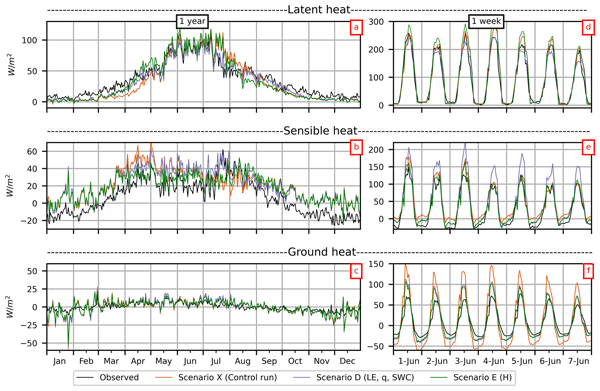
This study contributes to improvements in the model characterization of water and energy fluxes. The results show that multi-objective autocalibration in combination with mathematical regularization is a powerful tool to improve land surface models. Using the direct measurement of turbulent fluxes as the target variable, parameter optimization matches simulations and observations of latent heat, whereas sensible heat is clearly biased.

Jiawei Jiang, Zhifeng Yan, Jinshi Jian, Jesper Riis Christiansen, Xinchu Wang, Ren-Min Yang, Zhen Zhang, and Philippe Ciais
Earth Syst. Sci. Data, 18, 6783–6797, https://doi.org/10.5194/essd-18-6783-2026, https://doi.org/10.5194/essd-18-6783-2026, 2026
Short summary
Short summary
Soil methane uptake represents the second-largest sink of atmospheric methane but the field observations have not yet been systematically compiled. Here, we compiled an open global soil methane uptake database from the 1980s, covering most regions in multi-timescale along with the soil moisture and temperature data. The data show strong seasonal changes and different controls across biomes, helping improve climate estimates, models, and satellite evaluations.
Linsey Maria Avila, Jesper Riis Christiansen, Bjarni Diðrik Sigurdssðn, and Klaus Steenberg Larsen
EGUsphere, https://doi.org/10.5194/egusphere-2026-4047, https://doi.org/10.5194/egusphere-2026-4047, 2026
This preprint is open for discussion and under review for Biogeosciences (BG).
Short summary
Short summary
To understand how long-term warming affects carbon stored in soils, we studied soils that had been naturally warmed at different temperatures for 13 years and measured the carbon release. Warmer soils had lost more carbon over time and now released less carbon overall because less carbon remained available. However, the temperature sensitivity was similar across warming levels. This suggests that carbon losses from soils may slow over time, potentially weakening the feedback to climate warming.
Raphael Schneider, Simon Stisen, Mark F. T. Hansen, Mie Andreasen, Bertel Nilsson, Klaus Hinsby, Hans Jørgen Henriksen, and Ida Karlsson Seidenfaden
Hydrol. Earth Syst. Sci., 30, 4019–4056, https://doi.org/10.5194/hess-30-4019-2026, https://doi.org/10.5194/hess-30-4019-2026, 2026
Short summary
Short summary
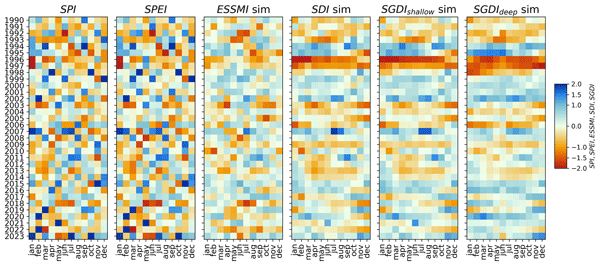
Using Denmark as a testbed, we show how droughts move from lack of rain to, often with delays, drying of soil, rivers, and groundwater. A national-scale model reproduced river and groundwater droughts well, while soil droughts were harder to capture. These findings strengthen drought forecasting and water management.
Raphael Schneider, Simon Stisen, Lars Troldborg, Jens Christian Refsgaard, and Ida Karlsson Seidenfaden
EGUsphere, https://doi.org/10.5194/egusphere-2026-1531, https://doi.org/10.5194/egusphere-2026-1531, 2026
Short summary
Short summary
We studied how climate change may affect the future water cycle in Denmark using a national model. Although overall, rainfall is expected to increase, our results show also stronger differences between seasons, with drier summers and wetter winters. This leads to more summer droughts in soils, while streamflow and groundwater partly are buffered by increased winter precipitation. The findings highlight that seasonal changes, not just average conditions, are key for future water management.
Elke Schlager, Sebastian Scher, Ruth H. Mottram, and Peter L. Langen
The Cryosphere, 20, 3313–3343, https://doi.org/10.5194/tc-20-3313-2026, https://doi.org/10.5194/tc-20-3313-2026, 2026
Short summary
Short summary
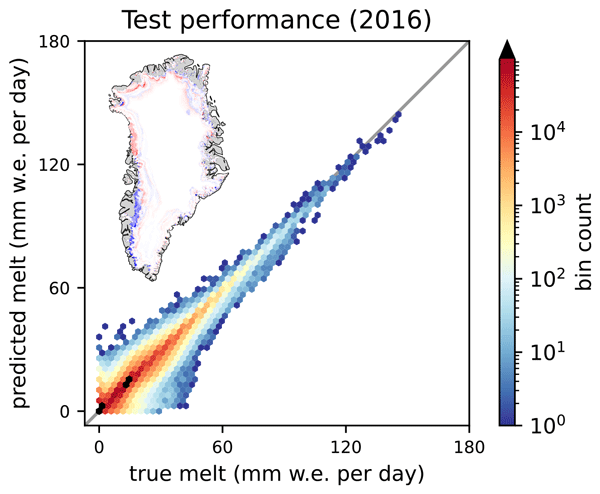
Predicting Greenland's surface melt is critical for understanding sea-level rise, but traditional firn models are too slow for exploring many climate scenarios. We developed a neural network optimized through systematic input selection and network tuning to identify the necessary information to accurately emulate surface melt. This approach cuts computation costs by orders of magnitude and can be retrained for different climate forcings or extended to other surface mass balance properties.
Thea Quistgaard, Tanja Denager, Raphael J. M. Schneider, Jesper R. Christiansen, Simon Stisen, and Peter L. Langen
EGUsphere, https://doi.org/10.5194/egusphere-2026-1139, https://doi.org/10.5194/egusphere-2026-1139, 2026
Short summary
Short summary
We present a generative modelling framework for kilometre-scale precipitation downscaling that combines machine learning with physics-informed design. The model produces daily ensembles, not just single realisations. Using a structured evaluation setup across spatial, probabilistic, and climatological metrics, we show that realistic detail does not guarantee correct climatology and statistics, demonstrating key trade-offs which must be addressed cleanly for reliable impact and risk assessment.
Annelie S. Nielsen, Klaus S. Larsen, Poul Erik Lærke, Andres F. Rodriguez, Johannes W. M. Pullens, Rasmus J. Petersen, and Jesper R. Christiansen
Earth Syst. Sci. Data, 18, 33–53, https://doi.org/10.5194/essd-18-33-2026, https://doi.org/10.5194/essd-18-33-2026, 2026
Short summary
Short summary
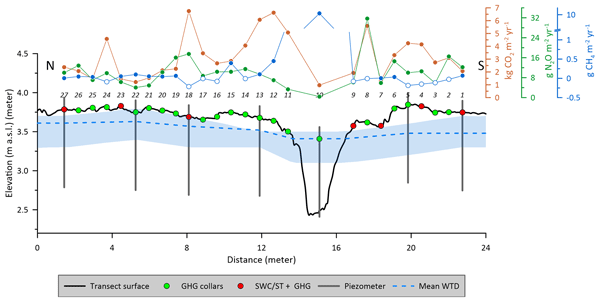
Quantifying greenhouse gas emissions from wetlands is vital for climate mitigation. Our high-precision measurements of CO2, CH4, and N2O fluxes reveal highly dynamic exchanges, especially for CO2 and N2O, driven by temperature and groundwater fluctuations across hourly to monthly scales. These insights advance understanding of wetland emission regulation and support improved biogeochemical models.
Andres F. Rodriguez, Johannes W. M. Pullens, Jesper R. Christiansen, Klaus S. Larsen, and Poul E. Lærke
SOIL, 11, 1053–1076, https://doi.org/10.5194/soil-11-1053-2025, https://doi.org/10.5194/soil-11-1053-2025, 2025
Short summary
Short summary
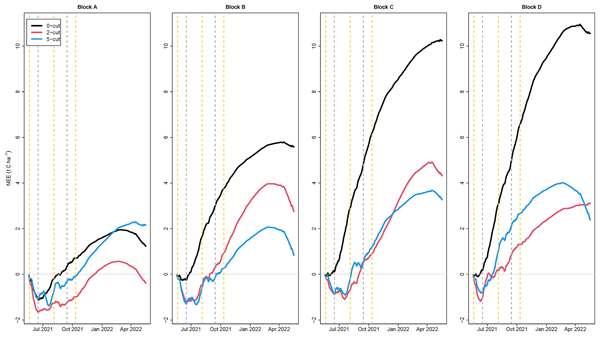
This manuscript studies the potential of paludiculture to reduce greenhouse gas emissions (GHG) in rewetting peatlands. Results showed that the potential to mitigate GHG emissions could be maximized in nutrient enriched areas, while in low nutrient areas it might be more beneficial not to harvest the biomass. Results also showed that peatland heterogeneity and water table dynamics should be considered to accurately estimate emissions from rewetting peatlands.
Jun Liu, Julian Koch, Simon Stisen, Lars Troldborg, Anker Lajer Højberg, Hans Thodsen, Mark F. T. Hansen, and Raphael J. M. Schneider
Earth Syst. Sci. Data, 17, 1551–1572, https://doi.org/10.5194/essd-17-1551-2025, https://doi.org/10.5194/essd-17-1551-2025, 2025
Short summary
Short summary
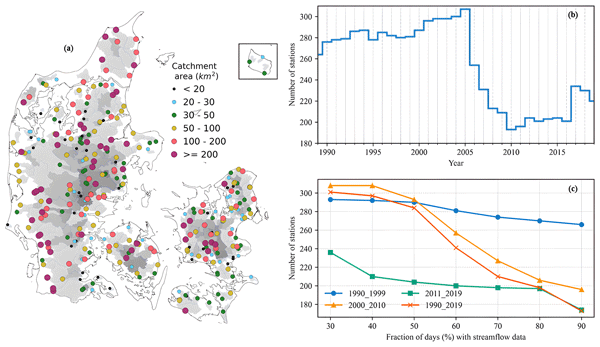
We developed a CAMELS-style dataset in Denmark, which contains hydrometeorological time series and landscape attributes for 3330 catchments (304 gauged). Many catchments in CAMELS-DK are small and at low elevations. The dataset provides information on groundwater characteristics and dynamics, as well as quantities related to the human impact on the hydrological system in Denmark. The dataset is especially relevant for developing data-driven and hybrid physically informed modeling frameworks.
Sindhu Vudayagiri, Bo Vinther, Johannes Freitag, Peter L. Langen, and Thomas Blunier
Clim. Past, 21, 517–528, https://doi.org/10.5194/cp-21-517-2025, https://doi.org/10.5194/cp-21-517-2025, 2025
Short summary
Short summary
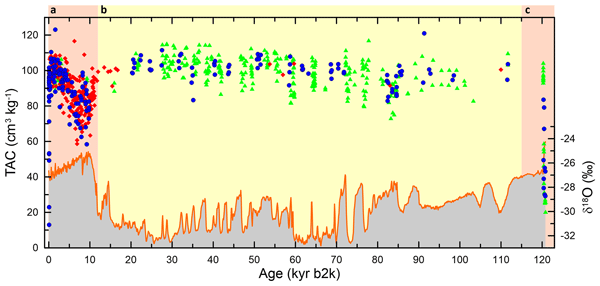
Air trapped in polar ice during snowfall reflects atmospheric pressure at the time of occlusion, serving as a proxy for elevation. However, melting, firn structure changes, and air pressure variability complicate this relationship. We measured total air content (TAC) in the RECAP ice core from Renland ice cap, eastern Greenland, spanning 121 000 years. Melt layers and short-term TAC variations, whose origins remain unclear, present challenges in interpreting elevation changes.
Jonathan Ortved Melcher, Sune Halkjær, Peter Ditlevsen, Peter L. Langen, Guido Vettoretti, and Sune Olander Rasmussen
Clim. Past, 21, 115–132, https://doi.org/10.5194/cp-21-115-2025, https://doi.org/10.5194/cp-21-115-2025, 2025
Short summary
Short summary
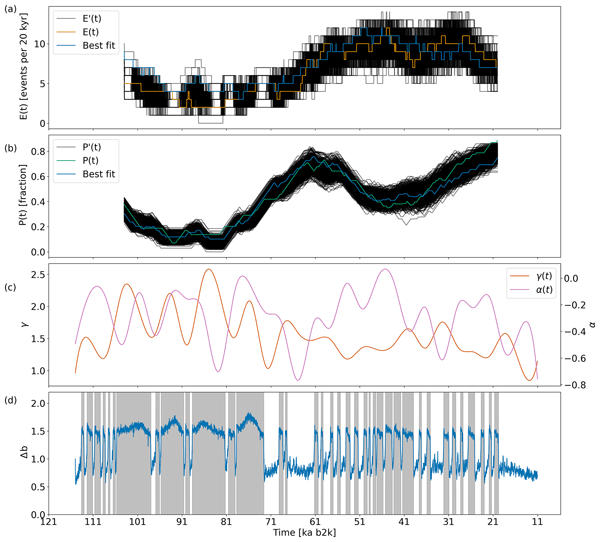
We introduce a new model that simulates Dansgaard–Oeschger events, dramatic and irregular climate shifts within past ice ages. The model consists of simplified equations inspired by ocean current dynamics. We fine-tune this model to capture the Dansgaard–Oeschger events with unprecedented accuracy, providing deeper insights into past climate patterns. This helps us understand and predict complex climate changes, aiding future climate change resilience efforts.
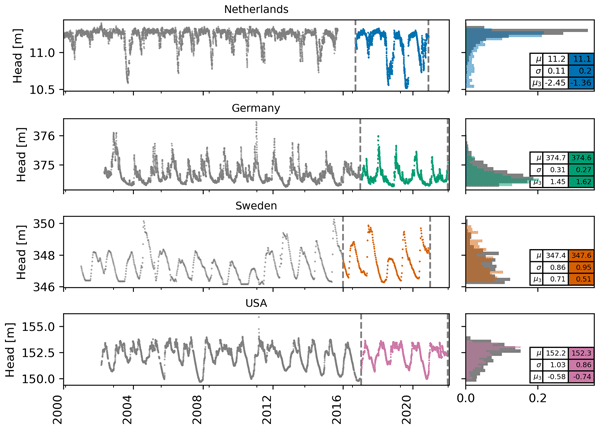
Raoul A. Collenteur, Ezra Haaf, Mark Bakker, Tanja Liesch, Andreas Wunsch, Jenny Soonthornrangsan, Jeremy White, Nick Martin, Rui Hugman, Ed de Sousa, Didier Vanden Berghe, Xinyang Fan, Tim J. Peterson, Jānis Bikše, Antoine Di Ciacca, Xinyue Wang, Yang Zheng, Maximilian Nölscher, Julian Koch, Raphael Schneider, Nikolas Benavides Höglund, Sivarama Krishna Reddy Chidepudi, Abel Henriot, Nicolas Massei, Abderrahim Jardani, Max Gustav Rudolph, Amir Rouhani, J. Jaime Gómez-Hernández, Seifeddine Jomaa, Anna Pölz, Tim Franken, Morteza Behbooei, Jimmy Lin, and Rojin Meysami
Hydrol. Earth Syst. Sci., 28, 5193–5208, https://doi.org/10.5194/hess-28-5193-2024, https://doi.org/10.5194/hess-28-5193-2024, 2024
Short summary
Short summary
We show the results of the 2022 Groundwater Time Series Modelling Challenge; 15 teams applied data-driven models to simulate hydraulic heads, and three model groups were identified: lumped, machine learning, and deep learning. For all wells, reasonable performance was obtained by at least one team from each group. There was not one team that performed best for all wells. In conclusion, the challenge was a successful initiative to compare different models and learn from each other.
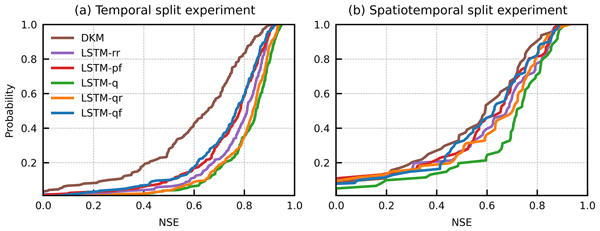
Jun Liu, Julian Koch, Simon Stisen, Lars Troldborg, and Raphael J. M. Schneider
Hydrol. Earth Syst. Sci., 28, 2871–2893, https://doi.org/10.5194/hess-28-2871-2024, https://doi.org/10.5194/hess-28-2871-2024, 2024
Short summary
Short summary
We developed hybrid schemes to enhance national-scale streamflow predictions, combining long short-term memory (LSTM) with a physically based hydrological model (PBM). A comprehensive evaluation of hybrid setups across Denmark indicates that LSTM models forced by climate data and catchment attributes perform well in many regions but face challenges in groundwater-dependent basins. The hybrid schemes supported by PBMs perform better in reproducing long-term streamflow behavior and extreme events.
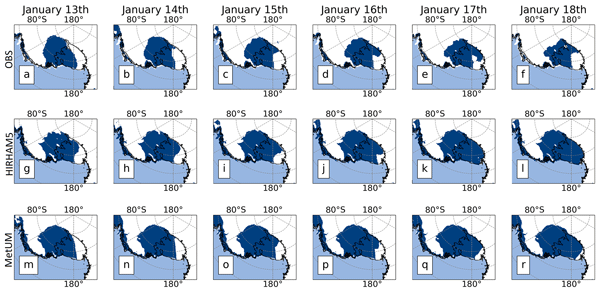
Nicolaj Hansen, Andrew Orr, Xun Zou, Fredrik Boberg, Thomas J. Bracegirdle, Ella Gilbert, Peter L. Langen, Matthew A. Lazzara, Ruth Mottram, Tony Phillips, Ruth Price, Sebastian B. Simonsen, and Stuart Webster
The Cryosphere, 18, 2897–2916, https://doi.org/10.5194/tc-18-2897-2024, https://doi.org/10.5194/tc-18-2897-2024, 2024
Short summary
Short summary
We investigated a melt event over the Ross Ice Shelf. We use regional climate models and a firn model to simulate the melt and compare the results with satellite data. We find that the firn model aligned well with observed melt days in certain parts of the ice shelf. The firn model had challenges accurately simulating the melt extent in the western sector. We identified potential reasons for these discrepancies, pointing to limitations in the models related to representing the cloud properties.
Xiaofeng Wang, Lu An, Peter L. Langen, and Rongxing Li
Int. Arch. Photogramm. Remote Sens. Spatial Inf. Sci., XLVIII-1-2024, 691–696, https://doi.org/10.5194/isprs-archives-XLVIII-1-2024-691-2024, https://doi.org/10.5194/isprs-archives-XLVIII-1-2024-691-2024, 2024
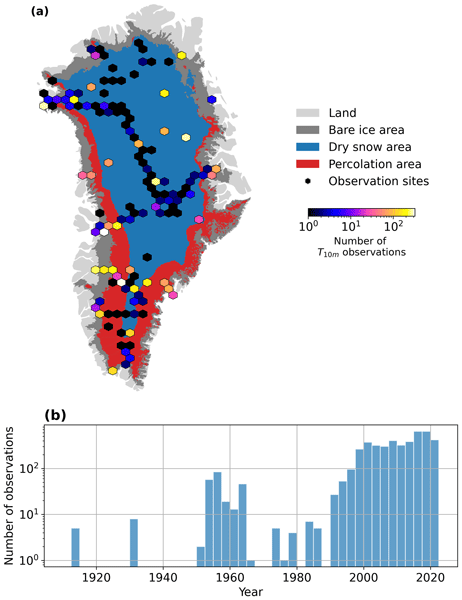
Baptiste Vandecrux, Robert S. Fausto, Jason E. Box, Federico Covi, Regine Hock, Åsa K. Rennermalm, Achim Heilig, Jakob Abermann, Dirk van As, Elisa Bjerre, Xavier Fettweis, Paul C. J. P. Smeets, Peter Kuipers Munneke, Michiel R. van den Broeke, Max Brils, Peter L. Langen, Ruth Mottram, and Andreas P. Ahlstrøm
The Cryosphere, 18, 609–631, https://doi.org/10.5194/tc-18-609-2024, https://doi.org/10.5194/tc-18-609-2024, 2024
Short summary
Short summary
How fast is the Greenland ice sheet warming? In this study, we compiled 4500+ temperature measurements at 10 m below the ice sheet surface (T10m) from 1912 to 2022. We trained a machine learning model on these data and reconstructed T10m for the ice sheet during 1950–2022. After a slight cooling during 1950–1985, the ice sheet warmed at a rate of 0.7 °C per decade until 2022. Climate models showed mixed results compared to our observations and underestimated the warming in key regions.
Søren Julsgaard Kragh, Jacopo Dari, Sara Modanesi, Christian Massari, Luca Brocca, Rasmus Fensholt, Simon Stisen, and Julian Koch
Hydrol. Earth Syst. Sci., 28, 441–457, https://doi.org/10.5194/hess-28-441-2024, https://doi.org/10.5194/hess-28-441-2024, 2024
Short summary
Short summary
This study provides a comparison of methodologies to quantify irrigation to enhance regional irrigation estimates. To evaluate the methodologies, we compared various approaches to quantify irrigation using soil moisture, evapotranspiration, or both within a novel baseline framework, together with irrigation estimates from other studies. We show that the synergy from using two equally important components in a joint approach within a baseline framework yields better irrigation estimates.
Hafsa Mahmood, Ty P. A. Ferré, Raphael J. M. Schneider, Simon Stisen, Rasmus R. Frederiksen, and Anders V. Christiansen
EGUsphere, https://doi.org/10.5194/egusphere-2023-1872, https://doi.org/10.5194/egusphere-2023-1872, 2023
Preprint withdrawn
Short summary
Short summary
Temporal drain flow dynamics and understanding of their underlying controlling factors are important for water resource management in tile-drained agricultural areas. This study examine whether simpler, more efficient machine learning (ML) models can provide acceptable solutions compared to traditional physics based models. We predicted drain flow time series in multiple catchments subject to a range of climatic and landscape conditions.
Tanja Denager, Torben O. Sonnenborg, Majken C. Looms, Heye Bogena, and Karsten H. Jensen
Hydrol. Earth Syst. Sci., 27, 2827–2845, https://doi.org/10.5194/hess-27-2827-2023, https://doi.org/10.5194/hess-27-2827-2023, 2023
Short summary
Short summary
This study contributes to improvements in the model characterization of water and energy fluxes. The results show that multi-objective autocalibration in combination with mathematical regularization is a powerful tool to improve land surface models. Using the direct measurement of turbulent fluxes as the target variable, parameter optimization matches simulations and observations of latent heat, whereas sensible heat is clearly biased.
Søren J. Kragh, Rasmus Fensholt, Simon Stisen, and Julian Koch
Hydrol. Earth Syst. Sci., 27, 2463–2478, https://doi.org/10.5194/hess-27-2463-2023, https://doi.org/10.5194/hess-27-2463-2023, 2023
Short summary
Short summary
This study investigates the precision of irrigation estimates from a global hotspot of unsustainable irrigation practice, the Indus and Ganges basins. We show that irrigation water use can be estimated with high precision by comparing satellite and rainfed hydrological model estimates of evapotranspiration. We believe that our work can support sustainable water resource management, as it addresses the uncertainty of a key component of the water balance that remains challenging to quantify.
Julian Koch, Lars Elsgaard, Mogens H. Greve, Steen Gyldenkærne, Cecilie Hermansen, Gregor Levin, Shubiao Wu, and Simon Stisen
Biogeosciences, 20, 2387–2403, https://doi.org/10.5194/bg-20-2387-2023, https://doi.org/10.5194/bg-20-2387-2023, 2023
Short summary
Short summary
Utilizing peatlands for agriculture leads to large emissions of greenhouse gases worldwide. The emissions are triggered by lowering the water table, which is a necessary step in order to make peatlands arable. Many countries aim at reducing their emissions by restoring peatlands, which can be achieved by stopping agricultural activities and thereby raising the water table. We estimate a total emission of 2.6 Mt CO2-eq for organic-rich peatlands in Denmark and a potential reduction of 77 %.
Raphael Schneider, Julian Koch, Lars Troldborg, Hans Jørgen Henriksen, and Simon Stisen
Hydrol. Earth Syst. Sci., 26, 5859–5877, https://doi.org/10.5194/hess-26-5859-2022, https://doi.org/10.5194/hess-26-5859-2022, 2022
Short summary
Short summary
Hydrological models at high spatial resolution are computationally expensive. However, outputs from such models, such as the depth of the groundwater table, are often desired in high resolution. We developed a downscaling algorithm based on machine learning that allows us to increase spatial resolution of hydrological model outputs, alleviating computational burden. We successfully applied the downscaling algorithm to the climate-change-induced impacts on the groundwater table across Denmark.
Eva Sebok, Hans Jørgen Henriksen, Ernesto Pastén-Zapata, Peter Berg, Guillaume Thirel, Anthony Lemoine, Andrea Lira-Loarca, Christiana Photiadou, Rafael Pimentel, Paul Royer-Gaspard, Erik Kjellström, Jens Hesselbjerg Christensen, Jean Philippe Vidal, Philippe Lucas-Picher, Markus G. Donat, Giovanni Besio, María José Polo, Simon Stisen, Yvan Caballero, Ilias G. Pechlivanidis, Lars Troldborg, and Jens Christian Refsgaard
Hydrol. Earth Syst. Sci., 26, 5605–5625, https://doi.org/10.5194/hess-26-5605-2022, https://doi.org/10.5194/hess-26-5605-2022, 2022
Short summary
Short summary
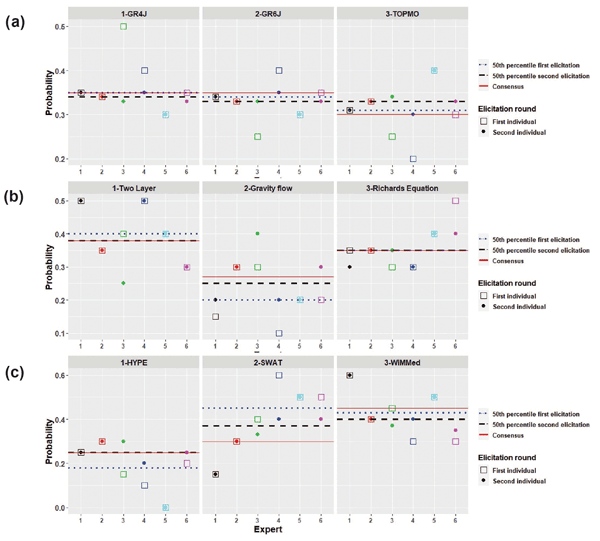
Hydrological models projecting the impact of changing climate carry a lot of uncertainty. Thus, these models usually have a multitude of simulations using different future climate data. This study used the subjective opinion of experts to assess which climate and hydrological models are the most likely to correctly predict climate impacts, thereby easing the computational burden. The experts could select more likely hydrological models, while the climate models were deemed equally probable.
Rena Meyer, Wenmin Zhang, Søren Julsgaard Kragh, Mie Andreasen, Karsten Høgh Jensen, Rasmus Fensholt, Simon Stisen, and Majken C. Looms
Hydrol. Earth Syst. Sci., 26, 3337–3357, https://doi.org/10.5194/hess-26-3337-2022, https://doi.org/10.5194/hess-26-3337-2022, 2022
Short summary
Short summary
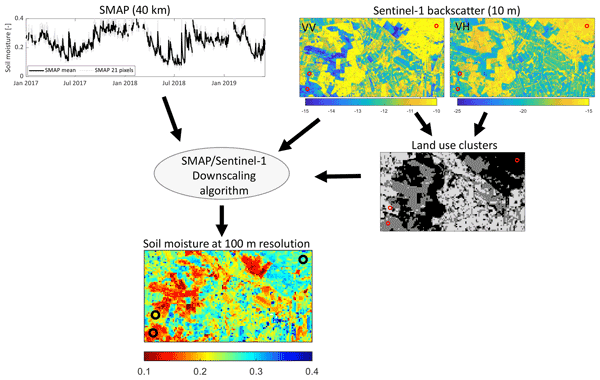
The amount and spatio-temporal distribution of soil moisture, the water in the upper soil, is of great relevance for agriculture and water management. Here, we investigate whether the established downscaling algorithm combining different satellite products to estimate medium-scale soil moisture is applicable to higher resolutions and whether results can be improved by accounting for land cover types. Original satellite data and downscaled soil moisture are compared with ground observations.
Fredrik Boberg, Ruth Mottram, Nicolaj Hansen, Shuting Yang, and Peter L. Langen
The Cryosphere, 16, 17–33, https://doi.org/10.5194/tc-16-17-2022, https://doi.org/10.5194/tc-16-17-2022, 2022
Short summary
Short summary
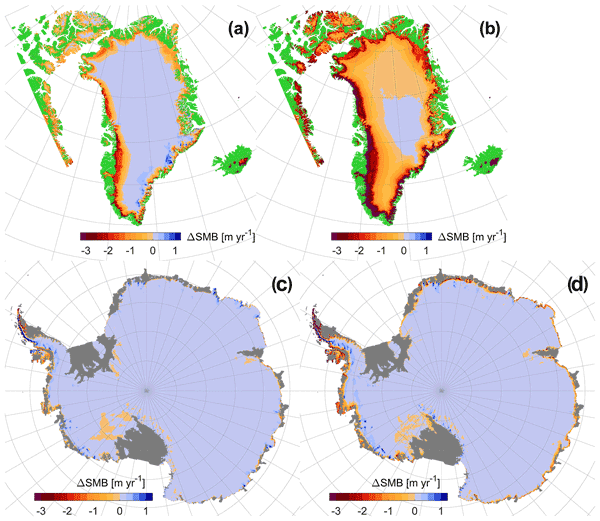
Using the regional climate model HIRHAM5, we compare two versions (v2 and v3) of the global climate model EC-Earth for the Greenland and Antarctica ice sheets. We are interested in the surface mass balance of the ice sheets due to its importance when making estimates of future sea level rise. We find that the end-of-century change in the surface mass balance for Antarctica is 420 Gt yr−1 (v2) and 80 Gt yr−1 (v3), and for Greenland it is −290 Gt yr−1 (v2) and −1640 Gt yr−1 (v3).
Kenneth D. Mankoff, Xavier Fettweis, Peter L. Langen, Martin Stendel, Kristian K. Kjeldsen, Nanna B. Karlsson, Brice Noël, Michiel R. van den Broeke, Anne Solgaard, William Colgan, Jason E. Box, Sebastian B. Simonsen, Michalea D. King, Andreas P. Ahlstrøm, Signe Bech Andersen, and Robert S. Fausto
Earth Syst. Sci. Data, 13, 5001–5025, https://doi.org/10.5194/essd-13-5001-2021, https://doi.org/10.5194/essd-13-5001-2021, 2021
Short summary
Short summary
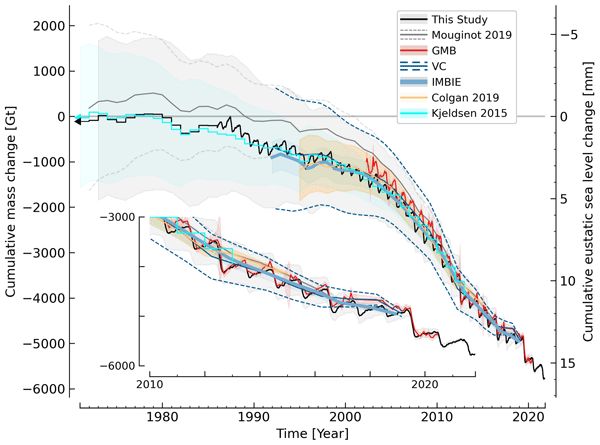
We estimate the daily mass balance and its components (surface, marine, and basal mass balance) for the Greenland ice sheet. Our time series begins in 1840 and has annual resolution through 1985 and then daily from 1986 through next week. Results are operational (updated daily) and provided for the entire ice sheet or by commonly used regions or sectors. This is the first input–output mass balance estimate to include the basal mass balance.
Cited articles
Adhikari, K., Hartemink, A. E., Minasny, B., Bou Kheir, R., Greve, M. B., and Greve, M. H.: Digital mapping of soil organic carbon contents and stocks in Denmark, PLoS One, 9, https://doi.org/10.1371/journal.pone.0105519, 2014.
Ala-aho, P., Soulsby, C., Wang, H., and Tetzlaff, D.: Integrated surface-subsurface model to investigate the role of groundwater in headwater catchment runoff generation: A minimalist approach to parameterisation, J Hydrol (Amst), 547, 664–677, https://doi.org/10.1016/j.jhydrol.2017.02.023, 2017.
Arents, E. J. M. M., van der Kolk, J. W. H., Hengeveld, G. M., Lesschen, J. P., Kramer, H., Kuikman, P. J., and Schelhaas, M. J.: Greenhouse gas reporting for the LULUCF sector in the Netherlands – Methodological background, updata 2018, Wageningen, WOt-technical report 113, 102 pp., ISSN 2352-2739, https://doi.org/10.18174/441617, 2018.
Asadzadeh, M. and Tolson, B.: Pareto archived dynamically dimensioned search with hypervolume-based selection for multi-objective optimization, Eng. Optim, 45, 1489–1509, https://doi.org/10.1080/0305215X.2012.748046, 2013.
Bechtold, M., Tiemeyer, B., Laggner, A., Leppelt, T., Frahm, E., and Belting, S.: Large-scale regionalization of water table depth in peatlands optimized for greenhouse gas emission upscaling, Hydrol Earth Syst Sci, 18, 3319–3339, https://doi.org/10.5194/hess-18-3319-2014, 2014.
Bechtold, M., Lannoy, G. J. M. De, Koster, R. D., Reichle, R. H., Mahanama, S. P., Bleuten, W., Bourgault, M. A., Brümmer, C., Burdun, I., Desai, A. R., Devito, K., Grünwald, T., Grygoruk, M., Humphreys, E. R., Klatt, J., Kurbatova, J., Lohila, A., Munir, T. M., Nilsson, M. B., Price, J. S., Röhl, M., Schneider, A., and Tiemeyer, B.: PEAT-CLSM: A Specific Treatment of Peatland Hydrology in the NASA Catchment Land Surface Model, J Adv. Model Earth Syst., 2130–2162, https://doi.org/10.1029/2018MS001574, 2019.
Bona, K. A., Shaw, C., Thompson, D. K., Hararuk, O., Webster, K., Zhang, G., Voicu, M., and Kurz, W. A.: The Canadian model for peatlands (CaMP): A peatland carbon model for national greenhouse gas reporting, Ecol. Modell., 431, 109164, https://doi.org/10.1016/j.ecolmodel.2020.109164, 2020.
Børgesen, C. D., Waagepetersen, J., Iversen, T. M., Grant, R., Jacobsen, B., and Elmhold, S.: Midtvejsevaluering af vandmiljøplan III – Hoved- og baggrundsnotater, Det Jordbrugsvidenskabelige Fakultet, Århus Universitet, DJF rapport markbrug 142, ISBN 87-91949-44-0, 2009.
DHI: MIKE HYDRO – River – User Guide, Hørsholm, Denmark, 2019.
DHI: MIKE SHE – User Guide and Reference Manual, Hørsholm, Denmark, 2022.
Duranel, A., Thompson, J. R., Burningham, H., Durepaire, P., Garambois, S., Wyns, R., and Cubizolle, H.: Modelling the hydrological interactions between a fissured granite aquifer and a valley mire in the Massif Central, France, Hydrol. Earth Syst. Sci., 25, 291–319, https://doi.org/10.5194/hess-25-291-2021, 2021.
Evans, C. D., Peacock, M., Baird, A. J., Artz, R. R. E., Burden, A., Callaghan, N., Chapman, P. J., Cooper, H. M., Coyle, M., Craig, E., Cumming, A., Dixon, S., Gauci, V., Grayson, R. P., Helfter, C., Heppell, C. M., Holden, J., Jones, D. L., Kaduk, J., Levy, P., Matthews, R., McNamara, N. P., Misselbrook, T., Oakley, S., Page, S. E., Rayment, M., Ridley, L. M., Stanley, K. M., Williamson, J. L., Worrall, F., and Morrison, R.: Overriding water table control on managed peatland greenhouse gas emissions, Nature, 593, 548–552, https://doi.org/10.1038/s41586-021-03523-1, 2021.
Friedrich, S., Gerner, A., Gabriele, C., and Disse, M.: Scenario-based groundwater modeling of a raised bog with Mike She, EGU General Assembly 2023, Vienna, Austria, 24–28 Apr 2023, EGU23-15608, https://doi.org/10.5194/egusphere-egu23-15608, 2023.
Jupiter: Free online Danish shallow geological data, https://www.geus.dk/produkter-ydelser-og-faciliteter/data-og-kort/national-boringsdatabase-jupiter, last access: 12 April 2025.
Graham, D. N. and Butts, M. B.: Flexible Integrated Watershed Modeling with MIKE SHE, in: Watershed Models, edited by: Singh, V. P. and Frevert, D. K., CRC Press, 245–272, https://doi.org/10.1201/9781420037432.ch10, 2005.
Günther, A., Barthelmes, A., Huth, V., Joosten, H., Jurasinski, G., Koebsch, F., and Couwenberg, J.: Prompt rewetting of drained peatlands reduces climate warming despite methane emissions, Nat. Commun., 11, 1–5, https://doi.org/10.1038/s41467-020-15499-z, 2020.
Gupta, H. V, Kling, H., Yilmaz, K. K., and Martinez, G. F.: Decomposition of the mean squared error and NSE performance criteria: Implications for improving hydrological modelling, J. Hydrol., 377, 80–91, https://doi.org/10.1016/j.jhydrol.2009.08.003, 2009.
Gyldenkærne, S., Callisen, L. W., Greve, M. H., Beucher, A. M., Weber, P. L., Elsgaard, L., Lærke, P. E., Stisen, S., Koch, J., and Levin, G.: Opgørelse af CO2-emissioner fra organiske jorde, Aarhus Universitet, DCE – Nationalt Center for Miljø og Energi, Fagligt notat nr. 2025-01, 29 pp., https://dce.au.dk/fileadmin/dce.au.dk/Udgivelser/Notater_2025/N2025_1.pdf (last access: 15 January 2026), 2025.
Haahti, K., Warsta, L., Kokkoneen, T., Younis, B. B., and Koivusalo, H.: Distributed hydrological modeling with channel network flow of a forestry drained peatland site, Water Resour. Res., 246–263, https://doi.org/10.1002/2015WR018038, 2015.
Henriksen, H. J., Kragh, S. J., Gotfredsen, J., Ondracek, M., M, van, T., Jakobsen, A., Schneider, R., Koch, J., Troldborg, L., Rasmussen, P., Pasten-Zapata, E., and Stisen, S.: Dokumentationsrapport vedr. modelleverancer til Hydrologisk Informationsog Prognosesystem, https://doi.org/10.22008/gpub/38113, 2020.
Henriksen, H. J., Schneider, R., Koch, J., Ondracek, M., Troldborg, L., Seidenfaden, I. K., Kragh, S. J., Bøgh, E., and Stisen, S.: A New Digital Twin for Climate Change Adaptation, Water Management, and Disaster Risk Reduction (HIP Digital Twin), Water, 15, https://doi.org/10.3390/w15010025, 2023.
IPCC: 2013 Supplement to the 2006 IPCC Guidelines for National Greenhouse Gas Inventories: Wetlands, edited by: Hiraishi, T., Krug, T., Tanabe, K., Srivastava, N., Baasansuren, J., Fukuda, M., Troxler, T. G., IPCC, Switzerland, Switzerland, ISBN 978-92-9169-139-5, 2014.
Jacob, D., Petersen, J., Eggert, B., Alias, A., Christensen, O. B., Bouwer, L. M., Braun, A., Colette, A., Déqué, M., Georgievski, G., Georgopoulou, E., Gobiet, A., Menut, L., Nikulin, G., Haensler, A., Hempelmann, N., Jones, C., Keuler, K., Kovats, S., Kröner, N., Kotlarski, S., Kriegsmann, A., Martin, E., van Meijgaard, E., Moseley, C., Pfeifer, S., Preuschmann, S., Radermacher, C., Radtke, K., Rechid, D., Rounsevell, M., Samuelsson, P., Somot, S., Soussana, J. F., Teichmann, C., Valentini, R., Vautard, R., Weber, B., and Yiou, P.: EURO-CORDEX: New high-resolution climate change projections for European impact research, Reg. Environ. Change, 14, 563–578, https://doi.org/10.1007/s10113-013-0499-2, 2014.
Java, O., Kohv, M., and Lõhmus, A.: Performance of a bog hydrological system dynamics simulation model in an ecological restoration context: Soomaa case study, Estonia, Water, 13, https://doi.org/10.3390/w13162217, 2021.
Jutebring, E., Johansson, E., Sjöberg, Y., Huseby, R., and Laudon, H.: Groundwater-surface water interactions across scales in a boreal landscape investigated using a numerical modelling approach, J. Hydrol., 560, 184–201, https://doi.org/10.1016/j.jhydrol.2018.03.011, 2018.
Kirpotin, S. N., Antoshkina, O. A., Berezin, A. E., Elshehawi, S., Feurdean, A., Lapshina, E. D., Pokrovsky, O. S., Peregon, A. M., Semenova, N. M., Tanneberger, F., Volkov, I. V, and Volkova, I. I.: Great Vasyugan Mire: How the world ' s largest peatland helps addressing the world ' s largest problems, Ambio, 50, 2038–2049, https://doi.org/10.1007/s13280-021-01520-2, 2021.
Koch, J., Elsgaard, L., Greve, M. H., Gyldenkærne, S., Hermansen, C., Levin, G., Wu, S., and Stisen, S.: Water-table-driven greenhouse gas emission estimates guide peatland restoration at national scale, Biogeosciences, 20, 2387–2403, https://doi.org/10.5194/bg-20-2387-2023, 2023.
Largeron, C., Krinner, G., Ciais, P., and Brutel-Vuilmet, C.: Implementing northern peatlands in a global land surface model: Description and evaluation in the ORCHIDEE high-latitude version model (ORC-HL-PEAT), Geosci. Model Dev., 11, 3279–3297, https://doi.org/10.5194/gmd-11-3279-2018, 2018.
Leifeld, J., Wüst-Galley, C., and Page, S.: Intact and managed peatland soils as a source and sink of GHGs from 1850 to 2100, Nat. Clim. Change, 9, 945–947, https://doi.org/10.1038/s41558-019-0615-5, 2019.
Lewis, C., Albertson, J., Zi, T., Xu, X., and Kiely, G.: How does afforestation affect the hydrology of a blanket peatland? A modelling study, Hydrol. Process., 3588, 3577–3588, https://doi.org/10.1002/hyp.9486, 2013.
Lloyd, J. and Taylor, J. A.: On the Temperature Dependence of Soil Respiration, Funct. Ecol., 8, 315–323, 1994.
Matott, L. S.: OSTRICH – An Optimization Software Toolkit for Research Involving Computational Heuristics Documentation and User ' s Guide, Version 17.12.19, New York, https://www.civil.uwaterloo.ca/jrcraig/CIVE781/Ostrich_Manual_17_12_19.pdf (last access: 15 January 2026), 2019.
Mozafari, B., Bruen, M., Donohue, S., Renou-wilson, F., and Loughlin, F. O.: Peatland dynamics: A review of process-based models and approaches Science of the Total Environment Peatland dynamics: A review of process-based models and approaches, Science of the Total Environment, 877, https://doi.org/10.1016/j.scitotenv.2023.162890, 2023.
Naturstyrelsen: Lavbundsprojekt Ringfenner, Detailog Myndighedsprojekt, https://naturstyrelsen.dk/media/kgjduh2s/ringfennerdetailmyndighed.pdf (last access: 15 January 2026), 2022.
Nielsen, O.-K., Plejdrup, M. S., Winther, M., Nielsen, M., Gyldenkærne, S., Mikkelsen, M. H., Albrektsen, R., Hjelgaard, K., Fauser, P., Bruun, H. G., Levin, G., Callisen, L. W., Andersen, T. A., Johannsen, V. K., Nord-Larsen, T., Vesterdal, L., Stupak, I., Scott-Bentsen, N., Rasmussen, E., Petersen, S. B., Baunbæk, L., and Hansen, M. G.: Denmark's National Inventory Document 2025, Emission Inventories, 1990–2023, ISBN: 978-87-7156-946-9, 2025.
Nielsen, A. S., Larsen, K. S., Lærke, P. E., Rodriguez, A. F., Pullens, J. W. M., Petersen, R. J., and Christiansen, J. R.: A full year of continuous net soil and ditch CO2, CH4, N2O fluxes, soil hydrology and meteorology for a drained fen in Denmark, Earth Syst. Sci. Data, 18, 33–53, https://doi.org/10.5194/essd-18-33-2026, 2026.
Oikawa, P. Y., Jenerette, G. D., Knox, S. H., Sturtevant, C., Verfaillie, J., Dronova, I., Poindexter, C. M., Eichelmann, E., and Baldocchi, D. D.: Evaluation of a hierarchy of models reveals importance of substrate limitation for predicting carbon dioxide and methane exchange in restored wetlands, J. Geophys. Res.-Biogeo., 122, 145–167, https://doi.org/10.1002/2016JG003438, 2017.
Olefeldt, D., Euskirchen, E. S., Harden, J., Kane, E., McGuire, A. D., Waldrop, mark P., and Turetsky, M. R.: A decade of boreal rich fen greenhouse gas fluxes in response to natural and experimental water table variability, Glob. Change Biol., 23, 2428–2440, https://doi.org/10.1111/gcb.13612, 2017.
Pasten-Zapata, E., Sonnenborg, T. O., and Refsgaard, J. C.: Climate change: Sources of uncertainty in precipitation and temperature projections for Denmark, Geological Survey of Denmark and Greenland Bulletin, 43, 1–6, https://doi.org/10.34194/GEUSB-201943-01-02, 2019.
Regeringen: Aftale om et Grønt Danmark – Aftale mellem regeringen, Landbrug & Fødevarer, Danmarks Naturfredningsforening, Fødevareforbundet NNF, Dansk Metal, Dansk Industri og Kommunernes Landsforening – 24 juni 2024, https://regeringen.dk/media/ng3b13va/aftale-om-et-groent-danmark.pdf (last access: 15 January 2026), 2024.
Rigney, C., Wilson, D., Renou-Wilson, F., Müller, C., Moser, G., and Byrne, K. A.: Greenhouse gas emissions from two rewetted peatlands previously managed for forestry, Mires and Peat, 21, 1–23, https://doi.org/10.19189/MaP.2017.OMB.314, 2018.
Rodriguez, A. F., Pullens, J. W. M., Christiansen, J. R., Larsen, K. S., and Lærke, P. E.: Modeling of greenhouse gas emissions from paludiculture in rewetting peatlands is improved by high frequency water table data, EGUsphere [preprint], https://doi.org/10.5194/egusphere-2024-3030, 2024.
Scharling, M.: Klimagrid Danmark – Nedbør, lufttemperatur og potentiel fordampning 20×20 & 40×40 km – Metodebeskrivelse, Danish Meteorological Institute, ISSN-nr.0906-897X, ISSN-nr.1399-1388 (online), 1999a.
Scharling, M.: Klimagrid Danmark Nedbør 10×10 km (ver. 2) – Metodebeskrivelse, Danish Meteorological Institute, ISSN-nr.0906-897X, ISSN-nr.1399-1388 (online), 1999b.
Schneider, R., Koch, J., Troldborg, L., Henriksen, H. J., and Stisen, S.: Machine learning-based downscaling of modelled climate change impacts on groundwater table depth, Hydrol. Earth Syst. Sci., 26, 5859–5877, https://doi.org/10.5194/hess-26-5859-2022, 2022.
Seidenfaden, I. K., Sonnenborg, T. O., Stisen, S., and Kidmose, J.: Quantification of climate change sensitivity of shallow and deep groundwater in Denmark, J. Hydrol. Reg. Stud., 41, 101100, https://doi.org/10.1016/j.ejrh.2022.101100, 2022.
Shi, X., Thornton, P. E., Ricciuto, D. M., Hanson, P. J., Mao, J., Sebestyen, S. D., Griffiths, N. A., and Bisht, G.: Representing northern peatland microtopography and hydrology within the Community Land Model, Biogeosciences, 12, 6463–6477, https://doi.org/10.5194/bg-12-6463-2015, 2015.
Stenberg, L., Haahti, K., Hökkä, H., Launiainen, S., and Nieminen, M.: Hydrology of Drained Peatland Forest: Numerical Experiment on the Role of Tree Stand Heterogeneity and Management, Forests, MDPI, 1–19, https://doi.org/10.3390/f9100645, 2018.
Stisen, S., Sonnenborg, T. O., Troldborg, L., and Refsgaard, J. C.: Evaluation of Climate Input Biases and Water Balance Issues Using a Coupled Surface – Subsurface Model, Vadose Zone Journal, 10, https://doi.org/10.2136/vzj2010.0001, 2011.
Stisen, S., Ondracek, M., Troldborg, L., Schneider, R. J. M., and van Til, M. J.: National Vandressource Model - Modelopstilling og kalibrering af DK-model 2019, De nationale geologiske undersøgelser for Danmark og Grønland (GEUS), Rapport 2019/31, https://doi.org/10.22008/gpub/32631, 2019.
Tanneberger, F., Abel, S., Couwenberg, J., Dahms, T., Gaudig, G., Günther, A., Kreyling, J., Peters, J., Pongratz, J., and Joosten, H.: Towards net zero CO2 in 2050: An emission reduction pathway for organic soils in germany, Mires and Peat, 27, 1–17, https://doi.org/10.19189/MaP.2020.SNPG.StA.1951, 2021.
Tiemeyer, B., Freibauer, A., Borraz, E. A., Augustin, J., Bechtold, M., Beetz, S., Beyer, C., Ebli, M., Eickenscheidt, T., Fiedler, S., Förster, C., Gensior, A., Giebels, M., Glatzel, S., Heinichen, J., Hoffmann, M., Höper, H., Jurasinski, G., Laggner, A., Leiber-Sauheitl, K., Peichl-Brak, M., and Drösler, M.: A new methodology for organic soils in national greenhouse gas inventories: Data synthesis, derivation and application, Ecol. Indic., 109, 105838, https://doi.org/10.1016/j.ecolind.2019.105838, 2020.
Wilson, D., Blain, D., Couwenber, J., Evans, C., Murdiyarso, D., Page, S., Renou-Wilson, F., Rieley, J., Strack, M., and Tuittila, E. S.: Greenhouse gas emission factors associated with rewetting of organic soils, Mires and Peat, 17, 1–28, https://doi.org/10.19189/MaP.2016.OMB.222, 2016.
Wu, Y. and Blodau, C.: PEATBOG: A biogeochemical model for analyzing coupled carbon and nitrogen dynamics in northern peatlands, Geosci. Model Dev., 6, 1173–1207, https://doi.org/10.5194/gmd-6-1173-2013, 2013.
Wunsch, A., Liesch, T., and Broda, S.: Deep learning shows declining groundwater levels in Germany until 2100 due to climate change, Nat. Commun., 13, 1–13, https://doi.org/10.1038/s41467-022-28770-2, 2022.
Yuan, F., Wang, Y., Ricciuto, D. M., Shi, X., Yuan, F., Brehme, T., Bridgham, S., Keller, J., Warren, J. M., Griffiths, N. A., Sebestyen, S. D., Hanson, P. J., Thornton, P. E., and Xu, X.: Hydrological feedbacks on peatland CH4 emission under warming and elevated CO2: A modeling study, J. Hydrol., 603, 127137, https://doi.org/10.1016/j.jhydrol.2021.127137, 2021.
Zscheischler, J., Martius, O., Westra, S., Bevacqua, E., Raymond, C., Horton, R. M., van den Hurk, B., AghaKouchak, A., Jézéquel, A., Mahecha, M. D., Maraun, D., Ramos, A. M., Ridder, N. N., Thiery, W., and Vignotto, E.: A typology of compound weather and climate events, Nat. Rev. Earth Environ., 1, 333–347, https://doi.org/10.1038/s43017-020-0060-z, 2020.
Short summary
This study demonstrates that incorporating both temperature and temporal variability in water level in emission models significantly influences CO2 emission from peat soil. Especially the co-occurrence of elevated air temperature and low groundwater table significantly influence CO2 emissions under scenarios of rewetting and climate change.
This study demonstrates that incorporating both temperature and temporal variability in water...


Altmetrics
Final-revised paper
Preprint