
Articles | Volume 23, issue 13
https://doi.org/10.5194/bg-23-4447-2026
© Author(s) 2026. This work is distributed under
the Creative Commons Attribution 4.0 License.
the Creative Commons Attribution 4.0 License.
https://doi.org/10.5194/bg-23-4447-2026
© Author(s) 2026. This work is distributed under
the Creative Commons Attribution 4.0 License.
the Creative Commons Attribution 4.0 License.
Research article
| Highlight paper
| 
03 Jul 2026
Research article | Highlight paper |
| 03 Jul 2026
| 03 Jul 2026
In-depth characterisation of organic matter thermal lability and composition from Arctic Permafrost thaw slumps

Geological Institute, Department of Earth and Planetary Sciences, ETH Zurich, Sonneggstrasse 5, 8092 Zurich, Switzerland
Jordon D. Hemingway
Geological Institute, Department of Earth and Planetary Sciences, ETH Zurich, Sonneggstrasse 5, 8092 Zurich, Switzerland
Negar Haghipour
Geological Institute, Department of Earth and Planetary Sciences, ETH Zurich, Sonneggstrasse 5, 8092 Zurich, Switzerland
Laboratory for Ion Beam Physics, Department of Physics, ETH Zurich, Otto-Stern-Weg 5, 8093 Zurich, Switzerland
Kirsi H. Keskitalo
School of Geography and Natural Sciences, Northumbria University, Ellison Place, Newcastle upon Tyne UK-NE1 8ST, United Kingdom
Jorien E. Vonk
Earth and Climate, Faculty of Science, Vrije Universiteit Amsterdam, De Boelelaan 1085, 1081 HV Amsterdam, the Netherlands
Timothy I. Eglinton
Geological Institute, Department of Earth and Planetary Sciences, ETH Zurich, Sonneggstrasse 5, 8092 Zurich, Switzerland
Lisa Bröder
Geological Institute, Department of Earth and Planetary Sciences, ETH Zurich, Sonneggstrasse 5, 8092 Zurich, Switzerland
Related authors
No articles found.
Sarah Rowan, Marc Luetscher, Negar Haghipour, Heather M. Stoll, Laura Endres, Sönke Szidat, and Franziska A. Lechleitner
EGUsphere, https://doi.org/10.5194/egusphere-2026-5813, https://doi.org/10.5194/egusphere-2026-5813, 2026
This preprint is open for discussion and under review for Biogeosciences (BG).
Short summary
Short summary
Soils and plants store three times as much carbon as the atmosphere but how carbon is lost to inland water bodies remains uncertain. We present two years of data from a cave system, revealing contrasting sources and ages of dissolved carbon pools, as well as strong seasonal dynamics. A speleothem (secondary cave carbonate deposit) allows us to trace these signatures back in time. Our findings highlight the complexity of belowground transport and transformation of carbon.
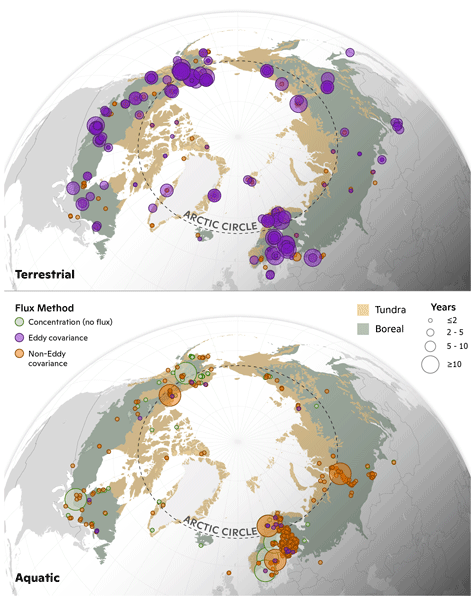
Anna-Maria Virkkala, Isabel Wargowsky, Judith Vogt, McKenzie A. Kuhn, Simran Madaan, Tiffany Windholz, Kyle A. Arndt, Gerard Rocher-Ros, Mathias Göckede, David Olefeldt, Edward A. G. Schuur, David Bastviken, Richard O'Keefe, Brendan M. Rogers, Jennifer D. Watts, Kelcy Kent, Kristoffer Aalstad, Kelly Aho, Joonatan Ala-Könni, Haley Alcock, Inge Althuizen, Christopher D. Arp, Jun Asanuma, Mika Aurela, Sivakiruthika Balathandayuthabani, Katrin Attermeyer, Alan Barr, Maialen Barret, Ochirbat Batkhishig, Christina Biasi, Mats P. Björkman, Andrew Black, Elena Blanc-Betes, Pascal Bodmer, Julia Boike, Abdullah Bolek, Frédéric Bouchard, Ingeborg Bussmann, Lea Cabrol, Eleonora Canfora, Sean Carey, Karel Castro-Morales, Namyi Chae, Andreas Christen, Torben R. Christensen, Casper T. Christiansen, Housen Chu, Graham Clark, Francois Clayer, Patrick Crill, Christopher Cunada, Scott J. Davidson, Joshua F. Dean, Sigrid Dengel, Matteo Detto, Catherine Dieleman, Florent Domine, Egor Dyukarev, Colin Edgar, Bo Elberling, Craig A. Emmerton, Eugenie Euskirchen, Grant Falvo, Thomas Friborg, Michelle Garneau, Mariasilvia Giamberini, Mikhail V. Glagolev, Miquel A. Gonzalez-Meler, Gustaf Granath, Jón Guðmundsson, Konsta Happonen, Yoshinobu Harazono, Lorna Harris, Josh Hashemi, Nicholas Hasson, Janna Heerah, Liam Heffernan, Manuel Helbig, Warren Helgason, Michal Heliasz, Greg Henry, Geert Hensgens, Tetsuya Hiyama, Beth Holmes, Macall Hock, David Holl, Jutta Holst, Thomas Holst, Gabriel Hould-Gosselin, Elyn Humphreys, Jacqueline Hung, Jussi Huotari, Hiroki Ikawa, Danil V. Ilyasov, Mamoru Ishikawa, Go Iwahana, Hiroki Iwata, Marcin Antoni Jackowicz-Korczynski, Joachim Jansen, Järvi Järveoja, Vincent E. J. Jassey, Rasmus Jensen, Katharina Jentzsch, Robert G. Jespersen, Carl-Fredrik Johannesson, Cheristy P. Jones, Anders Jonsson, Ji Young Jung, Sari Juutinen, Evan Kane, Jan Karlsson, Sergey Karsanaev, Kuno Kasak, Julia Kelly, Kasha Kempton, Marcus Klaus, George W. Kling, Natascha Kljun, Jacqueline Knutson, Hideki Kobayashi, John Kochendorfer, Kukka-Maaria Kohonen, Pasi Kolari, Mika Korkiakoski, Aino Korrensalo, Pirkko Kortelainen, Egle Koster, Kajar Koster, Ayumi Kotani, Praveena Krishnan, Juliya Kurbatova, Lars Kutzbach, Min Jung Kwon, Ethan D. Kyzivat, Jessica Lagroix, Theodore Langhorst, Elena Lapshina, Tuula Larmola, Klaus S. Larsen, Isabelle Laurion, Justin Ledman, Hanna Lee, A. Joshua Leffler, Lance Lesack, Anders Lindroth, David Lipson, Annalea Lohila, Efrén López-Blanco, Vincent L. St. Louis, Erik Lundin, Miska Luoto, Takashi Machimura, Marta Magnani, Avni Malhotra, Marja Maljanen, Ivan Mammarella, Elisa Männistö, Luca Belelli Marchesini, Phil Marsh, Pertti J. Martikainen, Maija E. Marushchak, Mikhail Mastepanov, Alex Mavrovic, Trofim Maximov, Christina Minions, Daniel F. Nadeau, Marco Montemayor, Tomoaki Morishita, Patrick Murphy, Erin Nicholls, Mats B. Nilsson, Anastasia Niyazova, Jenni Nordén, Koffi Dodji Noumonvi, Hannu Nykänen, Walter Oechel, Anne Ojala, Tomohiro Okadera, Sujan Pal, Alexey V. Panov, Tim Papakyriakou, Dario Papale, Sang-Jong Park, Frans-Jan W. Parmentier, Gilberto Pastorello, Mike Peacock, Matthias Peichl, Roman Petrov, Kyra St. Pierre, Norbert Pirk, Jessica Plein, Vilmantas Preskienis, Anatoly Prokushkin, Jukka Pumpanen, Hilary A. Rains, Niklas Rakos, Aleksi Räsänen, Helena Rautakoski, Riikka Rinnan, Janne Rinne, Adrian Rocha, Nigel Roulet, Alexandre Roy, Anna Rutgersson, Aleksandr F. Sabrekov, Torsten Sachs, Erik Sahlée, Alejandro Salazar, Henrique Oliveira Sawakuchi, Christopher Schulze, Roger Seco, Armando Sepulveda-Jauregui, Svetlana Serikova, Abbey Serrone, Hanna M. Silvennoinen, Sofie Sjogersten, June Skeeter, Jo Snöälv, Sebastian Sobek, Oliver Sonnentag, Emily H. Stanley, Maria Strack, Lena Strom, Patrick Sullivan, Ryan Sullivan, Anna Sytiuk, Torbern Tagesson, Pierre Taillardat, Julie Talbot, Suzanne E. Tank, Mario Tenuta, Irina Terenteva, Frederic Thalasso, Antoine Thiboult, Halldor Thorgeirsson, Fenix Garcia Tigreros, Margaret Torn, Amy Townsend-Small, Claire Treat, Alain Tremblay, Carlo Trotta, Eeva-Stiina Tuittila, Merritt Turetsky, Masahito Ueyama, Muhammad Umair, Aki Vähä, Lona van Delden, Maarten van Hardenbroek, Andrej Varlagin, Ruth K. Varner, Tarmo Virtanen, Elena Veretennikova, Timo Vesala, Carolina Voigt, Jorien E. Vonk, Robert Wagner, Katey Walter Anthony, Qinxue Wang, Masataka Watanabe, Hailey Webb, Jeffrey M. Welker, Andreas Westergaard-Nielsen, Sebastian Westermann, Jeffrey R. White, Christian Wille, Scott N. Williamson, Scott Zolkos, Donatella Zona, and Susan M. Natali
Earth Syst. Sci. Data, 18, 6357–6409, https://doi.org/10.5194/essd-18-6357-2026, https://doi.org/10.5194/essd-18-6357-2026, 2026
Short summary
Short summary
This dataset includes monthly measurements of carbon dioxide and methane exchange between land, water, and the atmosphere from over 1000 sites in Arctic and boreal regions. It combines measurements from a variety of ecosystems, including wetlands, forests, tundra, lakes, and rivers, gathered by over 260 researchers from 1984–2024. This dataset can be used to improve and reduce uncertainty in carbon budgets in order to strengthen our understanding of climate feedbacks in a warming world.
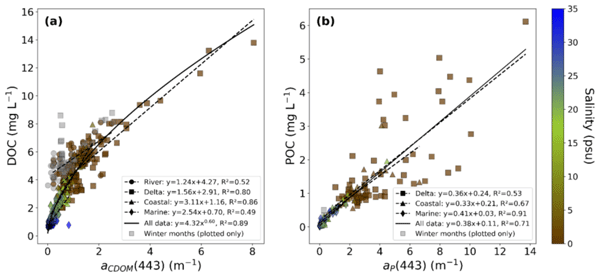
Annabeth McCall, Martin Hieronymi, P. Paul Overduin, Lisa Bröder, Julie Lattaud, Rüdiger Röttgers, Irina Overeem, Anne Morgenstern, Guido Grosse, and Bennet Juhls
Biogeosciences, 23, 5921–5942, https://doi.org/10.5194/bg-23-5921-2026, https://doi.org/10.5194/bg-23-5921-2026, 2026
Short summary
Short summary
This study examines how carbon and sediments move from the Mackenzie River, through its delta, and into the Beaufort Sea. We use data from 2009–2024 and show that major changes in carbon concentrations unfold in low-salinity mixing zones. As the optical properties of the water also shift, satellite estimates of carbon will require more tailored methods. These findings will improve our understanding of Arctic carbon fluxes and influences on the greater Arctic Ocean carbon budget.
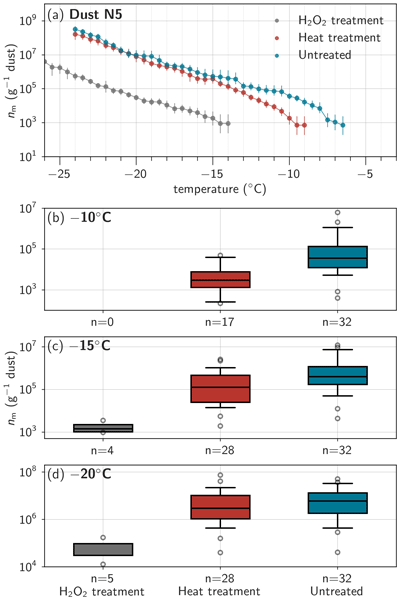
Nora Bergner, Grace Marsh, Kevin Barry, Larissa Lacher, Alexander Böhmländer, Joanna Alden, Carina Ahlqvist, Ianina Altshuler, Lisa Bröder, Daniel Farinotti, Lionel Favre, Coline Guillosson, Benjamin Heutte, Kristina Höhler, Roman Pohorsky, Julian Weng, and Julia Schmale
Atmos. Chem. Phys., 26, 10557–10585, https://doi.org/10.5194/acp-26-10557-2026, https://doi.org/10.5194/acp-26-10557-2026, 2026
Short summary
Short summary
Dust from Greenlandic glacial outwash plains can form ice in clouds, a process relevant for climate. Its ice-nucleating activity varies strongly and is largely controlled by small amounts of biological material. During summer, the influence on atmospheric ice-nucleating particles is mostly local. Lower activity compared to other high-latitude dust sources highlights the need to account for regional differences in Arctic dust.
George Tanski, Michael Fritz, Jorien E. Vonk, Jens Strauss, Léo Chassiot, Vladislav Carnero-Bravo, Jade Falardeau, Kostantin Klein, Parick Lajeunesse, Hugues Lantuit, Niek J. Speetjens, Anne de Vernal, Dustin Whalen, and Anna M. Irrgang
EGUsphere, https://doi.org/10.5194/egusphere-2026-2314, https://doi.org/10.5194/egusphere-2026-2314, 2026
Short summary
Short summary
As the Arctic warms, permafrost coasts erode rapidly, flushing carbon from frozen ground into the sea. We studied a lagoon in the western Canadian Arctic, collecting sediments and analyzing organic carbon content, stable isotopes, and grain size, alongside satellite imagery. Carbon content fell by over 50 % from land to open ocean, while erosion rates quintupled since the 1950s. Arctic lagoons bury, degrade, and export terrestrial carbon, acting as coastal reactors whose role will grow.
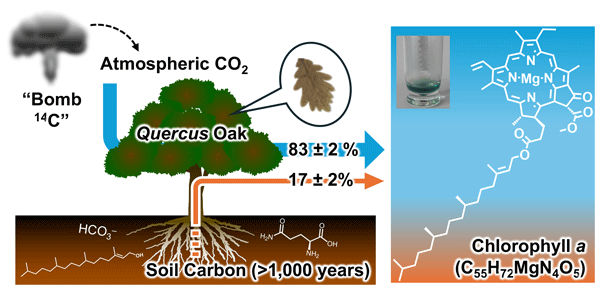
Naoto F. Ishikawa, Hisami Suga, Tessa S. van der Voort, Reto Nyffeler, Nanako O. Ogawa, Negar Haghipour, Lukas Wacker, Timothy I. Eglinton, and Naohiko Ohkouchi
Biogeosciences, 23, 3855–3869, https://doi.org/10.5194/bg-23-3855-2026, https://doi.org/10.5194/bg-23-3855-2026, 2026
Short summary
Short summary
The main finding of this work is that chlorophyll a in plant leaves is made from atmospheric CO2 (83 ± 2 %) as well as soil carbon (17 ± 2 %), the latter of which is older than 1000 years. The results suggest that radiocarbon age and provenance within a single tree are more diverse than previously thought.
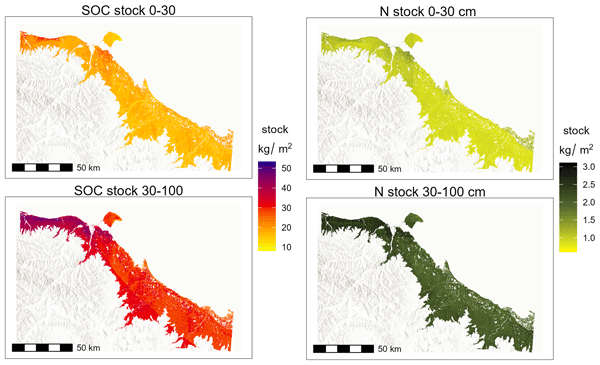
Julia Wagner, Juliane Wolter, Justine Ramage, Victoria Martin, Andreas Richter, Niek Jesse Speetjens, Jorien E. Vonk, Rachele Lodi, Annett Bartsch, Michael Fritz, Hugues Lantuit, and Gustaf Hugelius
SOIL, 12, 113–132, https://doi.org/10.5194/soil-12-113-2026, https://doi.org/10.5194/soil-12-113-2026, 2026
Short summary
Short summary
Permafrost soils store vast amounts of organic carbon, key to understanding climate change. This study uses machine learning and combines existing data with new field data to create detailed regional maps of soil carbon and nitrogen stocks for the Yukon coastal plain. The results show how soil properties vary across the landscape highlighting the importance of data selection for accurate predictions. These findings improve carbon storage estimates and may aid regional carbon budget assessments.
Nathan Carlier, Matti Barthel, Antoine de Clippele, Lissie Willemijn de Groot, Travis William Drake, Jordon Dennis Hemingway, Yi Hou, José Nlandu Wabakanghanzi, Joseph Zambo Mandea, Pengzhi Zhao, Johan Six, and Kristof Van Oost
EGUsphere, https://doi.org/10.5194/egusphere-2026-247, https://doi.org/10.5194/egusphere-2026-247, 2026
Short summary
Short summary
The Congo River Basin, a region of global significance, is undergoing a strong increase in population, which will in turn increase soil erosion, impacting soil fertility and the carbon cycle. We examined river sediment (eroded soil) transport, whereby we provided information on the main contributors of sediment to the Congo River. We also highlighted the role of a swampy region which removes large amounts of sediment from the water, acting as a regulator sediment transport to the Congo River.

Luisa I. Minich, Dylan Geissbühler, Stefan Tobler, Annegret Udke, Alexander S. Brunmayr, Margaux Moreno Duborgel, Ciriaco McMackin, Lukas Wacker, Philip Gautschi, Negar Haghipour, Markus Egli, Ansgar Kahmen, Jens Leifeld, Timothy I. Eglinton, and Frank Hagedorn
Biogeosciences, 23, 811–829, https://doi.org/10.5194/bg-23-811-2026, https://doi.org/10.5194/bg-23-811-2026, 2026
Short summary
Short summary
We developed a conceptual framework using rates and 14C-derived ages of soil-respired CO2 and its sources (autotrophic, heterotrophic) to identify carbon cycling pathways in different land-use types. Rates, ages and sources of respired CO2 varied across forests, grasslands, croplands, and managed peatlands. Our results suggest that the relationship between rates and ages of respired CO2 serves as a robust indicator of carbon retention and loss from natural to disturbed systems.
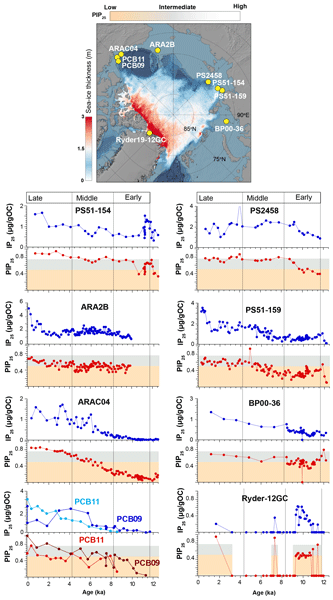
Madeleine Santos, Lisa Bröder, Matt O'Regan, Iván Hernández-Almeida, Tommaso Tesi, Lukas Bigler, Negar Haghipour, Daniel B. Nelson, Michael Fritz, and Julie Lattaud
Clim. Past, 22, 187–203, https://doi.org/10.5194/cp-22-187-2026, https://doi.org/10.5194/cp-22-187-2026, 2026
Short summary
Short summary
Our study examined how sea ice in the Beaufort Sea has changed over the past 13 000 years to better understand today's rapid losses. By analyzing chemical tracers preserved in seafloor sediments, we found that the Early Holocene was largely ice-free, with warmer waters and lower salinity. Seasonal ice began forming about 7000 years ago and expanded as the climate cooled. These long-term patterns show that continued warming could return the region to mostly ice-free conditions.
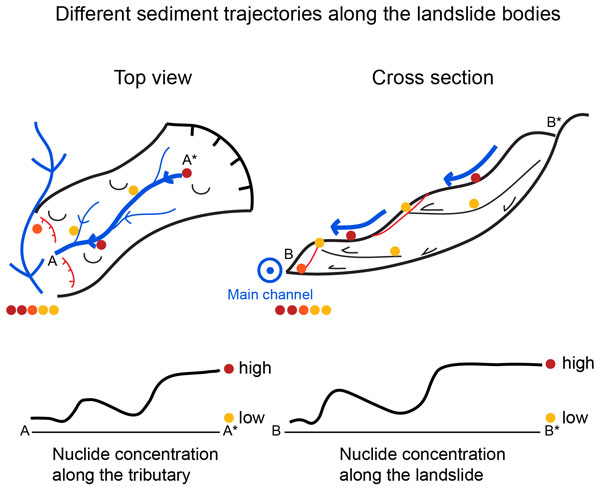
Chantal Schmidt, David Mair, Naki Akçar, Marcus Christl, Negar Haghipour, Christof Vockenhuber, Philip Gautschi, Brian McArdell, and Fritz Schlunegger
Earth Surf. Dynam., 14, 33–53, https://doi.org/10.5194/esurf-14-33-2026, https://doi.org/10.5194/esurf-14-33-2026, 2026
Short summary
Short summary
Our study examines erosion in a small, pre-Alpine basin by using cosmogenic nuclides in river sediments. Based on a dense measuring network we were able to distinguish two main zones: an upper zone with slow erosion of surface material, and a steeper, lower zone where faster erosion is driven by landslides. The data suggests that sediment has been constantly produced over thousands of years, indicating a stable, long-term balance between contrasting erosion processes.
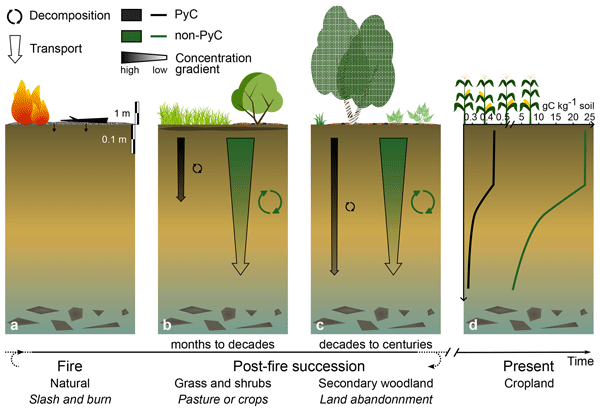
Johanne Lebrun Thauront, Philippa Ascough, Sebastian Doetterl, Negar Haghipour, Pierre Barré, Christian Walter, and Samuel Abiven
Biogeosciences, 23, 155–179, https://doi.org/10.5194/bg-23-155-2026, https://doi.org/10.5194/bg-23-155-2026, 2026
Short summary
Short summary
Fire-derived carbon is a form of organic carbon that has a long persistence in soils. However, its persistence at the landscape scale may be underestimated due to lateral and vertical redistribution. We measured fire-derived carbon in soils of a hilly agricultural watershed to identify the result of transport processes on the centennial time-scale. We show that the subsoil stores a large amount of fire-derived carbon and that erosion can redistribute it to localized accumulation zones.
Benedict V. A. Mittelbach, Margot E. White, Timo M. Y. Rhyner, Negar Haghipour, Marie-Elodie Perga, Nathalie Dubois, and Timothy I. Eglinton
Biogeosciences, 22, 6749–6763, https://doi.org/10.5194/bg-22-6749-2025, https://doi.org/10.5194/bg-22-6749-2025, 2025
Short summary
Short summary
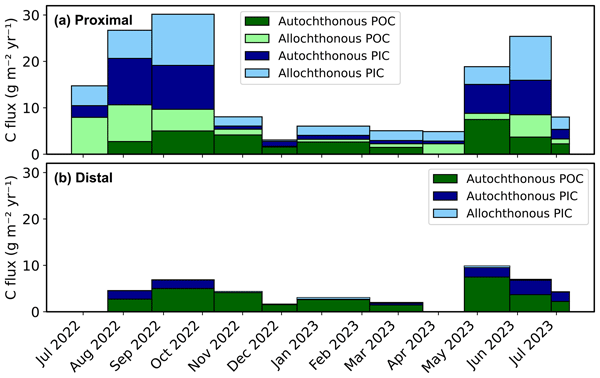
Lakes can emit carbon dioxide but also store carbon in their sediments. In hardwater lakes like Lake Geneva, calcite precipitates in the water column, releasing CO2 to the atmosphere, but upon sinking these particles also transport carbon to the sediment. Using sediment traps and radiocarbon isotopes, we show that much of the precipitated calcite is buried, highlighting an overlooked carbon sink that partly offsets the CO2 outgassing and should be included in lake carbon budgets.
Sarah Paradis, Hannah Gies, Davide Moccia, Julie Lattaud, Lisa Bröder, Negar Haghipour, Antonio Pusceddu, Albert Palanques, Pere Puig, Claudio Lo Iacono, and Timothy I. Eglinton
Biogeosciences, 22, 5921–5941, https://doi.org/10.5194/bg-22-5921-2025, https://doi.org/10.5194/bg-22-5921-2025, 2025
Short summary
Short summary
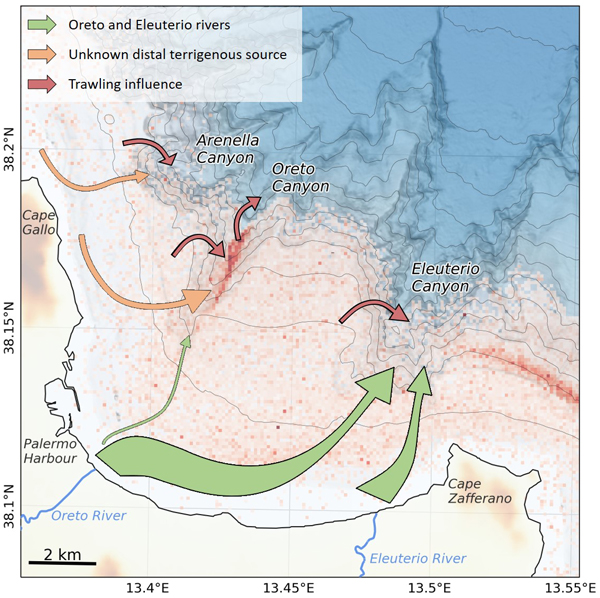
The Gulf of Palermo features several submarine canyons, where 50–70 % of the organic carbon deposited in them is terrigenous (OC-terr). The contribution of OC-terr generally decreases offshore and across canyons. Rivers deliver OC-terr, which is redistributed by regional currents and intercepted by the farthest down-current canyon, while the other submarine canyons receive terrigenous organic carbon from more distal sources. Bottom trawling also contributes to the transfer of OC-terr down-canyon.
Lucas R. Diaz, Clement J. F. Delcourt, Moritz Langer, Michael M. Loranty, Brendan M. Rogers, Rebecca C. Scholten, Tatiana A. Shestakova, Anna C. Talucci, Jorien E. Vonk, Sonam Wangchuk, and Sander Veraverbeke
Earth Syst. Dynam., 15, 1459–1482, https://doi.org/10.5194/esd-15-1459-2024, https://doi.org/10.5194/esd-15-1459-2024, 2024
Short summary
Short summary
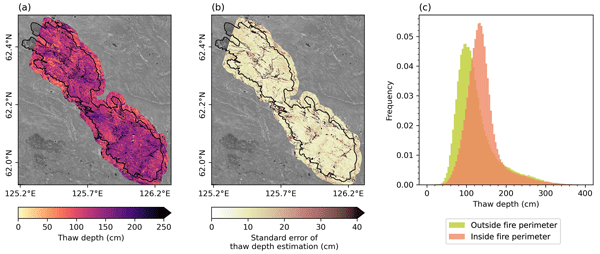
Our study in eastern Siberia investigated how fires affect permafrost thaw depth in larch forests. We found that fire induces deeper thaw, yet this process was mediated by topography and vegetation. By combining field and satellite data, we estimated summer thaw depth across an entire fire scar. This research provides insights into post-fire permafrost dynamics and the use of satellite data for mapping fire-induced permafrost thaw.
Sandra Raab, Karel Castro-Morales, Anke Hildebrandt, Martin Heimann, Jorien Elisabeth Vonk, Nikita Zimov, and Mathias Goeckede
Biogeosciences, 21, 2571–2597, https://doi.org/10.5194/bg-21-2571-2024, https://doi.org/10.5194/bg-21-2571-2024, 2024
Short summary
Short summary
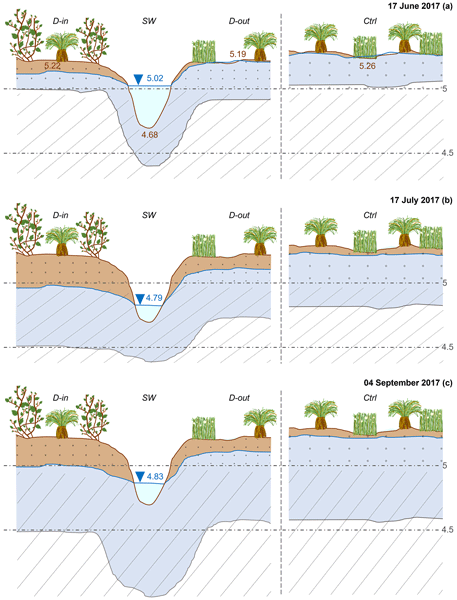
Water status is an important control factor on sustainability of Arctic permafrost soils, including production and transport of carbon. We compared a drained permafrost ecosystem with a natural control area, investigating water levels, thaw depths, and lateral water flows. We found that shifts in water levels following drainage affected soil water availability and that lateral transport patterns were of major relevance. Understanding these shifts is crucial for future carbon budget studies.
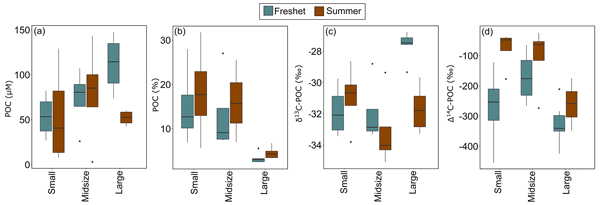
Kirsi H. Keskitalo, Lisa Bröder, Tommaso Tesi, Paul J. Mann, Dirk J. Jong, Sergio Bulte Garcia, Anna Davydova, Sergei Davydov, Nikita Zimov, Negar Haghipour, Timothy I. Eglinton, and Jorien E. Vonk
Biogeosciences, 21, 357–379, https://doi.org/10.5194/bg-21-357-2024, https://doi.org/10.5194/bg-21-357-2024, 2024
Short summary
Short summary
Permafrost thaw releases organic carbon into waterways. Decomposition of this carbon pool emits greenhouse gases into the atmosphere, enhancing climate warming. We show that Arctic river carbon and water chemistry are different between the spring ice breakup and summer and that primary production is initiated in small Arctic rivers right after ice breakup, in contrast to in large rivers. This may have implications for fluvial carbon dynamics and greenhouse gas uptake and emission balance.
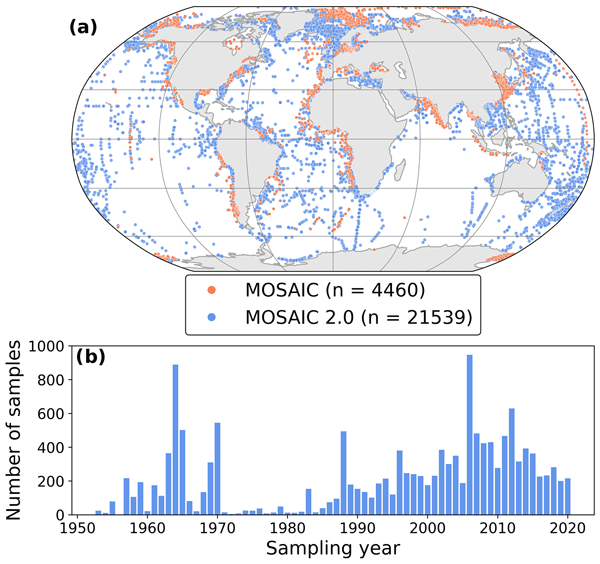
Sarah Paradis, Kai Nakajima, Tessa S. Van der Voort, Hannah Gies, Aline Wildberger, Thomas M. Blattmann, Lisa Bröder, and Timothy I. Eglinton
Earth Syst. Sci. Data, 15, 4105–4125, https://doi.org/10.5194/essd-15-4105-2023, https://doi.org/10.5194/essd-15-4105-2023, 2023
Short summary
Short summary
MOSAIC is a database of global organic carbon in marine sediments. This new version holds more than 21 000 sediment cores and includes new variables to interpret organic carbon distribution, such as sedimentological parameters and biomarker signatures. MOSAIC also stores data from specific sediment and molecular fractions to better understand organic carbon degradation and ageing. This database is continuously expanding, and version control will allow reproducible research outputs.
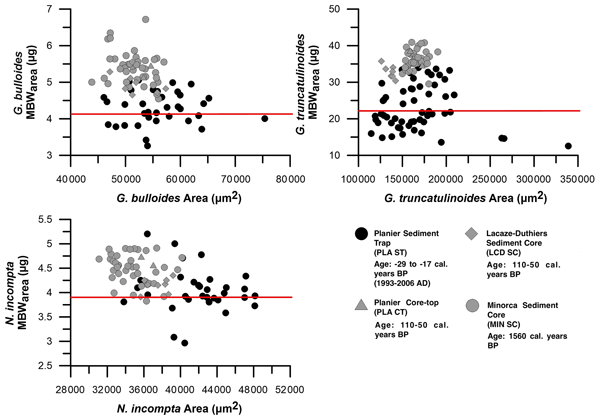
Thibauld M. Béjard, Andrés S. Rigual-Hernández, José A. Flores, Javier P. Tarruella, Xavier Durrieu de Madron, Isabel Cacho, Neghar Haghipour, Aidan Hunter, and Francisco J. Sierro
Biogeosciences, 20, 1505–1528, https://doi.org/10.5194/bg-20-1505-2023, https://doi.org/10.5194/bg-20-1505-2023, 2023
Short summary
Short summary
The Mediterranean Sea is undergoing a rapid and unprecedented environmental change. Planktic foraminifera calcification is affected on different timescales. On seasonal and interannual scales, calcification trends differ according to the species and are linked mainly to sea surface temperatures and carbonate system parameters, while comparison with pre/post-industrial assemblages shows that all three species have reduced their calcification between 10 % to 35 % according to the species.
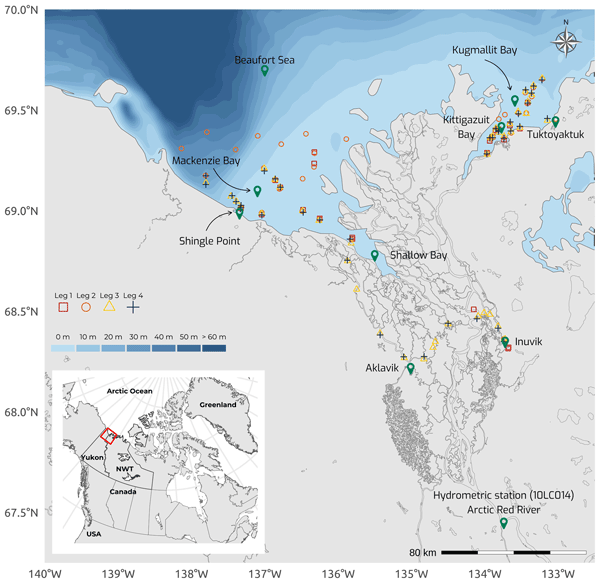
Martine Lizotte, Bennet Juhls, Atsushi Matsuoka, Philippe Massicotte, Gaëlle Mével, David Obie James Anikina, Sofia Antonova, Guislain Bécu, Marine Béguin, Simon Bélanger, Thomas Bossé-Demers, Lisa Bröder, Flavienne Bruyant, Gwénaëlle Chaillou, Jérôme Comte, Raoul-Marie Couture, Emmanuel Devred, Gabrièle Deslongchamps, Thibaud Dezutter, Miles Dillon, David Doxaran, Aude Flamand, Frank Fell, Joannie Ferland, Marie-Hélène Forget, Michael Fritz, Thomas J. Gordon, Caroline Guilmette, Andrea Hilborn, Rachel Hussherr, Charlotte Irish, Fabien Joux, Lauren Kipp, Audrey Laberge-Carignan, Hugues Lantuit, Edouard Leymarie, Antonio Mannino, Juliette Maury, Paul Overduin, Laurent Oziel, Colin Stedmon, Crystal Thomas, Lucas Tisserand, Jean-Éric Tremblay, Jorien Vonk, Dustin Whalen, and Marcel Babin
Earth Syst. Sci. Data, 15, 1617–1653, https://doi.org/10.5194/essd-15-1617-2023, https://doi.org/10.5194/essd-15-1617-2023, 2023
Short summary
Short summary
Permafrost thaw in the Mackenzie Delta region results in the release of organic matter into the coastal marine environment. What happens to this carbon-rich organic matter as it transits along the fresh to salty aquatic environments is still underdocumented. Four expeditions were conducted from April to September 2019 in the coastal area of the Beaufort Sea to study the fate of organic matter. This paper describes a rich set of data characterizing the composition and sources of organic matter.
Niek Jesse Speetjens, Gustaf Hugelius, Thomas Gumbricht, Hugues Lantuit, Wouter R. Berghuijs, Philip A. Pika, Amanda Poste, and Jorien E. Vonk
Earth Syst. Sci. Data, 15, 541–554, https://doi.org/10.5194/essd-15-541-2023, https://doi.org/10.5194/essd-15-541-2023, 2023
Short summary
Short summary
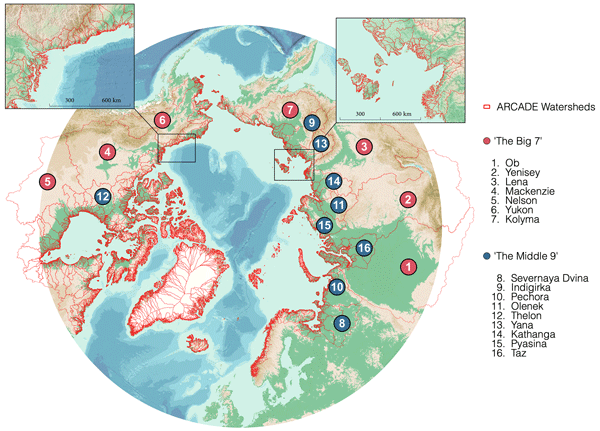
The Arctic is rapidly changing. Outside the Arctic, large databases changed how researchers look at river systems and land-to-ocean processes. We present the first integrated pan-ARctic CAtchments summary DatabasE (ARCADE) (> 40 000 river catchments draining into the Arctic Ocean). It incorporates information about the drainage area with 103 geospatial, environmental, climatic, and physiographic properties and covers small watersheds , which are especially subject to change, at a high resolution
Dirk Jong, Lisa Bröder, Tommaso Tesi, Kirsi H. Keskitalo, Nikita Zimov, Anna Davydova, Philip Pika, Negar Haghipour, Timothy I. Eglinton, and Jorien E. Vonk
Biogeosciences, 20, 271–294, https://doi.org/10.5194/bg-20-271-2023, https://doi.org/10.5194/bg-20-271-2023, 2023
Short summary
Short summary
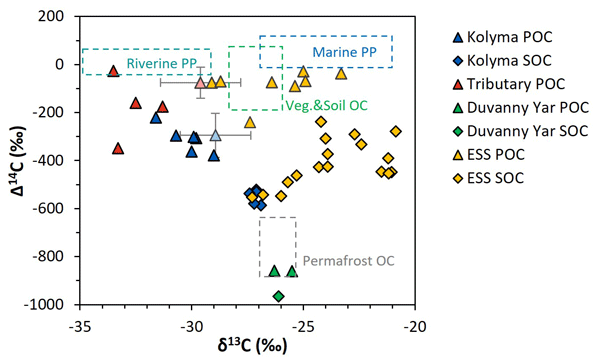
With this study, we want to highlight the importance of studying both land and ocean together, and water and sediment together, as these systems function as a continuum, and determine how organic carbon derived from permafrost is broken down and its effect on global warming. Although on the one hand it appears that organic carbon is removed from sediments along the pathway of transport from river to ocean, it also appears to remain relatively ‘fresh’, despite this removal and its very old age.

Melissa Sophia Schwab, Hannah Gies, Chantal Valérie Freymond, Maarten Lupker, Negar Haghipour, and Timothy Ian Eglinton
Biogeosciences, 19, 5591–5616, https://doi.org/10.5194/bg-19-5591-2022, https://doi.org/10.5194/bg-19-5591-2022, 2022
Short summary
Short summary
The majority of river studies focus on headwater or floodplain systems, while often neglecting intermediate river segments. Our study on the subalpine Sihl River bridges the gap between streams and lowlands and demonstrates that moderately steep river segments are areas of significant instream alterations, modulating the export of organic carbon over short distances.
Frédérique M. S. A. Kirkels, Huub M. Zwart, Muhammed O. Usman, Suning Hou, Camilo Ponton, Liviu Giosan, Timothy I. Eglinton, and Francien Peterse
Biogeosciences, 19, 3979–4010, https://doi.org/10.5194/bg-19-3979-2022, https://doi.org/10.5194/bg-19-3979-2022, 2022
Short summary
Short summary
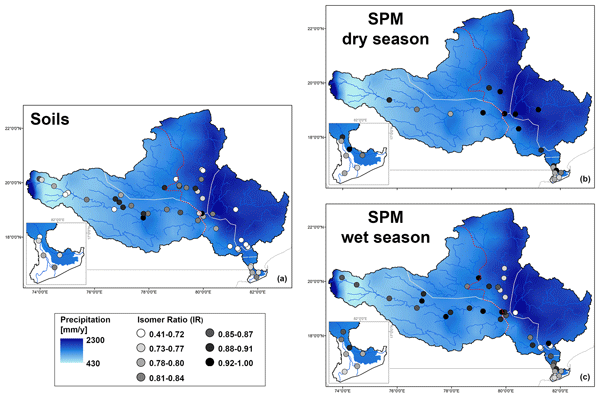
Soil organic carbon (SOC) that is transferred to the ocean by rivers forms a long-term sink of atmospheric CO2 upon burial on the ocean floor. We here test if certain bacterial membrane lipids can be used to trace SOC through the monsoon-fed Godavari River basin in India. We find that these lipids trace the mobilisation and transport of SOC in the wet season but that these lipids are not transferred far into the sea. This suggests that the burial of SOC on the sea floor is limited here.
Niek Jesse Speetjens, George Tanski, Victoria Martin, Julia Wagner, Andreas Richter, Gustaf Hugelius, Chris Boucher, Rachele Lodi, Christian Knoblauch, Boris P. Koch, Urban Wünsch, Hugues Lantuit, and Jorien E. Vonk
Biogeosciences, 19, 3073–3097, https://doi.org/10.5194/bg-19-3073-2022, https://doi.org/10.5194/bg-19-3073-2022, 2022
Short summary
Short summary
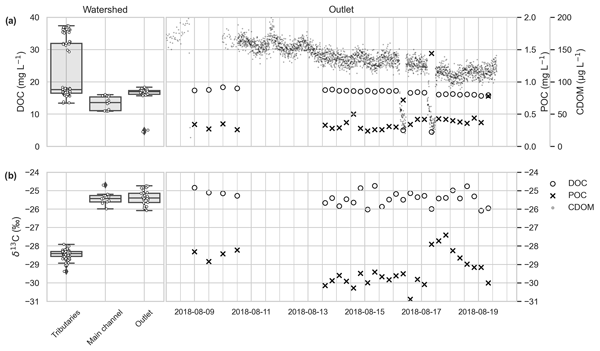
Climate change and warming in the Arctic exceed global averages. As a result, permanently frozen soils (permafrost) which store vast quantities of carbon in the form of dead plant material (organic matter) are thawing. Our study shows that as permafrost landscapes degrade, high concentrations of organic matter are released. Partly, this organic matter is degraded rapidly upon release, while another significant fraction enters stream networks and enters the Arctic Ocean.

Sarah Shakil, Suzanne E. Tank, Jorien E. Vonk, and Scott Zolkos
Biogeosciences, 19, 1871–1890, https://doi.org/10.5194/bg-19-1871-2022, https://doi.org/10.5194/bg-19-1871-2022, 2022
Short summary
Short summary
Permafrost thaw-driven landslides in the western Arctic are increasing organic carbon delivered to headwaters of drainage networks in the western Canadian Arctic by orders of magnitude. Through a series of laboratory experiments, we show that less than 10 % of this organic carbon is likely to be mineralized to greenhouse gases during transport in these networks. Rather most of the organic carbon is likely destined for burial and sequestration for centuries to millennia.

Gabriella M. Weiss, Julie Lattaud, Marcel T. J. van der Meer, and Timothy I. Eglinton
Clim. Past, 18, 233–248, https://doi.org/10.5194/cp-18-233-2022, https://doi.org/10.5194/cp-18-233-2022, 2022
Short summary
Short summary
Here we study the elemental signatures of plant wax compounds as well as molecules from algae and bacteria to understand how water sources changed over the last 11 000 years in the northeastern part of Europe surrounding the Baltic Sea. Our results show diversity in plant and aquatic microorganisms following the melting of the large ice sheet that covered northern Europe as the regional climate continued to warm. A shift in water source from ice melt to rain also occurred around the same time.
Blanca Ausín, Negar Haghipour, Elena Bruni, and Timothy Eglinton
Biogeosciences, 19, 613–627, https://doi.org/10.5194/bg-19-613-2022, https://doi.org/10.5194/bg-19-613-2022, 2022
Short summary
Short summary
The preservation and distribution of alkenones – organic molecules produced by marine algae – in marine sediments allows us to reconstruct past variations in sea surface temperature, primary productivity and CO2. Here, we explore the impact of remobilization and lateral transport of sedimentary alkenones on their fate in marine sediments. We demonstrate the pervasive influence of these processes on alkenone-derived environmental signals, compromising the reliability of related paleorecords.
Caroline Welte, Jens Fohlmeister, Melina Wertnik, Lukas Wacker, Bodo Hattendorf, Timothy I. Eglinton, and Christoph Spötl
Clim. Past, 17, 2165–2177, https://doi.org/10.5194/cp-17-2165-2021, https://doi.org/10.5194/cp-17-2165-2021, 2021
Short summary
Short summary
Stalagmites are valuable climate archives, but unlike other proxies the use of stable carbon isotopes (δ13C) is still difficult. A stalagmite from the Austrian Alps was analyzed using a new laser ablation method for fast radiocarbon (14C) analysis. This allowed 14C and δ13C to be combined, showing that besides soil and bedrock a third source is contributing during periods of warm, wet climate: old organic matter.
Cited articles
Bockheim, J. G. and Tarnocai, C.: Recognition of cryoturbation for classifying permafrost-affected soils, Geoderma, 81, 281–293, https://doi.org/10.1016/S0016-7061(97)00115-8, 1998.
Bolandini, M. A., De Maria, D., Haghipour, N., Wacker, L., Hemingway, J. D., Eglinton, T. I., and Bröder, L.: Towards online ramped oxidation (ORO)-AMS for thermal dissection and serial radiocarbon analysis of complex organic matter, Radiocarbon, 1–16, https://doi.org/10.1017/RDC.2025.6, 2025.
Bravo, A. G., Bouchet, S., Tolu, J., Björn, E., Mateos-Rivera, A., and Bertilsson, S.: Molecular composition of organic matter controls methylmercury formation in boreal lakes, Nat. Commun., 8, 1–9, https://doi.org/10.1038/NCOMMS14255, 2017.
Bröder, L., Keskitalo, K. H., Zolkos, S., Shakil, S., Tank, S. E., Kokelj, S. V., Tesi, T., Van Dongen, B. E., Haghipour, N., Eglinton, T. I., and Vonk, J. E.: Preferential export of permafrost-derived organic matter as retrogressive thaw slumping intensifies, Environ. Res. Lett., 16, 054059, https://doi.org/10.1088/1748-9326/ABEE4B, 2021.
Dasari, S. and Widory, D.: Radiocarbon (14C) Analysis of Carbonaceous Aerosols: Revisiting the Existing Analytical Techniques for Isolation of Black Carbon, Front. Environ. Sci., 10, 907467, https://doi.org/10.3389/FENVS.2022.907467, 2022.
Dasari, S., Garnett, M. H., and Hilton, R. G.: Leakage of old carbon dioxide from a major river system in the Canadian Arctic, PNAS Nexus, 3, https://doi.org/10.1093/PNASNEXUS/PGAE134, 2024.
De Leeuw, J. W. and Largeau, C.: A Review of Macromolecular Organic Compounds That Comprise Living Organisms and Their Role in Kerogen, Coal, and Petroleum Formation, Organic Geochemistry: Principles and Applications, 23–72, https://doi.org/10.1007/978-1-4615-2890-6_2, 1993.
De Maria, D., Fahrni, S. M., Lozac'h, F., Marvalin, C., Walles, M., Camenisch, G., Wacker, L., and Synal, H. A.: Double Trap Interface: A novel gas interface for high throughput analysis of biomedical samples by AMS, Drug Metab. Pharmacok., 39, 100400, https://doi.org/10.1016/J.DMPK.2021.100400, 2021.
Derenne, S. and Quéné, K.: Analytical pyrolysis as a tool to probe soil organic matter, J. Anal. Appl. Pyrol., 111, 108–120, https://doi.org/10.1016/J.JAAP.2014.12.001, 2015.
Deutsches Institut für Normung: DIN 19539, Investigation of solids – Temperature-dependent differentiation of total carbon (TOC400, ROC, TIC900), Beuth Verlag GmbH, Berlin, Germany, 2016.
Drake, T. W., Wickland, K. P., Spencer, R. G. M., McKnight, D. M., and Striegl, R. G.: Ancient low-molecular-weight organic acids in permafrost fuel rapid carbon dioxide production upon thaw, P. Natl. Acad. Sci. USA, 112, 13946–13951, https://doi.org/10.1073/PNAS.1511705112, 2015.
Estop-Aragonés, C., Olefeldt, D., Abbott, B. W., Chanton, J. P., Czimczik, C. I., Dean, J. F., Egan, J. E., Gandois, L., Garnett, M. H., Hartley, I. P., Hoyt, A., Lupascu, M., Natali, S. M., O'Donnell, J. A., Raymond, P. A., Tanentzap, A. J., Tank, S. E., Schuur, E. A. G., Turetsky, M. R., and Anthony, K. W.: Assessing the Potential for Mobilization of Old Soil Carbon After Permafrost Thaw: A Synthesis of 14C Measurements From the Northern Permafrost Region, Global Biogeochem. Cy., 34, e2020GB006672, https://doi.org/10.1029/2020GB006672, 2020.
French, H. M.: The Periglacial Environment, 3rd edn., John Wiley & Sons Ltd., Chichester, UK, 459 pp., https://doi.org/10.1002/9781118684931, 2007.
Garnett, M. H., Pereira, R., Taylor, C., Murray, C., and Ascough, P. L.: A new ramped oxidation – 14C analysis facility at the NEIF Radiocarbon Laboratory, East Kilbride, UK, Radiocarbon, 65, 1213–1229, https://doi.org/10.1017/RDC.2023.96, 2023.
Grant, K. E., Galy, V., Chadwick, O. A., and Derry, L. A.: Thermal oxidation of carbon in organic matter rich volcanic soils: insights into SOC age differentiation and mineral stabilization, Biogeochemistry, 144, 291–304, https://doi.org/10.1007/S10533-019-00586-1, 2019.
Harris, D., Horwáth, W. R., and van Kessel, C.: Acid fumigation of soils to remove carbonates prior to total organic carbon or CARBON-13 isotopic analysis, Soil Sci. Soc. Am. J., 65, 1853–1856, https://doi.org/10.2136/SSSAJ2001.1853, 2001.
Hemingway, J. D.: rampedpyrox: open-source tools for thermoanalytical data analysis, Zenodo, https://doi.org/10.5281/zenodo.839815, 2016.
Hemingway, J. D., Rothman, D. H., Rosengard, S. Z., and Galy, V. V.: Technical note: An inverse method to relate organic carbon reactivity to isotope composition from serial oxidation, Biogeosciences, 14, 5099–5114, https://doi.org/10.5194/bg-14-5099-2017, 2017.
Hemingway, J. D., Rothman, D. H., Grant, K. E., Rosengard, S. Z., Eglinton, T. I., Derry, L. A., and Galy, V.: Mineral protection regulates long-term global preservation of natural organic carbon, Nature, 570, 228–231, https://doi.org/10.1038/s41586-019-1280-6, 2019.
Hugelius, G., Strauss, J., Zubrzycki, S., Harden, J. W., Schuur, E. A. G., Ping, C.-L., Schirrmeister, L., Grosse, G., Michaelson, G. J., Koven, C. D., O'Donnell, J. A., Elberling, B., Mishra, U., Camill, P., Yu, Z., Palmtag, J., and Kuhry, P.: Estimated stocks of circumpolar permafrost carbon with quantified uncertainty ranges and identified data gaps, Biogeosciences, 11, 6573–6593, https://doi.org/10.5194/bg-11-6573-2014, 2014.
Kaal, J., Martínez Cortizas, A., and Nierop, K. G. J.: Characterisation of aged charcoal using a coil probe pyrolysis-GC/MS method optimised for black carbon, J. Anal. Appl. Pyrol., 85, 408–416, https://doi.org/10.1016/J.JAAP.2008.11.007, 2009.
Kaal, J., Wagner, S., and Jaffé, R.: Molecular properties of ultrafiltered dissolved organic matter and dissolved black carbon in headwater streams as determined by pyrolysis-GC/MS, J. Anal. Appl. Pyrol., 118, 181–191, https://doi.org/10.1016/J.JAAP.2016.02.003, 2016.
Keskitalo, K. H., Bröder, L., Shakil, S., Zolkos, S., Tank, S. E., Van Dongen, B. E., Tesi, T., Haghipour, N., Eglinton, T. I., Kokelj, S. V., and Vonk, J. E.: Downstream Evolution of Particulate Organic Matter Composition From Permafrost Thaw Slumps, Front. Earth Sci., 9, 642675, https://doi.org/10.3389/feart.2021.642675, 2021.
Knoblauch, C., Beer, C., Sosnin, A., Wagner, D., and Pfeiffer, E.-M.: Predicting long-term carbon mineralization and trace gas production from thawing permafrost of Northeast Siberia, Glob. Change Biol., 19, 1160–1172, https://doi.org/10.1111/gcb.12116, 2013.
Kokelj, S. V., Lacelle, D., Lantz, T. C., Tunnicliffe, J., Malone, L., Clark, I. D., and Chin, K. S.: Thawing of massive ground ice in mega slumps drives increases in stream sediment and solute flux across a range of watershed scales, J. Geophys. Res.-Earth, 118, 681–692, https://doi.org/10.1002/JGRF.20063, 2013.
Kokelj, S. V., Tunnicliffe, J., Lacelle, D., Lantz, T. C., Chin, K. S., and Fraser, R.: Increased precipitation drives mega slump development and destabilization of ice-rich permafrost terrain, northwestern Canada, Global Planet. Change, 129, 56–68, https://doi.org/10.1016/J.GLOPLACHA.2015.02.008, 2015.
Kokelj, S. V., Lantz, T. C., Tunnicliffe, J., Segal, R. A., and Lacelle, D.: Climate-driven thaw of permafrost preserved glacial landscapes, northwestern Canada, Geology, 45, 371–374, https://doi.org/10.1130/G38626.1, 2017.
Kokelj, S. V., Kokoszka, J., van der Sluijs, J., Rudy, A. C. A., Tunnicliffe, J., Shakil, S., Tank, S. E., and Zolkos, S.: Thaw-driven mass wasting couples slopes with downstream systems, and effects propagate through Arctic drainage networks, The Cryosphere, 15, 3059–3081, https://doi.org/10.5194/tc-15-3059-2021, 2021.
Komada, T., Anderson, M. R., and Dorfmeier, C. L.: Carbonate removal from coastal sediments for the determination of organic carbon and its isotopic signatures, δ13C and Δ14C: Comparison of fumigation and direct acidification by hydrochloric acid, Limnol. Oceanogr.-Meth., 6, 254–262, https://doi.org/10.4319/LOM.2008.6.254, 2008.
Lacelle, D., Fontaine, M., Pellerin, A., Kokelj, S. V., and Clark, I. D.: Legacy of Holocene Landscape Changes on Soil Biogeochemistry: A Perspective From Paleo-Active Layers in Northwestern Canada, J. Geophys. Res.-Biogeo., 124, 2662–2679, https://doi.org/10.1029/2018JG004916, 2019.
Lewis, C. A.: The kinetics of biomarker reactions: implications for the assessment of the thermal maturity of organic matter in sedimentary basins, Organic Geochemistry: Principles and Applications, 491–510, https://doi.org/10.1007/978-1-4615-2890-6_22, 1993.
Lewkowicz, A. G. and Way, R. G.: Extremes of summer climate trigger thousands of thermokarst landslides in a High Arctic environment, Nat. Commun., 10, 1–11, https://doi.org/10.1038/S41467-019-09314-7, 2019.
Littlefair, C. A., Tank, S. E., and Kokelj, S. V.: Retrogressive thaw slumps temper dissolved organic carbon delivery to streams of the Peel Plateau, NWT, Canada, Biogeosciences, 14, 5487–5505, https://doi.org/10.5194/bg-14-5487-2017, 2017.
Mann, P. J., Eglinton, T. I., McIntyre, C. P., Zimov, N., Davydova, A., Vonk, J. E., Holmes, R. M., and Spencer, R. G. M.: Utilization of ancient permafrost carbon in headwaters of Arctic fluvial networks, Nat. Commun., 6, 1–7, https://doi.org/10.1038/NCOMMS8856, 2015.
Martens, J., Mueller, C. W., Joshi, P., Rosinger, C., Maisch, M., Kappler, A., Bonkowski, M., Schwamborn, G., Schirrmeister, L., and Rethemeyer, J.: Stabilization of mineral-associated organic carbon in Pleistocene permafrost, Nat. Commun., 14, 2120, https://doi.org/10.1038/s41467-023-37766-5, 2023.
Mishra, U., Hugelius, G., Shelef, E., Yang, Y., Strauss, J., Lupachev, A., Harden, J. W., Jastrow, J. D., Ping, C. L., Riley, W. J., Schuur, E. A. G., Matamala, R., Siewert, M., Nave, L. E., Koven, C. D., Fuchs, M., Palmtag, J., Kuhry, P., Treat, C. C., Zubrzycki, S., Hoffman, F. M., Elberling, B., Camill, P., Veremeeva, A., and Orr, A.: Spatial heterogeneity and environmental predictors of permafrost region soil organic carbon stocks, Sci. Adv., 7, 5236–5260, https://doi.org/10.1126/SCIADV.AAZ5236, 2021.
Mittelbach, B. V. A., Brunmayr, A. S., White, M. E., Rhyner, T. M. Y., Haghipour, N., Blattmann, T. M., Wessels, M., Dubois, N., and Eglinton, T. I.: Pre-aged organic matter dominates organic carbon burial in a major perialpine lake system, Limnol. Oceanogr., 70, 911–924, https://doi.org/10.1002/LNO.12815, 2025.
Overland, J. E., Dunlea, E., Box, J. E., Corell, R., Forsius, M., Kattsov, V., Olsen, M. S., Pawlak, J., Reiersen, L. O., and Wang, M.: The urgency of Arctic change, Polar Sci., 21, 6–13, https://doi.org/10.1016/J.POLAR.2018.11.008, 2019.
Ping, C. L., Bockheim, J. G., Kimble, J. M., Michaelson, G. J., and Walker, D. A.: Characteristics of cryogenic soils along a latitudinal transect in Arctic Alaska, J. Geophys. Res.-Atmos., 103, 28917–28928, https://doi.org/10.1029/98jd02024, 1998.
Ping, C. L., Michaelson, G. J., Jorgenson, M. T., Kimble, J. M., Epstein, H., Romanovsky, V. E., and Walker, D. A.: High stocks of soil organic carbon in the North American Arctic region, Nat. Geosci., 1, 615–619, https://doi.org/10.1038/ngeo284, 2008.
Ramage, J. L., Irrgang, A. M., Herzschuh, U., Morgenstern, A., Couture, N., and Lantuit, H.: Terrain controls on the occurrence of coastal retrogressive thaw slumps along the Yukon Coast, Canada, J. Geophys. Res.-Earth, 122, 1619–1634, https://doi.org/10.1002/2017JF004231, 2017.
Ramsperger, U., De Maria, D., Gautschi, P., Maxeiner, S., Müller, A. M., Synal, H. A., and Wacker, L.: Lea – a novel low energy accelerator for 14C dating, Radiocarbon, 66, 1280–1288, https://doi.org/10.1017/RDC.2023.85, 2024.
Rantanen, M., Karpechko, A. Y., Lipponen, A., Nordling, K., Hyvärinen, O., Ruosteenoja, K., Vihma, T., and Laaksonen, A.: The Arctic has warmed nearly four times faster than the globe since 1979, Commun. Earth Environ., 3, 1–10, https://doi.org/10.1038/s43247-022-00498-3, 2022.
Reimer, P. J., Brown, T. A., and Reimer, R. W.: Discussion: Reporting and Calibration of Post-Bomb 14C Data, Radiocarbon, 46, 1299–1304, https://doi.org/10.1017/S0033822200033154, 2004.
Reimer, P. J., Austin, W. E. N., Bard, E., Bayliss, A., Blackwell, P. G., Bronk Ramsey, C., Butzin, M., Cheng, H., Edwards, R. L., Friedrich, M., Grootes, P. M., Guilderson, T. P., Hajdas, I., Heaton, T. J., Hogg, A. G., Hughen, K. A., Kromer, B., Manning, S. W., Muscheler, R., Palmer, J. G., Pearson, C., Van Der Plicht, J., Reimer, R. W., Richards, D. A., Scott, E. M., Southon, J. R., Turney, C. S. M., Wacker, L., Adolphi, F., Büntgen, U., Capano, M., Fahrni, S. M., Fogtmann-Schulz, A., Friedrich, R., Köhler, P., Kudsk, S., Miyake, F., Olsen, J., Reinig, F., Sakamoto, M., Sookdeo, A., and Talamo, S.: The IntCal20 Northern Hemisphere Radiocarbon Age Calibration Curve (0–55 cal kBP), Radiocarbon, 62, 725–757, https://doi.org/10.1017/RDC.2020.41, 2020.
Schädel, C., Schuur, E. A. G., Bracho, R., Elberling, B., Knoblauch, C., Lee, H., Luo, Y., Shaver, G. R., and Turetsky, M. R.: Circumpolar assessment of permafrost C quality and its vulnerability over time using long-term incubation data, Glob. Change Biol., 20, 641–652, https://doi.org/10.1111/GCB.12417, 2014.
Schnitzer, M. and Monreal, C. M.: Quo Vadis Soil Organic Matter Research? A Biological Link to the Chemistry of Humification, Adv. Agron., 113, 143–217, https://doi.org/10.1016/B978-0-12-386473-4.00003-8, 2011.
Schuur, E. A. G., Bockheim, J. G., Canadell, J. G., Euskirchen, E., Field, C. B., Goryachkin, S. V., Hagemann, S., Kuhry, P., Lafleur, P. M., Lee, H., Mazhitova, G., Nelson, F. E., Rinke, A., Romanovsky, V. E., Shiklomanov, N., Tarnocai, C., Venevsky, S., Vogel, J. G., and Zimov, S. A.: Vulnerability of Permafrost Carbon to Climate Change: Implications for the Global Carbon Cycle, Bioscience, 58, 701–714, https://doi.org/10.1641/B580807, 2008.
Schuur, E. A. G., McGuire, A. D., Schädel, C., Grosse, G., Harden, J. W., Hayes, D. J., Hugelius, G., Koven, C. D., Kuhry, P., Lawrence, D. M., Natali, S. M., Olefeldt, D., Romanovsky, V. E., Schaefer, K., Turetsky, M. R., Treat, C. C., and Vonk, J. E.: Climate change and the permafrost carbon feedback, Nature, 520, 171–179, https://doi.org/10.1038/nature14338, 2015.
Segal, R. A., Lantz, T. C., and Kokelj, S. V.: Acceleration of thaw slump activity in glaciated landscapes of the Western Canadian Arctic, Environ. Res. Lett., 11, 034025, https://doi.org/10.1088/1748-9326/11/3/034025, 2016.
Shakil, S., Tank, S. E., Kokelj, S. V., Vonk, J. E., and Zolkos, S.: Particulate dominance of organic carbon mobilization from thaw slumps on the Peel Plateau, NT: Quantification and implications for stream systems and permafrost carbon release, Environ. Res. Lett., 15, 114019, https://doi.org/10.1088/1748-9326/ABAC36, 2020.
Shakil, S., Tank, S. E., Vonk, J. E., and Zolkos, S.: Low biodegradability of particulate organic carbon mobilized from thaw slumps on the Peel Plateau, NT, and possible chemosynthesis and sorption effects, Biogeosciences, 19, 1871–1890, https://doi.org/10.5194/bg-19-1871-2022, 2022.
Stoner, S. W., Schrumpf, M., Hoyt, A., Sierra, C. A., Doetterl, S., Galy, V., and Trumbore, S.: How well does ramped thermal oxidation quantify the age distribution of soil carbon? Assessing thermal stability of physically and chemically fractionated soil organic matter, Biogeosciences, 20, 3151–3163, https://doi.org/10.5194/bg-20-3151-2023, 2023.
Strauss, J., Schirrmeister, L., Grosse, G., Fortier, D., Hugelius, G., Knoblauch, C., Romanovsky, V., Schädel, C., Schneider von Deimling, T., Schuur, E. A. G., Shmelev, D., Ulrich, M., and Veremeeva, A.: Deep Yedoma permafrost: A synthesis of depositional characteristics and carbon vulnerability, Earth-Sci. Rev., 172, 75–86, https://doi.org/10.1016/J.EARSCIREV.2017.07.007, 2017.
Strauss, J., Fuchs, M., Hugelius, G., Miesner, F., Nitze, I., Opfergelt, S., Schuur, E., Treat, C. C., Turetsky, M., Yang, Y., and Grosse, G.: Organic matter storage and vulnerability in the permafrost domain, Encyclopedia of Quaternary Science, 399–410, https://doi.org/10.1016/B978-0-323-99931-1.00164-1, 2025.
Stuiver, M. and Polach, H. A.: Discussion Reporting of 14C Data, Radiocarbon, 19, 355–363, https://doi.org/10.1017/S0033822200003672, 1977.
Synal, H. A., Stocker, M., and Suter, M.: MICADAS: a new compact radiocarbon AMS system, Nucl. Instrum. Meth. B, 259, 7–13, https://doi.org/10.1016/j.nimb.2007.01.138, 2007.
Thomas, M., Monhonval, A., Hirst, C., Bröder, L., Zolkos, S., Vonk, J. E., Tank, S. E., Keskitalo, K. H., Shakil, S., Kokelj, S. V., van der Sluijs, J., and Opfergelt, S.: Evidence for preservation of organic carbon interacting with iron in material displaced from retrogressive thaw slumps: Case study in Peel Plateau, western Canadian Arctic, Geoderma, 433, 116443, https://doi.org/10.1016/J.GEODERMA.2023.116443, 2023.
Tolu, J., Gerber, L., Boily, J. F., and Bindler, R.: High-throughput characterization of sediment organic matter by pyrolysis–gas chromatography/mass spectrometry and multivariate curve resolution: A promising analytical tool in (paleo)limnology, Anal. Chim. Acta, 880, 93–102, https://doi.org/10.1016/J.ACA.2015.03.043, 2015.
Vaughn, L. J. S. and Torn, M. S.: 14C evidence that millennial and fast-cycling soil carbon are equally sensitive to warming, Nat. Clim. Change, 9, 467–471, https://doi.org/10.1038/s41558-019-0468-y, 2019.
Vonk, J. E., Mann, P. J., Davydov, S., Davydova, A., Spencer, R. G. M., Schade, J., Sobczak, W. V., Zimov, N., Zimov, S., Bulygina, E., Eglinton, T. I., and Holmes, R. M.: High biolability of ancient permafrost carbon upon thaw, Geophys. Res. Lett., 40, 2689–2693, https://doi.org/10.1002/grl.50348, 2013.
Vonk, J. E., Giosan, L., Blusztajn, J., Montlucon, D., Graf Pannatier, E., McIntyre, C., Wacker, L., Macdonald, R. W., Yunker, M. B., and Eglinton, T. I.: Spatial variations in geochemical characteristics of the modern Mackenzie Delta sedimentary system, Geochim. Cosmochim. Ac., 171, 100–120, https://doi.org/10.1016/J.GCA.2015.08.005, 2015.
Wenig, P. and Odermatt, J.: OpenChrom: A cross-platform open source software for the mass spectrometric analysis of chromatographic data, BMC Bioinformatics, 11, 1–9, https://doi.org/10.1186/1471-2105-11-405, 2010.
Zaccone, C., Sanei, H., Outridge, P. M., and Miano, T. M.: Studying the humification degree and evolution of peat down a Holocene bog profile (Inuvik, NW Canada): A petrological and chemical perspective, Org. Geochem., 42, 399–408, https://doi.org/10.1016/j.orggeochem.2011.02.004, 2011.
Zolkos, S., Tank, S. E., and Kokelj, S. V.: Mineral Weathering and the Permafrost Carbon-Climate Feedback, Geophys. Res. Lett., 45, 9623–9632, https://doi.org/10.1029/2018GL078748, 2018.
Zolkos, S., Tank, S. E., Striegl, R. G., and Kokelj, S. V.: Thermokarst Effects on Carbon Dioxide and Methane Fluxes in Streams on the Peel Plateau (NWT, Canada), J. Geophys. Res.-Biogeo., 124, 1781–1798, https://doi.org/10.1029/2019JG005038, 2019.
Editorial statement
This study addresses the fate of permafrost carbon mobilised by retrogressive thaw slumps, one of the most dynamic forms of abrupt Arctic permafrost degradation. Because permafrost carbon feedbacks represent a key uncertainty in climate change projections, improved constraints on the age and stability of thaw-mobilised carbon are of broad scientific relevance. By linking activation energy distributions with thermally resolved radiocarbon measurements, the authors provide a mechanistic perspective on the stability of particulate carbon exported from thaw slumps, offering insights that will be of interest to the wider geoscience community working on Arctic carbon cycling and climate feedbacks.
This study addresses the fate of permafrost carbon mobilised by retrogressive thaw slumps, one...
Short summary
Abrupt permafrost thaw mobilizes ancient organic matter, which could fuel further warming, yet its fate remains uncertain. We studied thaw slumps in Arctic Canada using thermal, radiocarbon, and molecular analyses. Recently thawed debris and runoff exiting the slumps contained old, thermally stable organic matter, compositionally similar to surrounding permafrost. This suggests that much of the thaw-mobilised carbon survives initial transport and may be processed or sequestered downstream.
Abrupt permafrost thaw mobilizes ancient organic matter, which could fuel further warming, yet...


Altmetrics
Final-revised paper
Preprint