
Articles | Volume 23, issue 15
https://doi.org/10.5194/bg-23-5549-2026
© Author(s) 2026. This work is distributed under
the Creative Commons Attribution 4.0 License.
the Creative Commons Attribution 4.0 License.
https://doi.org/10.5194/bg-23-5549-2026
© Author(s) 2026. This work is distributed under
the Creative Commons Attribution 4.0 License.
the Creative Commons Attribution 4.0 License.
Research article
| 
12 Aug 2026
Research article |
| 12 Aug 2026
| 12 Aug 2026
Estimation of the degree of decomposition of peat and past net primary production from mid-infrared spectra
Henning Teickner
CORRESPONDING AUTHOR

Ecohydrology & Biogeochemistry Group, Institute of Landscape Ecology, University of Münster, 48149 Münster, Germany
Spatiotemporal Modelling Lab, Institute for Geoinformatics, University of Münster, 48149 Münster, Germany
Julien Arsenault
Département des Sciences biologiques, Université du Québec à Montréal, Montréal, H2X 1Y4, Canada
Mariusz Gałka
University of Lodz, Faculty of Biology and Environmental Protection, Department of Biogeography, Paleoecology and Nature Conservation, Banacha 1/3, 90-237 Łodz, Poland
Klaus-Holger Knorr
Ecohydrology & Biogeochemistry Group, Institute of Landscape Ecology, University of Münster, 48149 Münster, Germany
Related authors
Henning Teickner and Klaus-Holger Knorr
SOIL, 12, 497–519, https://doi.org/10.5194/soil-12-497-2026, https://doi.org/10.5194/soil-12-497-2026, 2026
Short summary
Short summary
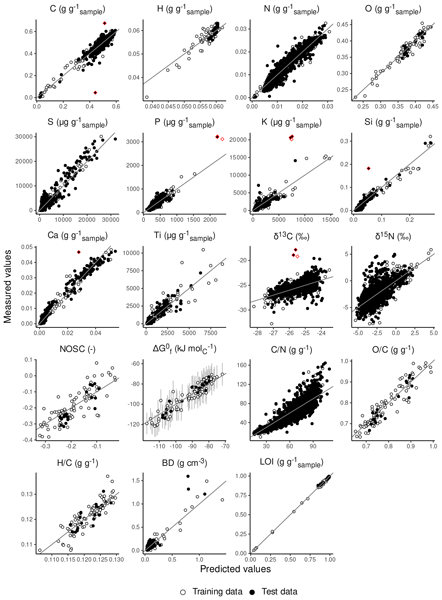
We developed models that predict physical and chemical peat properties from mid-infrared spectra (MIRS). These peat properties are necessary for modeling peatland dynamics. Compared to direct measurements of these properties, measurements of MIRS require less sample material and save time. Unlike existing models that focus on peat, the models developed here are openly available, relatively easy to use and have basic quality checks and estimates for prediction errors.
Henning Teickner, Edzer Pebesma, and Klaus-Holger Knorr
Earth Syst. Dynam., 16, 891–914, https://doi.org/10.5194/esd-16-891-2025, https://doi.org/10.5194/esd-16-891-2025, 2025
Short summary
Short summary
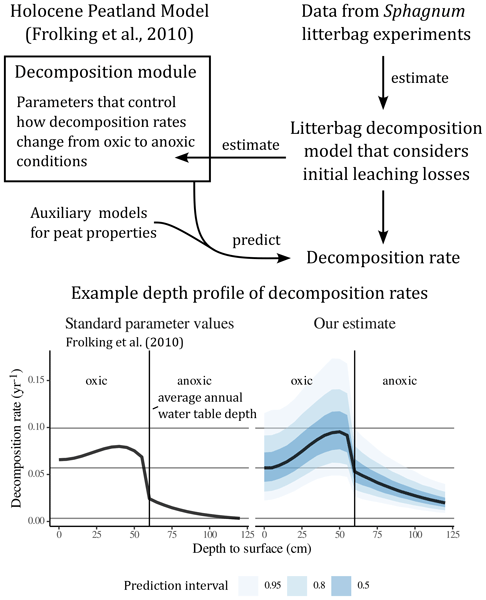
The Holocene Peatland Model (HPM) is a widely used peatland model to understand and predict long-term peatland dynamics. Here, we test whether the HPM can predict Sphagnum litterbag decomposition rates from oxic to anoxic conditions. Our results indicate that decomposition rates change more gradually from oxic to anoxic conditions and may be underestimated under anoxic conditions, possibly because the effect of water table fluctuations on decomposition rates is not considered.
Henning Teickner, Edzer Pebesma, and Klaus-Holger Knorr
Biogeosciences, 22, 417–433, https://doi.org/10.5194/bg-22-417-2025, https://doi.org/10.5194/bg-22-417-2025, 2025
Short summary
Short summary
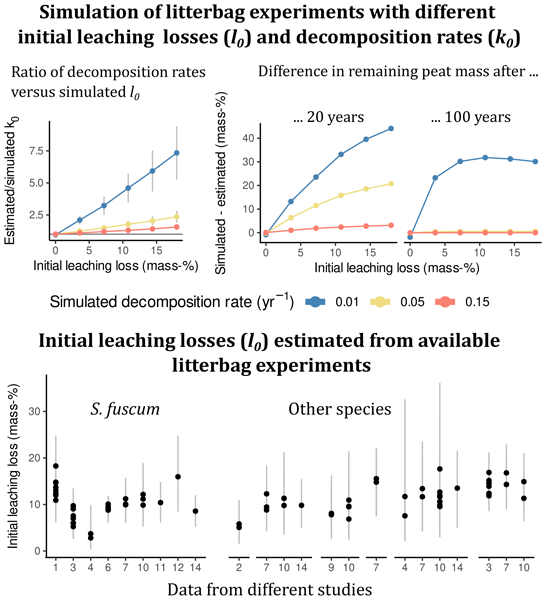
Decomposition rates for Sphagnum mosses, the main peat-forming plants in northern peatlands, are often derived from litterbag experiments. Here, we estimate initial leaching losses from available Sphagnum litterbag experiments and analyze how decomposition rates are biased when initial leaching losses are ignored. Our analyses indicate that initial leaching losses range between 3 to 18 mass-% and that this may result in overestimated mass losses when extrapolated to several decades.
Henning Teickner and Klaus-Holger Knorr
SOIL, 8, 699–715, https://doi.org/10.5194/soil-8-699-2022, https://doi.org/10.5194/soil-8-699-2022, 2022
Short summary
Short summary
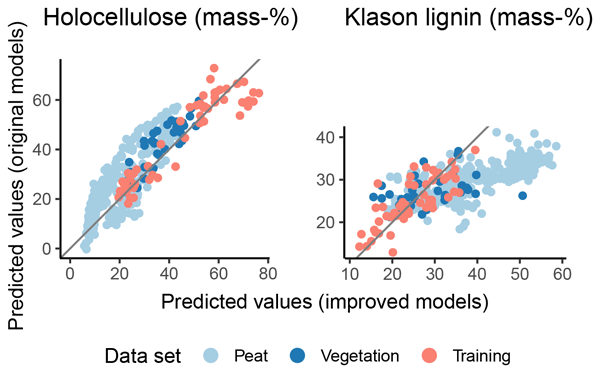
The chemical quality of biomass can be described with holocellulose (relatively easily decomposable by microorganisms) and Klason lignin (relatively recalcitrant) contents. Measuring both is laborious. In a recent study, models have been proposed which can predict both quicker from mid-infrared spectra. However, it has not been analyzed if these models make correct predictions for biomass in soils and how to improve them. We provide such a validation and a strategy for their improvement.
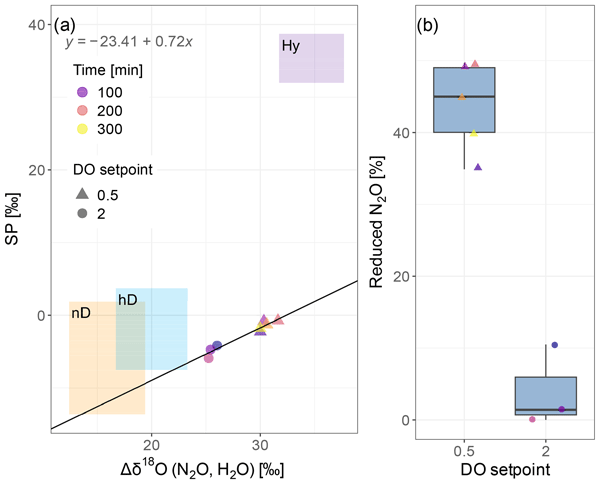
Hannes Keck, Laurence Strubbe, Paul M. Magyar, Adriano Joss, Andreas Froemelt, André Kupferschmid, Klaus-Holger Knorr, and Joachim Mohn
Atmos. Meas. Tech., 19, 6311–6326, https://doi.org/10.5194/amt-19-6311-2026, https://doi.org/10.5194/amt-19-6311-2026, 2026
Short summary
Short summary
We monitored nitrous oxide in a pilot wastewater treatment plant in real time to understand how microbes produce and remove this greenhouse gas. We designed and tested a laser-based analytical setup, with which we were able to show that denitrification is the main source of nitrous oxide emissions and that low oxygen concentrations enhances nitrous oxide removal. Our approach offers a new way to monitor the wastewater treatment processes and to cut climate-relevant nitrous oxide emissions.
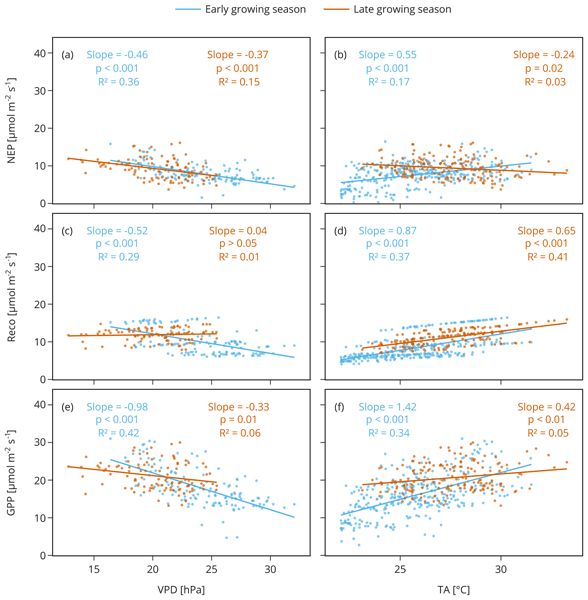
Nicolas Behrens, Klaus-Holger Knorr, Christoph Rückriem, and Mana Gharun
Biogeosciences, 23, 5071–5094, https://doi.org/10.5194/bg-23-5071-2026, https://doi.org/10.5194/bg-23-5071-2026, 2026
Short summary
Short summary
We analysed carbon fluxes and their response to climate in a drained bog. Annual budgets varied from net emissions to near-neutral. Warm spring temperatures increased CO2 uptake, a warm autumn increased emissions. Atmospheric drought early in the year reduced CO2 uptake more than later. Our results show that carbon fluxes from drained bogs are variable and the timing of climate anomalies controls their impact on carbon fluxes. This will be increasingly important with ongoing climate warming.
Lina Oskamp, Marta Pérez Rodríguez, Adelina Calean, Olaf Rienitz, Klaus-Holger Knorr, Kazumasa Oguri, Masashi Tsuchiya, Marco Benkhettab Sindlev, Stephan Krisch, Arianna Olivelli, Frank Wenzhöfer, Ronnie N. Glud, and Harald Biester
EGUsphere, https://doi.org/10.5194/egusphere-2026-3608, https://doi.org/10.5194/egusphere-2026-3608, 2026
Short summary
Short summary
Lead (Pb) isotopes in marine sediments are used as source tracers of Pb in the oceans. Recent studies suggested Pb isotope exchange on sinking particles, but it remained unknown if this affects isotope signatures. Our study on deep-sea sediments of the South Atlantic Ocean reveals that Pb isotope separation occurs in sinking particles and depends on the intensity of primary productivity.
Henning Teickner and Klaus-Holger Knorr
SOIL, 12, 497–519, https://doi.org/10.5194/soil-12-497-2026, https://doi.org/10.5194/soil-12-497-2026, 2026
Short summary
Short summary
We developed models that predict physical and chemical peat properties from mid-infrared spectra (MIRS). These peat properties are necessary for modeling peatland dynamics. Compared to direct measurements of these properties, measurements of MIRS require less sample material and save time. Unlike existing models that focus on peat, the models developed here are openly available, relatively easy to use and have basic quality checks and estimates for prediction errors.
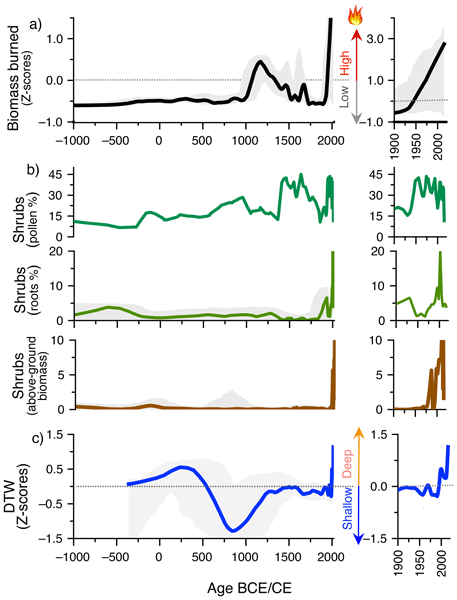
Angelica Feurdean, Randy Fulweber, Andrei-Cosmin Diaconu, Graeme T. Swindles, and Mariusz Gałka
Biogeosciences, 22, 6651–6667, https://doi.org/10.5194/bg-22-6651-2025, https://doi.org/10.5194/bg-22-6651-2025, 2025
Short summary
Short summary
We found low fire activity in northern Arctic Alaska from ~1000 BCE to 500 CE, and a marked increase post-1950 CE, when it exceeded any levels observed in the preceding millennia. Deepening of water tables and peatland drying associated with permafrost thaw have facilitated woody encroachment, leading to enhanced fire activity. This study highlights that moisture–vegetation–fire feedbacks significantly influence tundra fire regimes, with implications for ongoing Arctic greening and warming.
Henning Teickner, Edzer Pebesma, and Klaus-Holger Knorr
Earth Syst. Dynam., 16, 891–914, https://doi.org/10.5194/esd-16-891-2025, https://doi.org/10.5194/esd-16-891-2025, 2025
Short summary
Short summary
The Holocene Peatland Model (HPM) is a widely used peatland model to understand and predict long-term peatland dynamics. Here, we test whether the HPM can predict Sphagnum litterbag decomposition rates from oxic to anoxic conditions. Our results indicate that decomposition rates change more gradually from oxic to anoxic conditions and may be underestimated under anoxic conditions, possibly because the effect of water table fluctuations on decomposition rates is not considered.
Henning Teickner, Edzer Pebesma, and Klaus-Holger Knorr
Biogeosciences, 22, 417–433, https://doi.org/10.5194/bg-22-417-2025, https://doi.org/10.5194/bg-22-417-2025, 2025
Short summary
Short summary
Decomposition rates for Sphagnum mosses, the main peat-forming plants in northern peatlands, are often derived from litterbag experiments. Here, we estimate initial leaching losses from available Sphagnum litterbag experiments and analyze how decomposition rates are biased when initial leaching losses are ignored. Our analyses indicate that initial leaching losses range between 3 to 18 mass-% and that this may result in overestimated mass losses when extrapolated to several decades.
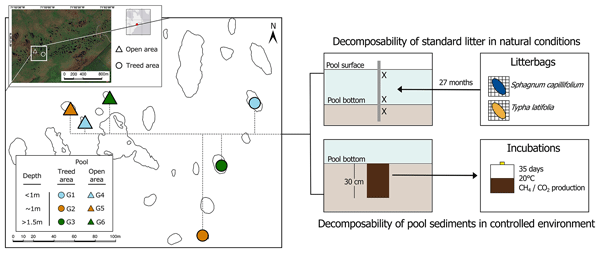
Julien Arsenault, Julie Talbot, Tim R. Moore, Klaus-Holger Knorr, Henning Teickner, and Jean-François Lapierre
Biogeosciences, 21, 3491–3507, https://doi.org/10.5194/bg-21-3491-2024, https://doi.org/10.5194/bg-21-3491-2024, 2024
Short summary
Short summary
Peatlands are among the largest carbon (C) sinks on the planet. However, peatland features such as open-water pools emit more C than they accumulate because of higher decomposition than production. With this study, we show that the rates of decomposition vary among pools and are mostly driven by the environmental conditions in pools rather than by the nature of the material being decomposed. This means that changes in pool number or size may modify the capacity of peatlands to accumulate C.
Carrie L. Thomas, Boris Jansen, Sambor Czerwiński, Mariusz Gałka, Klaus-Holger Knorr, E. Emiel van Loon, Markus Egli, and Guido L. B. Wiesenberg
Biogeosciences, 20, 4893–4914, https://doi.org/10.5194/bg-20-4893-2023, https://doi.org/10.5194/bg-20-4893-2023, 2023
Short summary
Short summary
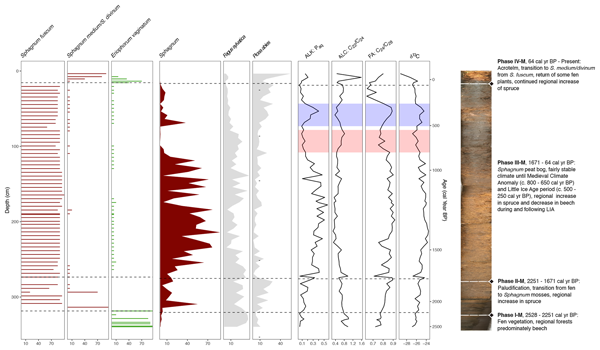
Peatlands are vital terrestrial ecosystems that can serve as archives, preserving records of past vegetation and climate. We reconstructed the vegetation history over the last 2600 years of the Beerberg peatland and surrounding area in the Thuringian Forest in Germany using multiple analyses. We found that, although the forest composition transitioned and human influence increased, the peatland remained relatively stable until more recent times, when drainage and dust deposition had an impact.
Laura Clark, Ian B. Strachan, Maria Strack, Nigel T. Roulet, Klaus-Holger Knorr, and Henning Teickner
Biogeosciences, 20, 737–751, https://doi.org/10.5194/bg-20-737-2023, https://doi.org/10.5194/bg-20-737-2023, 2023
Short summary
Short summary
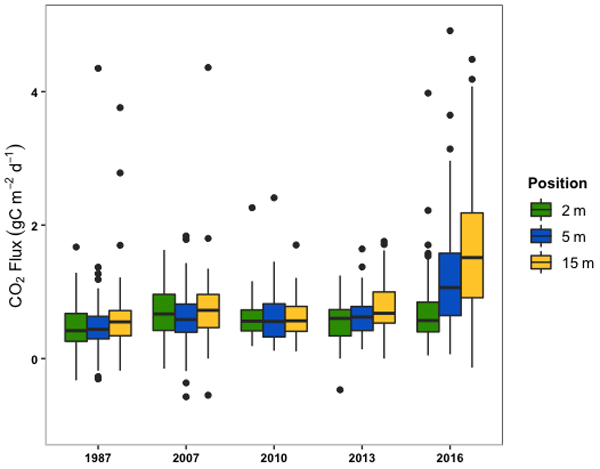
We determine the effect that duration of extraction has on CO2 and CH4 emissions from an actively extracted peatland. Peat fields had high net C emissions in the first years after opening, and these then declined to half the initial value for several decades. Findings contribute to knowledge on the atmospheric burden that results from these activities and are of use to industry in their life cycle reporting and government agencies responsible for greenhouse gas accounting and policy.
Matthias Koschorreck, Klaus Holger Knorr, and Lelaina Teichert
Biogeosciences, 19, 5221–5236, https://doi.org/10.5194/bg-19-5221-2022, https://doi.org/10.5194/bg-19-5221-2022, 2022
Short summary
Short summary
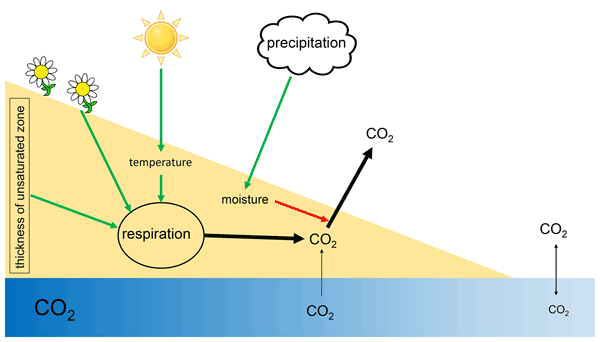
At low water levels, parts of the bottom of rivers fall dry. These beaches or mudflats emit the greenhouse gas carbon dioxide (CO2) to the atmosphere. We found that those emissions are caused by microbial reactions in the sediment and that they change with time. Emissions were influenced by many factors like temperature, water level, rain, plants, and light.
Henning Teickner and Klaus-Holger Knorr
SOIL, 8, 699–715, https://doi.org/10.5194/soil-8-699-2022, https://doi.org/10.5194/soil-8-699-2022, 2022
Short summary
Short summary
The chemical quality of biomass can be described with holocellulose (relatively easily decomposable by microorganisms) and Klason lignin (relatively recalcitrant) contents. Measuring both is laborious. In a recent study, models have been proposed which can predict both quicker from mid-infrared spectra. However, it has not been analyzed if these models make correct predictions for biomass in soils and how to improve them. We provide such a validation and a strategy for their improvement.
Cordula Nina Gutekunst, Susanne Liebner, Anna-Kathrina Jenner, Klaus-Holger Knorr, Viktoria Unger, Franziska Koebsch, Erwin Don Racasa, Sizhong Yang, Michael Ernst Böttcher, Manon Janssen, Jens Kallmeyer, Denise Otto, Iris Schmiedinger, Lucas Winski, and Gerald Jurasinski
Biogeosciences, 19, 3625–3648, https://doi.org/10.5194/bg-19-3625-2022, https://doi.org/10.5194/bg-19-3625-2022, 2022
Short summary
Short summary
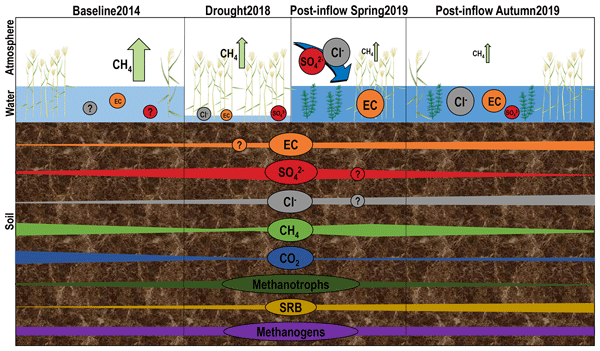
Methane emissions decreased after a seawater inflow and a preceding drought in freshwater rewetted coastal peatland. However, our microbial and greenhouse gas measurements did not indicate that methane consumers increased. Rather, methane producers co-existed in high numbers with their usual competitors, the sulfate-cycling bacteria. We studied the peat soil and aimed to cover the soil–atmosphere continuum to better understand the sources of methane production and consumption.
Liam Heffernan, Maria A. Cavaco, Maya P. Bhatia, Cristian Estop-Aragonés, Klaus-Holger Knorr, and David Olefeldt
Biogeosciences, 19, 3051–3071, https://doi.org/10.5194/bg-19-3051-2022, https://doi.org/10.5194/bg-19-3051-2022, 2022
Short summary
Short summary
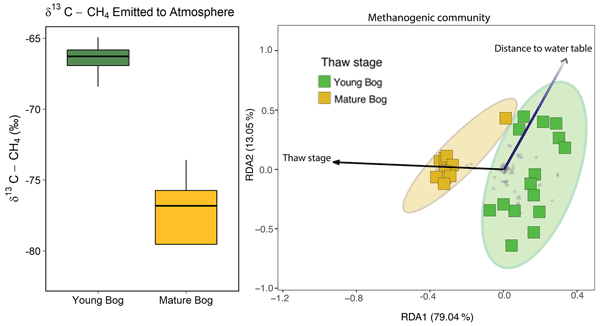
Permafrost thaw in peatlands leads to waterlogged conditions, a favourable environment for microbes producing methane (CH4) and high CH4 emissions. High CH4 emissions in the initial decades following thaw are due to a vegetation community that produces suitable organic matter to fuel CH4-producing microbes, along with warm and wet conditions. High CH4 emissions after thaw persist for up to 100 years, after which environmental conditions are less favourable for microbes and high CH4 emissions.
Angelica Feurdean, Andrei-Cosmin Diaconu, Mirjam Pfeiffer, Mariusz Gałka, Simon M. Hutchinson, Geanina Butiseaca, Natalia Gorina, Spassimir Tonkov, Aidin Niamir, Ioan Tantau, Hui Zhang, and Sergey Kirpotin
Clim. Past, 18, 1255–1274, https://doi.org/10.5194/cp-18-1255-2022, https://doi.org/10.5194/cp-18-1255-2022, 2022
Short summary
Short summary
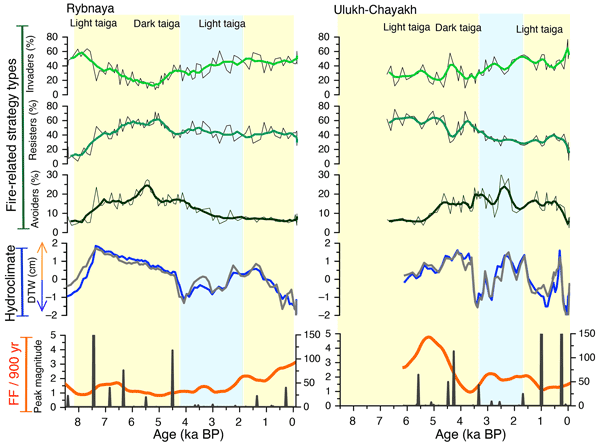
We used palaeoecological records from peatlands in southern Siberia. We showed that warmer climate conditions have lowered the water level and increased the fuel amount and flammability, consequently also increasing the frequency and severity of fires as well as the composition of tree types.

Ramona J. Heim, Andrey Yurtaev, Anna Bucharova, Wieland Heim, Valeriya Kutskir, Klaus-Holger Knorr, Christian Lampei, Alexandr Pechkin, Dora Schilling, Farid Sulkarnaev, and Norbert Hölzel
Biogeosciences, 19, 2729–2740, https://doi.org/10.5194/bg-19-2729-2022, https://doi.org/10.5194/bg-19-2729-2022, 2022
Short summary
Short summary
Fires will probably increase in Arctic regions due to climate change. Yet, the long-term effects of tundra fires on carbon (C) and nitrogen (N) stocks and cycling are still unclear. We investigated the long-term fire effects on C and N stocks and cycling in soil and aboveground living biomass.
We found that tundra fires did not affect total C and N stocks because a major part of the stocks was located belowground in soils which were largely unaltered by fire.
Cited articles
Agethen, S. and Knorr, K.-H.: Juncus Effusus mono-stands in restored cutover peat bogs – analysis of litter quality, controls of anaerobic decomposition, and the risk of secondary carbon loss, Soil Biol. Biochem., 117, 139–152, https://doi.org/10.1016/j.soilbio.2017.11.020, 2018. a
Arsenault, J., Talbot, J., Moore, T. R., Knorr, K.-H., Teickner, H., and Lapierre, J.-F.: Patterns and drivers of organic matter decomposition in peatland open-water pools, Biogeosciences, 21, 3491–3507, https://doi.org/10.5194/bg-21-3491-2024, 2024a. a, b, c, d
Arsenault, J., Talbot, J., Moore, T. R., Knorr, K.-H., Teickner, H., and Lapierre, J.-F.: Patterns and Drivers of Organic Matter Decomposition in Peatland Open-Water Pools, Zenodo [code], https://doi.org/10.5281/zenodo.10581235, 2024b. a, b, c
Artz, R. R., Chapman, S. J., Jean Robertson, A., Potts, J. M., Laggoun-Défarge, F., Gogo, S., Comont, L., Disnar, J.-R., and Francez, A.-J.: FTIR spectroscopy can be used as a screening tool for organic matter quality in regenerating cutover peatlands, Soil Biol. Biochem., 40, 515–527, https://doi.org/10.1016/j.soilbio.2007.09.019, 2008. a
Bärlocher, F.: Pitfalls of traditional techniques when studying decomposition of vascular plant remains in aquatic habitats, Limnetica, 13, 1–11, 1997. a
Bauer, I. E.: Modelling effects of litter quality and environment on peat accumulation over different time-scales: peat accumulation over different time-scales, J. Ecol., 92, 661–674, https://doi.org/10.1111/j.0022-0477.2004.00905.x, 2004. a
Beer, J. and Blodau, C.: Transport and thermodynamics constrain belowground carbon turnover in a northern peatland, Geochim. Cosmochim. Ac., 71, 2989–3002, https://doi.org/10.1016/j.gca.2007.03.010, 2007. a, b
Beleites, C. and Sergo, V.: hyperSpec: A Package to Handle Hyperspectral Data Sets in R, CRAN [code], https://doi.org/10.32614/CRAN.package.hyperSpec, 2021. a
Belyea, L. R. and Baird, A. J.: Beyond “The Limits to Peat Bog Growth”: cross-scale feedback in peatland developent, Ecol. Monogr., 76, 299–322, https://doi.org/10.1890/0012-9615(2006)076[0299:BTLTPB]2.0.CO;2, 2006. a
Bengtsson, F., Rydin, H., Baltzer, J., Bragazza, L., Bu, Z.-J., Caporn, S., Dorrepaal, E., Flatberg, K. I., Galanina, O., Gałka, M., Ganeva, A., Goia, I., Goncharova, N., Hajek, M., Haraguchi, A., Harris, L., Humphreys, E., Jiroušek, M., Kajukało, K., Karofeld, E., Koronatova, N., Kosykh, N., Laine, A., Lamentowicz, M., Lapshina, E., Limpens, J., Linkosalmi, M., Ma, J., Mauritz, M., Mitchell, E., Munir, T., Natali, S., Natcheva, R., Philippov, D., Rice, S., Robinson, S., Robroek, B., Rochefort, L., Singer, D., Stenøien, H., Tuittila, E.-S., Vellak, K., Waddington, J. M., Granath, G., and Payne, R. J.: Environmental Drivers of Sphagnum Growth in Peatlands across the Holarctic Region, DRYAD [data set], https://doi.org/10.5061/DRYAD.1NS1RN8RM, 2020. a
Bengtsson, F., Rydin, H., Baltzer, J. L., Bragazza, L., Bu, Z.-J., Caporn, S. J. M., Dorrepaal, E., Flatberg, K. I., Galanina, O., Gałka, M., Ganeva, A., Goia, I., Goncharova, N., Hájek, M., Haraguchi, A., Harris, L. I., Humphreys, E., Jiroušek, M., Kajukało, K., Karofeld, E., Koronatova, N. G., Kosykh, N. P., Laine, A. M., Lamentowicz, M., Lapshina, E., Limpens, J., Linkosalmi, M., Ma, J.-Z., Mauritz, M., Mitchell, E. A. D., Munir, T. M., Natali, S. M., Natcheva, R., Payne, R. J., Philippov, D. A., Rice, S. K., Robinson, S., Robroek, B. J. M., Rochefort, L., Singer, D., Stenøien, H. K., Tuittila, E.-S., Vellak, K., Waddington, J. M., and Granath, G.: Environmental drivers of Sphagnum growth in peatlands across the holarctic region, J. Ecol., 109, 417–431, https://doi.org/10.1111/1365-2745.13499, 2021. a
Biester, H., Knorr, K.-H., Schellekens, J., Basler, A., and Hermanns, Y.-M.: Comparison of different methods to determine the degree of peat decomposition in peat bogs, Biogeosciences, 11, 2691–2707, https://doi.org/10.5194/bg-11-2691-2014, 2014. a, b, c, d
Blaauw, M., Christen, J. A., and Aquino Lopez, M. A.: rbacon: Age-depth Modelling Using Bayesian Statistics, CRAN [data set], https://doi.org/10.32614/CRAN.package.rbacon, 2017. a
Blodau, C., Siems, M., and Beer, J.: Experimental burial inhibits methanogenesis and anaerobic decomposition in water-saturated peats, Environ. Sci. Technol., 45, 9984–9989, https://doi.org/10.1021/es201777u, 2011. a, b
Bona, K. A., Hilger, A., Burgess, M., Wozney, N., and Shaw, C.: A peatland productivity and decomposition parameter database, Ecology, 99, 2406–2406, https://doi.org/10.1002/ecy.2462, 2018. a
Boothroyd, I. M., Worrall, F., Moody, C. S., Clay, G. D., Abbott, G. D., and Rose, R.: Sulfur constraints on the carbon cycle of a blanket bog peatland, J. Geophys. Res.-Biogeo., 126, https://doi.org/10.1029/2021JG006435, 2021. a
Broder, T., Blodau, C., Biester, H., and Knorr, K. H.: Peat decomposition records in three pristine ombrotrophic bogs in southern Patagonia, Biogeosciences, 9, 1479–1491, https://doi.org/10.5194/bg-9-1479-2012, 2012. a, b, c, d
Bürkner, P.-C.: Advanced Bayesian multilevel modeling with the R package brms, R J., 10, 395–411, https://doi.org/10.32614/RJ-2018-017, 2018. a
Chapman, S., Campbell, C., Fraser, A., and Puri, G.: FTIR spectroscopy of peat in and bordering scots pine woodland: relationship with chemical and biological properties, Soil Biol. Biochem., 33, 1193–1200, https://doi.org/10.1016/S0038-0717(01)00023-2, 2001. a, b
Clymo, R. S.: The limits to peat bog growth, Philos. T. Roy. Soc. B, 303, 51, https://doi.org/10.1098/rstb.1984.0002, 1984. a
Clymo, R. S., Turunen, J., and Tolonen, K.: Carbon accumulation in peatland, Oikos, 81, 368–388, https://doi.org/10.2307/3547057, 1998. a, b
Cocozza, C., D'Orazio, V., Miano, T. M., and Shotyk, W.: Characterization of solid and aqueous phases of a peat bog profile using molecular fluorescence spectroscopy, ESR and FT-IR, and comparison with physical properties, Org. Geochem., 34, 49–60, https://doi.org/10.1016/S0146-6380(02)00208-5, 2003. a
Cotrufo, M. F. and Pressler, Y.: Isotope Mixing, Oxford University PressOxford, 1st edn., https://doi.org/10.1093/oso/9780198854494.003.0004, 53–70, 2023. a
Diaconu, A.-C., Tanţău, I., Knorr, K.-H., Borken, W., Feurdean, A., Panait, A., and Gałka, M.: A multi-proxy analysis of hydroclimate trends in an ombrotrophic bog over the last millennium in the eastern carpathians of Romania, Palaeogeogr. Palaeocl., 538, 109390, https://doi.org/10.1016/j.palaeo.2019.109390, 2020. a
Drollinger, S., Kuzyakov, Y., and Glatzel, S.: Effects of peat decomposition on δ13C and δ15N depth profiles of alpine bogs, Catena, 178, 1–10, https://doi.org/10.1016/j.catena.2019.02.027, 2019. a
Drollinger, S., Knorr, K.-H., Knierzinger, W., and Glatzel, S.: Peat decomposition proxies of alpine bogs along a degradation gradient, Geoderma, 369, 114331, https://doi.org/10.1016/j.geoderma.2020.114331, 2020. a
Dykes, A. P.: Tensile strength of peat: laboratory measurement and role in Irish blanket bog failures, Landslides, 5, 417–429, https://doi.org/10.1007/s10346-008-0136-1, 2008. a
Frolking, S., Roulet, N. T., Moore, T. R., Richard, P. J. H., Lavoie, M., and Muller, S. D.: Modeling northern peatland decomposition and peat accumulation, Ecosystems, 4, 479–498, https://doi.org/10.1007/s10021-001-0105-1, 2001. a, b, c, d
Frolking, S., Roulet, N. T., Tuittila, E., Bubier, J. L., Quillet, A., Talbot, J., and Richard, P. J. H.: A new model of Holocene peatland net primary production, decomposition, water balance, and peat accumulation, Earth Syst. Dynam., 1, 1–21, https://doi.org/10.5194/esd-1-1-2010, 2010. a, b, c, d, e, f, g, h
Gałka, M., Diaconu, A.-C., Feurdean, A., Loisel, J., Teickner, H., Broder, T., and Knorr, K.-H.: Relations of fire, palaeohydrology, vegetation succession, and carbon accumulation, as reconstructed from a mountain bog in the Harz Mountains (Germany) during the last 6200 years, Geoderma, 424, 115991, https://doi.org/10.1016/j.geoderma.2022.115991, 2022a. a
Gałka, M., Hölzer, A., Feurdean, A., Loisel, J., Teickner, H., Diaconu, A.-C., Szal, M., Broder, T., and Knorr, K.-H.: Insight into the factors of mountain bog and forest development in the Schwarzwald Mts.: implications for ecological restoration, Ecol. Indic., 140, 109039, https://doi.org/10.1016/j.ecolind.2022.109039, 2022b. a
Krüger, J. P., Alewell, C., Minkkinen, K., Szidat, S., and Leifeld, J.: Calculating carbon changes in peat soils drained for forestry with four different profile-based methods, Forest Ecol. Manag., 381, 29–36, https://doi.org/10.1016/j.foreco.2016.09.006, 2016. a
Leifeld, J., Gubler, L., and Grünig, A.: Organic matter losses from temperate ombrotrophic peatlands: an evaluation of the ash residue method, Plant Soil, 341, 349–361, https://doi.org/10.1007/s11104-010-0649-y, 2011a. a
Leifeld, J., Müller, M., and Fuhrer, J.: Peatland subsidence and carbon loss from drained temperate fens, Soil Use Manage., 27, 170–176, https://doi.org/10.1111/j.1475-2743.2011.00327.x, 2011b. a
Limpens, J. and Berendse, F.: How litter quality affects mass loss and N loss from decomposing Sphagnum, Oikos, 103, 537–547, https://doi.org/10.1034/j.1600-0706.2003.12707.x, 2003. a, b
Loisel, J., Yu, Z., Beilman, D. W., Camill, P., Alm, J., Amesbury, M. J., Anderson, D., Andersson, S., Bochicchio, C., Barber, K., Belyea, L. R., Bunbury, J., Chambers, F. M., Charman, D. J., De Vleeschouwer, F., Fiałkiewicz-Kozieł, B., Finkelstein, S. A., Gałka, M., Garneau, M., Hammarlund, D., Hinchcliffe, W., Holmquist, J., Hughes, P., Jones, M. C., Klein, E. S., Kokfelt, U., Korhola, A., Kuhry, P., Lamarre, A., Lamentowicz, M., Large, D., Lavoie, M., MacDonald, G., Magnan, G., Mäkilä, M., Mallon, G., Mathijssen, P., Mauquoy, D., McCarroll, J., Moore, T. R., Nichols, J., O'Reilly, B., Oksanen, P., Packalen, M., Peteet, D., Richard, P. J., Robinson, S., Ronkainen, T., Rundgren, M., Sannel, A. B. K., Tarnocai, C., Thom, T., Tuittila, E.-S., Turetsky, M., Väliranta, M., van der Linden, M., van Geel, B., van Bellen, S., Vitt, D., Zhao, Y., and Zhou, W.: A database and synthesis of northern peatland soil properties and holocene carbon and nitrogen accumulation, Holocene, 24, 1028–1042, https://doi.org/10.1177/0959683614538073, 2014. a
Mahdiyasa, A. W., Large, D. J., Muljadi, B. P., and Icardi, M.: Modelling the influence of mechanical-ecohydrological feedback on the nonlinear dynamics of peatlands, Ecol. Model., 478, 110299, https://doi.org/10.1016/j.ecolmodel.2023.110299, 2023. a, b, c
Mathijssen, P. J., Gałka, M., Borken, W., and Knorr, K.-H.: Plant communities control long term carbon accumulation and biogeochemical gradients in a Patagonian bog, Sci. Total Environ., 684, 670–681, https://doi.org/10.1016/j.scitotenv.2019.05.310, 2019. a
Moore, T. R.: Growth and net production of Sphagnum at five fen sites, subarctic eastern Canada, Can. J. Botany, 67, 1203–1207, https://doi.org/10.1139/b89-156, 1989. a
Moore, T. R., Knorr, K.-H., Thompson, L., Roy, C., and Bubier, J. L.: The effect of long-term fertilization on peat in an ombrotrophic bog, Geoderma, 343, 176–186, https://doi.org/10.1016/j.geoderma.2019.02.034, 2019. a
Morris, P. J., Baird, A. J., and Belyea, L. R.: The DigiBog peatland development model 2: ecohydrological simulations in 2D, Ecohydrology, 5, 256–268, https://doi.org/10.1002/eco.229, 2012. a
Morris, P. J., Baird, A. J., Young, D. M., and Swindles, G. T.: Untangling climate signals from autogenic changes in long-term peatland development, Geophys. Res. Lett., 42, 10,788–10,797, https://doi.org/10.1002/2015GL066824, 2015b. a
Parikh, S. J., Goyne, K. W., Margenot, A. J., Mukome, F. N., and Calderón, F. J.: Soil chemical insights provided through vibrational spectroscopy, in: Advances in Agronomy, Vol. 126, Elsevier, https://doi.org/10.1016/B978-0-12-800132-5.00001-8, 1–148, 2014. a
Piironen, J. and Vehtari, A.: Sparsity information and regularization in the horseshoe and other shrinkage priors, Electron. J. Stat., 11, https://doi.org/10.1214/17-EJS1337SI, 2017a. a
Piironen, J. and Vehtari, A.: On the Hyperprior Choice for the Global Shrinkage Parameter in the Horseshoe Prior, arXiv [preprint], https://doi.org/10.48550/arXiv.1610.05559, 2017b. a, b
Quillet, A., Frolking, S., Garneau, M., Talbot, J., and Peng, C.: Assessing the role of parameter interactions in the sensitivity analysis of a model of peatland dynamics, Ecol. Model., 248, 30–40, https://doi.org/10.1016/j.ecolmodel.2012.08.023, 2013. a, b
Quillet, A., Garneau, M., Van Bellen, S., Frolking, S., and Tuittila, E.-S.: Integration of palaeohydrological proxies into a peatland model: a new tool for palaeoecological studies, Ecohydrology, 8, 214–229, https://doi.org/10.1002/eco.1501, 2015. a
Ramirez, J. A., Peleg, N., Baird, A. J., Young, D. M., Morris, P. J., Larocque, M., and Garneau, M.: Modelling peatland development in high-boreal Quebec, Canada, with DigiBog_Boreal, Ecol. Model., 478, 110298, https://doi.org/10.1016/j.ecolmodel.2023.110298, 2023. a, b, c
Reader, R. J. and Stewart, J. M.: The relationship between net primary production and accumulation for a peatland in southeastern Manitoba, Ecology, 53, 1024–1037, https://doi.org/10.2307/1935415, 1972. a
Reuter, H., Gensel, J., Elvert, M., and Zak, D.: Infrared Spectra (FTIR) of Phragmites
Australis Litter, Initial and after Anoxic Decomposition in Three Wetland Substrates, PANGAEA [data set], https://doi.org/10.1594/PANGAEA.902069, 2019a. a, b, c
Reuter, H., Gensel, J., Elvert, M., and Zak, D.: CuO Lignin, and Bulk Decomposition Data of a 75-Day Anoxic Phragmites Australis Litter Decomposition Experiment in Soil Substrates from Three Northeast German Wetlands, PANGAEA [data set], https://doi.org/10.1594/PANGAEA.902176, 2019b. a, b
Reuter, H., Gensel, J., Elvert, M., and Zak, D.: Evidence for preferential protein depolymerization in wetland soils in response to external nitrogen availability provided by a novel FTIR routine, Biogeosciences, 17, 499–514, https://doi.org/10.5194/bg-17-499-2020, 2020. a, b, c
Rochefort, L., Vitt, D. H., and Bayley, S. E.: Growth, production, and decomposition dynamics of Sphagnum under natural and experimentally acidified conditions, Ecology, 71, 1986–2000, https://doi.org/10.2307/1937607, 1990. a
Scheffer, R. A., Van Logtestijn, R. S. P., and Verhoeven, J. T. A.: Decomposition of Carex and Sphagnum litter in two mesotrophic fens differing in dominant plant species, Oikos, 92, 44–54, https://doi.org/10.1034/j.1600-0706.2001.920106.x, 2001. a, b
Shao, S., Wu, J., He, H., and Roulet, N.: Integrating McGill Wetland Model (MWM) with peat cohort tracking and microbial controls, Sci. Total Environ., 806, 151223, https://doi.org/10.1016/j.scitotenv.2021.151223, 2022. a
Sivula, T., Magnusson, M., Matamoros, A. A., and Vehtari, A.: Uncertainty in Bayesian Leave-One-out Cross-Validation Based Model Comparison, arXiv [preprint], https://doi.org/10.48550/arXiv.2008.10296, 2022. a
Stan Development Team: Stan Modeling Language Users Guide and Reference Manual, 2.36.0, 2021. a
Szumigalski, A. R.: Production and Decomposition of Vegetation along a Wetland Gradient in Central Alberta, University of Alberta Libraries, https://doi.org/10.7939/R3B27PW45, 1995. a
Tatzber, M., Stemmer, M., Spiegel, H., Katzlberger, C., Haberhauer, G., and Gerzabek, M. H.: An alternative method to measure carbonate in soils by FT-IR spectroscopy, Environ. Chem. Lett., 5, 9–12, https://doi.org/10.1007/s10311-006-0079-5, 2007. a
Teickner, H.: ir: Functions to Handle and Preprocess Infrared Spectra, Comprehensive R Archive Network, CRAN [data set], https://doi.org/10.32614/CRAN.package.ir, 2022. a
Teickner, H.: irpeatmodels: Mid-infrared Prediction Models for Peat, Zenodo [code], https://doi.org/10.5281/zenodo.17187912, 2025a. a, b, c, d
Teickner, H.: mmgm: Estimates the Degree of Decomposition of Peat with a Mixing Model for γMIRS, Zenodo [code], https://doi.org/10.5281/zenodo.17209338, 2025b. a, b
Teickner, H. and Hodgkins, S.: irpeat 0.3.0: Functions to Analyze Mid-Infrared Spectra of Peat Samples (Version v0.3.0), Zenodo [code], https://doi.org/10.5281/zenodo.17200517, 2025. a
Teickner, H. and Knorr, K.-H.: Improving models to predict holocellulose and Klason lignin contents for peat soil organic matter with mid-infrared spectra, SOIL, 8, 699–715, https://doi.org/10.5194/soil-8-699-2022, 2022. a, b
Teickner, H., Agethen, S., Berger, S., Boelsen, R. I., Borken, W., Bragazza, L., Broder, T., De La Cruz, F. B., Diaconu, A.-C., Dise, N. B., Drollinger, S., Estop-Aragonés, C., Gałka, M., Martí, M., Glatzel, S., Groß, J., Harris, L., Heffernan, L., Hodgkins, S. B., Hömberg-Grandjean, A., Hoppe, H., Kleinebecker, T., Knierzinger, W., Liu, H., Mathijssen, P. J., Mollmann, C., Schuster, W., Närtker, L., Olefeldt, D., Pancotto, V., Pelletier, N., Reuter, H., Robroek, B., Svensson, B., Talbot, J., Thompson, L., Worrall, F., Yu, Z.-G., and Knorr, K.-H.: Peatland Mid-Infrared Database (1.0.0), Zenodo [code], https://doi.org/10.5281/zenodo.17092587, 2025a. a, b
Teickner, H., Arsenault, J., Galka, M., and Knorr, K.-H.: Compendium of R Code and Data for “Estimation of the Degree of Decomposition of Peat and Past Net Primary Production from Mid-Infrared Spectra”, Zenodo [code], https://doi.org/10.5281/zenodo.17209547, 2025b. a
Teickner, H., Pebesma, E., and Knorr, K.-H.: A synthesis of Sphagnum litterbag experiments: initial leaching losses bias decomposition rate estimates, Biogeosciences, 22, 417–433, https://doi.org/10.5194/bg-22-417-2025, 2025c. a, b
Teickner, H., Pebesma, E., and Knorr, K.-H.: Peat oxic and anoxic controls of Sphagnum decomposition rates in the Holocene Peatland Model decomposition module estimated from litterbag data, Earth Syst. Dynam., 16, 891–914, https://doi.org/10.5194/esd-16-891-2025, 2025d. a, b
Teickner, H., Agethen, S., Berger, S., Boelsen, R. I., Borken, W., Bragazza, L., Broder, T., De La Cruz, F. B., Diaconu, A.-C., Dise, N. B., Drollinger, S., Estop-Aragonés, C., Gałka, M., Martí, M., Glatzel, S., Groß, J., Harris, L., Heffernan, L., Hodgkins, S. B., Hömberg-Grandjean, A., Hoppe, H., Kleinebecker, T., Knierzinger, W., Liu, H., Mathijssen, P., Mollmann, C., Schuster, W., Närtker, L., Olefeldt, D., Pancotto, V., Pelletier, N., Reuter, H., Robroek, B., Svensson, B. H., Talbot, J., Thompson, L., Worrall, F., Yu, Z.-G., and Knorr, K.-H.: Peatland mid-infrared database, Scientific Data, 13, 538, https://doi.org/10.1038/s41597-026-06986-x, 2026a. a
Teickner, H., Arsenault, J., Galka, M., and Knorr, K.-H.: Compendium of R Code and Data for “Estimation of the Degree of Decomposition of Peat and Past Net Primary Production from Mid-Infrared Spectra”, Zenodo [code], https://doi.org/10.5281/zenodo.21574541, 2026b. a
Tfaily, M. M., Cooper, W. T., Kostka, J. E., Chanton, P. R., Schadt, C. W., Hanson, P. J., Iversen, C. M., and Chanton, J. P.: Organic matter transformation in the peat column at marcell experimental forest: humification and vertical stratification: organic matter dynamics, J. Geophys. Res.-Biogeo., 119, 661–675, https://doi.org/10.1002/2013JG002492, 2014. a
Thormann, M. N. and Bayley, S. E.: Aboveground net primary production along a bog-fen-marsh gradient in southern boreal Alberta, Canada, Écoscience, 4, 374–384, https://doi.org/10.1080/11956860.1997.11682416, 1997. a
Treat, C. C., Jones, M. C., Alder, J., and Frolking, S.: Hydrologic controls on peat permafrost and carbon processes: new insights from past and future modeling, Frontiers in Environmental Science, 10, 892925, https://doi.org/10.3389/fenvs.2022.892925, 2022. a, b
Tuittila, E.-S., Juutinen, S., Frolking, S., Väliranta, M., Laine, A. M., Miettinen, A., Seväkivi, M.-L., Quillet, A., and Merilä, P.: Wetland chronosequence as a model of peatland development: vegetation succession, peat and carbon accumulation, Holocene, 23, 25–35, https://doi.org/10.1177/0959683612450197, 2013. a
Vehtari, A., Gabry, J., Magnusson, M., Yao, Y., Bürkner, P.-C., Paananen, T., Gelman, A., Goodrich, B., and Piironen, J.: loo: Efficient Leave-One-out Cross-Validation and WAIC for Bayesian Models, CRAN [code], https://doi.org/10.32614/CRAN.package.loo, 2019. a
Vehtari, A., Gelman, A., Simpson, D., Carpenter, B., and Bürkner, P.-C.: Rank-normalization, folding, and localization: an improved
Viscarra Rossel, R. A., Shen, Z., Ramirez Lopez, L., Behrens, T., Shi, Z., Wetterlind, J., Sudduth, K. A., Stenberg, B., Guerrero, C., Gholizadeh, A., Ben-Dor, E., St Luce, M., and Orellano, C.: An imperative for soil spectroscopic modelling is to think global but fit local with transfer learning, Earth-Sci. Rev., 254, 104797, https://doi.org/10.1016/j.earscirev.2024.104797, 2024. a
Waddington, J. M., Morris, P. J., Kettridge, N., Granath, G., Thompson, D. K., and Moore, P. A.: Hydrological feedbacks in northern peatlands, Ecohydrology, 8, 113–127, https://doi.org/10.1002/eco.1493, 2015. a
Wadoux, A. M.-C., Malone, B., Minasny, B., Fajardo, M., and McBratney, A. B.: Soil Spectral Inference with R: Analysing Digital Soil Spectra Using the R Programming Environment, Progress in Soil Science, Springer International Publishing, Cham, https://doi.org/10.1007/978-3-030-64896-1, 2021. a
Wallace, W. E. and NIST Mass Spectrometry Data Center: Infrared spectra, in: NIST Chemistry WebBook, NIST Standard Reference Database 69, National Institute of Standards and Technology, Gaithersburg MD, 20899, https://doi.org/10.18434/T4D303, 1997. a, b
Wieder, R. K., Vile, M. A., Albright, C. M., Scott, K. D., Vitt, D. H., Quinn, J. C., and Burke-Scoll, M.: Effects of altered atmospheric nutrient deposition from Alberta oil sands development on Sphagnum Fuscum growth and C, N and S accumulation in peat, Biogeochemistry, 129, 1–19, https://doi.org/10.1007/s10533-016-0216-6, 2016. a
Wieder, R. K., Vitt, D. H., Vile, M. A., Graham, J. A., Hartsock, J. A., Fillingim, H., House, M., Quinn, J. C., Scott, K. D., Petix, M., and McMillen, K. J.: Experimental nitrogen addition alters structure and function of a boreal bog: critical load and thresholds revealed, Ecol. Monogr., 89, https://doi.org/10.1002/ecm.1371, 2019. a
Worrall, F.: Sulphur Constraints on the Carbon Cycle of a Blanket Bog Peatland, Durham University [data set], https://doi.org/10.15128/R2PK02C9794, 2021. a
Young, D. M., Baird, A. J., Morris, P. J., and Holden, J.: Simulating the long-term impacts of drainage and restoration on the ecohydrology of peatlands, Water Resour. Res., 53, 6510–6522, https://doi.org/10.1002/2016WR019898, 2017. a
Young, D. M., Baird, A. J., Gallego-Sala, A. V., and Loisel, J.: A cautionary tale about using the apparent carbon accumulation rate (aCAR) obtained from peat cores, Sci. Rep.-UK, 11, 9547, https://doi.org/10.1038/s41598-021-88766-8, 2021. a
Zaccone, C., Plaza, C., Ciavatta, C., Miano, T. M., and Shotyk, W.: Advances in the determination of humification degree in peat since Achard (1786): applications in geochemical and paleoenvironmental studies, Earth-Sci. Rev., 185, 163–178, https://doi.org/10.1016/j.earscirev.2018.05.017, 2018. a
Short summary
We present a method to estimate the degree of decomposition (fraction of initial mass remaining) of peat from mid-infrared spectra, which also allows to reconstruct the initial mass (aboveground net primary production). Both quantities are required to estimate the mass and carbon balance of peatlands and are useful to model peat physical and hydraulic properties. The approach is therefore useful to test and improve peatland models and our understanding of the long-term peatland carbon cycle.
We present a method to estimate the degree of decomposition (fraction of initial mass remaining)...


Altmetrics
Final-revised paper
Preprint