
Articles | Volume 23, issue 16
https://doi.org/10.5194/bg-23-5879-2026
© Author(s) 2026. This work is distributed under
the Creative Commons Attribution 4.0 License.
the Creative Commons Attribution 4.0 License.
https://doi.org/10.5194/bg-23-5879-2026
© Author(s) 2026. This work is distributed under
the Creative Commons Attribution 4.0 License.
the Creative Commons Attribution 4.0 License.
Research article
| 
25 Aug 2026
Research article |
| 25 Aug 2026
| 25 Aug 2026
Geochemical characteristics of suspended particulate matter around Piscadera Bay and its influence on nearshore ecosystems, Curaçao (Caribbean Sea)
Virginia Sánchez Barranco
CORRESPONDING AUTHOR

Royal Netherlands Institute for Sea Research (NIOZ), department of Ocean Systems, Den Burg, the Netherlands
Nienke C. J. van de Loosdrecht
Department Freshwater and Marine Ecology (FAME), Institute for Biodiversity and Ecosystem Dynamics (IBED), University of Amsterdam, Amsterdam, the Netherlands
Furu Mienis
Royal Netherlands Institute for Sea Research (NIOZ), department of Ocean Systems, Den Burg, the Netherlands
Jasper M. de Goeij
Department Freshwater and Marine Ecology (FAME), Institute for Biodiversity and Ecosystem Dynamics (IBED), University of Amsterdam, Amsterdam, the Netherlands
Rick Hennekam
Royal Netherlands Institute for Sea Research (NIOZ), department of Ocean Systems, Den Burg, the Netherlands
Gert-Jan Reichart
Royal Netherlands Institute for Sea Research (NIOZ), department of Ocean Systems, Den Burg, the Netherlands
Department of Earth Sciences, Faculty of Geosciences, Utrecht University, Budapestlaan 4, 3584 CD Utrecht, the Netherlands
Jan-Berend W. Stuut
Royal Netherlands Institute for Sea Research (NIOZ), department of Ocean Systems, Den Burg, the Netherlands
Vrije Universiteit Amsterdam (VU Amsterdam), Faculty of Science, Department of Earth Sciences, Amsterdam, the Netherlands
Lennart J. de Nooijer
Royal Netherlands Institute for Sea Research (NIOZ), department of Ocean Systems, Den Burg, the Netherlands
Related authors
No articles found.
Avner Gross, Tana Wood, Jan-Berend Stuut, Eliezer Halpert, and Anton Lokshin
EGUsphere, https://doi.org/10.5194/egusphere-2026-4320, https://doi.org/10.5194/egusphere-2026-4320, 2026
This preprint is open for discussion and under review for Biogeosciences (BG).
Short summary
Short summary
African dust supplies phosphorus to Caribbean forests, but its fate after deposition is poorly understood. In a Puerto Rican tropical forest, we found that dust phosphorus added to soil rapidly entered less available pools, whereas contact with leaf surfaces increased its labile fraction and promoted uptake of dust-derived material. These results suggest that forest canopies may provide an overlooked pathway for processing atmospheric phosphorus before it reaches the soil.
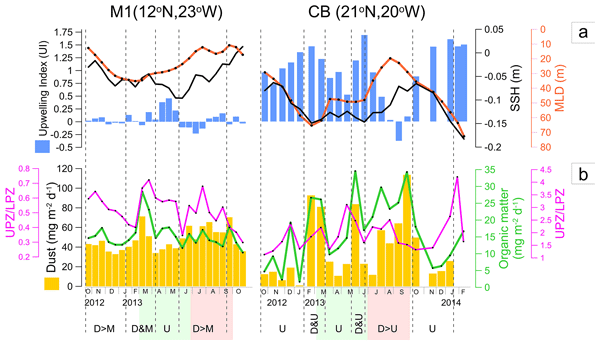
Catarina V. Guerreiro, Bror F. Jonsson, Peter Land, Javier Arístegui, Jan-Berend Stuut, Afonso Ferreira, Gavin H. Tilstone, Vanda Brotas, and Steve B. Groom
Biogeosciences, 23, 5133–5161, https://doi.org/10.5194/bg-23-5133-2026, https://doi.org/10.5194/bg-23-5133-2026, 2026
Short summary
Short summary
This study examines how winds, ocean currents, and Saharan dust influence the transfer of carbon-rich material from surface waters to the deep open ocean off NW Africa. By tracking seawater pathways and sinking particles throughout the year, the research shows that winter-spring upwelling drives offshore export, while summer dust deposition contributes through ballasting and episodic fertilisation. This study improves our understanding of the drivers controlling open ocean export production.
Yannick F. Bats, Appy Sluijs, and Gert-Jan Reichart
EGUsphere, https://doi.org/10.5194/egusphere-2026-3713, https://doi.org/10.5194/egusphere-2026-3713, 2026
Short summary
Short summary
Fossil remains of algae can help us estimate ancient carbon dioxide levels, but current methods are often inaccurate. We built a numeric model of an algal cell to better understand how carbon is processed in these organisms. Our research reveals that light and calcification strongly influence the chemical signals preserved in algae. By including these factors, our model accurately matches results from lab studies, suggesting it can improve reconstructions of Earth’s climate and carbon cycle.
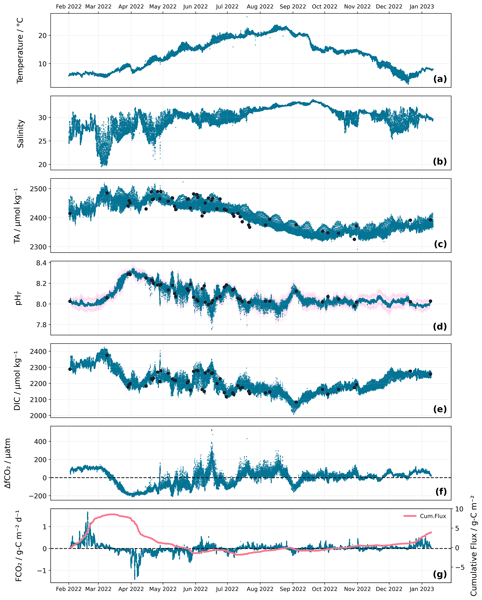
Yasmina Ourradi, Gert-Jan Reichart, Sonja van Leeuwen, and Matthew P. Humphreys
Biogeosciences, 23, 3323–3346, https://doi.org/10.5194/bg-23-3323-2026, https://doi.org/10.5194/bg-23-3323-2026, 2026
Short summary
Short summary
Coastal seas play a key role in the global carbon cycle, yet what drives their carbonate chemistry remains poorly understood. We measured pH at high frequency for a year at the Wadden Sea-North Sea interface. Biological activity drives pH changes, while freshwater inflow shapes total alkalinity. Both processes influence dissolved inorganic carbon. The Wadden Sea acts as a net carbon dioxide source to the atmosphere. High-frequency monitoring is essential under a changing climate.
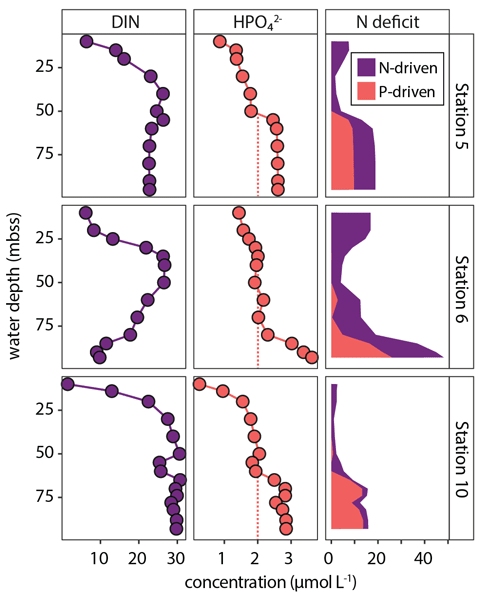
Peter Kraal, Kristin A. Ungerhofer, Darci Rush, and Gert-Jan Reichart
Biogeosciences, 23, 3253–3277, https://doi.org/10.5194/bg-23-3253-2026, https://doi.org/10.5194/bg-23-3253-2026, 2026
Short summary
Short summary
Element cycles in oxygen-depleted areas such as upwelling areas inform future deoxygenation scenarios. The Benguela upwelling system shows strong decoupling of nitrogen and phosphorus cycling due to seasonal shelf anoxia. Anaerobic processes result in pelagic nitrogen loss as N2. At the same time, sediments are rich in fish-derived and bacterial phosphorus, with high fluxes of excess phosphate, altering deep-water nitrogen:phosphorus ratios. Such alterations can affect ocean functioning.
Madleen Grohganz, Thomas M. Bury, Bregje van der Bolt, Gert-Jan Reichart, and Rick Hennekam
EGUsphere, https://doi.org/10.5194/egusphere-2026-2223, https://doi.org/10.5194/egusphere-2026-2223, 2026
Short summary
Short summary
We introduce a new deep learning tool for the quantitative detection of catastrophic tipping points in the Earth system and test its performance on existing Cenozoic proxy records. Using our deep learning method, we are able to corroborate the existence of previously detected critical transitions in the paleo records and successfully identify them as catastrophic tipping points. We provide a powerful new tool, easily adaptable for the detection of tipping points in a variety of Earth systems.
Cecile S. Hilgen, Rick Hennekam, Marcel T. J. van der Meer, Timme H. Donders, Gert-Jan Reichart, and Francesca Sangiorgi
J. Micropalaeontol., 45, 275–295, https://doi.org/10.5194/jm-45-275-2026, https://doi.org/10.5194/jm-45-275-2026, 2026
Short summary
Short summary
The Northwest European Shelf plays a key role in the global carbon cycle. To assess its past role, we want to reconstruct primary productivity using microfossils. By comparing surface sediment assemblages with sediment properties and modern environmental conditions, we found a good microfossil-based indicator for primary productivity. This indicator will be useful to reconstruct productivity in the past Northwest European Shelf.
Evert de Froe, Christian Mohn, Karline Soetaert, Anna-Selma van der Kaaden, Gert-Jan Reichart, Laurence H. De Clippele, Sandra R. Maier, and Dick van Oevelen
Ocean Sci., 22, 843–870, https://doi.org/10.5194/os-22-843-2026, https://doi.org/10.5194/os-22-843-2026, 2026
Short summary
Short summary
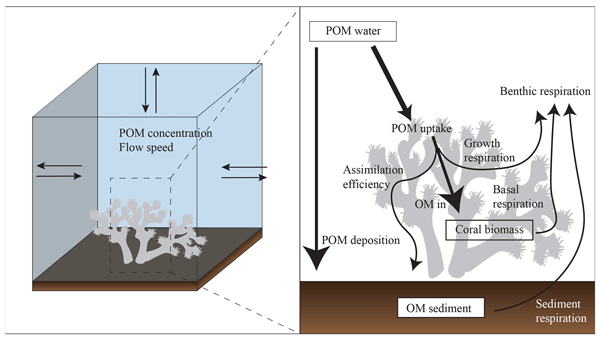
Cold-water corals are important reef-building animals in the deep sea and are distributed globally. Until now, scientists have been mapping and predicting where cold-water corals can be found using video transects and statistical models. This study provides the first process-based model in which corals are predicted based on ocean currents and food particle movement. The results show that resupply of food by tidal currents near the seafloor is crucial for predicting where corals can grow.
Guangnan Wu, Klaas G. J. Nierop, Bingjie Yang, Stefan Schouten, Gert-Jan Reichart, and Peter Kraal
Biogeosciences, 23, 995–1012, https://doi.org/10.5194/bg-23-995-2026, https://doi.org/10.5194/bg-23-995-2026, 2026
Short summary
Short summary
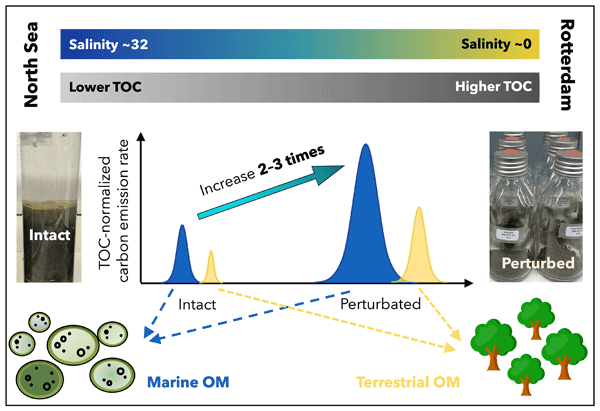
Estuaries store and process large amounts of carbon. In the Port of Rotterdam, we studied organic matter (OM) sources in sediments and showed how they influenced OM breakdown. We found that marine OM degraded faster than land-originated OM, and sediment perturbation could accelerate OM breakdown by introducing oxygen. Our findings highlight the impact of human disturbances on carbon storage in estuarine sediments, offering insights for the growing sediment reworking worldwide.
Surya Eldo V. Roza, Runa T. Reuter, Jan-Berend W. Stuut, Gerard J. M. Versteegh, Vera Pospelova, Iria García-Moreiras, and Karin A. F. Zonneveld
Biogeosciences, 23, 831–850, https://doi.org/10.5194/bg-23-831-2026, https://doi.org/10.5194/bg-23-831-2026, 2026
Short summary
Short summary
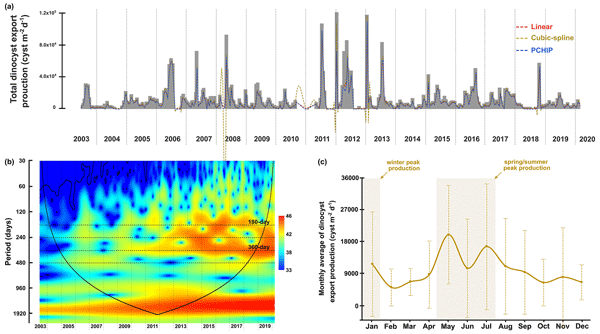
This study examined the cycle variability in records of a plankton group remnant (dinoflagellate cysts), atmospheric, and oceanic factors off Cape Blanc, Northwest Africa. The result showed changes in the cycles of the plankton, upwelling winds, and Saharan dust records from 2003 to 2020. These changes were divided into three phases, coinciding with changes in the plankton assemblage. Our results showed that local climate change can influence the dynamics and composition of marine ecosystems.
Louise Delaigue, Gert-Jan Reichart, Li Qiu, Eric P. Achterberg, Yasmina Ourradi, Chris Galley, André Mutzberg, and Matthew P. Humphreys
Biogeosciences, 22, 5103–5121, https://doi.org/10.5194/bg-22-5103-2025, https://doi.org/10.5194/bg-22-5103-2025, 2025
Short summary
Short summary
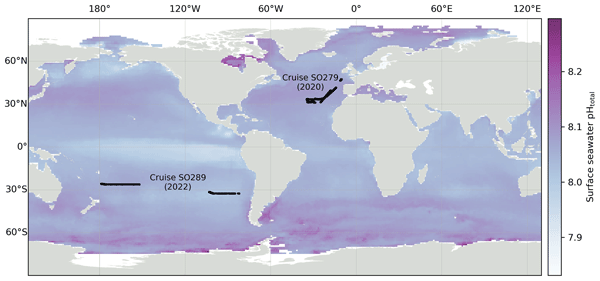
Our study analysed pH in ocean surface waters to understand how it fluctuates with changes in temperature, salinity, and biological activities. We found that temperature mainly controls daily pH variations, but biological processes also play a role, especially in affecting CO2 levels between the ocean and atmosphere. Our research shows how these factors together maintain the balance of ocean chemistry, which is crucial for predicting changes in marine environments.
Yannick F. Bats, Klaas G. J. Nierop, Alice Stuart-Lee, Joost Frieling, Linda van Roij, Gert-Jan Reichart, and Appy Sluijs
Biogeosciences, 22, 4689–4704, https://doi.org/10.5194/bg-22-4689-2025, https://doi.org/10.5194/bg-22-4689-2025, 2025
Short summary
Short summary
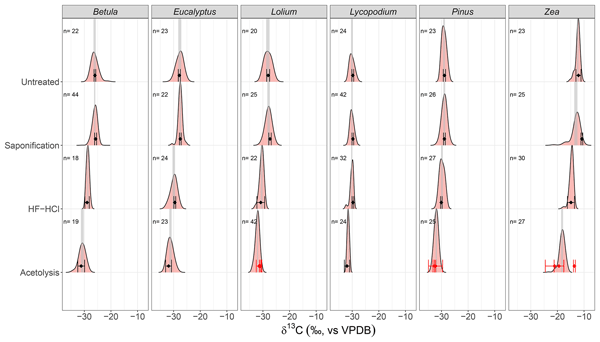
In this study, we analyzed the molecular and stable carbon isotopic composition (δ13C) of pollen and spores (sporomorphs) that underwent chemical treatments that simulate diagenesis during fossilization. We show that the successive removal of sugars and lipids results in the depletion of 13C in the residual sporomorph, leaving rich aromatic compounds. This residual aromatic-rich structure likely represents diagenetically resistant sporopollenin, implying that diagenesis results in the depletion of 13C in pollen.

Emmanouil Proestakis, Vassilis Amiridis, Carlos Pérez García-Pando, Svetlana Tsyro, Jan Griesfeller, Antonis Gkikas, Thanasis Georgiou, María Gonçalves Ageitos, Jeronimo Escribano, Stelios Myriokefalitakis, Elisa Bergas Masso, Enza Di Tomaso, Sara Basart, Jan-Berend W. Stuut, and Angela Benedetti
Earth Syst. Sci. Data, 17, 4351–4395, https://doi.org/10.5194/essd-17-4351-2025, https://doi.org/10.5194/essd-17-4351-2025, 2025
Short summary
Short summary
Quantification of dust deposition into the broader Atlantic Ocean is provided, with the estimates established based on Earth observations. The dataset is considered unique with respect to a range of applications, including compensating for spatiotemporal gaps of sediment-trap measurements, assessments of model simulations, shedding light on physical processes related to the dust cycle, and improving the understanding of dust biogeochemical impacts on oceanic ecosystems, weather, and climate.
Anna Cutmore, Nicole Bale, Rick Hennekam, Bingjie Yang, Darci Rush, Gert-Jan Reichart, Ellen C. Hopmans, and Stefan Schouten
Clim. Past, 21, 957–971, https://doi.org/10.5194/cp-21-957-2025, https://doi.org/10.5194/cp-21-957-2025, 2025
Short summary
Short summary
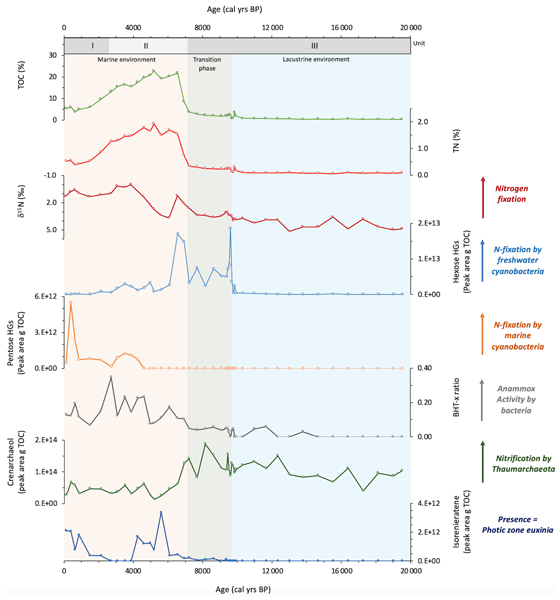
As human activities lower marine oxygen levels, understanding the impact on the marine nitrogen cycle is vital. The Black Sea, which became oxygen-deprived 9600 years ago, offers key insights. By studying organic compounds linked to nitrogen cycle processes, we found that, 7200 years ago, the Black Sea's nitrogen cycle significantly altered due to severe deoxygenation. This suggests that continued marine oxygen decline could similarly alter the marine nitrogen cycle, affecting vital ecosystems.
Vesna Bertoncelj, Furu Mienis, Paolo Stocchi, and Erik van Sebille
Ocean Sci., 21, 945–964, https://doi.org/10.5194/os-21-945-2025, https://doi.org/10.5194/os-21-945-2025, 2025
Short summary
Short summary
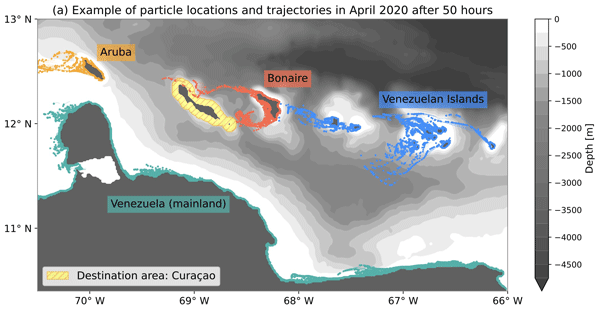
This study explores ocean currents around Curaçao and how land-derived substances like pollutants and nutrients travel in the water. Most substances move northwest, following the main current, but at times, ocean eddies spread them in other directions. This movement may link polluted areas to pristine coral reefs, impacting marine ecosystems. Understanding these patterns helps inform conservation and pollution management around Curaçao.
Szabina Karancz, Lennart J. de Nooijer, Bas van der Wagt, Marcel T. J. van der Meer, Sambuddha Misra, Rick Hennekam, Zeynep Erdem, Julie Lattaud, Negar Haghipour, Stefan Schouten, and Gert-Jan Reichart
Clim. Past, 21, 679–704, https://doi.org/10.5194/cp-21-679-2025, https://doi.org/10.5194/cp-21-679-2025, 2025
Short summary
Short summary
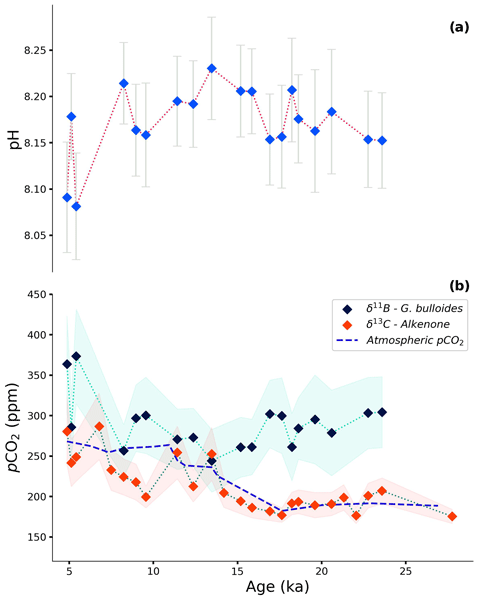
Changes in upwelling intensity of the Benguela upwelling region during the last glacial motivated us to investigate the local CO2 history during the last glacial-to-interglacial transition. Using various geochemical tracers on archives from both subsurface and surface waters reveals enhanced storage of carbon at depth during the Last Glacial Maximum. An efficient biological pump likely prevented outgassing of CO2 from intermediate depth to the atmosphere.
Babette A.A. Hoogakker, Catherine Davis, Yi Wang, Stephanie Kusch, Katrina Nilsson-Kerr, Dalton S. Hardisty, Allison Jacobel, Dharma Reyes Macaya, Nicolaas Glock, Sha Ni, Julio Sepúlveda, Abby Ren, Alexandra Auderset, Anya V. Hess, Katrin J. Meissner, Jorge Cardich, Robert Anderson, Christine Barras, Chandranath Basak, Harold J. Bradbury, Inda Brinkmann, Alexis Castillo, Madelyn Cook, Kassandra Costa, Constance Choquel, Paula Diz, Jonas Donnenfield, Felix J. Elling, Zeynep Erdem, Helena L. Filipsson, Sebastián Garrido, Julia Gottschalk, Anjaly Govindankutty Menon, Jeroen Groeneveld, Christian Hallmann, Ingrid Hendy, Rick Hennekam, Wanyi Lu, Jean Lynch-Stieglitz, Lélia Matos, Alfredo Martínez-García, Giulia Molina, Práxedes Muñoz, Simone Moretti, Jennifer Morford, Sophie Nuber, Svetlana Radionovskaya, Morgan Reed Raven, Christopher J. Somes, Anja S. Studer, Kazuyo Tachikawa, Raúl Tapia, Martin Tetard, Tyler Vollmer, Xingchen Wang, Shuzhuang Wu, Yan Zhang, Xin-Yuan Zheng, and Yuxin Zhou
Biogeosciences, 22, 863–957, https://doi.org/10.5194/bg-22-863-2025, https://doi.org/10.5194/bg-22-863-2025, 2025
Short summary
Short summary
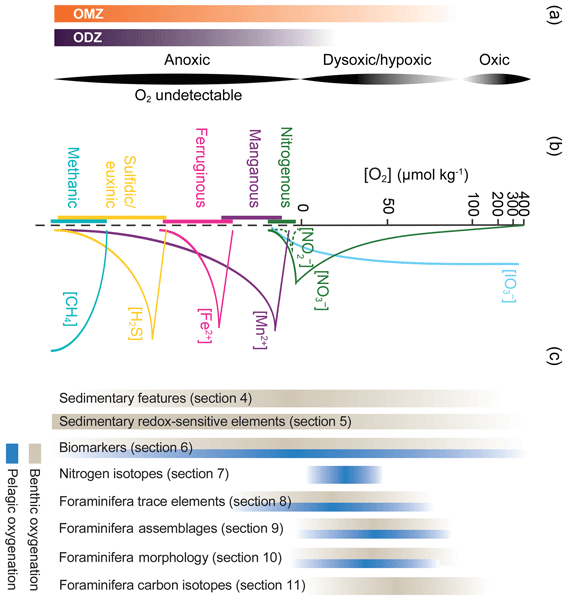
Paleo-oxygen proxies can extend current records, constrain pre-anthropogenic baselines, provide datasets necessary to test climate models under different boundary conditions, and ultimately understand how ocean oxygenation responds on longer timescales. Here we summarize current proxies used for the reconstruction of Cenozoic seawater oxygen levels. This includes an overview of the proxy's history, how it works, resources required, limitations, and future recommendations.
Evert de Froe, Igor Yashayaev, Christian Mohn, Johanne Vad, Furu Mienis, Gerard Duineveld, Ellen Kenchington, Erica Head, Steve W. Ross, Sabena Blackbird, George A. Wolff, J. Murray Roberts, Barry MacDonald, Graham Tulloch, and Dick van Oevelen
Biogeosciences, 21, 5407–5433, https://doi.org/10.5194/bg-21-5407-2024, https://doi.org/10.5194/bg-21-5407-2024, 2024
Short summary
Short summary
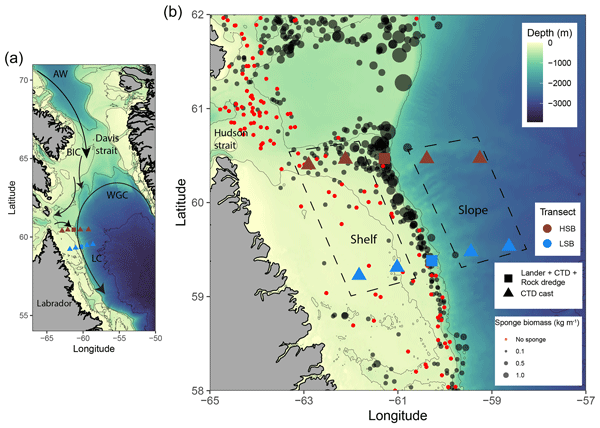
Deep-sea sponge grounds are distributed globally and are considered hotspots of biological diversity and biogeochemical cycling. To date, little is known about the environmental constraints that control where deep-sea sponge grounds occur and what conditions favour high sponge biomass. Here, we characterize oceanographic conditions at two contrasting sponge grounds. Our results imply that sponges and associated fauna benefit from strong tidal currents and favourable regional ocean currents.
Devika Varma, Laura Villanueva, Nicole J. Bale, Pierre Offre, Gert-Jan Reichart, and Stefan Schouten
Biogeosciences, 21, 4875–4888, https://doi.org/10.5194/bg-21-4875-2024, https://doi.org/10.5194/bg-21-4875-2024, 2024
Short summary
Short summary
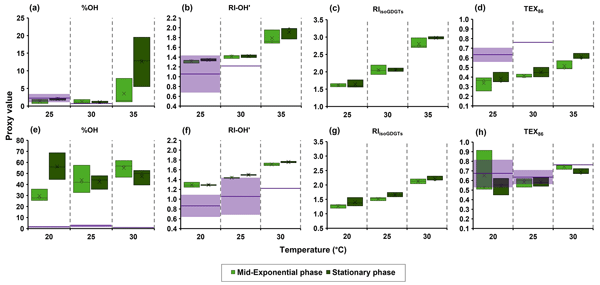
Archaeal hydroxylated tetraether lipids are increasingly used as temperature indicators in marine settings, but the factors influencing their distribution are still unclear. Analyzing membrane lipids of two thaumarchaeotal strains showed that the growth phase of the cultures does not affect the lipid distribution, but growth temperature profoundly affects the degree of cyclization of these lipids. Also, the abundance of these lipids is species-specific and is not influenced by temperature.
Charlotte Eich, Mathijs van Manen, J. Scott P. McCain, Loay J. Jabre, Willem H. van de Poll, Jinyoung Jung, Sven B. E. H. Pont, Hung-An Tian, Indah Ardiningsih, Gert-Jan Reichart, Erin M. Bertrand, Corina P. D. Brussaard, and Rob Middag
Biogeosciences, 21, 4637–4663, https://doi.org/10.5194/bg-21-4637-2024, https://doi.org/10.5194/bg-21-4637-2024, 2024
Short summary
Short summary
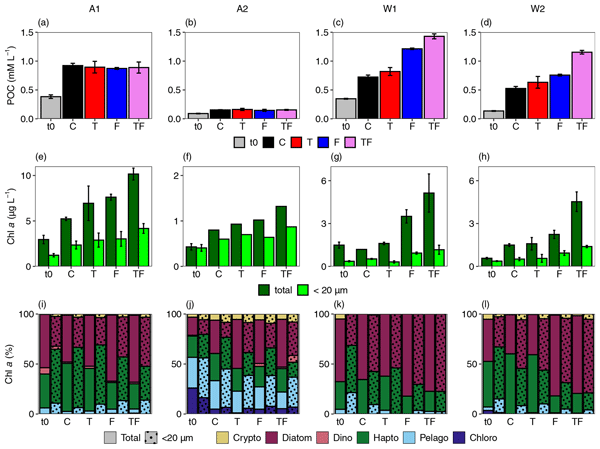
Phytoplankton growth in the Southern Ocean (SO) is often limited by low iron (Fe) concentrations. Sea surface warming impacts Fe availability and can affect phytoplankton growth. We used shipboard Fe clean incubations to test how changes in Fe and temperature affect SO phytoplankton. Their abundances usually increased with Fe addition and temperature increase, with Fe being the major factor. These findings imply potential shifts in ecosystem structure, impacting food webs and elemental cycling.
Anna-Selma van der Kaaden, Sandra R. Maier, Siluo Chen, Laurence H. De Clippele, Evert de Froe, Theo Gerkema, Johan van de Koppel, Furu Mienis, Christian Mohn, Max Rietkerk, Karline Soetaert, and Dick van Oevelen
Biogeosciences, 21, 973–992, https://doi.org/10.5194/bg-21-973-2024, https://doi.org/10.5194/bg-21-973-2024, 2024
Short summary
Short summary
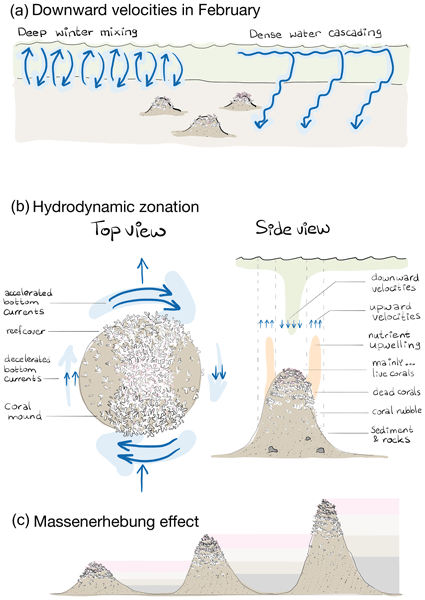
Combining hydrodynamic simulations and annotated videos, we separated which hydrodynamic variables that determine reef cover are engineered by cold-water corals and which are not. Around coral mounds, hydrodynamic zones seem to create a typical reef zonation, restricting corals from moving deeper (the expected response to climate warming). But non-engineered downward velocities in winter (e.g. deep winter mixing) seem more important for coral reef growth than coral engineering.
Joost Frieling, Linda van Roij, Iris Kleij, Gert-Jan Reichart, and Appy Sluijs
Biogeosciences, 20, 4651–4668, https://doi.org/10.5194/bg-20-4651-2023, https://doi.org/10.5194/bg-20-4651-2023, 2023
Short summary
Short summary
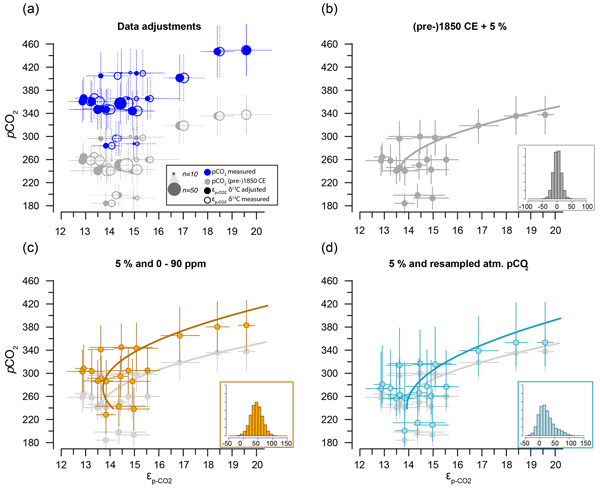
We present a first species-specific evaluation of marine core-top dinoflagellate cyst carbon isotope fractionation (εp) to assess natural pCO2 dependency on εp and explore its geological deep-time paleo-pCO2 proxy potential. We find that εp differs between genera and species and that in Operculodinium centrocarpum, εp is controlled by pCO2 and nutrients. Our results highlight the added value of δ13C analyses of individual micrometer-scale sedimentary organic carbon particles.
Laura Pacho, Lennart de Nooijer, and Gert-Jan Reichart
Biogeosciences, 20, 4043–4056, https://doi.org/10.5194/bg-20-4043-2023, https://doi.org/10.5194/bg-20-4043-2023, 2023
Short summary
Short summary
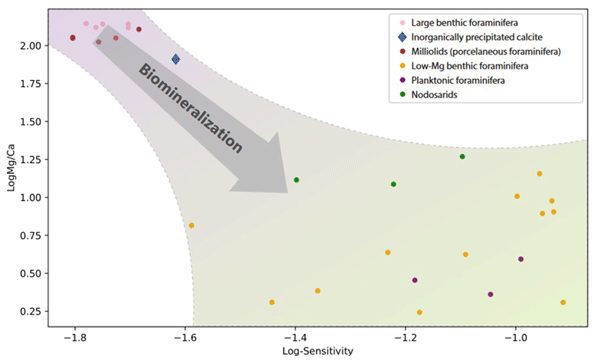
We analyzed Mg / Ca and other El / Ca (Na / Ca, B / Ca, Sr / Ca and Ba / Ca) in Nodosariata. Their calcite chemistry is markedly different to that of the other calcifying orders of foraminifera. We show a relation between the species average Mg / Ca and its sensitivity to changes in temperature. Differences were reflected in both the Mg incorporation and the sensitivities of Mg / Ca to temperature.
Niels J. de Winter, Daniel Killam, Lukas Fröhlich, Lennart de Nooijer, Wim Boer, Bernd R. Schöne, Julien Thébault, and Gert-Jan Reichart
Biogeosciences, 20, 3027–3052, https://doi.org/10.5194/bg-20-3027-2023, https://doi.org/10.5194/bg-20-3027-2023, 2023
Short summary
Short summary
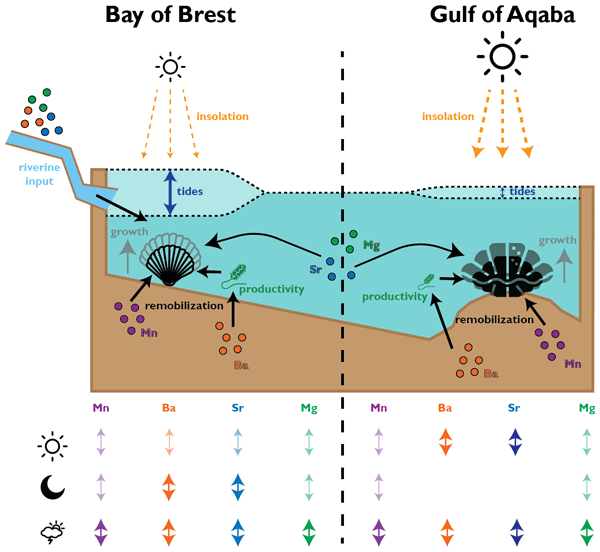
Mollusk shells are valuable recorders of climate and environmental changes of the past down to a daily resolution. To explore this potential, we measured changes in the composition of shells of two types of bivalves recorded at the hourly scale: the king scallop Pecten maximus and giant clams (Tridacna) that engaged in photosymbiosis. We find that photosymbiosis produces more day–night fluctuation in shell chemistry but that most of the variation is not periodic, perhaps recording weather.
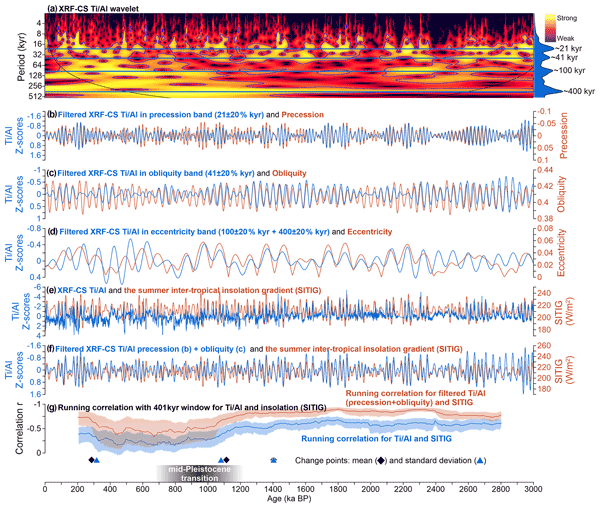
Rick Hennekam, Katharine M. Grant, Eelco J. Rohling, Rik Tjallingii, David Heslop, Andrew P. Roberts, Lucas J. Lourens, and Gert-Jan Reichart
Clim. Past, 18, 2509–2521, https://doi.org/10.5194/cp-18-2509-2022, https://doi.org/10.5194/cp-18-2509-2022, 2022
Short summary
Short summary
The ratio of titanium to aluminum (Ti/Al) is an established way to reconstruct North African climate in eastern Mediterranean Sea sediments. We demonstrate here how to obtain reliable Ti/Al data using an efficient scanning method that allows rapid acquisition of long climate records at low expense. Using this method, we reconstruct a 3-million-year North African climate record. African environmental variability was paced predominantly by low-latitude insolation from 3–1.2 million years ago.
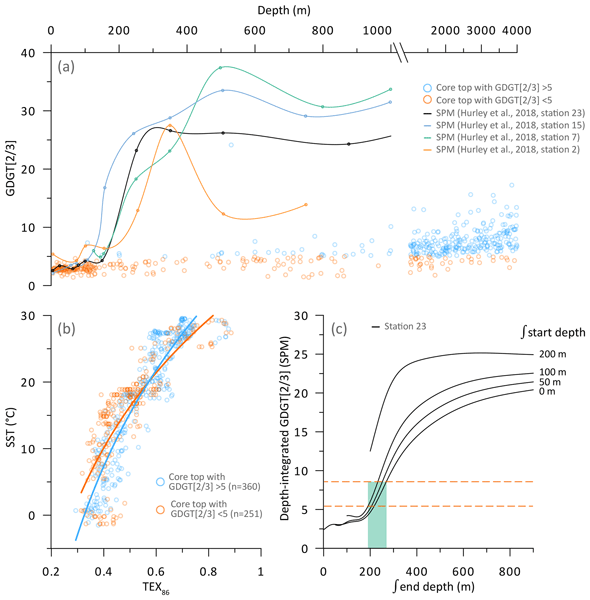
Carolien M. H. van der Weijst, Koen J. van der Laan, Francien Peterse, Gert-Jan Reichart, Francesca Sangiorgi, Stefan Schouten, Tjerk J. T. Veenstra, and Appy Sluijs
Clim. Past, 18, 1947–1962, https://doi.org/10.5194/cp-18-1947-2022, https://doi.org/10.5194/cp-18-1947-2022, 2022
Short summary
Short summary
The TEX86 proxy is often used by paleoceanographers to reconstruct past sea-surface temperatures. However, the origin of the TEX86 signal in marine sediments has been debated since the proxy was first proposed. In our paper, we show that TEX86 carries a mixed sea-surface and subsurface temperature signal and should be calibrated accordingly. Using our 15-million-year record, we subsequently show how a TEX86 subsurface temperature record can be used to inform us on past sea-surface temperatures.
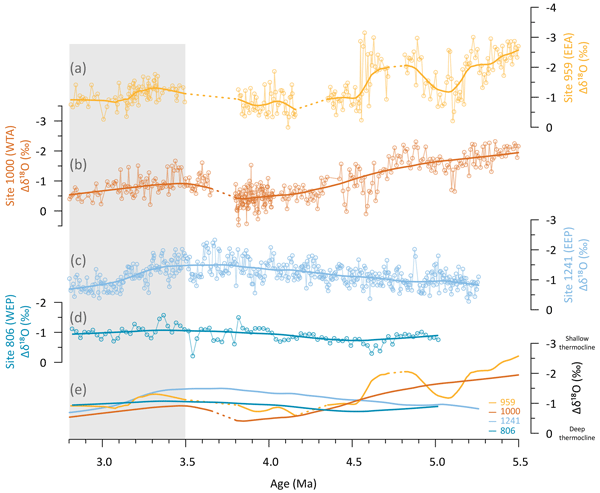
Carolien M. H. van der Weijst, Josse Winkelhorst, Wesley de Nooijer, Anna von der Heydt, Gert-Jan Reichart, Francesca Sangiorgi, and Appy Sluijs
Clim. Past, 18, 961–973, https://doi.org/10.5194/cp-18-961-2022, https://doi.org/10.5194/cp-18-961-2022, 2022
Short summary
Short summary
A hypothesized link between Pliocene (5.3–2.5 million years ago) global climate and tropical thermocline depth is currently only backed up by data from the Pacific Ocean. In our paper, we present temperature, salinity, and thermocline records from the tropical Atlantic Ocean. Surprisingly, the Pliocene thermocline evolution was remarkably different in the Atlantic and Pacific. We need to reevaluate the mechanisms that drive thermocline depth, and how these are tied to global climate change.
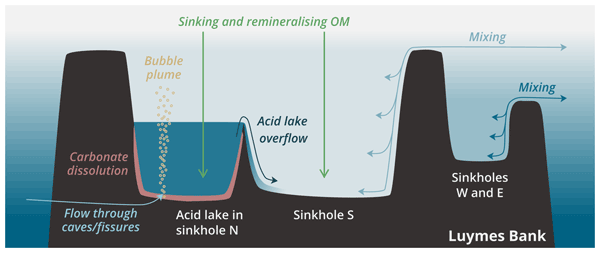
Matthew P. Humphreys, Erik H. Meesters, Henk de Haas, Szabina Karancz, Louise Delaigue, Karel Bakker, Gerard Duineveld, Siham de Goeyse, Andreas F. Haas, Furu Mienis, Sharyn Ossebaar, and Fleur C. van Duyl
Biogeosciences, 19, 347–358, https://doi.org/10.5194/bg-19-347-2022, https://doi.org/10.5194/bg-19-347-2022, 2022
Short summary
Short summary
A series of submarine sinkholes were recently discovered on Luymes Bank, part of Saba Bank, a carbonate platform in the Caribbean Netherlands. Here, we investigate the waters inside these sinkholes for the first time. One of the sinkholes contained a body of dense, low-oxygen and low-pH water, which we call the
acid lake. We use measurements of seawater chemistry to work out what processes were responsible for forming the acid lake and discuss the consequences for the carbonate platform.
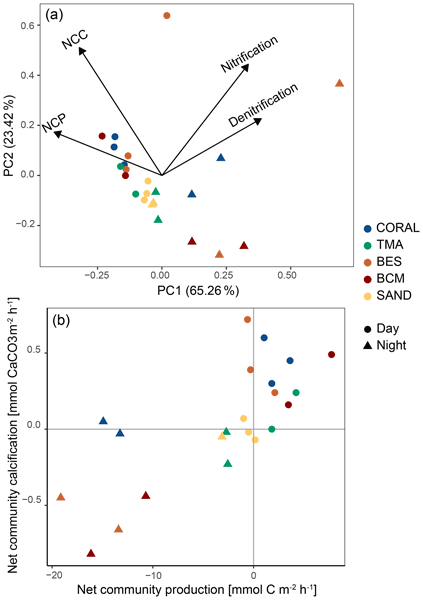
Alice E. Webb, Didier M. de Bakker, Karline Soetaert, Tamara da Costa, Steven M. A. C. van Heuven, Fleur C. van Duyl, Gert-Jan Reichart, and Lennart J. de Nooijer
Biogeosciences, 18, 6501–6516, https://doi.org/10.5194/bg-18-6501-2021, https://doi.org/10.5194/bg-18-6501-2021, 2021
Short summary
Short summary
The biogeochemical behaviour of shallow reef communities is quantified to better understand the impact of habitat degradation and species composition shifts on reef functioning. The reef communities investigated barely support reef functions that are usually ascribed to conventional coral reefs, and the overall biogeochemical behaviour is found to be similar regardless of substrate type. This suggests a decrease in functional diversity which may therefore limit services provided by this reef.
Cited articles
Anthony, K. R.: Coral suspension feeding on fine particulate matter, J. Exp. Mar. Biol. Ecol., 232, 85–106, https://doi.org/10.1016/s0022-0981(98)00099-9 1999.
Anthony, K. R. and Fabricius, K. E.: Shifting roles of heterotrophy and autotrophy in coral energetics under varying turbidity, J. Exp. Mar. Biol. Ecol., 252, 221–253, https://doi.org/10.1016/s0022-0981(00)00237-9, 2000.
Anthony, K. R., Kline, D. I., Diaz-Pulido, G., Dove, S., and Hoegh-Guldberg, O.: Ocean acidification causes bleaching and productivity loss in coral reef builders, P. Natl. Acad. Sci. USA, 105, 17442–17446, https://doi.org/10.1073/pnas.0804478105, 2008.
Aronson, R. B., Bruno, J. F., Precht, W. F., Glynn, P. W., Harvell, C. D., Kaufman, L., Rogers, C. S., Shinn, E. A., and Valentine, J. F.: Causes of coral reef degradation, Science, 302, 1502–1504, https://doi.org/10.1126/science.302.5650.1502b, 2003.
Bak, R. P.: Coral reefs and their zonation in Netherlands Antilles: modern and ancient reefs, in: Reefs and Related Carbonates – Ecology and Sedimentology, https://doi.org/10.1306/st4393c1, 1977.
Baumann, H. A., Morrison, L., and Stengel, D. B.: Metal accumulation and toxicity measured by PAM – chlorophyll fluorescence in seven species of marine macroalgae, Ecotox. Environ. Safe., 72, 1063–1075, https://doi.org/10.1016/j.ecoenv.2008.10.010, 2009.
Bergamaschi, B. A., Tsamakis, E., Keil, R. G., Eglinton, T. I., Montluçon, D. B., and Hedges, J. I.: The effect of grain size and surface area on organic matter, lignin and carbohydrate concentration, and molecular compositions in Peru Margin sediments, Geochim. Cosmochim. Ac., 61, 1247–1260, https://doi.org/10.1016/s0016-7037(96)00394-8 1997.
Berry, K. L., Seemann, J., Dellwig, O., Struck, U., Wild, C., and Leinfelder, R. R.: Sources and spatial distribution of heavy metals in scleractinian coral tissues and sediments from the Bocas del Toro Archipelago, Panama, Environ. Monit. Assess., 185, 9089–9099, https://doi.org/10.1007/s10661-013-3238-8, 2013.
Bertoncelj, V., Mienis, F., Stocchi, P., and van Sebille, E.: Flow patterns, hotspots, and connectivity of land-derived substances at the sea surface of Curaçao in the southern Caribbean, Ocean Sci., 21, 945–964, https://doi.org/10.5194/os-21-945-2025, 2025.
Bertrand, S., Tjallingii, R., Kylander, M. E., Wilhelm, B., Roberts, S. J., Arnaud, F., Brown, E., and Bindler, R.: Inorganic geochemistry of lake sediments: A review of analytical techniques and guidelines for data interpretation, Earth-Sci. Rev., 249, 104639, https://doi.org/10.1016/j.earscirev.2023.104639, 2024.
Bhuyan, M. S., Jenzri, M., and Adikari, D.: Impacts of sedimentation on coral health and reef ecosystems: A comprehensive review, Mar. Pollut. Bull., 221, 118480, https://doi.org/10.1016/j.marpolbul.2025.118480, 2025.
Bolden, I. W., Timmerman, A. H., Clark, D. R., Belanger, B. K., Oster, J. L., Salas-Saavedra, M., and Niespolo, E. M.: Monitoring coral reef metabolism under changing oceans–Novel insights from seawater stable carbon isotopes, J. Geophys. Res.-Biogeo., 131, e2025JG009416, https://doi.org/10.1029/2025jg009416, 2026.
Burke, L. and Maidens, J.: Reefs at Risk in the Caribbean, World Resources Institute (WRI), Washington, DC, ISBN 1-56973-567-0, 2004.
Burke, L., Reytar, K., Spalding, M., and Perry, A.: Reefs at risk revisited, World Resources Institute (WRI), Washington, DC, ISBN 978-1-56973-762-0, 2011.
Caballero-Gallardo, K., Alcala-Orozco, M., Barraza-Quiroz, D., De la Rosa, J., and Olivero-Verbel, J.: Environmental risks associated with trace elements in sediments from Cartagena Bay, an industrialized site at the Caribbean, Chemosphere, 242, 125173, https://doi.org/10.1016/j.chemosphere.2019.125173, 2020.
Cuttler, M. V., Lowe, R. J., Falter, J. L., and Buscombe, D.: Estimating the settling velocity of bioclastic sediment using common grain-size analysis techniques, Sedimentology, 64, 987–1004, https://doi.org/10.1111/sed.12338, 2017.
De Bakker, D. M., Meesters, E. H., Bak, R. P., Nieuwland, G., and Van Duyl, F. C.: Long-term shifts in coral communities on shallow to deep reef slopes of Curaçao and Bonaire: are there any winners?, Front. Marine Sci., 3, 247, https://doi.org/10.3389/fmars.2016.00247, 2016.
De Bakker, D. M., Van Duyl, F. C., Bak, R. P., Nugues, M. M., Nieuwland, G., and Meesters, E. H.: 40 Years of benthic community change on the Caribbean reefs of Curaçao and Bonaire: the rise of slimy cyanobacterial mats, Coral Reefs, 36, 355–367, https://doi.org/10.1007/s00338-016-1534-9, 2017.
Debrot, A., Kuenen, M., and Dekker, K.: Recent declines in the coral fauna of the Spaanse Water, Curaçao, Netherlands Antilles, B. Mar. Sci., 63, 571–580, 1998.
De Carlo, E. H., Hoover, D. J., Young, C. W., Hoover, R. S., and Mackenzie, F. T.: Impact of storm runoff from tropical watersheds on coastal water quality and productivity, Appl. Geochem., 22, 1777–1797, https://doi.org/10.1016/j.apgeochem.2007.03.034, 2007.
de Jong, C., van Os, I., Sepúlveda-Rodríguez, G., de Baat, M. L., and Schoepf, V.: High-resolution temporal assessment of physicochemical variability and water quality in tropical semi-enclosed bays and coral reefs, Sci. Total Environ., 968, 178810, https://doi.org/10.1016/j.scitotenv.2025.178810, 2025.
Den Haan, J., Huisman, J., Brocke, H. J., Goehlich, H., Latijnhouwers, K. R., Van Heeringen, S., Honcoop, S. A., Bleyenberg, T. E., Schouten, S., and Cerli, C.: Nitrogen and phosphorus uptake rates of different species from a coral reef community after a nutrient pulse, Sci. Rep.-UK, 6, 28821, https://doi.org/10.1038/srep28821, 2016.
D'Sa, E. J. and Ko, D. S.: Short-term influences on suspended particulate matter distribution in the northern Gulf of Mexico: Satellite and model observations, Sensors-Basel, 8, 4249–4264, https://doi.org/10.3390/s8074249, 2008.
Dutra, L., Kikuchi, R., and Leão, Z.: Effects of sediment accumulation on reef corals from Abrolhos, Bahia, Brazil, J. Coastal Res., 633–638, 2006.
Dutra, L., Haywood, M. D., Singh, S. S., Piovano, S., Ferreira, M., Johnson, J. E., Veitayaki, J., Kininmonth, S. J., and Morris, C. W.: Effects of climate change on corals relevant to the Pacific Islands, Pacific marine climate change report card, 132–158, 2018.
Erftemeijer, P. L., Riegl, B., Hoeksema, B. W., and Todd, P. A.: Environmental impacts of dredging and other sediment disturbances on corals: a review, Mar. Pollut. Bull., 64, 1737–1765, https://doi.org/10.1016/j.marpolbul.2012.05.008, 2012.
Esslemont, G.: Heavy metals in corals from Heron Island and Darwin harbour, Australia, Mar. Pollut. Bull., 38, 1051–1054, https://doi.org/10.1016/s0025-326x(99)00183-6 1999.
Fabricius, K. E.: Effects of terrestrial runoff on the ecology of corals and coral reefs: review and synthesis, Mar. Pollut. Bull., 50, 125–146, https://doi.org/10.1016/j.marpolbul.2004.11.028, 2005.
Fabricius, K. E. and Dommisse, M.: Depletion of suspended particulate matter over coastal reef communities dominated by zooxanthellate soft corals, Mar. Ecol. Prog. Ser., 196, 157–167, https://doi.org/10.3354/meps196157, 2000.
Fernandez, A., Singh, A., and Jaffé, R.: A literature review on trace metals and organic compounds of anthropogenic origin in the Wider Caribbean Region, Mar. Pollut. Bull., 54, 1681–1691, https://doi.org/10.1016/j.marpolbul.2007.08.007, 2007.
Gardner, W. D., Richardson, M. J., and Mishonov, A. V.: Global assessment of benthic nepheloid layers and linkage with upper ocean dynamics, Earth Planet. Sc. Lett., 482, 126–134, https://doi.org/10.1016/j.epsl.2017.11.008, 2018.
Gorgula, S. K. and Connell, S. D.: Expansive covers of turf-forming algae on human-dominated coast: the relative effects of increasing nutrient and sediment loads, Mar. Biol., 145, 613–619, https://doi.org/10.1007/s00227-004-1335-5, 2004.
Govers, L. L., Lamers, L. P., Bouma, T. J., de Brouwer, J. H., and van Katwijk, M. M.: Eutrophication threatens Caribbean seagrasses – An example from Curaçao and Bonaire, Mar. Pollut. Bull., 89, 481–486, https://doi.org/10.1016/j.marpolbul.2014.09.003, 2014.
Guzmán, H. M. and Jiménez, C. E.: Contamination of coral reefs by heavy metals along the Caribbean coast of Central America (Costa Rica and Panama), Mar. Pollut. Bull., 24, 554–561, https://doi.org/10.1016/0025-326x(92)90708-e 1992.
Heiskanen, A.-S. and Tallberg, P.: Sedimentation and particulate nutrient dynamics along a coastal gradient from a fjord-like bay to the open sea, Hydrobiologia, 393, 127–140, https://doi.org/10.1023/a:1003539230715, 1999.
Hodgson, G.: Sediment and the settlement of larvae of the reef coral Pocillopora damicornis, Coral Reefs, 9, 41–43, https://doi.org/10.1007/bf00686720, 1990.
Hofker, J.: The foraminifera of Piscadera Bay, Curacao, Studies on the Fauna of Curacao and other Caribbean Islands, 35, 1–62, 1971.
Ismail, M., Kimura, T., Suzuki, Y., and Tsuchiya, M.: Seasonal and spatial variations of total mass flux around coral reefs in the southern Ryukyus, Japan, J. Oceanogr., 61, 631–644, https://doi.org/10.1007/s10872-005-0071-x, 2005.
Jackson, J., Donovan, M., Cramer, K., and Lam, V.: Status and trends of Caribbean coral reefs: 1970–2012, Gland, Switzerland, Global Coral Reef Monitoring Network, International Union for the Conservation of Nature (IUCN), https://doi.org/10.13140/2.1.4868.6726, 2014.
Jouon, A., Ouillon, S., Douillet, P., Lefebvre, J. P., Fernandez, J. M., Mari, X., and Froidefond, J.-M.: Spatio-temporal variability in suspended particulate matter concentration and the role of aggregation on size distribution in a coral reef lagoon, Mar. Geol., 256, 36–48, https://doi.org/10.1016/j.margeo.2008.09.008, 2008.
Kelly, L. E. W.: Coral reef microbes: the influences of benthic primary producers, nutrient availability, and anthropogenic stressors on community structure and metabolism, University of California, San Diego, 2013.
Korte, L. F., Brummer, G.-J. A., van der Does, M., Guerreiro, C. V., Hennekam, R., van Hateren, J. A., Jong, D., Munday, C. I., Schouten, S., and Stuut, J.-B. W.: Downward particle fluxes of biogenic matter and Saharan dust across the equatorial North Atlantic, Atmos. Chem. Phys., 17, 6023–6040, https://doi.org/10.5194/acp-17-6023-2017, 2017.
Kuffner, I. B., Andersson, A. J., Jokiel, P. L., Rodgers, K. U. S., and Mackenzie, F. T.: Decreased abundance of crustose coralline algae due to ocean acidification, Nat. Geosci., 1, 114–117, https://doi.org/10.1038/ngeo100, 2008.
Lakhan, V., Cabana, K., and LaValle, P.: Relationship between grain size and heavy metals in sediments from beaches along the coast of Guyana, J. Coastal Res., 600–608, 2003.
Larson, R. A., Brooks, G. R., Devine, B., Schwing, P. T., Holmes, C. W., Jilbert, T., and Reichart, G.-J.: Elemental signature of terrigenous sediment runoff as recorded in coastal salt ponds: US Virgin Islands, Appl. Geochem., 63, 573–585, https://doi.org/10.1016/j.apgeochem.2015.01.008, 2015.
Li, X.-B., Huang, H., Lian, J.-S., Liu, S., Huang, L.-M., and Yang, J.-H.: Spatial and temporal variations in sediment accumulation and their impacts on coral communities in the Sanya Coral Reef Reserve, Hainan, China, Deep-Sea Res. Pt. II, 96, 88–96, https://doi.org/10.1016/j.dsr2.2013.04.015, 2013.
Lobo, E. A., Heinrich, C. G., Schuch, M., Wetzel, C. E., and Ector, L.: Diatoms as bioindicators in rivers, River Algae, 245–271, https://doi.org/10.1007/978-3-319-31984-1_11, 2016.
Malarkey, J., Baas, J. H., Hope, J. A., Aspden, R. J., Parsons, D. R., Peakall, J., Paterson, D. M., Schindler, R. J., Ye, L., and Lichtman, I. D.: The pervasive role of biological cohesion in bedform development, Nat. Commun., 6, 6257, https://doi.org/10.1038/ncomms7257, 2015.
McCave, I.: Vertical flux of particles in the ocean, Deep-Sea Res. Oceanogr. Abstr., 22, 491–502, https://doi.org/10.1016/0011-7471(75)90022-4, 1975.
Méndez, S., Ruepert, C., Mena, F., and Cortés, J.: Accumulation of heavy metals (Cd, Cr, Cu, Mn, Pb, Ni, Zn) in sediments, macroalgae (Cryptonemia crenulata) and sponge (Cinachyrella kuekenthali) of a coral reef in Moín, Limon, Costa Rica: An ecotoxicological approach, Mar. Pollut. Bull., 173, 113159, https://doi.org/10.1016/j.marpolbul.2021.113159, 2021.
Meteorological Department Curaçao: Publications and Reports, https://www.meteo.cw/publications_reports.php?Lang=Eng&St=TNCC (last access: 7 July 2025), 2025.
Nalley, E. M., Tuttle, L. J., Barkman, A. L., Conklin, E. E., Wulstein, D. M., Richmond, R. H., and Donahue, M. J.: Water quality thresholds for coastal contaminant impacts on corals: A systematic review and meta-analysis, Sci. Total Environ., 794, 148632, https://doi.org/10.1016/j.scitotenv.2021.148632, 2021.
Nizou, J., Hanebuth, T. J., and Vogt, C.: Deciphering signals of late Holocene fluvial and aeolian supply from a shelf sediment depocentre off Senegal (north-west Africa), J. Quaternary Sci., 26, 411–421, https://doi.org/10.1002/jqs.1467, 2011.
Palmer, A. J. and Abbott, W. H.: Diatoms as indicators of sea-level change, in: Sea-level Research: a Manual for the Collection and Evaluation of Data, Springer, 457–487, https://doi.org/10.1007/978-94-009-4215-8_16, 1986.
Prochnow, D., Engelhardt, C., and Bungartz, H.: Dynamics of settling velocity distribution of suspended particulate matter during sedimen-tation processes in rivers, WIT Transactions on Ecology and the Environment, 26, 385–396, https://doi.org/10.2495/WP990371, 1999.
Ramos-Scharrón, C. E. and MacDonald, L. H.: Measurement and prediction of sediment production from unpaved roads, St John, US Virgin Islands, Earth Surf. Proc. Land., 30, 1283–1304, https://doi.org/10.1002/esp.1201, 2005.
Reichelt-Brushett, A. and Hudspith, M.: The effects of metals of emerging concern on the fertilization success of gametes of the tropical scleractinian coral Platygyra daedalea, Chemosphere, 150, 398–406, https://doi.org/10.1016/j.chemosphere.2016.02.048, 2016.
Reichelt-Brushett, A. J. and Harrison, P. L.: The effect of selected trace metals on the fertilization success of several scleractinian coral species, Coral Reefs, 24, 524–534, https://doi.org/10.1007/s00338-005-0013-5, 2005.
Restrepo, J. D., Park, E., Aquino, S., and Latrubesse, E. M.: Coral reefs chronically exposed to river sediment plumes in the southwestern Caribbean: Rosario Islands, Colombia, Sci. Total Environ., 553, 316–329, https://doi.org/10.1016/j.scitotenv.2016.02.140, 2016.
Rijsberman, F. and Westmacott, S.: Costeffectiveness analysis of coral reef management and protection: A case study of Curacao, Integrated coastal zone management of coral reefs: Decision support modeling. The International Bank for Reconstruction and Development, The World Bank, Washington DC, USA, 49–66, ISBN 9780821346280, 2000.
Ringuet, S. and Mackenzie, F. T.: Controls on nutrient and phytoplankton dynamics during normal flow and storm runoff conditions, southern Kaneohe Bay, Hawaii, Estuaries, 28, 327–337, https://doi.org/10.1007/bf02693916, 2005.
Risk, M. J.: Assessing the effects of sediments and nutrients on coral reefs, Curr. Opin. Sust., 7, 108–117, https://doi.org/10.1016/j.cosust.2014.01.003, 2014.
Rogers, C. S.: Responses of coral reefs and reef organisms to sedimentation, Mar. Ecol. Prog. Ser., 62, 185–202, https://doi.org/10.3354/meps062185 1990.
Rogers, C. S. and Ramos-Scharrón, C. E.: Assessing effects of sediment delivery to coral reefs: A Caribbean watershed perspective, Front. Marine Sci., 8, 773968, https://doi.org/10.3389/fmars.2021.773968, 2022.
Rousseeuw, P. J. and Hubert, M.: Robust statistics for outlier detection, Wiley interdisciplinary reviews: Data mining and knowledge discovery, 1, 73–79, 2011.
RStudioteam: RStudio: integrated development for R, RStudio, Boston, MA, http://www.rstudio.com/ (last access: 25 August 2026), 2015.
Safak, I., Wiberg, P., Richardson, D., and Kurum, M.: Controls on residence time and exchange in a system of shallow coastal bays, Cont. Shelf. Res., 97, 7–20, https://doi.org/10.1016/j.csr.2015.01.009, 2015.
Salomons, W. and Förstner, U.: Metals in Continental Water, in: Metals in the hydrocycle, Springer, 138–211, https://doi.org/10.1007/978-3-642-69325-0, 1984.
Salomons, W. and Förstner, U.: Metals in the Hydrocycle, Springer Science & Business Media, https://doi.org/10.1007/978-3-642-69325-0, 2012.
Sánchez Barranco, V.: Geochemical characteristics of SPM around Piscadera Bay, Curacao, NIOZ, V1 [data set], https://doi.org/10.25850/nioz/7b.b.2j, 2025.
Sánchez Barranco, V., Schellenberg, L., Mienis, F., Brussaard, C. P., Haas, A. F., and de Nooijer, L. J.: Seasonal Changes in Bay Water Column Properties and Their Influence on the Distribution of Dissolved and Particulate Substances Along the South Coast of Curaçao (Caribbean Sea), Mar. Pollut. Bull., https://doi.org/10.1016/j.marpolbul.2025.117545, 2025.
Sandin, S. A., Sampayo, E. M., and Vermeij, M. J.: Coral reef fish and benthic community structure of Bonaire and Curaçao, Netherlands Antilles, Caribb. J. Sci., 44, 137–144, https://doi.org/10.18475/cjos.v44i2.a2, 2008a.
Sandin, S. A., Smith, J. E., DeMartini, E. E., Dinsdale, E. A., Donner, S. D., Friedlander, A. M., Konotchick, T., Malay, M., Maragos, J. E., and Obura, D.: Baselines and degradation of coral reefs in the Northern Line Islands, PloS One, 3, e1548, https://doi.org/10.1371/journal.pone.0001548, 2008b.
Sandin, S. A., Alcantar, E., Clark, R., de León, R., Dilrosun, F., Edwards, C. B., Estep, A. J., Eynaud, Y., French, B. J., and Fox, M. D.: Benthic assemblages are more predictable than fish assemblages at an island scale, Coral Reefs, 41, 1031–1043, https://doi.org/10.1007/s00338-022-02272-5, 2022.
Shrestha, S. and Kazama, F.: Assessment of surface water quality using multivariate statistical techniques: A case study of the Fuji river basin, Japan, Environ. Model. Softw., 22, 464–475, 2007.
Storlazzi, C. D., Field, M. E., and Bothner, M. H.: The use (and misuse) of sediment traps in coral reef environments: theory, observations, and suggested protocols, Coral Reefs, 30, 23–38, https://doi.org/10.1007/s00338-010-0705-3, 2011.
Storlazzi, C. D., Norris, B. K., and Rosenberger, K. J.: The influence of grain size, grain color, and suspended-sediment concentration on light attenuation: Why fine-grained terrestrial sediment is bad for coral reef ecosystems, Coral Reefs, 34, 967–975, https://doi.org/10.1007/s00338-015-1268-0, 2015.
Tuttle, L. J. and Donahue, M. J.: Effects of sediment exposure on corals: a systematic review of experimental studies, Environmental Evidence, 11, https://doi.org/10.1186/s13750-022-00256-0, 2022.
van de Loosdrecht, N. C. J., Visser, P. M., de Baat, M. L., Vermeij, M. J. A., and de Goeij, J. M.: Macroalgal δ15N indicates land-derived elemental pollution on nearshore coral reefs of Curaçao, southern Caribbean, Marine Pollut. Bull., 223, 118967, https://doi.org/10.1016/j.marpolbul.2025.118967, 2026.
van der Does, M., Korte, L. F., Munday, C. I., Brummer, G.-J. A., and Stuut, J.-B. W.: Particle size traces modern Saharan dust transport and deposition across the equatorial North Atlantic, Atmos. Chem. Phys., 16, 13697–13710, https://doi.org/10.5194/acp-16-13697-2016, 2016.
Van Duyl, F. C.: Atlas of the Living Reefs of Curaçao and Bonaire (Netherlands Antilles), Foundation for Scientific Research in Surinam and the Netherlands Antilles, 117, 1985.
Vega Thurber, R. L., Burkepile, D. E., Fuchs, C., Shantz, A. A., McMinds, R., and Zaneveld, J. R.: Chronic nutrient enrichment increases prevalence and severity of coral disease and bleaching, Glob. Change Biol., 20, 544–554, https://doi.org/10.1111/gcb.12450, 2014.
Vermeij, M. J., van Moorselaar, I., Engelhard, S., Hörnlein, C., Vonk, S. M., and Visser, P. M.: The effects of nutrient enrichment and herbivore abundance on the ability of turf algae to overgrow coral in the Caribbean, PloS One, 5, e14312, https://doi.org/10.1371/journal.pone.0014312, 2010.
Wagenaar Hummelinck, P.: Marine localities, Studies on the Fauna of Curaçao and other Caribbean Islands, 51, 1–68, 1977.
Weber, M., Lott, C., and Fabricius, K.: Sedimentation stress in a scleractinian coral exposed to terrestrial and marine sediments with contrasting physical, organic and geochemical properties, J. Exp. Mar. Biol. Ecol., 336, 18–32, https://doi.org/10.1016/j.jembe.2006.04.007, 2006.
Weber, M., De Beer, D., Lott, C., Polerecky, L., Kohls, K., Abed, R. M., Ferdelman, T. G., and Fabricius, K. E.: Mechanisms of damage to corals exposed to sedimentation, P. Natl. Acad. Sci. USA, 109, E1558–E1567, https://doi.org/10.1073/pnas.1100715109, 2012.
Weltje, G. J. and Tjallingii, R.: Calibration of XRF core scanners for quantitative geochemical logging of sediment cores: Theory and application, Earth Planet. Sc. Lett., 274, 423–438, https://doi.org/10.1016/j.epsl.2008.07.054, 2008.
Wit, M. R., van Egmond, J.-L., Kruijssen, T. P., Bense, V. F., and van Breukelen, B. M.: Hydrogeochemical signatures and human impact: A comprehensive analysis of groundwater quality on the semi-arid island of Curaçao, Journal of Hydrology: Regional Studies, 60, 102555, https://doi.org/10.1016/j.ejrh.2025.102555, 2025.
Zhang, J., Zhou, F., Chen, C., Sun, X., Shi, Y., Zhao, H., and Chen, F.: Spatial distribution and correlation characteristics of heavy metals in the seawater, suspended particulate matter and sediments in Zhanjiang Bay, China, PLoS One, 13, e0201414, https://doi.org/10.1371/journal.pone.0201414, 2018.
Short summary
We studied how pollution from bays in Curaçao reaches nearby coral reefs and changes with seasons. By collecting suspended particulate matter at different locations during dry and wet seasons, we found that sheltered reefs receive more fine particles and pollutants, especially during rainy months, while exposed reefs are less affected. This shows that both location and seasonal rainfall determine reef vulnerability, highlighting the hidden impacts of human activity on these fragile ecosystems.
We studied how pollution from bays in Curaçao reaches nearby coral reefs and changes with...


Altmetrics
Final-revised paper
Preprint