
Articles | Volume 23, issue 16
https://doi.org/10.5194/bg-23-5921-2026
© Author(s) 2026. This work is distributed under
the Creative Commons Attribution 4.0 License.
the Creative Commons Attribution 4.0 License.
https://doi.org/10.5194/bg-23-5921-2026
© Author(s) 2026. This work is distributed under
the Creative Commons Attribution 4.0 License.
the Creative Commons Attribution 4.0 License.
Research article
| 
26 Aug 2026
Research article |
| 26 Aug 2026
| 26 Aug 2026
Organic carbon pathways across the fluvial-marine transition zone of the Mackenzie River Delta – Beaufort Sea region and implications on ocean color remote sensing
Annabeth McCall
CORRESPONDING AUTHOR

Alfred Wegener Institute Helmholtz Centre for Polar and Marine Research, Potsdam, Germany
Institute of Geosciences, University of Potsdam, Potsdam, Germany
Martin Hieronymi
Institute of Carbon Cycles, Helmholtz-Zentrum Hereon, Geesthacht, Germany
P. Paul Overduin
Alfred Wegener Institute Helmholtz Centre for Polar and Marine Research, Potsdam, Germany
Lisa Bröder
Department of Earth and Planetary Sciences, Geological Institute, ETH Zürich, Zürich, Switzerland
Julie Lattaud
Department of Environmental Science, Stockholm University, Stockholm, Sweden
Bolin Center for Climate Research, Stockholm, Sweden
Rüdiger Röttgers
Institute of Carbon Cycles, Helmholtz-Zentrum Hereon, Geesthacht, Germany
Irina Overeem
Institute of Arctic and Alpine Research, University of Colorado Boulder, Boulder, CO, USA
Anne Morgenstern
Alfred Wegener Institute Helmholtz Centre for Polar and Marine Research, Potsdam, Germany
Guido Grosse
Alfred Wegener Institute Helmholtz Centre for Polar and Marine Research, Potsdam, Germany
Institute of Geosciences, University of Potsdam, Potsdam, Germany
Bennet Juhls
Alfred Wegener Institute Helmholtz Centre for Polar and Marine Research, Potsdam, Germany
Related authors
No articles found.
Salem Ibrahim Salem, Andre Valente, Shubha Sathyendranath, Andrei Chuprin, Théo Renard, Jaime Pitarch, Ruth Airs, Moreno Ana, Maria-Manuel Angelico, David Antoine, Robert Arnone, Florinda Artuso, Paulo O. Oliveira, William Balch, Kathryn Barker, Ray Barlow, Simon Bélanger, Marco Bellacicco, Jean-François Berthon, Şükrü Beşiktepe, Francesco Bignami, Yngve Borsheim, Astrid Bracher, Federica Braga, Vittorio Brando, Robert J. W. Brewin, Vanda Brotas, Elisabetta Canuti, Francisco P. Chavez, Andrés Cianca, Hervé Claustre, Lesley Clementson, Simone Colella, Raul Costa, Cristina Nunes, Richard Crout, Emmanuel Devred, Annalisa Di Cicco, Federico Falcini, Ivan Farace, Afonso Ferreira, Scott Freeman, Robert Frouin, Carlos García-Soto, Isabella Giardina, Stuart W. Gibb, Arthur Gleason, Ralf Goericke, Richard Gould, Michael Grant, Nathalie Guillocheau, Hiroto Higa, Stanford B. Hooker, Chuamin Hu, Joji Ishizaka, Thomas Jackson, Mati Kahru, Milton Kampel, Bokyung Kim, Holger Klein, Piotr Kowalczuk, Susanne Kratzer, Raphael Kudela, Antonia Lai, Rosario Lavezza, Jesus Ledesma, Huiwon Lee, Steven Lohrenz, Hubert Loisel, Vivian Lutz, Antonio Mannino, Francesca Margiotta, Victor Martinez-Vicente, Salvatore Marullo, Luca Massi, Patricia Matrai, Atsushi Matsuoka, David McKee, Chiara Melillo, Carlos B. Mendes, Brian G. Mitchell, Tiffany Moisan, Enrique Montes, Frank Muller-Karger, Aimee Neeley, Michael Novak, Leonie O'Dowd, Michael Ondrusek, Emanuele Organelli, Heeyoon Park, Trevor Platt, Francesca Polonelli, Alex Poulton, Mariella Ragni, Michel Repecaud, Maurizio Ribera d’Alcalà, Tamara Rodriguez-Ramos, Rüdiger Röttgers, Manuel Ruiz-Villarreal, Michela Sammartino, Rosalia Santoleri, Gian Marco Scarpa, Thomas Schroeder, Valeria Segura, Timothy Smyth, Denise Smythe-Wright, Heidi M. Sosik, Joanna Stoń-Egiert, Malcolm Taberner, Jing Tan, Rob Thomas, Crystal Thomas, Gavin Tilstone, Andreia Tracana, Michael Twardowski, Vincenzo Vellucci, Gianluca Volpe, Kenneth Voss, Jeremy Werdell, Marcel Wernand, Bozena Wojtasiewicz, Simon Wright, Sunmi Yang, Giuseppe Zibordi, Maria Laura Zoffoli, and Steve Groom
Earth Syst. Sci. Data Discuss., https://doi.org/10.5194/essd-2026-539, https://doi.org/10.5194/essd-2026-539, 2026
Preprint under review for ESSD
Short summary
Short summary
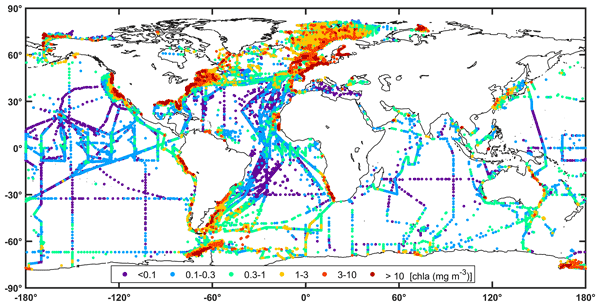
This paper presents the fourth version of the ESA Ocean Colour Climate Change Initiative global in situ bio-optical database. The updated compilation combines observations from many international data sources collected between 1996 and 2025 and includes major expansions in coverage and variables. The dataset provides a consistent reference for validating satellite ocean-colour products and supports algorithm development and long-term climate studies.
Carl Stadie, Ingmar Nitze, Begüm Demir, Martin Stefan Brandt, and Guido Grosse
EGUsphere, https://doi.org/10.5194/egusphere-2026-4074, https://doi.org/10.5194/egusphere-2026-4074, 2026
This preprint is open for discussion and under review for Earth Observation (EO).
Short summary
Short summary
Driftwood piles up along Arctic coasts, storing carbon and shaping habitats, but mapping it automatically is difficult. We compared three artificial intelligence models on aerial photos and satellite images, repeating each test many times to capture natural training variation. Image resolution mattered far more than which model was used, and testing only once, as is common, gave misleading results. Our approach offers a more reliable way to choose mapping tools for similar Arctic features.
Nora Bergner, Grace Marsh, Kevin Barry, Larissa Lacher, Alexander Böhmländer, Joanna Alden, Carina Ahlqvist, Ianina Altshuler, Lisa Bröder, Daniel Farinotti, Lionel Favre, Coline Guillosson, Benjamin Heutte, Kristina Höhler, Roman Pohorsky, Julian Weng, and Julia Schmale
Atmos. Chem. Phys., 26, 10557–10585, https://doi.org/10.5194/acp-26-10557-2026, https://doi.org/10.5194/acp-26-10557-2026, 2026
Short summary
Short summary
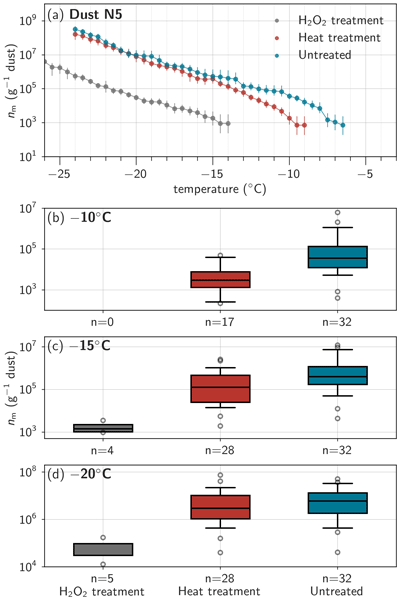
Dust from Greenlandic glacial outwash plains can form ice in clouds, a process relevant for climate. Its ice-nucleating activity varies strongly and is largely controlled by small amounts of biological material. During summer, the influence on atmospheric ice-nucleating particles is mostly local. Lower activity compared to other high-latitude dust sources highlights the need to account for regional differences in Arctic dust.
Kevin S. Rozmiarek, Elijah A. Miller, Irina Overeem, Gregory B. Rieker, and Tyler R. Jones
EGUsphere, https://doi.org/10.5194/egusphere-2026-3109, https://doi.org/10.5194/egusphere-2026-3109, 2026
This preprint is open for discussion and under review for Atmospheric Measurement Techniques (AMT).
Short summary
Short summary
Lakes emit large amounts of methane, yet measuring it remains challenging. Using simulations, we tested whether a drone circling a lake measuring methane and wind to enclose a virtual cylinder can recover its emissions. Sampling enough heights mattered most for accuracy; a nearby upwind lake biased estimates low; and short flights beat long ones as the atmosphere shifted. We distill the results into simple design rules for planning real drone-based methane surveys.
Marco A. Bolandini, Jordon D. Hemingway, Negar Haghipour, Kirsi H. Keskitalo, Jorien E. Vonk, Timothy I. Eglinton, and Lisa Bröder
Biogeosciences, 23, 4447–4462, https://doi.org/10.5194/bg-23-4447-2026, https://doi.org/10.5194/bg-23-4447-2026, 2026
Short summary
Short summary
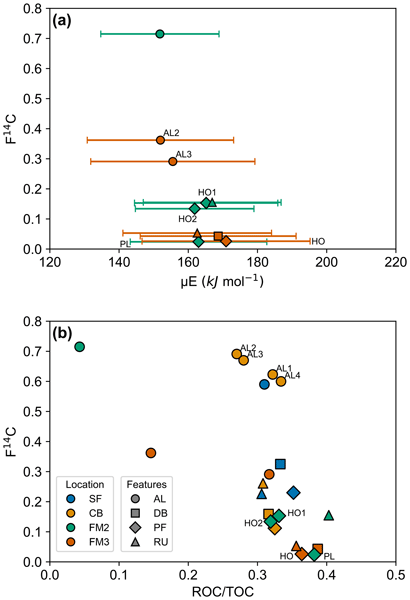
Abrupt permafrost thaw mobilizes ancient organic matter, which could fuel further warming, yet its fate remains uncertain. We studied thaw slumps in Arctic Canada using thermal, radiocarbon, and molecular analyses. Recently thawed debris and runoff exiting the slumps contained old, thermally stable organic matter, compositionally similar to surrounding permafrost. This suggests that much of the thaw-mobilised carbon survives initial transport and may be processed or sequestered downstream.
Lutz Schirrmeister, Nikita Demidov, Vasily Demidov, Paul Overduin, Walter Schirrmeister, Diana Soloveva, Sergey Verkulich, and Sebastian Wetterich
EGUsphere, https://doi.org/10.5194/egusphere-2026-1377, https://doi.org/10.5194/egusphere-2026-1377, 2026
This preprint is open for discussion and under review for The Cryosphere (TC).
Short summary
Short summary
Based on permafrost core and exposure data, three main stages of landscape dynamics could be identified for the study region in the coastal areas of Isfjord and Grønfjord, and the Grøndalen and Hollendardalen valleys. Our research indicates spatial and temporal changes in landscape dynamics and permafrost conditions driven by deglaciation, climate, and sea-level changes. The present study provides insights into the response of permafrost to Late Glacial and Holocene environmental changes.
Fabian Seemann, Michael Zech, Maren Jenrich, Guido Grosse, Benjamin M. Jones, Claire Treat, Lutz Schirrmeister, Susanne Liebner, and Jens Strauss
Biogeosciences, 23, 3675–3695, https://doi.org/10.5194/bg-23-3675-2026, https://doi.org/10.5194/bg-23-3675-2026, 2026
Short summary
Short summary
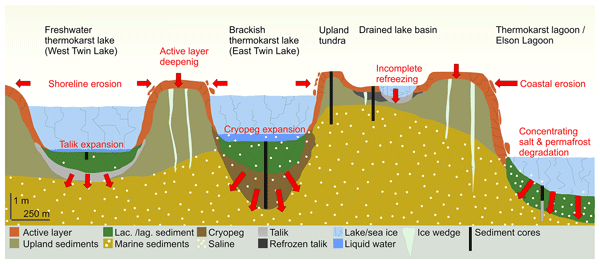
Arctic coastal landscapes, like those in northernmost Alaska, are often characterized by saline permafrost which is prone to thawing. We studied six sediment cores to understand how thawing and salinity affect organic matter breakdown and landscape change. Our results show that salinity accelerates organic matter degradation when permafrost thaws. This highlights the overlooked risk of salinity in shaping Arctic landscapes and carbon mineralization as the climate continues to warm.
Claudia Thölen, Jochen Wollschläger, Michael G. Novak, Rüdiger Röttgers, and Oliver Zielinski
Biogeosciences, 23, 3697–3721, https://doi.org/10.5194/bg-23-3697-2026, https://doi.org/10.5194/bg-23-3697-2026, 2026
Short summary
Short summary
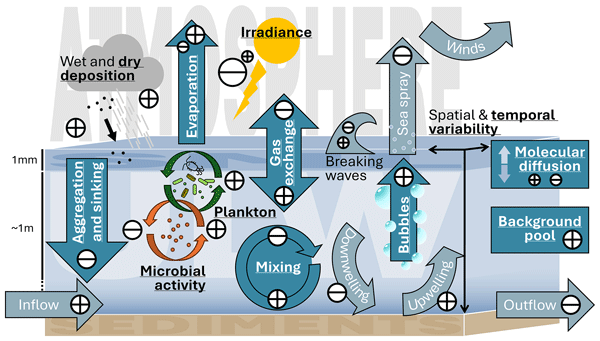
In a mesocosm study, the investigation of colored and fluorescent dissolved organic matter provided information on its transformation, enrichment, and exchange processes within the sea-surface microlayer and the underlying water. Photodegradation was suggested as the main sink, exceeding microbial alteration, and indicating that light and biological processes, such as the induced phytoplankton bloom, jointly shaped organic matter composition under strong vertical mixing.
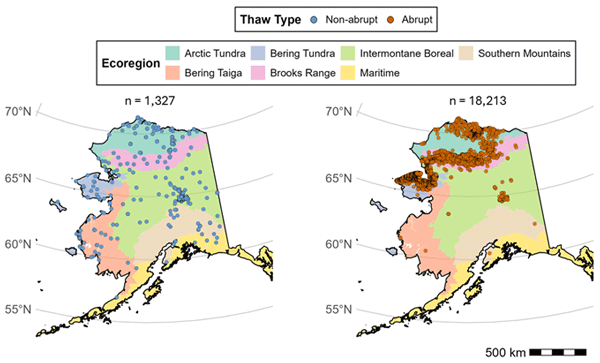
Hailey Webb, Ethan Pierce, Benjamin W. Abbott, William B. Bowden, Yaping Chen, Yating Chen, Thomas A. Douglas, Joel F. Eklof, Eugénie S. Euskirchen, Moritz Langer, Isla H. Myers-Smith, Irina Overeem, Jens Strauss, Katey Walter Anthony, Kang Wang, Matthew A. Whitley, and Merritt R. Turetsky
Earth Syst. Sci. Data, 18, 3147–3164, https://doi.org/10.5194/essd-18-3147-2026, https://doi.org/10.5194/essd-18-3147-2026, 2026
Short summary
Short summary
We created a database of 19,540 thawing permafrost sites across Alaska, including both abrupt and non-abrupt thaw features and explored relationships with elevation, slope, and incoming solar radiation. We use the database to show that existing ground ice maps are too coarse to predict abrupt thaw risk. This database can enhance predictions of future thaw and guide planning and adaptation strategies.
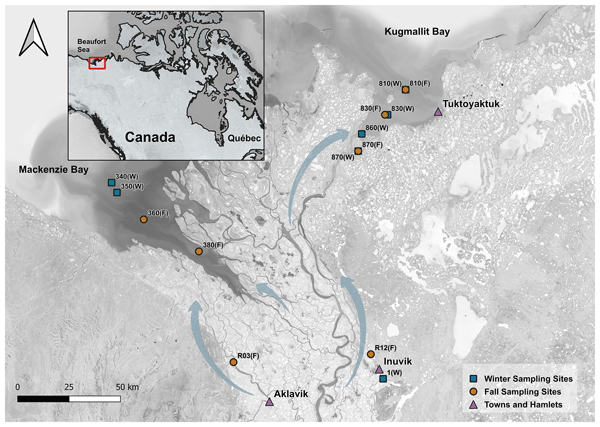
Thomas Bossé-Demers, Bennet Juhls, Martine Lizotte, Santiago Mareque, Audrey Gaudy, and Raoul-Marie Couture
Biogeosciences, 23, 3039–3057, https://doi.org/10.5194/bg-23-3039-2026, https://doi.org/10.5194/bg-23-3039-2026, 2026
Short summary
Short summary
We measured rare earth element concentrations in sediment of the Mackenzie River Delta during winter and fall to understand how seasons affect their mobility. Winter conditions showed nearly one hundred times more dissolved rare earth elements than fall, driven by organic matter that binds and mobilizes these elements under ice. Since spring floods may flush this winter buildup into the Arctic Ocean, changing ice cover patterns could alter how rivers deliver trace elements to coastal waters.
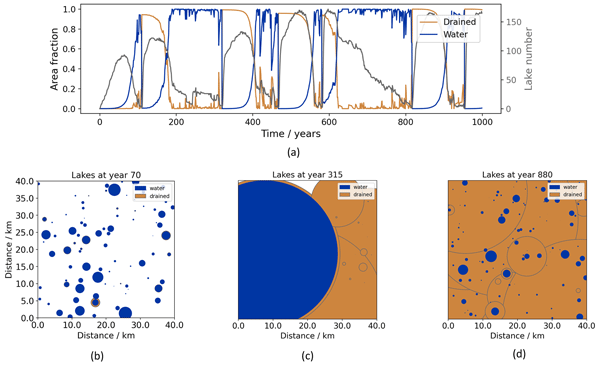
Constanze Reinken, Victor Brovkin, Philipp de Vrese, Ingmar Nitze, Helena Bergstedt, and Guido Grosse
The Cryosphere, 20, 1967–1995, https://doi.org/10.5194/tc-20-1967-2026, https://doi.org/10.5194/tc-20-1967-2026, 2026
Short summary
Short summary
Thermokarst lakes are dynamic features of ice-rich permafrost landscapes, altering energy, water and carbon cycles, but have so far mostly been modeled on site-level scale. A deterministic modelling approach would be challenging on larger scales due to the lack of extensive high-resolution data of sub-surface conditions. We therefore develop a conceptual stochastic model of thermokarst lake dynamics that treats the involved processes as probabilistic.
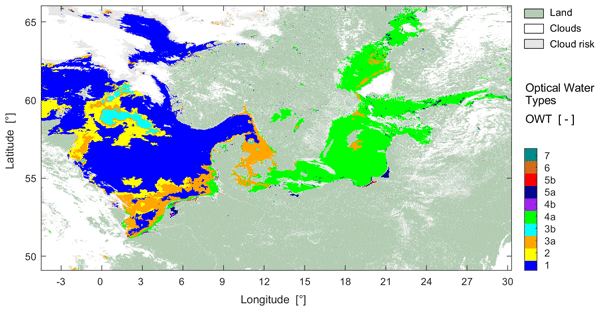
Martin Hieronymi, Daniel Behr, Shun Bi, and Rüdiger Röttgers
Earth Syst. Sci. Data, 18, 1307–1329, https://doi.org/10.5194/essd-18-1307-2026, https://doi.org/10.5194/essd-18-1307-2026, 2026
Short summary
Short summary
We present a scientific description of a satellite-based dataset and its novel processing chain. The dataset provides water quality parameters for lakes, rivers, coastal waters, as well as the entire North Sea and Baltic Sea. It further includes a novel estimate of organic carbon across diverse water bodies and the results of an optical water type classification. The dataset and its underlying algorithm provide a valuable foundation for future oceanographic and limnological analyses.
Madeleine Santos, Lisa Bröder, Matt O'Regan, Iván Hernández-Almeida, Tommaso Tesi, Lukas Bigler, Negar Haghipour, Daniel B. Nelson, Michael Fritz, and Julie Lattaud
Clim. Past, 22, 187–203, https://doi.org/10.5194/cp-22-187-2026, https://doi.org/10.5194/cp-22-187-2026, 2026
Short summary
Short summary
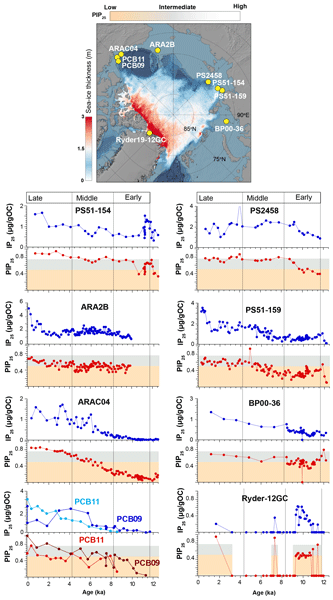
Our study examined how sea ice in the Beaufort Sea has changed over the past 13 000 years to better understand today's rapid losses. By analyzing chemical tracers preserved in seafloor sediments, we found that the Early Holocene was largely ice-free, with warmer waters and lower salinity. Seasonal ice began forming about 7000 years ago and expanded as the climate cooled. These long-term patterns show that continued warming could return the region to mostly ice-free conditions.
Riaz Bibi, Mariana Ribas-Ribas, Leonie Jaeger, Carola Lehners, Lisa Gassen, Edgar Fernando Cortés-Espinoza, Jochen Wollschläger, Claudia Thölen, Hannelore Waska, Jasper Zöbelein, Thorsten Brinkhoff, Isha Athale, Rüdiger Röttgers, Michael Novak, Anja Engel, Theresa Barthelmeß, Josefine Karnatz, Thomas Reinthaler, Dmytro Spriahailo, Gernot Friedrichs, Falko Asmussen Schäfer, and Oliver Wurl
Biogeosciences, 22, 7563–7589, https://doi.org/10.5194/bg-22-7563-2025, https://doi.org/10.5194/bg-22-7563-2025, 2025
Short summary
Short summary
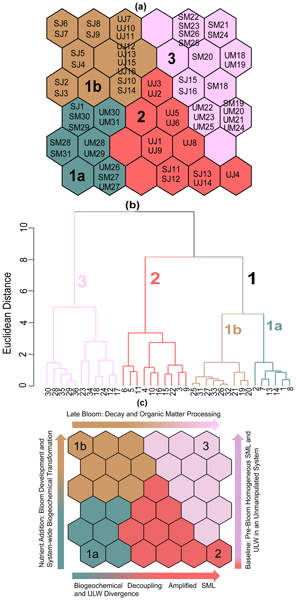
A multidisciplinary mesocosm study was conducted to investigate biogeochemical processes and their relationships in the sea-surface microlayer and underlying water during an induced phytoplankton bloom. Phytoplankton-derived organic matter, fuelled microbial activity and biofilm formation, supporting high bacterial abundance. Distinct temporal patterns in biogeochemical parameters and greater variability in the sea-surface microlayer highlight its influence on air–sea interactions.
Nina Nesterova, Ilia Tarasevich, Marina Leibman, Artem Khomutov, Alexander Kizyakov, Ingmar Nitze, and Guido Grosse
Earth Syst. Sci. Data, 17, 5707–5727, https://doi.org/10.5194/essd-17-5707-2025, https://doi.org/10.5194/essd-17-5707-2025, 2025
Short summary
Short summary
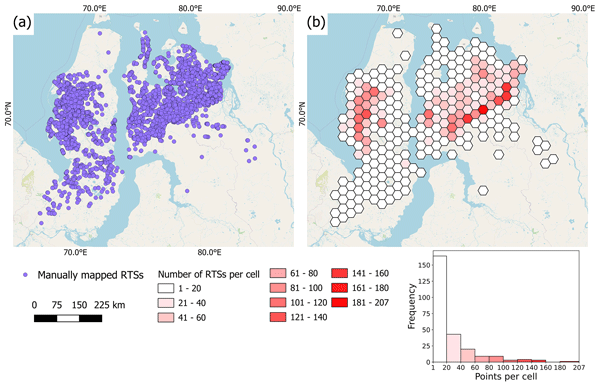
We created the first detailed map of retrogressive thaw slump (RTS) landforms across a large area of the West Siberian Arctic. RTSs are key features of abrupt permafrost thaw accelerated by climate change. Using satellite images and field data, we identified and classified over 6000 RTSs. This dataset helps scientists better understand how warming is changing Arctic landscapes and provides a trusted reference for training artificial intelligence to detect these landforms in the future.
Sarah Paradis, Hannah Gies, Davide Moccia, Julie Lattaud, Lisa Bröder, Negar Haghipour, Antonio Pusceddu, Albert Palanques, Pere Puig, Claudio Lo Iacono, and Timothy I. Eglinton
Biogeosciences, 22, 5921–5941, https://doi.org/10.5194/bg-22-5921-2025, https://doi.org/10.5194/bg-22-5921-2025, 2025
Short summary
Short summary
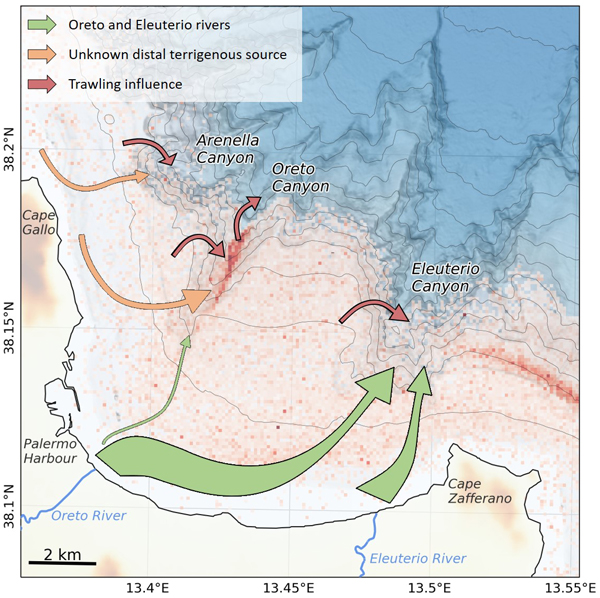
The Gulf of Palermo features several submarine canyons, where 50–70 % of the organic carbon deposited in them is terrigenous (OC-terr). The contribution of OC-terr generally decreases offshore and across canyons. Rivers deliver OC-terr, which is redistributed by regional currents and intercepted by the farthest down-current canyon, while the other submarine canyons receive terrigenous organic carbon from more distal sources. Bottom trawling also contributes to the transfer of OC-terr down-canyon.
Izabella A. Baisheva, Birgit Heim, Jorge García Molinos, Amelie Stieg, Hanno Meyer, Ramesh Glückler, Kathleen R. Stoof-Leichsenring, Antje Eulenburg, Pier Paul Overduin, Evgenii S. Zakharov, Aital V. Egorov, Paraskovya V. Davydova, Lena A. Ushnitskaya, Sardana N. Levina, Ruslan M. Gorodnichev, Robert Jackisch, Antonie Haas, Stefan Kruse, Luidmila A. Pestryakova, and Ulrike Herzschuh
EGUsphere, https://doi.org/10.5194/egusphere-2025-4114, https://doi.org/10.5194/egusphere-2025-4114, 2025
Short summary
Short summary
Our study provides a new comprehensive assessment of the limnological state of 66 lakes in the Central Yakutian alaas landscapes and the Verkhoyansk mountain range. Our analyses suggest that specific lake-type properties within the thermokarst lake sequence seem to drive inorganic, organic, and isotopic lake hydrochemistry. Future warming may lead to less diversification within lake macrophyte assemblages in old alaas lakes.
Mehriban Aliyeva, Michael Angelopoulos, Julia Boike, Moritz Langer, Frederieke Miesner, Scott Dallimore, Dustin Whalen, Lukas U. Arenson, and Pier Paul Overduin
EGUsphere, https://doi.org/10.5194/egusphere-2025-2675, https://doi.org/10.5194/egusphere-2025-2675, 2025
Preprint archived
Short summary
Short summary
In this study, we investigate the ongoing transformation of terrestrial permafrost into subsea permafrost on a rapidly eroding Arctic island using electrical resistivity tomography and numerical modelling. We draw on 60 years of shoreline data to support our findings. This work is important for understanding permafrost loss in Arctic coastal areas and for guiding future efforts to protect vulnerable shorelines.
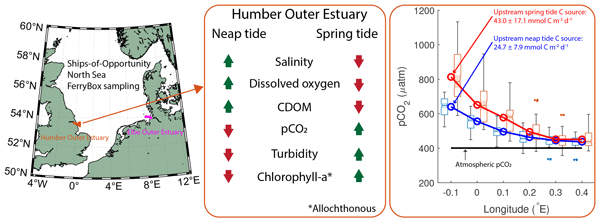
Vlad A. Macovei, Louise C. V. Rewrie, Rüdiger Röttgers, and Yoana G. Voynova
Biogeosciences, 22, 3375–3396, https://doi.org/10.5194/bg-22-3375-2025, https://doi.org/10.5194/bg-22-3375-2025, 2025
Short summary
Short summary
We found that biogeochemical variability at the land–sea interface (LSI) in two major temperate estuaries is modulated by the 14 d spring–neap tidal cycle, with large effects on dissolved inorganic and organic carbon concentrations and distribution. As this effect increases the strength of the carbon source to the atmosphere by up to 74 % during spring tide, it should be accounted for in regional models, which aim to resolve biogeochemical processing at the LSI.
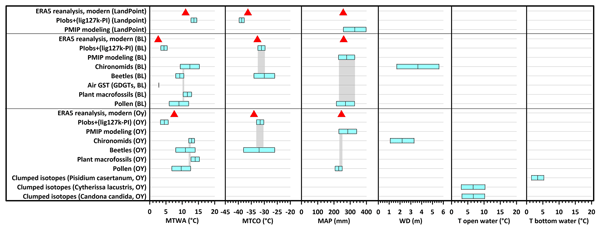
Lutz Schirrmeister, Margret C. Fuchs, Thomas Opel, Andrei Andreev, Frank Kienast, Andrea Schneider, Larisa Nazarova, Larisa Frolova, Svetlana Kuzmina, Tatiana Kuznetsova, Vladimir Tumskoy, Heidrun Matthes, Gerrit Lohmann, Guido Grosse, Viktor Kunitsky, Hanno Meyer, Heike H. Zimmermann, Ulrike Herzschuh, Thomas Böhmer, Stuart Umbo, Sevi Modestou, Sebastian F. M. Breitenbach, Anfisa Pismeniuk, Georg Schwamborn, Stephanie Kusch, and Sebastian Wetterich
Clim. Past, 21, 1143–1184, https://doi.org/10.5194/cp-21-1143-2025, https://doi.org/10.5194/cp-21-1143-2025, 2025
Short summary
Short summary
Geochronological, cryolithological, paleoecological, and modeling data reconstruct the Last Interglacial (LIG) climate around the New Siberian Islands and reveal significantly warmer conditions compared to today. The critical challenges in predicting future ecosystem responses lie in the fact that the land–ocean distribution during the LIG was markedly different from today, affecting the degree of continentality, which played a major role in modulating climate and ecosystem dynamics.
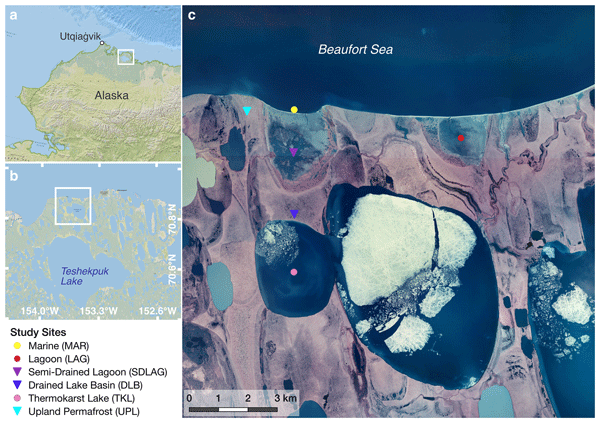
Frieda P. Giest, Maren Jenrich, Guido Grosse, Benjamin M. Jones, Kai Mangelsdorf, Torben Windirsch, and Jens Strauss
Biogeosciences, 22, 2871–2887, https://doi.org/10.5194/bg-22-2871-2025, https://doi.org/10.5194/bg-22-2871-2025, 2025
Short summary
Short summary
Climate warming causes permafrost to thaw, releasing greenhouse gases and affecting ecosystems. We studied sediments from Arctic coastal landscapes, including land, lakes, lagoons, and the ocean, finding that organic carbon storage and quality vary with landscape features and saltwater influence. Freshwater and land areas store more carbon, while saltwater reduces its quality. These findings improve predictions of Arctic responses to climate change and their impact on global carbon cycling.
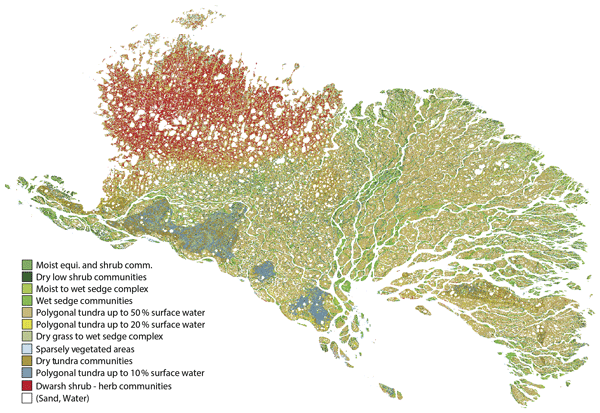
Simeon Lisovski, Alexandra Runge, Iuliia Shevtsova, Nele Landgraf, Anne Morgenstern, Ronald Reagan Okoth, Matthias Fuchs, Nikolay Lashchinskiy, Carl Stadie, Alison Beamish, Ulrike Herzschuh, Guido Grosse, and Birgit Heim
Earth Syst. Sci. Data, 17, 1707–1730, https://doi.org/10.5194/essd-17-1707-2025, https://doi.org/10.5194/essd-17-1707-2025, 2025
Short summary
Short summary
The Lena Delta is the largest river delta in the Arctic and represents a biodiversity hotspot. Here, we describe multiple field datasets and a detailed habitat classification map for the Lena Delta. We present context and methods of these openly available datasets and show how they can improve our understanding of the rapidly changing Arctic tundra system.
Maren Jenrich, Juliane Wolter, Susanne Liebner, Christian Knoblauch, Guido Grosse, Fiona Giebeler, Dustin Whalen, and Jens Strauss
Biogeosciences, 22, 2069–2086, https://doi.org/10.5194/bg-22-2069-2025, https://doi.org/10.5194/bg-22-2069-2025, 2025
Short summary
Short summary
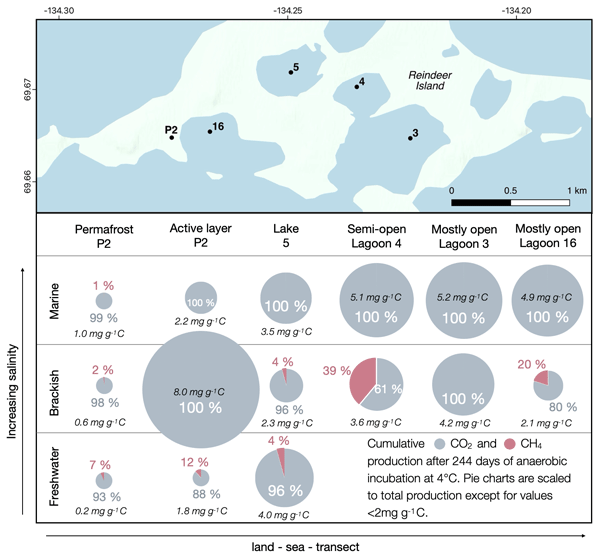
Climate warming in the Arctic is causing the erosion of permafrost coasts and the transformation of permafrost lakes into lagoons. To understand how this affects greenhouse gas (GHG) emissions, we studied carbon dioxide (CO₂) and methane (CH₄) production in lagoons with varying sea connections. Younger lagoons produce more CH₄, while CO₂ increases under more marine conditions. Flooding of permafrost lowlands due to rising sea levels may lead to higher GHG emissions from Arctic coasts in future.
Szabina Karancz, Lennart J. de Nooijer, Bas van der Wagt, Marcel T. J. van der Meer, Sambuddha Misra, Rick Hennekam, Zeynep Erdem, Julie Lattaud, Negar Haghipour, Stefan Schouten, and Gert-Jan Reichart
Clim. Past, 21, 679–704, https://doi.org/10.5194/cp-21-679-2025, https://doi.org/10.5194/cp-21-679-2025, 2025
Short summary
Short summary
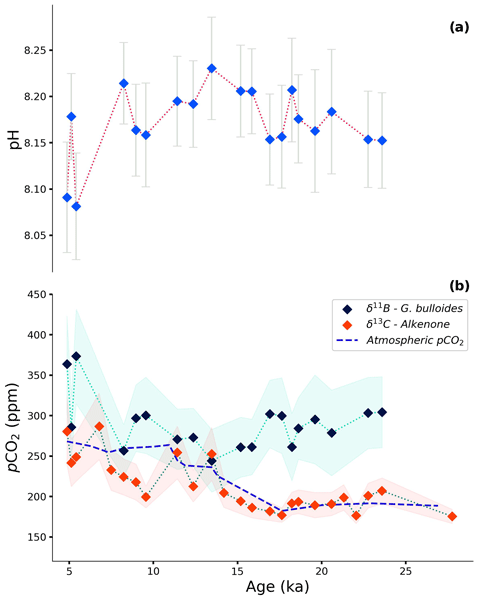
Changes in upwelling intensity of the Benguela upwelling region during the last glacial motivated us to investigate the local CO2 history during the last glacial-to-interglacial transition. Using various geochemical tracers on archives from both subsurface and surface waters reveals enhanced storage of carbon at depth during the Last Glacial Maximum. An efficient biological pump likely prevented outgassing of CO2 from intermediate depth to the atmosphere.
Ephraim Erkens, Michael Angelopoulos, Jens Tronicke, Scott R. Dallimore, Dustin Whalen, Julia Boike, and Pier Paul Overduin
The Cryosphere, 19, 997–1012, https://doi.org/10.5194/tc-19-997-2025, https://doi.org/10.5194/tc-19-997-2025, 2025
Short summary
Short summary
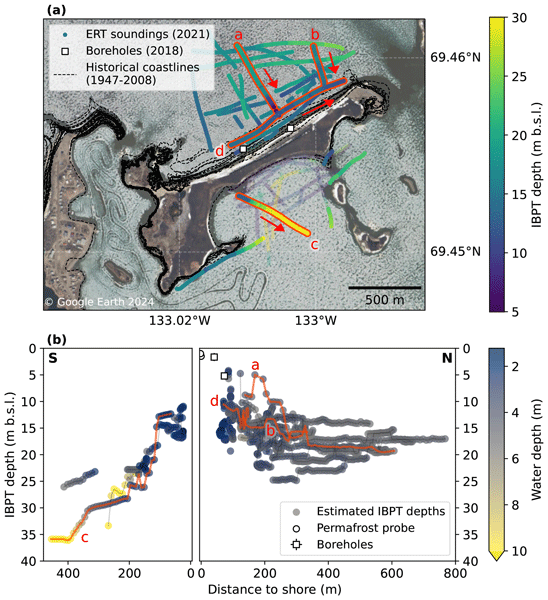
We investigate the depth of subsea permafrost formed by inundation of terrestrial permafrost due to marine transgression around the rapidly disappearing, permafrost-cored Tuktoyaktuk Island (Beaufort Sea, NWT, Canada). We use geoelectrical surveys with floating electrodes to identify the boundary between unfrozen and frozen sediment. Our findings indicate that permafrost thaw depths beneath the seabed can be explained by coastal erosion rates and landscape features before inundation.
Bennet Juhls, Anne Morgenstern, Jens Hölemann, Antje Eulenburg, Birgit Heim, Frederieke Miesner, Hendrik Grotheer, Gesine Mollenhauer, Hanno Meyer, Ephraim Erkens, Felica Yara Gehde, Sofia Antonova, Sergey Chalov, Maria Tereshina, Oxana Erina, Evgeniya Fingert, Ekaterina Abramova, Tina Sanders, Liudmila Lebedeva, Nikolai Torgovkin, Georgii Maksimov, Vasily Povazhnyi, Rafael Gonçalves-Araujo, Urban Wünsch, Antonina Chetverova, Sophie Opfergelt, and Pier Paul Overduin
Earth Syst. Sci. Data, 17, 1–28, https://doi.org/10.5194/essd-17-1-2025, https://doi.org/10.5194/essd-17-1-2025, 2025
Short summary
Short summary
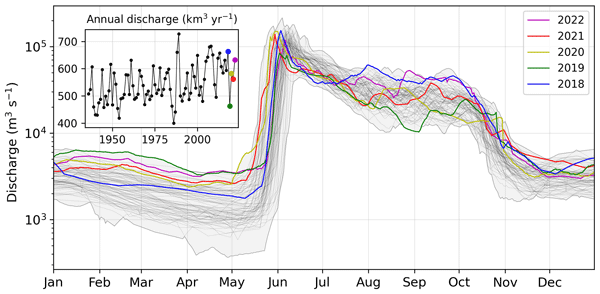
The Siberian Arctic is warming fast: permafrost is thawing, river chemistry is changing, and coastal ecosystems are affected. We aimed to understand changes in the Lena River, a major Arctic river flowing to the Arctic Ocean, by collecting 4.5 years of detailed water data, including temperature and carbon and nutrient contents. This dataset records current conditions and helps us to detect future changes. Explore it at https://doi.org/10.1594/PANGAEA.913197 and https://lena-monitoring.awi.de/.
Tabea Rettelbach, Ingmar Nitze, Inge Grünberg, Jennika Hammar, Simon Schäffler, Daniel Hein, Matthias Gessner, Tilman Bucher, Jörg Brauchle, Jörg Hartmann, Torsten Sachs, Julia Boike, and Guido Grosse
Earth Syst. Sci. Data, 16, 5767–5798, https://doi.org/10.5194/essd-16-5767-2024, https://doi.org/10.5194/essd-16-5767-2024, 2024
Short summary
Short summary
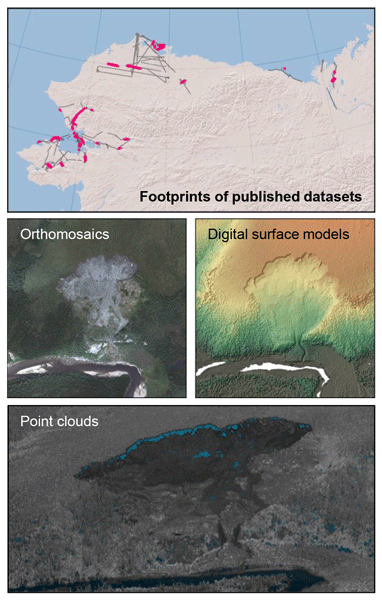
Permafrost landscapes in the Arctic are rapidly changing due to climate warming. Here, we publish aerial images and elevation models with very high spatial detail that help study these landscapes in northwestern Canada and Alaska. The images were collected using the Modular Aerial Camera System (MACS). This dataset has significant implications for understanding permafrost landscape dynamics in response to climate change. It is publicly available for further research.
Lydia Stolpmann, Ingmar Nitze, Ingeborg Bussmann, Benjamin M. Jones, Josefine Lenz, Hanno Meyer, Juliane Wolter, and Guido Grosse
EGUsphere, https://doi.org/10.5194/egusphere-2024-2822, https://doi.org/10.5194/egusphere-2024-2822, 2024
Preprint archived
Short summary
Short summary
We combine hydrochemical and lake change data to show consequences of permafrost thaw induced lake changes on hydrochemistry, which are relevant for the global carbon cycle. We found higher methane concentrations in lakes that do not freeze to the ground and show that lagoons have lower methane concentrations than lakes. Our detailed lake sampling approach show higher concentrations in Dissolved Organic Carbon in areas of higher erosion rates, that might increase under the climate warming.
Nina Nesterova, Marina Leibman, Alexander Kizyakov, Hugues Lantuit, Ilya Tarasevich, Ingmar Nitze, Alexandra Veremeeva, and Guido Grosse
The Cryosphere, 18, 4787–4810, https://doi.org/10.5194/tc-18-4787-2024, https://doi.org/10.5194/tc-18-4787-2024, 2024
Short summary
Short summary
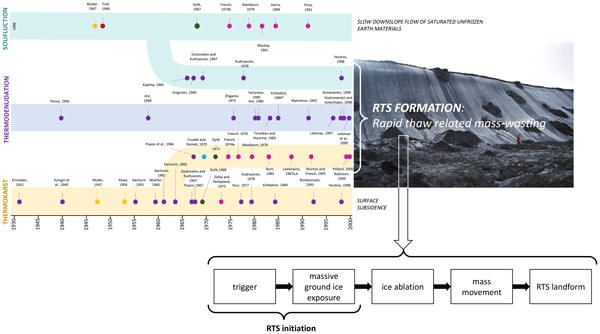
Retrogressive thaw slumps (RTSs) are widespread in the Arctic permafrost landforms. RTSs present a big interest for researchers because of their expansion due to climate change. There are currently different scientific schools and terminology used in the literature on this topic. We have critically reviewed existing concepts and terminology and provided clarifications to present a useful base for experts in the field and ease the introduction to the topic for scientists who are new to it.
Soraya Kaiser, Julia Boike, Guido Grosse, and Moritz Langer
Earth Syst. Sci. Data, 16, 3719–3753, https://doi.org/10.5194/essd-16-3719-2024, https://doi.org/10.5194/essd-16-3719-2024, 2024
Short summary
Short summary
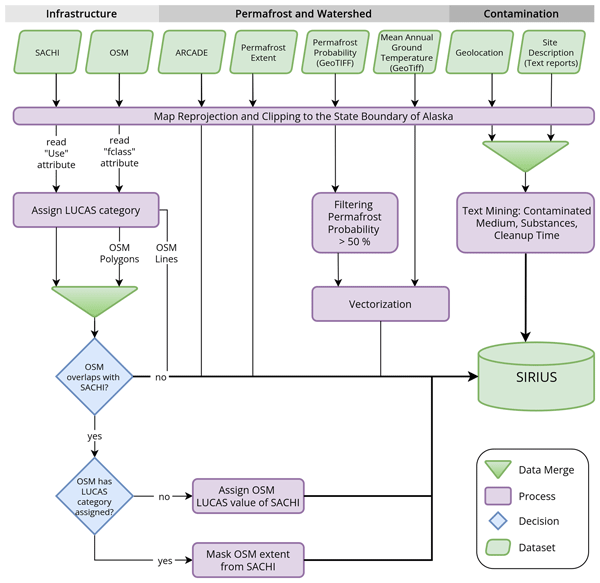
Arctic warming, leading to permafrost degradation, poses primary threats to infrastructure and secondary ecological hazards from possible infrastructure failure. Our study created a comprehensive Alaska inventory combining various data sources with which we improved infrastructure classification and data on contaminated sites. This resource is presented as a GeoPackage allowing planning of infrastructure damage and possible implications for Arctic communities facing permafrost challenges.

Frederieke Miesner, William Lambert Cable, Pier Paul Overduin, and Julia Boike
The Cryosphere, 18, 2603–2611, https://doi.org/10.5194/tc-18-2603-2024, https://doi.org/10.5194/tc-18-2603-2024, 2024
Short summary
Short summary
The temperature in the sediment below Arctic lakes determines the stability of the permafrost and microbial activity. However, measurements are scarce because of the remoteness. We present a robust and portable device to fill this gap. Test campaigns have demonstrated its utility in a range of environments during winter and summer. The measured temperatures show a great variability within and across locations. The data can be used to validate models and estimate potential emissions.
Tian Gan, Gregory E. Tucker, Eric W. H. Hutton, Mark D. Piper, Irina Overeem, Albert J. Kettner, Benjamin Campforts, Julia M. Moriarty, Brianna Undzis, Ethan Pierce, and Lynn McCready
Geosci. Model Dev., 17, 2165–2185, https://doi.org/10.5194/gmd-17-2165-2024, https://doi.org/10.5194/gmd-17-2165-2024, 2024
Short summary
Short summary
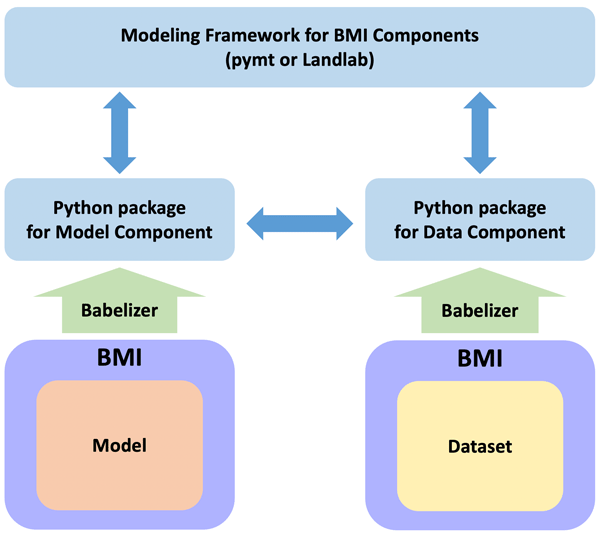
This study presents the design, implementation, and application of the CSDMS Data Components. The case studies demonstrate that the Data Components provide a consistent way to access heterogeneous datasets from multiple sources, and to seamlessly integrate them with various models for Earth surface process modeling. The Data Components support the creation of open data–model integration workflows to improve the research transparency and reproducibility.
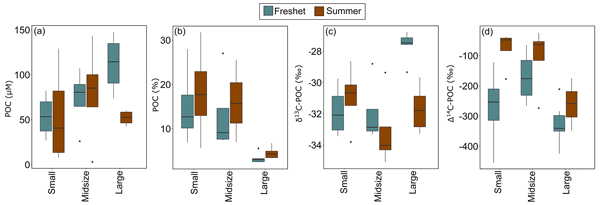
Kirsi H. Keskitalo, Lisa Bröder, Tommaso Tesi, Paul J. Mann, Dirk J. Jong, Sergio Bulte Garcia, Anna Davydova, Sergei Davydov, Nikita Zimov, Negar Haghipour, Timothy I. Eglinton, and Jorien E. Vonk
Biogeosciences, 21, 357–379, https://doi.org/10.5194/bg-21-357-2024, https://doi.org/10.5194/bg-21-357-2024, 2024
Short summary
Short summary
Permafrost thaw releases organic carbon into waterways. Decomposition of this carbon pool emits greenhouse gases into the atmosphere, enhancing climate warming. We show that Arctic river carbon and water chemistry are different between the spring ice breakup and summer and that primary production is initiated in small Arctic rivers right after ice breakup, in contrast to in large rivers. This may have implications for fluvial carbon dynamics and greenhouse gas uptake and emission balance.
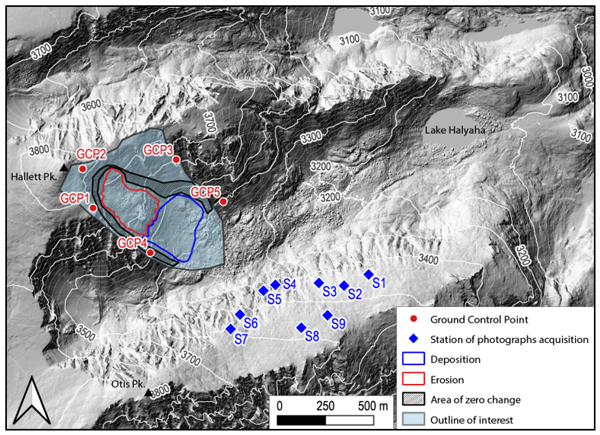
Matthew C. Morriss, Benjamin Lehmann, Benjamin Campforts, George Brencher, Brianna Rick, Leif S. Anderson, Alexander L. Handwerger, Irina Overeem, and Jeffrey Moore
Earth Surf. Dynam., 11, 1251–1274, https://doi.org/10.5194/esurf-11-1251-2023, https://doi.org/10.5194/esurf-11-1251-2023, 2023
Short summary
Short summary
In this paper, we investigate the 28 June 2022 collapse of the Chaos Canyon landslide in Rocky Mountain National Park, Colorado, USA. We find that the landslide was moving prior to its collapse and took place at peak spring snowmelt; temperature modeling indicates the potential presence of permafrost. We hypothesize that this landslide could be part of the broader landscape evolution changes to alpine terrain caused by a warming climate, leading to thawing alpine permafrost.
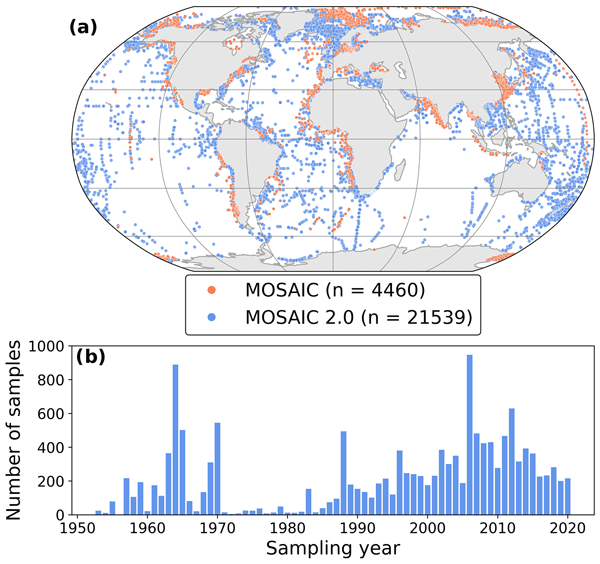
Sarah Paradis, Kai Nakajima, Tessa S. Van der Voort, Hannah Gies, Aline Wildberger, Thomas M. Blattmann, Lisa Bröder, and Timothy I. Eglinton
Earth Syst. Sci. Data, 15, 4105–4125, https://doi.org/10.5194/essd-15-4105-2023, https://doi.org/10.5194/essd-15-4105-2023, 2023
Short summary
Short summary
MOSAIC is a database of global organic carbon in marine sediments. This new version holds more than 21 000 sediment cores and includes new variables to interpret organic carbon distribution, such as sedimentological parameters and biomarker signatures. MOSAIC also stores data from specific sediment and molecular fractions to better understand organic carbon degradation and ageing. This database is continuously expanding, and version control will allow reproducible research outputs.
Sebastian Westermann, Thomas Ingeman-Nielsen, Johanna Scheer, Kristoffer Aalstad, Juditha Aga, Nitin Chaudhary, Bernd Etzelmüller, Simon Filhol, Andreas Kääb, Cas Renette, Louise Steffensen Schmidt, Thomas Vikhamar Schuler, Robin B. Zweigel, Léo Martin, Sarah Morard, Matan Ben-Asher, Michael Angelopoulos, Julia Boike, Brian Groenke, Frederieke Miesner, Jan Nitzbon, Paul Overduin, Simone M. Stuenzi, and Moritz Langer
Geosci. Model Dev., 16, 2607–2647, https://doi.org/10.5194/gmd-16-2607-2023, https://doi.org/10.5194/gmd-16-2607-2023, 2023
Short summary
Short summary
The CryoGrid community model is a new tool for simulating ground temperatures and the water and ice balance in cold regions. It is a modular design, which makes it possible to test different schemes to simulate, for example, permafrost ground in an efficient way. The model contains tools to simulate frozen and unfrozen ground, snow, glaciers, and other massive ice bodies, as well as water bodies.
Martine Lizotte, Bennet Juhls, Atsushi Matsuoka, Philippe Massicotte, Gaëlle Mével, David Obie James Anikina, Sofia Antonova, Guislain Bécu, Marine Béguin, Simon Bélanger, Thomas Bossé-Demers, Lisa Bröder, Flavienne Bruyant, Gwénaëlle Chaillou, Jérôme Comte, Raoul-Marie Couture, Emmanuel Devred, Gabrièle Deslongchamps, Thibaud Dezutter, Miles Dillon, David Doxaran, Aude Flamand, Frank Fell, Joannie Ferland, Marie-Hélène Forget, Michael Fritz, Thomas J. Gordon, Caroline Guilmette, Andrea Hilborn, Rachel Hussherr, Charlotte Irish, Fabien Joux, Lauren Kipp, Audrey Laberge-Carignan, Hugues Lantuit, Edouard Leymarie, Antonio Mannino, Juliette Maury, Paul Overduin, Laurent Oziel, Colin Stedmon, Crystal Thomas, Lucas Tisserand, Jean-Éric Tremblay, Jorien Vonk, Dustin Whalen, and Marcel Babin
Earth Syst. Sci. Data, 15, 1617–1653, https://doi.org/10.5194/essd-15-1617-2023, https://doi.org/10.5194/essd-15-1617-2023, 2023
Short summary
Short summary
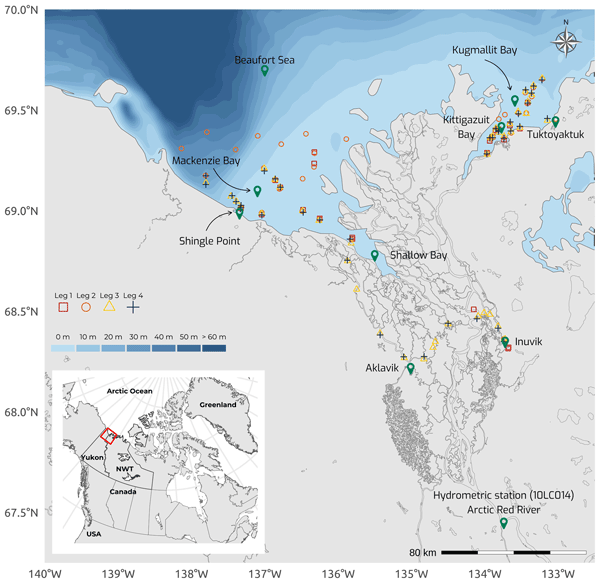
Permafrost thaw in the Mackenzie Delta region results in the release of organic matter into the coastal marine environment. What happens to this carbon-rich organic matter as it transits along the fresh to salty aquatic environments is still underdocumented. Four expeditions were conducted from April to September 2019 in the coastal area of the Beaufort Sea to study the fate of organic matter. This paper describes a rich set of data characterizing the composition and sources of organic matter.
Ngai-Ham Chan, Moritz Langer, Bennet Juhls, Tabea Rettelbach, Paul Overduin, Kimberly Huppert, and Jean Braun
Earth Surf. Dynam., 11, 259–285, https://doi.org/10.5194/esurf-11-259-2023, https://doi.org/10.5194/esurf-11-259-2023, 2023
Short summary
Short summary
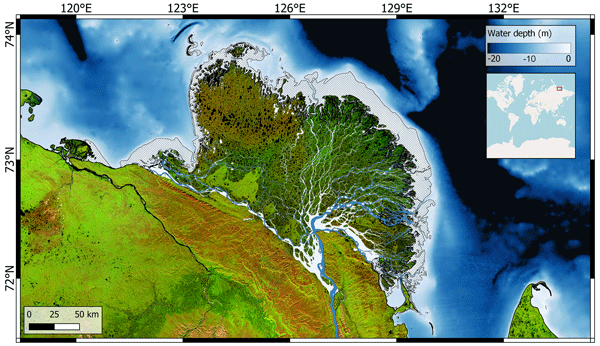
Arctic river deltas influence how nutrients and soil organic carbon, carried by sediments from the Arctic landscape, are retained or released into the Arctic Ocean. Under climate change, the deltas themselves and their ecosystems are becoming more vulnerable. We build upon previous models to reproduce for the first time an important feature ubiquitous to Arctic deltas and simulate its future under climate warming. This can impact the future of Arctic deltas and the carbon release they moderate.
Olga Ogneva, Gesine Mollenhauer, Bennet Juhls, Tina Sanders, Juri Palmtag, Matthias Fuchs, Hendrik Grotheer, Paul J. Mann, and Jens Strauss
Biogeosciences, 20, 1423–1441, https://doi.org/10.5194/bg-20-1423-2023, https://doi.org/10.5194/bg-20-1423-2023, 2023
Short summary
Short summary
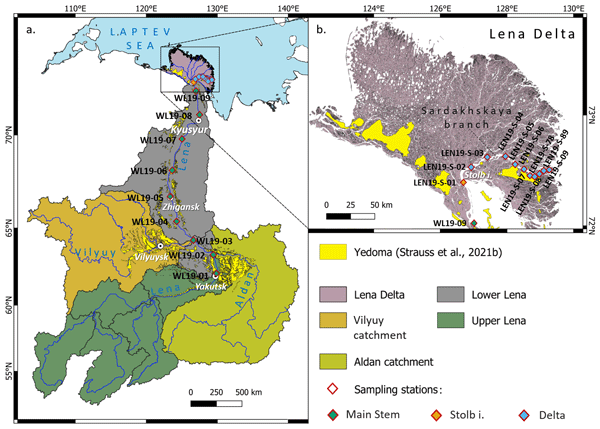
Arctic warming accelerates permafrost thaw and release of terrestrial organic matter (OM) via rivers to the Arctic Ocean. We compared particulate organic carbon (POC), total suspended matter, and C isotopes (δ13C and Δ14C of POC) in the Lena delta and Lena River along a ~1600 km transect. We show that the Lena delta, as an interface between the Lena River and the Arctic Ocean, plays a crucial role in determining the qualitative and quantitative composition of OM discharged into the Arctic Ocean.
Dirk Jong, Lisa Bröder, Tommaso Tesi, Kirsi H. Keskitalo, Nikita Zimov, Anna Davydova, Philip Pika, Negar Haghipour, Timothy I. Eglinton, and Jorien E. Vonk
Biogeosciences, 20, 271–294, https://doi.org/10.5194/bg-20-271-2023, https://doi.org/10.5194/bg-20-271-2023, 2023
Short summary
Short summary
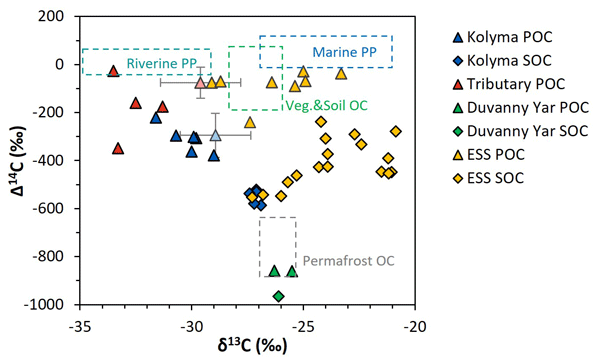
With this study, we want to highlight the importance of studying both land and ocean together, and water and sediment together, as these systems function as a continuum, and determine how organic carbon derived from permafrost is broken down and its effect on global warming. Although on the one hand it appears that organic carbon is removed from sediments along the pathway of transport from river to ocean, it also appears to remain relatively ‘fresh’, despite this removal and its very old age.
André Valente, Shubha Sathyendranath, Vanda Brotas, Steve Groom, Michael Grant, Thomas Jackson, Andrei Chuprin, Malcolm Taberner, Ruth Airs, David Antoine, Robert Arnone, William M. Balch, Kathryn Barker, Ray Barlow, Simon Bélanger, Jean-François Berthon, Şükrü Beşiktepe, Yngve Borsheim, Astrid Bracher, Vittorio Brando, Robert J. W. Brewin, Elisabetta Canuti, Francisco P. Chavez, Andrés Cianca, Hervé Claustre, Lesley Clementson, Richard Crout, Afonso Ferreira, Scott Freeman, Robert Frouin, Carlos García-Soto, Stuart W. Gibb, Ralf Goericke, Richard Gould, Nathalie Guillocheau, Stanford B. Hooker, Chuamin Hu, Mati Kahru, Milton Kampel, Holger Klein, Susanne Kratzer, Raphael Kudela, Jesus Ledesma, Steven Lohrenz, Hubert Loisel, Antonio Mannino, Victor Martinez-Vicente, Patricia Matrai, David McKee, Brian G. Mitchell, Tiffany Moisan, Enrique Montes, Frank Muller-Karger, Aimee Neeley, Michael Novak, Leonie O'Dowd, Michael Ondrusek, Trevor Platt, Alex J. Poulton, Michel Repecaud, Rüdiger Röttgers, Thomas Schroeder, Timothy Smyth, Denise Smythe-Wright, Heidi M. Sosik, Crystal Thomas, Rob Thomas, Gavin Tilstone, Andreia Tracana, Michael Twardowski, Vincenzo Vellucci, Kenneth Voss, Jeremy Werdell, Marcel Wernand, Bozena Wojtasiewicz, Simon Wright, and Giuseppe Zibordi
Earth Syst. Sci. Data, 14, 5737–5770, https://doi.org/10.5194/essd-14-5737-2022, https://doi.org/10.5194/essd-14-5737-2022, 2022
Short summary
Short summary
A compiled set of in situ data is vital to evaluate the quality of ocean-colour satellite data records. Here we describe the global compilation of bio-optical in situ data (spanning from 1997 to 2021) used for the validation of the ocean-colour products from the ESA Ocean Colour Climate Change Initiative (OC-CCI). The compilation merges and harmonizes several in situ data sources into a simple format that could be used directly for the evaluation of satellite-derived ocean-colour data.
Mauricio Arboleda-Zapata, Michael Angelopoulos, Pier Paul Overduin, Guido Grosse, Benjamin M. Jones, and Jens Tronicke
The Cryosphere, 16, 4423–4445, https://doi.org/10.5194/tc-16-4423-2022, https://doi.org/10.5194/tc-16-4423-2022, 2022
Short summary
Short summary
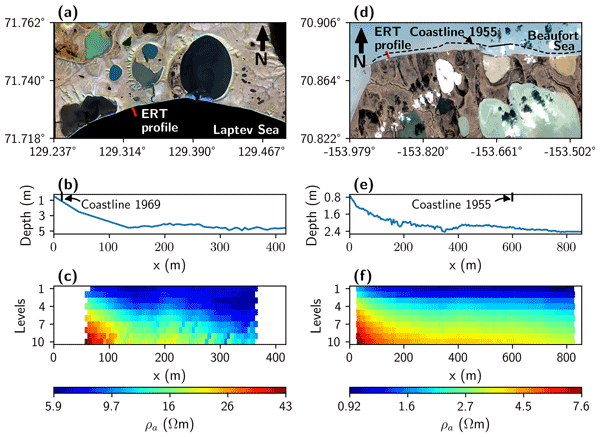
We demonstrate how we can reliably estimate the thawed–frozen permafrost interface with its associated uncertainties in subsea permafrost environments using 2D electrical resistivity tomography (ERT) data. In addition, we show how further analyses considering 1D inversion and sensitivity assessments can help quantify and better understand 2D ERT inversion results. Our results illustrate the capabilities of the ERT method to get insights into the development of the subsea permafrost.
Loeka L. Jongejans, Kai Mangelsdorf, Cornelia Karger, Thomas Opel, Sebastian Wetterich, Jérémy Courtin, Hanno Meyer, Alexander I. Kizyakov, Guido Grosse, Andrei G. Shepelev, Igor I. Syromyatnikov, Alexander N. Fedorov, and Jens Strauss
The Cryosphere, 16, 3601–3617, https://doi.org/10.5194/tc-16-3601-2022, https://doi.org/10.5194/tc-16-3601-2022, 2022
Short summary
Short summary
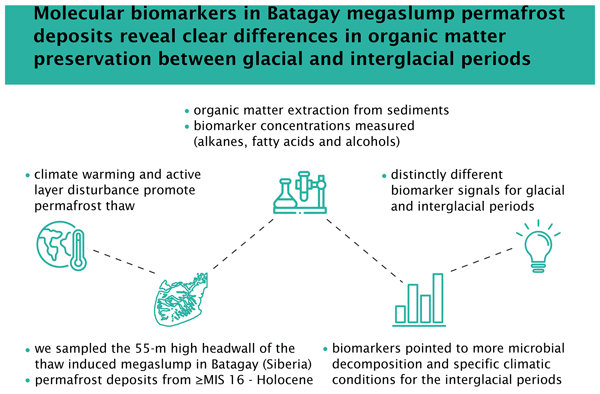
Large parts of Arctic Siberia are underlain by permafrost. Climate warming leads to permafrost thaw. At the Batagay megaslump, permafrost sediments up to ~ 650 kyr old are exposed. We took sediment samples and analysed the organic matter (e.g. plant remains). We found distinct differences in the biomarker distributions between the glacial and interglacial deposits with generally stronger microbial activity during interglacial periods. Further permafrost thaw enhances greenhouse gas emissions.
Jan Nitzbon, Damir Gadylyaev, Steffen Schlüter, John Maximilian Köhne, Guido Grosse, and Julia Boike
The Cryosphere, 16, 3507–3515, https://doi.org/10.5194/tc-16-3507-2022, https://doi.org/10.5194/tc-16-3507-2022, 2022
Short summary
Short summary
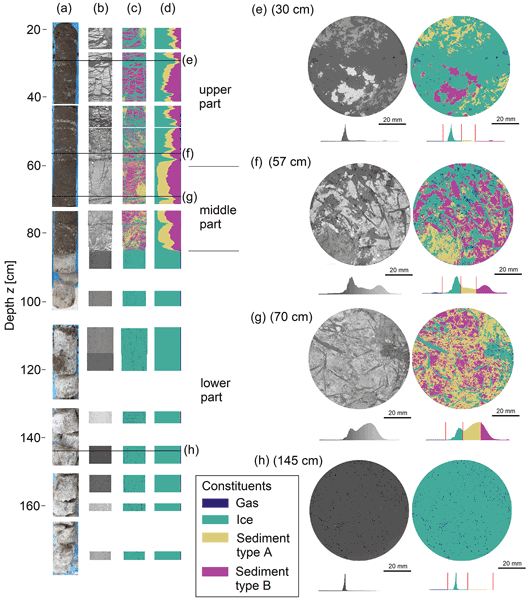
The microstructure of permafrost soils contains clues to its formation and its preconditioning to future change. We used X-ray computed tomography (CT) to measure the composition of a permafrost drill core from Siberia. By combining CT with laboratory measurements, we determined the the proportions of pore ice, excess ice, minerals, organic matter, and gas contained in the core at an unprecedented resolution. Our work demonstrates the potential of CT to study permafrost properties and processes.
Matthias Fuchs, Juri Palmtag, Bennet Juhls, Pier Paul Overduin, Guido Grosse, Ahmed Abdelwahab, Michael Bedington, Tina Sanders, Olga Ogneva, Irina V. Fedorova, Nikita S. Zimov, Paul J. Mann, and Jens Strauss
Earth Syst. Sci. Data, 14, 2279–2301, https://doi.org/10.5194/essd-14-2279-2022, https://doi.org/10.5194/essd-14-2279-2022, 2022
Short summary
Short summary
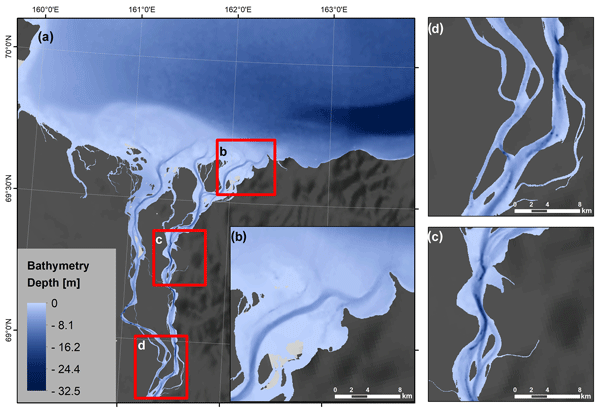
We created digital, high-resolution bathymetry data sets for the Lena Delta and Kolyma Gulf regions in northeastern Siberia. Based on nautical charts, we digitized depth points and isobath lines, which serve as an input for a 50 m bathymetry model. The benefit of this data set is the accurate mapping of near-shore areas as well as the offshore continuation of the main deep river channels. This will improve the estimation of river outflow and the nutrient flux output into the coastal zone.

Charlotte Haugk, Loeka L. Jongejans, Kai Mangelsdorf, Matthias Fuchs, Olga Ogneva, Juri Palmtag, Gesine Mollenhauer, Paul J. Mann, P. Paul Overduin, Guido Grosse, Tina Sanders, Robyn E. Tuerena, Lutz Schirrmeister, Sebastian Wetterich, Alexander Kizyakov, Cornelia Karger, and Jens Strauss
Biogeosciences, 19, 2079–2094, https://doi.org/10.5194/bg-19-2079-2022, https://doi.org/10.5194/bg-19-2079-2022, 2022
Short summary
Short summary
Buried animal and plant remains (carbon) from the last ice age were freeze-locked in permafrost. At an extremely fast eroding permafrost cliff in the Lena Delta (Siberia), we found this formerly frozen carbon well preserved. Our results show that ongoing degradation releases substantial amounts of this carbon, making it available for future carbon emissions. This mobilisation at the studied cliff and also similarly eroding sites bear the potential to affect rivers and oceans negatively.
Tristan Petit, Børge Hamre, Håkon Sandven, Rüdiger Röttgers, Piotr Kowalczuk, Monika Zablocka, and Mats A. Granskog
Ocean Sci., 18, 455–468, https://doi.org/10.5194/os-18-455-2022, https://doi.org/10.5194/os-18-455-2022, 2022
Short summary
Short summary
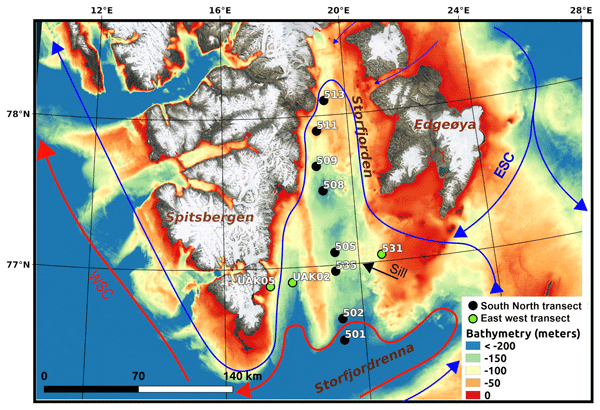
We provide the first insights on bio-optical processes in Storfjorden (Svalbard). Information on factors controlling light propagation in the water column in this arctic fjord becomes crucial in times of rapid sea ice decline. We find a significant contribution of dissolved matter to light absorption and a subsurface absorption maximum linked to phytoplankton production. Dense bottom waters from sea ice formation carry elevated levels of dissolved and particulate matter.
Stiig Wilkenskjeld, Frederieke Miesner, Paul P. Overduin, Matteo Puglini, and Victor Brovkin
The Cryosphere, 16, 1057–1069, https://doi.org/10.5194/tc-16-1057-2022, https://doi.org/10.5194/tc-16-1057-2022, 2022
Short summary
Short summary
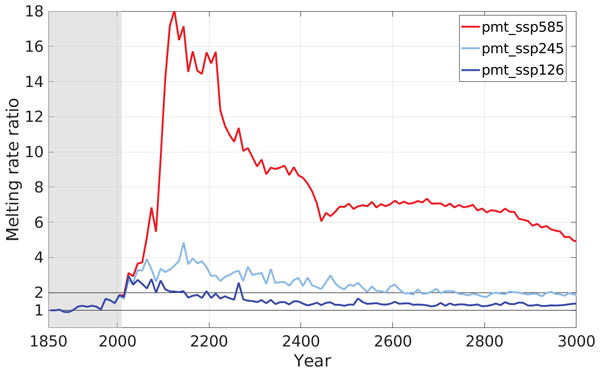
Thawing permafrost releases carbon to the atmosphere, enhancing global warming. Part of the permafrost soils have been flooded by rising sea levels since the last ice age, becoming subsea permafrost (SSPF). The SSPF is less studied than the part on land. In this study we use a global model to obtain rates of thawing of SSPF under different future climate scenarios until the year 3000. After the year 2100 the scenarios strongly diverge, closely connected to the eventual disappearance of sea ice.

Gregory E. Tucker, Eric W. H. Hutton, Mark D. Piper, Benjamin Campforts, Tian Gan, Katherine R. Barnhart, Albert J. Kettner, Irina Overeem, Scott D. Peckham, Lynn McCready, and Jaia Syvitski
Geosci. Model Dev., 15, 1413–1439, https://doi.org/10.5194/gmd-15-1413-2022, https://doi.org/10.5194/gmd-15-1413-2022, 2022
Short summary
Short summary
Scientists use computer simulation models to understand how Earth surface processes work, including floods, landslides, soil erosion, river channel migration, ocean sedimentation, and coastal change. Research benefits when the software for simulation modeling is open, shared, and coordinated. The Community Surface Dynamics Modeling System (CSDMS) is a US-based facility that supports research by providing community support, computing tools and guidelines, and educational resources.

Gabriella M. Weiss, Julie Lattaud, Marcel T. J. van der Meer, and Timothy I. Eglinton
Clim. Past, 18, 233–248, https://doi.org/10.5194/cp-18-233-2022, https://doi.org/10.5194/cp-18-233-2022, 2022
Short summary
Short summary
Here we study the elemental signatures of plant wax compounds as well as molecules from algae and bacteria to understand how water sources changed over the last 11 000 years in the northeastern part of Europe surrounding the Baltic Sea. Our results show diversity in plant and aquatic microorganisms following the melting of the large ice sheet that covered northern Europe as the regional climate continued to warm. A shift in water source from ice melt to rain also occurred around the same time.
David Olefeldt, Mikael Hovemyr, McKenzie A. Kuhn, David Bastviken, Theodore J. Bohn, John Connolly, Patrick Crill, Eugénie S. Euskirchen, Sarah A. Finkelstein, Hélène Genet, Guido Grosse, Lorna I. Harris, Liam Heffernan, Manuel Helbig, Gustaf Hugelius, Ryan Hutchins, Sari Juutinen, Mark J. Lara, Avni Malhotra, Kristen Manies, A. David McGuire, Susan M. Natali, Jonathan A. O'Donnell, Frans-Jan W. Parmentier, Aleksi Räsänen, Christina Schädel, Oliver Sonnentag, Maria Strack, Suzanne E. Tank, Claire Treat, Ruth K. Varner, Tarmo Virtanen, Rebecca K. Warren, and Jennifer D. Watts
Earth Syst. Sci. Data, 13, 5127–5149, https://doi.org/10.5194/essd-13-5127-2021, https://doi.org/10.5194/essd-13-5127-2021, 2021
Short summary
Short summary
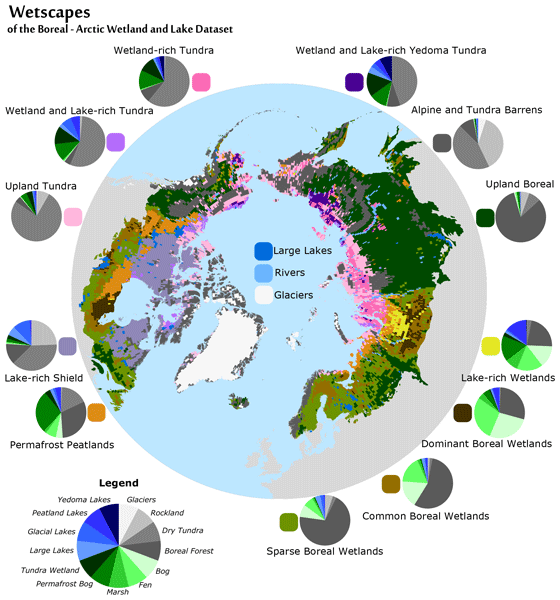
Wetlands, lakes, and rivers are important sources of the greenhouse gas methane to the atmosphere. To understand current and future methane emissions from northern regions, we need maps that show the extent and distribution of specific types of wetlands, lakes, and rivers. The Boreal–Arctic Wetland and Lake Dataset (BAWLD) provides maps of five wetland types, seven lake types, and three river types for northern regions and will improve our ability to predict future methane emissions.
Cited articles
Arctic Great Rivers Observatory (ArcticGRO): ArcticGRO Absorbance Dataset, Version 20240402, ArcticGRO [data set], https://www.arcticgreatrivers.org/data (last access: 20 February 2026), 2024.
Arctic Great Rivers Observatory (ArcticGRO): ArcticGRO Discharge Dataset, Version 20251202, ArcticGRO [data set], https://www.arcticgreatrivers.org/data (last access: 16 April 2026), 2025a.
Arctic Great Rivers Observatory (ArcticGRO): ArcticGRO Water Quality Dataset, Version 20250402, ArcticGRO [data set], https://www.arcticgreatrivers.org/data (last access: 12 February 2026), 2025b.
Benner, R. and Strom, M.: A critical evaluation of the analytical blank associated with DOC measurements by high-temperature catalytic oxidation, Mar. Chem., 41, 153–160, 1993.
Bertin, C., Carroll, D., Menemenlis, D., Dutkiewicz, S., Zhang, H., Matsuoka, A., Tank, S., Manizza, M., Miller, C. E., Babin, M., Mangin, A., and Le Fouest, V.: Biogeochemical River Runoff Drives Intense Coastal Arctic Ocean CO2 Outgassing, Geophys. Res. Lett., 50, e2022GL102377, https://doi.org/10.1029/2022GL102377, 2023.
Bertin, C., Le Fouest, V., Carroll, D., Dutkiewicz, S., Menemenlis, D., Matsuoka, A., Manizza, M., and Miller, C. E.: Colored dissolved organic matter (CDOM) alters the seasonal physics and biogeochemistry of the Arctic Mackenzie River plume, Biogeosciences, 22, 6607–6629, https://doi.org/10.5194/bg-22-6607-2025, 2025.
Bi, S. and Hieronymi, M.: Holistic optical water type classification for ocean, coastal, and inland waters, Limnol. Oceanogr., 69, 1547–1561, https://doi.org/10.1002/lno.12606, 2024.
Biskaborn, B. K., Smith, S. L., Noetzli, J., Matthes, H., Vieira, G., Streletskiy, D. A., Schoeneich, P., Romanovsky, V. E., Lewkowicz, A. G., Abramov, A., Allard, M., Boike, J., Cable, W. L., Christiansen, H. H., Delaloye, R., Diekmann, B., Drozdov, D., Etzelmüller, B., Grosse, G., Guglielmin, M., Ingeman-Nielsen, T., Isaksen, K., Ishikawa, M., Johansson, M., Johannsson, H., Joo, A., Kaverin, D., Kholodov, A., Konstantinov, P., Kröger, T., Lambiel, C., Lanckman, J. P., Luo, D., Malkova, G., Meiklejohn, I., Moskalenko, N., Oliva, M., Phillips, M., Ramos, M., Sannel, A. B. K., Sergeev, D., Seybold, C., Skryabin, P., Vasiliev, A., Wu, Q., Yoshikawa, K., Zheleznyak, M., and Lantuit, H.: Permafrost is warming at a global scale, Nat. Commun., 10, 264, https://doi.org/10.1038/s41467-018-08240-4, 2019.
Bröder, L., O'Regan, M., Fritz, M., Juhls, B., Priest, T., Lattaud, J., Whalen, D., Matsuoka, A., Pellerin, A., Bossé-Demers, T., Rudbäck, D., Eulenburg, A., Carson, T., Rodriguez-Cuicas, M. E., Overduin, P., and Vonk, J. E.: The Permafrost Carbon in the Beaufort Sea (PeCaBeau) expedition of the research vessel CCGS Amundsen (AMD2104) in 2021, Berichte zur Polar- und Meeresforschung, 759, 120 pp., https://doi.org/10.48433/BzPM_0759_2022, 2022.
Brown, J., Ferrians, O., Heginbottom, J. A., and Melnikov, E.: Circum-Arctic map of permafrost and ground-ice conditions, Version 2, National Snow and Ice Data Center [data set], https://doi.org/10.7265/skbg-kf16, 2002.
Burd, A. B. and Jackson, G. A.: Particle aggregation, Ann. Rev. Mar. Sci., 1, 65–90, https://doi.org/10.1146/annurev.marine.010908.163904, 2009.
Burns, A. J., Spencer, R. G. M., Kellerman, A. M., Yan, G., Leonard, L., Kaiser, K., Mannino, A., Tzortziou, M., and Hernes, P. J.: The Distinct Composition and Transformation of Terrestrial Organic Carbon in the Yukon River Delta and Plume During the Mighty Spring Freshet, J. Geophys. Res.-Biogeo., 129, e2023JG007812, https://doi.org/10.1029/2023JG007812, 2024.
Chalov, S., Prokopeva, K., Magritsky, D., Grigoriev, V., Fingert, E., Habel, M., Juhls, B., Morgenstern, A., Overduin, P. P., and Kasimov, N.: Climate change impacts on streamflow, sediment load and carbon fluxes in the Lena River delta, Ecol. Indic., 157, 111252, https://doi.org/10.1016/j.ecolind.2023.111252, 2023.
Clark, J. B., Mannino, A., Tzortziou, M., Spencer, R. G. M., and Hernes, P.: The Transformation and Export of Organic Carbon Across an Arctic River-Delta-Ocean Continuum, J. Geophys. Res.-Biogeo., 127, e2022JG007139, https://doi.org/10.1029/2022JG007139, 2022.
Douglas, M. M., Miller, K. L., Schmeer, M. N., and Lamb, M. P.: Ablation-Limited Erosion Rates of Permafrost Riverbanks, J. Geophys. Res.-Earth, 128, e2023JF007098, https://doi.org/10.1029/2023JF007098, 2023.
Doxaran, D., Ehn, J., Bélanger, S., Matsuoka, A., Hooker, S., and Babin, M.: Optical characterisation of suspended particles in the Mackenzie River plume (Canadian Arctic Ocean) and implications for ocean colour remote sensing, Biogeosciences, 9, 3213–3229, https://doi.org/10.5194/bg-9-3213-2012, 2012.
Doxaran, D., Devred, E., and Babin, M.: A 50 % increase in the mass of terrestrial particles delivered by the Mackenzie River into the Beaufort Sea (Canadian Arctic Ocean) over the last 10 years, Biogeosciences, 12, 3551–3565, https://doi.org/10.5194/bg-12-3551-2015, 2015.
Eisma, D.: Flocculation and de-flocculation of suspended matter in estuaries, Neth. J. Sea Res., 20, 183–199, https://doi.org/10.1016/0077-7579(86)90041-4, 1986.
Elshamy, M., Pomeroy, J. W., Pietroniro, A., Wheater, H., Abdelhamed, M., and Davison, B.: Land surface hydrological modelling of the Mackenzie River Basin: Parametrization to simulate streamflow and permafrost dynamics, J. Hydrol. (Amst)., 659, 133134, https://doi.org/10.1016/j.jhydrol.2025.133134, 2025.
Emmerton, C. A., Lesack, L. F. W., and Vincent, W. F.: Mackenzie River nutrient delivery to the Arctic Ocean and effects of the Mackenzie Delta during open water conditions, Global Biogeochem. Cy., 22, https://doi.org/10.1029/2006GB002856, 2008.
Gonçalves-Araujo, R., Stedmon, C. A., Heim, B., Dubinenkov, I., Kraberg, A., Moiseev, D., and Bracher, A.: From fresh to marine waters: characterization and fate of dissolved organic matter in the Lena River Delta region, Siberia, Front. Mar. Sci., 2, 108, https://doi.org/10.3389/fmars.2015.00108, 2015.
Grunert, B. K., Tzortziou, M., Neale, P., Menendez, A., and Hernes, P.: DOM degradation by light and microbes along the Yukon River-coastal ocean continuum, Scientific Reports, 11, 10236, https://doi.org/10.1038/s41598-021-89327-9, 2021.
Hernes, P. J. and Benner, R.: Photochemical and microbial degradation of dissolved lignin phenols: Implications for the fate of terrigenous dissolved organic matter in marine environments, J. Geophys. Res.-Oceans, 108, https://doi.org/10.1029/2002jc001421, 2003.
Hieronymi, M., Behr, D., Bi, S., and Röttgers, R.: Optical complexity of North Sea, Baltic Sea, and adjacent coastal and inland waters derived from Sentinel-3 OLCI satellite data, Earth Syst. Sci. Data, 18, 1307–1329, https://doi.org/10.5194/essd-18-1307-2026, 2026.
Hölemann, J. A., Juhls, B., Bauch, D., Janout, M., Koch, B. P., and Heim, B.: The impact of the freeze–melt cycle of land-fast ice on the distribution of dissolved organic matter in the Laptev and East Siberian seas (Siberian Arctic), Biogeosciences, 18, 3637–3655, https://doi.org/10.5194/bg-18-3637-2021, 2021.
Holmes, R. M., Mcclelland, J. W., Peterson, B. J., Tank, S. E., Bulygina, E., Eglinton, T. I., Gordeev, V. V, Gurtovaya, T. Y., Raymond, P. A., Repeta, D. J., Staples, R., Striegl, R. G., Zhulidov, A. V, Zimov, S. A., Holmes, R. M., Bulygina, E., Mcclelland, J. W., Peterson, B. J., Tank, S. E., Gordeev, V. V, Shirshov, P. P., Gurtovaya, T. Y., Zhulidov, A. V, Raymond, P. A., Repeta, D. J., Staples, R., Striegl, R. G., and Zimov, S. A.: Seasonal and Annual Fluxes of Nutrients and Organic Matter from Large Rivers to the Arctic Ocean and Surrounding Seas, Estuar. Coast., 35, 369–382, https://doi.org/10.1007/s12237-011-9386-6, 2012.
Irrgang, A. M., Bendixen, M., Farquharson, L. M., Baranskaya, A. V., Erikson, L. H., Gibbs, A. E., Ogorodov, S. A., Overduin, P. P., Lantuit, H., Grigoriev, M. N., and Jones, B. M.: Drivers, dynamics and impacts of changing Arctic coasts, Nature Reviews Earth & Environment, 3, 39–54, https://doi.org/10.1038/s43017-021-00232-1, 2022.
Juhls, B., Overduin, P. P., Hölemann, J., Hieronymi, M., Matsuoka, A., Heim, B., and Fischer, J.: Dissolved organic matter at the fluvial–marine transition in the Laptev Sea using in situ data and ocean colour remote sensing, Biogeosciences, 16, 2693–2713, https://doi.org/10.5194/bg-16-2693-2019, 2019.
Juhls, B., Lizotte, M., Matsuoka, A., Mével, G., Bécu, G., Overduin, P. P., Devred, E., Doxaran, D., Ferland, J., Forget, M.-H., Hilborn, A., Leymarie, E., Maury, J., Oziel, L., Tisserand, L., Miles, D., Anikina, D. O. J., Guilmette, C., Béguin, M., Couture, R.-M., Bossé-Demers, T., Laberge-Carignan, A., Chaillou, G., Bélanger, S., Bruyant, F., and Babin, M.: Hydrographical, biogeochemical and biooptical water properties in the Mackenzie Delta Region during 4 expeditions from spring to fall in 2019, PANGAEA [data set], https://doi.org/10.1594/PANGAEA.937587, 2021.
Juhls, B., Matsuoka, A., Lizotte, M., Bécu, G., Overduin, P. P., El Kassar, J., Devred, E., Doxaran, D., Ferland, J., Forget, M. H., Hilborn, A., Hieronymi, M., Leymarie, E., Maury, J., Oziel, L., Tisserand, L., Anikina, D. O. J., Dillon, M., and Babin, M.: Seasonal dynamics of dissolved organic matter in the Mackenzie Delta, Canadian Arctic waters: Implications for ocean colour remote sensing, Remote Sens. Environ., 283, 113327, https://doi.org/10.1016/j.rse.2022.113327, 2022.
Keil, R. G., Mayer, L. M., Quay, P. D., Richey, J. E., and Hedges, J. I.: Loss of organic matter from riverine particles in deltas, Geochim. Cosmochim. Ac., 61, 1507–1511, https://doi.org/10.1016/S0016-7037(97)00044-6, 1997.
Lattaud, J., Aichner, B., Gierga, M., Stolz, A., Meȩtrak, M., Wilk, M., Suska-Malawska, M., Mischke, S., Sachse, Di., Rajabov, I., Rajabov, N., and Rethemeyer, J.: Biomarker 14C evidence for sources and recycling of pre-aged organic carbon in Arctic permafrost regions, Geochim. Cosmochim. Ac., 393, 75–85, https://doi.org/10.1017/RDC.2021.78, 2025.
Lizotte, M., Juhls, B., Matsuoka, A., Massicotte, P., Mével, G., Anikina, D. O. J., Antonova, S., Bécu, G., Béguin, M., Bélanger, S., Bossé-Demers, T., Bröder, L., Bruyant, F., Chaillou, G., Comte, J., Couture, R.-M., Devred, E., Deslongchamps, G., Dezutter, T., Dillon, M., Doxaran, D., Flamand, A., Fell, F., Ferland, J., Forget, M.-H., Fritz, M., Gordon, T. J., Guilmette, C., Hilborn, A., Hussherr, R., Irish, C., Joux, F., Kipp, L., Laberge-Carignan, A., Lantuit, H., Leymarie, E., Mannino, A., Maury, J., Overduin, P., Oziel, L., Stedmon, C., Thomas, C., Tisserand, L., Tremblay, J.-É., Vonk, J., Whalen, D., and Babin, M.: Nunataryuk field campaigns: understanding the origin and fate of terrestrial organic matter in the coastal waters of the Mackenzie Delta region, Earth Syst. Sci. Data, 15, 1617–1653, https://doi.org/10.5194/essd-15-1617-2023, 2023.
Lynch, L. M., Machmuller, M. B., Boot, C. M., Covino, T. P., Rithner, C. D., Cotrufo, M. F., Hoyt, D. W., and Wallenstein, M. D.: Dissolved Organic Matter Chemistry and Transport Along an Arctic Tundra Hillslope, Global Biogeochem. Cy., 33, 47–62, https://doi.org/10.1029/2018GB006030, 2019.
Mann, P. J., Davydova, A., Zimov, N., Spencer, R. G. M., Davydov, S., Bulygina, E., Zimov, S., and Holmes, R. M.: Controls on the composition and lability of dissolved organic matter in Siberia's Kolyma River basin, J. Geophys. Res.-Biogeo., 117, https://doi.org/10.1029/2011JG001798, 2012.
Mann, P. J., Spencer, R. G. M., Hernes, P. J., Six, J., Aiken, G. R., Tank, S. E., McClelland, J. W., Butler, K. D., Dyda, R. Y., and Holmes, R. M.: Pan-arctic trends in terrestrial dissolved organic matter from optical measurements, Front. Earth Sci. (Lausanne)., 4, 171139, https://doi.org/10.3389/feart.2016.00025, 2016.
Massicotte, P., Amon, R. M. W., Antoine, D., Archambault, P., Balzano, S., Bélanger, S., Benner, R., Boeuf, D., Bricaud, A., Bruyant, F., Chaillou, G., Chami, M., Charrière, B., Chen, J., Claustre, H., Coupel, P., Delsaut, N., Doxaran, D., Ehn, J., Fichot, C., Forget, M.-H., Fu, P., Gagnon, J., Garcia, N., Gasser, B., Ghiglione, J.-F., Gorsky, G., Gosselin, M., Gourvil, P., Gratton, Y., Guillot, P., Heipieper, H. J., Heussner, S., Hooker, S. B., Huot, Y., Jeanthon, C., Jeffrey, W., Joux, F., Kawamura, K., Lansard, B., Leymarie, E., Link, H., Lovejoy, C., Marec, C., Marie, D., Martin, J., Martín, J., Massé, G., Matsuoka, A., McKague, V., Mignot, A., Miller, W. L., Miquel, J.-C., Mucci, A., Ono, K., Ortega-Retuerta, E., Panagiotopoulos, C., Papakyriakou, T., Picheral, M., Prieur, L., Raimbault, P., Ras, J., Reynolds, R. A., Rochon, A., Rontani, J.-F., Schmechtig, C., Schmidt, S., Sempéré, R., Shen, Y., Song, G., Stramski, D., Tachibana, E., Thirouard, A., Tolosa, I., Tremblay, J.-É., Vaïtilingom, M., Vaulot, D., Vaultier, F., Volkman, J. K., Xie, H., Zheng, G., and Babin, M.: The MALINA oceanographic expedition: how do changes in ice cover, permafrost and UV radiation impact biodiversity and biogeochemical fluxes in the Arctic Ocean?, Earth Syst. Sci. Data, 13, 1561–1592, https://doi.org/10.5194/essd-13-1561-2021, 2021.
Massicotte, P., Amon, R. M. W., Antoine, D., Archambault, P., Balzano, S., Bélanger, S., Benner, R., Boeuf, D., Bricaud, A., Bruyant, F., Chaillou, G., Chami, M., Charrière, B., Chen, J., Claustre, H., Coupel, P., Delsaut, N., Doxaran, D., Ehn, J., Fichot, C., Forget, M.-H., Fu, P., Gagnon, J., Garcia, N., Gasser, B., Ghiglione, J.-F., Gorsky, G., Gosselin, M., Gourvil, P., Gratton, Y., Guillot, P., Heipieper, H. J., Heussner, S., Hooker, S. B., Huot, Y., Jeanthon, C., Jeffrey, W., Joux, F., Kawamura, K., Lansard, B., Leymarie, E., Link, H., Lovejoy, C., Marec, C., Marie, D., Martin, J., Martín, J., Massé, G., Matsuoka, A., McKague, V., Mignot, A., Miller, W. L., Miquel, J.-C., Mucci, A., Ono, K., Ortega-Retuerta, E., Panagiotopoulos, C., Papakyriakou, T., Picheral, M., Piepenburg, D., Prieur, L., Raimbault, P., Ras, J., Reynolds, R. A., Rochon, A., Rontani, J.-F., Schmechtig, C., Schmidt, S., Sempéré, R., Shen, Y., Song, G., Stramski, D., Tachibana, E., Thirouard, A., Tolosa, I., Tremblay, J.-É., Vaïtilingom, M., Vaulot, D., Vaultier, F., Volkman, J. K., Vonk, J. E., Xie, H., Zheng, G., and Babin, M.: The Malina oceanographic expedition: How do changes in ice cover, permafrost and UV radiation impact biodiversity and biogeochemical fluxes in the Arctic Ocean?, SEANOE [data set], https://doi.org/10.17882/75345, 2025.
Matsuoka, A., Bricaud, A., Benner, R., Para, J., Sempéré, R., Prieur, L., Bélanger, S., and Babin, M.: Tracing the transport of colored dissolved organic matter in water masses of the Southern Beaufort Sea: relationship with hydrographic characteristics, Biogeosciences, 9, 925–940, https://doi.org/10.5194/bg-9-925-2012, 2012.
Matsuoka, A., Hooker, S. B., Bricaud, A., Gentili, B., and Babin, M.: Estimating absorption coefficients of colored dissolved organic matter (CDOM) using a semi-analytical algorithm for southern Beaufort Sea waters: application to deriving concentrations of dissolved organic carbon from space, Biogeosciences, 10, 917–927, https://doi.org/10.5194/bg-10-917-2013, 2013.
Matsuoka, A., Boss, E., Babin, M., Karp-Boss, L., Hafez, M., Chekalyuk, A., Proctor, C. W., Werdell, P. J., and Bricaud, A.: Pan-Arctic optical characteristics of colored dissolved organic matter: Tracing dissolved organic carbon in changing Arctic waters using satellite ocean color data, Remote Sens. Environ., 200, 89–101, https://doi.org/10.1016/j.rse.2017.08.009, 2017.
Matsuoka, A., Babin, M., and Vonk, J. E.: Decadal trends in the release of terrigenous organic carbon to the Mackenzie Delta (Canadian Arctic) using satellite ocean color data (1998–2019), Remote Sens. Environ., 283, 113322, https://doi.org/10.1016/j.rse.2022.113322, 2022.
McClelland, J. W., Holmes, R. M., Peterson, B. J., Raymond, P. A., Striegl, R. G., Zhulidov, A. V., Zimov, S. A., Zimov, N., Tank, S. E., Spencer, R. G. M., Staples, R., Gurtovaya, T. Y., and Griffin, C. G.: Particulate organic carbon and nitrogen export from major Arctic rivers, Global Biogeochem. Cy., 30, 629–643, https://doi.org/10.1002/2015GB005351, 2016.
Moran, M. A., Ferrer-González, F. X., Fu, H., Nowinski, B., Olofsson, M., Powers, M. A., Schreier, J. E., Schroer, W. F., Smith, C. B., and Uchimiya, M.: The Ocean's labile DOC supply chain, Limnol. Oceanogr., 67, 1007–1021, https://doi.org/10.1002/lno.12053, 2022.
Morgenstern, A. and Gottschalk, M.: Expedition CA-Land_2023_Inuvik (DUCCEM 2023), in: Arctic Land Expeditions in Permafrost Research in 2023, edited by: Bornemann, H., Berichte zur Polar- und Meeresforschung, 797, 6–13, https://doi.org/10.57738/BzPM_0797_2025, 2025.
Nielsen, D. M., Pieper, P., Barkhordarian, A., Overduin, P., Ilyina, T., Brovkin, V., Baehr, J., and Dobrynin, M.: Increase in Arctic coastal erosion and its sensitivity to warming in the twenty-first century, Nat. Clim. Change, 12, 263– 270, https://doi.org/10.1038/s41558-022-01281-0, 2022.
Novak, M. G., Mannino, A., Clark, J. B., Hernes, P., Tzortziou, M., Spencer, R. G. M., Kellerman, A. M., and Grunert, B.: Arctic biogeochemical and optical properties of dissolved organic matter across river to sea gradients, Front. Mar. Sci., 9, 949034, https://doi.org/10.3389/fmars.2022.949034, 2022.
Ogneva, O., Mollenhauer, G., Juhls, B., Sanders, T., Palmtag, J., Fuchs, M., Grotheer, H., Mann, P. J., and Strauss, J.: Particulate organic matter in the Lena River and its delta: from the permafrost catchment to the Arctic Ocean , Biogeosciences, 20, 1423–1441, https://doi.org/10.5194/bg-20-1423-2023, 2023.
Oziel, L., Gürses, Ö., Torres-Valdés, S., Hoppe, C. J. M., Rost, B., Karakuş, O., Danek, C., Koch, B. P., Nissen, C., Koldunov, N., Wang, Q., Völker, C., Iversen, M., Juhls, B., and Hauck, J.: Climate change and terrigenous inputs decrease the efficiency of the future Arctic Ocean's biological carbon pump, Nat. Clim. Change, 15, 171–179, https://doi.org/10.1038/s41558-024-02233-6, 2025.
Pegau, W. S., Gray, D., and Zaneveld, J. R. V.: Absorption and attenuation of visible and near-infrared light in water: dependence on temperature and salinity, Appl. Optics, 36, 6035, https://doi.org/10.1364/ao.36.006035, 1997.
Peterson, B. J., Holmes, R. M., McClelland, J. W., Vörösmarty, C. J., Lammers, R. B., Shiklomanov, A. I., Shiklomanov, I. A., and Rahmstorf, S.: Increasing river discharge to the Arctic Ocean, Science, 298, 2171–2173, https://doi.org/10.1126/science.1077445, 2002.
Pugach, S. P., Pipko, I. I., Shakhova, N. E., Shirshin, E. A., Perminova, I. V., Gustafsson, Ö., Bondur, V. G., Ruban, A. S., and Semiletov, I. P.: Dissolved organic matter and its optical characteristics in the Laptev and East Siberian seas: spatial distribution and interannual variability (2003–2011), Ocean Sci., 14, 87–103, https://doi.org/10.5194/os-14-87-2018, 2018.
Rantanen, M., Karpechko, A. Y., Lipponen, A., Nordling, K., Hyvärinen, O., Ruosteenoja, K., Vihma, T., and Laaksonen, A.: The Arctic has warmed nearly four times faster than the globe since 1979, Communications Earth & Environment, 3, 168, https://doi.org/10.1038/s43247-022-00498-3, 2022.
Rapaić, M., Brown, R., Markovic, M., and Chaumont, D.: An Evaluation of Temperature and Precipitation Surface-Based and Reanalysis Datasets for the Canadian Arctic, Atmos. Ocean, 53, 283–303, https://doi.org/10.1080/07055900.2015.1045825, 2015.
Röttgers, R. and Doerffer, R.: Measurements of optical absorption by chromophoric dissolved organic matter using a point source integrating-cavity absorption meter, Limnol. Oceanogr.-Meth., 5, 126–135, https://doi.org/10.4319/lom.2007.5.126, 2007.
Röttgers, R., McKee, D., and Utschig, C.: Temperature and salinity correction coefficients for light absorption by water in the visible to infrared spectral region, Opt. Express, 22, 25093–25108, https://doi.org/10.1364/oe.22.025093, 2014.
Röttgers, R., Doxaran, D., and Dupouy, C.: Quantitative filter technique measurements of spectral light absorption by aquatic particles using a portable integrating cavity absorption meter (QFT-ICAM), Opt. Express, 24, A1, https://doi.org/10.1364/oe.24.0000a1, 2015.
Schuur, E. A. G., McGuire, A. D., Schädel, C., Grosse, G., Harden, J. W., Hayes, D. J., Hugelius, G., Koven, C. D., Kuhry, P., Lawrence, D. M., Natali, S. M., Olefeldt, D., Romanovsky, V. E., Schaefer, K., Turetsky, M. R., Treat, C. C., and Vonk, J. E.: Climate change and the permafrost carbon feedback, Nature, 520, 171–179, https://doi.org/10.1038/nature14338, 2015.
Sholkovitz, E. R.: Flocculation of dissolved organic and inorganic matter during the mixing of river water and seawater, Geochim. Cosmochim. Ac., 40, 831–845, https://doi.org/10.1016/0016-7037(76)90035-1, 1976.
Sullivan, J. M., Twardowski, M. S., Zaneveld, J. R. V., Moore, C. M., Barnard, A. H., Donaghay, P. L., and Rhoades, B.: Hyperspectral temperature and salt dependencies of absorption by water and heavy water in the 400–750 nm spectral range, Appl. Optics, 45, 5294–5309, https://doi.org/10.1364/AO.45.005294, 2006.
Tank, S. E., Striegl, R. G., McClelland, J. W., and Kokelj, S. V.: Multi-decadal increases in dissolved organic carbon and alkalinity flux from the Mackenzie drainage basin to the Arctic Ocean, Environ. Res. Lett., 11, 054015, https://doi.org/10.1088/1748-9326/11/5/054015, 2016.
Tarasenko, A., Doxaran, D., and Gentili, B.: Variations of suspended particulate matter concentrations of the Mackenzie River plume (Beaufort Sea, Arctic Ocean) over the last two decades, Mar. Pollut. Bull., 196, 115619, https://doi.org/10.1016/j.marpolbul.2023.115619, 2023.
Tassan, S. and Ferrari, G. M.: Proposal for the measurement of backward and total scattering by mineral particles suspended in water, Appl. Optics, 34, 8345, https://doi.org/10.1364/ao.34.008345, 1995.
Tassan, S. and Ferrari, G. M.: A sensitivity analysis of the “Transmittance – Reflectance” method for measuring light absorption by aquatic particles, J. Plankton Res., 24, 757–774, https://doi.org/10.1093/plankt/24.8.757, 2002.
Venice System: The Venice system for the classification of marine waters according to salinity, Limnol. Oceanogr., 3, 346–347, https://doi.org/10.4319/lo.1958.3.3.0346, 1958.
Vonk, J. E., Tank, S. E., Bowden, W. B., Laurion, I., Vincent, W. F., Alekseychik, P., Amyot, M., Billet, M. F., Canário, J., Cory, R. M., Deshpande, B. N., Helbig, M., Jammet, M., Karlsson, J., Larouche, J., MacMillan, G., Rautio, M., Walter Anthony, K. M., and Wickland, K. P.: Reviews and syntheses: Effects of permafrost thaw on Arctic aquatic ecosystems, Biogeosciences, 12, 7129–7167, https://doi.org/10.5194/bg-12-7129-2015, 2015.
Vonk, J. E., Tank, S. E., and Walvoord, M. A.: Integrating hydrology and biogeochemistry across frozen landscapes, Nat. Commun., 10, 5377, https://doi.org/10.1038/s41467-019-13361-5, 2019.
Walker, S. A., Amon, R. M. W., and Stedmon, C. A.: Variations in high-latitude riverine fluorescent dissolved organic matter: A comparison of large Arctic rivers, J. Geophys. Res.-Biogeo., 118, 1689–1702, https://doi.org/10.1002/2013JG002320, 2013.
Ward, C. P., Nalven, S. G., Crump, B. C., Kling, G. W., and Cory, R. M.: Photochemical alteration of organic carbon draining permafrost soils shifts microbial metabolic pathways and stimulates respiration, Nat. Commun., 8, 772, https://doi.org/10.1038/s41467-017-00759-2, 2017.
Woo, M.-K. and Thorne, R.: Streamflow in the Mackenzie Basin, Canada, Arctic, 56, 328–340, https://doi.org/10.14430/arctic630, 2003.
Xi, H., Larouche, P., Tang, S., and Michel, C.: Seasonal variability of light absorption properties and water optical constituents in Hudson Bay, Canada, J. Geophys. Res.-Oceans, 118, 3087–3102, https://doi.org/10.1002/jgrc.20237, 2013.
Zhang, R., Wang, H., Fu, Q., Rasch, P. J., Wu, M., and Maslowski, W.: Understanding the Cold Season Arctic Surface Warming Trend in Recent Decades, Geophys. Res. Lett., 48, e2021GL094878, https://doi.org/10.1029/2021GL094878, 2021.
Short summary
This study examines how carbon and sediments move from the Mackenzie River, through its delta, and into the Beaufort Sea. We use data from 2009–2024 and show that major changes in carbon concentrations unfold in low-salinity mixing zones. As the optical properties of the water also shift, satellite estimates of carbon will require more tailored methods. These findings will improve our understanding of Arctic carbon fluxes and influences on the greater Arctic Ocean carbon budget.
This study examines how carbon and sediments move from the Mackenzie River, through its delta,...


Altmetrics
Final-revised paper
Preprint