
Articles | Volume 23, issue 17
https://doi.org/10.5194/bg-23-6229-2026
© Author(s) 2026. This work is distributed under
the Creative Commons Attribution 4.0 License.
the Creative Commons Attribution 4.0 License.
https://doi.org/10.5194/bg-23-6229-2026
© Author(s) 2026. This work is distributed under
the Creative Commons Attribution 4.0 License.
the Creative Commons Attribution 4.0 License.
Research article
| 
11 Sep 2026
Research article |
| 11 Sep 2026
| 11 Sep 2026
Sinking particle fluxes and biological carbon pump efficiency in the Labrador Sea during a Phaeocystis bloom decline
Montserrat Roca-Martí
CORRESPONDING AUTHOR

Department of Oceanography, Dalhousie University, Halifax, NS, Canada
Physics Department, Universitat Autònoma de Barcelona, Cerdanyola del Vallès, Spain
Madeline Healey
Department of Oceanography, Dalhousie University, Halifax, NS, Canada
Colleen E. McBride
Department of Ocean Sciences, Memorial University of Newfoundland, St. John's, NL, Canada
Rachel Sipler
Department of Ocean Sciences, Memorial University of Newfoundland, St. John's, NL, Canada
Bigelow Laboratory for Ocean Sciences, East Boothbay, ME, USA
Emmanuel Devred
Fisheries and Oceans Canada, Bedford Institute of Oceanography, Dartmouth, NS, Canada
Carolina Cisternas-Novoa
Ocean Sciences Centre, Memorial University of Newfoundland, St. John's, NL, Canada
Elisa Romanelli
Institute of Environmental Engineering, Department of Civil, Environmental and Geomatic Engineering, ETH Zurich, Zurich, Switzerland
Kyoko Ohashi
Department of Oceanography, Dalhousie University, Halifax, NS, Canada
Fisheries and Oceans Canada, Institute of Ocean Sciences, Sidney, BC, Canada
Stephanie S. Kienast
Department of Oceanography, Dalhousie University, Halifax, NS, Canada
Related authors
Brandon M. Stephens, Montserrat Roca-Martí, Amy E. Maas, Vinícius J. Amaral, Samantha Clevenger, Shawnee Traylor, Claudia R. Benitez-Nelson, Philip W. Boyd, Ken O. Buesseler, Craig A. Carlson, Nicolas Cassar, Margaret Estapa, Andrea J. Fassbender, Yibin Huang, Phoebe J. Lam, Olivier Marchal, Susanne Menden-Deuer, Nicola L. Paul, Alyson E. Santoro, David A. Siegel, and David P. Nicholson
Biogeosciences, 22, 3301–3328, https://doi.org/10.5194/bg-22-3301-2025, https://doi.org/10.5194/bg-22-3301-2025, 2025
Short summary
Short summary
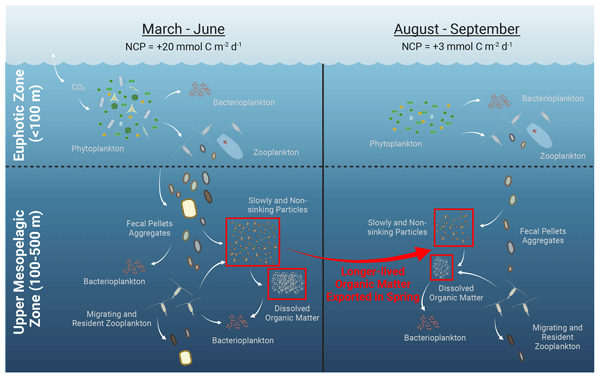
The ocean’s mesopelagic zone (MZ) plays a crucial role in the global carbon cycle. This study combines new and previously published measurements of organic carbon supply and demand collected in August 2018 in the MZ of the subarctic North Pacific Ocean. Supply was insufficient to meet demand in August, but supply entering into the MZ in the spring of 2018 could have met the August demand. Results suggest observations over seasonal timescales may help to close MZ carbon budgets.
Mohammad M. Amirian, Emmanuel Devred, Stephanie Clay, Zoe V. Finkel, and Andrew J. Irwin
Earth Syst. Sci. Data Discuss., https://doi.org/10.5194/essd-2026-651, https://doi.org/10.5194/essd-2026-651, 2026
Preprint under review for ESSD
Short summary
Short summary
We compiled 50 years of measurements describing how marine phytoplankton photosynthesis responds to light, covering the North Atlantic, Arctic, North Pacific, and Indian oceans. The database provides original measurements alongside environmental and experimental information. Our analyses show that photosynthetic parameters depend on both the mathematical model and experimental methods, highlighting the value of preserving original measurements for future research.
Salem Ibrahim Salem, Andre Valente, Shubha Sathyendranath, Andrei Chuprin, Théo Renard, Jaime Pitarch, Ruth Airs, Moreno Ana, Maria-Manuel Angelico, David Antoine, Robert Arnone, Florinda Artuso, Paulo O. Oliveira, William Balch, Kathryn Barker, Ray Barlow, Simon Bélanger, Marco Bellacicco, Jean-François Berthon, Şükrü Beşiktepe, Francesco Bignami, Yngve Borsheim, Astrid Bracher, Federica Braga, Vittorio Brando, Robert J. W. Brewin, Vanda Brotas, Elisabetta Canuti, Francisco P. Chavez, Andrés Cianca, Hervé Claustre, Lesley Clementson, Simone Colella, Raul Costa, Cristina Nunes, Richard Crout, Emmanuel Devred, Annalisa Di Cicco, Federico Falcini, Ivan Farace, Afonso Ferreira, Scott Freeman, Robert Frouin, Carlos García-Soto, Isabella Giardina, Stuart W. Gibb, Arthur Gleason, Ralf Goericke, Richard Gould, Michael Grant, Nathalie Guillocheau, Hiroto Higa, Stanford B. Hooker, Chuamin Hu, Joji Ishizaka, Thomas Jackson, Mati Kahru, Milton Kampel, Bokyung Kim, Holger Klein, Piotr Kowalczuk, Susanne Kratzer, Raphael Kudela, Antonia Lai, Rosario Lavezza, Jesus Ledesma, Huiwon Lee, Steven Lohrenz, Hubert Loisel, Vivian Lutz, Antonio Mannino, Francesca Margiotta, Victor Martinez-Vicente, Salvatore Marullo, Luca Massi, Patricia Matrai, Atsushi Matsuoka, David McKee, Chiara Melillo, Carlos B. Mendes, Brian G. Mitchell, Tiffany Moisan, Enrique Montes, Frank Muller-Karger, Aimee Neeley, Michael Novak, Leonie O'Dowd, Michael Ondrusek, Emanuele Organelli, Heeyoon Park, Trevor Platt, Francesca Polonelli, Alex Poulton, Mariella Ragni, Michel Repecaud, Maurizio Ribera d’Alcalà, Tamara Rodriguez-Ramos, Rüdiger Röttgers, Manuel Ruiz-Villarreal, Michela Sammartino, Rosalia Santoleri, Gian Marco Scarpa, Thomas Schroeder, Valeria Segura, Timothy Smyth, Denise Smythe-Wright, Heidi M. Sosik, Joanna Stoń-Egiert, Malcolm Taberner, Jing Tan, Rob Thomas, Crystal Thomas, Gavin Tilstone, Andreia Tracana, Michael Twardowski, Vincenzo Vellucci, Gianluca Volpe, Kenneth Voss, Jeremy Werdell, Marcel Wernand, Bozena Wojtasiewicz, Simon Wright, Sunmi Yang, Giuseppe Zibordi, Maria Laura Zoffoli, and Steve Groom
Earth Syst. Sci. Data Discuss., https://doi.org/10.5194/essd-2026-539, https://doi.org/10.5194/essd-2026-539, 2026
Preprint under review for ESSD
Short summary
Short summary
This paper presents the fourth version of the ESA Ocean Colour Climate Change Initiative global in situ bio-optical database. The updated compilation combines observations from many international data sources collected between 1996 and 2025 and includes major expansions in coverage and variables. The dataset provides a consistent reference for validating satellite ocean-colour products and supports algorithm development and long-term climate studies.
Henriette M. Kolling, Markus Kienast, Peter Matzerath, Julia Gottschalk, Stephanie Kienast, Daniel A. Frick, Felix Gross, Jack Wharton, David Thornalley, and Ralph R. Schneider
EGUsphere, https://doi.org/10.5194/egusphere-2026-809, https://doi.org/10.5194/egusphere-2026-809, 2026
Short summary
Short summary
We studied past ocean conditions on the Scotian Shelf to understand how warm Gulf Stream waters reached this region in the past. Using chemical signals preserved in microscopic shells from seafloor sediments, we reconstructed sea surface temperature and salinity over the last 8,500 years. We found repeated warm-water intrusions during the mid to late Holocene, similar in strength to those observed today, providing important context for modern ocean warming.
Madeline G. Healey, Erin E. Black, Christopher K. Algar, Maria Armstrong, and Stephanie S. Kienast
Biogeosciences, 22, 6895–6912, https://doi.org/10.5194/bg-22-6895-2025, https://doi.org/10.5194/bg-22-6895-2025, 2025
Short summary
Short summary
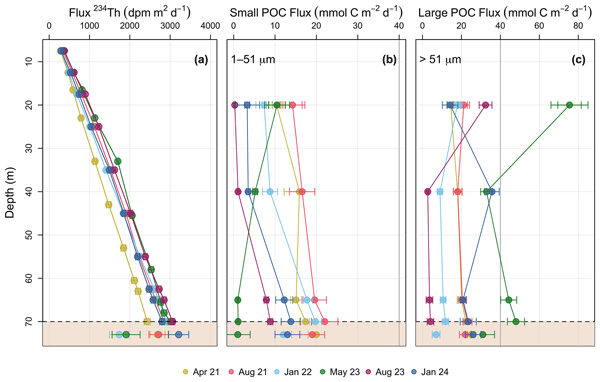
This study presents new data from 2021–2024 aimed at improving our understanding of coastal carbon export and storage in a temperate fjord in the Northwest Atlantic. By applying natural tracers in seawater and sediment, we assess short-term carbon dynamics and provide quasi-seasonal observations. The results refine carbon flux estimates in a well-studied site that is emerging as a key location for coastal ocean research.
Brandon M. Stephens, Montserrat Roca-Martí, Amy E. Maas, Vinícius J. Amaral, Samantha Clevenger, Shawnee Traylor, Claudia R. Benitez-Nelson, Philip W. Boyd, Ken O. Buesseler, Craig A. Carlson, Nicolas Cassar, Margaret Estapa, Andrea J. Fassbender, Yibin Huang, Phoebe J. Lam, Olivier Marchal, Susanne Menden-Deuer, Nicola L. Paul, Alyson E. Santoro, David A. Siegel, and David P. Nicholson
Biogeosciences, 22, 3301–3328, https://doi.org/10.5194/bg-22-3301-2025, https://doi.org/10.5194/bg-22-3301-2025, 2025
Short summary
Short summary
The ocean’s mesopelagic zone (MZ) plays a crucial role in the global carbon cycle. This study combines new and previously published measurements of organic carbon supply and demand collected in August 2018 in the MZ of the subarctic North Pacific Ocean. Supply was insufficient to meet demand in August, but supply entering into the MZ in the spring of 2018 could have met the August demand. Results suggest observations over seasonal timescales may help to close MZ carbon budgets.
Zhibo Shao, Yangchun Xu, Hua Wang, Weicheng Luo, Lice Wang, Yuhong Huang, Nona Sheila R. Agawin, Ayaz Ahmed, Mar Benavides, Mikkel Bentzon-Tilia, Ilana Berman-Frank, Hugo Berthelot, Isabelle C. Biegala, Mariana B. Bif, Antonio Bode, Sophie Bonnet, Deborah A. Bronk, Mark V. Brown, Lisa Campbell, Douglas G. Capone, Edward J. Carpenter, Nicolas Cassar, Bonnie X. Chang, Dreux Chappell, Yuh-ling Lee Chen, Matthew J. Church, Francisco M. Cornejo-Castillo, Amália Maria Sacilotto Detoni, Scott C. Doney, Cecile Dupouy, Marta Estrada, Camila Fernandez, Bieito Fernández-Castro, Debany Fonseca-Batista, Rachel A. Foster, Ken Furuya, Nicole Garcia, Kanji Goto, Jesús Gago, Mary R. Gradoville, M. Robert Hamersley, Britt A. Henke, Cora Hörstmann, Amal Jayakumar, Zhibing Jiang, Shuh-Ji Kao, David M. Karl, Leila R. Kittu, Angela N. Knapp, Sanjeev Kumar, Julie LaRoche, Hongbin Liu, Jiaxing Liu, Caroline Lory, Carolin R. Löscher, Emilio Marañón, Lauren F. Messer, Matthew M. Mills, Wiebke Mohr, Pia H. Moisander, Claire Mahaffey, Robert Moore, Beatriz Mouriño-Carballido, Margaret R. Mulholland, Shin-ichiro Nakaoka, Joseph A. Needoba, Eric J. Raes, Eyal Rahav, Teodoro Ramírez-Cárdenas, Christian Furbo Reeder, Lasse Riemann, Virginie Riou, Julie C. Robidart, Vedula V. S. S. Sarma, Takuya Sato, Himanshu Saxena, Corday Selden, Justin R. Seymour, Dalin Shi, Takuhei Shiozaki, Arvind Singh, Rachel E. Sipler, Jun Sun, Koji Suzuki, Kazutaka Takahashi, Yehui Tan, Weiyi Tang, Jean-Éric Tremblay, Kendra Turk-Kubo, Zuozhu Wen, Angelicque E. White, Samuel T. Wilson, Takashi Yoshida, Jonathan P. Zehr, Run Zhang, Yao Zhang, and Ya-Wei Luo
Earth Syst. Sci. Data, 15, 3673–3709, https://doi.org/10.5194/essd-15-3673-2023, https://doi.org/10.5194/essd-15-3673-2023, 2023
Short summary
Short summary
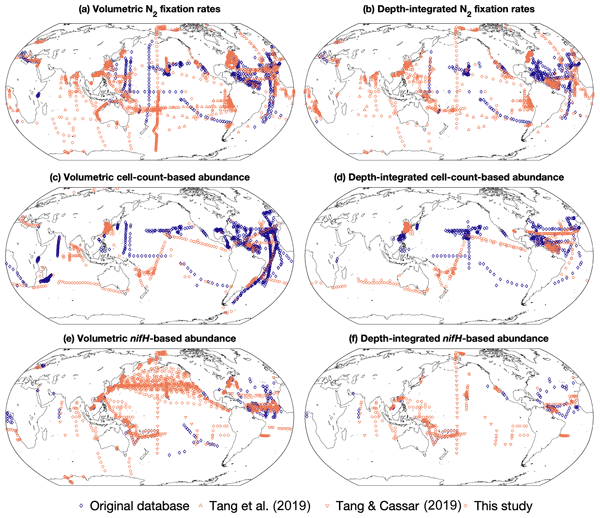
N2 fixation by marine diazotrophs is an important bioavailable N source to the global ocean. This updated global oceanic diazotroph database increases the number of in situ measurements of N2 fixation rates, diazotrophic cell abundances, and nifH gene copy abundances by 184 %, 86 %, and 809 %, respectively. Using the updated database, the global marine N2 fixation rate is estimated at 223 ± 30 Tg N yr−1, which triplicates that using the original database.
Martine Lizotte, Bennet Juhls, Atsushi Matsuoka, Philippe Massicotte, Gaëlle Mével, David Obie James Anikina, Sofia Antonova, Guislain Bécu, Marine Béguin, Simon Bélanger, Thomas Bossé-Demers, Lisa Bröder, Flavienne Bruyant, Gwénaëlle Chaillou, Jérôme Comte, Raoul-Marie Couture, Emmanuel Devred, Gabrièle Deslongchamps, Thibaud Dezutter, Miles Dillon, David Doxaran, Aude Flamand, Frank Fell, Joannie Ferland, Marie-Hélène Forget, Michael Fritz, Thomas J. Gordon, Caroline Guilmette, Andrea Hilborn, Rachel Hussherr, Charlotte Irish, Fabien Joux, Lauren Kipp, Audrey Laberge-Carignan, Hugues Lantuit, Edouard Leymarie, Antonio Mannino, Juliette Maury, Paul Overduin, Laurent Oziel, Colin Stedmon, Crystal Thomas, Lucas Tisserand, Jean-Éric Tremblay, Jorien Vonk, Dustin Whalen, and Marcel Babin
Earth Syst. Sci. Data, 15, 1617–1653, https://doi.org/10.5194/essd-15-1617-2023, https://doi.org/10.5194/essd-15-1617-2023, 2023
Short summary
Short summary
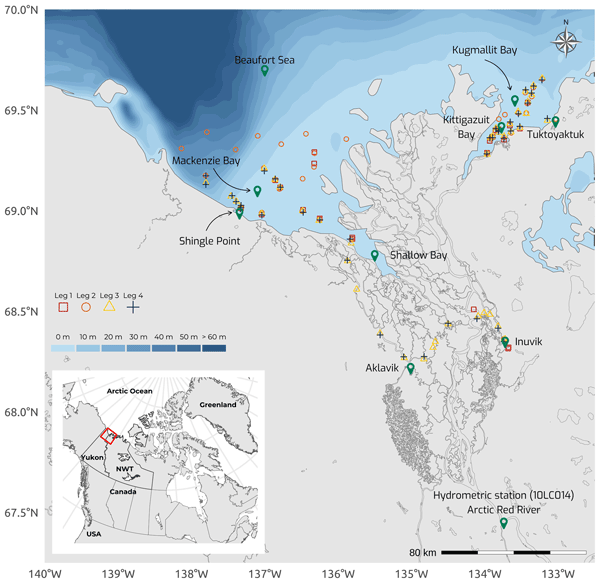
Permafrost thaw in the Mackenzie Delta region results in the release of organic matter into the coastal marine environment. What happens to this carbon-rich organic matter as it transits along the fresh to salty aquatic environments is still underdocumented. Four expeditions were conducted from April to September 2019 in the coastal area of the Beaufort Sea to study the fate of organic matter. This paper describes a rich set of data characterizing the composition and sources of organic matter.
Emmanuel Devred, Andrea Hilborn, and Cornelia Elizabeth den Heyer
Biogeosciences, 18, 6115–6132, https://doi.org/10.5194/bg-18-6115-2021, https://doi.org/10.5194/bg-18-6115-2021, 2021
Short summary
Short summary
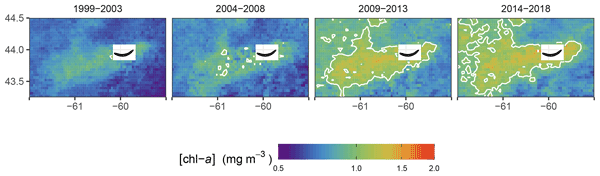
A theoretical model of grey seal seasonal abundance on Sable Island (SI) coupled with chlorophyll-a concentration [chl-a] measured by satellite revealed the impact of seal nitrogen fertilization on the surrounding waters of SI, Canada. The increase in seals from about 100 000 in 2003 to about 360 000 in 2018 during the breeding season is consistent with an increase in [chl-a] leeward of SI. The increase in seal abundance explains 8 % of the [chl-a] increase.
Cited articles
Alcolombri, U., Nissan, A., Słomka, J., Charlton, S., Secchi, E., Short, I., Lee, K. S., Peaudecerf, F. J., Baumgartner, D. A., Sichert, A., Sauer, U., Sengupta, A., and Stocker, R.: Biogel scavenging slows the sinking of organic particles to the ocean depths, Nat. Commun., 161, 1–10, https://doi.org/10.1038/s41467-025-57982-5, 2025.
Andreassen, I. J. and Wassmann, P.: Vertical flux of phytoplankton and particulate biogenic matter in the marginal ice zone of the Barents Sea in May 1993, Mar. Ecol. Prog. Ser., 170, 1–14, https://doi.org/10.3354/MEPS170001, 1998.
Armstrong, R. A., Lee, C., Hedges, J. I., Honjo, S., and Wakeham, S. G.: A new, mechanistic model for organic carbon fluxes in the ocean based on the quantitative association of POC with ballast minerals, Deep-Sea Res. Pt. II, 49, 219–236, https://doi.org/10.1016/S0967-0645(01)00101-1, 2002.
Arruda, R., Atamanchuk, D., Boteler, C., and Wallace, D. W. R.: Seasonality of pCO2 and air-sea CO2 fluxes in the Central Labrador Sea, Front. Mar. Sci., 11, 1472697, https://doi.org/10.3389/fmars.2024.1472697, 2024.
Asper, V. L. and Smith, W. O.: Particle fluxes during austral spring and summer in the southern Ross Sea, Antarctica, J. Geophys. Res.-Ocean., 104, 5345–5359, https://doi.org/10.1029/1998JC900067, 1999.
Baker, C. A., Martin, A. P., Yool, A., and Popova, E.: Biological Carbon Pump Sequestration Efficiency in the North Atlantic: A Leaky or a Long-Term Sink?, Global Biogeochem. Cy., 36, e2021GB007286, https://doi.org/10.1029/2021GB007286, 2022.
Baltar, F., Arístegui, J., Gasol, J. M., Sintes, E., and Herndl, G. J.: Evidence of prokaryotic metabolism on suspended particulate organic matter in the dark waters of the subtropical North Atlantic, Limnol. Oceanogr., 54, 182–193, https://doi.org/10.4319/LO.2009.54.1.0182, 2009.
Baumas, C., Fuchs, R., Garel, M., Poggiale, J.-C., Memery, L., Le Moigne, F. A. C., and Tamburini, C.: Reconstructing the ocean's mesopelagic zone carbon budget: sensitivity and estimation of parameters associated with prokaryotic remineralization, Biogeosciences, 20, 4165–4182, https://doi.org/10.5194/BG-20-4165-2023, 2023.
Bishop, J. K. B., Lam, P. J., and Wood, T. J.: Getting good particles: Accurate sampling of particles by large volume in-situ filtration, Limnol. Oceanogr. Method., 10, 681–710, https://doi.org/10.4319/lom.2012.10.681, 2012.
Boyd, P. W., Sherry, N. D., Berges, J. A., Bishop, J. K. B., Calvert, S. E., Charette, M. A., Giovannoni, S. J., Goldblatt, R., Harrison, P. J., Moran, S. B., Roy, S., Soon, M., Strom, S., Thibault, D., Vergin, K. L., Whitney, F. A., and Wong, C. S.: Transformations of biogenic particulates from the pelagic to the deep ocean realm, Deep-Sea Res. Pt. II, 46, 2761–2792, https://doi.org/10.1016/S0967-0645(99)00083-1, 1999.
Boyd, P. W., Claustre, H., Levy, M., Siegel, D. A., and Weber, T.: Multi-faceted particle pumps drive carbon sequestration in the ocean, Nature, 568, 327–335, https://doi.org/10.1038/s41586-019-1098-2, 2019.
Buesseler, K. O. and Boyd, P. W.: Shedding light on processes that control particle export and flux attenuation in the twilight zone of the open ocean, Limnol. Oceanogr., 54, 1210–1232, https://doi.org/10.4319/lo.2009.54.4.1210, 2009.
Buesseler, K. O., Boyd, P. W., Black, E. E., and Siegel, D. A.: Metrics that matter for assessing the ocean biological carbon pump, P. Natl. Acad. Sci. USA, 117, 9679–9687, https://doi.org/10.1073/PNAS.1918114117, 2020.
Burd, A. B., Hansell, D. A., Steinberg, D. K., Anderson, T. R., Arístegui, J., Baltar, F., Beaupré, S. R., Buesseler, K. O., DeHairs, F., Jackson, G. A., Kadko, D. C., Koppelmann, R., Lampitt, R. S., Nagata, T., Reinthaler, T., Robinson, C., Robison, B. H., Tamburini, C., and Tanaka, T.: Assessing the apparent imbalance between geochemical and biochemical indicators of meso- and bathypelagic biological activity: What the @$♯! is wrong with present calculations of carbon budgets?, Deep-Sea Res. Pt. II, 57, 1557–1571, https://doi.org/10.1016/j.dsr2.2010.02.022, 2010.
Ceballos-Romero, E., De Soto, F., Le Moigne, F. A. C., García-Tenorio, R., and Villa-Alfageme, M.: 234Th-derived particle fluxes and seasonal variability: when is the SS assumption reliable? Insights from a novel approach for carbon flux simulation, Geophys. Res. Lett., 45, 13414–13426, https://doi.org/10.1029/2018GL079968, 2018.
Cisternas-Novoa, C., Romanelli, E., and Passow, U.: Differences between suspended and sinking particles regulate carbon flux in the upper mesopelagic during a Phaeocystis Bloom, preprint, https://doi.org/10.64898/2026.06.09.731151, 2026.
Claustre, H., Legendre, L., Boyd, P. W., and Levy, M.: The Oceans' Biological Carbon Pumps: Framework for a Research Observational Community Approach, Front. Mar. Sci., 8, https://doi.org/10.3389/fmars.2021.780052, 2021.
Clevenger, S. J., Benitez-Nelson, C. R., Drysdale, J., Pike, S., Puigcorbé, V., and Buesseler, K. O.: Review of the analysis of 234Th in small volume (2–4 L) seawater samples: improvements and recommendations, J. Radioanal. Nucl. Chem., 329, 1–13, https://doi.org/10.1007/s10967-021-07772-2, 2021.
Clevenger, S. J., Benitez-Nelson, C. R., Roca-Martí, M., Bam, W., Estapa, M., Kenyon, J. A., Pike, S., Resplandy, L., Wyatt, A., and Buesseler, K. O.: Carbon and silica fluxes during a declining North Atlantic spring bloom as part of the EXPORTS program, Mar. Chem., 258, 104346, https://doi.org/10.1016/J.MARCHEM.2023.104346, 2024.
Coppola, L., Roy-Barman, M., Wassmann, P., Mulsow, S., and Jeandel, C.: Calibration of sediment traps and particulate organic carbon export using 234Th in the Barents Sea, Mar. Chem., 80, 11–26, https://doi.org/10.1016/S0304-4203(02)00071-3, 2002.
de Boyer Montégut, C., Madec, G., Fischer, A. S., Lazar, A., and Iudicone, D.: Mixed layer depth over the global ocean: An examination of profile data and a profile-based climatology, J. Geophys. Res., 109, C12003, https://doi.org/10.1029/2004JC002378, 2004.
Devred, E., Wilson, K. L., Perry, T., Hardy, M., Brosnahan, M., and Ringuette, M.: Identification and validation of phytoplankton taxonomic assemblages derived from pigment signatures using samples collected in the Labrador Sea from 2014 to 2022, Dartmouth, Nova Scotia, Canada, 37 pp., ISBN: 978-0-660-70848-5, 2024.
Devred, E., Clay, S., Ringuette, M., Perry, T., Amirian, M., Irwin, A., and Finkel, Z.: Net primary production in the Labrador Sea between 2014 and 2022 derived from ocean colour remote sensing based on ecological regimes, Remote Sens. Environ., 323, 114713, https://doi.org/10.1016/J.RSE.2025.114713, 2025.
Dybwad, C., Assmy, P., Olsen, L. M., Peeken, I., Nikolopoulos, A., Krumpen, T., Randelhoff, A., Tatarek, A., Wiktor, J. M., and Reigstad, M.: Carbon Export in the Seasonal Sea Ice Zone North of Svalbard From Winter to Late Summer, Front. Mar. Sci., 7, 525800, https://doi.org/10.3389/fmars.2020.525800, 2021.
Finkel, Z. V., Beardall, J., Flynn, K. J., Quigg, A., Rees, T. A. V., and Raven, J. A.: Phytoplankton in a changing world: cell size and elemental stoichiometry, J. Plankton Res., 32, 119–137, https://doi.org/10.1093/PLANKT/FBP098, 2010.
Giering, S. L. C., Sanders, R., Lampitt, R. S., Anderson, T. R., Tamburini, C., Boutrif, M., Zubkov, M. V, Marsay, C. M., Henson, S. A., Saw, K., Cook, K., and Mayor, D. J.: Reconciliation of the carbon budget in the ocean's twilight zone, Nature, 507, 480–483, https://doi.org/10.1038/nature13123, 2014.
Giering, S. L. C., Sanders, R., Martin, A. P., Lindemann, C., Möller, K. O., Daniels, C. J., Mayor, D. J., and St. John, M. A.: High export via small particles before the onset of the North Atlantic spring bloom, J. Geophys. Res.-Ocean., 121, 6929–6945, https://doi.org/10.1002/2016JC012048, 2016.
Graff, J. R., Nelson, N. B., Roca-Martí, M., Romanelli, E., Kramer, S. J., Erickson, Z., Cetinic, I., Buesseler, K. O., Passow, U., Zhang, X., Benitez-Nelson, C., Bisson, K., Close, H. G., Crockford, T., Fox, J., Halewood, S., Lam, P., Roesler, C., Sweet, J., VerWey, B., Xiong, Y., and Siegel, D. A.: Reconciliation of total particulate organic carbon and nitrogen measurements determined using contrasting methods in the North Pacific Ocean as part of the NASA EXPORTS field campaign, Elem. Sci. Anthr., 11, https://doi.org/10.1525/elementa.2022.00112, 2023.
Hama, T., Miyazaki, T., Ogawa, Y., Iwakuma, T., Takahashi, M., Otsuki, A., and Ichimura, S.: Measurement of photosynthetic production of a marine phytoplankton population using a stable 13C isotope, Mar. Biol., 73, 31–36, https://doi.org/10.1007/BF00396282, 1983.
Henson, S. A., Yool, A., and Sanders, R.: Variability in efficiency of particulate organic carbon export: A model study, Global Biogeochem. Cy., 29, 33–45, https://doi.org/10.1002/2014GB004965, 2015.
Henson, S. A., Laufkötter, C., Leung, S., Giering, S. L. C., Palevsky, H. I., and Cavan, E. L.: Uncertain response of ocean biological carbon export in a changing world, Nat. Geosci. 2022 154, 15, 248–254, https://doi.org/10.1038/s41561-022-00927-0, 2022.
Kiørboe, T., Hansen, J. L. S., Alldredge, A. L., Jackson, G. A., Passow, U., Dam, H. G., Drapeau, D. T., Waite, A., and Garcia, C. M.: Sedimentation of phytoplankton during a diatom bloom: Rates and mechanisms, J. Mar. Res., 54, 1123–148, 1996.
Knap, A., Michaels, A., Close, A., Ducklow, H., and Dickson, A.: Protocols for the Joint Global Ocean Flux Study (JGOFS) Core Measurements, JGOFS Report Nr. 19, 1–210, 1996.
Lalande, C., Moran, S. B., Wassmann, P., Grebmeier, J. M., and Cooper, L. W.: 234Th-derived particulate organic carbon fluxes in the northern Barents Sea with comparison to drifting sediment trap fluxes, J. Mar. Syst., 73, 103–113, https://doi.org/10.1016/j.jmarsys.2007.09.004, 2008.
Lalande, C., Bauerfeind, E., and Nöthig, E. M.: Downward particulate organic carbon export at high temporal resolution in the eastern Fram Strait: influence of Atlantic Water on flux composition, Mar. Ecol. Prog. Ser., 440, 127–136, https://doi.org/10.3354/MEPS09385, 2011.
Lam, P. J., Ohnemus, D. C., and Auro, M. E.: Size-fractionated major particle composition and concentrations from the US GEOTRACES North Atlantic Zonal Transect, Deep-Sea Res. Pt. II, 116, 303–320, https://doi.org/10.1016/J.DSR2.2014.11.020, 2015.
Lam, P. J., Lee, J.-M., Heller, M. I., Mehic, S., Xiang, Y., and Bates, N. R.: Size-fractionated distributions of suspended particle concentration and major phase composition from the U.S. GEOTRACES Eastern Pacific Zonal Transect (GP16), Mar. Chem., 201, 90–107, https://doi.org/10.1016/j.marchem.2017.08.013, 2018.
Laws, E. A. and Maiti, K.: The relationship between primary production and export production in the ocean: Effects of time lags and temporal variability, Deep-Sea Res. Pt. I, 148, 100–107, https://doi.org/10.1016/J.DSR.2019.05.006, 2019.
Lemaitre, N.: Multi-proxy approach (Thorium-234, excess Barium) of export and remineralization fluxes of carbon and biogenic elements associated with the oceanic biological pump, Université de Bretagne Occidentale, 319 pp., https://doi.org/10.70675/7b3eb896z1f81z4818zb4d4za9cac3dc2592, 2017.
Lemaitre, N., Planchon, F., Planquette, H., Dehairs, F., Fonseca-Batista, D., Roukaerts, A., Deman, F., Tang, Y., Mariez, C., and Sarthou, G.: High variability of particulate organic carbon export along the North Atlantic GEOTRACES section GA01 as deduced from 234Th fluxes, Biogeosciences, 15, 6417–6437, https://doi.org/10.5194/bg-15-6417-2018, 2018.
Maiti, K., Buesseler, K. O., Pike, S. M., Benitez-Nelson, C., Cai, P., Chen, W., Cochran, K., Dai, M., Dehairs, F., Gasser, B., Kelly, R. P., Masque, P., Miller, L. A., Miquel, J. C., Moran, S. B., Morris, P. J., Peine, F., Planchon, F., Renfro, A. A., van der Loeff, M. R., Santschi, P. H., Turnewitsch, R., Waples, J. T., and Xu, C.: Intercalibration studies of short-lived thorium-234 in the water column and marine particles, Limnol. Oceanogr. Methods, 10, 631–644, https://doi.org/10.4319/lom.2012.10.631, 2012.
Mari, X., Passow, U., Migon, C., Burd, A. B., and Legendre, L.: Transparent exopolymer particles: Effects on carbon cycling in the ocean, Prog. Oceanogr., 151, 13–37, https://doi.org/10.1016/J.POCEAN.2016.11.002, 2017.
Le Moigne, F. A. C., Poulton, A. J., Henson, S. A., Daniels, C. J., Fragoso, G. M., Mitchell, E., Richier, S., Russell, B. C., Smith, H. E. K., Tarling, G. A., Young, J. R., and Zubkov, M.: Carbon export efficiency and phytoplankton community composition in the Atlantic sector of the Arctic Ocean, J. Geophys. Res.-Ocean., 120, 3896–3912, https://doi.org/10.1002/2015JC010700, 2015.
Moran, S. B., Weinstein, S. E., Edmonds, H. N., Smith, J. N., Kelly, R. P., Pilson, M. E. Q., and Harrison, W. G.: Does 234Th
Morris, P. J., Sanders, R., Turnewitsch, R., and Thomalla, S.: 234Th-derived particulate organic carbon export from an island-induced phytoplankton bloom in the Southern Ocean, Deep-Sea Res. Pt. II, 54, 2208–2232, https://doi.org/10.1016/j.dsr2.2007.06.002, 2007.
Ohashi, K., Laurent, A., Renkl, C., Sheng, J., Fennel, K., and Oliver, E.: DalROMS-NWA12 v1.0, a coupled circulation-ice-biogeochemistry modelling system for the northwest Atlantic Ocean: Development and validation, Geosci. Model Dev., 17, 8697–8733, https://doi.org/10.5194/GMD-17-8697-2024, 2024.
Owens, S. A., Buesseler, K. O., and Sims, K. W. W.: Re-evaluating the 238U-salinity relationship in seawater: Implications for the 238U–234Th disequilibrium method, Mar. Chem., 127, 31–39, https://doi.org/10.1016/j.marchem.2011.07.005, 2011.
Owens, S. A., Pike, S., and Buesseler, K. O.: Thorium-234 as a tracer of particle dynamics and upper ocean export in the Atlantic Ocean, Deep-Sea Res. Pt. II, 116, 42–59, https://doi.org/10.1016/j.dsr2.2014.11.010, 2015.
Parsons, T. R., Maita, Y., and Lalli, C. M.: A manual of chemical and biological methods for seawater analysis, Pergamon Press, Oxford, UK, 173 pp., https://doi.org/10.25607/OBP-1830, 1984.
Passow, U.: Transparent exopolymer particles (TEP) in aquatic environments, Prog. Oceanogr., 55, 287–333, https://doi.org/10.1016/S0079-6611(02)00138-6, 2002.
Passow, U. and Carlson, C.: The biological pump in a high CO2 world, Mar. Ecol. Prog. Ser., 470, 249–271, https://doi.org/10.3354/meps09985, 2012.
Passow, U. and Wassmann, P.: On the trophic fate of Phaeocystis pouchetii (Hariot): IV. The formation of marine snow by P. pouchetii on JSTOR, Mar. Ecol. Prog. Ser., 104, 153–161, 1994.
Passow, U. and Weber, T.: The biological carbon pump, in: Treatise on Geochemistry, 3rd edn., vol. 4, Elsevier, 333–369, https://doi.org/10.1016/B978-0-323-99762-1.00031-0, 2025.
Puigcorbé, V., Roca-Martí, M., Masqué, P., Benitez-Nelson, C., Rutgers van der Loeff, M., Bracher, A., and Moreau, S.: Latitudinal distributions of particulate carbon export across the North Western Atlantic Ocean, Deep-Sea Res. Pt. I, 129, 116–130, https://doi.org/10.1016/J.DSR.2017.08.016, 2017.
Puigcorbé, V., Masqué, P., and Le Moigne, F. A. C.: Global database of ratios of particulate organic carbon to thorium-234 in the ocean: improving estimates of the biological carbon pump, Earth Syst. Sci. Data, 12, 1267–1285, https://doi.org/10.5194/essd-12-1267-2020, 2020.
Reigstad, M. and Wassmann, P.: Does Phaeocystis spp. contribute significantly to vertical export of organic carbon?, Biogeochemistry, 83, 217–234, https://doi.org/10.1007/s10533-007-9093-3, 2007.
Reinthaler, T., Van Aken, H., Veth, C., Arístegui, J., Robinson, C., Williams, P. J. L. B., Lebaron, P., and Herndl, G. J.: Prokaryotic respiration and production in the meso- and bathypelagic realm of the eastern and western North Atlantic basin, Limnol. Oceanogr., 51, 1262–1273, https://doi.org/10.4319/LO.2006.51.3.1262, 2006.
Resplandy, L., Martin, A. P., Le Moigne, F., Martin, P., Aquilina, A., Mémery, L., Lévy, M., and Sanders, R.: How does dynamical spatial variability impact 234Th-derived estimates of organic export?, Deep-Sea Res. Pt. I, 68, 24–45, https://doi.org/10.1016/j.dsr.2012.05.015, 2012.
Riley, J. S., Sanders, R., Marsay, C., Le Moigne, F. A. C., Achterberg, E. P., and Poulton, A. J.: The relative contribution of fast and slow sinking particles to ocean carbon export, Global Biogeochem. Cy., 26, https://doi.org/10.1029/2011GB004085, 2012.
Roca-Martí, M. and Puigcorbé, V.: Combined Use of Short-Lived Radionuclides (234Th and 210Po) as Tracers of Sinking Particles in the Ocean, Ann. Rev. Mar. Sci., 16, 551–575, https://doi.org/10.1146/annurev-marine-041923-013807, 2024.
Roca-Martí, M., Puigcorbé, V., Iversen, M. H., Rutgers van der Loeff, M. M., Klaas, C., Cheah, W., Bracher, A., and Masqué, P.: High particulate organic carbon export during the decline of a vast diatom bloom in the Atlantic sector of the Southern Ocean, Deep-Sea Res. Pt. II, 138, 102–115, https://doi.org/10.1016/j.dsr2.2015.12.007, 2017.
Roca-Martí, M., Benitez-Nelson, C. R., Umhau, B. P., Wyatt, A. M., Clevenger, S. J., Pike, S., Horner, T. J., Estapa, M. L., Resplandy, L., and Buesseler, K. O.: Concentrations, ratios, and sinking fluxes of major bioelements at Ocean Station Papa, Elem. Sci. Anthr., 9, https://doi.org/10.1525/elementa.2020.00166, 2021.
Roca‐Martí, M., Healey, M., and Kienast, S. S.: Particulate Th-234, organic carbon, organic nitrogen and biogenic silica concentrations in size-fractionated particles in the Labrador Sea in spring 2022, PANGAEA [data set], https://doi.org/10.1594/PANGAEA.983961, 2025a.
Roca‐Martí, M., Healey, M., and Kienast, S. S.: Total (dissolved + particulate) Th-234 and U-238 activities in seawater in the Labrador Sea in spring 2022, PANGAEA [data set], https://doi.org/10.1594/PANGAEA.983957, 2025b.
Romanelli, E., Sweet, J., Giering, S. L. C., Siegel, D. A., and Passow, U.: The importance of transparent exopolymer particles over ballast in determining both sinking and suspension of small particles during late summer in the Northeast Pacific Ocean, Elementa, 11, https://doi.org/10.1525/elementa.2022.00122, 2023.
Romanelli, E., Stevens-Green, R., Cisternas-Novoa, C., LaRoche, J., Siegel, D. A., Carlson, C. A., and Passow, U.: Particle lability drives degradation dynamics and bacterial community assembly during a Phaeocystis bloom decline, preprint, https://doi.org/10.64898/2026.04.19.716305, 2026.
Salter, I., Lampitt, R. S., Sanders, R., Poulton, A., Kemp, A. E. S., Boorman, B., Saw, K., and Pearce, R.: Estimating carbon, silica and diatom export from a naturally fertilised phytoplankton bloom in the Southern Ocean using PELAGRA: A novel drifting sediment trap, Deep-Sea Res. Pt. II, 54, 2233–2259, https://doi.org/10.1016/j.dsr2.2007.06.008, 2007.
Sanders, R., Henson, S. A., Koski, M., De La Rocha, C. L., Painter, S. C., Poulton, A. J., Riley, J., Salihoglu, B., Visser, A., Yool, A., Bellerby, R., and Martin, A. P.: The Biological Carbon Pump in the North Atlantic, Prog. Oceanogr., 129, 200–218, https://doi.org/10.1016/j.pocean.2014.05.005, 2014.
Savoye, N., Benitez-Nelson, C., Burd, A. B., Cochran, J. K., Charette, M., Buesseler, K. O., Jackson, G. A., Roy-Barman, M., Schmidt, S., and Elskens, M.: 234Th sorption and export models in the water column: A review, Mar. Chem., 100, 234–249, https://doi.org/10.1016/j.marchem.2005.10.014, 2006.
Savoye, N., Trull, T. W., Jacquet, S. H. M., Navez, J., and Dehairs, F.: 234Th-based export fluxes during a natural iron fertilization experiment in the Southern Ocean (KEOPS), Deep-Sea Res. Pt. II, 55, 841–855, https://doi.org/10.1016/j.dsr2.2007.12.036, 2008.
Schoemann, V., Becquevort, S., Stefels, J., Rousseau, V., and Lancelot, C.: Phaeocystis blooms in the global ocean and their controlling mechanisms: a review, J. Sea Res., 53, 43–66, https://doi.org/10.1016/J.SEARES.2004.01.008, 2005.
Smetacek, V., von Bodungen, B., Knoppers, B., Peinert, R., Pollehne, F., Stegmann, P., and Zeitzschel, B.: Seasonal stages characterizing the annual cycle of an inshore pelagic system, Rapp. Proces-Verbaux des Reun. Cons. Int. pour l'Exploration la Mer, 183, 126–135, 1984.
Smith, W. O. and Trimborn, S.: Phaeocystis: A Global Enigma, Ann. Rev. Mar. Sci., 16, 417–441, https://doi.org/10.1146/annurev-marine-022223-025031, 2024.
Steinberg, D. K., Van Mooy, B. A. S., Buesseler, K. O., Boyd, P. W., Kobari, T., and Karl, D. M.: Bacterial vs. zooplankton control of sinking particle flux in the ocean's twilight zone, Limnol. Oceanogr., 53, 1327–1338, https://doi.org/10.4319/lo.2008.53.4.1327, 2008.
Stephens, B. M., Roca-Martí, M., Maas, A. E., Amaral, V. J., Clevenger, S., Traylor, S., Benitez-Nelson, C. R., Boyd, P. W., Buesseler, K. O., Carlson, C. A., Cassar, N., Estapa, M., Fassbender, A. J., Huang, Y., Lam, P. J., Marchal, O., Menden-Deuer, S., Paul, N. L., Santoro, A. E., Siegel, D. A., and Nicholson, D. P.: An upper-mesopelagic-zone carbon budget for the subarctic North Pacific, Biogeosciences, 22, 3301–3328, https://doi.org/10.5194/bg-22-3301-2025, 2025.
Stevens-Green, R., Romanelli, E., Cisternas-Novoa, C., Pollara, S., Jabre, L., Passow, U., Bertrand, E. M., LaRoche, J., Stevens-Green, R., Romanelli, E., Cisternas-Novoa, C., Pollara, S., Jabre, L., Passow, U., Bertrand, E. M., and LaRoche, J.: Exploring the Microbial Communities Involved in the Biological Carbon Pump Throughout the Decline of a Large Phaeocystis pouchetii Bloom in the Labrador Sea, in: Ocean Sciences Meeting (OSM) 2024, 2024.
Tesdal, J. E., Ducklow, H. W., Goes, J. I., and Yashayaev, I.: Recent nutrient enrichment and high biological productivity in the Labrador Sea is tied to enhanced winter convection, Prog. Oceanogr., 206, 102848, https://doi.org/10.1016/J.POCEAN.2022.102848, 2022.
Volk, T. and Hoffert, M. I.: Ocean carbon pumps: analysis of relative strengths and efficiencies in ocean-driven atmospheric CO2 changes, in: The Carbon Cycle and Atmospheric CO2: Natural Variations Archean to Present, Vol. 32, edited by: Sundquist, E. T. and Broecker, W. S., American Geophysical Union, Washington, DC, 99–110, https://doi.org/10.1029/GM032, 1985.
Wiedmann, I., Ceballos‐Romero, E., Villa‐Alfageme, M., Renner, A. H. H., Dybwad, C., Jagt, H., Svensen, C., Assmy, P., Wiktor, J. M., Tatarek, A., Różańska‐Pluta, M., and Iversen, M. H.: Arctic Observations Identify Phytoplankton Community Composition as Driver of Carbon Flux Attenuation, Geophys. Res. Lett., 47, e2020GL087465, https://doi.org/10.1029/2020GL087465, 2020.
Wollenburg, J. E., Katlein, C., Nehrke, G., Nöthig, E.-M., Matthiessen, J., Wolf- Gladrow, D. A., Nikolopoulos, A., Gázquez-Sanchez, F., Rossmann, L., Assmy, P., Babin, M., Bruyant, F., Beaulieu, M., Dybwad, C., and Peeken, I.: Ballasting by cryogenic gypsum enhances carbon export in a Phaeocystis under-ice bloom, Sci. Rep., 8, 7703, https://doi.org/10.1038/s41598-018-26016-0, 2018.
Yashayaev, I.: Intensification and shutdown of deep convection in the Labrador Sea were caused by changes in atmospheric and freshwater dynamics, Commun. Earth Environ., 5, https://doi.org/10.1038/S43247-024-01296-9, 2024.
Short summary
We studied a historically large spring phytoplankton bloom in the Labrador Sea to quantify how much carbon reaches the deep ocean. Despite high productivity, only a small fraction of organic carbon sank below the ocean's productive layer, suggesting a limited role of the dominant phytoplankton species (Phaeocystis) in carbon export. Our findings highlight the need for long-term observations to better assess the ocean’s role in carbon sequestration.
We studied a historically large spring phytoplankton bloom in the Labrador Sea to quantify how...


Altmetrics
Final-revised paper
Preprint