
Articles | Volume 23, issue 18
https://doi.org/10.5194/bg-23-6447-2026
© Author(s) 2026. This work is distributed under
the Creative Commons Attribution 4.0 License.
the Creative Commons Attribution 4.0 License.
https://doi.org/10.5194/bg-23-6447-2026
© Author(s) 2026. This work is distributed under
the Creative Commons Attribution 4.0 License.
the Creative Commons Attribution 4.0 License.
Research article
| 
17 Sep 2026
Research article |
| 17 Sep 2026
| 17 Sep 2026
Towards circularity in shellfish aquaculture: stimulating mussel shell dissolution in marine sediments
Cedric Goossens
CORRESPONDING AUTHOR

Geobiology Research Group, University of Antwerp, Wilrijk, 2610, Belgium
Steven Bouillon
Division of Soil and Water Management, Katholieke Universiteit Leuven, Heverlee, 3001, Belgium
Filip J. R. Meysman
Geobiology Research Group, University of Antwerp, Wilrijk, 2610, Belgium
Sebastiaan J. van de Velde
Department of Marine Science, University of Otago, Ōtepoti Dunedin, 9016, Aotearoa New Zealand
Earth Sciences New Zealand, Te Whanganui-a-Tara Wellington, 6021, Aotearoa New Zealand
Related authors
Benjamin Van Heurck, Francesc Montserrat, Astrid Hylén, Diana Vasquez Cardenas, Saïd De Wolf, Cedric Goossens, Greet Lembregts, Daniel A. Frick, Matthias Kreuzburg, and Filip J. R. Meysman
EGUsphere, https://doi.org/10.5194/egusphere-2026-5968, https://doi.org/10.5194/egusphere-2026-5968, 2026
This preprint is open for discussion and under review for Biogeosciences (BG).
Short summary
Short summary
Adding crushed olivine to coastal sediments could help seawater absorb carbon dioxide, but it may also release toxic metals. We studied olivine in experiments with burrowing marine worms. The worms accelerated the release of alkalinity, a property that helps seawater take up carbon dioxide. Finer olivine released more nickel, while coarse olivine produced a similar increase in alkalinity. Coarser grains may therefore offer a better balance between potential climate benefits and metal exposure.
Benjamin Van Heurck, Francesc Montserrat, Astrid Hylén, Diana Vasquez Cardenas, Saïd De Wolf, Cedric Goossens, Greet Lembregts, Daniel A. Frick, Matthias Kreuzburg, and Filip J. R. Meysman
EGUsphere, https://doi.org/10.5194/egusphere-2026-5968, https://doi.org/10.5194/egusphere-2026-5968, 2026
This preprint is open for discussion and under review for Biogeosciences (BG).
Short summary
Short summary
Adding crushed olivine to coastal sediments could help seawater absorb carbon dioxide, but it may also release toxic metals. We studied olivine in experiments with burrowing marine worms. The worms accelerated the release of alkalinity, a property that helps seawater take up carbon dioxide. Finer olivine released more nickel, while coarse olivine produced a similar increase in alkalinity. Coarser grains may therefore offer a better balance between potential climate benefits and metal exposure.
Pierre Friedlingstein, Michael O'Sullivan, Matthew W. Jones, Robbie M. Andrew, Dorothee C. E. Bakker, Judith Hauck, Peter Landschützer, Corinne Le Quéré, Hongmei Li, Ingrid T. Luijkx, Glen P. Peters, Wouter Peters, Julia Pongratz, Clemens Schwingshackl, Stephen Sitch, Josep G. Canadell, Philippe Ciais, Kjetil Aas, Simone R. Alin, Peter Anthoni, Leticia Barbero, Nicholas R. Bates, Nicolas Bellouin, Alice Benoit-Cattin, Carla F. Berghoff, Raffaele Bernardello, Laurent Bopp, Ida Bagus Mandhara Brasika, Matthew A. Chamberlain, Naveen Chandra, Frédéric Chevallier, Louise P. Chini, Nathan O. Collier, Thomas H. Colligan, Margot Cronin, Laique M. Djeutchouang, Xinyu Dou, Matt P. Enright, Kazutaka Enyo, Michael Erb, Wiley Evans, Richard A. Feely, Liang Feng, Daniel J. Ford, Adrianna Foster, Filippa Fransner, Thomas Gasser, Marion Gehlen, Thanos Gkritzalis, Jefferson Goncalves De Souza, Giacomo Grassi, Luke Gregor, Nicolas Gruber, Bertrand Guenet, Özgür Gürses, Kirsty Harrington, Ian Harris, Jens Heinke, George C. Hurtt, Yosuke Iida, Tatiana Ilyina, Akihiko Ito, Andrew R. Jacobson, Atul K. Jain, Tereza Jarníková, Annika Jersild, Fei Jiang, Steve D. Jones, Etsushi Kato, Ralph F. Keeling, Kees Klein Goldewijk, Jürgen Knauer, Yawen Kong, Jan Ivar Korsbakken, Charles Koven, Taro Kunimitsu, Xin Lan, Junjie Liu, Zhiqiang Liu, Zhu Liu, Claire Lo Monaco, Lei Ma, Gregg Marland, Patrick C. McGuire, Galen A. McKinley, Joe R. Melton, Natalie Monacci, Erwan Monier, Eric J. Morgan, David R. Munro, Jens D. Müller, Shin-Ichiro Nakaoka, Lorna R. Nayagam, Yosuke Niwa, Tobias Nutzel, Are Olsen, Abdirahman M. Omar, Naiqing Pan, Sudhanshu Pandey, Denis Pierrot, Zhangcai Qin, Pierre Regnier, Gregor Rehder, Laure Resplandy, Alizée Roobaert, Thais M. Rosan, Christian Rödenbeck, Jörg Schwinger, Ingunn Skjelvan, T. Luke Smallman, Victoria Spada, Mohanan G. Sreeush, Qing Sun, Adrienne J. Sutton, Colm Sweeney, Didier Swingedouw, Roland Séférian, Shintaro Takao, Hiroaki Tatebe, Hanqin Tian, Xiangjun Tian, Bronte Tilbrook, Hiroyuki Tsujino, Francesco Tubiello, Erik van Ooijen, Guido R. van der Werf, Sebastiaan J. van de Velde, Anthony P. Walker, Rik Wanninkhof, Xiaojuan Yang, Wenping Yuan, Xu Yue, and Jiye Zeng
Earth Syst. Sci. Data, 18, 3211–3288, https://doi.org/10.5194/essd-18-3211-2026, https://doi.org/10.5194/essd-18-3211-2026, 2026
Short summary
Short summary
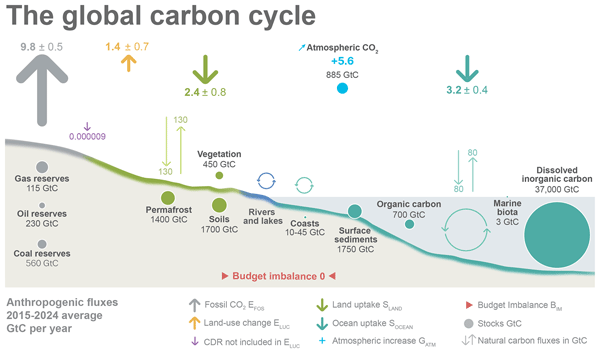
The Global Carbon Budget 2025 describes the methodology, main results, and datasets used to quantify the anthropogenic emissions of carbon dioxide (CO2) and their partitioning among the atmosphere, land ecosystems, and the ocean over the historical period (1750–2025). These living datasets are updated every year to provide the highest transparency and traceability in the reporting of CO2, the key driver of climate change.
Alberto V. Borges, Cédric Morana, Loris Deirmendjian, William Okello, Patrick Omeja, Mwapu Isumbisho, Jean-Pierre Descy, and Steven Bouillon
EGUsphere, https://doi.org/10.5194/egusphere-2026-1976, https://doi.org/10.5194/egusphere-2026-1976, 2026
Short summary
Short summary
We report 168 measurements of paired bottom- and surface-water CH4 concentrations from 46 African lakes spanning a wide range of surface area and maximum depth. Bottom-water and surface-water CH4 concentrations increased with stratification. The ratio of surface to bottom CH4 concentrations was negatively related to bottom depth and stratification, indicating that the relative increase in surface-water CH4 might be greater in shallower and less stratified systems.
Clare Woulds, Dick van Oevelen, Silvia Hidalgo-Martinez, and Filip J. R. Meysman
Biogeosciences, 23, 1739–1754, https://doi.org/10.5194/bg-23-1739-2026, https://doi.org/10.5194/bg-23-1739-2026, 2026
Short summary
Short summary
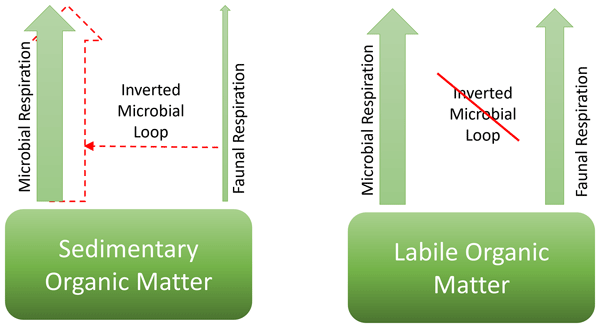
Marine sediments are locations of carbon storage. Only some deposited carbon remains stored, while most is lost as CO2 through respiration by organisms. We report experiments to investigate the organisms responsible for marine sediment respiration. Larger organisms and microbes contributed equally to respiration. The groups competed to feed on fresh carbon. Respiration of older carbon was stimulated when both groups were present, thus burrowing activities allow microbial activity to increase.
Mona Huyzentruyt, Maarten Wens, Gregory S. Fivash, David Walters, Steven Bouillon, Joel Carr, Glenn Guntenspergen, Matt L. Kirwan, and Stijn Temmerman
Biogeosciences, 23, 851–865, https://doi.org/10.5194/bg-23-851-2026, https://doi.org/10.5194/bg-23-851-2026, 2026
Short summary
Short summary
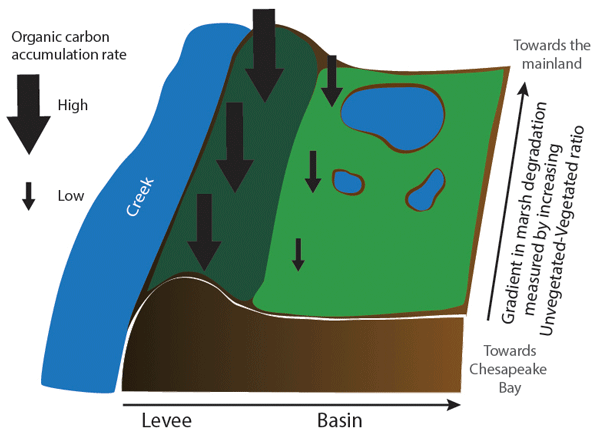
Vegetated environments from forests to peatlands store carbon in the soil, which mitigates climate change. But which environment does this best? In this study, we show how the levees of tidal marshes are one of the most effective carbon sequestering environments in the world. This is because soil water-logging and high salinity inhibits carbon degradation while the levee fosters fast vegetation growth, complimented also by the preferential settlement of carbon-rich sediments on the marsh levee.
Gunter Flipkens, Greet Lembregts, and Filip J.R. Meysman
Biogeosciences, 23, 399–420, https://doi.org/10.5194/bg-23-399-2026, https://doi.org/10.5194/bg-23-399-2026, 2026
Short summary
Short summary
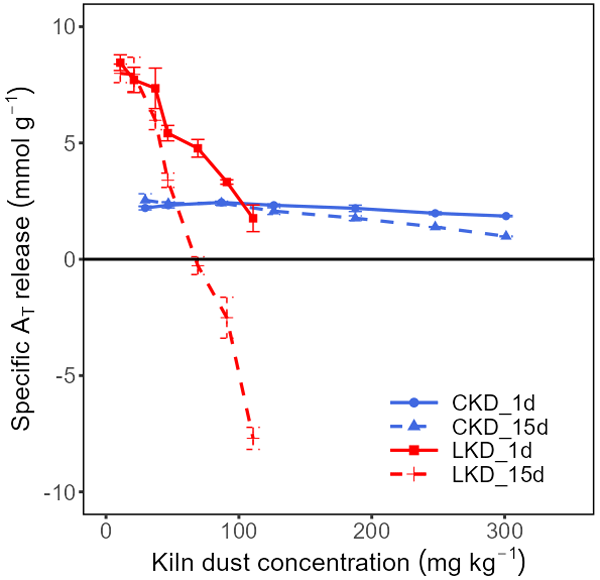
Cement and lime kiln dust, industrial by-products, could help remove CO2 from the atmosphere by increasing surface ocean alkalinity. Lab experiments showed that a fraction dissolves rapidly in seawater, releasing substantial alkalinity. Most of the residual fraction may dissolve in marine sediments to drive further carbon storage. Both materials could thus aid in global CO2 removal, but careful application strategies are required to avoid harm to marine ecosystems.
Silvia Placitu, Sebastiaan J. van de Velde, Astrid Hylén, Mats Eriksson, Per O. J. Hall, and Steeve Bonneville
Biogeosciences, 22, 8065–8076, https://doi.org/10.5194/bg-22-8065-2025, https://doi.org/10.5194/bg-22-8065-2025, 2025
Short summary
Short summary
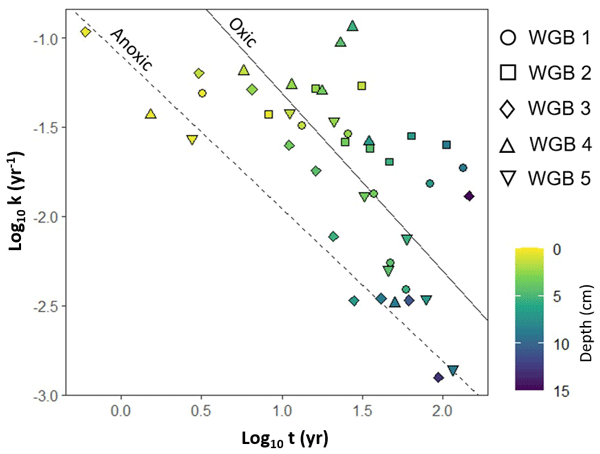
Marine sediments store organic carbon and help regulate climate. Oxygen-depleted waters are thought to enhance this, however Western Gotland Basin sediments show low carbon despite such conditions. We studied the role of mineral protection, which can shield carbon from microbes, and found it limited. This suggests that without physical protection, carbon remains accessible and gets degraded, making mineral protection a key factor in carbon preservation.
Astrid Hylén, Nils Ekeroth, Hannah Berk, Andy W. Dale, Mikhail Kononets, Wytze K. Lenstra, Aada Palo, Anders Tengberg, Sebastiaan J. van de Velde, Stefan Sommer, Caroline P. Slomp, and Per O. J. Hall
Earth Syst. Sci. Data, 17, 6423–6443, https://doi.org/10.5194/essd-17-6423-2025, https://doi.org/10.5194/essd-17-6423-2025, 2025
Short summary
Short summary
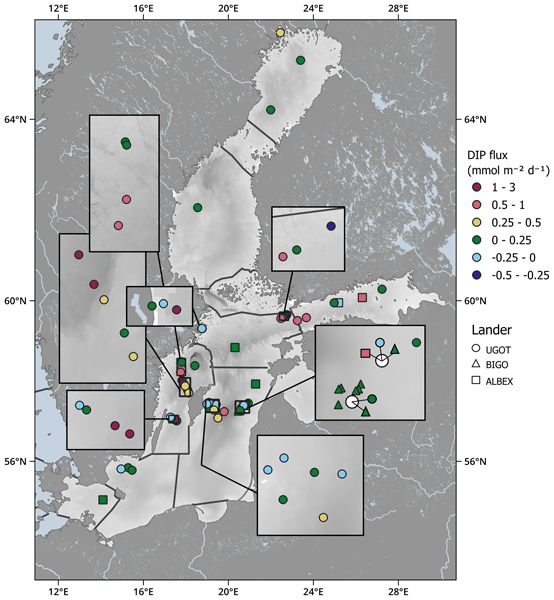
Phosphorus is an essential element for life and its cycling strongly impact primary production. Here, we present a dataset of sediment-water fluxes of dissolved inorganic phosphorus from the Baltic Sea, an area with a long history of eutrophication. The fluxes were measured in situ with three types of benthic chamber landers at 59 stations over 20 years. The data show clear spatial patterns and will be important for marine management and studies on mechanisms in benthic phosphorus cycling.
Tom Huysmans, Filip J. R. Meysman, and Sebastiaan J. van de Velde
Biogeosciences, 22, 5557–5572, https://doi.org/10.5194/bg-22-5557-2025, https://doi.org/10.5194/bg-22-5557-2025, 2025
Short summary
Short summary
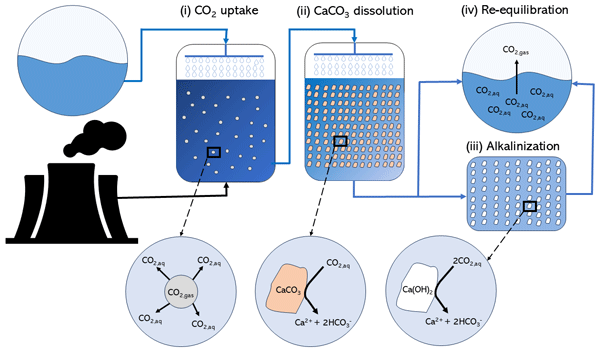
To examine the potential of accelerated weathering of limestone as a CO2 mitigation technique, we describe AWL thermodynamically as a four-step process, thus providing a model framework that allows us to calculate the efficiency of the different steps as well as the overall CO2 sequestration potential. We then review the different reactor designs that have been proposed for the AWL process in recent years and evaluate their efficiency and potential in terms of CO2 emission mitigation capacity.
Zita Kelemen, David P. Gillikin, and Steven Bouillon
Biogeosciences, 22, 2621–2635, https://doi.org/10.5194/bg-22-2621-2025, https://doi.org/10.5194/bg-22-2621-2025, 2025
Short summary
Short summary
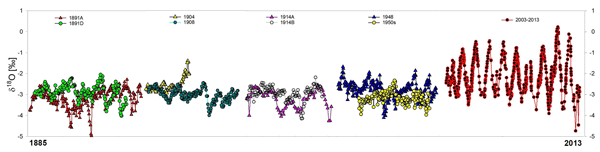
We analysed the C and O stable isotope composition (δ13C, δ18O) across the growth axis of museum-archived and recent Chambardia wissmanni shells from the Oubangui River (Congo basin) covering sections of the past ~120 years. Recent shells showed a much wider range of δ18O values compared to historical specimens, consistent with the suggestion that dry periods in the upper Congo basin have become more extreme in recent times and highlighting the potential of this species to reconstruct hydroclimatic conditions.
Vao Fenotiana Razanamahandry, Alberto Vieira Borges, Liesa Brosens, Cedric Morana, Tantely Razafimbelo, Tovonarivo Rafolisy, Gerard Govers, and Steven Bouillon
Biogeosciences, 22, 2403–2424, https://doi.org/10.5194/bg-22-2403-2025, https://doi.org/10.5194/bg-22-2403-2025, 2025
Short summary
Short summary
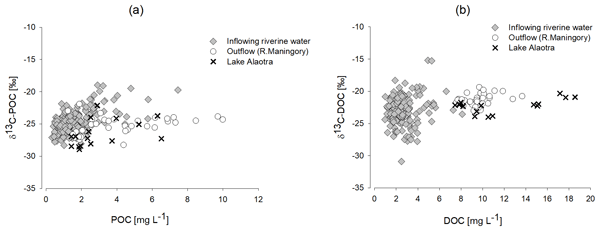
A comprehensive survey of the biogeochemistry of the Lake Alaotra system showed that the lake and surrounding wetlands acted as a substantial source of new organic carbon (OC), which was exported downstream. Marsh vegetation was the main source of dissolved OC, while phytoplankton contributed to the particulate OC pool. The biogeochemical functioning of Lake Alaotra differs from most East African lakes studied, likely due to its large surface area, shallow water depth, and surrounding wetlands.
Luna J. J. Geerts, Astrid Hylén, and Filip J. R. Meysman
Biogeosciences, 22, 355–384, https://doi.org/10.5194/bg-22-355-2025, https://doi.org/10.5194/bg-22-355-2025, 2025
Short summary
Short summary
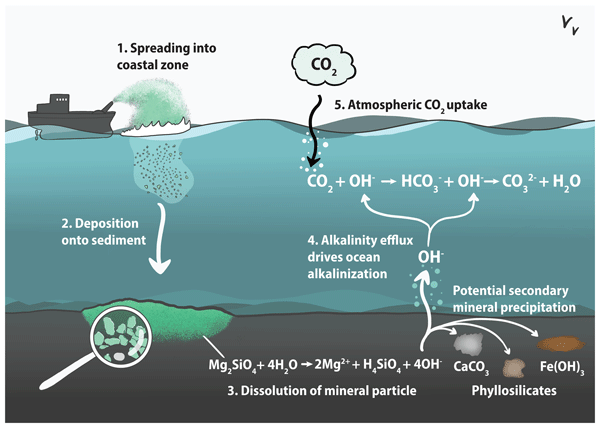
Marine enhanced rock weathering (mERW) with olivine is a promising method for capturing CO2 from the atmosphere, yet studies in field conditions are lacking. We bridge the gap between theoretical studies and the real-world environment by estimating the predictability of mERW parameters and identifying aspects to consider when applying mERW. A major source of uncertainty is the lack of experimental studies with sediment, which can heavily influence the speed and efficiency of CO2 drawdown.
Christian Lønborg, Cátia Carreira, Gwenaël Abril, Susana Agustí, Valentina Amaral, Agneta Andersson, Javier Arístegui, Punyasloke Bhadury, Mariana B. Bif, Alberto V. Borges, Steven Bouillon, Maria Ll. Calleja, Luiz C. Cotovicz Jr., Stefano Cozzi, Maryló Doval, Carlos M. Duarte, Bradley Eyre, Cédric G. Fichot, E. Elena García-Martín, Alexandra Garzon-Garcia, Michele Giani, Rafael Gonçalves-Araujo, Renee Gruber, Dennis A. Hansell, Fuminori Hashihama, Ding He, Johnna M. Holding, William R. Hunter, J. Severino P. Ibánhez, Valeria Ibello, Shan Jiang, Guebuem Kim, Katja Klun, Piotr Kowalczuk, Atsushi Kubo, Choon-Weng Lee, Cláudia B. Lopes, Federica Maggioni, Paolo Magni, Celia Marrase, Patrick Martin, S. Leigh McCallister, Roisin McCallum, Patricia M. Medeiros, Xosé Anxelu G. Morán, Frank E. Muller-Karger, Allison Myers-Pigg, Marit Norli, Joanne M. Oakes, Helena Osterholz, Hyekyung Park, Maria Lund Paulsen, Judith A. Rosentreter, Jeff D. Ross, Digna Rueda-Roa, Chiara Santinelli, Yuan Shen, Eva Teira, Tinkara Tinta, Guenther Uher, Masahide Wakita, Nicholas Ward, Kenta Watanabe, Yu Xin, Youhei Yamashita, Liyang Yang, Jacob Yeo, Huamao Yuan, Qiang Zheng, and Xosé Antón Álvarez-Salgado
Earth Syst. Sci. Data, 16, 1107–1119, https://doi.org/10.5194/essd-16-1107-2024, https://doi.org/10.5194/essd-16-1107-2024, 2024
Short summary
Short summary
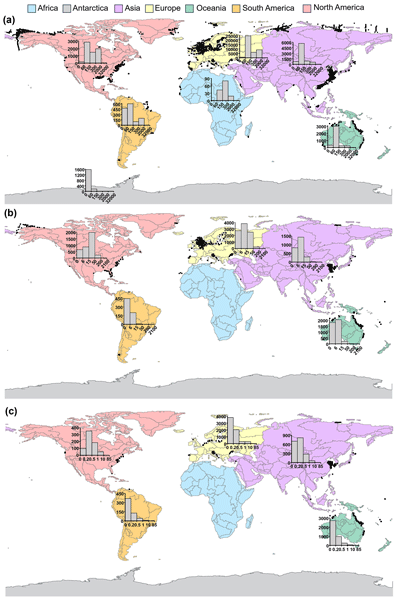
In this paper, we present the first edition of a global database compiling previously published and unpublished measurements of dissolved organic matter (DOM) collected in coastal waters (CoastDOM v1). Overall, the CoastDOM v1 dataset will be useful to identify global spatial and temporal patterns and to facilitate reuse in studies aimed at better characterizing local biogeochemical processes and identifying a baseline for modelling future changes in coastal waters.
Ulf Riebesell, Daniela Basso, Sonja Geilert, Andrew W. Dale, and Matthias Kreuzburg
State Planet, 2-oae2023, 6, https://doi.org/10.5194/sp-2-oae2023-6-2023, https://doi.org/10.5194/sp-2-oae2023-6-2023, 2023
Short summary
Short summary
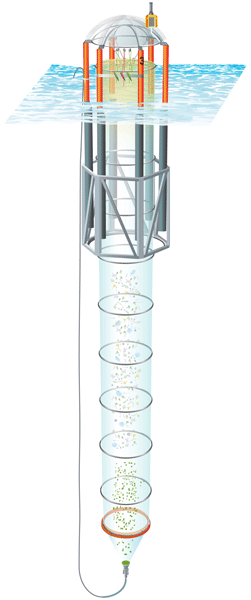
Mesocosm experiments represent a highly valuable tool in determining the safe operating space of ocean alkalinity enhancement (OAE) applications. By combining realism and biological complexity with controllability and replication, they provide an ideal OAE test bed and a critical stepping stone towards field applications. Mesocosm approaches can also be helpful in testing the efficacy, efficiency and permanence of OAE applications.
Vao Fenotiana Razanamahandry, Marjolein Dewaele, Gerard Govers, Liesa Brosens, Benjamin Campforts, Liesbet Jacobs, Tantely Razafimbelo, Tovonarivo Rafolisy, and Steven Bouillon
Biogeosciences, 19, 3825–3841, https://doi.org/10.5194/bg-19-3825-2022, https://doi.org/10.5194/bg-19-3825-2022, 2022
Short summary
Short summary
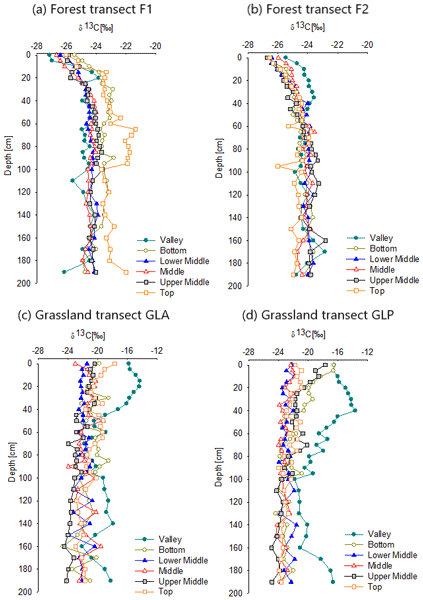
In order to shed light on possible past vegetation shifts in the Central Highlands of Madagascar, we measured stable isotope ratios of organic carbon in soil profiles along both forested and grassland hillslope transects in the Lake Alaotra region. Our results show that the landscape of this region was more forested in the past: soils in the C4-dominated grasslands contained a substantial fraction of C3-derived carbon, increasing with depth.
Rey Harvey Suello, Simon Lucas Hernandez, Steven Bouillon, Jean-Philippe Belliard, Luis Dominguez-Granda, Marijn Van de Broek, Andrea Mishell Rosado Moncayo, John Ramos Veliz, Karem Pollette Ramirez, Gerard Govers, and Stijn Temmerman
Biogeosciences, 19, 1571–1585, https://doi.org/10.5194/bg-19-1571-2022, https://doi.org/10.5194/bg-19-1571-2022, 2022
Short summary
Short summary
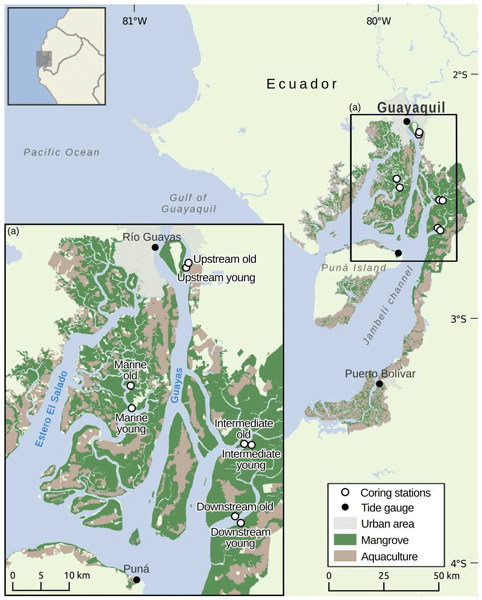
This research shows indications that the age of the mangrove forest and its position along a deltaic gradient (upstream–downstream) play a vital role in the amount and sources of carbon stored in the mangrove sediments. Our findings also imply that carbon capture by the mangrove ecosystem itself contributes partly but relatively little to long-term sediment organic carbon storage. This finding is particularly relevant for budgeting the potential of mangrove ecosystems to mitigate climate change.
Cited articles
Adkins, J. F., Naviaux, J. D., Subhas, A. V., Dong, S., and Berelson, W. M.: The Dissolution Rate of CaCO3 in the Ocean, Annu. Rev. Mar. Sci., 13, 57–80, https://doi.org/10.1146/annurev-marine-041720-092514, 2021.
Adler, I., Kotta, J., Robal, M., Humayun, S., Vene, K., and Tuvikene, R.: Valorization of Baltic Sea farmed blue mussels: Chemical profiling and prebiotic potential for nutraceutical and functional food development, Food Chem. X, 23, 101736, https://doi.org/10.1016/j.fochx.2024.101736, 2024.
Aller, R. C.: Quantifying solute distributions in the bioturbated zone of marine sediments by defining an average microenvironment, Geochim. Cosmochim. Ac., 44, 1955–1965, https://doi.org/10.1016/0016-7037(80)90195-7, 1980.
Aller, R. C.: Carbonate dissolution in nearshore terrigenous muds: the role of physical and biological reworking, J. Geol., 90, 79–95, https://doi.org/10.1086/628652, 1982.
Archer, D., Emerson, S., and Reimers, C.: Dissolution of calcite in deep-sea sediments: pH and O2 microelectrode results, Geochim. Cosmochim. Ac., 53, 2831–2845, https://doi.org/10.1016/0016-7037(89)90161-0, 1989.
Biçe, K., Myers Stewart, T., Waldbusser, G. G., and Meile, C.: The effect of carbonate mineral additions on biogeochemical conditions in surface sediments and benthic–pelagic exchange fluxes, Biogeosciences, 22, 641–657, https://doi.org/10.5194/bg-22-641-2025, 2025.
Boudreau, B. P.: Mean mixed depth of sediments: The wherefore and the why, Limnol. Oceanogr., 43, 524–526, https://doi.org/10.4319/lo.1998.43.3.0524, 1998.
Bullock, L. A., James, R. H., Matter, J., Renforth, P., and Teagle, D. A. H.: Global Carbon Dioxide Removal Potential of Waste Materials From Metal and Diamond Mining, Front. Clim., 3, 694175, https://doi.org/10.3389/fclim.2021.694175, 2021.
Burdige, D. J.: Preservation of organic matter in marine sediments: Controls, mechanisms, and an imbalance in sediment organic carbon budgets?, Chem. Rev., 107, 467–485, https://doi.org/10.1021/cr050347q, 2007.
Burnham, K. P. and Anderson, D. R. (Eds.): Model Selection and Multimodel Inference, Springer New York, New York, NY, https://doi.org/10.1007/b97636, 2004.
Carlson, R. R., Lewis, M. A., Ninokawa, A. T., Saley, A. M., Hill, T. M., and Gaylord, B.: Shell dissolution rates differ fourfold between mussel species, R. Soc. Open Sci., 12, 250664, https://doi.org/10.1098/rsos.250664, 2025.
Christensen, P. B., Glud, R. N., Dalsgaard, T., and Gillespie, P.: Impacts of longline mussel farming on oxygen and nitrogen dynamics and biological communities of coastal sediments, Aquaculture, 218, 567–588, https://doi.org/10.1016/S0044-8486(02)00587-2, 2003.
Cranford, P., Strain, P., Dowd, M., Hargrave, B., Grant, J., and Archambault, M.: Influence of mussel aquaculture on nitrogen dynamics in a nutrient enriched coastal embayment, Mar. Ecol. Prog. Ser., 347, 61–78, https://doi.org/10.3354/meps06997, 2007.
Cubillas, P., Köhler, S., Prieto, M., Chaïrat, C., and Oelkers, E. H.: Experimental determination of the dissolution rates of calcite, aragonite, and bivalves, Chem. Geol., 216, 59–77, https://doi.org/10.1016/j.chemgeo.2004.11.009, 2005.
Dale, A. W., Geilert, S., Diercks, I., Fuhr, M., Perner, M., Scholz, F., and Wallmann, K.: Seafloor alkalinity enhancement as a carbon dioxide removal strategy in the Baltic Sea, Commun. Earth Environ., 5, 452, https://doi.org/10.1038/s43247-024-01569-3, 2024.
de Beer, D., Wenzhöfer, F., Ferdelman, T. G., Boehme, S. E., Huettel, M., Van Beusekom, J. E. E., Böttcher, M. E., Musat, N., and Dubilier, N.: Transport and mineralization rates in North Sea sandy intertidal sediments, Sylt-Rømø Basin, Wadden Sea, Limnol. Oceanogr., 50, 113–127, https://doi.org/10.4319/lo.2005.50.1.0113, 2005.
Devol, A. H., Codispoti, L. A., and Christensen, J. P.: Summer and winter denitrification rates in western Arctic shelf sediments, Cont. Shelf Res., 17, 1029–1050, https://doi.org/10.1016/S0278-4343(97)00003-4, 1997.
Dickson, A. G.: An exact definition of total alkalinity and a procedure for the estimation of alkalinity and total inorganic carbon from titration data, Deep-Sea Res., 28A, 609–623, https://doi.org/10.1016/0198-0149(81)90121-7, 1981.
Emerson, S. and Bender, M.: Carbon fluxes at the sediment-water interface of the deep-sea: Calcium carbonate preservation, J. Mar. Res., 39, 139–162, 1981.
Ericson, J. A. and Ragg, N. L. C.: Effects of crushed mussel, Perna canaliculus, shell enrichment on seawater carbonate buffering and development of conspecific larvae exposed to near-future ocean acidification, J. World Aquac. Soc., 53, 271–289, https://doi.org/10.1111/jwas.12779, 2022.
FAO: The State of World Fisheries and Aquaculture 2024 – Blue Transformation in action, FAO, Rome, https://doi.org/10.4060/cd0683en, 2024.
FAO: FishStat: Global aquaculture production 1950–2023, in: FishStatJ, FAO, https://www.fao.org/fishery/statistics/software/fishstatj/en (last access: 28 March 2025), 2025.
Flipkens, G., Fuhr, M., Fiers, G., Meysman, F. J. R., Town, R. M., and Blust, R.: Enhanced olivine dissolution in seawater through continuous grain collisions, Geochim. Cosmochim. Ac., 359, 84–99, https://doi.org/10.1016/j.gca.2023.09.002, 2023.
Forja, J. and Gómez-Parra, A.: Measuring nutrient fluxes across the sediment-water interface using benthic chambers, Mar. Ecol. Prog. Ser., 164, 95–105, https://doi.org/10.3354/meps164095, 1998.
Frankignoulle, M.: A complete set of buffer factors for acid/base CO2 system in seawater, J. Mar. Syst., 5, 111–118, https://doi.org/10.1016/0924-7963(94)90026-4, 1994.
Frankignoulle, M., Canon, C., and Gattuso, J.: Marine calcification as a source of carbon dioxide: Positive feedback of increasing atmospheric CO2, Limnol. Oceanogr., 39, 458–462, https://doi.org/10.4319/lo.1994.39.2.0458, 1994.
Frankignoulle, M., Pichon, M., and Gattuso, J.-P.: Aquatic Calcification as a Source of Carbon Dioxide, in: Carbon Sequestration in the Biosphere, edited by: Beran, M. A., Springer Berlin Heidelberg, Berlin, Heidelberg, 265–271, https://doi.org/10.1007/978-3-642-79943-3_18, 1995.
Fuhr, M., Geilert, S., Schmidt, M., Liebetrau, V., Vogt, C., Ledwig, B., and Wallmann, K.: Kinetics of Olivine Weathering in Seawater: An Experimental Study, Front. Clim., 4, 831587, https://doi.org/10.3389/fclim.2022.831587, 2022.
Fuhr, M., Wallmann, K., Dale, A. W., Diercks, I., Kalapurakkal, H. T., Schmidt, M., Sommer, S., Böhnke, S., Perner, M., and Geilert, S.: Disentangling artificial and natural benthic weathering in organic rich Baltic Sea sediments, Front. Clim., 5, 1245580, https://doi.org/10.3389/fclim.2023.1245580, 2023.
Fuhr, M., Wallmann, K., Dale, A. W., Kalapurakkal, H. T., Schmidt, M., Sommer, S., Deusner, C., Spiegel, T., Kowalski, J., and Geilert, S.: Alkaline mineral addition to anoxic to hypoxic Baltic Sea sediments as a potentially efficient CO2-removal technique, Front. Clim., 6, 1338556, https://doi.org/10.3389/fclim.2024.1338556, 2024.
Fuhr, M., Dale, A. W., Wallmann, K., Bährle, R., Kalapurakkal, H. T., Sommer, S., Spiegel, T., Dobashi, R., Buchholz, B., Schmidt, M., Perner, M., and Geilert, S.: Calcite is an efficient and low-cost material to enhance benthic weathering in shelf sediments of the Baltic Sea, Commun. Earth Environ., 6, 106, https://doi.org/10.1038/s43247-025-02079-6, 2025.
Gasser, T., Guivarch, C., Tachiiri, K., Jones, C. D., and Ciais, P.: Negative emissions physically needed to keep global warming below 2 °C, Nat. Commun., 6, 7958, https://doi.org/10.1038/ncomms8958, 2015.
Gattuso, J.-P., Epitalon, J.-M., Lavigne, H., and Orr, J.: seacarb: Seawater Carbonate Chemistry, R package version 3.3.3, Comprehensive R Archive Network (CRAN) [code], https://doi.org/10.32614/CRAN.package.seacarb, 2024.
Gazeau, F., Quiblier, C., Jansen, J. M., Gattuso, J., Middelburg, J. J., and Heip, C. H. R.: Impact of elevated CO2 on shellfish calcification, Geophys. Res. Lett., 34, 2006GL028554, https://doi.org/10.1029/2006GL028554, 2007.
Gazeau, F., Parker, L. M., Comeau, S., Gattuso, J.-P., O'Connor, W. A., Martin, S., Pörtner, H.-O., and Ross, P. M.: Impacts of ocean acidification on marine shelled molluscs, Mar. Biol., 160, 2207–2245, https://doi.org/10.1007/s00227-013-2219-3, 2013.
Geerts, L. J. J., Hylén, A., and Meysman, F. J. R.: Review and syntheses: Ocean alkalinity enhancement and carbon dioxide removal through marine enhanced rock weathering using olivine, Biogeosciences, 22, 355–384, https://doi.org/10.5194/bg-22-355-2025, 2025.
Glud, R. N.: Oxygen dynamics of marine sediments, Mar. Biol. Res., 4, 243–289, https://doi.org/10.1080/17451000801888726, 2008.
Goossens, C.: CGoossens/Enhanced-mussel-shell-dissolution: Raw data file (Version v2), Zenodo [code and data set], https://doi.org/10.5281/zenodo.19632016, 2026.
Goossens, C., Van De Velde, S. J., and Meysman, F. J. R.: A Revised Estimate of Calcium Carbonate Dissolution in Coastal and Shelf Sediments Suggests Large Shelf Exports in the Marine CaCO3 Cycle, Global. Biogeochem. Cy., 40, e2025GB008936, https://doi.org/10.1029/2025GB008936, 2026.
Green, M. A., Jones, M. E., Boudreau, C. L., Moore, R. L., and Westman, B. A.: Dissolution mortality of juvenile bivalves in coastal marine deposits, Limnol. Oceanogr., 49, 727–734, https://doi.org/10.4319/lo.2004.49.3.0727, 2004.
Green, M. A., Waldbusser, G. G., Reilly, S. L., Emerson, K., and O'Donnell, S.: Death by dissolution: Sediment saturation state as a mortality factor for juvenile bivalves, Limnol. Oceanogr., 54, 1037–1047, https://doi.org/10.4319/lo.2009.54.4.1037, 2009.
Guillén, J., Jiménez, J. A., Palanques, A., Gracia, V., Puig, P., and Sánchez-Arcilla, A.: Sediment resuspension across a microtidal, low-energy inner shelf, Cont. Shelf Res., 22, 305–325, https://doi.org/10.1016/S0278-4343(01)00059-0, 2002.
Hangx, S. J. T. and Spiers, C. J.: Coastal spreading of olivine to control atmospheric CO2 concentrations: A critical analysis of viability, Int. J. Greenh. Gas Control, 3, 757–767, https://doi.org/10.1016/j.ijggc.2009.07.001, 2009.
Hargrave, B., Doucette, L., Cranford, P., Law, B., and Milligan, T.: Influence of mussel aquaculture on sediment organic enrichment in a nutrient-rich coastal embayment, Mar. Ecol. Prog. Ser., 365, 137–149, https://doi.org/10.3354/meps07636, 2008.
Hu, X. and Cai, W.-J.: An assessment of ocean margin anaerobic processes on oceanic alkalinity budget, Global. Biogeochem. Cy., 25, https://doi.org/10.1029/2010GB003859, 2011.
Huettel, M. and Gust, G.: Impact of bioroughness on interfacial solute exchange in permeable sediments, Mar. Ecol. Prog. Ser., 89, 253–267, https://doi.org/10.3354/meps089253, 1992.
Hurvich, C. M. and Tsai, C.-L.: Regression and time series model selection in small samples, Biometrika, 76, 297–307, https://doi.org/10.1093/biomet/76.2.297, 1989.
Hylén, A. and van de Velde, S.: FLUXER, Zenodo [code], https://doi.org/10.5281/zenodo.14758689, 2025.
IPCC: Climate Change 2023: Synthesis Report. Contribution of Working Groups I, II and III to the Sixth Assessment Report of the Intergovernmental Panel on Climate Change, edited by: Lee, H. and Romero, J. (Core Writing Team), Intergovernmental Panel on Climate Change, https://doi.org/10.59327/IPCC/AR6-9789291691647, 2023.
Jørgensen, B. B., Wenzhöfer, F., Egger, M., and Glud, R. N.: Sediment oxygen consumption: Role in the global marine carbon cycle, Earth-Sci. Rev., 228, 103987, https://doi.org/10.1016/j.earscirev.2022.103987, 2022.
Keeling, C. D.: The concentration and isotopic abundances of atmospheric carbon dioxide in rural areas, Geochim. Cosmochim. Ac., 13, 322–334, https://doi.org/10.1016/0016-7037(58)90033-4, 1958.
Keeling, C. D.: The concentration and isotopic abundances of carbon dioxide in rural and marine air, Geochim. Cosmochim. Ac., 24, 277–298, https://doi.org/10.1016/0016-7037(61)90023-0, 1961.
Kleypas, J. A.: Ocean Acidification, Effects on Calcification, in: Encyclopedia of Modern Coral Reefs, edited by: Hopley, D., Springer Dordrecht, 733–737, https://doi.org/10.1007/978-90-481-2639-2_118, 2011.
Kuderer, M. and Middelburg, J. J.: Organic Carbon Reaction Kinetics in Bioturbated Sediments, Geophys. Res. Lett., 51, e2024GL110404, https://doi.org/10.1029/2024GL110404, 2024.
Lacoste, É., Drouin, A., Weise, A., Archambault, P., and McKindsey, C.: Low benthic impact of an offshore mussel farm in Îles-de-la-Madeleine, eastern Canada, Aquac. Environ. Interact., 10, 473–485, https://doi.org/10.3354/aei00283, 2018.
Lan, X., Tans, P., Thoning, K., and NOAA Global Monitoring Laboratory: Trends in globally-averaged CO2 determined from NOAA Global Monitoring Laboratory measurements, NOAA Global Monitoring Laboratory, https://doi.org/10.15138/9N0H-ZH07, 2023.
Lavoie, M.-F., Lacoste, É., Weise, A. M., and McKindsey, C. W.: Benthic responses to organic enrichment under a mussel (Mytilus edulis) farm, Front. Mar. Sci., 11, 1433365, https://doi.org/10.3389/fmars.2024.1433365, 2024.
Lück, S., Callaghan, M., Borchers, M., Cowie, A., Fuss, S., Gidden, M., Hartmann, J., Kammann, C., Keller, D. P., Kraxner, F., Lamb, W. F., Mac Dowell, N., Müller-Hansen, F., Nemet, G. F., Probst, B. S., Renforth, P., Repke, T., Rickels, W., Schulte, I., Smith, P., Smith, S. M., Thrän, D., Troxler, T. G., Sick, V., Van Der Spek, M., and Minx, J. C.: Scientific literature on carbon dioxide removal revealed as much larger through AI-enhanced systematic mapping, Nat. Commun., 16, 6632, https://doi.org/10.1038/s41467-025-61485-8, 2025.
Lunstrum, A. and Berelson, W. M.: CaCO3 dissolution in carbonate-poor shelf sands increases with ocean acidification and porewater residence time, Geochim. Cosmochim. Ac., 329, 168–184, https://doi.org/10.1016/j.gca.2022.04.031, 2022.
McClintock, J. B., Angus, R. A., Mcdonald, M. R., Amsler, C. D., Catledge, S. A., and Vohra, Y. K.: Rapid dissolution of shells of weakly calcified Antarctic benthic macroorganisms indicates high vulnerability to ocean acidification, Antarct. Sci., 21, 449–456, https://doi.org/10.1017/S0954102009990198, 2009.
McKindsey, C. W., Archambault, P., Callier, M. D., and Olivier, F.: Influence of suspended and off-bottom mussel culture on the sea bottom and benthic habitats: a review, Can. J. Zool., 89, 622–646, https://doi.org/10.1139/z11-037, 2011.
Melzner, F., Stange, P., Trübenbach, K., Thomsen, J., Casties, I., Panknin, U., Gorb, S. N., and Gutowska, M. A.: Food Supply and Seawater pCO2 Impact Calcification and Internal Shell Dissolution in the Blue Mussel Mytilus edulis, PLoS ONE, 6, e24223, https://doi.org/10.1371/journal.pone.0024223, 2011.
Meysman, F. J. R. and Montserrat, F.: Negative CO2 emissions via enhanced silicate weathering in coastal environments, Biol. Lett., 13, 20160905, https://doi.org/10.1098/rsbl.2016.0905, 2017.
Meysman, F. J. R., Galaktionov, O. S., Gribsholt, B., and Middelburg, J. J.: Bioirrigation in permeable sediments: Advective pore-water transport induced by burrow ventilation, Limnol. Oceanogr., 51, 142–156, https://doi.org/10.4319/lo.2006.51.1.0142, 2006.
Middelburg, J. J., Soetaert, K., and Hagens, M.: Ocean alkalinity, buffering and biogeochemical processes, Rev. Geophys., 58, https://doi.org/10.1029/2019RG000681, 2020.
Miles, T., Glenn, S. M., and Schofield, O.: Temporal and spatial variability in fall storm induced sediment resuspension on the Mid-Atlantic Bight, Cont. Shelf Res., 63, S36–S49, https://doi.org/10.1016/j.csr.2012.08.006, 2013.
Minx, J., Burke, J., Schulte, I., Probst, B., Müller-Hansen, F., Roe, S., Buck, H., Smith, S., Injy Johnstone, Nemet, G. F., Edwards, M., Gidden, M., Schenuit, F., Fuss, S., Lamb, W. F., Geden, O., Pongratz, J., Vaughan, N., and Cox, E.: The State of Carbon Dioxide Removal – 2nd edition, University of Oxford's Smith School of Enterprise and the Environment, https://doi.org/10.17605/OSF.IO/F85QJ, 2024.
Montgomery, D. C., Peck, E. A., and Vining, G. G.: Introduction to linear regression analysis, Wiley, ISBN 978-0-470-54281-1, 2012.
Montserrat, F., Renforth, P., Hartmann, J., Leermakers, M., Knops, P., and Meysman, F. J. R.: Olivine Dissolution in Seawater: Implications for CO2 Sequestration through Enhanced Weathering in Coastal Environments, Environ. Sci. Technol., 51, 3960–3972, https://doi.org/10.1021/acs.est.6b05942, 2017.
Morse, J. W. and Mackenzie, F. T.: Geochemistry of sedimentary carbonates, Elsevier, ISBN 978-0-444-87391-0, 1990.
Morse, J. W., Zullig, J. J., Bernstein, L. D., Millero, F. J., Milne, P. J., Mucci, A., and Choppin, G. R.: Chemistry of calcium carbonate-rich shallow water sediments in the Bahamas, Am. J. Sci., 285, 147–185, https://doi.org/10.2475/ajs.285.2.147, 1985.
Nienhuis, S., Palmer, A. R., and Harley, C. D. G.: Elevated CO2 affects shell dissolution rate but not calcification rate in a marine snail, Proc. R. Soc. B Biol. Sci., 277, 2553–2558, https://doi.org/10.1098/rspb.2010.0206, 2010.
Oschlies, A., Bach, L. T., Rickaby, R. E. M., Satterfield, T., Webb, R., and Gattuso, J.-P.: Climate targets, carbon dioxide removal, and the potential role of ocean alkalinity enhancement, in: Guide to Best Practices in Ocean Alkalinity Enhancement Research, edited by: Oschlies, A., Stevenson, A., Bach, L. T., Fennel, K., Rickaby, R. E. M., Satterfield, T., Webb, R., and Gattuso, J.-P., Copernicus Publications, State Planet, 2-oae2023, 1, https://doi.org/10.5194/sp-2-oae2023-1-2023, 2023.
Pataki, D. E., Ehleringer, J. R., Flanagan, L. B., Yakir, D., Bowling, D. R., Still, C. J., Buchmann, N., Kaplan, J. O., and Berry, J. A.: The application and interpretation of Keeling plots in terrestrial carbon cycle research, Global. Biogeochem. Cy., 17, https://doi.org/10.1029/2001GB001850, 2003.
Pernet, F., Dupont, S., Gattuso, J., Metian, M., and Gazeau, F.: Cracking the myth: Bivalve farming is not a CO2 sink, Rev. Aquac., 17, https://doi.org/10.1111/raq.12954, 2025.
Ray, N. E., O'Meara, T., Wiliamson, T., Izursa, J.-L., and Kangas, P. C.: Consideration of carbon dioxide release during shell production in LCA of bivalves, Int. J. Life Cycle Assess., 23, 1042–1048, https://doi.org/10.1007/s11367-017-1394-8, 2018.
Renforth, P. and Henderson, G.: Assessing ocean alkalinity for carbon sequestration, Rev. Geophys., 55, 636–674, https://doi.org/10.1002/2016RG000533, 2017.
Restreppo, G. A., Wood, W. T., and Phrampus, B. J.: Oceanic sediment accumulation rates predicted via machine learning algorithm: towards sediment characterization on a global scale, Geo-Mar. Lett., 40, 755–763, https://doi.org/10.1007/s00367-020-00669-1, 2020.
Rimstidt, J. D. and Vaughan, D. J.: Pyrite oxidation: a state-of-the-art assessment of the reaction mechanism, Geochim. Cosmochim. Ac., 67, 873–880, https://doi.org/10.1016/S0016-7037(02)01165-1, 2003.
Sanderson, B. M., O'Neill, B. C., and Tebaldi, C.: What would it take to achieve the Paris temperature targets?, Geophys. Res. Lett., 43, 7133–7142, https://doi.org/10.1002/2016GL069563, 2016.
Smith, S. V. and Mackenzie, F. T.: The role of CaCO3 reactions in the contemporary oceanic CO2 cycle, Aquat. Geochem., 22, 153–175, https://doi.org/10.1007/s10498-015-9282-y, 2016.
Soetaert, K., Hofmann, A. F., Middelburg, J. J., Meysman, F. J. R., and Greenwood, J.: The effect of biogeochemical processes on pH, Mar. Chem., 105, 30–51, https://doi.org/10.1016/j.marchem.2006.12.012, 2007.
Subhas, A. V., Dong, S., Naviaux, J. D., Rollins, N. E., Ziveri, P., Gray, W., Rae, J. W. B., Liu, X., Byrne, R. H., Chen, S., Moore, C., Martell-Bonet, L., Steiner, Z., Antler, G., Hu, H., Lunstrum, A., Hou, Y., Kemnitz, N., Stutsman, J., Pallacks, S., Dugenne, M., Quay, P. D., Berelson, W. M., and Adkins, J. F.: Shallow Calcium Carbonate Cycling in the North Pacific Ocean, Global. Biogeochem. Cy., 36, https://doi.org/10.1029/2022GB007388, 2022.
Thrane, M.: Energy Consumption in the Danish Fishery: Identification of Key Factors, J. Ind. Ecol., 8, 223–239, https://doi.org/10.1162/1088198041269427, 2004.
Waldbusser, G. G., Steenson, R. A., and Green, M. A.: Oyster Shell Dissolution Rates in Estuarine Waters: Effects of pH and Shell Legacy, J. Shellfish Res., 30, 659–669, https://doi.org/10.2983/035.030.0308, 2011.
Welladsen, H. M., Southgate, P. C., and Heimann, K.: The effects of exposure to near-future levels of ocean acidification on shell characteristics of Pinctada fucata (Bivalvia: Pteriidae), Molluscan Res., 30, https://doi.org/10.11646/mr.30.3.2, 2010.
Wilson, P. S. and Vopel, K.: Assessing the Sulfide Footprint of Mussel Farms with Sediment Profile Imagery: A New Zealand Trial, PLOS ONE, 10, e0129894, https://doi.org/10.1371/journal.pone.0129894, 2015.
Zeebe, R. E. and Wolf-Gladrow, D.: CO2 in seawater: equilibrium, kinetics, isotopes, Elsevier, Amsterdam, ISBN 978-0-444-50579-8, 2001.
Short summary
Shell growth in bivalve aquaculture removes ocean alkalinity, leading to CO2 emissions. Here, we explore a circular solution by crushing shell waste and distributing it into coastal sediments, where its dissolution releases alkalinity that can compensate these emissions. Laboratory experiments showed substantial shell dissolution and alkalinity production, highlighting the potential for aquaculture circularity under suitable sediment conditions.
Shell growth in bivalve aquaculture removes ocean alkalinity, leading to CO2 emissions. Here, we...


Altmetrics
Final-revised paper
Preprint