
Articles | Volume 23, issue 18
https://doi.org/10.5194/bg-23-6705-2026
© Author(s) 2026. This work is distributed under
the Creative Commons Attribution 4.0 License.
the Creative Commons Attribution 4.0 License.
https://doi.org/10.5194/bg-23-6705-2026
© Author(s) 2026. This work is distributed under
the Creative Commons Attribution 4.0 License.
the Creative Commons Attribution 4.0 License.
Research article
| 
24 Sep 2026
Research article |
| 24 Sep 2026
| 24 Sep 2026
High nitrous oxide isotopic variability during denitrification by Pseudomonas species bearing NirK and NirS

Laboratory for Air Pollution/Environmental Technology, Empa, Überlandstrasse 129, Dübendorf, Switzerland
Aquatic and Isotope Biogeochemistry, University of Basel, Bernoullistrasse 30, Basel, Switzerland
Paul M. Magyar
Laboratory for Air Pollution/Environmental Technology, Empa, Überlandstrasse 129, Dübendorf, Switzerland
Jakob Zopfi
Aquatic and Isotope Biogeochemistry, University of Basel, Bernoullistrasse 30, Basel, Switzerland
Claudia Frey
Aquatic and Isotope Biogeochemistry, University of Basel, Bernoullistrasse 30, Basel, Switzerland
Thomas Kuhn
Aquatic and Isotope Biogeochemistry, University of Basel, Bernoullistrasse 30, Basel, Switzerland
Moritz F. Lehmann
Aquatic and Isotope Biogeochemistry, University of Basel, Bernoullistrasse 30, Basel, Switzerland
Laboratory for Air Pollution/Environmental Technology, Empa, Überlandstrasse 129, Dübendorf, Switzerland
Related authors
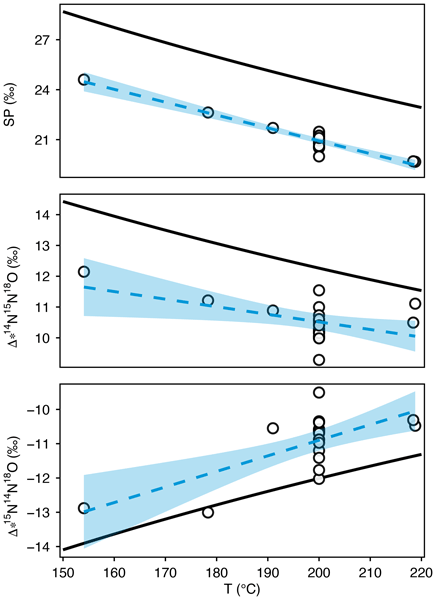
Paul M. Magyar, Nico Kueter, Simone Brunamonti, Naizhong Zhang, Ivan Prokhorov, Noémy Chénier, Lukas Emmenegger, Béla Tuzson, and Joachim Mohn
Atmos. Meas. Tech., 19, 5267–5280, https://doi.org/10.5194/amt-19-5267-2026, https://doi.org/10.5194/amt-19-5267-2026, 2026
Short summary
Short summary
Human activity drives increases in atmospheric nitrous oxide. Stable isotopes help trace the pathways involved. We developed a reliable way to calibrate measurements of rare isotopic variants of nitrous oxide so results from different labs can be compared. By heating nitrous oxide with a catalyst, the molecules reach well-defined equilibrium patterns suitable as a reference. To measure these isotopic variants quickly and precisely, we improved a laser-based measurement approach.
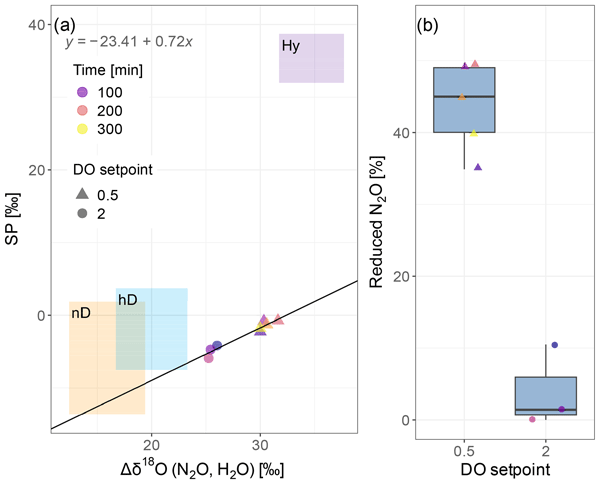
Hannes Keck, Laurence Strubbe, Paul M. Magyar, Adriano Joss, Andreas Froemelt, André Kupferschmid, Klaus-Holger Knorr, and Joachim Mohn
Atmos. Meas. Tech., 19, 6311–6326, https://doi.org/10.5194/amt-19-6311-2026, https://doi.org/10.5194/amt-19-6311-2026, 2026
Short summary
Short summary
We monitored nitrous oxide in a pilot wastewater treatment plant in real time to understand how microbes produce and remove this greenhouse gas. We designed and tested a laser-based analytical setup, with which we were able to show that denitrification is the main source of nitrous oxide emissions and that low oxygen concentrations enhances nitrous oxide removal. Our approach offers a new way to monitor the wastewater treatment processes and to cut climate-relevant nitrous oxide emissions.
Paul M. Magyar, Nico Kueter, Simone Brunamonti, Naizhong Zhang, Ivan Prokhorov, Noémy Chénier, Lukas Emmenegger, Béla Tuzson, and Joachim Mohn
Atmos. Meas. Tech., 19, 5267–5280, https://doi.org/10.5194/amt-19-5267-2026, https://doi.org/10.5194/amt-19-5267-2026, 2026
Short summary
Short summary
Human activity drives increases in atmospheric nitrous oxide. Stable isotopes help trace the pathways involved. We developed a reliable way to calibrate measurements of rare isotopic variants of nitrous oxide so results from different labs can be compared. By heating nitrous oxide with a catalyst, the molecules reach well-defined equilibrium patterns suitable as a reference. To measure these isotopic variants quickly and precisely, we improved a laser-based measurement approach.
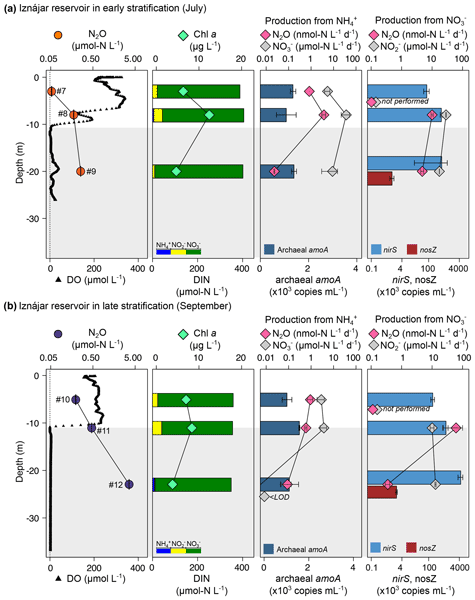
Elizabeth Leon-Palmero, Claudia Frey, Bess B. Ward, Rafael Morales-Baquero, and Isabel Reche
Biogeosciences, 23, 3887–3905, https://doi.org/10.5194/bg-23-3887-2026, https://doi.org/10.5194/bg-23-3887-2026, 2026
Short summary
Short summary
Reservoirs act as nitrogen sinks and emit nitrous oxide, a potent greenhouse gas and major ozone-depleting substance. We studied two reservoirs and found that nitrification and denitrification produce nitrous oxide in the water column, but denitrification is the main source, fueled by fresh organic matter from phytoplankton. Our results also suggest that nitrous oxide is actively consumed. This study highlights the need to include reservoirs in global nitrous oxide budgets.
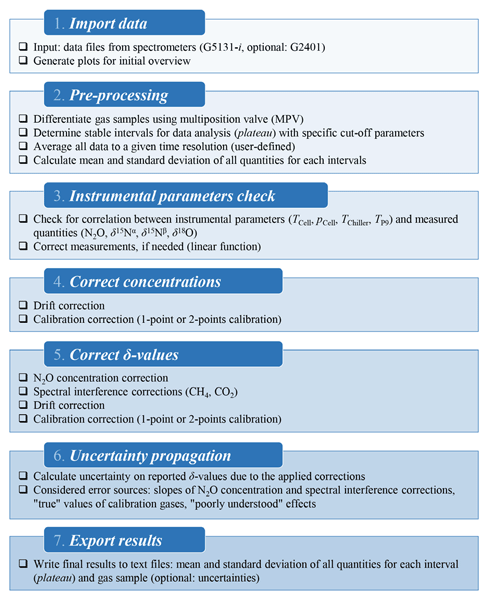
Julius C. Havsteen, Mehr Fatima, Simone Brunamonti, Andrea Pogány, Thomas Hausmaninger, Benjamin Wolf, Reinhard Well, and Joachim Mohn
Atmos. Meas. Tech., 19, 3557–3580, https://doi.org/10.5194/amt-19-3557-2026, https://doi.org/10.5194/amt-19-3557-2026, 2026
Short summary
Short summary
We present a new correction and calibration protocol to improve the accuracy of nitrous oxide isotope measurements obtained using laser spectroscopy. Through laboratory experiments, spectral simulations, and an automated MATLAB (Matrix Laboratory) reduction scheme, we identify and correct biases caused by matrix gas composition, spectral interferences and instrument variability. This protocol enables researchers to produce more reliable isotope data and supports standardised isotope analyses across laboratories.
Pratirupa Bardhan, Claudia Frey, Gregor Rehder, and Hermann W. Bange
Biogeosciences, 23, 1987–2002, https://doi.org/10.5194/bg-23-1987-2026, https://doi.org/10.5194/bg-23-1987-2026, 2026
Short summary
Short summary
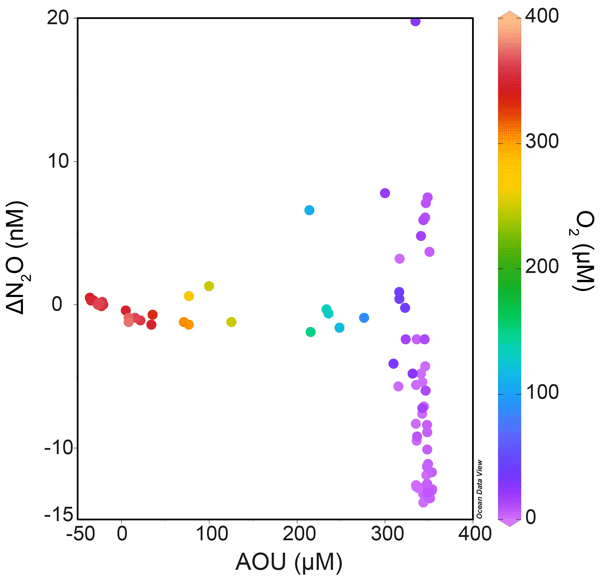
Nitrous oxide (N2O), a potent greenhouse gas, is released from coastal seas & estuaries, yet we don't fully understand how it is formed and consumed. In this study we collected water from several sites in the central Baltic Sea. N2O came from ammonia in oxic waters. Deep waters with low to no oxygen noted more active N2O cycling. The seafloor was a source in some areas. Typically N2O is produced by bacteria, but our results indicate possibility of other players like fungi or chemical reactions.
Alessandra Mazzoli, Peter Reichert, Claudia Frey, Cameron M. Callbeck, Tim J. Paulus, Jakob Zopfi, and Moritz F. Lehmann
Biogeosciences, 23, 283–314, https://doi.org/10.5194/bg-23-283-2026, https://doi.org/10.5194/bg-23-283-2026, 2026
Short summary
Short summary
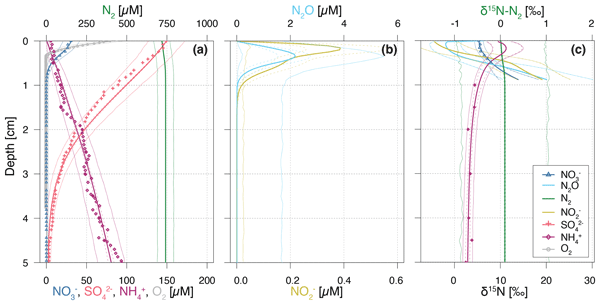
Nitrogen (re-)cycling in sediments plays a key role in aquatic environments, but involves many overlapping biogeochemical processes that are hard to separate. We developed a new comprehensive sedimentary nitrogen isotope model to disentangle these reactions. Using field data from a Swiss lake and statistical tools, we demonstrated the robustness and validity of our modelling framework for a broad range of applications.
Carolina F. M. de Carvalho, Moritz F. Lehmann, and Sarah G. Pati
Biogeosciences, 22, 4579–4600, https://doi.org/10.5194/bg-22-4579-2025, https://doi.org/10.5194/bg-22-4579-2025, 2025
Short summary
Short summary
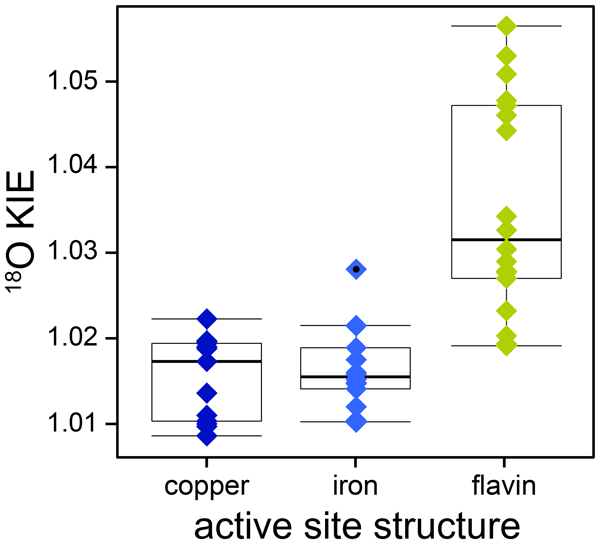
Using O2 stable isotope analysis, we determined the isotopic fractionation of biological O2 consumption by 10 flavin-dependent enzymes and 6 metalloenzymes. Metalloenzymes displayed a narrower range and lower values of isotopic fractionation than flavin-dependent enzymes. This work expands our understanding of the variability of oxygen isotopic fractionation at the enzyme level, improving the ability to study O2 dynamics from molecular to ecosystem scales.
Guangyi Su, Julie Tolu, Clemens Glombitza, Jakob Zopfi, Moritz F. Lehmann, Mark A. Lever, and Carsten J. Schubert
Biogeosciences, 22, 4449–4466, https://doi.org/10.5194/bg-22-4449-2025, https://doi.org/10.5194/bg-22-4449-2025, 2025
Short summary
Short summary
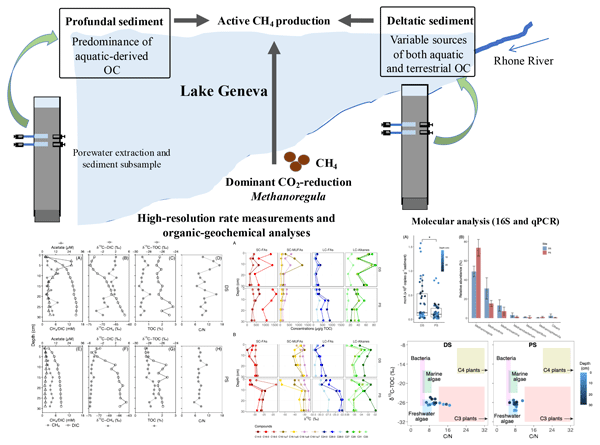
In Lake Geneva, we studied how different types of organic matter affect methane production. Despite varying sources, like algae and land-based materials, both deep and delta areas are significant methane sources, and methane was mainly produced through CO2 reduction. Surprisingly, the origin of organic matter did not strongly influence methane production rates or pathways. Our findings highlight the need to better understand microbial processes to predict methane emissions from lakes.
Colette L. Kelly, Nicole M. Travis, Pascale Anabelle Baya, Claudia Frey, Xin Sun, Bess B. Ward, and Karen L. Casciotti
Biogeosciences, 21, 3215–3238, https://doi.org/10.5194/bg-21-3215-2024, https://doi.org/10.5194/bg-21-3215-2024, 2024
Short summary
Short summary
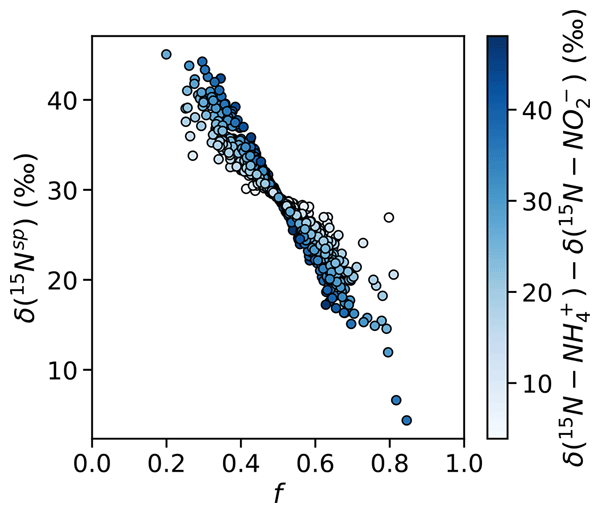
Nitrous oxide, a potent greenhouse gas, accumulates in regions of the ocean that are low in dissolved oxygen. We used a novel combination of chemical tracers to determine how nitrous oxide is produced in one of these regions, the eastern tropical North Pacific Ocean. Our experiments showed that the two most important sources of nitrous oxide under low-oxygen conditions are denitrification, an anaerobic process, and a novel “hybrid” process performed by ammonia-oxidizing archaea.
Weiyi Tang, Bess B. Ward, Michael Beman, Laura Bristow, Darren Clark, Sarah Fawcett, Claudia Frey, François Fripiat, Gerhard J. Herndl, Mhlangabezi Mdutyana, Fabien Paulot, Xuefeng Peng, Alyson E. Santoro, Takuhei Shiozaki, Eva Sintes, Charles Stock, Xin Sun, Xianhui S. Wan, Min N. Xu, and Yao Zhang
Earth Syst. Sci. Data, 15, 5039–5077, https://doi.org/10.5194/essd-15-5039-2023, https://doi.org/10.5194/essd-15-5039-2023, 2023
Short summary
Short summary
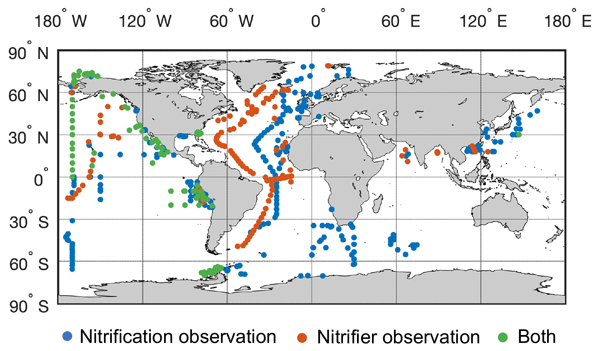
Nitrification and nitrifiers play an important role in marine nitrogen and carbon cycles by converting ammonium to nitrite and nitrate. Nitrification could affect microbial community structure, marine productivity, and the production of nitrous oxide – a powerful greenhouse gas. We introduce the newly constructed database of nitrification and nitrifiers in the marine water column and guide future research efforts in field observations and model development of nitrification.
John C. Tracey, Andrew R. Babbin, Elizabeth Wallace, Xin Sun, Katherine L. DuRussel, Claudia Frey, Donald E. Martocello III, Tyler Tamasi, Sergey Oleynik, and Bess B. Ward
Biogeosciences, 20, 2499–2523, https://doi.org/10.5194/bg-20-2499-2023, https://doi.org/10.5194/bg-20-2499-2023, 2023
Short summary
Short summary
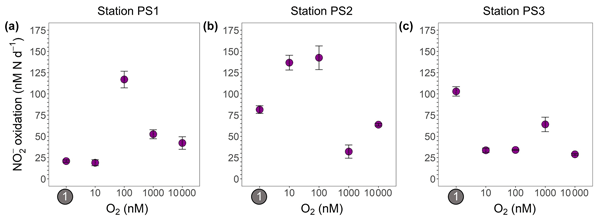
Nitrogen (N) is essential for life; thus, its availability plays a key role in determining marine productivity. Using incubations of seawater spiked with a rare form of N measurable on a mass spectrometer, we quantified microbial pathways that determine marine N availability. The results show that pathways that recycle N have higher rates than those that result in its loss from biomass and present new evidence for anaerobic nitrite oxidation, a process long thought to be strictly aerobic.
Cited articles
Braman, R. S. and Hendrix, S. A.: Nanogram nitrite and nitrate determination in environmental and biological materials by vanadium(III) reduction with chemiluminescence detection, Anal. Chem., 61, 2715–2718, https://doi.org/10.1021/ac00199a007, 1989.
Buchwald, C. and Casciotti, K. L.: Isotopic ratios of nitrite as tracers of the sources and age of oceanic nitrite, Nat. Geosci., 6, 308–313, https://doi.org/10.1038/ngeo1745, 2013.
Caranto, J. D., Weitz, A., Giri, N., Hendrich, M. P., and Kurtz Jr., D. M.: A Diferrous-Dinitrosyl Intermediate in the N2O-Generating Pathway of a Deflavinated Flavo-Diiron Protein, ACS Biochem., 53, 5631–5637, https://doi.org/10.1021/bi500836z, 2014a.
Caranto, J. D., Weitz, A., Hendrich, M. P., and Kurtz Jr., D. M: The Nitric Oxide Reductase Mechanism of a Flavo-Diiron Protein: Identification of Active-Site Intermediates and Products, J. Am. Chem. Soc., 136, 7981–7992, https://doi.org/10.1021/ja5022443, 2014b.
Casciotti, K. L., Sigman, D. M., Hastings, M. G., Böhlke, J. K., and Hilkert, A.: Measurement of the oxygen isotopic composition of nitrate in seawater and freshwater using the denitrifier method, Anal. Chem., 74, 4905–4912, https://doi.org/10.1021/ac020113w, 2002.
Casciotti, K. L., Böhlke, J. K., McIlvin, M., Mroczkowski, S., and Hannon, J.: Oxygen Isotopes in Nitrite: Analysis, Calibration, and Equilibration, Anal. Chem., 79, 2427–2436, https://doi.org/10.1021/ac061598h, 2007.
Chénier, N., Magyar, P. M., Zopfi, J., Frey, C., Lehmann, M. F., and Mohn, J.: High nitrous oxide isotopic variability during denitrification by Pseudomonas species bearing NirK and NirS, Zenodo [data set], https://doi.org/10.5281/zenodo.21534019, 2026.
Denk, T. R. A., Mohn, J., Decock, C., Lewicka-Szczebak, D., Harris, E., Butterbach-Bahl, K., Kiese, R., and Well, R.: The nitrogen cycle: A review of isotope effects and isotope modeling approaches, Soil Biol. Biochem., 105 121e137, https://doi.org/10.1016/j.soilbio.2016.11.015, 2016.
Denman, K. L., Brasseur, G., Chidthaisong, A., Ciais, P., Cox, P. M., Dickinson, R. E., Hauglustaine, D., Heinze, C., Holland, E., Jacob, D., Lohmann, U., Ramachandran, S., da Silva Dias, P. L., Wofsy, S. C., and Zhang, X.: Couplings Between Changes in the Climate System and Biogeochemistry, Climate Change: The Physical Science Basis. Contribution of Working Group I to the Fourth Assessment Report of the Intergovernmental Panel on Climate Change Cambridge University Press, Cambridge, United Kingdom and New York, NY, USA, https://www.ipcc.ch/site/assets/uploads/2018/02/ar4-wg1-chapter7-1.pdf (last access: 22 September 2026), 2007.
Frame, C. H. and Casciotti, K. L.: Biogeochemical controls and isotopic signatures of nitrous oxide production by a marine ammonia-oxidizing bacterium, Biogeosciences, 7, 2695–2709, https://doi.org/10.5194/bg-7-2695-2010, 2010.
Gruber, W., Magyar, P.M., Mitrovic, I., Zeyer, K., Vogel, M., von Känel, L., Biolley, L., Werner, R. A., Morgenroth, E., Lehmann, M. F., and Braun, D.: Tracing N2O formation in full-scale wastewater treatment with natural abundance isotopes indicates control by organic substrate and process settings, Water Research X, 15, 100130, https://doi.org/10.1016/j.wroa.2022.100130, 2022.
Hansen, H. P. and Koroleff, F.: Determination of nutrients, Methods of Seawater Analysis, 159–228, https://doi.org/10.1002/9783527613984, 1999.
Haslun, J. A., Ostrom, N. E., Hegg, E. L., and Ostrom, P. H.: Estimation of isotope variation of N2O during denitrification by Pseudomonas aureofaciens and Pseudomonas chlororaphis: implications for N2O source apportionment, Biogeosciences, 15, 3873–3882, https://doi.org/10.5194/bg-15-3873-2018, 2018.
Ibraim, E., Harris, E., Eyer, S., Tuzson, B., Emmenegger, L., Six, J., and Mohn, J.: Development of a field-deployable method for simultaneous, real-time measurements of the four most abundant N2O isotopocules, Isot. Environ. Healt. S., 54, https://doi.org/10.1080/10256016.2017.1345902, 2018.
IPCC: Climate Change 2023: Synthesis Report. Contribution of Working Groups I, II and III to the Sixth Assessment Report of the Intergovernmental Panel on Climate Change, IPCC, Geneva, Switzerland, https://doi.org/10.59327/IPCC/AR6-9789291691647, 2023.
Jones, L. C., Peters, B., Lezama Pacheco, J. S., Casciotti, K. L., and Fendorf, S.: Stable isotopes and iron oxide mineral products as markers of chemodenitrification, Environ. Sci. Technol., 49, 3444–3452, https://doi.org/10.1021/es504862x, 2015.
Kelly, C. L., Manning, C., Frey, C., Kaiser, J., Gluschankoff, N., and Casciotti, L. L.: Pyisotopomer: A Python package for obtaining intramolecular isotope ratio differences from mass spectrometric analysis of nitrous oxide isotopocules, Rapid Commun. Mass Spectrom., 1097–0231, https://doi.org/10.1002/rcm.9513, 2023.
Kool, D. M., Wrage, N., Oenema, O., Dolfing, J., and Van Groenigen, J. W.: Oxygen exchange between (de) nitrification intermediates and H2O and its implications for source determination of NO
Lewicka-Szczebak, D., Dyckmans, J., Kaiser, J., Marca, A., Augustin, J., and Well, R.: Oxygen isotope fractionation during N2O production by soil denitrification, Biogeosciences, 13, 1129–1144, https://doi.org/10.5194/bg-13-1129-2016, 2016.
Mariotti, A., Leclerc, A., and Germon, J. C.: Nitrogen isotope fractionation associated with the NO
Mohn, J., Biasi, C., Bodé, S., Boeckx, P., Brewer, P. J., Eggleston, S., Geilmann, H., Guillevic, M., Kaiser, J., Kantnerová, K., and Moossen, H.: Isotopically characterised N2O reference materials for use as community standards, Rapid Commun. Mass Specrom., 36, 13, e9296, https://doi.org/10.1002/rcm.9296, 2022.
Opdyke, M. R., Ostrom, N. E., and Ostrom, P. H.: Evidence for the predominance of denitrification as a source of N2O in temperate agricultural soils based on isotopologue measurements, Global Biogeochem. Cy., 23, 4, https://doi.org/10.1029/2009GB003523, 2008.
Ostrom, N. E. and Ostrom, P. H.: The isotopomers of nitrous oxide: analytical considerations and application to resolution of microbial production pathways, Handbook of Environmental Isotope Geochemistry, Vol. I, Berlin, Heidelberg: Springer Berlin Heidelberg, 453–476, https://doi.org/10.1007/978-3-642-10637-8_23, 2011.
R Core Team: R: A language and environment for statistical computing. R Foundation for Statistical Computing, Vienna, Austria, https://www.R-project.org/ (last access: 21 September 2026), 2020.
Reay, D. S., Davidson, E. A., Smith, K. A., Smith, P., Melillo, J. M., Dentener, F., and Crutzen, P. J.: Global agriculture and nitrous oxide emissions, Nat. Clim. Change, 2, 410–416, https://doi.org/10.1038/nclimate1458, 2012.
Rivett, E. D., Finders, C. M., Haslun, J. A., Gandhi, H., Kahle, M., Ädelroth, P., Ostrom, P. H., Ostrom, N. E., and Hegg E. L.: Isotopic Fractionation and Kinetic Isotope Effects of a Purified Bacterial Nitric Oxide Reductase (NOR), Biochemistry, 64, 4327–4340, https://doi.org/10.1021/acs.biochem.5c00417, 2025.
Rohe, L., Well, R., and Lewicka‐Szczebak, D.: Use of oxygen isotopes to differentiate between nitrous oxide produced by fungi or bacteria during denitrification, Rapid Commun. Mass Spectrom., 31, 1297–1312, https://doi.org/10.1002/rcm.7909, 2017.
Sigman, D. M., Casciotti, K. L., Andreani, M., Barford, C., Galanter, M., and Böhlke, J. K.: A bacterial method for the nitrogen isotopic analysis of nitrate in seawater and freshwater, Anal. Chem., 73, 4145–4153, https://doi.org/10.1021/ac010088e, 2001.
Snider, D. M., Schiff, S. L., and Spoelstra, J.:
Strubbe, L., Keck, H., Magyar, P. M., Mohn, J., Joss, A., and Froemelt, A.: Activating specific N2O production pathways to understand emission dynamics in wastewater treatment, Water Res., 296, 125580, https://doi.org/10.1016/j.watres.2026.125580, 2026.
Sutka, R. L., Ostrom, N. E., Ostrom, P. H., Breznak, J. A., Gandhi, H., Pitt, A. J., and Li, F.: Distinguishing nitrous oxide production from nitrification and denitrification using N2O isotopomers, Appl. Environ. Microbiol., 72, 638–644, https://doi.org/10.1128/AEM.72.1.638-644.2006, 2006.
Toyoda, S., Mutobe, H., Yamagishi, H., Yoshida, N., and Tanji, Y.: Fractionation of N2O isotopomers during production by denitrifier bacteria, Soil Biol. Biochem., 37, 1535–1545, https://doi.org/10.1016/j.soilbio.2005.01.009, 2005.
Visser, A.-N., Wankel, S. D., Niklaus, P. A., Byrne, J. M., Kappler, A. A., and Lehmann, M. F.: Impact of reactive surfaces on the abiotic reaction between nitrite and ferrous iron and associated nitrogen and oxygen isotope dynamics, Biogeosciences, 17, 4355–4374, https://doi.org/10.5194/bg-17-4355-2020, 2020.
Wang, R. Z., Lonergan, Z. R., Wilbert, S. A., Eiler, J. M., and Newman, D. K.: Widespread detoxifying NO reductases impart a distinct isotopic fingerprint on N2O under anoxia, P. Natl. Acad. Sci. USA, 121, 25 e2319960121, https://doi.org/10.1073/pnas.2319960121, 2024.
Wei, J., Ibraim, E., Brüggemann, N., Vereecken, H., and Mohn, J.: First real-time isotopic characterisation of N2O from chemodenitrification, Geochim. Cosmochim. Ac., 267, https://doi.org/10.1016/j.gca.2019.09.018, 2019.
Weigand, M. A., Foriel, J., Barnett, B., Oleynik, S., and Sigman, D. M.: Updates to instrumentation and protocols for isotopic analysis of nitrate by the denitrifier method, Rapid Commun. Mass Sp., 30, 1365–1383, https://doi.org/10.1002/rcm.7570, 2016.
WMO: Greenhouse Gas Bulletin, World Meteorological Organization, https://library.wmo.int/idurl/4/69057 (last access: 7 September 2026), 2024.
Wunderlin, P., Mohn, J., Joss, A., Emmenegger, L., and Siegrist, H.: Mechanisms of N2O production in biological wastewater treatment under nitrifying and denitrifying conditions, Water Res., 46, 1027–1037, https://doi.org/10.1016/j.watres.2011.11.080, 2012.
Wunderlin, P., Lehmann, M. F., Siegrist, H., Tuzson, B., Joss, A., Emmenegger, L., and Mohn, J.: Isotope signatures of N2O in a mixed microbial population system: constraints on N2O producing pathways in wastewater treatment, Environ. Sci Technol., 47, 1339–1348, https://doi.org/10.1021/es303174x, 2013.
Xu, Z., Hattori, S., Masuda, Y., Toyoda, S., Koba, K., Yu, P., and Senoo, K.: Unprecedented N2O production by nitrate-ammonifying Geobacteraceae with distinctive N2O isotopocule signatures, mBio, 15, e02540-24, https://doi.org/10.1128/mbio.02540-24, 2024.
Yamazaki, T., Hozuki, T., Arai, K., Toyoda, S., Koba, K., Fujiwara, T., and Yoshida, N.: Isotopomeric characterization of nitrous oxide produced by reaction of enzymes extracted from nitrifying and denitrifying bacteria, Biogeosciences, 11, 2679–2689, https://doi.org/10.5194/bg-11-2679-2014, 2014.
Ye, R. W., Averill, B. A., and Tiedje, J. M.: Denitrification: production and consumption of nitric oxide, Appl. Environ. Microb., 60, 1053–1058, https://doi.org/10.1128/aem.60.4.1053-1058.1994, 1991.
Yoshida, N. and Toyoda, S.: Constraining the atmospheric N2O budget from intramolecular site preference, Nature, 405, 330–334, https://doi.org/10.1038/35012558, 2000.
Yu, L., Harris, E., Lewicka-Szczebak, D., Barthel, M., Blomberg, M. R. A., Harris, S. J., Johnson, M. S., Lehmann, M. F., Liisberg, J., Müller, C., Ostrom, N. E., Six, J., Toyoda, S., Yoshida, N., and Mohn, J.: What can we learn from N2O isotope data? – Analytics, processes and modelling, Rapid Commun. Mass Sp., 34, e8858, https://doi.org/10.1002/rcm.8858, 2020.
Zumft, W. G.: Cell biology and molecular basis of denitrification, Microbiol. Mol. Biol. Rev., 61, 533–616, 1997.
Short summary
N₂O is a greenhouse gas produced by microbes during nitrogen cycling. We studied two bacterial species and found that the isotope signatures of the N₂O they produced changed strongly depending on growth conditions and cell activity. Early during growth, the distribution of N isotopes within the N₂O molecule also changed unexpectedly. These results show that N₂O isotope signatures are more variable than previously assumed and depend strongly on physiology.
N₂O is a greenhouse gas produced by microbes during nitrogen cycling. We studied two bacterial...


Altmetrics
Final-revised paper
Preprint