
Articles | Volume 23, issue 20
https://doi.org/10.5194/bg-23-7447-2026
© Author(s) 2026. This work is distributed under
the Creative Commons Attribution 4.0 License.
https://doi.org/10.5194/bg-23-7447-2026
© Author(s) 2026. This work is distributed under
the Creative Commons Attribution 4.0 License.
Research article
| 
23 Oct 2026
Research article |
| 23 Oct 2026
Fine-scale spatial variability of winter CO2 and CH4 fluxes in Arctic tundra derived from snowpack gradient measurements
Gabriel Hould Gosselin
CORRESPONDING AUTHOR

Department of Geography and Natural Sciences, Northumbria University, Newcastle upon Tyne, Tyne and Wear, UK
Department of Geography, Université de Montréal, Montréal, QC, Canada
Nick Rutter
Department of Geography and Natural Sciences, Northumbria University, Newcastle upon Tyne, Tyne and Wear, UK
Paul J. Mann
Department of Geography and Natural Sciences, Northumbria University, Newcastle upon Tyne, Tyne and Wear, UK
Philip Marsh
Department of Geography, Wilfrid Laurier University, Waterloo, ON, Canada
Oliver Sonnentag
Department of Geography, Université de Montréal, Montréal, QC, Canada
Related authors
Georgina J. Woolley, Nick Rutter, Leanne Wake, Vincent Vionnet, Chris Derksen, Julien Meloche, Benoit Montpetit, Nicolas R. Leroux, Richard Essery, Gabriel Hould Gosselin, and Philip Marsh
The Cryosphere, 20, 1315–1338, https://doi.org/10.5194/tc-20-1315-2026, https://doi.org/10.5194/tc-20-1315-2026, 2026
Short summary
Short summary
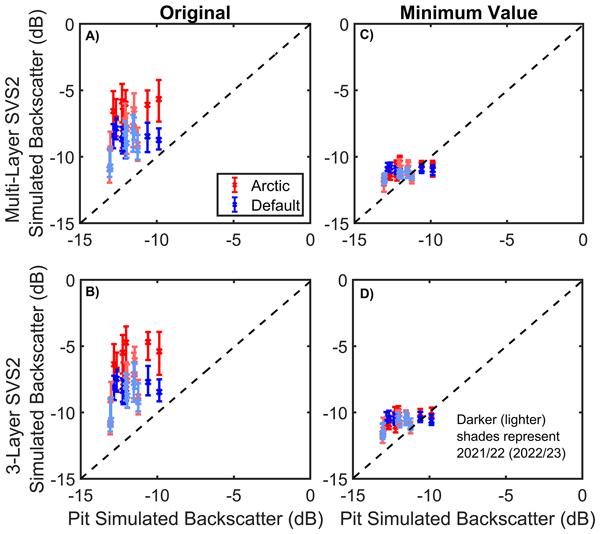
The impact of uncertainties in the simulation of density and specific surface area (SSA) by the snow model Crocus (embedded in the Soil, Vegetation and Snow v2 land surface model) on the simulation of snow backscatter (13.5 GHz) using the Snow Microwave Radiative Transfer model were quantified. The simulation of SSA was found to be a key model uncertainty. Underestimated SSA values lead to high errors in the simulation of backscatter, reduced by implementing a minimum SSA value (8.7 m2 kg−1).
Alexandre Lhosmot, Gabriel Hould Gosselin, Manuel Helbig, Julien Fouché, Youngryel Ryu, Matteo Detto, Ryan Connon, William Quinton, Tim Moore, and Oliver Sonnentag
Hydrol. Earth Syst. Sci., 29, 4871–4892, https://doi.org/10.5194/hess-29-4871-2025, https://doi.org/10.5194/hess-29-4871-2025, 2025
Short summary
Short summary
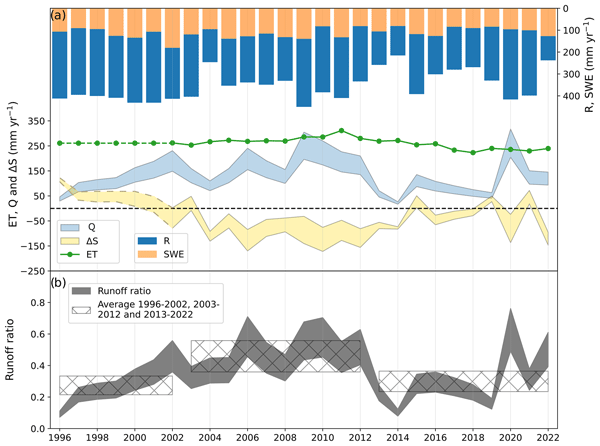
Thawing permafrost changes how water is stored and moves across landscapes. We measured water inputs and outputs in a basin with thawing peatland complexes and three sub-basins. In addition to yearly changes in precipitation and evapotranspiration, we found that hydrological responses are shaped by thaw-driven landscape connectivity. These findings highlight the need for long-term monitoring of ecosystem service shifts.
Victoria R. Dutch, Nick Rutter, Leanne Wake, Melody Sandells, Chris Derksen, Branden Walker, Gabriel Hould Gosselin, Oliver Sonnentag, Richard Essery, Richard Kelly, Phillip Marsh, Joshua King, and Julia Boike
The Cryosphere, 16, 4201–4222, https://doi.org/10.5194/tc-16-4201-2022, https://doi.org/10.5194/tc-16-4201-2022, 2022
Short summary
Short summary
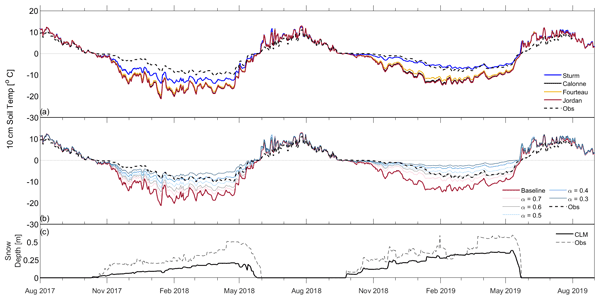
Measurements of the properties of the snow and soil were compared to simulations of the Community Land Model to see how well the model represents snow insulation. Simulations underestimated snow thermal conductivity and wintertime soil temperatures. We test two approaches to reduce the transfer of heat through the snowpack and bring simulated soil temperatures closer to measurements, with an alternative parameterisation of snow thermal conductivity being more appropriate.
Érika Boisvert-Vigneault, Melody Sandells, Vincent Vionnet, Nicolas R. Leroux, Nick Rutter, Alexandre Langlois, Hannah Bloomfield, and Josée-Anne Langlois
EGUsphere, https://doi.org/10.5194/egusphere-2026-6730, https://doi.org/10.5194/egusphere-2026-6730, 2026
This preprint is open for discussion and under review for The Cryosphere (TC).
Short summary
Short summary
When rain falls on Arctic snow and refreezes, it can form a hard ice layer at the ground-level that hinders muskoxen and caribou winter foraging. We tested whether a snow model, driven by weather data, can recreate these “locked pastures” on Banks Island, Canada. It reproduced a major 2003 event and several past ones, and showed that warm spells that melt snow matter more than freezing rain alone. This could help predict risks to wildlife and to the Inuit traditionnal practices.
Rémi Madelon, K. Arthur Endsley, John S. Kimball, Gabriëlle J. M. De Lannoy, Oliver Sonnentag, Haley Alcock, Alex Mavrovic, Scott N. Williamson, Vincent Maire, Arnaud Mialon, and Alexandre Roy
Biogeosciences, 23, 6359–6407, https://doi.org/10.5194/bg-23-6359-2026, https://doi.org/10.5194/bg-23-6359-2026, 2026
Short summary
Short summary
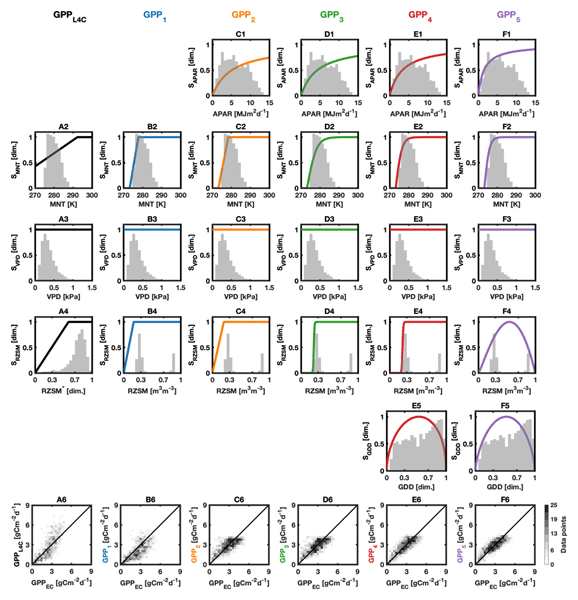
This study aims to improve estimates of carbon dioxide release and uptake in the North American Arctic and subarctic regions. Several modeling approaches were tested, showing that a better representation of sunlight and temperature effects on ecosystems leads to improved estimates. This work provides new perspectives to better assess whether these regions act as sources or sinks of greenhouse gases and how they may influence the climate system by amplifying or slowing global warming.
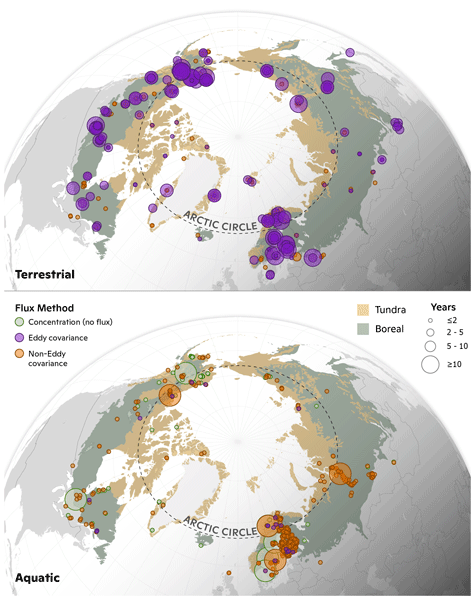
Anna-Maria Virkkala, Isabel Wargowsky, Judith Vogt, McKenzie A. Kuhn, Simran Madaan, Tiffany Windholz, Kyle A. Arndt, Gerard Rocher-Ros, Mathias Göckede, David Olefeldt, Edward A. G. Schuur, David Bastviken, Richard O'Keefe, Brendan M. Rogers, Jennifer D. Watts, Kelcy Kent, Kristoffer Aalstad, Kelly Aho, Joonatan Ala-Könni, Haley Alcock, Inge Althuizen, Christopher D. Arp, Jun Asanuma, Mika Aurela, Sivakiruthika Balathandayuthabani, Katrin Attermeyer, Alan Barr, Maialen Barret, Ochirbat Batkhishig, Christina Biasi, Mats P. Björkman, Andrew Black, Elena Blanc-Betes, Pascal Bodmer, Julia Boike, Abdullah Bolek, Frédéric Bouchard, Ingeborg Bussmann, Lea Cabrol, Eleonora Canfora, Sean Carey, Karel Castro-Morales, Namyi Chae, Andreas Christen, Torben R. Christensen, Casper T. Christiansen, Housen Chu, Graham Clark, Francois Clayer, Patrick Crill, Christopher Cunada, Scott J. Davidson, Joshua F. Dean, Sigrid Dengel, Matteo Detto, Catherine Dieleman, Florent Domine, Egor Dyukarev, Colin Edgar, Bo Elberling, Craig A. Emmerton, Eugenie Euskirchen, Grant Falvo, Thomas Friborg, Michelle Garneau, Mariasilvia Giamberini, Mikhail V. Glagolev, Miquel A. Gonzalez-Meler, Gustaf Granath, Jón Guðmundsson, Konsta Happonen, Yoshinobu Harazono, Lorna Harris, Josh Hashemi, Nicholas Hasson, Janna Heerah, Liam Heffernan, Manuel Helbig, Warren Helgason, Michal Heliasz, Greg Henry, Geert Hensgens, Tetsuya Hiyama, Beth Holmes, Macall Hock, David Holl, Jutta Holst, Thomas Holst, Gabriel Hould-Gosselin, Elyn Humphreys, Jacqueline Hung, Jussi Huotari, Hiroki Ikawa, Danil V. Ilyasov, Mamoru Ishikawa, Go Iwahana, Hiroki Iwata, Marcin Antoni Jackowicz-Korczynski, Joachim Jansen, Järvi Järveoja, Vincent E. J. Jassey, Rasmus Jensen, Katharina Jentzsch, Robert G. Jespersen, Carl-Fredrik Johannesson, Cheristy P. Jones, Anders Jonsson, Ji Young Jung, Sari Juutinen, Evan Kane, Jan Karlsson, Sergey Karsanaev, Kuno Kasak, Julia Kelly, Kasha Kempton, Marcus Klaus, George W. Kling, Natascha Kljun, Jacqueline Knutson, Hideki Kobayashi, John Kochendorfer, Kukka-Maaria Kohonen, Pasi Kolari, Mika Korkiakoski, Aino Korrensalo, Pirkko Kortelainen, Egle Koster, Kajar Koster, Ayumi Kotani, Praveena Krishnan, Juliya Kurbatova, Lars Kutzbach, Min Jung Kwon, Ethan D. Kyzivat, Jessica Lagroix, Theodore Langhorst, Elena Lapshina, Tuula Larmola, Klaus S. Larsen, Isabelle Laurion, Justin Ledman, Hanna Lee, A. Joshua Leffler, Lance Lesack, Anders Lindroth, David Lipson, Annalea Lohila, Efrén López-Blanco, Vincent L. St. Louis, Erik Lundin, Miska Luoto, Takashi Machimura, Marta Magnani, Avni Malhotra, Marja Maljanen, Ivan Mammarella, Elisa Männistö, Luca Belelli Marchesini, Phil Marsh, Pertti J. Martikainen, Maija E. Marushchak, Mikhail Mastepanov, Alex Mavrovic, Trofim Maximov, Christina Minions, Daniel F. Nadeau, Marco Montemayor, Tomoaki Morishita, Patrick Murphy, Erin Nicholls, Mats B. Nilsson, Anastasia Niyazova, Jenni Nordén, Koffi Dodji Noumonvi, Hannu Nykänen, Walter Oechel, Anne Ojala, Tomohiro Okadera, Sujan Pal, Alexey V. Panov, Tim Papakyriakou, Dario Papale, Sang-Jong Park, Frans-Jan W. Parmentier, Gilberto Pastorello, Mike Peacock, Matthias Peichl, Roman Petrov, Kyra St. Pierre, Norbert Pirk, Jessica Plein, Vilmantas Preskienis, Anatoly Prokushkin, Jukka Pumpanen, Hilary A. Rains, Niklas Rakos, Aleksi Räsänen, Helena Rautakoski, Riikka Rinnan, Janne Rinne, Adrian Rocha, Nigel Roulet, Alexandre Roy, Anna Rutgersson, Aleksandr F. Sabrekov, Torsten Sachs, Erik Sahlée, Alejandro Salazar, Henrique Oliveira Sawakuchi, Christopher Schulze, Roger Seco, Armando Sepulveda-Jauregui, Svetlana Serikova, Abbey Serrone, Hanna M. Silvennoinen, Sofie Sjogersten, June Skeeter, Jo Snöälv, Sebastian Sobek, Oliver Sonnentag, Emily H. Stanley, Maria Strack, Lena Strom, Patrick Sullivan, Ryan Sullivan, Anna Sytiuk, Torbern Tagesson, Pierre Taillardat, Julie Talbot, Suzanne E. Tank, Mario Tenuta, Irina Terenteva, Frederic Thalasso, Antoine Thiboult, Halldor Thorgeirsson, Fenix Garcia Tigreros, Margaret Torn, Amy Townsend-Small, Claire Treat, Alain Tremblay, Carlo Trotta, Eeva-Stiina Tuittila, Merritt Turetsky, Masahito Ueyama, Muhammad Umair, Aki Vähä, Lona van Delden, Maarten van Hardenbroek, Andrej Varlagin, Ruth K. Varner, Tarmo Virtanen, Elena Veretennikova, Timo Vesala, Carolina Voigt, Jorien E. Vonk, Robert Wagner, Katey Walter Anthony, Qinxue Wang, Masataka Watanabe, Hailey Webb, Jeffrey M. Welker, Andreas Westergaard-Nielsen, Sebastian Westermann, Jeffrey R. White, Christian Wille, Scott N. Williamson, Scott Zolkos, Donatella Zona, and Susan M. Natali
Earth Syst. Sci. Data, 18, 6357–6409, https://doi.org/10.5194/essd-18-6357-2026, https://doi.org/10.5194/essd-18-6357-2026, 2026
Short summary
Short summary
This dataset includes monthly measurements of carbon dioxide and methane exchange between land, water, and the atmosphere from over 1000 sites in Arctic and boreal regions. It combines measurements from a variety of ecosystems, including wetlands, forests, tundra, lakes, and rivers, gathered by over 260 researchers from 1984–2024. This dataset can be used to improve and reduce uncertainty in carbon budgets in order to strengthen our understanding of climate feedbacks in a warming world.
Johnny Rutherford, Nick Rutter, Leanne Wake, Georgina Wooley, Julia Boike, and Alex J. Cannon
EGUsphere, https://doi.org/10.5194/egusphere-2026-3363, https://doi.org/10.5194/egusphere-2026-3363, 2026
Short summary
Short summary
The Arctic is warming rapidly, threatening to release vast carbon stores from frozen soils. Climate models consistently misrepresent Arctic snow, causing soils to appear artificially cold. We used a random forest model to better predict winter snow density and fed these improved estimates into a widely used climate model which raised projected soil temperatures by up to 7 °C, suggesting current forecasts of soil temperature and carbon release are likely underestimated.
Victoria R. Dutch, Nick Rutter, Muhammad Waqas Khan, Alex Mavrovic, Alexandre Roy, Sevi Modestou, Oliver Sonnentag, Carolina Voigt, Philip Marsh, and Paul J. Mann
EGUsphere, https://doi.org/10.5194/egusphere-2026-3835, https://doi.org/10.5194/egusphere-2026-3835, 2026
This preprint is open for discussion and under review for Biogeosciences (BG).
Short summary
Short summary
We use low-cost CO2 sensors to measure the release of CO2 from an Arctic tundra environment in two winters. We find CO2 emissions to be positive across a range of snow depths and different vegetation types. The winter-to-spring transition influences the release of CO2, with warming temperatures allowing more CO2 to be released, similar to other data from across the Arctic. We show our low-cost sensors may be used to investigate processes controlling CO2 release at high temporal resolution.
Julien Meloche, Melody Sandells, Henning Löwe, Nick Rutter, Ghislain Picard, Richard Essery, Randall K. Scharien, Alexandre Langlois, Matthias Jaggi, Josh King, Peter Toose, Michele Scagliola, Jerome Bouffard, Alessandro Di Bella, and Christian Haas
EGUsphere, https://doi.org/10.5194/egusphere-2026-3615, https://doi.org/10.5194/egusphere-2026-3615, 2026
Short summary
Short summary
Sea ice thickness is essential for climate studies. Radar altimetry has provided sea ice thickness measurements, but uncertainty arises from the interaction of the signal with the snow cover. Therefore, modelling the signal interaction with the snow is necessary to improve retrieval. A radar model was used to simulate the radar signal from the snow-covered sea ice. This work paved the way to improved physical algorithms to retrieve snow depth and sea ice thickness for radar altimeter missions.
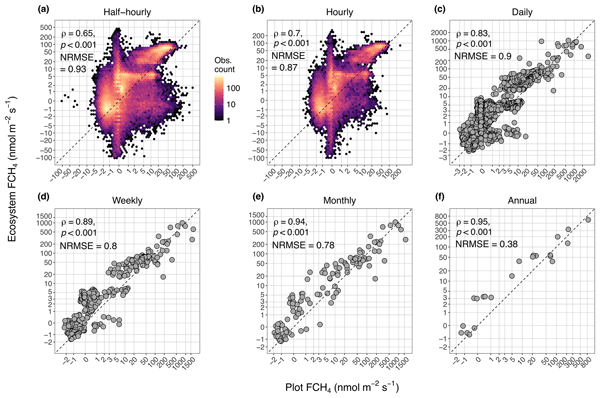
Tiia Määttä, Ankur R. Desai, Masahito Ueyama, Rodrigo Vargas, Eric J. Ward, Zhen Zhang, Gil Bohrer, Kyle Delwiche, Etienne Fluet-Chouinard, Järvi Järveoja, Sara H. Knox, Lulie Melling, Mats B. Nilsson, Matthias Peichl, Angela Che Ing Tang, Eeva-Stiina Tuittila, Jinsong Wang, Sheel Bansal, Sarah Feron, Manuel Helbig, Aino Korrensalo, Ken W. Krauss, Gavin McNicol, Shuli Niu, Zutao Ouyang, Kathleen Savage, Oliver Sonnentag, Robert Jackson, and Avni Malhotra
Biogeosciences, 23, 4379–4445, https://doi.org/10.5194/bg-23-4379-2026, https://doi.org/10.5194/bg-23-4379-2026, 2026
Short summary
Short summary
We compared ecosystem- and plot-scale methane fluxes across wetland and upland sites. Ecosystem-scale fluxes were higher than at plot scale, but differences were small. Vapor pressure deficit, atmospheric pressure, turbulence, and wind direction affected the differences. Both scales could be combined for improved methane flux estimates at coarser temporal scales.
Georgina J. Woolley, Nick Rutter, Leanne Wake, Vincent Vionnet, Chris Derksen, Julien Meloche, Benoit Montpetit, Nicolas R. Leroux, Richard Essery, Gabriel Hould Gosselin, and Philip Marsh
The Cryosphere, 20, 1315–1338, https://doi.org/10.5194/tc-20-1315-2026, https://doi.org/10.5194/tc-20-1315-2026, 2026
Short summary
Short summary
The impact of uncertainties in the simulation of density and specific surface area (SSA) by the snow model Crocus (embedded in the Soil, Vegetation and Snow v2 land surface model) on the simulation of snow backscatter (13.5 GHz) using the Snow Microwave Radiative Transfer model were quantified. The simulation of SSA was found to be a key model uncertainty. Underestimated SSA values lead to high errors in the simulation of backscatter, reduced by implementing a minimum SSA value (8.7 m2 kg−1).
Joseph Durat, Hadleigh David Thompson, Julie Mireille Thériault, and Philip Marsh
EGUsphere, https://doi.org/10.5194/egusphere-2025-5195, https://doi.org/10.5194/egusphere-2025-5195, 2026
Short summary
Short summary
Arctic snowfall measurements are challenging as light precipitation often goes undetected. Using measurements from a portable upward-pointing radar near Inuvik, Northwest Territories, our team captured low-rate snowfall that standard instruments usually miss. Including these data increased the winter snowfall amount by 24 %, confirming that current methods underestimate the amount of snow that falls each winter and highlighting the value of improved measurements techniques.
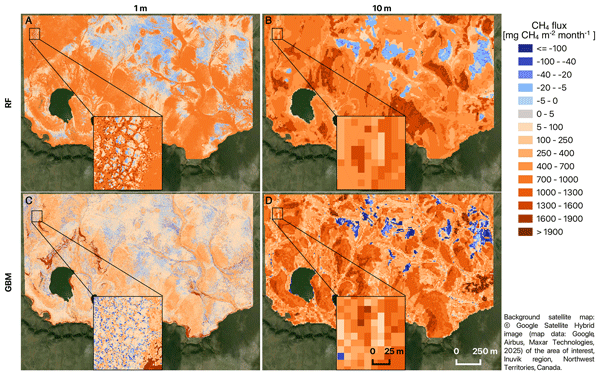
Kseniia Ivanova, Anna-Maria Virkkala, Victor Brovkin, Tobias Stacke, Barbara Widhalm, Annett Bartsch, Carolina Voigt, Oliver Sonnentag, and Mathias Göckede
Biogeosciences, 23, 233–262, https://doi.org/10.5194/bg-23-233-2026, https://doi.org/10.5194/bg-23-233-2026, 2026
Short summary
Short summary
We measured over 13,000 methane fluxes at a site in the Canadian Arctic and linked them with drone and free satellite images. We tested four machine-learning methods and two map scales. Metre-scale maps captured small wet and dry features that strongly affect methane release, while coarser maps blurred them. Different models shifted the monthly methane estimate. This helps choose the right data and tools to map methane, design monitoring networks, and check climate models.
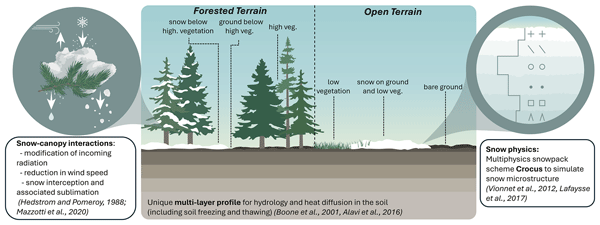
Vincent Vionnet, Nicolas R. Leroux, Vincent Fortin, Maria Abrahamowicz, Georgina Woolley, Giulia Mazzotti, Manon Gaillard, Matthieu Lafaysse, Alain Royer, Florent Domine, Nathalie Gauthier, Nick Rutter, Chris Derksen, and Stéphane Bélair
Geosci. Model Dev., 18, 9119–9147, https://doi.org/10.5194/gmd-18-9119-2025, https://doi.org/10.5194/gmd-18-9119-2025, 2025
Short summary
Short summary
Snow microstructure controls snowpack properties, but most land surface models overlook this factor. To support future satellite missions, we created a new land surface model based on the Crocus scheme that simulates snow microstructure. Key improvements include better snow albedo representation, enhanced Arctic snow modeling, and improved forest module to capture Canada's diverse snow conditions. Results demonstrate improved simulations of snow density and melt across large regions of Canada.
Alexandre Lhosmot, Gabriel Hould Gosselin, Manuel Helbig, Julien Fouché, Youngryel Ryu, Matteo Detto, Ryan Connon, William Quinton, Tim Moore, and Oliver Sonnentag
Hydrol. Earth Syst. Sci., 29, 4871–4892, https://doi.org/10.5194/hess-29-4871-2025, https://doi.org/10.5194/hess-29-4871-2025, 2025
Short summary
Short summary
Thawing permafrost changes how water is stored and moves across landscapes. We measured water inputs and outputs in a basin with thawing peatland complexes and three sub-basins. In addition to yearly changes in precipitation and evapotranspiration, we found that hydrological responses are shaped by thaw-driven landscape connectivity. These findings highlight the need for long-term monitoring of ecosystem service shifts.
Johnny Rutherford, Nick Rutter, Leanne Wake, and Alex J. Cannon
Biogeosciences, 22, 5031–5049, https://doi.org/10.5194/bg-22-5031-2025, https://doi.org/10.5194/bg-22-5031-2025, 2025
Short summary
Short summary
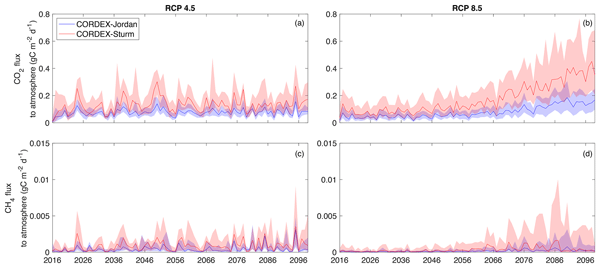
The Arctic winter is vulnerable to climate warming, and ~1700 Gt of carbon stored in high-latitude permafrost ecosystems is at risk of degradation in the future due to enhanced microbial activity. Poorly represented cold season processes, such as the simulation of snow thermal conductivity in land surface models (LSMs), cause uncertainty in projected carbon emission simulations. Improved snow conductivity parameterization in CLM5.0 significantly increases predicted winter CO2 emissions to 2100.
Richard Essery, Giulia Mazzotti, Sarah Barr, Tobias Jonas, Tristan Quaife, and Nick Rutter
Geosci. Model Dev., 18, 3583–3605, https://doi.org/10.5194/gmd-18-3583-2025, https://doi.org/10.5194/gmd-18-3583-2025, 2025
Short summary
Short summary
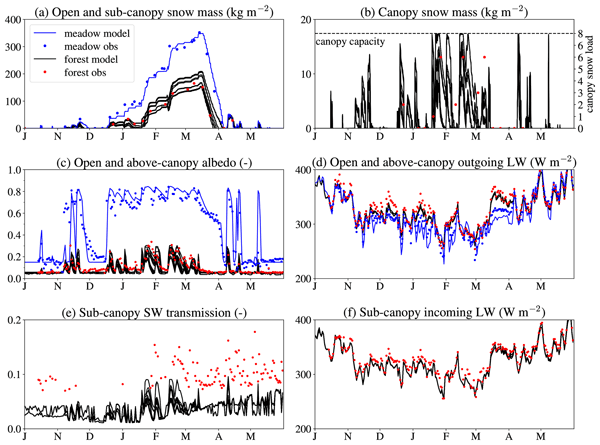
How forests influence accumulation and melt of snow on the ground is of long-standing interest, but uncertainty remains in how best to model forest snow processes. We developed the Flexible Snow Model version 2 to quantify these uncertainties. In a first model demonstration, how unloading of intercepted snow from the forest canopy is represented is responsible for the largest uncertainty. Global mapping of forest distribution is also likely to be a large source of uncertainty in existing models.
Adrien Damseaux, Heidrun Matthes, Victoria R. Dutch, Leanne Wake, and Nick Rutter
The Cryosphere, 19, 1539–1558, https://doi.org/10.5194/tc-19-1539-2025, https://doi.org/10.5194/tc-19-1539-2025, 2025
Short summary
Short summary
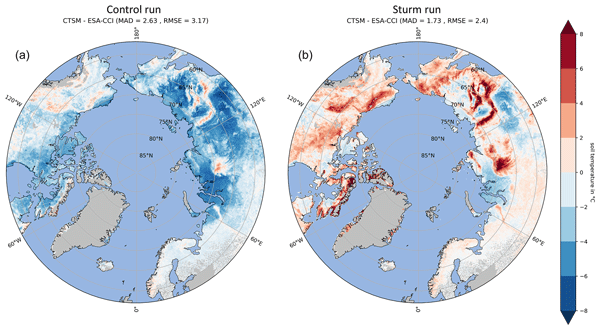
Models often underestimate the role of snow cover in permafrost regions, leading to soil temperatures and permafrost dynamics inaccuracies. Through the use of a snow thermal conductivity scheme better adapted to this region, we mitigated soil temperature biases and permafrost extent overestimation within a land surface model. Our study sheds light on the importance of refining snow-related processes in models to enhance our understanding of permafrost dynamics in the context of climate change.
Georgina J. Woolley, Nick Rutter, Leanne Wake, Vincent Vionnet, Chris Derksen, Richard Essery, Philip Marsh, Rosamond Tutton, Branden Walker, Matthieu Lafaysse, and David Pritchard
The Cryosphere, 18, 5685–5711, https://doi.org/10.5194/tc-18-5685-2024, https://doi.org/10.5194/tc-18-5685-2024, 2024
Short summary
Short summary
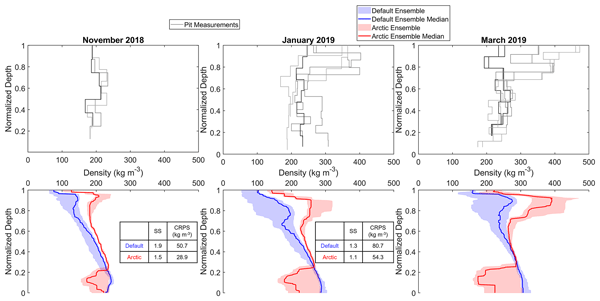
Parameterisations of Arctic snow processes were implemented into the multi-physics ensemble version of the snow model Crocus (embedded within the Soil, Vegetation, and Snow version 2 land surface model) and evaluated at an Arctic tundra site. Optimal combinations of parameterisations that improved the simulation of density and specific surface area featured modifications that raise wind speeds to increase compaction in surface layers, prevent snowdrift, and increase viscosity in basal layers.
Cecile B. Menard, Sirpa Rasmus, Ioanna Merkouriadi, Gianpaolo Balsamo, Annett Bartsch, Chris Derksen, Florent Domine, Marie Dumont, Dorothee Ehrich, Richard Essery, Bruce C. Forbes, Gerhard Krinner, David Lawrence, Glen Liston, Heidrun Matthes, Nick Rutter, Melody Sandells, Martin Schneebeli, and Sari Stark
The Cryosphere, 18, 4671–4686, https://doi.org/10.5194/tc-18-4671-2024, https://doi.org/10.5194/tc-18-4671-2024, 2024
Short summary
Short summary
Computer models, like those used in climate change studies, are written by modellers who have to decide how best to construct the models in order to satisfy the purpose they serve. Using snow modelling as an example, we examine the process behind the decisions to understand what motivates or limits modellers in their decision-making. We find that the context in which research is undertaken is often more crucial than scientific limitations. We argue for more transparency in our research practice.
Melody Sandells, Nick Rutter, Kirsty Wivell, Richard Essery, Stuart Fox, Chawn Harlow, Ghislain Picard, Alexandre Roy, Alain Royer, and Peter Toose
The Cryosphere, 18, 3971–3990, https://doi.org/10.5194/tc-18-3971-2024, https://doi.org/10.5194/tc-18-3971-2024, 2024
Short summary
Short summary
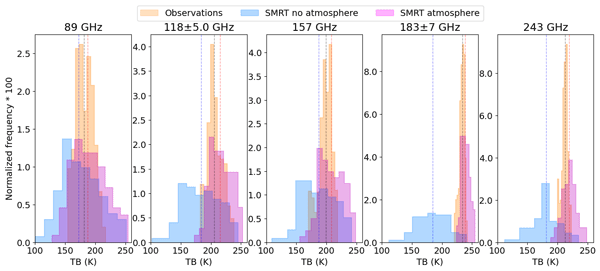
Satellite microwave observations are used for weather forecasting. In Arctic regions this is complicated by natural emission from snow. By simulating airborne observations from in situ measurements of snow, this study shows how snow properties affect the signal within the atmosphere. Fresh snowfall between flights changed airborne measurements. Good knowledge of snow layering and structure can be used to account for the effects of snow and could unlock these data to improve forecasts.
Charles E. Miller, Peter C. Griffith, Elizabeth Hoy, Naiara S. Pinto, Yunling Lou, Scott Hensley, Bruce D. Chapman, Jennifer Baltzer, Kazem Bakian-Dogaheh, W. Robert Bolton, Laura Bourgeau-Chavez, Richard H. Chen, Byung-Hun Choe, Leah K. Clayton, Thomas A. Douglas, Nancy French, Jean E. Holloway, Gang Hong, Lingcao Huang, Go Iwahana, Liza Jenkins, John S. Kimball, Tatiana Loboda, Michelle Mack, Philip Marsh, Roger J. Michaelides, Mahta Moghaddam, Andrew Parsekian, Kevin Schaefer, Paul R. Siqueira, Debjani Singh, Alireza Tabatabaeenejad, Merritt Turetsky, Ridha Touzi, Elizabeth Wig, Cathy J. Wilson, Paul Wilson, Stan D. Wullschleger, Yonghong Yi, Howard A. Zebker, Yu Zhang, Yuhuan Zhao, and Scott J. Goetz
Earth Syst. Sci. Data, 16, 2605–2624, https://doi.org/10.5194/essd-16-2605-2024, https://doi.org/10.5194/essd-16-2605-2024, 2024
Short summary
Short summary
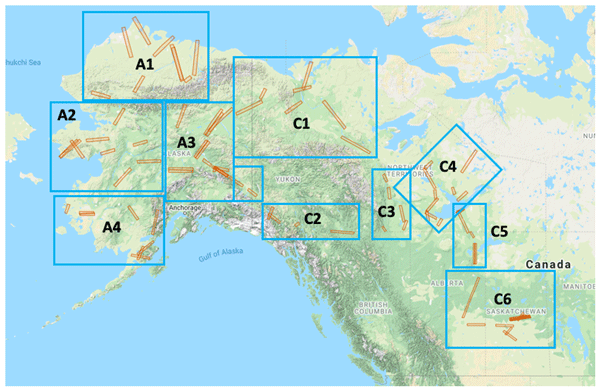
NASA’s Arctic Boreal Vulnerability Experiment (ABoVE) conducted airborne synthetic aperture radar (SAR) surveys of over 120 000 km2 in Alaska and northwestern Canada during 2017, 2018, 2019, and 2022. This paper summarizes those results and provides links to details on ~ 80 individual flight lines. This paper is presented as a guide to enable interested readers to fully explore the ABoVE L- and P-band SAR data.
Julien Meloche, Melody Sandells, Henning Löwe, Nick Rutter, Richard Essery, Ghislain Picard, Randall K. Scharien, Alexandre Langlois, Matthias Jaggi, Josh King, Peter Toose, Jérôme Bouffard, Alessandro Di Bella, and Michele Scagliola
EGUsphere, https://doi.org/10.5194/egusphere-2024-1583, https://doi.org/10.5194/egusphere-2024-1583, 2024
Preprint archived
Short summary
Short summary
Sea ice thickness is essential for climate studies. Radar altimetry has provided sea ice thickness measurement, but uncertainty arises from interaction of the signal with the snow cover. Therefore, modelling the signal interaction with the snow is necessary to improve retrieval. A radar model was used to simulate the radar signal from the snow-covered sea ice. This work paved the way to improved physical algorithm to retrieve snow depth and sea ice thickness for radar altimeter missions.
Victoria R. Dutch, Nick Rutter, Leanne Wake, Oliver Sonnentag, Gabriel Hould Gosselin, Melody Sandells, Chris Derksen, Branden Walker, Gesa Meyer, Richard Essery, Richard Kelly, Phillip Marsh, Julia Boike, and Matteo Detto
Biogeosciences, 21, 825–841, https://doi.org/10.5194/bg-21-825-2024, https://doi.org/10.5194/bg-21-825-2024, 2024
Short summary
Short summary
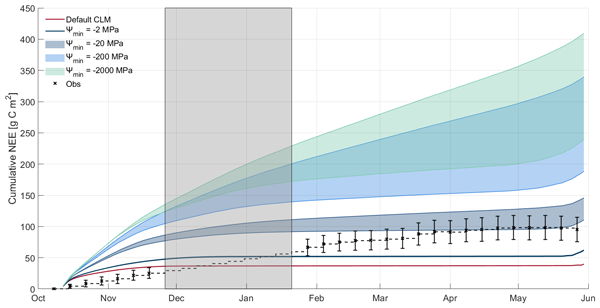
We undertake a sensitivity study of three different parameters on the simulation of net ecosystem exchange (NEE) during the snow-covered non-growing season at an Arctic tundra site. Simulations are compared to eddy covariance measurements, with near-zero NEE simulated despite observed CO2 release. We then consider how to parameterise the model better in Arctic tundra environments on both sub-seasonal timescales and cumulatively throughout the snow-covered non-growing season.
Kirsi H. Keskitalo, Lisa Bröder, Tommaso Tesi, Paul J. Mann, Dirk J. Jong, Sergio Bulte Garcia, Anna Davydova, Sergei Davydov, Nikita Zimov, Negar Haghipour, Timothy I. Eglinton, and Jorien E. Vonk
Biogeosciences, 21, 357–379, https://doi.org/10.5194/bg-21-357-2024, https://doi.org/10.5194/bg-21-357-2024, 2024
Short summary
Short summary
Permafrost thaw releases organic carbon into waterways. Decomposition of this carbon pool emits greenhouse gases into the atmosphere, enhancing climate warming. We show that Arctic river carbon and water chemistry are different between the spring ice breakup and summer and that primary production is initiated in small Arctic rivers right after ice breakup, in contrast to in large rivers. This may have implications for fluvial carbon dynamics and greenhouse gas uptake and emission balance.
Alex Mavrovic, Oliver Sonnentag, Juha Lemmetyinen, Carolina Voigt, Nick Rutter, Paul Mann, Jean-Daniel Sylvain, and Alexandre Roy
Biogeosciences, 20, 5087–5108, https://doi.org/10.5194/bg-20-5087-2023, https://doi.org/10.5194/bg-20-5087-2023, 2023
Short summary
Short summary
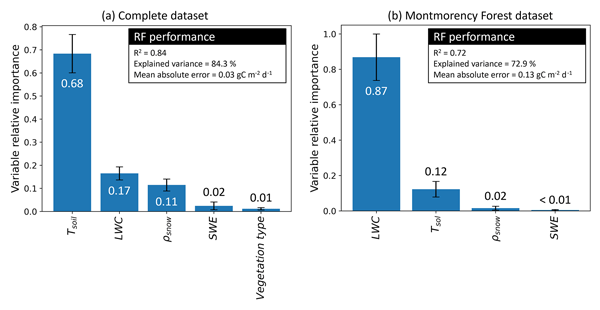
We present an analysis of soil CO2 emissions in boreal and tundra regions during the non-growing season. We show that when the soil is completely frozen, soil temperature is the main control on CO2 emissions. When the soil is around the freezing point, with a mix of liquid water and ice, the liquid water content is the main control on CO2 emissions. This study highlights that the vegetation–snow–soil interactions must be considered to understand soil CO2 emissions during the non-growing season.
Jean Emmanuel Sicart, Victor Ramseyer, Ghislain Picard, Laurent Arnaud, Catherine Coulaud, Guilhem Freche, Damien Soubeyrand, Yves Lejeune, Marie Dumont, Isabelle Gouttevin, Erwan Le Gac, Frédéric Berger, Jean-Matthieu Monnet, Laurent Borgniet, Éric Mermin, Nick Rutter, Clare Webster, and Richard Essery
Earth Syst. Sci. Data, 15, 5121–5133, https://doi.org/10.5194/essd-15-5121-2023, https://doi.org/10.5194/essd-15-5121-2023, 2023
Short summary
Short summary
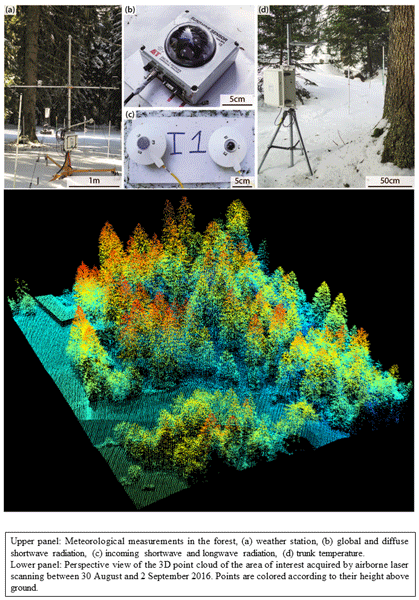
Forests strongly modify the accumulation, metamorphism and melting of snow in midlatitude and high-latitude regions. Two field campaigns during the winters 2016–17 and 2017–18 were conducted in a coniferous forest in the French Alps to study interactions between snow and vegetation. This paper presents the field site, instrumentation and collection methods. The observations include forest characteristics, meteorology, snow cover and snow interception by the canopy during precipitation events.
Kirsty Wivell, Stuart Fox, Melody Sandells, Chawn Harlow, Richard Essery, and Nick Rutter
The Cryosphere, 17, 4325–4341, https://doi.org/10.5194/tc-17-4325-2023, https://doi.org/10.5194/tc-17-4325-2023, 2023
Short summary
Short summary
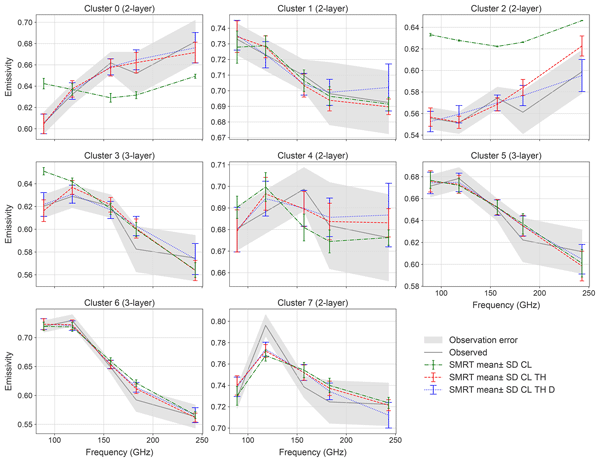
Satellite microwave observations improve weather forecasts, but to use these observations in the Arctic, snow emission must be known. This study uses airborne and in situ snow observations to validate emissivity simulations for two- and three-layer snowpacks at key frequencies for weather prediction. We assess the impact of thickness, grain size and density in key snow layers, which will help inform development of physical snow models that provide snow profile input to emissivity simulations.
Evan J. Wilcox, Brent B. Wolfe, and Philip Marsh
Hydrol. Earth Syst. Sci., 27, 2173–2188, https://doi.org/10.5194/hess-27-2173-2023, https://doi.org/10.5194/hess-27-2173-2023, 2023
Short summary
Short summary
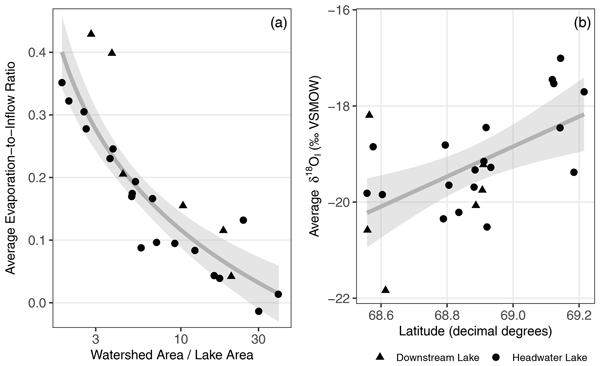
The Arctic is warming quickly and influencing lake water balances. We used water isotope concentrations taken from samples of 25 lakes in the Canadian Arctic and estimated the average ratio of evaporation to inflow (E / I) for each lake. The ratio of watershed area (the area that flows into the lake) to lake area (WA / LA) strongly predicted E / I, as lakes with relatively smaller watersheds received less inflow. The WA / LA could be used to predict the vulnerability of Arctic lakes to future change.
Olga Ogneva, Gesine Mollenhauer, Bennet Juhls, Tina Sanders, Juri Palmtag, Matthias Fuchs, Hendrik Grotheer, Paul J. Mann, and Jens Strauss
Biogeosciences, 20, 1423–1441, https://doi.org/10.5194/bg-20-1423-2023, https://doi.org/10.5194/bg-20-1423-2023, 2023
Short summary
Short summary
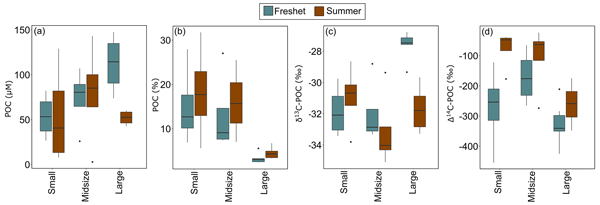
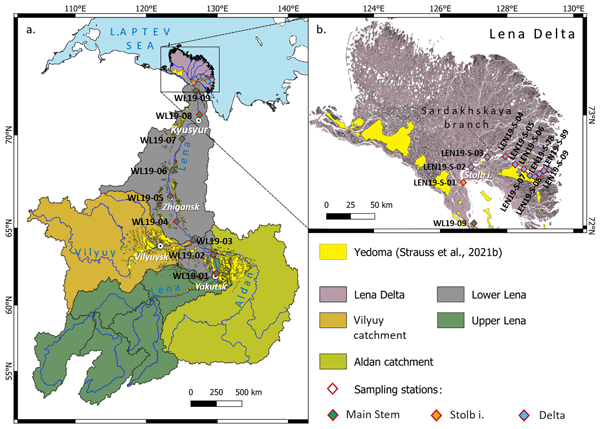
Arctic warming accelerates permafrost thaw and release of terrestrial organic matter (OM) via rivers to the Arctic Ocean. We compared particulate organic carbon (POC), total suspended matter, and C isotopes (δ13C and Δ14C of POC) in the Lena delta and Lena River along a ~1600 km transect. We show that the Lena delta, as an interface between the Lena River and the Arctic Ocean, plays a crucial role in determining the qualitative and quantitative composition of OM discharged into the Arctic Ocean.
Evan J. Wilcox, Brent B. Wolfe, and Philip Marsh
Hydrol. Earth Syst. Sci., 26, 6185–6205, https://doi.org/10.5194/hess-26-6185-2022, https://doi.org/10.5194/hess-26-6185-2022, 2022
Short summary
Short summary
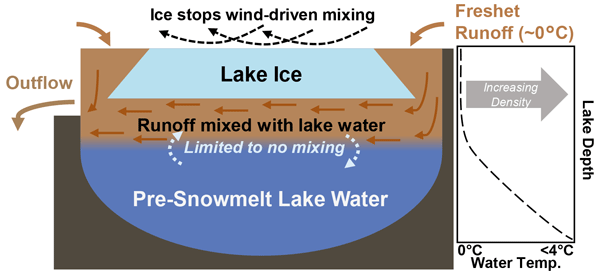
We estimated how much of the water flowing into lakes during snowmelt replaced the pre-snowmelt lake water. Our data show that, as lake depth increases, the amount of water mixed into lakes decreased, because vertical mixing is reduced as lake depth increases. Our data also show that the water mixing into lakes is not solely snow-sourced but is a mixture of snowmelt and soil water. These results are relevant for lake biogeochemistry given the unique properties of snowmelt runoff.
Victoria R. Dutch, Nick Rutter, Leanne Wake, Melody Sandells, Chris Derksen, Branden Walker, Gabriel Hould Gosselin, Oliver Sonnentag, Richard Essery, Richard Kelly, Phillip Marsh, Joshua King, and Julia Boike
The Cryosphere, 16, 4201–4222, https://doi.org/10.5194/tc-16-4201-2022, https://doi.org/10.5194/tc-16-4201-2022, 2022
Short summary
Short summary
Measurements of the properties of the snow and soil were compared to simulations of the Community Land Model to see how well the model represents snow insulation. Simulations underestimated snow thermal conductivity and wintertime soil temperatures. We test two approaches to reduce the transfer of heat through the snowpack and bring simulated soil temperatures closer to measurements, with an alternative parameterisation of snow thermal conductivity being more appropriate.
Leung Tsang, Michael Durand, Chris Derksen, Ana P. Barros, Do-Hyuk Kang, Hans Lievens, Hans-Peter Marshall, Jiyue Zhu, Joel Johnson, Joshua King, Juha Lemmetyinen, Melody Sandells, Nick Rutter, Paul Siqueira, Anne Nolin, Batu Osmanoglu, Carrie Vuyovich, Edward Kim, Drew Taylor, Ioanna Merkouriadi, Ludovic Brucker, Mahdi Navari, Marie Dumont, Richard Kelly, Rhae Sung Kim, Tien-Hao Liao, Firoz Borah, and Xiaolan Xu
The Cryosphere, 16, 3531–3573, https://doi.org/10.5194/tc-16-3531-2022, https://doi.org/10.5194/tc-16-3531-2022, 2022
Short summary
Short summary
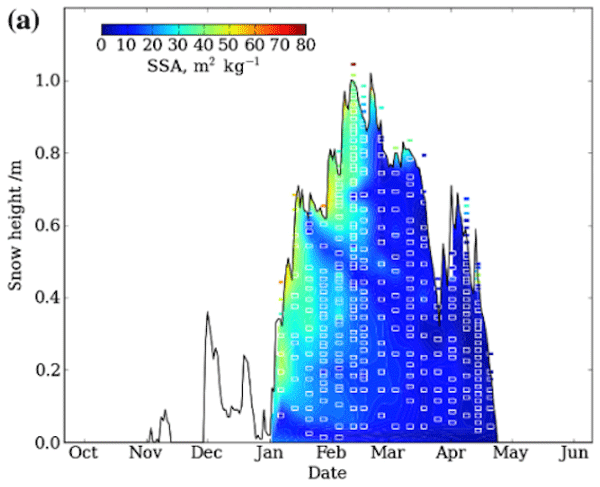
Snow water equivalent (SWE) is of fundamental importance to water, energy, and geochemical cycles but is poorly observed globally. Synthetic aperture radar (SAR) measurements at X- and Ku-band can address this gap. This review serves to inform the broad snow research, monitoring, and application communities about the progress made in recent decades to move towards a new satellite mission capable of addressing the needs of the geoscience researchers and users.
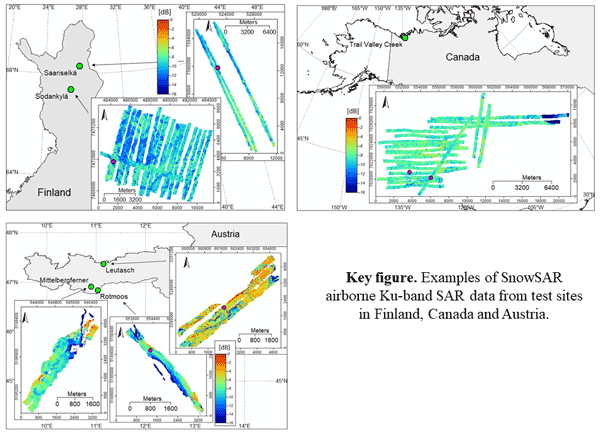
Juha Lemmetyinen, Juval Cohen, Anna Kontu, Juho Vehviläinen, Henna-Reetta Hannula, Ioanna Merkouriadi, Stefan Scheiblauer, Helmut Rott, Thomas Nagler, Elisabeth Ripper, Kelly Elder, Hans-Peter Marshall, Reinhard Fromm, Marc Adams, Chris Derksen, Joshua King, Adriano Meta, Alex Coccia, Nick Rutter, Melody Sandells, Giovanni Macelloni, Emanuele Santi, Marion Leduc-Leballeur, Richard Essery, Cecile Menard, and Michael Kern
Earth Syst. Sci. Data, 14, 3915–3945, https://doi.org/10.5194/essd-14-3915-2022, https://doi.org/10.5194/essd-14-3915-2022, 2022
Short summary
Short summary
The manuscript describes airborne, dual-polarised X and Ku band synthetic aperture radar (SAR) data collected over several campaigns over snow-covered terrain in Finland, Austria and Canada. Colocated snow and meteorological observations are also presented. The data are meant for science users interested in investigating X/Ku band radar signatures from natural environments in winter conditions.
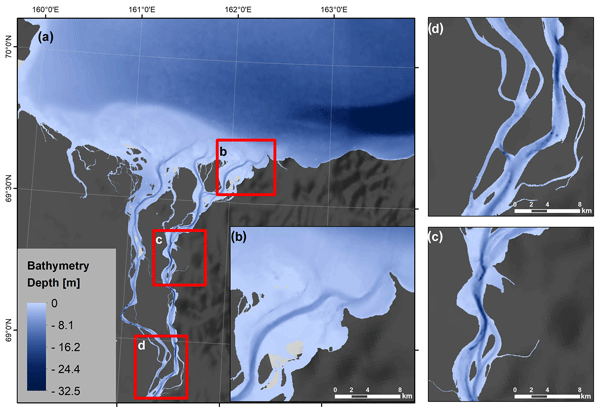
Matthias Fuchs, Juri Palmtag, Bennet Juhls, Pier Paul Overduin, Guido Grosse, Ahmed Abdelwahab, Michael Bedington, Tina Sanders, Olga Ogneva, Irina V. Fedorova, Nikita S. Zimov, Paul J. Mann, and Jens Strauss
Earth Syst. Sci. Data, 14, 2279–2301, https://doi.org/10.5194/essd-14-2279-2022, https://doi.org/10.5194/essd-14-2279-2022, 2022
Short summary
Short summary
We created digital, high-resolution bathymetry data sets for the Lena Delta and Kolyma Gulf regions in northeastern Siberia. Based on nautical charts, we digitized depth points and isobath lines, which serve as an input for a 50 m bathymetry model. The benefit of this data set is the accurate mapping of near-shore areas as well as the offshore continuation of the main deep river channels. This will improve the estimation of river outflow and the nutrient flux output into the coastal zone.

Charlotte Haugk, Loeka L. Jongejans, Kai Mangelsdorf, Matthias Fuchs, Olga Ogneva, Juri Palmtag, Gesine Mollenhauer, Paul J. Mann, P. Paul Overduin, Guido Grosse, Tina Sanders, Robyn E. Tuerena, Lutz Schirrmeister, Sebastian Wetterich, Alexander Kizyakov, Cornelia Karger, and Jens Strauss
Biogeosciences, 19, 2079–2094, https://doi.org/10.5194/bg-19-2079-2022, https://doi.org/10.5194/bg-19-2079-2022, 2022
Short summary
Short summary
Buried animal and plant remains (carbon) from the last ice age were freeze-locked in permafrost. At an extremely fast eroding permafrost cliff in the Lena Delta (Siberia), we found this formerly frozen carbon well preserved. Our results show that ongoing degradation releases substantial amounts of this carbon, making it available for future carbon emissions. This mobilisation at the studied cliff and also similarly eroding sites bear the potential to affect rivers and oceans negatively.

Julien Meloche, Alexandre Langlois, Nick Rutter, Alain Royer, Josh King, Branden Walker, Philip Marsh, and Evan J. Wilcox
The Cryosphere, 16, 87–101, https://doi.org/10.5194/tc-16-87-2022, https://doi.org/10.5194/tc-16-87-2022, 2022
Short summary
Short summary
To estimate snow water equivalent from space, model predictions of the satellite measurement (brightness temperature in our case) have to be used. These models allow us to estimate snow properties from the brightness temperature by inverting the model. To improve SWE estimate, we proposed incorporating the variability of snow in these model as it has not been taken into account yet. A new parameter (coefficient of variation) is proposed because it improved simulation of brightness temperature.
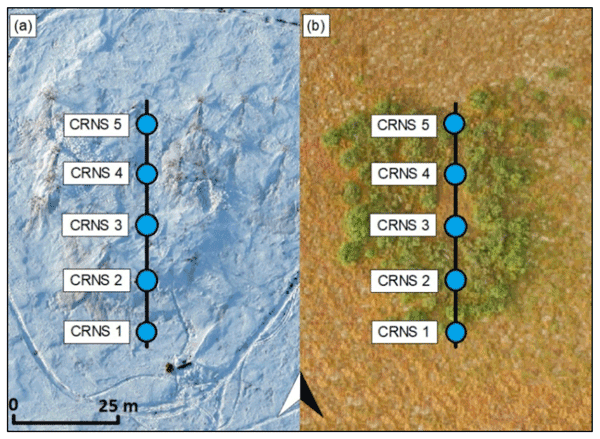
Anton Jitnikovitch, Philip Marsh, Branden Walker, and Darin Desilets
The Cryosphere, 15, 5227–5239, https://doi.org/10.5194/tc-15-5227-2021, https://doi.org/10.5194/tc-15-5227-2021, 2021
Short summary
Short summary
Conventional methods used to measure snow have many limitations which hinder our ability to document annual cycles, test predictive models, or analyze the impact of climate change. A modern snow measurement method using in situ cosmic ray neutron sensors demonstrates the capability of continuously measuring spatially variable snowpacks with considerable accuracy. These sensors can provide important data for testing models, validating remote sensing, and water resource management applications.
Cited articles
Aanderud, Z. T., Jones, S. E., Schoolmaster, D. R., Fierer, N., and Lennon, J. T.: Sensitivity of soil respiration and microbial communities to altered snowfall, Soil Biol. Biochem., 57, 217–227, https://doi.org/10.1016/j.soilbio.2012.07.022, 2013.
Baldocchi, D. D. D.: Assessing the eddy covariance technique for evaluating carbon dioxide exchange rates of ecosystems: Past, present and future, Glob. Change Biol., 9, 479–492, https://doi.org/10.1046/j.1365-2486.2003.00629.x, 2003.
Bekryaev, R. V., Polyakov, I. V., and Alexeev, V. A.: Role of polar amplification in long-term surface air temperature variations and modern arctic warming, J. Climate, 23, 3888–3906, https://doi.org/10.1175/2010JCLI3297.1, 2010.
Björkman, M. P., Morgner, E., Cooper, E. J., Elberling, B., Klemedtsson, L., and Björk, R. G.: Winter carbon dioxide effluxes from Arctic ecosystems: An overview and comparison of methodologies, Global Biogeochem. Cy., 24, 2009GB003667, https://doi.org/10.1029/2009GB003667, 2010.
Blanc-Betes, E., Welker, J. M., Gomez-Casanovas, N., DeLucia, E. H., Peñuelas, J., De Oliveira, E. D., and Gonzalez-Meler, M. A.: Strong legacies of emerging trends in winter precipitation on the carbon-climate feedback from Arctic tundra, Sci. Total Environ., 962, 178246, https://doi.org/10.1016/j.scitotenv.2024.178246, 2025.
van Bochove, E., Thériault, G., Rochette, P., Jones, H. G., and Pomeroy, J. W.: Thick ice layers in snow and frozen soil affecting gas emissions from agricultural soils during winter, J. Geophys. Res.-Atmos., 106, 23061–23071, https://doi.org/10.1029/2000JD000044, 2001.
Bowling, D. R. and Massman, W. J.: Persistent wind-induced enhancement of diffusive CO2 transport in a mountain forest snowpack, J. Geophys. Res.-Biogeo., 116, https://doi.org/10.1029/2011JG001722, 2011.
Burn, C. R. and Kokelj, S. V.: The environment and permafrost of the Mackenzie Delta area, Permafrost Periglac., 20, 83–105, https://doi.org/10.1002/ppp.655, 2009.
Busseau, B.-C., Royer, A., Roy, A., Langlois, A., and Domine, F.: Analysis of snow-vegetation interactions in the low Arctic-Subarctic transition zone (northeastern Canada), Phys. Geogr., 38, 159–175, https://doi.org/10.1080/02723646.2017.1283477, 2017.
Colbeck, S. C.: Model of wind pumping for layered snow, J. Glaciol., 43, 60–65, https://doi.org/10.3189/S002214300000280X, 1997.
Damseaux, A., Matthes, H., Dutch, V. R., Wake, L., and Rutter, N.: Impact of snow thermal conductivity schemes on pan-Arctic permafrost dynamics in the Community Land Model version 5.0, The Cryosphere, 19, 1539–1558, https://doi.org/10.5194/tc-19-1539-2025, 2025.
Devoie, É. G., Gruber, S., and McKenzie, J. M.: A repository of measured soil freezing characteristic curves: 1921 to 2021, Earth Syst. Sci. Data, 14, 3365–3377, https://doi.org/10.5194/essd-14-3365-2022, 2022.
D'Imperio, L., Li, B.-B., Tiedje, J. M., Oh, Y., Christiansen, J. R., Kepfer-Rojas, S., Westergaard-Nielsen, A., Brandt, K. K., Holm, P. E., Wang, P., Ambus, P., and Elberling, B.: Spatial controls of methane uptake in upland soils across climatic and geological regions in Greenland, Commun. Earth Environ., 4, 461, https://doi.org/10.1038/s43247-023-01143-3, 2023.
Domine, F., Barrere, M., and Sarrazin, D.: Seasonal evolution of the effective thermal conductivity of the snow and the soil in high Arctic herb tundra at Bylot Island, Canada, The Cryosphere, 10, 2573–2588, https://doi.org/10.5194/tc-10-2573-2016, 2016.
Domine, F., Fourteau, K., Picard, G., Lackner, G., Sarrazin, D., and Poirier, M.: Permafrost cooled in winter by thermal bridging through snow-covered shrub branches, Nat. Geosci., 15, 554–560, https://doi.org/10.1038/s41561-022-00979-2, 2022.
Donateo, A., Famulari, D., Giovannelli, D., Mariani, A., Mazzola, M., Decesari, S., and Pappaccogli, G.: Observations of methane net sinks in the upland Arctic tundra, Biogeosciences, 22, 2889–2908, https://doi.org/10.5194/bg-22-2889-2025, 2025.
Du Plessis, J. P. and Masliyah, J. H.: Flow through isotropic granular porous media, Transport Porous Med., 6, 207–221, https://doi.org/10.1007/BF00208950, 1991.
Dutch, V. R., Rutter, N., Wake, L., Sandells, M., Derksen, C., Walker, B., Hould Gosselin, G., Sonnentag, O., Essery, R., Kelly, R., Marsh, P., King, J., and Boike, J.: Impact of measured and simulated tundra snowpack properties on heat transfer, The Cryosphere, 16, 4201–4222, https://doi.org/10.5194/tc-16-4201-2022, 2022.
Dutch, V. R., Rutter, N., Wake, L., Sonnentag, O., Hould Gosselin, G., Sandells, M., Derksen, C., Walker, B., Meyer, G., Essery, R., Kelly, R., Marsh, P., Boike, J., and Detto, M.: Simulating net ecosystem exchange under seasonal snow cover at an Arctic tundra site, Biogeosciences, 21, 825–841, https://doi.org/10.5194/bg-21-825-2024, 2024.
Elberling, B. and Brandt, K. K.: Uncoupling of microbial CO2 production and release in frozen soil and its implications for field studies of arctic C cycling, Soil Biol. Biochem., 35, 263–272, https://doi.org/10.1016/S0038-0717(02)00258-4, 2003.
Environment and Climate Change Canada: Climate Data, Environment and Climate Change Canada, http://climate.weather.gc.ca/climate_normals/ (last access: 1 September 2024), 2024.
Ernakovich, J. G., Hopping, K. A., Berdanier, A. B., Simpson, R. T., Kachergis, E. J., Steltzer, H., and Wallenstein, M. D.: Predicted responses of arctic and alpine ecosystems to altered seasonality under climate change, Glob. Change Biol., 20, 3256–3269, https://doi.org/10.1111/gcb.12568, 2014.
Fahnestock, J. T., Jones, M. H., Brooks, P. D., Walker, D. A., and Welker, J. M.: Winter and early spring CO2 efflux from tundra communities of northern Alaska, J. Geophys. Res.-Atmos., 103, 29023–29027, https://doi.org/10.1029/98JD00805, 1998.
Fahnestock, J. T., Jones, M. H., and Welker, J. M.: Wintertime CO2 efflux from Arctic soils: Implications for annual carbon budgets, Global Biogeochem. Cy., 13, 775–779, https://doi.org/10.1029/1999GB900006, 1999.
Fisher, J. B., Sikka, M., Oechel, W. C., Huntzinger, D. N., Melton, J. R., Koven, C. D., Ahlström, A., Arain, M. A., Baker, I., Chen, J. M., Ciais, P., Davidson, C., Dietze, M., El-Masri, B., Hayes, D., Huntingford, C., Jain, A. K., Levy, P. E., Lomas, M. R., Poulter, B., Price, D., Sahoo, A. K., Schaefer, K., Tian, H., Tomelleri, E., Verbeeck, H., Viovy, N., Wania, R., Zeng, N., and Miller, C. E.: Carbon cycle uncertainty in the Alaskan Arctic, Biogeosciences, 11, 4271–4288, https://doi.org/10.5194/bg-11-4271-2014, 2014.
Graveline, V., Helbig, M., Gosselin, G. H., Alcock, H., Detto, M., Walker, B., Marsh, P., and Sonnentag, O.: Surface-atmosphere energy exchanges and their effects on surface climate and atmospheric boundary layer characteristics in the forest-tundra ecotone in northwestern Canada, Agr. Forest Meteorol., 350, 109996, https://doi.org/10.1016/j.agrformet.2024.109996, 2024.
Gruber, S.: Derivation and analysis of a high-resolution estimate of global permafrost zonation, The Cryosphere, 6, 221–233, https://doi.org/10.5194/tc-6-221-2012, 2012.
Grünberg, I. and Boike, J.: Vegetation map of Trail Valley Creek, Northwest Territories, Canada, PANGAEA [data set], https://doi.org/10.1594/PANGAEA.904270, 2019.
Haynes, W. M. (Ed.): CRC Handbook of Chemistry and Physics, 97th edn., CRC Press, Boca Raton, 2670 pp., ISBN 978-1-4987-5429-3, 2016.
Hould Gosselin, G.: ghgosselin/Biogeosciences1_Gabriel_Hould_Gosselin: v1.0.0: Code and data for Hould Gosselin et al., Fine-scale spatial variability of winter CO2 and CH4 fluxes in Arctic tundra (Biogeosciences) (Version v1.0.0), Zenodo [data set] and [code], https://doi.org/10.5281/zenodo.23223688, 2026.
Ivanova, K., Virkkala, A.-M., Vogt, J., Bieniada, A., Küchenmeister, A., Kolle, O. E. E., Sonnentag, O., Lecavalier, B., and Göckede, M.: Small-Scale Spatial Variability in Carbon Fluxes Driven by Soil and Vegetation Characteristics in Wetlands of Trail Valley Creek, Canada, https://doi.org/10.22541/essoar.175855718.85179582/v1, 2025.
Ivanova, K., Virkkala, A.-M., Brovkin, V., Stacke, T., Widhalm, B., Bartsch, A., Voigt, C., Sonnentag, O., and Göckede, M.: High-resolution remote sensing and machine-learning-based upscaling of methane fluxes: a case study in the Western Canadian tundra, Biogeosciences, 23, 233–262, https://doi.org/10.5194/bg-23-233-2026, 2026.
Jones, H. G., Pomeroy, J. W., Davies, T. D., Tranter, M., and Marsh, P.: CO in Arctic snow cover: landscape form, in-pack gas concentration gradients, and the implications for the estimation of gaseous fluxes, Hydrol. Process., 13, 2977–2989, 1999a.
Jones, M. H., Fahnestock, J. T., and Welker, J. M.: Early and Late Winter CO2 Efflux from Arctic Tundra in the Kuparuk River Watershed, Alaska, U.S.A., Arct. Antarct. Alp. Res., 31, 187–190, https://doi.org/10.1080/15230430.1999.12003296, 1999b.
Ju, J. and Masek, J. G.: The vegetation greenness trend in Canada and US Alaska from 1984–2012 Landsat data, Remote Sens. Environ., 176, 1–16, https://doi.org/10.1016/j.rse.2016.01.001, 2016.
KBM Resources Group: Aerial Survey & Geomatics: Aerial Survey Report – SYS9 – VQ-780II-S/Ultracam, 24_NWT_TVC, KBM Resources Group, 5103 48th St. 2nd Floor Waldron Building Yellowknife, NT X1A 1N5, https://kbm.ca/geomatics/lidar/ (last access: 13 August 2024), 2024.
Kim, K., Lee, J., Ju, H., Jung, J. Y., Chae, N., Chi, J., Kwon, M. J., Lee, B. Y., Wagner, J., and Kim, J.-S.: Time-lapse electrical resistivity tomography and ground penetrating radar mapping of the active layer of permafrost across a snow fence in Cambridge Bay, Nunavut Territory, Canada: correlation interpretation using vegetation and meteorological data, Geosci. J., 25, 877–890, https://doi.org/10.1007/s12303-021-0021-7, 2021.
Kim, Y., Tsunogai, S., and Tanaka, N.: Interrelationships of CO2, CH4, and N2O fluxes in snow-covered temperate soils, Northern Japan, Polar Sci., 41, 101073, https://doi.org/10.1016/j.polar.2024.101073, 2024.
Kinar, N. J. and Pomeroy, J. W.: Measurement of the physical properties of the snowpack, Rev. Geophys., 53, 481–544, https://doi.org/10.1002/2015RG000481, 2015.
Lawrence, D. M., Fisher, R. A., Koven, C. D., Oleson, K. W., Swenson, S. C., Bonan, G., Collier, N., Ghimire, B., Van Kampenhout, L., Kennedy, D., Kluzek, E., Lawrence, P. J., Li, F., Li, H., Lombardozzi, D., Riley, W. J., Sacks, W. J., Shi, M., Vertenstein, M., Wieder, W. R., Xu, C., Ali, A. A., Badger, A. M., Bisht, G., Van Den Broeke, M., Brunke, M. A., Burns, S. P., Buzan, J., Clark, M., Craig, A., Dahlin, K., Drewniak, B., Fisher, J. B., Flanner, M., Fox, A. M., Gentine, P., Hoffman, F., Keppel-Aleks, G., Knox, R., Kumar, S., Lenaerts, J., Leung, L. R., Lipscomb, W. H., Lu, Y., Pandey, A., Pelletier, J. D., Perket, J., Randerson, J. T., Ricciuto, D. M., Sanderson, B. M., Slater, A., Subin, Z. M., Tang, J., Thomas, R. Q., Val Martin, M., and Zeng, X.: The Community Land Model Version 5: Description of New Features, Benchmarking, and Impact of Forcing Uncertainty, J. Adv. Model. Earth Sy., 11, 4245–4287, https://doi.org/10.1029/2018MS001583, 2019.
Lee, J., Oh, Y., Lee, S. T., Seo, Y. O., Yun, J., Yang, Y., Kim, J., Zhuang, Q., and Kang, H.: Soil organic carbon is a key determinant of CH4 sink in global forest soils, Nat. Commun., 14, 3110, https://doi.org/10.1038/s41467-023-38905-8, 2023.
Levy, P., Clement, R., Cowan, N., Keane, B., Myrgiotis, V., van Oijen, M., Smallman, T. L., Toet, S., and Williams, M.: Challenges in Scaling Up Greenhouse Gas Fluxes: Experience From the UK Greenhouse Gas Emissions and Feedbacks Program, J. Geophys. Res.-Biogeo., 127, e2021JG006743, https://doi.org/10.1029/2021JG006743, 2022.
Ludwig, S. M., Schiferl, L., Hung, J., Natali, S. M., and Commane, R.: Resolving heterogeneous fluxes from tundra halves the growing season carbon budget, Biogeosciences, 21, 1301–1321, https://doi.org/10.5194/bg-21-1301-2024, 2024.
Lupascu, M., Czimczik, C. I., Welker, M. C., Ziolkowski, L. A., Cooper, E. J., and Welker, J. M.: Winter Ecosystem Respiration and Sources of CO2 From the High Arctic Tundra of Svalbard: Response to a Deeper Snow Experiment, J. Geophys. Res.-Biogeo., 123, 2627–2642, https://doi.org/10.1029/2018JG004396, 2018.
Massman, W. J.: A review of the molecular diffusivities of H2O, CO2, CH4, CO, O3, SO2, NH3, N2O, NO, and NO2 in air, O2 and N2 near STP, Atmos. Environ., 32, 1111–1127, https://doi.org/10.1016/S1352-2310(97)00391-9, 1998.
Massman, W. J. and Frank, J. M.: Advective transport of CO2 in permeable media induced by atmospheric pressure fluctuations: 2. Observational evidence under snowpacks, J. Geophys. Res.-Biogeo., 111, https://doi.org/10.1029/2006JG000164, 2006.
Massman, W. J., Sommerfeld, R. A., Mosier, A. R., Zeller, K. F., Hehn, T. J., and Rochelle, S. G.: A model investigation of turbulence-driven pressure-pumping effects on the rate of diffusion of CO2, N2O, and CH4 through layered snowpacks, J. Geophys. Res.-Atmos., 102, 18851–18863, https://doi.org/10.1029/97JD00844, 1997.
Mast, M. A., Wickland, K. P., Striegl, R. T., and Clow, D. W.: Winter fluxes of CO2 and CH4 from subalpine soils in Rocky Mountain National Park, Colorado, Global Biogeochem. Cy., 12, 607–620, https://doi.org/10.1029/98GB02313, 1998.
Mavrovic, A., Sonnentag, O., Lemmetyinen, J., Voigt, C., Rutter, N., Mann, P., Sylvain, J.-D., and Roy, A.: Environmental controls of winter soil carbon dioxide fluxes in boreal and tundra environments, Biogeosciences, 20, 5087–5108, https://doi.org/10.5194/bg-20-5087-2023, 2023.
Mavrovic, A., Sonnentag, O., Lemmetyinen, J., Voigt, C., Aurela, M., and Roy, A.: Winter methane fluxes over boreal and Arctic environments, ESS Open Archive, https://doi.org/10.22541/essoar.170542245.58670859/v1, 2024.
Mavrovic, A., Sonnentag, O., Voigt, C., Lemmetyinen, J., Aurela, M., and Roy, A.: Winter Methane Fluxes Over Boreal and Arctic Environments, Geophys. Res. Lett., 52, e2025GL118367, https://doi.org/10.1029/2025GL118367, 2025.
McDowell, N. G., Marshall, J. D., Hooker, T. D., and Musselman, R.: Estimating CO2 flux from snowpacks at three sites in the Rocky Mountains, Tree Physiol., 20, 745–753, https://doi.org/10.1093/treephys/20.11.745, 2000.
McEwing, K. R., Fisher, J. P., and Zona, D.: Environmental and vegetation controls on the spatial variability of CH4 emission from wet-sedge and tussock tundra ecosystems in the Arctic, Plant Soil, 388, 37–52, https://doi.org/10.1007/s11104-014-2377-1, 2015.
Mikan, C. J., Schimel, J. P., and Doyle, A. P.: Temperature controls of microbial respiration in arctic tundra soils above and below freezing, Soil Biol. Biochem., 34, 1785–1795, https://doi.org/10.1016/S0038-0717(02)00168-2, 2002.
Myers-Smith, I. H., Forbes, B. C., Wilmking, M., Hallinger, M., Lantz, T., Blok, D., Tape, K. D., Macias-Fauria, M., Sass-Klaassen, U., Lévesque, E., Boudreau, S., Ropars, P., Hermanutz, L., Trant, A., Collier, L. S., Weijers, S., Rozema, J., Rayback, S. A., Schmidt, N. M., Schaepman-Strub, G., Wipf, S., Rixen, C., Ménard, C. B., Venn, S., Goetz, S., Andreu-Hayles, L., Elmendorf, S., Ravolainen, V., Welker, J., Grogan, P., Epstein, H. E., and Hik, D. S.: Shrub expansion in tundra ecosystems: dynamics, impacts and research priorities, Environ. Res. Lett., 6, 045509, https://doi.org/10.1088/1748-9326/6/4/045509, 2011.
Myers-Smith, I. H., Kerby, J. T., Phoenix, G. K., Bjerke, J. W., Epstein, H. E., Assmann, J. J., John, C., Andreu-Hayles, L., Angers-Blondin, S., Beck, P. S. A., Berner, L. T., Bhatt, U. S., Bjorkman, A. D., Blok, D., Bryn, A., Christiansen, C. T., Cornelissen, J. H. C., Cunliffe, A. M., Elmendorf, S. C., Forbes, B. C., Goetz, S. J., Hollister, R. D., De Jong, R., Loranty, M. M., Macias-Fauria, M., Maseyk, K., Normand, S., Olofsson, J., Parker, T. C., Parmentier, F.-J. W., Post, E., Schaepman-Strub, G., Stordal, F., Sullivan, P. F., Thomas, H. J. D., Tømmervik, H., Treharne, R., Tweedie, C. E., Walker, D. A., Wilmking, M., and Wipf, S.: Complexity revealed in the greening of the Arctic, Nat. Clim. Change, 10, 106–117, https://doi.org/10.1038/s41558-019-0688-1, 2020.
Natali, S. M., Watts, J. D., Rogers, B. M., Potter, S., Ludwig, S. M., Selbmann, A. K., Sullivan, P. F., Abbott, B. W., Arndt, K. A., Birch, L., Björkman, M. P., Bloom, A. A., Celis, G., Christensen, T. R., Christiansen, C. T., Commane, R., Cooper, E. J., Crill, P., Czimczik, C., Davydov, S., Du, J., Egan, J. E., Elberling, B., Euskirchen, E. S., Friborg, T., Genet, H., Göckede, M., Goodrich, J. P., Grogan, P., Helbig, M., Jafarov, E. E., Jastrow, J. D., Kalhori, A. A. M., Kim, Y., Kimball, J. S., Kutzbach, L., Lara, M. J., Larsen, K. S., Lee, B. Y., Liu, Z., Loranty, M. M., Lund, M., Lupascu, M., Madani, N., Malhotra, A., Matamala, R., McFarland, J., McGuire, A. D., Michelsen, A., Minions, C., Oechel, W. C., Olefeldt, D., Parmentier, F. J. W., Pirk, N., Poulter, B., Quinton, W., Rezanezhad, F., Risk, D., Sachs, T., Schaefer, K., Schmidt, N. M., Schuur, E. A. G., Semenchuk, P. R., Shaver, G., Sonnentag, O., Starr, G., Treat, C. C., Waldrop, M. P., Wang, Y., Welker, J., Wille, C., Xu, X., Zhang, Z., Zhuang, Q., and Zona, D.: Large loss of CO2 in winter observed across the northern permafrost region, Nat. Clim. Change, 9, 852–857, https://doi.org/10.1038/s41558-019-0592-8, 2019.
Outcalt, S. I., Nelson, F. E., and Hinkel, K. M.: The zero-curtain effect: Heat and mass transfer across an isothermal region in freezing soil, Water Resour. Res., 26, 1509–1516, https://doi.org/10.1029/WR026i007p01509, 1990.
Pedron, S. A., Welker, J. M., Euskirchen, E. S., Klein, E. S., Walker, J. C., Xu, X., and Czimczik, C. I.: Closing the Winter Gap–Year-Round Measurements of Soil CO2 Emission Sources in Arctic Tundra, Geophys. Res. Lett., 49, e2021GL097347, https://doi.org/10.1029/2021GL097347, 2022.
Pedron, S. A., Jespersen, R. G., Xu, X., Khazindar, Y., Welker, J. M., and Czimczik, C. I.: More Snow Accelerates Legacy Carbon Emissions From Arctic Permafrost, AGU Adv., 4, e2023AV000942, https://doi.org/10.1029/2023AV000942, 2023.
Piao, S., Wang, X., Park, T., Chen, C., Lian, X., He, Y., Bjerke, J. W., Chen, A., Ciais, P., Tømmervik, H., Nemani, R. R., and Myneni, R. B.: Characteristics, drivers and feedbacks of global greening, Nat. Rev. Earth Environ., 1, 14–27, https://doi.org/10.1038/s43017-019-0001-x, 2019.
Pirk, N., Tamstorf, M. P., Lund, M., Mastepanov, M., Pedersen, S. H., Mylius, M. R., Parmentier, F.-J. W., Christiansen, H. H., and Christensen, T. R.: Snowpack fluxes of methane and carbon dioxide from high Arctic tundra, J. Geophys. Res.-Biogeo., 121, 2886–2900, https://doi.org/10.1002/2016JG003486, 2016.
Pirk, N., Sievers, J., Mertes, J., Parmentier, F.-J. W., Mastepanov, M., and Christensen, T. R.: Spatial variability of CO2 uptake in polygonal tundra: assessing low-frequency disturbances in eddy covariance flux estimates, Biogeosciences, 14, 3157–3169, https://doi.org/10.5194/bg-14-3157-2017, 2017.
Pomeroy, J. W., Marsh, P., and Lesack, L.: Relocation of Major Ions in Snow along the Tundra-Taiga Ecotone, Hydrol. Res., 24, 151–168, https://doi.org/10.2166/nh.1993.0019, 1993.
Proksch, M., Löwe, H., and Schneebeli, M.: Density, specific surface area, and correlation length of snow measured by high-resolution penetrometry, J. Geophys. Res.-Earth, 120, 346–362, https://doi.org/10.1002/2014JF003266, 2015.
Quinton, W. L. and Marsh, P.: The influence of mineral earth hummocks on subsurface drainage in the continuous permafrost zone, Permafrost Periglac., 9, 213–228, 1998.
Rafat, A., Rezanezhad, F., Quinton, W. L., Humphreys, E. R., Webster, K., and Van Cappellen, P.: Non-growing season carbon emissions in a northern peatland are projected to increase under global warming, Commun. Earth Environ., 2, https://doi.org/10.1038/s43247-021-00184-w, 2021.
Rantanen, M., Karpechko, A. Y., Lipponen, A., Nordling, K., Hyvärinen, O., Ruosteenoja, K., Vihma, T., and Laaksonen, A.: The Arctic has warmed nearly four times faster than the globe since 1979, Commun. Earth Environ., 3, https://doi.org/10.1038/s43247-022-00498-3, 2022.
Rößger, N., Sachs, T., Wille, C., Boike, J., and Kutzbach, L.: Seasonal increase of methane emissions linked to warming in Siberian tundra, Nat. Clim. Change, 12, 1031–1036, https://doi.org/10.1038/s41558-022-01512-4, 2022.
Schädel, C., Rogers, B. M., Lawrence, D. M., Koven, C. D., Brovkin, V., Burke, E. J., Genet, H., Huntzinger, D. N., Jafarov, E., McGuire, A. D., Riley, W. J., and Natali, S. M.: Earth system models must include permafrost carbon processes, Nat. Clim. Change, 14, 114–116, https://doi.org/10.1038/s41558-023-01909-9, 2024.
Schimel, J. P., Bilbrough, C., and Welker, J. M.: Increased snow depth affects microbial activity and nitrogen mineralization in two Arctic tundra communities, Soil Biol. Biochem., 36, 217–227, https://doi.org/10.1016/j.soilbio.2003.09.008, 2004.
Schimel, J. P., Fahnestock, J., Michaelson, G., Mikan, C., Ping, C.-L., Romanovsky, V. E., and Welker, J.: Cold-season Production of CO2 in Arctic Soils: Can Laboratory and Field Estimates Be Reconciled through a Simple Modeling Approach?, Arct. Antarct. Alp. Res., 38, 249–256, 2006.
Seok, B., Helmig, D., Williams, M. W., Liptzin, D., Chowanski, K., and Hueber, J.: An automated system for continuous measurements of trace gas fluxes through snow: an evaluation of the gas diffusion method at a subalpine forest site, Niwot Ridge, Colorado, Biogeochemistry, 95, 95–113, https://doi.org/10.1007/s10533-009-9302-3, 2009.
Shi, X., Marsh, P., and Yang, D.: Warming spring air temperatures, but delayed spring streamflow in an Arctic headwater basin, Environ. Res. Lett., 10, 064003, https://doi.org/10.1088/1748-9326/10/6/064003, 2015.
Shirley, I., Uhlemann, S., Peterson, J., Bennett, K., Hubbard, S. S., and Dafflon, B.: Disentangling the Impacts of Microtopography and Shrub Distribution on Snow Depth in a Subarctic Watershed: Toward a Predictive Understanding of Snow Spatial Variability, J. Geophys. Res.-Biogeo., 130, e2024JG008604, https://doi.org/10.1029/2024JG008604, 2025.
Smith, D. M., Screen, J. A., Deser, C., Cohen, J., Fyfe, J. C., García-Serrano, J., Jung, T., Kattsov, V., Matei, D., Msadek, R., Peings, Y., Sigmond, M., Ukita, J., Yoon, J.-H., and Zhang, X.: The Polar Amplification Model Intercomparison Project (PAMIP) contribution to CMIP6: investigating the causes and consequences of polar amplification, Geosci. Model Dev., 12, 1139–1164, https://doi.org/10.5194/gmd-12-1139-2019, 2019.
Soegaard, H., Nordstroem, C., Friborg, T., Hansen, B. U., Christensen, T. R., and Bay, C.: Trace gas exchange in a high-Arctic valley: 3. Integrating and scaling CO2 fluxes from canopy to landscape using flux data, footprint modeling, and remote sensing, Global Biogeochem. Cy., 14, 725–744, https://doi.org/10.1029/1999GB001137, 2000.
Subke, J.-A., Kutzbach, L., and Risk, D.: Soil Chamber Measurements, in: Springer Handbook of Atmospheric Measurements, edited by: Foken, T., Springer International Publishing, Cham, 1603–1624, https://doi.org/10.1007/978-3-030-52171-4_60, 2021.
Sullivan, P. F., Welker, J. M., Arens, S. J. T., and Sveinbjörnsson, B.: Continuous estimates of CO2 efflux from arctic and boreal soils during the snow-covered season in Alaska, J. Geophys. Res.-Biogeo., 113, https://doi.org/10.1029/2008JG000715, 2008.
Sullivan, P. F., Stokes, M. C., McMillan, C. K., and Weintraub, M. N.: Labile carbon limits late winter microbial activity near Arctic treeline, Nat. Commun., 11, 4024, https://doi.org/10.1038/s41467-020-17790-5, 2020.
Tao, J., Zhu, Q., Riley, W. J., and Neumann, R. B.: Improved ELMv1-ECA simulations of zero-curtain periods and cold-season CH4 and CO2 emissions at Alaskan Arctic tundra sites, The Cryosphere, 15, 5281–5307, https://doi.org/10.5194/tc-15-5281-2021, 2021.
Taylor, J. R.: An introduction to error analysis: the study of uncertainties in physical measurements, 3rd edn., University Science Books, MIT Press, ISBN 1940380081, 978-1940380087, 2022.
The MathWorks: MATLAB version: 24.1.0 (R2024a), https://www.mathworks.com (last access: 1 November 2025), 2024.
Treat, C. C., Bloom, A. A., and Marushchak, M. E.: Nongrowing season methane emissions – a significant component of annual emissions across northern ecosystems, Glob. Change Biol., 24, 3331–3343, https://doi.org/10.1111/gcb.14137, 2018.
Tucker, C.: Reduction of air- and liquid water-filled soil pore space with freezing explains high temperature sensitivity of soil respiration below 0 °C, Soil Biol. Biochem., 78, 90–96, https://doi.org/10.1016/j.soilbio.2014.06.018, 2014.
Tutton, R., Dakin, B., Essery, R., Griffith, J., Hould-Gosselin, G., Marsh, P., Sonnentag, O., Thorne, R., and Walker, B.: A hydrometeorological dataset from the taiga-tundra ecotone in the western Canadian Arctic: Trail Valley Creek, Northwest Territories (3.0), https://doi.org/10.5683/SP3/BXV4DE, 2025.
Virkkala, A.-M., Natali, S. M., Rogers, B. M., Watts, J. D., Savage, K., Connon, S. J., Mauritz, M., Schuur, E. A. G., Peter, D., Minions, C., Nojeim, J., Commane, R., Emmerton, C. A., Goeckede, M., Helbig, M., Holl, D., Iwata, H., Kobayashi, H., Kolari, P., López-Blanco, E., Marushchak, M. E., Mastepanov, M., Merbold, L., Parmentier, F.-J. W., Peichl, M., Sachs, T., Sonnentag, O., Ueyama, M., Voigt, C., Aurela, M., Boike, J., Celis, G., Chae, N., Christensen, T. R., Bret-Harte, M. S., Dengel, S., Dolman, H., Edgar, C. W., Elberling, B., Euskirchen, E., Grelle, A., Hatakka, J., Humphreys, E., Järveoja, J., Kotani, A., Kutzbach, L., Laurila, T., Lohila, A., Mammarella, I., Matsuura, Y., Meyer, G., Nilsson, M. B., Oberbauer, S. F., Park, S.-J., Petrov, R., Prokushkin, A. S., Schulze, C., St. Louis, V. L., Tuittila, E.-S., Tuovinen, J.-P., Quinton, W., Varlagin, A., Zona, D., and Zyryanov, V. I.: The ABCflux database: Arctic–boreal CO2 flux observations and ancillary information aggregated to monthly time steps across terrestrial ecosystems, Earth Syst. Sci. Data, 14, 179–208, https://doi.org/10.5194/essd-14-179-2022, 2022.
Virkkala, A.-M., Niittynen, P., Kemppinen, J., Marushchak, M. E., Voigt, C., Hensgens, G., Kerttula, J., Happonen, K., Tyystjärvi, V., Biasi, C., Hultman, J., Rinne, J., and Luoto, M.: High-resolution spatial patterns and drivers of terrestrial ecosystem carbon dioxide, methane, and nitrous oxide fluxes in the tundra, Biogeosciences, 21, 335–355, https://doi.org/10.5194/bg-21-335-2024, 2024.
Voigt, C., Virkkala, A.-M., Hould Gosselin, G., Bennett, K. A., Black, T. A., Detto, M., Chevrier-Dion, C., Guggenberger, G., Hashmi, W., Kohl, L., Kou, D., Marquis, C., Marsh, P., Marushchak, M. E., Nesic, Z., Nykänen, H., Saarela, T., Sauheitl, L., Walker, B., Weiss, N., Wilcox, E. J., and Sonnentag, O.: Arctic soil methane sink increases with drier conditions and higher ecosystem respiration, Nat. Clim. Change, 13, 1095–1104, https://doi.org/10.1038/s41558-023-01785-3, 2023.
Vourlitis, G. L., Oechel, W. C., Hope, A., Stow, D., Boynton, B., Verfaillie, J., Zulueta, R., and Hastings, S. J.: PHYSIOLOGICAL MODELS FOR SCALING PLOT MEASUREMENTS OF CO2 FLUX ACROSS AN ARCTIC TUNDRA LANDSCAPE, Ecol. Appl., 10, 60–72, https://doi.org/10.1890/1051-0761(2000)010[0060:PMFSPM]2.0.CO;2, 2000.
Walker, B., Wilcox, E. J., and Marsh, P.: Accuracy assessment of late winter snow depth mapping for tundra environments using Structure-from-Motion photogrammetry, Arct. Sci., 7, 588–604, https://doi.org/10.1139/as-2020-0006, 2021.
Webb, E. E., Schuur, E. A. G., Natali, S. M., Oken, K. L., Bracho, R., Krapek, J. P., Risk, D., and Nickerson, N. R.: Increased wintertime CO2 loss as a result of sustained tundra warming, J. Geophys. Res.-Biogeo., 121, 249–265, https://doi.org/10.1002/2014JG002795, 2016.
Welker, J. M., Fahnestock, J. T., and Jones, M. H.: Annual CO2 Flux in Dry and Moist Arctic Tundra: Field Responses to Increases in Summer Temperatures and Winter Snow Depth, Clim. Change, 44, 139–150, https://doi.org/10.1023/A:1005555012742, 2000.
Wilcox, E. J., Keim, D., de Jong, T., Walker, B., Sonnentag, O., Sniderhan, A. E., Mann, P., and Marsh, P.: Tundra shrub expansion may amplify permafrost thaw by advancing snowmelt timing, Arct. Sci., 5, 202–217, https://doi.org/10.1139/as-2018-0028, 2019.
Wilkman, E., Zona, D., Tang, Y., Gioli, B., Lipson, D. A., and Oechel, W.: Temperature Response of Respiration Across the Heterogeneous Landscape of the Alaskan Arctic Tundra, J. Geophys. Res.-Biogeo., 123, 2287–2302, https://doi.org/10.1029/2017JG004227, 2018.
Yi, Y., Kimball, J. S., Watts, J. D., Natali, S. M., Zona, D., Liu, J., Ueyama, M., Kobayashi, H., Oechel, W., and Miller, C. E.: Investigating the sensitivity of soil heterotrophic respiration to recent snow cover changes in Alaska using a satellite-based permafrost carbon model, Biogeosciences, 17, 5861–5882, https://doi.org/10.5194/bg-17-5861-2020, 2020.
Zhu, C., Nakayama, M., and Yoshikawa Inoue, H.: Continuous measurement of CO2 flux through the snowpack in a dwarf bamboo ecosystem on Rishiri Island, Hokkaido, Japan, Polar Sci., 8, 218–231, https://doi.org/10.1016/j.polar.2014.04.003, 2014.
Zona, D., Gioli, B., Commane, R., Lindaas, J., Wofsy, S. C., Miller, C. E., Dinardo, S. J., Dengel, S., Sweeney, C., Karion, A., Chang, R. Y.-W., Henderson, J. M., Murphy, P. C., Goodrich, J. P., Moreaux, V., Liljedahl, A., Watts, J. D., Kimball, J. S., Lipson, D. A., and Oechel, W. C.: Cold season emissions dominate the Arctic tundra methane budget, P. Natl. Acad. Sci. USA, 113, 40–5, https://doi.org/10.1073/pnas.1516017113, 2016.
Short summary
We studied how Arctic tundra soils exchange carbon dioxide and methane with the atmosphere during winter in the western Canadian Arctic. Using gas concentration profiles through the snow, we quantified greenhouse gas fluxes and their spatial variability across vegetation and terrain types. Carbon dioxide emissions increased with deeper snow and warmer soils, while some areas absorbed methane. These findings provide key data to improve upscaling of winter carbon fluxes across Arctic landscapes.
We studied how Arctic tundra soils exchange carbon dioxide and methane with the atmosphere...


Altmetrics
Final-revised paper
Preprint