
Articles | Volume 23, issue 21
https://doi.org/10.5194/bg-23-7743-2026
© Author(s) 2026. This work is distributed under
the Creative Commons Attribution 4.0 License.
the Creative Commons Attribution 4.0 License.
https://doi.org/10.5194/bg-23-7743-2026
© Author(s) 2026. This work is distributed under
the Creative Commons Attribution 4.0 License.
the Creative Commons Attribution 4.0 License.
Research article
| 
05 Nov 2026
Research article |
| 05 Nov 2026
| 05 Nov 2026
Improved permafrost soil representation in a dynamic global vegetation model enhances simulations of carbon dynamics and vegetation structure in boreal forests of Northeast China
Hong Yang
CORRESPONDING AUTHOR

School of Ecology, Northeast Forestry University, Harbin 150040, China
Permafrost Research Section, Alfred Wegener Institute, Helmholtz Centre for Polar and Marine Research, Potsdam 14473, Germany
Simone Maria Stuenzi
Department of Geography, Humboldt-Universität zu Berlin, Unter den Linden 6, Berlin 10099, Germany
Permafrost Research Section, Alfred Wegener Institute, Helmholtz Centre for Polar and Marine Research, Potsdam 14473, Germany
Yanqiu Xing
CORRESPONDING AUTHOR
School of Mechanical and Electrical Engineering, Northeast Forestry University, Harbin 150040, China
Fulai Feng
School of Geography and Tourism, Shaanxi Normal University, Xi'an 710119, China
Moritz Langer
Permafrost Research Section, Alfred Wegener Institute, Helmholtz Centre for Polar and Marine Research, Potsdam 14473, Germany
Department of Earth Sciences, Vrije Universiteit Amsterdam, Amsterdam, the Netherlands
Related authors
No articles found.
Bo Liu, Boyan Li, Fulai Feng, Yangcan Bao, Jing Li, and Qi Feng
Earth Syst. Sci. Data, 18, 1103–1129, https://doi.org/10.5194/essd-18-1103-2026, https://doi.org/10.5194/essd-18-1103-2026, 2026
Short summary
Short summary
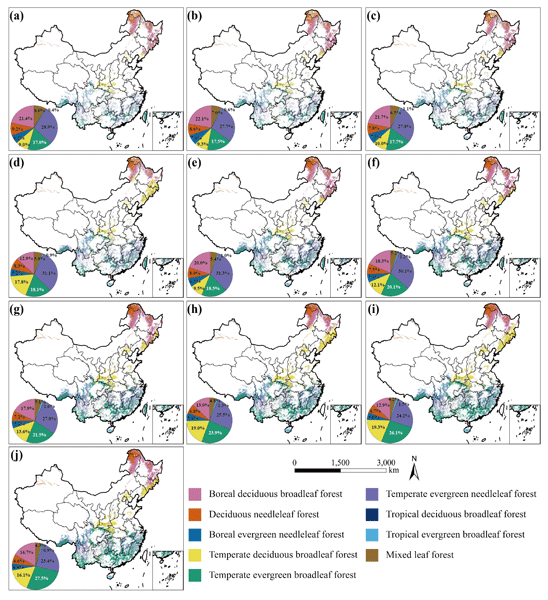
We present a 1 km annual dataset of forest cover and nine plant functional types (PFTs) for China, spanning 1981–2023. By integrating multi-source remote sensing imagery with National Forest Inventory data, this dataset reveals spatiotemporal dynamics consistent with China's massive afforestation and ecological restoration initiatives. It serves as a critical tool for clarifying the impacts of forest cover change on the regional terrestrial carbon balance.
Fulai Feng, Jianwu Yan, Wei Liang, Xiaohong Liu, Bo Liu, Xiaoru Liang, Jia Wei, and Yangcan Bao
EGUsphere, https://doi.org/10.5194/egusphere-2025-6076, https://doi.org/10.5194/egusphere-2025-6076, 2026
Preprint archived
Short summary
Short summary
Accurate climate predictions rely on vegetation models. We analyzed a widely used model across China to identify which internal settings control carbon and water cycles. We found that often-ignored "hidden" parameters drive results as much as standard ones. Crucially, we revealed a trade-off: dry ecosystems are fragile with high relative uncertainty, while humid forests carry large total uncertainty. This highlights the need for region-specific adjustments to better estimate global carbon sinks.
Pauline Walz, Oliver Fritz, Sabrina Marx, Marlin M. Mueller, Christian Thiel, Josefine Lenz, Soraya Kaiser, Roxanne Frappier, Alexander Zipf, and Moritz Langer
The Cryosphere, 19, 6355–6379, https://doi.org/10.5194/tc-19-6355-2025, https://doi.org/10.5194/tc-19-6355-2025, 2025
Short summary
Short summary
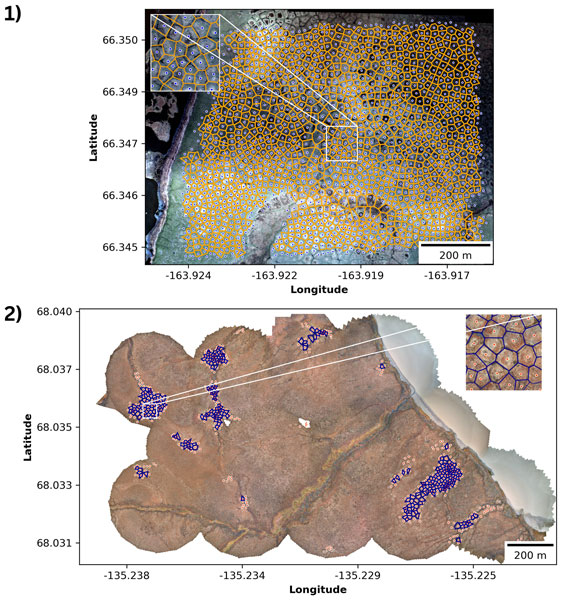
We explored how citizen scientists can help map changes in Arctic landscapes. Using a web tool we created, more than 100 volunteers contributed the approximate center points of particular ground patterns called ice-wedge polygons in aerial images from Alaska and Canada. Our work shows that the data created by volunteers can be used to reconstruct ice-wedge polygon networks and provide valuable insights on the state of frozen ground in the Arctic.
Mehriban Aliyeva, Michael Angelopoulos, Julia Boike, Moritz Langer, Frederieke Miesner, Scott Dallimore, Dustin Whalen, Lukas U. Arenson, and Pier Paul Overduin
EGUsphere, https://doi.org/10.5194/egusphere-2025-2675, https://doi.org/10.5194/egusphere-2025-2675, 2025
Preprint archived
Short summary
Short summary
In this study, we investigate the ongoing transformation of terrestrial permafrost into subsea permafrost on a rapidly eroding Arctic island using electrical resistivity tomography and numerical modelling. We draw on 60 years of shoreline data to support our findings. This work is important for understanding permafrost loss in Arctic coastal areas and for guiding future efforts to protect vulnerable shorelines.
Soraya Kaiser, Julia Boike, Guido Grosse, and Moritz Langer
Earth Syst. Sci. Data, 16, 3719–3753, https://doi.org/10.5194/essd-16-3719-2024, https://doi.org/10.5194/essd-16-3719-2024, 2024
Short summary
Short summary
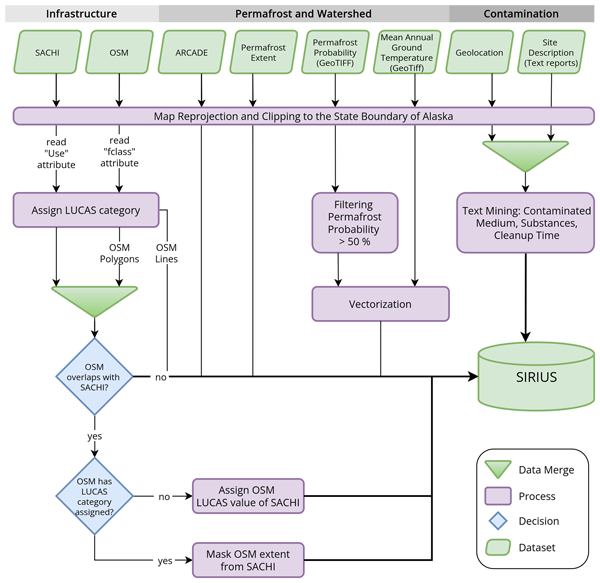
Arctic warming, leading to permafrost degradation, poses primary threats to infrastructure and secondary ecological hazards from possible infrastructure failure. Our study created a comprehensive Alaska inventory combining various data sources with which we improved infrastructure classification and data on contaminated sites. This resource is presented as a GeoPackage allowing planning of infrastructure damage and possible implications for Arctic communities facing permafrost challenges.
Daniel Kwakye, Sabrina Marx, Benjamin Herfort, Moritz Langer, and Sven Lautenbach
AGILE GIScience Ser., 5, 34, https://doi.org/10.5194/agile-giss-5-34-2024, https://doi.org/10.5194/agile-giss-5-34-2024, 2024
Moritz Langer, Jan Nitzbon, Brian Groenke, Lisa-Marie Assmann, Thomas Schneider von Deimling, Simone Maria Stuenzi, and Sebastian Westermann
The Cryosphere, 18, 363–385, https://doi.org/10.5194/tc-18-363-2024, https://doi.org/10.5194/tc-18-363-2024, 2024
Short summary
Short summary
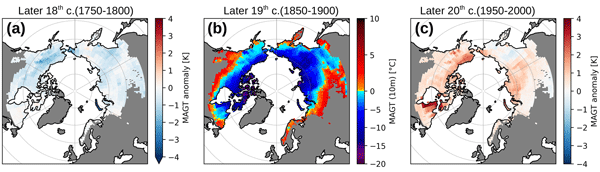
Using a model that can simulate the evolution of Arctic permafrost over centuries to millennia, we find that post-industrialization permafrost warming has three "hotspots" in NE Canada, N Alaska, and W Siberia. The extent of near-surface permafrost has decreased substantially since 1850, with the largest area losses occurring in the last 50 years. The simulations also show that volcanic eruptions have in some cases counteracted the loss of near-surface permafrost for a few decades.
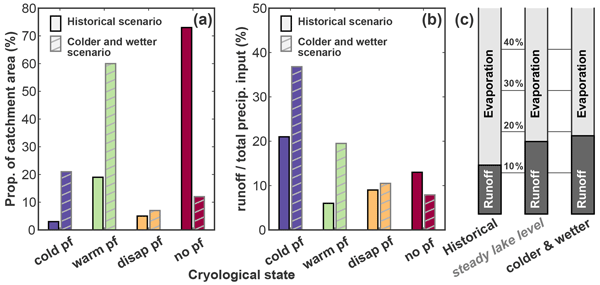
Léo C. P. Martin, Sebastian Westermann, Michele Magni, Fanny Brun, Joel Fiddes, Yanbin Lei, Philip Kraaijenbrink, Tamara Mathys, Moritz Langer, Simon Allen, and Walter W. Immerzeel
Hydrol. Earth Syst. Sci., 27, 4409–4436, https://doi.org/10.5194/hess-27-4409-2023, https://doi.org/10.5194/hess-27-4409-2023, 2023
Short summary
Short summary
Across the Tibetan Plateau, many large lakes have been changing level during the last decades as a response to climate change. In high-mountain environments, water fluxes from the land to the lakes are linked to the ground temperature of the land and to the energy fluxes between the ground and the atmosphere, which are modified by climate change. With a numerical model, we test how these water and energy fluxes have changed over the last decades and how they influence the lake level variations.
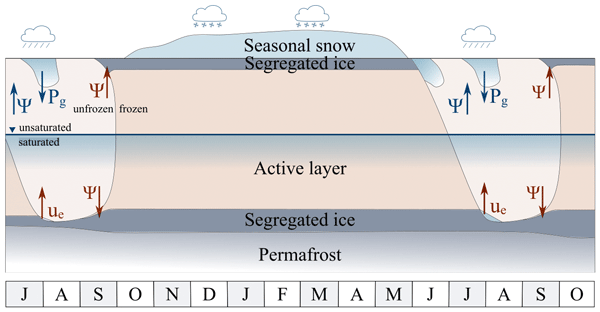
Juditha Aga, Julia Boike, Moritz Langer, Thomas Ingeman-Nielsen, and Sebastian Westermann
The Cryosphere, 17, 4179–4206, https://doi.org/10.5194/tc-17-4179-2023, https://doi.org/10.5194/tc-17-4179-2023, 2023
Short summary
Short summary
This study presents a new model scheme for simulating ice segregation and thaw consolidation in permafrost environments, depending on ground properties and climatic forcing. It is embedded in the CryoGrid community model, a land surface model for the terrestrial cryosphere. We describe the model physics and functionalities, followed by a model validation and a sensitivity study of controlling factors.
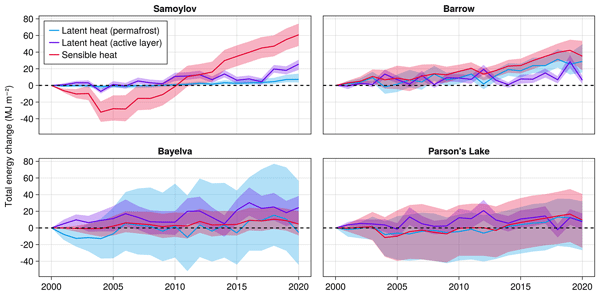
Brian Groenke, Moritz Langer, Jan Nitzbon, Sebastian Westermann, Guillermo Gallego, and Julia Boike
The Cryosphere, 17, 3505–3533, https://doi.org/10.5194/tc-17-3505-2023, https://doi.org/10.5194/tc-17-3505-2023, 2023
Short summary
Short summary
It is now well known from long-term temperature measurements that Arctic permafrost, i.e., ground that remains continuously frozen for at least 2 years, is warming in response to climate change. Temperature, however, only tells half of the story. In this study, we use computer modeling to better understand how the thawing and freezing of water in the ground affects the way permafrost responds to climate change and what temperature trends can and cannot tell us about how permafrost is changing.
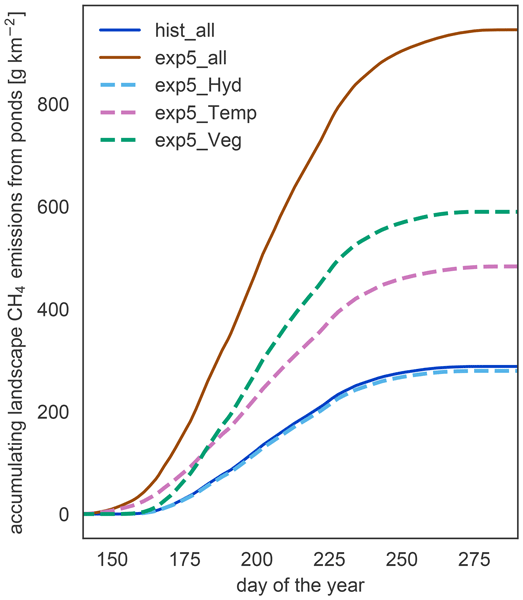
Zoé Rehder, Thomas Kleinen, Lars Kutzbach, Victor Stepanenko, Moritz Langer, and Victor Brovkin
Biogeosciences, 20, 2837–2855, https://doi.org/10.5194/bg-20-2837-2023, https://doi.org/10.5194/bg-20-2837-2023, 2023
Short summary
Short summary
We use a new model to investigate how methane emissions from Arctic ponds change with warming. We find that emissions increase substantially. Under annual temperatures 5 °C above present temperatures, pond methane emissions are more than 3 times higher than now. Most of this increase is caused by an increase in plant productivity as plants provide the substrate microbes used to produce methane. We conclude that vegetation changes need to be included in predictions of pond methane emissions.
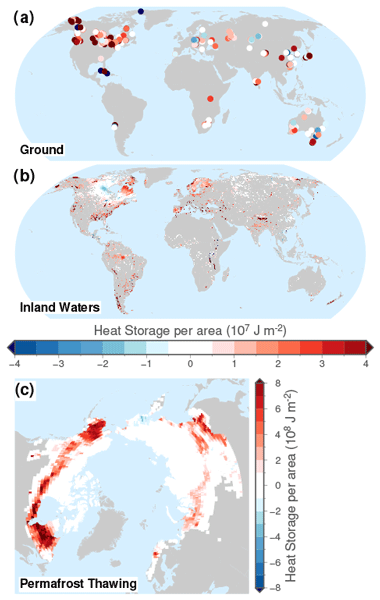
Francisco José Cuesta-Valero, Hugo Beltrami, Almudena García-García, Gerhard Krinner, Moritz Langer, Andrew H. MacDougall, Jan Nitzbon, Jian Peng, Karina von Schuckmann, Sonia I. Seneviratne, Wim Thiery, Inne Vanderkelen, and Tonghua Wu
Earth Syst. Dynam., 14, 609–627, https://doi.org/10.5194/esd-14-609-2023, https://doi.org/10.5194/esd-14-609-2023, 2023
Short summary
Short summary
Climate change is caused by the accumulated heat in the Earth system, with the land storing the second largest amount of this extra heat. Here, new estimates of continental heat storage are obtained, including changes in inland-water heat storage and permafrost heat storage in addition to changes in ground heat storage. We also argue that heat gains in all three components should be monitored independently of their magnitude due to heat-dependent processes affecting society and ecosystems.
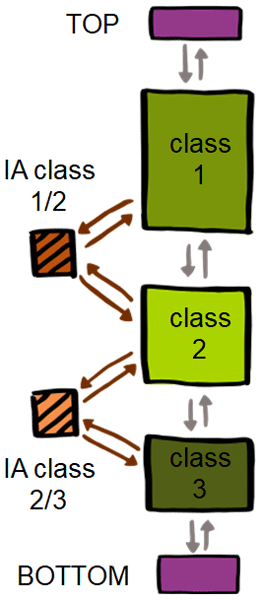
Sebastian Westermann, Thomas Ingeman-Nielsen, Johanna Scheer, Kristoffer Aalstad, Juditha Aga, Nitin Chaudhary, Bernd Etzelmüller, Simon Filhol, Andreas Kääb, Cas Renette, Louise Steffensen Schmidt, Thomas Vikhamar Schuler, Robin B. Zweigel, Léo Martin, Sarah Morard, Matan Ben-Asher, Michael Angelopoulos, Julia Boike, Brian Groenke, Frederieke Miesner, Jan Nitzbon, Paul Overduin, Simone M. Stuenzi, and Moritz Langer
Geosci. Model Dev., 16, 2607–2647, https://doi.org/10.5194/gmd-16-2607-2023, https://doi.org/10.5194/gmd-16-2607-2023, 2023
Short summary
Short summary
The CryoGrid community model is a new tool for simulating ground temperatures and the water and ice balance in cold regions. It is a modular design, which makes it possible to test different schemes to simulate, for example, permafrost ground in an efficient way. The model contains tools to simulate frozen and unfrozen ground, snow, glaciers, and other massive ice bodies, as well as water bodies.
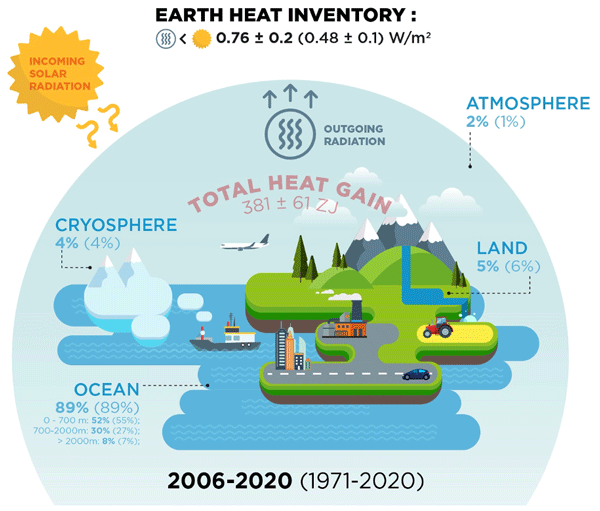
Karina von Schuckmann, Audrey Minière, Flora Gues, Francisco José Cuesta-Valero, Gottfried Kirchengast, Susheel Adusumilli, Fiammetta Straneo, Michaël Ablain, Richard P. Allan, Paul M. Barker, Hugo Beltrami, Alejandro Blazquez, Tim Boyer, Lijing Cheng, John Church, Damien Desbruyeres, Han Dolman, Catia M. Domingues, Almudena García-García, Donata Giglio, John E. Gilson, Maximilian Gorfer, Leopold Haimberger, Maria Z. Hakuba, Stefan Hendricks, Shigeki Hosoda, Gregory C. Johnson, Rachel Killick, Brian King, Nicolas Kolodziejczyk, Anton Korosov, Gerhard Krinner, Mikael Kuusela, Felix W. Landerer, Moritz Langer, Thomas Lavergne, Isobel Lawrence, Yuehua Li, John Lyman, Florence Marti, Ben Marzeion, Michael Mayer, Andrew H. MacDougall, Trevor McDougall, Didier Paolo Monselesan, Jan Nitzbon, Inès Otosaka, Jian Peng, Sarah Purkey, Dean Roemmich, Kanako Sato, Katsunari Sato, Abhishek Savita, Axel Schweiger, Andrew Shepherd, Sonia I. Seneviratne, Leon Simons, Donald A. Slater, Thomas Slater, Andrea K. Steiner, Toshio Suga, Tanguy Szekely, Wim Thiery, Mary-Louise Timmermans, Inne Vanderkelen, Susan E. Wjiffels, Tonghua Wu, and Michael Zemp
Earth Syst. Sci. Data, 15, 1675–1709, https://doi.org/10.5194/essd-15-1675-2023, https://doi.org/10.5194/essd-15-1675-2023, 2023
Short summary
Short summary
Earth's climate is out of energy balance, and this study quantifies how much heat has consequently accumulated over the past decades (ocean: 89 %, land: 6 %, cryosphere: 4 %, atmosphere: 1 %). Since 1971, this accumulated heat reached record values at an increasing pace. The Earth heat inventory provides a comprehensive view on the status and expectation of global warming, and we call for an implementation of this global climate indicator into the Paris Agreement’s Global Stocktake.
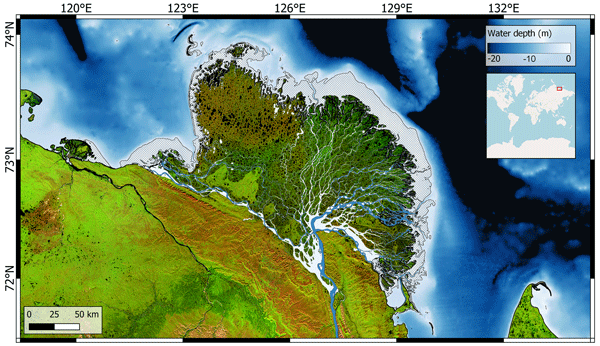
Ngai-Ham Chan, Moritz Langer, Bennet Juhls, Tabea Rettelbach, Paul Overduin, Kimberly Huppert, and Jean Braun
Earth Surf. Dynam., 11, 259–285, https://doi.org/10.5194/esurf-11-259-2023, https://doi.org/10.5194/esurf-11-259-2023, 2023
Short summary
Short summary
Arctic river deltas influence how nutrients and soil organic carbon, carried by sediments from the Arctic landscape, are retained or released into the Arctic Ocean. Under climate change, the deltas themselves and their ecosystems are becoming more vulnerable. We build upon previous models to reproduce for the first time an important feature ubiquitous to Arctic deltas and simulate its future under climate warming. This can impact the future of Arctic deltas and the carbon release they moderate.
Stefan Kruse, Simone M. Stuenzi, Julia Boike, Moritz Langer, Josias Gloy, and Ulrike Herzschuh
Geosci. Model Dev., 15, 2395–2422, https://doi.org/10.5194/gmd-15-2395-2022, https://doi.org/10.5194/gmd-15-2395-2022, 2022
Short summary
Short summary
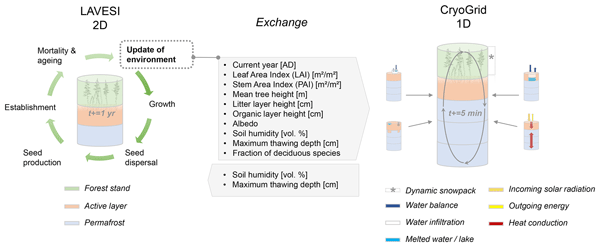
We coupled established models for boreal forest (LAVESI) and permafrost dynamics (CryoGrid) in Siberia to investigate interactions of the diverse vegetation layer with permafrost soils. Our tests showed improved active layer depth estimations and newly included species growth according to their species-specific limits. We conclude that the new model system can be applied to simulate boreal forest dynamics and transitions under global warming and disturbances, expanding our knowledge.
Cited articles
Alfaro-Sánchez, R., Richardson, A. D., Smith, S. L., Johnstone, J. F., Turetsky, M. R., Cumming, S. G., Le Moine, J. M., and Baltzer, J. L.: Permafrost Instability Negates the Positive Impact of Warming Temperatures on Boreal Radial Growth, P. Natl. Acad. Sci. USA, 121, e2411721121, https://doi.org/10.1073/pnas.2411721121, 2024. a
Anderegg, W. R. L., Trugman, A. T., Badgley, G., Konings, A. G., and Shaw, J.: Divergent Forest Sensitivity to Repeated Extreme Droughts, Nat. Clim. Change, 10, 1091–1095, https://doi.org/10.1038/s41558-020-00919-1, 2020. a
Billard, A., Bauer, R., Mothe, F., Jonard, M., Colin, F., and Longuetaud, F.: Improving Aboveground Biomass Estimates by Taking into Account Density Variations between Tree Components, Ann. For. Sci., 77, 103, https://doi.org/10.1007/s13595-020-00999-1, 2020. a
Blume-Werry, G., Milbau, A., Teuber, L. M., Johansson, M., and Dorrepaal, E.: Dwelling in the Deep – Strongly Increased Root Growth and Rooting Depth Enhance Plant Interactions with Thawing Permafrost Soil, New Phytol., 223, 1328–1339, https://doi.org/10.1111/nph.15903, 2019. a
Bradshaw, C. J. A. and Warkentin, I. G.: Global Estimates of Boreal Forest Carbon Stocks and Flux, Global Planet. Change, 128, 24–30, https://doi.org/10.1016/j.gloplacha.2015.02.004, 2015. a
Cai, Y., Zhu, P., Li, X., Liu, X., Chen, Y., Shen, Q., Xu, X., Zhang, H., Nie, S., Wang, C., Wang, J., Li, B., Wu, C., and Zhuang, H.: Dynamics of China's forest carbon storage: the first 30 m annual aboveground biomass mapping from 1985 to 2023, Earth Syst. Sci. Data, 17, 6993–7018, https://doi.org/10.5194/essd-17-6993-2025, 2025. a
Canadell, J., Jackson, R. B., Ehleringer, J. B., Mooney, H. A., Sala, O. E., and Schulze, E.-D.: Maximum Rooting Depth of Vegetation Types at the Global Scale, Oecologia, 108, 583–595, https://doi.org/10.1007/BF00329030, 1996. a
Drewniak, B. A.: Simulating Dynamic Roots in the Energy Exascale Earth System Land Model, J. Adv. Model. Earth Sy., 11, 338–359, https://doi.org/10.1029/2018MS001334, 2019. a
El Masri, B. and Xiao, J.: Comparison of Global Aboveground Biomass Estimates from Satellite Observations and Dynamic Global Vegetation Models, J. Geophys. Res.-Biogeo., 130, e2024JG008305, https://doi.org/10.1029/2024JG008305, 2025. a
Fan, Y., Clark, M., Lawrence, D. M., Swenson, S., Band, L. E., Brantley, S. L., Brooks, P. D., Dietrich, W. E., Flores, A., Grant, G., Kirchner, J. W., Mackay, D. S., McDonnell, J. J., Milly, P. C. D., Sullivan, P. L., Tague, C., Ajami, H., Chaney, N., Hartmann, A., Hazenberg, P., McNamara, J., Pelletier, J., Perket, J., Rouholahnejad-Freund, E., Wagener, T., Zeng, X., Beighley, E., Buzan, J., Huang, M., Livneh, B., Mohanty, B. P., Nijssen, B., Safeeq, M., Shen, C., van Verseveld, W., Volk, J., and Yamazaki, D.: Hillslope Hydrology in Global Change Research and Earth System Modeling, Water Resour. Res., 55, 1737–1772, https://doi.org/10.1029/2018WR023903, 2019. a
Gerten, D., Schaphoff, S., Haberlandt, U., Lucht, W., and Sitch, S.: Terrestrial Vegetation and Water Balance – Hydrological Evaluation of a Dynamic Global Vegetation Model, J. Hydrol., 286, 249–270, https://doi.org/10.1016/j.jhydrol.2003.09.029, 2004. a, b, c
Guimberteau, M., Zhu, D., Maignan, F., Huang, Y., Yue, C., Dantec-Nédélec, S., Ottlé, C., Jornet-Puig, A., Bastos, A., Laurent, P., Goll, D., Bowring, S., Chang, J., Guenet, B., Tifafi, M., Peng, S., Krinner, G., Ducharne, A., Wang, F., Wang, T., Wang, X., Wang, Y., Yin, Z., Lauerwald, R., Joetzjer, E., Qiu, C., Kim, H., and Ciais, P.: ORCHIDEE-MICT (v8.4.1), a land surface model for the high latitudes: model description and validation, Geosci. Model Dev., 11, 121–163, https://doi.org/10.5194/gmd-11-121-2018, 2018. a
He, R., Jin, H., Chang, X., Lü, L., Yu, S., Yang, S., Wang, S., and Sun, G.: Degradation status and causes of permafrost in northern Northeast China, Journal of Glaciology and Geocryology, 31, 829–834, https://doi.org/10.7522/j.issn.1000-0240.2009.0114, 2009. a
Helbig, M., Pappas, C., and Sonnentag, O.: Permafrost Thaw and Wildfire: Equally Important Drivers of Boreal Tree Cover Changes in the Taiga Plains, Canada, Geophys. Res. Lett., 43, 1598–1606, https://doi.org/10.1002/2015GL067193, 2016. a
Horvath, P., Tang, H., Halvorsen, R., Stordal, F., Tallaksen, L. M., Berntsen, T. K., and Bryn, A.: Improving the representation of high-latitude vegetation distribution in dynamic global vegetation models, Biogeosciences, 18, 95–112, https://doi.org/10.5194/bg-18-95-2021, 2021. a
Huang, C., Liang, Y., He, H. S., Wu, M. M., Liu, B., and Ma, T.: Sensitivity of aboveground biomass and species composition to climate change in boreal forests of Northeastern China, Ecol. Model., 445, 109472, https://doi.org/10.1016/j.ecolmodel.2021.109472, 2021. a
Huang, C., Feng, J., Tang, F., He, H. S., Liang, Y., Wu, M. M., Xu, W., Liu, B., Shi, F., and Chen, F.: Predicting the responses of boreal forests to climate-fire-vegetation interactions in Northeast China, Environ. Modell. Softw., 153, 105410, https://doi.org/10.1016/j.envsoft.2022.105410, 2022. a
Huang, H., Liu, C., Wang, X., Zhou, X., and Gong, P.: Integration of Multi-Resource Remotely Sensed Data and Allometric Models for Forest Aboveground Biomass Estimation in China, Remote Sens. Environ., 221, 225–234, https://doi.org/10.1016/j.rse.2018.11.017, 2019. a
Jiang, Y., Zhuang, Q., Schaphoff, S., Sitch, S., Sokolov, A., Kicklighter, D., and Melillo, J.: Uncertainty Analysis of Vegetation Distribution in the Northern High Latitudes during the 21st Century with a Dynamic Vegetation Model, Ecol. Evol., 2, 593–614, https://doi.org/10.1002/ece3.85, 2012. a
Jin, H., Yu, Q., Lü, L., Guo, D., He, R., Yu, S., Sun, G., and Li, Y.: Degradation of Permafrost in the Xing'anling Mountains, Northeastern China, Permafrost Periglac., 18, 245–258, https://doi.org/10.1002/ppp.589, 2007a. a
Jin, H., Yu, Q., Lü, L., Guo, D., He, R., Yu, S., Sun, G., and Li, Y.: Degradation of permafrost in the Xing'anling Mountains, northeastern China, Permafrost Periglac., 18, 245–258, https://doi.org/10.1002/ppp.589, 2007b. a
Jorgenson, M. T., Racine, C. H., Walters, J. C., and Osterkamp, T. E.: Permafrost Degradation and Ecological Changes Associated with a WarmingClimate in Central Alaska, Climatic Change, 48, 551–579, https://doi.org/10.1023/A:1005667424292, 2001. a
Kimball, J. S., McDonald, K. C., and Zhao, M.: Spring Thaw and Its Effect on Terrestrial Vegetation Productivity in the Western Arctic Observed from Satellite Microwave and Optical Remote Sensing, Earth Interact., 10, 1–22, https://doi.org/10.1175/EI187.1, 2006. a
Koven, C. D., Riley, W. J., Subin, Z. M., Tang, J. Y., Torn, M. S., Collins, W. D., Bonan, G. B., Lawrence, D. M., and Swenson, S. C.: The effect of vertically resolved soil biogeochemistry and alternate soil C and N models on C dynamics of CLM4, Biogeosciences, 10, 7109–7131, https://doi.org/10.5194/bg-10-7109-2013, 2013. a
Koven, C. D., Schuur, E. A. G., Schädel, C., Bohn, T. J., Burke, E. J., Chen, G., Chen, X., Ciais, P., Grosse, G., Harden, J. W., Hayes, D. J., Hugelius, G., Jafarov, E. E., Krinner, G., Kuhry, P., Lawrence, D. M., MacDougall, A. H., Marchenko, S. S., McGuire, A. D., Natali, S. M., Nicolsky, D. J., Olefeldt, D., Peng, S., Romanovsky, V. E., Schaefer, K. M., Strauss, J., Treat, C. C., and Turetsky, M.: A Simplified, Data-Constrained Approach to Estimate the Permafrost Carbon–Climate Feedback, Philos. T. R. Soc. A, 373, 20140423, https://doi.org/10.1098/rsta.2014.0423, 2015. a
Li, C., Sun, H., Liu, L., Dou, T., Zhou, M., Li, W., and Wu, X.: The Importance of Permafrost in the Steady and Fast Increase in Net Primary Production of the Grassland on the Qinghai–Tibet Plateau, CATENA, 211, 105964, https://doi.org/10.1016/j.catena.2021.105964, 2022. a
Li, X., Jin, H., Feng, Q., Wu, Q., Wang, H., He, R., Luo, D., Chang, X., Şerban, R.-D., and Zhan, T.: An integrated dataset of ground hydrothermal regimes and soil nutrients monitored in some previously burned areas in hemiboreal forests in Northeast China during 2016–2022, Earth Syst. Sci. Data, 16, 5009–5026, https://doi.org/10.5194/essd-16-5009-2024, 2024. a, b, c
Luo, Y., Wang, X., Ouyang, Z., Lu, F., Feng, L., and Tao, J.: A review of biomass equations for China's tree species, Earth Syst. Sci. Data, 12, 21–40, https://doi.org/10.5194/essd-12-21-2020, 2020. a
Mao, D., Luo, L., Wang, Z., Zhang, C., and Ren, C.: Variations in Net Primary Productivity and Its Relationships with Warming Climate in the Permafrost Zone of the Tibetan Plateau, J. Geogr. Sci., 25, 967–977, https://doi.org/10.1007/s11442-015-1213-8, 2015. a
Martín Belda, D., Anthoni, P., Wårlind, D., Olin, S., Schurgers, G., Tang, J., Smith, B., and Arneth, A.: LPJ-GUESS/LSMv1.0: a next-generation land surface model with high ecological realism, Geosci. Model Dev., 15, 6709–6745, https://doi.org/10.5194/gmd-15-6709-2022, 2022. a, b
Masarie, K. A. and Tans, P. P.: Extension and Integration of Atmospheric Carbon Dioxide Data into a Globally Consistent Measurement Record, J. Geophys. Res.-Atmos., 100, 11593–11610, https://doi.org/10.1029/95JD00859, 1995. a
Matthes, H., Damseaux, A., Westermann, S., Beer, C., Boone, A., Burke, E., Decharme, B., Genet, H., Jafarov, E., Langer, M., Parmentier, F.-J., Porada, P., Gagne-Landmann, A., Huntzinger, D., Rogers, B. M., Schädel, C., Stacke, T., Wells, J., and Wieder, W. R.: Advances in Permafrost Representation: Biophysical Processes in Earth System Models and the Role of Offline Models, Permafrost Periglac., 36, 302–318, https://doi.org/10.1002/ppp.2269, 2025. a
Mauer, O. and Palátová, E.: The Role of Root System in Silver Birch (Betula Pendula Roth) Dieback in the Air-Polluted Area of Krušné Hory Mts, Journal of Forest Science, 49, 191–199, https://doi.org/10.17221/4693-JFS, 2003. a
Muñoz-Sabater, J., Dutra, E., Agustí-Panareda, A., Albergel, C., Arduini, G., Balsamo, G., Boussetta, S., Choulga, M., Harrigan, S., Hersbach, H., Martens, B., Miralles, D. G., Piles, M., Rodríguez-Fernández, N. J., Zsoter, E., Buontempo, C., and Thépaut, J.-N.: ERA5-Land: a state-of-the-art global reanalysis dataset for land applications, Earth Syst. Sci. Data, 13, 4349–4383, https://doi.org/10.5194/essd-13-4349-2021, 2021. a
Neuenschwander, A., Guenther, E., White, J. C., Duncanson, L., and Montesano, P.: Validation of ICESat-2 terrain and canopy heights in boreal forests, Remote Sens. Environ., 251, 112110, https://doi.org/10.1016/j.rse.2020.112110, 2020. a
Neuenschwander, A. and Pitts, K.: The ATL08 Land and Vegetation Product for the ICESat-2 Mission, Remote Sens. Environ., 221, 247–259, https://doi.org/10.1016/j.rse.2018.11.005, 2019. a
Nord, J., Anthoni, P., Gregor, K., Gustafson, A., Hantson, S., Lindeskog, M., Meyer, B., Miller, P., Nieradzik, L., Olin, S., Papastefanou, P., Smith, B., Tang, J., Wårlind, D., and past LPJ-GUESS contributors: LPJ-GUESS Release v4.1.1 Model Code, Zenodo [code], https://doi.org/10.5281/zenodo.8065737, 2021. a, b
O'Sullivan, M., Friedlingstein, P., Sitch, S., Anthoni, P., Arneth, A., Arora, V. K., Bastrikov, V., Delire, C., Goll, D. S., Jain, A., Kato, E., Kennedy, D., Knauer, J., Lienert, S., Lombardozzi, D., McGuire, P. C., Melton, J. R., Nabel, J. E. M. S., Pongratz, J., Poulter, B., Séférian, R., Tian, H., Vuichard, N., Walker, A. P., Yuan, W., Yue, X., and Zaehle, S.: Process-Oriented Analysis of Dominant Sources of Uncertainty in the Land Carbon Sink, Nat. Commun., 13, 4781, https://doi.org/10.1038/s41467-022-32416-8, 2022. a, b
Pan, Y., Birdsey, R. A., Phillips, O. L., Houghton, R. A., Fang, J., Kauppi, P. E., Keith, H., Kurz, W. A., Ito, A., Lewis, S. L., Nabuurs, G.-J., Shvidenko, A., Hashimoto, S., Lerink, B., Schepaschenko, D., Castanho, A., and Murdiyarso, D.: The Enduring World Forest Carbon Sink, Nature, 631, 563–569, https://doi.org/10.1038/s41586-024-07602-x, 2024. a, b
Pascual, D., Johansson, M., Pongracz, A., and Tang, J.: Accounting for Winter Warming Events in the Ecosystem Model LPJ-GUESS: Evaluation and Outlook, J. Geophys. Res.-Biogeo., 129, e2023JG007464, https://doi.org/10.1029/2023JG007464, 2024. a
Peng, R., Liu, H., Anenkhonov, O. A., Sandanov, D. V., Korolyuk, A. Y., Shi, L., Xu, C., Dai, J., and Wang, L.: Tree Growth Is Connected with Distribution and Warming-Induced Degradation of Permafrost in Southern Siberia, Glob. Change Biol., 28, 5243–5253, https://doi.org/10.1111/gcb.16284, 2022. a, b, c, d
Phillips, O. L., Sullivan, M. J. P., Baker, T. R., Monteagudo Mendoza, A., Vargas, P. N., and Vásquez, R.: Species Matter: Wood Density Influences Tropical Forest Biomass at Multiple Scales, Surv. Geophys., 40, 913–935, https://doi.org/10.1007/s10712-019-09540-0, 2019. a
Pongracz, A., Wårlind, D., Miller, P. A., and Parmentier, F.-J. W.: Model simulations of arctic biogeochemistry and permafrost extent are highly sensitive to the implemented snow scheme in LPJ-GUESS, Biogeosciences, 18, 5767–5787, https://doi.org/10.5194/bg-18-5767-2021, 2021. a, b, c, d
Quillet, A., Peng, C., and Garneau, M.: Toward Dynamic Global Vegetation Models for Simulating Vegetation–Climate Interactions and Feedbacks: Recent Developments, Limitations, and Future Challenges, Environ. Rev., 18, 333–353, https://doi.org/10.1139/A10-016, 2010. a
Ran, Y., Li, X., Lu, L., and Li, Z.: Large-Scale Land Cover Mapping with the Integration of Multi-Source Information Based on the Dempster–Shafer Theory, Int. J. Geogr. Inf. Sci., 26, 169–191, https://doi.org/10.1080/13658816.2011.577745, 2012. a, b, c, d
Rantanen, M., Karpechko, A. Y., Lipponen, A., Nordling, K., Hyvärinen, O., Ruosteenoja, K., Vihma, T., and Laaksonen, A.: The Arctic Has Warmed Nearly Four Times Faster than the Globe since 1979, Communications Earth & Environment, 3, 168, https://doi.org/10.1038/s43247-022-00498-3, 2022. a
Rawlins, M. A., McGuire, A. D., Kimball, J. S., Dass, P., Lawrence, D., Burke, E., Chen, X., Delire, C., Koven, C., MacDougall, A., Peng, S., Rinke, A., Saito, K., Zhang, W., Alkama, R., Bohn, T. J., Ciais, P., Decharme, B., Gouttevin, I., Hajima, T., Ji, D., Krinner, G., Lettenmaier, D. P., Miller, P., Moore, J. C., Smith, B., and Sueyoshi, T.: Assessment of model estimates of land-atmosphere CO2 exchange across Northern Eurasia, Biogeosciences, 12, 4385–4405, https://doi.org/10.5194/bg-12-4385-2015, 2015. a
Sakschewski, B., von Bloh, W., Drüke, M., Sörensson, A. A., Ruscica, R., Langerwisch, F., Billing, M., Bereswill, S., Hirota, M., Oliveira, R. S., Heinke, J., and Thonicke, K.: Variable tree rooting strategies are key for modelling the distribution, productivity and evapotranspiration of tropical evergreen forests, Biogeosciences, 18, 4091–4116, https://doi.org/10.5194/bg-18-4091-2021, 2021. a
Schaphoff, S., Hötten, D., Müller, C., Gerten, D., Ostberg, S., and von Bloh, W.: Implementing methane dynamics into the LPJmL6 model, Geosci. Model Dev., 19, 7615–7651, https://doi.org/10.5194/gmd-19-7615-2026, 2026. a, b
Shan, W., Zhang, C., Guo, Y., Qiu, L., Xu, Z., Wang, Y., Shan, W., Zhang, C., Guo, Y., Qiu, L., Xu, Z., and Wang, Y.: Spatial Distribution and Variation Characteristics of Permafrost Temperature in Northeast China, Sustainability, 14, https://doi.org/10.3390/su14138178, 2022. a
Shur, Y. L. and Jorgenson, M. T.: Patterns of Permafrost Formation and Degradation in Relation to Climate and Ecosystems, Permafrost Periglac., 18, 7–19, https://doi.org/10.1002/ppp.582, 2007. a
Sinitambirivoutin, M., Milne, E., Schiettecatte, L.-S., Tzamtzis, I., Dionisio, D., Henry, M., Brierley, I., Salvatore, M., and Bernoux, M.: An Updated IPCC Major Soil Types Map Derived from the Harmonized World Soil Database v2.0, CATENA, 244, 108258, https://doi.org/10.1016/j.catena.2024.108258, 2024. a
Sitch, S., Smith, B., Prentice, I. C., Arneth, A., Bondeau, A., Cramer, W., Kaplan, J. O., Levis, S., Lucht, W., Sykes, M. T., Thonicke, K., and Venevsky, S.: Evaluation of Ecosystem Dynamics, Plant Geography and Terrestrial Carbon Cycling in the LPJ Dynamic Global Vegetation Model, Glob. Change Biol., 9, 161–185, https://doi.org/10.1046/j.1365-2486.2003.00569.x, 2003. a, b
Smith, B., Prentice, I. C., and Sykes, M. T.: Representation of Vegetation Dynamics in the Modelling of Terrestrial Ecosystems: Comparing Two Contrasting Approaches within European Climate Space, Global Ecol. Biogeogr., 10, 621–637, https://doi.org/10.1046/j.1466-822X.2001.t01-1-00256.x, 2001. a, b
Smith, B., Wårlind, D., Arneth, A., Hickler, T., Leadley, P., Siltberg, J., and Zaehle, S.: Implications of incorporating N cycling and N limitations on primary production in an individual-based dynamic vegetation model, Biogeosciences, 11, 2027–2054, https://doi.org/10.5194/bg-11-2027-2014, 2014. a, b, c
Szwagrzyk, J. and Gazda, A.: Above-Ground Standing Biomass and Tree Species Diversity in Natural Stands of Central Europe, J. Veg. Sci., 18, 555–562, https://doi.org/10.1111/j.1654-1103.2007.tb02569.x, 2007. a
Terrer, C., Phillips, R. P., Hungate, B. A., Rosende, J., Pett-Ridge, J., Craig, M. E., van Groenigen, K. J., Keenan, T. F., Sulman, B. N., Stocker, B. D., Reich, P. B., Pellegrini, A. F. A., Pendall, E., Zhang, H., Evans, R. D., Carrillo, Y., Fisher, J. B., Van Sundert, K., Vicca, S., and Jackson, R. B.: A Trade-off between Plant and Soil Carbon Storage under Elevated CO2, Nature, 591, 599–603, https://doi.org/10.1038/s41586-021-03306-8, 2021. a
Todd-Brown, K. E. O., Randerson, J. T., Hopkins, F., Arora, V., Hajima, T., Jones, C., Shevliakova, E., Tjiputra, J., Volodin, E., Wu, T., Zhang, Q., and Allison, S. D.: Changes in soil organic carbon storage predicted by Earth system models during the 21st century, Biogeosciences, 11, 2341–2356, https://doi.org/10.5194/bg-11-2341-2014, 2014. a
Treat, C. C., Jones, M. C., Alder, J., and Frolking, S.: Hydrologic Controls on Peat Permafrost and Carbon Processes: New Insights from Past and Future Modeling, Frontiers in Environmental Science, 10, https://doi.org/10.3389/fenvs.2022.892925, 2022. a
Walker, X. J., Baltzer, J. L., Cumming, S. G., Day, N. J., Ebert, C., Goetz, S., Johnstone, J. F., Potter, S., Rogers, B. M., Schuur, E. A. G., Turetsky, M. R., and Mack, M. C.: Increasing Wildfires Threaten Historic Carbon Sink of Boreal Forest Soils, Nature, 572, 520–523, https://doi.org/10.1038/s41586-019-1474-y, 2019. a
Walvoord, M. A. and Kurylyk, B. L.: Hydrologic Impacts of Thawing Permafrost – a Review, Vadose Zone J., 15, vzj2016.01.0010, https://doi.org/10.2136/vzj2016.01.0010, 2016. a, b, c
Wang, J. A., Baccini, A., Farina, M., Randerson, J. T., and Friedl, M. A.: Disturbance Suppresses the Aboveground Carbon Sink in North American Boreal Forests, Nat. Clim. Change, 11, 435–441, https://doi.org/10.1038/s41558-021-01027-4, 2021. a, b, c
Wang, T., Yang, D., Zheng, G., and Shi, R.: Possible Negative Effects of Earlier Thaw Onset and Longer Thaw Duration on Vegetation Greenness over the Tibetan Plateau, Agr. Forest Meteorol., 326, 109192, https://doi.org/10.1016/j.agrformet.2022.109192, 2022. a
Wania, R., Ross, I., and Prentice, I. C.: Integrating Peatlands and Permafrost into a Dynamic Global Vegetation Model: 2. Evaluation and Sensitivity of Vegetation and Carbon Cycle Processes, Global Biogeochem. Cy., 23, 2008GB003413, https://doi.org/10.1029/2008GB003413, 2009a. a, b
Wania, R., Ross, I., and Prentice, I. C.: Integrating Peatlands and Permafrost into a Dynamic Global Vegetation Model: 1. Evaluation and Sensitivity of Physical Land Surface Processes, Global Biogeochem. Cy., 23, 2008GB003412, https://doi.org/10.1029/2008GB003412, 2009b. a, b
Wei, N. and Xia, J.: Robust Projections of Increasing Land Carbon Storage in Boreal and Temperate Forests under Future Climate Change Scenarios, One Earth, 7, 88–99, https://doi.org/10.1016/j.oneear.2023.11.013, 2024. a
Wu, L.: Distribution Map of Frozen Ground in China Based on the Map of Snow, Ice and Frozen Ground in China, National Cryosphere Desert Data Center [data set], https://doi.org/10.12072/ncdc.Westdc.db0029.2021, 2021. a
Xu, X., Liu, J., Zhang, S., Li, R., Yan, C., and Wu, S.: China’s Multi-Period Land Use Land Cover Remote Sensing Monitoring Dataset (CNLUCC), Resource and Environmental Science Data Registration and Publishing System [data set], https://doi.org/10.12078/2018070201, 2018. a
Yan, Y., Zhou, L., Zhou, G., Jia, B., Song, J., and Zhang, S.: A Dataset of Carbon and Water Fluxes of the Boreal Forest Ecosystem in Huzhong (2014 – 2018), China Scientific Data, 8, https://doi.org/10.11922/11-6035.csd.2023.0019.zh, 2023. a
Yang, H., Ciais, P., Santoro, M., Huang, Y., Li, W., Wang, Y., Bastos, A., Goll, D., Arneth, A., Anthoni, P., Arora, V. K., Friedlingstein, P., Harverd, V., Joetzjer, E., Kautz, M., Lienert, S., Nabel, J. E. M. S., O'Sullivan, M., Sitch, S., Vuichard, N., Wiltshire, A., and Zhu, D.: Comparison of Forest Above-Ground Biomass from Dynamic Global Vegetation Models with Spatially Explicit Remotely Sensed Observation-Based Estimates, Glob. Change Biol., 26, 3997–4012, https://doi.org/10.1111/gcb.15117, 2020. a, b
Yang, H., Xing, Y., Chang, X., Wang, J., Li, Y., Tang, J., and Wang, D.: Internal Response of Vegetation Growth to Degrees of Permafrost Degradation in Northeast China from 2001 to 2020, Geo-spatial Information Science, 28, 265–283, https://doi.org/10.1080/10095020.2024.2363618, 2025. a
Yang, H., Tang, J., Chang, X., Wang, J., Gong, W., Wang, D., and Xing, Y.: Permafrost degradation: A critical driver of aboveground carbon sink loss in China's boreal forests, CATENA, 265, 109912, https://doi.org/10.1016/j.catena.2026.109912, 2026a. a
Yang, H., Stuenzi, S. M., Xing, Y., and Langer, M.: LPJ-GUESS-Cryo: Improved Permafrost Soil and Hydrothermal Representation for Boreal Forest Carbon Dynamics, Zenodo [code], https://doi.org/10.5281/zenodo.18605313, 2026b. a
Zhang, W., Miller, P. A., Smith, B., Wania, R., Koenigk, T., and Döscher, R.: Tundra Shrubification and Tree-Line Advance Amplify Arctic Climate Warming: Results from an Individual-Based Dynamic Vegetation Model, Environ. Res. Lett., 8, 034023, https://doi.org/10.1088/1748-9326/8/3/034023, 2013. a
Zhang, Z., Li, M., Wu, Q., Wang, X., Jin, H., Chen, H., Ma, D., and Zhang, Z.: Degradation and Local Growth of “Xing'an-Baikal” Permafrost Responding to Climate Warming and the Consequences, Earth-Sci. Rev., 255, 104865, https://doi.org/10.1016/j.earscirev.2024.104865, 2024. a
Zhu, Y., Xia, X., Canadell, J. G., Piao, S., Lu, X., Mishra, U., Wang, X., Yuan, W., and Qin, Z.: China's Carbon Sinks from Land-Use Change Underestimated, Nat. Clim. Change, 15, 428–435, https://doi.org/10.1038/s41558-025-02296-z, 2025. a
Short summary
Boreal forests store large amounts of carbon, yet it is unclear how thawing permafrost will affect their role in slowing climate change. Many models do not fully capture how frozen soils warm and alter water supply for plants. We improved a vegetation model to better represent soil processes and tested it in Northeast China. The updated model more accurately reproduced soil conditions and carbon storage, showing that thaw-related warming and drying can reduce carbon uptake and alter forests.
Boreal forests store large amounts of carbon, yet it is unclear how thawing permafrost will...


Altmetrics
Final-revised paper
Preprint