
Articles | Volume 23, issue 21
https://doi.org/10.5194/bg-23-8063-2026
© Author(s) 2026. This work is distributed under
the Creative Commons Attribution 4.0 License.
the Creative Commons Attribution 4.0 License.
https://doi.org/10.5194/bg-23-8063-2026
© Author(s) 2026. This work is distributed under
the Creative Commons Attribution 4.0 License.
the Creative Commons Attribution 4.0 License.
Research article
| 
11 Nov 2026
Research article |
| 11 Nov 2026
| 11 Nov 2026
Quantifying the near-term response of the ocean CO2 sink to reduced atmospheric carbon concentrations

Columbia University and Lamont-Doherty Earth Observatory, Palisades, NY, USA
Dustin Carroll
Moss Landing Marine Laboratories, San José State University, Moss Landing, CA, USA
Jet Propulsion Laboratory, California Institute of Technology, Pasadena, USA
Galen A. McKinley
Columbia University and Lamont-Doherty Earth Observatory, Palisades, NY, USA
Nicole S. Lovenduski
Institute of Arctic and Alpine Research, University of Colorado, Boulder, CO, USA
Dimitris Menemenlis
Moss Landing Marine Laboratories, San José State University, Moss Landing, CA, USA
Hong Zhang
Jet Propulsion Laboratory, California Institute of Technology, Pasadena, USA
Related authors
Pierre Friedlingstein, Michael O'Sullivan, Robbie M. Andrew, Judith Hauck, Matthew W. Jones, Peter Landschützer, Corinne Le Quéré, Hongmei Li, Ingrid T. Luijkx, Are Olsen, Glen P. Peters, Wouter Peters, Julia Pongratz, Clemens Schwingshackl, Stephen Sitch, Josep G. Canadell, Philippe Ciais, Kjetil Aas, Simone R. Alin, Vivek Arora, Nicholas R. Bates, Kimberly Bedard, David Martin Belda, Nicolas Bellouin, Alice Benoit-Cattin, Carla F. Berghoff, Sarah Berthet, Laurent Bopp, Ida Bagus Mandhara Brasika, Eleanor Burke, Leon Casse, Matthew A. Chamberlain, Frédéric Chevallier, Louise P. Chini, Margot Cronin, Susan E. Curless, Tim DeVries, Tobias Ehmen, Matthew P. Enright, Kazutaka Enyo, Michael Erb, Wiley Evans, Amanda R. Fay, Ben Felzer, Daniel J. Ford, Adrianna Foster, Filippa Fransner, Agneta Fransson, Andrew Friedman, Thomas Gasser, Marion Gehlen, Thanos Gkritzalis, Giacomo Grassi, Luke Gregor, Nicolas Gruber, Özgür Gürses, Wensu Hao, Kirsty Harrington, Jens Heinke, George C. Hurtt, Tatiana Ilyina, Akihiko Ito, Andrew R. Jacobson, Atul K. Jain, Rajesh Janardanan, Tereza Jarníková, Annika Jersild, Fei Jiang, Zhe Jin, Linus Kamb, Etsushi Kato, Ralph F. Keeling, Kees Klein Goldewijk, Jürgen Knauer, Jan Ivar Korsbakken, Taro Kunimitsu, Xin Lan, Vladimir Lapin, Siv K. Lauvset, Simone Le Chevère, Woo-Sung Lee, Enhui Liao, Junjie Liu, Zhu Liu, Sebastiaan Luyssaert, Lei Ma, Suman Maity, Gregg Marland, Patrick C. McGuire, Nicolas Metzl, Juliette Mignot, Natalie M. Monacci, Eric J. Morgan, Jens D. Müller, David R. Munro, Miaki Muramatsu, Shin-Ichiro Nakaoka, Craig Neill, Tobias Nützel, Léa Olivier, Timothy Osborn, Xosé A. Padín, Paul I. Palmer, Sudhanshu Pandey, Denis Pierrot, Ben Poulter, Zhangcai Qin, Yumou Qiu, Gregor Rehder, Laure Resplandy, Christian Rödenbeck, Alizée Roobaert, Thais M. Rosan, Simone Rossi, Jörg Schwinger, Gereon Seeberg, Roland Séférian, Elisabeth H. Shadwick, Ingunn Skjelvan, Karolina Slominska-Durdasiak, T. Luke Smallman, Mohanan G Sreeush, Qing Sun, Adrienne J. Sutton, Colm Sweeney, Shintaro Takao, Hiroaki Tatebe, Jens Terhaar, Hanqin Tian, Bronte Tilbrook, Takahiro Toyoda, Joaquin A. Triñanes, Francesco Tubiello, Guido R. van der Werf, Auke van der Woude, Sebastiaan J. van de Velde, Anthony P. Walker, Rik Wanninkhof, Xiaojuan Yang, Wenping Yuan, Xu Yue, Jiye Zeng, Ning Zheng, and Bo Zheng
Earth Syst. Sci. Data Discuss., https://doi.org/10.5194/essd-2026-895, https://doi.org/10.5194/essd-2026-895, 2026
Preprint under review for ESSD
Short summary
Short summary
The Global Carbon Budget 2026 describes the methodology, main results, and datasets used to quantify the anthropogenic emissions of carbon dioxide (CO2) and their partitioning among the atmosphere, land ecosystems, and the ocean over the historical period (1750–2026). These living datasets are updated every year to provide the highest transparency and traceability in the reporting of CO2, the key driver of climate change.
Suki C. K. Wong, Galen A. McKinley, Richard Seager, Tess Wei-Ping Jacobson, Amanda Fay, Özgür Gürses, Nicolas Gruber, Tatiana Ilyina, Tereza Jarnikova, Laure Resplandy, Jörg Schwinger, and Roland Séférian
EGUsphere, https://doi.org/10.5194/egusphere-2026-3104, https://doi.org/10.5194/egusphere-2026-3104, 2026
Short summary
Short summary
The ocean absorbs nearly a third of human-made carbon dioxide, slowing climate change. This uptake varies from decade to decade for reasons we do not fully understand. Using a 66-year ocean carbon dataset, we found that the tropical Pacific and Southern Ocean drive this variability, in step with broader climate patterns across the Pacific. But these patterns cannot fully explain the recent weakening of the Southern Ocean sink, suggesting biological processes may also play an important role.
Li-Qing Jiang, Amanda Fay, Jens Daniel Müller, Luke Gregor, Alizée Roobaert, Lydia Keppler, Dustin Carroll, Siv K. Lauvset, Tim DeVries, Judith Hauck, Christian Rödenbeck, Nicolas Metzl, Andrea J. Fassbender, Jean-Pierre Gattuso, Peter Landschützer, Rik Wanninkhof, Christopher Sabine, Simone R. Alin, Mario Hoppema, Are Olsen, Matthew P. Humphreys, Kunal Chakraborty, Ana C. Franco, Kumiko Azetsu-Scott, Dorothee C. E. Bakker, Leticia Barbero, Nicholas R. Bates, Nicole Besemer, Henry C. Bittig, Albert E. Boyd, Daniel Broullón, Wei-Jun Cai, Brendan R. Carter, Thi-Tuyet-Trang Chau, Chen-Tung Arthur Chen, Frédéric Cyr, John E. Dore, Ian Enochs, Richard A. Feely, Hernan E. Garcia, Marion Gehlen, Prasanna Kanti Ghoshal, Lucas Gloege, Melchor González-Dávila, Nicolas Gruber, Debby Ianson, Yosuke Iida, Masao Ishii, Apurva Padamnabh Joshi, Esther Kennedy, Alex Kozyr, Nico Lange, Claire Lo Monaco, Derek P. Manzello, Galen A. McKinley, Natalie M. Monacci, Xose A. Padin, Ana M. Palacio-Castro, Fiz F. Pérez, J. Magdalena Santana-Casiano, Jonathan Sharp, Adrienne Sutton, Jim Swift, Toste Tanhua, Maciej Telszewski, Jens Terhaar, Ruben van Hooidonk, Anton Velo, Andrew J. Watson, Angelicque E. White, Zelun Wu, Liang Xue, Hyelim Yoo, Jiye Zeng, and Guorong Zhong
Earth Syst. Sci. Data, 18, 1405–1462, https://doi.org/10.5194/essd-18-1405-2026, https://doi.org/10.5194/essd-18-1405-2026, 2026
Short summary
Short summary
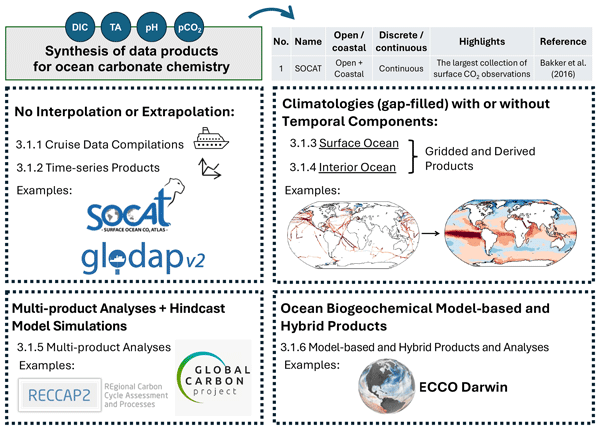
This review article provides an overview of 68 existing ocean carbonate chemistry data products and data product sets, encompassing a broad range of types, including compilations of cruise datasets, gap-filled observational products, model simulations, and more. It is designed to help researchers identify and access the data products that best support their scientific objectives, thereby facilitating progress in understanding the ocean's changing carbonate chemistry.
Pierre Friedlingstein, Michael O'Sullivan, Matthew W. Jones, Robbie M. Andrew, Judith Hauck, Peter Landschützer, Corinne Le Quéré, Hongmei Li, Ingrid T. Luijkx, Are Olsen, Glen P. Peters, Wouter Peters, Julia Pongratz, Clemens Schwingshackl, Stephen Sitch, Josep G. Canadell, Philippe Ciais, Robert B. Jackson, Simone R. Alin, Almut Arneth, Vivek Arora, Nicholas R. Bates, Meike Becker, Nicolas Bellouin, Carla F. Berghoff, Henry C. Bittig, Laurent Bopp, Patricia Cadule, Katie Campbell, Matthew A. Chamberlain, Naveen Chandra, Frédéric Chevallier, Louise P. Chini, Thomas Colligan, Jeanne Decayeux, Laique M. Djeutchouang, Xinyu Dou, Carolina Duran Rojas, Kazutaka Enyo, Wiley Evans, Amanda R. Fay, Richard A. Feely, Daniel J. Ford, Adrianna Foster, Thomas Gasser, Marion Gehlen, Thanos Gkritzalis, Giacomo Grassi, Luke Gregor, Nicolas Gruber, Özgür Gürses, Ian Harris, Matthew Hefner, Jens Heinke, George C. Hurtt, Yosuke Iida, Tatiana Ilyina, Andrew R. Jacobson, Atul K. Jain, Tereza Jarníková, Annika Jersild, Fei Jiang, Zhe Jin, Etsushi Kato, Ralph F. Keeling, Kees Klein Goldewijk, Jürgen Knauer, Jan Ivar Korsbakken, Xin Lan, Siv K. Lauvset, Nathalie Lefèvre, Zhu Liu, Junjie Liu, Lei Ma, Shamil Maksyutov, Gregg Marland, Nicolas Mayot, Patrick C. McGuire, Nicolas Metzl, Natalie M. Monacci, Eric J. Morgan, Shin-Ichiro Nakaoka, Craig Neill, Yosuke Niwa, Tobias Nützel, Lea Olivier, Tsuneo Ono, Paul I. Palmer, Denis Pierrot, Zhangcai Qin, Laure Resplandy, Alizée Roobaert, Thais M. Rosan, Christian Rödenbeck, Jörg Schwinger, T. Luke Smallman, Stephen M. Smith, Reinel Sospedra-Alfonso, Tobias Steinhoff, Qing Sun, Adrienne J. Sutton, Roland Séférian, Shintaro Takao, Hiroaki Tatebe, Hanqin Tian, Bronte Tilbrook, Olivier Torres, Etienne Tourigny, Hiroyuki Tsujino, Francesco Tubiello, Guido van der Werf, Rik Wanninkhof, Xuhui Wang, Dongxu Yang, Xiaojuan Yang, Zhen Yu, Wenping Yuan, Xu Yue, Sönke Zaehle, Ning Zeng, and Jiye Zeng
Earth Syst. Sci. Data, 17, 965–1039, https://doi.org/10.5194/essd-17-965-2025, https://doi.org/10.5194/essd-17-965-2025, 2025
Short summary
Short summary
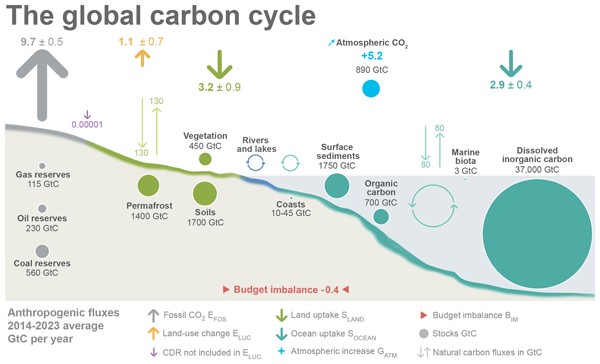
The Global Carbon Budget 2024 describes the methodology, main results, and datasets used to quantify the anthropogenic emissions of carbon dioxide (CO2) and their partitioning among the atmosphere, land ecosystems, and the ocean over the historical period (1750–2024). These living datasets are updated every year to provide the highest transparency and traceability in the reporting of CO2, the key driver of climate change.
Amanda R. Fay, David R. Munro, Galen A. McKinley, Denis Pierrot, Stewart C. Sutherland, Colm Sweeney, and Rik Wanninkhof
Earth Syst. Sci. Data, 16, 2123–2139, https://doi.org/10.5194/essd-16-2123-2024, https://doi.org/10.5194/essd-16-2123-2024, 2024
Short summary
Short summary
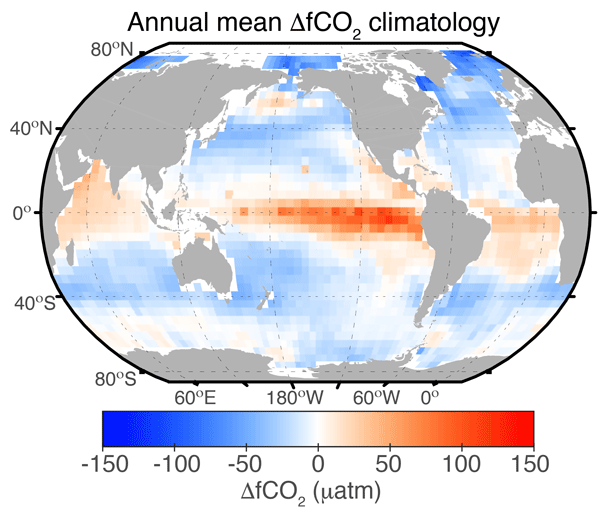
Presented here is a near-global monthly climatological estimate of the difference between atmosphere and ocean carbon dioxide concentrations. The ocean's ability to take up carbon, both now and in the future, is defined by this difference in concentrations. With over 30 million measurements of surface ocean carbon over the last 40 years and utilization of an extrapolation technique, a mean estimate of surface ocean ΔfCO2 is presented.
Thea H. Heimdal, Galen A. McKinley, Adrienne J. Sutton, Amanda R. Fay, and Lucas Gloege
Biogeosciences, 21, 2159–2176, https://doi.org/10.5194/bg-21-2159-2024, https://doi.org/10.5194/bg-21-2159-2024, 2024
Short summary
Short summary
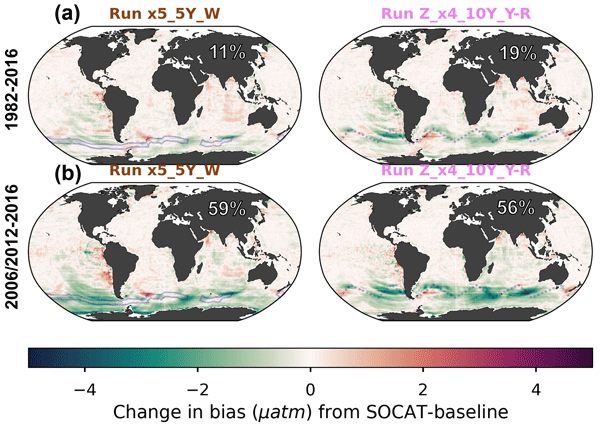
Measurements of ocean carbon are limited in time and space. Machine learning algorithms are therefore used to reconstruct ocean carbon where observations do not exist. Improving these reconstructions is important in order to accurately estimate how much carbon the ocean absorbs from the atmosphere. In this study, we find that a small addition of observations from the Southern Ocean, obtained by autonomous sampling platforms, could significantly improve the reconstructions.
Pierre Friedlingstein, Michael O'Sullivan, Robbie M. Andrew, Judith Hauck, Matthew W. Jones, Peter Landschützer, Corinne Le Quéré, Hongmei Li, Ingrid T. Luijkx, Are Olsen, Glen P. Peters, Wouter Peters, Julia Pongratz, Clemens Schwingshackl, Stephen Sitch, Josep G. Canadell, Philippe Ciais, Kjetil Aas, Simone R. Alin, Vivek Arora, Nicholas R. Bates, Kimberly Bedard, David Martin Belda, Nicolas Bellouin, Alice Benoit-Cattin, Carla F. Berghoff, Sarah Berthet, Laurent Bopp, Ida Bagus Mandhara Brasika, Eleanor Burke, Leon Casse, Matthew A. Chamberlain, Frédéric Chevallier, Louise P. Chini, Margot Cronin, Susan E. Curless, Tim DeVries, Tobias Ehmen, Matthew P. Enright, Kazutaka Enyo, Michael Erb, Wiley Evans, Amanda R. Fay, Ben Felzer, Daniel J. Ford, Adrianna Foster, Filippa Fransner, Agneta Fransson, Andrew Friedman, Thomas Gasser, Marion Gehlen, Thanos Gkritzalis, Giacomo Grassi, Luke Gregor, Nicolas Gruber, Özgür Gürses, Wensu Hao, Kirsty Harrington, Jens Heinke, George C. Hurtt, Tatiana Ilyina, Akihiko Ito, Andrew R. Jacobson, Atul K. Jain, Rajesh Janardanan, Tereza Jarníková, Annika Jersild, Fei Jiang, Zhe Jin, Linus Kamb, Etsushi Kato, Ralph F. Keeling, Kees Klein Goldewijk, Jürgen Knauer, Jan Ivar Korsbakken, Taro Kunimitsu, Xin Lan, Vladimir Lapin, Siv K. Lauvset, Simone Le Chevère, Woo-Sung Lee, Enhui Liao, Junjie Liu, Zhu Liu, Sebastiaan Luyssaert, Lei Ma, Suman Maity, Gregg Marland, Patrick C. McGuire, Nicolas Metzl, Juliette Mignot, Natalie M. Monacci, Eric J. Morgan, Jens D. Müller, David R. Munro, Miaki Muramatsu, Shin-Ichiro Nakaoka, Craig Neill, Tobias Nützel, Léa Olivier, Timothy Osborn, Xosé A. Padín, Paul I. Palmer, Sudhanshu Pandey, Denis Pierrot, Ben Poulter, Zhangcai Qin, Yumou Qiu, Gregor Rehder, Laure Resplandy, Christian Rödenbeck, Alizée Roobaert, Thais M. Rosan, Simone Rossi, Jörg Schwinger, Gereon Seeberg, Roland Séférian, Elisabeth H. Shadwick, Ingunn Skjelvan, Karolina Slominska-Durdasiak, T. Luke Smallman, Mohanan G Sreeush, Qing Sun, Adrienne J. Sutton, Colm Sweeney, Shintaro Takao, Hiroaki Tatebe, Jens Terhaar, Hanqin Tian, Bronte Tilbrook, Takahiro Toyoda, Joaquin A. Triñanes, Francesco Tubiello, Guido R. van der Werf, Auke van der Woude, Sebastiaan J. van de Velde, Anthony P. Walker, Rik Wanninkhof, Xiaojuan Yang, Wenping Yuan, Xu Yue, Jiye Zeng, Ning Zheng, and Bo Zheng
Earth Syst. Sci. Data Discuss., https://doi.org/10.5194/essd-2026-895, https://doi.org/10.5194/essd-2026-895, 2026
Preprint under review for ESSD
Short summary
Short summary
The Global Carbon Budget 2026 describes the methodology, main results, and datasets used to quantify the anthropogenic emissions of carbon dioxide (CO2) and their partitioning among the atmosphere, land ecosystems, and the ocean over the historical period (1750–2026). These living datasets are updated every year to provide the highest transparency and traceability in the reporting of CO2, the key driver of climate change.
Michael Jacox, Dmitry Dukhovskoy, Jessie Liu, Michael Alexander, Elizabeth Drenkard, Andrew Ross, Natalie Freeman, Dillon Amaya, Steven Bograd, Allison Cluett, Nicole Lovenduski, Samuel Mogen, Mercedes Pozo Buil, Charles Stock, Wei Cheng, Albert Hermann, Liwei Jia, Nathaniel Johnson, Kelly Kearney, Colleen McHugh, and Darren Pilcher
EGUsphere, https://doi.org/10.5194/egusphere-2026-5844, https://doi.org/10.5194/egusphere-2026-5844, 2026
This preprint is open for discussion and under review for Ocean Science (OS).
Short summary
Short summary
We present a new system to predict conditions in the Northeast Pacific Ocean up to one year in advance. By comparing past forecasts with ocean measurements, we show that we can accurately predict temperature and oxygen levels several months in advance. These predictions will soon be available to the public, enabling coastal communities, managers, and industries to make better proactive decisions.
Mark J. Hopwood, Raphaël Savelli, Martha Gledhill, Dustin Carroll, Laramie Jensen, and Stephanie Dutkiewicz
EGUsphere, https://doi.org/10.5194/egusphere-2026-5351, https://doi.org/10.5194/egusphere-2026-5351, 2026
This preprint is open for discussion and under review for Biogeosciences (BG).
Short summary
Short summary
A long-standing hypothesis is that rivers have little direct relevance to the biogeochemistry of dissolved Fe in the ocean. Efficient removal of Fe in estuaries is thought to limit transfer of riverine Fe to offshore ecosystems. However, recent observations in the Arctic and South Atlantic suggest rivers are dominant Fe sources to these ocean regions. The observed Fe-rich river plumes are absent in biogeochemical models, indicating a refinement of budget and model representations is needed.
Joseph K. Ansong, Brian K. Arbic, Romain Bourdalle-Badié, Clément Bricaud, Jérôme Chanut, Dimitris Menemenlis, Richard D. Ray, Michael Schindelegger, Alan J. Wallcraft, He Wang, Alistair J. Adcroft, Frédéric Briol, Maarten C. Buijsman, Loren Carrère, Eric P. Chassignet, Gerald Dibarboure, Robert W. Hallberg, Christopher N. Hill, Ariane Koch-Larrouy, Florent Lyard, Matthew R. Mazloff, An T. Nguyen, Nicolas Picot, Rui M. Ponte, and Jay F. Shriver
EGUsphere, https://doi.org/10.5194/egusphere-2026-5064, https://doi.org/10.5194/egusphere-2026-5064, 2026
This preprint is open for discussion and under review for Ocean Science (OS).
Short summary
Short summary
We assess how well four high-resolution global ocean models reproduce surface and internal tides compared with satellite observations. Some models produce internal tides that are too strong, but including energy loss over rough seafloor improves their accuracy. Longer model records and higher resolution also improve agreement with observations. We further identify errors in the tidal forcing of widely used MITgcm simulations that reduce the accuracy of their simulated tides.
Cara Nissen, Alison R. Gray, Nicole S. Lovenduski, Mathew Maltrud, and LeAnn Conlon
EGUsphere, https://doi.org/10.5194/egusphere-2026-4623, https://doi.org/10.5194/egusphere-2026-4623, 2026
Short summary
Short summary
Monthly 1°x1° gridded products of surface seawater partial pressure of carbon dioxide (pCO2) are routinely used to detect change in Southern Ocean carbon cycling, but we do not know the sampling error due to incomplete observational coverage at the monthly 1°x1° scale. Using synthetic observations from an ocean model, we estimate the pCO2 sampling error to be 13–14 μatm and negative in sign. Our findings imply that oceanic CO2 uptake derived from available pCO2 observations is biased high.
Michael Dominik Tyka, Mengyang Zhou, Elizabeth Yankovsky, and Dustin Carroll
Biogeosciences, 23, 4943–4966, https://doi.org/10.5194/bg-23-4943-2026, https://doi.org/10.5194/bg-23-4943-2026, 2026
Short summary
Short summary
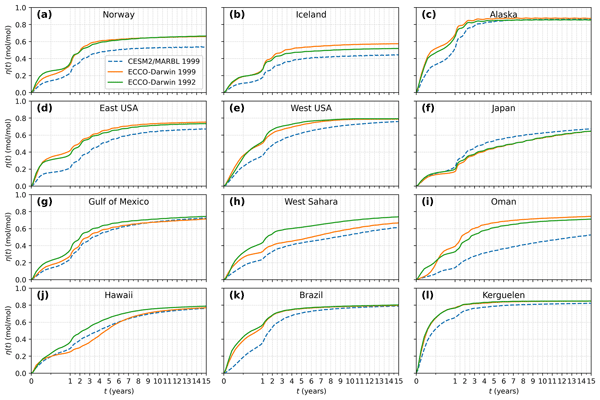
Quantification of the kinetics of the induced ocean CO2 uptake following application of marine carbon dioxide removal technologies (mCDR) is crucial for such technologies to gain scientific and social acceptance. Here, we compare two circulation models commonly used for this purpose and find substantial differences in their predictions. We analyze which physical aspects of the models contribute the most to the inter-model discrepancies, and thus require future research.
Skyler Kern, Mary E. McGuinn, Katherine M. Smith, Nadia Pinardi, Kyle E. Niemeyer, Nicole S. Lovenduski, and Peter E. Hamlington
Geosci. Model Dev., 19, 5601–5622, https://doi.org/10.5194/gmd-19-5601-2026, https://doi.org/10.5194/gmd-19-5601-2026, 2026
Short summary
Short summary
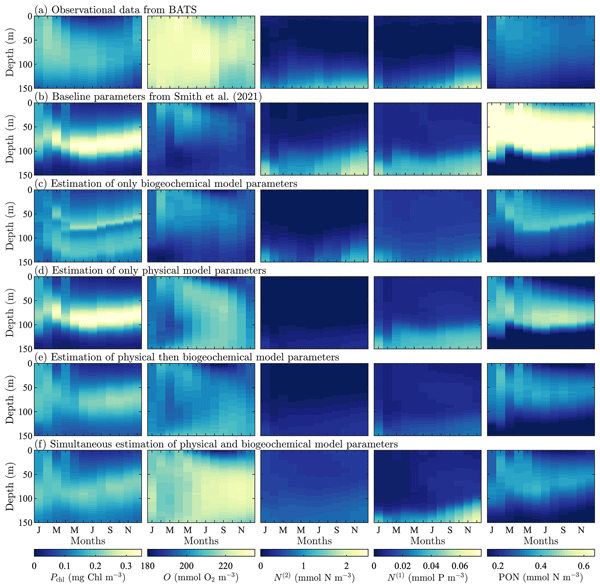
The parameters that control a model's behavior determine its ability to represent a system. In this work, multiple cases test how to estimate the parameters of a model with components corresponding to both the physics and the chemical and biological processes (i.e. the biogeochemistry) of the ocean. While demonstrating how to approach this problem type, the results show estimating both sets of parameters simultaneously is better than estimating the physics then the biogeochemistry separately.
Suki C. K. Wong, Galen A. McKinley, Richard Seager, Tess Wei-Ping Jacobson, Amanda Fay, Özgür Gürses, Nicolas Gruber, Tatiana Ilyina, Tereza Jarnikova, Laure Resplandy, Jörg Schwinger, and Roland Séférian
EGUsphere, https://doi.org/10.5194/egusphere-2026-3104, https://doi.org/10.5194/egusphere-2026-3104, 2026
Short summary
Short summary
The ocean absorbs nearly a third of human-made carbon dioxide, slowing climate change. This uptake varies from decade to decade for reasons we do not fully understand. Using a 66-year ocean carbon dataset, we found that the tropical Pacific and Southern Ocean drive this variability, in step with broader climate patterns across the Pacific. But these patterns cannot fully explain the recent weakening of the Southern Ocean sink, suggesting biological processes may also play an important role.
Pierre Friedlingstein, Michael O'Sullivan, Matthew W. Jones, Robbie M. Andrew, Dorothee C. E. Bakker, Judith Hauck, Peter Landschützer, Corinne Le Quéré, Hongmei Li, Ingrid T. Luijkx, Glen P. Peters, Wouter Peters, Julia Pongratz, Clemens Schwingshackl, Stephen Sitch, Josep G. Canadell, Philippe Ciais, Kjetil Aas, Simone R. Alin, Peter Anthoni, Leticia Barbero, Nicholas R. Bates, Nicolas Bellouin, Alice Benoit-Cattin, Carla F. Berghoff, Raffaele Bernardello, Laurent Bopp, Ida Bagus Mandhara Brasika, Matthew A. Chamberlain, Naveen Chandra, Frédéric Chevallier, Louise P. Chini, Nathan O. Collier, Thomas H. Colligan, Margot Cronin, Laique M. Djeutchouang, Xinyu Dou, Matt P. Enright, Kazutaka Enyo, Michael Erb, Wiley Evans, Richard A. Feely, Liang Feng, Daniel J. Ford, Adrianna Foster, Filippa Fransner, Thomas Gasser, Marion Gehlen, Thanos Gkritzalis, Jefferson Goncalves De Souza, Giacomo Grassi, Luke Gregor, Nicolas Gruber, Bertrand Guenet, Özgür Gürses, Kirsty Harrington, Ian Harris, Jens Heinke, George C. Hurtt, Yosuke Iida, Tatiana Ilyina, Akihiko Ito, Andrew R. Jacobson, Atul K. Jain, Tereza Jarníková, Annika Jersild, Fei Jiang, Steve D. Jones, Etsushi Kato, Ralph F. Keeling, Kees Klein Goldewijk, Jürgen Knauer, Yawen Kong, Jan Ivar Korsbakken, Charles Koven, Taro Kunimitsu, Xin Lan, Junjie Liu, Zhiqiang Liu, Zhu Liu, Claire Lo Monaco, Lei Ma, Gregg Marland, Patrick C. McGuire, Galen A. McKinley, Joe R. Melton, Natalie Monacci, Erwan Monier, Eric J. Morgan, David R. Munro, Jens D. Müller, Shin-Ichiro Nakaoka, Lorna R. Nayagam, Yosuke Niwa, Tobias Nutzel, Are Olsen, Abdirahman M. Omar, Naiqing Pan, Sudhanshu Pandey, Denis Pierrot, Zhangcai Qin, Pierre Regnier, Gregor Rehder, Laure Resplandy, Alizée Roobaert, Thais M. Rosan, Christian Rödenbeck, Jörg Schwinger, Ingunn Skjelvan, T. Luke Smallman, Victoria Spada, Mohanan G. Sreeush, Qing Sun, Adrienne J. Sutton, Colm Sweeney, Didier Swingedouw, Roland Séférian, Shintaro Takao, Hiroaki Tatebe, Hanqin Tian, Xiangjun Tian, Bronte Tilbrook, Hiroyuki Tsujino, Francesco Tubiello, Erik van Ooijen, Guido R. van der Werf, Sebastiaan J. van de Velde, Anthony P. Walker, Rik Wanninkhof, Xiaojuan Yang, Wenping Yuan, Xu Yue, and Jiye Zeng
Earth Syst. Sci. Data, 18, 3211–3288, https://doi.org/10.5194/essd-18-3211-2026, https://doi.org/10.5194/essd-18-3211-2026, 2026
Short summary
Short summary
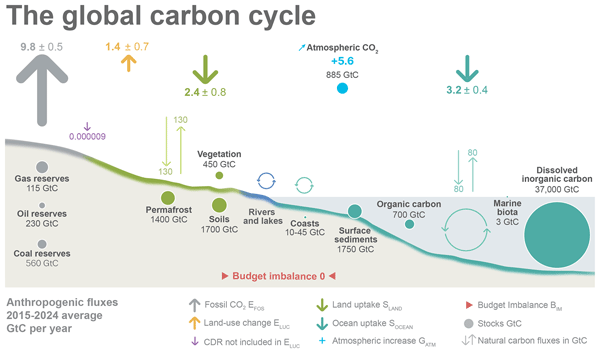
The Global Carbon Budget 2025 describes the methodology, main results, and datasets used to quantify the anthropogenic emissions of carbon dioxide (CO2) and their partitioning among the atmosphere, land ecosystems, and the ocean over the historical period (1750–2025). These living datasets are updated every year to provide the highest transparency and traceability in the reporting of CO2, the key driver of climate change.
Claire K. Yung, Xylar S. Asay-Davis, Alistair Adcroft, Christopher Y. S. Bull, Jan De Rydt, Michael S. Dinniman, Benjamin K. Galton-Fenzi, Daniel Goldberg, David E. Gwyther, Robert Hallberg, Matthew Harrison, Tore Hattermann, David M. Holland, Denise Holland, Paul R. Holland, James R. Jordan, Nicolas C. Jourdain, Kazuya Kusahara, Gustavo Marques, Pierre Mathiot, Dimitris Menemenlis, Adele K. Morrison, Yoshihiro Nakayama, Olga Sergienko, Robin S. Smith, Alon Stern, Ralph Timmermann, and Qin Zhou
The Cryosphere, 20, 2053–2088, https://doi.org/10.5194/tc-20-2053-2026, https://doi.org/10.5194/tc-20-2053-2026, 2026
Short summary
Short summary
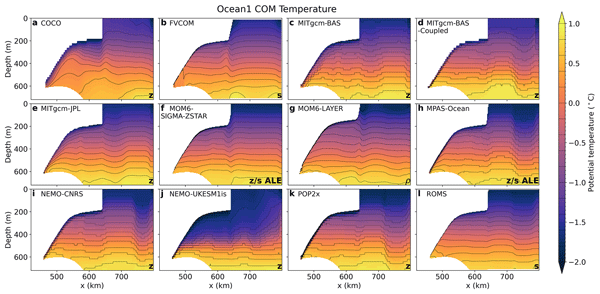
The second Ice Shelf-Ocean Model Intercomparison Project, ISOMIP+, compares 12 ice shelf-ocean models with a common, idealised, static configuration, aiming to assess inter-model variability. Models show similar basal melt rate patterns, ocean profiles and circulation but differ in ice-ocean boundary layer properties. Ice-ocean boundary layer representation is a key area for future work, as are realistic-domain ice sheet-ocean model intercomparisons.

Hinne F. van der Zant, Olivier Sulpis, Jack J. Middelburg, Matthew P. Humphreys, Raphaël Savelli, Dustin Carroll, Dimitris Menemenlis, Kay Sušelj, and Vincent Le Fouest
Geosci. Model Dev., 19, 1965–1989, https://doi.org/10.5194/gmd-19-1965-2026, https://doi.org/10.5194/gmd-19-1965-2026, 2026
Short summary
Short summary
We developed a model to simulate seafloor biogeochemical processes across a wide range of marine environments, from shallow coastal zones to deep-sea sediments. From this model, we derived a set of simple equations that predict how carbon, oxygen, and alkalinity are exchanged between sediments and overlying waters. These equations provide an efficient way to improve how ocean models represent seafloor interactions, which are often missing or overly simplified.
Li-Qing Jiang, Amanda Fay, Jens Daniel Müller, Luke Gregor, Alizée Roobaert, Lydia Keppler, Dustin Carroll, Siv K. Lauvset, Tim DeVries, Judith Hauck, Christian Rödenbeck, Nicolas Metzl, Andrea J. Fassbender, Jean-Pierre Gattuso, Peter Landschützer, Rik Wanninkhof, Christopher Sabine, Simone R. Alin, Mario Hoppema, Are Olsen, Matthew P. Humphreys, Kunal Chakraborty, Ana C. Franco, Kumiko Azetsu-Scott, Dorothee C. E. Bakker, Leticia Barbero, Nicholas R. Bates, Nicole Besemer, Henry C. Bittig, Albert E. Boyd, Daniel Broullón, Wei-Jun Cai, Brendan R. Carter, Thi-Tuyet-Trang Chau, Chen-Tung Arthur Chen, Frédéric Cyr, John E. Dore, Ian Enochs, Richard A. Feely, Hernan E. Garcia, Marion Gehlen, Prasanna Kanti Ghoshal, Lucas Gloege, Melchor González-Dávila, Nicolas Gruber, Debby Ianson, Yosuke Iida, Masao Ishii, Apurva Padamnabh Joshi, Esther Kennedy, Alex Kozyr, Nico Lange, Claire Lo Monaco, Derek P. Manzello, Galen A. McKinley, Natalie M. Monacci, Xose A. Padin, Ana M. Palacio-Castro, Fiz F. Pérez, J. Magdalena Santana-Casiano, Jonathan Sharp, Adrienne Sutton, Jim Swift, Toste Tanhua, Maciej Telszewski, Jens Terhaar, Ruben van Hooidonk, Anton Velo, Andrew J. Watson, Angelicque E. White, Zelun Wu, Liang Xue, Hyelim Yoo, Jiye Zeng, and Guorong Zhong
Earth Syst. Sci. Data, 18, 1405–1462, https://doi.org/10.5194/essd-18-1405-2026, https://doi.org/10.5194/essd-18-1405-2026, 2026
Short summary
Short summary
This review article provides an overview of 68 existing ocean carbonate chemistry data products and data product sets, encompassing a broad range of types, including compilations of cruise datasets, gap-filled observational products, model simulations, and more. It is designed to help researchers identify and access the data products that best support their scientific objectives, thereby facilitating progress in understanding the ocean's changing carbonate chemistry.
Yoshihiro Nakayama, Shuntaro Hyogo, Yichen Lin, Taewook Park, Jinho Lee, Juistine Caillet, Gobishankar Mohan, Mattia Poinelli, Pierre Dutrieux, Kazuki Nakata, Hong Zhang, Brice Loose, and Lauren Kowalski
EGUsphere, https://doi.org/10.5194/egusphere-2025-5958, https://doi.org/10.5194/egusphere-2025-5958, 2026
Short summary
Short summary
We develop a regional ocean model of the Amundsen and Bellingshausen Seas in Antarctica. Differences in model setups and parameter choices often limit usability and broader scientific application, especially for non-ocean modellers. We carefully evaluate the model outputs and establish a common control experiment that can be shared and applied across studies with tracer and particle applications. This effort aims to support wide community use and improve understanding of ice–ocean interactions.

Raphaël Savelli, Dustin Carroll, Dimitris Menemenlis, Jonathan M. Lauderdale, Clément Bertin, Stephanie Dutkiewicz, Manfredi Manizza, A. Anthony Bloom, Karel Castro-Morales, Charles E. Miller, Marc Simard, Kevin W. Bowman, and Hong Zhang
Geosci. Model Dev., 19, 867–885, https://doi.org/10.5194/gmd-19-867-2026, https://doi.org/10.5194/gmd-19-867-2026, 2026
Short summary
Short summary
Accounting for carbon and nutrients in rivers is essential for resolving carbon dioxide (CO2) exchanges between the ocean and the atmosphere. In this study, we add the effect of present-day rivers to a pioneering global-ocean biogeochemistry model. This study highlights the challenge for global ocean numerical models to cover the complexity of the flow of water and carbon across the Land-to-Ocean Aquatic Continuum.
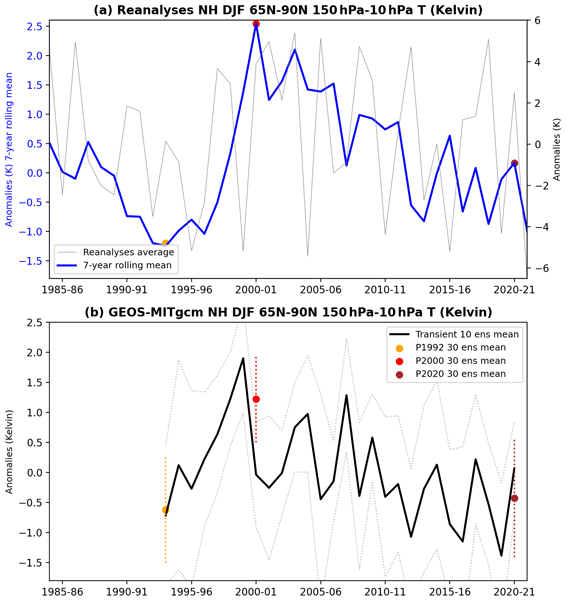
Abdullah A. Fahad, Andrea Molod, Krzysztof Wargan, Dimitris Menemenlis, Patrick Heimbach, Atanas Trayanov, Ehud Strobach, and Lawrence Coy
Atmos. Chem. Phys., 26, 647–663, https://doi.org/10.5194/acp-26-647-2026, https://doi.org/10.5194/acp-26-647-2026, 2026
Short summary
Short summary
This study used reanalysis datasets and a 1-degree coupled General Circulation Model to analyze the Northern Hemisphere stratospheric temperature response in a decadal simulation. Results show that the polar stratospheric temperature increased from 1992 to 2000, contrary to the expectation of stratospheric cooling due to rising CO2. The study concluded that changes in ozone and CO2 drive the meridional eddy heat transport, dictating polar stratospheric temperature behavior.
Jean-Francois Lamarque, Pierre Friedlingstein, Brian Osias, Steve Strongin, Venkatramani Balaji, Kevin W. Bowman, Josep G. Canadell, Philippe Ciais, Heidi Cullen, Kenneth J. Davis, Scott C. Doney, Kevin R. Gurney, Alicia R. Karspeck, Charles D. Koven, Galen McKinley, Glen P. Peters, Julia Pongratz, Britt Stephens, and Colm Sweeney
EGUsphere, https://doi.org/10.5194/egusphere-2025-6457, https://doi.org/10.5194/egusphere-2025-6457, 2026
Short summary
Short summary
This Perspective highlights requirements to scale the carbon credit market and enable the growth in climate solutions funded through such market. The requirements are on the understanding of the value of the proposed carbon credit projects, and on the availability of a verification system. This verification becomes particularly relevant as the carbon credit market scales to significant impacts on CO2 (or other greenhouse gases), such that attribution to collective actions can be identified.
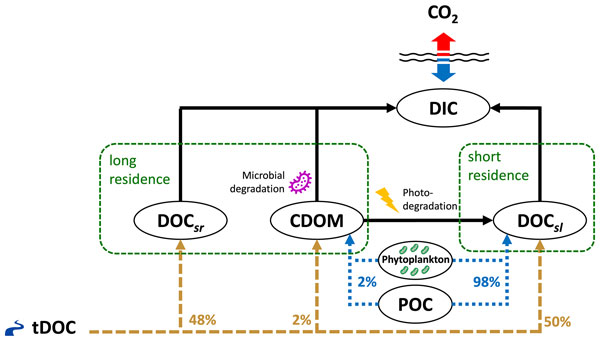
Clément Bertin, Vincent Le Fouest, Dustin Carroll, Stephanie Dutkiewicz, Dimitris Menemenlis, Atsushi Matsuoka, Manfredi Manizza, and Charles E. Miller
Biogeosciences, 22, 6607–6629, https://doi.org/10.5194/bg-22-6607-2025, https://doi.org/10.5194/bg-22-6607-2025, 2025
Short summary
Short summary
We adjusted a model of the Mackenzie River region to account for the riverine export of organic matter that affects light in the water. We show that such export causes a delay in the phytoplankton growth by two weeks and raises the water surface temperature by 1.7 °C. We found that temperature increase turns this coastal region from a sink of carbon dioxide to an emitter. Our findings suggest that rising exports of organic matter can significantly affect the carbon cycle in Arctic coastal areas.
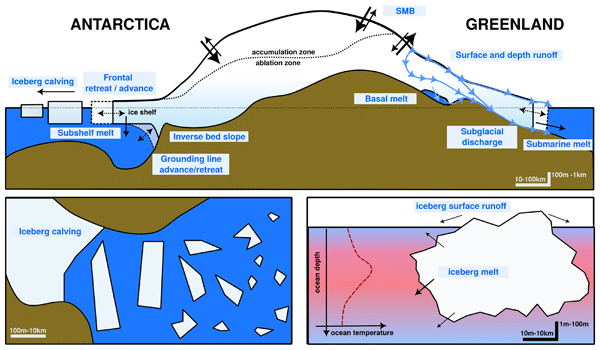
Gavin A. Schmidt, Kenneth D. Mankoff, Jonathan L. Bamber, Clara Burgard, Dustin Carroll, David M. Chandler, Violaine Coulon, Benjamin J. Davison, Matthew H. England, Paul R. Holland, Nicolas C. Jourdain, Qian Li, Juliana M. Marson, Pierre Mathiot, Clive R. McMahon, Twila A. Moon, Ruth Mottram, Sophie Nowicki, Anna Olivé Abelló, Andrew G. Pauling, Thomas Rackow, and Damien Ringeisen
Geosci. Model Dev., 18, 8333–8361, https://doi.org/10.5194/gmd-18-8333-2025, https://doi.org/10.5194/gmd-18-8333-2025, 2025
Short summary
Short summary
The impact of increasing mass loss from the Greenland and Antarctic ice sheets has not so far been included in historical climate model simulations. This paper describes the protocols and data available for modeling groups to add this anomalous freshwater to their ocean modules to better represent the impacts of these fluxes on ocean circulation, sea ice, salinity and sea level.
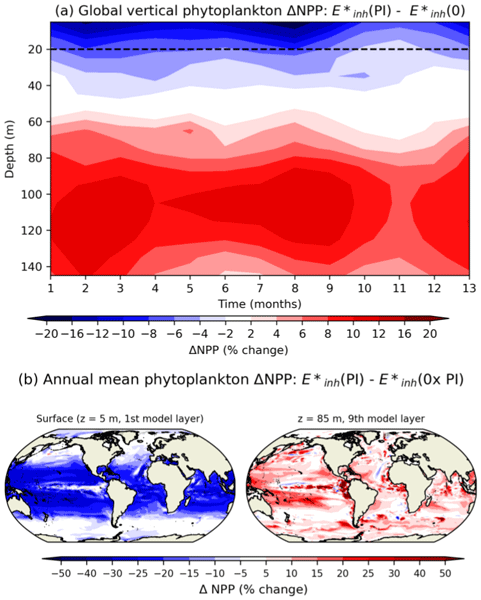
Joshua Coupe, Nicole S. Lovenduski, Luise S. Gleason, Michael N. Levy, Kristen Krumhardt, Keith Lindsay, Charles Bardeen, Clay Tabor, Cheryl Harrison, Kenneth G. MacLeod, Siddhartha Mitra, and Julio Sepúlveda
Geosci. Model Dev., 18, 8217–8234, https://doi.org/10.5194/gmd-18-8217-2025, https://doi.org/10.5194/gmd-18-8217-2025, 2025
Short summary
Short summary
We have developed a new feature in the atmosphere and ocean components of the Community Earth System Model version 2 by implementing ultraviolet (UV) radiation inhibition of photosynthesis of four marine phytoplankton functional groups represented in the Marine Biogeochemistry Library. The new feature is tested with varying levels of UV radiation, and it will enable an analysis of an asteroid impact’s effect on the ozone layer and how that affects the base of the marine food web.
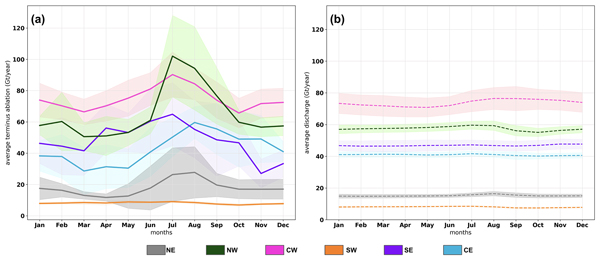
Aman KC, Ellyn M. Enderlin, Dominik Fahrner, Twila Moon, and Dustin Carroll
The Cryosphere, 19, 3089–3106, https://doi.org/10.5194/tc-19-3089-2025, https://doi.org/10.5194/tc-19-3089-2025, 2025
Short summary
Short summary
The sum of ice flowing towards a glacier’s terminus and changes in the position of the terminus over time collectively makes up terminus ablation. We found that terminus ablation has more seasonal variability than previously concluded from flux-based estimates of ice discharge. The findings are of importance in understanding the timing and location of the freshwater input to the fjords and surrounding ocean basins affecting local and regional ecosystems and ocean properties.
Malik J. Jordan, Emily F. Klee, Peter E. Hamlington, Nicole S. Lovenduski, and Kyle E. Niemeyer
EGUsphere, https://doi.org/10.5194/egusphere-2025-2901, https://doi.org/10.5194/egusphere-2025-2901, 2025
Preprint archived
Short summary
Short summary
We developed a method to simplify complex ocean biogeochemical models so they can run faster in computer simulations without losing important details. By adapting techniques from combustion science, we created smaller versions of a large ocean model that still accurately represent key changes in ocean biology and chemistry. This work helps make detailed ocean simulations more efficient, supporting better understanding of ocean health and climate.
Pierre Friedlingstein, Michael O'Sullivan, Matthew W. Jones, Robbie M. Andrew, Judith Hauck, Peter Landschützer, Corinne Le Quéré, Hongmei Li, Ingrid T. Luijkx, Are Olsen, Glen P. Peters, Wouter Peters, Julia Pongratz, Clemens Schwingshackl, Stephen Sitch, Josep G. Canadell, Philippe Ciais, Robert B. Jackson, Simone R. Alin, Almut Arneth, Vivek Arora, Nicholas R. Bates, Meike Becker, Nicolas Bellouin, Carla F. Berghoff, Henry C. Bittig, Laurent Bopp, Patricia Cadule, Katie Campbell, Matthew A. Chamberlain, Naveen Chandra, Frédéric Chevallier, Louise P. Chini, Thomas Colligan, Jeanne Decayeux, Laique M. Djeutchouang, Xinyu Dou, Carolina Duran Rojas, Kazutaka Enyo, Wiley Evans, Amanda R. Fay, Richard A. Feely, Daniel J. Ford, Adrianna Foster, Thomas Gasser, Marion Gehlen, Thanos Gkritzalis, Giacomo Grassi, Luke Gregor, Nicolas Gruber, Özgür Gürses, Ian Harris, Matthew Hefner, Jens Heinke, George C. Hurtt, Yosuke Iida, Tatiana Ilyina, Andrew R. Jacobson, Atul K. Jain, Tereza Jarníková, Annika Jersild, Fei Jiang, Zhe Jin, Etsushi Kato, Ralph F. Keeling, Kees Klein Goldewijk, Jürgen Knauer, Jan Ivar Korsbakken, Xin Lan, Siv K. Lauvset, Nathalie Lefèvre, Zhu Liu, Junjie Liu, Lei Ma, Shamil Maksyutov, Gregg Marland, Nicolas Mayot, Patrick C. McGuire, Nicolas Metzl, Natalie M. Monacci, Eric J. Morgan, Shin-Ichiro Nakaoka, Craig Neill, Yosuke Niwa, Tobias Nützel, Lea Olivier, Tsuneo Ono, Paul I. Palmer, Denis Pierrot, Zhangcai Qin, Laure Resplandy, Alizée Roobaert, Thais M. Rosan, Christian Rödenbeck, Jörg Schwinger, T. Luke Smallman, Stephen M. Smith, Reinel Sospedra-Alfonso, Tobias Steinhoff, Qing Sun, Adrienne J. Sutton, Roland Séférian, Shintaro Takao, Hiroaki Tatebe, Hanqin Tian, Bronte Tilbrook, Olivier Torres, Etienne Tourigny, Hiroyuki Tsujino, Francesco Tubiello, Guido van der Werf, Rik Wanninkhof, Xuhui Wang, Dongxu Yang, Xiaojuan Yang, Zhen Yu, Wenping Yuan, Xu Yue, Sönke Zaehle, Ning Zeng, and Jiye Zeng
Earth Syst. Sci. Data, 17, 965–1039, https://doi.org/10.5194/essd-17-965-2025, https://doi.org/10.5194/essd-17-965-2025, 2025
Short summary
Short summary
The Global Carbon Budget 2024 describes the methodology, main results, and datasets used to quantify the anthropogenic emissions of carbon dioxide (CO2) and their partitioning among the atmosphere, land ecosystems, and the ocean over the historical period (1750–2024). These living datasets are updated every year to provide the highest transparency and traceability in the reporting of CO2, the key driver of climate change.
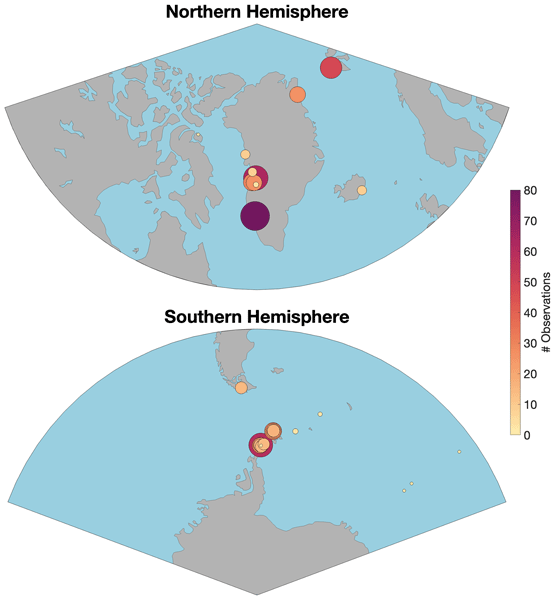
Jana Krause, Dustin Carroll, Juan Höfer, Jeremy Donaire, Eric P. Achterberg, Emilio Alarcón, Te Liu, Lorenz Meire, Kechen Zhu, and Mark J. Hopwood
The Cryosphere, 18, 5735–5752, https://doi.org/10.5194/tc-18-5735-2024, https://doi.org/10.5194/tc-18-5735-2024, 2024
Short summary
Short summary
Here we analysed calved ice samples from both the Arctic and Antarctic to assess the variability in the composition of iceberg meltwater. Our results suggest that low concentrations of nitrate and phosphate in ice are primarily from the ice matrix, whereas sediment-rich layers impart a low concentration of silica and modest concentrations of iron and manganese. At a global scale, there are very limited differences in the nutrient composition of ice.
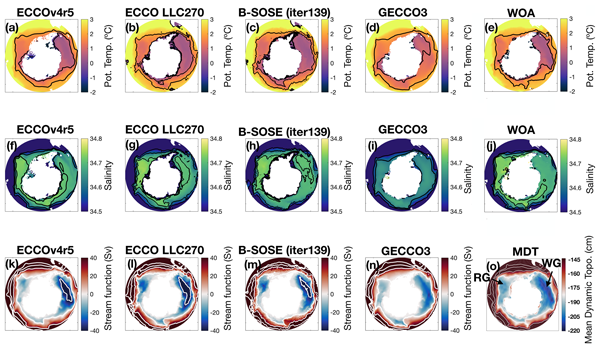
Yoshihiro Nakayama, Alena Malyarenko, Hong Zhang, Ou Wang, Matthis Auger, Yafei Nie, Ian Fenty, Matthew Mazloff, Armin Köhl, and Dimitris Menemenlis
Geosci. Model Dev., 17, 8613–8638, https://doi.org/10.5194/gmd-17-8613-2024, https://doi.org/10.5194/gmd-17-8613-2024, 2024
Short summary
Short summary
Global- and basin-scale ocean reanalyses are becoming easily accessible. However, such ocean reanalyses are optimized for their entire model domains and their ability to simulate the Southern Ocean requires evaluation. We conduct intercomparison analyses of Massachusetts Institute of Technology General Circulation Model (MITgcm)-based ocean reanalyses. They generally perform well for the open ocean, but open-ocean temporal variability and Antarctic continental shelves require improvements.
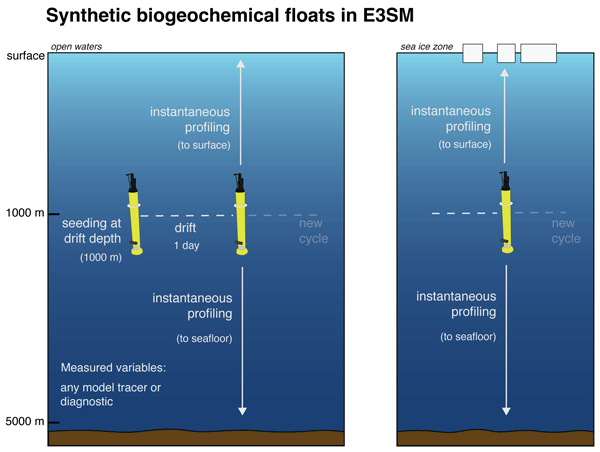
Cara Nissen, Nicole S. Lovenduski, Mathew Maltrud, Alison R. Gray, Yohei Takano, Kristen Falcinelli, Jade Sauvé, and Katherine Smith
Geosci. Model Dev., 17, 6415–6435, https://doi.org/10.5194/gmd-17-6415-2024, https://doi.org/10.5194/gmd-17-6415-2024, 2024
Short summary
Short summary
Autonomous profiling floats have provided unprecedented observational coverage of the global ocean, but uncertainties remain about whether their sampling frequency and density capture the true spatiotemporal variability of physical, biogeochemical, and biological properties. Here, we present the novel synthetic biogeochemical float capabilities of the Energy Exascale Earth System Model version 2 and demonstrate their utility as a test bed to address these uncertainties.
Amanda R. Fay, David R. Munro, Galen A. McKinley, Denis Pierrot, Stewart C. Sutherland, Colm Sweeney, and Rik Wanninkhof
Earth Syst. Sci. Data, 16, 2123–2139, https://doi.org/10.5194/essd-16-2123-2024, https://doi.org/10.5194/essd-16-2123-2024, 2024
Short summary
Short summary
Presented here is a near-global monthly climatological estimate of the difference between atmosphere and ocean carbon dioxide concentrations. The ocean's ability to take up carbon, both now and in the future, is defined by this difference in concentrations. With over 30 million measurements of surface ocean carbon over the last 40 years and utilization of an extrapolation technique, a mean estimate of surface ocean ΔfCO2 is presented.
Thea H. Heimdal, Galen A. McKinley, Adrienne J. Sutton, Amanda R. Fay, and Lucas Gloege
Biogeosciences, 21, 2159–2176, https://doi.org/10.5194/bg-21-2159-2024, https://doi.org/10.5194/bg-21-2159-2024, 2024
Short summary
Short summary
Measurements of ocean carbon are limited in time and space. Machine learning algorithms are therefore used to reconstruct ocean carbon where observations do not exist. Improving these reconstructions is important in order to accurately estimate how much carbon the ocean absorbs from the atmosphere. In this study, we find that a small addition of observations from the Southern Ocean, obtained by autonomous sampling platforms, could significantly improve the reconstructions.
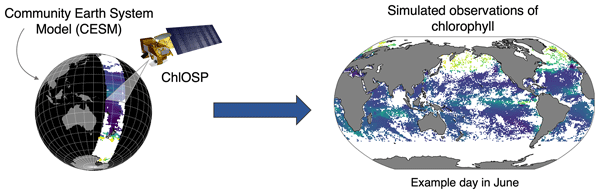
Genevieve L. Clow, Nicole S. Lovenduski, Michael N. Levy, Keith Lindsay, and Jennifer E. Kay
Geosci. Model Dev., 17, 975–995, https://doi.org/10.5194/gmd-17-975-2024, https://doi.org/10.5194/gmd-17-975-2024, 2024
Short summary
Short summary
Satellite observations of chlorophyll allow us to study marine phytoplankton on a global scale; yet some of these observations are missing due to clouds and other issues. To investigate the impact of missing data, we developed a satellite simulator for chlorophyll in an Earth system model. We found that missing data can impact the global mean chlorophyll by nearly 20 %. The simulated observations provide a more direct comparison to real-world data and can be used to improve model validation.
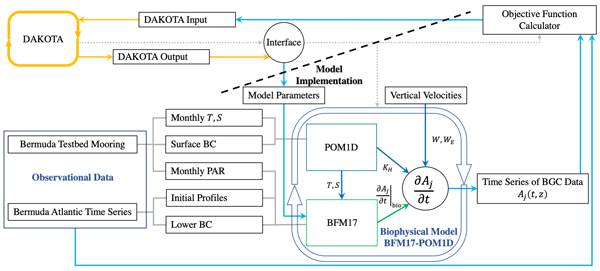
Skyler Kern, Mary E. McGuinn, Katherine M. Smith, Nadia Pinardi, Kyle E. Niemeyer, Nicole S. Lovenduski, and Peter E. Hamlington
Geosci. Model Dev., 17, 621–649, https://doi.org/10.5194/gmd-17-621-2024, https://doi.org/10.5194/gmd-17-621-2024, 2024
Short summary
Short summary
Computational models are used to simulate the behavior of marine ecosystems. The models often have unknown parameters that need to be calibrated to accurately represent observational data. Here, we propose a novel approach to simultaneously determine a large set of parameters for a one-dimensional model of a marine ecosystem in the surface ocean at two contrasting sites. By utilizing global and local optimization techniques, we estimate many parameters in a computationally efficient manner.
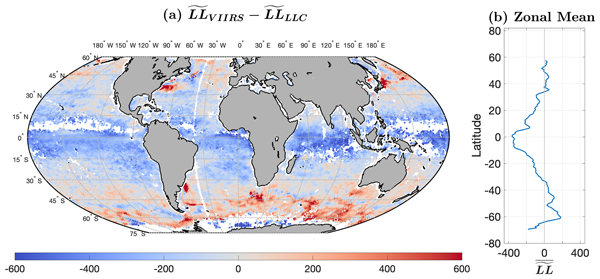
Katharina Gallmeier, J. Xavier Prochaska, Peter Cornillon, Dimitris Menemenlis, and Madolyn Kelm
Geosci. Model Dev., 16, 7143–7170, https://doi.org/10.5194/gmd-16-7143-2023, https://doi.org/10.5194/gmd-16-7143-2023, 2023
Short summary
Short summary
This paper introduces an approach to evaluate numerical models of ocean circulation. We compare the structure of satellite-derived sea surface temperature anomaly (SSTa) instances determined by a machine learning algorithm at 10–80 km scales to those output by a high-resolution MITgcm run. The simulation over much of the ocean reproduces the observed distribution of SSTa patterns well. This general agreement, alongside a few notable exceptions, highlights the potential of this approach.
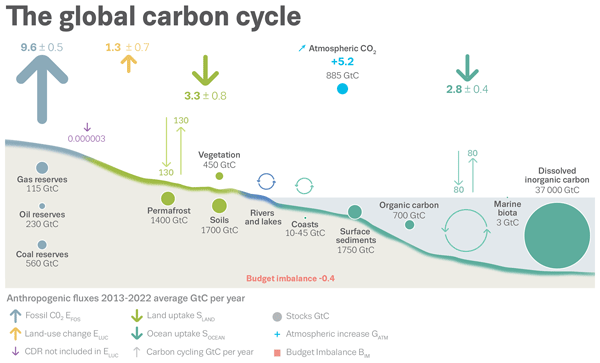
Pierre Friedlingstein, Michael O'Sullivan, Matthew W. Jones, Robbie M. Andrew, Dorothee C. E. Bakker, Judith Hauck, Peter Landschützer, Corinne Le Quéré, Ingrid T. Luijkx, Glen P. Peters, Wouter Peters, Julia Pongratz, Clemens Schwingshackl, Stephen Sitch, Josep G. Canadell, Philippe Ciais, Robert B. Jackson, Simone R. Alin, Peter Anthoni, Leticia Barbero, Nicholas R. Bates, Meike Becker, Nicolas Bellouin, Bertrand Decharme, Laurent Bopp, Ida Bagus Mandhara Brasika, Patricia Cadule, Matthew A. Chamberlain, Naveen Chandra, Thi-Tuyet-Trang Chau, Frédéric Chevallier, Louise P. Chini, Margot Cronin, Xinyu Dou, Kazutaka Enyo, Wiley Evans, Stefanie Falk, Richard A. Feely, Liang Feng, Daniel J. Ford, Thomas Gasser, Josefine Ghattas, Thanos Gkritzalis, Giacomo Grassi, Luke Gregor, Nicolas Gruber, Özgür Gürses, Ian Harris, Matthew Hefner, Jens Heinke, Richard A. Houghton, George C. Hurtt, Yosuke Iida, Tatiana Ilyina, Andrew R. Jacobson, Atul Jain, Tereza Jarníková, Annika Jersild, Fei Jiang, Zhe Jin, Fortunat Joos, Etsushi Kato, Ralph F. Keeling, Daniel Kennedy, Kees Klein Goldewijk, Jürgen Knauer, Jan Ivar Korsbakken, Arne Körtzinger, Xin Lan, Nathalie Lefèvre, Hongmei Li, Junjie Liu, Zhiqiang Liu, Lei Ma, Greg Marland, Nicolas Mayot, Patrick C. McGuire, Galen A. McKinley, Gesa Meyer, Eric J. Morgan, David R. Munro, Shin-Ichiro Nakaoka, Yosuke Niwa, Kevin M. O'Brien, Are Olsen, Abdirahman M. Omar, Tsuneo Ono, Melf Paulsen, Denis Pierrot, Katie Pocock, Benjamin Poulter, Carter M. Powis, Gregor Rehder, Laure Resplandy, Eddy Robertson, Christian Rödenbeck, Thais M. Rosan, Jörg Schwinger, Roland Séférian, T. Luke Smallman, Stephen M. Smith, Reinel Sospedra-Alfonso, Qing Sun, Adrienne J. Sutton, Colm Sweeney, Shintaro Takao, Pieter P. Tans, Hanqin Tian, Bronte Tilbrook, Hiroyuki Tsujino, Francesco Tubiello, Guido R. van der Werf, Erik van Ooijen, Rik Wanninkhof, Michio Watanabe, Cathy Wimart-Rousseau, Dongxu Yang, Xiaojuan Yang, Wenping Yuan, Xu Yue, Sönke Zaehle, Jiye Zeng, and Bo Zheng
Earth Syst. Sci. Data, 15, 5301–5369, https://doi.org/10.5194/essd-15-5301-2023, https://doi.org/10.5194/essd-15-5301-2023, 2023
Short summary
Short summary
The Global Carbon Budget 2023 describes the methodology, main results, and data sets used to quantify the anthropogenic emissions of carbon dioxide (CO2) and their partitioning among the atmosphere, land ecosystems, and the ocean over the historical period (1750–2023). These living datasets are updated every year to provide the highest transparency and traceability in the reporting of CO2, the key driver of climate change.
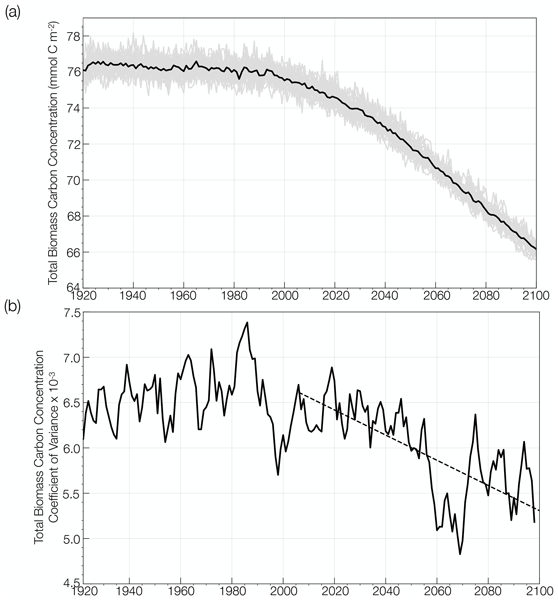
Geneviève W. Elsworth, Nicole S. Lovenduski, Kristen M. Krumhardt, Thomas M. Marchitto, and Sarah Schlunegger
Biogeosciences, 20, 4477–4490, https://doi.org/10.5194/bg-20-4477-2023, https://doi.org/10.5194/bg-20-4477-2023, 2023
Short summary
Short summary
Anthropogenic climate change will influence marine phytoplankton over the coming century. Here, we quantify the influence of anthropogenic climate change on marine phytoplankton internal variability using an Earth system model ensemble and identify a decline in global phytoplankton biomass variance with warming. Our results suggest that climate mitigation efforts that account for marine phytoplankton changes should also consider changes in phytoplankton variance driven by anthropogenic warming.
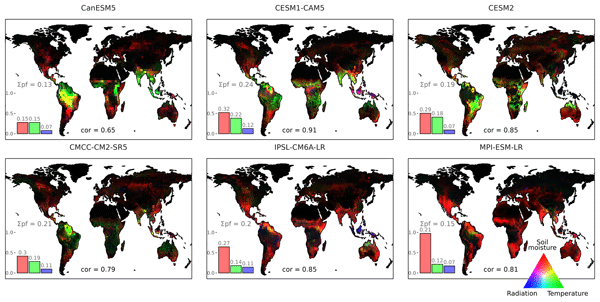
István Dunkl, Nicole Lovenduski, Alessio Collalti, Vivek K. Arora, Tatiana Ilyina, and Victor Brovkin
Biogeosciences, 20, 3523–3538, https://doi.org/10.5194/bg-20-3523-2023, https://doi.org/10.5194/bg-20-3523-2023, 2023
Short summary
Short summary
Despite differences in the reproduction of gross primary productivity (GPP) by Earth system models (ESMs), ESMs have similar predictability of the global carbon cycle. We found that, although GPP variability originates from different regions and is driven by different climatic variables across the ESMs, the ESMs rely on the same mechanisms to predict their own GPP. This shows that the predictability of the carbon cycle is limited by our understanding of variability rather than predictability.
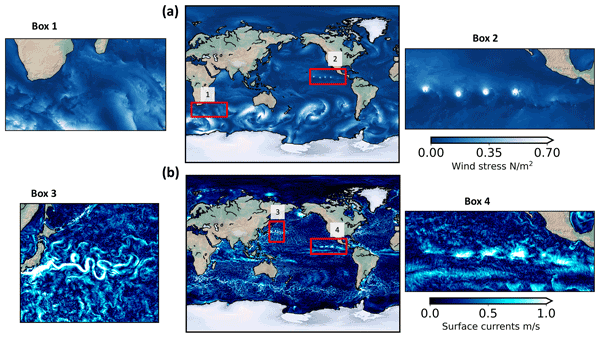
Hector S. Torres, Patrice Klein, Jinbo Wang, Alexander Wineteer, Bo Qiu, Andrew F. Thompson, Lionel Renault, Ernesto Rodriguez, Dimitris Menemenlis, Andrea Molod, Christopher N. Hill, Ehud Strobach, Hong Zhang, Mar Flexas, and Dragana Perkovic-Martin
Geosci. Model Dev., 15, 8041–8058, https://doi.org/10.5194/gmd-15-8041-2022, https://doi.org/10.5194/gmd-15-8041-2022, 2022
Short summary
Short summary
Wind work at the air-sea interface is the scalar product of winds and currents and is the transfer of kinetic energy between the ocean and the atmosphere. Using a new global coupled ocean-atmosphere simulation performed at kilometer resolution, we show that all scales of winds and currents impact the ocean dynamics at spatial and temporal scales. The consequential interplay of surface winds and currents in the numerical simulation motivates the need for a winds and currents satellite mission.
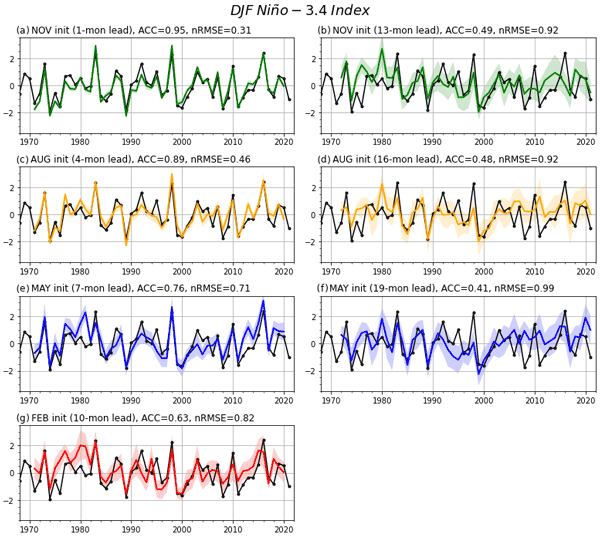
Stephen G. Yeager, Nan Rosenbloom, Anne A. Glanville, Xian Wu, Isla Simpson, Hui Li, Maria J. Molina, Kristen Krumhardt, Samuel Mogen, Keith Lindsay, Danica Lombardozzi, Will Wieder, Who M. Kim, Jadwiga H. Richter, Matthew Long, Gokhan Danabasoglu, David Bailey, Marika Holland, Nicole Lovenduski, Warren G. Strand, and Teagan King
Geosci. Model Dev., 15, 6451–6493, https://doi.org/10.5194/gmd-15-6451-2022, https://doi.org/10.5194/gmd-15-6451-2022, 2022
Short summary
Short summary
The Earth system changes over a range of time and space scales, and some of these changes are predictable in advance. Short-term weather forecasts are most familiar, but recent work has shown that it is possible to generate useful predictions several seasons or even a decade in advance. This study focuses on predictions over intermediate timescales (up to 24 months in advance) and shows that there is promising potential to forecast a variety of changes in the natural environment.
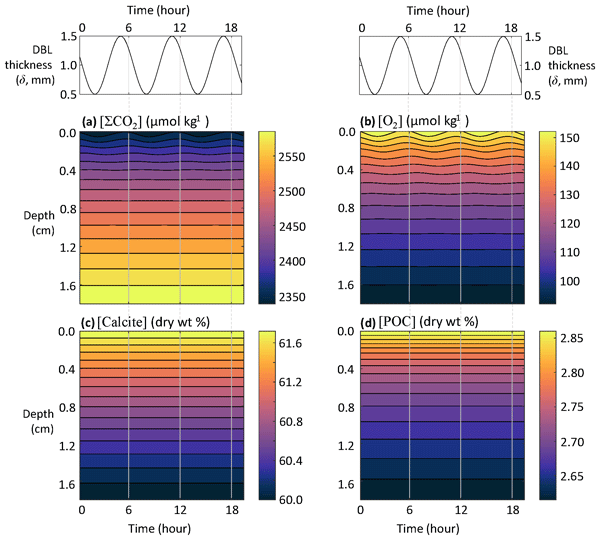
Olivier Sulpis, Matthew P. Humphreys, Monica M. Wilhelmus, Dustin Carroll, William M. Berelson, Dimitris Menemenlis, Jack J. Middelburg, and Jess F. Adkins
Geosci. Model Dev., 15, 2105–2131, https://doi.org/10.5194/gmd-15-2105-2022, https://doi.org/10.5194/gmd-15-2105-2022, 2022
Short summary
Short summary
A quarter of the surface of the Earth is covered by marine sediments rich in calcium carbonates, and their dissolution acts as a giant antacid tablet protecting the ocean against human-made acidification caused by massive CO2 emissions. Here, we present a new model of sediment chemistry that incorporates the latest experimental findings on calcium carbonate dissolution kinetics. This model can be used to predict how marine sediments evolve through time in response to environmental perturbations.
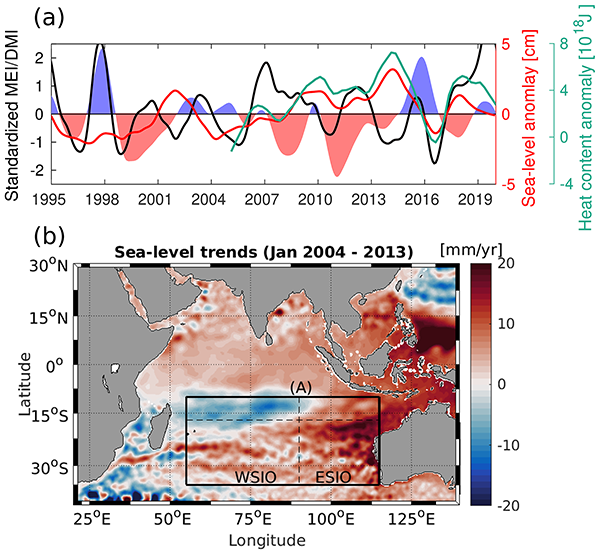
Marion Kersalé, Denis L. Volkov, Kandaga Pujiana, and Hong Zhang
Ocean Sci., 18, 193–212, https://doi.org/10.5194/os-18-193-2022, https://doi.org/10.5194/os-18-193-2022, 2022
Short summary
Short summary
The southern Indian Ocean is one of the major basins for regional heat accumulation and sea level rise. The year-to-year changes of regional sea level are influenced by water exchange with the Pacific Ocean via the Indonesian Throughflow. Using a general circulation model, we show that the spatiotemporal pattern of these changes is primarily set by local wind forcing modulated by El Niño–Southern Oscillation, while oceanic signals originating in the Pacific can amplify locally forced signals.
Cited articles
Carroll, D., Menemenlis, D., Adkins, J. F., Bowman, K. W., Brix, H., Dutkiewicz, S., Fenty, I., Gierach, M. M., Hill, C., Jahn, O., Landschützer, P., Lauderdale, J. M., Liu, J., Manizza, M., Naviaux, J. D., Rödenbeck, C., Schimel, D. S., Van der Stocken, T., and Zhang, H.: The ECCO-Darwin data-assimilative global ocean biogeochemistry model: Estimates of seasonal to multidecadal surface ocean pCO2 and air–sea CO2 flux, J. Adv. Model. Earth Sy., 12, e2019MS001888, https://doi.org/10.1029/2019ms001888, 2020.
Carroll, D., Menemenlis, D., Dutkiewicz, S., Lauderdale, J. M., Adkins, J. F., Bowman, K. W., Brix, H., Fenty, I., Gierach, M. M., Hill, C., Jahn, O., Landschützer, P., Manizza, M., Mazloff, M. R., Miller, C. E., Schimel, D. S., Verdy, A., Whitt, D. B., and Zhang, H.: Attribution of space-time variability in global-ocean dissolved inorganic carbon, Global Biogeochem. Cy., 36, e2021GB007162, https://doi.org/10.1029/2021GB007162, 2022.
Carroll, D., Menemenlis, D., Zhang, H., Mazloff, M., McKinley, G., Fay, A., Dutkiewicz, S., Lauderdale, J. M., and Fenty, I.: Evaluation of the ECCO-Darwin ocean biogeochemistry state estimate vs. in-situ observations, Version ver 1.0, Zenodo [data set], https://doi.org/10.5281/zenodo.10627664, 2024a.
Carroll, D., Zhang, H., Menemenlis, D., Bertin, C., Savelli, R., Manizza, M., Suselj, K., van der Zant, H., Jahn, O., Le Fouest, V., Lauderdale, J. M.: dustincarrollocean/ecco_Darwin: v05 1985 back-extension (1985_back_extension), Zenodo [code], https://doi.org/10.5281/zenodo.13259496, 2024b.
Carroll, D., Parazoo, N. C., Lovenduski, N. S., Keller, M., Schimel, D. S., and Bloom, A. A.: Observing system needs for understanding carbon–climate feedbacks, Environ. Res. Lett., 20, 111002, https://doi.org/10.1088/1748-9326/ae0ae8, 2025.
Cronin, M. F., Bond, N., Booth, J., Ichikawa, H., Joyce, T. M., Kelly, K., Kubota, M., Qiu, B., Reason, C., Rouault, M., and Sabine, C.: Monitoring ocean-atmosphere interactions in western boundary current extensions, Proceedings of OceanObs'09, https://doi.org/10.5270/OceanObs09.cwp.20, 2010.
Davila, X., Gebbie, G., Brakstad, A., Lauvset, S. K., McDonagh, E. L., Schwinger, J., and Olsen, A.: How is the ocean anthropogenic carbon reservoir filled?, Global Biogeochem. Cy., 36, e2021GB007055, https://doi.org/10.1029/2021GB007055, 2022.
DeVries, T.: The oceanic anthropogenic CO2 sink: Storage, air–sea fluxes, and transports over the industrial era, Global Biogeochem. Cy., 28, 631–647, https://doi.org/10.1002/2013GB004739, 2014.
Fassbender, A. J., Sabine, C. L., and Palevsky, H. I.: Nonuniform ocean acidification and attenuation of the ocean carbon sink, Geophys. Res. Lett., 44, 8404–8413, https://doi.org/10.1002/2017GL074389, 2017.
Fay, A. R. and McKinley, G. A.: Global open-ocean biomes: mean and temporal variability, Earth Syst. Sci. Data, 6, 273–284, https://doi.org/10.5194/essd-6-273-2014, 2014.
Fay, A. R., Carroll, D., McKinley, G. A., Menemenlis, D., and Zhang, H.: Scale-dependent drivers of air–sea CO2 flux variability, Geophys. Res. Lett., 51, e2024GL111911, https://doi.org/10.1029/2024GL111911, 2024.
Flato, G., Marotzke, J., Abiodun, B., Braconnot, P., Chou, S. C., Collins, W., Cox, P., Driouech, F., Emori, S., Eyring, V., Forest, C., Gleckler, P., Guilyardi, E., Jakob, C., Kattsov, V., Reason, C., and Rummukainen, M.: Evaluation of climate models, in: Climate change 2013: The physical science basis, Contribution of Working Group I to the Fifth Assessment Report of the Intergovernmental Panel on Climate Change, edited by: Stocker, T. F., Qin, D., Plattner, G.-K., Tignor, M., Allen, S. K., Boschung, J., Nauels, A., Xia, Y., Bex, V., and Midgley, P. M., Cambridge University Press, ISBN 9781107057991, https://doi.org/10.1017/CBO9781107415324.020, 2013.
Forget, G., Campin, J.-M., Heimbach, P., Hill, C. N., Ponte, R. M., and Wunsch, C.: ECCO version 4: an integrated framework for non-linear inverse modeling and global ocean state estimation, Geosci. Model Dev., 8, 3071–3104, https://doi.org/10.5194/gmd-8-3071-2015, 2015.
Frölicher, T. L., Sarmiento, J. L., Paynter, D. J., Dunne, J. P., Krasting, J. P., and Winton, M.: Dominance of the Southern Ocean in anthropogenic carbon and heat uptake in CMIP5 models, J. Climate, 28, 862–886, https://doi.org/10.1175/JCLI-D-14-00117.1, 2015.
Gooya, P., Swart, N. C., and Hamme, R. C.: Time-varying changes and uncertainties in the CMIP6 ocean carbon sink from global to local scale, Earth Syst. Dynam., 14, 383–398, https://doi.org/10.5194/esd-14-383-2023, 2023.
Gruber, N., Landschützer, P., and Lovenduski, N. S.: The variable Southern Ocean carbon sink, Annu. Rev. Mar. Sci., 11, 159–186, https://doi.org/10.1146/annurev-marine-121916-063407, 2019.
Gruber, N., Bakker, D. C., DeVries, T., Gregor, L., Hauck, J., Landschützer, P., McKinley, G. A., and Müller, J. D.: Trends and variability in the ocean carbon sink, Nature Reviews Earth & Environment, 4, 119–134, https://doi.org/10.1038/s43017-022-00381-x, 2023.
Hauck, J., Zeising, M., Le Quéré, C., Gruber, N., Bakker, D. C., Bopp, L., Chau, T. T. T., Gürses, Ö., Ilyina, T., Landschützer, P., and Lenton, A.: Consistency and challenges in the ocean carbon sink estimate for the global carbon budget, Frontiers in Marine Science, 7, 571720, https://doi.org/10.3389/fmars.2020.571720, 2020.
Iudicone, D., Rodgers, K. B., Plancherel, Y., Aumont, O., Ito, T., Key, R. M., Madec, G., and Ishii, M.: The formation of the ocean's anthropogenic carbon reservoir, Sci. Rep., 6, 35473, https://doi.org/10.1038/srep35473, 2016.
Jiang, L.-Q., Carter, B. R., Feely, R. A., Lauvset, S. K., and Olsen, A.: Surface ocean pH and buffer capacity: Past, present and future, Scientific Reports, 9, 18624, https://doi.org/10.1038/s41598-019-55039-4, 2019.
Katavouta, A. and Williams, R. G.: Ocean carbon cycle feedbacks in CMIP6 models: contributions from different basins, Biogeosciences, 18, 3189–3218, https://doi.org/10.5194/bg-18-3189-2021, 2021.
Khatiwala, S., Primeau, F., and Hall, T.: Reconstruction of the history of anthropogenic CO2 concentrations in the ocean, Nature, 462, 346–349, https://doi.org/10.1038/nature08526, 2009.
Lan, X., Tans, P., Thoning, K., and NOAA Global Monitoring Laboratory: NOAA Greenhouse Gas Marine Boundary Layer Reference – CO2, NOAA GML [data set], https://doi.org/10.15138/DVNP-F961, 2024.
Lee, H., Noh, K. M., Oh, J. H., Park, S. W., Shin, Y., and Kug, J. S.: Emergence of an oceanic CO2 uptake hole under global warming, Nat. Commun., 16, 3199, https://doi.org/10.1038/s41467-025-57724-7, 2025.
Li, C., Zhai, W., and Qi, D.: Unveiling controls of the latitudinal gradient of surface pCO2 in the Kuroshio Extension and its recirculation regions (northwestern North Pacific) in late spring, Acta Oceanol. Sin., 41, 110–123, https://doi.org/10.1007/s13131-021-1949-1, 2022.
Li, X., Gan, B., Zhang, Z., Cao, Z., Qiu, B., Chen, Z., and Wu, L.: Oceanic uptake of CO2 enhanced by mesoscale eddies, Science Advances, 11, eadt4195, https://doi.org/10.1126/sciadv.adt4195, 2025.
Lovenduski, N. S., Swart, N. C., Sutton, A. J., Fyfe, J. C., McKinley, G. A., Sabine, C., and Williams, N. L.: The ocean carbon response to COVID-related emissions reductions, Geophys. Res. Lett., 48, e2020GL092263, https://doi.org/10.1029/2020GL092263, 2021.
McKinley, G. A., Pilcher, D. J., Fay, A. R., Lindsay, K., Long, M. C., and Lovenduski, N. S.: Timescales for detection of trends in the ocean carbon sink, Nature, 530, 469–472, 2016.
McKinley, G. A., Fay, A. R., Lovenduski, N. S., and Pilcher, D. J.: Natural variability and anthropogenic trends in the ocean carbon sink, Annu. Rev. Mar. Sci., 9, 125–150, 2017.
McKinley, G. A., Fay, A. R., Eddebbar, Y. A., Gloege, L., and Lovenduski, N. S.: External forcing explains recent decadal variability of the ocean carbon sink, AGU Advances, 1, e2019AV000149, https://doi.org/10.1029/2019AV000149, 2020.
McKinley, G. A., Bennington, V., Meinshausen, M., and Nicholls, Z.: Modern air-sea flux distributions reduce uncertainty in the future ocean carbon sink, Environ. Res. Lett., 18, 044011, https://doi.org/10.1088/1748-9326/acc195, 2023.
Meinshausen, M., Nicholls, Z. R. J., Lewis, J., Gidden, M. J., Vogel, E., Freund, M., Beyerle, U., Gessner, C., Nauels, A., Bauer, N., Canadell, J. G., Daniel, J. S., John, A., Krummel, P. B., Luderer, G., Meinshausen, N., Montzka, S. A., Rayner, P. J., Reimann, S., Smith, S. J., van den Berg, M., Velders, G. J. M., Vollmer, M. K., and Wang, R. H. J.: The shared socio-economic pathway (SSP) greenhouse gas concentrations and their extensions to 2500, Geosci. Model Dev., 13, 3571–3605, https://doi.org/10.5194/gmd-13-3571-2020, 2020.
Müller, J. D., Gruber, N., Carter, B., Feely, R., Ishii, M., Lange, N., Lauvset, S. K., Murata, A., Olsen, A., Pérez, F. F., Sabine, C., Tanhua, T., Wanninkhof, R., and Zhu, D.: Decadal trends in the oceanic storage of anthropogenic carbon from 1994 to 2014, AGU Advances, 4, e2023AV000875, https://doi.org/10.1029/2023AV000875, 2023.
O'Neill, B. C., Tebaldi, C., van Vuuren, D. P., Eyring, V., Friedlingstein, P., Hurtt, G., Knutti, R., Kriegler, E., Lamarque, J.-F., Lowe, J., Meehl, G. A., Moss, R., Riahi, K., and Sanderson, B. M.: The Scenario Model Intercomparison Project (ScenarioMIP) for CMIP6, Geosci. Model Dev., 9, 3461–3482, https://doi.org/10.5194/gmd-9-3461-2016, 2016.
Orr, J. C., Fabry, V. J., Aumont, O., Bopp, L., Doney, S. C., Feely, R. A., Gnanadesikan, A., Gruber, N., Ishida, A., Joos, F., and Key, R. M.: Anthropogenic ocean acidification over the twenty-first century and its impact on calcifying organisms, Nature, 437, 681–686, https://doi.org/10.1038/nature04095, 2005.
Riahi, K., van Vuuren, D. P., Kriegler, E., Edmonds, J., O'Neill, B. C., Fujimori, S., Bauer, N., Calvin, K., Dellink, R., Fricko, O., Lutz, W., Popp, A., Cuaresma, J. C., Kc, S., Leimbach, M., Jiang, L., Kram, T., Rao, S., Emmerling, J., Ebi, K., Hasegawa, T., Havlik, P., Humpenöder, F., Da Silva, L. A., Smith, S., Stehfest, E., Bosetti, V., Eom, J., Gernaat, D., Masui, T., Rogelj, J., Strefler, J., Drouet, L., Krey, V., Luderer, G., Harmsen, M., Takahashi, K., Baumstark, L., Doelman, J. C., Kainuma, M., Klimont, Z., Marangoni, G., Lotze-Campen, H., Obersteiner, M., Tabeau, A., and Tavoni, M.: The Shared Socioeconomic Pathways and their energy, land use, and greenhouse gas emissions implications: An overview, Global Environ. Chang., 42, 153–168, https://doi.org/10.1016/j.gloenvcha.2016.05.009, 2017.
Ridge, S. M. and McKinley, G. A.: Ocean carbon uptake under aggressive emission mitigation, Biogeosciences, 18, 2711–2725, https://doi.org/10.5194/bg-18-2711-2021, 2021.
Sabine, C. L., Feely, R. A., Gruber, N., Key, R. M., Lee, K., Bullister, J. L., Wanninkhof, R., Wong, C. S. L., Wallace, D. W., Tilbrook, B., and Millero, F. J.: The oceanic sink for anthropogenic CO2, Science, 305, 367–371, https://doi.org/10.1126/science.1097403, 2004.
Schimel, D. S. and Carroll, D.: Carbon cycle–climate feedbacks in the post-Paris world, Annu. Rev. Earth Pl. Sc., 52, 467–493, https://doi.org/10.1146/annurev-earth-031621-081700, 2024.
Schlunegger, S., Rodgers, K. B., Sarmiento, J. L., Ilyina, T., Dunne, J. P., Takano, Y., Christian, J. R., Long, M. C., Frölicher, T. L., Slater, R., and Lehner, F.: Time of emergence and large ensemble intercomparison for ocean biogeochemical trends, Global Biogeochem. Cy., 34, e2019GB006453, https://doi.org/10.1029/2019GB006453, 2020.
Talley, L. D., Pickard, G. L., Emery, W. J., and Swift, J. H.: Descriptive physical oceanography, vol. 29, Academic press, Boston, ISBN 978-0-7506-4552-2, 2011.
Terhaar, J., Frölicher, T. L., and Joos, F.: Southern Ocean anthropogenic carbon sink constrained by sea surface salinity, Science Advances, 7, eabd5964, https://doi.org/10.1126/sciadv.abd5964, 2021.
Terhaar, J., Frölicher, T. L., and Joos, F.: Observation-constrained estimates of the global ocean carbon sink from Earth system models, Biogeosciences, 19, 4431–4457, https://doi.org/10.5194/bg-19-4431-2022, 2022.
Terhaar, J.: Drivers of decadal trends in the ocean carbon sink in the past, present, and future in Earth system models, Biogeosciences, 21, 3903–3926, https://doi.org/10.5194/bg-21-3903-2024, 2024.
Turner, K. E., Smith, D. M., Katavouta, A., and Williams, R. G.: Reconstructing ocean carbon storage with CMIP6 Earth system models and synthetic Argo observations, Biogeosciences, 20, 1671–1690, https://doi.org/10.5194/bg-20-1671-2023, 2023.
Williams, R. G., Ceppi, P., Roussenov, V., Katavouta, A., and Meijers, A. J. S.: The role of the Southern Ocean in the global climate response to carbon emissions, Phil. Trans. R. Soc. A, 381, 20220062, https://doi.org/10.1098/rsta.2022.0062, 2023.
Williams, R. G., Meijers, A. J., Roussenov, V. M., Katavouta, A., Ceppi, P., Rosser, J. P., and Salvi, P.: Asymmetries in the Southern Ocean contribution to global heat and carbon uptake, Nat. Clim. Change, 14, 823–831, https://doi.org/10.1038/s41558-024-02066-3, 2024.
Williams, R. G., Brown, P. J., Takano, Y., Forget, G., Jones, D., Katavouta, A., McDonagh, E., and Roussenov, V. M.: The biogeochemical transport by the Gulf Stream, Communications Earth & Environment, 7, 149, https://doi.org/10.1038/s43247-025-03118-y, 2026.
Zhang, H., Menemenlis, D., and Fenty, I.: ECCO LLC270 ocean-ice state estimate, MIT Dspace, https://dspace.mit.edu/handle/1721.1/119821 (last access: 19 October 2024), 2018.
Short summary
The ocean helps slow climate change by absorbing carbon dioxide, but our research shows this process weakens quickly when we reduce emissions. Using a sophisticated model, we found that the ocean’s carbon uptake drops within just a few years of mitigation. This change is most visible in the North Atlantic and Southern Ocean. To accurately track our progress in addressing climate change, we must focus global monitoring efforts on these specific, sensitive regions of the open sea.
The ocean helps slow climate change by absorbing carbon dioxide, but our research shows this...


Altmetrics
Final-revised paper
Preprint