
Articles | Volume 23, issue 22
https://doi.org/10.5194/bg-23-8341-2026
© Author(s) 2026. This work is distributed under
the Creative Commons Attribution 4.0 License.
the Creative Commons Attribution 4.0 License.
https://doi.org/10.5194/bg-23-8341-2026
© Author(s) 2026. This work is distributed under
the Creative Commons Attribution 4.0 License.
the Creative Commons Attribution 4.0 License.
Research article
| 
16 Nov 2026
Research article |
| 16 Nov 2026
| 16 Nov 2026
Modelling N2O emissions in fertilized grasslands with machine learning: a multi-site LSTM approach
Samin Payrosangari
CORRESPONDING AUTHOR

Karlsruhe Institute of Technology, IMK-IFU, Garmisch‐Partenkirchen, Germany
Karlsruhe Institute of Technology, IMK-IFU, Garmisch‐Partenkirchen, Germany
Benjamin Wolf
Karlsruhe Institute of Technology, IMK-IFU, Garmisch‐Partenkirchen, Germany
Ralf Kiese
Karlsruhe Institute of Technology, IMK-IFU, Garmisch‐Partenkirchen, Germany
Clemens Scheer
Karlsruhe Institute of Technology, IMK-IFU, Garmisch‐Partenkirchen, Germany
Related authors
No articles found.
Matthias Wocher, Anne Schucknecht, Tobias Hank, Zbigniew Kawalec, Rodolfo Ceriani, Ralf Kiese, and Anita Bayer
Int. Arch. Photogramm. Remote Sens. Spatial Inf. Sci., XLVIII-M-12-2026, 135–140, https://doi.org/10.5194/isprs-archives-XLVIII-M-12-2026-135-2026, https://doi.org/10.5194/isprs-archives-XLVIII-M-12-2026-135-2026, 2026
Andrew Smerald, Hannes Imhof, Edwin Haas, David Kraus, Lioba Martin, Kathrin Fuchs, John Akubia, Ali Sakhaee, Cora Vos, Roland Fuß, Clemens Scheer, and Ralf Kiese
EGUsphere, https://doi.org/10.5194/egusphere-2026-4010, https://doi.org/10.5194/egusphere-2026-4010, 2026
Short summary
Short summary
Countries produce a yearly greenhouse gas inventory that is used to monitor and design climate policies. Agricultural N2O emissions are especially uncertain, due to measurement difficulties. Using a process-based model combined with high resolution management data we show that, in comparison with current methods, N2O emissions can be mapped with high spatial and temporal resolution.
Julius C. Havsteen, Mehr Fatima, Simone Brunamonti, Andrea Pogány, Thomas Hausmaninger, Benjamin Wolf, Reinhard Well, and Joachim Mohn
Atmos. Meas. Tech., 19, 3557–3580, https://doi.org/10.5194/amt-19-3557-2026, https://doi.org/10.5194/amt-19-3557-2026, 2026
Short summary
Short summary
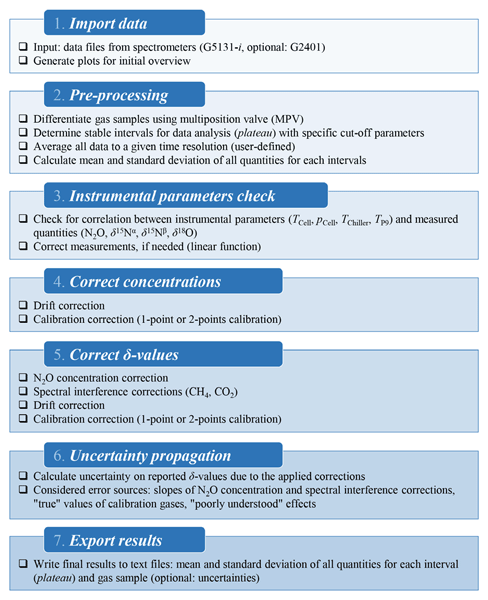
We present a new correction and calibration protocol to improve the accuracy of nitrous oxide isotope measurements obtained using laser spectroscopy. Through laboratory experiments, spectral simulations, and an automated MATLAB (Matrix Laboratory) reduction scheme, we identify and correct biases caused by matrix gas composition, spectral interferences and instrument variability. This protocol enables researchers to produce more reliable isotope data and supports standardised isotope analyses across laboratories.
Hassane Moutahir, Markus Sulzer, Ralf Kiese, Andreas Christen, Markus Weiler, Lea Dedden, Julian Brzozon, Pia Labenski, Prajwal Khanal, Ladislav Šigut, and Rüdiger Grote
Biogeosciences, 23, 1719–1738, https://doi.org/10.5194/bg-23-1719-2026, https://doi.org/10.5194/bg-23-1719-2026, 2026
Short summary
Short summary
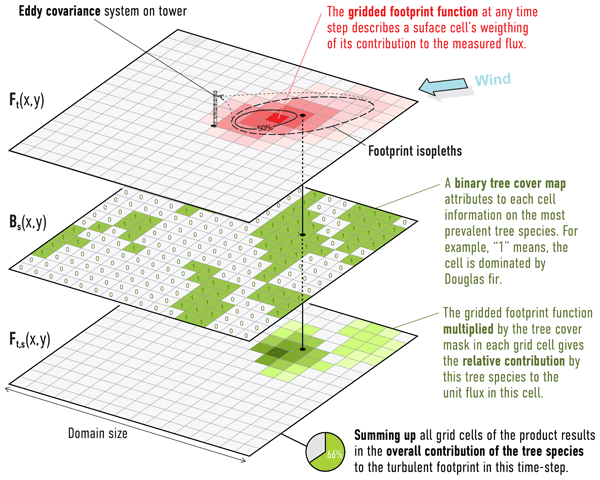
Eddy covariance (EC) data are vital for studying carbon and water fluxes but often mask species-specific responses in mixed forests. At a Black Forest site with beech and Douglas fir, we combined EC data with ecosystem modeling to separate species contributions. Results show EC fluxes reflect species abundance within flux footprints, though responses vary seasonally. Accounting for these differences is key for gap-filling, accurate budgets, and understanding mixed forests’ climate resilience.
Beatriz P. Cazorla, Ana Meijide, Javier Cabello, Julio Peñas, Javier Martínez-López, Rodrigo Vargas, Leonardo Montagnani, Alexander Knohl, Lukas Siebicke, Benimiano Gioli, Jiří Dušek, Ladislav Šigut, Andreas Ibrom, Georg Wohlfahrt, Eugénie Paul-Limoges, Kathrin Fuchs, Antonio Manco, Marian Pavelka, Lutz Merbold, Lukas Hörtnagl, Pierpaolo Duce, Ignacio Goded, Kim Pilegaard, and Domingo Alcaraz-Segura
Biogeosciences, 23, 1223–1243, https://doi.org/10.5194/bg-23-1223-2026, https://doi.org/10.5194/bg-23-1223-2026, 2026
Short summary
Short summary
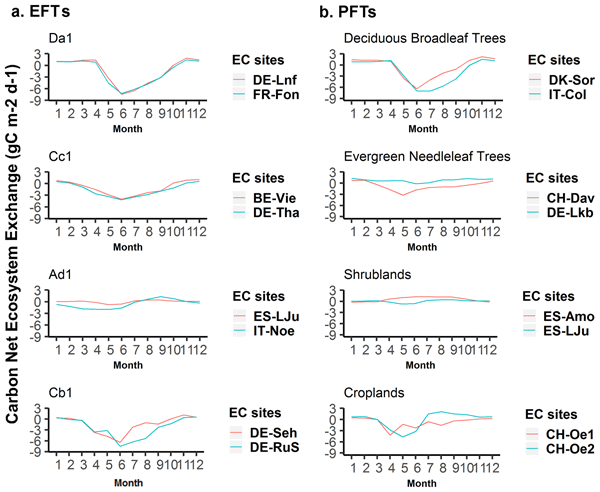
We assess whether satellite-derived Ecosystem Functional Types (EFTs) reflect spatial heterogeneity in carbon fluxes across Europe. Using Eddy Covariance data from 50 sites, we show that EFTs capture distinct Net Ecosystem Exchange dynamics and perform slightly better than Plant Functional Types (PFTs). EFTs offer a scalable, annually updatable approach to monitor ecosystem functioning and its interannual variability.
Fawad Khan, Samuel Franco Luesma, Frederik Hartmann, Michael Dannenmann, Rainer Gasche, Clemens Scheer, Andreas Gattinger, Wiebke Niether, Elizabeth Gachibu Wangari, Ricky Mwangada Mwanake, Ralf Kiese, and Benjamin Wolf
Biogeosciences, 22, 5081–5102, https://doi.org/10.5194/bg-22-5081-2025, https://doi.org/10.5194/bg-22-5081-2025, 2025
Short summary
Short summary
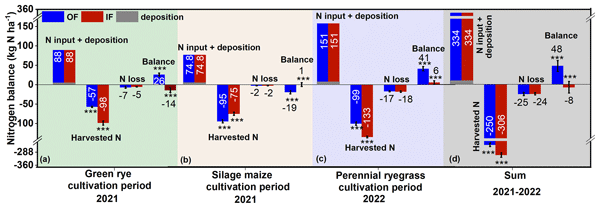
Crop rotations with legumes and use of organic and mineral fertilizers show potential to reduce agricultural N losses. This study examined N losses, including direct N2 flux, on two adjacent sites with different management histories: organic farming (OF) with legume cultivation and integrated farming (IF) using synthetic and organic N inputs. IF increased soil organic carbon and nitrogen content and 15N recovery and showed a balanced N budget (i.e. more efficient N cycling compared to OF).
Sophie Reinermann, Carolin Boos, Andrea Kaim, Anne Schucknecht, Sarah Asam, Ursula Gessner, Sylvia H. Annuth, Thomas M. Schmitt, Thomas Koellner, and Ralf Kiese
Biogeosciences, 22, 4969–4992, https://doi.org/10.5194/bg-22-4969-2025, https://doi.org/10.5194/bg-22-4969-2025, 2025
Short summary
Short summary
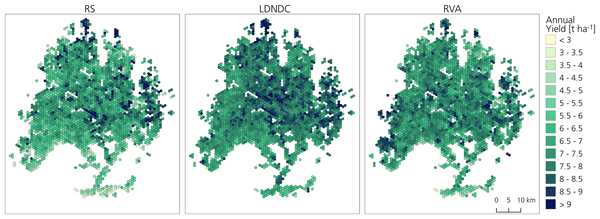
Grasslands shape the landscape in many parts of the world and serve as the main source of fodder for livestock. There is a lack of comprehensive data on grassland yield, although these data are highly valuable for authorities and research. By applying three approaches to estimate grassland yields, namely, a satellite data model, a biogeochemical model and a field measurements approach, we provide annual grassland yield maps for the Ammer region in 2019 and highlight the potentials and limitations of the approaches.
Samuel Franco-Luesma, María Alonso-Ayuso, Benjamin Wolf, Borja Latorre, and Jorge Álvaro-Fuentes
SOIL, 11, 523–533, https://doi.org/10.5194/soil-11-523-2025, https://doi.org/10.5194/soil-11-523-2025, 2025
Short summary
Short summary
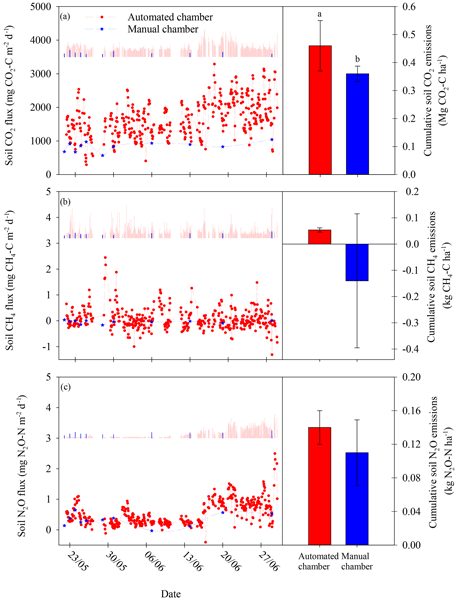
Agriculture may play a significant role in climate change mitigation. For this reason, it is necessary to have good estimations of the greenhouse gas (GHG) emissions from agricultural activities. In this work, two different chamber systems to determine GHGs were compared. Our results highlighted that automated chamber systems, compared to manual chamber systems, are a powerful tool for quantifying GHG fluxes, allowing us to capture the large temporal variability that characterizes them.
Roxanne Daelman, Marijn Bauters, Matti Barthel, Emmanuel Bulonza, Lodewijk Lefevre, José Mbifo, Johan Six, Klaus Butterbach-Bahl, Benjamin Wolf, Ralf Kiese, and Pascal Boeckx
Biogeosciences, 22, 1529–1542, https://doi.org/10.5194/bg-22-1529-2025, https://doi.org/10.5194/bg-22-1529-2025, 2025
Short summary
Short summary
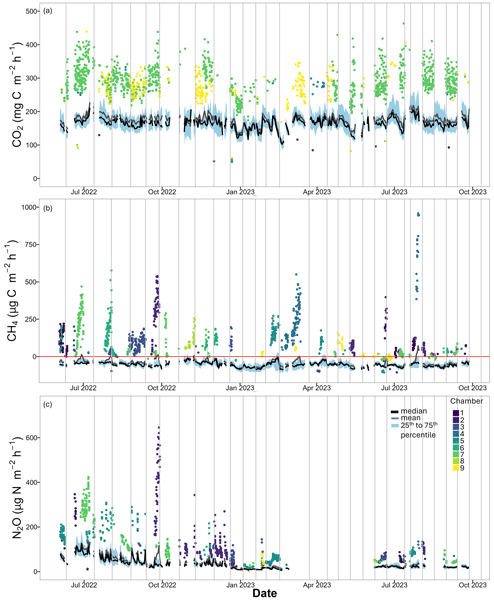
The increase in atmospheric concentrations of several greenhouse gases (GHGs) since 1750 is attributed to human activity. However, natural ecosystems, such as tropical forests, also contribute to GHG budgets. The Congo Basin hosts the second largest tropical forest and is understudied. In this study, measurements of soil GHG exchange were carried out during 16 months in a tropical forest in the Congo Basin. Overall, the soil acted as a major source of CO2 and N2O and a minor sink of CH4.
Carolin Boos, Sophie Reinermann, Raul Wood, Ralf Ludwig, Anne Schucknecht, David Kraus, and Ralf Kiese
EGUsphere, https://doi.org/10.5194/egusphere-2024-2864, https://doi.org/10.5194/egusphere-2024-2864, 2024
Preprint archived
Short summary
Short summary
We applied a biogeochemical model on grasslands in the pre-Alpine Ammer region in Germany and analyzed the influence of soil and climate on annual yields. In drought affected years, total yields were decreased by 4 %. Overall, yields decrease with rising elevation, but less so in drier and hotter years, whereas soil organic carbon has a positive impact on yields, especially in drier years. Our findings imply, that adapted management in the region allows to mitigate yield losses from drought.
Elizabeth Gachibu Wangari, Ricky Mwangada Mwanake, Tobias Houska, David Kraus, Gretchen Maria Gettel, Ralf Kiese, Lutz Breuer, and Klaus Butterbach-Bahl
Biogeosciences, 20, 5029–5067, https://doi.org/10.5194/bg-20-5029-2023, https://doi.org/10.5194/bg-20-5029-2023, 2023
Short summary
Short summary
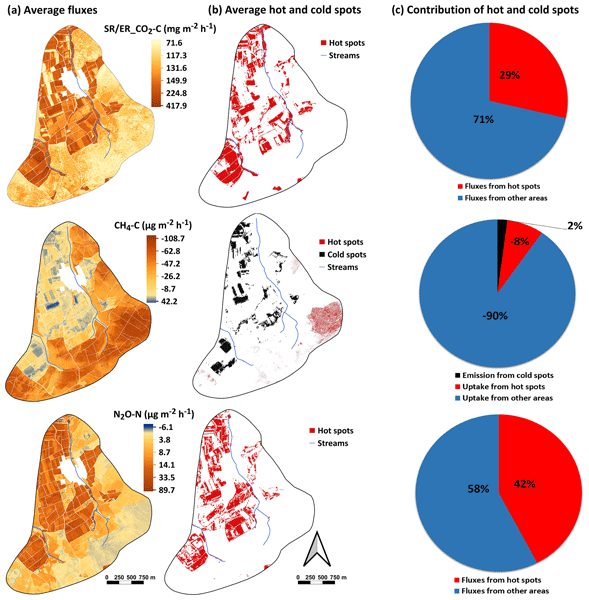
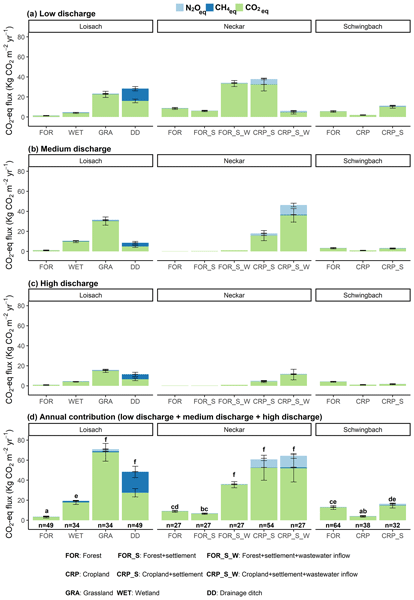
Agricultural landscapes act as sinks or sources of the greenhouse gases (GHGs) CO2, CH4, or N2O. Various physicochemical and biological processes control the fluxes of these GHGs between ecosystems and the atmosphere. Therefore, fluxes depend on environmental conditions such as soil moisture, soil temperature, or soil parameters, which result in large spatial and temporal variations of GHG fluxes. Here, we describe an example of how this variation may be studied and analyzed.
Ricky Mwangada Mwanake, Gretchen Maria Gettel, Elizabeth Gachibu Wangari, Clarissa Glaser, Tobias Houska, Lutz Breuer, Klaus Butterbach-Bahl, and Ralf Kiese
Biogeosciences, 20, 3395–3422, https://doi.org/10.5194/bg-20-3395-2023, https://doi.org/10.5194/bg-20-3395-2023, 2023
Short summary
Short summary
Despite occupying <1 %; of the globe, streams are significant sources of greenhouse gas (GHG) emissions. In this study, we determined anthropogenic effects on GHG emissions from streams. We found that anthropogenic-influenced streams had up to 20 times more annual GHG emissions than natural ones and were also responsible for seasonal peaks. Anthropogenic influences also altered declining GHG flux trends with stream size, with potential impacts on stream-size-based spatial upscaling techniques.

Joseph Okello, Marijn Bauters, Hans Verbeeck, Samuel Bodé, John Kasenene, Astrid Françoys, Till Engelhardt, Klaus Butterbach-Bahl, Ralf Kiese, and Pascal Boeckx
Biogeosciences, 20, 719–735, https://doi.org/10.5194/bg-20-719-2023, https://doi.org/10.5194/bg-20-719-2023, 2023
Short summary
Short summary
The increase in global and regional temperatures has the potential to drive accelerated soil organic carbon losses in tropical forests. We simulated climate warming by translocating intact soil cores from higher to lower elevations. The results revealed increasing temperature sensitivity and decreasing losses of soil organic carbon with increasing elevation. Our results suggest that climate warming may trigger enhanced losses of soil organic carbon from tropical montane forests.
Friedrich Boeing, Oldrich Rakovec, Rohini Kumar, Luis Samaniego, Martin Schrön, Anke Hildebrandt, Corinna Rebmann, Stephan Thober, Sebastian Müller, Steffen Zacharias, Heye Bogena, Katrin Schneider, Ralf Kiese, Sabine Attinger, and Andreas Marx
Hydrol. Earth Syst. Sci., 26, 5137–5161, https://doi.org/10.5194/hess-26-5137-2022, https://doi.org/10.5194/hess-26-5137-2022, 2022
Short summary
Short summary
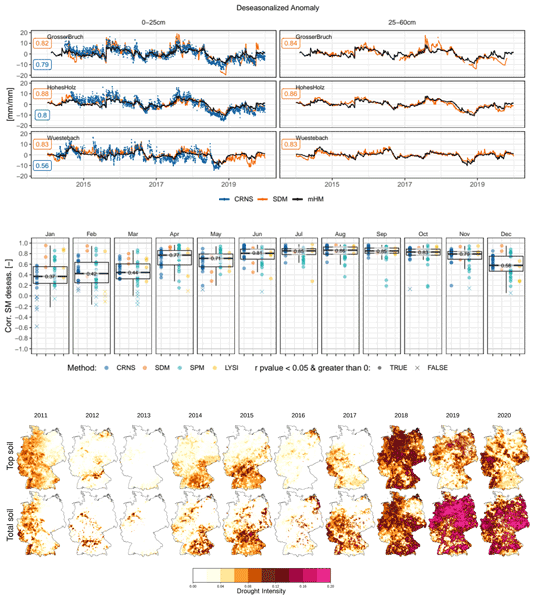
In this paper, we deliver an evaluation of the second generation operational German drought monitor (https://www.ufz.de/duerremonitor) with a state-of-the-art compilation of observed soil moisture data from 40 locations and four different measurement methods in Germany. We show that the expressed stakeholder needs for higher resolution drought information at the one-kilometer scale can be met and that the agreement of simulated and observed soil moisture dynamics can be moderately improved.
Anne Schucknecht, Bumsuk Seo, Alexander Krämer, Sarah Asam, Clement Atzberger, and Ralf Kiese
Biogeosciences, 19, 2699–2727, https://doi.org/10.5194/bg-19-2699-2022, https://doi.org/10.5194/bg-19-2699-2022, 2022
Short summary
Short summary
Actual maps of grassland traits could improve local farm management and support environmental assessments. We developed, assessed, and applied models to estimate dry biomass and plant nitrogen (N) concentration in pre-Alpine grasslands with drone-based multispectral data and canopy height information. Our results indicate that machine learning algorithms are able to estimate both parameters but reach a better level of performance for biomass.

Matthias Mauder, Andreas Ibrom, Luise Wanner, Frederik De Roo, Peter Brugger, Ralf Kiese, and Kim Pilegaard
Atmos. Meas. Tech., 14, 7835–7850, https://doi.org/10.5194/amt-14-7835-2021, https://doi.org/10.5194/amt-14-7835-2021, 2021
Short summary
Short summary
Turbulent flux measurements suffer from a general systematic underestimation. One reason for this bias is non-local transport by large-scale circulations. A recently developed model for this additional transport of sensible and latent energy is evaluated for three different test sites. Different options on how to apply this correction are presented, and the results are evaluated against independent measurements.
Cited articles
Adjuik, T. A. and Davis, S. C.: Machine learning approach to simulate soil CO2 fluxes under cropping systems, Agronomy, 12, 197, https://doi.org/10.3390/agronomy12010197, 2022.
Bahdanau, D., Cho, K., and Bengio, Y.: Neural machine translation by jointly learning to align and translate, in: Proc. 3rd Int. Conf. Learn. Represent. (ICLR), https://arxiv.org/abs/1409.0473 (last access: 2 November 2026), 2015.
Bonett, D. G. and Wright, T. A.: Sample size requirements for estimating Pearson, Kendall and Spearman correlations, Psychometrika, 65, 23–28, https://doi.org/10.1007/BF02294183, 2000.
Box, G. E. P. and Cox, D. R.: An analysis of transformations, J. R. Stat. Soc. B, 26, 211–243, https://doi.org/10.1111/j.2517-6161.1964.tb00553.x, 1964.
Breiman, L.: Random forests, Mach. Learn., 45, 5–32, https://doi.org/10.1023/A:1010933404324, 2001.
Butterbach-Bahl, K., Baggs, E. M., Dannenmann, M., Kiese, R., and Zechmeister-Boltenstern, S.: Nitrous oxide emissions from soils: How well do we understand the processes and their controls?, Philos. Tr. R. Soc. B, 368, 20130122, https://doi.org/10.1098/rstb.2013.0122, 2013.
Chataut, G., Bhatta, B., Joshi, D., Subedi, K., and Kafle, K.: Greenhouse gases emission from agricultural soil: A review, J. Agric. Food Res., 11, 100533, https://doi.org/10.1016/j.jafr.2023.100533, 2023.
Chollet, F. et al.: Keras, https://keras.io/ (last access: 2 November 2026), 2015.
Costa Jr., C., Li, C., Cerri, C. E. P., and Cerri, C. C.: Modeling nitrous oxide emissions from large-scale intensive cropping systems in the Southern Amazon, Front. Sustain. Food Syst., 5, 701416, https://doi.org/10.3389/fsufs.2021.701416, 2021.
Cui, X., Bo, Y., Adalibieke, W., Winiwarter, W., Zhang, X., Davidson, E. A., Sun, Z., Tian, H., Smith, P., and Zhou, F.: The global potential for mitigating nitrous oxide emissions from croplands, One Earth, 7, 401–420, https://doi.org/10.1016/j.oneear.2024.01.005, 2024.
Feigenwinter, I., Hörtnagl, L., and Buchmann, N.: N2O and CH4 fluxes from intensively managed grassland: The importance of biological and environmental drivers vs. management, Sci. Total Environ., 903, 166389, https://doi.org/10.1016/j.scitotenv.2023.166389, 2023.
Fuchs, K., Hörtnagl, L., Buchmann, N., Eugster, W., Snow, V., and Merbold, L.: Management matters: testing a mitigation strategy for nitrous oxide emissions using legumes on intensively managed grassland, Biogeosciences, 15, 5519–5543, https://doi.org/10.5194/bg-15-5519-2018, 2018.
Gilgen, A. K. and Buchmann, N.: Response of temperate grasslands at different altitudes to simulated summer drought differed but scaled with annual precipitation, Biogeosciences, 6, 2525–2539, https://doi.org/10.5194/bg-6-2525-2009, 2009.
Giltrap, D. L., Li, C., and Saggar, S.: DNDC: A process-based model of greenhouse gas fluxes from agricultural soils, Agric. Ecosyst. Environ., 136, 292–300, https://doi.org/10.1016/j.agee.2009.07.006, 2010.
Goodfellow, I., Bengio, Y., and Courville, A.: Deep learning, MIT Press, ISBN 978-0-262-03561-3, 2016.
Guo, X., Drury, C. F., Yang, X., Reynolds, W. D., and Fan, R.: The extent of soil drying and rewetting affects nitrous oxide emissions, denitrification, and nitrogen mineralization, Soil Sci. Soc. Am. J., 78, 194–204, https://doi.org/10.2136/sssaj2013.06.0219, 2014.
Haas, E., Klatt, J., Fröhlich, A., Kraft, P., Werner, C., Kiese, R., Grote, R., Breuer, L., and Butterbach-Bahl, K.: LandscapeDNDC: A process model for simulation of biosphere-atmosphere-hydrosphere exchange processes at site and regional scale, Landscape Ecol., 28, 615–636, https://doi.org/10.1007/s10980-012-9772-x, 2013.
Hamrani, A., Akbarzadeh, A., and Madramootoo, C. A.: Machine learning for predicting greenhouse gas emissions from agricultural soils, Sci. Total Environ., 741, 140338, https://doi.org/10.1016/j.scitotenv.2020.140338, 2020.
Hastie, T., Tibshirani, R., and Friedman, J.: The elements of statistical learning: Data mining, inference, and prediction, 2nd edn., Springer, https://doi.org/10.1007/978-0-387-84858-7, 2009.
Hochreiter, S. and Schmidhuber, J.: Long short-term memory, Neural Comput., 9, 1735–1780, https://doi.org/10.1162/neco.1997.9.8.1735, 1997.
Hodson, T. O.: Root-mean-square error (RMSE) or mean absolute error (MAE): when to use them or not, Geosci. Model Dev., 15, 5481–5487, https://doi.org/10.5194/gmd-15-5481-2022, 2022.
Hörtnagl, L. and Wohlfahrt, G.: Methane and nitrous oxide exchange over a managed hay meadow, Biogeosciences, 11, 7219–7236, https://doi.org/10.5194/bg-11-7219-2014, 2014.
Hörtnagl, L., Barthel, M., Buchmann, N., Eugster, W., Butterbach-Bahl, K., Díaz-Pinés, E., Zeeman, M., Klumpp, K., Kiese, R., Bahn, M., Hammerle, A., Lu, H., Ladreiter-Knauss, T., Burri, S., and Merbold, L.: Greenhouse gas fluxes over managed grasslands in Central Europe, Glob. Change Biol., 24, 1843–1872, https://doi.org/10.1111/gcb.14079, 2018.
Hörtnagl L., Feigenwinter I., Wang Y., Buchmann N., Merbold L., Zeeman M., Fuchs K., Eugster W.: Eddy covariance ecosystem fluxes, meteorological data and detailed management information for the intensively managed grassland site Chamau in Switzerland, collected between 2005 and 2024, ETH Zürich [data set], https://doi.org/10.3929/ethz-b-000747025, 2025.
Hunter, J. D.: Matplotlib: A 2D graphics environment, Comput. Sci. Eng., 9, 90–95, https://doi.org/10.1109/MCSE.2007.55, 2007.
Jiang, Z., Yang, S., Smith, P., and Pang, Q.: Ensemble machine learning for modeling greenhouse gas emissions at different time scales from irrigated paddy fields, Field Crop. Res., 292, 108821, https://doi.org/10.1016/j.fcr.2023.108821, 2023.
Khoshvaght, H., Permala, R. R., Razmjou, A., and Khiadani, M.: A critical review on selecting performance evaluation metrics for supervised machine learning models in wastewater quality prediction, J. Environ. Chem. Eng., 13, 119675, https://doi.org/10.1016/j.jece.2025.119675, 2025.
Kiese, R., Fersch, B., Baessler, C., Brosy, C., Butterbach-Bahl, K., Chwala, C., Dannenmann, M., Fu, J., Gasche, R., Grote, R., Jahn, C., Klatt, J., Kunstmann, H., Mauder, M., Rödiger, T., Smiatek, G., Soltani, M., Steinbrecher, R., Völksch, I., Werhahn, J., Wolf, B., Zeeman, M., and Schmid, H. P.: The TERENO Pre-Alpine Observatory: Integrating meteorological, hydrological, and biogeochemical measurements and modelling, Vadose Zone J., 17, 1–17, https://doi.org/10.2136/vzj2018.03.0060, 2018.
Le, X.-H., Ho, H. V., Lee, G., and Jung, S.: Application of Long Short-Term Memory (LSTM) Neural Network for flood forecasting, Water, 11, 1387, https://doi.org/10.3390/w11071387, 2019.
Li, D., Li, Y., Yao, S., Zhou, H., Huang, S., Peng, X., and Meng, Y.: Dynamics of nitrogen mineralization and nitrogen cycling functional genes in response to soil pore size distribution, Eur. J. Soil Biol., 123, 103692, https://doi.org/10.1016/j.ejsobi.2024.103692, 2024.
Li, L., Jamieson, K., DeSalvo, G., Rostamizadeh, A., and Talwalkar, A.: Hyperband: A novel bandit-based approach to hyperparameter optimization, J. Mach. Learn. Res., 18, 1–52, https://arxiv.org/abs/1603.06560 (last access: 2 November 2026), 2016.
Liu, L., Xu, S., Tang, J., Guan, K., Griffis, T. J., Erickson, M. D., Frie, A. L., Jia, X., Kim, T., Miller, L. T., Peng, B., Wu, S., Yang, Y., Zhou, W., Kumar, V., and Jin, Z.: KGML-ag: a modeling framework of knowledge-guided machine learning to simulate agroecosystems: a case study of estimating N2O emission using data from mesocosm experiments, Geosci. Model Dev., 15, 2839–2858, https://doi.org/10.5194/gmd-15-2839-2022, 2022.
Lucas-Moffat, A. M., Schrader, F., Herbst, M., and Brümmer, C.: Multiple gap-filling for eddy covariance datasets, Agric. For. Meteorol., 325, 109114, https://doi.org/10.1016/j.agrformet.2022.109114, 2022.
Merbold, L., Eugster, W., Stieger, J., Zahniser, M., Nelson, D., and Buchmann, N.: Greenhouse gas budget (CO2, CH4 and N2O) of intensively managed grassland following restoration, Glob. Change Biol., 20, 1913–1928, https://doi.org/10.1111/gcb.12518, 2014.
Montgomery, D. C., Peck, E. A., and Vining, G. G.: Introduction to linear regression analysis, 6th edn., Wiley, ISBN 978-1-119-57872-7, 2021.
Parton, W. J., Hartman, M., Ojima, D., and Schimel, D.: DAYCENT and its land surface submodel: Description and testing, Glob. Planet. Change, 19, 35–48, https://doi.org/10.1016/S0921-8181(98)00040-X, 1998.
Payrosangari, S.: Samin-Payrosangari/LSTM_N2O_emission_grasslands: LSTM for daily N2O emission estimation, Version v1.0.0, Zenodo [code], https://doi.org/10.5281/zenodo.20842388, 2026.
Pedregosa, F., Varoquaux, G., Gramfort, A., Michel, V., Thirion, B., Grisel, O., Blondel, M., Prettenhofer, P., Weiss, R., Dubourg, V., Vanderplas, J., Passos, A., Cournapeau, D., Brucher, M., Perrot, M., and Duchesnay, É.: Scikit-learn: Machine learning in Python, J. Mach. Learn. Res., 12, 2825–2830, https://doi.org/10.48550/arXiv.1201.0490, 2011.
Prion, S. and Haerling, K. A.: Making Sense of Methods and Measurement: Spearman-Rho Ranked-Order Correlation Coefficient, Clin. Simul. Nurs., 10, 587–588, https://doi.org/10.1016/j.ecns.2014.07.005, 2014.
Roth, K.: Bodenkartierung und GIS-basierte Kohlenstoffinventur von Graslandböden, diploma thesis, University of Zurich, Zurich, Switzerland, 2006.
Ruscio, J.: Constructing confidence intervals for Spearman's rank correlation with ordinal data: A simulation study comparing analytic and bootstrap methods, J. Mod. Appl. Stat. Methods, 7, 416–434, https://doi.org/10.22237/jmasm/1225513620, 2008.
Saha, D., Basso, B., and Robertson, G. P.: Machine learning improves predictions of agricultural nitrous oxide (N2O) emissions from intensively managed cropping systems, Environ. Res. Lett., 16, https://doi.org/10.1088/1748-9326/abd2f3, 2021.
Salinas, D., Flunkert, V., Gasthaus, J., and Januschowski, T.: DeepAR: probabilistic forecasting with autoregressive recurrent networks, Int. J. Forecasting, 36, 1181–1191, https://doi.org/10.1016/j.ijforecast.2019.07.001, 2020.
Samad, M. S., Bakken, L. R., Nadeem, S., Clough, T. J., de Klein, C. A. M., Richards, K. G., Lanigan, G., and Morales, S. E.: High-resolution denitrification kinetics in pasture soils link N2O emissions to pH, and denitrification to C mineralization, PLOS ONE, 11, e0151713, https://doi.org/10.1371/journal.pone.0151713, 2016.
Sharma, P., Basso, B., Manuraj, A., Murillo, M. S., Millar, N., Tadiello, T., Sharma, M., Delandmeter, M., and Robertson, G. P.: Coupled machine learning–ecosystem ensemble models substantially improve predictions of nitrous oxide (N2O) fluxes from US croplands, P. Natl. Acad. Sci. USA, 123, e2524808123, https://doi.org/10.1073/pnas.2524808123, 2026.
Šimek, M., Jíšová, L., and Hopkins, D. W.: What is the so-called optimum pH for denitrification in soil?, Soil Biol. Biochem., 34, 1227–1234, https://doi.org/10.1016/S0038-0717(02)00059-7, 2002.
Smith, P., Martino, D., Cai, Z., Gwary, D., Janzen, H., Kumar, P., McCarl, B., Ogle, S., O'Mara, F., Rice, C., Scholes, B., Sirotenko, O., Howden, M., McAllister, T., Pan, G., Romanenkov, V., Schneider, U., Towprayoon, S., Wattenbach, M., and Smith, J.: Agriculture, in: Climate Change 2007: Mitigation of Climate Change, edited by: Metz, B., Davidson, O. R., Bosch, P. R., Dave, R., and Meyer, L. A., Cambridge University Press, 497–540, ISBN 978-0-521-88011-4, 2007.
Smyl, S.: A hybrid method of exponential smoothing and recurrent neural networks for time series forecasting, Int. J. Forecasting, 36, 75–85, https://doi.org/10.1016/j.ijforecast.2019.03.017, 2020.
Soltani, M., Mauder, M., Laux, P., and Kunstmann, H.: Turbulent flux variability and energy balance closure in the TERENO prealpine observatory: A hydrometeorological data analysis, Theor. Appl. Climatol., 133, 937–956, https://doi.org/10.1007/s00704-017-2235-1, 2018.
Spearman, C.: The proof and measurement of association between two things, Am. J. Psychol., 15, 72–101, https://doi.org/10.2307/1412159, 1904.
Stocker, T. F., Qin, D., Plattner, G.-K., Tignor, M., Allen, S. K., Boschung, J., Nauels, A., Xia, Y., Bex, V., and Midgley, P. M. (Eds.): Climate Change 2013: The Physical Science Basis. Contribution of Working Group I to the Fifth Assessment Report of the Intergovernmental Panel on Climate Change, Cambridge University Press, Cambridge, United Kingdom and New York, NY, USA, 1535 pp., ISBN 978-1-107-05799-9, 2013.
Teng, D., He, X., Wang, J., Wang, J., and Lv, G.: Uncertainty in gap filling and estimating the annual sum of carbon dioxide exchange for the desert Tugai forest, Ebinur Lake Basin, Northwest China, PeerJ, 8, e8530, https://doi.org/10.7717/peerj.8530, 2020.
Vaswani, A., Shazeer, N., Parmar, N., Uszkoreit, J., Jones, L., Gomez, A. N., Kaiser, Ł., and Polosukhin, I.: Attention is all you need, Adv. Neural Inf. Process. Syst., 30, 5998–6008, https://papers.nips.cc/paper_files/paper/2017/file/3f5ee243547dee91fbd053c1c4a845aa-Paper.pdf (last access: 2 November 2026), 2017.
Wang, C., Amon, B., Schulz, K., and Mehdi, B.: Factors that influence nitrous oxide emissions from agricultural soils as well as their representation in simulation models: A review, Agronomy, 11, 770, https://doi.org/10.3390/agronomy11040770, 2021.
West, R. M.: Best practice in statistics: the use of log transformation, Ann. Clin. Biochem., 59, 162–165, https://doi.org/10.1177/00045632211050531, 2022.
Willmott, C. J. and Matsuura, K.: Advantages of the mean absolute error (MAE) over the root mean square error (RMSE) in assessing average model performance, Clim. Res., 30, 79–82, https://doi.org/10.3354/cr030079, 2005.
Wohlfahrt, G., Hammerle, A., Haslwanter, A., Bahn, M., Tappeiner, U., and Cernusca, A.: Seasonal and inter-annual variability of the net ecosystem CO2 exchange of a temperate mountain grassland: Effects of weather and management, J. Geophys. Res.-Atmos., 113, D08110, https://doi.org/10.1029/2007JD009286, 2008.
Wohlfahrt, G., Hammerle, A., and Hörtnagl, L.: FLUXNET2015 AT-Neu Neustift, FLUXNET [data set], https://doi.org/10.18140/FLX/1440121, 2012.
Zerveas, G., Jayaraman, S., Patel, D., Bhamidipaty, A., and Eickhoff, C.: A transformer-based framework for multivariate time series representation learning, Proceedings of the 27th ACM SIGKDD Conference on Knowledge Discovery and Data Mining, 2114–2124, https://doi.org/10.1145/3447548.3467401, 2021.
Zhang, J., Zhu, Y., Zhang, X., Ye, M., and Yang, J.: Developing a Long Short-Term Memory (LSTM) based model for predicting water table depth in agricultural areas, J. Hydrol., 561, 918–929, https://doi.org/10.1016/j.jhydrol.2018.04.065, 2018.
Žurovec, O., Wall, D. P., Brennan, F. P., Krol, D. J., Forrestal, P. J., and Richards, K. G.: Increasing soil pH reduces fertiliser-derived N2O emissions in intensively managed temperate grassland, Agric. Ecosyst. Environ., 311, 107319, https://doi.org/10.1016/j.agee.2021.107319, 2021.
Short summary
We implemented a LSTM (long short-term memory) model to improve the simulation of daily N2O emissions at regional scale across several pre-alpine grasslands in Central Europe. The study focuses on evaluating the model’s applicability to cross-site grasslands in the region. This work contributes to the development of regional N₂O emission models, thereby reducing the effort required to estimate emissions from sites lacking direct measurements.
We implemented a LSTM (long short-term memory) model to improve the simulation of daily N2O...


Altmetrics
Final-revised paper
Preprint