
Articles | Volume 23, issue 6
https://doi.org/10.5194/bg-23-2179-2026
© Author(s) 2026. This work is distributed under
the Creative Commons Attribution 4.0 License.
the Creative Commons Attribution 4.0 License.
https://doi.org/10.5194/bg-23-2179-2026
© Author(s) 2026. This work is distributed under
the Creative Commons Attribution 4.0 License.
the Creative Commons Attribution 4.0 License.
Research article
| 
31 Mar 2026
Research article |
| 31 Mar 2026
| 31 Mar 2026
Estimating particulate organic matter flux from in-situ optics: A framework for correcting for suspended particles and incorporating depth-dependent degradation

Alfred Wegener Institute Helmholtz-Center for Polar and Marine Research Bremerhaven, Bremerhaven, Germany
MARUM and University of Bremen, Bremen, Germany
Lili Hufnagel
Alfred Wegener Institute Helmholtz-Center for Polar and Marine Research Bremerhaven, Bremerhaven, Germany
MARUM and University of Bremen, Bremen, Germany
current address: Helmholtz Centre for Environmental Research - UFZ, Department of River Ecology, Magdeburg, Germany
Simon Ramondenc
Alfred Wegener Institute Helmholtz-Center for Polar and Marine Research Bremerhaven, Bremerhaven, Germany
MARUM and University of Bremen, Bremen, Germany
current address: Sorbonne University, CNRS, Laboratoire d'Océanographie de Villefranche, Villefranche-sur-Mer, France
Clara M. Flintrop
Alfred Wegener Institute Helmholtz-Center for Polar and Marine Research Bremerhaven, Bremerhaven, Germany
ccurrent address: The Fredy & Nadine Herrmann Institute of Earth Sciences, Hebrew University of Jerusalem, Jerusalem, Israel; The Interuniversity Institute for Marine Sciences, Eilat, Israel
Rainer Kiko
Laboratoire d'Océanographie de Villefranche, LOV Institut de la Mer de Villefranche, IMEV, Villefranche-sur-Mer, France
Department of Biological Oceanography, GEOMAR Helmholtz Centre for Ocean Research Kiel, Kiel, Germany
Faculty of Mathematics and Natural Sciences, Kiel University, Kiel, Germany
Tim Fischer
Department of Physical Oceanography, GEOMAR Helmholtz Centre for Ocean Research Kiel, Kiel, Germany
Helena Hauss
Division of Climate & Environment, Norwegian Research Centre (NORCE), Bergen, Norway
Department of Ocean Ecosystems Biology, GEOMAR Helmholtz Centre for Ocean Research Kiel, Kiel, Germany
Arne Körtzinger
Faculty of Mathematics and Natural Sciences, Kiel University, Kiel, Germany
Department of Chemical Oceanography, GEOMAR Helmholtz Centre for Ocean Research Kiel, Kiel, Germany
Gerhard Fischer
MARUM and University of Bremen, Bremen, Germany
Morten H. Iversen
CORRESPONDING AUTHOR
Alfred Wegener Institute Helmholtz-Center for Polar and Marine Research Bremerhaven, Bremerhaven, Germany
MARUM and University of Bremen, Bremen, Germany
Related authors
Gerhard Fischer, Oscar E. Romero, Johannes Karstensen, Karl-Heinz Baumann, Nasrollah Moradi, Morten Iversen, Götz Ruhland, Marco Klann, and Arne Körtzinger
Biogeosciences, 18, 6479–6500, https://doi.org/10.5194/bg-18-6479-2021, https://doi.org/10.5194/bg-18-6479-2021, 2021
Short summary
Short summary
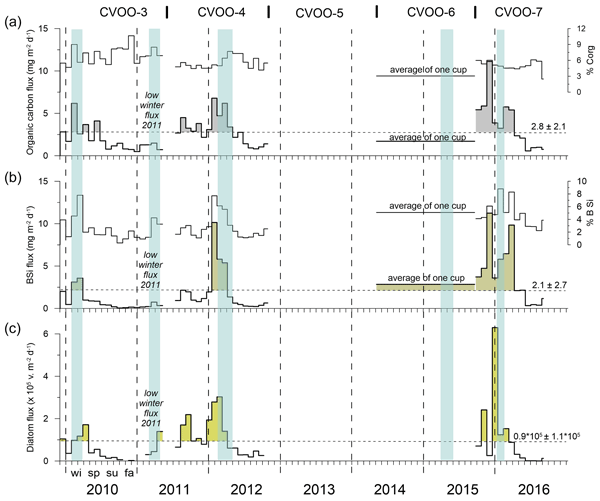
Low-oxygen eddies in the eastern subtropical North Atlantic can form an oasis for phytoplankton growth. Here we report on particle flux dynamics at the oligotrophic Cape Verde Ocean Observatory. We observed consistent flux patterns during the passages of low-oxygen eddies. We found distinct flux peaks in late winter, clearly exceeding background fluxes. Our findings suggest that the low-oxygen eddies sequester higher organic carbon than expected for oligotrophic settings.
Ariadna C. Nocera, Lars Stemmann, Marcel Babin, Tristan Biard, Julie Coustenoble, François Carlotti, Laurent Coppola, Lucas Courchet, Laetitia Drago, Amanda Elineau, Lionel Guidi, Helena Hauss, Laëtitia Jalabert, Lee Karp-Boss, Rainer Kiko, Manon Laget, Fabien Lombard, Andrew McDonnell, Camille Merland, Solène Motreuil, Thelma Panaïotis, Marc Picheral, Andreas Rogge, Anya Waite, and Jean-Olivier Irisson
Earth Syst. Sci. Data, 18, 7345–7366, https://doi.org/10.5194/essd-18-7345-2026, https://doi.org/10.5194/essd-18-7345-2026, 2026
Short summary
Short summary
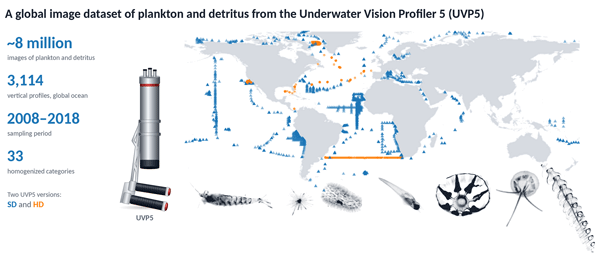
Plankton and sinking organic particles (detritus) shape how the ocean stores carbon, but they are difficult to observe worldwide. We present a global, openly available collection of about 8 million images captured by an underwater camera (UVP5) in 3114 profiles from 2008 to 2018 and sorted into 33 categories. Detritus made up 90 % of the objects and copepods were the most common plankton. The dataset can help train machine learning tools and improve ocean ecosystem and climate models.

Asta C. Heidemann, Alexander Hayward, Philipp Assmy, Atreya Basu, Astrid Bracher, Giulia Castellani, Giacomo Ditullio, Katarzyna Dragańska-Deja, Amane Fujiwara, Glaucia Moreira Fragoso, Jacob Høyer, Jiwoon Hwang, Morten Iversen, Anabel von Jackowski, Thomas Juul-Pedersen, Piotr Kowalczuk, Youngju Lee, Maria A. van Leeuwe, Atsushi Matsuoka, Alenya Merz, Christopher John Mundy, Else Ostermann, Ilka Peeken, Matt Pinkerton, Joanna Stoń-Egiert, Jacqueline Stefels, Antonia U. Thielecke, Gaëlle Veyssiere, Hongyan Xi, Eun Jin Yang, and Rafael Gonçalves-Araujo
Earth Syst. Sci. Data, 18, 5505–5529, https://doi.org/10.5194/essd-18-5505-2026, https://doi.org/10.5194/essd-18-5505-2026, 2026
Short summary
Short summary
Algal pigments are widely used to quantify algal biomass and composition. These organisms form the basis of marine food webs and are vital for the wider ecosystem. Here, we present a pan-Arctic dataset of algal pigments, containing 10 798 measurements collected between 2000 and 2024. This publicly available dataset represents an international collaborative effort and provides an important resource for assessing environmental change and advancing future Arctic ecological and modelling studies.
Hyelim Yoo, Li-Qing Jiang, Chris Langdon, Alex Kozyr, Simone R. Alin, Jose Martin Hernandez Ayon, Kumiko Azetsu-Scott, Leticia Barbero, Nicole Besemer, Albert Boyd, Jean R. Brodeur, Wei-Jun Cai, Brendan R. Carter, Cecilia Chapa, Eugene Colbourne, Jessica N. Cross, Ian Enochs, Leticia Espinosa-Carreon, Richard A. Feely, Karina E. Giesbrecht, Helen Gurney-Smith, Burke Hales, Naomi Harada, James Hooper, Christopher W. Hunt, Debby Ianson, Mike Jankulak, Terrence M. Joyce, Esther G. Kennedy, Brian A. King, Arne Körtzinger, Matthias Lankhorst, Gary Maillet, Derek Manzello, Anna K. McLaskey, Viviane V. Menezes, Nicolas Metzl, Christine Michel, Natalie M. Monacci, Julio M. Morell, Akihiko Murata, Jan Newton, Emily O'Grady, Ana M. Palacio-Castro, Denis Pierrot, Marc Ringuette, Christopher Sabine, Joseph E. Salisbury, Akash R. Sastri, Ute Schuster, Uwe Send, Ryan Smith, Michel Starr, James H. Swift, Lynne D. Talley, Helmuth Thomas, Douglas W. R. Wallace, Zhaohui Aleck Wang, Rik Wanninkhof, Chi S. Wong, Patricia L. Yager, and Igor Yashayaev
Earth Syst. Sci. Data Discuss., https://doi.org/10.5194/essd-2026-516, https://doi.org/10.5194/essd-2026-516, 2026
Preprint under review for ESSD
Short summary
Short summary
The coastal Ocean Data Analysis Product in North America (CODAP-NA, Version 2026) substantially increased both the spatial and temporal coverage of coastal biogeochemical measurements across North American continental shelves. This version comprises 446 cruises, 31,864 hydrographic profiles, and 195,489 discrete data records covering continental shelf environments from Alaska to Mexico in the west and from Canada to the Caribbean in the east from 1981 to 2024.
Joelle Habib, Lars Stemmann, Alexandre Accardo, Alberto Baudena, Franz Philip Tuchen, Peter Brandt, and Rainer Kiko
Biogeosciences, 22, 7985–8003, https://doi.org/10.5194/bg-22-7985-2025, https://doi.org/10.5194/bg-22-7985-2025, 2025
Short summary
Short summary
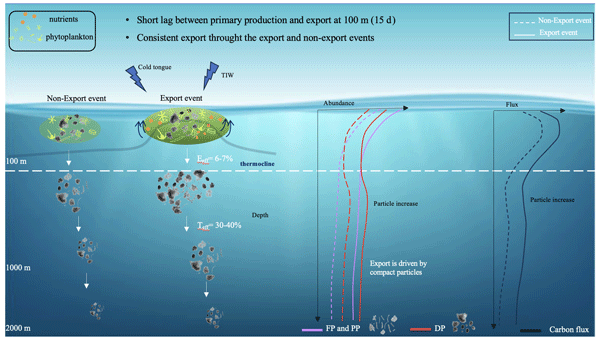
This study investigates how carbon moves from the ocean surface to the depths in the equatorial Atlantic, contributing to long-term carbon storage. Using an Argo float equipped with a camera, we captured two periods with major carbon export events. By identifying particle types and their sinking behaviors, we found that smaller, compact particles are key drivers of carbon transport. Our findings underscore the value of using imaging tools on autonomous platforms in tracking carbon sequestration.
Yawouvi Dodji Soviadan, Miriam Beck, Joelle Habib, Alberto Baudena, Laetitia Drago, Alexandre Accardo, Remi Laxenaire, Sabrina Speich, Peter Brandt, Rainer Kiko, and Stemmann Lars
Biogeosciences, 22, 3485–3501, https://doi.org/10.5194/bg-22-3485-2025, https://doi.org/10.5194/bg-22-3485-2025, 2025
Short summary
Short summary
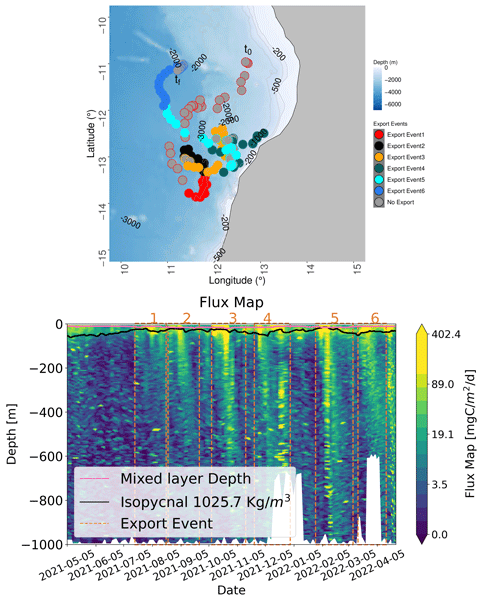
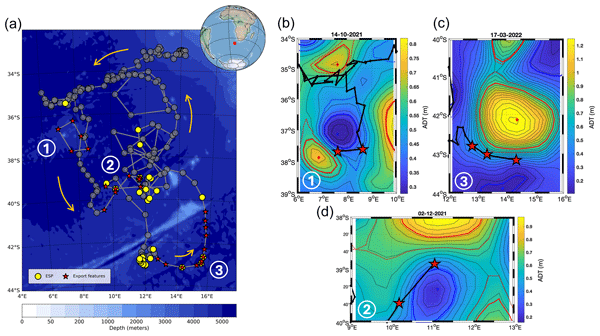
Key parameters representing the gravity flux in global models are sinking speed and vertical attenuation of exported material. We calculate, for the first time, these parameters in situ in the ocean for six intermittent blooms followed by export events using high-resolution (3 d) time series of 0–1000 m depth profiles from imaging sensors mounted on an Argo float. We show that sinking speed depends not only on size but also on the morphology of the particles, with density being an important property.
Alexandre Accardo, Rémi Laxenaire, Alberto Baudena, Sabrina Speich, Rainer Kiko, and Lars Stemmann
Biogeosciences, 22, 1183–1201, https://doi.org/10.5194/bg-22-1183-2025, https://doi.org/10.5194/bg-22-1183-2025, 2025
Short summary
Short summary
The open ocean helps mitigate climate change by storing CO2 via the biological carbon pump (BCP), which involves processes like organic carbon production at the surface and transferring it to the deep ocean via various pathways. By deploying an autonomous platform, we found significant marine snow accumulation from the surface to the mesopelagic zone in frontal regions between eddies. We suggest that the coupling of hydrodynamics at eddy edges and biological activity may enhance this process.

Swantje Bastin, Aleksei Koldunov, Florian Schütte, Oliver Gutjahr, Marta Agnieszka Mrozowska, Tim Fischer, Radomyra Shevchenko, Arjun Kumar, Nikolay Koldunov, Helmuth Haak, Nils Brüggemann, Rebecca Hummels, Mia Sophie Specht, Johann Jungclaus, Sergey Danilov, Marcus Dengler, and Markus Jochum
Geosci. Model Dev., 18, 1189–1220, https://doi.org/10.5194/gmd-18-1189-2025, https://doi.org/10.5194/gmd-18-1189-2025, 2025
Short summary
Short summary
Vertical mixing is an important process, for example, for tropical sea surface temperature, but cannot be resolved by ocean models. Comparisons of mixing schemes and settings have usually been done with a single model, sometimes yielding conflicting results. We systematically compare two widely used schemes with different parameter settings in two different ocean models and show that most effects from mixing scheme parameter changes are model-dependent.
Mathilde Dugenne, Marco Corrales-Ugalde, Jessica Y. Luo, Rainer Kiko, Todd D. O'Brien, Jean-Olivier Irisson, Fabien Lombard, Lars Stemmann, Charles Stock, Clarissa R. Anderson, Marcel Babin, Nagib Bhairy, Sophie Bonnet, Francois Carlotti, Astrid Cornils, E. Taylor Crockford, Patrick Daniel, Corinne Desnos, Laetitia Drago, Amanda Elineau, Alexis Fischer, Nina Grandrémy, Pierre-Luc Grondin, Lionel Guidi, Cecile Guieu, Helena Hauss, Kendra Hayashi, Jenny A. Huggett, Laetitia Jalabert, Lee Karp-Boss, Kasia M. Kenitz, Raphael M. Kudela, Magali Lescot, Claudie Marec, Andrew McDonnell, Zoe Mériguet, Barbara Niehoff, Margaux Noyon, Thelma Panaïotis, Emily Peacock, Marc Picheral, Emilie Riquier, Collin Roesler, Jean-Baptiste Romagnan, Heidi M. Sosik, Gretchen Spencer, Jan Taucher, Chloé Tilliette, and Marion Vilain
Earth Syst. Sci. Data, 16, 2971–2999, https://doi.org/10.5194/essd-16-2971-2024, https://doi.org/10.5194/essd-16-2971-2024, 2024
Short summary
Short summary
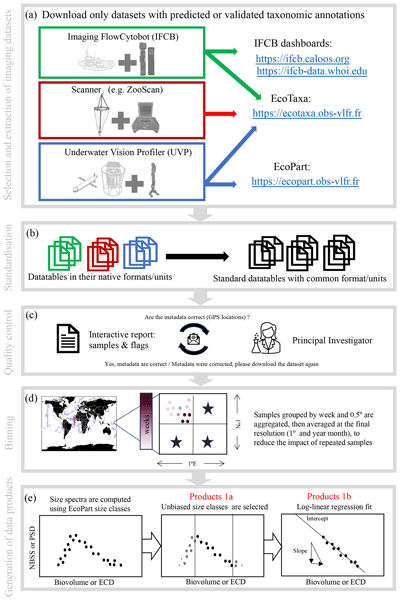
Plankton and particles influence carbon cycling and energy flow in marine ecosystems. We used three types of novel plankton imaging systems to obtain size measurements from a range of plankton and particle sizes and across all major oceans. Data were compiled and cross-calibrated from many thousands of images, showing seasonal and spatial changes in particle size structure in different ocean basins. These datasets form the first release of the Pelagic Size Structure database (PSSdb).
Nico Lange, Björn Fiedler, Marta Álvarez, Alice Benoit-Cattin, Heather Benway, Pier Luigi Buttigieg, Laurent Coppola, Kim Currie, Susana Flecha, Dana S. Gerlach, Makio Honda, I. Emma Huertas, Siv K. Lauvset, Frank Muller-Karger, Arne Körtzinger, Kevin M. O'Brien, Sólveig R. Ólafsdóttir, Fernando C. Pacheco, Digna Rueda-Roa, Ingunn Skjelvan, Masahide Wakita, Angelicque White, and Toste Tanhua
Earth Syst. Sci. Data, 16, 1901–1931, https://doi.org/10.5194/essd-16-1901-2024, https://doi.org/10.5194/essd-16-1901-2024, 2024
Short summary
Short summary
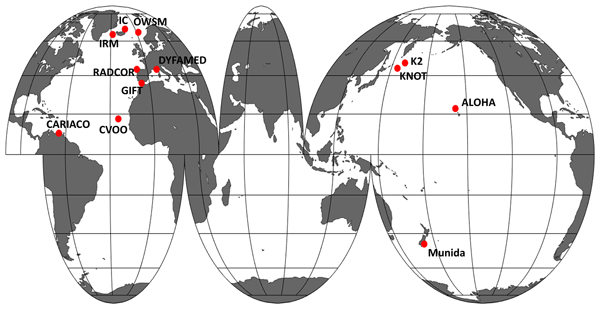
The Synthesis Product for Ocean Time Series (SPOTS) is a novel achievement expanding and complementing the biogeochemical data landscape by providing consistent and high-quality biogeochemical time-series data from 12 ship-based fixed time-series programs. SPOTS covers multiple unique marine environments and time-series ranges, including data from 1983 to 2021. All in all, it facilitates a variety of applications that benefit from the collective value of biogeochemical time-series observations.
Cathy Wimart-Rousseau, Tobias Steinhoff, Birgit Klein, Henry Bittig, and Arne Körtzinger
Biogeosciences, 21, 1191–1211, https://doi.org/10.5194/bg-21-1191-2024, https://doi.org/10.5194/bg-21-1191-2024, 2024
Short summary
Short summary
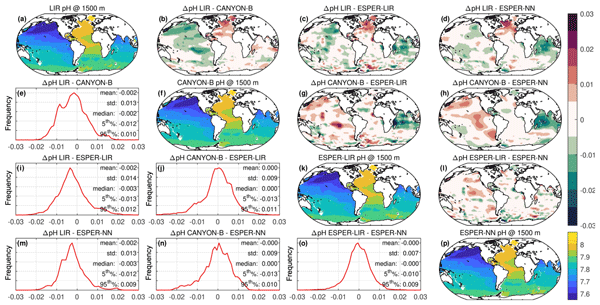
The marine CO2 system can be measured independently and continuously by BGC-Argo floats since numerous pH sensors have been developed to suit these autonomous measurements platforms. By applying the Argo correction routines to float pH data acquired in the subpolar North Atlantic Ocean, we report the uncertainty and lack of objective criteria associated with the choice of the reference method as well the reference depth for the pH correction.
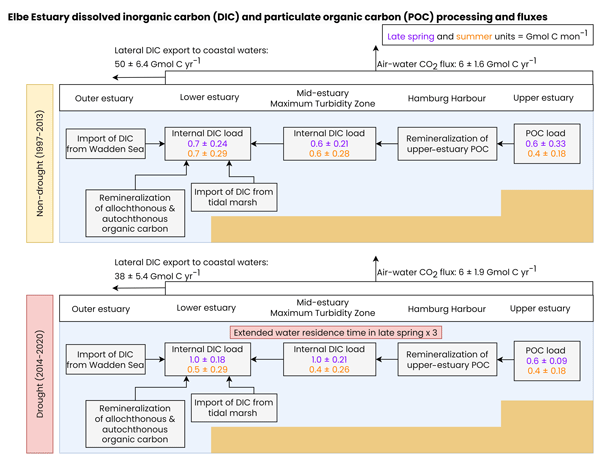
Louise C. V. Rewrie, Burkard Baschek, Justus E. E. van Beusekom, Arne Körtzinger, Gregor Ollesch, and Yoana G. Voynova
Biogeosciences, 20, 4931–4947, https://doi.org/10.5194/bg-20-4931-2023, https://doi.org/10.5194/bg-20-4931-2023, 2023
Short summary
Short summary
After heavy pollution in the 1980s, a long-term inorganic carbon increase in the Elbe Estuary (1997–2020) was fueled by phytoplankton and organic carbon production in the upper estuary, associated with improved water quality. A recent drought (2014–2020) modulated the trend, extending the water residence time and the dry summer season into May. The drought enhanced production of inorganic carbon in the estuary but significantly decreased the annual inorganic carbon export to coastal waters.
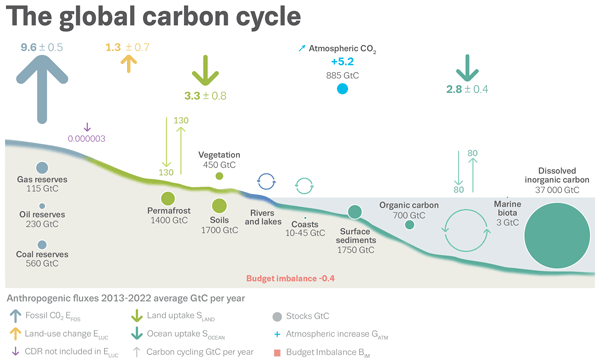
Pierre Friedlingstein, Michael O'Sullivan, Matthew W. Jones, Robbie M. Andrew, Dorothee C. E. Bakker, Judith Hauck, Peter Landschützer, Corinne Le Quéré, Ingrid T. Luijkx, Glen P. Peters, Wouter Peters, Julia Pongratz, Clemens Schwingshackl, Stephen Sitch, Josep G. Canadell, Philippe Ciais, Robert B. Jackson, Simone R. Alin, Peter Anthoni, Leticia Barbero, Nicholas R. Bates, Meike Becker, Nicolas Bellouin, Bertrand Decharme, Laurent Bopp, Ida Bagus Mandhara Brasika, Patricia Cadule, Matthew A. Chamberlain, Naveen Chandra, Thi-Tuyet-Trang Chau, Frédéric Chevallier, Louise P. Chini, Margot Cronin, Xinyu Dou, Kazutaka Enyo, Wiley Evans, Stefanie Falk, Richard A. Feely, Liang Feng, Daniel J. Ford, Thomas Gasser, Josefine Ghattas, Thanos Gkritzalis, Giacomo Grassi, Luke Gregor, Nicolas Gruber, Özgür Gürses, Ian Harris, Matthew Hefner, Jens Heinke, Richard A. Houghton, George C. Hurtt, Yosuke Iida, Tatiana Ilyina, Andrew R. Jacobson, Atul Jain, Tereza Jarníková, Annika Jersild, Fei Jiang, Zhe Jin, Fortunat Joos, Etsushi Kato, Ralph F. Keeling, Daniel Kennedy, Kees Klein Goldewijk, Jürgen Knauer, Jan Ivar Korsbakken, Arne Körtzinger, Xin Lan, Nathalie Lefèvre, Hongmei Li, Junjie Liu, Zhiqiang Liu, Lei Ma, Greg Marland, Nicolas Mayot, Patrick C. McGuire, Galen A. McKinley, Gesa Meyer, Eric J. Morgan, David R. Munro, Shin-Ichiro Nakaoka, Yosuke Niwa, Kevin M. O'Brien, Are Olsen, Abdirahman M. Omar, Tsuneo Ono, Melf Paulsen, Denis Pierrot, Katie Pocock, Benjamin Poulter, Carter M. Powis, Gregor Rehder, Laure Resplandy, Eddy Robertson, Christian Rödenbeck, Thais M. Rosan, Jörg Schwinger, Roland Séférian, T. Luke Smallman, Stephen M. Smith, Reinel Sospedra-Alfonso, Qing Sun, Adrienne J. Sutton, Colm Sweeney, Shintaro Takao, Pieter P. Tans, Hanqin Tian, Bronte Tilbrook, Hiroyuki Tsujino, Francesco Tubiello, Guido R. van der Werf, Erik van Ooijen, Rik Wanninkhof, Michio Watanabe, Cathy Wimart-Rousseau, Dongxu Yang, Xiaojuan Yang, Wenping Yuan, Xu Yue, Sönke Zaehle, Jiye Zeng, and Bo Zheng
Earth Syst. Sci. Data, 15, 5301–5369, https://doi.org/10.5194/essd-15-5301-2023, https://doi.org/10.5194/essd-15-5301-2023, 2023
Short summary
Short summary
The Global Carbon Budget 2023 describes the methodology, main results, and data sets used to quantify the anthropogenic emissions of carbon dioxide (CO2) and their partitioning among the atmosphere, land ecosystems, and the ocean over the historical period (1750–2023). These living datasets are updated every year to provide the highest transparency and traceability in the reporting of CO2, the key driver of climate change.
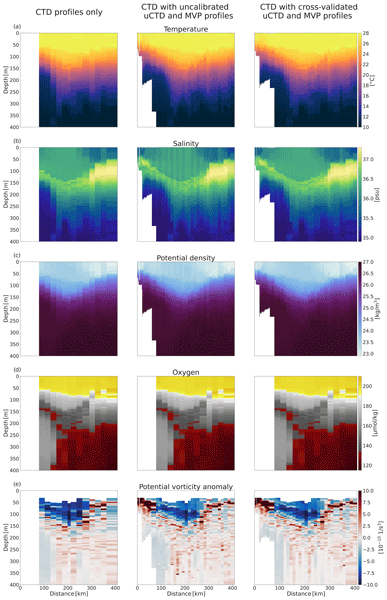
Pierre L'Hégaret, Florian Schütte, Sabrina Speich, Gilles Reverdin, Dariusz B. Baranowski, Rena Czeschel, Tim Fischer, Gregory R. Foltz, Karen J. Heywood, Gerd Krahmann, Rémi Laxenaire, Caroline Le Bihan, Philippe Le Bot, Stéphane Leizour, Callum Rollo, Michael Schlundt, Elizabeth Siddle, Corentin Subirade, Dongxiao Zhang, and Johannes Karstensen
Earth Syst. Sci. Data, 15, 1801–1830, https://doi.org/10.5194/essd-15-1801-2023, https://doi.org/10.5194/essd-15-1801-2023, 2023
Short summary
Short summary
In early 2020, the EUREC4A-OA/ATOMIC experiment took place in the northwestern Tropical Atlantic Ocean, a dynamical region where different water masses interact. Four oceanographic vessels and a fleet of autonomous devices were deployed to study the processes at play and sample the upper ocean, each with its own observing capability. The article first describes the data calibration and validation and second their cross-validation, using a hierarchy of instruments and estimating the uncertainty.
Sven Nicolai Katzenmeier, Maren Nothof, Hans-Werner Breiner, Tim Fischer, and Thorsten Stoeck
EGUsphere, https://doi.org/10.5194/egusphere-2023-682, https://doi.org/10.5194/egusphere-2023-682, 2023
Preprint retracted
Short summary
Short summary
Open ocean productivity and food webs rely to a large part on nutrients that are being transported offshore from coastal upwelling regions via ocean eddies. Such areas are of ecological and economic (fisheries) importance, but little understood. We revealed how nutrients and microbial diversity entrapped in these eddies evolve during their offshore trajectories. This contributes to our understanding of how such large-scale processes change open oceanic "desert" regions into productive "oases".

Patricia Ayón Dejo, Elda Luz Pinedo Arteaga, Anna Schukat, Jan Taucher, Rainer Kiko, Helena Hauss, Sabrina Dorschner, Wilhelm Hagen, Mariona Segura-Noguera, and Silke Lischka
Biogeosciences, 20, 945–969, https://doi.org/10.5194/bg-20-945-2023, https://doi.org/10.5194/bg-20-945-2023, 2023
Short summary
Short summary
Ocean upwelling regions are highly productive. With ocean warming, severe changes in upwelling frequency and/or intensity and expansion of accompanying oxygen minimum zones are projected. In a field experiment off Peru, we investigated how different upwelling intensities affect the pelagic food web and found failed reproduction of dominant zooplankton. The changes projected could severely impact the reproductive success of zooplankton communities and the pelagic food web in upwelling regions.
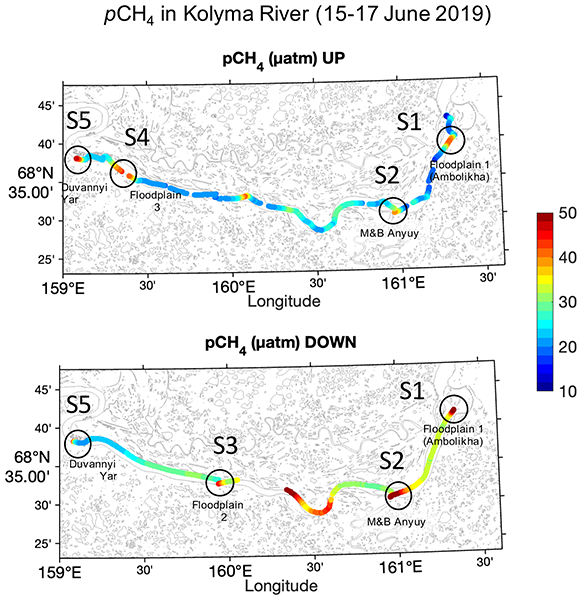
Karel Castro-Morales, Anna Canning, Sophie Arzberger, Will A. Overholt, Kirsten Küsel, Olaf Kolle, Mathias Göckede, Nikita Zimov, and Arne Körtzinger
Biogeosciences, 19, 5059–5077, https://doi.org/10.5194/bg-19-5059-2022, https://doi.org/10.5194/bg-19-5059-2022, 2022
Short summary
Short summary
Permafrost thaw releases methane that can be emitted into the atmosphere or transported by Arctic rivers. Methane measurements are lacking in large Arctic river regions. In the Kolyma River (northeast Siberia), we measured dissolved methane to map its distribution with great spatial detail. The river’s edge and river junctions had the highest methane concentrations compared to other river areas. Microbial communities in the river showed that the river’s methane likely is from the adjacent land.
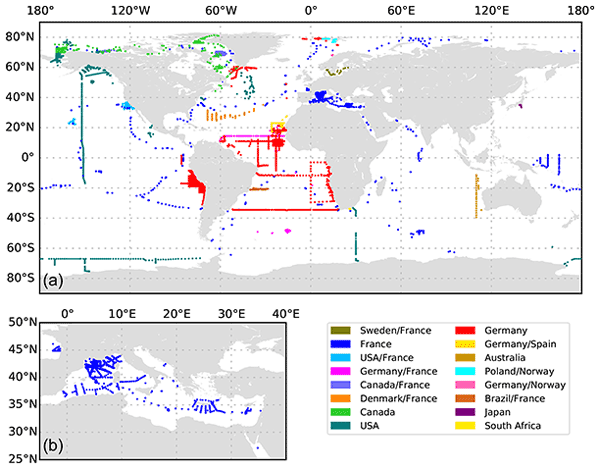
Rainer Kiko, Marc Picheral, David Antoine, Marcel Babin, Léo Berline, Tristan Biard, Emmanuel Boss, Peter Brandt, Francois Carlotti, Svenja Christiansen, Laurent Coppola, Leandro de la Cruz, Emilie Diamond-Riquier, Xavier Durrieu de Madron, Amanda Elineau, Gabriel Gorsky, Lionel Guidi, Helena Hauss, Jean-Olivier Irisson, Lee Karp-Boss, Johannes Karstensen, Dong-gyun Kim, Rachel M. Lekanoff, Fabien Lombard, Rubens M. Lopes, Claudie Marec, Andrew M. P. McDonnell, Daniela Niemeyer, Margaux Noyon, Stephanie H. O'Daly, Mark D. Ohman, Jessica L. Pretty, Andreas Rogge, Sarah Searson, Masashi Shibata, Yuji Tanaka, Toste Tanhua, Jan Taucher, Emilia Trudnowska, Jessica S. Turner, Anya Waite, and Lars Stemmann
Earth Syst. Sci. Data, 14, 4315–4337, https://doi.org/10.5194/essd-14-4315-2022, https://doi.org/10.5194/essd-14-4315-2022, 2022
Short summary
Short summary
The term
marine particlescomprises detrital aggregates; fecal pellets; bacterioplankton, phytoplankton and zooplankton; and even fish. Here, we present a global dataset that contains 8805 vertical particle size distribution profiles obtained with Underwater Vision Profiler 5 (UVP5) camera systems. These data are valuable to the scientific community, as they can be used to constrain important biogeochemical processes in the ocean, such as the flux of carbon to the deep sea.
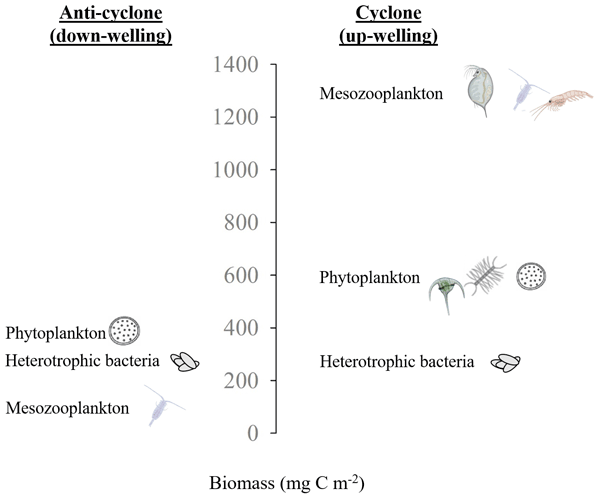
Natalia Belkin, Tamar Guy-Haim, Maxim Rubin-Blum, Ayah Lazar, Guy Sisma-Ventura, Rainer Kiko, Arseniy R. Morov, Tal Ozer, Isaac Gertman, Barak Herut, and Eyal Rahav
Ocean Sci., 18, 693–715, https://doi.org/10.5194/os-18-693-2022, https://doi.org/10.5194/os-18-693-2022, 2022
Short summary
Short summary
We studied how distinct water circulations that elevate (cyclone) or descend (anticyclone) water from the upper ocean affect the biomass, activity and diversity of planktonic microorganisms in the impoverished eastern Mediterranean. We show that cyclonic and anticyclonic eddies differ in their community composition and production. Moreover, the anticyclone may be a potential bio-invasion and dispersal vector, while the cyclone may serve as a thermal refugee for native species.
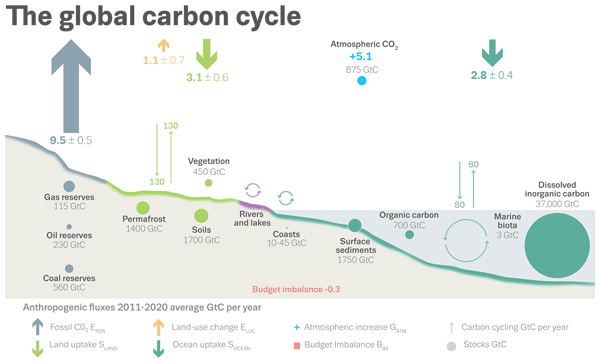
Pierre Friedlingstein, Matthew W. Jones, Michael O'Sullivan, Robbie M. Andrew, Dorothee C. E. Bakker, Judith Hauck, Corinne Le Quéré, Glen P. Peters, Wouter Peters, Julia Pongratz, Stephen Sitch, Josep G. Canadell, Philippe Ciais, Rob B. Jackson, Simone R. Alin, Peter Anthoni, Nicholas R. Bates, Meike Becker, Nicolas Bellouin, Laurent Bopp, Thi Tuyet Trang Chau, Frédéric Chevallier, Louise P. Chini, Margot Cronin, Kim I. Currie, Bertrand Decharme, Laique M. Djeutchouang, Xinyu Dou, Wiley Evans, Richard A. Feely, Liang Feng, Thomas Gasser, Dennis Gilfillan, Thanos Gkritzalis, Giacomo Grassi, Luke Gregor, Nicolas Gruber, Özgür Gürses, Ian Harris, Richard A. Houghton, George C. Hurtt, Yosuke Iida, Tatiana Ilyina, Ingrid T. Luijkx, Atul Jain, Steve D. Jones, Etsushi Kato, Daniel Kennedy, Kees Klein Goldewijk, Jürgen Knauer, Jan Ivar Korsbakken, Arne Körtzinger, Peter Landschützer, Siv K. Lauvset, Nathalie Lefèvre, Sebastian Lienert, Junjie Liu, Gregg Marland, Patrick C. McGuire, Joe R. Melton, David R. Munro, Julia E. M. S. Nabel, Shin-Ichiro Nakaoka, Yosuke Niwa, Tsuneo Ono, Denis Pierrot, Benjamin Poulter, Gregor Rehder, Laure Resplandy, Eddy Robertson, Christian Rödenbeck, Thais M. Rosan, Jörg Schwinger, Clemens Schwingshackl, Roland Séférian, Adrienne J. Sutton, Colm Sweeney, Toste Tanhua, Pieter P. Tans, Hanqin Tian, Bronte Tilbrook, Francesco Tubiello, Guido R. van der Werf, Nicolas Vuichard, Chisato Wada, Rik Wanninkhof, Andrew J. Watson, David Willis, Andrew J. Wiltshire, Wenping Yuan, Chao Yue, Xu Yue, Sönke Zaehle, and Jiye Zeng
Earth Syst. Sci. Data, 14, 1917–2005, https://doi.org/10.5194/essd-14-1917-2022, https://doi.org/10.5194/essd-14-1917-2022, 2022
Short summary
Short summary
The Global Carbon Budget 2021 describes the data sets and methodology used to quantify the emissions of carbon dioxide and their partitioning among the atmosphere, land, and ocean. These living data are updated every year to provide the highest transparency and traceability in the reporting of CO2, the key driver of climate change.
Gerhard Fischer, Oscar E. Romero, Johannes Karstensen, Karl-Heinz Baumann, Nasrollah Moradi, Morten Iversen, Götz Ruhland, Marco Klann, and Arne Körtzinger
Biogeosciences, 18, 6479–6500, https://doi.org/10.5194/bg-18-6479-2021, https://doi.org/10.5194/bg-18-6479-2021, 2021
Short summary
Short summary
Low-oxygen eddies in the eastern subtropical North Atlantic can form an oasis for phytoplankton growth. Here we report on particle flux dynamics at the oligotrophic Cape Verde Ocean Observatory. We observed consistent flux patterns during the passages of low-oxygen eddies. We found distinct flux peaks in late winter, clearly exceeding background fluxes. Our findings suggest that the low-oxygen eddies sequester higher organic carbon than expected for oligotrophic settings.
Cited articles
Alldredge, A. L. and Gotschalk, C.: In situ settling behavior of marine snow, Limnol. Oceanogr., 33, 339–351, https://doi.org/10.4319/lo.1988.33.3.0339, 1988.
Alldredge, A. L. and Jackson, G. A.: Aggregation in marine systems, Deep-Sea Res. Pt. II, 42, 1–7, https://doi.org/10.1016/0967-0645(95)90003-9, 1995.
Alldredge, A. L., Passow, U., and Logan, B .E.: The abundance and significance of a class of large, transparent organic particles in the ocean, Deep-Sea Res. Pt. I, 40, 1131–1140, https://doi.org/10.1016/0967-0637(93)90129-Q, 1993.
Baker, C. A., Henson, S. A., Cavan, E. L., Giering, S. L. C., Yool, A., Gehlen, M., Belcher, A., Riley, J. S., Smith, H. E. K., and Sanders, R.: Slow-sinking particulate organic carbon in the Atlantic Ocean: magnitude, flux, and potential controls, Global Biogeochem. Cycles, 31, 1051–1065, https://doi.org/10.1002/2017gb005638, 2017.
Baker, C. A., Estapa, M. L., Iversen, M., Lampitt, R., and Buesseler. K.: Are all sediment traps created equal? An intercomparison study of carbon export methodologies at the PAP-SO site, Prog. Oceanogr., 184, 102317, https://doi.org/10.1016/j.pocean.2020.102317, 2020.
Belcher, A., Iversen, M., Manno, C., Henson, S. A., Tarling, G. A., and Sanders, R.: The role of particle associated microbes in remineralization of fecal pellets in the upper mesopelagic of the Scotia Sea, Antarctica, Limnol. Oceanogr., 61, 1049–1064, https://https://doi.org/10.1002/lno.10269, 2016.
Boyd, P. W., Claustre, H., Levy, M., Siegel D. A., and Weber, T.: Multi-faceted particle pumps drive carbon sequestration in the ocean, Nature, 568, 327–335, https://doi.org/10.1038/s41586-019-1098-2, 2019.
Bressac, M., Laurenceau-Cornec, E. C., Kennedy, F., Santoro, A. E., Paul, N. L., Briggs, N., Carvalho, F., and Boyd, P. W.: Decoding drivers of carbon flux attenuation in the oceanic biological pump, Nature, 633, 587–593, https://doi.org/10.1038/s41586-024-07850-x, 2024.
Buesseler, K. O., Antia, A. N., Chen, M., Fowler, S. W., Gardner, W. D., Gustafsson, O., Harada, K., Michaels, A. F., Rutgers van der Loeff, M., Sarin, M., Steinberg, D. K., and Trull, T.: An assessment of the use of sediment traps for estimating upper ocean particle fluxes, J. Mar. Res., 65, 345–416, https://doi.org/10.1357/002224007781567621, 2007.
Buesseler, K. O., Lamborg, C., Cai, P., Escoube, R., Johnson, R., Pike, S., Masque, P., McGillicuddy, D., and Verdeny, E.: Particle fluxes associated with mesoscale eddies in the Sargasso Sea, Deep-Sea Res. Pt. II, 55, 1426–1444, https://doi.org/10.1016/j.dsr2.2008.02.007, 2008.
Buesseler, K. O., Boyd, P. W, Black, E. E., and Siegel, D.A.: Metrics that matter for assessing the ocean biological carbon pump, Proc. Natl. Acad. Sci. U.S.A., 117, 9679–9687, https://doi.org/10.1073/pnas.1918114117, 2020.
Burd, A. B. and Jackson, G. A.: Particle Aggregation, Annual Review of Marine Science, 1, 65–90, https://doi.org/10.1146/annurev.marine.010908.163904, 2009.
Cael, B. B. and White, A. E.: Sinking versus suspended particle size distributions in the North Pacific Subtropical Gyre, Geophys. Res. Lett., 47, e2020GL087825, https://doi.org/10.1029/2020gl087825, 2020.
Cael, B. B., Cavan, E. L., and Britten, G. L.: Reconciling the size-dependence of marine particle sinking speed, Geophys. Res. Lett., 5, e2020GL091771, https://doi.org/10.1029/2020gl091771, 2021.
Clements, D. J., Yang, S., Weber, T., McDonnell, A. M. P., Kiko, R., Stemmann, L., and Bianchi, D.: New estimate of organic carbon export from optical measurements reveals the role of particle size distribution and export horizon, Global Biogeochem. Cycles, 37, e2022GB007633, https://doi.org/10.1029/2022gb007633, 2023.
Dall'Olmo, G. and Mork, K. A.: Carbon export by small particles in the Norwegian Sea, Geophys. Res. Lett., 41, 2921–2927, https://doi.org/10.1002/2014gl059244, 2014.
Dengler, M., Körtzinger, A., and Krahmann, G.: Physical oceanography (CTD) during METEOR cruise M160, PANGAEA [data set], https://doi.pangaea.de/10.1594/PANGAEA.943432, 2022.
DeVries, T. and Weber, T.: The export and fate of organic matter in the ocean: New constraints from combining satellite and oceanographic tracer observations, Global Biogeochem. Cycles, 31, 535–555, https://doi.org/10.1002/2016gb005551, 2017.
Durkin, C. A., Buesseler, K. O., Cetinic, I., Estapa, M., Kelley, R. P., and Omand. M.: A visual tour of carbon export by sinking particles, Global Biogeochem. Cycles, 35, 1–17, https://doi.org/10.1029/2021GB006985, 2021.
Estapa, M., Durkin, C., Slade, W., Huffard, C., O'Neill, S., and Omand, M.: A new, global optical sediment trap calibration, Limnol. Oceanogr. Methods, 22, 77–92, https://doi.org/10.1002/lom3.10592, 2023.
Fadeev, E., Rogge, A., Ramondenc, S., Noethig, E.-M., Wekerle, C., Bienhold, C., Salter, I., Waite, A. M., Hehemann, L., Boetius, A., and Iversen, M. H.: Sea ice presence is linked to higher carbon export and vertical microbial connectivity in the Eurasian Arctic Ocean, Commun. Biol., 4, 1255, https://doi.org/10.1038/s42003-021-02776-w, 2021.
Galbraith, E. D. and Martiny, A. C.: A simple nutrient-dependence mechanism for predicting the stoichiometry of marine ecosystems, Proc. Natl. Acad. Sci. U.S.A., 112, 8199–8204, https://doi.org/10.1073/pnas.1423917112, 2015.
Giering, S. L. C., Sanders, R., Martin, A. P., Henson, S. A., Riley, J. S., Marsay, C. M., and Johns, D. G.: Particle flux in the oceans: challenging the steady state assumption, Global Biogeochem. Cycles, 31, 159–171, https://doi.org/10.1002/2016gb005424, 2017.
Giering, S. L. C., Cavan, E. L., Basedow, S. L., Briggs, N., Burd, A. B., Darroch, L. J., Guidi, L., Irisson, J.-O., Iversen, M. H., Kiko, R., Lindsay, D., Marcolin, C. R., McDonnell, A. M. P., Möller, K. O., Passow, U., Thomalla, S., Trull, T. W., and Waite, A. M.: Sinking organic particles in the ocean–flux estimates from in-situ optical devices, Front. Mar. Sci., 6, 834, https://doi.org/10.3389/fmars.2019.00834, 2020.
Grossart, H.-P. and Ploug, H.: Microbial degradation of organic carbon and nitrogen on diatom aggregates, Limnol. Oceanogr., 46, 267–277, https://doi.org/10.4319/lo.2001.46.2.0267, 2001.
Guidi, L., Jackson, G. A., Stemmann, L., Miquel, J. C., Picheral, M., and Gorsky, G.: Relationship between particle size distribution and flux in the mesopelagic zone, Deep-Sea Res. Pt. I, 55, 1364–1374, https://doi.org/10.1016/j.dsr.2008.05.014, 2008.
Habib, J., Stemmann, L., Accardo, A., Baudena, A., Tuchen, F. P., Brandt, P., and Kiko, R.: Marine snow surface production and bathypelagic export at the Equatorial Atlantic from an imaging float, Biogeosciences, 22, 7985–8003, https://doi.org/10.5194/bg-22-7985-2025, 2025.
Hach, P. F., Marchant, H. K., Krupke, A., Riedel, T., Meier, D. V., Lavik, G., Holtappels, M., Dittmar, T., and Kuypers, M. M. M.: Rapid microbial diversification of dissolved organic matter in oceanic surface waters leads to carbon sequestration, Sci. Rep., 10, 13025, https://doi.org/10.1038/s41598-020-69930-y, 2020.
Henson, S. A., Sanders, R., Madsen, E., Morris, P. J., Le Moigne, F., and Quartly, G. D.: A reduced estimate of the strength of the ocean's biological carbon pump, Geophys. Res. Lett., 38, L04606, https://doi.org/10.1029/2011GL046735, 2011.
Henson, S. A., Laufkötter, C., Leung, S., Giering, S. L. C., Palevsky, H. I., and Cavan, E. L. C.: Uncertain response of ocean biological carbon export in a changing world, Nat. Geosci., 15, 248–254, https://doi.org/10.1038/s41561-022-00927-0, 2022.
Iversen, M. H.: Carbon export in the ocean: A biologist's perspective, Annu. Rev. Mar. Sci., 15, 357–381, https://doi.org/10.1146/annurev-marine-032122-035153, 2023.
Iversen, M. H. and Lampitt, R. S.: Size does not matter after all: No evidence for a size-sinking relationship for marine snow, Prog. Oceanogr., 189, 102445, https://doi.org/10.1016/j.pocean.2020.102445, 2020.
Iversen, M. H. and Ploug, H.: Temperature effects on carbon-specific respiration rate and sinking velocity of diatom aggregates – potential implications for deep ocean export processes, Biogeosciences, 10, 4073–4085, https://doi.org/10.5194/bg-10-4073-2013, 2013.
Iversen, M. H., Nowald, N., Ploug, H., Jackson, G. A., and Fischer, G.: High resolution profiles of vertical particulate organic matter export off Cape Blanc, Mauritania: Degradation processes and ballasting effects, Deep-Sea Res. Pt. I, 57, 771–784, https://doi.org/10.1016/j.dsr.2010.03.007, 2010.
Jackson, G. A., Maffione, R., Costello, D., K., Alldredge, A. L., Logan, B. E., and Dam, H. G.: Particle size spectra between 1 µm and 1 cm at Monterey Bay determined using multiple instruments, Deep-Sea Res. Pt. I, 44, 1739–1767, https://doi.org/10.1016/S0967-0637(97)00029-0, 1997.
Kiko, R., Biastoch, A., Brandt, P., Cravatte, S., Hauss, H., Hummels, R., Kriest, I., Marin, F., McDonnell, A. M. P., Oschlies, A., Picheral, M., Schwarzkopf, F. U., Thurnherr, A. M., and Stemmann, L.: Biological and physical influences on marine snowfall at the equator, Nat. Geosci., 10, 852, https://doi.org/10.1038/ngeo3042, 2017.
Kiko, R., Picheral, M., Antoine, D., Babin, M., Berline, L., Biard, T., Boss, E., Brandt, P., Carlotti, F., Christiansen, S., Coppola, L., de la Cruz, L., Diamond-Riquier, E., Durrieu de Madron, X., Elineau, A., Gorsky, G., Guidi, L., Hauss, H., Irisson, J.-O., Karp-Boss, L., Karstensen, J., Kim, D., Lekanoff, R. M., Lombard, F., Lopes, R. M., Marec, C., McDonnell, A. M. P., Niemeyer, D., Noyon, M., O'Daly, S. H., Ohman, M. D., Pretty, J. L., Rogge, A., Searson, S., Shibata, M., Tanaka, Y., Tanhua, T., Taucher, J., Trudnowska, E., Turner, J. S., Waite, A., and Stemmann, L.: A global marine particle size distribution dataset obtained with the Underwater Vision Profiler 5, Earth Syst. Sci. Data, 14, 4315–4337, https://doi.org/10.5194/essd-14-4315-2022, 2022a.
Kiko, R., Picheral, M., Antoine, D., Babin, M., Berline, L., Biard, T., Boss, E., Brandt, P., Carlotti, F., Christiansen, S., Coppola, L., de la Cruz, L., Diamond-Riquier, E., Durrieu de Madron, X., Elineau, A., Gorsky, G., Guidi, L., Hauss, H., Irisson, J.-O., Karp-Boss, L., Karstensen, J., Kim, D.-g., Lekanoff, R. M., Lombard, F., Lopes, R. M., Marec, C., McDonnell, A. M. P., Niemeyer, D., Noyon, M., O'Daly, S. H., Ohman, M. D., Pretty, J. L., Rogge, A., Searson, S., Shibata, M., Tanaka, Y., Tanhua, T., Taucher, J., Trudnowska, E., Turner, J. S., Waite, A., and Stemmann, L.: A global marine particle size distribution dataset obtained with the Underwater Vision Profiler 5, PANGAEA [data set], https://doi.org/10.1594/PANGAEA.924375, 2022b.
Kiørboe, T.: Formation and fate of marine snow: small-scale processes with large-scale implications, Sci. Mar., 65, 57–71, https://doi.org/10.3989/scimar.2001.65s257, 2001.
Lombard, F., Boss, E., Waite, A. M., Vogt, M., Uitz, J., Stemmann, L., Sosik, H. M., Schulz, J., Romagnan, J.-B., Picheral, M., Pearlman, J., Ohman, M. D., Niehoff, B., Möller, K. O., Miloslavich, P., Lara-López, A., Kudela, R., Lopes, R. M., Kiko, R., Karp-Boss, L., Jaffe, J. S., Iversen, M. H., Irisson, J.-O., Fennel, K., Hauss, H., Guidi, L., Gorsky, G., Giering, S. L. C., Gaube, P., Gallager, S., Dubelaar, G., Cowen, R. K., Carlotti, F., Briseño-Avena, C., Berline, L., Benoit-Bird, K., Bax, N., Batten, S., Ayata, S. D., Artigas, L. F., and Appeltans, W.: Globally consistent quantitative observations of planktonic ecosystems, Front. Mar. Sci., 6, 196, https://doi.org/10.3389/fmars.2019.00196, 2019.
Markussen, T. N., Konrad, C., Waldmann, C., Becker, M., Fischer, G., and Iversen, M. H.: Tracks in the Snow – Advantage of Combining Optical Methods to Characterize Marine Particles and Aggregates, Front. Mar. Sci., 7, 476, https://doi.org/10.3389/fmars.2020.00476, 2020.
Martin, J. H., Knauer, G. A., Karl, D. M., and Broenkow, W. W.: VERTEX: carbon cycling in the northeast Pacific, Deep-Sea Res. Pt. A, 34, 267–285, https://doi.org/10.1016/0198-0149(87)90086-0, 1987.
McDonnell, A. M. P. and Buesseler, K. O.: A new method for the estimation of sinking particle fluxes from measurements of the particle size distribution, average sinking velocity, and carbon content, Limnol. Oceanogr. Methods, 10, 329–346, https://doi.org/10.4319/lom.2012.10.329, 2012.
McGillicuddy Jr., D. J., Anderson, L. A., Bates, N. R., Bibby, T., Buesseler, K. O., Carlson, C. A., Davis, C. S., Ewart, C., Falkowski, P. G., Goldthwait, S. A., Hansell, D. A., Jenkins, W. J., Johnson, R., Kosnyrev, V. K., Ledwell, J. R., Li, Q. P., Siegel, D. A., and Steinberg, D. K.: Eddy/wind interactions stimulate extraordinary mid-ocean plankton blooms, Science, 316, 1021–1026, https://doi.org/10.1126/science.1136256, 2007.
Moore, J. K., Doney, S. C., and Lindsay, K.: Upper ocean ecosystem dynamics and iron cycling in a global three-dimensional model, Global Biogeochem. Cycles, 18, GB4028, https://doi.org/10.1029/2004GB002220, 2004.
Omand, M. M., D'Asaro, E. A., Lee, C. M., Perry, M. J., Briggs, N., Cetinić, I., and Mahadevan, A.: Eddy-driven subduction exports particulate organic carbon from the spring bloom, Science, 348, 222–225, https://doi.org/10.1126/science.1260062, 2015.
Pauli, N.-C., Flintrop, C. M., Konrad, C., Pakhomov, E. A., Swoboda, S., Koch, F., Wang, X.-L., Zhang, J.-C., Brierley, A. S., Bernasconi, M., Meyer, B., and Iversen, M. H.: Krill and salp faecal pellets contribute equally to the carbon flux at the Antarctic Peninsula, Nature Communications, 12, 7168, https://doi.org/10.1038/s41467-021-27436-9, 2021.
Picheral, M., Guidi, L., Stemmann, L., Karl, D. M., Iddaoud, G., and Gorsky, G.: The underwater vision profiler 5: An advanced instrument for high spatial resolution studies of particle size spectra and zooplankton, Limnol. Oceanogr., 8, 462–473, https://doi.org/10.4319/lom.2010.8.462, 2010.
Ploug, H. and Bergkvist, J.: Oxygen diffusion limitation and ammonium production within sinking diatom aggregates under hypoxic and anoxic conditions, Mar. Chem., 176, 142–149, https://doi.org/10.1016/j.marchem.2015.08.012, 2015.
Ploug, H. and Jørgensen, B. B.: A net-jet flow system for mass transfer and microsensor studies of sinking aggregates, Mar. Ecol. Prog. Ser., 176, 279–290, https://doi.org/10.3354/meps176279, 1999.
Ploug, H. and Passow, U.: Direct measurement of diffusivity within diatom aggregates containing transparent exopolymer particles, Limnol. Oceanogr., 52, 1–6, https://doi.org/10.4319/lo.2007.52.1.0001, 2007.
Ramondenc, S., Madeleine, G., Lombard, F., Santinelli, C., Stemmann, L., Gorsky, G., and Guidi, L.: An initial carbon export assessment in the Mediterranean Sea based on drifting sediment traps and the Underwater Vision Profiler data sets, Deep-Sea Res. Pt. I, 117, 107–119, https://doi.org/10.1016/j.dsr.2016.08.015, 2016.
Rogge, A., Janout, M, Loginova, N., Trudnowska, E., Hörstmann, C., Wekerle, C., Oziel, L., Schourup-Kristensen, V., Ruiz-Castillo, E., Schulz, K., Povazhnyy, V. V., Iversen, M. H., and Waite, A. M.: Carbon dioxide sink in the Arctic Ocean from cross-shelf transport of dense Barents Sea water, Nature Geoscience, 16, 82–88, https://doi.org/10.1038/s41561-022-01069-z, 2023.
Romankevich, E. A.: Organic carbon in late Quaternary sediments of seas and oceans, in: Geochemistry of Organic Matter in the Ocean, edited by: Romankevich, E. A., Springer, Berlin, pp. 105–160, https://doi.org/10.1007/978-3-642-49964-7_6, 1984.
Romero, O. E. and Ramondenc, S.: A 17-year time-series of diatom populations' flux and composition in the Mauritanian coastal upwelling, Front. Mar. Sci., 9, 1006345, https://doi.org/10.3389/fmars.2022.1006345, 2022.
Sarmiento, J. L. and Gruber, N.: Ocean Biogeochemical Dynamics, Princeton University Press, Princeton, NJ, ISBN: 9780691017075, 2006.
Schneider, B., Schlitzer, R., Fischer, G., and Nöthig, E.-M.: Depth-dependent elemental compositions of particulate organic matter (POM) in the ocean, Global Biogeochem. Cycles, 17, 1032, https://doi.org/10.1029/2002gb001871, 2003.
Schneider, B., Engel, A., and Schlitzer, R.: Effects of depth- and CO2-dependent C : N ratios of particulate organic matter (POM) on the marine carbon cycle, Global Biogeochem. Cycles, 18, 1, https://doi.org/10.1029/2003GB002184, 2004.
Siegel, D. A., Peterson, P., McGillicuddy Jr., D. J., Maritorena, S., and Nelson, N. B.: Bio-optical footprints created by mesoscale eddies in the Sargasso Sea, Geophysical Research Letters, 38, L13608, https://doi.org/10.1029/2011GL047660, 2011.
Siegel, D. A., Buesseler, K. O., Behrenfeld, M. J., Benitez-Nelson, C. R., Boss, E., Brzezinski, M. A., Burd, A., Carlson, C. A., D'Asaro, E. A., Doney, S. C., Perry, M. J., Stanley, R. H. R., and Steinberg, D. K.: Prediction of the export and fate of global ocean net primary production: The EXPORTS science plan, Front. Mar. Sci., 3, 22, https://doi.org/10.3389/fmars.2016.00022, 2016.
Siegel, D. A, DeVries, T., Cetinić, I., and Bisson, K. M.: Quantifying the ocean's biological pump and its carbon cycle impacts on global scales, Annu. Rev. Mar. Sci., 15, 18.1–18.28, https://doi.org/10.1146/annurev-marine-040722-115226, 2023.
Simon, M., Grossart, H.-P., Schweitzer, B., and Ploug, H.: Microbial ecology of organic aggregates in aquatic ecosystems, Aquat. Microb. Ecol., 28, 175–211, https://doi.org/10.3354/ame028175, 2002.
Stemmann, L., Jackson, G. A., and Gorsky, G.: A vertical model of particle size distributions and fluxes in the midwater column that includes biological and physical processes – Part II: application to a three year survey in the NW Mediterranean Sea, Deep-Sea Res. Pt. I, 51, 885–908, https://doi.org/10.1016/j.dsr.2004.03.002, 2004.
Stukel, M. R., Song, H., Goericke, R., and Miller, A. J.: The role of subduction and gravitational sinking in particle export, carbon sequestration, and the remineralization length scale in the California Current Ecosystem, Limnol. Oceanogr., 63, 363–383, https://doi.org/10.1002/lno.10636, 2018.
Sweeney, E. N., McGillicuddy, D. J., and Buesseler, K. O.: Biogeochemical impacts due to mesoscale eddy activity in the Sargasso Sea as measured at the Bermuda Atlantic Time Series (BATS) site, Deep-Sea Res. Pt. II, 50, 3017–3039, https://doi.org/10.1016/j.dsr2.2003.07.008, 2003.
Turner, J. T.: Zooplankton fecal pellets, marine snow, phytodetritus and the ocean's biological pump, Prog. Oceanogr., 130, 205–248, https://doi.org/10.1016/j.pocean.2014.08.005, 2015.
Valiente, S., Fernández-Castro, B., Campanero, R., Marrero-Díaz, A., Rodríguez-Santana, A., Gelado-Cabellero, M. D., Nieto-Cid, M., Delgado-Huertas, A., Arístegui, J., and Álvarez-Salgado, X. A.: Dissolved and suspended organic matter dynamics in the Cape Verde Frontal Zone (NW Africa), Progress in Oceanography, 201, 102727, https://doi.org/10.1016/j.pocean.2021.102727, 2022.
van der Jagt, H., Wiedmann, I., Hildebrandt, N., Barbara, N., and Iversen M. H.: Aggregate feeding by the copepods Calanus and Pseudocalanus controls carbon flux attenuation in the arctic shelf sea during the productive period, Front. Mar. Sci., 7, 543124, https://https://doi.org/10.3389/fmars.2020.543124, 2020.
Volk, T. and Hoffert, M. I.: Ocean carbon pumps: Analysis of relative strengths and efficiencies in ocean-driven atmospheric CO2 changes, in: The Carbon Cycle and Atmospheric CO2: Natural Variations Archean to Present, edited by: Sundquist, E. T. and Broecker, W. S., American Geophysical Union, Washington, DC, pp. 99–110, https://doi.org/10.1029/GM032p0099, 1985.
Short summary
The presented framework advances estimates of particulate organic carbon and nitrogen fluxes in the water column derived from in situ imaging-based particle size distribution data. By accounting for non-sinking particles, depth-dependent degradation, and a dynamic carbon-to-nitrogen ratio that evolves with particle age during settling, it provides a more accurate representation of organic matter export to the deep ocean.
The presented framework advances estimates of particulate organic carbon and nitrogen fluxes in...


Altmetrics
Final-revised paper
Preprint