
Articles | Volume 23, issue 1
https://doi.org/10.5194/bg-23-315-2026
© Author(s) 2026. This work is distributed under
the Creative Commons Attribution 4.0 License.
the Creative Commons Attribution 4.0 License.
https://doi.org/10.5194/bg-23-315-2026
© Author(s) 2026. This work is distributed under
the Creative Commons Attribution 4.0 License.
the Creative Commons Attribution 4.0 License.
Research article
| 
12 Jan 2026
Research article |
| 12 Jan 2026
| 12 Jan 2026
Hybrid machine learning data assimilation for marine biogeochemistry
Ieuan Higgs
CORRESPONDING AUTHOR

Department of Meteorology, University of Reading, Reading, UK
National Centre for Earth Observation, Plymouth, UK
Ross Bannister
Department of Meteorology, University of Reading, Reading, UK
National Centre for Earth Observation, Plymouth, UK
Jozef Skákala
National Centre for Earth Observation, Plymouth, UK
Plymouth Marine Laboratory, Plymouth, UK
Alberto Carrassi
Department of Meteorology, University of Reading, Reading, UK
Department of Physics and Astronomy “Augusto Righi”, University of Bologna, Bologna, Italy
Stefano Ciavatta
Mercator Ocean International, Plymouth, France
Related authors
Jozef Skakala, Ieuan Higgs, and David Moffat
EGUsphere, https://doi.org/10.48550/arXiv.2606.27168, https://doi.org/10.48550/arXiv.2606.27168, 2026
This preprint is open for discussion and under review for Biogeosciences (BG).
Short summary
Short summary
Artificial intelligence (AI)-based forecasting is increasingly used in weather and ocean prediction. While most efforts focus on ocean physics, AI has strong potential for marine biogeochemistry, where models are computationally expensive and often biased. We show that AI-based emulators can deliver highly useful marine biogeochemistry forecasts across a wide range of timescales and produce outputs of varying complexity. They can also provide important insights into the emulated model behavior.
Ross N. Bannister
Geosci. Model Dev., 19, 9751–9780, https://doi.org/10.5194/gmd-19-9751-2026, https://doi.org/10.5194/gmd-19-9751-2026, 2026
Short summary
Short summary
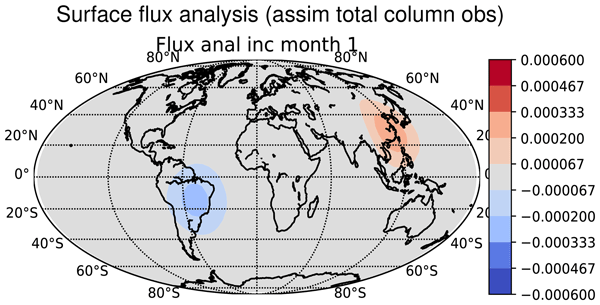
EnviFlux is a low-cost data assimilation tool to estimate trace gas fluxes at the Earth's surface. Data assimilation ideas are often first studied with "toy models", but none exists for flux estimation, hence the purpose of EnviFlux.
EnviFlux is described, and then used to show how model error and bias can influence the inferred surface flux features. This is done in two scenarios, one with no prior knowledge of a source/sink pair, and another with prior knowledge in a more realistic situation.
Alexandre Mignot, Nina Bednaršek, Sarah Albernhe, Stefano Ciavatta, Patrick Lehodey, and Jules Lehodey
State Planet Discuss., https://doi.org/10.5194/sp-2026-21, https://doi.org/10.5194/sp-2026-21, 2026
Preprint under review for SP
Short summary
Short summary
Tiny sea snails called pteropods build delicate shells that dissolve as the ocean absorbs carbon dioxide, while warming shrinks the areas where they can live. Using satellite-based ocean data from 1995 to 2025, we built two indicators that track, worldwide, how much shell damage occurs and how much suitable habitat remains. Over three decades, shell damage rose and suitable habitat shrank, confirming that both acidification and warming are reshaping where these animals can survive.
Julia Thomas, Hendrik Reich, Thorsten Steinert, Gernot Geppert, Klaus Stephan, Anselm Erdmann, Philipp Gasch, Maxime Hervo, Jan Keller, Alberto Carrassi, Peter Knippertz, and Annika Oertel
Earth Syst. Sci. Data Discuss., https://doi.org/10.5194/essd-2026-352, https://doi.org/10.5194/essd-2026-352, 2026
Preprint under review for ESSD
Short summary
Short summary
We present a convective-scale reanalysis of the 'Swabian MOSES 2023' campaign that assimilates 3-months of additional field campaign observations in southwest Germany. It is computed with a 1-hourly assimilation timestep on a 2.2 km grid centred over Germany in moderately complex terrain. In addition to all operationally available observations, it incorporates 6 additional observation types. Among these is an unprecedented number of vertical wind profiles retrieved from 12 Doppler wind lidars.
Elodie Gutknecht, Bruno Levier, Romain Escudier, Guillaume Reffray, Sylvain Cailleau, Stefano Ciavatta, Muriel Lux, Michelle Devlin, Lisette Enserink, Naomi Greenwood, and Hjalte Parner
State Planet Discuss., https://doi.org/10.5194/sp-2026-8, https://doi.org/10.5194/sp-2026-8, 2026
Preprint under review for SP
Short summary
Short summary
Declining oxygen levels near the seafloor can harm marine ecosystems. We investigated oxygen conditions across the North-East Atlantic shelf seas using ocean modelling. We found that low oxygen affects around one quarter of the shelf, with some areas experiencing severe oxygen loss, and that oxygen levels have decreased in recent decades beyond currently recognized vulnerable zones. These results highlight the need for continued monitoring and improved protection of marine environments.
Jozef Skakala, Ieuan Higgs, and David Moffat
EGUsphere, https://doi.org/10.48550/arXiv.2606.27168, https://doi.org/10.48550/arXiv.2606.27168, 2026
This preprint is open for discussion and under review for Biogeosciences (BG).
Short summary
Short summary
Artificial intelligence (AI)-based forecasting is increasingly used in weather and ocean prediction. While most efforts focus on ocean physics, AI has strong potential for marine biogeochemistry, where models are computationally expensive and often biased. We show that AI-based emulators can deliver highly useful marine biogeochemistry forecasts across a wide range of timescales and produce outputs of varying complexity. They can also provide important insights into the emulated model behavior.
Dale Partridge, Deep Banerjee, David Ford, Ke Wang, Jozef Skákala, Juliane Wihsgott, Prathyush P. Menon, Susan Kay, Daniel Clewley, Andrea Rochner, Emma Sullivan, and Matthew Palmer
Ocean Sci., 22, 2083–2100, https://doi.org/10.5194/os-22-2083-2026, https://doi.org/10.5194/os-22-2083-2026, 2026
Short summary
Short summary
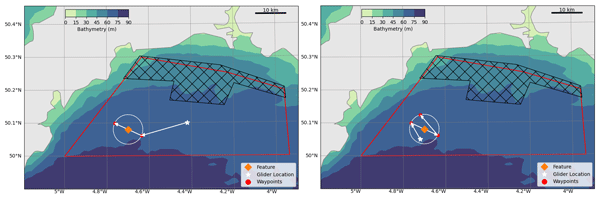
This study outlines the development and testing of a Digital Twin Ocean (DTO) framework, aimed at improving coastal ocean forecasts through the use of autonomous underwater gliders. A fleet of gliders were deployed in the western English Channel during August–September 2024 to collect measurements of temperature, salinity, chlorophyll and oxygen, aiming to track the movement of the harmful algal bloom Karenia mikimotoi.
Jozef Skákala, Shubha Sathyendranath, Yuri Artioli, Deep S. Banerjee, Heather Bouman, Robert J. W. Brewin, Momme Butenschön, Stefano Ciavatta, Stephanie Dutkiewicz, Yanna Fidai, David Ford, Grinson George, Karen Guihou, Bror Jönsson, Marija Bačeković Koloper, Žarko Kovač, Lekshmi Krishnakumary, Gemma Kulk, Charlotte Laufkötter, Gennadi Lessin, Jann Paul Mattern, Angélique Melet, Alexandre Mignot, David Moffat, Fanny Monteiro, Mayra Rodriguez Bennadji, Cécile S. Rousseaux, Ranjini Swaminathan, Osvaldo Ulloa, and Jerry Tjiputra
Ocean Sci., 22, 1457–1481, https://doi.org/10.5194/os-22-1457-2026, https://doi.org/10.5194/os-22-1457-2026, 2026
Short summary
Short summary
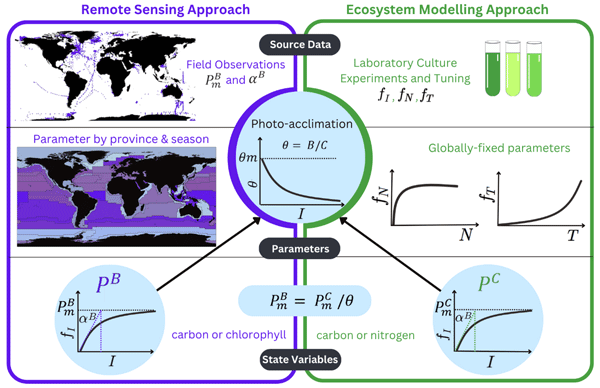
Marine primary production (PP) is a key component of the Earth's climate system, but its current estimates and future projections are highly uncertain. We review the PP uncertainties and discuss their sources both across the ecosystem and satellite models. We propose to reduce the PP uncertainties by better addressing the PP model structures and parametrizations. We also argue that for many models it is desirable to consider spatial and temporal variability in the model parameter values.
Gabriela Martinez Balbontin, Julien Jouanno, Rachid Benshila, Julien Lamouroux, Coralie Perruche, and Stefano Ciavatta
Biogeosciences, 23, 2601–2620, https://doi.org/10.5194/bg-23-2601-2026, https://doi.org/10.5194/bg-23-2601-2026, 2026
Short summary
Short summary
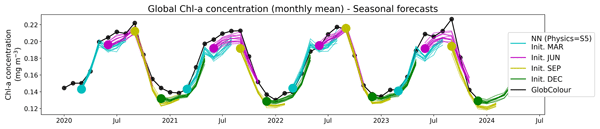
This study uses machine learning to predict global sea surface chlorophyll a, which is important for monitoring marine ecosystems and the carbon cycle. Using forecasts of sea surface temperature, salinity, height, and mixed layer depth, we generate global predictions up to six months ahead in just minutes. Our approach matches state-of-the-art numerical methods while being faster and more resource-efficient.
Natalie Douglas, Simon Beylat, Tristan Quaife, Philippe Peylin, Nina Raoult, and Ross Bannister
EGUsphere, https://doi.org/10.5194/egusphere-2026-132, https://doi.org/10.5194/egusphere-2026-132, 2026
Short summary
Short summary
This study investigates a statistical method, called 4DEnVar, to calibrate uncertain land surface model parameters against observations. This method is easy to use but can lead to unphysical parameter values. The study explores the causes of this while proposing a simple way to overcome the problem. We show that the 4DEnVar method exhibits considerable versatility by applying the method to two different land surface models, under different settings, to calibrate photosynthetic parameters.
Nicholas Williams, Nicholas Byrne, Daniel Feltham, Peter Jan Van Leeuwen, Ross Bannister, David Schroeder, Isobel Lawrence, Lars Nerger, Jack Landy, and Geoffrey Dawson
EGUsphere, https://doi.org/10.5194/egusphere-2026-742, https://doi.org/10.5194/egusphere-2026-742, 2026
Short summary
Short summary
In this study we present three satellite era Arctic sea ice reanalyses, each assimilating different combinations of sea ice concentration and thickness observations. Results show that using year-round thickness observations substantially improves reanalysis compared to winter-only data. The best-performing reanalysis reveals a seasonally compensating bias cycle, suggesting errors in ice growth, leads, refreezing, marginal ice zone dynamics, redistribution, and melt timing mask model errors.
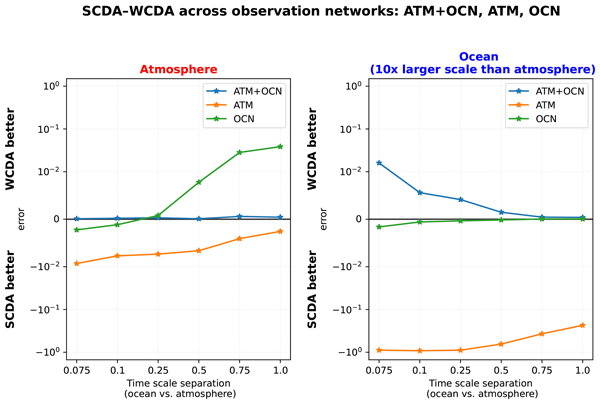
Lilian Garcia-Oliva, Alberto Carrassi, and François Counillon
Nonlin. Processes Geophys., 32, 439–456, https://doi.org/10.5194/npg-32-439-2025, https://doi.org/10.5194/npg-32-439-2025, 2025
Short summary
Short summary
We used a simple coupled model and a data assimilation method to find the correct initialisation for climate predictions. We aim to clarify when weakly or strongly coupled data assimilation (WCDA or SCDA) is best, depending on the system's dynamical characteristics (spatio-temporal) and data coverage. We found that WCDA is better in full data coverage. When we have a partially observed system, SCDA is better. This result depends on the temporal and spatial scale of the observed quantity.
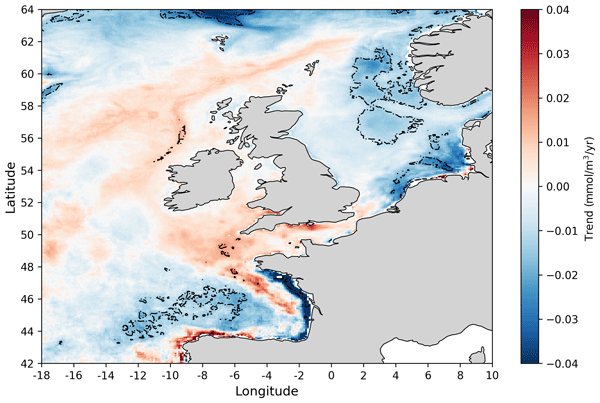
Deep S. Banerjee and Jozef Skákala
Biogeosciences, 22, 3769–3784, https://doi.org/10.5194/bg-22-3769-2025, https://doi.org/10.5194/bg-22-3769-2025, 2025
Short summary
Short summary
Nitrate is a crucial nutrient in oceans, whose excess can trigger uncontrolled algae growth that damages marine ecosystems. We used machine learning to generate skilled, gap-free, bi-decadal surface nitrate data from sparse observations, revealing areas on the North-West European Shelf that are more vulnerable to excess algae growth if nutrient pollution occurs. We also looked at bi-decadal trends in coastal nitrate and the impact of winter nitrate on spring phytoplankton blooms.
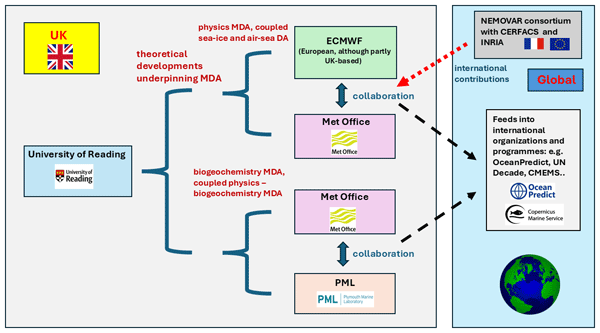
Jozef Skákala, David Ford, Keith Haines, Amos Lawless, Matthew J. Martin, Philip Browne, Marcin Chrust, Stefano Ciavatta, Alison Fowler, Daniel Lea, Matthew Palmer, Andrea Rochner, Jennifer Waters, Hao Zuo, Deep S. Banerjee, Mike Bell, Davi M. Carneiro, Yumeng Chen, Susan Kay, Dale Partridge, Martin Price, Richard Renshaw, Georgy Shapiro, and James While
Ocean Sci., 21, 1709–1734, https://doi.org/10.5194/os-21-1709-2025, https://doi.org/10.5194/os-21-1709-2025, 2025
Short summary
Short summary
UK marine data assimilation (MDA) involves a closely collaborating research community. In this paper, we offer both an overview of the state of the art and a vision for the future across all of the main areas of UK MDA, ranging from physics to biogeochemistry to coupled DA. We discuss the current UK MDA stakeholder applications, highlight theoretical developments needed to advance our systems, and reflect upon upcoming opportunities with respect to hardware and observational missions.

Gianpiero Cossarini, Andrew Moore, Stefano Ciavatta, and Katja Fennel
State Planet, 5-opsr, 12, https://doi.org/10.5194/sp-5-opsr-12-2025, https://doi.org/10.5194/sp-5-opsr-12-2025, 2025
Short summary
Short summary
Marine biogeochemistry refers to the cycling of chemical elements resulting from physical transport, chemical reaction, uptake, and processing by living organisms. Biogeochemical models can have a wide range of complexity, from a single nutrient to fully explicit representations of multiple nutrients, trophic levels, and functional groups. Uncertainty sources are the lack of knowledge about the parameterizations, the initial and boundary conditions, and the lack of observations.
Simon Driscoll, Alberto Carrassi, Julien Brajard, Laurent Bertino, Einar Ólason, Marc Bocquet, and Amos Lawless
EGUsphere, https://doi.org/10.5194/egusphere-2024-2476, https://doi.org/10.5194/egusphere-2024-2476, 2024
Preprint archived
Short summary
Short summary
The formation and evolution of sea ice melt ponds (ponds of melted water) are complex, insufficiently understood and represented in models with considerable uncertainty. These uncertain representations are not traditionally included in climate models potentially causing the known underestimation of sea ice loss in climate models. Our work creates the first observationally based machine learning model of melt ponds that is also a ready and viable candidate to be included in climate models.
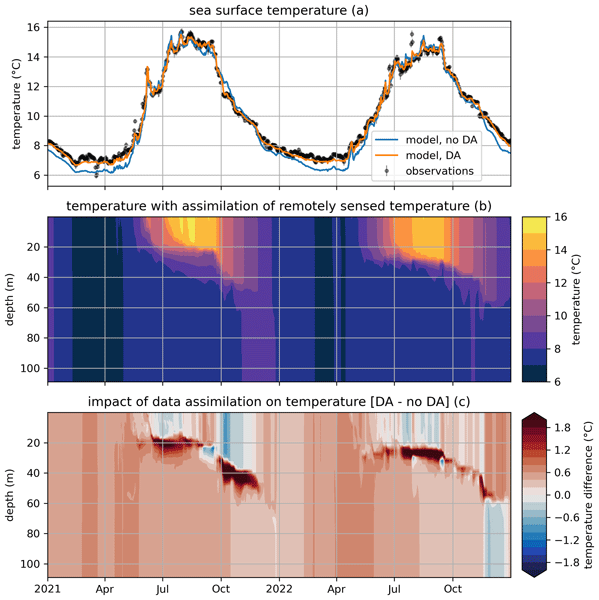
Jorn Bruggeman, Karsten Bolding, Lars Nerger, Anna Teruzzi, Simone Spada, Jozef Skákala, and Stefano Ciavatta
Geosci. Model Dev., 17, 5619–5639, https://doi.org/10.5194/gmd-17-5619-2024, https://doi.org/10.5194/gmd-17-5619-2024, 2024
Short summary
Short summary
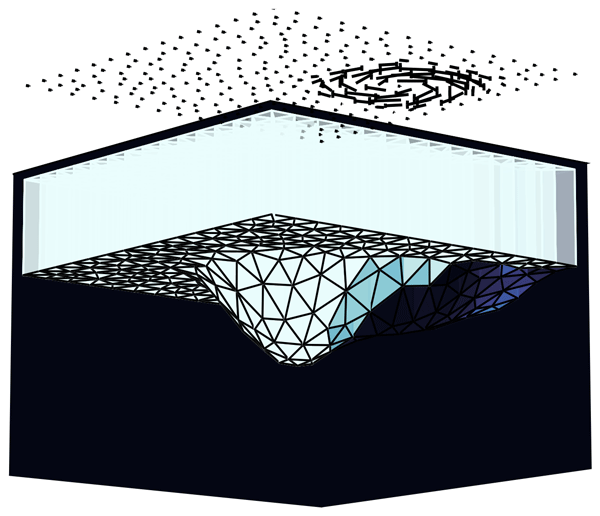
To understand and predict the ocean’s capacity for carbon sequestration, its ability to supply food, and its response to climate change, we need the best possible estimate of its physical and biogeochemical properties. This is obtained through data assimilation which blends numerical models and observations. We present the Ensemble and Assimilation Tool (EAT), a flexible and efficient test bed that allows any scientist to explore and further develop the state of the art in data assimilation.
Yumeng Chen, Polly Smith, Alberto Carrassi, Ivo Pasmans, Laurent Bertino, Marc Bocquet, Tobias Sebastian Finn, Pierre Rampal, and Véronique Dansereau
The Cryosphere, 18, 2381–2406, https://doi.org/10.5194/tc-18-2381-2024, https://doi.org/10.5194/tc-18-2381-2024, 2024
Short summary
Short summary
We explore multivariate state and parameter estimation using a data assimilation approach through idealised simulations in a dynamics-only sea-ice model based on novel rheology. We identify various potential issues that can arise in complex operational sea-ice models when model parameters are estimated. Even though further investigation will be needed for such complex sea-ice models, we show possibilities of improving the observed and the unobserved model state forecast and parameter accuracy.
Ross Noel Bannister and Chris Wilson
EGUsphere, https://doi.org/10.5194/egusphere-2024-655, https://doi.org/10.5194/egusphere-2024-655, 2024
Preprint archived
Short summary
Short summary
Prior information is essential for the top-down estimation of CH4 surface fluxes. Errors in the prior are correlated in time/space, but accounting for correlations can be costly. We report on an efficient scheme to represent correlations in the inverse modelling system, INVICAT. The method is tested by assimilating CH4 observations using the scheme. Our findings show that accounting for spatio-temporal correlations improve CH4 flux estimates, demonstrating that the method should be further used.
Ieuan Higgs, Jozef Skákala, Ross Bannister, Alberto Carrassi, and Stefano Ciavatta
Biogeosciences, 21, 731–746, https://doi.org/10.5194/bg-21-731-2024, https://doi.org/10.5194/bg-21-731-2024, 2024
Short summary
Short summary
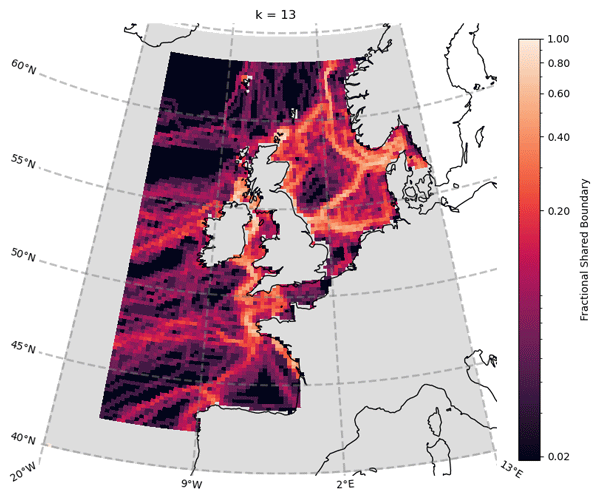
A complex network is a way of representing which parts of a system are connected to other parts. We have constructed a complex network based on an ecosystem–ocean model. From this, we can identify patterns in the structure and areas of similar behaviour. This can help to understand how natural, or human-made, changes will affect the shelf sea ecosystem, and it can be used in multiple future applications such as improving modelling, data assimilation, or machine learning.
Eva Álvarez, Gianpiero Cossarini, Anna Teruzzi, Jorn Bruggeman, Karsten Bolding, Stefano Ciavatta, Vincenzo Vellucci, Fabrizio D'Ortenzio, David Antoine, and Paolo Lazzari
Biogeosciences, 20, 4591–4624, https://doi.org/10.5194/bg-20-4591-2023, https://doi.org/10.5194/bg-20-4591-2023, 2023
Short summary
Short summary
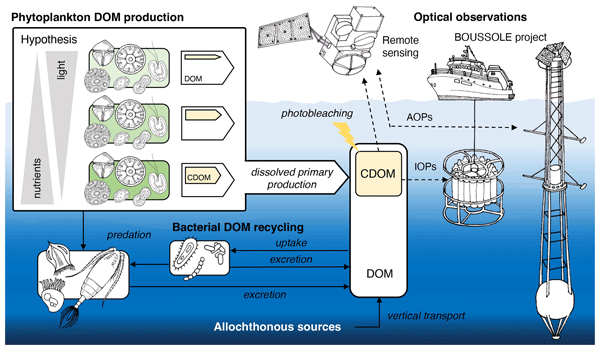
Chromophoric dissolved organic matter (CDOM) interacts with the ambient light and gives the waters of the Mediterranean Sea their colour. We propose a novel parameterization of the CDOM cycle, whose parameter values have been optimized by using the data of the monitoring site BOUSSOLE. Nutrient and light limitations for locally produced CDOM caused aCDOM(λ) to covary with chlorophyll, while the above-average CDOM concentrations observed at this site were maintained by allochthonous sources.
Jiangshan Zhu and Ross Noel Bannister
Geosci. Model Dev., 16, 6067–6085, https://doi.org/10.5194/gmd-16-6067-2023, https://doi.org/10.5194/gmd-16-6067-2023, 2023
Short summary
Short summary
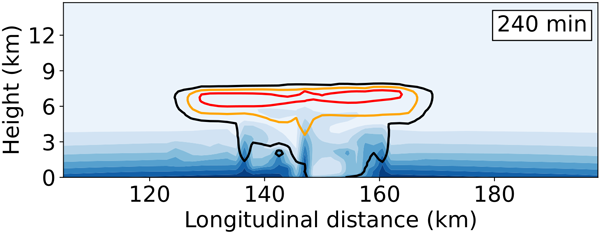
We describe how condensation and evaporation are included in the existing (otherwise dry) simplified ABC model. The new model (Hydro-ABC) includes transport of vapour and condensate within a dynamical core, and it transitions between these two phases via a micro-physics scheme. The model shows the development of an anvil cloud and excitation of atmospheric waves over many frequencies. The covariances that develop between variables are also studied together with indicators of convective motion.
Stefania A. Ciliberti, Enrique Alvarez Fanjul, Jay Pearlman, Kirsten Wilmer-Becker, Pierre Bahurel, Fabrice Ardhuin, Alain Arnaud, Mike Bell, Segolene Berthou, Laurent Bertino, Arthur Capet, Eric Chassignet, Stefano Ciavatta, Mauro Cirano, Emanuela Clementi, Gianpiero Cossarini, Gianpaolo Coro, Stuart Corney, Fraser Davidson, Marie Drevillon, Yann Drillet, Renaud Dussurget, Ghada El Serafy, Katja Fennel, Marcos Garcia Sotillo, Patrick Heimbach, Fabrice Hernandez, Patrick Hogan, Ibrahim Hoteit, Sudheer Joseph, Simon Josey, Pierre-Yves Le Traon, Simone Libralato, Marco Mancini, Pascal Matte, Angelique Melet, Yasumasa Miyazawa, Andrew M. Moore, Antonio Novellino, Andrew Porter, Heather Regan, Laia Romero, Andreas Schiller, John Siddorn, Joanna Staneva, Cecile Thomas-Courcoux, Marina Tonani, Jose Maria Garcia-Valdecasas, Jennifer Veitch, Karina von Schuckmann, Liying Wan, John Wilkin, and Romane Zufic
State Planet, 1-osr7, 2, https://doi.org/10.5194/sp-1-osr7-2-2023, https://doi.org/10.5194/sp-1-osr7-2-2023, 2023
Bo Dong, Ross Bannister, Yumeng Chen, Alison Fowler, and Keith Haines
Geosci. Model Dev., 16, 4233–4247, https://doi.org/10.5194/gmd-16-4233-2023, https://doi.org/10.5194/gmd-16-4233-2023, 2023
Short summary
Short summary
Traditional Kalman smoothers are expensive to apply in large global ocean operational forecast and reanalysis systems. We develop a cost-efficient method to overcome the technical constraints and to improve the performance of existing reanalysis products.
Tobias Sebastian Finn, Charlotte Durand, Alban Farchi, Marc Bocquet, Yumeng Chen, Alberto Carrassi, and Véronique Dansereau
The Cryosphere, 17, 2965–2991, https://doi.org/10.5194/tc-17-2965-2023, https://doi.org/10.5194/tc-17-2965-2023, 2023
Short summary
Short summary
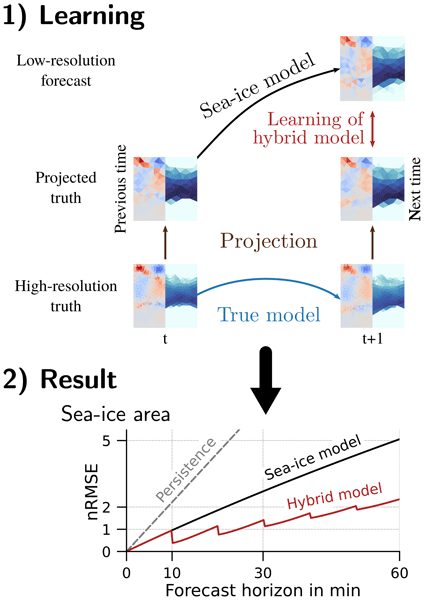
We combine deep learning with a regional sea-ice model to correct model errors in the sea-ice dynamics of low-resolution forecasts towards high-resolution simulations. The combined model improves the forecast by up to 75 % and thereby surpasses the performance of persistence. As the error connection can additionally be used to analyse the shortcomings of the forecasts, this study highlights the potential of combined modelling for short-term sea-ice forecasting.
Nicholas Williams, Nicholas Byrne, Daniel Feltham, Peter Jan Van Leeuwen, Ross Bannister, David Schroeder, Andrew Ridout, and Lars Nerger
The Cryosphere, 17, 2509–2532, https://doi.org/10.5194/tc-17-2509-2023, https://doi.org/10.5194/tc-17-2509-2023, 2023
Short summary
Short summary
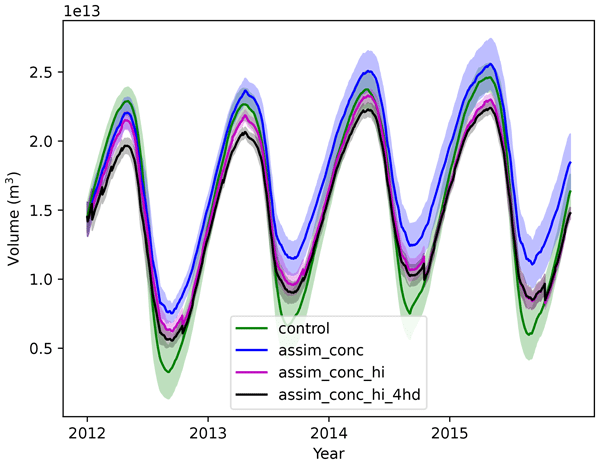
Observations show that the Arctic sea ice cover has reduced over the last 40 years. This study uses ensemble-based data assimilation in a stand-alone sea ice model to investigate the impacts of assimilating three different kinds of sea ice observation, including the novel assimilation of sea ice thickness distribution. We show that assimilating ice thickness distribution has a positive impact on thickness and volume estimates within the ice pack, especially for very thick ice.
Sukun Cheng, Yumeng Chen, Ali Aydoğdu, Laurent Bertino, Alberto Carrassi, Pierre Rampal, and Christopher K. R. T. Jones
The Cryosphere, 17, 1735–1754, https://doi.org/10.5194/tc-17-1735-2023, https://doi.org/10.5194/tc-17-1735-2023, 2023
Short summary
Short summary
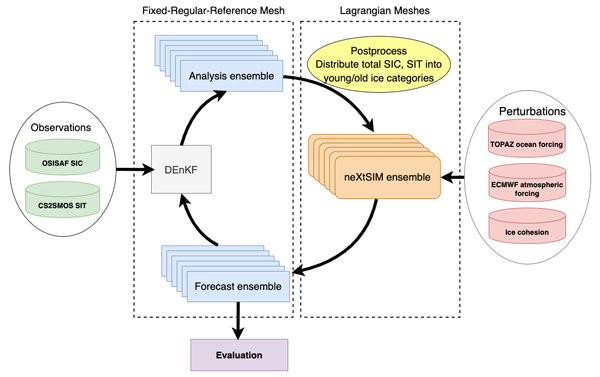
This work studies a novel application of combining a Lagrangian sea ice model, neXtSIM, and data assimilation. It uses a deterministic ensemble Kalman filter to incorporate satellite-observed ice concentration and thickness in simulations. The neXtSIM Lagrangian nature is handled using a remapping strategy on a common homogeneous mesh. The ensemble is formed by perturbing air–ocean boundary conditions and ice cohesion. Thanks to data assimilation, winter Arctic sea ice forecasting is enhanced.

Joshua Chun Kwang Lee, Javier Amezcua, and Ross Noel Bannister
Geosci. Model Dev., 15, 6197–6219, https://doi.org/10.5194/gmd-15-6197-2022, https://doi.org/10.5194/gmd-15-6197-2022, 2022
Short summary
Short summary
In this article, we implement a novel data assimilation method for the ABC–DA system which combines traditional data assimilation approaches in a hybrid approach. We document the technical development and test the hybrid approach in idealised experiments within a tropical framework of the ABC–DA system. Our findings indicate that the hybrid approach outperforms individual traditional approaches. Its potential benefits have been highlighted and should be explored further within this framework.
Francine Schevenhoven and Alberto Carrassi
Geosci. Model Dev., 15, 3831–3844, https://doi.org/10.5194/gmd-15-3831-2022, https://doi.org/10.5194/gmd-15-3831-2022, 2022
Short summary
Short summary
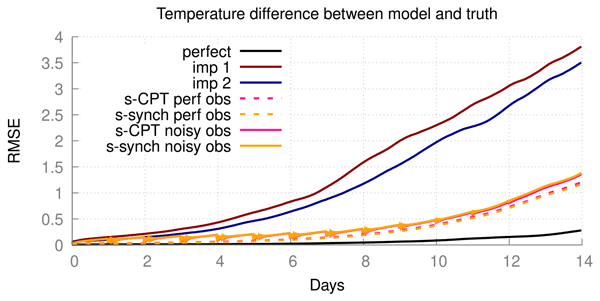
In this study, we present a novel formulation to build a dynamical combination of models, the so-called supermodel, which needs to be trained based on data. Previously, we assumed complete and noise-free observations. Here, we move towards a realistic scenario and develop adaptations to the training methods in order to cope with sparse and noisy observations. The results are very promising and shed light on how to apply the method with state of the art general circulation models.
Yumeng Chen, Alberto Carrassi, and Valerio Lucarini
Nonlin. Processes Geophys., 28, 633–649, https://doi.org/10.5194/npg-28-633-2021, https://doi.org/10.5194/npg-28-633-2021, 2021
Short summary
Short summary
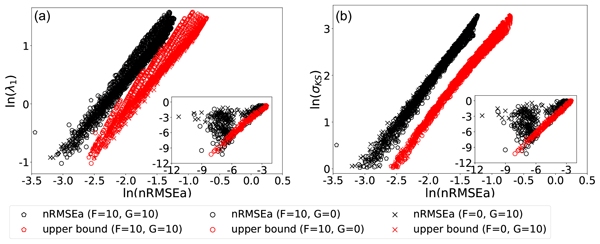
Chaotic dynamical systems are sensitive to the initial conditions, which are crucial for climate forecast. These properties are often used to inform the design of data assimilation (DA), a method used to estimate the exact initial conditions. However, obtaining the instability properties is burdensome for complex problems, both numerically and analytically. Here, we suggest a different viewpoint. We show that the skill of DA can be used to infer the instability properties of a dynamical system.
Cited articles
Anugerahanti, P., Kerimoglu, O., and Smith, S. L.: Enhancing ocean biogeochemical models with phytoplankton variable composition, Frontiers in Marine Science, 8, 944, https://doi.org/10.3389/fmars.2021.675428, 2021. a
Artioli, Y., Blackford, J. C., Butenschön, M., Holt, J. T., Wakelin, S. L., Thomas, H., Borges, A. V., and Allen, J. I.: The carbonate system in the North Sea: Sensitivity and model validation, Journal of Marine Systems, 102, 1–13, 2012. a
Asch, M., Bocquet, M., and Nodet, M.: Data assimilation: methods, algorithms, and applications, SIAM, https://doi.org/10.1137/1.9781611974546, 2016. a
Baretta-Bekker, J., Baretta, J., and Ebenhöh, W.: Microbial dynamics in the marine ecosystem model ERSEM II with decoupled carbon assimilation and nutrient uptake, Journal of Sea Research, 38, 195–211, 1997. a
Barth, A., Alvera-Azcárate, A., Licer, M., and Beckers, J.-M.: DINCAE 1.0: a convolutional neural network with error estimates to reconstruct sea surface temperature satellite observations, Geosci. Model Dev., 13, 1609–1622, https://doi.org/10.5194/gmd-13-1609-2020, 2020. a
Bertino, L., Ali, A., Carrasco, A., Lien, V., and Melsom, A.: The Arctic Marine Forecasting Center in the first Copernicus period, in: 9th EuroGOOS International conference, 256–263, https://hal.science/hal-03334274 (last accesss: 15 December 2025), 2021. a
Blackford, J.: An analysis of benthic biological dynamics in a North Sea ecosystem model, Journal of Sea Research, 38, 213–230, 1997. a
Bocquet, M., Farchi, A., Finn, T. S., Durand, C., Cheng, S., Chen, Y., Pasmans, I., and Carrassi, A.: Accurate deep learning-based filtering for chaotic dynamics by identifying instabilities without an ensemble, Chaos: An Interdisciplinary Journal of Nonlinear Science, 34, https://doi.org/10.1063/5.0230837, 2024. a, b
Bolding, K. and Villarreal, M. R.: GOTM: A general ocean turbulence model: Theory, applications and test cases, Tech. rep., European Commission Tech. Rep. EUR 18745 EN, 1999. a
Bonavita, M. and Laloyaux, P.: Machine learning for model error inference and correction, Journal of Advances in Modeling Earth Systems, 12, e2020MS002232, https://doi.org/10.1029/2020MS002232, 2020. a, b
Brajard, J., Carrassi, A., Bocquet, M., and Bertino, L.: Combining data assimilation and machine learning to emulate a dynamical model from sparse and noisy observations: A case study with the Lorenz 96 model, Journal of computational science, 44, 101171, https://doi.org/10.1016/j.jocs.2020.101171, 2020. a
Brajard, J., Carrassi, A., Bocquet, M., and Bertino, L.: Combining data assimilation and machine learning to infer unresolved scale parametrization, Philosophical Transactions of the Royal Society A, 379, 20200086, https://doi.org/10.1098/rsta.2020.0086, 2021. a
Bruggeman, J. and Bolding, K.: A general framework for aquatic biogeochemical models, Environmental modelling & software, 61, 249–265, 2014. a
Bruggeman, J., Bolding, K., Nerger, L., Teruzzi, A., Spada, S., Skákala, J., and Ciavatta, S.: EAT v1.0.0: a 1D test bed for physical–biogeochemical data assimilation in natural waters, Geosci. Model Dev., 17, 5619–5639, https://doi.org/10.5194/gmd-17-5619-2024, 2024. a, b
Buizza, Ca., Quilodrán Casas, C., Nadler, P., Mack, J., Marrone, S., Titus, Z., Le Cornec, C., Heylen, E., Dur, T., Baca Ruiz, L., Heaney, C., Amador Díaz Lopez, J., Kumar, K. S., and Arcucci, R.: Data learning: Integrating data assimilation and machine learning, J. Comput. Sci., 58, 101525, https://doi.org/10.1016/j.jocs.2021.101525, 2022. a
Burchard, H.: Combined effects of wind, tide, and horizontal density gradients on stratification in estuaries and coastal seas, Journal of Physical Oceanography, 39, 2117–2136, 2009. a
Butenschön, M., Clark, J., Aldridge, J. N., Allen, J. I., Artioli, Y., Blackford, J., Bruggeman, J., Cazenave, P., Ciavatta, S., Kay, S., Lessin, G., van Leeuwen, S., van der Molen, J., de Mora, L., Polimene, L., Sailley, S., Stephens, N., and Torres, R.: ERSEM 15.06: a generic model for marine biogeochemistry and the ecosystem dynamics of the lower trophic levels, Geosci. Model Dev., 9, 1293–1339, https://doi.org/10.5194/gmd-9-1293-2016, 2016. a, b, c
Carrassi, A., Bocquet, M., Bertino, L., and Evensen, G.: Data assimilation in the geosciences: An overview of methods, issues, and perspectives, Wiley Interdisciplinary Reviews: Climate Change, 9, e535, https://doi.org/10.1002/wcc.535, 2018. a
Cheng, S., Quilodrán-Casas, C., Ouala, S., Farchi, A., Liu, C., Tandeo, P., Fablet, R., Lucor, D., Iooss, B., Brajard, J., Xiao, D., Janjic, T., Ding, W., Guo, Y., Carrassi, A., Bocquet, M., and Arcucci, R.: Machine Learning With Data Assimilation and Uncertainty Quantification for Dynamical Systems: A Review, IEEE/CAA Journal of Automatica Sinica, 10, 1361–1387, https://doi.org/10.1109/JAS.2023.123537, 2023. a
Ciavatta, S., Torres, R., Martinez-Vicente, V., Smyth, T., Dall'Olmo, G., Polimene, L., and Allen, J. I.: Assimilation of remotely-sensed optical properties to improve marine biogeochemistry modelling, Progress in Oceanography, 127, 74–95, 2014. a
Ciavatta, S., Kay, S., Brewin, R. J. W., Cox, R., Di Cicco, A., Nencioli, F., Polimene, L., Sammartino, M., Santoleri, R., Skakala, J., and Tsapakis, M.: Ecoregions in the Mediterranean Sea through the reanalysis of phytoplankton functional types and carbon fluxes, Journal of Geophysical Research: Oceans, 124, 6737–6759, 2019. a, b
Ciliberti, S. A., Grégoire, M., Staneva, J., Palazov, A., Coppini, G., Lecci, R., Peneva, E., Matreata, M., Marinova, V., Masina, S., Pinardi, N., Jansen, E., Lima, L., Aydoğdu, A., Cretì, S., Stefanizzi, L., Azevedo, D., Causio, S., Vandenbulcke, L., Capet, A., Meulders, C., Ivanov, E., Behrens, A., Ricker, M., Gayer, G., Palermo, F., Ilicak, M., Gunduz, M., Valcheva, N., and Agostini, P.: Monitoring and forecasting the ocean state and biogeochemical processes in the Black Sea: Recent developments in the Copernicus Marine Service, Journal of Marine Science and Engineering, 9, 1146, https://doi.org/10.3390/jmse9101146, 2021. a
Coppini, G., Clementi, E., Cossarini, G., Korres, G., Drudi, M., Amadio, C., Aydogdu, A., Agostini, P., Bolzon, G., Cretì, S., Denaxa, D., Di Biagio, V., Escudier, R., Feudale, L., Goglio, A. C., Grandi, A., Lazzari, P., Lecci, R., Lyubartsev, V., Masina, S., Palermo, F., Pinardi, N., Pistoia, J., Salon, S., Ravdas, M., Solidoro, C., Teruzzi, A., and Zacharioudaki, A.: The Copernicus marine service ocean forecasting system for the Mediterranean Sea, in: 9th EuroGOOS International conference, 272–279, https://hal.science/hal-03334358 (last access: 15 December 2025), 2021. a
Cossarini, G., Querin, S., Solidoro, C., Sannino, G., Lazzari, P., Di Biagio, V., and Bolzon, G.: Development of BFMCOUPLER (v1.0), the coupling scheme that links the MITgcm and BFM models for ocean biogeochemistry simulations, Geosci. Model Dev., 10, 1423–1445, https://doi.org/10.5194/gmd-10-1423-2017, 2017. a
Cossarini, G., Mariotti, L., Feudale, L., Mignot, A., Salon, S., Taillandier, V., Teruzzi, A., and d'Ortenzio, F.: Towards operational 3D-Var assimilation of chlorophyll Biogeochemical-Argo float data into a biogeochemical model of the Mediterranean Sea, Ocean Modelling, 133, 112–128, 2019. a
Doney, S. C., Fabry, V. J., Feely, R. A., and Kleypas, J. A.: Ocean acidification: the other CO2 problem, Annual review of marine science, 1, 169–192, 2009. a
Dowd, M., Jones, E., and Parslow, J.: A statistical overview and perspectives on data assimilation for marine biogeochemical models, Environmetrics, 25, 203–213, 2014. a
Evensen, G.: The ensemble Kalman filter: Theoretical formulation and practical implementation, Ocean dynamics, 53, 343–367, 2003. a
Fablet, R., Chapron, B., Drumetz, L., Mémin, E., Pannekoucke, O., and Rousseau, F.: Learning variational data assimilation models and solvers, Journal of Advances in Modeling Earth Systems, 13, e2021MS002572, https://doi.org/10.1029/2021MS002572, 2021. a
Falchetti, S., Conley, D. C., Brocchini, M., and Elgar, S.: Nearshore bar migration and sediment-induced buoyancy effects, Continental Shelf Research, 30, 226–238, 2010. a
Fennel, K. and Testa, J. M.: Biogeochemical controls on coastal hypoxia, Annual Review of Marine Science, 11, 105–130, 2019. a
Fennel, K., Gehlen, M., Brasseur, P., Brown, C. W., Ciavatta, S., Cossarini, G., Crise, A., Edwards, C. A., Ford, D., Friedrichs, M. A. M., Gregoire, M., Jones, E., Kim, H.-C., Lamouroux, J., Murtugudde, R., Perruche, C., and GODAE OceanView Marine Ecosystem Analysis and Prediction Task Team: Advancing marine biogeochemical and ecosystem reanalyses and forecasts as tools for monitoring and managing ecosystem health, Frontiers in Marine Science, 6, 89, https://doi.org/10.3389/fmars.2019.00089, 2019. a, b, c
Fennel, K., Mattern, J. P., Doney, S. C., Bopp, L., Moore, A. M., Wang, B., and Yu, L.: Ocean biogeochemical modelling, Nature Reviews Methods Primers, 2, 76, https://doi.org/0.1038/s43586-022-00174-y, 2022. a
Ford, D. A., Edwards, K. P., Lea, D., Barciela, R. M., Martin, M. J., and Demaria, J.: Assimilating GlobColour ocean colour data into a pre-operational physical-biogeochemical model, Ocean Sci., 8, 751–771, https://doi.org/10.5194/os-8-751-2012, 2012. a, b
Ford, D., Key, S., McEwan, R., Totterdell, I., and Gehlen, M.: Marine biogeochemical modelling and data assimilation for operational forecasting, reanalysis, and climate research, New Frontiers in Operational Oceanography, 625–652, https://doi.org/10.17125/gov2018.ch22, 2018. a, b, c
Frölicher, T. L. and Laufkötter, C.: Emerging risks from marine heat waves, Nature communications, 9, 650, https://doi.org/10.1038/s41467-018-03163-6, 2018. a
Galli, G., Wakelin, S., Harle, J., Holt, J., and Artioli, Y.: Multi-model comparison of trends and controls of near-bed oxygen concentration on the northwest European continental shelf under climate change, Biogeosciences, 21, 2143–2158, https://doi.org/10.5194/bg-21-2143-2024, 2024. a
Gehlen, M., Barciela, R., Bertino, L., Brasseur, P., Butenschön, M., Chai, F., Crise, A., Drillet, Y., Ford, D., Lavoie, D., Lehodey, P., Perruche, C., Samuelsen, A., and Simon, E.: Building the capacity for forecasting marine biogeochemistry and ecosystems: recent advances and future developments, Journal of Operational Oceanography, 8, s168–s187, 2015. a
Geider, R., MacIntyre, H., and Kana, T.: Dynamic model of phytoplankton growth and acclimation: responses of the balanced growth rate and the chlorophyll a: carbon ratio to light, nutrient-limitation and temperature, Marine Ecology Progress Series, 148, 187–200, 1997. a
Gobler, C. J.: Climate change and harmful algal blooms: insights and perspective, Harmful algae, 91, 101731, https://doi.org/10.1016/j.hal.2019.101731, 2020. a
Gregg, W. W. and Rousseaux, C. S.: Simulating pace global ocean radiances, Frontiers in Marine Science, 4, 60, https://doi.org/10.3389/fmars.2017.00060, 2017. a
Gregory, W., Bushuk, M., Zhang, Y., Adcroft, A., and Zanna, L.: Machine learning for online sea ice bias correction within global ice-ocean simulations, Geophysical Research Letters, 51, e2023GL106776, https://doi.org/10.1029/2023GL106776, 2024. a, b
Groom, S., Sathyendranath, S., Ban, Y., Bernard, S., Brewin, R., Brotas, V., Brockmann, C., Chauhan, P., Choi, J.-K., Chuprin, A., Ciavatta, S., Cipollini, Pao., Donlon, C., Franz, B., He, X., Hirata, T., Jackson, T., Kampel, M., Krasemann, H., Lavender, S., Pardo-Martinez, S., Mélin, F., Platt, T., Santoleri, R., Skakala, J., Schaeffer, B., Smith, M., Steinmetz, F., Valente, A., and Wang, M.: Satellite ocean colour: Current status and future perspective, Frontiers in Marine Science, 6, 485, https://doi.org/10.3389/fmars.2019.00485, 2019. a
Gutknecht, E., Reffray, G., Mignot, A., Dabrowski, T., and Sotillo, M. G.: Modelling the marine ecosystem of Iberia–Biscay–Ireland (IBI) European waters for CMEMS operational applications, Ocean Sci., 15, 1489–1516, https://doi.org/10.5194/os-15-1489-2019, 2019. a
Hayashida, H., Steiner, N., Monahan, A., Galindo, V., Lizotte, M., and Levasseur, M.: Implications of sea-ice biogeochemistry for oceanic production and emissions of dimethyl sulfide in the Arctic, Biogeosciences, 14, 3129–3155, https://doi.org/10.5194/bg-14-3129-2017, 2017. a
Heinze, C. and Gehlen, M.: Modeling ocean biogeochemical processes and the resulting tracer distributions, International Geophysics, 103, 667–694, 2013. a
Higgs, I., Skákala, J., Bannister, R., Carrassi, A., and Ciavatta, S.: Investigating ecosystem connections in the shelf sea environment using complex networks, Biogeosciences, 21, 731–746, https://doi.org/10.5194/bg-21-731-2024, 2024. a, b
Hu, Q., Zhang, R., and Zhou, Y.: Transfer learning for short-term wind speed prediction with deep neural networks, Renewable Energy, 85, 83–95, 2016. a
Jin, H., Song, Q., and Hu, X.: Auto-keras: An efficient neural architecture search system, in: Proceedings of the 25th ACM SIGKDD international conference on knowledge discovery & data mining, 1946–1956, https://doi.org/10.1145/3292500.3330648, 2019. a
Jones, E. M., Baird, M. E., Mongin, M., Parslow, J., Skerratt, J., Lovell, J., Margvelashvili, N., Matear, R. J., Wild-Allen, K., Robson, B., Rizwi, F., Oke, P., King, E., Schroeder, T., Steven, A., and Taylor, J.: Use of remote-sensing reflectance to constrain a data assimilating marine biogeochemical model of the Great Barrier Reef, Biogeosciences, 13, 6441–6469, https://doi.org/10.5194/bg-13-6441-2016, 2016. a
Jordan, M. I. and Mitchell, T. M.: Machine learning: Trends, perspectives, and prospects, Science, 349, 255–260, 2015. a
Kerimoglu, O., Anugerahanti, P., and Smith, S. L.: FABM-NflexPD 1.0: assessing an instantaneous acclimation approach for modeling phytoplankton growth, Geosci. Model Dev., 14, 6025–6047, https://doi.org/10.5194/gmd-14-6025-2021, 2021. a
Kochkov, D., Smith, J. A., Alieva, A., Wang, Q., Brenner, M. P., and Hoyer, S.: Machine learning–accelerated computational fluid dynamics, Proceedings of the National Academy of Sciences, 118, e2101784118, https://doi.org/10.1073/pnas.2101784118, 2021. a
Leeds, W., Wikle, C., Fiechter, J., Brown, J., and Milliff, R.: Modeling 3-D spatio-temporal biogeochemical processes with a forest of 1-D statistical emulators, Environmetrics, 24, 1–12, 2013. a
Le Traon, P. Y., Reppucci, A., Alvarez Fanjul, E., Aouf, L., Behrens, A., Belmonte, M., Bentamy, A., Bertino, L., Brando, V. E., Brandt Kreiner, M., Benkiran, M., Carval, T., Ciliberti, S. A., Claustre, H., Clementi, E., Coppini, G., Cossarini, Gi., De Alfonso Alonso-Muñoyerro, M., Delamarche, A., Dibarboure, G., Dinessen, F., Drevillon, M., Drillet, Y., Faugere, Y., Fernández, V., Fleming, A., Garcia-Hermosa, M. I., García Sotillo, M., Garric, G., Gasparin, F., Giordan, C., Gehlen, M., Gregoire, M. L., Guinehut, S., Hamon, M., Harris, C., Hernandez, F., Hinkler, J. B., Hoyer, J., Karvonen, J., Kay, S., King, R., Lavergne, T., Lemieux-Dudon, B., Lima, L., Mao, C. Martin, M. J., Masina, S., Melet, A., Buongiorno Nardelli, B., Nolan, G., Pascual, A., Pistoia, J., Palazov, A., Piolle, J. F., Pujol, M. I., Pequignet, A. C., Peneva, E., Pérez Gómez, B., Petit de la Villeon, L., Pinardi, N., Pisano, A., Pouliquen, S., Reid, R., Remy, E., Santoleri, R., Siddorn, J., She, J., Staneva, J., Stoffelen, A., Tonani, M., Vandenbulcke, L., von Schuckmann, K., Volpe, G., Wettre, C., and Zacharioudaki, A.: From observation to information and users: The Copernicus Marine Service perspective, Frontiers in Marine Science, 6, 234, https://doi.org/10.3389/fmars.2019.00234, 2019. a
Lundberg, S. M. and Lee, S.-I.: A unified approach to interpreting model predictions, Advances in neural information processing systems, arXiv [preprint], https://doi.org/10.48550/arXiv.1705.07874, 2017. a
Mandal, S., Homma, H., Priyadarshi, A., Burchard, H., Smith, S. L., Wirtz, K. W., and Yamazaki, H.: A 1D physical–biological model of the impact of highly intermittent phytoplankton distributions, Journal of Plankton Research, 38, 964–976, 2016. a
Mattern, J. P., Fennel, K., and Dowd, M.: Estimating time-dependent parameters for a biological ocean model using an emulator approach, Journal of Marine Systems, 96, 32–47, 2012. a
Mattern, J. P., Fennel, K., and Dowd, M.: Sensitivity and uncertainty analysis of model hypoxia estimates for the Texas-Louisiana shelf, Journal of Geophysical Research: Oceans, 118, 1316–1332, 2013. a
Mattern, J. P., Fennel, K., and Dowd, M.: Periodic time-dependent parameters improving forecasting abilities of biological ocean models, Geophysical Research Letters, 41, 6848–6854, 2014. a
Mattern, J. P., Song, H., Edwards, C. A., Moore, A. M., and Fiechter, J.: Data assimilation of physical and chlorophyll a observations in the California Current System using two biogeochemical models, Ocean Modelling, 109, 55–71, 2017. a
McEwan, R., Kay, S., and Ford, D.: Quality Information Document for the CMEMS North West European Shelf Biogeochemical Analysis and Forecast, Tech. rep., CMEMS-NWS-QUID-004-002 report, Zenodo, https://doi.org/10.5281/zenodo.4746437, 2021. a
National Research Council and Commission on Geosciences and Water Science and Technology Board and Ocean Studies Board and Committee on the Causes and Management of Coastal Eutrophication: Clean Coastal Waters: Understanding and Reducing the Effects of Nutrient Pollution, National Academies Press, https://doi.org/10.17226/9812, 2000. a
Nowack, P., Braesicke, P., Haigh, J., Abraham, N. L., Pyle, J., and Voulgarakis, A.: Using machine learning to build temperature-based ozone parameterizations for climate sensitivity simulations, Environmental Research Letters, 13, 104016, https://doi.org/10.1088/1748-9326/aae2be, 2018. a
Ouala, S., Fablet, R., Herzet, C., Chapron, B., Pascual, A., Collard, F., and Gaultier, L.: Neural network based Kalman filters for the spatio-temporal interpolation of satellite-derived sea surface temperature, Remote Sensing, 10, 1864, https://doi.org/10.3390/rs10121864, 2018. a
Pingree, R. and Griffiths, D.: Tidal fronts on the shelf seas around the British Isles, Journal of Geophysical Research: Oceans, 83, 4615–4622, 1978. a
Pradhan, H. K., Völker, C., Losa, S. N., Bracher, A., and Nerger, L.: Global assimilation of ocean-color data of phytoplankton functional types: Impact of different data sets, Journal of Geophysical Research: Oceans, 125, e2019JC015586, https://doi.org/10.1029/2019JC015586, 2020. a
Reichstein, M., Camps-Valls, G., Stevens, B., Jung, M., Denzler, J., Carvalhais, N., and Prabhat, F.: Deep learning and process understanding for data-driven Earth system science, Nature, 566, 195–204, 2019. a
Sacco, M. A., Ruiz, J. J., Pulido, M., and Tandeo, P.: Evaluation of machine learning techniques for forecast uncertainty quantification, Quarterly Journal of the Royal Meteorological Society, 148, 3470–3490, 2022. a
Sacco, M. A., Pulido, M., Ruiz, J. J., and Tandeo, P.: On-line machine-learning forecast uncertainty estimation for sequential data assimilation, Quarterly Journal of the Royal Meteorological Society, 150, 2937–2954, 2024. a
Schartau, M., Wallhead, P., Hemmings, J., Löptien, U., Kriest, I., Krishna, S., Ward, B. A., Slawig, T., and Oschlies, A.: Reviews and syntheses: parameter identification in marine planktonic ecosystem modelling, Biogeosciences, 14, 1647–1701, https://doi.org/10.5194/bg-14-1647-2017, 2017. a
Schmidtko, S., Stramma, L., and Visbeck, M.: Decline in global oceanic oxygen content during the past five decades, Nature, 542, 335–339, 2017. a
Simon, E. and Bertino, L.: Gaussian anamorphosis extension of the DEnKF for combined state parameter estimation: Application to a 1D ocean ecosystem model, Journal of Marine Systems, 89, 1–18, 2012. a
Simon, E., Samuelsen, A., Bertino, L., and Mouysset, S.: Experiences in multiyear combined state–parameter estimation with an ecosystem model of the North Atlantic and Arctic Oceans using the Ensemble Kalman Filter, Journal of Marine Systems, 152, 1–17, 2015. a
Skákala, J., Bruggeman, J., Brewin, R. J., Ford, D. A., and Ciavatta, S.: Improved representation of underwater light field and its impact on ecosystem dynamics: A study in the North Sea, Journal of Geophysical Research: Oceans, 125, e2020JC016122, https://doi.org/10.1029/2020JC016122, 2020. a
Skákala, J., Ford, D., Bruggeman, J., Hull, T., Kaiser, J., King, R. R., Loveday, B., Palmer, M. R., Smyth, T., Williams, C. A., and Ciavatta, S.: Towards a multi-platform assimilative system for North Sea biogeochemistry, Journal of Geophysical Research: Oceans, 126, e2020JC016649, https://doi.org/10.1029/2020JC016649, 2021. a, b
Skákala, J., Awty-Carroll, K., Menon, P. P., Wang, K., and Lessin, G.: Future digital twins: emulating a highly complex marine biogeochemical model with machine learning to predict hypoxia, Frontiers in Marine Science, 10, 1058837, https://doi.org/10.3389/fmars.2023.1058837, 2023. a
Skákala, J., Ford, D., Fowler, A., Lea, D., Martin, M. J., and Ciavatta, S.: How uncertain and observable are marine ecosystem indicators in shelf seas?, Progress in Oceanography, 224, 103249, https://doi.org/10.1016/j.pocean.2024.103249, 2024. a
Smith, V. H. and Schindler, D. W.: Eutrophication science: where do we go from here?, Trends in ecology & evolution, 24, 201–207, 2009. a
Song, H., Edwards, C. A., Moore, A. M., and Fiechter, J.: Data assimilation in a coupled physical–biogeochemical model of the California Current System using an incremental lognormal 4-dimensional variational approach: Part 1 – Model formulation and biological data assimilation twin experiments, Ocean Modelling, 106, 131–145, 2016. a
Sonnewald, M., Lguensat, R., Jones, D. C., Dueben, P. D., Brajard, J., and Balaji, V.: Bridging observations, theory and numerical simulation of the ocean using machine learning, Environmental Research Letters, 16, 073008, https://doi.org/10.1088/1748-9326/ac0eb0, 2021. a
Sonntag, S. and Hense, I.: Phytoplankton behavior affects ocean mixed layer dynamics through biological-physical feedback mechanisms, Geophysical Research Letters, 38, https://doi.org/10.1029/2011GL048205, 2011. a
Telszewski, M., Palacz, A., and Fischer, A.: Biogeochemical in situ observations–motivation, status, and new frontiers, New Frontiers in Operational Oceanography, 131–160, https://doi.org/10.17125/gov2018.ch06, 2018. a
Teruzzi, A., Bolzon, G., Feudale, L., and Cossarini, G.: Deep chlorophyll maximum and nutricline in the Mediterranean Sea: emerging properties from a multi-platform assimilated biogeochemical model experiment, Biogeosciences, 18, 6147–6166, https://doi.org/10.5194/bg-18-6147-2021, 2021. a
Umlauf, L. and Burchard, H.: Diapycnal transport and mixing efficiency in stratified boundary layers near sloping topography, Journal of physical oceanography, 41, 329–345, 2011. a
Vagle, S., McNeil, C., and Steiner, N.: Upper ocean bubble measurements from the NE Pacific and estimates of their role in air-sea gas transfer of the weakly soluble gases nitrogen and oxygen, Journal of geophysical research: oceans, 115, https://doi.org/10.1029/2009JC005990, 2010. a
van der Merwe, R., Leen, T. K., Lu, Z., Frolov, S., and Baptista, A. M.: Fast neural network surrogates for very high dimensional physics-based models in computational oceanography, Neural Networks, 20, 462–478, 2007. a
Wakelin, S. L., Artioli, Y., Butenschön, M., Allen, J. I., and Holt, J. T.: Modelling the combined impacts of climate change and direct anthropogenic drivers on the ecosystem of the Northwest European continental shelf, Journal of Marine Systems, 152, 51–63, 2015. a
Wakelin, S. L., Artioli, Y., Holt, J. T., Butenschön, M., and Blackford, J.: Controls on near-bed oxygen concentration on the Northwest European Continental Shelf under a potential future climate scenario, Progress in Oceanography, 187, 102400, https://doi.org/10.1016/j.pocean.2020.102400, 2020. a
Short summary
We explored how machine learning can improve computer models that simulate ocean ecosystems. These models help us understand how the ocean works, but they often struggle due to limited observations and complex processes. Our approach uses machine learning to better connect the parts of the system we can observe with those we cannot. This leads to more accurate and efficient predictions, offering a promising way to improve future ocean monitoring and forecasting tools.
We explored how machine learning can improve computer models that simulate ocean ecosystems....


Altmetrics
Final-revised paper
Preprint