
Articles | Volume 23, issue 9
https://doi.org/10.5194/bg-23-3253-2026
© Author(s) 2026. This work is distributed under
the Creative Commons Attribution 4.0 License.
the Creative Commons Attribution 4.0 License.
https://doi.org/10.5194/bg-23-3253-2026
© Author(s) 2026. This work is distributed under
the Creative Commons Attribution 4.0 License.
the Creative Commons Attribution 4.0 License.
Research article
| 
11 May 2026
Research article |
| 11 May 2026
| 11 May 2026
Benthic phosphorus cycling in the northern Benguela upwelling system: excess P supply and altered pelagic nutrient stoichiometry

Department of Ocean Systems, Royal Netherlands Institute for Sea Research (NIOZ), Landsdiep 4, 1797 SZ `t Horntje, the Netherlands
Kristin A. Ungerhofer
Department of Ocean Systems, Royal Netherlands Institute for Sea Research (NIOZ), Landsdiep 4, 1797 SZ `t Horntje, the Netherlands
Darci Rush
Department of Microbiology and Marine Biogeochemistry, Royal Netherlands Institute for Sea Research (NIOZ), Landsdiep 4, 1797 SZ `t Horntje, the Netherlands
Gert-Jan Reichart
Department of Ocean Systems, Royal Netherlands Institute for Sea Research (NIOZ), Landsdiep 4, 1797 SZ `t Horntje, the Netherlands
Department of Earth Sciences, Faculty of Geosciences, Utrecht University, Princetonlaan 8a, 3584 CB Utrecht, the Netherlands
Related authors
Guangnan Wu, Klaas G. J. Nierop, Bingjie Yang, Stefan Schouten, Gert-Jan Reichart, and Peter Kraal
Biogeosciences, 23, 995–1012, https://doi.org/10.5194/bg-23-995-2026, https://doi.org/10.5194/bg-23-995-2026, 2026
Short summary
Short summary
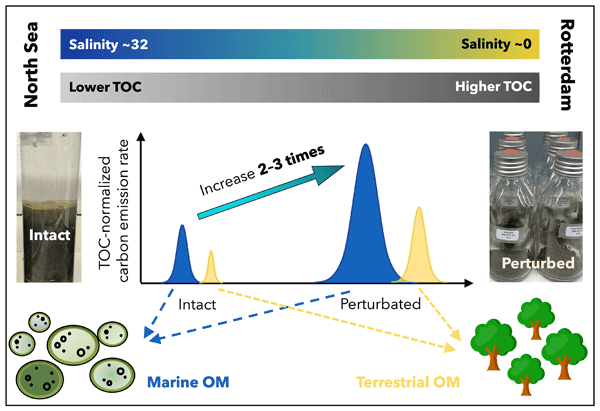
Estuaries store and process large amounts of carbon. In the Port of Rotterdam, we studied organic matter (OM) sources in sediments and showed how they influenced OM breakdown. We found that marine OM degraded faster than land-originated OM, and sediment perturbation could accelerate OM breakdown by introducing oxygen. Our findings highlight the impact of human disturbances on carbon storage in estuarine sediments, offering insights for the growing sediment reworking worldwide.
Guangnan Wu, Gert-Jan Reichart, and Peter Kraal
EGUsphere, https://doi.org/10.5194/egusphere-2025-5709, https://doi.org/10.5194/egusphere-2025-5709, 2025
Preprint archived
Short summary
Short summary
We investigate CO2 release from sediment dredged in Europe's largest harbor. Results are combined with a global CO2-release database for soils and sediments. We find (1) high CO2 release rates because the sediment is relatively rich in easily degradable organic matter and (2) strong effects of moisture, temperature and oxygen availability. Our results inform sediment management and shed new light on the dependency of CO2 release from soils and sediments on key variables moisture and temperature.
Zoë R. van Kemenade, Laura Villanueva, Ellen C. Hopmans, Peter Kraal, Harry J. Witte, Jaap S. Sinninghe Damsté, and Darci Rush
Biogeosciences, 19, 201–221, https://doi.org/10.5194/bg-19-201-2022, https://doi.org/10.5194/bg-19-201-2022, 2022
Short summary
Short summary
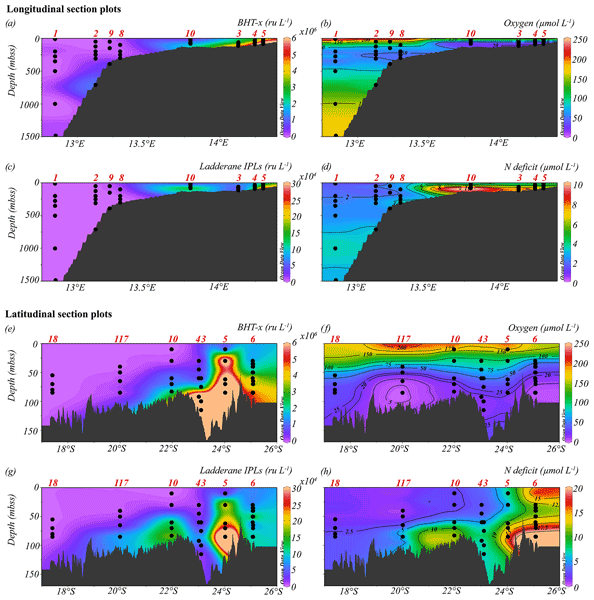
Anaerobic ammonium oxidation (anammox) is an important nitrogen-removal process in the ocean. We assess the distribution of bacteriohopanetetrol-x (BHT-x), used to trace past anammox, along a redox gradient in the water column of the Benguela upwelling system. BHT-x / BHT ratios of >0.18 correspond to the presence of living anammox bacteria and oxygen levels <50 μmol L−1. This allows for a more robust application of BHT-x to trace past marine anammox and deoxygenation in dynamic marine systems.
Virginia Sánchez Barranco, Nienke C. J. van de Loosdrecht, Furu Mienis, Jasper M. de Goeij, Rick Hennekam, Gert-Jan Reichart, Jan-Berend W. Stuut, and Lennart J. de Nooijer
Biogeosciences, 23, 5879–5899, https://doi.org/10.5194/bg-23-5879-2026, https://doi.org/10.5194/bg-23-5879-2026, 2026
Short summary
Short summary
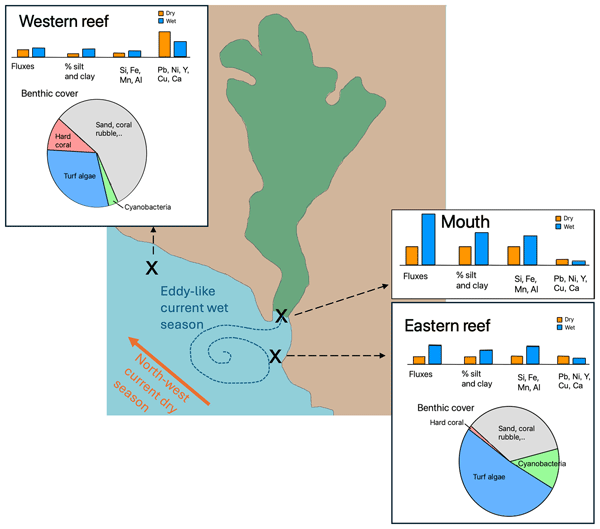
We studied how pollution from bays in Curaçao reaches nearby coral reefs and changes with seasons. By collecting suspended particulate matter at different locations during dry and wet seasons, we found that sheltered reefs receive more fine particles and pollutants, especially during rainy months, while exposed reefs are less affected. This shows that both location and seasonal rainfall determine reef vulnerability, highlighting the hidden impacts of human activity on these fragile ecosystems.
Yannick F. Bats, Appy Sluijs, and Gert-Jan Reichart
EGUsphere, https://doi.org/10.5194/egusphere-2026-3713, https://doi.org/10.5194/egusphere-2026-3713, 2026
Short summary
Short summary
Fossil remains of algae can help us estimate ancient carbon dioxide levels, but current methods are often inaccurate. We built a numeric model of an algal cell to better understand how carbon is processed in these organisms. Our research reveals that light and calcification strongly influence the chemical signals preserved in algae. By including these factors, our model accurately matches results from lab studies, suggesting it can improve reconstructions of Earth’s climate and carbon cycle.
Yasmina Ourradi, Gert-Jan Reichart, Sonja van Leeuwen, and Matthew P. Humphreys
Biogeosciences, 23, 3323–3346, https://doi.org/10.5194/bg-23-3323-2026, https://doi.org/10.5194/bg-23-3323-2026, 2026
Short summary
Short summary
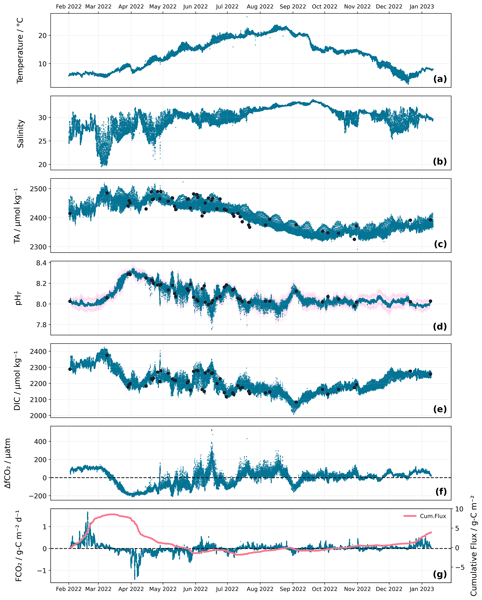
Coastal seas play a key role in the global carbon cycle, yet what drives their carbonate chemistry remains poorly understood. We measured pH at high frequency for a year at the Wadden Sea-North Sea interface. Biological activity drives pH changes, while freshwater inflow shapes total alkalinity. Both processes influence dissolved inorganic carbon. The Wadden Sea acts as a net carbon dioxide source to the atmosphere. High-frequency monitoring is essential under a changing climate.
Madleen Grohganz, Thomas M. Bury, Bregje van der Bolt, Gert-Jan Reichart, and Rick Hennekam
EGUsphere, https://doi.org/10.5194/egusphere-2026-2223, https://doi.org/10.5194/egusphere-2026-2223, 2026
Short summary
Short summary
We introduce a new deep learning tool for the quantitative detection of catastrophic tipping points in the Earth system and test its performance on existing Cenozoic proxy records. Using our deep learning method, we are able to corroborate the existence of previously detected critical transitions in the paleo records and successfully identify them as catastrophic tipping points. We provide a powerful new tool, easily adaptable for the detection of tipping points in a variety of Earth systems.
Cecile S. Hilgen, Rick Hennekam, Marcel T. J. van der Meer, Timme H. Donders, Gert-Jan Reichart, and Francesca Sangiorgi
J. Micropalaeontol., 45, 275–295, https://doi.org/10.5194/jm-45-275-2026, https://doi.org/10.5194/jm-45-275-2026, 2026
Short summary
Short summary
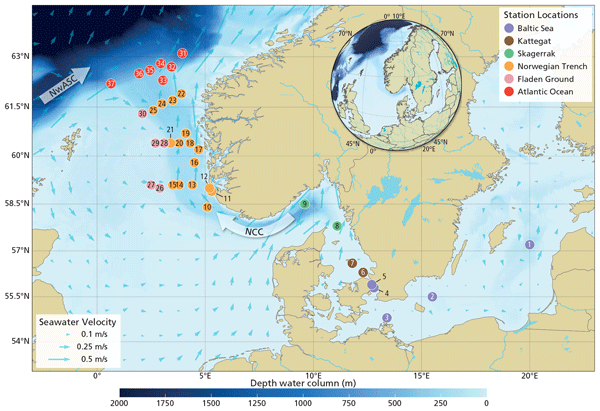
The Northwest European Shelf plays a key role in the global carbon cycle. To assess its past role, we want to reconstruct primary productivity using microfossils. By comparing surface sediment assemblages with sediment properties and modern environmental conditions, we found a good microfossil-based indicator for primary productivity. This indicator will be useful to reconstruct productivity in the past Northwest European Shelf.
Evert de Froe, Christian Mohn, Karline Soetaert, Anna-Selma van der Kaaden, Gert-Jan Reichart, Laurence H. De Clippele, Sandra R. Maier, and Dick van Oevelen
Ocean Sci., 22, 843–870, https://doi.org/10.5194/os-22-843-2026, https://doi.org/10.5194/os-22-843-2026, 2026
Short summary
Short summary
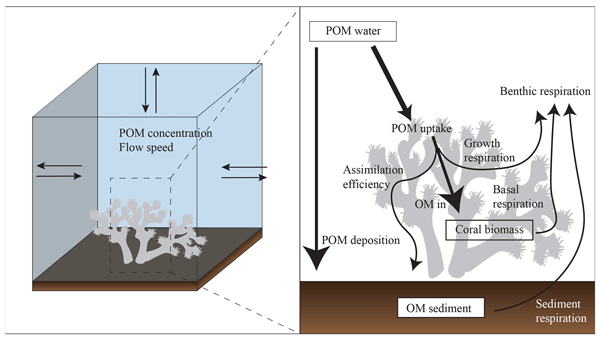
Cold-water corals are important reef-building animals in the deep sea and are distributed globally. Until now, scientists have been mapping and predicting where cold-water corals can be found using video transects and statistical models. This study provides the first process-based model in which corals are predicted based on ocean currents and food particle movement. The results show that resupply of food by tidal currents near the seafloor is crucial for predicting where corals can grow.
Guangnan Wu, Klaas G. J. Nierop, Bingjie Yang, Stefan Schouten, Gert-Jan Reichart, and Peter Kraal
Biogeosciences, 23, 995–1012, https://doi.org/10.5194/bg-23-995-2026, https://doi.org/10.5194/bg-23-995-2026, 2026
Short summary
Short summary
Estuaries store and process large amounts of carbon. In the Port of Rotterdam, we studied organic matter (OM) sources in sediments and showed how they influenced OM breakdown. We found that marine OM degraded faster than land-originated OM, and sediment perturbation could accelerate OM breakdown by introducing oxygen. Our findings highlight the impact of human disturbances on carbon storage in estuarine sediments, offering insights for the growing sediment reworking worldwide.
Guangnan Wu, Gert-Jan Reichart, and Peter Kraal
EGUsphere, https://doi.org/10.5194/egusphere-2025-5709, https://doi.org/10.5194/egusphere-2025-5709, 2025
Preprint archived
Short summary
Short summary
We investigate CO2 release from sediment dredged in Europe's largest harbor. Results are combined with a global CO2-release database for soils and sediments. We find (1) high CO2 release rates because the sediment is relatively rich in easily degradable organic matter and (2) strong effects of moisture, temperature and oxygen availability. Our results inform sediment management and shed new light on the dependency of CO2 release from soils and sediments on key variables moisture and temperature.
Anna Cutmore, Nora Richter, Nicole Bale, Stefan Schouten, and Darci Rush
Biogeosciences, 22, 6563–6581, https://doi.org/10.5194/bg-22-6563-2025, https://doi.org/10.5194/bg-22-6563-2025, 2025
Short summary
Short summary
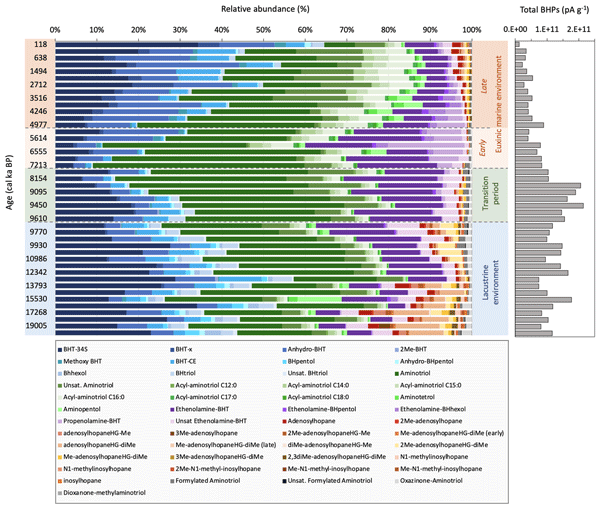
This study uses bacterial compounds, bacteriohopanepolyols (BHPs), preserved in Black Sea sediments to trace major environmental changes over the past 20 000 years. As the basin shifted from a freshwater lake to a permanently oxygen-poor marine environment, we observe clear changes in bacterial communities and environmental conditions. These findings offer new insight into how microbes responded to significant hydrological changes during the last deglaciation and Holocene.
Louise Delaigue, Gert-Jan Reichart, Li Qiu, Eric P. Achterberg, Yasmina Ourradi, Chris Galley, André Mutzberg, and Matthew P. Humphreys
Biogeosciences, 22, 5103–5121, https://doi.org/10.5194/bg-22-5103-2025, https://doi.org/10.5194/bg-22-5103-2025, 2025
Short summary
Short summary
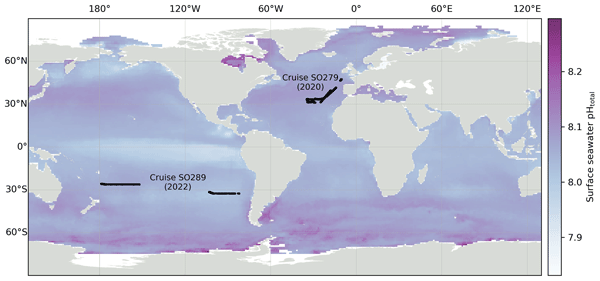
Our study analysed pH in ocean surface waters to understand how it fluctuates with changes in temperature, salinity, and biological activities. We found that temperature mainly controls daily pH variations, but biological processes also play a role, especially in affecting CO2 levels between the ocean and atmosphere. Our research shows how these factors together maintain the balance of ocean chemistry, which is crucial for predicting changes in marine environments.
Yannick F. Bats, Klaas G. J. Nierop, Alice Stuart-Lee, Joost Frieling, Linda van Roij, Gert-Jan Reichart, and Appy Sluijs
Biogeosciences, 22, 4689–4704, https://doi.org/10.5194/bg-22-4689-2025, https://doi.org/10.5194/bg-22-4689-2025, 2025
Short summary
Short summary
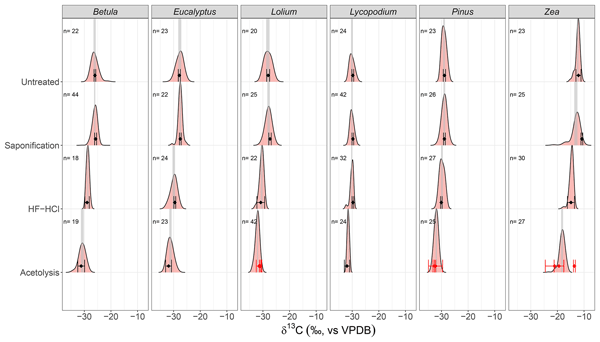
In this study, we analyzed the molecular and stable carbon isotopic composition (δ13C) of pollen and spores (sporomorphs) that underwent chemical treatments that simulate diagenesis during fossilization. We show that the successive removal of sugars and lipids results in the depletion of 13C in the residual sporomorph, leaving rich aromatic compounds. This residual aromatic-rich structure likely represents diagenetically resistant sporopollenin, implying that diagenesis results in the depletion of 13C in pollen.
Anna Cutmore, Nicole Bale, Rick Hennekam, Bingjie Yang, Darci Rush, Gert-Jan Reichart, Ellen C. Hopmans, and Stefan Schouten
Clim. Past, 21, 957–971, https://doi.org/10.5194/cp-21-957-2025, https://doi.org/10.5194/cp-21-957-2025, 2025
Short summary
Short summary
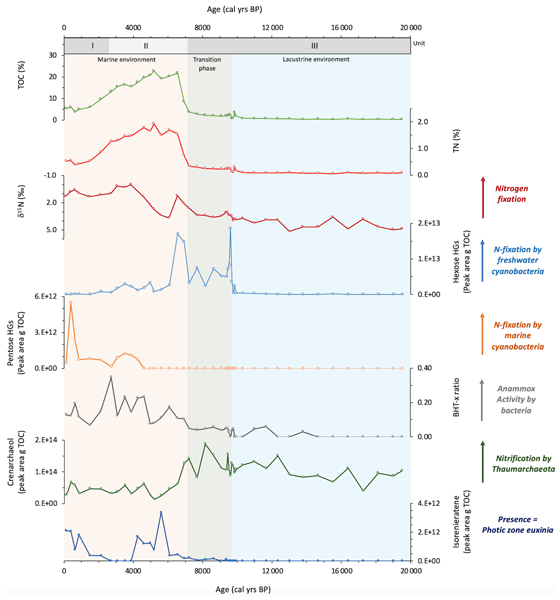
As human activities lower marine oxygen levels, understanding the impact on the marine nitrogen cycle is vital. The Black Sea, which became oxygen-deprived 9600 years ago, offers key insights. By studying organic compounds linked to nitrogen cycle processes, we found that, 7200 years ago, the Black Sea's nitrogen cycle significantly altered due to severe deoxygenation. This suggests that continued marine oxygen decline could similarly alter the marine nitrogen cycle, affecting vital ecosystems.
Szabina Karancz, Lennart J. de Nooijer, Bas van der Wagt, Marcel T. J. van der Meer, Sambuddha Misra, Rick Hennekam, Zeynep Erdem, Julie Lattaud, Negar Haghipour, Stefan Schouten, and Gert-Jan Reichart
Clim. Past, 21, 679–704, https://doi.org/10.5194/cp-21-679-2025, https://doi.org/10.5194/cp-21-679-2025, 2025
Short summary
Short summary
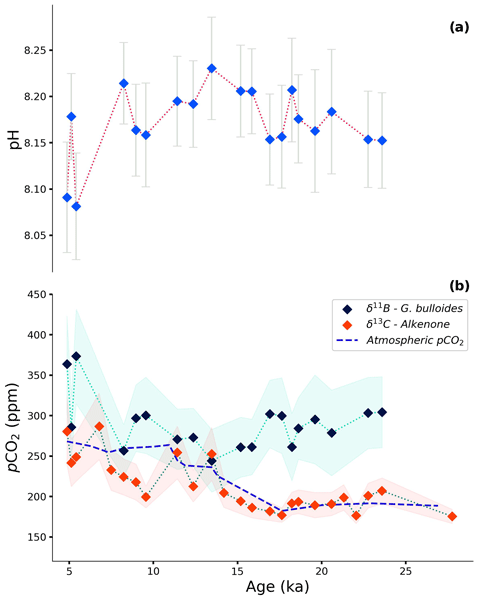
Changes in upwelling intensity of the Benguela upwelling region during the last glacial motivated us to investigate the local CO2 history during the last glacial-to-interglacial transition. Using various geochemical tracers on archives from both subsurface and surface waters reveals enhanced storage of carbon at depth during the Last Glacial Maximum. An efficient biological pump likely prevented outgassing of CO2 from intermediate depth to the atmosphere.
Devika Varma, Laura Villanueva, Nicole J. Bale, Pierre Offre, Gert-Jan Reichart, and Stefan Schouten
Biogeosciences, 21, 4875–4888, https://doi.org/10.5194/bg-21-4875-2024, https://doi.org/10.5194/bg-21-4875-2024, 2024
Short summary
Short summary
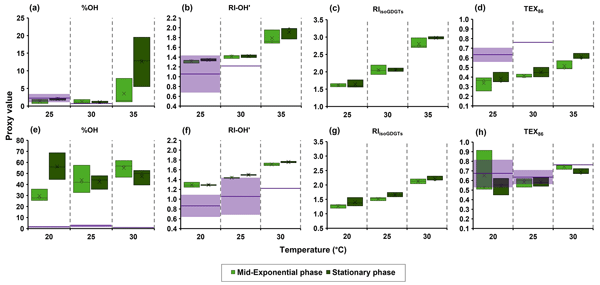
Archaeal hydroxylated tetraether lipids are increasingly used as temperature indicators in marine settings, but the factors influencing their distribution are still unclear. Analyzing membrane lipids of two thaumarchaeotal strains showed that the growth phase of the cultures does not affect the lipid distribution, but growth temperature profoundly affects the degree of cyclization of these lipids. Also, the abundance of these lipids is species-specific and is not influenced by temperature.
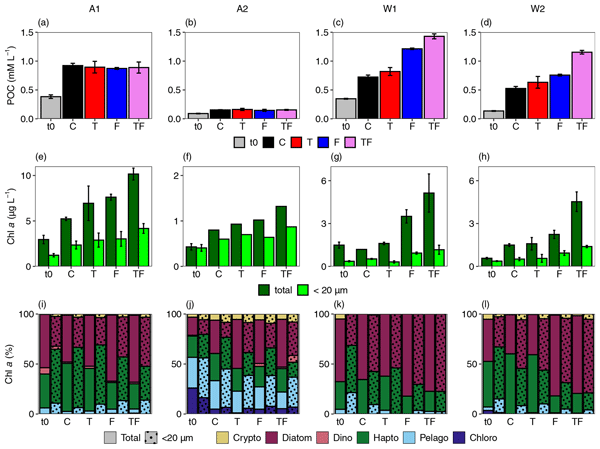
Charlotte Eich, Mathijs van Manen, J. Scott P. McCain, Loay J. Jabre, Willem H. van de Poll, Jinyoung Jung, Sven B. E. H. Pont, Hung-An Tian, Indah Ardiningsih, Gert-Jan Reichart, Erin M. Bertrand, Corina P. D. Brussaard, and Rob Middag
Biogeosciences, 21, 4637–4663, https://doi.org/10.5194/bg-21-4637-2024, https://doi.org/10.5194/bg-21-4637-2024, 2024
Short summary
Short summary
Phytoplankton growth in the Southern Ocean (SO) is often limited by low iron (Fe) concentrations. Sea surface warming impacts Fe availability and can affect phytoplankton growth. We used shipboard Fe clean incubations to test how changes in Fe and temperature affect SO phytoplankton. Their abundances usually increased with Fe addition and temperature increase, with Fe being the major factor. These findings imply potential shifts in ecosystem structure, impacting food webs and elemental cycling.
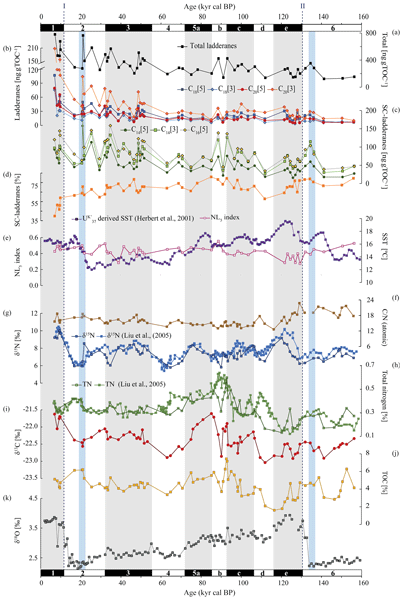
Zoë Rebecca van Kemenade, Zeynep Erdem, Ellen Christine Hopmans, Jaap Smede Sinninghe Damsté, and Darci Rush
Biogeosciences, 21, 1517–1532, https://doi.org/10.5194/bg-21-1517-2024, https://doi.org/10.5194/bg-21-1517-2024, 2024
Short summary
Short summary
The California Current system (CCS) hosts the eastern subtropical North Pacific oxygen minimum zone (ESTNP OMZ). This study shows anaerobic ammonium oxidizing (anammox) bacteria cause a loss of bioavailable nitrogen (N) in the ESTNP OMZ throughout the late Quaternary. Anammox occurred during both glacial and interglacial periods and was driven by the supply of organic matter and changes in ocean currents. These findings may have important consequences for biogeochemical models of the CCS.
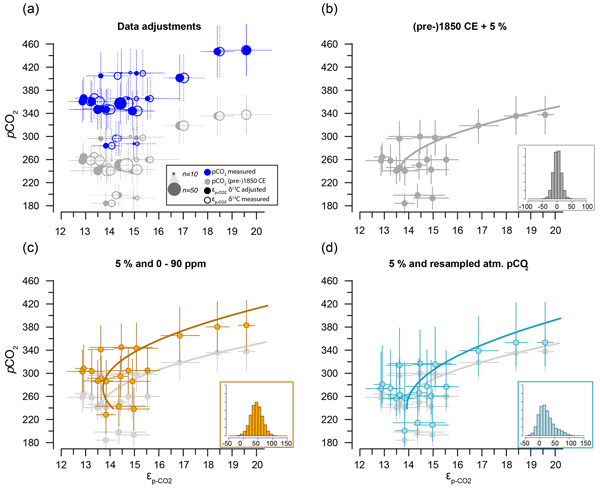
Joost Frieling, Linda van Roij, Iris Kleij, Gert-Jan Reichart, and Appy Sluijs
Biogeosciences, 20, 4651–4668, https://doi.org/10.5194/bg-20-4651-2023, https://doi.org/10.5194/bg-20-4651-2023, 2023
Short summary
Short summary
We present a first species-specific evaluation of marine core-top dinoflagellate cyst carbon isotope fractionation (εp) to assess natural pCO2 dependency on εp and explore its geological deep-time paleo-pCO2 proxy potential. We find that εp differs between genera and species and that in Operculodinium centrocarpum, εp is controlled by pCO2 and nutrients. Our results highlight the added value of δ13C analyses of individual micrometer-scale sedimentary organic carbon particles.
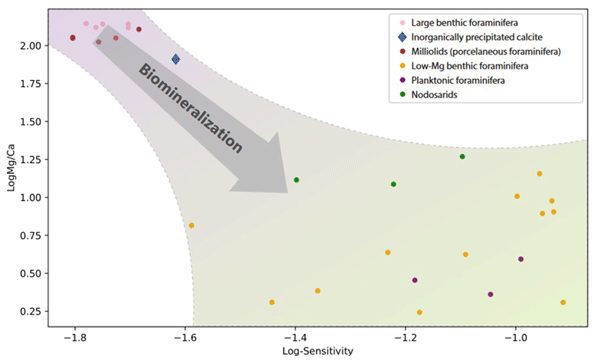
Laura Pacho, Lennart de Nooijer, and Gert-Jan Reichart
Biogeosciences, 20, 4043–4056, https://doi.org/10.5194/bg-20-4043-2023, https://doi.org/10.5194/bg-20-4043-2023, 2023
Short summary
Short summary
We analyzed Mg / Ca and other El / Ca (Na / Ca, B / Ca, Sr / Ca and Ba / Ca) in Nodosariata. Their calcite chemistry is markedly different to that of the other calcifying orders of foraminifera. We show a relation between the species average Mg / Ca and its sensitivity to changes in temperature. Differences were reflected in both the Mg incorporation and the sensitivities of Mg / Ca to temperature.
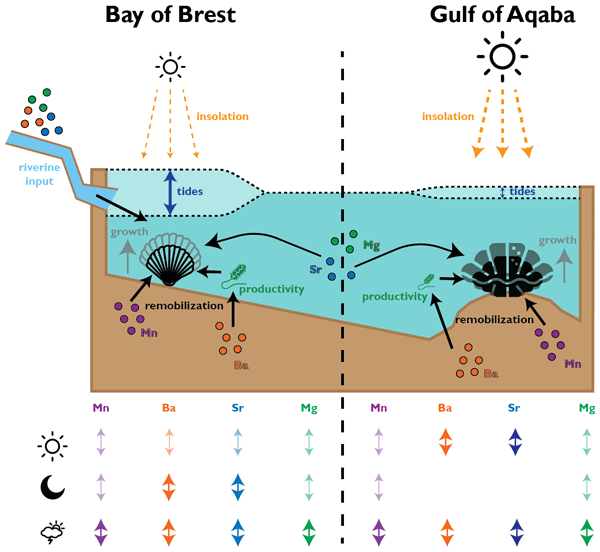
Niels J. de Winter, Daniel Killam, Lukas Fröhlich, Lennart de Nooijer, Wim Boer, Bernd R. Schöne, Julien Thébault, and Gert-Jan Reichart
Biogeosciences, 20, 3027–3052, https://doi.org/10.5194/bg-20-3027-2023, https://doi.org/10.5194/bg-20-3027-2023, 2023
Short summary
Short summary
Mollusk shells are valuable recorders of climate and environmental changes of the past down to a daily resolution. To explore this potential, we measured changes in the composition of shells of two types of bivalves recorded at the hourly scale: the king scallop Pecten maximus and giant clams (Tridacna) that engaged in photosymbiosis. We find that photosymbiosis produces more day–night fluctuation in shell chemistry but that most of the variation is not periodic, perhaps recording weather.
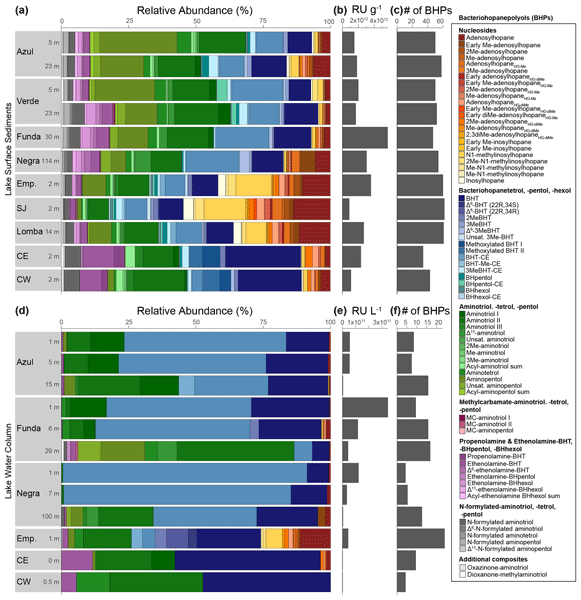
Nora Richter, Ellen C. Hopmans, Danica Mitrović, Pedro M. Raposeiro, Vítor Gonçalves, Ana C. Costa, Linda A. Amaral-Zettler, Laura Villanueva, and Darci Rush
Biogeosciences, 20, 2065–2098, https://doi.org/10.5194/bg-20-2065-2023, https://doi.org/10.5194/bg-20-2065-2023, 2023
Short summary
Short summary
Bacteriohopanepolyols (BHPs) are a diverse class of lipids produced by bacteria across a wide range of environments. This study characterizes the diversity of BHPs in lakes and coastal lagoons in the Azores Archipelago, as well as a co-culture enriched for methanotrophs. We highlight the potential of BHPs as taxonomic markers for bacteria associated with certain ecological niches, which can be preserved in sedimentary records.
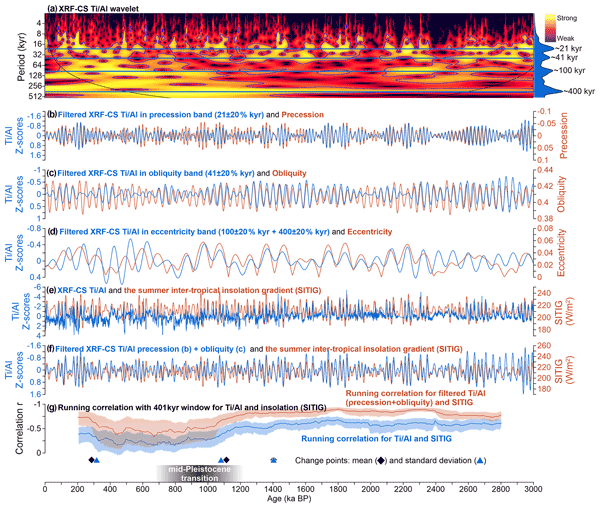
Rick Hennekam, Katharine M. Grant, Eelco J. Rohling, Rik Tjallingii, David Heslop, Andrew P. Roberts, Lucas J. Lourens, and Gert-Jan Reichart
Clim. Past, 18, 2509–2521, https://doi.org/10.5194/cp-18-2509-2022, https://doi.org/10.5194/cp-18-2509-2022, 2022
Short summary
Short summary
The ratio of titanium to aluminum (Ti/Al) is an established way to reconstruct North African climate in eastern Mediterranean Sea sediments. We demonstrate here how to obtain reliable Ti/Al data using an efficient scanning method that allows rapid acquisition of long climate records at low expense. Using this method, we reconstruct a 3-million-year North African climate record. African environmental variability was paced predominantly by low-latitude insolation from 3–1.2 million years ago.
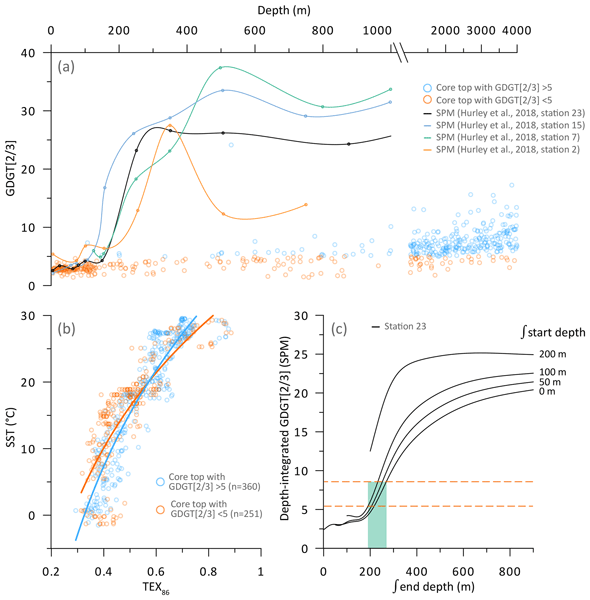
Carolien M. H. van der Weijst, Koen J. van der Laan, Francien Peterse, Gert-Jan Reichart, Francesca Sangiorgi, Stefan Schouten, Tjerk J. T. Veenstra, and Appy Sluijs
Clim. Past, 18, 1947–1962, https://doi.org/10.5194/cp-18-1947-2022, https://doi.org/10.5194/cp-18-1947-2022, 2022
Short summary
Short summary
The TEX86 proxy is often used by paleoceanographers to reconstruct past sea-surface temperatures. However, the origin of the TEX86 signal in marine sediments has been debated since the proxy was first proposed. In our paper, we show that TEX86 carries a mixed sea-surface and subsurface temperature signal and should be calibrated accordingly. Using our 15-million-year record, we subsequently show how a TEX86 subsurface temperature record can be used to inform us on past sea-surface temperatures.
Carolien M. H. van der Weijst, Josse Winkelhorst, Wesley de Nooijer, Anna von der Heydt, Gert-Jan Reichart, Francesca Sangiorgi, and Appy Sluijs
Clim. Past, 18, 961–973, https://doi.org/10.5194/cp-18-961-2022, https://doi.org/10.5194/cp-18-961-2022, 2022
Short summary
Short summary
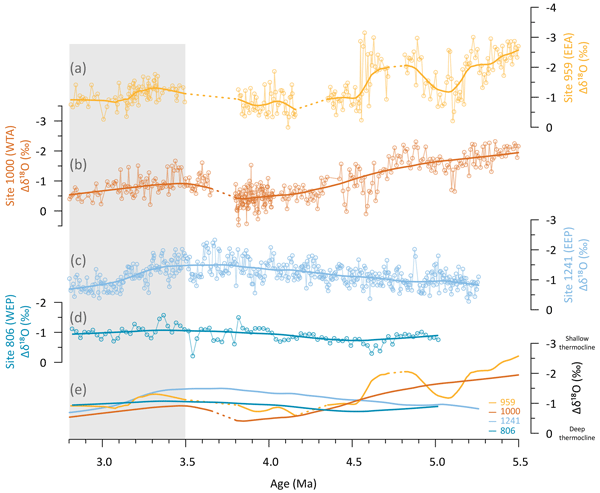
A hypothesized link between Pliocene (5.3–2.5 million years ago) global climate and tropical thermocline depth is currently only backed up by data from the Pacific Ocean. In our paper, we present temperature, salinity, and thermocline records from the tropical Atlantic Ocean. Surprisingly, the Pliocene thermocline evolution was remarkably different in the Atlantic and Pacific. We need to reevaluate the mechanisms that drive thermocline depth, and how these are tied to global climate change.
Zoë R. van Kemenade, Laura Villanueva, Ellen C. Hopmans, Peter Kraal, Harry J. Witte, Jaap S. Sinninghe Damsté, and Darci Rush
Biogeosciences, 19, 201–221, https://doi.org/10.5194/bg-19-201-2022, https://doi.org/10.5194/bg-19-201-2022, 2022
Short summary
Short summary
Anaerobic ammonium oxidation (anammox) is an important nitrogen-removal process in the ocean. We assess the distribution of bacteriohopanetetrol-x (BHT-x), used to trace past anammox, along a redox gradient in the water column of the Benguela upwelling system. BHT-x / BHT ratios of >0.18 correspond to the presence of living anammox bacteria and oxygen levels <50 μmol L−1. This allows for a more robust application of BHT-x to trace past marine anammox and deoxygenation in dynamic marine systems.
Alice E. Webb, Didier M. de Bakker, Karline Soetaert, Tamara da Costa, Steven M. A. C. van Heuven, Fleur C. van Duyl, Gert-Jan Reichart, and Lennart J. de Nooijer
Biogeosciences, 18, 6501–6516, https://doi.org/10.5194/bg-18-6501-2021, https://doi.org/10.5194/bg-18-6501-2021, 2021
Short summary
Short summary
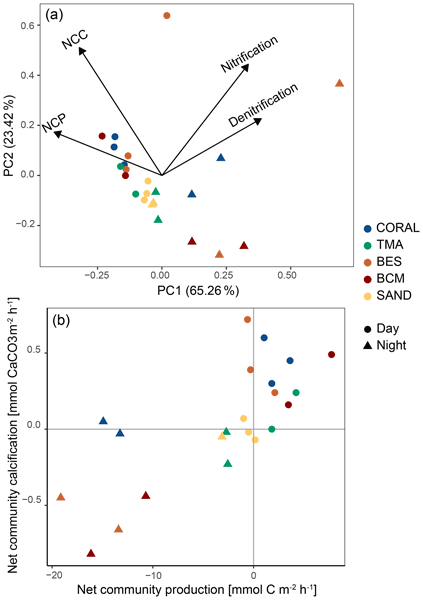
The biogeochemical behaviour of shallow reef communities is quantified to better understand the impact of habitat degradation and species composition shifts on reef functioning. The reef communities investigated barely support reef functions that are usually ascribed to conventional coral reefs, and the overall biogeochemical behaviour is found to be similar regardless of substrate type. This suggests a decrease in functional diversity which may therefore limit services provided by this reef.
Cited articles
Algeo, T. J. and Ingall, E.: Sedimentary Corg:P ratios, paleocean ventilation, and Phanerozoic atmospheric pO2, Palaeogeogr. Palaeocl., 256, 130–155, https://doi.org/10.1016/j.palaeo.2007.02.029, 2007.
Aller, R. C.: Mobile deltaic and continental shelf muds as suboxic, fluidized bed reactors, Mar. Chem., 61, 143–155, https://doi.org/10.1016/S0304-4203(98)00024-3, 1998.
Aller, R. C.: 8.11 – Sedimentary Diagenesis, Depositional Environments, and Benthic Fluxes, in: Treatise on Geochemistry (Second Edition), edited by: Holland, H. D., and Turekian, K. K., Elsevier, Oxford, 293–334, https://doi.org/10.1016/B978-0-08-095975-7.00611-2, 2014.
Anschutz, P., Zhong, S., Sundby, B., Mucci, A., and Gobeil, C.: Burial efficiency of phosphorus and the geochemistry of iron in continental margin sediments, Limnol. Oceanogr., 43, 53–64, https://doi.org/10.4319/lo.1998.43.1.0053, 1998.
Anschutz, P., Dedieu, K., Desmazes, F., and Chaillou, G.: Speciation, oxidation state, and reactivity of particulate manganese in marine sediments, Chem. Geol., 218, 265–279, https://doi.org/10.1016/j.chemgeo.2005.01.008, 2005.
APHA: Standard methods for the examination of water and wastewater, 21, American Public Health Association – American Water Works Association – Water Environment Federation, https://www.standardmethods.org/doi/abs/10.2105/SMWW.2882.001, 2005.
Bailey, G. W.: The role of regeneration from the sediments in the supply of nutrients to the euphotic zone in the southern Benguela system, Afr. J. Mar. Sci., 5, 273–285, https://doi.org/10.2989/025776187784522478, 1987.
Bartlett, J. K. and Skoog, D. A.: Colorimetric determination of elemental sulfur in hydrocarbons, Anal. Chem., 26, 1008–1011, https://doi.org/10.1021/ac60090a014, 1954.
Berner, R. A.: Sedimentary pyrite formation: An update, Geochim. Cosmochim. Acta, 48, 605–615, https://doi.org/10.1016/0016-7037(84)90089-9, 1984.
Breitburg, D., Levin, L. A., Oschlies, A., Grégoire, M., Chavez, F. P., Conley, D. J., Garçon, V., Gilbert, D., Gutiérrez, D., Isensee, K., Jacinto, G. S., Limburg, K. E., Montes, I., Naqvi, S. W. A., Pitcher, G. C., Rabalais, N. N., Roman, M. R., Rose, K. A., Seibel, B. A., Telszewski, M., Yasuhara, M., and Zhang, J.: Declining oxygen in the global ocean and coastal waters, Science, 359, https://doi.org/10.1126/science.aam7240, 2018.
Brüchert, V., Currie, B., Peard, K. R., Lass, U., Endler, R., Dübecke, A., Julies, E., Leipe, T., and Zitzmann, S.: Biogeochemical and physical control on shelf anoxia and water column hydrogen sulphide in the Benguela coastal upwelling system off Namibia, Dordrecht, 161–193, https://doi.org/10.1007/1-4020-4297-3_07, 2006
Brüchert, V., Jørgensen, B. B., Neumann, K., Riechmann, D., Schlösser, M., and Schulz, H.: Regulation of bacterial sulfate reduction and hydrogen sulfide fluxes in the central namibian coastal upwelling zone, Geochim. Cosmochim. Acta, 67, 4505–4518, https://doi.org/10.1016/S0016-7037(03)00275-8, 2003.
Burdige, D. J.: Geochemistry of marine sediments, Princeton University Press, https://doi.org/10.1017/S0016756807003743, 2006.
Burton, E. D., Sullivan, L. A., Bush, R. T., Johnston, S. G., and Keene, A. F.: A simple and inexpensive chromium-reducible sulfur method for acid-sulfate soils, Appl. Geochem., 23, 2759–2766, https://doi.org/10.1016/j.apgeochem.2008.07.007, 2008.
Callbeck, C. M., Canfield, D. E., Kuypers, M. M. M., Yilmaz, P., Lavik, G., Thamdrup, B., Schubert, C. J., and Bristow, L. A.: Sulfur cycling in oceanic oxygen minimum zones, Limnol. Oceanogr., 66, 2360–2392, https://doi.org/10.1002/lno.11759, 2021.
Calvert, S. E. and Price, N. B.: Geochemistry of Namibian Shelf Sediments, in: Coastal Upwelling Its Sediment Record: Part A: Responses of the Sedimentary Regime to Present Coastal Upwelling, edited by: Suess, E., and Thiede, J., Springer US, Boston, MA, 337–375, https://doi.org/10.1007/978-1-4615-6651-9_17, 1983.
Chapman, P. and Shannon, L. V.: Seasonality in the oxygen minimum layers at the extremities of the Benguela system, Afr. J. Mar. Sci., 5, 85–94, https://doi.org/10.2989/025776187784522162, 1987.
Chavez, F. P. and Messié, M.: A comparison of Eastern Boundary Upwelling Ecosystems, Prog. Oceanogr., 83, 80–96, https://doi.org/10.1016/j.pocean.2009.07.032, 2009.
Chuang, P.-C., Anderson, C. H., Kossack, M., Fabian, J., Su, C.-C., Vosteen, P., Zabel, M., Scholz, F., Schulz-Vogt, H. N., Sommer, S., and Dale, A. W.: Nutrient turnover by large sulfur bacteria on the Namibian mud belt during the low productivity season, Front. Mar. Sci., 9, https://doi.org/10.3389/fmars.2022.929913, 2022.
Claff, S. R., Sullivan, L. A., Burton, E. D., and Bush, R. T.: A sequential extraction procedure for acid sulfate soils: Partitioning of iron, Geoderma, 155, 224–230, https://doi.org/10.1016/j.geoderma.2009.12.002, 2010.
Cline, J. D.: Spectrophotometric determination of hydrogen sulfide in natural waters, Limnol. Oceanogr., 14, 454–458, https://doi.org/10.4319/lo.1969.14.3.0454, 1969.
Cosmidis, J., Benzerara, K., Menguy, N., and Arning, E.: Microscopy evidence of bacterial microfossils in phosphorite crusts of the Peruvian shelf: implications for phosphogenesis mechanisms, Chem. Geol., https://doi.org/10.1016/j.chemgeo.2013.09.009, 2013.
Dale, A. W., Brüchert, V., Alperin, M., and Regnier, P.: An integrated sulfur isotope model for Namibian shelf sediments, Geochim. Cosmochim. Acta, 73, 1924–1944, https://doi.org/10.1016/j.gca.2008.12.015, 2009.
Dale, A. W., Graco, M., and Wallmann, K.: Strong and dynamic benthic-pelagic coupling and feedbacks in a coastal upwelling system (Peruvian shelf), Front. Mar. Sci, 4, https://doi.org/10.3389/fmars.2017.00029, 2017.
Diaz, R. J. and Rosenberg, R.: Spreading dead zones and consequences for marine ecosystems, Science, 321, 926–929, https://doi.org/10.1126/science.1156401, 2008.
Dzombak, D. A. and Morel, F. M. M.: Surface complexation modeling: Hydrous ferric oxide, Wiley, New York, 416 pp., ISBN 0-471-63731-9, 1990.
Emeis, K., Eggert, A., Flohr, A., Lahajnar, N., Nausch, G., Neumann, A., Rixen, T., Schmidt, M., Van der Plas, A., and Wasmund, N.: Biogeochemical processes and turnover rates in the Northern Benguela Upwelling System, J. Mar. Syst., https://doi.org/10.1016/j.jmarsys.2017.10.001, 2017.
Falkowski, P. G.: Evolution of the nitrogen cycle and its influence on the biological sequestration of CO2 in the ocean, Nature, 387, 272–275, https://doi.org/10.1038/387272a0, 1997.
Flohr, A., van der Plas, A. K., Emeis, K.-C., Mohrholz, V., and Rixen, T.: Spatio-temporal patterns of C : N : P ratios in the northern Benguela upwelling system, Biogeosciences, 11, 885–897, https://doi.org/10.5194/bg-11-885-2014, 2014.
Flood, B. E., Louw, D. C., Van der Plas, A. K., and Bailey, J. V.: Giant sulfur bacteria (Beggiatoaceae) from sediments underlying the Benguela upwelling system host diverse microbiomes, PLoS One, 16, e0258124, https://doi.org/10.1371/journal.pone.0258124, 2021.
Froelich, P. N., Arthur, M. A., Burnett, W. C., Deakin, M., Hensley, V., Jahnke, R., Kaul, L., Kim, K. H., Roe, K., Soutar, A., and Vathakanon, C.: Early diagenesis of organic-matter in Peru continental-margin sediments – Phosphorite precipitation, Mar. Geol., 80, 309–343, https://doi.org/10.1016/0025-3227(88)90095-3, 1988.
Gächter, R., Meyer, J. S., and Mares, A.: Contribution of bacteria to release and fixation of phosphorus in lake-sediments, Limnol. Oceanogr., 33, 1542–1558, https://doi.org/10.4319/lo.1988.33.6part2.1542, 1988.
Gallardo, V., Klingelhoeffer, E., Arntz, W., and Graco, M.: First report of the bacterium Thioploca in the Benguela ecosystem off Namibia, J. Mar. Biol. Ass. UK, 78, 1007–1010, https://doi.org/10.1017/s0025315400044945, 1998.
Giraud, X., Le Quéré, C., and da Cunha, L. C.: Importance of coastal nutrient supply for global ocean biogeochemistry, Global Biogeochem. Cy., 22, https://doi.org/10.1029/2006GB002717, 2008.
Goldhammer, T., Bruchert, V., Ferdelman, T. G., and Zabel, M.: Microbial sequestration of phosphorus in anoxic upwelling sediments, Nature Geosci., 3, 557–561, https://doi.org/10.1038/ngeo913, 2010.
Grasshoff, K., Kremling, K., and Ehrhardt, M.: Methods of seawater analysis, John Wiley & Sons, https://doi.org/10.1002/9783527613984, 2009.
Greenhalgh, R. and Riley, J. P.: The determination of fluorides in natural waters, with particular reference to sea water, Anal. Chim. Acta, 25, 179–188, https://doi.org/10.1016/0003-2670(61)80199-2, 1961.
Helder, W. and De Vries, R. T. P.: An automatic phenol-hypochlorite method for the determination of ammonia in sea- and brackish waters, Neth. J. Sea Res., 13, 154–160, https://doi.org/10.1016/0077-7579(79)90038-3, 1979.
Holland, H. D.: The chemistry of the atmosphere and oceans, Wiley, New York, ISBN 0-471-03509-2, 1978.
Ingall, E. and Jahnke, R.: Evidence for enhanced phosphorus regeneration from marine sediments overlain by oxygen depleted waters, Geochim. Cosmochim. Acta, 58, 2571–2575, https://doi.org/10.1016/0016-7037(94)90033-7, 1994.
Inthorn, M., Mohrholz, V., and Zabel, M.: Nepheloid layer distribution in the Benguela upwelling area offshore Namibia, Deep-Sea Res. Pt. I, 53, 1423–1438, https://doi.org/10.1016/j.dsr.2006.06.004, 2006a.
Inthorn, M., Wagner, T., Scheeder, G., and Zabel, M.: Lateral transport controls distribution, quality, and burial of organic matter along continental slopes in high-productivity areas, Geology, 34, 205–208, https://doi.org/10.1130/G22153.1, 2006b.
Jenkyns, H. C.: Geochemistry of oceanic anoxic events, Geochem. Geophys. Geosyst., 11, Q03004, https://doi.org/10.1029/2009gc002788, 2010.
Jensen, H. S., Kristensen, P., Jeppesen, E., and Skytthe, A.: Iron-phosphorus ratio in surface sediment as an indicator of phosphate release from aerobic sediments in shallow lakes, Hydrobiologia, 235, 731–743, https://doi.org/10.1007/BF00026261, 1992.
Jørgensen, B. B. and Gallardo, V. A.: Thioploca spp.: filamentous sulfur bacteria with nitrate vacuoles, FEMS Microbiol. Ecol., 28, 301–313, https://doi.org/10.1111/j.1574-6941.1999.tb00585.x, 1999.
Kraal, P.: Data supplement to “Benthic phosphorus cycling in the northern Benguela upwelling system: excess P supply and altered pelagic nutrient stoichiometry”, NIOZ data archive system [data set], https://doi.org/10.25850/nioz/7b.b.wk, 2026.
Kraal, P., Slomp, C. P., and de Lange, G. J.: Sedimentary organic carbon to phosphorus ratios as a redox proxy in Quaternary records from the Mediterranean, Chem. Geol., 277, 167–177, https://doi.org/10.1016/j.chemgeo.2010.08.003, 2010.
Kraal, P., Slomp, C. P., Reed, D. C., Reichart, G.-J., and Poulton, S. W.: Sedimentary phosphorus and iron cycling in and below the oxygen minimum zone of the northern Arabian Sea, Biogeosciences, 9, 2603–2624, https://doi.org/10.5194/bg-9-2603-2012, 2012.
Kraal, P., Burton, E. D., and Bush, R. T.: Iron monosulfide accumulation and pyrite formation in eutrophic estuarine sediments, Geochim. Cosmochim. Acta, 122, 75–88, https://doi.org/10.1016/j.gca.2013.08.013, 2013.
Kraal, P., Dijkstra, N., Behrends, T., and Slomp, C. P.: Phosphorus burial in sediments of the sulfidic deep Black Sea: key roles for adsorption by calcium carbonate and apatite authigenesis, Geochim. Cosmochim. Acta, 204, 140–158, https://doi.org/10.1016/j.gca.2017.01.042, 2017.
Kraal, P., van Genuchten, C. M., Behrends, T., and Rose, A. L.: Sorption of phosphate and silicate alters dissolution kinetics of poorly crystalline iron (oxyhydr)oxide, Chemosphere, 234, 690–701, https://doi.org/10.1016/j.chemosphere.2019.06.071, 2019.
Küster-Heins, K., de Lange, G. J., and Zabel, M.: Benthic phosphorus and iron budgets for three NW African slope sediments: a balance approach, Biogeosciences, 7, 469–480, https://doi.org/10.5194/bg-7-469-2010, 2010a.
Küster-Heins, K., Steinmetz, E., De Lange, G. J., and Zabel, M.: Phosphorus cycling in marine sediments from the continental margin off Namibia, Mar. Geol., 274, 95–106, https://doi.org/10.1016/j.margeo.2010.03.008, 2010b.
Kuypers, M. M. M., van Breugel, Y., Schouten, S., Erba, E., and Sinninghe Damsté, J. S.: N2-fixing cyanobacteria supplied nutrient N for Cretaceous oceanic anoxic events, Geology, 32, https://doi.org/10.1130/G20458.1, 2004.
Lenton, T. M. and Klausmeier, C. A.: Biotic stoichiometric controls on the deep ocean N:P ratio, Biogeosciences, 4, 353–367, https://doi.org/10.5194/bg-4-353-2007, 2007.
Løes, A.-K., Ahlin, J. P., Ahuja, I., Krogstad, T., Smevoll, S., and Waag, H.: Effects of formic Acid preservation of fishbones on the extractability of ammonium lactate–acetate soluble calcium, phosphorus, magnesium, and potassium, Waste Biom. Valor., 13, 3547–3559, https://doi.org/10.1007/s12649-022-01744-7, 2022.
Logesh, A. R., Pravinkumar, M., Raffi, S. M., and Kalaiselvam, M.: Calcium and phosphorus determination in bones of low value fishes, Sardinella longiceps (Valenciennes) and Trichiurus savala (Cuvier), from Parangipettai, Southeast Coast of India, Asian Pac. J. Trop. Disease, 2, S254–S256, https://doi.org/10.1016/S2222-1808(12)60160-1, 2012.
Lomnitz, U., Sommer, S., Dale, A. W., Löscher, C. R., Noffke, A., Wallmann, K., and Hensen, C.: Benthic phosphorus cycling in the Peruvian oxygen minimum zone, Biogeosciences, 13, 1367–1386, https://doi.org/10.5194/bg-13-1367-2016, 2016.
Marcus, N. H. and Boero, F.: Minireview: The importance of benthic-pelagic coupling and the forgotten role of life cycles in coastal aquatic systems, Limnol. Oceanogr., 43, 763–768, https://doi.org/10.4319/lo.1998.43.5.0763, 1998.
McHatton, S. C., Barry, J. P., Jannasch, H. W., and Nelson, D. C.: High nitrate concentrations in vacuolate, autotrophic marine Beggiatoa spp, Appl. Environ. Microb., 62, 954–958, https://doi.org/10.1128/aem.62.3.954-958.1996, 1996.
Messié, M. and Chavez, F. P.: Seasonal regulation of primary production in eastern boundary upwelling systems, Prog. Oceanogr., 134, 1–18, https://doi.org/10.1016/j.pocean.2014.10.011, 2015.
Middelburg, J. J.: Reviews and syntheses: to the bottom of carbon processing at the seafloor, Biogeosciences, 15, 413–427, https://doi.org/10.5194/bg-15-413-2018, 2018.
Middelburg, J. J. and Levin, L. A.: Coastal hypoxia and sediment biogeochemistry, Biogeosciences, 6, 1273–1293, https://doi.org/10.5194/bg-6-1273-2009, 2009.
Mohrholz, V., Bartholomae, C. H., van der Plas, A. K., and Lass, H. U.: The seasonal variability of the northern Benguela undercurrent and its relation to the oxygen budget on the shelf, Cont. Shelf Res., 28, 424–441, https://doi.org/10.1016/j.csr.2007.10.001, 2008.
Mohrholz, V., Eggert, A., Junker, T., Nausch, G., Ohde, T., and Schmidt, M.: Cross shelf hydrographic and hydrochemical conditions and their short term variability at the northern Benguela during a normal upwelling season, J. Mar. Syst., 140, 92–110, https://doi.org/10.1016/j.jmarsys.2014.04.019, 2014.
Moore, C. M., Mills, M. M., Arrigo, K. R., Berman-Frank, I., Bopp, L., Boyd, P. W., Galbraith, E. D., Geider, R. J., Guieu, C., Jaccard, S. L., Jickells, T. D., La Roche, J., Lenton, T. M., Mahowald, N. M., Maranon, E., Marinov, I., Moore, J. K., Nakatsuka, T., Oschlies, A., Saito, M. A., Thingstad, T. F., Tsuda, A., and Ulloa, O.: Processes and patterns of oceanic nutrient limitation, Nature Geosci., 6, 701–710, https://doi.org/10.1038/ngeo1765, 2013.
Moreno, A. R. and Martiny, A. C.: Ecological stoichiometry of ocean plankton, Annu. Rev. Mar. Sci., 10, 43–69, https://doi.org/10.1146/annurev-marine-121916-063126, 2018.
Mort, H. P., Adatte, T., Föllmi, K. B., Keller, G., Steinmann, P., Matera, V., Berner, Z., and Stüben, D.: Phosphorus and the roles of productivity and nutrient recycling during oceanic anoxic event 2, Geology, 35, https://doi.org/10.1130/G23475A.1, 2007.
Murphy, J. and Riley, J. P.: A modified single solution method for the determination of phosphate in natural waters, Anal. Chim. Acta, 27, 31–36, https://doi.org/10.1016/S0003-2670(00)88444-5, 1962.
Nagel, B., Emeis, K. C., Flohr, A., Rixen, T., Schlarbaum, T., Mohrholz, V., and van der Plas, A.: N-cycling and balancing of the N-deficit generated in the oxygen minimum zone over the Namibian shelf – An isotope-based approach, JGR Biogeosciences, 118, 361–371, https://doi.org/10.1002/jgrg.20040, 2013.
Nagel, B., Gaye, B., Lahajnar, N., Struck, U., and Emeis, K.-C.: Effects of current regimes and oxygenation on particulate matter preservation on the Namibian shelf: Insights from amino acid biogeochemistry, Mar. Chem., 186, 121–132, https://doi.org/10.1016/j.marchem.2016.09.001, 2016.
Needoba, J. A., Foster, R. A., Sakamoto, C., Zehr, J. P., and Johnson, K. S.: Nitrogen fixation by unicellular diazotrophic cyanobacteria in the temperate oligotrophic North Pacific Ocean, Limnol. Oceanogr., 52, 1317–1327, https://doi.org/10.4319/lo.2007.52.4.1317, 2007.
Noffke, A., Hensen, C., Sommer, S., Scholz, F., Bohlen, L., Mosch, T., Graco, M., and Wallmann, K.: Benthic iron and phosphorus fluxes across the Peruvian oxygen minimum zone, Limnol. Oceanogr., 57, 851–867, https://doi.org/10.4319/lo.2012.57.3.0851, 2012.
Nriagu, J. O.: Rapid decomposition of fish bones in Lake Erie sediments, Hydrobiologia, 106, 217–222, https://doi.org/10.1007/BF00008119, 1982.
Ohde, T. and Dadou, I.: Seasonal and annual variability of coastal sulphur plumes in the northern Benguela upwelling system, PLoS One, 13, e0192140, https://doi.org/10.1371/journal.pone.0192140, 2018.
Oschlies, A., Brandt, P., Stramma, L., and Schmidtko, S.: Drivers and mechanisms of ocean deoxygenation, Nature Geosci., 11, 467–473, https://doi.org/10.1038/s41561-018-0152-2, 2018.
Oxmann, J. F. and Schwendenmann, L.: Authigenic apatite and octacalcium phosphate formation due to adsorption–precipitation switching across estuarine salinity gradients, Biogeosciences, 12, 723–738, https://doi.org/10.5194/bg-12-723-2015, 2015.
Pascal, L., Cloutier-Artiwat, F., Zanon, A., Wallace, D. W. R., and Chaillou, G.: New deoxygenation threshold for N2 and N2O production in coastal waters and sediments, Global Biogeochem. Cy., 39, e2024GB008218, https://doi.org/10.1029/2024GB008218, 2025.
Poulton, S. W. and Canfield, D. E.: Development of a sequential extraction procedure for iron: implications for iron partitioning in continentally derived particulates, Chem. Geol., 214, 209–221, https://doi.org/10.1016/j.chemgeo.2004.09.003, 2005.
Raven, J. A. and Falkowski, P. G.: Oceanic sinks for atmospheric CO2, Plant, Cell & Environment, 22, 741–755, https://doi.org/10.1046/j.1365-3040.1999.00419.x, 1999.
Reinhard, C. T., Planavsky, N. J., Gill, B. C., Ozaki, K., Robbins, L. J., Lyons, T. W., Fischer, W. W., Wang, C., Cole, D. B., and Konhauser, K. O.: Evolution of the global phosphorus cycle, Nature, 541, 386–389, https://doi.org/10.1038/nature20772, 2017.
Ruttenberg, K. C.: Development of a sequential extraction method for different forms of phosphorus in marine sediments, Limnol. Oceanogr., 37, 1460–1482, 1992.
Ruttenberg, K. C.: Reassessment of the oceanic residence time of phosphorus, Chem. Geol., 107, 405–409, 1993.
Ruttenberg, K. C.: The global phosphorus cycle, in: Treatise on Geochemistry (Second Edition), edited by: Holland, H. D., and Turekian, K. K., Elsevier, Oxford, 499–558, https://doi.org/10.1016/B978-0-08-095975-7.00813-5, 2014.
Ruttenberg, K. C. and Berner, R. A.: Authigenic apatite formation and burial in sediments from non-upwelling, continental-margin environments, Geochim. Cosmochim. Acta, 57, 991–1007, https://doi.org/10.1016/0016-7037(93)90035-U, 1993.
Sarazin, G., Michard, G., and Prevot, F.: A rapid and accurate spectroscopic method for alkalinity measurements in sea water samples, Water Res., 33, 290–294, https://doi.org/10.1016/S0043-1354(98)00168-7, 1999.
Schenau, S. J. and De Lange, G. J.: A novel chemical method to quantify fish debris in marine sediments, Limnol. Oceanogr., 45, 963–971, https://doi.org/10.4319/lo.2000.45.4.0963, 2000.
Schenau, S. J. and De Lange, G. J.: Phosphorus regeneration vs. burial in sediments of the Arabian Sea, Mar. Chem., 75, 201–217, https://doi.org/10.1016/S0304-4203(01)00037-8, 2001.
Schenau, S. J., Slomp, C. P., and De Lange, G. J.: Phosphogenesis and active phosphorite formation in sediments from the Arabian Sea oxygen minimum zone, Mar. Geol., 169, 1–20, https://doi.org/10.1016/S0025-3227(00)00083-9, 2000.
Schlitzer: Ocean Data View, https://odv.awi.de/ (last access: 30 April 2026), 2025.
Schroller Lomnitz, U., Hensen, C., Dale, A. W., Scholz, F., Clemens, D., Sommer, S., Noffke, A., and Wallmann, K.: Dissolved benthic phosphate, iron and carbon fluxes in the Mauritanian upwelling system and implications for ongoing deoxygenation, Deep-Sea Res. Pt. 1, 143, 70–84, https://doi.org/10.1016/j.dsr.2018.11.008, 2019.
Schulz, H. N.: The genus Thiomargarita, in: The Prokaryotes, 1156–1163, https://doi.org/10.1007/0-387-30746-X_47, 2006.
Schulz, H. N. and Schulz, H. D.: Large sulfur bacteria and the formation of phosphorite, Science, 307, 416–418, https://doi.org/10.1126/science.1103096, 2005.
Shannon, L. V., Agenbag, J. J., and Buys, M. E. L.: Large- and mesoscale features of the Angola-Benguela front, Afr. J. Mar. Sci., 5, 11–34, https://doi.org/10.2989/025776187784522261, 1987.
Slomp, C. P., Thomson, J., and De Lange, G. J.: Enhanced regeneration of phosphorus during formation of the most recent eastern Mediterranean sapropel (S1), Geochim. Cosmochim. Acta, 66, 1171–1184, https://doi.org/10.1016/S0016-7037(01)00848-1, 2002.
Slomp, C. P., Thomson, J., and de Lange, G. J.: Controls on phosphorus regeneration and burial during formation of eastern Mediterranean sapropels, Mar. Geol., 203, 141–159, https://doi.org/10.1016/s0025-3227(03)00335-9, 2004.
Stoll, M. H. C., Bakker, K., Nobbe, G. H., and Haese, R. R.: Continuous-Flow Analysis of Dissolved Inorganic Carbon Content in Seawater, Anal. Chem., 73, 4111–4116, https://doi.org/10.1021/ac010303r, 2001.
Stramma, L., Johnson, G. C., Sprintall, J., and Mohrholz, V.: Expanding oxygen-minimum zones in the tropical oceans, Science, 320, 655–658, https://doi.org/10.1126/science.1153847, 2008.
Stüeken, E. E., Kipp, M. A., Koehler, M. C., and Buick, R.: The evolution of Earth's biogeochemical nitrogen cycle, Earth-Sci. Rev., 160, 220–239, https://doi.org/10.1016/j.earscirev.2016.07.007, 2016.
Suess, E.: Phosphate regeneration from sediments of the Peru continental margin by dissolution of fish debris, Geochim. Cosmochim. Acta, 45, 577–588, https://doi.org/10.1016/0016-7037(81)90191-5, 1981.
Summerhayes, C. P., Kroon, D., Rosell-Melé, A., Jordan, R. W., Schrader, H. J., Hearn, R., Villanueva, J., Grimalt, J. O., and Eglinton, G.: Variability in the Benguela Current upwelling system over the past 70 000 years, Prog. Oceanogr., 35, 207–251, https://doi.org/10.1016/0079-6611(95)00008-5, 1995.
Sundby, B. r., Gobeil, C., Silverberg, N., and Alfonso, M.: The phosphorus cycle in coastal marine sediments, Limnol. Oceanogr., 37, 1129–1145, https://doi.org/10.4319/lo.1992.37.6.1129, 1992.
Tyrrell, T.: The relative influences of nitrogen and phosphorus on oceanic primary production, Nature, 400, 525–531, https://doi.org/10.1038/22941, 1999.
Vahtera, E., Conley, D. J., Gustafsson, B. G., Kuosa, H., Pitkänen, H., Savchuk, O. P., Tamminen, T., Viitasalo, M., Voss, M., Wasmund, N., and Wulff, F.: Internal ecosystem feedbacks enhance nitrogen-fixing cyanobacteria blooms and complicate management in the Baltic Sea, AMBIO, 36, 186–194, https://doi.org/10.1579/0044-7447(2007)36[186:Iefenc]2.0.Co;2, 2007.
van Kemenade, Z. R., Villanueva, L., Hopmans, E. C., Kraal, P., Witte, H. J., Sinninghe Damsté, J. S., and Rush, D.: Bacteriohopanetetrol-x: constraining its application as a lipid biomarker for marine anammox using the water column oxygen gradient of the Benguela upwelling system, Biogeosciences, 19, 201–221, https://doi.org/10.5194/bg-19-201-2022, 2022.
Viollier, E., Inglett, P. W., Hunter, K., Roychoudhury, A. N., and Van Cappellen, P.: The ferrozine method revisited: Fe(II)/Fe(III) determination in natural waters, Appl. Geochem., 15, 785–790, https://doi.org/10.1016/s0883-2927(99)00097-9, 2000.
Voss, M., Bange, H. W., Dippner, J. W., Middelburg, J. J., Montoya, J. P., and Ward, B.: The marine nitrogen cycle: recent discoveries, uncertainties and the potential relevance of climate change, Philos. Trans. R. Soc. London, B, 368, https://doi.org/10.1098/rstb.2013.0121, 2013.
Wijayanti, I., Benjakul, S., and Sookchoo, P.: Effect of high pressure heating on physical and chemical characteristics of Asian sea bass (Lates calcarifer) backbone, J. Food Sci. Technol., 58, 3120–3129, https://doi.org/10.1007/s13197-020-04815-6, 2021.
Wright, J. J., Konwar, K. M., and Hallam, S. J.: Microbial ecology of expanding oxygen minimum zones, Nat. Rev. Microbiol., 10, 381–394, https://doi.org/10.1038/nrmicro2778, 2012.
Short summary
Element cycles in oxygen-depleted areas such as upwelling areas inform future deoxygenation scenarios. The Benguela upwelling system shows strong decoupling of nitrogen and phosphorus cycling due to seasonal shelf anoxia. Anaerobic processes result in pelagic nitrogen loss as N2. At the same time, sediments are rich in fish-derived and bacterial phosphorus, with high fluxes of excess phosphate, altering deep-water nitrogen:phosphorus ratios. Such alterations can affect ocean functioning.
Element cycles in oxygen-depleted areas such as upwelling areas inform future deoxygenation...


Altmetrics
Final-revised paper
Preprint