
Articles | Volume 23, issue 10
https://doi.org/10.5194/bg-23-3517-2026
© Author(s) 2026. This work is distributed under
the Creative Commons Attribution 4.0 License.
the Creative Commons Attribution 4.0 License.
Special issue:
https://doi.org/10.5194/bg-23-3517-2026
© Author(s) 2026. This work is distributed under
the Creative Commons Attribution 4.0 License.
the Creative Commons Attribution 4.0 License.
Research article
| 
22 May 2026
Research article |
| 22 May 2026
| 22 May 2026
Glass plate sampling efficiency for trace gases in the sea surface microlayer

Marine Biogeochemistry, GEOMAR Helmholtz Centre for Ocean Research Kiel, 24148 Kiel, Germany
Dennis Booge
Marine Biogeochemistry, GEOMAR Helmholtz Centre for Ocean Research Kiel, 24148 Kiel, Germany
Hendrik Feil
Marine Biogeochemistry, GEOMAR Helmholtz Centre for Ocean Research Kiel, 24148 Kiel, Germany
Institute for Chemistry and Biology of the Marine Environment (ICBM), Carl von Ossietzky Universität Oldenburg, 26129 Oldenburg, Germany
Josefine Karnatz
Marine Biogeochemistry, GEOMAR Helmholtz Centre for Ocean Research Kiel, 24148 Kiel, Germany
Ina Stoltenberg
Marine Biogeochemistry, GEOMAR Helmholtz Centre for Ocean Research Kiel, 24148 Kiel, Germany
Hermann W. Bange
Marine Biogeochemistry, GEOMAR Helmholtz Centre for Ocean Research Kiel, 24148 Kiel, Germany
Christa A. Marandino
Marine Biogeochemistry, GEOMAR Helmholtz Centre for Ocean Research Kiel, 24148 Kiel, Germany
Related authors
Ina Stoltenberg, Lea Lange, and Hermann W. Bange
Biogeosciences, 23, 1515–1525, https://doi.org/10.5194/bg-23-1515-2026, https://doi.org/10.5194/bg-23-1515-2026, 2026
Short summary
Short summary
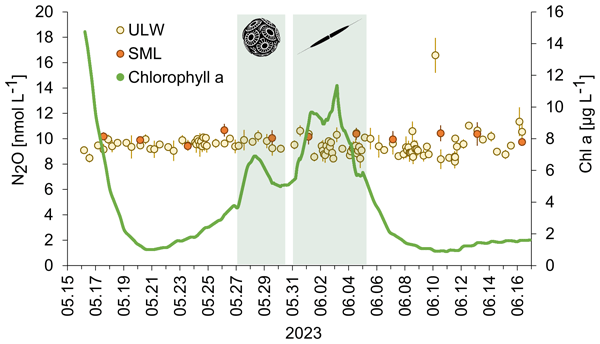
In order to decipher the effect of a phytoplankton bloom on N2O, dissolved N2O was measured in the upper 1 mm of the water column (seasurface microlayer) and in the underlying water during a mesocosm study. N2O concentrations were slightly enriched in the microlayer compared to the underlying water and were apparently not affected by irradiation and a phytoplankton bloom. Our results indicate that the role of the surface microlayer for N2O cycling has been overlooked so far.
Josefine Karnatz, Theresa Barthelmeß, Bita Sabbaghzadeh, and Anja Engel
Biogeosciences, 23, 4145–4169, https://doi.org/10.5194/bg-23-4145-2026, https://doi.org/10.5194/bg-23-4145-2026, 2026
Short summary
Short summary
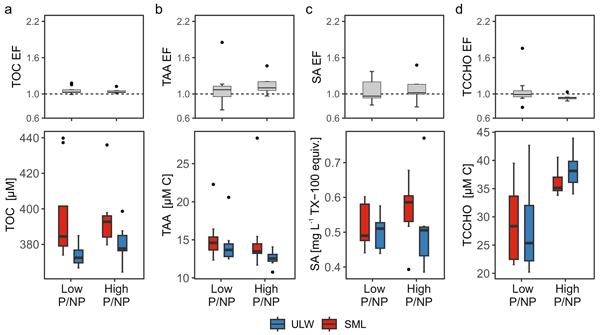
Cyanobacteria form massive summer blooms in the Baltic Sea that release organic compounds to the ocean’s surface. By analyzing the thin boundary layer between ocean and atmosphere, this study shows that cyanobacteria influence the molecular composition and surface properties of the sea surface, increasing surfactants that may reduce gas exchange. The findings provide new insight into how future cyanobacteria blooms could affect air-sea interactions and climate-related processes.
Yuanxu Dong, Christa A. Marandino, Ryo Dobashi, David T. Ho, Gregor Rehder, Henry C. Bittig, Josefine Karnatz, Bita Sabbaghzadeh, Helen Czerski, and Anja Engel
Atmos. Chem. Phys., 26, 5567–5587, https://doi.org/10.5194/acp-26-5567-2026, https://doi.org/10.5194/acp-26-5567-2026, 2026
Short summary
Short summary
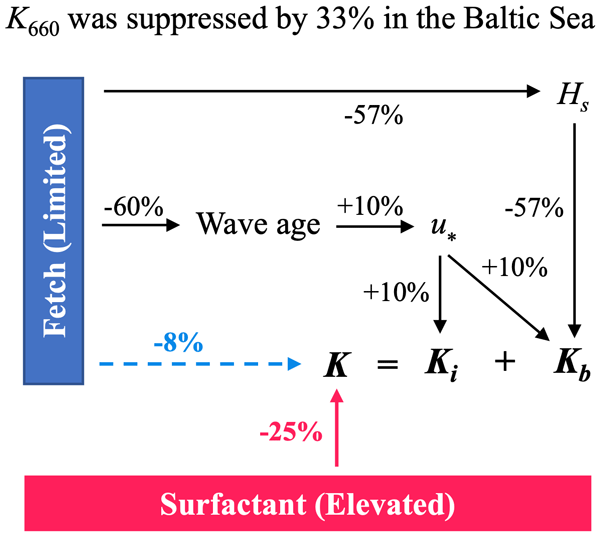
Air-sea gas exchange regulates the Earth’s climate. However, the description of the kinetic exchange process only uses wind speed, neglecting other drivers. In this study, we investigate how fetch and natural surfactants modulate air-sea carbon dioxide exchange. Measurements from the central Baltic Sea show that limited fetch and elevated surfactants significantly suppress this exchange. A new parameterisation is provided, improving regional carbon budgets and evaluations of climate solutions.
Ryo Dobashi, David T. Ho, Yuanxu Dong, Christa A. Marandino, and Helen Czerski
EGUsphere, https://doi.org/10.5194/egusphere-2026-1984, https://doi.org/10.5194/egusphere-2026-1984, 2026
Short summary
Short summary
The exchange of CO2 between the atmosphere and the ocean is a critical component of the global carbon cycle, driven by the air-sea CO2 difference and the gas transfer velocity (k). This study measured k in the central Baltic Sea using the dual tracer technique, finding values comparable to offshore regions at the same wind speed. Commonly used parameterizations fitted the data well, while those derived for the Baltic Sea overestimated k, likely due to differences in measurement methods.
Pratirupa Bardhan, Claudia Frey, Gregor Rehder, and Hermann W. Bange
Biogeosciences, 23, 1987–2002, https://doi.org/10.5194/bg-23-1987-2026, https://doi.org/10.5194/bg-23-1987-2026, 2026
Short summary
Short summary
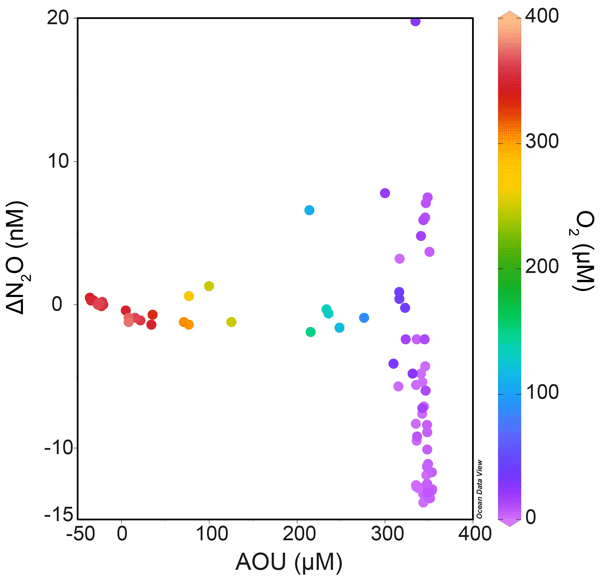
Nitrous oxide (N2O), a potent greenhouse gas, is released from coastal seas & estuaries, yet we don't fully understand how it is formed and consumed. In this study we collected water from several sites in the central Baltic Sea. N2O came from ammonia in oxic waters. Deep waters with low to no oxygen noted more active N2O cycling. The seafloor was a source in some areas. Typically N2O is produced by bacteria, but our results indicate possibility of other players like fungi or chemical reactions.
Ina Stoltenberg, Lea Lange, and Hermann W. Bange
Biogeosciences, 23, 1515–1525, https://doi.org/10.5194/bg-23-1515-2026, https://doi.org/10.5194/bg-23-1515-2026, 2026
Short summary
Short summary
In order to decipher the effect of a phytoplankton bloom on N2O, dissolved N2O was measured in the upper 1 mm of the water column (seasurface microlayer) and in the underlying water during a mesocosm study. N2O concentrations were slightly enriched in the microlayer compared to the underlying water and were apparently not affected by irradiation and a phytoplankton bloom. Our results indicate that the role of the surface microlayer for N2O cycling has been overlooked so far.

Carsten Rauch, Lisa Deyle, Leonie Jaeger, Edgar Fernando Cortés-Espinoza, Mariana Ribas-Ribas, Josefine Karnatz, Anja Engel, and Oliver Wurl
Ocean Sci., 22, 403–426, https://doi.org/10.5194/os-22-403-2026, https://doi.org/10.5194/os-22-403-2026, 2026
Short summary
Short summary
Microsensors measuring oxygen and temperature were used to gain high-resolution profiles across the surface of a water basin, in which an algal bloom was induced. These novel data show that the oxygen at the sea surface is highly influenced by algal blooms, while the temperature is only indirectly affected by them. Since algal blooms occur globally, this has considerable implications for calculating global air-sea exchanges of gases or heat, especially under low-wind conditions.
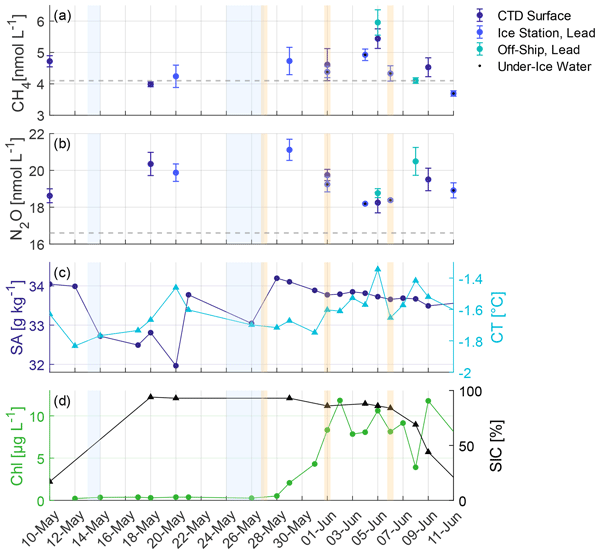
Lina A. Holthusen, Hermann W. Bange, Thomas H. Badewien, Julia C. Muchowski, Tina Santl-Temkiv, Jennie Spicker Schmidt, Oliver Wurl, and Damian L. Arévalo-Martínez
The Cryosphere, 20, 535–550, https://doi.org/10.5194/tc-20-535-2026, https://doi.org/10.5194/tc-20-535-2026, 2026
Short summary
Short summary
In spring 2023, in the Fram Strait, we investigated the near-surface distribution of the greenhouse gases methane and nitrous oxide in open leads and under sea ice to address the lack of observations in the Arctic Ocean. The study area acted as a source for both gases, and the onset of sea ice melt affected their concentrations and emissions. Surface-active substances accumulated in the sea-surface microlayer of open leads during an algal bloom, potentially attenuating greenhouse gas emissions.
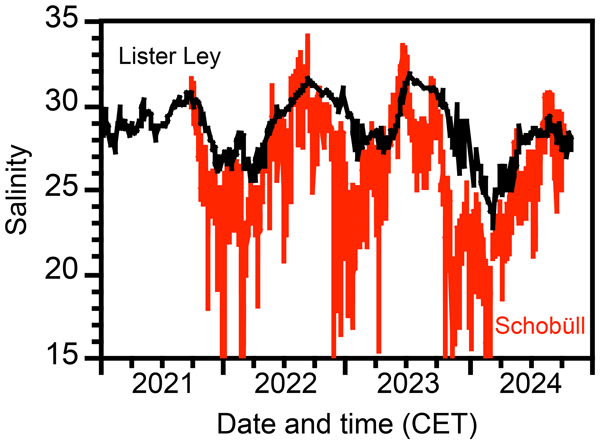
Joachim Schönfeld, Hermann W. Bange, Helmke Hepach, and Svenja Reents
Biogeosciences, 23, 421–440, https://doi.org/10.5194/bg-23-421-2026, https://doi.org/10.5194/bg-23-421-2026, 2026
Short summary
Short summary
The current state of intertidal waters at Bottsand lagoon on the Baltic Sea coast, and on the mudflats off Schobüll on the North Sea coast of Schleswig-Holstein, Germany was assessed with a 36-month time series of water level, temperature, and salinity measurements. Periods of strong precipitation, high Elbe river discharge, and high solar radiation caused a higher data variability as compared to the off shore monitoring stations Boknis Eck in the Baltic and Sylt Roads in the North Sea.
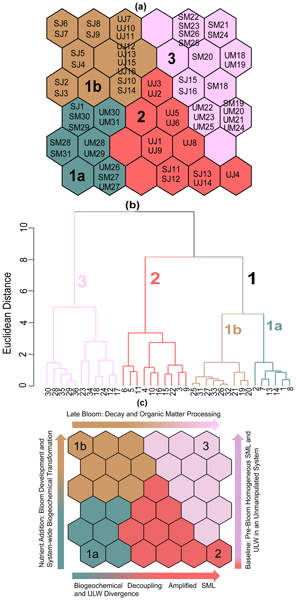
Riaz Bibi, Mariana Ribas-Ribas, Leonie Jaeger, Carola Lehners, Lisa Gassen, Edgar Fernando Cortés-Espinoza, Jochen Wollschläger, Claudia Thölen, Hannelore Waska, Jasper Zöbelein, Thorsten Brinkhoff, Isha Athale, Rüdiger Röttgers, Michael Novak, Anja Engel, Theresa Barthelmeß, Josefine Karnatz, Thomas Reinthaler, Dmytro Spriahailo, Gernot Friedrichs, Falko Asmussen Schäfer, and Oliver Wurl
Biogeosciences, 22, 7563–7589, https://doi.org/10.5194/bg-22-7563-2025, https://doi.org/10.5194/bg-22-7563-2025, 2025
Short summary
Short summary
A multidisciplinary mesocosm study was conducted to investigate biogeochemical processes and their relationships in the sea-surface microlayer and underlying water during an induced phytoplankton bloom. Phytoplankton-derived organic matter, fuelled microbial activity and biofilm formation, supporting high bacterial abundance. Distinct temporal patterns in biogeochemical parameters and greater variability in the sea-surface microlayer highlight its influence on air–sea interactions.
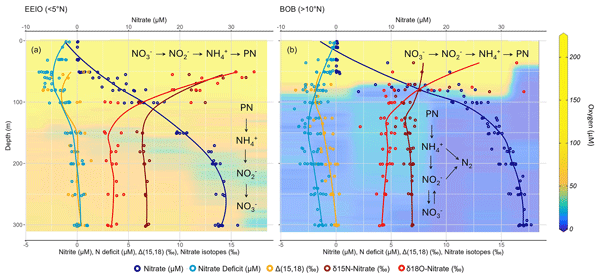
Gesa Schulz, Kirstin Dähnke, Tina Sanders, Jan Penopp, Hermann W. Bange, Rena Czeschel, and Birgit Gaye
Biogeosciences, 22, 5943–5959, https://doi.org/10.5194/bg-22-5943-2025, https://doi.org/10.5194/bg-22-5943-2025, 2025
Short summary
Short summary
Oxygen-minimum zones (OMZs) are low-oxygen ocean areas that deplete nitrogen, a key marine nutrient. Understanding nitrogen cycling in OMZs is crucial for the global nitrogen cycle. This study examined nitrogen cycling in the OMZ of the Bay of Bengal and the East Equatorial Indian Ocean, revealing limited mixing between both regions. Surface phytoplankton consumes nitrate, while deeper nitrification recycles nitrogen. In the BoB’s OMZ (100–300 m), nitrogen loss likely occurs via anammox.

Johnathan Daniel Maxey, Neil D. Hartstein, Hermann W. Bange, and Moritz Müller
Biogeosciences, 21, 5613–5637, https://doi.org/10.5194/bg-21-5613-2024, https://doi.org/10.5194/bg-21-5613-2024, 2024
Short summary
Short summary
The distribution of N2O in fjord-like estuaries is poorly described in the Southern Hemisphere. Our study describes N2O distribution and its drivers in one such system in Macquarie Harbour, Tasmania. Water samples were collected seasonally in 2022 and 2023. Results show the system removes atmospheric N2O when river flow is high, whereas the system emits N2O when the river flow is low. N2O generated in basins is intercepted by the surface water and exported to the ocean during high river flow.
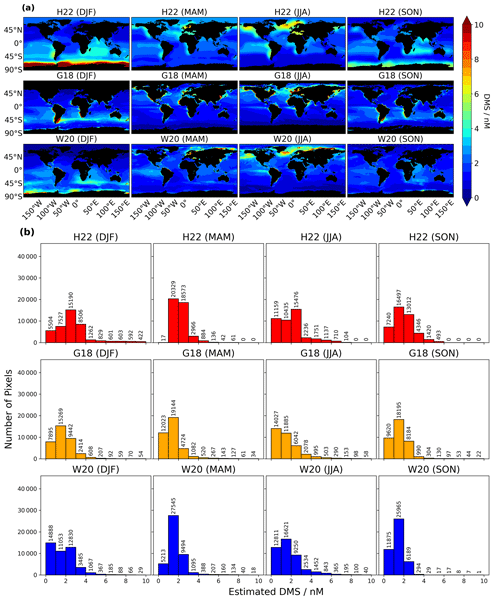
Sankirna D. Joge, Anoop S. Mahajan, Shrivardhan Hulswar, Christa A. Marandino, Martí Galí, Thomas G. Bell, and Rafel Simó
Biogeosciences, 21, 4439–4452, https://doi.org/10.5194/bg-21-4439-2024, https://doi.org/10.5194/bg-21-4439-2024, 2024
Short summary
Short summary
Dimethyl sulfide (DMS) is the largest natural source of sulfur in the atmosphere and leads to the formation of cloud condensation nuclei. DMS emission and quantification of its impacts have large uncertainties, but a detailed study on the emissions and drivers of their uncertainty is missing to date. The emissions are usually calculated from the seawater DMS concentrations and a flux parameterization. Here we quantify the differences in DMS seawater products, which can affect DMS fluxes.
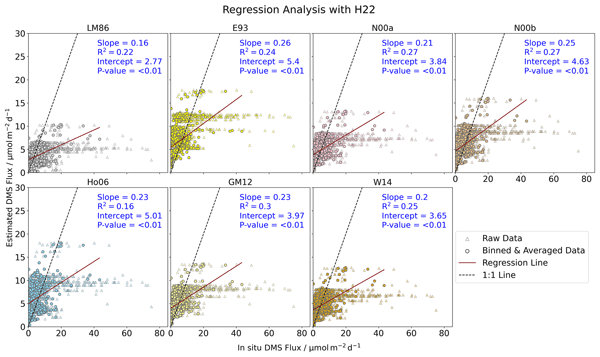
Sankirna D. Joge, Anoop S. Mahajan, Shrivardhan Hulswar, Christa A. Marandino, Martí Galí, Thomas G. Bell, Mingxi Yang, and Rafel Simó
Biogeosciences, 21, 4453–4467, https://doi.org/10.5194/bg-21-4453-2024, https://doi.org/10.5194/bg-21-4453-2024, 2024
Short summary
Short summary
Dimethyl sulfide (DMS) is the largest natural source of sulfur in the atmosphere and leads to the formation of cloud condensation nuclei. DMS emissions and quantification of their impacts have large uncertainties, but a detailed study on the range of emissions and drivers of their uncertainty is missing to date. The emissions are calculated from the seawater DMS concentrations and a flux parameterization. Here we quantify the differences in the effect of flux parameterizations used in models.
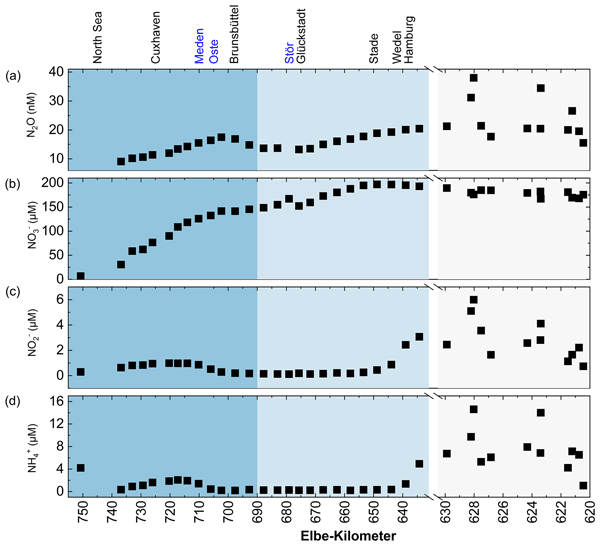
Riel Carlo O. Ingeniero, Gesa Schulz, and Hermann W. Bange
Biogeosciences, 21, 3425–3440, https://doi.org/10.5194/bg-21-3425-2024, https://doi.org/10.5194/bg-21-3425-2024, 2024
Short summary
Short summary
Our research is the first to measure dissolved NO concentrations in temperate estuarine waters, providing insights into its distribution under varying conditions and enhancing our understanding of its production processes. Dissolved NO was supersaturated in the Elbe Estuary, indicating that it is a source of atmospheric NO. The observed distribution of dissolved NO most likely resulted from nitrification.
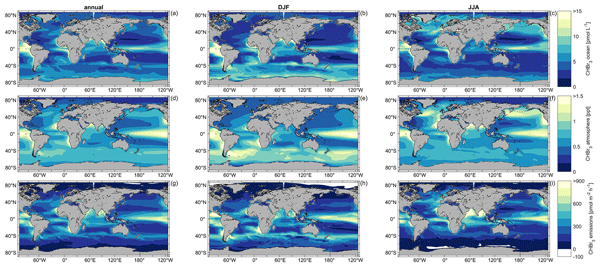
Dennis Booge, Jerry F. Tjiputra, Dirk J. L. Olivié, Birgit Quack, and Kirstin Krüger
Earth Syst. Dynam., 15, 801–816, https://doi.org/10.5194/esd-15-801-2024, https://doi.org/10.5194/esd-15-801-2024, 2024
Short summary
Short summary
Oceanic bromoform, produced by algae, is an important precursor of atmospheric bromine, highlighting the importance of implementing these emissions in climate models. The simulated mean oceanic concentrations align well with observations, while the mean atmospheric values are lower than the observed ones. Modelled annual mean emissions mostly occur from the sea to the air and are driven by oceanic concentrations, sea surface temperature, and wind speed, which depend on season and location.

Hanqin Tian, Naiqing Pan, Rona L. Thompson, Josep G. Canadell, Parvadha Suntharalingam, Pierre Regnier, Eric A. Davidson, Michael Prather, Philippe Ciais, Marilena Muntean, Shufen Pan, Wilfried Winiwarter, Sönke Zaehle, Feng Zhou, Robert B. Jackson, Hermann W. Bange, Sarah Berthet, Zihao Bian, Daniele Bianchi, Alexander F. Bouwman, Erik T. Buitenhuis, Geoffrey Dutton, Minpeng Hu, Akihiko Ito, Atul K. Jain, Aurich Jeltsch-Thömmes, Fortunat Joos, Sian Kou-Giesbrecht, Paul B. Krummel, Xin Lan, Angela Landolfi, Ronny Lauerwald, Ya Li, Chaoqun Lu, Taylor Maavara, Manfredi Manizza, Dylan B. Millet, Jens Mühle, Prabir K. Patra, Glen P. Peters, Xiaoyu Qin, Peter Raymond, Laure Resplandy, Judith A. Rosentreter, Hao Shi, Qing Sun, Daniele Tonina, Francesco N. Tubiello, Guido R. van der Werf, Nicolas Vuichard, Junjie Wang, Kelley C. Wells, Luke M. Western, Chris Wilson, Jia Yang, Yuanzhi Yao, Yongfa You, and Qing Zhu
Earth Syst. Sci. Data, 16, 2543–2604, https://doi.org/10.5194/essd-16-2543-2024, https://doi.org/10.5194/essd-16-2543-2024, 2024
Short summary
Short summary
Atmospheric concentrations of nitrous oxide (N2O), a greenhouse gas 273 times more potent than carbon dioxide, have increased by 25 % since the preindustrial period, with the highest observed growth rate in 2020 and 2021. This rapid growth rate has primarily been due to a 40 % increase in anthropogenic emissions since 1980. Observed atmospheric N2O concentrations in recent years have exceeded the worst-case climate scenario, underscoring the importance of reducing anthropogenic N2O emissions.
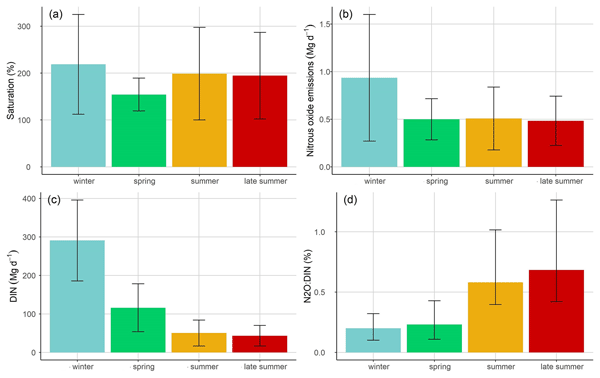
Gesa Schulz, Tina Sanders, Yoana G. Voynova, Hermann W. Bange, and Kirstin Dähnke
Biogeosciences, 20, 3229–3247, https://doi.org/10.5194/bg-20-3229-2023, https://doi.org/10.5194/bg-20-3229-2023, 2023
Short summary
Short summary
Nitrous oxide (N2O) is an important greenhouse gas. However, N2O emissions from estuaries underlie significant uncertainties due to limited data availability and high spatiotemporal variability. We found the Elbe Estuary (Germany) to be a year-round source of N2O, with the highest emissions in winter along with high nitrogen loads. However, in spring and summer, N2O emissions did not decrease alongside lower nitrogen loads because organic matter fueled in situ N2O production along the estuary.
Guanlin Li, Damian L. Arévalo-Martínez, Riel Carlo O. Ingeniero, and Hermann W. Bange
EGUsphere, https://doi.org/10.5194/egusphere-2023-771, https://doi.org/10.5194/egusphere-2023-771, 2023
Preprint archived
Short summary
Short summary
Dissolved carbon monoxide (CO) surface concentrations were first measured at 14 stations in the Ria Formosa Lagoon system in May 2021. Ria Formosa was a source of atmospheric CO. Microbial consumption accounted for 83 % of the CO production. The results of a 48-hour irradiation experiment with aquaculture effluent water indicated that aquaculture facilities in the Ria Formosa Lagoon seem to be a negligible source of atmospheric CO.
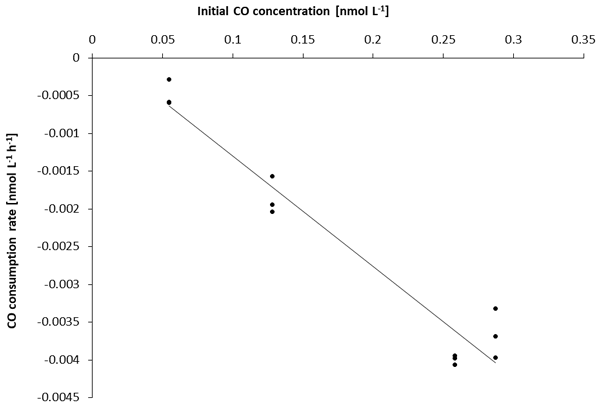
Hanna I. Campen, Damian L. Arévalo-Martínez, and Hermann W. Bange
Biogeosciences, 20, 1371–1379, https://doi.org/10.5194/bg-20-1371-2023, https://doi.org/10.5194/bg-20-1371-2023, 2023
Short summary
Short summary
Carbon monoxide (CO) is a climate-relevant trace gas emitted from the ocean. However, oceanic CO cycling is understudied. Results from incubation experiments conducted in the Fram Strait (Arctic Ocean) indicated that (i) pH did not affect CO cycling and (ii) enhanced CO production and consumption were positively correlated with coloured dissolved organic matter and nitrate concentrations. This suggests microbial CO uptake to be the driving factor for CO cycling in the Arctic Ocean.
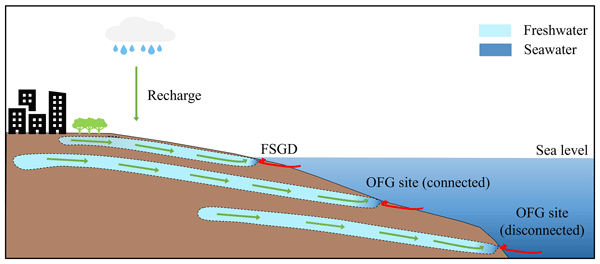
Damian L. Arévalo-Martínez, Amir Haroon, Hermann W. Bange, Ercan Erkul, Marion Jegen, Nils Moosdorf, Jens Schneider von Deimling, Christian Berndt, Michael Ernst Böttcher, Jasper Hoffmann, Volker Liebetrau, Ulf Mallast, Gudrun Massmann, Aaron Micallef, Holly A. Michael, Hendrik Paasche, Wolfgang Rabbel, Isaac Santos, Jan Scholten, Katrin Schwalenberg, Beata Szymczycha, Ariel T. Thomas, Joonas J. Virtasalo, Hannelore Waska, and Bradley A. Weymer
Biogeosciences, 20, 647–662, https://doi.org/10.5194/bg-20-647-2023, https://doi.org/10.5194/bg-20-647-2023, 2023
Short summary
Short summary
Groundwater flows at the land–ocean transition and the extent of freshened groundwater below the seafloor are increasingly relevant in marine sciences, both because they are a highly uncertain term of biogeochemical budgets and due to the emerging interest in the latter as a resource. Here, we discuss our perspectives on future research directions to better understand land–ocean connectivity through groundwater and its potential responses to natural and human-induced environmental changes.

Li Zhou, Dennis Booge, Miming Zhang, and Christa A. Marandino
Biogeosciences, 19, 5021–5040, https://doi.org/10.5194/bg-19-5021-2022, https://doi.org/10.5194/bg-19-5021-2022, 2022
Short summary
Short summary
Trace gas air–sea exchange exerts an important control on air quality and climate, especially in the Southern Ocean (SO). Almost all of the measurements there are skewed to summer, but it is essential to expand our measurement database over greater temporal and spatial scales. Therefore, we report measured concentrations of dimethylsulfide (DMS, as well as related sulfur compounds) and isoprene in the Atlantic sector of the SO. The observations of isoprene are the first in the winter in the SO.

Sonja Gindorf, Hermann W. Bange, Dennis Booge, and Annette Kock
Biogeosciences, 19, 4993–5006, https://doi.org/10.5194/bg-19-4993-2022, https://doi.org/10.5194/bg-19-4993-2022, 2022
Short summary
Short summary
Methane is a climate-relevant greenhouse gas which is emitted to the atmosphere from coastal areas such as the Baltic Sea. We measured the methane concentration in the water column of the western Kiel Bight. Methane concentrations were higher in September than in June. We found no relationship between the 2018 European heatwave and methane concentrations. Our results show that the methane distribution in the water column is strongly affected by temporal and spatial variabilities.
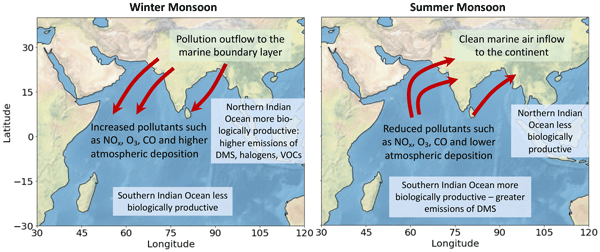
Susann Tegtmeier, Christa Marandino, Yue Jia, Birgit Quack, and Anoop S. Mahajan
Atmos. Chem. Phys., 22, 6625–6676, https://doi.org/10.5194/acp-22-6625-2022, https://doi.org/10.5194/acp-22-6625-2022, 2022
Short summary
Short summary
In the atmosphere over the Indian Ocean, intense anthropogenic pollution from Southeast Asia mixes with pristine oceanic air. During the winter monsoon, high pollution levels are regularly observed over the entire northern Indian Ocean, while during the summer monsoon, clean air dominates. Here, we review current progress in detecting and understanding atmospheric gas-phase composition over the Indian Ocean and its impacts on the upper atmosphere, oceanic biogeochemistry, and marine ecosystems.
Yanan Zhao, Dennis Booge, Christa A. Marandino, Cathleen Schlundt, Astrid Bracher, Elliot L. Atlas, Jonathan Williams, and Hermann W. Bange
Biogeosciences, 19, 701–714, https://doi.org/10.5194/bg-19-701-2022, https://doi.org/10.5194/bg-19-701-2022, 2022
Short summary
Short summary
We present here, for the first time, simultaneously measured dimethylsulfide (DMS) seawater concentrations and DMS atmospheric mole fractions from the Peruvian upwelling region during two cruises in December 2012 and October 2015. Our results indicate low oceanic DMS concentrations and atmospheric DMS molar fractions in surface waters and the atmosphere, respectively. In addition, the Peruvian upwelling region was identified as an insignificant source of DMS emissions during both periods.
Wangwang Ye, Hermann W. Bange, Damian L. Arévalo-Martínez, Hailun He, Yuhong Li, Jianwen Wen, Jiexia Zhang, Jian Liu, Man Wu, and Liyang Zhan
Biogeosciences Discuss., https://doi.org/10.5194/bg-2021-334, https://doi.org/10.5194/bg-2021-334, 2022
Manuscript not accepted for further review
Short summary
Short summary
CH4 is the second important greenhouse gas after CO2. We show that CH4 consumption and sea-ice melting influence the CH4 distribution in the Ross Sea (Southern Ocean), causing undersaturation and net uptake of CH4 during summertime. This study confirms the capability of surface water in the high-latitude Southern Ocean regions to take up atmospheric CH4 which, in turn, will help to improve predictions of how CH4 release/uptake from the ocean will develop when sea-ice retreats in the future.
Cited articles
Adenaya, A., Haack, M., Stolle, C., Wurl, O., and Ribas Ribas, M.: Effects of Natural and Artificial Surfactants on Diffusive Boundary Dynamics and Oxygen Exchanges across the Air-Water Interface, Oceans, 2, https://doi.org/10.3390/oceans2040043, 2021.
Asmussen-Schäfer, F., Ribas-Ribas, M., Wurl, O., and Friedrichs, G.: Linking surface coverage with surfactant activity to refine the role of surfactants for air-sea gas exchange, EGUsphere [preprint], https://doi.org/10.5194/egusphere-2025-5276, 2026.
Bange, H. W., Stoltenberg, I., Arevalo-Martinez, D. L., Arneth, L., Barthelmeß, T., Blendl, J., Biet, L., Booge, D., Carrasco, R., Csada, L., Dong, Y., Engel, A., Horstmann, J., Jähne, B., Karnatz, J., Klöss, A., Lange, L., Marandino, C. A., Schartau, M., Scheidereit, L., Schlundt, C., Schlundt, M., Silva, D. A. N., and Sommer, M.: Cruise Report AL633, GEOMAR Helmholtz Centre for Ocean Research, Kiel, Germany, https://doi.org/10.3289/CR_AL633, 2025.
Bibi, R., Ribas-Ribas, M., Jaeger, L., Lehners, C., Gassen, L., Cortés-Espinoza, E. F., Wollschläger, J., Thölen, C., Waska, H., Zöbelein, J., Brinkhoff, T., Athale, I., Röttgers, R., Novak, M., Engel, A., Barthelmeß, T., Karnatz, J., Reinthaler, T., Spriahailo, D., Friedrichs, G., Schäfer, F. A., and Wurl, O.: Biogeochemical dynamics of the sea-surface microlayer in a multidisciplinary mesocosm study, Biogeosciences, 22, 7563–7589, https://doi.org/10.5194/bg-22-7563-2025, 2025.
Booge, D., Marandino, C. A., Schlundt, C., Palmer, P. I., Schlundt, M., Atlas, E. L., Bracher, A., Saltzman, E. S., and Wallace, D. W. R.: Can simple models predict large-scale surface ocean isoprene concentrations?, Atmos. Chem. Phys., 16, 11807–11821, https://doi.org/10.5194/acp-16-11807-2016, 2016.
Ćosović, B. and Vojvodić, V.: The application of ac polarography to the determination of surface-active substances in seawater, Limnol. Oceanogr., 27, 361–369, https://doi.org/10.4319/lo.1982.27.2.0361, 1982.
Ćosović, B. and Vojvodić, V.: Voltammetric Analysis of Surface Active Substances in Natural Seawater, Electroanalysis, 10, 429–434, https://doi.org/10.1002/(SICI)1521-4109(199805)10:6<429::AID-ELAN429>3.0.CO;2-7, 1998.
Crow, S. A., Ahearn, D. G., Cook, W. L., and Bourquin, A. W.: Densities of bacteria and fungi in coastal surface films as determined by a membrane-adsorption procedure, Limnol. Oceanogr., 20, 644–646, https://doi.org/10.4319/lo.1975.20.4.0644, 1975.
Cunliffe, M. and Wurl, O. (Eds): Guide to best practices to study the ocean's surface, Plymouth, UK, 118 pp., https://repository.oceanbestpractices.org/server9/api/core/bitstreams/7f51b3eb-2ce3-466e-a9ca-ff3424a98f07/content (last access: 20 April 2026), 2014.
Engel, A., Bange, H. W., Cunliffe, M., Burrows, S. M., Friedrichs, G., Galgani, L., Herrmann, H., Hertkorn, N., Johnson, M., Liss, P. S., Quinn, P. K., Schartau, M., Soloviev, A., Stolle, C., Upstill-Goddard, R. C., van Pinxteren, M., and Zäncker, B.: The Ocean's Vital Skin: Toward an Integrated Understanding of the Sea Surface Microlayer, Front. Mar. Sci., 4, https://doi.org/10.3389/fmars.2017.00165, 2017.
Felden, J., Möller, L., Schindler, U., Huber, R., Schumacher, S., Koppe, R., Diepenbroek, M., and Glöckner, F. O.: PANGAEA – Data Publisher for Earth & Environmental Science, Sci. Data, 10, 347, https://doi.org/10.1038/s41597-023-02269-x, 2023.
Ferracci, V., Weber, J., Bolas, C. G., Robinson, A. D., Tummon, F., Rodríguez-Ros, P., Cortés-Greus, P., Baccarini, A., Jones, R. L., Galí, M., Simó, R., Schmale, J., and Harris, N. R. P.: Atmospheric isoprene measurements reveal larger-than-expected Southern Ocean emissions, Nat. Commun., 15, 2571, https://doi.org/10.1038/s41467-024-46744-4, 2024.
Garbe, C. S., Rutgersson, A., Boutin, J., de Leeuw, G., Delille, B., Fairall, C. W., Gruber, N., Hare, J., Ho, D. T., Johnson, M. T., Nightingale, P. D., Pettersson, H., Piskozub, J., Sahlée, E., Tsai, W., Ward, B., Woolf, D. K., Zappa, C. J., and Liss, P. S.: Transfer Across the Air-Sea Interface, in: Ocean-Atmosphere Interactions of Gases and Particles, edited by: Liss, P. S. and Johnson, M. T., Springer, Berlin, Heidelberg, 55–112, https://doi.org/10.1007/978-3-642-25643-1_2, 2014.
Garrett, W. D.: Collection of Slick-Forming Materials from the Sea Surface, Limnol. Oceanogr., 10, 602–605, https://doi.org/10.4319/lo.1965.10.4.0602, 1965.
Garrett, W. D.: Comments on “Laboratory comparisons of four surface microlayer samplers” (R. F. Hatcher and B. C. Parker), Limnol. Oceanogr., 19, 166–167, https://doi.org/10.4319/lo.1974.19.1.0166, 1974.
Harris, C. R., Millman, K. J., van der Walt, S. J., Gommers, R., Virtanen, P., Cournapeau, D., Wieser, E., Taylor, J., Berg, S., Smith, N. J., Kern, R., Picus, M., Hoyer, S., van Kerkwijk, M. H., Brett, M., Haldane, A., del Río, J. F., Wiebe, M., Peterson, P., Gérard-Marchant, P., Sheppard, K., Reddy, T., Weckesser, W., Abbasi, H., Gohlke, C., and Oliphant, T. E.: Array programming with NumPy, Nature, 585, 357–362, https://doi.org/10.1038/s41586-020-2649-2, 2020.
Harvey, G. W.: Microlayer Collection from the Sea Surface: A New Method and Initial Results, Limnol. Oceanogr., 11, 608–613, https://doi.org/10.4319/lo.1966.11.4.0608, 1966.
Harvey, G. W. and Burzell, L. A.: A Simple Microlayer Method for Small Samples, Limnol. Oceanogr., 17, 156–157, https://doi.org/10.4319/lo.1972.17.1.0156, 1972.
Hunter, J. D.: Matplotlib: A 2D Graphics Environment, Comput. Sci. Eng., 9, 90–95, https://doi.org/10.1109/MCSE.2007.55, 2007.
Kock, A., Schafstall, J., Dengler, M., Brandt, P., and Bange, H. W.: Sea-to-air and diapycnal nitrous oxide fluxes in the eastern tropical North Atlantic Ocean, Biogeosciences, 9, 957–964, https://doi.org/10.5194/bg-9-957-2012, 2012.
Lange, L., Booge, D., Feil, H., Karnatz, J., Stoltenberg, I., Bange, H. W., and Marandino, C. A.: Experimental sampling efficiency of the glass plate method for short-lived trace gases measured in 2023, PANGAEA [data set], https://doi.org/10.1594/PANGAEA.988700, 2026.
Laß, K., Bange, H. W., and Friedrichs, G.: Seasonal signatures in SFG vibrational spectra of the sea surface nanolayer at Boknis Eck Time Series Station (SW Baltic Sea), Biogeosciences, 10, 5325–5334, https://doi.org/10.5194/bg-10-5325-2013, 2013.
Lennartz, S. T., Marandino, C. A., von Hobe, M., Cortes, P., Quack, B., Simo, R., Booge, D., Pozzer, A., Steinhoff, T., Arevalo-Martinez, D. L., Kloss, C., Bracher, A., Röttgers, R., Atlas, E., and Krüger, K.: Direct oceanic emissions unlikely to account for the missing source of atmospheric carbonyl sulfide, Atmos. Chem. Phys., 17, 385–402, https://doi.org/10.5194/acp-17-385-2017, 2017.
Lennartz, S. T., Marandino, C. A., von Hobe, M., Andreae, M. O., Aranami, K., Atlas, E., Berkelhammer, M., Bingemer, H., Booge, D., Cutter, G., Cortes, P., Kremser, S., Law, C. S., Marriner, A., Simó, R., Quack, B., Uher, G., Xie, H., and Xu, X.: Marine carbonyl sulfide (OCS) and carbon disulfide (CS2): a compilation of measurements in seawater and the marine boundary layer, Earth Syst. Sci. Data, 12, 591–609, https://doi.org/10.5194/essd-12-591-2020, 2020.
Liss, P. S., Marandino, C. A., Dahl, E. E., Helmig, D., Hintsa, E. J., Hughes, C., Johnson, M. T., Moore, R. M., Plane, J. M. C., Quack, B., Singh, H. B., Stefels, J., von Glasow, R., and Williams, J.: Short-Lived Trace Gases in the Surface Ocean and the Atmosphere, in: Ocean-Atmosphere Interactions of Gases and Particles, edited by: Liss, P. S. and Johnson, M. T., Springer, Berlin, Heidelberg, 1–54, https://doi.org/10.1007/978-3-642-25643-1_1, 2014.
Marandino, C. A., De Bruyn, W. J., Miller, S. D., Prather, M. J., and Saltzman, E. S.: Oceanic uptake and the global atmospheric acetone budget, Geophys. Res. Lett., 32, https://doi.org/10.1029/2005GL023285, 2005.
Marandino, C. A., De Bruyn, W. J., Miller, S. D., and Saltzman, E. S.: DMS air/sea flux and gas transfer coefficients from the North Atlantic summertime coccolithophore bloom, Geophys. Res. Lett., 35, https://doi.org/10.1029/2008GL036370, 2008.
Mazarei, A. F. and Sandall, O. C.: Diffusion coefficients for helium, hydrogen, and carbon dioxide in water at 25 °C, AIChE J., 26, 154–157, https://doi.org/10.1002/aic.690260128, 1980.
McKinney, W.: Data Structures for Statistical Computing in Python, Python in Science Conference, 56–61, https://doi.org/10.25080/Majora-92bf1922-00a, 2010.
Mukerjee, P. and Mysels, K. J.: Critical micelle concentrations of aqueous surfactant systems, Washington, 36277 pp., https://doi.org/10.6028/nbs.nsrds.36, 1971.
Mustaffa, N. I. H., Ribas-Ribas, M., Banko-Kubis, H. M., and Wurl, O.: Global reduction of in situ CO2 transfer velocity by natural surfactants in the sea-surface microlayer, Proc. Math. Phys. Eng. Sci., 476, 20190763, https://doi.org/10.1098/rspa.2019.0763, 2020.
Python Software Foundation. The Python Language Reference, version 3.11. https://docs.python.org/3.11/reference/index.html, last access: 6 October 2025.
Sabbaghzadeh, B., Upstill-Goddard, R. C., Beale, R., Pereira, R., and Nightingale, P. D.: The Atlantic Ocean surface microlayer from 50° N to 50° S is ubiquitously enriched in surfactants at wind speeds up to 13 m s−1, Geophys. Res. Lett., 44, 2852–2858, https://doi.org/10.1002/2017GL072988, 2017.
Saltzman, E. S., King, D. B., Holmen, K., and Leck, C.: Experimental determination of the diffusion coefficient of dimethylsulfide in water, J. Geophys. Res., 98, 16481, https://doi.org/10.1029/93JC01858, 1993.
Sander, R.: Compilation of Henry's law constants (version 5.0.0) for water as solvent, Atmos. Chem. Phys., 23, 10901–12440, https://doi.org/10.5194/acp-23-10901-2023, 2023.
Saint-Macary, A. D., Marriner, A., Barthelmeß, T., Deppeler, S., Safi, K., Costa Santana, R., Harvey, M., and Law, C. S.: Dimethyl sulfide cycling in the sea surface microlayer in the southwestern Pacific – Part 1: Enrichment potential determined using a novel sampler, Ocean Sci., 19, 1–15, https://doi.org/10.5194/os-19-1-2023, 2023.
Seabold, S. and Perktold, J.: Statsmodels: Econometric and Statistical Modeling with Python, SciPy, 2010, https://doi.org/10.25080/Majora-92bf1922-011, 2010.
Schmidt, R. and Schneider, B.: The effect of surface films on the air–sea gas exchange in the Baltic Sea, Mar. Chem., 126, 56–62, https://doi.org/10.1016/j.marchem.2011.03.007, 2011.
Scholz, F.: Voltammetric techniques of analysis: the essentials, ChemTexts, 1, 17, https://doi.org/10.1007/s40828-015-0016-y, 2015.
The Matplotlib Development Team: Matplotlib: Visualization with python, Zenodo [code], https://doi.org/10.5281/zenodo.14464227, 2024.
The pandas development team: pandas-dev/pandas: Pandas (v2.3.2), Zenodo [code], https://doi.org/10.5281/zenodo.16918803, 2025.
Turner, S. M. and Liss, P. S.: Measurements of various sulphur gases in a coastal marine environment, J. Atmos. Chem., 2, 223–232, https://doi.org/10.1007/BF00051074, 1985.
Virtanen, P., Gommers, R., Oliphant, T. E., Haberland, M., Reddy, T., Cournapeau, D., Burovski, E., Peterson, P., Weckesser, W., Bright, J., van der Walt, S. J., Brett, M., Wilson, J., Millman, K. J., Mayorov, N., Nelson, A. R. J., Jones, E., Kern, R., Larson, E., Carey, C. J., Polat, İ., Feng, Y., Moore, E. W., VanderPlas, J., Laxalde, D., Perktold, J., Cimrman, R., Henriksen, I., Quintero, E. A., Harris, C. R., Archibald, A. M., Ribeiro, A. H., Pedregosa, F., and van Mulbregt, P.: SciPy 1.0: fundamental algorithms for scientific computing in Python, Nat. Methods, 17, 261–272, https://doi.org/10.1038/s41592-019-0686-2, 2020.
Walker, C. F., Harvey, M. J., Smith, M. J., Bell, T. G., Saltzman, E. S., Marriner, A. S., McGregor, J. A., and Law, C. S.: Assessing the potential for dimethylsulfide enrichment at the sea surface and its influence on air–sea flux, Ocean Sci., 12, 1033–1048, https://doi.org/10.5194/os-12-1033-2016, 2016.
Waskom, M. L.: seaborn: statistical data visualization, Journal of Open Source Software, 6, 3021, https://doi.org/10.21105/joss.03021, 2021.
Weisenberger, S. and Schumpe, A.: Estimation of gas solubilities in salt solutions at temperatures from 273 K to 363 K, AIChE J., 42, 298–300, https://doi.org/10.1002/aic.690420130, 1996.
Wurl, O., Wurl, E., Miller, L., Johnson, K., and Vagle, S.: Formation and global distribution of sea-surface microlayers, Biogeosciences, 8, 121–135, https://doi.org/10.5194/bg-8-121-2011, 2011.
Wurl, O., Athale, I., Ayim, S. M., Badewien, T., Bange, H., Barthelmeß, T., Booge, D., Brinkhoff, T., Cortés, E., Czesla, I. N., Deyle, L., Engel, A., Feil, H., Friedrichs, G., Gassen, L., Hentschel, I., Herrmann, H., Jaeger, L., Karnatz, J., Lange, L., Lehners, C., Marandino, C., Meyerjürgens, J., Michalis, V., Novak, M., Rahlff, J., Raffelt, L., Rauch, C., Ribas-Ribas, M., Sawle, S., Schäfer, F., Schaefer, T., Schartau, M., Spriahailo, D., Sommer, M., Stoltenberg, I., Reinthaler, T., Röttgers, R., Thölen, C., Jibaja Valderrama, O., Van Pinxteren, M., Waska, H., Wollschläger, J., Zinzius, L., and Zöbelein, J.: Multidisciplinary Study on the Sea Surface Microlayer, Cruise No. HE644, 9 July 2024–1 August 2024, Bremerhaven – Bremerhaven (Germany), Begutachtungspanel Forschungsschiffe, https://doi.org/10.48433/CR_HE644, 2024.
Yang, G.-P.: Dimethylsulfide enrichment in the surface microlayer of the South China Sea, Mar. Chem., 66, 215–224, https://doi.org/10.1016/S0304-4203(99)00042-0, 1999.
Yang, G.-P., Watanabe, S., Tsunogai, S., Yang, G.-P., Watanabe, S., and Tsunogai, S.: Distribution and cycling of dimethylsulfide in surface microlayer and subsurface seawater, Mar. Chem., 76, 137–153, https://doi.org/10.1016/S0304-4203(01)00054-8, 2001.
Zavarsky, A., Booge, D., Fiehn, A., Krüger, K., Atlas, E., and Marandino, C.: The Influence of Air-Sea Fluxes on Atmospheric Aerosols During the Summer Monsoon Over the Tropical Indian Ocean, Geophys. Res. Lett., 45, 418–426, https://doi.org/10.1002/2017GL076410, 2018.
Zemmelink, H., Houghton, L., Sievert, S., Frew, N., and Dacey, J.: Gradients in dimethylsulfide, dimethylsulfoniopropionate, dimethylsulfoxide, and bacteria near the sea surface, Mar. Ecol. Prog. Ser., 295, 33–42, https://doi.org/10.3354/meps295033, 2005.
Short summary
Many gases formed and destroyed in the ocean influence climate and air quality, with evidence that these processes also happen in the skin of the ocean. Studies of this thin upper layer use specialized sampling equipment, which is known to cause losses of the gases. We performed lab experiments to quantify these losses for three gases and found that 13 % remain after sampling. With further tests, our results can be used to obtain reliable gas measurements in the field, which have been elusive.
Many gases formed and destroyed in the ocean influence climate and air quality, with evidence...


Special issue
Altmetrics
Final-revised paper
Preprint