
Articles | Volume 23, issue 13
https://doi.org/10.5194/bg-23-4561-2026
© Author(s) 2026. This work is distributed under
the Creative Commons Attribution 4.0 License.
the Creative Commons Attribution 4.0 License.
https://doi.org/10.5194/bg-23-4561-2026
© Author(s) 2026. This work is distributed under
the Creative Commons Attribution 4.0 License.
the Creative Commons Attribution 4.0 License.
Research article
| 
06 Jul 2026
Research article |
| 06 Jul 2026
| 06 Jul 2026
Evaluating a multispectral miniaturised fluorometer with three excitation channels for predicting phytoplankton community structure indices from BGC-Argo float observations
Flavien Petit
CORRESPONDING AUTHOR

Sorbonne Université, CNRS, Laboratoire d'Océanographie de Villefranche, LOV, 06230 Villefranche-sur-Mer, France
National Oceanography Centre, Southampton, UK
Julia Uitz
Sorbonne Université, CNRS, Laboratoire d'Océanographie de Villefranche, LOV, 06230 Villefranche-sur-Mer, France
Louison Dufour
Sorbonne Université, CNRS, UMR7144 Adaptation and Diversity in the Marine Environment (AD2M), ECOMAP team, Station Biologique de Roscoff (SBR), 29680 Roscoff, France
Centre Algatech, Institute of Microbiology of the Czech Academy of Sciences, Novohradská 237, Třeboň 1437901, Czech Republic
Collin Roesler
Department of Earth and Oceanographic Science, Bowdoin College, Brunswick, ME, USA
Frédéric Partensky
Sorbonne Université, CNRS, UMR7144 Adaptation and Diversity in the Marine Environment (AD2M), ECOMAP team, Station Biologique de Roscoff (SBR), 29680 Roscoff, France
Laurence Garczarek
Sorbonne Université, CNRS, UMR7144 Adaptation and Diversity in the Marine Environment (AD2M), ECOMAP team, Station Biologique de Roscoff (SBR), 29680 Roscoff, France
Priscillia Gourvil
Sorbonne Université, CNRS FR2424, Roscoff Culture Collection (RCC), Station Biologique de Roscoff (SBR), 29680 Roscoff, France
Céline Dimier
Sorbonne Université, CNRS, Institut de la Mer de Villefranche, IMEV, 06230 Villefranche-sur-Mer, France
Melek Golbol
Sorbonne Université, CNRS, Institut de la Mer de Villefranche, IMEV, 06230 Villefranche-sur-Mer, France
Sorbonne Université, MNHN, CNRS, IRD, Laboratoire d'Océanographie et du Climat: Expérimentations et Approches Numériques, LOCEAN, 75005 Paris, France
Vincenzo Vellucci
Sorbonne Université, CNRS, Institut de la Mer de Villefranche, IMEV, 06230 Villefranche-sur-Mer, France
Sorbonne Université, CNRS, OSU Stations Marines, STAMAR, 4 Place Jussieu, 75252 Paris, France
David Antoine
Sorbonne Université, CNRS, Laboratoire d'Océanographie de Villefranche, LOV, 06230 Villefranche-sur-Mer, France
Remote Sensing and Satellite Research Group, School of Earth and Planetary Sciences, Curtin University, Perth, WA 6845, Australia
Christophe Penkerc'h
Sorbonne Université, CNRS, Laboratoire d'Océanographie de Villefranche, LOV, 06230 Villefranche-sur-Mer, France
INSU Division Technique (DT-INSU), UAR 855, CNRS, Plouzané, France
Vincent Taillandier
Sorbonne Université, CNRS, Laboratoire d'Océanographie de Villefranche, LOV, 06230 Villefranche-sur-Mer, France
Hervé Claustre
Sorbonne Université, CNRS, Laboratoire d'Océanographie de Villefranche, LOV, 06230 Villefranche-sur-Mer, France
Related authors
No articles found.
Alexandre Mignot, Thomas J. Ryan-Keogh, Gemma Kulk, David Antoine, Marine Bretagnon, Stefano Ciavatta, Hervé Claustre, Marin Cornec, Zhongping Lee, Patrick Lehodey, Antoine Mangin, Raphaëlle Sauzède, Shubha Sathyendranath, Greg M. Silsbe, Julia Uitz, and Toby Westberry
State Planet Discuss., https://doi.org/10.5194/sp-2026-34, https://doi.org/10.5194/sp-2026-34, 2026
Preprint under review for SP
Short summary
Short summary
Phytoplankton account for about half of Earth's primary production, sustaining marine food webs and fisheries and supporting carbon storage. Satellite estimates disagree on how this production is changing. We combined eight estimates from 1998–2025, weighted by performance and independence. The combined estimate indicates a decline of about 2% per decade in global mean marine net primary production, providing a new indicator to monitor changes in ocean ecosystems and the carbon cycle.
Wilhem Riom, Nicolas Mayot, Alexandre Mignot, Vincent Taillandier, and Fabrizio D'Ortenzio
State Planet, 7-osr10, 4, https://doi.org/10.5194/sp-7-osr10-4-2026, https://doi.org/10.5194/sp-7-osr10-4-2026, 2026
Short summary
Short summary
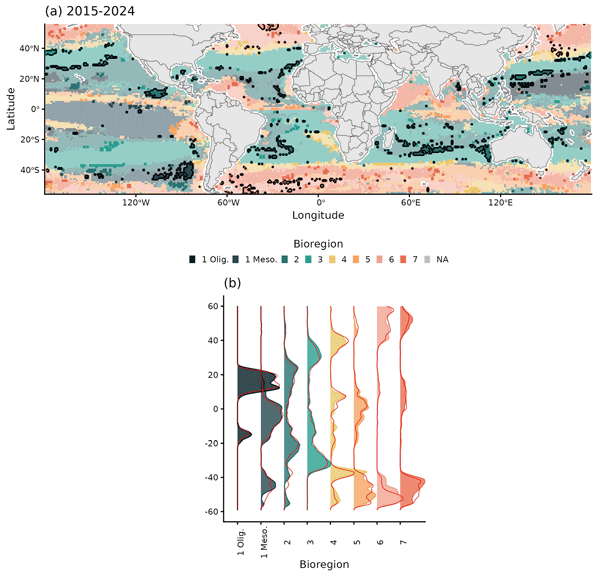
Over the ocean, phytoplankton (the microscopic algae at the basis of the marine foodweb) present characteristic cyclical patterns modulated by the passage of seasons. Climate change is modifying the marine environment and these seasonal cycles. This study presents a method that identifies the geographical displacement of these cycles applied over the last 30 years of satellite observations. It suggests that cycles normally typical of low latitude regions are extending towards high latitudes.
Salem Ibrahim Salem, Andre Valente, Shubha Sathyendranath, Andrei Chuprin, Théo Renard, Jaime Pitarch, Ruth Airs, Moreno Ana, Maria-Manuel Angelico, David Antoine, Robert Arnone, Florinda Artuso, Paulo O. Oliveira, William Balch, Kathryn Barker, Ray Barlow, Simon Bélanger, Marco Bellacicco, Jean-François Berthon, Şükrü Beşiktepe, Francesco Bignami, Yngve Borsheim, Astrid Bracher, Federica Braga, Vittorio Brando, Robert J. W. Brewin, Vanda Brotas, Elisabetta Canuti, Francisco P. Chavez, Andrés Cianca, Hervé Claustre, Lesley Clementson, Simone Colella, Raul Costa, Cristina Nunes, Richard Crout, Emmanuel Devred, Annalisa Di Cicco, Federico Falcini, Ivan Farace, Afonso Ferreira, Scott Freeman, Robert Frouin, Carlos García-Soto, Isabella Giardina, Stuart W. Gibb, Arthur Gleason, Ralf Goericke, Richard Gould, Michael Grant, Nathalie Guillocheau, Hiroto Higa, Stanford B. Hooker, Chuamin Hu, Joji Ishizaka, Thomas Jackson, Mati Kahru, Milton Kampel, Bokyung Kim, Holger Klein, Piotr Kowalczuk, Susanne Kratzer, Raphael Kudela, Antonia Lai, Rosario Lavezza, Jesus Ledesma, Huiwon Lee, Steven Lohrenz, Hubert Loisel, Vivian Lutz, Antonio Mannino, Francesca Margiotta, Victor Martinez-Vicente, Salvatore Marullo, Luca Massi, Patricia Matrai, Atsushi Matsuoka, David McKee, Chiara Melillo, Carlos B. Mendes, Brian G. Mitchell, Tiffany Moisan, Enrique Montes, Frank Muller-Karger, Aimee Neeley, Michael Novak, Leonie O'Dowd, Michael Ondrusek, Emanuele Organelli, Heeyoon Park, Trevor Platt, Francesca Polonelli, Alex Poulton, Mariella Ragni, Michel Repecaud, Maurizio Ribera d’Alcalà, Tamara Rodriguez-Ramos, Rüdiger Röttgers, Manuel Ruiz-Villarreal, Michela Sammartino, Rosalia Santoleri, Gian Marco Scarpa, Thomas Schroeder, Valeria Segura, Timothy Smyth, Denise Smythe-Wright, Heidi M. Sosik, Joanna Stoń-Egiert, Malcolm Taberner, Jing Tan, Rob Thomas, Crystal Thomas, Gavin Tilstone, Andreia Tracana, Michael Twardowski, Vincenzo Vellucci, Gianluca Volpe, Kenneth Voss, Jeremy Werdell, Marcel Wernand, Bozena Wojtasiewicz, Simon Wright, Sunmi Yang, Giuseppe Zibordi, Maria Laura Zoffoli, and Steve Groom
Earth Syst. Sci. Data Discuss., https://doi.org/10.5194/essd-2026-539, https://doi.org/10.5194/essd-2026-539, 2026
Preprint under review for ESSD
Short summary
Short summary
This paper presents the fourth version of the ESA Ocean Colour Climate Change Initiative global in situ bio-optical database. The updated compilation combines observations from many international data sources collected between 1996 and 2025 and includes major expansions in coverage and variables. The dataset provides a consistent reference for validating satellite ocean-colour products and supports algorithm development and long-term climate studies.
Laurent Coppola, Anthony Bosse, Thibaut Wagener, Dominique Lefevre, Magali Lescot, François Carlotti, Fabien Lombard, Lionel Guidi, Fabrice Not, Xavier Durrieu de Madron, Pascal Conan, Mireille Pujo-Pay, Caroline Ulses, Samuel Somot, Claude Estournel, Emilie Diamond Riquier, Céline Laus, Nathalie Leblond, Matthieu Labaste, Patrice Bretel, Melek Golbol, Stephane Kunesch, Jennifer Sola, Laure Chirurgien, Sandra Nunige, Sarah Romac, and Pierre Testor
Earth Syst. Sci. Data, 18, 5303–5327, https://doi.org/10.5194/essd-18-5303-2026, https://doi.org/10.5194/essd-18-5303-2026, 2026
Short summary
Short summary
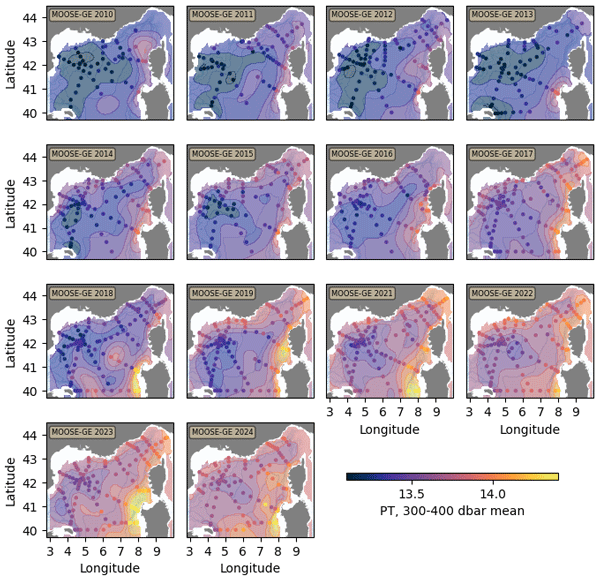
The Mediterranean Ocean Observing System for the Environment program investigated the fast-changing northwestern Mediterranean through annual cruises from 2010 to 2024. Using consistent surface-to-seafloor measurements, checked against fixed and autonomous platforms, we find intermediate and deep waters warming and getting saltier, oxygen declining and dissolved carbon rising, indicating progressing acidification. These trends can reshape ecosystems and stress the need for sustained monitoring.
Quentin Hyvernat, Alexandre Mignot, Elodie Gutknecht, Giovanni Ruggiero, Coralie Perruche, Guillaume Samson, Raphaëlle Sauzède, Olivier Aumont, Hervé Claustre, and Fabrizio D'Ortenzio
Biogeosciences, 23, 4967–4998, https://doi.org/10.5194/bg-23-4967-2026, https://doi.org/10.5194/bg-23-4967-2026, 2026
Short summary
Short summary
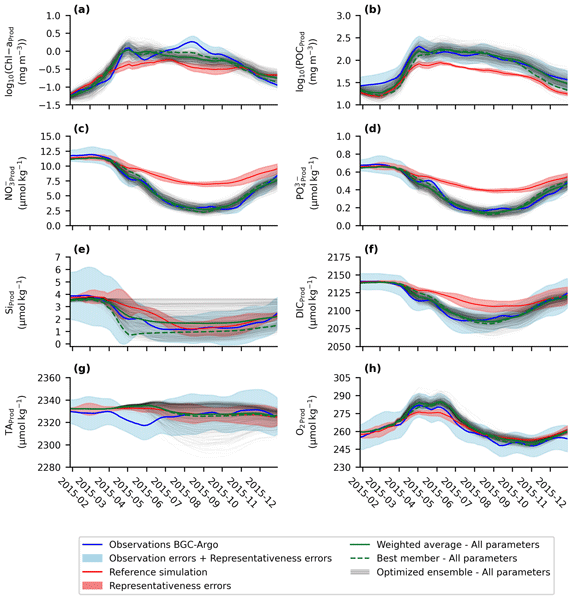
We introduce an iterative Importance Sampling framework to optimize the Pelagic Interaction Scheme for Carbon and Ecosystem Studies (PISCES) model using 20 metrics from Biogeochemical-Argo data. Three strategies are compared: 29 main-effect, 66 including interaction effects, and all 95 parameters. All yield statistically indistinguishable skill gains, reducing error by 54–56 %. Optimizing all 95 parameters is recommended for comprehensive uncertainty quantification. The optimized set also improves skill in a three-dimensional regional simulation.
Valentin Deteix, Céline Ridame, Céline Dimier, Claire Lo Monaco, Aline Tribollet, and Frédéric Planchon
Biogeosciences, 23, 4793–4820, https://doi.org/10.5194/bg-23-4793-2026, https://doi.org/10.5194/bg-23-4793-2026, 2026
Short summary
Short summary
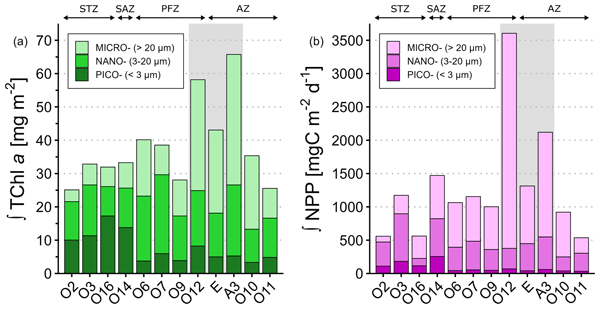
From in situ measurements, we characterized the size structure of both phytoplankton productivity and phytoplankton chemotaxonomic groups biomass in contrasting biogeochemical areas of the South Indian Ocean. We highlighted pronounced inter- and intra-zonal variability in these size structures. Across the study area, primary production and biomass was mainly driven by medium- and large-sized diatoms, haptophytes and dinoflagellates.
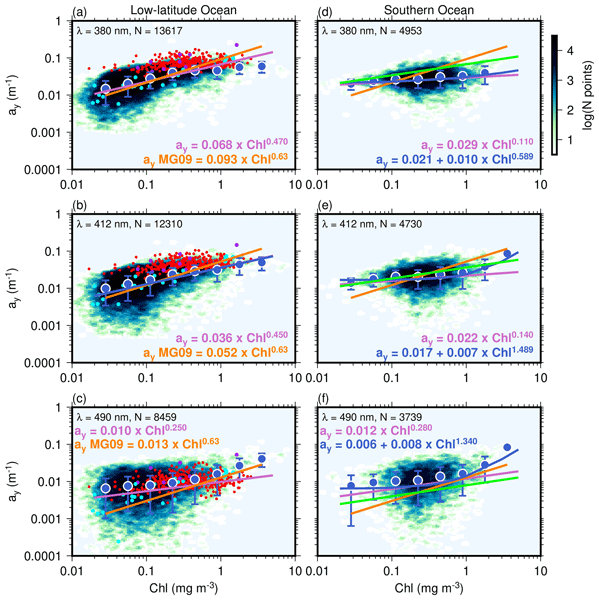
Juan Li, David Antoine, and Yannick Huot
Biogeosciences, 23, 3073–3090, https://doi.org/10.5194/bg-23-3073-2026, https://doi.org/10.5194/bg-23-3073-2026, 2026
Short summary
Short summary
Evidence is growing that bio-optical relationships in the Southern Ocean differ from what they are elsewhere. Uncertainties about these properties are far from been resolved. However, our study adds a new piece to this puzzle by examining the bio-optical properties of the absorption coefficient of colored dissolved organic matter, which is the least documented property in oceanic waters. As for the methodology, this is the first time that Biogeochemical-Argo float data are used to quantify it.
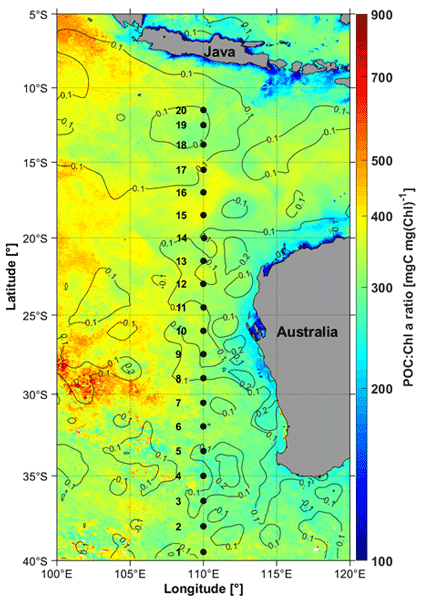
David Antoine, Chandanlal Parida, and Camille Grimaldi
Biogeosciences, 23, 2641–2660, https://doi.org/10.5194/bg-23-2641-2026, https://doi.org/10.5194/bg-23-2641-2026, 2026
Short summary
Short summary
A dataset of phytoplankton cell counts, pigments, particulate organic carbon and optical properties enables comparison of three methods to estimate phytoplankton carbon (Cphyto) in oligotrophic waters, where uncertainties in phytoplankton productivity are still large. Two methods based on chlorophyll concentration and particulate backscattering, are scalable to global scale while cell counts reduce bias from non-algal material. This comparison clarifies uncertainties in optical Cphyto estimates.
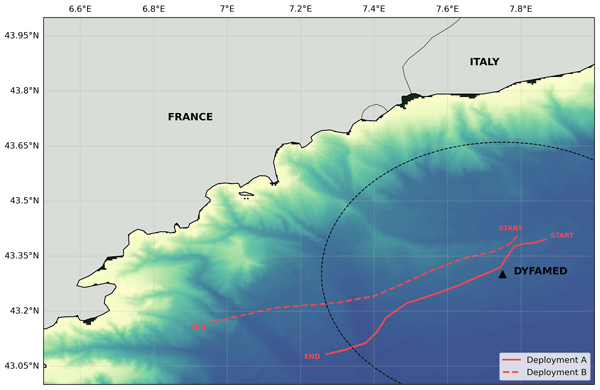
Louise Delaigue, Pierre Cauchy, Dorian Cazau, Julien Bonnel, Sara Pensieri, Roberto Bozzano, Anatole Gros-Martial, Christophe Schaeffer, Arnaud David, Paco Stil, Antoine Poteau, Catherine Schmechtig, Edouard Leymarie, and Hervé Claustre
Ocean Sci., 22, 101–117, https://doi.org/10.5194/os-22-101-2026, https://doi.org/10.5194/os-22-101-2026, 2026
Short summary
Short summary
We tested a new way to measure ocean winds using sound recorded deep underwater by an autonomous float. By listening to how wind and waves create noise at the surface, we showed that these floats can track changes in wind speed with good accuracy. This approach can extend wind monitoring to remote seas where satellites and buoys struggle, helping us better understand how the ocean and atmosphere exchange heat, gases, and energy.
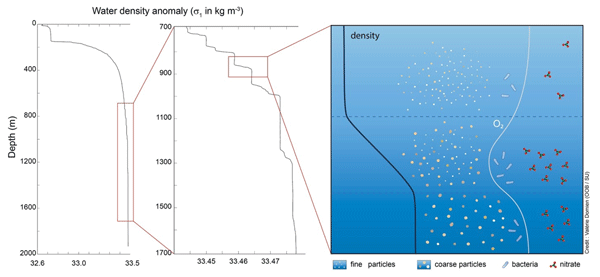
Xavier Durrieu de Madron, Paul Blin, Mireille Pujo-Pay, Vincent Taillandier, and Pascal Conan
Ocean Sci., 21, 2705–2726, https://doi.org/10.5194/os-21-2705-2025, https://doi.org/10.5194/os-21-2705-2025, 2025
Short summary
Short summary
This study investigated the effects of salt fingering on particle and solute distribution in the Tyrrhenian Sea. Density interfaces associated with thermohaline staircases slow the settling of suspended particles and promote aggregation. This affects the particle size distribution and creates nutrient and oxygen gradients, affecting microbial activity and nutrient cycling. The research highlights the potential role of salt fingers in deep ocean biogeochemical processes.
Yannick Bras, Evelyn Freney, Mar Benavides, Estelle Bigeard, Gabriel Dulaquais, Céline Dimier, Laetitia Bouvier, Mickaël Ribeiro, Cécile Guieu, Sophie Bonnet, and Karine Sellegri
EGUsphere, https://doi.org/10.5194/egusphere-2025-3580, https://doi.org/10.5194/egusphere-2025-3580, 2025
Short summary
Short summary
In marine regions, sea spray aerosols may act as ice nucleating particles to promote the formation of ice crystals in the atmosphere. Here, we study the ice nucleating properties of the seawater and of generated sea spray measured during a ship campaign in contrasted waters, including hydrothermal-influenced waters. We report that the majority of particles were of biological origin, and that their variability closely followed the local biological activity.
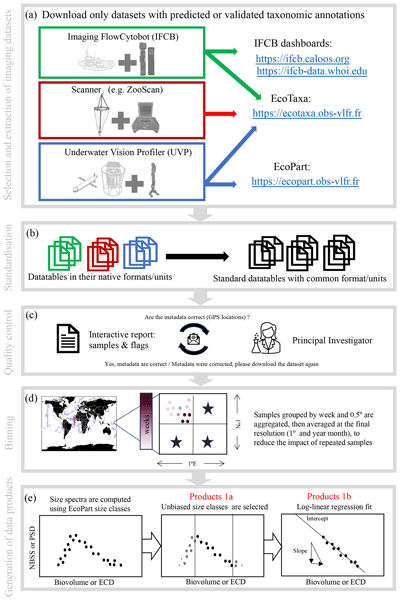
Mathilde Dugenne, Marco Corrales-Ugalde, Jessica Y. Luo, Rainer Kiko, Todd D. O'Brien, Jean-Olivier Irisson, Fabien Lombard, Lars Stemmann, Charles Stock, Clarissa R. Anderson, Marcel Babin, Nagib Bhairy, Sophie Bonnet, Francois Carlotti, Astrid Cornils, E. Taylor Crockford, Patrick Daniel, Corinne Desnos, Laetitia Drago, Amanda Elineau, Alexis Fischer, Nina Grandrémy, Pierre-Luc Grondin, Lionel Guidi, Cecile Guieu, Helena Hauss, Kendra Hayashi, Jenny A. Huggett, Laetitia Jalabert, Lee Karp-Boss, Kasia M. Kenitz, Raphael M. Kudela, Magali Lescot, Claudie Marec, Andrew McDonnell, Zoe Mériguet, Barbara Niehoff, Margaux Noyon, Thelma Panaïotis, Emily Peacock, Marc Picheral, Emilie Riquier, Collin Roesler, Jean-Baptiste Romagnan, Heidi M. Sosik, Gretchen Spencer, Jan Taucher, Chloé Tilliette, and Marion Vilain
Earth Syst. Sci. Data, 16, 2971–2999, https://doi.org/10.5194/essd-16-2971-2024, https://doi.org/10.5194/essd-16-2971-2024, 2024
Short summary
Short summary
Plankton and particles influence carbon cycling and energy flow in marine ecosystems. We used three types of novel plankton imaging systems to obtain size measurements from a range of plankton and particle sizes and across all major oceans. Data were compiled and cross-calibrated from many thousands of images, showing seasonal and spatial changes in particle size structure in different ocean basins. These datasets form the first release of the Pelagic Size Structure database (PSSdb).
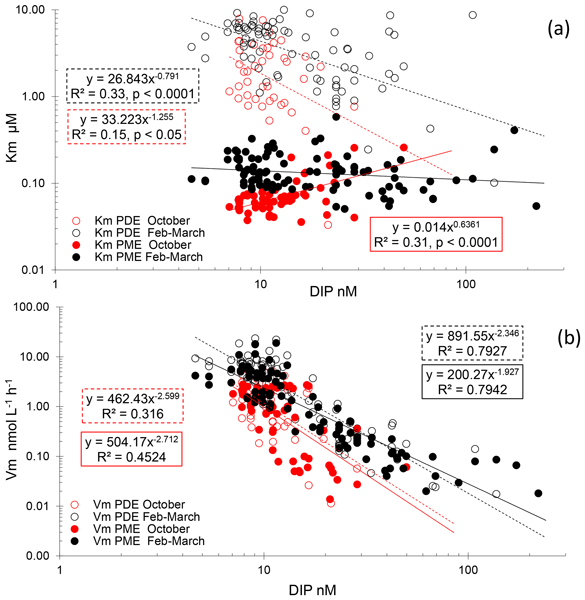
France Van Wambeke, Pascal Conan, Mireille Pujo-Pay, Vincent Taillandier, Olivier Crispi, Alexandra Pavlidou, Sandra Nunige, Morgane Didry, Christophe Salmeron, and Elvira Pulido-Villena
Biogeosciences, 21, 2621–2640, https://doi.org/10.5194/bg-21-2621-2024, https://doi.org/10.5194/bg-21-2621-2024, 2024
Short summary
Short summary
Phosphomonoesterase (PME) and phosphodiesterase (PDE) activities over the epipelagic zone are described in the eastern Mediterranean Sea in winter and autumn. The types of concentration kinetics obtained for PDE (saturation at 50 µM, high Km, high turnover times) compared to those of PME (saturation at 1 µM, low Km, low turnover times) are discussed in regard to the possible inequal distribution of PDE and PME in the size continuum of organic material and accessibility to phosphodiesters.
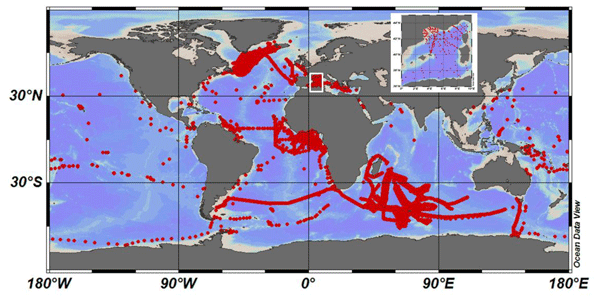
Nicolas Metzl, Jonathan Fin, Claire Lo Monaco, Claude Mignon, Samir Alliouane, David Antoine, Guillaume Bourdin, Jacqueline Boutin, Yann Bozec, Pascal Conan, Laurent Coppola, Frédéric Diaz, Eric Douville, Xavier Durrieu de Madron, Jean-Pierre Gattuso, Frédéric Gazeau, Melek Golbol, Bruno Lansard, Dominique Lefèvre, Nathalie Lefèvre, Fabien Lombard, Férial Louanchi, Liliane Merlivat, Léa Olivier, Anne Petrenko, Sébastien Petton, Mireille Pujo-Pay, Christophe Rabouille, Gilles Reverdin, Céline Ridame, Aline Tribollet, Vincenzo Vellucci, Thibaut Wagener, and Cathy Wimart-Rousseau
Earth Syst. Sci. Data, 16, 89–120, https://doi.org/10.5194/essd-16-89-2024, https://doi.org/10.5194/essd-16-89-2024, 2024
Short summary
Short summary
This work presents a synthesis of 44 000 total alkalinity and dissolved inorganic carbon observations obtained between 1993 and 2022 in the Global Ocean and the Mediterranean Sea at the surface and in the water column. Seawater samples were measured using the same method and calibrated with international Certified Reference Material. We describe the data assemblage, quality control and some potential uses of this dataset.
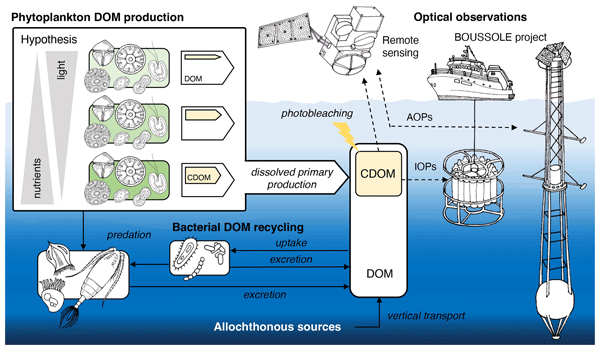
Eva Álvarez, Gianpiero Cossarini, Anna Teruzzi, Jorn Bruggeman, Karsten Bolding, Stefano Ciavatta, Vincenzo Vellucci, Fabrizio D'Ortenzio, David Antoine, and Paolo Lazzari
Biogeosciences, 20, 4591–4624, https://doi.org/10.5194/bg-20-4591-2023, https://doi.org/10.5194/bg-20-4591-2023, 2023
Short summary
Short summary
Chromophoric dissolved organic matter (CDOM) interacts with the ambient light and gives the waters of the Mediterranean Sea their colour. We propose a novel parameterization of the CDOM cycle, whose parameter values have been optimized by using the data of the monitoring site BOUSSOLE. Nutrient and light limitations for locally produced CDOM caused aCDOM(λ) to covary with chlorophyll, while the above-average CDOM concentrations observed at this site were maintained by allochthonous sources.
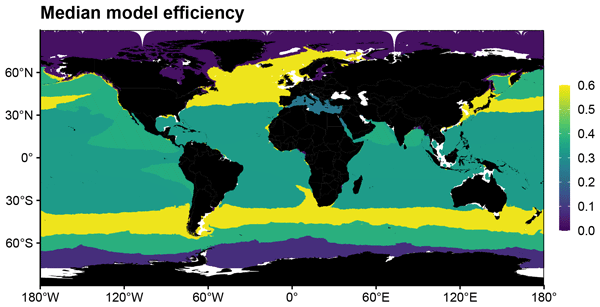
Alexandre Mignot, Hervé Claustre, Gianpiero Cossarini, Fabrizio D'Ortenzio, Elodie Gutknecht, Julien Lamouroux, Paolo Lazzari, Coralie Perruche, Stefano Salon, Raphaëlle Sauzède, Vincent Taillandier, and Anna Teruzzi
Biogeosciences, 20, 1405–1422, https://doi.org/10.5194/bg-20-1405-2023, https://doi.org/10.5194/bg-20-1405-2023, 2023
Short summary
Short summary
Numerical models of ocean biogeochemistry are becoming a major tool to detect and predict the impact of climate change on marine resources and monitor ocean health. Here, we demonstrate the use of the global array of BGC-Argo floats for the assessment of biogeochemical models. We first detail the handling of the BGC-Argo data set for model assessment purposes. We then present 23 assessment metrics to quantify the consistency of BGC model simulations with respect to BGC-Argo data.
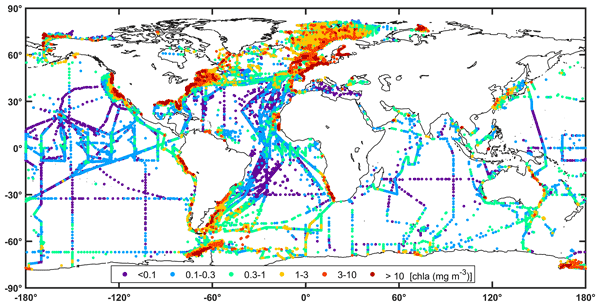
André Valente, Shubha Sathyendranath, Vanda Brotas, Steve Groom, Michael Grant, Thomas Jackson, Andrei Chuprin, Malcolm Taberner, Ruth Airs, David Antoine, Robert Arnone, William M. Balch, Kathryn Barker, Ray Barlow, Simon Bélanger, Jean-François Berthon, Şükrü Beşiktepe, Yngve Borsheim, Astrid Bracher, Vittorio Brando, Robert J. W. Brewin, Elisabetta Canuti, Francisco P. Chavez, Andrés Cianca, Hervé Claustre, Lesley Clementson, Richard Crout, Afonso Ferreira, Scott Freeman, Robert Frouin, Carlos García-Soto, Stuart W. Gibb, Ralf Goericke, Richard Gould, Nathalie Guillocheau, Stanford B. Hooker, Chuamin Hu, Mati Kahru, Milton Kampel, Holger Klein, Susanne Kratzer, Raphael Kudela, Jesus Ledesma, Steven Lohrenz, Hubert Loisel, Antonio Mannino, Victor Martinez-Vicente, Patricia Matrai, David McKee, Brian G. Mitchell, Tiffany Moisan, Enrique Montes, Frank Muller-Karger, Aimee Neeley, Michael Novak, Leonie O'Dowd, Michael Ondrusek, Trevor Platt, Alex J. Poulton, Michel Repecaud, Rüdiger Röttgers, Thomas Schroeder, Timothy Smyth, Denise Smythe-Wright, Heidi M. Sosik, Crystal Thomas, Rob Thomas, Gavin Tilstone, Andreia Tracana, Michael Twardowski, Vincenzo Vellucci, Kenneth Voss, Jeremy Werdell, Marcel Wernand, Bozena Wojtasiewicz, Simon Wright, and Giuseppe Zibordi
Earth Syst. Sci. Data, 14, 5737–5770, https://doi.org/10.5194/essd-14-5737-2022, https://doi.org/10.5194/essd-14-5737-2022, 2022
Short summary
Short summary
A compiled set of in situ data is vital to evaluate the quality of ocean-colour satellite data records. Here we describe the global compilation of bio-optical in situ data (spanning from 1997 to 2021) used for the validation of the ocean-colour products from the ESA Ocean Colour Climate Change Initiative (OC-CCI). The compilation merges and harmonizes several in situ data sources into a simple format that could be used directly for the evaluation of satellite-derived ocean-colour data.
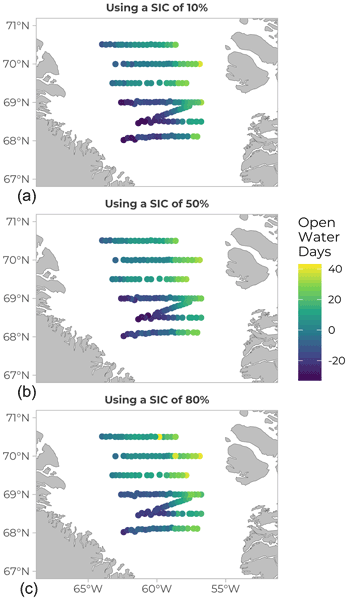
Flavienne Bruyant, Rémi Amiraux, Marie-Pier Amyot, Philippe Archambault, Lise Artigue, Lucas Barbedo de Freitas, Guislain Bécu, Simon Bélanger, Pascaline Bourgain, Annick Bricaud, Etienne Brouard, Camille Brunet, Tonya Burgers, Danielle Caleb, Katrine Chalut, Hervé Claustre, Véronique Cornet-Barthaux, Pierre Coupel, Marine Cusa, Fanny Cusset, Laeticia Dadaglio, Marty Davelaar, Gabrièle Deslongchamps, Céline Dimier, Julie Dinasquet, Dany Dumont, Brent Else, Igor Eulaers, Joannie Ferland, Gabrielle Filteau, Marie-Hélène Forget, Jérome Fort, Louis Fortier, Martí Galí, Morgane Gallinari, Svend-Erik Garbus, Nicole Garcia, Catherine Gérikas Ribeiro, Colline Gombault, Priscilla Gourvil, Clémence Goyens, Cindy Grant, Pierre-Luc Grondin, Pascal Guillot, Sandrine Hillion, Rachel Hussherr, Fabien Joux, Hannah Joy-Warren, Gabriel Joyal, David Kieber, Augustin Lafond, José Lagunas, Patrick Lajeunesse, Catherine Lalande, Jade Larivière, Florence Le Gall, Karine Leblanc, Mathieu Leblanc, Justine Legras, Keith Lévesque, Kate-M. Lewis, Edouard Leymarie, Aude Leynaert, Thomas Linkowski, Martine Lizotte, Adriana Lopes dos Santos, Claudie Marec, Dominique Marie, Guillaume Massé, Philippe Massicotte, Atsushi Matsuoka, Lisa A. Miller, Sharif Mirshak, Nathalie Morata, Brivaela Moriceau, Philippe-Israël Morin, Simon Morisset, Anders Mosbech, Alfonso Mucci, Gabrielle Nadaï, Christian Nozais, Ingrid Obernosterer, Thimoté Paire, Christos Panagiotopoulos, Marie Parenteau, Noémie Pelletier, Marc Picheral, Bernard Quéguiner, Patrick Raimbault, Joséphine Ras, Eric Rehm, Llúcia Ribot Lacosta, Jean-François Rontani, Blanche Saint-Béat, Julie Sansoulet, Noé Sardet, Catherine Schmechtig, Antoine Sciandra, Richard Sempéré, Caroline Sévigny, Jordan Toullec, Margot Tragin, Jean-Éric Tremblay, Annie-Pier Trottier, Daniel Vaulot, Anda Vladoiu, Lei Xue, Gustavo Yunda-Guarin, and Marcel Babin
Earth Syst. Sci. Data, 14, 4607–4642, https://doi.org/10.5194/essd-14-4607-2022, https://doi.org/10.5194/essd-14-4607-2022, 2022
Short summary
Short summary
This paper presents a dataset acquired during a research cruise held in Baffin Bay in 2016. We observed that the disappearance of sea ice in the Arctic Ocean increases both the length and spatial extent of the phytoplankton growth season. In the future, this will impact the food webs on which the local populations depend for their food supply and fisheries. This dataset will provide insight into quantifying these impacts and help the decision-making process for policymakers.
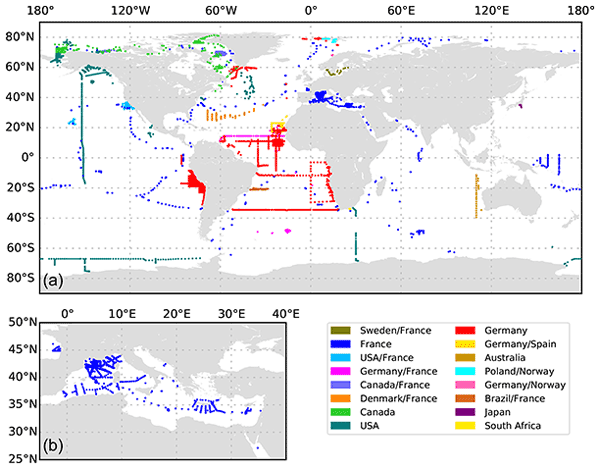
Rainer Kiko, Marc Picheral, David Antoine, Marcel Babin, Léo Berline, Tristan Biard, Emmanuel Boss, Peter Brandt, Francois Carlotti, Svenja Christiansen, Laurent Coppola, Leandro de la Cruz, Emilie Diamond-Riquier, Xavier Durrieu de Madron, Amanda Elineau, Gabriel Gorsky, Lionel Guidi, Helena Hauss, Jean-Olivier Irisson, Lee Karp-Boss, Johannes Karstensen, Dong-gyun Kim, Rachel M. Lekanoff, Fabien Lombard, Rubens M. Lopes, Claudie Marec, Andrew M. P. McDonnell, Daniela Niemeyer, Margaux Noyon, Stephanie H. O'Daly, Mark D. Ohman, Jessica L. Pretty, Andreas Rogge, Sarah Searson, Masashi Shibata, Yuji Tanaka, Toste Tanhua, Jan Taucher, Emilia Trudnowska, Jessica S. Turner, Anya Waite, and Lars Stemmann
Earth Syst. Sci. Data, 14, 4315–4337, https://doi.org/10.5194/essd-14-4315-2022, https://doi.org/10.5194/essd-14-4315-2022, 2022
Short summary
Short summary
The term
marine particlescomprises detrital aggregates; fecal pellets; bacterioplankton, phytoplankton and zooplankton; and even fish. Here, we present a global dataset that contains 8805 vertical particle size distribution profiles obtained with Underwater Vision Profiler 5 (UVP5) camera systems. These data are valuable to the scientific community, as they can be used to constrain important biogeochemical processes in the ocean, such as the flux of carbon to the deep sea.
Michael P. Hemming, Jan Kaiser, Jacqueline Boutin, Liliane Merlivat, Karen J. Heywood, Dorothee C. E. Bakker, Gareth A. Lee, Marcos Cobas García, David Antoine, and Kiminori Shitashima
Ocean Sci., 18, 1245–1262, https://doi.org/10.5194/os-18-1245-2022, https://doi.org/10.5194/os-18-1245-2022, 2022
Short summary
Short summary
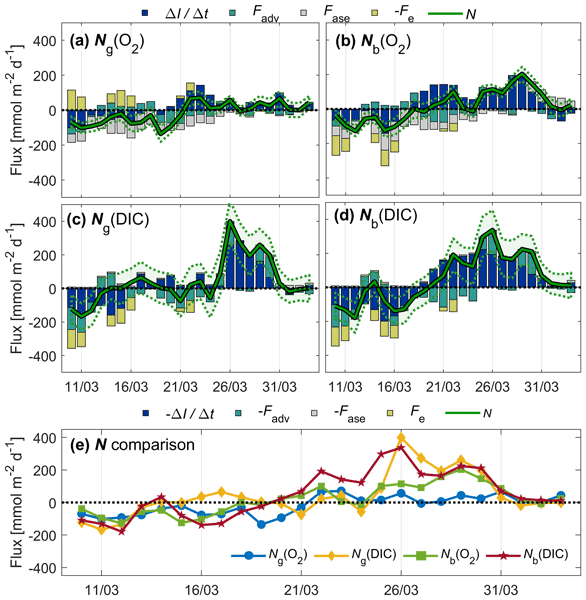
An underwater glider mission was carried out in spring 2016 near a mooring in the northwestern Mediterranean Sea. The glider deployment served as a test of a prototype ion-sensitive field-effect transistor pH sensor. Mean net community production rates were estimated from glider and buoy measurements of dissolved oxygen and inorganic carbon concentrations before and during the spring bloom. Incorporating advection is important for accurate mass budgets. Unexpected metabolic quotients were found.

Liliane Merlivat, Michael Hemming, Jacqueline Boutin, David Antoine, Vincenzo Vellucci, Melek Golbol, Gareth A. Lee, and Laurence Beaumont
Biogeosciences, 19, 3911–3920, https://doi.org/10.5194/bg-19-3911-2022, https://doi.org/10.5194/bg-19-3911-2022, 2022
Short summary
Short summary
We use in situ high-temporal-resolution measurements of dissolved inorganic carbon and atmospheric parameters at the air–sea interface to analyse phytoplankton bloom initiation identified as the net rate of biological carbon uptake in the Mediterranean Sea. The shift from wind-driven to buoyancy-driven mixing creates conditions for blooms to begin. Active mixing at the air–sea interface leads to the onset of the surface phytoplankton bloom due to the relaxation of wind speed following storms.
Martí Galí, Marcus Falls, Hervé Claustre, Olivier Aumont, and Raffaele Bernardello
Biogeosciences, 19, 1245–1275, https://doi.org/10.5194/bg-19-1245-2022, https://doi.org/10.5194/bg-19-1245-2022, 2022
Short summary
Short summary
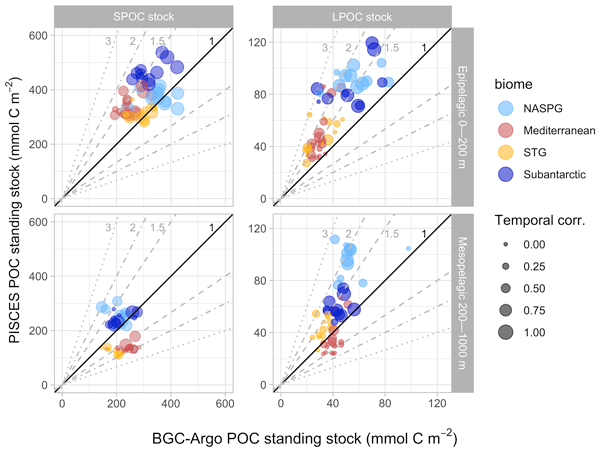
Part of the organic matter produced by plankton in the upper ocean is exported to the deep ocean. This process, known as the biological carbon pump, is key for the regulation of atmospheric carbon dioxide and global climate. However, the dynamics of organic particles below the upper ocean layer are not well understood. Here we compared the measurements acquired by autonomous robots in the top 1000 m of the ocean to a numerical model, which can help improve future climate projections.
Marie Barbieux, Julia Uitz, Alexandre Mignot, Collin Roesler, Hervé Claustre, Bernard Gentili, Vincent Taillandier, Fabrizio D'Ortenzio, Hubert Loisel, Antoine Poteau, Edouard Leymarie, Christophe Penkerc'h, Catherine Schmechtig, and Annick Bricaud
Biogeosciences, 19, 1165–1194, https://doi.org/10.5194/bg-19-1165-2022, https://doi.org/10.5194/bg-19-1165-2022, 2022
Short summary
Short summary
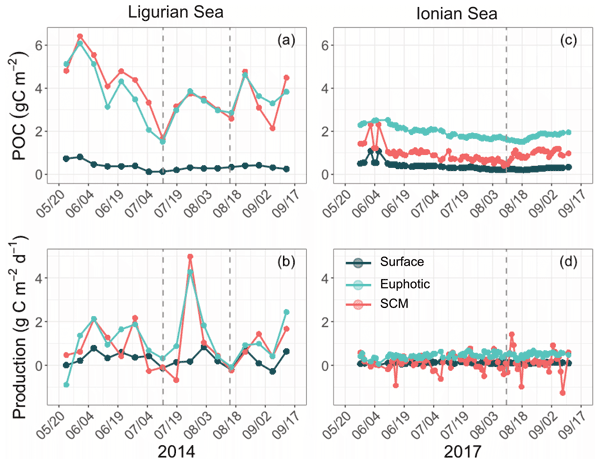
This study assesses marine biological production in two Mediterranean systems representative of vast desert-like (oligotrophic) areas encountered in the global ocean. We use a novel approach based on non-intrusive high-frequency in situ measurements by two profiling robots, the BioGeoChemical-Argo (BGC-Argo) floats. Our results indicate substantial yet variable production rates and contribution to the whole water column of the subsurface layer, typically considered steady and non-productive.
Paula Maria Salgado-Hernanz, Aurore Regaudie-de-Gioux, David Antoine, and Gotzon Basterretxea
Biogeosciences, 19, 47–69, https://doi.org/10.5194/bg-19-47-2022, https://doi.org/10.5194/bg-19-47-2022, 2022
Short summary
Short summary
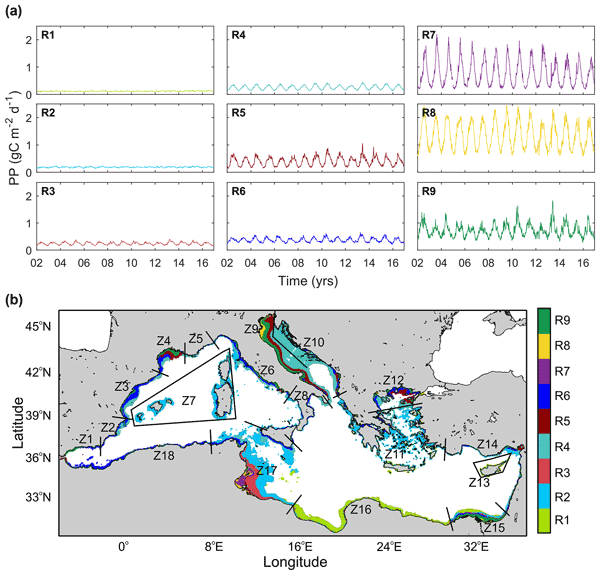
For the first time, this study presents the characteristics of primary production in coastal regions of the Mediterranean Sea based on satellite-borne observations for the period 2002–2016. The study concludes that there are significant spatial and temporal variations among different regions. Quantifying primary production is of special importance in the marine food web and in the sequestration of carbon dioxide from the atmosphere to the deep waters.
Matthieu Bressac, Thibaut Wagener, Nathalie Leblond, Antonio Tovar-Sánchez, Céline Ridame, Vincent Taillandier, Samuel Albani, Sophie Guasco, Aurélie Dufour, Stéphanie H. M. Jacquet, François Dulac, Karine Desboeufs, and Cécile Guieu
Biogeosciences, 18, 6435–6453, https://doi.org/10.5194/bg-18-6435-2021, https://doi.org/10.5194/bg-18-6435-2021, 2021
Short summary
Short summary
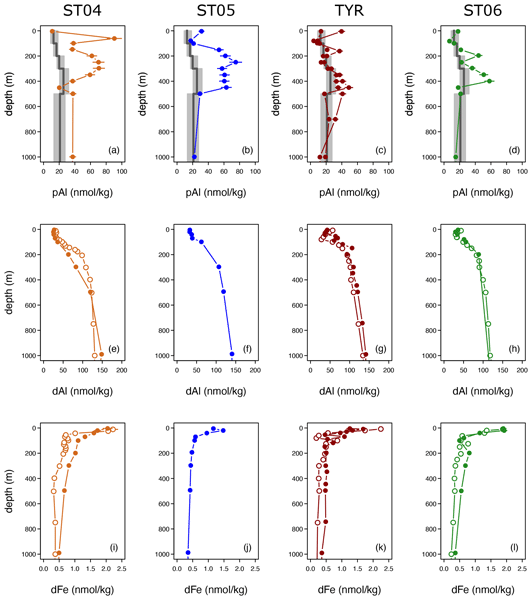
Phytoplankton growth is limited by the availability of iron in about 50 % of the ocean. Atmospheric deposition of desert dust represents a key source of iron. Here, we present direct observations of dust deposition in the Mediterranean Sea. A key finding is that the input of iron from dust primarily occurred in the deep ocean, while previous studies mainly focused on the ocean surface. This new insight will enable us to better represent controls on global marine productivity in models.
France Van Wambeke, Vincent Taillandier, Karine Desboeufs, Elvira Pulido-Villena, Julie Dinasquet, Anja Engel, Emilio Marañón, Céline Ridame, and Cécile Guieu
Biogeosciences, 18, 5699–5717, https://doi.org/10.5194/bg-18-5699-2021, https://doi.org/10.5194/bg-18-5699-2021, 2021
Short summary
Short summary
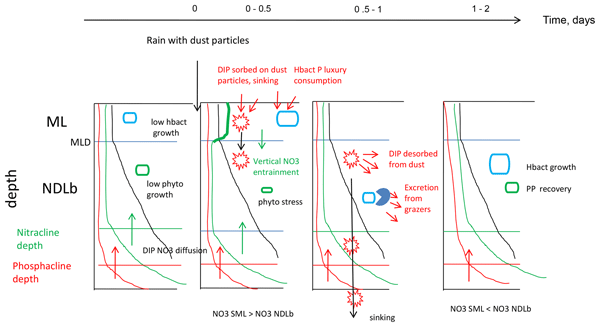
Simultaneous in situ measurements of (dry and wet) atmospheric deposition and biogeochemical stocks and fluxes in the sunlit waters of the open Mediterranean Sea revealed complex physical and biological processes occurring within the mixed layer. Nitrogen (N) budgets were computed to compare the sources and sinks of N in the mixed layer. The transitory effect observed after a wet dust deposition impacted the microbial food web down to the deep chlorophyll maximum.
Cited articles
Antoine, D., Guevel, P., Desté, J.-F., Bécu, G., Louis, F., Scott, A. J., and Bardey, P.: The “BOUSSOLE” Buoy – A New Transparent-to-Swell Taut Mooring Dedicated to Marine Optics: Design, Tests, and Performance at Sea, J. Atmos. Ocean. Technol., 25, 968–989, https://doi.org/10.1175/2007JTECHO563.1, 2008.
Antoine, D., Vellucci, V., Banks, A. C., Bardey, P., Bretagnon, M., Bruniquel, V., Deru, A., Hembise Fanton d’Andon, O., Lerebourg, C., Mangin, A., Crozel, D., Victori, S., Kalampokis, A., Karageorgis, A. P., Petihakis, G., Psarra, S., Golbol, M., Leymarie, E., Bialek, A., Fox, N., Hunt, S., Kuusk, J., Laizans, K., and Kanakidou, M.: ROSACE: A proposed European design for the Copernicus Ocean Colour System Vicarious Calibration Infrastructure, Remote Sens., 12, 1535, https://doi.org/10.3390/rs12101535, 2020.
Barbieux, M., Uitz, J., Gentili, B., Pasqueron de Fommervault, O., Mignot, A., Poteau, A., Schmechtig, C., Taillandier, V., Leymarie, E., Penkerc'h, C., D'Ortenzio, F., Claustre, H., and Bricaud, A.: Bio-optical characterization of subsurface chlorophyll maxima in the Mediterranean Sea from a Biogeochemical-Argo float database, Biogeosciences, 16, 1321–1342, https://doi.org/10.5194/bg-16-1321-2019, 2019.
Barbieux, M., Uitz, J., Mignot, A., Roesler, C., Claustre, H., Gentili, B., Taillandier, V., D'Ortenzio, F., Loisel, H., Poteau, A., Leymarie, E., Penkerc'h, C., Schmechtig, C., and Bricaud, A.: Biological production in two contrasted regions of the Mediterranean Sea during the oligotrophic period: an estimate based on the diel cycle of optical properties measured by BioGeoChemical-Argo profiling floats, Biogeosciences, 19, 1165–1194, https://doi.org/10.5194/bg-19-1165-2022, 2022.
Barlow, R. G., Mantoura, R. F. C., Cummings, D. G., and Fileman, T. W.: Pigment chemotaxonomic distributions of phytoplankton during summer in the western Mediterranean, Deep-Sea Res. Part II Top. Stud. Oceanogr., 44, 833–850, https://doi.org/10.1016/S0967-0645(96)00089-6, 1997.
Barnes, M. and Antoine, D.: Proxies of community production derived from the diel variability of particulate attenuation and backscattering coefficients in the northwest Mediterranean Sea, Limnol. Oceanogr., 59, 2133–2149, https://doi.org/10.4319/lo.2014.59.6.2133, 2014.
Bellacicco, M., Volpe, G., Colella, S., Pitarch, J., and Santoleri, R.: Influence of photoacclimation on the phytoplankton seasonal cycle in the Mediterranean Sea as seen by satellite, Remote Sens. Environ., 184, 595–604, https://doi.org/10.1016/j.rse.2016.08.004, 2016.
Beutler, M., Wiltshire, K. H., Luring, C., Moldaenke, C., Lohse, D., and Abbas, Z.: Fluorometric depth-profiling of chlorophyll corrected for yellow substances, Actes Colloq. – Ifremer, 231–238, 2002.
Bidigare, R. R., Morrow, J. H., and Kiefer, D. A.: Derivative analysis of spectral absorption by photosynthetic pigments in the western Sargasso Sea, J. Mar. Res., 47, 323–341, https://doi.org/10.1357/002224089785076325, 1989.
Biogeochemical-Argo Planning Group: The scientific rationale, design and implementation plan for a Biogeochemical-Argo float array, Ifremer, https://doi.org/10.13155/46601, 2016.
Bittig, H. C., Maurer, T. L., Plant, J. N., Schmechtig, C., Wong, A. P. S., Claustre, H., Trull, T. W., Udaya Bhaskar, T. V. S., Boss, E., Dall'Olmo, G., Organelli, E., Poteau, A., Johnson, K. S., Hanstein, C., Leymarie, E., Le Reste, S., Riser, S. C., Rupan, A. R., Taillandier, V., Thierry, V., and Xing, X.: A BGC-Argo Guide: Planning, Deployment, Data Handling and Usage, Front. Mar. Sci., 6, 502, https://doi.org/10.3389/fmars.2019.00502, 2019.
Bock, N., Cornec, M., Claustre, H., and Duhamel, S.: Biogeographical Classification of the Global Ocean From BGC-Argo Floats, Global Biogeochem. Cycles, 36, e2021GB007233, https://doi.org/10.1029/2021GB007233, 2022.
Bonnet, S., Benavides, M., Le Moigne, F. A. C., Camps, M., Torremocha, A., Grosso, O., Dimier, C., Spungin, D., Berman-Frank, I., Garczarek, L., and Cornejo-Castillo, F. M.: Diazotrophs are overlooked contributors to carbon and nitrogen export to the deep ocean, ISME J., 17, 47–58, https://doi.org/10.1038/s41396-022-01319-3, 2023.
Boss, E., Pegau, W. S., Lee, M., Twardowski, M., Shybanov, E., Korotaev, G., and Baratange, F.: Particulate backscattering ratio at LEO 15 and its use to study particle composition and distribution, J. Geophys. Res. Oceans, 109, https://doi.org/10.1029/2002JC001514, 2004.
Boss, E., Swift, D., Taylor, L., Brickley, P., Zaneveld, R., Riser, S., Perry, M. J., and Strutton, P. G.: Observations of pigment and particle distributions in the western North Atlantic from an autonomous float and ocean color satellite, Limnol. Oceanogr., 53, 2112–2122, https://doi.org/10.4319/lo.2008.53.5_part_2.2112, 2008.
Brewin, R. J. W., Hardman-Mountford, N. J., Lavender, S. J., Raitsos, D. E., Hirata, T., Uitz, J., Devred, E., Bricaud, A., Ciotti, A., and Gentili, B.: An intercomparison of bio-optical techniques for detecting dominant phytoplankton size class from satellite remote sensing, Remote Sens. Environ., 115, 325–339, https://doi.org/10.1016/j.rse.2010.09.004, 2011.
Brewin, R. J. W., Sathyendranath, S., Lange, P. K., and Tilstone, G.: Comparison of two methods to derive the size-structure of natural populations of phytoplankton, Deep-Sea Res. I: Oceanogr. Res. Pap., 85, 72–79, https://doi.org/10.1016/j.dsr.2013.11.007, 2014.
Brewin, R. J. W., Dall'Olmo, G., Gittings, J., Sun, X., Lange, P. K., Raitsos, D. E., Bouman, H. A., Hoteit, I., Aiken, J., and Sathyendranath, S.: A Conceptual Approach to Partitioning a Vertical Profile of Phytoplankton Biomass Into Contributions From Two Communities, J. Geophys. Res. Oceans, 127, e2021JC018195, https://doi.org/10.1029/2021JC018195, 2022.
Bricaud, A., Claustre, H., Ras, J., and Oubelkheir, K.: Natural variability of phytoplanktonic absorption in oceanic waters: Influence of the size structure of algal populations, J. Geophys. Res. Oceans, 109, https://doi.org/10.1029/2004JC002419, 2004.
Buesseler, K., Ball, L., Andrews, J., Benitez-Nelson, C., Belastock, R., Chai, F., and Chao, Y.: Upper ocean export of particulate organic carbon in the Arabian Sea derived from thorium-234, Deep-Sea Res. Part II Top. Stud. Oceanogr., 45, 2461–2487, https://doi.org/10.1016/S0967-0645(98)80022-2, 1998.
Bustillos-Guzmán, J., Claustre, H., and Marty, C.: Specific phytoplankton signatures and their relationship to hydrographic conditions in the coastal northwestern Mediterranean Sea, Mar. Ecol. Prog. Ser., 124, 247–258, https://doi.org/10.3354/meps124247, 1995.
Catherine, A., Escoffier, N., Belhocine, A., Nasri, A. B., Hamlaoui, S., Yéprémian, C., Bernard, C., and Troussellier, M.: On the use of the FluoroProbe®, a phytoplankton quantification method based on fluorescence excitation spectra for large-scale surveys of lakes and reservoirs, Water Res., 46, 1771–1784, https://doi.org/10.1016/j.watres.2011.12.056, 2012.
Cermeño, P., Marañón, E., Rodríguez, J., and Fernández, E.: Large-sized phytoplankton sustain higher carbon-specific photosynthesis than smaller cells in a coastal eutrophic ecosystem, Mar. Ecol. Prog. Ser., 297, 51–60, https://doi.org/10.3354/meps297051, 2005.
Cetinić, I., Perry, M. J., D'Asaro, E., Briggs, N., Poulton, N., Sieracki, M. E., and Lee, C. M.: A simple optical index shows spatial and temporal heterogeneity in phytoplankton community composition during the 2008 North Atlantic Bloom Experiment, Biogeosciences, 12, 2179–2194, https://doi.org/10.5194/bg-12-2179-2015, 2015.
Chase, A. P., Kramer, S. J., Haëntjens, N., Boss, E. S., Karp-Boss, L., Edmondson, M., and Graff, J. R.: Evaluation of diagnostic pigments to estimate phytoplankton size classes, Limnol. Oceanogr., 18, 570–584, https://doi.org/10.1002/lom3.10385, 2020.
Chawla, N. V., Bowyer, K. W., Hall, L. O., and Kegelmeyer, W. P.: SMOTE: Synthetic Minority Over-sampling Technique, J. Artif. Intell. Res., 16, 321–357, https://doi.org/10.1613/jair.953, 2002.
Chen, T. and Guestrin, C.: XGBoost: A Scalable Tree Boosting System, in: Proceedings of the 22nd ACM SIGKDD International Conference on Knowledge Discovery and Data Mining (KDD '16), ACM, 785–794, https://doi.org/10.1145/2939672.2939785, 2016.
Claustre, H.: The trophic status of various oceanic provinces as revealed by phytoplankton pigment signatures, Limnol. Oceanogr., 39, 1206–1210, https://doi.org/10.4319/lo.1994.39.5.1206, 1994.
Claustre, H., Johnson, K. S., and Takeshita, Y.: Observing the Global Ocean with Biogeochemical-Argo, Annu. Rev. Mar. Sci., 12, 23–48, https://doi.org/10.1146/annurev-marine-010419-010956, 2020.
Cornec, M., Claustre, H., Mignot, A., Guidi, L., Lacour, L., Poteau, A., D'Ortenzio, F., Gentili, B., and Schmechtig, C.: Deep Chlorophyll Maxima in the Global Ocean: Occurrences, Drivers and Characteristics, Global Biogeochem. Cycles, 35, e2020GB006759, https://doi.org/10.1029/2020GB006759, 2021.
Cox, I., Brewin, R. J. W., Dall'Olmo, G., Sheen, K., Sathyendranath, S., Rasse, R., and Ulloa, O.: Distinct habitat and biogeochemical properties of low-oxygen-adapted tropical oceanic phytoplankton, Limnol. Oceanography, 68, 2022–2039, https://doi.org/10.1002/lno.12404, 2023.
Cushing, D. H.: A difference in structure between ecosystems in strongly stratified waters and in those that are only weakly stratified, J. Plankton Res., 11, 1–13, https://doi.org/10.1093/plankt/11.1.1, 1989.
Dall'Olmo, G., Westberry, T. K., Behrenfeld, M. J., Boss, E., and Slade, W. H.: Significant contribution of large particles to optical backscattering in the open ocean, Biogeosciences, 6, 947–967, https://doi.org/10.5194/bg-6-947-2009, 2009.
D'Ortenzio, F., Iudicone, D., de Boyer Montegut, C., Testor, P., Antoine, D., Marullo, S., Santoleri, R., and Madec, G.: Seasonal variability of the mixed layer depth in the Mediterranean Sea as derived from in situ profiles, Geophys. Res. Lett., 32, https://doi.org/10.1029/2005GL022463, 2005.
Escoffier, N., Bernard, C., Hamlaoui, S., Groleau, A., and Catherine, A.: Quantifying phytoplankton communities using spectral fluorescence: the effects of species composition and physiological state, J. Plankton Res., 37, 233–247, https://doi.org/10.1093/plankt/fbu085, 2015.
Finkel, Z. V.: Chapter 15 – Does Phytoplankton Cell Size Matter? The Evolution of Modern Marine Food Webs, in: Evolution of Primary Producers in the Sea, edited by: Falkowski, P. G. and Knoll, A. H., Academic Press, 333–350, 2007.
Garrido, M., Cecchi, P., Malet, N., Bec, B., Torre, F., and Pasqualini, V.: Evaluation of FluoroProbe® performance for the phytoplankton-based assessment of the ecological status of Mediterranean coastal lagoons, Environ. Monit. Assess., 191, 204, https://doi.org/10.1007/s10661-019-7349-8, 2019.
Golbol, M., Vellucci, V., and Antoine, D.: BOUSSOLE, https://doi.org/10.18142/1, 2000.
Graff, J. R., Westberry, T. K., Milligan, A. J., Brown, M. B., Dall'Olmo, G., Reifel, K. M., and Behrenfeld, M. J.: Photoacclimation of natural phytoplankton communities, Mar. Ecol. Prog. Ser., 542, 51–62, https://doi.org/10.3354/meps11539, 2016.
Grébert, T., Doré, H., Partensky, F., Farrant, G. K., Boss, E. S., Picheral, M., Guidi, L., Pesant, S., Scanlan, D. J., Wincker, P., Acinas, S. G., Kehoe, D. M., and Garczarek, L.: Light color acclimation is a key process in the global ocean distribution of Synechococcus cyanobacteria, Proc. Natl. Acad. Sci. USA, 115, E2010–E2019, https://doi.org/10.1073/pnas.1717069115, 2018.
Guidi, L., Stemmann, L., Jackson, G. A., Ibanez, F., Claustre, H., Legendre, L., Picheral, M., and Gorsky, G.: Effects of phytoplankton community on production, size, and export of large aggregates: A world-ocean analysis, Limnol. Oceanogr., 54, 1951–1963, https://doi.org/10.4319/lo.2009.54.6.1951, 2009.
Henson, S. A., Sanders, R., and Madsen, E.: Global patterns in efficiency of particulate organic carbon export and transfer to the deep ocean, Global Biogeochem. Cycles, 26, https://doi.org/10.1029/2011GB004099, 2012.
Hu, X., Su, R., Zhang, F., Wang, X., Wang, H., and Zheng, Z.: Multiple excitation wavelength fluorescence emission spectra technique for discrimination of phytoplankton, J. Ocean Univ. China, 9, 16–24, https://doi.org/10.1007/s11802-010-0016-x, 2010.
Humily, F., Partensky, F., Six, C., Farrant, G. K., Ratin, M., Marie, D., and Garczarek, L.: A Gene island with two possible configurations is involved in chromatic acclimation in marine Synechococcus, PLoS ONE, 8, e84459, https://doi.org/10.1371/journal.pone.0084459, 2013.
Jeffrey, S. W., Mantoura, R. F. C., Wright, S. W., International Council of Scientific Unions, and UNESCO (Eds.): Phytoplankton pigments in oceanography: guidelines to modern methods, UNESCO Publishing, ISBN 978-92-3-103275-2, 92-3-103275-5, 1997.
Johnsen, G. and Sakshaug, E.: Biooptical characteristics of PSII and PSI in 33 species (13 pigment groups) of marine phytoplankton, and the relevance for pulse-amplitude-modulated and fast-repetition-rate fluorometry, J. Phycol., 43, 1236–1251, https://doi.org/10.1111/j.1529-8817.2007.00422.x, 2007.
Keller, M. D., Selvin, R. C., Claus, W., and Guillard, R. R. L.: Media for the Culture of Oceanic Ultraphytoplankton, J. Phycol., 23, 633–638, https://doi.org/10.1111/j.1529-8817.1987.tb04217.x, 1987.
Kodama, T., Taniuchi, Y., Kasai, H., Yamaguchi, T., Nakae, M., and Okumura, Y.: Empirical estimation of marine phytoplankton assemblages in coastal and offshore areas using an in situ multi-wavelength excitation fluorometer, PLoS ONE, 17, e0257258, https://doi.org/10.1371/journal.pone.0257258, 2022.
Kramer, S. J. and Siegel, D. A.: How Can Phytoplankton Pigments Be Best Used to Characterize surface ocean phytoplankton groups for Ocean color remote sensing algorithms?, J. Geophys. Res. Oceans, 124, 7557–7574, https://doi.org/10.1029/2019JC015604, 2019.
Lacour, L., Briggs, N., Claustre, H., Ardyna, M., and Dall'Olmo, G.: The Intraseasonal Dynamics of the mixed layer pump in the subpolar North Atlantic Ocean: A Biogeochemical-Argo Float Approach, Global Biogeochem. Cycles, 33, 266–281, https://doi.org/10.1029/2018GB005997, 2019.
Latasa, M., Scharek, R., Morán, X. A. G., Gutiérrez-Rodríguez, A., Emelianov, M., Salat, J., Vidal, M., and Estrada, M.: Dynamics of phytoplankton groups in three contrasting situations of the open NW Mediterranean Sea revealed by pigment, microscopy, and flow cytometry analyses, Prog. Oceanogr., 201, 102737, https://doi.org/10.1016/j.pocean.2021.102737, 2022.
Lavigne, H., D'Ortenzio, F., Ribera D'Alcalà, M., Claustre, H., Sauzède, R., and Gacic, M.: On the vertical distribution of the chlorophyll a concentration in the Mediterranean Sea: a basin-scale and seasonal approach, Biogeosciences, 12, 5021–5039, https://doi.org/10.5194/bg-12-5021-2015, 2015.
Litchman, E., de Tezanos Pinto, P., Edwards, K. F., Klausmeier, C. A., Kremer, C. T., and Thomas, M. K.: Global biogeochemical impacts of phytoplankton: a trait-based perspective, J. Ecol., 103, 1384–1396, https://doi.org/10.1111/1365-2745.12438, 2015.
MacIntyre, H. L., Lawrenz, E., and Richardson, T. L.: Taxonomic discrimination of phytoplankton by spectral fluorescence, in: Chlorophyll a Fluorescence in Aquatic Sciences: Methods and Applications, edited by: Suggett, D. J., Prášil, O., and Borowitzka, M. A., Springer Netherlands, 129–169, 2010.
Magalhães, V., Pinto, V., Sousa, P., Afonso, J. A., Gonçalves, L., Fernández, E., and Minas, G.: A portable and low-cost optical device for pigment-based taxonomic classification of microalgae using machine learning, Sens. Actuators B Chem., 423, 136819, https://doi.org/10.1016/j.snb.2024.136819, 2025.
Marie, D., Partensky, F., Vaulot, D., and Brussaard, C.: Enumeration of phytoplankton, bacteria, and viruses in marine samples, Curr. Protoc. Cytom., 10, 11.11.1–11.11.15, https://doi.org/10.1002/0471142956.cy1111s10, 2001.
Marty, J.-C., Chiavérini, J., Pizay, M.-D., and Avril, B.: Seasonal and interannual dynamics of nutrients and phytoplankton pigments in the western Mediterranean Sea at the DYFAMED time-series station (1991–1999), Deep-Sea Res. Part II Top. Stud. Oceanogr., 49, 1965–1985, https://doi.org/10.1016/S0967-0645(02)00022-X, 2002.
Marty, J.-C., Garcia, N., and Raimbault, P.: Phytoplankton dynamics and primary production under late summer conditions in the NW Mediterranean Sea, Deep-Sea Res. Part I: Oceanogr. Res. Pap., 55, 1131–1149, https://doi.org/10.1016/j.dsr.2008.05.001, 2008.
Mayot, N., D'Ortenzio, F., Uitz, J., Gentili, B., Ras, J., Vellucci, V., Golbol, M., Antoine, D., and Claustre, H.: Influence of the Phytoplankton Community Structure on the Spring and Annual Primary Production in the Northwestern Mediterranean Sea, J. Geophys. Res. Oceans, 122, 9918–9936, https://doi.org/10.1002/2016JC012668, 2017.
Meneghin, E., Volpato, A., Cupellini, L., Bolzonello, L., Jurinovich, S., Mascoli, V., Carbonera, D., Mennucci, B., and Collini, E.: Coherence in carotenoid-to-chlorophyll energy transfer, Nat. Commun., 9, 3160, https://doi.org/10.1038/s41467-018-05596-5, 2018.
Mignot, A., Claustre, H., Uitz, J., Poteau, A., D'Ortenzio, F., and Xing, X.: Understanding the seasonal dynamics of phytoplankton biomass and the deep chlorophyll maximum in oligotrophic environments: A Bio-Argo float investigation, Global Biogeochem. Cycles, 28, 856–876, https://doi.org/10.1002/2013GB004781, 2014.
Moore, L., Goericke, R., and Chisholm, S.: Comparative physiology of Synechococcus and Prochlorococcus: influence of light and temperature on growth, pigments, fluorescence and absorptive properties, Mar. Ecol. Prog. Ser., 116, 259–275, https://doi.org/10.3354/meps116259, 1995.
Morel, A.: Consequences of a Synechococcus bloom upon the optical properties of oceanic (case 1) waters, Limnol. Oceanogr., 42, 1746–1754, https://doi.org/10.4319/lo.1997.42.8.1746, 1997.
Organelli, E., Bricaud, A., Antoine, D., and Uitz, J.: Multivariate approach for the retrieval of phytoplankton size structure from measured light absorption spectra in the Mediterranean Sea (BOUSSOLE site), Appl. Opt., 52, 2257–2273, https://doi.org/10.1364/AO.52.002257, 2013.
Organelli, E., Dall'Olmo, G., Brewin, R. J. W., Nencioli, F., and Tarran, G. A.: Drivers of spectral optical scattering by particles in the upper 500 m of the Atlantic Ocean, Opt. Express, 28, 34147–34166, https://doi.org/10.1364/OE.408439, 2020.
Palenik, B.: Chromatic Adaptation in Marine Synechococcus Strains, Appl. Environ. Microbiol., 67, 991–994, https://doi.org/10.1128/AEM.67.2.991-994.2001, 2001.
Parkhill, J.-P., Maillet, G., and Cullen, J. J.: Fluorescence-based maximal quantum yield for PSII as a diagnostic of nutrient stress, J. Phycol., 37, 517–529, https://doi.org/10.1046/j.1529-8817.2001.037004517.x, 2001.
Petit, F.: Flavi1P/Multispectral-Fluorescence: Multispectral fluorescence for phytoplankton community detection from floats (1.0), Zenodo [code and data set], https://doi.org/10.5281/zenodo.20762574, 2026.
Pittera, J., Humily, F., Thorel, M., Grulois, D., Garczarek, L., and Six, C.: Connecting thermal physiology and latitudinal niche partitioning in marine Synechococcus, ISME J., 8, 1221–1236, https://doi.org/10.1038/ismej.2013.228, 2014.
Poryvkina, L., Babichenko, S., Kaitala, S., Kuosa, H., and Shalapjonok, A.: Spectral fluorescence signatures in the characterization of phytoplankton community composition, J. Plankton Res., 16, 1315–1327, https://doi.org/10.1093/plankt/16.10.1315, 1994.
Proctor, C. W. and Roesler, C. S.: New insights on obtaining phytoplankton concentration and composition from in situ multispectral chlorophyll fluorescence: In situ phytoplankton composition, Limnol. Oceanogr.: Methods, 8, 695–708, https://doi.org/10.4319/lom.2010.8.0695, 2010.
Ras, J., Claustre, H., and Uitz, J.: Spatial variability of phytoplankton pigment distributions in the Subtropical South Pacific Ocean: comparison between in situ and predicted data, Biogeosciences, 5, 353–369, https://doi.org/10.5194/bg-5-353-2008, 2008.
Rembauville, M., Briggs, N., Ardyna, M., Uitz, J., Catala, P., Penkerc'h, C., Poteau, A., Claustre, H., and Blain, S.: Plankton Assemblage Estimated with BGC-Argo Floats in the Southern Ocean: Implications for Seasonal Successions and Particle Export, J. Geophys. Res. Oceans, 122, 8278–8292, https://doi.org/10.1002/2017JC013067, 2017.
Rippka, R., Coursin, T., Hess, W., Lichtlé, C., Scanlan, D. J., Palinska, K. A., Iteman, I., Partensky, F., Houmard, J., and Herdman, M.: Prochlorococcus marinus Chisholm et al. 1992 subsp. pastoris subsp. nov. strain PCC 9511, the first axenic chlorophyll a2/b2-containing cyanobacterium (Oxyphotobacteria), Int. J. Syst. Evol. Microbiol., 50, 1833–1847, https://doi.org/10.1099/00207713-50-5-1833, 2000.
Rousseaux, C. S. and Gregg, W. W.: Interannual Variation in Phytoplankton Primary Production at A Global Scale, Remote Sens., 6, 1–19, https://doi.org/10.3390/rs6010001, 2014.
Saito, M. A., Rocap, G., and Moffett, J. W.: Production of cobalt binding ligands in a Synechococcus feature at the Costa Rica upwelling dome, Limnol. Oceanogr., 50, 279–290, https://doi.org/10.4319/lo.2005.50.1.0279, 2005.
Sauzède, R., Claustre, H., Jamet, C., Uitz, J., Ras, J., Mignot, A., and D'Ortenzio, F.: Retrieving the vertical distribution of chlorophyll a concentration and phytoplankton community composition from in situ fluorescence profiles: A method based on a neural network with potential for global-scale applications, J. Geophys. Res. Oceans, 120, 451–470, https://doi.org/10.1002/2014JC010355, 2015.
Schmechtig, C., Claustre, H., Poteau, A., and D'Ortenzio, F.: Bio-Argo quality control manual for the chlorophyll-A concentration, Ifremer, https://doi.org/10.13155/35385, 2018a.
Schmechtig, C., Poteau, A., Claustre, H., D'Ortenzio, F., Dall'Olmo, G., and Boss, E.: Processing Bio-Argo particle backscattering at the DAC level, Ifremer, https://doi.org/10.13155/39459, 2018b.
Seppälä, J. and Balode, M.: The use of spectral fluorescence methods to detect changes in the phytoplankton community, in: Eutrophication in Planktonic Ecosystems: Food Web Dynamics and Elemental Cycling: Proceedings of the Fourth International PELAG Symposium, held in Helsinki, Finland, 26–30 August 1996, edited by: Tamminen, T. and Kuosa, H., Springer Netherlands, 207–217, https://doi.org/10.1023/A:1003129906730, 1998.
Shwartz-Ziv, R. and Armon, A.: Tabular data: Deep learning is not all you need, Information Fusion, 81, 84–90, https://doi.org/10.1016/j.inffus.2021.11.011, 2022.
Six, C., Thomas, J., Brahamsha, B., Lemoine, Y., and Partensky, F.: Photophysiology of the marine cyanobacterium Synechococcus sp. WH8102, a new model organism, Aquat. Microb. Ecol., 35, 17–29, https://doi.org/10.3354/ame035017, 2004.
Six, C., Thomas, J.-C., Garczarek, L., Ostrowski, M., Dufresne, A., Blot, N., Scanlan, D. J., and Partensky, F.: Diversity and evolution of phycobilisomes in marine Synechococcus spp.: a comparative genomics study, Genome Biol., 8, R259, https://doi.org/10.1186/gb-2007-8-12-r259, 2007.
Slade, W. H. and Boss, E.: Spectral attenuation and backscattering as indicators of average particle size, Appl. Opt., 54, 7264–7277, https://doi.org/10.1364/AO.54.007264, 2015.
Steglich, C., Mullineaux, C. W., Teuchner, K., Hess, W. R., and Lokstein, H.: Photophysical properties of Prochlorococcus marinus SS120 divinyl chlorophylls and phycoerythrin in vitro and in vivo, FEBS Letters, 553, 79–84, https://doi.org/10.1016/S0014-5793(03)00971-2, 2003.
Steglich, C., Frankenberg-Dinkel, N., Penno, S., and Hess, W. R.: A green light-absorbing phycoerythrin is present in the high-light-adapted marine cyanobacterium Prochlorococcus sp. MED4, Environ. Microbiol., 7, 1611–1618, https://doi.org/10.1111/j.1462-2920.2005.00855.x, 2005.
Terrats, L., Claustre, H., Cornec, M., Mangin, A., and Neukermans, G.: Detection of Coccolithophore Blooms With BioGeoChemical-Argo Floats, Geophys. Res. Lett., 47, e2020GL090559, https://doi.org/10.1029/2020GL090559, 2020.
Terrats, L., Claustre, H., Briggs, N., Poteau, A., Briat, B., Lacour, L., Ricour, F., Mangin, A., and Neukermans, G.: BioGeoChemical-Argo Floats Reveal Stark Latitudinal Gradient in the Southern Ocean deep carbon flux driven by phytoplankton community composition, Global Biogeochem. Cycles, 37, e2022GB007624, https://doi.org/10.1029/2022GB007624, 2023.
Thibodeau, P. S., Roesler, C. S., Drapeau, S. L., Prabhu Matondkar, S. G., Goes, J. I., and Werdell, P. J.: Locating Noctiluca miliaris in the Arabian Sea: An optical proxy approach, Limnol. Oceanogr., 59, 2042–2056, https://doi.org/10.4319/lo.2014.59.6.2042, 2014.
Twardowski, M. S., Boss, E., Macdonald, J. B., Pegau, W. S., Barnard, A. H., and Zaneveld, J. R. V.: A model for estimating bulk refractive index from the optical backscattering ratio and the implications for understanding particle composition in case I and case II waters, J. Geophys. Res. Oceans, 106, 14129–14142, https://doi.org/10.1029/2000JC000404, 2001.
Uitz, J., Claustre, H., Morel, A., and Hooker, S. B.: Vertical distribution of phytoplankton communities in open ocean: An assessment based on surface chlorophyll, J. Geophys. Res., 111, https://doi.org/10.1029/2005JC003207, 2006.
Uitz, J., Huot, Y., Bruyant, F., Babin, M., and Claustre, H.: Relating phytoplankton photophysiological properties to community structure on large scales, Limnol. Oceanogr., 53, 614–630, https://doi.org/10.4319/lo.2008.53.2.0614, 2008.
Uitz, J., Roesler, C., Organelli, E., Claustre, H., Penkerc'h, C., Drapeau, S., Leymarie, E., Poteau, A., Schmechtig, C., Dimier, C., Ras, J., Xing, X., and Blain, S.: Characterization of Bio-Optical Anomalies in the Kerguelen Region, Southern Indian Ocean: A Study Based on Shipborne Sampling and BioGeoChemical-Argo Profiling Floats, J. Geophys. Res. Oceans, 128, e2023JC019671, https://doi.org/10.1029/2023JC019671, 2023.
Veldhuis, M. J. W., Timmermans, K. R., Croot, P., and van der Wagt, B.: Picophytoplankton; a comparative study of their biochemical composition and photosynthetic properties, J. Sea Res., 53, 7–24, https://doi.org/10.1016/j.seares.2004.01.006, 2005.
Vidussi, F., Claustre, H., Manca, B. B., Luchetta, A., and Marty, J.-C.: Phytoplankton pigment distribution in relation to upper thermocline circulation in the eastern Mediterranean Sea during winter, J. Geophys. Res., 106, 19939–19956, https://doi.org/10.1029/1999JC000308, 2001.
Xu, Q., Wang, S., Sukigara, C., Goes, J. I., Gomes, H. do R., Matsuno, T., Zhu, Y., Xu, Y., Luang-on, J., Watanabe, Y., Yoo, S., and Ishizaka, J.: High-Resolution Vertical Observations of Phytoplankton Groups Derived From an in-situ Fluorometer in the East China Sea and Tsushima Strait, Front. Mar. Sci., 8, https://doi.org/10.3389/fmars.2021.756180, 2022.
Yentsch, C. S. and Menzel, D. W.: A method for the determination of phytoplankton chlorophyll and phaeophytin by fluorescence, Deep-Sea Res., 10, 221–231, https://doi.org/10.1016/0011-7471(63)90358-9, 1963.
Yentsch, C. S. and Phinney, D. A.: Spectral fluorescence: an ataxonomic tool for studying the structure of phytoplankton populations, J. Geophys. Res., 7, 617–632, https://doi.org/10.1093/plankt/7.5.617, 1985.
Zhang, X., Hu, L., and He, M.-X.: Scattering by pure seawater: Effect of salinity, Opt. Express, 17, 5698, https://doi.org/10.1364/OE.17.005698, 2009.
Zhang, Q., Huang, Y., and An, S.: Quantification of phytoplankton groups using in-situ multi-excitation chlorophyll fluorescence measurements and machine learning (mf-ML), Algal Res., 90, 104155, https://doi.org/10.1016/j.algal.2025.104155, 2025.
Short summary
We studied whether ocean sensors can detect changes in microscopic algae communities that influence marine ecosystems and carbon uptake. We combined laboratory experiments and ocean observations to test sensors that measure how algae emit light at different colors when illuminated. We found that combining these light measurements with other optical signals improves the identification of broad community types. This approach could help future ocean floats better track ecosystem change globally.
We studied whether ocean sensors can detect changes in microscopic algae communities that...


Altmetrics
Final-revised paper
Preprint