
Articles | Volume 23, issue 1
https://doi.org/10.5194/bg-23-53-2026
© Author(s) 2026. This work is distributed under
the Creative Commons Attribution 4.0 License.
the Creative Commons Attribution 4.0 License.
https://doi.org/10.5194/bg-23-53-2026
© Author(s) 2026. This work is distributed under
the Creative Commons Attribution 4.0 License.
the Creative Commons Attribution 4.0 License.
Reviews and syntheses
| 
05 Jan 2026
Reviews and syntheses |
| 05 Jan 2026
| 05 Jan 2026
Reviews and syntheses: Carbon vs. cation based MRV of Enhanced Rock Weathering and the issue of soil organic carbon

Marine Biogeosciences, Alfred-Wegener-Institut, Helmholtz-Zentrum für Polar- und Meeresforschung, 27570 Bremerhaven, Germany
Mathilde Hagens
Soil Chemistry Group, Wageningen University & Research, Wageningen, the Netherlands
Jens S. Hammes
Carbon Drawdown Initiative Carbdown GmbH, Fürth, Germany
Noah Planavsky
Department of Earth and Planetary Sciences, Yale University, New Haven, CT 06520-8109, USA
Yale Center for Natural Carbon Capture, Yale University, New Haven, CT 06511, USA
Philip A. E. Pogge von Strandmann
Mainz Geochemistry and Isotope Centre (MIGHTY), Johannes Gutenberg University, 55122 Mainz, Germany
London Geochemistry and Isotope Centre (LOGIC), University College London, London WC1E 6BT, UK
Tom Reershemius
School of Natural and Environmental Sciences, Newcastle University, Newcastle upon Tyne NE1 4LB, UK
Christopher T. Reinhard
School of Earth and Atmospheric Sciences, Georgia Institute of Technology, Atlanta, GA 30332-0340, USA
Phil Renforth
School of Engineering and Physical Sciences, Heriot-Watt University, Edinburgh, EH14 4AS, UK
Tim J. Suhrhoff
Yale Center for Natural Carbon Capture, Yale University, New Haven, CT 06511, USA
Department of Earth and Planetary Sciences, Yale University, New Haven, CT 06520-8109, USA
Sara Vicca
Biobased Sustainability Engineering (SUSTAIN), Department of Bioscience Engineering, University of Antwerp, 2020 Antwerp, Belgium
Arthur Vienne
Biobased Sustainability Engineering (SUSTAIN), Department of Bioscience Engineering, University of Antwerp, 2020 Antwerp, Belgium
Dieter Wolf-Gladrow
Marine Biogeosciences, Alfred-Wegener-Institut, Helmholtz-Zentrum für Polar- und Meeresforschung, 27570 Bremerhaven, Germany
Related authors
Elwyn de la Vega, Markus Raitzsch, Gavin L. Foster, Jelle Bijma, Ulysses S. Ninnemann, Michal Kucera, Tali Lea Babila, Jessica Crumpton Banks, Mohamed M. Ezat, and Audrey Morley
Biogeosciences, 22, 6765–6785, https://doi.org/10.5194/bg-22-6765-2025, https://doi.org/10.5194/bg-22-6765-2025, 2025
Short summary
Short summary
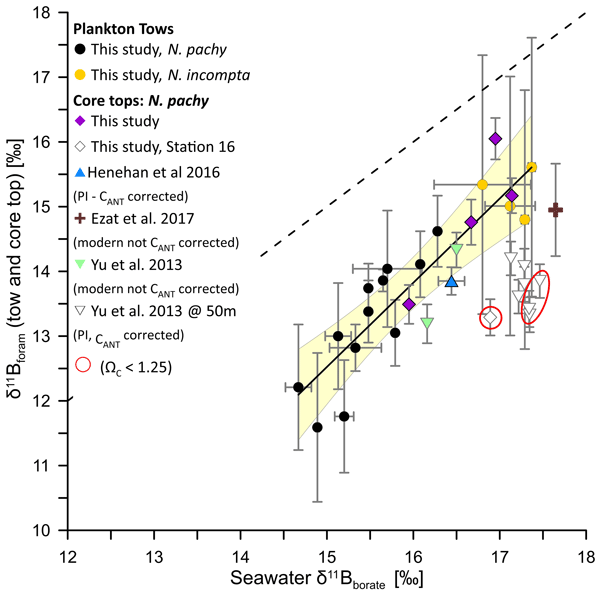
The boron isotopic composition (δ11B) of foraminifera shells is an established proxy for the reconstruction of ocean pH. Applications to the Arctic oceans are however limited as robust calibrations in these regions are lacking. Here, we present a new calibration linking δ11B measured in two high-latitude foraminifera species to seawater pH. We show that the δ11B of the species analysed is well correlated with seawater pH and that this calibration can be applied to the paleorecord.
This article is included in the Encyclopedia of Geosciences
Julie Meilland, Michael Siccha, Maike Kaffenberger, Jelle Bijma, and Michal Kucera
Biogeosciences, 18, 5789–5809, https://doi.org/10.5194/bg-18-5789-2021, https://doi.org/10.5194/bg-18-5789-2021, 2021
Short summary
Short summary
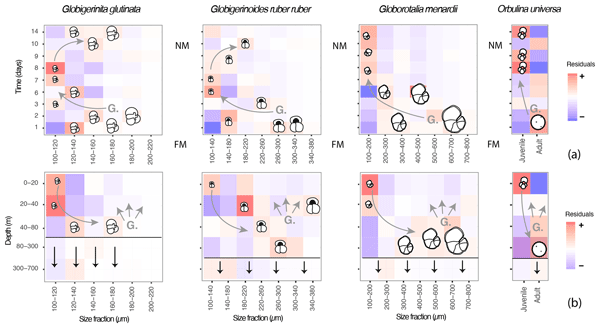
Planktonic foraminifera population dynamics has long been assumed to be controlled by synchronous reproduction and ontogenetic vertical migration (OVM). Due to contradictory observations, this concept became controversial. We here test it in the Atlantic ocean for four species of foraminifera representing the main clades. Our observations support the existence of synchronised reproduction and OVM but show that more than half of the population does not follow the canonical trajectory.
This article is included in the Encyclopedia of Geosciences
Yumi Abe, Takamitsu Ito, Amanda H. V. Timmerman, Christopher T. Reinhard, and Joseph P. Montoya
Biogeosciences, 23, 3871–3885, https://doi.org/10.5194/bg-23-3871-2026, https://doi.org/10.5194/bg-23-3871-2026, 2026
Short summary
Short summary
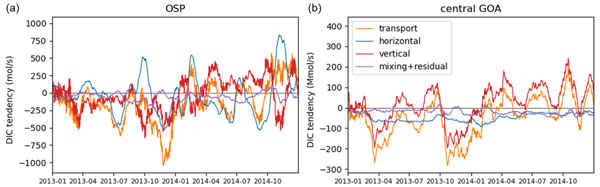
Marine heatwaves are defined by periods of unusually high sea temperature. Although warmer seawater usually reduces the ocean’s ability to absorb carbon dioxide, observations in the Gulf of Alaska showed a surprising drop in carbon dioxide during the 2014–2015 “Blob” heatwave. Using an ocean biogeochemical model, we found that this decline resulted from reduced dissolved inorganic carbon caused by weakened physical supply in winter 2013, just before the Blob began.
This article is included in the Encyclopedia of Geosciences
Christiana Dietzen, Malgorzata Rizzi, Tim Jesper Suhrhoff, and Minik Thorleif Rosing
EGUsphere, https://doi.org/10.5194/egusphere-2026-2760, https://doi.org/10.5194/egusphere-2026-2760, 2026
Short summary
Short summary
Spreading ground silicate rock on farmland has been proposed as a way to remove CO2 from the atmosphere while improving soil fertility. We monitored a five-year field experiment and observed substantial dissolution of applied glacial rock flour, implying meaningful CO2 removal. Soils treated with the rock flour also stored substantially more organic carbon than untreated soils, suggesting that rock application may enhance carbon storage in some agricultural systems through multiple mechanisms.
This article is included in the Encyclopedia of Geosciences
Arthur Vienne, Patrick Frings, Jet Rijnders, Lucilla Boito, Jens Hartmann, Harun Niron, Reinaldy Poetra, Miguel Portillo Estrada, Tom Reershemius, Laura Steinwidder, Tim Jesper Suhrhoff, and Sara Vicca
SOIL, 12, 421–440, https://doi.org/10.5194/soil-12-421-2026, https://doi.org/10.5194/soil-12-421-2026, 2026
Short summary
Short summary
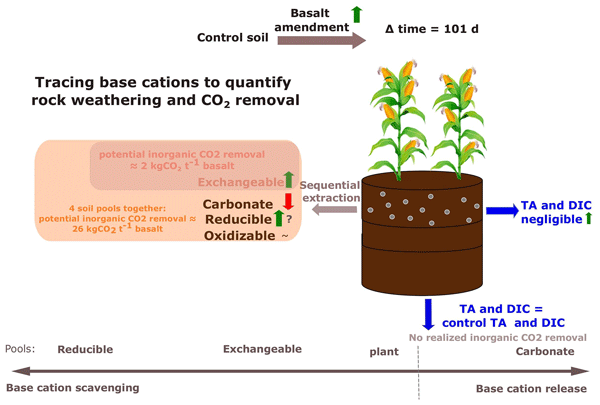
Our study explores Enhanced Weathering (EW) using basalt rock dust to combat climate change. We treated maize-planted mesocosms with varying basalt amounts and monitored them for 101 d. Surprisingly, we found no significant realized inorganic CO2 removal. However, rock weathering was evident through increased exchangeable bases. While inorganic CO2 removal was not realized within this experiment, basalt amendment may enhance soil health and potentially long-term carbon sequestration.
This article is included in the Encyclopedia of Geosciences
Rocio Jaimes-Gutierrez, Marine Prieur, David J. Wilson, Philip A. E. Pogge von Strandmann, Emmanuelle Pucéat, Thierry Adatte, Jorge E. Spangenberg, and Sébastien Castelltort
Clim. Past, 22, 709–727, https://doi.org/10.5194/cp-22-709-2026, https://doi.org/10.5194/cp-22-709-2026, 2026
Short summary
Short summary
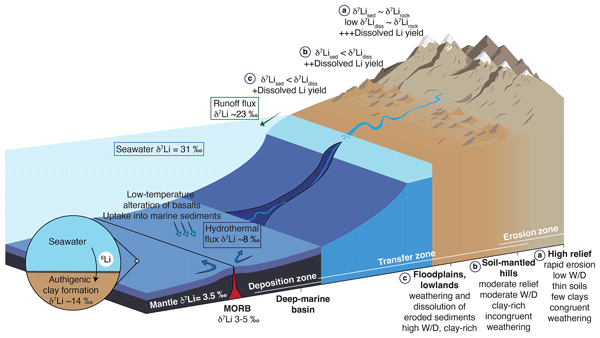
How do semi-arid landscapes respond to rapid global warming? During the Palaeocene-Eocene Thermal Maximum – an extreme warming event 56 Ma ago – global lithium isotope records show a negative δ7Li excursion, suggesting an increase in weathering fluxes. In the Southern Pyrenees, we find the opposite behaviour: clay δ7Li values became ~1‰ heavier, indicating enhanced clay formation. These results suggest that regional hydroclimatic conditions can decouple regional signals from global averages.
This article is included in the Encyclopedia of Geosciences
Jet Rijnders, Lucilla Boito, Laura Steinwidder, Jasper Roussard, Patrick Frings, Harun Niron, and Sara Vicca
EGUsphere, https://doi.org/10.5194/egusphere-2026-603, https://doi.org/10.5194/egusphere-2026-603, 2026
Short summary
Short summary
Crushed volcanic rock has been proposed as a way to remove carbon dioxide from the air while improving soil quality. We tested this idea by growing maize in soil with and without the rock and with earthworms. The rock raised soil nutrients, and earthworms boosted these effects. Plant growth stayed similar, but some metals built up in roots. This approach could support farming and climate goals, yet food safety risks must be managed.
This article is included in the Encyclopedia of Geosciences
Arthur Vienne, Jennifer Newell, Jasper Roussard, Rory Doherty, Siobhan F. Cox, Gary Lyons, and Sara Vicca
Biogeosciences, 23, 1681–1695, https://doi.org/10.5194/bg-23-1681-2026, https://doi.org/10.5194/bg-23-1681-2026, 2026
Short summary
Short summary
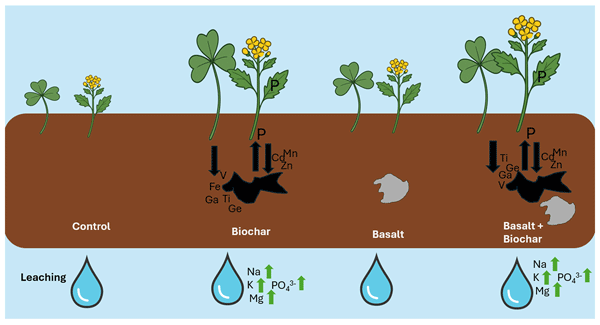
We explored whether adding crushed volcanic rock and charcoal to soil could help store inorganic carbon, improve plant growth and reduce harmful metals in crops. The crushed rock did not increase plant growth or inorganic carbon in soil and nutrients released from the rock may have moved into other stable soil forms rather than forming carbonates. In contrast, charcoal improved plant growth and reduced metal uptake. Using both rocks and charcoal together offered no extra observable benefits.
This article is included in the Encyclopedia of Geosciences
Jens S. Hammes, Jens Hartmann, Johannes A. C. Barth, Tobias Linke, Ingrid Smet, Mathilde Hagens, Philip A. E. Pogge von Strandmann, Tom Reershemius, Bruno Casimiro, Arthur Vienne, Anna A. Stoeckel, Ralf Steffens, and Dirk Paessler
EGUsphere, https://doi.org/10.5194/egusphere-2025-5402, https://doi.org/10.5194/egusphere-2025-5402, 2025
Short summary
Short summary
To test enhanced weathering's efficacy, we ran a two-year greenhouse study under warm, wet conditions, comparing several rock additives across farm soils. We tracked alkalinity and cation soil pools. Soil type was decisive: acidic, low-buffer soils exported more additional alkalinity, while alkaline or pH neutral soils retained it in cation pools. The results point to where enhanced weathering can deliver durable carbon removal and underscore the need for long, well-controlled trials.
This article is included in the Encyclopedia of Geosciences
Lucilla Boito, Jet Rijnders, Laura Steinwidder, Patrick Frings, Arthur Vienne, Mirthe Maes, Erik Verbruggen, and Sara Vicca
EGUsphere, https://doi.org/10.1101/2025.11.03.686277, https://doi.org/10.1101/2025.11.03.686277, 2025
Short summary
Short summary
We explored whether adding basalt and beneficial fungi to soil could improve soil health and crop growth. Basalt improved soil chemistry, confirming its role as a soil improver, while the fungi had little effect. Crop yield remained unchanged, showing that benefits depend on soil type. Our study helps clarify how soil amendments work and when they may support farming and climate solutions.
This article is included in the Encyclopedia of Geosciences
Elwyn de la Vega, Markus Raitzsch, Gavin L. Foster, Jelle Bijma, Ulysses S. Ninnemann, Michal Kucera, Tali Lea Babila, Jessica Crumpton Banks, Mohamed M. Ezat, and Audrey Morley
Biogeosciences, 22, 6765–6785, https://doi.org/10.5194/bg-22-6765-2025, https://doi.org/10.5194/bg-22-6765-2025, 2025
Short summary
Short summary
The boron isotopic composition (δ11B) of foraminifera shells is an established proxy for the reconstruction of ocean pH. Applications to the Arctic oceans are however limited as robust calibrations in these regions are lacking. Here, we present a new calibration linking δ11B measured in two high-latitude foraminifera species to seawater pH. We show that the δ11B of the species analysed is well correlated with seawater pH and that this calibration can be applied to the paleorecord.
This article is included in the Encyclopedia of Geosciences
Yoshiki Kanzaki and Christopher T. Reinhard
EGUsphere, https://doi.org/10.5194/egusphere-2025-4035, https://doi.org/10.5194/egusphere-2025-4035, 2025
Short summary
Short summary
The SCEPTER model has been recently developed for simulating elemental cycles in managed lands, especially soil acidity management and carbon sequestration via enhanced weathering. This paper demonstrates that the performance of SCEPTER is essentially identical to other soil hydrological and reactive transport codes through benchmark experiments. We also discussed the emerging need for a benchmarking protocol fit for the purpose of predictive modeling of soil pH management in agricultural lands.
This article is included in the Encyclopedia of Geosciences
Samuel Shou-En Tsao, Tim Jesper Surhoff, Giuseppe Amatulli, Maya Almaraz, Jonathan Gewirtzman, Beck Woollen, Eric W. Slessarev, James E. Saiers, Christopher T. Reinhard, Shuang Zhang, Noah J. Planavsky, and Peter A. Raymond
Earth Syst. Sci. Data Discuss., https://doi.org/10.5194/essd-2025-411, https://doi.org/10.5194/essd-2025-411, 2025
Revised manuscript under review for ESSD
Short summary
Short summary
We created the first detailed map of how much agricultural lime has been used across the United States from 1930 to 1987. Lime helps improve soil health and crop growth. Our study shows that how and where lime is used depends on climate, soil, and farming practices. By using machine learning, we found patterns that help explain these differences. This work helps us better understand the environmental role of lime and its impact on farming and climate.
This article is included in the Encyclopedia of Geosciences
Jet Rijnders, Arthur Vienne, and Sara Vicca
Biogeosciences, 22, 2803–2829, https://doi.org/10.5194/bg-22-2803-2025, https://doi.org/10.5194/bg-22-2803-2025, 2025
Short summary
Short summary
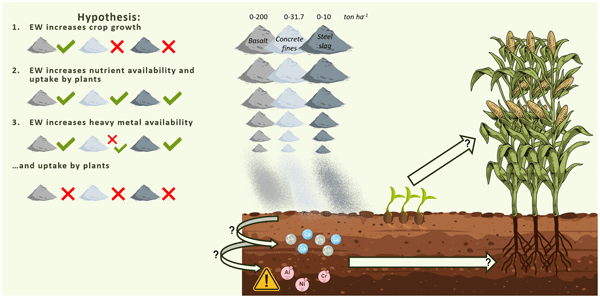
A mesocosm experiment was set up to investigate how maize responds to the application of basalt, concrete fines, and steel slag, using a dose–response approach. Biomass increased with basalt application but did not change with concrete fines or steel slag, except for increased tassel biomass. Mg, Ca, and Si generally increased in the crops, whereas toxic trace elements remained unaffected or even decreased in the plants. Overall, crops were positively affected by the application of silicate materials.
This article is included in the Encyclopedia of Geosciences
Sune G. Nielsen, Frieder Klein, Horst R. Marschall, Philip A. E. Pogge von Strandmann, and Maureen Auro
Solid Earth, 15, 1143–1154, https://doi.org/10.5194/se-15-1143-2024, https://doi.org/10.5194/se-15-1143-2024, 2024
Short summary
Short summary
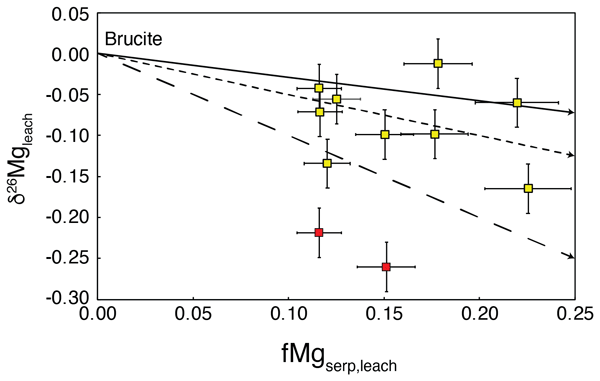
Magnesium isotope ratios of arc lavas have been proposed as a proxy for serpentinite subduction, but uncertainties remain regarding their utility. Here we show that bulk serpentinite Mg isotope ratios are identical to the mantle, whereas the serpentinite mineral brucite is enriched in heavy Mg isotopes. Thus, Mg isotope ratios may only be used as serpentinite subduction proxies if brucite is preferentially mobilized from the slab at pressures and temperatures within the arc magma source region.
This article is included in the Encyclopedia of Geosciences
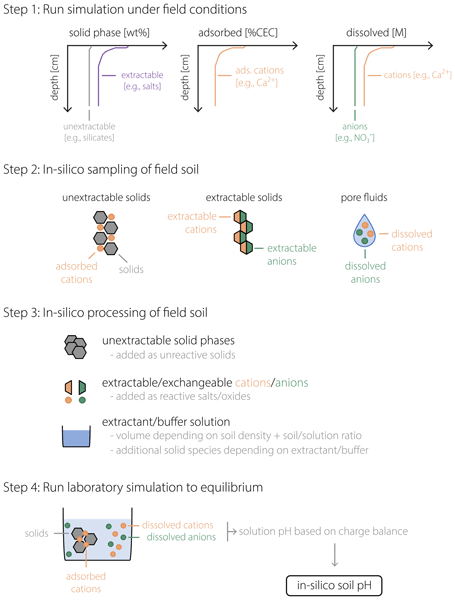
Yoshiki Kanzaki, Isabella Chiaravalloti, Shuang Zhang, Noah J. Planavsky, and Christopher T. Reinhard
Geosci. Model Dev., 17, 4515–4532, https://doi.org/10.5194/gmd-17-4515-2024, https://doi.org/10.5194/gmd-17-4515-2024, 2024
Short summary
Short summary
Soil pH is one of the most commonly measured agronomical and biogeochemical indices, mostly reflecting exchangeable acidity. Explicit simulation of both porewater and bulk soil pH is thus crucial to the accurate evaluation of alkalinity required to counteract soil acidification and the resulting capture of anthropogenic carbon dioxide through the enhanced weathering technique. This has been enabled by the updated reactive–transport SCEPTER code and newly developed framework to simulate soil pH.
This article is included in the Encyclopedia of Geosciences
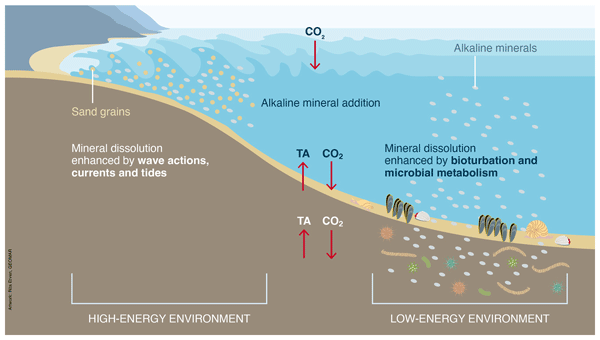
Matthew D. Eisaman, Sonja Geilert, Phil Renforth, Laura Bastianini, James Campbell, Andrew W. Dale, Spyros Foteinis, Patricia Grasse, Olivia Hawrot, Carolin R. Löscher, Greg H. Rau, and Jakob Rønning
State Planet, 2-oae2023, 3, https://doi.org/10.5194/sp-2-oae2023-3-2023, https://doi.org/10.5194/sp-2-oae2023-3-2023, 2023
Short summary
Short summary
Ocean-alkalinity-enhancement technologies refer to various methods and approaches aimed at increasing the alkalinity of seawater. This chapter explores technologies for increasing ocean alkalinity, including electrochemical-based approaches, ocean liming, accelerated weathering of limestone, hydrated carbonate addition, and coastal enhanced weathering, and suggests best practices in research and development.
This article is included in the Encyclopedia of Geosciences
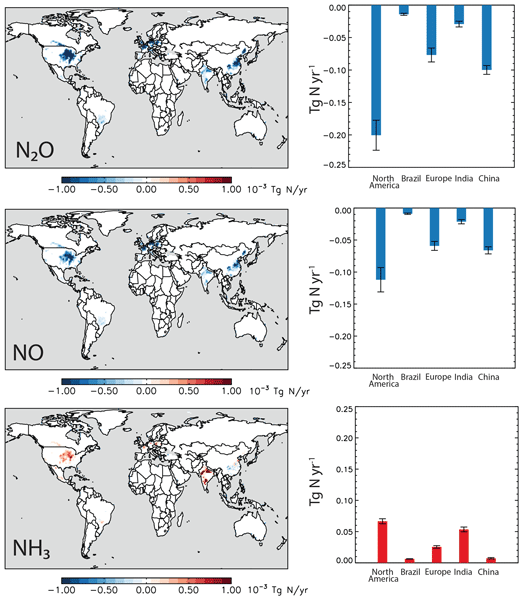
Maria Val Martin, Elena Blanc-Betes, Ka Ming Fung, Euripides P. Kantzas, Ilsa B. Kantola, Isabella Chiaravalloti, Lyla L. Taylor, Louisa K. Emmons, William R. Wieder, Noah J. Planavsky, Michael D. Masters, Evan H. DeLucia, Amos P. K. Tai, and David J. Beerling
Geosci. Model Dev., 16, 5783–5801, https://doi.org/10.5194/gmd-16-5783-2023, https://doi.org/10.5194/gmd-16-5783-2023, 2023
Short summary
Short summary
Enhanced rock weathering (ERW) is a CO2 removal strategy that involves applying crushed rocks (e.g., basalt) to agricultural soils. However, unintended processes within the N cycle due to soil pH changes may affect the climate benefits of C sequestration. ERW could drive changes in soil emissions of non-CO2 GHGs (N2O) and trace gases (NO and NH3) that may affect air quality. We present a new improved N cycling scheme for the land model (CLM5) to evaluate ERW effects on soil gas N emissions.
This article is included in the Encyclopedia of Geosciences
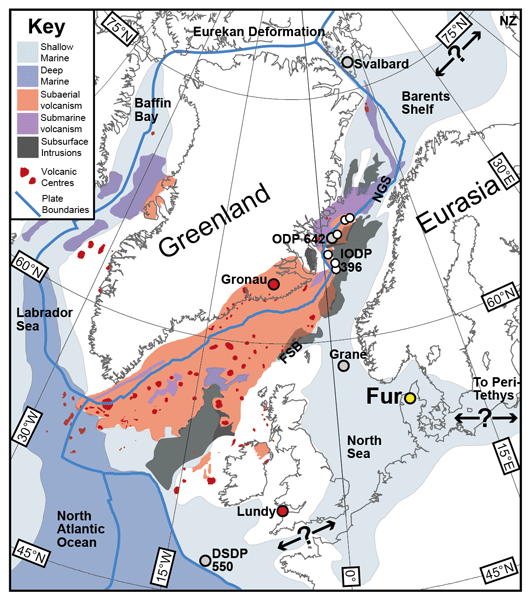
Morgan T. Jones, Ella W. Stokke, Alan D. Rooney, Joost Frieling, Philip A. E. Pogge von Strandmann, David J. Wilson, Henrik H. Svensen, Sverre Planke, Thierry Adatte, Nicolas Thibault, Madeleine L. Vickers, Tamsin A. Mather, Christian Tegner, Valentin Zuchuat, and Bo P. Schultz
Clim. Past, 19, 1623–1652, https://doi.org/10.5194/cp-19-1623-2023, https://doi.org/10.5194/cp-19-1623-2023, 2023
Short summary
Short summary
There are periods in Earth’s history when huge volumes of magma are erupted at the Earth’s surface. The gases released from volcanic eruptions and from sediments heated by the magma are believed to have caused severe climate changes in the geological past. We use a variety of volcanic and climatic tracers to assess how the North Atlantic Igneous Province (56–54 Ma) affected the oceans and atmosphere during a period of extreme global warming.
This article is included in the Encyclopedia of Geosciences
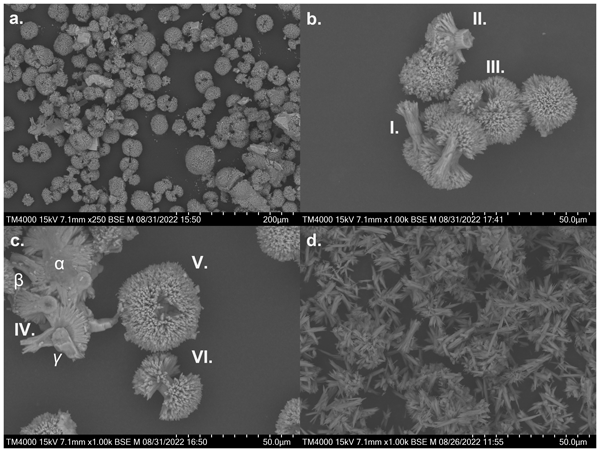
Jens Hartmann, Niels Suitner, Carl Lim, Julieta Schneider, Laura Marín-Samper, Javier Arístegui, Phil Renforth, Jan Taucher, and Ulf Riebesell
Biogeosciences, 20, 781–802, https://doi.org/10.5194/bg-20-781-2023, https://doi.org/10.5194/bg-20-781-2023, 2023
Short summary
Short summary
CO2 can be stored in the ocean via increasing alkalinity of ocean water. Alkalinity can be created via dissolution of alkaline materials, like limestone or soda. Presented research studies boundaries for increasing alkalinity in seawater. The best way to increase alkalinity was found using an equilibrated solution, for example as produced from reactors. Adding particles for dissolution into seawater on the other hand produces the risk of losing alkalinity and degassing of CO2 to the atmosphere.
This article is included in the Encyclopedia of Geosciences
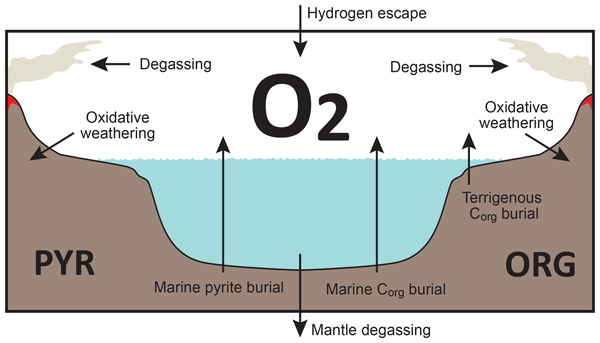
Kazumi Ozaki, Devon B. Cole, Christopher T. Reinhard, and Eiichi Tajika
Geosci. Model Dev., 15, 7593–7639, https://doi.org/10.5194/gmd-15-7593-2022, https://doi.org/10.5194/gmd-15-7593-2022, 2022
Short summary
Short summary
A new biogeochemical model (CANOPS-GRB v1.0) for assessing the redox stability and dynamics of the ocean–atmosphere system on geologic timescales has been developed. In this paper, we present a full description of the model and its performance. CANOPS-GRB is a useful tool for understanding the factors regulating atmospheric O2 level and has the potential to greatly refine our current understanding of Earth's oxygenation history.
This article is included in the Encyclopedia of Geosciences
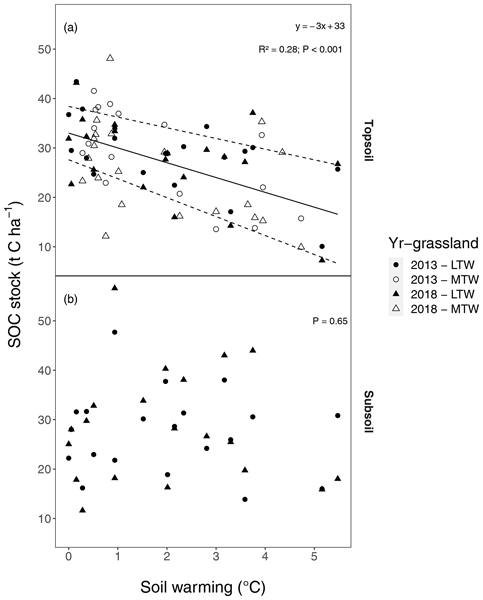
Niel Verbrigghe, Niki I. W. Leblans, Bjarni D. Sigurdsson, Sara Vicca, Chao Fang, Lucia Fuchslueger, Jennifer L. Soong, James T. Weedon, Christopher Poeplau, Cristina Ariza-Carricondo, Michael Bahn, Bertrand Guenet, Per Gundersen, Gunnhildur E. Gunnarsdóttir, Thomas Kätterer, Zhanfeng Liu, Marja Maljanen, Sara Marañón-Jiménez, Kathiravan Meeran, Edda S. Oddsdóttir, Ivika Ostonen, Josep Peñuelas, Andreas Richter, Jordi Sardans, Páll Sigurðsson, Margaret S. Torn, Peter M. Van Bodegom, Erik Verbruggen, Tom W. N. Walker, Håkan Wallander, and Ivan A. Janssens
Biogeosciences, 19, 3381–3393, https://doi.org/10.5194/bg-19-3381-2022, https://doi.org/10.5194/bg-19-3381-2022, 2022
Short summary
Short summary
In subarctic grassland on a geothermal warming gradient, we found large reductions in topsoil carbon stocks, with carbon stocks linearly declining with warming intensity. Most importantly, however, we observed that soil carbon stocks stabilised within 5 years of warming and remained unaffected by warming thereafter, even after > 50 years of warming. Moreover, in contrast to the large topsoil carbon losses, subsoil carbon stocks remained unaffected after > 50 years of soil warming.
This article is included in the Encyclopedia of Geosciences

Yoshiki Kanzaki, Shuang Zhang, Noah J. Planavsky, and Christopher T. Reinhard
Geosci. Model Dev., 15, 4959–4990, https://doi.org/10.5194/gmd-15-4959-2022, https://doi.org/10.5194/gmd-15-4959-2022, 2022
Short summary
Short summary
Increasing carbon dioxide in the atmosphere is an urgent issue in the coming century. Enhanced rock weathering in soils can be one of the most efficient C capture strategies. On the basis as a weathering simulator, the newly developed SCEPTER model implements bio-mixing by fauna/humans and enables organic matter and crushed rocks/minerals at the soil surface with an option to track their particle size distributions. Those features can be useful for evaluating the carbon capture efficiency.
This article is included in the Encyclopedia of Geosciences

Melanie S. Verlinden, Hamada AbdElgawad, Arne Ven, Lore T. Verryckt, Sebastian Wieneke, Ivan A. Janssens, and Sara Vicca
Biogeosciences, 19, 2353–2364, https://doi.org/10.5194/bg-19-2353-2022, https://doi.org/10.5194/bg-19-2353-2022, 2022
Short summary
Short summary
Zea mays grows in mesocosms with different soil nutrition levels. At low phosphorus (P) availability, leaf physiological activity initially decreased strongly. P stress decreased over the season. Arbuscular mycorrhizal fungi (AMF) symbiosis increased over the season. AMF symbiosis is most likely responsible for gradual reduction in P stress.
This article is included in the Encyclopedia of Geosciences
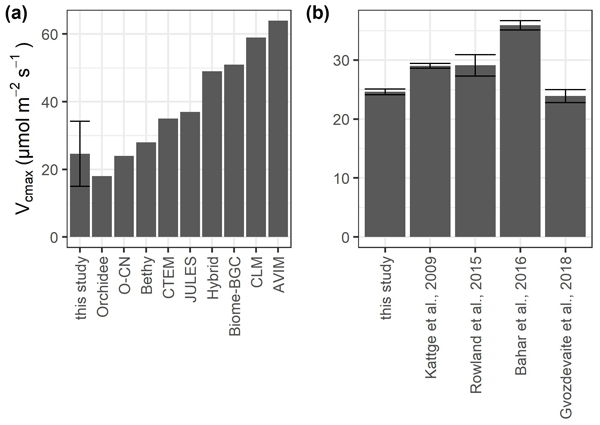
Lore T. Verryckt, Sara Vicca, Leandro Van Langenhove, Clément Stahl, Dolores Asensio, Ifigenia Urbina, Romà Ogaya, Joan Llusià, Oriol Grau, Guille Peguero, Albert Gargallo-Garriga, Elodie A. Courtois, Olga Margalef, Miguel Portillo-Estrada, Philippe Ciais, Michael Obersteiner, Lucia Fuchslueger, Laynara F. Lugli, Pere-Roc Fernandez-Garberí, Helena Vallicrosa, Melanie Verlinden, Christian Ranits, Pieter Vermeir, Sabrina Coste, Erik Verbruggen, Laëtitia Bréchet, Jordi Sardans, Jérôme Chave, Josep Peñuelas, and Ivan A. Janssens
Earth Syst. Sci. Data, 14, 5–18, https://doi.org/10.5194/essd-14-5-2022, https://doi.org/10.5194/essd-14-5-2022, 2022
Short summary
Short summary
We provide a comprehensive dataset of vertical profiles of photosynthesis and important leaf traits, including leaf N and P concentrations, from two 3-year, large-scale nutrient addition experiments conducted in two tropical rainforests in French Guiana. These data present a unique source of information to further improve model representations of the roles of N and P, and other leaf nutrients, in photosynthesis in tropical forests.
This article is included in the Encyclopedia of Geosciences
Julie Meilland, Michael Siccha, Maike Kaffenberger, Jelle Bijma, and Michal Kucera
Biogeosciences, 18, 5789–5809, https://doi.org/10.5194/bg-18-5789-2021, https://doi.org/10.5194/bg-18-5789-2021, 2021
Short summary
Short summary
Planktonic foraminifera population dynamics has long been assumed to be controlled by synchronous reproduction and ontogenetic vertical migration (OVM). Due to contradictory observations, this concept became controversial. We here test it in the Atlantic ocean for four species of foraminifera representing the main clades. Our observations support the existence of synchronised reproduction and OVM but show that more than half of the population does not follow the canonical trajectory.
This article is included in the Encyclopedia of Geosciences
Cited articles
Almaraz, M., Bingham, N. L., Holzer, I. O., Geoghegan, E. K., Goertzen, H., Sohng, J., and Houlton, B. Z.: Methods for determining the CO2 removal capacity of enhanced weathering in agronomic settings, Frontiers in Climate, 4, https://doi.org/10.3389/fclim.2022.970429, 2022.
Amann, T., Hartmann, J., Struyf, E., de Oliveira Garcia, W., Fischer, E. K., Janssens, I., Meire, P., and Schoelynck, J.: Enhanced Weathering and related element fluxes – a cropland mesocosm approach, Biogeosciences, 17, 103–119, https://doi.org/10.5194/bg-17-103-2020, 2020.
Anthony, T. L., Jones, A. R., and Silver, W. L.: Supplementing Enhanced Weathering With Organic Amendments Accelerates the Net Climate Benefit of Soil Amendments in Rangeland Soils, AGU Advances, 6, e2024AV001480, https://doi.org/10.1029/2024AV001480, 2025.
Archer, D. and Maier-Reimer, E.: Effect of deep-sea sedimentary calcite preservation on atmospheric CO2 concentration, Nature, 367, 260–263, 1994.
Archer, D., Eby, M., Brovkin, V., Ridgwell, A., Cao, L., Mikolajewicz, U., Caldeira, K., Matsumoto, K., Munhoven, G., Montenegro, A., and Tokos, K.: Atmospheric Lifetime of Fossil Fuel Carbon Dioxide, Annual Review of Earth and Planetary Sciences, 37, 117–134, https://doi.org/10.1146/annurev.earth.031208.100206, 2009.
Bai, Y. and Cotrufo, M. F.: Grassland soil carbon sequestration: Current understanding, challenges, and solutions, Science, 377, 603–608, https://doi.org/10.1126/science.abo2380, 2022.
Basile-Doelsch, I., Amundson, R., Stone, W. E. E., Borschneck, D., Bottero, J. Y., Moustier, S., Masin, F., and Colin, F.: Mineral control of carbon pools in a volcanic soil horizon, Geoderma, 137, 477–489, https://doi.org/10.1016/j.geoderma.2006.10.006, 2007.
Beerling, D. J., Leake, J. R., Long, S. P., Scholes, J. D., Ton, J., Nelson, P. N., Bird, M., Kantzas, E., Taylor, L. L., Sarkar, B., Kelland, M., DeLucia, E., Kantola, I., Müller, C., Rau, G., and Hansen, J.: Farming with crops and rocks to address global climate, food and soil security, Nature Plants, 4, 138–147, https://doi.org/10.1038/s41477-018-0108-y, 2018.
Beerling, D. J., Kantzas, E. P., Lomas, M. R., Wade, P., Eufrasio, R. M., Renforth, P., Sarkar, B., Andrews, M. G., James, R. H., Pearce, C. R., Mercure, J.-F., Pollitt, H., Holden, P. B., Edwards, N. R., Khanna, M., Koh, L., Quegan, S., Pidgeon, N. F., Janssens, I. A., Hansen, J., and Banwart, S. A.: Potential for large-scale CO2 removal via enhanced rock weathering with croplands, Nature, 583, 242–248, https://doi.org/10.1038/s41586-020-2448-9, 2020.
Beerling, D. J., Epihov, D. Z., Kantola, I. B., Masters, M. D., Reershemius, T., Planavsky, N. J., Reinhard, C. T., Jordan, J. S., Thorne, S. J., Weber, J., Val Martin, M., Freckleton, R. P., Hartley, S. E., James, R. H., Pearce, C. R., DeLucia, E. H., and Banwart, S. A.: Enhanced weathering in the US Corn Belt delivers carbon removal with agronomic benefits, Proceedings of the National Academy of Sciences, 121, e2319436121, https://doi.org/10.1073/pnas.2319436121, 2024.
Bergaya, F., Lagaly, G., and Vayer, M.: Chapter 2.11 – Cation and Anion Exchange, in: Developments in Clay Science, edited by: Bergaya, F., and Lagaly, G., Elsevier, 333–359, https://doi.org/10.1016/B978-0-08-098259-5.00013-5, 2013.
Berner, R. A., Lasaga, A. C., and Garrels, R. M.: The Carbonate-silicate geochemical cycle and its effect on the atmospheric carbon dioxide over the past 100 million years, American Journal of Science, 283, 641–683, 1983.
Bertagni, M. B. and Porporato, A.: The Carbon-Capture Efficiency of Natural Water Alkalinization: Implications For Enhanced weathering, Science of The Total Environment, 838, 156524, https://doi.org/10.1016/j.scitotenv.2022.156524, 2022.
Blume, H. P., Welp, G., Brümmer, G. W., Thiele-Bruhn, S., Horn, R., Tippkötter, R., Kandeler, E., Kögel-Knabner, I., Kretzschmar, R., and Stahr, K.: Scheffer/Schachtschabel: Lehrbuch der Bodenkunde, Springer Berlin Heidelberg, ISBN 9783662499603, 2016.
Boito, L., Steinwidder, L., Rijnders, J., Berwouts, J., Janse, S., Niron, H., Roussard, J., Vienne, A., and Vicca, S.: Enhanced Rock Weathering Altered Soil Organic Carbon Fluxes in a Plant Trial, Global Change Biology, 31, e70373, https://doi.org/10.1111/gcb.70373, 2025.
Bramble, D. S. E., Schöning, I., Brandt, L., Poll, C., Kandeler, E., Ulrich, S., Mikutta, R., Mikutta, C., Silver, W. L., Totsche, K. U., Kaiser, K., and Schrumpf, M.: Land use and mineral type determine stability of newly formed mineral-associated organic matter, Communications Earth and Environment, 6, 415, https://doi.org/10.1038/s43247-025-02400-3, 2025.
Brantley, S. L., Shaughnessy, A., Lebedeva, M. I., and Balashov, V. N.: How temperature-dependent silicate weathering acts as Earth's geological thermostat, Science, 379, 382–389, https://doi.org/10.1126/science.add2922, 2023.
Brunner, C., Hausfather, Z., and Knutti, R.: Durability of carbon dioxide removal is critical for Paris climate goals, Communications Earth and Environment, 5, 645, https://doi.org/10.1038/s43247-024-01808-7, 2024.
Buck, H. J., Carton, W., Lund, J. F., and Markusson, N.: Why residual emissions matter right now, Nature Climate Change, 13, 351–358, https://doi.org/10.1038/s41558-022-01592-2, 2023.
Buss, W., Hasemer, H., Sokol, N. W., Rohling, E. J., and Borevitz, J.: Applying minerals to soil to draw down atmospheric carbon dioxide through synergistic organic and inorganic pathways, Communications Earth and Environment, 5, 602, https://doi.org/10.1038/s43247-024-01771-3, 2024.
Cai, W.-J., Wang, Y., and Hodson, R. E.: Acid-Base Properties of Dissolved Organic Matter in the Estuarine Waters of Georgia, USA, Geochimica et Cosmochimica Acta, 62, 473–483, https://doi.org/10.1016/S0016-7037(97)00363-3, 1998.
Calabrese, S., Wild, B., Bertagni, M. B., Bourg, I. C., White, C., Aburto, F., Cipolla, G., Noto, L. V., and Porporato, A.: Nano- to Global-Scale Uncertainties in Terrestrial Enhanced Weathering, Environ. Sci. Technol., 56, 15261–15272, https://doi.org/10.1021/acs.est.2c03163, 2022.
Calogiuri, T., Hagens, M., Van Groenigen, J. W., Wichern, F., Poetra, R. P., Rieder, L., Janssens, I. A., Hartmann, J., Neubeck, A., Niron, H., Singh, A., Vlaeminck, S. E., Vicca, S., and Vidal, A.: Alive and dead earthworms capture carbon during mineral weathering through different pathways, Communications Earth and Environment, 6, 851, https://doi.org/10.1038/s43247-025-02766-4, 2025a.
Calogiuri, T., Janssens, I., Vidal, A., Van Groenigen, J. W., Verdonck, T., Corbett, T., Hartmann, J., Neubeck, A., Niron, H., Poetra, R. P., Rieder, L., Servotte, T., Singh, A., Van Tendeloo, M., Vlaeminck, S. E., Vicca, S., and Hagens, M.: How earthworms thrive and drive silicate rock weathering in an artificial organo-mineral system, Applied Geochemistry, 180, 106271, https://doi.org/10.1016/j.apgeochem.2024.106271, 2025b.
Capdevila-Cortada, M.: Electrifying the Haber–Bosch, Nature Catalysis, 2, 1055–1055, https://doi.org/10.1038/s41929-019-0414-4, 2019.
Chen, Y., Ke, S., Yan, Y., Bo, G., and Zheng, H.: Effects of biochar on the accumulation of necromass-derived carbon, the physical protection and microbial mineralization of soil organic carbon, Critical Reviews in Environmental Science and Technology, 54, 39–67, https://doi.org/10.1080/10643389.2023.2221155, 2024.
Chiaravalloti, I., Theunissen, N., Zhang, S., Wang, J., Sun, F., Ahmed, A. A., Pihlap, E., Reinhard, C. T., and Planavsky, N. J.: Mitigation of soil nitrous oxide emissions during maize production with basalt amendments, Frontiers in Climate, 5, https://doi.org/10.3389/fclim.2023.1203043, 2023.
Clarkson, M. O., Larkin, C. S., Swoboda, P., Reershemius, T., Suhrhoff, T. J., Maesano, C. N., and Campbell, J. S.: A review of measurement for quantification of carbon dioxide removal by enhanced weathering in soil, Frontiers in Climate, 6, https://doi.org/10.3389/fclim.2024.1345224, 2024.
Costa, M., Kern, D., Helena, A., Pinto, E., and Trindade, J.: The ceramic artifacts in archaeological black earth (terra preta) from lower Amazon region, Brazil: Mineralogy, Acta Amazonica, 34, https://doi.org/10.1590/S0044-59672004000200004, 2004.
Dafnomilis, I., den Elzen, M., and van Vuuren, D.: Paris targets within reach by aligning, broadening and strengthening net-zero pledges, Communications Earth and Environment, 5, 48, https://doi.org/10.1038/s43247-023-01184-8, 2024.
Dellinger, M., Gaillardet, J., Bouchez, J., Calmels, D., Louvat, P., Dosseto, A., Gorge, C., Alanoca, L., and Maurice, L.: Riverine Li isotope fractionation in the Amazon River basin controlled by the weathering regimes, Geochimica et Cosmochimica Acta, 164, 71–93, https://doi.org/10.1016/j.gca.2015.04.042, 2015.
De Troyer, I., Merckx, R., Amery, F., and Smolders, E.: Factors Controlling the Dissolved Organic Matter Concentration in Pore Waters of Agricultural Soils, Vadose Zone Journal, 13, vzj2013.2009.0167, https://doi.org/10.2136/vzj2013.09.0167, 2014.
Dickson, A. G.: An exact definition of total alkalinity and a procedure for the estimation of alkalinity and total inorganic carbon from titration data., Deep-Sea Reserach, 28A, 609–623, 1981.
Dickson, A. G.: The development of the alkalinity concept in marine chemistry, Mar. Chem., 40, 49–63, 1992.
Dietzen, C. and Rosing, M. T.: Quantification of CO2 uptake by enhanced weathering of silicate minerals applied to acidic soils, International Journal of Greenhouse Gas Control, 125, 103872, https://doi.org/10.1016/j.ijggc.2023.103872, 2023.
Doi, A., Khosravi, M., Ejtemaei, M., Nguyen, T. A. H., and Nguyen, A. V.: Specificity and affinity of multivalent ions adsorption to kaolinite surface, Applied Clay Science, 190, 105557, https://doi.org/10.1016/j.clay.2020.105557, 2020.
Edelenbosch, O. Y., Hof, A. F., van den Berg, M., de Boer, H. S., Chen, H.-H., Daioglou, V., Dekker, M. M., Doelman, J. C., den Elzen, M. G. J., Harmsen, M., Mikropoulos, S., van Sluisveld, M. A. E., Stehfest, E., Tagomori, I. S., van Zeist, W.-J., and van Vuuren, D. P.: Reducing sectoral hard-to-abate emissions to limit reliance on carbon dioxide removal, Nature Climate Change, 14, 715–722, https://doi.org/10.1038/s41558-024-02025-y, 2024.
Farrah, H., Hatton, D., and Pickering, W. F.: The affinity of metal ions for clay surfaces, Chemical Geology, 28, 55–68, https://doi.org/10.1016/0009-2541(80)90035-2, 1980.
Frölicher, T. L., Fischer, E. M., and Gruber, N.: Marine heatwaves under global warming, Nature, 560, 360–364, https://doi.org/10.1038/s41586-018-0383-9, 2018.
Fukushima, M., Tanaka, S., Hasebe, K., Taga, M., and Nakamura, H.: Interpretation of the acid-base equilibrium of humic acid by a continuous pK distribution and electrostatic model, Analytica Chimica Acta, 302, 365–373, https://doi.org/10.1016/0003-2670(94)00471W, 1995.
Gaillardet, J., Dupré, B., Louvat, P., and Allègre, C. J.: Global silicate weathering and CO2 consumption rates deduced from the chemistry of large rivers, Chemical Geology, 159, 3–30, https://doi.org/10.1016/S0009-2541(99)00031-5, 1999.
Ghabbour, E. A. and Davies, G.: Humic Substances: Structures, Models and Functions, The Royal Society of Chemistry, https://doi.org/10.1039/9781847551085, 2001.
Gislason, S., Arnorsson, S., and Ármannsson, H.: Chemical weathering of basalt in Southwest Iceland: Effects of runoff, age of rocks and vegetative/glacial cover, American Journal of Science, 296, 837–907, https://doi.org/10.2475/ajs.296.8.837, 1996.
Grimm, C., Martinez, R. E., Pokrovsky, O. S., Benning, L. G., and Oelkers, E. H.: Enhancement of cyanobacterial growth by riverine particulate material, Chemical Geology, 525, 143–167, https://doi.org/10.1016/j.chemgeo.2019.06.012, 2019.
Hagens, M. and Middelburg, J. J.: Generalised expressions for the response of pH to changes in ocean chemistry, Geochimica et Cosmochimica Acta, 187, 334–349, https://doi.org/10.1016/j.gca.2016.04.012, 2016.
Hamilton, S. K., Kurzman, A. L., Arango, C., Jin, L., and Robertson, G. P.: Evidence for carbon sequestration by agricultural liming, Global Biogeochemical Cycles, 21, https://doi.org/10.1029/2006GB002738, 2007.
Hansen, J. E., Sato, M., Simons, L., Nazarenko, L. S., Sangha, I., Kharecha, P., Zachos, J. C., von Schuckmann, K., Loeb, N. G., Osman, M. B., Jin, Q., Tselioudis, G., Jeong, E., Lacis, A., Ruedy, R., Russell, G., Cao, J., and Li, J.: Global warming in the pipeline, Oxford Open Climate Change, 3, https://doi.org/10.1093/oxfclm/kgad008, 2023.
Haque, F., Santos, R. M., Dutta, A., Thimmanagari, M., and Chiang, Y. W.: Co-Benefits of Wollastonite Weathering in Agriculture: CO2 Sequestration and Promoted Plant Growth, ACS Omega, 4, 1425–1433, https://doi.org/10.1021/acsomega.8b02477, 2019.
Haque, F., Möller, B., Sagina, S., Odhiambo, C., Ondolo, H., Thuo, N., Kamau, K., and Davies, S.: Agronomic Performance of Enhanced Rock Weathering in a Tropical Smallholder System: A Maize Trial in Kenya, CDRXIV, https://doi.org/10.70212/cdrxiv.2025410.v1, 2025.
Hartmann, J., West, A. J., Renforth, P., Köhler, P., De La Rocha, C. L., Wolf-Gladrow, D. A., Dürr, H. H., and Scheffran, J.: Enhanced chemical weathering as a geoengineering strategy to reduce atmospheric carbon dioxide, supply nutrients, and mitigate ocean acidification, Reviews of Geophysics, 51, 113–149, https://doi.org/10.1002/rog.20004, 2013.
Hemingway, J. D., Rothman, D. H., Grant, K. E., Rosengard, S. Z., Eglinton, T. I., Derry, L. A., and Galy, V. V.: Mineral protection regulates long-term global preservation of natural organic carbon, Nature, 570, 228–231, https://doi.org/10.1038/s41586-019-1280-6, 2019.
Hemond, H. F.: Acid neutralizing capacity, alkalinity, and acid-base status of natural waters containing organic acids, Environmental Science and Technology, 24, 1486–1489, https://doi.org/10.1021/es00080a005, 1990.
Hooss, G., Voss, R., Hasselmann, K., Maier-Reimer, E., and Joos, F.: A nonlinear impulse response model of the coupled carbon cycle-climate system (NICCS), Climate Dynamics, 18, 189–202, https://doi.org/10.1007/s003820100170, 2001.
Hou, J., Qian, Y., Liu, G., and Dong, R.: The Influence of Temperature, pH and
IPCC: Summary for Policymakers, in: Climate Change 2022 – Mitigation of Climate Change: Working Group III Contribution to the Sixth Assessment Report of the Intergovernmental Panel on Climate Change, edited by: Intergovernmental Panel on Climate Change, Cambridge University Press, Cambridge, 3–48, https://doi.org/10.1017/9781009157926.001, 2023.
Isson, T. T., Planavsky, N. J., Coogan, L. A., Stewart, E. M., Ague, J. J., Bolton, E. W., Zhang, S., McKenzie, N. R., and Kump, L. R.: Evolution of the Global Carbon Cycle and Climate Regulation on Earth, Global Biogeochemical Cycles, 34, e2018GB006061, https://doi.org/10.1029/2018GB006061, 2020.
Jones, M. T., Pearce, C. R., and Oelkers, E. H.: An experimental study of the interaction of basaltic riverine particulate material and seawater, Geochimica et Cosmochimica Acta, 77, 108–120, https://doi.org/10.1016/j.gca.2011.10.044, 2012.
Kalderon-Asael, B., Katchinoff, J. A. R., Planavsky, N. J., Hood, A. v. S., Dellinger, M., Bellefroid, E. J., Jones, D. S., Hofmann, A., Ossa, F. O., Macdonald, F. A., Wang, C., Isson, T. T., Murphy, J. G., Higgins, J. A., West, A. J., Wallace, M. W., Asael, D., and Pogge von Strandmann, P. A. E.: A lithium-isotope perspective on the evolution of carbon and silicon cycles, Nature, 595, 394–398, https://doi.org/10.1038/s41586-021-03612-1, 2021.
Kantzas, E. P., Val Martin, M., Lomas, M. R., Eufrasio, R. M., Renforth, P., Lewis, A. L., Taylor, L. L., Mecure, J.-F., Pollitt, H., Vercoulen, P. V., Vakilifard, N., Holden, P. B., Edwards, N. R., Koh, L., Pidgeon, N. F., Banwart, S. A., and Beerling, D. J.: Substantial carbon drawdown potential from enhanced rock weathering in the United Kingdom, Nature Geoscience, 15, 382–389, https://doi.org/10.1038/s41561-022-00925-2, 2022.
Kanzaki, Y., Planavsky, N. J., and Reinhard, C. T.: New estimates of the storage permanence and ocean co-benefits of enhanced rock weathering, PNAS Nexus, 2, https://doi.org/10.1093/pnasnexus/pgad059, 2023.
Kanzaki, Y., Planavsky, N., Zhang, S., Jordan, J., and Reinhard, C. T.: Soil cation storage as a key control on the timescales of carbon dioxide removal through enhanced weathering, ESS Open Archive [preprint], V.1, March 5, https://doi.org/10.22541/essoar.170960101.14306457/v1, 2024.
Kästner, M., Miltner, A., Thiele-Bruhn, S., and Liang, C.: Microbial Necromass in Soils – Linking Microbes to Soil Processes and Carbon Turnover, Frontiers in Environmental Science, 9, https://doi.org/10.3389/fenvs.2021.756378, 2021.
Kennedy, M. J. and Wagner, T.: Clay mineral continental amplifier for marine carbon sequestration in a greenhouse ocean, Proceedings of the National Academy of Sciences, 108, 9776–9781, https://doi.org/10.1073/pnas.1018670108, 2011.
Kennedy, M. J., Pevear, D. R., and Hill, R. J.: Mineral Surface Control of Organic Carbon in Black Shale, Science, 295, 657–660, https://doi.org/10.1126/science.1066611, 2002.
Kennedy, M. J., Löhr, S. C., Fraser, S. A., and Baruch, E. T.: Direct evidence for organic carbon preservation as clay-organic nanocomposites in a Devonian black shale; from deposition to diagenesis, Earth and Planetary Science Letters, 388, 59–70, https://doi.org/10.1016/j.epsl.2013.11.044, 2014.
Kerr, D. E., Brown, P. J., Grey, A., and Kelleher, B. P.: The influence of organic alkalinity on the carbonate system in coastal waters, Marine Chemistry, 237, 104050, https://doi.org/10.1016/j.marchem.2021.104050, 2021.
Kerr, D. E., Turner, C., Grey, A., Keogh, J., Brown, P. J., and Kelleher, B. P.: OrgAlkCalc: Estimation of organic alkalinity quantities and acid-base properties with proof of concept in Dublin Bay, Marine Chemistry, 251, 104234, https://doi.org/10.1016/j.marchem.2023.104234, 2023.
Klemme, A., Rixen, T., Müller, M., Notholt, J., and Warneke, T.: Destabilization of carbon in tropical peatlands by enhanced weathering, Communications Earth and Environment, 3, 212, https://doi.org/10.1038/s43247-022-00544-0, 2022.
Kloke, A.: Richtwerte '80, Orientierungsdaten für tolerierbare Gesamtgehalte einiger Elemente in Kulturböden, VDLUFA-Mitteilungen, 1–3, 1980.
Köhler, P., Hartmann, J., and Wolf-Gladrow, D. A.: Geoengineering potential of artificially enhanced silicate weathering of olivine, P. Natl. Acad. Sci. USA, 107, 20228–20233, https://doi.org/10.1073/pnas.1000545107, 2010.
Kotz, M., Levermann, A., and Wenz, L.: The economic commitment of climate change, Nature, 628, 551–557, https://doi.org/10.1038/s41586-024-07219-0, 2024.
Krause, A. J., Sluijs, A., van der Ploeg, R., Lenton, T. M., and Pogge von Strandmann, P. A. E.: Enhanced clay formation key in sustaining the Middle Eocene Climatic Optimum, Nature Geoscience, 16, 730–738, https://doi.org/10.1038/s41561-023-01234-y, 2023.
Kump, L. R. and Arthur, M. A.: Global Chemical Erosion during the Cenozoic: Weatherability Balances the Budgets, in: Tectonic Uplift and Climate Change, edited by: Ruddiman, W. F., Springer US, Boston, MA, 399–426 pp., https://doi.org/10.1007/978-1-4615-5935-1_18, 1997.
Kunz, W., Henle, J., and Ninham, B. W.: “Zur Lehre von der Wirkung der Salze” (about the science of the effect of salts): Franz Hofmeister's historical papers, Current Opinion in Colloid and Interface Science, 9, 19–37, https://doi.org/10.1016/j.cocis.2004.05.005, 2004.
Lamboll, R. D., Nicholls, Z. R. J., Smith, C. J., Kikstra, J. S., Byers, E., and Rogelj, J.: Assessing the size and uncertainty of remaining carbon budgets, Nature Climate Change, 13, 1360–1367, https://doi.org/10.1038/s41558-023-01848-5, 2023.
Larkin, C. S., Andrews, M. G., Pearce, C. R., Yeong, K. L., Beerling, D. J., Bellamy, J., Benedick, S., Freckleton, R. P., Goring-Harford, H., Sadekar, S., and James, R. H.: Quantification of CO2 removal in a large-scale enhanced weathering field trial on an oil palm plantation in Sabah, Malaysia, Frontiers in Climate, 4, https://doi.org/10.3389/fclim.2022.959229, 2022.
Lei, K., Bucka, F. B., Teixeira, P. P. C., Buegger, F., Just, C., and Kögel-Knabner, I.: Balancing Organic and Inorganic Carbon Dynamics in Enhanced Rock Weathering: Implications for Carbon Sequestration, Global Change Biology, 31, e70186, https://doi.org/10.1111/gcb.70186, 2025.
Lima, H., Schaefer, C., Mello, J., Gilkes, R., and Ker, J.: Pedogenesis and pre-Colombian land use of “Terra Preta Anthrosols” (“Indian black earth”) of Western Amazonia, Geoderma, 110, 1–17, https://doi.org/10.1016/S0016-7061(02)00141-6, 2002.
Linke, T., Oelkers, E. H., Dideriksen, K., Möckel, S. C., Nilabh, S., Grandia, F., and Gislason, S. R.: The geochemical evolution of basalt Enhanced Rock Weathering systems quantified from a natural analogue, Geochimica et Cosmochimica Acta, 370, 66–77, https://doi.org/10.1016/j.gca.2024.02.005, 2024a.
Linke, T., Oelkers, E. H., Möckel, S. C., and Gislason, S. R.: Direct evidence of CO2 drawdown through enhanced weathering in soils, Geochemical Perspectives Letters, 30, 7–12, https://doi.org/10.7185/geochemlet.2415, 2024b.
Linow, S., Bijma, J., Gerhards, C., Hickler, T., Kammann, C., Reichelt, F., and Scheffran, J.: Kurzimpuls – Perspektiven auf negative CO2-Emissionen, Diskussionsbeiträge der Scientists for Future, 12, 19, https://doi.org/10.5281/zenodo.7392348, 2022.
Liu, P. R. and Raftery, A. E.: Country-based rate of emissions reductions should increase by 80 % beyond nationally determined contributions to meet the 2 °C target, Communications Earth and Environment, 2, 29, https://doi.org/10.1038/s43247-021-00097-8, 2021.
Louvat, P. and Allègre, C. J.: Present denudation rates on the island of Réunion determined by river geochemistry: Basalt weathering and mass budget between chemical and mechanical erosions, Geochimica et Cosmochimica Acta, 61, 3645–3669, https://doi.org/10.1016/S0016-7037(97)00180-4, 1997.
Lubbers, I. M., van Groenigen, K. J., Fonte, S. J., Six, J., Brussaard, L., and van Groenigen, J. W.: Greenhouse-gas emissions from soils increased by earthworms, Nature Climate Change, 3, 187–194, https://doi.org/10.1038/nclimate1692, 2013.
Luderer, G., Vrontisi, Z., Bertram, C., Edelenbosch, O. Y., Pietzcker, R. C., Rogelj, J., De Boer, H. S., Drouet, L., Emmerling, J., Fricko, O., Fujimori, S., Havlík, P., Iyer, G., Keramidas, K., Kitous, A., Pehl, M., Krey, V., Riahi, K., Saveyn, B., Tavoni, M., Van Vuuren, D. P., and Kriegler, E.: Residual fossil CO2 emissions in 1.5–2 °C pathways, Nature Climate Change, 8, 626–633, https://doi.org/10.1038/s41558-018-0198-6, 2018.
Maher, K. and Chamberlain, C. P.: Hydrologic Regulation of Chemical Weathering and the Geologic Carbon Cycle, Science, 343, 1502–1504, https://doi.org/10.1126/science.1250770, 2014.
Maier-Reimer, E. and Hasselmann, K.: Transport and storage of CO2 in the ocean – an inorganic ocean-circulation carbon cycle model, Climate Dynamics, 2, 63–90, https://doi.org/10.1007/BF01054491, 1987.
Manning, D. and Theodoro, S.: Enabling food security through use of local rocks and minerals, The Extractive Industries and Society, 7, https://doi.org/10.1016/j.exis.2018.11.002, 2018.
Manning, D. A. C., de Azevedo, A. C., Zani, C. F., and Barneze, A. S.: Soil carbon management and enhanced rock weathering: The separate fates of organic and inorganic carbon, European Journal of Soil Science, 75, e13534, https://doi.org/10.1111/ejss.13534, 2024.
Matus, F., Rumpel, C., Neculman, R., Panichini, M., and Mora, M. L.: Soil carbon storage and stabilisation in andic soils: A review, Catena, 120, 102–110, https://doi.org/10.1016/j.catena.2014.04.008, 2014.
Meinshausen, M., Lewis, J., McGlade, C., Gütschow, J., Nicholls, Z., Burdon, R., Cozzi, L., and Hackmann, B.: Realization of Paris Agreement pledges may limit warming just below 2 °C, Nature, 604, 304–309, https://doi.org/10.1038/s41586-022-04553-z, 2022.
Middelburg, J. J., Soetaert, K., and Hagens, M.: Ocean Alkalinity, Buffering and Biogeochemical Processes, Reviews of Geophysics, 58, e2019RG000681, https://doi.org/10.1029/2019rg000681, 2020.
Milne, C. J., Kinniburgh, D. G., and Tipping, E.: Generic NICA-Donnan Model Parameters for Proton Binding by Humic Substances, Environmental Science and Technology, 35, 2049–2059, https://doi.org/10.1021/es000123j, 2001.
Moon, S., Chamberlain, C. P., and Hilley, G. E.: New estimates of silicate weathering rates and their uncertainties in global rivers, Geochimica et Cosmochimica Acta, 134, 257–274, https://doi.org/10.1016/j.gca.2014.02.033, 2014.
Needham, S., Worden, R., and Cuadros, J.: Sediment ingestion by worms and the production of bio-clays: A study of macrobiologically enhanced weathering and early diagenetic processes, Sedimentology, 53, 567–579, https://doi.org/10.1111/j.1365-3091.2006.00781.x, 2006.
Niron, H., Vienne, A., Frings, P., Poetra, R., and Vicca, S.: Exploring the synergy of enhanced weathering and Bacillus subtilis: A promising strategy for sustainable agriculture, Global Change Biology, 30, e17511, https://doi.org/10.1111/gcb.17511, 2024.
Oelkers, E. H., Butcher, R., Pogge von Strandmann, P. A. E., Schuessler, J. A., von Blanckenburg, F., Snæbjörnsdóttir, S. Ó., Mesfin, K., Aradóttir, E. S., Gunnarsson, I., Sigfússon, B., Gunnlaugsson, E., Matter, J. M., Stute, M., and Gislason, S. R.: Using stable Mg isotope signatures to assess the fate of magnesium during the in situ mineralisation of CO2 and H2S at the CarbFix site in SW-Iceland, Geochimica et Cosmochimica Acta, 245, 542–555, https://doi.org/10.1016/j.gca.2018.11.011, 2019.
Oh, N.-H. and Raymond, P. A.: Contribution of agricultural liming to riverine bicarbonate export and CO2 sequestration in the Ohio River basin, Global Biogeochemical Cycles, 20, https://doi.org/10.1029/2005GB002565, 2006.
Ou, Y., Iyer, G., Clarke, L., Edmonds, J., Fawcett, A. A., Hultman, N., McFarland, J. R., Binsted, M., Cui, R., Fyson, C., Geiges, A., Gonzales-Zuñiga, S., Gidden, M. J., Höhne, N., Jeffery, L., Kuramochi, T., Lewis, J., Meinshausen, M., Nicholls, Z., Patel, P., Ragnauth, S., Rogelj, J., Waldhoff, S., Yu, S., and McJeon, H.: Can updated climate pledges limit warming well below 2 °C?, Science, 374, 693–695, https://doi.org/10.1126/science.abl8976, 2021.
Paessler, D., Hammes, J., Steffens, R., and Smet, I.: Insights from monitoring leachate alkalinity, pCO2 and CO2 efflux of 400 weathering experiments over one year, Working paper V1.0., https://doi.org/10.13140/RG.2.2.14022.28485, 2024.
Paessler, D., Hammes, J., Smet, I., Steffens, R., Stöckel, A. A., and Hartmann, J.: Learnings from running the world's largest greenhouse EW experiment, https://doi.org/10.13140/RG.2.2.18184.74247, 2025.
Peplow, M.: Enzymes boost “rock weathering” to trap CO2 in soil, Nature Biotechnology, 42, 1326–1328, https://doi.org/10.1038/s41587-024-02380-3, 2024.
Perdue, E. M., Reuter, J. H., and Parrish, R. S.: A statistical model of proton binding by humus, Geochimica et Cosmochimica Acta, 48, 1257–1263, https://doi.org/10.1016/0016-7037(84)90060-7, 1984.
Pogge von Strandmann, P. A. E. and Henderson, G. M.: The Li isotope response to mountain uplift, Geology, 43, 67–70, https://doi.org/10.1130/g36162.1, 2015.
Pogge von Strandmann, P. A. E., Burton, K. W., James, R. H., van Calsteren, P., and Gislason, S. R.: Assessing the role of climate on uranium and lithium isotope behaviour in rivers draining a basaltic terrain, Chemical Geology, 270, 227–239, https://doi.org/10.1016/j.chemgeo.2009.12.002, 2010.
Pogge von Strandmann, P. A. E., Fraser, W. T., Hammond, S. J., Tarbuck, G., Wood, I. G., Oelkers, E. H., and Murphy, M. J.: Experimental determination of Li isotope behaviour during basalt weathering, Chemical Geology, 517, 34–43, https://doi.org/10.1016/j.chemgeo.2019.04.020, 2019.
Pogge von Strandmann, P. A. E., Renforth, P., West, A. J., Murphy, M. J., Luu, T.-H., and Henderson, G. M.: The lithium and magnesium isotope signature of olivine dissolution in soil experiments, Chemical Geology, 560, 120008, https://doi.org/10.1016/j.chemgeo.2020.120008, 2021.
Pogge von Strandmann, P. A. E., Liu, X., Liu, C.-Y., Wilson, D. J., Hammond, S. J., Tarbuck, G., Aristilde, L., Krause, A. J., and Fraser, W. T.: Lithium isotope behaviour during basalt weathering experiments amended with organic acids, Geochimica et Cosmochimica Acta, 328, 37–57, https://doi.org/10.1016/j.gca.2022.04.032, 2022a.
Pogge von Strandmann, P. A. E., Tooley, C., Mulders, J. J. P. A., and Renforth, P.: The Dissolution of Olivine Added to Soil at 4 °C: Implications for Enhanced Weathering in Cold Regions, Frontiers in Climate, 4, https://doi.org/10.3389/fclim.2022.827698, 2022b.
Pogge von Strandmann, P. A. E., Cosford, L. R., Liu, C.-Y., Liu, X., Krause, A. J., Wilson, D. J., He, X., McCoy-West, A. J., Gislason, S. R., and Burton, K. W.: Assessing hydrological controls on the lithium isotope weathering tracer, Chemical Geology, 642, 121801, https://doi.org/10.1016/j.chemgeo.2023.121801, 2023.
Pogge von Strandmann, P. A. E., He, X., Zhou, Y., and Wilson, D. J.: Comparing open versus closed system weathering experiments using lithium isotopes, Applied Geochemistry, 189, 106458, https://doi.org/10.1016/j.apgeochem.2025.106458, 2025.
Qin, Y., Groenenberg, J. E., Viala, Y., Alves, S., and Comans, R. N. J.: Optimizing multi-surface modelling of available cadmium as measured in soil pore water and salt extracts of soils amended with compost and lime: The role of organic matter and reactive metal, Science of The Total Environment, 957, 177769, https://doi.org/10.1016/j.scitotenv.2024.177769, 2024.
Ramos, E. J., Larsen, W. J., Hou, Y., Muñoz, S., Kemeny, P. C., Scheingross, J. S., Repasch, M. N., Hovius, N., Sachse, D., Ibarra, D. E., and Torres, M. A.: Competition or collaboration: Clay formation sets the relationship between silicate weathering and organic carbon burial in soil, Earth and Planetary Science Letters, 628, 118584, https://doi.org/10.1016/j.epsl.2024.118584, 2024.
Reershemius, T.: BioRender, https://BioRender.com/9vz62gz (last access: 22 December 2025), 2025.
Reershemius, T., Kelland, M. E., Jordan, J. S., Davis, I. R., D'Ascanio, R., Kalderon-Asael, B., Asael, D., Suhrhoff, T. J., Epihov, D. Z., Beerling, D. J., Reinhard, C. T., and Planavsky, N. J.: Initial Validation of a Soil-Based Mass-Balance Approach for Empirical Monitoring of Enhanced Rock Weathering Rates, Environmental Science and Technology, 57, 19497–19507, https://doi.org/10.1021/acs.est.3c03609, 2023.
Renforth, P.: The potential of enhanced weathering in the UK, International Journal of Greenhouse Gas Control, 10, 229–243, https://doi.org/10.1016/j.ijggc.2012.06.011, 2012.
Renforth, P. and Henderson, G.: Assessing ocean alkalinity for carbon sequestration, Reviews of Geophysics, 55, 636–674, https://doi.org/10.1002/2016RG000533, 2017.
Ripple, W. J., Wolf, C., Gregg, J. W., Rockström, J., Mann, M. E., Oreskes, N., Lenton, T. M., Rahmstorf, S., Newsome, T. M., Xu, C., Svenning, J.-C., Pereira, C. C., Law, B. E., and Crowther, T. W.: The 2024 state of the climate report: Perilous times on planet Earth, BioScience, https://doi.org/10.1093/biosci/biae087, 2024.
Ritchie, J. D. and Perdue, E. M.: Proton-binding study of standard and reference fulvic acids, humic acids, and natural organic matter, Geochimica et Cosmochimica Acta, 67, 85–96, https://doi.org/10.1016/S0016-7037(02)01044-X, 2003.
Rosa, L. and Gabrielli, P.: Achieving net-zero emissions in agriculture: a review, Environmental Research Letters, 18, 063002, https://doi.org/10.1088/1748-9326/acd5e8, 2023.
Rowley, M. C., Grand, S., and Verrecchia, É. P.: Calcium-mediated stabilisation of soil organic carbon, Biogeochemistry, 137, 27–49, https://doi.org/10.1007/s10533-017-0410-1, 2018.
Rowley, M. C., Grand, S., Spangenberg, J. E., and Verrecchia, E. P.: Evidence linking calcium to increased organo-mineral association in soils, Biogeochemistry, 153, 223–241, https://doi.org/10.1007/s10533-021-00779-7, 2021.
Schleussner, C.-F., Ganti, G., Lejeune, Q., Zhu, B., Pfleiderer, P., Prütz, R., Ciais, P., Frölicher, T. L., Fuss, S., Gasser, T., Gidden, M. J., Kropf, C. M., Lacroix, F., Lamboll, R., Martyr, R., Maussion, F., McCaughey, J. W., Meinshausen, M., Mengel, M., Nicholls, Z., Quilcaille, Y., Sanderson, B., Seneviratne, S. I., Sillmann, J., Smith, C. J., Steinert, N. J., Theokritoff, E., Warren, R., Price, J., and Rogelj, J.: Overconfidence in climate overshoot, Nature, 634, 366–373, https://doi.org/10.1038/s41586-024-08020-9, 2024.
Schmidt, M. J., Goldberg, S. L., Heckenberger, M., Fausto, C., Franchetto, B., Watling, J., Lima, H., Moraes, B., Dorshow, W. B., Toney, J., Kuikuro, Y., Waura, K., Kuikuro, H., Kuikuro, T. W., Kuikuro, T., Kuikuro, Y., Kuikuro, A., Teixeira, W., Rocha, B., Honorato, V., Tavares, H., Magalhães, M., Barbosa, C. A., da Fonseca, J. A., Mendes, K., Alleoni, L. R. F., Cerri, C. E. P., Arroyo-Kalin, M., Neves, E., and Perron, J. T.: Intentional creation of carbon-rich dark earth soils in the Amazon, Science Advances, 9, eadh8499, https://doi.org/10.1126/sciadv.adh8499, 2023.
Schuiling, R. D.: Geochemical engineering: some thoughts on a new research field, Applied Geochemistry, 5, 251–262, https://doi.org/10.1016/0883-2927(90)90001L, 1990.
Schuiling, R. D. and Krijgsman, P.: Enhanced weathering: An effective and cheap tool to sequester CO2, Climatic Change, 74, 349–354, 2006.
Siegenthaler, U. and Sarmiento, J. L.: Atmospheric carbon dioxide and the ocean, Nature, 365, 119–125, 1993.
Sigurdsson, B. and Gudleifsson, B.: Impact of afforestation on earthworm populations in Iceland, Icelandic Agricultural Sciences, 26, 21–36, 2013.
Soetaert, K., Hofmann, A. F., Middelburg, J. J., Meysman, F. J. R., and Greenwood, J.: The effect of biogeochemical processes on pH, Marine Chemistry, 105, 30–51, 2007.
Sohng, J., Sokol, N. W., Whiteaker, S., Schmidt, R., Holzer, I., Goertzen, H., Peña, J., Houlton, B. Z., Montañez, I., O'Geen, A., and Scow, K.: Combining organic amendments with enhanced rock weathering shifts soil carbon storage in croplands, Science of The Total Environment, 998, 180179, https://doi.org/10.1016/j.scitotenv.2025.180179, 2025.
Sokol, N. W., Sohng, J., Moreland, K., Slessarev, E., Goertzen, H., Schmidt, R., Samaddar, S., Holzer, I., Almaraz, M., Geoghegan, E., Houlton, B., Montañez, I., Pett-Ridge, J., and Scow, K.: Reduced accrual of mineral-associated organic matter after two years of enhanced rock weathering in cropland soils, though no net losses of soil organic carbon, Biogeochemistry, 167, 989–1005, https://doi.org/10.1007/s10533-024-01160-0, 2024.
Song, S., Bellerby, R. G. J., Wang, Z. A., Wurgaft, E., and Li, D.: Organic Alkalinity as an Important Constituent of Total Alkalinity and the Buffering System in River-To-Coast Transition Zones, Journal of Geophysical Research: Oceans, 128, e2022JC019270, https://doi.org/10.1029/2022JC019270, 2023.
Song, X., Wang, P., Van Zwieten, L., Bolan, N., Wang, H., Li, X., Cheng, K., Yang, Y., Wang, M., Liu, T., and Li, F.: Towards a better understanding of the role of Fe cycling in soil for carbon stabilization and degradation, Carbon Research, 1, 5, https://doi.org/10.1007/s44246-022-00008-2, 2022.
Steinwidder, L., Boito, L., Frings, P. J., Niron, H., Rijnders, J., de Schutter, A., Vienne, A., and Vicca, S.: Beyond Inorganic C: Soil Organic C as a Key Pathway for Carbon Sequestration in Enhanced Weathering, Global Change Biology, 31, e70340, https://doi.org/10.1111/gcb.70340, 2025.
Stevenson, F. J.: Humus chemistry: genesis, composition, reactions, John Wiley & Sons, ISBN 0471594741, 1994.
Suhrhoff, T. J., Reershemius, T., Wang, J., Jordan, J. S., Reinhard, C. T., and Planavsky, N. J.: A tool for assessing the sensitivity of soil-based approaches for quantifying enhanced weathering: a US case study, Frontiers in Climate, 6, https://doi.org/10.3389/fclim.2024.1346117, 2024.
Swoboda, P., Döring, T. F., and Hamer, M.: Remineralizing soils? The agricultural usage of silicate rock powders: A review, Science of The Total Environment, 807, 150976, https://doi.org/10.1016/j.scitotenv.2021.150976, 2022.
te Pas, E. E. E. M., Chang, E., Marklein, A. R., Comans, R. N. J., and Hagens, M.: Accounting for retarded weathering products in comparing methods for quantifying carbon dioxide removal in a short-term enhanced weathering study, Frontiers in Climate, 6, https://doi.org/10.3389/fclim.2024.1524998, 2025.
Tipping, E.: WHAMC – A chemical equilibrium model and computer code for waters, sediments, and soils incorporating a discrete site/electrostatic model of ion-binding by humic substances, Computers and Geosciences, 20, 973–1023, https://doi.org/10.1016/0098-3004(94)90038-8, 1994.
Ulfsbo, A., Kuliński, K., Anderson, L. G., and Turner, D. R.: Modelling organic alkalinity in the Baltic Sea using a Humic-Pitzer approach, Marine Chemistry, 168, 18–26, https://doi.org/10.1016/j.marchem.2014.10.013, 2015.
Venegas, R., Acevedo, J., and Treml, E.: Three decades of ocean warming impacts on marine ecosystems: A review and perspective, Deep Sea Research Part II: Topical Studies in Oceanography, 212, 105318, https://doi.org/10.1016/j.dsr2.2023.105318, 2023.
Vicca, S., Goll, D. S., Hagens, M., Hartmann, J., Janssens, I. A., Neubeck, A., Peñuelas, J., Poblador, S., Rijnders, J., Sardans, J., Struyf, E., Swoboda, P., van Groenigen, J. W., Vienne, A., and Verbruggen, E.: Is the climate change mitigation effect of enhanced silicate weathering governed by biological processes?, Global Change Biology, 28, 711–726, https://doi.org/10.1111/gcb.15993, 2022.
Vidal, A., Blouin, M., Lubbers, I., Capowiez, Y., Sanchez-Hernandez, J. C., Calogiuri, T., and van Groenigen, J. W.: Chapter One – The role of earthworms in agronomy: Consensus, novel insights and remaining challenges, in: Advances in Agronomy, edited by: Sparks, D. L., Academic Press, 1–78, https://doi.org/10.1016/bs.agron.2023.05.001, 2023.
Vienne, A., Poblador, S., Portillo-Estrada, M., Hartmann, J., Ijiehon, S., Wade, P., and Vicca, S.: Enhanced Weathering Using Basalt Rock Powder: Carbon Sequestration, Co-benefits and Risks in a Mesocosm Study With Solanum tuberosum, Frontiers in Climate, 4, https://doi.org/10.3389/fclim.2022.869456, 2022.
Vienne, A., Frings, P., Poblador, S., Steinwidder, L., Rijnders, J., Schoelynck, J., Vinduskova, O., and Vicca, S.: Earthworms in an enhanced weathering mesocosm experiment: Effects on soil carbon sequestration, base cation exchange and soil CO2 efflux, Soil Biology and Biochemistry, 199, 109596, https://doi.org/10.1016/j.soilbio.2024.109596, 2024.
Vienne, A., Frings, P., Rijnders, J., Suhrhoff, T. J., Reershemius, T., Poetra, R. P., Hartmann, J., Niron, H., Estrada, M. P., Steinwidder, L., Boito, L., and Vicca, S.: Weathering without inorganic CDR revealed through cation tracing, EGUsphere [preprint], https://doi.org/10.5194/egusphere-2025-1667, 2025.
Walker, J. C. G., Hays, P. B., and Kasting, J. F.: A negative feedback mechanism for the long-term stabilization of Earth's surface temperature, J. Geophys. Res., 86, 9776–9782, https://doi.org/10.1029/JC086iC10p09776, 1981.
Wang, Y., Yao, Z., Zhan, Y., Zheng, X., Zhou, M., Yan, G., Wang, L., Werner, C., and Butterbach-Bahl, K.: Potential benefits of liming to acid soils on climate change mitigation and food security, Global Change Biology, 27, 2807–2821, https://doi.org/10.1111/gcb.15607, 2021.
Wang, Z. A. and Cai, W.-J.: The inorganic carbon system across the land-to-ocean continuum, in: Treatise on Geochemistry, 3rd edn., edited by: Anbar, A. and Weis, D., Elsevier, Oxford, 111–144, https://doi.org/10.1016/B978-0-323-99762-1.00032-2, 2025.
Weil, R. R. and Brady, N. C.: The nature and properties of soils, 15th edn., Global edition, Pearson, Harlow, England, ISBN 9780133254488, 2017.
West, A. J., Galy, A., and Bickle, M.: Tectonic and climatic controls on silicate weathering, Earth and Planetary Science Letters, 235, 211–228, https://doi.org/10.1016/j.epsl.2005.03.020, 2005.
West, T. O. and McBride, A. C.: The contribution of agricultural lime to carbon dioxide emissions in the United States: dissolution, transport, and net emissions, Agriculture, Ecosystems and Environment, 108, 145–154, https://doi.org/10.1016/j.agee.2005.01.002, 2005.
Wilson, D. J., Pogge von Strandmann, P. A. E., White, J., Tarbuck, G., Marca, A. D., Atkinson, T. C., and Hopley, P. J.: Seasonal variability in silicate weathering signatures recorded by Li isotopes in cave drip-waters, Geochimica et Cosmochimica Acta, 312, 194–216, https://doi.org/10.1016/j.gca.2021.07.006, 2021.
Wolf-Gladrow, D. A., Zeebe, R. E., Klaas, C., Kortzinger, A., and Dickson, A. G.: Total alkalinity: The explicit conservative expression and its application to biogeochemical processes, Marine Chemistry, 106, 287–300, 2007.
Wu, Y., Peng, Z., Wang, X., Huang, J., Yang, L., and Liu, L.: Warmer Climate Reduces the Carbon Storage, Stability and Saturation Levels in Forest Soils, Earth's Future, 13, e2024EF004988, https://doi.org/10.1029/2024EF004988, 2025.
Xu, J., Liu, J., Fu, Q., Zhang, M., Guo, B., Li, H., Chen, X., and Qiu, G.: Soil carbon turnover and balance in the priming effects of basalt, montmorillonite, and kaolinite in a Luvisol soil, Journal of Soils and Sediments, 24, 732–743, https://doi.org/10.1007/s11368-023-03676-8, 2024.
Yan, Y., Dong, X., Li, R., Zhang, Y., Yan, S., Guan, X., Yang, Q., Chen, L., Fang, Y., Zhang, W., and Wang, S.: Wollastonite addition stimulates soil organic carbon mineralization: Evidences from 12 land-use types in subtropical China, Catena, 225, 107031, https://doi.org/10.1016/j.catena.2023.107031, 2023.
Zhang, B., Kroeger, J., Planavsky, N., and Yao, Y.: Techno-Economic and Life Cycle Assessment of Enhanced Rock Weathering: A Case Study from the Midwestern United States, Environmental Science and Technology, 57, 13828–13837, https://doi.org/10.1021/acs.est.3c01658, 2023.
Zhang, H.-M., Liang, Z., Li, Y., Chen, Z.-X., Zhang, J.-B., Cai, Z.-C., Elsgaard, L., Cheng, Y., van Groenigen, K. J., and Abalos, D.: Liming modifies greenhouse gas fluxes from soils: A meta-analysis of biological drivers, Agriculture, Ecosystems and Environment, 340, 108182, https://doi.org/10.1016/j.agee.2022.108182, 2022.
Zhang, K., Liu, Z., McCarl, B. A., and Fei, C. J.: Enhancing Agricultural Soil Carbon Sequestration: A Review with Some Research Needs, Climate, 12, 151, https://doi.org/10.3390/cli12100151, 2024.
Zhang, S., Reinhard, C. T., Liu, S., Kanzaki, Y., and Planavsky, N. J.: A framework for modeling carbon loss from rivers following terrestrial enhanced weathering, Environmental Research Letters, 20, 024014, https://doi.org/10.1088/1748-9326/ada398, 2025.
Zhang, W., Hendrix, P. F., Dame, L. E., Burke, R. A., Wu, J., Neher, D. A., Li, J., Shao, Y., and Fu, S.: Earthworms facilitate carbon sequestration through unequal amplification of carbon stabilization compared with mineralization, Nature Communications, 4, 2576, https://doi.org/10.1038/ncomms3576, 2013.
Short summary
Enhanced rock weathering is a nature based negative emission technology, that permanently stores CO2. It requires rock-flour to be added to arable land with the help of farmers. To be eligible for carbon credits calls for a simple but scientifically solid, so called, Monitoring, Reporting & Verification” (MRV). We demonstrate that the commonly used carbon-based accounting is ill-suited to close the balance in open systems such as arable land, and argue for cation-based accounting strategy.
Enhanced rock weathering is a nature based negative emission technology, that permanently stores...


Altmetrics
Final-revised paper
Preprint