
Articles | Volume 23, issue 15
https://doi.org/10.5194/bg-23-5461-2026
© Author(s) 2026. This work is distributed under
the Creative Commons Attribution 4.0 License.
the Creative Commons Attribution 4.0 License.
https://doi.org/10.5194/bg-23-5461-2026
© Author(s) 2026. This work is distributed under
the Creative Commons Attribution 4.0 License.
the Creative Commons Attribution 4.0 License.
Research article
| 
07 Aug 2026
Research article |
| 07 Aug 2026
| 07 Aug 2026
Improved model predictions of carbon and water fluxes by including drought legacy effects
Yitong Yao
CORRESPONDING AUTHOR

Division of Geological and Planetary Sciences, California Institute of Technology, Pasadena, CA 91125, USA
Division of Geological and Planetary Sciences, California Institute of Technology, Pasadena, CA 91125, USA
Yi Yin
Division of Geological and Planetary Sciences, California Institute of Technology, Pasadena, CA 91125, USA
Jeffrey D. Wood
School of Natural Resources, University of Missouri, Columbia, MO 65211, USA
Christian Frankenberg
Division of Geological and Planetary Sciences, California Institute of Technology, Pasadena, CA 91125, USA
Jet Propulsion Laboratory, California Institute of Technology, Pasadena, CA 91109, USA
Related authors
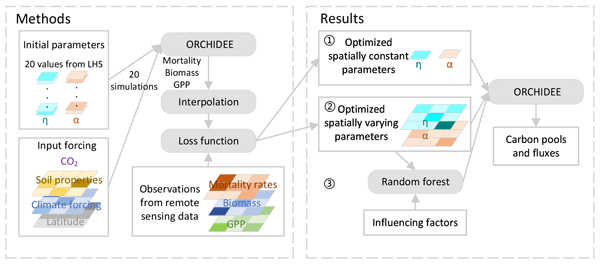
Lei Zhu, Philippe Ciais, Yitong Yao, Daniel Goll, Sebastiaan Luyssaert, Isabel Martínez Cano, Arthur Fendrich, Laurent Li, Hui Yang, Sassan Saatchi, Ricardo Dalagnol, and Wei Li
Geosci. Model Dev., 18, 4915–4933, https://doi.org/10.5194/gmd-18-4915-2025, https://doi.org/10.5194/gmd-18-4915-2025, 2025
Short summary
Short summary
This study enhances the accuracy of modeling the carbon dynamics of the Amazon rainforest by optimizing key model parameters based on satellite data. Using spatially varying parameters for tree mortality and photosynthesis, we improved predictions of biomass, productivity, and tree mortality. Our findings highlight the critical role of wood density and water availability in forest processes, offering insights to use in refining global carbon cycle models.
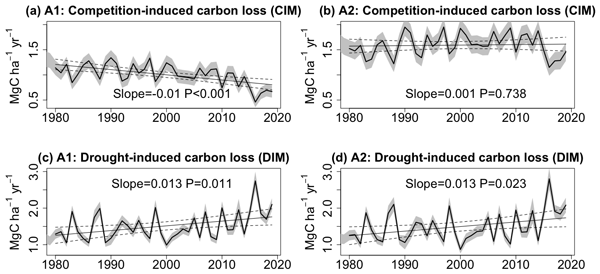
Yitong Yao, Philippe Ciais, Emilie Joetzjer, Wei Li, Lei Zhu, Yujie Wang, Christian Frankenberg, and Nicolas Viovy
Earth Syst. Dynam., 15, 763–778, https://doi.org/10.5194/esd-15-763-2024, https://doi.org/10.5194/esd-15-763-2024, 2024
Short summary
Short summary
Elevated CO2 concentration (eCO2) is critical for shaping the future path of forest carbon uptake, while uncertainties remain about concurrent carbon loss. Here, we found that eCO2 might amplify competition-induced carbon loss, while the extent of drought-induced carbon loss hinges on the balance between heightened biomass density and water-saving benefits. This is the first time that such carbon loss responses to ongoing climate change have been quantified separately over the Amazon rainforest.
Daniel Cusworth, Daniel Varon, Dylan Jervis, Jason McKeever, Alexander Turner, Christian Frankenberg, John Worden, Andrew Thorpe, Jay Fahlen, Sudhanshu Pandey, Joannes Maasakkers, Ilse Aben, Annmarie Eldering, Riley Duren, Bradley Conrad, Tia Scarpelli, Daniel Bon, Mackenzie Huffman, Itziar Irakulis-Loitxate, Luis Guanter, Jason Schroeder, Benjamin Hmiel, Evan Sherwin, Sean Crowell, Eric Kort, Adam Brandt, Frances Reuland, Maryann Sargent, James East, and Daniel Jacob
EGUsphere, https://doi.org/10.5194/egusphere-2026-6060, https://doi.org/10.5194/egusphere-2026-6060, 2026
This preprint is open for discussion and under review for Atmospheric Chemistry and Physics (ACP).
Short summary
Short summary
In this review, we summarize the current and anticipated state of satellite remote sensing for point sources. In particular, we are provide and update to the fleet of point source imaging satellites, summarize the nuance around data availability and revisit, detail data processing pipelines and validation procedures, describe how to benchmark detection performance, and finally, describe demonstrated use-cases for satellite point source observations.
Yitong Yao, Vincent Humphrey, Alexandra G. Konings, Jeffrey D. Wood, Yujie Wang, Ke Liu, Dien Wu, and Christian Frankenberg
EGUsphere, https://doi.org/10.5194/egusphere-2026-4858, https://doi.org/10.5194/egusphere-2026-4858, 2026
This preprint is open for discussion and under review for Geoscientific Model Development (GMD).
Short summary
Short summary
This study presents the first information-content analysis of mono-band and dual-band VOD observations for jointly retrieving vegetation water content, canopy temperature, and vegetation structure using an electromagnetic model, Bayesian inversion, and observing system simulation experiments. Our findings establish a new framework for interpreting VOD dynamics and provide practical guidance for the design of future multi-frequency microwave missions and retrieval algorithms.
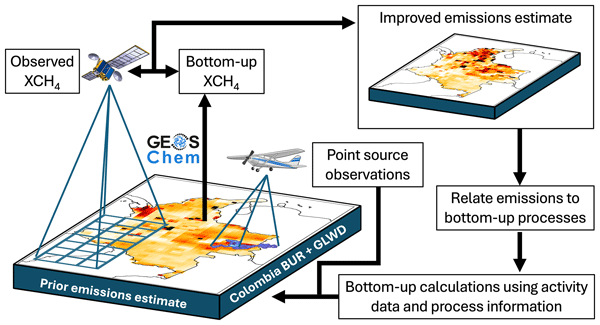
Sarah E. Hancock, Daniel J. Jacob, Rodrigo Jimenez, Andrés Ardila, Luis Morales-Rincon, Néstor Rojas, Lucas A. Estrada, Nicholas Balasus, James D. East, Melissa P. Sulprizio, Xiaolin Wang, James L. France, Lauren Potyk, Elise Penn, Zichong Chen, Daniel J. Varon, Christian Frankenberg, Marci Baranski, Andreea Calcan, and Robert J. Parker
Atmos. Chem. Phys., 26, 10455–10476, https://doi.org/10.5194/acp-26-10455-2026, https://doi.org/10.5194/acp-26-10455-2026, 2026
Short summary
Short summary
We combined satellite observations with detailed national data to improve estimates of Colombia’s methane emissions. Our results show that total methane emissions are higher than reported, with the biggest differences from fossil fuels. This approach demonstrates how satellite data can make national greenhouse gas reporting more accurate and transparent under the Paris Agreement.
Thomas Plewa, André Butz, Christian Frankenberg, Andrew K. Thorpe, and Julia Marshall
EGUsphere, https://doi.org/10.5194/egusphere-2026-2572, https://doi.org/10.5194/egusphere-2026-2572, 2026
Short summary
Short summary
In this paper, we present an improved deep learning method to estimate emissions of methane plumes from 2-D imagery. We present a new neural network architecture that provides insight into the wind speed used for the emission estimation and apply it to synthetic data that were used in previous studies. Our analysis illustrates that the performance increases by around 40% compared to the previous version, and that external wind speed data can be used to verify and improve the model's predictions.
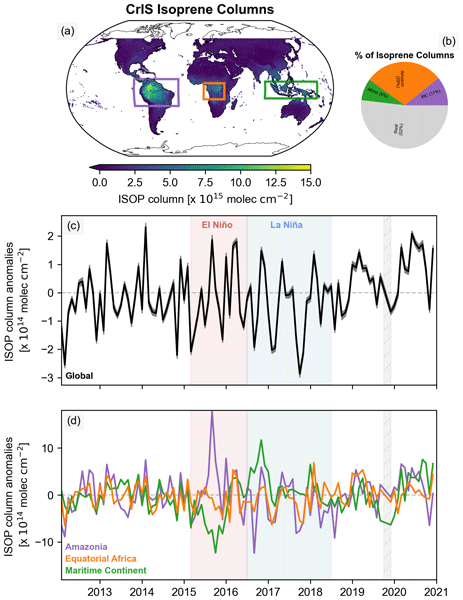
James Young Suk Yoon, Kelley C. Wells, Dylan B. Millet, Christian Frankenberg, Suniti Sanghavi, Abigail L. S. Swann, Joel A. Thornton, and Alexander J. Turner
Atmos. Chem. Phys., 26, 4509–4529, https://doi.org/10.5194/acp-26-4509-2026, https://doi.org/10.5194/acp-26-4509-2026, 2026
Short summary
Short summary
Isoprene is a molecule emitted by trees that is oxidized in the atmosphere within hours. Much of the isoprene globally is emitted in the remote tropics, where we have few direct observations of isoprene. Here, we use new satellite retrievals of isoprene to infer drivers of tropical isoprene variability. Across three regions, isoprene column variability is controlled by different factors, namely changes in isoprene emissions or changes in natural nitrogen oxide sources, like soils and fires.
Christian Mark Salvador, Jeffrey D. Wood, Emma Cochran, Hunter A. Seubert, Bella Kamplain, Sami S. Overby, Kevin Birdwell, Lianhong Gu, and Melanie A. Mayes
Atmos. Chem. Phys., 25, 16611–16629, https://doi.org/10.5194/acp-25-16611-2025, https://doi.org/10.5194/acp-25-16611-2025, 2025
Short summary
Short summary
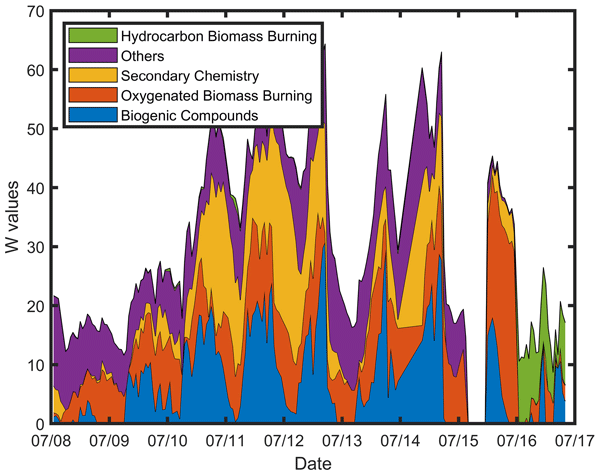
Critical volatile organic compounds (VOCs) were monitored in a temperate deciduous forest in the Midwestern US using Proton Transfer Reaction Time of Flight Mass Spectrometer. The forests contained diverse biogenic sources and were influenced by short- and long-range transport of anthropogenic emissions. Extreme heat and wildfire events increased VOC concentrations during the study, offering crucial insights into emission dynamics and their potential impacts on future climate scenarios.
Lei Zhu, Philippe Ciais, Yitong Yao, Daniel Goll, Sebastiaan Luyssaert, Isabel Martínez Cano, Arthur Fendrich, Laurent Li, Hui Yang, Sassan Saatchi, Ricardo Dalagnol, and Wei Li
Geosci. Model Dev., 18, 4915–4933, https://doi.org/10.5194/gmd-18-4915-2025, https://doi.org/10.5194/gmd-18-4915-2025, 2025
Short summary
Short summary
This study enhances the accuracy of modeling the carbon dynamics of the Amazon rainforest by optimizing key model parameters based on satellite data. Using spatially varying parameters for tree mortality and photosynthesis, we improved predictions of biomass, productivity, and tree mortality. Our findings highlight the critical role of wood density and water availability in forest processes, offering insights to use in refining global carbon cycle models.
Basam Dahy, Yi Yin, Prashanth Marpu, Catherine Benedicta Nixon, and Rita Sousa
Int. Arch. Photogramm. Remote Sens. Spatial Inf. Sci., XLVIII-G-2025, 339–344, https://doi.org/10.5194/isprs-archives-XLVIII-G-2025-339-2025, https://doi.org/10.5194/isprs-archives-XLVIII-G-2025-339-2025, 2025
Yitong Yao, Philippe Ciais, Emilie Joetzjer, Wei Li, Lei Zhu, Yujie Wang, Christian Frankenberg, and Nicolas Viovy
Earth Syst. Dynam., 15, 763–778, https://doi.org/10.5194/esd-15-763-2024, https://doi.org/10.5194/esd-15-763-2024, 2024
Short summary
Short summary
Elevated CO2 concentration (eCO2) is critical for shaping the future path of forest carbon uptake, while uncertainties remain about concurrent carbon loss. Here, we found that eCO2 might amplify competition-induced carbon loss, while the extent of drought-induced carbon loss hinges on the balance between heightened biomass density and water-saving benefits. This is the first time that such carbon loss responses to ongoing climate change have been quantified separately over the Amazon rainforest.
Juliëtte C. S. Anema, Klaas Folkert Boersma, Piet Stammes, Gerbrand Koren, William Woodgate, Philipp Köhler, Christian Frankenberg, and Jacqui Stol
Biogeosciences, 21, 2297–2311, https://doi.org/10.5194/bg-21-2297-2024, https://doi.org/10.5194/bg-21-2297-2024, 2024
Short summary
Short summary
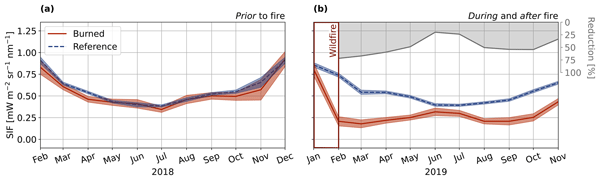
To keep the Paris agreement goals within reach, negative emissions are necessary. They can be achieved with mitigation techniques, such as reforestation, which remove CO2 from the atmosphere. While governments have pinned their hopes on them, there is not yet a good set of tools to objectively determine whether negative emissions do what they promise. Here we show how satellite measurements of plant fluorescence are useful in detecting carbon uptake due to reforestation and vegetation regrowth.
Russell Doughty, Yujie Wang, Jennifer Johnson, Nicholas Parazoo, Troy Magney, Zoe Pierrat, Xiangming Xiao, Luis Guanter, Philipp Köhler, Christian Frankenberg, Peter Somkuti, Shuang Ma, Yuanwei Qin, Sean Crowell, and Berrien Moore III
EGUsphere, https://doi.org/10.22541/essoar.168167172.20799710/v1, https://doi.org/10.22541/essoar.168167172.20799710/v1, 2024
Preprint archived
Short summary
Short summary
Here we present a novel model of global photosynthesis, ChloFluo, which uses spaceborne chlorophyll fluorescence to estimate the amount of photosynthetically active radiation absorbed by chlorophyll. Potential uses of our model are to advance our understanding of the timing and magnitude of photosynthesis, its effect on atmospheric carbon dioxide fluxes, and vegetation response to climate events and change.
Ke Liu, Yujie Wang, Troy S. Magney, and Christian Frankenberg
Biogeosciences, 21, 1501–1516, https://doi.org/10.5194/bg-21-1501-2024, https://doi.org/10.5194/bg-21-1501-2024, 2024
Short summary
Short summary
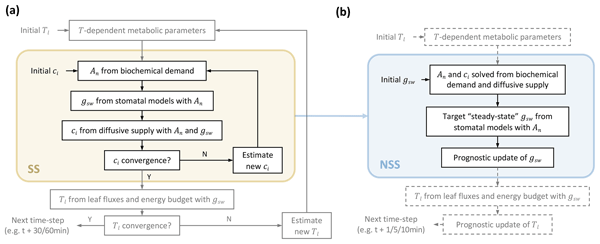
Stomata are pores on leaves that regulate gas exchange between plants and the atmosphere. Existing land models unrealistically assume stomata can jump between steady states when the environment changes. We implemented dynamic modeling to predict gradual stomatal responses at different scales. Results suggested that considering this effect on plant behavior patterns in diurnal cycles was important. Our framework also simplified simulations and can contribute to further efficiency improvements.
Vincent Humphrey and Christian Frankenberg
Biogeosciences, 20, 1789–1811, https://doi.org/10.5194/bg-20-1789-2023, https://doi.org/10.5194/bg-20-1789-2023, 2023
Short summary
Short summary
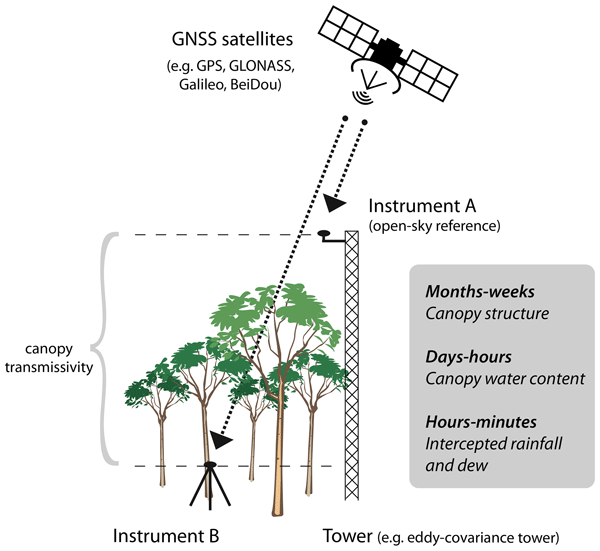
Microwave satellites can be used to monitor how vegetation biomass changes over time or how droughts affect the world's forests. However, such satellite data are still difficult to validate and interpret because of a lack of comparable field observations. Here, we present a remote sensing technique that uses the Global Navigation Satellite System (GNSS) as a makeshift radar, making it possible to observe canopy transmissivity at any existing environmental research site in a cost-efficient way.

Yujie Wang and Christian Frankenberg
Biogeosciences, 19, 4705–4714, https://doi.org/10.5194/bg-19-4705-2022, https://doi.org/10.5194/bg-19-4705-2022, 2022
Short summary
Short summary
Plant hydraulics is often misrepresented in topical research. We highlight the commonly seen ambiguities and/or mistakes, with equations and figures to help visualize the potential biases. We recommend careful thinking when using or modifying existing plant hydraulic terms, methods, and models.
Yujie Wang and Christian Frankenberg
Biogeosciences Discuss., https://doi.org/10.5194/bg-2022-172, https://doi.org/10.5194/bg-2022-172, 2022
Revised manuscript not accepted
Short summary
Short summary
Leaf light absorption coefficient is often not measured along with leaf gas exchange, but assumed to be constant. This potentially causes biases in estimated photosynthetic capacity and modeled photosynthetic rates. We explored how leaf light absorption features and light source may impact the photosynthesis modeling, and found that the biases are dependent of model assumptions. Researchers need to be more cautious with these inaccurate assumptions in photosynthesis models.
Daniel J. Jacob, Daniel J. Varon, Daniel H. Cusworth, Philip E. Dennison, Christian Frankenberg, Ritesh Gautam, Luis Guanter, John Kelley, Jason McKeever, Lesley E. Ott, Benjamin Poulter, Zhen Qu, Andrew K. Thorpe, John R. Worden, and Riley M. Duren
Atmos. Chem. Phys., 22, 9617–9646, https://doi.org/10.5194/acp-22-9617-2022, https://doi.org/10.5194/acp-22-9617-2022, 2022
Short summary
Short summary
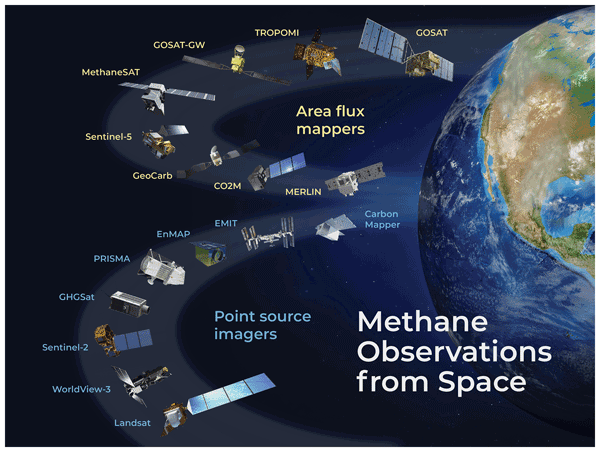
We review the capability of satellite observations of atmospheric methane to quantify methane emissions on all scales. We cover retrieval methods, precision requirements, inverse methods for inferring emissions, source detection thresholds, and observations of system completeness. We show that current instruments already enable quantification of regional and national emissions including contributions from large point sources. Coverage and resolution will increase significantly in coming years.
Russell Doughty, Thomas P. Kurosu, Nicholas Parazoo, Philipp Köhler, Yujie Wang, Ying Sun, and Christian Frankenberg
Earth Syst. Sci. Data, 14, 1513–1529, https://doi.org/10.5194/essd-14-1513-2022, https://doi.org/10.5194/essd-14-1513-2022, 2022
Short summary
Short summary
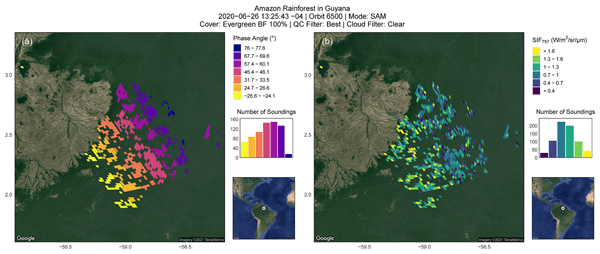
We describe and compare solar-induced chlorophyll fluorescence data produced by NASA from the Greenhouse Gases Observing Satellite (GOSAT) and the Orbiting Carbon Observatory-2 (OCO-2) and OCO-3 platforms.
Johannes Gensheimer, Alexander J. Turner, Philipp Köhler, Christian Frankenberg, and Jia Chen
Biogeosciences, 19, 1777–1793, https://doi.org/10.5194/bg-19-1777-2022, https://doi.org/10.5194/bg-19-1777-2022, 2022
Short summary
Short summary
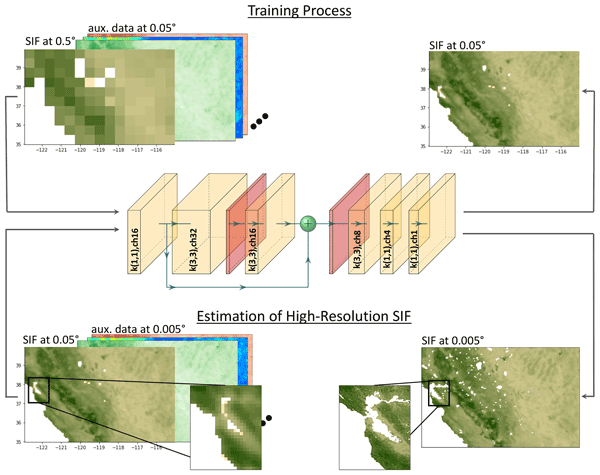
We develop a convolutional neural network, named SIFnet, that increases the spatial resolution of SIF from TROPOMI by a factor of 10 to a spatial resolution of 0.005°. SIFnet utilizes coarse SIF observations, together with a broad range of high-resolution auxiliary data. The insights gained from interpretable machine learning techniques allow us to make quantitative claims about the relationships between SIF and other common parameters related to photosynthesis.
Yujie Wang and Christian Frankenberg
Biogeosciences, 19, 29–45, https://doi.org/10.5194/bg-19-29-2022, https://doi.org/10.5194/bg-19-29-2022, 2022
Short summary
Short summary
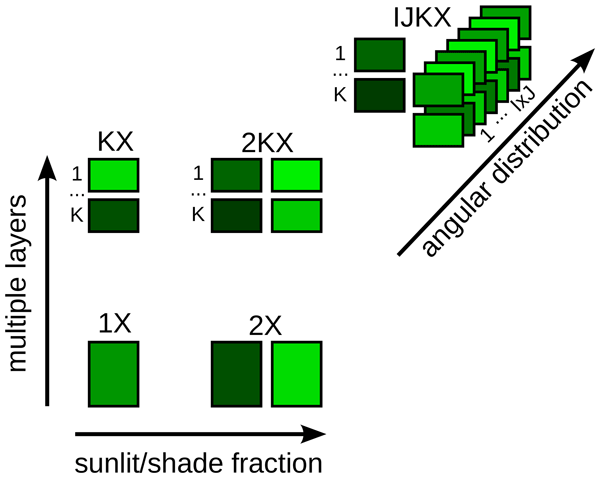
Modeling vegetation canopy is important in predicting whether the land remains a carbon sink to mitigate climate change in the near future. Vegetation canopy model complexity, however, impacts the model-predicted carbon and water fluxes as well as canopy fluorescence, even if the same suite of model inputs is used. Given the biases caused by canopy model complexity, we recommend not misusing parameters inverted using different models or assumptions.

Alexander J. Turner, Philipp Köhler, Troy S. Magney, Christian Frankenberg, Inez Fung, and Ronald C. Cohen
Biogeosciences, 18, 6579–6588, https://doi.org/10.5194/bg-18-6579-2021, https://doi.org/10.5194/bg-18-6579-2021, 2021
Short summary
Short summary
This work builds a high-resolution estimate (500 m) of gross primary productivity (GPP) over the US using satellite measurements of solar-induced chlorophyll fluorescence (SIF) from the TROPOspheric Monitoring Instrument (TROPOMI) between 2018 and 2020. We identify ecosystem-specific scaling factors for estimating gross primary productivity (GPP) from TROPOMI SIF. Extreme precipitation events drive four regional GPP anomalies that account for 28 % of year-to-year GPP differences across the US.
Siraput Jongaramrungruang, Georgios Matheou, Andrew K. Thorpe, Zhao-Cheng Zeng, and Christian Frankenberg
Atmos. Meas. Tech., 14, 7999–8017, https://doi.org/10.5194/amt-14-7999-2021, https://doi.org/10.5194/amt-14-7999-2021, 2021
Short summary
Short summary
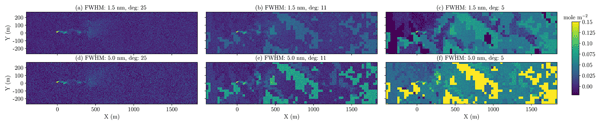
This study shows how precision error and bias in column methane retrieval change with different instrument specifications and the impact of spectrally complex surface albedos on retrievals. We show how surface interferences can be mitigated with an optimal spectral resolution and a higher polynomial degree in a retrieval process. The findings can inform future satellite instrument designs to have robust observations capable of separating real CH4 plume enhancements from surface interferences.
Luis Guanter, Cédric Bacour, Andreas Schneider, Ilse Aben, Tim A. van Kempen, Fabienne Maignan, Christian Retscher, Philipp Köhler, Christian Frankenberg, Joanna Joiner, and Yongguang Zhang
Earth Syst. Sci. Data, 13, 5423–5440, https://doi.org/10.5194/essd-13-5423-2021, https://doi.org/10.5194/essd-13-5423-2021, 2021
Short summary
Short summary
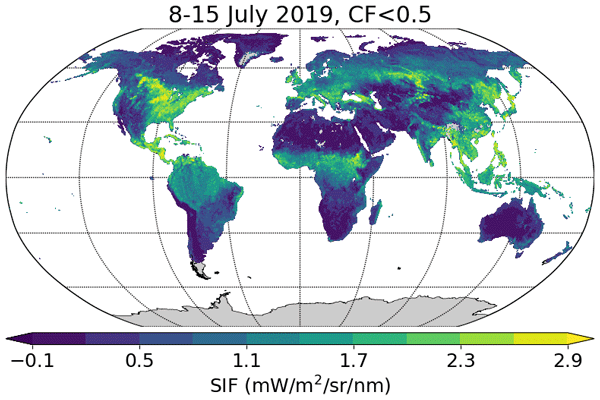
Sun-induced chlorophyll fluorescence (SIF) is an electromagnetic signal emitted by plants in the red and far-red parts of the spectrum. It has a functional link to photosynthesis and can be measured by satellite instruments, which makes it an important variable for the remote monitoring of the photosynthetic activity of vegetation ecosystems around the world. In this contribution we present a SIF dataset derived from the new Sentinel-5P TROPOMI missions.

Yujie Wang, Philipp Köhler, Liyin He, Russell Doughty, Renato K. Braghiere, Jeffrey D. Wood, and Christian Frankenberg
Geosci. Model Dev., 14, 6741–6763, https://doi.org/10.5194/gmd-14-6741-2021, https://doi.org/10.5194/gmd-14-6741-2021, 2021
Short summary
Short summary
We present the first step in testing a new land model as part of a new Earth system model. Our model links plant hydraulics, stomatal optimization theory, and a comprehensive canopy radiation scheme. We compared model-predicted carbon and water fluxes to flux tower observations and model-predicted sun-induced chlorophyll fluorescence to satellite retrievals. Our model quantitatively predicted the carbon and water fluxes as well as the canopy fluorescence yield.
Cited articles
Anderegg, W. R. L., Schwalm, C., Biondi, F., Camarero, J. J., Koch, G., Litvak, M., Ogle, K., Shaw, J. D., Shevliakova, E., Williams, A. P., Wolf, A., Ziaco, E., and Pacala, S.: FOREST ECOLOGY. Pervasive drought legacies in forest ecosystems and their implications for carbon cycle models, Science, 349, 528–532, https://doi.org/10.1126/science.aab1833, 2015.
Ball, J. T., Woodrow, I. E., and Berry, J. A.: A model predicting stomatal conductance and its contribution to the control of photosynthesis under different environmental conditions, in: Progress in Photosynthesis Research, Springer Netherlands, Dordrecht, 221–224, https://doi.org/10.1007/978-94-017-0519-6_48, 1987.
Basara, J. B., Christian, J. I., Wakefield, R. A., Otkin, J. A., Hunt, E. H., and Brown, D. P.: The evolution, propagation, and spread of flash drought in the Central United States during 2012, Environ. Res. Lett., 14, 084025, https://doi.org/10.1088/1748-9326/ab2cc0, 2019.
Bastos, A., Ciais, P., Friedlingstein, P., Sitch, S., Pongratz, J., Fan, L., Wigneron, J. P., Weber, U., Reichstein, M., Fu, Z., Anthoni, P., Arneth, A., Haverd, V., Jain, A. K., Joetzjer, E., Knauer, J., Lienert, S., Loughran, T., McGuire, P. C., Tian, H., Viovy, N., and Zaehle, S.: Direct and seasonal legacy effects of the 2018 heat wave and drought on European ecosystem productivity, Sci. Adv., 6, eaba2724, https://doi.org/10.1126/sciadv.aba2724, 2020.
Benson, M. C., Miniat, C. F., Oishi, A. C., Denham, S. O., Domec, J.-C., Johnson, D. M., Missik, J. E., Phillips, R. P., Wood, J. D., and Novick, K. A.: The xylem of anisohydric Quercus alba L. is more vulnerable to embolism than isohydric codominants, Plant Cell Environ., 45, 329–346, https://doi.org/10.1111/pce.14244, 2022.
Blanken, P. D., Monson, R. K., Burns, S. P., Bowling, D. R., Turnipseed, A. A., and Knowles, J. F.: AmeriFlux FLUXNET-1F US-NR1 Niwot Ridge Forest (LTER NWT1), Ver. v1.3_r1, AmeriFlux AMP [data set], https://doi.org/10.17190/AMF/1871141, 2026.
Braghiere, R. K., Wang, Y., Doughty, R., Sousa, D., Magney, T., Widlowski, J.-L., Longo, M., Bloom, A. A., Worden, J., Gentine, P., and Frankenberg, C.: Accounting for canopy structure improves hyperspectral radiative transfer and sun-induced chlorophyll fluorescence representations in a new generation Earth System model, Remote Sens. Environ., 261, 112497, https://doi.org/10.1016/j.rse.2021.112497, 2021.
Classen, A., Gough, C., Bohrer, G., Lenters, J., and Curtis, P.: AmeriFlux FLUXNET-1F US-UMB Univ. of Mich. Biological Station, Ver. 3-5, AmeriFlux AMP [data set], https://doi.org/10.17190/AMF/2204882, 2023.
De Kauwe, M. G., Kala, J., Lin, Y.-S., Pitman, A. J., Medlyn, B. E., Duursma, R. A., Abramowitz, G., Wang, Y.-P., and Miralles, D. G.: A test of an optimal stomatal conductance scheme within the CABLE land surface model, Geosci. Model Dev., 8, 431–452, https://doi.org/10.5194/gmd-8-431-2015, 2015.
De Kauwe, M. G., Medlyn, B. E., Pitman, A. J., Drake, J. E., Ukkola, A., Griebel, A., Pendall, E., Prober, S., and Roderick, M.: Examining the evidence for decoupling between photosynthesis and transpiration during heat extremes, Biogeosciences, 16, 903–916, https://doi.org/10.5194/bg-16-903-2019, 2019.
Drake, J. E., Power, S. A., Duursma, R. A., Medlyn, B. E., Aspinwall, M. J., Choat, B., Creek, D., Eamus, D., Maier, C., Pfautsch, S., Smith, R. A., Tjoelker, M. G., and Tissue, D. T.: Stomatal and non-stomatal limitations of photosynthesis for four tree species under drought: A comparison of model formulations, Agric. For. Meteorol., 247, 454–466, https://doi.org/10.1016/j.agrformet.2017.08.026, 2017.
Duursma, R. A.: Plantecophys–an R package for analysing and modelling leaf gas exchange data, PLoS One, 10, e0143346, https://doi.org/10.1371/journal.pone.0143346, 2015.
Egea, G., Verhoef, A., and Vidale, P. L.: Towards an improved and more flexible representation of water stress in coupled photosynthesis–stomatal conductance models, Agric. For. Meteorol., 151, 1370–1384, https://doi.org/10.1016/j.agrformet.2011.05.019, 2011.
Eller, C. B., Rowland, L., Mencuccini, M., Rosas, T., Williams, K., Harper, A., Medlyn, B. E., Wagner, Y., Klein, T., Teodoro, G. S., Oliveira, R. S., Matos, I. S., Rosado, B. H. P., Fuchs, K., Wohlfahrt, G., Montagnani, L., Meir, P., Sitch, S., and Cox, P. M.: Stomatal optimization based on xylem hydraulics (SOX) improves land surface model simulation of vegetation responses to climate, New Phytol., 226, 1622–1637, https://doi.org/10.1111/nph.16419, 2020.
Fang, J. and Gentine, P.: Exploring optimal complexity for water stress representation in terrestrial carbon models: A hybrid-machine learning model approach, J. Adv. Model. Earth Syst., 16, https://doi.org/10.1029/2024ms004308, 2024.
Farquhar, G. D., von Caemmerer, S., and Berry, J. A.: A biochemical model of photosynthetic CO2 assimilation in leaves of C3 species, Planta, 149, 78–90, https://doi.org/10.1007/BF00386231, 1980.
Fatichi, S. and Pappas, C.: Constrained variability of modeled T:ET ratio across biomes: Transpiration:Evapotranspiration Ratio, Geophys. Res. Lett., 44, 6795–6803, https://doi.org/10.1002/2017GL074041, 2017.
Flexas, J., Ribas-Carbó, M., Bota, J., Galmés, J., Henkle, M., Martínez-Cañellas, S., and Medrano, H.: Decreased Rubisco activity during water stress is not induced by decreased relative water content but related to conditions of low stomatal conductance and chloroplast CO2 concentration, New Phytol., 172, 73–82, https://doi.org/10.1111/j.1469-8137.2006.01794.x, 2006.
Frank, J., Valentine, G., and Massman, B.: AmeriFlux FLUXNET-1F US-GLE GLEES, Ver. 3-5, AmeriFlux AMP [data set], https://doi.org/10.17190/AMF/1871136, 2022.
Galmés, J., Medrano, H., and Flexas, J.: Photosynthetic limitations in response to water stress and recovery in Mediterranean plants with different growth forms, New Phytol., 175, 81–93, https://doi.org/10.1111/j.1469-8137.2007.02087.x, 2007.
Galmés, J., Aranjuelo, I., Medrano, H., and Flexas, J.: Variation in Rubisco content and activity under variable climatic factors, Photosynth. Res., 117, 73–90, https://doi.org/10.1007/s11120-013-9861-y, 2013.
Gimeno, T. E., Saavedra, N., Ogée, J., Medlyn, B. E., and Wingate, L.: A novel optimization approach incorporating non-stomatal limitations predicts stomatal behaviour in species from six plant functional types, J. Exp. Bot., 70, 1639–1651, https://doi.org/10.1093/jxb/erz020, 2019.
Gough, C., Bohrer, G., and Curtis, P.: AmeriFlux FLUXNET-1F US-UMd UMBS Disturbance, Ver. 4-6, AmeriFlux AMP [data set], https://doi.org/10.17190/AMF/1881597, 2024.
Gourlez de la Motte, L., Beauclaire, Q., Heinesch, B., Cuntz, M., Foltýnová, L., Šigut, L., Kowalska, N., Manca, G., Ballarin, I. G., Vincke, C., Roland, M., Ibrom, A., Lousteau, D., Siebicke, L., Neiryink, J., and Longdoz, B.: Non-stomatal processes reduce gross primary productivity in temperate forest ecosystems during severe edaphic drought, Philos. T. R. Soc. Lond. B, 375, 20190527, https://doi.org/10.1098/rstb.2019.0527, 2020.
Gu, L., Pallardy, S. G., Tu, K., Law, B. E., and Wullschleger, S. D.: Reliable estimation of biochemical parameters from C3 leaf photosynthesis-intercellular carbon dioxide response curves: Estimating FvCB model parameters, Plant Cell Environ., 33, 1852–1874, https://doi.org/10.1111/j.1365-3040.2010.02192.x, 2010.
Gu, L., Pallardy, S. G., Hosman, K. P., and Sun, Y.: Drought-influenced mortality of tree species with different predawn leaf water dynamics in a decade-long study of a central US forest, Biogeosciences, 12, 2831–2845, https://doi.org/10.5194/bg-12-2831-2015, 2015.
Gu, L., Pallardy, S. G., Yang, B., Hosman, K. P., Mao, J., Ricciuto, D., Shi, X., and Sun, Y.: Testing a land model in ecosystem functional space via a comparison of observed and modeled ecosystem flux responses to precipitation regimes and associated stresses in a Central U.S. forest: Test Model in Ecosystem Functional Space, J. Geophys. Res.-Biogeo., 121, 1884–1902, https://doi.org/10.1002/2015JG003302, 2016.
He, B., Liu, J., Guo, L., Wu, X., Xie, X., Zhang, Y., Chen, C., Zhong, Z., and Chen, Z.: Recovery of ecosystem carbon and energy fluxes from the 2003 drought in Europe and the 2012 drought in the United States, Geophys. Res. Lett., 45, 4879–4888, https://doi.org/10.1029/2018GL077518, 2018.
Kannenberg, S. A., Schwalm, C. R., and Anderegg, W. R. L.: Ghosts of the past: how drought legacy effects shape forest functioning and carbon cycling, Ecol. Lett., 23, 891–901, https://doi.org/10.1111/ele.13485, 2020.
Keenan, T., García, R., Friend, A. D., Zaehle, S., Gracia, C., and Sabate, S.: Improved understanding of drought controls on seasonal variation in Mediterranean forest canopy CO2 and water fluxes through combined in situ measurements and ecosystem modelling, Biogeosciences, 6, 1423–1444, https://doi.org/10.5194/bg-6-1423-2009, 2009.
Keenan, T., Sabate, S., and Gracia, C.: Soil water stress and coupled photosynthesis–conductance models: Bridging the gap between conflicting reports on the relative roles of stomatal, mesophyll conductance and biochemical limitations to photosynthesis, Agric. For. Meteorol., 150, 443–453, https://doi.org/10.1016/j.agrformet.2010.01.008, 2010.
Kennedy, D., Swenson, S., Oleson, K. W., Lawrence, D. M., Fisher, R., da Costa, A. C. L., and Gentine, P.: Implementing Plant Hydraulics in the Community Land Model, Version 5, J. Adv. Model. Earth Sy., 11, 485–513, https://doi.org/10.1029/2018MS001500, 2019.
Krich, C., Mahecha, M. D., Migliavacca, M., De Kauwe, M. G., Griebel, A., Runge, J., and Miralles, D. G.: Decoupling between ecosystem photosynthesis and transpiration: a last resort against overheating, Environ. Res. Lett., 17, 044013, https://doi.org/10.1088/1748-9326/ac583e, 2022.
Leuning, R.: A critical appraisal of a combined stomatal-photosynthesis model for C3 plants, Plant Cell Environ., 18, 339–355, https://doi.org/10.1111/j.1365-3040.1995.tb00370.x, 1995.
Matusick, G., Ruthrof, K. X., Kala, J., Brouwers, N. C., Breshears, D. D., and Hardy, G. E. S. J.: Chronic historical drought legacy exacerbates tree mortality and crown dieback during acute heatwave-compounded drought, Environ. Res. Lett., 13, 095002, https://doi.org/10.1088/1748-9326/aad8cb, 2018.
Medlyn, B. E., Duursma, R. A., Eamus, D., Ellsworth, D. S., Prentice, I. C., Barton, C. V. M., Crous, K. Y., de Angelis, P., Freeman, M., and Wingate, L.: Reconciling the optimal and empirical approaches to modelling stomatal conductance: RECONCILING OPTIMAL AND EMPIRICAL STOMATAL MODELS, Glob. Chang. Biol., 17, 2134–2144, https://doi.org/10.1111/j.1365-2486.2010.02375.x, 2011.
Müller, L. M. and Bahn, M.: Drought legacies and ecosystem responses to subsequent drought, Glob. Chang. Biol., 28, 5086–5103, https://doi.org/10.1111/gcb.16270, 2022.
Neufeld, H. S., Grantz, D. A., Meinzer, F. C., Goldstein, G., Crisosto, G. M., and Crisosto, C.: Genotypic variability in vulnerability of leaf xylem to cavitation in water-stressed and well-irrigated sugarcane, Plant Physiol., 100, 1020–1028, https://doi.org/10.1104/pp.100.2.1020, 1992.
Nie, C., Huang, Y., Zhang, S., Yang, Y., Zhou, S., Lin, C., and Wang, G.: Effects of soil water content on forest ecosystem water use efficiency through changes in transpiration/evapotranspiration ratio, Agric. For. Meteorol., 308–309, 108605, https://doi.org/10.1016/j.agrformet.2021.108605, 2021.
Niinemets, Ü. and Keenan, T.: Photosynthetic responses to stress in Mediterranean evergreens: Mechanisms and models, Environ. Exp. Bot., 103, 24–41, https://doi.org/10.1016/j.envexpbot.2013.11.008, 2014.
Novick, K. and Phillips, R.: AmeriFlux FLUXNET-1F US-MMS Morgan Monroe State Forest [data set], https://doi.org/10.17190/AMF/1854369, 2022.
Pallardy, S. G., Gu, L., Wood, J. D., Hosman, K. P., and Sun, Y.: Predawn Leaf Water Potential of Oak-Hickory Forest at Missouri Ozark (MOFLUX) Site: 2004–2021, ORNL Terrestrial Ecosystem Science SFA, ESS-DIVE repository [data set], https://doi.org/10.3334/CDIAC/ORNLSFA.004, 2018.
Piao, S., Zhang, X., Chen, A., Liu, Q., Lian, X., Wang, X., Peng, S., and Wu, X.: The impacts of climate extremes on the terrestrial carbon cycle: A review, Sci. China Earth Sci., 62, 1551–1563, https://doi.org/10.1007/s11430-018-9363-5, 2019.
Rehschuh, R. and Ruehr, N. K.: Diverging responses of water and carbon relations during and after heat and hot drought stress in Pinus sylvestris, Tree Physiol., 42, 1532–1548, https://doi.org/10.1093/treephys/tpab141, 2022.
Reichstein, M., Tenhunen, J., Roupsard, O., Ourcival, J.-M., Rambal, S., Miglietta, F., Peressotti, A., Pecchiari, M., Tirone, G., and Valentini, R.: Inverse modeling of seasonal drought effects on canopy CO2/H2O exchange in three Mediterranean ecosystems, J. Geophys. Res., 108, https://doi.org/10.1029/2003jd003430, 2003.
Song, X., Zhou, G., He, Q., and Zhou, H.: Stomatal limitations to photosynthesis and their critical Water conditions in different growth stages of maize under water stress, Agric. Water Manag., 241, 106330, https://doi.org/10.1016/j.agwat.2020.106330, 2020.
Sperry, J. S., Venturas, M. D., Anderegg, W. R. L., Mencuccini, M., Mackay, D. S., Wang, Y., and Love, D. M.: Predicting stomatal responses to the environment from the optimization of photosynthetic gain and hydraulic cost, Plant Cell Environ., 40, 816–830, https://doi.org/10.1111/pce.12852, 2017.
Varone, L., Ribas-Carbo, M., Cardona, C., Gallé, A., Medrano, H., Gratani, L., and Flexas, J.: Stomatal and non-stomatal limitations to photosynthesis in seedlings and saplings of Mediterranean species pre-conditioned and aged in nurseries: Different response to water stress, Environ. Exp. Bot., 75, 235–247, https://doi.org/10.1016/j.envexpbot.2011.07.007, 2012.
Wang, Y. and Frankenberg, C.: On the impact of canopy model complexity on simulated carbon, water, and solar-induced chlorophyll fluorescence fluxes, Biogeosciences, 19, 29–45, https://doi.org/10.5194/bg-19-29-2022, 2022.
Wang, Y., Sperry, J. S., Anderegg, W. R. L., Venturas, M. D., and Trugman, A. T.: A theoretical and empirical assessment of stomatal optimization modeling, New Phytol., 227, 311–325, https://doi.org/10.1111/nph.16572, 2020.
Wang, Y., Köhler, P., He, L., Doughty, R., Braghiere, R. K., Wood, J. D., and Frankenberg, C.: Testing stomatal models at the stand level in deciduous angiosperm and evergreen gymnosperm forests using CliMA Land (v0.1), Geosci. Model Dev., 14, 6741–6763, https://doi.org/10.5194/gmd-14-6741-2021, 2021.
Wang, Y., Köhler, P., Braghiere, R. K., Longo, M., Doughty, R., Bloom, A. A., and Frankenberg, C.: GriddingMachine, a database and software for Earth system modeling at global and regional scales, Sci. Data, 9, 258, https://doi.org/10.1038/s41597-022-01346-x, 2022.
Wang, Y., Braghiere, R. K., Longo, M., Norton, A. J., Köhler, P., Doughty, R., Yin, Y., Bloom, A. A., and Frankenberg, C.: Modeling global vegetation gross primary productivity, transpiration and hyperspectral canopy radiative transfer simultaneously using a next generation land surface model – CliMA land, J. Adv. Model. Earth Syst., 15, https://doi.org/10.1029/2021ms002964, 2023.
Wilson, K. B., Baldocchi, D. D., and Hanson, P. J.: Quantifying stomatal and non-stomatal limitations to carbon assimilation resulting from leaf aging and drought in mature deciduous tree species, Tree Physiol., 20, 787–797, https://doi.org/10.1093/treephys/20.12.787, 2000.
Wolf, A., Akshalov, K., Saliendra, N., Johnson, D. A., and Laca, E. A.: Inverse estimation of Vcmax, leaf area index, and the Ball-Berry parameter from carbon and energy fluxes, J. Geophys. Res., 111, https://doi.org/10.1029/2005jd005927, 2006.
Wolf, S., Keenan, T. F., Fisher, J. B., Baldocchi, D. D., Desai, A. R., Richardson, A. D., Scott, R. L., Law, B. E., Litvak, M. E., Brunsell, N. A., Peters, W., and van der Laan-Luijkx, I. T.: Warm spring reduced carbon cycle impact of the 2012 US summer drought, P. Natl. Acad. Sci. USA, 113, 5880–5885, https://doi.org/10.1073/pnas.1519620113, 2016.
Wood, J. D., Gu, L., Hanson, P. J., Frankenberg, C., and Sack, L.: The ecosystem wilting point defines drought response and recovery of a Quercus-Carya forest, Glob. Chang. Biol., 29, 2015–2029, https://doi.org/10.1111/gcb.16582, 2023.
Wu, X., Liu, H., Li, X., Ciais, P., Babst, F., Guo, W., Zhang, C., Magliulo, V., Pavelka, M., Liu, S., Huang, Y., Wang, P., Shi, C., and Ma, Y.: Differentiating drought legacy effects on vegetation growth over the temperate Northern Hemisphere, Glob. Chang. Biol., 24, 504–516, https://doi.org/10.1111/gcb.13920, 2018.
Xu, C., McDowell, N. G., Fisher, R. A., Wei, L., Sevanto, S., Christoffersen, B. O., Weng, E., and Middleton, R. S.: Increasing impacts of extreme droughts on vegetation productivity under climate change, Nat. Clim. Chang., 9, 948–953, https://doi.org/10.1038/s41558-019-0630-6, 2019.
Xu, X., Medvigy, D., Powers, J. S., Becknell, J. M., and Guan, K.: Diversity in plant hydraulic traits explains seasonal and inter-annual variations of vegetation dynamics in seasonally dry tropical forests, New Phytol., 212, 80–95, https://doi.org/10.1111/nph.14009, 2016.
Yang, J., Duursma, R. A., De Kauwe, M. G., Kumarathunge, D., Jiang, M., Mahmud, K., Gimeno, T. E., Crous, K. Y., Ellsworth, D. S., Peters, J., Choat, B., Eamus, D., and Medlyn, B. E.: Incorporating non-stomatal limitation improves the performance of leaf and canopy models at high vapour pressure deficit, Tree Physiol., 39, 1961–1974, https://doi.org/10.1093/treephys/tpz103, 2019.
Yao, Y. and Wang, Y.: Improved model predictions of carbon and water fluxes by including drought legacy effects, Zenodo [code], https://doi.org/10.5281/zenodo.21831824, 2026.
Yao, Y., Joetzjer, E., Ciais, P., Viovy, N., Cresto Aleina, F., Chave, J., Sack, L., Bartlett, M., Meir, P., Fisher, R., and Luyssaert, S.: Forest fluxes and mortality response to drought: model description (ORCHIDEE-CAN-NHA r7236) and evaluation at the Caxiuanã drought experiment, Geosci. Model Dev., 15, 7809–7833, https://doi.org/10.5194/gmd-15-7809-2022, 2022.
Yu, X., Orth, R., Reichstein, M., Bahn, M., Klosterhalfen, A., Knohl, A., Koebsch, F., Migliavacca, M., Mund, M., Nelson, J. A., Stocker, B. D., Walther, S., and Bastos, A.: Contrasting drought legacy effects on gross primary productivity in a mixed versus pure beech forest, Biogeosciences, 19, 4315–4329, https://doi.org/10.5194/bg-19-4315-2022, 2022.
Yuan, H., Dai, Y., Xiao, Z., Ji, D., and Shangguan, W.: Reprocessing the MODIS Leaf Area Index products for land surface and climate modelling, Remote Sens. Environ., 115, 1171–1187, https://doi.org/10.1016/j.rse.2011.01.001, 2011.
Zhao, K., Ryu, Y., Hu, T., Garcia, M., Li, Y., Liu, Z., Londo, A., and Wang, C.: How to better estimate leaf area index and leaf angle distribution from digital hemispherical photography? Switching to a binary nonlinear regression paradigm, Methods Ecol. Evol., 10, 1864–1874, https://doi.org/10.1111/2041-210X.13273, 2019.
Zhou, L., Wang, S., Chi, Y., Li, Q., Huang, K., and Yu, Q.: Responses of photosynthetic parameters to drought in subtropical forest ecosystem of China, Sci. Rep., 5, 18254, https://doi.org/10.1038/srep18254, 2015.
Zhou, S., Duursma, R. A., Medlyn, B. E., Kelly, J. W. G., and Prentice, I. C.: How should we model plant responses to drought? An analysis of stomatal and non-stomatal responses to water stress, Agric. For. Meteorol., 182–183, 204–214, https://doi.org/10.1016/j.agrformet.2013.05.009, 2013.
Zhou, S., Medlyn, B., Sabaté, S., Sperlich, D., and Prentice, I. C.: Short-term water stress impacts on stomatal, mesophyll and biochemical limitations to photosynthesis differ consistently among tree species from contrasting climates, Tree Physiol., 34, 1035–1046, https://doi.org/10.1093/treephys/tpu072, 2014.
Zhou, S., Yu, B., Zhang, Y., Huang, Y., and Wang, G.: Partitioning evapotranspiration based on the concept of underlying water use efficiency, Water Resour. Res., 52, 1160–1175, https://doi.org/10.1002/2015WR017766, 2016.
Zhou, S.-X., Prentice, I. C., and Medlyn, B. E.: Bridging drought experiment and modeling: Representing the differential sensitivities of leaf gas exchange to drought, Front. Plant Sci., 9, 1965, https://doi.org/10.3389/fpls.2018.01965, 2018.
Short summary
Droughts can leave lasting "scars" that slow down recovery long after the rain returns. In this study, we found that models assuming plants recover immediately after drought performed poorly, while those allowing only partial recovery matched real observations much better. Accounting for these delayed recovery processes will make land surface models more accurate in predicting carbon and water cycles under future droughts.
Droughts can leave lasting "scars" that slow down recovery long after the rain returns. In this...


Altmetrics
Final-revised paper
Preprint