
Articles | Volume 23, issue 18
https://doi.org/10.5194/bg-23-6557-2026
© Author(s) 2026. This work is distributed under
the Creative Commons Attribution 4.0 License.
the Creative Commons Attribution 4.0 License.
https://doi.org/10.5194/bg-23-6557-2026
© Author(s) 2026. This work is distributed under
the Creative Commons Attribution 4.0 License.
the Creative Commons Attribution 4.0 License.
Research article
| 
18 Sep 2026
Research article |
| 18 Sep 2026
| 18 Sep 2026
Evaluating vegetation indices for monitoring drought and post-drought declines in European forest productivity

Department of Earth and Environmental Sciences, Lund University, Lund, Sweden
Tim Schacherl
Bioclimatology, University of Göttingen, Göttingen, Germany
Lars Eklundh
Department of Earth and Environmental Sciences, Lund University, Lund, Sweden
Hongxiao Jin
Department of Earth and Environmental Sciences, Lund University, Lund, Sweden
Anne Klosterhalfen
Bioclimatology, University of Göttingen, Göttingen, Germany
Alexander Knohl
Bioclimatology, University of Göttingen, Göttingen, Germany
Centre of Biodiversity and Sustainable Land Use, University of Göttingen, Göttingen, Germany
Natascha Kljun
Department of Earth and Environmental Sciences, Lund University, Lund, Sweden
Related authors
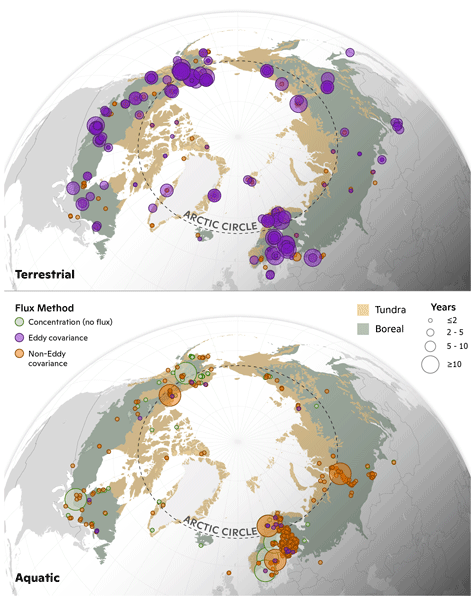
Anna-Maria Virkkala, Isabel Wargowsky, Judith Vogt, McKenzie A. Kuhn, Simran Madaan, Tiffany Windholz, Kyle A. Arndt, Gerard Rocher-Ros, Mathias Göckede, David Olefeldt, Edward A. G. Schuur, David Bastviken, Richard O'Keefe, Brendan M. Rogers, Jennifer D. Watts, Kelcy Kent, Kristoffer Aalstad, Kelly Aho, Joonatan Ala-Könni, Haley Alcock, Inge Althuizen, Christopher D. Arp, Jun Asanuma, Mika Aurela, Sivakiruthika Balathandayuthabani, Katrin Attermeyer, Alan Barr, Maialen Barret, Ochirbat Batkhishig, Christina Biasi, Mats P. Björkman, Andrew Black, Elena Blanc-Betes, Pascal Bodmer, Julia Boike, Abdullah Bolek, Frédéric Bouchard, Ingeborg Bussmann, Lea Cabrol, Eleonora Canfora, Sean Carey, Karel Castro-Morales, Namyi Chae, Andreas Christen, Torben R. Christensen, Casper T. Christiansen, Housen Chu, Graham Clark, Francois Clayer, Patrick Crill, Christopher Cunada, Scott J. Davidson, Joshua F. Dean, Sigrid Dengel, Matteo Detto, Catherine Dieleman, Florent Domine, Egor Dyukarev, Colin Edgar, Bo Elberling, Craig A. Emmerton, Eugenie Euskirchen, Grant Falvo, Thomas Friborg, Michelle Garneau, Mariasilvia Giamberini, Mikhail V. Glagolev, Miquel A. Gonzalez-Meler, Gustaf Granath, Jón Guðmundsson, Konsta Happonen, Yoshinobu Harazono, Lorna Harris, Josh Hashemi, Nicholas Hasson, Janna Heerah, Liam Heffernan, Manuel Helbig, Warren Helgason, Michal Heliasz, Greg Henry, Geert Hensgens, Tetsuya Hiyama, Beth Holmes, Macall Hock, David Holl, Jutta Holst, Thomas Holst, Gabriel Hould-Gosselin, Elyn Humphreys, Jacqueline Hung, Jussi Huotari, Hiroki Ikawa, Danil V. Ilyasov, Mamoru Ishikawa, Go Iwahana, Hiroki Iwata, Marcin Antoni Jackowicz-Korczynski, Joachim Jansen, Järvi Järveoja, Vincent E. J. Jassey, Rasmus Jensen, Katharina Jentzsch, Robert G. Jespersen, Carl-Fredrik Johannesson, Cheristy P. Jones, Anders Jonsson, Ji Young Jung, Sari Juutinen, Evan Kane, Jan Karlsson, Sergey Karsanaev, Kuno Kasak, Julia Kelly, Kasha Kempton, Marcus Klaus, George W. Kling, Natascha Kljun, Jacqueline Knutson, Hideki Kobayashi, John Kochendorfer, Kukka-Maaria Kohonen, Pasi Kolari, Mika Korkiakoski, Aino Korrensalo, Pirkko Kortelainen, Egle Koster, Kajar Koster, Ayumi Kotani, Praveena Krishnan, Juliya Kurbatova, Lars Kutzbach, Min Jung Kwon, Ethan D. Kyzivat, Jessica Lagroix, Theodore Langhorst, Elena Lapshina, Tuula Larmola, Klaus S. Larsen, Isabelle Laurion, Justin Ledman, Hanna Lee, A. Joshua Leffler, Lance Lesack, Anders Lindroth, David Lipson, Annalea Lohila, Efrén López-Blanco, Vincent L. St. Louis, Erik Lundin, Miska Luoto, Takashi Machimura, Marta Magnani, Avni Malhotra, Marja Maljanen, Ivan Mammarella, Elisa Männistö, Luca Belelli Marchesini, Phil Marsh, Pertti J. Martikainen, Maija E. Marushchak, Mikhail Mastepanov, Alex Mavrovic, Trofim Maximov, Christina Minions, Daniel F. Nadeau, Marco Montemayor, Tomoaki Morishita, Patrick Murphy, Erin Nicholls, Mats B. Nilsson, Anastasia Niyazova, Jenni Nordén, Koffi Dodji Noumonvi, Hannu Nykänen, Walter Oechel, Anne Ojala, Tomohiro Okadera, Sujan Pal, Alexey V. Panov, Tim Papakyriakou, Dario Papale, Sang-Jong Park, Frans-Jan W. Parmentier, Gilberto Pastorello, Mike Peacock, Matthias Peichl, Roman Petrov, Kyra St. Pierre, Norbert Pirk, Jessica Plein, Vilmantas Preskienis, Anatoly Prokushkin, Jukka Pumpanen, Hilary A. Rains, Niklas Rakos, Aleksi Räsänen, Helena Rautakoski, Riikka Rinnan, Janne Rinne, Adrian Rocha, Nigel Roulet, Alexandre Roy, Anna Rutgersson, Aleksandr F. Sabrekov, Torsten Sachs, Erik Sahlée, Alejandro Salazar, Henrique Oliveira Sawakuchi, Christopher Schulze, Roger Seco, Armando Sepulveda-Jauregui, Svetlana Serikova, Abbey Serrone, Hanna M. Silvennoinen, Sofie Sjogersten, June Skeeter, Jo Snöälv, Sebastian Sobek, Oliver Sonnentag, Emily H. Stanley, Maria Strack, Lena Strom, Patrick Sullivan, Ryan Sullivan, Anna Sytiuk, Torbern Tagesson, Pierre Taillardat, Julie Talbot, Suzanne E. Tank, Mario Tenuta, Irina Terenteva, Frederic Thalasso, Antoine Thiboult, Halldor Thorgeirsson, Fenix Garcia Tigreros, Margaret Torn, Amy Townsend-Small, Claire Treat, Alain Tremblay, Carlo Trotta, Eeva-Stiina Tuittila, Merritt Turetsky, Masahito Ueyama, Muhammad Umair, Aki Vähä, Lona van Delden, Maarten van Hardenbroek, Andrej Varlagin, Ruth K. Varner, Tarmo Virtanen, Elena Veretennikova, Timo Vesala, Carolina Voigt, Jorien E. Vonk, Robert Wagner, Katey Walter Anthony, Qinxue Wang, Masataka Watanabe, Hailey Webb, Jeffrey M. Welker, Andreas Westergaard-Nielsen, Sebastian Westermann, Jeffrey R. White, Christian Wille, Scott N. Williamson, Scott Zolkos, Donatella Zona, and Susan M. Natali
Earth Syst. Sci. Data, 18, 6357–6409, https://doi.org/10.5194/essd-18-6357-2026, https://doi.org/10.5194/essd-18-6357-2026, 2026
Short summary
Short summary
This dataset includes monthly measurements of carbon dioxide and methane exchange between land, water, and the atmosphere from over 1000 sites in Arctic and boreal regions. It combines measurements from a variety of ecosystems, including wetlands, forests, tundra, lakes, and rivers, gathered by over 260 researchers from 1984–2024. This dataset can be used to improve and reduce uncertainty in carbon budgets in order to strengthen our understanding of climate feedbacks in a warming world.
Erica Jaakkola, Johan Lindström, Julia Kelly, Natascha Kljun, and Thomas Holst
EGUsphere, https://doi.org/10.5194/egusphere-2026-5083, https://doi.org/10.5194/egusphere-2026-5083, 2026
This preprint is open for discussion and under review for Biogeosciences (BG).
Short summary
Short summary
Wildfires are increasing in boreal forests, but little is known about how they affect natural emissions of volatile compounds from forest soils. We measured these emissions during the first four years after a major wildfire in Sweden. Emission recovery depended strongly on fire severity, stand age, and post-fire management. Early emissions were largely driven by litter from damaged trees, highlighting how wildfire and forest management can influence atmospheric chemistry and climate feedbacks.
Julia Kelly, Stefan H. Doerr, Johan Ekroos, Theresa S. Ibáñez, Md. Rafikul Islam, Cristina Santín, Margarida Soares, and Natascha Kljun
EGUsphere, https://doi.org/10.5194/egusphere-2024-2016, https://doi.org/10.5194/egusphere-2024-2016, 2024
Preprint archived
Short summary
Short summary
We measured soil carbon fluxes during the first four years after a wildfire in the Swedish boreal forest. Soil CO2 emissions decreased substantially only when trees were killed by fire or by post-fire logging, but not when trees survived the fire and were left standing. Soil methane flux was not affected by fire. Logging trees already killed by fire had no additional impact on soil carbon fluxes. Post-fire forest management strategy impacted vegetation regrowth and carbon dynamics.
Janne Rinne, Patryk Łakomiec, Patrik Vestin, Joel D. White, Per Weslien, Julia Kelly, Natascha Kljun, Lena Ström, and Leif Klemedtsson
Biogeosciences, 19, 4331–4349, https://doi.org/10.5194/bg-19-4331-2022, https://doi.org/10.5194/bg-19-4331-2022, 2022
Short summary
Short summary
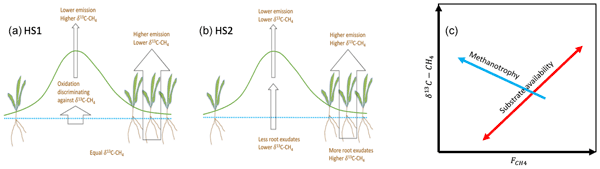
The study uses the stable isotope 13C of carbon in methane to investigate the origins of spatial and temporal variation in methane emitted by a temperate wetland ecosystem. The results indicate that methane production is more important for spatial variation than methane consumption by micro-organisms. Temporal variation on a seasonal timescale is most likely affected by more than one driver simultaneously.
Patryk Łakomiec, Jutta Holst, Niklas Rakos, Erik Lundin, Patrick Crill, Thomas Friborg, Hongxiao Jin, Lars Eklundh, and Janne Rinne
EGUsphere, https://doi.org/10.5194/egusphere-2026-5405, https://doi.org/10.5194/egusphere-2026-5405, 2026
This preprint is open for discussion and under review for Biogeosciences (BG).
Short summary
Short summary
Permafrost thaw can change how Arctic peatlands take up and release carbon. We compared carbon dioxide exchange in a Swedish peatland across areas with permafrost, partly thawed, and absent permafrost using measurements from two monitoring towers. The thawed and permafrost areas behaved similarly, while the area without permafrost showed stronger carbon uptake by plants and greater carbon release. These results suggest that carbon dioxide exchange may change less with thaw than methane.
José Ángel Callejas-Rodelas, Justus G. V. van Ramshorst, Alexander Knohl, Sarah Choe, Maren Langhof, and Christian Markwitz
EGUsphere, https://doi.org/10.5194/egusphere-2026-4973, https://doi.org/10.5194/egusphere-2026-4973, 2026
This preprint is open for discussion and under review for Biogeosciences (BG).
Short summary
Short summary
Temperate agroforestry systems took up more carbon dioxide than reference, conventional open cropland or grassland systems, without consuming more water from the soil. These findings are promising because they promote the implementation of agroforestry as a nature-based strategy to mitigate greenhouse gas emissions, and therefore climate change, in agricultural systems.
Anna-Maria Virkkala, Isabel Wargowsky, Judith Vogt, McKenzie A. Kuhn, Simran Madaan, Tiffany Windholz, Kyle A. Arndt, Gerard Rocher-Ros, Mathias Göckede, David Olefeldt, Edward A. G. Schuur, David Bastviken, Richard O'Keefe, Brendan M. Rogers, Jennifer D. Watts, Kelcy Kent, Kristoffer Aalstad, Kelly Aho, Joonatan Ala-Könni, Haley Alcock, Inge Althuizen, Christopher D. Arp, Jun Asanuma, Mika Aurela, Sivakiruthika Balathandayuthabani, Katrin Attermeyer, Alan Barr, Maialen Barret, Ochirbat Batkhishig, Christina Biasi, Mats P. Björkman, Andrew Black, Elena Blanc-Betes, Pascal Bodmer, Julia Boike, Abdullah Bolek, Frédéric Bouchard, Ingeborg Bussmann, Lea Cabrol, Eleonora Canfora, Sean Carey, Karel Castro-Morales, Namyi Chae, Andreas Christen, Torben R. Christensen, Casper T. Christiansen, Housen Chu, Graham Clark, Francois Clayer, Patrick Crill, Christopher Cunada, Scott J. Davidson, Joshua F. Dean, Sigrid Dengel, Matteo Detto, Catherine Dieleman, Florent Domine, Egor Dyukarev, Colin Edgar, Bo Elberling, Craig A. Emmerton, Eugenie Euskirchen, Grant Falvo, Thomas Friborg, Michelle Garneau, Mariasilvia Giamberini, Mikhail V. Glagolev, Miquel A. Gonzalez-Meler, Gustaf Granath, Jón Guðmundsson, Konsta Happonen, Yoshinobu Harazono, Lorna Harris, Josh Hashemi, Nicholas Hasson, Janna Heerah, Liam Heffernan, Manuel Helbig, Warren Helgason, Michal Heliasz, Greg Henry, Geert Hensgens, Tetsuya Hiyama, Beth Holmes, Macall Hock, David Holl, Jutta Holst, Thomas Holst, Gabriel Hould-Gosselin, Elyn Humphreys, Jacqueline Hung, Jussi Huotari, Hiroki Ikawa, Danil V. Ilyasov, Mamoru Ishikawa, Go Iwahana, Hiroki Iwata, Marcin Antoni Jackowicz-Korczynski, Joachim Jansen, Järvi Järveoja, Vincent E. J. Jassey, Rasmus Jensen, Katharina Jentzsch, Robert G. Jespersen, Carl-Fredrik Johannesson, Cheristy P. Jones, Anders Jonsson, Ji Young Jung, Sari Juutinen, Evan Kane, Jan Karlsson, Sergey Karsanaev, Kuno Kasak, Julia Kelly, Kasha Kempton, Marcus Klaus, George W. Kling, Natascha Kljun, Jacqueline Knutson, Hideki Kobayashi, John Kochendorfer, Kukka-Maaria Kohonen, Pasi Kolari, Mika Korkiakoski, Aino Korrensalo, Pirkko Kortelainen, Egle Koster, Kajar Koster, Ayumi Kotani, Praveena Krishnan, Juliya Kurbatova, Lars Kutzbach, Min Jung Kwon, Ethan D. Kyzivat, Jessica Lagroix, Theodore Langhorst, Elena Lapshina, Tuula Larmola, Klaus S. Larsen, Isabelle Laurion, Justin Ledman, Hanna Lee, A. Joshua Leffler, Lance Lesack, Anders Lindroth, David Lipson, Annalea Lohila, Efrén López-Blanco, Vincent L. St. Louis, Erik Lundin, Miska Luoto, Takashi Machimura, Marta Magnani, Avni Malhotra, Marja Maljanen, Ivan Mammarella, Elisa Männistö, Luca Belelli Marchesini, Phil Marsh, Pertti J. Martikainen, Maija E. Marushchak, Mikhail Mastepanov, Alex Mavrovic, Trofim Maximov, Christina Minions, Daniel F. Nadeau, Marco Montemayor, Tomoaki Morishita, Patrick Murphy, Erin Nicholls, Mats B. Nilsson, Anastasia Niyazova, Jenni Nordén, Koffi Dodji Noumonvi, Hannu Nykänen, Walter Oechel, Anne Ojala, Tomohiro Okadera, Sujan Pal, Alexey V. Panov, Tim Papakyriakou, Dario Papale, Sang-Jong Park, Frans-Jan W. Parmentier, Gilberto Pastorello, Mike Peacock, Matthias Peichl, Roman Petrov, Kyra St. Pierre, Norbert Pirk, Jessica Plein, Vilmantas Preskienis, Anatoly Prokushkin, Jukka Pumpanen, Hilary A. Rains, Niklas Rakos, Aleksi Räsänen, Helena Rautakoski, Riikka Rinnan, Janne Rinne, Adrian Rocha, Nigel Roulet, Alexandre Roy, Anna Rutgersson, Aleksandr F. Sabrekov, Torsten Sachs, Erik Sahlée, Alejandro Salazar, Henrique Oliveira Sawakuchi, Christopher Schulze, Roger Seco, Armando Sepulveda-Jauregui, Svetlana Serikova, Abbey Serrone, Hanna M. Silvennoinen, Sofie Sjogersten, June Skeeter, Jo Snöälv, Sebastian Sobek, Oliver Sonnentag, Emily H. Stanley, Maria Strack, Lena Strom, Patrick Sullivan, Ryan Sullivan, Anna Sytiuk, Torbern Tagesson, Pierre Taillardat, Julie Talbot, Suzanne E. Tank, Mario Tenuta, Irina Terenteva, Frederic Thalasso, Antoine Thiboult, Halldor Thorgeirsson, Fenix Garcia Tigreros, Margaret Torn, Amy Townsend-Small, Claire Treat, Alain Tremblay, Carlo Trotta, Eeva-Stiina Tuittila, Merritt Turetsky, Masahito Ueyama, Muhammad Umair, Aki Vähä, Lona van Delden, Maarten van Hardenbroek, Andrej Varlagin, Ruth K. Varner, Tarmo Virtanen, Elena Veretennikova, Timo Vesala, Carolina Voigt, Jorien E. Vonk, Robert Wagner, Katey Walter Anthony, Qinxue Wang, Masataka Watanabe, Hailey Webb, Jeffrey M. Welker, Andreas Westergaard-Nielsen, Sebastian Westermann, Jeffrey R. White, Christian Wille, Scott N. Williamson, Scott Zolkos, Donatella Zona, and Susan M. Natali
Earth Syst. Sci. Data, 18, 6357–6409, https://doi.org/10.5194/essd-18-6357-2026, https://doi.org/10.5194/essd-18-6357-2026, 2026
Short summary
Short summary
This dataset includes monthly measurements of carbon dioxide and methane exchange between land, water, and the atmosphere from over 1000 sites in Arctic and boreal regions. It combines measurements from a variety of ecosystems, including wetlands, forests, tundra, lakes, and rivers, gathered by over 260 researchers from 1984–2024. This dataset can be used to improve and reduce uncertainty in carbon budgets in order to strengthen our understanding of climate feedbacks in a warming world.
Erica Jaakkola, Johan Lindström, Julia Kelly, Natascha Kljun, and Thomas Holst
EGUsphere, https://doi.org/10.5194/egusphere-2026-5083, https://doi.org/10.5194/egusphere-2026-5083, 2026
This preprint is open for discussion and under review for Biogeosciences (BG).
Short summary
Short summary
Wildfires are increasing in boreal forests, but little is known about how they affect natural emissions of volatile compounds from forest soils. We measured these emissions during the first four years after a major wildfire in Sweden. Emission recovery depended strongly on fire severity, stand age, and post-fire management. Early emissions were largely driven by litter from damaged trees, highlighting how wildfire and forest management can influence atmospheric chemistry and climate feedbacks.
Jesse Juhani Soininen, Kukka-Maaria Kohonen, Stavros Stagakis, Ara Cho, Betty Molinier, Pascal Rubli, Rainer Hilland, Natascha Kljun, and Leena Järvi
EGUsphere, https://doi.org/10.5194/egusphere-2026-4603, https://doi.org/10.5194/egusphere-2026-4603, 2026
This preprint is open for discussion and under review for Atmospheric Chemistry and Physics (ACP).
Short summary
Short summary
Carbonyl sulfide is increasingly used to estimate how much carbon dioxide plants absorb from the atmosphere, but this is difficult in cities because human activities also emit this gas. We measured its exchange between the atmosphere and the urban area of Zurich and found that vegetation remained the main sink, while emissions from human activities reduced this uptake in densely built areas. These results improve the interpretation of urban carbon exchange.
Ida Bagus Mandhara Brasika, Pierre Friedlingstein, Stephen Sitch, Michael O'Sullivan, Maria Carolina Duran-Rojas, Emma W. Littleton, Toby R. Marthews, Timothy Hill, Wei Li, Yidi Xu, Jiaxin Zhou, Xiangzhong Luo, Ruiying Zhao, Yuanchao Fan, Dedy Sukmara, Timer Manurung, Masayuki Kondo, Alexander Knohl, Tejaswini Jaajpera, and Lisma Safitri
EGUsphere, https://doi.org/10.5194/egusphere-2026-3689, https://doi.org/10.5194/egusphere-2026-3689, 2026
This preprint is open for discussion and under review for Geoscientific Model Development (GMD).
Short summary
Short summary
Oil palm is a major crop in Indonesia, but climate models often treat it as generic cropland. We developed a new way to represent oil palm in the Joint UK Land Environment Simulator. This improved how the model captures carbon stored and released by oil-palm plantations. The work helps estimate emissions from land-use change more realistically, supporting better understanding of tropical agriculture, deforestation and climate impacts.
László Haszpra, Zoltán Barcza, Anikó Kern, and Natascha Kljun
EGUsphere, https://doi.org/10.5194/egusphere-2026-1077, https://doi.org/10.5194/egusphere-2026-1077, 2026
Short summary
Short summary
The net land-atmosphere exchange of carbon monoxide remains highly uncertain due to the scarcity of long-term monitoring. This study analyses a 10-year-long data series from a tall-tower eddy covariance system. The flux footprint of this system covers a heterogeneous landscape. Vegetation-dominated areas acted as a weak net source. Solar radiation was identified as the primary driver of the emissions. Emissions from the populated areas significantly exceeded the activity-based estimations.
Ann-Kristin Kunz, Samuel Hammer, Patrick Aigner, Laura Bignotti, Lars Borchardt, Jia Chen, Julian Della Coletta, Lukas Emmenegger, Markus Eritt, Xochilt Gutiérrez, Josh Hashemi, Rainer Hilland, Christopher Holst, Armin Jordan, Natascha Kljun, Richard Kneißl, Changxing Lan, Virgile Legendre, Ingeborg Levin, Benjamin Loubet, Matthias Mauder, Betty Molinier, Susanne Preunkert, Michel Ramonet, Stavros Stagakis, and Andreas Christen
Atmos. Chem. Phys., 26, 4967–5003, https://doi.org/10.5194/acp-26-4967-2026, https://doi.org/10.5194/acp-26-4967-2026, 2026
Short summary
Short summary
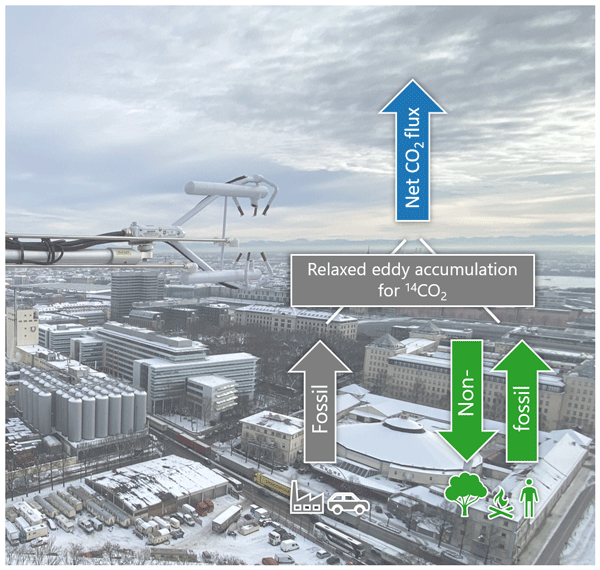
We present radiocarbon (14C)-based fossil fuel CO2 fluxes from relaxed eddy accumulation measurements on tall towers in the cities of Zurich, Paris, and Munich. By separating net CO2 fluxes into fossil and non-fossil components, these data reveal significant and variable contributions from human, plant, and soil respiration, as well as point-source emissions. These unique insights into CO2 flux composition offer crucial information for observation-based validation of urban emission estimates.
Biplob Dey, Toke Due Sjøgren, Peeyush Khare, Georgios I. Gkatzelis, Yizhen Wu, Sindhu Vasireddy, Martin Schultz, Alexander Knohl, Riikka Rinnan, Thorsten Hohaus, and Eva Y. Pfannerstill
Biogeosciences, 23, 1423–1457, https://doi.org/10.5194/bg-23-1423-2026, https://doi.org/10.5194/bg-23-1423-2026, 2026
Short summary
Short summary
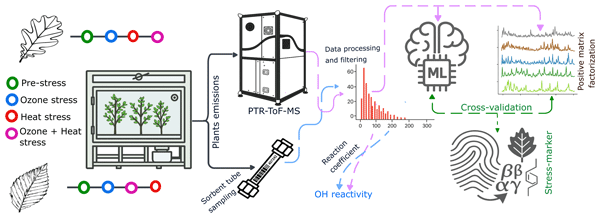
Trees release reactive gases that affect air quality and climate. We studied how these emissions from European beech and English oak change under realistic scenarios of combined and single heat and ozone stress. Heat increased emissions, while ozone reduced most of them. When stressors were combined, the effects were complex and varied by species. Machine learning identified key stress-related compounds. Our findings show that future tree stress may alter air quality and climate interactions.
Beatriz P. Cazorla, Ana Meijide, Javier Cabello, Julio Peñas, Javier Martínez-López, Rodrigo Vargas, Leonardo Montagnani, Alexander Knohl, Lukas Siebicke, Benimiano Gioli, Jiří Dušek, Ladislav Šigut, Andreas Ibrom, Georg Wohlfahrt, Eugénie Paul-Limoges, Kathrin Fuchs, Antonio Manco, Marian Pavelka, Lutz Merbold, Lukas Hörtnagl, Pierpaolo Duce, Ignacio Goded, Kim Pilegaard, and Domingo Alcaraz-Segura
Biogeosciences, 23, 1223–1243, https://doi.org/10.5194/bg-23-1223-2026, https://doi.org/10.5194/bg-23-1223-2026, 2026
Short summary
Short summary
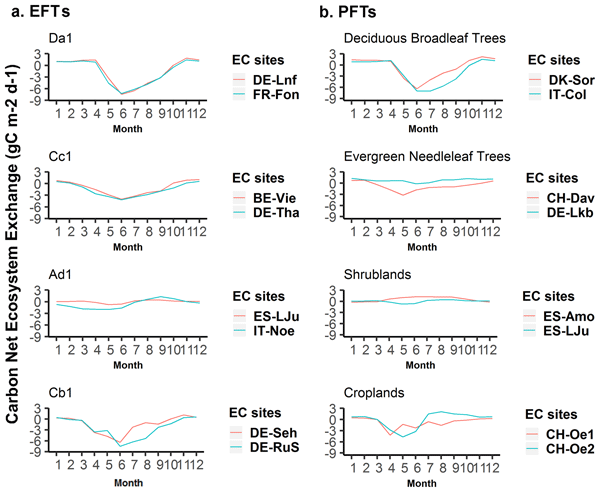
We assess whether satellite-derived Ecosystem Functional Types (EFTs) reflect spatial heterogeneity in carbon fluxes across Europe. Using Eddy Covariance data from 50 sites, we show that EFTs capture distinct Net Ecosystem Exchange dynamics and perform slightly better than Plant Functional Types (PFTs). EFTs offer a scalable, annually updatable approach to monitor ecosystem functioning and its interannual variability.
José Ángel Callejas-Rodelas, Justus van Ramshorst, Alexander Knohl, Lukas Siebicke, Dietmar Fellert, Marek Peksa, Dirk Böttger, and Christian Markwitz
Earth Syst. Sci. Data, 18, 845–874, https://doi.org/10.5194/essd-18-845-2026, https://doi.org/10.5194/essd-18-845-2026, 2026
Short summary
Short summary
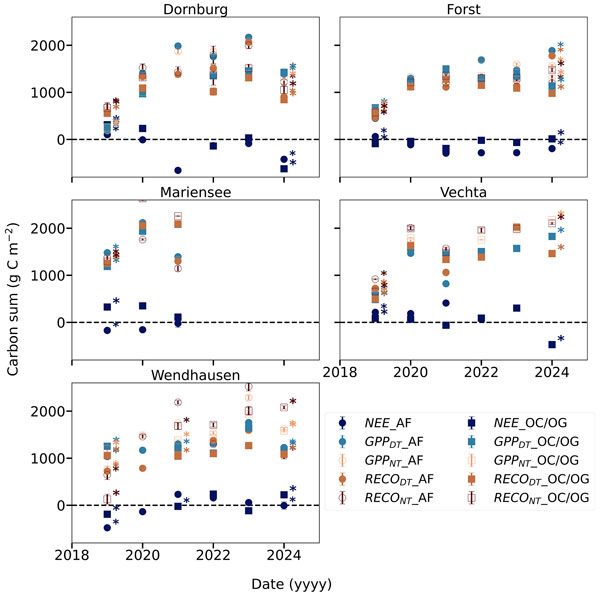
A dataset expanding around seventy eight site-years was compiled, harmonized and presented. The dataset consisted in eddy covariance and meteorological measurements over four pairs of agroforestry and open cropland systems, and one pair of agroforestry and open grassland system. This is the first ever dataset compiling this type of data over temperate agroforestry systems.
Rainer Hilland, Josh Hashemi, Stavros Stagakis, Dominik Brunner, Lionel Constantin, Natascha Kljun, Ann-Kristin Kunz, Betty Molinier, Samuel Hammer, Lukas Emmenegger, and Andreas Christen
Atmos. Chem. Phys., 25, 14279–14299, https://doi.org/10.5194/acp-25-14279-2025, https://doi.org/10.5194/acp-25-14279-2025, 2025
Short summary
Short summary
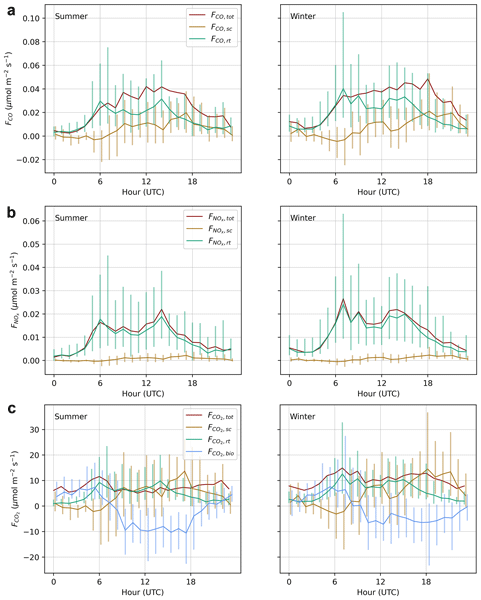
We present a study of simultaneously measured fluxes of carbon dioxide (CO2) and co-emitted species in the city of Zurich. Flux measurements of CO2 alone cannot be attributed to specific emission sectors, such as road transport or residential heating. We present a model which uses the measured ratios of CO2 to carbon monoxide (CO) and nitrogen oxides (NOx) as well as sector-specific reference ratios, to attribute measured fluxes to their emission sectors.
José Ángel Callejas-Rodelas, Alexander Knohl, Ivan Mammarella, Timo Vesala, Olli Peltola, and Christian Markwitz
Biogeosciences, 22, 4507–4529, https://doi.org/10.5194/bg-22-4507-2025, https://doi.org/10.5194/bg-22-4507-2025, 2025
Short summary
Short summary
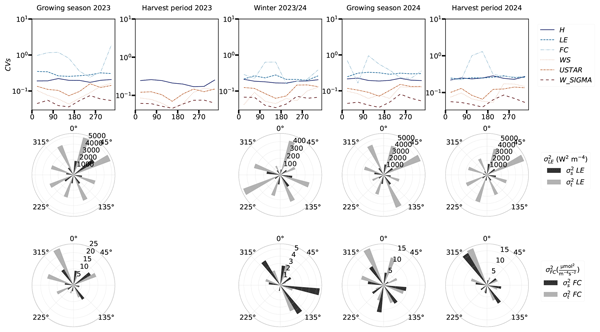
The spatial variability of CO2 and water vapour exchanges with the atmosphere was quantified above an agroforestry system and further compared to a monocropping system using a total of four eddy covariance stations. The variability of fluxes within the agroforestry site was found to be as large as the variability between agroforestry and monocropping site, induced by the heterogeneity of the site, which highlights the need for replicated measurements above such ecosystems.
Thorge Wintz, Alexander Röll, Gustavo Brant Paterno, Florian Ellsäßer, Delphine Clara Zemp, Hendrayanto, Bambang Irawan, Alexander Knohl, Holger Kreft, and Dirk Hölscher
EGUsphere, https://doi.org/10.5194/egusphere-2025-2596, https://doi.org/10.5194/egusphere-2025-2596, 2025
Short summary
Short summary
We investigated how the size and diversity of tree patches in Indonesian oil palm landscapes influence the movement of water to the atmosphere and local cooling. Our study shows that larger tree patches increase cooling mainly by supporting greater plant diversity and more complex vegetation structure. These findings suggest that expanding and diversifying tree patches can help manage microclimate and water cycling in agricultural areas.
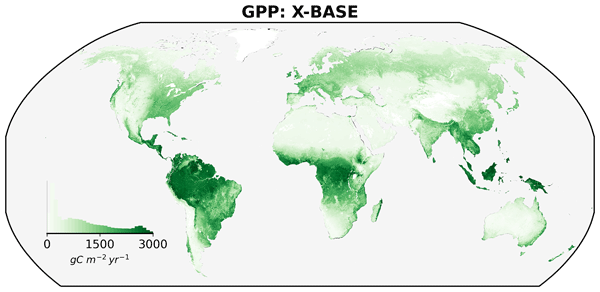
Jacob A. Nelson, Sophia Walther, Fabian Gans, Basil Kraft, Ulrich Weber, Kimberly Novick, Nina Buchmann, Mirco Migliavacca, Georg Wohlfahrt, Ladislav Šigut, Andreas Ibrom, Dario Papale, Mathias Göckede, Gregory Duveiller, Alexander Knohl, Lukas Hörtnagl, Russell L. Scott, Jiří Dušek, Weijie Zhang, Zayd Mahmoud Hamdi, Markus Reichstein, Sergio Aranda-Barranco, Jonas Ardö, Maarten Op de Beeck, Dave Billesbach, David Bowling, Rosvel Bracho, Christian Brümmer, Gustau Camps-Valls, Shiping Chen, Jamie Rose Cleverly, Ankur Desai, Gang Dong, Tarek S. El-Madany, Eugenie Susanne Euskirchen, Iris Feigenwinter, Marta Galvagno, Giacomo A. Gerosa, Bert Gielen, Ignacio Goded, Sarah Goslee, Christopher Michael Gough, Bernard Heinesch, Kazuhito Ichii, Marcin Antoni Jackowicz-Korczynski, Anne Klosterhalfen, Sara Knox, Hideki Kobayashi, Kukka-Maaria Kohonen, Mika Korkiakoski, Ivan Mammarella, Mana Gharun, Riccardo Marzuoli, Roser Matamala, Stefan Metzger, Leonardo Montagnani, Giacomo Nicolini, Thomas O'Halloran, Jean-Marc Ourcival, Matthias Peichl, Elise Pendall, Borja Ruiz Reverter, Marilyn Roland, Simone Sabbatini, Torsten Sachs, Marius Schmidt, Christopher R. Schwalm, Ankit Shekhar, Richard Silberstein, Maria Lucia Silveira, Donatella Spano, Torbern Tagesson, Gianluca Tramontana, Carlo Trotta, Fabio Turco, Timo Vesala, Caroline Vincke, Domenico Vitale, Enrique R. Vivoni, Yi Wang, William Woodgate, Enrico A. Yepez, Junhui Zhang, Donatella Zona, and Martin Jung
Biogeosciences, 21, 5079–5115, https://doi.org/10.5194/bg-21-5079-2024, https://doi.org/10.5194/bg-21-5079-2024, 2024
Short summary
Short summary
The movement of water, carbon, and energy from the Earth's surface to the atmosphere, or flux, is an important process to understand because it impacts our lives. Here, we outline a method called FLUXCOM-X to estimate global water and CO2 fluxes based on direct measurements from sites around the world. We go on to demonstrate how these new estimates of net CO2 uptake/loss, gross CO2 uptake, total water evaporation, and transpiration from plants compare to previous and independent estimates.
Justus G. V. van Ramshorst, Alexander Knohl, José Ángel Callejas-Rodelas, Robert Clement, Timothy C. Hill, Lukas Siebicke, and Christian Markwitz
Atmos. Meas. Tech., 17, 6047–6071, https://doi.org/10.5194/amt-17-6047-2024, https://doi.org/10.5194/amt-17-6047-2024, 2024
Short summary
Short summary
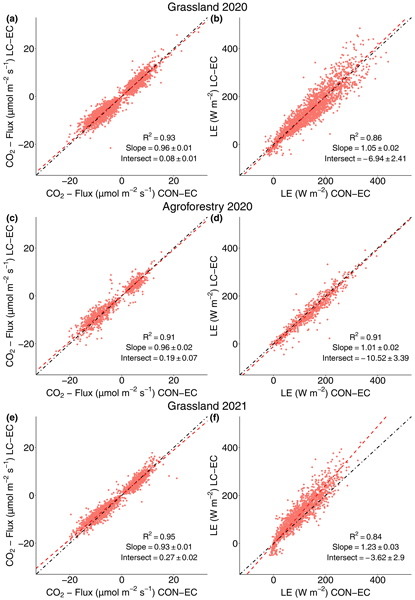
In this work we present experimental field results of a lower-cost eddy covariance (LC-EC) system, which can measure the ecosystem exchange of carbon dioxide and water vapour with the atmosphere. During three field campaigns on a grassland and agroforestry grassland, we compared the LC-EC with a conventional eddy covariance (CON-EC) system. Our results show that LC-EC has the potential to measure EC fluxes at only approximately 25 % of the cost of a CON-EC system.
Julia Kelly, Stefan H. Doerr, Johan Ekroos, Theresa S. Ibáñez, Md. Rafikul Islam, Cristina Santín, Margarida Soares, and Natascha Kljun
EGUsphere, https://doi.org/10.5194/egusphere-2024-2016, https://doi.org/10.5194/egusphere-2024-2016, 2024
Preprint archived
Short summary
Short summary
We measured soil carbon fluxes during the first four years after a wildfire in the Swedish boreal forest. Soil CO2 emissions decreased substantially only when trees were killed by fire or by post-fire logging, but not when trees survived the fire and were left standing. Soil methane flux was not affected by fire. Logging trees already killed by fire had no additional impact on soil carbon fluxes. Post-fire forest management strategy impacted vegetation regrowth and carbon dynamics.
Yuan Yan, Anne Klosterhalfen, Fernando Moyano, Matthias Cuntz, Andrew C. Manning, and Alexander Knohl
Biogeosciences, 20, 4087–4107, https://doi.org/10.5194/bg-20-4087-2023, https://doi.org/10.5194/bg-20-4087-2023, 2023
Short summary
Short summary
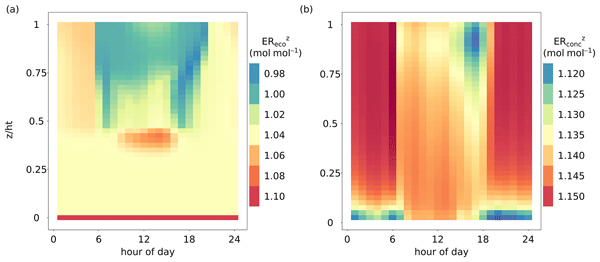
A better understanding of O2 fluxes, their exchange ratios with CO2 and their interrelations with environmental conditions would provide further insights into biogeochemical ecosystem processes. We, therefore, used the multilayer canopy model CANVEG to simulate and analyze the flux exchange for our forest study site for 2012–2016. Based on these simulations, we further successfully tested the application of various micrometeorological methods and the prospects of real O2 flux measurements.
Ross Petersen, Thomas Holst, Meelis Mölder, Natascha Kljun, and Janne Rinne
Atmos. Chem. Phys., 23, 7839–7858, https://doi.org/10.5194/acp-23-7839-2023, https://doi.org/10.5194/acp-23-7839-2023, 2023
Short summary
Short summary
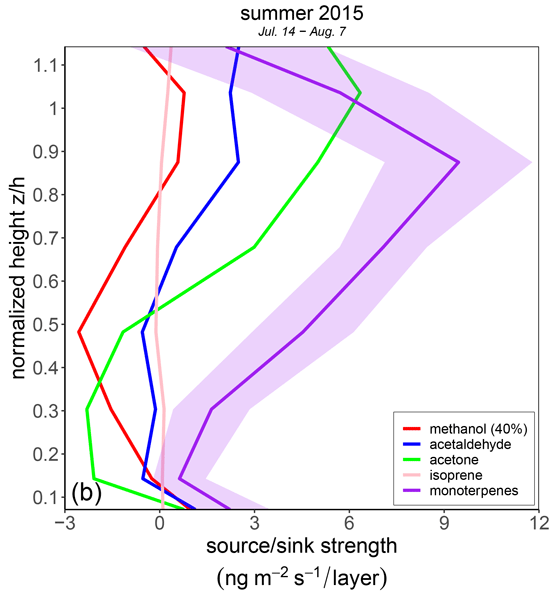
We investigate variability in the vertical distribution of volatile organic compounds (VOCs) in boreal forest, determined through multiyear measurements at several heights in a boreal forest in Sweden. VOC source/sink seasonality in canopy was explored using these vertical profiles and with measurements from a collection of sonic anemometers on the station flux tower. Our results show seasonality in the source/sink distribution for several VOCs, such as monoterpenes and water-soluble compounds.
Janne Rinne, Patryk Łakomiec, Patrik Vestin, Joel D. White, Per Weslien, Julia Kelly, Natascha Kljun, Lena Ström, and Leif Klemedtsson
Biogeosciences, 19, 4331–4349, https://doi.org/10.5194/bg-19-4331-2022, https://doi.org/10.5194/bg-19-4331-2022, 2022
Short summary
Short summary
The study uses the stable isotope 13C of carbon in methane to investigate the origins of spatial and temporal variation in methane emitted by a temperate wetland ecosystem. The results indicate that methane production is more important for spatial variation than methane consumption by micro-organisms. Temporal variation on a seasonal timescale is most likely affected by more than one driver simultaneously.
Xin Yu, René Orth, Markus Reichstein, Michael Bahn, Anne Klosterhalfen, Alexander Knohl, Franziska Koebsch, Mirco Migliavacca, Martina Mund, Jacob A. Nelson, Benjamin D. Stocker, Sophia Walther, and Ana Bastos
Biogeosciences, 19, 4315–4329, https://doi.org/10.5194/bg-19-4315-2022, https://doi.org/10.5194/bg-19-4315-2022, 2022
Short summary
Short summary
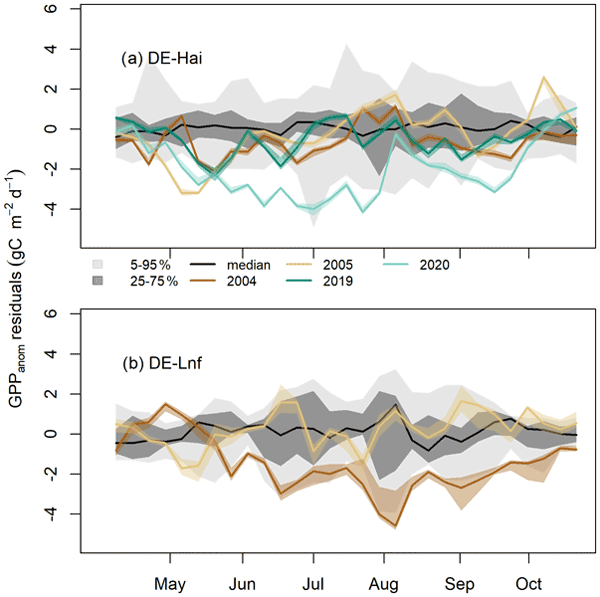
Identifying drought legacy effects is challenging because they are superimposed on variability driven by climate conditions in the recovery period. We develop a residual-based approach to quantify legacies on gross primary productivity (GPP) from eddy covariance data. The GPP reduction due to legacy effects is comparable to the concurrent effects at two sites in Germany, which reveals the importance of legacy effects. Our novel methodology can be used to quantify drought legacies elsewhere.
László Haszpra, Zoltán Barcza, Zita Ferenczi, Roland Hollós, Anikó Kern, and Natascha Kljun
Atmos. Meas. Tech., 15, 5019–5031, https://doi.org/10.5194/amt-15-5019-2022, https://doi.org/10.5194/amt-15-5019-2022, 2022
Short summary
Short summary
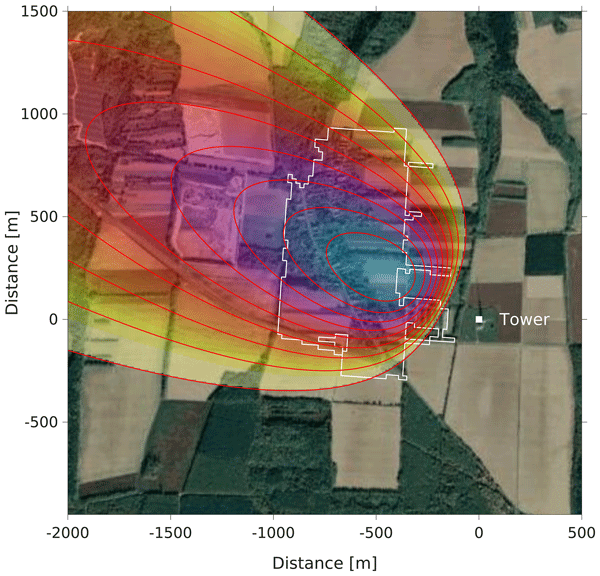
A novel approach is used for the determination of greenhouse gas (GHG) emissions of small rural settlements, which may significantly differ from those of urban regions and have hardly been studied yet. Among other results, it turned out that wintertime nitrous oxide emission is significantly underestimated in the official emission inventories. Given the large number of such settlements, the underestimation may also distort the national total emission values reported to international databases.

Patryk Łakomiec, Jutta Holst, Thomas Friborg, Patrick Crill, Niklas Rakos, Natascha Kljun, Per-Ola Olsson, Lars Eklundh, Andreas Persson, and Janne Rinne
Biogeosciences, 18, 5811–5830, https://doi.org/10.5194/bg-18-5811-2021, https://doi.org/10.5194/bg-18-5811-2021, 2021
Short summary
Short summary
Methane emission from the subarctic mire with heterogeneous permafrost status was measured for the years 2014–2016. Lower methane emission was measured from the palsa mire sector while the thawing wet sector emitted more. Both sectors have a similar annual pattern with a gentle rise during spring and a decrease during autumn. The highest emission was observed in the late summer. Winter emissions were positive during the measurement period and have a significant impact on the annual budgets.
Cited articles
Anthoni, P. M., Knohl, A., Rebmann, C., Freibauer, A., Mund, M., Ziegler, W., Kolle, O., and Schulze, E. D.: Forest and agricultural land‐use‐dependent CO2 exchange in Thuringia, Germany, Glob. Change Biol., 10, 2005–2019, https://doi.org/10.1111/j.1365-2486.2004.00863.x, 2004.
Badgley, G., Field, C., and Berry, J. A.: Canopy near-infrared reflectance and terrestrial photosynthesis, Science Advances, 3, https://doi.org/10.1126/sciadv.1602244, 2017.
Benjamini, Y. and Hochberg, Y.: Controlling the False Discovery Rate: a Practical and Powerful Approach to Multiple Testing, J. Roy. Stat. Soc. B Met., 57, 289–300, 1995.
Bernhofer, C., Gruenwald, T., Hehn, M., Mauder, M., Moderow, U., and Prasse, H.: ETC L2 ARCHIVE from Hetzdorf, 2022–2024, ICOS RI [data set], https://doi.org/11676/zPZNZN88BJrWoV4lc-SPwdWJ, 2025.
Bréda, N., Huc, R., Granier, A., and Dreyer, E.: Temperate forest trees and stands under severe drought: a review of ecophysiological responses, adaptation processes and long-term consequences, Ann. For. Sci., 63, 625–644, https://doi.org/10.1051/forest:2006042, 2006.
Brun, P., Psomas, A., Ginzler, C., Thuiller, W., Zappa, M., and Zimmermann, N. E.: Large-scale early-wilting response of Central European forests to the 2018 extreme drought, Glob. Change Biol., 26, 7021–7035, https://doi.org/10.1111/gcb.15360, 2020.
Cai, Z.: TIMESAT/TIMESAT-GUI: Official release v4.1.7, Version v4.1.7, Zenodo [software], https://doi.org/10.5281/zenodo.17369757, 2025.
Cai, Z., Junttila, S., Holst, J., Jin, H., Ardö, J., Ibrom, A., Peichl, M., Mölder, M., Jönsson, P., Rinne, J., Karamihalaki, M., and Eklundh, L.: Modelling Daily Gross Primary Productivity with Sentinel-2 Data in the Nordic Region–Comparison with Data from MODIS, Remote Sensing, 13, https://doi.org/10.3390/rs13030469, 2021.
Cheng, Y.-B.: Relationships between Moderate Resolution Imaging Spectroradiometer water indexes and tower flux data in an old growth conifer forest, J. Appl. Remote Sens., 1, https://doi.org/10.1117/1.2747223, 2007.
Ciais, P., Reichstein, M., Viovy, N., Granier, A., Ogee, J., Allard, V., Aubinet, M., Buchmann, N., Bernhofer, C., Carrara, A., Chevallier, F., De Noblet, N., Friend, A. D., Friedlingstein, P., Grunwald, T., Heinesch, B., Keronen, P., Knohl, A., Krinner, G., Loustau, D., Manca, G., Matteucci, G., Miglietta, F., Ourcival, J. M., Papale, D., Pilegaard, K., Rambal, S., Seufert, G., Soussana, J. F., Sanz, M. J., Schulze, E. D., Vesala, T., and Valentini, R.: Europe-wide reduction in primary productivity caused by the heat and drought in 2003, Nature, 437, 529–533, https://doi.org/10.1038/nature03972, 2005.
CLMS: CLCplus Backbone 2021 (raster 10 m), Europe, 3-yearly, Jun. 2024, EEA geospatial data catalogue [data set], https://doi.org/10.2909/71fc9d1b-479f-4da1-aa66-662a2fff2cf7, 2024.
D'Odorico, P., Fawcett, D., Peters, R., Steger, D., Zhorzel, T., Hoch, G., Basler, D., Ginzler, C., Eisenring, M., Glauser, G., Zweifel, R., Gessler, A., and Kahmen, A.: Deciphering tree drought responses across species: linking leaf water potentials with remote sensing greenness and photoprotection dynamics, Agr. Forest Meteorol., 375, https://doi.org/10.1016/j.agrformet.2025.110856, 2025.
Flexas, J. and Medrano, H.: Drought-inhibition of photosynthesis in C3 plants: stomatal and non-stomatal limitations revisited, Ann. Bot., 89, 183–189, https://doi.org/10.1093/aob/mcf027, 2002.
Gamon, J. A., Penuelas, J., and Field, C. B.: A narrow-waveband spectral index that tracks diurnal changes in photosynthetic efficiency, Remote Sens. Environ., 41, 35–44, https://doi.org/10.1016/0034-4257(92)90059-S, 1992.
Gamon, J. A., Huemmrich, K. F., Wong, C. Y., Ensminger, I., Garrity, S., Hollinger, D. Y., Noormets, A., and Penuelas, J.: A remotely sensed pigment index reveals photosynthetic phenology in evergreen conifers, P. Natl. Acad. Sci. USA, 113, 13087–13092, https://doi.org/10.1073/pnas.1606162113, 2016.
Gao, B.-C.: NDWI – A Normalized Difference Water Index for Remote Sensing of Vegetation Liquid Water From Space, Remote Sens. Environ., 58, 257–266, https://doi.org/10.1016/S0034-4257(96)00067-3, 1996.
Goerner, A., Reichstein, M., and Rambal, S.: Tracking seasonal drought effects on ecosystem light use efficiency with satellite-based PRI in a Mediterranean forest, Remote Sens. Environ., 113, 1101–1111, https://doi.org/10.1016/j.rse.2009.02.001, 2009.
Granier, A., Bréda, N., Longdoz, B., Gross, P., and Ngao, J.: Ten years of fluxes and stand growth in a young beech forest at Hesse, North-eastern France, Ann. For. Sci., 65, 704–704, https://doi.org/10.1051/forest:2008052, 2008.
Grünwald, T. and Bernhofer, C.: A decade of carbon, water and energy flux measurements of an old spruce forest at the Anchor Station Tharandt, Tellus B, 59, https://doi.org/10.1111/j.1600-0889.2007.00259.x, 2007.
He, M., Kimball, J. S., Running, S., Ballantyne, A., Guan, K., and Huemmrich, F.: Satellite detection of soil moisture related water stress impacts on ecosystem productivity using the MODIS-based photochemical reflectance index, Remote Sens. Environ., 186, 173–183, https://doi.org/10.1016/j.rse.2016.08.019, 2016.
Hoek van Dijke, A. J., Orth, R., Teuling, A. J., Herold, M., Schlerf, M., Migliavacca, M., Machwitz, M., van Hateren, T. C., Yu, X., and Mallick, K.: Comparing forest and grassland drought responses inferred from eddy covariance and Earth observation, Agr. Forest Meteorol., 341, https://doi.org/10.1016/j.agrformet.2023.109635, 2023.
Huete, A., Didan, K., Miura, H., Rodriguez, E. P., Gao, X., and Ferreira, L. F.: Overview of the radiometric and biopyhsical performance of the MODIS vegetation indices, Remote Sens. Environ., 83, 195–213, 2002.
ICOS RI: Ecosystem final quality (L2) product in ETC-Archive format – release 2023-1 (Version 1.0), ICOS RI [data set], https://doi.org/10.18160/YDH2-VFYE, 2023.
Jiang, Z., Huete, A. R., Didan, K., and Miura, T.: Development of a two-band enhanced vegetation index without a blue band, Remote Sens. Environ., 112, 3833–3845, https://doi.org/10.1016/j.rse.2008.06.006, 2008.
Jin, H.: Lund University Global Drought Dataset (LUGD), 1981–2025: Weekly 0.1° SPEI with Accumulation Timescales from 1 Week to 48 Months – Northern Hemisphere, Zenodo [data set], https://doi.org/10.5281/zenodo.18985819, 2026.
Jin, H. and Eklundh, L.: A physically based vegetation index for improved monitoring of plant phenology, Remote Sens. Environ., 152, 512–525, https://doi.org/10.1016/j.rse.2014.07.010, 2014.
Jin, H., Vicente-Serrano, S. M., Tian, F., Cai, Z., Conradt, T., Boincean, B., Murphy, C., Farizo, B. A., Grainger, S., López-Moreno, J. I., and Eklundh, L.: Higher vegetation sensitivity to meteorological drought in autumn than spring across European biomes, Communications Earth & Environment, 4, https://doi.org/10.1038/s43247-023-00960-w, 2023.
Kannenberg, S. A., Schwalm, C. R., and Anderegg, W. R. L.: Ghosts of the past: how drought legacy effects shape forest functioning and carbon cycling, Ecol. Lett., 23, 891–901, https://doi.org/10.1111/ele.13485, 2020.
Kattenborn, T., Wieneke, S., Montero, D., Mahecha, M. D., Richter, R., Guimarães-Steinicke, C., Wirth, C., Ferlian, O., Feilhauer, H., Sachsenmaier, L., Eisenhauer, N., and Dechant, B.: Temporal dynamics in vertical leaf angles can confound vegetation indices widely used in Earth observations, Communications Earth & Environment, 5, https://doi.org/10.1038/s43247-024-01712-0, 2024.
Kelly, J., Schacherl, T., Eklundh, L., Jin, H., Klosterhalfen, A., Knohl, A., and Kljun, N.: Data for: Kelly et al. 2026. Evaluating vegetation indices for monitoring drought and postdrought declines in European forest productivity. Biogeosciences, Zenodo [data set], https://doi.org/10.5281/zenodo.22640912, 2026.
Kim, Y., Still, C. J., Hanson, C. V., Kwon, H., Greer, B. T., and Law, B. E.: Canopy skin temperature variations in relation to climate, soil temperature, and carbon flux at a ponderosa pine forest in central Oregon, Agr. Forest Meteorol., 226–227, 161–173, https://doi.org/10.1016/j.agrformet.2016.06.001, 2016.
Knohl, A., Tiedemann, F., Kolle, O., Schulze, E.-D., Anthoni, P., Kutsch, W., Herbst, M., and Siebicke, L.: FLUXNET2015 DE-Lnf Leinefelde, FLUXNET [data set], https://doi.org/10.18140/FLX/1440150, 2012.
Lenth, R. V. and Piaskowski, J.: emmeans: Estimated Marginal Means, aka Least-Squares Means (1.11.0), CRAN [code], https://CRAN.R-project.org/package=emmeans (last access: 22 October 2025), 2025.
Leuzinger, S. and Körner, C.: Tree species diversity affects canopy leaf temperatures in a mature temperate forest, Agr. Forest Meteorol., 146, 29–37, https://doi.org/10.1016/j.agrformet.2007.05.007, 2007.
Lyapustin, A. and Wang, Y.: MODIS/Terra+Aqua Land Surface BRF Daily L2G Global 500m and 1km SIN Grid V061, NASA Land Processes Distributed Active Archive Center [data set], https://doi.org/10.5067/MODIS/MCD19A1.061, 2022.
Lüdecke, D., Ben-Shachar, M., Patil, I., Waggoner, P., and Makowski, D.: performance: An R Package for Assessment, Comparison and Testing of Statistical Models, Journal of Open Source Software, 6, https://doi.org/10.21105/joss.03139, 2021.
Marcolla, B., Pitacco, A., and Cescatti, A.: Canopy architecture and turbulence structure in a coniferous forest, Bound.-L. Meteorol., 108, 39–59, 2003.
Matteucci, G.: FLUXNET2015 IT-Col Collelongo, FLUXNET [data set], https://doi.org/10.18140/FLX/1440167, 2014.
Montagnani, L., Tomelleri, E., Bortoli, M., Cobbe, I., Folino, G., Minerbi, S., Stecher, M., Tenca, F., and Ventura, M.: ETC L2 Archive from Renon, 2021–2024, ICOS RI [data set], https://doi.org/11676/A5Fby8ZbD2I-enYvFDsQvNAE, 2025.
Montero, D., Mahecha, M. D., Martinuzzi, F., Aybar, C., Klosterhalfen, A., Knohl, A., Koebsch, F., Anaya, J., and Wieneke, S.: Recurrent Neural Networks for Modelling Gross Primary Production, IGARSS 2024–2024 IEEE International Geoscience and Remote Sensing Symposium, https://doi.org/10.1109/igarss53475.2024.10640715, 2024.
Moors, E. and Elbers, J.: FLUXNET2015 NL-Loo Loobos, FLUXNET [data set], https://doi.org/10.18140/FLX/1440178, 2014.
Munné-Bosch, S. and Alegre, L.: Die and let live: leaf senescence contributes to plant survival under drought stress, Funct. Plant Biol., 31, 203–216, 2004.
Müller, M., Olsson, P. O., Eklundh, L., Jamali, S., and Ardö, J.: Response and resilience to drought in northern forests revealed by Sentinel-2, Int. J. Remote Sens., 45, 5130–5157, https://doi.org/10.1080/01431161.2024.2372076, 2024.
Myneni, R., Knyazikhin, Y., and Park, T.: MODIS/Terra+Aqua Leaf Area Index/FPAR 4-Day L4 Global 500m SIN Grid V061, NASA Land Processes Distributed Active Archive Center [data set], https://doi.org/10.5067/MODIS/MCD15A3H.061, 2021.
Nakagawa, S. and Schielzeth, H.: A general and simple method for obtaining R2 from generalized linear mixed-effects models, Methods Ecol. Evol., 4, 133–142, https://doi.org/10.1111/j.2041-210x.2012.00261.x, 2013.
Nestola, E., Scartazza, A., Di Baccio, D., Castagna, A., Ranieri, A., Cammarano, M., Mazzenga, F., Matteucci, G., and Calfapietra, C.: Are optical indices good proxies of seasonal changes in carbon fluxes and stress-related physiological status in a beech forest?, Sci. Total Environ., 612, 1030–1041, https://doi.org/10.1016/j.scitotenv.2017.08.167, 2018.
Papale, D., Arriga, N., Belelli, L., Consalvo, C., Dore, S., Manca, G., Mazzenga, F., Sabbatini, S., Stefani, P., Tirone, G., Valentini, R., Boschi, A., and Tomassucci, M.: FLUXNET2015 IT-Ro2 Roccarespampani 2, FLUXNET [dataset], https://doi.org/10.18140/FLX/1440175, 2015.
Pau, S., Detto, M., Kim, Y., and Still, C. J.: Tropical forest temperature thresholds for gross primary productivity, Ecosphere, 9, 1–12, https://doi.org/10.1002/ecs2.2311, 2018.
Pinheiro, J., Bates, D., and Team, R. C.: nlme: Linear and Nonlinear Mixed Effects Models. (3.1-164), CRAN [code], https://CRAN.R-project.org/package=nlme (last access: 22 October 2025), 2023.
Rakovec, O., Samaniego, L., Hari, V., Markonis, Y., Moravec, V., Thober, S., Hanel, M., and Kumar, R.: The 2018–2020 Multi‐Year Drought Sets a New Benchmark in Europe, Earth's Future, 10, https://doi.org/10.1029/2021ef002394, 2022.
Reichstein, M., Bahn, M., Ciais, P., Frank, D., Mahecha, M. D., Seneviratne, S. I., Zscheischler, J., Beer, C., Buchmann, N., Frank, D. C., Papale, D., Rammig, A., Smith, P., Thonicke, K., van der Velde, M., Vicca, S., Walz, A., and Wattenbach, M.: Climate extremes and the carbon cycle, Nature, 500, 287–295, https://doi.org/10.1038/nature12350, 2013.
Rey, A., Pegoraro, E., Tedeschi, V., De Parri, I., Jarvis, P. G., and Valentini, R.: Annual variation in soil respiration and its components in a coppice oak forest in Central Italy, Glob. Change Biol., 8, 851–866, https://doi.org/10.1046/j.1365-2486.2002.00521.x, 2002.
Rita, A., Camarero, J. J., Nole, A., Borghetti, M., Brunetti, M., Pergola, N., Serio, C., Vicente-Serrano, S. M., Tramutoli, V., and Ripullone, F.: The impact of drought spells on forests depends on site conditions: The case of 2017 summer heat wave in southern Europe, Glob. Change Biol., 26, 851–863, https://doi.org/10.1111/gcb.14825, 2020.
Scartazza, A., Moscatello, S., Matteucci, G., Battistelli, A., and Brugnoli, E.: Seasonal and inter-annual dynamics of growth, non-structural carbohydrates and C stable isotopes in a Mediterranean beech forest, Tree Physiol., 33, 730–742, https://doi.org/10.1093/treephys/tpt045, 2013.
Schaaf, C. and Wang, Z.: MODIS/Terra+Aqua BRDF/Albedo Nadir NRDF Adjusted Ref Daily L3 Global – 500m V061, NASA Land Processes Distributed Active Archive Center [data set], https://doi.org/10.5067/MODIS/MCD43A4.061, 2021.
Scherrer, D., Bader, M. K.-F., and Körner, C.: Drought-sensitivity ranking of deciduous tree species based on thermal imaging of forest canopies, Agr. Forest Meteorol., 151, 1632–1640, https://doi.org/10.1016/j.agrformet.2011.06.019, 2011.
Schuldt, B., Buras, A., Arend, M., Vitasse, Y., Beierkuhnlein, C., Damm, A., Gharun, M., Grams, T. E. E., Hauck, M., Hajek, P., Hartmann, H., Hiltbrunner, E., Hoch, G., Holloway-Phillips, M., Körner, C., Larysch, E., Lübbe, T., Nelson, D. B., Rammig, A., Rigling, A., Rose, L., Ruehr, N. K., Schumann, K., Weiser, F., Werner, C., Wohlgemuth, T., Zang, C. S., and Kahmen, A.: A first assessment of the impact of the extreme 2018 summer drought on Central European forests, Basic Appl. Ecol., 45, 86–103, https://doi.org/10.1016/j.baae.2020.04.003, 2020.
Sedlák, P., Aubinet, M., Heinesch, B., Janouš, D., Pavelka, M., Potužníková, K., and Yernaux, M.: Night-time airflow in a forest canopy near a mountain crest, Agr. Forest Meteorol., 150, 736–744, https://doi.org/10.1016/j.agrformet.2010.01.014, 2010.
Seelig, H. D., Hoehn, A., Stodieck, L. S., Klaus, D. M., Adams Iii, W. W., and Emery, W. J.: The assessment of leaf water content using leaf reflectance ratios in the visible, near‐, and short‐wave‐infrared, Int. J. Remote Sens., 29, 3701–3713, https://doi.org/10.1080/01431160701772500, 2008.
Seidling, W.: Signals of summer drought in crown condition data from the German Level I network, Eur. J. For. Res., 126, 529–544, https://doi.org/10.1007/s10342-007-0174-6, 2007.
Sims, D. A., Brzostek, E. R., Rahman, A. F., Dragoni, D., and Phillips, R. P.: An improved approach for remotely sensing water stress impacts on forest C uptake, Glob. Change Biol., 20, 2856–2866, https://doi.org/10.1111/gcb.12537, 2014.
Singer, M., Asfaw, D., Rosolem, R., Cuthbert, M. O., Miralles, D. G., Quichimbo Miguitama, E., MacLeod, D., and Michaelides, K.: Hourly potential evapotranspiration (hPET) at 0.1degs grid resolution for the global land surface from 1981-present, University of Bristol [data set], https://doi.org/10.5523/bris.qb8ujazzda0s2aykkv0oq0ctp, 2020.
Stocker, B. D., Zscheischler, J., Keenan, T. F., Prentice, I. C., Seneviratne, S. I., and Peñuelas, J.: Drought impacts on terrestrial primary production underestimated by satellite monitoring, Nat. Geosci., 12, 264–270, https://doi.org/10.1038/s41561-019-0318-6, 2019.
Sturm, J., Santos, M. J., Schmid, B., and Damm, A.: Satellite data reveal differential responses of Swiss forests to unprecedented 2018 drought, Glob. Change Biol., 28, 2956–2978, https://doi.org/10.1111/gcb.16136, 2022.
Suarez-Gutierrez, L., Müller, W. A., and Marotzke, J.: Extreme heat and drought typical of an end-of-century climate could occur over Europe soon and repeatedly, Communications Earth & Environment, 4, https://doi.org/10.1038/s43247-023-01075-y, 2023.
Tucker, C. J.: Red and Photographic Infrared Linear Combinations for Monitoring Vegetation, Remote Sens. Environ., 8, 127–150, 1979.
van der Molen, M., Barten, J., Kruijt, B., Lootens, R., Snellen, H., and Zhao, H.: ETC L2 ARCHIVE from Loobos, 2023–2024, ICOS RI [data set], doi:11676/2ic9hqXKq5DtDa5JjZi-MtVy, 2025.
van der Woude, A. M., Peters, W., Joetzjer, E., Lafont, S., Koren, G., Ciais, P., Ramonet, M., Xu, Y., Bastos, A., Botía, S., Sitch, S., de Kok, R., Kneuer, T., Kubistin, D., Jacotot, A., Loubet, B., Herig-Coimbra, P.-H., Loustau, D., and Luijkx, I. T.: Temperature extremes of 2022 reduced carbon uptake by forests in Europe, Nat. Commun., 14, https://doi.org/10.1038/s41467-023-41851-0, 2023.
Vesala, T., Suni, T., Rannik, Ü., Keronen, P., Markkanen, T., Sevanto, S., Grönholm, T., Smolander, S., Kulmala, M., Ilvesniemi, H., Ojansuu, R., Uotila, A., Levula, J., Mäkelä, A., Pumpanen, J., Kolari, P., Kulmala, L., Altimir, N., Berninger, F., Nikinmaa, E., and Hari, P.: Effect of thinning on surface fluxes in a boreal forest, Global Biogeochem. Cy., 19, https://doi.org/10.1029/2004gb002316, 2005.
Vicente-Serrano, S. M., Beguería, S., and López-Moreno, J. I.: A multiscalar drought index sensitive to global warming: The standardized precipitation evapotranspiration index, J. Climate, 23, 1696–1718, https://doi.org/10.1175/2009JCLI2909.1, 2010.
Vicente-Serrano, S. M., Gouveia, C., Camarero, J. J., Begueria, S., Trigo, R., Lopez-Moreno, J. I., Azorin-Molina, C., Pasho, E., Lorenzo-Lacruz, J., Revuelto, J., Moran-Tejeda, E., and Sanchez-Lorenzo, A.: Response of vegetation to drought time-scales across global land biomes, P. Natl. Acad. Sci. USA, 110, 52–57, https://doi.org/10.1073/pnas.1207068110, 2013.
Walther, S., Nelson, J. A., Besnard, S., and Weber, U.: The FluxnetEO dataset (MODIS), ICOS RI [data set], https://doi.org/10.18160/0KWD-3RRW, 2023.
Walther, S., Besnard, S., Nelson, J. A., El-Madany, T. S., Migliavacca, M., Weber, U., Carvalhais, N., Ermida, S. L., Brümmer, C., Schrader, F., Prokushkin, A. S., Panov, A. V., and Jung, M.: Technical note: A view from space on global flux towers by MODIS and Landsat: the FluxnetEO data set, Biogeosciences, 19, 2805–2840, https://doi.org/10.5194/bg-19-2805-2022, 2022.
Wang, L. and Qu, J. J.: NMDI: A normalized multi‐band drought index for monitoring soil and vegetation moisture with satellite remote sensing, Geophys. Res. Lett., 34, https://doi.org/10.1029/2007gl031021, 2007.
Wang, S., Hoch, G., Grun, G., and Kahmen, A.: Water loss after stomatal closure: quantifying leaf minimum conductance and minimal water use in nine temperate European tree species during a severe drought, Tree Physiol., 44, https://doi.org/10.1093/treephys/tpae027, 2024.
Wang, X., Alharbi, R. S., Baez-Villanueva, O. M., Miralles, D. G., Ma, J., Xu, S., McCabe, M. F., Pappenberger, F., van Dijk, A. I. J. M., McVicar, T. R., Karthikeyan, L., Fowler, H. J., Pan, M., Gebrechorkos, S. H., and Beck, H. E.: MSWEP V3: Machine learning-powered global precipitation estimates at 0.1° hourly resolution (1979–present), arXiv [preprint], https://doi.org/10.48550/arXiv.2602.01436, 2026.
Wang, Y., Rammig, A., Blickensdorfer, L., Wang, Y., Zhu, X. X., and Buras, A.: Species-specific responses of canopy greenness to the extreme droughts of 2018 and 2022 for four abundant tree species in Germany, Sci. Total Environ., 958, 177938, https://doi.org/10.1016/j.scitotenv.2024.177938, 2025.
Warm Winter 2020 Team and ICOS Ecosystem Thematic Centre: Warm Winter 2020 ecosystem eddy covariance flux product for 73 stations in FLUXNET-Archive format–release 2022-1, Warm Winter 2020 Team and ICOS Ecosystem Thematic Centre [data set], https://doi.org/10.18160/2G60-ZHAK, 2022.
West, E., Morley, P. J., Jump, A. S., and Donoghue, D. N. M.: Satellite data track spatial and temporal declines in European beech forest canopy characteristics associated with intense drought events in the Rhon Biosphere Reserve, central Germany, Plant. Biol., 24, 1120–1131, https://doi.org/10.1111/plb.13391, 2022.
Wu, X., Liu, H., Li, X., Ciais, P., Babst, F., Guo, W., Zhang, C., Magliulo, V., Pavelka, M., Liu, S., Huang, Y., Wang, P., Shi, C., and Ma, Y.: Differentiating drought legacy effects on vegetation growth over the temperate Northern Hemisphere, Glob. Change Biol., 24, 504–516, https://doi.org/10.1111/gcb.13920, 2018.
Yu, X., Orth, R., Reichstein, M., Reimers, C., Gomarasca, U., Migliavacca, M., Papale, D., Bahn, M., and Bastos, A.: Widespread but Divergent Drought Legacy Effects on Gross Primary Productivity Across Biomes, Glob. Change Biol., 31, e70541, https://doi.org/10.1111/gcb.70541, 2025.
Yu, X., Orth, R., Reichstein, M., Bahn, M., Klosterhalfen, A., Knohl, A., Koebsch, F., Migliavacca, M., Mund, M., Nelson, J. A., Stocker, B. D., Walther, S., and Bastos, A.: Contrasting drought legacy effects on gross primary productivity in a mixed versus pure beech forest, Biogeosciences, 19, 4315–4329, https://doi.org/10.5194/bg-19-4315-2022, 2022.
Zarco-Tejada, P. J., Rueda, C. A., and Ustin, S. L.: Water content estimation in vegetation with MODIS reflectance data and model inversion methods, Remote Sens. Environ., 85, 109–124, https://doi.org/10.1016/s0034-4257(02)00197-9, 2003.
Zhang, Y., Xiao, X., Zhou, S., Ciais, P., McCarthy, H., and Luo, Y.: Canopy and physiological controls of GPP during drought and heat wave, Geophys. Res. Lett., 43, 3325–3333, https://doi.org/10.1002/2016gl068501, 2016.
Zimmermann, F., Plessow, K., Queck, R., Bernhofer, C., and Matschullat, J.: Atmospheric N- and S-fluxes to a spruce forest – Comparison of inferential modelling and the throughfall method, Atmos. Environ., 40, 4782–4796, https://doi.org/10.1016/j.atmosenv.2006.03.056, 2006.
Zuur, A. F., Ieno, E. N., Walker, N. J., Saveliev, A. A., and Smith, G. M.: Mixed Effects Models and Extensions in Ecology with R, Statistics for Biology and Health, Springer, New York, USA, https://doi.org/10.1007/978-0-387-87458-6, 2009.
Short summary
It is vital to monitor drought-related reductions in forest productivity over large areas. We tested the ability of 12 satellite variables to capture negative drought impacts on forest productivity across 18 European forest sites. Surface temperature worked best across all forest sites and droughts. After drought, forest productivity recovered faster than some commonly-used satellite variables, meaning use of these variables may underestimate forests’ resilience to drought.
It is vital to monitor drought-related reductions in forest productivity over large areas. We...


Altmetrics
Final-revised paper
Preprint