
Articles | Volume 23, issue 21
https://doi.org/10.5194/bg-23-7643-2026
© Author(s) 2026. This work is distributed under
the Creative Commons Attribution 4.0 License.
the Creative Commons Attribution 4.0 License.
https://doi.org/10.5194/bg-23-7643-2026
© Author(s) 2026. This work is distributed under
the Creative Commons Attribution 4.0 License.
the Creative Commons Attribution 4.0 License.
Research article
| 
30 Oct 2026
Research article |
| 30 Oct 2026
| 30 Oct 2026
Tree island area in oil palm agroforests directly and indirectly drives evaporative fraction
Thorge Wintz
CORRESPONDING AUTHOR

Tropical Silviculture and Forest Ecology, University of Göttingen, Büsgenweg 1, 37077 Göttingen, Germany
Alexander Röll
Horticultural Sciences, Institute for Crop Science and Resource Conservation, University of Bonn, Auf dem Hügel 6, 53121 Bonn, Germany
Gustavo Brant Paterno
Biodiversity, Macroecology & Biogeography, University of Göttingen, Büsgenweg 1, 37077 Göttingen, Germany
Florian Ellsäßer
LIFE-Department, ITC Faculty of Geo-Information Science and Earth Observation, University of Twente, 7522 NH Enschede, the Netherlands
Delphine Clara Zemp
Conservation Biology, Institute of Biology, Faculty of Sciences, University of Neuchâtel, 2000 Neuchâtel, Switzerland
Hendrayanto
Faculty of Forestry, Bogor Agricultural University, Campus Darmaga Bogor, Jawa Barat 16680, Indonesia
Bambang Irawan
Forestry Department, Faculty of Agriculture, University of Jambi, Jambi, 36122, Indonesia
Alexander Knohl
Bioclimatology, University of Göttingen, Büsgenweg 2, 37077 Göttingen, Germany
Centre of Biodiversity and Sustainable Land Use, University of Göttingen, Büsgenweg 1, 37077 Göttingen, Germany
Holger Kreft
Biodiversity, Macroecology & Biogeography, University of Göttingen, Büsgenweg 1, 37077 Göttingen, Germany
Centre of Biodiversity and Sustainable Land Use, University of Göttingen, Büsgenweg 1, 37077 Göttingen, Germany
Dirk Hölscher
Tropical Silviculture and Forest Ecology, University of Göttingen, Büsgenweg 1, 37077 Göttingen, Germany
Centre of Biodiversity and Sustainable Land Use, University of Göttingen, Büsgenweg 1, 37077 Göttingen, Germany
Related authors
No articles found.
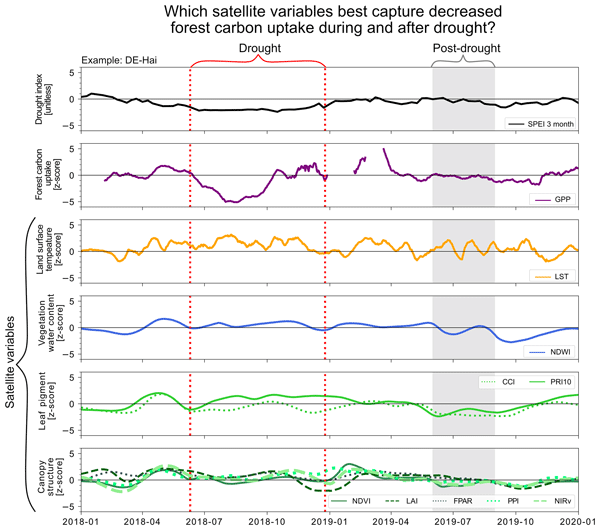
Julia Kelly, Tim Schacherl, Lars Eklundh, Hongxiao Jin, Anne Klosterhalfen, Alexander Knohl, and Natascha Kljun
Biogeosciences, 23, 6557–6582, https://doi.org/10.5194/bg-23-6557-2026, https://doi.org/10.5194/bg-23-6557-2026, 2026
Short summary
Short summary
It is vital to monitor drought-related reductions in forest productivity over large areas. We tested the ability of 12 satellite variables to capture negative drought impacts on forest productivity across 18 European forest sites. Surface temperature worked best across all forest sites and droughts. After drought, forest productivity recovered faster than some commonly-used satellite variables, meaning use of these variables may underestimate forests’ resilience to drought.
José Ángel Callejas-Rodelas, Justus G. V. van Ramshorst, Alexander Knohl, Sarah Choe, Maren Langhof, and Christian Markwitz
EGUsphere, https://doi.org/10.5194/egusphere-2026-4973, https://doi.org/10.5194/egusphere-2026-4973, 2026
This preprint is open for discussion and under review for Biogeosciences (BG).
Short summary
Short summary
Temperate agroforestry systems took up more carbon dioxide than reference, conventional open cropland or grassland systems, without consuming more water from the soil. These findings are promising because they promote the implementation of agroforestry as a nature-based strategy to mitigate greenhouse gas emissions, and therefore climate change, in agricultural systems.
Megharani Doddamani, Ziyi Wang, Florian J. Ellsäßer, Nancy Castilla, Alice Laborte, Andrew Nelson, Stephen Klassen, and Roshanak Darvishzadeh
Int. Arch. Photogramm. Remote Sens. Spatial Inf. Sci., XLIX-B3-2026, 1451–1456, https://doi.org/10.5194/isprs-archives-XLIX-B3-2026-1451-2026, https://doi.org/10.5194/isprs-archives-XLIX-B3-2026-1451-2026, 2026
Ida Bagus Mandhara Brasika, Pierre Friedlingstein, Stephen Sitch, Michael O'Sullivan, Maria Carolina Duran-Rojas, Emma W. Littleton, Toby R. Marthews, Timothy Hill, Wei Li, Yidi Xu, Jiaxin Zhou, Xiangzhong Luo, Ruiying Zhao, Yuanchao Fan, Dedy Sukmara, Timer Manurung, Masayuki Kondo, Alexander Knohl, Tejaswini Jaajpera, and Lisma Safitri
EGUsphere, https://doi.org/10.5194/egusphere-2026-3689, https://doi.org/10.5194/egusphere-2026-3689, 2026
This preprint is open for discussion and under review for Geoscientific Model Development (GMD).
Short summary
Short summary
Oil palm is a major crop in Indonesia, but climate models often treat it as generic cropland. We developed a new way to represent oil palm in the Joint UK Land Environment Simulator. This improved how the model captures carbon stored and released by oil-palm plantations. The work helps estimate emissions from land-use change more realistically, supporting better understanding of tropical agriculture, deforestation and climate impacts.
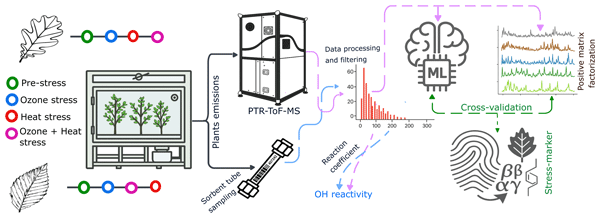
Biplob Dey, Toke Due Sjøgren, Peeyush Khare, Georgios I. Gkatzelis, Yizhen Wu, Sindhu Vasireddy, Martin Schultz, Alexander Knohl, Riikka Rinnan, Thorsten Hohaus, and Eva Y. Pfannerstill
Biogeosciences, 23, 1423–1457, https://doi.org/10.5194/bg-23-1423-2026, https://doi.org/10.5194/bg-23-1423-2026, 2026
Short summary
Short summary
Trees release reactive gases that affect air quality and climate. We studied how these emissions from European beech and English oak change under realistic scenarios of combined and single heat and ozone stress. Heat increased emissions, while ozone reduced most of them. When stressors were combined, the effects were complex and varied by species. Machine learning identified key stress-related compounds. Our findings show that future tree stress may alter air quality and climate interactions.
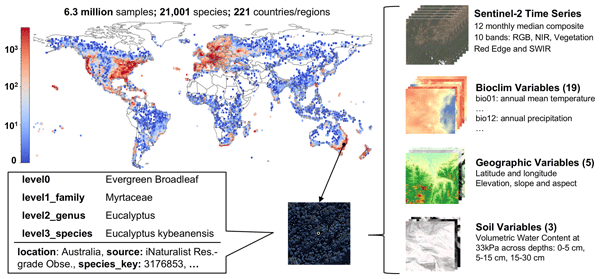
Yang Mu, Zhitong Xiong, Yi Wang, Muhammad Shahzad, Franz Essl, Holger Kreft, Mark van Kleunen, and Xiao Xiang Zhu
Earth Syst. Sci. Data, 18, 1379–1403, https://doi.org/10.5194/essd-18-1379-2026, https://doi.org/10.5194/essd-18-1379-2026, 2026
Short summary
Short summary
To better protect our planet's forests, we need to know what trees are where. We created GlobalGeoTree, a massive public dataset linking 6.3 million tree locations worldwide with satellite data. This dataset helps computers learn to identify tree species from space, supporting biodiversity monitoring and climate action. Our baseline model shows this is a promising path to understanding global forests.
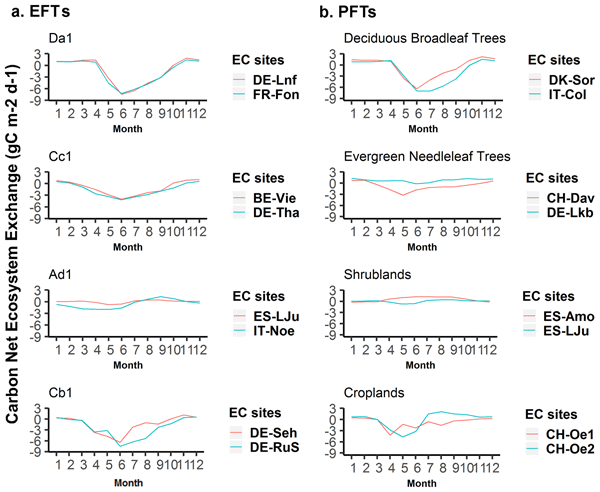
Beatriz P. Cazorla, Ana Meijide, Javier Cabello, Julio Peñas, Javier Martínez-López, Rodrigo Vargas, Leonardo Montagnani, Alexander Knohl, Lukas Siebicke, Benimiano Gioli, Jiří Dušek, Ladislav Šigut, Andreas Ibrom, Georg Wohlfahrt, Eugénie Paul-Limoges, Kathrin Fuchs, Antonio Manco, Marian Pavelka, Lutz Merbold, Lukas Hörtnagl, Pierpaolo Duce, Ignacio Goded, Kim Pilegaard, and Domingo Alcaraz-Segura
Biogeosciences, 23, 1223–1243, https://doi.org/10.5194/bg-23-1223-2026, https://doi.org/10.5194/bg-23-1223-2026, 2026
Short summary
Short summary
We assess whether satellite-derived Ecosystem Functional Types (EFTs) reflect spatial heterogeneity in carbon fluxes across Europe. Using Eddy Covariance data from 50 sites, we show that EFTs capture distinct Net Ecosystem Exchange dynamics and perform slightly better than Plant Functional Types (PFTs). EFTs offer a scalable, annually updatable approach to monitor ecosystem functioning and its interannual variability.
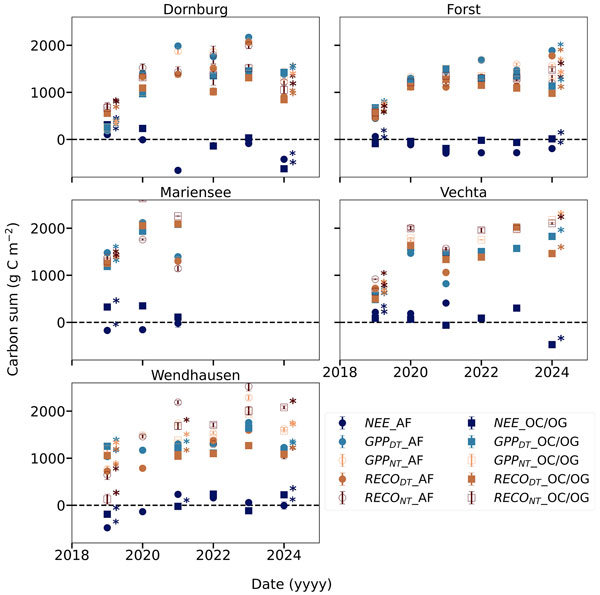
José Ángel Callejas-Rodelas, Justus van Ramshorst, Alexander Knohl, Lukas Siebicke, Dietmar Fellert, Marek Peksa, Dirk Böttger, and Christian Markwitz
Earth Syst. Sci. Data, 18, 845–874, https://doi.org/10.5194/essd-18-845-2026, https://doi.org/10.5194/essd-18-845-2026, 2026
Short summary
Short summary
A dataset expanding around seventy eight site-years was compiled, harmonized and presented. The dataset consisted in eddy covariance and meteorological measurements over four pairs of agroforestry and open cropland systems, and one pair of agroforestry and open grassland system. This is the first ever dataset compiling this type of data over temperate agroforestry systems.
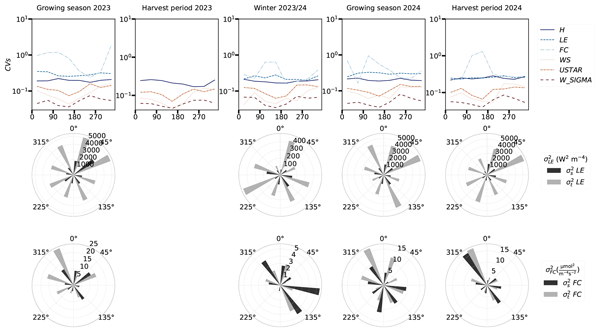
José Ángel Callejas-Rodelas, Alexander Knohl, Ivan Mammarella, Timo Vesala, Olli Peltola, and Christian Markwitz
Biogeosciences, 22, 4507–4529, https://doi.org/10.5194/bg-22-4507-2025, https://doi.org/10.5194/bg-22-4507-2025, 2025
Short summary
Short summary
The spatial variability of CO2 and water vapour exchanges with the atmosphere was quantified above an agroforestry system and further compared to a monocropping system using a total of four eddy covariance stations. The variability of fluxes within the agroforestry site was found to be as large as the variability between agroforestry and monocropping site, induced by the heterogeneity of the site, which highlights the need for replicated measurements above such ecosystems.
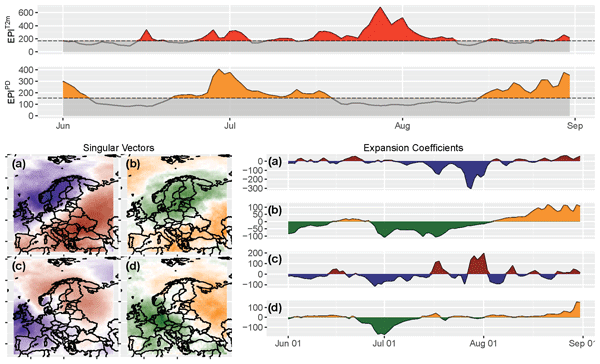
Elena Xoplaki, Florian Ellsäßer, Jens Grieger, Katrin M. Nissen, Joaquim G. Pinto, Markus Augenstein, Ting-Chen Chen, Hendrik Feldmann, Petra Friederichs, Daniel Gliksman, Laura Goulier, Karsten Haustein, Jens Heinke, Lisa Jach, Florian Knutzen, Stefan Kollet, Jürg Luterbacher, Niklas Luther, Susanna Mohr, Christoph Mudersbach, Christoph Müller, Efi Rousi, Felix Simon, Laura Suarez-Gutierrez, Svenja Szemkus, Sara M. Vallejo-Bernal, Odysseas Vlachopoulos, and Frederik Wolf
Nat. Hazards Earth Syst. Sci., 25, 541–564, https://doi.org/10.5194/nhess-25-541-2025, https://doi.org/10.5194/nhess-25-541-2025, 2025
Short summary
Short summary
Europe frequently experiences compound events, with major impacts. We investigate these events’ interactions, characteristics, and changes over time, focusing on socio-economic impacts in Germany and central Europe. Highlighting 2018’s extreme events, this study reveals impacts on water, agriculture, and forests and stresses the need for impact-focused definitions and better future risk quantification to support adaptation planning.
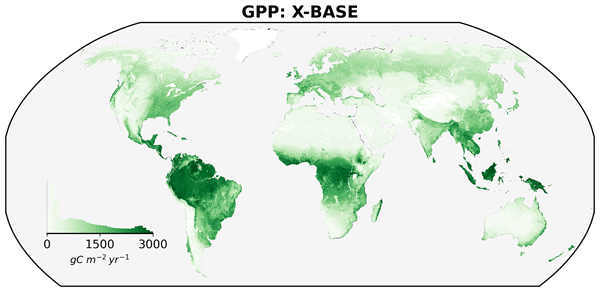
Jacob A. Nelson, Sophia Walther, Fabian Gans, Basil Kraft, Ulrich Weber, Kimberly Novick, Nina Buchmann, Mirco Migliavacca, Georg Wohlfahrt, Ladislav Šigut, Andreas Ibrom, Dario Papale, Mathias Göckede, Gregory Duveiller, Alexander Knohl, Lukas Hörtnagl, Russell L. Scott, Jiří Dušek, Weijie Zhang, Zayd Mahmoud Hamdi, Markus Reichstein, Sergio Aranda-Barranco, Jonas Ardö, Maarten Op de Beeck, Dave Billesbach, David Bowling, Rosvel Bracho, Christian Brümmer, Gustau Camps-Valls, Shiping Chen, Jamie Rose Cleverly, Ankur Desai, Gang Dong, Tarek S. El-Madany, Eugenie Susanne Euskirchen, Iris Feigenwinter, Marta Galvagno, Giacomo A. Gerosa, Bert Gielen, Ignacio Goded, Sarah Goslee, Christopher Michael Gough, Bernard Heinesch, Kazuhito Ichii, Marcin Antoni Jackowicz-Korczynski, Anne Klosterhalfen, Sara Knox, Hideki Kobayashi, Kukka-Maaria Kohonen, Mika Korkiakoski, Ivan Mammarella, Mana Gharun, Riccardo Marzuoli, Roser Matamala, Stefan Metzger, Leonardo Montagnani, Giacomo Nicolini, Thomas O'Halloran, Jean-Marc Ourcival, Matthias Peichl, Elise Pendall, Borja Ruiz Reverter, Marilyn Roland, Simone Sabbatini, Torsten Sachs, Marius Schmidt, Christopher R. Schwalm, Ankit Shekhar, Richard Silberstein, Maria Lucia Silveira, Donatella Spano, Torbern Tagesson, Gianluca Tramontana, Carlo Trotta, Fabio Turco, Timo Vesala, Caroline Vincke, Domenico Vitale, Enrique R. Vivoni, Yi Wang, William Woodgate, Enrico A. Yepez, Junhui Zhang, Donatella Zona, and Martin Jung
Biogeosciences, 21, 5079–5115, https://doi.org/10.5194/bg-21-5079-2024, https://doi.org/10.5194/bg-21-5079-2024, 2024
Short summary
Short summary
The movement of water, carbon, and energy from the Earth's surface to the atmosphere, or flux, is an important process to understand because it impacts our lives. Here, we outline a method called FLUXCOM-X to estimate global water and CO2 fluxes based on direct measurements from sites around the world. We go on to demonstrate how these new estimates of net CO2 uptake/loss, gross CO2 uptake, total water evaporation, and transpiration from plants compare to previous and independent estimates.
Justus G. V. van Ramshorst, Alexander Knohl, José Ángel Callejas-Rodelas, Robert Clement, Timothy C. Hill, Lukas Siebicke, and Christian Markwitz
Atmos. Meas. Tech., 17, 6047–6071, https://doi.org/10.5194/amt-17-6047-2024, https://doi.org/10.5194/amt-17-6047-2024, 2024
Short summary
Short summary
In this work we present experimental field results of a lower-cost eddy covariance (LC-EC) system, which can measure the ecosystem exchange of carbon dioxide and water vapour with the atmosphere. During three field campaigns on a grassland and agroforestry grassland, we compared the LC-EC with a conventional eddy covariance (CON-EC) system. Our results show that LC-EC has the potential to measure EC fluxes at only approximately 25 % of the cost of a CON-EC system.

Guantao Chen, Edzo Veldkamp, Muhammad Damris, Bambang Irawan, Aiyen Tjoa, and Marife D. Corre
Biogeosciences, 21, 513–529, https://doi.org/10.5194/bg-21-513-2024, https://doi.org/10.5194/bg-21-513-2024, 2024
Short summary
Short summary
We established an oil palm management experiment in a large-scale oil palm plantation in Jambi, Indonesia. We recorded oil palm fruit yield and measured soil CO2, N2O, and CH4 fluxes. After 4 years of treatment, compared with conventional fertilization with herbicide weeding, reduced fertilization with mechanical weeding did not reduce yield and soil greenhouse gas emissions, which highlights the legacy effects of over a decade of conventional management prior to the start of the experiment.
Yuan Yan, Anne Klosterhalfen, Fernando Moyano, Matthias Cuntz, Andrew C. Manning, and Alexander Knohl
Biogeosciences, 20, 4087–4107, https://doi.org/10.5194/bg-20-4087-2023, https://doi.org/10.5194/bg-20-4087-2023, 2023
Short summary
Short summary
A better understanding of O2 fluxes, their exchange ratios with CO2 and their interrelations with environmental conditions would provide further insights into biogeochemical ecosystem processes. We, therefore, used the multilayer canopy model CANVEG to simulate and analyze the flux exchange for our forest study site for 2012–2016. Based on these simulations, we further successfully tested the application of various micrometeorological methods and the prospects of real O2 flux measurements.
Efi Rousi, Andreas H. Fink, Lauren S. Andersen, Florian N. Becker, Goratz Beobide-Arsuaga, Marcus Breil, Giacomo Cozzi, Jens Heinke, Lisa Jach, Deborah Niermann, Dragan Petrovic, Andy Richling, Johannes Riebold, Stella Steidl, Laura Suarez-Gutierrez, Jordis S. Tradowsky, Dim Coumou, André Düsterhus, Florian Ellsäßer, Georgios Fragkoulidis, Daniel Gliksman, Dörthe Handorf, Karsten Haustein, Kai Kornhuber, Harald Kunstmann, Joaquim G. Pinto, Kirsten Warrach-Sagi, and Elena Xoplaki
Nat. Hazards Earth Syst. Sci., 23, 1699–1718, https://doi.org/10.5194/nhess-23-1699-2023, https://doi.org/10.5194/nhess-23-1699-2023, 2023
Short summary
Short summary
The objective of this study was to perform a comprehensive, multi-faceted analysis of the 2018 extreme summer in terms of heat and drought in central and northern Europe, with a particular focus on Germany. A combination of favorable large-scale conditions and locally dry soils were related with the intensity and persistence of the events. We also showed that such extremes have become more likely due to anthropogenic climate change and might occur almost every year under +2 °C of global warming.
Xin Yu, René Orth, Markus Reichstein, Michael Bahn, Anne Klosterhalfen, Alexander Knohl, Franziska Koebsch, Mirco Migliavacca, Martina Mund, Jacob A. Nelson, Benjamin D. Stocker, Sophia Walther, and Ana Bastos
Biogeosciences, 19, 4315–4329, https://doi.org/10.5194/bg-19-4315-2022, https://doi.org/10.5194/bg-19-4315-2022, 2022
Short summary
Short summary
Identifying drought legacy effects is challenging because they are superimposed on variability driven by climate conditions in the recovery period. We develop a residual-based approach to quantify legacies on gross primary productivity (GPP) from eddy covariance data. The GPP reduction due to legacy effects is comparable to the concurrent effects at two sites in Germany, which reveals the importance of legacy effects. Our novel methodology can be used to quantify drought legacies elsewhere.
Cited articles
Arroyo-Rodríguez, V., Fahrig, L., Tabarelli, M., Watling, J. I., Tischendorf, L., Benchimol, M., Cazetta, E., Faria, D., Leal, I. R., Melo, F. P. L., Morante-Filho, J. C., Santos, B. A., Arasa-Gisbert, R., Arce-Peña, N., Cervantes-López, M. J., Cudney-Valenzuela, S., Galán-Acedo, C., San-José, M., Vieira, I. C. G., Slik, J. W. F., Nowakowski, A. J., and Tscharntke, T.: Designing optimal human-modified landscapes for forest biodiversity conservation, Ecol. Lett., 23, 1404–1420, https://doi.org/10.1111/ele.13535, 2020.
Baldocchi, D. D.: The role of biodiversity on the evaporation of forests, in: Forest diversity and function: Temperate and boreal systems, edited by: Scherer-Lorenzen, M., Körner, C., and Schulze, E.-D., Springer, Berlin, New York, 131–148, https://doi.org/10.1007/3-540-26599-6_7, 2005.
Barbeta, A., Miralles, D. G., Mendiola, L., Gimeno, T. E., Sabaté, S., and Carnicer, J.: Disentangling the Role of Forest Structure and Functional Traits in the Thermal Balance of the Mediterranean–Temperate Ecotone, J. Geophys. Res.-Biogeo., 128, https://doi.org/10.1029/2022JG007264, 2023.
Bell, T., Lilley, A. K., Hector, A., Schmid, B., King, L., and Newman, J. A.: A linear model method for biodiversity-ecosystem functioning experiments, Am. Nat., 174, 836–849, https://doi.org/10.1086/647931, 2009.
Brenner, C., Zeeman, M., Bernhardt, M., and Schulz, K.: Estimation of evapotranspiration of temperate grassland based on high-resolution thermal and visible range imagery from unmanned aerial systems, Int. J. Remote Sens., 39, 5141–5174, https://doi.org/10.1080/01431161.2018.1471550, 2018.
Bulusu, M., Ellsäßer, F., Stiegler, C., Ahongshangbam, J., Marques, I., Hendrayanto, H., Röll, A., and Hölscher, D.: UAV-based thermography reveals spatial and temporal variability of evapotranspiration from a tropical rainforest, Front. For. Glob. Change, 6, https://doi.org/10.3389/ffgc.2023.1232410, 2023.
Chao, A., Gotelli, N. J., Hsieh, T. C., Sander, E. L., Ma, K. H., Colwell, R. K., and Ellison, A. M.: Rarefaction and extrapolation with Hill numbers: a framework for sampling and estimation in species diversity studies, Ecol. Monogr., 84, 45–67, https://doi.org/10.1890/13-0133.1, 2014.
Chen, J., Jin, S., and Du, P.: Roles of horizontal and vertical tree canopy structure in mitigating daytime and nighttime urban heat island effects, Int. J. Appl. Earth Obs., 89, 102060, https://doi.org/10.1016/j.jag.2020.102060, 2020.
Cortés-Molino, Á., Valdés-Uribe, A., Ellsäßer, F., Bulusu, M., Ahongshangbam, J., Hendrayanto, Hölscher, D., and Röll, A.: Combining UAV thermography, point cloud analysis and machine learning for assessing small-scale evapotranspiration patterns in a tropical rainforest, Ecohydrology, 17, https://doi.org/10.1002/eco.2604, 2024.
Cregg, B. and Dix, M.: Tree Moisure Stress and Insect Damage in Urban Areas in Relation to Heat Island Effects, AUF, 27, 8–17, https://doi.org/10.48044/jauf.2001.002, 2001.
Dantas de Paula, M., Groeneveld, J., and Huth, A.: Tropical forest degradation and recovery in fragmented landscapes – Simulating changes in tree community, forest hydrology and carbon balance, Global Ecology and Conservation, 3, 664–677, https://doi.org/10.1016/j.gecco.2015.03.004, 2015.
Dierick, D., Kunert, N., Köhler, M., Schwendenmann, L., and Hölscher, D.: Comparison of tree water use characteristics in reforestation and agroforestry stands across the tropics, in: Tropical Rainforests and Agroforests under Global Change, edited by: Tscharntke, T., Leuschner, C., Veldkamp, E., Faust, H., Guhardja, E., and Bidin, A., Springer Berlin Heidelberg, Berlin, Heidelberg, 293–308, https://doi.org/10.1007/978-3-642-00493-3_13, 2010.
Dixon, P.: VEGAN, a package of R functions for community ecology, J. Veg. Sci., 14, 927–930, https://doi.org/10.1111/j.1654-1103.2003.tb02228.x, 2003.
DJI: ZENMUSE H20 SERIES: User manual v1.2, https://www.dji.com/de/downloads/products/zenmuse-h20-series#doc (last access: 19 March 2024), 2021.
Drakare, S., Lennon, J. J., and Hillebrand, H.: The imprint of the geographical, evolutionary and ecological context on species-area relationships, Ecol. Lett., 9, 215–227, https://doi.org/10.1111/j.1461-0248.2005.00848.x, 2006.
Drescher, J., Rembold, K., Allen, K., Beckschäfer, P., Buchori, D., Clough, Y., Faust, H., Fauzi, A. M., Gunawan, D., Hertel, D., Irawan, B., Jaya, I. N. S., Klarner, B., Kleinn, C., Knohl, A., Kotowska, M. M., Krashevska, V., Krishna, V., Leuschner, C., Lorenz, W., Meijide, A., Melati, D., Nomura, M., Pérez-Cruzado, C., Qaim, M., Siregar, I. Z., Steinebach, S., Tjoa, A., Tscharntke, T., Wick, B., Wiegand, K., Kreft, H., and Scheu, S.: Ecological and socio-economic functions across tropical land use systems after rainforest conversion, Philos. T. R. Soc. Lond. B, 371, https://doi.org/10.1098/rstb.2015.0275, 2016.
Edwards, F. A., Edwards, D. P., Hamer, K. C., and Davies, R. G.: Impacts of logging and conversion of rainforest to oil palm on the functional diversity of birds in S undaland, Ibis, 155, 313–326, https://doi.org/10.1111/ibi.12027, 2013.
Ehbrecht, M., Schall, P., Ammer, C., and Seidel, D.: Quantifying stand structural complexity and its relationship with forest management, tree species diversity and microclimate, Agr. Forest Meteorol., 242, 1–9, https://doi.org/10.1016/j.agrformet.2017.04.012, 2017.
Ellsäßer, F., Röll, A., Ahongshangbam, J., Waite, P.-A., Hendrayanto, Schuldt, B., and Hölscher, D.: Predicting Tree Sap Flux and Stomatal Conductance from Drone-Recorded Surface Temperatures in a Mixed Agroforestry System – A Machine Learning Approach, Remote Sens., 12, 4070, https://doi.org/10.3390/rs12244070, 2020a.
Ellsäßer, F., Röll, A., Stiegler, C., Hendrayanto, and Hölscher, D.: Introducing QWaterModel, a QGIS plugin for predicting evapotranspiration from land surface temperatures, Environ. Model. Softw., 130, 104739, https://doi.org/10.1016/j.envsoft.2020.104739, 2020b.
Ellsäßer, F., Stiegler, C., Röll, A., June, T., Hendrayanto, Knohl, A., and Hölscher, D.: Predicting evapotranspiration from drone-based thermography – a method comparison in a tropical oil palm plantation, Biogeosciences, 18, 861–872, https://doi.org/10.5194/bg-18-861-2021, 2021.
Er-Raki, S., Rodriguez, J. C., Garatuza-Payan, J., Watts, C. J., and Chehbouni, A.: Determination of crop evapotranspiration of table grapes in a semi-arid region of Northwest Mexico using multi-spectral vegetation index, Agr. Water Manage., 122, 12–19, https://doi.org/10.1016/j.agwat.2013.02.007, 2013.
FAO: World Food and Agriculture – Statistical Yearbook 2023, FAO, Rome, https://doi.org/10.4060/cc8166en, 2023.
Fisher, J. B.: Level-3 Evapotranspiration L3 (ET_PT-JPL) Algorithm Theoretical Basis Document, https://ecostress.jpl.nasa.gov/downloads/atbd/ECOSTRESS_L3_ET_PT-JPL_ATBD_20180509.pdf, last access: 12 October 2026.
Giambelluca, T. W., Ziegler, A. D., Nullet, M. A., Truong, D. M., and Tran, L. T.: Transpiration in a small tropical forest patch, Agr. Forest Meteorol., 117, 1–22, https://doi.org/10.1016/S0168-1923(03)00041-8, 2003.
Gitelson, A. A. and Kaufman, Y. J.: MODIS NDVI Optimization To Fit the AVHRR Data Series – Spectral Considerations, Remote Sens. Environ., 66, 343–350, https://doi.org/10.1016/S0034-4257(98)00065-0, 1998.
Gitelson, A. A., Kaufman, Y. J., and Merzlyak, M. N.: Use of a green channel in remote sensing of global vegetation from EOS-MODIS, Remote Sens. Environ., 58, 289–298, https://doi.org/10.1016/S0034-4257(96)00072-7, 1996.
Givnish, T. J.: Global conservation priorities for island plant diversity, Nature, 634, 790–792, https://doi.org/10.1038/d41586-024-02921-5, 2024.
Gómez, A. M., Parra, A., Pavelsky, T. M., Wise, E., Villegas, J. C., and Meijide, A.: Ecohydrological impacts of oil palm expansion: a systematic review, Environ. Res. Lett., 18, 33005, https://doi.org/10.1088/1748-9326/acbc38, 2023.
González-Espinosa, M., María Rey-Benayas, J., Ramírez-Marcial, N., Huston, M. A., and Golicher, D.: Tree diversity in the northern Neotropics: regional patterns in highly diverse Chiapas, Mexico, Ecography, 27, 741–756, https://doi.org/10.1111/j.0906-7590.2004.04103.x, 2004.
Gooriah, L. D., Davidar, P., and Chase, J. M.: Species-area relationships in the Andaman and Nicobar Islands emerge because rarer species are disproportionately favored on larger islands, Ecol. Evol., 10, 7551–7559, https://doi.org/10.1002/ece3.6480, 2020.
Grace, J.: A `Weight of Evidence' approach to evaluating structural equation models, OE, 5, https://doi.org/10.3897/oneeco.5.e50452, 2020.
Grass, I., Kubitza, C., Krishna, V. V., Corre, M. D., Mußhoff, O., Pütz, P., Drescher, J., Rembold, K., Ariyanti, E. S., Barnes, A. D., Brinkmann, N., Brose, U., Brümmer, B., Buchori, D., Daniel, R., Darras, K. F. A., Faust, H., Fehrmann, L., Hein, J., Hennings, N., Hidayat, P., Hölscher, D., Jochum, M., Knohl, A., Kotowska, M. M., Krashevska, V., Kreft, H., Leuschner, C., Lobite, N. J. S., Panjaitan, R., Polle, A., Potapov, A. M., Purnama, E., Qaim, M., Röll, A., Scheu, S., Schneider, D., Tjoa, A., Tscharntke, T., Veldkamp, E., and Wollni, M.: Trade-offs between multifunctionality and profit in tropical smallholder landscapes, Nat. Commun., 11, 1186, https://doi.org/10.1038/s41467-020-15013-5, 2020.
Grossman, J. J., Vanhellemont, M., Barsoum, N., Bauhus, J., Bruelheide, H., Castagneyrol, B., Cavender-Bares, J., Eisenhauer, N., Ferlian, O., Gravel, D., Hector, A., Jactel, H., Kreft, H., Mereu, S., Messier, C., Muys, B., Nock, C., Paquette, A., Parker, J., Perring, M. P., Ponette, Q., Reich, P. B., Schuldt, A., Staab, M., Weih, M., Zemp, D. C., Scherer-Lorenzen, M., and Verheyen, K.: Synthesis and future research directions linking tree diversity to growth, survival, and damage in a global network of tree diversity experiments, Environ. Exp. Bot., 152, 68–89, https://doi.org/10.1016/j.envexpbot.2017.12.015, 2018.
Guillaume, T., Kotowska, M. M., Hertel, D., Knohl, A., Krashevska, V., Murtilaksono, K., Scheu, S., and Kuzyakov, Y.: Carbon costs and benefits of Indonesian rainforest conversion to plantations, Nat. Commun., 9, 2388, https://doi.org/10.1038/s41467-018-04755-y, 2018.
Hernández-Clemente, R., Hornero, A., Mottus, M., Penuelas, J., González-Dugo, V., Jiménez, J. C., Suárez, L., Alonso, L., and Zarco-Tejada, P. J.: Early Diagnosis of Vegetation Health From High-Resolution Hyperspectral and Thermal Imagery: Lessons Learned From Empirical Relationships and Radiative Transfer Modelling, Curr. Forestry Rep., 5, 169–183, https://doi.org/10.1007/s40725-019-00096-1, 2019.
Hölscher, D., de Sá, A. T., Bastos, T., Denich, M., and Fölster, H.: Evaporation from young secondary vegetation in eastern Amazonia, J. Hydrol., 193, 293–305, https://doi.org/10.1016/S0022-1694(96)03145-9, 1997.
Iddris, N. A.-A., Formaglio, G., Paul, C., Groß, V. von, Chen, G., Angulo-Rubiano, A., Berkelmann, D., Brambach, F., Darras, K. F. A., Krashevska, V., Potapov, A., Wenzel, A., Irawan, B., Damris, M., Daniel, R., Grass, I., Kreft, H., Scheu, S., Tscharntke, T., Tjoa, A., Veldkamp, E., and Corre, M. D.: Mechanical weeding enhances ecosystem multifunctionality and profit in industrial oil palm, Nat. Sustain., 6, 683–695, https://doi.org/10.1038/s41893-023-01076-x, 2023.
Juchheim, J., Ammer, C., Schall, P., and Seidel, D.: Canopy space filling rather than conventional measures of structural diversity explains productivity of beech stands, Forest Ecol. Manag., 395, 19–26, https://doi.org/10.1016/j.foreco.2017.03.036, 2017.
Jucker, T., Bouriaud, O., and Coomes, D. A.: Crown plasticity enables trees to optimize canopy packing in mixed-species forests, Funct. Ecol., 29, 1078–1086, https://doi.org/10.1111/1365-2435.12428, 2015.
Kattenborn, T.: tejakattenborn/dji_h20t_rpeg_to_tif: dji thermal rpeg to tif (v. 0.5), Zenodo [code], https://doi.org/10.5281/zenodo.8315941, 2023.
Kikuchi, T., Seidel, D., Ehbrecht, M., Zemp, D. C., Brambach, F., Irawan, B., Sundawati, L., Hölscher, D., Kreft, H., and Paterno, G. B.: Combining planting trees and natural regeneration promotes long-term structural complexity in oil palm landscapes, Forest Ecol. Manag., 569, 122182, https://doi.org/10.1016/j.foreco.2024.122182, 2024.
Kotowska, M. M., Leuschner, C., Triadiati, T., Meriem, S., and Hertel, D.: Quantifying above- and belowground biomass carbon loss with forest conversion in tropical lowlands of Sumatra (Indonesia), Glob. Change Biol., 21, 3620–3634, https://doi.org/10.1111/gcb.12979, 2015.
Kubitza, C., Krishna, V. V., Alamsyah, Z., and Qaim, M.: The Economics Behind an Ecological Crisis: Livelihood Effects of Oil Palm Expansion in Sumatra, Indonesia, Hum. Ecol., 46, 107–116, https://doi.org/10.1007/s10745-017-9965-7, 2018.
Kunert, N., Schwendenmann, L., Potvin, C., and Hölscher, D.: Tree diversity enhances tree transpiration in a Panamanian forest plantation, J. Appl. Ecol., 49, 135–144, https://doi.org/10.1111/j.1365-2664.2011.02065.x, 2012.
Kunert, N., Aparecido, L. M. T., Higuchi, N., Santos, J. D., and Trumbore, S.: Higher tree transpiration due to road-associated edge effects in a tropical moist lowland forest, Agr. Forest Meteorol., 213, 183–192, https://doi.org/10.1016/j.agrformet.2015.06.009, 2015.
Lawrence, D., Coe, M., Walker, W., Verchot, L., and Vandecar, K.: The Unseen Effects of Deforestation: Biophysical Effects on Climate, Front. For. Glob. Change, 5, https://doi.org/10.3389/ffgc.2022.756115, 2022.
Lefcheck, J. S.: piecewiseSEM Piecewise structural equation modelling in r for ecology, evolution, and systematics, Methods Ecol. Evol., 7, 573–579, https://doi.org/10.1111/2041-210X.12512, 2016.
Leonard, R., Moore, P., Krause, S., Devito, K. J., Petrone, G. R., Mendoza, C., Waddington, J. M., and Kettridge, N.: The influence of system heterogeneity on peat-surface temperature dynamics, Environ. Res. Lett., 16, 24002, https://doi.org/10.1088/1748-9326/abd4ff, 2021.
Leonard, R., Moore, P., Krause, S., Chasmer, L., Devito, K. J., Petrone, R. M., Mendoza, C., Waddington, J. M., and Kettridge, N.: Forest stand complexity controls ecosystem-scale evapotranspiration dynamics: Implications for landscape flux simulations, Hydrol. Process., 36, https://doi.org/10.1002/hyp.14761, 2022.
Li, D.: hillR: taxonomic, functional, and phylogenetic diversity and similarity through Hill Numbers, JOSS, 3, 1041, https://doi.org/10.21105/joss.01041, 2018.
Li, K., Grass, I., Zemp, D. C., Lorenz, H., Sachsenmaier, L., Nurdiansyah, F., Hölscher, D., Kreft, H., and Tscharntke, T.: Tree identity and canopy openness mediate oil palm biodiversity enrichment effects on insect herbivory and pollination, Ecol. Appl., 33, e2862, https://doi.org/10.1002/eap.2862, 2023.
Lüdecke, D., Ben-Shachar, M., Patil, I., Waggoner, P., and Makowski, D.: performance: An R Package for Assessment, Comparison and Testing of Statistical Models, JOSS, 6, 3139, https://doi.org/10.21105/joss.03139, 2021.
Ma, Q., Su, Y., Hu, T., Jiang, L., Mi, X., Lin, L., Cao, M., Wang, X., Lin, F., Wang, B., Sun, Z., Wu, J., Ma, K., and Guo, Q.: The coordinated impact of forest internal structural complexity and tree species diversity on forest productivity across forest biomes, Fundamental Research, 4, 1185–1195, https://doi.org/10.1016/j.fmre.2022.10.005, 2024.
MacArthur, R. H. and Wilson, E. O.: An Equilibrium Theory of Insular Zoogeography, Evolution, 17, 373, https://doi.org/10.2307/2407089, 1963.
Manoli, G., Meijide, A., Huth, N., Knohl, A., Kosugi, Y., Burlando, P., Ghazoul, J., and Fatichi, S.: Ecohydrological changes after tropical forest conversion to oil palm, Environ. Res. Lett., 13, 64035, https://doi.org/10.1088/1748-9326/aac54e, 2018.
Marks, C. O., Muller-Landau, H. C., and Tilman, D.: Tree diversity, tree height and environmental harshness in eastern and western North America, Ecol. Lett., 19, 743–751, https://doi.org/10.1111/ele.12608, 2016.
Maurer, K. D., Bohrer, G., Kenny, W. T., and Ivanov, V. Y.: Large-eddy simulations of surface roughness parameter sensitivity to canopy-structure characteristics, Biogeosciences, 12, 2533–2548, https://doi.org/10.5194/bg-12-2533-2015, 2015.
Meijide, A., Röll, A., Fan, Y., Herbst, M., Niu, F., Tiedemann, F., June, T., Rauf, A., Hölscher, D., and Knohl, A.: Controls of water and energy fluxes in oil palm plantations: Environmental variables and oil palm age, Agr. Forest Meteorol., 239, 71–85, https://doi.org/10.1016/j.agrformet.2017.02.034, 2017.
Meijide, A., Badu, C. S., Moyano, F., Tiralla, N., Gunawan, D., and Knohl, A.: Impact of forest conversion to oil palm and rubber plantations on microclimate and the role of the 2015 ENSO event, Agr. Forest Meteorol., 252, 208–219, https://doi.org/10.1016/j.agrformet.2018.01.013, 2018.
Meili, N., Beringer, J., Zhao, J., and Fatichi, S.: Aerodynamic effects cause higher forest evapotranspiration and water yield reductions after wildfires in tall forests, Glob. Change Biol., 30, e16995, https://doi.org/10.1111/gcb.16995, 2024.
Merten, J., Röll, A., Guillaume, T., Meijide, A., Tarigan, S., Agusta, H., Dislich, C., Dittrich, C., Faust, H., Gunawan, D., Hein, J., Hendrayanto, Knohl, A., Kuzyakov, Y., Wiegand, K., and Hölscher, D.: Water scarcity and oil palm expansion: social views and environmental processes, E&S, 21, https://doi.org/10.5751/ES-08214-210205, 2016.
MicaSense: MicaSense RedEdge-MX and DLS 2 Integration Guide, https://support.micasense.com/hc/en-us/articles/360011389334-RedEdge-MX-Integration-Guide (last access: 12 October 2026), 2020.
Morin, X., Fahse, L., Scherer-Lorenzen, M., and Bugmann, H.: Tree species richness promotes productivity in temperate forests through strong complementarity between species, Ecol. Lett., 14, 1211–1219, https://doi.org/10.1111/j.1461-0248.2011.01691.x, 2011.
Murphy, M. V.: semEff: Automatic Calculation of Effects for Piecewise Structural Equation Models, https://CRAN.R-project.org/package=semEff (last access: 28 October 2026), 2022.
Niu, F., Röll, A., Hardanto, A., Meijide, A., Köhler, M., Hendrayanto, and Hölscher, D.: Oil palm water use: calibration of a sap flux method and a field measurement scheme, Tree Physiol., 35, 563–573, https://doi.org/10.1093/treephys/tpv013, 2015.
Numata, I., Khand, K., Kjaersgaard, J., Cochrane, M. A., and Silva, S. S.: Forest evapotranspiration dynamics over a fragmented forest landscape under drought in southwestern Amazonia, Agr. Forest Meteorol., 306, 108446, https://doi.org/10.1016/j.agrformet.2021.108446, 2021.
Ordway, E. M. and Asner, G. P.: Carbon declines along tropical forest edges correspond to heterogeneous effects on canopy structure and function, P. Natl. Acad. Sci. USA, 117, 7863–7870, https://doi.org/10.1073/pnas.1914420117, 2020.
Pallavi, Röll, A., Marques, I., Ramadhani, D. N., Valdes-Uribe, A., Hendrayanto, H., and Hölscher, D.: Changes in leaf area index by tropical forest transformation to plantations increase below-canopy surface temperatures, Global Ecology and Conservation, 53, e03001, https://doi.org/10.1016/j.gecco.2024.e03001, 2024.
Paquette, A. and Messier, C.: The effect of biodiversity on tree productivity: from temperate to boreal forests, Global Ecol. Biogeogr., 20, 170–180, https://doi.org/10.1111/j.1466-8238.2010.00592.x, 2011.
Park, S., Ryu, D., Fuentes, S., Chung, H., O'Connell, M., and Kim, J.: Mapping Very-High-Resolution Evapotranspiration from Unmanned Aerial Vehicle (UAV) Imagery, IJGI, 10, 211, https://doi.org/10.3390/ijgi10040211, 2021.
Paterno, G. B., Brambach, F., Guerrero-Ramírez, N., Zemp, D. C., Cantillo, A. F., Camarretta, N., Moura, C. C. M., Gailing, O., Ballauff, J., Polle, A., Schlund, M., Erasmi, S., Iddris, N. A., Khokthong, W., Sundawati, L., Irawan, B., Hölscher, D., and Kreft, H.: Diverse and larger tree islands promote native tree diversity in oil palm landscapes, Science, 386, 795–802, https://doi.org/10.1126/science.ado1629, 2024.
Peterson, R.: Finding Optimal Normalizing Transformations via bestNormalize, The R Journal, 13, 310, https://doi.org/10.32614/RJ-2021-041, 2021.
Pinho, B. X., Melo, F. P. L., Braak, C. J. F. T., Bauman, D., Maréchaux, I., Tabarelli, M., Benchimol, M., Arroyo-Rodriguez, V., Santos, B. A., Hawes, J. E., Berenguer, E., Ferreira, J., Silveira, J. M., Peres, C. A., Rocha-Santos, L., Souza, F. C., Gonçalves-Souza, T., Mariano-Neto, E., Faria, D., and Barlow, J.: Winner-loser plant trait replacements in human-modified tropical forests, Nat. Ecol. Evol., 9, 282–295, https://doi.org/10.1038/s41559-024-02592-5, 2024.
Potapov, A. M., Drescher, J., Darras, K., Wenzel, A., Janotta, N., Nazarreta, R., Kasmiatun, Laurent, V., Mawan, A., Utari, E. H., Pollierer, M. M., Rembold, K., Widyastuti, R., Buchori, D., Hidayat, P., Turner, E., Grass, I., Westphal, C., Tscharntke, T., and Scheu, S.: Rainforest transformation reallocates energy from green to brown food webs, Nature, 627, 116–122, https://doi.org/10.1038/s41586-024-07083-y, 2024.
Qaim, M., Sibhatu, K. T., Siregar, H., and Grass, I.: Environmental, Economic, and Social Consequences of the Oil Palm Boom, Annu. Rev. Resour. Econ., 12, 321–344, https://doi.org/10.1146/annurev-resource-110119-024922, 2020.
Ray, T., Delory, B. M., Beugnon, R., Bruelheide, H., Cesarz, S., Eisenhauer, N., Ferlian, O., Quosh, J., Oheimb, G. von, and Fichtner, A.: Tree diversity increases productivity through enhancing structural complexity across mycorrhizal types, Sci. Adv., 9, eadi2362, https://doi.org/10.1126/sciadv.adi2362, 2023.
Ray, T., Fichtner, A., Kunz, M., Proß, T., Bradler, P. M., Bruelheide, H., Georgi, L., Haider, S., Hildebrand, M., Potvin, C., Schnabel, F., Trogisch, S., and Oheimb, G. von: Diversity-enhanced canopy space occupation and leaf functional diversity jointly promote overyielding in tropical tree communities, Sci. Total Environ., 951, 175438, https://doi.org/10.1016/j.scitotenv.2024.175438, 2024.
Rembold, K., Mangopo, H., Tjitrosoedirdjo, S. S., and Kreft, H.: Plant diversity, forest dependency, and alien plant invasions in tropical agricultural landscapes, Biol. Conserv., 213, 234–242, https://doi.org/10.1016/j.biocon.2017.07.020, 2017.
Riveros-Burgos, C., Ortega-Farías, S., Morales-Salinas, L., Fuentes-Peñailillo, F., and Tian, F.: Assessment of the clumped model to estimate olive orchard evapotranspiration using meteorological data and UAV-based thermal infrared imagery, Irrig. Sci., 39, 63–80, https://doi.org/10.1007/s00271-020-00716-w, 2021.
Röll, A., Niu, F., Meijide, A., Ahongshangbam, J., Ehbrecht, M., Guillaume, T., Gunawan, D., Hardanto, A., Hendrayanto, Hertel, D., Kotowska, M. M., Kreft, H., Kuzyakov, Y., Leuschner, C., Nomura, M., Polle, A., Rembold, K., Sahner, J., Seidel, D., Zemp, D. C., Knohl, A., and Hölscher, D.: Transpiration on the rebound in lowland Sumatra, Agr. Forest Meteorol., 274, 160–171, https://doi.org/10.1016/j.agrformet.2019.04.017, 2019.
Sabajo, C. R., le Maire, G., June, T., Meijide, A., Roupsard, O., and Knohl, A.: Expansion of oil palm and other cash crops causes an increase of the land surface temperature in the Jambi province in Indonesia, Biogeosciences, 14, 4619–4635, https://doi.org/10.5194/bg-14-4619-2017, 2017.
Senf, C.: Seeing the System from Above: The Use and Potential of Remote Sensing for Studying Ecosystem Dynamics, Ecosystems, 25, 1719–1737, https://doi.org/10.1007/s10021-022-00777-2, 2022.
Team, R. C.: R: A Language and Environment for Statistical Computing, Vienna, Austria, https://www.R-project.org/ (last access: 28 October 2026), 2023.
Teuscher, M., Gérard, A., Brose, U., Buchori, D., Clough, Y., Ehbrecht, M., Hölscher, D., Irawan, B., Sundawati, L., Wollni, M., and Kreft, H.: Experimental Biodiversity Enrichment in Oil-Palm-Dominated Landscapes in Indonesia, Front. Plant Sci., 7, 1538, https://doi.org/10.3389/fpls.2016.01538, 2016.
Timmermans, W. J., Kustas, W. P., and Andreu, A.: Utility of an Automated Thermal-Based Approach for Monitoring Evapotranspiration, Acta Geophys., 63, 1571–1608, https://doi.org/10.1515/acgeo-2015-0016, 2015.
Torresani, M., Rocchini, D., Alberti, A., Moudrý, V., Heym, M., Thouverai, E., Kacic, P., and Tomelleri, E.: LiDAR GEDI derived tree canopy height heterogeneity reveals patterns of biodiversity in forest ecosystems, Ecol. Inform., 76, 102082, https://doi.org/10.1016/j.ecoinf.2023.102082, 2023.
van Dijk, A. I. and Keenan, R. J.: Planted forests and water in perspective, Forest Ecol. Manag., 251, 1–9, https://doi.org/10.1016/j.foreco.2007.06.010, 2007.
Wang, X., Dallimer, M., Scott, C. E., Shi, W., and Gao, J.: Tree species richness and diversity predicts the magnitude of urban heat island mitigation effects of greenspaces, Sci. Total Environ., 770, 145211, https://doi.org/10.1016/j.scitotenv.2021.145211, 2021.
Warton, D. I. and Hui, F. K. C.: The arcsine is asinine: the analysis of proportions in ecology, Ecology, 92, 3–10, https://doi.org/10.1890/10-0340.1, 2011.
Wenzel, A., Westphal, C., Ballauff, J., Berkelmann, D., Brambach, F., Buchori, D., Camarretta, N., Corre, M. D., Daniel, R., Darras, K., Erasmi, S., Formaglio, G., Hölscher, D., Iddris, N. A.-A., Irawan, B., Knohl, A., Kotowska, M. M., Krashevska, V., Kreft, H., Mulyani, Y., Mußhoff, O., Paterno, G. B., Polle, A., Potapov, A., Röll, A., Scheu, S., Schlund, M., Schneider, D., Sibhatu, K. T., Stiegler, C., Sundawati, L., Tjoa, A., Tscharntke, T., Veldkamp, E., Waite, P.-A., Wollni, M., Zemp, D. C., and Grass, I.: Balancing economic and ecological functions in smallholder and industrial oil palm plantations, P. Natl. Acad. Sci. USA, 121, e2307220121, https://doi.org/10.1073/pnas.2307220121, 2024.
Winckler, J., Reick, C. H., Bright, R. M., and Pongratz, J.: Importance of Surface Roughness for the Local Biogeophysical Effects of Deforestation, J. Geophys. Res.-Atmos., 124, 8605–8618, https://doi.org/10.1029/2018JD030127, 2019.
Wintz, T.: Evaporative fraction of tree islands in an oil palm landscape increases with island area, GRO.data, V1 [data set], https://doi.org/10.25625/Q7B9TR, 2025.
Yang, J. and Wang, Y.: Estimating evapotranspiration fraction by modeling two-dimensional space of NDVI/albedo and day–night land surface temperature difference: A comparative study, Adv. Water Resour., 34, 512–518, https://doi.org/10.1016/j.advwatres.2011.01.006, 2011.
Zeileis, A.: ineq: Measuring Inequality, Concentration, and Poverty, https://CRAN.R-project.org/package=ineq (last access: 28 October 2026), 2014.
Zemp, D. C., Ehbrecht, M., Seidel, D., Ammer, C., Craven, D., Erkelenz, J., Irawan, B., Sundawati, L., Hölscher, D., and Kreft, H.: Mixed-species tree plantings enhance structural complexity in oil palm plantations, Agriculture, Ecosystems & Environment, 283, 106564, https://doi.org/10.1016/j.agee.2019.06.003, 2019a.
Zemp, D. C., Gérard, A., Hölscher, D., Ammer, C., Irawan, B., Sundawati, L., Teuscher, M., and Kreft, H.: Tree performance in a biodiversity enrichment experiment in an oil palm landscape, J. Appl. Ecol., 56, 2340–2352, https://doi.org/10.1111/1365-2664.13460, 2019b.
Zemp, D. C., Guerrero-Ramirez, N., Brambach, F., Darras, K., Grass, I., Potapov, A., Röll, A., Arimond, I., Ballauff, J., Behling, H., Berkelmann, D., Biagioni, S., Buchori, D., Craven, D., Daniel, R., Gailing, O., Ellsäßer, F., Fardiansah, R., Hennings, N., Irawan, B., Khokthong, W., Krashevska, V., Krause, A., Kückes, J., Li, K., Lorenz, H., Maraun, M., Merk, M. S., Moura, C. C. M., Mulyani, Y. A., Paterno, G. B., Pebrianti, H. D., Polle, A., Di Prameswari, A., Sachsenmaier, L., Scheu, S., Schneider, D., Setiajiati, F., Setyaningsih, C. A., Sundawati, L., Tscharntke, T., Wollni, M., Hölscher, D., and Kreft, H.: Tree islands enhance biodiversity and functioning in oil palm landscapes, Nature, 618, 316–321, https://doi.org/10.1038/s41586-023-06086-5, 2023.
Zhang, L., Liu, Y., Yin, C., Xue, D., Gui, D., and Qi, Z.: Effects of Farmland Landscape Fragmentation on Agricultural Irrigation in Hotan Oasis, Agriculture, 12, 1503, https://doi.org/10.3390/agriculture12091503, 2022.
Zheng, L., Barry, K. E., Guerrero-Ramírez, N. R., Craven, D., Reich, P. B., Verheyen, K., Scherer-Lorenzen, M., Eisenhauer, N., Barsoum, N., Bauhus, J., Bruelheide, H., Cavender-Bares, J., Dolezal, J., Auge, H., Fagundes, M. V., Ferlian, O., Fiedler, S., Forrester, D. I., Ganade, G., Gebauer, T., Haase, J., Hajek, P., Hector, A., Hérault, B., Hölscher, D., Hulvey, K. B., Irawan, B., Jactel, H., Koricheva, J., Kreft, H., Lanta, V., Leps, J., Mereu, S., Messier, C., Montagnini, F., Mörsdorf, M., Müller, S., Muys, B., Nock, C. A., Paquette, A., Parker, W. C., Parker, J. D., Parrotta, J. A., Paterno, G. B., Perring, M. P., Piotto, D., Wayne Polley, H., Ponette, Q., Potvin, C., Quosh, J., Rewald, B., Godbold, D. L., van Ruijven, J., Standish, R. J., Stefanski, A., Sundawati, L., Urgoiti, J., Williams, L. J., Wilsey, B. J., Yang, B., Zhang, L., Zhao, Z., Yang, Y., Sandén, H., Ebeling, A., Schmid, B., Fischer, M., Kotowska, M. M., Palmborg, C., Tilman, D., Yan, E., and Hautier, Y.: Effects of plant diversity on productivity strengthen over time due to trait-dependent shifts in species overyielding, Nat. Commun., 15, 2078, https://doi.org/10.1038/s41467-024-46355-z, 2024.
Short summary
We investigated how the size and diversity of tree patches in Indonesian oil palm landscapes influence the movement of water to the atmosphere and local cooling. Our study shows that larger tree patches increase cooling mainly by supporting greater plant diversity and more complex vegetation structure. These findings suggest that expanding and diversifying tree patches can help manage microclimate and water cycling in agricultural areas.
We investigated how the size and diversity of tree patches in Indonesian oil palm landscapes...


Altmetrics
Final-revised paper
Preprint