
Articles | Volume 23, issue 21
https://doi.org/10.5194/bg-23-7679-2026
© Author(s) 2026. This work is distributed under
the Creative Commons Attribution 4.0 License.
the Creative Commons Attribution 4.0 License.
https://doi.org/10.5194/bg-23-7679-2026
© Author(s) 2026. This work is distributed under
the Creative Commons Attribution 4.0 License.
the Creative Commons Attribution 4.0 License.
Research article
| 
30 Oct 2026
Research article |
| 30 Oct 2026
| 30 Oct 2026
The open uncertainty window in ocean biogeochemical responses to fossil carbon emissions

GEOMAR Helmholtz Centre for Ocean Research Kiel, Wischhofstraße 1–3, 24148 Kiel, Germany
Aotearoa Blue Ocean Research, 325A Muritai Road, Eastbourne, Lower Hutt, 5013, New Zealand
Ivy Frenger
GEOMAR Helmholtz Centre for Ocean Research Kiel, Wischhofstraße 1–3, 24148 Kiel, Germany
Julia Getzlaff
GEOMAR Helmholtz Centre for Ocean Research Kiel, Wischhofstraße 1–3, 24148 Kiel, Germany
Wolfgang Koeve
GEOMAR Helmholtz Centre for Ocean Research Kiel, Wischhofstraße 1–3, 24148 Kiel, Germany
Iris Kriest
GEOMAR Helmholtz Centre for Ocean Research Kiel, Wischhofstraße 1–3, 24148 Kiel, Germany
Angela Landolfi
ISMAR-CNR, Rome, Italy
Andreas Oschlies
GEOMAR Helmholtz Centre for Ocean Research Kiel, Wischhofstraße 1–3, 24148 Kiel, Germany
Related authors
Himadri Saini, Katrin J. Meissner, Laurie Menviel, and Karin Kvale
Clim. Past, 19, 1559–1584, https://doi.org/10.5194/cp-19-1559-2023, https://doi.org/10.5194/cp-19-1559-2023, 2023
Short summary
Short summary
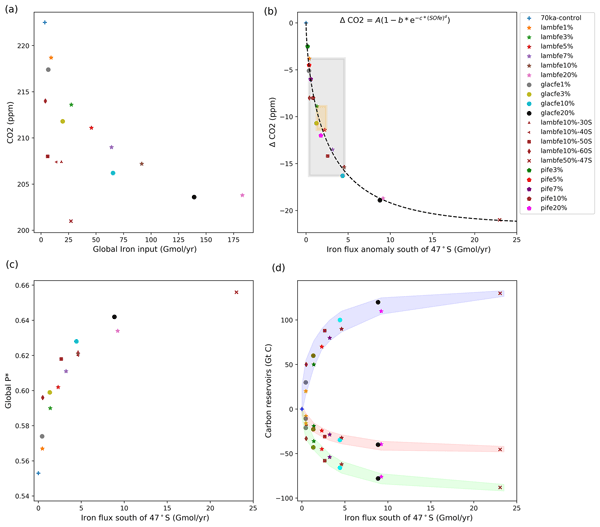
Understanding the changes in atmospheric CO2 during the last glacial cycle is crucial to comprehend the impact of climate change in the future. Previous research has hypothesised a key role of greater aeolian iron input into the Southern Ocean in influencing the global atmospheric CO2 levels by impacting the changes in the marine phytoplankton response. In our study, we test this iron hypothesis using climate modelling and constrain the impact of ocean iron supply on global CO2 decrease.
Karin Kvale, David P. Keller, Wolfgang Koeve, Katrin J. Meissner, Christopher J. Somes, Wanxuan Yao, and Andreas Oschlies
Geosci. Model Dev., 14, 7255–7285, https://doi.org/10.5194/gmd-14-7255-2021, https://doi.org/10.5194/gmd-14-7255-2021, 2021
Short summary
Short summary
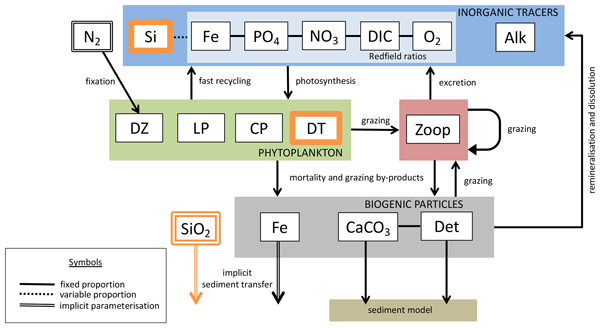
We present a new model of biological marine silicate cycling for the University of Victoria Earth System Climate Model (UVic ESCM). This new model adds diatoms, which are a key aspect of the biological carbon pump, to an existing ecosystem model. Our modifications change how the model responds to warming, with net primary production declining more strongly than in previous versions. Diatoms in particular are simulated to decline with climate warming due to their high nutrient requirements.
Chia-Te Chien, Markus Pahlow, Christopher J. Somes, Markus Schartau, and Andreas Oschlies
Earth Syst. Dynam., 17, 1277–1297, https://doi.org/10.5194/esd-17-1277-2026, https://doi.org/10.5194/esd-17-1277-2026, 2026
Short summary
Short summary
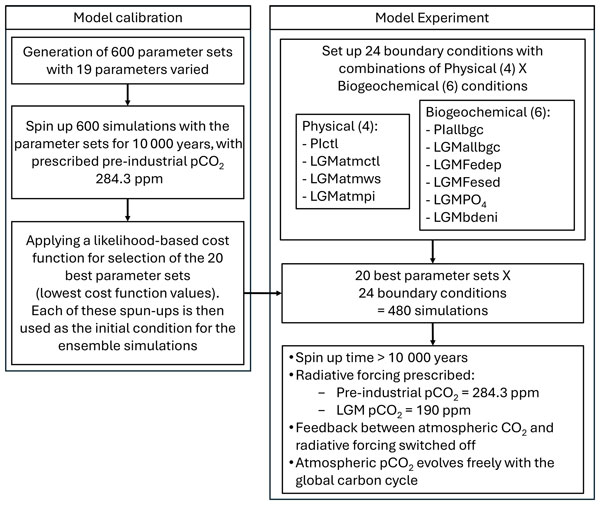
We aim to investigate the variability and drivers of atmospheric pCO2 drawdown during the Last Glacial Maximum using an ensemble of model simulations. Our ensemble explores the effects of parameter uncertainty and different forcing scenarios on marine biogeochemistry and pCO2. We show that changes in ocean circulation, nutrient utilization, and iron availability regulate the efficiency of the biological carbon pump, accounting for a substantial portion of the glacial–interglacial pCO2 change.
Vanessa Teske, Tronje Kemena, and Andreas Oschlies
EGUsphere, https://doi.org/10.5194/egusphere-2026-4781, https://doi.org/10.5194/egusphere-2026-4781, 2026
Short summary
Short summary
Ocean Alkalinity Enhancement is an ocean-based carbon dioxide removal method, but common metrics for assessing its effectiveness are difficult to apply in Earth system models. We show that changes in the global ocean carbon and alkalinity inventories are unreliable indicators for CO₂ uptake by the ocean because alkalinity additions to the ocean can alter the timing of large-scale climate modes, such as El Niño. Regional air-sea CO₂ fluxes provide more robust estimates.
Nana Hocke, Lavinia Patara, John Dunne, Florian Schütte, Mariana Maia Pacheco, and Ivy Frenger
EGUsphere, https://doi.org/10.5194/egusphere-2026-4347, https://doi.org/10.5194/egusphere-2026-4347, 2026
Short summary
Short summary
We investigate how ocean eddies influence carbon dioxide and oxygen exchange between the ocean and atmosphere using a high-resolution coupled ocean–biogeochemical climate model. We find that mesoscale variability explains 6–7 % of flux variance globally, with regional contributions exceeding 30 %. Biological processes dominate globally integrated mesoscale flux anomalies, accounting for about two-thirds of the signal, while temperature-driven effects become more important under warming.
Tianfei Xue, Lionel A. Arteaga, Markus Pahlow, and Ivy Frenger
EGUsphere, https://doi.org/10.5194/egusphere-2026-3722, https://doi.org/10.5194/egusphere-2026-3722, 2026
Short summary
Short summary
Climate change alters the balance between ocean plants (phytoplankton) and the tiny animals eating them (zooplankton) in the Southern Ocean. Using 12 climate models, we show zooplankton respond more strongly to climate change than phytoplankton, but mainly in spring and summer. Near Antarctica zooplankton increase more than phytoplankton; in subtropical waters they decline more. Annual averages hide these seasonal extremes, underestimating ecological impacts on marine food webs.
Iris Kriest, Tronje Kemena, and Haichao Guo
EGUsphere, https://doi.org/10.5194/egusphere-2026-3423, https://doi.org/10.5194/egusphere-2026-3423, 2026
This preprint is open for discussion and under review for Geoscientific Model Development (GMD).
Short summary
Short summary
We calibrated rate constants of an ocean biogeochemical model in a computationally efficient circulation. We then transferred these constants to the same biogeochemical model coupled to a computationally expensive Earth system model (ESM) and investigate the effects of this transfer. Compared to an earlier version of the ESM, we find a considerable improvement of the revised model, suggesting that prior calibration of parameters in efficient circulation models can support ESM model development.
Wolfgang Koeve and Ivy Frenger
EGUsphere, https://doi.org/10.5194/egusphere-2026-304, https://doi.org/10.5194/egusphere-2026-304, 2026
Short summary
Short summary
Apparent oxygen utilization (AOU) is widely used to diagnose oceanic oxygen loss and marine carbon cycle changes because it can be derived from observations and climate models. However, it assumes perfect oxygen equilibration at the ocean surface, an assumption that introduces uncertainty. Using an Earth System model of intermediate complexity, we reassess the validity of the AOU approximation for steady-state and future climate scenarios.
Florian Schütte, Johannes Hahn, Ivy Frenger, Arne Bendinger, Ahmad Fehmi Dilmahamod, Marco Schulz, and Peter Brandt
Ocean Sci., 22, 119–143, https://doi.org/10.5194/os-22-119-2026, https://doi.org/10.5194/os-22-119-2026, 2026
Short summary
Short summary
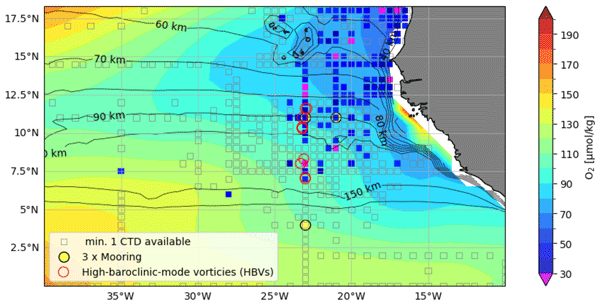
We found extreme drops in oxygen levels in the tropical Atlantic linked to surprisingly long-lived, small subsurface eddies. These eddies are hidden beneath the surface (undetectable by satellites) and are unusually stable, even in the highly dynamic ocean near the equator. Using long-term measurements and computer models, we show that these features can strongly influence oxygen supply and potentially impact marine ecosystems.
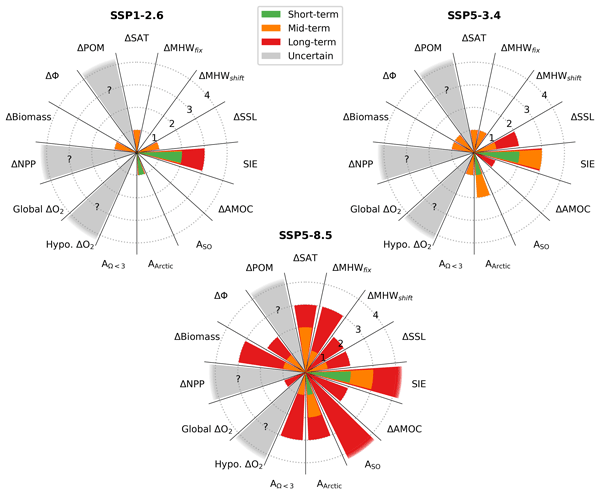
Timothée Bourgeois, Giang T. Tran, Aurich Jeltsch-Thömmes, Jörg Schwinger, Friederike Fröb, Thomas L. Frölicher, Thorsten Blenckner, Olivier Torres, Jean Negrel, David P. Keller, Andreas Oschlies, Laurent Bopp, and Fortunat Joos
Biogeosciences, 22, 5435–5462, https://doi.org/10.5194/bg-22-5435-2025, https://doi.org/10.5194/bg-22-5435-2025, 2025
Short summary
Short summary
Anthropogenic greenhouse gas emissions significantly impact ocean ecosystems through climate change and acidification, leading to either progressive or abrupt changes. This study maps the crossing of physical and ecological limits for various ocean impact metrics under three emission scenarios. Using Earth system models, we identify when these limits are exceeded, highlighting the urgent need for ambitious climate action to safeguard the world's oceans and ecosystems.
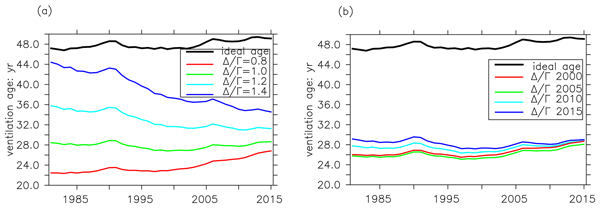
Haichao Guo, Wolfgang Koeve, Andreas Oschlies, Yan-Chun He, Tronje Peer Kemena, Lennart Gerke, and Iris Kriest
Ocean Sci., 21, 1167–1182, https://doi.org/10.5194/os-21-1167-2025, https://doi.org/10.5194/os-21-1167-2025, 2025
Short summary
Short summary
We evaluated the effectiveness of the inverse Gaussian transit time distribution (IG-TTD) with respect to estimating the mean state and temporal changes of seawater age, defined as the duration since water last had contact with the atmosphere, within the tropical thermocline. Results suggest that the IG-TTD underestimates seawater age. Moreover, the IG-TTD constrained by a single tracer gives spurious trends in water age. Incorporating an additional tracer improves IG-TTD's accuracy for estimating temporal change of seawater age.
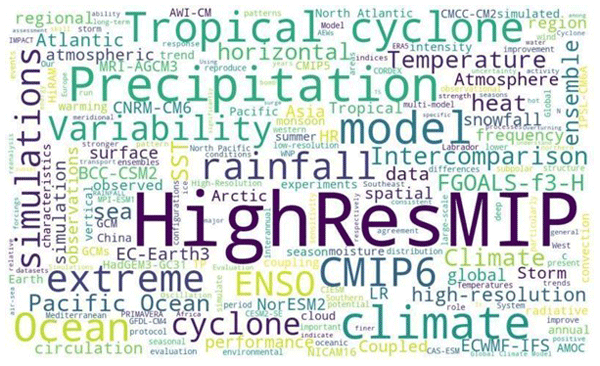
Malcolm J. Roberts, Kevin A. Reed, Qing Bao, Joseph J. Barsugli, Suzana J. Camargo, Louis-Philippe Caron, Ping Chang, Cheng-Ta Chen, Hannah M. Christensen, Gokhan Danabasoglu, Ivy Frenger, Neven S. Fučkar, Shabeh ul Hasson, Helene T. Hewitt, Huanping Huang, Daehyun Kim, Chihiro Kodama, Michael Lai, Lai-Yung Ruby Leung, Ryo Mizuta, Paulo Nobre, Pablo Ortega, Dominique Paquin, Christopher D. Roberts, Enrico Scoccimarro, Jon Seddon, Anne Marie Treguier, Chia-Ying Tu, Paul A. Ullrich, Pier Luigi Vidale, Michael F. Wehner, Colin M. Zarzycki, Bosong Zhang, Wei Zhang, and Ming Zhao
Geosci. Model Dev., 18, 1307–1332, https://doi.org/10.5194/gmd-18-1307-2025, https://doi.org/10.5194/gmd-18-1307-2025, 2025
Short summary
Short summary
HighResMIP2 is a model intercomparison project focusing on high-resolution global climate models, that is, those with grid spacings of 25 km or less in the atmosphere and ocean, using simulations of decades to a century in length. We are proposing an update of our simulation protocol to make the models more applicable to key questions for climate variability and hazard in present-day and future projections and to build links with other communities to provide more robust climate information.
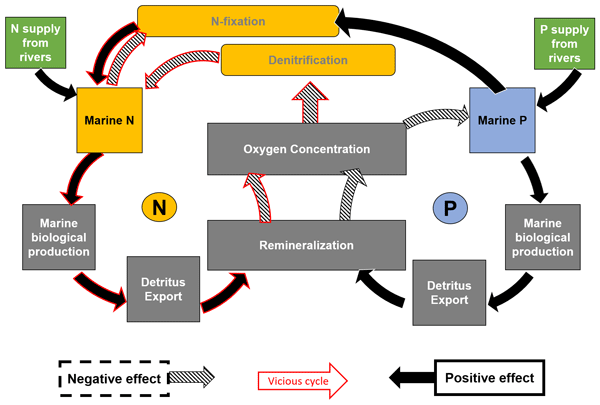
Miriam Tivig, David P. Keller, and Andreas Oschlies
Biogeosciences, 21, 4469–4493, https://doi.org/10.5194/bg-21-4469-2024, https://doi.org/10.5194/bg-21-4469-2024, 2024
Short summary
Short summary
Marine biological production is highly dependent on the availability of nitrogen and phosphorus. Rivers are the main source of phosphorus to the oceans but poorly represented in global model oceans. We include dissolved nitrogen and phosphorus from river export in a global model ocean and find that the addition of riverine phosphorus affects marine biology on millennial timescales more than riverine nitrogen alone. Globally, riverine phosphorus input increases primary production rates.
Na Li, Christopher J. Somes, Angela Landolfi, Chia-Te Chien, Markus Pahlow, and Andreas Oschlies
Biogeosciences, 21, 4361–4380, https://doi.org/10.5194/bg-21-4361-2024, https://doi.org/10.5194/bg-21-4361-2024, 2024
Short summary
Short summary
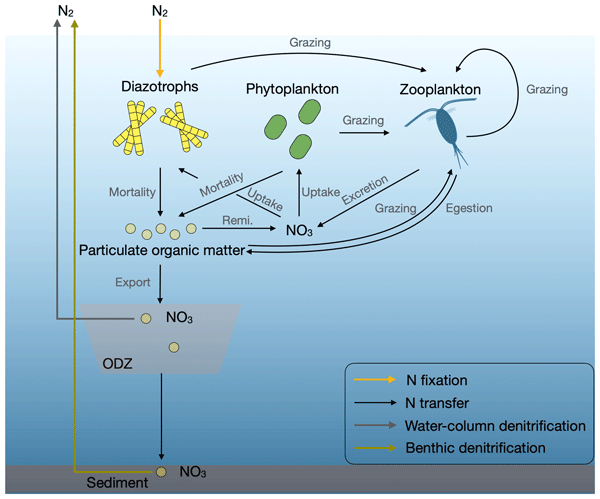
N is a crucial nutrient that limits phytoplankton growth in large ocean areas. The amount of oceanic N is governed by the balance of N2 fixation and denitrification. Here we incorporate benthic denitrification into an Earth system model with variable particulate stoichiometry. Our model compares better to the observed surface nutrient distributions, marine N2 fixation, and primary production. Benthic denitrification plays an important role in marine N and C cycling and hence the global climate.

Hanqin Tian, Naiqing Pan, Rona L. Thompson, Josep G. Canadell, Parvadha Suntharalingam, Pierre Regnier, Eric A. Davidson, Michael Prather, Philippe Ciais, Marilena Muntean, Shufen Pan, Wilfried Winiwarter, Sönke Zaehle, Feng Zhou, Robert B. Jackson, Hermann W. Bange, Sarah Berthet, Zihao Bian, Daniele Bianchi, Alexander F. Bouwman, Erik T. Buitenhuis, Geoffrey Dutton, Minpeng Hu, Akihiko Ito, Atul K. Jain, Aurich Jeltsch-Thömmes, Fortunat Joos, Sian Kou-Giesbrecht, Paul B. Krummel, Xin Lan, Angela Landolfi, Ronny Lauerwald, Ya Li, Chaoqun Lu, Taylor Maavara, Manfredi Manizza, Dylan B. Millet, Jens Mühle, Prabir K. Patra, Glen P. Peters, Xiaoyu Qin, Peter Raymond, Laure Resplandy, Judith A. Rosentreter, Hao Shi, Qing Sun, Daniele Tonina, Francesco N. Tubiello, Guido R. van der Werf, Nicolas Vuichard, Junjie Wang, Kelley C. Wells, Luke M. Western, Chris Wilson, Jia Yang, Yuanzhi Yao, Yongfa You, and Qing Zhu
Earth Syst. Sci. Data, 16, 2543–2604, https://doi.org/10.5194/essd-16-2543-2024, https://doi.org/10.5194/essd-16-2543-2024, 2024
Short summary
Short summary
Atmospheric concentrations of nitrous oxide (N2O), a greenhouse gas 273 times more potent than carbon dioxide, have increased by 25 % since the preindustrial period, with the highest observed growth rate in 2020 and 2021. This rapid growth rate has primarily been due to a 40 % increase in anthropogenic emissions since 1980. Observed atmospheric N2O concentrations in recent years have exceeded the worst-case climate scenario, underscoring the importance of reducing anthropogenic N2O emissions.
Tianfei Xue, Jens Terhaar, A. E. Friederike Prowe, Thomas L. Frölicher, Andreas Oschlies, and Ivy Frenger
Biogeosciences, 21, 2473–2491, https://doi.org/10.5194/bg-21-2473-2024, https://doi.org/10.5194/bg-21-2473-2024, 2024
Short summary
Short summary
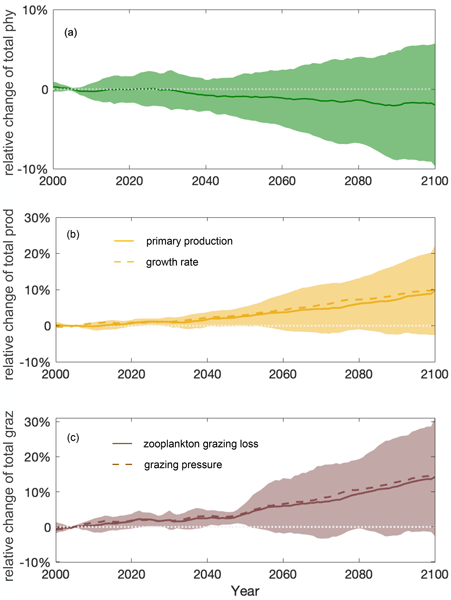
Phytoplankton play a crucial role in marine ecosystems. However, climate change's impact on phytoplankton biomass remains uncertain, particularly in the Southern Ocean. In this region, phytoplankton biomass within the water column is likely to remain stable in response to climate change, as supported by models. This stability arises from a shallower mixed layer, favoring phytoplankton growth but also increasing zooplankton grazing due to phytoplankton concentration near the surface.
Andreas Oschlies, Lennart T. Bach, Rosalind E. M. Rickaby, Terre Satterfield, Romany Webb, and Jean-Pierre Gattuso
State Planet, 2-oae2023, 1, https://doi.org/10.5194/sp-2-oae2023-1-2023, https://doi.org/10.5194/sp-2-oae2023-1-2023, 2023
Short summary
Short summary
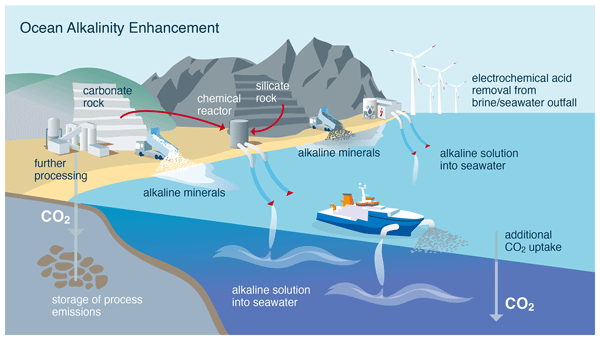
Reaching promised climate targets will require the deployment of carbon dioxide removal (CDR). Marine CDR options receive more and more interest. Based on idealized theoretical studies, ocean alkalinity enhancement (OAE) appears as a promising marine CDR method. We provide an overview on the current situation of developing OAE as a marine CDR method and describe the history that has led to the creation of the OAE research best practice guide.
Katja Fennel, Matthew C. Long, Christopher Algar, Brendan Carter, David Keller, Arnaud Laurent, Jann Paul Mattern, Ruth Musgrave, Andreas Oschlies, Josiane Ostiguy, Jaime B. Palter, and Daniel B. Whitt
State Planet, 2-oae2023, 9, https://doi.org/10.5194/sp-2-oae2023-9-2023, https://doi.org/10.5194/sp-2-oae2023-9-2023, 2023
Short summary
Short summary
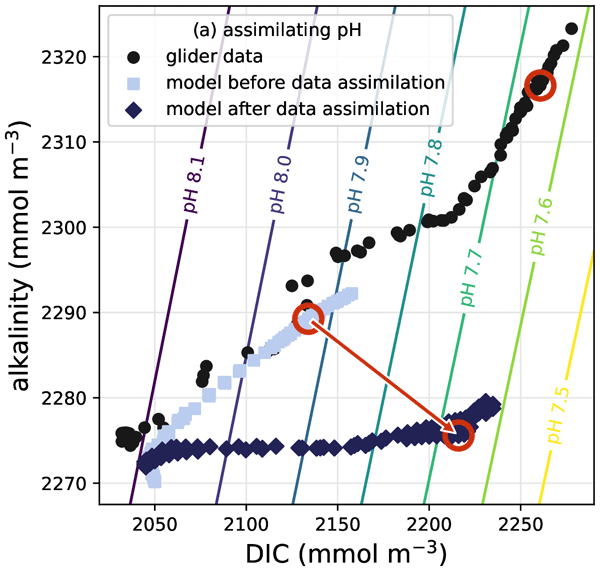
This paper describes biogeochemical models and modelling techniques for applications related to ocean alkalinity enhancement (OAE) research. Many of the most pressing OAE-related research questions cannot be addressed by observation alone but will require a combination of skilful models and observations. We present illustrative examples with references to further information; describe limitations, caveats, and future research needs; and provide practical recommendations.
Himadri Saini, Katrin J. Meissner, Laurie Menviel, and Karin Kvale
Clim. Past, 19, 1559–1584, https://doi.org/10.5194/cp-19-1559-2023, https://doi.org/10.5194/cp-19-1559-2023, 2023
Short summary
Short summary
Understanding the changes in atmospheric CO2 during the last glacial cycle is crucial to comprehend the impact of climate change in the future. Previous research has hypothesised a key role of greater aeolian iron input into the Southern Ocean in influencing the global atmospheric CO2 levels by impacting the changes in the marine phytoplankton response. In our study, we test this iron hypothesis using climate modelling and constrain the impact of ocean iron supply on global CO2 decrease.
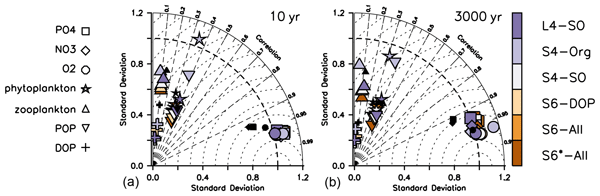
Iris Kriest, Julia Getzlaff, Angela Landolfi, Volkmar Sauerland, Markus Schartau, and Andreas Oschlies
Biogeosciences, 20, 2645–2669, https://doi.org/10.5194/bg-20-2645-2023, https://doi.org/10.5194/bg-20-2645-2023, 2023
Short summary
Short summary
Global biogeochemical ocean models are often subjectively assessed and tuned against observations. We applied different strategies to calibrate a global model against observations. Although the calibrated models show similar tracer distributions at the surface, they differ in global biogeochemical fluxes, especially in global particle flux. Simulated global volume of oxygen minimum zones varies strongly with calibration strategy and over time, rendering its temporal extrapolation difficult.
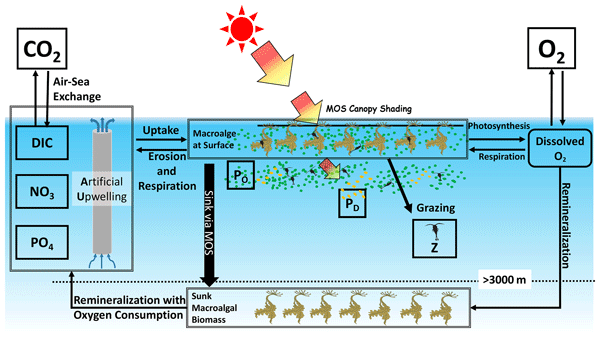
Jiajun Wu, David P. Keller, and Andreas Oschlies
Earth Syst. Dynam., 14, 185–221, https://doi.org/10.5194/esd-14-185-2023, https://doi.org/10.5194/esd-14-185-2023, 2023
Short summary
Short summary
In this study we investigate an ocean-based carbon dioxide removal method: macroalgae open-ocean mariculture and sinking (MOS), which aims to cultivate seaweed in the open-ocean surface and to sink matured biomass quickly to the deep seafloor. Our results suggest that MOS has considerable potential as an ocean-based CDR method. However, MOS has inherent side effects on marine ecosystems and biogeochemistry, which will require careful evaluation beyond this first idealized modeling study.
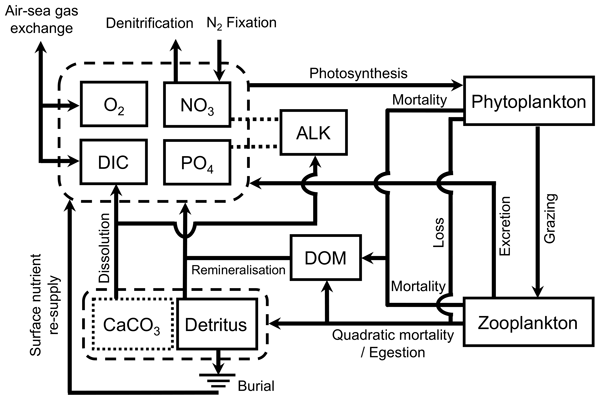
Chia-Te Chien, Jonathan V. Durgadoo, Dana Ehlert, Ivy Frenger, David P. Keller, Wolfgang Koeve, Iris Kriest, Angela Landolfi, Lavinia Patara, Sebastian Wahl, and Andreas Oschlies
Geosci. Model Dev., 15, 5987–6024, https://doi.org/10.5194/gmd-15-5987-2022, https://doi.org/10.5194/gmd-15-5987-2022, 2022
Short summary
Short summary
We present the implementation and evaluation of a marine biogeochemical model, Model of Oceanic Pelagic Stoichiometry (MOPS) in the Flexible Ocean and Climate Infrastructure (FOCI) climate model. FOCI-MOPS enables the simulation of marine biological processes, the marine carbon, nitrogen and oxygen cycles, and air–sea gas exchange of CO2 and O2. As shown by our evaluation, FOCI-MOPS shows an overall adequate performance that makes it an appropriate tool for Earth climate system simulations.
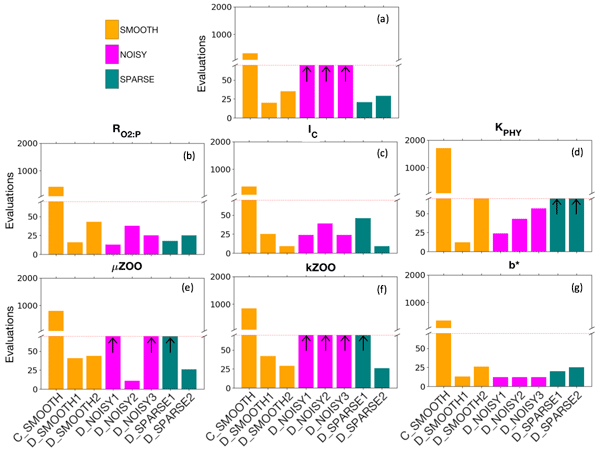
Sophy Oliver, Coralia Cartis, Iris Kriest, Simon F. B Tett, and Samar Khatiwala
Geosci. Model Dev., 15, 3537–3554, https://doi.org/10.5194/gmd-15-3537-2022, https://doi.org/10.5194/gmd-15-3537-2022, 2022
Short summary
Short summary
Global ocean biogeochemical models are used within Earth system models which are used to predict future climate change. However, these are very computationally expensive to run and therefore are rarely routinely improved or calibrated to real oceanic observations. Here we apply a new, fast optimisation algorithm to one such model and show that it can calibrate the model much faster than previously managed, therefore encouraging further ocean biogeochemical model improvements.
Tianfei Xue, Ivy Frenger, A. E. Friederike Prowe, Yonss Saranga José, and Andreas Oschlies
Biogeosciences, 19, 455–475, https://doi.org/10.5194/bg-19-455-2022, https://doi.org/10.5194/bg-19-455-2022, 2022
Short summary
Short summary
The Peruvian system supports 10 % of the world's fishing yield. In the Peruvian system, wind and earth’s rotation bring cold, nutrient-rich water to the surface and allow phytoplankton to grow. But observations show that it grows worse at high upwelling. Using a model, we find that high upwelling happens when air mixes the water the most. Then phytoplankton is diluted and grows slowly due to low light and cool upwelled water. This study helps to estimate how it might change in a warming climate.
Karin Kvale, David P. Keller, Wolfgang Koeve, Katrin J. Meissner, Christopher J. Somes, Wanxuan Yao, and Andreas Oschlies
Geosci. Model Dev., 14, 7255–7285, https://doi.org/10.5194/gmd-14-7255-2021, https://doi.org/10.5194/gmd-14-7255-2021, 2021
Short summary
Short summary
We present a new model of biological marine silicate cycling for the University of Victoria Earth System Climate Model (UVic ESCM). This new model adds diatoms, which are a key aspect of the biological carbon pump, to an existing ecosystem model. Our modifications change how the model responds to warming, with net primary production declining more strongly than in previous versions. Diatoms in particular are simulated to decline with climate warming due to their high nutrient requirements.
Cited articles
Anderson, L. A. and Sarmiento, J. L.: Redfield ratios of remineralization determined by nutrient data analysis, Global Biogeochem. Cy., 8, 65–80, https://doi.org/10.1029/93GB03318, 1994. a
Ashton-Key, H., Mecking, J., Marsh, R., Drijfhout, S., Oltmanns, M., and Sanchez-Franks, A.: AMOC weakening across latitude and time in CMIP6 future scenarios, Ocean Sci., 22, 3245–3286, https://doi.org/10.5194/os-22-3245-2026, 2026. a
Bahl, A., Gnanadesikan, A., and Pradal, M.-A.: Variations in Ocean Deoxygenation Across Earth System Models: Isolating the Role of Parameterized Lateral Mixing, Global Biogeochem. Cy., 33, 703–724, https://doi.org/10.1029/2018GB006121, 2019. a
Battle, M., Bender, M., Sowers, T., Tans, P., Butler, J., Elkins, J., Ellis, J., Conway, T., Zhang, N., Lang, P., and Clarke, A.: Atmospheric gas concentrations over the past century measured in air from firn at the South Pole, Nature, 383, 231–235, https://doi.org/10.1038/383231a0, 1996. a
Bopp, L., Resplandy, L., Orr, J. C., Doney, S. C., Dunne, J. P., Gehlen, M., Halloran, P., Heinze, C., Ilyina, T., Séférian, R., Tjiputra, J., and Vichi, M.: Multiple stressors of ocean ecosystems in the 21st century: projections with CMIP5 models, Biogeosciences, 10, 6225–6245, https://doi.org/10.5194/bg-10-6225-2013, 2013. a, b, c
Bryan, K. and Lewis, L. J.: A water mass model of the World Ocean, J. Geophys. Res.-Oceans, 84, 2503–2517, https://doi.org/10.1029/JC084iC05p02503, 1979. a
Cabré, A., Marinov, I., Bernardello, R., and Bianchi, D.: Oxygen minimum zones in the tropical Pacific across CMIP5 models: mean state differences and climate change trends, Biogeosciences, 12, 5429–5454, https://doi.org/10.5194/bg-12-5429-2015, 2015. a
Carr, M.-E., Friedrichs, M. A., Schmeltz, M., Noguchi Aita, M., Antoine, D., Arrigo, K. R., Asanuma, I., Aumont, O., Barber, R., Behrenfeld, M., Bidigare, R., Buitenhuis, E. T., Campbell, J., Ciotti, A., Dierssen, H., Dowell, M., Dunne, J., Esaias, W., Gentili, B., Gregg, W., Groom, S., Hoepffner, N., Ishizaka, J., Kameda, T., Le Quéré, C., Lohrenz, S., Marra, J., Mélin, F., Moore, K., Morel, A., Reddy, T. E., Ryan, J., Scardi, M., Smyth, T., Turpie, K., Tilstone, G., Waters, K., and Yamanaka, Y.: A comparison of global estimates of marine primary production from ocean color, Deep-Sea Res. Pt. II, 53, 741–770, https://doi.org/10.1016/j.dsr2.2006.01.028, 2006. a, b
Cocco, V., Joos, F., Steinacher, M., Frölicher, T. L., Bopp, L., Dunne, J., Gehlen, M., Heinze, C., Orr, J., Oschlies, A., Schneider, B., Segschneider, J., and Tjiputra, J.: Oxygen and indicators of stress for marine life in multi-model global warming projections, Biogeosciences, 10, 1849–1868, https://doi.org/10.5194/bg-10-1849-2013, 2013. a
Cunningham, S. A., Kanzow, T., Rayner, D., Baringer, M. O., Johns, W. E., Marotzke, J., Longworth, H. R., Grant, E. M., Hirschi, J. J.-M., Beal, L. M., Meinen, C. S., and Bryden, H. L.: Temporal Variability of the Atlantic Meridional Overturning Circulation at 26.5° N, Science, 317, 935–938, https://doi.org/10.1126/science.1141304, 2007. a, b
Dunne, J. P., Sarmiento, J. L., and Gnanadesikan, A.: A synthesis of global particle export from the surface ocean and cycling through the ocean interior and on the seafloor, Global Biogeochem. Cy., 21, https://doi.org/10.1029/2006GB002907, 2007. a
Duteil, O. and Oschlies, A.: Sensitivity of simulated extent and future evolution of marine suboxia to mixing intensity, Geophys. Res. Lett., 38, https://doi.org/10.1029/2011GL046877, 2011. a
Eby, M., Zickfeld, K., Montenegro, A., Archer, D., Meissner, K. J., and Weaver, A. J.: Lifetime of Anthropogenic Climate Change: Millennial Time Scales of Potential CO2 and Surface Temperature Perturbations, J. Climate, 22, 2501–2511, https://doi.org/10.1175/2008JCLI2554.1, 2009. a, b, c
Ehlert, D., Zickfeld, K., Eby, M., and Gillett, N.: The Sensitivity of the Proportionality between Temperature Change and Cumulative CO2 Emissions to Ocean Mixing, J. Climate, 30, 2921–2935, https://doi.org/10.1175/JCLI-D-16-0247.1, 2017. a, b
Etheridge, D., Steele, L., Langenfelds, R., Francey, R., Barnola, J., and Morgan, V.: Natural and anthropogenic changes in atmospheric CO2 over the last 1000 years from air in Antarctic ice and firn, J. Geophys. Res.-Atmos., 101, 4115–4128, https://doi.org/10.1029/95JD03410, 1996. a
Etheridge, D., Steele, L., Francey, R., and Langenfelds, R.: Atmospheric methane between 1000 AD and present: Evidence of anthropogenic emissions and climatic variability, J. Geophys. Res.-Atmos., 103, 15979–15993, https://doi.org/10.1029/98JD00923, 1998. a
Evans, G. T.: Defining misfit between biogeochemical models and data sets, J. Marine Syst., 40-41, 49–54, https://doi.org/10.1016/S0924-7963(03)00012-5, 2003. a
Ferretti, D., Miller, J., White, J., Etheridge, D., Lassey, K., Lowe, D., Meure, C., Dreier, M., Trudinger, C., van Ommen, T., and Langenfelds, R.: Unexpected changes to the global methane budget over the past 2000 years, Science, 309, 1714–1717, https://doi.org/10.1126/science.1115193, 2005. a
Flückiger, J., Dällenbach, A., Blunier, T., Stauffer, B., Stocker, T. F., Raynaud, D., and Barnola, J.-M.: Variations in atmospheric N2O concentration during abrupt climatic changes, Science, 285, 227–230, https://doi.org/10.1126/science.285.5425.227, 1999. a
Flückiger, J., Blunier, T., Stauffer, B., Chappellaz, J., Spahni, R., Kawamura, K., Schwander, J., Stocker, T. F., and Dahl-Jensen, D.: N2O and CH4 variations during the last glacial epoch: Insight into global processes, Global Biogeochem. Cy., 18, https://doi.org/10.1029/2003GB002122, 2004. a
Flynn, K. J. and Skibinski, D. O. F.: Exploring evolution of maximum growth rates in plankton, J. Plankton Res., 42, 497–513, https://doi.org/10.1093/plankt/fbaa038, 2020. a
Galbraith, E. D., Gnanadesikan, A., Dunne, J. P., and Hiscock, M. R.: Regional impacts of iron-light colimitation in a global biogeochemical model, Biogeosciences, 7, 1043–1064, https://doi.org/10.5194/bg-7-1043-2010, 2010. a
Garcia, H., Locarnini, R. A., Boyer, T. P., Antonov, J., Baranova, O., Zweng, M. M., and Johnson, D.: World Ocean Atlas 2009, Volume 3: Dissolved Oxygen, Apparent Oxygen Utilization, and Oxygen Saturation, Tech. rep., NOAA Atlas NESDIS 70, U.S. Government Printing Office, Washington, D.C., 2010a. a, b, c, d, e, f
Hansen, N. and Ostermeier, A.: Completely Derandomized Self-Adaptation in Evolution Strategies, Evol. Comput., 9, 159–195, https://doi.org/10.1162/106365601750190398, 2001. a
Holland, W., Chow, J., and Bryan, F.: Application of a third-order upwind scheme in the NCAR Ocean Model, J. Climate, 11, 1487–1493, https://doi.org/10.1175/1520-0442(1998)011<1487:AOATOU>2.0.CO;2, 1998. a, b
Honjo, S., Manganini, S. J., Krishfield, R. A., and Francois, R.: Particulate organic carbon fluxes to the ocean interior and factors controlling the biological pump: A synthesis of global sediment trap programs since 1983, Prog. Oceanogr., 76, 217–285, https://doi.org/10.1016/j.pocean.2007.11.003, 2008. a, b, c, d
Kalnay, E., Kanamitsu, M., Kistler, R., Collins, W., Deaven, D., Gandin, L., Iredell, M., Saha, S., White, G., Woollen, J., Zhu, Y., Chelliah, M., Ebisuzaki, W., Higgins, W., Janowiak, J., Mo, K., Ropelewski, C., Wang, J., Leetmaa, A., Reynolds, R., Jenne, R., and Joseph, D.: The NCEP/NCAR 40-year reanalysis project, B. Am. Meteorol. Soc., 77, 437–471, https://doi.org/10.1175/1520-0477(1996)077<0437:TNYRP>2.0.CO;2, 1996. a
Keller, D. P., Oschlies, A., and Eby, M.: A new marine ecosystem model for the University of Victoria Earth System Climate Model, Geosci. Model Dev., 5, 1195–1220, https://doi.org/10.5194/gmd-5-1195-2012, 2012. a, b
Key, R. M., Kozyr, A., Sabine, C. L., Lee, K., Wanninkhof, R., Bullister, J. L., Feely, R. A., Millero, F. J., Mordy, C., and Peng, T.-H.: A global ocean carbon climatology: Results from Global Data Analysis Project (GLODAP), Global Biogeochem. Cy., 18, GB4031, doi:10.1029/2004GB002247, 2004. a
Khatiwala, S.: A computational framework for simulation of biogeochemical tracers in the ocean, Global Biogeochem. Cy., 21, https://doi.org/10.1029/2007GB002923, 2007. a, b, c
Khatiwala, S., Visbeck, M., and Cane, M.: Accelerated simulation of passive tracers in ocean circulation models, Ocean Model., 9, 51–69, https://doi.org/10.1016/j.ocemod.2004.04.002, 2005. a, b, c
Koeve, W., Wagner, H., Kähler, P., and Oschlies, A.: 14C-age tracers in global ocean circulation models, Geosci. Model Dev., 8, 2079–2094, https://doi.org/10.5194/gmd-8-2079-2015, 2015. a
Körtzinger, A., Hedges, J. I., and Quay, P. D.: Redfield ratios revisited: Removing the biasing effect of anthropogenic CO2, Limnol. Oceanogr., 46, 964–970, https://doi.org/10.4319/lo.2001.46.4.0964, 2001. a
Kriest, I.: Calibration of a simple and a complex model of global marine biogeochemistry, Biogeosciences, 14, 4965–4984, https://doi.org/10.5194/bg-14-4965-2017, 2017. a, b
Kriest, I., Khatiwala, S., and Oschlies, A.: Towards an assessment of simple global marine biogeochemical models of different complexity, Prog. Oceanogr., 86, 337–360, https://doi.org/10.1016/j.pocean.2010.05.002, 2010. a
Kriest, I., Oschlies, A., and Khatiwala, S.: Sensitivity analysis of simple global marine biogeochemical models, Global Biogeochem. Cy., 26, https://doi.org/10.1029/2011GB004072, 2012. a
Kriest, I., Getzlaff, J., Landolfi, A., Sauerland, V., Schartau, M., and Oschlies, A.: Exploring the role of different data types and timescales in the quality of marine biogeochemical model calibration, Biogeosciences, 20, 2645–2669, https://doi.org/10.5194/bg-20-2645-2023, 2023. a, b, c, d
Kvale, K., Kriest, I., Frenger, I., and Oschlies, A.: Closing the open uncertainty window in ocean responses to fossil CO2 emissions, dataset, Geomar Helmholtz Centre for Ocean Research Kiel [code and data set], https://hdl.handle.net/20.500.12085/a142cc91-2918-43ef-b2e9-0e971ad95f3e (last access: 10 June 2026), 2021. a
Kvale, K. F. and Meissner, K. J.: Primary production sensitivity to phytoplankton light attenuation parameter increases with transient forcing, Biogeosciences, 14, 4767–4780, https://doi.org/10.5194/bg-14-4767-2017, 2017. a, b, c
Kvale, K. F., Meissner, K. J., and Keller, D. P.: Potential increasing dominance of heterotrophy in the global ocean, Environ. Res. Lett., 10, https://doi.org/10.1088/1748-9326/10/7/074009, 2015. a
Kvale, K. F., Turner, K. E., Landolfi, A., and Meissner, K. J.: Phytoplankton calcifiers control nitrate cycling and the pace of transition in warming icehouse and cooling greenhouse climates, Biogeosciences, 16, 1019–1034, https://doi.org/10.5194/bg-16-1019-2019, 2019. a
Kwiatkowski, L., Bopp, L., Aumont, O., Ciais, P., Cox, P. M., Laufkötter, C., Li, Y., and Séférian, R.: Emergent constraints on projections of declining primary production in the tropical oceans, Nat. Clim. Change, 7, 355–358, https://doi.org/10.1038/nclimate3265, 2017. a
Kwon, E. Y., Primeau, F., and Sarmiento, J. L.: The impact of remineralization depth on the air–sea carbon balance, Nat. Geosci., 2, 630–635, https://doi.org/10.1038/ngeo612, 2009. a
Landolfi, A., Somes, C. J., Koeve, W., Zamora, L. M., and Oschlies, A.: Oceanic nitrogen cycling and N2O flux perturbations in the Anthropocene, Global Biogeochem. Cy., 31, 1236–1255, https://doi.org/10.1002/2017GB005633, 2017. a
Landolfi, A., Kähler, P., Koeve, W., and Oschlies, A.: Global Marine N2 Fixation Estimates: From Observations to Models, Front. Microbiol., 9, https://doi.org/10.3389/fmicb.2018.02112, 2018. a
Laufkötter, C., Vogt, M., Gruber, N., Aita-Noguchi, M., Aumont, O., Bopp, L., Buitenhuis, E., Doney, S. C., Dunne, J., Hashioka, T., Hauck, J., Hirata, T., John, J., Le Quéré, C., Lima, I. D., Nakano, H., Seferian, R., Totterdell, I., Vichi, M., and Völker, C.: Drivers and uncertainties of future global marine primary production in marine ecosystem models, Biogeosciences, 12, 6955–6984, https://doi.org/10.5194/bg-12-6955-2015, 2015. a, b
Laufkötter, C., Vogt, M., Gruber, N., Aumont, O., Bopp, L., Doney, S. C., Dunne, J. P., Hauck, J., John, J. G., Lima, I. D., Seferian, R., and Völker, C.: Projected decreases in future marine export production: the role of the carbon flux through the upper ocean ecosystem, Biogeosciences, 13, 4023–4047, https://doi.org/10.5194/bg-13-4023-2016, 2016. a, b, c, d
Löptien, U. and Dietze, H.: Effects of parameter indeterminacy in pelagic biogeochemical modules of Earth System Models on projections into a warming future: The scale of the problem, Global Biogeochem. Cy., 31, 1155–1172, https://doi.org/10.1002/2017GB005690, 2017. a
Löptien, U., Dietze, H., Preuss, R., and Toussaint, U. V.: Mapping manifestations of parametric uncertainty in projected pelagic oxygen concentrations back to contemporary local model fidelity, Sci. Rep., 11, 20949, https://doi.org/10.1038/s41598-021-00334-2, 2021. a
Luo, Y.-W., Lima, I. D., Karl, D. M., Deutsch, C. A., and Doney, S. C.: Data-based assessment of environmental controls on global marine nitrogen fixation, Biogeosciences, 11, 691–708, https://doi.org/10.5194/bg-11-691-2014, 2014. a, b
Lutz, M. J., Caldeira, K., Dunbar, R. B., and Behrenfeld, M. J.: Seasonal rhythms of net primary production and particulate organic carbon flux to depth describe the efficiency of biological pump in the global ocean, J. Geophys. Res.-Oceans, 112, https://doi.org/10.1029/2006JC003706, 2007. a
Machida, T., Nakazawa, T., Fujii, Y., Aoki, S., and Watanabe, O.: Increase in the atmospheric nitrous-oxide concentration during the last 250 years, Geophys. Res. Lett., 22, 2921–2924, https://doi.org/10.1029/95GL02822, 1995. a
Meijers, A. J. S., Shuckburgh, E., Bruneau, N., Sallee, J.-B., Bracegirdle, T. J., and Wang, Z.: Representation of the Antarctic Circumpolar Current in the CMIP5 climate models and future changes under warming scenarios, J. Geophys. Res.-Oceans, 117, https://doi.org/10.1029/2012JC008412, 2012. a
Meinshausen, M., Smith, S. J., Calvin, K., Daniel, J. S., Kainuma, M. L. T., Lamarque, J.-F., Matsumoto, K., Montzka, S. A., Raper, S. C. B., Riahi, K., Thomson, A., Velders, G. J. M., and van Vuuren, D. P. P.: The RCP greenhouse gas concentrations and their extensions from 1765 to 2300, Clim. Change, 109, 213–241, https://doi.org/10.1007/s10584-011-0156-z, 2011. a
Meissner, K. J., Weaver, A. J., Matthews, H. D., and Cox, P. M.: The role of land surface dynamics in glacial inception: a study with the UVic Earth System Model, Clim. Dynam., 21, 515–537, https://doi.org/10.1007/s00382-003-0352-2, 2003. a
Meure, M. C., Etheridge, D., Trudinger, C., Steele, P., Langenfelds, R., van Ommen, T., Smith, A., and Elkins, J.: Law Dome CO2, CH4 and N2O ice core records extended to 2000 years BP, Geophys. Res. Lett., 33, https://doi.org/10.1029/2006GL026152, 2006. a
Mignone, B. K., Gnanadesikan, A., Sarmiento, J. L., and Slater, R. D.: Central role of Southern Hemisphere winds and eddies in modulating the oceanic uptake of anthropogenic carbon, Geophys. Res. Lett., 33, https://doi.org/10.1029/2005GL024464, 2006. a
Najjar, R. G., Jin, X., Louanchi, F., Aumont, O., Caldeira, K., Doney, S. C., Dutay, J.-C., Follows, M., Gruber, N., Joos, F., Lindsay, K., Maier-Reimer, E., Matear, R. J., Matsumoto, K., Monfray, P., Mouchet, A., Orr, J. C., Plattner, G.-K., Sarmiento, J. L., Schlitzer, R., Slater, R. D., Weirig, M.-F., Yamanaka, Y., and Yool, A.: Impact of circulation on export production, dissolved organic matter, and dissolved oxygen in the ocean: Results from Phase II of the Ocean Carbon-cycle Model Intercomparison Project (OCMIP-2), Global Biogeochem. Cy., 21, https://doi.org/10.1029/2006GB002857, 2007. a
NASA: Sea-viewing Wide Field-of-view Sensor (SeaWiFS) Ocean Color Data products, NASA EarthData [data set], https://doi.org/10.5067/AQUA/MODIS/L3M/PIC/2018, 2018. a, b
Ödalen, M., Nycander, J., Oliver, K. I. C., Brodeau, L., and Ridgwell, A.: The influence of the ocean circulation state on ocean carbon storage and CO2 drawdown potential in an Earth system model, Biogeosciences, 15, 1367–1393, https://doi.org/10.5194/bg-15-1367-2018, 2018. a, b, c
Pasquier, B., Holzer, M., Chamberlain, M. A., Matear, R. J., Bindoff, N. L., and Primeau, F. W.: Optimal parameters for the ocean's nutrient, carbon, and oxygen cycles compensate for circulation biases but replumb the biological pump, Biogeosciences, 20, 2985–3009, https://doi.org/10.5194/bg-20-2985-2023, 2023. a, b
Riahi, K., Gruebler, A., and Nakicenovic, N.: Scenarios of long-term socio-economic and environmental development under climate stabilization, Technol. Forecast. Soc., 74, 887–935, https://doi.org/10.1016/j.techfore.2006.05.026, 2007. a
Rintoul, S. R., Stewart, A. L., Johnson, G. C., Zhou, S., Foppert, A., Li, Q., Morrison, A. K., Silvano, A., Gunn, K. L., England, M. H., Nihashi, S., and Aoki, S.: Antarctic Bottom Water in a changing climate, Nat. Rev. Earth Environ., 7, 86–102, https://doi.org/10.1038/s43017-025-00750-2, 2026. a
Ryan-Keogh, T. J., Tagliabue, A., and Thomalla, S. J.: Global decline in net primary production underestimated by climate models, Commun. Earth Environ., 6, 75, https://doi.org/10.1038/s43247-025-02051-4, 2025. a
Sarmiento, J. L., Gruber, N., Brzezinski, M. A., and Dunne, J. P.: High-latitude controls of thermocline nutrients and low latitude biological productivity, Nature, 427, 56–60, https://doi.org/10.1038/nature02127, 2004. a
Sauerland, V., Kriest, I., Oschlies, A., and Srivastav, A.: Multiobjective Calibration of a Global Biogeochemical Ocean Model Against Nutrients, Oxygen, and Oxygen Minimum Zones, J. Adv. Model. Earth Sy., 11, 1285–1308, https://doi.org/10.1029/2018MS001510, 2019. a
Schmittner, A., Oschlies, A., Giraud, X., Eby, M., and Simmons, H. L.: A global model of the marine ecosystem for long-term simulations: Sensitivity to ocean mixing, buoyancy forcing, particle sinking, and dissolved organic matter cycling, Global Biogeochem. Cy., 19, https://doi.org/10.1029/2004GB002283, 2005. a, b, c, d, e
Schmittner, A., Oschlies, A., Matthews, H. D., and Galbraith, E. D.: Future changes in climate, ocean circulation, ecosystems, and biogeochemical cycling simulated for a business-as-usual CO2 emission scenario until year 4000 AD, Global Biogeochem. Cy., 22, https://doi.org/10.1029/2007GB002953, 2008. a
Séférian, R., Gehlen, M., Bopp, L., Resplandy, L., Orr, J. C., Marti, O., Dunne, J. P., Christian, J. R., Doney, S. C., Ilyina, T., Lindsay, K., Halloran, P. R., Heinze, C., Segschneider, J., Tjiputra, J., Aumont, O., and Romanou, A.: Inconsistent strategies to spin up models in CMIP5: implications for ocean biogeochemical model performance assessment, Geosci. Model Dev., 9, 1827–1851, https://doi.org/10.5194/gmd-9-1827-2016, 2016. a
Sokolov, S. and Rintoul, S. R.: On the relationship between fronts of the Antarctic Circumpolar Current and surface chlorophyll concentrations in the Southern Ocean, J. Geophys. Res.-Oceans, 112, https://doi.org/10.1029/2006JC004072, 2007. a
Steinacher, M., Joos, F., Frölicher, T. L., Bopp, L., Cadule, P., Cocco, V., Doney, S. C., Gehlen, M., Lindsay, K., Moore, J. K., Schneider, B., and Segschneider, J.: Projected 21st century decrease in marine productivity: a multi-model analysis, Biogeosciences, 7, 979–1005, https://doi.org/10.5194/bg-7-979-2010, 2010. a
Taucher, J. and Oschlies, A.: Can we predict the direction of marine primary production change under global warming?, Geophys. Res. Lett., 38, https://doi.org/10.1029/2010GL045934, 2011. a
Thiele, G. and Sarmiento, J. L.: Tracer dating and ocean ventilation, J. Geophys. Res.-Oceans, 95, 9377–9391, https://doi.org/10.1029/JC095iC06p09377, 1990. a
Weaver, A. and Eby, M.: On the numerical implementation of advection schemes for use in conjunction with various mixing parameterizations in the GFDL ocean model, J. Phys. Oceanogr., 27, 369–377, https://doi.org/10.1175/1520-0485(1997)027<0369:OTNIOA>2.0.CO;2, 1997. a, b
Weaver, A., Eby, M., Wiebe, E., Bitz, C., Duffy, P., Ewen, T., Fanning, A., Holland, M., MacFadyen, A., Matthews, H., Meissner, K., Saenko, O., Schmittner, A., Wang, H., and Yoshimori, M.: The UVic Earth System Climate Model: Model description, climatology, and applications to past, present and future climates, Atmosphere-Ocean, 39, 361–428, https://doi.org/10.1080/07055900.2001.9649686, 2001. a, b, c, d, e, f
Wilson, J. D., Andrews, O., Katavouta, A., de Melo Viríssimo, F., Death, R. M., Adloff, M., Baker, C. A., Blackledge, B., Goldsworth, F. W., Kennedy-Asser, A. T., Liu, Q., Sieradzan, K. R., Vosper, E., and Ying, R.: The biological carbon pump in CMIP6 models: 21st century trends and uncertainties, P. Natl. Acad. Sci. USA, 119, e2204369119, https://doi.org/10.1073/pnas.2204369119, 2022. a, b
Wrightson, L. and Tagliabue, A.: Quantifying the Impact of Climate Change on Marine Diazotrophy: Insights From Earth System Models, Front. Marine Sci., 7, https://doi.org/10.3389/fmars.2020.00635, 2020. a, b, c
Yao, W., Kvale, K. F., Achterberg, E., Koeve, W., and Oschlies, A.: Hierarchy of calibrated global models reveals improved distributions and fluxes of biogeochemical tracers in models with explicit representation of iron, Environ. Res. Lett., 14, 114009, https://doi.org/10.1088/1748-9326/ab4c52, 2019. a, b, c, d, e
Yao, W., Kvale, K. F., Koeve, W., Landolfi, A., Achterberg, E., Bertrand, E. M., and Oschlies, A.: Simulated Future Trends in Marine Nitrogen Fixation Are Sensitive to Model Iron Implementation, Global Biogeochem. Cy., 36, e2020GB006851, https://doi.org/10.1029/2020GB006851, 2022. a
Short summary
We tried to understand how parameter choices can impact ocean model results over long-timescale simulations. Using a standard ocean biogeochemical model, we modified the physics slightly and then used an objective tuning procedure to create 3 ocean biogeochemical models that perform nearly identically for the modern ocean. These 3 models gave similar results but for different underlying reasons, which caused the models to respond differently when forced with fossil CO2 emissions.
We tried to understand how parameter choices can impact ocean model results over long-timescale...


Altmetrics
Final-revised paper
Preprint