
Articles | Volume 23, issue 22
https://doi.org/10.5194/bg-23-8507-2026
© Author(s) 2026. This work is distributed under
the Creative Commons Attribution 4.0 License.
the Creative Commons Attribution 4.0 License.
https://doi.org/10.5194/bg-23-8507-2026
© Author(s) 2026. This work is distributed under
the Creative Commons Attribution 4.0 License.
the Creative Commons Attribution 4.0 License.
Research article
| 
20 Nov 2026
Research article |
| 20 Nov 2026
| 20 Nov 2026
Evaluating GNSS-T VOD sensitivity to plant water dynamics, rainfall interception, and dew in a coniferous forest
Konstantin Schellenberg
CORRESPONDING AUTHOR

Department of Earth Observation, Institute for Geography, Friedrich Schiller University Jena, Jena, Germany
Max Planck Institute for Biogeochemistry, Jena, Germany
Microwaves and Radar Institute, German Aerospace Center, Oberpfaffenhofen, Germany
Sinikka J. Paulus
Max Planck Institute for Biogeochemistry, Jena, Germany
Faculty of Environment and Natural Resources, University of Freiburg, Freiburg, Germany
Ronald Queck
Institute of Hydrology and Meteorology, Dresden University of Technology, Tharandt, Germany
David Chaparro
CREAF, Cerdanyola del Vallès, Barcelona, Spain
Oliver Binks
CREAF, Cerdanyola del Vallès, Barcelona, Spain
Maurizio Mencuccini
CREAF, Cerdanyola del Vallès, Barcelona, Spain
ICREA, Barcelona, Spain
Sharath S. Paligi
Plant Ecology and Ecosystems Research, Albrecht von Haller Institute for Plant Sciences, University of Göttingen, Göttingen, Germany
Henrik Hartmann
Julius Kühn-Institute for Forest Protection, Federal Research Institute for Cultivated Plants, Quedlinburg, Germany
Faculty of Forest sciences and Forest Ecology, Georg-August-University Göttingen, Göttingen, Germany
Max Planck Institute for Biogeochemistry, Jena, Germany
Christiane Schmullius
Department of Earth Observation, Institute for Geography, Friedrich Schiller University Jena, Jena, Germany
School for Climate Studies, Stellenbosch University, Stellenbosch, South Africa
Clémence Dubois
Institute of Data Science, German Aerospace Center, Jena, Germany
Thomas Jagdhuber
Microwaves and Radar Institute, German Aerospace Center, Oberpfaffenhofen, Germany
Institute of Geography, University of Augsburg, Augsburg, Germany
Related authors
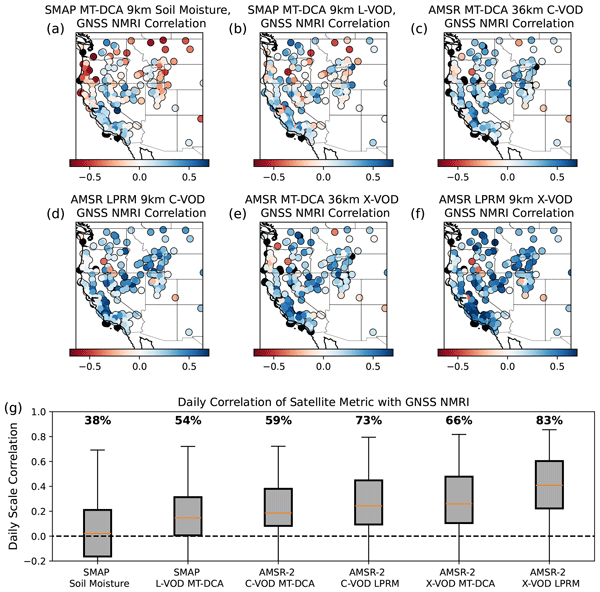
Andrew F. Feldman, William K. Smith, Alexandra G. Konings, Martin J. Baur, Marvin Browne, David Chaparro, Charles Devine, Jen L. Diehl, Arthur Endsley, Thomas Jagdhuber, Kristine M. Larson, Coral del Mar Valle-Rodriguez, Konstantin Schellenberg, Ruxandra-Maria Zotta, and Shawn P. Serbin
Biogeosciences, 23, 8159–8181, https://doi.org/10.5194/bg-23-8159-2026, https://doi.org/10.5194/bg-23-8159-2026, 2026
Short summary
Short summary
Vegetation water observations from 272 field-based microwave Global Navigation Satellite System (GNSS) sensors and satellite-based vegetation optical depth are compared across the western United States. Significant positive correlations are found across sites, with larger seasonal amplitudes, more homogeneous landscapes, and less forest cover increasing the correlations. These field-based GNSS sensors are thus useful tools to evaluate grass and shrub water stress and validate satellite signals.

Anke Fluhrer, Martin J. Baur, María Piles, Bagher Bayat, Mehdi Rahmati, David Chaparro, Clémence Dubois, Florian M. Hellwig, Carsten Montzka, Angelika Kübert, Marlin M. Mueller, Isabel Augscheller, Francois Jonard, Konstantin Schellenberg, and Thomas Jagdhuber
Biogeosciences, 22, 3721–3746, https://doi.org/10.5194/bg-22-3721-2025, https://doi.org/10.5194/bg-22-3721-2025, 2025
Short summary
Short summary
This study compares established evapotranspiration products in central Europe and evaluates their multi-seasonal performance during wet and drought phases in 2017–2020 together with important soil–plant–atmosphere drivers. Results show that SEVIRI, ERA5-land, and GLEAM perform best compared to ICOS (Integrated Carbon Observation System) measurements. During moisture-limited drought years, ET (evapotranspiration) decreases due to decreasing soil moisture and increasing vapor pressure deficit, while in other years ET is mainly controlled by VPD (vapor pressure deficit).
Andrew F. Feldman, William K. Smith, Alexandra G. Konings, Martin J. Baur, Marvin Browne, David Chaparro, Charles Devine, Jen L. Diehl, Arthur Endsley, Thomas Jagdhuber, Kristine M. Larson, Coral del Mar Valle-Rodriguez, Konstantin Schellenberg, Ruxandra-Maria Zotta, and Shawn P. Serbin
Biogeosciences, 23, 8159–8181, https://doi.org/10.5194/bg-23-8159-2026, https://doi.org/10.5194/bg-23-8159-2026, 2026
Short summary
Short summary
Vegetation water observations from 272 field-based microwave Global Navigation Satellite System (GNSS) sensors and satellite-based vegetation optical depth are compared across the western United States. Significant positive correlations are found across sites, with larger seasonal amplitudes, more homogeneous landscapes, and less forest cover increasing the correlations. These field-based GNSS sensors are thus useful tools to evaluate grass and shrub water stress and validate satellite signals.
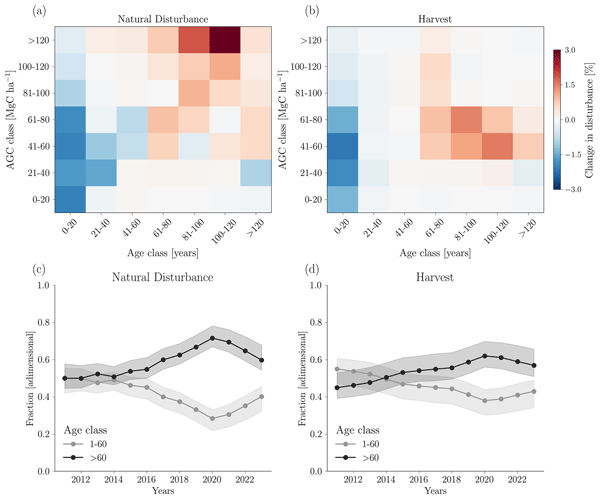
Simon Besnard, Alba Viana-Soto, Henrik Hartmann, Marco Patacca, Viola H. A. Heinrich, Katja Kowalski, Maurizio Santoro, Wanda De Keersmaecker, Ruben Van De Kerchove, Martin Herold, and Cornelius Senf
Biogeosciences, 23, 5983–6002, https://doi.org/10.5194/bg-23-5983-2026, https://doi.org/10.5194/bg-23-5983-2026, 2026
Short summary
Short summary
Europe’s forests store vast amounts of carbon, but climate-driven disturbances are becoming more frequent. By combining satellite records with information on forest age and structure, we show that recent disturbances increasingly affect the oldest and most carbon-rich forests, particularly spruce forests in Central Europe. This emerging pattern puts long-accumulated carbon at risk and may reduce the long-term climate benefits provided by Europe’s forests.
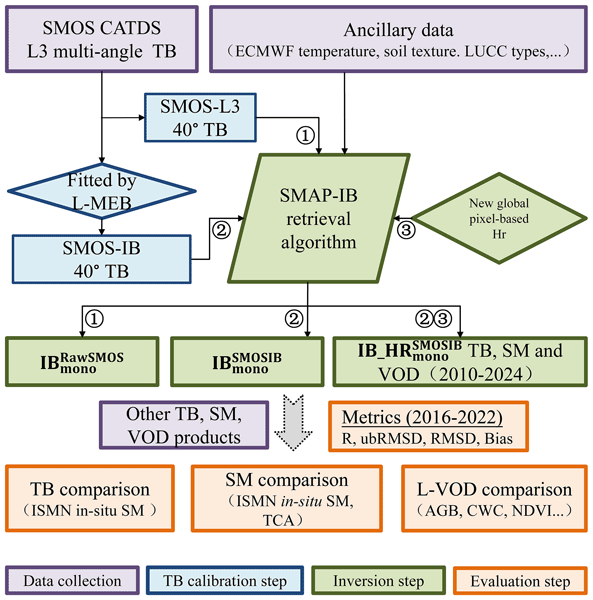
Zanpin Xing, Xiaojun Li, Frédéric Frappart, Gabrielle De Lannoy, Thomas Jagdhuber, Jian Peng, Lei Fan, Hongliang Ma, Lanka Karthikeyan, Xiangzhuo Liu, Mengjia Wang, Lin Zhao, Yongqin Liu, and Jean-Pierre Wigneron
Earth Syst. Sci. Data, 18, 4047–4073, https://doi.org/10.5194/essd-18-4047-2026, https://doi.org/10.5194/essd-18-4047-2026, 2026
Short summary
Short summary
Microwave satellite observations of Earth’s land surface are important for tracking global soil moisture and vegetation water content. We use data from the Soil Moisture and Ocean Salinity satellite to first reduce noise and contamination in microwave signals, then produce more reliable long-term records of these variables. Tests against ground stations and other satellites show that the new record performs better than existing products and supports drought, freeze-thaw, and carbon monitoring.

Stefanie Fischer, Ronald Queck, Christian Bernhofer, and Matthias Mauder
Hydrol. Earth Syst. Sci., 30, 965–984, https://doi.org/10.5194/hess-30-965-2026, https://doi.org/10.5194/hess-30-965-2026, 2026
Short summary
Short summary
Accurate estimates of interception are important to assess the water availability in ecosystems. We analyzed rainfall interception for a forest site from plot to stand scale. During interception, eddy-covariance measurements of evaporation were systematically underestimated accounting for 24 % of precipitation, while modelled interception evaporation accounted for 45 %. As a consequence, we developed a hybrid correction approach to fit the evaporation data to both the energy and the water balance.
Friedrich J. Bohn, Giles B. Sioen, Ana Bastos, Yolandi Ernst, Marcin P. Jarzebski, Niak S. Koh, Romina Martin, Anja Rammig, Alex Godoy-Faúndez, Alexandros Gasparatos, Alvaro G. Gutiérrez, Amanda J. Aceituno, Andra-Ioana Horcea-Milcu, Andrea Marais-Potgieter, Ayyoob Sharifi, Caroline Howe, Cornelia B. Krug, Eduardo E. Acosta, Emmanuel F. Nzunda, Erik Andersson, Hans-Otto Pörtner, Helen Sooväli-Sepping, Ishihara Hiroe, Ivan Palmegiani, Kaera Coetzer, Kirsten Thonike, Krizler Tanalgo, Lisa Biber-Freudenberger, Nicholas O. Oguge, Mi S. Park, Milena Gross, Pablo De La Cruz, Paula R. Prist, Peng Bi, Rivera Diego, Roman Isaac, Rosemary McFarlane, Sinikka J. Paulus, Stefanie Burkhart, Sung-Ching Lee, Susanne Müller, Uchi D. Terhile, Wan-Yu Shih, William K. Smith, Viola Hakkarainen, Virginia Murray, Yuki Yoshida, Yohannes T. Damtew, and Zeenat Niazi
EGUsphere, https://doi.org/10.5194/egusphere-2025-3619, https://doi.org/10.5194/egusphere-2025-3619, 2025
Short summary
Short summary
The aim of this series is to provide decision-makers with valuable insights into the current state of biosphere research. Firstly, it is intended to ensure the flow of information between the comprehensive assessment reports of the IPCC and IPBES. On the other hand, it is intended to support economic and political decisions closely related to the biosphere with scientifically sound findings – including uncertainties – and comprehensive polysolutions, helping to solve the earth system polycrisis.
Anke Fluhrer, Martin J. Baur, María Piles, Bagher Bayat, Mehdi Rahmati, David Chaparro, Clémence Dubois, Florian M. Hellwig, Carsten Montzka, Angelika Kübert, Marlin M. Mueller, Isabel Augscheller, Francois Jonard, Konstantin Schellenberg, and Thomas Jagdhuber
Biogeosciences, 22, 3721–3746, https://doi.org/10.5194/bg-22-3721-2025, https://doi.org/10.5194/bg-22-3721-2025, 2025
Short summary
Short summary
This study compares established evapotranspiration products in central Europe and evaluates their multi-seasonal performance during wet and drought phases in 2017–2020 together with important soil–plant–atmosphere drivers. Results show that SEVIRI, ERA5-land, and GLEAM perform best compared to ICOS (Integrated Carbon Observation System) measurements. During moisture-limited drought years, ET (evapotranspiration) decreases due to decreasing soil moisture and increasing vapor pressure deficit, while in other years ET is mainly controlled by VPD (vapor pressure deficit).
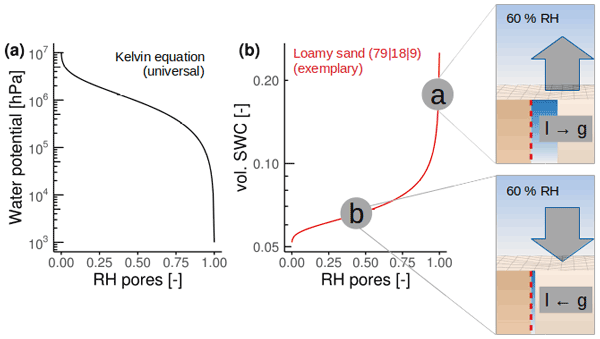
Sinikka J. Paulus, Rene Orth, Sung-Ching Lee, Anke Hildebrandt, Martin Jung, Jacob A. Nelson, Tarek Sebastian El-Madany, Arnaud Carrara, Gerardo Moreno, Matthias Mauder, Jannis Groh, Alexander Graf, Markus Reichstein, and Mirco Migliavacca
Biogeosciences, 21, 2051–2085, https://doi.org/10.5194/bg-21-2051-2024, https://doi.org/10.5194/bg-21-2051-2024, 2024
Short summary
Short summary
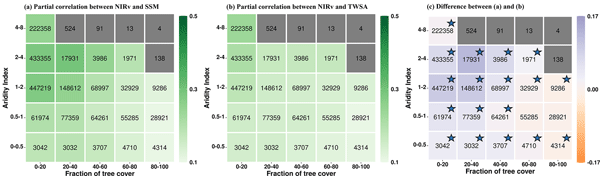
Porous materials are known to reversibly trap water from the air, even at low humidity. However, this behavior is poorly understood for soils. In this analysis, we test whether eddy covariance is able to measure the so-called adsorption of atmospheric water vapor by soils. We find that this flux occurs frequently during dry nights in a Mediterranean ecosystem, while EC detects downwardly directed vapor fluxes. These results can help to map moisture uptake globally.
Prajwal Khanal, Anne J. Hoek Van Dijke, Timo Schaffhauser, Wantong Li, Sinikka J. Paulus, Chunhui Zhan, and René Orth
Biogeosciences, 21, 1533–1547, https://doi.org/10.5194/bg-21-1533-2024, https://doi.org/10.5194/bg-21-1533-2024, 2024
Short summary
Short summary
Water availability is essential for vegetation functioning, but the depth of vegetation water uptake is largely unknown due to sparse ground measurements. This study correlates vegetation growth with soil moisture availability globally to infer vegetation water uptake depth using only satellite-based data. We find that the vegetation water uptake depth varies across climate regimes and vegetation types and also changes during dry months at a global scale.
Chenwei Xiao, Sönke Zaehle, Hui Yang, Jean-Pierre Wigneron, Christiane Schmullius, and Ana Bastos
Earth Syst. Dynam., 14, 1211–1237, https://doi.org/10.5194/esd-14-1211-2023, https://doi.org/10.5194/esd-14-1211-2023, 2023
Short summary
Short summary
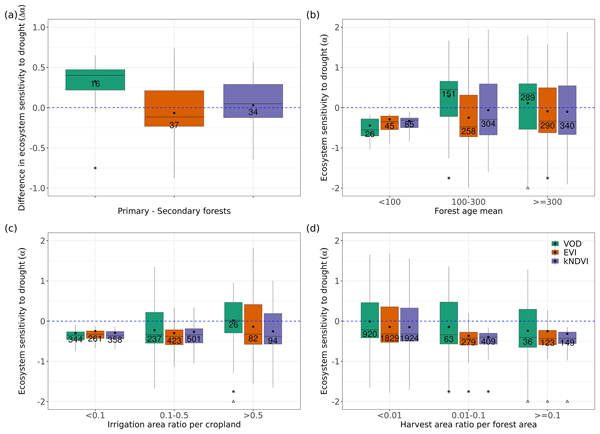
Ecosystem resistance reflects their susceptibility during adverse conditions and can be changed by land management. We estimate ecosystem resistance to drought and temperature globally. We find a higher resistance to drought in forests compared to croplands and an evident loss of resistance to drought when primary forests are converted to secondary forests or they are harvested. Old-growth trees tend to be more resistant in some forests and crops benefit from irrigation during drought periods.
Miquel De Cáceres, Roberto Molowny-Horas, Antoine Cabon, Jordi Martínez-Vilalta, Maurizio Mencuccini, Raúl García-Valdés, Daniel Nadal-Sala, Santiago Sabaté, Nicolas Martin-StPaul, Xavier Morin, Francesco D'Adamo, Enric Batllori, and Aitor Améztegui
Geosci. Model Dev., 16, 3165–3201, https://doi.org/10.5194/gmd-16-3165-2023, https://doi.org/10.5194/gmd-16-3165-2023, 2023
Short summary
Short summary
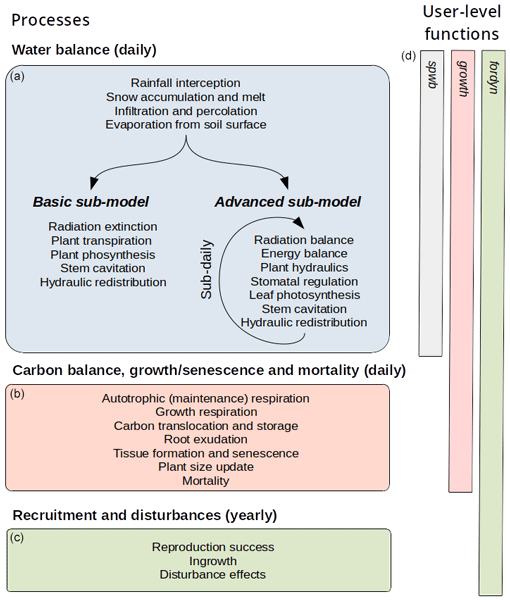
Regional-level applications of dynamic vegetation models are challenging because they need to accommodate the variation in plant functional diversity. This can be done by estimating parameters from available plant trait databases while adopting alternative solutions for missing data. Here we present the design, parameterization and evaluation of MEDFATE (version 2.9.3), a novel model of forest dynamics for its application over a region in the western Mediterranean Basin.
Sinikka Jasmin Paulus, Tarek Sebastian El-Madany, René Orth, Anke Hildebrandt, Thomas Wutzler, Arnaud Carrara, Gerardo Moreno, Oscar Perez-Priego, Olaf Kolle, Markus Reichstein, and Mirco Migliavacca
Hydrol. Earth Syst. Sci., 26, 6263–6287, https://doi.org/10.5194/hess-26-6263-2022, https://doi.org/10.5194/hess-26-6263-2022, 2022
Short summary
Short summary
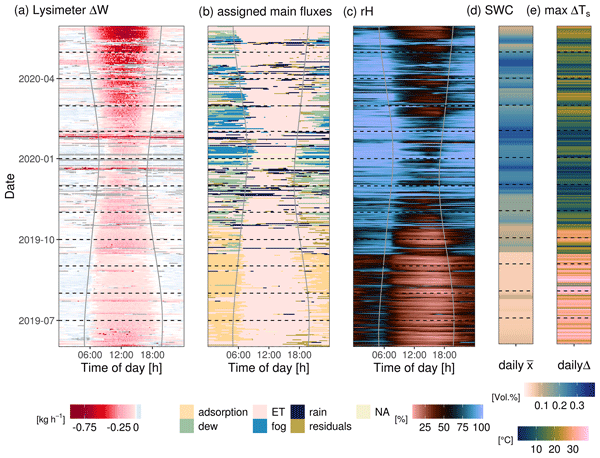
In this study, we analyze small inputs of water to ecosystems such as fog, dew, and adsorption of vapor. To measure them, we use a scaling system and later test our attribution of different water fluxes to weight changes. We found that they occur frequently during 1 year in a dry summer ecosystem. In each season, a different flux seems dominant, but they all mainly occur during the night. Therefore, they could be important for the biosphere because rain is unevenly distributed over the year.
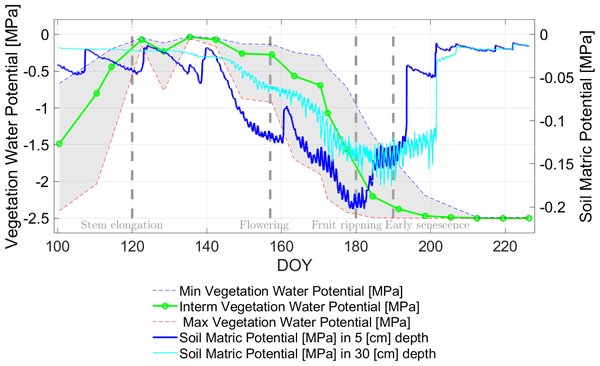
Thomas Jagdhuber, François Jonard, Anke Fluhrer, David Chaparro, Martin J. Baur, Thomas Meyer, and María Piles
Biogeosciences, 19, 2273–2294, https://doi.org/10.5194/bg-19-2273-2022, https://doi.org/10.5194/bg-19-2273-2022, 2022
Short summary
Short summary
This is a concept study of water dynamics across winter wheat starting from ground-based L-band radiometry in combination with on-site measurements of soil and atmosphere. We research the feasibility of estimating water potentials and seasonal flux rates of water (water uptake from soil and transpiration rates into the atmosphere) within the soil-plant-atmosphere system (SPAS) of a winter wheat field. The main finding is that L-band radiometry can be integrated into field-based SPAS assessment.
Cited articles
Altherr, E., Unfried, P., Hradetzky, J., and Hradetzky, V.: Statistische Rindenbeziehungen als Hilfsmittel zur Ausformung und Aufmessung unentrindeten Stammholzes: Teil IV: Fichte, Tanne, Douglasie und Sitka-Fichte, Forstliche Versuchs- und Forschungsanstalt Baden-Württemberg, Freiburg im Breisgau, 90, 1978. a
Arend, M., Link, R. M., Patthey, R., Hoch, G., Schuldt, B., and Kahmen, A.: Rapid hydraulic collapse as cause of drought-induced mortality in conifers, P. Natl. Acad. Sci. USA, 118, e2025251118, https://doi.org/10.1073/pnas.2025251118, 2021. a
Bartlett, M. K., Scoffoni, C., and Sack, L.: The determinants of leaf turgor loss point and prediction of drought tolerance of species and biomes: a global meta‐analysis, Ecol. Lett., 15, 393–405, https://doi.org/10.1111/j.1461-0248.2012.01751.x, 2012. a, b
Beysens, D.: Dew nucleation and growth, C. R. Phys., 7, 1082–1100, https://doi.org/10.1016/j.crhy.2006.10.020, 2006. a
Binks, O., Finnigan, J., Coughlin, I., Disney, M., Calders, K., Burt, A., Vicari, M. B., Da Costa, A. L., Mencuccini, M., and Meir, P.: Canopy wetness in the Eastern Amazon, Agr. Forest Meteorol., 297, 108250, https://doi.org/10.1016/j.agrformet.2020.108250, 2021. a
Binks, O., Meir, P., Konings, A. G., Cernusak, L., Christoffersen, B. O., Anderegg, W. R. L., Wood, J., Sack, L., Martinez-Vilalta, J., and Mencuccini, M.: A Theoretical Framework to Quantify Ecosystem Pressure-Volume Relationships, Glob. Change Biol., 30, e17567, https://doi.org/10.1111/gcb.17567, 2024. a, b, c, d
Bouten, W., Swart, P. J. F., and De Water, E.: Microwave transmission, a new tool in forest hydrological research, J. Hydrol., 124, 119–130, https://doi.org/10.1016/0022-1694(91)90009-7, 1991. a
Brede, B., Schellenberg, K., Camps, A., Chaparro, D., Damm, A., Forkel, M., Frankenberg, C., Abesh Ghosh, Hartmann, H., Herold, M., Humphrey, V., Jagdhuber, T., Konings, A., Kurum, M., Niederberger, M., Schmullius, C., Stassin, T., Steele-Dunne, S., Van Der Borght, N., Strube, M., Vermunt, P., Yitong Yao, Monteith, A., Richards, E., Persson, H., Lecart, B., and Jonard, F.: VODnet: a virtual GNSS-T VOD network for monitoring of forest water budget and structure, ResearchGate, https://doi.org/10.13140/RG.2.2.17146.35522, 2025. a
Brodribb, T. J. and McAdam, S. A.: Evolution of the Stomatal Regulation of Plant Water Content, Plant Physiol., 174, 639–649, https://doi.org/10.1104/pp.17.00078, 2017. a
Brodribb, T. J., Holbrook, N. M., Edwards, E. J., and Gutiérrez, M. V.: Relations between stomatal closure, leaf turgor and xylem vulnerability in eight tropical dry forest trees, Plant Cell Environ., 26, 443–450, https://doi.org/10.1046/j.1365-3040.2003.00975.x, 2003. a
Brown, L. A., Ogutu, B. O., and Dash, J.: Tracking forest biophysical properties with automated digital repeat photography: A fisheye perspective using digital hemispherical photography from below the canopy, Agr. Forest Meteorol., 287, 107944, https://doi.org/10.1016/j.agrformet.2020.107944, 2020. a
Budyko, M. I.: Climate and Life, Academic Press, ISBN 978-0-12-139450-9, 1974. a
Burns, S. P., Humphrey, V., Gutmann, E. D., Raleigh, M. S., Bowling, D. R., and Blanken, P. D.: Using GNSS-based vegetation optical depth, tree sway motion, and eddy covariance to examine evaporation of canopy-intercepted rainfall in a subalpine forest, Biogeosciences, 22, 5741–5769, https://doi.org/10.5194/bg-22-5741-2025, 2025. a, b, c, d
Calders, K., Brede, B., Newnham, G., Culvenor, D., Armston, J., Bartholomeus, H., Griebel, A., Hayward, J., Junttila, S., Lau, A., Levick, S., Morrone, R., Origo, N., Pfeifer, M., Verbesselt, J., and Herold, M.: StrucNet: a global network for automated vegetation structure monitoring, Remote Sensing in Ecology and Conservation, 9, 587–598, https://doi.org/10.1002/rse2.333, 2023. a
Camps, A., Alonso-Arroyo, A., Park, H., Onrubia, R., Pascual, D., and Querol, J.: L-Band Vegetation Optical Depth Estimation Using Transmitted GNSS Signals: Application to GNSS-Reflectometry and Positioning, Remote Sensing, 12, 2352, https://doi.org/10.3390/rs12152352, 2020. a
Chaparro, D., Jagdhuber, T., Piles, M., Jonard, F., Fluhrer, A., Vall-llossera, M., Camps, A., López-Martínez, C., Fernández-Morán, R., Baur, M., Feldman, A. F., Fink, A., and Entekhabi, D.: Vegetation moisture estimation in the Western United States using radiometer-radar-lidar synergy, Remote Sens. Environ., 303, 113993, https://doi.org/10.1016/j.rse.2024.113993, 2024. a
Cisneros Vaca, C., van der Tol, C., and Ghimire, C. P.: The influence of long-term changes in canopy structure on rainfall interception loss: a case study in Speulderbos, the Netherlands, Hydrol. Earth Syst. Sci., 22, 3701–3719, https://doi.org/10.5194/hess-22-3701-2018, 2018. a
de Vries, S. M., Alan, M., Bozzano, M., Burianek, V., Collin, E., Cottrell, J., Ivankovic, M., Kelleher, C. T., Koskela, J., Rotach, P., and Vietto, L.: Pan‐European Strategy for Genetic Conservation of Forest Trees and Establishment of a Core Network of Dynamic Conservation Units., vol. 40 of European Forest Genetic Resources Programme (EUFORGEN), Bioversity International, Rome, Italy, https://www.euforgen.org/fileadmin/templates/euforgen.org/upload/Publications/Thematic_publications/EUFORGEN_FGR_conservation_strategy.pdf (last access: 17 November 2026), 2015. a
Donovan, L. A., Richards, J. H., and Linton, M. J.: Magnitude and Mechanisms of Disequilibrium Between Predawn Plant and Soil Water Potentials, Ecology, 84, 463–470, https://doi.org/10.1890/0012-9658(2003)084[0463:MAMODB]2.0.CO;2, 2003. a
Dorigo, W., Dietrich, S., Aires, F., Brocca, L., Carter, S., Cretaux, J.-F., Dunkerley, D., Enomoto, H., Forsberg, R., Güntner, A., Hegglin, M. I., Hollmann, R., Hurst, D. F., Johannessen, J. A., Kummerow, C., Lee, T., Luojus, K., Looser, U., Miralles, D. G., Pellet, V., Recknagel, T., Vargas, C. R., Schneider, U., Schoeneich, P., Schröder, M., Tapper, N., Vuglinsky, V., Wagner, W., Yu, L., Zappa, L., Zemp, M., and Aich, V.: Closing the Water Cycle from Observations across Scales: Where Do We Stand?, B. Am. Meteorol. Soc., 102, E1897–E1935, https://doi.org/10.1175/BAMS-D-19-0316.1, 2021. a
Dzikiti, S., Steppe, K., Lemeur, R., and Milford, J.: Whole-tree level water balance and its implications on stomatal oscillations in orange trees [Citrus sinensis (L.) Osbeck] under natural climatic conditions, J. Exp. Bot., 58, 1893–1901, https://doi.org/10.1093/jxb/erm023, 2007. a
Feldman, A. F.: Emerging Methods to Validate Remotely Sensed Vegetation Water Content, Geophys. Res. Lett., 51, e2024GL110505, https://doi.org/10.1029/2024GL110505, 2024. a
Ferrazzoli, P. and Guerriero, L.: Passive microwave remote sensing of forests: a model investigation, IEEE T. Geosci. Remote, 34, 433–443, https://doi.org/10.1109/36.485121, 1996. a
Fischer, S., Moderow, U., Queck, R., and Bernhofer, C.: Evaporation of intercepted rainfall – Comparing canopy water budget and energy balance related long term measurements at a Norway spruce site, Agr. Forest Meteorol., 341, 109637, https://doi.org/10.1016/j.agrformet.2023.109637, 2023. a
Fischer, S., Queck, R., Bernhofer, C., and Mauder, M.: Quantifying evaporation of intercepted rainfall: a hybrid correction approach for eddy-covariance measurements, Hydrol. Earth Syst. Sci., 30, 965–984, https://doi.org/10.5194/hess-30-965-2026, 2026. a, b
Frappart, F., Wigneron, J.-P., Li, X., Liu, X., Al-Yaari, A., Fan, L., Wang, M., Moisy, C., Le Masson, E., Aoulad Lafkih, Z., Vallé, C., Ygorra, B., and Baghdadi, N.: Global Monitoring of the Vegetation Dynamics from the Vegetation Optical Depth (VOD): A Review, Remote Sensing, 12, 2915, https://doi.org/10.3390/rs12182915, 2020. a
Gerlein-Safdi, C., Koohafkan, M. C., Chung, M., Rockwell, F. E., Thompson, S., and Caylor, K. K.: Dew deposition suppresses transpiration and carbon uptake in leaves, Agr. Forest Meteorol., 259, 305–316, https://doi.org/10.1016/j.agrformet.2018.05.015, 2018. a
Green, S., Clothier, B., and Jardine, B.: Theory and Practical Application of Heat Pulse to Measure Sap Flow, Agron. J., 95, 1371–1379, https://doi.org/10.2134/agronj2003.1371, 2003. a
Grunicke, S., Queck, R., and Bernhofer, C.: Long-term investigation of forest canopy rainfall interception for a spruce stand, Agr. Forest Meteorol., 292–293, 108125, https://doi.org/10.1016/j.agrformet.2020.108125, 2020. a, b, c, d
Grünwald, T. and Bernhofer, C.: A decade of carbon, water and energy flux measurements of an old spruce forest at the Anchor Station Tharandt, Tellus B, 59, 387, https://doi.org/10.1111/j.1600-0889.2007.00259.x, 2007. a, b, c
Grünwald, T., Wanner, L., Eichelmann, U., Hehn, M., Moderow, U., Prasse, H., Queck, R., Bernhofer, C., and Mauder, M.: Carbon fluxes controlled by land management and disturbances at a cluster of long-term ecosystem monitoring sites in Central Europe, Agr. Forest Meteorol., 369, 110533, https://doi.org/10.1016/j.agrformet.2025.110533, 2025. a
Guerriero, L., Martín, F., Mollfulleda, A., Paloscia, S., Pierdicca, N., Santi, E., and Floury, N.: Ground-Based Remote Sensing of Forests Exploiting GNSS Signals, IEEE T. Geosci. Remote, 58, 6844–6860, https://doi.org/10.1109/TGRS.2020.2976899, 2020. a
Hammond, W. M., Williams, A. P., Abatzoglou, J. T., Adams, H. D., Klein, T., López, R., Sáenz-Romero, C., Hartmann, H., Breshears, D. D., and Allen, C. D.: Global field observations of tree die-off reveal hotter-drought fingerprint for Earth's forests, Nat. Commun., 13, 1761, https://doi.org/10.1038/s41467-022-29289-2, 2022. a
Harris, R. W., Ledwidge, T. J., and Harris, R. W.: Introduction to noise analysis, no. 7 in Applied physics series, Pion, London, ISBN 978-0-85086-041-2, 1974. a
Hernando, S., Binks, O. J., Martínez-Vilalta, J., Martin-StPaul, N. K., Delzon, S., and Mencuccini, M.: Allometric Relationships of Branch Water-Storage Capacity and Capacitance in Four European Trees Species, Plant Cell Environ., https://doi.org/10.1111/pce.15409, 2025. a, b
Holtzman, N. M., Anderegg, L. D. L., Kraatz, S., Mavrovic, A., Sonnentag, O., Pappas, C., Cosh, M. H., Langlois, A., Lakhankar, T., Tesser, D., Steiner, N., Colliander, A., Roy, A., and Konings, A. G.: L-band vegetation optical depth as an indicator of plant water potential in a temperate deciduous forest stand, Biogeosciences, 18, 739–753, https://doi.org/10.5194/bg-18-739-2021, 2021. a, b
Ishibashi, M. and Terashima, I.: Effects of continuous leaf wetness on photosynthesis: adverse aspects of rainfall, Plant Cell Environ., 18, 431–438, https://doi.org/10.1111/j.1365-3040.1995.tb00377.x, 1995. a
Jackson, T. and O'Neill, P.: Attenuation of soil microwave emission by corn and soybeans at 1.4 and 5 GHz, IEEE T. Geosci. Remote, 28, 978–980, https://doi.org/10.1109/36.58989, 1990. a, b
Jackson, T. and Schmugge, T.: Vegetation effects on the microwave emission of soils, Remote Sens. Environ., 36, 203–212, https://doi.org/10.1016/0034-4257(91)90057-D, 1991. a
Jagdhuber, T., Schmidt, A.-S., Fluhrer, A., Chaparro, D., Jonard, F., Piles, M., Holtzman, N., Konings, A. G., Feldman, A. F., Baur, M. J., Steele-Dunne, S., Schellenberg, K., and Kunstmann, H.: Estimation of Forest Water Potential From Ground-Based L-Band Radiometry, IEEE J. Sel. Top. Appl., 18, 5509–5522, https://doi.org/10.1109/JSTARS.2025.3533567, 2025. a
Jarvis, P. G.: The interpretation of the variations in leaf water potential and stomatal conductance found in canopies in the field, Philos. T. R. Soc. B, 273, 593–610, https://doi.org/10.1098/rstb.1976.0035, 1976. a
Kattenborn, T., Wieneke, S., Montero, D., Mahecha, M. D., Richter, R., Guimarães-Steinicke, C., Wirth, C., Ferlian, O., Feilhauer, H., Sachsenmaier, L., Eisenhauer, N., and Dechant, B.: Temporal dynamics in vertical leaf angles can confound vegetation indices widely used in Earth observations, Commun. Earth Environ., 5, 1–11, https://doi.org/10.1038/s43247-024-01712-0, 2024. a
Kesselring, J., Humphrey, V., Niederberger, M., Feigenwinter, I., Shekhar, A., Buchmann, N., and Damm, A.: Divergence between in situ and satellite-based estimates of forest canopy water content, Remote Sens. Environ., 332, 115097, https://doi.org/10.1016/j.rse.2025.115097, 2026. a
Klaassen, W., Bosveld, F., and de Water, E.: Water storage and evaporation as constituents of rainfall interception, J. Hydrol., 212–213, 36–50, https://doi.org/10.1016/S0022-1694(98)00200-5, 1998. a
Konings, A. G., Saatchi, S. S., Frankenberg, C., Keller, M., Leshyk, V., Anderegg, W. R. L., Humphrey, V., Matheny, A. M., Trugman, A., Sack, L., Agee, E., Barnes, M. L., Binks, O., Cawse‐Nicholson, K., Christoffersen, B. O., Entekhabi, D., Gentine, P., Holtzman, N. M., Katul, G. G., Liu, Y., Longo, M., Martinez‐Vilalta, J., McDowell, N., Meir, P., Mencuccini, M., Mrad, A., Novick, K. A., Oliveira, R. S., Siqueira, P., Steele‐Dunne, S. C., Thompson, D. R., Wang, Y., Wehr, R., Wood, J. D., Xu, X., and Zuidema, P. A.: Detecting forest response to droughts with global observations of vegetation water content, Glob. Change Biol., 27, 6005–6024, https://doi.org/10.1111/gcb.15872, 2021. a, b
Koubaa, A., Perré, P., Hutcheon, R. M., and Lessard, J.: Complex Dielectric Properties of the Sapwood of Aspen, White Birch, Yellow Birch, and Sugar Maple, Dry. Technol., 26, 568–578, https://doi.org/10.1080/07373930801944762, 2008. a, b
Kravka, M., Krejzar, T., and Čermák, J.: Water content in stem wood of large pine and spruce trees in natural forests in central Sweden, Agr. Forest Meteorol., 98–99, 555–562, https://doi.org/10.1016/S0168-1923(99)00123-9, 1999. a, b
Lazarus, B. E., Castanha, C., Germino, M. J., Kueppers, L. M., and Moyes, A. B.: Growth strategies and threshold responses to water deficit modulate effects of warming on tree seedlings from forest to alpine, J. Ecol., 106, 571–585, https://doi.org/10.1111/1365-2745.12837, 2018. a
Leo, M., Oberhuber, W., Schuster, R., Grams, T. E. E., Matyssek, R., and Wieser, G.: Evaluating the effect of plant water availability on inner alpine coniferous trees based on sap flow measurements, Eur. J. For. Res., 133, 691–698, https://doi.org/10.1007/s10342-013-0697-y, 2014. a
Liu, J., Hyyppä, J., Yu, X., Jaakkola, A., Kukko, A., Kaartinen, H., Zhu, L., Liang, X., Wang, Y., and Hyyppä, H.: A Novel GNSS Technique for Predicting Boreal Forest Attributes at Low Cost, IEEE T. Geosci. Remote, 55, 4855–4867, https://doi.org/10.1109/TGRS.2017.2650944, 2017. a
Lu, X., Groh, J., Graf, A., Pütz, T., Gerke, H. H., Gründling, R., Rupp, H., Kiese, R., Vogel, H. J., Javaux, M., Vereecken, H., and Franssen, H.-J. H.: Robustness of critical soil moisture to curve-fitting methods and its variability with soil depth, soil texture, and climatic conditions: insights from lysimeter data in Germany, J. Hydrol., 668, 134959, https://doi.org/10.1016/j.jhydrol.2026.134959, 2026. a
Malik, F. T., Clement, R. M., Gethin, D. T., Krawszik, W., and Parker, A. R.: Nature's moisture harvesters: a comparative review, Bioinspir. Biomim., 9, 031002, https://doi.org/10.1088/1748-3182/9/3/031002, 2014. a
Mallick, K., Trebs, I., Boegh, E., Giustarini, L., Schlerf, M., Drewry, D. T., Hoffmann, L., von Randow, C., Kruijt, B., Araùjo, A., Saleska, S., Ehleringer, J. R., Domingues, T. F., Ometto, J. P. H. B., Nobre, A. D., de Moraes, O. L. L., Hayek, M., Munger, J. W., and Wofsy, S. C.: Canopy-scale biophysical controls of transpiration and evaporation in the Amazon Basin, Hydrol. Earth Syst. Sci., 20, 4237–4264, https://doi.org/10.5194/hess-20-4237-2016, 2016. a
Martinez-Vilalta, J., Anderegg, W. R. L., Sapes, G., and Sala, A.: Greater focus on water pools may improve our ability to understand and anticipate drought-induced mortality in plants, New Phytol., 223, 22–32, https://doi.org/10.1111/nph.15644, 2019. a
Mavrovic, A., Roy, A., Royer, A., Filali, B., Boone, F., Pappas, C., and Sonnentag, O.: Dielectric characterization of vegetation at L band using an open-ended coaxial probe, Geosci. Instrum. Method. Data Syst., 7, 195–208, https://doi.org/10.5194/gi-7-195-2018, 2018. a
Meyer, T., Jagdhuber, T., Piles, M., Fink, A., Grant, J., Vereecken, H., and Jonard, F.: Estimating Gravimetric Water Content of a Winter Wheat Field from L-Band Vegetation Optical Depth, Remote Sensing, 11, 2353, https://doi.org/10.3390/rs11202353, 2019. a
Momen, M., Wood, J. D., Novick, K. A., Pangle, R., Pockman, W. T., McDowell, N. G., and Konings, A. G.: Interacting Effects of Leaf Water Potential and Biomass on Vegetation Optical Depth, J. Geophys. Res.-Biogeo., 122, 3031–3046, https://doi.org/10.1002/2017JG004145, 2017. a
Monteith, J. L.: Dew, Q. J. Roy. Meteor. Soc., 83, 322–341, https://doi.org/10.1002/qj.49708335706, 1957. a
Monteith, J. L. and Unsworth, M. H.: Principles of environmental physics: plants, animals, and the atmosphere, Elsevier/Academic Press, Amsterdam Boston, 4th edn., ISBN 978-0-12-386910-4, 2013. a
Nelson, J. A., Carvalhais, N., Migliavacca, M., Reichstein, M., and Jung, M.: Water-stress-induced breakdown of carbon–water relations: indicators from diurnal FLUXNET patterns, Biogeosciences, 15, 2433–2447, https://doi.org/10.5194/bg-15-2433-2018, 2018. a
Nobel, P. S.: Physicochemical and environmental plant physiology, Academic press, an imprint of Elsevier, London, 5th edn., ISBN 978-0-12-819146-0, 2020. a
Novick, K. A., Ficklin, D. L., Baldocchi, D., Davis, K. J., Ghezzehei, T. A., Konings, A. G., MacBean, N., Raoult, N., Scott, R. L., Shi, Y., Sulman, B. N., and Wood, J. D.: Confronting the water potential information gap, Nat. Geosci., 15, 158–164, https://doi.org/10.1038/s41561-022-00909-2, 2022. a
Paligi, S. S., Lichter, J., Kotowska, M., Schwutke, R. L., Audisio, M., Mrak, K., Penanhoat, A., Schuldt, B., Hertel, D., and Leuschner, C.: Water status dynamics and drought tolerance of juvenile European beech, Douglas fir and Norway spruce trees as dependent on neighborhood and nitrogen supply, Tree Physiol., 44, tpae044, https://doi.org/10.1093/treephys/tpae044, 2024. a, b
Paulus, S. J., El-Madany, T. S., Orth, R., Hildebrandt, A., Wutzler, T., Carrara, A., Moreno, G., Perez-Priego, O., Kolle, O., Reichstein, M., and Migliavacca, M.: Resolving seasonal and diel dynamics of non-rainfall water inputs in a Mediterranean ecosystem using lysimeters, Hydrol. Earth Syst. Sci., 26, 6263–6287, https://doi.org/10.5194/hess-26-6263-2022, 2022. a, b
Paulus, S. J., Orth, R., Lee, S.-C., Hildebrandt, A., Jung, M., Nelson, J. A., El-Madany, T. S., Carrara, A., Moreno, G., Mauder, M., Groh, J., Graf, A., Reichstein, M., and Migliavacca, M.: Interpretability of negative latent heat fluxes from eddy covariance measurements in dry conditions, Biogeosciences, 21, 2051–2085, https://doi.org/10.5194/bg-21-2051-2024, 2024. a
Paulus, S. J., Migliavacca, M., Reichstein, M., Orth, R., Lee, S., Carrara, A., Hildebrandt, A., and Nelson, J. A.: Insights Into Water Vapor Uptake by Dry Soils Using a Global Eddy Covariance Observation Network, Glob. Change Biol., 31, e70547, https://doi.org/10.1111/gcb.70547, 2025. a
Pendergrass, A. G., Knutti, R., Lehner, F., Deser, C., and Sanderson, B. M.: Precipitation variability increases in a warmer climate, Sci. Rep., 7, 17966, https://doi.org/10.1038/s41598-017-17966-y, 2017. a
Peters, R., Queck, R., and Bernhofer, C.: Modellierung der Transpiration auf Basis mikrometeorologischer Verdunstungsmessungen, in: Flussbestimmung an komplexen Standorten, Tharandter Klimaprotokolle, TU Dresden, 79–98, ISBN 3-86005-356-6, 2003. a
Pflug, S., Voortman, B. R., Cornelissen, J. H. C., and Witte, J. M.: The effect of plant size and branch traits on rainfall interception of 10 temperate tree species, Ecohydrology, 14, e2349, https://doi.org/10.1002/eco.2349, 2021. a
Pruskowsky, I., Queck, R., and Bernhofer, C.: Modelling the deposition of nitric oxides into a spruce stand (Tharandt Forest), Meteorol. Z., 14, 123–127, https://doi.org/10.1127/0941-2948/2005/0012, 2005. a
Queck, R.: Fraktionierung und zeitlich Differenzierung von Depositionsraten in Waldbeständen, Tharandter Klimaprotokolle, TU Dresden, Dresden, Germany, ISBN 3-86005-356-6, 2004. a
Queck, R.: CanWat – A Tool for Investigating Rainfall Interception with high spatial Resolution, D-A-CH MeteorologieTagung 2025, Deutsche Meteorologische Gesellschaft, https://doi.org/10.13140/RG.2.2.33956.59529, 2025. a
Queck, R., Bienert, A., Maas, H.-G., Harmansa, S., Goldberg, V., and Bernhofer, C.: Wind fields in heterogeneous conifer canopies: parameterisation of momentum absorption using high-resolution 3D vegetation scans, European J. Forest Res., 131, 165–176, https://doi.org/10.1007/s10342-011-0550-0, 2012. a
Queck, R., Bernhofer, C., Bienert, A., Eipper, T., Goldberg, V., Harmansa, S., Hildebrand, V., Maas, H., Schlegel, F., and Stiller, J.: TurbEFA: an interdisciplinary effort to investigate the turbulent flow across a forest clearing, Meteorol. Z., 23, 637–659, https://doi.org/10.1127/metz/2014/0567, 2014. a, b
Queck, R., Bernhofer, C., Bienert, A., and Schlegel, F.: The TurbEFA Field Experiment-Measuring the Influence of a Forest Clearing on the Turbulent Wind Field, Bound.-Lay. Meteorol., 160, 397–423, https://doi.org/10.1007/s10546-016-0151-z, 2016. a
Rao, K., Anderegg, W. R., Sala, A., Martínez-Vilalta, J., and Konings, A. G.: Satellite-based vegetation optical depth as an indicator of drought-driven tree mortality, Remote Sens. Environ., 227, 125–136, https://doi.org/10.1016/j.rse.2019.03.026, 2019. a
Ravoajanahary, T., Rémond, R., Daquitaine, R., Ursella, E., and Leban, J.-M.: Variability in Wood Quality and Moisture Content Measured by an Industrial X-Ray Scanner Across 700,000 Sawlogs of Picea abies, Abies alba, and Pinus sylvestris, Forests, 16, 1457, https://doi.org/10.3390/f16091457, 2025. a, b
Rebmann, C., Zeri, M., Lasslop, G., Mund, M., Kolle, O., Schulze, E.-D., and Feigenwinter, C.: Treatment and assessment of the CO2-exchange at a complex forest site in Thuringia, Germany, Agr. Forest Meteorol., 150, 684–691, https://doi.org/10.1016/j.agrformet.2009.11.001, 2010. a
Restrepo-Acevedo, A. M., Guo, J. S., Kannenberg, S. A., Benson, M. C., Beverly, D., Diaz, R., Anderegg, W. R. L., Johnson, D. M., Koch, G., Konings, A. G., Lowman, L. E. L., Martínez-Vilalta, J., Poyatos, R., Schenk, H. J., Matheny, A. M., McCulloh, K. A., Nippert, J. B., Oliveira, R. S., and Novick, K.: PSInet: a new global water potential network, Tree Physiol., 44, tpae110, https://doi.org/10.1093/treephys/tpae110, 2024. a
Restrepo‐Acevedo, A. M., Guo, J., Novick, K., Humphrey, V., Zweifel, R., Konings, A. G., Koch, G., Knowles, J., Anderegg, L. D. L., Peters, J. M. R., Paligi, S., Schenk, H. J., Beverly, D., Magh, R., Yao, Y., Hackmann, C. A., Bohrer, G., Browne, M., Carminati, A., and Kannenberg, S. A.: Continuous monitoring of plant water potential: sensor‐based approaches and best practices, New Phytol., nph.71194, https://doi.org/10.1111/nph.71194, 2026. a
Rodriguez-Alvarez, N., Bosch-Lluis, X., Camps, A., Ramos-Perez, I., Valencia, E., Park, H., and Vall-llossera, M.: Vegetation Water Content Estimation Using GNSS Measurements, IEEE Geosci. Remote S., 9, 282–286, https://doi.org/10.1109/LGRS.2011.2166242, 2012. a
Romanov, A. N.: Vegetation optical depth taking account of dielectric characteristics of water in living trees, Remote Sens. Lett., 16, 354–364, https://doi.org/10.1080/2150704X.2025.2463697, 2025. a
Rosner, S., Heinze, B., Savi, T., and Dalla-Salda, G.: Prediction of hydraulic conductivity loss from relative water loss: new insights into water storage of tree stems and branches, Physiologia Plantarum, 165, 843–854, https://doi.org/10.1111/ppl.12790, 2019. a, b
Rutter, A., Kershaw, K., Robins, P., and Morton, A.: A predictive model of rainfall interception in forests, 1. Derivation of the model from observations in a plantation of Corsican pine, Agr. Meteorol., 9, 367–384, https://doi.org/10.1016/0002-1571(71)90034-3, 1971. a
Sack, L., Cowan, P. D., Jaikumar, N., and Holbrook, N. M.: The ‘hydrology’ of leaves: co-ordination of structure and function in temperate woody species, Plant Cell Environ., 26, 1343–1356, https://doi.org/10.1046/j.0016-8025.2003.01058.x, 2003. a
Schellenberg, K.: konstantinschellenberg/eval-gnsst-vod-forest-water-content: Code base for Paper EGUSPHERE-2026-1751: “Evaluating GNSS-T VOD sensitivity to plant water dynamics, rainfall interception, and dew in a coniferous forest” (Version v1.0.0), Zenodo [code], https://doi.org/10.5281/zenodo.24318672, 2026. a
Schellenberg, K., Jagdhuber, T., Chaparro, D., Binks, O., Hellwig, F., Dubois, C., Kurum, M., Camps, A., Hartmann, H., and Schmullius, C.: Estimating Canopy Interception Water Storage with GNSS-Transmissometry, in: IGARSS 2024–2024 IEEE International Geoscience and Remote Sensing Symposium, 4507–4510, https://doi.org/10.1109/IGARSS53475.2024.10641964, 2024. a, b, c, d, e
Schneebeli, M., Wolf, S., Kunert, N., Eugster, W., and Mätzler, C.: Relating the X-band opacity of a tropical tree canopy to sapflow, rain interception and dew formation, Remote Sens. Environ., 115, 2116–2125, https://doi.org/10.1016/j.rse.2011.04.016, 2011. a, b
Schumann, K., Schuldt, B., Fischer, M., Ammer, C., and Leuschner, C.: Xylem safety in relation to the stringency of plant water potential regulation of European beech, Norway spruce, and Douglas-fir trees during severe drought, Trees, 38, 607–623, https://doi.org/10.1007/s00468-024-02499-5, 2024. a
Seneviratne, S. I., Corti, T., Davin, E. L., Hirschi, M., Jaeger, E. B., Lehner, I., Orlowsky, B., and Teuling, A. J.: Investigating soil moisture–climate interactions in a changing climate: A review, Earth-Sci. Rev., 99, 125–161, https://doi.org/10.1016/j.earscirev.2010.02.004, 2010. a
Sibley, A., Schulze, M., Jones, J., Kennedy, A., and Still, C.: Canopy wetting patterns and the determinants of dry season dewfall in an old growth Douglas-fir canopy, Agr. Forest Meteorol., 323, 109069, https://doi.org/10.1016/j.agrformet.2022.109069, 2022. a, b, c
Steppe, K., De Pauw, D. J. W., Lemeur, R., and Vanrolleghem, P. A.: A mathematical model linking tree sap flow dynamics to daily stem diameter fluctuations and radial stem growth, Tree Physiol., 26, 257–273, https://doi.org/10.1093/treephys/26.3.257, 2006. a
Stewart, J. B.: Modelling surface conductance of pine forest, Agr. Forest Meteorol., 43, 19–35, https://doi.org/10.1016/0168-1923(88)90003-2, 1988. a
Tomaszkiewicz, M., Abou Najm, M., Beysens, D., Alameddine, I., and El-Fadel, M.: Dew as a sustainable non-conventional water resource: a critical review, Environ. Rev., 23, 425–442, https://doi.org/10.1139/er-2015-0035, 2015. a, b, c
Tyree, M. T. and Yang, S.: Water-storage capacity of Thuja, Tsuga andAcer stems measured by dehydration isotherms, Planta, 182, 420–426, https://doi.org/10.1007/BF02411394, 1990. a
Ulaby, F. and El-rayes, M.: Microwave Dielectric Spectrum of Vegetation – Part II: Dual-Dispersion Model, IEEE T. Geosci. Remote, GE-25, 550–557, https://doi.org/10.1109/TGRS.1987.289833, 1987. a, b, c
Ulaby, F. T. and Long, D. G.: Microwave radar and radiometric remote sensing, The University of Michigan Press, Ann Arbor, ISBN 978-0-472-11935-6, 2014. a
Van de Griend, A. and Wigneron, J.-P.: The b-factor as a function of frequency and canopy type at H-polarization, IEEE T. Geosci. Remote, 42, 786–794, https://doi.org/10.1109/TGRS.2003.821889, 2004. a, b
Van Dijk, A. I., Gash, J. H., Van Gorsel, E., Blanken, P. D., Cescatti, A., Emmel, C., Gielen, B., Harman, I. N., Kiely, G., Merbold, L., Montagnani, L., Moors, E., Sottocornola, M., Varlagin, A., Williams, C. A., and Wohlfahrt, G.: Rainfall interception and the coupled surface water and energy balance, Agr. Forest Meteorol., 214–215, 402–415, https://doi.org/10.1016/j.agrformet.2015.09.006, 2015. a, b
Van Stan, J. T., Dymond, S. F., and Klamerus-Iwan, A.: Bark-Water Interactions Across Ecosystem States and Fluxes, Frontiers in Forests and Global Change, 4, https://doi.org/10.3389/ffgc.2021.660662, 2021. a
Van Stan, Ii, J. T., Gutmann, E., and Friesen, J., eds.: Precipitation Partitioning by Vegetation: A Global Synthesis, Springer International Publishing, Cham, ISBN 978-3-030-29701-5, 978-3-030-29702-2, https://doi.org/10.1007/978-3-030-29702-2, 2020. a
Wirth, C., Schumacher, J., and Schulze, E.-D.: Generic biomass functions for Norway spruce in Central Europe – a meta-analysis approach toward prediction and uncertainty estimation, Tree Physiol., 24, 121–139, https://doi.org/10.1093/treephys/24.2.121, 2004. a, b, c
Wærsted, E. G., Haeffelin, M., Dupont, J.-C., Delanoë, J., and Dubuisson, P.: Radiation in fog: quantification of the impact on fog liquid water based on ground-based remote sensing, Atmos. Chem. Phys., 17, 10811–10835, https://doi.org/10.5194/acp-17-10811-2017, 2017. a
Xu, X., Konings, A. G., Longo, M., Feldman, A., Xu, L., Saatchi, S., Wu, D., Wu, J., and Moorcroft, P.: Leaf surface water, not plant water stress, drives diurnal variation in tropical forest canopy water content, New Phytol., 231, 122–136, https://doi.org/10.1111/nph.17254, 2021. a, b
Yao, Y., Humphrey, V., Konings, A. G., Wang, Y., Yin, Y., Holtzman, N., Wood, J. D., Bar‐On, Y., and Frankenberg, C.: Investigating Diurnal and Seasonal Cycles of Vegetation Optical Depth Retrieved From GNSS Signals in a Broadleaf Forest, Geophys. Res. Lett., 51, e2023GL107121, https://doi.org/10.1029/2023GL107121, 2024. a
Schellenberg, K., Paulus, S., Queck, R., Mencuccini, M., Paligi, S., Hartmann, H., Schmullius, C., and Jagdhuber, T. (2026). GNSS-T VOD data set for combined analysis of rainfall interception, dew, and plant water dyanmics at a temperature needleleaf forest (Version 0.1.0), Zenodo [data set], https://doi.org/10.5281/zenodo.19356983, 2026. a
Zhao, M., Humphrey, V., Feldman, A. F., and Konings, A. G.: Temperature Is Likely an Important Omission in Interpreting Vegetation Optical Depth, Geophys. Res. Lett., 51, e2024GL110094, https://doi.org/10.1029/2024GL110094, 2024. a
Zhong, F., Jiang, S., van Dijk, A. I. J. M., Ren, L., Schellekens, J., and Miralles, D. G.: Revisiting large-scale interception patterns constrained by a synthesis of global experimental data, Hydrol. Earth Syst. Sci., 26, 5647–5667, https://doi.org/10.5194/hess-26-5647-2022, 2022. a
Zribi, M., Motte, E., Fanise, P., and Zouaoui, W.: Low-Cost GPS Receivers for the Monitoring of Sunflower Cover Dynamics, J. Sensors, 2017, 6941739, https://doi.org/10.1155/2017/6941739, 2017. a
Short summary
We evaluated Global Navigation Satellite System (GNSS) signals to monitor forest water storage, helping to close an important observational gap in plant hydraulics and micrometeorology at stand-scale. We show that signal losses in the canopy are strongly linked to three-dimensionally modeled rainfall interception. However, detecting subtle fluxes, such as internal water dynamics, dew and intercepted light rain is inhibited by signal noise, and the hydraulics properties of the ecosystem.
We evaluated Global Navigation Satellite System (GNSS) signals to monitor forest water storage,...


Altmetrics
Final-revised paper
Preprint