Articles | Volume 16, issue 18
https://doi.org/10.5194/bg-16-3507-2019
© Author(s) 2019. This work is distributed under
the Creative Commons Attribution 4.0 License.
https://doi.org/10.5194/bg-16-3507-2019
© Author(s) 2019. This work is distributed under
the Creative Commons Attribution 4.0 License.
Spring net community production and its coupling with the CO2 dynamics in the surface water of the northern Gulf of Mexico
Zong-Pei Jiang
Ocean College, Zhejiang University, Zhoushan, Zhejiang, China
School of Marine Science and Policy, University of Delaware, Newark,
Delaware, USA
School of Marine Science and Policy, University of Delaware, Newark,
Delaware, USA
John Lehrter
Department of Marine Sciences, University of South Alabama, Dauphin Island, Alabama, USA
Baoshan Chen
School of Marine Science and Policy, University of Delaware, Newark,
Delaware, USA
Zhangxian Ouyang
School of Marine Science and Policy, University of Delaware, Newark,
Delaware, USA
Chengfeng Le
Ocean College, Zhejiang University, Zhoushan, Zhejiang, China
Brian J. Roberts
Louisiana Universities Marine Consortium, Louisiana, USA
Najid Hussain
School of Marine Science and Policy, University of Delaware, Newark,
Delaware, USA
Michael K. Scaboo
School of Marine Science and Policy, University of Delaware, Newark,
Delaware, USA
Junxiao Zhang
South China Sea Marine Survey and Technology Center, State Oceanic
Administration, Guangzhou, Guangdong, China
Yuanyuan Xu
School of Marine Science and Policy, University of Delaware, Newark,
Delaware, USA
Related authors
No articles found.
Hui Gao, Zelun Wu, Zhentao Sun, Diana Cai, Meibing Jin, and Wei-Jun Cai
Earth Syst. Sci. Data, 18, 2443–2467, https://doi.org/10.5194/essd-18-2443-2026, https://doi.org/10.5194/essd-18-2443-2026, 2026
Short summary
Short summary
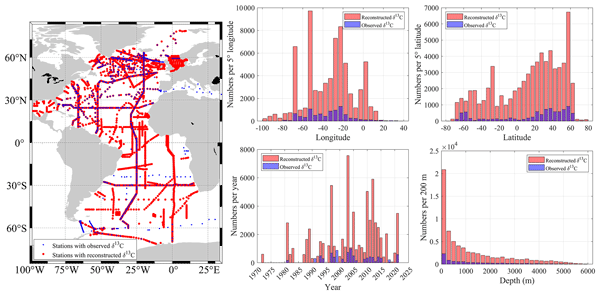
Observations of stable carbon isotopes in dissolved inorganic carbon are sparse, limiting their potential in carbon cycle studies. We compiled 51 cruises and used a machine learning method trained on 37 cruises that passed secondary quality control to reconstruct isotope values in the Atlantic. The reconstruction expands usable samples from 8,941 to 68,435, reducing noise, filling gaps, preserving decadal trend, and strengthening studies of carbon variability and model validation.
Li-Qing Jiang, Amanda Fay, Jens Daniel Müller, Luke Gregor, Alizée Roobaert, Lydia Keppler, Dustin Carroll, Siv K. Lauvset, Tim DeVries, Judith Hauck, Christian Rödenbeck, Nicolas Metzl, Andrea J. Fassbender, Jean-Pierre Gattuso, Peter Landschützer, Rik Wanninkhof, Christopher Sabine, Simone R. Alin, Mario Hoppema, Are Olsen, Matthew P. Humphreys, Kunal Chakraborty, Ana C. Franco, Kumiko Azetsu-Scott, Dorothee C. E. Bakker, Leticia Barbero, Nicholas R. Bates, Nicole Besemer, Henry C. Bittig, Albert E. Boyd, Daniel Broullón, Wei-Jun Cai, Brendan R. Carter, Thi-Tuyet-Trang Chau, Chen-Tung Arthur Chen, Frédéric Cyr, John E. Dore, Ian Enochs, Richard A. Feely, Hernan E. Garcia, Marion Gehlen, Prasanna Kanti Ghoshal, Lucas Gloege, Melchor González-Dávila, Nicolas Gruber, Debby Ianson, Yosuke Iida, Masao Ishii, Apurva Padamnabh Joshi, Esther Kennedy, Alex Kozyr, Nico Lange, Claire Lo Monaco, Derek P. Manzello, Galen A. McKinley, Natalie M. Monacci, Xose A. Padin, Ana M. Palacio-Castro, Fiz F. Pérez, J. Magdalena Santana-Casiano, Jonathan Sharp, Adrienne Sutton, Jim Swift, Toste Tanhua, Maciej Telszewski, Jens Terhaar, Ruben van Hooidonk, Anton Velo, Andrew J. Watson, Angelicque E. White, Zelun Wu, Liang Xue, Hyelim Yoo, Jiye Zeng, and Guorong Zhong
Earth Syst. Sci. Data, 18, 1405–1462, https://doi.org/10.5194/essd-18-1405-2026, https://doi.org/10.5194/essd-18-1405-2026, 2026
Short summary
Short summary
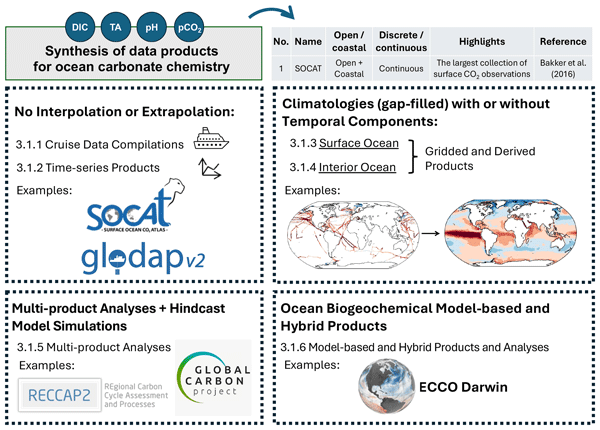
This review article provides an overview of 68 existing ocean carbonate chemistry data products and data product sets, encompassing a broad range of types, including compilations of cruise datasets, gap-filled observational products, model simulations, and more. It is designed to help researchers identify and access the data products that best support their scientific objectives, thereby facilitating progress in understanding the ocean's changing carbonate chemistry.
Zelun Wu, Wenfang Lu, Alizée Roobaert, Luping Song, Xiao-Hai Yan, and Wei-Jun Cai
Earth Syst. Sci. Data, 17, 43–63, https://doi.org/10.5194/essd-17-43-2025, https://doi.org/10.5194/essd-17-43-2025, 2025
Short summary
Short summary
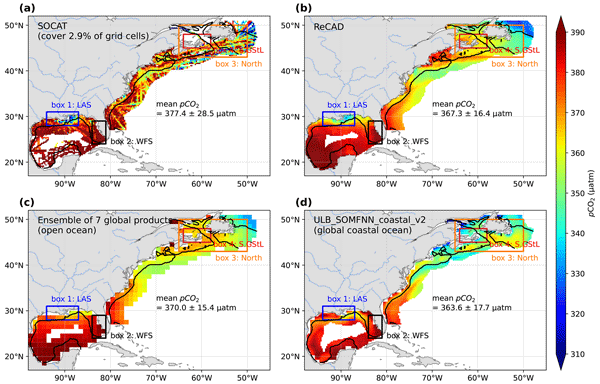
This study addresses the lack of comprehensive sea surface partial pressure of CO2 (pCO2) data in the North American Atlantic Coastal Ocean Margin (NAACOM) by developing the Reconstructed Coastal Acidification Database (ReCAD-NAACOM-pCO2). The product reconstructed sea surface pCO2 from 1993 to 2021 using machine-learning and environmental data, capturing seasonal cycles, regional variations, and long-term trends of pCO2 for coastal carbon research.
Aubin Thibault de Chanvalon, George W. Luther, Emily R. Estes, Jennifer Necker, Bradley M. Tebo, Jianzhong Su, and Wei-Jun Cai
Biogeosciences, 20, 3053–3071, https://doi.org/10.5194/bg-20-3053-2023, https://doi.org/10.5194/bg-20-3053-2023, 2023
Short summary
Short summary
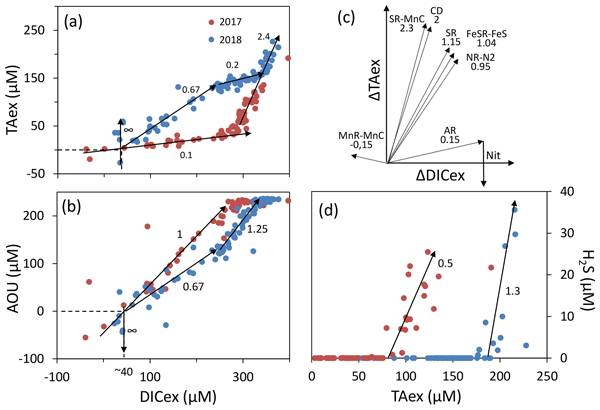
The intensity of the oceanic trap of CO2 released by anthropogenic activities depends on the alkalinity brought by continental weathering. Between ocean and continent, coastal water and estuaries can limit or favour the alkalinity transfer. This study investigate new interactions between dissolved metals and alkalinity in the oxygen-depleted zone of estuaries.
Li-Qing Jiang, Richard A. Feely, Rik Wanninkhof, Dana Greeley, Leticia Barbero, Simone Alin, Brendan R. Carter, Denis Pierrot, Charles Featherstone, James Hooper, Chris Melrose, Natalie Monacci, Jonathan D. Sharp, Shawn Shellito, Yuan-Yuan Xu, Alex Kozyr, Robert H. Byrne, Wei-Jun Cai, Jessica Cross, Gregory C. Johnson, Burke Hales, Chris Langdon, Jeremy Mathis, Joe Salisbury, and David W. Townsend
Earth Syst. Sci. Data, 13, 2777–2799, https://doi.org/10.5194/essd-13-2777-2021, https://doi.org/10.5194/essd-13-2777-2021, 2021
Short summary
Short summary
Coastal ecosystems account for most of the economic activities related to commercial and recreational fisheries and aquaculture industries, supporting about 90 % of the global fisheries yield and 80 % of known species of marine fish. Despite the large potential risks from ocean acidification (OA), internally consistent water column OA data products in the coastal ocean still do not exist. This paper is the first time we report a high quality OA data product in North America's coastal waters.
Cited articles
Bauer, J. E., Cai, W. J., Raymond, P. A., Bianchi, T. S., Hopkinson, C. S.,
and Regnier, P. A. G.: The changing carbon cycle of the coastal ocean,
Nature, 504, 61–70, https://doi.org/10.1038/nature12857, 2013.
Bianchi, T. S., DiMarco, S. F., Cowan, J. H., Hetland, R. D., Chapman, P.,
Day, J. W., and Allison, M. A.: The science of hypoxia in the Northern Gulf
of Mexico: A review, Sci. Total Environ., 408, 1471–1484,
https://doi.org/10.1016/j.scitotenv.2009.11.047, 2010.
Borges, A. V. and Abril, G.: Carbon dioxide and methane dynamics in
estuaries, in: Treatise on Estuarine and Coastal Science, edited by:
Wolanski, E. and McLusky, D., Academic Press, Waltham, 119–161, 2011.
Brewer, P. G. and Goldman, J. C.: Alkalinity changes generated by
phytoplankton growth, Limnol. Oceanogr., 21, 108–117, 1976.
Cai, W. J.: Riverine inorganic carbon flux and rate of biological uptake in
the Mississippi River plume, Geophys. Res. Lett., 30, 1032,
https://doi.org/10.1029/2002gl016312, 2003.
Cai, W. J.: Estuarine and coastal ocean carbon paradox: CO2 sinks or
sites of terrestrial carbon incineration?, Annu. Rev. Mar. Sci.,
3, 123–145, https://doi.org/10.1146/annurev-marine-120709-142723,
2011.
Cai, W. J., Dai, M. H., and Wang, Y. C.: Air-sea exchange of carbon dioxide
in ocean margins: A province-based synthesis, Geophys. Res. Lett., 33,
L12603, https://doi.org/10.1029/2006GL026219, 2006.
Cai, W. J., Hu, X. P., Huang, W. J., Murrell, M. C., Lehrter, J. C.,
Lohrenz, S. E., Chou, W. C., Zhai, W. D., Hollibaugh, J. T., Wang, Y. C.,
Zhao, P. S., Guo, X. H., Gundersen, K., Dai, M. H., and Gong, G. C.:
Acidification of subsurface coastal waters enhanced by eutrophication,
Nat. Geosci., 4, 766–770, https://doi.org/10.1038/NGEO1297, 2011.
Cai, W., Rabalais, N., and Fennel, K.: Underway pCO2 from the R∕V Pelican cruise GOM_UW_1704 conducted in the Northern Gulf of Mexico in April 2017. Biological and Chemical Oceanography Data Management Office (BCO-DMO), Dataset version 2019-07-01, https://doi.org/10.1575/1912/bco-dmo.770864.1, 2019.
Cassar, N., Barnett, B. A., Bender, M. L., Kaiser, J., Hamme, R. C., and
Tilbrook, B.: Continuous high-frequency dissolved O2∕Ar measurements by
equilibrator inlet mass spectrometry, Anal. Chem., 81, 1855–1864,
https://doi.org/10.1021/ac802300u, 2009.
Cassar, N., DiFiore, P. J., Barnett, B. A., Bender, M. L., Bowie, A. R.,
Tilbrook, B., Petrou, K., Westwood, K. J., Wright, S. W., and Lefevre, D.:
The influence of iron and light on net community production in the
Subantarctic and Polar Frontal Zones, Biogeosciences, 8, 227–237,
https://doi.org/10.5194/bg-8-227-2011, 2011.
Cloern, J. E. and Jassby, A. D.: Patterns and scales of phytoplankton
variability in estuarine-coastal ecosystems, Estuar. Coast., 33,
230–241, https://doi.org/10.1007/s12237-009-9195-3, 2010.
Castro-Morales, K., Cassar, N., Shoosmith, D. R., and Kaiser, J.: Biological
production in the Bellingshausen Sea from oxygen-to-argon ratios and oxygen
triple isotopes, Biogeosciences, 10, 2273–2291,
https://doi.org/10.5194/bg-10-2273-2013, 2013.
Chen, C.-T. A. and Borges, A. V.: Reconciling opposing views on carbon
cycling in the coastal ocean: Continental shelves as sinks and near-shore
ecosystems as sources of atmospheric CO2, Deep-Sea Res. Pt. II, 56,
578–590, 2009.
Chen, C.-T. A. and Swaney, D. P.: Terrestrial-ocean transfers of carbon and
nutrient across the coastal boundary: Editorial overview, Curr. Opin.
Env. Sust., 4, 159–161, 2012.
Chen, C.-T. A., Huang, T.-H., Fu, Y.-H., Bai, Y., and He, X.: Strong sources
of CO2 in upper estuaries become sinks of CO2 in large river
plumes, Curr. Opin. Env. Sust., 4, 179–185,
https://doi.org/10.1016/j.cosust.2012.02.003, 2012.
Cooley, S. R. and Yager, P. L.: Physical and biological contributions to
the western tropical North Atlantic Ocean carbon sink formed by the Amazon
River plume, J. Geophys. Res., 111, C08018, https://doi.org/10.1029/2005JC002954, 2006.
Craig, H. and Hayward, T.: Oxygen supersaturation in the ocean: Biological
versus physical contributions, Science, 235, 199–202,
https://doi.org/10.1126/science.235.4785.199, 1987.
Dagg, M., Benner, R., Lohrenz, S., and Lawrence, D.: Transformation of
dissolved and particulate materials on continental shelves influenced by
large rivers: plume processes, Cont. Shelf Res., 24, 833–858,
https://doi.org/10.1016/j.csr.2004.02.003, 2004.
DeMaster, D. J., Smith, W. O., Nelson, D. M., and Aller, J. Y.:
Biogeochemical processes in Amazon shelf waters: Chemical distributions and
uptake rates of silicon, carbon and nitrogen, Cont. Shelf Res., 16, 617–643,
https://doi.org/10.1016/0278-4343(95)00048-8, 1996.
Diaz, R. J. and Rosenberg, R.: Spreading dead zones and consequences for
marine ecosystems, Science, 321, 926–929,
https://doi.org/10.1126/science.1156401, 2008.
Dickson, A. G., Sabine, C. L., and Christian, J. R. (Eds.): Guide to best practices
for ocean CO2 measurements, North Pacific Marine Science Organization
(PICES), Sidney, British Columbia, 2007.
Eppley, R. W. and Peterson, B. J.: Particulate organic matter flux and
planktonic new production in the deep ocean, Nature, 282, 677–680,
https://doi.org/10.1038/282677a0, 1979.
Fennel, K., Hetland, R., Feng, Y., and DiMarco, S.: A coupled
physical-biological model of the Northern Gulf of Mexico shelf: model
description, validation and analysis of phytoplankton variability,
Biogeosciences, 8, 1881–1899, https://doi.org/10.5194/bg-8-1881-2011, 2011.
Garcia, H. E. and Gordon, L. I.: Oxygen solubility in seawater: Better
fitting equations, Limnol. Oceanogr., 37, 1307–1312, 1992.
Gattuso, J.-P., Frankignoulle, M., and Wollast, R.: Carbon and carbonate
metabolism in coastal aquatic ecosystems, Annu. Rev. Ecol. Evol. S., 29,
405–434, 1998.
Geider, R. J. and La Roche, J.: Redfield revisited: variability of C∕N:P in
marine microalgae and its biochemical basis, Eur. J. Phycol., 37, 1–17,
https://doi.org/10.1017/S0967026201003456, 2002.
Green, R. E., Bianchi, T. S., Dagg, M. J., Walker, N. D., and Breed, G. A.:
An organic carbon budget for the Mississippi River turbidity plume and plume
contributions to air-sea CO2 fluxes and bottom water hypoxia, Estuar. Coast., 29, 579–597, 2006.
Guo, X., Cai, W.-J., Huang, W.-J., Wang, Y., Chen, F., Murrell, M. C.,
Lohrenz, S. E., Jiang, L.-Q., Dai, M., Hartmann, J., Lin, Q., and Culp, R.:
Carbon dynamics and community production in the Mississippi River plume,
Limnol. Oceanogr., 57, 1–17, https://doi.org/10.4319/lo.2012.57.1.0001,
2012.
Hamme, R. C. and Emerson, S. R.: The solubility of neon, nitrogen and argon
in distilled water and seawater, Deep-Sea Res. Pt. I, 51, 1517–1528,
https://doi.org/10.1016/j.dsr.2004.06.009, 2004.
Hodur, R. M.: The Naval Research Laboratory's coupled ocean/Atmosphere
Mesoscale Prediction System (COAMPS), Mon. Weather Rev., 125,
1414–1430, 1997.
Huang, W. J., Cai, W. J., Powell, R. T., Lohrenz, S. E., Wang, Y., Jiang, L.
Q., and Hopkinson, C. S.: The stoichiometry of inorganic carbon and nutrient
removal in the Mississippi River plume and adjacent continental shelf,
Biogeosciences, 9, 2781–2792, https://doi.org/10.5194/bg-9-2781-2012, 2012.
Huang, W. J., Cai, W. J., Castelao, R. M., Wang, Y. C., and Lohrenz, S. E.:
Effects of a wind-driven cross-shelf large river plume on biological
production and CO2 uptake on the Gulf of Mexico during spring, Limnol.
Oceanogr., 58, 1727–1735, https://doi.org/10.4319/lo.2013.58.5.1727, 2013.
Huang, W. J., Cai, W. J., Wang, Y. C., Lohrenz, S. E., and Murrell, M. C.:
The carbon dioxide system on the Mississippi River-dominated continental
shelf in the northern Gulf of Mexico: 1. Distribution and air-sea CO2
flux, J. Geophys. Res., 120, 1429–1445,
https://doi.org/10.1002/2014JC010498, 2015.
Jonsson, B. F., Doney, S. C., Dunne, J., and Bender, M.: Evaluation of the
Southern Ocean O2∕Ar-based NCP estimates in a model framework, J.
Geophys. Res., 118, 385–399, https://doi.org/10.1002/jgrg.20032, 2013.
Justić, D., Rabalais, N. N., Eugene Turner, R., and Wiseman, W. J.:
Seasonal coupling between riverborne nutrients, net productivity and
hypoxia, Mar. Pollut. Bull., 26, 184–189,
https://doi.org/10.1016/0025-326X(93)90620-Y, 1993.
Kaiser, J., Reuer, M. K., Barnett, B., and Bender, M. L.: Marine
productivity estimates from continuous O2∕Ar ratio measurements by
membrane inlet mass spectrometry, Geophys. Res. Lett., 32,
https://doi.org/10.1029/2005gl023459, 2005.
Laruelle, G. G., Durr, H. H., Slomp, C. P., and Borges, A. V.: Evaluation of
sinks and sources of CO2 in the global coastal ocean using a
spatially-explicit typology of estuaries and continental shelves, Geophys.
Res. Lett., 37, L15607, https://doi.org/10.1029/2010gl043691, 2010.
Laws, E. A.: Photosynthetic quotients, new production and net community
production in the open ocean, Deep-Sea Res. Pt. A, 38, 143–167,
https://doi.org/10.1016/0198-0149(91)90059-O, 1991.
Lawson, C. L. and Hanson, R. J.: Solving Least Squares Problems,
Prentice-Hall, chap. 23, 161 pp., 1974.
Lehrter, J. C., Ko, D. S., Murrell, M. C., Hagy, J. D., Schaeffer, B. A.,
Greene, R. M., Gould, R. W., and Penta, B.: Nutrient distributions,
transports, and budgets on the inner margin of a river-dominated continental
shelf, J. Geophys. Res., 118, 4822–4838, 2013.
Lehrter, J. C., Murrell, M. C., and Kurtz, J. C.: Interactions between
freshwater input, light, and phytoplankton dynamics on the Louisiana
continental shelf, Cont. Shelf Res., 29, 1861–1872,
https://doi.org/10.1016/j.csr.2009.07.001, 2009.
Lohrenz, S. E., Dagg, M. J., and Whitledge, T. E.: Enhanced primary
production at the plume pceanic interface of the Mississippi River, Cont.
Shelf Res., 10, 639–664, https://doi.org/10.1016/0278-4343(90)90043-L, 1990.
Lohrenz, S. E., Fahnenstiel, G. L., and Redalje, D. G.: Spatial and temporal variations of photosynthetic parameters in relation to environmental-conditions in coastal waters of the northern Gulf of Mexico, Estuaries, 17, 779–795, https://doi.org/10.2307/1352747, 1994.
Lohrenz, S. E., Fahnenstiel, G. L., Redalje, D. G., Lang, G. A., Chen, X.
G., and Dagg, M. J.: Variations in primary production of northern Gulf of
Mexico continental shelf waters linked to nutrient inputs from the
Mississippi River, Mar. Ecol. Prog. Ser., 155, 45–54,
https://doi.org/10.3354/meps155045, 1997.
Lohrenz, S. E., Fahnenstiel, G. L., Redalje, D. G., Lang, G. A., Dagg, M.
J., Whitledge, T. E., and Dortch, Q.: Nutrients, irradiance, and mixing as
factors regulating primary production in coastal waters impacted by the
Mississippi River plume, Cont. Shelf Res., 19, 1113–1141,
https://doi.org/10.1016/S0278-4343(99)00012-6, 1999.
Lohrenz, S. E., Cai, W.-J., Chen, F., Chen, X., and Tuel, M.: Seasonal
variability in air-sea fluxes of CO2 in a river-influenced coastal
margin, J. Geophys. Res.-Ocean., 115, C10034,
https://doi.org/10.1029/2009JC005608, 2010.
Lohrenz, S. E., Cai, W. J., Chakraborty, S., Gundersen, K., and Murrell, M.
C.: Nutrient and carbon dynamics in a large river-dominated coastal
ecosystem: the Mississippi-Atchafalaya River system, in: Biogeochemical
Dynamics at Major River-Coastal Interfaces: Linkages with Global Change,
edited by: Allison, M. A., Bianchi, T. S., and Cai, W.-J., Cambridge
University Press, Cambridge, 448–472, 2014.
McKee, B. A., Aller, R. C., Allison, M. A., Bianchi, T. S., and Kineke, G.
C.: Transport and transformation of dissolved and particulate materials on
continental margins influenced by major rivers: benthic boundary layer and
seabed processes, Cont. Shelf Res., 24, 899–926,
https://doi.org/10.1016/j.csr.2004.02.009, 2004.
Muller-Karger, F. E., Varela, R., Thunell, R., Luerssen, R., Hu, C. M., and
Walsh, J. J.: The importance of continental margins in the global carbon
cycle, Geophys. Res. Lett., 32, L01602,
https://doi.org/10.1029/2004gl021346, 2005.
Murrell, M. C. and Lehrter, J. C.: Sediment and Lower Water Column Oxygen
Consumption in the Seasonally Hypoxic Region of the Louisiana Continental
Shelf, Estuar. Coast., 34, 912–924,
https://doi.org/10.1007/s12237-010-9351-9, 2011.
Murrell, M. C., Campbell, J. G., Hagy, J. D., and Caffrey, J. M.: Effects of
irradiance on benthic and water column processes in a Gulf of Mexico
estuary: Pensacola Bay, Florida, USA, Estuar. Coast. Shelf Sci., 81,
501–512, https://doi.org/10.1016/j.ecss.2008.12.002, 2009.
Murrell, M. C., Stanley, R. S., Lehrter, J. C., and Hagy, J. D.: Plankton
community respiration, net ecosystem metabolism, and oxygen dynamics on the
Louisiana continental shelf: Implications for hypoxia, Cont. Shelf Res., 52,
27–38, https://doi.org/10.1016/j.csr.2012.10.010, 2013.
Nicholson, D. P., Stanley, R. H. R., Barkan, E., Karl, D. M., Luz, B., Quay,
P. D., and Doney, S. C.: Evaluating triple oxygen isotope estimates of gross
primary production at the Hawaii Ocean Time-series and Bermuda Atlantic
Time-series Study sites, J. Geophys. Res., 117, C05012,
https://doi.org/10.1029/2010jc006856, 2012.
Ning, X. R., Vaulot, D., Liu, Z. S., and Liu, Z. L.: Standing stock and
production of phytoplankton in the estuary of the Changjiang (Yangtse River)
and the adjacent East China Sea, Mar. Ecol. Prog. Ser., 49, 141–150, 1988.
Obenour, D. R., Scavia, D., Rabalais, N. N., Turner, R. E., and Michalak, A.
M.: Retrospective analysis of midsummer hypoxic area and volume in the
Northern Gulf of Mexico, 1985–2011, Environ. Sci. Technol., 47, 9808–9815,
https://doi.org/10.1021/es400983g, 2013.
Pai, S.-C., Gong, G.-C., and Liu, K.-K.: Determination of dissolved oxygen
in seawater by direct spectrophotometry of total iodine, Mar. Chem., 41,
343–351, https://doi.org/10.1016/0304-4203(93)90266-Q, 1993.
Pierrot, D., Lewis, E. and Wallace, D. W. R.: MS Excel program developed for
CO2 system Calculations, ORNL/CDIAC-105a, Carbon Dioxide Information
Analysis Center, Oak Ridge National Laboratory, US Department of Energy, Oak
Ridge, TN, https://doi.org/10.3334/CDIAC/otg.CO2SYS_XLS_CDIAC105a, 2006.
Rabalais, N. N., Turner, R. E., and Wiseman, W. J.: Gulf of Mexico hypoxia,
aka “The dead zone”, Annu. Rev. Ecol. S., 33, 235–263,
https://doi.org/10.1146/annurev.ecolsys.33.010802.150513, 2002.
Rabalais, N. N., Cai, W. J., Carstensen, J., Conley, D. J., Fry, B., Hu, X.
P., Quinones-Rivera, Z., Rosenberg, R., Slomp, C. P., Turner, R. E., Voss,
M., Wissel, B., and Zhang, J.: Eutrophication-driven deoxygenation in the
coastal ocean, Oceanography, 27, 172–183, 2014.
Regnier, P., Friedlingstein, P., Ciais, P., Mackenzie, F. T., Gruber, N.,
Janssens, I. A., Laruelle, G. G., Lauerwald, R., Luyssaert, S., Andersson,
A. J., Arndt, S., Arnosti, C., Borges, A. V., Dale, A. W., Gallego-Sala, A.,
Godderis, Y., Goossens, N., Hartmann, J., Heinze, C., Ilyina, T., Joos, F.,
LaRowe, D. E., Leifeld, J., Meysman, F. J. R., Munhoven, G., Raymond, P. A.,
Spahni, R., Suntharalingam, P., and Thullner, M.: Anthropogenic perturbation
of the carbon fluxes from land to ocean, Nat. Geosci., 6, 597–607,
2013.
Reuer, M. K., Barnett, B. A., Bender, M. L., Falkowski, P. G., and
Hendricks, M. B.: New estimates of Southern Ocean biological production
rates from O2∕Ar ratios and the triple isotope composition of O2,
Deep-Sea Res. Pt. I, 54, 951–974,
https://doi.org/10.1016/j.dsr.2007.02.007, 2007.
Roberts, B. J. and Doty, S. M.: Spatial and temporal patterns of benthic
respiration and net nutrient fluxes in the Atchafalaya River Delta Estuary,
Estuar. Coast., 38, 1918–1936, 2015.
Sambrotto, R. N., Savidge, G., Robinson, C., Boyd, P., Takahashi, T., Karl,
D. M., Langdon, C., Chipman, D., Marra, J., and Codispoti, L.: Elevated
consumption of carbon relative to nitrogen in the surface ocean, Nature,
363, 248–250, https://doi.org/10.1038/363248a0, 1993.
Sarmiento, J. L. and Gruber, N.: Ocean Biogeochemical Dynamics, Princeton
University Press, Princeton, NJ, 528 pp., 2006.
Schlitzer, R.: Ocean Data View, available at: https://odv.awi.de/ (last access: 9 September 2019), 2018.
Seguro, I., García, C. M., Papaspyrou, S., Gálvez, J. A.,
García-Robledo, E., Navarro, G., Soria-Píriz, S., Aguilar, V.,
Lizano, O. G., Morales-Ramírez, A., and Corzo, A.: Seasonal changes of
the microplankton community along a tropical estuary, Regional Studies in
Marine Science, 2, 189–202, https://doi.org/10.1016/j.rsma.2015.10.006,
2015.
Shadwick, E. H., Tilbrook, B., Cassar, N., Trull, T. W., and Rintoul, S. R.:
Summertime physical and biological controls on O2 and CO2 in the
Australian Sector of the Southern Ocean, J. Mar. Syst., 147, 21–28,
https://doi.org/10.1016/j.jmarsys.2013.12.008, 2015.
Sweeney, C., Gloor, E., Jacobson, A. R., Key, R. M., McKinley, G.,
Sarmiento, J. L., and Wanninkhof, R.: Constraining global air-sea gas
exchange for CO2 with recent bomb 14C measurements, Global
Biogeochem. Cy., 21, GB2015, https://doi.org/10.1029/2006gb002784, 2007.
Teeter, L., Hamme, R. C., Ianson, D., and Bianucci, L.: Accurate estimation
of net community production grom O2∕Ar measurements, Global Biogeochem.
Cy., 32, 1163–1181, https://doi.org/10.1029/2017GB005874, 2018.
Ternon, J. F., Oudot, C., Dessier, A., and Diverres, D.: A seasonal tropical
sink for atmospheric CO2 in the Atlantic ocean: the role of the Amazon
River discharge, Mar. Chem., 68, 183–201, 2000.
Turner, R. E., Rabalais, N. N., and Justic, D.: Predicting summer hypoxia in
the northern Gulf of Mexico: Redux, Mar. Pollut. Bull., 64, 319–324, 2012.
Turner, R. E. and Rabalais, N. N.: Nitrogen and phosphorus phytoplankton
growth limitation in the northern Gulf of Mexico, Aquat. Microb. Ecol., 68,
159–169, https://doi.org/10.3354/ame01607, 2013.
Ulfsbo, A., Cassar, N., Korhonen, M., van Heuven, S., Hoppema, M., Kattner,
G., and Anderson, L. G.: Late summer net community production in the central
Arctic Ocean using multiple approaches, Global Biogeochem. Cy., 28,
1129–1148, https://doi.org/10.1002/2014GB004833, 2014.
Wallace, R. B., Baumann, H., Grear, J. S., Aller, R. C., and Gobler, C. J.:
Coastal ocean acidification: The other eutrophication problem, Estuar.
Coast. Shelf Sci., 148, 1–13, https://doi.org/10.1016/j.ecss.2014.05.027,
2014.
Weiss, R. F.: Carbon dioxide in water and seawater: the solubility of a
non-ideal gas, Mar. Chem., 2, 203–215,
https://doi.org/10.1016/0304-4203(74)90015-2, 1974.
Wolf-Gladrow, D. A., Zeebe, R. E., Klaas, C., Kortzinger, A., and Dickson,
A. G.: Total alkalinity: The explicit conservative expression and its
application to biogeochemical processes, Mar. Chem., 106, 287–300,
https://doi.org/10.1016/j.marchem.2007.01.006, 2007.
Xue, J. H., Cai, W. J., Hu, X. P., Huang, W. J., Lohrenz, S. E., and
Gundersen, K.: Temporal variation and stoichiometric ratios of organic
matter remineralization in bottom waters of the northern Gulf of Mexico
during late spring and summer, J. Geophys. Res., 120, 8304–8326,
https://doi.org/10.1002/2015JC011453, 2015.
Xue, Z., He, R. Y., Fennel, K., Cai, W. J., Lohrenz, S., Huang, W. J., Tian,
H. Q., Ren, W., and Zang, Z. C.: Modeling pCO2 variability in the Gulf
of Mexico, Biogeosciences, 13, 4359–4377,
https://doi.org/10.5194/bg-13-4359-2016, 2016.
Yang, X. F., Xue, L., Li, Y. X., Han, P., Liu, X. Y., Zhang, L. J., and Cai,
W. J.: Treated wastewater changes the export of dissolved inorganic carbon
and its isotopic composition and leads to acidification in coastal oceans,
Environ. Sci. Technol., 52, 5590–5599, 2018.
Zeebe, R. E. and Wolf-Gladrow, D. (Eds.): CO2 in seawater: Equilibrium,
kinetics, isotopes, Elsevier, Amsterdam, 2001.
Zhang, X. Q., Hetland, R. D., Marta-Almeida, M., and DiMarco, S. F.: A
numerical investigation of the Mississippi and Atchafalaya freshwater
transport, filling and flushing times on the Texas-Louisiana Shelf, J.
Geophys. Res., 117, C11009, https://doi.org/10.1029/2012jc008108, 2012.
Short summary
The biological production and air–sea CO2 exchange in the surface water of the northern Gulf of Mexico during springtime were mainly controlled by the changes in the availability of light and nutrients during the river–ocean mixing process, with strong CO2 uptake occurring in the river plume regions. The slow air–sea CO2 exchange rate and buffering effect of the CO2 system may result in decoupling between biological production and CO2 flux.
The biological production and air–sea CO2 exchange in the surface water of the northern Gulf of...
Altmetrics
Final-revised paper
Preprint