
Articles | Volume 17, issue 7
https://doi.org/10.5194/bg-17-1745-2020
© Author(s) 2020. This work is distributed under
the Creative Commons Attribution 4.0 License.
the Creative Commons Attribution 4.0 License.
https://doi.org/10.5194/bg-17-1745-2020
© Author(s) 2020. This work is distributed under
the Creative Commons Attribution 4.0 License.
the Creative Commons Attribution 4.0 License.
Research article
| 
03 Apr 2020
Research article |
| 03 Apr 2020
| 03 Apr 2020
Impact of ambient conditions on the Si isotope fractionation in marine pore fluids during early diagenesis
GEOMAR Helmholtz Centre for Ocean Research Kiel, Wischhofstr. 1–3,
24148 Kiel, Germany
Patricia Grasse
GEOMAR Helmholtz Centre for Ocean Research Kiel, Wischhofstr. 1–3,
24148 Kiel, Germany
Kristin Doering
GEOMAR Helmholtz Centre for Ocean Research Kiel, Wischhofstr. 1–3,
24148 Kiel, Germany
Department of Oceanography, Dalhousie University, Halifax, Canada
Klaus Wallmann
GEOMAR Helmholtz Centre for Ocean Research Kiel, Wischhofstr. 1–3,
24148 Kiel, Germany
Claudia Ehlert
Marine Isotope Geochemistry, ICBM, University of Oldenburg, 26129 Oldenburg, Germany
Florian Scholz
GEOMAR Helmholtz Centre for Ocean Research Kiel, Wischhofstr. 1–3,
24148 Kiel, Germany
Martin Frank
GEOMAR Helmholtz Centre for Ocean Research Kiel, Wischhofstr. 1–3,
24148 Kiel, Germany
Mark Schmidt
GEOMAR Helmholtz Centre for Ocean Research Kiel, Wischhofstr. 1–3,
24148 Kiel, Germany
Christian Hensen
GEOMAR Helmholtz Centre for Ocean Research Kiel, Wischhofstr. 1–3,
24148 Kiel, Germany
Related authors
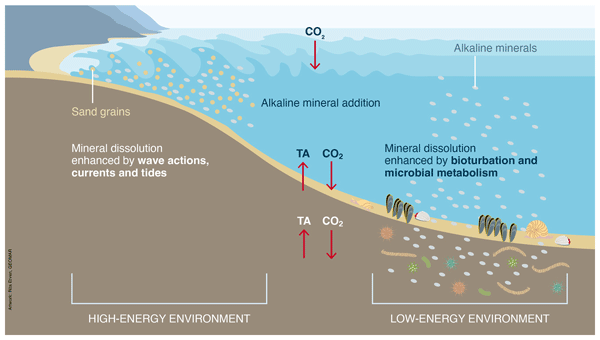
Matthew D. Eisaman, Sonja Geilert, Phil Renforth, Laura Bastianini, James Campbell, Andrew W. Dale, Spyros Foteinis, Patricia Grasse, Olivia Hawrot, Carolin R. Löscher, Greg H. Rau, and Jakob Rønning
State Planet, 2-oae2023, 3, https://doi.org/10.5194/sp-2-oae2023-3-2023, https://doi.org/10.5194/sp-2-oae2023-3-2023, 2023
Short summary
Short summary
Ocean-alkalinity-enhancement technologies refer to various methods and approaches aimed at increasing the alkalinity of seawater. This chapter explores technologies for increasing ocean alkalinity, including electrochemical-based approaches, ocean liming, accelerated weathering of limestone, hydrated carbonate addition, and coastal enhanced weathering, and suggests best practices in research and development.
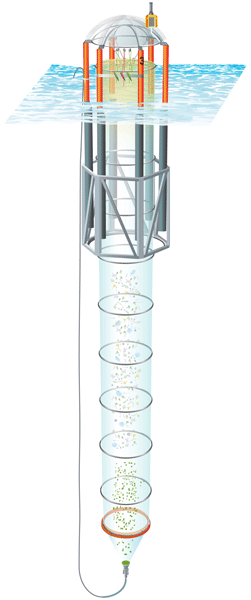
Ulf Riebesell, Daniela Basso, Sonja Geilert, Andrew W. Dale, and Matthias Kreuzburg
State Planet, 2-oae2023, 6, https://doi.org/10.5194/sp-2-oae2023-6-2023, https://doi.org/10.5194/sp-2-oae2023-6-2023, 2023
Short summary
Short summary
Mesocosm experiments represent a highly valuable tool in determining the safe operating space of ocean alkalinity enhancement (OAE) applications. By combining realism and biological complexity with controllability and replication, they provide an ideal OAE test bed and a critical stepping stone towards field applications. Mesocosm approaches can also be helpful in testing the efficacy, efficiency and permanence of OAE applications.
Patricia Grasse, Kristin Doering, Allanah J. Paul, Avy Bernales, Sonia Sanchez Ramirez, Elisabeth von der Esch, Michelle Graco, Tim Boxhammer, Lennart T. Bach, Ulf Riebesell, and Martin Frank
EGUsphere, https://doi.org/10.5194/egusphere-2025-5079, https://doi.org/10.5194/egusphere-2025-5079, 2025
Short summary
Short summary
This study shows how changing ocean conditions off Peru influence plankton communities and the marine silicon cycle. During a coastal El Niño, we carried out a large field experiment that, for the first time, determined the silicon isotope fractionation factor for silicoflagellates, providing a novel tool for understanding dSi utilization in the past.
Yang Yu, Ed Hathorne, Xuefei Chen, Gangjian Wei, Florian Böhm, Alexander Heuser, Anton Eisenhauer, Christopher Siebert, and Martin Frank
EGUsphere, https://doi.org/10.5194/egusphere-2025-4126, https://doi.org/10.5194/egusphere-2025-4126, 2025
This preprint is open for discussion and under review for Biogeosciences (BG).
Short summary
Short summary
Reef-building corals create their skeletons in two steps: first by adjusting the chemistry of the fluid where minerals form, then by precipitating solid skeletons. Our results show that calcium and strontium uptake are actively regulated and respond to temperature, while barium flows in more freely. Understanding these patterns explains seasonal variations in coral geochemistry and improves the accuracy of using coral records to reconstruct past climate.
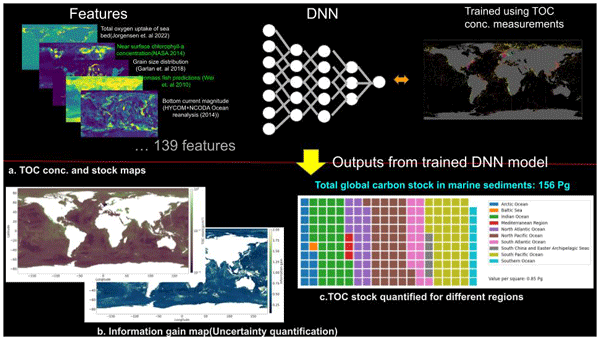
Naveenkumar Parameswaran, Everardo González, Ewa Burwicz-Galerne, Malte Braack, and Klaus Wallmann
Geosci. Model Dev., 18, 2521–2544, https://doi.org/10.5194/gmd-18-2521-2025, https://doi.org/10.5194/gmd-18-2521-2025, 2025
Short summary
Short summary
Our research uses deep learning to predict organic carbon stocks in ocean sediments, which is crucial for understanding their role in the global carbon cycle. By analysing over 22 000 samples and various seafloor characteristics, our model gives more accurate results than traditional methods. We estimate that the top 10 cm of ocean sediments hold about 156 Pg of carbon. This work enhances carbon stock estimates and helps plan future sampling strategies to better understand oceanic carbon burial.
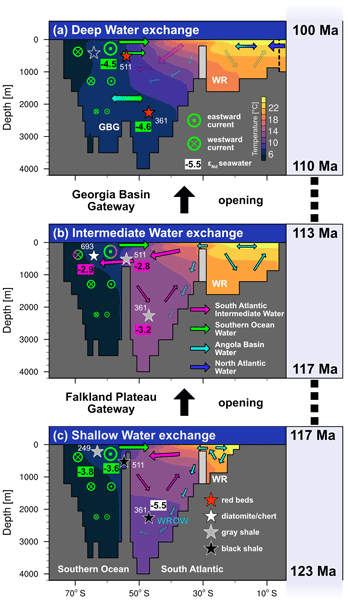
Sebastian Steinig, Wolf Dummann, Peter Hofmann, Martin Frank, Wonsun Park, Thomas Wagner, and Sascha Flögel
Clim. Past, 20, 1537–1558, https://doi.org/10.5194/cp-20-1537-2024, https://doi.org/10.5194/cp-20-1537-2024, 2024
Short summary
Short summary
The opening of the South Atlantic Ocean, starting ~ 140 million years ago, had the potential to influence the global carbon cycle and climate trends. We use 36 climate model experiments to simulate the evolution of ocean circulation in this narrow basin. We test different combinations of palaeogeographic and atmospheric CO2 reconstructions with geochemical data to not only quantify the influence of individual processes on ocean circulation but also to find nonlinear interactions between them.
Matthew D. Eisaman, Sonja Geilert, Phil Renforth, Laura Bastianini, James Campbell, Andrew W. Dale, Spyros Foteinis, Patricia Grasse, Olivia Hawrot, Carolin R. Löscher, Greg H. Rau, and Jakob Rønning
State Planet, 2-oae2023, 3, https://doi.org/10.5194/sp-2-oae2023-3-2023, https://doi.org/10.5194/sp-2-oae2023-3-2023, 2023
Short summary
Short summary
Ocean-alkalinity-enhancement technologies refer to various methods and approaches aimed at increasing the alkalinity of seawater. This chapter explores technologies for increasing ocean alkalinity, including electrochemical-based approaches, ocean liming, accelerated weathering of limestone, hydrated carbonate addition, and coastal enhanced weathering, and suggests best practices in research and development.
Ulf Riebesell, Daniela Basso, Sonja Geilert, Andrew W. Dale, and Matthias Kreuzburg
State Planet, 2-oae2023, 6, https://doi.org/10.5194/sp-2-oae2023-6-2023, https://doi.org/10.5194/sp-2-oae2023-6-2023, 2023
Short summary
Short summary
Mesocosm experiments represent a highly valuable tool in determining the safe operating space of ocean alkalinity enhancement (OAE) applications. By combining realism and biological complexity with controllability and replication, they provide an ideal OAE test bed and a critical stepping stone towards field applications. Mesocosm approaches can also be helpful in testing the efficacy, efficiency and permanence of OAE applications.

Cécile L. Blanchet, Rik Tjallingii, Anja M. Schleicher, Stefan Schouten, Martin Frank, and Achim Brauer
Clim. Past, 17, 1025–1050, https://doi.org/10.5194/cp-17-1025-2021, https://doi.org/10.5194/cp-17-1025-2021, 2021
Short summary
Short summary
The Mediterranean Sea turned repeatedly into an oxygen-deprived basin during the geological past, as evidenced by distinct sediment layers called sapropels. We use here records of the last sapropel S1 retrieved in front of the Nile River to explore the relationships between riverine input and seawater oxygenation. We decipher the seasonal cycle of fluvial input and seawater chemistry as well as the decisive influence of primary productivity on deoxygenation at millennial timescales.
Gerd Krahmann, Damian L. Arévalo-Martínez, Andrew W. Dale, Marcus Dengler, Anja Engel, Nicolaas Glock, Patricia Grasse, Johannes Hahn, Helena Hauss, Mark Hopwood, Rainer Kiko, Alexandra Loginova, Carolin R. Löscher, Marie Maßmig, Alexandra-Sophie Roy, Renato Salvatteci, Stefan Sommer, Toste Tanhua, and Hela Mehrtens
Earth Syst. Sci. Data Discuss., https://doi.org/10.5194/essd-2020-308, https://doi.org/10.5194/essd-2020-308, 2021
Preprint withdrawn
Short summary
Short summary
The project "Climate-Biogeochemistry Interactions in the Tropical Ocean" (SFB 754) was a multidisciplinary research project active from 2008 to 2019 aimed at a better understanding of the coupling between the tropical climate and ocean circulation and the ocean's oxygen and nutrient balance. On 34 research cruises, mainly in the Southeast Tropical Pacific and the Northeast Tropical Atlantic, 1071 physical, chemical and biological data sets were collected.
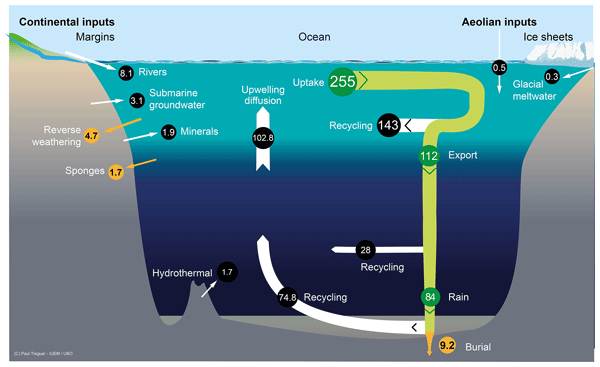
Paul J. Tréguer, Jill N. Sutton, Mark Brzezinski, Matthew A. Charette, Timothy Devries, Stephanie Dutkiewicz, Claudia Ehlert, Jon Hawkings, Aude Leynaert, Su Mei Liu, Natalia Llopis Monferrer, María López-Acosta, Manuel Maldonado, Shaily Rahman, Lihua Ran, and Olivier Rouxel
Biogeosciences, 18, 1269–1289, https://doi.org/10.5194/bg-18-1269-2021, https://doi.org/10.5194/bg-18-1269-2021, 2021
Short summary
Short summary
Silicon is the second most abundant element of the Earth's crust. In this review, we show that silicon inputs and outputs, to and from the world ocean, are 57 % and 37 % higher, respectively, than previous estimates. These changes are significant, modifying factors such as the geochemical residence time of silicon, which is now about 8000 years and 2 times faster than previously assumed. We also update the total biogenic silica pelagic production and provide an estimate for sponge production.
Cited articles
Abrantes, F., Lopes, C., Mix, A., and Pisias, N.: Diatoms in Southeast
Pacific surface sediments reflect environmental properties, Quaternary Sci. Rev.,
26, 155–169, https://doi.org/10.1016/j.quascirev.2006.02.022, 2007.
Albarède, F., Telouk, P., Blichert-Toft, J., Boyet, M., Agranier, A., and
Nelson, B.: Precise and accurate isotopic measurements using
multiple-collector ICPMS, Geochim. Cosmochim. Ac., 68, 2725–2744,
https://doi.org/10.1016/j.gca.2003.11.024, 2004.
Anderson, T. F. and Raiswell, R.: Sources and mechanisms for the enrichment
of highly reactive iron in euxinic black sea sediments, Am. J. Sci., 304,
203–233, 2004.
Berndt, C., Hensen, C., Mortera-Gutierrez, C., Sarkar, S., Geilert, S.,
Schmidt, M., Liebetrau, V., Kipfer, R., Scholz, F., Doll, M., Muff, S.,
Karstens, J., Planke, S., Petersen, S., Böttner, C., Chi, W.-C., Moser,
M., Behrendt, R., Fiskal, A., Lever, M. A., Su, C.-C., Deng, L., Brennwald,
M. S., and Lizarralde, D.: Rifting under steam – how rift magmatism triggers
methane venting from sedimentary basins, Geology, 44, 767–770, 2016.
Beucher, C. P., Brzezinski, M. A., and Jones, J. L.: Sources and biological
fractionation of Silicon isotopes in the Eastern Equatorial Pacific,
Geochim. Cosmochim. Ac., 72, 3063–3073, https://doi.org/10.1016/j.gca.2008.04.021,
2008.
Bruland, K. W., Rue, E. L., Smith, G. J., and DiTullio, G. R.: Iron,
macronutrients and diatom blooms in the Peru upwelling regime: Brown and
blue waters of Peru, Mar. Chem., 93, 81–103,
https://doi.org/10.1016/j.marchem.2004.06.011, 2005.
Calvert, S. E.: Factors affecting distribution of laminated diatomaceous
sediments in Gulf of California, in: Marine Geology of Gulf of California,
edited by: van Andel, T. and Shor, G. G., 311–330, Vol. 3, Am. Assoc. Petrol. Geol.
Mem., Tulsa, Oklahoma, 1964.
Calvert, S. E.: Accumulation of Diatomaceous Silica in the Sediments of the
Gulf of California, Geol. Soc. Am. Bull., 77, 569–596, 1966.
Campbell, A. C. and Gieskes, J. M.: Water column anomalies associated with
hydrothermal activity in the Guaymas Basin, Gulf of California Andrew C.
Campbell and Joris M. Gieskes, Earth Planet. Sc. Lett., 68, 57–72, 1984.
Cappelli, C., Yokoyama, S., Cama, J., and Huertas, F. J.: Montmorillonite
dissolution kinetics: Experimental and reactive transport modeling
interpretation, Geochim. Cosmochim. Ac., 227, 96–122, 2018.
Cardinal, D., Alleman, L. Y., Dehairs, F., Savoye, N., Trull, T. W., and
André, L.: Relevance of silicon isotopes to Si-nutrient utilization and
Si-source assessment in Antarctic waters, Global Biogeochem. Cy., 19,
1–13, https://doi.org/10.1029/2004GB002364, 2005.
Davis, C. C., Chen, H. W., and Edwards, M.: Modeling silica sorption to iron
hydroxide, Environ. Sci. Technol., 36, 582–587, https://doi.org/10.1021/es010996t,
2002.
De La Rocha, C. L., Brzezinski, M. A., and DeNiro, M. J.: Fractionation of
silicon isotopes by marine diatoms during biogenic silica formation,
Geochim. Cosmochim. Ac., 61, 5051–5056,
https://doi.org/10.1016/S0016-7037(97)00300-1, 1997.
De La Rocha, C. L., Brzezinski, M. A., and Deniro, M. J.: A first look at the
distribution of the stable isotopes of silicon in natural waters, Geochim.
Cosmochim. Ac., 64, 2467–2477, https://doi.org/10.1016/S0016-7037(00)00373-2,
2000.
Delstanche, S., Opfergelt, S., Cardinal, D., Elsass, F., André, L., and
Delvaux, B.: Silicon isotopic fractionation during adsorption of aqueous
monosilicic acid onto iron oxide, Geochim. Cosmochim. Ac., 73, 923–934,
https://doi.org/10.1016/j.gca.2008.11.014, 2009.
Demarest, M. S., Brzezinski, M. A., and Beucher, C. P.: Fractionation of
silicon isotopes during biogenic silica dissolution, Geochim. Cosmochim.
Ac., 73, 5572–5583, https://doi.org/10.1016/j.gca.2009.06.019, 2009.
DeMaster, D. J.: The supply and accumulation of silica in the marine
environment., Geochim. Cosmochim. Ac., 45, 1715–1732, 1981.
de Souza, G. F., Reynolds, B. C., Rickli, J., Frank, M., Saito, M. A.,
Gerringa, L. J. A., and Bourdon, B.: Southern Ocean control of silicon stable
isotope distribution in the deep Atlantic Ocean, Global Biogeochem. Cy.,
26, 1–13, https://doi.org/10.1029/2011GB004141, 2012.
de Souza, G. F., Slater, R. D., Dunne, J. P., and Sarmiento, J. L.:
Deconvolving the controls on the deep ocean's silicon stable isotope
distribution, Earth Planet. Sc. Lett., 398, 66–76,
https://doi.org/10.1016/j.epsl.2014.04.040, 2014.
de Souza, G. F., Slater, R. D., Hain, M. P., Brzezinski, M. A., and
Sarmiento, J. L.: Distal and proximal controls on the silicon stable isotope
signature of North Atlantic Deep Water, Earth Planet. Sc. Lett., 432,
342–353, https://doi.org/10.1016/j.epsl.2015.10.025, 2015.
Dixit, S., Van Cappellen, P., and van Bennekom, A. J.: Processes controllong
solubility of biogenic silica and pore water build-up of silicic acid in
marine sediments, Mar. Chem., 73, 333–352, 2001.
Dupuis, R., Benoit, M., Nardin, E., and Méheut, M.: Fractionation of silicon isotopes in liquids: The importance of configurational disorder, Chem. Geol., 396, 239–254, https://doi.org/10.1016/j.chemgeo.2014.12.027, 2015.
Egan, K. E., Rickaby, R. E. M., Leng, M. J., Hendry, K. R., Hermoso, M.,
Sloane, H. J., Bostock, H., and Halliday, A. N.: Diatom silicon isotopes as a
proxy for silicic acid utilisation?: A Southern Ocean core top calibration,
Geochim. Cosmochim. Ac., 96, 174–192, https://doi.org/10.1016/j.gca.2012.08.002, 2012.
Ehlert, C., Grasse, P., Mollier-Vogel, E., Böschen, T., Franz, J., de
Souza, G. F., Reynolds, B. C., Stramma, L., and Frank, M.: Factors
controlling the silicon isotope distribution in waters and surface sediments
of the Peruvian coastal upwelling, Geochim. Cosmochim. Ac., 99, 128–145,
https://doi.org/10.1016/j.gca.2012.09.038, 2012.
Ehlert, C., Grasse, P., and Frank, M.: Changes in silicate utilisation and
upwelling intensity off Peru since the Last Glacial Maximum – insights from
silicon and neodymium isotopes, Quaternary Sci. Rev., 72, 18–35,
https://doi.org/10.1016/j.quascirev.2013.04.013, 2013.
Ehlert, C., Doering, K., Wallmann, K., Scholz, F., Sommer, S., Grasse, P.,
Geilert, S., and Frank, M.: Stable silicon isotope signatures of marine pore
waters – Biogenic opal dissolution versus authigenic clay mineral
formation, Geochim. Cosmochim. Ac., 191, 102–117,
https://doi.org/10.1016/j.gca.2016.07.022, 2016.
Frings, P. J., Clymans, W., Fontorbe, G., De La Rocha, C. L., and Conley, D.
J.: The continental Si cycle and its impact on the ocean Si isotope budget,
Chem. Geol., 425, 12–36, https://doi.org/10.1016/j.chemgeo.2016.01.020, 2016.
Fripiat, F., Cavagna, A.-J. Savoye, N., Dehairs, F., André, L., and Cardinal, D.: Isotopic constraints on the Si-biogeochemical cycle of the Antarctic Zone in the Kerguelen area (KEOPS), Mar. Chem., 123, 11–22, https://doi.org/10.1016/j.marchem.2010.08.005, 2011.
Geilert, S., Vroon, P. Z., Roerdink, D. L., Van Cappellen, P., and van
Bergen, M. J.: Silicon isotope fractionation during abiotic silica
precipitation at low temperatures: inferences from flow-through experiments,
Geochim. Cosmochim. Ac., 142, 95–114, https://doi.org/10.1016/j.gca.2014.07.003, 2014.
Geilert, S., Vroon, P. Z., Keller, N. S., Gudbrandsson, S., Stefánsson,
A., and van Bergen, M. J.: Silicon isotope fractionation during silica
precipitation from hot-spring waters: Evidence from the Geysir geothermal
field, Iceland, Geochim. Cosmochim. Ac., 164, 403–427,
https://doi.org/10.1016/j.gca.2015.05.043, 2015.
Geilert, S., Vroon, P. Z., and van Bergen, M. J.: Effect of diagenetic phase
transformation on the silicon isotope composition of opaline sinter deposits
of Geysir, Iceland, Chem. Geol., 433, 57–67, https://doi.org/10.1016/j.chemgeo.2016.04.008,
2016.
Geilert, S., Hensen, C., Schmidt, M., Liebetrau, V., Scholz, F., Doll, M., Deng, L., Fiskal, A., Lever, M. A., Su, C.-C., Schloemer, S., Sarkar, S., Thiel, V., and Berndt, C.: On the formation of hydrothermal vents and cold seeps in the Guaymas Basin, Gulf of California, Biogeosciences, 15, 5715–5731, https://doi.org/10.5194/bg-15-5715-2018, 2018.
Georg, R. B., Reynolds, B. C., Frank, M., and Halliday, A. N.: Mechanisms
controlling the silicon isotopic compositions of river waters, Earth Planet.
Sc. Lett., 249, 290–306, https://doi.org/10.1016/j.epsl.2006.07.006, 2006a.
Georg, R. B., Reynolds, B. C., Frank, M., and Halliday, A. N.: New sample
preparation techniques for the determination of Si isotopic compositions
using MC-ICPMS, Chem. Geol., 235, 95–104,
https://doi.org/10.1016/j.chemgeo.2006.06.006, 2006b.
Georg, R. B., Zhu, C., Reynolds, B. C., and Halliday, A. N.: Stable silicon
isotopes of groundwater, feldspars, and clay coatings in the Navajo
Sandstone aquifer, Black Mesa, Arizona, USA, Geochim. Cosmochim. Ac.,
73, 2229–2241, https://doi.org/10.1016/j.gca.2009.02.005, 2009.
Gieskes, J. M., Kastner, M., Einsele, G., Kelts, K., and Niemitz, J.:
Hydrothermal Activity in the Guaymas Basin, Gulf of California: A synthesis,
in In Initial Reports of the Deep Sea Drilling Project, Vol. 64, Pt. 2,
edited by: Blakeslee, J., Platt, L. W., and Stout, L. N., 1159–1167, 1982.
Gieskes, J. M., Simoneit, B. R. T., Brown, T., Shaw, T., Wang, Y. C., and
Magenheim, A.: Hydrothermal fluids and petroleum in surface sediments of
Guaymas Basin, Gulf of California: A case study, Can. Mineral., 26, 589–602, 1988.
Gieskes, J. M., Gamo, T., and Brumsack, H.: Chemical methods for interstitial
water analysis aboard Joides Resolution, Ocean Drill. Prog. Tech., Note 15,
Texas A&M Univ. Coll. Stn., 1991.
Golubev, S. V, Bauer, A., and Pokrovsky, O. S.: Effect of pH and organic
ligands on the kinetics of smectite dissolution at 25 ∘C,
Geochim. Cosmochim. Ac., 70, 4436–4451, https://doi.org/10.1016/j.gca.2006.06.1557,
2006.
Grasse, P., Ehlert, C., and Frank, M.: The influence of water mass mixing on
the dissolved Si isotope composition in the Eastern Equatorial Pacific,
Earth Planet. Sc. Lett., 380, 60–71, https://doi.org/10.1016/j.epsl.2013.07.033, 2013.
Grasse, P., Ryabenko, E., Ehlert, C., Altabet, M. A., and Frank, M.: Silicon
and nitrogen cycling in the upwelling area off Peru: A dual isotope
approach, Limnol. Oceanogr., 61, 1661–1676, https://doi.org/10.1002/lno.10324, 2016.
Grasse, P., Brzezinski, M. A., Cardinal, D., de Souza, G. F., Andersson, P.,
Closset, I., Cao, Z., Dai, M., Ehlert, C., Estrade, N., François, R.,
Frank, M., Jiang, G., Jones, J. L., Kooijman, E., Liu, Q., Lu, D., Pahnke,
K., Ponzevera, E., Schmitt, M., Sun, X., Sutton, J. N., Thil, F., Weis, D.,
Wetzel, F., Zhang, A., Zhang, J., and Zhang, Z.: GEOTRACES inter-calibration
of the stable silicon isotope composition of dissolved silicic acid in
seawater, J. Anal. Atom. Spectrom., 32, 562–578, https://doi.org/10.1039/C6JA00302H,
2017.
Hughes, H. J., Delvigne, C., Korntheuer, M., de Jong, J., André, L., and
Cardinal, D.: Controlling the mass bias introduced by anionic and organic
matrices in silicon isotopic measurements by MC-ICP-MS, J. Anal. Atom.
Spectrom., 26, 1892, https://doi.org/10.1039/c1ja10110b, 2011.
Hurd, D. C.: Interactions of biogenic opal, sediment and seawater in the
Central Equatorial Pacific, Geochim. Cosmochim. Ac., 37, 2257–2282,
1973.
Kastner, M.: Evidence for Two Distinct Hydrothermal Systems in the Guaymas
Basin, in: In Initial Reports of the Deep Sea Drilling Project, Vol. 64, Pt.
2, edited by: Blakeslee, J., Platt, L. W., and Stout, L. N., 1143–1157,
U.S. Govt. Printing Office, Washington, 1982.
Kastner, M. and Siever, R.: Siliceous Sediments of the Guaymas Basin: The
Effect of High Thermal Gradients on Diagenesis, J. Geol., 91, 629–641,
https://doi.org/10.1086/628816, 1983.
Köhler, S. J., Bosbach, D. B., and Oelkers, E. H.: Do clay mineral
dissolution rates reach steady state?, Geochim. Cosmochim. Ac., 69,
1997–2006, https://doi.org/10.1016/j.gca.2004.10.015, 2005.
Lewin, J. C.: The dissolution of silica from diatom walls, Geochim.
Cosmochim. Ac., 21, 182–198, https://doi.org/10.1016/S0016-7037(61)80054-9,
1961.
Liu, G., Qiu, S., Liu, B., Pu, Y., Gao, Z., Wang, J., Jin, R., and Zhou, J.:
Microbial reduction of Fe(III)-bearing clay minerals in the presence of
humic acids, Sci. Rep.-UK, 7, 45354, https://doi.org/10.1038/srep45354, 2017.
Loucaides, S., Michalopoulos, P., Presti, M., Koning, E., Behrends, T., and
Van Cappellen, P.: Seawater-mediated interactions between diatomaceous
silica and terrigenous sediments: Results from long-term incubation
experiments, Chem. Geol., 270, 68–79,
https://doi.org/10.1016/j.chemgeo.2009.11.006, 2010.
Lovley, D. R., Fraga, J. L., Blunt-Harris, E. L., Hayes, L. A., Phillips, E.
J. P., and Coates, J. D.: Humic Substances as a Mediator for Microbially
Catalyzed Metal Reduction, Acta Hydroch. Hydrob., 26, 152–157, 1998.
Mackenzie, F. T., Ristvet, B. L., Thorstenson, D. C., Lerman, A., and Leeper,
R. H.: Reverse weathering and chemical mass balance in a coastal
environment, in: River Inputs to Ocean Systems, edited by: Marten, J. M.,
Burton, J. D., and Eisma, D., 152–187, UNEP and UNESCO, Switzerland, 1981.
McManus, J., Hammond, D. E., Berelson, W. M., Kilgore, T. E., Demaster, D.
J., Ragueneau, O. G., and Collier, R. W.: Early diagenesis of biogenic opal:
Dissolution rates, kinetics, and paleoceanographic implications, Deep-Sea Res.
Pt. II, 42, 871–903, https://doi.org/10.1016/0967-0645(95)00035-O, 1995.
Méheut, M., Lazzeri, M., Balan, E., and Mauri, F.: Equilibrium isotopic
fractionation in the kaolinite, quartz, water system: Prediction from
first-principles density-functional theory, Geochim. Cosmochim. Ac.,
71, 3170–3181, https://doi.org/10.1016/j.gca.2007.04.012, 2007.
Meyerink, S., Ellwood, M. J., Maher, W. A., and Strzepek, R.: Iron availability influences silicon isotope fractionation in two southern ocean diatoms (Proboscia inermis and Eucampia antarctica) and a coastal diatom (Thalassiosira pseudonana), Front. Mar. Sci., 4, 217, https://doi.org/10.3389/fmars.2017.00217, 2017.
Michalopoulos, P. and Aller, R. C.: Rapid Clay Mineral Formation in Amazon
Delta Sediments: Reverse Weathering and Oceanic Elemental Cycles, Science,
270, 614–617, https://doi.org/10.1126/science.270.5236.614, 1995.
Michalopoulos, P. and Aller, R. C.: Early diagenesis of biogenic silica in
the Amazon delta: Alteration, authigenic clay formation, and storage,
Geochim. Cosmochim. Ac., 68, 1061–1085, https://doi.org/10.1016/j.gca.2003.07.018,
2004.
Michalopoulos, P., Aller, R. C., and Reeder, R. J.: Conversion of diatoms to
clays during early diagenesis in tropical, continental shell muds, Geology,
28, 1095–1098, https://doi.org/10.1130/0091-7613(2000)28<1095:CODTCD>2.0.CO;2, 2000.
Morley, D. W., Leng, M. J., Mackay, A. W., Sloane, H. J., Rioual, P., and
Battarbee, R. W.: Cleaning of lake sediment samples for diatom oxygen
isotope analysis, J. Paleolimnol., 31, 391–401,
https://doi.org/10.1023/B:JOPL.0000021854.70714.6b, 2004.
Müller, G.: Methods in sedimentary petrology, in: Sedimentary Petrology,
Vol. 1, edited by: von Engelhardt, W., Füchtbauer, H., and Müller, G.,
1–283, Schweizerbart, Stuttgart, Germany, 1967.
Müller, P. J. and Schneider, R.: An automated leaching method for the
determination of opal in sediments and particulate matter, Deep-Sea Res. Pt.
I, 40, 425–444, https://doi.org/10.1016/0967-0637(93)90140-X, 1993.
Ng, C. H., Cassarino, L., Pickering, R. A., Woodward, E. M. S., Hammond, S.
J., and Hendry, K. R.: Sediment efflux of silicon on the Greenland margin and
implications for the marine silicon cycle, Earth Planet. Sc. Lett., 529,
115877, https://doi.org/10.1016/j.epsl.2019.115877, 2020.
Oelze, M., von Blanckenburg, F., Bouchez, J., Hoellen, D., and Dietzel, M.:
The effect of Al on Si isotope fractionation investigated by silica
precipitation experiments, Chem. Geol., 397, 94–105,
https://doi.org/10.1016/j.chemgeo.2015.01.002, 2015.
Opfergelt, S., Cardinal, D., André, L., Delvigne, C., Bremond, L., and
Delvaux, B.: Variations of δ30Si and Ge∕Si with weathering and
biogenic input in tropical basaltic ash soils under monoculture, Geochim.
Cosmochim. Ac., 74, 225–240, https://doi.org/10.1016/j.gca.2009.09.025, 2010.
Opfergelt, S., Burton, K. W., Pogge von Strandmann, P. A. E., Gislason, S.
R., and Halliday, A. N.: Riverine silicon isotope variations in glaciated
basaltic terrains: Implications for the Si delivery to the ocean over
glacial-interglacial intervals, Earth Planet. Sc. Lett., 369–370,
211–219, https://doi.org/10.1016/j.epsl.2013.03.025, 2013.
Parkhurst, B. D. L. and Appelo, C. A. J.: User's Guide To PHREEQC (version
2) – a Computer Program for Speciation, and Inverse Geochemical
Calculations, Exch. Organ. Behav. Teach. J., D (Version 2), 326, Rep.
99-4259, 1999.
Petschick, R., Kuhn, G., and Gingele, F.: Clay mineral distribution in
surface sediments of the South Atlantic: sources, transport, and relation to
oceanography, Mar. Geol., 130, 203–229,
https://doi.org/10.1016/0025-3227(95)00148-4, 1996.
Rabouille, C., Gaillard, J. F., Tréguer, P., and Vincendeau, M. A.:
Biogenic silica recycling in surficial sediments across the Polar Front of
the Southern Ocean (Indian Sector), Deep-Sea Res. Pt. II,
44, 1151–1176, https://doi.org/10.1016/S0967-0645(96)00108-7, 1997.
Ragueneau, O., Tréguer, P., Leynaert, A., Anderson, R. F., Brzezinski,
M. A., DeMaster, D. J., Dugdale, R. C., Dymond, J., Fischer, G.,
François, R., Heinze, C., Maier-Reimer, E., Martin-Jézéquel, V.,
Nelson, D. M., and Quéguiner, B.: A review of the Si cycle in the modern
ocean: Recent progress and missing gaps in the application of biogenic opal
as a paleoproductivity proxy, Global Planet. Change, 26, 317–365,
https://doi.org/10.1016/S0921-8181(00)00052-7, 2000.
Rahman, S., Aller, R. C., and Cochran, J. K.: The Missing Silica Sink:
Revisiting the Marine Sedimentary Si Cycle Using Cosmogenic 32Si, Global
Biogeochem. Cy., 31, 1559–1578, https://doi.org/10.1002/2017GB005746, 2017.
Reynolds, B. C., Aggarwal, J., André, L., Baxter, D., Beucher, C.,
Brzezinski, M. A., Cardinal, D., Engström, E., Georg, R. B., Land, M.,
Leng, M. J., Opfergelt, S., Rodushkin, I., Sloane, H. J., van den Boorn, S.
H. J. M., Vroon, P. Z., and Cardinal, D.: An inter-laboratory comparison of
Si isotope reference materials, J. Anal. Atom. Spectrom, 22, 561–568,
https://doi.org/10.1039/b616755a, 2007.
Reynolds, B. C., Frank, M., and Halliday, A. N.: Evidence for a major change
in silicon cycling in the subarctic North Pacific at 2.73 Ma,
Paleoceanography, 23, PA4219, https://doi.org/10.1029/2007PA001563, 2008.
Rickert, D.: Dissolution kinetics of biogenic silica in marine environments (Lösungskinetik von biogenem Opal in marinen Systemen), Berichte zur Polarforschung (Reports on Polar Research), Bremerhaven, Alfred Wegener Institute for Polar and Marine Research, 351, 211 pp., https://doi.org/10.2312/BzP_0351_2000, 2000.
Rickert, D., Schlüter, M., and Wallmann, K.: Dissolution kinetics of
biogenic silica from the water column to the sediments, Geochim. Cosmochim.
Ac., 66, 439–455, https://doi.org/10.1016/S0016-7037(01)00757-8, 2002.
Roerdink, D. L., van den Boorn, S. H. J. M., Geilert, S., Vroon, P. Z., and
van Bergen, M. J.: Experimental constraints on kinetic and equilibrium
silicon isotope fractionation during the formation of non-biogenic chert
deposits, Chem. Geol., 402, 40–51, https://doi.org/10.1016/j.chemgeo.2015.02.038, 2015.
Savage, P. S., Georg, R. B., Armytage, R. M. G., Williams, H. M., and
Halliday, A. N.: Silicon isotope homogeneity in the mantle, Earth Planet.
Sc. Lett., 295, 139–146, https://doi.org/10.1016/j.epsl.2010.03.035, 2010.
Sayles, F. L., Martin, W. R., Chase, Z., and Anderson, R. F.: Benthic
remineralization and burial of biogenic SiO2, CaCO3, organic carbon, and
detrital material in the Southern Ocean along a transect at 170∘
West, Deep-Sea Res. Pt. II, 48, 4323–4383, 2001.
Scholz, F., Schmidt, M., Hensen, C., Geilert, S., Gutjahr, M., and Liebetrau,
V.: Shelf-to-basin iron shuttle in the Guaymas Basin, Gulf of California,
Geochim. Cosmochim. Ac., 261, 76–92, https://doi.org/10.1016/j.gca.2019.07.006, 2019.
Shemesh, A., Mortlock, R. A., Smith, R. J., and Froelich, P. N.:
Determination of Ge∕Si in Marine Siliceous Microfossils: Separation,
Cleaning and Dissolution of Diatoms and Radiolaria, Mar. Chem., 25,
305–323, 1988.
Sutton, J. N., Varela, D. E., Brzezinski, M. A., and Beucher, C. P.:
Species-dependent silicon isotope fractionation by marine diatoms, Geochim.
Cosmochim. Ac., 104, 300–309, https://doi.org/10.1016/j.gca.2012.10.057, 2013.
Sutton, J. N., André, L., Cardinal, D., Conley, D. J., de Souza, G. F.,
Dean, J., Dodd, J., Ehlert, C., Ellwood, M. J., Frings, P. J., Grasse, P.,
Hendry, K., Leng, M. J., Michalopoulos, P., Panizzo, V. N., and Swann, G. E.
A.: A Review of the Stable Isotope Bio-geochemistry of the Global Silicon
Cycle and Its Associated Trace Elements, Front. Earth Sci., 5, 112,
https://doi.org/10.3389/feart.2017.00112, 2018.
Tatzel, M., von Blanckenburg, F., Oelze, M., Schuessler, J. A., and Bohrmann,
G.: The silicon isotope record of early silica diagenesis, Earth Planet.
Sc. Lett., 428, 293–303, https://doi.org/10.1016/j.epsl.2015.07.018, 2015.
Thunell, R. C., Pride, C. J., Tappa, E., and Muller-Karger, F. E.: Biogenic
silica fluxes and accumulation rates in the Gulf of California, Geology, 22,
303–306, https://doi.org/10.1130/0091-7613(1994)022<0303:BSFAAR>2.3.CO;2, 1994.
Tréguer, P. and Pondaven, P.: Silica control of carbon dioxide, Nature,
406, 358–359, https://doi.org/10.1080/00207238608710255, 2000.
Tréguer, P. J. and De La Rocha, C. L.: The World Ocean Silica Cycle,
Annu. Rev. Mar. Sci., 5, 120725114348000,
https://doi.org/10.1146/annurev-marine-121211-172346, 2013.
van Bennekom, A. J., Berger, G. W., Van Der Gaast, S. J., and De Vries, R.
T. P.: Primary productivity and the silica cycle in the Southern Ocean
(Atlantic sector), Palaeogeogr. Palaeocl., 67, 19–30, 1988.
Van Cappellen, P. and Qiu, L. Q.: Biogenic silica dissolution in sediments
of the Southern Ocean.1. Solubility, Deep-Sea Res. Pt. II, 44, 1109–1128, https://doi.org/10.1016/S0967-0645(96)00113-0, 1997a.
Van Cappellen, P. and Qiu, L.: Biogenic silica dissolution in sediments of
the Southern Ocean. II Kinetics, Deep-Sea Res. Pt. II, 44, 1129–1149, 1997b.
van den Boorn, S. H. J. M., Vroon, P. Z., and van Bergen, M. J.:
Sulfur-induced offsets in MC-ICP-MS silicon-isotope measurements, J. Anal.
At. Spectrom., 24, 1111, https://doi.org/10.1039/b816804k, 2009.
Varela, D. E., Pride, C. J., and Brzezinski, M. A.: Biological fractionation
of silicon isotopes in Southern Ocean surface waters, Global Biogeochem.
Cy., 18, 1–8, https://doi.org/10.1029/2003GB002140, 2004.
Viers, J., Dupré, B., and Gaillardet, J.: Chemical composition of
suspended sediments in World Rivers?: New insights from a new database, Sci.
Total Environ., 407, 853–868, https://doi.org/10.1016/j.scitotenv.2008.09.053, 2009.
Vogt, C., Lauterjung, J., and Fischer, R. X.: Investigation of the clay
fraction (<2 µm) of the clay minerals society reference
clays, Clay. Clay Miner., 50, 388–400, 2002.
Von Damm, K. L.: Seafloor Hydrothermal Activity: Black Smoker Chemistry And
Chimneys, Annu. Rev. Earth Planet. Sc., 18, 173–204,
https://doi.org/10.1146/annurev.earth.18.1.173, 1990.
Von Damm, K. L., Edmond, J. M., Measures, C. I., and Grant, B.: Chemistry of
submarine hydrothermal solutions at Guaymas Basin, Gulf of California,
Geochim. Cosmochim. Ac., 49, 2221–2237, 1985.
Wallmann, K., Aloisi, G., Haeckel, M., Tishchenko, P., Pavlova, G.,
Greinert, J., Kutterolf, S., and Eisenhauer, A.: Silicate weathering in
anoxic marine sediments, Geochim. Cosmochim. Ac., 72, 2895–2918,
https://doi.org/10.1016/j.gca.2008.03.026, 2008.
Wetzel, F., de Souza, G. F., and Reynolds, B. C.: What controls silicon
isotope fractionation during dissolution of diatom opal?, Geochim.
Cosmochim. Ac., 131, 128–137, https://doi.org/10.1016/j.gca.2014.01.028, 2014.
Zambardi, T. and Poitrasson, F.: Precise Determination of Silicon Isotopes
in Silicate Rock Reference Materials by MC-ICP-MS, Geostand. Geoanal.
Res., 35, 89–99, https://doi.org/10.1111/j.1751-908X.2010.00067.x, 2011.
Zheng, X., Beard, B. L., Reddy, T. R., Roden, E. E., and Johnson, C. M.:
Abiologic silicon isotope fractionation between aqueous Si and Fe(III)-Si
gel in simulated Archean seawater?: Implications for Si isotope records in
Precambrian sedimentary rocks, Geochim. Cosmochim. Ac., 187, 102–122,
2016.
Ziegler, K., Chadwick, O., Brzezinski, M., and Kelly, E. F.: Natural
variations of δ30Si ratios during progressive basalt weathering,
Hawaiian Islands, Geochim. Cosmochim. Ac., 69, 4597–4610,
https://doi.org/10.1016/j.gca.2005.05.008, 2005.
Short summary
Marine silicate weathering is a key process of the marine silica cycle; however, its controlling processes are not well understood. In the Guaymas Basin, silicate weathering has been studied under markedly differing ambient conditions. Environmental settings like redox conditions or terrigenous input of reactive silicates appear to be major factors controlling marine silicate weathering. These factors need to be taken into account in future oceanic mass balances of Si and in modeling studies.
Marine silicate weathering is a key process of the marine silica cycle; however, its controlling...


Altmetrics
Final-revised paper
Preprint