
Articles | Volume 22, issue 23
https://doi.org/10.5194/bg-22-7505-2025
© Author(s) 2025. This work is distributed under
the Creative Commons Attribution 4.0 License.
the Creative Commons Attribution 4.0 License.
https://doi.org/10.5194/bg-22-7505-2025
© Author(s) 2025. This work is distributed under
the Creative Commons Attribution 4.0 License.
the Creative Commons Attribution 4.0 License.
Research article
| 
02 Dec 2025
Research article |
| 02 Dec 2025
| 02 Dec 2025
Radiation and surface wetness drive carbon monoxide fluxes from an Arctic peatland

Institute for Atmospheric and Earth System Research (INAR)/Physics, Faculty of Science, University of Helsinki, Helsinki, Finland
Alexander Buzacott
Institute for Atmospheric and Earth System Research (INAR)/Physics, Faculty of Science, University of Helsinki, Helsinki, Finland
Kukka-Maaria Kohonen
Institute for Atmospheric and Earth System Research (INAR)/Physics, Faculty of Science, University of Helsinki, Helsinki, Finland
Department of Environmental Systems Science, ETH Zurich, Zurich, Switzerland
Erik Lundin
Swedish Polar Research Secretariat, Abisko Scientific Research Station, Abisko, Sweden
Alexander Meire
Swedish Polar Research Secretariat, Abisko Scientific Research Station, Abisko, Sweden
Mari Pihlatie
Department of Agricultural Sciences, Faculty of Agriculture and Forestry, University of Helsinki, Helsinki, Finland
Institute for Atmospheric and Earth System Research (INAR)/Agricultural and Forest Sciences, University of Helsinki, Helsinki, Finland
Ivan Mammarella
Institute for Atmospheric and Earth System Research (INAR)/Physics, Faculty of Science, University of Helsinki, Helsinki, Finland
Related authors
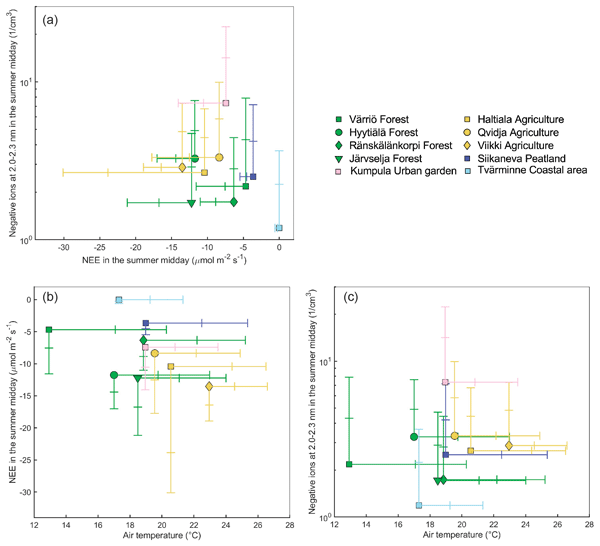
Piaopiao Ke, Anna Lintunen, Pasi Kolari, Annalea Lohila, Santeri Tuovinen, Janne Lampilahti, Roseline Thakur, Maija Peltola, Otso Peräkylä, Tuomo Nieminen, Ekaterina Ezhova, Mari Pihlatie, Asta Laasonen, Markku Koskinen, Helena Rautakoski, Laura Heimsch, Tom Kokkonen, Aki Vähä, Ivan Mammarella, Steffen Noe, Jaana Bäck, Veli-Matti Kerminen, and Markku Kulmala
Biogeosciences, 22, 3235–3251, https://doi.org/10.5194/bg-22-3235-2025, https://doi.org/10.5194/bg-22-3235-2025, 2025
Short summary
Short summary
Our research explores diverse ecosystems’ roles in climate cooling via the concept of CarbonSink+ potential. We measured CO2 uptake and local aerosol production in forests, farms, peatlands, urban gardens, and coastal areas across Finland and Estonia. The long-term data reveal that, while forests are vital with regard to CarbonSink+ potential, farms and urban gardens also play significant roles. These insights can help optimize management policy of natural resources to mitigate global warming.
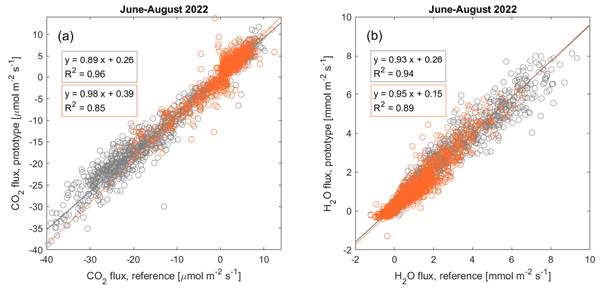
Üllar Rannik, Ivan Mammarella, Timo Vesala, Pirkko Väkimies, Hilkka Heiskari-Tuohiniemi, and Mika Korkiakoski
Atmos. Meas. Tech., 19, 6159–6169, https://doi.org/10.5194/amt-19-6159-2026, https://doi.org/10.5194/amt-19-6159-2026, 2026
Short summary
Short summary
We present a case study that aimed to develop an inexpensive yet precise fast-response carbon dioxide and water vapour sensor. A working prototype was developed and field-tested against a scientific eddy covariance setup. Attention was paid to internal auto-calibration procedure such that signal drifting was avoided and the instrument was capable of measuring fluxes with high correlation relative to the reference setup.
Patryk Łakomiec, Jutta Holst, Niklas Rakos, Erik Lundin, Patrick Crill, Thomas Friborg, Hongxiao Jin, Lars Eklundh, and Janne Rinne
EGUsphere, https://doi.org/10.5194/egusphere-2026-5405, https://doi.org/10.5194/egusphere-2026-5405, 2026
This preprint is open for discussion and under review for Biogeosciences (BG).
Short summary
Short summary
Permafrost thaw can change how Arctic peatlands take up and release carbon. We compared carbon dioxide exchange in a Swedish peatland across areas with permafrost, partly thawed, and absent permafrost using measurements from two monitoring towers. The thawed and permafrost areas behaved similarly, while the area without permafrost showed stronger carbon uptake by plants and greater carbon release. These results suggest that carbon dioxide exchange may change less with thaw than methane.
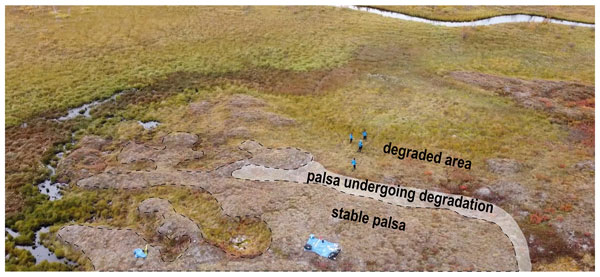
Maxime Thomas, Thomas Moenaert, Julien Radoux, Baptiste Delhez, Eléonore du Bois d'Aische, Maëlle Villani, Catherine Hirst, Erik Lundin, François Jonard, Sébastien Lambot, Kristof Van Oost, Veerle Vanacker, Matthias B. Siewert, Carl-Magnus Mörth, Michael W. Palace, Ruth K. Varner, Franklin B. Sullivan, Christina Herrick, and Sophie Opfergelt
The Cryosphere, 20, 5271–5301, https://doi.org/10.5194/tc-20-5271-2026, https://doi.org/10.5194/tc-20-5271-2026, 2026
Short summary
Short summary
This study examines the rate of permafrost degradation, in the form of the transition from intact well-drained palsa to fully thawed and inundated fen at the Stordalen mire, Abisko, Sweden. Across the 14 hectares of the palsa mire, we demonstrate a 10-fold acceleration of the degradation in 2019–2021 compared to previous periods (1970–2014) which might lead to a pool of 12 × 10³ kg of organic carbon exposed annually for the topsoil (23 cm depth).
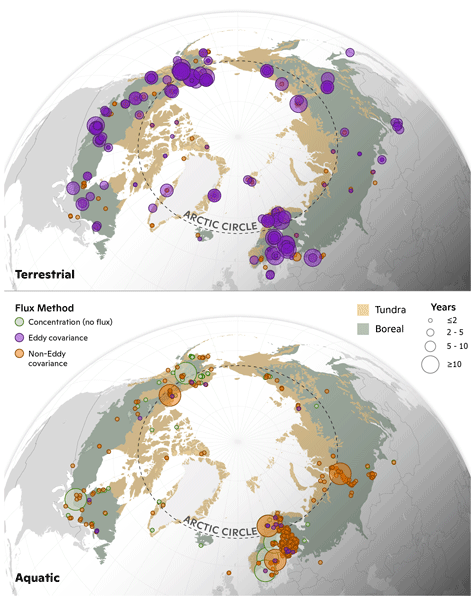
Anna-Maria Virkkala, Isabel Wargowsky, Judith Vogt, McKenzie A. Kuhn, Simran Madaan, Tiffany Windholz, Kyle A. Arndt, Gerard Rocher-Ros, Mathias Göckede, David Olefeldt, Edward A. G. Schuur, David Bastviken, Richard O'Keefe, Brendan M. Rogers, Jennifer D. Watts, Kelcy Kent, Kristoffer Aalstad, Kelly Aho, Joonatan Ala-Könni, Haley Alcock, Inge Althuizen, Christopher D. Arp, Jun Asanuma, Mika Aurela, Sivakiruthika Balathandayuthabani, Katrin Attermeyer, Alan Barr, Maialen Barret, Ochirbat Batkhishig, Christina Biasi, Mats P. Björkman, Andrew Black, Elena Blanc-Betes, Pascal Bodmer, Julia Boike, Abdullah Bolek, Frédéric Bouchard, Ingeborg Bussmann, Lea Cabrol, Eleonora Canfora, Sean Carey, Karel Castro-Morales, Namyi Chae, Andreas Christen, Torben R. Christensen, Casper T. Christiansen, Housen Chu, Graham Clark, Francois Clayer, Patrick Crill, Christopher Cunada, Scott J. Davidson, Joshua F. Dean, Sigrid Dengel, Matteo Detto, Catherine Dieleman, Florent Domine, Egor Dyukarev, Colin Edgar, Bo Elberling, Craig A. Emmerton, Eugenie Euskirchen, Grant Falvo, Thomas Friborg, Michelle Garneau, Mariasilvia Giamberini, Mikhail V. Glagolev, Miquel A. Gonzalez-Meler, Gustaf Granath, Jón Guðmundsson, Konsta Happonen, Yoshinobu Harazono, Lorna Harris, Josh Hashemi, Nicholas Hasson, Janna Heerah, Liam Heffernan, Manuel Helbig, Warren Helgason, Michal Heliasz, Greg Henry, Geert Hensgens, Tetsuya Hiyama, Beth Holmes, Macall Hock, David Holl, Jutta Holst, Thomas Holst, Gabriel Hould-Gosselin, Elyn Humphreys, Jacqueline Hung, Jussi Huotari, Hiroki Ikawa, Danil V. Ilyasov, Mamoru Ishikawa, Go Iwahana, Hiroki Iwata, Marcin Antoni Jackowicz-Korczynski, Joachim Jansen, Järvi Järveoja, Vincent E. J. Jassey, Rasmus Jensen, Katharina Jentzsch, Robert G. Jespersen, Carl-Fredrik Johannesson, Cheristy P. Jones, Anders Jonsson, Ji Young Jung, Sari Juutinen, Evan Kane, Jan Karlsson, Sergey Karsanaev, Kuno Kasak, Julia Kelly, Kasha Kempton, Marcus Klaus, George W. Kling, Natascha Kljun, Jacqueline Knutson, Hideki Kobayashi, John Kochendorfer, Kukka-Maaria Kohonen, Pasi Kolari, Mika Korkiakoski, Aino Korrensalo, Pirkko Kortelainen, Egle Koster, Kajar Koster, Ayumi Kotani, Praveena Krishnan, Juliya Kurbatova, Lars Kutzbach, Min Jung Kwon, Ethan D. Kyzivat, Jessica Lagroix, Theodore Langhorst, Elena Lapshina, Tuula Larmola, Klaus S. Larsen, Isabelle Laurion, Justin Ledman, Hanna Lee, A. Joshua Leffler, Lance Lesack, Anders Lindroth, David Lipson, Annalea Lohila, Efrén López-Blanco, Vincent L. St. Louis, Erik Lundin, Miska Luoto, Takashi Machimura, Marta Magnani, Avni Malhotra, Marja Maljanen, Ivan Mammarella, Elisa Männistö, Luca Belelli Marchesini, Phil Marsh, Pertti J. Martikainen, Maija E. Marushchak, Mikhail Mastepanov, Alex Mavrovic, Trofim Maximov, Christina Minions, Daniel F. Nadeau, Marco Montemayor, Tomoaki Morishita, Patrick Murphy, Erin Nicholls, Mats B. Nilsson, Anastasia Niyazova, Jenni Nordén, Koffi Dodji Noumonvi, Hannu Nykänen, Walter Oechel, Anne Ojala, Tomohiro Okadera, Sujan Pal, Alexey V. Panov, Tim Papakyriakou, Dario Papale, Sang-Jong Park, Frans-Jan W. Parmentier, Gilberto Pastorello, Mike Peacock, Matthias Peichl, Roman Petrov, Kyra St. Pierre, Norbert Pirk, Jessica Plein, Vilmantas Preskienis, Anatoly Prokushkin, Jukka Pumpanen, Hilary A. Rains, Niklas Rakos, Aleksi Räsänen, Helena Rautakoski, Riikka Rinnan, Janne Rinne, Adrian Rocha, Nigel Roulet, Alexandre Roy, Anna Rutgersson, Aleksandr F. Sabrekov, Torsten Sachs, Erik Sahlée, Alejandro Salazar, Henrique Oliveira Sawakuchi, Christopher Schulze, Roger Seco, Armando Sepulveda-Jauregui, Svetlana Serikova, Abbey Serrone, Hanna M. Silvennoinen, Sofie Sjogersten, June Skeeter, Jo Snöälv, Sebastian Sobek, Oliver Sonnentag, Emily H. Stanley, Maria Strack, Lena Strom, Patrick Sullivan, Ryan Sullivan, Anna Sytiuk, Torbern Tagesson, Pierre Taillardat, Julie Talbot, Suzanne E. Tank, Mario Tenuta, Irina Terenteva, Frederic Thalasso, Antoine Thiboult, Halldor Thorgeirsson, Fenix Garcia Tigreros, Margaret Torn, Amy Townsend-Small, Claire Treat, Alain Tremblay, Carlo Trotta, Eeva-Stiina Tuittila, Merritt Turetsky, Masahito Ueyama, Muhammad Umair, Aki Vähä, Lona van Delden, Maarten van Hardenbroek, Andrej Varlagin, Ruth K. Varner, Tarmo Virtanen, Elena Veretennikova, Timo Vesala, Carolina Voigt, Jorien E. Vonk, Robert Wagner, Katey Walter Anthony, Qinxue Wang, Masataka Watanabe, Hailey Webb, Jeffrey M. Welker, Andreas Westergaard-Nielsen, Sebastian Westermann, Jeffrey R. White, Christian Wille, Scott N. Williamson, Scott Zolkos, Donatella Zona, and Susan M. Natali
Earth Syst. Sci. Data, 18, 6357–6409, https://doi.org/10.5194/essd-18-6357-2026, https://doi.org/10.5194/essd-18-6357-2026, 2026
Short summary
Short summary
This dataset includes monthly measurements of carbon dioxide and methane exchange between land, water, and the atmosphere from over 1000 sites in Arctic and boreal regions. It combines measurements from a variety of ecosystems, including wetlands, forests, tundra, lakes, and rivers, gathered by over 260 researchers from 1984–2024. This dataset can be used to improve and reduce uncertainty in carbon budgets in order to strengthen our understanding of climate feedbacks in a warming world.
Sparkle L. Malone, Jaclyn H. Matthes, Cove S. Sturtevant, Angel Chen, Roisin Commane, Kyle B. Delwiche, Ankur R. Desai, Christopher R. Florian, Jonathan D. Gewirtzman, Samuel A. Jurado, David E. Reed, Jinshu Chi, Hiroki Iwata, Erik J. Lundin, Ivan Mammarella, Matthias Peichl, Masahito Ueyama, and Camilo Rey-Sanchez
Earth Syst. Sci. Data Discuss., https://doi.org/10.5194/essd-2026-413, https://doi.org/10.5194/essd-2026-413, 2026
Preprint under review for ESSD
Short summary
Short summary
We created the first continent-wide dataset to test the gradient flux method, which estimates how gases move between ecosystems and the atmosphere. This approach can provide reliable results when sensors are placed under favorable conditions, especially for shorter, less complex vegetation. The dataset will help improve future monitoring and support a better understanding of ecosystem responses to environmental change.
Aki Vähä, Joachim Jansen, Kurt Spence, Joanna Norkko, Alf Norkko, and Ivan Mammarella
EGUsphere, https://doi.org/10.5194/egusphere-2026-3945, https://doi.org/10.5194/egusphere-2026-3945, 2026
This preprint is open for discussion and under review for Biogeosciences (BG).
Short summary
Short summary
Coasts are globally identified as sinks of carbon. We found that a coastal site in northern Baltic Sea acted as a small source of carbon dioxide into the atmosphere during 2022–2024. There was a seasonal pattern of carbon dioxide exchange: a sink during spring, a variable sink and source during summer, and a source during autumn and winter. Our gap-filling model identified wind speed and sea salinity as the most important environmental co-variates of the carbon dioxide exchange.
Laurent Bataille, Bart Kruijt, Alexander Buzacott, Wilma Jans, Wietse Franssen, Jan Biermann, Hanne Berghuis, Quint van Giersbergen, Tom Heuts, Reinder Nouta, Niek Bosma, Ron Lootens, Hong Zhao, Merit van den Berg, Ype van de Velde, Christian Fritz, Gilles Erkens, and Ronald Hutjes
EGUsphere, https://doi.org/10.5194/egusphere-2026-3151, https://doi.org/10.5194/egusphere-2026-3151, 2026
Short summary
Short summary
Drained peatlands release large amounts of carbon dioxide, and raising water levels is widely proposed to reduce these emissions. We measured the yearly carbon balance at twenty sites across Dutch peatlands. Higher water tables were linked to lower emissions, a weak but fairly consistent effect. Site-to-site differences outweighed water level: land use and a clay layer over the peat strongly shaped emissions, so raising water levels works only if each site's intrinsic features are considered.
Eyrún Gyða Gunnlaugsdóttir, Angelika Kübert, Xuefei Li, Timo Vesala, Aino Korrensalo, Elisa Männistö, Eeva-Stiina Tuittila, Pavel Alekseychik, and Ivan Mammarella
EGUsphere, https://doi.org/10.5194/egusphere-2026-3323, https://doi.org/10.5194/egusphere-2026-3323, 2026
Short summary
Short summary
We studied how two nearby peatland types exchange carbon with the atmosphere using long-term field measurements. We found that the fen absorbed more carbon dioxide but also released more methane than the bog, mainly due to differences in vegetation rather than climate. This suggests that plant communities strongly influence how peatlands affect climate and should be considered in future predictions, especially under changing environmental conditions and ecosystem shifts.
Asra Salimi, Bjarni D. Sigurdsson, Brynhildur Bjarnadottir, Chenxin Feng, Hlynur Óskarsson, and Ivan Mammarella
Biogeosciences, 23, 4011–4035, https://doi.org/10.5194/bg-23-4011-2026, https://doi.org/10.5194/bg-23-4011-2026, 2026
Short summary
Short summary
This study investigates the carbon balance of a drained unmanaged peatland in Iceland. By measuring greenhouse gases for two years using eddy covariance system, it was found that this site releases less carbon dioxide than currently estimated by international guidelines. Despite a very warm year, increased plant growth balanced out higher soil emissions, keeping the total carbon loss stable. This study shows that winter emissions are crucial and year-round monitoring is vital for accuracy.
Reija Kronberg, Sanna Kanerva, Markku Koskinen, Tatu Polvinen, Tuomas Mattila, and Mari Pihlatie
Biogeosciences, 23, 2431–2450, https://doi.org/10.5194/bg-23-2431-2026, https://doi.org/10.5194/bg-23-2431-2026, 2026
Short summary
Short summary
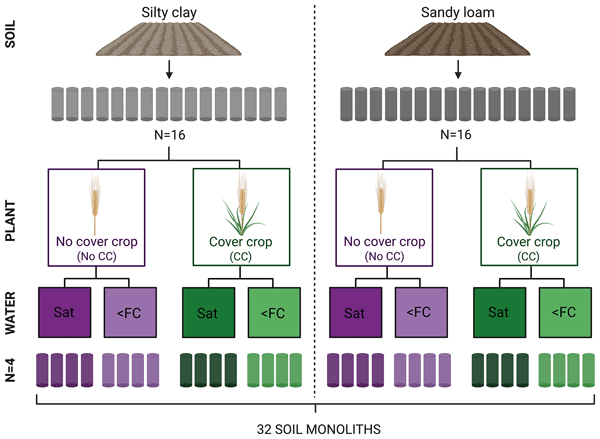
We studied how off-season waterlogging affects CO2 fluxes and dissolved carbon dynamics in cultivated boreal mineral soils. The study was conducted with intact soil profiles in a greenhouse. Waterlogging reduced immediate CO2 efflux, but CO2 accumulated in porewater and was released to the atmosphere upon soil drying. Cumulative emissions remained unaltered. Our results suggest that temporary waterlogging does not suppress total CO₂ production in mineral soils as much as commonly assumed.
David Bastviken, Blaize A Denfeld, Holger Villwock, Jonathan Schenk, Leif Klemedtsson, Hjalmar Laudon, Niels Aagard Jakobsen, Stefan Bertilsson, Kevin Bishop, William Colom Montero, Silke Langenheder, Amelie Lindgren, Erik Lundin, Niklas Rakos, Johannes Tiwari, Per Weslien, and Marcus B. Wallin
Earth Syst. Sci. Data Discuss., https://doi.org/10.5194/essd-2026-141, https://doi.org/10.5194/essd-2026-141, 2026
Preprint under review for ESSD
Short summary
Short summary
Lakes are significant methane sources, a powerful greenhouse gas, but long-term, consistent measurements are rare. Five lakes within Swedish Infrastructure of Ecosystem Science were monitored during 2016–2022 to better understand how methane emissions vary across space and time. Ebullition was a major flux pathway, and emissions rise with temperature in ways that differed within and between lakes, highlighting the need for coordinated monitoring and temperature-adjusted comparisons.
Judith Vogt, Joonatan Ala-Könni, Clara Mendoza-Lera, Taija Saarela, Niko Kinnunen, Wasi Hashmi, Ivan Mammarella, Anne Ojala, Carlos Palacin-Lizarbe, Jukka Pumpanen, Janne Rinne, Huizhong Zhang-Turpeinen, and Mathias Göckede
EGUsphere, https://doi.org/10.5194/egusphere-2026-1260, https://doi.org/10.5194/egusphere-2026-1260, 2026
Short summary
Short summary
To understand how northern rivers move carbon between land, water, and air, we measured greenhouse gases in Teno river. Using different methods on the water and the neighboring land, we found that this natural ecosystem released low levels of carbon. Mostly carbon dioxide was released to the air and the ocean, while methane was negligible. This study provides baseline data for healthy, northern rivers, helps address scientific biases, and can be used to improve the accuracy of climate models.
R. Willem Vervoort, Floris F. van Ogtrop, Mina Tambrchi, Farzina Akter, Alexander J. V. Buzacott, Jason S. Lessels, James P. Moloney, Dipangkar Kundu, Feike A. Dijkstra, and Thomas F. A. Bishop
Earth Syst. Sci. Data, 17, 6113–6127, https://doi.org/10.5194/essd-17-6113-2025, https://doi.org/10.5194/essd-17-6113-2025, 2025
Short summary
Short summary
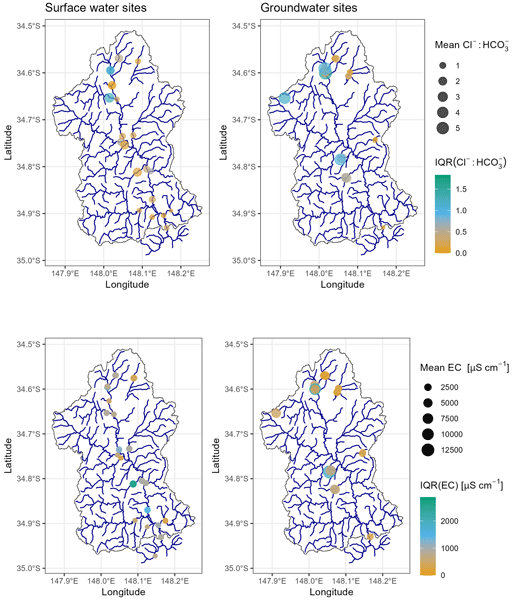
A detailed water quality dataset for a 1000 km2 catchment in New South Wales, Australia is presented. The water quality data for surface and groundwater was collected over 14 years and contains more than 1000 records. Despite missing values and different sampling methods and groups, the data provides a consistent overview of the hydrogeochemistry of the catchment. This dataset is valuable for global modelling studies as well as better understanding of local dryland salinity and water quality processes.
José Ángel Callejas-Rodelas, Alexander Knohl, Ivan Mammarella, Timo Vesala, Olli Peltola, and Christian Markwitz
Biogeosciences, 22, 4507–4529, https://doi.org/10.5194/bg-22-4507-2025, https://doi.org/10.5194/bg-22-4507-2025, 2025
Short summary
Short summary
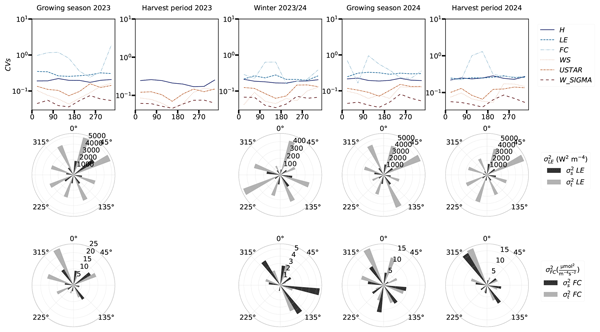
The spatial variability of CO2 and water vapour exchanges with the atmosphere was quantified above an agroforestry system and further compared to a monocropping system using a total of four eddy covariance stations. The variability of fluxes within the agroforestry site was found to be as large as the variability between agroforestry and monocropping site, induced by the heterogeneity of the site, which highlights the need for replicated measurements above such ecosystems.
Markku Koskinen, Jani Anttila, Valerie Vranová, Ladislav Holík, Kevin Roche, Michel Vorenhout, Mari Pihlatie, and Raija Laiho
Biogeosciences, 22, 3989–4012, https://doi.org/10.5194/bg-22-3989-2025, https://doi.org/10.5194/bg-22-3989-2025, 2025
Short summary
Short summary
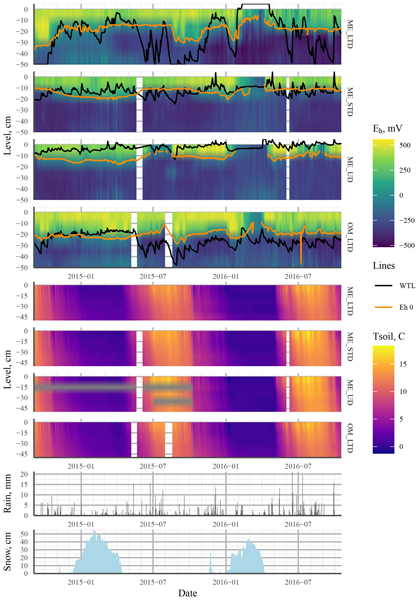
Redox potential, indicative of the active pathways of organic matter decomposition, was monitored for 2 years in a boreal peatland with three drainage regimes. Contrary to expectations, the water table level and redox potential were not found to be correlated in a monotonic fashion; thus, the relationship between the water table level and redox conditions is not modellable using non-dynamic models.
Laura M. van der Poel, Laurent V. Bataille, Bart Kruijt, Wietse Franssen, Wilma Jans, Jan Biermann, Anne Rietman, Alex J. V. Buzacott, Ype van der Velde, Ruben Boelens, and Ronald W. A. Hutjes
Biogeosciences, 22, 3867–3898, https://doi.org/10.5194/bg-22-3867-2025, https://doi.org/10.5194/bg-22-3867-2025, 2025
Short summary
Short summary
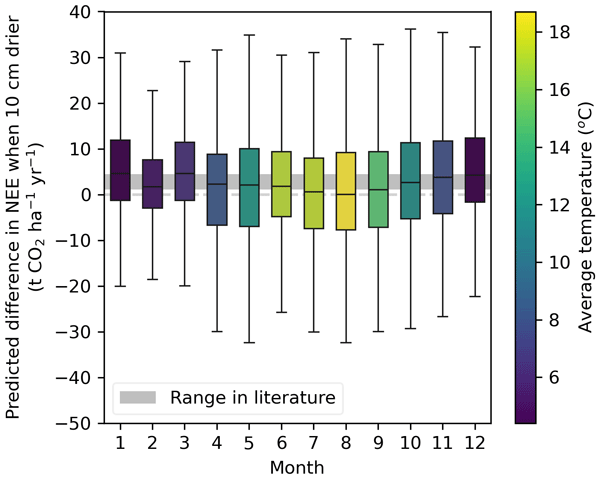
We combine two types of carbon dioxide (CO2) data from Dutch peatlands in a machine learning model: from fixed measurement towers and from a light research aircraft. We find that emissions increase with deeper water table depths (WTDs) by 4.6 tons of CO2 per hectare per year for each 10 cm deeper WTD on average. The effect is stronger in winter than in summer and varies between locations. This variability should be taken into account when developing mitigation measures.
Anam M. Khan, Olivia E. Clifton, Jesse O. Bash, Sam Bland, Nathan Booth, Philip Cheung, Lisa Emberson, Johannes Flemming, Erick Fredj, Stefano Galmarini, Laurens Ganzeveld, Orestis Gazetas, Ignacio Goded, Christian Hogrefe, Christopher D. Holmes, László Horváth, Vincent Huijnen, Qian Li, Paul A. Makar, Ivan Mammarella, Giovanni Manca, J. William Munger, Juan L. Pérez-Camanyo, Jonathan Pleim, Limei Ran, Roberto San Jose, Donna Schwede, Sam J. Silva, Ralf Staebler, Shihan Sun, Amos P. K. Tai, Eran Tas, Timo Vesala, Tamás Weidinger, Zhiyong Wu, Leiming Zhang, and Paul C. Stoy
Atmos. Chem. Phys., 25, 8613–8635, https://doi.org/10.5194/acp-25-8613-2025, https://doi.org/10.5194/acp-25-8613-2025, 2025
Short summary
Short summary
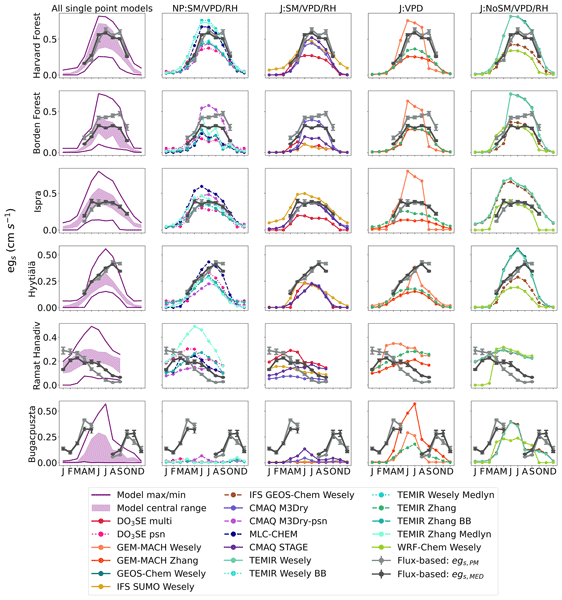
Vegetation removes tropospheric ozone through stomatal uptake, and accurately modeling the stomatal uptake of ozone is important for modeling dry deposition and air quality. We evaluated the stomatal component of ozone dry deposition modeled by atmospheric chemistry models at six sites. We find that models and observation-based estimates agree at times during the growing season at all sites, but some models overestimated the stomatal component during the dry summers at a seasonally dry site.
Piaopiao Ke, Anna Lintunen, Pasi Kolari, Annalea Lohila, Santeri Tuovinen, Janne Lampilahti, Roseline Thakur, Maija Peltola, Otso Peräkylä, Tuomo Nieminen, Ekaterina Ezhova, Mari Pihlatie, Asta Laasonen, Markku Koskinen, Helena Rautakoski, Laura Heimsch, Tom Kokkonen, Aki Vähä, Ivan Mammarella, Steffen Noe, Jaana Bäck, Veli-Matti Kerminen, and Markku Kulmala
Biogeosciences, 22, 3235–3251, https://doi.org/10.5194/bg-22-3235-2025, https://doi.org/10.5194/bg-22-3235-2025, 2025
Short summary
Short summary
Our research explores diverse ecosystems’ roles in climate cooling via the concept of CarbonSink+ potential. We measured CO2 uptake and local aerosol production in forests, farms, peatlands, urban gardens, and coastal areas across Finland and Estonia. The long-term data reveal that, while forests are vital with regard to CarbonSink+ potential, farms and urban gardens also play significant roles. These insights can help optimize management policy of natural resources to mitigate global warming.
Lukas Kohl, Petri Kiuru, Marjo Palviainen, Maarit Raivonen, Markku Koskinen, Mari Pihlatie, and Annamari Laurén
Biogeosciences, 22, 1711–1727, https://doi.org/10.5194/bg-22-1711-2025, https://doi.org/10.5194/bg-22-1711-2025, 2025
Short summary
Short summary
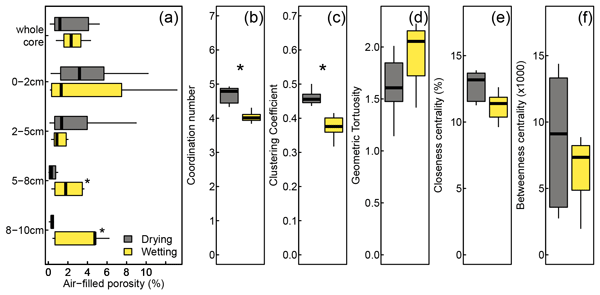
We present an assay to illuminate heterogeneity in biogeochemical transformations within peat samples. For this, we injected isotope-labeled acetate into peat cores and monitored the release of label-derived gases, which we compared to microtomography images. The fraction of label converted to CO2 and the rapidness of this conversion were linked to injection depth and air-filled porosity.
Aki Vähä, Timo Vesala, Sofya Guseva, Anders Lindroth, Andreas Lorke, Sally MacIntyre, and Ivan Mammarella
Biogeosciences, 22, 1651–1671, https://doi.org/10.5194/bg-22-1651-2025, https://doi.org/10.5194/bg-22-1651-2025, 2025
Short summary
Short summary
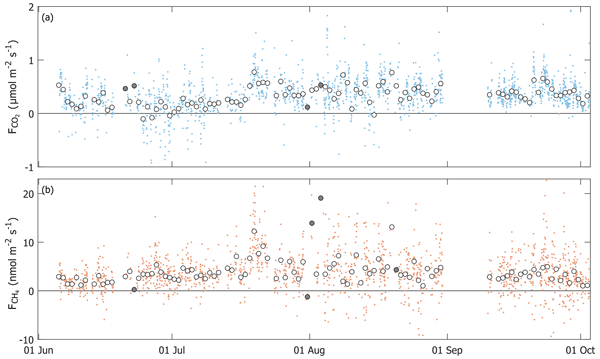
Boreal rivers are significant sources of carbon dioxide (CO2) and methane (CH4) for the atmosphere, but the controls of these emissions are uncertain. We measured 4 months of CO2 and CH4 exchanges between a regulated boreal river and the atmosphere with eddy covariance. We found statistical relationships between the gas exchange and several environmental variables, the most important of which were dissolved CO2 partial pressure in water, wind speed and water temperature.
Ekaterina Ezhova, Topi Laanti, Anna Lintunen, Pasi Kolari, Tuomo Nieminen, Ivan Mammarella, Keijo Heljanko, and Markku Kulmala
Biogeosciences, 22, 257–288, https://doi.org/10.5194/bg-22-257-2025, https://doi.org/10.5194/bg-22-257-2025, 2025
Short summary
Short summary
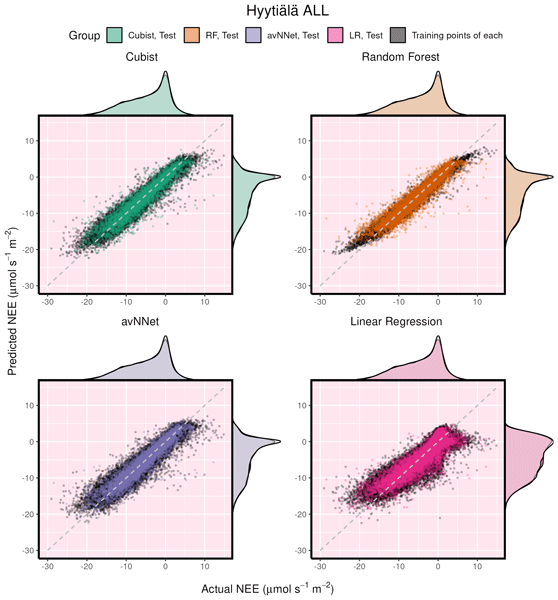
Machine learning (ML) models are gaining popularity in biogeosciences. They are applied as gap-filling methods and used to upscale carbon fluxes to larger areas. Here we use explainable artificial intelligence (XAI) methods to elucidate the performance of machine learning models for carbon dioxide fluxes in boreal forests. We show that statistically equal models treat input variables differently. XAI methods can help scientists make informed decisions when applying ML models in their research.
Jacob A. Nelson, Sophia Walther, Fabian Gans, Basil Kraft, Ulrich Weber, Kimberly Novick, Nina Buchmann, Mirco Migliavacca, Georg Wohlfahrt, Ladislav Šigut, Andreas Ibrom, Dario Papale, Mathias Göckede, Gregory Duveiller, Alexander Knohl, Lukas Hörtnagl, Russell L. Scott, Jiří Dušek, Weijie Zhang, Zayd Mahmoud Hamdi, Markus Reichstein, Sergio Aranda-Barranco, Jonas Ardö, Maarten Op de Beeck, Dave Billesbach, David Bowling, Rosvel Bracho, Christian Brümmer, Gustau Camps-Valls, Shiping Chen, Jamie Rose Cleverly, Ankur Desai, Gang Dong, Tarek S. El-Madany, Eugenie Susanne Euskirchen, Iris Feigenwinter, Marta Galvagno, Giacomo A. Gerosa, Bert Gielen, Ignacio Goded, Sarah Goslee, Christopher Michael Gough, Bernard Heinesch, Kazuhito Ichii, Marcin Antoni Jackowicz-Korczynski, Anne Klosterhalfen, Sara Knox, Hideki Kobayashi, Kukka-Maaria Kohonen, Mika Korkiakoski, Ivan Mammarella, Mana Gharun, Riccardo Marzuoli, Roser Matamala, Stefan Metzger, Leonardo Montagnani, Giacomo Nicolini, Thomas O'Halloran, Jean-Marc Ourcival, Matthias Peichl, Elise Pendall, Borja Ruiz Reverter, Marilyn Roland, Simone Sabbatini, Torsten Sachs, Marius Schmidt, Christopher R. Schwalm, Ankit Shekhar, Richard Silberstein, Maria Lucia Silveira, Donatella Spano, Torbern Tagesson, Gianluca Tramontana, Carlo Trotta, Fabio Turco, Timo Vesala, Caroline Vincke, Domenico Vitale, Enrique R. Vivoni, Yi Wang, William Woodgate, Enrico A. Yepez, Junhui Zhang, Donatella Zona, and Martin Jung
Biogeosciences, 21, 5079–5115, https://doi.org/10.5194/bg-21-5079-2024, https://doi.org/10.5194/bg-21-5079-2024, 2024
Short summary
Short summary
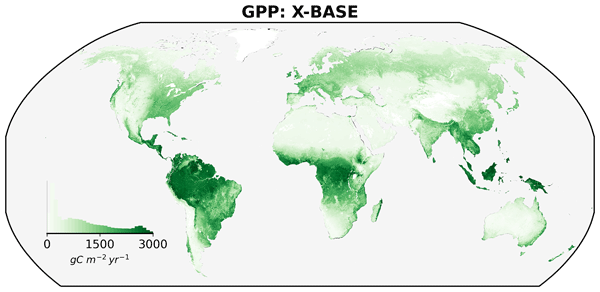
The movement of water, carbon, and energy from the Earth's surface to the atmosphere, or flux, is an important process to understand because it impacts our lives. Here, we outline a method called FLUXCOM-X to estimate global water and CO2 fluxes based on direct measurements from sites around the world. We go on to demonstrate how these new estimates of net CO2 uptake/loss, gross CO2 uptake, total water evaporation, and transpiration from plants compare to previous and independent estimates.
Kim A. P. Faassen, Jordi Vilà-Guerau de Arellano, Raquel González-Armas, Bert G. Heusinkveld, Ivan Mammarella, Wouter Peters, and Ingrid T. Luijkx
Biogeosciences, 21, 3015–3039, https://doi.org/10.5194/bg-21-3015-2024, https://doi.org/10.5194/bg-21-3015-2024, 2024
Short summary
Short summary
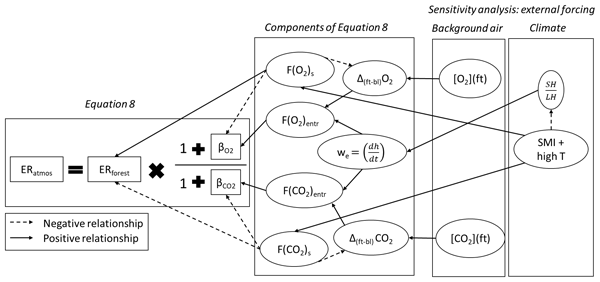
The ratio between atmospheric O2 and CO2 can be used to characterize the carbon balance at the surface. By combining a model and observations from the Hyytiälä forest (Finland), we show that using atmospheric O2 and CO2 measurements from a single height provides a weak constraint on the surface CO2 exchange because large-scale processes such as entrainment confound this signal. We therefore recommend always using multiple heights of O2 and CO2 measurements to study surface CO2 exchange.
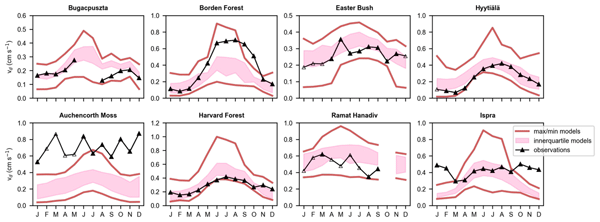
Olivia E. Clifton, Donna Schwede, Christian Hogrefe, Jesse O. Bash, Sam Bland, Philip Cheung, Mhairi Coyle, Lisa Emberson, Johannes Flemming, Erick Fredj, Stefano Galmarini, Laurens Ganzeveld, Orestis Gazetas, Ignacio Goded, Christopher D. Holmes, László Horváth, Vincent Huijnen, Qian Li, Paul A. Makar, Ivan Mammarella, Giovanni Manca, J. William Munger, Juan L. Pérez-Camanyo, Jonathan Pleim, Limei Ran, Roberto San Jose, Sam J. Silva, Ralf Staebler, Shihan Sun, Amos P. K. Tai, Eran Tas, Timo Vesala, Tamás Weidinger, Zhiyong Wu, and Leiming Zhang
Atmos. Chem. Phys., 23, 9911–9961, https://doi.org/10.5194/acp-23-9911-2023, https://doi.org/10.5194/acp-23-9911-2023, 2023
Short summary
Short summary
A primary sink of air pollutants is dry deposition. Dry deposition estimates differ across the models used to simulate atmospheric chemistry. Here, we introduce an effort to examine dry deposition schemes from atmospheric chemistry models. We provide our approach’s rationale, document the schemes, and describe datasets used to drive and evaluate the schemes. We also launch the analysis of results by evaluating against observations and identifying the processes leading to model–model differences.
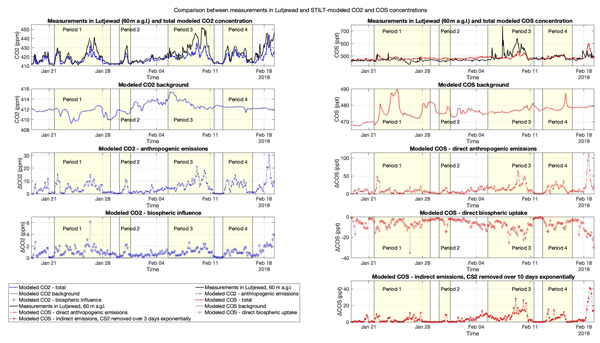
Alessandro Zanchetta, Linda M. J. Kooijmans, Steven van Heuven, Andrea Scifo, Hubertus A. Scheeren, Ivan Mammarella, Ute Karstens, Jin Ma, Maarten Krol, and Huilin Chen
Biogeosciences, 20, 3539–3553, https://doi.org/10.5194/bg-20-3539-2023, https://doi.org/10.5194/bg-20-3539-2023, 2023
Short summary
Short summary
Carbonyl sulfide (COS) has been suggested as a tool to estimate carbon dioxide (CO2) uptake by plants during photosynthesis. However, understanding its sources and sinks is critical to preventing biases in this estimate. Combining observations and models, this study proves that regional sources occasionally influence the measurements at the 60 m tall Lutjewad tower (1 m a.s.l.; 53°24′ N, 6°21′ E) in the Netherlands. Moreover, it estimates nighttime COS fluxes to be −3.0 ± 2.6 pmol m−2 s−1.
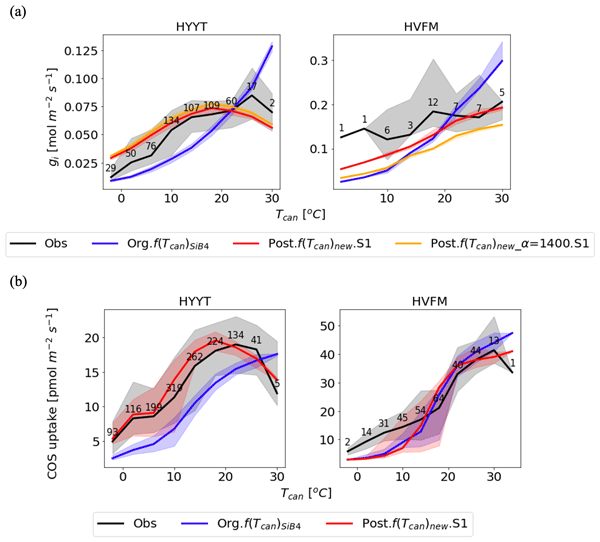
Ara Cho, Linda M. J. Kooijmans, Kukka-Maaria Kohonen, Richard Wehr, and Maarten C. Krol
Biogeosciences, 20, 2573–2594, https://doi.org/10.5194/bg-20-2573-2023, https://doi.org/10.5194/bg-20-2573-2023, 2023
Short summary
Short summary
Carbonyl sulfide (COS) is a useful constraint for estimating photosynthesis. To simulate COS leaf flux better in the SiB4 model, we propose a novel temperature function for enzyme carbonic anhydrase (CA) activity and optimize conductances using observations. The optimal activity of CA occurs below 40 °C, and Ball–Woodrow–Berry parameters are slightly changed. These reduce/increase uptakes in the tropics/higher latitudes and contribute to resolving discrepancies in the COS global budget.

Matti Kämäräinen, Juha-Pekka Tuovinen, Markku Kulmala, Ivan Mammarella, Juha Aalto, Henriikka Vekuri, Annalea Lohila, and Anna Lintunen
Biogeosciences, 20, 897–909, https://doi.org/10.5194/bg-20-897-2023, https://doi.org/10.5194/bg-20-897-2023, 2023
Short summary
Short summary
In this study, we introduce a new method for modeling the exchange of carbon between the atmosphere and a study site located in a boreal forest in southern Finland. Our method yields more accurate results than previous approaches in this context. Accurately estimating carbon exchange is crucial for gaining a better understanding of the role of forests in regulating atmospheric carbon and addressing climate change.
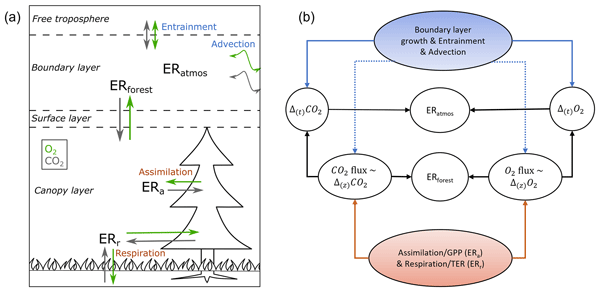
Kim A. P. Faassen, Linh N. T. Nguyen, Eadin R. Broekema, Bert A. M. Kers, Ivan Mammarella, Timo Vesala, Penelope A. Pickers, Andrew C. Manning, Jordi Vilà-Guerau de Arellano, Harro A. J. Meijer, Wouter Peters, and Ingrid T. Luijkx
Atmos. Chem. Phys., 23, 851–876, https://doi.org/10.5194/acp-23-851-2023, https://doi.org/10.5194/acp-23-851-2023, 2023
Short summary
Short summary
The exchange ratio (ER) between atmospheric O2 and CO2 provides a useful tracer for separately estimating photosynthesis and respiration processes in the forest carbon balance. This is highly relevant to better understand the expected biosphere sink, which determines future atmospheric CO2 levels. We therefore measured O2, CO2, and their ER above a boreal forest in Finland and investigated their diurnal behaviour for a representative day, and we show the most suitable way to determine the ER.

Kukka-Maaria Kohonen, Roderick Dewar, Gianluca Tramontana, Aleksanteri Mauranen, Pasi Kolari, Linda M. J. Kooijmans, Dario Papale, Timo Vesala, and Ivan Mammarella
Biogeosciences, 19, 4067–4088, https://doi.org/10.5194/bg-19-4067-2022, https://doi.org/10.5194/bg-19-4067-2022, 2022
Short summary
Short summary
Four different methods for quantifying photosynthesis (GPP) at ecosystem scale were tested, of which two are based on carbon dioxide (CO2) and two on carbonyl sulfide (COS) flux measurements. CO2-based methods are traditional partitioning, and a new method uses machine learning. We introduce a novel method for calculating GPP from COS fluxes, with potentially better applicability than the former methods. Both COS-based methods gave on average higher GPP estimates than the CO2-based estimates.
Joonatan Ala-Könni, Kukka-Maaria Kohonen, Matti Leppäranta, and Ivan Mammarella
Geosci. Model Dev., 15, 4739–4755, https://doi.org/10.5194/gmd-15-4739-2022, https://doi.org/10.5194/gmd-15-4739-2022, 2022
Short summary
Short summary
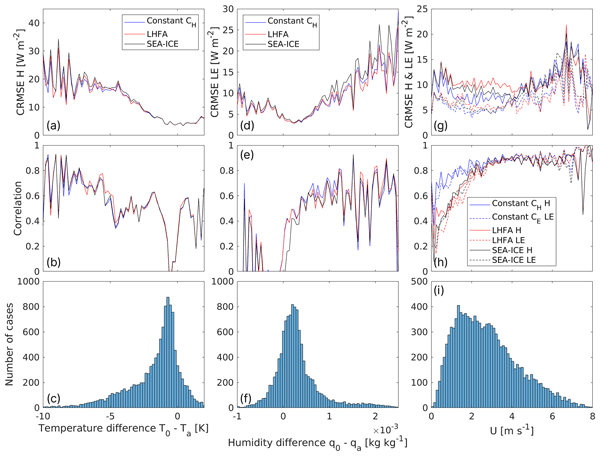
Properties of seasonally ice-covered lakes are not currently sufficiently included in global climate models. To fill this gap, this study evaluates three models that could be used to quantify the amount of heat that moves from and into the lake by the air above it and through evaporation of the ice cover. The results show that the complex nature of the surrounding environment as well as difficulties in accurately measuring the surface temperature of ice introduce errors to these models.
Malgorzata Golub, Wim Thiery, Rafael Marcé, Don Pierson, Inne Vanderkelen, Daniel Mercado-Bettin, R. Iestyn Woolway, Luke Grant, Eleanor Jennings, Benjamin M. Kraemer, Jacob Schewe, Fang Zhao, Katja Frieler, Matthias Mengel, Vasiliy Y. Bogomolov, Damien Bouffard, Marianne Côté, Raoul-Marie Couture, Andrey V. Debolskiy, Bram Droppers, Gideon Gal, Mingyang Guo, Annette B. G. Janssen, Georgiy Kirillin, Robert Ladwig, Madeline Magee, Tadhg Moore, Marjorie Perroud, Sebastiano Piccolroaz, Love Raaman Vinnaa, Martin Schmid, Tom Shatwell, Victor M. Stepanenko, Zeli Tan, Bronwyn Woodward, Huaxia Yao, Rita Adrian, Mathew Allan, Orlane Anneville, Lauri Arvola, Karen Atkins, Leon Boegman, Cayelan Carey, Kyle Christianson, Elvira de Eyto, Curtis DeGasperi, Maria Grechushnikova, Josef Hejzlar, Klaus Joehnk, Ian D. Jones, Alo Laas, Eleanor B. Mackay, Ivan Mammarella, Hampus Markensten, Chris McBride, Deniz Özkundakci, Miguel Potes, Karsten Rinke, Dale Robertson, James A. Rusak, Rui Salgado, Leon van der Linden, Piet Verburg, Danielle Wain, Nicole K. Ward, Sabine Wollrab, and Galina Zdorovennova
Geosci. Model Dev., 15, 4597–4623, https://doi.org/10.5194/gmd-15-4597-2022, https://doi.org/10.5194/gmd-15-4597-2022, 2022
Short summary
Short summary
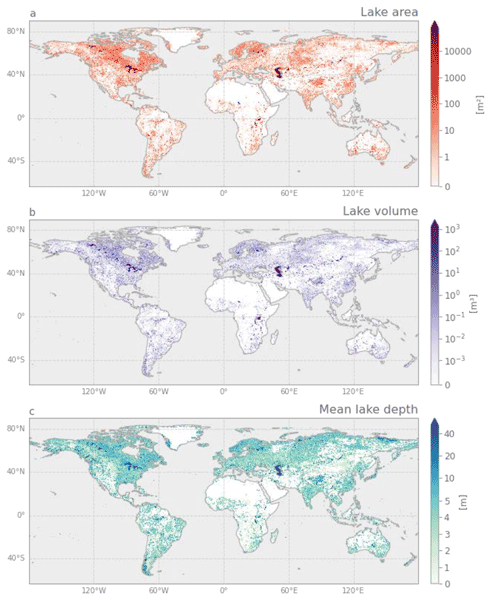
Lakes and reservoirs are warming across the globe. To better understand how lakes are changing and to project their future behavior amidst various sources of uncertainty, simulations with a range of lake models are required. This in turn requires international coordination across different lake modelling teams worldwide. Here we present a protocol for and results from coordinated simulations of climate change impacts on lakes worldwide.
Jarmo Mäkelä, Laila Melkas, Ivan Mammarella, Tuomo Nieminen, Suyog Chandramouli, Rafael Savvides, and Kai Puolamäki
Biogeosciences, 19, 2095–2099, https://doi.org/10.5194/bg-19-2095-2022, https://doi.org/10.5194/bg-19-2095-2022, 2022
Short summary
Short summary
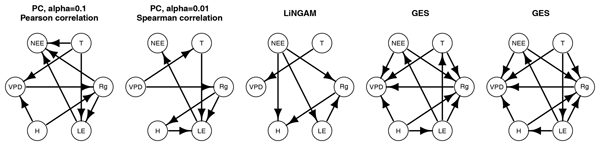
Causal structure discovery algorithms have been making headway into Earth system sciences, and they can be used to increase our understanding on biosphere–atmosphere interactions. In this paper we present a procedure on how to utilize prior knowledge of the domain experts together with these algorithms in order to find more robust causal structure models. We also demonstrate how to avoid pitfalls such as over-fitting and concept drift during this process.
Hanna K. Lappalainen, Tuukka Petäjä, Timo Vihma, Jouni Räisänen, Alexander Baklanov, Sergey Chalov, Igor Esau, Ekaterina Ezhova, Matti Leppäranta, Dmitry Pozdnyakov, Jukka Pumpanen, Meinrat O. Andreae, Mikhail Arshinov, Eija Asmi, Jianhui Bai, Igor Bashmachnikov, Boris Belan, Federico Bianchi, Boris Biskaborn, Michael Boy, Jaana Bäck, Bin Cheng, Natalia Chubarova, Jonathan Duplissy, Egor Dyukarev, Konstantinos Eleftheriadis, Martin Forsius, Martin Heimann, Sirkku Juhola, Vladimir Konovalov, Igor Konovalov, Pavel Konstantinov, Kajar Köster, Elena Lapshina, Anna Lintunen, Alexander Mahura, Risto Makkonen, Svetlana Malkhazova, Ivan Mammarella, Stefano Mammola, Stephany Buenrostro Mazon, Outi Meinander, Eugene Mikhailov, Victoria Miles, Stanislav Myslenkov, Dmitry Orlov, Jean-Daniel Paris, Roberta Pirazzini, Olga Popovicheva, Jouni Pulliainen, Kimmo Rautiainen, Torsten Sachs, Vladimir Shevchenko, Andrey Skorokhod, Andreas Stohl, Elli Suhonen, Erik S. Thomson, Marina Tsidilina, Veli-Pekka Tynkkynen, Petteri Uotila, Aki Virkkula, Nadezhda Voropay, Tobias Wolf, Sayaka Yasunaka, Jiahua Zhang, Yubao Qiu, Aijun Ding, Huadong Guo, Valery Bondur, Nikolay Kasimov, Sergej Zilitinkevich, Veli-Matti Kerminen, and Markku Kulmala
Atmos. Chem. Phys., 22, 4413–4469, https://doi.org/10.5194/acp-22-4413-2022, https://doi.org/10.5194/acp-22-4413-2022, 2022
Short summary
Short summary
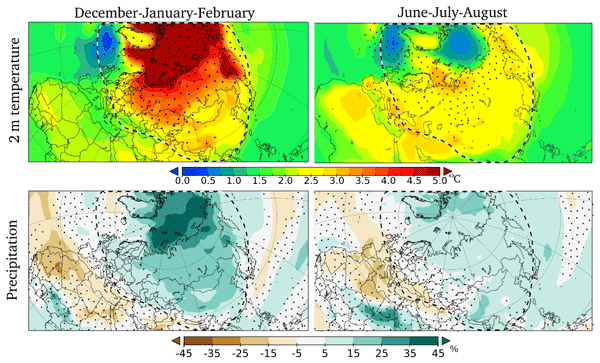
We summarize results during the last 5 years in the northern Eurasian region, especially from Russia, and introduce recent observations of the air quality in the urban environments in China. Although the scientific knowledge in these regions has increased, there are still gaps in our understanding of large-scale climate–Earth surface interactions and feedbacks. This arises from limitations in research infrastructures and integrative data analyses, hindering a comprehensive system analysis.
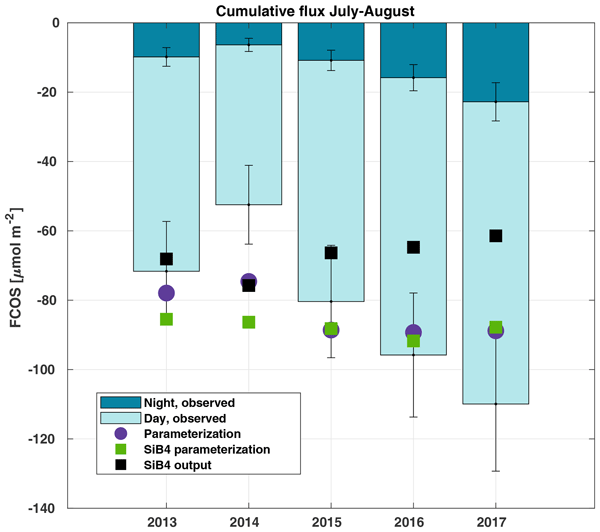
Timo Vesala, Kukka-Maaria Kohonen, Linda M. J. Kooijmans, Arnaud P. Praplan, Lenka Foltýnová, Pasi Kolari, Markku Kulmala, Jaana Bäck, David Nelson, Dan Yakir, Mark Zahniser, and Ivan Mammarella
Atmos. Chem. Phys., 22, 2569–2584, https://doi.org/10.5194/acp-22-2569-2022, https://doi.org/10.5194/acp-22-2569-2022, 2022
Short summary
Short summary
Carbonyl sulfide (COS) provides new insights into carbon cycle research. We present an easy-to-use flux parameterization and the longest existing time series of forest–atmosphere COS exchange measurements, which allow us to study both seasonal and interannual variability. We observed only uptake of COS by the forest on an annual basis, with 37 % variability between years. Upscaling the boreal COS uptake using a biosphere model indicates a significant missing COS sink at high latitudes.
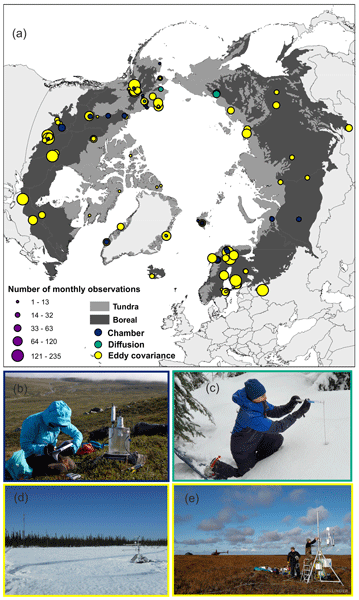
Anna-Maria Virkkala, Susan M. Natali, Brendan M. Rogers, Jennifer D. Watts, Kathleen Savage, Sara June Connon, Marguerite Mauritz, Edward A. G. Schuur, Darcy Peter, Christina Minions, Julia Nojeim, Roisin Commane, Craig A. Emmerton, Mathias Goeckede, Manuel Helbig, David Holl, Hiroki Iwata, Hideki Kobayashi, Pasi Kolari, Efrén López-Blanco, Maija E. Marushchak, Mikhail Mastepanov, Lutz Merbold, Frans-Jan W. Parmentier, Matthias Peichl, Torsten Sachs, Oliver Sonnentag, Masahito Ueyama, Carolina Voigt, Mika Aurela, Julia Boike, Gerardo Celis, Namyi Chae, Torben R. Christensen, M. Syndonia Bret-Harte, Sigrid Dengel, Han Dolman, Colin W. Edgar, Bo Elberling, Eugenie Euskirchen, Achim Grelle, Juha Hatakka, Elyn Humphreys, Järvi Järveoja, Ayumi Kotani, Lars Kutzbach, Tuomas Laurila, Annalea Lohila, Ivan Mammarella, Yojiro Matsuura, Gesa Meyer, Mats B. Nilsson, Steven F. Oberbauer, Sang-Jong Park, Roman Petrov, Anatoly S. Prokushkin, Christopher Schulze, Vincent L. St. Louis, Eeva-Stiina Tuittila, Juha-Pekka Tuovinen, William Quinton, Andrej Varlagin, Donatella Zona, and Viacheslav I. Zyryanov
Earth Syst. Sci. Data, 14, 179–208, https://doi.org/10.5194/essd-14-179-2022, https://doi.org/10.5194/essd-14-179-2022, 2022
Short summary
Short summary
The effects of climate warming on carbon cycling across the Arctic–boreal zone (ABZ) remain poorly understood due to the relatively limited distribution of ABZ flux sites. Fortunately, this flux network is constantly increasing, but new measurements are published in various platforms, making it challenging to understand the ABZ carbon cycle as a whole. Here, we compiled a new database of Arctic–boreal CO2 fluxes to help facilitate large-scale assessments of the ABZ carbon cycle.
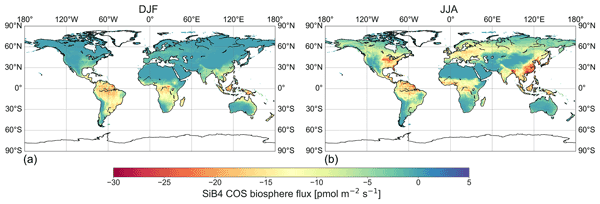
Linda M. J. Kooijmans, Ara Cho, Jin Ma, Aleya Kaushik, Katherine D. Haynes, Ian Baker, Ingrid T. Luijkx, Mathijs Groenink, Wouter Peters, John B. Miller, Joseph A. Berry, Jerome Ogée, Laura K. Meredith, Wu Sun, Kukka-Maaria Kohonen, Timo Vesala, Ivan Mammarella, Huilin Chen, Felix M. Spielmann, Georg Wohlfahrt, Max Berkelhammer, Mary E. Whelan, Kadmiel Maseyk, Ulli Seibt, Roisin Commane, Richard Wehr, and Maarten Krol
Biogeosciences, 18, 6547–6565, https://doi.org/10.5194/bg-18-6547-2021, https://doi.org/10.5194/bg-18-6547-2021, 2021
Short summary
Short summary
The gas carbonyl sulfide (COS) can be used to estimate photosynthesis. To adopt this approach on regional and global scales, we need biosphere models that can simulate COS exchange. So far, such models have not been evaluated against observations. We evaluate the COS biosphere exchange of the SiB4 model against COS flux observations. We find that the model is capable of simulating key processes in COS biosphere exchange. Still, we give recommendations for further improvement of the model.
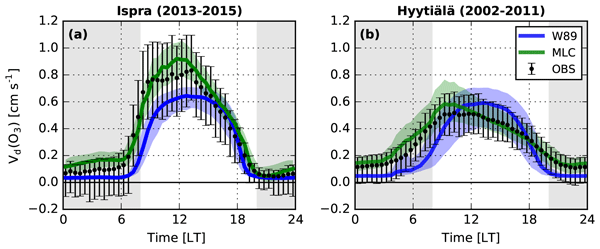
Auke J. Visser, Laurens N. Ganzeveld, Ignacio Goded, Maarten C. Krol, Ivan Mammarella, Giovanni Manca, and K. Folkert Boersma
Atmos. Chem. Phys., 21, 18393–18411, https://doi.org/10.5194/acp-21-18393-2021, https://doi.org/10.5194/acp-21-18393-2021, 2021
Short summary
Short summary
Dry deposition is an important sink for tropospheric ozone that affects ecosystem carbon uptake, but process understanding remains incomplete. We apply a common deposition representation in atmospheric chemistry models and a multi-layer canopy model to multi-year ozone deposition observations. The multi-layer canopy model performs better on diurnal timescales compared to the common approach, leading to a substantially improved simulation of ozone deposition and vegetation ozone impact metrics.
Cited articles
Abisko Scientific Research Station: UAV – Digital Terrain Model from Stordalen Mire, 12 June 2024, Swedish Infrastructure for Ecosystem Science (SITES) Spectral, https://meta.fieldsites.se/objects/SfH9IQ_3z9UDb_Rfflv3VaXU (last access: 22 October 2025), 2025a. a
Abisko Scientific Research Station: UAV – RGB orthomosaic from Stordalen Mire, 2024-06-12, Swedish Infrastructure for Ecosystem Science (SITES) Spectral, https://hdl.handle.net/11676.1/8vOCdvm0tCmkD-TfaSqt1FxE, 2025b. a
Akaike, H.: Maximum likelihood identification of Gaussian autoregressive moving average models, Biometrika, 60, 255–265, 1973. a
Aubinet, M., Grelle, A., Ibrom, A., Rannik, Ü., Moncrieff, J., Foken, T., Kowalski, A., Martin, P., Berbigier, P., Bernhofer, C., Clement, R., Elbers, J., Granier, A., Grünwald, T., Morgenstern, K., Pilegaard, K., Rebmann, C., Snijders, W., Valentini, R., and Vesala, T.: Estimates of the Annual Net Carbon and Water Exchange of Forests: The EUROFLUX Methodology, in: Advances in ecological research, vol. 30, Elsevier, 113–175, https://doi.org/10.1016/S0065-2504(08)60018-5, 1999. a
Aubinet, M., Vesala, T., and Papale, D.: Eddy covariance: a practical guide to measurement and data analysis, Springer Science & Business Media, ISBN 9789400723511, 2012. a
Bartholomew, G. and Alexander, M.: Microbial metabolism of carbon monoxide in culture and in soil, Applied and Environmental Microbiology, 37, 932–937, 1979. a
Bruhn, D., Albert, K. R., Mikkelsen, T. N., and Ambus, P.: UV-induced carbon monoxide emission from living vegetation, Biogeosciences, 10, 7877–7882, https://doi.org/10.5194/bg-10-7877-2013, 2013. a, b, c, d
Buzacott, A. J., van den Berg, M., Kruijt, B., Pijlman, J., Fritz, C., Wintjen, P., and van der Velde, Y.: A Bayesian inference approach to determine experimental Typha latifolia paludiculture greenhouse gas exchange measured with eddy covariance, Agricultural and Forest Meteorology, 356, 110179, https://doi.org/10.1016/j.agrformet.2024.110179, 2024. a, b
Conrad, R. and Seiler, W.: Role of microorganisms in the consumption and production of atmospheric carbon monoxide by soil, Applied and Environmental Microbiology, 40, 437–445, 1980. a
Constant, P., Poissant, L., and Villemur, R.: Annual hydrogen, carbon monoxide and carbon dioxide concentrations and surface to air exchanges in a rural area (Québec, Canada), Atmospheric Environment, 42, 5090–5100, 2008. a
Cordero, P. R., Bayly, K., Man Leung, P., Huang, C., Islam, Z. F., Schittenhelm, R. B., King, G. M., and Greening, C.: Atmospheric carbon monoxide oxidation is a widespread mechanism supporting microbial survival, The ISME Journal, 13, 2868–2881, 2019. a
Cowan, N., Helfter, C., Langford, B., Coyle, M., Levy, P., Moxley, J., Simmons, I., Leeson, S., Nemitz, E., and Skiba, U.: Seasonal fluxes of carbon monoxide from an intensively grazed grassland in Scotland, Atmospheric Environment, 194, 170–178, https://doi.org/10.1016/j.atmosenv.2018.09.039, 2018. a, b, c, d, e, f
Daniel, J. S. and Solomon, S.: On the climate forcing of carbon monoxide, Journal of Geophysical Research: Atmospheres, 103, 13249–13260, https://doi.org/10.1029/98JD00822, 1998. a
Fraser, W. T., Blei, E., Fry, S. C., Newman, M. F., Reay, D. S., Smith, K. A., and McLeod, A. R.: Emission of methane, carbon monoxide, carbon dioxide and short-chain hydrocarbons from vegetation foliage under ultraviolet irradiation, Plant, Cell & Environment, 38, 980–989, 2015. a
Funk, D. W., Pullman, E. R., Peterson, K. M., Crill, P. M., and Billings, W. D.: Influence of water table on carbon dioxide, carbon monoxide, and methane fluxes from Taiga Bog microcosms, Global Biogeochemical Cycles, 8, 271–278, https://doi.org/10.1029/94GB01229, 1994. a
Guenther, A. B., Jiang, X., Heald, C. L., Sakulyanontvittaya, T., Duhl, T., Emmons, L. K., and Wang, X.: The Model of Emissions of Gases and Aerosols from Nature version 2.1 (MEGAN2.1): an extended and updated framework for modeling biogenic emissions, Geosci. Model Dev., 5, 1471–1492, https://doi.org/10.5194/gmd-5-1471-2012, 2012. a, b
Inman, R. E., Ingersoll, R. B., and Levy, E. A.: Soil: a natural sink for carbon monoxide, Science, 172, 1229–1231, 1971. a
Kaimal, J. C. and Finnigan, J. J.: Atmospheric boundary layer flows: their structure and measurement, Oxford University Press, ISBN 9780195362770, 1994. a
King, G.: Attributes of atmospheric carbon monoxide oxidation by Maine forest soils, Applied and Environmental Microbiology, 65, 5257–5264, 1999. a
King, J. Y., Brandt, L. A., and Adair, E. C.: Shedding light on plant litter decomposition: advances, implications and new directions in understanding the role of photodegradation, Biogeochemistry, 111, 57–81, 2012. a
Kisselle, K. W., Zepp, R. G., Burke, R. A., de Siqueira Pinto, A., Bustamante, M. M., Opsahl, S., Varella, R. F., and Viana, L. T.: Seasonal soil fluxes of carbon monoxide in burned and unburned Brazilian savannas, Journal of Geophysical Research: Atmospheres, 107, 8051, https://doi.org/10.1029/2001JD000638, 2002. a
Kljun, N., Calanca, P., Rotach, M. W., and Schmid, H. P.: A simple two-dimensional parameterisation for Flux Footprint Prediction (FFP), Geosci. Model Dev., 8, 3695–3713, https://doi.org/10.5194/gmd-8-3695-2015, 2015. a
Kohonen, K.-M., Kolari, P., Kooijmans, L. M. J., Chen, H., Seibt, U., Sun, W., and Mammarella, I.: Towards standardized processing of eddy covariance flux measurements of carbonyl sulfide, Atmos. Meas. Tech., 13, 3957–3975, https://doi.org/10.5194/amt-13-3957-2020, 2020. a
Laasonen, A., Buzacott, A., Kohonen, K., Lundin, E., Meire, A., Pihlatie, M., and Mammarella, I.: Dataset and scripts for the manuscript “Radiation and surface wetness drive carbon monoxide fluxes from an Arctic peatland” (v2.0.0), Zenodo [data set], https://doi.org/10.5281/zenodo.17347158, 2025. a
Łakomiec, P., Holst, J., Friborg, T., Crill, P., Rakos, N., Kljun, N., Olsson, P.-O., Eklundh, L., Persson, A., and Rinne, J.: Field-scale CH4 emission at a subarctic mire with heterogeneous permafrost thaw status, Biogeosciences, 18, 5811–5830, https://doi.org/10.5194/bg-18-5811-2021, 2021. a, b
Lelieveld, J., Gromov, S., Pozzer, A., and Taraborrelli, D.: Global tropospheric hydroxyl distribution, budget and reactivity, Atmos. Chem. Phys., 16, 12477–12493, https://doi.org/10.5194/acp-16-12477-2016, 2016. a
Liu, L., Zhuang, Q., Zhu, Q., Liu, S., van Asperen, H., and Pihlatie, M.: Global soil consumption of atmospheric carbon monoxide: an analysis using a process-based biogeochemistry model, Atmos. Chem. Phys., 18, 7913–7931, https://doi.org/10.5194/acp-18-7913-2018, 2018. a, b, c, d
Ludwig, S. M., Schiferl, L., Hung, J., Natali, S. M., and Commane, R.: Resolving heterogeneous fluxes from tundra halves the growing season carbon budget, Biogeosciences, 21, 1301–1321, https://doi.org/10.5194/bg-21-1301-2024, 2024. a
Lundin, E., Crill, P., Grudd, H., Holst, J., Kristoffersson, A., Meire, A., Mölder, M., and Rakos, N.: ETC L2 Meteo, Abisko-Stordalen Palsa Bog, 31 August 2021–31 August 2024, https://hdl.handle.net/11676/tRebcFed0c3xi5GvLdgROcEy (last access: 13 October 2025), 2023. a
Malmer, N., Johansson, T., Olsrud, M., and Christensen, T. R.: Vegetation, climatic changes and net carbon sequestration in a North-Scandinavian subarctic mire over 30 years, Global Change Biology, 11, 1895–1909, https://doi.org/10.1111/j.1365-2486.2005.01042.x, 2005. a, b
Mammarella, I., Peltola, O., Nordbo, A., Järvi, L., and Rannik, Ü.: Quantifying the uncertainty of eddy covariance fluxes due to the use of different software packages and combinations of processing steps in two contrasting ecosystems, Atmos. Meas. Tech., 9, 4915–4933, https://doi.org/10.5194/amt-9-4915-2016, 2016. a
Mauder, M. and Foken, T.: Impact of post-field data processing on eddy covariance flux estimates and energy balance closure, Meteorologische Zeitschrift, 15, 597–610, 2006. a
Pihlatie, M., Rannik, Ü., Haapanala, S., Peltola, O., Shurpali, N., Martikainen, P. J., Lind, S., Hyvönen, N., Virkajärvi, P., Zahniser, M., and Mammarella, I.: Seasonal and diurnal variation in CO fluxes from an agricultural bioenergy crop, Biogeosciences, 13, 5471–5485, https://doi.org/10.5194/bg-13-5471-2016, 2016. a, b, c, d, e, f
Potter, C. S., Klooster, S. A., and Chatfield, R. B.: Consumption and production of carbon monoxide in soils: a global model analysis of spatial and seasonal variation, Chemosphere, 33, 1175–1193, 1996. a
Ragsdale, S. W.: Life with carbon monoxide, Critical reviews in biochemistry and molecular biology, 39, 165–195, https://doi.org/10.1080/10409230490496577, 2004. a
Rannik, Ü. and Vesala, T.: Autoregressive filtering versus linear detrending in estimation of fluxes by the eddy covariance method, Boundary-Layer Meteorology, 91, 259–280, 1999. a
Rich, J. J. and King, G.: Carbon monoxide consumption and production by wetland peats, FEMS Microbiology Ecology, 28, 215–224, https://doi.org/10.1111/j.1574-6941.1999.tb00577.x, 1999. a
Stein, O., Schultz, M. G., Bouarar, I., Clark, H., Huijnen, V., Gaudel, A., George, M., and Clerbaux, C.: On the wintertime low bias of Northern Hemisphere carbon monoxide found in global model simulations, Atmos. Chem. Phys., 14, 9295–9316, https://doi.org/10.5194/acp-14-9295-2014, 2014. a
Sun, W., Kooijmans, L. M. J., Maseyk, K., Chen, H., Mammarella, I., Vesala, T., Levula, J., Keskinen, H., and Seibt, U.: Soil fluxes of carbonyl sulfide (COS), carbon monoxide, and carbon dioxide in a boreal forest in southern Finland, Atmos. Chem. Phys., 18, 1363–1378, https://doi.org/10.5194/acp-18-1363-2018, 2018. a
Szopa, S., Naik, V., Adhikary, B., Artaxo, P., Berntsen, T., Collins, W., Fuzzi, S., Gallardo, L., Kiendler-Scharr, A., Klimont, Z., H. Liao, N. U., and Zanis, P.: Short-lived Climate Forcers, Cambridge University Press, 817–922, https://doi.org/10.1017/9781009157896.008, 2021. a
Tikkasalo, O.-P., Peltola, O., Alekseychik, P., Heikkinen, J., Launiainen, S., Lehtonen, A., Li, Q., Martínez-García, E., Peltoniemi, M., Salovaara, P., Tuominen, V., and Mäkipää, R.: Eddy-covariance fluxes of CO2, CH4 and N2O in a drained peatland forest after clear-cutting, Biogeosciences, 22, 1277–1300, https://doi.org/10.5194/bg-22-1277-2025, 2025. a
van Asperen, H., Warneke, T., Sabbatini, S., Nicolini, G., Papale, D., and Notholt, J.: The role of photo- and thermal degradation for CO2 and CO fluxes in an arid ecosystem, Biogeosciences, 12, 4161–4174, https://doi.org/10.5194/bg-12-4161-2015, 2015. a, b, c
van Asperen, H., Warneke, T., Carioca de Araújo, A., Forsberg, B., José Filgueiras Ferreira, S., Röckmann, T., van der Veen, C., Bulthuis, S., Ramos de Oliveira, L., de Lima Xavier, T., da Mata, J., de Oliveira Sá, M., Ricardo Teixeira, P., Andrews de França e Silva, J., Trumbore, S., and Notholt, J.: The emission of CO from tropical rainforest soils, Biogeosciences, 21, 3183–3199, https://doi.org/10.5194/bg-21-3183-2024, 2024. a
Varella, R., Bustamante, M., Pinto, A., Kisselle, K., Santos, R., Burke, R., Zepp, R., and Viana, L.: Soil fluxes of CO2, CO, NO, and N2O from an old pasture and from native savanna in Brazil, Ecological Applications, 14, 221–231, 2004. a
Varner, R. K., Crill, P. M., Frolking, S., McCalley, C. K., Burke, S. A., Chanton, J. P., Holmes, M. E., Coordinators, I. P., Saleska, S., and Palace, M. W.: Permafrost thaw driven changes in hydrology and vegetation cover increase trace gas emissions and climate forcing in Stordalen Mire from 1970 to 2014, Philosophical Transactions of the Royal Society A, 380, 20210022, https://doi.org/10.1098/rsta.2021.0022, 2022. a, b
Wang, M. and Liao, W.: Carbon monoxide as a signaling molecule in plants, Frontiers in Plant Science, 7, 572, https://doi.org/10.3389/fpls.2016.00572, 2016. a, b
Whalen, S. and Reeburgh, W.: Carbon monoxide consumption in upland boreal forest soils, Soil Biology and Biochemistry, 33, 1329–1338, 2001. a
Zheng, B., Chevallier, F., Yin, Y., Ciais, P., Fortems-Cheiney, A., Deeter, M. N., Parker, R. J., Wang, Y., Worden, H. M., and Zhao, Y.: Global atmospheric carbon monoxide budget 2000–2017 inferred from multi-species atmospheric inversions, Earth Syst. Sci. Data, 11, 1411–1436, https://doi.org/10.5194/essd-11-1411-2019, 2019. a
Short summary
Carbon monoxide (CO) is an important indirect greenhouse gas, but its terrestrial sinks and sources are poorly understood. We present the first CO flux measurements using the eddy covariance method in an Arctic peatland. Our results show that CO fluxes are dominated by two processes: radiation-driven emissions and soil uptake. Dry peatland areas acted as CO sinks, while wetter areas were CO sources. Our findings suggest that current global models may underestimate Arctic CO emissions.
Carbon monoxide (CO) is an important indirect greenhouse gas, but its terrestrial sinks and...


Altmetrics
Final-revised paper
Preprint