
Articles | Volume 23, issue 3
https://doi.org/10.5194/bg-23-1159-2026
© Author(s) 2026. This work is distributed under
the Creative Commons Attribution 4.0 License.
the Creative Commons Attribution 4.0 License.
https://doi.org/10.5194/bg-23-1159-2026
© Author(s) 2026. This work is distributed under
the Creative Commons Attribution 4.0 License.
the Creative Commons Attribution 4.0 License.
Research article
| 
09 Feb 2026
Research article |
| 09 Feb 2026
| 09 Feb 2026
Carbon burial in two Greenland fjords shows no direct link to glacier type

Marine Biology Research Group, Ghent University, Krijgslaan 281, S8 9000, Gent, Belgium
Emil De Borger
Marine Biology Research Group, Ghent University, Krijgslaan 281, S8 9000, Gent, Belgium
Lorenz Meire
Greenland Climate Research Centre, Greenland Institute of Natural Resources, Kivioq 2, 3900 Nuuk, Greenland
Royal Netherlands Institute of Sea Research (NIOZ), Department of Estuarine and Delta Systems, Korringaweg 7, P.O. Box 140, 4401, NT, Yerseke, the Netherlands
Samuel Bodé
Isotope Bioscience Laboratory (ISOFYS), Ghent University, Coupure Links 653, 9000 Ghent, Belgium
Antonio Schirone
ENEA, Department of Sustainability, Marine Environment Research Centre S. Teresa, Via Santa Teresa 1, 19032 Pozzuolo di Lerici, Italy
Karline Soetaert
Royal Netherlands Institute of Sea Research (NIOZ), Department of Estuarine and Delta Systems, Korringaweg 7, P.O. Box 140, 4401, NT, Yerseke, the Netherlands
Ann Vanreusel
Marine Biology Research Group, Ghent University, Krijgslaan 281, S8 9000, Gent, Belgium
Ulrike Braeckman
Marine Biology Research Group, Ghent University, Krijgslaan 281, S8 9000, Gent, Belgium
Institute of Natural Sciences, Operational Directorate Natural Environment, Vautierstraat 29, 1000, Brussels, Belgium
Related authors
No articles found.
Marta Mikhno, Lorenz Meire, Renaat Dasseville, Peter Chaerle, Ilse Daveloose, Sofie D'hondt, and Koen Sabbe
EGUsphere, https://doi.org/10.5194/egusphere-2026-5308, https://doi.org/10.5194/egusphere-2026-5308, 2026
This preprint is open for discussion and under review for Ocean Science (OS).
Short summary
Short summary
We compared phytoplankton communities in two Greenland fjords influenced by different glacier types to understand how glacier retreat may affect coastal ecosystems. In spring, both fjords supported similar diatom blooms, while in summer their communities diverged with increasing meltwater influence. Our results suggest that the retreat of marine glaciers onto land will reshape phytoplankton communities, with potential consequences for Arctic food webs and carbon cycling.
Emil De Borger, Karline Soetaert, Esther Cepeda Gamella, Arthur Capet, Jan Vanaverbeke, and Ulrike Braeckman
EGUsphere, https://doi.org/10.5194/egusphere-2026-3576, https://doi.org/10.5194/egusphere-2026-3576, 2026
This preprint is open for discussion and under review for Biogeosciences (BG).
Short summary
Short summary
We developed a new computer model to better understand how sandy seabed sediments process organic matter. Then, we used field measurements around an offshore wind turbine in the North Sea to guide model simulations. It showed that sediments closest to turbines receive more organic material throughout the year, that is efficiently processed. This modelling approach improves our ability to quantify seabed carbon cycling in dynamic coastal environments.
Qi Liu, Karline Soetaert, Lucille Hoogerdijk, Valle Perez-Rodriguez, and Lubos Polerecky
EGUsphere, https://doi.org/10.5194/egusphere-2026-4452, https://doi.org/10.5194/egusphere-2026-4452, 2026
Short summary
Short summary
Coastal mudflats store carbon and recycle nutrients, but their functioning is strongly affected by changing environmental conditions. We developed a computer model, supported by laboratory measurements, to predict how oxygen changes under different light, temperature, and tidal conditions. Our results identify the main processes controlling oxygen cycling and provide an open-source tool for predicting how coastal ecosystems may respond to environmental change.
Olivier Beauchard and Karline Soetaert
Earth Syst. Sci. Data Discuss., https://doi.org/10.5194/essd-2026-444, https://doi.org/10.5194/essd-2026-444, 2026
Revised manuscript under review for ESSD
Short summary
Short summary
Biological trait data often represent the bottleneck of biodiversity research. Given the growing demand for such data and the absence of worldwide data standard for the marine benthos, we propose a detailed terminology and provide a corresponding data base that covers the ecology of 1893 marine invertebrate species for 41 traits expressing life history, dwelling mode and ecosystem function.
Tjitske J. Kooistra, Anna-Maartje de Boer, Tjeerd J. Bouma, Natascia Pannozzo, Stuart G. Pearson, Ad van der Spek, Henko de Stigter, Jakob Wallinga, Rob Witbaard, and Karline Soetaert
Biogeosciences, 23, 2477–2501, https://doi.org/10.5194/bg-23-2477-2026, https://doi.org/10.5194/bg-23-2477-2026, 2026
Short summary
Short summary
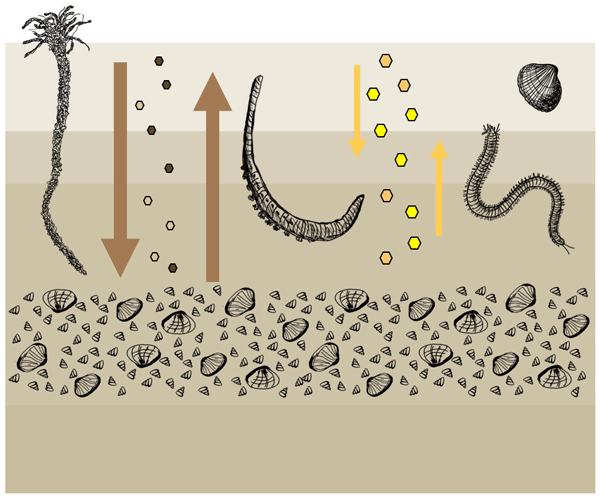
On intertidal flats, it is hard to distinguish sediment mixing by animals from reworking by waves and currents. We combined tracers to identify reworking of grains of different sizes on the short- and long term. Coarse (sand) grains were less mobile than fine (mud) grains, and partly kept their layering after deposition. The luminescence properties of sand grains can be used for sediment dating and can show sediment mixing, but this method needs to be tested more for young, intertidal sediments.
Marilaure Grégoire, Luc Vandenbulcke, Séverine Chevalier, Mathurin Choblet, Ilya Drozd, Jean-François Grailet, Evgeny Ivanov, Loïc Macé, Polina Verezemskaya, Haolin Yu, Lauranne Alaerts, Ny Riana Randresihaja, Victor Mangeleer, Guillaume Maertens de Noordhout, Arthur Capet, Catherine Meulders, Anne Mouchet, Guy Munhoven, and Karline Soetaert
Geosci. Model Dev., 19, 2137–2175, https://doi.org/10.5194/gmd-19-2137-2026, https://doi.org/10.5194/gmd-19-2137-2026, 2026
Short summary
Short summary
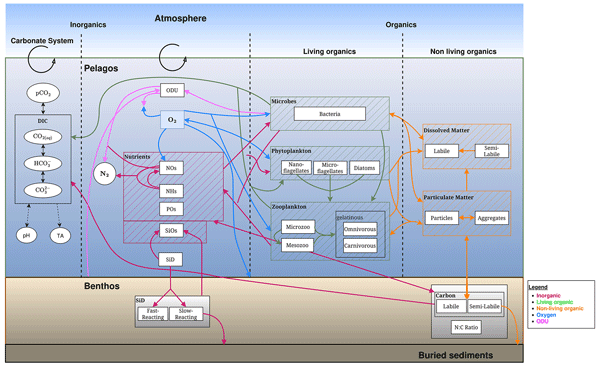
This paper describes the ocean BiogeochemicAl Model for Hypoxic and Benthic Influenced areas (BAMHBI). BAMHBI is a moderate complexity marine biogeochemical model that describes the cycling of carbon, nitrogen, phosphorus, silicon and oxygen through the marine foodweb. BAMHBI is a stand-alone biogeochemical model that can be coupled to any hydrodynamical model and is particularly appropriate for modelling low oxygen environments and the generation of sulfidic waters.
Evert de Froe, Christian Mohn, Karline Soetaert, Anna-Selma van der Kaaden, Gert-Jan Reichart, Laurence H. De Clippele, Sandra R. Maier, and Dick van Oevelen
Ocean Sci., 22, 843–870, https://doi.org/10.5194/os-22-843-2026, https://doi.org/10.5194/os-22-843-2026, 2026
Short summary
Short summary
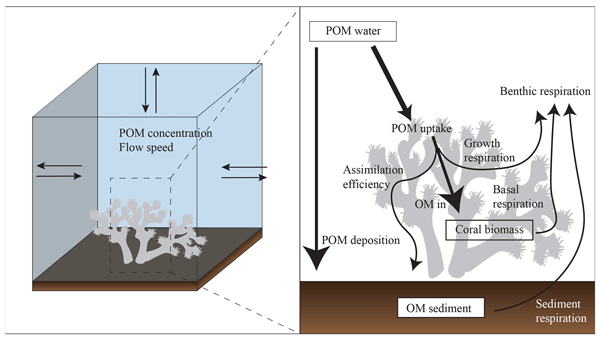
Cold-water corals are important reef-building animals in the deep sea and are distributed globally. Until now, scientists have been mapping and predicting where cold-water corals can be found using video transects and statistical models. This study provides the first process-based model in which corals are predicted based on ocean currents and food particle movement. The results show that resupply of food by tidal currents near the seafloor is crucial for predicting where corals can grow.
Aurora Patchett, Louise Rütting, Tobias Rütting, Samuel Bodé, Sara Hallin, Jaanis Juhanson, C. Florian Stange, Mats P. Björkman, Pascal Boeckx, Gunhild Rosqvist, and Robert G. Björk
Biogeosciences, 22, 6841–6860, https://doi.org/10.5194/bg-22-6841-2025, https://doi.org/10.5194/bg-22-6841-2025, 2025
Short summary
Short summary
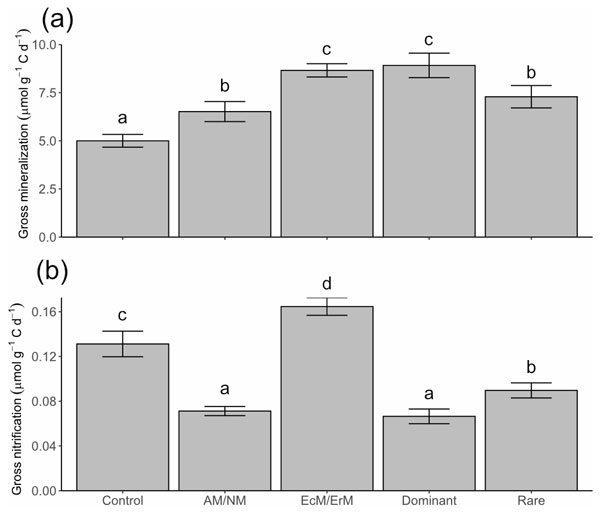
This study explores how different types of fungi and plant species affect nitrogen cycling in Arctic soils. By removing certain plants, we found that fungi associated with shrubs speed up nitrogen processes more than those with grasses. Dominant plant species enhance nitrogen recycling, while rare species increase nitrogen loss. These findings help predict how Arctic ecosystems respond to climate change, highlighting the importance of fungi and plant diversity in regulating ecosystem processes.
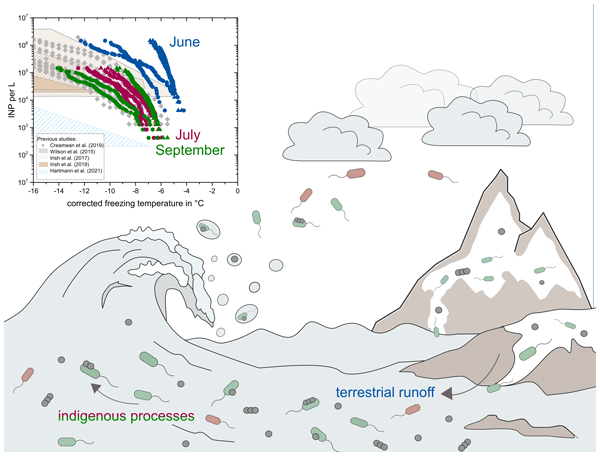
Corina Wieber, Lasse Z. Jensen, Leendert Vergeynst, Lorenz Meire, Thomas Juul-Pedersen, Kai Finster, and Tina Šantl-Temkiv
Atmos. Chem. Phys., 25, 3327–3346, https://doi.org/10.5194/acp-25-3327-2025, https://doi.org/10.5194/acp-25-3327-2025, 2025
Short summary
Short summary
The Arctic region is subject to profound changes due to a warming climate. Ice-nucleating particles (INPs) in the seawater can get transported to the atmosphere and impact cloud formation. However, the sources of characteristics of INPs in the marine areas are poorly understood. We investigated the INPs in seawater from Greenlandic fjords and identified a seasonal variability, with highly active INPs originating from terrestrial sources such as glacial and soil runoff.
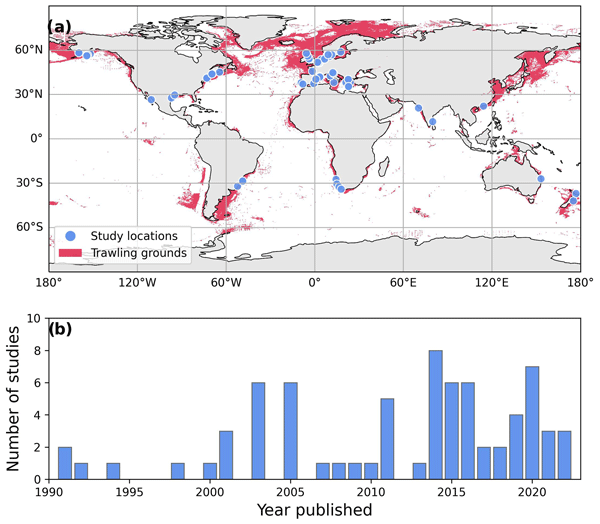
Sarah Paradis, Justin Tiano, Emil De Borger, Antonio Pusceddu, Clare Bradshaw, Claudia Ennas, Claudia Morys, and Marija Sciberras
Earth Syst. Sci. Data, 16, 3547–3563, https://doi.org/10.5194/essd-16-3547-2024, https://doi.org/10.5194/essd-16-3547-2024, 2024
Short summary
Short summary
DISOM is a database that compiles data of 71 independent studies that assess the effect of demersal fisheries on sedimentological and biogeochemical properties. This database also provides crucial metadata (i.e. environmental and fishing descriptors) needed to understand the effects of demersal fisheries in a global context.
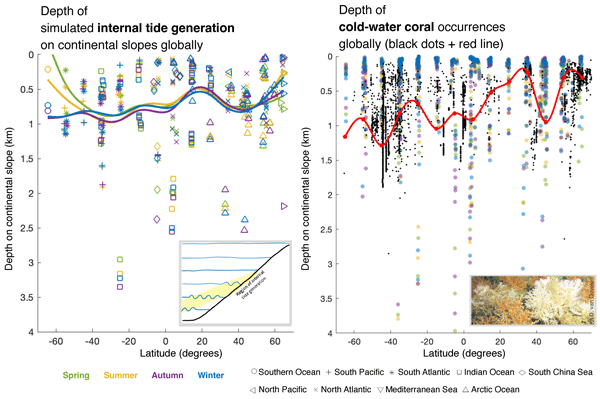
Anna-Selma van der Kaaden, Dick van Oevelen, Christian Mohn, Karline Soetaert, Max Rietkerk, Johan van de Koppel, and Theo Gerkema
Ocean Sci., 20, 569–587, https://doi.org/10.5194/os-20-569-2024, https://doi.org/10.5194/os-20-569-2024, 2024
Short summary
Short summary
Cold-water corals (CWCs) and tidal waves in the interior of the ocean have been connected in case studies. We demonstrate this connection globally using hydrodynamic simulations and a CWC database. Internal-tide generation shows a similar depth pattern with slope steepness and latitude as CWCs. Our results suggest that internal-tide generation can be a useful predictor of CWC habitat and that current CWC habitats might change following climate-change-related shoaling of internal-tide generation.
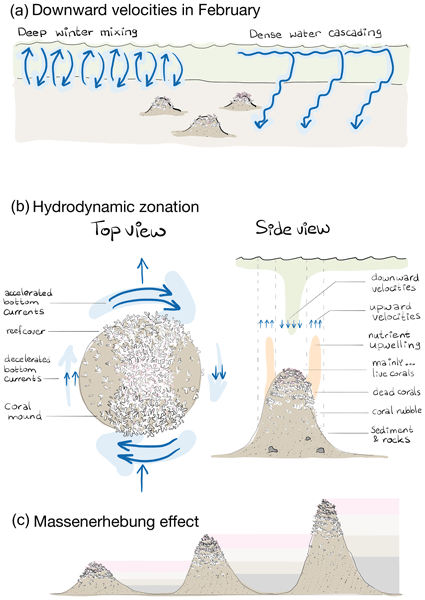
Anna-Selma van der Kaaden, Sandra R. Maier, Siluo Chen, Laurence H. De Clippele, Evert de Froe, Theo Gerkema, Johan van de Koppel, Furu Mienis, Christian Mohn, Max Rietkerk, Karline Soetaert, and Dick van Oevelen
Biogeosciences, 21, 973–992, https://doi.org/10.5194/bg-21-973-2024, https://doi.org/10.5194/bg-21-973-2024, 2024
Short summary
Short summary
Combining hydrodynamic simulations and annotated videos, we separated which hydrodynamic variables that determine reef cover are engineered by cold-water corals and which are not. Around coral mounds, hydrodynamic zones seem to create a typical reef zonation, restricting corals from moving deeper (the expected response to climate warming). But non-engineered downward velocities in winter (e.g. deep winter mixing) seem more important for coral reef growth than coral engineering.
Caroline Ulses, Claude Estournel, Patrick Marsaleix, Karline Soetaert, Marine Fourrier, Laurent Coppola, Dominique Lefèvre, Franck Touratier, Catherine Goyet, Véronique Guglielmi, Fayçal Kessouri, Pierre Testor, and Xavier Durrieu de Madron
Biogeosciences, 20, 4683–4710, https://doi.org/10.5194/bg-20-4683-2023, https://doi.org/10.5194/bg-20-4683-2023, 2023
Short summary
Short summary
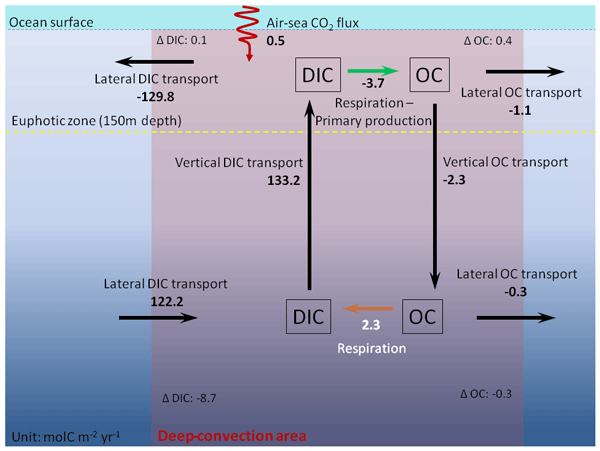
Deep convection plays a key role in the circulation, thermodynamics, and biogeochemical cycles in the Mediterranean Sea, considered to be a hotspot of biodiversity and climate change. In this study, we investigate the seasonal and annual budget of dissolved inorganic carbon in the deep-convection area of the northwestern Mediterranean Sea.

Joseph Okello, Marijn Bauters, Hans Verbeeck, Samuel Bodé, John Kasenene, Astrid Françoys, Till Engelhardt, Klaus Butterbach-Bahl, Ralf Kiese, and Pascal Boeckx
Biogeosciences, 20, 719–735, https://doi.org/10.5194/bg-20-719-2023, https://doi.org/10.5194/bg-20-719-2023, 2023
Short summary
Short summary
The increase in global and regional temperatures has the potential to drive accelerated soil organic carbon losses in tropical forests. We simulated climate warming by translocating intact soil cores from higher to lower elevations. The results revealed increasing temperature sensitivity and decreasing losses of soil organic carbon with increasing elevation. Our results suggest that climate warming may trigger enhanced losses of soil organic carbon from tropical montane forests.
Stanley I. Nmor, Eric Viollier, Lucie Pastor, Bruno Lansard, Christophe Rabouille, and Karline Soetaert
Geosci. Model Dev., 15, 7325–7351, https://doi.org/10.5194/gmd-15-7325-2022, https://doi.org/10.5194/gmd-15-7325-2022, 2022
Short summary
Short summary
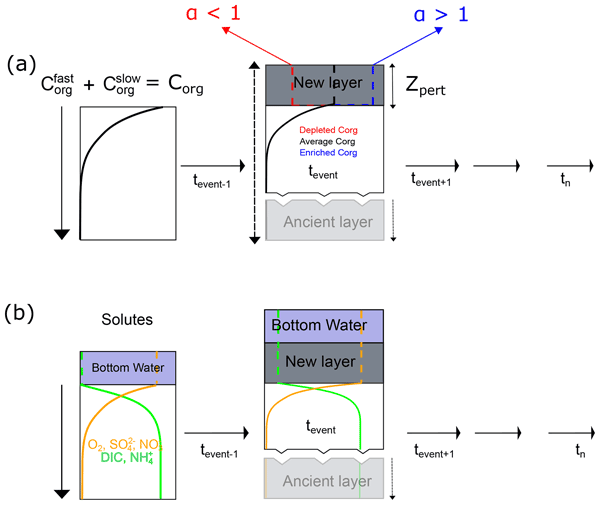
The coastal marine environment serves as a transition zone in the land–ocean continuum and is susceptible to episodic phenomena such as flash floods, which cause massive organic matter deposition. Here, we present a model of sediment early diagenesis that explicitly describes this type of deposition while also incorporating unique flood deposit characteristics. This model can be used to investigate the temporal evolution of marine sediments following abrupt changes in environmental conditions.

Justin C. Tiano, Jochen Depestele, Gert Van Hoey, João Fernandes, Pieter van Rijswijk, and Karline Soetaert
Biogeosciences, 19, 2583–2598, https://doi.org/10.5194/bg-19-2583-2022, https://doi.org/10.5194/bg-19-2583-2022, 2022
Short summary
Short summary
This study gives an assessment of bottom trawling on physical, chemical, and biological characteristics in a location known for its strong currents and variable habitats. Although trawl gears only removed the top 1 cm of the seabed surface, impacts on reef-building tubeworms significantly decreased carbon and nutrient cycling. Lighter trawls slightly reduced the impact on fauna and nutrients. Tubeworms were strongly linked to biogeochemical and faunal aspects before but not after trawling.
Alice E. Webb, Didier M. de Bakker, Karline Soetaert, Tamara da Costa, Steven M. A. C. van Heuven, Fleur C. van Duyl, Gert-Jan Reichart, and Lennart J. de Nooijer
Biogeosciences, 18, 6501–6516, https://doi.org/10.5194/bg-18-6501-2021, https://doi.org/10.5194/bg-18-6501-2021, 2021
Short summary
Short summary
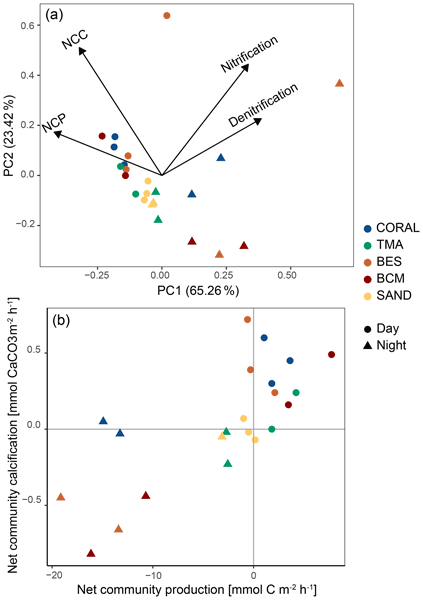
The biogeochemical behaviour of shallow reef communities is quantified to better understand the impact of habitat degradation and species composition shifts on reef functioning. The reef communities investigated barely support reef functions that are usually ascribed to conventional coral reefs, and the overall biogeochemical behaviour is found to be similar regardless of substrate type. This suggests a decrease in functional diversity which may therefore limit services provided by this reef.
Chiu H. Cheng, Jaco C. de Smit, Greg S. Fivash, Suzanne J. M. H. Hulscher, Bas W. Borsje, and Karline Soetaert
Earth Surf. Dynam., 9, 1335–1346, https://doi.org/10.5194/esurf-9-1335-2021, https://doi.org/10.5194/esurf-9-1335-2021, 2021
Short summary
Short summary
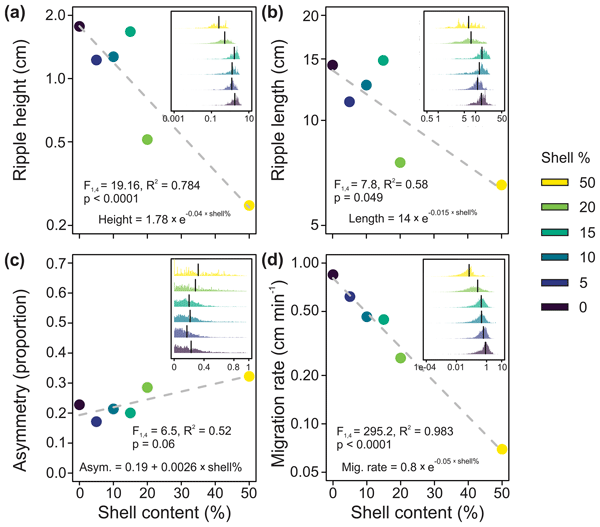
Shells are biogenic particles that are widespread throughout natural sandy environments and can affect the bed roughness and seabed erodibility. As studies are presently lacking, we experimentally measured ripple formation and migration using natural sand with increasing volumes of shell material under unidirectional flow in a racetrack flume. We show that shells expedite the onset of sediment transport, reduce ripple dimensions and slow their migration rate.
Cited articles
Appleby, P. G.: Chronostratigraphic techniques in recent sediments, in: Kluwer Academic Publishers eBooks, 171–203, https://doi.org/10.1007/0-306-47669-x_9, 2001.
Barsanti, M., Garcia-Tenorio, R., Schirone, A., Rozmaric, M., Ruiz-Fernández, A. C., Sanchez-Cabeza, J. A., and Osvath, I.: Challenges and limitations of the 210Pb sediment dating method: Results from an IAEA modelling interlaboratory comparison exercise, Quaternary Geochronology, 59, 101093, https://doi.org/10.1016/j.quageo.2020.101093, 2020.
Berg, S., Jivcov, S., Kusch, S., Kuhn, G., White, D., Bohrmann, G., Melles, M., and Rethemeyer, J.: Increased petrogenic and biospheric organic carbon burial in sub-Antarctic fjord sediments in response to recent glacier retreat, Limnology And Oceanography, 66, 4347–4362, https://doi.org/10.1002/lno.11965, 2021.
Bianchi, T. S., Arndt, S., Austin, W. E. N., Benn, D. I., Bertrand, S., Cui, X., Faust, J. C., Koziorowska-Makuch, K., Moy, C. M., Savage, C., Smeaton, C., Smith, R. W., and Syvitski, J.: Fjords as Aquatic Critical Zones (ACZs), Earth-Science Reviews, 203, 103145, https://doi.org/10.1016/j.earscirev.2020.103145, 2020.
Brenner, M., Schelske, C. L., and Kenney, W. F.: Inputs of dissolved and particulate 226Ra to lakes and implications for 210Pb dating recent sediments, Journal Of Paleolimnology, 32, 53–66, https://doi.org/10.1023/b:jopl.0000025281.54969.03, 2004.
Burdige, D. J.: Preservation of Organic Matter in Marine Sediments: Controls, Mechanisms, and an Imbalance in Sediment Organic Carbon Budgets?, ChemInform, 38, https://doi.org/10.1002/chin.200720266, 2007.
Buydens, M.: MAR and OCBR calculation, Zenodo [code], https://doi.org/10.5281/zenodo.18430013, 2026a.
Buydens, M.: Environmental sediment data Greenland fjords, Zenodo [data set], https://doi.org/10.5281/zenodo.18374960, 2026b.
Calleja, M. L., Kerhervé, P., Bourgeois, S., Kędra, M., Leynaert, A., Devred, E., Babin, M., and Morata, N.: Effects of increase glacier discharge on phytoplankton bloom dynamics and pelagic geochemistry in a high Arctic fjord, Progress in Oceanography, 159, 195–210, https://doi.org/10.1016/j.pocean.2017.07.005, 2017.
Cape, M. R., Straneo, F., Beaird, N., Bundy, R. M., and Charette, M. A.: Nutrient release to oceans from buoyancy-driven upwelling at Greenland tidewater glaciers, Nature Geoscience, 12, 34–39, https://doi.org/10.1038/s41561-018-0268-4, 2019.
Catania, G. A., Stearns, L. A., Moon, T. A., Enderlin, E. M., and Jackson, R. H.: Future Evolution of Greenland's Marine-Terminating Outlet Glaciers, Journal Of Geophysical Research Earth Surface, 125, https://doi.org/10.1029/2018jf004873, 2019.
Chu, V. W.: Greenland ice sheet hydrology, Progress in Physical Geography Earth And Environment, 38, 19–54, https://doi.org/10.1177/0309133313507075, 2014.
Cui, X., Bianchi, T. S., Jaeger, J. M., and Smith, R. W.: Biospheric and petrogenic organic carbon flux along southeast Alaska, Earth And Planetary Science Letters, 452, 238–246, https://doi.org/10.1016/j.epsl.2016.08.002, 2016a.
Cui, X., Bianchi, T. S., Savage, C., and Smith, R. W.: Organic carbon burial in fjords: Terrestrial versus marine inputs, Earth And Planetary Science Letters, 451, 41–50, https://doi.org/10.1016/j.epsl.2016.07.003, 2016b.
Cutshall, N. H., Larsen, I. L., and Olsen, C. R.: Direct analysis of 210Pb in sediment samples: Self-absorption corrections, Nuclear Instruments And Methods in Physics Research, 206, 309–312, https://doi.org/10.1016/0167-5087(83)91273-5, 1983.
Dai, J., Sun, M., Culp, R. A., and Noakes, J. E.: Changes in chemical and isotopic signatures of plant materials during degradation: Implication for assessing various organic inputs in estuarine systems, Geophysical Research Letters, 32, https://doi.org/10.1029/2005gl023133, 2005.
Drexler, J. Z., Fuller, C. C., and Archfield, S.: The approaching obsolescence of 137Cs dating of wetland soils in North America, Quaternary Science Reviews, 199, 83–96, https://doi.org/10.1016/j.quascirev.2018.08.028, 2018.
Duffield, C., Alve, E., Andersen, N., Andersen, T., Hess, S., and Strohmeier, T.: Spatial and temporal organic carbon burial along a fjord to coast transect: A case study from Western Norway, The Holocene, 27, 1325–1339, https://doi.org/10.1177/0959683617690588, 2017.
Eidam, E. F., Nittrouer, C. A., Lundesgaard, Ø., Homolka, K. K., and Smith, C. R.: Variability of Sediment Accumulation Rates in an Antarctic Fjord, Geophysical Research Letters, 46, 13271–13280, https://doi.org/10.1029/2019gl084499, 2019.
Erlandsson, C. P.: Vertical transport of particulate organic matter regulated by fjord topography, Journal of Geophysical Research Atmospheres, 113, https://doi.org/10.1029/2006jg000375, 2008.
Faust, J. C. and Knies, J.: Organic matter sources in North Atlantic fjord sediments, Geochemistry Geophysics Geosystems, 20, 2872–2885, https://doi.org/10.1029/2019gc008382, 2019.
Fox, J. and Weisberg, S.: An R Companion to Applied Regression, 3rd edn., Sage, Thousand Oaks, CA, https://www.john-fox.ca/Companion/ (last access: June 2024), 2019.
Gilbert, R., Nielsen, N., Möller, H., Desloges, J. R., and Rasch, M.: Glacimarine sedimentation in Kangerdluk (Disko Fjord), West Greenland, in response to a surging glacier, Marine Geology, 191, 1–18, https://doi.org/10.1016/s0025-3227(02)00543-1, 2002.
Greene, C. A., Gardner, A. S., Wood, M., and Cuzzone, J. K.: Ubiquitous acceleration in Greenland Ice Sheet calving from 1985 to 2022, Nature, 625, 523–528, https://doi.org/10.1038/s41586-023-06863-2, 2024.
Harris, A. J. T. and Elliott, D. A.: Stable Isotope Studies of North American Arctic Populations: A Review, Open Quaternary, 5, 11, https://doi.org/10.5334/oq.67, 2019.
Grimes, M., Carrivick, J. L., Smith, M. W., and Comber, A. J.: Land cover changes across Greenland dominated by a doubling of vegetation in three decades, Scientific Reports, 14, 3120, https://doi.org/10.1038/s41598-024-52124-1, 2024.
Halbach, L., Vihtakari, M., Duarte, P., Everett, A., Granskog, M. A., Hop, H., Kauko, H. M., Kristiansen, S., Myhre, P. I., Pavlov, A. K., Pramanik, A., Tatarek, A., Torsvik, T., Wiktor, J. M., Wold, A., Wulff, A., Steen, H., and Assmy, P.: Tidewater glaciers and bedrock characteristics control the phytoplankton growth environment in a fjord in the Arctic, Frontiers in Marine Science, 6, https://doi.org/10.3389/fmars.2019.00254, 2019.
Hargrave, B. T. and Kamp-Nielsen, L.: Accumulation of sedimentary organic matter at the base of steep bottom gradients, in: Interactions between sediment and freshwater, edited by: Golterman, H. L., Dr. W. Junk B.V. Publishers, The Hague, the Netherlands, 168–173, 1977.
Hinojosa, J. L., Moy, C. M., Stirling, C. H., Wilson, G. S., and Eglinton, T. I.: Carbon cycling and burial in New Zealand's fjords, Geochemistry Geophysics Geosystems, 15, 4047–4063, https://doi.org/10.1002/2014gc005433, 2014.
Hopwood, M. J., Carroll, D., Browning, T. J., Meire, L., Mortensen, J., Krisch, S., and Achterberg, E. P.: Non-linear response of summertime marine productivity to increased meltwater discharge around Greenland, Nature Communications, 9, 3256, https://doi.org/10.1038/s41467-018-05488-8, 2018.
Hopwood, M. J., Carroll, D., Dunse, T., Hodson, A., Holding, J. M., Iriarte, J. L., Ribeiro, S., Achterberg, E. P., Cantoni, C., Carlson, D. F., Chierici, M., Clarke, J. S., Cozzi, S., Fransson, A., Juul-Pedersen, T., Winding, M. H. S., and Meire, L.: Review article: How does glacier discharge affect marine biogeochemistry and primary production in the Arctic?, The Cryosphere, 14, 1347–1383, https://doi.org/10.5194/tc-14-1347-2020, 2020.
Juul-Pedersen, T., Arendt, K., Mortensen, J., Blicher, M., Søgaard, D., and Rysgaard, S.: Seasonal and interannual phytoplankton production in a sub-Arctic tidewater outlet glacier fjord, SW Greenland, Marine Ecology Progress Series, 524, 27–38, https://doi.org/10.3354/meps11174, 2015.
Kanna, N., Sugiyama, S., Ohashi, Y., Sakakibara, D., Fukamachi, Y., and Nomura, D.: Upwelling of macronutrients and dissolved inorganic carbon by a subglacial freshwater driven plume in Bowdoin Fjord, northwestern Greenland, Journal of Geophysical Research Biogeosciences, 123, 1666–1682, https://doi.org/10.1029/2017jg004248, 2018.
Kanna, N., Sugiyama, S., Ando, T., Wang, Y., Sakuragi, Y., Hazumi, T., Matsuno, K., Yamaguchi, A., Nishioka, J., and Yamashita, Y.: Meltwater Discharge From Marine-Terminating Glaciers Drives Biogeochemical Conditions in a Greenlandic Fjord, Global Biogeochemical Cycles, 36, https://doi.org/10.1029/2022gb007411, 2022.
Kassambara, A.: rstatix: Pipe-Friendly Framework for Basic Statistical Tests, R package version 0.7.2, https://rpkgs.datanovia.com/rstatix/ (last access: June 2024), 2023.
King, M. D., Howat, I. M., Candela, S. G., Noh, M. J., Jeong, S., Noël, B. P. Y., Van Den Broeke, M. R., Wouters, B., and Negrete, A.: Dynamic ice loss from the Greenland Ice Sheet driven by sustained glacier retreat, Communications Earth & Environment, 1, https://doi.org/10.1038/s43247-020-0001-2, 2020.
Knies, J. and Martinez, P.: Organic matter sedimentation in the western Barents Sea region: terrestrial and marine contribution based on isotopic composition and organic nitrogen content, Norw. J. Geol., 89, 79–89, 2009.
Koho, K. A., García, R., De Stigter, H. C., Epping, E., Koning, E., Kouwenhoven, T. J., and Van Der Zwaan, G. J.: Sedimentary labile organic carbon and pore water redox control on species distribution of benthic foraminifera: A case study from Lisbon–Setúbal Canyon (southern Portugal), Progress in Oceanography, 79, 55–82, https://doi.org/10.1016/j.pocean.2008.07.004, 2008.
Koziorowska, K., Kuliński, K., and Pempkowiak, J.: Sedimentary organic matter in two Spitsbergen fjords: Terrestrial and marine contributions based on carbon and nitrogen contents and stable isotopes composition, Continental Shelf Research, 113, 38–46, https://doi.org/10.1016/j.csr.2015.11.010, 2015.
Koziorowska, K., Kuliński, K., and Pempkowiak, J.: Comparison of the burial rate estimation methods of organic and inorganic carbon and quantification of carbon burial in two high Arctic fjords, Oceanologia, 60, 405–418, https://doi.org/10.1016/j.oceano.2018.02.005, 2018.
Krajewska, M., Szymczak-Żyła, M., Tylmann, W., and Kowalewska, G.: Climate change impact on primary production and phytoplankton taxonomy in Western Spitsbergen fjords based on pigments in sediments, Global and Planetary Change, 189, 103158, https://doi.org/10.1016/j.gloplacha.2020.103158, 2020.
Kuliński, K., Kędra, M., Legeżyńska, J., Gluchowska, M., and Zaborska, A.: Particulate organic matter sinks and sources in high Arctic fjord, Journal Of Marine Systems, 139, 27–37, https://doi.org/10.1016/j.jmarsys.2014.04.018, 2014.
Lamb, A. L., Wilson, G. P., and Leng, M. J.: A review of coastal palaeoclimate and relative sea-level reconstructions using δ13C and
Langen, P. L., Mottram, R. H., Christensen, J. H., Boberg, F., Rodehacke, C. B., Stendel, M., Van As, D., Ahlstrøm, A. P., Mortensen, J., Rysgaard, S., Petersen, D., Svendsen, K. H., Aðalgeirsdóttir, G., and Cappelen, J.: Quantifying Energy and Mass Fluxes Controlling Godthåbsfjord Freshwater Input in a 5-km Simulation (1991–2012), Journal Of Climate, 28, 3694–3713, https://doi.org/10.1175/jcli-d-14-00271.1, 2015.
Laufer-Meiser, K., Michaud, A. B., Maisch, M., Byrne, J. M., Kappler, A., Patterson, M. O., Røy, H., and Jørgensen, B. B.: Potentially bioavailable iron produced through benthic cycling in glaciated Arctic fjords of Svalbard, Nature Communications, 12, https://doi.org/10.1038/s41467-021-21558-w, 2021.
Limoges, A., Weckström, K., Ribeiro, S., Georgiadis, E., Hansen, K. E., Martinez, P., Seidenkrantz, M., Giraudeau, J., Crosta, X., and Massé, G.: Learning from the past: Impact of the Arctic Oscillation on sea ice and marine productivity off northwest Greenland over the last 9,000 years, Global Change Biology, 26, 6767–6786, https://doi.org/10.1111/gcb.15334, 2020.
Meire, L., Søgaard, D. H., Mortensen, J., Meysman, F. J. R., Soetaert, K., Arendt, K. E., Juul-Pedersen, T., Blicher, M. E., and Rysgaard, S.: Glacial meltwater and primary production are drivers of strong CO2 uptake in fjord and coastal waters adjacent to the Greenland Ice Sheet, Biogeosciences, 12, 2347–2363, https://doi.org/10.5194/bg-12-2347-2015, 2015.
Meire, L., Mortensen, J., Meire, P., Juul-Pedersen, T., Sejr, M. K., Rysgaard, S., Nygaard, R., Huybrechts, P., and Meysman, F. J. R.: Marine-terminating glaciers sustain high productivity in Greenland fjords, Global Change Biology, 23, 5344–5357, https://doi.org/10.1111/gcb.13801, 2017.
Meire, L., Paulsen, M. L., Meire, P., Rysgaard, S., Hopwood, M. J., Sejr, M. K., Stuart-Lee, A., Sabbe, K., Stock, W., and Mortensen, J.: Glacier retreat alters downstream fjord ecosystem structure and function in Greenland, Nature Geoscience, 16, 671–674, https://doi.org/10.1038/s41561-023-01218-y, 2023.
Møller, H. S., Jensen, K. G., Kuijpers, A., Aagaard-Sørensen, S., Seidenkrantz, M.-S., Prins, M., Endler, R., and Mikkelsen, N.: Late-Holocene environment and climatic changes in Ameralik Fjord, southwest Greenland: evidence from the sedimentary record, The Holocene, 16, 685–695, https://doi.org/10.1191/0959683606hl963rp, 2006.
Mortensen, J., Lennert, K., Bendtsen, J., and Rysgaard, S.: Heat sources for glacial melt in a sub-Arctic fjord (Godthåbsfjord) in contact with the Greenland Ice Sheet, Journal Of Geophysical Research Atmospheres, 116, https://doi.org/10.1029/2010jc006528, 2011.
Mortensen, J., Bendtsen, J., Lennert, K., and Rysgaard, S.: Seasonal variability of the circulation system in a west Greenland tidewater outlet glacier fjord, Godthåbsfjord (64° N), Journal Of Geophysical Research Earth Surface, 119, 2591–2603, https://doi.org/10.1002/2014jf003267, 2014.
Mortensen, J., Rysgaard, S., Arendt, K. E., Juul-Pedersen, T., Søgaard, D. H., Bendtsen, J., and Meire, L.: Local Coastal Water Masses Control Heat Levels in a West Greenland Tidewater Outlet Glacier Fjord, Journal Of Geophysical Research Oceans, 123, 8068–8083, https://doi.org/10.1029/2018jc014549, 2018.
Næraa, T., Kemp, A. I. S., Scherstén, A., Rehnström, E. F., Rosing, M. T., and Whitehouse, M. J.: A lower crustal mafic source for the ca. 2550 Ma Qôrqut Granite Complex in southern West Greenland, Lithos, 192–195, 291–304, https://doi.org/10.1016/j.lithos.2014.02.013, 2014.
Naidu, A. S., Cooper, L. W., Finney, B. P., Macdonald, R. W., Alexander, C., and Semiletov, I. P.: Organic carbon isotope ratios (δ13C) of Arctic Amerasian Continental shelf sediments, International Journal Of Earth Sciences, 89, 522–532, https://doi.org/10.1007/s005310000121, 2000.
Ogle, D. H., Doll, J. C., Wheeler, A. P., and Dinno, A.: FSA: Simple Fisheries Stock Assessment Methods, R package version 0.9.5, https://CRAN.R-project.org/package=FSA (last access: June 2024), 2023.
Overeem, I., Hudson, B., Welty, E., Mikkelsen, A., Bamber, J., Petersen, D., Lewinter, A. and Hasholt, B.: River inundation suggests ice-sheet runoff retention, Journal Of Glaciology, 61, 776–788, https://doi.org/10.3189/2015jog15j012, 2015.
Placitu, S., Van de Velde, S. J., Hylén, A., Hall, P. O. J., Robertson, E. K., Eriksson, M., Leermakers, M., Mehta, N., and Bonneville, S.: Limited Organic Carbon Burial by the Rusty Carbon Sink in Swedish Fjord Sediments, Journal Of Geophysical Research Biogeosciences, 129, https://doi.org/10.1029/2024jg008277, 2024.
R Core Team: R: A Language and Environment for Statistical Computing, R Foundation for Statistical Computing, Vienna, Austria, https://www.R-project.org/ (last access: June 2024), 2023.
Ruttenberg, K. C. and Goñi, M. A.: Phosphorus distribution, C:N:P ratios, and δ13COC in arctic, temperate, and tropical coastal sediments: tools for characterizing bulk sedimentary organic matter, Marine Geology, 139, 123–145, https://doi.org/10.1016/s0025-3227(96)00107-7, 1997.
Sanchez-Cabeza, J. A. and Ruiz-Fernández, A. C.: 210Pb sediment radiochronology: An integrated formulation and classification of dating models, Geochimica Et Cosmochimica Acta, 82, 183–200, https://doi.org/10.1016/j.gca.2010.12.024, 2012.
Seifert, M., Hoppema, M., Burau, C., Elmer, C., Friedrichs, A., Geuer, J. K., John, U., Kanzow, T., Koch, B. P., Konrad, C., Van Der Jagt, H., Zielinski, O., and Iversen, M. H.: Influence of Glacial Meltwater on Summer Biogeochemical Cycles in Scoresby Sund, East Greenland, Frontiers in Marine Science, 6, https://doi.org/10.3389/fmars.2019.00412, 2019.
Sepúlveda, J., Pantoja, S., and Hughen, K. A.: Sources and distribution of organic matter in northern Patagonia fjords, Chile (∼ 44–47° S): A multi-tracer approach for carbon cycling assessment, Continental Shelf Research, 31, 315–329, https://doi.org/10.1016/j.csr.2010.05.013, 2011.
Scholze, C., Jørgensen, B. B., and Røy, H.: Psychrophilic properties of sulfate‐reducing bacteria in Arctic marine sediments, Limnology and Oceanography, 66, https://doi.org/10.1002/lno.11586, 2020.
Schubert, C. J., Niggemann, J., Klockgether, G., and Ferdelman, T. G.: Chlorin Index: A new parameter for organic matter freshness in sediments, Geochemistry Geophysics Geosystems, 6, https://doi.org/10.1029/2004gc000837, 2005.
Smeaton, C. and Austin, W. E. N.: Sources, Sinks, and Subsidies: Terrestrial Carbon Storage in Mid-latitude Fjords, Journal Of Geophysical Research Biogeosciences, 122, 2754–2768, https://doi.org/10.1002/2017jg003952, 2017.
Smeaton, C. and Austin, W. E. N.: Where's the Carbon: Exploring the Spatial Heterogeneity of Sedimentary Carbon in Mid-Latitude Fjords, Frontiers in Earth Science, 7, https://doi.org/10.3389/feart.2019.00269, 2019.
Smeaton, C., Austin, W. E. N., Davies, A. L., Baltzer, A., Abell, R. E., and Howe, J. A.: Substantial stores of sedimentary carbon held in mid-latitude fjords, Biogeosciences, 13, 5771–5787, https://doi.org/10.5194/bg-13-5771-2016, 2016.
Smeaton, C., Yang, H., and Austin, W. E. N.: Carbon burial in the mid-latitude fjords of Scotland, Marine Geology, 441, 106618, https://doi.org/10.1016/j.margeo.2021.106618, 2021.
Smith, J. N.: Why should we believe 210Pb sediment geochronologies?, Journal of Environmental Radioactivity, 55, 121–123, https://doi.org/10.1016/s0265-931x(00)00152-1, 2001.
Smith, L. M., Alexander, C., and Jennings, A. E.: Accumulation in East Greenland Fjords and on the Continental Shelves Adjacent to the Denmark Strait over the Last Century Based on 210Pb Geochronology, ARCTIC, 55, https://doi.org/10.14430/arctic695, 2002.
Smith, R. W., Bianchi, T. S., Allison, M., Savage, C., and Galy, V.: High rates of organic carbon burial in fjord sediments globally, Nature Geoscience, 8, 450–453, https://doi.org/10.1038/ngeo2421, 2015.
Sørensen, H., Meire, L., Juul-Pedersen, T., De Stigter, H., Meysman, F., Rysgaard, S., Thamdrup, B., and Glud, R.: Seasonal carbon cycling in a Greenlandic fjord: an integrated pelagic and benthic study, Marine Ecology Progress Series, 539, 1–17, https://doi.org/10.3354/meps11503, 2015.
St-Onge, G. and Hillaire-Marcel, C.: Isotopic constraints of sedimentary inputs and organic carbon burial rates in the Saguenay Fjord, Quebec, Marine Geology, 176, 1–22, https://doi.org/10.1016/s0025-3227(01)00150-5, 2001.
Stuart-Lee, A., Møller, E. F., Winding, M., Van Oevelen, D., Hendry, K. R., and Meire, L.: Contrasting copepod community composition in two Greenland fjords with different glacier types, Journal Of Plankton Research, 46, https://doi.org/10.1093/plankt/fbae060, 2024.
Stuart-Lee, A. E., Mortensen, J., Van Der Kaaden, A.-S., and Meire, L.: Seasonal Hydrography of Ameralik: A Southwest Greenland Fjord Impacted by a Land-Terminating Glacier, Journal Of Geophysical Research Oceans, 126, https://doi.org/10.1029/2021jc017552, 2021.
Stuart-Lee, A. E., Mortensen, J., Juul-Pedersen, T., Middelburg, J. J., Soetaert, K., Hopwood, M. J., Engel, A., and Meire, L.: Influence of glacier type on bloom phenology in two Southwest Greenland fjords, Estuarine Coastal And Shelf Science, 284, 108271, https://doi.org/10.1016/j.ecss.2023.108271, 2023.
Syvitski, J. P. M., Burrell, D. C., and Skei, J. M.: Fjords: Processes and Products, Springer-Verlag, New York, USA, 379 pp., ISBN-13: 978-1-4612-9091-9, 1987.
Tamburrino, S., Passaro, S., Barsanti, M., Schirone, A., Delbono, I., Conte, F., Delfanti, R., Bonsignore, M., Del Core, M., Gherardi, S., and Sprovieri, M.: Pathways of inorganic and organic contaminants from land to deep sea: The case study of the Gulf of Cagliari (W Tyrrhenian Sea), The Science Of The Total Environment, 647, 334–341, https://doi.org/10.1016/j.scitotenv.2018.07.467, 2019.
Thamdrup, B., Glud, R. N., and Hansen, J. W.: Benthic carbon cycling in Young Sound, Northeast Greenland, Meddelelser Om Grønland Bioscience, 58, 138–157, https://doi.org/10.7146/mogbiosci.v58.142646, 2007.
Thompson, H. A., White, J. R., and Pratt, L. M.: Spatial variation in stable isotopic composition of organic matter of macrophytes and sediments from a small Arctic lake in west Greenland, Arctic Antarctic And Alpine Research, 50, https://doi.org/10.1080/15230430.2017.1420282, 2018.
Thornton, S. F. and McManus, J.: Application of Organic Carbon and Nitrogen Stable Isotope and C/N Ratios as Source Indicators of Organic Matter Provenance in Estuarine Systems: Evidence from the Tay Estuary, Scotland, Estuarine Coastal And Shelf Science, 38, 219–233, https://doi.org/10.1006/ecss.1994.1015, 1994.
Van As, D., Andersen, M. L., Petersen, D., Fettweis, X., Van Angelen, J. H., Lenaerts, J. T. M., Van Den Broeke, M. R., Lea, J. M., Bøggild, C. E., Ahlstrøm, A. P., and Steffen, K.: Increasing meltwater discharge from the Nuuk region of the Greenland ice sheet and implications for mass balance (1960–2012), Journal Of Glaciology, 60, 314–322, https://doi.org/10.3189/2014jog13j065, 2014.
Van Heukelem, L. and Thomas, C. S.: Computer-assisted high-performance liquid chromatography method development with applications to the isolation and analysis of phytoplankton pigments, Journal Of Chromatography A, 910, 31–49, https://doi.org/10.1016/s0378-4347(00)00603-4, 2001.
Verwega, M.-T., Somes, C. J., Schartau, M., Tuerena, R. E., Lorrain, A., Oschlies, A., and Slawig, T.: Description of a global marine particulate organic carbon-13 isotope data set, Earth Syst. Sci. Data, 13, 4861–4880, https://doi.org/10.5194/essd-13-4861-2021, 2021.
Wakeham, S. G. and Canuel, E. A.: Degradation and preservation of organic matter in marine sediments, in: The Handbook of Environmental Chemistry, edited by: Volkman, J. K., Springer, Berlin, Germany, 295–321, https://doi.org/10.1007/698_2_009, 2006.
Wang, Y., Gélinas, Y., De Vernal, A., Mucci, A. O., Allan, E., Seidenkrantz, M.-S., and Douglas, P. M. J.: High rates of marine organic carbon burial on the southwest Greenland margin induced by Neoglacial advances, Communications Earth & Environment, 5, https://doi.org/10.1038/s43247-024-01508-2, 2024.
Wassmann, P.: Sedimentation and benthic mineralization of organic detritus in a Norwegian fjord, Marine Biology, 83, 83–94, https://doi.org/10.1007/bf00393088, 1984.
Watts, E. G., Hylén, A., Hall, P. O. J., Eriksson, M., Robertson, E. K., Kenney, W. F., and Bianchi, T. S.: Burial of Organic Carbon in Swedish Fjord Sediments: Highlighting the Importance of Sediment Accumulation Rate in Relation to Fjord Redox Conditions, Journal Of Geophysical Research Biogeosciences, 129, https://doi.org/10.1029/2023jg007978, 2024.
Winkelmann, D. and Knies, J.: Recent distribution and accumulation of organic carbon on the continental margin west off Spitsbergen, Geochemistry Geophysics Geosystems, 6, https://doi.org/10.1029/2005gc000916, 2005.
Włodarska-Kowalczuk, M., Mazurkiewicz, M., Górska, B., Michel, L. N., Jankowska, E., and Zaborska, A.: Organic Carbon Origin, Benthic Faunal Consumption, and Burial in Sediments of Northern Atlantic and Arctic Fjords (60–81° N), Journal Of Geophysical Research Biogeosciences, 124, 3737–3751, https://doi.org/10.1029/2019jg005140, 2019.
Wright, S. W. and Jeffrey, S. W.: High-resolution HPLC system for chlorophylls and carotenoids of marine phytoplankton, in: Phytoplankton pigments in oceanography: Guidelines to modern methods, edited by: Jeffrey, S. W., Mantoura, R. F. C., and Wright, S. W., Monographs on Oceanographic Methodology, 10, UNESCO Publishing, Paris, 327–341, ISBN 92-3-103275-5, 1997.
Zaborska, A., Włodarska-Kowalczuk, M., Legeżyńska, J., Jankowska, E., Winogradow, A., and Deja, K.: Sedimentary organic matter sources, benthic consumption and burial in west Spitsbergen fjords – Signs of maturing of Arctic fjordic systems?, Journal Of Marine Systems, 180, 112–123, https://doi.org/10.1016/j.jmarsys.2016.11.005, 2018.
Short summary
As the Greenland Ice Sheet retreats, it is crucial to understand how this affects carbon burial in fjords. Comparing a fjord influenced by marine-terminating glaciers with one fed by a land-terminating glacier shows that high productivity near marine-terminating glaciers does not necessarily enhance carbon burial. Instead, the complex interplay of physical, biological, and sedimentary processes governs fjord carbon dynamics.
As the Greenland Ice Sheet retreats, it is crucial to understand how this affects carbon burial...


Altmetrics
Final-revised paper
Preprint