
Articles | Volume 23, issue 4
https://doi.org/10.5194/bg-23-1719-2026
© Author(s) 2026. This work is distributed under
the Creative Commons Attribution 4.0 License.
the Creative Commons Attribution 4.0 License.
https://doi.org/10.5194/bg-23-1719-2026
© Author(s) 2026. This work is distributed under
the Creative Commons Attribution 4.0 License.
the Creative Commons Attribution 4.0 License.
Research article
| 
03 Mar 2026
Research article |
| 03 Mar 2026
| 03 Mar 2026
Matching scales of eddy covariance measurements and process-based modeling – assessing spatiotemporal dynamics of carbon and water fluxes in a mixed forest in Southern Germany
Hassane Moutahir
CORRESPONDING AUTHOR

Institute of Meteorology and Climate Research/Atmospheric Environmental Research (IMKIFU), Karlsruhe Institute of Technology KIT, Garmisch-Partenkirchen, Germany
Institute of Geo- and Environmental Sciences, Faculty of Environment and Natural Resources, University of Freiburg, Freiburg, Germany
Markus Sulzer
Chair of Environmental Meteorology, Faculty of Environment and Natural Resources, University of Freiburg, Freiburg, Germany
Ralf Kiese
Institute of Meteorology and Climate Research/Atmospheric Environmental Research (IMKIFU), Karlsruhe Institute of Technology KIT, Garmisch-Partenkirchen, Germany
Andreas Christen
Chair of Environmental Meteorology, Faculty of Environment and Natural Resources, University of Freiburg, Freiburg, Germany
Markus Weiler
Chair of Hydrology, Faculty of Environment and Natural Resources, University of Freiburg, Freiburg, Germany
Lea Dedden
Chair of Hydrology, Faculty of Environment and Natural Resources, University of Freiburg, Freiburg, Germany
Julian Brzozon
Chair of Soil Ecology, Faculty of Environment and Natural Resources, University of Freiburg, Freiburg, Germany
Pia Labenski
Institute of Meteorology and Climate Research/Atmospheric Environmental Research (IMKIFU), Karlsruhe Institute of Technology KIT, Garmisch-Partenkirchen, Germany
Prajwal Khanal
Faculty of Geo-Information Science and Earth Observation (ITC), University of Twente, Enschede 7500 AE, the Netherlands
Ladislav Šigut
Department of Matters and Energy Fluxes, Global Change Research Institute of the Czech Academy of Sciences, Bělidla 986/4a, 60300 Brno, Czech Republic
Institute of Meteorology and Climate Research/Atmospheric Environmental Research (IMKIFU), Karlsruhe Institute of Technology KIT, Garmisch-Partenkirchen, Germany
Related authors
Patrick Olschewski, Mame Diarra Bousso Dieng, Hassane Moutahir, Brian Böker, Edwin Haas, Harald Kunstmann, and Patrick Laux
Nat. Hazards Earth Syst. Sci., 24, 1099–1134, https://doi.org/10.5194/nhess-24-1099-2024, https://doi.org/10.5194/nhess-24-1099-2024, 2024
Short summary
Short summary
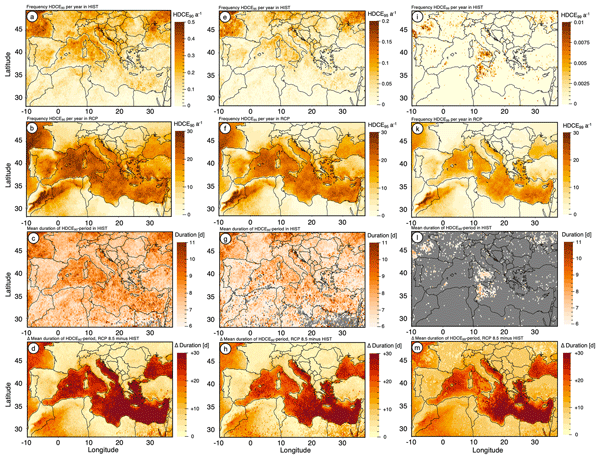
We applied a multivariate and dependency-preserving bias correction method to climate model output for the Greater Mediterranean Region and investigated potential changes in false-spring events (FSEs) and heat–drought compound events (HDCEs). Results project an increase in the frequency of FSEs in middle and late spring as well as increases in frequency, intensity, and duration for HDCEs. This will potentially aggravate the risk of crop loss and failure and negatively impact food security.
Matthias Wocher, Anne Schucknecht, Tobias Hank, Zbigniew Kawalec, Rodolfo Ceriani, Ralf Kiese, and Anita Bayer
Int. Arch. Photogramm. Remote Sens. Spatial Inf. Sci., XLVIII-M-12-2026, 135–140, https://doi.org/10.5194/isprs-archives-XLVIII-M-12-2026-135-2026, https://doi.org/10.5194/isprs-archives-XLVIII-M-12-2026-135-2026, 2026
Jasmin Tesch, Kathrin Kühnhammer, Delon Wagner, Andreas Christen, Carsten Dormann, Julian Frey, Rüdiger Grote, Teja Kattenborn, Markus Sulzer, Ulrike Wallrabe, Markus Weiler, Christiane Werner, Samaneh Baghbani, Julian Brzozon, Laura Maria Comella, Lea Dedden, Stefanie Dumberger, Yasmina Frey, Matthias Gassilloud, Timo Gerach, Anna Göritz, Simon Haberstroh, Johannes Klüppel, Luis Kremer, Jürgen Kreuzwieser, Hojin Lee, Joachim Maack, Julian Müller, Oswald Prucker, Sanam K. Rajak, Jürgen Rühe, Stefan J. Rupitsch, Helmer Schack-Kirchner, Christian Scharinger, Uttunga Shinde, Till Steinmann, Clara Stock, and Josef Strack
Geosci. Instrum. Method. Data Syst., 15, 253–272, https://doi.org/10.5194/gi-15-253-2026, https://doi.org/10.5194/gi-15-253-2026, 2026
Short summary
Short summary
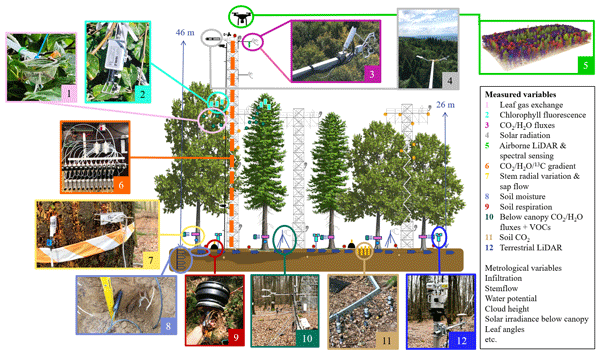
In the ECOSENSE forest, we developed a robust infrastructure for distributed forest sensing. Reliable power supply, stable network connection, and smart data collection systems enable the operation of hundreds of sensors under challenging conditions. By detailing the infrastructure design and implementation, we provide a transferable blueprint for building complex monitoring sites that support high-resolution, long-term ecosystem observations.
Ahmed Hasan Shahriyer, David Kraus, Tiina Markkanen, Mika Korkiakoski, Helena Rautakoski, Suvi Orttenvuori, Yao Gao, Henri Kajasilta, Rüdiger Grote, Annalea Lohila, and Tuula Aalto
Geosci. Model Dev., 19, 8815–8838, https://doi.org/10.5194/gmd-19-8815-2026, https://doi.org/10.5194/gmd-19-8815-2026, 2026
Short summary
Short summary
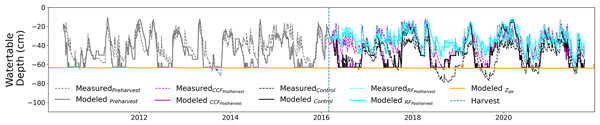
Using the process-based model LandscapeDNDC, we successfully simulated the hydrological and carbon-cycle responses of a drained peatland ecosystem under control, rotational forestry and continuous cover forestry management. The developed framework provides a valuable tool for evaluating future management scenarios and supporting the development of forest management strategies aimed at achieving climate neutrality in peatland ecosystems.
Anna-Maria Virkkala, Isabel Wargowsky, Judith Vogt, McKenzie A. Kuhn, Simran Madaan, Tiffany Windholz, Kyle A. Arndt, Gerard Rocher-Ros, Mathias Göckede, David Olefeldt, Edward A. G. Schuur, David Bastviken, Richard O'Keefe, Brendan M. Rogers, Jennifer D. Watts, Kelcy Kent, Kristoffer Aalstad, Kelly Aho, Joonatan Ala-Könni, Haley Alcock, Inge Althuizen, Christopher D. Arp, Jun Asanuma, Mika Aurela, Sivakiruthika Balathandayuthabani, Katrin Attermeyer, Alan Barr, Maialen Barret, Ochirbat Batkhishig, Christina Biasi, Mats P. Björkman, Andrew Black, Elena Blanc-Betes, Pascal Bodmer, Julia Boike, Abdullah Bolek, Frédéric Bouchard, Ingeborg Bussmann, Lea Cabrol, Eleonora Canfora, Sean Carey, Karel Castro-Morales, Namyi Chae, Andreas Christen, Torben R. Christensen, Casper T. Christiansen, Housen Chu, Graham Clark, Francois Clayer, Patrick Crill, Christopher Cunada, Scott J. Davidson, Joshua F. Dean, Sigrid Dengel, Matteo Detto, Catherine Dieleman, Florent Domine, Egor Dyukarev, Colin Edgar, Bo Elberling, Craig A. Emmerton, Eugenie Euskirchen, Grant Falvo, Thomas Friborg, Michelle Garneau, Mariasilvia Giamberini, Mikhail V. Glagolev, Miquel A. Gonzalez-Meler, Gustaf Granath, Jón Guðmundsson, Konsta Happonen, Yoshinobu Harazono, Lorna Harris, Josh Hashemi, Nicholas Hasson, Janna Heerah, Liam Heffernan, Manuel Helbig, Warren Helgason, Michal Heliasz, Greg Henry, Geert Hensgens, Tetsuya Hiyama, Beth Holmes, Macall Hock, David Holl, Jutta Holst, Thomas Holst, Gabriel Hould-Gosselin, Elyn Humphreys, Jacqueline Hung, Jussi Huotari, Hiroki Ikawa, Danil V. Ilyasov, Mamoru Ishikawa, Go Iwahana, Hiroki Iwata, Marcin Antoni Jackowicz-Korczynski, Joachim Jansen, Järvi Järveoja, Vincent E. J. Jassey, Rasmus Jensen, Katharina Jentzsch, Robert G. Jespersen, Carl-Fredrik Johannesson, Cheristy P. Jones, Anders Jonsson, Ji Young Jung, Sari Juutinen, Evan Kane, Jan Karlsson, Sergey Karsanaev, Kuno Kasak, Julia Kelly, Kasha Kempton, Marcus Klaus, George W. Kling, Natascha Kljun, Jacqueline Knutson, Hideki Kobayashi, John Kochendorfer, Kukka-Maaria Kohonen, Pasi Kolari, Mika Korkiakoski, Aino Korrensalo, Pirkko Kortelainen, Egle Koster, Kajar Koster, Ayumi Kotani, Praveena Krishnan, Juliya Kurbatova, Lars Kutzbach, Min Jung Kwon, Ethan D. Kyzivat, Jessica Lagroix, Theodore Langhorst, Elena Lapshina, Tuula Larmola, Klaus S. Larsen, Isabelle Laurion, Justin Ledman, Hanna Lee, A. Joshua Leffler, Lance Lesack, Anders Lindroth, David Lipson, Annalea Lohila, Efrén López-Blanco, Vincent L. St. Louis, Erik Lundin, Miska Luoto, Takashi Machimura, Marta Magnani, Avni Malhotra, Marja Maljanen, Ivan Mammarella, Elisa Männistö, Luca Belelli Marchesini, Phil Marsh, Pertti J. Martikainen, Maija E. Marushchak, Mikhail Mastepanov, Alex Mavrovic, Trofim Maximov, Christina Minions, Daniel F. Nadeau, Marco Montemayor, Tomoaki Morishita, Patrick Murphy, Erin Nicholls, Mats B. Nilsson, Anastasia Niyazova, Jenni Nordén, Koffi Dodji Noumonvi, Hannu Nykänen, Walter Oechel, Anne Ojala, Tomohiro Okadera, Sujan Pal, Alexey V. Panov, Tim Papakyriakou, Dario Papale, Sang-Jong Park, Frans-Jan W. Parmentier, Gilberto Pastorello, Mike Peacock, Matthias Peichl, Roman Petrov, Kyra St. Pierre, Norbert Pirk, Jessica Plein, Vilmantas Preskienis, Anatoly Prokushkin, Jukka Pumpanen, Hilary A. Rains, Niklas Rakos, Aleksi Räsänen, Helena Rautakoski, Riikka Rinnan, Janne Rinne, Adrian Rocha, Nigel Roulet, Alexandre Roy, Anna Rutgersson, Aleksandr F. Sabrekov, Torsten Sachs, Erik Sahlée, Alejandro Salazar, Henrique Oliveira Sawakuchi, Christopher Schulze, Roger Seco, Armando Sepulveda-Jauregui, Svetlana Serikova, Abbey Serrone, Hanna M. Silvennoinen, Sofie Sjogersten, June Skeeter, Jo Snöälv, Sebastian Sobek, Oliver Sonnentag, Emily H. Stanley, Maria Strack, Lena Strom, Patrick Sullivan, Ryan Sullivan, Anna Sytiuk, Torbern Tagesson, Pierre Taillardat, Julie Talbot, Suzanne E. Tank, Mario Tenuta, Irina Terenteva, Frederic Thalasso, Antoine Thiboult, Halldor Thorgeirsson, Fenix Garcia Tigreros, Margaret Torn, Amy Townsend-Small, Claire Treat, Alain Tremblay, Carlo Trotta, Eeva-Stiina Tuittila, Merritt Turetsky, Masahito Ueyama, Muhammad Umair, Aki Vähä, Lona van Delden, Maarten van Hardenbroek, Andrej Varlagin, Ruth K. Varner, Tarmo Virtanen, Elena Veretennikova, Timo Vesala, Carolina Voigt, Jorien E. Vonk, Robert Wagner, Katey Walter Anthony, Qinxue Wang, Masataka Watanabe, Hailey Webb, Jeffrey M. Welker, Andreas Westergaard-Nielsen, Sebastian Westermann, Jeffrey R. White, Christian Wille, Scott N. Williamson, Scott Zolkos, Donatella Zona, and Susan M. Natali
Earth Syst. Sci. Data, 18, 6357–6409, https://doi.org/10.5194/essd-18-6357-2026, https://doi.org/10.5194/essd-18-6357-2026, 2026
Short summary
Short summary
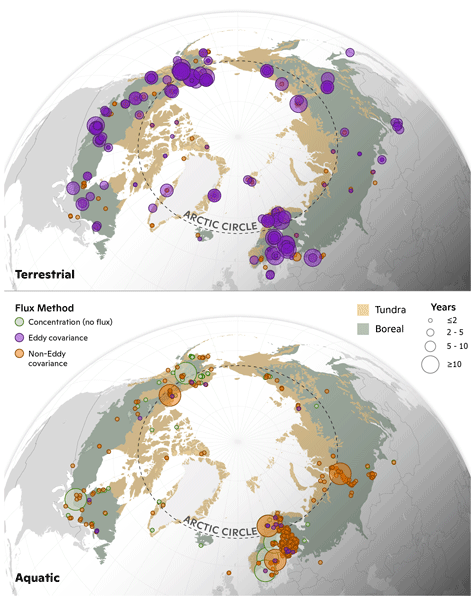
This dataset includes monthly measurements of carbon dioxide and methane exchange between land, water, and the atmosphere from over 1000 sites in Arctic and boreal regions. It combines measurements from a variety of ecosystems, including wetlands, forests, tundra, lakes, and rivers, gathered by over 260 researchers from 1984–2024. This dataset can be used to improve and reduce uncertainty in carbon budgets in order to strengthen our understanding of climate feedbacks in a warming world.
Alohotsy Rafalimanana, Thomas Lauvaux, Charbel Abdallah, Mali Chariot, Michel Ramonet, Josselin Doc, Olivier Laurent, Morgan Lopez, Anja Raznjevic, Maarten Krol, Leena Järvi, Andreas Christen, Dana Looschelders, Leslie David, Olivier Sanchez, Laura Bignotti, Benjamin Loubet, Sue Grimmond, and William Morrison
EGUsphere, https://doi.org/10.5194/egusphere-2026-2581, https://doi.org/10.5194/egusphere-2026-2581, 2026
Short summary
Short summary
Using WRF-Chem simulations over Greater Paris at resolutions from 900 m to 100 m (LES), we show that horizontal resolution critically shapes urban CO2 plume structure. Mesoscale runs underestimate spatial contrasts by a factor of 2–3, with representativeness errors of 29–61 % (near-surface) and 21–59 % (XCO2). LES improves intra-urban variability and enables more accurate spatial attribution of emissions, a key step toward reliable top-down estimates for city-scale climate mitigation.
Lea Dedden and Markus Weiler
EGUsphere, https://doi.org/10.5194/egusphere-2026-4703, https://doi.org/10.5194/egusphere-2026-4703, 2026
Short summary
Short summary
Using a dense 400 sensor network over 2.5 years, we studied how tree types influence forest soil moisture. We found soil moisture varies largely in space and time. In pure tree plots, the moisture variability peaks during intermediate wetness – when vegetation influence is strongest – but remains low during dry and wet phases. Consistently wet and dry zones indicate that spatial pattern are temporally stable. This work highlights small-scale spatiotemporal variability of forest water fluxes.
Jonas Pyschik, Veronica Cordero, Jakob Wilk, Veronika Lechner, Emanuel Thoenes, Stefan Achleitner, Bernhard Kohl, Markus Weiler, and Stefan Hergarten
EGUsphere, https://doi.org/10.5194/egusphere-2026-4469, https://doi.org/10.5194/egusphere-2026-4469, 2026
Short summary
Short summary
When it rains, much of the water reaching a stream has been stored in the soil for a long time, but why was unclear. We sprinkled two forested slopes with labelled water and used electrical imaging to watch it move. Only a small share moved quickly to the slope base; most of the outflow was older water pushed out by the pressure of the new rain. Much of the new water stayed in the topsoil and was released weeks later, affecting how soils carry nutrients and pollutants to streams.
Dana Looschelders, Andreas Christen, Sue Grimmond, Simone Kotthaus, and William Morrison
EGUsphere, https://doi.org/10.5194/egusphere-2026-2444, https://doi.org/10.5194/egusphere-2026-2444, 2026
Short summary
Short summary
Using seven automatic lidar-ceilometers located on a 105 km transect in the Paris region, we investigate modifications of the mixed-layer height (MLH) dynamics. Over and downwind of Paris, MLHs are deeper and grow faster during the morning transition. In summer, the spatial extent of urban effects (> 60 km downwind) and absolute MLH spatial differences are larger. In winter, relative MLH differences are larger. The MLH is deeper in the city at the start of the morning transition.
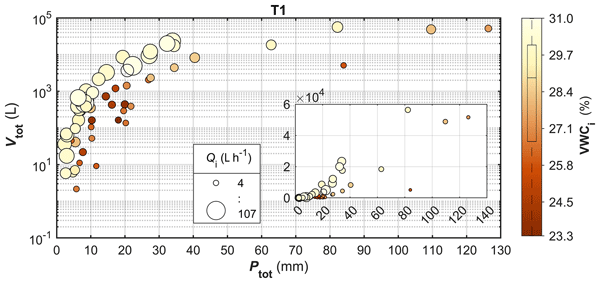
Emanuel Thoenes, Theresa Blume, Markus Weiler, Bernhard Kohl, Luisa Hopp, and Stefan Achleitner
Hydrol. Earth Syst. Sci., 30, 4405–4436, https://doi.org/10.5194/hess-30-4405-2026, https://doi.org/10.5194/hess-30-4405-2026, 2026
Short summary
Short summary
Subsurface stormflow (SSF) is a key runoff mechanism in upland environments. The analysis of SSF at two trenched hillslopes showed that SSF volume was controlled by total rainfall and initial wetness. Peakflow depended on rainfall amount, with initial wetness and rainfall intensity being important for small and large events, respectively. The rate at which SSF increased was linked to rainfall intensity and amount.
Andrew Smerald, Hannes Imhof, Edwin Haas, David Kraus, Lioba Martin, Kathrin Fuchs, John Akubia, Ali Sakhaee, Cora Vos, Roland Fuß, Clemens Scheer, and Ralf Kiese
EGUsphere, https://doi.org/10.5194/egusphere-2026-4010, https://doi.org/10.5194/egusphere-2026-4010, 2026
Short summary
Short summary
Countries produce a yearly greenhouse gas inventory that is used to monitor and design climate policies. Agricultural N2O emissions are especially uncertain, due to measurement difficulties. Using a process-based model combined with high resolution management data we show that, in comparison with current methods, N2O emissions can be mapped with high spatial and temporal resolution.
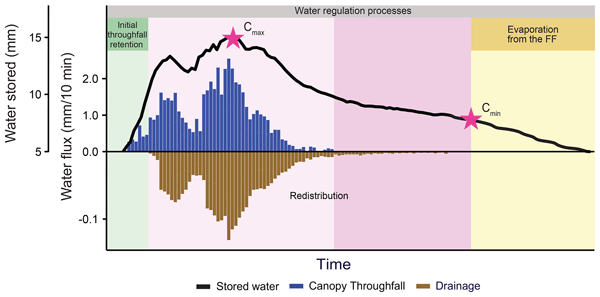
Heinke Paulsen and Markus Weiler
Hydrol. Earth Syst. Sci., 30, 4305–4319, https://doi.org/10.5194/hess-30-4305-2026, https://doi.org/10.5194/hess-30-4305-2026, 2026
Short summary
Short summary
Using 12 Forest floor (FF) lysimeters at three beech‑dominated sites, we recorded 1570 rain events and measured throughfall, drainage, and evaporation. Initial retention depended on pre‑event moisture, not litter thickness. Low‑intensity, long‑duration rains filled the FF more efficiently than brief, intense storms. Evaporation was low and consistent across sites, showing the FF protects the soil. Spatial data revealed frequent water redistribution, creating heterogeneous flow paths.
Pia Labenski, Allan Buras, Rüdiger Grote, Martin Thurner, and Nadine K. Ruehr
EGUsphere, https://doi.org/10.5194/egusphere-2026-3082, https://doi.org/10.5194/egusphere-2026-3082, 2026
This preprint is open for discussion and under review for Biogeosciences (BG).
Short summary
Short summary
During the 2018–2023 droughts, European forests showed widespread premature leaf shedding, but its drivers and impacts remain poorly understood. Using satellite observations across beech and oak forests, we identified drought thresholds triggering this response and showed it reflects cumulative stress rather than protection. Early senescing forests showed elevated canopy mortality, establishing it as an indicator of forest vulnerability with implications for monitoring and management.
Alohotsy Rafalimanana, Thomas Lauvaux, Charbel Abdallah, Mali Chariot, Michel Ramonet, Josselin Doc, Olivier Laurent, Morgan Lopez, Anja Raznjevic, Maarten Krol, Leena Järvi, Andreas Christen, Dana Looschelders, Leslie David, Olivier Sanchez, Laura Bignotti, Benjamin Loubet, Sue Grimmond, and William Morrison
EGUsphere, https://doi.org/10.5194/egusphere-2026-2109, https://doi.org/10.5194/egusphere-2026-2109, 2026
Short summary
Short summary
This study explores how city design and buildings affect CO2 levels in the air over Paris. Using a transport model, we tested different urban canopy models to represent the city environment and its influence on air motion. We found that realistic descriptions of urban surfaces are crucial, especially in winter, for accurately showing how CO2 builds up and disperses, leading to better satellite monitoring of city CO2 emissions.
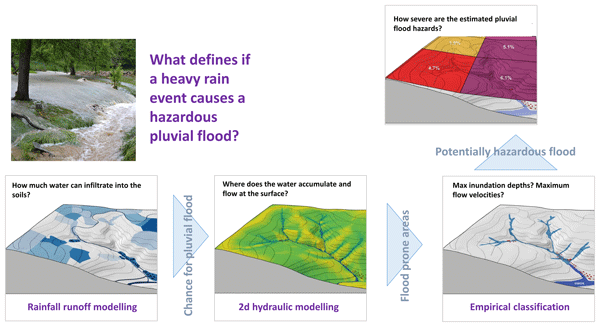
Markus Weiler, Julia Krumm, Ingo Haag, Hannes Leistert, Max Schmit, Andreas Steinbrich, and Andreas Hänsler
Nat. Hazards Earth Syst. Sci., 26, 2673–2689, https://doi.org/10.5194/nhess-26-2673-2026, https://doi.org/10.5194/nhess-26-2673-2026, 2026
Short summary
Short summary
Pluvial (flash) floods, caused by intense local rainfall, result in surface runoff and overland flow, making them different from fluvial floods. A new Pluvial Flood Index (PFI) combines precipitation, hydrological, and hydrodynamic processes to assess surface flooding hazards. The PFI, based on flood hazard areas, helps forecast flash floods and supports real-time warning systems, aiding municipal decision-making, preparedness, and planning.
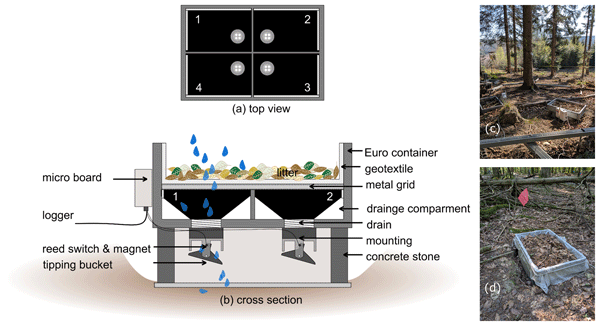
Lea Dedden and Markus Weiler
Hydrol. Earth Syst. Sci., 30, 3245–3261, https://doi.org/10.5194/hess-30-3245-2026, https://doi.org/10.5194/hess-30-3245-2026, 2026
Short summary
Short summary
Throughfall in forests varies in space and time creating distinct patterns. We developed a novel throughfall monitoring approach for continuous, automated measurement that features 60 self-built and cost effective throughfall samplers. Collected data show the potential of the approach to capture throughfall variability at small distances, among and within rainfall events and between different trees species.
Ann-Kristin Kunz, Samuel Hammer, Patrick Aigner, Laura Bignotti, Lars Borchardt, Jia Chen, Julian Della Coletta, Lukas Emmenegger, Markus Eritt, Xochilt Gutiérrez, Josh Hashemi, Rainer Hilland, Christopher Holst, Armin Jordan, Natascha Kljun, Richard Kneißl, Changxing Lan, Virgile Legendre, Ingeborg Levin, Benjamin Loubet, Matthias Mauder, Betty Molinier, Susanne Preunkert, Michel Ramonet, Stavros Stagakis, and Andreas Christen
Atmos. Chem. Phys., 26, 4967–5003, https://doi.org/10.5194/acp-26-4967-2026, https://doi.org/10.5194/acp-26-4967-2026, 2026
Short summary
Short summary
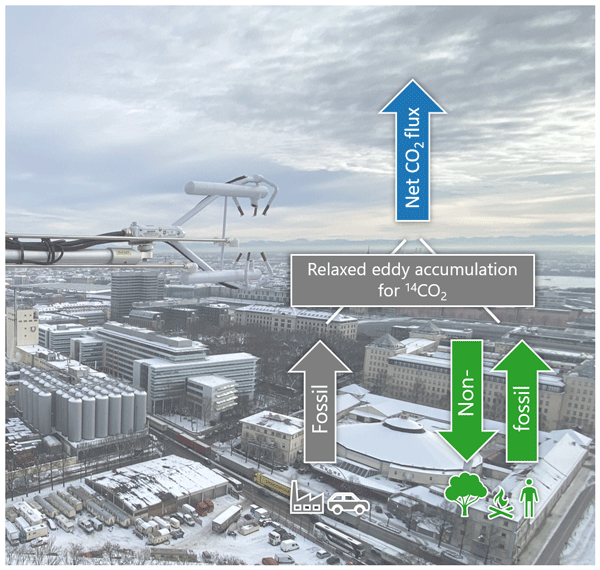
We present radiocarbon (14C)-based fossil fuel CO2 fluxes from relaxed eddy accumulation measurements on tall towers in the cities of Zurich, Paris, and Munich. By separating net CO2 fluxes into fossil and non-fossil components, these data reveal significant and variable contributions from human, plant, and soil respiration, as well as point-source emissions. These unique insights into CO2 flux composition offer crucial information for observation-based validation of urban emission estimates.
Hannes Leistert, Andreas Hänsler, Max Schmit, Andreas Steinbrich, and Markus Weiler
Geosci. Model Dev., 19, 2023–2037, https://doi.org/10.5194/gmd-19-2023-2026, https://doi.org/10.5194/gmd-19-2023-2026, 2026
Short summary
Short summary
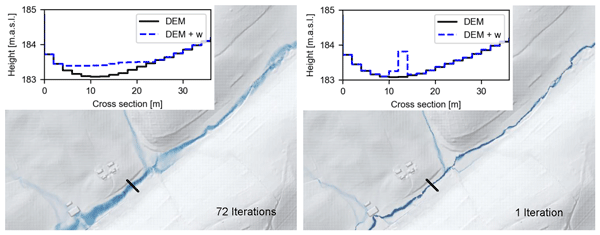
The newly developed model AccRo (Accumulation-based Runoff and Pluvial Flood Estimation Tool) is a computationally efficient method to derive key parameters for estimating pluvial flood hazards. Here, we compare results of AccRo with the data of two hydrodynamic models for different cases. We find that AccRo is able to represent the simulations of the hydrodynamic models in high quality, but with much lower computational effort, making it a valuable tool for assessing pluvial flood hazards.
Beatriz P. Cazorla, Ana Meijide, Javier Cabello, Julio Peñas, Javier Martínez-López, Rodrigo Vargas, Leonardo Montagnani, Alexander Knohl, Lukas Siebicke, Benimiano Gioli, Jiří Dušek, Ladislav Šigut, Andreas Ibrom, Georg Wohlfahrt, Eugénie Paul-Limoges, Kathrin Fuchs, Antonio Manco, Marian Pavelka, Lutz Merbold, Lukas Hörtnagl, Pierpaolo Duce, Ignacio Goded, Kim Pilegaard, and Domingo Alcaraz-Segura
Biogeosciences, 23, 1223–1243, https://doi.org/10.5194/bg-23-1223-2026, https://doi.org/10.5194/bg-23-1223-2026, 2026
Short summary
Short summary
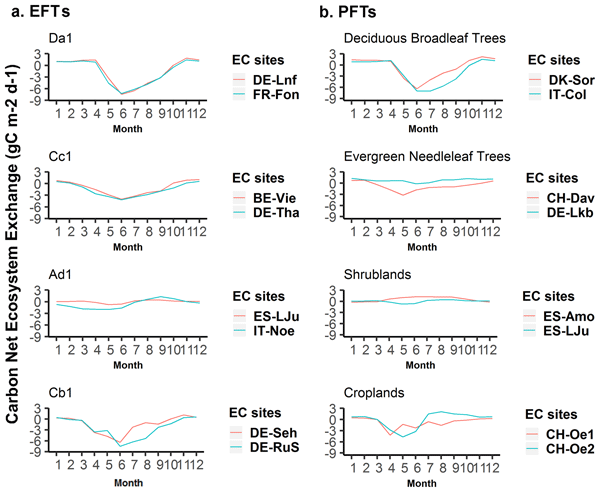
We assess whether satellite-derived Ecosystem Functional Types (EFTs) reflect spatial heterogeneity in carbon fluxes across Europe. Using Eddy Covariance data from 50 sites, we show that EFTs capture distinct Net Ecosystem Exchange dynamics and perform slightly better than Plant Functional Types (PFTs). EFTs offer a scalable, annually updatable approach to monitor ecosystem functioning and its interannual variability.

Sebastian Gnann, Bailey J. Anderson, and Markus Weiler
Hydrol. Earth Syst. Sci., 30, 779–795, https://doi.org/10.5194/hess-30-779-2026, https://doi.org/10.5194/hess-30-779-2026, 2026
Short summary
Short summary
The extent to which streamflow varies in response to variability in precipitation and potential evaporation is essential for understanding climate change impacts on water resources. This so-called streamflow sensitivity is often estimated directly from observational data, but the robustness of these estimates remains unclear. Through systematic examination of existing approaches, we highlight uncertainties inherent in all approaches and discuss their origins.
Jonas Pyschik and Markus Weiler
Hydrol. Earth Syst. Sci., 30, 485–501, https://doi.org/10.5194/hess-30-485-2026, https://doi.org/10.5194/hess-30-485-2026, 2026
Short summary
Short summary
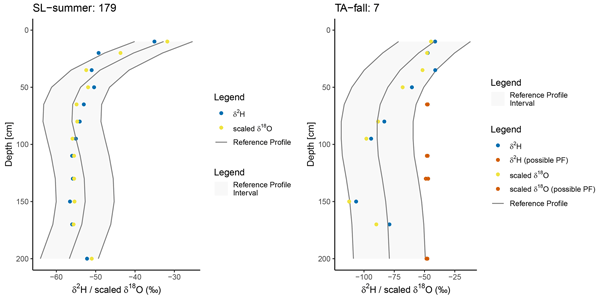
This study introduces a new method of detecting how water moves quickly through certain paths in soil, bypassing the usual, slower flow. By analysing natural water markers in soil samples taken at different depths, we identified unusual flow patterns. Our method is simple and non-invasive, and can be used to cover large areas. This helps us to better understand how water travels through the ground, which is important for managing water resources and protecting the environment.
Hojin Lee, Tim Stippich, Jan Petersen, David Meine, Julian Brzozon, Markus Sulzer, Lea Dedden, Andreas Christen, Teja Kattenborn, Christiane Werner, and Jürgen Kreuzwieser
EGUsphere, https://doi.org/10.5194/egusphere-2025-5426, https://doi.org/10.5194/egusphere-2025-5426, 2025
Short summary
Short summary
We studied the effect of waterlogging on volatile organic compounds exchange between forest floor and atmosphere. Waterlogging strongly increased emissions of toluene and p-cymene. Studies on soil cores under controlled conditions demonstrated that anoxia leads to emission of these compounds. Our results suggest that anoxic hotspots of high toluene emission can influence atmospheric mixing ratios of toluene in forest air despite large areas of the forest floor act as a sink of this compound.
Russell H. Glazer, Sue Grimmond, Lewis Blunn, Daniel Fenner, Humphrey Lean, Andreas Christen, Will Morrison, Dana Looschelders, and Jonathan K. P. Shonk
Weather Clim. Dynam., 6, 1723–1742, https://doi.org/10.5194/wcd-6-1723-2025, https://doi.org/10.5194/wcd-6-1723-2025, 2025
Short summary
Short summary
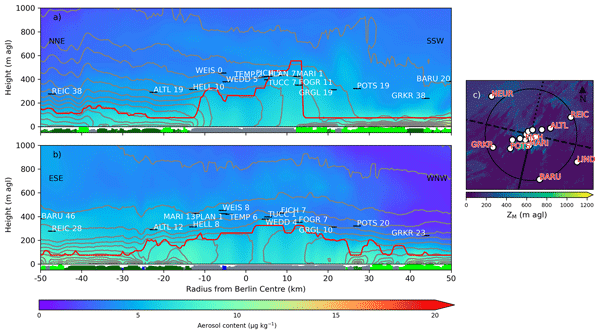
In this study we use very high resolution numerical weather prediction model simulations of the Berlin, Germany region along with assessment of field campaign observations to understand better the impact of urban areas on the near-surface boundary layer. We find that there a clear affect of urban areas up to 15 km downwind of the city centre in both the field campaign observations and the high resolution model.
William Morrison, Dana Looschelders, Jonnathan Céspedes, Bernie Claxton, Marc-Antoine Drouin, Jean-Charles Dupont, Aurélien Faucheux, Martial Haeffelin, Christopher C. Holst, Simone Kotthaus, Valéry Masson, James McGregor, Jeremy Price, Matthias Zeeman, Sue Grimmond, and Andreas Christen
Earth Syst. Sci. Data, 17, 6507–6529, https://doi.org/10.5194/essd-17-6507-2025, https://doi.org/10.5194/essd-17-6507-2025, 2025
Short summary
Short summary
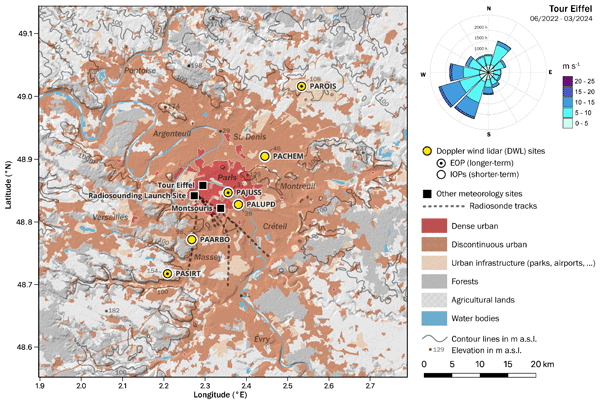
We conducted research using sophisticated wind sensors to better understand wind patterns in Paris. By installing these sensors across the city, we gathered detailed data on wind speeds and directions from 2022 to 2024. This information helps improve weather and climate models, making them more accurate for city environments. Our findings offer valuable insights for scientists studying urban air and weather, improving predictions and understanding of city-scale atmospheric processes.
Samin Payrosangari, Kathrin Fuchs, Benjamin Wolf, Ralf Kiese, and Clemens Scheer
EGUsphere, https://doi.org/10.5194/egusphere-2025-5155, https://doi.org/10.5194/egusphere-2025-5155, 2025
Short summary
Short summary
In our manuscript, we implement a machine learning based model to improve the simulation of daily N2O emissions at regional scale across several pre-alpine grasslands in Central Europe. The study focuses on evaluating the model’s general applicability to other grasslands in the region. This work contributes to the development of generic N₂O emission models, thereby reducing the effort required to estimate emissions from sites lacking direct measurements.
Katharina Epp, Markus Sulzer, Daniel Steinmann, Matthias Zeeman, Andreas Matzarakis, and Andreas Christen
EGUsphere, https://doi.org/10.5194/egusphere-2025-3871, https://doi.org/10.5194/egusphere-2025-3871, 2025
Short summary
Short summary
Indoor heat was continuously monitored in 60 rooms across 11 buildings of a hospital complex using a sensor network measuring physiologically equivalent temperatures. Substantial heat was found in structures built in 1950–1990, in upper-floors and windowless rooms. Climate simulations were coupled with data-driven machine-learning models to predict future indoor heat frequency and intensity. We conclude that widespread adaptation is required to secure hospital operations during hot summers.
Rainer Hilland, Josh Hashemi, Stavros Stagakis, Dominik Brunner, Lionel Constantin, Natascha Kljun, Ann-Kristin Kunz, Betty Molinier, Samuel Hammer, Lukas Emmenegger, and Andreas Christen
Atmos. Chem. Phys., 25, 14279–14299, https://doi.org/10.5194/acp-25-14279-2025, https://doi.org/10.5194/acp-25-14279-2025, 2025
Short summary
Short summary
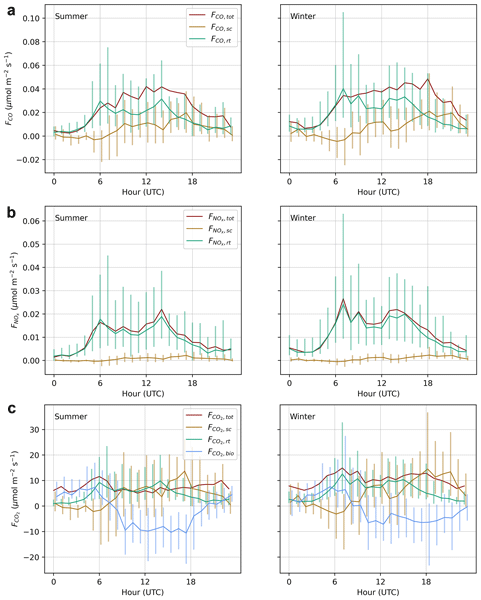
We present a study of simultaneously measured fluxes of carbon dioxide (CO2) and co-emitted species in the city of Zurich. Flux measurements of CO2 alone cannot be attributed to specific emission sectors, such as road transport or residential heating. We present a model which uses the measured ratios of CO2 to carbon monoxide (CO) and nitrogen oxides (NOx) as well as sector-specific reference ratios, to attribute measured fluxes to their emission sectors.
Ann-Kristin Kunz, Lars Borchardt, Andreas Christen, Julian Della Coletta, Markus Eritt, Xochilt Gutiérrez, Josh Hashemi, Rainer Hilland, Armin Jordan, Richard Kneißl, Virgile Legendre, Ingeborg Levin, Susanne Preunkert, Pascal Rubli, Stavros Stagakis, and Samuel Hammer
Atmos. Meas. Tech., 18, 5349–5373, https://doi.org/10.5194/amt-18-5349-2025, https://doi.org/10.5194/amt-18-5349-2025, 2025
Short summary
Short summary
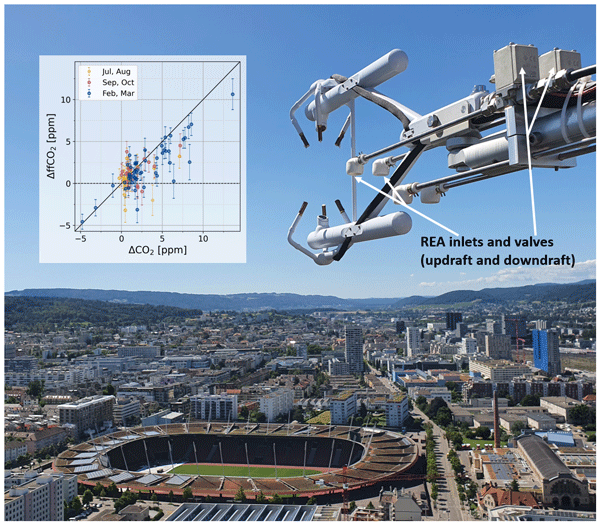
We present, to our knowledge, the first relaxed eddy accumulation system explicitly tailored to a radiocarbon (14C)-based partitioning of fossil and non-fossil urban CO2 fluxes. Laboratory tests and in-depth quality and performance checks prove that the system meets the technical requirements. A pilot application on a tall tower in the city of Zurich, Switzerland, demonstrates the ability to separate fossil and non-fossil CO2 components within the typical precision of 14C measurements.
Fawad Khan, Samuel Franco Luesma, Frederik Hartmann, Michael Dannenmann, Rainer Gasche, Clemens Scheer, Andreas Gattinger, Wiebke Niether, Elizabeth Gachibu Wangari, Ricky Mwangada Mwanake, Ralf Kiese, and Benjamin Wolf
Biogeosciences, 22, 5081–5102, https://doi.org/10.5194/bg-22-5081-2025, https://doi.org/10.5194/bg-22-5081-2025, 2025
Short summary
Short summary
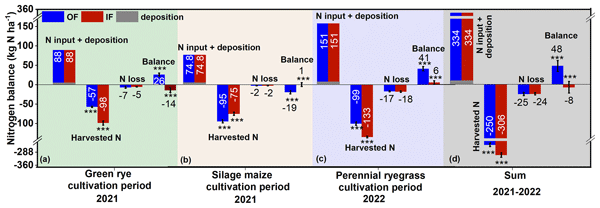
Crop rotations with legumes and use of organic and mineral fertilizers show potential to reduce agricultural N losses. This study examined N losses, including direct N2 flux, on two adjacent sites with different management histories: organic farming (OF) with legume cultivation and integrated farming (IF) using synthetic and organic N inputs. IF increased soil organic carbon and nitrogen content and 15N recovery and showed a balanced N budget (i.e. more efficient N cycling compared to OF).
Theresa Blume, Peter Chifflard, Stefan Achleitner, Andreas Hartmann, Stefan Hergarten, Luisa Hopp, Bernhard Kohl, Florian Leese, Ilja van Meerveld, Christian Reinhardt-Imjela, and Markus Weiler
EGUsphere, https://doi.org/10.5194/egusphere-2025-4424, https://doi.org/10.5194/egusphere-2025-4424, 2025
Short summary
Short summary
Subsurface stormflow (SSF) is one of the least studied and therefore least understood runoff generation processes because detecting and quantifying SSF is extremely challenging. We present an ongoing concerted experimental effort to systematically investigate SSF across four catchments using a variety of methods covering different spatial scales. Centerpiece of this effort is the construction of 12 large trenches to capture and monitor SSF.
Sophie Reinermann, Carolin Boos, Andrea Kaim, Anne Schucknecht, Sarah Asam, Ursula Gessner, Sylvia H. Annuth, Thomas M. Schmitt, Thomas Koellner, and Ralf Kiese
Biogeosciences, 22, 4969–4992, https://doi.org/10.5194/bg-22-4969-2025, https://doi.org/10.5194/bg-22-4969-2025, 2025
Short summary
Short summary
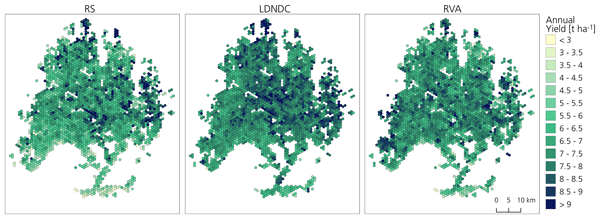
Grasslands shape the landscape in many parts of the world and serve as the main source of fodder for livestock. There is a lack of comprehensive data on grassland yield, although these data are highly valuable for authorities and research. By applying three approaches to estimate grassland yields, namely, a satellite data model, a biogeochemical model and a field measurements approach, we provide annual grassland yield maps for the Ammer region in 2019 and highlight the potentials and limitations of the approaches.
Mostafa Gomaa Daoud, Fakhereh Alidoost, Yijian Zeng, Bart Schilperoort, Christiaan Van der Tol, Maciek W. Lubczynski, Mhd Suhyb Salama, Eric D. Morway, Christian D. Langevin, Prajwal Khanal, Zengjing Song, Lianyu Yu, Hong Zhao, Gualbert Oude Essink, Victor F. Bense, Michiel van der Molen, and Zhongbo Su
EGUsphere, https://doi.org/10.5194/egusphere-2025-4179, https://doi.org/10.5194/egusphere-2025-4179, 2025
Short summary
Short summary
This study investigates the groundwater role in soil-plant-atmosphere continuum. An integrated ecohydrological modelling approach was developed by coupling STEMMUS-SCOPE to MODFLOW 6 and applied at three sites over 8 years. The coupled model improved simulations of soil moisture and temperature, evapotranspiration, carbon fluxes and fluorescence. The findings highlight the groundwater critical role in ecosystem dynamics and its contribution to advancing water, energy and carbon cycle modelling.
Heinke Paulsen and Markus Weiler
Hydrol. Earth Syst. Sci., 29, 2309–2319, https://doi.org/10.5194/hess-29-2309-2025, https://doi.org/10.5194/hess-29-2309-2025, 2025
Short summary
Short summary
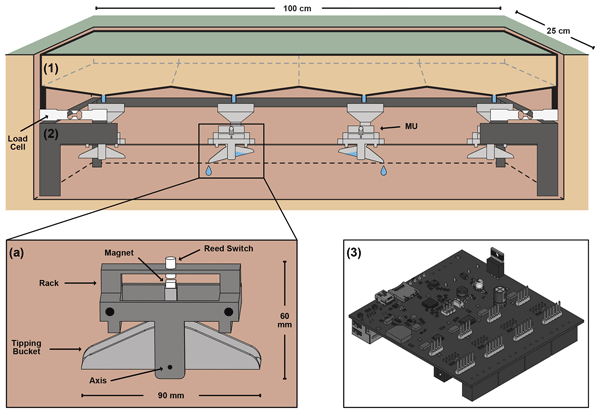
This technical note describes the development of a weighing forest floor grid lysimeter. The device is needed to investigate the dynamics of the water balance components of the organic layer in forests, quantifying precipitation, drainage, evaporation, and storage. We designed a setup that can be easily rebuilt and that is cost-effective, which allows for customized applications. Performance metrics from laboratory results and initial field data are presented.
Roxanne Daelman, Marijn Bauters, Matti Barthel, Emmanuel Bulonza, Lodewijk Lefevre, José Mbifo, Johan Six, Klaus Butterbach-Bahl, Benjamin Wolf, Ralf Kiese, and Pascal Boeckx
Biogeosciences, 22, 1529–1542, https://doi.org/10.5194/bg-22-1529-2025, https://doi.org/10.5194/bg-22-1529-2025, 2025
Short summary
Short summary
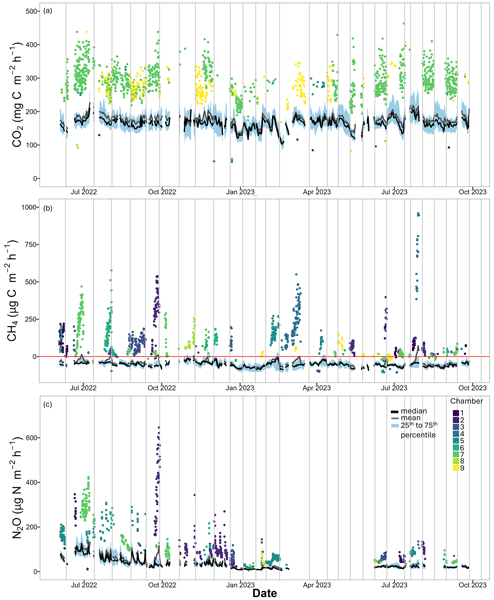
The increase in atmospheric concentrations of several greenhouse gases (GHGs) since 1750 is attributed to human activity. However, natural ecosystems, such as tropical forests, also contribute to GHG budgets. The Congo Basin hosts the second largest tropical forest and is understudied. In this study, measurements of soil GHG exchange were carried out during 16 months in a tropical forest in the Congo Basin. Overall, the soil acted as a major source of CO2 and N2O and a minor sink of CH4.
Mana Gharun, Ankit Shekhar, Lukas Hörtnagl, Luana Krebs, Nicola Arriga, Mirco Migliavacca, Marilyn Roland, Bert Gielen, Leonardo Montagnani, Enrico Tomelleri, Ladislav Šigut, Matthias Peichl, Peng Zhao, Marius Schmidt, Thomas Grünwald, Mika Korkiakoski, Annalea Lohila, and Nina Buchmann
Biogeosciences, 22, 1393–1411, https://doi.org/10.5194/bg-22-1393-2025, https://doi.org/10.5194/bg-22-1393-2025, 2025
Short summary
Short summary
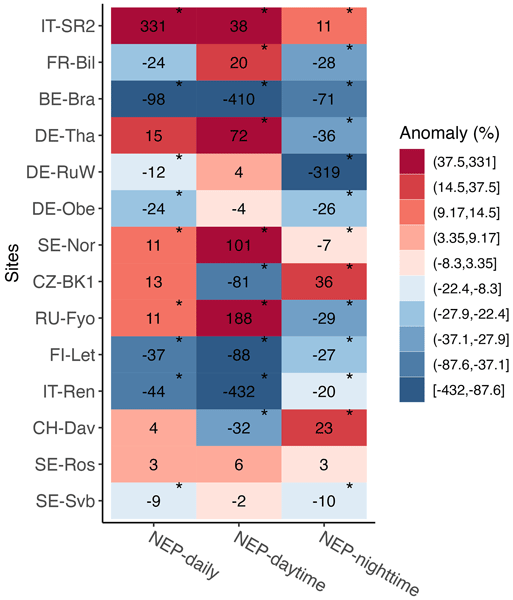
The effect of winter warming on forest CO2 fluxes has rarely been investigated. We tested the effect of the warm winter of 2020 on the forest CO2 fluxes across 14 sites in Europe and found that the net ecosystem productivity (NEP) across most sites declined during the warm winter due to increased respiration fluxes.
Jonas Pyschik, Stefan Seeger, Barbara Herbstritt, and Markus Weiler
Hydrol. Earth Syst. Sci., 29, 525–534, https://doi.org/10.5194/hess-29-525-2025, https://doi.org/10.5194/hess-29-525-2025, 2025
Short summary
Short summary
We developed a device (named VapAuSa) that automates stable water isotope analysis. Stable water isotopes are a natural tracer that many researchers use to investigate water (re-)distribution processes in environmental systems. VapAuSa helps to analyse such environmental samples by automating a formerly tedious manual process, allowing for higher sample throughput. This enables larger sampling campaigns, as more samples can be processed before reaching their limited storage time.
Matthias Zeeman, Andreas Christen, Sue Grimmond, Daniel Fenner, William Morrison, Gregor Feigel, Markus Sulzer, and Nektarios Chrysoulakis
Geosci. Instrum. Method. Data Syst., 13, 393–424, https://doi.org/10.5194/gi-13-393-2024, https://doi.org/10.5194/gi-13-393-2024, 2024
Short summary
Short summary
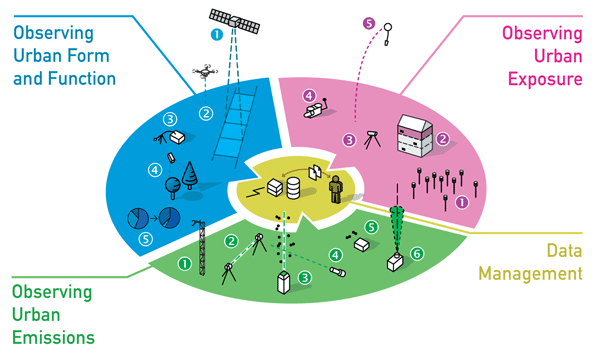
This study presents an overview of a data system for documenting, processing, managing, and publishing data streams from research networks of atmospheric and environmental sensors of varying complexity in urban environments. Our solutions aim to deliver resilient, near-time data using freely available software.
Jacob A. Nelson, Sophia Walther, Fabian Gans, Basil Kraft, Ulrich Weber, Kimberly Novick, Nina Buchmann, Mirco Migliavacca, Georg Wohlfahrt, Ladislav Šigut, Andreas Ibrom, Dario Papale, Mathias Göckede, Gregory Duveiller, Alexander Knohl, Lukas Hörtnagl, Russell L. Scott, Jiří Dušek, Weijie Zhang, Zayd Mahmoud Hamdi, Markus Reichstein, Sergio Aranda-Barranco, Jonas Ardö, Maarten Op de Beeck, Dave Billesbach, David Bowling, Rosvel Bracho, Christian Brümmer, Gustau Camps-Valls, Shiping Chen, Jamie Rose Cleverly, Ankur Desai, Gang Dong, Tarek S. El-Madany, Eugenie Susanne Euskirchen, Iris Feigenwinter, Marta Galvagno, Giacomo A. Gerosa, Bert Gielen, Ignacio Goded, Sarah Goslee, Christopher Michael Gough, Bernard Heinesch, Kazuhito Ichii, Marcin Antoni Jackowicz-Korczynski, Anne Klosterhalfen, Sara Knox, Hideki Kobayashi, Kukka-Maaria Kohonen, Mika Korkiakoski, Ivan Mammarella, Mana Gharun, Riccardo Marzuoli, Roser Matamala, Stefan Metzger, Leonardo Montagnani, Giacomo Nicolini, Thomas O'Halloran, Jean-Marc Ourcival, Matthias Peichl, Elise Pendall, Borja Ruiz Reverter, Marilyn Roland, Simone Sabbatini, Torsten Sachs, Marius Schmidt, Christopher R. Schwalm, Ankit Shekhar, Richard Silberstein, Maria Lucia Silveira, Donatella Spano, Torbern Tagesson, Gianluca Tramontana, Carlo Trotta, Fabio Turco, Timo Vesala, Caroline Vincke, Domenico Vitale, Enrique R. Vivoni, Yi Wang, William Woodgate, Enrico A. Yepez, Junhui Zhang, Donatella Zona, and Martin Jung
Biogeosciences, 21, 5079–5115, https://doi.org/10.5194/bg-21-5079-2024, https://doi.org/10.5194/bg-21-5079-2024, 2024
Short summary
Short summary
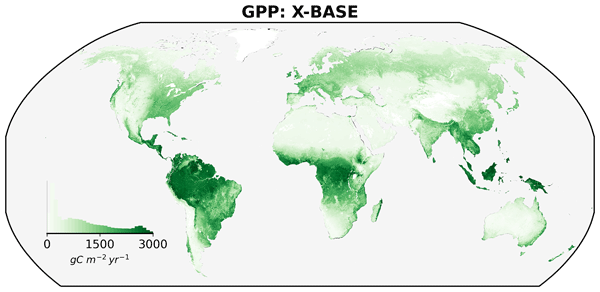
The movement of water, carbon, and energy from the Earth's surface to the atmosphere, or flux, is an important process to understand because it impacts our lives. Here, we outline a method called FLUXCOM-X to estimate global water and CO2 fluxes based on direct measurements from sites around the world. We go on to demonstrate how these new estimates of net CO2 uptake/loss, gross CO2 uptake, total water evaporation, and transpiration from plants compare to previous and independent estimates.
Carolin Boos, Sophie Reinermann, Raul Wood, Ralf Ludwig, Anne Schucknecht, David Kraus, and Ralf Kiese
EGUsphere, https://doi.org/10.5194/egusphere-2024-2864, https://doi.org/10.5194/egusphere-2024-2864, 2024
Preprint archived
Short summary
Short summary
We applied a biogeochemical model on grasslands in the pre-Alpine Ammer region in Germany and analyzed the influence of soil and climate on annual yields. In drought affected years, total yields were decreased by 4 %. Overall, yields decrease with rising elevation, but less so in drier and hotter years, whereas soil organic carbon has a positive impact on yields, especially in drier years. Our findings imply, that adapted management in the region allows to mitigate yield losses from drought.
Robin Schwemmle, Hannes Leistert, Andreas Steinbrich, and Markus Weiler
Geosci. Model Dev., 17, 5249–5262, https://doi.org/10.5194/gmd-17-5249-2024, https://doi.org/10.5194/gmd-17-5249-2024, 2024
Short summary
Short summary
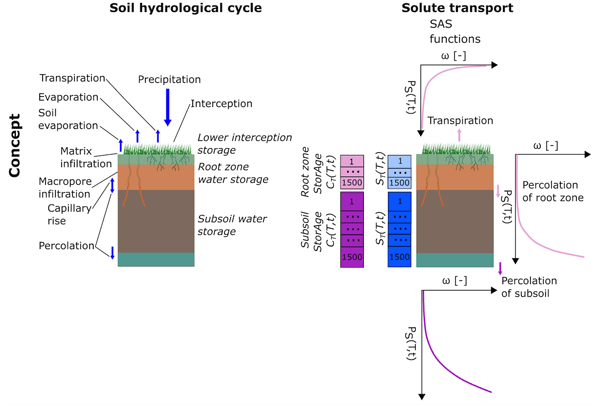
The new process-based hydrological toolbox model, RoGeR (https://roger.readthedocs.io/), can be used to estimate the components of the hydrological cycle and the related travel times of pollutants through parts of the hydrological cycle. These estimations may contribute to effective water resources management. This paper presents the toolbox concept and provides a simple example of providing estimations to water resources management.
Daniel Nadal-Sala, Rüdiger Grote, David Kraus, Uri Hochberg, Tamir Klein, Yael Wagner, Fedor Tatarinov, Dan Yakir, and Nadine K. Ruehr
Biogeosciences, 21, 2973–2994, https://doi.org/10.5194/bg-21-2973-2024, https://doi.org/10.5194/bg-21-2973-2024, 2024
Short summary
Short summary
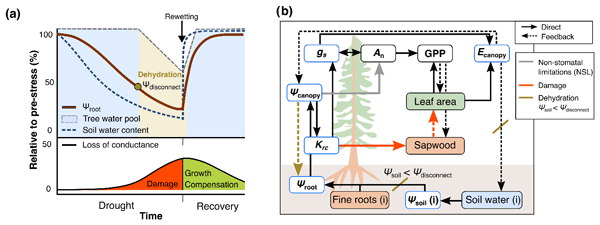
A hydraulic model approach is presented that can be added to any physiologically based ecosystem model. Simulated plant water potential triggers stomatal closure, photosynthesis decline, root–soil resistance increases, and sapwood and foliage senescence. The model has been evaluated at an extremely dry site stocked with Aleppo pine and was able to represent gas exchange, soil water content, and plant water potential. The model also responded realistically regarding leaf senescence.
Patrick Olschewski, Mame Diarra Bousso Dieng, Hassane Moutahir, Brian Böker, Edwin Haas, Harald Kunstmann, and Patrick Laux
Nat. Hazards Earth Syst. Sci., 24, 1099–1134, https://doi.org/10.5194/nhess-24-1099-2024, https://doi.org/10.5194/nhess-24-1099-2024, 2024
Short summary
Short summary
We applied a multivariate and dependency-preserving bias correction method to climate model output for the Greater Mediterranean Region and investigated potential changes in false-spring events (FSEs) and heat–drought compound events (HDCEs). Results project an increase in the frequency of FSEs in middle and late spring as well as increases in frequency, intensity, and duration for HDCEs. This will potentially aggravate the risk of crop loss and failure and negatively impact food security.
Prajwal Khanal, Anne J. Hoek Van Dijke, Timo Schaffhauser, Wantong Li, Sinikka J. Paulus, Chunhui Zhan, and René Orth
Biogeosciences, 21, 1533–1547, https://doi.org/10.5194/bg-21-1533-2024, https://doi.org/10.5194/bg-21-1533-2024, 2024
Short summary
Short summary
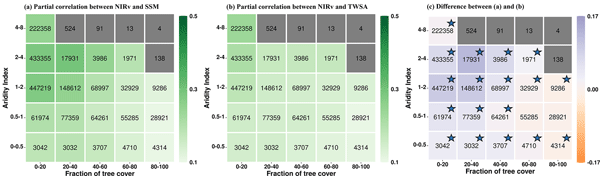
Water availability is essential for vegetation functioning, but the depth of vegetation water uptake is largely unknown due to sparse ground measurements. This study correlates vegetation growth with soil moisture availability globally to infer vegetation water uptake depth using only satellite-based data. We find that the vegetation water uptake depth varies across climate regimes and vegetation types and also changes during dry months at a global scale.
Ferdinand Briegel, Jonas Wehrle, Dirk Schindler, and Andreas Christen
Geosci. Model Dev., 17, 1667–1688, https://doi.org/10.5194/gmd-17-1667-2024, https://doi.org/10.5194/gmd-17-1667-2024, 2024
Short summary
Short summary
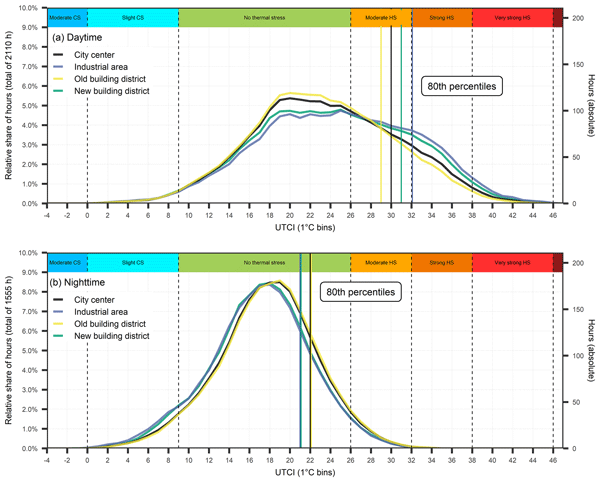
We present a new approach to model heat stress in cities using artificial intelligence (AI). We show that the AI model is fast in terms of prediction but accurate when evaluated with measurements. The fast-predictive AI model enables several new potential applications, including heat stress prediction and warning; downscaling of potential future climates; evaluation of adaptation effectiveness; and, more fundamentally, development of guidelines to support urban planning and policymaking.
Elizabeth Gachibu Wangari, Ricky Mwangada Mwanake, Tobias Houska, David Kraus, Gretchen Maria Gettel, Ralf Kiese, Lutz Breuer, and Klaus Butterbach-Bahl
Biogeosciences, 20, 5029–5067, https://doi.org/10.5194/bg-20-5029-2023, https://doi.org/10.5194/bg-20-5029-2023, 2023
Short summary
Short summary
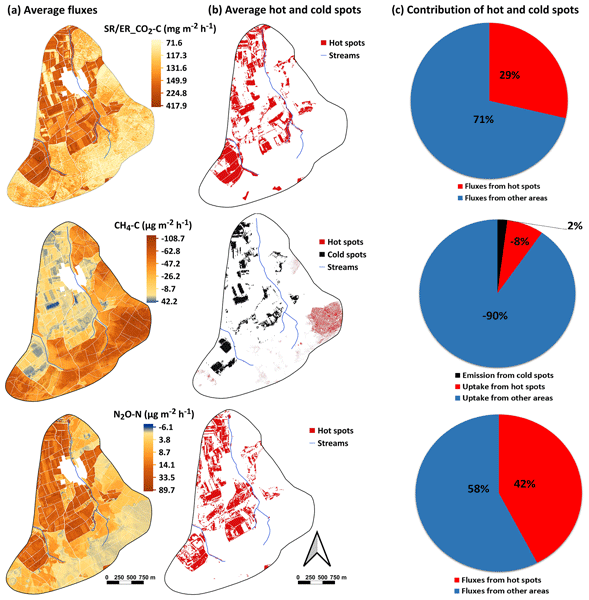
Agricultural landscapes act as sinks or sources of the greenhouse gases (GHGs) CO2, CH4, or N2O. Various physicochemical and biological processes control the fluxes of these GHGs between ecosystems and the atmosphere. Therefore, fluxes depend on environmental conditions such as soil moisture, soil temperature, or soil parameters, which result in large spatial and temporal variations of GHG fluxes. Here, we describe an example of how this variation may be studied and analyzed.
Barbara Herbstritt, Benjamin Gralher, Stefan Seeger, Michael Rinderer, and Markus Weiler
Hydrol. Earth Syst. Sci., 27, 3701–3718, https://doi.org/10.5194/hess-27-3701-2023, https://doi.org/10.5194/hess-27-3701-2023, 2023
Short summary
Short summary
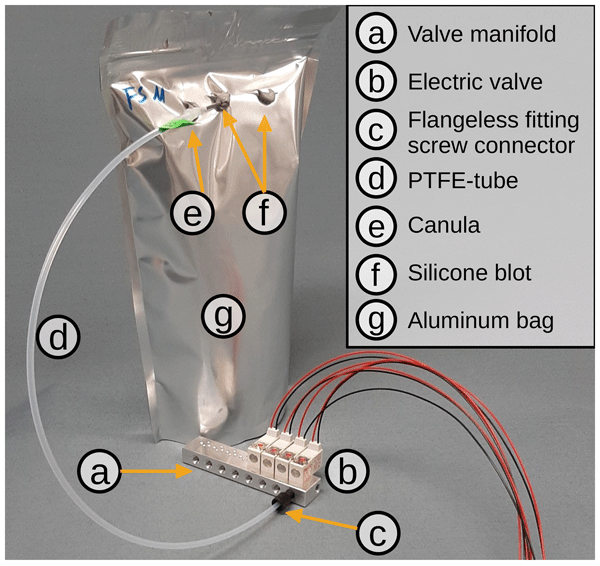
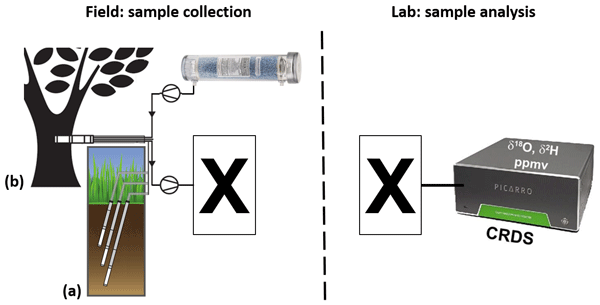
We present a method to collect water vapor samples into bags in the field without an in-field analyser, followed by isotope analysis in the lab. This new method resolves even fine-scaled natural isotope variations. It combines low-cost and lightweight components for maximum spatial and temporal flexibility regarding environmental setups. Hence, it allows for sampling even in terrains that are rather difficult to access, enabling future extended isotope datasets in soil sciences and ecohydrology.
Stefan Seeger and Markus Weiler
Hydrol. Earth Syst. Sci., 27, 3393–3404, https://doi.org/10.5194/hess-27-3393-2023, https://doi.org/10.5194/hess-27-3393-2023, 2023
Short summary
Short summary
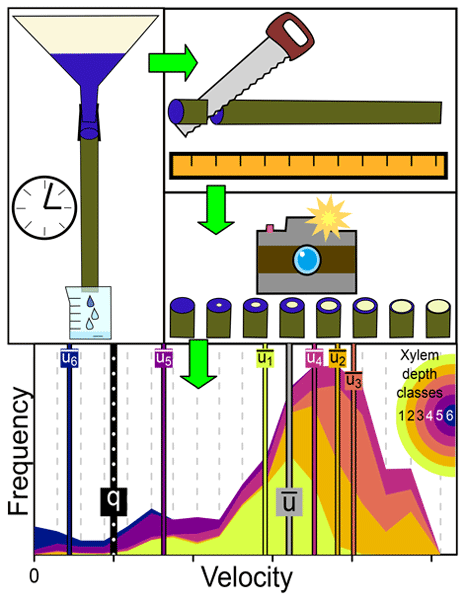
This study proposes a low-budget method to quantify the radial distribution of water transport velocities within trees at a high spatial resolution. We observed a wide spread of water transport velocities within a tree stem section, which were on average 3 times faster than the flux velocity. The distribution of transport velocities has implications for studies that use water isotopic signatures to study root water uptake and usually assume uniform or even implicitly infinite velocities.
Ricky Mwangada Mwanake, Gretchen Maria Gettel, Elizabeth Gachibu Wangari, Clarissa Glaser, Tobias Houska, Lutz Breuer, Klaus Butterbach-Bahl, and Ralf Kiese
Biogeosciences, 20, 3395–3422, https://doi.org/10.5194/bg-20-3395-2023, https://doi.org/10.5194/bg-20-3395-2023, 2023
Short summary
Short summary
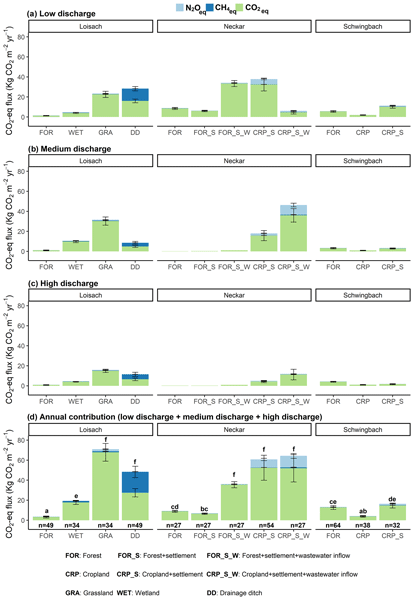
Despite occupying <1 %; of the globe, streams are significant sources of greenhouse gas (GHG) emissions. In this study, we determined anthropogenic effects on GHG emissions from streams. We found that anthropogenic-influenced streams had up to 20 times more annual GHG emissions than natural ones and were also responsible for seasonal peaks. Anthropogenic influences also altered declining GHG flux trends with stream size, with potential impacts on stream-size-based spatial upscaling techniques.

Joseph Okello, Marijn Bauters, Hans Verbeeck, Samuel Bodé, John Kasenene, Astrid Françoys, Till Engelhardt, Klaus Butterbach-Bahl, Ralf Kiese, and Pascal Boeckx
Biogeosciences, 20, 719–735, https://doi.org/10.5194/bg-20-719-2023, https://doi.org/10.5194/bg-20-719-2023, 2023
Short summary
Short summary
The increase in global and regional temperatures has the potential to drive accelerated soil organic carbon losses in tropical forests. We simulated climate warming by translocating intact soil cores from higher to lower elevations. The results revealed increasing temperature sensitivity and decreasing losses of soil organic carbon with increasing elevation. Our results suggest that climate warming may trigger enhanced losses of soil organic carbon from tropical montane forests.
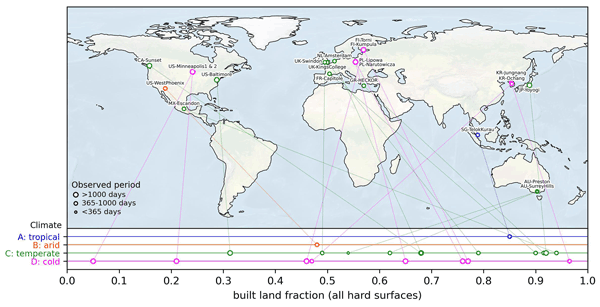
Mathew Lipson, Sue Grimmond, Martin Best, Winston T. L. Chow, Andreas Christen, Nektarios Chrysoulakis, Andrew Coutts, Ben Crawford, Stevan Earl, Jonathan Evans, Krzysztof Fortuniak, Bert G. Heusinkveld, Je-Woo Hong, Jinkyu Hong, Leena Järvi, Sungsoo Jo, Yeon-Hee Kim, Simone Kotthaus, Keunmin Lee, Valéry Masson, Joseph P. McFadden, Oliver Michels, Wlodzimierz Pawlak, Matthias Roth, Hirofumi Sugawara, Nigel Tapper, Erik Velasco, and Helen Claire Ward
Earth Syst. Sci. Data, 14, 5157–5178, https://doi.org/10.5194/essd-14-5157-2022, https://doi.org/10.5194/essd-14-5157-2022, 2022
Short summary
Short summary
We describe a new openly accessible collection of atmospheric observations from 20 cities around the world, capturing 50 site years. The observations capture local meteorology (temperature, humidity, wind, etc.) and the energy fluxes between the land and atmosphere (e.g. radiation and sensible and latent heat fluxes). These observations can be used to improve our understanding of urban climate processes and to test the accuracy of urban climate models.
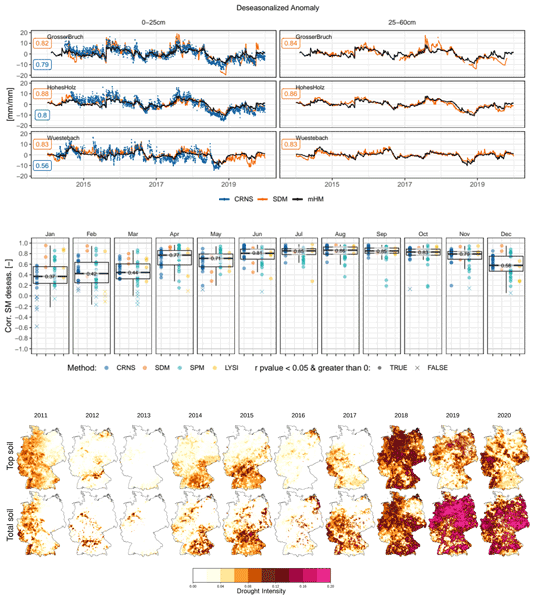
Friedrich Boeing, Oldrich Rakovec, Rohini Kumar, Luis Samaniego, Martin Schrön, Anke Hildebrandt, Corinna Rebmann, Stephan Thober, Sebastian Müller, Steffen Zacharias, Heye Bogena, Katrin Schneider, Ralf Kiese, Sabine Attinger, and Andreas Marx
Hydrol. Earth Syst. Sci., 26, 5137–5161, https://doi.org/10.5194/hess-26-5137-2022, https://doi.org/10.5194/hess-26-5137-2022, 2022
Short summary
Short summary
In this paper, we deliver an evaluation of the second generation operational German drought monitor (https://www.ufz.de/duerremonitor) with a state-of-the-art compilation of observed soil moisture data from 40 locations and four different measurement methods in Germany. We show that the expressed stakeholder needs for higher resolution drought information at the one-kilometer scale can be met and that the agreement of simulated and observed soil moisture dynamics can be moderately improved.
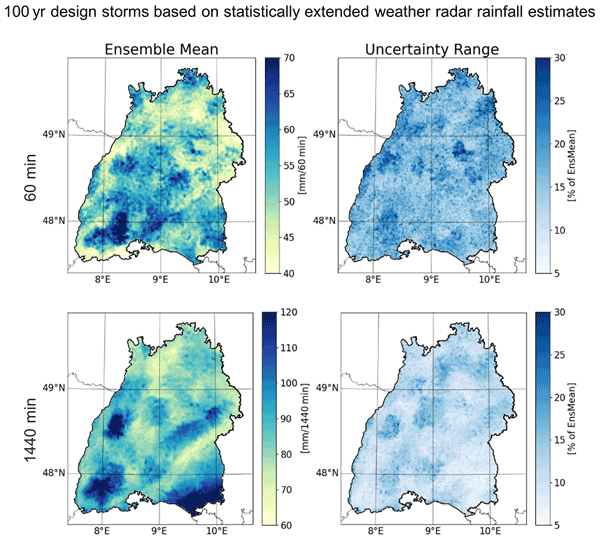
Andreas Hänsler and Markus Weiler
Hydrol. Earth Syst. Sci., 26, 5069–5084, https://doi.org/10.5194/hess-26-5069-2022, https://doi.org/10.5194/hess-26-5069-2022, 2022
Short summary
Short summary
Spatially explicit quantification of design storms is essential for flood risk assessment and planning. However, available datasets are mainly based on spatially interpolated station-based design storms. Since the spatial interpolation of the data inherits a large potential for uncertainty, we develop an approach to be able to derive spatially explicit design storms on the basis of weather radar data. We find that our approach leads to an improved spatial representation of design storms.
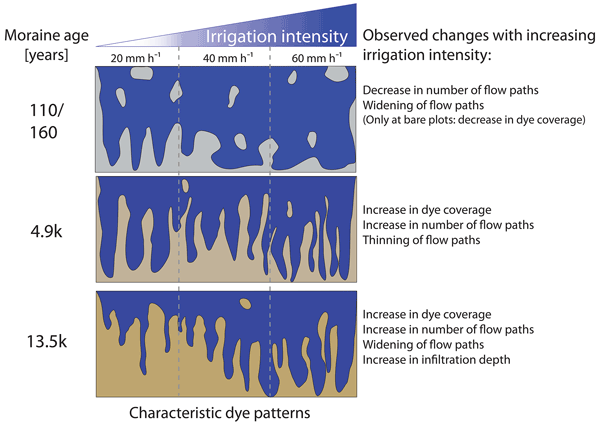
Anne Hartmann, Markus Weiler, Konrad Greinwald, and Theresa Blume
Hydrol. Earth Syst. Sci., 26, 4953–4974, https://doi.org/10.5194/hess-26-4953-2022, https://doi.org/10.5194/hess-26-4953-2022, 2022
Short summary
Short summary
Analyzing the impact of soil age and rainfall intensity on vertical subsurface flow paths in calcareous soils, with a special focus on preferential flow occurrence, shows how water flow paths are linked to the organization of evolving landscapes. The observed increase in preferential flow occurrence with increasing moraine age provides important but rare data for a proper representation of hydrological processes within the feedback cycle of the hydro-pedo-geomorphological system.
Anne Schucknecht, Bumsuk Seo, Alexander Krämer, Sarah Asam, Clement Atzberger, and Ralf Kiese
Biogeosciences, 19, 2699–2727, https://doi.org/10.5194/bg-19-2699-2022, https://doi.org/10.5194/bg-19-2699-2022, 2022
Short summary
Short summary
Actual maps of grassland traits could improve local farm management and support environmental assessments. We developed, assessed, and applied models to estimate dry biomass and plant nitrogen (N) concentration in pre-Alpine grasslands with drone-based multispectral data and canopy height information. Our results indicate that machine learning algorithms are able to estimate both parameters but reach a better level of performance for biomass.
Nils Hinrich Kaplan, Theresa Blume, and Markus Weiler
Hydrol. Earth Syst. Sci., 26, 2671–2696, https://doi.org/10.5194/hess-26-2671-2022, https://doi.org/10.5194/hess-26-2671-2022, 2022
Short summary
Short summary
This study is analyses how characteristics of precipitation events and soil moisture and temperature dynamics during these events can be used to model the associated streamflow responses in intermittent streams. The models are used to identify differences between the dominant controls of streamflow intermittency in three distinct geologies of the Attert catchment, Luxembourg. Overall, soil moisture was found to be the most important control of intermittent streamflow in all geologies.

Matthias Mauder, Andreas Ibrom, Luise Wanner, Frederik De Roo, Peter Brugger, Ralf Kiese, and Kim Pilegaard
Atmos. Meas. Tech., 14, 7835–7850, https://doi.org/10.5194/amt-14-7835-2021, https://doi.org/10.5194/amt-14-7835-2021, 2021
Short summary
Short summary
Turbulent flux measurements suffer from a general systematic underestimation. One reason for this bias is non-local transport by large-scale circulations. A recently developed model for this additional transport of sensible and latent energy is evaluated for three different test sites. Different options on how to apply this correction are presented, and the results are evaluated against independent measurements.
Cited articles
Anderegg, W. R. L., Trugman, A. T., Badgley, G., Anderson, C. M., Bartuska, A., Ciais, P., Cullenward, D., Field, C. B., Freeman, J., Goetz, S. J., Hicke, J. A., Huntzinger, D., Jackson, R. B., Nickerson, J., Pacala, S., and Randerson, J. T.: Climate-driven risks to the climate mitigation potential of forests, Science, 368, eaaz7005, https://doi.org/10.1126/science.aaz7005, 2020.
Aubinet, M., Heinesch, B., and Longdoz, B.: Estimation of the carbon sequestration by a heterogeneous forest: night flux corrections, heterogeneity of the site and inter-annual variability, Glob. Change Biol., 8, 1053–1071, https://doi.org/10.1046/j.1365-2486.2002.00529.x, 2002.
Aubinet, M., Vesala, T., and Papale, D.: Eddy Covariance – A Practical Guide to Measurement and Data Analysis, Springer, Dordrecht, 449 pp., ISBN 978-94-007-2351-1, https://doi.org/10.1007/978-94-007-2351-1, 2012.
Baldocchi, D. D.: Assessing the eddy covariance technique for evaluating carbon dioxide exchange rates of ecosystems: past, present and future, Glob. Change Biol., 9, 479-492, https://doi.org/10.1046/j.1365-2486.2003.00629.x, 2003.
Bergkvist, J., Lagergren, F., Linderson, M.-L. F., Miller, P., Lindeskog, M., and Jönsson, A. M.: Modelling managed forest ecosystems in Sweden: An evaluation from the stand to the regional scale, Ecol. Modelling, 477, 110253, https://doi.org/10.1016/j.ecolmodel.2022.110253, 2023.
Bittner, S., Talkner, U., Krämer, I., Beese, F., Hölscher, D., and Priesack, E.: Modeling stand water budgets of mixed temperate broad-leaved forest stands by considering variations in species specific drought response, Agr. Forest Meteorol., 150, 1347–1357, https://doi.org/10.1016/j.agrformet.2010.06.006, 2010.
Blickensdörfer, L., Oehmichen, K., Pflugmacher, D., Kleinschmit, B., and Hostert, P.: Dominant Tree Species for Germany (2017/2018), OpenAgrar, Göttingen, https://doi.org/10.3220/data20221214084846, 2022.
Brandl, S., Paul, C., Knoke, T., and Falk, W.: The influence of climate and management on survival probability for Germany's most important tree species, Forest Ecol. Manag., 458, 117652, https://doi.org/10.1016/j.foreco.2019.117652, 2020.
Burba, G., Madsen, R., and Feese, K.: Eddy Covariance Method for CO2 Emission Measurements in CCUS Applications: Principles, Instrumentation and Software, Enegy. Proc., 40, 329–336, https://doi.org/10.1016/j.egypro.2013.08.038, 2013.
Butterbach-Bahl, K., Grote, R., Haas, E., Kiese, R., Klatt, S., and Kraus, D.: LandscapeDNDC (v1.30.4), Karlsruhe Institute of Technology (KIT) [code], https://doi.org/10.35097/438, 2021.
Cade, S. M., Clemitshaw, K. C., Molina-Herrera, S., Grote, R., Haas, E., Wilkinson, M., Morison, J. I. L., and Yamulki, S.: Evaluation of LandscapeDNDC Model Predictions of CO2 and N2O Fluxes from an Oak Forest in SE England, Forests, 12, 1517, https://doi.org/10.3390/f12111517, 2021.
Cameron, D. R., Van Oijen, M., Werner, C., Butterbach-Bahl, K., Grote, R., Haas, E., Heuvelink, G. B. M., Kiese, R., Kros, J., Kuhnert, M., Leip, A., Reinds, G. J., Reuter, H. I., Schelhaas, M. J., De Vries, W., and Yeluripati, J.: Environmental change impacts on the C- and N-cycle of European forests: a model comparison study, Biogeosciences, 10, 1751–1773, https://doi.org/10.5194/bg-10-1751-2013, 2013.
Cannell, M. G. R. and Thornley, J. H. M.: Modelling the components of plant respiration: Some guiding principles, Ann. Bot., 85, 45–54, https://doi.org/10.1006/anbo.1999.0996, 2000.
Cassidy, A. E., Christen, A., and Henry, G. H. R.: The effect of a permafrost disturbance on growing-season carbon-dioxide fluxes in a high Arctic tundra ecosystem, Biogeosciences, 13, 2291–2303, https://doi.org/10.5194/bg-13-2291-2016, 2016.
Collalti, A., Trotta, C., Keenan, T. F., Ibrom, A., Medlyn, B. E., Reyer, C. P., Grote, R., Bond-Lamberty, B., Vicca, S., Migliavacca, M., Veroustraete, F., Anav, A., Campioli, M., Scoccimarro, E., and Matteucci, G.: Thinning can reduce losses in carbon use efficiency and carbon stocks in managed forests under warmer climate, J. Adv. Model. Earth Sy., 10, 2427–2452, https://doi.org/10.1029/2018MS001275, 2018.
Crawford, B. and Christen, A.: Spatial source attribution of measured urban eddy covariance CO2 fluxes, Theor. Appl. Climatol., 119, 733–755, https://doi.org/10.1007/s00704-014-1124-0, 2015.
Dirnböck, T., Pröll, G., Austnes, K., Beloica, J., Beudert, B., Canullo, R., De Marco, A., Fornasier, M. F., Futter, M., Goergen, K., Grandin, U., Holmberg, M., Lindroos, A.-J., Mirtl, M., Neirynck, J., Pecka, T., Nieminen, T. M., Nordbakken, J.-F., Posch, M., Reinds, G.-J., Rowe, E. C., Salemaa, M., Scheuschner, T., Starlinger, F., Uzieblo, A. K., Valinia, S., Weldon, J., Wamelink, W. G. W., and Forsius, M.: Currently legislated decreases in nitrogen deposition will yield only limited plant species recovery in European forests, Environ. Res. Lett., 13, 125010, https://doi.org/10.1088/1748-9326/aaf26b, 2018.
Dirnböck, T., Kraus, D., Grote, R., Klatt, S., Kobler, J., Schindlbacher, A., Seidl, R., Thom, D., and Kiese, R.: Substantial understory contribution to the C sink of a European temperate mountain forest landscape, Landscape Ecol., 35, 483–499, https://doi.org/10.1007/s10980-019-00960-2 2020.
Dorigo, W. A., Xaver, A., Vreugdenhil, M., Gruber, A., Hegyiová, A., Sanchis-Dufau, A. D., Zamojski, D., Cordes, C., Wagner, W., and Drusch, M.: Global Automated Quality Control of In Situ Soil Moisture Data from the International Soil Moisture Network, Vadose Zone J., 12, vzj2012.0097, https://doi.org/10.2136/vzj2012.0097, 2013.
Fang, J., Fang, J., Chen, B., Zhang, H., Dilawar, A., Guo, M., and Liu, S.: Assessing Spatial Representativeness of Global Flux Tower Eddy-Covariance Measurements Using Data from FLUXNET2015, Scientific Data, 11, 569, https://doi.org/10.1038/s41597-024-03291-3, 2024.
Farquhar, G. D., Von Caemmerer, S., and Berry, J. A.: A biochemical model of photosynthetic CO2 assimilation in leaves of C3 species, Planta, 149, 78–90, https://doi.org/10.1007/BF00386231, 1980.
Fox, A., Williams, M., Richardson, A. D., Cameron, D., Gove, J. H., Quaife, T., Ricciuto, D., Reichstein, M., Tomelleri, E., Trudinger, C. M., and Van Wijk, M. T.: The REFLEX project: Comparing different algorithms and implementations for the inversion of a terrestrial ecosystem model against eddy covariance data, Agr. Forest Meteorol., 149, 1597–1615, https://doi.org/10.1016/j.agrformet.2009.05.002, 2009.
Gao, Y., Markkanen, T., Aurela, M., Mammarella, I., Thum, T., Tsuruta, A., Yang, H., and Aalto, T.: Response of water use efficiency to summer drought in a boreal Scots pine forest in Finland, Biogeosciences, 14, 4409–4422, https://doi.org/10.5194/bg-14-4409-2017, 2017.
Gribbe, S., Enderle, L., Weigel, R., Hertel, D., Leuschner, C., and Muffler, L.: Recent growth decline and shifts in climatic growth constraints suggest climate vulnerability of beech, Douglas fir, pine and oak in Northern Germany, Forest Ecol. Manag., 566, 122022, https://doi.org/10.1016/j.foreco.2024.122022, 2024.
Griebel, A., Bennett, L. T., Metzen, D., Cleverly, J., Burba, G., and Arndt, S. K.: Effects of inhomogeneities within the flux footprint on the interpretation of seasonal, annual, and interannual ecosystem carbon exchange, Agr. Forest Meteorol., 221, 50–60, https://doi.org/10.1016/j.agrformet.2016.02.002, 2016.
Grote, R.: Integrating dynamic morphological properties into forest growth modeling. II. Allocation and mortality, Forest Ecol. Manag., 111, 193–210, https://doi.org/10.1016/S0378-1127(98)00328-4, 1998.
Grote, R., Kiese, R., Grünwald, T., Ourcival, J.-M., and Granier, A.: Modelling forest carbon balances considering tree mortality and removal, Agr. Forest Meteorol., 151, 179-190, https://doi.org/10.1016/j.agrformet.2010.10.002, 2011a.
Grote, R., Korhonen, J., and Mammarella, I.: Challenges for evaluating process-based models of gas exchange at forest sites with fetches of various species, Forest Syst., 20, 389–406, https://doi.org/10.5424/fs/20112003-11084, 2011b.
Haas, E., Klatt, S., Fröhlich, A., Werner, C., Kiese, R., Grote, R., and Butterbach-Bahl, K.: LandscapeDNDC: A process model for simulation of biosphere-atmosphere-hydrosphere exchange processes at site and regional scale, Landscape Ecol., 28, 615–636, https://doi.org/10.1007/s10980-012-9772-x, 2013.
Haberstroh, S., Christen, A., Sulzer, M., Scarpa, F., and Werner, C.: Recurrent hot droughts cause persistent legacy effects in a temperate Scots Pine forest, Plant Biol., 1–15, https://doi.org/10.1111/plb.70066, 2025.
Helbig, M., Chasmer, L. E., Desai, A. R., Kljun, N., Quinton, W. L., and Sonnentag, O.: Direct and indirect climate change effects on carbon dioxide fluxes in a thawing boreal forest–wetland landscape, Glob. Change Biol., 23, 3231–3248, https://doi.org/10.1111/gcb.13638, 2017.
Herbst, M., Mund, M., Tamrakar, R., and Knohl, A.: Differences in carbon uptake and water use between a managed and an unmanaged beech forest in central Germany, Forest Ecol. Manag., 355, 101–108, https://doi.org/10.1016/j.foreco.2015.05.034, 2015.
Hersbach, H., Bell, B., Berrisford, P., Biavati, G., Horányi, A., Muñoz Sabater, J., Nicola, J., Peubey, C., Radu, R., Rozum, I., Schepers, D., Simmons, A., Soci, C., Dee, D., and Thépaut, J.-N.: ERA5 hourly data on single levels from 1940 to present, Copernicus Climate Change Service (C3S) Climate Data Store (CDS) [data set], https://doi.org/10.24381/cds.adbb2d47, 2023.
Holst, J., Grote, R., Offermann, C., Ferrio, J. P., Gessler, A., Mayer, H., and Rennenberg, H.: Water fluxes within beech stands in complex terrain, Int. J. Biometeorol., 54, 23–36, https://doi.org/10.1007/s00484-009-0248-x, 2010.
Kim, J., Hwang, T., Schaaf, C. L., Kljun, N., and Munger, J. W.: Seasonal variation of source contributions to eddy-covariance CO2 measurements in a mixed hardwood-conifer forest, Agr. Forest Meteorol., 253–254, 71–83, https://doi.org/10.1016/j.agrformet.2018.02.004, 2018.
Kljun, N., Calanca, P., Rotachhi, M. W., and Schmid, H. P.: A simple parameterisation for flux footprint predictions, Bound-Lay. Meteorol., 112, 503–523, 2004.
Kljun, N., Calanca, P., Rotach, M. W., and Schmid, H. P.: A simple two-dimensional parameterisation for Flux Footprint Prediction (FFP), Geosci. Model Dev., 8, 3695–3713, https://doi.org/10.5194/gmd-8-3695-2015, 2015.
Klosterhalfen, A., Chi, J., Kljun, N., Lindroth, A., Laudon, H., Nilsson, M. B., and Peichl, M.: Two-level eddy covariance measurements reduce bias in land-atmosphere exchange estimates over a heterogeneous boreal forest landscape, Agr. Forest Meteorol., 339, 109523, https://doi.org/10.1016/j.agrformet.2023.109523, 2023.
Kramer, K., Leinonen, I., Bartelink, H. H., Berbigier, P., Borghetti, M., Bernhofer, C., Cienciala, E., Dolman, A. J., Froer, O., Gracia, C. A., Granier, A., Grünwald, T., Hari, P., Jans, W., Kellomäki, S., Loustau, D., Magnani, F., Markkanen, T., Matteucci, G., Mohren, G. M. J., Moors, E., Nissinen, A., Peltola, H., Sabaté, S., Sanchez, A., Sontag, M., Valentini, R., and Vesala, T.: Evaluation of six process-based forest growth models using eddy-covariance measurements of CO2 and H2O fluxes at six forest sites in Europe, Glob. Change Biol., 8, 213–230, https://doi.org/10.1046/j.1365-2486.2002.00471.x, 2002.
Kutsch, W. L., Liu, C., Hörmann, G., and Herbst, M.: Spatial heterogeneity of ecosystem carbon fluxes in a broadleaved forest in Northern Germany, Glob. Change Biol., 11, 70–88, https://doi.org/10.1111/j.1365-2486.2004.00884.x, 2005.
Leuning, R.: A critical appraisal of a combined stomatal-photosynthesis model for C3 plants, Plant Cell Environ., 18, 339–355, https://doi.org/10.1111/j.1365-3040.1995.tb00370.x, 1995.
LI-COR Biosciences: Eddy Covariance Processing Software (Version 7.0.9), https://www.licor.com/products/eddy-covariance/eddypro (last access: 17 August 2025), 2022.
Magh, R.-K., Bonn, B., Grote, R., Burzlaff, T., Pfausch, S., and Rennenberg, H.: Drought superimposes the positive effect of silver-fir on water relations of European beech in mature forest stands, Forests, 10, 897, https://doi.org/10.3390/f10100897, 2019.
Mahabbati, A., Beringer, J., Leopold, M., McHugh, I., Cleverly, J., Isaac, P., and Izady, A.: A comparison of gap-filling algorithms for eddy covariance fluxes and their drivers, Geosci. Instrum. Method. Data Syst., 10, 123–140, https://doi.org/10.5194/gi-10-123-2021, 2021.
Mahecha, M. D., Reichstein, M., Lange, H., Carvalhais, N., Bernhofer, C., Grünwald, T., Papale, D., and Seufert, G.: Characterizing ecosystem-atmosphere interactions from short to interannual time scales, Biogeosciences, 4, 743–758, https://doi.org/10.5194/bg-4-743-2007, 2007.
Mahnken, M., Cailleret, M., Collalti, A., Trotta, C., Biondo, C., D'Andrea, E., Dalmonech, D., Gina, M., Makela, A., Minunno, F., Peltoniemi, M., Trotsiuk, V., Nadal-Sala, D., Sabate, S., Vallet, P., Aussenac, R., Cameron, D., Bohn, F., Grote, R., and Augustynczik, A.: Accuracy, realism and general applicability of European forest models, Glob. Change Biol., 28, 6921–6943, https://doi.org/10.1111/gcb.16384, 2022.
Mäkelä, A., Minunno, F., Kujala, H., Kosenius, A.-K., Heikkinen, R. K., Junttila, V., Peltoniemi, M., and Forsius, M.: Effect of forest management choices on carbon sequestration and biodiversity at national scale, AMBIO, 52, 1737–1756, https://doi.org/10.1007/s13280-023-01899-0, 2023.
McGloin, R., Šigut, L., Havránková, K., Dušek, J., Pavelka, M., and Sedlák, P.: Energy balance closure at a variety of ecosystems in Central Europe with contrasting topographies, Agr. Forest Meteorol., 248, 418–431, https://doi.org/10.1016/j.agrformet.2017.10.003, 2018.
Medlyn, B. E., Robinson, A. P., Clement, R., and McMurtrie, R. E.: On the validation of models of forest CO2 exchange using eddy covariance data: some perils and pitfalls, Tree Physiol., 25, 839–857, https://doi.org/10.1093/treephys/25.7.839, 2005.
Molina-Herrera, S., Grote, R., Santabárbara-Ruiz, I., Kraus, D., Klatt, S., Haas, E., Kiese, R., and Butterbach-Bahl, K.: Simulation of CO2 fluxes at European forest ecosystems with the coupled soil-vegetation process model “LandscapeDNDC”, Forests, 6, 1779–1809, https://doi.org/10.3390/f6061779, 2015.
Morales, P., Sykes, M. T., Prentice, I. C., Smith, P., Smith, B., Bugmann, H., Zierl, B., Friedlingstein, P., Viovy, N., Sabaté, S., Sánchez, A., Pla, E., Gracia, C. A., Sitch, S., Arneth, A., and Ogee, J.: Comparing and evaluating process-based ecosystem model predictions of carbon and water fluxes in major European forest biomes, Glob. Change Biol., 11, 2211–2233, https://doi.org/10.1111/j.1365-2486.2005.01036.x, 2005.
Morgenstern, K., Andrew Black, T., Humphreys, E. R., Griffis, T. J., Drewitt, G. B., Cai, T., Nesic, Z., Spittlehouse, D. L., and Livingston, N. J.: Sensitivity and uncertainty of the carbon balance of a Pacific Northwest Douglas-fir forest during an El Niño/La Niña cycle, Agr. Forest Meteorol., 123, 201–219, https://doi.org/10.1016/j.agrformet.2003.12.003, 2004.
Nadal-Sala, D., Grote, R., Birami, B., Lintunen, A., Mammarella, I., Preisler, Y., Rotenberg, E., Salmon, Y., Tatrinov, F., Yakir, D., and Ruehr, N.: Assessing model performance via the most limiting environmental driver (MLED) in two differently stressed pine stands, Ecol. Appl., 31, e02312, https://doi.org/10.1002/eap.2312, 2021.
Noh, N. J., Renchon, A. A., Knauer, J., Haverd, V., Li, J., Griebel, A., Barton, C. V. M., Yang, J., Sihi, D., Arndt, S. K., Davidson, E. A., Tjoelker, M. G., and Pendall, E.: Reconciling Top-Down and Bottom-Up Estimates of Ecosystem Respiration in a Mature Eucalypt Forest, J. Geophys. Res.-Biogeo., 129, e2024JG008064, https://doi.org/10.1029/2024JG008064, 2024.
Oishi, A. C., Oren, R., and Stoy, P. C.: Estimating components of forest evapotranspiration: A footprint approach for scaling sap flux measurements, Agr. Forest Meteorol., 148, 1719–1732, https://doi.org/10.1016/j.agrformet.2008.06.013, 2008.
Oliveira, B. R. F., Keizer, J. J., and Foken, T.: Changes of the aerodynamic characteristics of a flux site after an extensive windthrow, Biogeosciences, 19, 2235–2243, https://doi.org/10.5194/bg-19-2235-2022, 2022.
Pan, Y., Birdsey, R. A., Fang, J., Houghton, R., Kauppi, P. E., Kurz, W. A., Phillips, O. L., Shvidenko, A., Lewis, S. L., Canadell, J. G., Ciais, P., Jackson, R. B., Pacala, S. W., McGuire, A. D., Piao, S., Rautiainen, A., Sitch, S., and Hayes, D.: A large and persistent carbon sink in the world's forests, Science, 333, 988–993, https://doi.org/10.1126/science.1201609, 2011.
Papale, D., Reichstein, M., Aubinet, M., Canfora, E., Bernhofer, C., Kutsch, W., Longdoz, B., Rambal, S., Valentini, R., Vesala, T., and Yakir, D.: Towards a standardized processing of Net Ecosystem Exchange measured with eddy covariance technique: algorithms and uncertainty estimation, Biogeosciences, 3, 571–583, https://doi.org/10.5194/bg-3-571-2006, 2006.
Pilegaard, K., Mikkelsen, T. N., Beier, C., Jensen, N. O., Ambus, P., and Ro-Poulsen, H.: Field measurements of atmosphere–biosphere interactions in a Danish beech forest, Boreal. Environ. Res., 8, 315–333, 2003.
Rahimi, J., Ago, E. E., Ayantunde, A., Berger, S., Bogaert, J., Butterbach-Bahl, K., Cappelaere, B., Cohard, J.-M., Demarty, J., Diouf, A. A., Falk, U., Haas, E., Hiernaux, P., Kraus, D., Roupsard, O., Scheer, C., Srivastava, A. K., Tagesson, T., and Grote, R.: Modeling gas exchange and biomass production in West African Sahelian and Sudanian ecological zones, Geosci. Model Dev., 14, 3789–3812, https://doi.org/10.5194/gmd-14-3789-2021, 2021.
Reichstein, M., Falge, E., Baldocchi, D., Papale, D., Aubinet, M., Berbigier, P., Bernhofer, C., Buchmann, N., Gilmanov, T., Granier, A., Grünwald, T., Havranokova, K., Ilvesniemi, H., Janous, D., Knohl, A., Laurila, T., Lohila, A., Loustau, D., Matteucci, G., Meyers, T., Miglietta, F., Ourcival, J.-M., Pumpanen, J., Rambal, S., Rotenberg, E., Sanz, M., Tenhunen, J., Seufert, G., Vaccari, F., Vesala, T., Yakir, D., and Valentini, R.: On the separation of net ecosystem exchange into assimilation and ecosystem respiration: review and improved algorithm, Glob. Change Biol., 11, 1–16, https://doi.org/10.1111/j.1365-2486.2005.001002.x, 2005.
Remy, C. C., Krofcheck, D. J., Keyser, A. R., Litvak, M. E., Collins, S. L., and Hurteau, M. D.: Integrating Species-Specific Information in Models Improves Regional Projections Under Climate Change, Geophys. Res. Lett., 46, 6554–6562, https://doi.org/10.1029/2019GL082762, 2019.
Schmid, H. P.: Source areas for scalars and scalar fluxes, Bound-Lay. Meteorol., 67, 293–318, https://doi.org/10.1007/BF00713146, 1994.
Schuepp, P. H., Leclerc, M. Y., MacPherson, J. I., and Desjardins, R. L.: Footprint prediction of scalar fluxes from analytical solutions of the diffusion equation, Bound-Lay. Meteorol., 50, 355–373, https://doi.org/10.1007/BF00120530, 1990.
Stoy, P. C., Katul, G. G., Siqueira, M. B. S., Juang, J. Y., Novick, K. A., Uebelherr, J. M., and Oren, R.: An evaluation of models for partitioning eddy covariance-measured net ecosystem exchange into photosynthesis and respiration, Agr. Forest Meteorol., 141, 2–18, https://doi.org/10.1016/j.agrformet.2006.09.001, 2006.
Stoy, P. C., El-Madany, T. S., Fisher, J. B., Gentine, P., Gerken, T., Good, S. P., Klosterhalfen, A., Liu, S., Miralles, D. G., Perez-Priego, O., Rigden, A. J., Skaggs, T. H., Wohlfahrt, G., Anderson, R. G., Coenders-Gerrits, A. M. J., Jung, M., Maes, W. H., Mammarella, I., Mauder, M., Migliavacca, M., Nelson, J. A., Poyatos, R., Reichstein, M., Scott, R. L., and Wolf, S.: Reviews and syntheses: Turning the challenges of partitioning ecosystem evaporation and transpiration into opportunities, Biogeosciences, 16, 3747–3775, https://doi.org/10.5194/bg-16-3747-2019, 2019.
Su, Z., Timmermans, W. J., van der Tol, C., Dost, R., Bianchi, R., Gómez, J. A., House, A., Hajnsek, I., Menenti, M., Magliulo, V., Esposito, M., Haarbrink, R., Bosveld, F., Rothe, R., Baltink, H. K., Vekerdy, Z., Sobrino, J. A., Timmermans, J., van Laake, P., Salama, S., van der Kwast, H., Claassen, E., Stolk, A., Jia, L., Moors, E., Hartogensis, O., and Gillespie, A.: EAGLE 2006 – Multi-purpose, multi-angle and multi-sensor in-situ and airborne campaigns over grassland and forest, Hydrol. Earth Syst. Sci., 13, 833–845, https://doi.org/10.5194/hess-13-833-2009, 2009.
Teuling, A. J., Seneviratne, S. I., Stockli, R., Reichstein, M., Moors, E., Ciais, P., Luyssaert, S., van den Hurk, B., Ammann, C., Bernhofer, C., Dellwik, E., Gianelle, D., Gielen, B., Grünwald, T., Klumpp, K., Montagnani, L., Moureaux, C., Sottocornola, M., and Wohlfahrt, G.: Contrasting response of European forest and grassland energy exchange to heatwaves, Nat. Geosci., 3, 722–727, https://doi.org/10.1038/ngeo950, 2010.
Thornthwaite, C. W. and Mather, J. R.: Instructions and tables for computing potential evapotranspiration and the water balance, Publications in Climatology, 10, 183–311, 1957.
Thum, T., Miinalainen, T., Seppälä, O., Croft, H., Rogers, C., Staebler, R., Caldararu, S., and Zaehle, S.: Modelling decadal trends and the impact of extreme events on carbon fluxes in a temperate deciduous forest using a terrestrial biosphere model, Biogeosciences, 22, 1781–1807, https://doi.org/10.5194/bg-22-1781-2025, 2025.
Tuovinen, J.-P., Aurela, M., Hatakka, J., Räsänen, A., Virtanen, T., Mikola, J., Ivakhov, V., Kondratyev, V., and Laurila, T.: Interpreting eddy covariance data from heterogeneous Siberian tundra: land-cover-specific methane fluxes and spatial representativeness, Biogeosciences, 16, 255–274, https://doi.org/10.5194/bg-16-255-2019, 2019.
van der Woude, A. M., Peters, W., Joetzjer, E., Lafont, S., Koren, G., Ciais, P., Ramonet, M., Xu, Y., Bastos, A., Botía, S., Sitch, S., de Kok, R., Kneuer, T., Kubistin, D., Jacotot, A., Loubet, B., Herig-Coimbra, P.-H., Loustau, D., and Luijkx, I. T.: Temperature extremes of 2022 reduced carbon uptake by forests in Europe, Nat. Commun., 14, 6218, https://doi.org/10.1038/s41467-023-41851-0, 2023.
Van Wijk, M. T., Dekker, S. C., Bouten, W., Kohsiek, W., and Mohren, G. M. J.: Simulation of carbon and water budgets of a Douglas-fir forest, Forest Ecol. Manag., 145, 229–241, https://doi.org/10.1016/S0378-1127(00)00439-4, 2001.
Vekuri, H., Tuovinen, J.-P., Kulmala, L., Papale, D., Kolari, P., Aurela, M., Laurila, T., Liski, J., and Lohila, A.: A widely-used eddy covariance gap-filling method creates systematic bias in carbon balance estimates, Sci. Rep., 13, 1720, https://doi.org/10.1038/s41598-023-28827-2, 2023.
Vesala, T., Kljun, N., Rannik, Ü., Rinne, J., Sogachev, A., Markkanen, T., Sabelfeld, K., Foken, T., and Leclerc, M. Y.: Flux and concentration footprint modelling: State of the art, Environ. Pollut., 152, 653–666, https://doi.org/10.1016/j.envpol.2007.06.070, 2008.
Werner, C., Wallrabe, U., Comella, L., Christen, A., Dormann, C., Haberstroh, S., Göritz, A., Grote, R., Jouda, M., Kiese, R., Korvik, J., Koch, B., Kreuzwieser, J., Lang, F., Müller, J., Prucker, O., Rühe, J., Reiterer, A., Rupitsch, S., Schack-Kirchner, H., Schmitt, K., Stobbe, N., Weiler, M., Wöllenstein, J., and Woias, P.: ECOSENSE - Multi-scale quantification and modelling of spatio-temporal dynamics of ecosystem processes by smart autonomous sensor networks, RIO, 10, e129357, https://doi.org/10.3897/rio.10.e129357, 2024.
Wutzler, T., Lucas-Moffat, A., Migliavacca, M., Knauer, J., Sickel, K., Šigut, L., Menzer, O., and Reichstein, M.: Basic and extensible post-processing of eddy covariance flux data with REddyProc, Biogeosciences, 15, 5015–5030, https://doi.org/10.5194/bg-15-5015-2018, 2018.
Xing, Z., Bourque, C. P. A., Meng, F.-R., Cox, R. M., Swift, D. E., Zha, T., and Chow, L.: A process-based model designed for filling of large data gaps in tower-based measurements of net ecosystem productivity, Ecol. Model., 213, 165–179, https://doi.org/10.1016/j.ecolmodel.2007.11.018, 2008.
Xu, B., Arain, M. A., Black, T. A., Law, B. E., Pastorello, G. Z., and Chu, H.: Seasonal variability of forest sensitivity to heat and drought stresses: A synthesis based on carbon fluxes from North American forest ecosystems, Glob. Change Biol., 26, 901–918, https://doi.org/10.1111/gcb.14843, 2020.
Zhang, W., Yao, Z., Li, S., Zheng, X., Zhang, H., Ma, L., Wang, K., Wang, R., Liu, C., Han, S., Deng, J., and Li, Y.: An improved process-oriented hydro-biogeochemical model for simulating dynamic fluxes of methane and nitrous oxide in alpine ecosystems with seasonally frozen soils, Biogeosciences, 18, 4211–4225, https://doi.org/10.5194/bg-18-4211-2021, 2021.
Short summary
Eddy covariance (EC) data are vital for studying carbon and water fluxes but often mask species-specific responses in mixed forests. At a Black Forest site with beech and Douglas fir, we combined EC data with ecosystem modeling to separate species contributions. Results show EC fluxes reflect species abundance within flux footprints, though responses vary seasonally. Accounting for these differences is key for gap-filling, accurate budgets, and understanding mixed forests’ climate resilience.
Eddy covariance (EC) data are vital for studying carbon and water fluxes but often mask...


Altmetrics
Final-revised paper
Preprint