
Articles | Volume 23, issue 5
https://doi.org/10.5194/bg-23-1987-2026
© Author(s) 2026. This work is distributed under
the Creative Commons Attribution 4.0 License.
the Creative Commons Attribution 4.0 License.
https://doi.org/10.5194/bg-23-1987-2026
© Author(s) 2026. This work is distributed under
the Creative Commons Attribution 4.0 License.
the Creative Commons Attribution 4.0 License.
Research article
| 
17 Mar 2026
Research article |
| 17 Mar 2026
| 17 Mar 2026
The distribution and isotopomeric characterization of nitrous oxide in the Eastern Gotland Basin (central Baltic Sea)
Pratirupa Bardhan
CORRESPONDING AUTHOR

GEOMAR Helmholtz Centre for Ocean Research Kiel, Wischhofstr. 1–3, 24148 Kiel, Germany
now at: Dept of Geology and Environmental Science, University of Pittsburgh, 4107 O' Hara St, PA 15260, USA
Claudia Frey
Department of Environmental Sciences, University of Basel, Bernoullistr. 30, 4056 Basel, Switzerland
Gregor Rehder
Leibniz Institute for Baltic Sea Research Warnemünde (IOW), Seestr. 15, 18119 Rostock, Germany
Hermann W. Bange
GEOMAR Helmholtz Centre for Ocean Research Kiel, Wischhofstr. 1–3, 24148 Kiel, Germany
Related authors
No articles found.
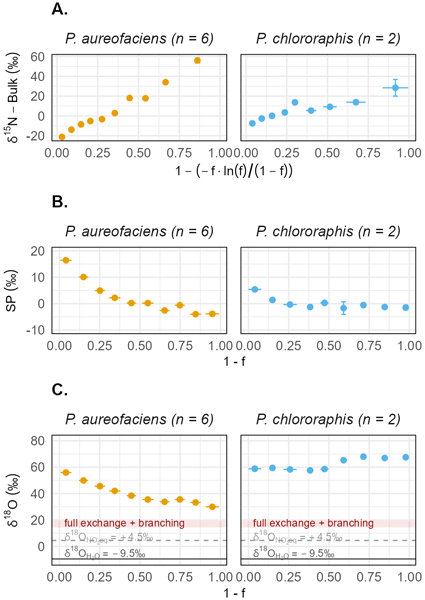
Noémy Chénier, Paul M. Magyar, Jakob Zopfi, Claudia Frey, Thomas Kuhn, Moritz F. Lehmann, and Joachim Mohn
Biogeosciences, 23, 6705–6724, https://doi.org/10.5194/bg-23-6705-2026, https://doi.org/10.5194/bg-23-6705-2026, 2026
Short summary
Short summary
N₂O is a greenhouse gas produced by microbes during nitrogen cycling. We studied two bacterial species and found that the isotope signatures of the N₂O they produced changed strongly depending on growth conditions and cell activity. Early during growth, the distribution of N isotopes within the N₂O molecule also changed unexpectedly. These results show that N₂O isotope signatures are more variable than previously assumed and depend strongly on physiology.
Vertti Kettunen, Tuula Aalto, Henry C. Bittig, Jukka-Pekka Jalkanen, Lauri Laakso, Anteneh Mengistu, Gregor Rehder, Maria Tenkanen, and Martti Honkanen
EGUsphere, https://doi.org/10.5194/egusphere-2026-5442, https://doi.org/10.5194/egusphere-2026-5442, 2026
This preprint is open for discussion and under review for Ocean Science (OS).
Short summary
Short summary
The Baltic Sea carbon balance was estimated using two independent observation-based methods during a 3-year period. One method indicated that the Baltic Sea was a carbon dioxide sink, while the other indicated a source. Ship emissions increased the net carbon dioxide flux to the atmosphere. Despite differences in the overall balance, the methods showed similar patterns in several regions. The results show that both shipping and the method used strongly affect the estimated carbon balance.
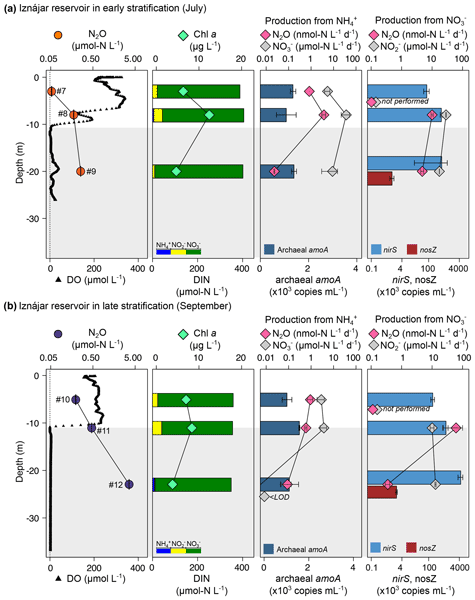
Elizabeth Leon-Palmero, Claudia Frey, Bess B. Ward, Rafael Morales-Baquero, and Isabel Reche
Biogeosciences, 23, 3887–3905, https://doi.org/10.5194/bg-23-3887-2026, https://doi.org/10.5194/bg-23-3887-2026, 2026
Short summary
Short summary
Reservoirs act as nitrogen sinks and emit nitrous oxide, a potent greenhouse gas and major ozone-depleting substance. We studied two reservoirs and found that nitrification and denitrification produce nitrous oxide in the water column, but denitrification is the main source, fueled by fresh organic matter from phytoplankton. Our results also suggest that nitrous oxide is actively consumed. This study highlights the need to include reservoirs in global nitrous oxide budgets.
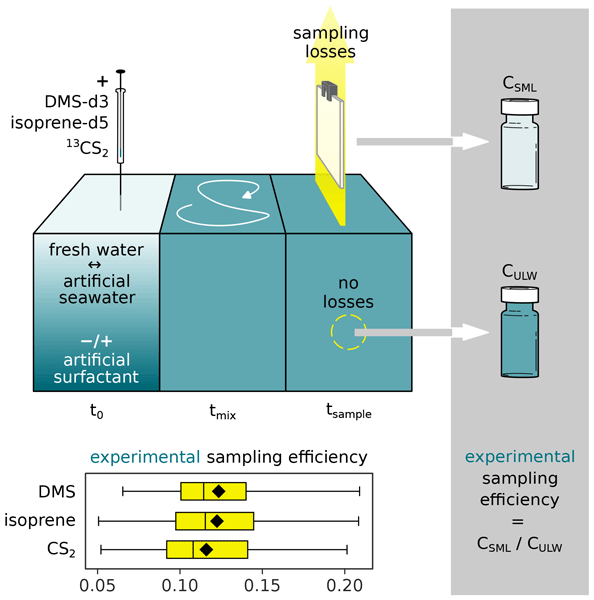
Lea Lange, Dennis Booge, Hendrik Feil, Josefine Karnatz, Ina Stoltenberg, Hermann W. Bange, and Christa A. Marandino
Biogeosciences, 23, 3517–3539, https://doi.org/10.5194/bg-23-3517-2026, https://doi.org/10.5194/bg-23-3517-2026, 2026
Short summary
Short summary
Many gases formed and destroyed in the ocean influence climate and air quality, with evidence that these processes also happen in the skin of the ocean. Studies of this thin upper layer use specialized sampling equipment, which is known to cause losses of the gases. We performed lab experiments to quantify these losses for three gases and found that 13 % remain after sampling. With further tests, our results can be used to obtain reliable gas measurements in the field, which have been elusive.
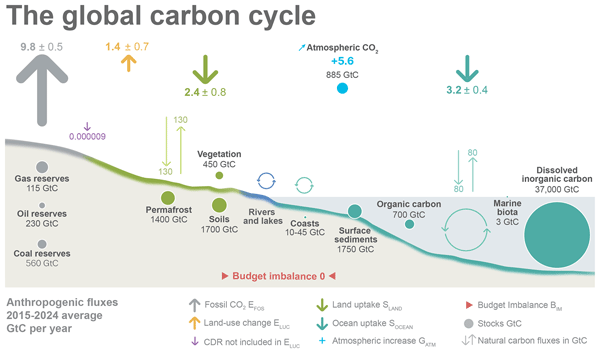
Pierre Friedlingstein, Michael O'Sullivan, Matthew W. Jones, Robbie M. Andrew, Dorothee C. E. Bakker, Judith Hauck, Peter Landschützer, Corinne Le Quéré, Hongmei Li, Ingrid T. Luijkx, Glen P. Peters, Wouter Peters, Julia Pongratz, Clemens Schwingshackl, Stephen Sitch, Josep G. Canadell, Philippe Ciais, Kjetil Aas, Simone R. Alin, Peter Anthoni, Leticia Barbero, Nicholas R. Bates, Nicolas Bellouin, Alice Benoit-Cattin, Carla F. Berghoff, Raffaele Bernardello, Laurent Bopp, Ida Bagus Mandhara Brasika, Matthew A. Chamberlain, Naveen Chandra, Frédéric Chevallier, Louise P. Chini, Nathan O. Collier, Thomas H. Colligan, Margot Cronin, Laique M. Djeutchouang, Xinyu Dou, Matt P. Enright, Kazutaka Enyo, Michael Erb, Wiley Evans, Richard A. Feely, Liang Feng, Daniel J. Ford, Adrianna Foster, Filippa Fransner, Thomas Gasser, Marion Gehlen, Thanos Gkritzalis, Jefferson Goncalves De Souza, Giacomo Grassi, Luke Gregor, Nicolas Gruber, Bertrand Guenet, Özgür Gürses, Kirsty Harrington, Ian Harris, Jens Heinke, George C. Hurtt, Yosuke Iida, Tatiana Ilyina, Akihiko Ito, Andrew R. Jacobson, Atul K. Jain, Tereza Jarníková, Annika Jersild, Fei Jiang, Steve D. Jones, Etsushi Kato, Ralph F. Keeling, Kees Klein Goldewijk, Jürgen Knauer, Yawen Kong, Jan Ivar Korsbakken, Charles Koven, Taro Kunimitsu, Xin Lan, Junjie Liu, Zhiqiang Liu, Zhu Liu, Claire Lo Monaco, Lei Ma, Gregg Marland, Patrick C. McGuire, Galen A. McKinley, Joe R. Melton, Natalie Monacci, Erwan Monier, Eric J. Morgan, David R. Munro, Jens D. Müller, Shin-Ichiro Nakaoka, Lorna R. Nayagam, Yosuke Niwa, Tobias Nutzel, Are Olsen, Abdirahman M. Omar, Naiqing Pan, Sudhanshu Pandey, Denis Pierrot, Zhangcai Qin, Pierre Regnier, Gregor Rehder, Laure Resplandy, Alizée Roobaert, Thais M. Rosan, Christian Rödenbeck, Jörg Schwinger, Ingunn Skjelvan, T. Luke Smallman, Victoria Spada, Mohanan G. Sreeush, Qing Sun, Adrienne J. Sutton, Colm Sweeney, Didier Swingedouw, Roland Séférian, Shintaro Takao, Hiroaki Tatebe, Hanqin Tian, Xiangjun Tian, Bronte Tilbrook, Hiroyuki Tsujino, Francesco Tubiello, Erik van Ooijen, Guido R. van der Werf, Sebastiaan J. van de Velde, Anthony P. Walker, Rik Wanninkhof, Xiaojuan Yang, Wenping Yuan, Xu Yue, and Jiye Zeng
Earth Syst. Sci. Data, 18, 3211–3288, https://doi.org/10.5194/essd-18-3211-2026, https://doi.org/10.5194/essd-18-3211-2026, 2026
Short summary
Short summary
The Global Carbon Budget 2025 describes the methodology, main results, and datasets used to quantify the anthropogenic emissions of carbon dioxide (CO2) and their partitioning among the atmosphere, land ecosystems, and the ocean over the historical period (1750–2025). These living datasets are updated every year to provide the highest transparency and traceability in the reporting of CO2, the key driver of climate change.
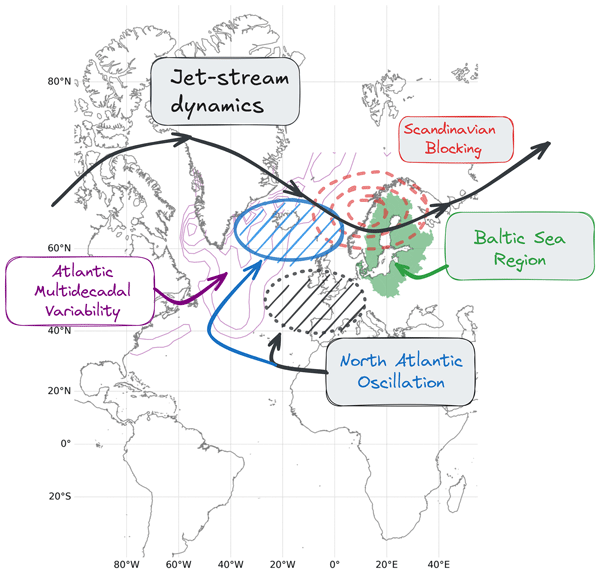
Florian Börgel, Itzel Ruvalcaba Baroni, Leonie Barghorn, Leonard Borchert, Bronwyn Cahill, Cyril Dutheil, Leonie Esters, Małgorzata Falarz, Helena L. Filipsson, Matthias Gröger, Jari Hänninen, Magnus Hieronymus, Erko Jakobson, Mehdi Pasha Karami, Karol Kuliński, Taavi Liblik, H. E. Markus Meier, Gabriele Messori, Lev Naumov, Thomas Neumann, Piia Post, Gregor Rehder, Anna Rutgersson, and Georg Sebastian Voelker
Earth Syst. Dynam., 17, 415–450, https://doi.org/10.5194/esd-17-415-2026, https://doi.org/10.5194/esd-17-415-2026, 2026
Short summary
Short summary
This review explains how weather patterns, guided by the polar jet stream, influence the Baltic Sea’s climate and ecosystem. It covers the North Atlantic Oscillation, blocking events and other processes and discusses how they affect temperature, rainfall, and storms from days to decades. These shifts then impact oxygen levels, productivity, and acidification in the Baltic Sea. Physical links are fairly well known, but biogeochemical pathways remain uncertain.
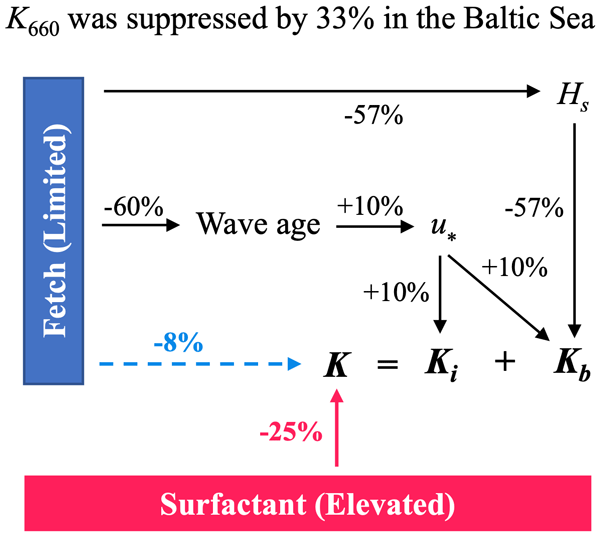
Yuanxu Dong, Christa A. Marandino, Ryo Dobashi, David T. Ho, Gregor Rehder, Henry C. Bittig, Josefine Karnatz, Bita Sabbaghzadeh, Helen Czerski, and Anja Engel
Atmos. Chem. Phys., 26, 5567–5587, https://doi.org/10.5194/acp-26-5567-2026, https://doi.org/10.5194/acp-26-5567-2026, 2026
Short summary
Short summary
Air-sea gas exchange regulates the Earth’s climate. However, the description of the kinetic exchange process only uses wind speed, neglecting other drivers. In this study, we investigate how fetch and natural surfactants modulate air-sea carbon dioxide exchange. Measurements from the central Baltic Sea show that limited fetch and elevated surfactants significantly suppress this exchange. A new parameterisation is provided, improving regional carbon budgets and evaluations of climate solutions.
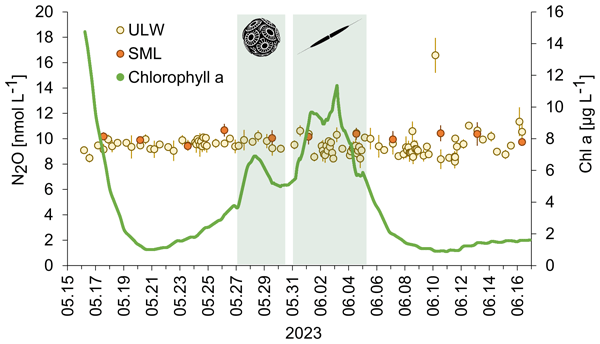
Ina Stoltenberg, Lea Lange, and Hermann W. Bange
Biogeosciences, 23, 1515–1525, https://doi.org/10.5194/bg-23-1515-2026, https://doi.org/10.5194/bg-23-1515-2026, 2026
Short summary
Short summary
In order to decipher the effect of a phytoplankton bloom on N2O, dissolved N2O was measured in the upper 1 mm of the water column (seasurface microlayer) and in the underlying water during a mesocosm study. N2O concentrations were slightly enriched in the microlayer compared to the underlying water and were apparently not affected by irradiation and a phytoplankton bloom. Our results indicate that the role of the surface microlayer for N2O cycling has been overlooked so far.
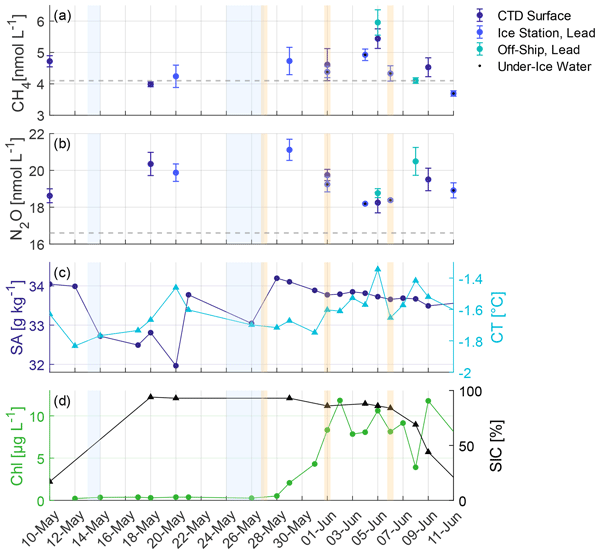
Lina A. Holthusen, Hermann W. Bange, Thomas H. Badewien, Julia C. Muchowski, Tina Santl-Temkiv, Jennie Spicker Schmidt, Oliver Wurl, and Damian L. Arévalo-Martínez
The Cryosphere, 20, 535–550, https://doi.org/10.5194/tc-20-535-2026, https://doi.org/10.5194/tc-20-535-2026, 2026
Short summary
Short summary
In spring 2023, in the Fram Strait, we investigated the near-surface distribution of the greenhouse gases methane and nitrous oxide in open leads and under sea ice to address the lack of observations in the Arctic Ocean. The study area acted as a source for both gases, and the onset of sea ice melt affected their concentrations and emissions. Surface-active substances accumulated in the sea-surface microlayer of open leads during an algal bloom, potentially attenuating greenhouse gas emissions.
Joachim Schönfeld, Hermann W. Bange, Helmke Hepach, and Svenja Reents
Biogeosciences, 23, 421–440, https://doi.org/10.5194/bg-23-421-2026, https://doi.org/10.5194/bg-23-421-2026, 2026
Short summary
Short summary
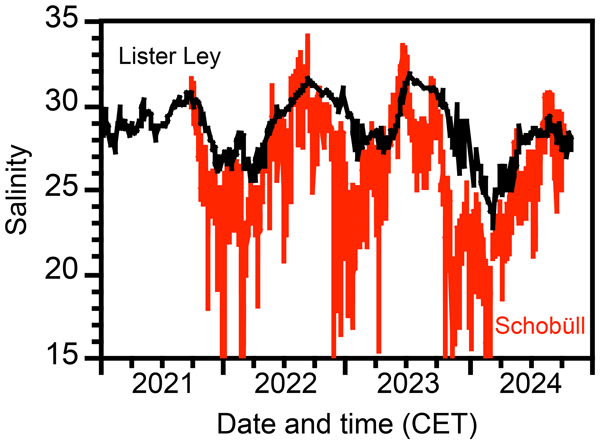
The current state of intertidal waters at Bottsand lagoon on the Baltic Sea coast, and on the mudflats off Schobüll on the North Sea coast of Schleswig-Holstein, Germany was assessed with a 36-month time series of water level, temperature, and salinity measurements. Periods of strong precipitation, high Elbe river discharge, and high solar radiation caused a higher data variability as compared to the off shore monitoring stations Boknis Eck in the Baltic and Sylt Roads in the North Sea.
Alessandra Mazzoli, Peter Reichert, Claudia Frey, Cameron M. Callbeck, Tim J. Paulus, Jakob Zopfi, and Moritz F. Lehmann
Biogeosciences, 23, 283–314, https://doi.org/10.5194/bg-23-283-2026, https://doi.org/10.5194/bg-23-283-2026, 2026
Short summary
Short summary
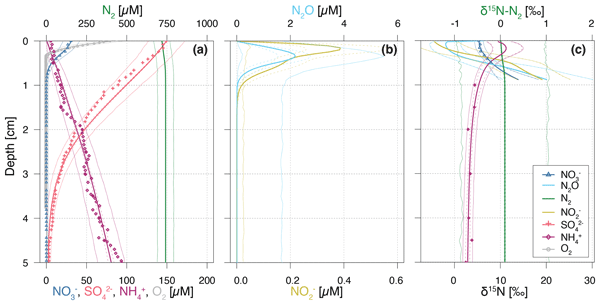
Nitrogen (re-)cycling in sediments plays a key role in aquatic environments, but involves many overlapping biogeochemical processes that are hard to separate. We developed a new comprehensive sedimentary nitrogen isotope model to disentangle these reactions. Using field data from a Swiss lake and statistical tools, we demonstrated the robustness and validity of our modelling framework for a broad range of applications.
Gesa Schulz, Kirstin Dähnke, Tina Sanders, Jan Penopp, Hermann W. Bange, Rena Czeschel, and Birgit Gaye
Biogeosciences, 22, 5943–5959, https://doi.org/10.5194/bg-22-5943-2025, https://doi.org/10.5194/bg-22-5943-2025, 2025
Short summary
Short summary
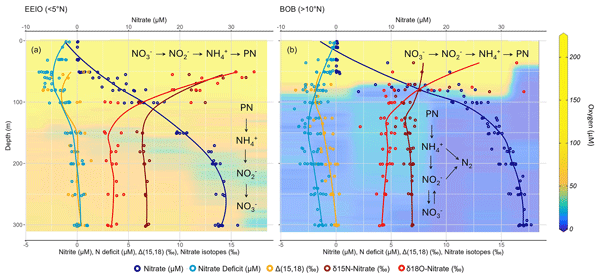
Oxygen-minimum zones (OMZs) are low-oxygen ocean areas that deplete nitrogen, a key marine nutrient. Understanding nitrogen cycling in OMZs is crucial for the global nitrogen cycle. This study examined nitrogen cycling in the OMZ of the Bay of Bengal and the East Equatorial Indian Ocean, revealing limited mixing between both regions. Surface phytoplankton consumes nitrate, while deeper nitrification recycles nitrogen. In the BoB’s OMZ (100–300 m), nitrogen loss likely occurs via anammox.
Daniel L. Pönisch, Henry C. Bittig, Martin Kolbe, Ingo Schuffenhauer, Stefan Otto, Peter Holtermann, Kusala Premaratne, and Gregor Rehder
Biogeosciences, 22, 3583–3614, https://doi.org/10.5194/bg-22-3583-2025, https://doi.org/10.5194/bg-22-3583-2025, 2025
Short summary
Short summary
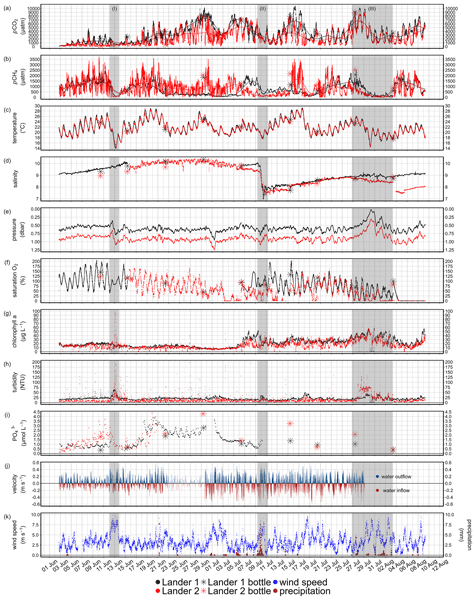
Rewetted peatlands exhibit natural spatiotemporal biogeochemical heterogeneity, influenced by water level and vegetation. This study investigated the variability of greenhouse gas distribution in a peatland rewetted with brackish water. Two innovative sensor-equipped platforms were used to measure a wide range of marine physicochemical variables at high temporal resolution. The measurements revealed strong fluctuations in CO2 and CH4, expressed as multi-day, diurnal, and event-based variability.

Johnathan Daniel Maxey, Neil D. Hartstein, Hermann W. Bange, and Moritz Müller
Biogeosciences, 21, 5613–5637, https://doi.org/10.5194/bg-21-5613-2024, https://doi.org/10.5194/bg-21-5613-2024, 2024
Short summary
Short summary
The distribution of N2O in fjord-like estuaries is poorly described in the Southern Hemisphere. Our study describes N2O distribution and its drivers in one such system in Macquarie Harbour, Tasmania. Water samples were collected seasonally in 2022 and 2023. Results show the system removes atmospheric N2O when river flow is high, whereas the system emits N2O when the river flow is low. N2O generated in basins is intercepted by the surface water and exported to the ocean during high river flow.
Silvie Lainela, Erik Jacobs, Stella-Theresa Luik, Gregor Rehder, and Urmas Lips
Biogeosciences, 21, 4495–4519, https://doi.org/10.5194/bg-21-4495-2024, https://doi.org/10.5194/bg-21-4495-2024, 2024
Short summary
Short summary
We evaluate the variability of carbon dioxide and methane in the surface layer of the north-eastern basins of the Baltic Sea in 2018. We show that the shallower coastal areas have considerably higher spatial variability and seasonal amplitude of surface layer pCO2 and cCH4 than measured in the offshore areas of the Baltic Sea. Despite this high variability, caused mostly by coastal physical processes, the average annual air–sea CO2 fluxes differed only marginally between the sub-basins.
Riel Carlo O. Ingeniero, Gesa Schulz, and Hermann W. Bange
Biogeosciences, 21, 3425–3440, https://doi.org/10.5194/bg-21-3425-2024, https://doi.org/10.5194/bg-21-3425-2024, 2024
Short summary
Short summary
Our research is the first to measure dissolved NO concentrations in temperate estuarine waters, providing insights into its distribution under varying conditions and enhancing our understanding of its production processes. Dissolved NO was supersaturated in the Elbe Estuary, indicating that it is a source of atmospheric NO. The observed distribution of dissolved NO most likely resulted from nitrification.
Colette L. Kelly, Nicole M. Travis, Pascale Anabelle Baya, Claudia Frey, Xin Sun, Bess B. Ward, and Karen L. Casciotti
Biogeosciences, 21, 3215–3238, https://doi.org/10.5194/bg-21-3215-2024, https://doi.org/10.5194/bg-21-3215-2024, 2024
Short summary
Short summary
Nitrous oxide, a potent greenhouse gas, accumulates in regions of the ocean that are low in dissolved oxygen. We used a novel combination of chemical tracers to determine how nitrous oxide is produced in one of these regions, the eastern tropical North Pacific Ocean. Our experiments showed that the two most important sources of nitrous oxide under low-oxygen conditions are denitrification, an anaerobic process, and a novel “hybrid” process performed by ammonia-oxidizing archaea.

Hanqin Tian, Naiqing Pan, Rona L. Thompson, Josep G. Canadell, Parvadha Suntharalingam, Pierre Regnier, Eric A. Davidson, Michael Prather, Philippe Ciais, Marilena Muntean, Shufen Pan, Wilfried Winiwarter, Sönke Zaehle, Feng Zhou, Robert B. Jackson, Hermann W. Bange, Sarah Berthet, Zihao Bian, Daniele Bianchi, Alexander F. Bouwman, Erik T. Buitenhuis, Geoffrey Dutton, Minpeng Hu, Akihiko Ito, Atul K. Jain, Aurich Jeltsch-Thömmes, Fortunat Joos, Sian Kou-Giesbrecht, Paul B. Krummel, Xin Lan, Angela Landolfi, Ronny Lauerwald, Ya Li, Chaoqun Lu, Taylor Maavara, Manfredi Manizza, Dylan B. Millet, Jens Mühle, Prabir K. Patra, Glen P. Peters, Xiaoyu Qin, Peter Raymond, Laure Resplandy, Judith A. Rosentreter, Hao Shi, Qing Sun, Daniele Tonina, Francesco N. Tubiello, Guido R. van der Werf, Nicolas Vuichard, Junjie Wang, Kelley C. Wells, Luke M. Western, Chris Wilson, Jia Yang, Yuanzhi Yao, Yongfa You, and Qing Zhu
Earth Syst. Sci. Data, 16, 2543–2604, https://doi.org/10.5194/essd-16-2543-2024, https://doi.org/10.5194/essd-16-2543-2024, 2024
Short summary
Short summary
Atmospheric concentrations of nitrous oxide (N2O), a greenhouse gas 273 times more potent than carbon dioxide, have increased by 25 % since the preindustrial period, with the highest observed growth rate in 2020 and 2021. This rapid growth rate has primarily been due to a 40 % increase in anthropogenic emissions since 1980. Observed atmospheric N2O concentrations in recent years have exceeded the worst-case climate scenario, underscoring the importance of reducing anthropogenic N2O emissions.
Henry C. Bittig, Erik Jacobs, Thomas Neumann, and Gregor Rehder
Earth Syst. Sci. Data, 16, 753–773, https://doi.org/10.5194/essd-16-753-2024, https://doi.org/10.5194/essd-16-753-2024, 2024
Short summary
Short summary
We present a pCO2 climatology of the Baltic Sea using a new approach to extrapolate from individual observations to the entire Baltic Sea. The extrapolation approach uses (a) a model to inform on how data at one location are connected to data at other locations, together with (b) very accurate pCO2 observations from 2003 to 2021 as the base data. The climatology can be used e.g. to assess uptake and release of CO2 or to identify extreme events.
Pierre Friedlingstein, Michael O'Sullivan, Matthew W. Jones, Robbie M. Andrew, Dorothee C. E. Bakker, Judith Hauck, Peter Landschützer, Corinne Le Quéré, Ingrid T. Luijkx, Glen P. Peters, Wouter Peters, Julia Pongratz, Clemens Schwingshackl, Stephen Sitch, Josep G. Canadell, Philippe Ciais, Robert B. Jackson, Simone R. Alin, Peter Anthoni, Leticia Barbero, Nicholas R. Bates, Meike Becker, Nicolas Bellouin, Bertrand Decharme, Laurent Bopp, Ida Bagus Mandhara Brasika, Patricia Cadule, Matthew A. Chamberlain, Naveen Chandra, Thi-Tuyet-Trang Chau, Frédéric Chevallier, Louise P. Chini, Margot Cronin, Xinyu Dou, Kazutaka Enyo, Wiley Evans, Stefanie Falk, Richard A. Feely, Liang Feng, Daniel J. Ford, Thomas Gasser, Josefine Ghattas, Thanos Gkritzalis, Giacomo Grassi, Luke Gregor, Nicolas Gruber, Özgür Gürses, Ian Harris, Matthew Hefner, Jens Heinke, Richard A. Houghton, George C. Hurtt, Yosuke Iida, Tatiana Ilyina, Andrew R. Jacobson, Atul Jain, Tereza Jarníková, Annika Jersild, Fei Jiang, Zhe Jin, Fortunat Joos, Etsushi Kato, Ralph F. Keeling, Daniel Kennedy, Kees Klein Goldewijk, Jürgen Knauer, Jan Ivar Korsbakken, Arne Körtzinger, Xin Lan, Nathalie Lefèvre, Hongmei Li, Junjie Liu, Zhiqiang Liu, Lei Ma, Greg Marland, Nicolas Mayot, Patrick C. McGuire, Galen A. McKinley, Gesa Meyer, Eric J. Morgan, David R. Munro, Shin-Ichiro Nakaoka, Yosuke Niwa, Kevin M. O'Brien, Are Olsen, Abdirahman M. Omar, Tsuneo Ono, Melf Paulsen, Denis Pierrot, Katie Pocock, Benjamin Poulter, Carter M. Powis, Gregor Rehder, Laure Resplandy, Eddy Robertson, Christian Rödenbeck, Thais M. Rosan, Jörg Schwinger, Roland Séférian, T. Luke Smallman, Stephen M. Smith, Reinel Sospedra-Alfonso, Qing Sun, Adrienne J. Sutton, Colm Sweeney, Shintaro Takao, Pieter P. Tans, Hanqin Tian, Bronte Tilbrook, Hiroyuki Tsujino, Francesco Tubiello, Guido R. van der Werf, Erik van Ooijen, Rik Wanninkhof, Michio Watanabe, Cathy Wimart-Rousseau, Dongxu Yang, Xiaojuan Yang, Wenping Yuan, Xu Yue, Sönke Zaehle, Jiye Zeng, and Bo Zheng
Earth Syst. Sci. Data, 15, 5301–5369, https://doi.org/10.5194/essd-15-5301-2023, https://doi.org/10.5194/essd-15-5301-2023, 2023
Short summary
Short summary
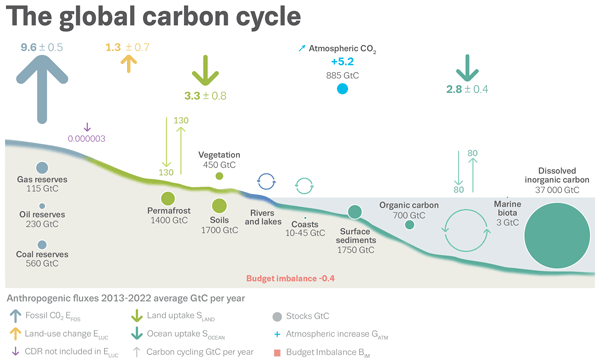
The Global Carbon Budget 2023 describes the methodology, main results, and data sets used to quantify the anthropogenic emissions of carbon dioxide (CO2) and their partitioning among the atmosphere, land ecosystems, and the ocean over the historical period (1750–2023). These living datasets are updated every year to provide the highest transparency and traceability in the reporting of CO2, the key driver of climate change.
Weiyi Tang, Bess B. Ward, Michael Beman, Laura Bristow, Darren Clark, Sarah Fawcett, Claudia Frey, François Fripiat, Gerhard J. Herndl, Mhlangabezi Mdutyana, Fabien Paulot, Xuefeng Peng, Alyson E. Santoro, Takuhei Shiozaki, Eva Sintes, Charles Stock, Xin Sun, Xianhui S. Wan, Min N. Xu, and Yao Zhang
Earth Syst. Sci. Data, 15, 5039–5077, https://doi.org/10.5194/essd-15-5039-2023, https://doi.org/10.5194/essd-15-5039-2023, 2023
Short summary
Short summary
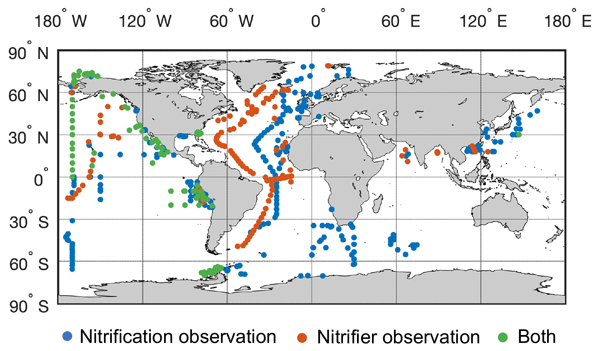
Nitrification and nitrifiers play an important role in marine nitrogen and carbon cycles by converting ammonium to nitrite and nitrate. Nitrification could affect microbial community structure, marine productivity, and the production of nitrous oxide – a powerful greenhouse gas. We introduce the newly constructed database of nitrification and nitrifiers in the marine water column and guide future research efforts in field observations and model development of nitrification.
Gesa Schulz, Tina Sanders, Yoana G. Voynova, Hermann W. Bange, and Kirstin Dähnke
Biogeosciences, 20, 3229–3247, https://doi.org/10.5194/bg-20-3229-2023, https://doi.org/10.5194/bg-20-3229-2023, 2023
Short summary
Short summary
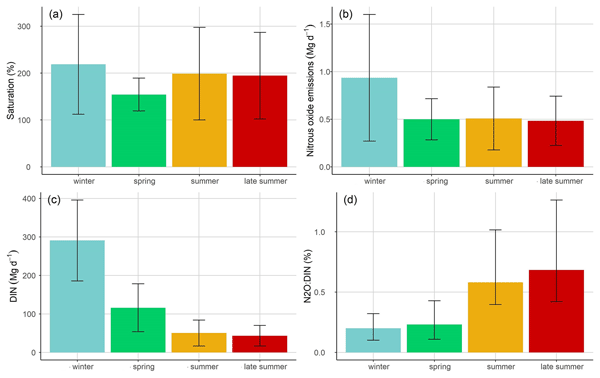
Nitrous oxide (N2O) is an important greenhouse gas. However, N2O emissions from estuaries underlie significant uncertainties due to limited data availability and high spatiotemporal variability. We found the Elbe Estuary (Germany) to be a year-round source of N2O, with the highest emissions in winter along with high nitrogen loads. However, in spring and summer, N2O emissions did not decrease alongside lower nitrogen loads because organic matter fueled in situ N2O production along the estuary.
John C. Tracey, Andrew R. Babbin, Elizabeth Wallace, Xin Sun, Katherine L. DuRussel, Claudia Frey, Donald E. Martocello III, Tyler Tamasi, Sergey Oleynik, and Bess B. Ward
Biogeosciences, 20, 2499–2523, https://doi.org/10.5194/bg-20-2499-2023, https://doi.org/10.5194/bg-20-2499-2023, 2023
Short summary
Short summary
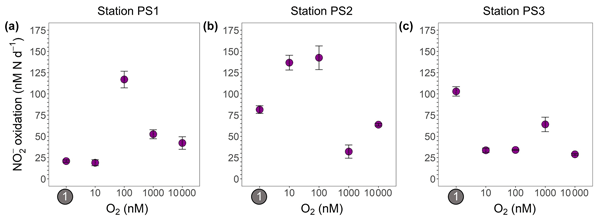
Nitrogen (N) is essential for life; thus, its availability plays a key role in determining marine productivity. Using incubations of seawater spiked with a rare form of N measurable on a mass spectrometer, we quantified microbial pathways that determine marine N availability. The results show that pathways that recycle N have higher rates than those that result in its loss from biomass and present new evidence for anaerobic nitrite oxidation, a process long thought to be strictly aerobic.
Guanlin Li, Damian L. Arévalo-Martínez, Riel Carlo O. Ingeniero, and Hermann W. Bange
EGUsphere, https://doi.org/10.5194/egusphere-2023-771, https://doi.org/10.5194/egusphere-2023-771, 2023
Preprint archived
Short summary
Short summary
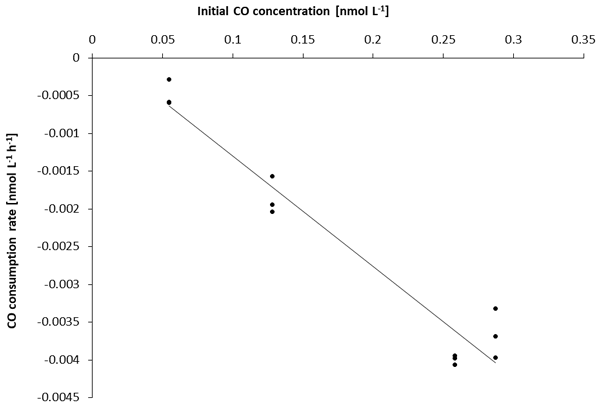
Dissolved carbon monoxide (CO) surface concentrations were first measured at 14 stations in the Ria Formosa Lagoon system in May 2021. Ria Formosa was a source of atmospheric CO. Microbial consumption accounted for 83 % of the CO production. The results of a 48-hour irradiation experiment with aquaculture effluent water indicated that aquaculture facilities in the Ria Formosa Lagoon seem to be a negligible source of atmospheric CO.
Hanna I. Campen, Damian L. Arévalo-Martínez, and Hermann W. Bange
Biogeosciences, 20, 1371–1379, https://doi.org/10.5194/bg-20-1371-2023, https://doi.org/10.5194/bg-20-1371-2023, 2023
Short summary
Short summary
Carbon monoxide (CO) is a climate-relevant trace gas emitted from the ocean. However, oceanic CO cycling is understudied. Results from incubation experiments conducted in the Fram Strait (Arctic Ocean) indicated that (i) pH did not affect CO cycling and (ii) enhanced CO production and consumption were positively correlated with coloured dissolved organic matter and nitrate concentrations. This suggests microbial CO uptake to be the driving factor for CO cycling in the Arctic Ocean.
Damian L. Arévalo-Martínez, Amir Haroon, Hermann W. Bange, Ercan Erkul, Marion Jegen, Nils Moosdorf, Jens Schneider von Deimling, Christian Berndt, Michael Ernst Böttcher, Jasper Hoffmann, Volker Liebetrau, Ulf Mallast, Gudrun Massmann, Aaron Micallef, Holly A. Michael, Hendrik Paasche, Wolfgang Rabbel, Isaac Santos, Jan Scholten, Katrin Schwalenberg, Beata Szymczycha, Ariel T. Thomas, Joonas J. Virtasalo, Hannelore Waska, and Bradley A. Weymer
Biogeosciences, 20, 647–662, https://doi.org/10.5194/bg-20-647-2023, https://doi.org/10.5194/bg-20-647-2023, 2023
Short summary
Short summary
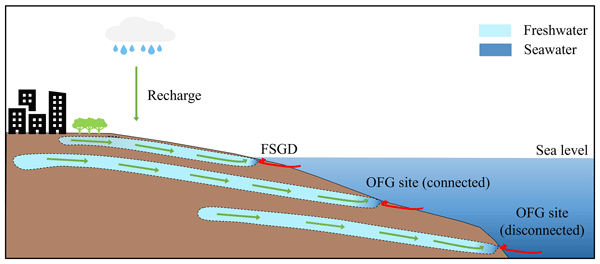
Groundwater flows at the land–ocean transition and the extent of freshened groundwater below the seafloor are increasingly relevant in marine sciences, both because they are a highly uncertain term of biogeochemical budgets and due to the emerging interest in the latter as a resource. Here, we discuss our perspectives on future research directions to better understand land–ocean connectivity through groundwater and its potential responses to natural and human-induced environmental changes.
Daniel L. Pönisch, Anne Breznikar, Cordula N. Gutekunst, Gerald Jurasinski, Maren Voss, and Gregor Rehder
Biogeosciences, 20, 295–323, https://doi.org/10.5194/bg-20-295-2023, https://doi.org/10.5194/bg-20-295-2023, 2023
Short summary
Short summary
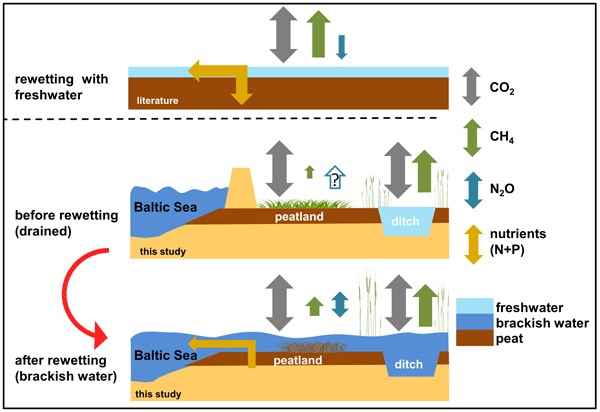
Peatland rewetting is known to reduce dissolved nutrients and greenhouse gases; however, short-term nutrient leaching and high CH4 emissions shortly after rewetting are likely to occur. We investigated the rewetting of a coastal peatland with brackish water and its effects on nutrient release and greenhouse gas fluxes. Nutrient concentrations were higher in the peatland than in the adjacent bay, leading to an export. CH4 emissions did not increase, which is in contrast to freshwater rewetting.
Thomas Neumann, Hagen Radtke, Bronwyn Cahill, Martin Schmidt, and Gregor Rehder
Geosci. Model Dev., 15, 8473–8540, https://doi.org/10.5194/gmd-15-8473-2022, https://doi.org/10.5194/gmd-15-8473-2022, 2022
Short summary
Short summary
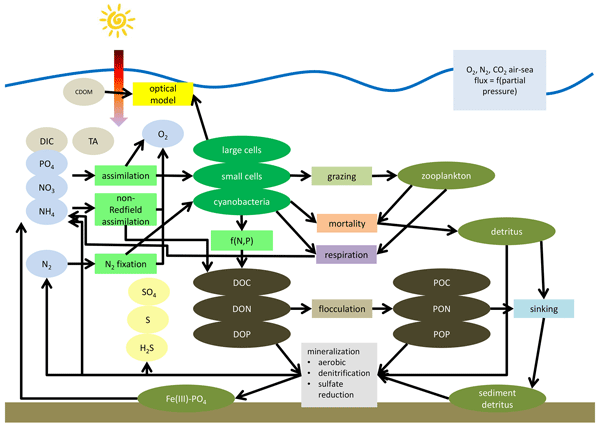
Marine ecosystem models are usually constrained by the elements nitrogen and phosphorus and consider carbon in organic matter in a fixed ratio. Recent observations show a substantial deviation from the simulated carbon cycle variables. In this study, we present a marine ecosystem model for the Baltic Sea which allows for a flexible uptake ratio for carbon, nitrogen, and phosphorus. With this extension, the model reflects much more reasonable variables of the marine carbon cycle.

Sonja Gindorf, Hermann W. Bange, Dennis Booge, and Annette Kock
Biogeosciences, 19, 4993–5006, https://doi.org/10.5194/bg-19-4993-2022, https://doi.org/10.5194/bg-19-4993-2022, 2022
Short summary
Short summary
Methane is a climate-relevant greenhouse gas which is emitted to the atmosphere from coastal areas such as the Baltic Sea. We measured the methane concentration in the water column of the western Kiel Bight. Methane concentrations were higher in September than in June. We found no relationship between the 2018 European heatwave and methane concentrations. Our results show that the methane distribution in the water column is strongly affected by temporal and spatial variabilities.
Pierre Friedlingstein, Matthew W. Jones, Michael O'Sullivan, Robbie M. Andrew, Dorothee C. E. Bakker, Judith Hauck, Corinne Le Quéré, Glen P. Peters, Wouter Peters, Julia Pongratz, Stephen Sitch, Josep G. Canadell, Philippe Ciais, Rob B. Jackson, Simone R. Alin, Peter Anthoni, Nicholas R. Bates, Meike Becker, Nicolas Bellouin, Laurent Bopp, Thi Tuyet Trang Chau, Frédéric Chevallier, Louise P. Chini, Margot Cronin, Kim I. Currie, Bertrand Decharme, Laique M. Djeutchouang, Xinyu Dou, Wiley Evans, Richard A. Feely, Liang Feng, Thomas Gasser, Dennis Gilfillan, Thanos Gkritzalis, Giacomo Grassi, Luke Gregor, Nicolas Gruber, Özgür Gürses, Ian Harris, Richard A. Houghton, George C. Hurtt, Yosuke Iida, Tatiana Ilyina, Ingrid T. Luijkx, Atul Jain, Steve D. Jones, Etsushi Kato, Daniel Kennedy, Kees Klein Goldewijk, Jürgen Knauer, Jan Ivar Korsbakken, Arne Körtzinger, Peter Landschützer, Siv K. Lauvset, Nathalie Lefèvre, Sebastian Lienert, Junjie Liu, Gregg Marland, Patrick C. McGuire, Joe R. Melton, David R. Munro, Julia E. M. S. Nabel, Shin-Ichiro Nakaoka, Yosuke Niwa, Tsuneo Ono, Denis Pierrot, Benjamin Poulter, Gregor Rehder, Laure Resplandy, Eddy Robertson, Christian Rödenbeck, Thais M. Rosan, Jörg Schwinger, Clemens Schwingshackl, Roland Séférian, Adrienne J. Sutton, Colm Sweeney, Toste Tanhua, Pieter P. Tans, Hanqin Tian, Bronte Tilbrook, Francesco Tubiello, Guido R. van der Werf, Nicolas Vuichard, Chisato Wada, Rik Wanninkhof, Andrew J. Watson, David Willis, Andrew J. Wiltshire, Wenping Yuan, Chao Yue, Xu Yue, Sönke Zaehle, and Jiye Zeng
Earth Syst. Sci. Data, 14, 1917–2005, https://doi.org/10.5194/essd-14-1917-2022, https://doi.org/10.5194/essd-14-1917-2022, 2022
Short summary
Short summary
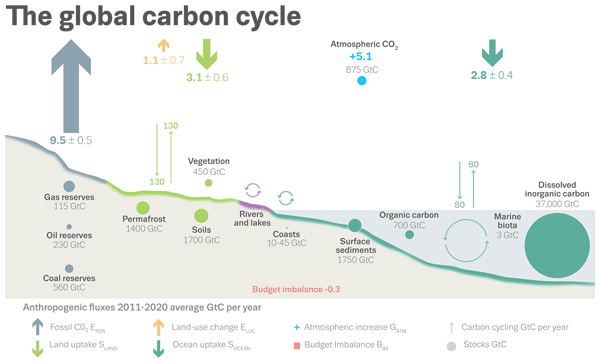
The Global Carbon Budget 2021 describes the data sets and methodology used to quantify the emissions of carbon dioxide and their partitioning among the atmosphere, land, and ocean. These living data are updated every year to provide the highest transparency and traceability in the reporting of CO2, the key driver of climate change.
Karol Kuliński, Gregor Rehder, Eero Asmala, Alena Bartosova, Jacob Carstensen, Bo Gustafsson, Per O. J. Hall, Christoph Humborg, Tom Jilbert, Klaus Jürgens, H. E. Markus Meier, Bärbel Müller-Karulis, Michael Naumann, Jørgen E. Olesen, Oleg Savchuk, Andreas Schramm, Caroline P. Slomp, Mikhail Sofiev, Anna Sobek, Beata Szymczycha, and Emma Undeman
Earth Syst. Dynam., 13, 633–685, https://doi.org/10.5194/esd-13-633-2022, https://doi.org/10.5194/esd-13-633-2022, 2022
Short summary
Short summary
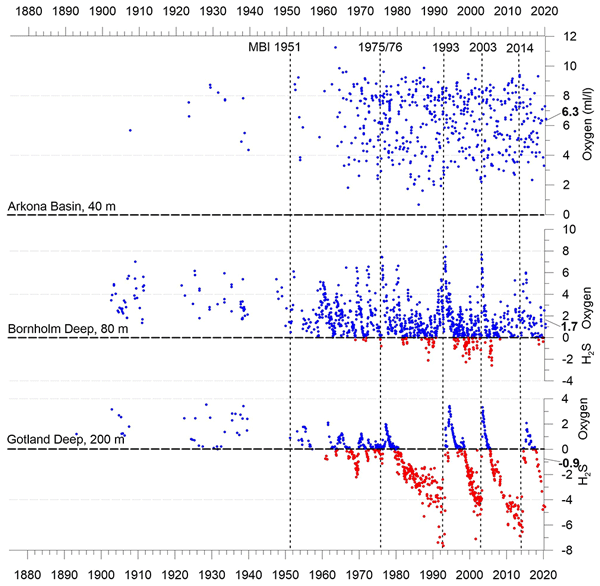
The paper covers the aspects related to changes in carbon, nitrogen, and phosphorus (C, N, P) external loads; their transformations in the coastal zone; changes in organic matter production (eutrophication) and remineralization (oxygen availability); and the role of sediments in burial and turnover of C, N, and P. Furthermore, this paper also focuses on changes in the marine CO2 system, the structure of the microbial community, and the role of contaminants for biogeochemical processes.
Yanan Zhao, Dennis Booge, Christa A. Marandino, Cathleen Schlundt, Astrid Bracher, Elliot L. Atlas, Jonathan Williams, and Hermann W. Bange
Biogeosciences, 19, 701–714, https://doi.org/10.5194/bg-19-701-2022, https://doi.org/10.5194/bg-19-701-2022, 2022
Short summary
Short summary
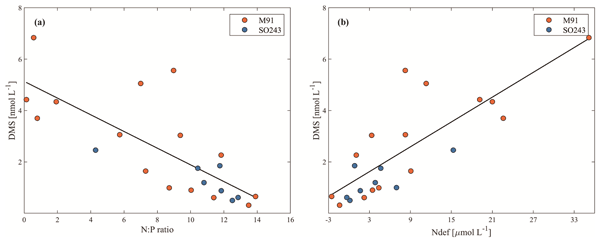
We present here, for the first time, simultaneously measured dimethylsulfide (DMS) seawater concentrations and DMS atmospheric mole fractions from the Peruvian upwelling region during two cruises in December 2012 and October 2015. Our results indicate low oceanic DMS concentrations and atmospheric DMS molar fractions in surface waters and the atmosphere, respectively. In addition, the Peruvian upwelling region was identified as an insignificant source of DMS emissions during both periods.
Wangwang Ye, Hermann W. Bange, Damian L. Arévalo-Martínez, Hailun He, Yuhong Li, Jianwen Wen, Jiexia Zhang, Jian Liu, Man Wu, and Liyang Zhan
Biogeosciences Discuss., https://doi.org/10.5194/bg-2021-334, https://doi.org/10.5194/bg-2021-334, 2022
Manuscript not accepted for further review
Short summary
Short summary
CH4 is the second important greenhouse gas after CO2. We show that CH4 consumption and sea-ice melting influence the CH4 distribution in the Ross Sea (Southern Ocean), causing undersaturation and net uptake of CH4 during summertime. This study confirms the capability of surface water in the high-latitude Southern Ocean regions to take up atmospheric CH4 which, in turn, will help to improve predictions of how CH4 release/uptake from the ocean will develop when sea-ice retreats in the future.
Martti Honkanen, Jens Daniel Müller, Jukka Seppälä, Gregor Rehder, Sami Kielosto, Pasi Ylöstalo, Timo Mäkelä, Juha Hatakka, and Lauri Laakso
Ocean Sci., 17, 1657–1675, https://doi.org/10.5194/os-17-1657-2021, https://doi.org/10.5194/os-17-1657-2021, 2021
Short summary
Short summary
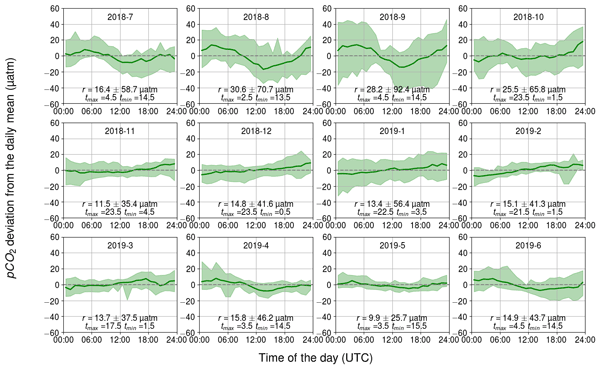
The exchange of carbon dioxide (CO2) between the sea and the atmosphere is regulated by the gradient of CO2 partial pressure (pCO2) between the sea and the air. The daily variation of the seawater pCO2 recorded at the fixed station Utö in the Baltic Sea was found to be mainly biologically driven. Calculation of the annual net exchange of CO2 between the sea and atmosphere based on daily measurements of pCO2 carried out using the same sampling time every day could introduce a bias of up to 12 %.
Cited articles
Arévalo-Martínez, D. L., Kock, A., Löscher, C. R., Schmitz, R. A., and Bange, H. W.: Massive nitrous oxide emissions from the tropical South Pacific Ocean, Nat. Geosci., 8, 530–533, https://doi.org/10.1128/AEM.67.11.5343-5348.2001, 2015.
Barford, C. C., Montoya, J. P., Altabet, M. A., and Mitchell, R.: Steady-state nitrogen isotope effects of N2 and N2O production in Paracoccus denitrificans, Appl. Env. Microbiol., 65, 989–994, 1999.
Berg, C., Vandieken, V., Thamdrup, B., and Jürgens, K.: Significance of archaeal nitrification in hypoxic waters of the Baltic Sea, ISME J., 9, 1319–1332, https://doi.org/10.1038/ismej.2014.218, 2015.
Bonaglia, S., Klawonn, I., De Brabandere, L., Deutsch, B., Thamdrup, B. and Brüchert, V.: Denitrification and DNRA at the Baltic Sea oxic–anoxic interface: Substrate spectrum and kinetics, Limnol. Oceanogr., 61, 1900–1915, https://doi.org/10.1002/lno.10343, 2016.
Bourbonnais, A., Letscher, R., Bange, H., Echevin, V., Larkum, J., Mohn, J., Yoshida, N., and Altabet, M.: N2O production and consumption from stable isotopic and concentration data in the Peruvian coastal upwelling system, Global Biogeochem. Cy., 31, 678–698, https://doi.org/10.1002/2016GB005567, 2017.
Bruckner, C. G., Mammitzsch, K., Jost, G., Wendt, J., Labrenz, M., and Jürgens, K.: Chemolithoautotrophic denitrification of epsilonproteobacteria in marine pelagic redox gradients, Environ. Microbiol., 15, 1505–1513, 2013.
Casciotti, K. L. and Buchwald, C.: Insights on the marine microbial nitrogen cycle from isotopic approaches to nitrification, Front. Microbiol., 3, 356, https://doi.org/10.3389/fmicb.2012.00356, 2012.
Casciotti, K. L., Sigman, D. M., Hastings, M. G., Böhlke, J. K., and Hilkert, A.: Measurement of the oxygen isotopic composition of nitrate in seawater and freshwater using the denitrifier method, Anal. Chem., 74, 4905–4912, https://doi.org/10.1021/ac020113w, 2002.
Casciotti, K. L., Sigman, D. M., and Ward, B. B.: Linking diversity and stable isotope fractionation in ammonia-oxidizing bacteria, Geomicrobiol. J., 20, 335–353, https://doi.org/10.1080/01490450303895, 2003.
Casciotti, K. L., Forbes, M., Vedamati, J., Peters, B., Martin, T., and Mordy, C. W.: Nitrous oxide cycling in the Eastern Tropical South Pacific as inferred from isotopic and isotopomeric data, Deep-Sea Res. Pt. II, 156, 155–167, https://doi.org/10.1016/J.DSR2.2018.07.014, 2018.
Cohen Y. and Gordon L. I.: Nitrous Oxide Production in the Ocean, J. Geophys. Res.: Ocean, 84, 347–353, https://doi.org/10.1029/JC084iC01p00347, 1979.
Dalsgaard, T., De Brabandere, L., and Hall, P. O.: Denitrification in the water column of the central Baltic Sea, Geochim. Cosmochim. Ac., 106, 247–260, https://doi.org/10.1016/j.gca.2012.12.038, 2013.
Dellwig, O., Wegwerth, A., and Arz, H.W.: Anatomy of the Major Baltic Inflow in 2014: Impact of manganese and iron shuttling on phosphorus and trace metals in the Gotland Basin, Baltic Sea, Cont. Shelf Res., 223, 104449, https://doi.org/10.1016/j.csr.2021.104449, 2021.
Farías, L., Castro-González, M., Cornejo, M., Charpentier, J. J., Faúndez, J., Boontanon, N., and Yoshida, N.: Denitrification and nitrous oxide cycling within the upper oxycline of the eastern tropical South Pacific oxygen minimum zone, Limnol. Oceanogr., 54, 132–144, https://doi.org/10.4319/lo.2009.54.1.0132, 2009.
Flückiger, J., Dällenbach, A., Blunier, T., Stauffer, B., Stocker, T. F., Raynaud, D., and Barnola, J. M.: Variations in atmospheric N2O concentration during abrupt climatic changes, Science, 285, 227–230, 1999.
Frame, C. H. and Casciotti, K. L.: Biogeochemical controls and isotopic signatures of nitrous oxide production by a marine ammonia-oxidizing bacterium, Biogeosciences, 7, 2695–2709, https://doi.org/10.5194/bg-7-2695-2010, 2010.
Frey, C., Dippner, J. W., and Voss, M.: Close coupling of N-cycling processes expressed in stable isotope data at the redoxcline of the Baltic Sea, Global Biogeochem. Cy., 28, 974–991, https://doi.org/10.1002/2013GB004642, 2014a.
Frey, C., Hietanen, S., Jürgens, K., Labrenz, M., and Voss, M.: N and O Isotope Fractionation in Nitrate during Chemolithoautotrophic Denitrification by Sulfurimonas gotlandica, Environ. Sci. Technol., 48, 13229–13237, https://doi.org/10.1021/es503456g, 2014b.
Fujii A., Toyoda S., Yoshida O., Watanabe S., Sasaki K., and Yoshida N.: Distribution of nitrous oxide dissolved in water masses in the eastern subtropical North Pacific and its origin inferred from isotopomer analysis, J. Ocean., 69, 147–157, https://doi.org/10.1007/s10872-012-0162-4, 2013.
Grabb, K.C., Buchwald, C., Hansel, C. M., and Wankel, S. D.: A dual nitrite isotopic investigation of chemodenitrification by mineral-associated Fe (II) and its production of nitrous oxide, Geochim. Cosmochim. Acta, 196, 388–402, https://doi.org/10.1016/j.gca.2016.10.026, 2017.
Grasshoff, K., Kremling, K., and Ehrhardt, M.: Methods of seawater analysis, John Wiley & Sons, ISBN 9783527613984, https://doi.org/10.1002/9783527613984, 1999.
Gräwe, U., Naumann, M., Mohrholz, V., and Burchard, H.: Anatomizing one of the largest saltwater inflows into the Baltic Sea in December 2014, J. Geophys. Res.-Oceans, 120, 7676–7697, https://doi.org/10.1002/2015JC011269, 2015.
Hannig, M., Lavik, G., Kuypers, M. M. M., Woebken, D., Martens-Habbena, W., and Jürgens, K.: Shift from denitrification to anammox after inflow events in the central Baltic Sea, Limnol. Oceanogr., 52, 1336–1345, 2007.
Hansson, M., Viktorsson, L., and Andersson, L.: Oxygen survey in the Baltic Sea 2019 – Extent of Anoxia and Hypoxia 1960–2019, Report Oceanography No. 67, SMHI, Göteborg, Sweden, 88 pp., https://www.smhi.se/polopoly_fs/1.158362!/RO_67.pdf (last access: 25 March 2024), 2020.
Happel, E., Bartl, I., Voss, M., and Riemann, L.: Extensive nitrification and active ammonia oxidizers in two contrasting coastal systems of the Baltic Sea, Environ. Microbiol., 20, 2913–2926, https://doi.org/10.1111/1462-2920.14293, 2018.
Ho, L., Barthel, M., Harris, S., Vermuelen, K., Six, J., Bodé, S., Boeckx, P., and Goethals, P.: Unravelling spatiotemporal N2O dynamics in an urbanized estuary system using natural abundance isotopes, Water Research, 247, 120771, https://doi.org/10.1016/j.watres.2023.120771, 2023.
Hylén, A., Bonaglia, S., Robertson, E., Marzocchi, U., Kononets, M., and Hall, P. O. J.: Enhanced benthic nitrous oxide and ammonium production after natural oxygenation of long-term anoxic sediments, Limnol. Oceanogr., 67, 419–433, https://doi.org/10.1002/lno.12001, 2022.
IPCC, Masson-Delmotte, V., Zhai, P., Pirani, A., Connors, S. L., Péan, C., Berger, S., Caud, N., Chen, Y., Goldfarb, L., Gomis, M. I., Huang, M., Leitzell, K., Lonnoy, E., Matthews, J. B. R., Maycock, T. K., Waterfield, T., Yelekçi, O., Yu, R., and Zhou, B. (Eds.): Climate Change 2021: The Physical Science Basis. Contribution of Working Group I to the Sixth Assessment Report of the Intergovernmental Panel on Climate Change, Cambridge University Press, Cambridge, UK and New York, NY, USA, 2391 pp., https://doi.org/10.1017/9781009157896, 2021.
Jäntti, H., Ward, B. B., Dippner, J. W., and Hietanen, S.: Nitrification and the ammonia-oxidizing communities in the central Baltic Sea water column, Estuar. Coast. Shelf Sci., 202, 280–289, https://doi.org/10.1016/j.ecss.2018.01.019, 2018.
Ji, Q. and Grundle, D. S.: An automated, laser-based measurement system for nitrous oxide isotope and isotopomer ratios at nanomolar levels, Rapid Commun. Mass Sp., 33, 1553–1564, https://doi.org/10.1002/rcm.8502, 2019.
Ji, Q., Babbin, A. R., Jayakumar, A., Oleynik, S., and Ward, B. B.: Nitrous oxide production by nitrification and denitrification in the Eastern Tropical South Pacific oxygen minimum zone, Geophys. Res. Lett., 42, 10–755, 2015.
Jones, C. M., Graf, D. R., Bru, D., Philippot, L., and Hallin, S.: The unaccounted yet abundant nitrous oxide-reducing microbial community: a potential nitrous oxide sink, ISME J., 7, 417–426, 2013.
Keeling, C. D.: The concentration and isotopic abundance of carbon dioxide in rural and marine air. Geochim. Cosmochim. Ac., 24, 277–298, 1961.
Kelly, C. L., Manning, C., Frey, C., Kaiser, J., Gluschankoff, N., and Casciotti, K. L.: Pyisotopomer: A Python package for obtaining intramolecular isotope ratio differences from mass spectrometric analysis of nitrous oxide isotopocules, Rapid Commun. Mass Spectrom., 37, e9513, https://doi.org/10.1002/rcm.9513, 2023.
Knowles, R., Lean, D. R. S., and Chan, Y. K.: Nitrous oxide concentrations in lakes: variations with depth and time, Limnol. Oceanogr., 26, 855–866, 1981.
Körner, H. and Zumft, W. G.: Expression of denitrification enzymes in response to the dissolved oxygen level and respiratory substrate in continuous culture of Pseudomonas stutzeri, Appl. Environ. Microbiol., 55, 1670–1676, 1989.
Labrenz, M., Jost, G., and Jürgens, K.: Distribution of abundant prokaryotic organisms in the water column of the central Baltic Sea with an oxic–anoxic interface, Aquat. Microb. Ecol., 46, 177–190, 2007.
Lewicka-Szczebak, D., Well, R., Bol, R., Gregory, A. S., Matthews, G. P., Misselbrook, T., Whalley, W. R., and Cardenas, L. M.: Isotope fractionation factors controlling isotopocule signatures of soil-emitted N2O produced by denitrification processes of various rates, Rapid Commun. Mass Spectrom., 29, 269–282, 2015.
Li,S., Wang, S., Pang, Y., and Ji, G: Isotopic signature of N2O produced during sulfur- and thiosulfate-driven chemoautotrophic denitrification in freshwaters, Limnol. Oceanogr., 69, 2639–2650, 2024.
Liblik, T., Naumann, M., Alenius, P., Hannson, M., Lips, U., Nausch, G., Tuomi, L., Wesslander, K., Laanemets, J., and Viktorrsson, L.: Propagation of impact of the recent Major Baltic inflows from the Eastern Gotland Basin to the Gulf of Finland, Front. Mar. Sci., 5, 1–23, https://doi.org/10.3389/fmars.2018.00222 , 2018.
Lipschultz, F., Zafiriou, O. C., Wofsy, S. C., McElroy, M. B., Valois, F. W., and Watson, S. W.: Production of NO and N2O by soil nitrifying bacteria, Nature, 294, 641–643, 1981.
Ma, X., Lennartz, S. T., and Bange, H. W.: A multi-year observation of nitrous oxide at the Boknis Eck Time Series Station in the Eckernförde Bay (southwestern Baltic Sea), Biogeosciences, 16, 4097–4111, https://doi.org/10.5194/bg-16-4097-2019, 2019.
McIlvin, M. R. and Casciotti, K. L.: Fully automated system for stable isotopic analyses of dissolved nitrous oxide at natural abundance levels, Limnol. Oceanogr. Method., 8, 54–66, https://doi.org/10.4319/lom.2010.8.54, 2010.
McIlvin, M. R. and Casciotti, K. L.: Technical updates to the bacterial method for nitrate isotopic analyses, Anal. Chem., 83, 1850–1856, https://doi.org/10.1021/ac1028984, 2011.
Meier, H. E. M., Höglund, A., Eilola, K., and Almroth-Rosell, E.: Impact of accelerated future global mean sea level rise on hypoxia in the Baltic Sea, Clim. Dynam., 49, 163–172, https://doi.org/10.1007/s00382-016-3333-y, 2017.
Meier, H. E. M., Eilola, K., Almroth-Rosell, E., Schimanke, S., Kniebusch, M., Hoglund, A., Pemberton, P., Liu, Y., Vali, G., and Saraiva, S.: Disentangling the impact of nutrient load and climate changes on Baltic Sea hypoxia and eutrophication since 1850, Climate Dynam., 53, 1145–1166, https://doi.org/10.1007/s00382-018-4296-y, 2019.
Mohn, J., Wolf, B.,Toyoda, S., Lin, C-T., Liang, M-C., Brüggemann, N., Wissel, H., Steiker, A. E., Dyckmans, J., Szwec, L., Ostrom, N. E., Casciotti, K. L., Forbes, M., Giesemann, A., Well, R., Doucett, R. R., Yarnes, C. T., Ridley, A. R., Kaiser, J., and Yoshida, N : Interlaboratory assessment of nitrous oxide isotopomer analysis by isotope ratio mass spectrometry and laser spectroscopy: Current status and perspectives, Rapid Commun. Mass Spectrom., 28, 1995–2007, https://doi.org/10.1002/rcm.6982, 2014.
Mohrholz, V.: Major Baltic inflow statistics: revised, Front. Mar. Sci., 5, 384, https://doi.org/10.3389/fmars.2018.00384, 2018.
Myllykangas, J.-P., Jilbert, T., Jakobs, G., Rehder, G., Werner, J., and Hietanen, S.: Effects of the 2014 major Baltic inflow on methane and nitrous oxide dynamics in the water column of the central Baltic Sea, Earth Syst. Dynam., 8, 817–826, https://doi.org/10.5194/esd-8-817-2017, 2017.
Naqvi, S. W. A., Yoshinari, T., Jayakumar, D., Altabet, M. A., Narvekar, P. V., Devol, A. H., Brandes, J. A., and Codispoti, L. A.: Budgetary and biogeochemical implications of N2O isotope signatures in the Arabian Sea, Nature, 394, 462–464, https://doi.org/10.1038/28828, 1998.
Naqvi, S. W. A., Jayakumar, D. A., Narvekar, P. V., Naik, H., Sarma, V. V. S. S., D'Souza, W., Joseph, S., and George, M. D.: Increased marine production of N2O due to intensifying anoxia on the Indian continental shelf, Nature, 408, 346–349, 2000.
Naqvi, S. W. A., Naik, H., Jayakumar, D. A., Shailaja, M. S., and Narvekar, P. V.: Seasonal oxygen deficiency over the western continental shelf of India, in: Past and present water column anoxia, Springer, the Netherlands, 195–224, https://doi.org/10.1007/1-4020-4297-3_08, 2006.
Nevison, C., Butler, J. H., and Elkins, J. W.: Global distribution of N2O and ΔN2O-AOU yield in the subsurface ocean, Global Biogeochem. Cy., 17, 1119, https://doi.org/10.1029/2003GB002068, 2003.
Nevison, C. D., Weiss, R. F., and Erickson III, D. J.: Global oceanic emissions of nitrous oxide, J. Geophys. Res., 100, 15809–15820, https://doi.org/10.1029/95JC00684, 1995.
Noffke, A., Sommer, S., Dale, A.W., Hall, P.O. J., and Pfannkuche, O.: Benthic nutrient fluxes in the Eastern Gotland Basin (Baltic Sea) with particular focus on microbial mat ecosystems, J. Mar. Sys., 158, 1–12, https://doi.org/10.1016/j.jmarsys.2016.01.007, 2016.
Ostrom, N. E., Russ, M. E., Popp, B., Rust, T. M., and Karl, D. M.: Mechanisms of nitrous oxide production in the subtropical North Pacific based on determinations of the isotopic abundances of nitrous oxide and di-oxygen, Chemosphere, 2, 281–290, 2000.
Ostrom, N. E., Pitt, A., Sutka, R., Ostrom, P. H., Grandy, A. S., Huizinga, K. M., and Robertson, G. P.: Isotopologue effects during N2O reduction in soils and in pure cultures of denitrifiers, J. Geophys. Res.-Biogeo., 112, 2001–2012, 2007.
Otte, J. M., Blackwell, N., Ruser, R., Kappler, A., Kleindiesnt, S., and Schmidt, C.: N2O formation by nitrite-induced (chemo)denitrification in coastal marine sediment, Scientific Reports, 9, 10691, https://doi.org/10.1038/s41598-019-47172-x, 2019.
Paulmier, A. and Ruiz-Pino, D.: Oxygen minimum zones (OMZs) in the modern ocean, Prog. Oceanogr., 80, 113–128, 2009.
Ravishankara, A. R., Daniel, J. S., and Portmann, R. W.: Nitrous oxide (N2O): The dominant ozone-depleting substance emitted in the 21st Century, Science, 326, 123–125, 2009.
Rehder, G., Bardhan, P., Frey, C., and Bange, H. W.: The distribution and isotopomeric characterization of nitrous oxide in the Eastern Gotland Basin (central Baltic Sea), Leibniz Institute for Baltic Sea Research Warnemünde, https://doi.org/10.12754/data-2026-0001, 2026.
Resplandy, L., Hogikyan, A., Müller, J. D., Najjar, R. G., Bange, H. W., Bianchi, D., Weber, T., Cai, W.-J., Doney, S. C., Fennel, K., Gehlen, M., Hauck, J., Lacroix, F., Landschützer, P., Le Quéré, C., Roobaert, A., Schwinger, J., Berthet, S., Bopp, L., Chau, T. T. T., Dai, M., Gruber, N., Ilyina, T., Kock, A., Manizza, M., Lachkar, Z., Laruelle, G. G., Liao, E., Lima, I. D., Nissen, C., Rödenbeck, C., Séférian, R., Toyama, K., Tsujino, H., and Regnier, P.: A synthesis of global coastal ocean greenhouse gas fluxes, Global Biogeochem. Cy., 38, e2023GB007803, https://doi.org/10.1029/2023GB007803, 2024.
Ronner, U.: Distribution, production and consumption of nitrous oxide in the Baltic Sea, Geochim. Cosmochim. Ac., 47, 2179–2188, 1983.
Rosentreter, J. A., Laruelle, G. G., Bange, H. W., Bianchi, T. S., Busecke, J. J. M., Cai, W.-J., Eyre, B. D., Forbrich, I., Kwon, E. Y., Maavara, T., Moosdorf, N., Najjar, R. G., Sarma, V. V. S. S., Van Dam, B., and Regnier, P.: Coastal vegetation and estuaries are collectively a greenhouse gas sink, Nature Climate Change, 13, 579–587, https://doi.org/10.1038/s41558-023-01682-9, 2023.
Rohe, L., Anderson, T., Braker, G., Flessa, H., Giesemann, A., Lewicka-Szczebak, D., Wrage-Monnig, N., and Well, R.: Dual isotope and isotopomer signatures of nitrous oxide from fungal denitrification – a pure culture study, Rapid Commun. Mass Spectrom., 28, 1893–1903, https://doi.org/10.1002/rcm.6975, 2014.
Sabbaghzadeh, B., Arévalo-Martínez, D. L., Glockzin, M., Otto, S., and Rehder, G.: Meridional and Cross-Shelf Variability of N2O and CH4 in the Eastern-South Atlantic, J. Geophys. Res.-Oceans, 126, e2020JC016878, https://doi.org/10.1029/2020JC016878, 2021.
Santoro, A. E., Buchwald, C., McIlvin, M. R., and Casciotti, K. L.: Isotopic signature of N2O produced by marine ammonia-oxidizing archaea, Science, 333, 1282–1285, 2011.
Schweiger, B., Hansen, H. P., and Bange, H. W.: A time series of hydroxylamine (NH2OH) in the southwestern Baltic Sea, Geophys. Res. Lett., 34, L24608, https://doi.org/10.1029/2007GL031086, 2007.
Schlitzer, Reiner, Ocean Data View, https://odv.awi.de (last access: 5 December 2025), 2021.
Shoun, H., Fushinobu, S., Jiang, L., Kim, S. W., and Wakagi, T: Fungal denitrification and nitric oxide reductase cytochrome P450nor, Philos. Trans. Roy. Soc., 367, 1186, https://doi.org/10.1098/rstb.2011.0335, 2012.
Stremińska, M. A., Felgate, H., Rowley, G., Richardson, D. J., and Baggs, E. M.: Nitrous oxide production in soil isolates of nitrate-ammonifying bacteria, Environ. Microbiol. Rep., 4, 66–71, 2012.
Sun, X., Jayakumar, A., and Ward, B. B.: Community composition of nitrous oxide consuming bacteria in the oxygen minimum zone of the Eastern Tropical South Pacific, Front. Microbiol., 8, 1183, https://doi.org/10.3389/fmicb.2017.01183, 2017.
Suntharalingam, P. and Sarmiento, J. L.: Factors governing the oceanic nitrous oxide distribution: Simulations with an ocean general circulation model, Global Biogeochem. Cy., 14, 429–454, 2000.
Sutka, R. L., Ostrom, N. E., Ostrom, P. H., Gandhi, H., and Breznak, J. A.: Nitrogen isotopomer site preference of N2O produced by Nitrosomonas europaea and Methylococcus capsulatus Bath, Rapid Commun. Mass Sp., 17, 738–745, https://doi.org/10.1002/rcm.968, 2003.
Sutka, R. L., Ostrom, N. E., Ostrom, P. H., Gandhi, H., and Breznak, J. A.: Nitrogen isotopomer site preference of N2O produced by Nitrosomonas europaea and Methylococcus capsulatus Bath, Rapid Comm. Mass. Spec., 18, 1411–1412, https://doi.org/10.1002/rcm.1482, 2004.
Sutka, R. L., Ostrom, N. E., Ostrom, P. H., Breznak, J. A., Gandhi, H., Pitt, A. J., and Li, F.: Distinguishing nitrous oxide production from nitrification and denitrification on the basis of isotopomer abundances, Appl. Environ. Microbiol., 72, 638–644, https://doi.org/10.1128/AEM.72.1.638, 2006.
Tang, W., Tracey, J. C., Carroll, J., Wallace, E., Lee, J. A., Nathan, L., Sun, X., Jayakumar, A., and Ward, B. B.: Nitrous oxide production in the Chesapeake Bay, Limnol. Oceanogr., 67, 2101–2116, 2022.
Tian, H., Pan, N., Thompson, R. L., Canadell, J. G., Suntharalingam, P., Regnier, P., Davidson, E. A., Prather, M., Ciais, P., Muntean, M., Pan, S., Winiwarter, W., Zaehle, S., Zhou, F., Jackson, R. B., Bange, H. W., Berthet, S., Bian, Z., Bianchi, D., Bouwman, A. F., Buitenhuis, E. T., Dutton, G., Hu, M., Ito, A., Jain, A. K., JeltschThömmes, A., Joos, F., Kou-Giesbrecht, S., Krummel, P. B., Lan, X., Landolfi, A., Lauerwald, R., Li, Y., Lu, C., Maavara, T., Manizza, M., Millet, D. B., Mühle, J., Patra, P. K., Peters, G. P., Qin, X., Raymond, P., Resplandy, L., Rosentreter, J. A., Shi, H., Sun, Q., Tonina, D., Tubiello, F. N., van der Werf, G. R., Vuichard, N., Wang, J., Wells, K. C., Western, L. M., Wilson, C., Yang, J., Yao, Y., You, Y., and Zhu, Q.: Global nitrous oxide budget (1980–2020), Earth Syst. Sci. Data, 16, 2543–2604, https://doi.org/10.5194/essd-16-2543-2024, 2024.
Toyoda, S., Mutobe, H., Yamagishi, H., Yoshida, N., and Tanji, Y.: Fractionation of N2O isotopomers during production by denitrifier, Soil Biol. Biochem., 37, 1535–1545, https://doi.org/10.1016/j.soilbio.2005.01.009, 2005.
Toyoda, S., Yoshida, N., and Koba, K.: Isotopocule analysis of biologically produced nitrous oxide in various environments, Mass Spectrometry Reviews, 36, 135–160, https://doi.org/10.1002/mas.21459, 2017.
Voss, M., Dippner, J. W., Humborg, C., Hürdler, J., Korth, F., Neumann, T., Schernewski, G., and Venohr, M.: History and scenarios of future development of Baltic Sea eutrophication, Estuar. Coast. Shelf Sci., 92, 307–322, https://doi.org/10.1016/j.ecss.2010.12.037, 2011.
Walter, S., Breitenbach, U., Bange, H. W., Nausch, G., and Wallace, D. W. R.: Distribution of N2O in the Baltic Sea during transition from anoxic to oxic conditions, Biogeosciences, 3, 557–570, https://doi.org/10.5194/bg-3-557-2006, 2006.
Wankel, S., Ziebis, W., Buchwald, C., Charoenpong, C., de Beer, D., Dentinger, J., Xu, Z., and Zengler, K.: Evidence for fungal and chemodenitrification based N2O flux from nitrogen impacted coastal sediments, Nat. Commun., 8, 15595, https://doi.org/10.1038/ncomms15595, 2017.
Ward B. B., Devol A. H., Rich J. J., Chang B. X., Bulow S. E., Naik H., Pratihary, A., and Jayakumar, A.: Denitrification as the Dominant Nitrogen Loss Process in the Arabian Sea, Nature, 461, 78–81, https://doi.org/10.1038/nature08276, 2009.
Weckström, K., Lewis, J. P., Andrén, E., Ellegaard, M., Rasmussen, P., Ryves, D. V., and Telford, R.: Palaeoenvironmental History of the Baltic Sea: One of the Largest Brackish-Water Ecosystems in the World, in: Applications of Paleoenvironmental Techniques in Estuarine Studies. Developments in Paleoenvironmental Research, edited by: Weckström, K., Saunders, K., Gell, P., and Skilbeck, C., Springer, Dordrecht, Netherlands, 615–662, https://doi.org/10.1007/978-94-024-0990-1_24, 2017.
Wenk, C. B., Frame, C. H., Koba, K., Casciotti, K. L., Veronesi, M., Niemann, H., Schubert, C., Yoshida, N., Toyoda, S., Makabe, A., Zopfi, J., and Lehmann, M. F.: Differential N2O dynamics in two oxygen-deficient lake basins revealed by stable isotope and isotopomer distributions, Limnol. Oceanogr., 61, 135–1739, 2016.
Westley, M. B., Yamagishi, H., Popp, B, N., and Yoshida, N.: Nitrous oxide cycling in the Black Sea inferred from stable isotopic and isotopomer distibutions, Deep-Sea Res., 53, 1802, https://doi.org/10.1016/j.dsr2.2006.03.012, 2006.
Wilson, S. T., Bange, H. W., Arévalo-Martínez, D. L., Barnes, J., Borges, A. V., Brown, I., Bullister, J. L., Burgos, M., Capelle, D. W., Casso, M., de la Paz, M., Farías, L., Fenwick, L., Ferrón, S., Garcia, G., Glockzin, M., Karl, D. M., Kock, A., Laperriere, S., Law, C. S., Manning, C. C., Marriner, A., Myllykangas, J.-P., Pohlman, J. W., Rees, A. P., Santoro, A. E., Tortell, P. D., Upstill-Goddard, R. C., Wisegarver, D. P., Zhang, G.-L., and Rehder, G.: An intercomparison of oceanic methane and nitrous oxide measurements, Biogeosciences, 15, 5891–5907, https://doi.org/10.5194/bg-15-5891-2018, 2018.
Wong, W. W., Lehmann, M. F., Kuhn, T., Frame, C., Poh, S. C., Cartwright, I., and Cook, P. L.: Nitrogen and oxygen isotopomeric constraints on the sources of nitrous oxide and the role of submarine groundwater discharge in a temperate eutrophic salt-wedge estuary, Limnol. Oceanogr., 66, 1068–1082, 2020.
Xu, Z., Hattori, S., Masuda, Y., Toyoda, S., Koba, K., Yu, P., Yoshida, N., Du, Z. J., and Senoo, K.: Unprecedented N2O production by nitrate-ammonifying Geobacteraceae with distinctive N2O isotopocule signatures, MBio, 15, https://doi.org/10.1128/mbio.02540-24, 2024.
Yang, S., Chang, B. X., Warner, M. J., Weber, T. S., Bourbonnais, A. M., Santoro, A. E., Kock, A., Sonnerup, R. E., Bullister, J. L., Wilson, S. T., and Bianchi, D.: Global reconstruction reduces the uncertainty of oceanic nitrous oxide emissions and reveals a vigorous seasonal cycle, PNAS, 117, 11954–11960, https://doi.org/10.1073/pnas.1921914117, 2020.
Yamagishi, H., Westley, M. B., Popp, B. N., Toyoda, S., Yoshida, N., Watanabe, S., Koba, K., and Yamanaka, Y.: Role of nitrification and denitrification on the nitrous oxide cycle in the eastern tropical North Pacific and Gulf of California, J. Geophys. Res.-Biogeo., 112, G02015, https://doi.org/10.1029/2006JG000227, 2007.
Yoshinari, T.: Nitrous oxide in the sea, Mar. Chem., 4, 189–202, 1976.
Zheng, Y., Zhan, L., Ji, Q., and Ma, X.: Seasonal isotopic and isotopomeric signatures of nitrous oxide produced microbially in a eutrophic estuary, Marine Pollution Bulletin, 204, 116528, https://doi.org/10.1016/j.marpolbul.2024.116528, 2024.
Short summary
Nitrous oxide (N2O), a potent greenhouse gas, is released from coastal seas & estuaries, yet we don't fully understand how it is formed and consumed. In this study we collected water from several sites in the central Baltic Sea. N2O came from ammonia in oxic waters. Deep waters with low to no oxygen noted more active N2O cycling. The seafloor was a source in some areas. Typically N2O is produced by bacteria, but our results indicate possibility of other players like fungi or chemical reactions.
Nitrous oxide (N2O), a potent greenhouse gas, is released from coastal seas & estuaries, yet we...


Altmetrics
Final-revised paper
Preprint