
Articles | Volume 23, issue 14
https://doi.org/10.5194/bg-23-5133-2026
© Author(s) 2026. This work is distributed under
the Creative Commons Attribution 4.0 License.
the Creative Commons Attribution 4.0 License.
https://doi.org/10.5194/bg-23-5133-2026
© Author(s) 2026. This work is distributed under
the Creative Commons Attribution 4.0 License.
the Creative Commons Attribution 4.0 License.
Research article
| 
24 Jul 2026
Research article |
| 24 Jul 2026
| 24 Jul 2026
Seasonal upwelling–dust controls on export production in the Canary Current System revealed by Lagrangian particle tracking
Catarina V. Guerreiro
CORRESPONDING AUTHOR

Marine and Environmental Science Centre (MARE)/Aquatic Research Network (ARNET), Lisbon, 1749-016, Portugal
Departmento de Biologia, Faculdade de Ciências, Universidade de Lisboa (CIÊNCIAS ULisboa), Lisbon, 1749-016, Portugal
Instituto Dom Luiz (IDL), Universidade de Lisboa, Lisbon, 1749-016, Portugal
Bror F. Jonsson
University of New Hampshire, Durham, NH 03824, USA
Peter Land
Plymouth Marine Laboratory (PML), Plymouth, PL1 3DH, United Kingdom
Javier Arístegui
University of Las Palmas de Gran Canaria, Las Palmas de Gran Canaria, 35001, Spain
Jan-Berend Stuut
Royal Netherlands Institute for Sea Research (NIOZ), Den Burg (Texel), 1790 AB, the Netherlands
Faculty of Earth and Life Sciences, Vrije Universiteit (VU), Amsterdam, 1081 HV, the Netherlands
Afonso Ferreira
Marine and Environmental Science Centre (MARE)/Aquatic Research Network (ARNET), Lisbon, 1749-016, Portugal
Departmento de Biologia, Faculdade de Ciências, Universidade de Lisboa (CIÊNCIAS ULisboa), Lisbon, 1749-016, Portugal
Gavin H. Tilstone
Plymouth Marine Laboratory (PML), Plymouth, PL1 3DH, United Kingdom
Vanda Brotas
Marine and Environmental Science Centre (MARE)/Aquatic Research Network (ARNET), Lisbon, 1749-016, Portugal
Departmento de Biologia, Faculdade de Ciências, Universidade de Lisboa (CIÊNCIAS ULisboa), Lisbon, 1749-016, Portugal
Steve B. Groom
Plymouth Marine Laboratory (PML), Plymouth, PL1 3DH, United Kingdom
Related authors
No articles found.
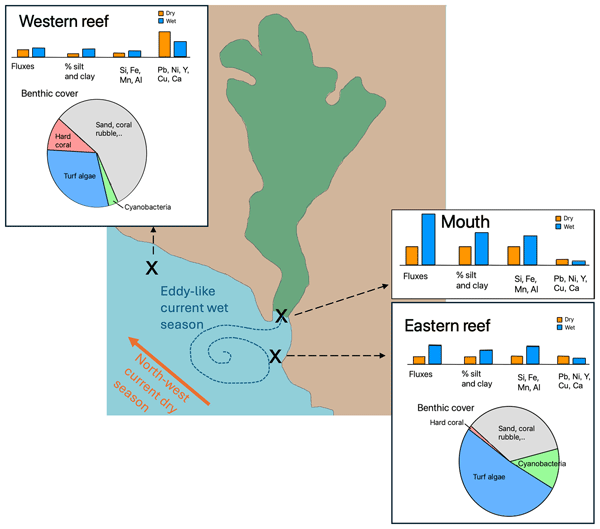
Virginia Sánchez Barranco, Nienke C. J. van de Loosdrecht, Furu Mienis, Jasper M. de Goeij, Rick Hennekam, Gert-Jan Reichart, Jan-Berend W. Stuut, and Lennart J. de Nooijer
Biogeosciences, 23, 5879–5899, https://doi.org/10.5194/bg-23-5879-2026, https://doi.org/10.5194/bg-23-5879-2026, 2026
Short summary
Short summary
We studied how pollution from bays in Curaçao reaches nearby coral reefs and changes with seasons. By collecting suspended particulate matter at different locations during dry and wet seasons, we found that sheltered reefs receive more fine particles and pollutants, especially during rainy months, while exposed reefs are less affected. This shows that both location and seasonal rainfall determine reef vulnerability, highlighting the hidden impacts of human activity on these fragile ecosystems.
Salem Ibrahim Salem, Andre Valente, Shubha Sathyendranath, Andrei Chuprin, Théo Renard, Jaime Pitarch, Ruth Airs, Moreno Ana, Maria-Manuel Angelico, David Antoine, Robert Arnone, Florinda Artuso, Paulo O. Oliveira, William Balch, Kathryn Barker, Ray Barlow, Simon Bélanger, Marco Bellacicco, Jean-François Berthon, Şükrü Beşiktepe, Francesco Bignami, Yngve Borsheim, Astrid Bracher, Federica Braga, Vittorio Brando, Robert J. W. Brewin, Vanda Brotas, Elisabetta Canuti, Francisco P. Chavez, Andrés Cianca, Hervé Claustre, Lesley Clementson, Simone Colella, Raul Costa, Cristina Nunes, Richard Crout, Emmanuel Devred, Annalisa Di Cicco, Federico Falcini, Ivan Farace, Afonso Ferreira, Scott Freeman, Robert Frouin, Carlos García-Soto, Isabella Giardina, Stuart W. Gibb, Arthur Gleason, Ralf Goericke, Richard Gould, Michael Grant, Nathalie Guillocheau, Hiroto Higa, Stanford B. Hooker, Chuamin Hu, Joji Ishizaka, Thomas Jackson, Mati Kahru, Milton Kampel, Bokyung Kim, Holger Klein, Piotr Kowalczuk, Susanne Kratzer, Raphael Kudela, Antonia Lai, Rosario Lavezza, Jesus Ledesma, Huiwon Lee, Steven Lohrenz, Hubert Loisel, Vivian Lutz, Antonio Mannino, Francesca Margiotta, Victor Martinez-Vicente, Salvatore Marullo, Luca Massi, Patricia Matrai, Atsushi Matsuoka, David McKee, Chiara Melillo, Carlos B. Mendes, Brian G. Mitchell, Tiffany Moisan, Enrique Montes, Frank Muller-Karger, Aimee Neeley, Michael Novak, Leonie O'Dowd, Michael Ondrusek, Emanuele Organelli, Heeyoon Park, Trevor Platt, Francesca Polonelli, Alex Poulton, Mariella Ragni, Michel Repecaud, Maurizio Ribera d’Alcalà, Tamara Rodriguez-Ramos, Rüdiger Röttgers, Manuel Ruiz-Villarreal, Michela Sammartino, Rosalia Santoleri, Gian Marco Scarpa, Thomas Schroeder, Valeria Segura, Timothy Smyth, Denise Smythe-Wright, Heidi M. Sosik, Joanna Stoń-Egiert, Malcolm Taberner, Jing Tan, Rob Thomas, Crystal Thomas, Gavin Tilstone, Andreia Tracana, Michael Twardowski, Vincenzo Vellucci, Gianluca Volpe, Kenneth Voss, Jeremy Werdell, Marcel Wernand, Bozena Wojtasiewicz, Simon Wright, Sunmi Yang, Giuseppe Zibordi, Maria Laura Zoffoli, and Steve Groom
Earth Syst. Sci. Data Discuss., https://doi.org/10.5194/essd-2026-539, https://doi.org/10.5194/essd-2026-539, 2026
Preprint under review for ESSD
Short summary
Short summary
This paper presents the fourth version of the ESA Ocean Colour Climate Change Initiative global in situ bio-optical database. The updated compilation combines observations from many international data sources collected between 1996 and 2025 and includes major expansions in coverage and variables. The dataset provides a consistent reference for validating satellite ocean-colour products and supports algorithm development and long-term climate studies.
Robert J. W. Brewin, Bethany Wilkinson, Xuerong Sun, Giorgio Dall'Olmo, Gavin H. Tilstone, Katharine R. Hendry, Sarah Breimann, Ian Brown, Angus Atkinson, Katrin Schmidt, Elisabetta Canuti, Meredith G. Meyer, Qi Zheng, Johannes J. Viljoen, Tom Bell, and Karen J. Heywood
EGUsphere, https://doi.org/10.5194/egusphere-2026-4398, https://doi.org/10.5194/egusphere-2026-4398, 2026
This preprint is open for discussion and under review for Ocean Science (OS).
Short summary
Short summary
Phytoplankton are the foundation of the Antarctic food web. Their size affects carbon storage in the ocean and energy transfer to krill, fish, and whales. Because the northwestern Weddell Sea is rarely sampled, little is known about phytoplankton size there. Using ship-based measurements and satellite data, we found medium-sized phytoplankton dominate rather than the smallest types that dominate warmer oceans. This provides a baseline for tracking ecosystem responses to climate change.
Avner Gross, Tana Wood, Jan-Berend Stuut, Eliezer Halpert, and Anton Lokshin
EGUsphere, https://doi.org/10.5194/egusphere-2026-4320, https://doi.org/10.5194/egusphere-2026-4320, 2026
This preprint is open for discussion and under review for Biogeosciences (BG).
Short summary
Short summary
African dust supplies phosphorus to Caribbean forests, but its fate after deposition is poorly understood. In a Puerto Rican tropical forest, we found that dust phosphorus added to soil rapidly entered less available pools, whereas contact with leaf surfaces increased its labile fraction and promoted uptake of dust-derived material. These results suggest that forest canopies may provide an overlooked pathway for processing atmospheric phosphorus before it reaches the soil.
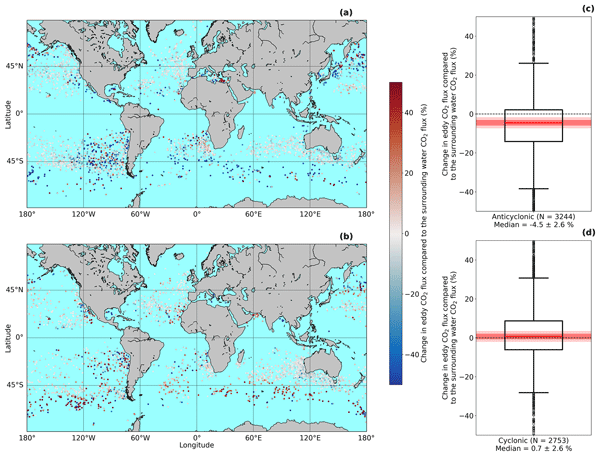
Daniel J. Ford, Jamie D. Shutler, Katy L. Sheen, Gavin H. Tilstone, and Vassilis Kitidis
Earth Syst. Sci. Data, 18, 969–988, https://doi.org/10.5194/essd-18-969-2026, https://doi.org/10.5194/essd-18-969-2026, 2026
Short summary
Short summary
Mesoscale eddies are abundant in the global oceans affect the physical, chemical and biological properties of the ocean. These changes can modify the air–sea CO2 fluxes. Here, we present a dataset of air–sea CO2 fluxes for 5996 long lived mesoscale eddies trajectories in the global ocean between 1993 to 2022. These trajectories can be used to understand the processes modifying and controlling the air–sea CO2 fluxes in mesoscale eddies which are supported by a comprehensive uncertainty budget.
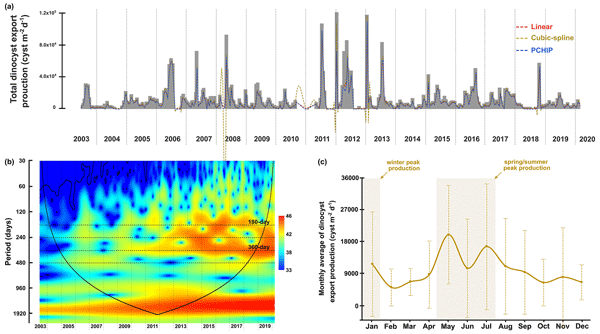
Surya Eldo V. Roza, Runa T. Reuter, Jan-Berend W. Stuut, Gerard J. M. Versteegh, Vera Pospelova, Iria García-Moreiras, and Karin A. F. Zonneveld
Biogeosciences, 23, 831–850, https://doi.org/10.5194/bg-23-831-2026, https://doi.org/10.5194/bg-23-831-2026, 2026
Short summary
Short summary
This study examined the cycle variability in records of a plankton group remnant (dinoflagellate cysts), atmospheric, and oceanic factors off Cape Blanc, Northwest Africa. The result showed changes in the cycles of the plankton, upwelling winds, and Saharan dust records from 2003 to 2020. These changes were divided into three phases, coinciding with changes in the plankton assemblage. Our results showed that local climate change can influence the dynamics and composition of marine ecosystems.
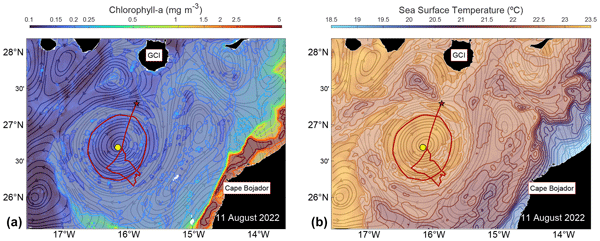
Luis P. Valencia, Ángel Rodríguez-Santana, Borja Aguiar-González, Javier Arístegui, Xosé A. Álvarez-Salgado, Josep Coca, María D. Gelado-Caballero, and Antonio Martínez-Marrero
Ocean Sci., 21, 2305–2344, https://doi.org/10.5194/os-21-2305-2025, https://doi.org/10.5194/os-21-2305-2025, 2025
Short summary
Short summary
We studied a rotating body of water south of the Canary Islands, known as an intrathermocline eddy. With an isolated core below the surface, it showed distinct energy patterns and structure. Satellite images and field data suggest it interacted with productive coastal waters, while its year-long life cycle unfolded surrounded by other vortices. These features point to a role in offshore transport and regional circulation, emphasizing the need for sustained, integrated ocean monitoring.

Emmanouil Proestakis, Vassilis Amiridis, Carlos Pérez García-Pando, Svetlana Tsyro, Jan Griesfeller, Antonis Gkikas, Thanasis Georgiou, María Gonçalves Ageitos, Jeronimo Escribano, Stelios Myriokefalitakis, Elisa Bergas Masso, Enza Di Tomaso, Sara Basart, Jan-Berend W. Stuut, and Angela Benedetti
Earth Syst. Sci. Data, 17, 4351–4395, https://doi.org/10.5194/essd-17-4351-2025, https://doi.org/10.5194/essd-17-4351-2025, 2025
Short summary
Short summary
Quantification of dust deposition into the broader Atlantic Ocean is provided, with the estimates established based on Earth observations. The dataset is considered unique with respect to a range of applications, including compensating for spatiotemporal gaps of sediment-trap measurements, assessments of model simulations, shedding light on physical processes related to the dust cycle, and improving the understanding of dust biogeochemical impacts on oceanic ecosystems, weather, and climate.
Librada Ramírez, Leonardo J. Pozzo-Pirotta, Aja Trebec, Víctor Manzanares-Vázquez, José L. Díez, Javier Arístegui, Ulf Riebesell, Stephen D. Archer, and María Segovia
Biogeosciences, 22, 1865–1886, https://doi.org/10.5194/bg-22-1865-2025, https://doi.org/10.5194/bg-22-1865-2025, 2025
Short summary
Short summary
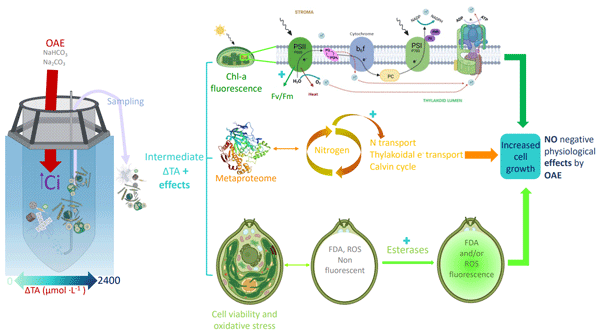
We studied the potential effects of increasing ocean alkalinity on a natural plankton community in subtropical waters of the Atlantic near Gran Canaria, Spain. Alkalinity is the capacity of water to resist acidification, and plankton are usually microscopic plants (phytoplankton) and animals (zooplankton), often less than 2.5 cm in length. This study suggests that increasing ocean alkalinity did not have a significant negative impact on the plankton community studied.
Thomas M. Jordan, Giorgio Dall'Olmo, Gavin Tilstone, Robert J. W. Brewin, Francesco Nencioli, Ruth Airs, Crystal S. Thomas, and Louise Schlüter
Earth Syst. Sci. Data, 17, 493–516, https://doi.org/10.5194/essd-17-493-2025, https://doi.org/10.5194/essd-17-493-2025, 2025
Short summary
Short summary
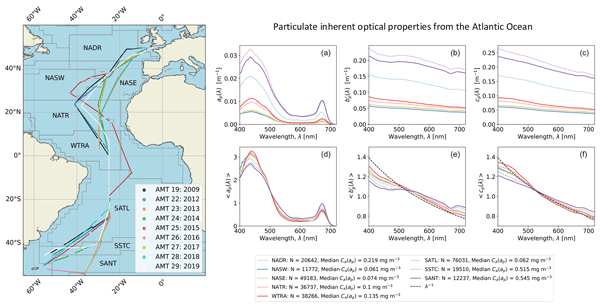
We present a compilation of water optical properties and phytoplankton pigments from the surface of the Atlantic Ocean collected during nine cruises between 2009 and 2019. We derive continuous Chlorophyll a concentrations (a biomass proxy) from water absorption. We then illustrate geographical variations and relationships for water optical properties, Chlorophyll a, and other pigments. The dataset will be useful to researchers in ocean optics, remote sensing, ecology, and biogeochemistry.
Laura Marín-Samper, Javier Arístegui, Nauzet Hernández-Hernández, and Ulf Riebesell
Biogeosciences, 21, 5707–5724, https://doi.org/10.5194/bg-21-5707-2024, https://doi.org/10.5194/bg-21-5707-2024, 2024
Short summary
Short summary
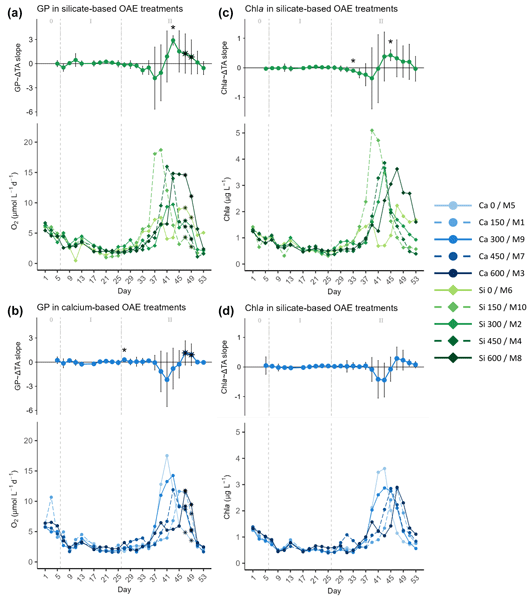
This study exposed a natural community to two non-CO2-equilibrated ocean alkalinity enhancement (OAE) deployments using different minerals. Adding alkalinity in this manner decreases dissolved CO2, essential for photosynthesis. While photosynthesis was not suppressed, bloom formation was mildly delayed, potentially impacting marine food webs. The study emphasizes the need for further research on OAE without prior equilibration and on its ecological implications.
Laura Marín-Samper, Javier Arístegui, Nauzet Hernández-Hernández, Joaquín Ortiz, Stephen D. Archer, Andrea Ludwig, and Ulf Riebesell
Biogeosciences, 21, 2859–2876, https://doi.org/10.5194/bg-21-2859-2024, https://doi.org/10.5194/bg-21-2859-2024, 2024
Short summary
Short summary
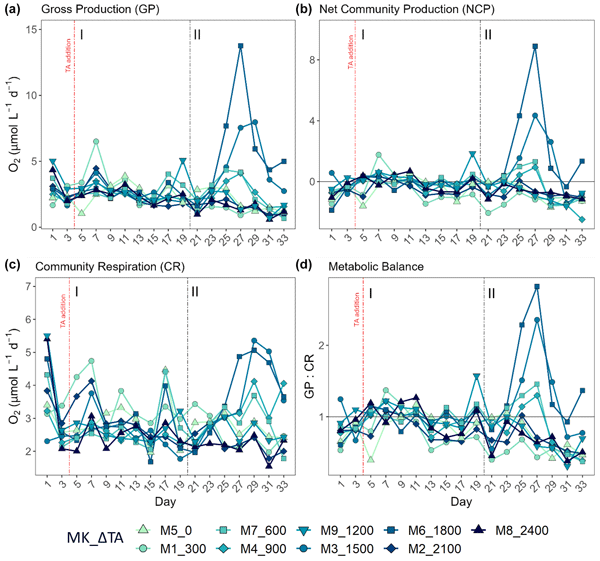
Our planet is facing a climate crisis. Scientists are working on innovative solutions that will aid in capturing the hard to abate emissions before it is too late. Exciting research reveals that ocean alkalinity enhancement, a key climate change mitigation strategy, does not harm phytoplankton, the cornerstone of marine ecosystems. Through meticulous study, we may have uncovered a positive relationship: up to a specific limit, enhancing ocean alkalinity boosts photosynthesis by certain species.
Christian Lønborg, Cátia Carreira, Gwenaël Abril, Susana Agustí, Valentina Amaral, Agneta Andersson, Javier Arístegui, Punyasloke Bhadury, Mariana B. Bif, Alberto V. Borges, Steven Bouillon, Maria Ll. Calleja, Luiz C. Cotovicz Jr., Stefano Cozzi, Maryló Doval, Carlos M. Duarte, Bradley Eyre, Cédric G. Fichot, E. Elena García-Martín, Alexandra Garzon-Garcia, Michele Giani, Rafael Gonçalves-Araujo, Renee Gruber, Dennis A. Hansell, Fuminori Hashihama, Ding He, Johnna M. Holding, William R. Hunter, J. Severino P. Ibánhez, Valeria Ibello, Shan Jiang, Guebuem Kim, Katja Klun, Piotr Kowalczuk, Atsushi Kubo, Choon-Weng Lee, Cláudia B. Lopes, Federica Maggioni, Paolo Magni, Celia Marrase, Patrick Martin, S. Leigh McCallister, Roisin McCallum, Patricia M. Medeiros, Xosé Anxelu G. Morán, Frank E. Muller-Karger, Allison Myers-Pigg, Marit Norli, Joanne M. Oakes, Helena Osterholz, Hyekyung Park, Maria Lund Paulsen, Judith A. Rosentreter, Jeff D. Ross, Digna Rueda-Roa, Chiara Santinelli, Yuan Shen, Eva Teira, Tinkara Tinta, Guenther Uher, Masahide Wakita, Nicholas Ward, Kenta Watanabe, Yu Xin, Youhei Yamashita, Liyang Yang, Jacob Yeo, Huamao Yuan, Qiang Zheng, and Xosé Antón Álvarez-Salgado
Earth Syst. Sci. Data, 16, 1107–1119, https://doi.org/10.5194/essd-16-1107-2024, https://doi.org/10.5194/essd-16-1107-2024, 2024
Short summary
Short summary
In this paper, we present the first edition of a global database compiling previously published and unpublished measurements of dissolved organic matter (DOM) collected in coastal waters (CoastDOM v1). Overall, the CoastDOM v1 dataset will be useful to identify global spatial and temporal patterns and to facilitate reuse in studies aimed at better characterizing local biogeochemical processes and identifying a baseline for modelling future changes in coastal waters.
Richard P. Sims, Thomas M. Holding, Peter E. Land, Jean-Francois Piolle, Hannah L. Green, and Jamie D. Shutler
Earth Syst. Sci. Data, 15, 2499–2516, https://doi.org/10.5194/essd-15-2499-2023, https://doi.org/10.5194/essd-15-2499-2023, 2023
Short summary
Short summary
The flow of carbon between the land and ocean is poorly quantified with existing measurements. It is not clear how seasonality and long-term variability impact this flow of carbon. Here, we demonstrate how satellite observations can be used to create decadal time series of the inorganic carbonate system in the Amazon and Congo River outflows.

Kristian Spilling, Jonna Piiparinen, Eric P. Achterberg, Javier Arístegui, Lennart T. Bach, Maria T. Camarena-Gómez, Elisabeth von der Esch, Martin A. Fischer, Markel Gómez-Letona, Nauzet Hernández-Hernández, Judith Meyer, Ruth A. Schmitz, and Ulf Riebesell
Biogeosciences, 20, 1605–1619, https://doi.org/10.5194/bg-20-1605-2023, https://doi.org/10.5194/bg-20-1605-2023, 2023
Short summary
Short summary
We carried out an enclosure experiment using surface water off Peru with different additions of oxygen minimum zone water. In this paper, we report on enzyme activity and provide data on the decomposition of organic matter. We found very high activity with respect to an enzyme breaking down protein, suggesting that this is important for nutrient recycling both at present and in the future ocean.
Peter Edward Land, Helen S. Findlay, Jamie D. Shutler, Jean-Francois Piolle, Richard Sims, Hannah Green, Vassilis Kitidis, Alexander Polukhin, and Irina I. Pipko
Earth Syst. Sci. Data, 15, 921–947, https://doi.org/10.5194/essd-15-921-2023, https://doi.org/10.5194/essd-15-921-2023, 2023
Short summary
Short summary
Measurements of the ocean’s carbonate system (e.g. CO2 and pH) have increased greatly in recent years, resulting in a need to combine these data with satellite measurements and model results, so they can be used to test predictions of how the ocean reacts to changes such as absorption of the CO2 emitted by humans. We show a method of combining data into regions of interest (100 km circles over a 10 d period) and apply it globally to produce a harmonised and easy-to-use data archive.
Jens Hartmann, Niels Suitner, Carl Lim, Julieta Schneider, Laura Marín-Samper, Javier Arístegui, Phil Renforth, Jan Taucher, and Ulf Riebesell
Biogeosciences, 20, 781–802, https://doi.org/10.5194/bg-20-781-2023, https://doi.org/10.5194/bg-20-781-2023, 2023
Short summary
Short summary
CO2 can be stored in the ocean via increasing alkalinity of ocean water. Alkalinity can be created via dissolution of alkaline materials, like limestone or soda. Presented research studies boundaries for increasing alkalinity in seawater. The best way to increase alkalinity was found using an equilibrated solution, for example as produced from reactors. Adding particles for dissolution into seawater on the other hand produces the risk of losing alkalinity and degassing of CO2 to the atmosphere.
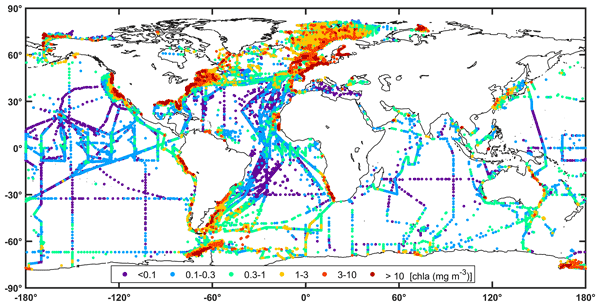
André Valente, Shubha Sathyendranath, Vanda Brotas, Steve Groom, Michael Grant, Thomas Jackson, Andrei Chuprin, Malcolm Taberner, Ruth Airs, David Antoine, Robert Arnone, William M. Balch, Kathryn Barker, Ray Barlow, Simon Bélanger, Jean-François Berthon, Şükrü Beşiktepe, Yngve Borsheim, Astrid Bracher, Vittorio Brando, Robert J. W. Brewin, Elisabetta Canuti, Francisco P. Chavez, Andrés Cianca, Hervé Claustre, Lesley Clementson, Richard Crout, Afonso Ferreira, Scott Freeman, Robert Frouin, Carlos García-Soto, Stuart W. Gibb, Ralf Goericke, Richard Gould, Nathalie Guillocheau, Stanford B. Hooker, Chuamin Hu, Mati Kahru, Milton Kampel, Holger Klein, Susanne Kratzer, Raphael Kudela, Jesus Ledesma, Steven Lohrenz, Hubert Loisel, Antonio Mannino, Victor Martinez-Vicente, Patricia Matrai, David McKee, Brian G. Mitchell, Tiffany Moisan, Enrique Montes, Frank Muller-Karger, Aimee Neeley, Michael Novak, Leonie O'Dowd, Michael Ondrusek, Trevor Platt, Alex J. Poulton, Michel Repecaud, Rüdiger Röttgers, Thomas Schroeder, Timothy Smyth, Denise Smythe-Wright, Heidi M. Sosik, Crystal Thomas, Rob Thomas, Gavin Tilstone, Andreia Tracana, Michael Twardowski, Vincenzo Vellucci, Kenneth Voss, Jeremy Werdell, Marcel Wernand, Bozena Wojtasiewicz, Simon Wright, and Giuseppe Zibordi
Earth Syst. Sci. Data, 14, 5737–5770, https://doi.org/10.5194/essd-14-5737-2022, https://doi.org/10.5194/essd-14-5737-2022, 2022
Short summary
Short summary
A compiled set of in situ data is vital to evaluate the quality of ocean-colour satellite data records. Here we describe the global compilation of bio-optical in situ data (spanning from 1997 to 2021) used for the validation of the ocean-colour products from the ESA Ocean Colour Climate Change Initiative (OC-CCI). The compilation merges and harmonizes several in situ data sources into a simple format that could be used directly for the evaluation of satellite-derived ocean-colour data.
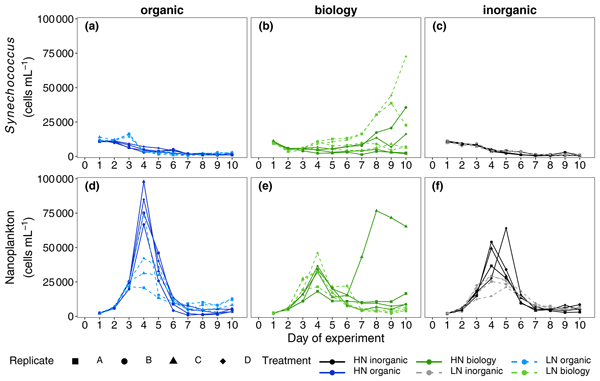
Allanah Joy Paul, Lennart Thomas Bach, Javier Arístegui, Elisabeth von der Esch, Nauzet Hernández-Hernández, Jonna Piiparinen, Laura Ramajo, Kristian Spilling, and Ulf Riebesell
Biogeosciences, 19, 5911–5926, https://doi.org/10.5194/bg-19-5911-2022, https://doi.org/10.5194/bg-19-5911-2022, 2022
Short summary
Short summary
We investigated how different deep water chemistry and biology modulate the response of surface phytoplankton communities to upwelling in the Peruvian coastal zone. Our results show that the most influential drivers were the ratio of inorganic nutrients (N : P) and the microbial community present in upwelling source water. These led to unexpected and variable development in the phytoplankton assemblage that could not be predicted by the amount of inorganic nutrients alone.
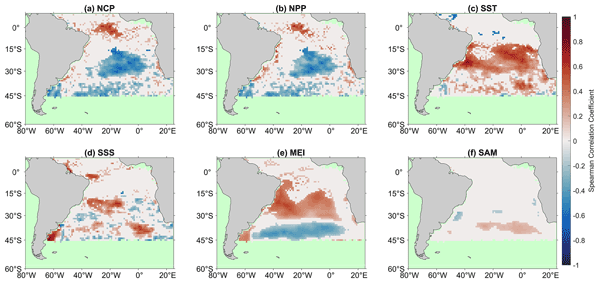
Daniel J. Ford, Gavin H. Tilstone, Jamie D. Shutler, and Vassilis Kitidis
Biogeosciences, 19, 4287–4304, https://doi.org/10.5194/bg-19-4287-2022, https://doi.org/10.5194/bg-19-4287-2022, 2022
Short summary
Short summary
This study explores the seasonal, inter-annual, and multi-year drivers of the South Atlantic air–sea CO2 flux. Our analysis showed seasonal sea surface temperatures dominate in the subtropics, and the subpolar regions correlated with biological processes. Inter-annually, the El Niño–Southern Oscillation correlated with the CO2 flux by modifying sea surface temperatures and biological activity. Long-term trends indicated an important biological contribution to changes in the air–sea CO2 flux.
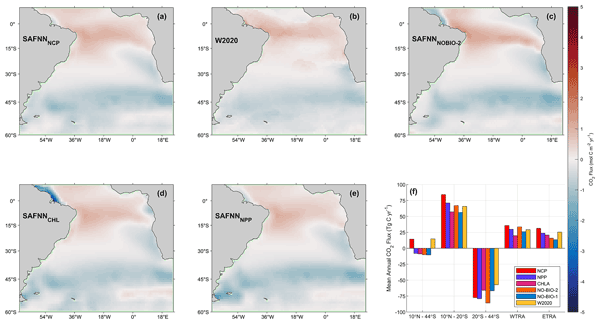
Daniel J. Ford, Gavin H. Tilstone, Jamie D. Shutler, and Vassilis Kitidis
Biogeosciences, 19, 93–115, https://doi.org/10.5194/bg-19-93-2022, https://doi.org/10.5194/bg-19-93-2022, 2022
Short summary
Short summary
This study identifies the most accurate biological proxy for the estimation of seawater pCO2 fields, which are key to assessing the ocean carbon sink. Our analysis shows that the net community production (NCP), the balance between photosynthesis and respiration, was more accurate than chlorophyll a within a neural network scheme. The improved pCO2 estimates, based on NCP, identified the South Atlantic Ocean as a net CO2 source, compared to a CO2 sink using chlorophyll a.
Cited articles
Adams, A. M., Prospero, J. M., and Zhang, C.: CALIPSO-Derived Three-Dimensional Structure of Aerosol over the Atlantic Basin and Adjacent Continents, J. Climate, 25, 6862–6879, https://doi.org/10.1175/JCLI-D-11-00672.1, 2012.
Alonso-González, I. J., Arístegui, J., Vilas, J. C., and Hernández-Guerra, A.: Lateral POC transport and consumption in surface and deep waters of the Canary Current region: A box model study, Global Biogeochem. Cy., 23, https://doi.org/10.1029/2008GB003185, 2009.
Álvarez-Salgado, X. A. Arístegui, J., Barton, E. D., and Hansell, D. A.: Contribution of upwelling filaments to offshore carbon export in the subtropical Northeast Atlantic Ocean, Limnol. Oceanogr., 52, 1287–1292, https://doi.org/10.4319/lo.2007.52.3.1287, 2007.
Arístegui, J., Álvarez‐Salgado, X. A., Barton, E. D., Figueiras, F. G., Hernández‐León, S., Roy, C., and Santos, A. M. P.: Oceanography and fisheries of the Canary Current/Iberian region of the Eastern North Atlantic (18a,E), in: The Sea: The Global Coastal Ocean: Interdisciplinary Regional Studies and Syntheses, Vol. 14B, edited by: Robinson, A. R. and Brink, K. H., Harvard University Press, 877–931, ISBN 0-674-01527-4, 2006.
Arístegui, J., Barton, E. D., Álvarez-Salgado, X. A., Santos, A. M. P., Figueiras, F. G., Kifani, S., Hernández-León, S., Mason, E., Machú, E., and Demarcq, H.: Sub-regional ecosystem variability in the Canary Current upwelling, Prog. Oceanogr., 83, 33–48, https://doi.org/10.1016/j.pocean.2009.07.031, 2009.
Baker, A. R., Kelly, S. D., Biswas, K. F., Witt, M., and Jickells, T. D.: Atmospheric deposition of nutrients to the Atlantic Ocean, Geophys. Res. Lett., 30, https://doi.org/10.1029/2003gl018518, 2003.
Baker, A. R., Weston, K., Kelly, S. D., Voss, M., Streu, P., and Cape, J. N.: Dry and wet deposition of nutrients from the tropical Atlantic atmosphere: Links to primary productivity and nitrogen fixation, Deep-Sea Res. Pt. I, 54, 1704–1720, https://doi.org/10.1016/j.dsr.2007.07.001, 2007.
Baker, A. R., Adams, C., Bell, T. G., Jickells, T. D., and Ganzeveld, L.: Estimation of atmospheric nutrient inputs to the Atlantic Ocean from 50° N to 50° S based on large-scale field sampling: Iron and other dust-associated elements, Global Biogeochem. Cy., 27, 755–767, https://doi.org/10.1002/gbc.20062, 2013.
Balch, W. M., Gordon, H. R., Bowler, B. C., Drapeau, D. T., and Booth, E. S.: Calcium carbonate measurements in the surface global ocean based on Moderate-Resolution Imaging Spectroradiometer data, J. Geophys. Res.-Oceans, 110, https://doi.org/10.1029/2004JC002560, 2005.
Balch, W. M., Drapeau, D. T., Poulton, N., Archer, S. D., Cartisano, C., Burnell, C., and Godrijan, J.: Osmotrophy of dissolved organic compounds by coccolithophore populations: Fixation into particulate organic and inorganic carbon, Science Advances, 9, eadf6973, https://doi.org/10.1126/sciadv.adf6973, 2023.
Barton, E. D.: Meanders, eddies and intrusions in the thermohaline front off Northwest Africa, Oceanol. Acta, 10, 267–283, 1987.
Barton, E. D., Arístegui, J., Tett, P., and Navarro-Pérez, E.: Variability in the Canary Islands area of filament-eddy exchanges, Progr. Oceanogr., 62, 71–94, https://doi.org/10.1016/j.pocean.2004.07.003, 2004.
Barton, E. D., Field, D. B., and Roy, C.: Canary current upwelling: More or less?, Prog. Oceanogr., 116, 167–178, https://doi.org/10.1016/j.pocean.2013.07.007, 2013.
Basha, G., Kishore, P., Venkat Ratnam, M., Ouarda, T. B. M. J., Velicogna, I., and Sutterley, T.: Vertical and latitudinal variation of the intertropical convergence zone derived using GPS radio occultation measurements, Remote Sens. Environ., 163, 262–269, https://doi.org/10.1016/j.rse.2015.03.024, 2015.
Baumann, K.-H. and Freitag, T.: Pleistocene fluctuations in the northern Benguela Current system as revealed by coccolith assemblages, Mar. Micropaleontol., 52, 195–215, https://doi.org/10.1016/j.marmicro.2004.04.011, 2004.
Baumann, K.-H., Andruleit, H., Böckel, B., Geisen, M., and Kinkel, H.: The significance of extant coccolithophores as indicators of ocean water masses, surface water temperature, and paleoproductivity: a review, Paläont. Zeitschrift, 79, 93–112, 2005.
Ben-Ami, Y., Koren, I., Altaratz, O., Kostinski, A., and Lehahn, Y.: Discernible rhythm in the spatio/temporal distributions of transatlantic dust, Atmos. Chem. Phys., 12, 2253–2262, https://doi.org/10.5194/acp-12-2253-2012, 2012.
Bergquist, B. A. and Boyle, E. A.: Dissolved iron in the tropical and subtropical Atlantic Ocean, Global Biogeochem. Cy., 20, https://doi.org/10.1029/2005GB002505, 2006.
Boyd, P. W., Claustre, H., Levy, M., Siegel, D. A., and Weber, T.: Multi-faceted particle pumps drive carbon sequestration in the ocean, Nature, 568, 327–335, https://doi.org/10.1038/s41586-019-1098-2, 2019.
Brandt, P., Bange, H. W., Banyte, D., Dengler, M., Didwischus, S.-H., Fischer, T., Greatbatch, R. J., Hahn, J., Kanzow, T., Karstensen, J., Körtzinger, A., Krahmann, G., Schmidtko, S., Stramma, L., Tanhua, T., and Visbeck, M.: On the role of circulation and mixing in the ventilation of oxygen minimum zones with a focus on the eastern tropical North Atlantic, Biogeosciences, 12, 489–512, https://doi.org/10.5194/bg-12-489-2015, 2015.
Brotas, V., Ferreira, A., Veloso, V., Tracana, A., Guerreiro, C. V., Tarran, G. A., Woodward, E. M. S., Ribeiro, L., Netting, J., Clewley, D., and Groom, S. B.: Assessing phytoplankton community composition in the Atlantic Ocean from in situ and satellite observations, Frontiers in Marine Science, 10, https://doi.org/10.3389/fmars.2023.1229692, 2023.
Burgoa, N., Machín, F., Marrero-Díaz, Á., Rodríguez-Santana, Á., Martínez-Marrero, A., Arístegui, J., and Duarte, C. M.: Mass, nutrients and dissolved organic carbon (DOC) lateral transports off northwest Africa during fall 2002 and spring 2003, Ocean Sci., 16, 483–511, https://doi.org/10.5194/os-16-483-2020, 2020.
Carr, M-E.: Estimation of potential productivity in Eastern Boundary Currents using remote sensing, Deep-Sea Res. Pt. II, 49, 59–80, https://doi.org/10.1016/S0967-0645(01)00094-7, 2001.
Cermeño, P., Dutkiewicz, S., Harris, R. P., Follows, M., Schofield, O., and Falkowski, P. G.: The role of nutricline depth in regulating the ocean carbon cycle, P. Natl. Acad. Sci. USA, 105, 20344–20349, https://doi.org/10.1073/pnas.0811302106, 2008.
Cullen, J. J.: Subsurface Chlorophyll Maximum Layers: Enduring Enigma or Mystery Solved?, Annu. Rev. Mar. Sci., 7, 207–239, https://doi.org/10.1146/annurev-marine-010213-135111, 2015.
Dai, A. and Trenberth, K. E.: Estimates of Freshwater Discharge from Continents: Latitudinal and Seasonal Variations, J. Hydrometeorol., 3, 660–687, https://doi.org/10.1175/1525-7541(2002)003<0660:EOFDFC>2.0.CO;2, 2002.
Dutkiewicz, S., Scott, J. R., and Follows, M. J.: Winners and losers: Ecological and biogeochemical changes in a warming ocean, Global Biogeochem. Cy., 27, 463–477, https://doi.org/10.1002/gbc.20042, 2013.
Emery, W. J. and Meincke, J. P.: Global water masses: summary and review, Oceanol. Acta, 9, 383–391, 1986.
England, M. H., Li, Z., Huguenin, M. F., Kiss, A. E., Sen Gupta, A., Holmes, R. M., and Rahmstorf, S.: Drivers of the extreme North Atlantic marine heatwave during 2023, Nature, 642, 636–643, https://doi.org/10.1038/s41586-025-08903-5, 2025.
Fiedler, B., Grundle, D. S., Schütte, F., Karstensen, J., Löscher, C. R., Hauss, H., Wagner, H., Loginova, A., Kiko, R., Silva, P., Tanhua, T., and Körtzinger, A.: Oxygen utilization and downward carbon flux in an oxygen-depleted eddy in the eastern tropical North Atlantic, Biogeosciences, 13, 5633–5647, https://doi.org/10.5194/bg-13-5633-2016, 2016.
Filipsson, H. L., Romero, O. E., Stuut, J.-B. W., and Donner, B.: Relationships between primary productivity and bottom-water oxygenation off northwest Africa during the last deglaciation, J. Quaternary Sci., 26, 448–456, https://doi.org/10.1002/jqs.1473, 2011.
Fischer, G. and Karakaş, G.: Sinking rates and ballast composition of particles in the Atlantic Ocean: implications for the organic carbon fluxes to the deep ocean, Biogeosciences, 6, 85–102, https://doi.org/10.5194/bg-6-85-2009, 2009.
Fischer, G., Karakas, G., Blaas, M., Ratmeyer, V., Nowald, N., Schlitzer, R., Helmke, P., Davenport, R., Donner, B., Neuer, S., and Wefer, G.: Mineral ballast and particle settling rates in the coastal upwelling system off NW Africa and the South Atlantic, Int. J. Earth Sci., https://doi.org/10.1007/s00531-007-0234-7, 2007.
Fischer, G., Reuter, C., Karakas, G., Nowald, N., and Wefer, G.: Offshore advection of particles within the Cape Blanc filament, Mauritania: Results from observational and modelling studies, Prog. Oceanogr., 83, 322–330, https://doi.org/10.1016/j.pocean.2009.07.023, 2009.
Fischer, G., Basse, A., Baumann, K.-H., Klann, M., Klawonn, I., Küchler, R., Nowald, N., and Ruhland, G.: Report and preliminary results of R/V POSEIDON Cruise P425, Las Palmas–Las Palmas, 16.01.2012–30.01.2012, Berichte, Fachbereich Geowissenschaften, Universität Bremen, 32 pp., https://nbn-resolving.de/urn:nbn:de:gbv:46-00102708-17 (last access: 1 November 2025), 2012.
Fischer, G., Ba, M., Dehning, K., Hefter, J., Iversen, M. H., Klann, M., Nowald, N., Ploug, H., Ruhland, G., and Witte, Y: Report and preliminary results of R/V POSEIDON cruise POS445, Las Palmas–Las Palmas, 19.01.2013–01.02.2013, Berichte, MARUM – Zentrum für Marine Umweltwissenschaften, Fachbereich Geowissenschaften, Universität Bremen, 30 pp., ISSN 2195-9633, 2013.
Fischer, G., Dehning, K., Dia, A., Füssel, J., Hefter, J., Iversen, M., Klann, M., Nowald, N., Olbrich, M., and Ruhland, G.: Report and preliminary results of R/V POSEIDON cruise POS464, Las Palmas (Canary Islands)–Las Palmas (Canary Islands), 03.02.2014–18.02.2014, Berichte aus dem MARUM und dem Fachbereich Geowissenschaften der Universität Bremen, 29 pp., https://nbn-resolving.de/urn:nbn:de:gbv:46-00103963-17 (last access: 1 November 2025), 2014.
Fischer, G., Romero, O., Merkel, U., Donner, B., Iversen, M., Nowald, N., Ratmeyer, V., Ruhland, G., Klann, M., and Wefer, G.: Deep ocean mass fluxes in the coastal upwelling off Mauritania from 1988 to 2012: variability on seasonal to decadal timescales, Biogeosciences, 13, 3071–3090, https://doi.org/10.5194/bg-13-3071-2016, 2016.
Fischer, G., Romero, O., Toby, E., Iversen, M., Donner, B., Mollenhauer, G., Nowald, N., Ruhland, G., Klann, M., Hamady, B., and Wefer, G.: Changes in the Dust-Influenced Biological Carbon Pump in the Canary Current System: Implications From a Coastal and an Offshore Sediment Trap Record Off Cape Blanc, Mauritania, Global Biogeochem. Cy., 33, 1100–1128, https://doi.org/10.1029/2019GB006194, 2019.
Fischer, G., Romero, O. E., Karstensen, J., Baumann, K.-H., Moradi, N., Iversen, M., Ruhland, G., Klann, M., and Körtzinger, A.: Seasonal flux patterns and carbon transport from low-oxygen eddies at the Cape Verde Ocean Observatory: lessons learned from a time series sediment trap study (2009–2016), Biogeosciences, 18, 6479–6500, https://doi.org/10.5194/bg-18-6479-2021, 2021.
Fomba, K. W., Müller, K., van Pinxteren, D., Poulain, L., van Pinxteren, M., and Herrmann, H.: Long-term chemical characterization of tropical and marine aerosols at the Cape Verde Atmospheric Observatory (CVAO) from 2007 to 2011, Atmos. Chem. Phys., 14, 8883–8904, https://doi.org/10.5194/acp-14-8883-2014, 2014.
Frischknecht, M., Münnich, M., and Gruber, N.: Origin, Transformation, and Fate: The Three-Dimensional Biological Pump in the California Current System, J. Geophys. Res.-Oceans, 123, 7939–7962, https://doi.org/10.1029/2018JC013934, 2018.
Gabric, A. J., Garcia, L., Van Camp, L., Nykjaer, L., Eifler, W., and Schrimpf, W.: Offshore export of shelf production in the Cape Blanc (Mauritania) giant filament as derived from coastal zone color scanner imagery, J. Geophys. Res.-Oceans, 98, 4697–4712, https://doi.org/10.1029/92JC01714, 1993.
Gómez-Letona, M., Ramos, A. G., Coca, J., and Arístegui, J.: Trends in Primary Production in the Canary Current Upwelling System–A Regional Perspective Comparing Remote Sensing Models, Frontiers in Marine Science, 4, https://doi.org/10.3389/fmars.2017.00370, 2017.
Goudie, A. S. and Middleton, N. J.: Saharan dust storms: nature and consequences, Earth-Sci. Rev., 56, 179–204, 2001.
Guerreiro, C., Cachão, M., Pawlowsky-Glahn, V., Oliveira, A., and Rodrigues, A.: Compositional Data Analysis (CoDA) as a tool to study the (paleo)ecology of coccolithophores from coastal-neritic settings off central Portugal, Sediment. Geol., 319, 134–146, https://doi.org/10.1016/j.sedgeo.2015.01.012, 2015a.
Guerreiro, C., de Stigter, H., Cachão, M., Oliveira, A., and Rodrigues, A.: Coccoliths from recent sediments of the central Portuguese margin: Taphonomical and ecological inferences, Mar. Micropaleontol., 114, 55–68, https://doi.org/10.1016/j.marmicro.2014.11.001, 2015b.
Guerreiro, C. V., Baumann, K.-H., Brummer, G.-J. A., Fischer, G., Korte, L. F., Merkel, U., Sá, C., de Stigter, H., and Stuut, J.-B. W.: Coccolithophore fluxes in the open tropical North Atlantic: influence of thermocline depth, Amazon water, and Saharan dust, Biogeosciences, 14, 4577–4599, https://doi.org/10.5194/bg-14-4577-2017, 2017.
Guerreiro, C. V., Baumann, K.-H., Brummer, G.-J. A., Korte, L. F., Sá, C., and Stuut, J.-B. W.: Transatlantic gradients in calcifying phytoplankton (coccolithophore) fluxes, Prog. Oceanogr., 176, 102140, https://doi.org/10.1016/j.pocean.2019.102140, 2019.
Guerreiro, C. V., Baumann, K.-H., Brummer, G.-J. A., Valente, A., Fischer, G., Ziveri, P., Brotas, V., and Stuut, J.-B. W.: Carbonate fluxes by coccolithophore species between NW Africa and the Caribbean: Implications for the biological carbon pump, Limnol. Oceanogr., 66, 3190–3208, https://doi.org/10.1002/lno.11872, 2021.
Guerreiro, C. V., Ferreira, A., Cros, L., Stuut, J.-B., Baker, A., Tracana, A., Pinto, C., Veloso, V., Rees, A. P., Cachão, M. A. P., Nunes, T., and Brotas, V.: Response of coccolithophore communities to oceanographic and atmospheric processes across the North- and Equatorial Atlantic, Frontiers in Marine Science, 10, https://doi.org/10.3389/fmars.2023.1119488, 2023.
Guerreiro, C. V., Ziveri, P., Cavaleiro, C., and Stuut, J. B. W.: Coccolith-calcite Sr/Ca as a proxy for transient export production related to Saharan dust deposition in the tropical North Atlantic, Sci. Rep.-UK, 14, 4295, https://doi.org/10.1038/s41598-024-54001-3, 2024.
Guerreiro, C. V., Jönsson, B., Land, P., Arístegui, J., Stuut, J.-B., Ferreira, A., Tilstone, G., Brotas, V., and Groom, S.: Supporting datasets and Python code for: “Seasonal upwelling–dust controls on export production in the Canary Current System revealed by Lagrangian particle tracking”, Zenodo [data set], version 1.0, https://doi.org/10.5281/zenodo.21041445, 2026.
Guieu, C., Aumont, O., Paytan, A., Bopp, L., Law, C. S., Mahowald, N., Achterberg, E. P., Marañón, E., Salihoglu, B., Crise, A., Wagener, T., Herut, B., Desboeufs, K., Kanakidou, M., Olgun, N., Peters, F., Pulido-Villena, E., Tovar-Sanchez, A., and Völker, C.: The significance of the episodic nature of atmospheric deposition to Low Nutrient Low Chlorophyll regions, Global Biogeoch. Cy., 28, 1179–1198, https://doi.org/10.1002/2014GB004852, 2014.
Hailegeorgis, D., Lachkar, Z., Rieper, C., and Gruber, N.: A Lagrangian study of the contribution of the Canary coastal upwelling to the nitrogen budget of the open North Atlantic, Biogeosciences, 18, 303–325, https://doi.org/10.5194/bg-18-303-2021, 2021.
Hernández-Guerra, A., Fraile-Nuez, E., López-Laatzen, F., Martínez, A., Parrilla, G., and Vélez-Belchí, P.: Canary Current and North Equatorial Current from an inverse box model, J. Geophys. Res.-Oceans, 110, https://doi.org/10.1029/2005JC003032, 2005.
Hernández-Hernández, N., Arístegui, J., Montero, M. F., Velasco-Senovilla, E., Baltar, F., Marrero-Díaz, Á., Martínez-Marrero, A., and Rodríguez-Santana, Á.: Drivers of Plankton Distribution Across Mesoscale Eddies at Submesoscale Range, Frontiers in Marine Science, 7, https://doi.org/10.3389/fmars.2020.00667, 2020.
Hernández-Hernández, N., Santana-Falcón, Y., Montero, M. F., Benavides, M., Delgado-Huertas, A., Álvarez-Salgado, X. A., Land, P., and Arístegui, J.: Comparing in situ and satellite-derived primary production estimates in the Canary Current upwelling region, J. Marine Syst., 251, 104109, https://doi.org/10.1016/j.jmarsys.2025.104109, 2025.
Hopkins, J., Henson, S. A., Painter, S. C., Tyrrell, T., and Poulton, A. J.: Phenological characteristics of global coccolithophore blooms, Global Biogeochem. Cy., 29, 239–253, https://doi.org/10.1002/2014GB004919, 2015.
Huang, B., Yin, X., Carton, J. A., Chen, L., Graham, G., Hogan, P., Smith, T., and Zhang, H.-M.: Record high sea surface temperatures in 2023, Geophys. Res. Lett., 51, e2024GL108369, https://doi.org/10.1029/2024GL108369, 2024.
Hutchins, D. A.: Forecasting the rain ratio, Nature, 476, 41–42, https://doi.org/10.1038/476041a, 2011.
IPCC: Climate Change 2023: Synthesis Report. Contribution of Working Groups I, II and III to the Sixth Assessment Report of the Intergovernmental Panel on Climate Change, Core Writing Team, edited by: Lee, H. and Romero, J., IPCC, Geneva, Switzerland, 184 pp., https://doi.org/10.59327/IPCC/AR6-9789291691647, 2023.
Jickells, T., Boyd, P., and Hunter, K. A.: Biogeochemical Impacts of Dust on the Global Carbon Cycle, in: Mineral Dust: A Key Player in the Earth System, edited by: Knippertz, P. and Stuut, J.-B. W., Springer Netherlands, Dordrecht, 359–384, https://doi.org/10.1007/978-94-017-8978-3_14, 2014.
Jickells, T. D., Dorling, S., Deuser, W. G., Church, T. M., Arimoto, R., and Prospero, J. M.: Air-borne dust fluxes to a deep water sediment trap in the Sargasso Sea, Global Biogeochem. Cy., 12, 311–320, https://doi.org/10.1029/97GB03368, 1998.
Jickells, T. D., An, Z. S., Andersen, K. K., Baker, A. R., Bergametti, G., Brooks, N., Cao, J. J., Boyd, P. W., Duce, R. A., Hunter, K. A., Kawahata, H., Kubilay, N., laRoche, J., Liss, P. S., Mahowald, N., Prospero, J. M., Ridgwell, A. J., Tegen, I., and Torres, R.: Global Iron Connections Between Desert Dust, Ocean Biogeochemistry, and Climate, Science, 308, 67–71, 2005.
Jönsson, B. F. and Salisbury, J. E.: Episodicity in phytoplankton dynamics in a coastal region, Geophys. Res. Lett, 43, 5821–5828, https://doi.org/10.1002/2016GL068683, 2016.
Jönsson, B. F., Salisbury, J. E., and Mahadevan, A.: Extending the use and interpretation of ocean satellite data using Lagrangian modelling, Int. J. Remote Sens., 30, 3331–3341, https://doi.org/10.1080/01431160802558758, 2009.
Kahru, M., Kudela, R., Manzano-Sarabia, M., and Mitchell, B. G.: Trends in primary production in the California Current detected with satellite data, J. Geophys. Res.-Oceans, 114, https://doi.org/10.1029/2008JC004979, 2009.
Karstensen, J., Stramma, L., and Visbeck, M.: Oxygen minimum zones in the eastern tropical Atlantic and Pacific oceans, Prog. Oceanogr., 77, 331–350, https://doi.org/10.1016/j.pocean.2007.05.009, 2008.
Katz, E. J.: Dynamic topography of the sea surface in the equatorial Atlantic, J. Mar. Res., 39, 53–63, 1981.
Klenz, T., Dengler, M., and Brandt, P.: Seasonal Variability of the Mauritania Current and Hydrography at 18° N, J. Geophys. Res.-Oceans, 123, 8122–8137, https://doi.org/10.1029/2018JC014264, 2018.
Knecht, N. S., Benedetti, F., Hofmann Elizondo, U., Bednaršek, N., Chaabane, S., de Weerd, C., Peijnenburg, K. T. C. A., Schiebel, R., and Vogt, M.: The Impact of Zooplankton Calcifiers on the Marine Carbon Cycle, Global Biogeochem. Cy., 37, e2022GB007685, https://doi.org/10.1029/2022GB007685, 2023.
Knippertz, P. and Todd, M. C.: Mineral dust aerosols over the Sahara: Meteorological controls on emission and transport and implications for modeling, Rev. Geophys., 50, https://doi.org/10.1029/2011RG000362, 2012.
Köbrich, M. I., Baumann, K. H., and Fischer, G.: Seasonal and inter-annual dynamics of coccolithophore fluxes from the upwelling region off Cape Blanc, NW Africa, J. Micropalaeontol., 35, 103–116, https://doi.org/10.1144/jmpaleo2014-024, 2016.
Kok, J. F., Albani, S., Mahowald, N. M., and Ward, D. S.: An improved dust emission model – Part 2: Evaluation in the Community Earth System Model, with implications for the use of dust source functions, Atmos. Chem. Phys., 14, 13043–13061, https://doi.org/10.5194/acp-14-13043-2014, 2014.
Korte, L. F., Brummer, G.-J. A., van der Does, M., Guerreiro, C. V., Hennekam, R., van Hateren, J. A., Jong, D., Munday, C. I., Schouten, S., and Stuut, J.-B. W.: Downward particle fluxes of biogenic matter and Saharan dust across the equatorial North Atlantic, Atmos. Chem. Phys., 17, 6023–6040, https://doi.org/10.5194/acp-17-6023-2017, 2017.
Korte, L. F., Brummer, G.-J. A., van der Does, M., Guerreiro, C. V., Mienis, F., Munday, C. I., Ponsoni, L., Schouten, S., and Stuut, J.-B. W.: Multiple drivers of production and particle export in the western tropical North Atlantic, Limnol. Oceanogr., 65, 2108–2124, https://doi.org/10.1002/lno.11442, 2020.
Kostianoy, A. G. and Zatsepin, A. G.: The West African coastal upwelling filaments and cross-frontal water exchange conditioned by them, J. Marine Syst., 7, 349–359, https://doi.org/10.1016/0924-7963(95)00029-1, 1996.
Lathuilière, C., Echevin, V., and Lévy, M.: Seasonal and intraseasonal surface chlorophyll-a variability along the northwest African coast, J. Geophys. Res.-Oceans, 113, https://doi.org/10.1029/2007JC004433, 2008.
Lellouche, J.-M., Greiner, E., Le Galloudec, O., Garric, G., Regnier, C., Drevillon, M., Benkiran, M., Testut, C.-E., Bourdalle-Badie, R., Gasparin, F., Hernandez, O., Levier, B., Drillet, Y., Remy, E., and Le Traon, P.-Y.: Recent updates to the Copernicus Marine Service global ocean monitoring and forecasting real-time 1∕12° high-resolution system, Ocean Sci., 14, 1093–1126, https://doi.org/10.5194/os-14-1093-2018, 2018.
Longhurst, A. R.: Ecological geography of the sea (2nd edition), Academic Press, San Diego, 542 pp., https://doi.org/10.1016/B978-0-12-455521-1.X5000-1, 2006.
Lovecchio, E., Gruber, N., and Münnich, M.: Mesoscale contribution to the long-range offshore transport of organic carbon from the Canary Upwelling System to the open North Atlantic, Biogeosciences, 15, 5061–5091, https://doi.org/10.5194/bg-15-5061-2018, 2018.
Mahowald, N. M., Scanza, R., Brahney, J., Goodale, C. L., Hess, P. G., Moore, J. K., and Neff, J.: Aerosol Deposition Impacts on Land and Ocean Carbon Cycles, Curr. Clim. Change Rep., 3, 16–31, https://doi.org/10.1007/s40641-017-0056-z, 2017.
Mann, K. H. and Lazier, J. P.: Dynamics of marine ecosystems, biological-physical interactions in the oceans (3rd edition), Blackwell, Malden, USA, Oxford, UK, ISBN: 978-1-118-68791-8, 2006.
Moore, C. M., Mills, M. M., Achterberg, E. P., Geider, R. J., LaRoche, J., Lucas, M. I., McDonagh, E. L., Pan, X., Poulton, A. J., Rijkenberg, M. J. A., Suggett, D. J., Ussher, S. J., and Woodward, E. M. S.: Large-scale distribution of Atlantic nitrogen fixation controlled by iron availability, Nat. Geosci., 2, 867–871, https://doi.org/10.1038/ngeo667, 2009.
Marrero-Betancort, N., Marcello, J., Rodríguez Esparragón, D., and Hernández-León, S.: Wind variability in the Canary Current during the last 70 years, Ocean Sci., 16, 951–963, https://doi.org/10.5194/os-16-951-2020, 2020.
Measures, C. I., Landing, W. M., Brown, M. T., and Buck, C. S.: High-resolution Al and Fe data from the Atlantic Ocean CLIVAR-CO2 Repeat Hydrography A16N transect: Extensive linkages between atmospheric dust and upper ocean geochemistry, Global Biogeochem. Cy., 22, https://doi.org/10.1029/2007GB003042, 2008.
Merle, J.: Seasonal Heat Budget in the Equatorial Atlantic Ocean, J. Phys. Oceanogr., 10, 464–469, https://doi.org/10.1175/1520-0485(1980)010<0464:SHBITE>2.0.CO;2, 1980a.
Merle, J.: Seasonal-variation of heat-storage in the tropical atlantic-ocean, Oceanol. Acta, 3, 455–463, 1980b.
Messié, M. and Chavez, F. P.: Seasonal regulation of primary production in eastern boundary upwelling systems, Prog. Oceanogr., 134, 1–18, https://doi.org/10.1016/j.pocean.2014.10.011, 2015.
Meunier, T., Barton, E. D., Barreiro, B., and Torres, R.: Upwelling filaments off Cap Blanc: Interaction of the NW African upwelling current and the Cape Verde frontal zone eddy field?, J. Geophys. Res.-Oceans, 117, https://doi.org/10.1029/2012JC007905, 2012.
Milliman, J. D.: Production and accumulation of calcium carbonate in the ocean: Budget of a nonsteady state, Global Biogeochem. Cy., 7, 927–957, https://doi.org/10.1029/93GB02524, 1993.
Moore, C. M., Mills, M. M., Langlois, R., Milne, A., Achterberg, E. P., La Roche, J., and Geider, R. J.: Relative influence of nitrogen and phosphorous availability on phytoplankton physiology and productivity in the oligotrophic sub-tropical North Atlantic Ocean, Limnol. Oceanogr., 53, 291–305, https://doi.org/10.4319/lo.2008.53.1.0291, 2008.
Morel, A.: Light and marine photosynthesis: a spectral model with geochemical and climatological implications, Prog. Oceanogr., 26, 263–306, https://doi.org/10.1016/0079-6611(91)90004-6, 1991.
Okin, G. S., Baker, A. R., Tegen, I., Mahowald, N. M., Dentener, F. J., Duce, R. A., Galloway, J. N., Hunter, K., Kanakidou, M., Kubilay, N., Prospero, J. M., Sarin, M., Surapipith, V., Uematsu, M., and Zhu, T.: Impacts of atmospheric nutrient deposition on marine productivity: Roles of nitrogen, phosphorus, and iron, Global Biogeochem. Cy., 25, https://doi.org/10.1029/2010GB003858, 2011.
Oschlies, A. and Garçon, V.: Eddy-induced enhancement of primary production in a model of the North Atlantic Ocean, Nature, 394, 266–269, https://doi.org/10.1038/28373, 1998.
Pabortsava, K., Lampitt, R. S., Benson, J., Crowe, C., McLachlan, R., Le Moigne, F. A. C., Mark Moore, C., Pebody, C., Provost, P., Rees, A. P., Tilstone, G. H., and Woodward, E. M. S.: Carbon sequestration in the deep Atlantic enhanced by Saharan dust, Nat. Geosci., 10, 189–194, https://doi.org/10.1038/ngeo2899, 2017.
Pastor, M. V., Pelegrí, J. L., Hernández-Guerra, A., Font, J., Salat, J., and Emelianov, M.: Water and nutrient fluxes off Northwest Africa, Cont. Shelf Res., 28, 915–936, https://doi.org/10.1016/j.csr.2008.01.011, 2008.
Pastor, M. V., Peña-Izquierdo, J., Pelegrí, J. L., and Marrero-Díaz, Á.: Meridional changes in water mass distributions off NW Africa during November 2007/2008, Cienc. Mar., 38, 223–244, https://doi.org/10.7773/cm.v38i1B.1831, 2012.
Pastor, M. V., Palter, J. B., Pelegrí, J. L., and Dunne, J. P.: Physical drivers of interannual chlorophyll variability in the eastern subtropical North Atlantic, J. Geophys. Res.-Oceans, 118, 3871–3886, https://doi.org/10.1002/jgrc.20254, 2013.
Pelegrí, J. L., Arístegui, J., Cana, L., González-Dávila, M., Hernández-Guerra, A., Hernández-León, S., Marrero-Díaz, A., Montero, M. F., Sangrà, P., and Santana-Casiano, M.: Coupling between the open ocean and the coastal upwelling region off northwest Africa: water recirculation and offshore pumping of organic matter, J. Marine Syst., 54, 3–37, https://doi.org/10.1016/j.jmarsys.2004.07.003, 2005.
Pelegrí, J. L., Peña-Izquierdo, J., Machín, F., Meiners, C., and Presas-Navarro, C.: Oceanography of the Cape Verde Basin and Mauritanian Slope Waters, in: Deep-Sea Ecosystems Off Mauritania: Research of Marine Biodiversity and Habitats in the Northwest African Margin, edited by: Ramos, A., Ramil, F., and Sanz, J. L., Springer Netherlands, Dordrecht, 119–153, https://doi.org/10.1007/978-94-024-1023-5_3, 2017.
Philander, S. G.: Atlantic Ocean Equatorial Currents*, in: Encyclopedia of Ocean Sciences (Second Edition), edited by: Steele, J. H., Academic Press, Oxford, 234–237, https://doi.org/10.1016/B978-012374473-9.00361-1, 2001.
Polonsky, A. B. and Serebrennikov, A. N.: Long-Term Sea Surface Temperature Trends in the Canary Upwelling Zone and their Causes, Izvestiya, Atmospheric and Oceanic Physics, 54, 1062–1067, https://doi.org/10.1134/S0001433818090281, 2018.
Poulton, A. J., Holligan, P. M., Hickman, A., Kim, Y.-N., Adey, T. R., Stinchcombe, M. C., Holeton, C., Root, S., and Woodward, E. M. S.: Phytoplankton carbon fixation, chlorophyll-biomass and diagnostic pigments in the Atlantic Ocean, Deep-Sea Res. Pt. II, 53, 1593–1610, https://doi.org/10.1016/j.dsr2.2006.05.007, 2006.
Powell, C. F., Baker, A. R., Jickells, T. D., Bange, H. W., Chance, R. J., and Yodle, C.: Estimation of the Atmospheric Flux of Nutrients and Trace Metals to the Eastern Tropical North Atlantic Ocean, J. Atmos. Sci., 72, 4029–4045, https://doi.org/10.1175/JAS-D-15-0011.1, 2015.
Prospero, J. M. and Carlson, T. N.: Vertical and areal distribution of Saharan dust over the western equatorial north Atlantic Ocean, J. Geophys. Res. (1896–1977), 77, 5255–5265, https://doi.org/10.1029/JC077i027p05255, 1972.
Prospero, J. M., Collard, F.-X., Molinié, J., and Jeannot, A.: Characterizing the annual cycle of African dust transport to the Caribbean Basin and South America and its impact on the environment and air quality, Global Biogeochem. Cy., 28, 757–773, https://doi.org/10.1002/2013GB004802, 2014.
Reid, J. L.: On the total geostrophic circulation of the North Atlantic Ocean: Flow patterns, tracers, and transports, Prog. Oceanogr., 33, 1–92, https://doi.org/10.1016/0079-6611(94)90014-0, 1994.
Romero, O. E., Baumann, K.-H., Zonneveld, K. A. F., Donner, B., Hefter, J., Hamady, B., Pospelova, V., and Fischer, G.: Flux variability of phyto- and zooplankton communities in the Mauritanian coastal upwelling between 2003 and 2008, Biogeosciences, 17, 187–214, https://doi.org/10.5194/bg-17-187-2020, 2020.
Sangrà, P., Pascual, A., Rodríguez-Santana, Á., Machín, F., Mason, E., McWilliams, J. C., Pelegrí, J. L., Dong, C., Rubio, A., Arístegui, J., Marrero-Díaz, Á., Hernández-Guerra, A., Martínez-Marrero, A., and Auladell, M.: The Canary Eddy Corridor: A major pathway for long-lived eddies in the subtropical North Atlantic, Deep-Sea Res. Pt. I, 56, 2100–2114, https://doi.org/10.1016/j.dsr.2009.08.008, 2009.
Santana-Falcón, Y., Mason, E., and Arístegui, J.: Offshore transport of organic carbon by upwelling filaments in the Canary Current System, Prog. Oceanogr., 186, 102322, https://doi.org/10.1016/j.pocean.2020.102322, 2020.
Shelley, R. U., Wyatt, N. J., Tarran, G. A., Rees, A. P., Worsfold, P. J., and Lohan, M. C.: A tale of two gyres: Contrasting distributions of dissolved cobalt and iron in the Atlantic ocean during an Atlantic meridional transect (AMT-19), Prog. Oceanogr. 158, 52–64, https://doi.org/10.1016/j.pocean.2016.10.013, 2017.
Siedler, G., Zangenberg, N., Onken, R., and Morlière, A.: Seasonal changes in the tropical Atlantic circulation: Observation and simulation of the Guinea Dome, J. Geophys. Res.-Oceans, 97, 703–715, https://doi.org/10.1029/91JC02501, 1992.
Siemer, J. P., Machín, F., González-Vega, A., Arrieta, J. M., Gutiérrez-Guerra, M. A., Pérez-Hernández, M. D., Vélez-Belchí, P., Hernández-Guerra, A., and Fraile-Nuez, E.: Recent Trends in SST, Chl-a, Productivity and Wind Stress in Upwelling and Open Ocean Areas in the Upper Eastern North Atlantic Subtropical Gyre, J. Geophys. Res.-Oceans, 126, e2021JC017268, https://doi.org/10.1029/2021JC017268, 2021.
Signorini, S. R., Franz, B. A., and McClain, C. R.: Chlorophyll variability in the oligotrophic gyres: mechanisms, seasonality and trends, Frontiers in Marine Science, 2, https://doi.org/10.3389/fmars.2015.00001, 2015.
Skonieczny, C., Bory, A., Bout-Roumazeilles, V., Abouchami, W., Galer, S. J. G., Crosta, X., Diallo, A., and Ndiaye, T.: A three-year time series of mineral dust deposits on the West African margin: Sedimentological and geochemical signatures and implications for interpretation of marine paleo-dust records, Earth Planet. Sc. Lett., 364, 145–156, https://doi.org/10.1016/j.epsl.2012.12.039, 2013.
Smyth, T. J., Tilstone, G. H., and Groom, S. B.: Integration of radiative transfer into satellite models of ocean primary production, J. Geophys. Res., 110, C10014, https://doi.org/10.1029/2004JC002784, 2005.
Sprengel, C., Baumann, K.-H., Henderiks, J., Henrich, R., and Neuer, S.: Modern coccolithophore and carbonate sedimentation along a productivity gradient in the Canary Islands region: seasonal export production and surface accumulation rates, Deep-Sea Res. Pt. II, 49, 3577–3598, https://doi.org/10.1016/S0967-0645(02)00099-1, 2002.
Stramma, L. and England, M.: On the water masses and mean circulation of the South Atlantic Ocean, J. Geophys. Res.-Oceans, 104, 20863–20883, 1999.
Stramma, L. and Schott, F.: The mean flow field of the tropical Atlantic Ocean, Deep-Sea Res. Pt. II, 46, 279–303, https://doi.org/10.1016/S0967-0645(98)00109-X, 1999.
Stuut, J.-B. W. and Cruise participants: Cruise report and preliminary results RV Pelagia expedition 64PE378 TRAFFIC II, NIOZ – Royal Netherlands Institute for Sea Research, Texel, 54, 2013.
Stuut, J.-B. W. and Cruise participants: Cruise report and preliminary results RV Pelagia expedition 64PE514 DUST 2023, NIOZ – Royal Netherlands Institute for Sea Research, Texel, 51, 2023.
Stuut, J.-B. W., Zabel, M., Ratmeyer, V., Helmke, P., Schefuß, E., Lavik, G., and Schneider, R. R.: Provenance of present-day eolian dust collected off NW Africa, J. Geophys. Res., 110, https://doi.org/https://doi.org/10.1029/2004JD005161, 2005.
Tilstone, G. H., Xie, Y.-y., Robinson, C., Serret, P., Raitsos, D. E., Powell, T., Aranguren-Gassis, M., Garcia-Martin, E. E., and Kitidis, V.: Satellite estimates of net community production indicate predominance of net autotrophy in the Atlantic Ocean, Remote Sens. Environ., 164, 254–269, https://doi.org/10.1016/j.rse.2015.03.017, 2015.
Tsamalis, C., Chédin, A., Pelon, J., and Capelle, V.: The seasonal vertical distribution of the Saharan Air Layer and its modulation by the wind, Atmos. Chem. Phys., 13, 11235–11257, https://doi.org/10.5194/acp-13-11235-2013, 2013.
Ussher, S. J., Achterberg, E. P., Powell, C., Baker, A. R., Jickells, T. D., Torres, R., and Worsfold, P. J.: Impact of atmospheric deposition on the contrasting iron biogeochemistry of the North and South Atlantic Ocean, Global Biogeochem. Cy., 27, 1096–1107, https://doi.org/10.1002/gbc.20056, 2013.
Van Camp, L., Nykjaer, L., Mittelstaedt, E., and Schlittenhardt, P.: Upwelling and boundary circulation off Northwest Africa as depicted by infrared and visible satellite observations, Prog. Oceanogr., 26, 357–402, https://doi.org/10.1016/0079-6611(91)90012-B, 1991.
van der Does, M., Korte, L. F., Munday, C. I., Brummer, G.-J. A., and Stuut, J.-B. W.: Particle size traces modern Saharan dust transport and deposition across the equatorial North Atlantic, Atmos. Chem. Phys., 16, 13697–13710, https://doi.org/10.5194/acp-16-13697-2016, 2016.
van der Does, M., Brummer, G.-J. A., van Crimpen, F. C. J., Korte, L. F., Mahowald, N. M., Merkel, U., Yu, H., Zuidema, P., and Stuut, J.-B. W.: Tropical rains controlling deposition of Saharan dust across the North Atlantic Ocean, Geophys. Res. Lett., 47, 1–10, https://doi.org/10.1029/2019GL086867, 2020.
van der Does, M., Brummer, G.-J. A., Korte, L. F., and Stuut, J.-B. W.: Seasonality in Saharan Dust Across the Atlantic Ocean: From Atmospheric Transport to Seafloor Deposition, J. Geophys. Res.-Atmos., 126, e2021JD034614, https://doi.org/10.1029/2021JD034614, 2021.
van der Jagt, H., Friese, C. A., Stuut, J.-B. W., Fischer, G., and Iversen, M. H.: The ballasting effect of Saharan dust deposition on aggregate dynamics and carbon export: aggregation, settling and scavenging of marine snow, Limnol. Oceanogr., 63, 1386–1394, https://doi.org/10.1002/lno.10779, 2018.
Varela, R., Álvarez, I., Santos, F., deCastro, M., and Gómez-Gesteira, M.: Has upwelling strengthened along worldwide coasts over 1982–2010?, Sci. Rep., 5, 10016, https://doi.org/10.1038/srep10016, 2015.
Vazquez, R., Parras-Berrocal, I., Cabos, W., Sein, D. V., Mañanes, R., and Izquierdo, A.: Assessment of the Canary current upwelling system in a regionally coupled climate model, Clim. Dynam., 58, 69–85, https://doi.org/10.1007/s00382-021-05890-x, 2022.
Waniek, J. J., Koeve, W., and Prien, R. D.: Trajectories of sinking particles and the catchment areas above sediment traps in the northeast Atlantic, J. Mar. Res., 58, 983–1006, 2000.
Wefer, G. and Fischer, G.: Seasonal patterns of vertical particle flux in equatorial and coastal upwelling areas of the eastern Atlantic, Deep-Sea Res. Pt. I, 40, 1613–1645, https://doi.org/10.1016/0967-0637(93)90019-Y, 1993.
Wilken, S., Huisman, J., Naus-Wiezer, S., and Van Donk, E.: Mixotrophic organisms become more heterotrophic with rising temperature, Ecol. Lett., 16, 225–233, https://doi.org/10.1111/ele.12033, 2013.
Yu, H., Tan, Q., Chin, M., Remer, L. A., Kahn, R. A., Bian, H., Kim, D., Zhang, Z., Yuan, T., Omar, A. H., Winker, D. M., Levy, R. C., Kalashnikova, O., Crepeau, L., Capelle, V., and Chédin, A.: Estimates of African Dust Deposition Along the Trans-Atlantic Transit Using the Decadelong Record of Aerosol Measurements from CALIOP, MODIS, MISR, and IASI, J. Geophys. Res.-Atmos., 124, 7975–7996, https://doi.org/10.1029/2019jd030574, 2019.
Zenk, W., Klein, B., and Schroder, M.: Cape Verde Frontal Zone, Deep-Sea Res. Pt. A, 38, S505–S530, https://doi.org/10.1016/S0198-0149(12)80022-7, 1991.
Zhan, W., Feng, M., Zhang, Y., Shen, X., Zhan, H., and He, Q.: Reduced and smaller phytoplankton during marine heatwaves in eastern boundary upwelling systems, Communications Earth & Environment, 5, 629, https://doi.org/10.1038/s43247-024-01805-w, 2024.
Ziveri, P., de Bernardi, B., Baumann, K.-H., Stoll, H. M., and Mortyn, P. G.: Sinking of coccolith carbonate and potential contribution to organic carbon ballasting in the deep ocean, Deep-Sea Res. Pt. II, 54, 659–675, 2007.
Short summary
This study examines how winds, ocean currents, and Saharan dust influence the transfer of carbon-rich material from surface waters to the deep open ocean off NW Africa. By tracking seawater pathways and sinking particles throughout the year, the research shows that winter-spring upwelling drives offshore export, while summer dust deposition contributes through ballasting and episodic fertilisation. This study improves our understanding of the drivers controlling open ocean export production.
This study examines how winds, ocean currents, and Saharan dust influence the transfer of...


Altmetrics
Final-revised paper
Preprint