
Articles | Volume 23, issue 18
https://doi.org/10.5194/bg-23-6359-2026
© Author(s) 2026. This work is distributed under
the Creative Commons Attribution 4.0 License.
the Creative Commons Attribution 4.0 License.
https://doi.org/10.5194/bg-23-6359-2026
© Author(s) 2026. This work is distributed under
the Creative Commons Attribution 4.0 License.
the Creative Commons Attribution 4.0 License.
Research article
| 
15 Sep 2026
Research article |
| 15 Sep 2026
| 15 Sep 2026
Exploring alternative SMAP Level-4 carbon model formulations for the North American Arctic–Subarctic growing season
Rémi Madelon
CORRESPONDING AUTHOR

Université du Québec à Trois-Rivières (UQTR), Recherche en modélisation et télédétection des environnements nordiques (ReMoTE-Nord) group, Trois-Rivières, QC, Canada
Univ Toulouse, CNES/IRD/CNRS/INRAe, CESBIO, Toulouse, France
Centre d'Etudes Nordiques (CEN), Québec, QC, Canada
K. Arthur Endsley
University of Montana, Numerical Terradynamic Simulation Group (NTSG), Missoula, MT, United States
John S. Kimball
University of Montana, Numerical Terradynamic Simulation Group (NTSG), Missoula, MT, United States
Gabriëlle J. M. De Lannoy
Katholieke Universiteit Leuven (KU Leuven), Department of Earth and Environmental Sciences, Division Soil and Water Management, Leuven, Belgium
Oliver Sonnentag
Centre d'Etudes Nordiques (CEN), Québec, QC, Canada
Université de Montréal (UdeM), Département de Géographie, Montréal, QC, Canada
Haley Alcock
Université de Montréal (UdeM), Département de Géographie, Montréal, QC, Canada
Alex Mavrovic
Université du Québec à Trois-Rivières (UQTR), Recherche en modélisation et télédétection des environnements nordiques (ReMoTE-Nord) group, Trois-Rivières, QC, Canada
Centre d'Etudes Nordiques (CEN), Québec, QC, Canada
Cégep de Sherbrooke, Physics Department, Sherbrooke, QC, Canada
Scott N. Williamson
Polar Knowledge Canada, Cambridge Bay, NU, Canada
Vincent Maire
Université du Québec à Trois-Rivières (UQTR), Recherche en modélisation et télédétection des environnements nordiques (ReMoTE-Nord) group, Trois-Rivières, QC, Canada
Centre d'Etudes Nordiques (CEN), Québec, QC, Canada
Arnaud Mialon
Univ Toulouse, CNES/IRD/CNRS/INRAe, CESBIO, Toulouse, France
Alexandre Roy
Université du Québec à Trois-Rivières (UQTR), Recherche en modélisation et télédétection des environnements nordiques (ReMoTE-Nord) group, Trois-Rivières, QC, Canada
Centre d'Etudes Nordiques (CEN), Québec, QC, Canada
Related authors
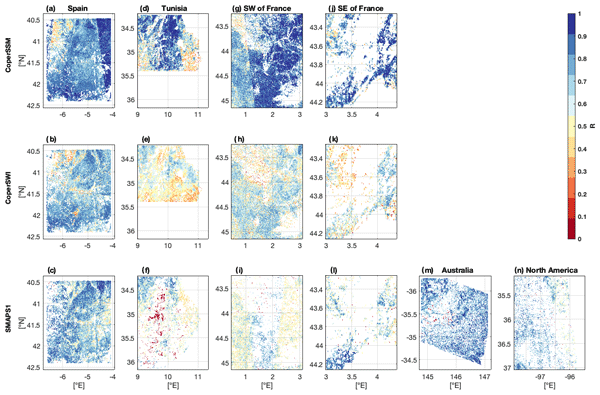
Remi Madelon, Nemesio J. Rodríguez-Fernández, Hassan Bazzi, Nicolas Baghdadi, Clement Albergel, Wouter Dorigo, and Mehrez Zribi
Hydrol. Earth Syst. Sci., 27, 1221–1242, https://doi.org/10.5194/hess-27-1221-2023, https://doi.org/10.5194/hess-27-1221-2023, 2023
Short summary
Short summary
We present an approach to estimate soil moisture (SM) at 1 km resolution using Sentinel-1 and Sentinel-3 satellites. The estimates were compared to other high-resolution (HR) datasets over Europe, northern Africa, Australia, and North America, showing good agreement. However, the discrepancies between the different HR datasets and their lower performances compared with in situ measurements and coarse-resolution datasets show the remaining challenges for large-scale HR SM mapping.
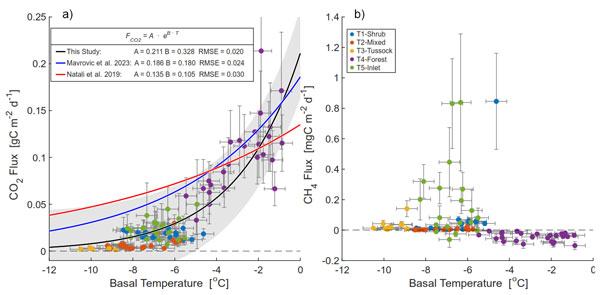
Gabriel Hould Gosselin, Nick Rutter, Paul J. Mann, Philip Marsh, and Oliver Sonnentag
Biogeosciences, 23, 7447–7467, https://doi.org/10.5194/bg-23-7447-2026, https://doi.org/10.5194/bg-23-7447-2026, 2026
Short summary
Short summary
We studied how Arctic tundra soils exchange carbon dioxide and methane with the atmosphere during winter in the western Canadian Arctic. Using gas concentration profiles through the snow, we quantified greenhouse gas fluxes and their spatial variability across vegetation and terrain types. Carbon dioxide emissions increased with deeper snow and warmer soils, while some areas absorbed methane. These findings provide key data to improve upscaling of winter carbon fluxes across Arctic landscapes.
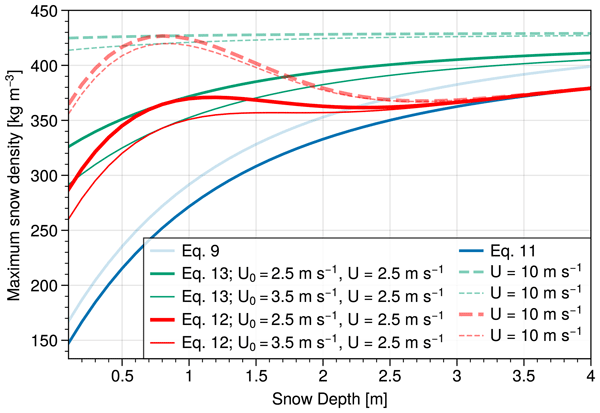
Mickaël Lalande, Alexandre Roy, Libo Wang, Diana Verseghy, Vincent Vionnet, Florent Dominé, and Christophe Kinnard
Geosci. Model Dev., 19, 9581–9625, https://doi.org/10.5194/gmd-19-9581-2026, https://doi.org/10.5194/gmd-19-9581-2026, 2026
Short summary
Short summary
This study enhances a snow model for Arctic environments by improving the heat exchanges within the snowpack and at its interfaces, revising the compaction scheme, and adding consideration of blowing snow sublimation losses. Simulations at ten Arctic, mid-latitude, and Alpine sites show significant reductions in simulated soil and snow temperature biases and improved simulated snow depth and density, which are key features to improve simulated energy, water, and carbon budgets in the Arctic.
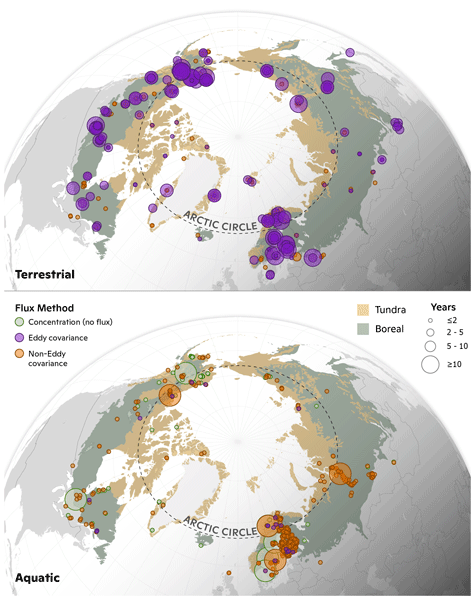
Anna-Maria Virkkala, Isabel Wargowsky, Judith Vogt, McKenzie A. Kuhn, Simran Madaan, Tiffany Windholz, Kyle A. Arndt, Gerard Rocher-Ros, Mathias Göckede, David Olefeldt, Edward A. G. Schuur, David Bastviken, Richard O'Keefe, Brendan M. Rogers, Jennifer D. Watts, Kelcy Kent, Kristoffer Aalstad, Kelly Aho, Joonatan Ala-Könni, Haley Alcock, Inge Althuizen, Christopher D. Arp, Jun Asanuma, Mika Aurela, Sivakiruthika Balathandayuthabani, Katrin Attermeyer, Alan Barr, Maialen Barret, Ochirbat Batkhishig, Christina Biasi, Mats P. Björkman, Andrew Black, Elena Blanc-Betes, Pascal Bodmer, Julia Boike, Abdullah Bolek, Frédéric Bouchard, Ingeborg Bussmann, Lea Cabrol, Eleonora Canfora, Sean Carey, Karel Castro-Morales, Namyi Chae, Andreas Christen, Torben R. Christensen, Casper T. Christiansen, Housen Chu, Graham Clark, Francois Clayer, Patrick Crill, Christopher Cunada, Scott J. Davidson, Joshua F. Dean, Sigrid Dengel, Matteo Detto, Catherine Dieleman, Florent Domine, Egor Dyukarev, Colin Edgar, Bo Elberling, Craig A. Emmerton, Eugenie Euskirchen, Grant Falvo, Thomas Friborg, Michelle Garneau, Mariasilvia Giamberini, Mikhail V. Glagolev, Miquel A. Gonzalez-Meler, Gustaf Granath, Jón Guðmundsson, Konsta Happonen, Yoshinobu Harazono, Lorna Harris, Josh Hashemi, Nicholas Hasson, Janna Heerah, Liam Heffernan, Manuel Helbig, Warren Helgason, Michal Heliasz, Greg Henry, Geert Hensgens, Tetsuya Hiyama, Beth Holmes, Macall Hock, David Holl, Jutta Holst, Thomas Holst, Gabriel Hould-Gosselin, Elyn Humphreys, Jacqueline Hung, Jussi Huotari, Hiroki Ikawa, Danil V. Ilyasov, Mamoru Ishikawa, Go Iwahana, Hiroki Iwata, Marcin Antoni Jackowicz-Korczynski, Joachim Jansen, Järvi Järveoja, Vincent E. J. Jassey, Rasmus Jensen, Katharina Jentzsch, Robert G. Jespersen, Carl-Fredrik Johannesson, Cheristy P. Jones, Anders Jonsson, Ji Young Jung, Sari Juutinen, Evan Kane, Jan Karlsson, Sergey Karsanaev, Kuno Kasak, Julia Kelly, Kasha Kempton, Marcus Klaus, George W. Kling, Natascha Kljun, Jacqueline Knutson, Hideki Kobayashi, John Kochendorfer, Kukka-Maaria Kohonen, Pasi Kolari, Mika Korkiakoski, Aino Korrensalo, Pirkko Kortelainen, Egle Koster, Kajar Koster, Ayumi Kotani, Praveena Krishnan, Juliya Kurbatova, Lars Kutzbach, Min Jung Kwon, Ethan D. Kyzivat, Jessica Lagroix, Theodore Langhorst, Elena Lapshina, Tuula Larmola, Klaus S. Larsen, Isabelle Laurion, Justin Ledman, Hanna Lee, A. Joshua Leffler, Lance Lesack, Anders Lindroth, David Lipson, Annalea Lohila, Efrén López-Blanco, Vincent L. St. Louis, Erik Lundin, Miska Luoto, Takashi Machimura, Marta Magnani, Avni Malhotra, Marja Maljanen, Ivan Mammarella, Elisa Männistö, Luca Belelli Marchesini, Phil Marsh, Pertti J. Martikainen, Maija E. Marushchak, Mikhail Mastepanov, Alex Mavrovic, Trofim Maximov, Christina Minions, Daniel F. Nadeau, Marco Montemayor, Tomoaki Morishita, Patrick Murphy, Erin Nicholls, Mats B. Nilsson, Anastasia Niyazova, Jenni Nordén, Koffi Dodji Noumonvi, Hannu Nykänen, Walter Oechel, Anne Ojala, Tomohiro Okadera, Sujan Pal, Alexey V. Panov, Tim Papakyriakou, Dario Papale, Sang-Jong Park, Frans-Jan W. Parmentier, Gilberto Pastorello, Mike Peacock, Matthias Peichl, Roman Petrov, Kyra St. Pierre, Norbert Pirk, Jessica Plein, Vilmantas Preskienis, Anatoly Prokushkin, Jukka Pumpanen, Hilary A. Rains, Niklas Rakos, Aleksi Räsänen, Helena Rautakoski, Riikka Rinnan, Janne Rinne, Adrian Rocha, Nigel Roulet, Alexandre Roy, Anna Rutgersson, Aleksandr F. Sabrekov, Torsten Sachs, Erik Sahlée, Alejandro Salazar, Henrique Oliveira Sawakuchi, Christopher Schulze, Roger Seco, Armando Sepulveda-Jauregui, Svetlana Serikova, Abbey Serrone, Hanna M. Silvennoinen, Sofie Sjogersten, June Skeeter, Jo Snöälv, Sebastian Sobek, Oliver Sonnentag, Emily H. Stanley, Maria Strack, Lena Strom, Patrick Sullivan, Ryan Sullivan, Anna Sytiuk, Torbern Tagesson, Pierre Taillardat, Julie Talbot, Suzanne E. Tank, Mario Tenuta, Irina Terenteva, Frederic Thalasso, Antoine Thiboult, Halldor Thorgeirsson, Fenix Garcia Tigreros, Margaret Torn, Amy Townsend-Small, Claire Treat, Alain Tremblay, Carlo Trotta, Eeva-Stiina Tuittila, Merritt Turetsky, Masahito Ueyama, Muhammad Umair, Aki Vähä, Lona van Delden, Maarten van Hardenbroek, Andrej Varlagin, Ruth K. Varner, Tarmo Virtanen, Elena Veretennikova, Timo Vesala, Carolina Voigt, Jorien E. Vonk, Robert Wagner, Katey Walter Anthony, Qinxue Wang, Masataka Watanabe, Hailey Webb, Jeffrey M. Welker, Andreas Westergaard-Nielsen, Sebastian Westermann, Jeffrey R. White, Christian Wille, Scott N. Williamson, Scott Zolkos, Donatella Zona, and Susan M. Natali
Earth Syst. Sci. Data, 18, 6357–6409, https://doi.org/10.5194/essd-18-6357-2026, https://doi.org/10.5194/essd-18-6357-2026, 2026
Short summary
Short summary
This dataset includes monthly measurements of carbon dioxide and methane exchange between land, water, and the atmosphere from over 1000 sites in Arctic and boreal regions. It combines measurements from a variety of ecosystems, including wetlands, forests, tundra, lakes, and rivers, gathered by over 260 researchers from 1984–2024. This dataset can be used to improve and reduce uncertainty in carbon budgets in order to strengthen our understanding of climate feedbacks in a warming world.
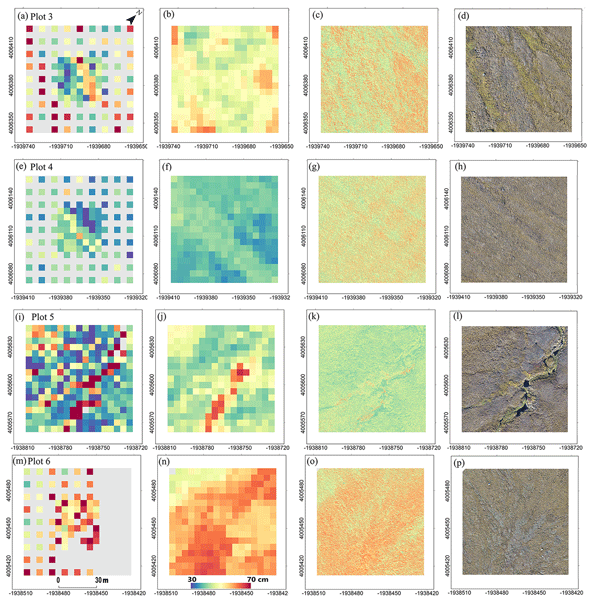
Jinyang Du, K. Arthur Endsley, Kazem Bakian Dogaheh, John S. Kimball, Mahta Moghaddam, Thomas A. Douglas, Asem Melebari, Sepehr Eskandari, Jinhyuk E. Kim, Jane Whitcomb, Yuhuan Zhao, and Sophia Henze
The Cryosphere, 20, 4277–4291, https://doi.org/10.5194/tc-20-4277-2026, https://doi.org/10.5194/tc-20-4277-2026, 2026
Short summary
Short summary
Active layer thickness (ALT) is a sensitive indicator of the thawing Alaskan frozen soil, which may lead to increased greenhouse gas emissions, vegetation changes, and infrastructure damage. This study represents a multi-scale assessment of ALT spatial variations using observations including intensive field sampling, and drone, airborne and satellite remote sensing. Our study allows for improved interpretation of remote sensing and process-based ALT simulations for the changing Arctic.
Victoria R. Dutch, Nick Rutter, Muhammad Waqas Khan, Alex Mavrovic, Alexandre Roy, Sevi Modestou, Oliver Sonnentag, Carolina Voigt, Philip Marsh, and Paul J. Mann
EGUsphere, https://doi.org/10.5194/egusphere-2026-3835, https://doi.org/10.5194/egusphere-2026-3835, 2026
This preprint is open for discussion and under review for Biogeosciences (BG).
Short summary
Short summary
We use low-cost CO2 sensors to measure the release of CO2 from an Arctic tundra environment in two winters. We find CO2 emissions to be positive across a range of snow depths and different vegetation types. The winter-to-spring transition influences the release of CO2, with warming temperatures allowing more CO2 to be released, similar to other data from across the Arctic. We show our low-cost sensors may be used to investigate processes controlling CO2 release at high temporal resolution.
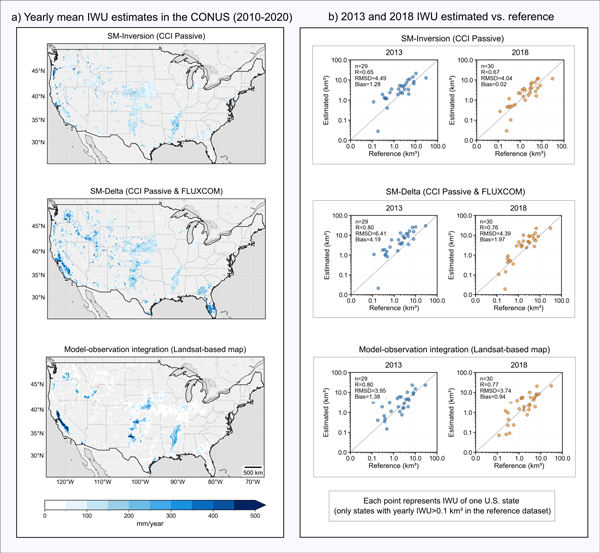
Pierre Laluet, Jacopo Dari, Louise Busschaert, Zdenko Heyvaert, Gabrielle De Lannoy, Pia Langhans, Sara Modanesi, Christian Massari, Luca Brocca, Carla Saltalippi, Renato Morbidelli, Clément Albergel, and Wouter Dorigo
Earth Syst. Sci. Data, 18, 4833–4853, https://doi.org/10.5194/essd-18-4833-2026, https://doi.org/10.5194/essd-18-4833-2026, 2026
Short summary
Short summary
We developed a long-term dataset collection of irrigation water use based on about two decades of satellite observations, three distinct approaches, and many input datasets. The collection provides monthly estimates for major agricultural regions and helps describe how irrigation varies across locations, seasons, and years. It offers a foundation for improving how irrigation is quantified, compared across methods, and integrated into large-scale hydrological and climate studies.
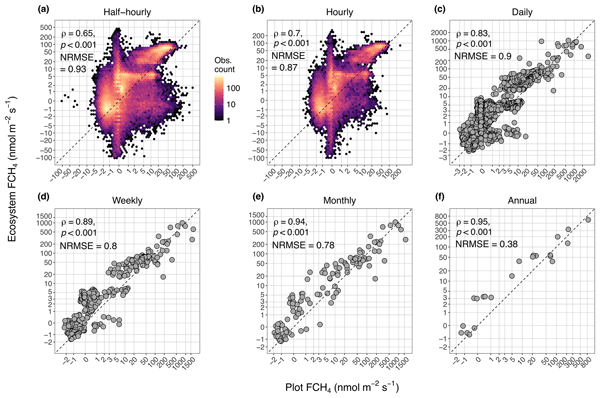
Tiia Määttä, Ankur R. Desai, Masahito Ueyama, Rodrigo Vargas, Eric J. Ward, Zhen Zhang, Gil Bohrer, Kyle Delwiche, Etienne Fluet-Chouinard, Järvi Järveoja, Sara H. Knox, Lulie Melling, Mats B. Nilsson, Matthias Peichl, Angela Che Ing Tang, Eeva-Stiina Tuittila, Jinsong Wang, Sheel Bansal, Sarah Feron, Manuel Helbig, Aino Korrensalo, Ken W. Krauss, Gavin McNicol, Shuli Niu, Zutao Ouyang, Kathleen Savage, Oliver Sonnentag, Robert Jackson, and Avni Malhotra
Biogeosciences, 23, 4379–4445, https://doi.org/10.5194/bg-23-4379-2026, https://doi.org/10.5194/bg-23-4379-2026, 2026
Short summary
Short summary
We compared ecosystem- and plot-scale methane fluxes across wetland and upland sites. Ecosystem-scale fluxes were higher than at plot scale, but differences were small. Vapor pressure deficit, atmospheric pressure, turbulence, and wind direction affected the differences. Both scales could be combined for improved methane flux estimates at coarser temporal scales.
Francesco Avanzi, Hans Lievens, Michael Matiu, Paolo Filippucci, Oscar M. Baez Villanueva, Simone Gabellani, Fabio Delogu, Lorenzo Alfieri, Andrea Libertino, Pere Quintana-Seguì, Diego G. Miralles, Luca Brocca, Christian Massari, and Gabriëlle J. M. De Lannoy
EGUsphere, https://doi.org/10.5194/egusphere-2026-2851, https://doi.org/10.5194/egusphere-2026-2851, 2026
Short summary
Short summary
We developed a new system to map and monitor snow and stored water across large mountain regions using satellite data and computer simulations. Tested in four major European river basins, the system reproduced snow conditions with high accuracy and realistically captured how snow changes with elevation. Because it does not rely on ground measurements, it can help provide consistent information on snow-water resources worldwide, supporting water management and climate adaptation.
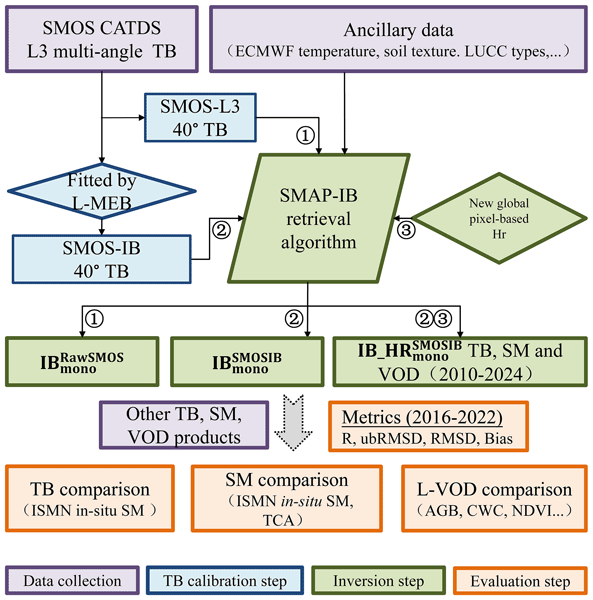
Zanpin Xing, Xiaojun Li, Frédéric Frappart, Gabrielle De Lannoy, Thomas Jagdhuber, Jian Peng, Lei Fan, Hongliang Ma, Lanka Karthikeyan, Xiangzhuo Liu, Mengjia Wang, Lin Zhao, Yongqin Liu, and Jean-Pierre Wigneron
Earth Syst. Sci. Data, 18, 4047–4073, https://doi.org/10.5194/essd-18-4047-2026, https://doi.org/10.5194/essd-18-4047-2026, 2026
Short summary
Short summary
Microwave satellite observations of Earth’s land surface are important for tracking global soil moisture and vegetation water content. We use data from the Soil Moisture and Ocean Salinity satellite to first reduce noise and contamination in microwave signals, then produce more reliable long-term records of these variables. Tests against ground stations and other satellites show that the new record performs better than existing products and supports drought, freeze-thaw, and carbon monitoring.
Charlotte Crevier, Alexandre Langlois, Chris Derksen, and Alexandre Roy
The Cryosphere, 20, 3369–3385, https://doi.org/10.5194/tc-20-3369-2026, https://doi.org/10.5194/tc-20-3369-2026, 2026
Short summary
Short summary
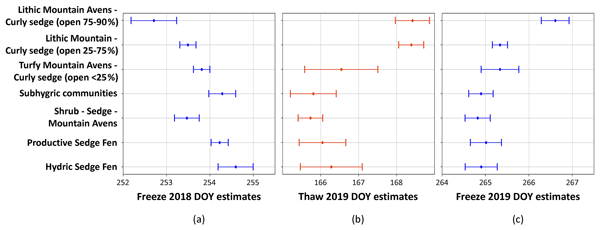
A multisensor C-Band Synthetic Aperture Radar (SAR) near-daily time series in an Arctic environment was developed to create a high-resolution freeze/thaw (FT) algorithm with an accuracy of 96 %. The FT detection was highly correlated to near-surface state as measured by soil temperature. Small but significant FT date differences were identified for different Arctic ecotypes, showing the spatial variability of freeze/thaw process in Arctic environment.
Lucas Boeykens, Devon Dunmire, Jonas-Frederik Jans, Willem Waegeman, Gabriëlle De Lannoy, Ezra Beernaert, Niko E. C. Verhoest, and Hans Lievens
The Cryosphere, 20, 3187–3216, https://doi.org/10.5194/tc-20-3187-2026, https://doi.org/10.5194/tc-20-3187-2026, 2026
Short summary
Short summary
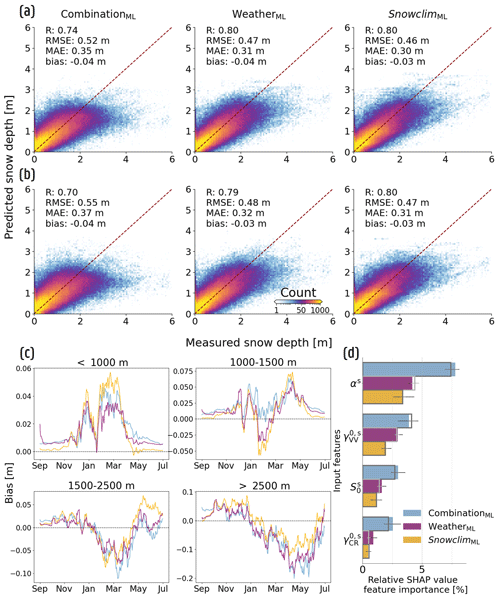
We used AI to better estimate the height of the snowpack present on the ground across the European Alps, by using novel satellite data, complemented by weather information or snow depth estimates from a computer model. We found that both combinations improve the accuracy of our AI-based snow depth estimates, performing almost equally well. This helps us better monitor how much water is stored as snow, which is vital for drinking water, farming, and clean energy production in Europe.
Alex Gélinas, Benoît Montpetit, Julien Meloche, Peter Toose, Zeinab Akhavan, Wei Wang, Richard Kelly, Alexandre Langlois, and Alexandre Roy
EGUsphere, https://doi.org/10.5194/egusphere-2026-656, https://doi.org/10.5194/egusphere-2026-656, 2026
Short summary
Short summary
This research validates a method to link radar measurements to soil properties beneath snow in a temperate farming region. By using multiple radar sensors and computer models, we successfully decoupled the ground's interference from the snow signal. Our results show that radar captures unique information that traditional ground tools miss during freeze-thaw cycles. This work provides a vital framework for the future Canadian Terrestrial Snow Mass Mission to monitor water resources.
Louise Busschaert, Michel Bechtold, Sara Modanesi, Christian Massari, Dirk Raes, Sujay V. Kumar, and Gabriëlle J. M. De Lannoy
Hydrol. Earth Syst. Sci., 30, 2579–2611, https://doi.org/10.5194/hess-30-2579-2026, https://doi.org/10.5194/hess-30-2579-2026, 2026
Short summary
Short summary
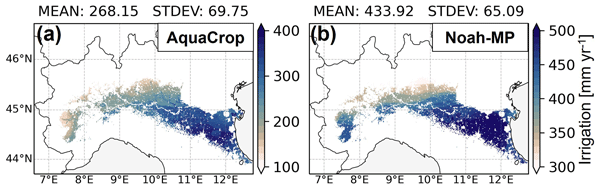
Two models, AquaCrop (crop model) and Noah-MP (land surface model), were compared estimating irrigation in Italy's Po Valley. Noah-MP simulated higher water use (434 mm/yr) than AquaCrop (268 mm/yr), mainly due to extra water losses like runoff. Once losses were accounted for, both aligned with basin-scale reports of around 500 to 600 mm/yr. The study highlights how complex irrigation modeling is, and the need for better observational data to validate results.
Zeinab Akhavan, Richard Kelly, Peter Toose, Aaron Thompson, Wei Wang, Benoit Montpetit, Alex Gélinas, and Alexandre Roy
EGUsphere, https://doi.org/10.5194/egusphere-2026-1065, https://doi.org/10.5194/egusphere-2026-1065, 2026
Short summary
Short summary
Soils in cold regions freeze and thaw seasonally, affecting water flow, flooding, and carbon exchange, but these changes are hard to track beneath snow. We studied a Canadian agricultural field using high-resolution airborne radar and ground measurements through winter. Radar signals changed clearly as soils froze and thawed, with one polarization being most sensitive. Our results improve understanding of frozen soils and support future satellite monitoring.
Gabriëlle J. M. De Lannoy, Louise Busschaert, Michel Bechtold, Niccolò Lanfranco, Shannon de Roos, Zdenko Heyvaert, Martynas Bielinis, Jonas Mortelmans, Samuel A. Scherrer, Maxime Van den Bossche, Sujay Kumar, David M. Mocko, Eric Kemp, Lee Heng, Pasquale Steduto, and Dirk Raes
Geosci. Model Dev., 19, 2551–2575, https://doi.org/10.5194/gmd-19-2551-2026, https://doi.org/10.5194/gmd-19-2551-2026, 2026
Short summary
Short summary
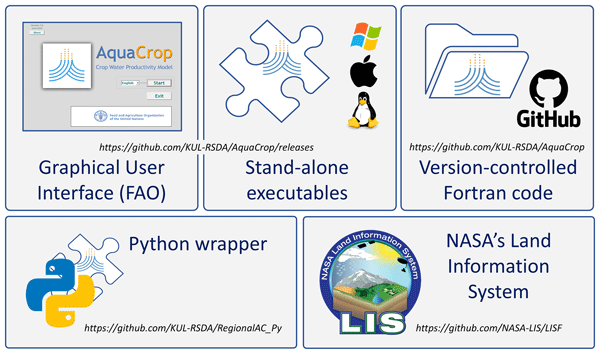
The AquaCrop model has been incorporated into the NASA Land Information System, to advance regional crop growth simulations at any spatial resolution, with a range of different input sources for meteorology, soil and crop parameters. This system also facilitates the assimilation of satellite data to update the crop and water conditions during model simulations. We present three exploratory applications to highlight pathways for future research on regional-scale crop estimation.
Hesam Salmabadi, Renato Pardo Lara, Aaron Berg, Alex Mavrovic, Chelene Hanes, Benoit Montpetit, and Alexandre Roy
The Cryosphere, 20, 1635–1654, https://doi.org/10.5194/tc-20-1635-2026, https://doi.org/10.5194/tc-20-1635-2026, 2026
Short summary
Short summary
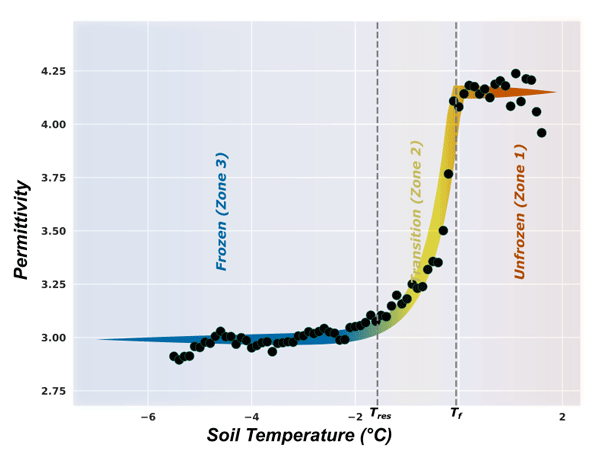
Current satellite monitoring often oversimplifies soil freezing by assuming it happens exactly at 0°C. We analyzed ground data across Canada and found that soil often stays in a partially frozen state for months, even when air temperatures are well below freezing, revealing a major gap in how we track seasonally frozen ground.
Anne Springer, Gabriëlle De Lannoy, Matthew Rodell, Yorck Ewerdwalbesloh, Helena Gerdener, Mehdi Khaki, Bailing Li, Fupeng Li, Maike Schumacher, Natthachet Tangdamrongsub, Mohammad J. Tourian, Wanshu Nie, and Jürgen Kusche
Hydrol. Earth Syst. Sci., 30, 985–1022, https://doi.org/10.5194/hess-30-985-2026, https://doi.org/10.5194/hess-30-985-2026, 2026
Short summary
Short summary
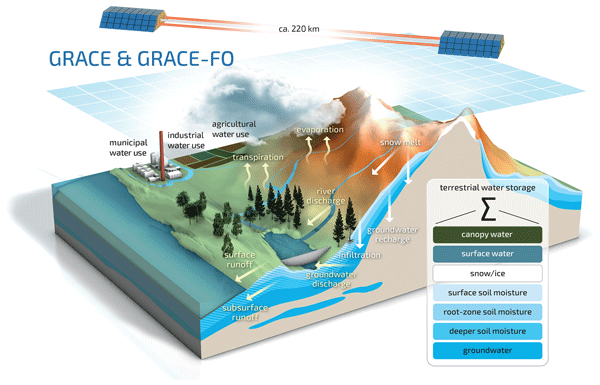
The GRACE (Gravity Recovery and Climate Experiment) and GRACE Follow-On satellites monitor changes in Earth's water storage by observing gravity variations. By integrating these observations into hydrological models through data assimilation, estimates of groundwater, soil moisture, and hydrological trends are improved, helping to monitor droughts, floods, and human water use. This review highlights recent advances in GRACE data assimilation, identifies key challenges, and discusses future directions with upcoming satellite missions.
Devon Dunmire, Michel Bechtold, Lucas Boeykens, and Gabriëlle J. M. De Lannoy
The Cryosphere, 20, 609–628, https://doi.org/10.5194/tc-20-609-2026, https://doi.org/10.5194/tc-20-609-2026, 2026
Short summary
Short summary
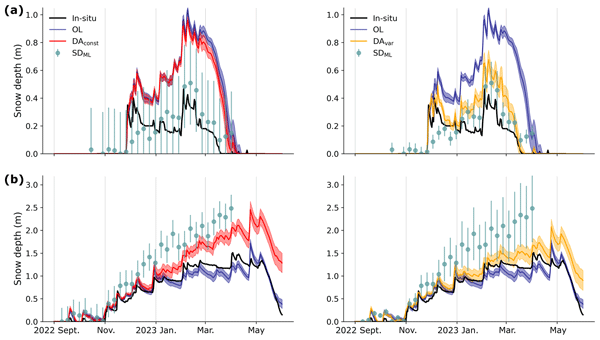
Snow is vital for society and the climate, yet estimates of snowpack remain uncertain due to observational and modeling limitations. Data assimilation (DA) helps by integrating observations with models. Here, we integrate snow depth retrievals into a physically-based snow model across the European Alps. This work offers advancements for snow data assimilation, such as incorporating a dynamic observational uncertainty, which is essential for forecasting and water resource management.
Hong Lin, Jinyang Du, John S. Kimball, Xiao Cheng, J. Patrick Donnelly, Jennifer D. Watts, and Annett Bartsch
Earth Syst. Sci. Data, 18, 535–549, https://doi.org/10.5194/essd-18-535-2026, https://doi.org/10.5194/essd-18-535-2026, 2026
Short summary
Short summary
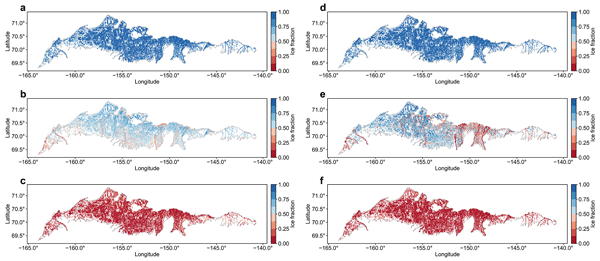
Ice cover on small water bodies is highly sensitive to climate change and influences ecosystems, water, and the carbon cycle. We produced a satellite-based ice fraction dataset for small water bodies on the Arctic Coastal Plain from 2017 to 2023. The dataset captures freeze-up and break-up timing and reveals spatial variability. It will support studies of climate–ice interactions and improve models of water and carbon processes.
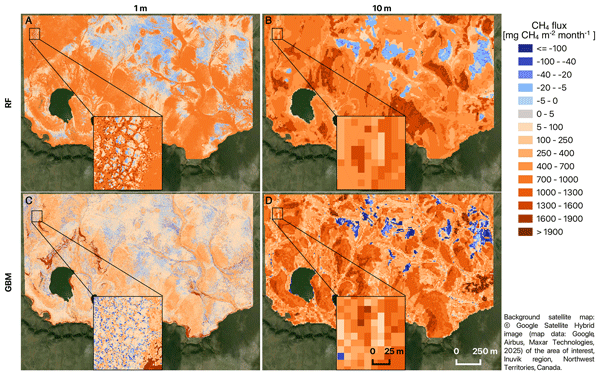
Kseniia Ivanova, Anna-Maria Virkkala, Victor Brovkin, Tobias Stacke, Barbara Widhalm, Annett Bartsch, Carolina Voigt, Oliver Sonnentag, and Mathias Göckede
Biogeosciences, 23, 233–262, https://doi.org/10.5194/bg-23-233-2026, https://doi.org/10.5194/bg-23-233-2026, 2026
Short summary
Short summary
We measured over 13,000 methane fluxes at a site in the Canadian Arctic and linked them with drone and free satellite images. We tested four machine-learning methods and two map scales. Metre-scale maps captured small wet and dry features that strongly affect methane release, while coarser maps blurred them. Different models shifted the monthly methane estimate. This helps choose the right data and tools to map methane, design monitoring networks, and check climate models.
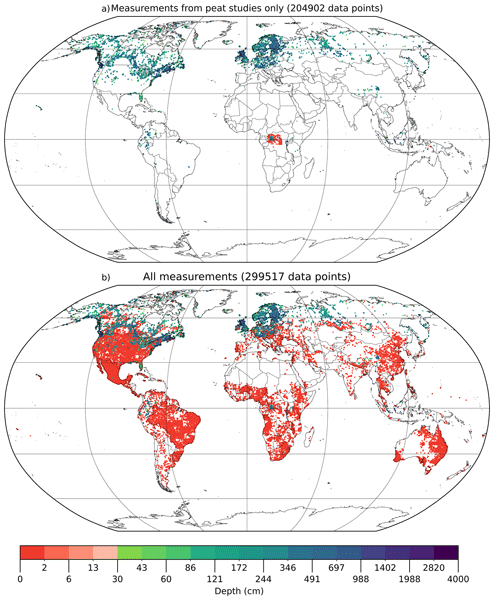
Jade Skye, Joe R. Melton, Colin Goldblatt, Louis Saumier, Angela Gallego-Sala, Michelle Garneau, R. Scott Winton, Erick B. Bahati, Juan C. Benavides, Lee Fedorchuk, Gérard Imani, Carol Kagaba Kairumba, Frank Kansiime, Mariusz Lamentowicz, Michel Mbasi, Daria Wochal, Sambor Czerwiński, Jacek Landowski, Joanna Landowska, Vincent Maire, Minna M. Väliranta, Matthew Warren, Lydia E. S. Cole, Marissa A. Davies, Erik A. Lilleskov, Jingjing Sun, and Yuwan Wang
Earth Syst. Sci. Data, 17, 7313–7330, https://doi.org/10.5194/essd-17-7313-2025, https://doi.org/10.5194/essd-17-7313-2025, 2025
Short summary
Short summary
Peatlands are large stores of carbon but are vulnerable to human activities and climate change. Comprehensive peatland data are vital to understand these ecosystems, but existing datasets are fragmented and contain errors. To address this, we created Peat-DBase – a standardized global database of peat depth measurements with > 200 000 measurements worldwide, showing median depths of 130 cm. Peat-DBase avoids overlapping data compilation efforts while identifying critical observational gaps.
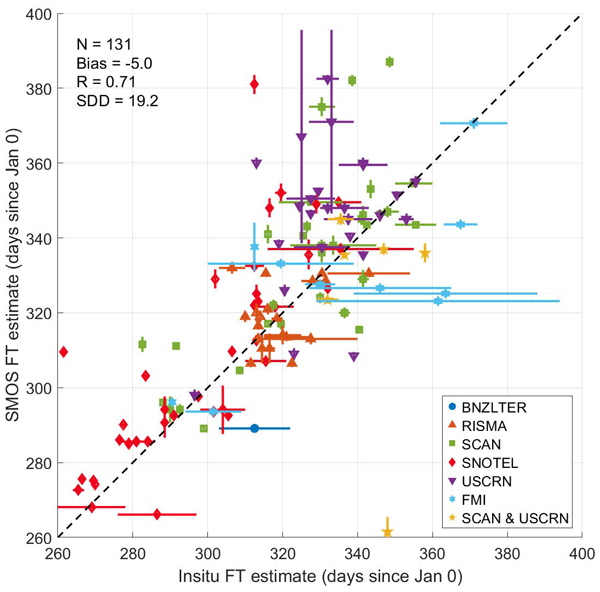
Kimmo Rautiainen, Manu Holmberg, Juval Cohen, Arnaud Mialon, Mike Schwank, Juha Lemmetyinen, Antonio de la Fuente, and Yann Kerr
Earth Syst. Sci. Data, 17, 5337–5353, https://doi.org/10.5194/essd-17-5337-2025, https://doi.org/10.5194/essd-17-5337-2025, 2025
Short summary
Short summary
The SMOS (Soil Moisture and Ocean Salinity) Soil Freeze–Thaw State product uses satellite data to monitor seasonal soil freezing and thawing globally, with a focus on high-latitude regions. This is important for understanding greenhouse gas emissions, as frozen soil is associated with methane release. The product provides accurate data on key events such as the first day of soil freezing in autumn, helping scientists to study climate change, ecosystem dynamics, and its impact on our planet.
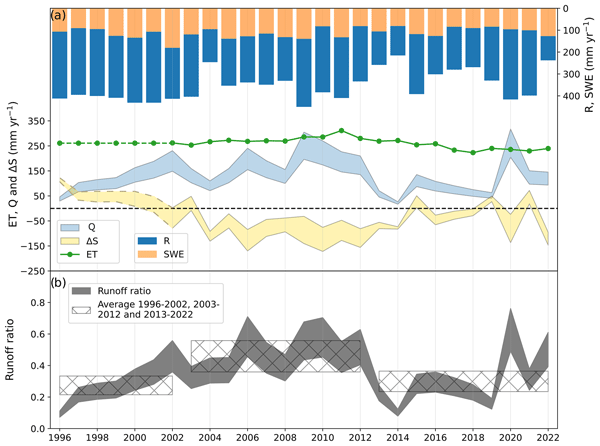
Alexandre Lhosmot, Gabriel Hould Gosselin, Manuel Helbig, Julien Fouché, Youngryel Ryu, Matteo Detto, Ryan Connon, William Quinton, Tim Moore, and Oliver Sonnentag
Hydrol. Earth Syst. Sci., 29, 4871–4892, https://doi.org/10.5194/hess-29-4871-2025, https://doi.org/10.5194/hess-29-4871-2025, 2025
Short summary
Short summary
Thawing permafrost changes how water is stored and moves across landscapes. We measured water inputs and outputs in a basin with thawing peatland complexes and three sub-basins. In addition to yearly changes in precipitation and evapotranspiration, we found that hydrological responses are shaped by thaw-driven landscape connectivity. These findings highlight the need for long-term monitoring of ecosystem service shifts.
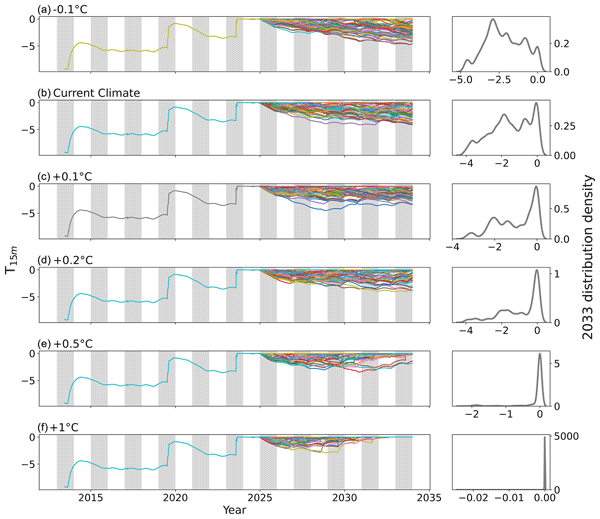
Ingalise Kindstedt, Dominic Winski, C. Max Stevens, Emma Skelton, Luke Copland, Karl Kreutz, Mikaila Mannello, Renée Clavette, Jacob Holmes, Mary Albert, and Scott N. Williamson
The Cryosphere, 19, 3655–3680, https://doi.org/10.5194/tc-19-3655-2025, https://doi.org/10.5194/tc-19-3655-2025, 2025
Short summary
Short summary
Atmospheric warming over mountain glaciers is leading to increased warming and melting of snow as it compresses into glacier ice. This affects both regional hydrology and climate records contained in the ice. Here we use field observations and modeling to show that surface melting and percolation at Eclipse Icefield (Yukon, Canada) are increasing with an increase in extreme melt events and that compressing snow at Eclipse is likely to continue warming even if air temperatures remain stable.
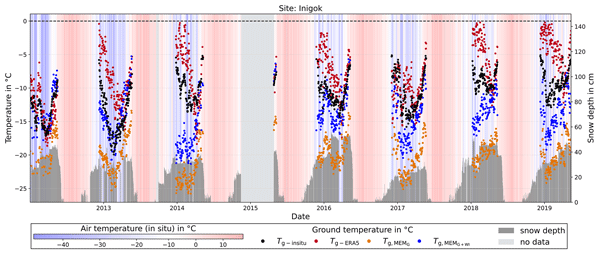
Juliette Ortet, Arnaud Mialon, Alain Royer, Mike Schwank, Manu Holmberg, Kimmo Rautiainen, Simone Bircher-Adrot, Andreas Colliander, Yann Kerr, and Alexandre Roy
The Cryosphere, 19, 3571–3598, https://doi.org/10.5194/tc-19-3571-2025, https://doi.org/10.5194/tc-19-3571-2025, 2025
Short summary
Short summary
We propose a new method to determine the ground surface temperature under the snowpack in the Arctic area from satellite observations. The obtained ground temperature time series were evaluated over 21 reference sites in Northern Alaska and compared with ground temperatures obtained with global models. The method is extremely promising for monitoring ground temperature below the snowpack and studying the spatio-temporal variability thanks to 15 years of observations over the whole Arctic area.
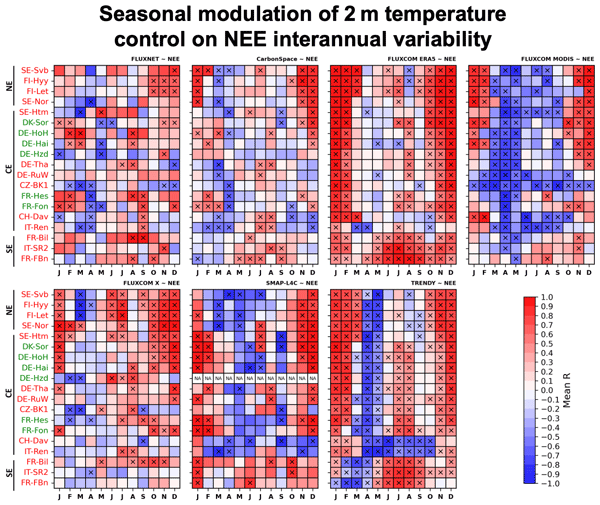
Asmat Ullah, Julien Crétat, Gaïa Michel, Olivier Mathieu, Mathieu Thevenot, Andrey Dara, Robert Granat, Zhendong Wu, Clément Bonnefoy-Claudet, Julianne Capelle, Jean Cacot, and John S. Kimball
Biogeosciences, 22, 4135–4162, https://doi.org/10.5194/bg-22-4135-2025, https://doi.org/10.5194/bg-22-4135-2025, 2025
Short summary
Short summary
We analyse how climate drives seasonal and interannual CO2 flux variability in European forests using data from 19 sites and both process-based and data-driven models. The impact of climate on the CO2 flux annual cycle is strong and quite similar across Europe. On the other hand, the impact of climate on year-to-year CO2 flux variability depends on the region and the season, with reversed correlations between spring and summer in northern and central Europe.
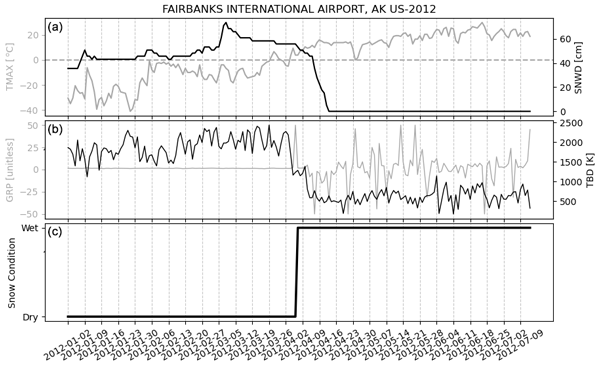
Caleb G. Pan, Kristofer Lasko, Sean P. Griffin, John S. Kimball, Jinyang Du, Tate G. Meehan, and Peter B. Kirchner
The Cryosphere, 19, 2797–2819, https://doi.org/10.5194/tc-19-2797-2025, https://doi.org/10.5194/tc-19-2797-2025, 2025
Short summary
Short summary
This study examines 35 years of snow cover changes in Alaska’s Yukon River Basin using machine learning to track snowmelt timing and disappearance. Results show snow is melting earlier and disappearing faster due to rising temperatures, highlighting the effects of climate change on water resources, ecosystems, and communities. The findings improve understanding of snow dynamics and provide critical insights for addressing climate-driven challenges in the region.
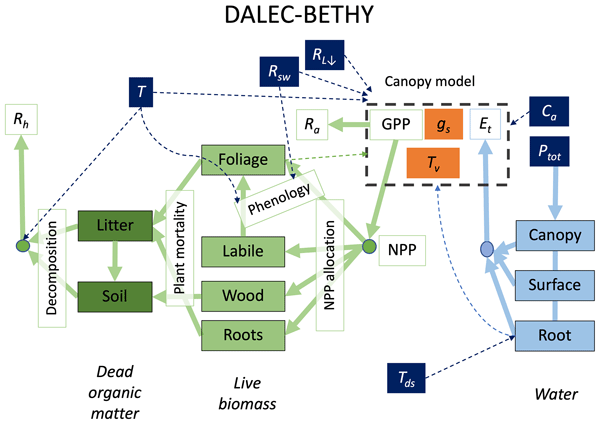
Wolfgang Knorr, Matthew Williams, Tea Thum, Thomas Kaminski, Michael Voßbeck, Marko Scholze, Tristan Quaife, T. Luke Smallman, Susan C. Steele-Dunne, Mariette Vreugdenhil, Tim Green, Sönke Zaehle, Mika Aurela, Alexandre Bouvet, Emanuel Bueechi, Wouter Dorigo, Tarek S. El-Madany, Mirco Migliavacca, Marika Honkanen, Yann H. Kerr, Anna Kontu, Juha Lemmetyinen, Hannakaisa Lindqvist, Arnaud Mialon, Tuuli Miinalainen, Gaétan Pique, Amanda Ojasalo, Shaun Quegan, Peter J. Rayner, Pablo Reyes-Muñoz, Nemesio Rodríguez-Fernández, Mike Schwank, Jochem Verrelst, Songyan Zhu, Dirk Schüttemeyer, and Matthias Drusch
Geosci. Model Dev., 18, 2137–2159, https://doi.org/10.5194/gmd-18-2137-2025, https://doi.org/10.5194/gmd-18-2137-2025, 2025
Short summary
Short summary
When it comes to climate change, the land surface is where the vast majority of impacts happen. The task of monitoring those impacts across the globe is formidable and must necessarily rely on satellites – at a significant cost: the measurements are only indirect and require comprehensive physical understanding. We have created a comprehensive modelling system that we offer to the research community to explore how satellite data can be better exploited to help us capture the changes that happen on our lands.
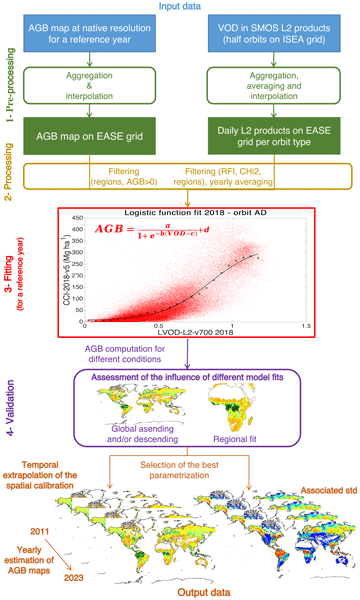
Simon Boitard, Arnaud Mialon, Stéphane Mermoz, Nemesio J. Rodríguez-Fernández, Philippe Richaume, Julio César Salazar-Neira, Stéphane Tarot, and Yann H. Kerr
Earth Syst. Sci. Data, 17, 1101–1119, https://doi.org/10.5194/essd-17-1101-2025, https://doi.org/10.5194/essd-17-1101-2025, 2025
Short summary
Short summary
Aboveground biomass (AGB) is a critical component of the Earth's carbon cycle. The presented dataset aims to help monitor this essential climate variable with AGB time series from 2011 onward, derived with a carefully calibrated spatial relationship between the measurements of the Soil Moisture and Ocean Salinity (SMOS) mission and pre-existing AGB maps. The produced dataset has been extensively compared with other available AGB time series and can be used in AGB studies.
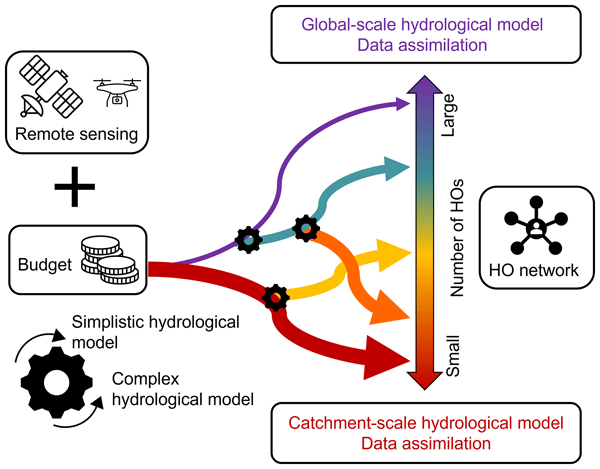
Paolo Nasta, Günter Blöschl, Heye R. Bogena, Steffen Zacharias, Roland Baatz, Gabriëlle De Lannoy, Karsten H. Jensen, Salvatore Manfreda, Laurent Pfister, Ana M. Tarquis, Ilja van Meerveld, Marc Voltz, Yijian Zeng, William Kustas, Xin Li, Harry Vereecken, and Nunzio Romano
Hydrol. Earth Syst. Sci., 29, 465–483, https://doi.org/10.5194/hess-29-465-2025, https://doi.org/10.5194/hess-29-465-2025, 2025
Short summary
Short summary
The Unsolved Problems in Hydrology (UPH) initiative has emphasized the need to establish networks of multi-decadal hydrological observatories to tackle catchment-scale challenges on a global scale. This opinion paper provocatively discusses two endmembers of possible future hydrological observatory (HO) networks for a given hypothesized community budget: a comprehensive set of moderately instrumented observatories or, alternatively, a small number of highly instrumented supersites.
Louise Busschaert, Michel Bechtold, Sara Modanesi, Christian Massari, Dirk Raes, Sujay V. Kumar, and Gabrielle J. M. De Lannoy
EGUsphere, https://doi.org/10.2139/ssrn.4974019, https://doi.org/10.2139/ssrn.4974019, 2024
Preprint archived
Short summary
Short summary
This study estimates irrigation in the Po Valley using AquaCrop and Noah-MP models with sprinkler irrigation. Noah-MP shows higher annual rates than AquaCrop due to more water losses. After adjusting, both align with reported irrigation ranges (500–600 mm/yr). Soil moisture estimates from both models match satellite data, though both have limitations in vegetation and evapotranspiration modeling. The study emphasizes the need for observations to improve irrigation estimates.
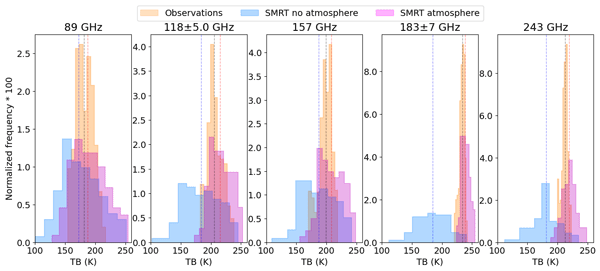
Melody Sandells, Nick Rutter, Kirsty Wivell, Richard Essery, Stuart Fox, Chawn Harlow, Ghislain Picard, Alexandre Roy, Alain Royer, and Peter Toose
The Cryosphere, 18, 3971–3990, https://doi.org/10.5194/tc-18-3971-2024, https://doi.org/10.5194/tc-18-3971-2024, 2024
Short summary
Short summary
Satellite microwave observations are used for weather forecasting. In Arctic regions this is complicated by natural emission from snow. By simulating airborne observations from in situ measurements of snow, this study shows how snow properties affect the signal within the atmosphere. Fresh snowfall between flights changed airborne measurements. Good knowledge of snow layering and structure can be used to account for the effects of snow and could unlock these data to improve forecasts.
Isis Brangers, Hans-Peter Marshall, Gabrielle De Lannoy, Devon Dunmire, Christian Mätzler, and Hans Lievens
The Cryosphere, 18, 3177–3193, https://doi.org/10.5194/tc-18-3177-2024, https://doi.org/10.5194/tc-18-3177-2024, 2024
Short summary
Short summary
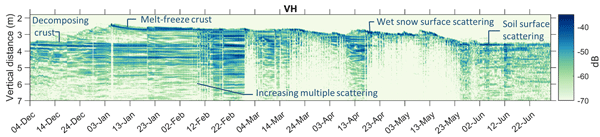
To better understand the interactions between C-band radar waves and snow, a tower-based experiment was set up in the Idaho Rocky Mountains. The reflections were collected in the time domain to measure the backscatter profile from the various snowpack and ground surface layers. The results demonstrate that C-band radar is sensitive to seasonal patterns in snow accumulation but that changes in microstructure, stratigraphy and snow wetness may complicate satellite-based snow depth retrievals.
Charles E. Miller, Peter C. Griffith, Elizabeth Hoy, Naiara S. Pinto, Yunling Lou, Scott Hensley, Bruce D. Chapman, Jennifer Baltzer, Kazem Bakian-Dogaheh, W. Robert Bolton, Laura Bourgeau-Chavez, Richard H. Chen, Byung-Hun Choe, Leah K. Clayton, Thomas A. Douglas, Nancy French, Jean E. Holloway, Gang Hong, Lingcao Huang, Go Iwahana, Liza Jenkins, John S. Kimball, Tatiana Loboda, Michelle Mack, Philip Marsh, Roger J. Michaelides, Mahta Moghaddam, Andrew Parsekian, Kevin Schaefer, Paul R. Siqueira, Debjani Singh, Alireza Tabatabaeenejad, Merritt Turetsky, Ridha Touzi, Elizabeth Wig, Cathy J. Wilson, Paul Wilson, Stan D. Wullschleger, Yonghong Yi, Howard A. Zebker, Yu Zhang, Yuhuan Zhao, and Scott J. Goetz
Earth Syst. Sci. Data, 16, 2605–2624, https://doi.org/10.5194/essd-16-2605-2024, https://doi.org/10.5194/essd-16-2605-2024, 2024
Short summary
Short summary
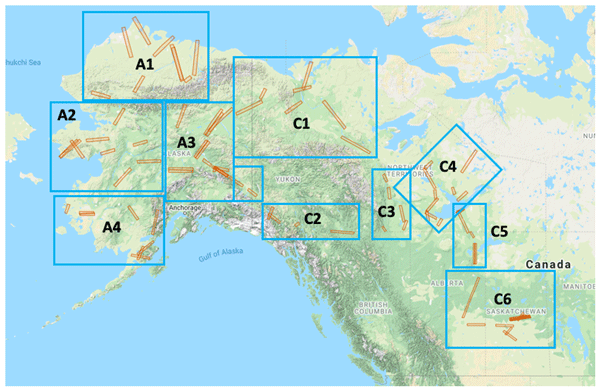
NASA’s Arctic Boreal Vulnerability Experiment (ABoVE) conducted airborne synthetic aperture radar (SAR) surveys of over 120 000 km2 in Alaska and northwestern Canada during 2017, 2018, 2019, and 2022. This paper summarizes those results and provides links to details on ~ 80 individual flight lines. This paper is presented as a guide to enable interested readers to fully explore the ABoVE L- and P-band SAR data.
Victoria R. Dutch, Nick Rutter, Leanne Wake, Oliver Sonnentag, Gabriel Hould Gosselin, Melody Sandells, Chris Derksen, Branden Walker, Gesa Meyer, Richard Essery, Richard Kelly, Phillip Marsh, Julia Boike, and Matteo Detto
Biogeosciences, 21, 825–841, https://doi.org/10.5194/bg-21-825-2024, https://doi.org/10.5194/bg-21-825-2024, 2024
Short summary
Short summary
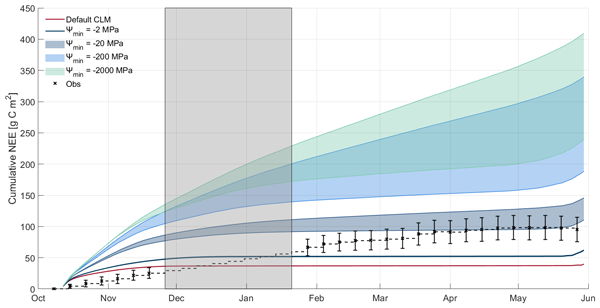
We undertake a sensitivity study of three different parameters on the simulation of net ecosystem exchange (NEE) during the snow-covered non-growing season at an Arctic tundra site. Simulations are compared to eddy covariance measurements, with near-zero NEE simulated despite observed CO2 release. We then consider how to parameterise the model better in Arctic tundra environments on both sub-seasonal timescales and cumulatively throughout the snow-covered non-growing season.
Jonas Mortelmans, Anne Felsberg, Gabriëlle J. M. De Lannoy, Sander Veraverbeke, Robert D. Field, Niels Andela, and Michel Bechtold
Nat. Hazards Earth Syst. Sci., 24, 445–464, https://doi.org/10.5194/nhess-24-445-2024, https://doi.org/10.5194/nhess-24-445-2024, 2024
Short summary
Short summary
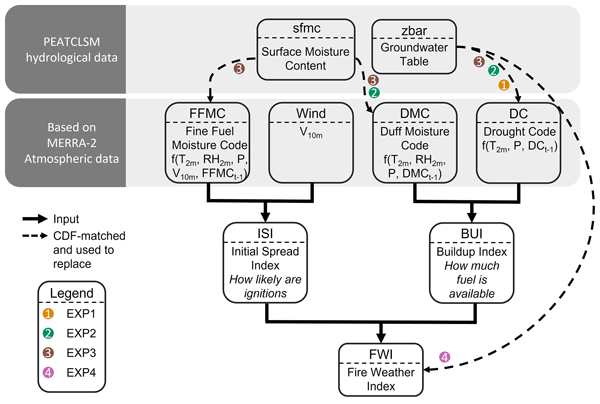
With global warming increasing the frequency and intensity of wildfires in the boreal region, accurate risk assessments are becoming more crucial than ever before. The Canadian Fire Weather Index (FWI) is a renowned system, yet its effectiveness in peatlands, where hydrology plays a key role, is limited. By incorporating groundwater data from numerical models and satellite observations, our modified FWI improves the accuracy of fire danger predictions, especially over summer.
Alex Mavrovic, Oliver Sonnentag, Juha Lemmetyinen, Carolina Voigt, Nick Rutter, Paul Mann, Jean-Daniel Sylvain, and Alexandre Roy
Biogeosciences, 20, 5087–5108, https://doi.org/10.5194/bg-20-5087-2023, https://doi.org/10.5194/bg-20-5087-2023, 2023
Short summary
Short summary
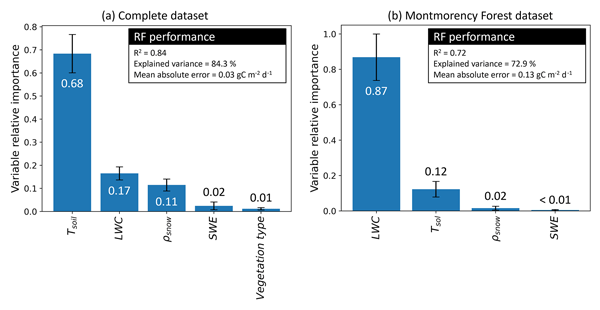
We present an analysis of soil CO2 emissions in boreal and tundra regions during the non-growing season. We show that when the soil is completely frozen, soil temperature is the main control on CO2 emissions. When the soil is around the freezing point, with a mix of liquid water and ice, the liquid water content is the main control on CO2 emissions. This study highlights that the vegetation–snow–soil interactions must be considered to understand soil CO2 emissions during the non-growing season.
Anne Felsberg, Zdenko Heyvaert, Jean Poesen, Thomas Stanley, and Gabriëlle J. M. De Lannoy
Nat. Hazards Earth Syst. Sci., 23, 3805–3821, https://doi.org/10.5194/nhess-23-3805-2023, https://doi.org/10.5194/nhess-23-3805-2023, 2023
Short summary
Short summary
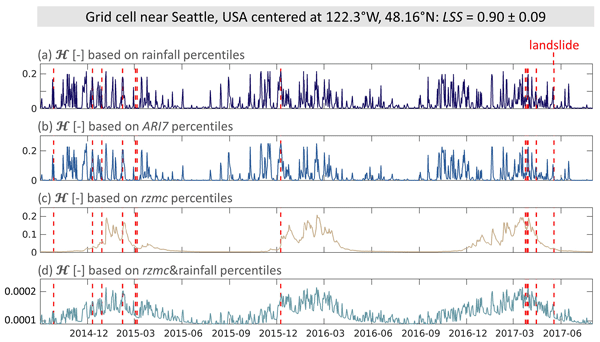
The Probabilistic Hydrological Estimation of LandSlides (PHELS) model combines ensembles of landslide susceptibility and of hydrological predictor variables to provide daily, global ensembles of hazard for hydrologically triggered landslides. Testing different hydrological predictors showed that the combination of rainfall and soil moisture performed best, with the lowest number of missed and false alarms. The ensemble approach allowed the estimation of the associated prediction uncertainty.
Samuel Scherrer, Gabriëlle De Lannoy, Zdenko Heyvaert, Michel Bechtold, Clement Albergel, Tarek S. El-Madany, and Wouter Dorigo
Hydrol. Earth Syst. Sci., 27, 4087–4114, https://doi.org/10.5194/hess-27-4087-2023, https://doi.org/10.5194/hess-27-4087-2023, 2023
Short summary
Short summary
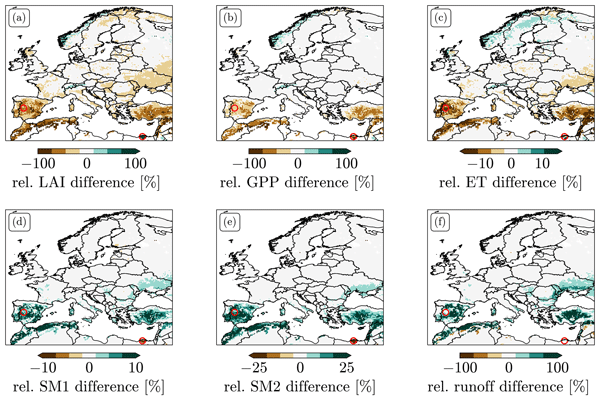
We explored different options for data assimilation (DA) of the remotely sensed leaf area index (LAI). We found strong biases between LAI predicted by Noah-MP and observations. LAI DA that does not take these biases into account can induce unphysical patterns in the resulting LAI and flux estimates and leads to large changes in the climatology of root zone soil moisture. We tested two bias-correction approaches and explored alternative solutions to treating bias in LAI DA.
Konstantin Muzalevskiy, Zdenek Ruzicka, Alexandre Roy, Michael Loranty, and Alexander Vasiliev
The Cryosphere, 17, 4155–4164, https://doi.org/10.5194/tc-17-4155-2023, https://doi.org/10.5194/tc-17-4155-2023, 2023
Short summary
Short summary
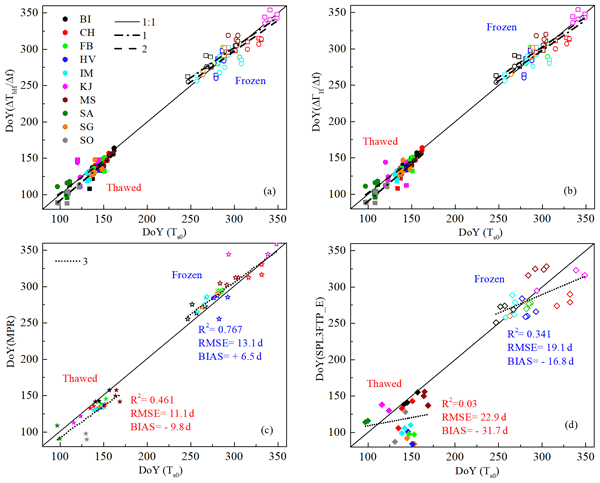
A new all-weather method for determining the frozen/thawed (FT) state of soils in the Arctic region based on satellite data was proposed. The method is based on multifrequency measurement of brightness temperatures by the SMAP and GCOM-W1/AMSR2 satellites. The created method was tested at sites in Canada, Finland, Russia, and the USA, based on climatic weather station data. The proposed method identifies the FT state of Arctic soils with better accuracy than existing methods.
Alex Mavrovic, Oliver Sonnentag, Juha Lemmetyinen, Jennifer L. Baltzer, Christophe Kinnard, and Alexandre Roy
Biogeosciences, 20, 2941–2970, https://doi.org/10.5194/bg-20-2941-2023, https://doi.org/10.5194/bg-20-2941-2023, 2023
Short summary
Short summary
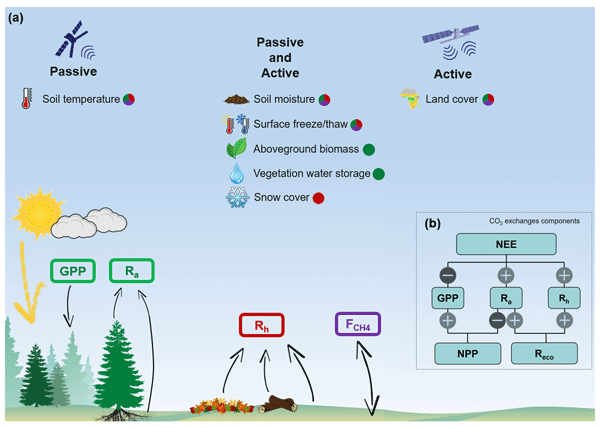
This review supports the integration of microwave spaceborne information into carbon cycle science for Arctic–boreal regions. The microwave data record spans multiple decades with frequent global observations of soil moisture and temperature, surface freeze–thaw cycles, vegetation water storage, snowpack properties, and land cover. This record holds substantial unexploited potential to better understand carbon cycle processes.
Bo Qu, Alexandre Roy, Joe R. Melton, Jennifer L. Baltzer, Youngryel Ryu, Matteo Detto, and Oliver Sonnentag
EGUsphere, https://doi.org/10.5194/egusphere-2023-1167, https://doi.org/10.5194/egusphere-2023-1167, 2023
Preprint archived
Short summary
Short summary
Accurately simulating photosynthesis and evapotranspiration challenges terrestrial biosphere models across North America’s boreal biome, in part due to uncertain representation of the maximum rate of photosynthetic carboxylation (Vcmax). This study used forest stand scale observations in an optimization framework to improve Vcmax values for representative vegetation types. Several stand characteristics well explained spatial Vcmax variability and were useful to improve boreal forest modelling.
Remi Madelon, Nemesio J. Rodríguez-Fernández, Hassan Bazzi, Nicolas Baghdadi, Clement Albergel, Wouter Dorigo, and Mehrez Zribi
Hydrol. Earth Syst. Sci., 27, 1221–1242, https://doi.org/10.5194/hess-27-1221-2023, https://doi.org/10.5194/hess-27-1221-2023, 2023
Short summary
Short summary
We present an approach to estimate soil moisture (SM) at 1 km resolution using Sentinel-1 and Sentinel-3 satellites. The estimates were compared to other high-resolution (HR) datasets over Europe, northern Africa, Australia, and North America, showing good agreement. However, the discrepancies between the different HR datasets and their lower performances compared with in situ measurements and coarse-resolution datasets show the remaining challenges for large-scale HR SM mapping.
Sara Modanesi, Christian Massari, Michel Bechtold, Hans Lievens, Angelica Tarpanelli, Luca Brocca, Luca Zappa, and Gabriëlle J. M. De Lannoy
Hydrol. Earth Syst. Sci., 26, 4685–4706, https://doi.org/10.5194/hess-26-4685-2022, https://doi.org/10.5194/hess-26-4685-2022, 2022
Short summary
Short summary
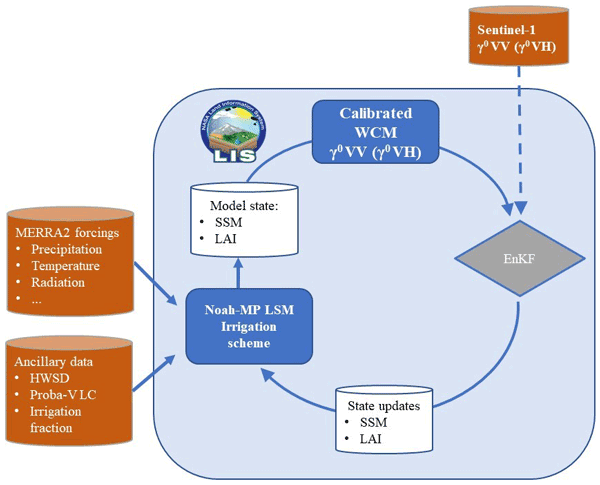
Given the crucial impact of irrigation practices on the water cycle, this study aims at estimating irrigation through the development of an innovative data assimilation system able to ingest high-resolution Sentinel-1 radar observations into the Noah-MP land surface model. The developed methodology has important implications for global water resource management and the comprehension of human impacts on the water cycle and identifies main challenges and outlooks for future research.
Anne Felsberg, Jean Poesen, Michel Bechtold, Matthias Vanmaercke, and Gabriëlle J. M. De Lannoy
Nat. Hazards Earth Syst. Sci., 22, 3063–3082, https://doi.org/10.5194/nhess-22-3063-2022, https://doi.org/10.5194/nhess-22-3063-2022, 2022
Short summary
Short summary
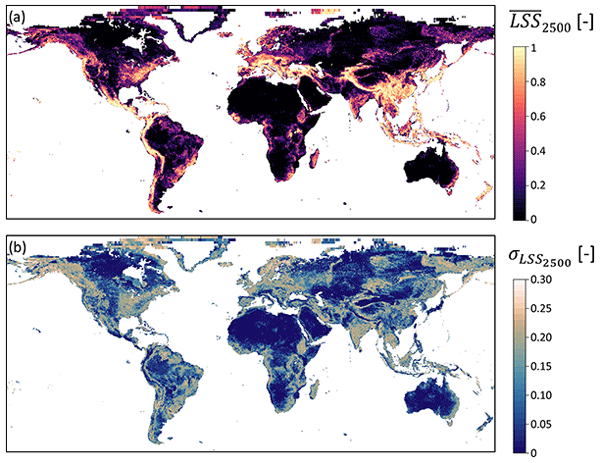
In this study we assessed global landslide susceptibility at the coarse 36 km spatial resolution of global satellite soil moisture observations to prepare for a subsequent combination of the two. Specifically, we focus therefore on the susceptibility of hydrologically triggered landslides. We introduce ensemble techniques, common in, for example, meteorology but not yet in the landslide community, to retrieve reliable estimates of the total prediction uncertainty.

Louise Busschaert, Shannon de Roos, Wim Thiery, Dirk Raes, and Gabriëlle J. M. De Lannoy
Hydrol. Earth Syst. Sci., 26, 3731–3752, https://doi.org/10.5194/hess-26-3731-2022, https://doi.org/10.5194/hess-26-3731-2022, 2022
Short summary
Short summary
Increasing amounts of water are used for agriculture. Therefore, we looked into how irrigation requirements will evolve under a changing climate over Europe. Our results show that, by the end of the century and under high emissions, irrigation water will increase by 30 % on average compared to the year 2000. Also, the irrigation requirement is likely to vary more from 1 year to another. However, if emissions are mitigated, these effects are reduced.
Emma Bousquet, Arnaud Mialon, Nemesio Rodriguez-Fernandez, Stéphane Mermoz, and Yann Kerr
Biogeosciences, 19, 3317–3336, https://doi.org/10.5194/bg-19-3317-2022, https://doi.org/10.5194/bg-19-3317-2022, 2022
Short summary
Short summary
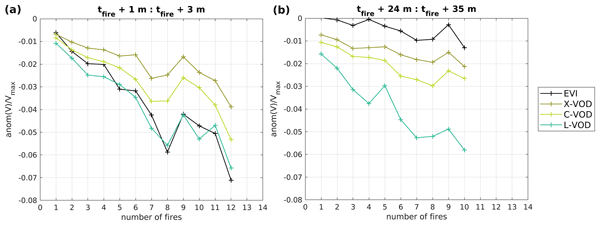
Pre- and post-fire values of four climate variables and four vegetation variables were analysed at the global scale, in order to observe (i) the general fire likelihood factors and (ii) the vegetation recovery trends over various biomes. The main result of this study is that L-band vegetation optical depth (L-VOD) is the most impacted vegetation variable and takes the longest to recover over dense forests. L-VOD could then be useful for post-fire vegetation recovery studies.
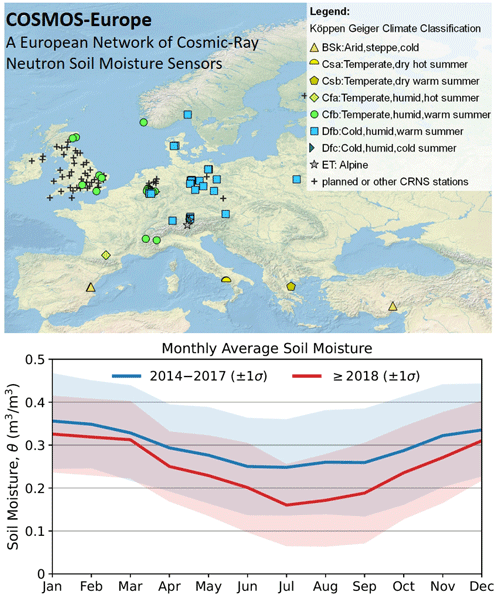
Heye Reemt Bogena, Martin Schrön, Jannis Jakobi, Patrizia Ney, Steffen Zacharias, Mie Andreasen, Roland Baatz, David Boorman, Mustafa Berk Duygu, Miguel Angel Eguibar-Galán, Benjamin Fersch, Till Franke, Josie Geris, María González Sanchis, Yann Kerr, Tobias Korf, Zalalem Mengistu, Arnaud Mialon, Paolo Nasta, Jerzy Nitychoruk, Vassilios Pisinaras, Daniel Rasche, Rafael Rosolem, Hami Said, Paul Schattan, Marek Zreda, Stefan Achleitner, Eduardo Albentosa-Hernández, Zuhal Akyürek, Theresa Blume, Antonio del Campo, Davide Canone, Katya Dimitrova-Petrova, John G. Evans, Stefano Ferraris, Félix Frances, Davide Gisolo, Andreas Güntner, Frank Herrmann, Joost Iwema, Karsten H. Jensen, Harald Kunstmann, Antonio Lidón, Majken Caroline Looms, Sascha Oswald, Andreas Panagopoulos, Amol Patil, Daniel Power, Corinna Rebmann, Nunzio Romano, Lena Scheiffele, Sonia Seneviratne, Georg Weltin, and Harry Vereecken
Earth Syst. Sci. Data, 14, 1125–1151, https://doi.org/10.5194/essd-14-1125-2022, https://doi.org/10.5194/essd-14-1125-2022, 2022
Short summary
Short summary
Monitoring of increasingly frequent droughts is a prerequisite for climate adaptation strategies. This data paper presents long-term soil moisture measurements recorded by 66 cosmic-ray neutron sensors (CRNS) operated by 24 institutions and distributed across major climate zones in Europe. Data processing followed harmonized protocols and state-of-the-art methods to generate consistent and comparable soil moisture products and to facilitate continental-scale analysis of hydrological extremes.
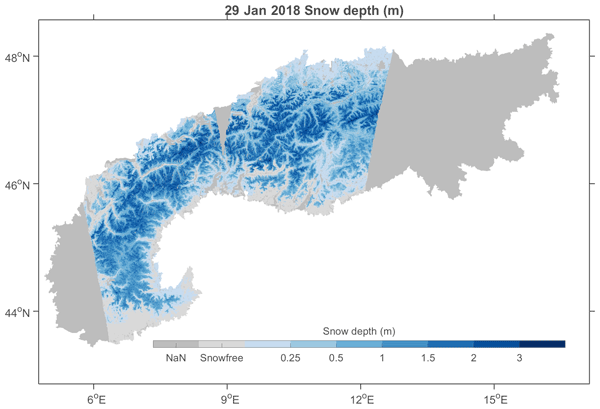
Hans Lievens, Isis Brangers, Hans-Peter Marshall, Tobias Jonas, Marc Olefs, and Gabriëlle De Lannoy
The Cryosphere, 16, 159–177, https://doi.org/10.5194/tc-16-159-2022, https://doi.org/10.5194/tc-16-159-2022, 2022
Short summary
Short summary
Snow depth observations at high spatial resolution from the Sentinel-1 satellite mission are presented over the European Alps. The novel observations can improve our knowledge of seasonal snow mass in areas with complex topography, where satellite-based estimates are currently lacking, and benefit a number of applications including water resource management, flood forecasting, and numerical weather prediction.
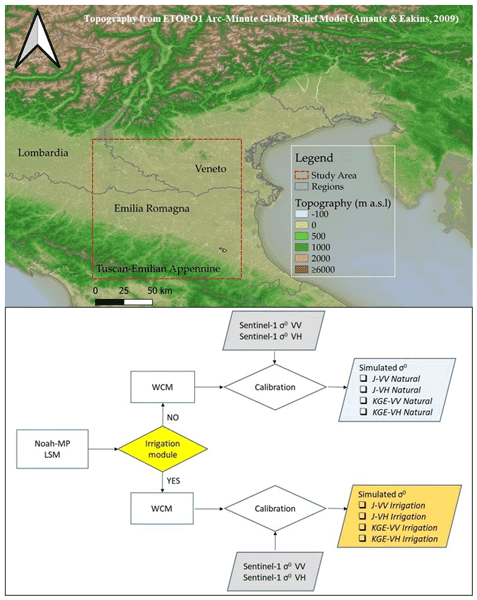
Sara Modanesi, Christian Massari, Alexander Gruber, Hans Lievens, Angelica Tarpanelli, Renato Morbidelli, and Gabrielle J. M. De Lannoy
Hydrol. Earth Syst. Sci., 25, 6283–6307, https://doi.org/10.5194/hess-25-6283-2021, https://doi.org/10.5194/hess-25-6283-2021, 2021
Short summary
Short summary
Worldwide, the amount of water used for agricultural purposes is rising and the quantification of irrigation is becoming a crucial topic. Land surface models are not able to correctly simulate irrigation. Remote sensing observations offer an opportunity to fill this gap as they are directly affected by irrigation. We equipped a land surface model with an observation operator able to transform Sentinel-1 backscatter observations into realistic vegetation and soil states via data assimilation.
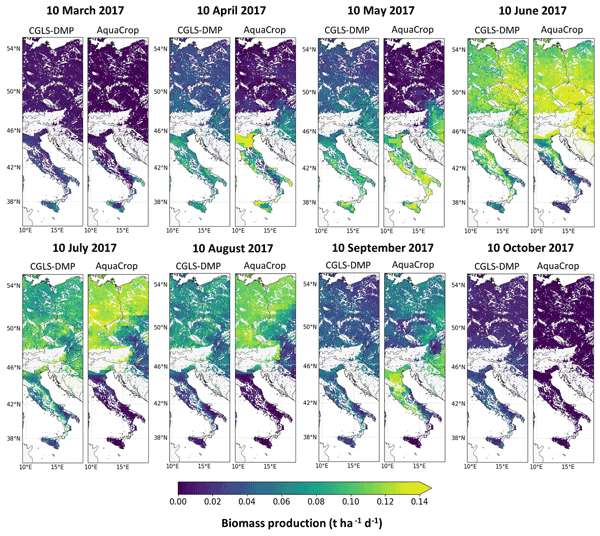
Shannon de Roos, Gabriëlle J. M. De Lannoy, and Dirk Raes
Geosci. Model Dev., 14, 7309–7328, https://doi.org/10.5194/gmd-14-7309-2021, https://doi.org/10.5194/gmd-14-7309-2021, 2021
Short summary
Short summary
A spatially distributed version of the field-scale crop model AquaCrop v6.1 was developed for applications at various spatial scales. Multi-year 1 km simulations over central Europe were evaluated against biomass and surface soil moisture products derived from optical and microwave satellite missions, as well as in situ observations of soil moisture. The regional version of the AquaCrop model provides a suitable setup for subsequent satellite-based data assimilation.
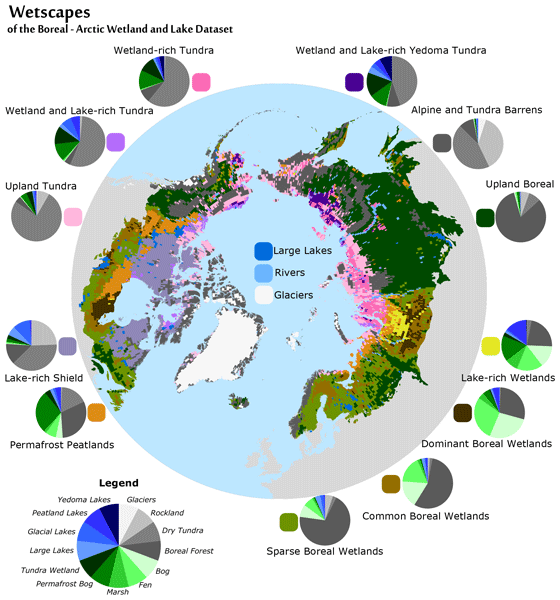
David Olefeldt, Mikael Hovemyr, McKenzie A. Kuhn, David Bastviken, Theodore J. Bohn, John Connolly, Patrick Crill, Eugénie S. Euskirchen, Sarah A. Finkelstein, Hélène Genet, Guido Grosse, Lorna I. Harris, Liam Heffernan, Manuel Helbig, Gustaf Hugelius, Ryan Hutchins, Sari Juutinen, Mark J. Lara, Avni Malhotra, Kristen Manies, A. David McGuire, Susan M. Natali, Jonathan A. O'Donnell, Frans-Jan W. Parmentier, Aleksi Räsänen, Christina Schädel, Oliver Sonnentag, Maria Strack, Suzanne E. Tank, Claire Treat, Ruth K. Varner, Tarmo Virtanen, Rebecca K. Warren, and Jennifer D. Watts
Earth Syst. Sci. Data, 13, 5127–5149, https://doi.org/10.5194/essd-13-5127-2021, https://doi.org/10.5194/essd-13-5127-2021, 2021
Short summary
Short summary
Wetlands, lakes, and rivers are important sources of the greenhouse gas methane to the atmosphere. To understand current and future methane emissions from northern regions, we need maps that show the extent and distribution of specific types of wetlands, lakes, and rivers. The Boreal–Arctic Wetland and Lake Dataset (BAWLD) provides maps of five wetland types, seven lake types, and three river types for northern regions and will improve our ability to predict future methane emissions.

Alain Royer, Alexandre Roy, Sylvain Jutras, and Alexandre Langlois
The Cryosphere, 15, 5079–5098, https://doi.org/10.5194/tc-15-5079-2021, https://doi.org/10.5194/tc-15-5079-2021, 2021
Short summary
Short summary
Dense spatially distributed networks of autonomous instruments for continuously measuring the amount of snow on the ground are needed for operational water resource and flood management and the monitoring of northern climate change. Four new-generation non-invasive sensors are compared. A review of their advantages, drawbacks and accuracy is discussed. This performance analysis is intended to help researchers and decision-makers choose the one system that is best suited to their needs.
Cited articles
Baldocchi, D., Falge, E., Gu, L., Olson, R., Hollinger, D., Running, S., Anthoni, P., Bernhofer, C., Davis, K., Evans, R., Fuentes, J., Goldstein, A., Katul, G., Law, B., Lee, X., Malhi, Y., Meyers, T., Munger, W., Oechel, W., Paw U, K., Pilegaard, K., Schmid, H., Valentini, R., Verma, S., Vesala, T., Wilson, K., and Wofsy, S.: FLUXNET: A New Tool to Study the Temporal and Spatial Variability of Ecosystem–Scale Carbon Dioxide, Water Vapor, and Energy Flux Densities, B. Am. Meteorol. Soc., 82, 2415–2434, https://doi.org/10.1175/1520-0477(2001)082<2415:FANTTS>2.3.CO;2, 2007. a
Bao, S., Wutzler, T., Koirala, S., Cuntz, M., Ibrom, A., Besnard, S., Walther, S., Šigut, L., Moreno, A., Weber, U., Wohlfahrt, G., Cleverly, J., Migliavacca, M., Woodgate, W., Merbold, L., Elmar, V., and Carvalhais, N.: Environment-sensitivity functions for gross primary productivity in light use efficiency models, Agr. Forest Meteorol., 312, 108708, https://doi.org/10.1016/j.agrformet.2021.108708, 2022. a
Bell, J., Palecki, M., Baker, C., Collins, W., Lawrimore, J., Leeper, R., Hall, M., Kochendorfer, J., Meyers, T., Wilson, T., and Diamond, H.: U.S. Climate Reference Network soil moisture and temperature observations., J. Hydrometeorol., 14, 977–988, 2013. a
Blume-Werry, G., Milbau, A., Teuber, L. M., Johansson, M., and Dorrepaal, E.: Dwelling in the deep–strongly increased root growth and rooting depth enhance plant interactions with thawing permafrost soil, New Phytol., 223, 1328–1339, 2019. a
Bowling, D. R., Logan, B. A., Hufkens, K., Aubrecht, D. M., Richardson, A. D., Burns, S. P., Anderegg, W. R. L., Blanken, P. D., and Eiriksson, D. P.: Limitations to winter and spring photosynthesis of a Rocky Mountain subalpine forest, Agr. Forest Meteorol., 252, 241–255, 2018. a
Bracho, R., Celis, G., Rodenhizer, H., See, C., and Schuur, E. A.: AmeriFlux BASE US-EML Eight Mile Lake Permafrost thaw gradient, Healy Alaska, Ver. 4-5, AmeriFlux AMP [data set], https://doi.org/10.17190/AMF/1418678, 2021. a
Brown, J., Ferrians, O., Heginbottom, J., and Melnikov, E.: Circum-Arctic Map of Permafrost and Ground-Ice Conditions, Version 2, National Snow and Ice Data Center [data set], https://doi.org/10.7265/skbg-kf16, 2002. a
Burba, G.: Eddy Covariance Method for Scientific, Industrial, Agricultural and Regulatory Applications: A Field Book on Measuring Ecosystem Gas Exchange and Areal Emission Rates, LI-COR Biosciences, Lincoln, NE, USA, 331 pp., ISBN 978-0-615-76827-4, 2013. a
Chapin, F., Woodwell, G., Randerson, J., Rastetter, E., Lovett, G., Baldocchi, D., Clark, D., Harmon, M., Schimel, D., Valentini, R., Wirth, C., Aber, J., Cole, J., Goulden, M., Harden, J., Heimann, M., Howarth, R., Matson, P., McGuire, A., Melillo, J., Mooney, H., Neff, J., Houghton, R., Pace, M., Ryan, M., Running, S., Sala, O., Schlesinger, W., and Schulze, E.-D.: Reconciling Carbon-cycle Concepts, Terminology, and Methods., Ecosystems, 9, 1041–1050, 2006. a
Chen, N., Zhang, Y., Yuan, F., Song, C., Xu, M., Wang, Q., Hao, G., Bao, T., Zuo, Y., Liu, J., Song, Y., Sun, L., Guo, Y., Zhang, H., Ma, G., Du, Y., Xu, X., and Wang, X.: Warming-induced vapor pressure deficit suppression of vegetation growth diminished in northern peatlands, Nat. Commun., 14, 7885, https://doi.org/10.1038/s41467-023-42932-w, 2023. a
Churchill, A. C., Turetsky, M. R., McGuire, A. D., and Hollingsworth, T. N.: Response of plant community structure and primary productivity to experimental drought and flooding in an Alaskan fen, Can. J. Forest Res., 45, 185–193, 2015. a
Colliander, A., Jackson, T., Bindlish, R., Chan, S., Das, N., Kim, S., Cosh, M., Dunbar, R., Dang, L., Pashaian, L., Asanuma, J., Aida, K., Berg, A., Rowlandson, T., Bosch, D., Caldwell, T., Caylor, K., Goodrich, D., al Jassar, H., Lopez-Baeza, E., Martínez Fernández, J., González-Zamora, A., Livingston, S., McNairn, H., Pacheco, A., Moghaddam, M., Montzka, C., Notarnicola, C., Niedrist, G., Pellarin, T., Prueger, J., Pulliainen, J., Rautiainen, K., Ramos, J., Seyfried, M., Starks, P., Su, Z., Zeng, Y., van der Velde, R., Thibeault, M., Dorigo, W., Vreugdenhil, M., Walker, J. P., Wu, X., Monerris, A., O'Neill, P. E., Entekhabi, D., Njoku, E., and Yueha, S.: Validation of SMAP surface soil moisture products with core validation sites, Remote Sens. Environ., 191, 215–231, 2017. a
Derksen, C., Xu, X., Scott Dunbar, R., Colliander, A., Kim, Y., Kimball, J. S., Black, T. A., Euskirchen, E., Langlois, A., Loranty, M. M., Marsh, P.cand Rautiainen, K., Roy, A., Royer, A., and Stephens, J.: Retrieving landscape freeze/thaw state from Soil Moisture Active Passive (SMAP) radar and radiometer measurements, Remote Sens. Environ., 194, 48–62, 2017. a
Dragoni, D., Schmid, H. P., Grimmond, C. S. B., and Loescher, H. W.: Uncertainty of annual net ecosystem productivity estimated using eddy covariance flux measurements, J. Geophys. Res.-Atmos., 112, https://doi.org/10.1029/2006JD008149, 2007. a
Elmendorf, S. C. and Hollister, R. D.: Limits on phenological response to high temperature in the Arctic, Scientific Reports, 13, 208, https://doi.org/10.1038/s41598-022-26955-9, 2023. a
Ensminger, I., Sveshnikov, D., Campbell, D. A., Funk, C., Jansson, S., Lloyd, J., Shibistova, O., and Öquist, G.: Intermittent low temperatures constrain spring recovery of photosynthesis in boreal Scots pine forests, Glob. Change Biol., 10, 995–1008, 2004. a
Entekhabi, D., Njoku, E. G., O'Neill, P. E., Kellogg, K. H., Crow, W. T., Edelstein, W. N., Entin, J. K., Goodman, S. D., Jackson, T. J., Johnson, J., Kimball, J., Piepmeier, J. R., Koster, R. D., Martin, N., McDonald, K. C., Moghaddam, M., Moran, S., Reichle, R., Shi, J. C., Spencer, M. W., Thurman, S. W., Tsang, L., and Van Zyl, J.: The soil moisture active passive (SMAP) mission, P. IEEE, 98, 704–716, 2010. a
Entekhabi, D., Yueh, S., O’Neill, P. E., and Kellogg, K. H.: SMAP Handbook, Tech. rep., Jet Propulsion Laboratory, NASA, https://smap.jpl.nasa.gov/files/smap2/SMAP_Handbook_FINAL_1_JULY_2014_Web.pdf (last access: 29 June 2023), 2014. a
Eugster, W., McFadden, J. P., and Chapin, F. S.: A comparative approach to regional variation in surface fluxes using mobile eddy correlation towers, Bound.-Lay. Meteorol., 85, 293–307, 1997. a
Euskirchen, E.: AmeriFlux BASE US-BZB Bonanza Creek Thermokarst Bog, Ver. 4-5, AmeriFlux AMP [data set], https://doi.org/10.17190/AMF/1773401, 2022a. a
Euskirchen, E.: AmeriFlux BASE US-BZF Bonanza Creek Rich Fen, Ver. 4-5, AmeriFlux AMP [data set], https://doi.org/10.17190/AMF/1756433, 2022b. a
Euskirchen, E.: AmeriFlux BASE US-BZo Bonanza Creek Old Thermokarst Bog, Ver. 3-5, AmeriFlux AMP [data set], https://doi.org/10.17190/AMF/1846662, 2022c. a
Euskirchen, E.: AmeriFlux BASE US-BZS Bonanza Creek Black Spruce, Ver. 3-5, AmeriFlux AMP [data set], https://doi.org/10.17190/AMF/1756434, 2022d. a
Euskirchen, E., Shaver, G., and Bret-Harte, S.: AmeriFlux BASE US-ICh Imnavait Creek Watershed Heath Tundra, Ver. 4-5, AmeriFlux AMP [data set], https://doi.org/10.17190/AMF/1246133, 2022a. a
Euskirchen, E., Shaver, G., and Bret-Harte, S.: AmeriFlux BASE US-ICs Imnavait Creek Watershed Wet Sedge Tundra, Ver. 7-5, AmeriFlux AMP [data set], https://doi.org/10.17190/AMF/1246130, 2022b. a
Euskirchen, E., Shaver, G., and Bret-Harte, S.: AmeriFlux BASE US-ICt Imnavait Creek Watershed Tussock Tundra, Ver. 5-5, AmeriFlux AMP [data set], https://doi.org/10.17190/AMF/1246131, 2022c. a
Euskirchen, E. S., McGuire, A. D., Chapin III, F. S., Yi, S., and Thompson, C. C.: Changes in vegetation in northern Alaska under scenarios of climate change, 2003–2100: implications for climate feedbacks, Ecol. Appl., 19, 1022–1043, 2009. a
Finkelstein, P. L. and Sims, P. F.: Sampling error in eddy correlation flux measurements, J. Geophys. Res.-Atmos., 106, 3503–3509, 2001. a
Fisher, J. B., Hayes, D. J., Schwalm, C. R., Huntzinger, D. N., Stofferahn, E., Schaefer, K.and Luo, Y., Wullschleger, S. D., Goetz, S., Miller, C. E., Griffith, P., Chadburn, S., Chatterjee, A., Ciais, P., Douglas, T., Genet, H., Ito, A., Neigh, C., Poulter, B., Rogers, B., Sonnentag, O., Tian, H., Wang, W., Xue, Y., Yang, Z.-L., Zeng, N., , and Zhang, Z.: Missing pieces to modeling the Arctic-Boreal puzzle, Environ. Res. Lett., 13, 020202, https://doi.org/10.1088/1748-9326/aa9d9a, 2018. a, b, c, d
Forkel, M., Carvalhais, N., Rödenbeck, C., Keeling, R., Heimann, M., Thonicke, K., Zaehle, S., and Reichstein, M.: Enhanced seasonal CO2 exchange caused by amplified plant productivity in northern ecosystems, Science, 351, 696–699, 2016. a
Foster, K. T., Sun, W., Merder, J., Kurz, W. A., Sinha, E., Nesdoly, A., Metsaranta, J., Hararuk, O., Bond-Lamberty, B. P., Schwalm, C., Natali, S. M., Huntzinger, D. N., and Michalak, A. M.: Permafrost, Peatland and Agricultural Regions Key to Reconciling Top-Down and Bottom-Up Estimates of North American Carbon Uptake, 2024 AGU Fall Meeting, abstract A43T-08, Washington, DC, USA, December 2024. a
Fotouo Makouate, H. and Zude-Sasse, M.: Advances in Growing Degree Days Models for Flowering to Harvest: Optimizing Crop Management with Methods of Precision Horticulture – A Review, Horticulturae, 11, 1415, https://doi.org/10.3390/horticulturae11121415, 2025. a
Friedl, M. and Sulla-Menashe, D.: MCD12Q1 MODIS/Terra+Aqua Land Cover Type Yearly L3 Global 500m SIN Grid V006, NASA Land Processes Distributed Active Archive Center [data set], https://doi.org/10.5067/MODIS/MCD12Q1.006, 2019. a, b
Fu, Y. H., Piao, S., Zhao, H., Jeong, S.-J., Wang, X., Vitasse, Y., Ciais, P., and Janssens, I. A.: Unexpected role of winter precipitation in determining heat requirement for spring vegetation green-up at northern middle and high latitudes, Glob. Change Biol., 20, 3743–3755, 2014. a
Gelaro, R., McCarty, W., Suárez, M. J., Todling, R., Molod, A., Takacs, L., Randles, C. A., Darmenov, A., Bosilovich, M. G., Reichle, R., Wargan, K., Coy, L., Cullather, R., Draper, C., Akella, S., Buchard, V., Conaty, A., da Silva, A. M., Gu, W., Kim, G.-K., Koster, R., Lucchesi, R., Merkova, D., Nielsen, J. E., Partyka, G., Pawson, S., Putman, W., Rienecker, M., Schubert, S. D., Sienkiewicz, M., and Zhao, B.: The modern-era retrospective analysis for research and applications, version 2 (MERRA-2), J. Climate, 30, 5419–5454, 2017. a, b
Gilmanov, T. G., Verma, S. B., Sims, P. L., Meyers, T. P., Bradford, J. A., Burba, G. G., and Suyker, A. E.: Gross primary production and light response parameters of four Southern Plains ecosystems estimated using long-term CO2-flux tower measurements, Global Biogeochem. Cy., 17, https://doi.org/10.1029/2002GB002023, 2003. a
Gonsamo, A., Chen, J. M., and D’Odorico, P.: Deriving land surface phenology indicators from CO2 eddy covariance measurements, Ecol. Indic., 29, 203–207, 2013. a
Hagedorn, F., Imboden, J., Moiseev, P. A., Gao, D., Frossard, E., Schleppi, P., Christen, D., Gavazov, K., and Fetzer, J.: Distinct changes in carbon, nitrogen, and phosphorus cycling in the litter layer across two contrasting forest–tundra ecotones, Biogeosciences, 22, 2959–2977, https://doi.org/10.5194/bg-22-2959-2025, 2025. a
Hayes, D. J., McGuire, A. D., Kicklighter, D. W., Gurney, K. R., Burnside, T., and Melillo, J. M.: Is the northern high-latitude land-based CO2 sink weakening?, Global Biogeochem. Cy., 25, https://doi.org/10.1029/2010GB003813, 2011. a
He, H., Moore, T., Lafleur, P., Sonnentag, O., Humphreys, E., Wu, M., and Roulet, N.: Spring phenology in photosynthesis control and modeling for a temperate bog, Frontiers in Environmental Science, 13, 1548578, https://doi.org/10.3389/fenvs.2025.1548578, 2025. a
Heinzelmann, V., Marinissen, J., Aerts, R., Cornelissen, J. H. C., and Bokhorst, S.: Stronger Drought Response of CO2 Fluxes in Tundra Heath Compared to Sphagnum Peatland in the Sub-Arctic, Glob. Change Biol., 31, e70210, https://doi.org/10.1111/gcb.70210, 2025. a
Helbig, M., Chasmer, L. E., Kljun, N., Quinton, W. L., Treat, C. C., and Sonnentag, O.: The positive net radiative greenhouse gas forcing of increasing methane emissions from a thawing boreal forest-wetland landscape, Glob. Change Biol., 23, 2413–2427, 2017b. a
Hu, F. and Bliss, L.: Tundra, Encyclopedia Britannica, https://www.britannica.com/science/tundra, last access: 11 June 2025. a
Huang, X., Xiao, J., and Ma, M.: Evaluating the performance of satellite-derived vegetation indices for estimating gross primary productivity using FLUXNET observations across the globe, Remote Sensing, 11, 1823, https://doi.org/10.3390/rs11151823, 2019. a
Hugelius, G., Strauss, J., Zubrzycki, S., Harden, J. W., Schuur, E. A. G., Ping, C.-L., Schirrmeister, L., Grosse, G., Michaelson, G. J., Koven, C. D., O'Donnell, J. A., Elberling, B., Mishra, U., Camill, P., Yu, Z., Palmtag, J., and Kuhry, P.: Estimated stocks of circumpolar permafrost carbon with quantified uncertainty ranges and identified data gaps, Biogeosciences, 11, 6573–6593, https://doi.org/10.5194/bg-11-6573-2014, 2014. a
Ise, T. and Moorcroft, P. R.: The global-scale temperature and moisture dependencies of soil organic carbon decomposition: an analysis using a mechanistic decomposition model, Biogeochemistry, 80, 217–231, 2006. a
Iwahana, G., Kobayashi, H., Ikawa, H., and Suzuki, R.: AmeriFlux BASE US-Prr Poker Flat Research Range Black Spruce Forest, Ver. 4-5, AmeriFlux AMP [data set], https://doi.org/10.17190/AMF/1246153, 2023. a
Jia, G. J., Epstein, H. E., and Walker, D. A.: Greening of arctic Alaska, 1981–2001, Geophys. Res. Lett., 30, https://doi.org/10.1029/2003GL018268, 2003. a
Jones, L., Kimball, J., Reichle, R., Madani, N., Glassy, J., Ardizzone, J., Colliander, A., Cleverly, J., Desai, A., Eamus, D., Euskirchen, E., Hutley, L., Macfarlane, C., and Scott, R.: The SMAP Level 4 Carbon Product for Monitoring Ecosystem Land–Atmosphere CO2 Exchange., IEEE T. Geosci. Remote, 55, 6517–6532, https://doi.org/10.1109/TGRS.2017.2729343, 2017. a, b, c, d, e, f
Kerr, Y., Waldteufel, P., Richaume, P., Wigneron, J., Ferrazzoli, P., Mahmoodi, A., Al Bitar, A., Cabot, F., Gruhier, C., Juglea, S., Leroux, D., Mialon, A., and Delwart, S.: The SMOS Soil Moisture Retrieval Algorithm, IEEE T. Geosci. Remote, 50, 1384–1403, https://doi.org/10.1109/TGRS.2012.2184548, 2012. a
Kim, Y., Kim, S.-D., Enomoto, H., Kushida, K., Kondoh, M., and Uchida, M.: Latitudinal distribution of soil CO2 efflux and temperature along the Dalton Highway, Alaska, Polar Sci., 7, 162–173, 2013. a
Kreuzwieser, J., Papadopoulou, E., and Rennenberg, H.: Interaction of flooding with carbon metabolism of forest trees, Plant Biol., 6, 299–306, 2004. a
Lasslop, G., Reichstein, M., Detto, M., Richardson, A. D., and Baldocchi, D. D.: Comment on Vickers et al.: Self-correlation between assimilation and respiration resulting from flux partitioning of eddy-covariance CO2 fluxes, Agr. Forest Meteorol., 150, 312–314, 2010a. a
Lasslop, G., Reichstein, M., Papale, D., Richardson, A. D., Arneth, A., Barr, A., Stoy, P., and Wohlfahrt, G.: Separation of net ecosystem exchange into assimilation and respiration using a light response curve approach: critical issues and global evaluation, Glob. Change Biol., 16, 187–208, 2010b. a, b, c, d, e, f
Leclerc, M. and Thurtell, G.: Footprint prediction of scalar fluxes using a Markovian analysis, Bound.-Lay. Meteorol., 52, 247–258, 1990. a
Lees, K., Quaife, T., Artz, R., Khomik, M., and Clark, J.: Potential for using remote sensing to estimate carbon fluxes across northern peatlands–A review, Sci. Total Environ., 615, 857–874, 2018. a
Lievens, H., Demuzere, M., Marshall, H., Reichle, R. H., Brucker, L., Brangers, I., de Rosnay, P., Dumont, M., Girotto, M., Immerzeel, W. W., Jonas, T., Kim, E., Koch, I., Marty, C., Saloranta, T., Schöber, J., and De Lannoy, G.: Snow depth variability in the Northern Hemisphere mountains observed from space, Nat. Commun., 10, 4629, https://doi.org/10.1038/s41467-019-12566-y, 2019. a
Lloyd, J. and Taylor, J. A.: On the Temperature Dependence of Soil Respiration, Funct. Ecol., 8, 315–323, https://doi.org/10.2307/2389824, 1994. a
López, J., Way, D. A., and Sadok, W.: Systemic effects of rising atmospheric vapor pressure deficit on plant physiology and productivity, Glob. Change Biol., 27, 1704–1720, 2021. a
López-Blanco, E., Exbrayat, J.-F., Lund, M., Christensen, T. R., Tamstorf, M. P., Slevin, D., Hugelius, G., Bloom, A. A., and Williams, M.: Evaluation of terrestrial pan-Arctic carbon cycling using a data-assimilation system, Earth Syst. Dynam., 10, 233–255, https://doi.org/10.5194/esd-10-233-2019, 2019. a
Lucchesi, R.: File Specification for GEOS FP, http://gmao.gsfc.nasa.gov/pubs/office_notes (last access: 5 May 2026), 2018. a
Luo, X., Zhao, R., Chu, H., Collalti, A., Fatichi, S., Keenan, T. F., Lu, X., Nguyen, N., Prentice, I. C., Sun, W., Yu, K., and Yu, L.: Global variation in vegetation carbon use efficiency inferred from eddy covariance observations, Nature Ecology & Evolution, 9, 1414–1425, 2025. a
Madelon, R., Kimball, J. S., Endsley, K. A., De Lannoy, G. J. M., Sonnentag, O., Alcock, H., Detto, M., Virkkala, A. M., Rogers, B. M., Watts, J. D., Mavrovic, A., Williamson, S. N., Humphreys, E., Colliander, A., Mialon, A., and Roy, A.: Assessing the SMAP Level-4 Carbon Product over the Arctic and Subarctic Zones, IEEE Journal of Selected Topics in Applied Earth Observations and Remote Sensing, https://doi.org/10.1109/JSTARS.2025.3555850, 2025. a, b, c, d, e
Maire, V., Martre, P., Kattge, J., Gastal, F., Esser, G., Fontaine, S., and Soussana, J.-F.: The coordination of leaf photosynthesis links C and N fluxes in C3 plant species, PloS One, 7, e38345, https://doi.org/10.1371/journal.pone.0038345, 2012. a
Maltby, E. and Immirzi, P.: Carbon dynamics in peatlands and other wetland soils: Regional and global perspectives, Chemosphere, 27, 999–1023, 1993. a
Martinez Molera, L.: Machine Learning Q&A: All About Model Validation, MathWorks Online Documentation, https://www.mathworks.com/campaigns/offers/next/all-about-model-validation.html (last access: 29 January 2026), 2025. a
MathWorks, Inc.: MATLAB R2023b, MathWorks, Natick, Massachusetts, USA, https://www.mathworks.com/products/matlab.html (last access: 29 January 2026), 2023. a
Mavrovic, A., Sonnentag, O., Lemmetyinen, J., Voigt, C., Rutter, N., Mann, P., Sylvain, J.-D., and Roy, A.: Environmental controls of winter soil carbon dioxide fluxes in boreal and tundra environments, Biogeosciences, 20, 5087–5108, https://doi.org/10.5194/bg-20-5087-2023, 2023b. a, b
McCallum, I., Franklin, O., Moltchanova, E., Merbold, L., Schmullius, C., Shvidenko, A., Schepaschenko, D., and Fritz, S.: Improved light and temperature responses for light-use-efficiency-based GPP models, Biogeosciences, 10, 6577–6590, https://doi.org/10.5194/bg-10-6577-2013, 2013. a
McGuire, A. D., Christensen, T. R., Hayes, D., Heroult, A., Euskirchen, E., Kimball, J. S., Koven, C., Lafleur, P., Miller, P. A., Oechel, W., Peylin, P., Williams, M., and Yi, Y.: An assessment of the carbon balance of Arctic tundra: comparisons among observations, process models, and atmospheric inversions, Biogeosciences, 9, 3185–3204, https://doi.org/10.5194/bg-9-3185-2012, 2012. a
McPartland, M. Y., Falkowski, M. J., Reinhardt, J. R., Kane, E. S., Kolka, R., Turetsky, M. R., Douglas, T. A., Anderson, J., Edwards, J. D., Palik, B., and Montgomery, R. A.: Characterizing boreal peatland plant composition and species diversity with hyperspectral remote sensing, Remote Sensing, 11, 1685, https://doi.org/10.3390/rs11141685, 2019. a
Mialon, A., Rodríguez-Fernández, N. J., Santoro, M., Saatchi, S., Mermoz, S., Bousquet, E., and Kerr, Y. H.: Evaluation of the sensitivity of SMOS L-VOD to forest above-ground biomass at global scale, Remote Sensing, 12, 1450, https://doi.org/10.3390/rs12091450, 2020. a
Mirabel, A., Girardin, M. P., Metsaranta, J., Way, D., and Reich, P. B.: Increasing atmospheric dryness reduces boreal forest tree growth, Nat. Commun., 14, 6901, https://doi.org/10.1038/s41467-023-42466-1, 2023. a
Mishra, U., Hugelius, G., Shelef, E., Yang, Y., Strauss, J., Lupachev, A., Harden, J., Jastrow, J., Ping, C., Riley, W., and Schuur, E.: Spatial heterogeneity and environmental predictors of permafrost region soil organic carbon stocks, Sci. Adv., 7, eaaz5236, https://doi.org/10.1126/sciadv.aaz5236, 2021. a
Myneni, R. and Knyazikhin, Y.: VIIRS/NPP Leaf Area Index/FPAR 8-Day L4 Global 500m SIN Grid V001, NASA Land Processes Distributed Active Archive Center [data set], https://doi.org/10.5067/VIIRS/VNP15A2H.001, 2018. a
Myneni, R. B., Keeling, C., Tucker, C. J., Asrar, G., and Nemani, R. R.: Increased plant growth in the northern high latitudes from 1981 to 1991, Nature, 386, 698–702, 1997. a
Natali, S.: AmeriFlux BASE US-YK1 Yukon-Kuskokwim Delta, Izaviknek-Kingaglia uplands, Burned 2015, Ver. 1-5, AmeriFlux AMP [data set], https://doi.org/10.17190/AMF/2331384, 2024. a
Natali, S.: AmeriFlux BASE US-YK2 Yukon-Kuskokwim Delta, Izaviknek-Kingaglia uplands, Unburned, Ver. 2-5, AmeriFlux AMP [data set], https://doi.org/10.17190/AMF/2331385, 2025. a
Natali, S., Watts, J., Rogers, B., Potter, S., Ludwig, S., Selbmann, A.-K., Sullivan, P., Abbott, B., Arndt, K., Birch, L., Björkman, M., Bloom, A., Celis, G., Christensen, T., Christiansen, C., Commane, R., Cooper, E., Crill, P., Czimczik, C., Davydov, S., Du, J., Egan, J., Elberling, B., Euskirchen, E., Friborg, T., Genet, H., Göckede, M., Goodrich, J., Grogan, P., Helbig, M., Jafarov, E., Jastrow, J., Kalhori, A., Kim, Y., Kimball, J., Kutzbach, L., Lara, M., Larsen, K., Lee, B.-Y., Liu, Z., Loranty, M., Lund, M., Lupascu, M., Madani, N., Malhotra, A., Matamala, R., McFarland, J., McGuire, A., Michelsen, A., Minions, C., Oechel, W., Olefeldt, D., Parmentier, F.-J., Pirk, N., Poulter, B., Quinton, W., Rezanezhad, F., Risk, D., Sachs, T., Schaefer, K., Schmidt, N., Schuur, E., Semenchuk, P., Shaver, G., Sonnentag, O., Starr, G., Treat, C., Waldrop, M., Wang, Y., Welker, J., Wille, C., Xu, Zhang, Z., Zhuang, Q., and Zona, D.: Large loss of CO2 in winter observed across the northern permafrost region, Nat. Clim. Change, 9, 852–857, 2019. a, b, c
Natali, S. M., Schuur, E. A., and Rubin, R. L.: Increased plant productivity in Alaskan tundra as a result of experimental warming of soil and permafrost, J. Ecol., 100, 488–498, 2012. a
Nawaz, A. F., Gargiulo, S., Pichierri, A., and Casolo, V.: Exploring the Role of Non-Structural Carbohydrates (NSCs) Under Abiotic Stresses on Woody Plants: A Comprehensive Review, Plants, 14, 328, https://doi.org/10.3390/plants14030328, 2025. a
Oechel, W. C., Hastings, S. J., Vourlrtis, G., Jenkins, M., Riechers, G., and Grulke, N.: Recent change of Arctic tundra ecosystems from a net carbon dioxide sink to a source, Nature, 361, 520–523, 1993. a
Olefeldt, D., Euskirchen, E. S., Harden, J., Kane, E., McGuire, A. D., Waldrop, M. P., and Turetsky, M. R.: A decade of boreal rich fen greenhouse gas fluxes in response to natural and experimental water table variability, Glob. Change Biol., 23, 2428–2440, 2017. a
Pallandt, M. M. T. A., Kumar, J., Mauritz, M., Schuur, E. A. G., Virkkala, A.-M., Celis, G., Hoffman, F. M., and Göckede, M.: Representativeness assessment of the pan-Arctic eddy covariance site network and optimized future enhancements, Biogeosciences, 19, 559–583, https://doi.org/10.5194/bg-19-559-2022, 2022. a
Panwar, A., Migliavacca, M., Nelson, J. A., Cortés, J., Bastos, A., Forkel, M., and Winkler, A. J.: Methodological challenges and new perspectives of shifting vegetation phenology in eddy covariance data, Scientific Reports, 13, 13885, https://doi.org/10.1038/s41598-023-41048-x, 2023. a, b
Parazoo, N. C., Arneth, A., Pugh, T. A. M., Smith, B., Steiner, N., Luus, K., Commane, R., Benmergui, J., Stofferahn, E., Liu, J., Rödenbeck, C., Kawa, R., Euskirchen, E., Zona, D., Arndt, K., Oechel, W., and Miller, C.: Spring photosynthetic onset and net CO 2 uptake in Alaska triggered by landscape thawing, Glob. Change Biol., 24, 3416–3435, 2018. a
Peng, J., Tang, J., Xie, S., Wang, Y., Liao, J., Chen, C., Sun, C., Mao, J., Zhou, Q., and Niu, S.: Evidence for the acclimation of ecosystem photosynthesis to soil moisture, Nat. Commun., 15, 9795, https://doi.org/10.1038/s41467-024-54156-7 , 2024. a
Potapov, P., Hansen, M. C., Stehman, S. V., Loveland, T. R., and Pittman, K.: Combining MODIS and Landsat imagery to estimate and map boreal forest cover loss, Remote Sens. Environ., 112, 3708–3719, 2008. a
Prince, M., Roy, A., Royer, A., and Langlois, A.: Timing and spatial variability of fall soil freezing in boreal forest and its effect on SMAP L-band radiometer measurements, Remote Sens. Environ., 231, 111230, https://doi.org/10.1016/j.rse.2019.111230, 2019. a
Pu, J., Yan, K., Roy, S., Zhu, Z., Rautiainen, M., Knyazikhin, Y., and Myneni, R. B.: Sensor-independent LAI/FPAR CDR: reconstructing a global sensor-independent climate data record of MODIS and VIIRS LAI/FPAR from 2000 to 2022, Earth Syst. Sci. Data, 16, 15–34, https://doi.org/10.5194/essd-16-15-2024, 2024. a, b
Pulliainen, J., Aurela, M., Aalto, T., Böttcher, K., Cohen, J., Derksen, C., Heimann, M., Helbig, M., Kolari, P., Kontu, A., Krasnova, A., Launiainen, S., Lemmetyinena, J., Lindqvista, H., Lindroth, A., Lohila, A., Luojusa, K., Mammarella, I., Markkanen, T., Nevala, E., Noe, S., Peichl, M., Pumpanen, J., Rautiainen, K., Salminen, M., Sonnentag, O., Takala, M., Thum, T., Vesala, T., and Vestin, P.: Increase in gross primary production of boreal forests balanced out by increase in ecosystem respiration, Remote Sens. Environ., 313, 114376, https://doi.org/10.1016/j.rse.2024.114376, 2024. a, b
Péwé, T.: Permafrost, Encyclopedia Britannica, https://www.britannica.com/science/permafrost, last access: 11 June 2025. a
Ramage, J., Kuhn, M., Virkkala, A., Voigt, C., Marushchak, M. E., Bastos, A., Biasi, C., Canadell, J. G., Ciais, P., López-Blanco, E., Natali, S. M., Olefeldt, D., Potter, S., Poulter, B., Rogers, B. M., Schuur, E. A. G., Treat, C., Turetsky, M. R., Watts, J., and Hugelius, G.: The net GHG balance and budget of the permafrost region (2000–2020) from ecosystem flux upscaling, Global Biogeochem. Cy., 38, e2023GB007953, https://doi.org/10.1029/2023GB007953, 2024. a
Rantanen, M., Karpechko, A. Y., Lipponen, A., Nordling, K., Hyvärinen, O., Ruosteenoja, K., Vihma, T., and Laaksonen, A.: The Arctic has warmed nearly four times faster than the globe since 1979, Communications Earth & Environment, 3, 168, https://doi.org/10.1038/s43247-022-00498-3, 2022. a
Rautiainen, K., Parkkinen, T., Lemmetyinen, J., Schwank, M., Wiesmann, A., Ikonen, J., Derksen, C., Davydov, S., Davydova, A., Boike, J., Langer, M., Drusch, M., and Pulliainen, J.: SMOS prototype algorithm for detecting autumn soil freezing, Remote Sens. Environ., 180, 346–360, 2016. a
Reichle, R., De Lannoy, G., Koster, R., Crow, W., Kimball, J., Liu, Q., and Bechtold, M.: SMAP L4 Global 9 km EASE-Grid Surface and Root Zone Soil Moisture Land Model Constants, Version 8, NASA National Snow and Ice Data Center Distributed Active Archive Center [data set], https://doi.org/10.5067/PXQIBL2ALDZD, 2025a. a, b, c
Reichle, R., De Lannoy, G., Koster, R. D., Crow, W. T., Kimball, J. S., Liu, Q., and Bechtold, M.: SMAP L4 Global 3-hourly 9 km EASE-Grid Surface and Root Zone Soil Moisture Geophysical Data, SPL4SMGP, Version 8, NASA National Snow and Ice Data Center Distributed Active Archive Center [data set], https://doi.org/10.5067/T5RUATAQREF8, 2025b. a
Reichle, R. H., Liu, Q., Koster, R. D., Crow, W. T., De Lannoy, G. J., Kimball, J. S., Ardizzone, J. V., Bosch, D., Colliander, A., Cosh, M., Kolassa, J., Mahanama, S. P., Prueger, J., Starks, P., and Walker, J. P.: Version 4 of the SMAP level-4 soil moisture algorithm and data product, J. Adv. Model. Earth Sy., 11, 3106–3130, 2019. a
Reichle, R. H., Liu, Q., Ardizzone, J. V., Bechtold, M., Crow, W. T., De Lannoy, G., Kimball, J. S., and Koster, R. D.: Soil moisture active passive (smap) project assessment report for version 7 of the l4_sm data product, https://lirias.kuleuven.be/retrieve/35f491ca-9afe-4c30-b3e4-8abcd9fe37bb (last access: 21 April 2025), 2023. a
Reichstein, M., Falge, E., Baldocchi, D., Papale, D., Aubinet, M., Berbigier, P., Bernhofer, C., Buchmann, N., Gilmanov, T., and Granier, A.: On the separation of net ecosystem exchange into assimilation and ecosystem respiration: review and improved algorithm, Glob. Change Biol., 11, 1424–1439, 2005. a, b, c, d, e, f
Robinson, S. D. and Moore, T. R.: The influence of permafrost and fire upon carbon accumulation in high boreal peatlands, Northwest Territories, Canada, Arct. Antarct. Alp. Res., 32, 155–166, 2000. a
Runkle, B. R. K., Sachs, T., Wille, C., Pfeiffer, E.-M., and Kutzbach, L.: Bulk partitioning the growing season net ecosystem exchange of CO2 in Siberian tundra reveals the seasonality of its carbon sequestration strength, Biogeosciences, 10, 1337–1349, https://doi.org/10.5194/bg-10-1337-2013, 2013. a, b, c, d, e
Salmabadi, H., Pardo Lara, R., Berg, A., Mavrovic, A., Hanes, C., Montpetit, B., and Roy, A.: In situ monitoring of seasonally frozen ground using soil freezing characteristic curve in permittivity–temperature space, The Cryosphere, 20, 1635–1654, https://doi.org/10.5194/tc-20-1635-2026, 2026. a
Schaefer, K., Schwalm, C. R., Williams, C., Arain, M. A., Barr, A., Chen, J. M., Davis, K. J., Dimitrov, D., Hilton, T. W., Hollinger, D. Y., Humphreys, E., Poulter, B., Raczka, B. M., Richardson, A. D., Sahoo, A., Thornton, P., Vargas, R., Verbeeck, H., Anderson, R., Baker, I., Black, T. A., Bolstad, P., Chen, J., Curtis, P. S., Desai, A. R., Dietze, M., Dragoni, D., Gough, C., Grant, R. F., Gu, L., Jain, A., Kucharik, C., Law, B., Liu, S., Lokipitiya, E., Margolis, H. A., Matamala, R., McCaughey, J. H., Monson, R., Munger, J. W., Oechel, W., Peng, C., Price, D. T., Ricciuto, D., Riley, W. J., Roulet, N., Tian, H., Tonitto, C., Torn, M., Weng, E., and X., Z.: A model-data comparison of gross primary productivity: Results from the North American Carbon Program site synthesis, J. Geophys. Res.-Biogeo., 117, https://doi.org/10.1029/2012JG001960, 2012. a
Schaefer, K., Lantuit, H., Romanovsky, V. E., G., S. E. A., and Witt, R.: The impact of the permafrost carbon feedback on global climate, Environ. Res. Lett., 9, 085–003, https://doi.org/10.1088/1748-9326/9/8/085003, 2014. a
Schuepp, P., Leclerc, M., MacPherson, J., and Desjardins, R.: Footprint prediction of scalar fluxes from analytical solutions of the diffusion equation, Bound.-Lay. Meteorol., 50, 355–373, 1990. a
Schuur, E. A. G., Abbott, B. W., Bowden, W. B., Brovkin, V., Camill, P., Canadell, J. G., Chanton, J. P., Chapin, F. S., Christensen, T. R., Ciais, P., Crosby, B. T., Czimczik, C. I., Grosse, G., Harden, J., Hayes, D. J., Hugelius, G., Jastrow, J. D., Jones, J. B., Kleinen, T., Koven, C. D., Krinner, G., Kuhry, P., Lawrence, D. M., McGuire, A. D., Natali, S. M., O’Donnell, J. A., Ping, C. L., Riley, W. J., Rinke, A., Romanovsky, V. E., Sannel, A. B. K., Schädel, C., Schaefer, K., Sky, J., Subin, Z. M., Tarnocai, C., Turetsky, M. R., Waldrop, M. P., Walter Anthony, K. M., Wickland, K. P., Wilson, C. J., and Zimov, S. A.: Expert assessment of vulnerability of permafrost carbon to climate change, Climatic Change, 119, 359–374, 2013. a
Sierra, C. A., Ceballos-Núñez, V., Hartmann, H., Herrera-Ramírez, D., and Metzler, H.: Ideas and perspectives: Allocation of carbon from net primary production in models is inconsistent with observations of the age of respired carbon, Biogeosciences, 19, 3727–3738, https://doi.org/10.5194/bg-19-3727-2022, 2022. a
Sonnentag, O.: AmeriFlux BASE CA-SMC Smith Creek, Ver. 1-5, AmeriFlux AMP [data set], https://doi.org/10.17190/AMF/1767830, 2021. a
Sonnentag, O. and Marsh, P.: AmeriFlux BASE CA-HPC Havikpak Creek, Ver. 1-5, AmeriFlux AMP [data set], https://doi.org/10.17190/AMF/1773392, 2021a. a
Sonnentag, O. and Marsh, P.: AmeriFlux BASE CA-TVC Trail Valley Creek, Ver. 1-5, AmeriFlux AMP [data set], https://doi.org/10.17190/AMF/1767831, 2021b. a
Sonnentag, O. and Quinton, W. L.: AmeriFlux BASE CA-SCC Scotty Creek Landscape, Ver. 1-5, AmeriFlux AMP [data set], https://doi.org/10.17190/AMF/1480303, 2018. a
Sonnentag, O. and Quinton, W. L.: AmeriFlux BASE CA-SCB Scotty Creek Bog, Ver. 2-5, AmeriFlux AMP [data set], https://doi.org/10.17190/AMF/1498754, 2021. a
Tarnocai, C., Canadell, J., Schuur, E., Kuhry, P., Mazhitova, G., and Zimov, S.: Soil organic carbon pools in the northern circumpolar permafrost region, Global Biogeochem. Cy., 23, https://doi.org/10.1029/2008GB003327, 2009. a
Treat, C. C., Jones, M. C., Alder, J., and Frolking, S.: Hydrologic controls on peat permafrost and carbon processes: New insights from past and future modeling, Frontiers in Environmental Science, 10, 892925, https://doi.org/10.3389/fenvs.2022.892925, 2022. a
Turetsky, M. R., Kane, E. S., Harden, J. W., Ottmar, R. D., Manies, K. L., Hoy, E., and Kasischke, E. S.: Recent acceleration of biomass burning and carbon losses in Alaskan forests and peatlands, Nat. Geosci., 4, 27–31, 2011. a
Turetsky, M. R., Abbott, B. W., Jones, M. C., Anthony, K. W., Olefeldt, D., Schuur, E. A., Grosse, G., Kuhry, P., Hugelius, G., Koven, C., Lawrence, D. M., Carolyn, G., Sannel, A. B. K., and McGuire, A. D.: Carbon release through abrupt permafrost thaw, Nat. Geosci., 13, 138–143, 2020. a
Ueyama, M., Iwata, H., and Harazono, Y.: AmeriFlux BASE US-Uaf University of Alaska, Fairbanks, Ver. 11-5, AmeriFlux AMP [data set], https://doi.org/10.17190/AMF/1480322, 2023a. a
Ueyama, M., Iwata, H., and Harazono, Y.: AmeriFlux BASE US-Rpf Poker Flat Research Range: Succession from fire scar to deciduous forest, Ver. 9-5, AmeriFlux AMP [data set], https://doi.org/10.17190/AMF/1579540, 2023b. a
Valkenborg, B., De Lannoy, G. J. M., Gruber, A., Miralles, D. G., Köhler, P., Frankenberg, C., Desai, A. R., Humphreys, E., Klatt, J., Lohila, A., Nilsson, M. B., Tuittila, E.-S., and Bechtold, M.: Drought and Waterlogging Stress Regimes in Northern Peatlands Detected Through Satellite Retrieved Solar-Induced Chlorophyll Fluorescence, Geophys. Res. Lett., 50, e2023GL105205, https://doi.org/10.1029/2023GL105205, 2023. a
Virkkala, A., Aalto, J., Rogers, B. M., Tagesson, T., Treat, C. C., Natali, S. M., Watts, J. D., Potter, S., Lehtonen, A., Mauritz, M., Schuur, E. A. G., Kochendorfer, J., Zona, D., Oechel, W., Kobayashi, K., Humphreys, E., Goeckede, M., Iwata, H., Lafleur, P. M., Euskirchen, E. S., Bokhorst, S., Marushchak, M., Martikainen, P. J., Elberling, B., Voigt, C., Biasi, C., Sonnentag, O., Parmentier, F. W., Ueyama, M., Celis, G., St.Louis, V. L., Emmerton, C. A., Peichl, M., Chi, J., Järveoja, J., Nilsson, M. B., Oberbauer, S. F., Torn, M. S., Park, S., Dolman, H., Mammarella, I., Chae, N., Poyatos, R., López-Blanco, E., Christensen, T. R., Kwon, M. J., Sachs, T., Holl, D., and Luoto, M.: Statistical upscaling of ecosystem CO2 fluxes across the terrestrial tundra and boreal domain: Regional patterns and uncertainties, Glob. Change Biol., 27, 4040–4059, 2021. a
Virkkala, A-M., Rogers, B. M., Watts, J. D., Arndt, Kyle A., Potter, S., Wargowsky, I., Schuur, E. A. G., See, C. R., Mauritz, M., Boike, J., Bret-Harte, M. S., Burke, E. J., Burrell, A., Chae, N., Chatterjee, A., Chevallier, F., Christensen, T. R., Commane, R., Dolman, H., Edgar, C. W., Elberling, B., Emmerton, C. A., Euskirchen, E. S., Feng, L., Göckede, M., Grelle, A., Helbig, M., Holl, D., Järveoja, J., Karsanaev, S. V., Kobayashi, H., Kutzbach, L., Liu, J., Luijkx, I. T., López-Blanco, E., Lunneberg, K., Mammarella, I., Marushchak, M. E., Mastepanov, M., Matsuura, Y., Maximov, T. C., Merbold, L., Meyer, G., Nilsson, M. B., Niwa, Y., Oechel, W., Palmer, P. I., Park, S.-J., Parmentier, F-J. W., Peichl, M., Peters, W., Petrov, R., Quinton, W., Rödenbeck, C., Sachs, T., Schulze, C., Sonnentag, O., St. Louis, V. L., Tuittila, E-S., Ueyama, M, Varlagin, A., Zona, D., and Natali, S. M.: Wildfires offset the increasing but spatially heterogeneous Arctic–boreal CO2 uptake, Nat. Clim. Change, https://doi.org/10.1038/s41558-024-02234-5, 2025. a, b
Wang, F., Chen, J. M., Gonsamo, A., Zhou, B., Cao, F., and Yi, Q.: A two-leaf rectangular hyperbolic model for estimating GPP across vegetation types and climate conditions, J. Geophys. Res.-Biogeo., 119, 1385–1398, https://doi.org/10.1002/2013JG002596, 2014a. a
Wang, H., Prentice, I. C., and Davis, T. W.: Biophsyical constraints on gross primary production by the terrestrial biosphere, Biogeosciences, 11, 5987–6001, https://doi.org/10.5194/bg-11-5987-2014, 2014b. a
Wang, H., Prentice, I. C., Keenan, T. F., Davis, T. W., Wright, I. J., Cornwell, W. K., Evans, B. J., and Peng, C.: Towards a universal model for carbon dioxide uptake by plants, Nat. Plants, 3, 734–741, 2017. a
Wania, R., Ross, I., and Prentice, I. C.: Integrating peatlands and permafrost into a dynamic global vegetation model: 1. Evaluation and sensitivity of physical land surface processes, Global Biogeochem. Cy., 23, https://doi.org/10.1029/2008GB003412, 2009. a
Webb, E. E., Schuur, E. A., Natali, S. M., Oken, K. L., Bracho, R., Krapek, J. P., Risk, D., and Nickerson, N. R.: Increased wintertime CO2 loss as a result of sustained tundra warming, J. Geophys. Res.-Biogeo., 121, 249–265, 2016. a
Xiao, X., Jin, C., and Dong, J.: Gross primary production of terrestrial vegetation, in: Biophysical applications of satellite remote sensing, Springer, 127–148, https://doi.org/10.1007/978-3-642-25047-7_5, 2013. a
Xu, B., Park, T., Yan, K., Chen, C., Zeng, Y., Song, W., Yin, G., Li, J., Liu, Q., Knyazikhin, Y., and Myneni, R. B.: Analysis of global LAI/FPAR products from VIIRS and MODIS sensors for spatio-temporal consistency and uncertainty from 2012–2016, Forests, 9, 73, https://doi.org/10.3390/f9020073, 2018. a, b
Yi, Y., Kimball, J. S., Watts, J. D., Natali, S. M., Zona, D., Liu, J., Ueyama, M., Kobayashi, H., Oechel, W., and Miller, C. E.: Investigating the sensitivity of soil heterotrophic respiration to recent snow cover changes in Alaska using a satellite-based permafrost carbon model, Biogeosciences, 17, 5861–5882, https://doi.org/10.5194/bg-17-5861-2020, 2020. a
Zhang, M., Fu, L., Ma, D., Wang, X., and Liu, A.: Effects of Microtopography on Soil Microbial Community Structure and Abundance in Permafrost Peatlands, Microorganisms, 12, 867, https://doi.org/10.3390/microorganisms12050867, 2024. a
Zona, D., Gioli, B., Commane, R., Lindaas, J., Wofsy, S. C., Miller, C. E., Dinardo, S. J., Dengel, S., Sweeney, C., Karion, A., Chang, R. Y. W., Henderson, J. M., Murphy, P. C., Goodrich, J. P., Moreaux, V., Liljedahl, A., Watts, J. D., Kimball, J. S., Lipson, D. A., and Oechel, W. C.: Cold season emissions dominate the Arctic tundra methane budget, P. Natl. Acad. Sci. USA, 113, 40–45, 2016. a
Zona, D., Lafleur, P. M., Hufkens, K., Gioli, B., Bailey, B., Burba, G., Euskirchen, E. S., Watts, J. D., Arndt, K. A., Farina, M., Kimball, J. S., Heimann, M., Göckede, M., Pallandt, M., Christensen, T. R., Mastepanov, M., López-Blanco, E., Dolman, A. J., Commane, R., Miller, C. E., Hashemi, J., Kutzbach, L., Holl, D., Boike, J., Wille, C., Sachs, T., Kalhori, A., Humphreys, E. R., Sonnentag, O., Meyer, G., Gosselin, G. H., Marsh, P., and C., O. W.: Pan-Arctic soil moisture control on tundra carbon sequestration and plant productivity, Glob. Change Biol., 29, 1267–1281, 2023. a, b
Short summary
This study aims to improve estimates of carbon dioxide release and uptake in the North American Arctic and subarctic regions. Several modeling approaches were tested, showing that a better representation of sunlight and temperature effects on ecosystems leads to improved estimates. This work provides new perspectives to better assess whether these regions act as sources or sinks of greenhouse gases and how they may influence the climate system by amplifying or slowing global warming.
This study aims to improve estimates of carbon dioxide release and uptake in the North American...


Altmetrics
Final-revised paper
Preprint