
Articles | Volume 22, issue 8
https://doi.org/10.5194/bg-22-2005-2025
© Author(s) 2025. This work is distributed under
the Creative Commons Attribution 4.0 License.
the Creative Commons Attribution 4.0 License.
https://doi.org/10.5194/bg-22-2005-2025
© Author(s) 2025. This work is distributed under
the Creative Commons Attribution 4.0 License.
the Creative Commons Attribution 4.0 License.
Research article
| 
24 Apr 2025
Research article |
| 24 Apr 2025
| 24 Apr 2025
Microbial communities inhabiting 600-year-old sediments in the Inka-Coya Lake located in the Atacama Desert
Departamento de Ciencias Farmacéuticas, Facultad de Ciencias, Universidad Católica del Norte, Antofagasta, Chile
Juan Castro-Severyn
Laboratorio de Microbiología Aplicada y Extremófilos, Departamento de Ingeniería Química, Universidad Católica del Norte, Antofagasta, Chile
Centro de Investigación Tecnológica del Agua en el Desierto – CEITSAZA, Universidad Católica del Norte, Antofagasta, Chile
Francisco Remonsellez
Laboratorio de Microbiología Aplicada y Extremófilos, Departamento de Ingeniería Química, Universidad Católica del Norte, Antofagasta, Chile
Centro de Investigación Tecnológica del Agua en el Desierto – CEITSAZA, Universidad Católica del Norte, Antofagasta, Chile
Antonio Maldonado
Centro de Estudios Avanzados en Zonas Áridas, CEAZA, La Serena, Chile
Millennium Nucleus AndesPeat, Arica, Chile
Departamento de Biología Marina, Universidad Católica del Norte, Larrondo 1281, Coquimbo, Chile
Inger Heine-Fuster
Laboratorio de Ecología Acuática, Departamento de Recursos Ambientales, Universidad de Tarapacá, Arica, Chile
Hector Pizarro
Departamento de Ciencias Geológicas, Universidad Católica del Norte, Antofagasta, Chile
Adriana Aránguiz-Acuña
CORRESPONDING AUTHOR
Millennium Nucleus AndesPeat, Arica, Chile
Laboratorio de Ecología Acuática, Departamento de Recursos Ambientales, Universidad de Tarapacá, Arica, Chile
Related authors
No articles found.
Adriana Aránguiz-Acuña, Daniel Pérez, Catalina Aranda, Antonio Maldonado, Joseline Tapia, Héctor Pizarro, Pablo Pérez-Portilla, and Oliver Meseguer-Ruiz
EGUsphere, https://doi.org/10.5194/egusphere-2026-3159, https://doi.org/10.5194/egusphere-2026-3159, 2026
This preprint is open for discussion and under review for Biogeosciences (BG).
Short summary
Short summary
Two mountain remote lakes, Casiri Hembra and Casiri Macho Lakes (Andes Altiplano > 4,800 m a.s.l.) were sampled, and sediment cores from 900- and 3,000-years antiquity were obtained. Drier and wetter periods, and, volcanic activity of the surrounding complex were recorded. The aquatic invertebrate communities have turned over following nutrients dynamics. High sedimentation rates in Casiri Lakes suggest the relevance of atmospheric deposition.
Carolina Franco, Antonio Maldonado, Christian Ohlendorf, A. Catalina Gebhardt, María Eugenia de Porras, Amalia Nuevo-Delaunay, César Méndez, and Bernd Zolitschka
Clim. Past, 20, 817–839, https://doi.org/10.5194/cp-20-817-2024, https://doi.org/10.5194/cp-20-817-2024, 2024
Short summary
Short summary
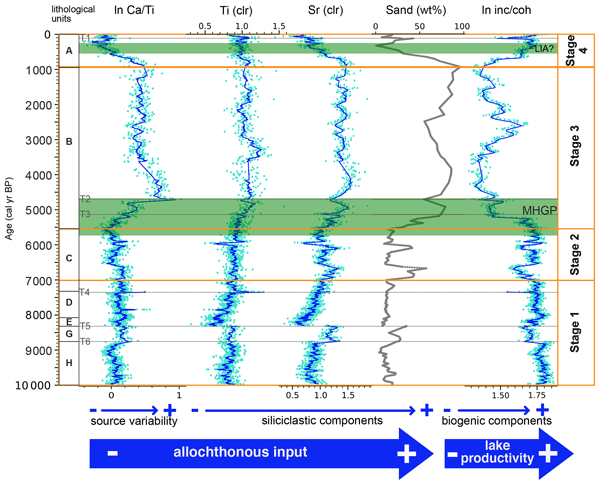
We present a continuous record of lake sediments spanning the Holocene from central west Patagonia. By examining various indicators like elemental composition and grain size data, we found that, around ~5500 years ago, the way sediments settled in the lake changed. On a regional scale, our results suggest that rainfall, influenced by changes in the Southern Hemisphere Westerly Winds, played a key role in shaping the environment of the region for the past ~10 000 years.
Cited articles
Adrian, R., O'Reilly, C. M., Zagarese, H., Baines, S. B., Hessen, D. O., Keller, W., Livingstone, D. M., Sommaruga, R., Straile, D., van Donk, E., Weyhenmeyer, G. A., and Winder, M.: Lakes as sentinels of climate change, Limnol. Oceanogr., 54, 2283–2297, 2009.
Albarracín, V. H., Galván, F. S., and Farías, M. E.: Extreme microbiology at Laguna Socompa: A high-altitude Andean lake (3570 m asl) in Salta, Argentina. Microbial Ecosystems in Central Andes Extreme Environments: Biofilms, Microbial Mats, Microbialites and Endoevaporites, 205–220, https://doi.org/10.1007/978-3-030-36192-1_14, 2020.
Al-Shaibani, M. M., Radin Mohamed, R. M. S., Sidik, N. M., Enshasy, H. A. E., Al-Gheethi, A., Noman, E., and Zin, N. M. Biodiversity of secondary metabolites compounds isolated from phylum actinobacteria and its therapeutic applications, Molecules, 26, 4504, https://doi.org/10.3390/molecules26154504, 2021.
Andersen, K. S., Kirkegaard, R. H., Karst, S. M., and Albertsen, M.: ampvis2: an R package to analyse and visualise 16S rRNA amplicon data, BioRxiv, https://doi.org/10.1101/299537, 2018.
Aránguiz-Acuña, A., Pérez-Portilla, P., De la Fuente, A., and Fontaneto, D.: Life-history strategies in zooplankton promote coexistence of competitors in extreme environments with high metal content, Sci. Rep., 8, 11060, https://doi.org/10.1038/s41598-018-29487-3, 2018.
Aránguiz-Acuña, A., Luque, J. A., Pizarro, H., Cerda, M., Heine-Fuster, I., Valdés, J., and Wennrich, V.: Aquatic community structure as sentinel of recent environmental changes unraveled from lake sedimentary records from the Atacama Desert, Chile, PLoS One, 15, e0229453, https://doi.org/10.1371/journal.pone.0229453, 2020.
Aszalós, J. M., Szabó, A., Felföldi, T., Jurecska, L., Nagy, B., and Borsodi, A. K.: Effects of active volcanism on bacterial communities in the highest-altitude crater lake of Ojos del Salado (Dry Andes, Altiplano-Atacama Region), Astrobiology, 20, 741–753, 2020.
Banda, J. F., Zhang, Q., Ma, L., Pei, L., Du, Z., Hao, C., and Dong, H.: Both pH and salinity shape the microbial communities of the lakes in Badain Jaran Desert, NW China, Sci. Total Environ., 791, 148108, https://doi.org/10.1016/j.scitotenv.2021.148108, 2021.
Bandowe, F. L., Grosjean, M., Tylmann, W., Mosquera, P., Hampel, H., and Schneider, T.: A 150-year record of polycyclic aromatic compound (PAC) deposition from high Andean Cajas National Park, southern Ecuador, STOTEN, 621, 1652–1663, 2018.
Bazylinski, D. A.: Bacterial mineralization, Encyclopedia of materials: Science and technology, 441–447, 2001.
Benito, X.: Benthic Foraminifera and diatoms as ecological indicators. Modern Trends in Diatom Identification: Fundamentals and Applications, 257–280, 2020.
Benning, L. G., Wilkin, R. T., and Barnes, H. L.: Reaction pathways in the Fe–S system below 100 C, Chem Geol., 167, 25–51, 2000.
Borsdorf, A. and Stadel, C.: The Andes: A geographical portrait, Springer, 25–51 pp., https://doi.org/10.1016/j.scitotenv.2021.148108, 2015.
Borsodi, A. K., Aszalós, J. M., Megyes, M., and Nagy, B.: Benthic Bacterial Diversity of High-Altitude Athalassohaline Lakes of the Puna de Atacama (Central Andes), Geomicrobiol. J., 39, 28–38, 2022.
Callahan, B. J., McMurdie, P. J., Rosen, M. J., Han, A. W., Johnson, A., and Holmes, S. P.: DADA2: high-resolution sample inference from Illumina amplicon data, Nat. Methods, 13, 581–583, https://doi.org/10.1038/nmeth.3869, 2016.
Casamayor, E. O., Triadó-Margarit, X., and Castañeda, C.: Microbial biodiversity in saline shallow lakes of the Monegros Desert, Spain, FEMS microbiology ecology, 85, 503–518, 2013.
Caspi, R., Billington, R., Fulcher, C. A., Keseler, I. M., Kothari, A., Krummenacker, M., and Karp, P. D.: The MetaCyc database of metabolic pathways and enzymes, Nuc. acids Res., 46, D633–D639, 2018.
Castro-Severyn, J., Pardo-Esté, C., Sulbaran, Y., Cabezas, C., Gariazzo, V., Briones, A., and Saavedra, C. P.: Arsenic response of three altiplanic Exiguobacterium strains with different tolerance levels against the metalloid species: a proteomics study, Front. Microbiol., 10, 2161, https://doi.org/10.3389/fmicb.2019.02161, eCollection, 2019.
Castro-Severyn, J., Pardo-Esté, C., Mendez, K. N., Fortt, J., Marquez, S., Molina, F., and Saavedra, C. P.: Living to the high extreme: unraveling the composition, structure, and functional insights of bacterial communities thriving in the arsenic-rich Salar de Huasco altiplanic ecosystem, mSpectrum, 9, 10–1128, 2021.
Cavicchioli, R.: Cold-adapted archaea, Nat. Rev. Microbiol., 4, 331–343, 2006.
Cerda, M., Evangelista, H., Valdés, J., Siffedine, A., Boucher, H., Nogueira, J., and Ortlieb, L.: A new 20th century lake sedimentary record from the Atacama Desert/Chile reveals persistent PDO (Pacific Decadal Oscillation) impact, J. South Am. Earth Sci., 95, 102302, https://doi.org/10.1016/j.jsames.2019.102302, 2019.
Cohen, A. S., Manobianco, J., Dettman, D. L., Black, B. A., Beck, C., Feibel, C. S., and Vonhof, H.: Seasonality and lake water temperature inferred from the geochemistry and sclerochronology of quaternary freshwater bivalves from the Turkana Basin, Ethiopia and Kenya, Quaternary Sci. Rev., 317, 108284, https://doi.org/10.1016/j.quascirev.2023.108284, 2023.
Collado, L., Levican, A., Perez, J., and Figueras, M. J.: Arcobacter defluvii sp. nov., isolated from sewage samples, IJSE, 61, 2155–2161, 2011.
Cron, B., Henri, P., Chan, C. S., Macalady, J. L., and Cosmidis, J.: Elemental sulfur formation by Sulfuricurvum kujiense is mediated by extracellular organic compounds, Front. Microbiol., 10, 2710, https://doi.org/10.3389/fmicb.2019.02710, 2019.
Csavina, J., Field, J., Taylor, M. P., Gao, S., Landázuri, A., Betterton, E. A., and Sáez, A. E.: A review on the importance of metals and metalloids in atmospheric dust and aerosol from mining operations, STOTEN, 433, 58–73, 2012.
Dearing, J. A., Hay, K. S., Baban, A. S., Huddleston, E. M., Wellington H., and Loveland P. J.: Magnetic susceptibility of topsoils: a test of conflicting theories using a national database, Geophys. J. Int., 127, 728–734, 1996.
Demergasso, C., Escudero, L., Casamayor, E. O., Chong, G., Balagué, V., and Pedrós-Alió, C.: Novelty and spatio–temporal heterogeneity in the bacterial diversity of hypersaline Lake Tebenquiche (Salar de Atacama), Extremophiles, 12, 491–504, 2008.
Deng, Y., Mou, T., Wang, J., Su, J., Yan, Y., and Zhang, Y. Q.: Characterization of three rapidly growing novel Mycobacterium species with significant polycyclic aromatic hydrocarbon bioremediation potential, Front. Microbiol., 14, 1–15 pp., https://doi.org/10.3389/fmicb.2023.1225746, 2023.
Dittmar, T.: Hydrochemical process controlling arsenic and heavy metal contamination in the Elqui river system (Chile), STOTEN, 325, 193–207, 2004.
Donati, E. R., Sani, R. K., Goh, K. M., and Chan, K. G.: Recent advances in bioremediation/biodegradation by extreme microorganisms, Front. Microbiol., 10, 1851, https://doi.org/10.3389/fmicb.2019.01851, 2019.
Dong, H., Huang, L., Zhao, L., Zeng, Q., Liu, X., Sheng, Y., and Chen, H.: A critical review of mineral–microbe interaction and co-evolution: mechanisms and applications, Nat. Sci. Rev., 9, nwac128, https://doi.org/10.1093/nsr/nwac128, 2022.
Dorador, C., Fink, P., Hengst, M., Icaza, G., Villalobos, A. S., Vejar, D., and Harrod, C.: Microbial community composition and trophic role along a marked salinity gradient in Laguna Puilar, Salar de Atacama, Chile, Antonie Van Leeuwenhoek, 111, 1361–1374, 2018.
Douglas, G. M., Maffei, V. J., Zaneveld, J. R., Yurgel, S. N., Brown, J. R., Taylor, C. M., and Langille, M. G.: PICRUSt2 for prediction of metagenome functions, Nat. Biotechnol., 38, 685–688, 2020.
Falkinham III, J. O.: The biology of environmental mycobacteria, Env. Microbiol. Rep., 1, 477–487, 2009.
Farias, M. E., Contreras, M., Rasuk, M. C., Kurth, D., Flores, M. R., Poire, D. G., and Visscher, P. T.: Characterization of bacterial diversity associated with microbial mats, gypsum evaporites and carbonate microbialites in thalassic wetlands: Tebenquiche and La Brava, Salar de Atacama, Chile, Extremophiles 18, 311–329, 2014.
Fernandez, A. B., Rasuk, M. C., Visscher, P. T., Contreras, M., Novoa, F., Poire, D. G., and Farias, M. E.: Microbial diversity in sediment ecosystems (evaporites domes, microbial mats, and crusts) of hypersaline Laguna Tebenquiche, Salar de Atacama, Chile, Front. Microbiol., 7, 1284, https://doi.org/10.3389/fmicb.2016.01284, 2016.
Fialová, H., Maier, G., Petrovský, E., Kapička, A., Boyko, T., Scholger, R., and MAGPROX Team.: Magnetic properties of soils from sites with different geological and environmental settings, J. Appl. Geophys., 59, 273–283, 2006.
Garreaud, R., Vuille, M., and Clement, A. C.: The climate of the Altiplano: observed current conditions and mechanisms of past changes, Palaeogeogr., 194, 5–22, 2003.
Grosjean, M. and Veit, H. Water resources in the arid mountains of the Atacama Desert (northern Chile): past climate changes and modern conflicts, Global change and mountain regions: an overview of current knowledge, Springer, Dordrecht, 23, 93–104, https://doi.org/10.1007/1-4020-3508-X_10, 2005.
Hamilton, P. B., Rolshausen, G., Uren Webster, T. M., and Tyler, C. R.: Adaptive capabilities and fitness consequences associated with pollution exposure in fish, Proc. R. Soc. B, 372, 20160042, https://doi.org/10.1098/rstb.2016.0042, 2017.
Han, Y. and Perner, M.: The globally widespread genus Sulfurimonas: versatile energy metabolisms and adaptations to redox clines, Front Microbiol., 6, 989, https://doi.org/10.3389/fmicb.2015.00989, 2015.
Haslett, J. and Parnell, A.: A simple monotone process with application to radiocarbon-dated depth chronologies, J. R. Stats., 57, 399–418, 2008.
Heiri, O., Lotter, A. F., and Lemcke, G.: Loss on ignition as a method for estimating organic and carbonate content in sediments: reproducibility and comparability of results, J. Paleolimnol., 25, 101–110, 2001.
Herlemann, D. P., Labrenz, M., Jürgens, K., Bertilsson, S., Waniek, J. J., and Andersson, A. F.: Transitions in bacterial communities along the 2000 km salinity gradient of the Baltic Sea, The ISME journal, 5, 1571–1579, 2011.
Hogg, A. G., Heaton, T. J., Hua, Q., Palmer, J. G., Turney, C. S. M., Southon, J., Bayliss, A., Blackwell, P. G., Boswijk, G., Bronk Ramsey, C., Pearson, C., Petchey, F., Reimer, P., Reimer, R. and Wacker, L.: SHCal20 southern hemisphere calibration, 0–55,000 years cal bp, Radiocarbon. Cambridge University Press, 1–20 pp., http://intcal.org/curves/shcal20.14c (last acces: October 2024), 2020.
Imachi, H., Sakai, S., Sekiguchi, Y., Hanada, S., Kamagata, Y., Ohashi, A., and Harada, H.: Methanolinea tarda gen. nov., sp. nov., a methane-producing archaeon isolated from a methanogenic digester sludge, IJSEM, 58, 294–301, 2008.
Imachi, H., Sakai, S., Lipp, J. S., Miyazaki, M., Saito, Y., Yamanaka, Y., and Takai, K.: Pelolinea submarina gen. nov., sp. nov., an anaerobic, filamentous bacterium of the phylum Chloroflexi isolated from subseafloor sediment, Int. J. Syst. Evol. Micr., 64, 812–818, 2014.
Jiao, J. Y., Liu, L., Hua, Z. S., Fang, B. Z., Zhou, E. M., Salam, N., and Li, W. J.: Microbial dark matter coming to light: challenges and opportunities, Nat. Sci. Rev., 8, nwaa280, https://doi.org/10.1093/nsr/nwaa280, 2021.
Kadnikov, V. V., Mardanov, A. V., Beletsky, A. V., Karnachuk, O. V., and Ravin, N. V.: Genome of the candidate phylum Aminicenantes bacterium from a deep subsurface thermal aquifer revealed its fermentative saccharolytic lifestyle, Extremophiles, 23, 189–200, 2019.
Kanehisa, M., Goto, S., Sato, Y., Furumichi, M., and Tanabe, M.: KEGG for integration and interpretation of large-scale molecular data sets, Nucleic acids Res., 40, D109–D114, 2012.
Kassambara, A.: R Graphics Essentials for Great Data Visualization: 200 Practical Examples You Want to Know for Data Science, STHDA, 1–142 pp., https://www.sthda.com/french/ (last access: April 2024), 2017.
Keller, W., Yan, N. D., Holtze, K., and Pitblado, J. R.: Chemical response of acid lakes in the Sudbury, Ontario area to reduced smelter emissions, 1981–1989, Can. J. Fish Aquat. Sci., 49, 25–32, 1992.
Kereszturi, Á., Aszalós, J. M., Heiling, Z., Ignéczi, Á., Kapui, Z., Király, C., and Szalai, Z.: Cold, dry, windy, and UV irradiated: surveying Mars-relevant conditions in Ojos del Salado Volcano (Andes Mountains, Chile), Astrobiology, 20, 677–683, 2020.
Korosi, J. B., Thienpont, J. R., Smol, J. P., and Blais, J. M.: Paleo-ecotoxicology: what can lake sediments tell us about ecosystem responses to environmental pollutants?, Environ. Sci. Technol., 51, 9446–9457, 2017.
Kostka, A. and Leśniak, A.: Natural and anthropogenic origin of metals in lacustrine sediments; assessment and consequences – A case study of Wigry lake (Poland), Minerals, 11, 158, https://doi.org/10.3390/min11020158, 2021.
Kurth, D., Elias, D., Rasuk, M. C., Contreras, M., and Farias, M. E.: Carbon fixation and rhodopsin systems in microbial mats from hypersaline lakes Brava and Tebenquiche, Salar de Atacama, Chile, PLoS One, 16, e0246656, https://doi.org/10.1093/nsr/nwaa280, 2021.
Lahti, L., Shetty, S., Blake, T., and Salojarvi, J.: Tools for microbiome analysis in R Version 2.1. 26, Bioc Package, https://github.com/microbiome/microbiome (last acces: October 2024), 2017.
Laplante, K., Sébastien, B., and Derome, N.: Parallel changes of taxonomic interaction networks in lacustrine bacterial communities induced by a polymetallic perturbation, Evol. Appl., 6, 643–659, 2013.
Li, W. C. and Wong, M. H.: Effects of bacteria on metal bioavailability, speciation, and mobility in different metal mine soils: a column study, J. Soils Sediments, 10, 313–325, 2010.
Lins, U., Keim, C. N., Evans, F. F., Farina, M., and Buseck, P. R.: Magnetite (Fe3O4) and greigite (Fe3S4) crystals in multicellular magnetotactic prokaryotes, Geomicrobiology J., 24, 43–50, 2007.
Louca, S., Parfrey, L. W., and Doebeli, M.: Decoupling function and taxonomy in the global ocean microbiome, Science, 353, 1272–1277, 2016.
Love, M. I., Huber, W., and Anders, S.: Moderated estimation of fold change and dispersion for RNA-seq data with DESeq2, Genome Biol., 15, 1–21, 2014.
Madsen, E. L.: Microorganisms and their roles in fundamental biogeochemical cycles, Curr. Opinion Biotech., 22, 456–464, 2011.
Mathivanan, K., Chandirika, J. U., Vinothkanna, A., Yin, H., Liu, X., and Meng, D.: Bacterial adaptive strategies to cope with metal toxicity in the contaminated environment – A review, Ecotox Env. Safety, 226, 112863, https://doi.org/10.1016/j.ecoenv.2021.112863, 2021.
McMurdie, P. and Holmes, S.: phyloseq: an R package for reproducible interactive analysis and graphics of microbiome census data, PLoS ONE, 8, e61217, https://doi.org/10.1371/journal.pone.0061217, 2013.
Moskowitz, B. M., Bazylinski, D. A., Egli, R., Frankel, R. B., and Edwards, K. J.: Magnetic properties of marine magnetotactic bacteria in a seasonally stratified coastal pond (Salt Pond, MA, USA), GJI, 174, 75–92, 2008.
National Library of Medicine – National Center for Biotechnology Information: Raw sequencing data (BioProject: PRJNA1067596), https://www.ncbi.nlm.nih.gov/bioproject/?term=PRJNA1067596 (last access: January 2024), 2024.
Olilo, C. O., Odoli, C. O., Obiero, M. O., Malala, J. O., and Bironga, C. H. Microbial ecology of desert Lakes Baringo and Turkana, Kenya, East Africa, in: Lakes of Africa, 247–268 pp., Elsevier, https://doi.org/10.1016/B978-0-323-95527-0.00016-6, 2023.
Ordoñez, O. F., Flores, M. R., Dib, J. R., Paz, A., and Farías, M. E.: Extremophile culture collection from Andean lakes: extreme pristine environments that host a wide diversity of microorganisms with tolerance to UV radiation, Microb. Ecol., 58, 461–473, 2009.
Orellana, R., Macaya, C., Bravo, G., Dorochesi, F., Cumsille, A., Valencia, R., and Seeger, M.: Living at the frontiers of life: extremophiles in Chile and their potential for bioremediation, Front. Microbiol., 9, 2309, https://doi.org/10.3389/fmicb.2018.02309, 2018.
Oren, A. and Garrity, G. M.: Valid publication of the names of forty-two phyla of prokaryotes, Int. J. Syst. Evolut. Microbiol., 71, 005056, https://doi.org/10.1099/ijsem.0.005056, 2021.
Pérez-Cataluña, A., Salas-Massó, N., Diéguez, A. L., Balboa, S., Lema, A., Romalde, J. L., and Figueras, M. J. Revisiting the taxonomy of the genus Arcobacter: getting order from the chaos, Front. Microbiol., 9, 2077, https://doi.org/10.3389/fmicb.2018.02077, 2018.
Pérez-Portilla, P., Aránguiz-Acuña, A., Pizarro, H., and Herrera, J.: Assessing the Effects of Long-Term Mining Exploitation on a Lacustrine System from the Arid Region of the Atacama Desert, Chile, STOTEN, 949, https://doi.org/10.1016/j.scitotenv.2024.174771, 2024.
Picard, M., Wood, S. A., Pochon, X., Vandergoes, M. J., Reyes, L., Howarth, J. D., and Puddick, J.: Molecular and pigment analyses provide comparative results when reconstructing historic cyanobacterial abundances from lake sediment cores, Microorganisms, 10, 279, https://doi.org/10.3390/microorganisms10020279, 2022.
Pigati, J. S., Miller, D. M., Bright, J., Mahan, S. A., Nekola, J. C., and Paces, J. B.: Chronology, sedimentology, and micro-fauna of ground-water discharge deposits in the central Mojave Desert, Valley Wells, California, Geol Soc Am Bull., 123, 2224–2239, 2011.
Placzek, C., Quade, J., Betancourt, J. L., Patchett, P. J., Rech, J. A., Latorre, C., and English, N. B.: Climate in the dry central Andes over Geologic, millennial, and interannual timescales, Ann. Mo. Bot. Gard., 96, 386–397, 2009.
Pollard, H. G., Colbourne, J. K., and Keller, W.: Reconstruction of Centuries-old Daphnia Communities in a Lake Recovering from Acidification and Metal Contamination, Ambio., 32, 214–218, 2003.
Price, M. N., Dehal, P. S., and Arkin, A. P.: FastTree: computing large minimum evolution trees with profiles instead of a distance matrix, Mol. Biol. Evol., 26, 1641–1650, 2009.
Pueyo, J. J., Sáez, A., Giralt, S., Valero-Garcés, B. L., Moreno, A., Bao, R., Schwalb, A., Herrera, C., Klosowska, B., and Taberner, C.: Carbonate and organic matter sedimentation and isotopic signatures in Lake Chungará, Chilean Altiplano, during the last 12.3 kyr, Palaeogeogr. Palaeocl., 307, 339–355, 2011.
Quast, C., Pruesse, E., Yilmaz, P., Gerken, J., Schweer, T., Yarza, P., Peplies, J., and Glockner, F.: The SILVA ribosomal RNA gene database project: improved data processing and web-based tools, Nucl. Acids Res., 41, D590–D596, 2012.
Raab, A. and Feldmann, J.: Microbial transformation of metals and metalloids, Sci. Prog., 86, 179–202, 2003.
Rahman, Z.: An overview on heavy metal resistant microorganisms for simultaneous treatment of multiple chemical pollutants at co-contaminated sites, and their multipurpose application, J. Haz. Mat., 396, 122682, https://doi.org/10.1016/j.jhazmat.2020.122682, 2020.
Rainey, F., Kämpfer, P., Trujillo, M., Chun, J., DeVos, P., Hedlund, B., and Dedysh, S. Bergey's manual of systematics of Archaea and Bacteria, Vol. 410, edited by: Whitman, W. B., Hoboken, NJ: Wiley, https://doi.org/10.1002/9781118960608.gbm00186, 2015.
Ramírez, M., Massolo, S., Frache, R., and Correa, J. A.: Metal speciation and environmental impact on sandy beaches due to El Salvador copper mine, Chile. Mar Pollut Bull., 50, 62–72, 2005.
Ramos-Tapia, I., Salinas, P., Núñez, R., Cortez, D., Soto, J., and Paneque, M.: Compositional Changes in Sediment Microbiota Are Associated with Seasonal Variation of the Water Column in High-Altitude Hyperarid Andean Lake Systems, Microbiol Spectr., 15, e0520022, https://doi.org/10.1038/s41598-019-41743-8, 2023.
Rasuk, M. C., Kurth, D., Flores, M. R., Contreras, M., Novoa, F., Poire, D., and Farias, M. E.: Microbial characterization of microbial ecosystems associated to evaporites domes of gypsum in Salar de Llamara in Atacama Desert, Microb. Ecol. 71, 44–56, 2014.
Ritter, B., Wennrich, V., Medialdea, A., Brill, D., King, G., Schneiderwind, S., and Dunai, T. J.: Climatic fluctuations in the hyperarid core of the Atacama Desert during the past 215 ka, Sci. Rep., 9, 5270, https://doi.org/10.3390/land11122278, 2019.
Rodríguez-Luna, D., Encina-Montoya, F., Alcalá, F. J., and Vela, N.: An Overview of the Environmental Impact Assessment of Mining Projects in Chile, Land, 11, 2278, https://doi.org/10.1089/env.2011.0017, 2022.
Romero, L., Alonso, H., Campano, P., Fanfani, L., Cidu, R., Dadea, C., and Farago, M.: Arsenic enrichment in waters and sediments of the Rio Loa (Second Region, Chile), App. Geochem., 18, 1399–1416, 2003.
Roosa, S., Wattiez, R., Prygiel, E., Lesven, L., Billon, G., and Gillan, D. C.: Bacterial metal resistance genes and metal bioavailability in contaminated sediments, Env. Pollut., 189, 143–151, 2014.
Salvarredy-Aranguren, M. M., Probst, A., Roulet, M., and Isaure M.-P.: Contamination of surface waters by mining wastes in the Milluni Valley (Cordillera Real, Bolivia): Mineralogical and hydrological influences, Appl. Geochem., 23, 1299–1324, 2008.
Santini, T. C., Gramenz, L., Southam, G., and Zammit, C.: Microbial community structure is most strongly associated with geographical distance and PH in salt lake sediments, Front. Microbiol., 13, 920056, https://doi.org/10.1093/femsec/fiab056, 2022.
Staicu, L. C. and Stolz, J. F.: Microbes vs. metals: Harvest and recycle, FEMS Microbiol. Ecol., 97, fiab056, https://doi.org/10.5200/baltica.201, 2021.
Stankevica, K., Vincevica-Gaile, Z., Klavins, M., Kalnina, L., Stivrins, N., Grudzinska, I., and Kaup, E.: Accumulation of metals and changes in composition of freshwater lake organic sediments during the Holocene, Chem. Geol., 539, 119502, https://doi.org/10.1371/journal.pone.0089531, 2020.
Stoeva, M. K., Aris-Brosou, S., Chételat, J., Hintelmann, H., Pelletier, P., and Poulain, A. J.: Microbial community structure in lake and wetland sediments from a high Arctic polar desert revealed by targeted transcriptomics, PLoS One, 9, e89531, https://doi.org/10.1007/s40203-024-00209-0, 2014.
Taj, Z. and Chattopadhyay, I.: Identification of bio-active secondary metabolites from Actinobacteria as potential drug targets against Porphyromonas gingivalis in oral squamous cell carcinoma using molecular docking and dynamics study, in: Silico Pharmacology, 12, 1, https://doi.org/10.1016/j.envpol.2022.120151, 2024.
Tapia, J., Davenport, J., Townley, B., Dorador, C., Schneider, B., Tolorza, V., and von Tümpling, W.: Sources, enrichment, and redistribution of As, Cd, Cu, Li, Mo, and Sb in the Northern Atacama Region, Chile: implications for arid watersheds affected by mining, J. Geochem. Exploration, 185, 33–51, 2018.
Tapia, J., Murray, J., Ormachea, M., Tirado, N., and Nordstrom, D. K.: Origin, distribution, and geochemistry of arsenic in the Altiplano-Puna plateau of Argentina, Bolivia, Chile, and Perú, STOTEN, 678, 309–325, 2019.
Tapia, J., Mukherjee, A., Rodríguez, M. P., Murray, J., and Bhattacharya, P.: Role of tectonics and climate on elevated arsenic in fluvial systems: Insights from surface water and sediments along regional transects of Chile, Env. Pollut., 314, 120151, https://doi.org/10.1016/j.envpol.2022.120151, 2022.
Teunisse, G. M.: Fantaxtic – Nested Bar Plots for Phyloseq Data (Version 2.0.1) [Computer software], https://github.com/gmteunisse/Fantaxtic (last access: September 2024), 2022.
Thukral, A. K.: A review on measurement of Alpha diversity in biology, Agri. Res. J., 54, 1–10 pp., https://doi.org/10.5958/2395-146X.2017.00001.1, 2017.
Trolle, D., Hamilton, D. P., and Pilditch, C. A.: Evaluating the influence of lake morphology, trophic status and diagenesis on geochemical profiles in lake sediments, Appl. Geochem., 25, 621–632, 2010.
Usenko, S., Landers, D. H., Appleby, P. G., and Simonich, S. L.: Current and historical deposition of PBDEs, pesticides, PCBs, and PAHs to Rocky Mountain National Park, Environ. Sci. Technol., 41, 7235–7241, 2007.
Valero-Garcés, B. L., Delgado-Huertas, A., Navas, A., Edwards, L., Schwalb, A., and Ratto, N.: Patterns of regional hydrological variability in central-southern Altiplano (18–26?S) lakes during the last 500 years, Palaeogeogr. Palaeocl., 194, 319–338, 2003.
Vargas-Machuca, B. D., Zanetta-Colombo, N., De Pol-Holz, R., and Latorre, C.: Variations in local heavy metal concentrations over the last 16,000 years in the central Atacama Desert (22° S) measured in rodent middens, STOTEN, 775, 145849, https://doi.org/10.1016/j.scitotenv.2021.145849, 2021.
Verosub, K. L. and Roberts, A. P.: Environmental magnetism: Past, present, and future, J. Geophys., 100, 2175–2192, 1995.
Versteeg, J. K., Morris, W. A., and Rukavina, N. A.: The utility of magnetic properties as a proxy for mapping contamination in Hamilton Harbour sediment, J. Great Lakes Res., 21, 71–83, 1995.
Vignale, F. A., Lencina, A. I., Stepanenko, T. M., Soria, M. N., Saona, L. A., Kurth, D., and Farías, M. E.: Lithifying and non-lithifying microbial ecosystems in the wetlands and salt flats of the Central Andes, Microb Ecol., 775, 1–17, 2021.
Wasmund, K., Schreiber, L., Lloyd, K. G., Petersen, D. G., Schramm, A., Stepanauskas, R., and Adrian, L.: Genome sequencing of a single cell of the widely distributed marine subsurface Dehalococcoidia, phylum Chloroflexi, ISME J., 8, 383–397, https://doi.org/10.1038/ismej.2013.143, 2014.
Wickham, H.: ggplot2: Elegant Graphics for Data Analysis, Springer-Verlag New York, ISBN 978-3-319-24277-4, https://ggplot2.tidyverse.org (last access: September 2024), 2016.
Yan, C., Wang, F., Liu, H., Liu, H., Pu, S., Lin, F., and Yuan, R.: Deciphering the toxic effects of metals in gold mining area: microbial community tolerance mechanism and change of antibiotic resistance genes, Env. Res., 189, 109869, https://doi.org/10.1016/j.envres.2020.109869, 2020.
Yan, Y., He, A., Dilek, Y., Zhu, Z., and Zhao, Q.: Landscape inversion episodes in SE China during the Mesozoic–early Cenozoic: Constrained by trace-element contents, Nd isotope geochemistry, and detrital zircon U-Pb geochronology of sedimentary basins, GSA Bulletin., 136, 2978–2998, 2024.
Yang, C., Mai, J., Cao, X., Burberry, A., Cominelli, F., and Zhang, L.: ggpicrust2: an R package for PICRUSt2 predicted functional profile analysis and visualization, Bioinformatics, 39, btad470, https://doi.org/10.1093/bioinformatics/btad470, 2023.
Yao, Z. and Gao, P.: Heavy metal research in lacustrine sediment: a review, Chin. J. Ocean. Limnol., 25, 444–454, 2007.
Zanetta-Colombo, N. C., Fleming, Z. L., Gayo, E. M., Manzano, C. A., Panagi, M., Valdés, J., and Siegmund, A.: Impact of mining on the metal content of dust in indigenous villages of northern Chile, Env. Intl., 169, 107490, https://doi.org/10.1016/j.envint.2022.107490, 2022.
Zanetta-Colombo, N. C., Scharnweber, T., Christie, D. A., Manzano, C. A., Blersch, M., Gayo, E. M., and Nüsser, M.: When another one bites the dust: Environmental impact of global copper demand on local communities in the Atacama mining hotspot as registered by tree rings, STOTEN, 920, 170954, https://doi.org/10.1016/j.scitotenv.2024.170954, 2024.
Zha, Y., Chong, H., Yang, P., and Ning, K.: Microbial dark matter: from discovery to applications, GPB, 20, 867–881, 2022.
Short summary
Inka-Coya Lake is located in the Atacama Desert, and this pioneer study characterized the gradient of microbial life along the deep lacustrine sediments that stratified for over 600 years, since the pre-mining period. Our results indicate there are great taxonomic novelty and strong relationships with geochemical composition especially in Cu, Fe, Ni, and V. We propose a clustering of taxa and function in three zones with characteristic taxonomic and functional potential.
Inka-Coya Lake is located in the Atacama Desert, and this pioneer study characterized the...


Altmetrics
Final-revised paper
Preprint