
Articles | Volume 23, issue 3
https://doi.org/10.5194/bg-23-1223-2026
© Author(s) 2026. This work is distributed under
the Creative Commons Attribution 4.0 License.
the Creative Commons Attribution 4.0 License.
https://doi.org/10.5194/bg-23-1223-2026
© Author(s) 2026. This work is distributed under
the Creative Commons Attribution 4.0 License.
the Creative Commons Attribution 4.0 License.
Research article
| 
12 Feb 2026
Research article |
| 12 Feb 2026
| 12 Feb 2026
Satellite-derived Ecosystem Functional Types capture ecosystem functional heterogeneity at regional scale
Beatriz P. Cazorla
CORRESPONDING AUTHOR

Interuniversity Institute of Earth System Research in Andalusia (IISTA), 18006 Granada, Spain
Department of Botany, University of Granada, 18006 Granada, Spain
Andalusian Center for Global Change – Hermelindo Castro (ENGLOBA), University of Almería, 04120 Almería, Spain
Ana Meijide
Environment Modeling, Institute of Crop Science and Resource Conservation, University of Bonn, Niebuhrstraße 1a, 53113 Bonn, Germany
Javier Cabello
Andalusian Center for Global Change – Hermelindo Castro (ENGLOBA), University of Almería, 04120 Almería, Spain
Department of Biology and Geology, University of Almería, 04120 Almería, Spain
Julio Peñas
Department of Botany, University of Granada, 18006 Granada, Spain
Andalusian Center for Global Change – Hermelindo Castro (ENGLOBA), University of Almería, 04120 Almería, Spain
Javier Martínez-López
Interuniversity Institute of Earth System Research in Andalusia (IISTA), 18006 Granada, Spain
Andalusian Center for Global Change – Hermelindo Castro (ENGLOBA), University of Almería, 04120 Almería, Spain
Department of Ecology, University of Granada, 18006 Granada, Spain
Rodrigo Vargas
School of Life Sciences, Arizona State University, Tempe, AZ, USA
Leonardo Montagnani
Faculty of Agricultural, Environmental and Food Sciences, Free University of Bolzano, Bolzano, Italy
Alexander Knohl
University of Goettingen, Bioclimatology, Büsgenweg 2, 37077 Göttingen, Germany
Lukas Siebicke
University of Goettingen, Bioclimatology, Büsgenweg 2, 37077 Göttingen, Germany
Benimiano Gioli
CNR – IBE, Institute of Bioeconomy, Firenze, Italy
Jiří Dušek
Department of Matters and Energy Fluxes, Global Change Research Institute CAS, Brno, Czech Republic
Ladislav Šigut
Department of Matters and Energy Fluxes, Global Change Research Institute CAS, Brno, Czech Republic
Andreas Ibrom
Department of Resource and Environmental Engineering, Technical University of Denmark, Kongens Lyngby, Denmark
Georg Wohlfahrt
Department of Ecology, University of Innsbruck, Innsbruck, Austria
Eugénie Paul-Limoges
Forest and Soil Ecology, Swiss Federal Institute for Forest, Snow and Landscape Research WSL, Birmensdorf, Switzerland
Kathrin Fuchs
Karlsruhe Institute of Technology, Institute of Meteorology and Climate Research – Atmospheric Environmental Research, Garmisch-Partenkirchen, Germany
Antonio Manco
Institute for Agriculture and Forestry Systems in the Mediterranean (ISAFoM), National Research Council of Italy, P.le E. Fermi 1-Loc, Porto del Granatello 1, 80055 Portici, Italy
Marian Pavelka
Department of Matters and Energy Fluxes, Global Change Research Institute CAS, Brno, Czech Republic
Lutz Merbold
Department of Agroecology and Environment, Reckenholzstrasse 191, 8046 Zurich, Switzerland
Lukas Hörtnagl
Department of Environmental System Science, Institute of Agricultural Science, Zurich, Switzerland
Pierpaolo Duce
CNR – IBE, Institute of Bioeconomy, Firenze, Italy
Ignacio Goded
European Commission, Joint Research Centre, Ispra, Italy
Kim Pilegaard
Department of Resource and Environmental Engineering, Technical University of Denmark, Kongens Lyngby, Denmark
Domingo Alcaraz-Segura
Interuniversity Institute of Earth System Research in Andalusia (IISTA), 18006 Granada, Spain
Department of Botany, University of Granada, 18006 Granada, Spain
Andalusian Center for Global Change – Hermelindo Castro (ENGLOBA), University of Almería, 04120 Almería, Spain
Related authors
No articles found.
Marie Schroeder, Ivana Stiperski, Michael Winkler, Georg Kaser, Jakob Steiner, Jakob Abermann, Georg Wohlfahrt, and Rainer Prinz
EGUsphere, https://doi.org/10.5194/egusphere-2026-5112, https://doi.org/10.5194/egusphere-2026-5112, 2026
This preprint is open for discussion and under review for The Cryosphere (TC).
Short summary
Short summary
Steep ice cliffs can lose ice much faster than flat glacier surfaces, yet little is known about how they interact with the air around them. Measurements at a 25-metre-high ice cliff on Kilimanjaro revealed distinct day–night air flows and major differences in how heat is transported. Higher up, heat is transported in an organised way, while near the cliff base this exchange was more complex. The cliff shape and its surroundings can strongly influence how heat reaches the ice and how it is lost.
Julia Kelly, Tim Schacherl, Lars Eklundh, Hongxiao Jin, Anne Klosterhalfen, Alexander Knohl, and Natascha Kljun
Biogeosciences, 23, 6557–6582, https://doi.org/10.5194/bg-23-6557-2026, https://doi.org/10.5194/bg-23-6557-2026, 2026
Short summary
Short summary
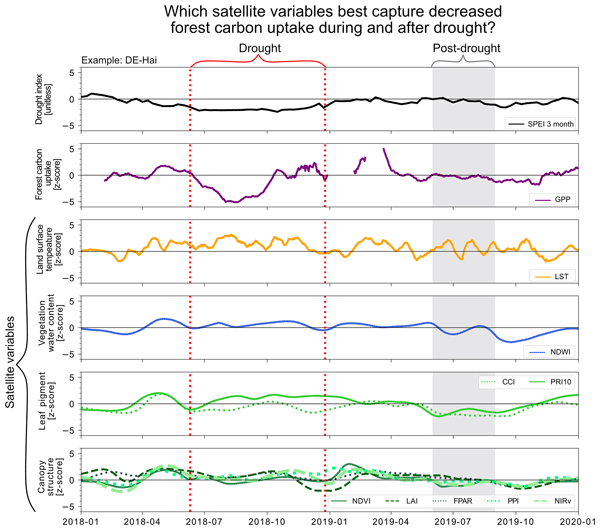
It is vital to monitor drought-related reductions in forest productivity over large areas. We tested the ability of 12 satellite variables to capture negative drought impacts on forest productivity across 18 European forest sites. Surface temperature worked best across all forest sites and droughts. After drought, forest productivity recovered faster than some commonly-used satellite variables, meaning use of these variables may underestimate forests’ resilience to drought.
José Ángel Callejas-Rodelas, Justus G. V. van Ramshorst, Alexander Knohl, Sarah Choe, Maren Langhof, and Christian Markwitz
EGUsphere, https://doi.org/10.5194/egusphere-2026-4973, https://doi.org/10.5194/egusphere-2026-4973, 2026
This preprint is open for discussion and under review for Biogeosciences (BG).
Short summary
Short summary
Temperate agroforestry systems took up more carbon dioxide than reference, conventional open cropland or grassland systems, without consuming more water from the soil. These findings are promising because they promote the implementation of agroforestry as a nature-based strategy to mitigate greenhouse gas emissions, and therefore climate change, in agricultural systems.
María J. Salinas-Bonillo, María J. López, Lucía Cabello-Alemán, Montserrat Escudero-Clares, Claudia Guillén, Ángel Fernández-Cortés, Juan Gisbert-Gallego, María R. Martínez-Gallardo, and Javier Cabello
EGUsphere, https://doi.org/10.5194/egusphere-2026-4227, https://doi.org/10.5194/egusphere-2026-4227, 2026
This preprint is open for discussion and under review for Biogeosciences (BG).
Short summary
Short summary
We investigated what controls microbial functioning deep below an arid landscape by combining measurements of subsurface materials, groundwater, vegetation, and microbial use of carbon sources from eight boreholes. Microbial patterns were shaped mainly by local differences in organic resources and sediment texture, rather than by depth, groundwater saturation, or nearby vegetation. This suggests that arid subsurfaces are organized as patchy resource mosaics.
Ida Bagus Mandhara Brasika, Pierre Friedlingstein, Stephen Sitch, Michael O'Sullivan, Maria Carolina Duran-Rojas, Emma W. Littleton, Toby R. Marthews, Timothy Hill, Wei Li, Yidi Xu, Jiaxin Zhou, Xiangzhong Luo, Ruiying Zhao, Yuanchao Fan, Dedy Sukmara, Timer Manurung, Masayuki Kondo, Alexander Knohl, Tejaswini Jaajpera, and Lisma Safitri
EGUsphere, https://doi.org/10.5194/egusphere-2026-3689, https://doi.org/10.5194/egusphere-2026-3689, 2026
This preprint is open for discussion and under review for Geoscientific Model Development (GMD).
Short summary
Short summary
Oil palm is a major crop in Indonesia, but climate models often treat it as generic cropland. We developed a new way to represent oil palm in the Joint UK Land Environment Simulator. This improved how the model captures carbon stored and released by oil-palm plantations. The work helps estimate emissions from land-use change more realistically, supporting better understanding of tropical agriculture, deforestation and climate impacts.
Andrew Smerald, Hannes Imhof, Edwin Haas, David Kraus, Lioba Martin, Kathrin Fuchs, John Akubia, Ali Sakhaee, Cora Vos, Roland Fuß, Clemens Scheer, and Ralf Kiese
EGUsphere, https://doi.org/10.5194/egusphere-2026-4010, https://doi.org/10.5194/egusphere-2026-4010, 2026
Short summary
Short summary
Countries produce a yearly greenhouse gas inventory that is used to monitor and design climate policies. Agricultural N2O emissions are especially uncertain, due to measurement difficulties. Using a process-based model combined with high resolution management data we show that, in comparison with current methods, N2O emissions can be mapped with high spatial and temporal resolution.
Sebastian Spreitzer, Georg Wohlfahrt, and Martin Rutzinger
ISPRS Ann. Photogramm. Remote Sens. Spatial Inf. Sci., XI-3-2026, 805–812, https://doi.org/10.5194/isprs-annals-XI-3-2026-805-2026, https://doi.org/10.5194/isprs-annals-XI-3-2026-805-2026, 2026
Tiia Määttä, Ankur R. Desai, Masahito Ueyama, Rodrigo Vargas, Eric J. Ward, Zhen Zhang, Gil Bohrer, Kyle Delwiche, Etienne Fluet-Chouinard, Järvi Järveoja, Sara H. Knox, Lulie Melling, Mats B. Nilsson, Matthias Peichl, Angela Che Ing Tang, Eeva-Stiina Tuittila, Jinsong Wang, Sheel Bansal, Sarah Feron, Manuel Helbig, Aino Korrensalo, Ken W. Krauss, Gavin McNicol, Shuli Niu, Zutao Ouyang, Kathleen Savage, Oliver Sonnentag, Robert Jackson, and Avni Malhotra
Biogeosciences, 23, 4379–4445, https://doi.org/10.5194/bg-23-4379-2026, https://doi.org/10.5194/bg-23-4379-2026, 2026
Short summary
Short summary
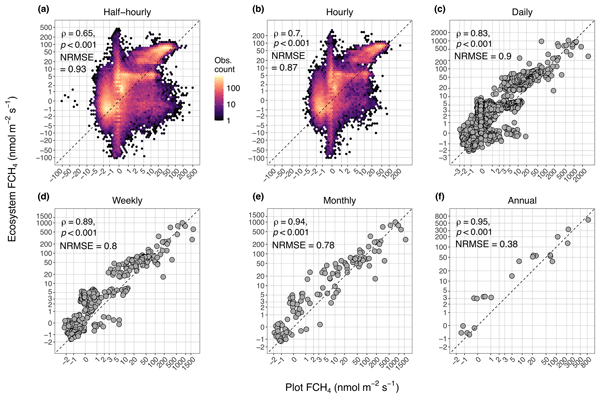
We compared ecosystem- and plot-scale methane fluxes across wetland and upland sites. Ecosystem-scale fluxes were higher than at plot scale, but differences were small. Vapor pressure deficit, atmospheric pressure, turbulence, and wind direction affected the differences. Both scales could be combined for improved methane flux estimates at coarser temporal scales.
Peter J. M. Bosman, Maarten C. Krol, Laurens N. Ganzeveld, Felix M. Spielmann, and Georg Wohlfahrt
Biogeosciences, 23, 3225–3252, https://doi.org/10.5194/bg-23-3225-2026, https://doi.org/10.5194/bg-23-3225-2026, 2026
Short summary
Short summary
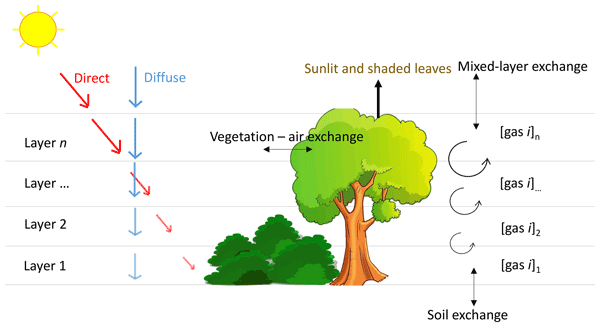
Carbonyl sulphide (COS) is a trace gas that can be used to estimate plant CO2 uptake. For this, the ratio of deposition velocities of COS and CO2 (leaf relative uptake - LRU) is relevant. We use a soil – canopy – atmospheric mixed layer model to simulate COS and CO2 plant uptake in needleleaf ecosystems, and derive LRU. We find significant in-canopy variability of LRU, and develop a regression model for canopy-scale LRU. The results can contribute to improving COS-based ecosystem plant CO2 uptake estimates in needleleaf forests.
Matthias Reif, Mathias Rotach, Georg Wohlfahrt, and Alexander Gohm
EGUsphere, https://doi.org/10.5194/egusphere-2026-939, https://doi.org/10.5194/egusphere-2026-939, 2026
Short summary
Short summary
This study examines how model detail affects carbon dioxide exchange in the Alps. Complex terrain causes uncertainty in climate simulations. At coarse scales, missing topographic detail is the primary source of error. At finer scales, tuning of the biological settings is more vital for accuracy. Identifying temperature and radiation as drivers enables development of better tools to simulate carbon dioxide and moisture exchange in mountains.
Hassane Moutahir, Markus Sulzer, Ralf Kiese, Andreas Christen, Markus Weiler, Lea Dedden, Julian Brzozon, Pia Labenski, Prajwal Khanal, Ladislav Šigut, and Rüdiger Grote
Biogeosciences, 23, 1719–1738, https://doi.org/10.5194/bg-23-1719-2026, https://doi.org/10.5194/bg-23-1719-2026, 2026
Short summary
Short summary
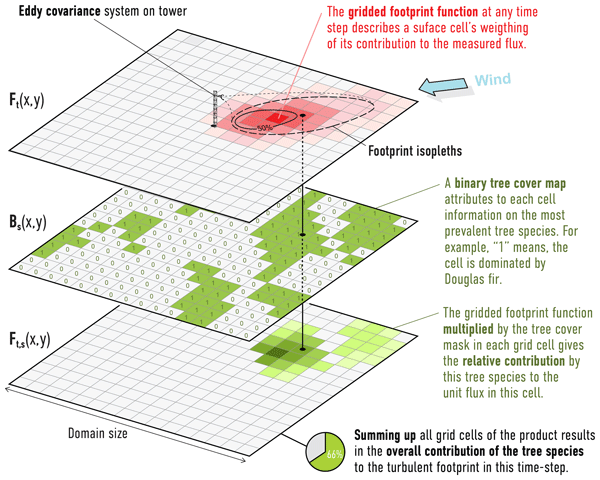
Eddy covariance (EC) data are vital for studying carbon and water fluxes but often mask species-specific responses in mixed forests. At a Black Forest site with beech and Douglas fir, we combined EC data with ecosystem modeling to separate species contributions. Results show EC fluxes reflect species abundance within flux footprints, though responses vary seasonally. Accounting for these differences is key for gap-filling, accurate budgets, and understanding mixed forests’ climate resilience.
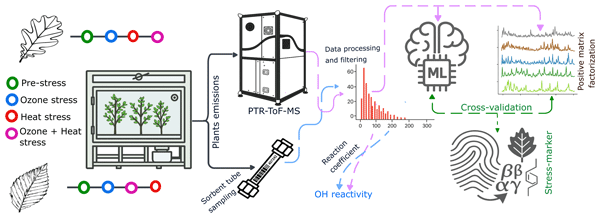
Biplob Dey, Toke Due Sjøgren, Peeyush Khare, Georgios I. Gkatzelis, Yizhen Wu, Sindhu Vasireddy, Martin Schultz, Alexander Knohl, Riikka Rinnan, Thorsten Hohaus, and Eva Y. Pfannerstill
Biogeosciences, 23, 1423–1457, https://doi.org/10.5194/bg-23-1423-2026, https://doi.org/10.5194/bg-23-1423-2026, 2026
Short summary
Short summary
Trees release reactive gases that affect air quality and climate. We studied how these emissions from European beech and English oak change under realistic scenarios of combined and single heat and ozone stress. Heat increased emissions, while ozone reduced most of them. When stressors were combined, the effects were complex and varied by species. Machine learning identified key stress-related compounds. Our findings show that future tree stress may alter air quality and climate interactions.
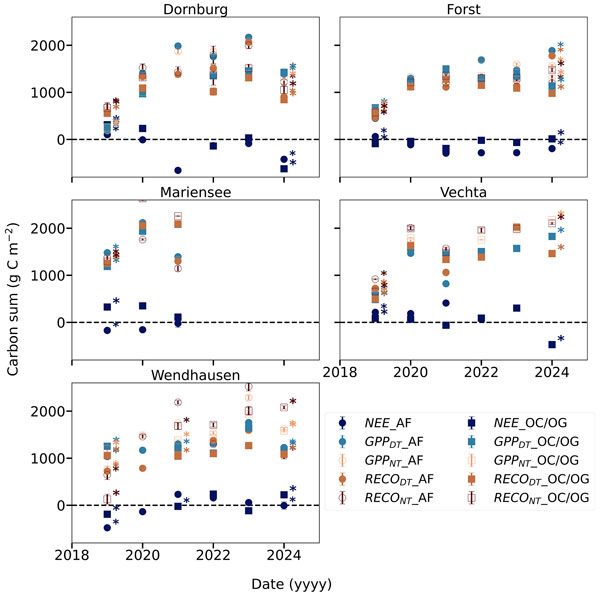
José Ángel Callejas-Rodelas, Justus van Ramshorst, Alexander Knohl, Lukas Siebicke, Dietmar Fellert, Marek Peksa, Dirk Böttger, and Christian Markwitz
Earth Syst. Sci. Data, 18, 845–874, https://doi.org/10.5194/essd-18-845-2026, https://doi.org/10.5194/essd-18-845-2026, 2026
Short summary
Short summary
A dataset expanding around seventy eight site-years was compiled, harmonized and presented. The dataset consisted in eddy covariance and meteorological measurements over four pairs of agroforestry and open cropland systems, and one pair of agroforestry and open grassland system. This is the first ever dataset compiling this type of data over temperate agroforestry systems.
Samin Payrosangari, Kathrin Fuchs, Benjamin Wolf, Ralf Kiese, and Clemens Scheer
EGUsphere, https://doi.org/10.5194/egusphere-2025-5155, https://doi.org/10.5194/egusphere-2025-5155, 2025
Short summary
Short summary
In our manuscript, we implement a machine learning based model to improve the simulation of daily N2O emissions at regional scale across several pre-alpine grasslands in Central Europe. The study focuses on evaluating the model’s general applicability to other grasslands in the region. This work contributes to the development of generic N₂O emission models, thereby reducing the effort required to estimate emissions from sites lacking direct measurements.
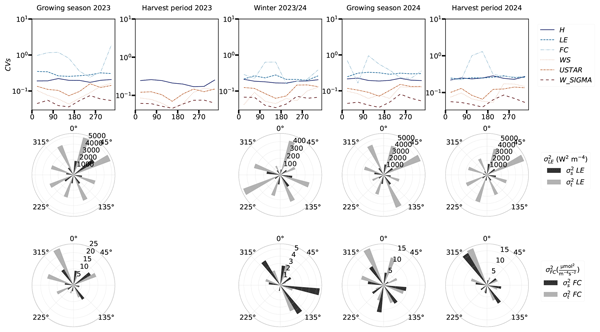
José Ángel Callejas-Rodelas, Alexander Knohl, Ivan Mammarella, Timo Vesala, Olli Peltola, and Christian Markwitz
Biogeosciences, 22, 4507–4529, https://doi.org/10.5194/bg-22-4507-2025, https://doi.org/10.5194/bg-22-4507-2025, 2025
Short summary
Short summary
The spatial variability of CO2 and water vapour exchanges with the atmosphere was quantified above an agroforestry system and further compared to a monocropping system using a total of four eddy covariance stations. The variability of fluxes within the agroforestry site was found to be as large as the variability between agroforestry and monocropping site, induced by the heterogeneity of the site, which highlights the need for replicated measurements above such ecosystems.
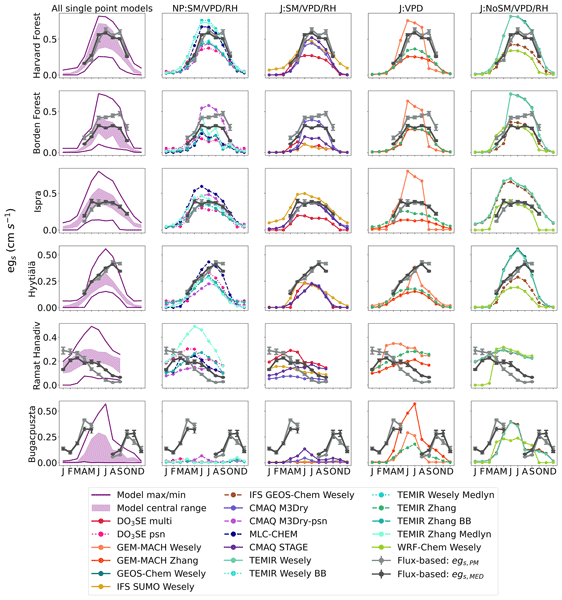
Anam M. Khan, Olivia E. Clifton, Jesse O. Bash, Sam Bland, Nathan Booth, Philip Cheung, Lisa Emberson, Johannes Flemming, Erick Fredj, Stefano Galmarini, Laurens Ganzeveld, Orestis Gazetas, Ignacio Goded, Christian Hogrefe, Christopher D. Holmes, László Horváth, Vincent Huijnen, Qian Li, Paul A. Makar, Ivan Mammarella, Giovanni Manca, J. William Munger, Juan L. Pérez-Camanyo, Jonathan Pleim, Limei Ran, Roberto San Jose, Donna Schwede, Sam J. Silva, Ralf Staebler, Shihan Sun, Amos P. K. Tai, Eran Tas, Timo Vesala, Tamás Weidinger, Zhiyong Wu, Leiming Zhang, and Paul C. Stoy
Atmos. Chem. Phys., 25, 8613–8635, https://doi.org/10.5194/acp-25-8613-2025, https://doi.org/10.5194/acp-25-8613-2025, 2025
Short summary
Short summary
Vegetation removes tropospheric ozone through stomatal uptake, and accurately modeling the stomatal uptake of ozone is important for modeling dry deposition and air quality. We evaluated the stomatal component of ozone dry deposition modeled by atmospheric chemistry models at six sites. We find that models and observation-based estimates agree at times during the growing season at all sites, but some models overestimated the stomatal component during the dry summers at a seasonally dry site.
Victoria Nasser, René Dechow, Mirjam Helfrich, Ana Meijide, Pauline Sophie Rummel, Heinz-Josef Koch, Reiner Ruser, Lisa Essich, and Klaus Dittert
SOIL, 11, 489–506, https://doi.org/10.5194/soil-11-489-2025, https://doi.org/10.5194/soil-11-489-2025, 2025
Short summary
Short summary
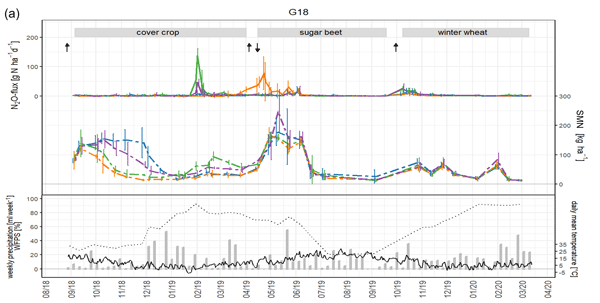
This study evaluated the impact of contrasting cover crops on topsoil mineral nitrogen (SMN), N2O emissions, and carbon (C) sequestration. Non-legume cover crops reduced SMN levels, showed potential for mitigating indirect N2O emissions, and increased C sequestration but did not reduce cumulative N2O emissions compared to fallow. The results highlight the need for tailored cover crop strategies to balance SMN capture, N2O emissions, and C sequestration effectively.
Lorenz Hänchen, Emily Potter, Cornelia Klein, Pierluigi Calanca, Fabien Maussion, Wolfgang Gurgiser, and Georg Wohlfahrt
Hydrol. Earth Syst. Sci., 29, 2727–2747, https://doi.org/10.5194/hess-29-2727-2025, https://doi.org/10.5194/hess-29-2727-2025, 2025
Short summary
Short summary
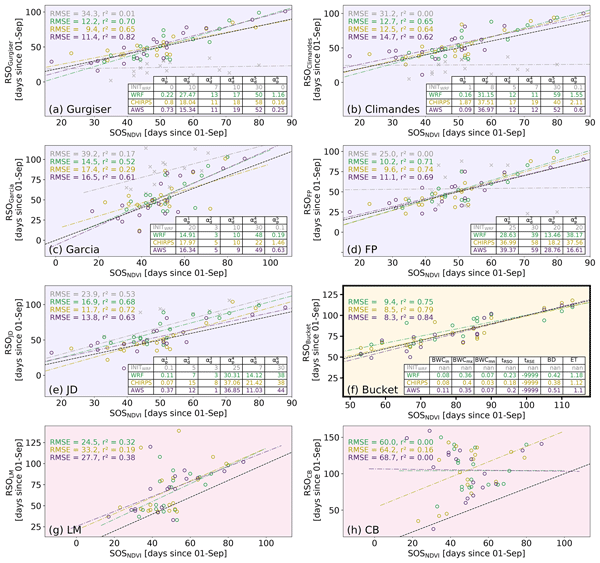
In semi-arid regions, the timing and duration of the rainy season are crucial for agriculture. This study introduces a new framework for improving estimations of the onset and end of the rainy season by testing how well they fit local vegetation data. We improve the performance of existing methods and present a new one with higher performance. Our findings can help us to make informed decisions about water usage, and the framework can be applied to other regions as well.
Thorge Wintz, Alexander Röll, Gustavo Brant Paterno, Florian Ellsäßer, Delphine Clara Zemp, Hendrayanto, Bambang Irawan, Alexander Knohl, Holger Kreft, and Dirk Hölscher
EGUsphere, https://doi.org/10.5194/egusphere-2025-2596, https://doi.org/10.5194/egusphere-2025-2596, 2025
Short summary
Short summary
We investigated how the size and diversity of tree patches in Indonesian oil palm landscapes influence the movement of water to the atmosphere and local cooling. Our study shows that larger tree patches increase cooling mainly by supporting greater plant diversity and more complex vegetation structure. These findings suggest that expanding and diversifying tree patches can help manage microclimate and water cycling in agricultural areas.

Jiaming Wen, Giulia Tagliabue, Micol Rossini, Francesco Pietro Fava, Cinzia Panigada, Lutz Merbold, Sonja Leitner, and Ying Sun
Biogeosciences, 22, 2049–2067, https://doi.org/10.5194/bg-22-2049-2025, https://doi.org/10.5194/bg-22-2049-2025, 2025
Short summary
Short summary
Solar-induced chlorophyll fluorescence (SIF), a tiny optical signal emitted from the core photosynthetic machinery, has emerged as a promising tool to evaluate vegetation growth from satellites. We find satellite SIF can capture intra-seasonal (i.e., from days to weeks) vegetation dynamics of dryland ecosystems, while greenness-based vegetation indices cannot. This study generates novel insights for developing effective real-time vegetation monitoring systems to inform climate risk management.
Mana Gharun, Ankit Shekhar, Lukas Hörtnagl, Luana Krebs, Nicola Arriga, Mirco Migliavacca, Marilyn Roland, Bert Gielen, Leonardo Montagnani, Enrico Tomelleri, Ladislav Šigut, Matthias Peichl, Peng Zhao, Marius Schmidt, Thomas Grünwald, Mika Korkiakoski, Annalea Lohila, and Nina Buchmann
Biogeosciences, 22, 1393–1411, https://doi.org/10.5194/bg-22-1393-2025, https://doi.org/10.5194/bg-22-1393-2025, 2025
Short summary
Short summary
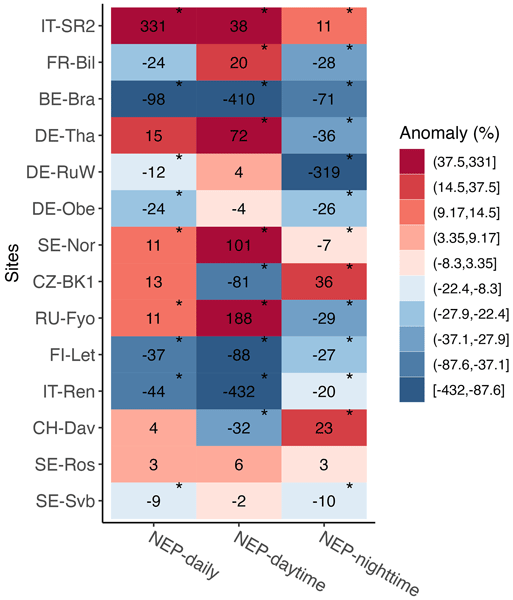
The effect of winter warming on forest CO2 fluxes has rarely been investigated. We tested the effect of the warm winter of 2020 on the forest CO2 fluxes across 14 sites in Europe and found that the net ecosystem productivity (NEP) across most sites declined during the warm winter due to increased respiration fluxes.
Jacob A. Nelson, Sophia Walther, Fabian Gans, Basil Kraft, Ulrich Weber, Kimberly Novick, Nina Buchmann, Mirco Migliavacca, Georg Wohlfahrt, Ladislav Šigut, Andreas Ibrom, Dario Papale, Mathias Göckede, Gregory Duveiller, Alexander Knohl, Lukas Hörtnagl, Russell L. Scott, Jiří Dušek, Weijie Zhang, Zayd Mahmoud Hamdi, Markus Reichstein, Sergio Aranda-Barranco, Jonas Ardö, Maarten Op de Beeck, Dave Billesbach, David Bowling, Rosvel Bracho, Christian Brümmer, Gustau Camps-Valls, Shiping Chen, Jamie Rose Cleverly, Ankur Desai, Gang Dong, Tarek S. El-Madany, Eugenie Susanne Euskirchen, Iris Feigenwinter, Marta Galvagno, Giacomo A. Gerosa, Bert Gielen, Ignacio Goded, Sarah Goslee, Christopher Michael Gough, Bernard Heinesch, Kazuhito Ichii, Marcin Antoni Jackowicz-Korczynski, Anne Klosterhalfen, Sara Knox, Hideki Kobayashi, Kukka-Maaria Kohonen, Mika Korkiakoski, Ivan Mammarella, Mana Gharun, Riccardo Marzuoli, Roser Matamala, Stefan Metzger, Leonardo Montagnani, Giacomo Nicolini, Thomas O'Halloran, Jean-Marc Ourcival, Matthias Peichl, Elise Pendall, Borja Ruiz Reverter, Marilyn Roland, Simone Sabbatini, Torsten Sachs, Marius Schmidt, Christopher R. Schwalm, Ankit Shekhar, Richard Silberstein, Maria Lucia Silveira, Donatella Spano, Torbern Tagesson, Gianluca Tramontana, Carlo Trotta, Fabio Turco, Timo Vesala, Caroline Vincke, Domenico Vitale, Enrique R. Vivoni, Yi Wang, William Woodgate, Enrico A. Yepez, Junhui Zhang, Donatella Zona, and Martin Jung
Biogeosciences, 21, 5079–5115, https://doi.org/10.5194/bg-21-5079-2024, https://doi.org/10.5194/bg-21-5079-2024, 2024
Short summary
Short summary
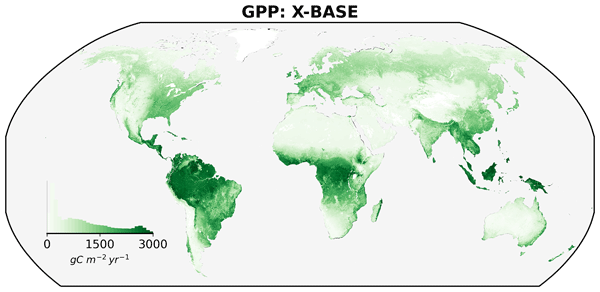
The movement of water, carbon, and energy from the Earth's surface to the atmosphere, or flux, is an important process to understand because it impacts our lives. Here, we outline a method called FLUXCOM-X to estimate global water and CO2 fluxes based on direct measurements from sites around the world. We go on to demonstrate how these new estimates of net CO2 uptake/loss, gross CO2 uptake, total water evaporation, and transpiration from plants compare to previous and independent estimates.
Pilar Durante, Juan Miguel Requena-Mullor, Rodrigo Vargas, Mario Guevara, Domingo Alcaraz-Segura, and Cecilio Oyonarte
Earth Syst. Sci. Data Discuss., https://doi.org/10.5194/essd-2024-431, https://doi.org/10.5194/essd-2024-431, 2024
Manuscript not accepted for further review
Short summary
Short summary
Human activities have disrupted the global carbon cycle, increasing CO2 levels. Soils are the largest carbon stores on land, making it essential to understand how much carbon they hold to fight climate change. Our study improved estimates of soil carbon in peninsular Spain by integrating historical soil data and using machine-learning methods to create detailed maps of carbon content. These maps will help manage soil carbon better and support efforts to track carbon emissions globally.
Justus G. V. van Ramshorst, Alexander Knohl, José Ángel Callejas-Rodelas, Robert Clement, Timothy C. Hill, Lukas Siebicke, and Christian Markwitz
Atmos. Meas. Tech., 17, 6047–6071, https://doi.org/10.5194/amt-17-6047-2024, https://doi.org/10.5194/amt-17-6047-2024, 2024
Short summary
Short summary
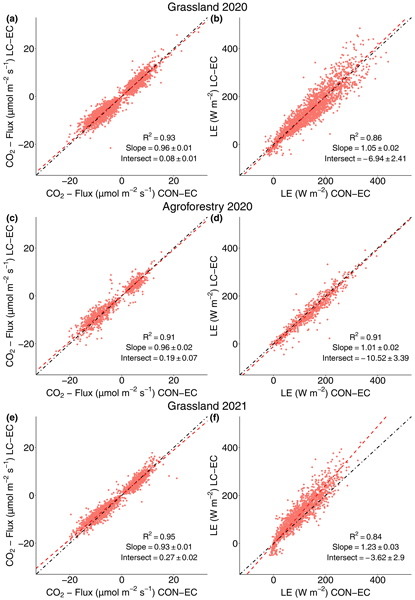
In this work we present experimental field results of a lower-cost eddy covariance (LC-EC) system, which can measure the ecosystem exchange of carbon dioxide and water vapour with the atmosphere. During three field campaigns on a grassland and agroforestry grassland, we compared the LC-EC with a conventional eddy covariance (CON-EC) system. Our results show that LC-EC has the potential to measure EC fluxes at only approximately 25 % of the cost of a CON-EC system.
Arianna Peron, Martin Graus, Marcus Striednig, Christian Lamprecht, Georg Wohlfahrt, and Thomas Karl
Atmos. Chem. Phys., 24, 7063–7083, https://doi.org/10.5194/acp-24-7063-2024, https://doi.org/10.5194/acp-24-7063-2024, 2024
Short summary
Short summary
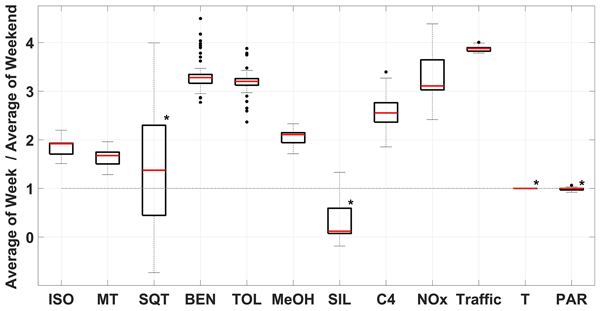
The anthropogenic fraction of non-methane volatile organic compound (NMVOC) emissions associated with biogenic sources (e.g., terpenes) is investigated based on eddy covariance observations. The anthropogenic fraction of terpene emissions is strongly dependent on season. When analyzing volatile chemical product (VCP) emissions in urban environments, we caution that observations from short-term campaigns might over-/underestimate their significance depending on local and seasonal circumstances.
Joseph Kiem, Albin Hammerle, Leonardo Montagnani, and Georg Wohlfahrt
EGUsphere, https://doi.org/10.5194/egusphere-2024-881, https://doi.org/10.5194/egusphere-2024-881, 2024
Preprint archived
Short summary
Short summary
Albedo is the fraction of solar radiation that is reflected by some surface. The presence of a seasonal snow cover dramatically increases albedo. We made use of a novel snow depth dataset for Austria to investigate likely future changes in albedo up to 2100. In 5 out of the 6 investigated future scenarios a significant decline of albedo could be observed. The associated warming is equivalent to between 0.25 to 5 times the current annual CO2-equivalent emissions of Austria.
Yuan Yan, Anne Klosterhalfen, Fernando Moyano, Matthias Cuntz, Andrew C. Manning, and Alexander Knohl
Biogeosciences, 20, 4087–4107, https://doi.org/10.5194/bg-20-4087-2023, https://doi.org/10.5194/bg-20-4087-2023, 2023
Short summary
Short summary
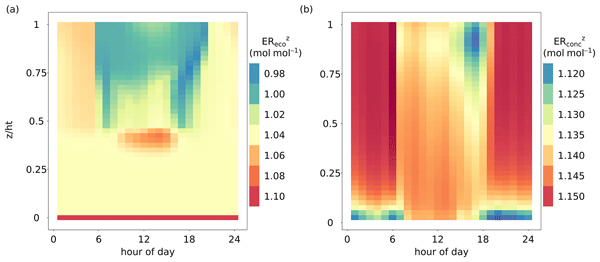
A better understanding of O2 fluxes, their exchange ratios with CO2 and their interrelations with environmental conditions would provide further insights into biogeochemical ecosystem processes. We, therefore, used the multilayer canopy model CANVEG to simulate and analyze the flux exchange for our forest study site for 2012–2016. Based on these simulations, we further successfully tested the application of various micrometeorological methods and the prospects of real O2 flux measurements.
Olivia E. Clifton, Donna Schwede, Christian Hogrefe, Jesse O. Bash, Sam Bland, Philip Cheung, Mhairi Coyle, Lisa Emberson, Johannes Flemming, Erick Fredj, Stefano Galmarini, Laurens Ganzeveld, Orestis Gazetas, Ignacio Goded, Christopher D. Holmes, László Horváth, Vincent Huijnen, Qian Li, Paul A. Makar, Ivan Mammarella, Giovanni Manca, J. William Munger, Juan L. Pérez-Camanyo, Jonathan Pleim, Limei Ran, Roberto San Jose, Sam J. Silva, Ralf Staebler, Shihan Sun, Amos P. K. Tai, Eran Tas, Timo Vesala, Tamás Weidinger, Zhiyong Wu, and Leiming Zhang
Atmos. Chem. Phys., 23, 9911–9961, https://doi.org/10.5194/acp-23-9911-2023, https://doi.org/10.5194/acp-23-9911-2023, 2023
Short summary
Short summary
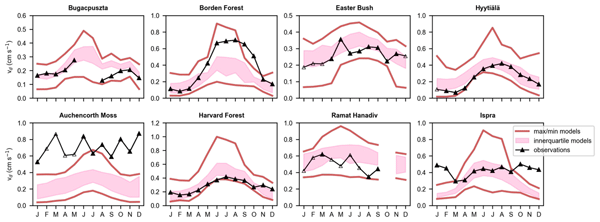
A primary sink of air pollutants is dry deposition. Dry deposition estimates differ across the models used to simulate atmospheric chemistry. Here, we introduce an effort to examine dry deposition schemes from atmospheric chemistry models. We provide our approach’s rationale, document the schemes, and describe datasets used to drive and evaluate the schemes. We also launch the analysis of results by evaluating against observations and identifying the processes leading to model–model differences.
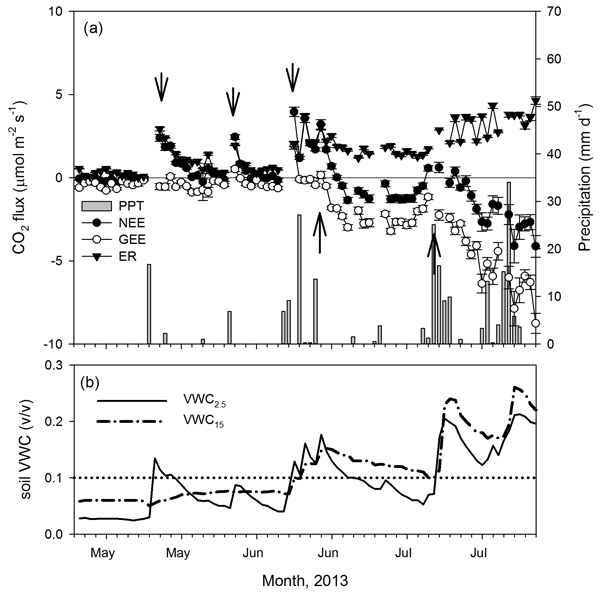
Josué Delgado-Balbuena, Henry W. Loescher, Carlos A. Aguirre-Gutiérrez, Teresa Alfaro-Reyna, Luis F. Pineda-Martínez, Rodrigo Vargas, and Tulio Arredondo
Biogeosciences, 20, 2369–2385, https://doi.org/10.5194/bg-20-2369-2023, https://doi.org/10.5194/bg-20-2369-2023, 2023
Short summary
Short summary
In the semiarid grassland, an increase in soil moisture at shallow depths instantly enhances carbon release through respiration. In contrast, deeper soil water controls plant carbon uptake but with a delay of several days. Previous soil conditions, biological activity, and the size and timing of precipitation are factors that determine the amount of carbon released into the atmosphere. Thus, future changes in precipitation patterns could convert ecosystems from carbon sinks to carbon sources.
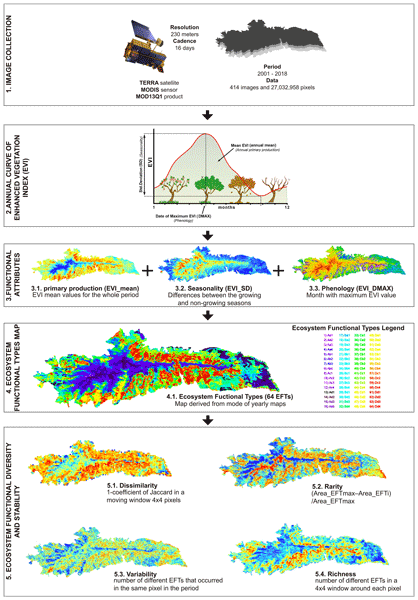
Beatriz P. Cazorla, Javier Cabello, Andrés Reyes, Emilio Guirado, Julio Peñas, Antonio J. Pérez-Luque, and Domingo Alcaraz-Segura
Earth Syst. Sci. Data, 15, 1871–1887, https://doi.org/10.5194/essd-15-1871-2023, https://doi.org/10.5194/essd-15-1871-2023, 2023
Short summary
Short summary
This dataset provides scientists, environmental managers, and the public in general with valuable information on the first characterization of ecosystem functional diversity based on primary production developed in the Sierra Nevada (Spain), a biodiversity hotspot in the Mediterranean basin and an exceptional natural laboratory for ecological research within the Long-Term Social-Ecological Research (LTSER) network.
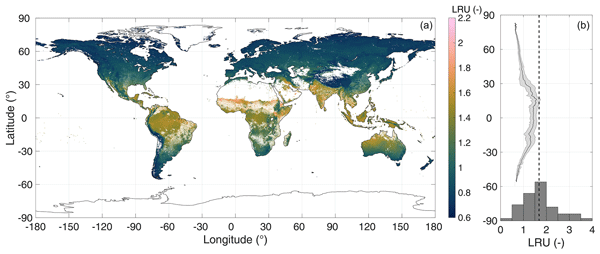
Georg Wohlfahrt, Albin Hammerle, Felix M. Spielmann, Florian Kitz, and Chuixiang Yi
Biogeosciences, 20, 589–596, https://doi.org/10.5194/bg-20-589-2023, https://doi.org/10.5194/bg-20-589-2023, 2023
Short summary
Short summary
The trace gas carbonyl sulfide (COS), which is taken up by plant leaves in a process very similar to photosynthesis, is thought to be a promising proxy for the gross uptake of carbon dioxide by plants. Here we propose a new framework for estimating a key metric to that end, the so-called leaf relative uptake rate. The values we deduce by applying principles of plant optimality are considerably lower than published values and may help reduce the uncertainty of the global COS budget.
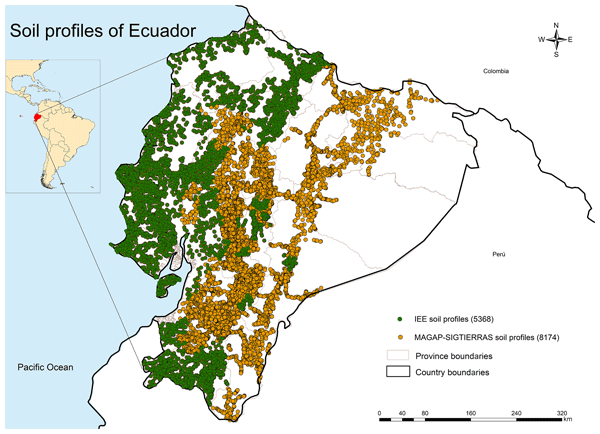
Daphne Armas, Mario Guevara, Fernando Bezares, Rodrigo Vargas, Pilar Durante, Víctor Osorio, Wilmer Jiménez, and Cecilio Oyonarte
Earth Syst. Sci. Data, 15, 431–445, https://doi.org/10.5194/essd-15-431-2023, https://doi.org/10.5194/essd-15-431-2023, 2023
Short summary
Short summary
The global need for updated soil datasets has increased. Our main objective was to synthesize and harmonize soil profile information collected by two different projects in Ecuador between 2009 and 2015.The main result was the development of the Harmonized Soil Database of Ecuador (HESD) that includes information from 13 542 soil profiles with over 51 713 measured soil horizons, including 92 different edaphic variables, and follows international standards for archiving and sharing soil data.
Anas Emad and Lukas Siebicke
Atmos. Meas. Tech., 16, 41–55, https://doi.org/10.5194/amt-16-41-2023, https://doi.org/10.5194/amt-16-41-2023, 2023
Short summary
Short summary
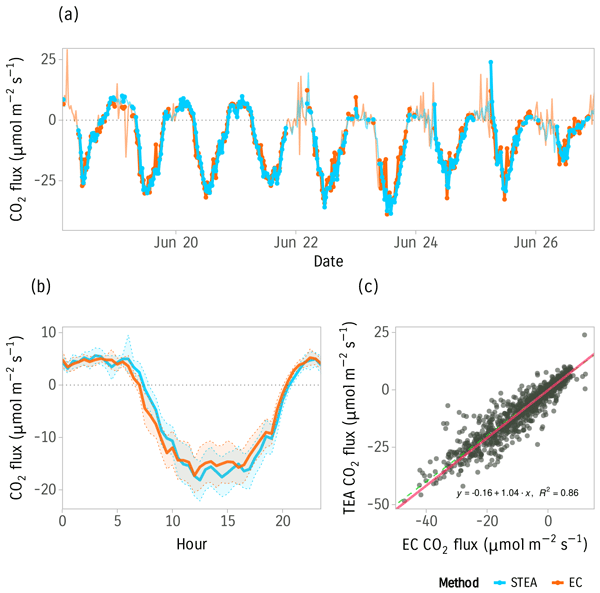
A new micrometeorological method to measure atmospheric exchange is proposed, and a prototype sampler is evaluated. The new method, called short-time eddy accumulation, is a variant of the eddy accumulation method, which is suited for use with slow gas analyzers. The new method enables adaptive time-varying accumulation intervals, which brings many advantages to flux measurements such as an improved dynamic range and the ability to run eddy accumulation in a continuous flow-through mode.
Anas Emad and Lukas Siebicke
Atmos. Meas. Tech., 16, 29–40, https://doi.org/10.5194/amt-16-29-2023, https://doi.org/10.5194/amt-16-29-2023, 2023
Short summary
Short summary
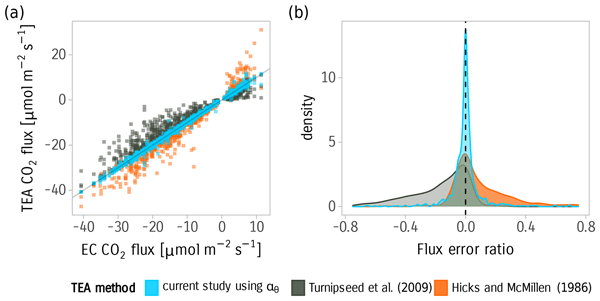
The true eddy accumulation (TEA) method enables measuring atmospheric exchange with slow-response gas analyzers. TEA is formulated assuming ideal conditions with a zero mean vertical wind velocity during the averaging interval. This core assumption is rarely valid under field conditions. Here, we extend the TEA equation to accommodate nonideal conditions. The new equation allows constraining the systematic error term in the measured fluxes and the possibility to minimize or remove it.
Rodrigo Vargas and Van Huong Le
Biogeosciences, 20, 15–26, https://doi.org/10.5194/bg-20-15-2023, https://doi.org/10.5194/bg-20-15-2023, 2023
Short summary
Short summary
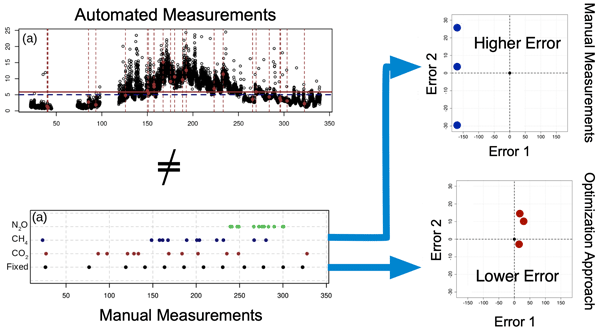
Quantifying the role of soils in nature-based solutions requires accurate estimates of soil greenhouse gas (GHG) fluxes. We suggest that multiple GHG fluxes should not be simultaneously measured at a few fixed time intervals, but an optimized sampling approach can reduce bias and uncertainty. Our results have implications for assessing GHG fluxes from soils and a better understanding of the role of soils in nature-based solutions.
Margaret Capooci and Rodrigo Vargas
Biogeosciences, 19, 4655–4670, https://doi.org/10.5194/bg-19-4655-2022, https://doi.org/10.5194/bg-19-4655-2022, 2022
Short summary
Short summary
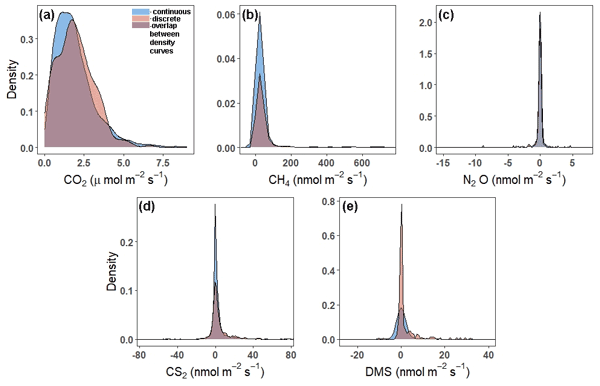
Tidal salt marsh soil emits greenhouse gases, as well as sulfur-based gases, which play roles in global climate but are not well studied as they are difficult to measure. Traditional methods of measuring these gases worked relatively well for carbon dioxide, but less so for methane, nitrous oxide, carbon disulfide, and dimethylsulfide. High variability of trace gases complicates the ability to accurately calculate gas budgets and new approaches are needed for monitoring protocols.
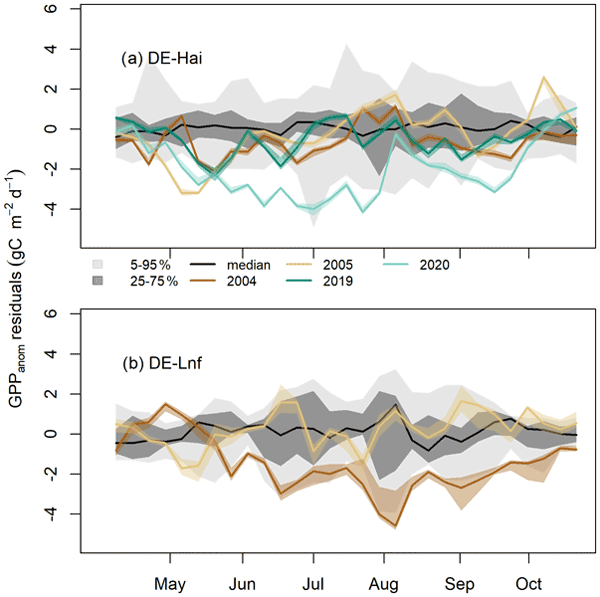
Xin Yu, René Orth, Markus Reichstein, Michael Bahn, Anne Klosterhalfen, Alexander Knohl, Franziska Koebsch, Mirco Migliavacca, Martina Mund, Jacob A. Nelson, Benjamin D. Stocker, Sophia Walther, and Ana Bastos
Biogeosciences, 19, 4315–4329, https://doi.org/10.5194/bg-19-4315-2022, https://doi.org/10.5194/bg-19-4315-2022, 2022
Short summary
Short summary
Identifying drought legacy effects is challenging because they are superimposed on variability driven by climate conditions in the recovery period. We develop a residual-based approach to quantify legacies on gross primary productivity (GPP) from eddy covariance data. The GPP reduction due to legacy effects is comparable to the concurrent effects at two sites in Germany, which reveals the importance of legacy effects. Our novel methodology can be used to quantify drought legacies elsewhere.
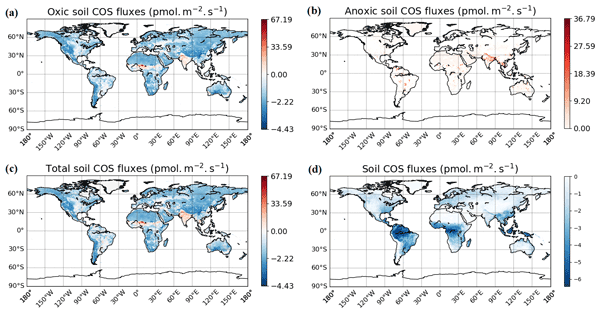
Camille Abadie, Fabienne Maignan, Marine Remaud, Jérôme Ogée, J. Elliott Campbell, Mary E. Whelan, Florian Kitz, Felix M. Spielmann, Georg Wohlfahrt, Richard Wehr, Wu Sun, Nina Raoult, Ulli Seibt, Didier Hauglustaine, Sinikka T. Lennartz, Sauveur Belviso, David Montagne, and Philippe Peylin
Biogeosciences, 19, 2427–2463, https://doi.org/10.5194/bg-19-2427-2022, https://doi.org/10.5194/bg-19-2427-2022, 2022
Short summary
Short summary
A better constraint of the components of the carbonyl sulfide (COS) global budget is needed to exploit its potential as a proxy of gross primary productivity. In this study, we compare two representations of oxic soil COS fluxes, and we develop an approach to represent anoxic soil COS fluxes in a land surface model. We show the importance of atmospheric COS concentration variations on oxic soil COS fluxes and provide new estimates for oxic and anoxic soil contributions to the COS global budget.
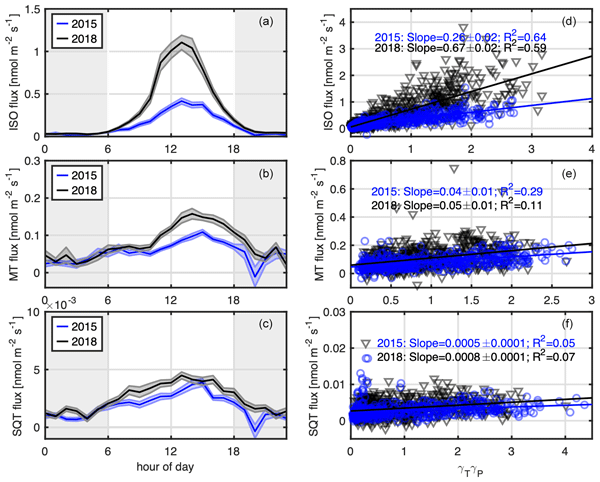
Lisa Kaser, Arianna Peron, Martin Graus, Marcus Striednig, Georg Wohlfahrt, Stanislav Juráň, and Thomas Karl
Atmos. Chem. Phys., 22, 5603–5618, https://doi.org/10.5194/acp-22-5603-2022, https://doi.org/10.5194/acp-22-5603-2022, 2022
Short summary
Short summary
Biogenic volatile organic compounds (e.g., terpenoids) play an essential role in atmospheric chemistry. Urban greening activities need to consider the ozone- and aerosol-forming potential of these compounds released from vegetation. NMVOC emissions in urban environments are complex, and the biogenic component remains poorly quantified. For summer conditions biogenic emissions dominate terpene emissions and heat waves can significantly modulate urban biogenic terpenoid emissions.
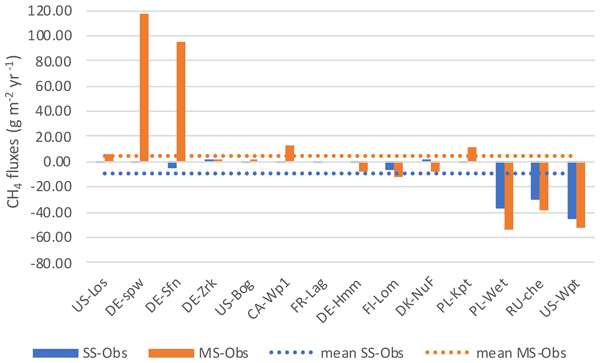
Elodie Salmon, Fabrice Jégou, Bertrand Guenet, Line Jourdain, Chunjing Qiu, Vladislav Bastrikov, Christophe Guimbaud, Dan Zhu, Philippe Ciais, Philippe Peylin, Sébastien Gogo, Fatima Laggoun-Défarge, Mika Aurela, M. Syndonia Bret-Harte, Jiquan Chen, Bogdan H. Chojnicki, Housen Chu, Colin W. Edgar, Eugenie S. Euskirchen, Lawrence B. Flanagan, Krzysztof Fortuniak, David Holl, Janina Klatt, Olaf Kolle, Natalia Kowalska, Lars Kutzbach, Annalea Lohila, Lutz Merbold, Włodzimierz Pawlak, Torsten Sachs, and Klaudia Ziemblińska
Geosci. Model Dev., 15, 2813–2838, https://doi.org/10.5194/gmd-15-2813-2022, https://doi.org/10.5194/gmd-15-2813-2022, 2022
Short summary
Short summary
A methane model that features methane production and transport by plants, the ebullition process and diffusion in soil, oxidation to CO2, and CH4 fluxes to the atmosphere has been embedded in the ORCHIDEE-PEAT land surface model, which includes an explicit representation of northern peatlands. This model, ORCHIDEE-PCH4, was calibrated and evaluated on 14 peatland sites. Results show that the model is sensitive to temperature and substrate availability over the top 75 cm of soil depth.
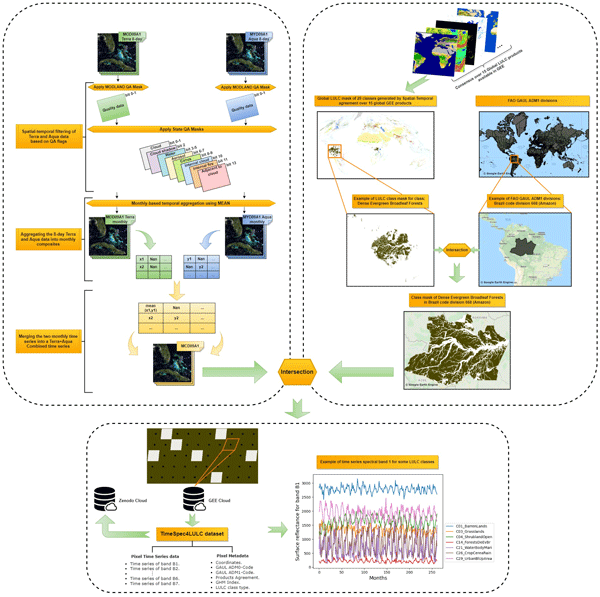
Rohaifa Khaldi, Domingo Alcaraz-Segura, Emilio Guirado, Yassir Benhammou, Abdellatif El Afia, Francisco Herrera, and Siham Tabik
Earth Syst. Sci. Data, 14, 1377–1411, https://doi.org/10.5194/essd-14-1377-2022, https://doi.org/10.5194/essd-14-1377-2022, 2022
Short summary
Short summary
This dataset with millions of 22-year time series for seven spectral bands was built by merging Terra and Aqua satellite data and annotated for 29 LULC classes by spatial–temporal agreement across 15 global LULC products. The mean F1 score was 96 % at the coarsest classification level and 87 % at the finest one. The dataset is born to develop and evaluate machine learning models to perform global LULC mapping given the disagreement between current global LULC products.
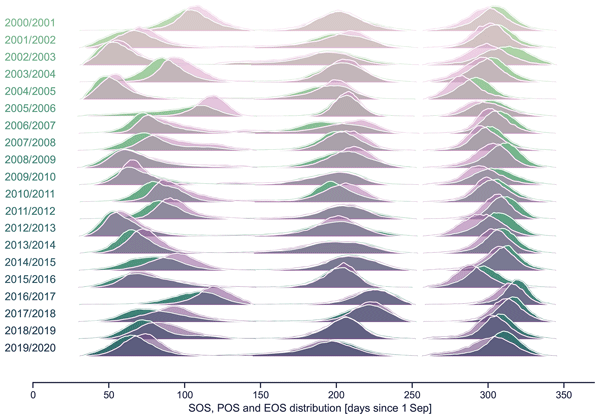
Lorenz Hänchen, Cornelia Klein, Fabien Maussion, Wolfgang Gurgiser, Pierluigi Calanca, and Georg Wohlfahrt
Earth Syst. Dynam., 13, 595–611, https://doi.org/10.5194/esd-13-595-2022, https://doi.org/10.5194/esd-13-595-2022, 2022
Short summary
Short summary
To date, farmers' perceptions of hydrological changes do not match analysis of meteorological data. In contrast to rainfall data, we find greening of vegetation, indicating increased water availability in the past decades. The start of the season is highly variable, making farmers' perceptions comprehensible. We show that the El Niño–Southern Oscillation has complex effects on vegetation seasonality but does not drive the greening we observe. Improved onset forecasts could help local farmers.
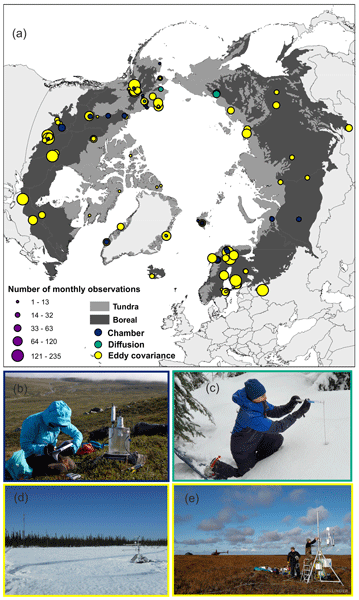
Anna-Maria Virkkala, Susan M. Natali, Brendan M. Rogers, Jennifer D. Watts, Kathleen Savage, Sara June Connon, Marguerite Mauritz, Edward A. G. Schuur, Darcy Peter, Christina Minions, Julia Nojeim, Roisin Commane, Craig A. Emmerton, Mathias Goeckede, Manuel Helbig, David Holl, Hiroki Iwata, Hideki Kobayashi, Pasi Kolari, Efrén López-Blanco, Maija E. Marushchak, Mikhail Mastepanov, Lutz Merbold, Frans-Jan W. Parmentier, Matthias Peichl, Torsten Sachs, Oliver Sonnentag, Masahito Ueyama, Carolina Voigt, Mika Aurela, Julia Boike, Gerardo Celis, Namyi Chae, Torben R. Christensen, M. Syndonia Bret-Harte, Sigrid Dengel, Han Dolman, Colin W. Edgar, Bo Elberling, Eugenie Euskirchen, Achim Grelle, Juha Hatakka, Elyn Humphreys, Järvi Järveoja, Ayumi Kotani, Lars Kutzbach, Tuomas Laurila, Annalea Lohila, Ivan Mammarella, Yojiro Matsuura, Gesa Meyer, Mats B. Nilsson, Steven F. Oberbauer, Sang-Jong Park, Roman Petrov, Anatoly S. Prokushkin, Christopher Schulze, Vincent L. St. Louis, Eeva-Stiina Tuittila, Juha-Pekka Tuovinen, William Quinton, Andrej Varlagin, Donatella Zona, and Viacheslav I. Zyryanov
Earth Syst. Sci. Data, 14, 179–208, https://doi.org/10.5194/essd-14-179-2022, https://doi.org/10.5194/essd-14-179-2022, 2022
Short summary
Short summary
The effects of climate warming on carbon cycling across the Arctic–boreal zone (ABZ) remain poorly understood due to the relatively limited distribution of ABZ flux sites. Fortunately, this flux network is constantly increasing, but new measurements are published in various platforms, making it challenging to understand the ABZ carbon cycle as a whole. Here, we compiled a new database of Arctic–boreal CO2 fluxes to help facilitate large-scale assessments of the ABZ carbon cycle.
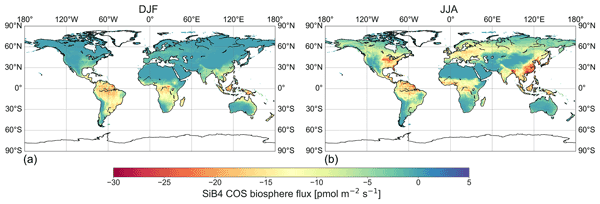
Linda M. J. Kooijmans, Ara Cho, Jin Ma, Aleya Kaushik, Katherine D. Haynes, Ian Baker, Ingrid T. Luijkx, Mathijs Groenink, Wouter Peters, John B. Miller, Joseph A. Berry, Jerome Ogée, Laura K. Meredith, Wu Sun, Kukka-Maaria Kohonen, Timo Vesala, Ivan Mammarella, Huilin Chen, Felix M. Spielmann, Georg Wohlfahrt, Max Berkelhammer, Mary E. Whelan, Kadmiel Maseyk, Ulli Seibt, Roisin Commane, Richard Wehr, and Maarten Krol
Biogeosciences, 18, 6547–6565, https://doi.org/10.5194/bg-18-6547-2021, https://doi.org/10.5194/bg-18-6547-2021, 2021
Short summary
Short summary
The gas carbonyl sulfide (COS) can be used to estimate photosynthesis. To adopt this approach on regional and global scales, we need biosphere models that can simulate COS exchange. So far, such models have not been evaluated against observations. We evaluate the COS biosphere exchange of the SiB4 model against COS flux observations. We find that the model is capable of simulating key processes in COS biosphere exchange. Still, we give recommendations for further improvement of the model.
Auke J. Visser, Laurens N. Ganzeveld, Ignacio Goded, Maarten C. Krol, Ivan Mammarella, Giovanni Manca, and K. Folkert Boersma
Atmos. Chem. Phys., 21, 18393–18411, https://doi.org/10.5194/acp-21-18393-2021, https://doi.org/10.5194/acp-21-18393-2021, 2021
Short summary
Short summary
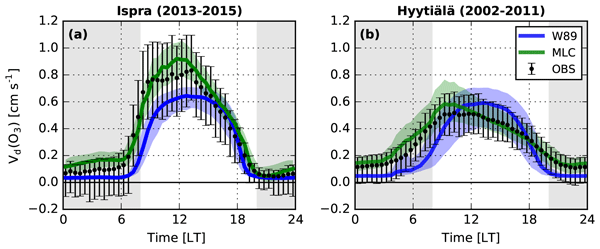
Dry deposition is an important sink for tropospheric ozone that affects ecosystem carbon uptake, but process understanding remains incomplete. We apply a common deposition representation in atmospheric chemistry models and a multi-layer canopy model to multi-year ozone deposition observations. The multi-layer canopy model performs better on diurnal timescales compared to the common approach, leading to a substantially improved simulation of ozone deposition and vegetation ozone impact metrics.

Matthias Mauder, Andreas Ibrom, Luise Wanner, Frederik De Roo, Peter Brugger, Ralf Kiese, and Kim Pilegaard
Atmos. Meas. Tech., 14, 7835–7850, https://doi.org/10.5194/amt-14-7835-2021, https://doi.org/10.5194/amt-14-7835-2021, 2021
Short summary
Short summary
Turbulent flux measurements suffer from a general systematic underestimation. One reason for this bias is non-local transport by large-scale circulations. A recently developed model for this additional transport of sensible and latent energy is evaluated for three different test sites. Different options on how to apply this correction are presented, and the results are evaluated against independent measurements.
Cited articles
Alcaraz-Segura, D., Paruelo, J., and Cabello, J.: Identification of current ecosystem functional types in the Iberian Peninsula, Global Ecology and Biogeography, 15, 200–212, https://doi.org/10.1111/j.1466-822X.2006.00215.x, 2006.
Alcaraz-Segura, D., Paruelo, J. M., Epstein, H. E., and Cabello, J.: Environmental and human controls of ecosystem functional diversity in temperate South America, Remote Sens., 5, 127–154, https://doi.org/10.3390/rs5010127, 2013.
Arenas-Castro, S., Gonçalves, J., Alves, P., Alcaraz-Segura, D., and Honrado, J. P.: Assessing the multi-scale predictive ability of ecosystem functional attributes for species distribution modelling, PLoS ONE, 13, e0199292, https://doi.org/10.1371/journal.pone.0199292, 2018.
Arenas-Castro, S., Regos, A., Gonçalves, J. F., Alcaraz-Segura, D., and Honrado, J.: Remotely sensed variables of ecosystem functioning support robust predictions of abundance patterns for rare species, Remote Sens., 11, 2086, https://doi.org/10.3390/rs11182086, 2019.
Armstrong, A., Alcaraz-Segura, D., Raynolds, M., and Epstein, H.: Ecosystem functional types of the circumpolar Arctic tundra based on the seasonal dynamics of vegetation productivity, Environ. Res. Ecol., 3, 025003, https://doi.org/10.1088/2752-664X/ad4beb, 2024.
Asner, G. P., Martin, R. E., Knapp, D. E., Tupayachi, R., Anderson, C. B., Sinca, F., Vaughn, N. R., and Llactayo, W.: Airborne laser-guided imaging spectroscopy to map forest trait diversity and guide conservation, Science, 355, 385–389, https://doi.org/10.1126/science.aaj1987, 2017.
Aubinet, M., Vesala, T., and Papale, D. (Eds.): Eddy Covariance: A Practical Guide to Measurement and Data Analysis, Springer Atmospheric Sciences, Springer, Dordrecht, https://doi.org/10.1007/978-94-007-2351-1, 2012.
Baldocchi, D. D.: Assessing the eddy covariance technique for evaluating carbon dioxide exchange rates of ecosystems: past, present and future, Glob. Change Biol., 9, 479–492, https://doi.org/10.1046/j.1365-2486.2003.00629.x, 2003.
Baldocchi, D. D.: How eddy covariance flux measurements have contributed to our understanding of Global Change Biology, Glob. Change Biol., 26, 242–260, https://doi.org/10.1111/gcb.14807, 2020.
Baldocchi, D. D., Falge, E., Gu, L., Olson, R., Hollinger, D., Running, S., Anthoni, P., Bernhofer, C., Davis, K., Evans, R., Fuentes, J. D., Goldstein, A. H., Katul, G., Law, B. E., Lee, X., Malhi, Y., Meyers, T., Munger, W., Oechel, W., Paw U, K. T., Pilegaard, K., Schmid, H. P., Valentini, R., Verma, S. B., Vesala, T., Wilson, K., and Wofsy, S. C.: FLUXNET: A new tool to study the temporal and spatial variability of ecosystem-scale carbon dioxide, water vapor, and energy flux densities, Bull. Am. Meteorol. Soc., 82, 2415–2434, https://doi.org/10.1175/1520-0477(2001)082<2415:FANTTS>2.3.CO;2, 2001.
Balvanera, P., Quijas, S., Karp, D. S., Ash, N., Bennett, E. M., Boumans, R., Brown, C., Chan, K. M. A., Chaplin-Kramer, R., Halpern, B. S., Honey-Rosés, J., Kim, C.-K., Cramer, W., Martínez-Harms, M. J., Mooney, H., Mwampamba, T., Nel, J., Polasky, S., Reyers, B., Roman, J., Turner, W., Scholes, R. J., Tallis, H., Thonicke, K., Villa, F., Walpole, M., and Walz, A.: Ecosystem services, in: The GEO Handbook on Biodiversity Observation Networks, edited by: Walters, M. and Scholes, R. J., Springer, 39–78, https://doi.org/10.1007/978-3-319-27288-7_3, 2017.
Beer, C., Reichstein, M., Tomelleri, E., Ciais, P., Jung, M., Carvalhais, N., Rödenbeck, C., Arain, M. A., Baldocchi, D., Bonan, G. B., Bondeau, A., Cescatti, A., Lasslop, G., Lindroth, A., Lomas, M., Luyssaert, S., Margolis, H., Oleson, K. W., Roupsard, O., Veenendaal, E. M., Viovy, N., Williams, C., Woodward, F. I., and Papale, D.: Terrestrial gross carbon dioxide uptake: global distribution and covariation with climate, Science, 329, 834–838, https://doi.org/10.1126/science.1184984, 2010.
Blondel, J. and Aronson, J.: Biology and Wildlife of the Mediterranean Region, Oxford University Press, Oxford, 328 pp., ISBN 978-0-19-850035-3, 1999.
Bret-Harte, M. S., Mack, M. C., Goldsmith, G. R., Sloan, D. B., DeMarco, J., Shaver, G. R., Ray, P. M., Biesinger, Z., and Chapin, F. S.: Plant functional types do not predict biomass responses to removal and fertilization in Alaskan tussock tundra, J. Ecol., 96, 713–726, https://doi.org/10.1111/j.1365-2745.2008.01378.x, 2008.
Butchart, S. H. M., Walpole, M., Collen, B., van Strien, A., Scharlemann, J. P. W., Almond, R. E. A., Baillie, J. E. M., Bomhard, B., Brown, C., Bruno, J., Carpenter, K. E., Carr, G. M., Chanson, J., Chenery, A. M., Csirke, J., Davidson, N. C., Dentener, F., Foster, M., Galli, A., Galloway, J. N., Genovesi, P., Gregory, R. D., Hockings, M., Kapos, V., Lamarque, J.-F., Leverington, F., Loh, J., McGeoch, M. A., McRae, L., Minasyan, A., Hernández Morcillo, M., Oldfield, T. E. E., Pauly, D., Quader, S., Revenga, C., Sauer, J. R., Skolnik, B., Spear, D., Stanwell-Smith, D., Stuart, S. N., Symes, A., Tierney, M., Tyrrell, T. D., Vié, J.-C., and Watson, R.: Global biodiversity: indicators of recent declines, Science, 328, 1164–1168, https://doi.org/10.1126/science.1187512, 2010.
Cabello, J., Fernández, N., Alcaraz-Segura, D., Oyonarte, C., Piñeiro, G., Altesor, A., Delibes, M., and Paruelo, J. M.: The ecosystem functioning dimension in conservation: insights from remote sensing, Biodivers. Conserv., 21, 3287–3305, https://doi.org/10.1007/s10531-012-0370-7, 2012.
Cabello-Piñar, J., Alcaraz-Segura, D., Reyes-Díez, A., Lourenço, P., Requena Mullor, J. M., Bonache Albacete, J., Castillo, P., Valencia, S., Naya, J., Ramírez, L., and Serrada, J.: System for monitoring ecosystem functioning of Network of National Parks of Spain with remote sensing, Rev. Teledetección, 46, 119, https://doi.org/10.4995/raet.2016.5731, 2016.
Cazorla, B. and Alcaraz-Segura, D.: ajpelu/eftsn_gee: first release (v1.0), Zenodo [code], https://doi.org/10.5281/zenodo.7524973, 2023.
Cazorla, B., Cabello, J., Peñas, J., Garcillán, P. P., Reyes, A., and Alcaraz-Segura, D.: Incorporating ecosystem functional diversity into geographic conservation priorities using remotely-sensed Ecosystem Functional Types, Ecosystems, https://doi.org/10.1007/s10021-020-00533-4, 2020.
Cazorla, B., Garcillán, P. P., Cabello, J., Alcaraz-Segura, D., Reyes, A., and Peñas, J.: Patterns of ecosystem functioning as tool for biological regionalization: the case of the mediterranean-desert-tropical transition of Baja California, Mediterr. Bot., 42, e68529, https://doi.org/10.5209/mbot.68529, 2021.
Cazorla, B. P., Cabello, J., Reyes, A., Guirado, E., Peñas, J., Pérez-Luque, A. J., and Alcaraz-Segura, D.: A remote-sensing-based dataset to characterize the ecosystem functioning and functional diversity in the Biosphere Reserve of the Sierra Nevada (southeastern Spain), Earth Syst. Sci. Data, 15, 1871–1887, https://doi.org/10.5194/essd-15-1871-2023, 2023.
Cazorla, B. P., Meijide, A., Cabello, J., Peñas, J., Vargas, R., Martínez-López, J., Montagnani, L., Knohl, A., Siebicke, L., Gioli, B., Dušek, J., Šigut, L., Ibrom, A., Wohlfahrt, G., Paul-Limoges, E., Fuchs, K., Manco, A., Pavelka, M., Merbold, L., Hörtnagl, L., Duce, P., Goded, I., Pilegaard, K., and Alcaraz-Segura, D.: Satellite-derived Ecosystem Functional Types of Europe, Zenodo [data set], https://doi.org/10.5281/zenodo.18325891, 2026.
Chu, H., Luo, X., Ouyang, Z., Chan, W. S., Dengel, S., Biraud, S. C., Torn, M. S., Metzger, S., Kumar, J., Arain, M. A., Arkebauer, T. J., Baldocchi, D., Bernacchi, C., Billesbach, D., Black, T. A., Blanken, P. D., Bohrer, G., Bracho, R., Brown, S., Brunsell, N. A., Chen, J., Chen, X., Clark, K., Desai, A. R., Duman, T., Durden, D., Fares, S., Forbrich, I., Gamon, J. A., Gough, C. M., Griffis, T., Helbig, M., Hollinger, D., Humphreys, E., Ikawa, H., Iwata, H., Ju, Y., Knowles, J. F., Knox, S. H., Kobayashi, H., Kolb, T., Law, B., Lee, X., Litvak, M., Liu, H., Munger, J. W., Noormets, A., Novick, K., Oberbauer, S. F., Oechel, W., Oikawa, P., Papuga, S. A., Pendall, E., Prajapati, P., Prueger, J., Quinton, W. L., Richardson, A. D., Russell, E. S., Scott, R. L., Starr, G., Staebler, R., Stoy, P. C., Stuart-Haëntjens, E., Sonnentag, O., Sullivan, R. C., Suyker, A., Ueyama, M., Vargas, R., Wood, J. D., and Zona, D.: Representativeness of eddy-covariance flux footprints for areas surrounding AmeriFlux sites, Agric. For. Meteorol., 301, 108350, https://doi.org/10.1016/j.agrformet.2021.108350, 2021.
Clark, J. S.: Why species tell more about traits than traits about species: predictive analysis, Ecology, 97, 1979–1993, https://doi.org/10.1002/ecy.1453, 2016.
Costanza, R., d'Arge, R., de Groot, R., Farber, S., Grasso, M., Hannon, B., Limburg, K., Naeem, S., O'Neill, R. V., Paruelo, J., Raskin, R. G., Sutton, P., and van den Belt, M.: The value of the world's ecosystem services and natural capital, Nature, 387, 253–260, https://doi.org/10.1038/387253a0, 1997.
Costanza, R., Wilson, M., Troy, A., Voinov, A., Liu, S., and D'Agostino, J.: The value of New Jersey's ecosystem services and natural capital, Institute for Sustainable Solutions, Burlington, VT, https://njseagrant.org/wp-content/uploads/2000/10/The-Value-of-New-Jerseys-Ecosystem-Services-and-Natural-Capital-1.pdf (last access: 3 February 2026), 2006.
Díaz, S. M., Settele, J., Brondízio, E., Ngo, H., Guèze, M., Agard, J., Arneth, A., Balvanera, P., Brauman, K., Butchart, S., Chan, K. M. A., Garibaldi, L. A., Ichii, K., Liu, J., Subramanian, S., Midgley, G., Miloslavich, P., Molnár, Z., Obura, D., Pfaff, A., Polasky, S., Purvis, A., Razzaque, J., Reyers, B., Roy Chowdhury, R., Shin, Y.-J., Visseren-Hamakers, I., Willis, K., and Zayas, C.: The global assessment report on biodiversity and ecosystem services: Summary for policy makers. Intergovernmental Science-Policy Platform on Biodiversity and Ecosystem Services, https://ipbes.net/global-assessment (last access: 3 February 2026), 2019.
Domingo-Marimon, C., Jenerowicz-Sanikowska, M., Pesquer, L., Ruciński, M., Krupiński, M., Woźniak, E., Foks-Ryznar, A., and Quader, M. A.: Developing an early warning land degradation indicator based on geostatistical analysis of Ecosystem Functional Types dynamics, Ecol. Indic., 169, 112815, https://doi.org/10.1016/j.ecolind.2024.112815, 2024.
Epstein, H. E., Burke, I. C., and Mosier, A. R.: Plant effects on spatial and temporal patterns of nitrogen cycling in shortgrass steppe, Ecosystems, 1, 374–385, https://doi.org/10.1007/s100219900030, 1998.
European Environment Agency (EEA): Biogeographical regions dataset, European Environment Agency [data set], https://www.eea.europa.eu/data-and-maps/data/biogeographical-regions-europe-3(last access: 3 February 2026), 2016.
Fernández, N., Paruelo, J. M., and Delibes, M.: Ecosystem functioning of protected and altered Mediterranean environments: a remote sensing classification in Doñana, Spain, Remote Sens. Environ., 114, 211–220, https://doi.org/10.1016/j.rse.2009.09.009, 2010.
Franz, D., Acosta, M., Altimir, N., Arriga, N., Arrouays, D., Aubinet, M., Aurela, M., Ayres, E., López-Ballesteros, A., Barbaste, M., Berveiller, D., Biraud, S., Boukir, H., Brown, T., Brümmer, C., Buchmann, N., Burba, G., Carrara, A., Cescatti, A., Ceschia, 70 E., Clement, R., Cremonese, E., Crill, P., Darenova, E., Dengel, S., D’Odorico, P., Filippa, G., Fleck, S., Fratini, G., Fuß, R., Gielen, B., Gogo, S., Grace, J., Graf, A., Grelle, A., Gross, P., Grünwald, T., Haapanala, S., Hehn, M., Heinesch, B., Heiskanen, J., Herbst, M., Herschlein, C., Hörtnagl, L., Hufkens, K., 75 Ibrom, A., Jolivet, C., Joly, L., Jones, M., Kiese, R., Klemedtsson, L., Kljun, N., Klumpp, K., Kolari, P., Kolle, O., Kowalski, A., Kutsch, W., Laurila, T., de Ligne, A., Linder, S., Lindroth, A., Lohila, A., Longdoz, B., Mammarella, I., Manise, T., Marañón Jiménez, S., Matteucci, G., Mauder, M., Meier, P., Mer- 80 bold, L., Mereu, S., Metzger, S., Migliavacca, M., Mölder, M., Montagnani, L., Moureaux, C., Nelson, D., Nemitz, E., Nicolini, G., Nilsson, M. B., Op de Beeck, M., Osborne, B., Ottosson Löfvenius, M., Pavelka, M., Peichl, M., Peltola, O., Pihlatie, M., Pitacco, A., Pokorný, R., Pumpanen, J., Ratié, C., Rebmann, C., 85 Roland, M., Sabbatini, S., Saby, N. P. A., Saunders, M., Schmid, H. P., Schrumpf, M., Sedlák, P., Serrano Ortiz, P., Siebicke, L., Šigut, L., Silvennoinen, H., Simioni, G., Skiba, U., Sonnentag, O., Soudani, K., Soulé, P., Steinbrecher, R., Tallec, T., Thimonier, A., Tuittila, E.-S., Tuovinen, J.-P., Vestin, P., Vincent, G., Vincke, 90 C., Vitale, D., Waldner, P., Weslien, P., Wingate, L., Wohlfahrt, G., Zahniser, M., and Vesala, T.: Towards long-term standardised carbon and greenhouse gas observations for monitoring Europe’s terrestrial ecosystems: a review, Int. Agrophys, 32, 439–455 https://doi.org/10.1515/intag-2017-0039, 2018.
Funk, J. L., Larson, J. E., Ames, G. M., Butterfield, B. J., Cavender-Bares, J., Firn, J., Laughlin, D. C., Sutton-Grier, A. E., Williams, L., and Wright, J.: Revisiting the holy grail: using plant functional traits to understand ecological processes, Biol. Rev., 92, 1156–1173, https://doi.org/10.1111/brv.12275, 2017.
Gomarasca, U., Duveiller, G., Pacheco-Labrador, J., Ceccherini, G., Cescatti, A., Girardello, M., Nelson, J. A., Reichstein, M., Wirth, C., and Migliavacca, M..: Satellite remote sensing reveals the footprint of biodiversity on multiple ecosystem functions across the NEON eddy covariance network, Environ. Res. Ecol., 3, 045003, https://doi.org/10.1088/2752-664X/ad87f9, 2024.
Hellmann, C., Große-Stoltenberg, A., Thiele, J., Oldeland, J., and Werner, C.: Heterogeneous environments shape invader impacts: integrating environmental, structural and functional effects by isoscapes and remote sensing, Sci. Rep., 7, 4118, https://doi.org/10.1038/s41598-017-04480-4, 2017.
Huang, X., Xiao, J., and Ma, M.: Evaluating the performance of satellite-derived vegetation indices for estimating gross primary productivity using FLUXNET observations across the globe, Remote Sens., 11, 1823, https://doi.org/10.3390/rs11151823, 2019.
Huete, A., Justice, C., and Van Leeuwen, W.: MODIS vegetation index (MOD13), Algorithm theoretical basis document, NASA EOS-MODIS, 3 pp., https://modis.gsfc.nasa.gov/data/atbd/atbd_mod13.pdf (last access: 3 February 2026), 1999.
Hurrell, A.: The Global Environment, in: International Relations Theory Today, Polity Press, Cambridge, UK, ISBN 978-0745611655, 1995.
IGBP: The IGBP-DIS global 1 km land cover data set “DISCover”: proposal and implementation plans, report of the Land Cover Working Group of IGBP-DIS, IGBP-DIS Office, Toulouse, France, 1992.
Ivits, E., Cherlet, M., Mehl, W., and Sommer, S.: Ecosystem functional units characterized by satellite observed phenology and productivity gradients: a case study for Europe, Ecol. Indic., 27, 17–28, https://doi.org/10.1016/j.ecolind.2012.11.011, 2013.
Jax, K.: Ecosystem Functioning, Cambridge University Press, Cambridge, UK, 280 pp., https://doi.org/10.1017/CBO9780511781216, 2010.
Jetz, W., McGeoch, M. A., Guralnick, R., Ferrier, S., Beck, J., Costello, M. J., Fernandez, M., Geller, G. N., Keil, P., Merow, C., Meyer, C., Muller-Karger, F. E., Pereira, H. M., Regan, E. C., Schmeller, D. S., and Turak, E.: Essential biodiversity variables for mapping and monitoring species populations, Nat. Ecol. Evol., 3, 539–551, https://doi.org/10.1038/s41559-019-0826-1, 2019.
Jobbágy, E. G., Sala, O. E., and Paruelo, J. M.: Patterns and controls of primary production in the Patagonian steppe: a remote sensing approach, Ecology, 83, 307–319, https://doi.org/10.1890/0012-9658(2002)083[0307:PACOPP]2.0.CO;2, 2002.
Jung, M., Schwalm, C., Migliavacca, M., Walther, S., Camps-Valls, G., Koirala, S., Anthoni, P., Besnard, S., Bodesheim, P., Carvalhais, N., Chevallier, F., Gans, F., Goll, D. S., Haverd, V., Köhler, P., Ichii, K., Jain, A. K., Liu, J., Lombardozzi, D., Nabel, J. E. M. S., Nelson, J. A., O'Sullivan, M., Pallandt, M., Papale, D., Peters, W., Pongratz, J., Rödenbeck, C., Sitch, S., Tramontana, G., Walker, A., Weber, U., and Reichstein, M.: Scaling carbon fluxes from eddy covariance sites to globe: synthesis and evaluation of the FLUXCOM approach, Biogeosciences, 17, 1343–1365, https://doi.org/10.5194/bg-17-1343-2020, 2020.
Kljun, N., Calanca, P., Rotach, M. W., and Schmid, H. P.: A simple two-dimensional parameterisation for Flux Footprint Prediction (FFP), Geosci. Model Dev., 8, 3695–3713, https://doi.org/10.5194/gmd-8-3695-2015, 2015.
Knox, S. H., Jackson, R. B., Poulter, B., McNicol, G., Fluet-Chouinard, E., Zhang, Z., Hugelius, G., Bousquet, P., Canadell, J. G., Saunois, M., Papale, D., Chu, H., Keenan, T. F., Baldocchi, D., Torn, M. S., Mammarella, I., Trotta, C., Aurela, M., Bohrer, G., Campbell, D. I., Cescatti, A., Chamberlain, S., Chen, J., Chen, W., Dengel, S., Desai, A. R., Euskirchen, E., Friborg, T., Gasbarra, D., Goded, I., Goeckede, M., Heimann, M., Helbig, M., Hirano, T., Hollinger, D. Y., Iwata, H., Kang, M., Klatt, J., Krauss, K. W., Kutzbach, L., Lohila, A., Mitra, B., Morin, T. H., Nilsson, M. B., Niu, S., Noormets, A., Oechel, W. C., Peichl, M., Peltola, O., Reba, M. L., Richardson, A. D., Runkle, B. R. K., Ryu, Y., Sachs, T., Schäfer, K. V. R., Schmid, H. P., Shurpali, N., Sonnentag, O., Tang, A. C. I., Ueyama, M., Vargas, R., Vesala, T., Ward, E. J., Windham-Myers, L., Wohlfahrt, G., and Zona, D.: FLUXNET-CH4 synthesis activity: objectives, observations, and future directions, Bull. Am. Meteorol. Soc., 100, 2607–2632, https://doi.org/10.1175/BAMS-D-18-0268.1, 2019.
Kostrowicki, J.: Trends in the transformation of European agriculture, in: Land Use Changes in Europe, edited by: Brouwer, F. M., Thomas, A. J., and Chadwick, M. J., Springer Netherlands, Dordrecht, 21–47, https://doi.org/10.1007/978-94-011-3290-9_2, 1991.
Lauenroth, W. K., Dodd, J. L., and Sims, P. L.: The effects of water- and nitrogen-induced stresses on plant community structure in a semiarid grassland, Oecologia, 36, 211–222, https://doi.org/10.1007/BF00349815, 1978.
Lavorel, S. and Garnier, E.: Predicting changes in community composition and ecosystem functioning from plant traits: revisiting the Holy Grail, Funct. Ecol., 16, 545–556, https://doi.org/10.1046/j.1365-2435.2002.00664.x, 2002.
Lavorel, S., Díaz, S., Cornelissen, J. H. C., Garnier, E., Harrison, S. P., McIntyre, S., Pausas, J. G., Pérez-Harguindeguy, N., Roumet, C., and Urcelay, C.: Plant functional types: are we getting any closer to the Holy Grail?, in: Terrestrial Ecosystems in a Changing World, edited by: Canadell, J. G., Pataki, D. E., and Pitelka, L. F., Springer, Berlin, Heidelberg, 149–164, https://doi.org/10.1007/978-3-540-32730-1_13, 2007.
Lee, S.-J., Berbery, E. H., and Alcaraz-Segura, D.: The impact of ecosystem functional type changes on the La Plata Basin climate, Adv. Atmos. Sci., 30, 1387–1405, https://doi.org/10.1007/s00376-012-2149-x, 2013.
Lionello, P., Malanotte-Rizzoli, P., Boscolo, R., Alpert, P., Artale, V., Li, L., Luterbacher, J., May, W., Trigo, R., Tsimplis, M., Ulbrich, U., and Xoplaki, E.: The Mediterranean climate: an overview of the main characteristics and issues, in: Developments in Earth and Environmental Sciences, vol. 4, edited by: Lionello, P., Malanotte-Rizzoli, P., and Boscolo, R., Elsevier, Amsterdam, 1–26, https://doi.org/10.1016/S1571-9197(06)80003-0, 2006.
Liu, L., Smith, J. R., Armstrong, A. H., Alcaraz-Segura, D., Epstein, H. E., Echeverri, A., Langhans, K. E., Schmitt, R. J. P., and Chaplin-Kramer, R.: Influences of satellite sensor and scale on derivation of ecosystem functional types and diversity, Remote Sens., 15, 5593, https://doi.org/10.3390/rs15235593, 2023.
Lourenço, P., Alcaraz-Segura, D., Reyes-Díez, A., Requena-Mullor, J. M., and Cabello, J.: Trends in vegetation greenness dynamics in protected areas across borders: what are the environmental controls?, Int. J. Remote Sens., 39, 4699–4713, https://doi.org/10.1080/01431161.2018.1466080, 2018.
Malaterre, C., Dussault, A. C., Mermans, E., Barker, G., Beisner, B. E., Bouchard, F., Desjardins, E., Handa, I. T., Kembel, S. W., Lajoie, G., Maris, V., Munson, A. D., Odenbaugh, J., Poisot, T., Shapiro, B. J., and Suttle, C. A.: Functional diversity: an epistemic roadmap, BioScience, 69, 800–811, https://doi.org/10.1093/biosci/biz086, 2019.
McNaughton, S. J., Oesterheld, M., Frank, D. A., and Williams, K. J.: Ecosystem-level patterns of primary productivity and herbivory in terrestrial habitats, Nature, 341, 142–144, https://doi.org/10.1038/341142a0, 1989.
Midgley, G. F., Bond, W. J., Kapos, V., Ravilious, C., Scharlemann, J. P. W., and Woodward, F. I.: Terrestrial carbon stocks and biodiversity: key knowledge gaps and some policy implications, Curr. Opin. Environ. Sustain., 2, 264–270, https://doi.org/10.1016/j.cosust.2010.05.003, 2010.
Migliavacca, M., Musavi, T., Mahecha, M. D., Nelson, J. A., Knauer, J., Baldocchi, D. D., Perez-Priego, O., Christiansen, R., Peters, J., Anderson, K., Bahn, M., Black, T. A., Blanken, P. D., Bonal, D., Buchmann, N., Caldararu, S., Carrara, A., Carvalhais, N., Cescatti, A., Chen, J., Cleverly, J., Cremonese, E., Desai, A. R., El-Madany, T. S., Farella, M. M., Fernández-Martínez, M., Filippa, G., Forkel, M., Galvagno, M., Gomarasca, U., Gough, C. M., Göckede, M., Ibrom, A., Ikawa, H., Janssens, I. A., Jung, M., Kattge, J., Keenan, T. F., Knohl, A., Kobayashi, H., Kraemer, G., Law, B. E., Liddell, M. J., Ma, X., Mammarella, I., Martini, D., Macfarlane, C., Matteucci, G., Montagnani, L., Pabon-Moreno, D. E., Panigada, C., Papale, D., Pendall, E., Penuelas, J., Phillips, R. P., Reich, P. B., Rossini, M., Rotenberg, E., Scott, R. L., Stahl, C., Weber, U., Wohlfahrt, G., Wolf, S., Wright, I. J., Yakir, D., Zaehle, S., and Reichstein, M.: The three major axes of terrestrial ecosystem function, Nature, 598, 468–472, https://doi.org/10.1038/s41586-021-03939-9, 2021.
Mouillot, D., Graham, N. A. J., Villéger, S., Mason, N. W. H., and Bellwood, D. R.: A functional approach reveals community responses to disturbances, Trends Ecol. Evol., 28, 167–175, https://doi.org/10.1016/j.tree.2012.10.004, 2013.
Mucina, L.: Biome: evolution of a crucial ecological and biogeographical concept, New Phytol., 222, 97–114, https://doi.org/10.1111/nph.15609, 2019.
Müller, O. V., Berbery, E. H., Alcaraz-Segura, D., and Ek, M. B.: Regional model simulations of the 2008 drought in southern South America using a consistent set of land surface properties, J. Clim., 27, 6754–6778, https://doi.org/10.1175/JCLI-D-13-00524.1, 2014.
Myers, N., Mittermeier, R. A., Mittermeier, C. G., da Fonseca, G. A. B., and Kent, J.: Biodiversity hotspots for conservation priorities, Nature, 403, 853–858, https://doi.org/10.1038/35002501, 2000.
Nelson, J. A., Walther, S., Gans, F., Kraft, B., Weber, U., Novick, K., Buchmann, N., Migliavacca, M., Wohlfahrt, G., Šigut, L., Ibrom, A., Papale, D., Göckede, M., Duveiller, G., Knohl, A., Hörtnagl, L., Scott, R. L., Dušek, J., Zhang, W., Hamdi, Z. M., Reichstein, M., Aranda-Barranco, S., Ardö, J., Op de Beeck, M., Billesbach, D., Bowling, D., Bracho, R., Brümmer, C., Camps-Valls, G., Chen, S., Cleverly, J. R., Desai, A., Dong, G., El-Madany, T. S., Euskirchen, E. S., Feigenwinter, I., Galvagno, M., Gerosa, G. A., Gielen, B., Goded, I., Goslee, S., Gough, C. M., Heinesch, B., Ichii, K., Jackowicz-Korczynski, M. A., Klosterhalfen, A., Knox, S., Kobayashi, H., Kohonen, K.-M., Korkiakoski, M., Mammarella, I., Gharun, M., Marzuoli, R., Matamala, R., Metzger, S., Montagnani, L., Nicolini, G., O'Halloran, T., Ourcival, J.-M., Peichl, M., Pendall, E., Ruiz Reverter, B., Roland, M., Sabbatini, S., Sachs, T., Schmidt, M., Schwalm, C. R., Shekhar, A., Silberstein, R., Silveira, M. L., Spano, D., Tagesson, T., Tramontana, G., Trotta, C., Turco, F., Vesala, T., Vincke, C., Vitale, D., Vivoni, E. R., Wang, Y., Woodgate, W., Yepez, E. A., Zhang, J., Zona, D., and Jung, M.: X-BASE: the first terrestrial carbon and water flux products from an extended data-driven scaling framework, FLUXCOM-X, Biogeosciences, 21, 5079–5115, https://doi.org/10.5194/bg-21-5079-2024, 2024.
Nicholson, E., Watermeyer, K. E., Rowland, J. A., Sato, C. F., Stevenson, S. L., Andrade, A., Brooks, T. M., Burgess, N. D., Cheng, S.-T., Grantham, H. S., Hill, S. L., Keith, D. A., Maron, M., Metzke, D., Murray, N. J., Nelson, C. R., Obura, D., Plumptre, A., Skowno, A. L., and Watson, J. E. M.: Scientific foundations for an ecosystem goal, milestones and indicators for the post-2020 global biodiversity framework, Nat. Ecol. Evol., 5, 1338–1349, https://doi.org/10.1038/s41559-021-01538-5, 2021.
Noble, I. R. and Gitay, H.: A functional classification for predicting the dynamics of landscapes, Journal of Vegetation Science, 7, 329–336, https://doi.org/10.2307/3236276, 1996.
Noss, R. F.: Indicators for monitoring biodiversity: a hierarchical approach, Conserv. Biol., 4, 355–364, https://doi.org/10.1111/j.1523-1739.1990.tb00309.x, 1990.
Noy-Meir, I.: Data transformations in ecological ordination: I. Some advantages of non-centering, J. Ecol., 61, 329–341, https://doi.org/10.2307/2258933, 1973.
Oki, T., Blyth, E. M., Berbery, E. H., and Alcaraz-Segura, D.: Land use and land cover changes and their impacts on hydroclimate, ecosystems and society, in: Climate Science for Serving Society: Research, Modeling and Prediction Priorities, edited by: Asrar, G. R. and Hurrell, J. W., Springer Netherlands, Dordrecht, 185–203, https://doi.org/10.1007/978-94-007-6692-1_10, 2013.
Pacheco-Labrador, J., Migliavacca, M., Ma, X., Mahecha, M. D., Carvalhais, N., Weber, U., Benavides, R., Bouriaud, O., Barnoaiea, I., Coomes, D. A., Bohn, F. J., Kraemer, G., Heiden, U., Huth, A., and Wirth, C.: Challenging the link between functional and spectral diversity with radiative transfer modeling and data, Remote Sens. Environ., 280, 113170, https://doi.org/10.1016/j.rse.2022.113170, 2022.
Palter, J. B.: The role of the Gulf Stream in European climate, Annu. Rev. Mar. Sci., 7, 113–137, https://doi.org/10.1146/annurev-marine-010814-015656, 2015.
Paruelo, J. M., Jobbágy, E. G., and Sala, O. E.: Current distribution of ecosystem functional types in temperate South America, Ecosystems, 4, 683–698, https://doi.org/10.1007/s10021-001-0037-9, 2001.
Pearson, R. G. and Dawson, T. P.: Predicting the impacts of climate change on the distribution of species: are bioclimate envelope models useful?, Glob. Ecol. Biogeogr., 12, 361–371, https://doi.org/10.1046/j.1466-822X.2003.00042.x, 2003.
Pereira, H. M., Ferrier, S., Walters, M., Geller, G. N., Jongman, R. H. G., Scholes, R. J., Bruford, M. W., Brummitt, N., Butchart, S. H. M., Cardoso, A. C., Coops, N. C., Dulloo, E., Faith, D. P., Freyhof, J., Gregory, R. D., Heip, C., Höft, R., Hurtt, G., Jetz, W., Karp, D. S., McGeoch, M. A., Obura, D., Onoda, Y., Pettorelli, N., Reyers, B., Sayre, R., Scharlemann, J. P. W., Stuart, S. N., Turak, E., Walpole, M., and Wegmann, M.: Essential biodiversity variables, Science, 339, 277–278, https://doi.org/10.1126/science.1229931, 2013.
Pérez-Hoyos, A., Martínez, B., García-Haro, F. J., Moreno, Á., and Gilabert, M. A.: Identification of ecosystem functional types from coarse resolution imagery using a self-organizing map approach: a case study for Spain, Remote Sens., 6, 11391–11419, https://doi.org/10.3390/rs61111391, 2014.
Petrakis, S., Barba, J., Bond-Lamberty, B., and Vargas, R.: Using greenhouse gas fluxes to define soil functional types, Plant Soil, 423, 285–294, https://doi.org/10.1007/s11104-017-3506-4, 2018.
Pettorelli, N., Wegmann, M., Skidmore, A., Mücher, S., Dawson, T. P., Fernandez, M., Lucas, R., Schaepman, M. E., Wang, T., O'Connor, B., Jongman, R. H. G., Kempeneers, P., Sonnenschein, R., Leidner, A. K., Böhm, M., He, K. S., Nagendra, H., Dubois, G., Fatoyinbo, T., Hansen, M. C., Paganini, M., de Klerk, H. M., Asner, G. P., Kerr, J. T., Estes, A. B., Schmeller, D. S., Heiden, U., Rocchini, D., Pereira, H. M., Turak, E., Fernandez, N., Lausch, A., Cho, M. A., Alcaraz-Segura, D., McGeoch, M. A., Turner, W., Mueller, A., St-Louis, V., Penner, J., Vihervaara, P., Belward, A., Reyers, B., and Geller, G. N.: Framing the concept of satellite remote sensing essential biodiversity variables: challenges and future directions, Remote Sens. Ecol. Conserv., 2, 122–131, https://doi.org/10.1002/rse2.15, 2016.
Pettorelli, N., Schulte to Bühne, H., Tulloch, A., Dubois, G., Macinnis-Ng, C., Queirós, A. M., Keith, D. A., Wegmann, M., Schrodt, F., Stellmes, M., Sonnenschein, R., Geller, G. N., Roy, S., Somers, B., Murray, N., Bland, L., Geijzendorffer, I., Kerr, J. T., Broszeit, S., Leitão, P. J., Duncan, C., El Serafy, G., He, K. S., Blanchard, J. L., Lucas, R., Mairota, P., Webb, T. J., and Nicholson, E.: Satellite remote sensing of ecosystem functions: opportunities, challenges and way forward, Remote Sens. Ecol. Conserv., 4, 71–93, https://doi.org/10.1002/rse2.59, 2018.
Reed, R. A., Peet, R. K., Palmer, M. W., and White, P. S.: Scale dependence of vegetation-environment correlations: a case study of a North Carolina piedmont woodland, J. Veg. Sci., 4, 329–340, https://doi.org/10.2307/3236104, 1993.
Reichstein, M., Bahn, M., Mahecha, M. D., Kattge, J., and Baldocchi, D. D.: Linking plant and ecosystem functional biogeography, Proc. Natl. Acad. Sci. USA, 111, 13697–13702, https://doi.org/10.1073/pnas.1216065111, 2014.
Requena-Mullor, J. M., López, E., Castro, A. J., Alcaraz-Segura, D., Castro, H., Reyes, A., and Cabello, J.: Remote-sensing based approach to forecast habitat quality under climate change scenarios, PLoS ONE, 12, e0172107, https://doi.org/10.1371/journal.pone.0172107, 2017.
Requena-Mullor, J. M., Quintas-Soriano, C., Brandt, J., Cabello, J., and Castro, A. J.: Modeling how land use legacy affects the provision of ecosystem services in Mediterranean southern Spain, Environ. Res. Lett., 13, 114008, https://doi.org/10.1088/1748-9326/aae5e3, 2018.
Richardson, K., Steffen, W., Lucht, W., Bendtsen, J., Cornell, S. E., Donges, J. F., Drüke, M., Fetzer, I., Bala, G., von Bloh, W., Feulner, G., Fiedler, S., Gerten, D., Gleeson, T., Hofmann, M., Huiskamp, W., Kummu, M., Mohan, C., Nogués-Bravo, D., Petri, S., Porkka, M., Rahmstorf, S., Schaphoff, S., Thonicke, K., Tobian, A., Virkki, V., Wang-Erlandsson, L., Weber, L., and Rockström, J.: Earth beyond six of nine planetary boundaries, Sci. Adv., 9, eadh2458, https://doi.org/10.1126/sciadv.adh2458, 2023.
Rocchini, D., Bacaro, G., Chirici, G., Da Re, D., Feilhauer, H., Foody, G. M., Galluzzi, M., Garzon-Lopez, C. X., Gillespie, T. W., He, K. S., Lenoir, J., Marcantonio, M., Nagendra, H., Ricotta, C., Rommel, E., Schmidtlein, S., Skidmore, A. K., Van De Kerchove, R., Wegmann, M., and Rugani, B.: Remotely sensed spatial heterogeneity as an exploratory tool for taxonomic and functional diversity study, Ecol. Indic., 85, 983–990, https://doi.org/10.1016/j.ecolind.2017.11.052, 2018.
Rosenzweig, C. and Dickinson, R. (Eds.): Climate-Vegetation Interactions, Office for Interdisciplinary Earth Studies, University Corporation for Atmospheric Research, Boulder, CO, USA, https://doi.org/10.1051/jp4:20020452, 1986.
Running, S. W., Baldocchi, D. D., Turner, D. P., Gower, S. T., Bakwin, P. S., and Hibbard, K. A.: A global terrestrial monitoring network integrating tower fluxes, flask sampling, ecosystem modeling and EOS satellite data, Remote Sens. Environ., 70, 108–127, https://doi.org/10.1016/S0034-4257(99)00061-9, 1999.
Running, S. W., Nemani, R. R., Heinsch, F. A., Zhao, M., Reeves, M., and Hashimoto, H.: A continuous satellite-derived measure of global terrestrial primary production, BioScience, 54, 547–560, https://doi.org/10.1641/0006-3568(2004)054[0547:ACSMOG]2.0.CO;2, 2004.
Saccone, P., Hoikka, K., and Virtanen, R.: What if plant functional types conceal species-specific responses to environment? Study on arctic shrub communities, Ecology, 98, 1600–1612, https://doi.org/10.1002/ecy.1822, 2017.
Schmid, H. P.: Footprint modeling for vegetation atmosphere exchange studies: a review and perspective, Agricultural and Forest Meteorology, 113, 159–183, https://doi.org/10.1016/S0168-1923(02)00107-7, 2002.
Shi, H., Li, L., Eamus, D., Huete, A., Cleverly, J., Tian, X., Yu, Q., Wang, S., Montagnani, L., Magliulo, V., and Rotenberg, E.: Assessing the ability of MODIS EVI to estimate terrestrial ecosystem gross primary production of multiple land cover types, Ecological Indicators, 72, 153–164, https://doi.org/10.1016/j.ecolind.2016.08.022, 2017.
Skidmore, A. K., Pettorelli, N., Coops, N. C., Geller, G. N., Hansen, M., Lucas, R., Mücher, C. A., O'Connor, B., Paganini, M., Pereira, H. M., Schaepman, M. E., Turner, W., Wang T., and Wegmann, M.: Environmental science: Agree on biodiversity metrics to track from space, Nature, 523, 403–405, https://doi.org/10.1038/523403a, 2015.
Skidmore, A. K., Coops, N. C., Neinavaz, E., Ali, A., Schaepman, M. E., Paganini, M., Kissling, W. D., Vihervaara, P., Darvishzadeh, R., Feilhauer, H., Fernandez, M., Fernández, N., Gorelick, N., Geijzendorffer, I., Heiden, U., Heurich, M., Hobern, D., Holzwarth, S., Muller-Karger, F. E., Van De Kerchove, R., Lausch, A., Leitão, P. J., Lock, M. C., Mücher, C. A., O'Connor, B., Rocchini, D., Roeoesli, C., Turner, W., Vis, J. K., Wang, T., Wegmann, M., and Wingate, V.: Priority list of biodiversity metrics to observe from space, Nat. Ecol. Evol., 5, 896–906, https://doi.org/10.1038/s41559-021-01451-x, 2021.
Steffen, W., Richardson, K., Rockström, J., Cornell, S. E., Fetzer, I., Bennett, E. M., Biggs, R., Carpenter, S. R., de Vries, W., de Wit, C. A., Folke, C., Gerten, D., Heinke, J., Mace, G. M., Persson, L. M., Ramanathan, V., Reyers, B., and Sörlin, S.: Planetary boundaries: guiding human development on a changing planet, Science, 347, 1259855, https://doi.org/10.1126/science.1259855, 2015.
Suding, K. N. and Goldstein, L. J.: Testing the Holy Grail framework: using functional traits to predict ecosystem change, New Phytol., 180, 559–562, https://doi.org/10.1111/j.1469-8137.2008.02667.x, 2008.
Sundseth, K.: Natura 2000 in the Alpine region, European Commission, https://data.europa.eu/doi/10.2779/81263 (last access: 3 February 2026), 2009a.
Sundseth, K.: Natura 2000 in the Continental region, European Commission, https://doi.org/10.2779/83178, 2009b.
Thomas, H. J. D., Myers-Smith, I. H., Bjorkman, A. D., Elmendorf, S. C., Blok, D., Cornelissen, J. H. C., Forbes, B. C., Hollister, R. D., Normand, S., Prevéy, J. S., Rixen, C., Schaepman-Strub, G., Wilmking, M., Wipf, S., Cornwell, W. K., Kattge, J., Goetz, S. J., Guay, K. C., Alatalo, J. M., Anadon-Rosell, A., Angers-Blondin, S., Berner, L. T., Björk, R. G., Buchwal, A., Buras, A., Carbognani, M., Christie, K., Siegwart Collier, L., Cooper, E. J., Eskelinen, A., Frei, E. R., Grau, O., Grogan, P., Hallinger, M., Heijmans, M. M. P. D., Hermanutz, L., Hudson, J. M. G., Hülber, K., Iturrate-Garcia, M., Iversen, C. M., Jaroszynska, F., Johnstone, J. F., Kaarlejärvi, E., Kulonen, A., Lamarque, L. J., Lévesque, E., Little, C. J., Michelsen, A., Milbau, A., Nabe-Nielsen, J., Nielsen, S. S., Ninot, J. M., Oberbauer, S. F., Olofsson, J., Onipchenko, V. G., Petraglia, A., Rumpf, S. B., Semenchuk, P. R., Soudzilovskaia, N. A., Spasojevic, M. J., Speed, J. D. M., Tape, K. D., te Beest, M., Tomaselli, M., Trant, A., Treier, U. A., Venn, S., Vowles, T., Weijers, S., Zamin, T., Atkin, O. K., Bahn, M., Blonder, B., Campetella, G., Cerabolini, B. E. L., Chapin, F. S., Dainese, M., de Vries, F. T., Díaz, S., Green, W., Jackson, R. B., Manning, P., Niinemets, Ü., Ozinga, W. A., Peñuelas, J., Reich, P. B., Schamp, B., Sheremetev, S., and van Bodegom, P. M.: Traditional plant functional groups explain variation in economic but not size-related traits across the tundra biome, Glob. Ecol. Biogeogr., 28, 78–95, https://doi.org/10.1111/geb.12856, 2019.
Tilman, D., Isbell, F., and Cowles, J. M.: Biodiversity and ecosystem functioning, Annu. Rev. Ecol. Evol. Syst., 45, 471–493, https://doi.org/10.1146/annurev-ecolsys-120213-091917, 2014.
Vargas, R., Sonnentag, O., Abramowitz, G., Carrara, A., Chen, J. M., Ciais, P., Correia, A., Keenan, T. F., Kobayashi, H., Ourcival, J.-M., Papale, D., Pearson, D., Pereira, J. S., Piao, S., Rambal, S., and Dennis, D.: Drought influences the accuracy of simulated ecosystem fluxes: a model-data meta-analysis for Mediterranean oak woodlands, Ecosystems, 16, 749–764, https://doi.org/10.1007/s10021-013-9648-1, 2013.
Vaz, A. S., Alcaraz-Segura, D., Campos, J. C., Vicente, J. R., and Honrado, J. P.: Managing plant invasions through the lens of remote sensing: a review of progress and the way forward, Sci. Total Environ., 642, 1328–1339, https://doi.org/10.1016/j.scitotenv.2018.06.142, 2018.
Villarreal, S. and Vargas, R.: Representativeness of FLUXNET sites across Latin America, J. Geophys. Res. Biogeosci., 126, e2020JG006090, https://doi.org/10.1029/2020JG006090, 2021.
Villarreal, S., Guevara, M., Alcaraz-Segura, D., Brunsell, N. A., Hayes, D., Loescher, H. W., and Vargas, R.: Ecosystem functional diversity and the representativeness of environmental networks across the conterminous United States, Agric. For. Meteorol., 262, 423–433, https://doi.org/10.1016/j.agrformet.2018.07.026, 2018.
Villarreal, S., Guevara, M., Alcaraz-Segura, D., and Vargas, R.: Optimizing an environmental observatory network design using publicly available data, J. Geophys. Res. Biogeosci., 124, 1812–1826, https://doi.org/10.1029/2018JG004776, 2019.
Violle, C., Reich, P. B., Pacala, S. W., Enquist, B. J., and Kattge, J.: The emergence and promise of functional biogeography, Proc. Natl. Acad. Sci. USA, 111, 13690–13696, https://doi.org/10.1073/pnas.1415442111, 2014.
Violle, C., Thuiller, W., Mouquet, N., Munoz, F., Kraft, N. J. B., Cadotte, M. W., Livingstone, S. W., and Mouillot, D.: Functional rarity: the ecology of outliers, Trends Ecol. Evol., 32, 356–367, https://doi.org/10.1016/j.tree.2017.02.002, 2017.
Virginia, R. A. and Wall, D. H.: Ecosystem function, principles of, in: Encyclopedia of Biodiversity, edited by: Levin, S. A., Academic Press, San Diego, 345–352, ISBN 0122268652, 2001.
Vitousek, P. M.: Beyond global warming: ecology and global change, Ecology, 75, 1861–1876, https://doi.org/10.2307/1941591, 1994.
Wang, L., Zhu, H., Lin, A., Zou, L., Qin, W., and Du, Q.: Evaluation of the latest MODIS GPP products across multiple biomes using global eddy covariance flux data, Remote Sens., 9, 418, https://doi.org/10.3390/rs9050418, 2017.
Whittaker, R. J., Nogués-Bravo, D., and Araújo, M. B.: Geographical gradients of species richness: a test of the water–energy conjecture of Hawkins (2003) using European data for five taxa, Glob. Ecol. Biogeogr., 16, 76–89, https://doi.org/10.1111/j.1466-8238.2006.00268.x, 2007.
Williams, B. K.: Discriminant analysis in wildlife research: theory and applications, in: The Use of Multivariate Statistics in Studies of Wildlife Habitat, edited by: Capen, D. E., 59–71, General Technical Report RM-87, U.S. Department of Agriculture, Forest Service, https://pubs.usgs.gov/publication/5210237 (last access: 3 February 2026), 1981.
Williams, B. K.: Some observations of the use of discriminant analysis in ecology, Ecology, 64, 1283–1291, https://doi.org/10.2307/1937839, 1983.
Wullschleger, S. D., Epstein, H. E., Box, E. O., Euskirchen, E. S., Goswami, S., Iversen, C. M., Kattge, J., Norby, R. J., van Bodegom, P. M., and Xu, X.: Plant functional types in Earth system models: past experiences and future directions for application of dynamic vegetation models in high-latitude ecosystems, Ann. Bot., 114, 1–16, https://doi.org/10.1093/aob/mcu077, 2014.
Zhang, Y., Song, C., Sun, G., Band, L. E., McNulty, S., Noormets, A., Zhang, Q., and Zhang, Z.: Development of a coupled carbon and water model for estimating global gross primary productivity and evapotranspiration based on eddy flux and remote sensing data, Agric. For. Meteorol., 223, 116–131, https://doi.org/10.1016/j.agrformet.2016.04.003, 2016.
Short summary
We assess whether satellite-derived Ecosystem Functional Types (EFTs) reflect spatial heterogeneity in carbon fluxes across Europe. Using Eddy Covariance data from 50 sites, we show that EFTs capture distinct Net Ecosystem Exchange dynamics and perform slightly better than Plant Functional Types (PFTs). EFTs offer a scalable, annually updatable approach to monitor ecosystem functioning and its interannual variability.
We assess whether satellite-derived Ecosystem Functional Types (EFTs) reflect spatial...


Altmetrics
Final-revised paper
Preprint