Articles | Volume 11, issue 2
https://doi.org/10.5194/bg-11-507-2014
© Author(s) 2014. This work is distributed under
the Creative Commons Attribution 3.0 License.
https://doi.org/10.5194/bg-11-507-2014
© Author(s) 2014. This work is distributed under
the Creative Commons Attribution 3.0 License.
Microbial activity and carbonate isotope signatures as a tool for identification of spatial differences in methane advection: a case study at the Pacific Costa Rican margin
S. Krause
GEOMAR Helmholtz Centre for Ocean Research Kiel, Wischhofstr. 1–3, 24148 Kiel, Germany
P. Steeb
GEOMAR Helmholtz Centre for Ocean Research Kiel, Wischhofstr. 1–3, 24148 Kiel, Germany
C. Hensen
GEOMAR Helmholtz Centre for Ocean Research Kiel, Wischhofstr. 1–3, 24148 Kiel, Germany
V. Liebetrau
GEOMAR Helmholtz Centre for Ocean Research Kiel, Wischhofstr. 1–3, 24148 Kiel, Germany
A. W. Dale
GEOMAR Helmholtz Centre for Ocean Research Kiel, Wischhofstr. 1–3, 24148 Kiel, Germany
M. Nuzzo
IDL, University of Lisbon, Lisbon, Portugal & Portuguese Institute for the Sea and Atmosphere (IPMA), Lisbon, Portugal
T. Treude
GEOMAR Helmholtz Centre for Ocean Research Kiel, Wischhofstr. 1–3, 24148 Kiel, Germany
Related authors
No articles found.
Morgan Reed Raven, Nitai Amiel, Dror L. Angel, James P. Barry, Thomas M. Blattmann, Laura Boicenco, Antoine Crémière, Natalya Evans, Nora Gallarotti, Sebastian Haas, Jan-Hendrik Hehemann, Pranay Lal, David Lordkipanidze, Tiia Luostarinen, Aaron M. Martinez, Allison J. Matzelle, Selma Menabit, Mihaela Muresan, Andreas Neumann, Jean-Daniel Paris, Christopher R. Pearce, Nick Reynard, Daniel L. Sanchez, Florence Schubotz, Violeta Slabakova, Adrian Stanica, Andrew K. Sweetman, Tina Treude, Yoana G. Voynova, and D. Nikolaos Zarokanellos
EGUsphere, https://doi.org/10.5194/egusphere-2025-6086, https://doi.org/10.5194/egusphere-2025-6086, 2025
This preprint is open for discussion and under review for Biogeosciences (BG).
Short summary
Short summary
In addition to reducing emissions, vast quantities of CO2 will need to be removed from the atmosphere to meet climate goals. One strategy known as Marine Anoxic Carbon Storage (MACS) would bury plant carbon for thousands of years in parts in the ocean that lack oxygen, where carbon preservation can be highly efficient. We evaluate the environmental and other impacts of hypothetical large-scale MACS deployment from an interdisciplinary, international perspective and present a research roadmap.
Astrid Hylén, Nils Ekeroth, Hannah Berk, Andy W. Dale, Mikhail Kononets, Wytze K. Lenstra, Aada Palo, Anders Tengberg, Sebastiaan J. van de Velde, Stefan Sommer, Caroline P. Slomp, and Per O. J. Hall
Earth Syst. Sci. Data, 17, 6423–6443, https://doi.org/10.5194/essd-17-6423-2025, https://doi.org/10.5194/essd-17-6423-2025, 2025
Short summary
Short summary
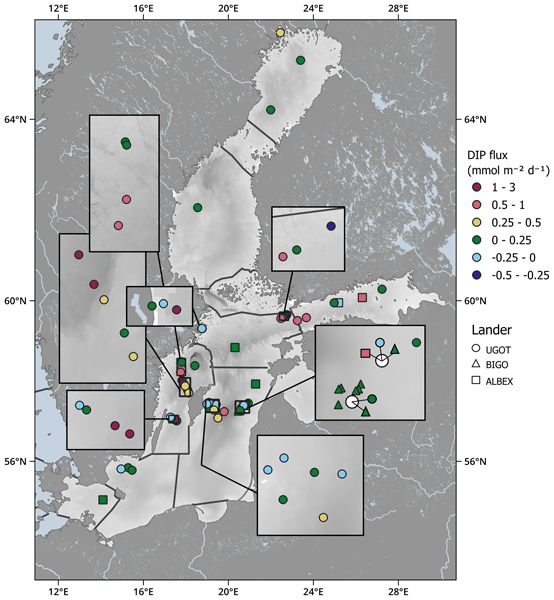
Phosphorus is an essential element for life and its cycling strongly impact primary production. Here, we present a dataset of sediment-water fluxes of dissolved inorganic phosphorus from the Baltic Sea, an area with a long history of eutrophication. The fluxes were measured in situ with three types of benthic chamber landers at 59 stations over 20 years. The data show clear spatial patterns and will be important for marine management and studies on mechanisms in benthic phosphorus cycling.
Pankan Linsy, Stefan Sommer, Jens Kallmeyer, Simone Bernsee, Florian Scholz, Habeeb Thanveer Kalapurakkal, and Andrew W. Dale
Biogeosciences, 22, 6727–6748, https://doi.org/10.5194/bg-22-6727-2025, https://doi.org/10.5194/bg-22-6727-2025, 2025
Short summary
Short summary
Bottom trawling is a fishing method that disturbs the seafloor and affects marine ecosystems. This study conducted experimental trawling and monitored biogeochemical changes over three weeks. Results showed reduced nutrient and alkalinity fluxes, decreased benthic carbon respiration, and disrupted biogeochemical processes. While the decline in alkalinity had only a minor effect on atmospheric CO2, the study highlights the lasting ecological impacts of bottom trawling.
Xuefeng Peng, David J. Yousavich, Annie Bourbonnais, Frank Wenzhöfer, Felix Janssen, Tina Treude, and David L. Valentine
Biogeosciences, 21, 3041–3052, https://doi.org/10.5194/bg-21-3041-2024, https://doi.org/10.5194/bg-21-3041-2024, 2024
Short summary
Short summary
Biologically available (fixed) nitrogen (N) is a limiting nutrient for life in the ocean. Under low-oxygen conditions, fixed N is either removed via denitrification or retained via dissimilatory nitrate reduction to ammonia (DNRA). Using in situ incubations in the Santa Barbara Basin, which undergoes seasonal anoxia, we found that benthic denitrification was the dominant nitrate reduction process, while nitrate availability and organic carbon content control the relative importance of DNRA.
De'Marcus Robinson, Anh L. D. Pham, David J. Yousavich, Felix Janssen, Frank Wenzhöfer, Eleanor C. Arrington, Kelsey M. Gosselin, Marco Sandoval-Belmar, Matthew Mar, David L. Valentine, Daniele Bianchi, and Tina Treude
Biogeosciences, 21, 773–788, https://doi.org/10.5194/bg-21-773-2024, https://doi.org/10.5194/bg-21-773-2024, 2024
Short summary
Short summary
The present study suggests that high release of ferrous iron from the seafloor of the oxygen-deficient Santa Barabara Basin (California) supports surface primary productivity, creating positive feedback on seafloor iron release by enhancing low-oxygen conditions in the basin.
David J. Yousavich, De'Marcus Robinson, Xuefeng Peng, Sebastian J. E. Krause, Frank Wenzhöfer, Felix Janssen, Na Liu, Jonathan Tarn, Franklin Kinnaman, David L. Valentine, and Tina Treude
Biogeosciences, 21, 789–809, https://doi.org/10.5194/bg-21-789-2024, https://doi.org/10.5194/bg-21-789-2024, 2024
Short summary
Short summary
Declining oxygen (O2) concentrations in coastal oceans can threaten people’s ways of life and food supplies. Here, we investigate how mats of bacteria that proliferate on the seafloor of the Santa Barbara Basin sustain and potentially worsen these O2 depletion events through their unique chemoautotrophic metabolism. Our study shows how changes in seafloor microbiology and geochemistry brought on by declining O2 concentrations can help these mats grow as well as how that growth affects the basin.
Matthew D. Eisaman, Sonja Geilert, Phil Renforth, Laura Bastianini, James Campbell, Andrew W. Dale, Spyros Foteinis, Patricia Grasse, Olivia Hawrot, Carolin R. Löscher, Greg H. Rau, and Jakob Rønning
State Planet, 2-oae2023, 3, https://doi.org/10.5194/sp-2-oae2023-3-2023, https://doi.org/10.5194/sp-2-oae2023-3-2023, 2023
Short summary
Short summary
Ocean-alkalinity-enhancement technologies refer to various methods and approaches aimed at increasing the alkalinity of seawater. This chapter explores technologies for increasing ocean alkalinity, including electrochemical-based approaches, ocean liming, accelerated weathering of limestone, hydrated carbonate addition, and coastal enhanced weathering, and suggests best practices in research and development.
Ulf Riebesell, Daniela Basso, Sonja Geilert, Andrew W. Dale, and Matthias Kreuzburg
State Planet, 2-oae2023, 6, https://doi.org/10.5194/sp-2-oae2023-6-2023, https://doi.org/10.5194/sp-2-oae2023-6-2023, 2023
Short summary
Short summary
Mesocosm experiments represent a highly valuable tool in determining the safe operating space of ocean alkalinity enhancement (OAE) applications. By combining realism and biological complexity with controllability and replication, they provide an ideal OAE test bed and a critical stepping stone towards field applications. Mesocosm approaches can also be helpful in testing the efficacy, efficiency and permanence of OAE applications.
Sebastian J. E. Krause, Jiarui Liu, David J. Yousavich, DeMarcus Robinson, David W. Hoyt, Qianhui Qin, Frank Wenzhöfer, Felix Janssen, David L. Valentine, and Tina Treude
Biogeosciences, 20, 4377–4390, https://doi.org/10.5194/bg-20-4377-2023, https://doi.org/10.5194/bg-20-4377-2023, 2023
Short summary
Short summary
Methane is a potent greenhouse gas, and hence it is important to understand its sources and sinks in the environment. Here we present new data from organic-rich surface sediments below an oxygen minimum zone off the coast of California (Santa Barbara Basin) demonstrating the simultaneous microbial production and consumption of methane, which appears to be an important process preventing the build-up of methane in these sediments and the emission into the water column and atmosphere.
Gerd Krahmann, Damian L. Arévalo-Martínez, Andrew W. Dale, Marcus Dengler, Anja Engel, Nicolaas Glock, Patricia Grasse, Johannes Hahn, Helena Hauss, Mark Hopwood, Rainer Kiko, Alexandra Loginova, Carolin R. Löscher, Marie Maßmig, Alexandra-Sophie Roy, Renato Salvatteci, Stefan Sommer, Toste Tanhua, and Hela Mehrtens
Earth Syst. Sci. Data Discuss., https://doi.org/10.5194/essd-2020-308, https://doi.org/10.5194/essd-2020-308, 2021
Preprint withdrawn
Short summary
Short summary
The project "Climate-Biogeochemistry Interactions in the Tropical Ocean" (SFB 754) was a multidisciplinary research project active from 2008 to 2019 aimed at a better understanding of the coupling between the tropical climate and ocean circulation and the ocean's oxygen and nutrient balance. On 34 research cruises, mainly in the Southeast Tropical Pacific and the Northeast Tropical Atlantic, 1071 physical, chemical and biological data sets were collected.
Cited articles
Barnes, R. O. and Goldberg, E. D.: Methane Production and Consumption in Anoxic Marine-Sediments, Geology, 4(5), 297–300, 1976.
Bayon, G., Pierre, C., Etoubleau, J., Voisset, M., Cauquil, E., Marsset, T., Sultan, N., Le Drezen, E., Fouquet, Y.: Sr/Ca and Mg/Ca ratios in Niger Delta sediments: Implications for authigenic carbonate in cold seep environments, Mar. Geol., 241, 93-109, 2007.
Berner, R. A.: Early Diagenesis – A Theoretical Approach, Princeton University Press, Princeton, NJ, 1980.
Boetius, A., Ravenschlag, K., Schubert, C. J., Rickert, D., Widdel, F., Gieseke, A., Amann, R., Jorgensen, B. B., Witte, U., and Pfannkuche, O.: A marine microbial consortium apparently mediating anaerobic oxidation of methane, Nature, 407, 623–626, 2000.
Bohrmann, G., Greinert, J., Suess, E. and Torres, M.: Authigenic carbonates from the Cascadia subduction zone and their relation to gas hydrate stability, Geology, 26, 647–650, https://doi.org/10.1130/0091-7613(1998)026< 0647:ACFTCS> 2.3.CO;2, 1998.
Bohrmann, G., Heeschen, K., Jung, C., Weinrebe, W., Baranov, B., Cailleau, B., Heath, R., Hühnerbach, V., Hort, M., Masson, D., and Trummer, I.: Widespread fluid expulsion along the seafloor of the Costa Rica convergent margin, Terra Nova, 14, 69–79, 2002.
Boudreau, B. P.: Diagenetic Models and their Implementation: Modelling Transport and Reactions in Aquatic Sediments, Springer Verlag, Berlin, 1997.
Boudreau, B. P. and Marinelli, R. L.: A modelling study of discontinuous biological irrigation, J. Mar. Res., 52, 947–968, 1994.
Bowes, H. L. and Hornibrook, E. R. C.: Emission of highly 13C-depleted methane from an upland blanket mire, Geophys. Res. Lett., 33, 1–4, 2006.
Burton, E. A. and Walter, L. M.: Relative precipitation rates of aragonite and Mg calcite from seawater: temperature or carbonate ion control?, Geology, 15, 111–114, 1987.
Burton, E. A.: Controls on marine carbonate cement mineralogy: Review and reassessment, Chem. Geol., 105, 163–179, 1993.
Capo, R. C., Stewart, B. W., and Chadwick, O. A.: Strontium isotopes as tracers of ecosystems processes: Theory and methods, Geoderma, 82, 197–225, 1998.
Chuang, P.-C., Dale, A. W., Wallmann, K., Haeckel, M., Yang, T. F., Chen, N.-C., Chen, H.-C., Chen, H.-W., Lin, S., Sun, C.-H., You, C.-F., Horng, C.-S., Wang, Y., and Chung, S.-H.: Relating sulfate and methane dynamics to geology: Accretionary prism offshore SW Taiwan, Geochem. Geophys. Geosyst., 14, 2523–2545, https://doi.org/10.1002/ggge.20168, 2013,
Cline, J. D.: Spectrophotometric determination of hydrogen sulfide in natural waters, Limnol. Oceanogr., 14, 454–458, 1969.
Curtis, C.: Mineralogical Consequences of Organic Matter Degradation in Sediments: Inorganic/Organic Diagenesis, in Marine Clastic Sedimentology, Springer Netherlands, 108–123, 1987.
Dale, A. W., Sommer, S., Haeckel, M., Wallmann, K., Linke, P., Wegener, G., and Pfannkuche, O.: Pathways and regulation of carbon, sulfur and energy transfer in marine sediments overlying methane gas hydrates on the Opouawe Bank (New Zealand), Geochim. Cosmochim. Ac., 74, 5763–5784, https://doi.org/10.1016/j.gca.2010.06.038, 2010.
Dasch, E. J.:Strontium isotopes in weathering profiles, deep-sea sediments, and sedimentary rocks, Geochim. Cosmochim. Ac., 33, 1521–1552, 1969.
De Choudens-Sánchez, V. and González, L. A.: Calcite and aragonite precipitation under controlled instantaneous supersaturation: elucidating the role of CaCO3 saturation state and $Mg/Ca$ ratio on calcium carbonate polymorphism, J. Sediment. Res., 79, 363–376, 2009.
Emrich, K., Ehhalt, D. H., and Vogel, J. C.: Carbon isotope fractionation during the precipitation of calcium carbonate, Earth Planet. Sci. Lett., 8, 363–371, 1970.
Fritz, P. and Smith, D. C. W.: The isotopic composition of secondary dolomites, Geochim. Cosmochim. Ac., 34, 1167–1173, 1970.
Goldsmith, J. R., Graf, D. L., and Heard, H. C.: Lattice constants of the calcium-magnesium carbonates, Am. Miner., 46, 453–457, 1961.
Greinert, J., Bohrmann, G., and Suess, E.: Gas Hydrate-associated carbonates and methane-venting at Hydrate Ridge?: Classification, distribution, and origin of authigenic lithologies, edited by: C. K. Paull and W. P. Dillon, Geophy. Monog. Series, 124, 9–113, AGU, Washington DC, 2001.
Grossman, E. L. and Ku, T. L.: Carbon and oxygen isotope fractionation in biogenic aragonite: temperature effects, Chem. Geol., 59, 59–74, 1986.
Haeckel, M., Boudreau, B. P., and Wallmann, K.: Bubble-induced porewater mixing: A 3-D model for deep porewater irrigation, Geochim. Cosmochim. Ac., 71, 5135–5154, https://doi.org/10.1016/j.gca.2007.08.011, 2007.
Han, X., Suess, E., Sahling, H., and Wallmann, K.: Fluid venting activity on the Costa Rica margin: new results from authigenic carbonates, Int. J. Earth Sci., 93, 596–611, https://doi.org/10.1007/s00531-004-0402-y, 2004.
Henry, P., Le Pichon, X., Lallemant, S., Lance, S., Martin, J. B., Foucher, J. P., Fiala-Médioni, A., Rostek, F., Guilhaumou, N., Pranal, V., and Castrec, M.: Fluid flow in and around a mud volcano field seaward of the Barbados accretionary wedge: Results from Manon cruise, J. Geophys. Res., 101, 297–323, 1996.
Hensen, C., Nuzzo, M., Hornibrook, E., Pinheiro, L., Bock, B., Magalhaes, V., and Bruckmann, W.: Sources of mud volcano fluids in the Gulf of Cadiz-indications for hydrothermal imprint, Geochim. Cosmochim. Ac., 71, 1232–1248, https://doi.org/10.1016/j.gca.2006.11.022, 2007.
Hensen, C. and Wallmann, K.: Methane formation at Costa Rica continental margin-constraints for gas hydrate inventories and cross-décollement fluid flow, Earth Planet. Sc. Lett., 236, 41–60, https://doi.org/10.1016/j.epsl.2005.06.007, 2005.
Hensen, C., Wallmann, K., Schmidt, M., Ranero, C. R., and Suess, E.: Fluid expulsion related to mud extrusion off Costa Rica – A window to the subducting slab, Geology, 32, 201–204, 2004.
Jørgensen, B. B.: A comparison of methods for the quantification of bacterial sulphate reduction in coastal marine sediments: I. Measurements with radiotracer techniques, Geomicrobiol. J., 1, 11–27, 1978.
Jørgensen, B. B. and Nelson, D. C.: Sulfide oxidation in marine sediments: Geochemistry meets microbiology, Geol. S. Am. S., 379, 63–81, 2004.
Joye, S. B., Boetius, A., Orcutt, B. N., Montoya, J. P., Schulz, H. N., Erickson, M. J., and Logo, S. K.: The anaerobic oxidation of methane and sulfate reduction in sediments from Gulf of Mexico cold seeps, Chem. Geol., 205, 219–238, https://doi.org/10.1016/j.chemgeo.2003.12.019, 2004.
Judd, A. G., Hovland, M., Dimitrov, L. I., Gil, S. G., and Jukes, V.: The geological methane budget at Continental Margins and its influence on climate change, Geofluids, 2, 109–126, 2002.
Kallmeyer, J., Ferdelman, T. G., Weber, A., Fossing, H., and Jørgensen, B. B.: A cold chromium distillation procedure for radiolabeled sulfide applied to sulfate reduction measurements, Limnol. Oceanogr.-Meth., 2, 171–180, 2004.
Karaca, D., Hensen, C., and Wallmann, K.: Controls on authigenic carbonate precipitation at cold seeps along the convergent margin off Costa Rica, Geochem. Geophy. Geosy., 11, 1–19, https://doi.org/10.1029/2010GC003062, 2010.
Kim, S. T. and O'Neil, J. R.: Equilibrium and nonequilibrium oxygen isotope effects in synthetic carbonates, Geochim. Cosmochim. Ac., 61, 3461–3475, 1997.
Klaucke, I., Masson, D. G., Petersen, C. J., Weinrebe, W., and Ranero, C. R.: Multifrequency geoacoustic imaging of fluid escape structures offshore Costa Rica: Implications for the quantification of seep processes, Geochem. Geophy. Geosy., 9, Q04010, https://doi.org/10.1029/2007GC001708, 2008.
Kopf, A. J.:Significance of mud volcanism, Rev. Geophys., 40, 1005, https://doi.org/10.1029/2000RG000093, 2002.
Krause. S., Liebetrau, V., Gorb, S., Sánchez-Román, M., McKenzie, J. A., and Treude, T.:Microbial nucleation of Mg-rich dolomite in exopolymeric substances under modern seawater salinity: New insight into an old enigma, Geology, 40, 587–590, 2012.
Krüger, M., Treude, T., Wolters, H., Nauhaus, K., and Boetius, A.: Microbial methane turnover in different marine habitats, Palaeogeogr. Palaeocl., 227, 6–17, https://doi.org/10.1016/j.palaeo.2005.04.031, 2005.
Kutterolf, S., Liebetrau, V., Mörz, T., Freundt, A., Hammerich, T., and Garbe-Schönberg, D.: Lifetime and cyclicity of fluid venting at forearc mound structures determined by tephrostratigraphy and radiometric dating of authigenic carbonates, Geology, 36, 707, https://doi.org/10.1130/G24806A.1, 2008.
Linke, P., Wallmann, K., Suess, E., Hensen, C., and Rehder, G.: In situ benthic fluxes from an intermittently active mud volcano at the Costa Rica convergent margin, Earth Planetary Sc. Lett., 235, 79–95, https://doi.org/10.1016/j.epsl.2005.03.009, 2005.
Mau, S., Sahling, H., Rehder, G., Suess, E., Linke, P., and Soeding, E.: Estimates of methane output from mud extrusions at the erosive convergent margin off Costa Rica, Mar. Geol., 225, 129–144, 2006.
Mavromatis, V., Botz, R., Schmidt, M., Liebetrau, V., and Hensen, C.: Formation of carbonate concretions in surface sediments of two mud mounds, offshore Costa Rica – a stable isotope study, Int. J. Earth Sc., 1–14, https://doi.org/10.1007/s00531-012-0843-7, 2012.
McArthur, J. M., Thirlwall, M. F., Engkilde, M., Zinsmeister, W. J., and Howarth, R. J.: Strontium isotope profiles across K/T boundary sequences in Denmark and Antarctica, Earth Planetary Sci. Lett., 160, 179–192, https://doi.org/10.1016/S0012-821X(98)00058-2, 1998.
McAullife, C.: GC Determination of solutes by multiple phase equilibration, Chemical Technolgy, 1, 46–51, 1971.
Mörz, T., Fekete, N., Kopf, A. J., Brueckmann, W., Kreiter, S., Huehnerbach, V., Masson, D. G., Hepp, D. A., Schmidt, M., Kutterolf, S., Sahling, H., Abegg, F., Spiess, V., Suess, E., and Ranero, C. R.: Styles and productivity of mud diapirism along the Middle American Margin, Part II, Mound Culebra and Mounds 11 and 12, in Mud volcanoes, geodynamics and seismicity, edited by: G. Martinelli and B. Panahi, 49–76, Springer, Dordrecht, the Netherlands, 2005.
Naehr, T. H., Eichhubl, P., Orphan, V. J., Hovland, M., Paull, C. K., Ussler, W., Lorenson, T. D., and Greene, H. G.: Authigenic carbonate formation at hydrocarbon seeps in continental margin sediments: A comparative study, Deep-Sea Res. Pt. I, 54, 1268–1291, 2007.
Niemann, H., Lösekann, T., De Beer, D., Elvert, M., Nadalig, T., Knittel, K., Amann, R., Sauter, E. J., Schlüter, M., Klages, M., Foucher, J. P., and Boetius, A.: Novel microbial communities of the Haakon Mosby mud volcano and their role as a methane sink., Nature, 443, 7113, https://doi.org/10.1038/nature05227, 2006.
Peckmann, J., Reimer, A., Luth, U., Luth, C., Hansen, B. T., Heinicke, C., Hoefs, J., and Reitner, J.: Methane-derived carbonates and authigenic pyrite from the northwestern Black Sea, Mar. Geol., 177, 129–150, 2001.
Pierre, C., Blanc-Valleron, M.-M., Demange, J., Boudouma, O., Foucher, J.-P., Pape, T., Himmler, T., Fekete, N., and Spiess, V.:Authigenic carbonates from active methane seeps offshore southwest Africa, Geo-Mar. Lett., 32, 501–513, 2012.
Ranero, C. R., Grevemeyer, I., Sahling, H., Barckhausen, U., Hensen, C., Wallmann, K., Weinrebe, W., Vannucchi, P., von Huene, R. & McIntosh, K.: Hydrogeological system of erosional convergent margins and its influence on tectonics and interplate seismogenesis, Geochem. Geophy., 9, Q03S04, https://doi.org/10.1029/2007GC001679, 2008.
Ranero, C. R. and Von Huene, R.: Subduction erosion along the Middle America convergent margin, Nature, 404, 748–52, https://doi.org/10.1038/35008046, 2000.
Saffer, D. M. and Tobin, H. J.: Hydrogeology and mechanics of subduction zone forearcs: Fluid flow and pore pressure, Annu. Rev. Earth Pl. Sc., 39, 157–186, 2011.
Schmidt, M., Hensen, C., Mörz, T., Müller, C., Grevemeyer, I., Wallmann, K., Maub, S., and Kaule, N.: Methane hydrate accumulation in "Mound 11" mud volcano, Costa Rica forearc, Mar. Geol., 216, 83–100, 2005.
Schoell, M.: Multiple origins of methane in the Earth, Chem. Geol., 71, 1–10, https://doi.org/10.1016/0009-2541(88)90101-5, 1988.
Scholz, F., Hensen, C., De Lange, G. J., Haeckel, M., Liebetrau, V., Meixner, A., Reitz, A., and Romer, R. L.: Lithium isotope geochemistry of marine pore waters – Insights from cold seep fluids, Geochim. Cosmochim. Ac., 74, 3459–3475, 2010.
Silver, E., Kastner, M., Fisher, A., Morris, J., McIntosh, K., and Saffer, D.: Fluid flow paths in the Middle America Trench and Costa Rica margin, Geology, 28, 679–682, 2000.
Soeding, E., Wallmann, K., Suess, E., Fluh., E.: FS Meteor cruise report M 54/2-3:Caldera-Curacao: GEOMAR Report 111, 366 pp., 2003.
Spiker, E. C. and Hatcher, P. G.: Carbon isotope fractionation of sapropelic organic matter during early diagenesis, Org. Geochem., 5, 283–290, 1984.
Suess, E.: Gashydrat – Eine Verbindung aus Methan und Wasser, Nova Ac. Lc., 85, 123–146, 2002.
Suess, E.: Handbook of hydrocarbon and lipid microbiology, edited by: Timmis, K. N., Springer-Verlag, Berlin, Heidelberg, 2010.
Tarutani, T., Clayton, R. N., and Mayeda, T. K.: The effect of polymorphism and magnesium substitution of oxygen isotope fractionation between calcium carbonate and water, Geochim. Cosmochim. Ac., 33, 987–996, 1969.
Thauer, R. K.: Biochemistry of Methanogenesis: a Tribute to Marjory Stephenson, Microbiology, 144, 2377–2406, 1998.
Tishchenko, P., Hensen, C., Wallmann, K., and Wong, C. S.: Calculation of the stability and solubility of methane hydrate in seawater, Chem. Geol., 219, 37–52, 2005.
Torres, M. E., Wallmann, K., Tréhu, a. M., Bohrmann, G., Borowski, W. S., and Tomaru, H.: Gas hydrate growth, methane transport, and chloride enrichment at the southern summit of Hydrate Ridge, Cascadia margin off Oregon, Earth Planet. Sc. Lett., 226, 225–241, https://doi.org/10.1016/j.epsl.2004.07.029, 2004.
Treude, T., Boetius, A., Knittel, K., Wallmann, K., and Barker Jørgensen, B.: Anaerobic oxidation of methane above gas hydrates at Hydrate Ridge, NE Pacific Ocean, Mar. Ecol.-Prog. Ser., 264, 1–14, https://doi.org/10.3354/meps264001, 2003.
Treude, T., Kru, M., and Jørgensen, B. B.: Environmental control on anaerobic oxidation of methane in the gassy sediments of Eckernförde Bay (German Baltic), Limnol. Oceanogr., 50, 1771–1786, 2005.
Wallmann, K., Aloisi, G., Haeckel, M., Tishchenko, P., Pavlova, G., Greinert, J., Kutterolf, S., and Eisenhauer, A: Silicate weathering in anoxic marine sediments, Geochim. Cosmochim. Ac., 72, 2895–2918, https://doi.org/10.1016/j.gca.2008.03.026, 2008.
Wallmann, K., Drews, M., Aloisi, G., and Bohrmann, G.: Methane discharge into the Black Sea and the global ocean via fluid flow through submarine mud volcanoes, Earth Planet. Sc. Lett., 248, 545–560, https://doi.org/10.1016/j.epsl.2006.06.026, 2006.
Whiticar, M. J.: Carbon and hydrogen isotope systematics of bacterial formation and oxidation of methane, Chem. Geol., 161, 291–314, 1999.
Altmetrics
Final-revised paper
Preprint