
Articles | Volume 23, issue 10
https://doi.org/10.5194/bg-23-3567-2026
© Author(s) 2026. This work is distributed under
the Creative Commons Attribution 4.0 License.
the Creative Commons Attribution 4.0 License.
https://doi.org/10.5194/bg-23-3567-2026
© Author(s) 2026. This work is distributed under
the Creative Commons Attribution 4.0 License.
the Creative Commons Attribution 4.0 License.
Research article
| 
22 May 2026
Research article |
| 22 May 2026
| 22 May 2026
The effects of peat thickness and water table depth on CO2 and N2O emissions from agricultural peatlands – a process-based modelling approach

Finnish Meteorological Institute, Climate System Research, Helsinki, Finland
Stephanie Gerin
Finnish Meteorological Institute, Climate System Research, Helsinki, Finland
Milla Niiranen
Natural Resources Institute Finland (Luke), Production Systems Unit, Oulu, Finland
Miika Läpikivi
Natural Resources Institute Finland (Luke), Production Systems Unit, Oulu, Finland
University of Oulu, Water, Energy and Environmental Engineering Research Unit, Oulu, Finland
Maarit Liimatainen
Natural Resources Institute Finland (Luke), Production Systems Unit, Oulu, Finland
University of Oulu, Water, Energy and Environmental Engineering Research Unit, Oulu, Finland
David Kraus
Karlsruhe Institute of Technology, Institute of Meteorology and Climate Research, Garmisch-Partenkirchen, Germany
Henriikka Vekuri
Finnish Meteorological Institute, Climate System Research, Helsinki, Finland
Mika Korkiakoski
Finnish Meteorological Institute, Climate System Research, Helsinki, Finland
Liisa Kulmala
Finnish Meteorological Institute, Climate System Research, Helsinki, Finland
Jari Liski
Finnish Meteorological Institute, Climate System Research, Helsinki, Finland
Julius Vira
Finnish Meteorological Institute, Climate System Research, Helsinki, Finland
Related authors
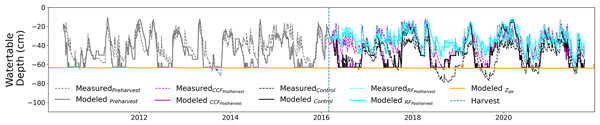
Ahmed Hasan Shahriyer, David Kraus, Tiina Markkanen, Mika Korkiakoski, Helena Rautakoski, Suvi Orttenvuori, Yao Gao, Henri Kajasilta, Rüdiger Grote, Annalea Lohila, and Tuula Aalto
Geosci. Model Dev., 19, 8815–8838, https://doi.org/10.5194/gmd-19-8815-2026, https://doi.org/10.5194/gmd-19-8815-2026, 2026
Short summary
Short summary
Using the process-based model LandscapeDNDC, we successfully simulated the hydrological and carbon-cycle responses of a drained peatland ecosystem under control, rotational forestry and continuous cover forestry management. The developed framework provides a valuable tool for evaluating future management scenarios and supporting the development of forest management strategies aimed at achieving climate neutrality in peatland ecosystems.
Miika Läpikivi, Maarit Liimatainen, Milla Niiranen, Valtteri Hyöky, Hermanni Aaltonen, Bjørn Kløve, and Hannu Marttila
EGUsphere, https://doi.org/10.5194/egusphere-2026-5602, https://doi.org/10.5194/egusphere-2026-5602, 2026
This preprint is open for discussion and under review for Hydrology and Earth System Sciences (HESS).
Short summary
Short summary
This paper utilized field-scale measurements of greenhouse gases and nutrients in drainage water. Nitrogen losses through the drainage were highly seasonal, are affected by the drainage management and the peat depth within the field. Increased greenhouse gas concentrations were observed with increased concentration in drainage water was observed only during the grassland renewal. The results show that management actions can have meaningful impact to mitigate impacts of managed peatlands.
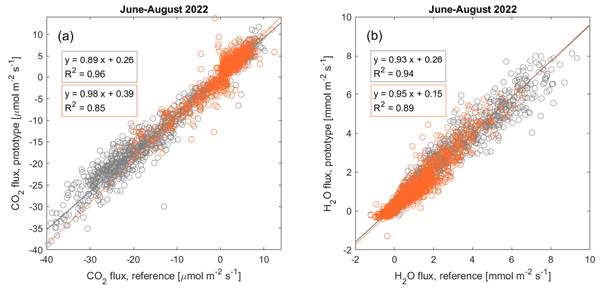
Üllar Rannik, Ivan Mammarella, Timo Vesala, Pirkko Väkimies, Hilkka Heiskari-Tuohiniemi, and Mika Korkiakoski
Atmos. Meas. Tech., 19, 6159–6169, https://doi.org/10.5194/amt-19-6159-2026, https://doi.org/10.5194/amt-19-6159-2026, 2026
Short summary
Short summary
We present a case study that aimed to develop an inexpensive yet precise fast-response carbon dioxide and water vapour sensor. A working prototype was developed and field-tested against a scientific eddy covariance setup. Attention was paid to internal auto-calibration procedure such that signal drifting was avoided and the instrument was capable of measuring fluxes with high correlation relative to the reference setup.
Ahmed Hasan Shahriyer, David Kraus, Tiina Markkanen, Mika Korkiakoski, Helena Rautakoski, Suvi Orttenvuori, Yao Gao, Henri Kajasilta, Rüdiger Grote, Annalea Lohila, and Tuula Aalto
Geosci. Model Dev., 19, 8815–8838, https://doi.org/10.5194/gmd-19-8815-2026, https://doi.org/10.5194/gmd-19-8815-2026, 2026
Short summary
Short summary
Using the process-based model LandscapeDNDC, we successfully simulated the hydrological and carbon-cycle responses of a drained peatland ecosystem under control, rotational forestry and continuous cover forestry management. The developed framework provides a valuable tool for evaluating future management scenarios and supporting the development of forest management strategies aimed at achieving climate neutrality in peatland ecosystems.
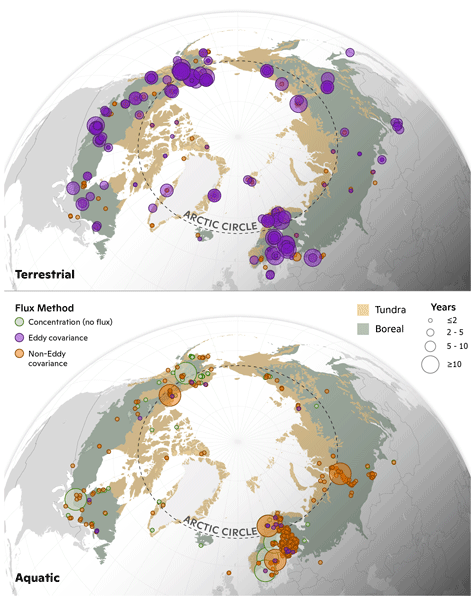
Anna-Maria Virkkala, Isabel Wargowsky, Judith Vogt, McKenzie A. Kuhn, Simran Madaan, Tiffany Windholz, Kyle A. Arndt, Gerard Rocher-Ros, Mathias Göckede, David Olefeldt, Edward A. G. Schuur, David Bastviken, Richard O'Keefe, Brendan M. Rogers, Jennifer D. Watts, Kelcy Kent, Kristoffer Aalstad, Kelly Aho, Joonatan Ala-Könni, Haley Alcock, Inge Althuizen, Christopher D. Arp, Jun Asanuma, Mika Aurela, Sivakiruthika Balathandayuthabani, Katrin Attermeyer, Alan Barr, Maialen Barret, Ochirbat Batkhishig, Christina Biasi, Mats P. Björkman, Andrew Black, Elena Blanc-Betes, Pascal Bodmer, Julia Boike, Abdullah Bolek, Frédéric Bouchard, Ingeborg Bussmann, Lea Cabrol, Eleonora Canfora, Sean Carey, Karel Castro-Morales, Namyi Chae, Andreas Christen, Torben R. Christensen, Casper T. Christiansen, Housen Chu, Graham Clark, Francois Clayer, Patrick Crill, Christopher Cunada, Scott J. Davidson, Joshua F. Dean, Sigrid Dengel, Matteo Detto, Catherine Dieleman, Florent Domine, Egor Dyukarev, Colin Edgar, Bo Elberling, Craig A. Emmerton, Eugenie Euskirchen, Grant Falvo, Thomas Friborg, Michelle Garneau, Mariasilvia Giamberini, Mikhail V. Glagolev, Miquel A. Gonzalez-Meler, Gustaf Granath, Jón Guðmundsson, Konsta Happonen, Yoshinobu Harazono, Lorna Harris, Josh Hashemi, Nicholas Hasson, Janna Heerah, Liam Heffernan, Manuel Helbig, Warren Helgason, Michal Heliasz, Greg Henry, Geert Hensgens, Tetsuya Hiyama, Beth Holmes, Macall Hock, David Holl, Jutta Holst, Thomas Holst, Gabriel Hould-Gosselin, Elyn Humphreys, Jacqueline Hung, Jussi Huotari, Hiroki Ikawa, Danil V. Ilyasov, Mamoru Ishikawa, Go Iwahana, Hiroki Iwata, Marcin Antoni Jackowicz-Korczynski, Joachim Jansen, Järvi Järveoja, Vincent E. J. Jassey, Rasmus Jensen, Katharina Jentzsch, Robert G. Jespersen, Carl-Fredrik Johannesson, Cheristy P. Jones, Anders Jonsson, Ji Young Jung, Sari Juutinen, Evan Kane, Jan Karlsson, Sergey Karsanaev, Kuno Kasak, Julia Kelly, Kasha Kempton, Marcus Klaus, George W. Kling, Natascha Kljun, Jacqueline Knutson, Hideki Kobayashi, John Kochendorfer, Kukka-Maaria Kohonen, Pasi Kolari, Mika Korkiakoski, Aino Korrensalo, Pirkko Kortelainen, Egle Koster, Kajar Koster, Ayumi Kotani, Praveena Krishnan, Juliya Kurbatova, Lars Kutzbach, Min Jung Kwon, Ethan D. Kyzivat, Jessica Lagroix, Theodore Langhorst, Elena Lapshina, Tuula Larmola, Klaus S. Larsen, Isabelle Laurion, Justin Ledman, Hanna Lee, A. Joshua Leffler, Lance Lesack, Anders Lindroth, David Lipson, Annalea Lohila, Efrén López-Blanco, Vincent L. St. Louis, Erik Lundin, Miska Luoto, Takashi Machimura, Marta Magnani, Avni Malhotra, Marja Maljanen, Ivan Mammarella, Elisa Männistö, Luca Belelli Marchesini, Phil Marsh, Pertti J. Martikainen, Maija E. Marushchak, Mikhail Mastepanov, Alex Mavrovic, Trofim Maximov, Christina Minions, Daniel F. Nadeau, Marco Montemayor, Tomoaki Morishita, Patrick Murphy, Erin Nicholls, Mats B. Nilsson, Anastasia Niyazova, Jenni Nordén, Koffi Dodji Noumonvi, Hannu Nykänen, Walter Oechel, Anne Ojala, Tomohiro Okadera, Sujan Pal, Alexey V. Panov, Tim Papakyriakou, Dario Papale, Sang-Jong Park, Frans-Jan W. Parmentier, Gilberto Pastorello, Mike Peacock, Matthias Peichl, Roman Petrov, Kyra St. Pierre, Norbert Pirk, Jessica Plein, Vilmantas Preskienis, Anatoly Prokushkin, Jukka Pumpanen, Hilary A. Rains, Niklas Rakos, Aleksi Räsänen, Helena Rautakoski, Riikka Rinnan, Janne Rinne, Adrian Rocha, Nigel Roulet, Alexandre Roy, Anna Rutgersson, Aleksandr F. Sabrekov, Torsten Sachs, Erik Sahlée, Alejandro Salazar, Henrique Oliveira Sawakuchi, Christopher Schulze, Roger Seco, Armando Sepulveda-Jauregui, Svetlana Serikova, Abbey Serrone, Hanna M. Silvennoinen, Sofie Sjogersten, June Skeeter, Jo Snöälv, Sebastian Sobek, Oliver Sonnentag, Emily H. Stanley, Maria Strack, Lena Strom, Patrick Sullivan, Ryan Sullivan, Anna Sytiuk, Torbern Tagesson, Pierre Taillardat, Julie Talbot, Suzanne E. Tank, Mario Tenuta, Irina Terenteva, Frederic Thalasso, Antoine Thiboult, Halldor Thorgeirsson, Fenix Garcia Tigreros, Margaret Torn, Amy Townsend-Small, Claire Treat, Alain Tremblay, Carlo Trotta, Eeva-Stiina Tuittila, Merritt Turetsky, Masahito Ueyama, Muhammad Umair, Aki Vähä, Lona van Delden, Maarten van Hardenbroek, Andrej Varlagin, Ruth K. Varner, Tarmo Virtanen, Elena Veretennikova, Timo Vesala, Carolina Voigt, Jorien E. Vonk, Robert Wagner, Katey Walter Anthony, Qinxue Wang, Masataka Watanabe, Hailey Webb, Jeffrey M. Welker, Andreas Westergaard-Nielsen, Sebastian Westermann, Jeffrey R. White, Christian Wille, Scott N. Williamson, Scott Zolkos, Donatella Zona, and Susan M. Natali
Earth Syst. Sci. Data, 18, 6357–6409, https://doi.org/10.5194/essd-18-6357-2026, https://doi.org/10.5194/essd-18-6357-2026, 2026
Short summary
Short summary
This dataset includes monthly measurements of carbon dioxide and methane exchange between land, water, and the atmosphere from over 1000 sites in Arctic and boreal regions. It combines measurements from a variety of ecosystems, including wetlands, forests, tundra, lakes, and rivers, gathered by over 260 researchers from 1984–2024. This dataset can be used to improve and reduce uncertainty in carbon budgets in order to strengthen our understanding of climate feedbacks in a warming world.
Andrew Smerald, Hannes Imhof, Edwin Haas, David Kraus, Lioba Martin, Kathrin Fuchs, John Akubia, Ali Sakhaee, Cora Vos, Roland Fuß, Clemens Scheer, and Ralf Kiese
EGUsphere, https://doi.org/10.5194/egusphere-2026-4010, https://doi.org/10.5194/egusphere-2026-4010, 2026
Short summary
Short summary
Countries produce a yearly greenhouse gas inventory that is used to monitor and design climate policies. Agricultural N2O emissions are especially uncertain, due to measurement difficulties. Using a process-based model combined with high resolution management data we show that, in comparison with current methods, N2O emissions can be mapped with high spatial and temporal resolution.
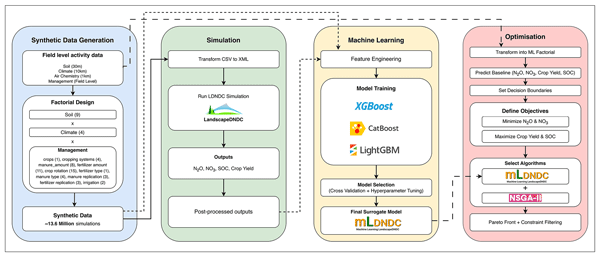
Meshach Ojo Aderele, Edwin Haas, Licheng Liu, João Serra, David Kraus, Klaus Butterbach-Bahl, and Jaber Rahimi
Geosci. Model Dev., 19, 6335–6356, https://doi.org/10.5194/gmd-19-6335-2026, https://doi.org/10.5194/gmd-19-6335-2026, 2026
Short summary
Short summary
This study develops a fast, data‑driven tool to virtually test millions of ways to manage winter wheat fields in Denmark, without running slow process-based crop models each time. It finds fertilizer, residue, manure, catch crop and irrigation strategies that cut nitrogen pollution and greenhouse gases while increasing yields and soil carbon, all without using more fertilizer overall.
Hui Tang, Samuli Launianen, Julius Vira, Liisa Kulmala, Taru Palosuo, Hermanni Aaltonen, Olli Nevalainen, Istem Fer, Henriikka Vekuri, Jari-Pekka Nousu, Mika Korkiakoski, and Jari Liski
EGUsphere, https://doi.org/10.5194/egusphere-2025-5972, https://doi.org/10.5194/egusphere-2025-5972, 2025
Short summary
Short summary
We present a modelling approach to study how crops in northern climates deal with water stress. By combining several years of field measurements with the modelling approach, we show that both oat and forage grasses use water cautiously, helping them preserve enough soil water to stay productive during dry periods. Our results highlight the need to better understand how northern crops use water for improving their food production in the future, when more frequent and severe drought will occur.
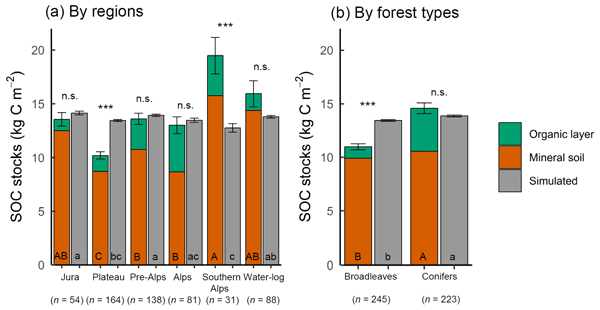
Claudia Guidi, Sia Gosheva-Oney, Markus Didion, Roman Flury, Lorenz Walthert, Stephan Zimmermann, Brian J. Oney, Pascal A. Niklaus, Esther Thürig, Toni Viskari, Jari Liski, and Frank Hagedorn
Biogeosciences, 22, 4107–4122, https://doi.org/10.5194/bg-22-4107-2025, https://doi.org/10.5194/bg-22-4107-2025, 2025
Short summary
Short summary
Predicting soil organic carbon (SOC) stocks in forests is crucial to determining the C balance, yet drivers of SOC stocks remain uncertain at large scales. Across a broad environmental gradient in Switzerland, we compared measured SOC stocks with those modeled by Yasso, which is commonly used for greenhouse gas budgets. We show that soil mineral properties and climate are the main controls of SOC stocks, indicating that better accounting of these processes will advance the accuracy of SOC stock predictions.
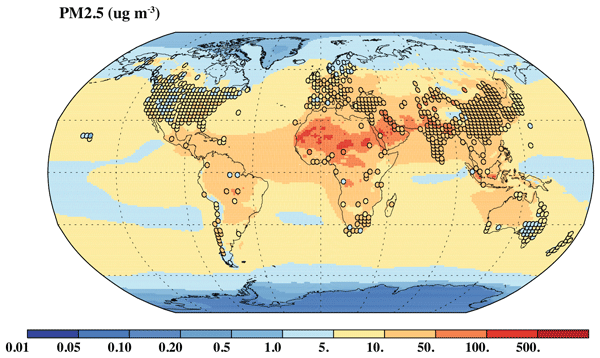
Natalie M. Mahowald, Longlei Li, Julius Vira, Marje Prank, Douglas S. Hamilton, Hitoshi Matsui, Ron L. Miller, P. Louis Lu, Ezgi Akyuz, Daphne Meidan, Peter Hess, Heikki Lihavainen, Christine Wiedinmyer, Jenny Hand, Maria Grazia Alaimo, Célia Alves, Andres Alastuey, Paulo Artaxo, Africa Barreto, Francisco Barraza, Silvia Becagli, Giulia Calzolai, Shankararaman Chellam, Ying Chen, Patrick Chuang, David D. Cohen, Cristina Colombi, Evangelia Diapouli, Gaetano Dongarra, Konstantinos Eleftheriadis, Johann Engelbrecht, Corinne Galy-Lacaux, Cassandra Gaston, Dario Gomez, Yenny González Ramos, Roy M. Harrison, Chris Heyes, Barak Herut, Philip Hopke, Christoph Hüglin, Maria Kanakidou, Zsofia Kertesz, Zbigniew Klimont, Katriina Kyllönen, Fabrice Lambert, Xiaohong Liu, Remi Losno, Franco Lucarelli, Willy Maenhaut, Beatrice Marticorena, Randall V. Martin, Nikolaos Mihalopoulos, Yasser Morera-Gómez, Adina Paytan, Joseph Prospero, Sergio Rodríguez, Patricia Smichowski, Daniela Varrica, Brenna Walsh, Crystal L. Weagle, and Xi Zhao
Atmos. Chem. Phys., 25, 4665–4702, https://doi.org/10.5194/acp-25-4665-2025, https://doi.org/10.5194/acp-25-4665-2025, 2025
Short summary
Short summary
Aerosol particles are an important part of the Earth system, but their concentrations are spatially and temporally heterogeneous, as well as being variable in size and composition. Here, we present a new compilation of PM2.5 and PM10 aerosol observations, focusing on the spatial variability across different observational stations, including composition, and demonstrate a method for comparing the data sets to model output.
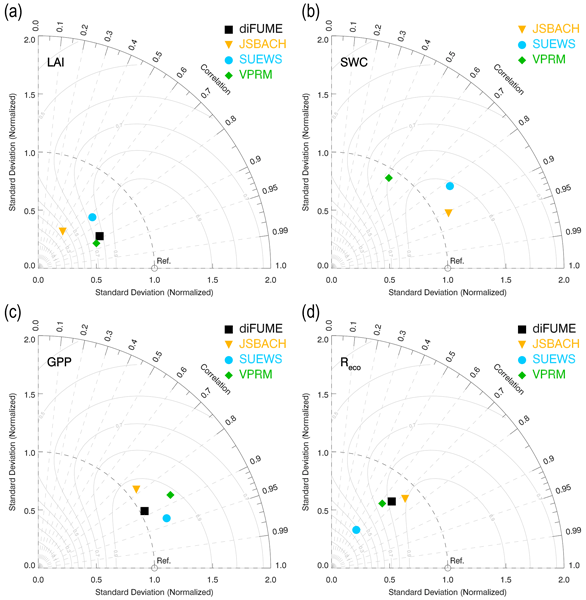
Stavros Stagakis, Dominik Brunner, Junwei Li, Leif Backman, Anni Karvonen, Lionel Constantin, Leena Järvi, Minttu Havu, Jia Chen, Sophie Emberger, and Liisa Kulmala
Biogeosciences, 22, 2133–2161, https://doi.org/10.5194/bg-22-2133-2025, https://doi.org/10.5194/bg-22-2133-2025, 2025
Short summary
Short summary
The balance between CO2 uptake and emissions from urban green areas is still not well understood. This study evaluated for the first time the urban park CO2 exchange simulations with four different types of biosphere model by comparing them with observations. Even though some advantages and disadvantages of the different model types were identified, there was no strong evidence that more complex models performed better than simple ones.
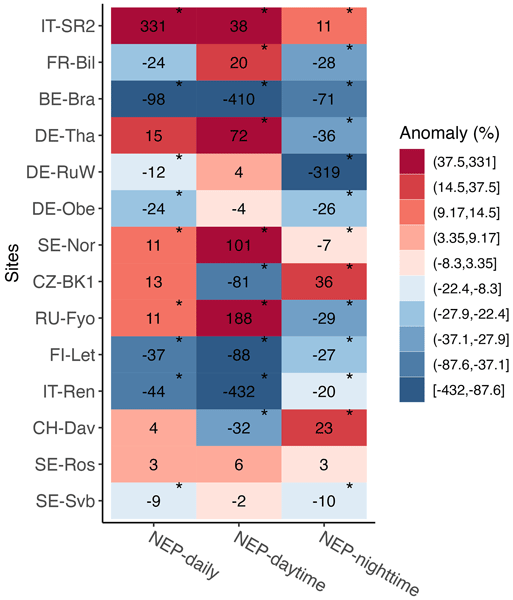
Mana Gharun, Ankit Shekhar, Lukas Hörtnagl, Luana Krebs, Nicola Arriga, Mirco Migliavacca, Marilyn Roland, Bert Gielen, Leonardo Montagnani, Enrico Tomelleri, Ladislav Šigut, Matthias Peichl, Peng Zhao, Marius Schmidt, Thomas Grünwald, Mika Korkiakoski, Annalea Lohila, and Nina Buchmann
Biogeosciences, 22, 1393–1411, https://doi.org/10.5194/bg-22-1393-2025, https://doi.org/10.5194/bg-22-1393-2025, 2025
Short summary
Short summary
The effect of winter warming on forest CO2 fluxes has rarely been investigated. We tested the effect of the warm winter of 2020 on the forest CO2 fluxes across 14 sites in Europe and found that the net ecosystem productivity (NEP) across most sites declined during the warm winter due to increased respiration fluxes.
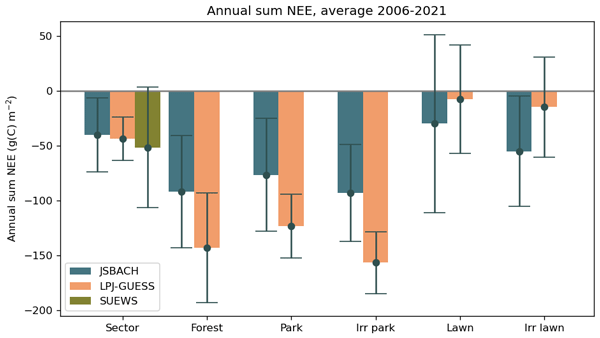
Laura Thölix, Leif Backman, Minttu Havu, Esko Karvinen, Jesse Soininen, Justine Trémeau, Olli Nevalainen, Joyson Ahongshangbam, Leena Järvi, and Liisa Kulmala
Biogeosciences, 22, 725–749, https://doi.org/10.5194/bg-22-725-2025, https://doi.org/10.5194/bg-22-725-2025, 2025
Short summary
Short summary
Cities aim for carbon neutrality and seek to understand urban vegetation's role as a carbon sink. Direct measurements are challenging, so models are used to estimate the urban carbon cycle. We evaluated model performance at estimating carbon sequestration in lawns, park trees, and urban forests in Helsinki, Finland. Models captured seasonal and annual variations well. Trees had higher sequestration rates than lawns, and irrigation often enhanced carbon sinks.
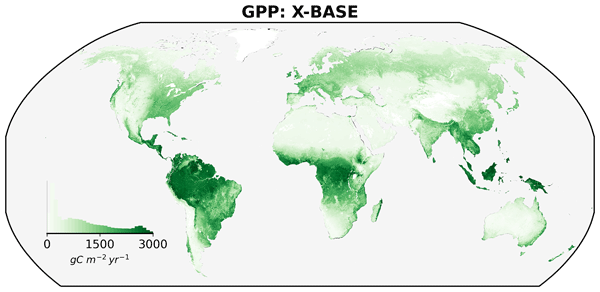
Jacob A. Nelson, Sophia Walther, Fabian Gans, Basil Kraft, Ulrich Weber, Kimberly Novick, Nina Buchmann, Mirco Migliavacca, Georg Wohlfahrt, Ladislav Šigut, Andreas Ibrom, Dario Papale, Mathias Göckede, Gregory Duveiller, Alexander Knohl, Lukas Hörtnagl, Russell L. Scott, Jiří Dušek, Weijie Zhang, Zayd Mahmoud Hamdi, Markus Reichstein, Sergio Aranda-Barranco, Jonas Ardö, Maarten Op de Beeck, Dave Billesbach, David Bowling, Rosvel Bracho, Christian Brümmer, Gustau Camps-Valls, Shiping Chen, Jamie Rose Cleverly, Ankur Desai, Gang Dong, Tarek S. El-Madany, Eugenie Susanne Euskirchen, Iris Feigenwinter, Marta Galvagno, Giacomo A. Gerosa, Bert Gielen, Ignacio Goded, Sarah Goslee, Christopher Michael Gough, Bernard Heinesch, Kazuhito Ichii, Marcin Antoni Jackowicz-Korczynski, Anne Klosterhalfen, Sara Knox, Hideki Kobayashi, Kukka-Maaria Kohonen, Mika Korkiakoski, Ivan Mammarella, Mana Gharun, Riccardo Marzuoli, Roser Matamala, Stefan Metzger, Leonardo Montagnani, Giacomo Nicolini, Thomas O'Halloran, Jean-Marc Ourcival, Matthias Peichl, Elise Pendall, Borja Ruiz Reverter, Marilyn Roland, Simone Sabbatini, Torsten Sachs, Marius Schmidt, Christopher R. Schwalm, Ankit Shekhar, Richard Silberstein, Maria Lucia Silveira, Donatella Spano, Torbern Tagesson, Gianluca Tramontana, Carlo Trotta, Fabio Turco, Timo Vesala, Caroline Vincke, Domenico Vitale, Enrique R. Vivoni, Yi Wang, William Woodgate, Enrico A. Yepez, Junhui Zhang, Donatella Zona, and Martin Jung
Biogeosciences, 21, 5079–5115, https://doi.org/10.5194/bg-21-5079-2024, https://doi.org/10.5194/bg-21-5079-2024, 2024
Short summary
Short summary
The movement of water, carbon, and energy from the Earth's surface to the atmosphere, or flux, is an important process to understand because it impacts our lives. Here, we outline a method called FLUXCOM-X to estimate global water and CO2 fluxes based on direct measurements from sites around the world. We go on to demonstrate how these new estimates of net CO2 uptake/loss, gross CO2 uptake, total water evaporation, and transpiration from plants compare to previous and independent estimates.

Jari-Pekka Nousu, Kersti Leppä, Hannu Marttila, Pertti Ala-aho, Giulia Mazzotti, Terhikki Manninen, Mika Korkiakoski, Mika Aurela, Annalea Lohila, and Samuli Launiainen
Hydrol. Earth Syst. Sci., 28, 4643–4666, https://doi.org/10.5194/hess-28-4643-2024, https://doi.org/10.5194/hess-28-4643-2024, 2024
Short summary
Short summary
We used hydrological models, field measurements, and satellite-based data to study the soil moisture dynamics in a subarctic catchment. The role of groundwater was studied with different ways to model the groundwater dynamics and via comparisons to the observational data. The choice of groundwater model was shown to have a strong impact, and representation of lateral flow was important to capture wet soil conditions. Our results provide insights for ecohydrological studies in boreal regions.
Carolin Boos, Sophie Reinermann, Raul Wood, Ralf Ludwig, Anne Schucknecht, David Kraus, and Ralf Kiese
EGUsphere, https://doi.org/10.5194/egusphere-2024-2864, https://doi.org/10.5194/egusphere-2024-2864, 2024
Preprint archived
Short summary
Short summary
We applied a biogeochemical model on grasslands in the pre-Alpine Ammer region in Germany and analyzed the influence of soil and climate on annual yields. In drought affected years, total yields were decreased by 4 %. Overall, yields decrease with rising elevation, but less so in drier and hotter years, whereas soil organic carbon has a positive impact on yields, especially in drier years. Our findings imply, that adapted management in the region allows to mitigate yield losses from drought.
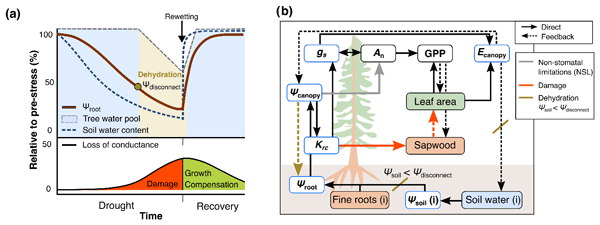
Daniel Nadal-Sala, Rüdiger Grote, David Kraus, Uri Hochberg, Tamir Klein, Yael Wagner, Fedor Tatarinov, Dan Yakir, and Nadine K. Ruehr
Biogeosciences, 21, 2973–2994, https://doi.org/10.5194/bg-21-2973-2024, https://doi.org/10.5194/bg-21-2973-2024, 2024
Short summary
Short summary
A hydraulic model approach is presented that can be added to any physiologically based ecosystem model. Simulated plant water potential triggers stomatal closure, photosynthesis decline, root–soil resistance increases, and sapwood and foliage senescence. The model has been evaluated at an extremely dry site stocked with Aleppo pine and was able to represent gas exchange, soil water content, and plant water potential. The model also responded realistically regarding leaf senescence.
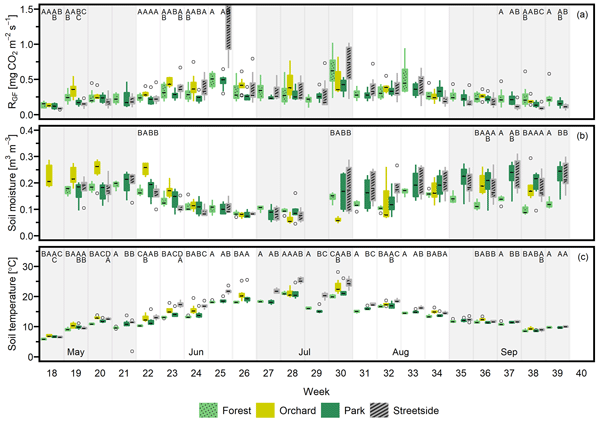
Esko Karvinen, Leif Backman, Leena Järvi, and Liisa Kulmala
SOIL, 10, 381–406, https://doi.org/10.5194/soil-10-381-2024, https://doi.org/10.5194/soil-10-381-2024, 2024
Short summary
Short summary
We measured and modelled soil respiration, a key part of the biogenic carbon cycle, in different urban green space types to assess its dynamics in urban areas. We discovered surprisingly similar soil respiration across the green space types despite differences in some of its drivers and that irrigation of green spaces notably elevates soil respiration. Our results encourage further research on the topic and especially on the role of irrigation in controlling urban soil respiration.
Helena Rautakoski, Mika Korkiakoski, Jarmo Mäkelä, Markku Koskinen, Kari Minkkinen, Mika Aurela, Paavo Ojanen, and Annalea Lohila
Biogeosciences, 21, 1867–1886, https://doi.org/10.5194/bg-21-1867-2024, https://doi.org/10.5194/bg-21-1867-2024, 2024
Short summary
Short summary
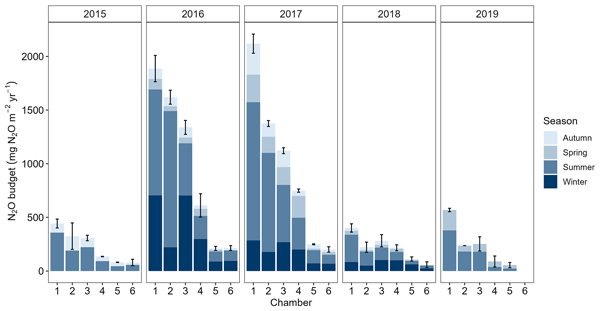
Current and future nitrous oxide (N2O) emissions are difficult to estimate due to their high variability in space and time. Several years of N2O fluxes from drained boreal peatland forest indicate high importance of summer precipitation, winter temperature, and snow conditions in controlling annual N2O emissions. The results indicate increasing year-to-year variation in N2O emissions in changing climate with more extreme seasonal weather conditions.
Justine Trémeau, Beñat Olascoaga, Leif Backman, Esko Karvinen, Henriikka Vekuri, and Liisa Kulmala
Biogeosciences, 21, 949–972, https://doi.org/10.5194/bg-21-949-2024, https://doi.org/10.5194/bg-21-949-2024, 2024
Short summary
Short summary
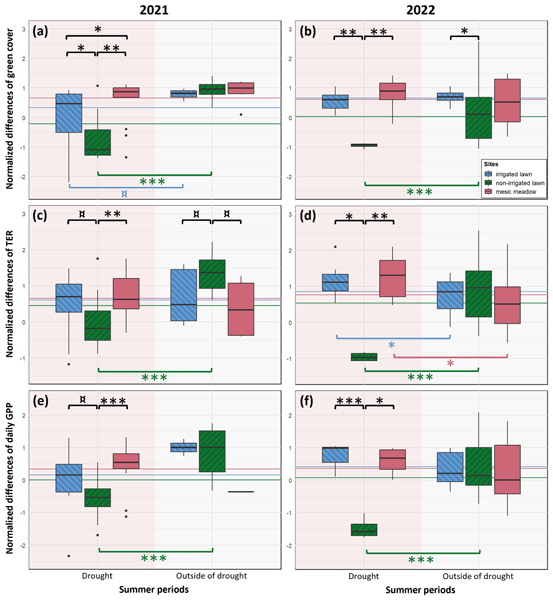
We studied urban lawns and meadows in the Helsinki metropolitan area, Finland. We found that meadows are more resistant to drought events but that they do not increase carbon sequestration compared with lawns. Moreover, the transformation from lawns to meadows did not demonstrate any negative climate effects in terms of greenhouse gas emissions. Even though social and economic aspects also steer urban development, these results can guide planning to consider carbon-smart options.
Natalie M. Mahowald, Longlei Li, Julius Vira, Marje Prank, Douglas S. Hamilton, Hitoshi Matsui, Ron L. Miller, Louis Lu, Ezgi Akyuz, Daphne Meidan, Peter Hess, Heikki Lihavainen, Christine Wiedinmyer, Jenny Hand, Maria Grazia Alaimo, Célia Alves, Andres Alastuey, Paulo Artaxo, Africa Barreto, Francisco Barraza, Silvia Becagli, Giulia Calzolai, Shankarararman Chellam, Ying Chen, Patrick Chuang, David D. Cohen, Cristina Colombi, Evangelia Diapouli, Gaetano Dongarra, Konstantinos Eleftheriadis, Corinne Galy-Lacaux, Cassandra Gaston, Dario Gomez, Yenny González Ramos, Hannele Hakola, Roy M. Harrison, Chris Heyes, Barak Herut, Philip Hopke, Christoph Hüglin, Maria Kanakidou, Zsofia Kertesz, Zbiginiw Klimont, Katriina Kyllönen, Fabrice Lambert, Xiaohong Liu, Remi Losno, Franco Lucarelli, Willy Maenhaut, Beatrice Marticorena, Randall V. Martin, Nikolaos Mihalopoulos, Yasser Morera-Gomez, Adina Paytan, Joseph Prospero, Sergio Rodríguez, Patricia Smichowski, Daniela Varrica, Brenna Walsh, Crystal Weagle, and Xi Zhao
Earth Syst. Sci. Data Discuss., https://doi.org/10.5194/essd-2024-1, https://doi.org/10.5194/essd-2024-1, 2024
Preprint withdrawn
Short summary
Short summary
Aerosol particles can interact with incoming solar radiation and outgoing long wave radiation, change cloud properties, affect photochemistry, impact surface air quality, and when deposited impact surface albedo of snow and ice, and modulate carbon dioxide uptake by the land and ocean. Here we present a new compilation of aerosol observations including composition, a methodology for comparing the datasets to model output, and show the implications of these results using one model.
Elizabeth Gachibu Wangari, Ricky Mwangada Mwanake, Tobias Houska, David Kraus, Gretchen Maria Gettel, Ralf Kiese, Lutz Breuer, and Klaus Butterbach-Bahl
Biogeosciences, 20, 5029–5067, https://doi.org/10.5194/bg-20-5029-2023, https://doi.org/10.5194/bg-20-5029-2023, 2023
Short summary
Short summary
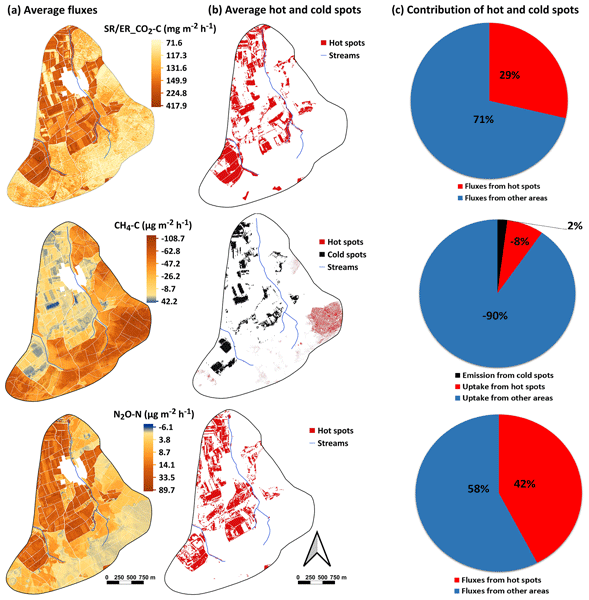
Agricultural landscapes act as sinks or sources of the greenhouse gases (GHGs) CO2, CH4, or N2O. Various physicochemical and biological processes control the fluxes of these GHGs between ecosystems and the atmosphere. Therefore, fluxes depend on environmental conditions such as soil moisture, soil temperature, or soil parameters, which result in large spatial and temporal variations of GHG fluxes. Here, we describe an example of how this variation may be studied and analyzed.
Joyson Ahongshangbam, Liisa Kulmala, Jesse Soininen, Yasmin Frühauf, Esko Karvinen, Yann Salmon, Anna Lintunen, Anni Karvonen, and Leena Järvi
Biogeosciences, 20, 4455–4475, https://doi.org/10.5194/bg-20-4455-2023, https://doi.org/10.5194/bg-20-4455-2023, 2023
Short summary
Short summary
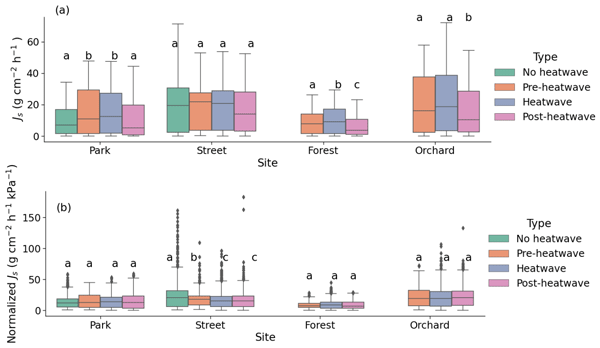
Urban vegetation is important for removing urban CO2 emissions and cooling. We studied the response of urban trees' functions (photosynthesis and transpiration) to a heatwave and drought at four urban green areas in the city of Helsinki. We found that tree water use was increased during heatwave and drought periods, but there was no change in the photosynthesis rates. The heat and drought conditions were severe at the local scale but were not excessive enough to restrict urban trees' functions.

Matti Kämäräinen, Juha-Pekka Tuovinen, Markku Kulmala, Ivan Mammarella, Juha Aalto, Henriikka Vekuri, Annalea Lohila, and Anna Lintunen
Biogeosciences, 20, 897–909, https://doi.org/10.5194/bg-20-897-2023, https://doi.org/10.5194/bg-20-897-2023, 2023
Short summary
Short summary
In this study, we introduce a new method for modeling the exchange of carbon between the atmosphere and a study site located in a boreal forest in southern Finland. Our method yields more accurate results than previous approaches in this context. Accurately estimating carbon exchange is crucial for gaining a better understanding of the role of forests in regulating atmospheric carbon and addressing climate change.

Lauri Heiskanen, Juha-Pekka Tuovinen, Henriikka Vekuri, Aleksi Räsänen, Tarmo Virtanen, Sari Juutinen, Annalea Lohila, Juha Mikola, and Mika Aurela
Biogeosciences, 20, 545–572, https://doi.org/10.5194/bg-20-545-2023, https://doi.org/10.5194/bg-20-545-2023, 2023
Short summary
Short summary
We measured and modelled the CO2 and CH4 fluxes of the terrestrial and aquatic ecosystems of the subarctic landscape for 2 years. The landscape was an annual CO2 sink and a CH4 source. The forest had the largest contribution to the landscape-level CO2 sink and the peatland to the CH4 emissions. The lakes released 24 % of the annual net C uptake of the landscape back to the atmosphere. The C fluxes were affected most by the rainy peak growing season of 2017 and the drought event in July 2018.

Jarmo Mäkelä, Laura Arppe, Hannu Fritze, Jussi Heinonsalo, Kristiina Karhu, Jari Liski, Markku Oinonen, Petra Straková, and Toni Viskari
Biogeosciences, 19, 4305–4313, https://doi.org/10.5194/bg-19-4305-2022, https://doi.org/10.5194/bg-19-4305-2022, 2022
Short summary
Short summary
Soils account for the largest share of carbon found in terrestrial ecosystems, and accurate depiction of soil carbon decomposition is essential in understanding how permanent these carbon storages are. We present a straightforward way to include carbon isotope concentrations into soil decomposition and carbon storages for the Yasso model, which enables the model to use 13C as a natural tracer to track changes in the underlying soil organic matter decomposition.
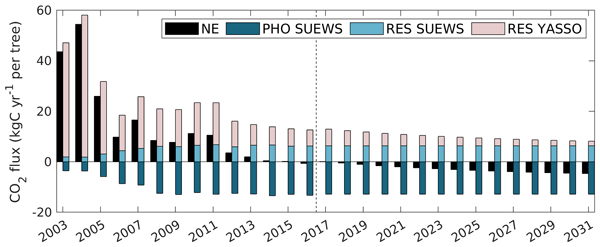
Minttu Havu, Liisa Kulmala, Pasi Kolari, Timo Vesala, Anu Riikonen, and Leena Järvi
Biogeosciences, 19, 2121–2143, https://doi.org/10.5194/bg-19-2121-2022, https://doi.org/10.5194/bg-19-2121-2022, 2022
Short summary
Short summary
The carbon sequestration potential of two street tree species and the soil beneath them was quantified with the urban land surface model SUEWS and the soil carbon model Yasso. The street tree plantings turned into a modest sink of carbon from the atmosphere after 14 years. Overall, the results indicate the importance of soil in urban carbon sequestration estimations, as soil respiration exceeded the carbon uptake in the early phase, due to the high initial carbon loss from the soil.

Mika Korkiakoski, Tiia Määttä, Krista Peltoniemi, Timo Penttilä, and Annalea Lohila
Biogeosciences, 19, 2025–2041, https://doi.org/10.5194/bg-19-2025-2022, https://doi.org/10.5194/bg-19-2025-2022, 2022
Short summary
Short summary
We measured CH4 fluxes and production and oxidation potentials from irrigated and non-irrigated podzolic soil in a boreal forest. CH4 sink was smaller at the irrigated site but did not cause CH4 emission, with one exception. We also showed that under laboratory conditions, not only wet conditions, but also fresh carbon, are needed to make podzolic soil into a CH4 source. Our study provides important data for improving the process models describing the upland soil CH4 dynamics.
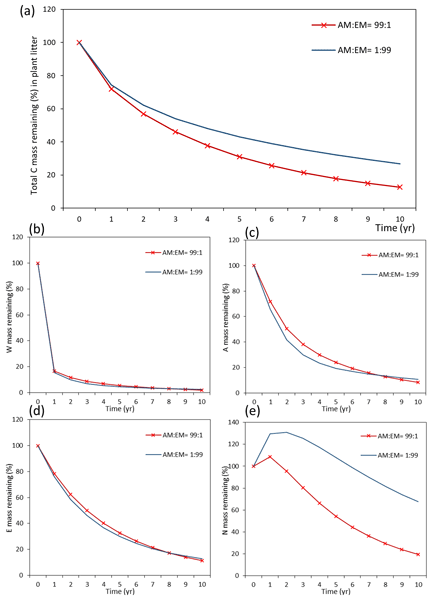
Weilin Huang, Peter M. van Bodegom, Toni Viskari, Jari Liski, and Nadejda A. Soudzilovskaia
Biogeosciences, 19, 1469–1490, https://doi.org/10.5194/bg-19-1469-2022, https://doi.org/10.5194/bg-19-1469-2022, 2022
Short summary
Short summary
This work focuses on one of the essential pathways of mycorrhizal impact on C cycles: the mediation of plant litter decomposition. We present a model based on litter chemical quality which precludes a conclusive examination of mycorrhizal impacts on soil C. It improves long-term decomposition predictions and advances our understanding of litter decomposition dynamics. It creates a benchmark in quantitatively examining the impacts of plant–microbe interactions on soil C dynamics.

Toni Viskari, Janne Pusa, Istem Fer, Anna Repo, Julius Vira, and Jari Liski
Geosci. Model Dev., 15, 1735–1752, https://doi.org/10.5194/gmd-15-1735-2022, https://doi.org/10.5194/gmd-15-1735-2022, 2022
Short summary
Short summary
We wanted to examine how the chosen measurement data and calibration process affect soil organic carbon model calibration. In our results we found that there is a benefit in using data from multiple litter-bag decomposition experiments simultaneously, even with the required assumptions. Additionally, due to the amount of noise and uncertainties in the system, more advanced calibration methods should be used to parameterize the models.
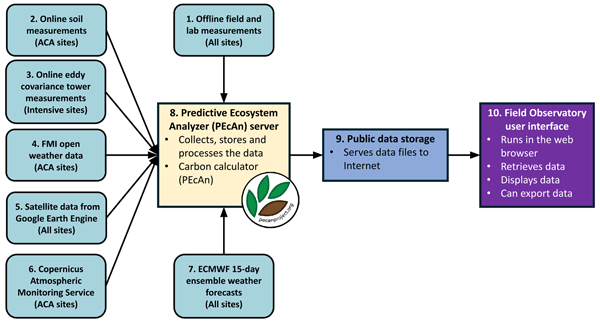
Olli Nevalainen, Olli Niemitalo, Istem Fer, Antti Juntunen, Tuomas Mattila, Olli Koskela, Joni Kukkamäki, Layla Höckerstedt, Laura Mäkelä, Pieta Jarva, Laura Heimsch, Henriikka Vekuri, Liisa Kulmala, Åsa Stam, Otto Kuusela, Stephanie Gerin, Toni Viskari, Julius Vira, Jari Hyväluoma, Juha-Pekka Tuovinen, Annalea Lohila, Tuomas Laurila, Jussi Heinonsalo, Tuula Aalto, Iivari Kunttu, and Jari Liski
Geosci. Instrum. Method. Data Syst., 11, 93–109, https://doi.org/10.5194/gi-11-93-2022, https://doi.org/10.5194/gi-11-93-2022, 2022
Short summary
Short summary
Better monitoring of soil carbon sequestration is needed to understand the best carbon farming practices in different soils and climate conditions. We, the Field Observatory Network (FiON), have therefore established a methodology for monitoring and forecasting agricultural carbon sequestration by combining offline and near-real-time field measurements, weather data, satellite imagery, and modeling. To disseminate our work, we built a website called the Field Observatory (fieldobservatory.org).
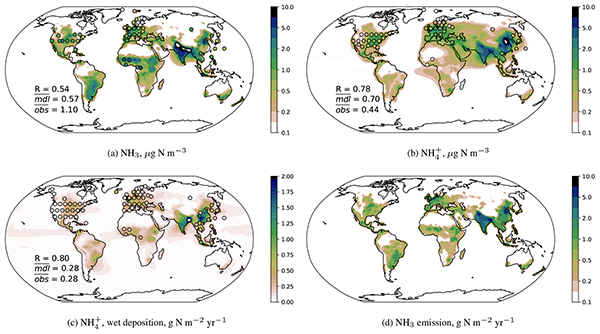
Julius Vira, Peter Hess, Money Ossohou, and Corinne Galy-Lacaux
Atmos. Chem. Phys., 22, 1883–1904, https://doi.org/10.5194/acp-22-1883-2022, https://doi.org/10.5194/acp-22-1883-2022, 2022
Short summary
Short summary
Ammonia is one of the main components of nitrogen deposition. Here we use a new model to assess the ammonia emissions from agriculture, the largest anthropogenic source of ammonia. The model results are consistent with earlier estimates over industrialized regions in agreement with observations. However, the model predicts much higher emissions over sub-Saharan Africa compared to earlier estimates. Available observations from surface stations and satellites support these higher emissions.
Cited articles
Aben, R. C. H., van de Craats, D., Boonman, J., Peeters, S. H., Vriend, B., Boonman, C. C. F., van der Velde, Y., Erkens, G., and van den Berg, M.: CO2 emissions of drained coastal peatlands in the Netherlands and potential emission reduction by water infiltration systems, Biogeosciences, 21, 4099–4118, https://doi.org/10.5194/bg-21-4099-2024, 2024. a
Angelo Canty and B. D. Ripley: boot: Bootstrap R (S-Plus) Functions, r package version 1.3-30, https://doi.org/10.32614/CRAN.package.boot, 2024. a
Barton, L., Wolf, B., Rowlings, D., Scheer, C., Kiese, R., Grace, P., Stefanova, K., and Butterbach-Bahl, K.: Sampling frequency affects estimates of annual nitrous oxide fluxes, Sci. Rep., 5, 15912, https://doi.org/10.1038/srep15912, 2015. a
Berglund, Ö. and Berglund, K.: Influence of water table level and soil properties on emissions of greenhouse gases from cultivated peat soil, Soil Biol. Biochem., 43, 923–931, 2011. a
Boonman, J., Hefting, M. M., van Huissteden, C. J. A., van den Berg, M., van Huissteden, J., Erkens, G., Melman, R., and van der Velde, Y.: Cutting peatland CO2 emissions with water management practices, Biogeosciences, 19, 5707–5727, https://doi.org/10.5194/bg-19-5707-2022, 2022. a
Bridgham, S. D. and Richardson, C. J.: Mechanisms controlling soil respiration (CO2 and CH4) in southern peatlands, Soil Biol. Biochem., 24, 1089–1099, https://doi.org/10.1016/0038-0717(92)90058-6, 1992. a
Brown, L. A., Fernandes, R., Djamai, N., Meier, C., Gobron, N., Morris, H., Canisius, F., Bai, G., Lerebourg, C., Lanconelli, C., Clerici, M., and Dash, J.: Validation of baseline and modified Sentinel-2 Level 2 Prototype Processor leaf area index retrievals over the United States, ISPRS J. Photogramm., 175, 71–87, https://doi.org/10.1016/j.isprsjprs.2021.02.020, 2021. a
Carstensen, M. V., Hashemi, F., Hoffmann, C. C., Zak, D., Audet, J., and Kronvang, B.: Efficiency of mitigation measures targeting nutrient losses from agricultural drainage systems: A review, Ambio, 49, 1820–1837, https://doi.org/10.1007/s13280-020-01345-5, 2020. a
Couwenberg, J., Thiele, A., Tanneberger, F., Augustin, J., Bärisch, S., Dubovik, D., Liashchynskaya, N., Michaelis, D., Minke, M., Skuratovich, A., and Joosten, H.: Assessing greenhouse gas emissions from peatlands using vegetation as a proxy, Hydrobiologia, 674, 67–89, 2011. a
Cowan, N., Cumming, A., Morrison, R., Clilverd, H., Palmer, L., and Evans, C. D.: Measuring fluxes of nitrous oxide (N2O) from an intensively farmed wasted peatland field in the UK using the eddy covariance method, Glob. Change Biol., 31, e70619, https://doi.org/10.1111/gcb.70619, 2025. a, b, c
Cuddington, K., Fortin, M.-J., Gerber, L., Hastings, A., Liebhold, A., O'connor, M., and Ray, C.: Process-based models are required to manage ecological systems in a changing world, Ecosphere, 4, 1–12, 2013. a
de Wit, J. A. J., Ritsema, C. J. C., van Dam, J. C. J., van den Eertwegh, G. G., and Bartholomeus, R. P. R.: Development of subsurface drainage systems: Discharge – retention – recharge, Agr. Water Manage., 269, 107677, https://doi.org/10.1016/j.agwat.2022.107677, 2022. a
Duarte, C., Amthor, J., De Angelis, D., Joyce, L., Maranger, R., Pace, M., Pastor, J., and Running, S.: The limits to models in ecology, Models in Ecosystem Science, 2003. a
Eickenscheidt, T., Heinichen, J., and Drösler, M.: The greenhouse gas balance of a drained fen peatland is mainly controlled by land-use rather than soil organic carbon content, Biogeosciences, 12, 5161–5184, https://doi.org/10.5194/bg-12-5161-2015, 2015. a, b
European Space Agency: S2Toolbox Level 2 Products: LAI, FAPAR, FCOVER, European Space Agency, https://step.esa.int/docs/extra/ATBD_S2ToolBox_L2B_V1.1.pdf (last access: 20 May 2026), 2016. a
Evans, C., Peacock, M., Baird, A., Artz, R., Burden, A., Callaghan, N., Chapman, P., Cooper, H., Coyle, M., Craig, E., Cumming, A., Dixon, S., Gauci, V., Grayson, R., Helfter, C., Heppell, C., Holden, J., Jones, D., Kaduk, J., Levy, P., Matthews, R., McNamara, N., Misselbrook, T., Oakley, S., Page, S., Rayment, M., Ridley, L., Stanley, K., Williamson, J., Worrall, F., and Morrison, R.: Overriding water table control on managed peatland greenhouse gas emissions, Nature, 593, 548–552, 2021. a, b, c, d
Finnish Meteorological Institute: GHG Concentration, https://en.ilmatieteenlaitos.fi/ghg-concentrations (last access: 15 January 2025), 2025. a
Flessa, H., Wild, U., Klemisch, M., and Pfadenhauer, J.: Nitrous oxide and methane fluxes from organic soils under agriculture, Eur. J. Soil Sci., 49, 327–335, 1998. a
Freeman, B. W., Evans, C. D., Musarika, S., Morrison, R., Newman, T. R., Page, S. E., Wiggs, G. F., Bell, N. G., Styles, D., Wen, Y., Chadwick, D. R., and Jones, D. L.: Responsible agriculture must adapt to the wetland character of mid-latitude peatlands, Glob. Change Biol., 28, 3795–3811, 2022. a, b
Gerin, S., Vekuri, H., Liimatainen, M., Tuovinen, J.-P., Kekkonen, J., Kulmala, L., Laurila, T., Linkosalmi, M., Liski, J., Joki-Tokola, E., and Lohila, A.: Two contrasting years of continuous N2O and CO2 fluxes on a shallow-peated drained agricultural boreal peatland, Agr. Forest Meteorol., 341, 109630, https://doi.org/10.1016/j.agrformet.2023.109630, 2023. a, b, c, d, e, f
Gilhespy, S. L., Anthony, S., Cardenas, L., Chadwick, D., del Prado, A., Li, C., Misselbrook, T., Rees, R. M., Salas, W., Sanz-Cobena, A., Smith, P., Tilston, E. L., Topp, C. F., Vetter, S., and Yeluripati, J. B.: First 20 years of DNDC (DeNitrification DeComposition): model evolution, Ecol. Model., 292, 51–62, 2014. a
Grote, R., Lavoir, A.-V., Rambal, S., Staudt, M., Zimmer, I., and Schnitzler, J.-P.: Modelling the drought impact on monoterpene fluxes from an evergreen Mediterranean forest canopy, Oecologia, 160, 213–223, 2009. a
Haas, E., Klatt, S., Fröhlich, A., Kraft, P., Werner, C., Kiese, R., Grote, R., Breuer, L., and Butterbach-Bahl, K.: LandscapeDNDC: a process model for simulation of biosphere–atmosphere–hydrosphere exchange processes at site and regional scale, Landscape Ecol., 28, 615–636, 2013. a
Haas, E., Carozzi, M., Massad, R. S., Butterbach-Bahl, K., and Scheer, C.: Long term impact of residue management on soil organic carbon stocks and nitrous oxide emissions from European croplands, Sci. Total Environ., 836, 154932, https://doi.org/10.1016/j.scitotenv.2022.154932, 2022. a
He, H. and Roulet, N. T.: Improved estimates of carbon dioxide emissions from drained peatlands support a reduction in emission factor, Commun. Earth Environ., 4, 436, https://doi.org/10.1038/s43247-023-01091-y, 2023. a
Heikkinen, J., Lång, K., Honkanen, H., and Myllys, M.: Mitigation of Greenhouse Gas Emissions by Optimizing Groundwater Level in Boreal Cultivated Peatland, Wetlands, 44, 78, https://doi.org/10.1007/s13157-024-01833-4, 2024. a, b
Heimsch, L., Vira, J., Fer, I., Vekuri, H., Tuovinen, J.-P., Lohila, A., Liski, J., and Kulmala, L.: Impact of weather and management practices on greenhouse gas flux dynamics on an agricultural grassland in Southern Finland, Agr. Ecosyst. Environ., 374, 109179, https://doi.org/10.1016/j.agee.2024.109179, 2024. a
Hersbach, H., Bell, B., Berrisford, P., Hirahara, S., Horányi, A., Muñoz-Sabater, J., Nicolas, J., Peubey, C., Radu, R., Schepers, D., Simmons, A., Soci, C., Abdalla, S., Abellan, X., Balsamo, G., Bechtold, P., Biavati, G., Bidlot, J., Bonavita, M., De Chiara, G., Dahlgren, P., Dee, D., Diamantakis, M., Dragani, R., Flemming, J., Forbes, R., Fuentes, M., Geer, A., Haimberger, L., Healy, S., Hogan, R. J., Hólm, E., Janisková, M., Keeley, S., Laloyaux, P., Lopez, P., Lupu, C., Radnoti, G., de Rosnay, P., Rozum, I., Vamborg, F., Villaume, S., and Thépaut, J.-N.: The ERA5 global reanalysis, Q. J. Roy. Meteor. Soc., 146, 1999–2049, https://doi.org/10.1002/qj.3803, 2020. a
Huang, X., Silvennoinen, H., Kløve, B., Regina, K., Kandel, T. P., Piayda, A., Karki, S., Lærke, P. E., and Höglind, M.: Modelling CO2 and CH4 emissions from drained peatlands with grass cultivation by the BASGRA-BGC model, Sci. Total Environ., 765, 144385, https://doi.org/10.1016/j.scitotenv.2020.144385, 2021a. a
Huang, Y., Ciais, P., Luo, Y., Zhu, D., Wang, Y., Qiu, C., Goll, D. S., Guenet, B., Makowski, D., De Graaf, I., Leifeld, J., Kwon, M. J., Hu, J., and Qu, L.: Tradeoff of CO2 and CH4 emissions from global peatlands under water-table drawdown, Nat. Clim. Change, 11, 618–622, 2021b. a
Jeewani, P. H., Brown, R. W., Rhymes, J. M., McNamara, N. P., Chadwick, D. R., Jones, D. L., and Evans, C. D.: Greenhouse gas removal in agricultural peatland via raised water levels and soil amendment, Biochar, 7, 1–15, https://doi.org/10.1007/s42773-024-00422-2, 2025. a
Kajasilta, H., Gerin, S., Niiranen, M., Läpikivi, M., Liimatainen, M., Kraus, D., Vekuri, H., Korkiakoski, M., Kulmala, L., Liski, J., and Vira, J.: Model outputs and measurement data to support “The effects of peat thickness and water table depth on CO2 and N2O emissions from agricultural peatlands – a process-based modelling approach” by Kajasilta et al. [Data set], Finnish Meteorological Institute [data set], https://doi.org/10.57707/fmi-b2share.5x31a-vzq19, 2026. a
Kandel, T. P., Gowda, P. H., and Northup, B. K.: Influence of tillage systems, and forms and rates of nitrogen fertilizers on CO2 and N2O fluxes from winter wheat cultivation in Oklahoma, Agronomy, 10, 320, https://doi.org/10.1080/09064710.2011.614272, 2020. a
Kganyago, M., Mhangara, P., Alexandridis, T., Laneve, G., Ovakoglou, G., and Mashiyi, N.: Validation of sentinel-2 leaf area index (LAI) product derived from SNAP toolbox and its comparison with global LAI products in an African semi-arid agricultural landscape, Remote Sens. Lett., 11, 883–892, https://doi.org/10.1080/2150704X.2020.1767823, 2020. a
Kiese, R., Heinzeller, C., Werner, C., Wochele, S., Grote, R., and Butterbach-Bahl, K.: Quantification of nitrate leaching from German forest ecosystems by use of a process oriented biogeochemical model, Environ. Pollut., 159, 3204–3214, 2011. a
Klemedtsson, L., Von Arnold, K., Weslien, P., and Gundersen, P.: Soil CN ratio as a scalar parameter to predict nitrous oxide emissions, Glob. Change Biol., 11, 1142–1147, https://doi.org/10.1111/j.1365-2486.2005.00973.x, 2005. a
Kljun, N., Calanca, P., Rotach, M. W., and Schmid, H. P.: A simple two-dimensional parameterisation for Flux Footprint Prediction (FFP), Geosci. Model Dev., 8, 3695–3713, https://doi.org/10.5194/gmd-8-3695-2015, 2015. a
Krause, P., Boyle, D. P., and Bäse, F.: Comparison of different efficiency criteria for hydrological model assessment, Adv. Geosci., 5, 89–97, https://doi.org/10.5194/adgeo-5-89-2005, 2005. a
Lång, K., Honkanen, H., Heikkinen, J., Saarnio, S., Larmola, T., and Kekkonen, H.: Impact of crop type on the greenhouse gas (GHG) emissions of a rewetted cultivated peatland, SOIL, 10, 827–841, https://doi.org/10.5194/soil-10-827-2024, 2024. a, b, c
Leiber-Sauheitl, K., Fuß, R., Voigt, C., and Freibauer, A.: High CO2 fluxes from grassland on histic Gleysol along soil carbon and drainage gradients, Biogeosciences, 11, 749–761, https://doi.org/10.5194/bg-11-749-2014, 2014. a, b
Leifeld, J. and Menichetti, L.: The underappreciated potential of peatlands in global climate change mitigation strategies, Nat. Commun., 9, 1071, https://doi.org/10.1038/s41467-018-03406-6, 2018. a
Leifeld, J., Steffens, M., and Galego-Sala, A.: Sensitivity of peatland carbon loss to organic matter quality, Geophys. Res. Lett., 39, https://doi.org/10.1029/2012GL051856, 2012. a
Leppelt, T., Dechow, R., Gebbert, S., Freibauer, A., Lohila, A., Augustin, J., Drösler, M., Fiedler, S., Glatzel, S., Höper, H., Järveoja, J., Lærke, P. E., Maljanen, M., Mander, Ü., Mäkiranta, P., Minkkinen, K., Ojanen, P., Regina, K., and Strömgren, M.: Nitrous oxide emission budgets and land-use-driven hotspots for organic soils in Europe, Biogeosciences, 11, 6595–6612, https://doi.org/10.5194/bg-11-6595-2014, 2014. a
Liebermann, R., Breuer, L., Houska, T., Kraus, D., Moser, G., and Kraft, P.: Simulating long-term development of greenhouse gas emissions, plant biomass, and soil moisture of a temperate grassland ecosystem under elevated atmospheric CO2, Agronomy, 10, 50, https://doi.org/10.3390/agronomy10010050, 2019. a, b
Liu, H. and Lennartz, B.: Hydraulic properties of peat soils along a bulk density gradient – A meta study, Hydrol. Process., 33, 101–114, 2019. a
Liu, H., Wrage-Mönnig, N., and Lennartz, B.: Rewetting strategies to reduce nitrous oxide emissions from European peatlands, Commun. Earth Environ., 1, 17, https://doi.org/10.1038/s43247-020-00017-2, 2020. a
Maljanen, M., Hytönen, J., and Martikainen, P. J.: Cold-season nitrous oxide dynamics in a drained boreal peatland differ depending on land-use practice, Can. J. Forest Res., 40, 565–572, https://doi.org/10.1139/X10-004, 2010. a
Mander, Ü., Espenberg, M., Melling, L., and Kull, A.: Peatland restoration pathways to mitigate greenhouse gas emissions and retain peat carbon, Biogeochemistry, 167, 523–543, 2024. a
Martikainen, P. J., Nykänen, H., Crill, P., and Silvola, J.: Effect of a lowered water table on nitrous oxide fluxes from northern peatlands, Nature, 366, 51–53, https://doi.org/10.1038/366051a0, 1993. a
Menberu, M. W., Marttila, H., Ronkanen, A.-K., Haghighi, A. T., and Kløve, B.: Hydraulic and physical properties of managed and intact peatlands: Application of the van Genuchten-Mualem models to peat soils, Water Resour. Res., 57, e2020WR028624, https://doi.org/10.1029/2020WR028624, 2021. a, b
Montanarella, L., Jones, R. J., and Hiederer, R.: The distribution of peatland in Europe, International Mire Conservation Group and International Peatland Society, https://doi.org/10.19189/001c.130870, 2006. a
Mualem, Y.: A new model for predicting the hydraulic conductivity of unsaturated porous media, Water Resour. Res., 12, 513–522, 1976. a
Neubauer, S. C.: Global warming potential is not an ecosystem property, Ecosystems, 24, 1–11, https://doi.org/10.1007/s10021-021-00631-x, 2021. a
Nevalainen, O., Niemitalo, O., Fer, I., Juntunen, A., Mattila, T., Koskela, O., Kukkamäki, J., Höckerstedt, L., Mäkelä, L., Jarva, P., Heimsch, L., Vekuri, H., Kulmala, L., Stam, Å., Kuusela, O., Gerin, S., Viskari, T., Vira, J., Hyväluoma, J., Tuovinen, J.-P., Lohila, A., Laurila, T., Heinonsalo, J., Aalto, T., Kunttu, I., and Liski, J.: Towards agricultural soil carbon monitoring, reporting, and verification through the Field Observatory Network (FiON), Geosci. Instrum. Method. Data Syst., 11, 93–109, https://doi.org/10.5194/gi-11-93-2022, 2022. a
Normand, A. E., Turner, B. L., Lamit, L. J., Smith, A. N., Baiser, B., Clark, M. W., Hazlett, C., Kane, E. S., Lilleskov, E., Long, J. R., Grover, S. P., and Reddy, K. R.: Organic Matter Chemistry Drives Carbon Dioxide Production of Peatlands, Geophys. Res. Lett., 48, e2021GL093392, https://doi.org/10.1029/2021GL093392, 2021. a
Pärn, J., Verhoeven, J. T., Butterbach-Bahl, K., Dise, N. B., Ullah, S., Aasa, A., Egorov, S., Espenberg, M., Järveoja, J., Jauhiainen, J., Kasak, K., Klemedtsson, L., Kull, A., Laggoun-Défarge, F., Lapshina, E. D., Lohila, A., Lõhmus, K., Maddison, M., Mitsch, W. J., Müller, C., Niinemets, Ü., Osborne, B., Pae, T., Salm, J.-O., Sgouridis, F., Sohar, K., Soosar, K., Storey, K., Teemusk, A., Tenywa, M. M., Tournebize, J., Truu, J., Veber, G., Villa, J. A., Zaw, S. S., and Mander, Ü.: Nitrogen-rich organic soils under warm well-drained conditions are global nitrous oxide emission hotspots, Nat. Commun., 9, 1–8, https://doi.org/10.1038/s41467-018-03540-1, 2018. a
Petersen, K., Kraus, D., Calanca, P., Semenov, M. A., Butterbach-Bahl, K., and Kiese, R.: Dynamic simulation of management events for assessing impacts of climate change on pre-alpine grassland productivity, Eur. J. Agron., 128, 126306, https://doi.org/10.1016/j.eja.2021.126306, 2021. a, b
Pham, T., Marttila, H., Läpikivi, M., Lötjönen, T., Aaltonen, H., Vekuri, H., Kløve, B., and Liimatainen, M.: Hydrology of a cultivated peatland in Northern Finland and implications for management, J. Hydrol., 664, 134461, https://doi.org/10.1016/j.jhydrol.2025.134461, 2026. a
Premrov, A., Wilson, D., Saunders, M., Yeluripati, J., and Renou-Wilson, F.: CO2 fluxes from drained and rewetted peatlands using a new ECOSSE model water table simulation approach, Sci. Total Environ., 754, 142433, https://doi.org/10.1016/j.scitotenv.2020.142433, 2021. a
R Core Team: R: A Language and Environment for Statistical Computing, R Foundation for Statistical Computing, Vienna, Austria, https://www.R-project.org/ (last access: 20 May 2026), 2024. a
Rees, R. M., Augustin, J., Alberti, G., Ball, B. C., Boeckx, P., Cantarel, A., Castaldi, S., Chirinda, N., Chojnicki, B., Giebels, M., Gordon, H., Grosz, B., Horvath, L., Juszczak, R., Kasimir Klemedtsson, Å., Klemedtsson, L., Medinets, S., Machon, A., Mapanda, F., Nyamangara, J., Olesen, J. E., Reay, D. S., Sanchez, L., Sanz Cobena, A., Smith, K. A., Sowerby, A., Sommer, M., Soussana, J. F., Stenberg, M., Topp, C. F. E., van Cleemput, O., Vallejo, A., Watson, C. A., and Wuta, M.: Nitrous oxide emissions from European agriculture – an analysis of variability and drivers of emissions from field experiments, Biogeosciences, 10, 2671–2682, https://doi.org/10.5194/bg-10-2671-2013, 2013. a, b
Ridal, M., Bazile, E., Le Moigne, P., Randriamampianina, R., Schimanke, S., Andrae, U., Berggren, L., Brousseau, P., Dahlgren, P., Edvinsson, L., El-Said, A., Glinton, M., Hagelin, S., Hopsch, S., Isaksson, L., Medeiros, P., Olsson, E., Unden, P., and Wang, Z. Q.: CERRA, the Copernicus European Regional Reanalysis system, Q. J. Roy. Meteor. Soc., 150, 3385–3411, https://doi.org/10.1002/qj.4764, 2024. a
Salla, A., Salo, H., Tähtikarhu, M., Marttila, H., Läpikivi, M., Liimatainen, M., Lötjönen, T., and Koivusalo, H.: Simulating controlled drainage and hydrological connections in a cultivated peatland field, Vadose Zone J., 23, e20387, https://doi.org/10.1002/vzj2.20387, 2024. a
Sierra, C. A., Ceballos-Núñez, V., Hartmann, H., Herrera-Ramírez, D., and Metzler, H.: Ideas and perspectives: Allocation of carbon from net primary production in models is inconsistent with observations of the age of respired carbon, Biogeosciences, 19, 3727–3738, https://doi.org/10.5194/bg-19-3727-2022, 2022. a
Sifounakis, O., Haas, E., Butterbach-Bahl, K., and Papadopoulou, M. P.: Regional assessment and uncertainty analysis of carbon and nitrogen balances at cropland scale using the ecosystem model LandscapeDNDC, Biogeosciences, 21, 1563–1581, https://doi.org/10.5194/bg-21-1563-2024, 2024. a
Tcherkez, G., Gauthier, P., Buckley, T. N., Busch, F. A., Barbour, M. M., Bruhn, D., Heskel, M. A., Gong, X. Y., Crous, K. Y., Griffin, K., Way, D., Turnbull, M., Adams, M. A., Atkin, O. K., Farquhar, G. D., and Cornic, G.: Leaf day respiration: low CO2 flux but high significance for metabolism and carbon balance, New Phytol., 216, 986–1001, https://doi.org/10.1111/nph.14816, 2017. a
Teepe, R., Vor, A., Beese, F., and Ludwig, B.: Emissions of N2O from soils during cycles of freezing and thawing and the effects of soil water, texture and duration of freezing, Eur. J. Soil Sci., 55, 357–365, https://doi.org/10.1111/j.1365-2389.2004.00602.x, 2004. a
Tiemeyer, B., Albiac Borraz, E., Augustin, J., Bechtold, M., Beetz, S., Beyer, C., Drösler, M., Ebli, M., Eickenscheidt, T., Fiedler, S., Förster, C., Freibauer, A., Giebels, M., Glatzel, S., Heinichen, J., Hoffmann, M., Höper, H., Jurasinski, G., Leiber-Sauheitl, K., Peichl-Brak, M., Roßkopf, N., Sommer, M., and Zeitz, J.: High emissions of greenhouse gases from grasslands on peat and other organic soils, Glob. Change Biol., 22, 4134–4149, 2016. a, b, c
Vira, J., Vekuri, H., Nevalainen, O., Korkiakoski, M., Mattila, T., Aaltonen, H., Koskinen, M., Lohila, A., Pihlatie, M., and Liski, J.: Improving Agricultural Carbon Monitoring with Sentinel-2 and Eddy-Covariance-Based Plant Productivity Estimates, Carbon Management, Taylor & Francis (Routledge), https://doi.org/10.1080/17583004.2025.2568042, 2025. a, b
Waddington, J. M., Morris, P. J., Kettridge, N., Granath, G., Thompson, D. K., and Moore, P. A.: Hydrological feedbacks in northern peatlands, Ecohydrology, 8, 113–127, https://doi.org/10.1002/eco.1493, 2014. a
Wagner-Riddle, C., Congreves, K. A., Abalos, D., Berg, A. A., Brown, S. E., Ambadan, J. T., Gao, X., and Tenuta, M.: Globally important nitrous oxide emissions from croplands induced by freeze–thaw cycles, Nat. Geosci., 10, 279–283, https://doi.org/10.1038/ngeo2907, 2017. a, b
Wang, C., Amon, B., Schulz, K., and Mehdi, B.: Factors that influence nitrous oxide emissions from agricultural soils as well as their representation in simulation models: A review, Agronomy, 11, 770, https://doi.org/10.3390/agronomy11040770, 2021. a
Wilson, D., Blain, D., Couwenberg, J., Evans, C. D., Murdiyarso, D., Page, S., Renou-Wilson, F., Rieley, J., Sirin, A., Strack, M., and Tuittila, E.-S.: Greenhouse gas emission factors associated with rewetting of organic soils, Mires Peat, 17, 1–28, https://doi.org/10.19189/MaP.2016.OMB.222, 2016a. a
Wilson, D., Farrell, C. A., Fallon, D., Moser, G., Müller, C., and Renou-Wilson, F.: Multiyear greenhouse gas balances at a rewetted temperate peatland, Glob. Change Biol., 22, 4080–4095, 2016b. a
Yli-Halla, M., Lötjönen, T., Kekkonen, J., Virtanen, S., Marttila, H., Liimatainen, M., Saari, M., Mikkola, J., Suomela, R., and Joki-Tokola, E.: Thickness of peat influences the leaching of substances and greenhouse gas emissions from a cultivated organic soil, Science of the Total Environment, 806, 150 499, 2022. a, b, c, d, e
Short summary
We modelled different water table scenarios in drained agricultural peatlands to investigate the impact of water management on greenhouse gas emissions. Our results show that raising the water table reduces emissions, even in fields with thinner peat layers and conservative water management practices. Carbon dioxide emissions were more affected than nitrous oxide emissions. This study sheds light on the role of peatlands in mitigating emissions. Simulations were run using a process-based model.
We modelled different water table scenarios in drained agricultural peatlands to investigate the...


Altmetrics
Final-revised paper
Preprint