
Articles | Volume 23, issue 14
https://doi.org/10.5194/bg-23-5117-2026
© Author(s) 2026. This work is distributed under
the Creative Commons Attribution 4.0 License.
the Creative Commons Attribution 4.0 License.
https://doi.org/10.5194/bg-23-5117-2026
© Author(s) 2026. This work is distributed under
the Creative Commons Attribution 4.0 License.
the Creative Commons Attribution 4.0 License.
Research article
| 
24 Jul 2026
Research article |
| 24 Jul 2026
| 24 Jul 2026
Global vegetation responses to wet and dry soil moisture extremes
Xueyan Cheng
CORRESPONDING AUTHOR

Faculty of Environment and Natural Resources, University of Freiburg, Freiburg, 79106, Germany
Chunhui Zhan
Faculty of Environment and Natural Resources, University of Freiburg, Freiburg, 79106, Germany
Martin G. De Kauwe
School of Biological Sciences, University of Bristol, Bristol, BS8 1TQ, UK
Anke Hildebrandt
Institute of Geoscience, University of Jena, Jena, 07749, Germany
Department Hydrosystemmodellierung, Helmholtz Centre for Environmental Research – UFZ, Leipzig, 04318, Germany
Rene Orth
Faculty of Environment and Natural Resources, University of Freiburg, Freiburg, 79106, Germany
Related authors
No articles found.
Felix Pohl, Burkhard Neuwirth, David Steger, Georgios Skiadaresis, Ingo Heinrich, Heye Bogena, Marvin Müsgen-von den Driesch, Boris Thies, Jörg Bendix, Michael Leuchner, Theresa Blume, Harrie-Jan Hendricks-Franssen, and Anke Hildebrandt
EGUsphere, https://doi.org/10.5194/egusphere-2026-5883, https://doi.org/10.5194/egusphere-2026-5883, 2026
This preprint is open for discussion and under review for Biogeosciences (BG).
Short summary
Short summary
From 2018 to 2022, Germany had its most severe multi year drought in over seventy years. To see how forests coped, we measured the yearly growth rings of more than 460 beech, oak, pine and Douglas fir trees across Germany. Growth declined strongly, by 21 to 66 percent, but losses varied greatly, even between neighboring stands under the same weather. Translating drought severity into local growth losses therefore requires considering local growing conditions.
J. Cale Baguley, Tristin Quaife, Lucy Rowland, Patrick Meir, Michael C. Bell, Manon E. B. Sabot, and Martin G. De Kauwe
EGUsphere, https://doi.org/10.5194/egusphere-2026-4729, https://doi.org/10.5194/egusphere-2026-4729, 2026
This preprint is open for discussion and under review for Biogeosciences (BG).
Short summary
Short summary
Drought can affect trees both immediately and for months or years afterwards. To improve predictions of how forests respond to drought, we added new representations of how trees regulate water loss and how drought can leave lasting damage to the movement of water within trees in a widely used model. When applied to a 2002 drought in the United Kingdom, the improved model better captured tree responses and suggested that the effects of drought were small in an oak woodland in the following year.
Wenli Zhao, Alexander J. Winkler, Markus Reichstein, Rene Orth, and Pierre Gentine
Hydrol. Earth Syst. Sci., 30, 5373–5394, https://doi.org/10.5194/hess-30-5373-2026, https://doi.org/10.5194/hess-30-5373-2026, 2026
Short summary
Short summary
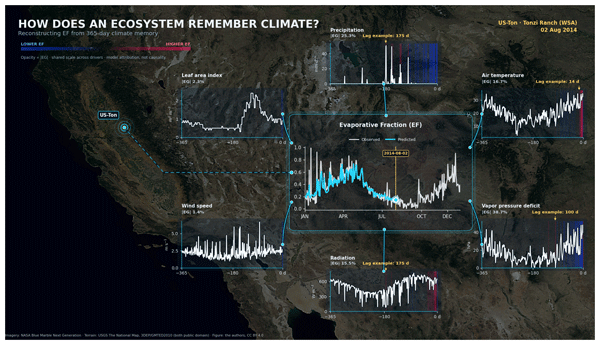
We used explainable machine learning that incorporates memory effects to study how plants respond to weather and drought. Using data from 90 sites worldwide, we show that memory plays a key role in regulating plant water stress. Forests and savannas rely on longer past conditions than grasslands, reflecting differences in rooting depth and water use. These insights improve our ability to anticipate ecosystem vulnerability as droughts intensify.
Hao Huang, Junguo Liu, Aifang Chen, Melissa Ruiz-Vásquez, and René Orth
Earth Syst. Sci. Data, 18, 3109–3124, https://doi.org/10.5194/essd-18-3109-2026, https://doi.org/10.5194/essd-18-3109-2026, 2026
Short summary
Short summary
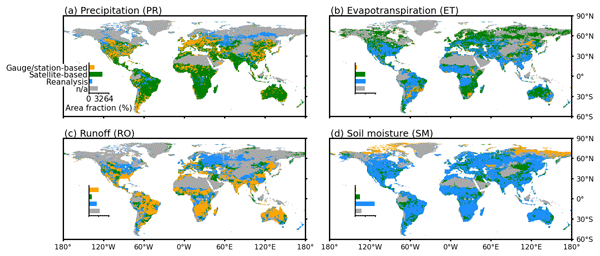
Hydrological research benefits from a growing number and diversity of datasets. However, the consistency across the increasing suite of datasets is unclear, limiting the comparability of findings derived from different datasets and variables. We find overall low consistency of numerous state-of-the-art precipitation, evapotranspiration, runoff, and soil moisture datasets in terms of the water balance. Meanwhile, the water balance consistency varies across space, sources, variables, and time.

Jon Cranko Page, Martin G. De Kauwe, Andy J. Pitman, Isaac R. Towers, Gabriele Arduini, Martin J. Best, Craig R. Ferguson, Jürgen Knauer, Hyungjun Kim, David M. Lawrence, Tomoko Nitta, Keith W. Oleson, Catherine Ottlé, Anna Ukkola, Nicholas Vuichard, Xiaoni Wang-Faivre, and Gab Abramowitz
Biogeosciences, 23, 263–282, https://doi.org/10.5194/bg-23-263-2026, https://doi.org/10.5194/bg-23-263-2026, 2026
Short summary
Short summary
This paper used a large dataset of observations, machine learning predictions, and computer model simulations to test how well land surface models represent the water, energy, and carbon cycles. We found that the models work well under "normal" weather but do not meet performance expectations during coinciding extreme conditions. Since these extremes are relatively rare, targeted model improvements could deliver major performance gains.
Josephin Kroll, Ruth Stephan, Andrew F. Feldman, Diego G. Miralles, and Rene Orth
EGUsphere, https://doi.org/10.5194/egusphere-2025-4391, https://doi.org/10.5194/egusphere-2025-4391, 2025
Short summary
Short summary
In this study, we investigate contributors to and trends in the co-occurrence of heat and dryness. We find radiation, representing the atmospheric forcing, inducing high temperatures during dryness. For the persistence of heat, evaporation as the land contribution and the consequent effect on sensible heat flux becomes more important. While the co-occurrence of high temperatures and dryness shows a strong increase over 1980–2010, the atmospheric and land contributions show no clear trend.
Laura Nadolski, Tarek S. El-Madany, Jacob Nelson, Arnaud Carrara, Gerardo Moreno, Richard Nair, Yunpeng Luo, Anke Hildebrandt, Victor Rolo, Markus Reichstein, and Sung-Ching Lee
Biogeosciences, 22, 2935–2958, https://doi.org/10.5194/bg-22-2935-2025, https://doi.org/10.5194/bg-22-2935-2025, 2025
Short summary
Short summary
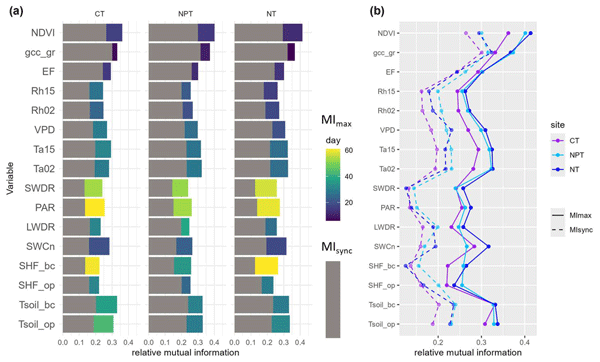
Semi-arid ecosystems are crucial for Earth's carbon balance and are sensitive to changes in nitrogen (N) and phosphorus (P) levels. Their carbon dynamics are complex and not fully understood. We studied how long-term nutrient changes affect carbon exchange. In summer, the addition of N+P changed plant composition and productivity. In transitional seasons, carbon exchange was less weather-dependent with N. The addition of N and N+P increases carbon-exchange variability, driven by grass greenness.
Yigit Uckan, Melissa Ruiz-Vásquez, Kelley De Polt, and René Orth
Earth Syst. Dynam., 16, 869–889, https://doi.org/10.5194/esd-16-869-2025, https://doi.org/10.5194/esd-16-869-2025, 2025
Short summary
Short summary
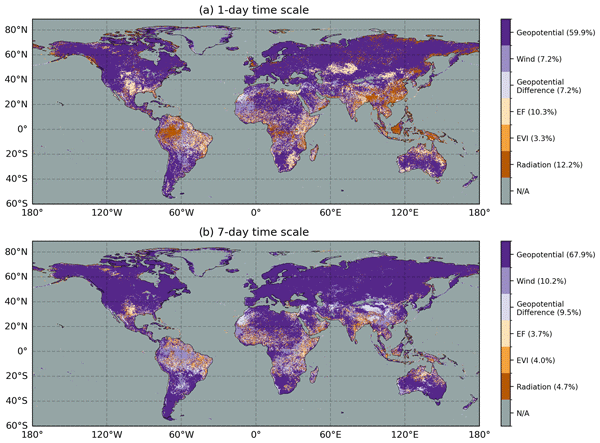
We analyze drivers of hot temperature extremes, focusing on both atmospheric and land-surface factors. Using observation-based data and an analogue-based approach, we find that geopotential height at 500 hPa is the most significant driver worldwide at daily and weekly timescales. Surface net radiation and evaporative fraction play relevant roles at the daily scale and wind at the weekly timescale. The driver influence varies by region, related to differences in climate regimes and land cover.
Friedrich J. Bohn, Ana Bastos, Romina Martin, Anja Rammig, Niak Sian Koh, Giles B. Sioen, Bram Buscher, Louise Carver, Fabrice DeClerck, Moritz Drupp, Robert Fletcher, Matthew Forrest, Alexandros Gasparatos, Alex Godoy-Faúndez, Gregor Hagedorn, Martin C. Hänsel, Jessica Hetzer, Thomas Hickler, Cornelia B. Krug, Stasja Koot, Xiuzhen Li, Amy Luers, Shelby Matevich, H. Damon Matthews, Ina C. Meier, Mirco Migliavacca, Awaz Mohamed, Sungmin O, David Obura, Ben Orlove, Rene Orth, Laura Pereira, Markus Reichstein, Lerato Thakholi, Peter H. Verburg, and Yuki Yoshida
Biogeosciences, 22, 2425–2460, https://doi.org/10.5194/bg-22-2425-2025, https://doi.org/10.5194/bg-22-2425-2025, 2025
Short summary
Short summary
An interdisciplinary collaboration of 36 international researchers from 35 institutions highlights recent findings in biosphere research. Within eight themes, they discuss issues arising from climate change and other anthropogenic stressors and highlight the co-benefits of nature-based solutions and ecosystem services. Based on an analysis of these eight topics, we have synthesized four overarching insights.
Wenli Zhao, Alexander J. Winkler, Markus Reichstein, Rene Orth, and Pierre Gentine
EGUsphere, https://doi.org/10.5194/egusphere-2025-365, https://doi.org/10.5194/egusphere-2025-365, 2025
Preprint archived
Short summary
Short summary
We developed a machine learning model that accounts for the memory effects of soil moisture and vegetation to predict Evaporative Fraction (EF) without relying on soil moisture as a direct input. The model accurately predicts EF during dry periods for the unseen sites, highlighting the key of meteorological memory effects. The learned memory effect related to rooting depth and soil water holding capacity could potentially serve as proxies for assessing the plant water stress.
Gab Abramowitz, Anna Ukkola, Sanaa Hobeichi, Jon Cranko Page, Mathew Lipson, Martin G. De Kauwe, Samuel Green, Claire Brenner, Jonathan Frame, Grey Nearing, Martyn Clark, Martin Best, Peter Anthoni, Gabriele Arduini, Souhail Boussetta, Silvia Caldararu, Kyeungwoo Cho, Matthias Cuntz, David Fairbairn, Craig R. Ferguson, Hyungjun Kim, Yeonjoo Kim, Jürgen Knauer, David Lawrence, Xiangzhong Luo, Sergey Malyshev, Tomoko Nitta, Jerome Ogee, Keith Oleson, Catherine Ottlé, Phillipe Peylin, Patricia de Rosnay, Heather Rumbold, Bob Su, Nicolas Vuichard, Anthony P. Walker, Xiaoni Wang-Faivre, Yunfei Wang, and Yijian Zeng
Biogeosciences, 21, 5517–5538, https://doi.org/10.5194/bg-21-5517-2024, https://doi.org/10.5194/bg-21-5517-2024, 2024
Short summary
Short summary
This paper evaluates land models – computer-based models that simulate ecosystem dynamics; land carbon, water, and energy cycles; and the role of land in the climate system. It uses machine learning and AI approaches to show that, despite the complexity of land models, they do not perform nearly as well as they could given the amount of information they are provided with about the prediction problem.
Sven Armin Westermann, Anke Hildebrandt, Souhail Bousetta, and Stephan Thober
Biogeosciences, 21, 5277–5303, https://doi.org/10.5194/bg-21-5277-2024, https://doi.org/10.5194/bg-21-5277-2024, 2024
Short summary
Short summary
Plants at the land surface mediate between soil and the atmosphere regarding water and carbon transport. Since plant growth is a dynamic process, models need to consider these dynamics. Two models that predict water and carbon fluxes by considering plant temporal evolution were tested against observational data. Currently, dynamizing plants in these models did not enhance their representativeness, which is caused by a mismatch between implemented physical relations and observable connections.
Jasper M. C. Denissen, Adriaan J. Teuling, Sujan Koirala, Markus Reichstein, Gianpaolo Balsamo, Martha M. Vogel, Xin Yu, and René Orth
Earth Syst. Dynam., 15, 717–734, https://doi.org/10.5194/esd-15-717-2024, https://doi.org/10.5194/esd-15-717-2024, 2024
Short summary
Short summary
Heat extremes have severe implications for human health and ecosystems. Heat extremes are mostly introduced by large-scale atmospheric circulation but can be modulated by vegetation. Vegetation with access to water uses solar energy to evaporate water into the atmosphere. Under dry conditions, water may not be available, suppressing evaporation and heating the atmosphere. Using climate projections, we show that regionally less water is available for vegetation, intensifying future heat extremes.
Sandra Raab, Karel Castro-Morales, Anke Hildebrandt, Martin Heimann, Jorien Elisabeth Vonk, Nikita Zimov, and Mathias Goeckede
Biogeosciences, 21, 2571–2597, https://doi.org/10.5194/bg-21-2571-2024, https://doi.org/10.5194/bg-21-2571-2024, 2024
Short summary
Short summary
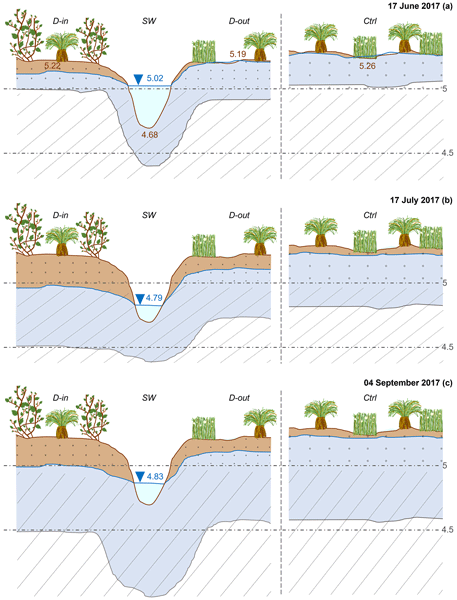
Water status is an important control factor on sustainability of Arctic permafrost soils, including production and transport of carbon. We compared a drained permafrost ecosystem with a natural control area, investigating water levels, thaw depths, and lateral water flows. We found that shifts in water levels following drainage affected soil water availability and that lateral transport patterns were of major relevance. Understanding these shifts is crucial for future carbon budget studies.
Sinikka J. Paulus, Rene Orth, Sung-Ching Lee, Anke Hildebrandt, Martin Jung, Jacob A. Nelson, Tarek Sebastian El-Madany, Arnaud Carrara, Gerardo Moreno, Matthias Mauder, Jannis Groh, Alexander Graf, Markus Reichstein, and Mirco Migliavacca
Biogeosciences, 21, 2051–2085, https://doi.org/10.5194/bg-21-2051-2024, https://doi.org/10.5194/bg-21-2051-2024, 2024
Short summary
Short summary
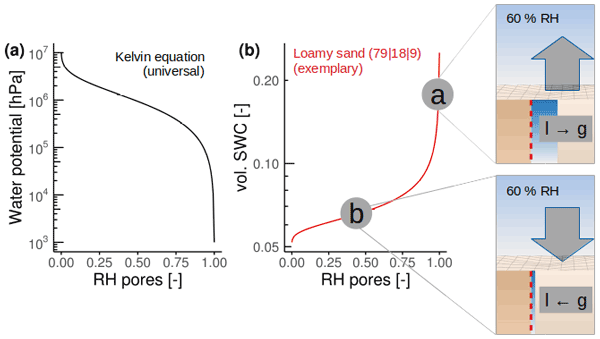
Porous materials are known to reversibly trap water from the air, even at low humidity. However, this behavior is poorly understood for soils. In this analysis, we test whether eddy covariance is able to measure the so-called adsorption of atmospheric water vapor by soils. We find that this flux occurs frequently during dry nights in a Mediterranean ecosystem, while EC detects downwardly directed vapor fluxes. These results can help to map moisture uptake globally.
Gökben Demir, Andrew J. Guswa, Janett Filipzik, Johanna Clara Metzger, Christine Römermann, and Anke Hildebrandt
Hydrol. Earth Syst. Sci., 28, 1441–1461, https://doi.org/10.5194/hess-28-1441-2024, https://doi.org/10.5194/hess-28-1441-2024, 2024
Short summary
Short summary
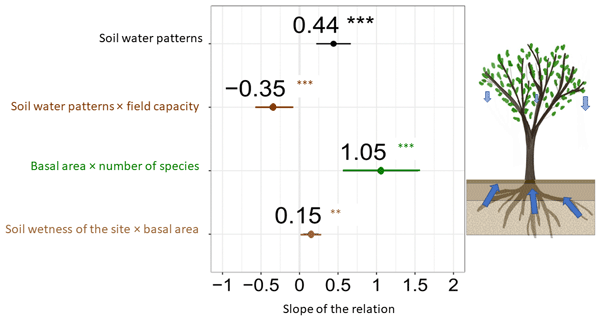
Experimental evidence is scarce to understand how the spatial variation in below-canopy precipitation affects root water uptake patterns. Here, we conducted field measurements to investigate drivers of root water uptake patterns while accounting for canopy induced heterogeneity in water input. We found that tree species interactions and soil moisture variability, rather than below-canopy precipitation patterns, control root water uptake patterns in a mixed unmanaged forest.
Prajwal Khanal, Anne J. Hoek Van Dijke, Timo Schaffhauser, Wantong Li, Sinikka J. Paulus, Chunhui Zhan, and René Orth
Biogeosciences, 21, 1533–1547, https://doi.org/10.5194/bg-21-1533-2024, https://doi.org/10.5194/bg-21-1533-2024, 2024
Short summary
Short summary
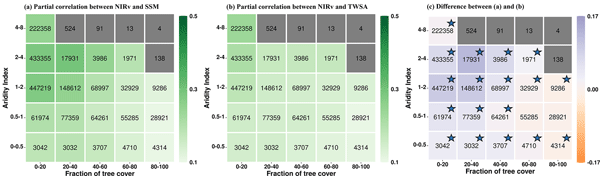
Water availability is essential for vegetation functioning, but the depth of vegetation water uptake is largely unknown due to sparse ground measurements. This study correlates vegetation growth with soil moisture availability globally to infer vegetation water uptake depth using only satellite-based data. We find that the vegetation water uptake depth varies across climate regimes and vegetation types and also changes during dry months at a global scale.
Christine Fischer-Bedtke, Johanna Clara Metzger, Gökben Demir, Thomas Wutzler, and Anke Hildebrandt
Hydrol. Earth Syst. Sci., 27, 2899–2918, https://doi.org/10.5194/hess-27-2899-2023, https://doi.org/10.5194/hess-27-2899-2023, 2023
Short summary
Short summary
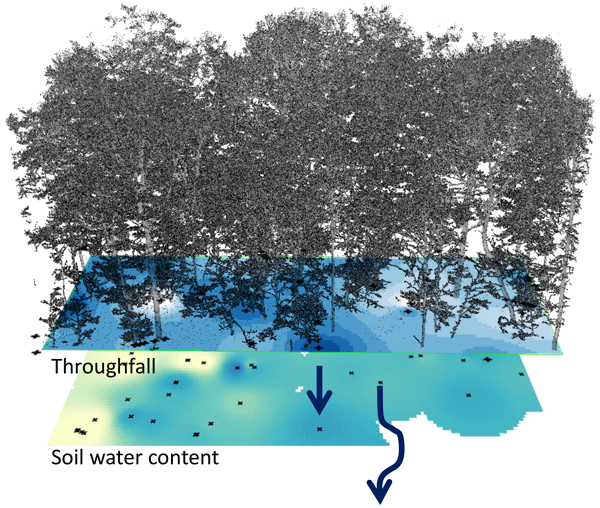
Canopies change how rain reaches the soil: some spots receive more and others less water. It has long been debated whether this also leads to locally wetter and drier soil. We checked this using measurements of canopy drip and soil moisture. We found that the increase in soil water content after rain was aligned with canopy drip. Independently, the soil storage reaction was dampened in locations prone to drainage, like hig-macroporosity areas, suggesting that canopy drip enhances bypass flow.
Lina Teckentrup, Martin G. De Kauwe, Gab Abramowitz, Andrew J. Pitman, Anna M. Ukkola, Sanaa Hobeichi, Bastien François, and Benjamin Smith
Earth Syst. Dynam., 14, 549–576, https://doi.org/10.5194/esd-14-549-2023, https://doi.org/10.5194/esd-14-549-2023, 2023
Short summary
Short summary
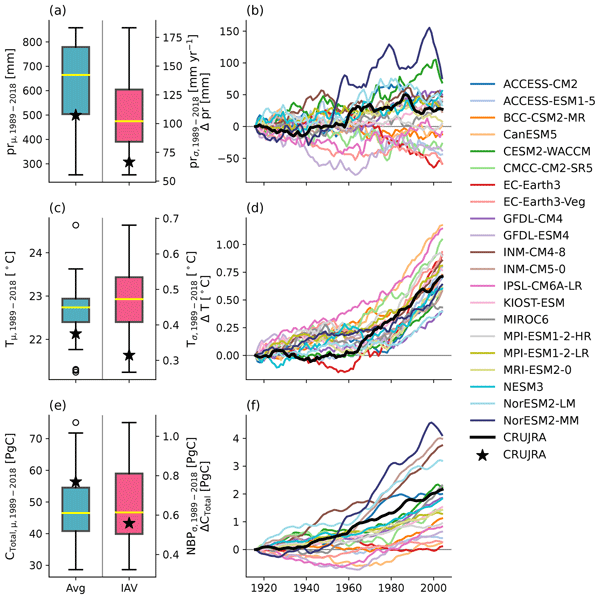
Studies analyzing the impact of the future climate on ecosystems employ climate projections simulated by global circulation models. These climate projections display biases that translate into significant uncertainty in projections of the future carbon cycle. Here, we test different methods to constrain the uncertainty in simulations of the carbon cycle over Australia. We find that all methods reduce the bias in the steady-state carbon variables but that temporal properties do not improve.
Manal Lam'barki, Wantong Li, Sungmin O, Chunhui Zhan, and Rene Orth
Hydrol. Earth Syst. Sci. Discuss., https://doi.org/10.5194/hess-2022-404, https://doi.org/10.5194/hess-2022-404, 2022
Manuscript not accepted for further review
Short summary
Short summary
We investigate the main drivers of high river flows in near-natural European catchments. While there are a lot of previous research in this area, the understanding of the relative relevance of high flow drivers other than precipitation is understudied. We find that the secondary drivers of high river flows are very diverse and become more relevant for more extreme events. This illustrates the necessity of flood management by considering a multitude of drivers in the context of climate change.
Yuan Zhang, Devaraju Narayanappa, Philippe Ciais, Wei Li, Daniel Goll, Nicolas Vuichard, Martin G. De Kauwe, Laurent Li, and Fabienne Maignan
Geosci. Model Dev., 15, 9111–9125, https://doi.org/10.5194/gmd-15-9111-2022, https://doi.org/10.5194/gmd-15-9111-2022, 2022
Short summary
Short summary
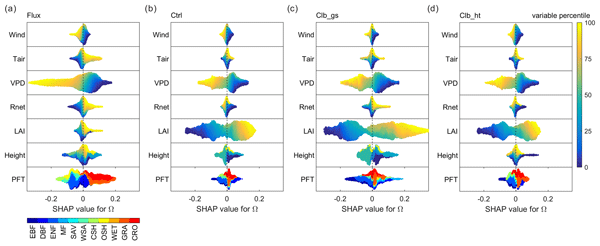
There are a few studies to examine if current models correctly represented the complex processes of transpiration. Here, we use a coefficient Ω, which indicates if transpiration is mainly controlled by vegetation processes or by turbulence, to evaluate the ORCHIDEE model. We found a good performance of ORCHIDEE, but due to compensation of biases in different processes, we also identified how different factors control Ω and where the model is wrong. Our method is generic to evaluate other models.
Sinikka Jasmin Paulus, Tarek Sebastian El-Madany, René Orth, Anke Hildebrandt, Thomas Wutzler, Arnaud Carrara, Gerardo Moreno, Oscar Perez-Priego, Olaf Kolle, Markus Reichstein, and Mirco Migliavacca
Hydrol. Earth Syst. Sci., 26, 6263–6287, https://doi.org/10.5194/hess-26-6263-2022, https://doi.org/10.5194/hess-26-6263-2022, 2022
Short summary
Short summary
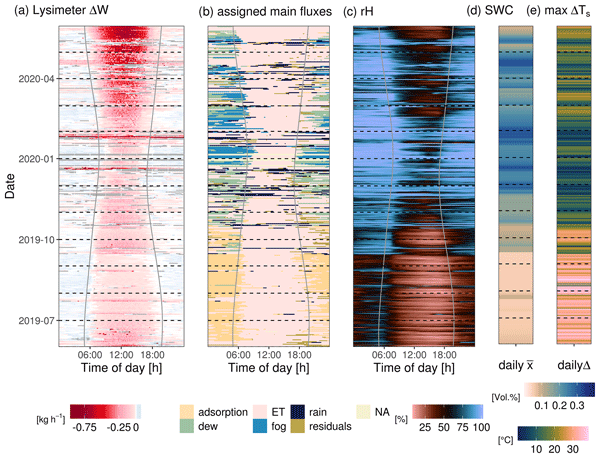
In this study, we analyze small inputs of water to ecosystems such as fog, dew, and adsorption of vapor. To measure them, we use a scaling system and later test our attribution of different water fluxes to weight changes. We found that they occur frequently during 1 year in a dry summer ecosystem. In each season, a different flux seems dominant, but they all mainly occur during the night. Therefore, they could be important for the biosphere because rain is unevenly distributed over the year.
Melissa Ruiz-Vásquez, Sungmin O, Alexander Brenning, Randal D. Koster, Gianpaolo Balsamo, Ulrich Weber, Gabriele Arduini, Ana Bastos, Markus Reichstein, and René Orth
Earth Syst. Dynam., 13, 1451–1471, https://doi.org/10.5194/esd-13-1451-2022, https://doi.org/10.5194/esd-13-1451-2022, 2022
Short summary
Short summary
Subseasonal forecasts facilitate early warning of extreme events; however their predictability sources are not fully explored. We find that global temperature forecast errors in many regions are related to climate variables such as solar radiation and precipitation, as well as land surface variables such as soil moisture and evaporative fraction. A better representation of these variables in the forecasting and data assimilation systems can support the accuracy of temperature forecasts.
Friedrich Boeing, Oldrich Rakovec, Rohini Kumar, Luis Samaniego, Martin Schrön, Anke Hildebrandt, Corinna Rebmann, Stephan Thober, Sebastian Müller, Steffen Zacharias, Heye Bogena, Katrin Schneider, Ralf Kiese, Sabine Attinger, and Andreas Marx
Hydrol. Earth Syst. Sci., 26, 5137–5161, https://doi.org/10.5194/hess-26-5137-2022, https://doi.org/10.5194/hess-26-5137-2022, 2022
Short summary
Short summary
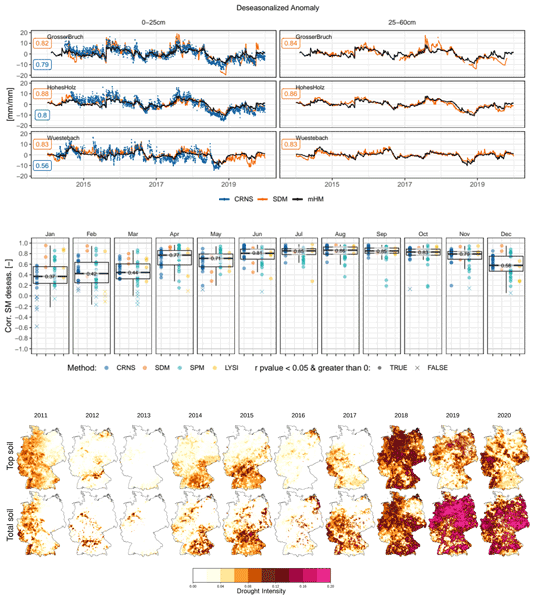
In this paper, we deliver an evaluation of the second generation operational German drought monitor (https://www.ufz.de/duerremonitor) with a state-of-the-art compilation of observed soil moisture data from 40 locations and four different measurement methods in Germany. We show that the expressed stakeholder needs for higher resolution drought information at the one-kilometer scale can be met and that the agreement of simulated and observed soil moisture dynamics can be moderately improved.
Ralf Loritz, Maoya Bassiouni, Anke Hildebrandt, Sibylle K. Hassler, and Erwin Zehe
Hydrol. Earth Syst. Sci., 26, 4757–4771, https://doi.org/10.5194/hess-26-4757-2022, https://doi.org/10.5194/hess-26-4757-2022, 2022
Short summary
Short summary
In this study, we combine a deep-learning approach that predicts sap flow with a hydrological model to improve soil moisture and transpiration estimates at the catchment scale. Our results highlight that hybrid-model approaches, combining machine learning with physically based models, are a promising way to improve our ability to make hydrological predictions.
Bahar Bahrami, Anke Hildebrandt, Stephan Thober, Corinna Rebmann, Rico Fischer, Luis Samaniego, Oldrich Rakovec, and Rohini Kumar
Geosci. Model Dev., 15, 6957–6984, https://doi.org/10.5194/gmd-15-6957-2022, https://doi.org/10.5194/gmd-15-6957-2022, 2022
Short summary
Short summary
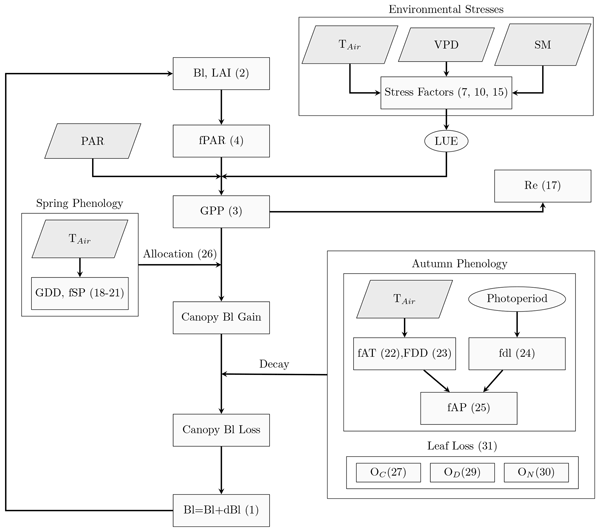
Leaf area index (LAI) and gross primary productivity (GPP) are crucial components to carbon cycle, and are closely linked to water cycle in many ways. We develop a Parsimonious Canopy Model (PCM) to simulate GPP and LAI at stand scale, and show its applicability over a diverse range of deciduous broad-leaved forest biomes. With its modular structure, the PCM is able to adapt with existing data requirements, and run in either a stand-alone mode or as an interface linked to hydrologic models.
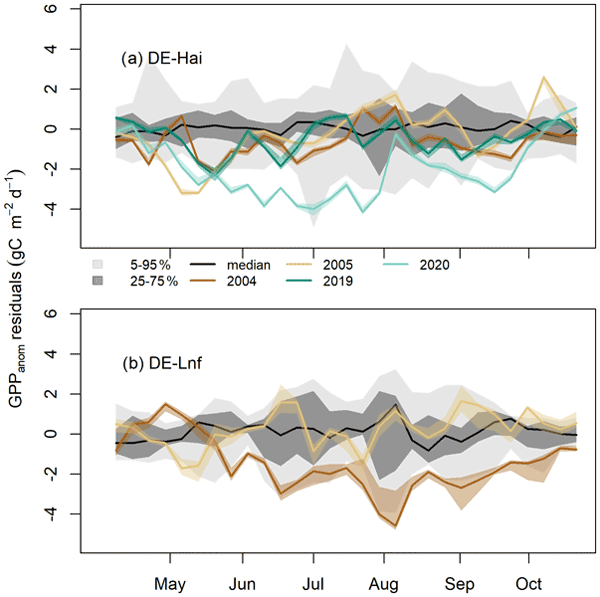
Xin Yu, René Orth, Markus Reichstein, Michael Bahn, Anne Klosterhalfen, Alexander Knohl, Franziska Koebsch, Mirco Migliavacca, Martina Mund, Jacob A. Nelson, Benjamin D. Stocker, Sophia Walther, and Ana Bastos
Biogeosciences, 19, 4315–4329, https://doi.org/10.5194/bg-19-4315-2022, https://doi.org/10.5194/bg-19-4315-2022, 2022
Short summary
Short summary
Identifying drought legacy effects is challenging because they are superimposed on variability driven by climate conditions in the recovery period. We develop a residual-based approach to quantify legacies on gross primary productivity (GPP) from eddy covariance data. The GPP reduction due to legacy effects is comparable to the concurrent effects at two sites in Germany, which reveals the importance of legacy effects. Our novel methodology can be used to quantify drought legacies elsewhere.
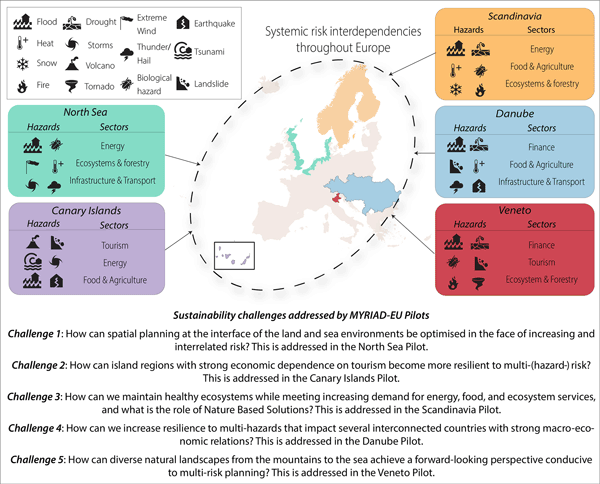
Philip J. Ward, James Daniell, Melanie Duncan, Anna Dunne, Cédric Hananel, Stefan Hochrainer-Stigler, Annegien Tijssen, Silvia Torresan, Roxana Ciurean, Joel C. Gill, Jana Sillmann, Anaïs Couasnon, Elco Koks, Noemi Padrón-Fumero, Sharon Tatman, Marianne Tronstad Lund, Adewole Adesiyun, Jeroen C. J. H. Aerts, Alexander Alabaster, Bernard Bulder, Carlos Campillo Torres, Andrea Critto, Raúl Hernández-Martín, Marta Machado, Jaroslav Mysiak, Rene Orth, Irene Palomino Antolín, Eva-Cristina Petrescu, Markus Reichstein, Timothy Tiggeloven, Anne F. Van Loon, Hung Vuong Pham, and Marleen C. de Ruiter
Nat. Hazards Earth Syst. Sci., 22, 1487–1497, https://doi.org/10.5194/nhess-22-1487-2022, https://doi.org/10.5194/nhess-22-1487-2022, 2022
Short summary
Short summary
The majority of natural-hazard risk research focuses on single hazards (a flood, a drought, a volcanic eruption, an earthquake, etc.). In the international research and policy community it is recognised that risk management could benefit from a more systemic approach. In this perspective paper, we argue for an approach that addresses multi-hazard, multi-risk management through the lens of sustainability challenges that cut across sectors, regions, and hazards.
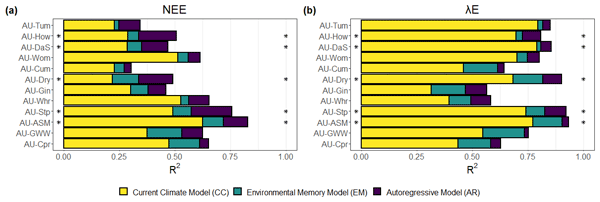
Jon Cranko Page, Martin G. De Kauwe, Gab Abramowitz, Jamie Cleverly, Nina Hinko-Najera, Mark J. Hovenden, Yao Liu, Andy J. Pitman, and Kiona Ogle
Biogeosciences, 19, 1913–1932, https://doi.org/10.5194/bg-19-1913-2022, https://doi.org/10.5194/bg-19-1913-2022, 2022
Short summary
Short summary
Although vegetation responds to climate at a wide range of timescales, models of the land carbon sink often ignore responses that do not occur instantly. In this study, we explore the timescales at which Australian ecosystems respond to climate. We identified that carbon and water fluxes can be modelled more accurately if we include environmental drivers from up to a year in the past. The importance of antecedent conditions is related to ecosystem aridity but is also influenced by other factors.
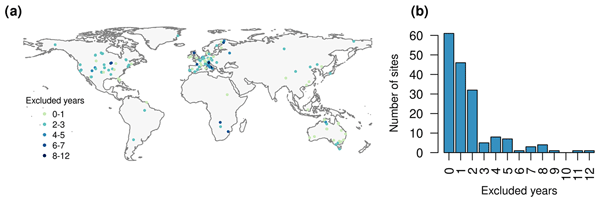
Anna M. Ukkola, Gab Abramowitz, and Martin G. De Kauwe
Earth Syst. Sci. Data, 14, 449–461, https://doi.org/10.5194/essd-14-449-2022, https://doi.org/10.5194/essd-14-449-2022, 2022
Short summary
Short summary
Flux towers provide measurements of water, energy, and carbon fluxes. Flux tower data are invaluable in improving and evaluating land models but are not suited to modelling applications as published. Here we present flux tower data tailored for land modelling, encompassing 170 sites globally. Our dataset resolves several key limitations hindering the use of flux tower data in land modelling, including incomplete forcing variable, data format, and low data quality.
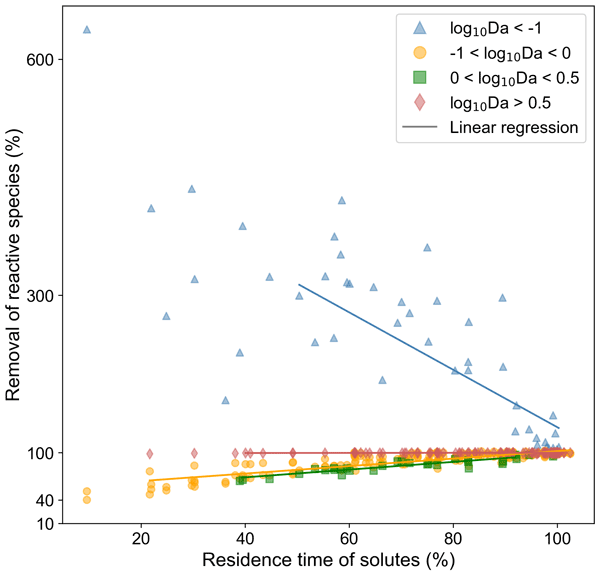
Swamini Khurana, Falk Heße, Anke Hildebrandt, and Martin Thullner
Biogeosciences, 19, 665–688, https://doi.org/10.5194/bg-19-665-2022, https://doi.org/10.5194/bg-19-665-2022, 2022
Short summary
Short summary
In this study, we concluded that the residence times of solutes and the Damköhler number (Da) of the biogeochemical reactions in the domain are governing factors for evaluating the impact of spatial heterogeneity of the domain on chemical (such as carbon and nitrogen compounds) removal. We thus proposed a relationship to scale this impact governed by Da. This relationship may be applied in larger domains, thereby resulting in more accurate modelling outcomes of nutrient removal in groundwater.

Sami W. Rifai, Martin G. De Kauwe, Anna M. Ukkola, Lucas A. Cernusak, Patrick Meir, Belinda E. Medlyn, and Andy J. Pitman
Biogeosciences, 19, 491–515, https://doi.org/10.5194/bg-19-491-2022, https://doi.org/10.5194/bg-19-491-2022, 2022
Short summary
Short summary
Australia's woody ecosystems have experienced widespread greening despite a warming climate and repeated record-breaking droughts and heat waves. Increasing atmospheric CO2 increases plant water use efficiency, yet quantifying the CO2 effect is complicated due to co-occurring effects of global change. Here we harmonized a 38-year satellite record to separate the effects of climate change, land use change, and disturbance to quantify the CO2 fertilization effect on the greening phenomenon.
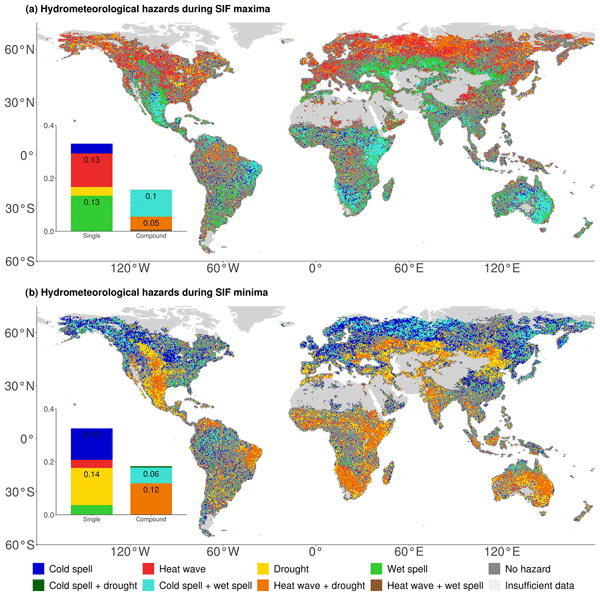
Josephin Kroll, Jasper M. C. Denissen, Mirco Migliavacca, Wantong Li, Anke Hildebrandt, and Rene Orth
Biogeosciences, 19, 477–489, https://doi.org/10.5194/bg-19-477-2022, https://doi.org/10.5194/bg-19-477-2022, 2022
Short summary
Short summary
Plant growth relies on having access to energy (solar radiation) and water (soil moisture). This energy and water availability is impacted by weather extremes, like heat waves and droughts, which will occur more frequently in response to climate change. In this context, we analysed global satellite data to detect in which regions extreme plant growth is controlled by energy or water. We find that extreme plant growth is associated with temperature- or soil-moisture-related extremes.
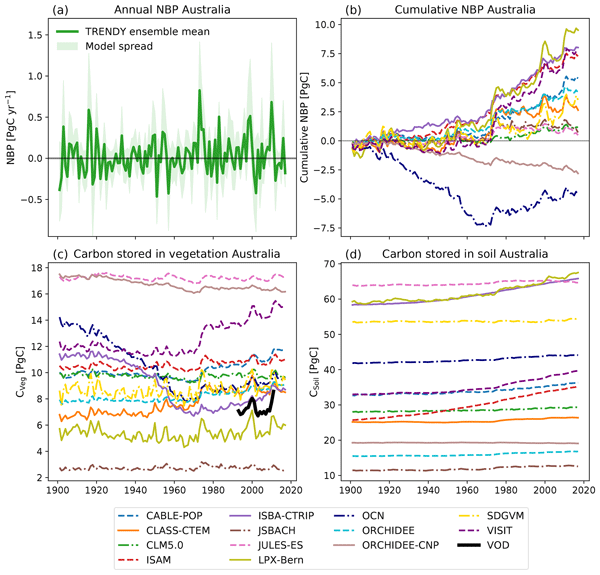
Lina Teckentrup, Martin G. De Kauwe, Andrew J. Pitman, Daniel S. Goll, Vanessa Haverd, Atul K. Jain, Emilie Joetzjer, Etsushi Kato, Sebastian Lienert, Danica Lombardozzi, Patrick C. McGuire, Joe R. Melton, Julia E. M. S. Nabel, Julia Pongratz, Stephen Sitch, Anthony P. Walker, and Sönke Zaehle
Biogeosciences, 18, 5639–5668, https://doi.org/10.5194/bg-18-5639-2021, https://doi.org/10.5194/bg-18-5639-2021, 2021
Short summary
Short summary
The Australian continent is included in global assessments of the carbon cycle such as the global carbon budget, yet the performance of dynamic global vegetation models (DGVMs) over Australia has rarely been evaluated. We assessed simulations by an ensemble of dynamic global vegetation models over Australia and highlighted a number of key areas that lead to model divergence on both short (inter-annual) and long (decadal) timescales.
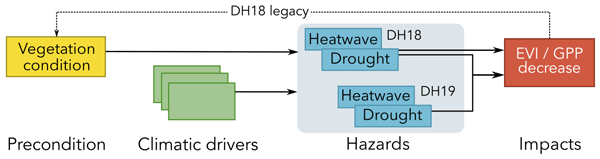
Ana Bastos, René Orth, Markus Reichstein, Philippe Ciais, Nicolas Viovy, Sönke Zaehle, Peter Anthoni, Almut Arneth, Pierre Gentine, Emilie Joetzjer, Sebastian Lienert, Tammas Loughran, Patrick C. McGuire, Sungmin O, Julia Pongratz, and Stephen Sitch
Earth Syst. Dynam., 12, 1015–1035, https://doi.org/10.5194/esd-12-1015-2021, https://doi.org/10.5194/esd-12-1015-2021, 2021
Short summary
Short summary
Temperate biomes in Europe are not prone to recurrent dry and hot conditions in summer. However, these conditions may become more frequent in the coming decades. Because stress conditions can leave legacies for many years, this may result in reduced ecosystem resilience under recurrent stress. We assess vegetation vulnerability to the hot and dry summers in 2018 and 2019 in Europe and find the important role of inter-annual legacy effects from 2018 in modulating the impacts of the 2019 event.
Cited articles
Allan, R. P.: Amplified seasonal range in precipitation minus evaporation, Environ. Res. Lett., 18, 094004, https://doi.org/10.1088/1748-9326/acea36, 2023.
Anderegg, W. R., Berry, J. A., Smith, D. D., Sperry, J. S., Anderegg, L. D., and Field, C. B.: The roles of hydraulic and carbon stress in a widespread climate-induced forest die-off, P. Natl. Acad. Sci. USA, 109, 233–237, https://doi.org/10.1073/pnas.1107891109, 2011.
Bailey-Serres, J. and Voesenek, L. A. C. J.: Flooding stress: acclimations and genetic diversity, Annu. Rev. Plant Biol., 59, 313–339, https://doi.org/10.1146/annurev.arplant.59.032607.092752, 2008.
Beck, H. E., Wood, E. F., Pan, M., Fisher, C. K., Miralles, D. G., van Dijk, A. I. J. M., McVicar, T. R., and Adler, R. F.: MSWEP V2 global 3-hourly 0.1° precipitation: Methodology and quantitative assessment, B. Am. Meteorol. Soc., 100, 473–500, https://doi.org/10.1175/BAMS-D-17-0138.1, 2019 (data available at: https://climatedataguide.ucar.edu/climate-data/global-high-resolution-precipitation-mswep, last access: 24 July 2026).
Berg, A., Sheffield, J., and Milly, P. C.: Divergent surface and total soil moisture projections under global warming. Geophys. Res. Lett., 44, 236–244, https://doi.org/10.1002/2016GL071921, 2016.
Breinl, K., Di Baldassarre, G., Mazzoleni, M., Lun, D., and Vico, G.: Extreme dry and wet spells face changes in their duration and timing. Environ. Res. Lett., 15, 074040, https://doi.org/10.1088/1748-9326/ab7d05, 2020.
Budyko, M. I.: Climate and Life, English edn., International Geophysics Series, vol. 18, edited by: Miller, D. H., Academic Press, New York, USA, 508 pp., ISBN 978-0-12-139450-9, 1974.
Chen, L., Brun, P., Buri, P., Fatichi, S., Gessler, A., McCarthy, M. J., Pellicciotti, F., Stocker, B., and Karger, D. N.: Global increase in the occurrence and impact of multiyear droughts, Science, 387, 278–284, https://doi.org/10.1126/science.ado4245, 2025.
Cheng, X.: Data associated with Global vegetation responses to wet and dry soil moisture extremes, Zenodo [data set], https://doi.org/10.5281/zenodo.18234861, 2026.
De Kauwe, M. G., Medlyn, B. E., Walker, A. P., Zaehle, S., Asao, S., Guenet, B., Harper, A. B., Hickler, T., Jain, A. K., Luo, Y., Lu, X., Luus, K., Parton, W. J., Shu, S., Wang, Y.-P., Werner, C., Xia, J., Pendall, E., Morgan, J. A., Ryan, E. M., Carrillo, Y., Dijkstra, F. A., Zelikova, T. J., and Norby, R. J.: Challenging terrestrial biosphere models with data from the long-term multifactor Prairie Heating and CO 2 Enrichment experiment, Glob. Chang. Biol., 23, 3623–3645, https://doi.org/10.1111/gcb.13643, 2017.
De Luca, P., Messori, G., Wilby, R. L., Mazzoleni, M., and Di Baldassarre, G.: Concurrent wet and dry hydrological extremes at the global scale, Earth Syst. Dynam., 11, 251–266, https://doi.org/10.5194/esd-11-251-2020, 2020.
Didan, K.: MODIS/Terra Vegetation Indices 16-Day L3 Global 0.05Deg CMG V061, NASA Land Processes Distributed Active Archive Center [data set], https://doi.org/10.5067/MODIS/MOD13C1.061, 2021.
Didan, K. and Barreto-Muñoz, A.: MODIS Vegetation Index User's Guide (MOD13 Series), version 3.10, Collection 6.1, Vegetation Index and Phenology Lab, The University of Arizona, Tucson, AZ, USA, 33 pp., https://lpdaac.usgs.gov/documents/621/MOD13_User_Guide_V61.pdf (last access: 23 July 2026), 2019.
Didan, K., Munoz, A. B., Solano, R., and Huete, A.: MODIS vegetation index user's guide (MOD13 series), University of Arizona, vegetation index and Phenology Lab, 35, 2–33, 2015.
Famiglietti, C. A., Michalak, A. M., and Konings, A. G.: Extreme wet events as important as extreme dry events in controlling spatial patterns of vegetation greenness anomalies, Environ. Res. Lett., 16, 074014, https://doi.org/10.1088/1748-9326/abfc78, 2021.
FAO and IIASA: Harmonized World Soil Database version 2.0, FAO, Rome, Italy, and IIASA, Laxenburg, Austria, https://doi.org/10.4060/cc3823en, 2023.
Feddes, R. A., Kabat, P., Van Bakel, P., Bronswijk, J. J. B., and Halbertsma, J.: Modelling soil water dynamics in the unsaturated zone – state of the art, J. Hydrol., 100, 69–111, https://doi.org/10.1016/0022-1694(88)90182-5, 1988.
Feldman, A. F., Feng, X., Felton, A. J., Konings, A. G., Knapp, A. K., Biederman, J. A., and Poulter, B.: Plant responses to changing rainfall frequency and intensity, Nat. Rev. Earth Environ., 5, 276–294, https://doi.org/10.1038/s43017-024-00534-0, 2024.
Guisset, C., Dendoncker, M., Vincke, C., and Ponette, Q.: Drought timing, intensity, and consecutiveness have more influence on Douglas fir growth response than site conditions and stand density in European temperate climate, For. Ecol. Manag., 569, 122177, https://doi.org/10.1016/j.foreco.2024.122177, 2024.
Harper, K. L., Lamarche, C., Hartley, A., Peylin, P., Ottlé, C., Bastrikov, V., San Martín, R., Bohnenstengel, S. I., Kirches, G., Boettcher, M., Shevchuk, R., Brockmann, C., and Defourny, P.: A 29-year time series of annual 300 m resolution plant-functional-type maps for climate models, Earth Syst. Sci. Data, 15, 1465–1499, https://doi.org/10.5194/essd-15-1465-2023, 2023.
Haverroth, E. J., Da-Silva, C. J., Taggart, M., Oliveira, L. A., and Cardoso, A. A.: Shoot hydraulic impairments induced by root waterlogging: parallels and contrasts with drought, Plant Physiol., 197, kiae336, https://doi.org/10.1093/plphys/kiae336, 2025.
Humphrey, V., Berg, A., Ciais, P., Gentine, P., Jung, M., Reichstein, M., Seneviratne, S. I., and Frankenberg, C.: Soil moisture–atmosphere feedback dominates land carbon uptake variability, Nature, 592, 65–69, https://doi.org/10.1038/s41586-021-03325-5, 2021.
Intergovernmental Panel on Climate Change (IPCC): Summary for Policymakers, in: Climate Change 2021: The Physical Science Basis. Contribution of Working Group I to the Sixth Assessment Report of the Intergovernmental Panel on Climate Change, edited by: Masson-Delmotte, V., Zhai, P., Pirani, A., Connors, S. L., Péan, C., Berger, S., Caud, N., Chen, Y., Goldfarb, L., Gomis, M. I., Huang, M., Leitzell, K., Lonnoy, E., Matthews, J. B. R., Maycock, T. K., Waterfield, T., Yelekçi, O., Yu, R., and Zhou, B., Cambridge University Press, Cambridge, UK and New York, NY, USA, 3–32, https://doi.org/10.1017/9781009157896.001, 2023.
Iturbide, M., Gutiérrez, J. M., Alves, L. M., Bedia, J., Cerezo-Mota, R., Cimadevilla, E., Cofiño, A. S., Di Luca, A., Faria, S. H., Gorodetskaya, I. V., Hauser, M., Herrera, S., Hennessy, K., Hewitt, H. T., Jones, R. G., Krakovska, S., Manzanas, R., Martínez-Castro, D., Narisma, G. T., Nurhati, I. S., Pinto, I., Seneviratne, S. I., van den Hurk, B., and Vera, C. S.: An update of IPCC climate reference regions for subcontinental analysis of climate model data: definition and aggregated datasets, Earth Syst. Sci. Data, 12, 2959–2970, https://doi.org/10.5194/essd-12-2959-2020, 2020.
Jiang, P., Liu, H., Piao, S., Ciais, P., Wu, X., Yin, Y., and Wang, H.: Enhanced growth after extreme wetness compensates for post-drought carbon loss in dry forests, Nat. Commun., 10, 195, https://doi.org/10.1038/s41467-018-08229-z, 2019.
Jiang, S., Sweet, L. B., Blougouras, G., Brenning, A., Li, W., Reichstein, M., Denzler, J., Shangguan, W., Yu, G., Huang, F., and Zscheischler, J.: How interpretable machine learning can benefit process understanding in the geosciences. Earth's Future, 12, e2024EF004540, https://doi.org/10.1029/2024EF004540, 2024.
Jørgensen, M., Torp, T., and Mølmann, J. A. B.: Impact of waterlogging and temperature on autumn growth, hardening and freezing tolerance of timothy (Phleum pratense), J. Agron. Crop Sci., 206, 242–251, https://doi.org/10.1111/jac.12385, 2019.
Knipfer, T., Bambach, N., Hernandez, M. I., Bartlett, M. K., Sinclair, G., Duong, F., Kluepfel, D. A., and McElrone, A. J.: Predicting stomatal closure and turgor loss in woody plants using predawn and midday water potential, Plant Physiol., 184, 881–894, https://doi.org/10.1104/pp.20.00500, 2020.
Kreuzwieser, J. and Rennenberg, H.: Molecular and physiological responses of trees to waterlogging stress, Plant Cell Environ., 37, 2245–2259, https://doi.org/10.1111/pce.12310, 2014.
Li, H. and Hu, Y.: Responses of vegetation low-growth to extreme climate events on the Mongolian Plateau, Glob. Ecol. Conserv., 56, e03292, https://doi.org/10.1016/j.gecco.2024.e03292, 2024.
Li, W., Migliavacca, M., Forkel, M., Walther, S., Reichstein, M., and Orth, R.: Revisiting global vegetation controls using multi-layer soil moisture, Geophys. Res. Lett., 48, e2021GL092856, https://doi.org/10.1029/2021GL092856, 2021.
Li, Y., Guan, K., Schnitkey, G. D., DeLucia, E., and Peng, B.: Excessive rainfall leads to maize yield loss of a comparable magnitude to extreme drought in the United States, Glob. Change Biol., 25, 2325–2337, https://doi.org/10.1111/gcb.14628, 2019.
Lian, X., Piao, S., Chen, A., Wang, K., Li, X., Buermann, W., Huntingford, C., Peñuelas, J., and Myneni, R. B.: Seasonal biological carryover dominates northern vegetation growth, Nat. Commun., 12, 983, https://doi.org/10.1038/s41467-021-21223-2, 2021.
Liu, L., Gudmundsson, L., Hauser, M., Qin, D., Li, S., and Seneviratne, S. I.: Soil moisture dominates dryness stress on ecosystem production globally, Nat. Commun., 11, 4892, https://doi.org/10.1038/s41467-020-18631-1, 2020.
Liu, Q., Guo, H., Zhang, J., Li, S., Li, J., Yao, F., Mahecha, M. D., and Peng, J.: Global assessment of terrestrial productivity in response to water stress, Sci. Bull., 69, 2352–2356, https://doi.org/10.1016/j.scib.2024.05.033, 2024.
McCormick, E. L., Famiglietti, C. A., Feng, D., Michalak, A. M., and Konings, A. G.: Susceptibility to photosynthesis suppression from extreme storms is highly site-dependent, Glob. Change Biol., 31, e70257, https://doi.org/10.1111/gcb.70257, 2025.
McDowell, N., Pockman, W. T., Allen, C. D., Breshears, D. D., Cobb, N., Kolb, T., Plaut, J., Sperry, J., West, A., Williams, D. G., and Yepez, E. A.: Mechanisms of plant survival and mortality during drought: why do some plants survive while others succumb to drought?, New Phytol., 178, 719–739, https://doi.org/10.1111/j.1469-8137.2008.02436.x, 2008.
Meng, Z., Wu, X., Li, Y., and Wang, X.: Drought timing differentiates the drought responses of vegetation growth on the Tibetan Plateau, J. Geophys. Res.-Biogeo., 129, e2024JG008179, https://doi.org/10.1029/2024JG008179, 2024.
Moritz, M. A., Batllori, E., Bradstock, R. A., Gill, A. M., Handmer, J., Hessburg, P. F., Leonard, J., McCaffrey, S., Odion, D. C., Schoennagel, T., and Syphard, A. D.: Learning to coexist with wildfire, Nature, 515, 58–66, https://doi.org/10.1038/nature13946, 2014.
Muñoz-Sabater, J., Dutra, E., Agustí-Panareda, A., Albergel, C., Arduini, G., Balsamo, G., Boussetta, S., Choulga, M., Harrigan, S., Hersbach, H., Martens, B., Miralles, D. G., Piles, M., Rodríguez-Fernández, N. J., Zsoter, E., Buontempo, C., and Thépaut, J.-N.: ERA5-Land: a state-of-the-art global reanalysis dataset for land applications, Earth Syst. Sci. Data, 13, 4349–4383, https://doi.org/10.5194/essd-13-4349-2021, 2021.
NOAA National Centers for Environmental Information: ETOPO 2022 15 Arc-Second Global Relief Model. NOAA National Centers for Environmental Information, https://doi.org/10.25921/fd45-gt74 (last access: 21 November 2025), 2022.
O, S. and Park, S. K.: Global ecosystem responses to flash droughts are modulated by background climate and vegetation conditions, Commun. Earth Environ., 5, 88, https://doi.org/10.1038/s43247-024-01247-4, 2024.
Smith, M. D.: An ecological perspective on extreme climatic events: a synthetic definition and framework to guide future research, J. Ecol., 99, 656–663, https://doi.org/10.1111/j.1365-2745.2011.01798.x, 2011.
Stocker, B. D., Tumber-Dávila, S. J., Konings, A. G., Anderson, M. C., Hain, C., and Jackson, R. B.: Global patterns of water storage in the rooting zones of vegetation, Nat. Geosci., 16, 250–256, https://doi.org/10.1038/s41561-023-01125-2, 2023.
Tramontana, G., Jung, M., Schwalm, C. R., Ichii, K., Camps-Valls, G., Ráduly, B., Reichstein, M., Arain, M. A., Cescatti, A., Kiely, G., Merbold, L., Serrano-Ortiz, P., Sickert, S., Wolf, S., and Papale, D.: Predicting carbon dioxide and energy fluxes across global FLUXNET sites with regression algorithms, Biogeosciences, 13, 4291–4313, https://doi.org/10.5194/bg-13-4291-2016, 2016.
Vicente-Serrano, S. M., Gouveia, C., Camarero, J. J., Beguería, S., Trigo, R., López-Moreno, J. I., Azorín-Molina, C., Pasho, E., Lorenzo-Lacruz, J., Revuelto, J., Morán-Tejeda, E., and Sanchez-Lorenzo, A.: Response of vegetation to drought time-scales across global land biomes, P. Natl. Acad. Sci. USA, 110, 52–57, https://doi.org/10.1073/pnas.1207068110, 2013.
Walther, S., Duveiller, G., Jung, M., Guanter, L., Cescatti, A., and Camps-Valls, G.: Satellite observations of the contrasting response of trees and grasses to variations in water availability, Geophys. Res. Lett., 46, 1429–1440, https://doi.org/10.1029/2018GL080535, 2019.
Wang, C., Chen, J., Lee, S. C., Xiong, L., Su, T., Lin, Q., and Xu, C. Y.: Response and recovery times of vegetation productivity under drought stress: Dominant factors and relationships, J. Hydrol., 655, 132945, https://doi.org/10.1016/j.jhydrol.2025.132945, 2025.
Xiao, J., Sun, F., Wang, T., and Hong, W.: Green and blue water response to drought modulated by background climate and vegetation, Commun. Earth Environ., 6, 488, https://doi.org/10.1038/s43247-025-02476-x, 2025.
Yang, H., Munson, S. M., Huntingford, C., Carvalhais, N., Knapp, A. K., Li, X., Peñuelas, J., Zscheischler, J., and Chen, A.: The detection and attribution of extreme reductions in vegetation growth across the global land surface, Glob. Change Biol., 29, 2351–2362, https://doi.org/10.1111/gcb.16595, 2023.
Zhang, M., Yuan, X., Zeng, Z., Pan, M., Wu, P., Xiao, J., and Keenan, T. F.: A pronounced decline in northern vegetation resistance to flash droughts from 2001 to 2022, Nat. Commun., 16, 2984, https://doi.org/10.1038/s41467-025-58253-z, 2025.
Zhou, S., Williams, A. P., Berg, A. M., Cook, B. I., Zhang, Y., Hagemann, S., Lorenz, R., Seneviratne, S. I., and Gentine, P.: Land–atmosphere feedbacks exacerbate concurrent soil drought and atmospheric aridity, P. Natl. Acad. Sci. USA, 116, 18848–18853, https://doi.org/10.1073/pnas.1904955116, 2019.
Zolina, O., Simmer, C., Belyaev, K., Gulev, S. K., and Koltermann, P.: Changes in the duration of European wet and dry spells during the last 60 years, J. Climate, 26, 2022–2047, https://doi.org/10.1175/JCLI-D-11-00498.1, 2013.
Short summary
Using long-term satellite greenness data and a machine-learning attribution approach, we assessed vegetation responses to wet and dry soil moisture extremes and identified their dominant drivers. Dry extremes caused widespread negative greenness anomalies mainly controlled by pre-extreme conditions and seasonal timing, while wet extremes showed more heterogeneous responses additionally shaped by climate and topography, highlighting contrasting ecosystem sensitivity to hydrological extremes.
Using long-term satellite greenness data and a machine-learning attribution approach, we...


Altmetrics
Final-revised paper
Preprint