
Articles | Volume 23, issue 15
https://doi.org/10.5194/bg-23-5515-2026
© Author(s) 2026. This work is distributed under
the Creative Commons Attribution 4.0 License.
the Creative Commons Attribution 4.0 License.
https://doi.org/10.5194/bg-23-5515-2026
© Author(s) 2026. This work is distributed under
the Creative Commons Attribution 4.0 License.
the Creative Commons Attribution 4.0 License.
Research article
| 
11 Aug 2026
Research article |
| 11 Aug 2026
| 11 Aug 2026
Exploring silicon isotope fractionation by silicoflagellates: results from a KOSMOS experiment off Peru

German Centre for Integrative Biodiversity Research (iDiv) Halle-Jena-Leipzig, Leipzig, 04103, Germany
GEOMAR Helmholtz Centre for Ocean Research Kiel, 24148 Kiel, Germany
Kristin Doering
Department of Geoscience, Aarhus University, 8000 Aarhus, Denmark
Allanah Joy Paul
GEOMAR Helmholtz Centre for Ocean Research Kiel, 24148 Kiel, Germany
Avy Bernales
Dirección General de Investigaciones Oceanográficas y Cambio Climático, Instituto del Mar del Perú (IMARPE), Callao, Peru
Sonia Sanchez Ramirez
Dirección General de Investigaciones Oceanográficas y Cambio Climático, Instituto del Mar del Perú (IMARPE), Callao, Peru
Elisabeth von der Esch
Institute of Hydrochemistry, Chair of Analytical Chemistry and Water Chemistry, Technical University of Munich, Munich, Germany
Michelle Graco
Dirección General de Investigaciones Oceanográficas y Cambio Climático, Instituto del Mar del Perú (IMARPE), Callao, Peru
Tim Boxhammer
GEOMAR Helmholtz Centre for Ocean Research Kiel, 24148 Kiel, Germany
Lennart Thomas Bach
Institute for Marine and Antarctic Studies, University of Tasmania, Hobart, Tasmania, Australia
Ulf Riebesell
GEOMAR Helmholtz Centre for Ocean Research Kiel, 24148 Kiel, Germany
Martin Frank
GEOMAR Helmholtz Centre for Ocean Research Kiel, 24148 Kiel, Germany
Related authors
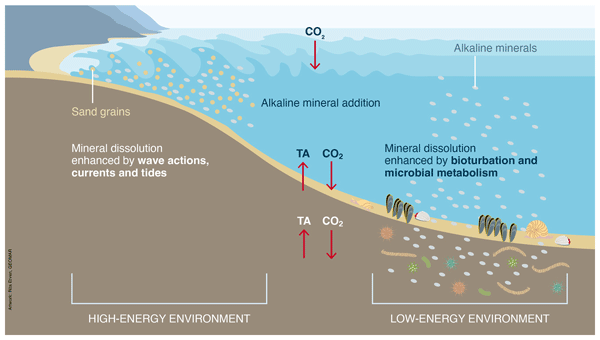
Matthew D. Eisaman, Sonja Geilert, Phil Renforth, Laura Bastianini, James Campbell, Andrew W. Dale, Spyros Foteinis, Patricia Grasse, Olivia Hawrot, Carolin R. Löscher, Greg H. Rau, and Jakob Rønning
State Planet, 2-oae2023, 3, https://doi.org/10.5194/sp-2-oae2023-3-2023, https://doi.org/10.5194/sp-2-oae2023-3-2023, 2023
Short summary
Short summary
Ocean-alkalinity-enhancement technologies refer to various methods and approaches aimed at increasing the alkalinity of seawater. This chapter explores technologies for increasing ocean alkalinity, including electrochemical-based approaches, ocean liming, accelerated weathering of limestone, hydrated carbonate addition, and coastal enhanced weathering, and suggests best practices in research and development.
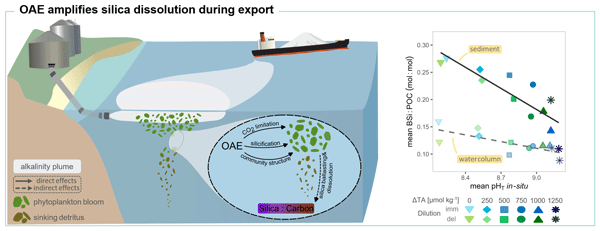
Philipp Suessle, Kai Georg Schulz, Joana Barcelos e Ramos, Nico Manuel Sievers, Julieta Schneider, Juliane Katharina Tammen, Leila Kittu, Laura Marín-Samper, Maarten Boersma, and Ulf Riebesell
Biogeosciences, 23, 4691–4710, https://doi.org/10.5194/bg-23-4691-2026, https://doi.org/10.5194/bg-23-4691-2026, 2026
Short summary
Short summary
Ocean alkalinity enhancement (OAE) is a negative emission technology that may alter marine diatom communities and particle export. We show that unequilibrated OAE did not change bloom magnitude or particle fluxes, but reduced silica ballasting. The losses intensified during sinking, consistent with pH-enhanced silica dissolution. Our results show that OAE can modify biological-pump efficiency through export-phase alteration of BSi:POC, even when community biomass production remains unchanged.
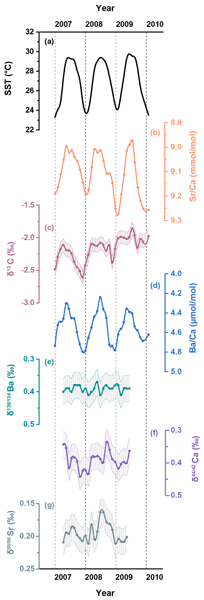
Yang Yu, Ed Hathorne, Xuefei Chen, Gangjian Wei, Florian Böhm, Alexander Heuser, Anton Eisenhauer, Christopher Siebert, and Martin Frank
Biogeosciences, 23, 3195–3206, https://doi.org/10.5194/bg-23-3195-2026, https://doi.org/10.5194/bg-23-3195-2026, 2026
Short summary
Short summary
Reef-building corals create their skeletons in two steps: first by adjusting their internal fluid chemistry, then by precipitating the solid mineral. Our results show that calcium and strontium uptake is actively regulated by corals and responds to sea surface temperature, while barium flows in passively. Understanding these patterns explains seasonal variations in coral geochemistry and improves the accuracy of using coral records to reconstruct past climate.
Alexander Milde and Lennart Bach
EGUsphere, https://doi.org/10.22541/au.172910556.66443041/v2, https://doi.org/10.22541/au.172910556.66443041/v2, 2026
Short summary
Short summary
Adding specific types of finely ground rock to the ocean is a way to accelerate a natural process that removes carbon dioxide from the atmosphere. We looked at whether it is possible to use fluorescent sand grains to measure how much of the rock added to the ocean has dissolved, and therefore how much carbon will eventually be removed from the atmosphere. We found that fluorescent sand grains likely can be used this way, however it will take a lot more work to refine the process.
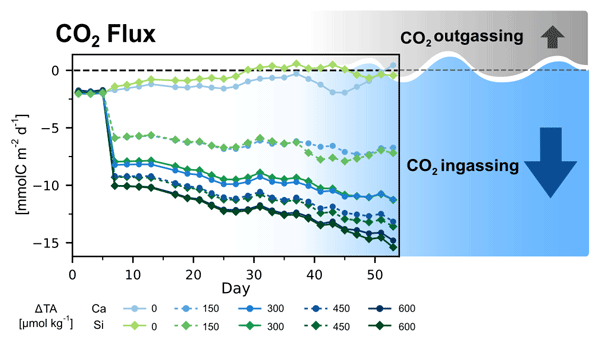
Julieta Schneider, Ulf Riebesell, Charly André Moras, Laura Marín-Samper, Leila Richards Kittu, Joaquín Ortíz-Cortes, and Kai Georg Schulz
Biogeosciences, 23, 137–153, https://doi.org/10.5194/bg-23-137-2026, https://doi.org/10.5194/bg-23-137-2026, 2026
Short summary
Short summary
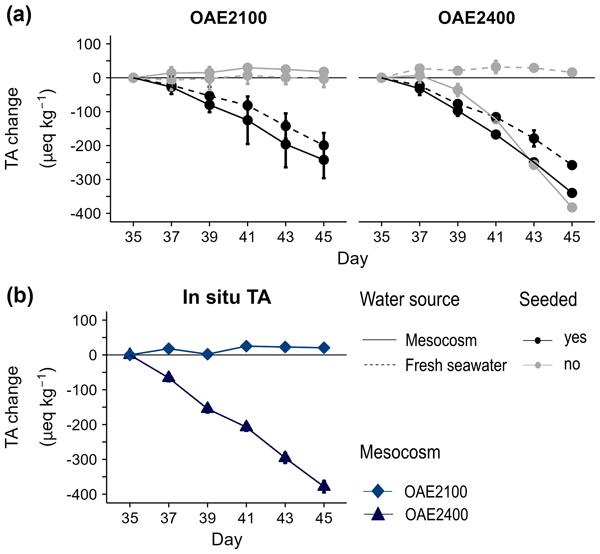
Ocean Alkalinity Enhancement (OAE) is an approach to sequester atmospheric CO2 in the ocean and may alleviate ocean acidification. A large-scale mesocosm experiment in Norway tested calcium- and silicate-based OAE, increasing total alkalinity (TA) by 0–600 µmol kg-1 and measuring CO2 gas exchange. While TA remained stable, we found mineral-type and/or pCO2/pH effects on coccolithophorid calcification, net community production and zooplankton respiration, providing insights for future OAE trials.
Allanah Joy Paul, Mathias Haunost, Silvan Urs Goldenberg, Jens Hartmann, Nicolás Sánchez, Julieta Schneider, Niels Suitner, and Ulf Riebesell
Biogeosciences, 22, 2749–2766, https://doi.org/10.5194/bg-22-2749-2025, https://doi.org/10.5194/bg-22-2749-2025, 2025
Short summary
Short summary
Ocean alkalinity enhancement (OAE) is being assessed for its potential to absorb atmospheric CO2 and store it for a long time. OAE still needs comprehensive assessment of its safety and effectiveness. We studied an idealised OAE application in a natural low-nutrient ecosystem over 1 month. Our results showed that biogeochemical functioning remained mostly stable but that the long-term capability for storing carbon may be limited at high alkalinity concentration.
Ulf Riebesell
Biogeosciences, 22, 2381–2381, https://doi.org/10.5194/bg-22-2381-2025, https://doi.org/10.5194/bg-22-2381-2025, 2025
Librada Ramírez, Leonardo J. Pozzo-Pirotta, Aja Trebec, Víctor Manzanares-Vázquez, José L. Díez, Javier Arístegui, Ulf Riebesell, Stephen D. Archer, and María Segovia
Biogeosciences, 22, 1865–1886, https://doi.org/10.5194/bg-22-1865-2025, https://doi.org/10.5194/bg-22-1865-2025, 2025
Short summary
Short summary
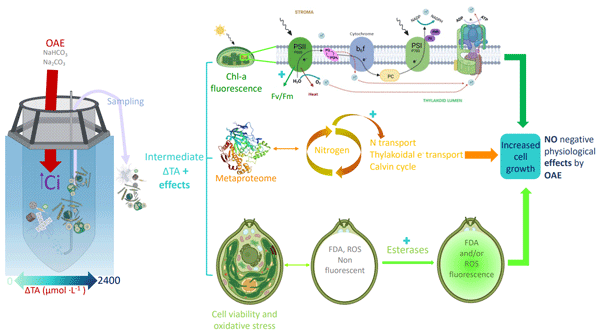
We studied the potential effects of increasing ocean alkalinity on a natural plankton community in subtropical waters of the Atlantic near Gran Canaria, Spain. Alkalinity is the capacity of water to resist acidification, and plankton are usually microscopic plants (phytoplankton) and animals (zooplankton), often less than 2.5 cm in length. This study suggests that increasing ocean alkalinity did not have a significant negative impact on the plankton community studied.
Giulia Faucher, Mathias Haunost, Allanah Joy Paul, Anne Ulrike Christiane Tietz, and Ulf Riebesell
Biogeosciences, 22, 405–415, https://doi.org/10.5194/bg-22-405-2025, https://doi.org/10.5194/bg-22-405-2025, 2025
Short summary
Short summary
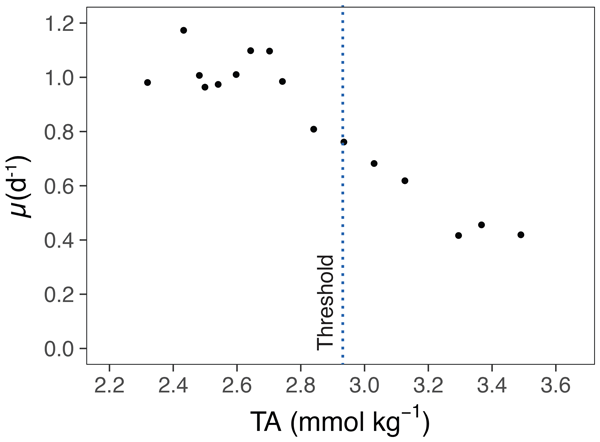
Ocean alkalinity enhancement (OAE) is being evaluated for its capacity to absorb atmospheric CO2 in the ocean and store it long term to mitigate climate change. As researchers plan for field tests to gain insights into OAE, sharing knowledge on its environmental impact on marine ecosystems is urgent. Our study examined NaOH-induced OAE in Emiliania huxleyi, a key coccolithophore species, and found that the added total alkalinity (ΔTA) should stay below 600 µmol kg⁻¹ to avoid negative impacts.
Philipp Suessle, Jan Taucher, Silvan Urs Goldenberg, Moritz Baumann, Kristian Spilling, Andrea Noche-Ferreira, Mari Vanharanta, and Ulf Riebesell
Biogeosciences, 22, 71–86, https://doi.org/10.5194/bg-22-71-2025, https://doi.org/10.5194/bg-22-71-2025, 2025
Short summary
Short summary
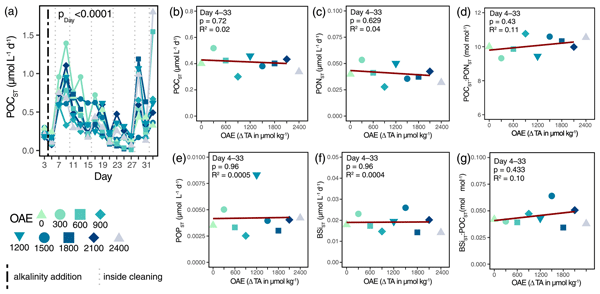
Ocean alkalinity enhancement (OAE) is a negative emission technology which may alter marine communities and the particle export they drive. Here, impacts of carbonate-based OAE on the flux and attenuation of sinking particles in an oligotrophic plankton community are presented. Whilst biological parameters remained unaffected, abiotic carbonate precipitation occurred. Among counteracting OAE’s efficiency, it influenced mineral ballasting and particle sinking velocities, requiring monitoring.
Laura Marín-Samper, Javier Arístegui, Nauzet Hernández-Hernández, and Ulf Riebesell
Biogeosciences, 21, 5707–5724, https://doi.org/10.5194/bg-21-5707-2024, https://doi.org/10.5194/bg-21-5707-2024, 2024
Short summary
Short summary
This study exposed a natural community to two non-CO2-equilibrated ocean alkalinity enhancement (OAE) deployments using different minerals. Adding alkalinity in this manner decreases dissolved CO2, essential for photosynthesis. While photosynthesis was not suppressed, bloom formation was mildly delayed, potentially impacting marine food webs. The study emphasizes the need for further research on OAE without prior equilibration and on its ecological implications.
Niels Suitner, Giulia Faucher, Carl Lim, Julieta Schneider, Charly A. Moras, Ulf Riebesell, and Jens Hartmann
Biogeosciences, 21, 4587–4604, https://doi.org/10.5194/bg-21-4587-2024, https://doi.org/10.5194/bg-21-4587-2024, 2024
Short summary
Short summary
Recent studies described the precipitation of carbonates as a result of alkalinity enhancement in seawater, which could adversely affect the carbon sequestration potential of ocean alkalinity enhancement (OAE) approaches. By conducting experiments in natural seawater, this study observed uniform patterns during the triggered runaway carbonate precipitation, which allow the prediction of safe and efficient local application levels of OAE scenarios.
Silvan Urs Goldenberg, Ulf Riebesell, Daniel Brüggemann, Gregor Börner, Michael Sswat, Arild Folkvord, Maria Couret, Synne Spjelkavik, Nicolás Sánchez, Cornelia Jaspers, and Marta Moyano
Biogeosciences, 21, 4521–4532, https://doi.org/10.5194/bg-21-4521-2024, https://doi.org/10.5194/bg-21-4521-2024, 2024
Short summary
Short summary
Ocean alkalinity enhancement (OAE) is being evaluated as a carbon dioxide removal technology for climate change mitigation. With an experiment on species communities, we show that larval and juvenile fish can be resilient to the resulting perturbation of seawater. Fish may hence recruit successfully and continue to support fisheries' production in regions of OAE. Our findings help to establish an environmentally safe operating space for this ocean-based solution.
Sebastian I. Cantarero, Edgart Flores, Harry Allbrook, Paulina Aguayo, Cristian A. Vargas, John E. Tamanaha, J. Bentley C. Scholz, Lennart T. Bach, Carolin R. Löscher, Ulf Riebesell, Balaji Rajagopalan, Nadia Dildar, and Julio Sepúlveda
Biogeosciences, 21, 3927–3958, https://doi.org/10.5194/bg-21-3927-2024, https://doi.org/10.5194/bg-21-3927-2024, 2024
Short summary
Short summary
Our study explores lipid remodeling in response to environmental stress, specifically how cell membrane chemistry changes. We focus on intact polar lipids in a phytoplankton community exposed to diverse stressors in a mesocosm experiment. The observed remodeling indicates acyl chain recycling for energy storage in intact polar lipids during stress, reallocating resources based on varying growth conditions. This understanding is essential to grasp the system's impact on cellular pools.
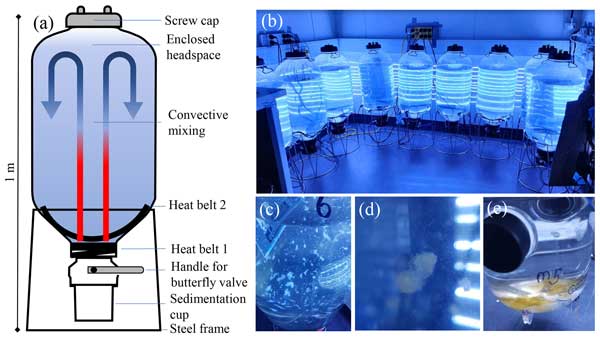
Lennart Thomas Bach, Aaron James Ferderer, Julie LaRoche, and Kai Georg Schulz
Biogeosciences, 21, 3665–3676, https://doi.org/10.5194/bg-21-3665-2024, https://doi.org/10.5194/bg-21-3665-2024, 2024
Short summary
Short summary
Ocean alkalinity enhancement (OAE) is an emerging marine CO2 removal method, but its environmental effects are insufficiently understood. The OAE Pelagic Impact Intercomparison Project (OAEPIIP) provides funding for a standardized and globally replicated microcosm experiment to study the effects of OAE on plankton communities. Here, we provide a detailed manual for the OAEPIIP experiment. We expect OAEPIIP to help build scientific consensus on the effects of OAE on plankton.
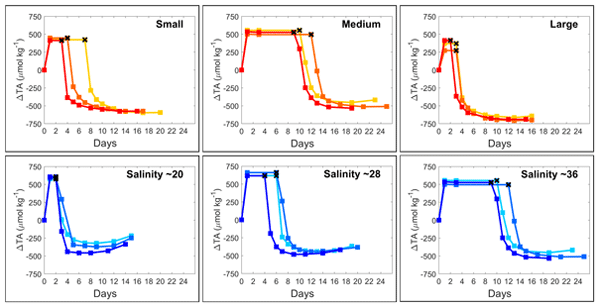
Charly A. Moras, Tyler Cyronak, Lennart T. Bach, Renaud Joannes-Boyau, and Kai G. Schulz
Biogeosciences, 21, 3463–3475, https://doi.org/10.5194/bg-21-3463-2024, https://doi.org/10.5194/bg-21-3463-2024, 2024
Short summary
Short summary
We investigate the effects of mineral grain size and seawater salinity on magnesium hydroxide dissolution and calcium carbonate precipitation kinetics for ocean alkalinity enhancement. Salinity did not affect the dissolution, but calcium carbonate formed earlier at lower salinities due to the lower magnesium and dissolved organic carbon concentrations. Smaller grain sizes dissolved faster but calcium carbonate precipitated earlier, suggesting that medium grain sizes are optimal for kinetics.
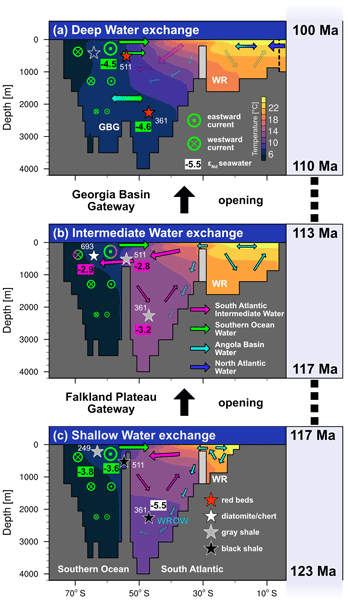
Sebastian Steinig, Wolf Dummann, Peter Hofmann, Martin Frank, Wonsun Park, Thomas Wagner, and Sascha Flögel
Clim. Past, 20, 1537–1558, https://doi.org/10.5194/cp-20-1537-2024, https://doi.org/10.5194/cp-20-1537-2024, 2024
Short summary
Short summary
The opening of the South Atlantic Ocean, starting ~ 140 million years ago, had the potential to influence the global carbon cycle and climate trends. We use 36 climate model experiments to simulate the evolution of ocean circulation in this narrow basin. We test different combinations of palaeogeographic and atmospheric CO2 reconstructions with geochemical data to not only quantify the influence of individual processes on ocean circulation but also to find nonlinear interactions between them.
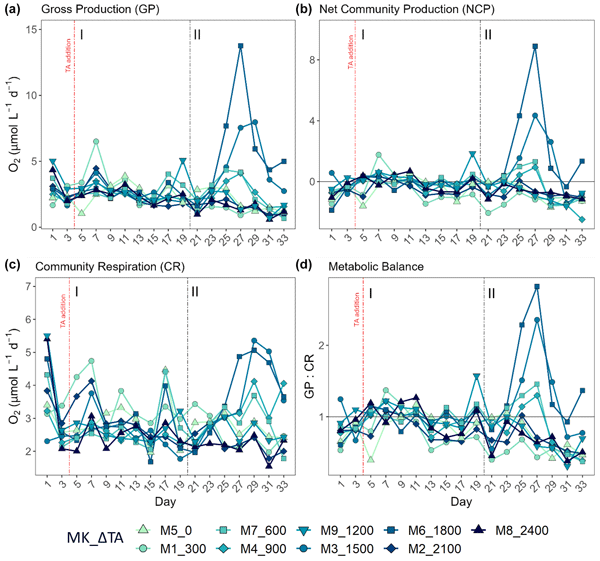
Laura Marín-Samper, Javier Arístegui, Nauzet Hernández-Hernández, Joaquín Ortiz, Stephen D. Archer, Andrea Ludwig, and Ulf Riebesell
Biogeosciences, 21, 2859–2876, https://doi.org/10.5194/bg-21-2859-2024, https://doi.org/10.5194/bg-21-2859-2024, 2024
Short summary
Short summary
Our planet is facing a climate crisis. Scientists are working on innovative solutions that will aid in capturing the hard to abate emissions before it is too late. Exciting research reveals that ocean alkalinity enhancement, a key climate change mitigation strategy, does not harm phytoplankton, the cornerstone of marine ecosystems. Through meticulous study, we may have uncovered a positive relationship: up to a specific limit, enhancing ocean alkalinity boosts photosynthesis by certain species.
Aaron Ferderer, Kai G. Schulz, Ulf Riebesell, Kirralee G. Baker, Zanna Chase, and Lennart T. Bach
Biogeosciences, 21, 2777–2794, https://doi.org/10.5194/bg-21-2777-2024, https://doi.org/10.5194/bg-21-2777-2024, 2024
Short summary
Short summary
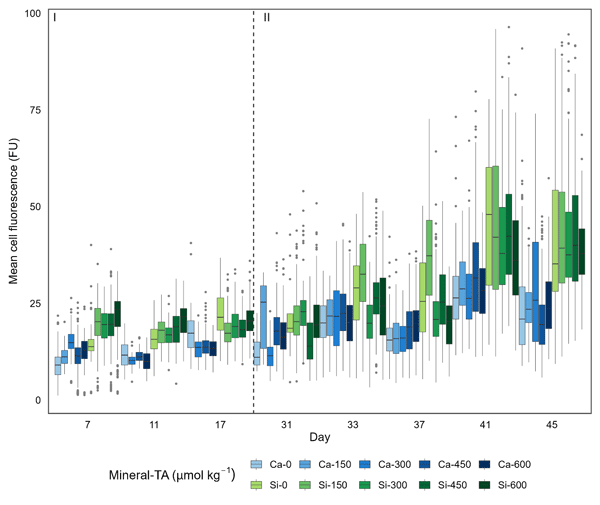
Ocean alkalinity enhancement (OAE) is a promising method of atmospheric carbon removal; however, its ecological impacts remain largely unknown. We assessed the effects of simulated silicate- and calcium-based mineral OAE on diatom silicification. We found that increased silicate concentrations from silicate-based OAE increased diatom silicification. In contrast, the enhancement of alkalinity had no effect on community silicification and minimal effects on the silicification of different genera.
David González-Santana, María Segovia, Melchor González-Dávila, Librada Ramírez, Aridane G. González, Leonardo J. Pozzo-Pirotta, Veronica Arnone, Victor Vázquez, Ulf Riebesell, and J. Magdalena Santana-Casiano
Biogeosciences, 21, 2705–2715, https://doi.org/10.5194/bg-21-2705-2024, https://doi.org/10.5194/bg-21-2705-2024, 2024
Short summary
Short summary
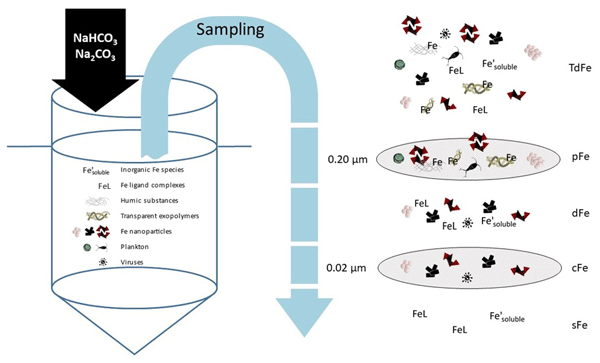
In a recent experiment off the coast of Gran Canaria (Spain), scientists explored a method called ocean alkalinization enhancement (OAE), where carbonate minerals were added to seawater. This process changed the levels of certain ions in the water, affecting its pH and buffering capacity. The researchers were particularly interested in how this could impact the levels of essential trace metals in the water.
Jiaying A. Guo, Robert F. Strzepek, Kerrie M. Swadling, Ashley T. Townsend, and Lennart T. Bach
Biogeosciences, 21, 2335–2354, https://doi.org/10.5194/bg-21-2335-2024, https://doi.org/10.5194/bg-21-2335-2024, 2024
Short summary
Short summary
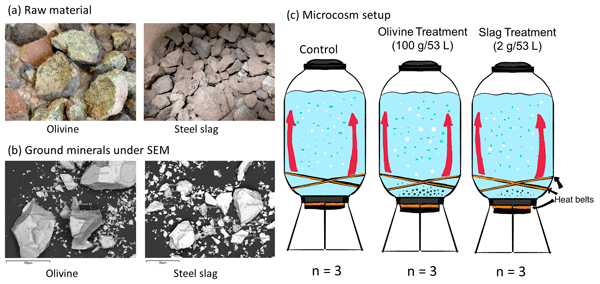
Ocean alkalinity enhancement aims to increase atmospheric CO2 sequestration by adding alkaline materials to the ocean. We assessed the environmental effects of olivine and steel slag powder on coastal plankton. Overall, slag is more efficient than olivine in releasing total alkalinity and, thus, in its ability to sequester CO2. Slag also had less environmental effect on the enclosed plankton communities when considering its higher CO2 removal potential based on this 3-week experiment.
Xiaoke Xin, Giulia Faucher, and Ulf Riebesell
Biogeosciences, 21, 761–772, https://doi.org/10.5194/bg-21-761-2024, https://doi.org/10.5194/bg-21-761-2024, 2024
Short summary
Short summary
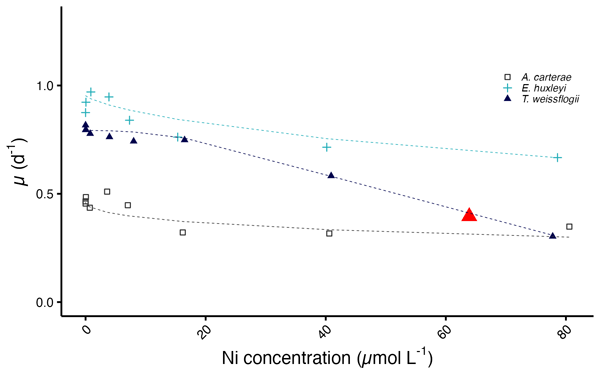
Ocean alkalinity enhancement (OAE) is a promising approach to remove CO2 by accelerating natural rock weathering. However, some of the alkaline substances contain trace metals which could be toxic to marine life. By exposing three representative phytoplankton species to Ni released from alkaline materials, we observed varying responses of phytoplankton to nickel concentrations, suggesting caution should be taken and toxic thresholds should be avoided in OAE with Ni-rich materials.
Lennart Thomas Bach
Biogeosciences, 21, 261–277, https://doi.org/10.5194/bg-21-261-2024, https://doi.org/10.5194/bg-21-261-2024, 2024
Short summary
Short summary
Ocean alkalinity enhancement (OAE) is a widely considered marine carbon dioxide removal method. OAE aims to accelerate chemical rock weathering, which is a natural process that slowly sequesters atmospheric carbon dioxide. This study shows that the addition of anthropogenic alkalinity via OAE can reduce the natural release of alkalinity and, therefore, reduce the efficiency of OAE for climate mitigation. However, the additionality problem could be mitigated via a variety of activities.
Matthew D. Eisaman, Sonja Geilert, Phil Renforth, Laura Bastianini, James Campbell, Andrew W. Dale, Spyros Foteinis, Patricia Grasse, Olivia Hawrot, Carolin R. Löscher, Greg H. Rau, and Jakob Rønning
State Planet, 2-oae2023, 3, https://doi.org/10.5194/sp-2-oae2023-3-2023, https://doi.org/10.5194/sp-2-oae2023-3-2023, 2023
Short summary
Short summary
Ocean-alkalinity-enhancement technologies refer to various methods and approaches aimed at increasing the alkalinity of seawater. This chapter explores technologies for increasing ocean alkalinity, including electrochemical-based approaches, ocean liming, accelerated weathering of limestone, hydrated carbonate addition, and coastal enhanced weathering, and suggests best practices in research and development.
David T. Ho, Laurent Bopp, Jaime B. Palter, Matthew C. Long, Philip W. Boyd, Griet Neukermans, and Lennart T. Bach
State Planet, 2-oae2023, 12, https://doi.org/10.5194/sp-2-oae2023-12-2023, https://doi.org/10.5194/sp-2-oae2023-12-2023, 2023
Short summary
Short summary
Monitoring, reporting, and verification (MRV) refers to the multistep process to quantify the amount of carbon dioxide removed by a carbon dioxide removal (CDR) activity. Here, we make recommendations for MRV for Ocean Alkalinity Enhancement (OAE) research, arguing that it has an obligation for comprehensiveness, reproducibility, and transparency, as it may become the foundation for assessing large-scale deployment. Both observations and numerical simulations will be needed for MRV.
Tyler Cyronak, Rebecca Albright, and Lennart T. Bach
State Planet, 2-oae2023, 7, https://doi.org/10.5194/sp-2-oae2023-7-2023, https://doi.org/10.5194/sp-2-oae2023-7-2023, 2023
Short summary
Short summary
Ocean alkalinity enhancement (OAE) is a marine carbon dioxide removal (CDR) approach. Publicly funded research projects have begun, and philanthropic funding and start-ups are collectively pushing the field forward. This rapid progress in research activities has created an urgent need to learn if and how OAE can work at scale. This chapter of the Guide to Best Practices in Ocean Alkalinity Enhancement Research focuses on field experiments.
Ulf Riebesell, Daniela Basso, Sonja Geilert, Andrew W. Dale, and Matthias Kreuzburg
State Planet, 2-oae2023, 6, https://doi.org/10.5194/sp-2-oae2023-6-2023, https://doi.org/10.5194/sp-2-oae2023-6-2023, 2023
Short summary
Short summary
Mesocosm experiments represent a highly valuable tool in determining the safe operating space of ocean alkalinity enhancement (OAE) applications. By combining realism and biological complexity with controllability and replication, they provide an ideal OAE test bed and a critical stepping stone towards field applications. Mesocosm approaches can also be helpful in testing the efficacy, efficiency and permanence of OAE applications.
Kai G. Schulz, Lennart T. Bach, and Andrew G. Dickson
State Planet, 2-oae2023, 2, https://doi.org/10.5194/sp-2-oae2023-2-2023, https://doi.org/10.5194/sp-2-oae2023-2-2023, 2023
Short summary
Short summary
Ocean alkalinity enhancement is a promising approach for long-term anthropogenic carbon dioxide sequestration, required to avoid catastrophic climate change. In this chapter we describe its impacts on seawater carbonate chemistry speciation and highlight pitfalls that need to be avoided during sampling, storage, measurements, and calculations.
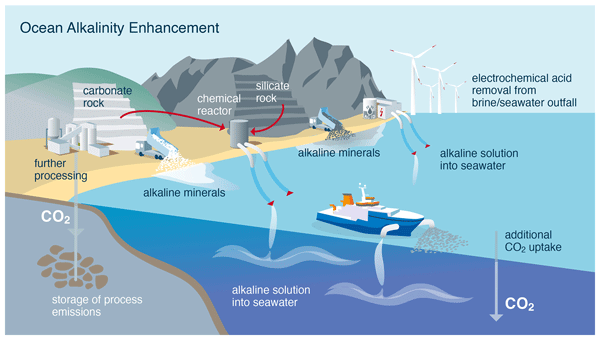
Andreas Oschlies, Lennart T. Bach, Rosalind E. M. Rickaby, Terre Satterfield, Romany Webb, and Jean-Pierre Gattuso
State Planet, 2-oae2023, 1, https://doi.org/10.5194/sp-2-oae2023-1-2023, https://doi.org/10.5194/sp-2-oae2023-1-2023, 2023
Short summary
Short summary
Reaching promised climate targets will require the deployment of carbon dioxide removal (CDR). Marine CDR options receive more and more interest. Based on idealized theoretical studies, ocean alkalinity enhancement (OAE) appears as a promising marine CDR method. We provide an overview on the current situation of developing OAE as a marine CDR method and describe the history that has led to the creation of the OAE research best practice guide.
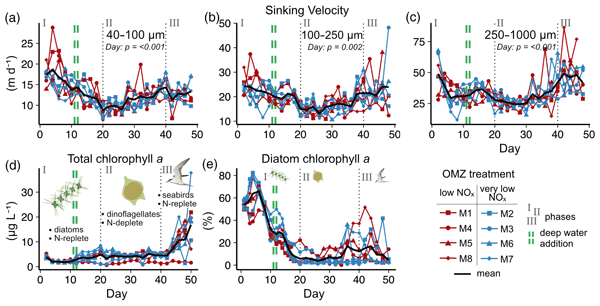
Moritz Baumann, Allanah Joy Paul, Jan Taucher, Lennart Thomas Bach, Silvan Goldenberg, Paul Stange, Fabrizio Minutolo, and Ulf Riebesell
Biogeosciences, 20, 2595–2612, https://doi.org/10.5194/bg-20-2595-2023, https://doi.org/10.5194/bg-20-2595-2023, 2023
Short summary
Short summary
The sinking velocity of marine particles affects how much atmospheric CO2 is stored inside our oceans. We measured particle sinking velocities in the Peruvian upwelling system and assessed their physical and biochemical drivers. We found that sinking velocity was mainly influenced by particle size and porosity, while ballasting minerals played only a minor role. Our findings help us to better understand the particle sinking dynamics in this highly productive marine system.

Kristian Spilling, Jonna Piiparinen, Eric P. Achterberg, Javier Arístegui, Lennart T. Bach, Maria T. Camarena-Gómez, Elisabeth von der Esch, Martin A. Fischer, Markel Gómez-Letona, Nauzet Hernández-Hernández, Judith Meyer, Ruth A. Schmitz, and Ulf Riebesell
Biogeosciences, 20, 1605–1619, https://doi.org/10.5194/bg-20-1605-2023, https://doi.org/10.5194/bg-20-1605-2023, 2023
Short summary
Short summary
We carried out an enclosure experiment using surface water off Peru with different additions of oxygen minimum zone water. In this paper, we report on enzyme activity and provide data on the decomposition of organic matter. We found very high activity with respect to an enzyme breaking down protein, suggesting that this is important for nutrient recycling both at present and in the future ocean.
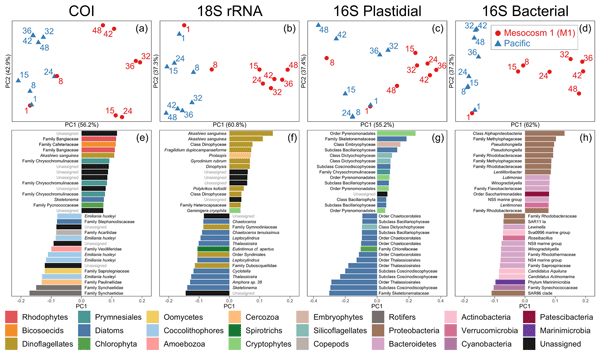
Markus A. Min, David M. Needham, Sebastian Sudek, Nathan Kobun Truelove, Kathleen J. Pitz, Gabriela M. Chavez, Camille Poirier, Bente Gardeler, Elisabeth von der Esch, Andrea Ludwig, Ulf Riebesell, Alexandra Z. Worden, and Francisco P. Chavez
Biogeosciences, 20, 1277–1298, https://doi.org/10.5194/bg-20-1277-2023, https://doi.org/10.5194/bg-20-1277-2023, 2023
Short summary
Short summary
Emerging molecular methods provide new ways of understanding how marine communities respond to changes in ocean conditions. Here, environmental DNA was used to track the temporal evolution of biological communities in the Peruvian coastal upwelling system and in an adjacent enclosure where upwelling was simulated. We found that the two communities quickly diverged, with the open ocean being one found during upwelling and the enclosure evolving to one found under stratified conditions.
Jens Hartmann, Niels Suitner, Carl Lim, Julieta Schneider, Laura Marín-Samper, Javier Arístegui, Phil Renforth, Jan Taucher, and Ulf Riebesell
Biogeosciences, 20, 781–802, https://doi.org/10.5194/bg-20-781-2023, https://doi.org/10.5194/bg-20-781-2023, 2023
Short summary
Short summary
CO2 can be stored in the ocean via increasing alkalinity of ocean water. Alkalinity can be created via dissolution of alkaline materials, like limestone or soda. Presented research studies boundaries for increasing alkalinity in seawater. The best way to increase alkalinity was found using an equilibrated solution, for example as produced from reactors. Adding particles for dissolution into seawater on the other hand produces the risk of losing alkalinity and degassing of CO2 to the atmosphere.
Allanah Joy Paul, Lennart Thomas Bach, Javier Arístegui, Elisabeth von der Esch, Nauzet Hernández-Hernández, Jonna Piiparinen, Laura Ramajo, Kristian Spilling, and Ulf Riebesell
Biogeosciences, 19, 5911–5926, https://doi.org/10.5194/bg-19-5911-2022, https://doi.org/10.5194/bg-19-5911-2022, 2022
Short summary
Short summary
We investigated how different deep water chemistry and biology modulate the response of surface phytoplankton communities to upwelling in the Peruvian coastal zone. Our results show that the most influential drivers were the ratio of inorganic nutrients (N : P) and the microbial community present in upwelling source water. These led to unexpected and variable development in the phytoplankton assemblage that could not be predicted by the amount of inorganic nutrients alone.

Aaron Ferderer, Zanna Chase, Fraser Kennedy, Kai G. Schulz, and Lennart T. Bach
Biogeosciences, 19, 5375–5399, https://doi.org/10.5194/bg-19-5375-2022, https://doi.org/10.5194/bg-19-5375-2022, 2022
Short summary
Short summary
Ocean alkalinity enhancement has the capacity to remove vast quantities of carbon from the atmosphere, but its effect on marine ecosystems is largely unknown. We assessed the effect of increased alkalinity on a coastal phytoplankton community when seawater was equilibrated and not equilibrated with atmospheric CO2. We found that the phytoplankton community was moderately affected by increased alkalinity and equilibration with atmospheric CO2 had little influence on this effect.
Jiaying Abby Guo, Robert Strzepek, Anusuya Willis, Aaron Ferderer, and Lennart Thomas Bach
Biogeosciences, 19, 3683–3697, https://doi.org/10.5194/bg-19-3683-2022, https://doi.org/10.5194/bg-19-3683-2022, 2022
Short summary
Short summary
Ocean alkalinity enhancement is a CO2 removal method with significant potential, but it can lead to a perturbation of the ocean with trace metals such as nickel. This study tested the effect of increasing nickel concentrations on phytoplankton growth and photosynthesis. We found that the response to nickel varied across the 11 phytoplankton species tested here, but the majority were rather insensitive. We note, however, that responses may be different under other experimental conditions.

Charly A. Moras, Lennart T. Bach, Tyler Cyronak, Renaud Joannes-Boyau, and Kai G. Schulz
Biogeosciences, 19, 3537–3557, https://doi.org/10.5194/bg-19-3537-2022, https://doi.org/10.5194/bg-19-3537-2022, 2022
Short summary
Short summary
This research presents the first laboratory results of quick and hydrated lime dissolution in natural seawater. These two minerals are of great interest for ocean alkalinity enhancement, a strategy aiming to decrease atmospheric CO2 concentrations. Following the dissolution of these minerals, we identified several hurdles and presented ways to avoid them or completely negate them. Finally, we proceeded to various simulations in today’s oceans to implement the strategy at its highest potential.
Shao-Min Chen, Ulf Riebesell, Kai G. Schulz, Elisabeth von der Esch, Eric P. Achterberg, and Lennart T. Bach
Biogeosciences, 19, 295–312, https://doi.org/10.5194/bg-19-295-2022, https://doi.org/10.5194/bg-19-295-2022, 2022
Short summary
Short summary
Oxygen minimum zones in the ocean are characterized by enhanced carbon dioxide (CO2) levels and are being further acidified by increasing anthropogenic atmospheric CO2. Here we report CO2 system measurements in a mesocosm study offshore Peru during a rare coastal El Niño event to investigate how CO2 dynamics may respond to ongoing ocean deoxygenation. Our observations show that nitrogen limitation, productivity, and plankton community shift play an important role in driving the CO2 dynamics.
Cited articles
Amigo, A. E.: Miocene silicoflagellate stratigraphy: Iceland and Rockall Plateaus, in: Proceedings of the Ocean Drilling Program, Scientific Results, Vol. 162, edited by: Raymo, M. E., Jansen, E., and O'Connell, S., Ocean Drilling Program, College Station, TX, 63–81, https://doi.org/10.2973/odp.proc.sr.162.001.1999, 1999.
Bach, L. T., Paul, A. J., Boxhammer, T., von der Esch, E., Graco, M., Schulz, K. G., Achterberg, E., Aguayo, P., Arístegui, J., Ayón, P., Baños, I., Bernales, A., Boegeholz, A. S., Chavez, F., Chavez, G., Chen, S.-M., Doering, K., Filella, A., Fischer, M., Grasse, P., Haunost, M., Hennke, J., Hernández-Hernández, N., Hopwood, M., Igarza, M., Kalter, V., Kittu, L., Kohnert, P., Ledesma, J., Lieberum, C., Lischka, S., Löscher, C., Ludwig, A., Mendoza, U., Meyer, J., Meyer, J., Minutolo, F., Ortiz Cortes, J., Piiparinen, J., Sforna, C., Spilling, K., Sanchez, S., Spisla, C., Sswat, M., Zavala Moreira, M., and Riebesell, U.: Factors controlling plankton community production, export flux, and particulate matter stoichiometry in the coastal upwelling system off Peru, Biogeosciences, 17, 4831–4852, https://doi.org/10.5194/bg-17-4831-2020, 2020.
Boxhammer, T., Bach, L. T., Sswat, M., and Riebesell, U.: Orni-eutrophication by Inca terns (Larosterna inca) during the KOSMOS study 2017 in the coastal upwelling system off Peru, OceanRep, GEOMAR [video], https://doi.org/10.3289/ORNI_EUTROPHICATION, 2019.
Bruland, K. W., Rue, E. L., Smith, G. J., and DiTullio, G. R.: Iron, macronutrients and diatom blooms in the Peru upwelling regime: brown and blue waters of Peru, Mar. Chem., 93, 81–103, https://doi.org/10.1016/j.marchem.2004.06.011, 2005.
Brzezinski, M. A.: The Si : C : N ratio of marine diatoms: Interspecific variability and the effect of some environmental variables, J. Phycol., 21, 347–357, https://doi.org/10.1111/j.0022-3646.1985.00347.x, 1985.
Brzezinski, M. A., Dumousseaud, C., Krause, J. W., Measures, C. I., and Nelson, D. M.: Iron and silicic acid concentrations together regulate Si uptake in the equatorial Pacific Ocean, Limnol. Oceanogr., 53, 875–889, https://doi.org/10.4319/lo.2008.53.3.0875, 2008.
Bukry, D.: Cretaceous Arctic silicoflagellates, Geo-Mar. Lett., 1, 57–63, https://doi.org/10.1007/bf02463303, 1981.
Cassarino, L., Curnow, P., and Hendry, K. R.: A biomimetic peptide has no effect on the isotopic fractionation during in vitro silica precipitation, Sci. Rep.-UK, 11, 9698, https://doi.org/10.1038/s41598-021-88881-6, 2021.
Claquin, P., Martin-Jézéquel, V., Kromkamp, J. C., Veldhuis, M. J. W., and Kraay, G. W.: Uncoupling of silicon compared with carbon and nitrogen metabolisms and the role of the cell cycle in continuous cultures of Thalassiosira pseudonana (Bacillariophyceae) under light, nitrogen, and phosphorus control, J. Phycol., 38, 922–930, https://doi.org/10.1046/j.1529-8817.2002.t01-1-01220.x, 2002.
Closset, I., Baronas, J. J., Torricella, F., de Tombeur, F., Liguori, B. T. P., Petrucciani, A., Bryan, N., López-Acosta, M., Churakova, Y., Thielecke, A. U., Zhang, Z., Llopis Monferrer, N., Pickering, R. A., Guyomard, M., and Zhu, D.: Silicification in the ocean: from molecular pathways to silicifiers' ecology and biogeochemical cycles, Ocean Sci., 21, 3427–3470, https://doi.org/10.5194/os-21-3427-2025, 2025.
Cotard, E., Deteix, V., Vivier, F., Dapoigny, A., Caquineau, S., and Cardinal, D.: Significant impact of lithogenic dissolution from subantarctic volcanic islands on the regional marine silicon cycle, Limnol. Oceanogr., 70, 3711–3724, 2025.
De La Rocha, C. L., Brzezinski, M. A., and DeNiro, M. J.: Fractionation of silicon isotopes by marine diatoms during biogenic silica formation, Geochim. Cosmochim. Ac., 61, 5051–5056, https://doi.org/10.1016/s0016-7037(97)00300-1, 1997.
Doering, K., Ehlert, C., Grasse, P., Crosta, X., Fleury, S., Frank, M., and Schneider, R.: Differences between mono-generic and mixed diatom silicon isotope compositions trace present and past nutrient utilisation off Peru, Geochim. Cosmochim. Ac., 177, 30–47, https://doi.org/10.1016/j.gca.2015.12.029, 2016a.
Doering, K., Erdem, Z., Ehlert, C., Fleury, S., Frank, M., and Schneider, R.: Changes in diatom productivity and upwelling intensity off Peru since the Last Glacial Maximum: Response to basin-scale atmospheric and oceanic forcing, Paleoceanography, 31, 1453–1473, https://doi.org/10.1002/2016PA002936, 2016b.
Doering, K., Ehlert, C., Martinez, P., Frank, M., and Schneider, R.: Latitudinal variations in δ30Si and δ15N signatures along the Peruvian shelf: quantifying the effects of nutrient utilization versus denitrification over the past 600 years, Biogeosciences, 16, 2163–2180, https://doi.org/10.5194/bg-16-2163-2019, 2019.
Doering, K., Ehlert, C., Pahnke, K., Frank, M., Schneider, R., and Grasse, P.: Silicon Isotope Signatures of Radiolaria Reveal Taxon-Specific Differences in Isotope Fractionation, Frontiers in Marine Science, 8, 666896, https://doi.org/10.3389/fmars.2021.666896, 2021.
Echevin, V., Aumont, O., Ledesma, J., and Flores, G.: The seasonal cycle of surface chlorophyll in the Peruvian upwelling system: A modelling study, Prog. Oceanogr., 79, 167–176, https://doi.org/10.1016/j.pocean.2008.10.026, 2008.
Ehlert, C., Grasse, P., Mollier-Vogel, E., Böschen, T., Franz, J., de Souza, G. F. de, Reynolds, B. C., Stramma, L., and Frank, M.: Factors controlling the silicon isotope distribution in waters and surface sediments of the Peruvian coastal upwelling, Geochim. Cosmochim. Ac., 99, 128–145, https://doi.org/10.1016/j.gca.2012.09.038, 2012.
Ehlert, C., Grasse, P., and Frank, M.: Changes in silicate utilisation and upwelling intensity off Peru since the Last Glacial Maximum – insights from silicon and neodymium isotopes, Quaternary Sci. Rev., 72, 18–35, https://doi.org/10.1016/j.quascirev.2013.04.013, 2013.
Franz, J., Krahmann, G., Lavik, G., Grasse, P., Dittmar, T., and Riebesell, U.: Dynamics and stoichiometry of nutrients and phytoplankton in waters influenced by the oxygen minimum zone in the eastern tropical Pacific, Deep-Sea Res. Pt. I, 62, 20–31, https://doi.org/10.1016/j.dsr.2011.12.004, 2012.
Geilert, S., Frick, D., Garbe-Schönberg, D., Scholz, F., Sommer, S., Grasse, P., Vogt, C., and Dale, A. W.: Coastal El Niño triggers rapid marine silicate alteration on the seafloor, Nat. Commun., 14, 1676, https://doi.org/10.1038/s41467-023-37186-5, 2023.
Graco, M. I., Purca, S., Dewitte, B., Castro, C. G., Morón, O., Ledesma, J., Flores, G., and Gutiérrez, D.: The OMZ and nutrient features as a signature of interannual and low-frequency variability in the Peruvian upwelling system, Biogeosciences, 14, 4601–4617, https://doi.org/10.5194/bg-14-4601-2017, 2017.
Grasse, P.: Silicon Isotope Signatures from a Mesocosm Experiment off Peru (2017, SFB754), Zenodo [data set], https://doi.org/10.5281/zenodo.20125629, 2026.
Grasse, P., Ehlert, C., and Frank, M.: The influence of water mass mixing on the dissolved Si isotope composition in the Eastern Equatorial Pacific, Earth Planet. Sc. Lett., 380, 60–71, https://doi.org/10.1016/j.epsl.2013.07.033, 2013.
Grasse, P., Ryabenko, E., Ehlert, C., Altabet, M. A., and Frank, M.: Silicon and nitrogen cycling in the upwelling area off Peru: A dual isotope approach, Limnol. Oceanogr., 61, 1661–1676, https://doi.org/10.1002/lno.10324, 2016.
Grasse, P., Brzezinski, M. A., Cardinal, D., de Souza, G. F., Andersson, P., Closset, I., Cao, Z., Dai, M., Ehlert, C., Estrade, N., François, R., Frank, M., Jiang, G., Jones, J. L., Kooijman, E., Liu, Q., Lu, D., Pahnke, K., Ponzevera, E., and Zhang, Z.: GEOTRACES inter-calibration of the stable silicon isotope composition of dissolved silicic acid in seawater, J. Anal. Atom. Spectrom., 32, 562–578, https://doi.org/10.1039/c6ja00302h, 2017.
Grasse, P., Closset, I., Jones, J. L., Geilert, S., and Brzezinski, M. A.: Controls on Dissolved Silicon Isotopes Along the U. S. GEOTRACES Eastern Pacific Zonal Transect (GP16), Global Biogeochem. Cy., 34, https://doi.org/10.1029/2020gb006538, 2020.
Grasse, P., Haynert, K., Doering, K., Geilert, S., Jones, J. L., Brzezinski, M. A., and Frank, M.: Controls on the Silicon Isotope Composition of Diatoms in the Peruvian Upwelling, Frontiers in Marine Science, 8, 697400, https://doi.org/10.3389/fmars.2021.697400, 2021.
Hansen, H. P. and Koroleff, F.: Determination of nutrients, in: Methods of Seawater Analysis, edited by: Grasshoff, K., Kremling, K., and Ehrhardt, M., Wiley-VCH, Weinheim, Germany, 159–228, https://doi.org/10.1002/9783527613984.ch10, 1999.
Hendry, K. R. and Robinson, L. F.: The relationship between silicon isotope fractionation in sponges and silicic acid concentration: Modern and core-top studies of biogenic opal, Geochim. Cosmochim. Ac., 81, 1–12, https://doi.org/10.1016/j.gca.2011.12.010, 2012.
Hendry, K. R., Marron, A. O., Vincent, F., Conley, D. J., Gehlen, M., Ibarbalz, F. M., Quéguiner, B., and Bowler, C.: Competition between Silicifiers and Non-silicifiers in the Past and Present Ocean and Its Evolutionary Impacts, Frontiers in Marine Science, 5, 22, https://doi.org/10.3389/fmars.2018.00022, 2018.
Hildebrand, M., Volcani, B. E., Gassmann, W., and Schroeder, J. I.: A gene family of silicon transporters, Nature, 385, 688–689, https://doi.org/10.1038/385688b0, 1997.
Hughes, H. J., Delvigne, C., Korntheuer, M., de Jong, J., André, L., and Cardinal, D.: Controlling the mass bias introduced by anionic and organic matrices in silicon isotopic measurements by MC-ICP-MS, J. Anal. Atom. Spectrom., 26, 1892–1896, https://doi.org/10.1039/C1JA10110B, 2011.
Karl, D. M. and Tien, G.: MAGIC: A sensitive and precise method for measuring dissolved phosphorus in aquatic environments, Limnol. Oceanogr., 37, 105–116, https://doi.org/10.4319/lo.1992.37.1.0105, 1992.
Karstensen, J., Stramma, L., and Visbeck, M.: Oxygen minimum zones in the eastern tropical Atlantic and Pacific oceans, Prog. Oceanogr., 77, 331–350, https://doi.org/10.1016/j.pocean.2007.05.009, 2008.
Kérouel, R. and Aminot, A.: Fluorometric determination of ammonia in sea and estuarine waters by direct segmented flow analysis, Mar. Chem., 57, 265–275, https://doi.org/10.1016/S0304-4203(97)00040-6, 1997.
Mariotti, A., Germon, J. C., Hubert, P., Kaiser, P., Letolle, R., Tardieux, A., and Tardieux, P.: Experimental determination of nitrogen kinetic isotope fractionation: Some principles; illustration for the denitrification and nitrification processes, Plant Soil, 62, 413–430, https://doi.org/10.1007/bf02374138, 1981.
Marron, A., Cassarino, L., Hatton, J., Curnow, P., and Hendry, K. R.: Technical note: The silicon isotopic composition of choanoflagellates: implications for a mechanistic understanding of isotopic fractionation during biosilicification, Biogeosciences, 16, 4805–4813, https://doi.org/10.5194/bg-16-4805-2019, 2019.
Marron, A. O., Ratcliffe, S., Wheeler, G. L., Goldstein, R. E., King, N., Not, F., de Vargas, C., and Richter, D. J.: The evolution of silicon transport in eukaryotes, Mol. Biol. Evol., 33, 3226–3248, https://doi.org/10.1093/molbev/msw209, 2016.
McCartney, K., Witkowski, J., and Harwood, D. M.: Early evolution of the silicoflagellates during the Cretaceous, Mar. Micropaleontol., 77, 83–100, https://doi.org/10.1016/j.marmicro.2010.08.001, 2010.
McCartney, K., Witkowski, J., Jordan, R. W., Daugbjerg, N., Malinverno, E., van Wezel, R., Kano, H., Abe, K., Scott, F., Schweizer, M., Young, J. R., Hallegraeff, G. M., and Shiozawa, A.: Fine structure of silicoflagellate double skeletons, Mar. Micropaleontol., 113, 10–19, https://doi.org/10.1016/j.marmicro.2014.08.006, 2014.
McCartney, K., Witkowski, J., Jordan, R. W., Abe, K., Januszkiewicz, A., Wróbel, R., Bąk, M., and Soeding, E.: Silicoflagellate evolution through the Cenozoic, Mar. Micropaleontol., 172, 102108, https://doi.org/10.1016/j.marmicro.2022.102108, 2022.
Meyerink, S. W., Ellwood, M. J., Maher, W. A., Price, G. D., and Strzepek, R. F.: Effects of iron limitation on silicon uptake kinetics and elemental stoichiometry in two Southern Ocean diatoms, Eucampia antarctica and Proboscia inermis, and the temperate diatom Thalassiosira pseudonana, Limnol. Oceanogr., 62, 2445–2462, https://doi.org/10.1002/lno.10578, 2017.
Milligan, A. J., Varela, D. E., Brzezinski, M. A., and Morel, F. M. M.: Dynamics of silicon metabolism and silicon isotopic discrimination in a marine diatomas a function of pCO2, Limnol. Oceanogr., 49, 322–329, https://doi.org/10.4319/lo.2004.49.2.0322, 2004.
Morris, A. W. and Riley, J. P.: The determination of nitrate in sea water, Anal. Chim. Acta, 29, 272–279, https://doi.org/10.1016/S0003-2670(00)88614-6, 1963.
Mullin, J. and Riley, J. P.: The colorimetric determination of silicate with special reference to sea and natural waters, Anal. Chim. Acta, 12, 162–176, https://doi.org/10.1016/S0003-2670(00)87825-3, 1955.
Murphy, J. and Riley, J. P.: Colorimetric method for determination of P in soil solution, Anal. Chim. Acta, 27, 31–36, 1962.
Ochoa, N., Taylor, M. H., Purca, S., and Ramos, E.: Intra- and interannual variability of nearshore phytoplankton biovolume and community changes in the northern Humboldt Current system, J. Plankton Res., 32, 843–855, https://doi.org/10.1093/plankt/fbq022, 2010.
Olenina, I., Hajdu, S., Edler, L., Andersson, A., Wasmund, N., Busch, S., Göbel, J., Gromisz, S., Huseby, S., Huttunen, M., Jaanus, A., Kokkonen, P., Ledaine, I., and Niemkiewicz, E.: Biovolumes and size-classes of phytoplankton in the Baltic Sea, HELCOM Baltic Sea Environmental Proceedings, 106, 1–144, ISSN 0357-2994, 2006.
Paasche, E.: Silicon and the ecology of marine plankton diatoms. I. Thalassiosira pseudonana (Cyclotella nana) grown in a chemostat with silicate as limiting nutrient, Mar. Biol., 19, 117–126, https://doi.org/10.1007/bf00353582, 1973.
Pennington, J. T., Mahoney, K. L., Kuwahara, V. S., Kolber, D. D., Calienes, R., and Chavez, F. P.: Primary production in the eastern tropical Pacific: A review, Prog. Oceanogr., 69, 285–317, https://doi.org/10.1016/j.pocean.2006.03.012, 2006.
Preisig, H. R.: Siliceous structures and silicification in flagellated protists, Protoplasma, 181, 29–42, https://doi.org/10.1007/BF01666387, 1994.
Quéguiner, B.: The Biogeochemical Cycle of Silicon in the Ocean, https://doi.org/10.1002/9781119136880.fmatter, 2017.
Ragueneau, O. and Tréguer, P.: Determination of biogenic silica in coastal waters: applicability and limits of the alkaline digestion method, Mar. Chem., 45, 43–51, https://doi.org/10.1016/0304-4203(94)90090-6, 1994.
Ragueneau, O., Tréguer, P., Leynaert, A., Anderson, R. F., Brzezinski, M. A., DeMaster, D. J., Dugdale, R. C., Dymond, J., Fischer, G., François, R., Heinze, C., Maier-Reimer, E., Martin-Jézéquel, V., Nelson, D. M., and Quéguiner, B.: A review of the Si cycle in the modern ocean: recent progress and missing gaps in the application of biogenic opal as a paleoproductivity proxy, Global Planet. Change, 26, 317–365, https://doi.org/10.1016/s0921-8181(00)00052-7, 2000.
Reynolds, B. C., Frank, M., and Halliday, A. N.: Silicon isotope fractionation during nutrient utilization in the North Pacific, Earth Planet. Sc. Lett., 244, 431–443, https://doi.org/10.1016/j.epsl.2006.02.002, 2006.
Reynolds, B. C., Aggarwal, J., André, L., Baxter, D., Beucher, C., Brzezinski, M. A., Engström, E., Georg, R. B., Land, M., Leng, M. J., Opfergelt, S., Rodushkin, I., Sloane, H. J., van den Boorn, S. H. J. M., Vroon, P. Z., and Cardinal, D.: An inter-laboratory comparison of Si isotope reference materials, J. Anal. Atom. Spectrom., 22, 561–568, https://doi.org/10.1039/B616755A, 2007.
Riedel, W. R.: Siliceous organic remains in pelagic sediments, https://doi.org/10.2110/pec.59.01.0080, 1959.
Robert, C. and Casella, G.: Monte Carlo statistical methods, Vol. 2, Springer, https://doi.org/10.1007/978-1-4757-4145-2, 2004.
Rodríguez-Morata, C., Díaz, H. F., Ballesteros-Canovas, J. A., Rohrer, M., and Stoffel, M.: The anomalous 2017 coastal El Niño event in Peru, Clim. Dynam., 52, 5605–5622, https://doi.org/10.1007/s00382-018-4466-y, 2019.
Sancetta, C.: Seasonal occurrence of silicoflagellate morphologies in different environments of the eastern Pacific Ocean, Mar. Micropaleontol., 16, 285–291, https://doi.org/10.1016/0377-8398(90)90007-9, 1990.
Shrestha, R. P. and Hildebrand, M.: Evidence for a Regulatory Role of Diatom Silicon Transporters in Cellular Silicon Responses, Eukaryot. Cell, 14, 29–40, https://doi.org/10.1128/EC.00209-14, 2014.
Strub, P. T., Allen, J. S., Huyer, A., Smith, R. L., and Beardsley, R. C.: Seasonal cycles of currents, temperatures, winds, and sea level over the northeast Pacific continental shelf: 35° N to 48° N, J. Geophys. Res.-Oceans, 92, 1507–1526, https://doi.org/10.1029/jc092ic02p01507, 1987.
Sun, X., Olofsson, M., Andersson, P. S., Fry, B., Legrand, C., Humborg, C., and Mörth, C.-M.: Effects of growth and dissolution on the fractionation of silicon isotopes by estuarine diatoms, Geochim. Cosmochim. Ac., 130, 156–166, https://doi.org/10.1016/j.gca.2014.01.024, 2014.
Sutton, J. N., Varela, D. E., Brzezinski, M. A., and Beucher, C. P.: Species-dependent silicon isotope fractionation by marine diatoms, Geochim. Cosmochim. Ac., 104, 300–309, https://doi.org/10.1016/j.gca.2012.10.057, 2013.
Sutton, J. N., André, L., Cardinal, D., Conley, D. J., de Souza, G. F., Dean, J., Dodd, J., Ehlert, C., Ellwood, M. J., Frings, P. J., Grasse, P., Hendry, K., Leng, M. J., Michalopoulos, P., Panizzo, V. N., and Swann, G. E. A.: A Review of the Stable Isotope Bio-geochemistry of the Global Silicon Cycle and Its Associated Trace Elements, Front. Earth Sci., 5, 112, https://doi.org/10.3389/feart.2017.00112, 2018.
Taguchi, S. and Laws, E.: Application of a single-cell isolation technique to studies of carbon assimilation by the subtropical silicoflagellate Dictyocha perlae vis, Mar. Ecol. Prog. Ser., 23, 251–255, https://doi.org/10.3354/meps023251, 1985.
Takeda, S.: Influence of iron availability on nutrient consumption ratio of diatoms in oceanic waters, Nature, 393, 774–777, https://doi.org/10.1038/31674, 1998.
Thamatrakoln, K. and Hildebrand, M.: Silicon Uptake in Diatoms Revisited: A Model for Saturable and Nonsaturable Uptake Kinetics and the Role of Silicon Transporters, Plant Physiol., 146, 1397–1407, https://doi.org/10.1104/pp.107.107094, 2008.
Thamatrakoln, K., Alverson, A. J., and Hildebrand, M.: Comparative Sequence analysis of diatoms silicon transporters: Toward a mechanistic model of silicon transport, J. Phycol., 42, 822–834, https://doi.org/10.1111/j.1529-8817.2006.00233.x, 2006.
Tréguer, P., Bowler, C., Moriceau, B., Dutkiewicz, S., Gehlen, M., Aumont, O., Bittner, L., Dugdale, R., Finkel, Z., Iudicone, D., Jahn, O., Guidi, L., Lasbleiz, M., Leblanc, K., Levy, M., and Pondaven, P.: Influence of diatom diversity on the ocean biological carbon pump, Nat. Geosci., 11, 27–37, https://doi.org/10.1038/s41561-017-0028-x, 2018.
Utermöhl, H.: Zur Vervollkommnung der quantitativen Phytoplankton-Methodik, Int. Ver. The., 9, 1–38, 1958.
Valkenburg, S. D. and Norris, R. E.: The growth and morphology of the silicoflagellate Dictyocha fibula (Ehrenberg) in culture, J. Phycol., 6, 48–54, https://doi.org/10.1111/j.1529-8817.1970.tb02356.x, 1970.
Varela, D., Brzezinski, M. A., Beucher, C. P., Jones, J. L., Giesbrecht K. E., Lansard, B., and Mucci, A.: Heavy silicon isotopic composition of silicic acid and biogenic silica in Arctic waters over the Beaufort shelf and the Canada Basin, Global Biogeochem. Cy., 30, 804–824, https://doi.org/10.1002/2015GB005277, 2016.
Varela, D. E., Pride, C. J., and Brzezinski, M. A.: Biological fractionation of silicon isotopes in Southern Ocean surface waters, Global Biogeochem. Cy., 18, GB1047, https://doi.org/10.1029/2003GB002140, 2004.
Werner, D. (Ed.).: The Biology of Diatoms, Botanical Monographs, Vol. 13, Blackwell Scientific Publications/University of California Press, ISBN-10 0521714699, 1977.
Short summary
Mesocosm experiments in the Peruvian Upwelling during a coastal El Niño examined silicon cycling and isotope dynamics under changing nutrient conditions. The addition of nitrate-depleted deep water shifted the phytoplankton community from diatoms to silicoflagellates, altering Si isotope signatures. We provide the first field-based estimate of the Si isotope fractionation factor for silicoflagellates, showing their potential importance for interpreting modern and past marine silicon cycling.
Mesocosm experiments in the Peruvian Upwelling during a coastal El Niño examined silicon cycling...


Altmetrics
Final-revised paper
Preprint