Articles | Volume 17, issue 9
https://doi.org/10.5194/bg-17-2473-2020
© Author(s) 2020. This work is distributed under
the Creative Commons Attribution 4.0 License.
https://doi.org/10.5194/bg-17-2473-2020
© Author(s) 2020. This work is distributed under
the Creative Commons Attribution 4.0 License.
The nonconservative distribution pattern of organic matter in the Rajang, a tropical river with peatland in its estuary
Zhuo-Yi Zhu
CORRESPONDING AUTHOR
State Key Laboratory of Estuarine and Coastal Research, East China Normal
University, Shanghai, 200241, China
Joanne Oakes
Centre for Coastal Biogeochemistry, School of Environment, Science and
Engineering, Southern Cross University, Lismore, NSW, 2480, Australia
Bradley Eyre
Centre for Coastal Biogeochemistry, School of Environment, Science and
Engineering, Southern Cross University, Lismore, NSW, 2480, Australia
Youyou Hao
State Key Laboratory of Estuarine and Coastal Research, East China Normal
University, Shanghai, 200241, China
Edwin Sien Aun Sia
Faculty of Engineering, Computing and
Science, Swinburne University of Technology, Jalan Simpang Tiga, Kuching, 93350, Sarawak, Malaysia
Shan Jiang
State Key Laboratory of Estuarine and Coastal Research, East China Normal
University, Shanghai, 200241, China
Moritz Müller
Faculty of Engineering, Computing and
Science, Swinburne University of Technology, Jalan Simpang Tiga, Kuching, 93350, Sarawak, Malaysia
Jing Zhang
State Key Laboratory of Estuarine and Coastal Research, East China Normal
University, Shanghai, 200241, China
Related authors
No articles found.
Johnathan Daniel Maxey, Neil D. Hartstein, Hermann W. Bange, and Moritz Müller
Biogeosciences, 21, 5613–5637, https://doi.org/10.5194/bg-21-5613-2024, https://doi.org/10.5194/bg-21-5613-2024, 2024
Short summary
Short summary
The distribution of N2O in fjord-like estuaries is poorly described in the Southern Hemisphere. Our study describes N2O distribution and its drivers in one such system in Macquarie Harbour, Tasmania. Water samples were collected seasonally in 2022 and 2023. Results show the system removes atmospheric N2O when river flow is high, whereas the system emits N2O when the river flow is low. N2O generated in basins is intercepted by the surface water and exported to the ocean during high river flow.
Christian Lønborg, Cátia Carreira, Gwenaël Abril, Susana Agustí, Valentina Amaral, Agneta Andersson, Javier Arístegui, Punyasloke Bhadury, Mariana B. Bif, Alberto V. Borges, Steven Bouillon, Maria Ll. Calleja, Luiz C. Cotovicz Jr., Stefano Cozzi, Maryló Doval, Carlos M. Duarte, Bradley Eyre, Cédric G. Fichot, E. Elena García-Martín, Alexandra Garzon-Garcia, Michele Giani, Rafael Gonçalves-Araujo, Renee Gruber, Dennis A. Hansell, Fuminori Hashihama, Ding He, Johnna M. Holding, William R. Hunter, J. Severino P. Ibánhez, Valeria Ibello, Shan Jiang, Guebuem Kim, Katja Klun, Piotr Kowalczuk, Atsushi Kubo, Choon-Weng Lee, Cláudia B. Lopes, Federica Maggioni, Paolo Magni, Celia Marrase, Patrick Martin, S. Leigh McCallister, Roisin McCallum, Patricia M. Medeiros, Xosé Anxelu G. Morán, Frank E. Muller-Karger, Allison Myers-Pigg, Marit Norli, Joanne M. Oakes, Helena Osterholz, Hyekyung Park, Maria Lund Paulsen, Judith A. Rosentreter, Jeff D. Ross, Digna Rueda-Roa, Chiara Santinelli, Yuan Shen, Eva Teira, Tinkara Tinta, Guenther Uher, Masahide Wakita, Nicholas Ward, Kenta Watanabe, Yu Xin, Youhei Yamashita, Liyang Yang, Jacob Yeo, Huamao Yuan, Qiang Zheng, and Xosé Antón Álvarez-Salgado
Earth Syst. Sci. Data, 16, 1107–1119, https://doi.org/10.5194/essd-16-1107-2024, https://doi.org/10.5194/essd-16-1107-2024, 2024
Short summary
Short summary
In this paper, we present the first edition of a global database compiling previously published and unpublished measurements of dissolved organic matter (DOM) collected in coastal waters (CoastDOM v1). Overall, the CoastDOM v1 dataset will be useful to identify global spatial and temporal patterns and to facilitate reuse in studies aimed at better characterizing local biogeochemical processes and identifying a baseline for modelling future changes in coastal waters.
Jenny Choo, Nagur Cherukuru, Eric Lehmann, Matt Paget, Aazani Mujahid, Patrick Martin, and Moritz Müller
Biogeosciences, 19, 5837–5857, https://doi.org/10.5194/bg-19-5837-2022, https://doi.org/10.5194/bg-19-5837-2022, 2022
Short summary
Short summary
This study presents the first observation of water quality changes over space and time in the coastal systems of Sarawak, Malaysian Borneo, using remote sensing technologies. While our findings demonstrate that the southwestern coast of Sarawak is within local water quality standards, historical patterns of water quality degradation that were detected can help to alert local authorities and enhance management and monitoring strategies of coastal waters in this region.
Johnathan Daniel Maxey, Neil David Hartstein, Aazani Mujahid, and Moritz Müller
Biogeosciences, 19, 3131–3150, https://doi.org/10.5194/bg-19-3131-2022, https://doi.org/10.5194/bg-19-3131-2022, 2022
Short summary
Short summary
Deep coastal inlets are important sites for regulating land-based organic pollution before it enters coastal oceans. This study focused on how large climate forces, rainfall, and river flow impact organic loading and oxygen conditions in a coastal inlet in Tasmania. Increases in rainfall were linked to higher organic loading and lower oxygen in basin waters. Finally we observed a significant correlation between the Southern Annular Mode and oxygen concentrations in the system's basin waters.
Alexandra Klemme, Tim Rixen, Denise Müller-Dum, Moritz Müller, Justus Notholt, and Thorsten Warneke
Biogeosciences, 19, 2855–2880, https://doi.org/10.5194/bg-19-2855-2022, https://doi.org/10.5194/bg-19-2855-2022, 2022
Short summary
Short summary
Tropical peat-draining rivers contain high amounts of carbon. Surprisingly, measured carbon dioxide (CO2) emissions from those rivers are comparatively moderate. We compiled data from 10 Southeast Asian rivers and found that CO2 production within these rivers is hampered by low water pH, providing a natural threshold for CO2 emissions. Furthermore, we find that enhanced carbonate input, e.g. caused by human activities, suspends this natural threshold and causes increased CO2 emissions.
Michelle N. Simone, Kai G. Schulz, Joanne M. Oakes, and Bradley D. Eyre
Biogeosciences, 18, 1823–1838, https://doi.org/10.5194/bg-18-1823-2021, https://doi.org/10.5194/bg-18-1823-2021, 2021
Short summary
Short summary
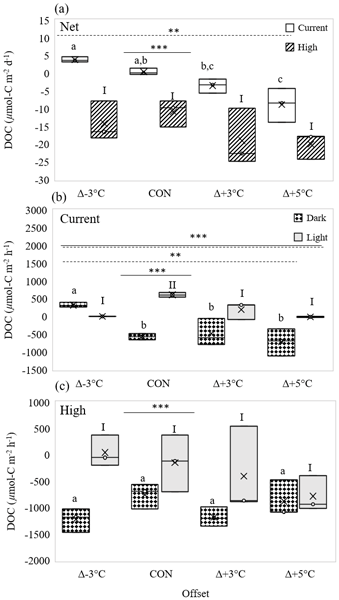
Estuaries are responsible for a large contribution of dissolved organic carbon (DOC) to the global C cycle, but it is unknown how this will change in the future. DOC fluxes from unvegetated sediments were investigated ex situ subject to conditions of warming and ocean acidification. The future climate shifted sediment fluxes from a slight DOC source to a significant sink, with global coastal DOC export decreasing by 80 %. This has global implications for C cycling and long-term C storage.
Cited articles
Amon, R. M. W., Fitznar, H. P., and Benner, R.: Linkages among the
bioreactivity, chemical composition, and diagenetic state of marine
dissolved organic matter, Limnol. Oceanogr., 46, 287–297, 2001.
Baum, A., Rixen, T., and Samiaji, J.: Relevance of peat draining rivers in
central Sumatra for the riverine input of dissolved organic carbon into the
ocean, Estuar. Coast. Shelf S., 73, 563–570, 2007.
Bianchi, T. S.: The role of terrestrially derived organic carbon in the
coastal ocean: A changing paradigm and the priming effect, P. Natl. Acad. Sci. USA, 108, 19473–19481, 2011.
Bianchi, T. S. and Bauer, J. E.: Particulate Organic Carbon Cycling and
Transformation, in: Treatise on Estuarine and Coastal Science,
edited by: Eric, W. and Donald, M., Academic Press, Waltham, 69–117,
2011.
Cifuentes, L. A., Coffin, R. B., Solorzano, L., Cardenas, W., Espinoza, J.,
and Twilley, R. R.: Isotopic and Elemental Variations of Carbon and Nitrogen
in a Mangrove Estuary, Estuar. Coast. Shelf S., 43, 781–800,
1996.
Cloern, J. E., Foster, S. Q., and Kleckner, A. E.: Phytoplankton primary production in the world's estuarine-coastal ecosystems, Biogeosciences, 11, 2477–2501, https://doi.org/10.5194/bg-11-2477-2014, 2014.
Dauwe, B. and Middelburg, J. J.: Amino acids and hexosamines as indicators
of organic matter degradation state in North Sea sediments, Limnol. Oceanogr., 43, 782–798, 1998.
Davidson, E. A., de Carvalho, C. J. R., Figueira, A. M., Ishida, F. Y.,
Ometto, J. P. H. B., Nardoto, G. B., Saba, R. T., Hayashi, S. N., Leal, E.
C., Vieira, I. C. G., and Martinelli, L. A.: Recuperation of nitrogen
cycling in Amazonian forests following agricultural abandonment, Nature,
447, 995–998, 2007.
Davis, J., Kaiser, K., and Benner, R.: Amino acid and amino sugar yields and
compositions as indicators of dissolved organic matter diagenesis, Org. Geochem., 40, 343–352, 2009.
Dittmar, T., Fitznar, H. P., and Kattner, G.: Origin and biogeochemical
cycling of organic nitrogen in the eastern Arctic Ocean as evident from D-
and L-amino acids, Geochim. Cosmochim. Ac., 65, 4103–4114, 2001a.
Dittmar, T., Lara, R. J., and Kattner, G.: River or mangrove? Tracing major
organic matter sources in tropical Brazilian coastal waters, Mar. Chem., 73, 253–271, 2001b.
Fitznar, H. P., Lobbes, J. M., and Kattner, G.: Determination of
enantiomeric amino acids with high-performance liquid chromatography and
pre-column derivatisation with o-phthaldialdehyde and N-isobutyrylcysteine
in seawater and fossil samples (mollusks), J. Chromatogr. A, 832,
123–132, 1999.
Gandois, L., Teisserenc, R., Cobb, A. R., Chieng, H. I., Lim, L. B. L.,
Kamariah, A. S., Hoyt, A., and Harvey, C. F.: Origin, composition, and
transformation of dissolved organic matter in tropical peatlands, Geochim. Cosmochim. Ac., 137, 35–47, 2014.
Hedges, J. I. and Man, D. C.: The characterization of plant tissues by their
lignin oxidation products, Geochim. Cosmochim. Ac., 43, 1803–1807,
1979.
Hedges, J. I., Cowie, G. L., Richey, J. E., Quay, P. D., Benner, R., Mike,
S., and Forsberg, B. R.: Origins and processing of organic matter in the
Amazon River as indicated by carbohydrates and amino acids, Limnol. Oceanogr., 39, 743–761, 1994.
Hernes, P. J., Robinson, A. C., and Aufdenkampe, A. K.: Fractionation of
lignin during leaching and sorption and implications for organic matter
“freshness”, Geophys. Res. Lett., 34, L17401, https://doi.org/10.1029/2007GL031017, 2007.
Hooijer, A., Vernimmen, R., Visser, M., and Mawdsley, N.: Flooding
projections from elevation and subsidence models for oil palm plantations in
the Rajang delta peatlands, Sarawak, Malaysia, Deltares report 1207384, 76 pp., 2015.
Huang, T. H., Chen, C. T. A., Tseng, H. C., Lou, J. Y., Wang, S. L., Yang,
L., Kandasamy, S., Gao, X., Wang, J. T., Aldrian, E., Jacinto, G. S.,
Anshari, G. Z., Sompongchaiyakul, P., and Wang, B. J.: Riverine carbon
fluxes to the South China Sea, J. Geophys. Res.-Biogeo., 122, 1239–1259, 2017.
Jennerjahn, T. C., Ittekkot, V., Klöpper, S., Adi, S., Purwo Nugroho,
S., Sudiana, N., Yusmal, A., Prihartanto, and Gaye-Haake, B.:
Biogeochemistry of a tropical river affected by human activities in its
catchment: Brantas River estuary and coastal waters of Madura Strait, Java,
Indonesia, Estuar. Coast. Shelf S., 60, 503–514, 2004.
Jiang, S., Müller, M., Jin, J., Wu, Y., Zhu, K., Zhang, G., Mujahid, A., Rixen, T., Muhamad, M. F., Sia, E. S. A., Jang, F. H. A., and Zhang, J.: Dissolved inorganic nitrogen in a tropical estuary in Malaysia: transport and transformation, Biogeosciences, 16, 2821–2836, https://doi.org/10.5194/bg-16-2821-2019, 2019.
Kaiser, K. and Benner, R.: Hydrolysis-induced racemization of amino acids,
Limnol. Oceanogr.-Meth., 3, 318–325, 2005.
Kaiser, K. and Benner, R.: Biochemical composition and size distribution of
organic matter at the Pacific and Atlantic time-series stations, Mar. Chem., 113, 63–77, 2009.
Kalbitz, K. and Geyer, S.: Different effects of peat degradation on
dissolved organic carbon and nitrogen, Org. Geochem., 33, 319–326,
2002.
Kimber, R. W. L., Nannipieri, P., and Ceccanti, B.: The degree of
racemization of amino acids released by hydrolysis of humic-protein
complexes: Implications for age assessment, Soil Biol. Biochem.,
22, 181–185, 1990.
Lamade, E., Setiyo, I. E., Girard, S., and Ghashghaie, J.: Changes in
13C ∕ 12C of oil palm leaves to understand carbon use during their passage
from heterotrophy to autotrophy, Rapid Commun. Mass Sp.,
23, 2586–2596, 2009.
Lamb, A. L., Wilson, G. P., and Leng, M. J.: A review of coastal
palaeoclimate and relative sea-level reconstructions using δ13C and
C ∕ N ratios in organic material, Earth-Sci. Rev., 75, 29–57, 2006.
Martin, P., Cherukuru, N., Tan, A. S. Y., Sanwlani, N., Mujahid, A., and Müller, M.: Distribution and cycling of terrigenous dissolved organic carbon in peatland-draining rivers and coastal waters of Sarawak, Borneo, Biogeosciences, 15, 6847–6865, https://doi.org/10.5194/bg-15-6847-2018, 2018.
Mayorga, E., Aufdenkampe, A. K., Masiello, C. A., Krusche, A. V., Hedges, J.
I., Quay, P. D., Richey, J. E., and Brown, T. A.: Young organic matter as a
source of carbon dioxide outgassing from Amazonian rivers, Nature, 436,
538–541, 2005.
Moore, S., Evans, C. D., Page, S. E., Garnett, M. H., Jones, T. G., Freeman,
C., Hooijer, A., Wiltshire, A. J., Limin, S. H., and Gauci, V.: Deep
instability of deforested tropical peatlands revealed by fluvial organic
carbon fluxes, Nature, 493, 660–663, https://doi.org/10.1038/nature11818, 2013.
Müller, D., Warneke, T., Rixen, T., Müller, M., Jamahari, S., Denis, N., Mujahid, A., and Notholt, J.: Lateral carbon fluxes and CO2 outgassing from a tropical peat-draining river, Biogeosciences, 12, 5967–5979, https://doi.org/10.5194/bg-12-5967-2015, 2015.
Müller, D., Warneke, T., Rixen, T., Müller, M., Mujahid, A., Bange, H. W., and Notholt, J.: Fate of terrestrial organic carbon and associated CO2 and CO emissions from two Southeast Asian estuaries, Biogeosciences, 13, 691–705, https://doi.org/10.5194/bg-13-691-2016, 2016.
Müller-Dum, D., Warneke, T., Rixen, T., Müller, M., Baum, A., Christodoulou, A., Oakes, J., Eyre, B. D., and Notholt, J.: Impact of peatlands on carbon dioxide (CO2) emissions from the Rajang River and Estuary, Malaysia, Biogeosciences, 16, 17–32, https://doi.org/10.5194/bg-16-17-2019, 2019.
Raymond, P. A. and Bauer, J. E.: Use of 14C and 13C natural abundances for
evaluating riverine, estuarine, and coastal DOC and POC sources and cycling:
a review and synthesis, Org. Geochem., 32, 469–485, 2001.
Schleifer, K. H. and Kandler, O.: Peptidoglycan types of bacterial cell
walls and their taxonomic implications, Bacteriol. Rev., 36,
407–477, 1972.
Schroeder, R. A. and Bada, J. L.: A review of the geochemical applications
of the amino acid racemization reaction, Earth-Sci. Rev., 12, 347–391,
1976.
Sjögersten, S., Cheesman, A. W., Lopez, O., and Turner, B. L.:
Biogeochemical processes along a nutrient gradient in a tropical
ombrotrophic peatland, Biogeochem., 104, 147–163, 2011.
Vollmer, W., Blanot, D., and de Pedro, M.: Peptidoglycan structure and
architecture, FEMS Microbiol. Rev., 32, 149–167, 2008.
Wu, Y., Zhu, K., Zhang, J., Müller, M., Jiang, S., Mujahid, A., Muhamad, M. F., and Sia, E. S. A.: Distribution and degradation of terrestrial organic matter in the sediments of peat-draining rivers, Sarawak, Malaysian Borneo, Biogeosciences, 16, 4517–4533, https://doi.org/10.5194/bg-16-4517-2019, 2019.
Zhang, C. L., Dang, H. Y., Azam, F., Benner, R., Legendre, L., Passow, U.,
Polimene, L., Robinson, C., Suttle, C. A., and Jiao, N. Z.: Evolving
paradigms in biological carbon cycling in the ocean, Nat. Sci. Rev., 5, 481–499, 2018.
Zhu, Z. Y., Zhang, J., Wu, Y., and Lin, J.: Bulk particulate organic carbon
in the East China Sea: Tidal influence and bottom transport, Prog. Oceanogr., 69, 37–60, 2006.
Zhu, Z. Y., Wu, Y., Zhang, J., Dittmar, T., Li, Y., Shao, L., and Ji, Q.:
Can primary production contribute non-labile organic matter in the sea:
Amino acid enantiomers along the coast south of the Changjiang Estuary in
May, J. Mar. Syst., 129, 343–349, 2014.
Zhu, Z. Y., Oakes, J., and Müller, M.: Bulk organic carbon and amino acids compositions in the Rajang River/Estuary, Figshare, available at: https://doi.org/10.6084/m9.figshare.12061725.v1, last access: 13 April 2020.
Short summary
Samples were collected in August 2016 in the Rajang River and its estuary, with tropical forest in the river basin and peatland in the estuary. Organic matter composition was influenced by transportation in the river basin, whereas peatland added clear biodegraded parts to the fluvial organic matter, which implies modification of the initial lability and/or starting points in the subsequent degradation and alternation processes after the organic matter enters the sea.
Samples were collected in August 2016 in the Rajang River and its estuary, with tropical forest...
Altmetrics
Final-revised paper
Preprint