
Articles | Volume 23, issue 10
https://doi.org/10.5194/bg-23-3541-2026
© Author(s) 2026. This work is distributed under
the Creative Commons Attribution 4.0 License.
the Creative Commons Attribution 4.0 License.
https://doi.org/10.5194/bg-23-3541-2026
© Author(s) 2026. This work is distributed under
the Creative Commons Attribution 4.0 License.
the Creative Commons Attribution 4.0 License.
Research article
| 
22 May 2026
Research article |
| 22 May 2026
| 22 May 2026
Using different radiative transfer schemes for solar-induced chlorophyll fluorescence (SIF) in evergreen coniferous forests with a terrestrial biosphere model

Department of Climate System Research, Finnish Meteorological Institute, Helsinki, Finland
Javier Pacheco-Labrador
Environmental Remote Sensing and Spectroscopy Laboratory (SpecLab), Spanish National Research Council (CSIC), Madrid, Spain
Mika Aurela
Department of Climate System Research, Finnish Meteorological Institute, Helsinki, Finland
Alan Barr
University of Saskatchewan, Saskatoon, Canada
Marika Honkanen
Department of Greenhouse gases coordination, Space and Earth Observation Centre, Finnish Meteorological Institute, Sodankylä, Finland
Bruce Johnson
University of Saskatchewan, Saskatoon, Canada
Hannakaisa Lindqvist
Department of Greenhouse gases coordination, Space and Earth Observation Centre, Finnish Meteorological Institute, Sodankylä, Finland
Troy Magney
Department of Forest Management, University of Montana, Missoula, USA
Mirco Migliavacca
European Commission, Joint Research Centre, Ispra (VA), Italy
Zoe Amie Pierrat
Jet Propulsion Laboratory, Pasadena, California, USA
Department of Geography, University of Santa Barbara, California, USA
Tristan Quaife
National Centre for Earth Observation, University of Reading, Reading, United Kingdom
Jochen Stutz
University of California Los Angeles, California, USA
Sönke Zaehle
Max Planck Institute for Biogeochemistry, Jena, Germany
Related authors

Tea Thum, Christine L. Goodale, Lin Yu, Julia Nabel, and Sönke Zaehle
Biogeosciences, 23, 6249–6266, https://doi.org/10.5194/bg-23-6249-2026, https://doi.org/10.5194/bg-23-6249-2026, 2026
Short summary
Short summary
Nitrogen and carbon cycle have manifold interactions and to be able predict carbon sequestration of terrestrial vegetation, ability to model nitrogen cycle properly is important. 15N tracer experiments can be helpful, as they track the fate where added nitrogen will end up in the ecosystem. We simulated one such experiment with a model containing 15N cycle and found that comparison with data helped to evaluate the model in different aspects.
Tuuli Miinalainen, Amanda Ojasalo, Holly Croft, Mika Aurela, Mikko Peltoniemi, Silvia Caldararu, Sönke Zaehle, and Tea Thum
Biogeosciences, 22, 6937–6962, https://doi.org/10.5194/bg-22-6937-2025, https://doi.org/10.5194/bg-22-6937-2025, 2025
Short summary
Short summary
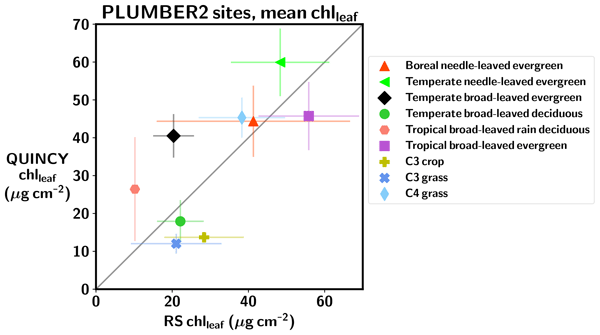
Estimating the future carbon budget requires an accurate understanding of the interlinkages between the land carbon and nitrogen cycles. We use a remote sensing leaf chlorophyll product to evaluate a terrestrial biosphere model, QUINCY (QUantifying Interactions between terrestrial Nutrient CYcles and the climate system). Our study showcases how the latest advancements in remote sensing-based vegetation monitoring can be harnessed for improving and evaluating process-based vegetation models.
Tea Thum, Tuuli Miinalainen, Outi Seppälä, Holly Croft, Cheryl Rogers, Ralf Staebler, Silvia Caldararu, and Sönke Zaehle
Biogeosciences, 22, 1781–1807, https://doi.org/10.5194/bg-22-1781-2025, https://doi.org/10.5194/bg-22-1781-2025, 2025
Short summary
Short summary
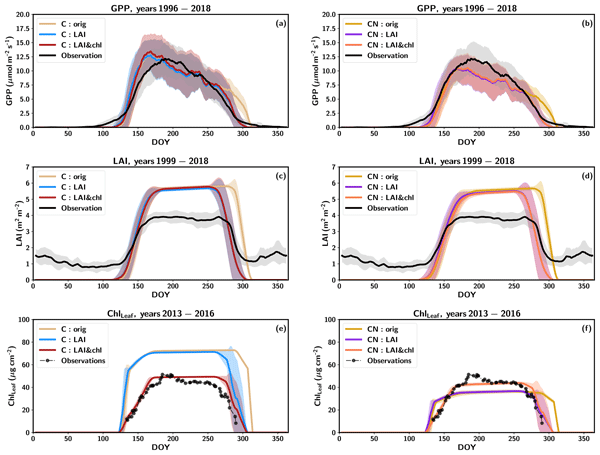
Climate change has the potential to influence the carbon sequestration potential of terrestrial ecosystems, and here the nitrogen cycle is also important. We used the terrestrial biosphere model QUINCY (QUantifying Interactions between terrestrial Nutrient CYcles and the climate system) in a mixed deciduous forest in Canada. We investigated the usefulness of using the leaf area index and leaf chlorophyll content to improve the parameterization of the model. This work paves the way for using spaceborne observations in model parameterizations, also including information on the nitrogen cycle.
Wolfgang Knorr, Matthew Williams, Tea Thum, Thomas Kaminski, Michael Voßbeck, Marko Scholze, Tristan Quaife, T. Luke Smallman, Susan C. Steele-Dunne, Mariette Vreugdenhil, Tim Green, Sönke Zaehle, Mika Aurela, Alexandre Bouvet, Emanuel Bueechi, Wouter Dorigo, Tarek S. El-Madany, Mirco Migliavacca, Marika Honkanen, Yann H. Kerr, Anna Kontu, Juha Lemmetyinen, Hannakaisa Lindqvist, Arnaud Mialon, Tuuli Miinalainen, Gaétan Pique, Amanda Ojasalo, Shaun Quegan, Peter J. Rayner, Pablo Reyes-Muñoz, Nemesio Rodríguez-Fernández, Mike Schwank, Jochem Verrelst, Songyan Zhu, Dirk Schüttemeyer, and Matthias Drusch
Geosci. Model Dev., 18, 2137–2159, https://doi.org/10.5194/gmd-18-2137-2025, https://doi.org/10.5194/gmd-18-2137-2025, 2025
Short summary
Short summary
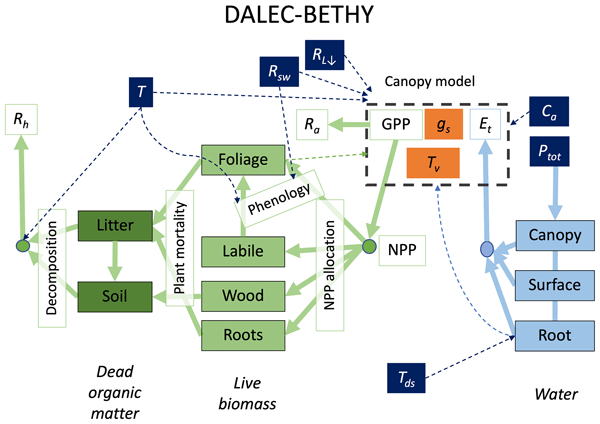
When it comes to climate change, the land surface is where the vast majority of impacts happen. The task of monitoring those impacts across the globe is formidable and must necessarily rely on satellites – at a significant cost: the measurements are only indirect and require comprehensive physical understanding. We have created a comprehensive modelling system that we offer to the research community to explore how satellite data can be better exploited to help us capture the changes that happen on our lands.
Neus Sabater, Pekka Kolmonen, Marika Honkanen, Antti Kukkurainen, Andreas Burkart, Tommaso Julitta, Shari Van Wittenberghe, Ella Kivimäki, Hannakaisa Lindqvist, and Antti Arola
Int. Arch. Photogramm. Remote Sens. Spatial Inf. Sci., XLVIII-M-12-2026, 69–75, https://doi.org/10.5194/isprs-archives-XLVIII-M-12-2026-69-2026, https://doi.org/10.5194/isprs-archives-XLVIII-M-12-2026-69-2026, 2026
M. Dolores Raya-Sereno, Vicente Burchard-Levine, Javier Pacheco-Labrador, Juan R. Bustos-Caparros, Jorge Lagranja-Usan, Lucía Casillas, and M. Pilar Martín
Int. Arch. Photogramm. Remote Sens. Spatial Inf. Sci., XLVIII-M-12-2026, 55–61, https://doi.org/10.5194/isprs-archives-XLVIII-M-12-2026-55-2026, https://doi.org/10.5194/isprs-archives-XLVIII-M-12-2026-55-2026, 2026
Amanita Mikkonen, Hartmut Bösch, Jouni Peltoniemi, Leif Vogel, Antonio Di Noia, Ella Kivimäki, Miia Salminen, Maria Gritsevich, Yasjka Meijer, and Hannakaisa Lindqvist
EGUsphere, https://doi.org/10.5194/egusphere-2026-2722, https://doi.org/10.5194/egusphere-2026-2722, 2026
This preprint is open for discussion and under review for Atmospheric Measurement Techniques (AMT).
Short summary
Short summary
Satellite observations of atmospheric carbon dioxide over snow are tricky due to snow absorbing the solar radiation necessary for the observation. This causes an observation gap in the Arctic during spring. By viewing the snow surface at a pitched angle instead of directly downwards, as satellites now do, the amount of measured radiation can be increased and observations could be made. This would support new satellite missions as well as enable the re-examination of existing measurements.
Tea Thum, Christine L. Goodale, Lin Yu, Julia Nabel, and Sönke Zaehle
Biogeosciences, 23, 6249–6266, https://doi.org/10.5194/bg-23-6249-2026, https://doi.org/10.5194/bg-23-6249-2026, 2026
Short summary
Short summary
Nitrogen and carbon cycle have manifold interactions and to be able predict carbon sequestration of terrestrial vegetation, ability to model nitrogen cycle properly is important. 15N tracer experiments can be helpful, as they track the fate where added nitrogen will end up in the ecosystem. We simulated one such experiment with a model containing 15N cycle and found that comparison with data helped to evaluate the model in different aspects.
Josua Seitz, Midori Yajima, Yu Zhu, Lumnesh Swaroop Kumar Joseph, Jinyan Yang, Fabrice Lacroix, Yunpeng Luo, Andreas Schaumberger, Michael Bahn, Sönke Zaehle, and Silvia Caldararu
Geosci. Model Dev., 19, 8289–8319, https://doi.org/10.5194/gmd-19-8289-2026, https://doi.org/10.5194/gmd-19-8289-2026, 2026
Short summary
Short summary
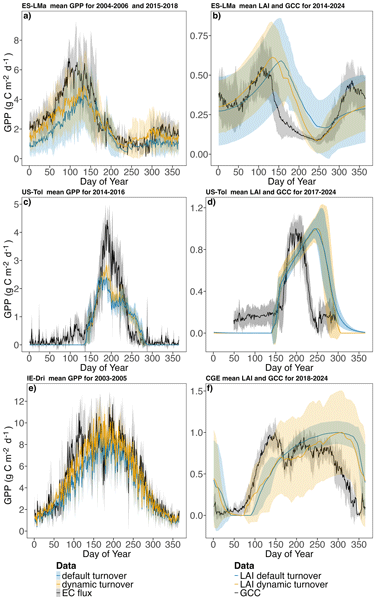
This study presents a new global leaf turnover model for grasslands in the QUINCY (QUantifying Interactions between terrestrial Nutrient CYcles and the climate system) land surface model. Land surface models often struggle to simulate grassland carbon dynamics and phenology accurately. By allowing environmental conditions to directly control leaf senescence we improve its timing as well as the accuracy of whole-season carbon dynamics across a wide range of climates and grassland ecosystems.
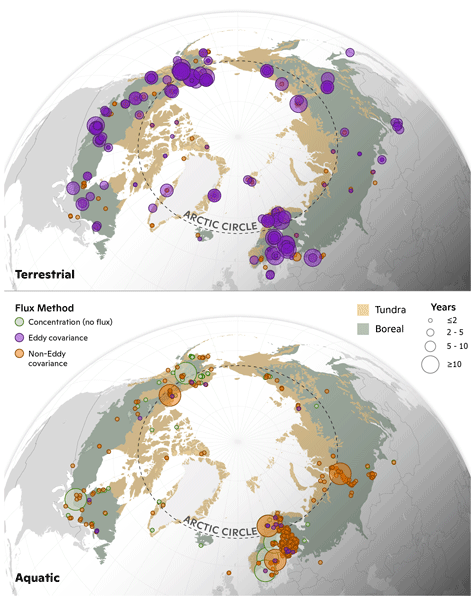
Anna-Maria Virkkala, Isabel Wargowsky, Judith Vogt, McKenzie A. Kuhn, Simran Madaan, Tiffany Windholz, Kyle A. Arndt, Gerard Rocher-Ros, Mathias Göckede, David Olefeldt, Edward A. G. Schuur, David Bastviken, Richard O'Keefe, Brendan M. Rogers, Jennifer D. Watts, Kelcy Kent, Kristoffer Aalstad, Kelly Aho, Joonatan Ala-Könni, Haley Alcock, Inge Althuizen, Christopher D. Arp, Jun Asanuma, Mika Aurela, Sivakiruthika Balathandayuthabani, Katrin Attermeyer, Alan Barr, Maialen Barret, Ochirbat Batkhishig, Christina Biasi, Mats P. Björkman, Andrew Black, Elena Blanc-Betes, Pascal Bodmer, Julia Boike, Abdullah Bolek, Frédéric Bouchard, Ingeborg Bussmann, Lea Cabrol, Eleonora Canfora, Sean Carey, Karel Castro-Morales, Namyi Chae, Andreas Christen, Torben R. Christensen, Casper T. Christiansen, Housen Chu, Graham Clark, Francois Clayer, Patrick Crill, Christopher Cunada, Scott J. Davidson, Joshua F. Dean, Sigrid Dengel, Matteo Detto, Catherine Dieleman, Florent Domine, Egor Dyukarev, Colin Edgar, Bo Elberling, Craig A. Emmerton, Eugenie Euskirchen, Grant Falvo, Thomas Friborg, Michelle Garneau, Mariasilvia Giamberini, Mikhail V. Glagolev, Miquel A. Gonzalez-Meler, Gustaf Granath, Jón Guðmundsson, Konsta Happonen, Yoshinobu Harazono, Lorna Harris, Josh Hashemi, Nicholas Hasson, Janna Heerah, Liam Heffernan, Manuel Helbig, Warren Helgason, Michal Heliasz, Greg Henry, Geert Hensgens, Tetsuya Hiyama, Beth Holmes, Macall Hock, David Holl, Jutta Holst, Thomas Holst, Gabriel Hould-Gosselin, Elyn Humphreys, Jacqueline Hung, Jussi Huotari, Hiroki Ikawa, Danil V. Ilyasov, Mamoru Ishikawa, Go Iwahana, Hiroki Iwata, Marcin Antoni Jackowicz-Korczynski, Joachim Jansen, Järvi Järveoja, Vincent E. J. Jassey, Rasmus Jensen, Katharina Jentzsch, Robert G. Jespersen, Carl-Fredrik Johannesson, Cheristy P. Jones, Anders Jonsson, Ji Young Jung, Sari Juutinen, Evan Kane, Jan Karlsson, Sergey Karsanaev, Kuno Kasak, Julia Kelly, Kasha Kempton, Marcus Klaus, George W. Kling, Natascha Kljun, Jacqueline Knutson, Hideki Kobayashi, John Kochendorfer, Kukka-Maaria Kohonen, Pasi Kolari, Mika Korkiakoski, Aino Korrensalo, Pirkko Kortelainen, Egle Koster, Kajar Koster, Ayumi Kotani, Praveena Krishnan, Juliya Kurbatova, Lars Kutzbach, Min Jung Kwon, Ethan D. Kyzivat, Jessica Lagroix, Theodore Langhorst, Elena Lapshina, Tuula Larmola, Klaus S. Larsen, Isabelle Laurion, Justin Ledman, Hanna Lee, A. Joshua Leffler, Lance Lesack, Anders Lindroth, David Lipson, Annalea Lohila, Efrén López-Blanco, Vincent L. St. Louis, Erik Lundin, Miska Luoto, Takashi Machimura, Marta Magnani, Avni Malhotra, Marja Maljanen, Ivan Mammarella, Elisa Männistö, Luca Belelli Marchesini, Phil Marsh, Pertti J. Martikainen, Maija E. Marushchak, Mikhail Mastepanov, Alex Mavrovic, Trofim Maximov, Christina Minions, Daniel F. Nadeau, Marco Montemayor, Tomoaki Morishita, Patrick Murphy, Erin Nicholls, Mats B. Nilsson, Anastasia Niyazova, Jenni Nordén, Koffi Dodji Noumonvi, Hannu Nykänen, Walter Oechel, Anne Ojala, Tomohiro Okadera, Sujan Pal, Alexey V. Panov, Tim Papakyriakou, Dario Papale, Sang-Jong Park, Frans-Jan W. Parmentier, Gilberto Pastorello, Mike Peacock, Matthias Peichl, Roman Petrov, Kyra St. Pierre, Norbert Pirk, Jessica Plein, Vilmantas Preskienis, Anatoly Prokushkin, Jukka Pumpanen, Hilary A. Rains, Niklas Rakos, Aleksi Räsänen, Helena Rautakoski, Riikka Rinnan, Janne Rinne, Adrian Rocha, Nigel Roulet, Alexandre Roy, Anna Rutgersson, Aleksandr F. Sabrekov, Torsten Sachs, Erik Sahlée, Alejandro Salazar, Henrique Oliveira Sawakuchi, Christopher Schulze, Roger Seco, Armando Sepulveda-Jauregui, Svetlana Serikova, Abbey Serrone, Hanna M. Silvennoinen, Sofie Sjogersten, June Skeeter, Jo Snöälv, Sebastian Sobek, Oliver Sonnentag, Emily H. Stanley, Maria Strack, Lena Strom, Patrick Sullivan, Ryan Sullivan, Anna Sytiuk, Torbern Tagesson, Pierre Taillardat, Julie Talbot, Suzanne E. Tank, Mario Tenuta, Irina Terenteva, Frederic Thalasso, Antoine Thiboult, Halldor Thorgeirsson, Fenix Garcia Tigreros, Margaret Torn, Amy Townsend-Small, Claire Treat, Alain Tremblay, Carlo Trotta, Eeva-Stiina Tuittila, Merritt Turetsky, Masahito Ueyama, Muhammad Umair, Aki Vähä, Lona van Delden, Maarten van Hardenbroek, Andrej Varlagin, Ruth K. Varner, Tarmo Virtanen, Elena Veretennikova, Timo Vesala, Carolina Voigt, Jorien E. Vonk, Robert Wagner, Katey Walter Anthony, Qinxue Wang, Masataka Watanabe, Hailey Webb, Jeffrey M. Welker, Andreas Westergaard-Nielsen, Sebastian Westermann, Jeffrey R. White, Christian Wille, Scott N. Williamson, Scott Zolkos, Donatella Zona, and Susan M. Natali
Earth Syst. Sci. Data, 18, 6357–6409, https://doi.org/10.5194/essd-18-6357-2026, https://doi.org/10.5194/essd-18-6357-2026, 2026
Short summary
Short summary
This dataset includes monthly measurements of carbon dioxide and methane exchange between land, water, and the atmosphere from over 1000 sites in Arctic and boreal regions. It combines measurements from a variety of ecosystems, including wetlands, forests, tundra, lakes, and rivers, gathered by over 260 researchers from 1984–2024. This dataset can be used to improve and reduce uncertainty in carbon budgets in order to strengthen our understanding of climate feedbacks in a warming world.
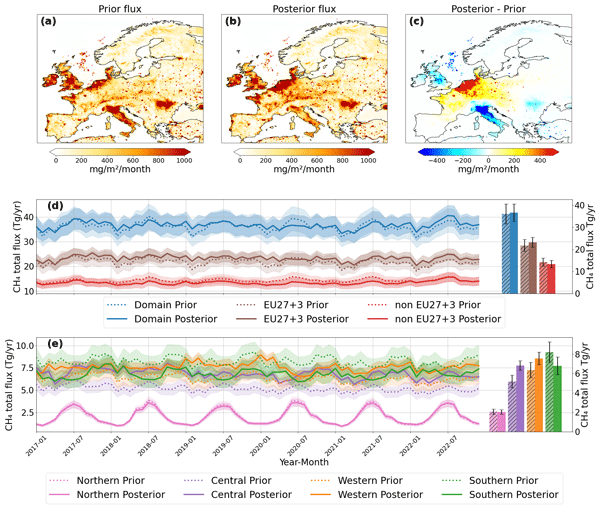
Anteneh Getachew Mengistu, Aki Tsuruta, Antoine Berchet, Rona Thompson, Maria Tenkanen, Hannakaisa Lindqvist, Tiina Markkanen, Antti Leppänen, Antti Laitinen, Adrien Martinez, Audrey Fortems-Cheiney, Lena Höglund-Isaksson, and Tuula Aalto
Atmos. Chem. Phys., 26, 12295–12327, https://doi.org/10.5194/acp-26-12295-2026, https://doi.org/10.5194/acp-26-12295-2026, 2026
Short summary
Short summary
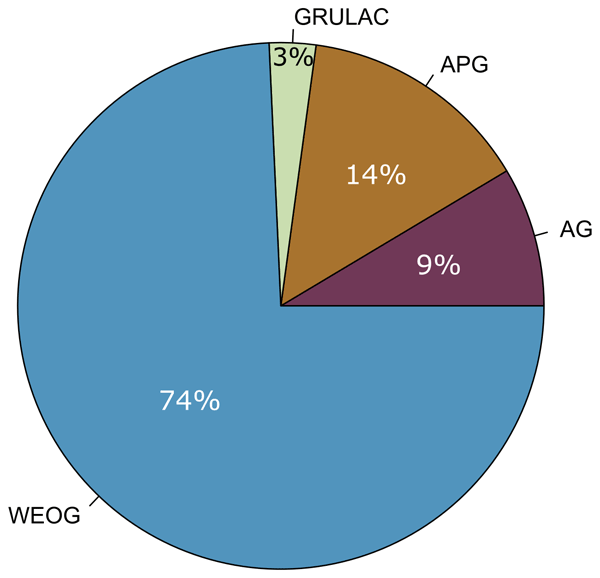
Our manuscript presents a six-year, high-resolution inversion of European methane emissions using the Community Inversion Framework and FLEXPART. Leveraging an expanded in situ network, we reconcile inventories with observations, reveal regional biases, refine European methane budgets, and highlight the dominance of agricultural emissions. Results provide policy-relevant insights for mitigation and inventory verification.
J. Cale Baguley, Tristin Quaife, Lucy Rowland, Patrick Meir, Michael C. Bell, Manon E. B. Sabot, and Martin G. De Kauwe
EGUsphere, https://doi.org/10.5194/egusphere-2026-4729, https://doi.org/10.5194/egusphere-2026-4729, 2026
This preprint is open for discussion and under review for Biogeosciences (BG).
Short summary
Short summary
Drought can affect trees both immediately and for months or years afterwards. To improve predictions of how forests respond to drought, we added new representations of how trees regulate water loss and how drought can leave lasting damage to the movement of water within trees in a widely used model. When applied to a 2002 drought in the United Kingdom, the improved model better captured tree responses and suggested that the effects of drought were small in an oak woodland in the following year.
Julia Bigwood, Jochen Stutz, Milagros Rodriguez-Caton, Troy Magney, Diego Dierick, Nicholas Parazoo, Gregory R. Goldsmith, Sol Cooperdock, and Ulrike Seibt
EGUsphere, https://doi.org/10.2139/ssrn.6429182, https://doi.org/10.2139/ssrn.6429182, 2026
This preprint is open for discussion and under review for Biogeosciences (BG).
Short summary
Short summary
Tropical forests absorb a large amount of carbon from the atmosphere. Even so, we still have a limited understanding of how this may change with a changing climate. We measured carbon exchange in a Costa Rican rainforest and found that the forest remained a strong carbon sink. However, estimates of carbon uptake depended on how measurements are analyzed and the time period considered, highlighting important challenges for predicting tropical forest responses to climate change.
Kristian Schufft, Katrin Fleischer, Anja Rammig, Belinda E. Medlyn, Min Zhao, Lin Yu, Catriona A. Macdonald, and Sönke Zaehle
EGUsphere, https://doi.org/10.5194/egusphere-2026-3553, https://doi.org/10.5194/egusphere-2026-3553, 2026
This preprint is open for discussion and under review for Biogeosciences (BG).
Short summary
Short summary
Soil respiration and its underlying drivers are heavily influenced by nutrient availability. We used a computer model that simulates ecosystem processes to investigate how phosphorus (P) addition influences soil respiration and its underlying drivers. Our model suggests that, reduced root exudation, the labile C flux from roots into soils, causes reduced soil respiration under P addition. Our results bring a new perspective in the dependence of soil respiration on nutrient availability.
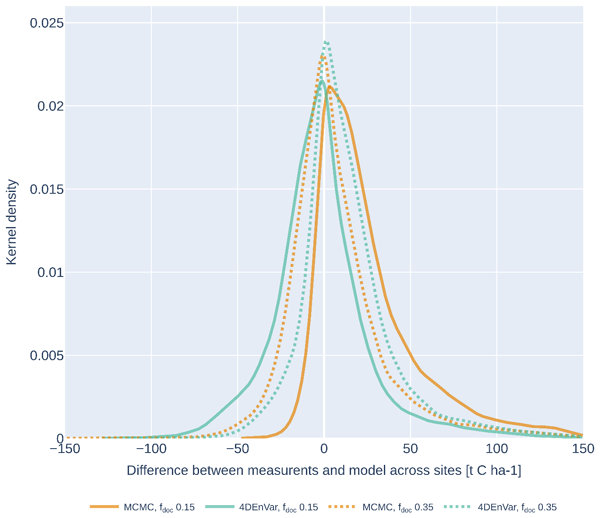
Toni Viskari, Tristan Quaife, Fernando Fahl, Yao Zhang, and Emanuele Lugato
Geosci. Model Dev., 19, 6079–6098, https://doi.org/10.5194/gmd-19-6079-2026, https://doi.org/10.5194/gmd-19-6079-2026, 2026
Short summary
Short summary
In this work we examined how different assumptions regarding soil carbon model calibration affect the resulting model performance. We found that how the litter inputs are set have a meaningful impact on the calibrated model parameters. Furthermore, two calibration methods produced parameter sets that differed meaningfully from each other but fit the validation dataset equally well. These results raise meaningful questions how we evaluate soil carbon model performance.
Matteo Zampieri, Marco Girardello, Saquib Md Saharwardi, Guido Ceccherini, Emanuele Massaro, Mirco Migliavacca, Ibrahim Hoteit, and Alessandro Cescatti
Earth Syst. Sci. Data Discuss., https://doi.org/10.5194/essd-2026-296, https://doi.org/10.5194/essd-2026-296, 2026
Preprint under review for ESSD
Short summary
Short summary
The Cooling Efficiency Factor Index (CEFI) is a new satellite-based dataset that shows how effectively the land surface cools itself by releasing heat to the air. It is updated in near real time from 2005 onward across Europe, Africa, and nearby regions. The dataset reveals drought stress in vegetation, wind-driven dust in deserts, fire risk, crop losses, and urban heat susceptibility. It offers a practical tool for research and early warning systems.
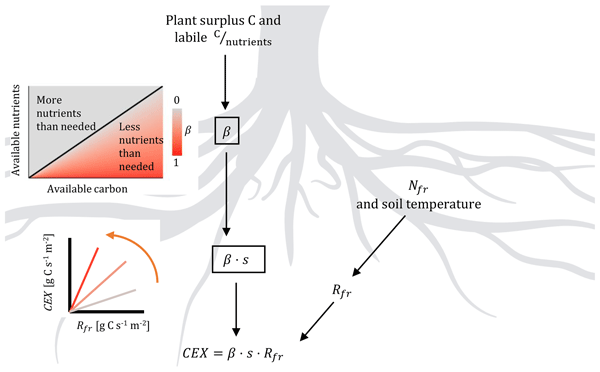
Kristian Schufft, Katrin Fleischer, Anja Rammig, Lin Yu, Mingkai Jiang, Belinda E. Medlyn, and Sönke Zaehle
Biogeosciences, 23, 4529–4559, https://doi.org/10.5194/bg-23-4529-2026, https://doi.org/10.5194/bg-23-4529-2026, 2026
Short summary
Short summary
Root exudation describes a process in which plants allocate labile carbon (C) through roots into soils, thereby influencing microbial C and nutrient cycling. We implemented root exudation in a computer model that simulates ecosystem processes. Increased atmospheric CO2 increased root exudation, but the additional input was partially offset by enhanced microbial respiration. Our research brings new perspectives in modelling soil C and nutrient cycling in forests under increasing CO2.
Tamryn Hamilton, Kerneels Jaars, Pieter G. van Zyl, Mika Aurela, Marcellin Adon, Johan P. Beukes, Miroslav Josipovic, Gregor T. Feig, Markku Kulmala, Lauri Laakso, and Ville Vakkari
EGUsphere, https://doi.org/10.5194/egusphere-2026-3066, https://doi.org/10.5194/egusphere-2026-3066, 2026
Short summary
Short summary
South Africa is a global hotspot for nitrogen dioxide, yet direct surface exchange measurements are absent from Africa. Using a high-precision laser at a savanna grassland site from 2015 to 2020, we made the first landscape-scale nitrogen dioxide flux measurements on the continent. The site mainly released nitrogen dioxide, driven by summer rainfall and soil microbes. We estimated the ecosystem-scale balance point between uptake and release. Widely used models overestimate daytime deposition.
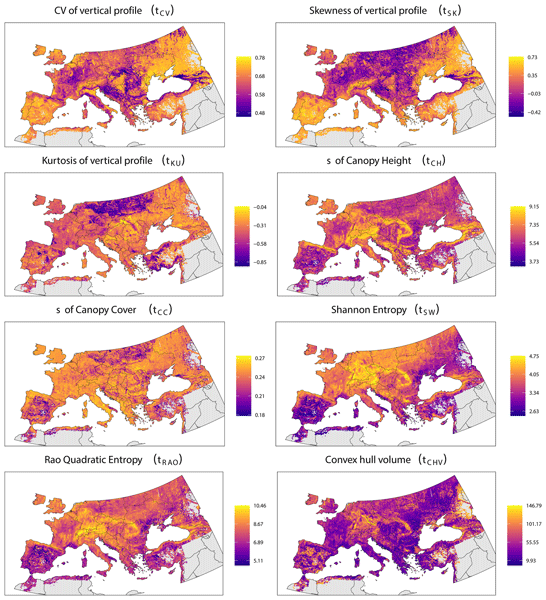
Marco Girardello, Gonzalo Oton, Matteo Piccardo, Mark Pickering, Agata Elia, Guido Ceccherini, Mariano Garcia, Mirco Migliavacca, and Alessandro Cescatti
Earth Syst. Sci. Data, 18, 2667–2687, https://doi.org/10.5194/essd-18-2667-2026, https://doi.org/10.5194/essd-18-2667-2026, 2026
Short summary
Short summary
Our research addresses the challenge of assessing forest structural diversity over large spatial scales, which is essential for understanding links between canopy structure, biodiversity, and ecosystem functioning. The advent of spaceborne Light Detection and Ranging (LiDAR) sensors such as the Global Ecosystem Dynamics Investigation (GEDI) has revolutionised the ability to measure forest structure. We provide a spatially explicit dataset of eight forest structural diversity metrics.
Tamara Emmerichs, Fabrice Lacroix, Victor Brovkin, Sönke Zaehle, Cheng Gong, Yu Zhu, Sofie Sjogersten, Carolina Voigt, Klaus Steenberg Larsen, and Eeva-Stiina Tuitila
EGUsphere, https://doi.org/10.5194/egusphere-2026-1514, https://doi.org/10.5194/egusphere-2026-1514, 2026
Short summary
Short summary
Shrubs use water and carbon differently and are expanding in warming tundra and grasslands, yet global models lack accuracy. We added two shrub types to a vegetation model including soil nutrients and carbon exchange. Half of the modeled shrubs showed good performance whereas their growth is 40 % higher as at grasses. Deciduous shrubs reduce nitrogen more than evergreens. Including shrubs improves Arctic carbon cycle predictions, revealing nitrogen limits cause underestimation in global models.
Jochen Stutz, Jonas Kuhn, Sol Cooperdock, Sarah Johnson, Fangzhou Guo, James H. Flynn, Meeta Cesler-Maloney, and William R. Simpson
EGUsphere, https://doi.org/10.5194/egusphere-2026-816, https://doi.org/10.5194/egusphere-2026-816, 2026
Short summary
Short summary
Northern cities often experience periods of wintertime air pollution, which are associated with surface temperature inversions and weak winds. In Fairbanks, Alaska, pollutants accumulate in a 20–40 m high surface layer with SO2 and NO2 mixing ratios of up to 35 ppb and 65 ppb, respectively. This surface pollution is caused by the balance of emissions, chemistry, and inefficient mixing with clean background air. This balance has to be considered for air pollution mitigation strategies.
Natalie Douglas, Simon Beylat, Tristan Quaife, Philippe Peylin, Nina Raoult, and Ross Bannister
EGUsphere, https://doi.org/10.5194/egusphere-2026-132, https://doi.org/10.5194/egusphere-2026-132, 2026
Short summary
Short summary
This study investigates a statistical method, called 4DEnVar, to calibrate uncertain land surface model parameters against observations. This method is easy to use but can lead to unphysical parameter values. The study explores the causes of this while proposing a simple way to overcome the problem. We show that the 4DEnVar method exhibits considerable versatility by applying the method to two different land surface models, under different settings, to calibrate photosynthetic parameters.
Olivia Hau, Matthias Forkel, Wolfgang Buermann, Johanna Kranz, Mirco Migliavacca, Ulrich Weber, and Alexander Josef Winkler
EGUsphere, https://doi.org/10.5194/egusphere-2026-910, https://doi.org/10.5194/egusphere-2026-910, 2026
Short summary
Short summary
Shifts in spring and autumn growth due to climate warming change how plants reflect sunlight and release heat and moisture into the air, modulating surface warming. The strength of these effects and their regional variability remain poorly understood. Using satellite and climate data, we show that earlier spring growth increases moisture release, especially in forests, while autumn changes are smaller and less consistent. Impacts on land-atmosphere interactions vary by ecosystem and data source.
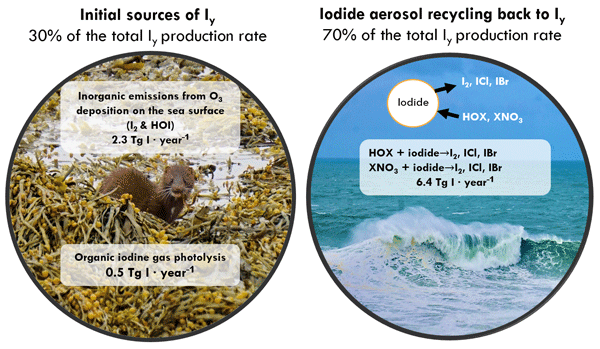
Allison R. Moon, Leyang Liu, Xuan Wang, Yuk-Chun Chan, Alyson Fritzmann, Ryan Pound, Amy Lees, Lewis Marden, Mat Evans, Lucy J. Carpenter, Jochen Stutz, Joel A. Thornton, Gordon Novak, Andrew Rollins, Gregory P. Schill, Xu-Cheng He, Henning Finkenzeller, Mago Reza, Rainer Volkamer, Kelvin H. Bates, Alfonso Saiz-Lopez, Anoop S. Mahajan, and Becky Alexander
Atmos. Chem. Phys., 26, 2353–2389, https://doi.org/10.5194/acp-26-2353-2026, https://doi.org/10.5194/acp-26-2353-2026, 2026
Short summary
Short summary
Global chemical transport models previously treated aerosols as a sink for reactive iodine (Iy); however, aerosol iodide is also a source of Iy via heterogeneous reactions involving hypohalous acids and halogen nitrates. We implemented this chemistry into GEOS-Chem, in addition to explicitly representing three aerosol iodine types: soluble organic iodine (SOI), iodide, and iodate. We found that aerosol recycling of iodide to form Iy is more than twice as fast as the other Iy sources combined.
Jan-Lukas Tirpitz, Nathaniel Brockway, Santo Fedele Colosimo, Robert Spurr, Matt Christi, Samuel Hall, Kirk Ullmann, Vijay Natraj, Nicolas Theys, Johnathan Hair, Taylor Shingler, Rodney Weber, Ruchen Zhu, Jack Dibb, Richard Moore, Elizabeth Wiggins, and Jochen Stutz
EGUsphere, https://doi.org/10.5194/egusphere-2025-5541, https://doi.org/10.5194/egusphere-2025-5541, 2026
Short summary
Short summary
This study applies a novel remote sensing algorithm to airborne radiation measurements performed in wildfire plumes, to retrieve the absorptive properties of biomass burning aerosols. The results provide new insights on the magnitude, wavelength dependence, and atmospheric aging of the imaginary refractive index, volume absorption cross-section, and single scattering albedo of the smoke particles. Furthermore, potential and limitations of the applied method are discussed.
Daju Wang, Ruowen Yang, Lei Cai, Pierre Gentine, César Terrer, Shuli Niu, Mirco Migliavacca, Wenping Yuan, Ryunosuke Tateno, Junlan Xiao, Josep Peñuelas, Caixian Tang, Yongshuo H. Fu, and Weiyu Shi
EGUsphere, https://doi.org/10.5194/egusphere-2026-296, https://doi.org/10.5194/egusphere-2026-296, 2026
Short summary
Short summary
Soil respiration is a major CO2 source, yet its response to vary nitrogen addition levels remains unclear. Using global data from 226 sites, we found moderate N addition has negligible or slightly positive effects, whereas high N addition consistently suppresses total and microbial respiration. These findings were incorporated into the CLM5 model, improving predictions of soil respiration and carbon storage. Our work elucidates how N deposition alters soil carbon processes and climate feedbacks.
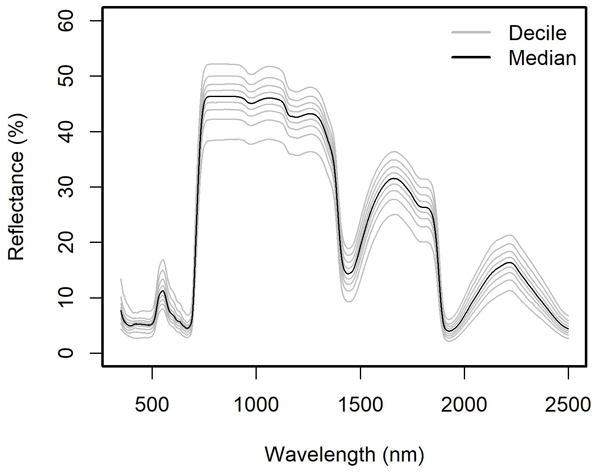
Julien Lamour, Shawn P. Serbin, Alistair Rogers, Kelvin T. Acebron, Elizabeth Ainsworth, Loren P. Albert, Michael Alonzo, Jeremiah Anderson, Owen K. Atkin, Nicolas Barbier, Mallory L. Barnes, Carl J. Bernacchi, Ninon Besson, Angela C. Burnett, Joshua S. Caplan, Jérôme Chave, Alexander W. Cheesman, Ilona Clocher, Onoriode Coast, Sabrina Coste, Holly Croft, Boya Cui, Clément Dauvissat, Kenneth J. Davidson, Christopher Doughty, Kim S. Ely, John R. Evans, Jean-Baptiste Féret, Iolanda Filella, Claire Fortunel, Peng Fu, Robert T. Furbank, Maquelle Garcia, Bruno O. Gimenez, Kaiyu Guan, Zhengfei Guo, David Heckmann, Patrick Heuret, Marney Isaac, Shan Kothari, Etsushi Kumagai, Thu Ya Kyaw, Liangyun Liu, Lingli Liu, Shuwen Liu, Joan Llusià, Troy Magney, Isabelle Maréchaux, Adam R. Martin, Katherine Meacham-Hensold, Christopher M. Montes, Romà Ogaya, Joy Ojo, Regison Oliveira, Alain Paquette, Josep Peñuelas, Antonia Debora Placido, Juan M. Posada, Xiaojin Qian, Heidi J. Renninger, Milagros Rodriguez-Caton, Andrés Rojas-González, Urte Schlüter, Giacomo Sellan, Courtney M. Siegert, Viridiana Silva-Perez, Guangqin Song, Charles D. Southwick, Daisy C. Souza, Clément Stahl, Yanjun Su, Leeladarshini Sujeeun, To-Chia Ting, Vicente Vasquez, Amrutha Vijayakumar, Marcelo Vilas-Boas, Diane R. Wang, Sheng Wang, Han Wang, Jing Wang, Xin Wang, Andreas P. M. Weber, Christopher Y. S. Wong, Jin Wu, Fengqi Wu, Shengbiao Wu, Zhengbing Yan, Dedi Yang, and Yingyi Zhao
Earth Syst. Sci. Data, 18, 245–265, https://doi.org/10.5194/essd-18-245-2026, https://doi.org/10.5194/essd-18-245-2026, 2026
Short summary
Short summary
We present the Global Spectra-Trait Initiative (GSTI), a collaborative repository of paired leaf hyperspectral and gas exchange measurements from diverse ecosystems. This repository provides a unique source of information for creating hyperspectral models for predicting photosynthetic traits and associated leaf traits in terrestrial plants.
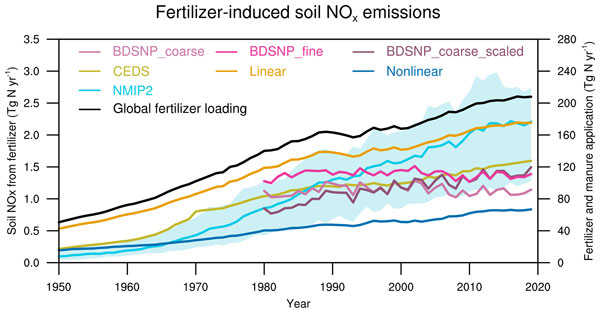
Cheng Gong, Yan Wang, Hanqin Tian, Sian Kou-Giesbrecht, Nicolas Vuichard, and Sönke Zaehle
Atmos. Chem. Phys., 25, 17009–17025, https://doi.org/10.5194/acp-25-17009-2025, https://doi.org/10.5194/acp-25-17009-2025, 2025
Short summary
Short summary
Our results showed substantially varied fertilizer-induced soil NOx emissions in 2019 from 0.84 to 2.2 Tg N yr-1 globally. Such variations further lead to 0.1 to 3.3 ppbv summertime ozone enhancement in agricultural hotspot regions and 6.7 ppbv to 16.6 ppbv reductions in global methane concentrations.
Dieu Anh Tran, Jordi Vilà-Guerau de Arellano, Ingrid T. Luijkx, Christoph Gerbig, Michał Gałkowski, Santiago Botía, Kim Faassen, and Sönke Zaehle
Atmos. Chem. Phys., 25, 16553–16588, https://doi.org/10.5194/acp-25-16553-2025, https://doi.org/10.5194/acp-25-16553-2025, 2025
Short summary
Short summary
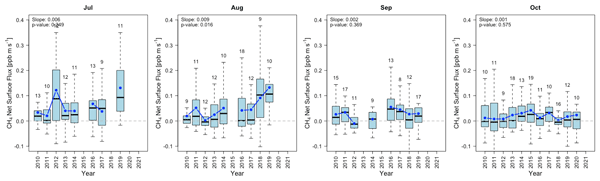
Analysis of CH4 data (2010–2021) from ZOtino Tall Tower Observatory in Central Siberia shows an increase in the late summer diurnal amplitude, driven by nighttime emissions. These trends correlate with rising soil temperature and moisture during the late summer and snow depth of the preceding spring. Peaks in 2012 and 2019 emission link to wildfires activity. Findings suggest wetlands as key CH4 sources and underscore the need for ongoing high-resolution monitoring in this region.
Daniele Peano, Deborah Hemming, Christine Delire, Yuanchao Fan, Hanna Lee, Stefano Materia, Julia E. M. S. Nabel, Taejin Park, David Wårlind, Andy Wiltshire, and Sönke Zaehle
Biogeosciences, 22, 7117–7135, https://doi.org/10.5194/bg-22-7117-2025, https://doi.org/10.5194/bg-22-7117-2025, 2025
Short summary
Short summary
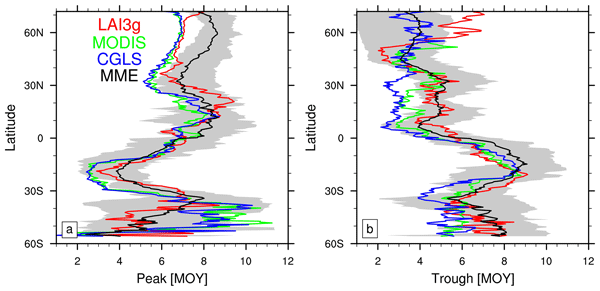
Earth System Models are the principal tools for scientists to study past, present, and future climate changes. This work investigates the ability of a set of them to represent the observed changes in vegetation, which are vital to estimating the impact of future climate mitigation and adaptation strategies. This study highlights the main limitations in correctly representing vegetation variability. These tools still need further development to improve our understanding of future changes.
Samantha Petch, Liang Feng, Paul I. Palmer, Robert P. King, Tristan Quaife, and Keith Haines
Biogeosciences, 22, 7031–7051, https://doi.org/10.5194/bg-22-7031-2025, https://doi.org/10.5194/bg-22-7031-2025, 2025
Short summary
Short summary
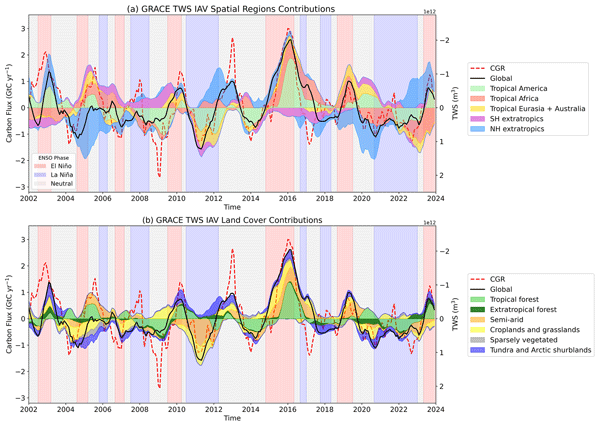
The growth rate of atmospheric CO2 varies year to year, mainly due to land ecosystems. Understanding factors controlling the land carbon uptake is crucial. Our study examines the link between terrestrial water storage and the CO2 growth rate from 2002–2023, revealing a strong negative correlation. We highlight the key role of tropical forests, especially in tropical America, and assess how regional contributions shift over time.
Tuuli Miinalainen, Amanda Ojasalo, Holly Croft, Mika Aurela, Mikko Peltoniemi, Silvia Caldararu, Sönke Zaehle, and Tea Thum
Biogeosciences, 22, 6937–6962, https://doi.org/10.5194/bg-22-6937-2025, https://doi.org/10.5194/bg-22-6937-2025, 2025
Short summary
Short summary
Estimating the future carbon budget requires an accurate understanding of the interlinkages between the land carbon and nitrogen cycles. We use a remote sensing leaf chlorophyll product to evaluate a terrestrial biosphere model, QUINCY (QUantifying Interactions between terrestrial Nutrient CYcles and the climate system). Our study showcases how the latest advancements in remote sensing-based vegetation monitoring can be harnessed for improving and evaluating process-based vegetation models.
Emmihenna Jääskeläinen, Miska Luoto, Pauli Putkiranta, Mika Aurela, and Tarmo Virtanen
Hydrol. Earth Syst. Sci., 29, 6237–6256, https://doi.org/10.5194/hess-29-6237-2025, https://doi.org/10.5194/hess-29-6237-2025, 2025
Short summary
Short summary
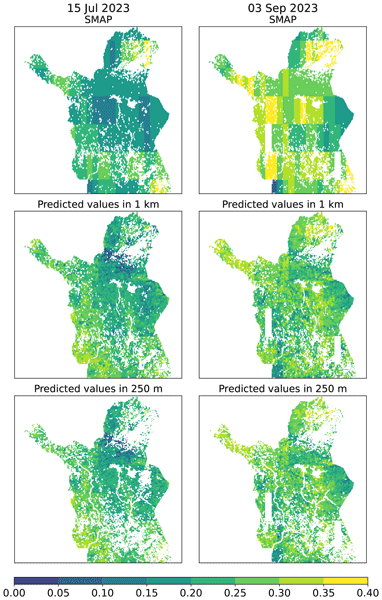
The challenge with current satellite-based soil moisture products is their coarse resolution. Therefore, we used machine-learning model to improve spatial resolution of well-known SMAP (Soil Moisture Active Passive) soil moisture data, by using in situ soil moisture observations and additional weather data and vegetation properties. Comparisons against independent data set show that the model estimated soil moisture values have better agreement with in situ observations compared to other SMAP-related soil moisture data.
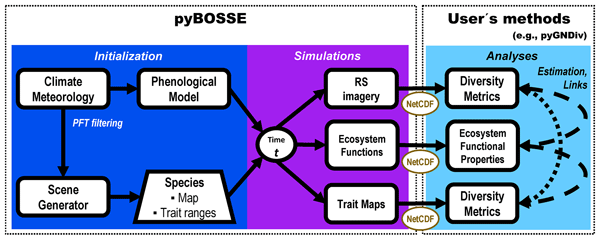
Javier Pacheco-Labrador, Ulisse Gomarasca, Daniel E. Pabon-Moreno, Wantong Li, Mirco Migliavacca, Martin Jung, and Gregory Duveiller
Geosci. Model Dev., 18, 8401–8422, https://doi.org/10.5194/gmd-18-8401-2025, https://doi.org/10.5194/gmd-18-8401-2025, 2025
Short summary
Short summary
Measuring biodiversity is necessary to assess its loss, evolution, and role in ecosystem functions. Satellites image the whole terrestrial surface and could cost-efficiently map plant diversity globally. However, developing the necessary methods lacks consistent and sufficient field measurements. Thus, we propose using a simulation tool that generates virtual ecosystems, with species properties and functions varying in response to meteorology and the respective remote sensing imagery.
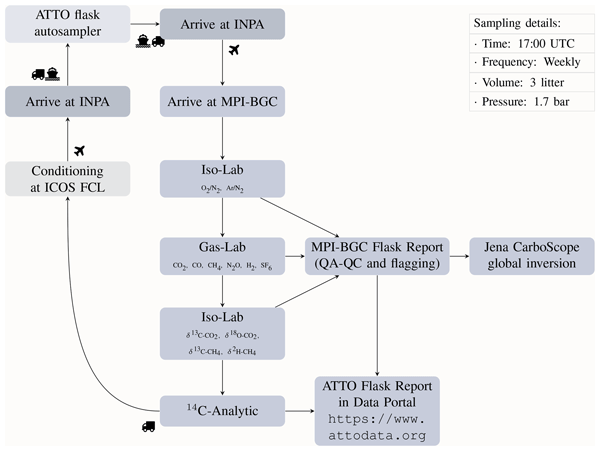
Carlos A. Sierra, Ingrid Chanca, Meinrat O. Andreae, Alessandro Carioca de Araújo, Hella van Asperen, Lars Borchardt, Santiago Botía, Luiz Antonio Candido, Caio S. C. Correa, Cléo Quaresma Dias-Junior, Markus Eritt, Annica Fröhlich, Luciana V. Gatti, Marcus Guderle, Samuel Hammer, Martin Heimann, Viviana Horna, Armin Jordan, Steffen Knabe, Richard Kneißl, Jost Valentin Lavric, Ingeborg Levin, Kita Macario, Juliana Menger, Heiko Moossen, Carlos Alberto Quesada, Michael Rothe, Christian Rödenbeck, Yago Santos, Axel Steinhof, Bruno Takeshi, Susan Trumbore, and Sönke Zaehle
Earth Syst. Sci. Data, 17, 5871–5884, https://doi.org/10.5194/essd-17-5871-2025, https://doi.org/10.5194/essd-17-5871-2025, 2025
Short summary
Short summary
We present here a unique dataset of atmospheric observations of greenhouse gases and isotopes that provide key information on land-atmosphere interactions for the Amazon forests of central Brazil. The data show a relatively large level of variability, but also important trends in greenhouse gases, and signals from fires as well as seasonal biological activity.
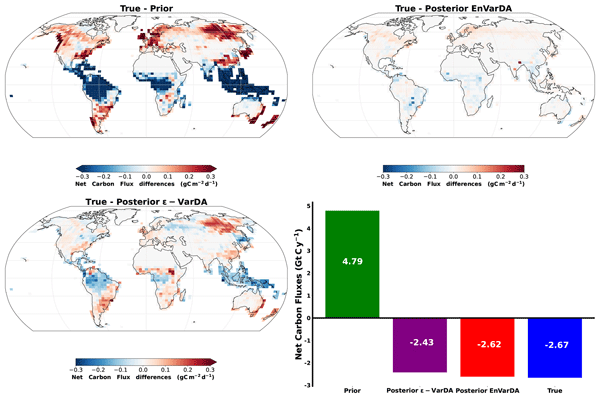
Simon Beylat, Nina Raoult, Cédric Bacour, Natalie Douglas, Tristan Quaife, Vladislav Bastrikov, Peter J. Rayner, and Philippe Peylin
Geosci. Model Dev., 18, 7501–7527, https://doi.org/10.5194/gmd-18-7501-2025, https://doi.org/10.5194/gmd-18-7501-2025, 2025
Short summary
Short summary
Land surface models are important tools for understanding and predicting the land components of the carbon cycle. Atmospheric CO2 concentration data are a valuable source of information that can be used to improve the accuracy of these models. In this study, we present a statistical ensemble-variational data assimilation method named EnVarDA to calibrate parameters of a land surface model using these data. We show that this method is easy to implement and more efficient and accurate than traditional methods.
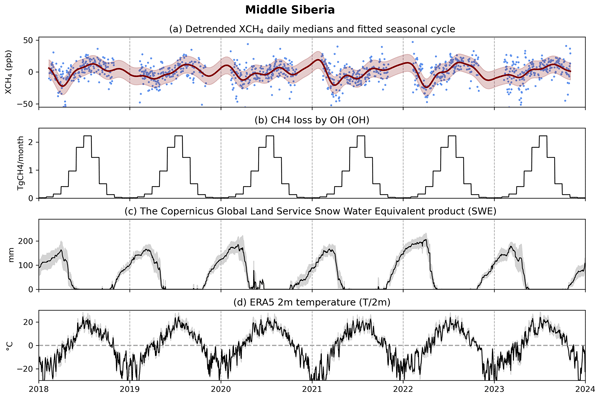
Ella Kivimäki, Maria Tenkanen, Tuula Aalto, Michael Buchwitz, Kari Luojus, Jouni Pulliainen, Kimmo Rautiainen, Oliver Schneising, Anu-Maija Sundström, Johanna Tamminen, Aki Tsuruta, and Hannakaisa Lindqvist
Biogeosciences, 22, 5193–5230, https://doi.org/10.5194/bg-22-5193-2025, https://doi.org/10.5194/bg-22-5193-2025, 2025
Short summary
Short summary
We study how environmental variables influencing natural methane fluxes explain the seasonal variability in satellite-observed methane in Northern Hemisphere high-latitude wetland areas. Using two atmospheric model set-ups, we assess consistency with satellite data. Methane loss through reaction with hydroxyl radicals and links with snow cover, temperature, and snowmelt had the strongest influence. Our study highlights the value of satellite observations for understanding large-scale wetland emissions.
Laura M. D. Heinlein, Junwei He, Michael Oluwatoyin Sunday, Fangzhou Guo, James Campbell, Allison Moon, Sukriti Kapur, Ting Fang, Kasey Edwards, Meeta Cesler-Maloney, Alyssa J. Burns, Jack Dibb, William Simpson, Manabu Shiraiwa, Becky Alexander, Jingqiu Mao, James H. Flynn III, Jochen Stutz, and Cort Anastasio
Atmos. Chem. Phys., 25, 9561–9581, https://doi.org/10.5194/acp-25-9561-2025, https://doi.org/10.5194/acp-25-9561-2025, 2025
Short summary
Short summary
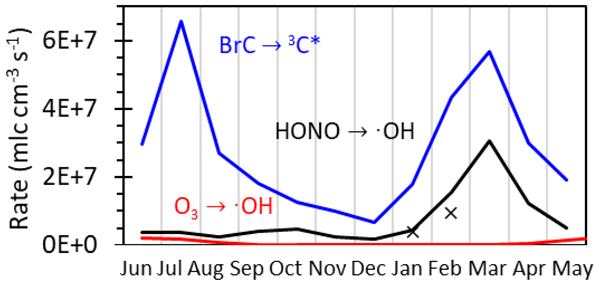
High-latitude cities like Fairbanks, Alaska, experience severe wintertime pollution episodes. While conventional wisdom holds that oxidation is slow under these conditions, field measurements find oxidized products in particles. To explore this, we measured oxidants in aqueous extracts of winter particles from Fairbanks. We find high concentrations of oxidants during illumination experiments, indicating that particle photochemistry can be significant even in high latitudes during winter.
Jalisha Theanutti Kallingal, Marko Scholze, Paul Anthony Miller, Johan Lindström, Janne Rinne, Mika Aurela, Patrik Vestin, and Per Weslien
Biogeosciences, 22, 4061–4086, https://doi.org/10.5194/bg-22-4061-2025, https://doi.org/10.5194/bg-22-4061-2025, 2025
Short summary
Short summary
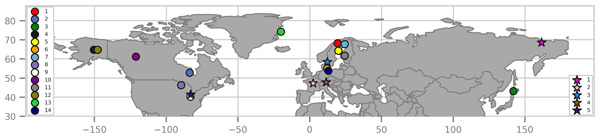
We explored the possibilities of a Bayesian-based data assimilation algorithm to improve the wetland CH4 flux estimates by a dynamic vegetation model. By assimilating CH4 observations from 14 wetland sites, we calibrated model parameters and estimated large-scale annual emissions from northern wetlands. Our findings indicate that this approach leads to more reliable estimates of CH4 dynamics, which will improve our understanding of the climate change feedback from wetland CH4 emissions.
Rubaya Pervin, Scott Robeson, Mallory Barnes, Stephen Sitch, Anthony Walker, Ben Poulter, Fabienne Maignan, Qing Sun, Thomas Colligan, Sönke Zaehle, Kashif Mahmud, Peter Anthoni, Almut Arneth, Vivek Arora, Vladislav Bastrikov, Liam Bogucki, Bertrand Decharme, Christine Delire, Stefanie Falk, Akihiko Ito, Etsushi Kato, Daniel Kennedy, Jürgen Knauer, Michael O’Sullivan, Wenping Yuan, and Natasha MacBean
EGUsphere, https://doi.org/10.5194/egusphere-2025-2841, https://doi.org/10.5194/egusphere-2025-2841, 2025
Short summary
Short summary
Drylands contribute more than a third of the global vegetation productivity. Yet, these regions are not well represented in global vegetation models. Here, we tested how well 15 global models capture annual changes in dryland vegetation productivity. Models that didn’t have vegetation change over time or fire have lower variability in vegetation productivity. Models need better representation of grass cover types and their coverage. Our work highlights where and how these models need to improve.
Alan Barr, T. Andrew Black, Warren Helgason, Andrew Ireson, Bruce Johnson, J. Harry McCaughey, Zoran Nesic, Charmaine Hrynkiw, Amber Ross, and Newell Hedstrom
Earth Syst. Sci. Data Discuss., https://doi.org/10.5194/essd-2024-492, https://doi.org/10.5194/essd-2024-492, 2025
Revised manuscript accepted for ESSD
Short summary
Short summary
The Boreal Ecosystem Research and Monitoring Sites comprise three forest and one wetland flux towers near the southern edge of the boreal forest in western Canada. The data, spanning 1997 to 2023, have been used to: characterize the exchanges of carbon, water and energy between boreal ecosystems and the atmosphere; improve climate, hydrologic, and ecosystem carbon-cycle models, and refine remote-sensing methods.
Richard Essery, Giulia Mazzotti, Sarah Barr, Tobias Jonas, Tristan Quaife, and Nick Rutter
Geosci. Model Dev., 18, 3583–3605, https://doi.org/10.5194/gmd-18-3583-2025, https://doi.org/10.5194/gmd-18-3583-2025, 2025
Short summary
Short summary
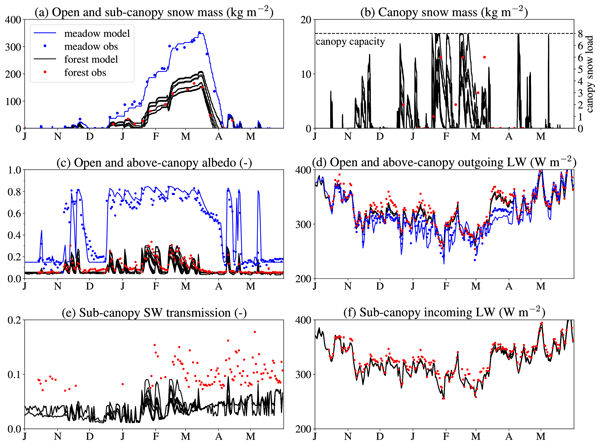
How forests influence accumulation and melt of snow on the ground is of long-standing interest, but uncertainty remains in how best to model forest snow processes. We developed the Flexible Snow Model version 2 to quantify these uncertainties. In a first model demonstration, how unloading of intercepted snow from the forest canopy is represented is responsible for the largest uncertainty. Global mapping of forest distribution is also likely to be a large source of uncertainty in existing models.
Friedrich J. Bohn, Ana Bastos, Romina Martin, Anja Rammig, Niak Sian Koh, Giles B. Sioen, Bram Buscher, Louise Carver, Fabrice DeClerck, Moritz Drupp, Robert Fletcher, Matthew Forrest, Alexandros Gasparatos, Alex Godoy-Faúndez, Gregor Hagedorn, Martin C. Hänsel, Jessica Hetzer, Thomas Hickler, Cornelia B. Krug, Stasja Koot, Xiuzhen Li, Amy Luers, Shelby Matevich, H. Damon Matthews, Ina C. Meier, Mirco Migliavacca, Awaz Mohamed, Sungmin O, David Obura, Ben Orlove, Rene Orth, Laura Pereira, Markus Reichstein, Lerato Thakholi, Peter H. Verburg, and Yuki Yoshida
Biogeosciences, 22, 2425–2460, https://doi.org/10.5194/bg-22-2425-2025, https://doi.org/10.5194/bg-22-2425-2025, 2025
Short summary
Short summary
An interdisciplinary collaboration of 36 international researchers from 35 institutions highlights recent findings in biosphere research. Within eight themes, they discuss issues arising from climate change and other anthropogenic stressors and highlight the co-benefits of nature-based solutions and ecosystem services. Based on an analysis of these eight topics, we have synthesized four overarching insights.
Tea Thum, Tuuli Miinalainen, Outi Seppälä, Holly Croft, Cheryl Rogers, Ralf Staebler, Silvia Caldararu, and Sönke Zaehle
Biogeosciences, 22, 1781–1807, https://doi.org/10.5194/bg-22-1781-2025, https://doi.org/10.5194/bg-22-1781-2025, 2025
Short summary
Short summary
Climate change has the potential to influence the carbon sequestration potential of terrestrial ecosystems, and here the nitrogen cycle is also important. We used the terrestrial biosphere model QUINCY (QUantifying Interactions between terrestrial Nutrient CYcles and the climate system) in a mixed deciduous forest in Canada. We investigated the usefulness of using the leaf area index and leaf chlorophyll content to improve the parameterization of the model. This work paves the way for using spaceborne observations in model parameterizations, also including information on the nitrogen cycle.
Wolfgang Knorr, Matthew Williams, Tea Thum, Thomas Kaminski, Michael Voßbeck, Marko Scholze, Tristan Quaife, T. Luke Smallman, Susan C. Steele-Dunne, Mariette Vreugdenhil, Tim Green, Sönke Zaehle, Mika Aurela, Alexandre Bouvet, Emanuel Bueechi, Wouter Dorigo, Tarek S. El-Madany, Mirco Migliavacca, Marika Honkanen, Yann H. Kerr, Anna Kontu, Juha Lemmetyinen, Hannakaisa Lindqvist, Arnaud Mialon, Tuuli Miinalainen, Gaétan Pique, Amanda Ojasalo, Shaun Quegan, Peter J. Rayner, Pablo Reyes-Muñoz, Nemesio Rodríguez-Fernández, Mike Schwank, Jochem Verrelst, Songyan Zhu, Dirk Schüttemeyer, and Matthias Drusch
Geosci. Model Dev., 18, 2137–2159, https://doi.org/10.5194/gmd-18-2137-2025, https://doi.org/10.5194/gmd-18-2137-2025, 2025
Short summary
Short summary
When it comes to climate change, the land surface is where the vast majority of impacts happen. The task of monitoring those impacts across the globe is formidable and must necessarily rely on satellites – at a significant cost: the measurements are only indirect and require comprehensive physical understanding. We have created a comprehensive modelling system that we offer to the research community to explore how satellite data can be better exploited to help us capture the changes that happen on our lands.
Gang Tang, Zebedee Nicholls, Alexander Norton, Sönke Zaehle, and Malte Meinshausen
Geosci. Model Dev., 18, 2193–2230, https://doi.org/10.5194/gmd-18-2193-2025, https://doi.org/10.5194/gmd-18-2193-2025, 2025
Short summary
Short summary
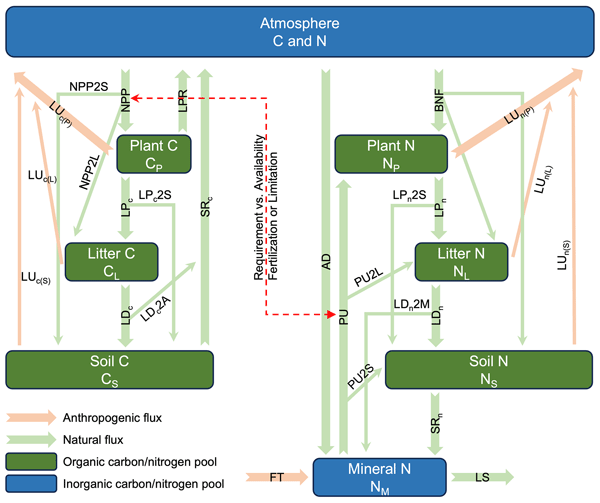
We studied carbon–nitrogen coupling in Earth system models by developing a global carbon–nitrogen cycle model (CNit v1.0) within the widely used emulator MAGICC. CNit effectively reproduced the global carbon–nitrogen cycle dynamics observed in complex models. Our results show persistent nitrogen limitations on plant growth (net primary production) from 1850 to 2100, suggesting that nitrogen deficiency may constrain future land carbon sequestration.
Pierre Friedlingstein, Michael O'Sullivan, Matthew W. Jones, Robbie M. Andrew, Judith Hauck, Peter Landschützer, Corinne Le Quéré, Hongmei Li, Ingrid T. Luijkx, Are Olsen, Glen P. Peters, Wouter Peters, Julia Pongratz, Clemens Schwingshackl, Stephen Sitch, Josep G. Canadell, Philippe Ciais, Robert B. Jackson, Simone R. Alin, Almut Arneth, Vivek Arora, Nicholas R. Bates, Meike Becker, Nicolas Bellouin, Carla F. Berghoff, Henry C. Bittig, Laurent Bopp, Patricia Cadule, Katie Campbell, Matthew A. Chamberlain, Naveen Chandra, Frédéric Chevallier, Louise P. Chini, Thomas Colligan, Jeanne Decayeux, Laique M. Djeutchouang, Xinyu Dou, Carolina Duran Rojas, Kazutaka Enyo, Wiley Evans, Amanda R. Fay, Richard A. Feely, Daniel J. Ford, Adrianna Foster, Thomas Gasser, Marion Gehlen, Thanos Gkritzalis, Giacomo Grassi, Luke Gregor, Nicolas Gruber, Özgür Gürses, Ian Harris, Matthew Hefner, Jens Heinke, George C. Hurtt, Yosuke Iida, Tatiana Ilyina, Andrew R. Jacobson, Atul K. Jain, Tereza Jarníková, Annika Jersild, Fei Jiang, Zhe Jin, Etsushi Kato, Ralph F. Keeling, Kees Klein Goldewijk, Jürgen Knauer, Jan Ivar Korsbakken, Xin Lan, Siv K. Lauvset, Nathalie Lefèvre, Zhu Liu, Junjie Liu, Lei Ma, Shamil Maksyutov, Gregg Marland, Nicolas Mayot, Patrick C. McGuire, Nicolas Metzl, Natalie M. Monacci, Eric J. Morgan, Shin-Ichiro Nakaoka, Craig Neill, Yosuke Niwa, Tobias Nützel, Lea Olivier, Tsuneo Ono, Paul I. Palmer, Denis Pierrot, Zhangcai Qin, Laure Resplandy, Alizée Roobaert, Thais M. Rosan, Christian Rödenbeck, Jörg Schwinger, T. Luke Smallman, Stephen M. Smith, Reinel Sospedra-Alfonso, Tobias Steinhoff, Qing Sun, Adrienne J. Sutton, Roland Séférian, Shintaro Takao, Hiroaki Tatebe, Hanqin Tian, Bronte Tilbrook, Olivier Torres, Etienne Tourigny, Hiroyuki Tsujino, Francesco Tubiello, Guido van der Werf, Rik Wanninkhof, Xuhui Wang, Dongxu Yang, Xiaojuan Yang, Zhen Yu, Wenping Yuan, Xu Yue, Sönke Zaehle, Ning Zeng, and Jiye Zeng
Earth Syst. Sci. Data, 17, 965–1039, https://doi.org/10.5194/essd-17-965-2025, https://doi.org/10.5194/essd-17-965-2025, 2025
Short summary
Short summary
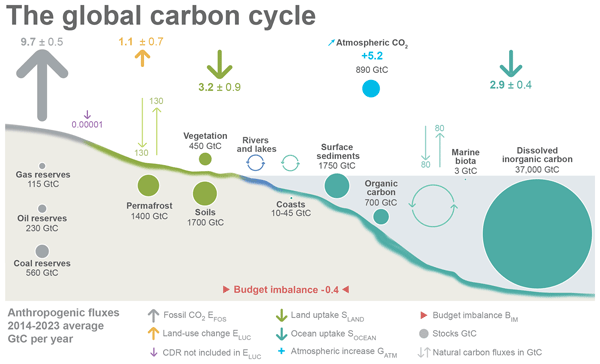
The Global Carbon Budget 2024 describes the methodology, main results, and datasets used to quantify the anthropogenic emissions of carbon dioxide (CO2) and their partitioning among the atmosphere, land ecosystems, and the ocean over the historical period (1750–2024). These living datasets are updated every year to provide the highest transparency and traceability in the reporting of CO2, the key driver of climate change.
Mana Gharun, Ankit Shekhar, Lukas Hörtnagl, Luana Krebs, Nicola Arriga, Mirco Migliavacca, Marilyn Roland, Bert Gielen, Leonardo Montagnani, Enrico Tomelleri, Ladislav Šigut, Matthias Peichl, Peng Zhao, Marius Schmidt, Thomas Grünwald, Mika Korkiakoski, Annalea Lohila, and Nina Buchmann
Biogeosciences, 22, 1393–1411, https://doi.org/10.5194/bg-22-1393-2025, https://doi.org/10.5194/bg-22-1393-2025, 2025
Short summary
Short summary
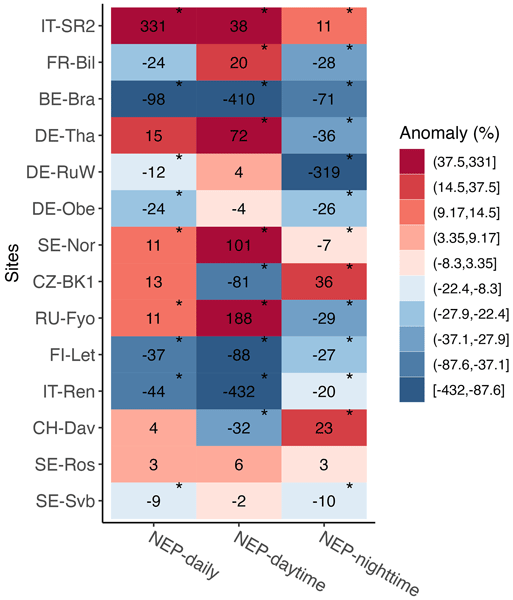
The effect of winter warming on forest CO2 fluxes has rarely been investigated. We tested the effect of the warm winter of 2020 on the forest CO2 fluxes across 14 sites in Europe and found that the net ecosystem productivity (NEP) across most sites declined during the warm winter due to increased respiration fluxes.
Timo H. Virtanen, Anu-Maija Sundström, Elli Suhonen, Antti Lipponen, Antti Arola, Christopher O'Dell, Robert R. Nelson, and Hannakaisa Lindqvist
Atmos. Meas. Tech., 18, 929–952, https://doi.org/10.5194/amt-18-929-2025, https://doi.org/10.5194/amt-18-929-2025, 2025
Short summary
Short summary
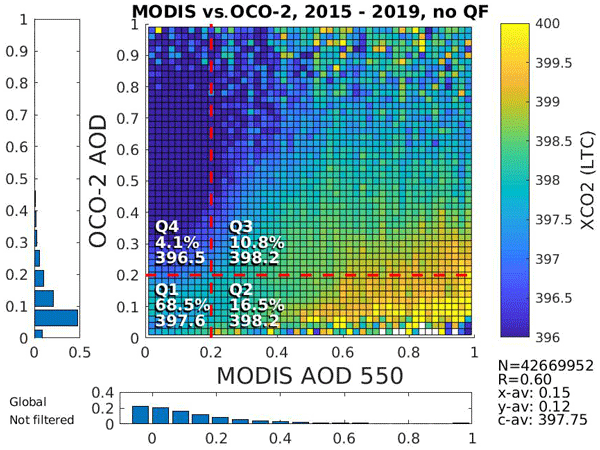
We find that small particles suspended in the air (aerosols) affect the satellite observations of carbon dioxide (CO2) made by the Orbiting Carbon Observatory-2 satellite instrument. Satellite estimates of CO2 appear to be too high for clean areas and too low for polluted areas. Our results show that CO2 and aerosols are often co-emitted, and this is partly masked out in the current retrievals. Correctly accounting for the aerosol effect is important for CO2 emission estimates by satellites.
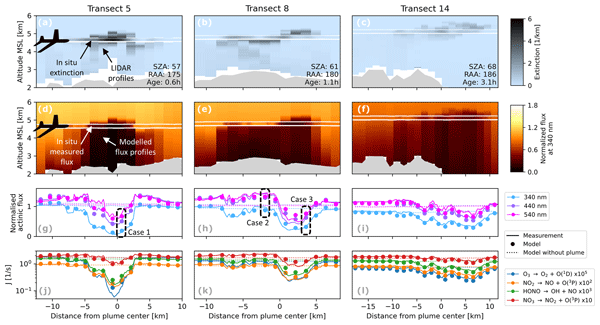
Jan-Lukas Tirpitz, Santo Fedele Colosimo, Nathaniel Brockway, Robert Spurr, Matt Christi, Samuel Hall, Kirk Ullmann, Johnathan Hair, Taylor Shingler, Rodney Weber, Jack Dibb, Richard Moore, Elizabeth Wiggins, Vijay Natraj, Nicolas Theys, and Jochen Stutz
Atmos. Chem. Phys., 25, 1989–2015, https://doi.org/10.5194/acp-25-1989-2025, https://doi.org/10.5194/acp-25-1989-2025, 2025
Short summary
Short summary
We combine plume composition data from the 2019 NASA FIREX-AQ campaign with state-of-the-art radiative transfer modeling techniques to calculate distributions of actinic flux and photolysis frequencies in a wildfire plume. Excellent agreement of the model and observations demonstrates the applicability of this approach to constrain photochemistry in such plumes. We identify limiting factors for the modeling accuracy and discuss spatial and spectral features of the distributions.
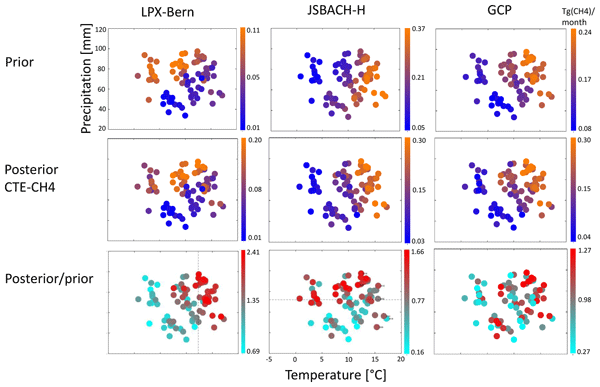
Tuula Aalto, Aki Tsuruta, Jarmo Mäkelä, Jurek Müller, Maria Tenkanen, Eleanor Burke, Sarah Chadburn, Yao Gao, Vilma Mannisenaho, Thomas Kleinen, Hanna Lee, Antti Leppänen, Tiina Markkanen, Stefano Materia, Paul A. Miller, Daniele Peano, Olli Peltola, Benjamin Poulter, Maarit Raivonen, Marielle Saunois, David Wårlind, and Sönke Zaehle
Biogeosciences, 22, 323–340, https://doi.org/10.5194/bg-22-323-2025, https://doi.org/10.5194/bg-22-323-2025, 2025
Short summary
Short summary
Wetland methane responses to temperature and precipitation were studied in a boreal wetland-rich region in northern Europe using ecosystem models, atmospheric inversions, and upscaled flux observations. The ecosystem models differed in their responses to temperature and precipitation and in their seasonality. However, multi-model means, inversions, and upscaled fluxes had similar seasonality, and they suggested co-limitation by temperature and precipitation.
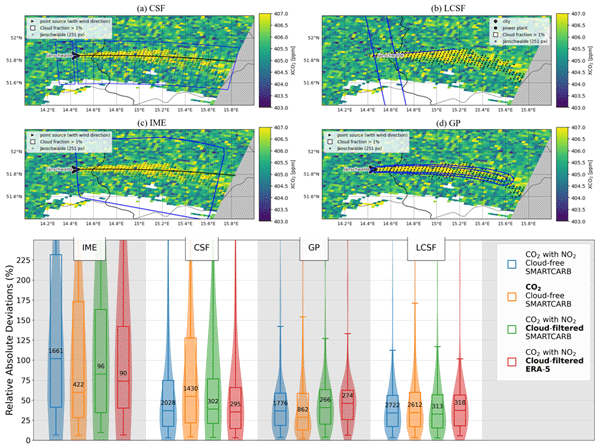
Diego Santaren, Janne Hakkarainen, Gerrit Kuhlmann, Erik Koene, Frédéric Chevallier, Iolanda Ialongo, Hannakaisa Lindqvist, Janne Nurmela, Johanna Tamminen, Laia Amorós, Dominik Brunner, and Grégoire Broquet
Atmos. Meas. Tech., 18, 211–239, https://doi.org/10.5194/amt-18-211-2025, https://doi.org/10.5194/amt-18-211-2025, 2025
Short summary
Short summary
This study evaluates data-driven inversion methods for estimating CO2 emissions from local sources, such as power plants and cities, using meteorological data and XCO2 and NO2 satellite images rather than atmospheric transport modeling. We assess and compare the performance of five different methods using simulations of 1 year of satellite images, taken from the upcoming Copernicus CO2 Monitoring Mission, covering 15 power plants and the city of Berlin, Germany.
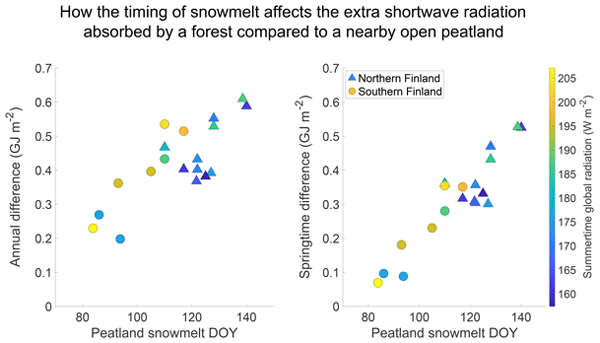
Otso Peräkylä, Erkka Rinne, Ekaterina Ezhova, Anna Lintunen, Annalea Lohila, Juho Aalto, Mika Aurela, Pasi Kolari, and Markku Kulmala
Biogeosciences, 22, 153–179, https://doi.org/10.5194/bg-22-153-2025, https://doi.org/10.5194/bg-22-153-2025, 2025
Short summary
Short summary
Forests are seen as good for climate. Yet, in areas with snow, trees break up the white snow surface and absorb more sunlight than open areas. This has a warming effect, negating some of the climate benefit of trees. We studied two site pairs in Finland, both with an open peatland and a forest. We found that the later the snow melts, the more extra energy the forest absorbs as compared to the peatland. This has implications for the future, as snow cover duration is affected by global warming.
Fortunat Joos, Sebastian Lienert, and Sönke Zaehle
Biogeosciences, 22, 19–39, https://doi.org/10.5194/bg-22-19-2025, https://doi.org/10.5194/bg-22-19-2025, 2025
Short summary
Short summary
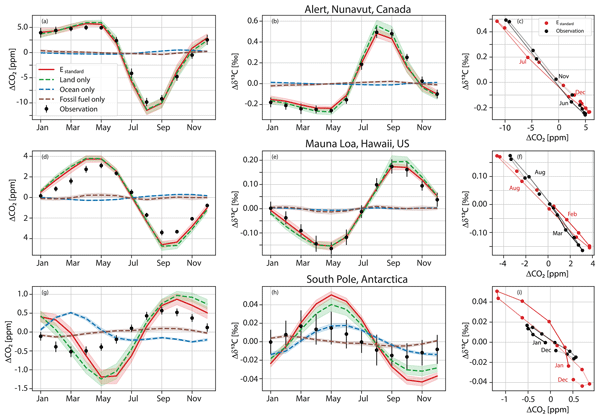
How plants regulate their exchange of CO2 and water with the atmosphere under global warming is critical for their carbon uptake and their cooling influence. We analyze the isotope ratio of atmospheric CO2 and detect no significant decadal trends in the seasonal cycle amplitude. The data are consistent with the regulation towards leaf CO2 and intrinsic water use efficiency growing proportionally to atmospheric CO2, in contrast to recent suggestions of downregulation of CO2 and water fluxes.
Bettina K. Gier, Manuel Schlund, Pierre Friedlingstein, Chris D. Jones, Colin Jones, Sönke Zaehle, and Veronika Eyring
Biogeosciences, 21, 5321–5360, https://doi.org/10.5194/bg-21-5321-2024, https://doi.org/10.5194/bg-21-5321-2024, 2024
Short summary
Short summary
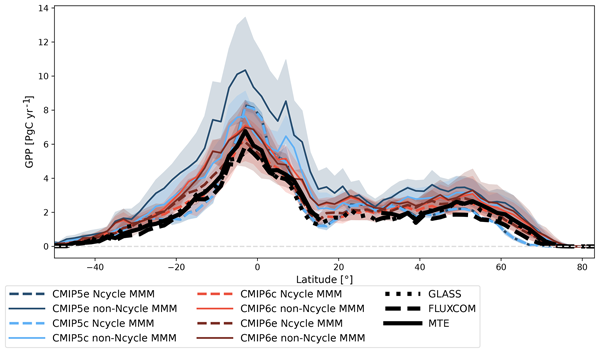
This study investigates present-day carbon cycle variables in CMIP5 and CMIP6 simulations. Overall, CMIP6 models perform better but also show many remaining biases. A significant improvement in the simulation of photosynthesis in models with a nitrogen cycle is found, with only small differences between emission- and concentration-based simulations. Thus, we recommend using emission-driven simulations in CMIP7 by default and including the nitrogen cycle in all future carbon cycle models.
Benjamin M. Sanderson, Ben B. B. Booth, John Dunne, Veronika Eyring, Rosie A. Fisher, Pierre Friedlingstein, Matthew J. Gidden, Tomohiro Hajima, Chris D. Jones, Colin G. Jones, Andrew King, Charles D. Koven, David M. Lawrence, Jason Lowe, Nadine Mengis, Glen P. Peters, Joeri Rogelj, Chris Smith, Abigail C. Snyder, Isla R. Simpson, Abigail L. S. Swann, Claudia Tebaldi, Tatiana Ilyina, Carl-Friedrich Schleussner, Roland Séférian, Bjørn H. Samset, Detlef van Vuuren, and Sönke Zaehle
Geosci. Model Dev., 17, 8141–8172, https://doi.org/10.5194/gmd-17-8141-2024, https://doi.org/10.5194/gmd-17-8141-2024, 2024
Short summary
Short summary
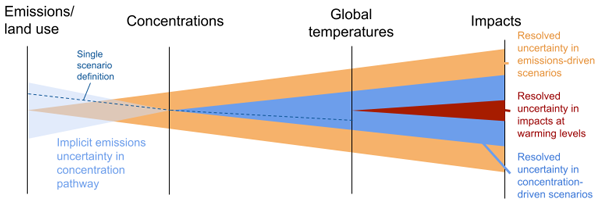
We discuss how, in order to provide more relevant guidance for climate policy, coordinated climate experiments should adopt a greater focus on simulations where Earth system models are provided with carbon emissions from fossil fuels together with land use change instructions, rather than past approaches that have largely focused on experiments with prescribed atmospheric carbon dioxide concentrations. We discuss how these goals might be achieved in coordinated climate modeling experiments.
Jacob A. Nelson, Sophia Walther, Fabian Gans, Basil Kraft, Ulrich Weber, Kimberly Novick, Nina Buchmann, Mirco Migliavacca, Georg Wohlfahrt, Ladislav Šigut, Andreas Ibrom, Dario Papale, Mathias Göckede, Gregory Duveiller, Alexander Knohl, Lukas Hörtnagl, Russell L. Scott, Jiří Dušek, Weijie Zhang, Zayd Mahmoud Hamdi, Markus Reichstein, Sergio Aranda-Barranco, Jonas Ardö, Maarten Op de Beeck, Dave Billesbach, David Bowling, Rosvel Bracho, Christian Brümmer, Gustau Camps-Valls, Shiping Chen, Jamie Rose Cleverly, Ankur Desai, Gang Dong, Tarek S. El-Madany, Eugenie Susanne Euskirchen, Iris Feigenwinter, Marta Galvagno, Giacomo A. Gerosa, Bert Gielen, Ignacio Goded, Sarah Goslee, Christopher Michael Gough, Bernard Heinesch, Kazuhito Ichii, Marcin Antoni Jackowicz-Korczynski, Anne Klosterhalfen, Sara Knox, Hideki Kobayashi, Kukka-Maaria Kohonen, Mika Korkiakoski, Ivan Mammarella, Mana Gharun, Riccardo Marzuoli, Roser Matamala, Stefan Metzger, Leonardo Montagnani, Giacomo Nicolini, Thomas O'Halloran, Jean-Marc Ourcival, Matthias Peichl, Elise Pendall, Borja Ruiz Reverter, Marilyn Roland, Simone Sabbatini, Torsten Sachs, Marius Schmidt, Christopher R. Schwalm, Ankit Shekhar, Richard Silberstein, Maria Lucia Silveira, Donatella Spano, Torbern Tagesson, Gianluca Tramontana, Carlo Trotta, Fabio Turco, Timo Vesala, Caroline Vincke, Domenico Vitale, Enrique R. Vivoni, Yi Wang, William Woodgate, Enrico A. Yepez, Junhui Zhang, Donatella Zona, and Martin Jung
Biogeosciences, 21, 5079–5115, https://doi.org/10.5194/bg-21-5079-2024, https://doi.org/10.5194/bg-21-5079-2024, 2024
Short summary
Short summary
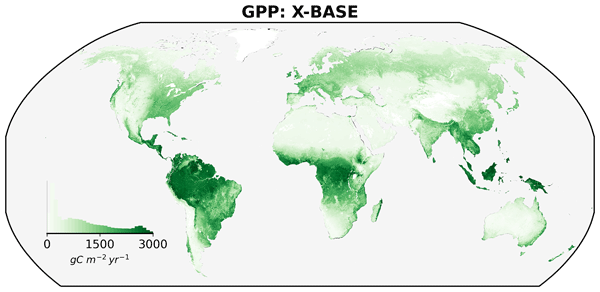
The movement of water, carbon, and energy from the Earth's surface to the atmosphere, or flux, is an important process to understand because it impacts our lives. Here, we outline a method called FLUXCOM-X to estimate global water and CO2 fluxes based on direct measurements from sites around the world. We go on to demonstrate how these new estimates of net CO2 uptake/loss, gross CO2 uptake, total water evaporation, and transpiration from plants compare to previous and independent estimates.

Jari-Pekka Nousu, Kersti Leppä, Hannu Marttila, Pertti Ala-aho, Giulia Mazzotti, Terhikki Manninen, Mika Korkiakoski, Mika Aurela, Annalea Lohila, and Samuli Launiainen
Hydrol. Earth Syst. Sci., 28, 4643–4666, https://doi.org/10.5194/hess-28-4643-2024, https://doi.org/10.5194/hess-28-4643-2024, 2024
Short summary
Short summary
We used hydrological models, field measurements, and satellite-based data to study the soil moisture dynamics in a subarctic catchment. The role of groundwater was studied with different ways to model the groundwater dynamics and via comparisons to the observational data. The choice of groundwater model was shown to have a strong impact, and representation of lateral flow was important to capture wet soil conditions. Our results provide insights for ecohydrological studies in boreal regions.

Colin G. Jones, Fanny Adloff, Ben B. B. Booth, Peter M. Cox, Veronika Eyring, Pierre Friedlingstein, Katja Frieler, Helene T. Hewitt, Hazel A. Jeffery, Sylvie Joussaume, Torben Koenigk, Bryan N. Lawrence, Eleanor O'Rourke, Malcolm J. Roberts, Benjamin M. Sanderson, Roland Séférian, Samuel Somot, Pier Luigi Vidale, Detlef van Vuuren, Mario Acosta, Mats Bentsen, Raffaele Bernardello, Richard Betts, Ed Blockley, Julien Boé, Tom Bracegirdle, Pascale Braconnot, Victor Brovkin, Carlo Buontempo, Francisco Doblas-Reyes, Markus Donat, Italo Epicoco, Pete Falloon, Sandro Fiore, Thomas Frölicher, Neven S. Fučkar, Matthew J. Gidden, Helge F. Goessling, Rune Grand Graversen, Silvio Gualdi, José M. Gutiérrez, Tatiana Ilyina, Daniela Jacob, Chris D. Jones, Martin Juckes, Elizabeth Kendon, Erik Kjellström, Reto Knutti, Jason Lowe, Matthew Mizielinski, Paola Nassisi, Michael Obersteiner, Pierre Regnier, Romain Roehrig, David Salas y Mélia, Carl-Friedrich Schleussner, Michael Schulz, Enrico Scoccimarro, Laurent Terray, Hannes Thiemann, Richard A. Wood, Shuting Yang, and Sönke Zaehle
Earth Syst. Dynam., 15, 1319–1351, https://doi.org/10.5194/esd-15-1319-2024, https://doi.org/10.5194/esd-15-1319-2024, 2024
Short summary
Short summary
We propose a number of priority areas for the international climate research community to address over the coming decade. Advances in these areas will both increase our understanding of past and future Earth system change, including the societal and environmental impacts of this change, and deliver significantly improved scientific support to international climate policy, such as future IPCC assessments and the UNFCCC Global Stocktake.
Martti Honkanen, Mika Aurela, Juha Hatakka, Lumi Haraguchi, Sami Kielosto, Timo Mäkelä, Jukka Seppälä, Simo-Matti Siiriä, Ken Stenbäck, Juha-Pekka Tuovinen, Pasi Ylöstalo, and Lauri Laakso
Biogeosciences, 21, 4341–4359, https://doi.org/10.5194/bg-21-4341-2024, https://doi.org/10.5194/bg-21-4341-2024, 2024
Short summary
Short summary
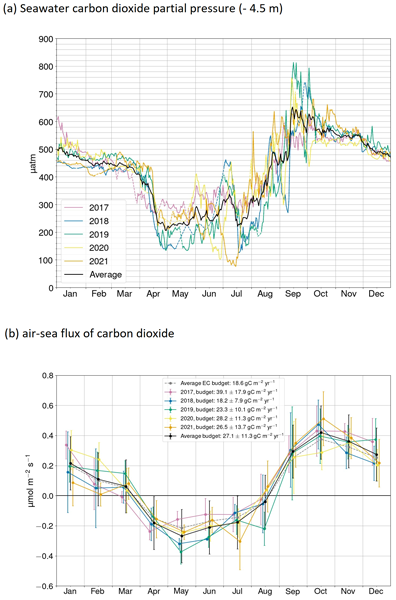
The exchange of CO2 between the sea and the atmosphere was studied in the Archipelago Sea, Baltic Sea, in 2017–2021, using an eddy covariance technique. The sea acted as a net source of CO2 with an average yearly emission of 27.1 gC m-2 yr-1, indicating that the marine ecosystem respired carbon that originated elsewhere. The yearly CO2 emission varied between 18.2–39.2 gC m-2 yr-1, mostly due to the yearly variation of ecosystem carbon uptake.
Gabriela Sophia, Silvia Caldararu, Benjamin David Stocker, and Sönke Zaehle
Biogeosciences, 21, 4169–4193, https://doi.org/10.5194/bg-21-4169-2024, https://doi.org/10.5194/bg-21-4169-2024, 2024
Short summary
Short summary
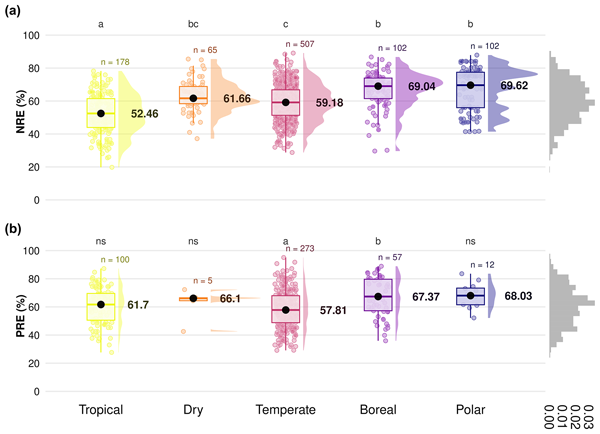
Through an extensive global dataset of leaf nutrient resorption and a multifactorial analysis, we show that the majority of spatial variation in nutrient resorption may be driven by leaf habit and type, with thicker, longer-lived leaves having lower resorption efficiencies. Climate, soil fertility and soil-related factors emerge as strong drivers with an additional effect on its role. These results are essential for comprehending plant nutrient status, plant productivity and nutrient cycling.

Guohua Liu, Mirco Migliavacca, Christian Reimers, Basil Kraft, Markus Reichstein, Andrew D. Richardson, Lisa Wingate, Nicolas Delpierre, Hui Yang, and Alexander J. Winkler
Geosci. Model Dev., 17, 6683–6701, https://doi.org/10.5194/gmd-17-6683-2024, https://doi.org/10.5194/gmd-17-6683-2024, 2024
Short summary
Short summary
Our study employs long short-term memory (LSTM) networks to model canopy greenness and phenology, integrating meteorological memory effects. The LSTM model outperforms traditional methods, enhancing accuracy in predicting greenness dynamics and phenological transitions across plant functional types. Highlighting the importance of multi-variate meteorological memory effects, our research pioneers unlock the secrets of vegetation phenology responses to climate change with deep learning techniques.
Bethan L. Harris, Tristan Quaife, Christopher M. Taylor, and Phil P. Harris
Earth Syst. Dynam., 15, 1019–1035, https://doi.org/10.5194/esd-15-1019-2024, https://doi.org/10.5194/esd-15-1019-2024, 2024
Short summary
Short summary
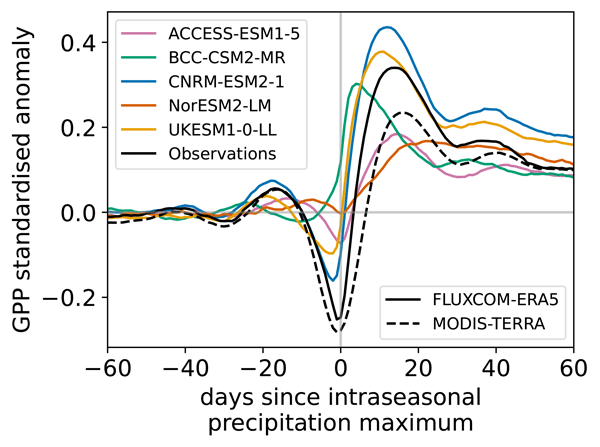
The response of vegetation productivity to rainfall is a crucial process linking the water and carbon cycles and influencing the evolution of the climate system. However, there are many uncertainties in its representation in Earth system models. We show that the vegetation productivity responses to short-term rainfall events are very different between models due to their differing sensitivities to water availability. We also evaluate the models against a range of observational products.
Dieu Anh Tran, Christoph Gerbig, Christian Rödenbeck, and Sönke Zaehle
Atmos. Chem. Phys., 24, 8413–8440, https://doi.org/10.5194/acp-24-8413-2024, https://doi.org/10.5194/acp-24-8413-2024, 2024
Short summary
Short summary
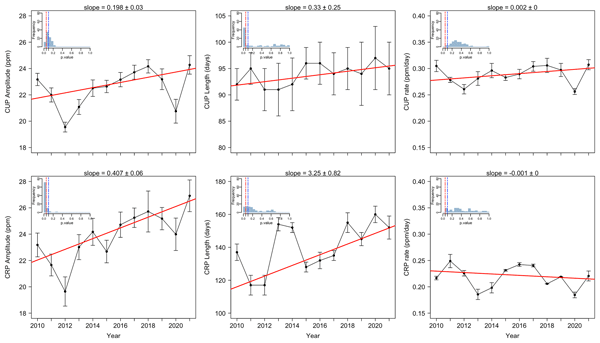
The analysis of the atmospheric CO2 record from the Zotino Tall Tower Observatory (ZOTTO) in central Siberia shows significant increases in the length and amplitude of the CO2 uptake and release in the 2010–2021 period. The trend shows a stronger increase in carbon release amplitude compared to the uptake, suggesting that, despite enhanced growing season uptake, during this period climate warming did not elevate the annual net CO2 uptake as cold-season respirations also responded to the warming.

Hanqin Tian, Naiqing Pan, Rona L. Thompson, Josep G. Canadell, Parvadha Suntharalingam, Pierre Regnier, Eric A. Davidson, Michael Prather, Philippe Ciais, Marilena Muntean, Shufen Pan, Wilfried Winiwarter, Sönke Zaehle, Feng Zhou, Robert B. Jackson, Hermann W. Bange, Sarah Berthet, Zihao Bian, Daniele Bianchi, Alexander F. Bouwman, Erik T. Buitenhuis, Geoffrey Dutton, Minpeng Hu, Akihiko Ito, Atul K. Jain, Aurich Jeltsch-Thömmes, Fortunat Joos, Sian Kou-Giesbrecht, Paul B. Krummel, Xin Lan, Angela Landolfi, Ronny Lauerwald, Ya Li, Chaoqun Lu, Taylor Maavara, Manfredi Manizza, Dylan B. Millet, Jens Mühle, Prabir K. Patra, Glen P. Peters, Xiaoyu Qin, Peter Raymond, Laure Resplandy, Judith A. Rosentreter, Hao Shi, Qing Sun, Daniele Tonina, Francesco N. Tubiello, Guido R. van der Werf, Nicolas Vuichard, Junjie Wang, Kelley C. Wells, Luke M. Western, Chris Wilson, Jia Yang, Yuanzhi Yao, Yongfa You, and Qing Zhu
Earth Syst. Sci. Data, 16, 2543–2604, https://doi.org/10.5194/essd-16-2543-2024, https://doi.org/10.5194/essd-16-2543-2024, 2024
Short summary
Short summary
Atmospheric concentrations of nitrous oxide (N2O), a greenhouse gas 273 times more potent than carbon dioxide, have increased by 25 % since the preindustrial period, with the highest observed growth rate in 2020 and 2021. This rapid growth rate has primarily been due to a 40 % increase in anthropogenic emissions since 1980. Observed atmospheric N2O concentrations in recent years have exceeded the worst-case climate scenario, underscoring the importance of reducing anthropogenic N2O emissions.
Russell Doughty, Yujie Wang, Jennifer Johnson, Nicholas Parazoo, Troy Magney, Zoe Pierrat, Xiangming Xiao, Luis Guanter, Philipp Köhler, Christian Frankenberg, Peter Somkuti, Shuang Ma, Yuanwei Qin, Sean Crowell, and Berrien Moore III
EGUsphere, https://doi.org/10.22541/essoar.168167172.20799710/v1, https://doi.org/10.22541/essoar.168167172.20799710/v1, 2024
Preprint archived
Short summary
Short summary
Here we present a novel model of global photosynthesis, ChloFluo, which uses spaceborne chlorophyll fluorescence to estimate the amount of photosynthetically active radiation absorbed by chlorophyll. Potential uses of our model are to advance our understanding of the timing and magnitude of photosynthesis, its effect on atmospheric carbon dioxide fluxes, and vegetation response to climate events and change.
Sinikka J. Paulus, Rene Orth, Sung-Ching Lee, Anke Hildebrandt, Martin Jung, Jacob A. Nelson, Tarek Sebastian El-Madany, Arnaud Carrara, Gerardo Moreno, Matthias Mauder, Jannis Groh, Alexander Graf, Markus Reichstein, and Mirco Migliavacca
Biogeosciences, 21, 2051–2085, https://doi.org/10.5194/bg-21-2051-2024, https://doi.org/10.5194/bg-21-2051-2024, 2024
Short summary
Short summary
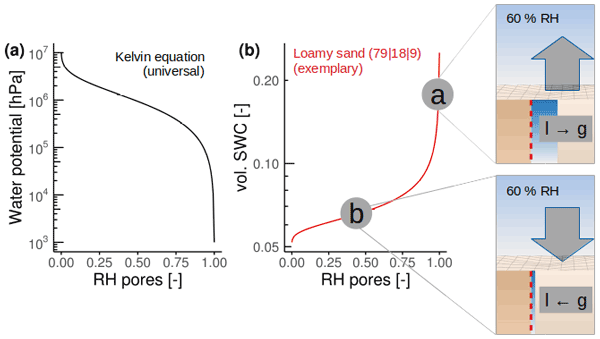
Porous materials are known to reversibly trap water from the air, even at low humidity. However, this behavior is poorly understood for soils. In this analysis, we test whether eddy covariance is able to measure the so-called adsorption of atmospheric water vapor by soils. We find that this flux occurs frequently during dry nights in a Mediterranean ecosystem, while EC detects downwardly directed vapor fluxes. These results can help to map moisture uptake globally.
Santo Fedele Colosimo, Nathaniel Brockway, Vijay Natraj, Robert Spurr, Klaus Pfeilsticker, Lisa Scalone, Max Spolaor, Sarah Woods, and Jochen Stutz
Atmos. Meas. Tech., 17, 2367–2385, https://doi.org/10.5194/amt-17-2367-2024, https://doi.org/10.5194/amt-17-2367-2024, 2024
Short summary
Short summary
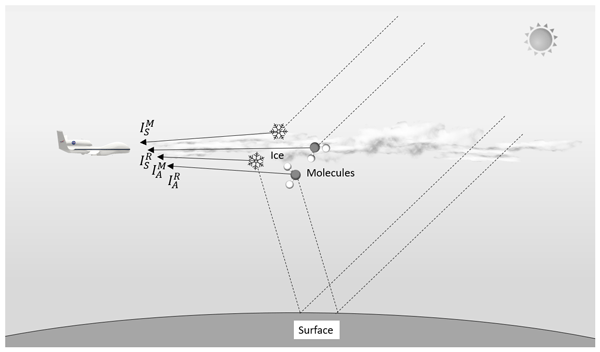
Cirrus clouds are poorly understood components of the climate system, in part due to the challenge of observing thin, sub-visible ice clouds. We address this issue with a new observational approach that uses the remote sensing of near-infrared ice water absorption features from a high-altitude aircraft. We describe the underlying principle of this approach and present a new procedure to retrieve ice concentration in cirrus clouds. Our retrievals compare well with in situ observations.
Helena Rautakoski, Mika Korkiakoski, Jarmo Mäkelä, Markku Koskinen, Kari Minkkinen, Mika Aurela, Paavo Ojanen, and Annalea Lohila
Biogeosciences, 21, 1867–1886, https://doi.org/10.5194/bg-21-1867-2024, https://doi.org/10.5194/bg-21-1867-2024, 2024
Short summary
Short summary
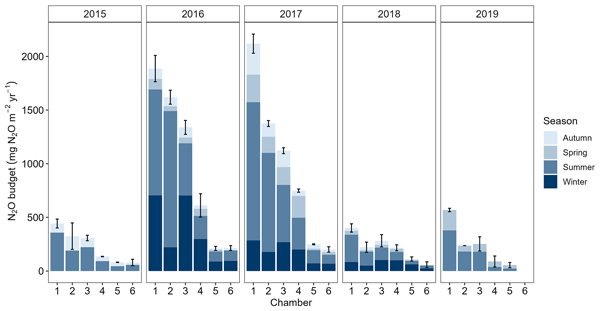
Current and future nitrous oxide (N2O) emissions are difficult to estimate due to their high variability in space and time. Several years of N2O fluxes from drained boreal peatland forest indicate high importance of summer precipitation, winter temperature, and snow conditions in controlling annual N2O emissions. The results indicate increasing year-to-year variation in N2O emissions in changing climate with more extreme seasonal weather conditions.
Martin Jung, Jacob Nelson, Mirco Migliavacca, Tarek El-Madany, Dario Papale, Markus Reichstein, Sophia Walther, and Thomas Wutzler
Biogeosciences, 21, 1827–1846, https://doi.org/10.5194/bg-21-1827-2024, https://doi.org/10.5194/bg-21-1827-2024, 2024
Short summary
Short summary
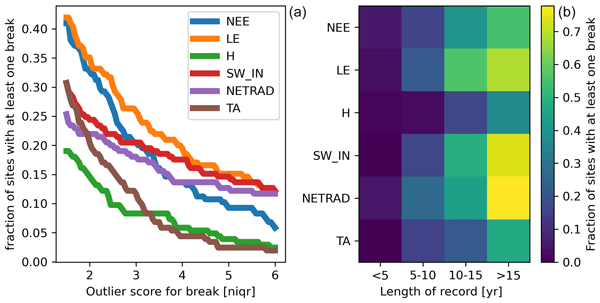
We present a methodology to detect inconsistencies in perhaps the most important data source for measurements of ecosystem–atmosphere carbon, water, and energy fluxes. We expect that the derived consistency flags will be relevant for data users and will help in improving our understanding of and our ability to model ecosystem–climate interactions.
Ke Liu, Yujie Wang, Troy S. Magney, and Christian Frankenberg
Biogeosciences, 21, 1501–1516, https://doi.org/10.5194/bg-21-1501-2024, https://doi.org/10.5194/bg-21-1501-2024, 2024
Short summary
Short summary
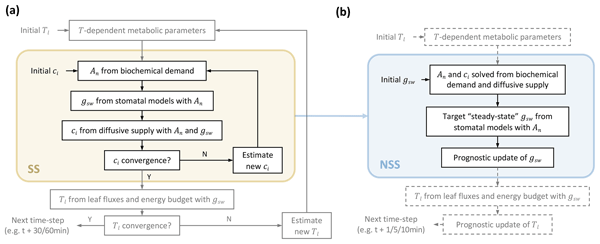
Stomata are pores on leaves that regulate gas exchange between plants and the atmosphere. Existing land models unrealistically assume stomata can jump between steady states when the environment changes. We implemented dynamic modeling to predict gradual stomatal responses at different scales. Results suggested that considering this effect on plant behavior patterns in diurnal cycles was important. Our framework also simplified simulations and can contribute to further efficiency improvements.
Melanie A. Thurner, Silvia Caldararu, Jan Engel, Anja Rammig, and Sönke Zaehle
Biogeosciences, 21, 1391–1410, https://doi.org/10.5194/bg-21-1391-2024, https://doi.org/10.5194/bg-21-1391-2024, 2024
Short summary
Short summary
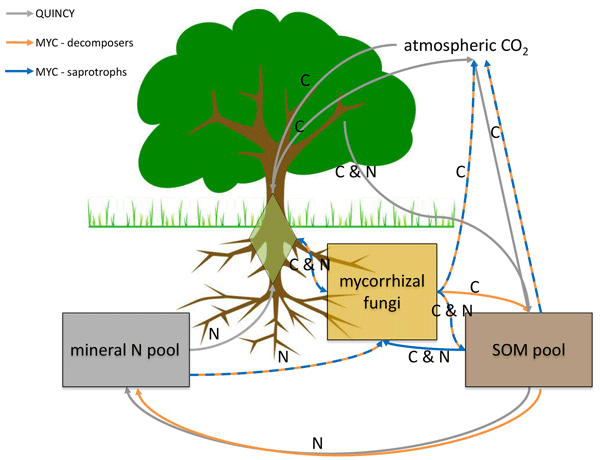
Due to their crucial role in terrestrial ecosystems, we implemented mycorrhizal fungi into the QUINCY terrestrial biosphere model. Fungi interact with mineral and organic soil to support plant N uptake and, thus, plant growth. Our results suggest that the effect of mycorrhizal interactions on simulated ecosystem dynamics is minor under constant environmental conditions but necessary to reproduce and understand observed patterns under changing conditions, such as rising atmospheric CO2.
Jalisha Theanutti Kallingal, Marko Scholze, Paul Anthony Miller, Johan Lindström, Janne Rinne, Mika Aurela, Patrik Vestin, and Per Weslien
EGUsphere, https://doi.org/10.5194/egusphere-2024-373, https://doi.org/10.5194/egusphere-2024-373, 2024
Preprint archived
Short summary
Short summary
Our study employs an Adaptive MCMC algorithm (GRaB-AM) to constrain process parameters in the wetlands emission module of the LPJ-GUESS model, using CH4 EC flux observations from 14 diverse wetlands. We aim to derive a single set of parameters capable of representing the diversity of northern wetlands. By reducing uncertainties in model parameters and improving simulation accuracy, our research contributes to more reliable projections of future wetland CH4 emissions and their climate impact.
Jari-Pekka Nousu, Matthieu Lafaysse, Giulia Mazzotti, Pertti Ala-aho, Hannu Marttila, Bertrand Cluzet, Mika Aurela, Annalea Lohila, Pasi Kolari, Aaron Boone, Mathieu Fructus, and Samuli Launiainen
The Cryosphere, 18, 231–263, https://doi.org/10.5194/tc-18-231-2024, https://doi.org/10.5194/tc-18-231-2024, 2024
Short summary
Short summary
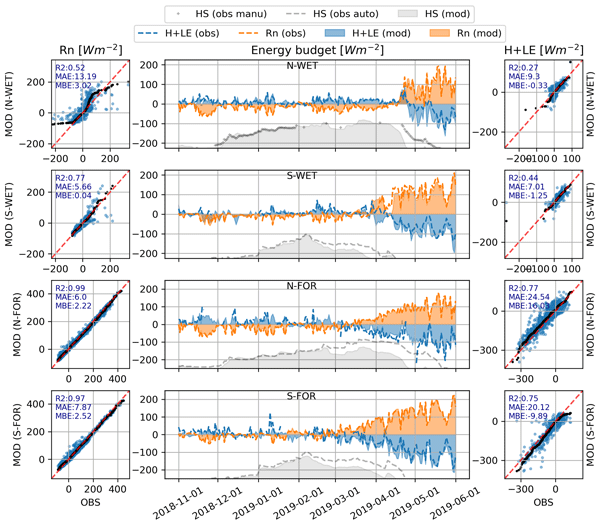
The snowpack has a major impact on the land surface energy budget. Accurate simulation of the snowpack energy budget is difficult, and studies that evaluate models against energy budget observations are rare. We compared predictions from well-known models with observations of energy budgets, snow depths and soil temperatures in Finland. Our study identified contrasting strengths and limitations for the models. These results can be used for choosing the right models depending on the use cases.
Meeta Cesler-Maloney, William Simpson, Jonas Kuhn, Jochen Stutz, Jennie Thomas, Tjarda Roberts, Deanna Huff, and Sol Cooperdock
EGUsphere, https://doi.org/10.5194/egusphere-2023-3082, https://doi.org/10.5194/egusphere-2023-3082, 2024
Preprint archived
Short summary
Short summary
We used a one-dimensional model to simulate how pollution in Fairbanks, Alaska, accumulates in shallow layers near the ground when temperature inversions are present. We find pollution accumulates in a 20 m to 50 m thick layer. The model agrees with observations of SO2 pollution using only home heating emissions sources, which shows that ground-based sources dominate sulfur pollution in downtown Fairbanks. Air residence times in downtown are only a few hours, limiting chemical transformations.
Christian Rödenbeck, Karina E. Adcock, Markus Eritt, Maksym Gachkivskyi, Christoph Gerbig, Samuel Hammer, Armin Jordan, Ralph F. Keeling, Ingeborg Levin, Fabian Maier, Andrew C. Manning, Heiko Moossen, Saqr Munassar, Penelope A. Pickers, Michael Rothe, Yasunori Tohjima, and Sönke Zaehle
Atmos. Chem. Phys., 23, 15767–15782, https://doi.org/10.5194/acp-23-15767-2023, https://doi.org/10.5194/acp-23-15767-2023, 2023
Short summary
Short summary
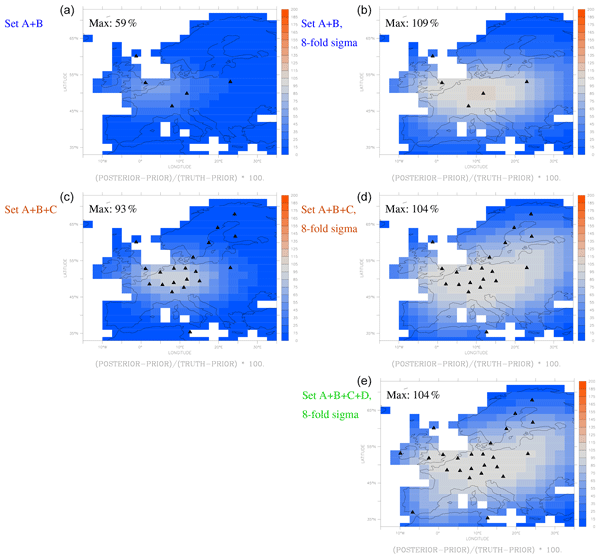
The carbon dioxide content of the Earth atmosphere is increasing due to human emissions from burning of fossil fuels, causing global climate change. The strength of the fossil-fuel emissions is estimated by inventories based on energy data, but independent validation of these inventories has been recommended by the Intergovernmental Panel on Climate Change. Here we investigate the potential to validate inventories based on measurements of small changes in the atmospheric oxygen content.
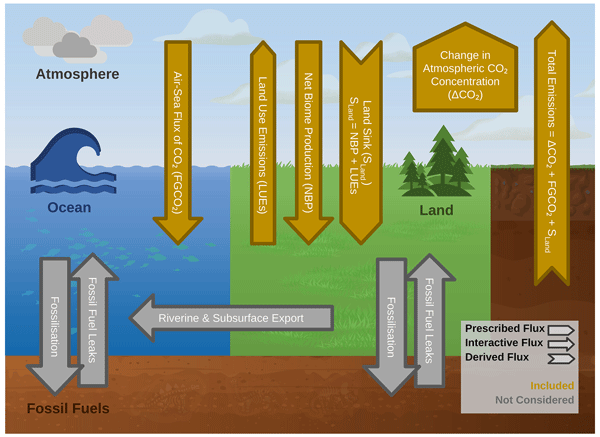
Lee de Mora, Ranjini Swaminathan, Richard P. Allan, Jerry C. Blackford, Douglas I. Kelley, Phil Harris, Chris D. Jones, Colin G. Jones, Spencer Liddicoat, Robert J. Parker, Tristan Quaife, Jeremy Walton, and Andrew Yool
Earth Syst. Dynam., 14, 1295–1315, https://doi.org/10.5194/esd-14-1295-2023, https://doi.org/10.5194/esd-14-1295-2023, 2023
Short summary
Short summary
We investigate the flux of carbon from the atmosphere into the land surface and ocean for multiple models and over a range of future scenarios. We did this by comparing simulations after the same change in the global-mean near-surface temperature. Using this method, we show that the choice of scenario can impact the carbon allocation to the land, ocean, and atmosphere. Scenarios with higher emissions reach the same warming levels sooner, but also with relatively more carbon in the atmosphere.
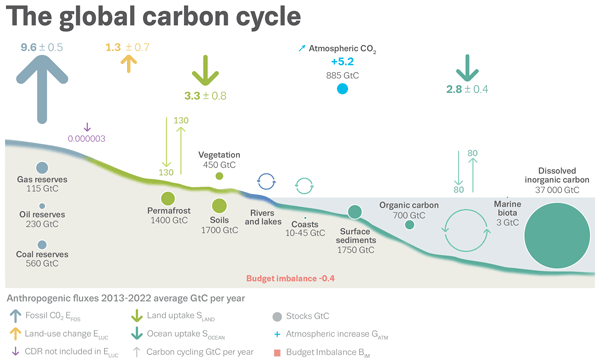
Pierre Friedlingstein, Michael O'Sullivan, Matthew W. Jones, Robbie M. Andrew, Dorothee C. E. Bakker, Judith Hauck, Peter Landschützer, Corinne Le Quéré, Ingrid T. Luijkx, Glen P. Peters, Wouter Peters, Julia Pongratz, Clemens Schwingshackl, Stephen Sitch, Josep G. Canadell, Philippe Ciais, Robert B. Jackson, Simone R. Alin, Peter Anthoni, Leticia Barbero, Nicholas R. Bates, Meike Becker, Nicolas Bellouin, Bertrand Decharme, Laurent Bopp, Ida Bagus Mandhara Brasika, Patricia Cadule, Matthew A. Chamberlain, Naveen Chandra, Thi-Tuyet-Trang Chau, Frédéric Chevallier, Louise P. Chini, Margot Cronin, Xinyu Dou, Kazutaka Enyo, Wiley Evans, Stefanie Falk, Richard A. Feely, Liang Feng, Daniel J. Ford, Thomas Gasser, Josefine Ghattas, Thanos Gkritzalis, Giacomo Grassi, Luke Gregor, Nicolas Gruber, Özgür Gürses, Ian Harris, Matthew Hefner, Jens Heinke, Richard A. Houghton, George C. Hurtt, Yosuke Iida, Tatiana Ilyina, Andrew R. Jacobson, Atul Jain, Tereza Jarníková, Annika Jersild, Fei Jiang, Zhe Jin, Fortunat Joos, Etsushi Kato, Ralph F. Keeling, Daniel Kennedy, Kees Klein Goldewijk, Jürgen Knauer, Jan Ivar Korsbakken, Arne Körtzinger, Xin Lan, Nathalie Lefèvre, Hongmei Li, Junjie Liu, Zhiqiang Liu, Lei Ma, Greg Marland, Nicolas Mayot, Patrick C. McGuire, Galen A. McKinley, Gesa Meyer, Eric J. Morgan, David R. Munro, Shin-Ichiro Nakaoka, Yosuke Niwa, Kevin M. O'Brien, Are Olsen, Abdirahman M. Omar, Tsuneo Ono, Melf Paulsen, Denis Pierrot, Katie Pocock, Benjamin Poulter, Carter M. Powis, Gregor Rehder, Laure Resplandy, Eddy Robertson, Christian Rödenbeck, Thais M. Rosan, Jörg Schwinger, Roland Séférian, T. Luke Smallman, Stephen M. Smith, Reinel Sospedra-Alfonso, Qing Sun, Adrienne J. Sutton, Colm Sweeney, Shintaro Takao, Pieter P. Tans, Hanqin Tian, Bronte Tilbrook, Hiroyuki Tsujino, Francesco Tubiello, Guido R. van der Werf, Erik van Ooijen, Rik Wanninkhof, Michio Watanabe, Cathy Wimart-Rousseau, Dongxu Yang, Xiaojuan Yang, Wenping Yuan, Xu Yue, Sönke Zaehle, Jiye Zeng, and Bo Zheng
Earth Syst. Sci. Data, 15, 5301–5369, https://doi.org/10.5194/essd-15-5301-2023, https://doi.org/10.5194/essd-15-5301-2023, 2023
Short summary
Short summary
The Global Carbon Budget 2023 describes the methodology, main results, and data sets used to quantify the anthropogenic emissions of carbon dioxide (CO2) and their partitioning among the atmosphere, land ecosystems, and the ocean over the historical period (1750–2023). These living datasets are updated every year to provide the highest transparency and traceability in the reporting of CO2, the key driver of climate change.
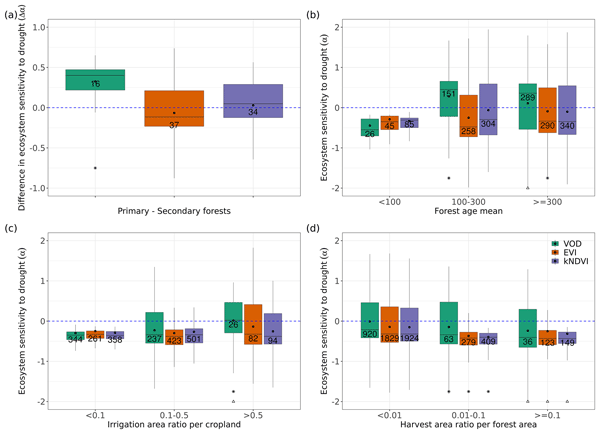
Chenwei Xiao, Sönke Zaehle, Hui Yang, Jean-Pierre Wigneron, Christiane Schmullius, and Ana Bastos
Earth Syst. Dynam., 14, 1211–1237, https://doi.org/10.5194/esd-14-1211-2023, https://doi.org/10.5194/esd-14-1211-2023, 2023
Short summary
Short summary
Ecosystem resistance reflects their susceptibility during adverse conditions and can be changed by land management. We estimate ecosystem resistance to drought and temperature globally. We find a higher resistance to drought in forests compared to croplands and an evident loss of resistance to drought when primary forests are converted to secondary forests or they are harvested. Old-growth trees tend to be more resistant in some forests and crops benefit from irrigation during drought periods.
Richard Nair, Yunpeng Luo, Tarek El-Madany, Victor Rolo, Javier Pacheco-Labrador, Silvia Caldararu, Kendalynn A. Morris, Marion Schrumpf, Arnaud Carrara, Gerardo Moreno, Markus Reichstein, and Mirco Migliavacca
EGUsphere, https://doi.org/10.5194/egusphere-2023-2434, https://doi.org/10.5194/egusphere-2023-2434, 2023
Preprint archived
Short summary
Short summary
We studied a Mediterranean ecosystem to understand carbon uptake efficiency and its controls. These ecosystems face potential nitrogen-phosphorus imbalances due to pollution. Analysing six years of carbon data, we assessed controls at different timeframes. This is crucial for predicting such vulnerable regions. Our findings revealed N limitation on C uptake, not N:P imbalance, and strong influence of water availability. whether drought or wetness promoted net C uptake depended on timescale.
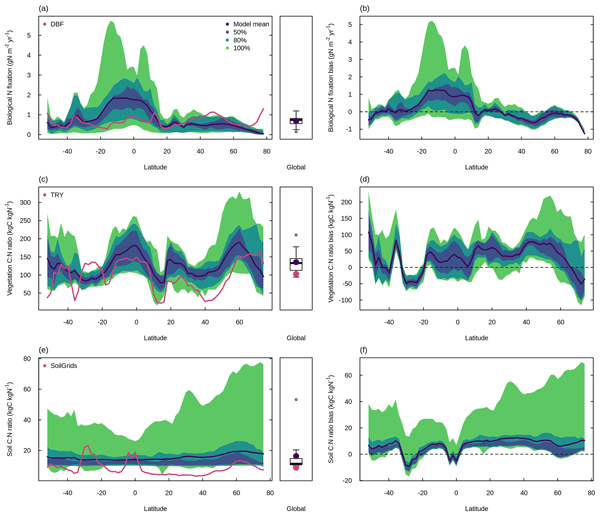
Sian Kou-Giesbrecht, Vivek K. Arora, Christian Seiler, Almut Arneth, Stefanie Falk, Atul K. Jain, Fortunat Joos, Daniel Kennedy, Jürgen Knauer, Stephen Sitch, Michael O'Sullivan, Naiqing Pan, Qing Sun, Hanqin Tian, Nicolas Vuichard, and Sönke Zaehle
Earth Syst. Dynam., 14, 767–795, https://doi.org/10.5194/esd-14-767-2023, https://doi.org/10.5194/esd-14-767-2023, 2023
Short summary
Short summary
Nitrogen (N) is an essential limiting nutrient to terrestrial carbon (C) sequestration. We evaluate N cycling in an ensemble of terrestrial biosphere models. We find that variability in N processes across models is large. Models tended to overestimate C storage per unit N in vegetation and soil, which could have consequences for projecting the future terrestrial C sink. However, N cycling measurements are highly uncertain, and more are necessary to guide the development of N cycling in models.
A. Elia, M. Pickering, M. Girardello, G. Oton, G. Ceccherini, S. Capobianco, M. Piccardo, G. Forzieri, M. Migliavacca, and A. Cescatti
Int. Arch. Photogramm. Remote Sens. Spatial Inf. Sci., XLVIII-4-W7-2023, 41–46, https://doi.org/10.5194/isprs-archives-XLVIII-4-W7-2023-41-2023, https://doi.org/10.5194/isprs-archives-XLVIII-4-W7-2023-41-2023, 2023
Aparnna Ravi, Dhanyalekshmi Pillai, Christoph Gerbig, Stephen Sitch, Sönke Zaehle, Vishnu Thilakan, and Chandra Shekhar Jha
EGUsphere, https://doi.org/10.5194/egusphere-2023-817, https://doi.org/10.5194/egusphere-2023-817, 2023
Preprint archived
Short summary
Short summary
We derive high-resolution terrestrial CO2 fluxes over India from 2012 to 2020. This is achieved by utilizing satellite-based vegetation indices and meteorological data in a data-driven biospheric model. The model simulations are improved by incorporating soil variables and SIF retrievals from satellite instruments and relate them to ecosystem productivity across different biomes. The derived flux products better explain the flux variability compared to other existing model estimates.
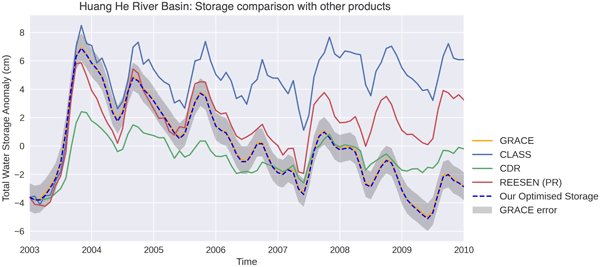
Samantha Petch, Bo Dong, Tristan Quaife, Robert P. King, and Keith Haines
Hydrol. Earth Syst. Sci., 27, 1723–1744, https://doi.org/10.5194/hess-27-1723-2023, https://doi.org/10.5194/hess-27-1723-2023, 2023
Short summary
Short summary
Gravitational measurements of water storage from GRACE (Gravity Recovery and Climate Experiment) can improve understanding of the water budget. We produce flux estimates over large river catchments based on observations that close the monthly water budget and ensure consistency with GRACE on short and long timescales. We use energy data to provide additional constraints and balance the long-term energy budget. These flux estimates are important for evaluating climate models.
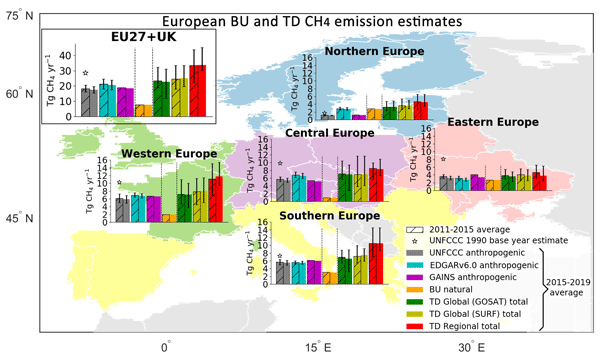
Ana Maria Roxana Petrescu, Chunjing Qiu, Matthew J. McGrath, Philippe Peylin, Glen P. Peters, Philippe Ciais, Rona L. Thompson, Aki Tsuruta, Dominik Brunner, Matthias Kuhnert, Bradley Matthews, Paul I. Palmer, Oksana Tarasova, Pierre Regnier, Ronny Lauerwald, David Bastviken, Lena Höglund-Isaksson, Wilfried Winiwarter, Giuseppe Etiope, Tuula Aalto, Gianpaolo Balsamo, Vladislav Bastrikov, Antoine Berchet, Patrick Brockmann, Giancarlo Ciotoli, Giulia Conchedda, Monica Crippa, Frank Dentener, Christine D. Groot Zwaaftink, Diego Guizzardi, Dirk Günther, Jean-Matthieu Haussaire, Sander Houweling, Greet Janssens-Maenhout, Massaer Kouyate, Adrian Leip, Antti Leppänen, Emanuele Lugato, Manon Maisonnier, Alistair J. Manning, Tiina Markkanen, Joe McNorton, Marilena Muntean, Gabriel D. Oreggioni, Prabir K. Patra, Lucia Perugini, Isabelle Pison, Maarit T. Raivonen, Marielle Saunois, Arjo J. Segers, Pete Smith, Efisio Solazzo, Hanqin Tian, Francesco N. Tubiello, Timo Vesala, Guido R. van der Werf, Chris Wilson, and Sönke Zaehle
Earth Syst. Sci. Data, 15, 1197–1268, https://doi.org/10.5194/essd-15-1197-2023, https://doi.org/10.5194/essd-15-1197-2023, 2023
Short summary
Short summary
This study updates the state-of-the-art scientific overview of CH4 and N2O emissions in the EU27 and UK in Petrescu et al. (2021a). Yearly updates are needed to improve the different respective approaches and to inform on the development of formal verification systems. It integrates the most recent emission inventories, process-based model and regional/global inversions, comparing them with UNFCCC national GHG inventories, in support to policy to facilitate real-time verification procedures.

Lauri Heiskanen, Juha-Pekka Tuovinen, Henriikka Vekuri, Aleksi Räsänen, Tarmo Virtanen, Sari Juutinen, Annalea Lohila, Juha Mikola, and Mika Aurela
Biogeosciences, 20, 545–572, https://doi.org/10.5194/bg-20-545-2023, https://doi.org/10.5194/bg-20-545-2023, 2023
Short summary
Short summary
We measured and modelled the CO2 and CH4 fluxes of the terrestrial and aquatic ecosystems of the subarctic landscape for 2 years. The landscape was an annual CO2 sink and a CH4 source. The forest had the largest contribution to the landscape-level CO2 sink and the peatland to the CH4 emissions. The lakes released 24 % of the annual net C uptake of the landscape back to the atmosphere. The C fluxes were affected most by the rainy peak growing season of 2017 and the drought event in July 2018.
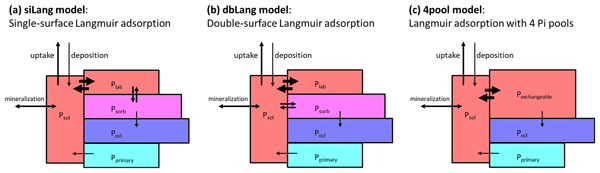
Lin Yu, Silvia Caldararu, Bernhard Ahrens, Thomas Wutzler, Marion Schrumpf, Julian Helfenstein, Chiara Pistocchi, and Sönke Zaehle
Biogeosciences, 20, 57–73, https://doi.org/10.5194/bg-20-57-2023, https://doi.org/10.5194/bg-20-57-2023, 2023
Short summary
Short summary
In this study, we addressed a key weakness in current ecosystem models regarding the phosphorus exchange in the soil and developed a new scheme to describe this process. We showed that the new scheme improved the model performance for plant productivity, soil organic carbon, and soil phosphorus content at five beech forest sites in Germany. We claim that this new model could be used as a better tool to study ecosystems under future climate change, particularly phosphorus-limited systems.
Yao Gao, Eleanor J. Burke, Sarah E. Chadburn, Maarit Raivonen, Mika Aurela, Lawrence B. Flanagan, Krzysztof Fortuniak, Elyn Humphreys, Annalea Lohila, Tingting Li, Tiina Markkanen, Olli Nevalainen, Mats B. Nilsson, Włodzimierz Pawlak, Aki Tsuruta, Huiyi Yang, and Tuula Aalto
Biogeosciences Discuss., https://doi.org/10.5194/bg-2022-229, https://doi.org/10.5194/bg-2022-229, 2022
Manuscript not accepted for further review
Short summary
Short summary
We coupled a process-based peatland CH4 emission model HIMMELI with a state-of-art land surface model JULES. The performance of the coupled model was evaluated at six northern wetland sites. The coupled model is considered to be more appropriate in simulating wetland CH4 emission. In order to improve the simulated CH4 emission, the model requires better representation of the peat soil carbon and hydrologic processes in JULES and the methane production and transportation processes in HIMMELI.
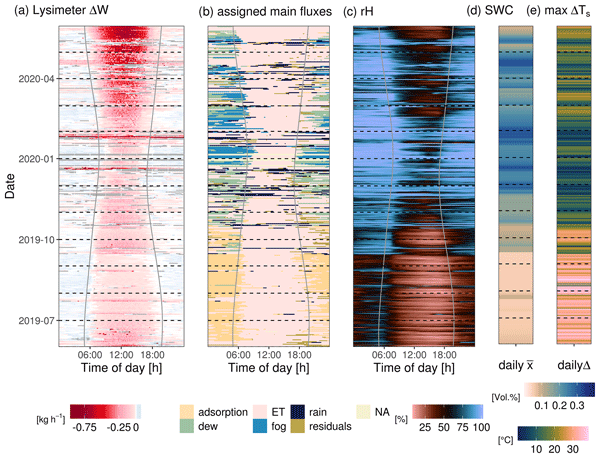
Sinikka Jasmin Paulus, Tarek Sebastian El-Madany, René Orth, Anke Hildebrandt, Thomas Wutzler, Arnaud Carrara, Gerardo Moreno, Oscar Perez-Priego, Olaf Kolle, Markus Reichstein, and Mirco Migliavacca
Hydrol. Earth Syst. Sci., 26, 6263–6287, https://doi.org/10.5194/hess-26-6263-2022, https://doi.org/10.5194/hess-26-6263-2022, 2022
Short summary
Short summary
In this study, we analyze small inputs of water to ecosystems such as fog, dew, and adsorption of vapor. To measure them, we use a scaling system and later test our attribution of different water fluxes to weight changes. We found that they occur frequently during 1 year in a dry summer ecosystem. In each season, a different flux seems dominant, but they all mainly occur during the night. Therefore, they could be important for the biosphere because rain is unevenly distributed over the year.

Thomas Wutzler, Lin Yu, Marion Schrumpf, and Sönke Zaehle
Geosci. Model Dev., 15, 8377–8393, https://doi.org/10.5194/gmd-15-8377-2022, https://doi.org/10.5194/gmd-15-8377-2022, 2022
Short summary
Short summary
Soil microbes process soil organic matter and affect carbon storage and plant nutrition at the ecosystem scale. We hypothesized that decadal dynamics is constrained by the ratios of elements in litter inputs, microbes, and matter and that microbial community optimizes growth. This allowed the SESAM model to descibe decadal-term carbon sequestration in soils and other biogeochemical processes explicitly accounting for microbial processes but without its problematic fine-scale parameterization.
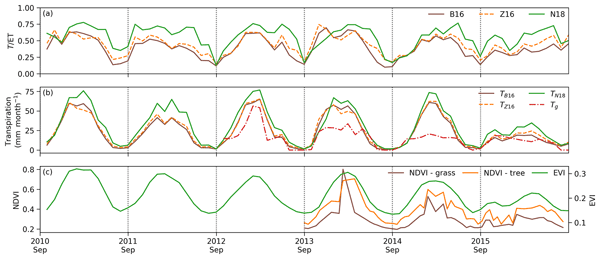
Matti Räsänen, Mika Aurela, Ville Vakkari, Johan P. Beukes, Juha-Pekka Tuovinen, Pieter G. Van Zyl, Miroslav Josipovic, Stefan J. Siebert, Tuomas Laurila, Markku Kulmala, Lauri Laakso, Janne Rinne, Ram Oren, and Gabriel Katul
Hydrol. Earth Syst. Sci., 26, 5773–5791, https://doi.org/10.5194/hess-26-5773-2022, https://doi.org/10.5194/hess-26-5773-2022, 2022
Short summary
Short summary
The productivity of semiarid grazed grasslands is linked to the variation in rainfall and transpiration. By combining carbon dioxide and water flux measurements, we show that the annual transpiration is nearly constant during wet years while grasses react quickly to dry spells and drought, which reduce transpiration. The planning of annual grazing strategies could consider the early-season rainfall frequency that was linked to the portion of annual transpiration.
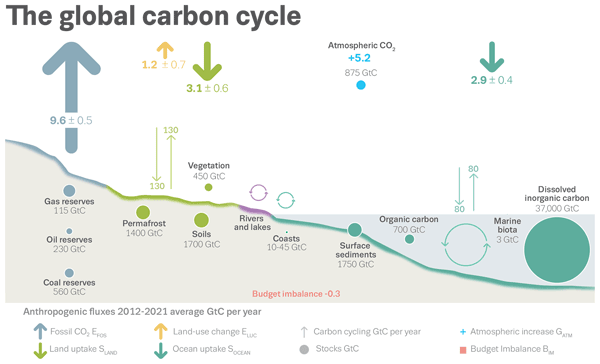
Pierre Friedlingstein, Michael O'Sullivan, Matthew W. Jones, Robbie M. Andrew, Luke Gregor, Judith Hauck, Corinne Le Quéré, Ingrid T. Luijkx, Are Olsen, Glen P. Peters, Wouter Peters, Julia Pongratz, Clemens Schwingshackl, Stephen Sitch, Josep G. Canadell, Philippe Ciais, Robert B. Jackson, Simone R. Alin, Ramdane Alkama, Almut Arneth, Vivek K. Arora, Nicholas R. Bates, Meike Becker, Nicolas Bellouin, Henry C. Bittig, Laurent Bopp, Frédéric Chevallier, Louise P. Chini, Margot Cronin, Wiley Evans, Stefanie Falk, Richard A. Feely, Thomas Gasser, Marion Gehlen, Thanos Gkritzalis, Lucas Gloege, Giacomo Grassi, Nicolas Gruber, Özgür Gürses, Ian Harris, Matthew Hefner, Richard A. Houghton, George C. Hurtt, Yosuke Iida, Tatiana Ilyina, Atul K. Jain, Annika Jersild, Koji Kadono, Etsushi Kato, Daniel Kennedy, Kees Klein Goldewijk, Jürgen Knauer, Jan Ivar Korsbakken, Peter Landschützer, Nathalie Lefèvre, Keith Lindsay, Junjie Liu, Zhu Liu, Gregg Marland, Nicolas Mayot, Matthew J. McGrath, Nicolas Metzl, Natalie M. Monacci, David R. Munro, Shin-Ichiro Nakaoka, Yosuke Niwa, Kevin O'Brien, Tsuneo Ono, Paul I. Palmer, Naiqing Pan, Denis Pierrot, Katie Pocock, Benjamin Poulter, Laure Resplandy, Eddy Robertson, Christian Rödenbeck, Carmen Rodriguez, Thais M. Rosan, Jörg Schwinger, Roland Séférian, Jamie D. Shutler, Ingunn Skjelvan, Tobias Steinhoff, Qing Sun, Adrienne J. Sutton, Colm Sweeney, Shintaro Takao, Toste Tanhua, Pieter P. Tans, Xiangjun Tian, Hanqin Tian, Bronte Tilbrook, Hiroyuki Tsujino, Francesco Tubiello, Guido R. van der Werf, Anthony P. Walker, Rik Wanninkhof, Chris Whitehead, Anna Willstrand Wranne, Rebecca Wright, Wenping Yuan, Chao Yue, Xu Yue, Sönke Zaehle, Jiye Zeng, and Bo Zheng
Earth Syst. Sci. Data, 14, 4811–4900, https://doi.org/10.5194/essd-14-4811-2022, https://doi.org/10.5194/essd-14-4811-2022, 2022
Short summary
Short summary
The Global Carbon Budget 2022 describes the datasets and methodology used to quantify the anthropogenic emissions of carbon dioxide (CO2) and their partitioning among the atmosphere, the land ecosystems, and the ocean. These living datasets are updated every year to provide the highest transparency and traceability in the reporting of CO2, the key driver of climate change.
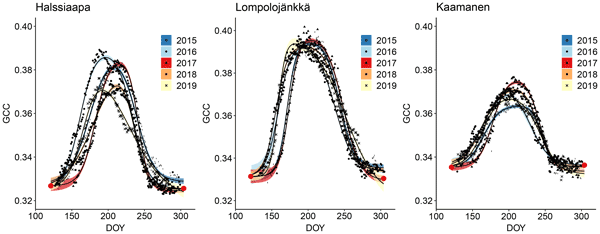
Maiju Linkosalmi, Juha-Pekka Tuovinen, Olli Nevalainen, Mikko Peltoniemi, Cemal M. Taniş, Ali N. Arslan, Juuso Rainne, Annalea Lohila, Tuomas Laurila, and Mika Aurela
Biogeosciences, 19, 4747–4765, https://doi.org/10.5194/bg-19-4747-2022, https://doi.org/10.5194/bg-19-4747-2022, 2022
Short summary
Short summary
Vegetation greenness was monitored with digital cameras in three northern peatlands during five growing seasons. The greenness index derived from the images was highest at the most nutrient-rich site. Greenness indicated the main phases of phenology and correlated with CO2 uptake, though this was mainly related to the common seasonal cycle. The cameras and Sentinel-2 satellite showed consistent results, but more frequent satellite data are needed for reliable detection of phenological phases.
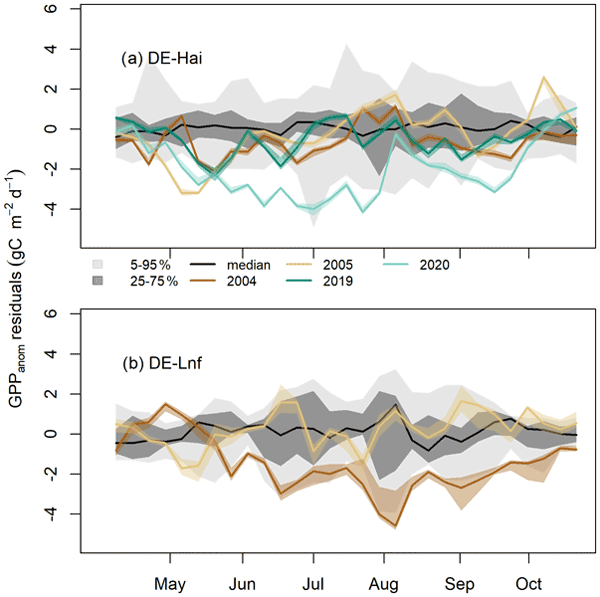
Xin Yu, René Orth, Markus Reichstein, Michael Bahn, Anne Klosterhalfen, Alexander Knohl, Franziska Koebsch, Mirco Migliavacca, Martina Mund, Jacob A. Nelson, Benjamin D. Stocker, Sophia Walther, and Ana Bastos
Biogeosciences, 19, 4315–4329, https://doi.org/10.5194/bg-19-4315-2022, https://doi.org/10.5194/bg-19-4315-2022, 2022
Short summary
Short summary
Identifying drought legacy effects is challenging because they are superimposed on variability driven by climate conditions in the recovery period. We develop a residual-based approach to quantify legacies on gross primary productivity (GPP) from eddy covariance data. The GPP reduction due to legacy effects is comparable to the concurrent effects at two sites in Germany, which reveals the importance of legacy effects. Our novel methodology can be used to quantify drought legacies elsewhere.
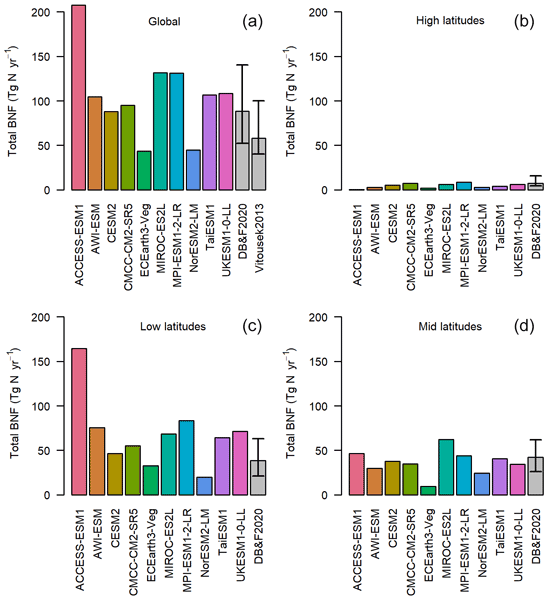
Taraka Davies-Barnard, Sönke Zaehle, and Pierre Friedlingstein
Biogeosciences, 19, 3491–3503, https://doi.org/10.5194/bg-19-3491-2022, https://doi.org/10.5194/bg-19-3491-2022, 2022
Short summary
Short summary
Biological nitrogen fixation is the largest natural input of new nitrogen onto land. Earth system models mainly represent global total terrestrial biological nitrogen fixation within observational uncertainties but overestimate tropical fixation. The model range of increase in biological nitrogen fixation in the SSP3-7.0 scenario is 3 % to 87 %. While biological nitrogen fixation is a key source of new nitrogen, its predictive power for net primary productivity in models is limited.

Sari Juutinen, Mika Aurela, Juha-Pekka Tuovinen, Viktor Ivakhov, Maiju Linkosalmi, Aleksi Räsänen, Tarmo Virtanen, Juha Mikola, Johanna Nyman, Emmi Vähä, Marina Loskutova, Alexander Makshtas, and Tuomas Laurila
Biogeosciences, 19, 3151–3167, https://doi.org/10.5194/bg-19-3151-2022, https://doi.org/10.5194/bg-19-3151-2022, 2022
Short summary
Short summary
We measured CO2 and CH4 fluxes in heterogenous Arctic tundra in eastern Siberia. We found that tundra wetlands with sedge and grass vegetation contributed disproportionately to the landscape's ecosystem CO2 uptake and CH4 emissions to the atmosphere. Moreover, we observed high CH4 consumption in dry tundra, particularly in barren areas, offsetting part of the CH4 emissions from the wetlands.
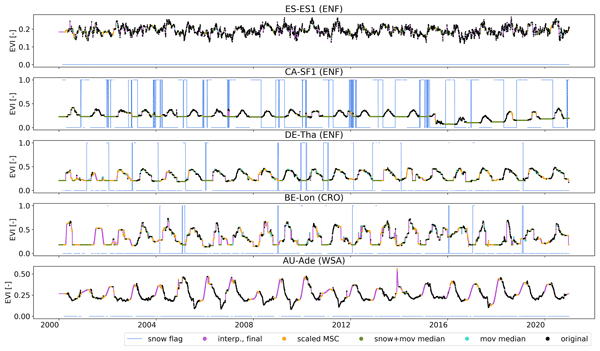
Sophia Walther, Simon Besnard, Jacob Allen Nelson, Tarek Sebastian El-Madany, Mirco Migliavacca, Ulrich Weber, Nuno Carvalhais, Sofia Lorena Ermida, Christian Brümmer, Frederik Schrader, Anatoly Stanislavovich Prokushkin, Alexey Vasilevich Panov, and Martin Jung
Biogeosciences, 19, 2805–2840, https://doi.org/10.5194/bg-19-2805-2022, https://doi.org/10.5194/bg-19-2805-2022, 2022
Short summary
Short summary
Satellite observations help interpret station measurements of local carbon, water, and energy exchange between the land surface and the atmosphere and are indispensable for simulations of the same in land surface models and their evaluation. We propose generalisable and efficient approaches to systematically ensure high quality and to estimate values in data gaps. We apply them to satellite data of surface reflectance and temperature with different resolutions at the stations.
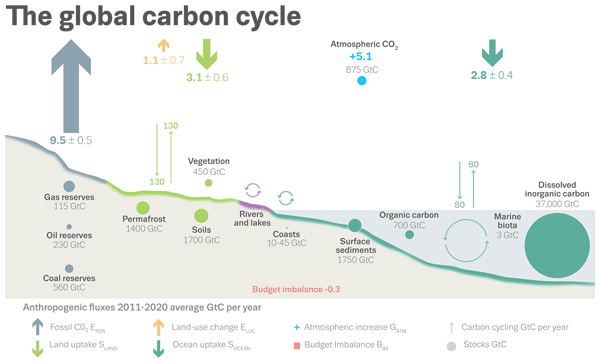
Pierre Friedlingstein, Matthew W. Jones, Michael O'Sullivan, Robbie M. Andrew, Dorothee C. E. Bakker, Judith Hauck, Corinne Le Quéré, Glen P. Peters, Wouter Peters, Julia Pongratz, Stephen Sitch, Josep G. Canadell, Philippe Ciais, Rob B. Jackson, Simone R. Alin, Peter Anthoni, Nicholas R. Bates, Meike Becker, Nicolas Bellouin, Laurent Bopp, Thi Tuyet Trang Chau, Frédéric Chevallier, Louise P. Chini, Margot Cronin, Kim I. Currie, Bertrand Decharme, Laique M. Djeutchouang, Xinyu Dou, Wiley Evans, Richard A. Feely, Liang Feng, Thomas Gasser, Dennis Gilfillan, Thanos Gkritzalis, Giacomo Grassi, Luke Gregor, Nicolas Gruber, Özgür Gürses, Ian Harris, Richard A. Houghton, George C. Hurtt, Yosuke Iida, Tatiana Ilyina, Ingrid T. Luijkx, Atul Jain, Steve D. Jones, Etsushi Kato, Daniel Kennedy, Kees Klein Goldewijk, Jürgen Knauer, Jan Ivar Korsbakken, Arne Körtzinger, Peter Landschützer, Siv K. Lauvset, Nathalie Lefèvre, Sebastian Lienert, Junjie Liu, Gregg Marland, Patrick C. McGuire, Joe R. Melton, David R. Munro, Julia E. M. S. Nabel, Shin-Ichiro Nakaoka, Yosuke Niwa, Tsuneo Ono, Denis Pierrot, Benjamin Poulter, Gregor Rehder, Laure Resplandy, Eddy Robertson, Christian Rödenbeck, Thais M. Rosan, Jörg Schwinger, Clemens Schwingshackl, Roland Séférian, Adrienne J. Sutton, Colm Sweeney, Toste Tanhua, Pieter P. Tans, Hanqin Tian, Bronte Tilbrook, Francesco Tubiello, Guido R. van der Werf, Nicolas Vuichard, Chisato Wada, Rik Wanninkhof, Andrew J. Watson, David Willis, Andrew J. Wiltshire, Wenping Yuan, Chao Yue, Xu Yue, Sönke Zaehle, and Jiye Zeng
Earth Syst. Sci. Data, 14, 1917–2005, https://doi.org/10.5194/essd-14-1917-2022, https://doi.org/10.5194/essd-14-1917-2022, 2022
Short summary
Short summary
The Global Carbon Budget 2021 describes the data sets and methodology used to quantify the emissions of carbon dioxide and their partitioning among the atmosphere, land, and ocean. These living data are updated every year to provide the highest transparency and traceability in the reporting of CO2, the key driver of climate change.
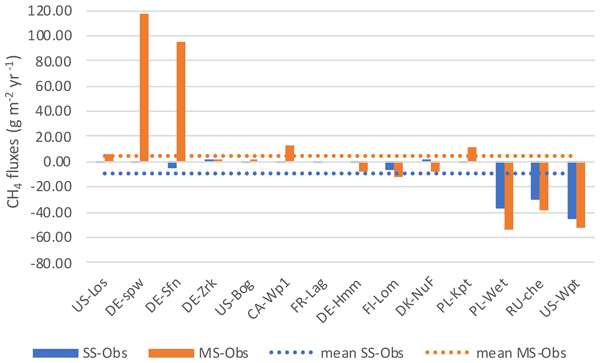
Elodie Salmon, Fabrice Jégou, Bertrand Guenet, Line Jourdain, Chunjing Qiu, Vladislav Bastrikov, Christophe Guimbaud, Dan Zhu, Philippe Ciais, Philippe Peylin, Sébastien Gogo, Fatima Laggoun-Défarge, Mika Aurela, M. Syndonia Bret-Harte, Jiquan Chen, Bogdan H. Chojnicki, Housen Chu, Colin W. Edgar, Eugenie S. Euskirchen, Lawrence B. Flanagan, Krzysztof Fortuniak, David Holl, Janina Klatt, Olaf Kolle, Natalia Kowalska, Lars Kutzbach, Annalea Lohila, Lutz Merbold, Włodzimierz Pawlak, Torsten Sachs, and Klaudia Ziemblińska
Geosci. Model Dev., 15, 2813–2838, https://doi.org/10.5194/gmd-15-2813-2022, https://doi.org/10.5194/gmd-15-2813-2022, 2022
Short summary
Short summary
A methane model that features methane production and transport by plants, the ebullition process and diffusion in soil, oxidation to CO2, and CH4 fluxes to the atmosphere has been embedded in the ORCHIDEE-PEAT land surface model, which includes an explicit representation of northern peatlands. This model, ORCHIDEE-PCH4, was calibrated and evaluated on 14 peatland sites. Results show that the model is sensitive to temperature and substrate availability over the top 75 cm of soil depth.
J. Pacheco-Labrador, U. Weber, X. Ma, M. D. Mahecha, N. Carvalhais, C. Wirth, A. Huth, F. J. Bohn, G. Kraemer, U. Heiden, FunDivEUROPE members, and M. Migliavacca
Int. Arch. Photogramm. Remote Sens. Spatial Inf. Sci., XLVI-1-W1-2021, 49–55, https://doi.org/10.5194/isprs-archives-XLVI-1-W1-2021-49-2022, https://doi.org/10.5194/isprs-archives-XLVI-1-W1-2021-49-2022, 2022
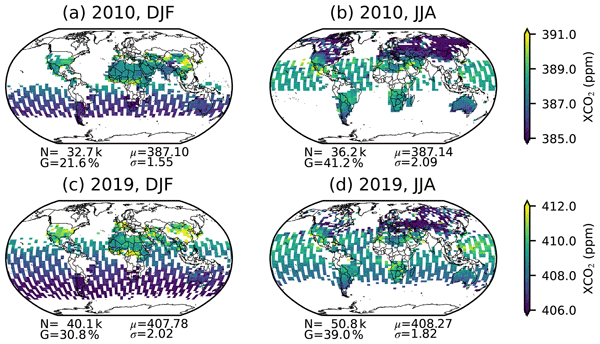
Thomas E. Taylor, Christopher W. O'Dell, David Crisp, Akhiko Kuze, Hannakaisa Lindqvist, Paul O. Wennberg, Abhishek Chatterjee, Michael Gunson, Annmarie Eldering, Brendan Fisher, Matthäus Kiel, Robert R. Nelson, Aronne Merrelli, Greg Osterman, Frédéric Chevallier, Paul I. Palmer, Liang Feng, Nicholas M. Deutscher, Manvendra K. Dubey, Dietrich G. Feist, Omaira E. García, David W. T. Griffith, Frank Hase, Laura T. Iraci, Rigel Kivi, Cheng Liu, Martine De Mazière, Isamu Morino, Justus Notholt, Young-Suk Oh, Hirofumi Ohyama, David F. Pollard, Markus Rettinger, Matthias Schneider, Coleen M. Roehl, Mahesh Kumar Sha, Kei Shiomi, Kimberly Strong, Ralf Sussmann, Yao Té, Voltaire A. Velazco, Mihalis Vrekoussis, Thorsten Warneke, and Debra Wunch
Earth Syst. Sci. Data, 14, 325–360, https://doi.org/10.5194/essd-14-325-2022, https://doi.org/10.5194/essd-14-325-2022, 2022
Short summary
Short summary
We provide an analysis of an 11-year record of atmospheric carbon dioxide (CO2) concentrations derived using an optimal estimation retrieval algorithm on measurements made by the GOSAT satellite. The new product (version 9) shows improvement over the previous version (v7.3) as evaluated against independent estimates of CO2 from ground-based sensors and atmospheric inversion systems. We also compare the new GOSAT CO2 values to collocated estimates from NASA's Orbiting Carbon Observatory-2.
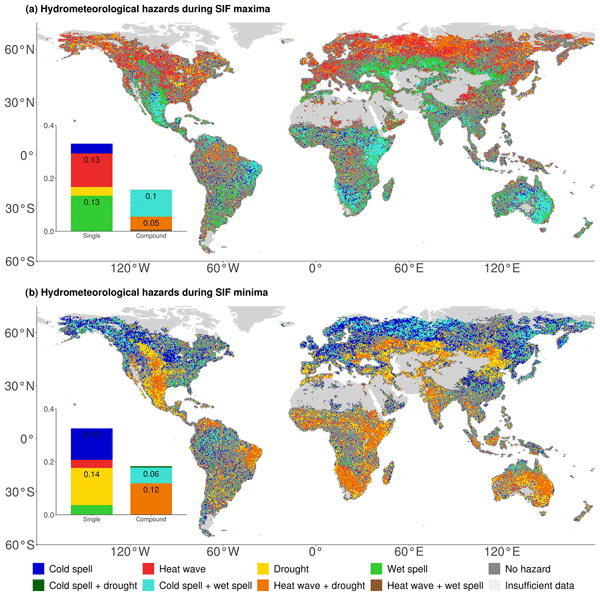
Josephin Kroll, Jasper M. C. Denissen, Mirco Migliavacca, Wantong Li, Anke Hildebrandt, and Rene Orth
Biogeosciences, 19, 477–489, https://doi.org/10.5194/bg-19-477-2022, https://doi.org/10.5194/bg-19-477-2022, 2022
Short summary
Short summary
Plant growth relies on having access to energy (solar radiation) and water (soil moisture). This energy and water availability is impacted by weather extremes, like heat waves and droughts, which will occur more frequently in response to climate change. In this context, we analysed global satellite data to detect in which regions extreme plant growth is controlled by energy or water. We find that extreme plant growth is associated with temperature- or soil-moisture-related extremes.
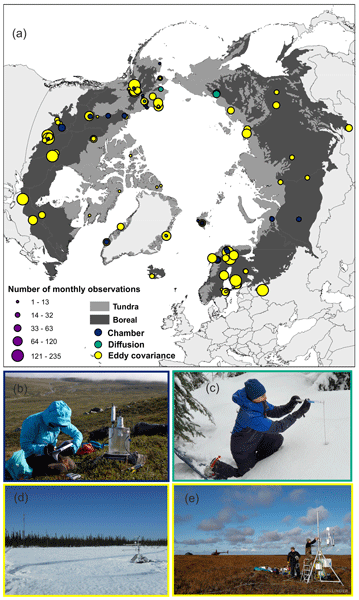
Anna-Maria Virkkala, Susan M. Natali, Brendan M. Rogers, Jennifer D. Watts, Kathleen Savage, Sara June Connon, Marguerite Mauritz, Edward A. G. Schuur, Darcy Peter, Christina Minions, Julia Nojeim, Roisin Commane, Craig A. Emmerton, Mathias Goeckede, Manuel Helbig, David Holl, Hiroki Iwata, Hideki Kobayashi, Pasi Kolari, Efrén López-Blanco, Maija E. Marushchak, Mikhail Mastepanov, Lutz Merbold, Frans-Jan W. Parmentier, Matthias Peichl, Torsten Sachs, Oliver Sonnentag, Masahito Ueyama, Carolina Voigt, Mika Aurela, Julia Boike, Gerardo Celis, Namyi Chae, Torben R. Christensen, M. Syndonia Bret-Harte, Sigrid Dengel, Han Dolman, Colin W. Edgar, Bo Elberling, Eugenie Euskirchen, Achim Grelle, Juha Hatakka, Elyn Humphreys, Järvi Järveoja, Ayumi Kotani, Lars Kutzbach, Tuomas Laurila, Annalea Lohila, Ivan Mammarella, Yojiro Matsuura, Gesa Meyer, Mats B. Nilsson, Steven F. Oberbauer, Sang-Jong Park, Roman Petrov, Anatoly S. Prokushkin, Christopher Schulze, Vincent L. St. Louis, Eeva-Stiina Tuittila, Juha-Pekka Tuovinen, William Quinton, Andrej Varlagin, Donatella Zona, and Viacheslav I. Zyryanov
Earth Syst. Sci. Data, 14, 179–208, https://doi.org/10.5194/essd-14-179-2022, https://doi.org/10.5194/essd-14-179-2022, 2022
Short summary
Short summary
The effects of climate warming on carbon cycling across the Arctic–boreal zone (ABZ) remain poorly understood due to the relatively limited distribution of ABZ flux sites. Fortunately, this flux network is constantly increasing, but new measurements are published in various platforms, making it challenging to understand the ABZ carbon cycle as a whole. Here, we compiled a new database of Arctic–boreal CO2 fluxes to help facilitate large-scale assessments of the ABZ carbon cycle.

Alexander J. Turner, Philipp Köhler, Troy S. Magney, Christian Frankenberg, Inez Fung, and Ronald C. Cohen
Biogeosciences, 18, 6579–6588, https://doi.org/10.5194/bg-18-6579-2021, https://doi.org/10.5194/bg-18-6579-2021, 2021
Short summary
Short summary
This work builds a high-resolution estimate (500 m) of gross primary productivity (GPP) over the US using satellite measurements of solar-induced chlorophyll fluorescence (SIF) from the TROPOspheric Monitoring Instrument (TROPOMI) between 2018 and 2020. We identify ecosystem-specific scaling factors for estimating gross primary productivity (GPP) from TROPOMI SIF. Extreme precipitation events drive four regional GPP anomalies that account for 28 % of year-to-year GPP differences across the US.
Anu Kauppi, Antti Kukkurainen, Antti Lipponen, Marko Laine, Antti Arola, Hannakaisa Lindqvist, and Johanna Tamminen
Atmos. Meas. Tech. Discuss., https://doi.org/10.5194/amt-2021-328, https://doi.org/10.5194/amt-2021-328, 2021
Revised manuscript not accepted
Short summary
Short summary
We present a methodology in Bayesian framework for retrieving atmospheric aerosol optical depth and aerosol type from the pre-computed look-up tables (LUTs). Especially, we consider Bayesian model averaging and uncertainty originating from aerosol model selection and imperfect forward modelling. Our aim is to get more realistic uncertainty estimates. We have applied the methodology to TROPOMI/S5P satellite observations and evaluated the results against ground-based data from the AERONET.
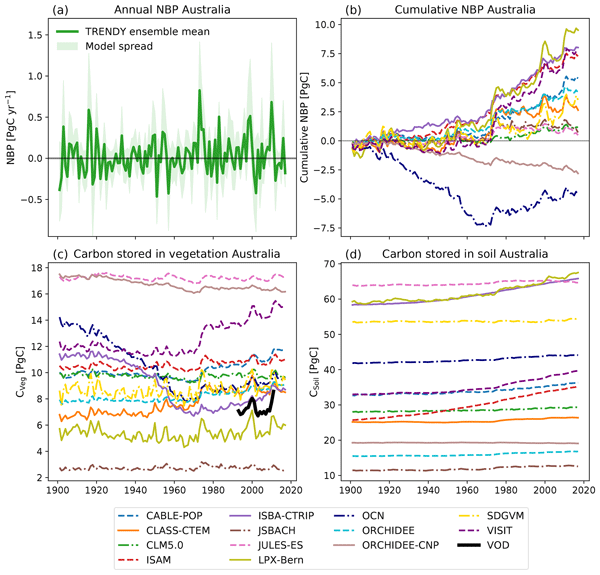
Lina Teckentrup, Martin G. De Kauwe, Andrew J. Pitman, Daniel S. Goll, Vanessa Haverd, Atul K. Jain, Emilie Joetzjer, Etsushi Kato, Sebastian Lienert, Danica Lombardozzi, Patrick C. McGuire, Joe R. Melton, Julia E. M. S. Nabel, Julia Pongratz, Stephen Sitch, Anthony P. Walker, and Sönke Zaehle
Biogeosciences, 18, 5639–5668, https://doi.org/10.5194/bg-18-5639-2021, https://doi.org/10.5194/bg-18-5639-2021, 2021
Short summary
Short summary
The Australian continent is included in global assessments of the carbon cycle such as the global carbon budget, yet the performance of dynamic global vegetation models (DGVMs) over Australia has rarely been evaluated. We assessed simulations by an ensemble of dynamic global vegetation models over Australia and highlighted a number of key areas that lead to model divergence on both short (inter-annual) and long (decadal) timescales.
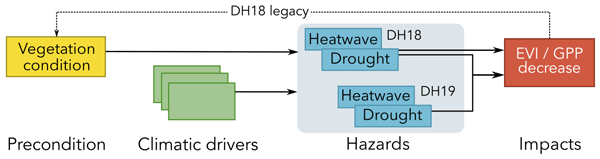
Ana Bastos, René Orth, Markus Reichstein, Philippe Ciais, Nicolas Viovy, Sönke Zaehle, Peter Anthoni, Almut Arneth, Pierre Gentine, Emilie Joetzjer, Sebastian Lienert, Tammas Loughran, Patrick C. McGuire, Sungmin O, Julia Pongratz, and Stephen Sitch
Earth Syst. Dynam., 12, 1015–1035, https://doi.org/10.5194/esd-12-1015-2021, https://doi.org/10.5194/esd-12-1015-2021, 2021
Short summary
Short summary
Temperate biomes in Europe are not prone to recurrent dry and hot conditions in summer. However, these conditions may become more frequent in the coming decades. Because stress conditions can leave legacies for many years, this may result in reduced ecosystem resilience under recurrent stress. We assess vegetation vulnerability to the hot and dry summers in 2018 and 2019 in Europe and find the important role of inter-annual legacy effects from 2018 in modulating the impacts of the 2019 event.
Cited articles
Adams, W. W., Muller, O., Cohu, C. M., and Demmig-Adams, B.: Photosystem II Efficiency and Non-Photochemical Fluorescence Quenching in the Context of Source-Sink Balance, Springer Netherlands, Dordrecht, 503–529, https://doi.org/10.1007/978-94-017-9032-1_23, 2014. a
Alonso, L., Gomez-Chova, L., Vila-Frances, J., Amoros-Lopez, J., Guanter, L., Calpe, J., and Moreno, J.: Improved Fraunhofer Line Discrimination Method for Vegetation Fluorescence Quantification, IEEE Geosci. Remote S., 5, 620–624, https://doi.org/10.1109/LGRS.2008.2001180, 2008. a
Aurela, M., Lohila, A., Tuovinen, J.-P., Hatakka, J., Penttilä, T., and Laurila, T.: Carbon dioxide and energy flux measurements in four northern-boreal ecosystems at Pallas, Boreal Environ. Res., 20, 455–473, 2015. a
Bacour, C., Maignan, F., MacBean, N., Porcar-Castell, A., Flexas, J., Frankenberg, C., Peylin, P., Chevallier, F., Vuichard, N., and Bastrikov, V.: Improving Estimates of Gross Primary Productivity by Assimilating Solar-Induced Fluorescence Satellite Retrievals in a Terrestrial Biosphere Model Using a Process-Based SIF Model, J. Geophys. Res.- Biogeo., 124, 3281–3306, https://doi.org/10.1029/2019JG005040, 2019. a, b
Bag, P., Chukhutsina, V., Zhang, Z., Paul, S., Ivanov, A. G., Shutova, T., Croce, R., Holzwarth, A. R., and Jansson, S.: Direct energy transfer from Photosystem II to Photosystem I confers winter sustainability in Scots pine, Nat. Commun., 11, 6388, https://doi.org/10.1038/s41467-020-20137-9, 2020. a
Baker, N. R.: Chlorophyll Fluorescence: A Probe of Photosynthesis In Vivo, Annu. Rev. Plant Biol., 59, 89–113, https://doi.org/10.1146/annurev.arplant.59.032607.092759, 2008. a
Balde, H., Hmimina, G., Goulas, Y., Latouche, G., and Soudani, K.: Synergy between TROPOMI sun-induced chlorophyll fluorescence and MODIS spectral reflectance for understanding the dynamics of gross primary productivity at Integrated Carbon Observatory System (ICOS) ecosystem flux sites, Biogeosciences, 20, 1473–1490, https://doi.org/10.5194/bg-20-1473-2023, 2023. a
Barr, A. G., Black, T., Hogg, E., Kljun, N., Morgenstern, K., and Nesic, Z.: Inter-annual variability in the leaf area index of a boreal aspen-hazelnut forest in relation to net ecosystem production, Agr. Forest Meteorol., 126, 237–255, https://doi.org/10.1016/j.agrformet.2004.06.011, 2004. a
Bonan, G. B.: Forests and Climate Change: Forcings, Feedbacks, and the Climate Benefits of Forests, Science, 320, 1444–1449, https://doi.org/10.1126/science.1155121, 2008. a
Bowling, D. R., Logan, B. A., Hufkens, K., Aubrecht, D. M., Richardson, A. D., Burns, S. P., Anderegg, W. R., Blanken, P. D., and Eiriksson, D. P.: Limitations to winter and spring photosynthesis of a Rocky Mountain subalpine forest, Agr. Forest Meteorol., 252, 241–255, https://doi.org/10.1016/j.agrformet.2018.01.025, 2018. a
Buman, B., Hueni, A., Colombo, R., Cogliati, S., Celesti, M., Julitta, T., Burkart, A., Siegmann, B., Rascher, U., Drusch, M., and Damm, A.: Towards consistent assessments of in situ radiometric measurements for the validation of fluorescence satellite missions, Remote Sens. Environ., 274, 112984, https://doi.org/10.1016/j.rse.2022.112984, 2022. a
Burns, S. P., Blanken, P. D., Turnipseed, A. A., Hu, J., and Monson, R. K.: The influence of warm-season precipitation on the diel cycle of the surface energy balance and carbon dioxide at a Colorado subalpine forest site, Biogeosciences, 12, 7349–7377, https://doi.org/10.5194/bg-12-7349-2015, 2015. a
Campbell, G. S. and Norman, J. M.: An Introduction to Environmental Biophysics, Springer, ISBN 0-387-94937-2, 1998. a
Cendrero-Mateo, M. P., Wieneke, S., Damm, A., Alonso, L., Pinto, F., Moreno, J., Guanter, L., Celesti, M., Rossini, M., Sabater, N., Cogliati, S., Julitta, T., Rascher, U., Goulas, Y., Aasen, H., Pacheco-Labrador, J., and Mac Arthur, A.: Sun-Induced Chlorophyll Fluorescence III: Benchmarking Retrieval Methods and Sensor Characteristics for Proximal Sensing, Remote Sensing, 11, 962, https://doi.org/10.3390/rs11080962, 2019. a, b
Chen, J. and Cihlar, J.: Quantifying the effect of canopy architecture on optical measurements of leaf area index using two gap size analysis methods, IEEE T. Geosci. Remote, 33, 777–787, https://doi.org/10.1109/36.387593, 1995. a
Chen, J., Menges, C., and Leblanc, S.: Global mapping of foliage clumping index using multi-angular satellite data, Remote Sens. Environ., 97, 447–457, https://doi.org/10.1016/j.rse.2005.05.003, 2005. a
Chen, J., Liu, X., Ma, Y., and Liu, L.: Effects of Low Temperature on the Relationship between Solar-Induced Chlorophyll Fluorescence and Gross Primary Productivity across Different Plant Function Types, Remote Sensing, 14, https://doi.org/10.3390/rs14153716, 2022. a
Chen, R., Liu, L., Liu, X., Wong, C. Y. S., and Ensminger, I.: Temperature-Dependent Relationship Between Solar-Induced Chlorophyll Fluorescence and Photosynthesis in Evergreen Needleleaf Forests, IEEE T. Geosci. Remote, 63, 1–11, https://doi.org/10.1109/TGRS.2025.3620306, 2025. a
Damm, A., Guanter, L., Paul-Limoges, E., van der Tol, C., Hueni, A., Buchmann, N., Eugster, W., Ammann, C., and Schaepman, M.: Far-red sun-induced chlorophyll fluorescence shows ecosystem-specific relationships to gross primary production: An assessment based on observational and modeling approaches, Remote Sens. Environ., 166, 91–105, https://doi.org/10.1016/j.rse.2015.06.004, 2015. a, b, c
Dechant, B., Ryu, Y., Badgley, G., Köhler, P., Rascher, U., Migliavacca, M., Zhang, Y., Tagliabue, G., Guan, K., Rossini, M., Goulas, Y., Zeng, Y., Frankenberg, C., and Berry, J. A.: NIRVP: A robust structural proxy for sun-induced chlorophyll fluorescence and photosynthesis across scales, Remote Sens. Environ., 268, 112763, https://doi.org/10.1016/j.rse.2021.112763, 2022. a
Demmig-Adams, B., Koh, S.-C., Cohu, C. M., Muller, O., Stewart, J. J., and Adams, W. W.: Non-Photochemical Fluorescence Quenching in Contrasting Plant Species and Environments, Springer Netherlands, Dordrecht, 531–552, ISBN 978-94-017-9032-1, https://doi.org/10.1007/978-94-017-9032-1_24, 2014. a
Du, S., Liu, X., Chen, J., Duan, W., and Liu, L.: Addressing validation challenges for TROPOMI solar-induced chlorophyll fluorescence products using tower-based measurements and an NIRv-scaled approach, Remote Sens. Environ., 290, 113547, https://doi.org/10.1016/j.rse.2023.113547, 2023. a
Fan, L., Kato, T., Miyauchi, T., Buareal, K., Morozumi, T., and Ono, K.: Data Assimilation of Solar-Induced Chlorophyll Fluorescence Improves Gross Primary Production Simulation by a Process-Based VISIT-SIF Model in a Rice Paddy, J. Geophys. Res.-Biogeo., 130, e2024JG008280, https://doi.org/10.1029/2024JG008280, 2025. a
Farquhar, G. D., Von Caemmerer, S., and Berry, J. A.: A biochemical model of photosynthetic CO2 assimilation in leaves of C3 species, Planta, 149, 78–90, https://doi.org/10.1007/BF00386231, 1980. a
Frankenberg, C., Fisher, J. B., Worden, J., Badgley, G., Saatchi, S. S., Lee, J.-E., Toon, G. C., Butz, A., Jung, M., Kuze, A., and Yokota, T.: New global observations of the terrestrial carbon cycle from GOSAT: Patterns of plant fluorescence with gross primary productivity: Chlorophyll fluorescence from space, Geophys. Res. Lett., 38, https://doi.org/10.1029/2011GL048738, 2011. a
Frankenberg, C., O'Dell, C., Berry, J., Guanter, L., Joiner, J., Köhler, P., Pollock, R., and Taylor, T. E.: Prospects for chlorophyll fluorescence remote sensing from the Orbiting Carbon Observatory-2, Remote Sens. Environ., 147, 1–12, https://doi.org/10.1016/j.rse.2014.02.007, 2014. a
Friedl, M. and Sulla-Menashe, D.: MODIS/Terra+Aqua Land Cover Type Yearly L3 Global 0.05Deg CMG V061, NASA EOSDIS Land Processes Distributed Active Archive Center [data set], https://doi.org/10.5067/MODIS/MCD12C1.061, 2022. a
Gopalakrishnan, R., Korhonen, L., Mõttus, M., Rautiainen, M., Hovi, A., Mehtätalo, L., Maltamo, M., Peltola, H., and Packalen, P.: Evaluation of a forest radiative transfer model using an extensive boreal forest inventory database, Science of Remote Sensing, 8, 100098, https://doi.org/10.1016/j.srs.2023.100098, 2023. a
Grossmann, K., Frankenberg, C., Magney, T. S., Hurlock, S. C., Seibt, U., and Stutz, J.: PhotoSpec: A new instrument to measure spatially distributed red and far-red Solar-Induced Chlorophyll Fluorescence, Remote Sens. Environ., 216, 311–327, https://doi.org/10.1016/j.rse.2018.07.002, 2018. a, b
Gu, L., Han, J., Wood, J. D., Chang, C. Y., and Sun, Y.: Sun‐induced Chl fluorescence and its importance for biophysical modeling of photosynthesis based on light reactions, New Phytol., 223, 1179–1191, https://doi.org/10.1111/nph.15796, 2019. a
Guanter, L., Frankenberg, C., Dudhia, A., Lewis, P. E., Gómez-Dans, J., Kuze, A., Suto, H., and Grainger, R. G.: Retrieval and global assessment of terrestrial chlorophyll fluorescence from GOSAT space measurements, Remote Sens. Environ., 121, 236–251, https://doi.org/10.1016/j.rse.2012.02.006, 2012. a
Guanter, L., Aben, I., Tol, P., Krijger, J. M., Hollstein, A., Köhler, P., Damm, A., Joiner, J., Frankenberg, C., and Landgraf, J.: Potential of the TROPOspheric Monitoring Instrument (TROPOMI) onboard the Sentinel-5 Precursor for the monitoring of terrestrial chlorophyll fluorescence, Atmos. Meas. Tech., 8, 1337–1352, https://doi.org/10.5194/amt-8-1337-2015, 2015. a
Guanter, L., Bacour, C., Schneider, A., Aben, I., van Kempen, T. A., Maignan, F., Retscher, C., Köhler, P., Frankenberg, C., Joiner, J., and Zhang, Y.: The TROPOSIF global sun-induced fluorescence dataset from the Sentinel-5P TROPOMI mission, Earth Syst. Sci. Data, 13, 5423–5440, https://doi.org/10.5194/essd-13-5423-2021, 2021. a, b, c, d, e
Hao, D., Zeng, Y., Qiu, H., Biriukova, K., Celesti, M., Migliavacca, M., Rossini, M., Asrar, G. R., and Chen, M.: Practical approaches for normalizing directional solar-induced fluorescence to a standard viewing geometry, Remote Sens. Environ., 255, 112171, https://doi.org/10.1016/j.rse.2020.112171, 2021. a
Hastie, T., Tibshirani, R., and Friedman, J.: The Elements of Statistical Learning, Springer, ISBN 978-0-387-84857-0, 2009. a
Hilker, T., Coops, N. C., Hall, F. G., Black, T. A., Wulder, M. A., Nesic, Z., and Krishnan, P.: Separating physiologically and directionally induced changes in PRI using BRDF models, Remote Sens. Environ., 112, 2777–2788, https://doi.org/10.1016/j.rse.2008.01.011, 2008a. a
Hilker, T., Coops, N. C., Schwalm, C. R., Jassal, R. S., Black, T. A., and Krishnan, P.: Effects of mutual shading of tree crowns on prediction of photosynthetic light-use efficiency in a coastal Douglas-fir forest, Tree Physiol., 28, 825–834, https://doi.org/10.1093/treephys/28.6.825, 2008b. a
Jacquemoud, S. and Baret, F.: PROSPECT: A model of leaf optical properties spectra, Remote Sens. Environ., 34, 75–91, https://doi.org/10.1016/0034-4257(90)90100-Z, 1990. a
Jiang, H., Liu, Z., Wang, J., Yang, P., Zhang, R., Zhang, X., and Zheng, P.: Combining Chlorophyll Fluorescence and Vegetation Reflectance Indices to Estimate Non-Photochemical Quenching (NPQ) of Rice at the Leaf Scale, Remote Sensing, 15, https://doi.org/10.3390/rs15174222, 2023. a
Johnson, J. E. and Berry, J. A.: The role of Cytochrome b6f in the control of steady-state photosynthesis: a conceptual and quantitative model, Photosynth. Res., 148, 101–136, https://doi.org/10.1007/s11120-021-00840-4, 2021. a, b
Joiner, J., Yoshida, Y., Vasilkov, A. P., Yoshida, Y., Corp, L. A., and Middleton, E. M.: First observations of global and seasonal terrestrial chlorophyll fluorescence from space, Biogeosciences, 8, 637–651, https://doi.org/10.5194/bg-8-637-2011, 2011. a
Joiner, J., Guanter, L., Lindstrot, R., Voigt, M., Vasilkov, A. P., Middleton, E. M., Huemmrich, K. F., Yoshida, Y., and Frankenberg, C.: Global monitoring of terrestrial chlorophyll fluorescence from moderate-spectral-resolution near-infrared satellite measurements: methodology, simulations, and application to GOME-2, Atmos. Meas. Tech., 6, 2803–2823, https://doi.org/10.5194/amt-6-2803-2013, 2013. a
Joiner, J., Yoshida, Y., Köehler, P., Campbell, P., Frankenberg, C., van der Tol, C., Yang, P., Parazoo, N., Guanter, L., and Sun, Y.: Systematic Orbital Geometry-Dependent Variations in Satellite Solar-Induced Fluorescence (SIF) Retrievals, Remote Sensing, 12, https://doi.org/10.3390/rs12152346, 2020. a
Kim, J., Ryu, Y., Dechant, B., Lee, H., Kim, H. S., Kornfeld, A., and Berry, J. A.: Solar-induced chlorophyll fluorescence is non-linearly related to canopy photosynthesis in a temperate evergreen needleleaf forest during the fall transition, Remote Sens. Environ., 258, 112362, https://doi.org/10.1016/j.rse.2021.112362, 2021. a, b
Knorr, W., Williams, M., Thum, T., Kaminski, T., Voßbeck, M., Scholze, M., Quaife, T., Smallman, T. L., Steele-Dunne, S. C., Vreugdenhil, M., Green, T., Zaehle, S., Aurela, M., Bouvet, A., Bueechi, E., Dorigo, W., El-Madany, T. S., Migliavacca, M., Honkanen, M., Kerr, Y. H., Kontu, A., Lemmetyinen, J., Lindqvist, H., Mialon, A., Miinalainen, T., Pique, G., Ojasalo, A., Quegan, S., Rayner, P. J., Reyes-Muñoz, P., Rodríguez-Fernández, N., Schwank, M., Verrelst, J., Zhu, S., Schüttemeyer, D., and Drusch, M.: A comprehensive land-surface vegetation model for multi-stream data assimilation, D&B v1.0, Geosci. Model Dev., 18, 2137–2159, https://doi.org/10.5194/gmd-18-2137-2025, 2025. a, b, c, d, e
Koffi, E. N., Rayner, P. J., Norton, A. J., Frankenberg, C., and Scholze, M.: Investigating the usefulness of satellite-derived fluorescence data in inferring gross primary productivity within the carbon cycle data assimilation system, Biogeosciences, 12, 4067–4084, https://doi.org/10.5194/bg-12-4067-2015, 2015. a, b
Kou-Giesbrecht, S., Arora, V. K., Seiler, C., Arneth, A., Falk, S., Jain, A. K., Joos, F., Kennedy, D., Knauer, J., Sitch, S., O'Sullivan, M., Pan, N., Sun, Q., Tian, H., Vuichard, N., and Zaehle, S.: Evaluating nitrogen cycling in terrestrial biosphere models: a disconnect between the carbon and nitrogen cycles, Earth Syst. Dynam., 14, 767–795, https://doi.org/10.5194/esd-14-767-2023, 2023. a
Kull, O. and Kruijt, B.: Leaf photosynthetic light response: a mechanistic model for scaling photosynthesis to leaves and canopies, Funct. Ecol., 12, 767–777, 1998. a
Kuze, A., Suto, H., Nakajima, M., and Hamazaki, T.: Thermal and near infrared sensor for carbon observation Fourier-transform spectrometer on the Greenhouse Gases Observing Satellite for greenhouse gases monitoring, Appl. Opt., 48, 6716–6733, https://doi.org/10.1364/AO.48.006716, 2009. a
Köhler, P., Frankenberg, C., Magney, T. S., Guanter, L., Joiner, J., and Landgraf, J.: Global Retrievals of Solar-Induced Chlorophyll Fluorescence With TROPOMI: First Results and Intersensor Comparison to OCO-2, Geophys. Res. Lett., 45, 10456–10463, https://doi.org/10.1029/2018GL079031, 2018. a, b
Lee, J., Berry, J. A., Van Der Tol, C., Yang, X., Guanter, L., Damm, A., Baker, I., and Frankenberg, C.: Simulations of chlorophyll fluorescence incorporated into the Community Land Model version 4, Glob. Change Biol., 21, 3469–3477, https://doi.org/10.1111/gcb.12948, 2015. a
Li, R., Lombardozzi, D., Shi, M., Frankenberg, C., Parazoo, N. C., Köhler, P., Yi, K., Guan, K., and Yang, X.: Representation of Leaf-to-Canopy Radiative Transfer Processes Improves Simulation of Far-Red Solar-Induced Chlorophyll Fluorescence in the Community Land Model Version 5, J. Adv. Model. Earth Sy., 14, e2021MS002747, https://doi.org/10.1029/2021MS002747, 2022. a, b, c, d
Liang, L., Liu, Q., Liu, G., Li, H., and Huang, C.: Accuracy Evaluation and Consistency Analysis of Four Global Land Cover Products in the Arctic Region, Remote Sensing, 11, https://doi.org/10.3390/rs11121396, 2019. a
Liu, W., Mõttus, M., Malenovský, Z., Shi, S., Alonso, L., Atherton, J., and Porcar-Castell, A.: An in situ approach for validation of canopy chlorophyll fluorescence radiative transfer models using the full emission spectrum, Remote Sens. Environ., 316, 114490, https://doi.org/10.1016/j.rse.2024.114490, 2025. a
Liu, X., Liu, L., Hu, J., Guo, J., and Du, S.: Improving the potential of red SIF for estimating GPP by downscaling from the canopy level to the photosystem level, Agr. Forest Meteorol., 281, 107846, https://doi.org/10.1016/j.agrformet.2019.107846, 2020. a, b
Magney, T. and Frankenberg, C.: Chlorophyll fluorescence spectra for a wide range of species and conditions, Caltech DATA, https://doi.org/10.22002/D1.1226, 2019. a, b
Magney, T. S., Frankenberg, C., Fisher, J. B., Sun, Y., North, G. B., Davis, T. S., Kornfeld, A., and Siebke, K.: Connecting active to passive fluorescence with photosynthesis: a method for evaluating remote sensing measurements of Chl fluorescence, New Phytol., 215, 1594–1608, https://doi.org/10.1111/nph.14662, 2017. a
Magney, T. S., Bowling, D. R., Logan, B. A., Grossmann, K., Stutz, J., Blanken, P. D., Burns, S. P., Cheng, R., Garcia, M. A., Köhler, P., Lopez, S., Parazoo, N. C., Raczka, B., Schimel, D., and Frankenberg, C.: Mechanistic evidence for tracking the seasonality of photosynthesis with solar-induced fluorescence, P. Natl. Acad. Sci., 116, 11640–11645, https://doi.org/10.1073/pnas.1900278116, 2019a. a, b, c, d, e
Magney, T. S., Frankenberg, C., Köhler, P., North, G., Davis, T. S., Dold, C., Dutta, D., Fisher, J. B., Grossmann, K., Harrington, A., Hatfield, J., Stutz, J., Sun, Y., and Porcar-Castell, A.: Disentangling Changes in the Spectral Shape of Chlorophyll Fluorescence: Implications for Remote Sensing of Photosynthesis, J. Geophys. Res.-Biogeo., 124, 1491–1507, https://doi.org/10.1029/2019JG005029, 2019b. a, b, c
Magney, T., Frankenberg, C., Grossmann, K., Bowling, D., Logan, B., Burns, S., and Stutz, J.: Canopy and needle scale fluorescence data from Niwot Ridge, Colorado 2017–2018 (1.2), CaltechDATA [data set], https://doi.org/10.22002/D1.1231, 2019c. a
Magney, T. S., Barnes, M. L., and Yang, X.: On the Covariation of Chlorophyll Fluorescence and Photosynthesis Across Scales, Geophys. Res. Lett., 47, e2020GL091098, https://doi.org/10.1029/2020GL091098, 2020. a
Majasalmi, T. and Bright, R. M.: Evaluation of leaf-level optical properties employed in land surface models, Geosci. Model Dev., 12, 3923–3938, https://doi.org/10.5194/gmd-12-3923-2019, 2019. a, b
Mäkelä, A., Hari, P., Berninger, F., Hänninen, H., and Nikinmaa, E.: Acclimation of photosynthetic capacity in Scots pine to the annual cycle of temperature, Tree Physiol., 24, 369–376, https://doi.org/10.1093/treephys/24.4.369, 2004. a
Malenovský, Z., Regaieg, O., Yin, T., Lauret, N., Guilleux, J., Chavanon, E., Duran, N., Janoutová, R., Delavois, A., Meynier, J., Medjdoub, G., Yang, P., van der Tol, C., Morton, D., Cook, B. D., and Gastellu-Etchegorry, J.-P.: Discrete anisotropic radiative transfer modelling of solar-induced chlorophyll fluorescence: Structural impacts in geometrically explicit vegetation canopies, Remote Sens. Environ., 263, 112564, https://doi.org/10.1016/j.rse.2021.112564, 2021. a
Martini, D., Sakowska, K., Wohlfahrt, G., Pacheco-Labrador, J., van der Tol, C., Porcar-Castell, A., Magney, T. S., Carrara, A., Colombo, R., El-Madany, T. S., Gonzalez-Cascon, R., Martín, M. P., Julitta, T., Moreno, G., Rascher, U., Reichstein, M., Rossini, M., and Migliavacca, M.: Heatwave breaks down the linearity between sun-induced fluorescence and gross primary production, New Phytol., 233, 2415–2428, https://doi.org/10.1111/nph.17920, 2022. a, b
Maxwell, K. and Johnson, G. N.: Chlorophyll fluorescence – a practical guide, J. Exp. Bot., 51, 659–668, https://doi.org/10.1093/jexbot/51.345.659, 2000. a
Medlyn, B. E., Duursma, R. A., Eamus, D., Ellsworth, D. S., Prentice, I. C., Barton, C. V. M., Crous, K. Y., De Angelis, P., Freeman, M., and Wingate, L.: Reconciling the optimal and empirical approaches to modelling stomatal conductance, Glob. Change Biol., 17, 2134–2144, https://doi.org/10.1111/j.1365-2486.2010.02375.x, 2011. a
Miinalainen, T., Ojasalo, A., Croft, H., Aurela, M., Peltoniemi, M., Caldararu, S., Zaehle, S., and Thum, T.: Evaluating the carbon and nitrogen cycles of the QUINCY terrestrial biosphere model using space-born optical remotely-sensed data, Biogeosciences, 22, 6937–6962, https://doi.org/10.5194/bg-22-6937-2025, 2025. a
Miller, J., Berger, M., Goulas, Y., Jacquemoud, S., Louis, J., Mohammed, G., Moise, N., Moreno, J., Moya, I., Pedròs, R., Verhoef, W., and Zarco-Tejada, P.: Development of a Vegetation Fluorescence Canopy Model, ESTEC Contract No. 16365/02/NL/FF, Final Report, https://www.ipgp.fr/~jacquemoud/publications/miller2005.pdf (last access: 1 September 2025), 2005. a
Miyauchi, T., Saito, M., Noda, H. M., Ito, A., Kato, T., and Matsunaga, T.: Process-based modeling of solar-induced chlorophyll fluorescence with VISIT-SIF version 1.0, Geosci. Model Dev., 18, 2329–2347, https://doi.org/10.5194/gmd-18-2329-2025, 2025. a
Mohammed, G. H., Colombo, R., Middleton, E. M., Rascher, U., Van Der Tol, C., Nedbal, L., Goulas, Y., Pérez-Priego, O., Damm, A., Meroni, M., Joiner, J., Cogliati, S., Verhoef, W., Malenovský, Z., Gastellu-Etchegorry, J.-P., Miller, J. R., Guanter, L., Moreno, J., Moya, I., Berry, J. A., Frankenberg, C., and Zarco-Tejada, P. J.: Remote sensing of solar-induced chlorophyll fluorescence (SIF) in vegetation: 50 years of progress, Remote Sens. Environ., 231, 111177, https://doi.org/10.1016/j.rse.2019.04.030, 2019. a
Moreno, J. F.: The Fluorescence Explorer (FLEX): Mission Status and Data Exploitation Plans, in: IGARSS 2022–2022 IEEE International Geoscience and Remote Sensing Symposium, 5015–5018, https://doi.org/10.1109/IGARSS46834.2022.9883466, 2022. a
Munro, R., Lang, R., Klaes, D., Poli, G., Retscher, C., Lindstrot, R., Huckle, R., Lacan, A., Grzegorski, M., Holdak, A., Kokhanovsky, A., Livschitz, J., and Eisinger, M.: The GOME-2 instrument on the Metop series of satellites: instrument design, calibration, and level 1 data processing – an overview, Atmos. Meas. Tech., 9, 1279–1301, https://doi.org/10.5194/amt-9-1279-2016, 2016. a
Neri, P., Gu, L., and Song, Y.: The effect of temperature on photosystem II efficiency across plant functional types and climate, Biogeosciences, 21, 2731–2758, https://doi.org/10.5194/bg-21-2731-2024, 2024. a, b
Niinemets, Ü., Kull, O., and Tenhunen, J. D.: An analysis of light effects on foliar morphology, physiology, and light interception in temperate deciduous woody species of contrasting shade tolerance, Tree Physiol., 18, 681–696, https://doi.org/10.1093/treephys/18.10.681, 1998. a
Norton, A. J., Rayner, P. J., Koffi, E. N., Scholze, M., Silver, J. D., and Wang, Y.-P.: Estimating global gross primary productivity using chlorophyll fluorescence and a data assimilation system with the BETHY-SCOPE model, Biogeosciences, 16, 3069–3093, https://doi.org/10.5194/bg-16-3069-2019, 2019. a
Otto, J., Berveiller, D., Bréon, F.-M., Delpierre, N., Geppert, G., Granier, A., Jans, W., Knohl, A., Kuusk, A., Longdoz, B., Moors, E., Mund, M., Pinty, B., Schelhaas, M.-J., and Luyssaert, S.: Forest summer albedo is sensitive to species and thinning: how should we account for this in Earth system models?, Biogeosciences, 11, 2411–2427, https://doi.org/10.5194/bg-11-2411-2014, 2014. a, b
Pacheco-Labrador, J., Hueni, A., Mihai, L., Sakowska, K., Julitta, T., Kuusk, J., Sporea, D., Alonso, L., Burkart, A., Cendrero-Mateo, M. P., Aasen, H., Goulas, Y., and Mac Arthur, A.: Sun-Induced Chlorophyll Fluorescence I: Instrumental Considerations for Proximal Spectroradiometers, Remote Sensing, 11, https://doi.org/10.3390/rs11080960, 2019. a
Pan, Y., Birdsey, R. A., Phillips, O. L., Houghton, R. A., Fang, J., Kauppi, P. E., Keith, H., Kurz, W. A., Ito, A., Lewis, S. L., Nabuurs, G.-J., Shvidenko, A., Hashimoto, S., Lerink, B., Schepaschenko, D., Castanho, A., and Murdiyarso, D.: The enduring world forest carbon sink, Nature, 631, 563–569, https://doi.org/10.1038/s41586-024-07602-x, 2024. a
Parazoo, N. C., Magney, T., Norton, A., Raczka, B., Bacour, C., Maignan, F., Baker, I., Zhang, Y., Qiu, B., Shi, M., MacBean, N., Bowling, D. R., Burns, S. P., Blanken, P. D., Stutz, J., Grossmann, K., and Frankenberg, C.: Wide discrepancies in the magnitude and direction of modeled solar-induced chlorophyll fluorescence in response to light conditions, Biogeosciences, 17, 3733–3755, https://doi.org/10.5194/bg-17-3733-2020, 2020. a
Paul-Limoges, E., Damm, A., Hueni, A., Liebisch, F., Eugster, W., Schaepman, M. E., and Buchmann, N.: Effect of environmental conditions on sun-induced fluorescence in a mixed forest and a cropland, Remote Sens. Environ., 219, 310–323, https://doi.org/10.1016/j.rse.2018.10.018, 2018. a
Pescador‐Dionisio, S., Cendrero‐Mateo, M. P., Moncholí‐Estornell, A., Robles‐Fort, A., Arzac, M. I., Renau‐Morata, B., Fernández‐Marín, B., García‐Plazaola, J. I., Molina, R. V., Rausell, C., Moreno, J., Nebauer, S. G., García‐Robles, I., and Van Wittenberghe, S.: In vivo detection of spectral reflectance changes associated with regulated heat dissipation mechanisms complements fluorescence quantum efficiency in early stress diagnosis, New Phytol., 245, 559–576, https://doi.org/10.1111/nph.20253, 2025. a
Pierrat, Z.: Evergreen needleleaf forest pigment, MONI-PAM, eddy-covariance, and tower-scale remote sensing data across four different sites, Zenodo [data set], https://doi.org/10.5281/zenodo.10048770, 2023. a
Pierrat, Z., Nehemy, M. F., Roy, A., Magney, T., Parazoo, N. C., Laroque, C., Pappas, C., Sonnentag, O., Grossmann, K., Bowling, D. R., Seibt, U., Ramirez, A., Johnson, B., Helgason, W., Barr, A., and Stutz, J.: Tower‐Based Remote Sensing Reveals Mechanisms Behind a Two‐phased Spring Transition in a Mixed‐Species Boreal Forest, J. Geophys. Res.-Biogeo., 126, e2020JG006191, https://doi.org/10.1029/2020JG006191, 2021. a, b, c, d
Pierrat, Z., Magney, T., Parazoo, N. C., Grossmann, K., Bowling, D. R., Seibt, U., Johnson, B., Helgason, W., Barr, A., Bortnik, J., Norton, A., Maguire, A., Frankenberg, C., and Stutz, J.: Diurnal and Seasonal Dynamics of Solar‐Induced Chlorophyll Fluorescence, Vegetation Indices, and Gross Primary Productivity in the Boreal Forest, J. Geophys. Res.-Biogeo., 127, e2021JG006588, https://doi.org/10.1029/2021JG006588, 2022a. a
Pierrat, Z. A., Bortnik, J., Johnson, B., Barr, A., Magney, T., Bowling, D. R., Parazoo, N., Frankenberg, C., Seibt, U., and Stutz, J.: Forests for forests: combining vegetation indices with solar-induced chlorophyll fluorescence in random forest models improves gross primary productivity prediction in the boreal forest, Environ. Res. Lett., 17, 125006, https://doi.org/10.1088/1748-9326/aca5a0, 2022b. a
Pierrat, Z. A., Magney, T., Maguire, A., Brissette, L., Doughty, R., Bowling, D. R., Logan, B., Parazoo, N., Frankenberg, C., and Stutz, J.: Seasonal timing of fluorescence and photosynthetic yields at needle and canopy scales in evergreen needleleaf forests, Ecology, 105, e4402, https://doi.org/10.1002/ecy.4402, 2024. a, b, c
Plascyk, J. A. and Gabriel, F. C.: The Fraunhofer Line Discriminator MKII-An Airborne Instrument for Precise and Standardized Ecological Luminescence Measurement, IEEE T. Instrum. Meas., 24, 306–313, https://doi.org/10.1109/TIM.1975.4314448, 1975. a
Porcar-Castell, A.: A high-resolution portrait of the annual dynamics of photochemical and non-photochemical quenching in needles of Pinus sylvestris, Physiol. Plantarum, 143, 139–153, https://doi.org/10.1111/j.1399-3054.2011.01488.x, 2011. a
Porcar-Castell, A., Juurola, E., Ensminger, I., Berninger, F., Hari, P., and Nikinmaa, E.: Seasonal acclimation of photosystem II in Pinus sylvestris. II. Using the rate constants of sustained thermal energy dissipation and photochemistry to study the effect of the light environment, Tree Physiol., 28, 1483–1491, https://doi.org/10.1093/treephys/28.10.1483, 2008. a
Porcar-Castell, A., Malenovský, Z., Magney, T., Van Wittenberghe, S., Fernández-Marín, B., Maignan, F., Zhang, Y., Maseyk, K., Atherton, J., Albert, L. P., Robson, T. M., Zhao, F., Garcia-Plazaola, J.-I., Ensminger, I., Rajewicz, P. A., Grebe, S., Tikkanen, M., Kellner, J. R., Ihalainen, J. A., Rascher, U., and Logan, B.: Chlorophyll a fluorescence illuminates a path connecting plant molecular biology to Earth-system science, Nat. Plants, 7, 998–1009, https://doi.org/10.1038/s41477-021-00980-4, 2021. a, b
Qiu, B., Chen, J. M., Ju, W., Zhang, Q., and Zhang, Y.: Simulating emission and scattering of solar-induced chlorophyll fluorescence at far-red band in global vegetation with different canopy structures, Remote Sens. Environ., 233, 111373, https://doi.org/10.1016/j.rse.2019.111373, 2019. a
Quaife, T.: L2SM model code version for manuscript, Zenodo [code], https://doi.org/10.5281/zenodo.13753268, 2024. a
Quaife, T. L.: A two stream radiative transfer model for vertically inhomogeneous vegetation canopies including internal emission, J. Adv. Model. Earth Sy., 17, e2024MS004712, https://doi.org/10.1029/2024MS004712, 2025. a, b, c
Raczka, B., Porcar-Castell, A., Magney, T., Lee, J. E., Köhler, P., Frankenberg, C., Grossmann, K., Logan, B. A., Stutz, J., Blanken, P. D., Burns, S. P., Duarte, H., Yang, X., Lin, J. C., and Bowling, D. R.: Sustained Nonphotochemical Quenching Shapes the Seasonal Pattern of Solar-Induced Fluorescence at a High-Elevation Evergreen Forest, J. Geophys. Res.-Biogeo., 124, 2005–2020, https://doi.org/10.1029/2018JG004883, 2019. a, b, c, d
Rantanen, M., Karpechko, A. Y., Lipponen, A., Nordling, K., Hyvärinen, O., Ruosteenoja, K., Vihma, T., and Laaksonen, A.: The Arctic has warmed nearly four times faster than the globe since 1979, Communications Earth & Environment, 3, 168, https://doi.org/10.1038/s43247-022-00498-3, 2022. a
Reichstein, M., Falge, E., Baldocchi, D., Papale, D., Aubinet, M., Berbigier, P., Bernhofer, C., Buchmann, N., Gilmanov, T., Granier, A., Grünwald, T., Havránková, K., Ilvesniemi, H., Janous, D., Knohl, A., Laurila, T., Lohila, A., Loustau, D., Matteucci, G., Meyers, T., Miglietta, F., Ourcival, J.-M., Pumpanen, J., Rambal, S., Rotenberg, E., Sanz, M., Tenhunen, J., Seufert, G., Vaccari, F., Vesala, T., Yakir, D., and Valentini, R.: On the separation of net ecosystem exchange into assimilation and ecosystem respiration: review and improved algorithm, Glob. Change Biol., 11, 1424–1439, https://doi.org/10.1111/j.1365-2486.2005.001002.x, 2005. a
Richardson, A. D., Hollinger, D. Y., Burba, G. G., Davis, K. J., Flanagan, L. B., Katul, G. G., William Munger, J., Ricciuto, D. M., Stoy, P. C., Suyker, A. E., Verma, S. B., and Wofsy, S. C.: A multi-site analysis of random error in tower-based measurements of carbon and energy fluxes, Agr. Forest Meteorol., 136, 1–18, https://doi.org/10.1016/j.agrformet.2006.01.007, 2006. a
Sabater, N., Vicent, J., Alonso, L., Verrelst, J., Middleton, E. M., Porcar-Castell, A., and Moreno, J.: Compensation of Oxygen Transmittance Effects for Proximal Sensing Retrieval of Canopy–Leaving Sun–Induced Chlorophyll Fluorescence, Remote Sensing, 10, https://doi.org/10.3390/rs10101551, 2018. a
Schimel, D., Schneider, F. D., and JPL Carbon and Ecosystem Participants : Flux towers in the sky: global ecology from space, New Phytol., 224, 570–584, https://doi.org/10.1111/nph.15934, 2019. a
Schraik, D., Wang, D., Hovi, A., and Rautiainen, M.: Quantifying stand-level clumping of boreal, hemiboreal and temperate European forest stands using terrestrial laser scanning, Agr. Forest Meteorol., 339, 109564, https://doi.org/10.1016/j.agrformet.2023.109564, 2023. a
Sun, Y., Frankenberg, C., Wood, J. D., Schimel, D. S., Jung, M., Guanter, L., Drewry, D. T., Verma, M., Porcar-Castell, A., Griffis, T. J., Gu, L., Magney, T. S., Köhler, P., Evans, B., and Yuen, K.: OCO-2 advances photosynthesis observation from space via solar-induced chlorophyll fluorescence, Science, 358, eaam5747, https://doi.org/10.1126/science.aam5747, 2017. a, b
Sun, Y., Gu, L., Wen, J., Van Der Tol, C., Porcar‐Castell, A., Joiner, J., Chang, C. Y., Magney, T., Wang, L., Hu, L., Rascher, U., Zarco‐Tejada, P., Barrett, C. B., Lai, J., Han, J., and Luo, Z.: From remotely sensed solar‐induced chlorophyll fluorescence to ecosystem structure, function, and service: Part I – Harnessing theory, Glob. Change Biol., 29, 2926–2952, https://doi.org/10.1111/gcb.16634, 2023a. a, b, c
Sun, Y., Wen, J., Gu, L., Joiner, J., Chang, C. Y., Van Der Tol, C., Porcar‐Castell, A., Magney, T., Wang, L., Hu, L., Rascher, U., Zarco‐Tejada, P., Barrett, C. B., Lai, J., Han, J., and Luo, Z.: From remotely‐sensed solar‐induced chlorophyll fluorescence to ecosystem structure, function, and service: Part II – Harnessing data, Glob. Change Biol., 29, 2893–2925, https://doi.org/10.1111/gcb.16646, 2023b. a
Tanja, S., Berninger, F., Vesala, T., Markkanen, T., Hari, P., Mäkelä, A., Ilvesniemi, H., Hänninen, H., Nikinmaa, E., Huttula, T., Laurila, T., Aurela, M., Grelle, A., Lindroth, A., Arneth, A., Shibistova, O., and Lloyd, J.: Air temperature triggers the recovery of evergreen boreal forest photosynthesis in spring, Glob. Change Biol., 9, 1410–1426, https://doi.org/10.1046/j.1365-2486.2003.00597.x, 2003. a
The Inversion Lab: In situ observations used in GMD Manuscript “A comprehensive land surface vegetation model for multi-stream data assimilation, D&B v1.0”, Zenodo [data set], https://doi.org/10.5281/zenodo.12725765, 2024. a
Thum, T., Aaalto, T., Laurila, T., Aurela, M., Kolari, P., and Hari, P.: Parametrization of two photosynthesis models at the canopy scale in a northern boreal Scots pine forest, Tellus B, 59, 874–890, https://doi.org/10.1111/j.1600-0889.2007.00305.x, 2007. a, b
Thum, T., Aalto, T., Laurila, T., Aurela, M., Hatakka, J., Lindroth, A., and Vesala, T.: Spring initiation and autumn cessation of boreal coniferous forest CO2 exchange assessed by meteorological and biological variables, Tellus B, 61, 701, https://doi.org/10.1111/j.1600-0889.2009.00441.x, 2009. a
Thum, T., Zaehle, S., Köhler, P., Aalto, T., Aurela, M., Guanter, L., Kolari, P., Laurila, T., Lohila, A., Magnani, F., Van Der Tol, C., and Markkanen, T.: Modelling sun-induced fluorescence and photosynthesis with a land surface model at local and regional scales in northern Europe, Biogeosciences, 14, 1969–1987, https://doi.org/10.5194/bg-14-1969-2017, 2017. a, b
Thum, T., Caldararu, S., Engel, J., Kern, M., Pallandt, M., Schnur, R., Yu, L., and Zaehle, S.: A new model of the coupled carbon, nitrogen, and phosphorus cycles in the terrestrial biosphere (QUINCY v1.0; revision 1996), Geosci. Model Dev., 12, 4781–4802, https://doi.org/10.5194/gmd-12-4781-2019, 2019. a, b
Thum, T., Miinalainen, T., Seppälä, O., Croft, H., Rogers, C., Staebler, R., Caldararu, S., and Zaehle, S.: Modelling decadal trends and the impact of extreme events on carbon fluxes in a temperate deciduous forest using a terrestrial biosphere model, Biogeosciences, 22, 1781–1807, https://doi.org/10.5194/bg-22-1781-2025, 2025. a
van der Tol, C., Verhoef, W., Timmermans, J., Verhoef, A., and Su, Z.: An integrated model of soil-canopy spectral radiances, photosynthesis, fluorescence, temperature and energy balance, Biogeosciences, 6, 3109–3129, https://doi.org/10.5194/bg-6-3109-2009, 2009. a, b, c, d
van der Tol, C., Berry, J. A., Campbell, P. K. E., and Rascher, U.: Models of fluorescence and photosynthesis for interpreting measurements of solar‐induced chlorophyll fluorescence, J. Geophys. Res.-Biogeo., 119, 2312–2327, https://doi.org/10.1002/2014JG002713, 2014. a, b, c, d
van Der Tol, C., Vilfan, N., Dauwe, D., Cendrero-Mateo, M. P., and Yang, P.: The scattering and re-absorption of red and near-infrared chlorophyll fluorescence in the models Fluspect and SCOPE, Remote Sens. Environ., 232, 111292, https://doi.org/10.1016/j.rse.2019.111292, 2019. a
van der Tol, C., Julitta, T., Yang, P., Sabater, N., Reiter, I., Tudoroiu, M., Schuettemeyer, D., and Drusch, M.: Retrieval of chlorophyll fluorescence from a large distance using oxygen absorption bands, Remote Sens. Environ., 284, 113304, https://doi.org/10.1016/j.rse.2022.113304, 2023. a
Van Wittenberghe, S., Amin, E., Pascual-Venteo, A. B., Pérez-Suay, A., Tenjo, C., Sabater, N., Van Der Tol, C., Drusch, M., and Moreno, J.: Retrieval of leaf-level fluorescence quantum efficiency and NPQ-related xanthophyll absorption through spectral unmixing strategies for future VIS-NIR imaging spectroscopy, Remote Sens. Environ., 300, 113879, https://doi.org/10.1016/j.rse.2023.113879, 2024. a, b
Vekuri, H., Tuovinen, J.-P., Kulmala, L., Aurela, M., Thum, T., Liski, J., and Lohila, A.: Improved uncertainty estimates for eddy covariance-based carbon dioxide balances using deep ensembles for gap-filling, Agr. Forest Meteorol., 371, 110558, https://doi.org/10.1016/j.agrformet.2025.110558, 2025. a
Verhoef, W.: Light scattering by leaf layers with application to canopy reflectance modeling: The SAIL model, Remote Sens. Environ., 16, 125–141, https://doi.org/10.1016/0034-4257(84)90057-9, 1984. a, b
Vesala, T., Launiainen, S., Kolari, P., Pumpanen, J., Sevanto, S., Hari, P., Nikinmaa, E., Kaski, P., Mannila, H., Ukkonen, E., Piao, S. L., and Ciais, P.: Autumn temperature and carbon balance of a boreal Scots pine forest in Southern Finland, Biogeosciences, 7, 163–176, https://doi.org/10.5194/bg-7-163-2010, 2010. a
Vilfan, N., van der Tol, C., Muller, O., Rascher, U., and Verhoef, W.: Fluspect-B: A model for leaf fluorescence, reflectance and transmittance spectra, Remote Sens. Environ., 186, 596–615, https://doi.org/10.1016/j.rse.2016.09.017, 2016. a, b
Vilfan, N., Van der Tol, C., Yang, P., Wyber, R., Malenovský, Z., Robinson, S. A., and Verhoef, W.: Extending Fluspect to simulate xanthophyll driven leaf reflectance dynamics, Remote Sens. Environ., 211, 345–356, https://doi.org/10.1016/j.rse.2018.04.012, 2018. a
Walther, S., Voigt, M., Thum, T., Gonsamo, A., Zhang, Y., Köhler, P., Jung, M., Varlagin, A., and Guanter, L.: Satellite chlorophyll fluorescence measurements reveal large‐scale decoupling of photosynthesis and greenness dynamics in boreal evergreen forests, Glob. Change Biol., 22, 2979–2996, https://doi.org/10.1111/gcb.13200, 2016. a
Wang, J., Jiang, F., Wang, H., Qiu, B., Wu, M., He, W., Ju, W., Zhang, Y., Chen, J. M., and Zhou, Y.: Constraining global terrestrial gross primary productivity in a global carbon assimilation system with OCO-2 chlorophyll fluorescence data, Agr. Forest Meteorol., 304–305, 108424, https://doi.org/10.1016/j.agrformet.2021.108424, 2021. a
Willmott, C. J.: On the validation of models, Phys. Geogr., 2, 184–194, https://doi.org/10.1080/02723646.1981.10642213, 1981. a
Wright, S.: Correlation and Causation, J. Agr. Res., 20, 557–585, 1921. a
Wutzler, T., Lucas-Moffat, A., Migliavacca, M., Knauer, J., Sickel, K., Šigut, L., Menzer, O., and Reichstein, M.: Basic and extensible post-processing of eddy covariance flux data with REddyProc, Biogeosciences, 15, 5015–5030, https://doi.org/10.5194/bg-15-5015-2018, 2018. a
Yang, P., Verhoef, W., and van der Tol, C.: The mSCOPE model: A simple adaptation to the SCOPE model to describe reflectance, fluorescence and photosynthesis of vertically heterogeneous canopies, Remote Sens. Environ., 201, 1–11, https://doi.org/10.1016/j.rse.2017.08.029, 2017. a
Yang, P., Prikaziuk, E., Verhoef, W., and van der Tol, C.: SCOPE 2.0: a model to simulate vegetated land surface fluxes and satellite signals, Geosci. Model Dev., 14, 4697–4712, https://doi.org/10.5194/gmd-14-4697-2021, 2021. a
Yang, P., Liu, Z., Han, D., Zhang, R., Siegmann, B., Liu, J., Zhao, H., Rascher, U., Chen, J. M., and van der Tol, C.: Mitigating the black-soil problem in the reflectance-to-fluorescence (R2F) relationship: A soil-adjusted reflectance-based approach for downscaling SIF, Remote Sens. Environ., 330, 114998, https://doi.org/10.1016/j.rse.2025.114998, 2025a. a
Yang, P., van der Tol, C., Liu, J., and Liu, Z.: Separation of the direct reflection of soil from canopy spectral reflectance, Remote Sens. Environ., 316, 114500, https://doi.org/10.1016/j.rse.2024.114500, 2025b. a
Zaehle, S., Caldararu, S., Engel, J., Kern, M., Schnur, R., Thum, T., and Yu, L.: QUINCY model, Max Planck Institute for Biogeochemistry [code], https://doi.org/10.17871/quincy-model-2019, 2019. a
Zaks, J., Amarnath, K., Sylak-Glassman, E. J., and Fleming, G. R.: Models and measurements of energy-dependent quenching, Photosynth. Res., 116, 389–409, https://doi.org/10.1007/s11120-013-9857-7, 2013. a
Zeng, Y., Badgley, G., Dechant, B., Ryu, Y., Chen, M., and Berry, J.: A practical approach for estimating the escape ratio of near-infrared solar-induced chlorophyll fluorescence, Remote Sens. Environ., 232, 111209, https://doi.org/10.1016/j.rse.2019.05.028, 2019. a, b, c
Zeng, Y., Badgley, G., Chen, M., Li, J., Anderegg, L. D., Kornfeld, A., Liu, Q., Xu, B., Yang, B., Yan, K., and Berry, J. A.: A radiative transfer model for solar induced fluorescence using spectral invariants theory, Remote Sens. Environ., 240, 111678, https://doi.org/10.1016/j.rse.2020.111678, 2020. a
Short summary
Solar-induced chlorophyll fluorescence (SIF) is an optical signal emitted by plants, connected to the biochemical status of the plants. Therefore it helps to unveil what happens inside plants and since it can be observed with remote sensing, it provides a global view of plant activity. We included SIF module in a terrestrial biosphere model and examined how to best describe movement of the SIF signal in the forest. Our work will help to model SIF in boreal coniferous forests.
Solar-induced chlorophyll fluorescence (SIF) is an optical signal emitted by plants, connected...


Altmetrics
Final-revised paper
Preprint