
Articles | Volume 22, issue 13
https://doi.org/10.5194/bg-22-3397-2025
© Author(s) 2025. This work is distributed under
the Creative Commons Attribution 4.0 License.
the Creative Commons Attribution 4.0 License.
https://doi.org/10.5194/bg-22-3397-2025
© Author(s) 2025. This work is distributed under
the Creative Commons Attribution 4.0 License.
the Creative Commons Attribution 4.0 License.
Research article
| 
11 Jul 2025
Research article |
| 11 Jul 2025
| 11 Jul 2025
Extraordinary bloom of toxin-producing phytoplankton enhanced by strong retention on the offshore Patagonian shelf
Valeria Ana Guinder
CORRESPONDING AUTHOR

Instituto Argentino de Oceanografía (IADO), Consejo Nacional de Investigaciones Científicas y Técnicas (CONICET), Universidad Nacional del Sur (UNS), Camino La Carrindanga km 7.5, 8000 Bahía Blanca, Argentina
Urban Tillmann
Alfred-Wegener-Institut (AMI), Helmholtz Zentrum für Polar- und Meeresforschung, Am Handelshafen 12, 27570 Bremerhaven, Germany
Martin Rivarossa
Instituto Nacional de Investigación y Desarrollo Pesquero (INIDEP), and CONICET, Paseo Victoria Ocampo, Escollera Norte 1, B7602HSA Mar del Plata, Buenos Aires, Argentina
Carola Ferronato
Instituto Argentino de Oceanografía (IADO), Consejo Nacional de Investigaciones Científicas y Técnicas (CONICET), Universidad Nacional del Sur (UNS), Camino La Carrindanga km 7.5, 8000 Bahía Blanca, Argentina
Fernando J. Ramírez
Instituto Argentino de Oceanografía (IADO), Consejo Nacional de Investigaciones Científicas y Técnicas (CONICET), Universidad Nacional del Sur (UNS), Camino La Carrindanga km 7.5, 8000 Bahía Blanca, Argentina
Bernd Krock
Alfred-Wegener-Institut (AMI), Helmholtz Zentrum für Polar- und Meeresforschung, Am Handelshafen 12, 27570 Bremerhaven, Germany
Haifeng Gu
Third Institute of Oceanography (TIO), Ministry of Natural Resources, Xiamen, 361005, China
Martin Saraceno
Centro de Investigaciones del Mar y de la Atmósfera (CIMA), CONICET, Facultad de Ciencias Exactas y Naturales, Universidad de Buenos Aires (UBA), C1063ACV, Buenos Aires, Argentina
Instituto Franco-Argentino de Estudio sobre el Clima y sus Impactos (IFAECI) CNRS-IRD-UBA-CONICET, Buenos Aires, Argentina
Departamento de Ciencias del Océano y de la Atmósfera (DCAO), Facultad de Ciencias Exactas y Naturales, Universidad de Buenos Aires (UBA), C1063ACV, Buenos Aires, Argentina
Related authors
No articles found.
Marie-Christin Juhl, Marcello Passaro, Denise Dettmering, Michael G. Hart-Davis, and Martin Saraceno
EGUsphere, https://doi.org/10.5194/egusphere-2026-4751, https://doi.org/10.5194/egusphere-2026-4751, 2026
This preprint is open for discussion and under review for Ocean Science (OS).
Short summary
Short summary
Ocean fronts are boundaries where water masses meet, influencing how heat, nutrients, and marine life move across continental shelves. Satellites have long tracked these fronts using sea temperature and sea level, but in coastal waters, they remain difficult to resolve. We combine both signals to map fronts along the Patagonian continental shelf, showing that a new high-resolution satellite mission improves detection of coastal and seasonal fronts compared with conventional satellite data.
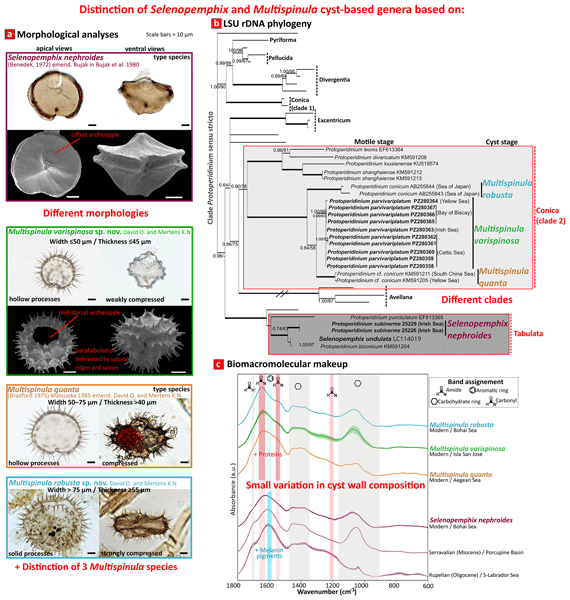
Ophélie David, Pjotr Meyvisch, Haifeng Gu, Gwenael Bilien, Dave Clarke, Fabienne Marret, and Kenneth N. Mertens
J. Micropalaeontol., 45, 547–576, https://doi.org/10.5194/jm-45-547-2026, https://doi.org/10.5194/jm-45-547-2026, 2026
Short summary
Short summary
By combining incubation experiments, microscopy, biomolecular analyses, and spectroscopy to assess the biomacromolecular composition of cyst walls, we show that Selenopemphix and Multispinula represent two distinct cyst-based genera, with different preservation potentials. We emend their diagnoses and describe two new Multispinula species, M. varispinosa sp. nov. and M. robusta sp. nov., in addition to M. quanta.
Cited articles
Abraham, E. R., Law, C. S., Boyd, P. W., Lavender, S. J., Maldonado, M. T., and Bowie, A. R.: Importance of stirring in the development of an iron-fertilized phytoplankton bloom, Nature, 407, 727–730, https://doi.org/10.1038/35037555, 2000.
Akselman, R. and Negri, R. M.: Blooms of Azadinium cf. spinosum Elbrächter et Tillmann (Dinophyceae) in northern shelf waters of Argentina, Southwestern Atlantic, Harmful Algae, 19, 30–38, https://doi.org/10.1016/j.hal.2012.05.004, 2012.
Akselman, R., Krock, B., Alpermann, T. J., Tillmann, U., Borel, C. M., Almandoz, G. O., and Ferrario, M. E.: Protoceratium reticulatum (Dinophyceae) in the austral Southwestern Atlantic and the first report on YTX-production in shelf waters of Argentina, Harmful Algae, 45, 40–52, https://doi.org/10.1016/j.hal.2015.03.001, 2015.
Alemany, D., Zavatteri, A., Prandoni, N., and Giussi, A. R.: Fisheries in the Patagonian shelf break Front, Chap. 7, in: The Patagonian shelf-break Front. Ecology, Fisheries, Wildlife Conservation, edited by: Acha, M., Iribarne, O., and Piola, A., Springer Nature, ISBN: 978-3-031-71189-3, https://doi.org/10.1007/978-3-031-71190-9_7, 2024.
Almandoz, G. O., Cefarelli, A. O., Diodato, S., Montoya, N. G., Benavides, Carignan, M., Hernando, M., Fabro, E., Metfies, K., Lundholm, N., Schloss, I. R., Alvarez, M., and Ferrario, M. E.: Harmful phytoplankton in the Beagle Channel (South America) as a potential threat to aquaculture activities, Mar. Poll. Bull., 145, 105–117, https://doi.org/10.1016/j.marpolbul.2019.05.026, 2019.
Anderson, C. R., Moore, S. K., Tomlinson, M. C., Silke, J., and Cusack, C. K.: Living with harmful algal blooms in a changing world: strategies for modelling and mitigating their effects in coastal marine ecosystems, in: Coastal and marine hazards, risks, and disasters, Elsevier, 495–561, ISBN: 978-0-12-396483-0, 2015.
Anderson, D. M., Fensin, E., Gobler, C. J., Hoeglund, A. E., Hubbard, K. A., Kulis, D. M., Landsberg, J. H., Lefebvre, K. A., Provoost, P., Richlen, M. L., Smith, J. L., Solow, A. R., and Trainer, V. L.: Marine harmful algal blooms (HABs) in the United States: history, current status and future trends, Harmful Algae, 102, 101975, https://doi.org/10.1016/j.hal.2021.101975, 2021.
Balch, W. M., Drapeau, D. T., Bowler, B. C., Lyczkowski, E. R., Lubelczyk, L. C., Painter, S. C., and Poulton, A. J.: Surface biological, chemical, and optical properties of the Patagonian Shelf coccolithophore bloom, the brightest waters of the Great Calcite Belt, Limnol. Oceanogr., 59, 1715–1732, https://doi.org/10.4319/lo.2014.59.5.1715, 2014.
Becker, F., Romero, S. I., and Pisoni, J. P.: Detection and characterization of submesoscale eddies from optical images: a case study in the Argentine continental shelf, Int. J. Remote Sens., 44, 3146–3159, https://doi.org/10.1080/01431161.2023.2216853, 2023.
Beron-Vera, F. J., Bodnariuk, N., Saraceno, M., Olascoaga, M. J., and Simionato, C.: Stability of the Malvinas current, Chaos, 30, 13152, https://doi.org/10.1063/1.5129441, 2020.
Cadaillon, A. M., Mattera, B., Albizzi, A., Montoya, N., Maldonado, S., Rey, A. R., Riccialdelli, L., Almandoz, G. O., and Schloss, I. R.: Multispecies mass mortality in the Beagle Channel associated with paralytic shellfish toxins, Harmful Algae, 132, 102581, https://doi.org/10.1016/j.hal.2024.102581, 2024.
Carreto, J. I., Montoya, N. G., Carignan, M. O., Akselman, R., Acha, E. M., and Derisio, C.: Environmental and biological factors controlling the spring phytoplankton bloom at the Patagonian shelf break front–Degraded fucoxanthin pigments and the importance of microzooplankton grazing, Prog. Oceanogr., 146, 1–21, https://doi.org/10.1016/j.pocean.2016.05.002, 2016.
Combes, V. and Matano, R. P.: The Patagonian shelf circulation: Drivers and variability, Prog Oceanogr., 167, 24–43, https://doi.org/10.1016/j.pocean.2018.07.003, 2018.
Corredor-Acosta, A., Galán, A., Saldías, G. S., Mardones, J. I., Medellín-Mora, J., Frangopulos, M., Shiozaki T., Harada, N., González H. E., and Iriarte, J. L.: Oceanic phytoplankton structure off western Patagonia during the austral summer: Implications for harmful algal blooms, Prog. Oceanogr., 231, 103409, https://doi.org/10.1016/j.pocean.2024.103409, 2025.
D'Agostino, V. C., Krock, B., Degrati, M., Sastre, V., Santinelli, N., Krohn, T., and Hoffmeyer, M. S.: Occurrence of toxigenic microalgal species and phycotoxin accumulation in mesozooplankton in northern Patagonian gulfs, Argentina, Environ. Toxicol. Chem., 38, 2209–2223, https://doi.org/10.1002/etc.4538, 2019.
Delgado, A. L., Hernández-Carrasco, I., Combes, V., Font-Muñoz, J., Pratolongo, P. D., and Basterretxea, G.: Patterns and trends in chlorophyll a concentration and phytoplankton phenology in the biogeographical regions of Southwestern Atlantic, J. Geophys. Res.-Ocean., 128, e2023JC019865, https://doi.org/10.1029/2023JC019865, 2023.
Della Penna, A., De Monte, S., Kestenare, E., Guinet, C., and d'Ovidio, F.: Quasi-planktonic behavior of foraging top marine predators, Sci. Rep., 5, 18063, https://doi.org/10.1038/srep18063, 2015.
d'Ovidio, F., Fernández, V., Hernández-García, E., and López, C.: Mixing structures in the mediterranean sea from finite-size lyapunov exponents, Geophys. Res. Lett., 31, 17203, https://doi.org/10.1029/2004GL020328, 2004.
d'Ovidio, F., Isern-Fontanet, J., López, C., Hernández-García, E., and García-Ladona, E.: Comparison between Eulerian diagnostics and finite-size Lyapunov exponents computed from altimetry in the Algerian basin, Deep-Sea Res. Pt. I, 56, 15–31, https://doi.org/10.1016/j.dsr.2008.07.014, 2009.
Fabro, E., Almandoz, G. O., Krock, B., and Tillmann, U.: Field observations of the dinoflagellate genus Azadinium and azaspiracid toxins in the south-west Atlantic Ocean, Mar. Freshw. Res., 71, 832–843, https://doi.org/10.1071/MF19124, 2019.
Ferronato, C., Berden, G., Rivarossa, M., and Guinder, V. A.: Wind-driven currents and water masses shape spring phytoplankton distribution and composition in hydrologically complex, productive shelf waters, Limnol. Oceanogr., 68, 2195–2210, https://doi.org/10.1002/lno.12413, 2023.
Ferronato, C., Guinder, V. A., Gilabert, A., Lopez-Abbate, C., Nocera, A., Loizaga, R., and D'Agostino, V.: Hydrographic data during Ana Maria Gayoso cruise in the South western Atlantic during late spring 2021, PANGAEA [data set], https://doi.org/10.1594/PANGAEA.971564, 2024.
Ferronato, C., Guinder, V.A., Rivarossa, M., Saraceno, M., Ibarbalz, F., Tillmann, U., Almandoz, G., Bourdin, G., D'Agostino, V., Gilabert, A., Loizaga, R., López Abbate, C., Nocera, A. C., Silva, R., and Flombaum, P.: Insights into protistan plankton blooms in the highly dynamic Patagonian shelf and adjacent ocean basin in the Southwestern Atlantic, J. Geophys. Res.-Ocean., 130, e2024JC021412, https://doi.org/10.1029/2024JC021412, 2025.
Frey, D. I., Piola, A. R., and Morozov, E. G.: Convergence of the Malvinas current branches near 44° S, Deep-Sea Res. Pt. I, 196, 104023, https://doi.org/10.1016/j.dsr.2023.104023, 2023.
García, V. M. T., Garcia, C. A. E., Mata, M. M., Pollery, R. C., Piola, A. R., Signorini, S. R., McClain, C. R., and Iglesias-Rodriguez, M. D.: Environmental factors controlling the phytoplankton blooms at the Patagonia shelf break in spring, Deep-Sea Res. Pt. I, 55, 1150–1166, https://doi.org/10.1016/j.dsr.2008.04.011, 2008.
GEBCO Compilation Group: General Bathymetric Chart of the Ocean, GEBCO 2021 grid, https://www.gebco.net/data_and_products/historical_data_sets/#gebco_2021 (last access: 19 September 2023), 2021.
Genitsaris, S., Stefanidou, N., Sommer, U., and Moustaka-Gouni, M.: Phytoplankton blooms, red tides and mucilaginous aggregates in the urban Thessaloniki Bay, Eastern Mediterranean, Diversity, 11, 136, https://doi.org/10.3390/d11080136, 2019.
Giddings, S. N., MacCready, P., Hickey, B. M., Banas, N. S., Davis, K. A., Siedlecki, S. A., Trainer, V .L., Kudela, R. M., Pelland, N. A., and Connolly, T. P.: Hindcasts of potential harmful algal bloom transport pathways on the Pacific Northwest coast, J. Geophys. Res.-Ocean., 119, 2439–2461, https://doi.org/10.1002/2013JC009622, 2014.
Gilabert, A. S., López-Abbate, C., Flombaum, P., Unrein, F., Arbilla, L. A., Garzón-Cardona, J. E., Martinez, A. M., Ibarbalz, F. M., Vincent, F., Saraceno M., Ruiz-Etcheverry, L. A., Ferronato, C., Guinder, V. A., Silva, R., Uibrig, R. A., D'Agostino, V., Loizaga, R., and Lara, R. J.: Planktonic drivers of carbon transformation during different stages of the spring bloom at the Patagonian Shelf-break front, Southwestern Atlantic Ocean, Biogeochemistry, 168, 1–25, https://doi.org/10.1007/s10533-024-01192-6, 2025.
Glibert, P. M.: Margalef revisited: a new phytoplankton mandala incorporating twelve dimensions, including nutritional physiology, Harmful Algae, 55, 25–30, https://doi.org/10.1016/j.hal.2016.01.008, 2016.
Guinder, V. A.: Finite Size Lyapunov Exponents on the Patagonian shelf and their role in retaining phytoplankton blooms, SEANOE Sea Scientific Open Data Publication [video], https://doi.org/10.17882/107582, 2025.
Guinder, V. A., Ferronato, C., Segura, V., Dogliotti, A., and Lutz, V.: The phytoplankton of the Patagonian shelf break Front, in: The Patagonian shelf-break Front. Ecology, Fisheries, Wildlife Conservation, edited by: Acha, M., Iribarne, O., and Piola, A., Aquatic Ecology Series, 13, Springer, Cham, https://doi.org/10.1007/978-3-031-71190-9_3, 2024.
Guinder, V. A., Tillmann, U., Krock, B., Delgado, A., Garzón-Cardona, J. E., Katja, M., López Abbate, M. C., Silva, R., and Lara, R.: Plankton multiproxy analyses in the Northern Patagonian Shelf, Argentina: community structure, phycotoxins and characterization of toxic Alexandrium strains, Front. Mar. Sci., 5, 394, https://doi.org/10.3389/fmars.2018.00394, 2018.
Guinder, V. A., Malits, A., Ferronato, C., Krock, B., Garzón-Cardona, J. E., and Martínez, A.: Microbial plankton configuration in the epipelagic realm from the Beagle Channel to the Burdwood Bank, a Marine Protected Area in Sub-Antarctic waters, Plos One, 15, e0233156, https://doi.org/10.1371/journal.pone.0233156, 2020.
Hallegraeff, G. M., Anderson, D. M., Belin, C., Bottein, M. Y. D., Bresnan, E., Chinain, M., Enevoldsen, H., Iwataki, M., Karlson, B., McKenzie, C.H., Sunesen, I., Pitcher, G. C., Provoost, P., Richardson, A., Schweibold, L., Tester, P. A., Trainer, V. L., Yniguez, A. T., and Zingone, A.: Perceived global increase in algal blooms is attributable to intensified monitoring and emerging bloom impacts,. Commun. Earth Environ., 2, 1–10, https://doi.org/10.1038/s43247-021-00178-8, 2021.
Haller, G. and Beron-Vera, F. J.: Geodesic theory of transport barriers in two-dimensional flows, Phys. D, 241, 1680–1702, https://doi.org/10.1016/j.physd.2012.06.012, 2012.
Hansen, H. P. and Koroleff, F.: Determination of Nutrients, in: Methods of Seawater Analysis, edited by: Grasshoff, K., Kremling, K., and Ehrhardt, M., Wiley, 159–228, https://doi.org/10.1002/9783527613984.ch10, 1999.
Hasle, G. R.: The Inverted-Microscope Methods, in: Phytoplankton Manual, edited by: Sournia, A., United Nations Educational, Scientific, and Cultural Organization, Paris, 88–96, 1978.
Hernández-Carrasco I., Alou-Font E., Dumont P. A., Cabornero A., Allen J., and Orfila A.: Lagrangian flow effects on phytoplankton abundance and composition along filament-like structures, Prog. Oceanogr., 189, 102469, https://doi.org/10.1016/j.pocean.2020.102469, 2020.
Iriarte, J. L., Pizarro, G., and Frangopulos, M.: Harmful algal blooms in Patagonian fjords and channels systems: Recent advances, gaps, and priorities in a changing ocean, Prog. Oceanogr., 217, 103087, https://doi.org/10.1016/j.pocean.2023.103087, 2023.
Jeffrey S. T. and Humphrey G. F.: New spectrophotometric equations for determining chlorophylls a, b, c1 and c2 in higher plants, algae and natural phytoplankton, Biochem. Physiol. Pflanz., 167, 191–194, https://doi.org/10.1016/S0015-3796(17)30778-3, 1975.
Kelley, D. E., Richards, C., and Layton, C.: oce: An R package for oceanographic analysis, J. Open Source Softw., 7, 3594, https://doi.org/10.21105/joss.03594, 2022.
Krock, B., Tillmann, U., Tebben, J., Trefault, N., and Gu, H.: Two novel azaspiracids from Azadinium poporum, and a comprehensive compilation of azaspiracids produced by Amphidomataceae, (Dinophyceae), Harmful Algae, 82, 1–8, https://doi.org/10.1016/j.hal.2018.12.005, 2019.
Kuwata, K., Lum, W. M., Takahashi, K., Benico, G., Takahashi, K., Lim, P. T., Leaw, C. P., Uchida, H., Ozawa, M., Matsushima, R., Watanabe, R., Suzuki, T., and Iwataki, M.: Phylogeny and ultrastructure of a non-toxigenic dinoflagellate Amphidoma fulgens sp. nov. (Amphidomataceae, Dinophyceae), with a wide distribution across Asian Pacific, Harmful Algae, 138, 102701, https://doi.org/10.1016/j.hal.2024.102701, 2024.
Lago, L. S., Saraceno, M., Piola, A. R., and Ruiz-Etcheverry, L. A.: Volume transport variability on the northern argentine continental shelf from in situ and satellite altimetry data, J. Geophys. Res.-Ocean., 126, e2020JC016813, https://doi.org/10.1029/2020JC016813, 2021.
Lehahn, Y., d'Ovidio, F., Lévy, M., and Heifetz, E.: Stirring of the northeast Atlantic spring bloom: A Lagrangian analysis based on multisatellite data, J. Geophys. Res.-Ocean., 112, C08005, https://doi.org/10.1029/2006JC003927, 2007.
Lehahn, Y., Koren, I., Sharoni, S., d'Ovidio, F., Vardi, A., and Boss, E.: Dispersion/dilution enhances phytoplankton blooms in low-nutrient waters, Nat. Commun., 8, 14868, https://doi.org/10.1038/ncomms14868, 2017.
Lévy, M., Franks, P. J., and Smith, K. S.: The role of submesoscale currents in structuring marine ecosystems, Nat. Commun., 9, 4758, https://doi.org/10.1038/s41467-018-07059-3, 2018.
Lin, S., Litaker, R. W., and Sunda, W. G.: Phosphorus physiological ecology and molecular mechanisms in marine phytoplankton, J. Phycol., 52, 10–36, https://doi.org/10.1111/jpy.12365, 2016.
Liu, M., Tillmann, U., Ding, G., Wang, A., and Gu, H.: Metabarcoding revealed a high diversity of Amphidomataceae (Dinophyceae) and the seasonal distribution of their toxigenic species in the Taiwan Strait, Harmful Algae, 124, 102404, https://doi.org/10.1016/j.hal.2023.102404, 2023.
López-Rivera, A., O'callaghan, K., Moriarty, M., O'Driscoll, D., Hamilton, B., Lehane, M., James, K. J., and Furey, A.: First evidence of azaspiracids (AZAs): a family of lipophilic polyether marine toxins in scallops (Argopecten purpuratus) and mussels (Mytilus chilensis) collected in two regions of Chile, Toxicon, 55, 692–701, https://doi.org/10.1016/j.toxicon.2009.10.020, 2010.
Mahadevan, A.: The impact of submesoscale physics on primary productivity of plankton, Annu. Rev. Mar. Sci., 8, 161–184, https://doi.org/10.1146/annurev-marine-010814-015912, 2016.
Mangolte, I., Lévy, M., Haëck, C., and Ohman, M. D.: Sub-frontal niches of plankton communities driven by transport and trophic interactions at ocean fronts, Biogeosciences, 20, 3273–3299, https://doi.org/10.5194/bg-20-3273-2023, 2023.
Maritorena, S., d'Andon, O. H. F., Mangin, A., and Siegel, D. A.: Merged satellite ocean color data products using a bio-optical model: Characteristics, benefits and issues, Remote Sens. Environ., 114, 1791–1804, https://doi.org/10.1016/j.rse.2010.04.002, 2010.
Martinetto, P., Alemany, D., Botto, F., Mastrángelo, M., Falabella, Acha, E. M., Antón, G., Bianchi, A., Campagna, C., Cañete, G., Filippo, P., Iribarne, O., Laterra, P., Martínez, P., Negri, R., Piola, A. R., Romero, S. I., Santos, D., and Saraceno, M.: Linking the scientific knowledge on marine frontal systems with ecosystem services, Ambio, 49, 541–556, https://doi.org/10.1007/s13280-019-01222-w, 2019.
Matano, R. P., Palma, E. D., and Piola, A. R.: The influence of the Brazil and Malvinas Currents on the Southwestern Atlantic Shelf circulation, Ocean Sci., 6, 983–995, https://doi.org/10.5194/os-6-983-2010, 2010.
McGirr, S., Clarke, D., Kilcoyne, Silke, J., and Touzet, N.: Co-localisation of Azaspiracid Analogs with the Dinoflagellate Species Azadinium spinosum and Amphidoma languida in the Southwest of Ireland, Microb. Ecol., 83, 635–646, https://doi.org/10.1007/s00248-021-01777-w, 2022.
Palma, E. D., Matano, R. P., and Piola, A. R.: A numerical study of the southwestern Atlantic shelf circulation: Stratified Ocean response to local and offshore forcing, J. Geophys. Res., 113, C11010, https://doi.org/10.1029/2007jc004720, 2008.
Piola, A. R., Bodnariuk, N., Combes, V., Franco, B. C., Matano, R. P., Palma, E. D., Romero, S. I., Saraceno, M., and Urricariet, M. M.: Anatomy and dynamics of the Patagonia shelf break front, in: The Patagonian shelf-break Front. Ecology, Fisheries, Wildlife Conservation, edited by: Acha, M., Iribarne, O., and Piola, A., Springer Nature, ISBN: 978-3-031-71189-3, 2024.
Pitcher, G. C., Figueiras, F. G., Hickey, B. M., and Moita, M. T.: The physical oceanography of upwelling systems and the development of harmful algal blooms, Prog. Oceanogr., 85, 5–32, https://doi.org/10.1016/j.pocean.2010.02.002, 2010.
Ramírez, F. J., Guinder, V. A., Ferronato, C., and Krock, B.: Increase in records of toxic phytoplankton and associated toxins in water samples in the Patagonian Shelf (Argentina) over 40 years of field surveys, Harmful Algae, 118, 102317, https://doi.org/10.1016/j.hal.2022.102317, 2022.
Raine, R.: A review of the biophysical interactions relevant to the promotion of HABs in stratified systems: the case study of Ireland, Deep-Sea Res. Pt. II, 101, 21–31, https://doi.org/10.1016/j.dsr2.2013.06.021, 2014.
Rossi, R., Dell'Aversano, C., Krock, B., Ciminiello, P., Percopo, I., Tillmann, U., Soprano, V., and Zingone, A.: Mediterranean Azadinium dexteroporum (Dinophyceae) produces AZA-35 and six novel azaspiracids: a structural study by a multi-platform mass spectrometry approach, Anal. Bioanal. Chem., 409, 1121–1134, https://doi.org/10.1007/s00216-016-0037-4, 2017.
Salas, R., Tillmann, U., Gu, H., Wietkamp, S., Krock, B., and Clarke, D.: Morphological and molecular characterization of multiple new Azadinium strains revealed a high diversity of non-toxigenic species of Amphidomataceae (Dinophyceae) including two new Azadinium species in Irish waters, North East Atlantic, Phycol. Res., 69, 88–115, https://doi.org/10.1111/pre.12448, 2021.
Salyuk, P. A., Mosharov, S. A., Frey, D. I., Kasyan, V. V., Ponomarev, V. I., Kalinina, O. Y., Morozov, E. G., Latushkin, A. A., Sapozhnikov, P. V., Ostroumova, S. A., Lipinskaya, N. A., Budyansky, M. V., Chukmasov, P. V., Krechik, V. A., Uleysky, M. Y., Fayman, P. A., Mayor, A. Y., Mosharova, I. V., Chernetsky, A. D., Shkorba, S. P., and Shved, N. A.: Physical and biological features of the waters in the outer Patagonian shelf and the Malvinas Current, Water, 14, 3879, https://doi.org/10.3390/w14233879, 2022.
Saraceno, M., Bodnariuk, N., Ruiz-Etcheverry, L. A., Berta, M., Simionato, C. G., Beron-Vera, F. J., and Olascoaga, M. J.: Lagrangian characterization of the southwestern Atlantic from a dense surface drifter deployment., Deep-Sea Res. Pt. I, 208, 104319, https://doi.org/10.1016/j.dsr.2024.104319, 2024.
Ser-Giacomi, E., Martinez-Garcia, R., Dutkiewicz, S., and Follows, M. J. A.: Lagrangian model for drifting ecosystems reveals heterogeneity-driven enhancement of marine plankton blooms, Nat. Commun., 14, 6092, https://doi.org/10.1038/s41467-023-41469-2, 2023.
Smayda, T. J.: Turbulence, watermass stratification and harmful algal blooms: an alternative view and frontal zones as “pelagic seed banks”, Harmful Algae, 1, 95–112, https://doi.org/10.1016/S1568-9883(02)00010-0, 2002.
Sunesen, I., Méndez, S. M., Mancera-Pineda, J. E., Dechraoui-Bottein, M. Y., and Enevoldsen, H.: The Latin America and Caribbean HAB status report based on OBIS and HAEDAT maps and databases. Harmful Algae 102, 101920, https://doi.org/10.1016/j.hal.2020.101920, 2021.
Tillmann, U.: Amphidomataceae, in: Harmful Algal Blooms: A compendium Desk Reference, edited by: Shumway, S. E., Burkholder, J. M., and Morton, S. L., Wiley, Singapore, 575–582, ISBN: 978-1-118-99467-2, 2018a.
Tillmann, U.: Electron microscopy of a 1991 spring plankton sample from the Argentinean shelf reveals the presence of four new species of Amphidomataceae (Dinophyceae), Phycol. Res., 66, 269–290, https://doi.org/10.1111/pre.12225, 2018b.
Tillmann, U., Salas, R., Gottschling, M., Krock, B., O'Driscoll, D., and Elbrächter, M.: Amphidoma languida sp. nov. (Dinophyceae) reveals a close relationship between Amphidoma and Azadinium, Protist, 163, 701–719, https://doi.org/10.1016/j.protis.2011.10.005, 2012.
Tillmann, U. and Akselman, R.: Revisiting the 1991 algal bloom in shelf waters off Argentina: Azadinium luciferelloides sp. nov. (Amphidomataceae, Dinophyceae) as the causative species in a diverse community of other amphidomataceans, Phycol. Res., 64, 160–175, https://doi.org/10.1111/pre.12133, 2016.
Tillmann, U., Trefault, N., Krock, B., Parada-Pozo, G., De la Iglesia, R., and Vásquez, M.: Identification of Azadinium poporum (Dinophyceae) in the Southeast Pacific: morphology, molecular phylogeny, and azaspiracid profile characterization, J. Plank. Res., 39, 350–367, https://doi.org/10.1093/plankt/fbw099, 2017a.
Tillmann, U., Sánchez-Ramírez, S., Krock, B., and Bernales-Jiménez, A.: A bloom of Azadinium polongum in coastal waters off Peru, Rev. Biol. Mar. Oceanogr., 52, 591–610, https://doi.org/10.4067/S0718-19572017000300015, 2017b.
Tillmann, U., Gottschling, M., Guinder, V., and Krock, B.: Amphidoma parvula (Amphidomataceae), a new planktonic dinophyte from the Argentine Sea, Eur. J. Phycol., 53, 14–28, https://doi.org/10.1080/09670262.2017.1346205, 2018.
Tillmann, U., Gottschling, M., Krock B., Smith, K. F., and Guinder, V. A.: High abundance of Amphidomataceae (Dinophyceae) during the 2015 spring bloom of the Argentinean Shelf and a new, non-toxigenic ribotype of Azadinium spinosum, Harmful Algae, 84, 244–260, https://doi.org/10.1016/j.hal.2019.01.008, 2019.
Tillmann, U., Wietkamp, S., Krock, B., Tillmann, A., Voss, D., and Gu, H.: Amphidomataceae (Dinophyceae) in the western Greenland area, including the description of Azadinium perforatum sp. nov., Phycologia, 59, 63–88, https://doi.org/10.1080/00318884.2019.1670013, 2020.
Tillmann, U., Wietkamp, S., Gu, H., Krock, B., Salas, R., and Clarke, D.: Multiple new strains of Amphidomataceae (Dinophyceae) from the North Atlantic revealed a high toxin profile variability of Azadinium spinosum and a new non-toxigenic Az. cf. spinosum, Microorganisms, 9, 134, https://doi.org/10.3390/microorganisms9010134, 2021.
Turner, A. D. and Goya, A. B.: Occurrence and profiles of lipophilic toxins in shellfish harvested from Argentina, Toxicon, 102, 32–42, https://doi.org/10.1016/j.toxicon.2015.05.010, 2015.
Wells, M. L., Karlson, B., Wulff, A., Kudela, R., Trick, C., Asnaghi, V., Berdalet, E., Cochlan, W., Davidson, K., De Rijcke, M., Dutkiewicz, S., Hallegraeff, G., Flynn, K. J., Legrand, C., Paerl, H., Silke, J., Suikkanen, S., Thompson, P., and Trainer, V. L.: Future HAB science: Directions and challenges in a changing climate, Harmful algae, 91, 101632, https://doi.org/10.1016/j.hal.2019.101632, 2020.
Wietkamp, S., Krock, B., Gu, H., Voß, D., Klemm, K., and Tillmann, U.: Occurrence and distribution of Amphidomataceae (Dinophyceae) in Danish coastal waters of the North Sea, the Limfjord, and the Kattegat/Belt area, Harmful Algae, 88, 101637, https://doi.org/10.1016/j.hal.2019.101637, 2019.
Wietkamp, S., Krock, B., Clarke, D., Voß, D., Salas, R., Kilcoyne, J., and Tillmann, U.: Distribution and abundance of azaspiracid-producing dinophyte species and their toxins in North Atlantic and North Sea waters in summer 2018, PLoS One, 15, e0235015, https://doi.org/10.1371/journal.pone.0235015, 2020.
Wilson, C., Sastre, A. V., Hoffmeyer, M., Rowntree, V. J., Fire, S. E., Santinelli, N. H., Ovejero, S. D., D'Agostino, V., Marón, C. F., Doucette, G., J., Broadwater, M. H., Wang, Z., Montoya, N., Seger, J., Adler, F. R., Sironi, M., and Uhart M. M.: Southern right whale (Eubalaena australis) calf mortality at Península Valdés, Argentina: Are harmful algal blooms to blame?, Mar. Mammal. Sci., 32, 423–451, https://doi.org/10.1111/mms.12263, 2015.
Short summary
An unusual survey involving two vessels in the Argentine Sea over a 10 d period enabled synoptic observations of a significant toxic phytoplankton bloom. Simultaneous species characterization of the bloom, along with measurements of surface currents and mesoscale fronts, provided insights into its retention. Interdisciplinary approaches shed light on the biophysical coupling that underlies the persistence and horizontal transport of harmful algal blooms in productive continental shelves.
An unusual survey involving two vessels in the Argentine Sea over a 10 d period enabled synoptic...


Altmetrics
Final-revised paper
Preprint