
Articles | Volume 19, issue 13
https://doi.org/10.5194/bg-19-3131-2022
© Author(s) 2022. This work is distributed under
the Creative Commons Attribution 4.0 License.
the Creative Commons Attribution 4.0 License.
https://doi.org/10.5194/bg-19-3131-2022
© Author(s) 2022. This work is distributed under
the Creative Commons Attribution 4.0 License.
the Creative Commons Attribution 4.0 License.
Research article
| 
04 Jul 2022
Research article |
| 04 Jul 2022
| 04 Jul 2022
The influence of mesoscale climate drivers on hypoxia in a fjord-like deep coastal inlet and its potential implications regarding climate change: examining a decade of water quality data
Johnathan Daniel Maxey
CORRESPONDING AUTHOR
Faculty of Engineering, Computing and Science, Swinburne University of Technology, Kuching 93350, Malaysia
ADS Environmental Services, Kota Kinabalu, Sabah, 88400, Malaysia
Neil David Hartstein
ADS Environmental Services, Kota Kinabalu, Sabah, 88400, Malaysia
Aazani Mujahid
Faculty of Resource Science & Technology, University Malaysia
Sarawak, Kota Samarahan 94300, Sarawak, Malaysia
Moritz Müller
Faculty of Engineering, Computing and Science, Swinburne University of Technology, Kuching 93350, Malaysia
Related authors

Johnathan Daniel Maxey, Neil D. Hartstein, Hermann W. Bange, and Moritz Müller
Biogeosciences, 21, 5613–5637, https://doi.org/10.5194/bg-21-5613-2024, https://doi.org/10.5194/bg-21-5613-2024, 2024
Short summary
Short summary
The distribution of N2O in fjord-like estuaries is poorly described in the Southern Hemisphere. Our study describes N2O distribution and its drivers in one such system in Macquarie Harbour, Tasmania. Water samples were collected seasonally in 2022 and 2023. Results show the system removes atmospheric N2O when river flow is high, whereas the system emits N2O when the river flow is low. N2O generated in basins is intercepted by the surface water and exported to the ocean during high river flow.
Johnathan Daniel Maxey, Neil D. Hartstein, Hermann W. Bange, and Moritz Müller
Biogeosciences, 21, 5613–5637, https://doi.org/10.5194/bg-21-5613-2024, https://doi.org/10.5194/bg-21-5613-2024, 2024
Short summary
Short summary
The distribution of N2O in fjord-like estuaries is poorly described in the Southern Hemisphere. Our study describes N2O distribution and its drivers in one such system in Macquarie Harbour, Tasmania. Water samples were collected seasonally in 2022 and 2023. Results show the system removes atmospheric N2O when river flow is high, whereas the system emits N2O when the river flow is low. N2O generated in basins is intercepted by the surface water and exported to the ocean during high river flow.
Jenny Choo, Nagur Cherukuru, Eric Lehmann, Matt Paget, Aazani Mujahid, Patrick Martin, and Moritz Müller
Biogeosciences, 19, 5837–5857, https://doi.org/10.5194/bg-19-5837-2022, https://doi.org/10.5194/bg-19-5837-2022, 2022
Short summary
Short summary
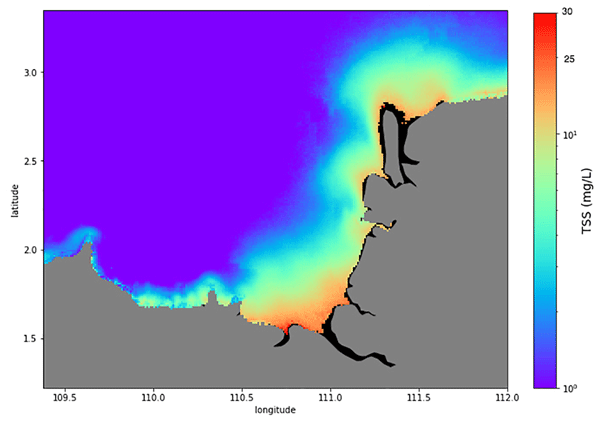
This study presents the first observation of water quality changes over space and time in the coastal systems of Sarawak, Malaysian Borneo, using remote sensing technologies. While our findings demonstrate that the southwestern coast of Sarawak is within local water quality standards, historical patterns of water quality degradation that were detected can help to alert local authorities and enhance management and monitoring strategies of coastal waters in this region.
Alexandra Klemme, Tim Rixen, Denise Müller-Dum, Moritz Müller, Justus Notholt, and Thorsten Warneke
Biogeosciences, 19, 2855–2880, https://doi.org/10.5194/bg-19-2855-2022, https://doi.org/10.5194/bg-19-2855-2022, 2022
Short summary
Short summary
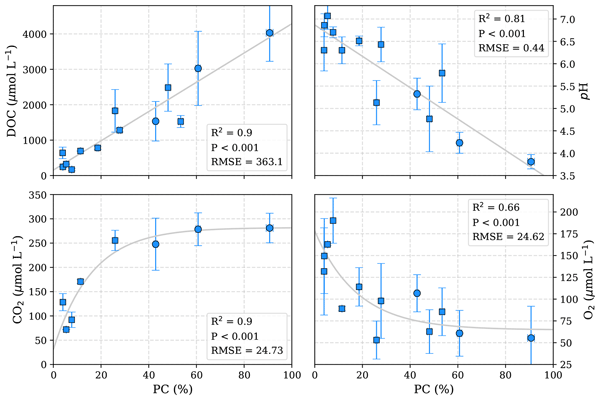
Tropical peat-draining rivers contain high amounts of carbon. Surprisingly, measured carbon dioxide (CO2) emissions from those rivers are comparatively moderate. We compiled data from 10 Southeast Asian rivers and found that CO2 production within these rivers is hampered by low water pH, providing a natural threshold for CO2 emissions. Furthermore, we find that enhanced carbonate input, e.g. caused by human activities, suspends this natural threshold and causes increased CO2 emissions.
Cited articles
Arrigo, K. R.: Marine microorganisms and global nutrient cycles, Nature,
437, 349–355, 2005.
Augustinus, P., Barton, C. E., Zawadzki, A., and Harle, K.: Lithological and
geochemical record of mining-induced changes in sediments from Macquarie
Harbour, southwest Tasmania, Australia, Environ. Earth Sci., 61,
625–639, 2010.
Austin, W. E. and Inall, M. E.: Deep-water renewal in a Scottish fjord:
temperature, salinity and oxygen isotopes, Polar Res., 21, 251–257,
2002.
Baker, W. E. and Ahmad, N.: Re-examination of the fjord theory of Port
Davey, Tasmania, Papers and Proceedings of the Royal Society of Tasmania,
93, 113–116, 1959.
Bennett, J. C., Ling, F. L. N., Graham, B., Grose, M. R., Corney, S. P.,
White, C. J., Holz, G. K., Post, D. A., Gaynor, S. M., and Bindoff, N. L.:
Climate Futures for Tasmania: water and catchments technical report,
Antarctic Climate and Ecosystems Cooperative Research Centre, Hobart,
Tasmania, Antarctic Climate and Ecosystems Cooperative Research Centre, ISBN 978-1-921197-06-8, 2010.
Bianchi, T. S., Cui, X., Blair, N. E., Burdige, D. J., Eglinton, T. I., and
Galy, V.: Centers of organic carbon burial and oxidation at the land-ocean
interface, Org. Geochem., 115, 138–155, 2018.
Bianchi, T. S., Arndt, S., Austin, W. E., Benn, D. I., Bertrand, S., Cui,
X., Faust, J., Koziorowska-Makuch, K., Moy, C., Savage, C., Smeaton, C.,
Smith, R., and Syvitski, J.: Fjords as aquatic critical zones (ACZs),
Earth-Sci. Rev., 203, 103145, https://doi.org/10.1016/j.earscirev.2020.103145, 2020.
Breitburg, D., Levin, L. A., Oschlies, A., Grégoire, M., Chavez, F. P.,
Conley, D. J., Garçon, V., Gilbert, D., Gutiérrez, D., Isensee, K.,
and Jacinto, G. S.: Declining oxygen in the global ocean and coastal waters,
Science, 359, https://doi.org/10.1126/science.aam7240, 2018.
Brooks, K. M.: Salmon Farm Benthic and Shellfish Effects Study 1996–1997, Aquatic Environmental Sciences, 644 Old Eaglemount Road, Port Townsend, WA 98368, 117, 2000.
Cage, A. G.: The modern and late Holocene marine environments of Loch Sunart, NW Scotland, Doctoral dissertation, University of St Andrews, University of St. Andrews, http://hdl.handle.net/10023/15910 (last access: 23 June 2022), 2006.
Calvete, C. and Sobarzo, M.: Quantification of the surface brackish water
layer and frontal zones in southern Chilean fjords between Boca del Guafo
(43∘30′ S) and Estero Elefantes (46∘30′ S), Cont. Shelf Res., 31, 162–171, 2011.
Carpenter, P. D., Butler, E. C. V., Higgins, H. W., Mackey, D. J., and Nichols, P. D.: Chemistry of trace elements, humic substances and
sedimentary organic matter in Macquarie Harbour, Tasmania, Mar. Freshwater Res., 42, 625–654, 1991.
Codispoti, L. A., Yoshinari, T., and Devol, A. H.: Suboxic respiration in
the oceanic water column, in Respiration in Aquatic Ecosystems, edited by:
del Giorgio, P. and Williams, P., Oxford University Press, 225–247,
https://doi.org/10.1093/acprof:oso/9780198527084.001.0001, 2005.
Cracknell, M. J., Nascimento, S. C., Heng, W. X., Parbhakar-Fox, A., and Schaap, T. A.: Geophysical investigation of mine waste in the King River
Delta, Macquarie Harbour, Tasmania, ASEG Extended Abstracts, 1, 1–4, 2019.
Crawford, C.: Environmental management of marine aquaculture in Tasmania,
Australia, Aquaculture, 226, 129–138, 2003.
Crawford, C. M., Mitchell, I. M., and Macleod, C. K. A.: Video assessment
of environmental impacts of salmon farms, ICES J. Mar. Sci.,
58, 445–452, 2001.
Cresswell, G. R., Edwards, R. J., and Barker, B. A.: Macquarie Harbour,
Tasmania-seasonal oceanographic surveys in 1985, Papers and Proceedings
of the Royal Society of Tasmania, 123, 63–66, 1989.
Da Silva, R. R. P., White, C. A., Bowman, J. P., Raes, E., Bisset, A.,
Chapman, C., Bodrossy, L., and Ross, D. J.: Environmental influences shaping
microbial communities in a low oxygen, highly stratified marine embayment,
Aquat. Microb. Ecol., 87, 185–203, 2021.
del Giorgio, P. and Williams, P. (Eds.): Respiration in aquatic
ecosystems, Oxford University Press,
https://doi.org/10.1093/acprof:oso/9780198527084.001.0001, 2005.
De Mello, N. A. S. T., Brighenti, L. S., Barbosa, F. A. R., Staehr, P. A.,
and Bezerra Neto, J. F.: Spatial variability of methane (CH4)
ebullition in a tropical hypereutrophic reservoir: silted areas as a bubble
hot spot, Lake Reserv. Manage., 34, 105–114, 2018.
Dey, R., Lewis, S. C., Arblaster, J. M., and Abram, N. J.: A review of past
and projected changes in Australia's rainfall, WIRES Clim. Change, 10, e577, https://doi.org/10.1002/wcc.577, 2018.
Diaz, R. J. and Rosenberg, R.: Spreading dead zones and consequences for
marine ecosystems, Science, 321, 926–929, 2008.
Edgar, G. J., Barrett, N. S., and Last, P. R.: The distribution of
macroinvertebrates and fishes in Tasmanian estuaries, J. Biogeogr., 26, 1169–1189, 1999.
Edwards, A. and Edelsten, D. J.: Deep water renewal of Loch Etive: a three
basin Scottish fjord, Estuar. Coast. Mar. Sci., 5, 575–595,
1977.
Eriksen, R. S., Mackey, D. J., van Dam, R., and Nowak, B.: Copper
speciation and toxicity in Macquarie Harbour, Tasmania: an investigation
using a copper ion selective electrode, Mar. Chem., 74, 99–113,
2001.
Featherstone, A. M. and O'Grady, B. V.: Removal of dissolved copper and
iron at the freshwater-saltwater interface of an acid mine stream, Mar. Pollut. Bull., 34, 332–337, https://doi.org/10.1016/S0025-326X(96)00089-6, 1997.
Fogt, R. L. and Marshall, G. J.: The Southern annular mode: Variability,
trends, and climate impacts across the Southern Hemisphere, WIRES Clim. Change, 11, e652, https://doi.org/10.1002/wcc.652, 2020.
Frey, C., Bange, H. W., Achterberg, E. P., Jayakumar, A., Löscher, C. R., Arévalo-Martínez, D. L., León-Palmero, E., Sun, M., Sun, X., Xie, R. C., Oleynik, S., and Ward, B. B.: Regulation of nitrous oxide production in low-oxygen waters off the coast of Peru, Biogeosciences, 17, 2263–2287, https://doi.org/10.5194/bg-17-2263-2020, 2020.
Gade, H. G. and Edwards, A.: Deep water renewal in fjords, in: Fjord
oceanography, edited by: Freeland, H. J, Farmer, D. M., and Levings, C. D.,
Springer, Boston, MA, 453–489, ISBN: 978-1-4613-3107-0, 1980.
Geyer, W. R. and Cannon, G. A.: Sill processes related to deep water
renewal in a fjord, J. Geophys. Res.-Oceans, 87,
7985–7996, 1982.
Gilbert, D., Rabalais, N. N., Díaz, R. J., and Zhang, J.: Evidence for greater oxygen decline rates in the coastal ocean than in the open ocean, Biogeosciences, 7, 2283–2296, https://doi.org/10.5194/bg-7-2283-2010, 2010.
Gillibrand, P. A. and Turrell, W. R.: The use of simple models in the
regulation of the impact of fish farms on water quality in Scottish sea
lochs, Aquaculture, 159, 33–46, 1997.
Gillibrand, P. A., Cage, A. G., and Austin, W. E.: A preliminary
investigation of basin water response to climate forcing in a Scottish
fjord: evaluating the influence of the NAO, Cont. Shelf Res.,
25, 571–587, 2005.
Gillibrand, P. A., Cromey, C. J., Black, K. D., Inall, M. E., and Gontarek,
S. J.: Identifying the risk of deoxygenation in Scottish sea lochs with
isolated deep water, in: Scottish Aquaculture Research Forum, SARF, 7, Scottish Association for Marine Science Dunstaffnage Marine Laboratory Oban Argyll PA37 1QA, February 2006.
Gonsior, M., Peake, B. M., Cooper, W. J., Jaffé, R., Young, H., Kahn, A.
E., and Kowalczuk, P.: Spectral characterization of chromophoric dissolved
organic matter (CDOM) in a fjord (Doubtful Sound, New Zealand), Aquat.
Sci., 70, 397–409, 2008.
Goreau, T. J., Kaplan, W. A., Wofsy, S. C., McElroy, M. B., Valois, F. W., and Watson, S. W.: Production of NO2-and N2O by nitrifying
bacteria at reduced concentrations of oxygen, Appl. Environ.
Microb., 40, 526–532, 1980.
Goyal, R., England, M. H., Jucker, M., and Sen Gupta, A.: Response of
Southern Hemisphere western boundary current regions to future zonally
symmetric and asymmetric atmospheric changes, J. Geophys.
Res.-Oceans, 126, e2021JC017858, https://doi.org/10.1029/2021JC017858, 2021.
Grose, M. R., Barnes-Keoghan, I., Corney S. P., White C. J., Holz, G. K.,
Bennett, J. B., Gaynor, S. M., and Bindof, N. L.: Climate Futures for
Tasmania: general climate impacts technical report, Antarctic Climate and
Ecosystems Cooperative Research Centre, Hobart, Tasmania, ISBN 978-1-921197-05-5, 2010.
Gupta, G. V. M., Jyothibabu, R., Ramu, C. V., Reddy, A. Y., Balachandran, K.
K., Sudheesh, V., Kumar, S., Chari, N. V. H. K., Bepari, K. F., Marathe, P.
H., and Reddy, B. B.: The world's largest coastal deoxygenation zone is not
anthropogenically driven, Environ. Res. Lett., 16, p. 054009, https://doi.org/10.1088/1748-9326/abe9eb, 2021.
Hartstein, N. D.: Supply and dispersal of mussel farm debris and its impacts
on benthic habitats in contrasting hydrodynamic regimes, PhD thesis,
University of Auckland, ResearchSpace@Auckland, 2003.
Hartstein, N. D., Maxey, J. D., Loo, J. C. H., and Then, A. Y. H.: Drivers
of deep water renewal in Macquarie Harbour, Tasmania, J. Marine
Syst., 199, 103226, https://doi.org/10.1016/j.jmarsys.2019.103226, 2019.
Hartstein, N., Maxey, J. D., and Kerroux, A.: Potential Causes of Beggiatoa
Coverage in and Around Franklin Lease and Macquarie Harbour, a Report to the
Tasmanian Salmonid Growers Association from Aquadynamic Solutions, Sdn. Bhd., Kota
Kinabalu, Sabah, Malaysia, Aquadynamic Solutions Sdn. Bhd., 2016.
Hemer, M. A. and Griffin, D. A.: The wave energy resource along
Australia's Southern margin, J. Renew. Sustain. Ener.,
2, 043108, https://doi.org/10.1063/1.3464753, 2010.
Hemer, M. A., Church, J. A., and Hunter, J. R.: Variability and trends in
the directional wave climate of the Southern Hemisphere, Int.
J. Climatol., 30, 475–491, 2010.
Hill, K. J., Santoso, A., and England, M. H.: Interannual Tasmanian
rainfall variability associated with large-scale climate modes, J. Climate, 22, 4383–4397, 2009.
Inall, M. E. and Gillibrand, P. A.: The physics of mid-latitude fjords: a review, in: Fjord Systems and Archives, edited by: Howe, J., Austin, W., Forwick, M., and Paetzel, M., The Geological Society, 17–33, https://doi.org/10.1144/SP344.3, 2010.
Ji, Q., Frey, C., Sun, X., Jackson, M., Lee, Y.-S., Jayakumar, A., Cornwell, J. C., and Ward, B. B.: Nitrogen and oxygen availabilities control water column nitrous oxide production during seasonal anoxia in the Chesapeake Bay, Biogeosciences, 15, 6127–6138, https://doi.org/10.5194/bg-15-6127-2018, 2018.
Ji, Q., Jameson, B. D., Juniper, S. K., and Grundle, D. S.: Temporal and
vertical oxygen gradients modulate nitrous oxide production in a seasonally
anoxic fjord: Saanich Inlet, British Columbia, J. Geophys.
Res.-Biogeo., 125, e2020JG005631, https://doi.org/10.1029/2020JG005631, 2020.
Keeling, R. F., Körtzinger, A., and Gruber, N.: Ocean deoxygenation in
a warming world, Annu. Rev. Mar. Sci., 2, 199–229, 2010.
Keith, D. A., Ferrer-Paris, J. R., Nicholson, E., and Kingsford, R. T.
(Eds.): The IUCN Global Ecosystem Typology 2.0: Descriptive profiles for
biomes and ecosystem functional groups, Gland, Switzerland: IUCN,
https://doi.org/10.2305/IUCN.CH.2020.13.en, 2020.
Kiernan, K.: The Extent of Late Cenozoic Glaciation in the Central Highlands
of Tasmania, Australia, Arctic Alpine Res., 22, 341–354.
https://doi.org/10.2307/1551459, 1990.
Kiernan, K.: Glacial history of the upper Derwent Valley, Tasmania, New Zeal. J. Geol. Geop., 34, 157–166,
https://doi.org/10.1080/00288306.1991.9514453, 1991.
Kiernan, K.: A reconnaissance of the geomorphology and glacial history of
the upper Gordon River Valley, Tasmania, Tasforests, 7, 51–76, 1995.
King, R. D.: Limnology of the Gordon River Basin, Tasmania, and its
meromictic lakes, Doctoral Dissertation, University of Tasmania, 1980.
King, R. D. and Tyler, P. A.: Meromictic lakes of south-west Tasmania,
Mar. Freshwater Res., 32, 741–756, 1981.
King, R. D. and Tyler, P. A.: Downstream effects of the Gordon River Power
Development, south-west Tasmania, Mar. Freshwater Res., 33,
431–442, 1982.
Kirkpatrick, J. B., Nunez, M., Bridle, K. L., Parry, J., and Gibson, N.: Causes
and consequences of variation in snow incidence on the high mountains of
Tasmania, 1983–2013, Aust. J. Bot., 65, 214–224,
https://doi.org/10.1071/BT16179, 2017.
Koehnken, L.: Water Quality in the King River and Macquarie Harbour,
Tasmania: Pre-and Post-Mount Lyell Mine Closure, in: Hydrology and Water
Resources Symposium 1996: Water and the Environment, Barton, ACT: Institution of Engineers, Australia, 1996, 157–162, National conference publication, Institution of Engineers, Australia, ; no. 96/05, ISBN: 0858256495, 2006.
Lam, P. and Kuypers, M. M.: Microbial nitrogen cycling processes in oxygen
minimum zones, Ann. Rev. Mar. Sci., 3, 317–345, 2011.
Levin, L. A. and Breitburg, D. L.: Linking coasts and seas to address
ocean deoxygenation, Nat. Clim. Change, 5, 401–403, 2015.
Li, Y., Xie, H., Scarratt, M., Damm, E., Bourgault, D., Galbraith, P. S., and Wallace, D. W.: Dissolved methane in the water column of the Saguenay Fjord, Mar. Chem., 230, 103926, https://doi.org/10.51200/bjomsa.v1i0.995, 2021.
Liu, L., Wilkinson, J., Koca, K., Buchmann, C., and Lorke, A.: The role of
sediment structure in gas bubble storage and release, J. Geophys. Res.-Biogeo., 121, 1992–2005, 2016.
Lucieer, V.: SeaMap Tasmania Bathymetric Data, Institute for
Marine and Antarctic Studies, University of Tasmania [data set], https://doi.org/10.1016/j.ecss.2020.107016, 2007.
Marshall, G. and National Center for Atmospheric Research Staff (Eds): The Climate Data Guide: Marshall Southern Annular Mode (SAM) Index
(Station-based), https://climatedataguide.ucar.edu/climate-data/marshall-southern-annular-mode-sam-index-station-based
(last access: 20 January 2022), 2018.
Mau, S., Blees, J., Helmke, E., Niemann, H., and Damm, E.: Vertical distribution of methane oxidation and methanotrophic response to elevated methane concentrations in stratified waters of the Arctic fjord Storfjorden (Svalbard, Norway), Biogeosciences, 10, 6267–6278, https://doi.org/10.5194/bg-10-6267-2013, 2013.
Maxey, J. D., Hartstein, N. D., Penjinus, D., and Kerroux, A.: Simple
quality control technique to identify dissolved oxygen diffusion issues with
biochemical oxygen demand bottle incubations, BJoMSA, 1, 2017.
Maxey, J. D., Hartstein, N. D., Then, A. Y. H., and Barrenger, M.:
Dissolved oxygen consumption in a fjord-like estuary, Macquarie Harbour,
Tasmania, Estuar. Coast. Shelf S., 246, 107016, https://doi.org/10.1016/j.ecss.2020.107016, 2020.
Meneghini, B., Simmonds, I., and Smith, I. N.: Association between
Australian rainfall and the southern annular mode, Int. J.
Climatol., 27, 109–121,
2007.
MHDOWG (Macquarie Harbour Dissolved Oxygen Working Group): Final Report to the Tasmanian Salmonid Growers Association, 2014.
Oschlies, A., Brandt, P., Stramma, L., and Schmidtko, S.: Drivers and
mechanisms of ocean deoxygenation, Nat. Geosci., 11, 467–473, 2018.
Pereira, P. M., Black, K. D., McLusky, D. S., and Nickell, T. D.: Recovery
of sediments after cessation of marine fish farm production, Aquaculture,
235, 315–330, 2004.
Pickard, G. L. and Stanton, B. R.: Pacific fjords-a review of their water
characteristics, Fjord Oceanography, edited by: Freeland, H. J., Farmer, D. M., and Levings, C. D., Fjord oceanography, Plenum Press, New York, 1–51, 1980.
Pitcher, G. C., Aguirre-Velarde, A., Breitburg, D., et al.: System controls of coastal and
open ocean oxygen depletion, Prog. Oceanogr., p. 102613, https://doi.org/10.1016/j.pocean.2021.102613, 2021.
Priestley, M. D. and Catto, J. L.: Future changes in the extratropical
storm tracks and cyclone intensity, wind speed, and structure, Weather and
Climate Dynamics Discussions, 3, 1–40, https://doi.org/10.5194/wcd-3-337-2022, 2021.
Rabalais, N. N., Díaz, R. J., Levin, L. A., Turner, R. E., Gilbert, D., and Zhang, J.: Dynamics and distribution of natural and human-caused hypoxia, Biogeosciences, 7, 585–619, https://doi.org/10.5194/bg-7-585-2010, 2010.
Reeburgh, W. S.: Oceanic methane biogeochemistry, Chem. Rev., 107,
486–513, 2007.
Rosenberg, R.: Benthic macrofaunal dynamics, production, and dispersion in
an oxygen-deficient estuary of west Sweden, J. Exp. Mar.
Biol. Ecol., 26, 107–133, 1977.
Sharples, C., Walford, H., Watson, C., Ellison, J. C., Hua, Q., Bowden, N., and Bowman, D.: Ocean Beach, Tasmania: A swell-dominated shoreline reaches
climate-induced recessional tipping point?, Mar. Geol., 419, https://doi.org/10.1016/j.margeo.2019.106081,
2020.
Skogen, M. D., Eknes, M., Asplin, L. C., and Sandvik, A. D.: Modelling the
environmental effects of fish farming in a Norwegian fjord, Aquaculture,
298, 70–75, 2009.
Smith, R. W., Bianchi, T. S., Allison, M., Savage, C., and Galy, V.: High
rates of organic carbon burial in fjord sediments globally, Nat.
Geosci., 8, 450–453, 2015.
Stanton, B. R. and Pickard, G. L.: Physical oceanography of the New
Zealand fjords, in: Fjord oceanography, edited by: Freeland, H. J,
Farmer, D. M., and Levings, C. D., Springer, Boston, MA, 453–489, 329-332, ISBN: 978-1-4613-3107-0, 1980.
Stauber, J. L., Benning, R. J., Hales, L. T., Eriksen, R., and Nowak, B.:
Copper bioavailability and amelioration of toxicity in Macquarie Harbour,
Tasmania, Australia, Mar. Freshwater Res., 51, 1–10, 2000.
Taschetto, A. S. and England, M. H.: An analysis of late twentieth century
trends in Australian rainfall, Int. J. Climatol., 29, 791–807, 2009.
Teasdale, P. R., Apte, S. C., Ford, P. W., Batley, G. E., and Koehnken, L.:
Geochemical cycling and speciation of copper in waters and sediments of
Macquarie Harbour, Western Tasmania, Estuar. Coast. Shelf S.,
57, 475–487, 2003.
Viney, N. R., Post, D. A., Yang, A., Willis, M., Robinson, K. A., Bennett,
J. C., Ling, F. L. N., and Marvanek, S.: Rainfall-runoff modelling for
Tasmania, A report to the Australian Government from the CSIRO Tasmania
Sustainable Yields Project, CSIRO Water for a Healthy Country Flagship,
Australia, https://doi.org/10.4225/08/585c15667ff2b, 2009.
Walinsky, S. E., Prahl, F. G., Mix, A. C., Finney, B. P., Jaeger, J. M., and Rosen, G. P.: Distribution and composition of organic matter in surface
sediments of coastal Southeast Alaska, Cont. Shelf Res., 29,
1565–1579, 2009.
Walker, K. F.: A review of the ecological effects of river regulation in
Australia, Perspectives in Southern Hemisphere Limnology, 28, 111–129, https://doi.org/10.1007/978-94-009-5522-6_8, 1985.
Wang, Y., Hendy, I., and Napier, T. J.: Climate and anthropogenic controls
of coastal deoxygenation on interannual to centennial timescales,
Geophys. Res. Lett., 44, 11–528, 2017.
Willis, M.: Tascatch Variation 2 – Surface Water Models, Department of Primary Industries and Water, Hydro Tasmania
Consulting, document ID no.: WR 2008/005,
https://nre.tas.gov.au/water/water-monitoring-and-assessment/hydrological-assessment/tasmanian-catchments-modelling/surface-water-models (last access: 15 April 2022), 2008.
Ye, W., Zhang, G., Zheng, W., Zhang, H., and Wu, Y.: Methane distributions
and sea-to-air fluxes in the Pearl River Estuary and the northern South
China sea, Deep-Sea Res. Pt., 167,
34–45, 2019.
Short summary
Deep coastal inlets are important sites for regulating land-based organic pollution before it enters coastal oceans. This study focused on how large climate forces, rainfall, and river flow impact organic loading and oxygen conditions in a coastal inlet in Tasmania. Increases in rainfall were linked to higher organic loading and lower oxygen in basin waters. Finally we observed a significant correlation between the Southern Annular Mode and oxygen concentrations in the system's basin waters.
Deep coastal inlets are important sites for regulating land-based organic pollution before it...


Altmetrics
Final-revised paper
Preprint